On the Collapse of Medical Labor Unions?

Join Our Mailing List

Lessons Learned from the State of Wisconsin

[By Dr. David Edward Marcinko MBA, CMP™]

Did you know that healthcare journalist William F. Shea opined a decade ago that there were numerous psychological barriers against the formation of physicians unions [personal communication].

The Reasons

These included (1) public perception of doctor’s as a “cut above” ordinary workers; (2) doctor’s attempts to wrap collective bargaining in a mantle of patient’s rights that lacked credibility; and (3) the highly educated physician’s ability to re-engineer and seek alternate employment opportunities rather than accept the salary scale or lack of autonomy present in restrictive managed care entities.

Assessment

Time has proven him correct as MD resignation through individual re-deployment and/or innovation has been more effective than any “strike” if called for by one practitioner, or union group, at a time.

MORE: Unions

MORE: https://www.beckershospitalreview.com/hospital-physician-relationships/princeton-economists-physicians-are-taking-money-away-from-the-rest-of-us.html?origin=bhre&utm_source=bhre&oly_enc_id=

Conclusion

Your thoughts and comments on this ME-P are appreciated. Feel free to review our top-left column, and top-right sidebar materials, links, URLs and related websites, too. Then, subscribe to the ME-P. It is fast, free and secure.

Link: http://feeds.feedburner.com/HealthcareFinancialsthePostForcxos

Speaker: If you need a moderator or speaker for an upcoming event, Dr. David E. Marcinko; MBA – Publisher-in-Chief of the Medical Executive-Post – is available for seminar or speaking engagements. Contact: MarcinkoAdvisors@msn.com

OUR OTHER PRINT BOOKS AND RELATED INFORMATION SOURCES:

LEXICONS: http://www.springerpub.com/Search/marcinko
PHYSICIANS: www.MedicalBusinessAdvisors.com
PRACTICES: www.BusinessofMedicalPractice.com
HOSPITALS: http://www.crcpress.com/product/isbn/9781466558731
CLINICS: http://www.crcpress.com/product/isbn/9781439879900
ADVISORS: www.CertifiedMedicalPlanner.org
BLOG: www.MedicalExecutivePost.com

Product DetailsProduct DetailsProduct Details

Product Details

Understanding and Using Portfolio Performance Benchmarks

Concerning Periodic Measurements and Meters

By Dr. David Edward Marcinko MBA, CMP™

[Publisher-in-Chief]

The stock market has been booming lately; flirting with DJIA 12,000. Up almost 100% since March 2009, after being down almost 50%. And so, perhaps this is a good time to [re]-evaluate the performance of your investment portfolio[s]. But how?

Performance measurement has an important role in monitoring progress towards any physician’s portfolio’s goals.  The portfolio’s objective may be to preserve the purchasing power of the assets by achieving returns above inflation or to have total returns adequate to satisfy an annual spending need without eroding original capital, etc.  Whatever the absolute goal, performance numbers need to be evaluated based on an understanding of the market environment over the period being measured.

Time Weighted Return

One way to put a portfolio’s a time-weighted return in the context of the overall market environment is to compare the performance to relevant alternative investment vehicles.  This can be done through comparisons to either market indices, which are board baskets of investable securities, or peer groups, which are collections of returns from managers or funds investing in a similar universe of securities with similar objectives as the portfolio.  By evaluating the performance of alternatives that were available over the period, the physician investor and his/her advisor are able to gain insight to the general investment environment over the time period.

The Indices

Market indices are frequently used to gain perspective on the market environment and to evaluate how well the portfolio performed relative to that environment.  Market indices are typically segmented into different asset classes. 

Common stock market indices include the following:

  • Dow Jones Industrial Average- a price-weighted index of 30 large U.S. corporations.
  • Standard & Poor’s (S&P) 500 Index – a capitalization-weighted index of 500 large U.S. corporations.
  • Value Line Index – an equally-weighted index of 1700 large U.S. corporations.
  • Russell 2000 – a capitalization-weighted index of smaller capitalization U.S. companies.
  • Wilshire 5000 – a cap weighted index of the 5000 largest U.S. corporations.
  • Morgan Stanley Europe Australia, Far East (EAFE) Index – a capitalization-weighted index of the stocks traded in developed economies. 

Common bond market indices include the following:

  • Lehman Brothers Government Credit Index – an index of investment grade domestic bonds excluding mortgages [N/A].
  • Lehman Brothers Aggregate Index – the LBGCI plus investment grade mortgages [N/A].
  • Solomon Brothers Bond Index – similar in construction to the LBAI.
  • Merrill Lynch High Yield Index – an index of below investment grade bonds.
  • JP Morgan Global Government Bond – an index of domestic and foreign government-issued fixed income securities. 

The selection of an appropriate market index depends on the goals of the portfolio and the universe of securities from which the portfolio was selected.  Just as a portfolio with a short-time horizon and a primary goal of capital preservation should not be expected to perform in line with the S&P 500, a portfolio with a long-term horizon and a primary goal of capital growth should not be evaluated versus Treasury Bills.

While the Dow Jones Industrial Average and S&P 500 are often quoted in the newspapers, there are clearly broader market indices available to describe the overall performance of the U.S. stock market.  Likewise, indices like the S&P 500 and Wilshire 5000 are capitalization-weighted, so their returns are generally dominated by the largest 50 of their 500 – 5000 stocks.  While this capitalization-bias does not typically affect long-term performance comparisons, there may be periods of time in which large cap stocks out- or under-perform mid-to-small cap stocks, thus creating a bias when cap-weighted indices are used versus what is usually non-cap weighted strategies of managers or mutual funds. 

Finally, the fixed income indices tend to have a bias towards intermediate-term securities versus longer-term bonds.  Thus, an investor with a long-term time horizon, and therefore potentially a higher allocation to long bonds, should keep this bias in mind when evaluating performance.

Assessment

RIP: Lehman Brothers

Peer group comparisons tend to avoid the capitalization-bias of many market indices, although identifying an appropriate peer group is as difficult as identifying an appropriate market index.  Further, peer group universes will tend to have an additional problem of survivorship bias, which is the loss of (generally weaker) performance track records from the database.  This is the greatest concern with databases used for marketing purposes by managers, since investment products in these generally self-disclosure databases will be added when a track record looks good and dropped when the product’s returns falter.  Whether mutual funds or managers, the potential for survivorship bias and inappropriate manager universes make it important to evaluate the details of how a database is constructed before using it for relative performance comparisons.

Conclusion

And so, your thoughts and comments on this ME-P are appreciated. Feel free to review our top-left column, and top-right sidebar materials, links, URLs and related websites, too. Then, subscribe to the ME-P. It is fast, free and secure.

Speaker: If you need a moderator or speaker for an upcoming event, Dr. David E. Marcinko; MBA – Publisher-in-Chief of the Medical Executive-Post – is available for seminar or speaking engagements. Contact: MarcinkoAdvisors@msn.com and http://www.springerpub.com/Search/marcinko

Our Other Print Books and Related Information Sources:

Health Dictionary Series: http://www.springerpub.com/Search/marcinko 

Practice Management: http://www.springerpub.com/product/9780826105752

Physician Financial Planning: http://www.jbpub.com/catalog/0763745790

Medical Risk Management: http://www.jbpub.com/catalog/9780763733421

Healthcare Organizations: www.HealthcareFinancials.com

Physician Advisors: www.CertifiedMedicalPlanner.com

Subscribe Now: Did you like this Medical Executive-Post, or find it helpful, interesting and informative? Want to get the latest ME-Ps delivered to your email box each morning? Just subscribe using the link below. You can unsubscribe at any time. Security is assured.

Link: http://feeds.feedburner.com/HealthcareFinancialsthePostForcxos

Sponsors Welcomed: And, credible sponsors and like-minded advertisers are always welcomed.

Link: https://healthcarefinancials.wordpress.com/2007/11/11/advertise

Product DetailsProduct DetailsProduct Details       

Product Details  Product Details

How Investment Professionals Evaluate Time Periods for Portfolio Comparison

On Capturing a Full Range of Market Environments

By Dr. David Edward Marcinko MBA, CMP™

[Publisher-in-Chief]

What is the appropriate time period for portfolio growth comparison? 

Performance measurements over trailing calendar periods, such as the last one, three, five or 10 years, are often used in the mutual fund and investment industry.  While three-to-five-to-ten years may seem like a long enough time for an investment strategy to show its value added, these time periods will often be dominated by either a bull or bear market environment, and/or a large cap or small cap dominated environment, etc. 

Market Cycles

One way to lessen the possibility of the market environment biasing a performance comparison is to focus on a time period that captures full range of market environments; a market cycle. 

The market cycle is defined as a market peak, with high investor confidence and speculation, through a market trough, in which investor bullishness and speculation subsides, to the next market peak. 

A bull market is a market environment of generally rising prices and investor optimism.  While there have been several definitions of a bear market based upon market returns (e.g., a decline of –15 percent or more, two consecutive negative quarters, etc.), the idea implied by its name is a period of high pessimism and sustained losses. 

Thus, one returns-based rule-of-thumb that can be used to identify a bear market is a negative return in the market that takes at least four quarters to overcome. 

http://www.amazon.com/Financial-Planning-Handbook-Physicians-Advisors/dp/0763745790/ref=sr_1_1?ie=UTF8&s=books&qid=1276795609&sr=1-1

Assessment

The stock market has been booming lately. Up almost 100% since March 2009, after being down almost 50%. And so, perhaps this is a good time to re-evaluate the performance of your investment portfolio[s].

And so, by examining performance over a full market cycle, there is a greater likelihood that short-term market dislocations like the “flash crash” of 2009 will not bias the performance comparison.

Conclusion

Your thoughts and comments on this ME-P are appreciated. What is your time period for portfolio evaluation? Feel free to review our top-left column, and top-right sidebar materials, links, URLs and related websites, too. Then, subscribe to the ME-P. It is fast, free and secure.

Speaker: If you need a moderator or speaker for an upcoming event, Dr. David E. Marcinko; MBA – Publisher-in-Chief of the Medical Executive-Post – is available for seminar or speaking engagements. Contact: MarcinkoAdvisors@msn.com and http://www.springerpub.com/Search/marcinko

Our Other Print Books and Related Information Sources:

Health Dictionary Series: http://www.springerpub.com/Search/marcinko

Practice Management: http://www.springerpub.com/product/9780826105752

Physician Financial Planning: http://www.jbpub.com/catalog/0763745790

Medical Risk Management: http://www.jbpub.com/catalog/9780763733421

Healthcare Organizations: www.HealthcareFinancials.com

Physician Advisors: www.CertifiedMedicalPlanner.com

Subscribe Now: Did you like this Medical Executive-Post, or find it helpful, interesting and informative? Want to get the latest ME-Ps delivered to your email box each morning? Just subscribe using the link below. You can unsubscribe at any time. Security is assured.

Link: http://feeds.feedburner.com/HealthcareFinancialsthePostForcxos

Sponsors WelcomedAnd, credible sponsors and like-minded advertisers are always welcomed.

Link: https://healthcarefinancials.wordpress.com/2007/11/11/advertise

Product DetailsProduct DetailsProduct Details       

Product Details  Product Details

“Journal of Financial Management Strategies” for Healthcare Organizations

ADVERTISEMENT

Hospitals and Healthcare Organizations

[A Textbook of Financial Management Strategies]

Buy from Amazon


Financial Planning and Risk Management Strategies for Physicians

Financial Planning Handbook for Physicians and Advisors

Product Details

 • http://www.jblearning.com/catalog/9780763745790/

Insurance Planning and Risk Management Strategies for Physicians and Advisors

Product Details

http://www.jblearning.com/catalog/9780763733421/

ADVERTISEMENT

Speaker: If you need a moderator or speaker for an upcoming event, Dr. David E. Marcinko; MBA – Publisher-in-Chief of the Medical Executive-Post – is available for seminar or speaking engagements. Contact: MarcinkoAdvisors@msn.com and http://www.springerpub.com/Search/marcinko

On eMRs and Disease Management

Join Our Mailing List

One Clinical Area Where Electronic Benefits May Exceed Paper’s Molecules

By Dr. David Edward Marcinko [Publisher-in-Chief]

www.BusinessofMedicalPractice.com

One area where technology assessments, clinical guidelines, and especially eMR aggregated data can make a true difference in patient care is in disease management.

The DMAA

The Disease Management Association of America (DMAA) defines disease management as “a system of coordinated health care interventions and communications for populations with conditions in which patient self-care efforts are significant”. 

Disease management supports the physician-patient relationship and places particular significance on the prevention of exacerbations and complications of chronic diseases using evidence-based clinical guidelines and integrating those recommendations into initiatives to empower patients to be active partners with their physicians in managing their conditions.

Disease Targets

Typically, targets for disease management efforts include chronic conditions such as asthma, diabetes, chronic obstructive pulmonary disease, coronary artery disease, and heart failure, where patients can be active in self-care and where appropriate lifestyle changes can have a significant favorable impact on illness progression.

Link: Front Matter BoMP – 3

Outcomes Measurement

The DMAA also emphasizes the importance of process and outcomes measurement and evaluation, along with using the data to influence management of the condition.

Assessment

Although claims and administrative data can be used to measure and evaluate selected processes and outcomes, eMRs will be needed to capture the full spectrum of data for analyzing illness response to disease management programs and to support necessary changes in care plans to improve both intermediate outcomes (such as lab values), and long-range goals (such as the prevention of illness exacerbations, managing co-orbidities, and halting the progression of complications).

Is this where eMRs can shine far and above traditional ink and paper medical records?

Channel Surfing the ME-P

Have you visited our other topic channels? Established to facilitate idea exchange and link our community together, the value of these topics is dependent upon your input. Please take a minute to visit. And, to prevent that annoying spam, we ask that you register. It is fast, free and secure.

Conclusion

Your thoughts and comments on this ME-P are appreciated. Feel free to review our top-left column, and top-right sidebar materials, links, URLs and related websites, too. Then, subscribe to the ME-P. It is fast, free and secure.

Speaker: If you need a moderator or speaker for an upcoming event, Dr. David E. Marcinko; MBA – Publisher-in-Chief of the Medical Executive-Post – is available for seminar or speaking engagements. Contact: MarcinkoAdvisors@msn.com

OUR OTHER PRINT BOOKS AND RELATED INFORMATION SOURCES:

Product Details 

Meet Speaker Dr. David Edward Marcinko MBA

Management Expert, Social Media Pioneer, Journalist and Financial Advisor

www.BusinessofMedicalPractice.com

I am available for a limited number of speaking engagements each year. As social media’s leading integrated voice for medical and financial service professionals, the ME-P voice was noted by the WSJ.com in 2009, which said thatThis website is packed with great information.” And, medical information technology  and eMR guru Alberto Borges MD recently opined You do have an exceptional website”. 

The ME-P’s Reach

With over 250,000 visitors, the ME-P is among the web’s most influential and prominent platforms. I frequently discuss the precarious intersection among medical practice management, financial services, health economics and related social media in keynote speeches, panel discussions, and media interviews. 

Journalist

I also use my two decade long medical, surgical, business management and financial advisory practice and journalistic experiences to engage the private practice community, culminating in the third edition of our book: The Business of Medical Practice [Transformational Health 2.0 Skills for Doctors].

Locale

I am based near Atlanta, GA, so travel for speaking opportunities is not problematic and very inexpensive.

Curriculum Vitae

Here is my CV: DEM Formal CV

Please contact me if you’re interested in having me engage your divese audience: MarcinkoAdvisors@msn.com

Sincerely,

Dr. David Edward Marcinko; MBA

Certified Medical Planner™
www.CertifiedMedicalPlanner.com

My Other Print Books and Related Information Sources:

Health Dictionary Series: http://www.springerpub.com/Search/marcinko

Practice Management: http://www.springerpub.com/product/9780826105752

Physician Financial Planning: http://www.jbpub.com/catalog/0763745790

Medical Risk Management: http://www.jbpub.com/catalog/9780763733421

Healthcare Organizations: www.HealthcareFinancials.com

Physician Advisors: www.CertifiedMedicalPlanner.com

Subscribe Now: Did you like this Medical Executive-Post, or find it helpful, interesting and informative? Want to get the latest ME-Ps delivered to your email box each morning? Just subscribe using the link below. You can unsubscribe at any time. Security is assured.

Link: http://feeds.feedburner.com/HealthcareFinancialsthePostForcxos

Sponsors Welcomed: And, credible sponsors and like-minded advertisers are always welcomed.

Link: https://healthcarefinancials.wordpress.com/2007/11/11/advertise

Product DetailsProduct DetailsProduct Details       

Product Details  Product Details

   Product Details 

The Uniform Prudent Investor Act versus Fiduciary Accountability

Join Our Mailing List

A Primer and Review for Financial Advisors

By Dr. David Edward Marcinko MBA, CMP™

www.CertifiedMedicalPlanner.org

More than a decade ago Charles L. Stanley, CFP™ gave an overview of the legislation and highlights areas of change for financial advisors and planners and to the financial services industry. To date, the Uniform Prudent Investor Act (UPIA) has been enacted in most states. Essentially, the act changed the legal criteria for “prudent investing” for trusts. All assets owned by a trust are considered “investments” for purposes of the Uniform Prudent Investor Act. Consequently, if a trust owns a life insurance policy or an annuity, it is considered an “investment” for purposes of the UPIA. Trustees and their advisors are subject to the act.

Background Review

The UPIA (California Probate Code Article 2.5) was adopted by the Uniform Conference of Commissioners on Uniform State Laws in 1994. When determining whether or not certain investing is “prudent,” the standard is applied to the whole portfolio rather than to individual investments.

The UPIA radically changes the analysis of risk. The UPIA considers that risk is unavoidable. For example, fixed income instruments carry the risk of loss of purchasing power, even though the principal may not be reduced in terms of real numbers. Risk is often desirable so long as it is sufficiently compensated. The UPIA seeks to compel the trustees to analyze the trade-offs between risks and returns, taking into consideration the needs and objectives of the trust.

Restrictions Reduced

The restrictions on what type of investments can be held in trust have been eliminated. The trustee can invest in anything that plays an appropriate role in achieving the risk/return objectives of the trust and that meets the other requirements of prudent investment. The trustee’s duty to diversify trust assets is codified in the UPIA. It is now recognized that proper effective diversification may enhance returns and/or reduce risk at the same time.

The UPIA rejected the traditional trust rule that generally prohibited “delegation of duty” by trustees, especially the duty of investment of trust assets. Delegation is now permitted, subject to safeguards. Agents are now made liable if they do not follow the new law.

What Must a Trustee Do to Comply with the Act?

According to Stanley, to comply with the UPIA, trustees must review trust assets and make and implement decisions to either keep or discard assets in order to bring the trust portfolio into compliance with the purposes, terms, distribution requirements, and other circumstances of the trust:

  • The trustee must diversify the assets of the trust unless it is prudent not to do so (16048). For example, it would not be acceptable for the trust to hold all municipal bonds.
  • The trustee must either comply with the Act in full or have the trust amended to restrict the requirements to diversify trust assets.
  • The trustee must delegate if he or she believes that he or she doesn’t the expertise to perform certain functions, this is particularly anticipated in the area of investment management. The trustee is expected to document all of the above to be available for review either by beneficiaries and/or courts should they become involved. This includes a written Investment Policy Statement. The act doesn’t specifically require this, but how would one prove they had been acting as a prudent trustee without documentation?
  • The trustee must periodically review the circumstances, assets and any professional delegates whom he or she has retained to assist him or her. The portfolio must be periodically rebalanced to maintain the established risk/reward characteristics identified in the Investment Policy Statement. This is not specifically stated, but is implied in ¤16047(b) and is a part of proper portfolio management under Modern Portfolio Theory. The act requires the costs of management to be “reasonable.”
  • The trustee must deal impartially with beneficiaries when there are two or more beneficiaries and must invest impartially, taking into account the differing interests of the beneficiaries.

Note: In most states, trust language can draft the trustee out of any and all requirements of the Uniform Prudent Investor Act. Many attorneys are doing this. So check trust language carefully.

Assessment

This essay is not a “final answer” in regard to compliance with the Uniform Prudent Investor Act. Financial advisors should consult with a competent attorney if you have any questions about a specific application with a specific physician investor or other client.

http://www.amazon.com/Financial-Planning-Handbook-Physicians-Advisors/dp/0763745790/ref=sr_1_1?ie=UTF8&s=books&qid=1276795609&sr=1-1

Conclusion

And so, your thoughts and comments on this ME-P are appreciated. How has the fiduciary standard altered the above Act; or the current Dodd-Frank Act [Wall Street Reform and Consumer Protection Act]? Feel free to review our top-left column, and top-right sidebar materials, links, URLs and related websites, too. Then, subscribe to the ME-P. It is fast, free and secure.

Speaker: If you need a moderator or speaker for an upcoming event, Dr. David E. Marcinko; MBA – Publisher-in-Chief of the Medical Executive-Post – is available for seminar or speaking engagements. Contact: MarcinkoAdvisors@msn.com

OUR OTHER PRINT BOOKS AND RELATED INFORMATION SOURCES:

Product Details  Product Details

Some Thoughts on the Marginal Healthcare Dollar

Can this Vital Buck be More Efficiently Used?

By Dr. David Edward Marcinko MBA CMP™

[Editor-in-Chief]

Recently, healthcare economist Austin Frakt PhD offered these points about healthcare dollars spent on the margin:

1. Spending on health is not without value. It does improve lives [See Cutler]. Yet, we spend much to get that value.

2. Price per QALY is very high [See Aaron’s series on spending and his other on quality).

3. Just staying within the realm of health, the price per QALY on another “service” might be a lot lower [like nutrition, exercise, and healthy habits, etc].

http://theincidentaleconomist.com/wordpress/could-the-marginal-health-care-dollar-be-put-to-better-use/?utm_source=feedburner&utm_medium=email&utm_campaign=Feed%3A+TheIncidentalEconomist+%28The+Incidental+Economist+%28Posts%29%29

Note: The quality-adjusted life year (QALY) is a measure of disease burden, including both the quality and the quantity of life lived. It is most often used in assessing the value for money of a medical intervention. The QALY model requires independent utility, neutral risk and constant proportional tradeoff behavior.

Understanding Marginal Profit

Recalling the equation: Profit = (Price x Volume) – Total Costs

We could amend it and say that:

Total Profit = P x V – (FC + VC) or: Total Profit = Price x Volume – (Fixed Costs + Variable Costs)

However, most medical office or clinic contracts today are based not on total profit, but on additional or marginal profit, because overhead costs always remain and clinic fixed costs are not important in contracted medicine.

And, for other pricing decisions, the equation can again be re-written, to emphasize variable costs, as follows: Marginal Profit = (P x V) – VC.

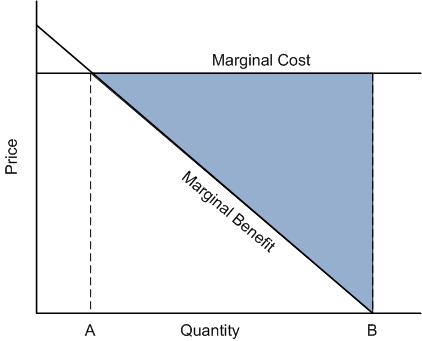
In other words, the marginal benefit must exceed the marginal cost of practice.

Cost-Volume-Profit Analysis

Now, once a basic understanding of marginal profit and medical cost behavior is achieved, the techniques of cost-volume-profit analysis (CVPA) can be used to further refine the managerial cost and profit aspects of the medical office business unit. CVPA is thus concerned with the relationship among prices of medical services, unit volume, per unit variable costs, total fixed costs, and the mix of services provided.

Assessment

Austin felt that if [*]od were jointly designing all health-related systems and functions of society and government – He’d look at the marginal cost/QALY over all possible ways to spend the next dollar and pick the smallest. How about you?

But, it’s not always going to be on health care services and it probably isn’t given what we’re already spending for those and what we’re getting for that spending.

Conclusion

Your thoughts and comments on this ME-P are appreciated. Feel free to review our top-left column, and top-right sidebar materials, links, URLs and related websites, too. Then, subscribe to the ME-P. It is fast, free and secure.

Link: http://feeds.feedburner.com/HealthcareFinancialsthePostForcxos

Speaker: If you need a moderator or speaker for an upcoming event, Dr. David E. Marcinko; MBA – Publisher-in-Chief of the Medical Executive-Post – is available for seminar or speaking engagements. Contact: MarcinkoAdvisors@msn.com

OUR OTHER PRINT BOOKS AND RELATED INFORMATION SOURCES:

INSURANCE:Risk Management and Insurance Strategies for Physicians and Advisors

Product DetailsProduct DetailsProduct Details

Product Details  Product Details

   Product Details 

Do Physician Investors and/or their Financial Advisors Use and Abuse Modern Portfolio Theory?

Join Our Mailing List

The Cultural Clash of Passivity versus Activity

By Dr. David Edward Marcinko MBA CMP™

www.CertifiedMedicalPlanner.org

[Publisher-in-Chief]

Ninety-three year old Professor Harry Markowitz PhD, coined the phrase “modern portfolio theory” [MPT] and concluded that investors are rewarded for taking certain risks but may not get rewarded for taking others. He developed the notion of an “efficient frontier” for different groups of asset classes and the idea that the higher the expected return, the higher the risk.

The Brinson, Hood, Beebower Study

In their 1986 study, Brinson, Hood, and Beebower attempted to measure three investment activities: (1) asset class selection, (2) market timing, and (3) security selection. They concluded that asset class selection had, by far, the greatest effect on the risk/return characteristics of a portfolio (some 93.6% of performance). But the most startling conclusion was that, if left alone, investment policy would have produced a higher average return than when market timing and security selection were taken into account. These latter factors actually reduced the average return over a 10-year period.

The Fama & French Study

In 1982, Fama and French found that three factors—market exposure, company size, and “value”—were systematic risks that explained the vast majority of equity market returns. “U.S. small-cap value stocks” is therefore a discreet asset class possessing all three of these systematic risks.

Most physicians and financial advisors are aware of modern portfolio theory but some fail to apply the principles to actual investor situations. Three examples: (1) using erroneous asset-class definitions, (2) using actively managed funds, and (3) relying on market timing. The abuse of modern portfolio theory can create portfolios loaded with latent risks that, on the surface, appear benign.

Not all Agree

Not everyone is in agreement with modern portfolio theory. Some detractors agree in principle, recognizing, for example, that “value” stocks have had higher returns than “growth” issues but they cite the cause as “mispricing” rather than risk.

Assessment

Institutional investors have gradually increased their commitment to passive strategies from virtually zero 20 years ago to 30% or more in the last decade [Think: Vanguard].

Individual and physician investors, on the other hand, have less than a 5% commitment.

Note: “Modern Portfolio Theory: Fact or Fiction?,” Gerard F. Stellwagen and Robin P. LaCouture, NAPFA Advisor, July 1997, pp. 1–7, National Association of Personal Financial Advisors for Fee-Only Financial Advisors.

Conclusion

Your thoughts and comments on this ME-P are appreciated. Feel free to review our top-left column, and top-right sidebar materials, links, URLs and related websites, too. Then, subscribe to the ME-P. It is fast, free and secure.

Link: http://feeds.feedburner.com/HealthcareFinancialsthePostForcxos

Speaker: If you need a moderator or speaker for an upcoming event, Dr. David E. Marcinko; MBA – Publisher-in-Chief of the Medical Executive-Post – is available for seminar or speaking engagements. Contact: MarcinkoAdvisors@msn.com

OUR OTHER PRINT BOOKS AND RELATED INFORMATION SOURCES:

DICTIONARIES: http://www.springerpub.com/Search/marcinko
PHYSICIANS: www.MedicalBusinessAdvisors.com
PRACTICES: www.BusinessofMedicalPractice.com
HOSPITALS: http://www.crcpress.com/product/isbn/9781466558731
CLINICS: http://www.crcpress.com/product/isbn/9781439879900
ADVISORS: www.CertifiedMedicalPlanner.org
PODIATRISTS: www.PodiatryPrep.com
BLOG: www.MedicalExecutivePost.com
FINANCE: Financial Planning for Physicians and Advisors
INSURANCE: Risk Management and Insurance Strategies for Physicians and Advisors

Product DetailsProduct DetailsProduct Details

Product Details  Product Details

   Product Details 

A Doctor-Financial Advisor Makes the Case for Stock-Market Timing

Do a Growing Number of Stock-Market Timers Outperform?

By Dr. David Edward Marcinko MBA CMP™

www.CertifiedMedicalPlanner.com

[Publisher-in-Chief]

Money management styles tend to fall in and out of favor in cycles. When the market goes through a sustained bull market, buy-and-hold becomes the proclaimed path to investing success as I have opined previously. But, when the market enters a bear phase, like the flash crash of 2008-09, there is renewed belief in market timing as I now try to explain.

The Studies

And yet, studies of actual results of professional money managers using market-timing techniques reveal that the average timer’s results, like the average mutual fund, slightly lag behind the market indexes. But a growing number of timers consistently outperform the market over a full market cycle. When risk-adjusted return is used as the standard to measure performance, even the average market timer outperforms the market by a notable margin. A study of 25 market timers by Wagner, Shellans, and Paul (1992) during the period 1985–1990 (both bull and bear) shows that the level of risk assumed by the average timer was 40–60% below the S&P 500, even after subtracting fees, and the returns were comparable to the S&P 500.

Marketplace Phases

History has shown that starting from the market’s last high water mark, the market typically goes through three phases: (1) a correction, (2) a recovery to breakeven, and (3) a move to new highs. A study of the 108-year period from 1885 to 1993 reveals that the average correction phase consumed 32% of the time period and the return to breakeven exhausted an additional 44%. The market spent only 24% of the time moving to new highs. This is the only time that typical buy-and-hold investors saw their investments appreciate. This makes the stock market an extremely inefficient money-making vehicle.

Since the market timer who sold at the top will have more money at the bear market bottom than the buy-and-hold investor, the study indicates that the timer may have between 26% and 54% more to invest on the upswing. The study also shows that a timer does not have to be perfect in discerning entry and exit points. In fact, he or she can miss 20% of the advance, participate in 20% of the decline, and lose money as much as 47% of the time and still have an average gain equal to the net average gain for the buy-and-hold investor.

Assessment

Of course, it is quite a feat to obtain all the returns attributable from the buy-and-hold strategy while being in the market about half the time. 

Note: “Why Market Timing Works,” Jerry C. Wagner; The Journal of Investing; Summer of 1997, pp. 78–81, Institutional Investor, Inc.

Conclusion

And so, your thoughts and comments on this ME-P are appreciated. Did I make my case? Are you a market timer or buy-hold strategist; and why? Did this strategy work until the market meltdown of 2008-09; how about since then? Feel free to review our top-left column, and top-right sidebar materials, links, URLs and related websites, too. Then, subscribe to the ME-P. It is fast, free and secure.

Speaker: If you need a moderator or speaker for an upcoming event, Dr. David E. Marcinko; MBA – Publisher-in-Chief of the Medical Executive-Post – is available for seminar or speaking engagements. Contact: MarcinkoAdvisors@msn.com and http://www.springerpub.com/Search/marcinko

Our Other Print Books and Related Information Sources:

Health Dictionary Series: http://www.springerpub.com/Search/marcinko

Practice Management: http://www.springerpub.com/product/9780826105752

Physician Financial Planning: http://www.jbpub.com/catalog/0763745790

Medical Risk Management: http://www.jbpub.com/catalog/9780763733421

Healthcare Organizations: www.HealthcareFinancials.com

Physician Advisors: www.CertifiedMedicalPlanner.com

Subscribe Now: Did you like this Medical Executive-Post, or find it helpful, interesting and informative? Want to get the latest ME-Ps delivered to your email box each morning? Just subscribe using the link below. You can unsubscribe at any time. Security is assured.

Link: http://feeds.feedburner.com/HealthcareFinancialsthePostForcxos

Sponsors Welcomed: And, credible sponsors and like-minded advertisers are always welcomed.

Link: https://healthcarefinancials.wordpress.com/2007/11/11/advertise

Product DetailsProduct DetailsProduct Details       

Product Details  Product Details

   Product Details 

Do SPDRs Yield Tax Advantages?

How about Trading Efficiency?

By Dr. David Edward Marcinko; MBA CMP™

www.CertifiedMedicalPlanner.com

[Publisher-in-Chief]

The bull market generated large mutual fund capital gains distributions at the end of 2007; and maybe again for 2011. Accordingly, tax efficient mutual funds are getting more attention as a result. Also growing in popularity is Standard & Poor’s Depository Receipts (SPDRs), sponsored by and traded on the American Stock Exchange (AMEX). SPDRs are trusts that own stock positions that match a particular index, like the S&P 500. Investors then buy shares of the trust.

The Facts about SPDRs

Investors sell their shares of SPDRs on the Exchange rather than redeeming shares through the mutual fund. The trust does not sell stock to make cash redemptions. This avoids most of the capital gain distributions that annoy long-term investors. As a prospectus from the American Stock Exchange notes:

In-Kind Redemptions

While no unequivocal statement can be made as to the net tax impact on a conventional mutual fund resulting from the purchases and sales of its portfolio stocks over a period of time, conventional funds that have accumulated substantial unrealized capital gains, if they experience net redemptions and do not have sufficient available cash, may be required to make taxable capital gains distributions that are generated by changes in such fund’s portfolio. In contrast, the ‘in kind’ redemption mechanism of SPDRs may make them more tax efficient investments under most circumstances than comparable conventional mutual fund shares.

Fund Trading and AMEX Insight

The AMEX prospectus not only provides a detailed look at the in-kind redemption mechanism of the SPDRs, which is important to their tax efficiency, it also offers analysis of the economics of intraday SPDRs fund trading. Unlike mutual funds, for which prices are determined at the end of each trading day, SPDRs can be bought or sold at anytime during the day at the spot price. SPDRs trade like a stock, so the account does not need futures approval and shares can be sold short or margined. The SPDRs shares track the futures closely.

Assessment

The reservation that physicians and all investors, as well as we financial advisors, have is simply “Are the SPDRs expensive to trade?” The AMEX prospectus does not answer that question in so many words, but it provides the data needed to make a cost calculation. In 1996, the bid/asked spread on the SPDRs was 1/16 or less more than 62% of the time and 1/8 or less about 95% of the time. Each investor can make his or her own commission assumptions, but the range on the S&P 500 exceeded 0.5% more than 75% of the time and was greater than 1% approximately 25% of the time. With such a narrow bid/asked spread relative to the average move in the shares and a reasonable level of commissions, it is often easy to get in or out of the fund at a price appreciably better than closing NAV.

Assessment

What are these spreads today? Copies of the prospectus and other information on SPDRs are available by calling 1-800 THE AMEX

Conclusion

And so, your thoughts and comments on this ME-P are appreciated. Do you use SPDRs; why or why not? Feel free to review our top-left column, and top-right sidebar materials, links, URLs and related websites, too. Then, subscribe to the ME-P. It is fast, free and secure.

Speaker: If you need a moderator or speaker for an upcoming event, Dr. David E. Marcinko; MBA – Publisher-in-Chief of the Medical Executive-Post – is available for seminar or speaking engagements. Contact: MarcinkoAdvisors@msn.com and http://www.springerpub.com/Search/marcinko

Our Other Print Books and Related Information Sources:

Health Dictionary Series: http://www.springerpub.com/Search/marcinko

Practice Management: http://www.springerpub.com/product/9780826105752

Physician Financial Planning: http://www.jbpub.com/catalog/0763745790

Medical Risk Management: http://www.jbpub.com/catalog/9780763733421

Healthcare Organizations: www.HealthcareFinancials.com

Physician Advisors: www.CertifiedMedicalPlanner.com

Subscribe Now: Did you like this Medical Executive-Post, or find it helpful, interesting and informative? Want to get the latest ME-Ps delivered to your email box each morning? Just subscribe using the link below. You can unsubscribe at any time. Security is assured.

Link: http://feeds.feedburner.com/HealthcareFinancialsthePostForcxos

Sponsors Welcomed: And, credible sponsors and like-minded advertisers are always welcomed.

Link: https://healthcarefinancials.wordpress.com/2007/11/11/advertise

Product DetailsProduct DetailsProduct Details       

Product Details  Product Details

Update on How Physicians Get Paid in 2010-11 [A slide show]

Part 2: [A Visual .ppt Presentation]

By Dr. David Edward Marcinko; MBA

[Editor-in-Chief]

From prior posts and comments on this ME-P, we know that most patients don’t have a clue about how doctors get paid in the real world of health insurance reimbursement.

A Popular Topic

We know this because prior posts on the topic have consistently been among the most popular on this platform. For example:

Part 1: https://healthcarefinancials.wordpress.com/2008/09/12/how-doctors-get-paid

Assessment

And so, we have taken the liberty of drilling down the topic, to a more granular level, in this attached .ppt presentation.

Link: How Doctors Get Paid in 2010 

Conclusion

And so, your thoughts and comments on this ME-P special presentation are appreciated. Tell us what you think?

Feel free to review our top-left column, and top-right sidebar materials, links, URLs and related websites, too. Then, be sure to subscribe to the ME-P. It is fast, free and secure.

Link: http://feeds.feedburner.com/HealthcareFinancialsthePostForcxos

Speaker: If you need a moderator or speaker for an upcoming event, Dr. David E. Marcinko; MBA – Publisher-in-Chief of the Medical Executive-Post – is available for seminar or speaking engagements. Contact: MarcinkoAdvisors@msn.com 

Our Other Print Books and Related Information Sources:

Practice Management: http://www.springerpub.com/prod.aspx?prod_id=23759

Physician Financial Planning: http://www.jbpub.com/catalog/0763745790

Medical Risk Management: http://www.jbpub.com/catalog/9780763733421

Healthcare Organizations: www.HealthcareFinancials.com

Physician Advisors: www.CertifiedMedicalPlanner.com

Subscribe Now: Did you like this Medical Executive-Post, or find it helpful, interesting and informative? Want to get the latest ME-Ps delivered to your email box each morning? Just subscribe using the link below. You can unsubscribe at any time. Security is assured.

Link: http://feeds.feedburner.com/HealthcareFinancialsthePostForcxos

Sponsors Welcomed: And, credible sponsors and like-minded advertisers are always welcomed.

Link: https://healthcarefinancials.wordpress.com/2007/11/11/advertise

Product DetailsProduct DetailsProduct Details      

On the Rise and Fall of Limited Partnerships

Taking A Historical Look at this Investment Vehicle

By Dr. David Edward Marcinko MBA CMP™

www.CertifiedMedicalPlanner.com

[Publisher-in-Chief]

Back in the 1980s – a time I am loathe admitting that I remember well – limited partnerships (LPs) were all the rage and often touted as the investment vehicle of the future; especially to tax-averse physicians and high income medical professionals and investors.

Oil and gas and real estate LPs dominated the market. But, there were also cattle feeding, master recording disks, equipment and aircraft leasing, and cable TV investments. The LP heyday was 1983 through 1989, and most early LPs were private or non-publicly traded.

Popularity Rising

Why were they so popular? LPs provided the benefits of direct ownership (income potential and tax benefits) without management responsibility and personal liability. Losses were limited to one’s original investment. Brokerage firms pushed them hard, paying their sales representatives [financial advisors?] the highest commissions and often characterizing these risky investments as “safe” and a “means of capital preservation.”

Early ’80s

In the early 80s, investors could use depreciation, interest, and investment tax credits to offset not only LP income but ordinary income from salary and other investments. This was a huge incentive for high income earning doctors. In 1981, the Tax Act allowed accelerated depreciation for real estate, and non-recourse debt was treated as depreciable cost (partners bore no risk of economic loss). Soon, the IRS began to attack LPs. Both real estate and oil and gas values declined. LPs soon became illiquid investments, producing little or no return.

’86 Tax Act

Then came the Tax Reform Act of 1986 (TRA), which brought with it “at risk” limitations to real estate tax shelters and the new passive loss provisions. LP sales then spiraled downward. The ’86 Tax Law provided that limited partners could not increase their basis in the LP for their share of partnership debt unless they were personally liable for repayment or if the lender had an interest other than as a creditor (unless “qualified non-recourse debt” was used).

1990s

In the ’90s, investors either hung on to – or sold – their LP investments in the secondary market. Investors were subject to substantial discounts upon sale and they had to recapture tax benefits previously received (including those from non-recourse financing).

Assessment

Simply abandoning these investments did not avoid unfavorable tax consequences, such as the decrease in a partner’s share of partnership liabilities being treated as a cash distribution. Capital gains were recognized to the extent that a partner’s share of partnership liabilities exceeds the adjusted basis of the partner’s interest.

Note: “What Happened to Limited Partnerships?” Lee Knight and Ray Knight Journal of Accountancy, July 1997, pp. 37–42, American Institute of Certified Public Accountants.

Conclusion

And so, your thoughts and comments on this ME-P are appreciated. Were you burned by LPs back in the day, or have a LP story to tell us? Please opine. Feel free to review our top-left column, and top-right sidebar materials, links, URLs and related websites, too. Then, subscribe to the ME-P. It is fast, free and secure.

Speaker: If you need a moderator or speaker for an upcoming event, Dr. David E. Marcinko; MBA – Publisher-in-Chief of the Medical Executive-Post – is available for seminar or speaking engagements. Contact: MarcinkoAdvisors@msn.com and http://www.springerpub.com/Search/marcinko

Our Other Print Books and Related Information Sources:

Health Dictionary Series: http://www.springerpub.com/Search/marcinko

Practice Management: http://www.springerpub.com/product/9780826105752

Physician Financial Planning: http://www.jbpub.com/catalog/0763745790

Medical Risk Management: http://www.jbpub.com/catalog/9780763733421

Healthcare Organizations: www.HealthcareFinancials.com

Physician Advisors: www.CertifiedMedicalPlanner.com

Subscribe Now: Did you like this Medical Executive-Post, or find it helpful, interesting and informative? Want to get the latest ME-Ps delivered to your email box each morning? Just subscribe using the link below. You can unsubscribe at any time. Security is assured.

Link: http://feeds.feedburner.com/HealthcareFinancialsthePostForcxos

Sponsors Welcomed: And, credible sponsors and like-minded advertisers are always welcomed.

Link: https://healthcarefinancials.wordpress.com/2007/11/11/advertise

Product DetailsProduct DetailsProduct Details       

Product Details  Product Details

How Doctors Divvy Up the Estate Money [New Spouse v. Kids]

Join Our Mailing List

The Kids of a New Spouse

Dr. David Edward Marcinko MBA CMP™

[Publisher-in-Chief]

Multiple marriages entail interesting estate planning moves. Why? In these days of multiple marriages, doctor clients and others often can get caught between wanting to provide for their children from a previous marriage and their spouse’s statutory inheritance rights. Depending on the state of residence, the surviving spouse may have a statutory right to a specific share of his or her spouse’s estate. But, states define what constitutes the “augmented estate” in different ways. Some fairly sophisticated estate planning may be appropriate.

States Right’s

Inasmuch as spousal rights of election were codified many decades ago when divorce was not a common occurrence, many states’ statutes do not fairly recognize the economics and family dynamics of married individuals who have children from a prior marriage. In some states, a spousal right of election is limited to those assets that pass through probate. In other states, the right of election is enforceable against not only probate assets but certain assets, such as jointly held property that would otherwise pass via title to the co-owner, gifts the decedent made within a certain time period prior to death, and life insurance benefits. This expanded pool of assets against which the right of election may be assessed is typically referred to as the “augmented estate.” Most states provide that the right of election is charged ratably against the beneficiaries under the decedent’s will and the beneficiaries of any testamentary substitutes.

The UPC

In many states, the same percentage would apply regardless of the length of the marriage. In 1990, the model Uniform Probate Code (UPC) was amended to provide a scaled right of election based on the length of the marriage. It ranges from a minimum of 12% up to a maximum of 50% for marriages of 15 years or more. Only a handful of states have adopted it. Even though the UPC includes pension and profit sharing plan benefits in the augmented estate, the sliding scale is subordinate to federal pension legislation which can result in an inequity in the case of a short-term marriage.

Assessment

While both pre- and post-nuptial agreements can help, life insurance is favored, particularly in the majority of states where it is excluded from the augmented estate. And, in states where life insurance is part of the augmented estate, it could be used to provide the surviving spouse with his or her share, particularly when a closely held business is passed on to children of a prior marriage. Financial planners, doctors and advisors need to be familiar with this area to effectively serve clients.

Note: “Providing for Children from a Prior Marriage: An Estate Planning Entry Point,” George B. Kozol, Journal of the American Society of CLU & ChFC, January 1997, pp. 52–57, American College.

Conclusion

Your thoughts and comments on this ME-P are appreciated. Feel free to review our top-left column, and top-right sidebar materials, links, URLs and related websites, too. Then, subscribe to the ME-P. It is fast, free and secure.

Speaker: If you need a moderator or speaker for an upcoming event, Dr. David E. Marcinko; MBA – Publisher-in-Chief of the Medical Executive-Post – is available for seminar or speaking engagements. Contact: MarcinkoAdvisors@msn.com

OUR OTHER PRINT BOOKS AND RELATED INFORMATION SOURCES:

Product DetailsProduct DetailsProduct Details

Product Details  Product Details

   Product Details 

On FAs Working with Terminal Clients

Unique Challenges Financial Planners Face when Advising Dying Clients

By Dr. David Edward Marcinko MBBS DPM MBA MEd CMP™

http://www.CertifiedMedicalPlanner.org

[Publisher-in-Chief]

We doctors are comfortable – or at least familiar – in dealing with death; financial advisors and planners are not!

Although many financial planners attend conferences to keep current on sophisticated planning techniques, most are not emotionally equipped to service terminally-ill clients. Others claim that there’s intensity and an intimacy that comes with working with dying clients that can be deeply rewarding. Such clients are usually grateful for having their affairs put in order before death. The few FAs in the industry that are both physicians and advisors concur.

Myriad of Issues

The many issues that need to be addressed in these situations include:

1. How the client wants to spend their final months, what it will cost, and what impact it may have on the estate;

2. Whether to spend money [health insurance navigation] on expensive and also experimental medical treatments;

3. If there is an existing life insurance policy; the pros and cons of accelerated benefits or viatical settlements;

4. Spending down or gifting assets to reduce estate taxes;

5. How long to keep working;

6. Taking important actions while still competent to do so;

7. Deciding whether to transfer assets to the dying client (one year survival) in order to get a step-up in basis at death;

8. Helping clients decide what type of funeral or final arrangements are preferred;

9. Working with the surviving spouse to restructure final financial affairs.

Rules-of-Thumb

Financial rules of thumb are often reversed in these situations. Instead of maximizing gains, the goal is to minimize losses. Macro-planning gives way to micro-planning and crisis management. Surviving spouses may be torn between wanting to pay for treatments to save his or her spouse and to protect the funds available in the event of the spouse’s death.

Assessment

Emotional turmoil does not necessarily end with the client’s death. As the financial advisor, you may take long, tearful phone calls from a surviving spouse whose grief and anxiety has been transformed into fears about their finances. Sometimes their fear can result in irrational anger, which they may take out on you. This type of work is not for the weak-spirited.

Note: “Final Plans,” Anita J. Slomski, Dow Jones Investment Advisor, March 1997, pp. 76–82, Dow Jones Financial Publishing Corp.

Conclusion

And so, your thoughts and comments on this ME-P are appreciated. As a FA, do you work with the terminally ill? Feel free to review our top-left column, and top-right sidebar materials, links, URLs and related websites, too. Then, subscribe to the ME-P. It is fast, free and secure.

Speaker: If you need a moderator or speaker for an upcoming event, Dr. David E. Marcinko; MBA – Publisher-in-Chief of the Medical Executive-Post – is available for seminar or speaking engagements. Contact: MarcinkoAdvisors@msn.com and http://www.springerpub.com/Search/marcinko

Subscribe Now: Did you like this Medical Executive-Post, or find it helpful, interesting and informative? Want to get the latest ME-Ps delivered to your email box each morning? Just subscribe using the link below. You can unsubscribe at any time. Security is assured.

Link: http://feeds.feedburner.com/HealthcareFinancialsthePostForcxos

Sponsors Welcomed: And, credible sponsors and like-minded advertisers are always welcomed.

Risk Management, Liability Insurance, and Asset Protection Strategies for Doctors and Advisors: Best Practices from Leading Consultants and Certified Medical Planners™8Comprehensive Financial Planning Strategies for Doctors and Advisors: Best Practices from Leading Consultants and Certified Medical Planners™

***

The Living Legacy of Dr. Harry Markowitz

Creating Diversified Portfolios of Uncorrelated Assets

By Dr. David Edward Marcinko MBA CMP™

[Publisher-in-Chief]

More than a half century ago, a paper appeared in The Journal of Finance written by a 24-year-old doctoral candidate in economics at the University of Chicago—Harry Markowitz. It was called “Portfolio Selection” and suggested that investors take into account risk in pursuit of the highest return—a concept that we take for granted today [Modern Portfolio Theory].

Markowitz drew a trade-off curve between risk and reward and called it the “efficient frontier.” A rational physician executive or other investor who knew his or her risk tolerance could choose an appropriate portfolio from a point on this curve. Markowitz led investors to diversified portfolios of uncorrelated investments.

Dissertation Follow-up

Markowitz followed up his dissertation in 1959 with a book entitled Portfolio Selection [Efficient Diversification of Investment]. His many contributions to finance earned him the Nobel Prize in Economic Science in 1990 along with William Sharpe and Merton Miller. He reasoned that diversification is about avoiding the covariance.

If risks are uncorrelated, you can reduce the risk of a portfolio to practically zero by sufficient diversification. This doesn’t work if risks are correlated. If one invests in a very large number of securities that are correlated, risk does not approach zero but rather the average covariance, which is a very substantial amount of risk.

Where It All Started

It was at the RAND Corporation that Markowitz met William [Bill] Sharpe who was working on his PhD at UCLA. Markowitz takes issue with Sharpe’s Capital Asset Pricing Model (CAPM), which claims that the expected return of a security depends only on its beta—ignoring fundamental analysis.

CAPM also implies that the market portfolio is efficient, even though investors in the market may not act rationally. It says that the market portfolio is a mean-variance efficient portfolio. Markowitz disputes this conclusion. He points to Fama and French and others who have found that expected returns are more closely related to book-to-price or size—not to beta.

hm

Assessment

The still living Markowitz fends off criticism of mean-variance analysis only being valid when probability distributions are normal by stating that he realizes that probability distributions are not normal in the real world.

But, if they are similar to a normal distribution, mean variance does a good job at approximating expected utility. He admits that when they are too dispersed, mean variance doesn’t work well.

Note: Travels along the Efficient Frontier,” an interview with Harry Markowitz by Jonathan Burton, Dow Jones Asset Management, May/June 1997, pp. 21–28, Dow Jones Financial Publishing Corp.

Conclusion

And so, your thoughts and comments on this ME-P are appreciated. Do you use MPT when investing, or CAP-M? Feel free to review our top-left column, and top-right sidebar materials, links, URLs and related websites, too. Then, subscribe to the ME-P. It is fast, free and secure.

OUR OTHER PRINT BOOKS AND RELATED INFORMATION SOURCES:

Product DetailsProduct DetailsProduct Details

Product Details  Product Details

Comprehensive Financial Planning Strategies for Doctors and Advisors: Best Practices from Leading Consultants and Certified Medical Planners™

***

Let’s Consider Two New Emerging Medical Delivery Models

Join Our Mailing List

Entrepreneurial, New-Wave and Outside-the-Box Competitive Models

Dr. David Edward Marcinko MBA CMP™

www.CertifiedMedicalPlanner.com

[Publisher-in-Chief]

I travel quite a bit in my professional and personal life. And, have been told possess an above-average curiosity in all things medical management. I look – see and report. So, what have I noted recently?

There are a number of new-wave health care delivery models now being explored to improve the manner in which medical care can be delivered. Let’s take a quick look at two emerging options at both the individual and institutional levels.

1. The Micro Medical Practice [MMP]

A micro medical practice [MMP] is a low overhead, high-tech, labor reduced and often mobile office model that allows more physician control and patient face-time [i.e., Dr. Ramona Seidel, Annapolis, Maryland]. This concept can be extended to those patients who want or need to pay cash for their health care; high deductible health insurance, health insurance with high co pays and residuals, etc.

Or, the concept may include that seen with the practice of physician-assistant Cheryl DeMonner PA-C at the Micro Medical Practice of Santa Cruz County. William Morris MD is her supervising physician.

Source: www.micromedsc.com

2. Satisfaction Guaranteed Medical Care

At the Detroit Medical Center, patient focused medical care is taken to a competitive extreme with this promise:

“If our patients are not absolutely satisfied with any aspect of their inpatient service or overnight stay in a DMC hospital, we will credit their patient pay balance up to $100.”

Guarantee applies to all inpatient (or overnight) stays and all surgery services provided at a DMC hospital. Adjustment/Refund is dependent upon the nature of dissatisfaction as follows:

  • Tier 1 ($25) Problems with physical facilities
  • Tier 2 ($50) Inadequate communication
  • Tier 3 ($75) Excessive wait issues
  • Tier 4 ($100) Poor service from employees

And, they have the twenty-nine minute emergency room guarantee.

Source: http://doctorandpatient.blogspot.com/2007/01/29-minute-er-guarantee.html

Assessment

If you were to take a good guess as to what sort of new healthcare delivery business model will spring up next, you would be well served by looking at smaller private and more entrepreneurial entities [personal and primary care], rather than behemoth organizations [secondary or tertiary care].

Conclusion

Your thoughts and comments on this ME-P are appreciated. Feel free to review our top-left column, and top-right sidebar materials, links, URLs and related websites, too. Then, subscribe to the ME-P. It is fast, free and secure.

Speaker: If you need a moderator or speaker for an upcoming event, Dr. David E. Marcinko; MBA – Publisher-in-Chief of the Medical Executive-Post – is available for seminar or speaking engagements. Contact: MarcinkoAdvisors@msn.com

OUR OTHER PRINT BOOKS AND RELATED INFORMATION SOURCES:


Product Details

***

Why Doctors Must Take Care When Swapping Insurance Policies and Annuities

Understanding Section 1035 Treatment of Exchanges

By Dr. David Edward Marcinko MBA CMP™

www.CertifiedMedicalPlanner.org

[Publisher-in-Chief]

With the passage of the Tax Equity and Fiscal Responsibility Act, back in 1982 (TEFRA), insurance companies were required to report the payment of all surrender proceeds, forcing physicians and all individuals to be more compliant in reporting gains on the surrender of an old policy. As a result, insureds took advantage of IRC Section 1035 and made tax-free exchanges of insurance, endowment, and annuity contracts. If the exchange is structured properly, gains (and losses) on the surrender of an old policy must be deferred beyond the life of the policyholder.

Section 1035 Treatment

The following types of exchanges qualify for tax-free treatment:

1. A life insurance contract for another life insurance, annuity, or endowment contract

2. An endowment contract for an annuity contract or for another endowment contract in which the payments begin at a date no later than the date that payment would have begun under the original contract

3. An annuity contract for another annuity contract

However, to the extent that money or other property (“boot”) is received by the insured in a 1035 exchange, gain may be recognized to the extent of the “boot.” The new policy received takes the basis of the old contract exchanged, decreased by the value of boot received, and increased by any gain required to be recognized.

Limits

Unlike exchanges subject to Section 1031, in which there is a 180-day limit, there is apparently no statutory time limit for completing an exchange under Section 1035. However, be careful in the case of an exchange of immediate annuity contracts in which the annuity starting date must begin no later than one year from the date of the purchase of the annuity. When an exchange has occurred, the holding period of the original contract attaches to the new contract. Therefore, the insured may not have begun to receive the annuity within one year from the date of the annuity’s purchase, and therefore, the 10% premature withdrawal penalty may apply.

Section 403(b) Annuities

The IRS has even allowed tax-free exchange of Section 403(b) annuities provided the new contract’s distribution restrictions are at least as stringent as those of the old contract. And, distributions from financially troubled life insurance companies, if reinvested within 60 days of receipt, can qualify for 1035 treatment. But, in most cases, a doctor or taxpayer should undertake a direct exchange whenever possible.

Note: “Nontaxable Exchanges of Insurance Contracts and Annuities Under Section 1035,” John C. Zimmerman and Tamara K. Kowalczyk, Journal of Taxation of Investments, Summer 1997, pp. 307–315, Warren, Gorham & Lamont, (800) 950-1205.

Conclusion

And so, your thoughts and comments on this ME-P are appreciated. Have you ever made this sort of exchange; successful or not? Feel free to review our top-left column, and top-right sidebar materials, links, URLs and related websites, too. Then, subscribe to the ME-P. It is fast, free and secure.

Link: http://feeds.feedburner.com/HealthcareFinancialsthePostForcxos

Speaker: If you need a moderator or speaker for an upcoming event, Dr. David E. Marcinko; MBA – Publisher-in-Chief of the Medical Executive-Post – is available for seminar or speaking engagements. Contact: MarcinkoAdvisors@msn.com

OUR OTHER PRINT BOOKS AND RELATED INFORMATION SOURCES:

DICTIONARIES: http://www.springerpub.com/Search/marcinko
PHYSICIANS: www.MedicalBusinessAdvisors.com
PRACTICES: www.BusinessofMedicalPractice.com
HOSPITALS: http://www.crcpress.com/product/isbn/9781466558731
CLINICS: http://www.crcpress.com/product/isbn/9781439879900
BLOG: www.MedicalExecutivePost.com
FINANCE: Financial Planning for Physicians and Advisors
INSURANCE: Risk Management and Insurance Strategies for Physicians and Advisors

Product DetailsProduct DetailsProduct Details

Product Details  Product Details

   Product Details 

Defining Health Level Seven [HL-7]

Join Our Mailing List

What it is – How it works?

By Dr. David Edward Marcinko MBA CMP™

http://www.CertifiedMedicalPlanner.org

[Publisher-in-Chief]

HL7 is an international community of health care subject matter experts and information technology physicians and scientists collaborating to create standards for the exchange, management, and integration of protected electronic health care information. The Ann Arbor, Mich.-based Health Level Seven (HL7) standards developing organization has evolved Version 3 of its standard, which includes the Reference Information Model (RIM) and Data Type Specification (both ANSI standards).

HL7-3

The HL7 Version 3 is the only standard that specifically deals with creation of semantically interoperable health care information, essential to building the national infrastructure; HL7 promotes the use of standards within and among health care organizations to increase the effectiveness and efficiency of health care delivery for the benefit of all patients, payers, and third parties; uses an Open System Interconnection (OSI) and high level seven health care electronic communication protocol that is unique in the medical information management technology space and modeled after the International Standards Organization (ISO) and American National Standards Institute (ANSI); each has a particular health care domain such as pharmacy, medical devices, imaging, or insurance (claims processing) transactions. Health Level Seven’s domain is clinical and administrative data.

The Goals

Goals include:

  • develop coherent, extendible standards that permit structured, encoded health care information of the type required to support patient care, to be exchanged between computer applications while preserving meaning;
  • develop a formal methodology to support the creation of HL7 standards from the HL7 Reference Information Model (RIM);
  • educate the health care industry, policymakers, and the general public concerning the benefits of health care information standardization generally and HL7 standards specifically;
  • promote the use of HL7 standards world-wide through the creation of HL7 International Affiliate organizations, which participate in developing HL7 standards and which localize HL7 standards as required;
  • stimulate, encourage, and facilitate domain experts from health care industry stakeholder organizations to participate in HL7 to develop health care information standards in their area of expertise;
  • collaborate with other standards development organizations and national and international sanctioning bodies (e.g., ANSI and ISO) in both the health care and information infrastructure domains to promote the use of supportive and compatible standards; and
    • collaborate with health care information technology users to ensure that HL7 standards meet real-world requirements and that appropriate standards development efforts are initiated by HL7 to meet emergent requirements.

Assessment

http://www.springerpub.com/Search/marcinko

HL7 focuses on addressing immediate needs but the group dedicates its efforts to ensuring concurrence with other U.S. and International standards development activities. Argentina, Australia, Canada, China, Czech Republic, Finland, Germany, India, Japan, Korea, Lithuania, The Netherlands, New Zealand, Southern Africa, Switzerland, Taiwan, Turkey, and the United Kingdom are part of HL7 initiatives.

Conclusion

Your thoughts and comments on this ME-P are appreciated. Feel free to review our top-left column, and top-right sidebar materials, links, URLs and related websites, too. Then, subscribe to the ME-P. It is fast, free and secure.

Speaker: If you need a moderator or speaker for an upcoming event, Dr. David E. Marcinko; MBA – Publisher-in-Chief of the Medical Executive-Post – is available for seminar or speaking engagements. Contact: MarcinkoAdvisors@msn.com

OUR OTHER PRINT BOOKS AND RELATED INFORMATION SOURCES:

Product DetailsProduct DetailsProduct Details

Product DetailsProduct Details

Going ‘Bare’ Might be an Expensive Mistake

An Opinion on E & O Insurance for FAs

Dr. David Edward Marcinko MBA CMP™

www.CertifiedMedicalPlanner.org

[Publisher-in-Chief]

This post is not about medical malpractice liability insurance. As a doctor, financial advisor and insurance agent I have written and opined on this subject before; informally on this blog and more formally through our handbooks:

http://www.amazon.com/Insurance-Management-Strategies-Physicians-Advisors/dp/0763733423/ref=sr_1_3?ie=UTF8&s=books&qid=1275315795&sr=1-3

and, of course, pragmatically with clients: www.MedicalBusinessAdvisors.com

No, this post is about Errors and Omissions insurance for financial advisors.

About E & O Insurance for FAs

Like many physicians, most financial planners and advisors are confident that the way they practice minimizes the chance of being sued by a disgruntled [patient] client. And, perhaps that has been their experience so far. But just one arbitration case for a substantial claim can cost $10,000 or more, and a conventional lawsuit that goes to court with a jury trial will run about $50,000, even if it’s a totally bogus claim. With the cost of errors and omissions coverage for financial advisors now down to between $650 and $2,000 per year, it doesn’t make much sense to “go bare;” especially after the highly emotional 2008-09 debacle.

Historical Past

In years past, most financial planners opted to go without insurance because premiums on E&O policies ran about $7,500 -10,000 per year. Most of them should think again and take the same advice they give their clients—insure for catastrophic loss. We all know that when the stock market bubble finally bursts, there will be a lot of unhappy clients looking to recoup losses. What better time than now while things are good to put E&O coverage in place.

E & O Coverage

E&O policies cover errors, misstatements, negligence, breach of duty, and other wrongful acts, but fraudulent acts are usually not covered. Many major broker/dealers carry group coverage for the affiliated planners. Deductibles are typically $5,000 per planner and $20,000 for the firm. Policies are not standard—coverage can vary widely. Some cover insurance, some cover only securities, investment advisory and financial planning, and some cover other investment advice (e.g., real estate, franchises, etc.). Make sure the policy you buy covers what you actually do.

Claims-Made Policies

Be aware that these policies, like malpractice coverage, are on a “claims-made basis” rather than an “occurrence basis.” Therefore, prior acts are not usually covered unless the planner had continuous coverage with an insurer since the act was committed. As a result, it is essential to never permit a gap in coverage inasmuch as this could break the chain necessary for coverage of prior acts. So, this is where “tail coverage” comes into play; and it might be expensive!

Assessment

Experts point out that the biggest reason planners get sued is failure to diversify the client’s portfolio adequately. A fair [majority?] number of “financial advisors” are “one-product” sales people who always sell the product they know. This can be an expensive modus operandi. You only buy professional liability insurance because you cannot afford the consequences.

Note: “Minding Your Es & Os,” by Eric L.Reiner, Dow Jones Investment Advisor, February 1997, pp. 56–61, Dow Jones Financial Corp. [908] 389-8700)

Conclusion

And so, your thoughts and comments on this ME-P are appreciated. Feel free to review our top-left column, and top-right sidebar materials, links, URLs and related websites, too. Then, subscribe to the ME-P. It is fast, free and secure.

Speaker: If you need a moderator or speaker for an upcoming event, Dr. David E. Marcinko; MBA – Publisher-in-Chief of the Medical Executive-Post – is available for seminar or speaking engagements. Contact: MarcinkoAdvisors@msn.com and http://www.springerpub.com/Search/marcinko

Our Other Print Books and Related Information Sources:

Health Dictionary Series: http://www.springerpub.com/Search/marcinko

Practice Management: http://www.springerpub.com/product/9780826105752

Physician Financial Planning: http://www.jbpub.com/catalog/0763745790

Medical Risk Management: http://www.jbpub.com/catalog/9780763733421

Physician Advisors: www.CertifiedMedicalPlanner.org

Subscribe Now: Did you like this Medical Executive-Post, or find it helpful, interesting and informative? Want to get the latest ME-Ps delivered to your email box each morning? Just subscribe using the link below. You can unsubscribe at any time. Security is assured.

Link: http://feeds.feedburner.com/HealthcareFinancialsthePostForcxos

Product DetailsProduct DetailsProduct Details

Product Details  Product Details

   Product Details 

More on Disability Insurance for Physicians

Join Our Mailing List

Some Advice from a Doctor, Insurance Agent and Financial Advisor

Dr. David Edward Marcinko MBA CMP™

www.CertifiedMedicalPlanner.org

[Publisher-in-Chief]

Policies Are Harder to Get, More Expensive, and Offer Less Protection Than Before

Due principally to large claims from anesthesiologists, surgeons, emergency room physicians, and trial attorneys, disability insurance underwriting is becoming stricter. Among the effects on policyholders: revised definitions of disability; restriction of benefits to two years on so-called “soft tissue” disabilities and mental and nervous disorders; and downgrading of professionals to the general white-collar category. The result is higher premiums.

Buy a Good Individual Policy

Based upon the fact that disability is the only insurance product on the market that is non-cancelable (premiums and policy features are locked in until age 65), my advice is to buy a good quality individual policy as early as possible and hang on to it. Group benefits should be added later. Also, many group plans only include straight salary in compensation. Incentive compensation, which makes up a large portion of an executive’s compensation, is not considered. Under the Revenue Reconciliation Act of 1993, employee disability benefits can only cover up to $150,000 in compensation. Finally, don’t forget that if the employer pays the premiums, benefits are taxable. This can substantially reduce an executive’s disability income.

Pay More for Non-Cancelable Coverage

I also may recommend paying a 15–20% higher premium to obtain non-cancelable coverage, if available, as compared to guaranteed renewable coverage. In both cases, coverage cannot be canceled. However, in the latter case, premiums can be increased on a class basis. Also, investigate the partial-disability benefits as well as the residual benefits after returning to work.

Note: “Your Disability Is Your Opportunity,” by Jaberta C. Evans, Dow Jones Investment Advisor, December 1996, pp. 76–80, Dow Jones Financial Publishing Corp., [908] 389-8700.)

Conclusion

Your thoughts and comments on this ME-P are appreciated. Feel free to review our top-left column, and top-right sidebar materials, links, URLs and related websites, too. Then, subscribe to the ME-P. It is fast, free and secure.

Link: http://feeds.feedburner.com/HealthcareFinancialsthePostForcxos

Speaker: If you need a moderator or speaker for an upcoming event, Dr. David E. Marcinko; MBA – Publisher-in-Chief of the Medical Executive-Post – is available for seminar or speaking engagements. Contact: MarcinkoAdvisors@msn.com

OUR OTHER PRINT BOOKS AND RELATED INFORMATION SOURCES:

DICTIONARIES: http://www.springerpub.com/Search/marcinko
PHYSICIANS: www.MedicalBusinessAdvisors.com
PRACTICES: www.BusinessofMedicalPractice.com
HOSPITALS: http://www.crcpress.com/product/isbn/9781466558731
CLINICS: http://www.crcpress.com/product/isbn/9781439879900
BLOG: www.MedicalExecutivePost.com
FINANCE: Financial Planning for Physicians and Advisors
INSURANCE: Risk Management and Insurance Strategies for Physicians and Advisors

Product DetailsProduct DetailsProduct Details

Product Details  Product Details

   Product Details 

Do Patients Really Believe in eMRs?

Not Necessarily

By Dr. David Edward Marcinko MBA CMP™

[Publisher-in-Chief]

A NPR / Kaiser / Harvard School of Public Health patient opinion poll of more than a year ago [Aril 2009], demonstrated that for the most part, patients believed that just spending money on eMR’s was not going to improve their health or bring down health care costs.

The Personal Touch

In fact, the most important part, it seems, is their relationship with their doctor [ie, trust].

Link: Harvard

Assessment

So, how does this square with the following tends?

  • Patient-Doctor face time is decreasing.
  • Doctors avoid eye contact because of poor keyboarding computer input skills.
  • Some medical schools may abandon courses in physical diagnosis.

Conclusion

Your thoughts and comments on this ME-P are appreciated. Feel free to review our top-left column, and top-right sidebar materials, links, URLs and related websites, too. Then, subscribe to the ME-P. It is fast, free and secure.

Link: http://feeds.feedburner.com/HealthcareFinancialsthePostForcxos

Speaker: If you need a moderator or speaker for an upcoming event, Dr. David E. Marcinko; MBA – Publisher-in-Chief of the Medical Executive-Post – is available for seminar or speaking engagements. Contact: MarcinkoAdvisors@msn.com

OUR OTHER PRINT BOOKS AND RELATED INFORMATION SOURCES:

DICTIONARIES: http://www.springerpub.com/Search/marcinko
PHYSICIANS: www.MedicalBusinessAdvisors.com
PRACTICES: www.BusinessofMedicalPractice.com
HOSPITALS: http://www.crcpress.com/product/isbn/9781466558731
CLINICS: http://www.crcpress.com/product/isbn/9781439879900
BLOG: www.MedicalExecutivePost.com
FINANCE: Financial Planning for Physicians and Advisors
INSURANCE: Risk Management and Insurance Strategies for Physicians and Advisors

Product DetailsProduct DetailsProduct Details

Product Details  Product Details

   Product Details 

How I KISS My IRA [A Prudent Checklist]

Simplified Retirement Thoughts for Physicians in 2011

By Dr. David Edward Marcinko MBA CMP™

www.CertifiedMedicalPlanner.com

[Publisher-in-Chief]

As a reformed certified financial planner and stockbroker, and current CMP™ professional charter holder for more than a decade, I am always amazed at how complex and convoluted some medical colleages and other folks make IRAs and their retirement planning.

So, please allow me to offer this brief checklist of advice on how to KISS your IRA in 2011!

What to have in an IRA?

Assets that are expected to generate the greatest relative pretax returns, such as:

  • fixed-income investments expected to yield high returns
  • stocks with high dividend yields
  • stocks expected to be held short term
  • mutual funds that emphasize stocks paying high dividends
  • mutual funds that expect to hold stocks short term.

What not to have:

  • collectibles (e.g., art objects, antiques, and stamps)
  • tax-free, tax-deferred, or tax-sheltered vehicles (e.g., municipal bonds, Series EE U.S. savings bonds, or variable annuities)
  • investments in individual foreign securities or mutual funds that hold primarily foreign securities.

Activities to avoid:

  • borrowing from the account
  • creating unrelated business taxable income, which may result from ownership of an interest in a partnership or S corporation or from purchasing securities on margin or borrowing to acquire real estate.

Assessment

So, what’s in your IRA, doctor? Do you have a Keep It Simple and Sane [KISS] checklist? 

Conclusion

And so, your thoughts and comments on this ME-P are appreciated. Do you KISS your IRA like me? Feel free to review our top-left column, and top-right sidebar materials, links, URLs and related websites, too. Then, subscribe to the ME-P. It is fast, free and secure.

Speaker: If you need a moderator or speaker for an upcoming event, Dr. David E. Marcinko; MBA – Publisher-in-Chief of the Medical Executive-Post – is available for seminar or speaking engagements. Contact: MarcinkoAdvisors@msn.com and http://www.springerpub.com/Search/marcinko

Get our Widget: Get this widget!

Our Other Print Books and Related Information Sources:

Health Dictionary Series: http://www.springerpub.com/Search/marcinko

Practice Management: http://www.springerpub.com/product/9780826105752

Physician Financial Planning: http://www.jbpub.com/catalog/0763745790

Medical Risk Management: http://www.jbpub.com/catalog/9780763733421

Healthcare Organizations: www.HealthcareFinancials.com

Physician Advisors: www.CertifiedMedicalPlanner.com

Subscribe Now: Did you like this Medical Executive-Post, or find it helpful, interesting and informative? Want to get the latest ME-Ps delivered to your email box each morning? Just subscribe using the link below. You can unsubscribe at any time. Security is assured.

Link: http://feeds.feedburner.com/HealthcareFinancialsthePostForcxos

Sponsors Welcomed: And, credible sponsors and like-minded advertisers are always welcomed.

Link: https://healthcarefinancials.wordpress.com/2007/11/11/advertise

Product DetailsProduct DetailsProduct Details       

Product Details  Product Details

   Product Details 

Is Primary Care Medicine Toxic?

Join Our Mailing List

Requesting Real-Life Examples of Professional Despair

By Dr. David Edward Marcinko MBA CMP™

www.BusinessofMedicalPractice.com

[Editor-in-Chief]

As you’ve probably heard – and experienced or know from our books, journal and this ME-P – there’s a primary care medical shortage out-there!  Maybe you’ve even read or heard about the Physician’s Foundation study describing the overwhelming number of PCPs who want out of this toxic environment. On one hand, we have patients desperately searching for a PCP, while on the other hand we have good caring doctors being forced out of the profession. Of course, NPs, ANPs, DNPs and other ancillaries are part of the solution; but not entirely.

Link: http://www.physiciansfoundation.org/

Human Anguish

And humanely, as stated by our medical colleague L. Gordon Moore MD, these statistics miss the very real pain and anguish of people who entered primary care to help patients when they find the environment for primary care toxic to the ethical practice of medicine. Even to the point of suicide!

Assessment

These voices need to be heard. And so, we are asking doctors and providers of all stripes to post in the comments section below personal examples of medical practitioners leaving primary, solo or small group practice because they just can’t stand the toxic environment any longer.

Conclusion

Your thoughts and comments on this ME-P are appreciated. Feel free to review our top-left column, and top-right sidebar materials, links, URLs and related websites, too. Then, subscribe to the ME-P. It is fast, free and secure.

Speaker: If you need a moderator or speaker for an upcoming event, Dr. David E. Marcinko; MBA – Publisher-in-Chief of the Medical Executive-Post – is available for seminar or speaking engagements. Contact: MarcinkoAdvisors@msn.com

OUR OTHER PRINT BOOKS AND RELATED INFORMATION SOURCES:


Product Details 

ME-P Recommends the “Health Dictionary Series”

Product DetailsProduct DetailsProduct Details       

   ADVERTISEMENT 

Doctors – Are You Preparing for Retirement [A Voting Opinion Poll]?

ME-P Voting Poll with Survey

By Dr. David Edward Marcinko FACFAS,  MBA, CMP™

[Publisher-in-Chief]

www.CertifiedMedicalPlanner.com

As a physician-focused financial advisor, I know that for those medical professionals between the ages of 45 to 54, the thought of retirement should be popping up a few times these days.

And, for doctors between ages 55 and 64, the thought may be taking on urgent tones about now!

In fact, many of us are reconciling to the idea that it may be a fact that we have to either postpone our retirements or live a much simpler life during retirement. Whatever the thoughts may be, what’s driving them is our preparedness to retire.

And so, we’d appreciate your vote and comments, too!

Disclaimer: I am a reformed Certified Financial Planner®, Series 7 [stock-broker], 63 and 65 license holder, and RIA representative who also held all applicable insurance and security licenses.

Product DetailsProduct DetailsProduct Details       

Product Details  Product Details

   Product Details 

Of WikiLeaks, Politics and eMRs [A Voting Opinion Poll]

Is Reporting for “Accidental” Political Downloads a HIT Security Game-Changer?

By Dr. David Edward Marcinko MBA CMP™

[Publisher-in-Chief]

Recently, I read in The New York Times that Federal workers are being told to avoid the website WikiLeaks and stay away from those classified cables leaked from the US State Department! Classified information, whether or not already posted on public websites or disclosed to the media, remains classified, and must be treated as such by federal employees and contractors”,  the Office of Management and Budget [OMB] said in a notice sent out last Friday.

Link: http://www.msnbc.msn.com/id/40512200/ns/us_news-wikileaks_in_security

Of Advice … Not Threats?

According the release, The New York Times was told by a White House official that it does not advise agencies to block WikiLeaks or other websites on government computer systems. Nor does it bar federal employees from reading news stories about the leaks! But – and this is a big one – if they “accidentally download” any leaked cables, they are being told to notify their “information security offices.”

Too Many Conflicting Questions 

  • Is document leaker PFC Bradley Manning a hero and a real patriot – not the mislabeling of an ACT as THE PATRIOT ACT – or traitor goat? What about Julian Assange – is he a full-disclosure hero or guilty of treason – should he be treated as an enemy combatant of the US Government?
  • How could a mere PFC download a quarter million classified documents without raising a red flag? Is the government incompetent? Has it just issued a not so thinly veiled threat to its own citizens with this admonishment? Are we becoming more like China in our use and restrictions of the Internet? Was the big brother prescience of George Orwell’s 1984, correct?
  • Is the admonishment of security officer notification following “accidental download” akin to the “don’t ask – don’t tell” policy on gays in the armed forces? So much for the transparency we were told our current administration wanted.
  • Should we forget about, or modify, the eMR privacy debate and/or should HIPAA be modernized?
  • Should Hillary Clinton resign?

Health Care Security Questions

  • Who exactly is a government employee anyway? And, does this include workers in the VA system, prison health system, Indian Health Service, postal workers, Medicare and Medicaid recipients, school kids with government meal subsidies and/or independent contractors and recipients of budgetary pork projects, US tax credits or federal unemployment benefits, etc?
  • Have these employed folks signed a HIPAA-like “business associate agreement” with Uncle Sam? Should government workers close their eyes and ears, too! And, with the expansion of federal government, does this mean that even more folks will have access to classified information [and more accidental downloads] than ever before? Who is left and allowed to read WikiLeaks and who is actually immune, or not?
  • If government can not protect its own data, records, confidential information or websites with certainty, how does it expect a solo medical professional [DPM, DO, DDS, DC, etc] to do the same with eMRs, and at what cost! HIPAA rules and regulations spell ou very specific health policy mandates and onerous legal punishments and fines for protected health information [PHI] data breach don’t they; not just the notification of a Chief Medical Information Security Officer [CMISO]. Is this a federal double standard?

Historical Re-Do

Federal employees were told to not read the Pentagon Papers. The leaker, economist Daniel Ellsberg PhD, precipitated a national controversy in 1971 when he released them. The right of the press to publish the papers was upheld in New York Times Co. v. United States. As a response, the Nixon administration began a campaign against further leaks – and  a smear campaign against Ellsberg personally – by creating the White House “plumbers”, which in turn led to the Watergate burglary of the LA office of Dr. Lewis Fielding MD [Ellsberg’s psychiatrist] in an effort to discredit him. According to Ellsberg;

“The public is lied to every day by the President, by his spokespeople, by his officers. If you can’t handle the thought that the President lies to the public for all kinds of reasons, you couldn’t stay in the government at that level, or you’re made aware of it, a week … The fact is Presidents rarely say the whole truth—essentially, never say the whole truth—of what they expect and what they’re doing and what they believe and why they’re doing it and rarely refrain from lying, actually, about these matters.”

Note: “Presidential Decisions and Public Dissent”, Conversations with History, July 29, 1998].

Now … Four Decades Later

Has anything changed since the above scandal? Almost forty years later, those with security clearance across the board were given this same directive about WikiLeaks. Will they comply; nope! Did little Johnny refrain when his mother told him not to read Playboy magazine; of course not! The surest way to perusal, or unwanted behavior, is prohibition. Just tell someone NOT to do something, and watch that activity increase.  Human nature is human nature. Recall, the 18th. amendment [1919-1933] was repealed by the 21st. amendment whose 77th. anniversary is celebrated just this week.  

Assessment

Look, like most traditional news organizations and journalists, we at the ME-P fiercely advocate for our First Amendment Rights. Anyone looking at classified information without clearance, while not necessarily illegal when posted by a media organization, is considered to be making an “ethics” violation of the rules of secrecy as established by the intelligence community. And, we always strive to be ethical as part of our Judeo-Christian heritage.

But, citizens and members of the fourth estate are not in the intelligence community. What does this mean for average citizens and private doctors … nothing at all. What a HIPAA breach means to a medical professional however, is another serious matter! Fear the government’s admonition: Do as I say – Not as I do. Use paper medical records; eschew eMRs?

Voting Poll and Survey

Conclusion

Is reporting for “accidental” downloads, or security breaches, an HIT security game-changer? Your thoughts and comments on this ME-P are appreciated. Is WikiLeaks like eMR security; more potentially legal and economically damaging to the leaker than the outed? What about Julian Assange and the need to revise the HIPAA statutes? Is there an analogy here; or not?Feel free to review our top-left column, and top-right sidebar materials, links, URLs and related websites, too. Then, subscribe to the ME-P. It is fast, free and secure.

Speaker: If you need a moderator or speaker for an upcoming event, Dr. David E. Marcinko; MBA – Publisher-in-Chief of the Medical Executive-Post – is available for seminar or speaking engagements. Contact: MarcinkoAdvisors@msn.com and http://www.springerpub.com/Search/marcinko

Get our Widget: Get this widget!

Our Other Print Books and Related Information Sources:

Health Dictionary Series: http://www.springerpub.com/Search/marcinko

Practice Management: http://www.springerpub.com/product/9780826105752

Physician Financial Planning: http://www.jbpub.com/catalog/0763745790

Medical Risk Management: http://www.jbpub.com/catalog/9780763733421

Healthcare Organizations: www.HealthcareFinancials.com

Physician Advisors: www.CertifiedMedicalPlanner.com

Subscribe Now: Did you like this Medical Executive-Post, or find it helpful, interesting and informative? Want to get the latest ME-Ps delivered to your email box each morning? Just subscribe using the link below. You can unsubscribe at any time. Security is assured.

Link: http://feeds.feedburner.com/HealthcareFinancialsthePostForcxos

Sponsors Welcomed: And, credible sponsors and like-minded advertisers are always welcomed.

Link: https://healthcarefinancials.wordpress.com/2007/11/11/advertise

Product DetailsProduct DetailsProduct Details       

Product Details  Product Details

   Product Details 


Why You’re Better off with Variable Annuities than Mutual Funds?

Investing Under the Umbrella

By Dr. David Edward Marcinko MBA, CMP™

[Editor-in-Chief]

http://www.CertifiedMedicalPlanner.org

While participation in savings programs such as 401(k), 403(b), IRAs, and SEPs were at record numbers before the “flash-crash” of 2008-09, each of these plans is subject to a contribution cap.

Consequently, investors are always looking for tax-efficient methods to save more for retirement; especially medical professionals as the economy improves as it has been doing of late. Many have turned, or continue to use, mutual funds. In fact approximately 47% of mutual fund assets are composed of nonqualified funds. And, investors tend to buy mutual funds on the basis of before-tax performance rankings.

Enter the VAs

But these folks might far better off with variable annuities [VAs] according to C. Michael Carty and Robert E. Skinner in the article “Variable Annuities vs. Mutual Funds” (Financial Planning, November 1996, pp. 75–84, Securities Data Publishing, Inc). In fact, they present a strong case for investing in variable annuities (said to operate under an umbrella that protects them from current taxation and inflation) as compared to mutual funds, which may continue today.

The Dickson-Shoven Study

Carty and Skinner refer to a 1993 study by Dickson and Shoven conducted at Stanford University in which mutual funds were ranked on an after-tax basis. The change in relative rankings was dramatic. Dickson and Shoven concluded that:

  • Investors should always use after-tax rankings to evaluate and select mutual funds.
  • Given two investments with similar pretax returns, an investor should select the one involving fewer taxes.
  • A variety of approaches to sheltering or deferring taxes should be considered.

And, in one of the first comparison of returns between variable annuities and mutual funds, Rodney Rhoda of Fidelity Investments demonstrated that the difference in expense charges between variable annuities and mutual funds are less than one would expect because of lower variable annuity trading costs and a more stable asset base, which is usually more fully invested.

Assessment

I am not a fan of VAs as several essays in this ME-P suggest. Fees, expenses, loads and commissions are just too darned high.  And, most are sold, not bought.

However, the authors demonstrated that under either lump-sum or gradual withdrawal assumptions, variable annuities consistently beat mutual funds, particularly for medium to high tax-bracket investors who achieve only median investment performance. Low tax-bracket investors who achieve average or lower investment performance benefit least from variable annuities. Also, variable annuities have been shown to be more likely to withstand the ravages of inflation.

And so, the conundrum continues.

Conclusion

Your thoughts and comments on this ME-P are appreciated. Feel free to review our top-left column, and top-right sidebar materials, links, URLs and related websites, too. Then, subscribe to the ME-P. It is fast, free and secure.

Link: http://feeds.feedburner.com/HealthcareFinancialsthePostForcxos

Speaker: If you need a moderator or speaker for an upcoming event, Dr. David E. Marcinko; MBA – Publisher-in-Chief of the Medical Executive-Post – is available for seminar or speaking engagements. Contact: MarcinkoAdvisors@msn.com

OUR OTHER PRINT BOOKS AND RELATED INFORMATION SOURCES:

PRACTICES: www.BusinessofMedicalPractice.com
HOSPITALS: http://www.crcpress.com/product/isbn/9781466558731
CLINICS: http://www.crcpress.com/product/isbn/9781439879900
ADVISORS: www.CertifiedMedicalPlanner.org
BLOG: www.MedicalExecutivePost.com
FINANCE: Financial Planning for Physicians and Advisors
INSURANCE: Risk Management and Insurance Strategies for Physicians and Advisors

Product Details  Product Details

Is Medicine Still a Sovereign Profession? [A Voting Opinion Poll]

The Social Transformation of American Medicine

By Dr. David Edward Marcinko MBA CMP™

Historical Review, Book Excerpts and ME-P Survey for Modernity

Join Our Mailing List 

The Social Transformation of American Medicine [The rise of a sovereign profession and the making of a vast industry].

This classic book was written by Paul Starr in 1984. I first read it while in business school back in 1994-96. Here is an excerpt from pages 227 and 232. It is even more relevant for the healthcare industrial complex today.

Quoting Kenneth Arrow PhD

The structural features Arrow[*] discusses have a history. He writes that when the market fails, “society” will make adjustments. […] But, modern day economists like Austin Frakt PhD and others, have to ask: For whom did the market fail, and how did “society” make these adjustments?

Of Failed Markets

The competitive market was failing no one more than the medical profession, and it was the profession that organized to change it. […]. By the 1920s, the medical profession had successfully resolved the most difficult problems confronting it as late as 1900. It had […] won stronger licensing laws; turned hospitals, drug manufacturers and public health from threats to its position into bulwarks of support; and checked the entry into health services of corporations and mutual societies. It has succeeded in controlling the development of technology, organizational forms, and the division of labor. In short, it had helped shape the medical system so that its structure supported professional sovereignty instead of undermining it.

Master over Diseases

Over the next few decades, the advent of antibiotics and other advances gave physicians increased mastery of disease and confirmed confidence in their judgment and skill. The chief threat to the sovereignty of the profession was the result of this success. So valuable did medical care appear that to withhold it seemed deeply unjust. Yet as the felt need for medical care rose, so did its cost, beyond what many families could afford. Some agency to spread the cost was unavoidable. It would have to be a third party, and yet this was exactly what physicians feared. The struggle of the profession to maintain its autonomy then became a campaign of resistance not only to programs of reform but also to the very expectations and hopes that the progress of medicine was constantly arousing. To continue to escape the corporation and the state meant preserving a system that was at war with itself.

Notes: Arrow, Kenneth J. “Uncertainty and the Welfare Economics of Medical Care.” American Economic Review 53 (December 1963), pp. 941–73. Dr. Arrow is my favorite health economist and indeed father of the profession*.

Link: 1963Arrow_AER

The Opinion Poll [Please Vote]

Conclusion

And so, your thoughts and comments on this ME-P are appreciated. Is Medicine Still a Sovereign Profession? Feel free to review our top-left column, and top-right sidebar materials, links, URLs and related websites, too. Then, subscribe to the ME-P. It is fast, free and secure.

Speaker: If you need a moderator or speaker for an upcoming event, Dr. David E. Marcinko; MBA – Publisher-in-Chief of the Medical Executive-Post – is available for seminar or speaking engagements. Contact: MarcinkoAdvisors@msn.com and http://www.springerpub.com/Search/marcinko

Get our Widget: Get this widget!

Our Other Print Books and Related Information Sources:

Health Dictionary Series: http://www.springerpub.com/Search/marcinko 

Practice Management: http://www.springerpub.com/product/9780826105752

Physician Financial Planning: http://www.jbpub.com/catalog/0763745790

Medical Risk Management: http://www.jbpub.com/catalog/9780763733421

Healthcare Organizations: www.HealthcareFinancials.com

Physician Advisors: www.CertifiedMedicalPlanner.com

Subscribe Now: Did you like this Medical Executive-Post, or find it helpful, interesting and informative? Want to get the latest ME-Ps delivered to your email box each morning? Just subscribe using the link below. You can unsubscribe at any time. Security is assured.

Link: http://feeds.feedburner.com/HealthcareFinancialsthePostForcxos

Sponsors Welcomed: And, credible sponsors and like-minded advertisers are always welcomed.

Link: https://healthcarefinancials.wordpress.com/2007/11/11/advertise

Product DetailsProduct DetailsProduct Details       

Product Details  Product Details

   Product Details 

How Equity-Based Securities Affect a Physician’s Total Financial Plan

Equity Securities Provide a Portfolio Growth Engine

By Dr. David Edward Marcinko MBA, CMP™

www.HealthcareFinancials.com

[Editor-in-Chief]

Equity securities provide growth. Theoretically, the amount of growth potential in an equity security is infinite. A stock’s price appreciation possibilities have no limit. However, a stock’s price can also go to zero and an investor can lose the entire amount invested. Therefore, while stocks contribute long-term growth to a portfolio, they also add risk.

Stock Diversification is Key

Diversification is the best defense against risk, so only a portion of every portfolio should be in stocks. Other investments—fixed income securities; cash equivalents that can be used to take advantage of opportunities or for emergencies; real estate; and even commodities (precious metals, for instance, or securities of companies whose businesses are commodity-based)—should all be considered by the responsible physician-investor or financial advisor as components of a well-rounded, balanced portfolio.

And So is Portfolio Diversification

The stock portfolio itself should also be diversified. Diversify among all types of equity securities such as some large capitalization stocks, some small capitalization stocks, some utilities, some cyclical stocks, some value stocks, some growth stocks, and some defensive stocks. Because it is difficult to adequately diversify an equity portfolio with a small amount of money, consider mutual funds or ETFs for some doctors or financial advisory clients. At least this is the philosophy of our Certified Medical Planner™ [CMP] online educational program.  

www.CertifiedMedicalPlanner.com

Assessment

Always remember that, because the equity component of the portfolio can be expected to provide more than its proportionate share of the risk of a portfolio, it must be constantly monitored. Also remember that every physician-investor as a different level of risk tolerance, and some may be able to handle ownership of only the most solid and stable equity investments.

Conclusion

And so, your thoughts and comments on this ME-P are appreciated. But, what is “di-worsification?” Feel free to review our top-left column, and top-right sidebar materials, links, URLs and related websites, too. Then, subscribe to the ME-P. It is fast, free and secure.

Speaker: If you need a moderator or speaker for an upcoming event, Dr. David E. Marcinko; MBA – Publisher-in-Chief of the Medical Executive-Post – is available for seminar or speaking engagements. Contact: MarcinkoAdvisors@msn.com and http://www.springerpub.com/Search/marcinko

Get our Widget: Get this widget!

Our Other Print Books and Related Information Sources:

Health Dictionary Series: http://www.springerpub.com/Search/marcinko

Practice Management: http://www.springerpub.com/product/9780826105752

Physician Financial Planning: http://www.jbpub.com/catalog/0763745790

Medical Risk Management: http://www.jbpub.com/catalog/9780763733421

Healthcare Organizations: www.HealthcareFinancials.com

Physician Advisors: www.CertifiedMedicalPlanner.com

Subscribe Now: Did you like this Medical Executive-Post, or find it helpful, interesting and informative? Want to get the latest ME-Ps delivered to your email box each morning? Just subscribe using the link below. You can unsubscribe at any time. Security is assured.

Link: http://feeds.feedburner.com/HealthcareFinancialsthePostForcxos

Sponsors Welcomed: And, credible sponsors and like-minded advertisers are always welcomed.

Link: https://healthcarefinancials.wordpress.com/2007/11/11/advertise

Product Details  Product Details

Events Planner: December 2010

ADVERTISEMENT

Events-Planner: DECEMBER 2010

By Staff Writers

“Keeping track of important health economics and financial industry meetings, conferences and summits”

Welcome to this issue of the Medical Executive-Post and our Events-Planner. It contains the latest information on conferences, news, and relevant resources in healthcare finance, economics, research and development, business management, pharmaceutical pricing, and physician/entity reimbursement!  Watch for a new Events-Planner each month.

First, a little about us! The Medical Executive-Post is still a relative newcomer. But today, we have almost 175,000 visitors and readers each month from all over the country, in addition to our growing subscriber base. We have been a successful collaborative effort, thanks to your contributions.  As a result, we are adding new resources daily. And, we hope the website continues to provide the best place to go for journals, books, conferences, educational resources, tools, and other things you need to establish the value your healthcare consulting and financial advisory intervention.

So, enjoy the Medical Executive-Post and this monthly Events-Planner with our compliments. 

A Look Ahead this Month – And now, the important dates:

  • December 02-03: The New Face of Medicare Medical Management, New Orleans, LA.
  • December 05-08: National Forum on Healthcare Quality Improvement, Orlando, FL.
  • December 07-08: American Health Care Congress, Irvine, CA.

Please send in your meetings and dates for listing in the next issue of our Events-Planner.

MarcinkoAdvisors@msn.com

Speaker: If you need a moderator or speaker for an upcoming event, Dr. David E. Marcinko; MBA – Publisher-in-Chief of the Executive-Post – is available for seminar or speaking engagements. Contact: MarcinkoAdvisors@msn.com 

Subscribe Now: Did you like this Medical Executive-Post, or find it helpful, interesting and informative? Want to get the latest E-Ps delivered to your email box each morning? Just subscribe using the link below. It’s free. You can unsubscribe at any time. Security is assured.

Link: http://feeds.feedburner.com/HealthcareFinancialsthePostForcxos

About the Mortgage Electronic Registry System

Loan Help or Hindrance?

By Dr. David Edward Marcinko MBA, CMP™

[Editor-in-Chief]

According to their website, Mortgage Electronic Registry System [MERS] is an innovative process that simplifies the way mortgage ownership and servicing rights are originated, sold and tracked. Created by the real estate finance industry, MERS eliminates the need to prepare and record assignments when trading residential and commercial mortgage loans www.MERSInc.org Sounds good, right?

State Laws

Unfortunately, property law is handled on a state-by-state basis and digital MERS may not be a legal replacement for paper. In fact, MERS use may devalue the physical paper trail and lead to lost or misplaced loan documents [aka: admissible evidence].

Assessment

As a financial advisor for more than 15 years, and a former certified financial planner for more than a decade, who resigned due to the industry’s lack of fiduciary accountability, I appreciated this issue deeply

www.MedicalBusinessAdvisors.com

Full Disclosure:

I am also the Founder and CEO of www.CertifiedMedicalPlanner.com; an online certification, licensure and educational program for financial advisors and medical management consultants working in the healthcare space; who are always fiduciary advisors.

Conclusion

And so, your thoughts and comments on this ME-P are appreciated. Feel free to review our top-left column, and top-right sidebar materials, links, URLs and related websites, too. Then, subscribe to the ME-P. It is fast, free and secure.

Speaker: If you need a moderator or speaker for an upcoming event, Dr. David E. Marcinko; MBA – Publisher-in-Chief of the Medical Executive-Post – is available for seminar or speaking engagements. Contact: MarcinkoAdvisors@msn.com and http://www.springerpub.com/Search/marcinko

Get our Widget: Get this widget!

Our Other Print Books and Related Information Sources:

Health Dictionary Series: http://www.springerpub.com/Search/marcinko

Practice Management: http://www.springerpub.com/product/9780826105752

Physician Financial Planning: http://www.jbpub.com/catalog/0763745790

Medical Risk Management: http://www.jbpub.com/catalog/9780763733421

Healthcare Organizations: www.HealthcareFinancials.com

Physician Advisors: www.CertifiedMedicalPlanner.com

Subscribe Now: Did you like this Medical Executive-Post, or find it helpful, interesting and informative? Want to get the latest ME-Ps delivered to your email box each morning? Just subscribe using the link below. You can unsubscribe at any time. Security is assured.

Link: http://feeds.feedburner.com/HealthcareFinancialsthePostForcxos

Sponsors Welcomed: And, credible sponsors and like-minded advertisers are always welcomed.

Link: https://healthcarefinancials.wordpress.com/2007/11/11/advertise

Product DetailsProduct DetailsProduct Details       

Product Details  Product Details

   Product Details 

What is the Role of a Physician-Focused Financial Advisor?

Changing Times – Demand Changing Roles

By Dr. David Edward Marcinko MBA, CMP™

Editor-in-Chief

www.HealthcareFinancials.com

As a financial advisor for more than 15 years, it has been my experience that many doctors who require assistance in developing a comprehensive personal financial plan also need help with implementing any investment planning recommendations. While perhaps not so true before the “flash-crash” of 2008-09, the issue seems especially true today as retirement portfolios have been decimated, and the specter of healthcare reform is no longer just a threat but a political reality. The mindset of hubris has been replaced by a tone of fear in many medical colleagues.

The Financial Advisors

Physician investors who develop an investment plan may use a competent financial advisor [FA] or other specialist in the investment area. A financial advisor can help clients understand their current financial situations and develop strategies for achieving their goals. Other FAs are specialists that help clients design and implement plans for investing. Still others use a more comprehensive approach to the entire financial planning process with extreme degrees of healthcare specificity

www.CertifiedMedicalPlanner.com

These Certified Medical Planners™ are fiduciaries at all times and put client needs first as registered investment advisors [RIAs], not commissioned sales agents or mere stock-brokers despite often confusing monikers.

Implementation

Implementation may be accomplished using professionally managed portfolios and mutual funds. The following shows how a plan may be implemented with an advisor assisting the physician-investor. The process may include:

• Developing investment policy and strategies

• Selecting and implementing managed portfolios and mutual funds

• Evaluating performance on a periodic basis

• Periodically reviewing and adjusting the investment plan as required

Note: The advisor may provide all of the investment services, or the physician investor may use other advisors in the process.

Example: 

A financial planner has developed a number of financial planning recommendations for a client. One recommendation is to develop a written investment plan, review current investments, and implement changes. The planner has recommended an investment advisor experienced in selecting and monitoring managed portfolios and mutual funds. The financial planner will meet with the client and advisor initially and once each year to monitor the plan.

Example: 

A financial planner has developed a financial plan for a client. The financial planner specializes in developing investment policy but not in implementing investments. The financial planner will use asset allocation software and develop a written long-term plan for the client. The doctor-client will work with a major brokerage firm to implement the plan using managed portfolios and mutual funds. The financial planner will monitor the brokerage firm and help the client evaluate performance.

Example:

A financial planner has developed a financial plan for a physician-client and will assist the client in developing asset allocation strategies. The planner has extensive knowledge in implementing the asset allocation strategies using managed portfolios and mutual funds. The planner will select and monitor the choices. The planner will provide the client with a quarterly performance report and meet with the client every six months to review the plan and strategies.

Assessment

Understanding the above is more critical than ever as physician-income continues to shrink going forward in the era of healthcare reform.

Conclusion

And so, your thoughts and comments on this ME-P are appreciated. Feel free to review our top-left column, and top-right sidebar materials, links, URLs and related websites, too. Do you seek professional assistance with your investing needs, or do you go-it-alone; why or why not? Then, subscribe to the ME-P. It is fast, free and secure.

Speaker: If you need a moderator or speaker for an upcoming event, Dr. David E. Marcinko; MBA – Publisher-in-Chief of the Medical Executive-Post – is available for seminar or speaking engagements. Contact: MarcinkoAdvisors@msn.com and http://www.springerpub.com/Search/marcinko

Get our Widget: Get this widget!

Our Other Print Books and Related Information Sources:

Health Dictionary Series: http://www.springerpub.com/Search/marcinko

Practice Management: http://www.springerpub.com/product/9780826105752

Physician Financial Planning: http://www.jbpub.com/catalog/0763745790

Medical Risk Management: http://www.jbpub.com/catalog/9780763733421

Healthcare Organizations: www.HealthcareFinancials.com

Physician Advisors: www.CertifiedMedicalPlanner.com

Subscribe Now: Did you like this Medical Executive-Post, or find it helpful, interesting and informative? Want to get the latest ME-Ps delivered to your email box each morning? Just subscribe using the link below. You can unsubscribe at any time. Security is assured.

Link: http://feeds.feedburner.com/HealthcareFinancialsthePostForcxos

Sponsors Welcomed: And, credible sponsors and like-minded advertisers are always welcomed.

Link: https://healthcarefinancials.wordpress.com/2007/11/11/advertise


Product DetailsProduct DetailsProduct Details       

Product Details  Product Details

   Product Details 

The ME-P Recommends: Financial Planning and Risk Management Handbooks

Product Details  Product Details

ADVERTISEMENT

On Medical Practice [Business] Succession Planning

A Process of Financial Steps

By Dr. David Edward Marcinko, MBA CMP™

[Editor-in-Chief]

http://www.CertifiedMedicalPlanner.org

Succession planning is a dynamic process requiring current ownership and management to plan the medical practice or company’s future, and then implement the resulting plan. As a financial planner and advisor myself, I see many doctors and clients approach business [practice] succession planning initially through retirement planning. Once they understand the issues and realities of the tax laws, they are much more amenable to working out a viable succession plan. Many doctors and other clients have not clearly articulated their goals, but have many pieces of the plan that need to be organized and analyzed by the financial planner to meet their objectives, including both personal and financial issues.

A Step-Wise Process

The steps necessary for successful succession planning are as follows:

• Gathering and analyzing data and personal information

• Contacting the doctor [client’s] other advisors

• Valuing the medical practice or business

• Projecting estate and transfer taxes

• Presenting liquidity needs

• Gathering additional corporate information

• Identifying dispositive and financial goals

• Analyzing the needs and desires of nonfamily key employees

• Identifying potential ownership, physician-executive and/or management successors

• Making recommendations, modifying goals, and providing methodologies

• Assisting the doctor-client in implementation

Gathering and Analyzing Data and Personal Information

The first step in data collection is talking to the doctor or client, and explaining the process of gathering data. Most successful financial planners use a questionnaire to be sure to address all important information. The planner should gain an understanding of the interrelationships between the practice, family and the business and address each of these areas as separate parts of the same equation. Finding out how the practice or business operates and why it operates that way can help the planner determine whether change is necessary and how to go about implementing it. Other important elements to address include the environment in which the practice [business] operates, potential flaws in the current structure and operations, appropriate levels of key-person life insurance coverage, investment asset diversification, prior estate planning efforts, and existing legal contracts that may need modification.

A Timely Process

It may take some time, from weeks to months, for the client to gather the required information. The planner should be encouraging and should periodically check on the doctor-client’s progress. If it appears that the client may not be motivated to complete the questionnaires independently, the planner should schedule an appointment to help the doctor-client finish. The client may create obstacles because he or she does not want to talk about death or relinquish control of the practice or business. These are delicate topics, and the financial planner cannot force the client to face them. Still, the consequences of not carrying out personal financial and estate planning can be explained.

Understanding the Practice or Business

To be most helpful to the doctor-client, the financial planner must understand the client’s medical practice or business. Reviewing the history of the company, getting acquainted with its current operations, and becoming familiar with the industry is important. By reviewing financial statements, income tax returns, business plans, and all pertinent legal documents, the planner will be able to identify key areas to focus on during the engagement. Understanding the patient or customer base of the business is also important. For example, exploring the impact of the principal’s death on the patient [customer] base helps the financial planner understand what changes could occur in the business after the physician-owner’s death.

Fair Market Valuation

Next, the planner must translate the balance sheet to current fair market values and analyze the debt, capital structure, and cash flows. A review of accounts receivable, inventory, and any fixed assets should be included to determine whether there is sufficient collateral for a leveraged buy-out or other estate planning technique for succession planning. Also, the cash flow should be reviewed to see if new fixed payments such as debt repayments or dividend distributions could be made.

Contacting the Doctor-Client’s Other Advisors

After gathering the documents, it’s a good idea for the planner to contact the client’s attorney, accountant or tax advisor, bank or trust officer, insurance advisor, investment advisor, stockbroker, and other business advisors. As many key advisers as possible should be contacted early in the engagement to create a spirit of cooperation. A planner will benefit by creating team harmony and establishing himself or herself as the team leader. Additionally, a planner could be engaged by these professionals in the future, and a planner is a valuable source of referrals.

Valuing the Medical practice of Business

The next step in the succession planning process is computing the value of the practice or business. It may surprise the planner to hear what the doctor or client perceives as the value of the [practice] business at the beginning of the engagement. Likewise, the client may be surprised to hear what value could be placed on the business for estate tax purposes. The goal in valuation is determining the price at which the business would change hands between a willing buyer and a willing seller, assuming:

• The buyer is not under any compulsion to buy.

• The seller is not under any compulsion to sell.

• Both parties have reasonable knowledge of the relevant facts.

Revenue Ruling 59-60 (1959-1, CB 237

The IRS issued Revenue Ruling 59-60 (1959-1, CB 237), which lists several factors to be used in valuing a business:

• Nature and history of the practice or business

• Economic outlook and condition of the healthcare industry

• Book value and financial condition of the practice or business

• Earning capacity of the practice or business

• Dividend-paying capacity of the practice or business

• Value of any goodwill or other intangibles

• Value of similar stocks traded on open markets

• Degree of control represented by the size of the block of stock interest

Highest and Best Use

The IRS computes a value based on the “highest and best use” of the practice or business. This means that the business will be valued by the IRS at the highest possible value that can be reasonably justified. Valuation methods include the asset approach, income approaches, and market approach.

• Asset approach:  This is primarily used for a business that is worth more if it is sold in pieces rather than as a whole. The tangible asset value is added to the intangible goodwill value.

• Income approaches:  A business as a going concern has value in its ability to produce profits in the future. These profits represent a return on the investment. The value of the business is a function of expected profits and desired rate of return.

— Discounted future earnings method:  Projected future earnings are discounted to present value.

— Discounted cash flow method:  Cash that the owner can withdraw from the business is discounted to present value.

— Capitalization of earnings method: Expected earnings are divided by the capitalization rate.

— Capitalization of excess earnings method.  Expected earnings that are not needed in the business are divided by the capitalization rate.

• Market approach: A business is worth what similar businesses sell for. Referred to as the comparable method of business valuation, this method should be used only when the comparable business is truly comparable.

Each of these primary methods has numerous variations that may provide a more desirable or justifiable value.

Assessment

When reviewing potentially taxable estates, the planner should analyze the opportunity to use favorable valuation discounts for loss of a key employee, lack of marketability, or possibly a minority discount for lack of control. Alternatively, planning recommendations can be made to avoid exposure to valuation premiums for control. The physician-owner may avail himself or herself of many of these discounts by reducing holdings to less than 50% prior to death.

Conclusion

Your thoughts and comments on this ME-P are appreciated. Feel free to review our top-left column, and top-right sidebar materials, links, URLs and related websites, too. Then, subscribe to the ME-P. It is fast, free and secure.

Link: http://feeds.feedburner.com/HealthcareFinancialsthePostForcxos

Speaker: If you need a moderator or speaker for an upcoming event, Dr. David E. Marcinko; MBA – Publisher-in-Chief of the Medical Executive-Post – is available for seminar or speaking engagements. Contact: MarcinkoAdvisors@msn.com

OUR OTHER PRINT BOOKS AND RELATED INFORMATION SOURCES:

DICTIONARIES: http://www.springerpub.com/Search/marcinko
PHYSICIANS: www.MedicalBusinessAdvisors.com
PRACTICES: www.BusinessofMedicalPractice.com
HOSPITALS: http://www.crcpress.com/product/isbn/9781466558731
CLINICS: http://www.crcpress.com/product/isbn/9781439879900
BLOG: www.MedicalExecutivePost.com
FINANCE: Financial Planning for Physicians and Advisors
INSURANCE: Risk Management and Insurance Strategies for Physicians and Advisors

Product DetailsProduct DetailsProduct Details

Product Details  Product Details

   Product Details 

Financial Planning and Risk Management Handbooks from iMBA, Inc

For Doctors and their Financial Advisors

[By Staff Reporters]

For more on these topics, see the handbooks below:

Product Details  Product Details

Conclusion

Your thoughts and comments on this ME-P are appreciated. Feel free to review our top-left column, and top-right sidebar materials, links, URLs and related websites, too. Then, subscribe to the ME-P. It is fast, free and secure.

Speaker: If you need a moderator or speaker for an upcoming event, Dr. David E. Marcinko; MBA – Publisher-in-Chief of the Medical Executive-Post – is available for seminar or speaking engagements. Contact: MarcinkoAdvisors@msn.com

OUR OTHER PRINT BOOKS AND RELATED INFORMATION SOURCES:

Sponsors WelcomedAnd, credible sponsors and like-minded advertisers are always welcomed.

Product DetailsProduct DetailsProduct Details

Useful Managed Care Provider, Staffing, Activity and Financial Trends

Part Two

By Dr. David Edward Marcinko MBA

[Publisher-in-Chief]

Dr. DEMIf you read this ME-P regularly or have read my earlier blogs, you know that I am writing a book on practice management for the private medical practitioner.

The Business of Medical Practice [Transformational Health 2.0 Skills for Doctors]; third edition: www.BusinessofMedicalPractice.com

Link: Front Matter BoMP – 3

A recent story in the Chicago Tribune on the difficult business life of private practitioners today reminds me that I need to keep my nose to the grindstone.

For example, according to the sanofi-aventis Pharmaceutical Company Managed Care Digest Series, for 2008-10, the following patterns and comparative trend information has been empirically determined and may provide a basic starting point for medical practitioners to share business management, facilities, personnel, and records information for enhanced success www.managedcaredigest.com

Mid-Level Provider and Staffing Trends

  • Mid-level provider use increased among multi-specialty groups, especially in those with more than half of their revenue from capitated contracts. Use also rose with the size of the practice and was highest with OB/GYN groups.
  • Medical support staff for all multi-specialty groups fell and was lowest in medical groups with less than 10 full-time equivalent (FTE) physicians. However, groups with a large amount of capitated revenue actually added support staff. Smaller groups limited support staff.
  • Compensation costs of support staff increased and the percentages of total operating costs associated with laboratories, professional liability insurance, IT services, and imaging also increased. Support staff costs increase with capitation levels and more than half of all operating costs are tied to support staff endeavors.

Managed Care Activity and Contracting Trends

  • More medical group practices are likely to own interests in preferred provider organizations (PPOs) than in HMOs and the percentages of groups with managed care revenue continues to rise. Multi-specialty and large groups also derive more revenue from MCOs than single specialty or smaller groups.
  • Managed care has little effect on physician payment methods that are still predominantly based on productivity. Physicians were paid differently for at-risk managed care contracts in only a small percentage of cases.
  • Most medical groups (75%) participating in managed care medicine have PPO contracts. Group practices contract with network HMOs more often than solo practices. Single-specialty groups more often have PPO contracts.
  • Capitated lives often raise capitation revenues in large group practices. Group practices are more highly capitated than smaller groups or solo practices. Almost 30% of highly capitated medical groups have more than 15 contracts and 22% have globally capitated contracts.
  • Higher capitation is linked with increased risk contracting. Larger groups have more risk contracting than smaller groups.

Physician Health

Financial Profile Trends

  • Medicare fee-for-service reimbursement is decreasing. Highly capitated groups incur high consulting fees.
  • The share of total gross charges for OB/GYN groups associated with managed care at-risk contracts is rising while non-managed care, or not-at-risk charges are declining.
  • Capitated contracts have little effect on the amount of on-site office non-surgical work. Off-site surgeries are most common for surgery groups, not medical groups.
  • Half of all charges are for on-site non-surgical procedures.
  • Highly capitated medical groups have higher operating costs and lower net profits.
  • Groups without capitation have higher laboratory expenses than those who do.
  • Physician costs are highest in orthopedic surgery group practices. Generally, median costs at most specialty levels are rising and profits shrinking.

Assessment

Obviously, the above information is only a gauge since regional differences, and certain medical sub-specialty practices and carve-outs, do exist.

Part One: Useful Managed Care Patterns and Procedural Utilization Trends

Conclusion

Your thoughts and comments on this ME-P are appreciated. Feel free to review our top-left column, and top-right sidebar materials, links, URLs and related websites, too. Then, subscribe to the ME-P. It is fast, free and secure.

Speaker: If you need a moderator or speaker for an upcoming event, Dr. David E. Marcinko; MBA – Publisher-in-Chief of the Medical Executive-Post – is available for seminar or speaking engagements. Contact: MarcinkoAdvisors@msn.com

OUR OTHER PRINT BOOKS AND RELATED INFORMATION SOURCES:

Product DetailsProduct DetailsProduct Details

Product Details  Product Details

   Product Details 

Events Planner: November 2010

ADVERTISEMENT

Events-Planner: NOVEMBER 2010

By Staff Writers

“Keeping track of important health economics and financial industry meetings, conferences and summits”

Welcome to this issue of the Medical Executive-Post and our Events-Planner. It contains the latest information on conferences, news, and relevant resources in healthcare finance, economics, research and development, business management, pharmaceutical pricing, and physician/entity reimbursement!  Watch for a new Events-Planner each month.

First, a little about us! The Medical Executive-Post is still a relative newcomer. But today, we have almost 175,000 visitors and readers each month from all over the country, in addition to our growing subscriber base. We have been a successful collaborative effort, thanks to your contributions.  As a result, we are adding new resources daily. And, we hope the website continues to provide the best place to go for journals, books, conferences, educational resources, tools, and other things you need to establish the value your healthcare consulting and financial advisory intervention.

So, enjoy the Medical Executive-Post and this monthly Events-Planner with our compliments. 

A Look Ahead this Month: Now, the important dates:

November 07: World Congress Health Innovation Meeting. Alexandra, VA

November 08: Patient Centered Medical Homes and ACOs, Hartford, CT

November 08: Medical Compliance Meeting in a Post Reform World, Baltimore, MD

November 11: Conducting Effective internal Medical Investigations, HCCA, Orlando, FL

Please send in your meetings and dates for listing in the next issue of our Events-Planner.

MarcinkoAdvisors@msn.com

Speaker: If you need a moderator or speaker for an upcoming event, Dr. David E. Marcinko; MBA – Publisher-in-Chief of the Executive-Post – is available for seminar or speaking engagements. Contact: MarcinkoAdvisors@msn.com 

Subscribe Now: Did you like this Medical Executive-Post, or find it helpful, interesting and informative? Want to get the latest E-Ps delivered to your email box each morning? Just subscribe using the link below. It’s free. You can unsubscribe at any time. Security is assured.

Link: http://feeds.feedburner.com/HealthcareFinancialsthePostForcxos

Product DetailsProduct DetailsProduct Details       

Product Details  Product Details

   Product Details 

Insurance and Risk Management Strategies for Physicians and Advisors

Join Our Mailing List

A Vital Handbook for Doctors

[By ME-P Staff Reporters and their Consulting Advisors]

Product Details

For practicing physicians, selecting a knowledgeable insurance advisor and developing a comprehensive personal and corporate risk management plan can be a daunting task. As a consequence of today’s litigious environment in the healthcare industry, physicians must now carefully assess their personal and practice risks as they seek to be indemnified should an event or cause of action occur. This process requires integrated knowledge of the healthcare industrial complex, as well as the rapidly changing insurance industry.

The Reality

Fortunately, Insurance and Risk Management Strategies for Physicians and Advisors confronts the reality that insurance planning in healthcare is decidedly more complex than most other businesses or professions and, in an easy-to-understand manner, explains to physicians and insurance professionals the background, theory, and practicalities of medical risk management and insurance planning.

Certified Medical Planner® Dr. David Edward Marcinko and his team of contributing authors go into great depth on the growing range of insurance planning options in order to assist physicians, and their advisors, to choose the “right” course that balances risk, cost, time, outcome as well as his or her own personal risk tolerance life style.

Insurance and Risk Management Strategies for Physicians and Advisors is ideal for medical professionals and the insurance advisors who seek to serve them, as well as for financial planners, insurance agents and healthcare business advisors wishing to re-educate and help doctors by adding lasting value to their client relationships.

Assessment

Includes tools, templates, case studies, glossary of terms, and examples required to make insurance issues “come alive” in a real world setting

From the Foreword:

“Insurance and Risk Management Strategies for Physicians and Advisors is an essential textbook because it explains to physicians and insurance professionals the background, theory, and practicalities of medical risk management and insurance planning.  The insurance haze is lifted by dual-degreed editor, and Certified Medical Planner© Dr. David Edward Marcinko, and his team of contributing authors.

Insurance and Risk Management Strategies for Physicians and Advisors fulfills its promise as a peerless tool for physicians wanting to make good decisions about the risks they face. It is also ideal for financial planners, insurance agents and healthcare business advisors wishing to re-educate and help doctors by adding lasting value to their client relationships. With time at a premium for all, and so much information packed into one well-organized resource, this book should be on the desk of every physician, or financial advisor serving the healthcare space.

Simply stated, if you read this compelling text with a mind focused on the future, the time you spend will be amply rewarded.”

Lloyd M. Krieger, MD, MBA
Rodeo Drive Plastic Surgery
The Rodeo Collection
421 North Rodeo Drive
Beverly Hills, CA 90210
Phone: 310.550.6300
Fax: 310.550.6363
Email: lkrieger@ucla.edu
http://www.RodeoDrivePlasticSurgery.com

Conclusion

Your thoughts and comments on this ME-P are appreciated. Feel free to review our top-left column, and top-right sidebar materials, links, URLs and related websites, too. Then, subscribe to the ME-P. It is fast, free and secure.

Speaker: If you need a moderator or speaker for an upcoming event, Dr. David E. Marcinko; MBA – Publisher-in-Chief of the Medical Executive-Post – is available for seminar or speaking engagements. Contact: MarcinkoAdvisors@msn.com

OUR OTHER PRINT BOOKS AND RELATED INFORMATION SOURCES:

Product DetailsProduct DetailsProduct Details

Product Details  Product Details

Useful Managed Care Patterns and Procedural Utilization Trends

Join Our Mailing List

Part One of Two

By Dr. David Edward Marcinko MBA

[Publisher-in-Chief]

If you read this ME-P regularly or have read my earlier blogs, you know that I am writing a book on practice management for the private medical practitioner.

The Business of Medical Practice [Transformational Health 2.0 Skills for Doctors]; third edition: www.BusinessofMedicalPractice.com

Link: Front Matter BoMP – 3

And, a recent story in the Chicago Tribune on the difficult business life of private practitioners today reminds me that I need to keep my nose to the grindstone.

For example, knowing your medical contract negotiation objectives, gathering information on the choices of contracts and discount payment systems, and understanding the pitfalls to watch for when evaluating a contract are the keys to any successful negotiation process.

Reimbursement Contract Negotiations

According to the sanofi-aventis Pharmaceutical Company Managed Care Digest Series, for 2008-10, the following pattern and trend comparative information has been empirically determined and may provide a basic starting point for practitioners to share business management, facilities, personnel, and other records for enhanced contract negotiation success.

www.managedcaredigest.com

hos

Procedural Utilization Trends

  • Among all physicians in a single-specialty group practice, invasive cardiologists averaged the most encounters with total hospital inpatient admissions down from the prior year. However, encounters rose for cardiologists in multispeciality group practices.
  • Echocardiography was the most commonly performed procedure on HMO seniors, followed by coronary artery bypass graft surgery. Group practices performed cardiovascular stress tests for circulatory problems most often.
  • CT studies of the brain and chest were the most common studies for HMO seniors, while MRI head studies were the most common diagnostic test on commercial HMO members.
  • Colonoscopy was the most common digestive system procedure on senior HMO members, while barium enemas were more common on commercial members.
  • Hospital admission volume decreased for allergists, family practitioners, internists, OB/GYNs, pediatricians, and general surgeons.
  • Internists ordered more in-hospital laboratory procedures than any other physicians in single-specialty groups.
  • Non-hospital MD/DOs used in-hospital radiology services most frequently, continuing a three-year upward trend.
  • Pediatricians averaged the most ambulatory encounters, down from the prior year.
  • Non-hospitalist internists ordered a higher number of in-hospital laboratory procedures than any other single medical specialty group, but allergists and immunologists increased their laboratory usage.
  • The number of ambulatory encounters increased for general surgeons, while group surgeons had the most cases. Capitated surgeons, of all types, had a lower mean number of surgical cases than surgeons in groups without capitation. Surgeons in internal medical groups also had more cases than those in multi-specialty groups.
  • The average number of total office visits per commercial and senior HMO visits fell, along with the number of institutional visits for both commercial and senior HMO members.
  • The average length of hospital stay for all commercial HMO members increased to 3.6 days but decreased to 6 days for all HMO members.
  • The total number of births increased for commercial HMO members served by medical group practices, and decreased for solo practitioners.
  • More than one-third of all medical groups use treatment protocols, rising from the year before. Multi-specialty groups were more likely to use them than single-specialty groups, who often develop their own protocols. The use of industry benchmarks to judge the quality of healthcare delivery also increased.
  • Outcome studies are most common at larger medical groups, and multi-specialty groups pursue quality assurance activities more often than single-specialty groups.
  • Provider interaction during office visits is increasingly coming under scrutiny. Patients approve of cardiologists more frequently than allergists and ophthalmologists.

Assessment

Obviously, the above information is only a gauge since regional differences, and certain medical sub-specialty practices and carve-outs, do exist.

Part Two: Useful Managed Care Provider, Staffing, Activity and Financial Trends

Conclusion

Your thoughts and comments on this ME-P are appreciated. Feel free to review our top-left column, and top-right sidebar materials, links, URLs and related websites, too. Then, subscribe to the ME-P. It is fast, free and secure.

Speaker: If you need a moderator or speaker for an upcoming event, Dr. David E. Marcinko; MBA – Publisher-in-Chief of the Medical Executive-Post – is available for seminar or speaking engagements. Contact: MarcinkoAdvisors@msn.com

OUR OTHER PRINT BOOKS AND RELATED INFORMATION SOURCES:

Product DetailsProduct DetailsProduct Details

Product Details  Product Details

   Product Details 

The ME-P Recommends [Our Newest Book Review]

http://www.springerpub.com/product/9780826105752


Book Review and Order Placement

http://www.springerpub.com/product/9780826105752

“Live” Website Community

www.BusinessofMedicalPractice.com

About the Editor-in-Chief

Dr. David Edward Marcinko, a former residency director, department chairman, and hospital vice-president in Atlanta GA, retired from clinical practice at the age of 45 after selling his Ambulatory Surgery Center to a public company. As a fellow and board certified surgeon, he authored more than two dozen medical and business textbooks in three languages, teaching and operating in the EuroZone, co-founding a pre-IPO PPMC, and forming a series of successful internet ventures while still maintaining a 60 hour work week.  

His companies have created dozens of cognitive products in the last few years that maintain a comfortable lifestyle that started from his home office after retirement. Dr. Marcinko picked up an MBA degree, became a certified financial planner and insurance agent, and developed a cult following thru collaborative on-ground and online education for physicians, financial advisors and management consultants. A social media pioneer and publisher, this Medical Executive-Post is an influential syndicated blog with thousands of content contributions from nationally know experts. 

Dr. Marcinko is a highly sought after futurist and speaker in the areas of health economics, financial planning, medical practice management and related entrepreneurial e-insights for intersecting sectors in the healthcare industrial complex.

Edited with Professor Hope Rachel Hetico of the Institute of Medical Business Advisors [iMBA] Inc www.MedicalBusinessAdvisors.com

Financial Planning and Risk Management Handbooks for Doctors 

Understanding the Medical Records R[e]Volution

Join Our Mailing List

It’s Not All about Electronic Records

By Dr. David Edward Marcinko; MBA, CMP™

[Editor-in-Chief]

Introduction

To understand the medical records revolution that has occurred this decade, put your self for a moment in the position of a third-party payer; ie; a private insurance company, Medicare or Medicaid etc.

For example, you want to know if Dr. Joel Brown MD actually gave the care for which he is submitting a [super] bill or invoice. You want to know if that care was needed. You want to know that the care was given to benefit the patient, rather than to provide financial benefit to the provider beyond the value of the services rendered.

www.BusinessofMedicalPractice.com

Of Doubts and Uncertainty

Can you send one of your employees to follow Dr. Brown around on his or her office hours and hospital visits?  Of course not! You cannot see what actually happened in Dr. Brown’s office that day or why Dr. Black ordered a PET scan on the patient at the imaging center. What you can do however, is review the medical record that underlies the bill for services rendered from Dr. Blue. Most of all, you can require the doctor to certify that the care was actually rendered and was indicated. You can punish Dr. White severely if an element of a referral of a patient to another health care provider was to obtain a benefit in cash or in kind from the health care provider to whom the referral had been made. You can destroy Dr. Rose financially and put him in jail if his medical records do not document the bases for the bills he submitted for payment.

The Payment Paradigm Shift

This nearly complete change in function of the medical record has precious little to do with the quality of patient care. To illustrate this medical records evolution/revolution point, consider only an office visit in which the care was exactly correct, properly indicated and flawlessly delivered, but not recorded in the office chart. As far as the patient was concerned, everything was correct and beneficial to the patient. As far as the third-party payer is concerned, the bill for those services is completely unsupported by required documentation and could be the basis for a False Claims Act [FCA] charge, a Medicare audit, or a criminal indictment.  We have left the realm of quality of patient care far behind.

mobile EHR health

Provider Attitude Adjustments Required

Instead, medical practitioners must adjust their attitudes to the present function of patient records.  They must document as required under pain of punishment for failure to do so. That reality is infuriating to many since they still cling to the ideal of providing good quality care to their patients and disdain such requirements as hindrances to reaching that goal. They are also aware of the fact that full documentation can be provided without a reality underlying it. “Fine, you want documentation?  I’ll give you documentation!”

Computer Charting and eMRs

Some doctors have given in to the temptation of “cookbook” entries in their charts, canned computer software programs or eMRs listing all the examinations they should have done, all the findings which should be there to justify further treatment.  Many have personally seen, for example, hospital chart notes which describe extensive discussion with the patient of risks, alternatives and benefits in obtaining informed consent when the remainder of the record demonstrates the patient’s complaint that the surgeon has never told her what he planned to do; operative reports of procedures done and findings made in detail which, unfortunately, bear no correlation with the surgery which was actually performed.

Assessment

Whether electronic medical records (eMRs) will be helpful regarding fraud prevention, in the future is still not known. But, it is at best naive and more frequently closer to a death wish to think that a practitioner can beat the system, with handwritten notes, computer generated records, or fabricated eMR documentation.

Conclusion

Your thoughts and comments on this ME-P are appreciated. Feel free to review our top-left column, and top-right sidebar materials, links, URLs and related websites, too. Then, subscribe to the ME-P. It is fast, free and secure.

Link: http://feeds.feedburner.com/HealthcareFinancialsthePostForcxos

Speaker: If you need a moderator or speaker for an upcoming event, Dr. David E. Marcinko; MBA – Publisher-in-Chief of the Medical Executive-Post – is available for seminar or speaking engagements. Contact: MarcinkoAdvisors@msn.com

OUR OTHER PRINT BOOKS AND RELATED INFORMATION SOURCES:

DICTIONARIES: http://www.springerpub.com/Search/marcinko
PHYSICIANS: www.MedicalBusinessAdvisors.com
PRACTICES: www.BusinessofMedicalPractice.com
HOSPITALS: http://www.crcpress.com/product/isbn/9781466558731
CLINICS: http://www.crcpress.com/product/isbn/9781439879900
BLOG: www.MedicalExecutivePost.com
FINANCE: Financial Planning for Physicians and Advisors
INSURANCE: Risk Management and Insurance Strategies for Physicians and Advisors

Product Details  Product Details

Take Our ME-P Reader Survey

Tell Us What You Think?

By Ann Miller RN MHA

[Executive-Director]

MarcinkoAdvisors@msn.com

We believe we have the most intelligent readers and subscribers online today!

And so, please take a few minutes and kindly let us know how and why you like or dislike this blog. Your opinions and feedback are very important to us. Please use the comment space far below.

Masthead: https://medicalexecutivepost.com/2007/11/28/publication-mast-head/

ME-P Advertising

Advertisements are vetted and accepted on this blog; but not approved. Interested advertisers – please contact us. But remember, advertisements on this blog are just advertisements. They are not recommendations or endorsements.

Ads: https://medicalexecutivepost.com/2007/11/11/advertise/

ME-P Note to Publicists

Publicists; please don’t add us to your e-mail distribution lists without asking first. Unsolicited commercial e-mails violate the federal CAN-SPAM Act. Each violation can subject your to a personal fine up to $11,000. We will send one gentle reminder on first violation. A second offense will be reported to the FTC without exception.

However, you may contact us at 770.448.0769 for PR and related promotional activities.

Our Medical Business Textbooks:

Link: http://www.springerpub.com/Search/marcinko

Our Office Business Management CD ROMs:

Link: https://medicalexecutivepost.com/office-checklists-on-cd-rom/

Link: www.HealthcareFinancials.com

Link: www.CertifiedMedicalPlanner.com

Our Financial Planning Handbooks for Doctors

Link: http://www.jblearning.com/catalog/searchresults.aspx [Search: “Marcinko”]

ME-P Disclaimer

We are not all doctors, financial advisors or medical management consultants. But, we do have informed, experienced and personal opinions; sometimes strong, ignorant, or biased. Everything you read here on this blog is the author’s personal opinion, not specific managerial or financial advice. And, we are by no means an expert on anything. We don’t intend to mislead, but our facts, figures, and calculations can be incomplete, inaccurate or plain wrong. The word “you” in a post doesn’t mean literally you, the reader. In most cases it means the author. Please be sure to double check everything if you decide to act on anything we wrote about. The bottom line is this: please don’t blame the ME-P for anything you do.

About: https://medicalexecutivepost.com/2007/10/08/hello-world/

Speaker: If you need a moderator or speaker for an upcoming event, Dr. David E. Marcinko; MBA – Publisher-in-Chief of the Medical Executive-Post – is available for seminar or speaking engagements. Contact: MarcinkoAdvisors@msn.com and http://www.springerpub.com/Search/marcinko

Get our Widget: Get this widget!

Our Other Print Books and Related Information Sources:

Health Dictionary Series: http://www.springerpub.com/Search/marcinko

Practice Management: http://www.springerpub.com/product/9780826105752

Physician Financial Planning: http://www.jbpub.com/catalog/0763745790

Medical Risk Management: http://www.jbpub.com/catalog/9780763733421

Healthcare Organizations: www.HealthcareFinancials.com

Physician Advisors: www.CertifiedMedicalPlanner.com

Subscribe Now: Did you like this Medical Executive-Post, or find it helpful, interesting and informative? Want to get the latest ME-Ps delivered to your email box each morning? Just subscribe using the link below. You can unsubscribe at any time. Security is assured.

Link: http://feeds.feedburner.com/HealthcareFinancialsthePostForcxos

Sponsors Welcomed:  And, credible sponsors and like-minded advertisers are always welcomed.

Link: https://healthcarefinancials.wordpress.com/2007/11/11/advertise

NOW: TELL US WHAT YOU THINK – IN THE COMMENT BOX BELOW

Financial Planning for Physicians and Advisors

Our Handbook

By Ann Miller RN, MHA

Managed care and government-led initiatives to control health care costs have decreased physician compensation. Physicians must now carefully plan their practices and seek financial security in a manner that is markedly different from other professionals. To do so, physicians and their advisors must be well informed about the growing range of financial planning options to choose the course that balances risk, cost, time horizon, outcome and their own personal economic style. This innovative guide confronts the reality that personal financial planning for physicians is decidedly more complex than it is in other professions.

Financial Planning for Physicians and Advisors

This handbook describes a personal financial planning program to help doctors avoid the perils of harsh economic sacrifice. It outlines how to select a knowledgeable financial advisor and develop a comprehensive personal financial plan, and includes important sections on: insurance and risk management, asset diversification and modern portfolio construction, income tax and retirement planning, and succession and estate planning. When fully implemented with a professional’s assistance, this book will help physicians and their financial advisors develop an effective long-term financial plan.

Assessment

http://www.jblearning.com/catalog/0763745790/

Conclusion

And so, your thoughts and comments on this ME-P are appreciated. Be the first to review this text. Feel free to review our top-left column, and top-right sidebar materials, links, URLs and related websites, too. Then, subscribe to the ME-P. It is fast, free and secure.

Speaker: If you need a moderator or speaker for an upcoming event, Dr. David E. Marcinko; MBA – Publisher-in-Chief of the Medical Executive-Post – is available for seminar or speaking engagements. Contact: MarcinkoAdvisors@msn.com

Get our Widget: Get this widget!

Our Other Print Books and Related Information Sources:

Practice Management: http://www.springerpub.com/prod.aspx?prod_id=23759

Physician Financial Planning: http://www.jbpub.com/catalog/0763745790

Medical Risk Management: http://www.jbpub.com/catalog/9780763733421

Healthcare Organizations: www.HealthcareFinancials.com

Physician Advisors: www.CertifiedMedicalPlanner.com

Subscribe Now: Did you like this Medical Executive-Post, or find it helpful, interesting and informative? Want to get the latest ME-Ps delivered to your email box each morning? Just subscribe using the link below. You can unsubscribe at any time. Security is assured.

Link: http://feeds.feedburner.com/HealthcareFinancialsthePostForcxos

Sponsors Welcomed: And, credible sponsors and like-minded advertisers are always welcomed.

Link: https://healthcarefinancials.wordpress.com/2007/11/11/advertise

Product Details  Product Details

Defining Electronic Medical Record Systems

Join Our Mailing List

Does Linguistic Obfuscation Exacerbate our Use Ambivalence?

[By Dr. Richard J. Mata; CIS, CMP™]

[By Dr. David E. Marcinko; MBA, CMP™]

The 2003 Institute of Medicine (IOM) Patient Safety Report [1] described an EHR [2] as encompassing:

  • a longitudinal collection of electronic health information for and about persons;
  • [immediate] electronic access to person- and population-level information by authorized users;
  • provision of knowledge and decision-support systems [that enhance the quality, safety, and;
  • efficiency of patient care] with support for efficient processes for health care delivery.

The IOM Report

A 1997 IOM report, The Computer-Based Patient Record: An Essential Technology for Health Care, provides a more extensive definition:

A patient record system is a type of clinical information system, which is dedicated to collecting, storing, manipulating, and making available clinical information important to the delivery of patient care. The central focus of such systems is clinical data and not financial or billing information. Such systems may be limited in their scope to a single area of clinical information (e.g., dedicated to laboratory data), or they may be comprehensive and cover virtually every facet of clinical information pertinent to patient care (e.g., computer-based patient record systems).

The HIMSS Model

The EHR definitional model document developed by the Health Information and Management Systems Society (HIMSS, 2003) includes:

“a working definition of an EHR, attributes, key requirements to meet attributes, and measures or ‘evidence’ to assess the degree to which essential requirements have been met once EHR is implemented.”


The IOM Model

Another IOM report, Key Capabilities of an Electronic Health Record System [Tang, 2003], identifies a set of eight core care delivery functions that EHR systems should be capable of performing in order to promote greater safety, quality and efficiency in health care delivery:

8 Core Principles

Today, we realize that the eight core capabilities that Electronic Health [Medical] Records should possess are:

  1. — Health information and data. Having immediate access to key information – such as patients’ diagnoses, allergies, lab test results, and medications – would improve caregivers’ ability to make sound clinical decisions in a timely manner.
  2. — Result management. The ability for all providers participating in the care of a patient in multiple settings to quickly access new and past test results would increase patient safety and the effectiveness of care.
  3. — Order management. The ability to enter and store orders for prescriptions, tests, and other services in a computer-based system should enhance legibility, reduce duplication, and improve the speed with which orders are executed.
  4. — Decision support. Using reminders, prompts, and alerts, computerized decision-support systems would help improve compliance with best clinical practices, ensure regular screenings and other preventive practices, identify possible drug interactions, and facilitate diagnoses and treatments.
  5. — Electronic communication and connectivity. Efficient, secure, and readily accessible communication among providers and patients would improve the continuity of care, increase the timeliness of diagnoses and treatments, and reduce the frequency of adverse events.
  6. — Patient support. Tools that give patients access to their health records, provide interactive patient education, and help them carry out home monitoring and self-testing can improve control of chronic conditions, such as diabetes.
  7. — Administrative processes. Computerized administrative tools, such as scheduling systems, would greatly improve hospitals’ and clinics’ efficiency and provide more timely service to patients.
  8. — Reporting. Electronic data storage that employs uniform data standards will enable health care organizations to respond more quickly to federal, state, and private reporting requirements, including those that support patient safety and disease surveillance.” [3]

Assessment

With all the confusion surrounding terms like quality improvement and “meaningful use” which can mean major Federal dollars to the coffers of a medical practice, clinic or hospital; are we still confused about basic definitional terms?

And, does eMR linguistic obfuscation exacerbate our use ambivalence and encourage physician/dentist eMR avoidance?

Conclusion

Feel free to review our top-left column, and top-right sidebar materials, links, URLs and related websites, too. Then, be sure to subscribe. It is fast, free and secure.

References:

[1]   See http://www.himss.org/content/files/PatientSafetyFinalReport8252003.pdf.

[2]   EHR (electronic health record) is often used interchangeably with EMR (electronic medical record).  In this discussion, EHR will be used consistently.

[3]   See http://www.iom.edu/.

Product DetailsProduct DetailsProduct Details

Understanding Absolute Investment Returns

Exploiting Market Inefficiencies

By J. Wayne Firebaugh CPA, CFP® CMP™

By Dr. David E. Marcinko MBA, CMP™

Source: www.HealthcareFinancials.com

This class of investments seeks to exploit market inefficiencies and generate positive returns regardless of broader market performance. Often, investments in this class are made through the use of hedge funds. Hedge funds will often employ leverage, short-selling, and arbitrage to take advantage of pricing distortions in their targeted strategy area.

Relation to Healthcare Endowments

When investing an endowment’s assets in this category, the physician director or money manager should be aware of fee structures that commonly include performance-related incentive fees, hurdle rates, and claw-back clauses. The endowment managers should also remember that these types of investments generally have much less transparency than other asset classes with which they may be more familiar.

Assessment

Finally, since many of these investments are offered only to accredited investors, the physician or investment manager is often free to pursue much more aggressive strategies than would otherwise be pursued for retail or lay customers.

Join Our Mailing List 

Conclusion

But, can we [anyone] exploit market inefficiencies? Is the market efficient or inefficient? What about Modern Portfolio Theory [MPT] or the Arbitrage Pricing Model? Did we really learn anything from the market crash of 2008?

Your comments on this ME-P are appreciated. Feel free to review our top-left column, and top-right sidebar materials, links, URLs and related websites, too. Then, be sure to subscribe. It is fast, free and secure.

Speaker: If you need a moderator or speaker for an upcoming event, Dr. David E. Marcinko; MBA – Publisher-in-Chief of the Medical Executive-Post – is available for seminar or speaking engagements. Contact: MarcinkoAdvisors@msn.com 

Get our Widget: Get this widget!

Our Other Print Books and Related Information Sources:

Practice Management: http://www.springerpub.com/prod.aspx?prod_id=23759

Physician Financial Planning: http://www.jbpub.com/catalog/0763745790

Medical Risk Management: http://www.jbpub.com/catalog/9780763733421

Healthcare Organizations: www.HealthcareFinancials.com

Health Administration Terms: www.HealthDictionarySeries.com

Physician Advisors: www.CertifiedMedicalPlanner.com

Subscribe Now: Did you like this Medical Executive-Post, or find it helpful, interesting and informative? Want to get the latest ME-Ps delivered to your email box each morning? Just subscribe using the link below. You can unsubscribe at any time. Security is assured.

Link: http://feeds.feedburner.com/HealthcareFinancialsthePostForcxos

Sponsors Welcomed: And, credible sponsors and like-minded advertisers are always welcomed.

Link: https://healthcarefinancials.wordpress.com/2007/11/11/advertise

How the ME-P Views Client Engagements and Consultations

ADVERTISEMENT

An Expert Led – Future Focused Firm – Enhancing Doctor and Advisory Practices

By Ann Miller RN, MHA

[Executive Director]

ME-P consultants use advanced analytics, medical practice intelligence, education, deep experiential insight and publications to deliver measurable value across the full continuum of the independent health care administration and integrated economics and financial services space. Our team includes DOs, CPAs, MDs, DPMs, MBAs, PhDs, CFAs, MSFSs, CFPs®, RNs, CMPs™ and health care leaders, business leaders and CXOs. All have extensive strategic, operational, academic, technological, business and financial experience, certifications and licenses.

[picapp align=”none” wrap=”false” link=”term=financial+advisor&iid=5289604″ src=”5/0/3/9/Group_of_people_333f.jpg?adImageId=12975963&imageId=5289604″ width=”337″ height=”506″ /]

Typical Clients

Our clients include medical practices, hospitals and health systems; financial advisory firms RIAs and BDs; pharmaceutical companies, academic medical centers and physician organizations; private equity and investment firms, health insurance providers and medical device manufacturers are included. We help build a foundation for improving care delivery, related financial services sector performance and overall matrix or organizational advancement through the systems we implement. And, we enable our clients to:

  • Evaluate current performance, identify improvement areas and drive progress over time
  • Uncover opportunities to capture market share and grow volumes
  • Anticipate future demand using our proprietary forecasting model
  • Adopt innovative care delivery processes and structures to meet clinical, financial and service goals
  • Develop informed, effective leadership teams to drive organizational change and growth
  • Launch seminars, lectureships, collaborative workshops and speaking engagements.

The ME-P Difference

Along with the ME-P website, here is how we are different: www.CertifiedMedicalPlanner.com

ME-P is future-focused

We have a track record of predicting trends that keep you ahead of the competition. We continuously scan the horizon to anticipate changes that will transform practices, clinics, hospitals, the financial services industry, RIAs and medical practices.

ME-P is expert-led

Our experts collaborate with you to form powerful relationships, support critical decision making, address challenges and uncover opportunities. We bring a unique understanding of your challenges—many of our experts are former financial services colleagues, physicians, CXOs, insurance agents, executives and nurses, etc.

ME-P is data-driven and action-oriented

Our solutions are grounded in proprietary analytical tools and data. By combining expert insight and data intelligence, we develop recommendations that may empower you to grow top-line and bottom-line performance today and in the future.

ME-P is core to health entity and business process

Through value-added analysis and intelligence, our healthcare business solutions become key tools and drivers for your current and future plans www.HealthcareFinancials.com

Join Our Mailing List 

Conclusion

And so, your thoughts and comments on this ME-P are appreciated. What benchmarks do you use for consulting engagements? Are doctors and FAs more or less likely to retain a consulting firm in today’s competitive environment? Are these two consulting sectors more or less integrated today than yesterday?

Feel free to review our top-left column, and top-right sidebar materials, links, URLs and related websites, too. Then, be sure to subscribe. It is fast, free and secure.

Speaker: If you need a moderator or speaker for an upcoming event, Dr. David E. Marcinko; MBA – Publisher-in-Chief of the Medical Executive-Post – is available for seminar or speaking engagements. Contact: MarcinkoAdvisors@msn.com

Get our Widget: Get this widget!

Our Other Print Books and Related Information Sources:

Practice Management: http://www.springerpub.com/prod.aspx?prod_id=23759

Physician Financial Planning: http://www.jbpub.com/catalog/0763745790

Medical Risk Management: http://www.jbpub.com/catalog/9780763733421

Healthcare Organizations: www.HealthcareFinancials.com

Health Dictionary Series: http://0ga191.web.officelive.com/default.aspx

Physician Advisors: www.CertifiedMedicalPlanner.com

Subscribe Now: Did you like this Medical Executive-Post, or find it helpful, interesting and informative? Want to get the latest ME-Ps delivered to your email box each morning? Just subscribe using the link below. You can unsubscribe at any time. Security is assured.

Link: http://feeds.feedburner.com/HealthcareFinancialsthePostForcxos

Sponsors Welcomed: And, credible sponsors and like-minded advertisers are always welcomed.

Link: https://healthcarefinancials.wordpress.com/2007/11/11/advertise