BOARD CERTIFICATION EXAM STUDY GUIDES Lower Extremity Trauma
[Click on Image to Enlarge]
ME-P Free Advertising Consultation
The “Medical Executive-Post” is about connecting doctors, health care executives and modern consulting advisors. It’s about free-enterprise, business, practice, policy, personal financial planning and wealth building capitalism. We have an attitude that’s independent, outspoken, intelligent and so Next-Gen; often edgy, usually controversial. And, our consultants “got fly”, just like U. Read it! Write it! Post it! “Medical Executive-Post”. Call or email us for your FREE advertising and sales consultation TODAY [678.779.8597] Email: MarcinkoAdvisors@outlook.com
Medical & Surgical e-Consent Forms
ePodiatryConsentForms.com
iMBA Inc., OFFICES
Suite #5901 Wilbanks Drive, Norcross, Georgia, 30092 USA [1.678.779.8597]. Our location is real and we are now virtually enabled to assist new long distance clients and out-of-town colleagues.
ME-P Publishing
SEEKING INDUSTRY INFO PARTNERS?
If you want the opportunity to work with leading health care industry insiders, innovators and watchers, the “ME-P” may be right for you? We are unbiased and operate at the nexus of theoretical and applied R&D. Collaborate with us and you’ll put your brand in front of a smart & tightly focused demographic; one at the forefront of our emerging healthcare free marketplace of informed and professional “movers and shakers.” Our Ad Rate Card is available upon request [678-779-8597].
Markets: The Magnificent Seven technology mega-cap stocks—Microsoft, Apple, Alphabet, Nvidia, Tesla, Meta, and Amazon—have surged 75% this year, while the other 493 companies in the S&P 500 have gained 12%. The Magnificent Seven now account for nearly 30% of the entire index’s value, per the WSJ.
Stock spotlight: Speaking of the S&P 500, it’s getting a prominent new member—Uber will join the index today. With a market cap of $127 billion, Uber is the most valuable company that hadn’t yet been included in the S&P 500, and it celebrated by notching a 52-week high last week.
First – a little “insider expert” background on the confusion. It exists largely because of the influence that large financial institutions (who earn revenue through the sale of financial products) have on legislators.
The Investment Advisors Act of 1940 requires that anyone giving investment advice must be acting in a fiduciary capacity. The intent was to separate the financial salespeople, who had significant conflicts of interest, from the investment advisors, who had few to none. If you know very little about financial products, would you rather be educated as the customer of a commissioned salesperson or the client of a fee-for-service advisor? Hands down, you’d want the fee-for-service advisor.
Of course, the financial institutions selling products understood this. They were able to influence the drafting of the 1940 Investment Advisors Act, to exclude “any broker or dealer whose performance of such [advisory] services is solely incidental to the conduct of his business as a broker or dealer.” So if salespeople just happen to give some financial advice that is “incidental” to the sale of a product, they and their companies are not held to the fiduciary standard. Our U.S. Congress allows financial companies to advertise as if they are fiduciaries while their sales forces are not held to a fiduciary standard.
Now, according to Rick Kahler CFP®, the same conflict arises in some professional designations, like the Certified Financial Planner® designation conferred by the CFP® Board. The designation initially certified the completion of training in financial planning. In 2008 the Board added a fiduciary requirement to the designation.
However, CFP®’s are only held to a fiduciary requirement when they are doing what the CFP® Board defines as financial planning. If a CFP® professional is giving advice to a client, the fiduciary standard applies. Yet the same professional can sell the same client an annuity with high fees and high commissions, even if the product may not be in the client’s best interest, as long as no “financial planning” is part of the transaction. The result is significant confusion for consumers.
The bottom line is this: when you look for financial advice or financial products, don’t assume the advisor is looking out for you. It’s your responsibility to find out whether any financial professional owes you a fiduciary duty.
So, I suggest you ask directly, “Am I a customer or a client?” The answer is almost always “a client,” as most financial services salespeople honestly don’t know the difference. After you explain that difference, ask them to verify their fiduciary duty in writing. That five-minute solution may have a lasting impact on your financial well-being.
Better yet, consider speaking to your fiduciary focused and fee-only Certified Medical Planner® professional colleagues at D.E. Marcinko & Associates.
A strong online presence is crucial for any medical or healthcare businesses, but many are struggling to figure out where to invest their marketing dollars. It is important to diversify marketing efforts and not rely solely on one channel, as changes in the industry are inevitable. Search marketing, direct marketing, and social media are three key components that healthcare organizations should incorporate in their marketing campaigns.
Search marketing has evolved over the years with changes in Google’s algorithms and the saturation of the market, requiring a focus on quality content and the expertise of an expert.
Direct marketing is becoming more popular, with lead generation companies and email marketing being effective and budget-friendly tactics. Social media is constantly evolving and increasing in price, with networks like Facebook and Twitter pushing paid advertisements.
While social media should not be the focal point of a healthcare organization’s marketing campaign, it is an integral component that can contribute to search engine rankings.
***
***
Overall, a well-rounded marketing strategy that incorporates these three elements is crucial for success. A strong online presence is crucial for healthcare businesses, and diversifying marketing efforts across search marketing, direct marketing, and social media is important for success. Search marketing has changed with Google’s algorithms and increased ad costs, while direct marketing and social media have become more popular. Social media also affects search engine rankings.
Many wanted to discount Black Friday this year, but discounts only made it stronger. Despite analysts’ tepid outlook, the shopping holiday generated a record $9.8 billion in online sales in the US, a 7.5% increase over a year ago, according to Adobe Analytics
Here is where the major benchmarks ended the month:
The S&P 500 has had a sensational month—up nearly 8.7%. It’s one of the best Novembers on record. Since 1928, the S&P has gained more than 8% in November fewer than 10 times, per Bloomberg.
And, don’t expect things to slow today—Adobe predicts a record $12 billion in sales on Cyber Monday, a 5.4% increase over last year and the biggest online shopping day in US history. Retailers are set to cut prices by 30% on electronics, one of the biggest sales drivers over the past week.
News last week that inflation eased more than expected in October solidified the view that the Federal Reserve is done with its most aggressive rate-hike campaign in four decades. And that could be a boon for the stock market and your 401(k).
Over the last 10 rate hike cycles dating to 1974, the S&P 500 index rose an average 14.3% in the 12 months following the Fed’s final rate increase, according to an analysis by Ryan Detrick, chief market strategist at Carson Group.
***
Stocksclimbed to reach their third positive week in a row for the first time since summer, boosted by data showing inflation is on its way down. And, the Gap soared as the retailer reported strong sales last quarter at both Old Navy and its namesake stores.
ChatGPT was launched nearly a year ago, in November 2022. Powered by a large language model trained on 570 gigabytes of internet data (300 billion words), the chatbot can generate text that eerily mimics human speech—but with far more information at its disposal than an actual person. Amazon is not the only company using AI to create theoretically better ads.
Meta announced its version of an ad generator last month, promising advertisers “a new era of creativity that maximizes the productivity, personalization, and performance” of campaigns.
Google says its product will allow the future of advertising to evolve.
TikTok has Creative Assistant, which “draws information from a wealth of TikTok-focused creative knowledge, providing you with the most relevant responses for when you’re creating ads.”
***
But, ChatGPT is not the same for mental health. Experts are warning that while chatbots can offer basic mental health support, they’re not equipped to provide clinical support and can raise thorny issues.
Ethics: Therapists are trained and licensed and must maintain a certain standard of care; a chatbot isn’t and doesn’t.
Privacy: When you ask a chatbot a question, you could be putting sensitive information on the internet.
Safety: A chatbot can give false information (more on that below) or provide harmful instructions.
***
ChatGPT in Education:
The bar exam: GPT-4 was in the 90th percentile with a score of 298 out of 400. GPT-3.5 came in the 10th percentile.
The SAT: GPT-4 scored 1400 out of 1600, ranking in the 89th percentile of test-takers. GPT-3.5 scored 1260.
AP exams: GPT-4 received a 5 on Art History, Biology, Environmental Science, Macroeconomics, Microeconomics, Psychology, Statistics, US Government, and US History, according to OpenAI. GPT-3.5 received a 5 only on Art History and Psychology.
Sommelier exams: GPT-4 has also passed the Introductory Sommelier, Certified Sommelier, and Advanced Sommelier exams with scores of 92%, 86%, and 77%, respectively. GPT-3.5 had a less discerning palate, earning marks of 80%, 58%, and 46%.
Posted on November 12, 2023 by Dr. David Edward Marcinko MBA MEd CMP™
The Institute of Medical Business Advisors is a leading national scope provider of healthcare economics, finance, investing, managerial accounting, policy, management and business administration education and medical practice management textbooks, reports, hand-books, dictionaries, journals, white-papers, fair-market valuations [FMV] and legal advisory opinions using multi-platform and traditional seminars and channels of knowledge distribution. iMBA helps the nation’s financial, healthcare and education professionals make decisive improvements in their direction and performance by empowering them through unbiased information, consultants and proprietary tools, books, templates and B-school styled case models.A virtuous “win-win” situation for all concerned.
The firm serves universities, medical, business, graduate and nursing schools; physicians, dentists, attorneys and legal societies – accountants, financial service providers, stock brokers, RIAs, wealth and hedge fund managers – emerging entities, hospitals, clinics, outpatient centers, CXOs and their BODs – the press, media and related academic entities.
As fellow doctors, we understand better than most the more complex financial challenges physicians can face when it comes to their financial planning. Of course, most physicians ultimately make a good income, but it is the saving, asset and risk management tolerance and investing part that many of our colleagues’ struggle with. Far too often physicians receive terrible guidance, have no time to properly manage their own investments and set goals for that day when they no longer wish to practice medicine.
For the average doctor or healthcare professional, the feelings of pride and achievement at finally graduating are typically paired with the heavy burden of hundreds of thousands of dollars in student loan debt.
You dedicated countless hours to learning, studying, and training in your field. You missed birthdays and holidays, time with your families, and sacrificed vacations to provide compassionate and excellent care for your patients. Amidst all of that, there was no time to give your finances even a second thought.
Between undergraduate, medical school, and then internship and residency, most young physicians do not begin saving for retirement until late into their 20s, if not their 30s. You’ve missed an entire decade or more of allowing your money and investments to compound and work for you. When it comes to addressing your financial health and security, there’s no time to waste.
And you may be misled by unscrupulous “advisors”.
For example:
Question: Do you know the difference between a “Fee-Only” and a “Fee-Based financial advisor? Not knowing may cost you tens of thousands of dollars, or more, in excessive advisory fees.
There are only three possibilities if you want to go into practice for yourself; buy a practice; franchise a business, or start one. However, if you have an existing practice, merging it to form a larger entity can be a satisfying experience. The pace of practice mergers is accelerating, but it is often difficult to make an informed judgment about synergy. Mergers make sense only if the resulting value is more than additive to the original; not duplicative.
Unfortunately, far too many mergers fail to create, or actually destroy existing value. So, look for complimentary processes, personalities and ideas. In a merger of two existing practices, there is no substitute for personal interaction between employees and physician-management. This creates cross-pollination and new ideas in everything from service-lines and the patient production process, to marketing and finance, and to proprietary and intellectual rights. Most importantly, it allows diversity of ideas.
And so, the following are questions to consider when contemplating a medical practice merger:
What are the risks of this transaction and how are they mitigated? Will talented employees be retained on both sides and can an exodus be prevented? Are the specific liabilities of each practice known? Remember, the farther outside your area of specialty or expertise, the greater the risk of being wrong. Will I appraise each practice independently, and correctly? Where will employee allegiance rest? What is the name, and logo, of the new entity? Who will be the CEO?
Posted on November 5, 2023 by Dr. David Edward Marcinko MBA MEd CMP™
By Staff Reporters
***
***
“The Medicare physician payment schedule released today is an unfortunate continuation of a two-decade march in making Medicare unsustainable for patients and physicians.
For 2024, the new rule indicates there will be another downward adjustment of 3.4 percent, on top of the 2 percent payment reduction in 2023. At the same time, the payment schedule confirms the Medicare Economic Index (MEI) increase at 4.6 percent, the highest this century and on top of last year’s 3.8 percent. MEI is the government measure of inflation in medical practice costs. “
“When adjusted for inflation, Medicare physician payment already has effectively declined 26% from 2001 to 2023 before additional inflation and these cuts are factored in.”
Merck reported $640 million in sales for its Covid-19 drug, Lagevrio, in Q3 earnings, blowing past analyst expectations of $140.8 million. Covid drug sales have dropped for most big pharma companies this year, with Pfizer lowering its total expected 2023 earnings by about $9 billion due mostly to declining Paxlovid sales. Merck attributed the boost to increasing demand for Lagevrio in Japan.
***
California’s largest health system agreed to a $200 million settlement on October 12th following an investigation that found the system has failed to provide timely behavioral health appointments for patients and has canceled more than 100,000 appointments.
Kaiser Permanente, which also runs a health plan, will “undertake a systemic overhaul” of its behavioral health services, Mary Watanabe, director of the Department of Managed Health Care (DMHC), the regulatory body that oversees managed care plans in California, said in a statement. The DMHC began investigating Kaiser in May 2022 after the Oakland-based health system saw a 20% increase in behavioral health patient complaints in 2021, the DMHC said in a statement.
President President Biden spoke Tuesday afternoon on what the White House has called a crackdown on “junk fees” in retirement planning. Such fees chip away at account balances over time, leading to lifetime savings that are up to 20% less than if advisors were held to the highest standards, according to a White House statement.
Under current regulations, advisors who provide advice to workers rolling their 401(k) or related plan into an individual retirement account are generally not considered a fiduciary—that is, a professional who must put clients’ interests ahead of their own. This means that an advisor could steer an investor into, say, an annuity that pays the advisor a big commission, even if it’s not the best option for the investor. In some cases, commission costs and other fees are baked into the product, as opposed to paid outright, and investors don’t realize that they are silently eating into returns over time.
***
The Federal Reserve left interest rates unchanged Wednesday as it continues to track inflation and the health of the economy. The central bank voted unanimously to leave its primary interest rate in the range of 5.25% to 5.50%. U.S. interest rates are the highest they’ve been in 23 years. That means interest rates on loans such as mortgages have gone up sharply, and so have payments on Treasury bonds and interest-bearing accounts.
Here is where the major benchmarks ended:
The S&P 500 Index was up 44.06 points (1.1%) at 4,237.86; the Dow Jones Industrial Average (DJI) was up 221.71 points (0.7%) at 33,274.58; the NASDAQ Composite was up 210.23 points (1.6%) at 13,061.47.
The 10-year Treasury note yield (TNX) was down about 11 basis points at 4.761%.
CBOE’s Volatility Index (VIX) was down 1.30 at 16.84.
In addition to technology, communication services and utilities were among the strongest sectors Wednesday. Energy shares were under pressure as crude oil futures extended this week’s slump and ended at a two-month low. The U.S. dollar index (DXY) tumbled from an earlier rally to a one-month high, potentially reflecting expectations that domestic interest rates may be near a peak.
KANSAS CITY, Mo.—A federal jury just found the National Association of Realtors and large residential brokerages liable for about $1.8 billion in damages after determining they conspired to keep commissions for home sales artificially high. The verdict could lead to industry wide upheaval by changing decades-old rules that have helped lock in commission rates even as home prices have skyrocketed—which has allowed real-estate agents to collect ever-larger sums. It comes in the first of two antitrust lawsuits arguing that unlawful industry practices have left consumers unable to lower their costs even though internet-era innovations have allowed many buyers to find homes themselves online.
The Sitzer/Burnett class action lawsuit alleged that some of the nation’s largest real estate companies, including NAR, Keller Williams, Anywhere (formerly, Realogy), RE/MAX, Berkshire Hathaway’s HomeServices of America and two of its subsidiaries conspired to inflate commissions.
Over 12% of American families, or over 16 million, are millionaires, per the WSJ.
Median net worth for the 80th-90th income percentile saw net worth gains of 69% from 2019 to 2022.
The upper-middle class is growing and becoming wealthier, particularly among those aged 55-74.
It’s not just the top 1% that’s getting richer — over 16 million American families now have a net worth over $1 million. That’s over 12% of American families, according to a Wall Street Journal analysis of the Federal Reserve’s Survey of Consumer Finances of over 4,600 American households. This compares to just 9.8 million families who were millionaires in 2019, the WSJ found.
The analysis further noted how nearly eight million families have wealth over $2 million, compared to 4.7 million in 2019. This was particularly pronounced among families in the 55-74 age range. On the whole, median net worth — which measures household assets like houses and vehicles, minus debts like mortgages and student loans — rose an inflation-adjusted 37% between 2019 and 2022 up to around $193,000. Meanwhile, the average net worth rose to over $1 million, though this is skewed by extremely wealthy Americans.
Net worth has increased for all income percentiles even amid rising interest rates, though while the top 10% jumped from $1.84 million to $2.65 million, the bottom 20% rose from $10,780 to $16,900.
Finally, here is where the major US stock market benchmarks ended:
Economists expect the Fed to leave interest rates unchanged today, allowing previous rate increases to take greater hold of the economy and granting the central bank time to assess whether another hike will be necessary. Investors and policymakers will closely scour comments made by Fed Chair Jerome Powell for clues about the central bank’s path over the remainder of the year.
The S&P 500 Index was up 26.98 points (0.7%) at 4,193.80, down 2.2% for the month; the Dow Jones Industrial Average was up 123.91 points (0.4%) at 33,052.87, down 1.4% for the month; the NASDAQ Composite was up 61.76 points (0.5%) at 12,851.24, down 2.8% for the month.
The 10-year Treasury note yield was up about 3 basis points at 4.909%.
CBOE’s Volatility Index (VIX) was down 1.61 at 18.14.
Real estate and financial shares were among the strongest performers Tuesday. Semiconductor companies were also higher. Energy shares lagged as crude oil futures extended their slide, dropping to near $81 a barrel to end at a two-month low. The U.S. dollar index (DXY) strengthened to near 11-month highs in the wake of a Bank of Japan (BoJ) policy shift.
In the last 20 months, the US Federal Reserve has jacked up interest rates to a 22-year high to tame soaring inflation. And inflation has come down to about half of its June 2022 peak. But the economy is still strong.
The Fed’s rate-hiking jamboree was expected to slow hiring, spending, and broader economic growth as unfortunate side effects of popping the inflation balloon. However, a series of recent reports shows that the US economy is still roaring in the ’20s:
Jobs: Employers smashed expectations by adding 336,000 jobs in September, and the unemployment rate remains at a low level of 3.8%.
Spending: Retail sales also blew past estimates in September, a sign that American consumers remain the undisputed shopping world champs. This probably helped: Americans’ household wealth surged 37% from 2019 to 2022, according to Fed data released on Wednesday. That’s more than double the second-highest increase on record.
Economy: After the strong retail sales numbers came out this week, Morgan Stanley raised its Q3 economic growth outlook to 4.9% from 4.5%. Context: One year ago this week, Bloomberg economists predicted a 100% chance of a recession…within a year.
Posted on October 9, 2023 by Dr. David Edward Marcinko MBA MEd CMP™
The Institute of Medical Business Advisors is a leading national scope provider of healthcare economics, finance, investing, managerial accounting, policy, management and business administration education and medical practice management textbooks, reports, hand-books, dictionaries, journals, white-papers, fair-market valuations [FMV] and legal advisory opinions using multi-platform and traditional seminars and channels of knowledge distribution. iMBA helps the nation’s financial, healthcare and education professionals make decisive improvements in their direction and performance by empowering them through unbiased information, consultants and proprietary tools, books, templates and B-school styled case models.A virtuous “win-win” situation for all concerned.
The firm serves universities, medical, business, graduate and nursing schools; physicians, dentists, attorneys and legal societies – accountants, financial service providers, stock brokers, RIAs, wealth and hedge fund managers – emerging entities, hospitals, clinics, outpatient centers, CXOs and their BODs – the press, media and related academic entities.
As a new physician investor, it’s important to know the distinctions between like measurements because the market allows firms to advertise their numbers in ways not otherwise regulated. Often companies will publicize their numbers using either GAAP or non-GAAP measures. GAAP, or generally accepted accounting principles, outlines rules and conventions for reporting financial information. It is a means to standardize financial statements and ensure consistency in reporting.
When a company publicizes its earnings and includes non-GAAP figures, it means it wants to provide investors with an arguably more accurate depiction of the company’s health (for instance, by removing one-time items to smooth out earnings). However, the further a company deviates from GAAP standards, the more room is allocated for some creative accounting and manipulation.
When looking at a company that is publishing non-GAAP numbers, new physician investors should be wary of these pro forma statements, because they may differ greatly from what GAAP deems acceptable.
GAAP is set forth in 10 primary principles, as follows:
Principle of consistency: This principle ensures that consistent standards are followed in financial reporting from period to period.
Principle of permanent methods: Closely related to the previous principle is that of consistent procedures and practices being applied in accounting and financial reporting to allow comparison.
Principle of non-compensation: This principle states that all aspects of an organization’s performance, whether positive or negative, are to be reported. In other words, it should not compensate (offset) a debt with an asset.
Principle of prudence: All reporting of financial data is to be factual, reasonable, and not speculative.
Principle of regularity: This principle means that all accountants are to consistently abide by the GAAP.
Principle of sincerity: Accountants should perform and report with basic honesty and accuracy.
Principle of good faith: Similar to the previous principle, this principle asserts that anyone involved in financial reporting is expected to be acting honestly and in good faith.
Principle of materiality: All financial reporting should clearly disclose the organization’s genuine financial position.
Principle of continuity: This principle states that all asset valuations in financial reporting are based on the assumption that the business or other entity will continue to operate going forward.
Principle of periodicity: This principle refers to entities abiding by commonly accepted financial reporting periods, such as quarterly or annually.
Posted on October 3, 2023 by Dr. David Edward Marcinko MBA MEd CMP™
Hospitals are Dropping Medicare Advantage [Part C] Plans – Left and Right
By Dr. David Edward Marcinko MBA
***
Hospitals SayBye-Bye?
Medicare Advantage provides health coverage to more than half of the nation’s seniors, but a growing number of hospitals and health systems nationwide are pushing back and dropping the private plans altogether. Among the most commonly cited reasons are excessive prior authorization denial rates and slow payments from insurers. Some systems have noted that most MA carriers have faced allegations of billing fraud from the federal government and are being probed by lawmakers over their high denial rates.
“It’s become a game of delay, deny and not pay,” Chris Van Gorder, president and CEO of San Diego-based Scripps Health, told Becker’s. “Providers are going to have to get out of full-risk capitation because it just doesn’t work — we’re the bottom of the food chain, and the food chain is not being fed.” Van Gorder said the health system is facing a loss of $75 million this year on the MA contracts, which will end December 31st for patients covered by UnitedHealthcare, Anthem Blue Cross, Blue Shield of California, Centene’s Health Net and a few more smaller carriers.
Source: Becker’s Hospital Review [9/27/23]
COMMENTS APPRECIATED
***
Cigna to Pay $172M Over Alleged Medicare Advantage Fraud
The Cigna Group will pay $172.3 million to resolve allegations that it violated the False Claims Act by submitting incorrect Medicare Advantage patient data to CMS to receive higher payments from the agency. The U.S. Attorney’s Office for the Eastern District of Pennsylvania alleged Sept. 30 that Cigna also falsely certified that the submitted data was accurate, failed to withdraw the “untruthful” data, and did not repay CMS.
Cigna will use $135.3 million from the settlement to resolve the allegations from the Justice Department. The remaining $37 million will resolve allegations related to unsupported diagnoses for Medicare Advantage enrollees that received in-home services from Cigna. As part of the settlement, Cigna has entered into a five-year accountability and auditing agreement with HHS’ Office of Inspector General, which will require company executives and board members to certify Cigna’s compliance moving forward. The payer must also conduct annual risk assessments and submit to independent risk adjustment audits.
Source: Jakob Emerson, Becker’s Payer Issues [10/2/23]
Earnings before interest, taxes, depreciation, and amortization
A company’s earnings before interest, taxes, depreciation, and amortization is an accounting measure calculated using a company’s earnings, before interest expenses, taxes, depreciation, and amortization are subtracted, as a proxy for a company’s current operating profitability. Though often shown on an income statement, it is not considered part of the Generally Accepted Accounting Principles by the SEC.
A medical practice name should be easy to say, hear, spell, and remember-unlike prescription drugs. It should be appealing and resonate with your target patient base. Here are some common naming methods for small to medical medical practices use.
We, and most experts, recommend against naming a new medical practice with your own name because it limits future growth and you may lose the benefits that a more descriptive name would bring. Your business name will likely be incorporated using your practice’s name, although larger (multi-specialty group) practices may use a more general name for the entire enterprise; and then having multiple “dba’s” (”Doing Business As”) for the individual practices under the umbrella.
It is important to discuss these options with an attorney if you believe this arrangement has advantage; others find it confusing. Usually, your medical specialty can be used as a base-name, and then some descriptor to differentiate it from local competing practices. Selecting a name like “The Medical Allegiance Partners” does not indicate that medicine is your service. On the other hand, naming your practice “Dental Associates of Your Town” won’t be helpful to patients looking for you in the yellow pages, or internet search engines, and finding your practice listed just before “Your Town Dental Partners”. It is therefore good to be cognizant of your competitors’ names when choosing your own.
And, you should select a name that will hopefully grow with you into a larger enterprise.
For example: You are a solo doctor, but are pretty sure you’ll take on one or more partners in the future? Then besides not naming your practice after yourself, you may choose to add “Group” or “Partners” to your name initially even if you’re the only doctor.
Moreover, is there any possibility you’ll open a second office in another town? Naming your medical practice something like the ”Apple Street Internal Medicine Group” may not make sense when your second office is opened on Main Street in a nearby city, in a few years.
There are only three possibilities if you want to go into practice for yourself; buy a practice; franchise a business, or start one. However, if you have an existing practice, merging it to form a larger entity can be a satisfying experience. The pace of practice mergers is accelerating, but it is often difficult to make an informed judgment about synergy. Mergers make sense only if the resulting value is more than additive to the original; not duplicative.
Unfortunately, far too many mergers fail to create, or actually destroy existing value. So, look for complimentary processes, personalities and ideas. In a merger of two existing practices, there is no substitute for personal interaction between employees and physician-management. This creates cross-pollination and new ideas in everything from service-lines and the patient production process, to marketing and finance, and to proprietary and intellectual rights. Most importantly, it allows diversity of ideas.
And so, the following are questions to consider when contemplating a medical practice merger:
What are the risks of this transaction and how are they mitigated? Will talented employees be retained on both sides and can an exodus be prevented? Are the specific liabilities of each practice known? Remember, the farther outside your area of specialty or expertise, the greater the risk of being wrong. Will I appraise each practice independently, and correctly? Where will employee allegiance rest? What is the name, and logo, of the new entity? Who will be the CEO?
Several years ago a group of highly trusted and deeply experienced financial services professionals and estate planners noted that far too many of their mature physician clients, using traditional stock brokers, management consultants and financial advisors, seemed to be less successful than those who went it alone. These Do-it-Yourselfers [DIYs] had setbacks and made mistakes, for sure. But, the ME Inc doctors seemed to learn from their mistakes and did not incur the high management and service fees demanded from general or retail one-size-fits-all “advisors.”
In fact, an informal inverse relationship was noted, and dubbed the “Doctor Effect.” In others words, the more consultants an individual doctor retained; the less well they did in all disciplines of the financial planning and medical practice management, continuum.
Of course, the reason for this discrepancy eluded many of them as Wall Street brokerages and wire-houses flooded the media with messages, infomercials, print, radio, TV, texts, tweets, and internet ads to the contrary. Rather than self-learn the basics, the prevailing sentiment seemed to purse the holy grail of finding the “perfect financial advisor.” This realization was a confirmation of the industry culture which seemed to be: Bread for the advisor – Crumbs for the client!
And so, at D.E. Marcinko & Associates, our informed cadre’ of technology focused and highly educated doctors, nurses, financial advisors, attorneys, accountants, psychologists and educational visionaries decided there must be a better way for healthcare colleagues to receive financial planning advice, products and related management services within a culture of fiduciary responsibility.
We trust you agree with this ME Inc, and Certified Medical Planner™ consulting philosophy, as illustrated on our website.
We have the ability to provide extensive analysis of value components in healthcare practices and provide appraisals based on business, economic, and market conditions. This involves detailed examination of financials and clinical data in the context of numerous factors including medical specialty, physician supply and demand, payer mix, regulatory environment, regional dynamics, and risk premium.
Did you know that at MARCINKO & Associates, all medical colleagues throughout the United States may contact us when they are considering the sale, purchase, strategic operating improvement, merger, acquisition and/or other financial business or related personal financial planning transaction?
Our difference is “hard” knowledge and insider financial guidance that helps medical colleagues, nurses, private practitioners, clinics, ambulatory surgery, radiology and outpatient wound care centers realize their ultimate economic goals. This typically includes managerial and cost accounting, financial ratio analysis, fair market valuation business appraisals, business plan creation and personal financial planning.
Our “expert witness” business litigation support service and divorce mediation, arbitration, asset division, settlement and second opinion offerings are always available, as well.
And, our “soft” skill professional career guidance and mentoring center includes executive coaching, consulting and mentoring advisory programs for stressed, conflicted or burned-out physicians and medical practitioners.
Most importantly, our professional fees are reasonable and always transparent.
MARCINKO & Associates also serves universities, medical, business, graduate and nursing schools; physicians, dentists, podiatrists, optometrists and legal societies. This includes accountants, financial service providers, wealth and hedge fund managers, emerging entities, hospitals, CEOs and their BODs, the press, media and related organizations.
We have the ability to provide extensive analysis of value components in healthcare practices and provide appraisals based on business, economic, and market conditions. This involves detailed examination of financials and clinical data in the context of numerous factors including medical specialty, physician supply and demand, payer mix, regulatory environment, regional dynamics, and risk premium.
Did you know that at MARCINKO & Associates, all medical colleagues throughout the United States may contact us when they are considering the sale, purchase, strategic operating improvement, merger, acquisition and/or other financial business or related personal financial planning transaction?
Our difference is “hard” knowledge and insider financial guidance that helps medical colleagues, nurses, private practitioners, clinics, ambulatory surgery, radiology and outpatient wound care centers realize their ultimate economic goals. This typically includes managerial and cost accounting, financial ratio analysis, fair market valuation business appraisals, business plan creation and personal financial planning.
Our “expert witness” business litigation support service and divorce mediation, arbitration, asset division, settlement and second opinion offerings are always available, as well.
And, our “soft” skill professional career guidance and mentoring center includes executive coaching, consulting and mentoring advisory programs for stressed, conflicted or burned-out physicians and medical practitioners.
Most importantly, our professional fees are reasonable and always transparent.
MARCINKO & Associates also serves universities, medical, business, graduate and nursing schools; physicians, dentists, podiatrists, optometrists and legal societies. This includes accountants, financial service providers, wealth and hedge fund managers, emerging entities, hospitals, CEOs and their BODs, the press, media and related organizations.
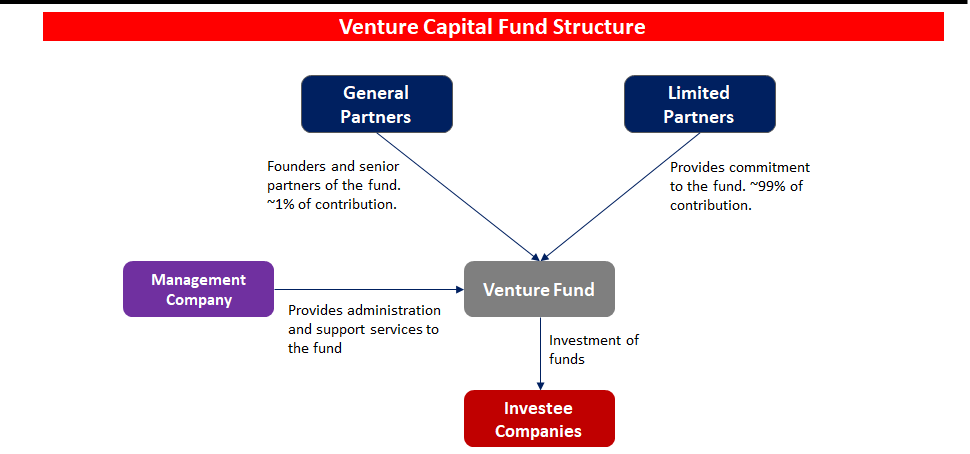
Venture capital funding in the digital health space cooled a bit in 2022 following a red-hot 2021. Overall, digital health companies raised $15.3 billion last year, down from the $29.1 billion raised in 2021—but still above the $14.1 billion raised in 2020, according to Rock Health a seed fund that supports digital health startups.
Nevertheless, analysts predict VC investors and bankers will still put a good amount of money into digital health in 2024 and 2025, especially in alternative care, drug development, health information technology technology, EMRs and software that reduces physician workload.
Of course. an essential first part of attracting VC interest and money is the crafting and presentation of your formal business plan [“elevator pitch”]; as well as the needed technical and managerial experience. This is crucial for success and exactly where we can assist.
Venture capital funding in the digital health space cooled a bit in 2022 following a red-hot 2021. Overall, digital health companies raised $15.3 billion last year, down from the $29.1 billion raised in 2021—but still above the $14.1 billion raised in 2020, according to Rock Health a seed fund that supports digital health startups.
Nevertheless, analysts predict VC investors and bankers will still put a good amount of money into digital health in 2024 and 2025, especially in alternative care, drug development, health information technology technology, EMRs and software that reduces physician workload.
Of course. an essential first part of attracting VC interest and money is the crafting and presentation of your formal business plan [“elevator pitch”]; as well as the needed technical and managerial experience. This is crucial for success and exactly where we can assist.
Posted on August 9, 2023 by Dr. David Edward Marcinko MBA MEd CMP™
RICHARD CAYNE
By Staff Reporters
***
***
SEC money market fund reforms: On July 12, 2023 the SEC released new rules intended to decrease the risk of runs on money market funds (MMFs). MMFs must charge liquidity fees if their daily net redemptions exceed 5% of their net assets, or if their boards deem it necessary, and must maintain a liquidity buffer of at least 25% of their total daily assets and at least 50% of their weekly assets. MMFs are also no longer allowed to use “gates” to temporarily suspend redemption!
In more than 118,000 real transactions at the university bookstore, buyers tended to slap their plastic on the counter for school supplies but pay with cash for “harder-to-justify” items like a stuffed plush mascot. And when asked how they’d pay for a hypothetical Reiki session, participants leaned toward credit card when the treatment was described as doctor-recommended but toward cash when they were told it was just an impulse purchase.
Happy Holidays from the Institute of Medical Business Advisors, Inc
At this special time of year, we give thanks for our clients and our employees, as well as all essential workers in hospitals, health centers and medical practices across the country.
May the holiday spirit be with you and your family throughout the season and everyday We look forward to serving you in 2024.