TRIVIA: After Tax Day 2023?

By Staff Reporters

***

***

  • In 1696, England imposed a tax on windows to extract more revenue from the wealthy (whose houses had more windows). But all it did was incentivize fewer windows in homes and public health deteriorated from the lack of ventilation.
  • People 100 years old and older in New Mexico are exempt from the state’s income tax.
  • In 2009, local officials in China’s Hubei province were required to smoke more cigarettes to boost sales tax collections. They were fined if they didn’t hit their targets.

CITE: https://www.r2library.com/Resource

MORE FUN TRIVIA: https://blog.cheapism.com/fun-tax-facts/

***

***

COMMENTS APPRECIATED

Thank You

***

DAILY UPDATE: 2022 IRA/HSA Contribution Deadline Monday with 2023 Tax Filing Day Tuesday

A LAST MINUTE REMINDER

By Staff Reporters

***

***

Tax Day arrives Tuesday, April 18, 2023 as America’s small businesses are worried their own government will treat them like suspected criminals, even as they hire workers, raise wages and strengthen their communities. And, do not forget that Monday the 17th is the last day deadline for 2022 IRA and HSA contributions.

***

G-7 holds its annual summit in Japan. Ministers from the Group of Seven countries have arrived at a Japanese hot spring resort town for a rejuvenating soak and to discuss the world’s most pressing geopolitical challenges, such as China’s aggression toward Taiwan, the war in Ukraine, and climate change. Japan has ramped up security after an apparent smoke bomb was thrown at the prime minister on Saturday.

More companies report earnings. Investors will be poring over reports from Tesla, Netflix, Bank of America, Goldman Sachs, American Express, and dozens of other firms this week for clues on how corporate America is faring in these confusing economic times.

CITE: https://www.r2library.com/Resource

***

***

CITE: https://www.amazon.com/Dictionary-Health-Information-Technology-Security/dp/0826149952/ref=sr_1_5?ie=UTF8&s=books&qid=1254413315&sr=1-5

***

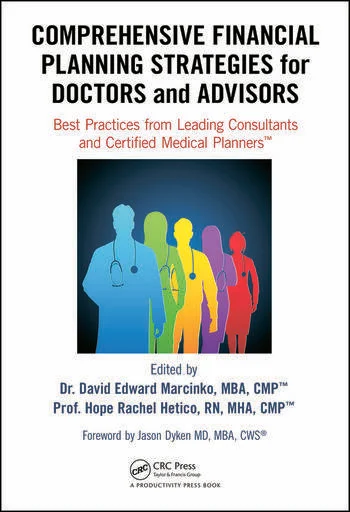
ORDER: https://www.routledge.com/Comprehensive-Financial-Planning-Strategies-for-Doctors-and-Advisors-Best/Marcinko-Hetico/p/book/9781482240283

***

COMMENTS APPRECIATED

Thank You

***

TECH STOCKS UP: Bank Earnings Reports are Next?

By Staff Reporters

***

***

COMMENTS APPRECIATED

Thank You

***

ORDER: https://www.routledge.com/Comprehensive-Financial-Planning-Strategies-for-Doctors-and-Advisors-Best/Marcinko-Hetico/p/book/9781482240283

***

PHYSICIAN SALARY: Pay Gap

By Staff Reporters

***

***

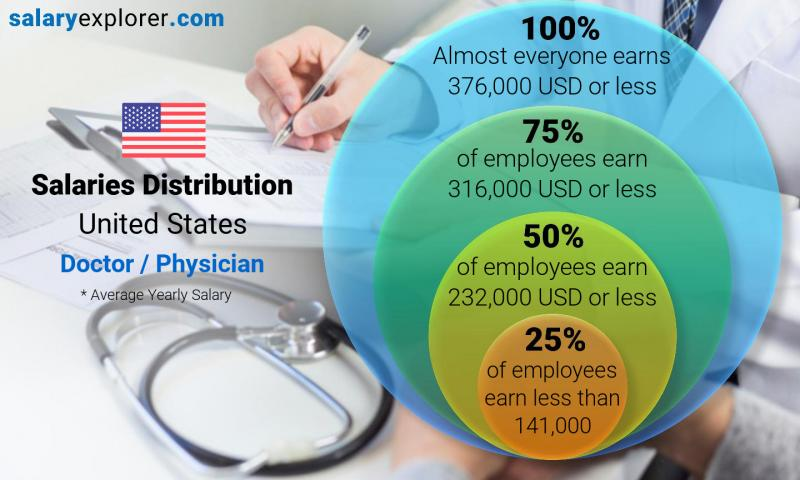
A 2020 analysis of Doximity’s physician compensation data found that men physicians make an estimated $2 million more than women over the course of their careers.

LINK: https://www.statnews.com/2021/12/06/male-female-physician-salaries-gap-2-million-lifetime-earnings/#:~:text=A%20persistent%2025%25%20pay%20gap%20between%20female%20and,for%20specialty%2C%20hours%2C%20location%2C%20and%20years%20of%20experience.

Other findings:

  • Men physicians outearned women physicians by at least 10% across all specialties, except pediatric cardiology (9.2%) and nuclear medicine (3%).
  • Specialties with the largest gender pay gaps were: oral and maxillofacial surgery ($568,789 vs. $395,687), pediatric pulmonology ($282,272 vs. $227,958), allergy and immunology ($329,634 vs. $268,938), urology ($515,850 vs. $424,733), and ophthalmology ($468,515 vs. $387,295).
  • Specialities with the smallest gender pay gaps were: nuclear medicine ($394,231 vs. $382,431), pediatric cardiology ($334,384 vs. $303,622), pediatric gastroenterology ($293,771 vs. $264,135) hematology ($358,736 vs. $320,938), and medicine/pediatrics ($283,034 vs. $253,019).
  • CITE: https://www.r2library.com/Resource/Title/0826102549

***

RELATED: https://medicalexecutivepost.com/2022/01/21/personal-budgeting-for-physician-executives/

CAREERS: https://medicalexecutivepost.com/2022/10/01/careers-and-net-worth/

***
COMMENTS APPRECIATED

Thank You

***

***

OPINIONS: Stock Markets VERSUS Economic Vision?

What is Your Opinion?

By Staff Reporters

***

***

  • Markets: Stocks ran on a treadmill yesterday as investors waited for the high-stakes inflation report to drop this morning. Major cryptocurrencies have emerged as the biggest winners of 2023 so far, and Bitcoin topped $30,000 for the first time in 10 months.
  • Dueling economic visions: Depending on who you ask, the economy is doing just fine…or it’s about to slow down dramatically. Treasury Secretary Janet Yellen said yesterday that “the US economy is obviously performing exceptionally well.” But that’s not obvious at all to the IMF, which predicted weak global growth this year and gave its gloomiest five-year economic forecast since 1990.
  • CITE: https://www.r2library.com/Resource/Title/0826102549

***

COMMENTS APPRECIATED

Thank You

***

ORDER: https://www.routledge.com/Comprehensive-Financial-Planning-Strategies-for-Doctors-and-Advisors-Best/Marcinko-Hetico/p/book/9781482240283

***

FINANCIAL INVESTING RISKS DOCTORS SHOULD KNOW

Types & Definitions

****

Financial Investing risk is any of various types of risk associated with financing, including financial transactions that include company loans in risk of default. Often it is understood to include only downside risk, meaning the potential for financial loss and uncertainty about its extent.

****

See the source image

BY DR. DAVID E. MARCINKO MBA CMP®

CMP logo

SPONSOR: http://www.CertifiedMedicalPlanner.org

Understanding Financial Risk

Although broad investing risks can be quickly summarized as “the failure to achieve spending and inflation-adjusted growth goals,” individual assets may face any number of other subsidiary risks:

  • Call risk – The risk, faced by a holder of a callable bond that a bond issuer will take advantage of the callable bond feature and redeem the issue prior to maturity. This means the bondholder will receive payment on the value of the bond and, in most cases, will be reinvesting in a less favorable environment (one with a lower interest rate)
  • Capital risk – The risk an investor faces that he or she may lose all or part of the principal amount invested.
  • Commodity risk – The threat that a change in the price of a production input will adversely impact a producer who uses that input.
  • Company risk – The risk that certain factors affecting a specific company may cause its stock to change in price in a different way from stocks as a whole.
  • Concentration risk – Probability of loss arising from heavily lopsided exposure to a particular group of counterparties
  • Counterparty risk – The risk that the other party to an agreement will default.
  • Credit risk – The risk of loss of principal or loss of a financial reward stemming from a borrower’s failure to repay a loan or otherwise meet a contractual obligation.
  • Currency risk – A form of risk that arises from the change in price of one currency against another.
  • Deflation risk – A general decline in prices, often caused by a reduction in the supply of money or credit.
  • Economic risk – the likelihood that an investment will be affected by macroeconomic conditions such as government regulation, exchange rates, or political stability.
  • Hedging risk – Making an investment to reduce the risk of adverse price movements in an asset.
  • Inflation risk – The uncertainty over the future real value (after inflation) of your investment.
  • Interest rate risk – Risk to the earnings or market value of a portfolio due to uncertain future interest rates.
  • Legal risk – risk from uncertainty due to legal actions or uncertainty in the applicability or interpretation of contracts, laws or regulations.
  • Liquidity risk – The risks stemming from the lack of marketability of an investment that cannot be bought or sold quickly enough to prevent or minimize a loss.

CITE: https://www.r2library.com/Resource/Title/0826102549

****
YOUR COMMENTS ARE APPRECIATED.

Thank You

FINANCE: https://www.amazon.com/Comprehensive-Financial-Planning-Strategies-Advisors/dp/1482240289/ref=sr_1_1?ie=UTF8&qid=1418580820&sr=8-1&keywords=david+marcinko

***

Risk Management, Liability Insurance, and Asset Protection Strategies for Doctors and Advisors: Best Practices from Leading Consultants and Certified Medical Planners™

Risk Management Textbook: https://www.routledge.com/Risk-Management-Liability-Insurance-and-Asset-Protection-Strategies-for/Marcinko-Hetico/p/book/9781498725989

***

DAILY UPDATE: Easter Sunday Market Wrap-Up

By Staff Reporters

***

***

According to the Financial Times, just 20 stocks account for almost 90 per cent of the US benchmark index’s $2.36tn gains so far this year, as instability in the banking sector has driven down interest rate expectations and boosted the attraction of Big Tech.

CITE: https://www.r2library.com/Resource

Among the big gainers, shares in chip-maker Nvidia have climbed by 83 per cent so far this year, while Facebook owner Meta is up 76 per cent and Salesforce has climbed 42 per cent, underlining the heavy concentration in the world’s most influential stock market. The market value of those and the other 17 best performing stocks in the S&P 500 have surged by $2.05tn in 2023. Apple’s valuation alone has shot up by almost $600bn, or 30 per cent, in the past three months.

And, according to Yahoo Finance, the market capitalization of the other stocks in the index — which is up almost 7 per cent so far in 2023 — has risen just $320bn over the same period.

Finally, according to private equity firm Apollo Global Management and ignoring gains for mega-cap growth stocks, the S&P 500 rose just 1.4 per cent in the first three months of 2023, said UBS.

***

CITE: https://www.amazon.com/Dictionary-Health-Information-Technology-Security/dp/0826149952/ref=sr_1_5?ie=UTF8&s=books&qid=1254413315&sr=1-5

***

ORDER: https://www.routledge.com/Comprehensive-Financial-Planning-Strategies-for-Doctors-and-Advisors-Best/Marcinko-Hetico/p/book/9781482240283

***

COMMENTS APPRECIATED

Thank You

***

PODCASTS: The Evolution Of Stock Markets

By Professor Edward Peter Stringham PhD

***

***

READ/LISTEN HERE: https://www.valuewalk.com/edward-stringham-the-evolution-of-stock-markets/#:~:text=In%20Private%20Governance%2C%20prominent%20economist%20Edward%20Stringham%20presents,that%20fill%20a%20void%20that%20government%20enforcement%20cannot.

***

COMMENTS APPRECIATED

Thank You

***

ORDER: https://www.routledge.com/Comprehensive-Financial-Planning-Strategies-for-Doctors-and-Advisors-Best/Marcinko-Hetico/p/book/9781482240283

***

The Stock Market, The Economy, Possible Outcomes, How to Invest

By Vitaliy Katsenelson, CFA

***

This is part one of the post winter seasonal letter I wrote to IMA clients, sharing my thoughts about the economy and the market. I tried something I’ve never done before. Instead of conveying my message through storytelling, I tried to compress my thoughts into short sentences. I summarized some 50,000 words into about 1,000 (a compression ratio of 50 to 1!). 

READ HERE: https://contrarianedge.com/the-stock-market-the-economy-possible-outcomes-how-to-invest/?utm_source=IMA++-+Main+Articles&utm_campaign=7b4f1d01d6-UBER_MONEY_MANAGER_KIDNAPPED_COPY_01&utm_medium=email&utm_term=0_f1c90406d1-7b4f1d01d6-55139025

***
COMMENTS APPRECIATED

Thank You

***

ORDER: https://www.routledge.com/Comprehensive-Financial-Planning-Strategies-for-Doctors-and-Advisors-Best/Marcinko-Hetico/p/book/9781482240283

***

FDIC: Lifting the Insurance Deposit Cap?

By Staff Reporters

***

Understanding FDIC insurance limits

The FDIC wants to make sure it can cover everyone with a bank account, so to make that happen, it caps how much money it insures. The FDIC says its standard is to cover up to “$250,000 per depositor, per insured bank, for each account ownership category.

CITE: https://www.r2library.com/Resource/Title/082610254

Here’s an example: Let’s say you have $100,000 in your checking account and $150,000 in your savings, all at the same bank. The FDIC classifies those under the same category: single accounts. So you would have hit your FDIC deposit limit. Every additional cent deposited into either account would be uninsured. But if you have money in other banks or other deposit categories, you may have additional coverage.

Could the insured deposit cap get a lift?

At least four US lawmakers—two from each side of the aisle—said they would support raising the cap on FDIC-insured deposits in order to reassure frazzled bank customers that their deposits are safe. The current cap is $250,000 (up from $100k pre-financial crisis), but Democratic Sen. Elizabeth Warren said bumping it up “is a good move.” Opponents of raising the cap say it would only increase risk-taking and bad behavior by banks. Some even argue we should lower it.

COMMENTS APPRECIATED

Thank You

***

ORDER: https://www.routledge.com/Risk-Management-Liability-Insurance-and-Asset-Protection-Strategies-for/Marcinko-Hetico/p/book/9781498725989

***

Libertarian’s (Unexpected) View on the Bailout of the Banking System

By Vitaliy Katsenelson CFA

CLICK PHOTO FOR FULL REPORT

***

CITE: https://www.r2library.com/Resource/Title/082610254

COMMENTS APPRECIATED

Thank You

***

DAILY UPDATE: About the Markets

By Staff Reporters

***

***

Major U.S. stock indexes ended mixed, after the announcement of a surprise OPEC+ production cut sent crude oil prices to two-month highs and fueled inflation concerns that could keep the Federal Reserve in policy-tightening mode. This weekend, several OPEC+ members, including Saudi Arabia, announced production cuts totaling nearly 1.2 million barrels a day that are slated to start in May. In response, WTI crude futures soared above $80 a barrel. Word of the planned cuts also boosted expectations that the Fed could raise its benchmark interest rate again in May as the central bank extends efforts to tamp down inflation. The OPEC+ cuts “suggest more headline inflation pressure in the near-term,” says Jeffrey Kleintop, chief global investment strategist at Charles Schwab & Co. The potential for further waves of inflation will “keep central banks from declaring victory over excessive price gains,” he adds. “That’s another headwind for tech stocks and other ‘long duration’ equities that get more of their cash flow in the future than in the near term.”

CITE: https://www.r2library.com

The following is a round-up of today’s market activity:

  • The S&P 500® Index was up 15.2 (0.4%) at 4124.51, the highest close since Feb. 15; the Dow Jones industrial average was up 327 (1.0%) at 33601.15; the NASDAQ Composite was down 32.45 (0.3%) at 12189.45.
  • The 10-year Treasury yield was down about 7 basis points at 3.417%.
  • CBOE’s Volatility Index was down 0.14 at 18.56.

Oil producers and other energy companies led gainers Monday. Health care stocks also outperformed. Consumer discretionary and real estate were among the laggards.

Among individual stocks, Tesla (TSLA) shares tumbled over 6% following reports the electric car-maker delivered just 423,000 vehicles in the first quarter. Analysts had expected 430,000, according to research firm FactSet.

Looking ahead, medical companies, especially vaccine makers, may be worth watching this week with the World Vaccine Congress taking place in Washington, D.C. Some well-known vaccine makers include Moderna (MRNA), Johnson & Johnson (JNJ), and GlaxoSmithKline (GSK). Late last month, Walgreens Boots Alliance (WBA) reported a steep year-over-year decline in demand for COVID-19 vaccinations.

The U.S. dollar index fell slightly, while gold futures climbed above $2,000 per ounce to post their highest close in over two years.

CITE: https://www.amazon.com/Dictionary-Health-Information-Technology-Security/dp/0826149952/ref=sr_1_5?ie=UTF8&s=books&qid=1254413315&sr=1-5

***

ORDER: https://www.routledge.com/Comprehensive-Financial-Planning-Strategies-for-Doctors-and-Advisors-Best/Marcinko-Hetico/p/book/9781482240283

***

COMMENTS APPRECIATED

Thank You

***

HOW: The ME-P Helps Your Financial Advisory Business or Medical Practice Grow?

All about the Medical Executive-Post Business Model

imba inc

***

One of the questions we receive most often from readers of the Medical Executive-Post is how can we “afford” to give away so much content for free. Or stated another way, “how do we get paid for all of this?”

The simple answer is that we know many (or even most) of you will simply take the ideas that we share and implement them yourself. Do-It-YourSelfers can always simply purchase our texts, books and peer reviewed handbooks redacted in more than a thousand, medical, law, business and graduate schools, as well as the Library of Congress, Institute of Health and Library of Congress.

LINK: https://medicalexecutivepost.com/2021/10/22/why-are-certified-medical-planner-textbooks-so-darn-popular/

On the other hand, some of you will realize you need some additional help.

For example:

Maybe as a financial advisor you’re “stuck” in your financial planning business and recognize that some outside assistance is necessary to help you get to the next level of niche specificity thru our Certified Medical Planner™ chartered certification program designation. Helping physicians of all specialty types in a fiduciary focused manner is the proverbial Win-Win for all concerned.

LINK: http://www.CertifiedMedicalPlanner.org

CMP

CMP logo

OR, perhaps you are seeking a glossary of terms and definitions in heath economics, finance, accounting, insurance, managed care, health information technology and security; found in our Health Dictionary Series Wiki Project? Free and print versions are available.

LINK: http://www.HealthDictionarySeries.org

LINK: https://medicalexecutivepost.com/2011/09/17/order-our-three-newest-best-selling-dictionaries/

HDS

OR, as a doctor maybe your medical practice is growing so much you just hit a wall where you don’t have time to do it all for your patients. After all, with only “so much” time available every day and week, it’s vital to delegate or outsource anything that isn’t really core to your practice and management skill set.

LINK: http://www.MedicalBusinessAdvisors.com

OR, maybe you are even starting, buying or selling your medical practice and need our financial and valuation services. Part (1) – Part (2) – Part (3) Financial, estate, investing and retirement planning services are also available.

OR, you may just need a second informed opinion about a topic not listed; there are a myriad of issues to consider in the competitive ecosystem today.

LINK: https://medicalexecutivepost.com/schedule-a-consultation/

Regardless, we may have solutions to help!


So, in the meantime, I hope that the ME-P content continues to be helpful food for thought, and perhaps we’ll have an opportunity to cross paths soon at a future conferences or podcasts. Feel free to invite us to speak at your own seminar/podcast online V-log, as well.

INVITATION LINK: https://medicalexecutivepost.com/dr-david-marcinkos-bookings/

With warm regards.

Fraternally.
Ann Miller RN MHA CMP

[Managing Director]

email: MarcinkoAdvisors@msn.com

Phone: 770-448-0769

***

***

About Securities “Shelf Registration”

A Primer for Physician Investors and Medical Professionals

By: Dr. David Edward Marcinko; MBA, CMP™

SPONSOR: http://www.CertifiedMedicalPlanner.org

[Editor-in-Chief]

[PART 5 OF 8]

Dr. Marcinko with ME-P Fans

NOTE: This is an eight part ME-P series based on a weekend lecture I gave more than a decade ago to an interested group of graduate, business and medical school students. The material is a bit dated and some facts and specifics may have changed since then. But, the overall thought-leadership information of the essay remains interesting and informative. We trust you will enjoy it.

Introduction

A relatively new method of registration under the Act of ’33 is known as shelf registration. Under this rule, an issuer may register any amount of securities that, at the time the registration statement becomes effective, is reasonably expected to be offered and sold within two years of the initial effective date of the registration. Once registered, the securities may be sold continuously or periodically within 2 years without any waiting period for a registration to clear issuers generally like shelf registration because of the flexibility it gives them to take advantage of changing market conditions.

In addition, the legal, accounting, and printing costs involved in issuance are reduced, since a single registration statement suffices for multiple offerings within the 2 year period. In effect, what the issuer does is register securities that will meet its financing needs for the next 2  years. It issues what it needs at the current time, and puts the balance on the shelf” to be taken off the shelf as needed.

SECURITIES MARKETS 

The purchase of common stock in an IPO (initial public offering) is facilitated through of the members an investment bank underwriting syndicate or selling group. This is known as the primary market and the proceeds of sale go directly to the issuing company. Six months later however, if a doctor wants to sell his shares, this would be accomplished in the secondary market. The term secondary market refers to trading in outstanding issues as the proceeds do not go to the issuer, but to the current owner of the securities, such as the physician investor.

Therefore, the secondary market provides liquidity to doctors who acquired securities in the primary market. After a doctor has acquired securities in the primary market, he wants to be able to sell the securities at some point in the future in order to acquire other securities, buy a house, or go on a vacation. Such a sale takes place in the secondary market. The medical investor’s ability to convert the asset (securities) into cash is heavily dependent upon the secondary market. All investors would be hesitant to acquire new securities if they felt they would not subsequently have the ability to sell the securities quickly at a fair price in the secondary market.

Securities Act of 1934

Every trade of stocks and bonds that is not a purchase of a new issue is a trade that takes place in the secondary market. The market place for secondary trading is the stock exchanges and the over-the-counter (OTC) market, and is governed by the Securities Act of 1934, which actually created the Securities and Exchange Commission (SEC) and outlines the powers of the SEC to interpret, supervise, and enforce the securities laws of the United States. The Act of 34 is very broad and governs the sales of securities, including the regulation of securities markets exchanges, OTC markets, broker/dealers, their employees, the conduct of secondary markets, the extension of credit in the purchase and sale of securities, and the conduct of corporate insiders (officers and directors and holders of more than 10% of the outstanding stock). The Act also prohibits fraud and manipulative and deceptive activities in securities transactions

The Stock Exchanges

A stock exchange is a private association of brokers. The main purpose of an exchange is to provide a central meeting place for its member-brokers. This central meeting place is called the floor. It is on the floor that the members trade in securities. It is important to remember that a stock exchange itself does not own any of the securities that are traded on its floor. Nor does it buy or sell any of the securities traded on the exchange. Instead, the securities are owned by member firms, customers, or perhaps, by the exchange member firm itself.

It is also important to remember that a stock exchange does not establish or fix the price at which any security is traded on the exchange. The price is determined in a free and open auction type of trading. It depends on the supply and  demand relationship of that security at a particular time. In other words, if sellers of a stock are offering to sell more shares of that stock than buyers want to buy, the price of that stock will tend to go down. On the other hand, if buyers want to buy more shares of a stock than the sellers are offering to sell, the price of that stock will tend to go higher because of the strong demand.

Any discussion of stock exchanges has to focus on the NYSE, which is by far the largest and most important of the exchanges. There are two exchanges referred to as national stock exchanges, the NYSE and the American Stock Exchange (AMEX). In addition to these two national exchanges, there are several regional stock exchanges including the Philadelphia Exchange, the Chicago Exchange (formerly Midwest), the Pacific Exchange, the Boston Exchange, and the Cincinnati Exchange. Stocks that are traded on an exchange are referred to as listed stocks. The term “listed on an exchange” means that the issue is eligible for trading on the floor of the exchange.

How does a stock become listed? The issuing company, having decided that they wish the prestige and broad visibility of being listed on the NYSE, applies to the exchange for listing. A critical condition for listing is that the issuer agrees to solicit proxies from those common stock shareholders unable to attend shareholder meetings. Once the securities have been accepted for listing (trading) on an exchange, the issuer must continue to meet certain requirements which are not quite as stringent as the original listing requirements, and may be de-listed if the firm ceases to solicit proxies on its existing voting stock, or meet other minimal requirements.

Physically, the exchange brings together buyers and sellers on a trading floor. The NYSE floor is larger than several football fields and is divided into 19 trading posts. Eighteen of the posts are horseshoe or U-shaped stations 100 square feet in area. The nineteenth post (post number 30) is in the northwest corer and really isn’t a post at all; it’s just an area where the inactive stocks trade.

The Specialist

Specialists are experts in trading one or more specific stocks at their particular post on the exchange floor. Their activity is vital to the maintenance of a free and continuous market in the specific issues they represent. They are responsible for conducting the auction at the post. Everyone interested in buying the stock calls out a price and the shares go to the highest bidder. The buyers compete, but there is only one seller. Unlike the usual auction market, the auction on the floor of the exchange is a two way auction with some brokers seeking to buy at the lowest possible price for their doctor clients and other brokers trying to sell at the highest possible price for their doctor clients. When two brokers, one representing a buyer and one a seller, agree on a price, a sale is made. The specialist functions in a dual capacity as a dealer and as a broker. As a dealer or principal, he buys and sells for his own account and risk to maintain a fair and orderly market in the stocks in which he specializes.

For example, if a commission broker approaches the specialist at the post with a buy or sell order, and there are no other brokers in the crowd, that is currently interested in buying or selling the stock, the specialist will buy the stock from that commission broker (if it’s a sell order) for his own account or sell the stock from his inventory (if it’s a buy order). Perhaps, he may even be able to fill the order from his specialist’s book?

Stock_Market

Specialist’s Book

This is done by using the specialist’s book of buy orders (bids), marked on the left hand page, or sell orders (offers) on the right. There is a book for each stock in which the specialist specializes. The pages are ruled and are usually printed with fractional stock points at regular intervals to permit easy insertion of orders. The orders are entered in the book by the specialist according to price and in the sequence in which they are received at the post. He notes the number of shares, putting down 1 for 100 shares, 2 for 200 shares, etc. He also notes the name of the member firm placing the order and if the order is Good Till Cancelled (GTC), or not. When orders are executed, they are executed in the same order recorded in the book at that particular price.

The specialist’s book also keeps track of all orders “away from the market ” (limit orders and stop orders) in his book. The book is organized with all buy orders on the left hand side of the page and all sell orders on the right hand side. In the absence of bids and offers from the “trading crowd” on the floor, the specialist can quote the best available market for the security by announcing the highest bid and the lowest offer (ask). The best bid is always the highest buy limit order on his book and the best offer (ask) is always the lowest sell limit on his book. In addition to quoting the best price, he will also give the “size of the market ” which is determined by the number of shares being bid for and offered at the respective best bid and best ask prices. The quote is price and size. When asked to quote the market for a security, the specialist disregards any stop orders on his book since those orders do not become activated until triggered by another trade. One thing to remember is that since most doctors place stop orders to hedge (protect) against a price movement adverse to their interests, most stop orders are entered with the fervent wish that they never be executed.

On stop and limit orders placed below the market, the specialist is required to reduce the price of those orders on the ex-dividend (ex-split, ex-rights) date. The two critical things to remember are: what types of orders are reduced and by how much? The specialist will reduce all GTC (open) buy limit and sell stop orders on an ex-date. You may remember this with the acronym BLISS where the BL equals buy limit and the SS equals sell stop. The only time either of these orders will not be reduced is if the medical client turned in DNR (do not reduce) instructions.

The price of the order is then reduced by enough to equal or exceed the amount of the dividend.

If we go back to the example approaching the specialist to buy or sell stock and there is no one in the “crowd”, the specialist will first give the commission broker a quote from his book. That quote will be the highest bid price (the highest priced limit order to buy on his books) and the best asked price {the lowest priced sell limit on his books). If the commission broker is willing to buy at the lowest ask or offering price on the specialist’s book, then a trade will take place; if the commission broker is looking to sell and is willing to accept the highest bid price on the specialist’s book then, again, a trade will take place. It is the responsibility of the specialist to maintain an orderly market and to keep the spread between the bid and asked prices as narrow as possible. If the spread between bid and asked is too wide to generate market activity, the specialist will act on his own account.

If the specialist is presented with sell orders at the post and he has no buyers, he must bid at least 1/8 of a point higher than the best bid on his books. If he has buyers and no sellers, then he must offer stock from his inventory at a price at least, 1/8 of a point below the lowest offer on his book.

Why? It’s because the specialist cannot “compete” with public orders and if his bid matched a customer’s bid or his offer matched a customer’s offering or ask price, he would be considered to be ” competing”.  Since the specialist is required to bid higher and ask lower than the best public orders on his book, the spread is narrowed. That is why it is said that the specialist acts in a dual capacity, as a dealer and as a broker. When buying and selling for his own account, he is acting as a dealer. The specialist acts as a broker when he executes limit orders left with him by commission brokers. When these limit orders are executed out of the specialist’s book (the doctor’s limit price is reached), the specialist uses a priority, parity, and precedence system, as to which order is executed first. These rules, like most others, are designed to give preference to the general public, not to members of the exchange, on a first come first served basis.

Walking Through a Trade

To see how the transactions are actually handled on the floor of an exchange, let us assume that an order to buy 100 shares of General Electric has been given by a doctor customer to the registered representative (stock broker), of a member firm in Atlanta. The order is a market order (an order to buy at the lowest possible price at the time the order reaches the floor of the exchange). This order is telephoned by direct wire, or computer, to the New York office of the member firm, which in turn telephones its order to its clerk on the floor of the exchange.

Each member firm has at least one member of the exchange representing them making trades on the floor. Each one of these members is assigned a number for identification. When the floor clerk receives the order to purchase the General Electric, he causes his member’s call number to appear on 3 large boards situated so that one is always in view. These boards are constantly watched brokers so that they will know when wanted at the phone, since there’s too much noise on the floor to use a paging system. Seeing his number on the board, the broker hurries to his telephone station or cell phone and receives the order to buy 100 shares of G.E. “at the market”. Acting as a commission broker, he immediately goes to the post where G.E. is traded and asks “how’s G.E”, of the specialist?

Part 4: Underwriting US Government Securities Issues

Conclusion

Your thoughts and comments on this ME-P are appreciated. Feel free to review our top-left column, and top-right sidebar materials, links, URLs and related websites, too. Then, subscribe to the ME-P. It is fast, free and secure.

Link: http://feeds.feedburner.com/HealthcareFinancialsthePostForcxos

Speaker: If you need a moderator or speaker for an upcoming event, Dr. David E. Marcinko; MBA – Publisher-in-Chief of the Medical Executive-Post – is available for seminar or speaking engagements. Contact: MarcinkoAdvisors@msn.com

OUR OTHER PRINT BOOKS AND RELATED INFORMATION SOURCES:

LEXICONS: http://www.springerpub.com/Search/marcinko

PHYSICIANS: www.MedicalBusinessAdvisors.com

PRACTICES: www.BusinessofMedicalPractice.com

HOSPITALS: http://www.crcpress.com/product/isbn/9781466558731

CLINICS: http://www.crcpress.com/product/isbn/9781439879900

ADVISORS: www.CertifiedMedicalPlanner.org

BLOG: www.MedicalExecutivePost.com

Product DetailsProduct DetailsProduct Details

Product Details  Product Details

Product DetailsProduct Details

Product Details

DAILY UPDATE: Charles Schwab and the Major Market Indices

By Staff Reporters

***

***

Analysts at Morgan Stanley downgraded Charles Schwab Corp (NYSE: SCHW) on Tuesday, citing concerns over cash sorting and regulatory changes. But, Schwab CEO Walt Bettinger recently said that the company’s banking unit had enough liquidity to cover if 100% of its bank deposits ran off without having to sell a single security — Morgan Stanley says otherwise. Schwab’s recent performance has not been up to Morgan Stanley’s expectations, with customers moving cash out of sweep accounts into money market funds at a rate twice that which the bank had been modeling.

CITE: https://www.r2library.com/Resource/Title/082610254

***

Here’s how the major indexes performed Thursday.

  • The S&P 500® Index rose 23 points (0.57%) to 4050.84; the Dow Jones industrial average was up 141 points (0.43%) at 32859.03; the NASDAQ Composite was up 87 points (0.73%) at 12013.47.
  • The 10-year Treasury yield slipped 2 basis points to 3.555%.
  • CBOE’s Volatility Index was little changed at 19.14.

***

ORDER: https://www.routledge.com/Comprehensive-Financial-Planning-Strategies-for-Doctors-and-Advisors-Best/Marcinko-Hetico/p/book/9781482240283

***

COMMENTS APPRECIATED

Thank You

***

Understanding Financial Broker and Advisor Licenses

Image result for sec

Series #65 VS Series #7

By Dr. David Edward Marcinko MBA

When I am approached by a prospective client, the question they always ask without fail is “Are you properly licensed?” This is actually the wrong question to ask. The right question should be, “Which license do you have?”

The Types of Licenses

Generally, there are two types of licenses for people who call themselves a “financial advisor.” People who passed the series #65 test and people who passed the series #7 test. The nature of these two licenses is as far apart as heaven and earth.

The Securities License

Series #7 is a securities license. People who have passed this test can legally be a stock-broker. They are actually prohibited by law to give financial advice, except incidental to the financial products they are selling.

A financial advisor with a series #7 license can receive third party payments like kickbacks, commissions etc in conjunction with the products they sell you. They are not required to put your interest first as they are not your fiduciary. Legally they abide by a much lenient “suitability standard.” That is, if they think the product is suitable for you, irrespective of the cost, they are legally off the hook.

All of Morgan Stanley, Merrill Lynch and other Wall Street firms’ financial advisors are required to pass the series 7# license.

The Advisor License

Series #65 is an advisor license. People who have passed this test are legally called registered investment advisors or RIA representative. An RIA representative’s compensation is in the form of fees paid directly by the client. He or She is prohibited to receive any third party payment unless disclosed to and approved by the client first.

###

Wall Street

###

Assessment

When searching for a financial advisor, it’s crucial to find out what licensure he or she has. Do not use a stock-broker as your financial advisor – unless you’re in the habit of letting you friendly neighborhood used car salesman hand pick your vehicle purchases.

More:

Conclusion

Your thoughts and comments on this ME-P are appreciated. Feel free to review our top-left column, and top-right sidebar materials, links, URLs and related websites, too. Then, subscribe to the ME-P. It is fast, free and secure.

Speaker: If you need a moderator or speaker for an upcoming event, Dr. David E. Marcinko; MBA – Publisher-in-Chief of the Medical Executive-Post – is available for seminar or speaking engagements. Contact: MarcinkoAdvisors@msn.com

OUR OTHER PRINT BOOKS AND RELATED INFORMATION SOURCES:

Comprehensive Financial Planning Strategies for Doctors and Advisors: Best Practices from Leading Consultants and Certified Medical Planners(TM)

The DENTA-VERSE [A Dental Web 3.0 & Virtual Reality Community

Connecting the future of dentistry in 3D

By Staff Reporters

***

***

Dentaverse was born in the heart of Europe between young professionals. A combination of Dental, Finance, 3D and web professionals coming together to connect dental dots. In doing so Dentaverse has grown in to a deep integration of dental know-how and innovative technologies like: Metaverse (VR), blockchain, web3 tech and education.

Accelerating personal and professional growth by connecting dental students, universities, professionals and suppliers in virtual reality.

WEBSITE: https://www.dentaverse.io/

Related: Google Health rolls out new tech offerings to improve access to care, health outcomes

***

COMMENTS APPRECIATED

Thank You

***

ORDER: https://www.amazon.com/Dictionary-Health-Information-Technology-Security/dp/0826149952/ref=sr_1_5?ie=UTF8&s=books&qid=1254413315&sr=1-5

***

PODCAST: Doctor MEDICAL Specialty Rankings

The R.O.A.D. to Happiness?

By Eric Bricker MD

***

***
COMMENTS APPRECIATED

Thank You

***

***

ORDER: https://www.amazon.com/Business-Medical-Practice-Transformational-Doctors/dp/0826105750/ref=sr_1_9?ie=UTF8&qid=1448163039&sr=8-9&keywords=david+marcinko

CITE: https://www.r2library.com/Resource/Title/082610254

***

Socially Responsible and ESG Investing!

S.R.I.

[By Rick Kahler CFP®]

The concept of socially responsible investing is far from new; the first SRI fund appeared in 1952. Since then, these funds have used social and ethical screens to exclude companies selling products like tobacco, alcohol, or firearms.

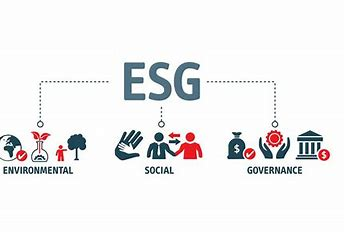
You may not have heard of the next generation of SRI funds, called ESG funds, which means environmental, social and governance funds. Social responsibility is just one-third of the expanded focus of these funds, which also look to include companies that are sensitive to the environment and have more holistic corporate governance.

Updates

In recent years, ESG investing has exploded. According to a July 11, 2018, article in Forbes, The Remarkable Rise of ESG, by Georg Kell, over $20 trillion is invested in ESG funds. This accounts for 25% of all the professionally managed assets in the world. There are currently 275 ESG mutual funds and ETF’s from which to choose.

Yet one facet of investing in ESG funds is widely misunderstood. While ESG investing may help you feel better about yourself, it does not actually impact or hamper the companies you choose not to own.

This may come as a surprise to many ESG investors, who commonly believe that by not owning the shares of an offensive company they are restricting the flow of capital to that company, thereby imperiling its existence. For the most part, that isn’t the case.

The offenders

Listed among the worst offending companies by several ESG organizations are Philip Morris, WalMart, Tyson Foods, Pepsi Corporation, Coca-Cola, and Chevron. No dedicated ESG investors would have these companies in their portfolios. None of these companies would care or be hurt in the least if you didn’t own any of their shares.

Why?

The only time a company benefits from a sale of stock is when the company initially goes public (called an initial public offering, or IPO) or issues additional new shares to raise capital. These are actually fairly rare events.

Most stocks are bought and sold in the “secondary” market through exchanges like the New York Stock Exchange. These platforms facilitate transactions between individuals or institutions wanting to buy or sell shares in a company. The money moves between the buyer and the seller; none of the money goes to the company.

Another way companies receive funding to support their ventures is to borrow money from investors. This is called issuing a bond and is similar to an IPO, only the investor receives a promise from the company to pay them back at some future date and receives interest on the loan in the meantime.

Just like stocks, bonds are only issued by a company once. From then on, buying and selling bonds is done on the open market, and none of the money paid or received goes to the company.

So if you want to punish a company, don’t buy stocks or bonds it issues directly. Otherwise, excluding its shares from your portfolio has no effect on the company’s profits or cash flow.

***

big

***

Assessment

But if no one bought a company’s shares on the secondary market, wouldn’t that have an impact? Yes, it most certainly would. If the demand for the shares of a company dried up, the company’s stock price would plummet.

The problem is the demand for the shares of these companies isn’t going away as long as they remain profitable. If 25% of investors purchase ESG funds,  that leaves 75% of the market willing to buy these companies. This includes the 20% of stocks owned by passive index funds, which own the entire market.

CONCLUSION

Your thoughts and comments on this ME-P are appreciated. Feel free to review our top-left column, and top-right sidebar materials, links, URLs and related websites, too. Then, subscribe to the ME-P. It is fast, free and secure.

Speaker: If you need a moderator or speaker for an upcoming event, Dr. David E. Marcinko; MBA – Publisher-in-Chief of the Medical Executive-Post – is available for seminar or speaking engagements.

Book Marcinko: https://medicalexecutivepost.com/dr-david-marcinkos-bookings/

Subscribe: MEDICAL EXECUTIVE POST for curated news, essays, opinions and analysis from the public health, economics, finance, marketing, IT, business and policy management ecosystem.

DOCTORS:

“Insurance & Risk Management Strategies for Doctors” https://tinyurl.com/ydx9kd93

“Fiduciary Financial Planning for Physicians” https://tinyurl.com/y7f5pnox

“Business of Medical Practice 2.0” https://tinyurl.com/yb3x6wr8

HOSPITALS:

“Financial Management Strategies for Hospitals” https://tinyurl.com/yagu567d

“Operational Strategies for Clinics and Hospitals” https://tinyurl.com/y9avbrq5

***

Risk Management, Liability Insurance, and Asset Protection Strategies for Doctors and Advisors: Best Practices from Leading Consultants and Certified Medical Planners™8Comprehensive Financial Planning Strategies for Doctors and Advisors: Best Practices from Leading Consultants and Certified Medical Planners™

ESG Investing: Not So Hot … Anymore?

By Staff Reporters

Environmental, Social, and Corporate Governance

Florida is pulling $2 billion from BlackRock in the largest divestment ever made as part of the growing vendetta against Environmental, Social, and Governance (ESG) investing practices. Florida Governor Ron DeSantis and other Republican leaders claim that by taking ESG standards into account when making investment decisions, the firm isn’t prioritizing the bottom line. But, for a few years, things were good. In 2020 and 2021, ESG funds outperformed the market by ~4.3%.

DEFINITION: According to Wikipedia, ESG (environmental, social, and corporate governance) data reflect the externalities (costs to others) an organization is generating with respect to the environment, to society and to corporate governance. ESG data can be used by investors to assess the material risk the organization is taking and by the organization itself as metrics for strategic and managerial purposes. Investors may also use ESG data beyond assessing material risks to the organization in their evaluation of enterprise value, specifically by designing models based on assumptions that the identification, assessment and management of sustainability-related risks and opportunities in respect to all organizational stakeholders leads to higher long-term risk-adjusted return. Organizational stakeholders include but not limited to customers, suppliers, employees, leadership, and the environment.

CITE: https://www.r2library.com/Resource/Title/082610254

Since 2020, there has been accelerating interest in overlaying ESG data with the Sustainable Development Goals (SDGs), developed based on work by United Nations beginning in the 1980s.

LINK: http://www.ESG.org

The term ESG was popularly used first in a 2004 report titled “Who Cares Wins”, which was a joint initiative of financial institutions at the invitation of UN. In less than 20 years, the ESG movement has grown from a corporate social responsibility initiative launched by the United Nations into a global phenomenon representing more than US$30 trillion in assets under management. In the year 2019 alone, capital totaling US$17.67 billion flowed into ESG-linked products, an almost 525 percent increase from 2015, according to Morningstar, Inc.. Critics claim ESG linked-products have not had and are unlikely to have the intended impact of raising the cost of capital for polluting firms, and have accused the movement of greenwashing.

PODCAST: https://medicalexecutivepost.com/2022/10/10/podcast-what-is-financial-green-washing/

Now All Mad

DeSantis ran his most recent campaign on fighting the “woke ideology” he believes is infiltrating the state. As part of the fight, Florida passed a resolution in August that said ESG standards should be ignored when investing state funds.

And he’s not the only one:

  • Other Republican-controlled states, including Missouri and Louisiana, have moved almost $1.3 billion away from BlackRock for similar reasons.
  • Texas flagged BlackRock as a financial firm that boycotts the state’s energy industry (something BlackRock has denied).

Meanwhile, Democrats aren’t happy either…they criticize BlackRock and ESG investing in general for not going far enough (and for using lax standards that let oil giants onto lists of ESG investments).

Bottom line: According to the Morning Brew, BlackRock and Florida are now cursed to yell “How could you prioritize politics over returns?” back and forth for eternity, and the debate over ESG investing is far from over. Republicans are poised to take over the House—after a campaign season that BlackRock poured record cash into—so we’re likely to see more drama play out at the federal level soon.

***

COMMENTS APPRECIATED

Thank You

***

ORDER: https://www.routledge.com/Comprehensive-Financial-Planning-Strategies-for-Doctors-and-Advisors-Best/Marcinko-Hetico/p/book/9781482240283

***

CRYPTO WINTER: A Triad Devastating to Miners?

Tim Berners-Lee of the WWW

By Staff Reporters

***

***

* Profits are down, and they’re set to plummet even further. (Wired $)
* A hedge fund that invested heavily in FTX is shutting down. (FT $)
* Tim Berners-Lee thinks crypto is comparable to gambling. (CNBC)

***

COMMENTS APPRECIATED

Thank You

***

ORDER: https://www.amazon.com/Dictionary-Health-Information-Technology-Security/dp/0826149952/ref=sr_1_5?ie=UTF8&s=books&qid=1254413315&sr=1-5

***

What to Expect After the Silicon Valley Bank [SVB] Collapse

By CFA

***

***

Over the past decade, the Federal Reserve has manipulated asset prices by interfering with free markets by deciding what both short-term and long-term interest rates should be. This resulted in an increase in risk-taking behavior among investors.

CITE: https://www.r2library.com/Resource/Title/08

Risk became a four-letter word uttered only by curmudgeons; the only thing investors feared was being left out. The more risk you took, the more money you made – until you lost it all.

RISK: https://www.routledge.com/Risk-Management-Liability-Insurance-and-Asset-Protection-Strategies-for/Marcinko-Hetico/p/book/9781498725989

READ: Silicon Valley Bank’s Downfall: A Cautionary Tale of What’s to Come

COMMENTS APPRECIATED

Thank You

***

RIP: Intel Co-Founder Gordon Moore, 94

By Dr. David Edward Marcinko MBA

***

***

Gordon Earle Moore (January 3, 1929 – March 24, 2023) was an American businessman, engineer, and the co-founder and emeritus chairman of Intel Corporation. He proposed Moore’s law, the observation that the number of transistors in an integrated circuit (IC) doubles about every two years

A childhood hero of mine. Although I was never a “fair”child.

READ: https://www.paloaltoonline.com/news/2023/03/24/gordon-moore-co-founder-of-intel-and-a-philanthropist-who-donated-billions-dies

***

COMMENTS APPRECIATED

Thank You

***

ORDER: https://healthcarefinancials.wordpress.com/wp-admin/post.php?post=291615&action=edit

***

DAILY UPDATE: Jack Dorsey, Deutsche Bank and the Markets

By Staff Reporters

***

***

Short seller Hindenburg Research has hit another billionaire’s fortune with a report. Jack Dorsey, the co-founder of payments company Block and Twitter, saw his net worth tumble by $526 million, or 11%, to $4.4 billion after the US-based research firm led by Nathan Anderson accused Block of misleading investors in a March 23 report, according to Bloomberg. Dorsey isn’t on the list of the world’s 500 richest persons on the Bloomberg Billionaires Index currently. He was previously featured at number 456 with a net worth of $5.41 billion on March 22nd, per Insider’s scan of the Index on Wednesday.

***

Investors sparked a furious selloff in Deutsche Bank AG and thrust one of Europe’s most important lenders into the center of concerns about the health of the global financial system. Shares of Germany’s largest lender tumbled as much as 15%, their third consecutive day of losses, though they later regained some ground and were recently down 10%. The cost to insure against its default using credit-default swaps soared to their highest levels since 2020.

***

Chairman Jerome Powell was ambiguous this week about future Federal Reserve moves, suggesting “some additional policy firming may be needed.”

Treasury yields dropped near seven-month lows, a seeming indication of escalating recession worries after the Fed raised its benchmark lending rate nine times to a range of 4.75% to 5% over the past year. The release next week of updated data on consumer confidence, inflation, and economic growth will likely be in focus.

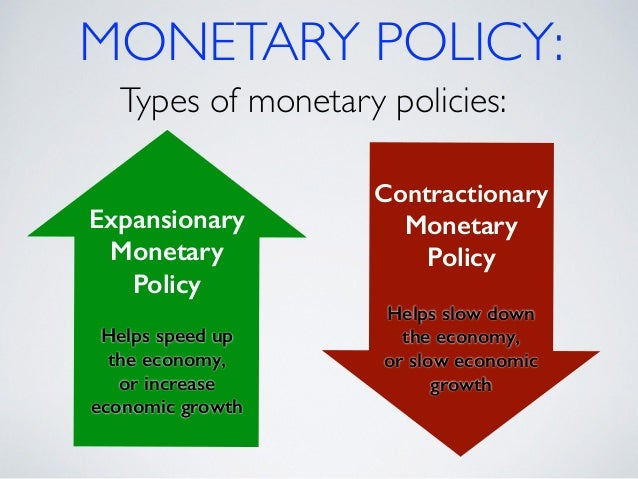
Monetary Policy: https://medicalexecutivepost.com/2023/03/17/the-modern-us-monetary-system/

The swings in stock prices this week “were consistent with the unclear outlook for monetary policy, the banking system, and the broader economy,” says Kevin Gordon, senior investment strategist at Charles Schwab. “More time needs to pass before we know the true impact of the expected tightening in credit conditions.”

  • The S&P 500® Index was up 22.27 (0.6%) at 3970.99; the Dow Jones industrial average was up 132.28 (0.4%) at 32,237.53; the NASDAQ Composite was up 36.56 (0.3%) at 11,823.96.
  • The 10-year Treasury yield was little changed at about 3.374%.
  • CBOE’s Volatility Index was down 0.87 at 21.74.

The real estate sector led the gainers Friday, followed by consumer staples and health care. Financials and consumer discretionary stocks edged lower, and technology stocks were little changed, though the tech-focused NASDAQ Composite still notched its second straight weekly gain. Gold and crude oil futures both declined, while the U.S. dollar strengthened.

***

ORDER: https://www.routledge.com/Comprehensive-Financial-Planning-Strategies-for-Doctors-and-Advisors-Best/Marcinko-Hetico/p/book/9781482240283

***

COMMENTS APPRECIATED

Thank You

***

First Republic and Silicon Valley Banks are NOT Microsoft!

By Staff Reporters

***

***

Wall Street’s $30 billion infusion into First Republic Bank didn’t manage to calm investors’ jitters about how banks are holding up. The regional bank’s stock tanked again Friday, dragging most of the market down with it. Moody’s Investors Service downgraded its credit rating on First Republic Bank to junk, citing a “deterioration in the bank’s financial profile.” First Republic’s debt rating was cut to B2 from Baa1, Moody’s said. Fitch Ratings and S&P Global Ratings downgraded First Republic Bank’s debt earlier this week.

The downgrade reflects “the deterioration in the bank’s financial profile and the significant challenges First Republic Bank faces over the medium term in light of its increased reliance on short-term and higher cost wholesale funding due to deposit outflows,” Moody’s analysts said in a release.

And, SVB’s parent company filed for Chapter 11 bankruptcy yesterday, buying it time to pay off creditors and making it easier to sell off its assets (but the bank itself, currently in the hands of the FDIC, isn’t part of the filing). Meanwhile, President Biden called on Congress to make it easier to punish bank executives if their mismanagement causes a bank to collapse, including allowing regulators to claw back their pay.

***

But Big Tech stocks got a boost from investors looking to park their cash in non-bank companies, pushing Microsoft to its best weeks in almost eight years.

CITE: https://www.r2library.com/Resource/Title/0826102549

***

COMMENTS APPRECIATED

Thank You

ORDER: https://www.routledge.com/Risk-Management-Liability-Insurance-and-Asset-Protection-Strategies-for/Marcinko-Hetico/p/book/9781498725989

***

FOMC Hikes Interest Rates 0.25%

BREAKING NEWS!

By Staff Reporters

***

***

Dateline: WASHINGTON—The Federal Reserve raised its key short-term interest rate by a quarter percentage point today, pushing ahead with its aggressive campaign to tame inflation despite financial turmoil following Silicon Valley Bank’s collapse.

FOMC officials forecast another quarter point in rate increases this year to a peak range of 5% to 5.25%, in line with its December estimate and lower than the level markets anticipated before SVB’s meltdown.

In a statement after a two-day meeting, the Fed acknowledged recent strains in the nation’s banks and said they will soften the economy but added the financial system is stable.

CITE: https://www.r2library.com/Resource/Title/0826102549

***

COMMENTS APPRECIATED

Thank You

***

ORDER: https://www.routledge.com/Comprehensive-Financial-Planning-Strategies-for-Doctors-and-Advisors-Best/Marcinko-Hetico/p/book/9781482240283

***

Why are CERTIFIED MEDICAL PLANNER® Textbooks So DARN Popular?

[By Dr. David Edward Marcinko MBA CMP®]

http://www.CertifiedMedicalPlanner.org

OK – I was a Certified Financial Planner® before my academic team launched the Certified Medical Planner™ online and on-ground chartered education and board certification designation program a few years ago. I am now CFP reformed and in remission.

MORE: Enter CPMs

Enter the Certified Medical PlannerChartered Designation

Today, we are of course, gratified that Certified Medical Planner™ mark notoriety is growing organically in the healthcare, as well as financial services, industry.

Even uber-blogger Mike Kitces MSFS, MTAX, CFP, CLU, ChFC, RHU, REBC, CASL has taken note of us in his musings on the Nerd’s Eye View website. And, the reality is that there are a growing number of CFP educational programs at the post-CFP niche market level.

But, none for healthcare industrial complex: for doctors … by doctors!

Popularity of our Text Books

However, it is our modern, innovative and proprietary Certified Medical Planner™ textbooks and dictionaries that have exploded in the academic marketplace.

In fact, they are now redacted in thousands of medical, graduate, law and B-schools and libraries, as well as colleges and universities throughout the nation. This includes the Library of Congress, National Institute of Health and  the Library of Congress.

What Gives?

We have been told that this textbook popularity and publishing success is because of their balanced and peer-reviewed nature; something not very widespread in the financial services industry that is prone to gross and overstated advertising, salesmanship and marketing hyperbole. And, for this we are very gratified.

But, is there another reason our books are so popular?

A bit of networking and research suggests that interested folks may be eschewing the actual course work in favor of just the high quality textbooks! UGH!

Another reason may be that our books and curricula are kept fresh and updated on our corporate website: http://www.MedicalBusinessAdvisors.com

Assessment

So, what do you think? Matriculation with the professional mark versus self study without the designation mark. Please opine.

Conclusion

Your thoughts and comments on this ME-P are appreciated. Feel free to review our top-left column, and top-right sidebar materials, links, URLs and related websites, too. Then, subscribe to the ME-P. It is fast, free and secure.

Speaker: If you need a moderator or speaker for an upcoming event, Dr. David E. Marcinko; MBA – Publisher-in-Chief of the Medical Executive-Post – is available for seminar or speaking engagements.

Book Marcinko: https://medicalexecutivepost.com/dr-david-marcinkos-bookings/

Subscribe: MEDICAL EXECUTIVE POST for curated news, essays, opinions and analysis from the public health, economics, finance, marketing, IT, business and policy management ecosystem.

DOCTORS:

“Insurance & Risk Management Strategies for Doctors” https://tinyurl.com/ydx9kd93

“Fiduciary Financial Planning for Physicians” https://tinyurl.com/y7f5pnox

“Business of Medical Practice 2.0” https://tinyurl.com/yb3x6wr8

Risk Management, Liability Insurance, and Asset Protection Strategies for Doctors and Advisors: Best Practices from Leading Consultants and Certified Medical Planners™  Comprehensive Financial Planning Strategies for Doctors and Advisors: Best Practices from Leading Consultants and Certified Medical Planners™

Product DetailsProduct Details

HOSPITALS:

“Financial Management Strategies for Hospitals” https://tinyurl.com/yagu567d

“Operational Strategies for Clinics and Hospitals” https://tinyurl.com/y9avbrq5

Product DetailsProduct Details

Adult Learners and Students:

Product DetailsProduct DetailsProduct Details

***