NATIONAL: Endometriosis Awareness Day 2023

MARCH FIRST

By Staff Reporters

***

***

Endometriosis Awareness Day is observed on March 1st, during Endometriosis Awareness Month.

Endometriosis is an inflammatory condition that occurs in women when tissue starts growing outside the uterus. This tissue is the same as that which lines the womb internally. While there are many studies now on this condition, there is still no cure, and awareness is a huge problem. The month, and day, are dedicated to raising awareness and promoting research to find a cure for Endometriosis.

They are also aimed at addressing the stigma that comes with Endometriosis in the form of infertility.

READ:https://endometriosisassn.org/

***

COMMENTS APPRECIATED

Thank You

***

ORDER: https://www.amazon.com/Dictionary-Health-Insurance-Managed-Care/dp/0826149944/ref=sr_1_4?ie=UTF8&s=books&qid=1275315485&sr=1-4

***

CITE: https://www.r2library.com/Resource/Title/082610254

***

Medical Managed Care IBNR Accounting Claims

DR. DAVID E. MARCINKO MBA

http://www.CertifiedMedicalPlanner.org

eTax Savings Strategies

Claim Anatomy - ipitome

[By Ana Vassallo] AND [Dr. David E. Marcinko MBA]

Managed Care Organizations (MCOs) that accept capitated risk contracts face a potentially significant tax burden for Incurred but Not Reported (IBNR) claims. It is not uncommon that IBNR claims at the end of a reporting period equal one to two months premiums for MCOs under a fee-for-service model. The Internal Revenue Service (IRS) has taken a very strong position relative to the deductibility of these claims by saying that an MCO cannot deduct such losses if they are based on estimates.

Incurred But Not Reported [IBNR] Claims

IBNR is a term that refers to the costs associated with a medical service that has been provided, but for which the carrier has not yet received a claim. The carrier to account for estimated liability based on studies of prior lags in claim submission records IBNR reserves. In capitated contracts, MCOs are responsible for IBNR claims of their enrollees (Kennedy, 1). 

For example, if an enrollee is treated in an emergency room, a plan may not know it is liable for this care for at least 30-60 days. Well-run plans devote considerable attention to accurately estimating such claims because a plan can look healthy based on claims submitted and be financially unhealthy if IBNR claims experience is increasing substantially but is unknown.

Why a Problem for HMO’s/MCOs 

Section 809(d)(1) of the Code provides that, for purposes of determining the gain and loss from operations, a insurance company shall be allowed a deduction for all claims and benefits accrued, and all losses incurred (whether or not ascertained), during the taxable year on insurance and annuity contracts.  Section 1.809-5(a) (1) of the Income Tax Regulations provides that the term “losses incurred (whether or not ascertained)” includes a reasonable estimate of the amount of the losses (based upon the facts in each case and the company’s experiences with similar cases) incurred but not reported by the end of the taxable year as well as losses reported but where the amount thereof cannot be ascertained by the end of the year. By taking into account for its prior years only the reported losses but not the unreported losses, the taxpayer has established a consistent pattern of treating a material item as a deduction. The effect of the taxpayer’s claim for the first time of a deduction for an estimate of losses incurred but unreported under section 809(d)(1) of the Code, was to change the timing for taking the deduction for the incurred but unreported losses.

Due to the taxpayer consistently deducting losses incurred in the taxable year in which reported, a change in the time for deducting losses incurred under section 809(d)(1) is a change in the method of accounting for such losses to which the provisions of section 446(e) apply (IRS, 14-30). 

In order to qualify for an insurance company under the current IRS regulations, the MCO must have the following criteria (Kongstvedt, 235-256):

· At least 50% of the MCO must come from insurance related activities.

· The MCO must have an insurance company license.

If an MCO did not have these two criteria, the IRS will not deem the manage care company as an eligible insurance company.  Therefore, the MCO would not be able to file for IBNRs with the IRS.

How MCOs/HMOs Intensify IBRN Claims

There is a high degree of uncertainty inherent in the estimates of ultimate losses underlying the liability for unpaid claims.  The only reason the IRS would not allow an MCO to deduct IBNR because the financial statements is based on an estimate (IRS, 134-155).

Except through the insurance company exclusion IRS does not allow any taxpayer to deduct losses based on estimates. There has been some precedence set that the IRS will accept an amount for incurred but not reported claims if the amount is supported by valid receipts of claims that the company has in-house prior to the filing of the tax return.

There has been some controversy as to how long of a period of reporting time the IRS will allow you to include in those estimates. There are ranges from 3-6 months to file a claim (IRS, 137). The process by which these reserves are established requires reliance upon estimates based on known facts and on interpretations of circumstances, including the business’ experience with similar cases and historical trends involving claim payment patterns, claim payments, pending levels of unpaid claims and product mix, as well as other factors including court decisions, economic conditions and public attitudes.

There has been no clear indication from the IRS that it will accept an accrual for these losses and entities. Therefore, companies deducting such losses may eventually find themselves in a position where the IRS may challenge the relating deductibility of those losses.

Product DetailsProduct DetailsProduct Details

Evaluating IBNRs from a New Present Value Perspective

The best measure of whether or not a stream of future cash flows actually adds value to the organization is the net present value (NPV).  The best decision rule for NPV to accept or reject a decision problem is if the NPV is greater than zero, the project adds value to the organization.  Although – if the NPV is exactly zero it neither adds nor subtracts value from the organization (McLean 193).  In either case, the project is acceptable.  In addition, if the NPV is less than zero, the project subtracts value from the organization and should not be undertaken (McLean, 193).

The provision for unpaid claims represents an estimate of the total cost of outstanding claims to the year-end date. Included in the estimate are reported claims, claims incurred but not reported and an estimate of adjustment expenses to be incurred on these claims. The losses are necessarily subject to uncertainty and are selected from a range of possible outcomes (Veal, 11). During the life of the claim, adjustments to the losses are made as additional information becomes available. The change in outstanding losses plus paid losses is reported as claims incurred in the current period.

All but the smallest organizations have predictable and unpredictable losses. It is important mentally to separate the two since predictable losses are not risks but normal business expenses. Risk is the degree to which losses vary from the expected. If losses average $85,000 per year but could be as much as $20 million, the risk is $20 million minus $85,000. The $85,000 figure represents reasonably predictable losses (Veal, 12).

IBNR Challenges and Solutions

While I was unable to find an actual amount of the cost of the penalties that can be incurred, the IRS is able to impose penalty fees under Section 4958 of the IRS code (IRS, 255). While penalties differ depending on individual bases, MCOs will be penalizing for any misconduct either by IRS Codes or Court Jurisdiction.

It is prudent that MCOs ensure their organization that they will not incur a financial “meltdown”. They further need to ensure IBNR is funded for period of at least 2-3 months. In some states, the state laws make the MCO financially responsible to pay the providers for a second time if the intermediary fails to pay or becomes insolvent (Cagle, 1).

Paid losses, paid expenses and net premiums are usually deductible; reserves for incurred-but-unpaid losses generally are not, unless the taxpaying entity is an insurance company. Consequently, if a corporation has a high effective tax rate and concedes that it cannot deduct self-insured loss reserves, some of its more cost-effective options may be a paid-loss retro (if state rules are not too restrictive), a compensating balance plan, or the formation of a pool or industry captive. Even these plans may be subject to IRS challenge. To qualify as a tax-deductible expense, a premium or other payment must satisfy two criteria (Cagle, 2):


  • There must be transfer of risk: an insurance risk. This differs from investment risk, but there is no authoritative definition of “risk transfer” other than various court decisions (primarily Helvering v. Le Gierse, 312 US 531 — U.S. Supreme Court 1941).
  • There must be both risk shifting and risk distribution. “Risk shifting” means that one party shifts the risk of loss to another, generally not in the same corporate family. “Risk distribution” means that the party assuming the risk distributes the potential liability, in part, among others.

The deductibility of an insurance expense may also be questioned if it is contingent upon a future happening, such as a loss payment, right to a dividend or other credit, or possible forgiveness of future loans or notes (Cagle, 3). This may seem a broad statement, but the Cost Accounting Standards Board states in its Standards for Accounting for Insurance Expense that any expense which is recoverable if there are no losses shall be accounted as a deposit, not an expense. This is essentially the IRS position (IRS, 145).

Assessment

While there are a few solutions to this matter, the IRS is making sure that MCOs will be penalized if MCOs improperly handle IBNRs.  It is also important for organizations to understand the MCO’s policies regarding IBNR reserves and their contractual obligations. And, while the IRS has set limitations for MCOs to file their IBNR claims, MCOs have the major responsibility of allocating these IBNR claims appropriately.  There are severe penalties for not properly filing the IBNR claims appropriately.  However, there is several tax saving strategies to help MCOs properly file their IBNR claims with the IRS.  It imperative that MCO executives and accounting manager consult an expert to properly plan an ethical strategy that will help them build a stable business that is trustworthy and reliable.

Bibliography

1. Cagle, Jason, Esq., Interview, June 8, 2004, interview performed by Ana Vassallo.

2. McLean, Robert A., Net Profit Value, Pages 193-194, 2nd Edition, Thomson/Delmar Learning, Financial Management in Heath Care Organization, 2003.

3. Patient-Physician Network, Managed Care Glossary, Printed 6/11/04 http:/www.drppg.com/managed_care.asp.

4. Internal Revenue Services, IRS.Gov, Printed 6/12/04, http://www.irs.gov/

5. Internal Revenue Services, Revenue Ruling, Printed 6/11/04, http://www.taxlinks.com/rulings/1079/revrul179-21.thm

6. Kongstvedt, Peter R., Managed Care – What It Is and How it Works, Pages 235-256, Jones and Bartlett Publishers, 2003.

7. Veale, Tom, The Return of Captives in the Hard Market, Tristar Risk Management Aug. 22, 2002, San Diego RIMS.

Conclusion

Your thoughts and comments on this ME-P are appreciated. Feel free to review our top-left column, and top-right sidebar materials, links, URLs and related websites, too. Then, subscribe to the ME-P. It is fast, free and secure.

Speaker: If you need a moderator or speaker for an upcoming event, Dr. David E. Marcinko; MBA – Publisher-in-Chief of the Medical Executive-Post – is available for seminar or speaking engagements. Contact: MarcinkoAdvisors@msn.com

OUR OTHER PRINT BOOKS AND RELATED INFORMATION SOURCES:

Product DetailsProduct Details

DAILY UPDATE: The WHO Calls for Radiology Readiness and Bonds Sell-Off

By Staff Reporters

***

***

A new World Health Organization (WHO) report calling for an increased global preparedness for radiological and nuclear emergencies doesn’t spell out any particular current conflict, but it doesn’t need to. The world has become fully aware of the increased dangers of radiological and nuclear threats.

  • The World Health Organization’s updated list of critical medicines puts a focus on radiological and nuclear emergencies.
  • The WHO says governments need to have treatments available for citizens exposed to radiation.
  • New formulas developed in the last decade have, in part, prompted the updated guidelines from WHO.

In the just-issued report, the WHO updated its list of medicines that governments should stockpile for these types of emergencies, including medicines that “either prevent or reduce exposure to radiation or treat injuries once exposure has occurred.”

***

Finally, a major sell-off in bonds sent Treasury yields higher, making stocks less attractive to investors. Last week, the major US stock indexes posted their biggest weekly losses of the year.

ORDER: https://www.routledge.com/Comprehensive-Financial-Planning-Strategies-for-Doctors-and-Advisors-Best/Marcinko-Hetico/p/book/9781482240283

***

ORDER: https://www.amazon.com/Dictionary-Health-Information-Technology-Security/dp/0826149952/ref=sr_1_5?ie=UTF8&s=books&qid=1254413315&sr=1-5

COMMENTS APPRECIATED

Thank You

***

AMAZON: Buys One Medical Parent “1 Life Healthcare”

By Staff Reporters

***

***

According to Bloomberg — Amazon.com Inc. says it has completed its purchase of One Medical parent 1Life Healthcare Inc., sealing the $3.49 billion acquisition after the US Federal Trade Commission declined to challenge it.

The deal gives the e-commerce giant a network of primary-care doctors, Amazon’s biggest move to date into the health care industry. One Medical operates more than 200 medical offices in 26 markets in the US. Customers pay a subscription fee for access to its physicians and digital health services. 

Bloomberg just reported that the FTC, which has been probing Amazon’s market power for years, had decided not to challenge the deal. Instead the agency is issuing a letter warning Amazon and One Medical that the FTC investigation remains open. That paved the way for Amazon to finalize the acquisition. 

CITE: https://www.r2library.com/Resource/Title/0826102549

***

COMMENTS APPRECIATED

Thank You

***

ORDER: https://www.amazon.com/Dictionary-Health-Information-Technology-Security/dp/0826149952/ref=sr_1_5?ie=UTF8&s=books&qid=1254413315&sr=1-5

***

PODCAST: Out-Patient Hospital Pricing Explained

By Eric Bricker MD

***

***

ORDER: https://www.amazon.com/Financial-Management-Strategies-Healthcare-Organizations/dp/1466558733/ref=sr_1_3?ie=UTF8&qid=1380743521&sr=8-3&keywords=david+marcinko

***

ORDER: https://www.amazon.com/Hospitals-Healthcare-Organizations-Management-Operational/dp/1439879907/ref=sr_1_4?s=books&ie=UTF8&qid=1334193619&sr=1-4

***

COMMENTS APPRECIATED

Thank You

***

HOSPITAL PARTNERSHIPS: CBOs and SDOH

COMMUNITY BASED ORGANIZATIONS

SOCIAL DETERMINANTS OF HEALTH

NIHCM GRANTS

By Yunyu Xiao Weil of Cornell Medicine

By Timothy Brown of UC Berkley Medicine

***

***

This study will determine the causal effects of hospital-CBO partnerships on hospital re-admissions and mortality for the leading mental health and injury-related causes of death (suicidal ideation or suicide) and the leading physical cause of death (heart attack).

CITE: https://www.r2library.com/Resource/Title/0826102549

Findings may inform how, where, and for whom targeted hospital partnerships with CBOs can reduce hospital readmission and mortality.

Do Hospital Partnerships with Community-Based Organizations (CBOs) that Address Social Determinants of Health Reduce Hospital Readmission and Mortality?

***

COMMENTS APPRECIATED

Thank You

***

ORDER: https://www.amazon.com/Hospitals-Healthcare-Organizations-Management-Operational/dp/1439879907/ref=sr_1_4?s=books&ie=UTF8&qid=1334193619&sr=1-4

***

PRIVATE EQUITY: In Cancer Oncology Care

NIHCM GRANTS

By Ola Abdelhadi

By Richard Scheffler

University California at Berkley

***

***

Despite increases in private equity acquisition of oncology practices, little is known about the effect on market competition, prices, and quality.

CITE: https://www.r2library.com/Resource/Title/0826102549

This research team will examine the changes in health care quality and prices following private equity acquisition of oncology practices and explore whether these acquisitions exacerbate health disparities among racial groups. This work may be relevant to policymakers and antitrust regulators assessing private equity deals.

Increasing Private Equity Investment in Cancer Care: What is the Effect on Prices and Quality of Care?

***

COMMENTS APPRECIATED

Thank You

***

ORDER: https://www.amazon.com/Hospitals-Healthcare-Organizations-Management-Operational/dp/1439879907/ref=sr_1_4?s=books&ie=UTF8&qid=1334193619&sr=1-4

***

PODCAST: Financial Planning and Medical Business Management Mistakes of Independent Doctors

By Entrepreneurial MD

***

***

In this episode, host Christopher Hughey talks to Steven Huskey about the financial, management and planning mistakes many independent doctors make when setting up their own medical practice.

PODCAST: https://www.theentrepreneurmd.com/search?query=mistakes

***

COMMENTS APPRECIATED

Thank You

***

ORDER: https://www.amazon.com/Business-Medical-Practice-Transformational-Doctors/dp/0826105750/ref=sr_1_9?ie=UTF8&qid=1448163039&sr=8-9&keywords=david+marcinko

***:

ORDER: https://www.routledge.com/Comprehensive-Financial-Planning-Strategies-for-Doctors-and-Advisors-Best/Marcinko-Hetico/p/book/9781482240283

***

ORDER: https://www.routledge.com/Risk-Management-Liability-Insurance-and-Asset-Protection-Strategies-for/Marcinko-Hetico/p/book/9781498725989

***

INDUSTRY STATURE: Certified Medical Planner®

SPONSOR: http://www.CertifiedMedicalPlanner.org

***

***

OUR OEUVRE’ OF TEXT BOOKS IS GROWING WITH OUR INDUSTRY STATURE

We believe that by writing and sharing our experiences in standard textbook, white-paper and new media electronic format, our experts are able to address most areas of physician-focused financial planning, business or medical practice management needs in an understandable and unbiased manner.

But, we recognize that some consultants and financial advisors may appreciate reading current medical business management theory, healthcare economics, technology or financial planning information privately, prior to becoming a Certified Medical Planner® professional.

However, there is a virtual information overload out there, little of which addresses the pragmatic concerns of the modern medical provider or healthcare industry. None imparts the wisdom to become a better financial advisor or medical management consultant. All motivate the purchase of products.

Therefore, as part of the iMBA Research Library for the Certified Medical Planner® program, we highly recommend the following in-house produced books. You may even recognize some of our nationally known contributing authors and CMPs®.

CITE: https://www.r2library.com/Resource/Title/0826102549

TEXT BOOKS AND HAND BOOKS

iMBA Inc offers links to these publications, to members, and non-members, alike:

***

ORDER: https://www.amazon.com/Financial-Management-Strategies-Healthcare-Organizations/dp/1466558733/ref=sr_1_3?ie=UTF8&qid=1380743521&sr=8-3&keywords=david+marcinko

***

ORDER: https://www.amazon.com/Business-Medical-Practice-Transformational-Doctors/dp/0826105750/ref=sr_1_9?ie=UTF8&qid=1448163039&sr=8-9&keywords=david+marcinko

ENJOY THEM ALL

***

Alphabet Soup: Financial Designations & Certificates

Join Our Mailing List 

financial-designationsjuly

AUTHOR: Dr. David Edward Marcinko; MBA, CMP™

POSITION: Publisher-in-Chief

dem26

TOPIC: Financial Designations and Certifications [Alphabet Soup of Industry Obfuscation and Self-Promotion, or Real Gravitas – You Decide?]

EXCERPT: “Until recently, most financial advisors were regulated by the NASD, the National Association of Securities Dealers. Now the Financial Industry Regulatory Authority or FINRA is the largest non-governmental regulator for all securities firms doing business in the United States. It is a self-regulatory agency comprised of the nation’s brokerage firms. Upon completion of a required exam the FINRA will issue a variety of licenses. The most common are the Series 6, 7, and 24.

The Series 6 is essentially a license to sell packaged products, namely mutual funds. It is most commonly held by insurance agents and bank representatives. It is considered a very easy test. Holding such a license allows the holder to collect commission income through its member firm.

The Series 7 exam is a bit more difficult and includes issues relating to individual securities such as stocks, bonds and limited partnership interests. The pass rate is lower than the Series 6. The probable culprit is the extensive questioning on margin and options, topics most are unfamiliar with prior to entering the securities business.

The Series 24 covers issues of compliance and supervision and is required of Branch Managers of brokerage firms. All registered representatives (the proper name for a broker) must be supervised by someone with a Series 24, also known as a principal’s license.

Checking the background of a registered representative, a branch manager or a member firm is easily done through NASD and/or FINRA Regulation, Inc. NASDR/FINRA maintains the Central Registration Depository (CRD). The CRD can be checked for a description of a disclosed event by phone or by Internet. One should request information on an advisor’s firm as well as the individual. A reputable advisor at a disreputable firm has its own set of potentially dangerous implications.

Regardless of the above, these tests produce licenses to sell financial products. They are not educational achievements. There is virtually no academic barrier to entry for them. Stock-brokers today – hate the term – and prefer “financial advisor”; yet the term has no real meaning other than as a sales license.

Some are college graduates, and beyond; while some other experts argue that too many are not!”

Hence, the need to “raise the bar to fiduciary accountability with deep knowledge of healthcare modernity.”

For more info: http://www.CertifiedMedicalPlanner.org

READ JULY HERE: financial-designationsjuly

Conclusion

Your thoughts and comments on this ME-P are appreciated. Feel free to review our top-left column, and top-right sidebar materials, links, URLs and related websites, too. Then, subscribe to the ME-P. It is fast, free and secure.

Speaker: If you need a moderator or speaker for an upcoming event, Dr. David E. Marcinko; MBA – Publisher-in-Chief of the Medical Executive-Post – is available for seminar or speaking engagements. Contact: MarcinkoAdvisors@msn.com

OUR OTHER PRINT BOOKS AND RELATED INFORMATION SOURCES:

Product Details  Product Details

PODCAST: Employee Engagement and Health Plans

By Eric Bricker MD

***

***

CITE: https://www.r2library.com/Resource/Title/082610254

ORDER: https://www.amazon.com/Dictionary-Health-Insurance-Managed-Care/dp/0826149944/ref=sr_1_4?ie=UTF8&s=books&qid=1275315485&sr=1-4

***

COMMENTS APPRECIATED

Thank You

***

AUTO INSURANCE and the [Rising] Corona Virus Flu

By Staff Reporters

***

***

Here’s what Covid vaccines have to do with auto insurance

A new study of 11 million adults in Canada revealed that people who weren’t vaccinated against Covid were 72% more likely to get into car accidents where at least one person had to go to the hospital.

CITE: https://www.r2library.com/Resource/Title/082610254

Now, that doesn’t mean your jab protects against car accidents, of course, but it does suggest that folks who reject public health recommendations might also reject road rules. The difference was striking enough that the researchers said doctors should discuss road safety with unvaccinated patients, and that car insurance companies might want to factor it into their rates.

BUT ALWAYS REMEMBER :https://medicalexecutivepost.com/2021/02/05/correlation-is-not-causation/

***

COMMENTS APPRECIATED

Thank You

***

ORDER: https://www.amazon.com/Dictionary-Health-Insurance-Managed-Care/dp/0826149944/ref=sr_1_4?ie=UTF8&s=books&qid=1275315485&sr=1-4

***

What is the “5-100” Insurance Rule?

THE 5 -100 “Policy” Rule 

BY DR. DAVID E. MARCINKO MBA CMP®

CMP logo

SPONSOR: http://www.CertifiedMedicalPlanner.org

With any universal life insurance policy (and certainly all variable life policies), fluctuating rates of return, the actual timing of the premium payments, and potential internal policy changes by the insurance company, all contribute to results that will probably differ substantially from the original illustration. 

RULE: The 5 – 100 Rule states that as a result of accounting for these elements, all initial projections of cash value beyond 5 years, will necessarily be 100 percent incorrect when compared to actuality. 

A prudent policy owner should therefore keep on top of any changes and react accordingly.  If a policy owner ignores his/her policy for even 5 years, any adverse changes could be so drastic as to make rectifying them very costly.

Citation: https://www.r2library.com/Resource/Title/0826102549

Your thoughts are appreciated.

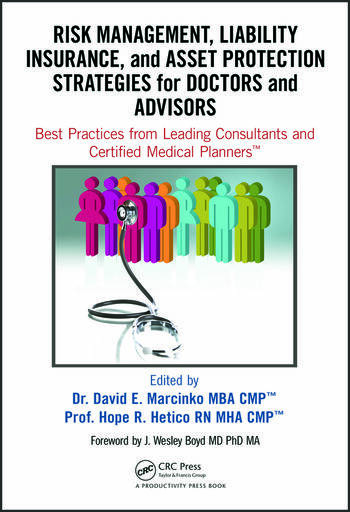
Risk Management, Liability Insurance, and Asset Protection Strategies for Doctors and Advisors: Best Practices from Leading Consultants and Certified Medical Planners™

ORDER TEXTBOOK: https://www.routledge.com/Risk-Management-Liability-Insurance-and-Asset-Protection-Strategies-for/Marcinko-Hetico/p/book/9781498725989

SECOND OPINIONS: https://medicalexecutivepost.com/schedule-a-consultation/

INVITE DR. MARCINKO: https://medicalexecutivepost.com/dr-david-marcinkos-

THANK YOU

***

EDRs: Still think going paperless was the right decision, Doc?

(ARE YOU PISSED, YET?)

By Darrell K. Pruitt DDS

***

***

Still think going paperless was the right decision, Doc? (Are you pissed yet?) If you haven’t adopted digital records, now is NOT the time to do so. 

“Just last quarter, U.S. cyber insurance prices increased 79% from a year earlier, according to Marsh’s Global Insurance Market Index…. IBM determined the average ransomware attack cost $4.54 million last year, not including the cost of the ransom, and that 83% of the organizations have had more than one data breach.” (There goes your retirement stash). From “Amid Surge in Ransomware Attacks, More Organizations Are Being Rejected for Cyber Insurance — What Can Leaders Do?”

By Raj Dodhiawala for CPO Magazine, November 28, 2022

LINK: https://www.cpomagazine.com/cyber-security/amid-surge-in-ransomware-attacks-more-organizations-are-being-rejected-for-cyber-insurance-what-can-leaders-do/

QUESTION: So, now that the American Dental Association no longer sells its for-profit digital records system to intentionally uninformed dues-paying members, is the not-for-profit organization still encouraging dentists to go paperless?

***

ORDER: https://www.amazon.com/Dictionary-Health-Information-Technology-Security/dp/0826149952/ref=sr_1_5?ie=UTF8&s=books&qid=1254413315&sr=1-5

COMMENTS APPRECIATED

Thank You

***

PODCAST: Healthcare Finance [Recorded Live] Q and A Session

By Eric Bricker MD

***

***

COMMENTS APPRECIATED

Thank You

***

INSURANCE: https://www.amazon.com/Dictionary-Health-Insurance-Managed-Care/dp/0826149944/ref=sr_1_4?ie=UTF8&s=books&qid=1275315485&sr=1-4

***

ORDER: https://www.amazon.com/Dictionary-Health-Economics-Finance-Marcinko/dp/0826102549/ref=sr_1_6?ie=UTF8&s=books&qid=1254413315&sr=1-6

***

APPLE: Health Insurance?

By Bertalan Meskó, MD PhD

***

***

Ben Wood, chief analyst at European CCS Insights predicts that Apple will enter the US health insurance market in partnership with a major insurer in 2024 – Forbes reported

The company already collects heaps of health data, such as blood pressure, blood oxygen levels, ECG readings and body temperature from the Watch, and through phone apps that help people regulate their medication or manage chronic conditions like diabetes. 

I hope you find the report useful!

Best regards,
Bertalan Meskó, MD
The Medical Futurist

***

RELATED: https://www.kevinmd.com/2022/10/amazon-cvs-and-walmart-are-playing-health-cares-long-game.html

***

ORDER: https://www.amazon.com/Dictionary-Health-Insurance-Managed-Care/dp/0826149944/ref=sr_1_4?ie=UTF8&s=books&qid=1275315485&sr=1-4

***

ORDER: https://www.amazon.com/Dictionary-Health-Information-Technology-Security/dp/0826149952/ref=sr_1_5?ie=UTF8&s=books&qid=1254413315&sr=1-5

***

COMMENTS APPRECIATED

Thank You

****

COLONOSCOPIES: Statistical Update

By Dr. David Edward Marcinko MBA

***

DEFINITION: A Colonoscopy and/or sigmoidoscopy are procedures that let your doctor look inside your large intestine. They use instruments called scopes. Scopes have a tiny camera attached to a long, thin tube. The procedures let your doctor see things such as inflamed tissue, abnormal growths, and ulcers.

EDITOR’S NOTE: The ME-P does not normally discuss medical or clinical matters. But, this report is noteworthy to all.

***

***

About 15 million colonoscopies are performed in the US yearly as part of standard preventive care for adults over 45, but a new study has called into question whether all the footage from those tiny cameras is really necessary.

Over a 10-year period, people who had the screenings were 18% less likely to develop colon cancer than people who didn’t, according to the study in the New England Journal of Medicine. However, the risk of death from the cancer for both the screened and un-screened was about the same, hovering around 0.3%.

***

COMMENTS APPRECIATED

Thank You

HEALTH INSURANCE: https://www.amazon.com/Dictionary-Health-Insurance-Managed-Care/dp/0826149944/ref=sr_1_4?ie=UTF8&s=books&qid=1275315485&sr=1-4

***

PODCAST: Dental Insurance Doesn’t Exist?

Join Our Mailing List

Don’t be Fooled?

By D. Kellus Pruitt DDS

1-darrellpruittDowney, California dentist John McCallister DDS has produced a splendid video which blows apart myths which keep dental “insurance” companies in business.

The more appropriately called, “discount dentistry brokers” – who casually hide dentists’ concerns – simply cannot survive transparency.

The Video: http://www.youtube.com/watch?v=PPo4XsYhHPk&feature=youtu.be

Quality?

Let’s face it. Purchasing rushed dental work which Delta Dental discounts more than 30% – or even faster dentistry that is discounted up to 65% by Brighter.com – will always be a foolish investment in one’s health simply because managed care dentistry has NO QUALITY CONTROL.

What’s more, neither Steve Olson, CEO of Delta, nor Brighter.com CEO Jake Winebaum can ever be held accountable for the shoddy work they sell.

Share the Cartoon

The Hippocratic thing to do, Doc, is to share Dr. McCallister’s cartoon with everyone.

As for me, I especially look forward to publicly taunting Delta Dental Insurance Company through @DeltaDentalins on Twitter, as well as CEO Jake Winebaum via @Brighter.com.

Jake blocked me from following @Brighter.com years ago after I asked him about Brighter.com’s quality control measures (There are none. Isn’t that right, Jake?)

Assessment

I pick on Delta Dental and Brighter.com not just because they are unresponsive to dentists’ concerns, but Steve Olsen and Jake Winebaum run the two most harmful examples of sleazy discount dentistry businesses.

Conclusion

Your thoughts and comments on this ME-P are appreciated. Feel free to review our top-left column, and top-right sidebar materials, links, URLs and related websites, too. Then, subscribe to the ME-P. It is fast, free and secure.

Link: http://feeds.feedburner.com/HealthcareFinancialsthePostForcxos

Speaker: If you need a moderator or speaker for an upcoming event, Dr. David E. Marcinko; MBA – Publisher-in-Chief of the Medical Executive-Post – is available for seminar or speaking engagements. Contact: MarcinkoAdvisors@msn.com

OUR OTHER PRINT BOOKS AND RELATED INFORMATION SOURCES:

DICTIONARIES: http://www.springerpub.com/Search/marcinko
PHYSICIANS: www.MedicalBusinessAdvisors.com
PRACTICES: www.BusinessofMedicalPractice.com
HOSPITALS: http://www.crcpress.com/product/isbn/9781466558731
CLINICS: http://www.crcpress.com/product/isbn/9781439879900
BLOG: www.MedicalExecutivePost.com
FINANCE: Financial Planning for Physicians and Advisors
INSURANCE: Risk Management and Insurance Strategies for Physicians and Advisors

Product DetailsProduct Details

PODCAST: Primary Care Innovation at Scale [ChenMed]

By Eric Bricker MD

***

***

COMMENTS APPRECIATED

Thank You

***

DICTIONARY: https://www.amazon.com/Dictionary-Health-Information-Technology-Security/dp/0826149952/ref=sr_1_5?ie=UTF8&s=books&qid=1254413315&sr=1-5

****

New Medical Informed Consent Dilemma

Join Our Mailing List

Emerging Problems

By Dr. David Edward Marcinko; MBA, CMP™

[Publisher-in-Chief]dem21

According to the Dictionary of Health Insurance and Managed Care, informed consent is the oral and written communication process between a patient and physician that results in the agreement to undergo a particular procedure, surgical intervention or medical treatment.

Unfortunately, a lack of standardization surrounding this process represents a major risk for patients and surgeons, and may lead to inaccurate patient expectations, lost or incomplete consent forms, missing encounter documentation and delays in critical surgeries and procedures.

History: Render S. Davis of Emory University [2008 recipient of the Health Care Ethics Consortium’s Heroes in Healthcare Ethics Award] writes for us in the Business of Medical Practice www.MedicalBusinessAdvisors.com that the concept of informed consent is rooted in medical ethics and codified as a legal principle. It is based on the assertion that a competent person has the right to determine what is done to him or her [self-regulated autonomy].

Rationale: The American Medical Association recommends that its members disclose and discuss the following with their patients:  

  • The patient’s diagnosis, if known,
  • The nature and purpose of a proposed treatment or procedure,
  • The risks and benefits of a proposed treatment or procedure,
  • Alternatives (regardless of cost or health insurance coverage),
  • The risks and benefits of the alternative treatments and,
  • The risks and benefits of not the procedure.

The requirements for informed consent are spelled out in statutes and case law in all 50 states. It is a necessary protocol for all hospitals, medical clinics, podiatry practices and ASCs.

Inadequacy of Traditional Consent Forms-to-Date

The typical informed consent process, particularly one that relies solely on traditional generic consent forms, is often inadequate, incomplete or offers the potential for not fully explaining and documenting a particular procedure to a given patient. 

Traditional consent forms are subject to errors and omissions, such as missing signatures (patient, provider or witness), missing procedure(s), and missing dates that place the validity of consent at risk. Lost or misplaced forms may result in delayed or postponed procedures often at the expensive of costly operating room time. Moreover, far too many forms are generic in nature and wholly unsuited for a specific patient or increasingly sophisticated medical procedure.

Patient Safety Background

According to the Institute of Medicine’s [IOM] repot, To Err is Human, more than 1 million injuries and nearly 100,000 deaths occur annually in the United States due to mistakes in medical care. Wrong patient, wrong-side, wrong-procedure and wrong-toe surgery are particularly egregious. In fact, these are among several other “never-events” that Medicare, and an increasing number of private insurance companies are refusing to reimburse.

Based on the need to make healthcare safer, the Agency for Healthcare Research and Quality (AHRQ) undertook a study to identify patient safety issues and develop recommendations for “best practices”.

AHRQ Evidence Report

The AHRQ report identified the challenge of addressing shortcomings such as missed, incomplete or not fully comprehended informed consent, as a significant patient safety opportunity for improvement.

The authors of the AHRQ report hypothesized that better informed patients “are less likely to experience errors by acting as another layer of protection.” And, the AHRQ study ranked a more interactive informed consent process among the top 11 practices supporting more widespread implementation.

General Accounting Office report found that malpractice insurance premiums were relatively flat for most of the 1990’s, but projections began to increase dramatically to 2010.

Results of Improper Informed Consent

Failure to obtain adequate informed consent, depending on state law, may place surgeons, resident, fellows, ambulatory and office surgery centers, medical clinics and hospitals at risk for litigation ranging from medical negligence to assault and battery.

Proceedings Involving Informed Consent

Informed consent is often a factor in medical malpractice litigation. Some attorneys note that physicians are liable, and that plaintiffs may be able to recover damages, in cases involving improper informed consent, even if the procedure is successful. Inadequate informed consent is often cited as a secondary cause in malpractice complaints and anecdotal evidence suggests this strategy may be especially pursued in podiatric malpractices cases.

Avoiding Litigation

The AMA advises its membership of the following regarding informed consent:  

“To protect yourself in litigation, in addition to carrying adequate liability insurance, it is important that the communications process itself be documented. Good documentation can serve as evidence in a court of the law that the process indeed took place. A timely and thorough documentation in the patient’s chart by the physician providing the treatment and/or performing the procedure can be a strong piece of evidence that the physician engaged the patient in an appropriate discussion.”

Impact of Comprehensive Informed Consent Forms

Another study found that providing informed consent information to patients in written form increased comprehension of the procedure. It was also hypothesized that: 

  • Better informed patients are more compliant with medical advice and recover faster.
  • Informed consent discussions strengthen physician-patient relationships and increase patients’ confidence in their doctor.
  • Well informed patients are more engaged in their own care, and are thus less likely to experience surgical errors than more passive, or less informed patients. 

Medical Ethics

The ethical foundation of informed consent is based on the creation of an environment that supports respect for patients and protects their right to autonomous, informed participation in all collaborative Healthcare 2.0 decisions. 

Assessment 

Thus, the essence of the informed consent problems of modern medicine today!

More: http://www.ePodiatryConsentForms.com 

Channel Surfing the ME-P

Have you visited our other topic channels? Established to facilitate idea exchange and link our community together, the value of these topics is dependent upon your input. Please take a minute to visit. And, to prevent that annoying spam, we ask that you register. It is fast, free and secure.

Conclusion

Your thoughts and comments on this ME-P are appreciated. Feel free to review our top-left column, and top-right sidebar materials, links, URLs and related websites, too. Then, subscribe to the ME-P. It is fast, free and secure.

Speaker: If you need a moderator or speaker for an upcoming event, Dr. David E. Marcinko; MBA – Publisher-in-Chief of the Medical Executive-Post – is available for seminar or speaking engagements. Contact: MarcinkoAdvisors@msn.com

OUR OTHER PRINT BOOKS AND RELATED INFORMATION SOURCES:

Product Details  Product Details

New Wave FIN-TECH Business Models?

FINANCIAL SERVICES:

New business models and big opportunities

By MIT Technology Review

CMP logo

Courtesy: http://www.CertifiedMedicalPlanner.org

The financial services industry is turning to bold initiatives to propel from pandemic response to business growth. And, among financial services institutions, 62% are looking to ramp up tech investments, and another 62% expect to move IT and business functions to the cloud, compared with 46% across industries.

For example, in a recent report, Nucleus Research found that cloud deployments deliver four times the return on investment as on-premises deployments do.

Link: https://www.technologyreview.com/2021/04/29/1023266/new-business-models-big-opportunity-financial-services/?mc_cid=3ae91e4c2b&mc_eid=72aee829ad

INDUSTRY RELATED: https://medicalexecutivepost.com/2014/09/24/is-the-financial-services-industry-all-fed-up/

TRANSFORMATION: https://medicalexecutivepost.com/2016/12/28/the-most-transformational-era-in-financial-services-since-the-1980s/

Your thoughts are appreciated.

THANK YOU

***

IMHO @TeamCigna Should Treat their Dentists Better!

***

By Darrell Pruitt DDS

***

***

“How Is The Market Feeling About Cigna?” Spoiler – According to Benzinga insights, the market is not optimistic about Cigna’s future. Neither am I. But then, I’m only their clients’ dentist.

Link: https://www.benzinga.com/short-sellers/22/06/27888029/how-is-the-market-feeling-about-cigna

Tomorrow is my last day as a Cigna Preferred Provider .. Never Again!

***

COMMENTS APPRECIATED

Thank You

***

***

RECAST: An Interview with Fiduciary Bennett Aikin AIF®

On Financial Fiduciary Accountability

[By Dr. David E. Marcinko MBA CMP™]

[By Ann Miller; RN, MHA]

Currently, there is a growing dilemma in the financial sales and services industry. It goes something like this:

  • What is a financial fiduciary?
  • Who is a financial fiduciary?
  • How can I tell if my financial advisor is a fiduciary?

Now, in as much as this controversy affects laymen and physician-investors alike, we went right to the source for up-to-date information regarding this often contentious topic, for an email interview and Q-A session, with Ben Aikin.ben-aikin

About Bennett Aikin AIF® and fi360.com

Bennett [Ben] Aikin is the Communications Coordinator for fi360.com. He oversees all communications for fi360. His responsibilities include messaging, brand management, copyrights and trademarks, and publications. Mr. Aikin received his BA in English from Virginia Tech in 2003 and is currently an MS candidate in Journalism from Ohio University.

Q. Medical Executive Post 

You have been very helpful and gracious to us. So, let’s get right to it, Ben. In the view of many; attorneys, doctors, CPAs and the clergy are fiduciaries; most all others who retain this title seem poseurs; sans documentation otherwise.

A. Mr. Aikin

You are correct. Attorneys, doctors and clergy are the prototype fiduciaries. They have a clear duty to put the best interests of their clients, patients, congregation, etc., above their own. [The duty of a CPA isn’t as clear to me, although I believe you are correct]. Furthermore, this is one of the first topics we address in our AIF training programs, and what we call the difference between a profession and an industry.  The three professions you name have three common characteristics that elevate them from an industry to a profession:

  1. Recognized body of knowledge
  2. Society depends upon practitioners to provide trustworthy advice
  3. Code of conduct that places the clients’ best interests first

Q. Medical Executive Post 

It seems that Certified Financial Planner®, Chartered Financial Analysts, Registered Investment Advisors and their representatives, Registered Representative [stock-brokers] and AIF® holders, etc, are not really financial fiduciaries, either by legal statute or organizational charter. Are we correct, or not? Of course, we are not talking ethics or morality here. That’s for the theologians to discuss.

A. Mr. Aikin

One of the reasons for the “alphabet soup”, as you put it in one of your white papers [books, dictionaries and posts] on financial designations, is that while there is a large body of knowledge, there is no one recognized body of knowledge that one must acquire to enter the financial services industry.  The different designations serve to provide a distinguisher for how much and what parts of that body of knowledge you do possess.  However, being a fiduciary is exclusively a matter of function. 

In other words, regardless of what designations are held, there are five things that will make one a fiduciary in a given relationship:

  1. You are “named” in plan or trust documents; the appointment can be by “name” or by “title,” such as CFO or Head of Human Resources
  2. You are serving as a trustee; often times this applies to directed trustees as well
  3. Your function or role equates to a professional providing comprehensive and continuous investment advice
  4. You have discretion to buy or sell investable assets
  5. You are a corporate officer or director who has authority to appoint other fiduciaries

So, if you are a fiduciary according to one of these definitions, you can be held accountable for a breach in fiduciary duty, regardless of any expertise you do, or do not have. This underscores the critical nature of understanding the fiduciary standard and delegating certain duties to qualified “professionals” who can fulfill the parts of the process that a non-qualified fiduciary cannot.

Q. Medical Executive Post 

How about some of the specific designations mentioned on our site, and elsewhere. I believe that you may be familiar with the well-known financial planner, Ed Morrow, who often opines that there are more than 98 of these “designations”? In fact, he is the founder of the Registered Financial Consultants [RFC] designation. And, he wrote a Foreword for one of our e-books; back-in-the-day. His son, an attorney, also wrote as a tax expert for us, as well. So, what gives?

A. Mr. Aikin

As for the specific designations you list above, and elsewhere, they each signify something different that may, or may not, lend itself to being a fiduciary: For example:

• CFP®: The act of financial planning does very much imply fiduciary responsibility.  And, the recently updated CFP® rules of conduct does now include a fiduciary mandate:

• 1.4 A certificant shall at all times place the interest of the client ahead of his or her own. When the certificant provides financial planning or material elements of the financial planning process, the certificant owes to the client the duty of care of a fiduciary as defined by CFP Board. [from http://www.cfp.net/Downloads/2008Standards.pdf]

•  CFA: Very dependent on what work the individual is doing.  Their code of ethics does have a provision to place the interests of clients above their own and their Standards of Practice handbook makes clear that when they are working in a fiduciary capacity that they understand and abide by the legally mandated fiduciary standard.

• FA [Financial Advisor]: This is a generic term that you may find being used by a non-fiduciary, such as a broker, or a fiduciary, such as an RIA.

• RIA: Are fiduciaries.  Registered Investment Advisors are registered with the SEC and have obligations under the Investment Advisers Act of 1940 to provide services that meet a fiduciary standard of care.

• RR: Registered Reps, or stock-brokers, are not fiduciaries if they are doing what they are supposed to be doing.  If they give investment advice that crosses the line into “comprehensive and continuous investment advice” (see above), their function would make them a fiduciary and they would be subject to meeting a fiduciary standard in that advice (even though they may not be properly registered to give advice as an RIA).

• AIF designees: Have received training on a process that meets, and in some places exceeds, the fiduciary standard of care.  We do not require an AIF® to always function as a fiduciary. For example, we allow registered reps to gain and use the AIF® designation. In many cases, AIF designees are acting as fiduciaries, and the designation is an indicator that they have the full understanding of what that really means in terms of the level of service they provide.  We do expect our designees to clearly disclose whether they accept fiduciary responsibility for their services or not and advocate such disclosure for all financial service representatives.

Q. Medical Executive Post 

Your website, http://www.fi360.com, seems to suggest, for example, that banks/bankers are fiduciaries. We have found this not to be the case, of course, as they work for the best interests of the bank and stockholders. What definitional understanding are we missing?

A. Mr. Aikin

Banks cannot generally be considered fiduciaries.  Again, it is a matter of function. A bank may be a named trustee, in which case a fiduciary standard would generally apply.  Banks that sell products are doing so according to their governing regulations and are “prudent experts” under ERISA, but not necessarily held to a fiduciary standard in any broader sense.

Q. Medical Executive Post 

And so, how do we rectify the [seemingly intentional] industry obfuscation on this topic. We mean, our readers, subscribers, book and dictionary purchasers, clients and colleagues are all confused on this topic. The recent financial meltdown only stresses the importance of understanding same.

For example, everyone in the industry seems to say they are the “f” word. But, our outreach efforts to contact traditional “financial services” industry pundits, CFP® practitioners and other certification organizations are continually met with resounding silence; or worse yet; they offer an abundance of parsed words and obfuscation but no confirming paperwork, or deep subject-matter knowledge as you have kindly done. We get the impression that some FAs honesty do-not have a clue; while others are intentionally vague.

A. Mr. Aikin

All of the evidence you cite is correct.  But that does not mean it is impossible to find an investment advisor who will manage to a fiduciary standard of care and acknowledge the same. The best way to rectify confusion as it pertains to choosing appropriate investment professionals is to get fiduciary status acknowledged in writing and go over with them all of the necessary steps in a fiduciary process to ensure they are being fulfilled. There also are great resources out there for understanding the fiduciary process and for choosing professionals, such as the Department of Labor, the SEC, FINRA, the AICPA’s Personal Financial Planning division, the Financial Planning Association, and, of course, Fiduciary360.

We realize the confusion this must cause to those coming from the health care arena, where MD/DO clearly defines the individual in question; as do other degrees [optometrist, clinical psychologist, podiatrist, etc] and medical designations [fellow, board certification, etc.]. But, unfortunately, it is the state of the financial services industry as it stands now.

Q. Medical Executive Post 

It is as confusing for the medical community, as it is for the lay community. And, after some research, we believe retail financial services industry participants are also confused. So, what is the bottom line?

A. Mr. Aikin

The bottom line is that lay, physician and all clients have a right to expect and demand a fiduciary standard of care in the managing of investments. And, there are qualified professionals out there who are providing those services.  Again, the best way to ensure you are getting it is to have fiduciary status acknowledged in writing, and go over the necessary steps in a fiduciary process with them to ensure it is being fulfilled.

Q. Medical Executive Post 

The “parole-evidence” rule, of contract law, applies, right? In dealing with medical liability situations, the medics and malpractice attorneys have a rule: “if it wasn’t written down, it didn’t happen.”  

A. Mr. Aikin

An engagement contract accepting fiduciary status should trump a subsequent attempt to claim the fiduciary standard didn’t apply. But, to reiterate an earlier point, if someone acts in one of the five functional fiduciary roles, they are a fiduciary whether they choose to acknowledge it or not.  I have attached a sample acknowledgement of fiduciary status letter with copies of our handbook, which details the fiduciary process we instruct in our programs, and our SAFE, which is basically a checklist that a fiduciary should be able to answer “Yes” to every question to ensure the entire fiduciary process is being covered.

Q. Medical Executive Post 

It is curious that you mention checklists. We have a post arguing that very theme for doctors and hospitals as they pursue their medial error reduction, and quality improvement, endeavors. And, we applaud your integrity, and wish only for clarification on this simple fiduciary query?

A. Mr. Aikin

Simple definition: A fiduciary is someone who is managing the assets of another person and stands in a special relationship of trust, confidence, and/or legal responsibility.

Q. Medical Executive Post 

Who is a financial fiduciary and what, if any, financial designation indicates same?

A. Mr. Aikin

Functional definition: See above for the five items that make you a fiduciary.

Financial designations that unequivocally indicate fiduciary duty: Short answer is none, only function can determine who is a fiduciary. 

Q. Medical Executive Post 

Please repeat that?

A. Mr. Aikin

Financial designations that indicate fiduciary duty: none. It is the function that determines who is a fiduciary.  Now, having said that, the CFP® certification comes close by demanding their certificants who are engaged in financial planning do so to a fiduciary standard. Similarly, other designations may certify the holder’s ability to perform a role that would be held to a fiduciary standard of care.  The point is that you are owed a fiduciary standard of care when you engage a professional to fill that role or they functionally become one.  And, if you engage a professional to fill a non-fiduciary role, they will not be held to a fiduciary standard simply because they have a particular designation.  One of the purposes the designations serve is to inform you what roles the designation holder is capable of fulfilling.

It is also worth keeping in mind that just being a fiduciary doesn’t equate to a full knowledge of the fiduciary standard. The AIF® designation indicates having been fully trained on the standard.

Q. Medical Executive Post 

Yes, your website mentions something about fiduciaries that are not aware of same! How can this be? Since our business model mimics a medical model, isn’t that like saying “the doctor doesn’t know he is doctor?” Very specious, with all due respect!

A. Mr. Aikin

I think it is first important to note that this statement is referring not just to investment professionals.  Part of the audience fi360 serves is investment stewards, the non-professionals who, due to facts and circumstances, still owe a fiduciary duty to another.  Examples of this include investment committee members, trustees to a foundation, small business owners who start 401k plans, etc.  This is a group of non-sophisticated investors who may not be aware of the full array of responsibilities they have. 

However, even on the professional side I believe the statement isn’t as absurd as it sounds.  This is basically a protection from both ignorant and unscrupulous professionals.  Imagine a registered representative who, either through ignorance or design, begins offering comprehensive and continuous investment advice.  Though they may deny or be unaware of the fact, they have opened themselves up to fiduciary liability. 

Q. Medical Executive Post 

Please clarify the use of arbitration clauses in brokerage account contracts for us. Do these disclaim fiduciary responsibility? If so, does the client even know same?

A. Mr. Aikin

By definition, an engagement with a broker is a non-fiduciary relationship.  So, unless other services beyond the scope of a typical brokerage account contract are specified, fiduciary responsibility is inherently not applicable.  Unfortunately, I do imagine there are clients who don’t understand this. Furthermore, AIF® designees are not prohibited from signing such an agreement and there are some important points to understand the reasoning.

First, by definition, if you are entering into such an agreement, you are entering into a non-fiduciary relationship. So, any fiduciary requirement wouldn’t apply in this scenario.

Second, if this same question were applied into a scenario of a fiduciary relationship, such as with an RIA, this would be a method of dispute resolution, not a practice method. So, in the event of dispute, the advisor and investor would be free to agree to the method of resolution of their choosing. In this scenario, however, typically the method would not be discussed until the dispute itself arose.

Finally, it is important to know that AIF/AIFA designees are not required to be a fiduciary. It is symbolic of the individuals training, knowledge and ongoing development in fiduciary processes, but does not mean they will always be acting as a fiduciary.

Q. Medical Executive Post 

Don’t the vast majority of arbitration hearings find in favor of the FA; as the arbitrators are insiders, often paid by the very same industry itself?

A. Mr. Aikin

Actual percentages are reported here: http://www.finra.org/ArbitrationMediation/AboutFINRADR/Statistics/index.htm However, brokerage arbitration agreements are a dispute resolution method for disputes that arise within the context of the securities brokerage industry and are not the only means of resolving differences for all types of financial advisors.  Investment advisers, for example, are subject to respond to disputes in a variety of forums including state and federal courts.  Clients should look at their brokerage or advisory agreement to see what they have agreed to. If you wanted to go into further depth on this question, we would recommend contacting Brian Hamburger, who is a lawyer with experience in this area and an AIFA designee. Bio page: http://www.hamburgerlaw.com/attorneys/BSH.htm.

Q. Medical Executive Post 

What about our related Certified Medical Planner® designation, and online educational program for financial advisors and medical management consultants? Is it a good idea – reasonable – for the sponsor to demand fiduciary accountability of these charter-holders? Cleary, this would not only be a strategic competitive advantage, but advance the CMP™ mission to put medical colleagues first and champion their cause www.CertifiedMedicalPlanner.org above all else. 

A. Mr. Aikin

I think it is a good idea for any plan sponsor to demand fiduciary status be acknowledged from anyone engaged to provide comprehensive and continuous investment advice.  I also think it is a good idea to be proactive in verifying that the fiduciary process is being followed.

Q. Medical Executive Post 

Is there anything else that we should know about this topic?

A. Mr. Aikin

Yes, a further note about fi360’s standards. I wrote generically about the fiduciary standard, because there is one that is defined by multiple sources of regulation, legislation and case law.  The process defined in our handbooks, we call a Fiduciary Standard of Excellence, because it covers that minimum standard and also best practice standards that go above and beyond.  All of our Practices, which comprise that standard, are legally substantiated in our Legal Memoranda handbook, which was written by Fred Reish’s law firm, who is considered a leading ERISA attorney.

Additional resources:

Q. Medical Executive Post 

Thank you so much for your knowledge and willingness to frankly share it with the Medical-Executive-Post.

Assessment

All are invited to continue the conversation with Mr. Aikin, asynchronously online, or thru this contact information:

fi360.com
438 Division Street
Sewickley, PA 15143
412-741-8140 Phone
866-390-5080 Toll-free phone
412-741-8142 Fax

Conclusion

Your thoughts and comments on this ME-P are appreciated. Feel free to review our top-left column, and top-right sidebar materials, links, URLs and related websites, too. Then, subscribe to the ME-P. It is fast, free and secure.

Link: http://feeds.feedburner.com/HealthcareFinancialsthePostForcxos

Speaker: If you need a moderator or speaker for an upcoming event, Dr. David E. Marcinko; MBA – Publisher-in-Chief of the Medical Executive-Post – is available for seminar or speaking engagements. Contact: MarcinkoAdvisors@msn.com

OUR OTHER PRINT BOOKS AND RELATED INFORMATION SOURCES:

LEXICONS: http://www.springerpub.com/Search/marcinko
PRACTICES: www.BusinessofMedicalPractice.com
HOSPITALS: http://www.crcpress.com/product/isbn/9781466558731
CLINICS: http://www.crcpress.com/product/isbn/9781439879900
ADVISORS: www.CertifiedMedicalPlanner.org
BLOG: www.MedicalExecutivePost.com

Product DetailsProduct DetailsProduct Details

Product Details  Product Details

Product DetailsProduct Details

Product Details

Risk Management, Liability Insurance, and Asset Protection Strategies for Doctors and Advisors: Best Practices from Leading Consultants and Certified Medical Planners™8Comprehensive Financial Planning Strategies for Doctors and Advisors: Best Practices from Leading Consultants and Certified Medical Planners™

Term Life Insurance Can Protect [Physician] Retirement Plan Contributions

Term Life Insurance Can Protect Retirement Plan Contributions

By Rick Kahler CFP®

Some of the typical reasons for life insurance are to replace a breadwinner’s salary, pay off large debts, and pay estate taxes. Another reason to carry life insurance—if it’s the right kind—can be to fund a retirement plan.

Illustration

To illustrate, let’s imagine a couple, both 55, with two grown children, two good jobs, and no debts. They began funding their retirement only recently. Leigh’s entire salary of $124,000 a year goes into company retirement plan options: $64,000 into the 401(k) and profit sharing plan and $60,000 into the Cash Balance plan. The couple lives on Mischa’s salary of $60,000 a year.

Their financial planner has calculated that in 10 years they will have a good chance of having $1,500,000 saved in retirement plans. This amount will allow both of them to retire, continue to live on $60,000 a year for the rest of their lives, and have enough to fund long-term care for one of them or leave a nice inheritance to their kids.

The death, disability, or loss of a job of either of them is not a threat to their current lifestyle. However, it is a threat to their retirement plan. And the loss of Leigh’s job is the biggest threat. While finding a new job that would allow retirement plan contributions to resume is possible, it is not guaranteed.

Nothing can be done to insure against the loss of a job, but there are ways insurance could help protect this couple. They could purchase disability insurance to replace 60% of the income of either partner. This would allow them to still make a reduced contribution to their retirement plan.

Premature Death

But what happens if either of them should die prematurely, especially Leigh? It’s doubtful Mischa could cut expenses enough to put anything significant toward retirement, instead having to work as long as possible and then rely heavily on Social Security.

This a where a 10-year term life insurance policy on Leigh would make a significant difference. If they purchased a $1,000,000 term policy on Leigh now, the premium (for a nonsmoker in good health) would be around $1200 annually. Should Leigh die this year, if Mischa invested the insurance payment it would have a high probability of growing to $1,500,000 in ten years. This would allow Mischa to retire comfortably.

However, the older Leigh and Mischa get, the less they need the insurance. If Leigh died in the fifth year of the policy, the five years of savings plus the insurance proceeds would accrue more than $2,000,000 over the following five years.

One cost-saving strategy would be to buy two $500,000 10-year term policies and drop one after five years. This would still provide for a total of around $1,500,000 in retirement funds for Mischa by age 65 if Leigh should die before that time.

***
 ***

If you proposed this plan to a life insurance agent, they might suggest putting Leigh’s salary into a cash value policy instead of buying term.

Let’s look at that

Contributing $124,000 into the retirement plan saves $24,000 a year in income taxes, so only $100,000 a year would be available to buy insurance. This amount would cover a policy with a $1.9 million death benefit and a cash value guaranteed to grow to $1,036,328 in 10 years. Given the extra tax payments, plus premium costs of $1 million over 10 years, that’s not a good investment for our couple. The commission of $72,500 makes it a great investment for the salesperson, though.

Assessment

Besides, in this circumstance, life insurance is not meant as an investment. It is an affordable way to replace the income that covers Leigh’s retirement contribution. 

Conclusion

Your thoughts and comments on this ME-P are appreciated. Feel free to review our top-left column, and top-right sidebar materials, links, URLs and related websites, too. Then, subscribe to the ME-P. It is fast, free and secure.

Speaker: If you need a moderator or speaker for an upcoming event, Dr. David E. Marcinko; MBA – Publisher-in-Chief of the Medical Executive-Post – is available for seminar or speaking engagements.

Book Marcinko: https://medicalexecutivepost.com/dr-david-marcinkos-bookings/

Subscribe: MEDICAL EXECUTIVE POST for curated news, essays, opinions and analysis from the public health, economics, finance, marketing, IT, business and policy management ecosystem.

MORE FOR DOCTORS:

“Insurance & Risk Management Strategies for Doctors” https://tinyurl.com/ydx9kd93

“Fiduciary Financial Planning for Physicians” https://tinyurl.com/y7f5pnox

“Business of Medical Practice 2.0” https://tinyurl.com/yb3x6wr8

THANK YOU

Risk Management, Liability Insurance, and Asset Protection Strategies for Doctors and Advisors: Best Practices from Leading Consultants and Certified Medical Planners™8Comprehensive Financial Planning Strategies for Doctors and Advisors: Best Practices from Leading Consultants and Certified Medical Planners™

***


Additional Disability Insurance Taxation for Medical Executives and Entrepreneurs

Join Our Mailing List

Additional Disability Insurance for Practice Owners and Physician Executives 

By Perry D’Alessio CPA

perry-dalessio-cpa

Some medical clinics, hospitals, health care employers and other business entities may offer disability insurance to their employees on a group basis as part of an employee benefit program. This is a good thing.

The expense for this coverage is typically deducted as an ordinary and necessary expense by the employer entity.

Additional DI

However, many entities also purchase additional disability insurance for the owners and executives; etc. This additional disability insurance expense should not be deducted on the entity’s tax return for two reasons.

  1. First, it would probably be considered a discriminatory benefit to the owners and, therefore, not be allowed as a deduction anyway.
  2. Second, and more importantly, when a person becomes disabled and qualifies for disability benefits whose premiums have been deducted as a business expense by the entity, the disability insurance proceeds are considered taxable income to the person receiving them.

A Catastrophe

This can be personally catastrophic since disability insurance covers only a portion (approximately 60 percent) of regular earnings. The coverage was designed to be paid on an after tax basis. The benefits would be tax free to the beneficiary and would be close to the disabled person’s net take home pay before being disabled.

***

BandagesX

***

Assessment

Here is one of those instances where the traditional tax planning thought process is overridden by a long term (potential) tax cost / benefit decision.

Channel Surfing the ME-P

Have you visited our other topic channels? Established to facilitate idea exchange and link our community together, the value of these topics is dependent upon your input. Please take a minute to visit. And, to prevent that annoying spam, we ask that you register. It is fast, free and secure.

More:

Conclusion

Your thoughts and comments on this ME-P are appreciated. Feel free to review our top-left column, and top-right sidebar materials, links, URLs and related websites, too. Then, subscribe to the ME-P. It is fast, free and secure.

Speaker: If you need a moderator or speaker for an upcoming event, Dr. David E. Marcinko; MBA – Publisher-in-Chief of the Medical Executive-Post – is available for seminar or speaking engagements. Contact: MarcinkoAdvisors@msn.com

OUR OTHER PRINT BOOKS AND RELATED INFORMATION SOURCES:

Comprehensive Financial Planning Strategies for Doctors and Advisors: Best Practices from Leading Consultants and Certified Medical Planners(TM)

MEDICAL PRACTICE: Business Uses of Life Insurance for Doctors

****

Dr. David Edward Marcinko | The Leading Business Education Network for  Doctors, Financial Advisors and Health Industry Consultants

By Dr. David E. Marcinko MBA CMP®

INVITE DR. MARCINKO: https://medicalexecutivepost.com/dr-david-marcinkos-

CMP logo

SPONSOR: http://www.CertifiedMedicalPlanner.org

[A] Key Person Insurance

Hospitals, a local family practice office, a pharmaceutical company, all likely have one thing in common. Somewhere within these companies or partnerships, there are key employees or profit makers. Due to their expertise, management skills, knowledge, or “history of why,” they have become indispensable to their employers.

If this key employee were to die prematurely, what would potentially happen to the company?  In many cases, especially in smaller companies, it would have a devastating effect on the bottom line, or even precipitate a bankruptcy. In these circumstances, a form of business insurance, called key person coverage, is recommended in order to alleviate the potential financial problems resulting from the death of that employee.

The business would purchase and own a life insurance policy on the key person. Upon the death of the employee, the life insurance proceeds could be used to:

  • Pay off bank loans.
  • Replace the lost profits of the company.
  • Establish a reserve for the search, hiring and training of a replacement.

[B] Business Continuation Funding

See the chapters on buy-sell agreements and asset protection planning.

[C] Executive Bonus Plan

An executive bonus plan (or § 162 plan) is an effective way for a company to provide valued, select employees an additional employment benefit.  One of the main advantages to an executive bonus plan, when compared to other benefits, is its simplicity. In a typical executive bonus plan, an agreement is made between the employer and employee, whereby the employer agrees to pay for the cost of a life insurance policy, in the form of a bonus, on the life of the employee.

The major benefits of such a plan to the employee are that he or she is the immediate owner of the cash values and the death benefit provided.  The only cost to the employee is the payment of income tax on any bonus received.  The employer receives a tax deduction for providing the benefit, improves the morale of its selected employees, and can use the plan as a tool to attract additional talent.

[D] Non-Qualified Salary Continuation

Commonly referred to as deferred compensation, this is a legally binding promise by an employer to pay a salary continuation benefit at a specific point in the future, in exchange for the current and continued performance of its employee.  These plans are normally used to supplement existing retirement plans.

Although there are different variations of deferred compensation, in a typical deferred compensation agreement, the employer will purchase and own a life insurance policy on the life of the employee. The cash value of the policy grows tax deferred during the employee’s working years. After retirement, these cash values can be withdrawn from the policy to reimburse the company for its after-tax retirement payments to the employee. 

Upon the death of the employee, any remaining death benefit would likely be received income tax free by the employer (Alternative Minimum Taxes could apply to any benefit received by certain larger C corporations).  The death benefit could then be used to pay any required survivor benefits to the employee’s spouse, or provide partial or total cost recovery to the employer.

In a typical plan, the terms of the agreement are negotiated as to the amount of benefit received by the employee, when retirement benefits can begin, how long retirement benefits will be paid, and if benefits will be provided for death or disability.  The business has established what is commonly referred to as “golden handcuffs” for the employee.  As a result, the benefit will only be received if the employee continues to work for the company until retirement. If the employee is terminated or quits prior to retirement, the plan would end and no benefits would be payed.

[E] Split Dollar Plans

Split dollar arrangements can be a complicated and confusing concept for even the most experienced insurance professional or financial advisor. This concept is, in its simplest terms, a way for a business to share the cost and benefit of a life insurance policy with a valued employee. In a normal split dollar arrangement, the employee will receive valuable life insurance coverage at little cost to them. The business pays the majority of the premium, but is usually able to recover the entire cost of providing this benefit at termination of employment, death or surrender of the policy.

Following the publication of IRS Notices 2002-8 and 2002-59, there are currently two general approaches to the ownership of business split-dollar life insurance: Employer-owned or Employee-owned.

***

[1] Employer-Owned Method

In the employer-owned method the employer is the sole owner of the policy. A written split-dollar agreement usually permits the employee to name the beneficiary for most of the death proceeds. The employer owns all the cash value and has the unfettered right to borrow or withdraw it as necessary. At the end of the formal agreement, the business can generally (1) continue the policy as key person insurance, (2) transfer ownership to the insured and report the cash values as additional income to the insured, (3) sell the policy to the insured, or (4) use a combination of these methods. This is commonly referred to as “rollout.”

Practitioners should be careful not to include rollout language in the split-dollar agreement. The reason the rollout should not be included is that if the parties formally agree that after a specified number of years—or following a specific event—related only to the circumstances surrounding the policy, that the policy will be turned over to the insured, the IRS could declare that the entire transaction was a sham and that its sole purpose was to avoid taxation of the premiums to the employee, generating substantial interest and penalties in addition to the additional taxes due.

The death proceeds available to the insured employee’s beneficiary is considered a current and reportable economic benefit (REB), and it is an annually taxable event to the employee. If an individual policy is involved, the REB is calculated by multiplying the face amount times the government’s Table 2004 rates or the insurance company’s alternative term rates, using the insured’s age. If a second-to-die policy is involved, the government’s PS38 rates or the company’s alternative PS38 rates will be used. Any part of the premium actually paid by the employee is used to offset any REB dollar-for-dollar.

[2] Employee-Owned Method

With the employee-owned method, the insured-employee is generally the applicant and owner of the policy. Any premiums paid by the business are deemed to be loans to the employee and the employee reports as income an imputed interest rate on the cumulative amount of loan based on Code § 7872. A collateral assignment is made for the benefit of the business to cover the cumulative loan amount. In some cases, the assignment may allow the assignee to have access to the cash values of the policy by way of a policy loan. This method is unavailable for officers and executives of publicly- held corporations because of the current restrictions on corporate loans (the Sarbanes-Oxley Act of 2002).

The employee-owned method is somewhat similar to the older collateral assignment form of split-dollar. The benefits for the employee are both the ability to control large amounts of death proceeds as well as developing equity in the policy. Whether or not this new method catches on will depend greatly on the imputed interest rate published by the IRS every July. If set low enough, this may be an excellent opportunity for the employee to use inexpensive business dollars to pay for life insurance. 

***

CITE: https://www.r2library.com/Resource/Title/0826102549

***

Your Comments are appreciated.

Risk Management, Liability Insurance, and Asset Protection Strategies for Doctors and Advisors : Best Practices from Leading Consultants and Certified Medical Planners™ book cover

Risk Management Textbook: https://www.routledge.com/Risk-Management-Liability-Insurance-and-Asset-Protection-Strategies-for/Marcinko-Hetico/p/book/9781498725989

THANK YOU

***

PODCASTS: All You Need to Know About Government Healthcare

By Eric Bricker MD

***

1) Traditional Medicare: Health Insurance for Seniors 65 and older. Medicare Part A is coverage for hospital services. Medicare Part B is coverage for doctor, physical therapist and other provider services and for outpatient services such as labs and imaging.

2) Medicare Advantage: Health Insurance for Seniors 65 and older administered through a private health insurance company. It is sometimes referred to as Medicare Part C. It can be chosen instead of Traditional Medicare and often includes Dental Insurance, Vision Insurance, Hearing Aid Insurance and Prescription Drug Coverage.

3) Medicare Part D Prescription Coverage: Additional insurance for people on Traditional Medicare to cover their prescription medications as well. Medicare Part D is administered by private insurance companies.

4) Medicare Supplement Plans: Insurance that can be purchased in addition to Traditional Medicare to cover the expenses that Traditional Medicare does not cover, such as hospitalization deductibles and Medicare Part B co-insurance.

5) Medicaid: The health insurance program administered by each state for it’s economically disadvantaged residents. It is funded in part by the Federal Government and in part by each state. It is administered by private health insurance companies.

6) Affordable Care Act (ACA) Exchange Plans: Health insurance for people under 65 who make too much money to qualify for Medicaid, but do not received health insurance through their employer. ACA Exchange Plans are subsidized by the Federal Government and administered by private insurance companies.

***

***

COMMENTS APPRECIATED.

Thank You

Subscribe to the Medical Executive-Post

***

***

***

****

AUTOMOBILES: Doctors and their Cars?

Some Financial Thoughts and/or Rules?

***

By Dr. David Edward Marcinko MBA CMP®

SPONSOR: http://www.CertifiedMedicalPlanner.org

***

The 10-year rule for buying a new vehicle

When trying to decide whether to buy a used car or a new one, it’s typically financially wiser to buy used. But if you want to buy new, you should plan to drive the car for 10 years or more.

Better yet – do not buy a new vehicle.

***

The 20/4/10 rule for buying a vehicle

If you have to borrow when buying a car, to avoid spending more than you can afford you should put down at least 20%, keep the loan limited to no more than four years (to avoid interest), and spend no more than 10% of your gross income on transportation costs (which includes the car payment, parking, gas, and insurance).

Better yet – do not buy a new vehicle.

***

Pre-Owned Used Cars!

MORE: https://medicalexecutivepost.com/2012/11/28/how-doctors-might-buy-a-pre-owned-car/

MORE: https://medicalexecutivepost.com/2014/11/09/doctors-and-rental-cars/

MORE: https://medicalexecutivepost.com/2014/01/08/the-jaguar-touring-sedan-one-of-the-finest-luxury-cars-built-yesterday/

***

***

COMMENTS APPRECIATED

Thank You

Subscribe to the Medical Executive-Post

***

PODCAST: Health Insurance and Benefit Consultant Traits

THREE SUCCESSFUL TRAITS FOR BROKERS

By Eric Bricker MD

***

***

COMMENTS APPRECIATED

Thank You

Subscribe to the Medical Executive-Post

***

CITE: https://www.r2library.com/Resource/Title/082610254

***

***

55% of Consumers Find it Stressful Paying a Healthcare Bill

***

***

By Staff Reporters

***

An annual study of over 1,500 U.S. consumers, shows:

 •  55% of consumers find it stressful paying a healthcare bill.
 •  53% of consumers find it stressful understanding their plan’s coverage and benefits.
 •  53% of consumers find it stressful comprehending what they owe.
 •  59% of consumers find it stressful reconciling a bill issue with their payer.

Source: Cedar via GlobeNewswire, December 7, 2021

CITE: https://www.r2library.com/Resource/Title/0826102549

***

COMMENTS APPRECIATED.

Thank You

Subscribe to the Medical Executive-Post

***

***

***

PODCAST: Health Insurance Costs Have Risen 55% in the Last Decade

***

By Eric Bricker MD

***

Health Insurance Cost Has Risen 55% in the last 10 Years. The Annual Health Insurance Cost for Family Coverage is Now $21,000 Per Year

***

Dysfunctional Employee Benefits Article in Journal of the American Medical Association

***

***

COMMENTS APPRECIATED

Thank You

Subscribe to the Medical Executive-Post

***

***

***

CITE: https://www.r2library.com/Resource/Title/082610254

***

Comprehensive Financial Planning and Risk Management Strategies for Doctors and their Advisors

***

Best Practices from Leading Consultants and Certified Medical Planners

SPONSOR: http://www.CertifiedMedicalPlanner.org

CMP logo

***

***

Risk Management, Liability Insurance, and Asset Protection Strategies for Doctors and Advisors: Best Practices from Leading Consultants and Certified Medical Planners™

ORDER: https://www.routledge.com/Risk-Management-Liability-Insurance-and-Asset-Protection-Strategies-for/Marcinko-Hetico/p/book/9781498725989

***

PODCAST: Hospitals to Sell De-Identified Patient Data

TRUVETA

http://www.Truveta.com

By Eric Bricker MD

***

Data Platform: Their health provider members care for tens of millions of people and operate thousands of care facilities, providing more than 15% of all care in the United States. Clinical data from this care is de-identified daily and brought together in the Truveta platform to advance patient care and accelerate development of new therapies.

***

***

COMMENTS APPRECIATED

Thank You

Subscribe to the Medical Executive-Post

***

DICTIONARY: https://www.amazon.com/Dictionary-Health-Information-Technology-Security/dp/0826149952/ref=sr_1_5?ie=UTF8&s=books&qid=1254413315&sr=1-5

***

HOSPITALS: https://www.amazon.com/Financial-Management-Strategies-Healthcare-Organizations/dp/1466558733/ref=sr_1_3?ie=UTF8&qid=1380743521&sr=8-3&keywords=david+marcinko

***

PODCAST: Dr. Watson Says Good-Bye to IBM?

By Staff Reporters

***

Dr. Watson Unsafe and Incorrect? - Authentic Medicine

***

IBM has reportedly placed its Watson Health division on the auction block again

Watson is a question-answering computer system capable of answering questions posed in natural language, developed in IBM’s DeepQA project by a research team led by principal investigator David Ferrucci. Watson was named after IBM’s founder and first CEO, industrialist Thomas J. Watson.

READ: https://www.axios.com/ibm-tries-to-sell-watson-health-again-82f691a4-ab81-4b2b-a5bb-13a7556c8ef1.html?utm_campaign=etb&utm_medium=newsletter&utm_source=morning_brew

PODCAST: https://www.cnn.com/2022/01/21/tech/ibm-selling-watson-health/index.html

***

COMMENTS APPRECIATED.

Thank You

Subscribe to the Medical Executive-Post

****

***

SPIKE: Hospitals Suing Patients for Unpaid Medical Bills

By Staff Reporters

***

Spike in Hospitals Suing Patients for Unpaid Medical Bills

 •  Lawsuits over unpaid bills for hospitals rose by 37% in Wisconsin from 2001 to 18.
 •  Wage garnishments from the lawsuits rose 27% in that time period.
 •  5% of hospitals account for 25% of lawsuits. Nonprofit hospitals and critical access hospitals are more likely to sue patients, according to the study.
 •  There were 1.86 lawsuits per 1,000 Black residents in 2018, compared to 1.32 per 1,000 white residents.

Source: YaleNews, December 6, 2021

HEALTH ECONOMICS CITE: https://www.r2library.com/Resource/Title/0826102549

***

***

COMMENTS APPRECIATED.

Thank You

Subscribe to the MEDICAL EXECUTIVE-POST

***

***

Personal Financial Planning for Physicians and Medical Colleagues

ME Inc = Going it Alone but with a Team

BY DR. DAVID EDWARD MARCINKO MBA CMP®

CMP logo

SPONSOR: http://www.CertifiedMedicalPlanner.org

The physician, nurse, or other medical professional should easily recognize that there are a vast array of opportunities, obstacles, and pitfalls when it comes to managing one’s finances.  Still, with some modicum of effort, the basic aspects of insurance, investments, taxes, accounting, portfolio management, retirement and estate planning, debt reduction, asset protection and practice management can be largely self-taught. Yet, it is realized that nuances and subtleties can make a well-intentioned financial plan fall short.  The devil truly is in the details.  Moreover, none of these areas can be addressed in isolation. It is common for a solution in one area to cause a new set of problems in another. 

Accordingly, most health care practitioners would be well served to hire [independent, hourly compensated and prn] financial help. Unlike some medical problems, financial issues may not cause any “pain” or other obvious symptoms.  Medical professionals tend to have far more complex financial situations than most lay people. Despite the complexities of the new world of health reform, far too many either do nothing; or give up all control totally, to an external advisor. This either/or mistake can be costly in many ways, and should be avoided. 

In reality, and at various time in their careers, the medical professional needs a team comprised of at least a financial analyst, lawyer, management consultant, risk manager [actuary, mathematician or insurance counselor] and accountant. At various points in time, each member of the team, or significant others, will properly assume a role of more or less importance, but the doctor must usually remain the “quarterback” or leader; in the absence of a truly informed other, or Certified Medical Planner™.

This is necessary because only the doctor has the personal self-mandate with skin in the game, to take a big picture view.  And, rightly or wrongly, investments dominate the information available regarding personal finance and the attention of most physicians.  One is much more likely to need or want to discuss the financial markets with their financial advisor than private letter rulings by the IRS, or with their estate planning attorney or tax accountant. While hiring for expertise is a good idea, there is sinister way advisors goad doctors into using all their retail services; all of the time. That artifice is – the value of time. 

True integrated physician focused and financial planning is at its core a service business, not a product or sales endeavor. And, increasingly money is more likely to be at the top of the list for providers as the healthcare environment is contracting.

So, eschewing the quarterback model of advice, and choosing to self-educate thru this book and elsewhere, may be one of the best efforts a smart physician can make.

ASSESSMENT: Your thoughts are appreciated.

Comprehensive Financial Planning Strategies for Doctors and Advisors: Best Practices from Leading Consultants and Certified Medical Planners™

ORDER TEXTBOOK: https://www.routledge.com/Comprehensive-Financial-Planning-Strategies-for-Doctors-and-Advisors-Best/Marcinko-Hetico/p/book/9781482240283

RELATED TEXTS: https://medicalexecutivepost.com/2021/04/29/why-are-certified-medical-planner-textbooks-so-darn-popular/

INVITE DR. MARCINKO: https://medicalexecutivepost.com/dr-david-marcinkos-

THANK YOU!

*****

PODCAST: Healthcare Costs Rising

Doctors, Hospitals, Pharma and DMEs

BY ERIC BRICKER MD

****

***

Your comments are appreciated.

THANK YOU

***

***

***

PODCAST: Health Insurance Claims Repricing

WHAT IT IS – HOW IT WORKS

By Eric Bricker MD

***

***
YOUR COMMENTS ARE APPRECIATED.

***

HEALTH INSURANCE ADJUDICATION

***

Thank You

***

PODCAST: The RAND Corporation Found that Commercial Health Insurance Plans Pay Hospitals 241% What Medicare Pays

The RAND Corporation Found that Commercial Health Insurance Plans Pay Hospitals 241% What Medicare Pays.

But Also That It Varies from 150% to 400%.

Dr. Boram (Kim) Park, MD - Dallas, TX | Internal Medicine

BY ERIC BRICKER MD

Health Insurance Companies Paid for Hospital Outpatient Services at an Even Higher Average Rate of 293% of Medicare.

A Detailed Look at the RAND Analysis Reveals that the ‘Basket’ of Services at Each Hospital Had Very Little Data.

For Example, the RAND Study’s Data for the Baylor Scott & White Hospital System in Dallas – Fort Worth Represented Only 0.4% of the Hospital’s Total Revenue.

For the Texas Health Hospital System Also in Dallas – Fort Worth, the RAND Study’s Data Only Represented 0.96% of the Hospital’s Total Revenue.

That Sample Size Is Likely Too Small to Make Accurate Comparisons from One Hospital System to Another Regarding their Commercial Insurance Prices Relative to Medicare.

ASSESSMENT: Your thoughts and comments are appreciated.

THANK YOU

***

DENTISTRY and Data Breaches

NO LONGER EVEN NOTICED?

Connect with Dr. Darrell Pruitt Dentist DDS Fort Worth, TX

BY DARRELL PRUITT DDS


Data breaches are now so common that hardly anyone in healthcare notices them – especially in dentistry. I imagine that more than half of the data breaches from dental offices are never reported, and their patients never warned that their identities might be available on the internet.

Whether you ignore this problem or not, this will not end well, folks.


CITE: “Healthcare Cyberattacks Target 2 TX Hospitals, Expose PHI – Lavaca Medical Center and Throckmorton County Memorial Hospital both suffered cyberattacks that led to PHI exposure.” By Jill McKeon for HealthcareIT News, November 3, 2021.https://healthitsecurity.com/news/healthcare-cyberattacks-target-2-tx-hospitals-expose-phi

YOUR COMMENTS ARE APPRECIATED.

***

***

Thank You

***

MEDICAL RISK MANAGEMENT: Liability Insurance, and Asset Protection Strategies for Doctors and Advisors [Best Practices from Leading Consultants and Certified Medical Planners™]

http://www.CertifiedMedicalPlanner.org

Reviews

“Physicians who don’t understand modern risk management, insurance, business, and asset protection principles are sitting ducks waiting to be taken advantage of by unscrupulous insurance agents and financial advisors; and even their own prospective employers or partners. This comprehensive volume from Dr. David Marcinko and his co-authors will go a long way toward educating physicians on these critical subjects that were never taught in medical school or residency training.”
—Dr. James M. Dahle, MD, FACEP, Editor of The White Coat Investor, Salt Lake City, Utah, USA

“With time at a premium, and so much vital information packed into one well organized resource, this comprehensive textbook should be on the desk of everyone serving in the healthcare ecosystem. The time you spend reading this frank and compelling book will be richly rewarded.”
—Dr. J. Wesley Boyd, MD, PhD, MA, Harvard Medical School, Boston, Massachusetts, USA

“Physicians have more complex liability challenges to overcome in their lifetime, and less time to do it, than other professionals. Combined with a focus on practicing their discipline, many sadly fail to plan for their own future. They need trustworthy advice on how to effectively protect themselves, their family, and their practice from the many overt and covert risks that could potentially disrupt years of hard work.

Fortunately, this advice is contained within Risk Management, Liability Insurance, and Asset Protection Strategies for Doctors and Advisors: Best Practices from Leading Consultants and Certified Medical Planners™. Written by Dr. David Edward Marcinko, Nurse Hope Rachel Hetico, and their team of risk managers, accountants, insurance agents, attorneys, and physicians, it is uniquely positioned as an integration of applied, academic, and peer-reviewed strategies and research, with case studies from top consultants and Certified Medical Planners™. It contains the latest principles of risk management and asset protection strategies for the specific challenges of modern physicians. My belief is that any doctor who reads and applies even just a portion of this collective wisdom will be fiscally rewarded. The Institute of Medical Business Advisors has produced another outstanding reference for physicians that provide peace of mind inthis unique marketplace! In my opinion, it is a mandatory read for all medical professionals.”
—David K. Luke, MS-PFP, MIM, CMP™, Net Worth Advisory Group, Inc., Sandy, Utah, USA

“This book is a well-constructed, comprehensive, and experiential view of risk management throughout the entire medical practice life-cycle. It is organized in an accessible, high-yield style that is familiar to doctors. Each chapter has case models, examples, insider tips, and useful pearls. I was pleased to see multi-degreed physicians sharing their professional experiences in a textbook on something other than clinical medicine. I can’t decide if this book is right on – over the top – or just plain prescient. Now, after a re-read, I conclude it is all of the above; and much more.”
—Dr. Peter P. Sidoriak, Pottsville, Pennsylvania, USA

“When a practicing physician thinks about the risk exposure resulting from providing patient care, medical malpractice risk immediately comes to mind. But, malpractice and liability risk are barely the tip of the iceberg, and likely not even the biggest risk in the daily practice of medicine. There are risks from having medical records to keep private, risks related to proper billing and collections, risks from patients tripping on your office steps, risks from medical board actions, risk arising from divorce, and the list goes on and on. These liabilities put a doctor’s hard earned assets and career in a very vulnerable position. This new book from Dr. David Marcinko and Prof. Hope Hetico shows doctors the multiple types of risk they face and provides examples of steps to take to minimize them. It is written clearly and to the point, and is a valuable reference for any well-managed practice. Every doctor who wants to take preventive action against the risks coming at them… from all sides needs to read this book.”
—Richard Berning, MD, FACC, New Haven, Connecticut, USA

“This is an excellent companion book to Dr. Marcinko’s Comprehensive Financial Planning Strategies For Doctors and Advisors: Best Practices from Leading Consultants and Certified Medical Planners™. It is all inclusive, yet easy to read, with current citations, references, and much frightening information. I highly recommend this text. It is a fine educational and risk management tool for all doctors and medical professionals.”—Dr. David B. Lumsden, MD, MS, MA, Orthopedic Surgeon, Baltimore, Maryland, USA

“This comprehensive text book provides an in-depth presentation of the cyber security and real risk management, asset protection, and insurance issues facing all medical professions today. It is far beyond the mere medical malpractice concerns I faced when originally entering practice decades ago.”
—Dr. Barbara s. Schlefman, DPM, MS, Family Foot Care, PA, Tucker, Georgia, USA

“Am I over-insured and thus wasting money? Am I under-insured and thus at risk for a liability or other disaster? I never really had the means of answering these questions; until now.”
—Dr. Lloyd M. Krieger, MD, MBA, Rodeo Drive Plastic Surgery, Beverly Hills, California, USA

“I read and use this book and several others from Dr. David Edward Marcinko and his team of advisors.”
—Dr. John Kelley, DO, Orthopedic Surgeon, Tucker, Georgia, USA

“An important step in the risk management, insurance planning, and asset protection process is the assessment of needs. One can create a strong foundation for success only after all needs have been analyzed so that a plan can be constructed and then implemented. This book does an excellent job of recognizing those needs and addressing strategies to reduce them.
—Shikha Mittra, MBA, CFP®, CRPS®, CMFC®, AIF®, President – Retire Smart Consulting LLC, Princeton, New Jersey, USA

“The Certified Medical Planner™ professional designation and education program was created by the Institute of Medical Business Advisors Inc., and Dr. David Edward Marcinko and his team (who wrote this book). It is intended for financial advisors who aim specifically to serve physicians and the medical community. Content focuses not only on the insurance and professional liability issues relevant to physicians, but also provides an understanding of the risky business of medical practice so advisors can help work more successfully with their doctor-clients.” —Michael E. Kitces, MSFS, MTAX, CFP®, CLU, ChFC, RHU, REBC, CASL Reston, Virginia, USA

“I have read this text and used consulting services from the Institute of Medical Business of Advisors, Inc. on several occasions.”
—Dr. Marsha Lee, DO, Radiologists, Norcross, Georgia, USA

“The medical education system is grueling and designed to produce excellence in medical knowledge and patient care. What it doesn’t prepare us for are the slings and arrows that come our way once we actually start practicing medicine. Successfully avoiding these land mines can make all the difference in the world when it comes to having a fulfilling practice. Given the importance of risk management and mitigation, you would think these subjects would be front and center in both medical school and residency – ‘they aren’t.’ Thankfully, the brain trust over at iMBA Inc. has compiled this comprehensive guide designed to help you navigate these mine fields so that you can focus on what really matters – patient care.”
Dennis Bethel, MD, Emergency Medicine Physician

Risk Management, Liability Insurance, and Asset Protection Strategies for Doctors and Advisors : Best Practices from Leading Consultants and Certified Medical Planners™ book cover

ORDER: https://www.routledge.com/Risk-Management-Liability-Insurance-and-Asset-Protection-Strategies-for/Marcinko-Hetico/p/book/9781498725989

***

RELATED TEXTS: https://medicalexecutivepost.com/2021/04/29/why-are-certified-medical-planner-textbooks-so-darn-popular/

INVITE DR. MARCINKO: https://medicalexecutivepost.com/dr-david-marcinkos-

THANK YOU!

***

PODCAST: UHC’s David Wichmann Steps Down as CEO

THE WHOLE STORY?

By Eric Bricker MD

***

***

YOUR COMMENTS ARE APPRECIATED.

Thank You

***

Risk Management, Liability Insurance, and Asset Protection Strategies for Doctors and Advisors: Best Practices from Leading Consultants and Certified Medical Planners™

ORDER: https://www.routledge.com/Risk-Management-Liability-Insurance-and-Asset-Protection-Strategies-for/Marcinko-Hetico/p/book/9781498725989

***

“Churning”, “Front Running” and “Pumping & Dumping”

BE ALERT AND BE AWARE

By Dr. David E. Marcinko MBA CMP®

https://certifiedmedicalplannerdotorg1.files.wordpress.com/2012/03/cmp-logo17.jpg

SPONSOR: http://www.CertifiedMedicalPlanner.org

Front Running (Definition, Examples) | How Traders Use it?

Churning: The practice of a provider seeing a patient more often than is medically necessary, primarily to increase revenue through an increased number of visits. A practice, in violation of SEC rules, where a salesperson affects a series of transactions in a customer’s account which are excessive in size and/or frequency in relation to the size and investment objectives of the account. An insurance agent who is churning an account is normally seeking to maximize the income (in commissions, sales credits or mark-ups) derived from the account.  

FRONT-RUNNING: Form of market manipulation where a broker/dealer delays processing of a large customer trade in an underlying security until the firm can execute an options trade in that security in anticipation of the client’ s trade impact on the underlying security.

Pump and dump: A a form of securities fraud that involves artificially inflating the price of an owned stock through false and misleading positive statements, in order to sell the cheaply purchased stock at a higher price. Once the operators of the scheme “dump” their overvalued shares, the price falls and investors lose their money.

Citation: https://www.r2library.com/Resource/Title/0826102549

Your comments are appreciated.

INVITE DR. MARCINKO: https://medicalexecutivepost.com/dr-david-marcinkos-bookings/

THANK YOU

***

PODCAST: The Blue Cross / Shield Organization[s]

36 Blue Cross Health Insurance Companies Explained

Eric Bricker, MD (@DrEricB) | Twitter

BY ERIC BRICKER MD

***

Blue Cross Blue Shield - Health for Life Grand Rapids

***

PODCAST: https://www.ahealthcarez.com/blue-cross-explained

***

***

***

PODCAST: Health Insurance Carrier STOCK EARNINGS CALLS

BY ERIC BRICKER MD

***

***

YOUR COMMENTS ARE APPRECIATED.

CITE: https://www.r2library.com/Resource/Title/0826102549

Thank You

***

***

***

Cyber Insurance for Dentists?

Join Our Mailing List

Are we de-facto targets?

By D. Kellus Pruitt DDS
pruitt

Have you purchased cyber insurance yet, Doc?

If you are a HIPAA covered entity, you’re going to need it.

Press release: “AIG among insurers seeking more sales as small firms get hacked” (no byline).

“Smaller companies [including dental offices] are learning that, as more data is shared online, they, too, can be targets for the kinds of attacks that larger firms endure. American International Group Inc. and Travelers Cos. are among insurers tailoring cybersecurity products to those customers.”

http://www.delawareonline.com/article/20130322/BUSINESS09/303220034/AIG-among-insurers-seeking-more-sales-small-firms-get-hacked

The Expert Speaks

Bob Parisi, network security and privacy practice leader at the insurance brokerage of Marsh & McLennan tells DelawareOnline that small and mid-size companies are “where we’re going to see some of the most aggressive growth in the next couple of years, because it’s been a part of the market that was ignored.”

The ad describes how a California-based online print shop was targeted by hackers who exposed clients’ names, addresses and credit-card numbers last year. Much like dentists whose EDRs are hacked, after discovering the breach, business owner David Handmaker had to notify affected customers. The Ponemon Institute predicts that 20% or more of the customers notified will instantly become former customers.

“We’re just much, much more aware of the fact that being a small company” makes us more of a target,” Handmaker tells DelawareOnline. He adds that larger businesses have “more resources, and so I think their security practices are maybe a little more evolved.”

Assessment

Small businesses such as print shops and dental practices have become de-facto targets – and according to security experts, easy pickings. I’m not wrong. I’m early.

More

Conclusion

Your thoughts and comments on this ME-P are appreciated. Feel free to review our top-left column, and top-right sidebar materials, links, URLs and related websites, too. Then, subscribe to the ME-P. It is fast, free and secure.

Link: http://feeds.feedburner.com/HealthcareFinancialsthePostForcxos

Speaker: If you need a moderator or speaker for an upcoming event, Dr. David E. Marcinko; MBA – Publisher-in-Chief of the Medical Executive-Post – is available for seminar or speaking engagements. Contact: MarcinkoAdvisors@msn.com

OUR OTHER PRINT BOOKS AND RELATED INFORMATION SOURCES:

DICTIONARIES: http://www.springerpub.com/Search/marcinko
PHYSICIANS: www.MedicalBusinessAdvisors.com
PRACTICES: www.BusinessofMedicalPractice.com
HOSPITALS: http://www.crcpress.com/product/isbn/9781466558731
CLINICS: http://www.crcpress.com/product/isbn/9781439879900
BLOG: www.MedicalExecutivePost.com
FINANCE: Financial Planning for Physicians and Advisors
INSURANCE: Risk Management and Insurance Strategies for Physicians and Advisors

Product DetailsProduct Details

***

MEDICAL RISK MANAGEMENT: https://www.routledge.com/Risk-Management-Liability-Insurance-and-Asset-Protection-Strategies-for/Marcinko-Hetico/p/book/9781498725989

***