Welcome ARPA-H [health]

By Dr. David Edward Marcinko MBA CMP

SPONSOR: http://www.CertifiedMedicalPlanner.org

***

Recent advances in biomedical and health sciences—from immunotherapy to treat cancer, to the highly effective COVID-19 vaccines—demonstrate the strengths and successes of the U.S. biomedical enterprise. Such advances present an opportunity to revolutionize how to prevent, treat, and even cure a range of diseases including cancer, infectious diseases, Alzheimer’s disease, and many others that together affect a significant number of Americans.

NIH: https://www.nih.gov/arpa-h

***

***

To improve the U.S. government’s capabilities to speed research that can improve the health of all Americans, President Biden is proposing the establishment of the Advanced Research Projects Agency for Health (ARPA-H). Included in the President’s FY2022 budget as a component of the National Institutes of Health (NIH) with a requested funding level of $6.5B available for three years, ARPA-H will be tasked with building high-risk, high-reward capabilities (or platforms) to drive biomedical breakthroughs—ranging from molecular to societal—that would provide transformative solutions for all patients.

MORE: https://thehealthcareblog.com/blog/2022/03/22/arpha-h-needs-to-think-bigger/

***

COMMENTS APPRECIATED

Thank You

Subscribe to the Medical Executive-Post

***

***

***

INVESTING: “Direct Indexing” Definition

WHAT IT IS – HOW IT WORKS?

Citation: https://www.r2library.com/Resource/Title/0826102549

Direct Indexing at Vanguard - FiPhysician

READ: https://smartasset.com/investing/direct-indexing#:~:text=Advantages%20of%20Direct%20Indexing%201%20Tax%20Efficiency.%20Direct,Social%20Criteria%20Customization.%20…%204%20Lower%20Costs.%20

YOUR COMMENTS ARE APPRECIATED.

SECOND OPINIONS: https://medicalexecutivepost.com/schedule-a-consultation/

INVITE DR. MARCINKO: https://medicalexecutivepost.com/dr-david-marcinkos-bookings/

****

****

THANK YOU

***

The Millennial Spend on COVID-19 Tests?

By Dr. David E. Marcinko MBA CMP®

SPONSOR: http://www.CertifiedMedicalPlanner.org

***

***

Millennials Spent the most on COVID-19 tests ($142)

A recent ValuePenguin survey found out-of-pocket costs for COVID-19 tests on average varied by age groups as follows:

 •  Gen Zers (ages 18-25): $125
 •  Millennials (ages 26-41): $142
 •  Gen Xers (ages 42-56): $101
 •  Baby boomers (ages 57-76): $59

Source: ValuePenguin, “COVID-19 Testing Survey: Americans Talk Out-of-Pocket Charges, Bill Negotiations, Barriers,” February 14, 2022

CITE: https://www.r2library.com/Resource/Title/082610254

***

COMMENTS APPRECIATED

Thank You

Subscribe to the Medical Executive-Post

***

***

***

The “Fair Health” Study of Private Healthcare Claims

By Staff Reporters

Three [3] Key Findings

***

***

 •  Among patients aged 19-35, mental health conditions were the most common diagnosis associated with emergency ground ambulance in the period 2016-2020.
 •  Throughout the period 2016-2020, advanced-life-support (ALS) accounted for a larger percentage of emergency ground ambulance claim lines than basic-life-support (BLS) services. For example, in 2020, 51.5% of emergency ground ambulance claim lines were associated with ALS compared to 48.5% associated with BLS.
 •  Individuals 65 years and older were consistently the largest age group associated with emergency ground ambulance services, though their share of the distribution decreased from 37.7% in 2016 to 34% in 2020.

Source: Fair Health Via PR Newswire, “Ground Ambulance Services in the United States,” February 23, 2022

***

Comments Appreciated

THANK YOU

Subscribe to the Medical Executive-Post

***

***

***

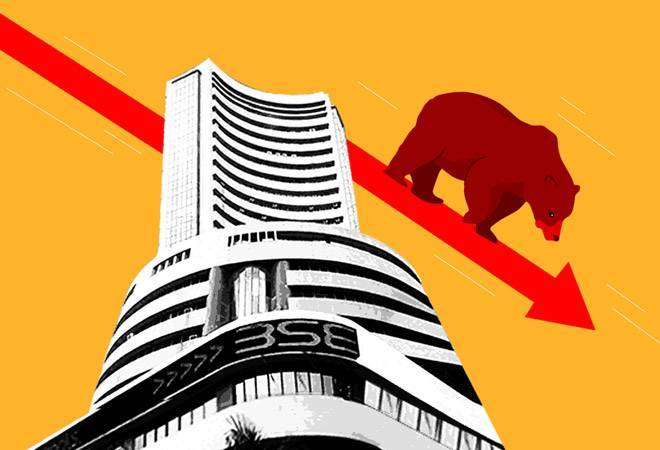
UPDATE: The Markets, Oil and T-Notes

By Staff Reporters

***

***

MARKETS: Stocks rose for a fourth day in a row Friday, closing out their biggest weekly gain since November 2020. The S&P 500 added 1.2%, bringing its weekly gain to 6.2%. The NASDAQ climbed 2.1% and the Dow Jones Industrial Average rose 0.8%. Investors have welcomed the long-expected pivot from the Federal Reserve from stimulating the economy to fighting inflation, which began this week with its first interest rate increase since 2018.

OIL: The price of oil remains above $100 a barrel as investors monitor the ongoing Russian invasion of Ukraine.

10 Year Treasury Note: The yield on the 10-year Treasury Note fell to 2.15%.

CITE: https://www.r2library.com/Resource/Title/082610254

WINTER: Today is the last day of winter.

***

COMMENTS APPRECIATED

Thank You

Subscribe to the Medical Executive-Post

***

****

PODCAST: Dysfunctional Employee Healthcare Benefits

By Eric Bricker MD

Article in the Journal of the American Medical Association

***

***

COMMENTS APPRECIATED

Thank You

Subscribe to the Medical Executive-Post

***

***

***

Options and Derivatives Glossary for Physician Investors

Important Terms for Physician-Executives and Investors

[By Staff Writers}

Text BooksAmerican-style option: An option that can be exercised at any time prior to expiration.

Ask price: The price at which a seller is offering to sell an option or stock.

Assignment:  Notification by the Options Clearing Corporation to the writer (seller) of an option that the holder has exercised the option and the terms of the settlement must now be met. The Options Clearing Corporation makes assignments on a random basis.

At-the-money: A term that describes an option with an exercise price that is equal to the current market price of the underlying stock.

Bearish: An adjective describing the belief that a stock (or the market in general) will decline in price.

Bid price: The price at which a buyer is willing to buy an option or stock.

Break-even point: A stock price at option expiration at which an option strategy results in neither a profit nor a loss.

Bullish: An adjective describing the belief that a stock (or the market in general) will rise in price.

Call option: A contract that gives the physician investor or holder the right (but not the obligation) to purchase the underlying stock at some predetermined price. In the case of American-style call options, this right can be exercised at any time until the expiration date. In the case of European-style call options, this right can only be exercised on the expiration date. For the writer (or grantor) of a call option, the contract represents an obligation to sell stock to the holder if the option is exercised.

Carrying cost: The interest expense on money borrowed to finance a stock or option position.

Cash settlement: The process by which the terms of an option contract are fulfilled through the payment or receipt in dollars of the amount at which the option is in-the-money, as opposed to delivering or receiving the underlying stock.

Closing price: The final price at which a transaction was made, but not necessarily the settlement price.

Closing transaction: A reduction or an elimination of an open position by the appropriate offsetting purchase or sale. An existing long option position is closed out by a selling transaction. An existing short option position is closed out by a purchase transaction.

Collateral: Securities or cash against which loans are made.

Contract size: The amount of the underlying asset covered by an options contract. This is 100 shares for one equity option, unless adjusted for a special event such as a stock split or a stock dividend. For index options, the contract size is the index level times the index multiplier.

Cover: To close out an open position. This term is used most frequently to describe the purchase of an option to close out an existing short position for either a profit or a loss.

Covered call: An option strategy in which a call option is written against a long stock (stock held in a client’s portfolio).

Covered option: An open short option position that is fully collateralized. If the holder of the option exercises, the writer of the option will not have a problem fulfilling the delivery requirements.

Covered put: An option strategy in which a put option is written against a sufficient amount of cash (or T-bills) to pay for the stock purchase if the short position is assigned.

Credit: Money received in an account from either a deposit or a transaction that results in increasing the account’s cash balance.

Cycle: The expiration dates applicable to the different series of options. Traditionally, there were three cycles:

• January/April/July/October

• February/May/August/November

• March/June/September/December

Today, equity options expire on a sequential cycle that involves a total of four option series: two near-term months and two far-term months. For example, on January 1, a stock traditionally in the January cycle will be trading options expiring in January, February, April, and July. Index options, however, expire on a consecutive cycle that involves the four near-term months. For example, on January 1, index options will be trading options expiring in January, February, March, and April.

Delivery: The process of meeting the terms of a written option when notification of assignment has been received. In the case of a short call, the writer must deliver stock and in return receives cash for the stock sold. In the case of a short put, the writer pays cash and in return receives the stock purchased.

Early exercise: A feature of American-style options that allows the holder to exercise an option at any time prior to the expiration date.

Equity: In a margin account, this is the difference between the securities owned and the margin loans owed. It is the amount the investor would keep after all positions have closed out and all margin loans are paid off.

Equity option: An option on a common stock.

European option: An option that can be exercised only on the expiration date.

Exercise: To invoke the rights granted to the holder of an option contract. In the case of a call, the option holder buys the underlying stock from the option writer. In the case of a put, the option holder sells the underlying stock to the option writer.

Exercise price: The price at which the holder of an option can either purchase (call) the underlying stock from or sell (put) it to the option writer.

Expiration date: The date on which an option and the right to exercise cease to exist.

Futures contract: A contract calling for the delivery of a specific quantity of a physical good or a financial instrument (or the cash value) at some specific date in the future. There are exchange-traded futures contracts with standardized terms, and there are over-the-counter futures contracts with negotiated terms.

Hedge: A position established with the specific intent of protecting an existing position.

Hypothecation agreement: A document giving a broker the right to pledge securities to a bank in order to provide for lending capacity.

Index: A compilation of several stock prices into a single number. Example: the S&P Index.

Index option: An option whose underlying entity is an index. Generally, index options are cash-settled.

In-the-money:  A term used to describe an option with intrinsic value. A call option is “in-the-money” if the stock price is above the strike price. A put option is “in-the-money” if the stock price is below the strike price.

Intrinsic value: The in-the-money portion of an option’s price.

Leg: A term describing one side of a position that has two or more sides.

Leverage: The ability to borrow against a position to increase the investor’s purchasing power. A term describing the greater percentage of profit or loss potential when a given amount of money controls a security with a much larger face value. For example, a call option enables the physician investor or holder to assume the upside potential of 100 shares of stock by investing a much smaller amount than required to buy the stock. If, for example, the stock increases by 10%, the option can double in value. Conversely, a 10% stock price decline can result in the total loss of the purchase price of the option.

Limit order: A trading order placed with a broker to buy or sell a security at a specific price.

Listed option: A put or call traded on a national option exchange with standardized terms. In contrast, over-the-counter options usually have non-standard or negotiated terms.

Long position: A term used to describe either an open position that is expected to benefit from a rise in the price of the underlying stock (such as long call, short put, or long stock) or an open position resulting from an opening purchase transaction such as long call, long put, or long stock.

Margin: The minimum equity required to support an investment position. To buy on margin refers to borrowing part of the purchase price of a security from a brokerage firm.

Market maker: An exchange member on the trading floor who buys and sells for his own account and who is responsible for making bids and offers and maintaining a fair and orderly market.

Market order: A trading instruction from an investor to a broker to immediately buy or sell a security at the best available price.

Mark to market: An accounting process by which the price of securities held in an account is valued each day to reflect the last sale price or market quote if the last sale is outside of the market quote. The result of this process is that the equity in an account is updated daily to properly reflect current security prices.

Married put strategy: The simultaneous purchase of stock and the corresponding number of put options. This is a limited-risk strategy during the life of the puts, because the stock can be sold at the strike price of the puts.

Monetization: A strategy that allows an investor to generate cash from a position without realizing a sale of the underlying position.

Non-equity options: Any option that does not have common stock as its underlying asset. Non-equity options include options on futures, indexes, interest rate composites, and physicals.

Opening transaction: An addition to or creation of a trading position. An opening purchase transaction adds long options (or long securities) to an investor’s total position, and an opening sell transaction adds short options (or short securities).

Option writer: The seller of an option contract who is obligated to meet the terms of delivery if the option holder exercises his or her right.

Out-of-the-money: A term used to describe an option that has no intrinsic value, i.e., all of its value consists of time value. A call option is “out-of-the-money” if the stock price is below the strike price. A put option is “out-of-the-money” if the stock price is above the strike price.

Over-the-counter (OTC) option: An option that is traded in the over-the-counter market. OTC options are not usually listed on an options exchange and generally do not have standardized terms.

Parity: The difference between the stock price and the strike price of an in-the-money option. When an option is trading at its intrinsic value, it is said to be trading at parity.

Position limits: The maximum number of open option contracts that an investor can hold in one account or in a group of related accounts. Some exchanges express the limit in terms of option contracts on the same side of the market, and others express it in terms of total long or short delta.

Premium: The total price of an option, which equals its intrinsic value plus its time value. Often this word is used to mean the same as time value.

Put option: A contract that gives the buyer the right (but not the obligation) to sell the underlying stock at some predetermined price. For the writer (or grantor) of a put option, the contract represents an obligation to buy stock from the buyer if the option is assigned.

Settlement price: The official price at the end of a trading session. This price is established by the Option Clearing Corporation, and it is used to determine changes in account equity or margin requirements, and for other purposes.

Short option position: The position of an option writer that represents an obligation to meet the terms of the option if it is assigned.

Short position: Any open position that is expected to benefit from a decline in the price of the underlying stock such as long put, short call, or short stock.

Short sale: The sale of a security (i.e., stocks and bonds) before it has been acquired.

Spread: A position consisting of two parts, each of which alone would profit from opposite directional price moves. These opposite parts are entered simultaneously in the hope of limiting risk or benefiting from change or price relationship between the two.

Stock index futures: A futures contract that has as its underlying entity a stock market index. Such futures contracts are generally subject to cash settlement.

Stop limit order: A type of contingency order, placed with a broker that becomes a limit order when the security trades, is bid, or is offered at a specific price.

Straddle: A trading position involving puts and calls on a one-to-one basis in which the puts and calls have the same strike price, expiration, and underlying entity. A long straddle is when both options are owned and a short straddle is when both options are written.

Street name: Securities held in a street name are simply held for a customer’s account in the name of the brokerage house.

Synthetic position: A strategy involving two or more instruments that has the same risk/reward profile as a strategy involving only one instrument. The following list summarizes the six primary synthetic positions.

• Synthetic long call—A long stock position combined with a long put.

• Synthetic long put—A short stock position combined with a long call.

• Synthetic long stock—A long call position combined with a short put.

• Synthetic short call—A short stock position combined with a short put.

• Synthetic short put—A long stock position combined with a short call.

• Synthetic short stock—A short call position combined with a long put.

Tick: The smallest unit price change allowed in trading a security. For a common stock, this is generally 1/8 point. For an option under $3 in price, this is generally 1/16 point. For an option over $3, this is generally 1/8 point.

Time value: The difference between the call price and the intrinsic value.  It reflects what traders are willing to pay for the uncertainty (volatility) of a stock.

Uncovered option: A short option position that is not fully collateralized if notification of assignment should be received. A short call position is uncovered if the writer does not have a long stock position to deliver. A short put position is uncovered if the writer does not have the financial resources available in his or her account to buy the stock.

Volatility: The volatility of an asset is a measure of the variability of its returns. Conventionally, volatility is defined as the annualized standard deviation of the logarithms of the asset’s returns. An important aspect of volatility is that it measures the variability of returns and not the deviation.

Write: To sell an option. A physician-investor who sells an option is called the writer, regardless of whether the option is covered or uncovered.

MORE: Glossary Terms Ap 3

Conclusion

Your thoughts and comments on this ME-P are appreciated. Feel free to review our top-left column, and top-right sidebar materials, links, URLs and related websites, too. Then, subscribe to the ME-P. It is fast, free and secure.

Speaker: If you need a moderator or speaker for an upcoming event, Dr. David E. Marcinko; MBA – Publisher-in-Chief of the Medical Executive-Post – is available for seminar or speaking engagements. Contact: MarcinkoAdvisors@msn.com

OUR OTHER PRINT BOOKS AND RELATED INFORMATION SOURCES:

Product DetailsProduct DetailsProduct Details

Product Details  Product Details


“Dictionary of Health Economics and Finance”

CMP logo

SPONSOR: http://www.CertifiedMedicalPlanner.org

Product Details

ORDER HERE: https://www.r2library.com/Resource/Title/0826102549

THANK YOU

***

Most Physician Compensation Plans Still Productivity-Based

By Health Capital Consultants, LLC

***

Study: Most Physician Compensation Plans Still Productivity-Based

A study conducted by the RAND Corporation and published in the January 2022 issue of the Journal of the American Medical Association (JAMA) seeking to determine whether health systems primarily incentivize volume or value in their physician compensation models found that almost all physicians are still compensated through a volume-based model that rewards productivity over the value of care provided.

CITE: https://www.r2library.com/Resource/Title/0826102549

These study results are in direct contradiction to the longstanding narrative that the U.S. healthcare delivery system is shifting away from volume-based reimbursement and toward VBR. (Read more…) 

***

***

COMMENTS APPRECIATED

Thank You

Subscribe to the Medical Executive-Post

***

***

***

***

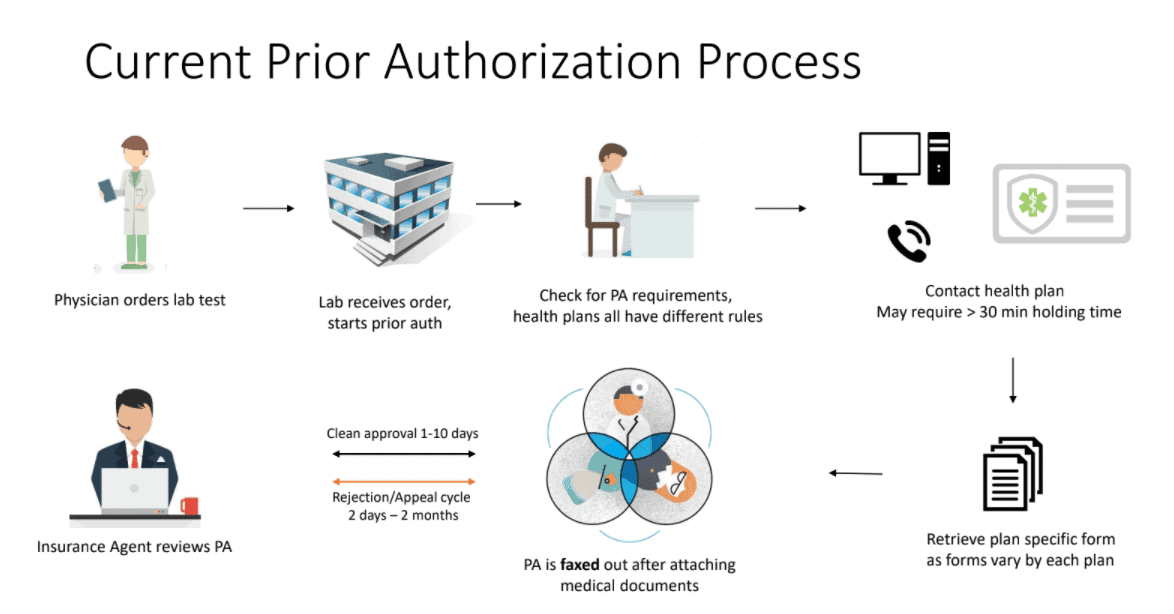
AMA: Prior Authorization and Patient Harm?

By Staff Reporters

***

***

Prior Authorization and Patient Harm

 •  34% of physicians report that PA has led to a serious adverse event for a patient in their care.
 •  24% of physicians report that PA has led to a patient’s hospitalization.
 •  18% of physicians report that PA has led to a life-threatening event or required intervention to prevent  permanent impairment or damage.
 •  8% of physicians report that PA has led to a patient’s disability/permanent bodily damage, congenital anomaly/birth defect or death.

Source: AMA, “2021 AMA prior authorization (PA) physician survey,” February 2022

***

COMMENTS APPRECIATED

Thank You

Subscribe to the Medical Executive-Post.com

***

***

***

BALANCE BILLING: The Emerging “No Surprise” Act

Balance Medical Billing

By Dr. David E. Marcinko MBA CMP®

CMP logo

The No Surprises Act is looking to make the practice of out of network balance billing a thing of the past.

CITE: https://www.r2library.com/Resource/Title/0826102549

***

No Surprises Act: New Law to Protect Against Surprise ...

***

Beginning in 2022, there will be few situations in which a patient can receive a bill for out-of-network care they believed would be covered by their insurance company. This new rule should especially benefit patients in emergency situations who don’t have the time or luxury to dig up the details on every provider they encounter.

CONGRESS: https://www.congress.gov/bill/116th-congress/house-bill/3630/

The No Surprises Act also requires insurance companies to provide patients with at least 90 days of coverage if an in-network provider moves out of network. That way, patients aren’t forced to switch providers immediately if such a move happens while they’re in the middle of a treatment plan.

DOCTORS: https://www.elixirehr.com/what-the-no-surprises-act-means-for-healthcare-providers/

Now, the No Surprises Act does have its limitations. Patients can still get a bill for out-of-network care if they visit an urgent care clinic for non-emergency purposes. Also, if consumers are informed that the care they’re about to receive is out of network and they give written consent to move forward, then they may get billed for that care even once the new rule takes effect.

CMS: https://www.cms.gov/nosurprises

YOUR COMMENTS ARE APPRECIATED.

***

***

Thank You

***

***

PODCAST: The Causes of High Healthcare Costs Explained

By Eric Bricker MD

***

***

COMMENTS APPRECIATED

Thank You

Subscribe to the Medical Executive-Post

***

CITE: https://www.r2library.com/Resource/Title/0826102549

***

***

***

***

#5: The Six Commandments of Value Investing

***

***

EDITOR’S NOTE: Although it has been some time since speaking live with busy colleague Vitaliy Katsenelson CFA, I review his internet material frequently and appreciate this ME-P series contribution. I encourage all ME-P readers to do the same and consider his value investing insights carefully.

By Vitaliy Katsenelson, CFA

***

5. Risk is a permanent loss of capital (not volatility)

Conventional wisdom views volatility as risk. Not value investors. We befriend volatility, embrace it, and try to take advantage of it. For someone who has not researched a company, it is not readily apparent whether a decline in shares is temporary or permanent. After all, if you don’t know what the company is worth, the quoted price becomes the quotient of intrinsic value. If you do know what the company is worth, then the change in intrinsic value is all that is going to matter. The price quoted on the exchange will be your friend, allowing you to take advantage of the difference between intrinsic value and quoted stock price. If the quoted stock price is significantly cheaper than your estimated intrinsic value, you buy it (or buy more of it if you already own it). If the opposite is true, you sell it.

What is a company worth?

Determining the intrinsic value requires a combination of art and science, in that order – it is not quoted on the exchanges. We go about this the same way a businessman would figure how much he’d want to pay for a gas station or a McDonald’s franchise. Analysis of each company will be different, but at the core we estimate the cash flows the business will produce for shareholders in the long run (at least ten years) and what the business will be worth then (based on our estimate of its earnings power at the time). The combination of the two provides us an approximation of what the business is worth now. To further embed “the right” type of risk analysis into our investment operating system, we build financial models. Models help us to understand businesses better and provide insights as to which metrics matter and which don’t. They allow us to stress test the business: We don’t just look at the upside but spend a lot of times looking at the downside – we try to “kill” the business. We look at known risks and try to imagine unknown ones; we try to quantify their impact on cash flows. This “killing” helps to us understand how much of a discount (margin of safety) we should demand to what the business is worth. By applying this discount to fair value, we arrive at a buy price. For every stock we buy we probably look at a few dozen (at least).

For instance, if we are looking at a company that is selling products or services to consumers, we’ll be focusing on customer-acquisition costs. We try to drill down to the essential operating metrics of each company. If it’s a convenience store retailer, we’ll look into gallons of gas sold and profit per gallon. If it’s an oil driller, we’ll look at utilization rates, rigs in service, average revenue per rig per day. If it’s a pharmaceuticals company, we’ll have revenue lines for each major drug it sells and model the company for the eventuality that patents will run out. (Revenues usually decline 80-90% when a patent expires).

These models help us to understand the economics of the business. We usually build two type of models. We start with what we call the “tablecloth” model. This is a very detailed, in-depth model that zeros in on different aspects of the business. But the risk we run with a tablecloth model is that we get lost in the trees and forget about the forest.

This brings us to our “napkin” model. It’s a much simpler and smaller model that focuses only on the essentials of the business. It is easier to build the tablecloth model than the “napkin.” If we can build a napkin model, that means we understand the drivers of the business – we understand what matters. Models are important because they help us remain rational. It is only the matter of time before a stock we own will “blow up” (or, in layman’s terms, decline).

In this type of analysis, what happens this month, this quarter, or even this year is only important in the context of the long run – unless the company’s good or bad earnings report in any quarter changes our assumptions on the company’s long-term cash flows. If you methodically focus on what the company is worth and if your Total IQ is maximized, then price fluctuations are just noise. Volatility becomes your friend because you can rationally take advantage of it. It’s an under-appreciated gift from Mr. Market.

Side Note: As an advisor, I feel it is one of my great responsibilities to be an honest and clear communicator. There is an asymmetry of information between us and our clients. We have invested weeks and months of research into the analysis of each stock; therefore, we have a good idea what each company is worth. Our clients have not done this research, and they should not have to – that is what they hired us to do.This is why we pour our heart and soul into our quarterly letters – we want to close this informational gap and so we try as hard as we can to explain what we think the companies in our portfolio are worth. Our letters are often 15-20 pages long. 

***
COMMENTS APPRECIATED

Thank You

Subscribe to the Medical Executive-Post

***

****

#4: The Six Commandments of Value Investing

***

***

EDITOR’S NOTE: Although it has been some time since speaking live with busy colleague Vitaliy Katsenelson CFA, I review his internet material frequently and appreciate this ME-P series contribution. I encourage all ME-P readers to do the same and consider his value investing insights carefully.

By Vitaliy Katsenelson, CFA

***

4. Margin of safety – leave room in your buy price for being wrong

Margin of safety is a function of two dimensions: a company’s quality and its growth.

I am generalizing here, but exogenous events have a greater impact on a lower-quality business than a higher-quality one. Thus a high-quality company needs a lower margin of safety than a lower-quality one.

A company that is growing earnings and paying dividends has time on its side and thus may not need as much margin of safety as a lower-growing one.

We quantify both a company’s quality and growth, and thus margin of safety is deeply embedded in our investment operating system.

The larger discount to the stock’s fair value (the $1) the less clairvoyance you need to have about the future of the business. For instance, in 2013, when Apple stock was trading at $400 (pre-split) we didn’t have to have a very clear crystal ball about Apple’s future; Apple just had to be able to barely fog the mirror.

In later years, at $900, we need to have a lot more precision in our analysis of Apple’s future. 

CITE: https://www.r2library.com/Resource/Title/082610254

***

COMMENTS APPRECIATED

Thank You

Subscribe to the Medical Executive-Post

***

***

#3: The Six Commandments of Value Investing (Part 2)

***

EDITOR’S NOTE: Although it has been some time since speaking live with busy colleague Vitaliy Katsenelson CFA, I review his internet material frequently and appreciate this ME-P series contribution. I encourage all ME-P readers to do the same and consider his value investing insights carefully.

By Vitaliy Katsenelson, CFA

***

***

3. The market is there to serve you, not the other way around (Part 2)

First, we increase it by subtraction, by shrinking our universe to stocks that lie within both our IQ and EQ comfort zones.

We are very careful about stocks or industries where either our IQ or EQ is questionable. For instance, we have recognized that our IQ is low when it comes to non-revenue-generating, single-future-product biotech companies. We have zero analytical insights into this business. None.

We find that our EQ is fairly low when it comes to complex financial businesses. We don’t invest in any.

The beauty of investing is that we only need 20-30 stocks, and we get to choose which problems we want to tackle. We usually like easy problems.

In other professions, that is a luxury you don’t have. If you are an orthopedic surgeon, you are not going to tell your patient that you only operate on right knees because the last time out you had a bad experience with a left knee.

Second, we look for areas where our EQ is highest.

Over the years, we’ve discovered that our EQ is much higher with higher-quality companies. Therefore, for every company in our portfolio or on our watch list, we quantify quality. And with very rare exceptions, we own only very-high-quality companies.

We quantify quality for another reason, too. As value investors, we are innately focused on a margin of safety. We found that if you don’t quantify quality, it is very easy to lower your standards when you reach for value, especially in a very expensive market.

We went a step further: Quality, for us, is a filter. If a company doesn’t pass its quality test, it is dead to us. It may have high growth prospects, pay high dividends, and it may sell at a mouthwatering valuation. But if it failed our quality test, it is still dead to us.

By quantifying quality, we can keep the overall quality of our portfolio very high. Just as importantly, we can keep our EQ high, too.

By maximizing both our IQ and EQ for individual stocks, we maximize the Total IQ of the portfolio. Thus, when we get punched in the mouth, we are able to rationally reanalyze a stock and may decide to buy more, do nothing, or sell.

We cautiously guard our EQ and long-term horizon. We don’t let the outside world come unchecked into our daily life. For instance, we spend little time watching business TV during the day, as we find it to be toxic to our time horizon and to our investor (as opposed to trader) mentality. For the same reason, we also don’t look at our portfolio more than twice a day.

Finally, and this applies to professional investors only, you need to have clients who will allow you to maintain your EQ. Following the Six Commandments is practically impossible if your clients don’t believe in them.

Here’s a real example:

On my recent purchase of Apple stock coming off a one year top and heading down.

On January 25th, 2013 at 3:55 pm I got this email from a client, David:

David and I talked on the phone, and I tried to explain our logic. I’m not going to bore you with that, but it was along the lines of “incredible brand, high recurrence of revenues, great management, a quarter of market capitalization in cash; we tried to kill it (we lowered its margins, cut sales) and we simply couldn’t.”

I told David that the price of the stock is an opinion of value, not a final verdict – he didn’t care. He’d talked to his neighbor who was a famous technician, who said, “Apple is going down.” To which my response was, “If it declines that will be a blessing – the company is buying back stock, and we are going to buy more.”

The “technician” was right: Apple declined from $455 ($65 split-adjusted), our initial purchase price, to $395 ($56 split-adjusted). We bought more Apple as it fell. This encounter also made me realize how this negative psychology around Apple was creating an opportunity in Apple, and I wrote a two-part article describing the aforementioned incident as evidence of that.

What I did not say in that article is that we had to amicably part ways with David. I tried very hard to communicate the Six Commandments to him, but he was not willing to (re)learn. Keeping him as a client would erode my overall EQ and would have impacted other clients.

Your mental state is as important as your ability to analyze a company’s balance sheet or your ability to value the business. You may spend days sharpening your investment process, your analytical skills; but in the end, if your EQ is low nothing else will matter.

CITE: https://www.r2library.com/Resource/Title/082610254

***

COMMENTS APPRECIATED

Thank Yo

Subscribe to the Medical Executive-Post

****

PODCAST: Hospital “Out-Patient” Department Pricing Explained

***

Hospitals Are Paid More for SAME SERVICE in Outpatient Department Than Doctors Are Paid in Office.

For Example, the SAME Echocardiogram Costs $600 in a Hospital Outpatient Department and $250 in a Doctor’s Office.

By Dr. Eric Bricker MD

***

***

COMMENTS APPRECIATED

Thank You

Subscribe to the Medical Executive-Post

***

***

***

PODCAST: Economic “Rent-Seeking” in Health Care

By Eric Bricker MD

***

***

CITE: https://www.r2library.com/Resource/Title/082610254

COMMENTS APPRECIATED

Thank You

Subscribe to the Medical Executive-Post

***

***

****

PODCAST: The No Surprises [Medical Billing] Act

Surprise Medical Bills Outlawed?

By Eric Bricker MD

****

***

https://medicalexecutivepost.com/2021/11/03/balance-billing-the-emerging-no-surprise-act/

QPA DEFINITION: The qualifying payment amount is generally the median of contracted rates for a specific service in the same geographic region within the same insurance market as of January 31, 2019. The rate will be adjusted per the Consumer Price Index for All Urban Consumers (CPI-U).

MORE: https://medicalexecutivepost.com/2017/01/07/a-small-step-forward-on-surprise-medical-care-balance-billing/

CITE: https://www.r2library.com/Resource/Title/0826102549

***

COMMENTS APPRECIATED

Thank You

Subscribe to the Medical Executive-Post

***

BUSINESS MEDICINE: https://www.amazon.com/Business-Medical-Practice-Transformational-Doctors/dp/0826105750/ref=sr_1_9?ie=UTF8&qid=1448163039&sr=8-9&keywords=david+marcinko

***

DHIMC: https://www.amazon.com/Dictionary-Health-Insurance-Managed-Care/dp/0826149944/ref=sr_1_4?ie=UTF8&s=books&qid=1275315485&sr=1-4

***

TELE-HEALTH: Market Share of Outpatient Visits

By Staff Reporters

***

***

KFF: Share of Outpatient Visits by Telehealth, 2019-2021

 •  March 2019-Feb. 2020: 0% (Rounded, telehealth use was a negligible share prior to pandemic.)
 •  March-Aug. 2020: 13%
 •  Sept. 2020-Feb. 2021: 11%
 •  March-Aug. 2021: 8%

Source: KFF Health System Tracker, “Outpatient telehealth use soared early in the COVID-19 pandemic but has since receded,” February 10, 2022

***

COMMENTS APPRECIATED

Thank You

Subscribe to the Medical Executive-Post

***

***

UPDATE: Dark Russian Stock Markets, Damaged ETFs, US Housing Inflation and the Markets

By Staff Reporters

DARK : With Russia’s stock market closed, U.S. exchange-traded funds are signaling the scale of the rout facing the nation’s equity markets.  The Bank of Russia halted trading in Moscow on Monday, one of several measures unleashed in a bid to shield the nation’s economy from sweeping SWIFT and other sanctions.

SWIFT: https://medicalexecutivepost.com/2022/02/26/what-is-swift-banking/

***

***

ETFs: According to Bloomberg, the VanEck Russia ETF (ticker RSX) and the iShares MSCI Russia Capped ETF (ERUS) plunged 30% and 27%, which was likely a create-to-lend activity where new shares are created for short sellers to borrow and bet against. That turned the two ETFs, which primarily track Russian energy stocks, into useful price-discovery tools for traders seeking to navigate the geopolitical turmoil caused by Russia’s invasion of Ukraine.  “ETFs are suppose to be index trackers, but when that process breaks down, they take on the role of price-discovery vehicles — and it’s impressive how accurate they have been.” 

CITE: https://www.r2library.com/Resource/Title/0826102549

Housing: Amounted to about 4% for the 12 months ending in January. Comparatively, Zillow reported that home values had risen by nearly 20% over that same period of time, while rents had increased by nearly 15%.

Domestic Markets: Stocks were a mixed bag, but the S&P still suffered back-to-back losing months.

10-Year: 1.828%

***

COMMENTS APPRECIATED

Thank You

Subscribe to the Medical Executive-Post

***

***

CURRENCY: Devaluation versus Depreciation

KNOW THE FINANCIAL DIFFERENCE

****

BY DR. DAVID E. MARCINKO MBA CPM®

INVITE: https://medicalexecutivepost.com/dr-david-marcinkos-bookings/

Competitive World 27

CMP logo

SPONSOR: http://www.CertifiedMedicalPlanner.org

Devaluation is the deliberate downward adjustment of the value of a country’s money related to another currency, group of currencies or currency standard. It is often confused with depreciation and is the opposite of revaluation which refers to the readjustment of a currency exchange rate.

CITE: https://www.r2library.com/Resource/Title/0826102549

Definition

The government of a country may decide to devalue its currency and like depreciation it is not the result of non-governmental activities.

One reason a country made devalue its currency is to combat a trade imbalance. Devaluation reduces the cost of a country’s export rendering them more competitive in the Global market which is which in turn increases the cost of imports.

If imports are more expensive domestic consumers are less likely to purchase them further strengthening domestic businesses because exports increase and imports decrease there is typically a better balance of payments because the trade deficit shrinks. In short a country that devalue its currency can produce is difficult because there is a greater demand for cheaper exports.

***

***

In accountancy, depreciation refers to two aspects of the same concept: first, the actual decrease of fair value of an asset, such as the decrease in value of factory equipment each year as it is used and wear, and second, the allocation in accounting statements of the original cost of the assets to periods in which the assets are used (depreciation with the matching principle).

Depreciation is thus the decrease in the value of assets and the method used to reallocate, or “write down” the cost of a tangible asset (such as equipment) over its useful life span. Businesses depreciate long-term assets for both accounting and tax purposes. The decrease in value of the asset affects the balance sheet of a business or entity, and the method of depreciating the asset, accounting-wise, affects the net income, and thus the income statement that they report.

CITE: https://www.r2library.com/Resource/Title/0826102549

Generally, the cost is allocated as depreciation expense among the periods in which the asset is expected to be used.

YOUR COMMENTS ARE APPRECIATED.

Thank You

***

ORDER TEXT: https://www.routledge.com/Comprehensive-Financial-Planning-Strategies-for-Doctors-and-Advisors-Best/Marcinko-Hetico/p/book/9781482240283

***

The CERTIFIED MEDICAL PLANNER® Program Curriculum

BY DR. DAVID E. MARCINKO MBA CMP®

CMP

THE NEXT GENERATION OF FIDUCIARY FOCUSED FINANCIAL PLANNING AND MEDICAL MANAGEMENT ADVICE FOR DOCTORS

****

VISIT: http://www.CERTIFIEDMEDICALPLANNER.org

CURRICULUM: Enter the CMPs

BE AWARE ALL ADVISORS … NEXT GEN FINANCIAL ADVICE IS HERE?

CMP logo

Are you a financial planner, insurance agent or investment advisor seeking to assist your physician clients with medical practice enhancement solutions, along with healthcare targeted financial planning services, but don’t know where to turn for help?

OR, maybe you’ve already had a bad experience with a young physician or astute healthcare professional client that was actually more informed than you in these areas?

CITE: https://www.r2library.com/Resource/Title/0826102549

OR, a doctor/nurse client who demanded a true fiduciary advisor [not fee-based advice, with no dual licenses and no arbitration clauses] documented in writing].

Read this decade old Federal Government report to learn what can happen when your advisor is not an informed Certified Medical Planner© designated medical management practitioner.

Then, become a Certified Medical Planner© and thrive by helping others …. first!

GOV: https://oig.hhs.gov/fraud/docs/alertsandbulletins/consultants.pdf

True yesterday … more true today.

****

Risk Management, Liability Insurance, and Asset Protection Strategies for Doctors and Advisors: Best Practices from Leading Consultants and Certified Medical Planners™
Comprehensive Financial Planning Strategies for Doctors and Advisors: Best Practices from Leading Consultants and Certified Medical Planners™
Product Details

***

CONTACT: Ann Miller RN MHA CMP®

Phone: 770-448-0769

EMAIL: MarcinkoAdvisors@msn.com

***

Cryptocurrency Trades and Income Taxes 2021

Virtual Currency – Real Taxation

By Staff Reporters

What you need to report to the IRS

The IRS treats virtual currencies as property, which means they’re taxed similarly to stocks. If all you did was purchase cryptocurrency with U.S. dollars, and those assets have been sitting untouched in an exchange or your cryptocurrency wallet, you shouldn’t need to worry about reporting to the IRS.

***

Reporting is required when certain events come into play, most commonly:

  • Trading one cryptocurrency for another.
  • Selling cryptocurrency for fiat dollars (government-issued currency).
  • Using cryptocurrency to buy goods or services (e.g., paying for a cup of coffee with cryptocurrency).

A critical distinction to make is that triggering a taxable event doesn’t necessarily mean you’ll owe taxes, said Andrew Gordon, an Illinois-based certified public accountant and tax attorney. Just because you have to report a transaction doesn’t mean you’ll end up owing the IRS for it.

READ HERE: https://www.msn.com/en-us/money/taxes/yes-you-must-pay-taxes-on-cryptocurrency-trades-heres-how/ar-AATamDL?li=BBnb7Kz

***
COMMENTS APPRECIATED.

Thank You

Subscribe to the Medical Executive-Post

FINANCE: https://www.amazon.com/Comprehensive-Financial-Planning-Strategies-Advisors/dp/1482240289/ref=sr_1_1?ie=UTF8&qid=1418580820&sr=8-1&keywords=david+marcinko

***

INSIDER TRADING 4 ME: Stock Markets


***
INSIDER TRADING FOR ME, BUT NOT FOR THEE
See the source image

By Richard Helppie

***

Capital markets require confidence that all market participants have fair access to the same relevant information about a company and its prospects. Laws governing the trading of securities have been in existence since stocks were first traded. It seems as if each piece of legislation, from the Securities and Exchange Act of the 1930’s through to the 2002  Sarbanes-Oxley Law fought the prior corruption as successfully as preparing an army to fight the last war.

Curiously, the issue of insider trading by members of Congress is not a partisan issue. If behavior is any indication, certain Republicans and Democrats are fond of having the ability to profit from access to material, nonpublic information. Others of both parties are introducing legislation to block illegal insider trading.

Congress has passed laws that prohibit people with insider knowledge from trading on non-public information, and from sharing that non-public information with others who may trade stocks based on that information. The former is known as “illegal insider trading” and the latter as “tipping.” There exists legal insider trading, which is bound by rules of disclosure and third-party decision makers, but we will leave that for another day. Illegal insider trading is enforced through Federal Agencies including the Securities and Exchange Commission (SEC), Internal Revenue Service (IRS) and the Department of Justice (DOJ), as well as by regulations on major stock exchanges such as the New York Stock Exchange (NYSE) and National Association of Securities Dealers Automated Quotation Systems (NASDAQ).

While there is universal agreement that executives, board members, employees and others with access to non-public information may not use that information to trade stocks, members of Congress and their staffs face few practical barriers. And in more recent months, members of the Federal Reserve and their staffs have made questionable, if not downright suspicious trades of stocks.

History is littered with cases of both average citizens and celebrities like Martha Stewart being prosecuted for insider trading. Stewart was ultimately prosecuted and jailed for obstruction after denying insider knowledge.

There are members of both the US Senate and US House of Representatives who want to stop illegal insider trading by their peers. For example, in 2012, President Barack Obama signed the Stop Trading on Congressional Knowledge (STOCK) Act to prevent insider trading by members of Congress and Congressional Staff. However, there have been no prosecutions under this statute to date. The reason is that the “Speech and Debate” clause prohibits questioning an elected Senator or Congressional Representative.

Moreover, much of the disclosure of material, non-public information that would establish a foundation for illegal insider trading occurs outside the public eye. Members of Congress cannot act on information obtained from companies themselves. The difficulty arises in proving that a member of Congress or Congressional staff knew of material, non-public information acquired in a confidential congressional meeting. Let me rephrase that. There is no way of knowing what transpired in the confidential committee meeting so there is no provable path to a stock trade benefiting the member of Congress or their staff.

Suppose two publicly traded defense contractors were bidding on a new weapons system. In a confidential committee, a Department of Defense (DOD) recommendation to accept the bid of company A versus Company B was made and endorsed by the committee. At that point, everyone with access to the non-public information about the weapons system bid would know that it would be good for the stock of Company A and bad for the stock of Company B.

Take this a step further. Company A and Company B are notified about the confidential decision and advised to keep this material, non-public information protected. At this point, if any executive, board member or employee with that knowledge traded in the stock of Company A or Company B they would be subject to prosecution, including fines and imprisonment. Also, if any person at the company provided that material, non-public information to another person, including a member of Congress, that action would be subject to investigation and potential prosecution.

Now suppose a Senator, Congressional Representative or staff member, after receiving the news of the weapons system award went to their broker, computer or telephone and bought stock in Company A while selling (or shorting in another way) Company B. Or perhaps communicated to a friend or family member on a trade “suggestion.”  Relaying or exploiting information – material, non-public information —  behavior that would land any other person in an investigation and make them subject to prosecution, cannot be practically pursued because there is no way to use the committee deliberations as evidence.

When Senators Richard Burr (R-NC), Kelly Loeffler (R-GA) and Diane Feinstein (D-CA) were accused of insider trading, instead of being subjected to investigation and potential prosecution through the SEC, IRS, or DOJ, their actions instead were reviewed by the Senate Ethics Committee. The Senate Ethics Committee, made up of other US Senators, found no wrongdoing.  Let me rephrase that –  other US Senators, who might benefit themselves from insider trading – decided to give suspicious behavior a pass. Even if the conduct of the Senators was on the up-and-up, the optics do not inspire confidence.

The US Senate does not have a monopoly on suspicious trading. For example, Congresswoman Lois Frankel (D-FL), was accused of trading stocks of companies in the fossil fuel industry while a sitting on a Congressional subcommittee that oversees funding for the Department of Energy.

Legislation to Block Insider Trading by Congress and the Federal Reserve

US Senators and Congressional Representatives have made proposals to improve public perception of their ranks with more practical solutions and stiffer penalties. Pre-eminent among the reformers is Senator Elizabeth Warren (D-MA), a person with a strong background in financial matters. Senator Warren appears to be the leading voice in calling for members of the Federal Reserve and their staffs to also be subject to laws prohibiting illegal insider trading and tipping. These restrictions are long overdue, as statements by the Fed has caused wild gyrations in the prices of securities. Senator Warren’s ideas are recommended reading on her web site at

https://www.warren.senate.gov

. Enter “Insider Trading” on the search bar of the Senator’s web site for 61 references.

Senators Jeff Merkley (D-OR) and Sherrod Brown (D-OH) have offered the “Ban Conflicted Trading Act.”  Under the legislation, elected persons and their staffs would be required to either sell or freeze their stock holdings, or put them in a blind trust. Introduced in 2018, the legislation has stalled. Last winter, Representative Alexandria Ocasio-Cortez (D-NY) and others have indicated they would introduce the same legislation in the House.

Earlier this month, Senators Jon Ossoff (D-GA) and Mark Kelly (D-AZ) introduced the Ban Congressional Stock Trading Act. If it becomes law, every member of Congress—as well as their spouses and dependent children—would be required to place their stock portfolios into a blind trust. One benefit of an outright ban or blind trusts would mean that clerical matters would no longer be a concern of those elected. Kelly himself, according to news reports, did not make a timely disclosure about a stock option exercise.

Senator Josh Hawley (R-MO) announced he will introduce the Banning Insider Trading in Congress Act. Wryly pointing out that politicians manage to outperform the stock market year after year, Hawley’s bill would prohibit members of Congress and their spouses from buying and trading individual stocks. Those who violate it would have to disgorge their profits.

Congress: Keep it simple and fix this

The singular, clear way to avoid abuses of insider information is to ban the trade of individual stocks and industry-specific Exchange Traded Funds (ETF) by members of Congress, Congressional staffs, members of the Federal Reserve and their staffs. Double blind trusts (where neither the owner or trustee knows identity of the other) would be an acceptable form of investing. Finally, add stronger criminal penalties for tipping insider information.

This is one of the few things that seem to enjoy bipartisan support, and would seemingly be welcomed by nonpartisans and those on the political poles as well.

Of course, like everything political, proposals of these types do not enjoy absolute, clear-cut support. As House Speaker Nancy Pelosi (D-CA) said about her opposition to such restrictions “We are a free market economy,” Pelosi, purported to be one of the 25 wealthiest members of Congress, continued, “They (Congress) should be able to participate in that.” Pelosi’s recent financial disclosure is said to have 48 transactions made by her family valued at a total of some $50 million so she is sympathetic to serving in Congress and participating in trading.

***

COMMENTS APPRECIATED

Thank You

Subscribe to the Medical Executive-Post

***

SEC REPORT: https://www.seclaw.com/insider-trading/

MADOFF: https://www.msn.com/en-us/news/world/convicted-fraudster-bernie-madoffs-sister-husband-found-dead/ar-AAU6px4?li=BBnbfcL

FRAUD: https://www.msn.com/en-us/money/companies/founder-of-collapsed-dollar17-billion-mutual-fund-charged-with-fraud/ar-AAU3PEF?li=BBnb7Kz

***

***

Product Details

CITE: https://www.r2library.com/Resource/Title/082610254

***

PASS ALL THE PODIATRY BOARD CERTIFICATION EXAMS

BY http://www.PODIATRYPREP.org

***

https://medicalexecutivepost.com/2021/09/25/podiatry-prep-pass-all-your-board-certification-examinations/

PURCHASE – PREPARE – PASS

Good Luck

***

PODCAST: Digital Health Market Segmentation

FOR HEALTHCARE ENTREPRENEURS

By Eric Bricker MD

***

***

COMMENTS APPRECIATED

Thank You

Subscribe to the Medical Executive Post

***

***

***

***

H2 Healthcare Data Breach Report

MCOL Cyber Attacks

By Staff Reporters

***

Critical Insight: 2021 with 5 Findings

 •  In 2021, 45 million individuals were affected by healthcare cyber-attacks, up from 34 million in 2020.
 •  The total number of affected increased 32% over 2020, meaning that more records are exposed per breach each year.
 •  Breaches only rose 2.4% from 663 in 2020 to 679 in 2021 but still hit historic highs.
 •  Hacking/IT incidents continue as the most common cause of breaches with an increase of 10% in 2021.
 •  Hacking incidents at outpatient/specialty clinics saw a 41% increase in these types of breaches in 2021.

Source: Critical Insight via Fierce Healthcare, February 1, 2022

***

COMMENTS APPRECIATED

Thank You

Subscribe to the Medical Executive-Post

***

***

***

ALTERNATIVE MINIMUM TAX: Physicians Beware!

By Staff Reporters

****

Alternative Minimum Tax

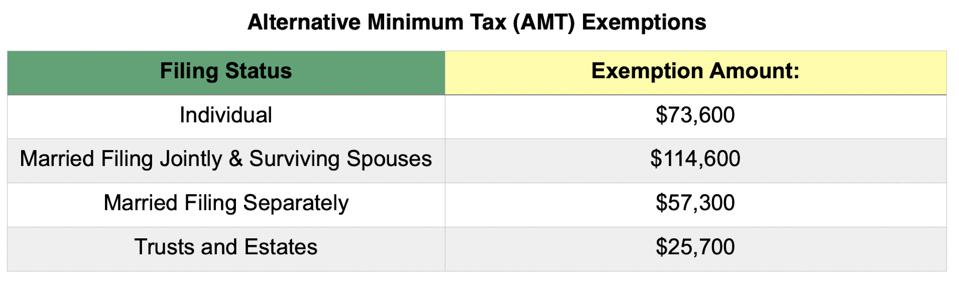
DEFINITION: The alternative minimum tax (AMT) is a tax imposed by the United States federal government in addition to the regular income tax for certain individuals, estates, and trusts. As of tax year 2018, the AMT raises about $5.2 billion, or 0.4% of all federal income tax revenue, affecting 0.1% of taxpayers, mostly in the upper income ranges.

CITE: https://www.r2library.com/Resource/Title/0826102549

***

See the source image

Key Takeaways

  • The alternative minimum tax (AMT) ensures that certain taxpayers pay their fair share of income taxes.
  • However, the structure was not indexed to inflation or tax cuts. …
  • For those subject to AMT, there are certain strategies that can be employed to reduce your exposure to this tax.

MORE: https://www.forbes.com/sites/kellyphillipserb/2020/09/11/your-first-look-at-2021-tax-rates-projected-brackets-standard-deductions–more/?sh=119ff37413ba

***

COMMENTS APPRECIATED

Thank You

Subscribe to the Medical Executive-Post

****

***

PODCAST: The “Secret” to Doctor Pay = RVUs

Relative Value Units

By Eric Bricker MD

****

***

COMMENTS APPRECIATED

Thank You

Subscribe to the Medical Executive-Post

***

https://www.amazon.com/Dictionary-Health-Insurance-Managed-Care/dp/0826149944/ref=sr_1_4?ie=UTF8&s=books&qid=1275315485&sr=1-4

***

https://www.amazon.com/Business-Medical-Practice-Transformational-Doctors/dp/0826105750/ref=sr_1_9?ie=UTF8&qid=1448163039&sr=8-9&keywords=david+marcinko

***

https://www.amazon.com/Financial-Management-Strategies-Healthcare-Organizations/dp/1466558733/ref=sr_1_3?ie=UTF8&qid=1380743521&sr=8-3&keywords=david+marcinko

***

The Medical Practice Business Plan EXECUTIVE SUMMARY?

WHAT IT IS – HOW IT WORKS

By Dr. David E. Marcinko MBA CMP®

****

CMP logo

SPONSOR: http://www.CertifiedMedicalPlanner.org

THE BUSINESS PLAN STANDARD FORMAT

Physician Executive Summary

The Physician Executive Summary is always included at the beginning of a formal business plan and represents a brief synopsis of the medical prarctice entire plan.  Its appearance, grammar and style should be sharp and crisp as it represents an enticement for the reader to maintain interest and contribute intelligent or economic input into the new venture.

It should contain information about the practice, advertising and marketing opportunities, physician management, proposed financing with four Pro Forma financial statements, business operations and exit strategy.  This last point, while unpleasant is often overlooked by naive practitioners.  Business experts however, look favorably upon an escape plan and view it as the mark of mature professional that realizes the possibility of success as well as failure. 

****

See the source image

***

Ultimately, the plan must explain to potential investors how you will make the practice   profitable and produce the required Return on Investment (ROI) for them.  It must describe medical services, patient acceptance and benefits, provider qualifications and accomplishments, the amount of capital required, market size, potential practice growth rate, and market niche. 

Additional information may include office location, proximity to labor, transportation, license requirements, business entity status, proprietary technology and potential working agreements with various insurance, managed care, ACA and HMO plans.  If all of the above seems bewildering to the uninitiated, you are correct. 

Remember however, that if you do not have, or can’t borrow the funds to begin a private practice, you will just have to become an employed practitioner until you can.  It is therefore imperative to start off on the right foot, with a sound business plan, as you begin your medical career.

YOUR COMMENTS ARE APPRECIATED.

Thank You

***

***

PODCAST: 15 Metrics for Successful Healthcare Companies

Phil Fisher Was One of the Greatest Entrepreneurial Investors of the 20th Century and a Source of Wisdom for Warren Buffett

By Eric Bricker MD

****

***

Related: https://thehealthcareblog.com/blog/2022/02/03/after-the-crash/?utm_campaign=THCB%20Reader&utm_medium=email&utm_source=Revue%20newsletter

***

COMMENTS APPRECIATED

Thank You

Subscribe to the Medical Executive-Post

***

***

***

Product Details

CITE: https://www.r2library.com/Resource/Title/0826102549

***

Informal Money SLANG TERMS to Avoid

NOT PROFESSIONAL BUSINESS SCHOOL LINGUISTICS – BUT FAR TOO OFTEN USED

***

Invite Dr. Marcinko | The Leading Business Education Network for Doctors,  Financial Advisors and Health Industry Consultants

By Dr. David Edward Marcinko MBA CMP®

SPONSOR: http://www.CertifiedMedicalPlanner.org

CMP logo

***

Another Word for “Money” | 100+ Different Forms of Money You Should Know •  7ESL

People really love money since it is needed to buy just about everything. In fact, we actually published a formal print dictionary on health economics and finance terms that is very popular with physician investors and medical colleagues; it is a favorite of economic students as well!

Product Details

CITE: https://www.r2library.com/Resource/Title/0826102549

And, money is by far one of those words that has more slang or terms for it than any others. This proves that cash or money, does not have be boring when speaking about it. Just keep in mind that these slang synonyms are in plural form. They are also words mostly used for US currency.

Perhaps the fact that money is so important may help to explain why there are so many different ways to say it. These 95 slang words for money and their meanings are really worth taking a look at. This list not only contains the countless ways to speak, write or say the word money, but also what are the meanings behind each phrase or term.

LINK: https://blog.online-spellcheck.com/english/95-slang-words-money-meanings/

***
COMMENTS APPRECIATED

Thank You

Subscribe to the Medical Executive-Post

***

***

ASSESSMENT: Lastly, remember to never use any of these slang terms for money if you are doing formal writing or publishing; especially for me!

YOUR FURTHER COMMENTS ARE APPRECIATED.

Thank You Again!

Subscribe to the Medical Executive-Post

***

What Really is an Economic PUBLIC GOOD?

By Staff Reporters

***

According to Tejvan Pettinger, a public good has two characteristics:

  1. Non-rivalry: This means that when a good is consumed, it doesn’t reduce the amount available for others.
    – E.g. benefiting from a street light doesn’t reduce the light available for others but eating an apple would.
  2. Non-excludability: This occurs when it is not possible to provide a good without it being possible for others to enjoy. For example, if you erect a dam to stop flooding – you protect everyone in the area (whether they contributed to flooding defenses or not.
See the source image

A public good is often (though not always) under-provided in a free market because its characteristics of non-rivalry and non-excludability mean there is an incentive not to pay. In a free market, firms may not provide the good as they have difficulty charging people for their use.

CITE: https://www.r2library.com/Resource/Title/082610254

***

QUERY: Is Health and Medical Care a Public Good?

COMMENTS APPRECIATED

Thank You

Subscribe to the Medical Executive-Post

***

***

***

PORTFOLIO: How to Build One for Today’s Crazy Stock Markets

Insights For Doctors and All Investors

***

Amazon.com: Vitaliy Katsenelson: Books, Biography, Blog, Audiobooks, Kindle

By Vitaliy Katsenelson CFA

***

NOTE: This piece is a little more technical, and contains a bit more stock-market jargon, than most essays you get from me. While how we build portfolios is important to us and our clients, we realize that the puts and takes might bore many readers.

CITE: https://www.r2library.com/Resource/Title/082610254

***

***

COMMENTS APPRECIATED

Thank You

Subscribe to the Medical Executive-Post

***

***

UPDATE: Crypto Advertisements on Super Bowl Sunday 2022

The Crypto Bowl and the Dot Com Bowl?

By Staff Reporters

***

CRYPTO CURRENCY: Tonight, about 117 million people will watch celebrities pitch cryptocurrency on the Super Bowl. In what’s being dubbed the “Crypto Bowl,” a batch of crypto exchanges including FTX, Coinbase, and Crypto.com, will air Super Bowl commercials at a cost of up to $7 million per 30-second spot. The game is even being held at a stadium named after SoFi, a company that offers crypto trading.\

BEWARE: https://www.msn.com/en-us/news/us/meet-the-crocodile-of-wall-street-rapper-accused-of-laundering-billions-of-dollars-in-crypto/ar-AATNmv6?li=BBnb7Kz

This isn’t the first time startups from an emerging industry have used the Super Bowl to introduce themselves to a mass audience. Does anyone remember the 2000 Super Bowl between the Rams and the Titans? That was known as the “Dot-Com Bowl.” Startups that were part of the dot-com wave of the early internet bought nearly 20% of the total ad slots in what is considered the peak of that tech bubble.

CITE: https://www.r2library.com/Resource/Title/082610254

Well, that bubble burst. In fact, according to journalist Neal Freyman, of the 14 dot-com companies that purchased Super Bowl ads that year, four are still active, five were acquired, and five (including Pets.com, OnMoney.com, and Epidemic.com) are either defunct or their status is unclear.

***

COMMENTS APPRECIATED

Thank You

Subscribe to the Medical Executive-Post

***

***

***

MedPAC: Recommends Payment Updates for 2023

Medicare Payment Advisory Commission

By Health Capital Consultants, LLC

HC Topics Banner Image

***

MedPAC Recommends Payment Updates for 2023

DEFINITION: The Medicare Payment Advisory Commission is an independent, non-partisan legislative branch agency headquartered in Washington, D.C. MedPAC was established by the Balanced Budget Act of 1997.

CITE: https://www.r2library.com/Resource/Title/082610254

***
In a January 2022 meeting of MedPAC, commissioners reviewed various recommendations related to the Medicare fee schedule for various health sectors, and unanimously agreed to update Medicare payments to hospitals and keep physician payment rates the same for 2023. This Health Capital Topics article will review the recommendations made by MedPAC for each of the health sectors and their respective payment systems. (Read more…)

***

***

***

***

“TRICKLE DOWN” ECONOMICS

What it is – How it Works

By Staff Reporters

****

DEFINITION: Trickle-down economics is a colloquial term for supply-side economic policies. In recent history, the term has been used by critics of supply-side economic policies, such as “Reaganomics”. Whereas general supply-side theory favors lowering taxes overall, trickle-down theory more specifically advocates for a lower tax burden on the upper end of the economic spectrum. Empirical evidence shows that the proposition is regressive and has never managed to achieve all of its stated goals as described by the Reagan administration.

CITE: https://www.r2library.com/Resource/Title/082610254

SAY’S LAW: In classical economics, Say’s law, or the law of markets, is the claim that the production of a product creates demand for another product by providing something of value which can be exchanged for that other product. Thus, production is the source of demand

***

Trickle-up And Trickle-down Economics - The Financial Pandora

***

PODCAST: https://www.bing.com/videos/search?q=what+is+trickle+down+economics%3f&&view=detail&mid=EEBE43A22EFCD31576BDEEBE43A22EFCD31576BD&&FORM=VRDGAR&ru=%2Fvideos%2Fsearch%3Fq%3Dwhat%2Bis%2Btrickle%2Bdown%2Beconomics%253f%26FORM%3DHDRSC3

***

CITE: https://www.r2library.com/Resource/Title/0826102549

https://medicalexecutivepost.com/2018/01/23/about-the-laffer-curve/

***

***

PODCAST: Medicare Re-Admission Penalty Explained

As part of the Affordable Care Act of 2010

CMS changed its hospital readmission penalty methodology

BY ERIC BRICKER MD

****

***

COMMENTS APPRECIATED

Thank You

SUBSCRIBE TO THE MEDICAL EXECUTIVE-POST

***

https://www.amazon.com/Financial-Management-Strategies-Healthcare-Organizations/dp/1466558733/ref=sr_1_3?ie=UTF8&qid=1380743521&sr=8-3&keywords=david+marcinko

***

https://www.amazon.com/Hospitals-Healthcare-Organizations-Management-Operational/dp/1439879907/ref=sr_1_4?s=books&ie=UTF8&qid=1334193619&sr=1-4

***

ENDEMIC: Definitions for Related Terms

By Staff Reporters

***

Endemic: A constant presence and/or usual prevalence of a disease or infection, such as the Corona virus, within a geographic area. (Hyperendemic is a situation in which there are persistent high levels of disease occurrence.)

MORE: https://www.health.com/condition/infectious-diseases/coronavirus/what-is-an-endemic-virus

As opposed to the terms epidemic, pandemic and sporadic.

RELATED: https://medicalexecutivepost.com/2022/01/13/pandemic-versus-epidemic/

Seasonal Flu: https://www.msn.com/en-us/money/smallbusiness/bill-gates-is-releasing-a-new-book-about-how-to-avoid-another-pandemic-heres-what-we-know/ar-AATFjcO?li=BBnbfcL

***

How can the world adapt to Covid-19 in the long term? | News | Wellcome

***

COMMENTS APPRECIATED.

Thank You

Subscribe to the Medical Executive-Post

***

****

J.B. SAY: The “Law of Markets” Podcast

What it Is – How it Works

By Staff Reporters

***

DEFINITION: In classical economics, Say’s law, or the law of markets, is the claim that the production of a product creates demand for another product by providing something of value which can be exchanged for that other product. Thus, production is the source of demand.

CITE: https://www.r2library.com/Resource/Title/0826102549

***

Say's Law of Markets - Overview, How It Works, Criticism

***

PODCAST: https://www.youtube.com/watch?v=eGGy06xbjd8

***

COMMENTS APPRECIATED

Thank You

Subscribe to the Medical Executive-Post

***

***

PODCAST: Health Insurance Costs Have Risen 55% in the Last Decade

***

By Eric Bricker MD

***

Health Insurance Cost Has Risen 55% in the last 10 Years. The Annual Health Insurance Cost for Family Coverage is Now $21,000 Per Year

***

Dysfunctional Employee Benefits Article in Journal of the American Medical Association

***

***

COMMENTS APPRECIATED

Thank You

Subscribe to the Medical Executive-Post

***

***

***

CITE: https://www.r2library.com/Resource/Title/082610254

***