BOARD CERTIFICATION EXAM STUDY GUIDES Lower Extremity Trauma
[Click on Image to Enlarge]
ME-P Free Advertising Consultation
The “Medical Executive-Post” is about connecting doctors, health care executives and modern consulting advisors. It’s about free-enterprise, business, practice, policy, personal financial planning and wealth building capitalism. We have an attitude that’s independent, outspoken, intelligent and so Next-Gen; often edgy, usually controversial. And, our consultants “got fly”, just like U. Read it! Write it! Post it! “Medical Executive-Post”. Call or email us for your FREE advertising and sales consultation TODAY [678.779.8597] Email: MarcinkoAdvisors@outlook.com
Medical & Surgical e-Consent Forms
ePodiatryConsentForms.com
iMBA Inc., OFFICES
Suite #5901 Wilbanks Drive, Norcross, Georgia, 30092 USA [1.678.779.8597]. Our location is real and we are now virtually enabled to assist new long distance clients and out-of-town colleagues.
ME-P Publishing
SEEKING INDUSTRY INFO PARTNERS?
If you want the opportunity to work with leading health care industry insiders, innovators and watchers, the “ME-P” may be right for you? We are unbiased and operate at the nexus of theoretical and applied R&D. Collaborate with us and you’ll put your brand in front of a smart & tightly focused demographic; one at the forefront of our emerging healthcare free marketplace of informed and professional “movers and shakers.” Our Ad Rate Card is available upon request [678-779-8597].
Posted on March 17, 2025 by Dr. David Edward Marcinko MBA MEd CMP™
The Power of Attorney Mistake That Could Cost You Everything
By Rick Kahler CFP®
***
***
Recently, reading a training manual on elder abuse, I was reminded of a financial risk that is often overlooked. One of the fastest and easiest ways to unravel your financial security is to have the wrong person gain control of your money.
The example in the manual mirrored a heartbreaking situation I once experienced with a long-term client. As her mental and physical health declined, this single woman moved into assisted living. Her newly designated power of attorney, a relative from out of town, took control of her financial affairs.
Almost immediately, without consulting us, the relative began making large withdrawals, closed her accounts, and transferred funds elsewhere. They challenged the financial plan, investments, and strategies we had established to safeguard the client’s financial security and provide for her long-term care. Even though their actions threatened the client’s wellbeing, we were powerless to stop them. Our only recourse was to report the behavior to the authorities.
This heartbreaking and frustrating experience underscored just how critical it is to be mindful when executing a Power of Attorney. Besides designating someone you trust, it is wise to build in safeguards to prevent even a well-meaning relative from inadvertently derailing a carefully constructed financial plan.
***
***
One such safeguard is to include a financial advisor in your POA—as long as that person is a fee-only, fiduciary advisor with an obligation to act in your best interests. In many cases, advisors are hesitant to suggest this option because they are sensitive to the potential conflict of interest and do not want to appear self-serving. An unfortunate reality is that you should be cautious if an advisor, particularly one who sells products on commission, seems eager to be added to your POA.
Including your financial advisor in your POA does not mean you designate them as your agent to manage your affairs. Instead, you include a clause naming them as the professional of record you want your designated agent to continue working with. This creates continuity and accountability. It prevents your agent from replacing your advisor with someone who may be unfamiliar with your needs and goals, unqualified, or untrustworthy.
Your advisor might also recommend adding a secondary safeguard, such as naming an attorney or accountant to oversee the selection of a successor advisor in case your current advisor is unable to continue. This additional layer of protection ensures that the financial professionals guiding your portfolio remain aligned with your best interests. Taking these extra steps can save you—and your loved ones—from significant financial stress down the road.
Including safeguards in your POA is not about mistrusting your loved ones, but about equipping them with the right resources and support to act in your best interest. Financial management is complex, and it requires expertise that most people, even those with the best intentions, may not possess.
One of the hardest parts about planning for diminished financial capacity is the emotional aspect. No one likes to imagine a time when they might not be able to manage their own money. But in reality, taking steps now to protect your financial future is the ultimate act of control. It can help ensure that your wishes are respected and the financial foundation you’ve worked so hard to build remains intact.
Remember, too, that avoiding conversations often increases financial vulnerability. If you don’t have a POA or aren’t comfortable with what you do have, now is the time to bring it up with your advisor, attorney, or a trusted family member. These safeguards are about protecting yourself. They also support those you will rely on to care for you and your financial legacy,
Posted on March 16, 2025 by Dr. David Edward Marcinko MBA MEd CMP™
DOCTOR PODIATRIC MEDICINE
By Staff Reporters
***
***
Background: Survey research is common practice in podiatry literature and many other health-related fields. An important component of the reporting of survey results is the provision of sufficient information to permit readers to understand the validity and representativeness of the results presented. However, the quality of survey reporting measures in the body of podiatry literature has not been systematically reviewed.
Objective: To examine the reporting of response rates and nonresponse bias within survey research articles published in the podiatric literature in order to provide a foundation with regard to the development of appropriate research reporting standards within the profession.
Methods: This study reports on a secondary analysis of survey research published in the Journal of the American Podiatric Medical Association, the Foot, and the Journal of Foot and Ankle Research. 98 surveys published from 2000 to 2018 were reviewed and data abstracted regarding the report of response rates and non-response bias.
Results: 67 surveys (68.4%) report a response rate while only 36 articles (36.7%) mention non-response bias in any capacity.
Conclusions: The findings suggest that there is room for improvement in the quality of reporting response rates and nonresponse in the body of podiatric literature involving survey research. Both nonresponse and response rate should be reported to assess survey quality. This is particularly problematic for studies that contribute to best practices.
Health actuaries analyze potential risks, profits and trends that will affect their employers, which are often in the health insurance, government health services and medical provider industries. They advise companies on issuing policies to consumers based on risks, calculated premiums and upcoming changes in health-care costs.
It’s common for an actuary to have a bachelor’s degree or higher in actuary studies, mathematics or statistics. Coursework on medical terminology and hierarchy of the medical field is also beneficial. In addition to academic education, certification is also necessary to reach “professional status,” which is required by most employers.
***
***
The professional organization, Society of Actuaries, certifies actuaries in the health and medical field. Their statistical work is commonly done with predictive tables, probability tables and life tables that are created on customized statistical analysis software such as Stata or XLSTAT.
The actuary field as a whole is growing faster than other fields, according to the Bureau of Labor Statistics [BLS]. In 2020, it expanded by 27 percent. The average annual salary for an actuary in 2010 was $87,650. More specifically, in the health insurance field, the salary was slightly higher at $91,000.
SPEAKING: Dr. Marcinko will be speaking and lecturing, signing and opining, teaching and preaching, storming and performing at many locations throughout the USA this year! His tour of witty and serious pontifications may be scheduled on a planned or ad-hoc basis; for public or private meetings and gatherings; formally, informally, or over lunch or dinner. All medical societies, financial advisory firms or Broker-Dealers are encouraged to submit a RFP for speaking engagements: CONTACT: MarcinkoAdvisors@outlook.com
Posted on March 16, 2025 by Dr. David Edward Marcinko MBA MEd CMP™
By Staff Reporters
DEFINITION
***
***
According to Wikipedia, a tontine (/ˈtɒntaɪn, -iːn, ˌtɒnˈtiːn/) is an investment linked to a living person which provides an income for as long as that person is alive. Such schemes originated as plans for governments to raise capital in the 17th century and became relatively widespread in the 18th and 19th centuries.
Tontines enable subscribers to share the risk of living a long life by combining features of a group annuity with a kind of mortality lottery. Each subscriber pays a sum into a trust and thereafter receives a periodical payout. As members die, their payout entitlements devolve to the other participants, and so the value of each continuing payout increases. On the death of the final member, the trust scheme is usually wound up.
Tontines are still common in France. They can be issued by European insurers under the Directive 2002/83/EC of the European Parliament. The Pan-European Pension Regulation passed by the European Commission in 2019 also contains provisions that specifically permit next-generation pension products that abide by the “tontine principle” to be offered in the 27 EU member states.
Questionable practices by U.S. life insurers in 1906 led to the Armstrong Investigation in the United States restricting some forms of tontines. Nevertheless, in March 2017, The New York Times reported that tontines were getting fresh consideration as a way for people to get steady retirement income.
Posted on March 16, 2025 by Dr. David Edward Marcinko MBA MEd CMP™
By Vitaliy Katsenelson CFA
***
***
Today, I’m going to share stories about my best and worst investment decisions. But don’t worry, this isn’t just a brag-and-cringe session about making or losing money. These stories are about the valuable lessons learned, and how these adventures in investing helped shape my current approach.
The Best Investment Decision
In investing, you don’t get extra points for creativity or difficulty. A million dollars earned while you are smiling buys as many potatoes as a million dollars that cost you your marriage and hair.
However, from a personal, creative satisfaction perspective, our investment in Uber was one of our best. That’s not to say that it has been the most successful decision from a financial perspective, at least not yet.
Uber doesn’t fit into the traditional value stock category. Until 2023, the third year of our ownership, it never made money. It was a stock everyone hated. After we bought it, I had clients reach out to me asking if I had been kidnapped and someone else was making these purchases of Uber.
We bought more shares very opportunistically during and after the pandemic. I wrote a long research report on it, which you can read here.
On one hand, Uber’s switchboard is a digital business, but the company also has a physical presence in thousands of cities, which incurs costs (the analog side of the business). Additionally, the availability of cheap money caused the ride-share market to go crazy and act rationally irrational, as competitors jostled in a land grab.
My thesis consisted of several insights:
Unlike traditional-tech, digital-only companies, Uber is a hybrid, both digital and analog. Thus, its cost structure is much higher than that of other companies. This, in part, explains the higher losses.
It has a strong brand; its name has become a verb.
The rideshare market is inevitable and will only continue to grow. Uber is not just in competition with taxis, second cars, or seldomly used cars; it is also in competition with the favors we ask of friends and relatives, such as dropping us off at the mechanic or picking us up from the doctor’s office.
Uber has global scale, which its competitors lack, allowing it to spread R&D across more markets.
As its revenue grows, each incremental dollar comes with a very high margin, which directly drops to the bottom line. Therefore, at some point, its earnings will explode to the upside as fixed costs stop growing, allowing it to scale.
The Uber story is not over; we still own the stock. I don’t want to do a celebratory dance. But this idea came with a lot of creative satisfaction. There is another point of pride here. Despite our very tumultuous ownership of this stock, we remained rational (I have written about that here). We bought more when it became extremely undervalued, and I would be lying if I said that was psychologically easy – it was not, but we followed our research and process.
The Worst Investment Decision
My worst investments that resulted in losses had several things in common: They were low-quality companies; their financials were complex and not transparent (for instance, one-time items were labeled as “one-time” every quarter); and they had questionable management.
However, they were all considered “cheap”… until they were not. Now, I hope you see why I am dogmatic about quality.
However.
When you are wrong on an investment and you lose money, the most you can lose is 100%. I have learned a lot from those. But they were not my worst investments. Those were the ones where I left 300–400% on the table when I sold too soon. Let me detail two examples.
EA – Electronic Arts
We bought EA in the early 2010s. I wrote about it – you can read my investment case for it here. To sum up, games were moving from being sold in stores to being digital downloads, which would lead to higher margins (don’t have to pay for packaging and Best Buy to sell them). The market for games was exploding, as every adult and teenager had a gaming device in their hands – a smartphone. The market for video games was going to be much larger. EA was the largest player in that space, with great franchises.
The following two years of ownership were very painful. EA had a few big game flops, and the market did not care about improving fundamentals. The stock kept declining. We continued to buy more. Every time we bought more shares, the stock fell further. Fast-forward a year or two. The stock doubled from our original purchase, but I was mentally exhausted. I did a celebratory dance and sold the stock. The stock then went up another 4x within a few years after we sold it. It went up for the right reasons – its earnings exploded to the upside, in line with my original thesis.
The sale was a mistake, not because the price went up but because I let frustration over the stock-price decline (volatility) get to me. Investing is a mental game. I learned from this adventure that it is important to zoom out and not obsess over individual stocks in the portfolio. This is why we have a portfolio. It was a very costly but educational mistake. Our ownership of Uber was not a walk in the park, either – just look at the stock price over the last few years. But I had learned my lesson from EA and was able to do the analysis, update our model, and zoom out.
In investing, there is a big difference between intellectual and tactile knowledge. I am going to go PG-13 on you for a second and quote the irascible Charlie Munger: “Learning about investing through a model portfolio is like learning about sex through romantic novels.” A big part of investing is observing yourself as an investor – your thoughts and emotions as you ride the actual rollercoaster of owning a stock.
I also made an important modification to our process.
We always value every company in the portfolio on earnings (free cash flows) at least four years out. Why four years? Three seems too short. There is no magic in this number, other than it being longer than most analyst estimates. We do this for all stocks in the portfolio, and then the total return for each is calculated and annualized. If a company has strong growth potential, it may appear to be expensive based on current earnings; but in reality, it may actually be cheap based on earnings projected four years from now.
On the other side of the spectrum, a company that has no growth or dividends may seem “cheap” based on its current earnings multiple, but this cheapness may quickly dissipate once a total return is calculated using future earnings. Time is on the side of growing businesses and the enemy of the ones that stand still. Therefore, a non-growing or slow-growing business needs a much greater discount (margin of safety) to secure a spot in our portfolio.
I want to stress another point. We sometimes sell a stock and then it goes higher. If we sold it for the right fundamental reasons, this doesn’t bother me. There is very little to learn.
Twilio
I’ll give you another crazy example. We bought Twilio at $25 in 2017 or so. Our thesis was that they had built the largest digital telecommunications network, which gave them a brief competitive advantage. They were also spending 5x more on R&D than competitors to build applications around this network, which would give them long-term advantages.
The stock price went up to $60 in a few months without anything significantly changing, so we sold a third of our position. Then it went up to $90, and we sold some more. To our disbelief, we sold the rest at around $120, a bit before the pandemic.
During the pandemic, Twilio’s price hit $400. I had zero regret about not holding on to the shares. Absolutely none. Twilio’s profitability did not match the stock market’s opinion of its price. Twilio’s stock price was as crazy to me at $250 as it was at $300 or $400. After reviewing our models, we concluded that even $120 was at the extreme end of our optimistic assumptions. Fast-forward to today, where the stock is at $60 or so. We are currently sharpening our pencils, but we have not bought the stock – yet.
Selling EA was a mistake; selling Twilio was not.
***
Key takeaways
My “best investment decision” with Uber wasn’t just about financial gains, but the creative satisfaction it brought. It taught me the value of sticking to our research and process, even when it’s psychologically challenging.
The worst investments often share common traits: low-quality companies, complex financials, questionable management, and the illusion of being “cheap.” This reinforces my dogmatic stance on prioritizing quality.
Sometimes, the costliest mistakes aren’t the ones where you lose money, but those where you leave significant gains on the table by selling too soon. My experience with EA taught me this lesson the hard way.
There’s a crucial difference between intellectual and tactile knowledge in investing. Actually owning stocks and experiencing the emotional roller coaster is invaluable for developing as an investor.
Selling a stock that later increases in value isn’t always a mistake if the decision was based on sound fundamental reasons. My experience with Twilio illustrates this point – sometimes it’s right to sell even if the price continues to climb.
NOTE:Please read the following important disclosure here.
In the United States, the difference between a Ph.D and a Sc.D is that the former is awarded to most, if not all, disciplines, while a Sc.D is awarded to science or STEM (science, technology, engineering, mathematics) disciplines.
This means that, in the United States at least, a Ph.D and a Sc.D are equal to one another in terms of telling people about an individual’s mastery of a particular skill, training, and prestige. A Ph.D holder and a Sc.D holder are viewed as peers and equals by most, if not all, American universities.
Meanwhile in Europe, according to Emily Summer, the difference between a Ph.D and a Sc.D is that the former is awarded at the start of an academic career, while the Sc.D is awarded much later, after the individual has built up an impressive body of work.
Posted on March 15, 2025 by Dr. David Edward Marcinko MBA MEd CMP™
DEFINITION
By Staff Reporters and FTC
***
***
Surveillance pricing is a broad term to describe the practice of linking pricing to individualized consumer data.
Companies employing it might use algorithms, personal information, and AI to set a price for their goods based on everything from where you live to your age to your browsing or credit history. The practice, sometimes called dynamic pricing or personalized pricing, is growing increasingly common, but isn’t completely new.
In 2012, the travel website Orbitz began directing people on Macs to higher hotels after realizing they often had more purchasing power. It stopped the practice after the Wall Street Journalreported on it.
Is surveillance pricing the same thing as surge pricing?Yes and no.
You might know about surge pricing from the last time you tried to call an Uber during a rainstorm. As demand skyrockets for a ride share, so does the price. This is one kind of surveillance pricing, but what the FTC is targeting appears more specific. The FTC said its probe concerns “when the pricing is based on surveillance of an individual’s personal characteristics and behavior.”
Is surveillance pricing bad?
The FTC opened its probe into companies using surveillance pricing because it’s worried about the risks it might pose to consumers
“Firms that harvest Americans’ personal data can put people’s privacy at risk. Now firms could be exploiting this vast trove of personal information to charge people higher prices,” FTC Chair Lina M. Khan said in a statement. “Americans deserve to know whether businesses are using detailed consumer data to deploy surveillance pricing, and the FTC’s inquiry will shed light on this shadowy ecosystem of pricing middlemen.”
The FTC is looking into four major areas of the practice: types of products being offered, data collection, customer and sales information, and impacts on consumers and prices.
Many Americans, it fears, don’t know when their data is being harvested and how it is affecting what they pay. “Consumers may now be subjected to surveillance pricing when they shop for anything, big or small, online or in person: a house, a car, even their weekly groceries,” the FTC said.
The FTC sent the orders for more information to Accenture, Bloomreach, Chase, Mastercard, McKinsey & Co., Pros, Revionics, and Task.
“Advancements in machine learning make it cheaper for these systems to collect and process large volumes of personal data, which can open the door for price changes based on information like your precise location, your shopping habits, or your web browsing history,” the FTC wrote.
According to Patricia Salber MD [personal communication], there are a number of reasons why direct patient access to laboratory medical results is a good idea:
Between 8 and 26% of abnormal test results, including those suspicious for cancer, are not followed up in a timely manner. Direct access could help reduce the number of times this occurs
Self-management, particularly of chronic illness has known benefits. Just like the QS people, many folks with chronic illness obtain and manage to self-acquired lab results every day via gluco-meters, home pulmonary function tests, blood pressure measurements, and so forth. Direct access to laboratory-acquired data, one could argue is a continuation of that personal responsibility
Patients want to be notified about their results in what they perceive as a timely fashion. In one study, patients who received direct notification of their bone density tests results were more likely to perceive they had timely notification compared to usual care even though there was no measurable effect on actual treatment received after three months
Being more responsible for test results could encourage consumers to try to learn more about the meaning of the test results, conceivably increasing their health literacy.
But, the arguments against direct access discussed include the following:
Patients prefer their physicians contact them directly when they have abnormal test results, although the major studies published in 2005 and 2009, preceded the extraordinary use of the internet to access health information that exists today.
There is concern over whether patients will know what to do when they receive the results – will they make erroneous interpretations or fail to contact their docs? This could be, but the intent of the proposed rule is shared access to the results. We suspect if the rule become law, docs will develop better notification mechanisms so that they reach the patient before the patient directly accesses the results or lab companies will design better lab test notifications with easy-to-understand interpretations or a whole new industry will appear that can provide instantly available individualized lab interpretation…or maybe all three of these would happen and that would be a very good thing.
Unknown impact of dual notification (doctors and patients) of lab test results on physician behavior…would docs simply shift responsibility for initiating follow-up care from themselves to their patients?
Would direct access of life-changing lab tests, such as HIV or malignancy, lead to unnecessary patient anxiety – or worse? (Conversely, is there less anxiety, desperation, or suicidal ideation if the bad news is delivered face to face?
Individuals likely may contact their physicians immediately after getting the lab results asking for a telephonic or face-to-face interpretation … it is not known how this would impact physician workload and/or potential for reimbursement [personal communication, Richard Hudson DO, Atlanta, GA].
SPEAKING: Dr. Marcinko will be speaking and lecturing, signing and opining, teaching and preaching, storming and performing at many locations throughout the USA this year! His tour of witty and serious pontifications may be scheduled on a planned or ad-hoc basis; for public or private meetings and gatherings; formally, informally, or over lunch or dinner. All medical societies, financial advisory firms or Broker-Dealers are encouraged to submit a RFP for speaking engagements: CONTACT: MarcinkoAdvisors@outlook.com
Posted on March 15, 2025 by Dr. David Edward Marcinko MBA MEd CMP™
MEDICAL EXECUTIVE-POST–TODAY’SNEWSLETTERBRIEFING
***
Essays, Opinions and Curated News in Health Economics, Investing, Business, Management and Financial Planning for Physician Entrepreneurs and their Savvy Advisors and Consultants
“Serving Almost One Million Doctors, Financial Advisors and Medical Management Consultants Daily“
A Partner of the Institute of Medical Business Advisors , Inc.
At least eight agencies are investigating a recent fire at a Bayer executive’s New Jersey home as a possible arson, authorities said. The fire happened around 7:30 a.m. March 4th “at an occupied residence on East Lane in Madison,” the Morris County Prosecutor’s Office told CNN yesterday.
US stocks bounced back sharply on Friday to cap a volatile week on Wall Street as the risk of a government shutdown eased while investors stayed on watch for the next move in an escalating trade war. The S&P 500 (^GSPC) climbed more than 2.1% after the benchmark index sank on Thursday to close in correction territory. The NASDAQ Composite (^IXIC) jumped over 2.6% as tech stocks soared. The Dow Jones Industrial Average (^DJI) moved up more than 600 points, or 1.6%.
Yesterday March 14th was Pi Day! (Yes, the mathematical constant, although we fully support celebrating with actual pie.) Put simply, Pi—aka π—is the ratio of a circle’s circumference to its diameter. It also sneaks its way into medicine. For one, it’s part of Poiseuille’s Law, an equation that helps explain how fluid flows through tubes, including arteries and IV lines. So, whether you’re crunching numbers or crunching on a slice, Pi is definitely worth celebrating
And, today is the Ides of March!
Visualize: How private equity tangled banks in a web of debt, from the Financial Times.
Posted on March 14, 2025 by Dr. David Edward Marcinko MBA MEd CMP™
BREAKING NEWS
By Staff Reporters
***
***
The Consumer Price Index (CPI) for February found that the cost of goods and services rose 0.2% on the month. The annual rate of inflation was also up 2.8% — slightly less than expected.
Here’s a breakdown of several price changes for February:
Food: increase 0.2%
Energy: increase 0.2%
Electricity: increase 1.0%
New vehicles: decrease 0.1%
Used vehicles: increase 0.9%
Apparel: increase 0.6%
Shelter: increase 0.3%
Transportation: decrease 0.8%
Medical care services: increase 0.3%
The Bureau of Labor Statistics reported that according to its indexes, over the month the cost of medical care rose 0.3%, physicians’ services were 0.4% higher, hospital services added 0.1%, and prescription-drug costs were unchanged.
Posted on March 14, 2025 by Dr. David Edward Marcinko MBA MEd CMP™
Over Heard in the Doctor’s Lounge
By Staff Reporters
***
***
Statistics is a discipline that deals with data, facts, and figures from which meaningful information is inferred. It involves gathering, summarizing, and analyzing data to understand trends and patterns. Statistics can be divided into two main types: descriptive statistics, which summarize data, and inferential statistics, which make predictions or inferences about a population based on a sample
But, reading statistical income information can be full of pitfalls. One needs to look at the mean and median. Both give useful information. By comparing the two, one can ascertain if there are outliers that affect the results.
Example:
If a sample of 10 physicians has one earning $1,000,000 and the other nine earning $100,000, the average (mean) income is $190,000; but the median income is $100,000.
Just using this information alone, one can tell there are some outliers that could affect the results.
–Dr. Edmond F. Mertzenich, DPM MBA [Rockford, IL]
***
***
Example:
“Lies, damned lies, and statistics” is a phrase describing the persuasive power of statistics to bolster weak arguments, “one of the best, and best-known” critiques of applied statistics. It is also sometimes colloquially used to doubt statistics used to prove an opponent’s point.
Posted on March 14, 2025 by Dr. David Edward Marcinko MBA MEd CMP™
By Staff Reporters
***
***
What is Pi?
Pi is the ratio of the circumference of a circle to its diameter, or approximately 3.14.
What is Pi Day?
Pi Day occurs on March 14, because the date is written as 3/14 in the United States. If you’re a serious math geek, celebrate the day exactly at 1:59 a.m. or p.m. so you can reach the first six numbers of pi, 3.14159.
Posted on March 14, 2025 by Dr. David Edward Marcinko MBA MEd CMP™
By Dr. David Edward Marcinko MBA MEdCMP®
***
***
Your Executor or personal representative is named in your Will and is responsible for management of assets subject to probate. A basic checklist of the duties of the personal representative looks like this:
Gather all estate assets;
Collect all amounts owed the decedent;
Notify creditors and paying all valid debts;
Selling assets as needed to pay expenses or as directed by the Will;
Distribute assets to beneficiaries;
File decedents final federal income tax return;
File an estate tax return if the estate is large enough; and
File inventories and annual returns with the probate court, if required.
The position requires a lot of responsibility and involves many duties and a considerable commitment of time. The personal representative must petition the probate court for formal appointment.
Selection of your personal representative should not be made lightly, or as a favor to a friend. It requires a lot of work and very often for little or no pay. Friends and family typically will not charge the estate for their time and work. Outside advisers like attorneys and accountants will not hesitate to bill for their work effort. A few items for your selection criteria should be:
Longevity – the person should have a likelihood of being able to serve after your death;
Skill in managing legal and financial affairs;
Familiarity with your estate and wishes;
Integrity and loyalty; and
Impartiality and absence of conflicts of interest.
Alternatives to family or friends might be a corporate executor, such as a bank, an attorney, or other adviser. Similar criteria should be used in the selection of a trustee.
SPEAKING: Dr. Marcinko will be speaking and lecturing, signing and opining, teaching and preaching, storming and performing at many locations throughout the USA this year! His tour of witty and serious pontifications may be scheduled on a planned or ad-hoc basis; for public or private meetings and gatherings; formally, informally, or over lunch or dinner. All medical societies, financial advisory firms or Broker-Dealers are encouraged to submit a RFP for speaking engagements: MarcinkoAdvisors@outlook.com
Posted on March 14, 2025 by Dr. David Edward Marcinko MBA MEd CMP™
MEDICAL EXECUTIVE-POST–TODAY’SNEWSLETTERBRIEFING
***
Essays, Opinions and Curated News in Health Economics, Investing, Business, Management and Financial Planning for Physician Entrepreneurs and their Savvy Advisors and Consultants
“Serving Almost One Million Doctors, Financial Advisors and Medical Management Consultants Daily“
A Partner of the Institute of Medical Business Advisors , Inc.
An executive for insurance giant State Farm was fired this week after he was recorded on an undercover video making comments about the insurer’s premium increases in response to Southern California wildfires. Haden Kirkpatrick, who worked as State Farm’s vice president for innovation and venture capital, was surreptitiously recorded on a video published by O’Keefe Media Group. The Los Angeles Times reported that he claims he was fired over the recording.
US stocks fell on Thursday, with the S&P 500 (^GSPC) officially entering into correction territory, as economic concerns grew and investors digested the latest inflation data, President Trump’s trade offensive, and a looming US government shutdown.
The S&P 500 (^GSPC) dropped 1.4% to officially enter a correction, as it is now more than 10% off its February record high. The tech-heavy NASDAQ Composite (^IXIC), which itself entered into a correction last week, shed nearly 2% on the heels of a rebound for both gauges. The Dow Jones Industrial Average (^DJI) slid 1.3%, or nearly 550 points.
Posted on March 13, 2025 by Dr. David Edward Marcinko MBA MEd CMP™
By Staff Reporters
***
***
Wikipedia suggests that Rhetoric is the art of persuasion . It is one of the three ancient arts of discourse (trivium) along with grammar and logic/dialectic.
As an academic discipline within the humanities, rhetoric aims to study the techniques that speakers or writers use to inform, persuade, and motivate their audiences.
And, according to Professor Mackenzie Hope Marcinko PhD, rhetoric also provides heuristics for understanding, discovering, and developing arguments for particular situations.
Posted on March 13, 2025 by Dr. David Edward Marcinko MBA MEd CMP™
BEHAVIORAL ECONOMICS
By Staff Reporters
***
***
Prospect theory is a psychological and behavioral economics theory developed by Daniel Kahneman and Amos Tversky in 1979. It explains how people make decisions when faced with alternatives involving risk, probability, and uncertainty. According to this theory, decisions are influenced by perceived losses or gains.
Example:
Amanda, a DO client, was just informed by her financial advisor that she needed to re-launch her 403-b retirement plan. Since she was leery about investing, she quietly wondered why she couldn’t DIY. Little does her FA know that she doesn’t intend to follow his advice, anyway! So, what went wrong?
The answer may be that her advisor didn’t deploy a behavioral economics framework to support her decision-making. One such framework is the “prospect theory” model that boils client decision-making into a “three step heuristic.”
Prospect theory makes the unspoken biases that we all have more explicit. By identifying all the background assumptions and preferences that clients [patients] bring to the office, decision-making can be crafted so that everyone [family, doctor and patient] or [FA, client and spouse] is on the same page. Briefly, the three steps are:
1. Simplify choices by focusing on the key differences between investment [treatment] options such as stock, bonds, cash, and index funds.
2. Understanding that clients [patients] prefer greater certainty when it comes to pursuing financial [health] gains and are willing to accept uncertainty when trying to avoid a loss [illness].
3. Cognitive processes lead clients and patients to overestimate the value of their choices thanks to survivor bias, cognitive dissonance, appeals to authority and hindsight biases.
Assessment
Much like healthcare today, the current mass-customized approaches to the financial services industry falls short of recognizing more personalized advisory approaches like prospect theory and assisted client-centered investment decision-making.
Posted on March 13, 2025 by Dr. David Edward Marcinko MBA MEd CMP™
DEFINITION
By Staff Reporters
***
***
1035 Exchange
DEFINITION: A method of exchanging insurance-related assets without triggering a taxable event. Cash-value life insurance policies and annuity contracts are two products that may qualify for a 1035 exchange.
***
A 1035 exchange is a feature in the tax code that permits individuals to transfer funds from an existing life insurance endowment, or annuity policy to a new one without tax consequences.
These transactions are not subject to tax deductions or tax credits but rather tax deferrals, meaning that individuals would only pay taxes on any earnings once they receive money from the policy later.
Without this provision, policyholders would have to close their previous accounts and be subjected to both taxes and surrender charges before they could open a new account.
Posted on March 13, 2025 by Dr. David Edward Marcinko MBA MEd CMP™
By Staff Reporters and IRS
***
***
Straddles: A straddle is any set of offsetting positions on personal property. For example, a straddle may consist of a purchased option to buy and a purchased option to sell on the same number of shares of the security, with the same exercise price and period.
Personal property.
This is any actively traded property. It includes stock options and contracts to buy stock but generally does not include stock.
Straddle rules for stock.
Although stock is generally excluded from the definition of personal property when applying the straddle rules, it is included in the following two situations.
The stock is of a type that is actively traded, and at least one of the offsetting positions is a position on that stock or substantially similar or related property.
The stock is in a corporation formed or availed of to take positions in personal property that offset positions taken by any shareholder.
Note
For positions established before October 22, 2004, condition 1 above does not apply. Instead, personal property includes stock if condition 2 above applies or the stock was part of a straddle in which at least one of the offsetting positions was:
An option to buy or sell the stock or substantially identical stock or securities,
A securities futures contract on the stock or substantially identical stock or securities, or
A position on substantially similar or related property (other than stock).
Position
A position is an interest in personal property. A position can be a forward or futures contract or an option.
An interest in a loan denominated in a foreign currency is treated as a position in that currency. For the straddle rules, foreign currency for which there is an active inter bank market is considered to be actively traded personal property.
Offsetting position
This is a position that substantially reduces any risk of loss you may have from holding another position. However, if a position is part of a straddle that is not an identified straddle, do not treat it as offsetting to a position that is part of an identified straddle.
Presumed offsetting positions
Two or more positions will be presumed to be offsetting if:
The positions are established in the same personal property (or in a contract for this property), and the value of one or more positions varies inversely with the value of one or more of the other positions;
The positions are in the same personal property, even if this property is in a substantially changed form, and the positions’ values vary inversely as described in the first condition;
The positions are in debt instruments with a similar maturity, and the positions’ values vary inversely as described in the first condition;
The positions are sold or marketed as offsetting positions, whether or not the positions are called a straddle, spread, butterfly, or any similar name; or
The aggregate margin requirement for the positions is lower than the sum of the margin requirements for each position if held separately.
Related persons
To determine if two or more positions are offsetting, you will be treated as holding any position your spouse holds during the same period. If you take into account part or all of the gain or loss for a position held by a flow-through entity, such as a partnership or trust, you are also considered to hold that position.
Posted on March 13, 2025 by Dr. David Edward Marcinko MBA MEd CMP™
MEDICAL EXECUTIVE-POST–TODAY’SNEWSLETTERBRIEFING
***
Essays, Opinions and Curated News in Health Economics, Investing, Business, Management and Financial Planning for Physician Entrepreneurs and their Savvy Advisors and Consultants
“Serving Almost One Million Doctors, Financial Advisors and Medical Management Consultants Daily“
A Partner of the Institute of Medical Business Advisors , Inc.
Stock markets mostly rose Wednesday on both sides of the Atlantic as investors shrugged off Washington’s latest tariffs to focus on cooling US inflation and a Ukraine ceasefire plan.
Markets have worried that the tariffs could spark a surge in US inflation and drive a stake into the chances that the Federal Reserve cuts interest rates further. But government data released Wednesday showed US consumer inflation had slowed slightly to 2.8 percent in February — the first full month of Trump’s White House return.
That was slightly better than analysts expected. Core inflation, which excludes volatile food and energy prices, dipped to an annual rate of 3.1 percent. “The inflation data are a bright spot in the Federal Reserve’s battle against rising prices. They reinforce the expectation of three rate cuts later in 2025,” said Jochen Stanzl, chief market analyst at CMC Markets.
“Sentiment on Wall Street is so negative that these positive inflation figures could spark a broader recovery in stock prices,” he added.
Wall Street’s main stock indices mostly closed higher with the tech-heavy NASDAQ Composite rising 1.2 percent. But the Dow dipped into the red, losing 0.2 percent.
Posted on March 12, 2025 by Dr. David Edward Marcinko MBA MEd CMP™
The IRS 1099-k Tax Form
By Staff Reporters and IRS
***
***
Third party payment platforms are required to send you a 1099-K tax form if you made more than $5,000 on the platform in 2024. This reporting change will give the IRS a clearer picture of how much you earned in untaxed income this year to help ensure you pay your taxes properly. For the 2025 tax year, the threshold will drop to $2,500.
The IRS originally rolled out a plan to implement new reporting requirements for anyone earning over $600 via payment apps in 2023. After two years of delays, the tax agency has decided to implement a phased rollout, lifting the reporting threshold to $5,000 for the 2024 tax year.
If you earn freelance or self-employment income, you’re likely no stranger to 1099 tax forms. You’re required to report any net earnings over $400 to the IRS when you file your tax return, even if you don’t receive a 1099. The 1099-K tax change places a reporting requirement on payment apps so the IRS can keep better tabs on income earnings that might otherwise go unreported.
Some Stupid Things Financial Advisors Say to Physician Clients
A few years ago and just for giggles, colleague Lon Jefferies MBA CFP® and I collected a list of dumb-stupid things said by some Financial Advisors to their doctor, dentist, nurse and and other medical professional clients, along with some recommended under-breath rejoinders:
“They don’t have any debt except for a mortgage and student loans.” OK. And I’m vegan except for bacon-wrapped steak.
“Earnings were positive before one-time charges.” This is Wall Street’s equivalent of, “Other than that Mrs. Lincoln; how was the play?”
“Earnings missed estimates.” No. Earnings don’t miss estimates; estimates miss earnings. No one ever says “the weather missed estimates.” They blame the weatherman for getting it wrong. Finance is the only industry where people blame their poor forecasting skills on reality.
“Earnings met expectations, but analysts were looking for a beat.” If you’re expecting earnings to beat expectations, you don’t know what the word “expectations” means.
“It’s a Ponzi scheme.” The number of things called Ponzi schemes that are actually Ponzi schemes rounds to zero. It’s become a synonym for “thing I disagree with.”
“The [thing not going perfectly] crisis.” Boy who cried wolf, meet analyst who called crisis.
“He predicted the market crash in 2008.” He also predicted a crash in 2006, 2004, 2003, 2001, 1998, 1997, 1995, 1992, 1989, 1984, 1971…
“More buyers than sellers.” This is the equivalent of saying someone has more mothers than fathers. There’s one buyer and one seller for every trade. Every single one.
“Stocks suffer their biggest drop since September.” You know September was only six weeks ago, right?
“We’re cautiously optimistic.” You’re also an oxymoron.
[Guy on TV]: “It’s time to [buy/sell] stocks.” Who is this advice for? A 20-year-old with 60 years of investing in front of him, or a 82-year-old widow who needs money for a nursing home? Doesn’t that make a difference?
“We’re neutral on this stock.” Stop it. You don’t deserve a paycheck for that.
“There’s minimal downside on this stock.” Some lessons have to be learned the hard way.
“We’re trying to maximize returns and minimize risks.” Unlike everyone else, who are just dying to set their money ablaze!
“Shares fell after the company lowered guidance.” Guys, they just proved their guidance can be wrong. Why are you taking this new one seriously?
“Our bullish case is conservative.” Then it’s not a bullish case. It’s a conservative case. Those words mean opposite things.
“We look where others don’t.” This is said by so many investors that it has to be untrue most of the time.
“Is [X] the next black swan?” Nassim Taleb’s blood pressure rises every time someone says this. You can’t predict black swans. That’s what makes them dangerous.
“We’re waiting for more certainty.” Good call. Like in 1929, 1999 and 2007, when everyone knew exactly what the future looked like. Can’t wait!
“The Dow is down 50 points as investors react to news of [X].” Stop it – you’re just making stuff up. “Stocks are down and no one knows why” is the only honest headline in this category.
“Investment guru [insert name] says stocks are [insert forecast].” Go to Morningstar.com. Look up that guru’s track record against their benchmark. More often than not, their career performance lags an index fund. Stop calling them gurus.
“We’re constructive on the market.” I have no idea what that means. I don’t think you do, either.
“[Noun] [verb] bubble.” (That’s a sarcastic observation from investor Eddy Elfenbein.)
“Investors are fleeing the market.” Every stock is owned by someone all the time.
“We expect more volatility.” There has never been a time when this was not the case. Let me guess, you also expect more winters?
“This is a strong buy.” What do I do with this? Click the mouse harder when placing the order in my brokerage account?
“He was tired of throwing his money away renting, so he bought a house.” He knows a mortgage is renting money from a bank, right?
“This is a cyclical bull market in a secular bear.” Vapid nonsense.
“Will Obamacare ruin the economy?” No. And get a grip.
So, don’t let these aphorisms blind you to the critical thinking skills you learned in college, honed in medical school and apply every day in life.
SPEAKING: Dr. Marcinko will be speaking and lecturing, signing and opining, teaching and preaching, storming and performing at many locations throughout the USA this year! His tour of witty and serious pontifications may be scheduled on a planned or ad-hoc basis; for public or private meetings and gatherings; formally, informally, or over lunch or dinner. All medical societies, financial advisory firms or Broker-Dealers are encouraged to submit a RFP for speaking engagements: CONTACT: MarcinkoAdvisors@outlook.com
Posted on March 12, 2025 by Dr. David Edward Marcinko MBA MEd CMP™
Drugs: (List of Schedule I-V Controlled Drugs)
By Staff Reporters
***
***
Any discussion on narcotics, prescription drugs, or other controlled substances is usually peppered with the word schedule. One substance may be Schedule I, while another is Schedule II, III, IV, or V.
Drugs, substances, and certain chemicals used to make drugs are classified into five (5) distinct categories or schedules depending upon the drug’s acceptable medical use and the drug’s abuse or dependency potential. The abuse rate is a determinate factor in the scheduling of the drug; for example, Schedule I drugs have a high potential for abuse and the potential to create severe psychological and/or physical dependence. As the drug schedule changes — Schedule II, Schedule III, etc., so does the abuse potential — Schedule V drugs represents the least potential for abuse.
A Listing of drugs and their schedule are located at Controlled Substance Act (CSA) Scheduling or CSA Scheduling by Alphabetical Order. These lists describes the basic or parent chemical and do not necessarily describe the salts, isomers and salts of isomers, esters, ethers and derivatives which may also be classified as controlled substances. These lists are intended as general references and are not comprehensive listings of all controlled substances.
Please note that a substance need not be listed as a controlled substance to be treated as a Schedule I substance for criminal prosecution. A controlled substance analogue is a substance which is intended for human consumption and is structurally or pharmacologically substantially similar to or is represented as being similar to a Schedule I or Schedule II substance and is not an approved medication in the United States.
Schedule I Schedule I drugs, substances, or chemicals are defined as drugs with no currently accepted medical use and a high potential for abuse. Some examples of Schedule I drugs are: heroin, lysergic acid diethylamide (LSD), marijuana (cannabis), 3,4-methylenedioxymethamphetamine (ecstasy), methaqualone, and peyote.
Schedule II Schedule II drugs, substances, or chemicals are defined as drugs with a high potential for abuse, with use potentially leading to severe psychological or physical dependence. These drugs are also considered dangerous. Some examples of Schedule II drugs are: combination products with less than 15 milligrams of hydrocodone per dosage unit (Vicodin), cocaine, methamphetamine, methadone, hydromorphone (Dilaudid), meperidine (Demerol), oxycodone (OxyContin), fentanyl, Dexedrine, Adderall, and Ritalin
Schedule III Schedule III drugs, substances, or chemicals are defined as drugs with a moderate to low potential for physical and psychological dependence. Schedule III drugs abuse potential is less than Schedule I and Schedule II drugs but more than Schedule IV. Some examples of Schedule III drugs are: products containing less than 90 milligrams of codeine per dosage unit (Tylenol with codeine), ketamine, anabolic steroids, testosterone
Schedule IV Schedule IV drugs, substances, or chemicals are defined as drugs with a low potential for abuse and low risk of dependence. Some examples of Schedule IV drugs are: Xanax, Soma, Darvon, Darvocet, Valium, Ativan, Talwin, Ambien, Tramadol
Schedule V Schedule V drugs, substances, or chemicals are defined as drugs with lower potential for abuse than Schedule IV and consist of preparations containing limited quantities of certain narcotics. Schedule V drugs are generally used for antidiarrheal, antitussive, and analgesic purposes. Some examples of Schedule V drugs are: cough preparations with less than 200 milligrams of codeine or per 100 milliliters (Robitussin AC), Lomotil, Motofen, Lyrica, Parepectolin
Posted on March 12, 2025 by Dr. David Edward Marcinko MBA MEd CMP™
MEDICAL EXECUTIVE-POST–TODAY’SNEWSLETTERBRIEFING
***
Essays, Opinions and Curated News in Health Economics, Investing, Business, Management and Financial Planning for Physician Entrepreneurs and their Savvy Advisors and Consultants
“Serving Almost One Million Doctors, Financial Advisors and Medical Management Consultants Daily“
A Partner of the Institute of Medical Business Advisors , Inc.
Stocks inched up overnight after Monday’s ugly plunge to six-month lows, but positive catalysts were scattered and the rocky economy has begun affecting earnings forecasts. Delta Airlines (DAL) lowered its outlook yesterday amid what it called “macro uncertainty,” raising concerns it could be first on a crowded runway.
One theme as stocks plunged recently was that despite the suffering was that earnings outlooks remained strong. The latest FactSet forecasts for first quarter and 2025 S&P 500 earnings growth are 7.3% and 11.6%, respectively. Both are down from December 31st, though, and further setbacks in expectations could hurt confidence. Oracle (ORCL) missed analysts’ estimates late Monday. “The longer the tariff turmoil and related uncertainty about trade policy lasts, the more likely economic and earnings growth may take a hit,” said Jeffrey Kleintop, chief global investment strategist at Schwab.
Job openings data later yesterday morning and the Consumer Price Index (CPI) tomorrow could help set the tone, though economic growth seems to have replaced inflation as the prime concern. Yesterday’s steep losses reflected less confidence in either the administration or the Federal Reserve potentially stepping in to rescue a slumping economy. Growth fears have pummeled the Magnificent Seven, with six of them among the bottom 350 in S&P 500 index (SPX) year-to-date performance.
For now, the S&P 500 (^GSPC) avoided correction territory but still fell about 0.8% to trade at just under 5,600. The Dow Jones Industrial Average (^DJI) shed roughly 500 points, or 1.1%, dragged down by shares of Verizon (VZ). The tech-heavy NASDAQ Composite (^IXIC) reversed gains in the last few minutes of trading to fall about 0.2%. All three indexes closed at their lowest levels since September.
Visualize: How private equity tangled banks in a web of debt, from the Financial Times.
Monetarism is the belief that changes in the money supply are the main determinant of changes in inflation, associated especially with Milton Friedman, an American economist. Cases of hyperinflation have indeed been associated with the rapid printing of money. But when governments adopted monetarist policies in the late 1970s and early 1980s, they found money supply hard to control and also struggled to decide which measure of money supply was best to target. Monetarist policies were abandoned in favor of inflation targeting.
Monetary financing is the direct financing of government spending by the central bank. This happened during the hyperinflation in Germany in 1923 and was thus regarded as anathema for a long period afterwards. As a result, some commentators viewed quantitative easing after the financial crisis of 2007-09 with great suspicion. Technically, however, QE is not monetary financing, because central banks only buy government bonds in the secondary market and because they pay interest on reserves (the money they create).
Monetary policy The use, normally by the central bank, of interest rates and other tools to try to influence the economy. Interest rates are raised when the bank is trying to control inflation and lowered when inflation is low and it is trying to revive the economy. The financial crisis of 2007-09 led central banks to face the zero lower bound. This prompted many of them to use a new tool, quantitative easing, which was designed to bring down long-term rates or bond yields.
Posted on March 11, 2025 by Dr. David Edward Marcinko MBA MEd CMP™
By Staff Reporters
***
***
Inattentional Blindness: Is a psychological phenomenon where individuals fail to notice unexpected stimuli in their visual field when their attention is focused on a specific task or object.
This occurs because the brain prioritizes processing information relevant to the task at hand, leading to a temporary inability to perceive other, potentially significant details in the environment. Experiments, such as the famous “invisible gorilla” study, illustrate how people can completely miss prominent objects or events when their attention is directed elsewhere.
And, according to colleague Dan Ariely PhD, inattentional blindness highlights the limitations of human perception and attention, emphasizing that what we see is often influenced by where we focus our cognitive resources.
If you have ever filed a homeowners insurance claim, you know it can feel more like an endurance test than a straightforward process. While insurers are legally required to honor valid claims, they have strong financial incentives to delay, underpay, or deny them whenever possible.
Over the years, I’ve learned this the hard way. The most recent lesson started when a hailstorm hit my home in June 2023. I promptly filed an insurance claim. I also made up a story that leaving someone more qualified than me in charge would free me from a part-time job as a contractor, so I relied on a roofing contractor to handle the whole claim, including the gutter and siding damage. That was my first mistake.
About 15 months later, my roof and gutters were replaced, but the siding repairs and painting remained undone. Every time the insurance company reassigned my claim to a new adjuster, I had to start over. When I called the contractor after a period of inactivity, they said the adjuster had ghosted them, so they’d given up—and I still owed them the full roofing bill.
At that point, I had two choices: pay out of pocket for the unfinished work or escalate. I chose the latter. I filed a complaint with the state insurance division, contacted my agent, reached out to the last adjuster, hired my own painter, and withheld final payment to the contractor. I also made it clear that I was prepared to take legal action if necessary. That was not a bluff.
Within a week, things started moving. Seven days later, the insurance company reinspected my home and sent a check covering all but $3,000 of the painting costs. After nearly two years of delays and excuses, progress finally happened when I took matters into my own hands.
Delay is a common insurer tactic. They’ll repeatedly ask for more documentation, take months to respond, or swap adjusters to force you to restart the process—all in hopes that you’ll give up or accept a lower payout.
Another common tactic is the lowball offer. Insurers often rely on software that underestimates damages or send adjusters unfamiliar with actual repair costs. Accepting their first offer without question can be a costly mistake. It’s wise to get independent repair estimates or even hire a public adjuster who works for you rather than the insurance company.
Insurers also deny claims based on fine print, arguing that damage was pre-existing, caused by poor maintenance, or excluded under some obscure clause. Knowing your policy inside out and keeping pre-loss photos can help you counter these claims.
Another trick? Steering homeowners toward “preferred” contractors who work at discounted rates and may prioritize the insurer’s interests over yours. Getting independent estimates ensures repairs are done properly.
For homeowners stuck in an insurance battle, persistence is key. Withholding final payment until work is complete, filing a complaint with the state insurance division, and even considering small claims court can help push a claim forward. If the dispute is within your state’s small claims limit—often between $10,000 and $25,000—filing may push the insurer to settle.
Assuming my contractor would handle everything was my biggest mistake, and it cost me nearly two years of frustration. Even though progress happened quickly once I took control, my claim isn’t over. I suspect I will be filing legal action in small claims court against the insurance company, contractor, and insurance agent.
If you need to navigate an insurance claim, be persistent and attentive. Keeping records, pushing back on delays, and escalating when necessary can mean the difference between being shortchanged and getting the settlement you deserve.
Posted on March 11, 2025 by Dr. David Edward Marcinko MBA MEd CMP™
MEDICAL EXECUTIVE-POST–TODAY’SNEWSLETTERBRIEFING
***
Essays, Opinions and Curated News in Health Economics, Investing, Business, Management and Financial Planning for Physician Entrepreneurs and their Savvy Advisors and Consultants
“Serving Almost One Million Doctors, Financial Advisors and Medical Management Consultants Daily“
A Partner of the Institute of Medical Business Advisors , Inc.
US stocks plunged on Monday as investors processed growing concerns about the health of the US economy after President Trump and his top economic officials acknowledged the possibility of a potential rough patch.
The Dow Jones Industrial Average (^DJI) fell nearly 900 points, or over 2%, while the benchmark S&P 500 (^GSPC) dropped around 2.7% after the index posted its worst week since September. The tech-heavy NASDAQ Composite (^IXIC) fell 4% in its worst day since 2022, as the “Magnificent Seven” stocks led the sell-off. Tesla’s (TSLA) rout continued, plunging 15% and officially wiping out the gains it had made in the wake of Trump’s election win. Nvidia (NVDA), Apple (AAPL), Google parent Alphabet (GOOG), and Meta (META) all each lost more than 4%.
Key inflation data includes the Consumer Price Index (CPI) and Producer Price Index (PPI) on Wednesday and Thursday could help set the tone, though economic growth concerns seem to have replaced inflation as the prime concern. The S&P 500 index (SPX) dropped more than 3% last week, the worst performance since September.
However, the U.S. economy “is in a good place” despite recent policy uncertainty, Federal Reserve Chairman Jerome Powell said Friday. He sees no need to hurry rate cuts until there’s more policy clarity, Bloomberg reported. Stocks rallied on Powell’s words late Friday, but Monday’s early action indicates that rallies continue being sold, and the Cboe Volatility Index (VIX) rose above 26 as investors piled into risk-off assets like bonds. The 200-day moving average of 5,734 for the SPX remains a key technical support area, and the SPX was on pace to open below that Monday, now more than 6% off of all-time highs but not yet in –10% correction territory.
Posted on March 10, 2025 by Dr. David Edward Marcinko MBA MEd CMP™
BREAKING NEWS
By Staff Reporters
***
***
US stocks plunged on Monday as investors processed growing concerns about the health of the US economy after President Trump and his top economic officials acknowledged the possibility of a potential rough patch.
The Dow Jones Industrial Average (^DJI) fell nearly 900 points, or over 2%, while the benchmark S&P 500 (^GSPC) dropped around 2.7% after the index posted its worst week since September.
The tech-heavy NASDAQ Composite (^IXIC) fell 4% in its worst day since 2022, as the “Magnificent Seven” stocks led the sell-off. Tesla’s (TSLA) rout continued, plunging 15% and officially wiping out the gains it had made in the wake of Trump’s election win. Nvidia (NVDA), Apple (AAPL), Google parent Alphabet (GOOG), and Meta (META) all each lost more than 4%.
During the January 2025 J.P. Morgan Healthcare Conference, Teladoc’s executives announced the company has partnered with Amazon Health Services, joining its Health Benefits Connector program. The program was rolled out in January 2024 and connects Amazon customers with virtual care benefits covered by their insurance plan or employer; if eligible, customers are able to apply to join the program(s).
Teladoc is the fifth company to join Amazon’s Health Benefits Connector program (formerly known as Health Conditions Programs), along with digital physical therapy company Hinge Health; chronic condition management company Omada; online therapy and mental health firm Rula; and behavioral healthcare provider Talkspace. (Read more…)
I was having lunch with a close friend of mine. He mentioned that he had accumulated a significant sum of money and did not know what to do with it. It was sitting in bonds, and inflation was eating its purchasing power at a very rapid rate.
He is a dentist and had originally thought about expanding his business, but a shortage of labor and surging wages turned expanding into a risky and low-return investment. He complained that the stock market was extremely expensive. I agreed.*
He said that the only thing left was residential real estate. I pushed back. “What do you think will happen to the affordability of houses if – and most likely when – interest rates go up? Inflation is now 6%. I don’t know where it will be in a year or two, but what if it becomes a staple of the economy? Interest rates will not be where they are today. Even at 5% interest rates [I know, a number unimaginable today] houses become unaffordable to a significant portion of the population. Yes, borrowers’ incomes will be higher in nominal terms, but the impact of the doubling of interest rates on the cost of mortgages will be devastating to affordability.”
He rejoined, “But look at what happened to housing over the last twenty years. Housing prices have consistently increased, even despite the financial crisis.”
I agreed, but I qualified his statement: “Over the past twenty, actually thirty, years interest rates declined. I honestly don’t know where interest rates will be in the future. But probabilistically, knowing what we know now, the chances that they are going to be higher, much higher, are more likely than their staying low. Especially if you think that inflation will persist.”
We quickly shifted our conversation toward more meaningful topics, like kids.
It seems that every year I think we have finally reached the peak of crazy, only to be proven wrong the next year. The stock market and thus index funds, just like real estate, have only gone one way – up. Index funds became the blunt instrument of choice in an always-rising market. So far, this choice has paid off nicely.
The market is the most expensive it has ever been, and thus future returns of the market and index funds will be unexciting. (I am being gentle here.)
You don’t have to be a stock market junkie to notice the pervasive feeling of euphoria. But euphoria is a temporary, not a permanent emotion; and at least when it comes to the stock market, it is usually supplanted by despair. Market appreciation that was driven by expanding valuations was not a gift but a loan – the type of loan that must always be paid back with a high rate of interest.
I don’t know what straw will break the feeble back of this market or what will cause the music to stop (there, you got two analogies for the price of none). We are in an environment where there are very few good options. If you do nothing, your savings will be eaten away by inflation. If you do something, you find that most assets, including the stock market as a whole, are incredibly overvalued.
We are doing the only sensible thing that you can do today. We spend very little time thinking about straws or what will cause the music to stop or how overvalued the market is. We are focusing all our energy on patiently building a portfolio of high-quality, cash-generative, significantly undervalued businesses that have pricing power.
This has admittedly been less rewarding than taking risky bets on unimaginably expensive assets. It may lack the excitement of sinking money into the darlings you see in the news every day, but we hope that our stocks will look like rare gems when the euphoria condenses into despair. As we keep repeating in every letter, the market is insanely overvalued. Our portfolio is anything but – we don’t own “the market”.
*A question may arise:Why did I not tell my dentist friend to pick individual stocks? He runs a busy dental practice and wouldn’t have the time or the training to pick stocks.
Why didn’t I offer him our services? IMA manages all my and my family’s liquid assets, but I have a rule that I never (ever!) break – I don’t manage my friends’ money. I’ll help them as much as possible with free advice but will never have a professional relationship with them. I intentionally create a separation between my personal and professional lives. After a difficult day in the market, I want to be able to go for beers with friends and leave the market at the office.
Also, this simplifies my relationships with my friends. There is no ambiguity in our friendship.
Posted on March 9, 2025 by Dr. David Edward Marcinko MBA MEd CMP™
By Staff Reporters
***
***
A Morton’s fork is a type of false dilemma in which contradictory observations lead to the same conclusion.
Morton’s Fork:Claims its origin from John Morton, the Archbishop of Canterbury, a public policymaker who used convoluted and contradictory logic to establish tax laws in the mid-15th century.
He contended that whoever lived humbly must be saving much money and hence would be able to pay higher taxes; and those that lived lavish lives were obviously rich, so they could also pay higher taxes.
In other words: a Hobsons Choice between two equally unpleasant alternatives.
Posted on March 9, 2025 by Dr. David Edward Marcinko MBA MEd CMP™
DEFINITION
By Staff Reporters
***
***
FACILITY CHARGEDEFINED
Classic: Service fee submitted for payment by a healthcare facility, such as a clinic, hospital or ambulatory care center.
Modern: Facility fees are expenses charged by hospitals to cover their overhead – the funding needed to keep the lights on, machines running, and doors open, etc. People who receive outpatient care at hospital-owned buildings are charged a facility fee, in addition to treatment costs and fees charged, individually, by doctors.
Examples: How to Fight Facility Fees:
Check with your health agent or insurer. Many insurers don’t cover facility fees or cover only a portion.
Talk to your doctor. It’s hard to tell whether a facility is hospital-run or whether your doctor works for a health system.
Posted on March 9, 2025 by Dr. David Edward Marcinko MBA MEd CMP™
DENTAL ADA DEGREES
By Colgate and Staff Reporters
***
***
DDS vs. DMD Degree
DDS and DMD are the acronyms of the degrees dentists earn after finishing dental school. DDS means Doctor of Dental Surgery, and DMD can mean either Doctor of Medicine in Dentistry or Doctor of Dental Medicine. While the names are different, the American Dental Association (ADA) explains that they represent the same education. Some universities may grant dental graduates with a DDS, and others grant a DMD, but both degrees have the same requirements.
According to the ADA, the Baltimore College of Dental Surgery established the first Doctor of Dental Surgery degrees in 1840. When Harvard University started its dental school in 1867, their degrees were called Dentariae Medicinae Doctorate (Doctor of Medicine in Dentistry) because Harvard uses Latin names for their degrees. Even though these degrees are based on the same educational requirements, they still have different names.
Difference Between a DDS and a DMD Degree?
Today, many universities award a DMD degree. Dentists with either a DDS or a DMD are educated to practice general dentistry. All dentists receive a rigorous education. First, dental schools typically require a four-year undergraduate education. Afterward, graduates go to dental school for another four years of classroom training, clinical training, and dental laboratory training.
Dental students spend the first two years of dental school studying biomedical sciences courses like anatomy, biochemistry, pathology, and pharmacology. The last two years are focused on clinical and laboratory training.
After graduating from dental school, dentists must pass a national written examination called the National Board Dental Examination, followed by a regional clinical board examination. Dentists must also pass a jurisprudence examination about state laws before being given a license to practice dentistry in that state.
Post Graduate Education After a DDS or DMD
Most dentists stick with practicing general dentistry. However, some choose to specialize in a particular area of dentistry after earning their degree. Training programs range from two to six years, depending upon the specialty area. There are several dental specialties, including endodontics, orthodontics, periodontics, prosthodontics, oral surgery, and pediatric dentistry. The ADA can help you find a dentist with a specialty that fits you best.
Dentists receive a rigorous education and have to pass several exams to be able to practice. Whether they have a DDS or DMD after their name, you should choose a dentist based on their skills, types of services provided, communication, and professionalism.
RISK MANAGEMENT, LIABILITY INSURANCE AND ASSET PROTECTION ABBREVIATIONS
[Glossary of Important Acronyms]
Much has been written and much has been opined on the topic of medical risk management, insurance, asset protection and professional liability for physicians and healthcare providers in this textbook; and elsewhere.
But occasionally, we all still get lost in a wide array of abbreviations, acronyms, and initialisms that are constantly changing in this ecosystem.
And so, this glossary serves as a ready reference for those who want to know about these medical risk management definitions in a quick and ready fashion.
Acronyms and Abbreviations
AAASC American Association of Ambulatory Surgery Centers
AAHP American Association of Health Plans
ABN advance beneficiary notice
ABQAUR American Board of Quality Assurance and Utilization Review
ACE acute care episode
ACHCE American College of Health Care Executives
ACS American College of Surgeons
ADA Americans with Disabilities Act
ADC average daily census
ADL activities of daily living
ADT Admission/Discharge/Transfer
AHA American Hospital Association
AHIMA American Health Information Management Association
AHRQ Agency for Healthcare Research and Quality
AI average inventory
AIMR Association for Investment Management and Research
AIR assumed interest rate
ALE annualized loss expectancy
ALF assisted living facility
ALOS average length of stay
AMA American Medical Association
AMBAC AMBAC Indemnity Corporation
AMGA American Medical Group Association
ANSI American National Standards Institute
AP accounts payable
APA American Psychiatric Association
APC ambulatory payment classification
APG ambulatory payment group
APR annual percentage rate
AR accounts receivable
ASA American Society of Appraisers
ASC ambulatory surgery centers; also Accredited Standards Committee
ASHA American Surgical Hospital Association
ASO administrative services only
ASTC ancillary service technical component
ATM asynchronous transfer mode
AVG ambulatory visit group
BANTA best alternative to negotiated agreement
BBA Balanced Budget Act of 1997
BBRA Balanced Budget Refinement Act [1999]
BCP business continuity planning
BEA break-even analysis
BEP break-even point
BIPA Benefits Improvement and Protection Act [2000]
BLS Bureau of Labor Statistics
BPD border protection device
BS balance sheet
BSA Bank Secrecy Act
BVS business valuation standard
CA certificate authority
CAC Carrier Advisory Committee
CAS cost accounting standards
CASB Cost Accounting Standards Board
CC common criteria [for IT Security Evaluation —ISO/IEC 15408]; complication or comorbidity [for MS-DRGs]
CCA certified cost accountant
CCC cash conversion cycle
CCEVS common criteria evaluation and validation scheme
CCHIT Certification Commission for Healthcare Information Technology
CCU critical care unit
CDC Centers for Disease Control and Prevention
CDH consumer-directed healthcare
CDHP consumer-directed healthcare plan
CDPM Clinical Data Project Manager
CDSS clinical decision support system
CEO Chief Executive Officer
CF conversion factor
CFA Chartered Financial Analyst
CFO Chief Financial Officer
CFR Code of Federal Regulations
CHAMP Children’s Health and Medicare Protection Act of 2007
CHAMPUS Civilian Health and Medical Program of the Uniformed Services
CHE Certified Healthcare Executive
CHIPS Center for Healthcare Industry Performance Studies
CIA Corporate Integrity Agreement
CIO Chief Information Officer
CIP Customer Identification Program
CIS computer information systems
CLIA Clinical Laboratory Improvement Act
CLT capitation liability theory
CME continuing medical education
CMI case mix index
CMIO Chief Medical Information Officer
CMIS contribution margin income statement
CMN Certificate of Medical Necessity
CMP Certified Medical Planner ™
CMS Centers for Medicare and Medicaid Services [formerly HCFA]
COD cash on delivery
COGME Council of Graduate Medical Education
COH cash on hand
COLA cost of living allowance
CON Certificate of Need
COO Chief Operating Officer
COSO Committee of Sponsoring Organizations
COTS commercial off-the-shelf
CPHQ Certified Physician in Healthcare Quality
CPIM Certificate in Production and Inventory Management
CPI-U Consumer Price Index—urban
CPM critical (clinical) path method
CPOE computerized physician order entry [system]
CPR computer-based patient record
CPT current procedural terminology
CQI continuous quality improvement
CRL Certification Revocation List
CRM customer relationship management
CRVS California Relative Value Studies
CSO Chief Security Officer
CT scan computed tomography scan [also called CAT scan]
CUSIP Committee on Uniform Security Identification Procedures
Candid CIO: Will Weider, CIO of Ministry Health Care and Affinity Health System, offers his perspectives on administration issues in this blog.
Christina’s Considerations: Christina Thielst is a hospital and healthcare administrator and entrepreneur with a deep desire for continually improving the health of the community being served. This is her blog.
Healing Hospitals — Formerly Ask a Hospital President: F. Nicholas “Nick” Jacobs has more than 20 years experience in hospital management, with an acknowledged reputation for innovation and consumer-centered leadership.
Hospital Impact: Part of the Fierce network of health sites, this site is becoming popular among healthcare administrators for its news updates, tips and opinions on health care matters.
Leading the Way to Medical Excellence: the president of McLeod Health non-profit institutions provides weekly insights into his facilities and health care in general.
Let’s Talk Health Care: Bruce Bullen, Interim Chief Executive Officer at Harvard Pilgrim in Massachusetts, provides and open and ongoing conversation about health care administration.
Life as a Healthcare CIO: Dr. John Halamka records his experiences with infrastructure, applications, policies, management, and governance as he supports 3,000 doctors, 18,000 faculty and about three million patients.
Managed Care Matters: Joe Paduda shares his knowledge on managed care for group health, health policy, health research, and medical news for insurers, employers, and healthcare providers.
More than Medicine: Tom Quinn, president and CEO of Community General Hospital in Syracuse, New York, began his career as a hospital kitchen worker. His perspective on administration reflects his knowledge on how hospitals work from every angle.
Running a Hospital: A CEO of a large Boston hospital shares thoughts on hospitals, medicine and health care issues.
St. Joseph Medical Center: Chief Executive Officer at St. Joseph Medical Center in Missouri, Mr. Kashman, provides personal insight into administrative matters and general topics.
Todd’s Perspective: Todd Linden, president and CEO of Grinnell Regional Medical Center, offers insights into medical administration and guest bloggers provide insight into various departments.
Wachter’s World: This blog focuses on hospitals, hospitalists, quality, safety, policy and much more from Robert M. Wachter, MD, Professor and Associate Chairman of the Department of Medicine at the University of California, San Francisco.
Legal Matters
Drug and Device Law: This blog contains an attorney’s personal views (and those of several other Dechert attorneys) on topics that arise in the defense of pharmaceutical and medical device product liability litigation.
Drug Injury Watch: Learn more about drug injury lawsuits from an attorney who represents patients and their families.
FDA Law Blog: Hyman, Phelps & McNamara, P.C. is the largest dedicated food and drug law firm in the country. Their knowledge about laws and regulations governing drugs, medical devices, foods, dietary supplements, and cosmetics is helpful to anyone interested in these topics.
Health Care Law Blog: Bob Coffield’s expertise lies in helping businesses and health care providers weave through a variety of state and federal health care regulations and assisting them in business transactions.
Health Plan Law: This site contains information about group health plans, claims administration and related ERISA fiduciary issues. This site also contains tutorials.
HealthBlawg: this is David Harlow’s popular health care law blog, offering expert insights and easy-to-understand analysis.
Healthcare Law Blog: Holland & Hart’s healthcare practice provides insight into this arena, including HIPAA, Stark law, the Anti-kickback Statute and more.
HIPAA Blog: Join in on this discussion of medical privacy issues often buried in “political arcana.”
HIPAA, HiTech & HIT: This updated blog brings insight into legal issues, developments and other pertinent information that relates to the creation, use and exchange of electronic health records.
HIT Blawg: This blog is focused on national health information technology legal trends and current news on this topic.
Home Care Law Blog: Learn more about legal and policy issues in the home health care, private duty and hospice industries from Gilliland & Markette LLP.
Med Law Blog: This law blog focuses on topics that range from compliance to contracts and from employee benefits to HIPAA and HIT.
Physician Law: This blog provides and easy way to stay on top of current news, updates and useful tips relating to legal issues that affect physicians and non-institutional providers.
eHealth and Health IT
Chilmark Research: This blog provides perspectives on key IT trends in the healthcare sector.
davidrothman.net: David is the Information Services Specialist at the Community General Hospital Medical Library, but he also provides great ideas for 2.0 tools and tips for healthcare industry professionals on this blog.
e-CareManagement blog: Vince Kuraitis, owner of Better Health Technologies, LLC, has a passion for disease management and care coordination that dates back to 1995.
e-HealthExpert: A non-profit organization provides a free and open forum to support the development of expertise in the field of eHealth, Healthcare Information Systems, and Health IT (Clinical IT).
eHealth: John Sharp is an IT Manager for a major medical center in Northeast Ohio, with a focus on ehealth, personal health records, Web 2.0 technologies, Windows Sharepoint Services and project management.
Found In Cache: If you would prefer a professional’s take on social media matters, Web sites and all things technological, then follow Ed Bennett, a technology expert for a Maryland medical care system.
Future Health IT: A health IT and EPR advocate from the UK provides a format to discuss the future of health care and IT.
Informaticopia: This UK blogger provides eclectic news and views on health informatics and elearning.
MedGadget: Stay ahead of the gadget curve with this site, which offers information about the newest health care gadgets on the market as well as emerging medical technologies.
Neil Versel’s Healthcare IT Blog: A healthcare journalist’s provides his views on the major segment of the industry he covers — and, he provides a ton of links to other sites as well.
Schwartz Healthcare IT Blog: A variety of authors from Schwartz Communications provide insights into ways to use IT effectively within healthcare facilities.
The Health IT Channel: For a different perspective on IT and EHR as well as other health care issues, watch a few videos at this site.
The Healthcare IT Guy: The CEO of Netspective, a Java/.NET consultancy that specializes in healthcare IT with an emphasis on e-health, EMRs, data integration, and legacy modernization, supplies tips and information for physicians and healthcare administration.
ACKNOWLEDGEMENTS: To Mackenzie H. Marcinko PhD of iMBA Inc., Perry D’Alessio CPA CMP™ [Hon] New York, NY; and Daniel B. Moisand CFP®, Principal for Moisand Fitzgerald Tamayo, Melbourne, FL.
Posted on March 8, 2025 by Dr. David Edward Marcinko MBA MEd CMP™
AGREE or DISAGREE?
By Staff Reporters
***
***
US Treasury Secretary Scott Bessent made waves yesterday with his comment that the American economy is facing a “detox period.”
Should we be seeing that this economy that we inherited [is] starting to roll a bit? Sure. And look, there’s going to be a natural adjustment as we move away from public spending to private spending. The market and the economy have just become hooked, and we’ve become addicted to this government spending, and there’s going to be a detox period. There’s going to be a detox” .
Bessent, a former hedge-fund manager, said during a CNBC interview.
“Employment should be from private companies, not from government. And I’m confident, if we have the right policies, it will be a very smooth transition.”
Bessent said, in an apparent reference to the layoffs of federal workers executed in large part by the entity known as the Department of Government Efficiency, which is run by Trump adviser Elon Musk.
You can also listen to a professional narration of this article on iTunes & online.
ENCORE: March 22, 2004
A basic property of religion is that the believer takes a leap of faith: to believe without expecting proof. Often you find this property of religion in other, unexpected places – for example, in the stock market. It takes a while for a company to develop a “religious” following: only a few high-quality, well-respected companies with long track records ever become worshipped by millions of investors. My partner, Michael Conn, calls these “religion stocks.” The stock has to make a lot of shareholders happy for a long period of time to form this psychological link.
The stories (which are often true) of relatives or friends buying few hundred shares of the company and becoming millionaires have to fester a while for a stock to become a religion. Little by little, the past success of the company turns into an absolute – and eternal – truth. Investors’ belief becomes set: the past success paints a clear picture of the future.
Gradually, investors turn from cautious shareholders into loud cheerleaders. Management is praised as visionary. The stock becomes a one-decision stock: buy. This euphoria is not created overnight. It takes a long time to build it, and a lot of healthy pessimists have to become converted into believers before a stock becomes a “religion.”
Once a stock is lifted up to “religion” status, beware: Logic is out the window. Analysts start using T-bills to discount the company’s cash flows in order to justify extraordinary valuations. Why, they ask, would you use any other discount rate if there is no risk? When a T-bill doesn’t do the trick, suddenly new and “more appropriate” valuation metrics are discovered.
Other investors don’t even try to justify the valuation – the stock did well for me in the past, why would it stop working in the future? Faith has taken over the stock. Fundamentals became a casualty of “stock religion.” These stocks are widely held. The common perception is that they are not risky.
The general public loves these companies because they can relate to the companies’ brands. A dying husband would tell his wife, “Never sell _______ (fill in the blank with the company name).” Whenever a problem surfaces at a “religion stock,” it is brushed away with the comment that “it’s not like the company is going to go out of business.” True, a “religion stock” company is a solid leader in almost every market segment where it competes and the company’s products carry a strong brand name. However, one should always remember to distinguish between good companies and good stocks.
Coca-Cola is a classic example of a “religion stock.” There are very few companies that have delivered such consistent performance for so long and have such a strong international brand name as Coca-Cola. It is hard not to admire the company.
But admiration of Coca-Cola achieved an unbelievable level in the late nineties. In the ten years leading up to 1999, Coca-Cola grew earnings at 14.5% a year, very impressive for a 103-year-old company. It had very little debt, great cash flow and a top-tier management. This admiration came at a steep price: Coca-Cola commanded a P/E of 47.5. That P/E was 2.7 times the market P/E. Even after T-bills could no longer justify Coke’s valuation, analysts started to price “hidden” assets – Coke’s worldwide brand. No money manager ever got fired for owning Coca-Cola.
The company may not have had a lot of business risk. But in 1999, the high valuation was pricing in expectations that were impossible for any mature company to meet. “The future ain’t what it used to be” – Yogi Berra never lets us down. Success over a prolonged period of time brings a problem to any company – the law of large numbers.
Enormous domestic and international market share, combined with maturity of the soft drink market, has made it very difficult for Coca-Cola to grow earnings and sales at rates comparable to the pre-1999 years. In the past five years, earnings and sales have grown 2.5% and 1.5% respectively. After Roberto C. Goizueta’s death, Coke struggled to find a good replacement – which it acutely needed.
Old age and arthritis eventually catch up with “religion stocks.” No company can grow at a fast pace forever. Growth in earnings and sales eventually decelerates. That leads to a gradual deflation of the “religion” premium. For Coke, the descent from its “religious” status resulted in a drop of nearly 20% in the share price – versus an increase of 65% in the broad market over the same time. And at current prices, the stock still is not cheap by any means. It trades at 25 times December 2004 earnings, despite expectations for sales growth in the mid single digits and EPS growth in the low double digits.
It takes a while for the religion premium to be totally deflated because faith is a very strong emotion. A lot of frustration with sub-par performance has to come to the surface.
Disappointment chips away at faith one day at a time. “Religion” stocks are not safe stocks. The leap of faith and perception of safety come at a large cost: the hidden risk of reduction in the “religion premium.” The risk is hidden because it never showed itself in the past. “Religion” stocks by definition have had an incredibly consistent track record. Risk was rarely observed.
However, this hidden risk is unique because it is not a question of if it will show up but a question of when. It is very hard to predict how far the premium will inflate before it deflates – but it will deflate eventually. When it does, the damage to the portfolio can be huge.
Religion stocks generally have a disproportionate weight in portfolios because they are never sold – exposing the trying-to-be-cautious investor to even greater risks. Coca-Cola is not alone in this exclusive club. General Electric, Gillette, Berkshire Hathaway are all proud members of the “religion stock” club as well. Past members would include: Polaroid – bankrupt; Eastman Kodak – in a major restructuring; AT&T – struggling to keep its head above water. That stock is down from over $80 in 1999 to $18 today.
Emotions have no place in investing. Faith, love, hate, and disgust should be left for other aspects of our life. More often than not, emotions guide us to do the opposite of what we need to do to be successful. Investors need to be agnostic towards “religion stocks.” The comfort and false sense of certainty that those stocks bring to the portfolio come at a huge cost: prolonged under performance.
My thoughts today (20+ years later)
This is one of the first investment articles I ever wrote. I had just started writing for TheStreet.com. It’s interesting to read this article more than 20 years later. I am surprised my writing was not as bad as I had feared (though in many cases it was worse than I feared when I read my other early articles).
So much has happened since then – I am a different person today than I was back then. I have two more kids; I have written three more books and a thousand articles. The last two decades were my formative years as an investor and adult.
The goal of the article was not to make predictions but to warn readers that the long-term success of certain companies creates a cult-like following and deforms thinking. In fact, my original article – the one I submitted to TheStreet.com – did not mention any companies other than Coke. The editors wanted me to include more names so that the article would show up on more pages of Yahoo! Finance.
With the exception of Berkshire Hathaway, all of these companies have produced mediocre or horrible returns. In the best case, their fundamental returns in their old age were only a fraction of what they were when these companies were younger and the world was their oyster.
To my surprise, Coke’s stock is still trading at a high valuation. Its business has performed like the old-timer it is, with revenue and earnings growing by only 3–4% a year. The days of double-digit revenue and earnings growth were left in the 80s and 90s, though the high valuation remained.
Posted on March 8, 2025 by Dr. David Edward Marcinko MBA MEd CMP™
MEDICAL EXECUTIVE-POST–TODAY’SNEWSLETTERBRIEFING
***
Essays, Opinions and Curated News in Health Economics, Investing, Business, Management and Financial Planning for Physician Entrepreneurs and their Savvy Advisors and Consultants
“Serving Almost One Million Doctors, Financial Advisors and Medical Management Consultants Daily“
A Partner of the Institute of Medical Business Advisors , Inc.
Walgreens Boots Alliance says it has agreed to be acquired by private equity firm Sycamore Partners as the struggling retailer looks to turn itself around after years of losing money. Walgreens said Thursday that Sycamore will pay $11.45 per share, giving the deal an equity value just under $10 billion. Shareholders could eventually receive up to an
Posted on March 7, 2025 by Dr. David Edward Marcinko MBA MEd CMP™
By Staff Reporters
***
***
Base-Erosion Anti-Abuse Tax (BEAT): The 2017 tax reforms moved the U.S. from a worldwide taxation system to a quasi-territorial system, so foreign earnings are no longer included in a company’s domestic tax base.
To discourage companies operating in the U.S. from avoiding tax liability by shifting profits out of the country, Congress imposed a 10% minimum tax called Base-Erosion Anti-Abuse Tax (BEAT). The BEAT rate will increase from 10% to 12.5% in 2026.
Leverage ratios measure the amount of capital that comes from debt. In other words, leverage financial ratios are used to evaluate a company’s debt levels. Common leverage ratios include the following:
The debt ratio measures the relative amount of a company’s assets that are provided from debt:
Debt ratio = Total liabilities / Total assets
The debt to equity ratio calculates the weight of total debt and financial liabilities against shareholders’ equity:
Debt to equity ratio = Total liabilities / Shareholder’s equity
A common stock is the least senior of securities issued by a company. A preferred stock, in contrast, is slightly more senior to common stock, since dividends owed to the preferred stockholders should be paid before distributions are made to common stockholders.
However, distributions to preferred stockholders are limited to the level outlined in the preferred stock agreement (i.e., the stated dividend payments). Like a fixed income security, preferred stocks have a specific periodic payment that is either a fixed dollar amount or an amount adjusted based upon short-term market interest rates. However, unlike fixed income securities, preferred stocks typically do not have a specific maturity date and preferred stock dividend payments are made from the corporation’s after tax income rather than its pre-tax income. Likewise, dividends paid to preferred stockholders are considered income distributions to the company’s equity owners rather than creditors, so the issuing corporation does not have the same requirement to make dividend distributions to preferred stockholders.
Preferred Stock
Thus, preferred stock is generally referred to as a “hybrid” security, since it has elements similar to both fixed income securities (i.e., a stated periodic payments) and equity securities (i.e., shareholders are considered owners of the issuing company rather than creditors).
Hybrid Securities
Convertible preferred stocks (and convertible corporate bonds) are also considered hybrid securities since they have both equity and fixed income characteristics. A convertible security whether a preferred stock or a corporate bond, generally includes a provision that allow the security to be exchanged for a given number of common stock shares in the issuing corporation. The holder of a convertible security essentially owns both the preferred stock (or the corporate bond) and an option to exchange the preferred stock (or corporate bond) for shares of common stock in the company.
Thus, at times the convertible security may behave more like the issuing company’s common stock than it does the issuing company’s preferred stock (or corporate bonds), depending upon how close the common stock’s market price is to the designated conversion price of the convertible security.
SPEAKING: Dr. Marcinko will be speaking and lecturing, signing and opining, teaching and preaching, storming and performing at many locations throughout the USA this year! His tour of witty and serious pontifications may be scheduled on a planned or ad-hoc basis; for public or private meetings and gatherings; formally, informally, or over lunch or dinner. All medical societies, financial advisory firms or Broker-Dealers are encouraged to submit a RFP for speaking engagements:
Posted on March 7, 2025 by Dr. David Edward Marcinko MBA MEd CMP™
MEDICAL EXECUTIVE-POST–TODAY’SNEWSLETTERBRIEFING
***
Essays, Opinions and Curated News in Health Economics, Investing, Business, Management and Financial Planning for Physician Entrepreneurs and their Savvy Advisors and Consultants
“Serving Almost One Million Doctors, Financial Advisors and Medical Management Consultants Daily“
A Partner of the Institute of Medical Business Advisors , Inc.
US stocks tanked to session lows on Thursday after more tariff whiplash from the Trump administration.
The Dow Jones Industrial Average (^DJI) fell 1%, or over 400 points, while the S&P 500 (^GSPC) dropped nearly 2%. The tech-heavy NASDAQ Composite (^IXIC) plummeted more than 2.6%. The Nasdaq is now more than 10% off its December record high and officially entered into correction territory.
Trade-war uncertainty has persisted as investors weighed how far President Donald Trump would be willing to negotiate on tariffs. On Thursday, Trump said he would pause tariffs on some Mexican goods, and the White House later said the delay also includes goods from Canada.
Separate Account Management offers medical professionals customized personal money management services. In the typical separate account structure, a money manager invests the individual’s assets in stocks and bonds (as opposed to mutual funds providing exposure to specific asset classes) on a discretionary basis.
For physicians and healthcare providers with significant investment assets (e.g., $100,000), a separately managed portfolio can be customized to reflect their tax situation, social investment guidelines, and cash flow needs.
An additional benefit of the separate account management structure is that a client’s portfolio may be positioned over time as opportunities arise, rather than forcing stocks into the portfolio without regard to current conditions.
Although separate account management generally offers a higher degree of customization than mutual funds, fees for separate account management are generally consistent with mutual funds fees, especially given that separate account managers may discount their fees for larger portfolios.
SPEAKING: Dr. Marcinko will be speaking and lecturing, signing and opining, teaching and preaching, storming and performing at many locations throughout the USA this year! His tour of witty and serious pontifications may be scheduled on a planned or ad-hoc basis; for public or private meetings and gatherings; formally, informally, or over lunch or dinner. All medical societies, financial advisory firms or Broker-Dealers are encouraged to submit a RFP for speaking engagements: MarcinkoAdvisors@outlook.com
During its January 2025 meeting, the Medicare Payment Advisory Commission (MedPAC) reviewed and endorsed recommendations for Medicare payment reform and updates. Among other decisions, the commission recommended revisions to the annual Medicare Physician Fee Schedule (MPFS) update methodology and increased pay rates to hospitals under the Inpatient Prospective Payment System (IPPS).
This Health Capital Topics article reviews MedPAC’s recommendations, responses from industry stakeholders, and the likelihood that the commission’s recommendations will be enacted by Congress. (Read more…)
Posted on March 6, 2025 by Dr. David Edward Marcinko MBA MEd CMP™
By Staff Reporters
***
***
March 6th is National Dentist Day, a day to celebrate the men and women who keep our chompers chomping, our gnashers gnashing, and our whites pearly.
Dentists (DDS/DMD) are doctors who specialize in oral health. It’s their job to prevent, diagnose, and treat oral diseases, monitor the growth of our teeth and jaws, and perform surgical procedures on our teeth and mouths!
Dental health is integral to our overall health, so today we salute them not just for keeping our teeth looking good, but keeping our bodies in tip-top shape.
Posted on March 6, 2025 by Dr. David Edward Marcinko MBA MEd CMP™
MEDICAL EXECUTIVE-POST–TODAY’SNEWSLETTERBRIEFING
***
Essays, Opinions and Curated News in Health Economics, Investing, Business, Management and Financial Planning for Physician Entrepreneurs and their Savvy Advisors and Consultants
“Serving Almost One Million Doctors, Financial Advisors and Medical Management Consultants Daily“
A Partner of the Institute of Medical Business Advisors , Inc.
Endometriosis Awareness Week, which brings attention to the chronic disease that affects about 10% of reproductive-age patients with uteruses worldwide. There’s still no known cure, due in part to research being underfunded—in 2022, the NIH allocated just $16 million, or $2 per patient, to endometriosis research, according to a 2024 study.
After sliding earlier in the session, the tech-heavy NASDAQ Composite (^IXIC) led the gains, rising more than 1.4%. Meanwhile, the Dow Jones Industrial Average (^DJI) and the S&P 500 (^GSPC) rose roughly 1.1%.
Stocks lifted higher after the White House delayed by one month auto tariffs that could significantly impact US automakers Ford (F), GM (GM), and Stellantis (STLA). Shares of all three automakers were at least 5% higher.
The term seed suggests that this is a very early investment, meant to support the business until it can generate cash of its own, or until it is ready for further investments. Seed money options include friends and family funding, seed venture capital funds, angel funding, and crowdfunding.
Types of Seed funding
Friends and family funding: This type of seed funding involves raising money from friends and family members.
Angel investing: As mentioned above, angel investors are wealthy individuals who provide seed funding in exchange for equity ownership.
Seed accelerators: These are programs that provide startups with seed funding, mentorship, and resources to help them grow their businesses.
Crowdfunding: This type of funding allows startups to raise money from a large number of people, typically through an online platform.
Incubators: These are organizations that provide startups with seed funding, office space, and resources to help them grow their businesses.
Government grants: Some government agencies provide seed funding for startups working on specific projects or in specific industries.
Corporate ventures: Some big companies set up venture arms to provide seed funding to startups in their industry or complementary field.
Micro-Venture Capital: A type of venture capital that provides seed funding to new startups and early-stage companies with a small amount of money.
Dying Broke. It’s a goal for those retirees who embrace the idea of spending their hard-earned wealth during their lifetimes. Their aim is to enjoy the fruits of their labor while they can and spend the last penny just as they take their last breath. The concept feels both pragmatic and poetic.
But here’s the twist: While the concept may conjure images of lavish spending sprees and exotic vacations, that’s rarely what I see in practice. Many of my clients who identify as Die Brokers aren’t recklessly burning through their wealth. In fact, the opposite is often true.
This is because their approach to spending and giving is shaped by a lifetime of frugal money scripts that are incredibly hard to shake. Many Boomers grew up with financial uncertainty, learning to save and sacrifice to protect themselves and their families. Even after decades of financial success, those habits don’t just disappear. The idea of “spending down” their wealth, even intentionally, feels unnatural and irresponsible. There is an internal tug-of-war between their stated desire to enjoy their wealth and their deeply rooted fear of running out.
This paradox can significantly affect retirees’ financial planning. While Die Brokers may express a strong commitment to living fully, their money behavior often reveals a need for reassurance that their money will last for their lifetime.
For many Boomers, including myself, those frugal money scripts have served us well for decades. They’ve provided financial stability and peace of mind. But in this stage of life, they can also hold us back from experiencing the freedom we’ve worked so hard to achieve—especially in the time we have left when we can still physically enjoy it. The challenge is finding balance, honoring the values that got us here while allowing ourselves permission to live fully.
Here are four ways to start turning those old money scripts into permission to spend and give intentionally:
Reframe wealth as a tool rather than a safety net. Recognize that money is about opportunity as well as security. Spending with intention can bring joy and meaning, whether it’s funding a family trip, supporting a cause, or splurging on a bucket list item.
Work with your financial advisor to analyze your retirement spending and the probability of running out of money. The amount they suggest you can spend may surprise you—it’s often far higher than your frugal money scripts would lead you to believe.
Experiment with incremental giving. If parting with your wealth feels daunting, start small. Gift modest amounts to family, friends, or charities and notice how it feels. Seeing the immediate impact of your generosity can help ease the transition and loosen the grip of those old money scripts.
Set intentional spending goals instead of vaguely aiming to “enjoy your wealth.” Identify specific ways you want to use your money to enhance your life or the lives of others. Having a clear plan can turn spending into a meaningful act rather than an exercise in guilt.
For many of us, the Die Broke mentality is not about recklessness or extravagance. It’s about learning to let go. Despite our bold talk of spending down to the last penny, most of us will likely leave behind more than we planned. And maybe that’s just fine—especially for our kids and grand kids. Perhaps being a Die Broker is really about giving ourselves permission to live with intention, to savor what we’ve built, and to enjoy living to the fullest the rich life our frugality has helped provide.
Posted on March 5, 2025 by Dr. David Edward Marcinko MBA MEd CMP™
MEDICAL EXECUTIVE-POST–TODAY’SNEWSLETTERBRIEFING
***
Essays, Opinions and Curated News in Health Economics, Investing, Business, Management and Financial Planning for Physician Entrepreneurs and their Savvy Advisors and Consultants
“Serving Almost One Million Doctors, Financial Advisors and Medical Management Consultants Daily“
A Partner of the Institute of Medical Business Advisors , Inc.
Despite high flu cases, vaccine this season looks overall like a good match. Early season laboratory testing by the CDC suggested this year’s flu vaccine was 100% match for the strain influenza A (H1N1), which accounts for 48% of cases this year, and a 100% match for influenza B, which accounts for just under 3% of cases so far. For targeting influenza A (H3N1), which makes up 49% of cases so far, the CDC said the vaccine is a 51% match.
The Dow Jones Industrial Average (^DJI) fell about 1.5%, or over 650 points, as losses escalated into the close, while the benchmark S&P 500 dropped around 1.2%, hitting its lowest level in four months. The tech-heavy NASDAQ Composite (^IXIC), which traded in the green at one point of the trading day, closed down about 0.4% but was able to avoid entering correction territory.
Posted on March 4, 2025 by Dr. David Edward Marcinko MBA MEd CMP™
Electronic Data Gathering, Analysis, and Retrieval
By Staff Reporters
***
***
EDGAR (Electronic Data Gathering, Analysis, and Retrieval) is an internal database system operated by the U.S. Securities and Exchange Commission (SEC) that performs automated collection, validation, indexing, and accepted forwarding of submissions by companies and others who are required by law to file forms with the SEC. The database contains a wealth of information about the commission and the securities industry which is freely available to the public via the Internet.
In September 2017, SEC Chairman Jay Clayton revealed the database had been hacked and that companies’ data may have been used by criminals for insider trading.
As in the case of Declinism, to better understand the Forer effect (commonly known as the Barnum Effect), it’s helpful to acknowledge that people like their world to make sense. If it didn’t, we would have no pre-existing routine to fall back on and we’d have to think harder to contextualise new information.
Note: Phineas Taylor Barnum (July 5, 1810 – April 7, 1891) was an American showman, businessman, and politician remembered for promoting celebrated hoaxes and founding with Jim Bailey the Ringling Bros. and Barnum & Bailey Circus. He was also an author, publisher, and philanthropist although he said of himself: “I am a showman by profession … and all the gilding shall make nothing else of me.” According to Barnum’s critics, his personal aim was “to put money in his own coffers”. According to Wikipedia, the adage “there’s a sucker born every minute” has frequently been attributed to him, although no evidence exists that he had coined the phrase
With that, if there are gaps in our thinking of how we understand things, we will try to fill those gaps in with what we intuitively think makes sense, subsequently reinforcing our existing schema(s). As our minds make such connections to consolidate our own personal understanding of the world, it is easy to see how people can tend to process vague information and interpret it in a manner that makes it seem personal and specific to them. Given our egocentric nature (along with our desire for nice, neat little packages and patterns), when we process vague information, we hold on to what we deem meaningful to us and discard what is not. Simply, we better process information we think is specifically tailored to us, regardless of ambiguity.
More specifically, according to colleague Dan Ariely PhD, the Forer effect refers to the tendency for people to accept vague and general personality descriptions as uniquely applicable to themselves without realizing that the same description could be applied to just about everyone else (Forer, 1949). For example, when people read their horoscope, even vague, general information can seem like it’s advising something relevant and specific to them.
Remember, we make thousands of decisions every day, some more important than others. Make sure that the ones that do matter are not made based on bias, but rather on reflective judgment and critical thinking.
SPEAKING: Dr. Marcinko will be speaking and lecturing, signing and opining, teaching and preaching, storming and performing at many locations throughout the USA this year! His tour of witty and serious pontifications may be scheduled on a planned or ad-hoc basis; for public or private meetings and gatherings; formally, informally, or over lunch or dinner. All medical societies, financial advisory firms or Broker-Dealers are encouraged to submit a RFP for speaking engagements: MarcinkoAdvisors@outlook.com







 Support our online development, and advance our onground research initiatives in free market economics, as we seek to showcase the brightest Next-Gen minds.
THE ME-P DISCLAIMER: Posts, comments and opinions do not necessarily represent iMBA, Inc., but become our property after submission. Copyright © 2006 to-date. iMBA, Inc allows colleges, universities, medical and financial professionals and related clinics, hospitals and non-profit healthcare organizations to distribute our proprietary essays, photos, videos, audios and other documents; etc. However, please review copyright and usage information for each individual asset before submission to us, and/or placement on your publication or web site. Attestation references, citations and/or back-links are required. All other assets are property of the individual copyright holder.
Support our online development, and advance our onground research initiatives in free market economics, as we seek to showcase the brightest Next-Gen minds.
THE ME-P DISCLAIMER: Posts, comments and opinions do not necessarily represent iMBA, Inc., but become our property after submission. Copyright © 2006 to-date. iMBA, Inc allows colleges, universities, medical and financial professionals and related clinics, hospitals and non-profit healthcare organizations to distribute our proprietary essays, photos, videos, audios and other documents; etc. However, please review copyright and usage information for each individual asset before submission to us, and/or placement on your publication or web site. Attestation references, citations and/or back-links are required. All other assets are property of the individual copyright holder.


































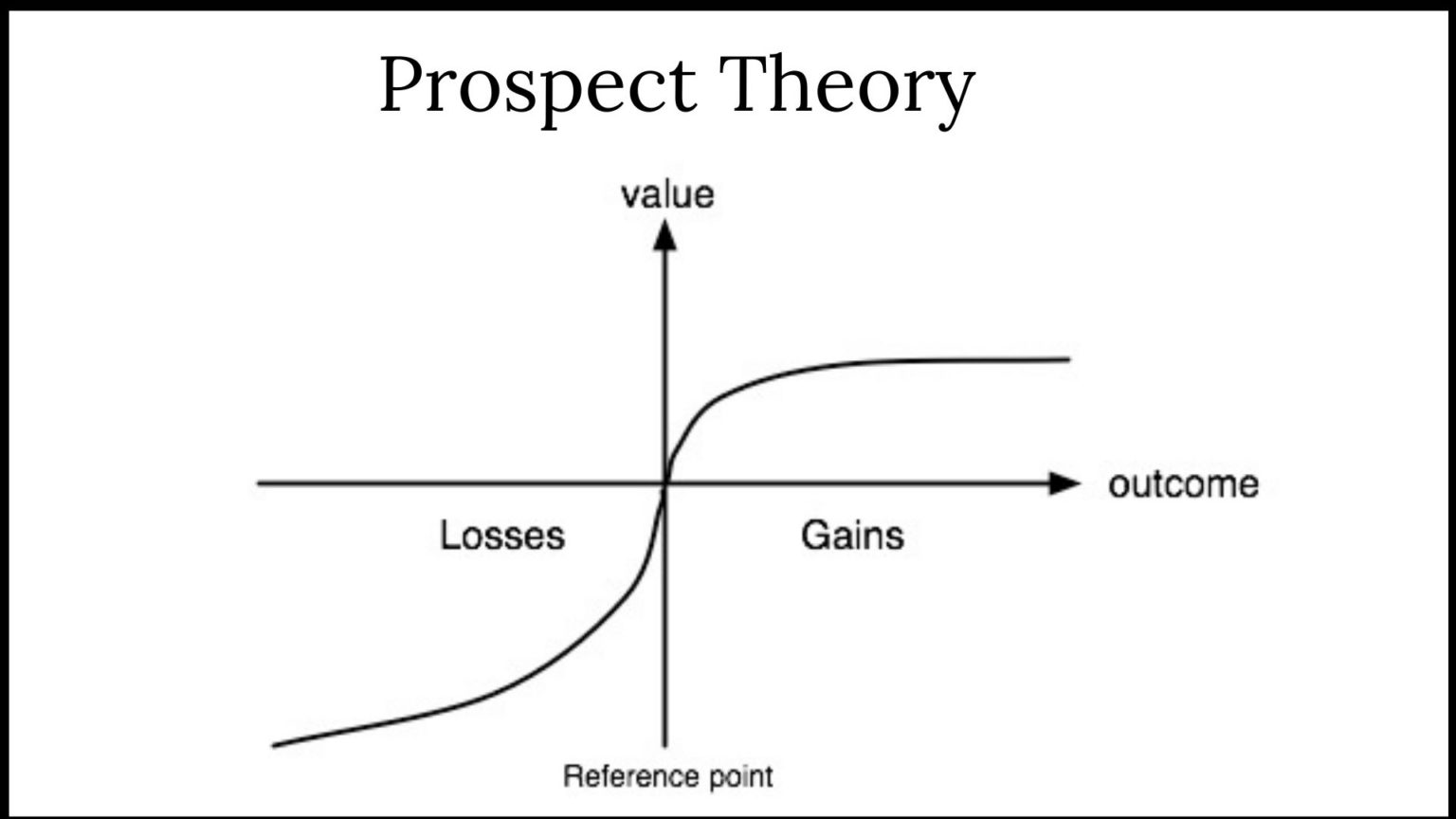


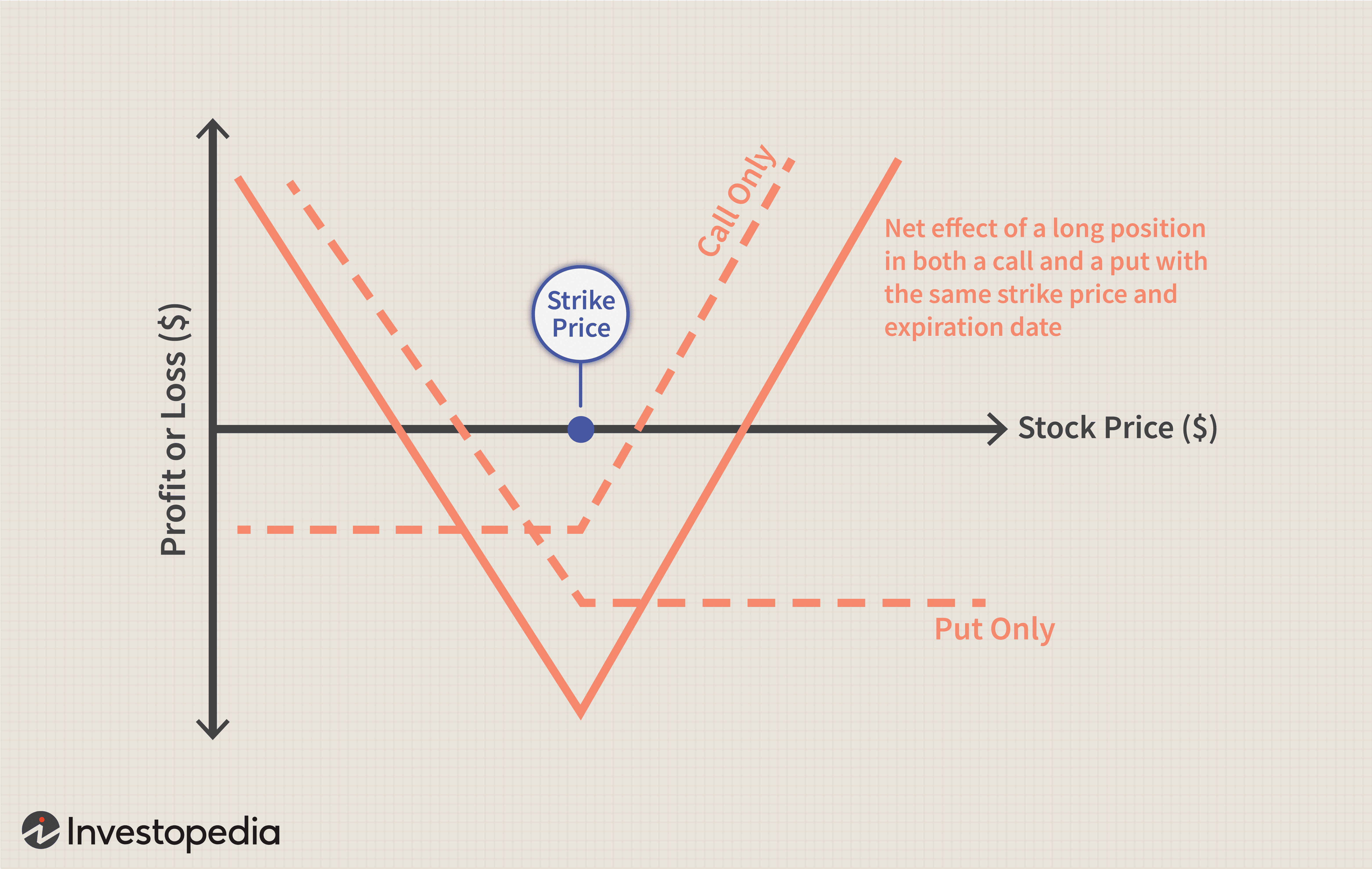


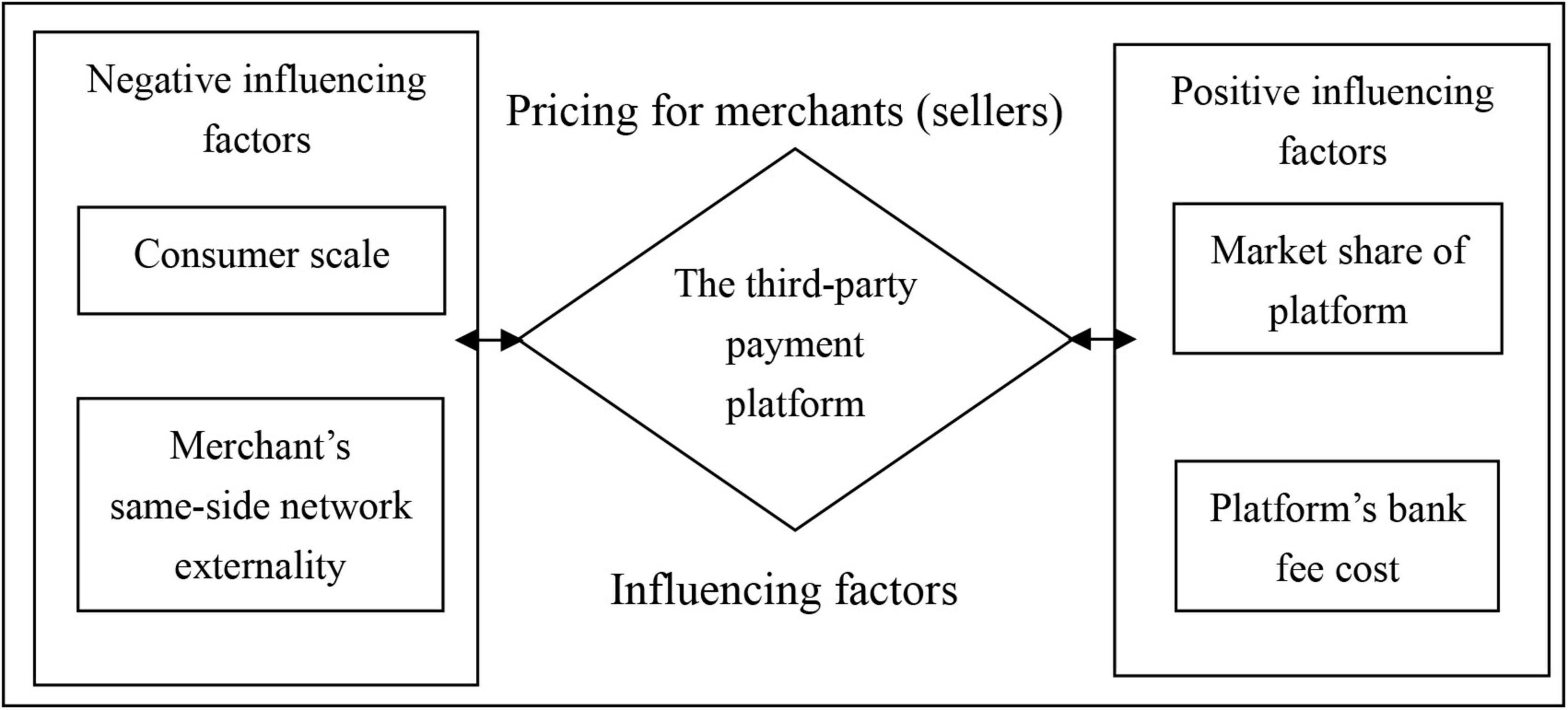














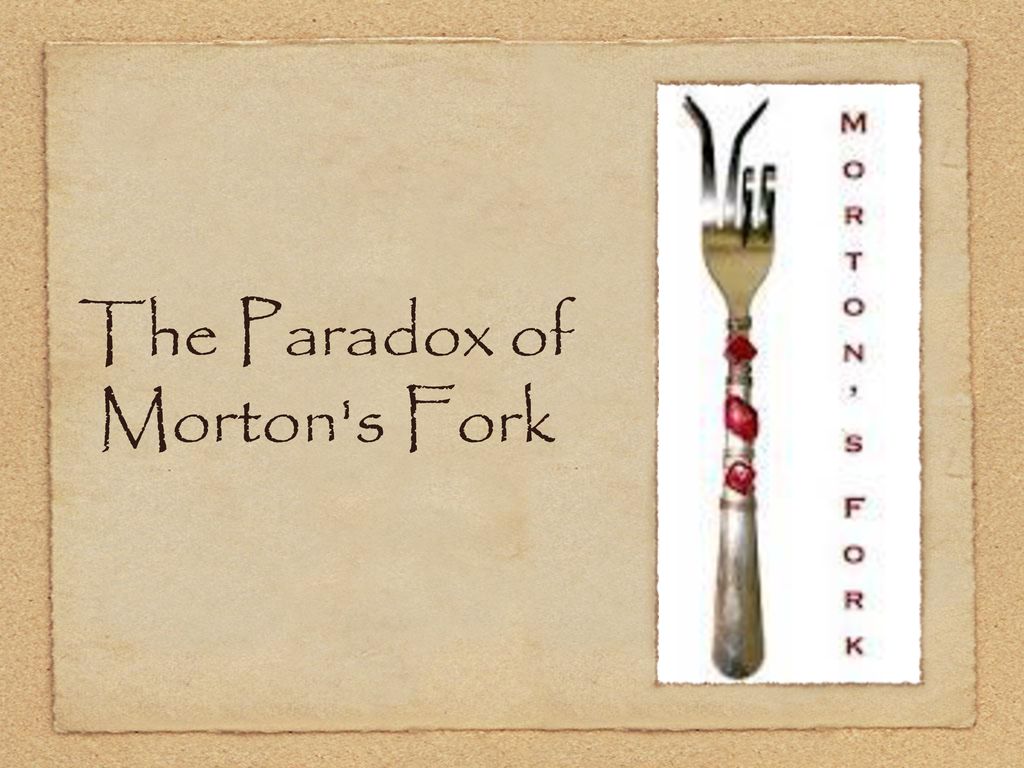

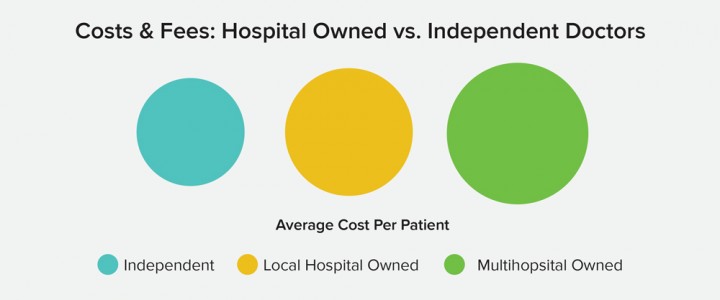

























 The Leading Business Education Network for Doctors, Financial Advisors and Health Industry Consultants
STUPID COMMENTS: Financial Advisors Say to Physician Clients
BY DR. DAVID EDWARD MARCINKO; MBA MEd CMP®
***
***
SPONSOR: http://www.MarcinkoAssociates.com
***
Some Stupid Things Financial Advisors Say to Physician Clients
A few years ago and just for giggles, colleague Lon Jefferies MBA CFP® and I collected a list of dumb-stupid things said by some Financial Advisors to their doctor, dentist, nurse and and other medical professional clients, along with some recommended under-breath rejoinders:
So, don’t let these aphorisms blind you to the critical thinking skills you learned in college, honed in medical school and apply every day in life.
COMMENTS APPRECIATED
Refer, Like and Subscribe
***
EDUCATION: Books
SPEAKING: Dr. Marcinko will be speaking and lecturing, signing and opining, teaching and preaching, storming and performing at many locations throughout the USA this year! His tour of witty and serious pontifications may be scheduled on a planned or ad-hoc basis; for public or private meetings and gatherings; formally, informally, or over lunch or dinner. All medical societies, financial advisory firms or Broker-Dealers are encouraged to submit a RFP for speaking engagements: CONTACT: MarcinkoAdvisors@outlook.com
***
***
Share this:
Filed under: "Advisors Only", "Doctors Only", Ethics, Jokes and Puns, LifeStyle | Tagged: bears, bulls, crypto, DO, doctor clients, DPM, dumb comments, finance, financial advisors, financial planners, Investing, Lon Jefferies, Marcinko, MD, personal-finance, Physician Clients, physicians, Ponzi, stocks, stupid comments, Wall Street | Leave a comment »