Types of Healthcare Research Informed Consent

By Staff Reporters

***

***

What are the 3 types of consent in healthcare?

Valid informed consent for research must include three major elements: (1) disclosure of information, (2) competency of the patient (or surrogate) to make a decision, and (3) voluntary nature of the decision.

US federal regulations require a full, detailed explanation of the study and its potential risks.

RELATED: https://scholar.google.com/scholar?q=types+informed+consent+research&hl=en&as_sdt=0&as_vis=1&oi=scholart

***

Order: https://www.routledge.com/Risk-Management-Liability-Insurance-and-Asset-Protection-Strategies-for/Marcinko-Hetico/p/book/9781498725989

COMMENTS APPRECIATED

Thank You

***

What is Health Insurance OUT OF NETWORK Medical Care?

By Staff Reporters

What does out of network [OON] really mean?

OON – This phrase usually refers to physicians, hospitals or other medical providers who do not participate in a health insurer’s provider network.

CITE: https://www.r2library.com/Resource/Title/0826102549

This means that the provider has not signed a contract agreeing to accept the insurer’s negotiated prices.

MORE: https://www.healthinsurance.org/glossary/out-of-network-out-of-plan/

YOUR COMMENTS ARE APPRECIATED.

Thank You

***

INSURANCE: https://www.amazon.com/Dictionary-Health-Insurance-Managed-Care/dp/0826149944/ref=sr_1_4?ie=UTF8&s=books&qid=1275315485&sr=1-4

***

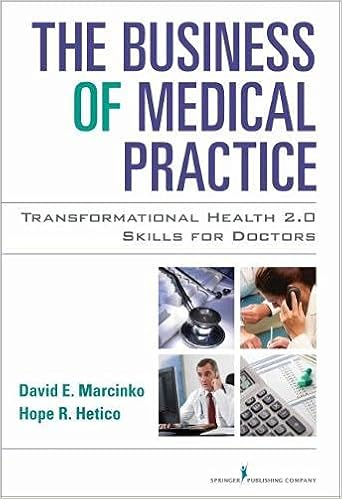
BUSINESS MEDICINE: https://www.amazon.com/Business-Medical-Practice-Transformational-Doctors/dp/0826105750/ref=sr_1_9?ie=UTF8&qid=1448163039&sr=8-9&keywords=david+marcinko

***

HEALTHCARE: https://www.amazon.com/Financial-Management-Strategies-Healthcare-Organizations/dp/1466558733/ref=sr_1_3?ie=UTF8&qid=1380743521&sr=8-3&keywords=david+marcinko

****

PODCAST: Technology Adoption in Healthcare

The Technology Adoption Lifecycle Applied to Healthcare

By Eric Bricker MD

***

***

DHITS: https://www.amazon.com/Dictionary-Health-Information-Technology-Security/dp/0826149952/ref=sr_1_5?ie=UTF8&s=books&qid=1254413315&sr=1-5
***
COMMENTS APPRECIATED

Thank You

***

COLONOSCOPIES: Statistical Update

By Dr. David Edward Marcinko MBA

***

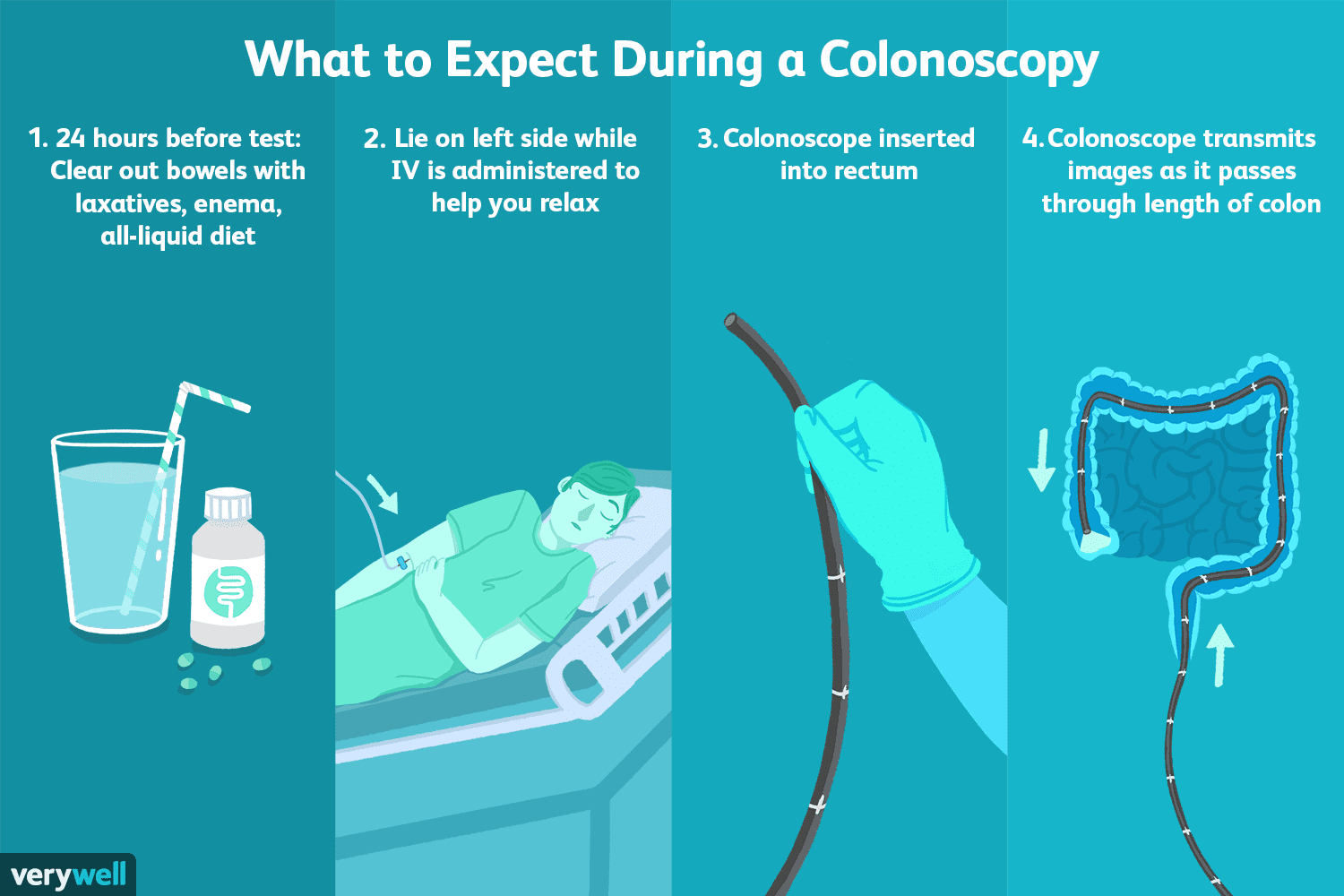
DEFINITION: A Colonoscopy and/or sigmoidoscopy are procedures that let your doctor look inside your large intestine. They use instruments called scopes. Scopes have a tiny camera attached to a long, thin tube. The procedures let your doctor see things such as inflamed tissue, abnormal growths, and ulcers.

EDITOR’S NOTE: The ME-P does not normally discuss medical or clinical matters. But, this report is noteworthy to all.

***

***

About 15 million colonoscopies are performed in the US yearly as part of standard preventive care for adults over 45, but a new study has called into question whether all the footage from those tiny cameras is really necessary.

Over a 10-year period, people who had the screenings were 18% less likely to develop colon cancer than people who didn’t, according to the study in the New England Journal of Medicine. However, the risk of death from the cancer for both the screened and un-screened was about the same, hovering around 0.3%.

***

COMMENTS APPRECIATED

Thank You

HEALTH INSURANCE: https://www.amazon.com/Dictionary-Health-Insurance-Managed-Care/dp/0826149944/ref=sr_1_4?ie=UTF8&s=books&qid=1275315485&sr=1-4

***

BANKS: Goldman Sachs Overhaul

By Staff Reporters

***

***

Goldman Sachs is planning a major overhaul that would combine its investment banking and trading businesses into one unit and its asset and wealth management branches into another.

***

Bank Types: https://medicalexecutivepost.com/2022/10/14/the-three-various-types-of-banks/

FINANCE: https://www.routledge.com/Comprehensive-Financial-Planning-Strategies-for-Doctors-and-Advisors-Best/Marcinko-Hetico/p/book/9781482240283

***

COMMENTS APPRECIATED

Thank You

***

What is Health Insurance Network STEERAGE?

By Staff Reporters

***

***

What is health plan network steerage?

Network steerage is the practice of directing employees and members on your benefits plan to in-network doctors, hospitals, and other points of care. A network steerage strategy is crucial for healthcare payers who are looking to tackle high healthcare costs. An admirable goal.

CITE: https://www.r2library.com/Resource/Title/0826102549

***

But, what is steerage – really?

The Centers for Medicare & Medicaid Services has raised concerns about a hospital practice known as “steerage”–which involves a provider buying commercial insurance coverage for patients who are already eligible for Medicare or Medicaid coverage in order to obtain higher levels of reimbursement.

IOW: The plan charges a fixed monthly fee so its members can receive health care. There will be a small co-payment for each doctor visit; however with the HMO, fees can be fore-casted unlike a fee-for-service insurance plan. Although freedom of choice is given up, out-of-pocket expenses are very low.

RELATED CONCERNS: https://www.fiercehealthcare.com/finance/cms-looking-for-data-practice-steerage-hospitals-voice-concern

***

TEXT: https://www.amazon.com/Business-Medical-Practice-Transformational-Doctors/dp/0826105750/ref=sr_1_9?ie=UTF8&qid=1448163039&sr=8-9&keywords=david+marcinko

***
YOUR COMMENTS ARE APPRECIATED.

***

DHIMC: https://www.amazon.com/Dictionary-Health-Insurance-Managed-Care/dp/0826149944/ref=sr_1_4?ie=UTF8&s=books&qid=1275315485&sr=1-4

***

MEDICINE: https://www.amazon.com/Business-Medical-Practice-Transformational-Doctors/dp/0826105750/ref=sr_1_9?ie=UTF8&qid=1448163039&sr=8-9&keywords=david+marcinko

Thank You

***

What is “Clinical Equipoise” in Medicine?

Equipoise

[By staff reporters]

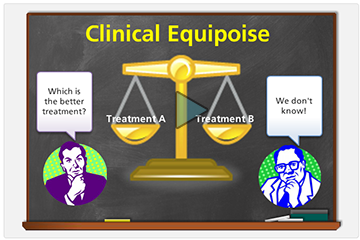
Clinical equipoise, also known as the principle of equipoise, provides the ethical basis for medical research that involves assigning patients to different treatment arms of a clinical trial.

The term was first used by Benjamin Freedman in 1987, although references to its use go back to 1795 by Dr. Edward Jenner. In short, clinical equipoise means that there is genuine uncertainty in the expert medical community over whether a treatment will be beneficial. This applies also for off-label treatments performed before or during their required clinical trials.

***

***

COMMENTS APPRECIATED

MORE:

READ: https://www.ahajournals.org/doi/full/10.1161/CIRCRESAHA.116.309594

***

PODCAST: EMRs are a MESS!

By Eric Bricker MD

***

***

HIT: https://www.amazon.com/Dictionary-Health-Information-Technology-Security/dp/0826149952/ref=sr_1_5?ie=UTF8&s=books&qid=1254413315&sr=1-5

MORE: https://medicalexecutivepost.com/2022/03/28/emrs-laugh-or-cry/

COMMENTS APPRECIATED

Thank You

****

PODCAST: Healthcare Machine Learning Can Self Create / Improve Algorithms?

Machine Learning is a Subset of Artificial Intelligence (AI) Where Computer Software Can Create and Improve on Algorithms on Its Own.

Machine Learning for Population Health

PODCAST: 'Hacking of the American Mind' | The Leading ...

By Eric Bricker MD

Healthcare Machine Learning Company ClosedLoop.ai is One of the Best at Applying Machine Learning to Population Health Data.

ClosedLoop.ai is So Good, They Won the CMS AI Challenge … Beating Out 300 Other Organizations Including IBM, the Mayo Clinic and Deloitte.

The Promise of Machine Learning in Population Health is to Better Predict Which People Will Benefit From an Intervention Because They Are at Greater Risk of a Complication of a Disease or an ER Visit or a Hospitalization.

ClosedLoop.ai Beautifully Applied Their Machine Learning Abilities to Create a Pandemic Risk Model That Helped a New York City Health Insurance Plan Identify Which Members Would Be Most Likely to Have Severe Complications of COVID-19.

As a Result, the Insurance Company Helped These Individuals Have Groceries and Prescription Medication Delivered to Them So They Could Stay at Home and Avoid Exposure to COVID.

There You Have It!  A Practical, Real-World Example of Machine Learning in Population Health That Literally Saved Some People’s Lives.

Disclaimer: Dr. Bricker is the Chief Medical Officer of Virtual Care Company First Stop Health.

***

THANK YOU

HIT: https://www.amazon.com/Dictionary-Health-Information-Technology-Security/dp/0826149952/ref=sr_1_5?ie=UTF8&s=books&qid=1254413315&sr=1-5

***

More on “income inequality” and financial planning

“The rich get richer and the poor get poorer”

By Rick Kahler CFP®

One of the pillars of my profession of financial planning and counseling is to help people get richer. For many people, this statement might evoke the idea of “income inequality” as summed up by the phrase “the rich get richer and the poor get poorer.” This is a common money script around a topic that evokes a lot of difficult emotion.

Of course, there are people who have wealth that tends to increase over time. This includes some who inherit vast wealth and others who achieve wealth through business ownership or creative successes. It also includes those who live on less than they make, invest the difference, and make sound investment decisions with the money they have saved.

Goals of financial planning

Regardless of the economic class people start out in, one of the goals of financial planning is to help them expand their lifestyles—in in other words, to get richer. We help them build wealth so they can afford to send their children to college, or can take care of themselves in old age, or can someday not have to work for an income. We help the poor to become middle class, the middle class to become affluent, the affluent to become rich, and the rich to become richer.

When I frame “the rich getting richer” in that manner, people typically respond, “I never thought of it that way.” It contradicts the popular interpretation that the way the rich get richer is by taking from the poor, hence “the poor get poorer.”

Certainly it’s true that some rich people and companies do exploit the poor or try to influence legislation in their own interests. The artificially high prices they charge can be one factor in causing the poor to get poorer. Examples of this might include the secondary educational system as well as industries where excessive regulations limit competition.

***

https://www.amazon.com/Comprehensive-Financial-Planning-Strategies-Advisors/dp/1482240289/ref=sr_1_1?ie=UTF8&qid=1418580820&sr=8-1&keywords=david+marcinko

***

Reasons

However, just as most of the rich don’t get richer by exploiting the poor, most of the poor don’t get poorer by being exploited by the rich. Some get poorer because they lack education or don’t know how to access help. Some get poorer by events out of their control, such as job layoffs, serious illnesses, or cultural, racial, or sexual discrimination. There are many reasons.

Some get poorer through choosing careers with little future, not taking care of their health, or making poor money decisions such as financially enabling children. Others are caught up in destructive behaviors like addictions or compulsive gambling. A few even choose poverty for religious or philosophical reasons.

Complex

As with many things, income inequality is complex.

For example, some people choose to take large risks that could result in their becoming very rich or very poor.

Others choose the security of a steady paycheck. There could ultimately be a huge wealth gap between the entrepreneur who hits it big and the more conservative person who wants to play it safe. Does that mean the gap is inherently bad, or that the risk-taker doesn’t deserve the rewards of success?

Certainly, the risk-taker could have ended up far worse than the person who played it safe. Does that make one right and the other wrong? I don’t believe so.

Assessment

Just as with other money scripts, “the rich get richer and the poor get poorer” is true in some circumstances. At other times, the truth can be that “the rich get poorer and the poor get richer.” It can also be true (think of the 2008 economic crash) that “the rich get poorer and the poor get poorer.” And the final truth—one that financial planners work toward—is to help “the rich get richer and the poor get richer.”

Conclusion

Your thoughts and comments on this ME-P are appreciated. Feel free to review our top-left column, and top-right sidebar materials, links, urls and related websites, too. Then, subscribe to the ME-P. It is fast, free and secure.

Speaker: If you need a moderator or speaker for an upcoming event, Dr. David E. Marcinko; MBA – Publisher-in-Chief of the Medical Executive-Post – is available for seminar or speaking engagements.

Book Marcinko: https://medicalexecutivepost.com/dr-david-marcinkos-bookings/
Subscribe: MEDICAL EXECUTIVE POST for curated news, essays, opinions and analysis from the public health, economics, finance, marketing, IT, business and policy management ecosystem.

***

TOP 50: The Digital Health-Trend Hype Cycle

***

Emerging Digital Health Trends

BY Bertalan Meskó, MD PhD

****

Digital technologies have completely transformed our lives in the last couple of years and started to entirely reshape the landscape of healthcare. Yet, this is only the beginning. Huge waves of changes are on their way. The future of healthcare is shaping up in front of our eyes with advances in digital healthcare technologies.

And so, here is the latest research, from the Medical Futurist’s Hype Cycle Of The Top 50 Emerging Digital Health Trends.
The Medical Futurist’s Hype Cycle Of The Top 50 Emerging Digital Health Trends

Quantum Computing
3D Bioprinting
Facial recognition in hospitals
Vocal biomarkers
3D printing prosthetics
Robots in hospitals
Augmented reality in patient education
A.I. in drug design
Augmented reality in medical education
Medical transportation platforms
Private 5G in healthcare
At-home lab tests
3D printing drugs
Medical drones
A.I. in diagnostics
Voice-to-text apps
A.I. in medical decision-making
Nutrigenomics
3D printing equipment
Virtual reality in patient education
Chatbots
Portable diagnostic devices
Augmented reality in surgery
Portable ultrasound devices
Virtual reality in staff training
Robots in rehabilitation
A.I.-based prosthetics
Longevity research
Nutrition devices
Employee wellness programs
Exoskelotons
Clinical trial recruiting
Clinical trial management
Remote care apps
Cloud computing
Nutrition apps
Robot companions
Medication management solutions
Personal genomics services
Microbiome testing
Remote care platforms
Digital health insurance
Smartwatches
Wearable health devices
Personal Health Records
Electronic Medical Records
Smartphone health apps
Mental health apps
Fitness trackers
Virtual reality in pain management

Bertalan Meskó, MD
The Medical Futurist

***

DHITS: https://www.amazon.com/Dictionary-Health-Information-Technology-Security/dp/0826149952/ref=sr_1_5?ie=UTF8&s=books&qid=1254413315&sr=1-5

***
Your comments are appreciated.

Comprehensive Financial Planning Strategies for Doctors and Advisors: Best Practices from Leading Consultants and Certified Medical Planners™

MORE: https://www.routledge.com/Comprehensive-Financial-Planning-Strategies-for-Doctors-and-Advisors-Best/Marcinko-Hetico/p/book/9781482240283

THANK YOU

****

ENTREPRENEURSHIP Rising Again!

Try (or learn about) Entrepreneurship

BY DR. DAVID EDWARD MARCINKO MBA MEd CMP®

One of the greatest things about the virtual economy is the expanded opportunity for people to branch out on their own and create something using their own expertise. Related to this is the growing societal desire to have more free time and a more balanced, efficient life overall. 

In fact, years ago when I was in business school, I learned that during a recession when jobs were sparse – folks would either go back to school to re-engineer and re-educate OR start their own business.

Today – If the pandemic taught us anything, it’s that we need to be able to pivot when circumstances call for it. In the years ahead, there will be a premium on flexibility, portability, and improvisation; knowing how to earn income outside the traditional employer-employee relationship will continue to be an especially valuable skill. 

entrepreneur

ASSESSMENT: So, if you are a physician, nurse, medical professional or financial advisor in the healthcare space, think about what you’re naturally good at (or at least interested in), and determine if there’s an opportunity to monetize it in some way on your own. Your career might thank you for it!

Your thoughts and comments are appreciated.

http://www.CERTIFIEDMEDICALPLANNER.org

CMP logo

***

INVITATIONS: https://medicalexecutivepost.com/dr-david-marcinkos-bookings/

CONTACT: Ann Miller RN MHA

Phone: 678-779-8597

Second Opinions: https://medicalexecutivepost.com/schedule-a-consultation/

THANK YOU

BUSINESS: https://www.amazon.com/Business-Medical-Practice-Transformational-Doctors/dp/0826105750/ref=sr_1_9?ie=UTF8&qid=1448163039&sr=8-9&keywords=david+marcinko

***

“Deep Tech” Entrepreneurial Start-Ups

Entrepreneurs

By Dr. Jeffery Funk

All 12 Ex-Unicorn Deep Tech startups are unprofitable and another 20 privately-held #Unicorns appear to be far from profitability.

These 32 include biotech/health (12), AI/Big Data (8), sensors/AVs (4), wearables (3), satellites/space (2), and one for 3D printing, storage, and fuel cells. Of ex-Unicorns, 10 have losses greater than 30% of revenues.

Why are these #deeptech #startups so unprofitable?

My conclusion is fewer #breakthrough #technologies are coming out than decades before and ones coming out are taking longer to successfully commercialize. #AI/#BigData, sensors/#AVs, wearables, satellites, 3D printing, and fuel cells have all been over-hyped, their costs and performance are still disappointing, and their diffusion continues to be slow.

Overall, a successful example of a breakthrough #technology is hard to find since iPhone was introduced in 2007, other than OLEDs and solar cells. Yes AI, #EVs, drones, VR, AR, and IoT are diffusing and thus an analysis in 10 years might come to different conclusions, but for 2010s, there was little to commercialize. #innovation #ipo #ipos #venturecapital #vcs #vc https://lnkd.in/gThUWFR

***

***

UPDATE: https://www.seedtable.com/startups-deeptech

***

COMMENTS APPRECIATED

Thank You

***

DAILY UPDATE: BLS and Machine Learning

By Staff Reporters

***

***

Increases in the shelter, food, and medical care indexes were the largest of many contributors to the monthly seasonally adjusted all items increase.”—Bureau of Labor Statistics’s Consumer Price Index Summary

According to Betterment, one of the world’s largest robo-advisors, whose consumer-facing investment offerings make virtually no use of machine learning. [Emerging Tech]

***

FINANCE: https://www.routledge.com/Comprehensive-Financial-Planning-Strategies-for-Doctors-and-Advisors-Best/Marcinko-Hetico/p/book/9781482240283

***

COMMENTS APPRECIATED

Thank You

***

Ask About Our Medical Science Liaison Services

Dear Pharmaceutical Company, Financial Services Firm or Corporate Medical Vendor

We often serve as Medical Science Liaison [MSL] for pharmaceutical companies, at medical seminars and/or financial services organization meetings. Based on our education, experience and skills, we are confident that we would be a great addition to your team.

My Record

For example, I have a proven record in collaborative leadership with functional healthcare executive management experience to develop and implement coordinated strategies designed to deliver top line growth; drive organizational change and enhance competitive positioning within multiple key markets; enhance relationships and influence physicians; analyze financial, economics, operational and quality measures and ensure health practices are operating within goals and standards.

In this role, I can identify external experts (KOLs), and engage, enhance, and build relationships by listening and understanding the views of these experts.

An Independent Conduit Link

More importantly, I can bring value to external experts through excellent communication of scientific dialogue.  I see this position as a non-promotional conduit link between you and this community. It is one where I fuse scientific knowledge with business acumen to accelerate commercialization success. As a fully independent MSL, I can:

  • Serve as MC, key or end-note speaker
  • Integrate quickly within any existing internal MSL structure or culture
  • Train, develop and team build career path management processes
  • Offer modern and flexible health 2.0 solutions.

CV and Related Information

And, a formal CV with evidence of national notoriety and gravitas is available with related information online:

CV: Dr. David E. Marcinko CV 2017

Letterhead: Corporate Medical Science Liaison Opportunities

Informative Websites:

Travel is non-problematic from Atlanta. Teaching, speaking, writing and mentoring are areas of expertise.  Thank you in advance for your time. Please do not hesitate to contact me if you have any questions.

Cordially,

Dave

Dr. David Edward Marcinko; FACFAS, MBA, CMP™

  • Forner, Certified Financial Planner™
  • Former, Certified Physician in Healthcare Quality
  • Former, American Society of Health Economists (ASHE) member
  • Former, American Health Information Management Association (AHIMA) member
  • Former, Healthcare Information and Management Systems Society (HIMSS) member

Product DetailsProduct DetailsProduct Details

Product Details  Product Details

Product Details

METAVERSE: Potential in the Healthcare Industry

By Staff Reporters

***


***

The metaverse could be a huge technological change for health care, just like telemedicine and mobile device integration were in the past.

This technology has huge potential because it uses both virtual reality (VR) and augmented reality (AR) technology to work in virtual spaces: All signs point to the metaverse being widely used as a disruptive change in healthcare, from better surgical precision to therapeutic uses to social-distance accommodations and more.

But along with these improvements come new problems that will change what we know about modern healthcare. The metaverse is a paradigm shift in healthcare that everyone involved needs to be aware of. This is because it changes how medical infrastructure is built, how startup costs are covered, and how data security and privacy are handled.

To help you understand how the metaverse development services will change healthcare as a whole, let’s take a look at the pros and cons of this technology that are already making a difference in healthcare.

READ HERE: https://factstea.com/potential-metaverse-healthcare-industry/


***

DHITS: https://www.amazon.com/Dictionary-Health-Information-Technology-Security/dp/0826149952/ref=sr_1_5?ie=UTF8&s=books&qid=1254413315&sr=1-5

COMMENTS APPRECIATED

Thank You
***

Social Security’s ‘taxable maximum’ Jumps 9%

By Staff Reporters

***

***

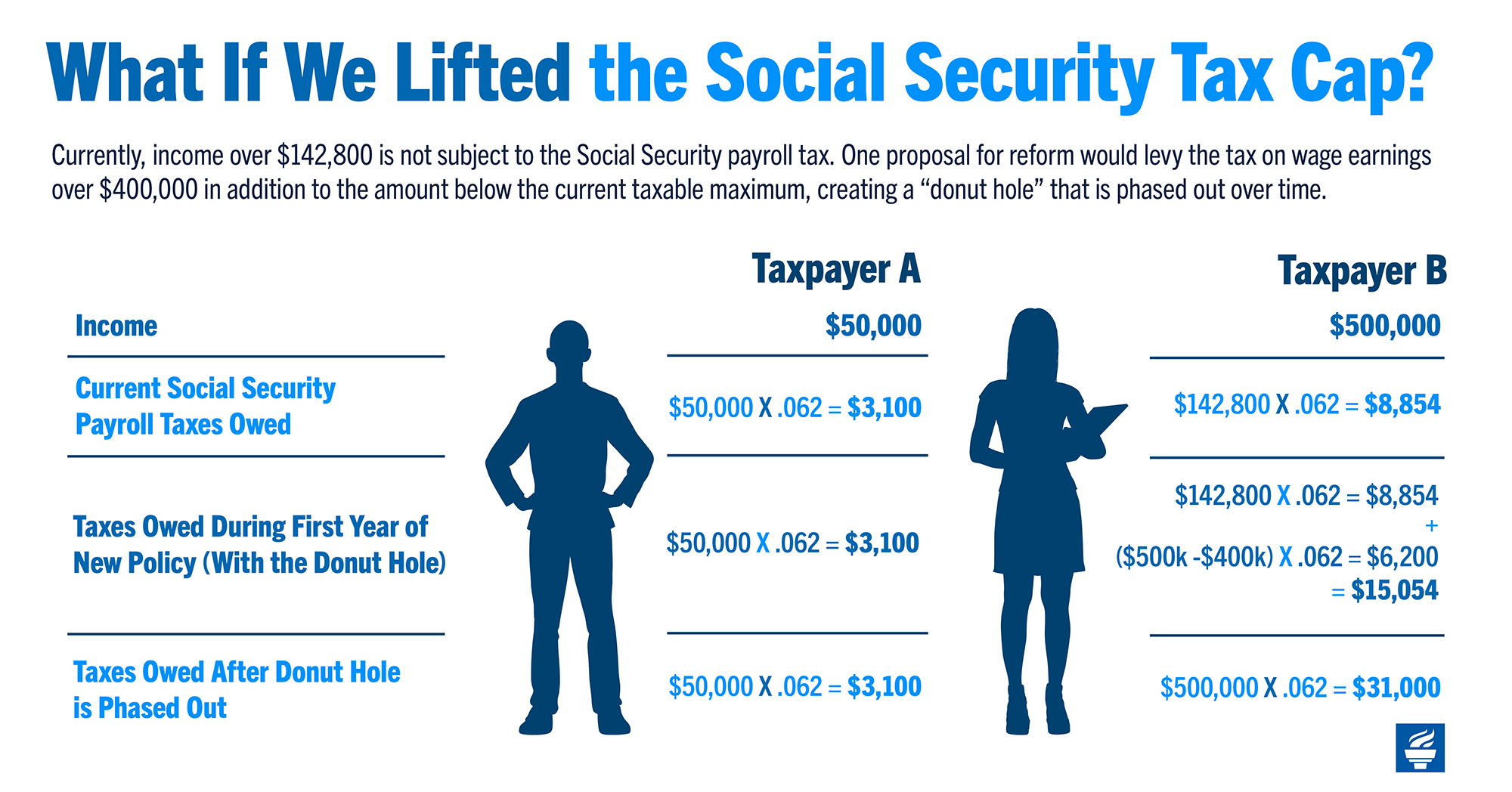
Social Security’s payroll tax cap was raised nearly 9% for 2023, meaning more income will face Social Security taxes next year, but the rise is unlikely to affect the solvency of the trusts underpinning the system.

Citing the increase in average wages, the Social Security Administration said the maximum amount of earnings subject to the Social Security tax (taxable maximum) will increase to $160,200 from $147,000 starting in January. The announcement was part of the release of the cost-of-living adjustment, or COLA. The taxable maximum for 2021 was $142,800.

Citing the increase in average wages, the Social Security Administration said the maximum amount of earnings subject to the Social Security tax (taxable maximum) will increase to $160,200 from $147,000 starting in January.

The announcement was part of the release of the cost-of-living adjustment, or COLA. The taxable maximum for 2021 was $142,800.

***

COMMENTS APPRECIATED

Thank You

FINANCE: https://www.amazon.com/Comprehensive-Financial-Planning-Strategies-Advisors/dp/1482240289/ref=sr_1_1?ie=UTF8&qid=1418580820&sr=8-1&keywords=david+marcinko

***

What is the SELLING AWAY of Securities?

Information All Physician Investors Should Know

By Dr. David Edward Marcinko MBA CMP®

CMP logo

SPONSOR: http://www.CertifiedMedicalPlanner.org

According to Wikipedia, selling away in the U.S. securities brokerage industry is the inappropriate practice of an investment professional who sells, or solicits the sale of, securities not held or offered by the brokerage firm with which he is associated.

CITE: https://www.r2library.com/Resource/Title/0826102549

An example of the term expressed in a sentence is, “The broker was selling investments away from the firm.” Brokers marketing securities must have obtained the appropriate securities licenses for various types of investments. Brokers in the U.S. may be “associated” with one or more Brokerage firms and must obtain licenses by passing standardized Financial Industry Regulatory Authority exams such as the Series 6 or Series 7 exam.

***

In the past I’ve held these as well as a Series 63 and 65 license [SEC].

CFI: https://corporatefinanceinstitute.com/resources/knowledge/trading-investing/selling-away/

YOUR COMMENTS ARE APPRECIATED.

Thank You

FINANCE: https://www.amazon.com/Comprehensive-Financial-Planning-Strategies-Advisors/dp/1482240289/ref=sr_1_1?ie=UTF8&qid=1418580820&sr=8-1&keywords=david+marcinko

***

REPORTING on Bank Health?

By Staff Reporters

***

***

Major banks report third quarter results, which should give an indication of the health of the US economy and financial system. So, investors, experts and regulators, who wonder about the health of the American economy and the banking system, will finally have a first and clear diagnosis. 

JPMorgan Chase JPM, Wells Fargo  (WFC) – Get Wells Fargo & Company Report, Citigroup  (C) – Get Citigroup Inc. Report and Morgan Stanley  (MS) – Get Morgan Stanley Report, four of the major U.S. banks, release their third quarter results on Oct. 14th, data that should give a picture of how bad things really are. And for a good reason. 

The monetary policy of the Federal Reserve has alarmed many economists who fear that such an aggressive rise in interest rates will cause the so-called hard landing of the economy in a recession.

***

FINANCE: https://www.routledge.com/Comprehensive-Financial-Planning-Strategies-for-Doctors-and-Advisors-Best/Marcinko-Hetico/p/book/9781482240283

COMMENTS APPRECIATED

Thank You

***

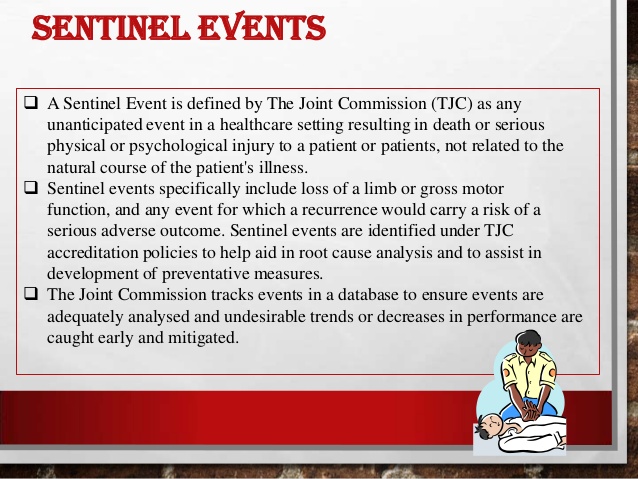
WHAT IS “MEDICAL SENTINEL” CASE SURVEILLANCE IN PUBLIC HEALTH?

***
WHAT IS “MEDICAL SENTINEL” CASE SURVEILLANCE IN PUBLIC HEALTH?
***
By Dr. David E. Marcinko MBA

***
SENTINEL SURVEILLANCE is a medical case observation system in which a designated group of reporting sources, hospitals and agencies agrees to report all cases of one or more notify-able conditions; such as the Corona Virus.
***
***
I first became interested in this concept during the HIV/AIDS epidemic of the early 1980s. In fact, it prompted me to later become a Certified Physician in Healthcare Quality [CPHQ].
***
Now recently, Deborah Leah Birx MD coordinator for the White House Corona Virus Task Force mentioned the term on the daily presidential briefings.
***
***
Your comments are appreciated.
***

OVERUSE: How Health System Characteristics Impact Health Care

By Staff Reporters

***

***

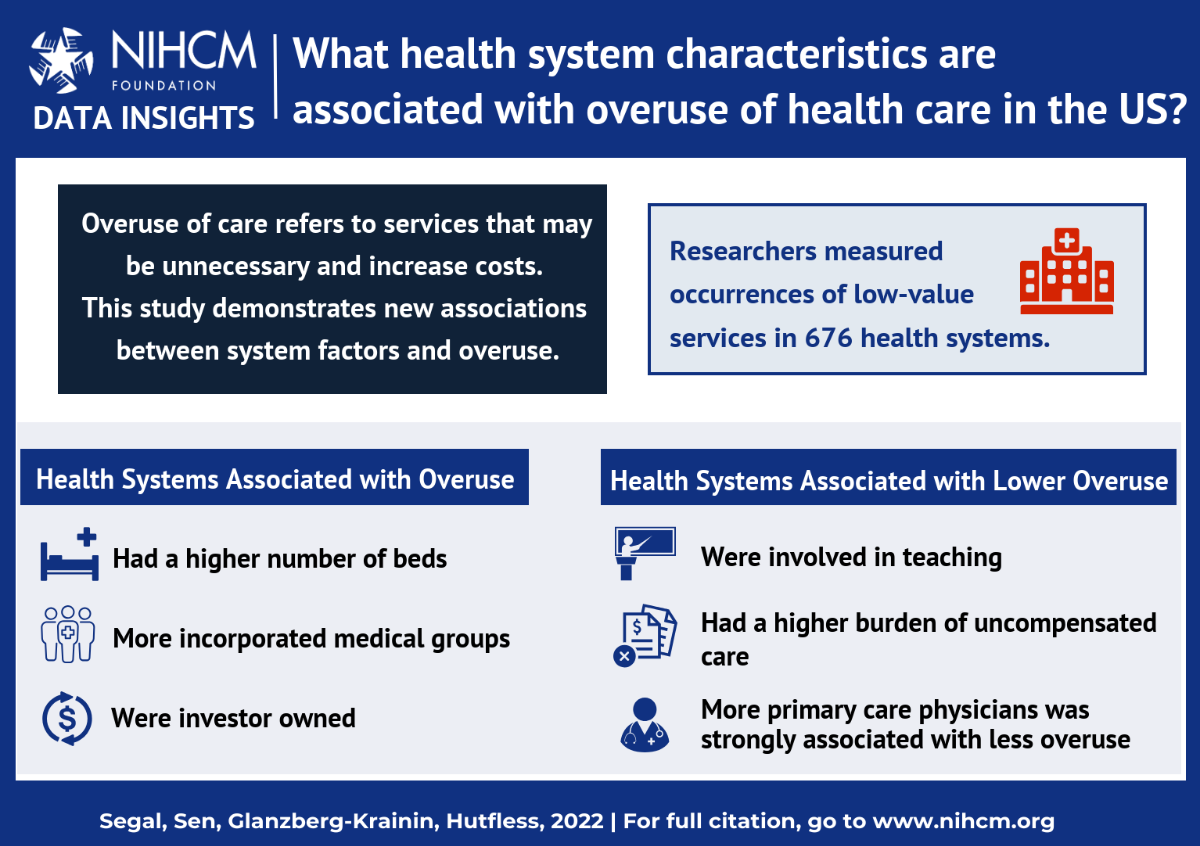
The high cost of health care in the United States is partially driven by an over-emphasis on low-value health care that is potentially harmful and offers little benefit to most patients.

New research by Jodi Segal, MD, and colleagues, advances efforts to solve the low-value care problem by placing a spotlight on health care system factors that likely contribute to an overuse of care. The work is analyzed in the latest NIHCM Research Insights. Key findings include:

  • Systems that are investor-owned, or have fewer primary care physicians, are more likely to be associated with the overuse of care. 
  • Systems that have major teaching hospitals are less likely to overuse care.  

To continue investigating, evaluating, and addressing the drivers of overuse, the research team updated their Overuse Index tool. This Index may be especially useful for health systems seeking to monitor care use performance over time. This study’s findings may support future research and interventions to increase the use of high-value care.

READ HERE: https://nihcm.org/publications/what-health-system-characteristics-are-associated-with-overuse-of-health-care-in-the-us

RISK MANAGEMENT: https://www.routledge.com/Risk-Management-Liability-Insurance-and-Asset-Protection-Strategies-for/Marcinko-Hetico/p/book/9781498725989

***

COMMENTS APPRECIATED

Thank You

***

AT YOUR SERVICE: Invite Dr. Marcinko to Your Next Event, Video Conference or Blog-Cast in 2022

***

ABOUT | DAVID EDWARD MARCINKO

BY ANN MILLER RN CPHQ

https://medicalexecutivepost.com/2021/08/22/dr-marcinko-at-your-service/

THANK YOU

***

Comprehensive Financial Planning Strategies for Doctors and Advisors: Best Practices from Leading Consultants and Certified Medical Planners™

MORE: https://www.routledge.com/Comprehensive-Financial-Planning-Strategies-for-Doctors-and-Advisors-Best/Marcinko-Hetico/p/book/9781482240283

COVID-19: US Extends Public Health Emergency Declaration

By Kanishka Singh

***

***

WASHINGTON (Reuters) – The United States on Thursday extended the COVID-19 pandemic’s status as a public health emergency for another 90 days, thereby preserving measures like high payments to hospitals and expanded Medicaid.

READ: https://www.politico.com/news/2022/08/17/hhs-covid-health-emergency-00052509

The extension was announced by U.S. Health Secretary Xavier Becerra on Thursday. Last month, President Joe Biden said in an interview that “the pandemic is over,” which prompted criticism from health experts.

***

COMMENTS APPRECIATED

Thank You

***

DHIMC: https://www.amazon.com/Dictionary-Health-Insurance-Managed-Care/dp/0826149944/ref=sr_1_4?ie=UTF8&s=books&qid=1275315485&sr=1-4

***

What is STAGFLATION?

By Staff Reporters

***

***

What Is Stagflation?

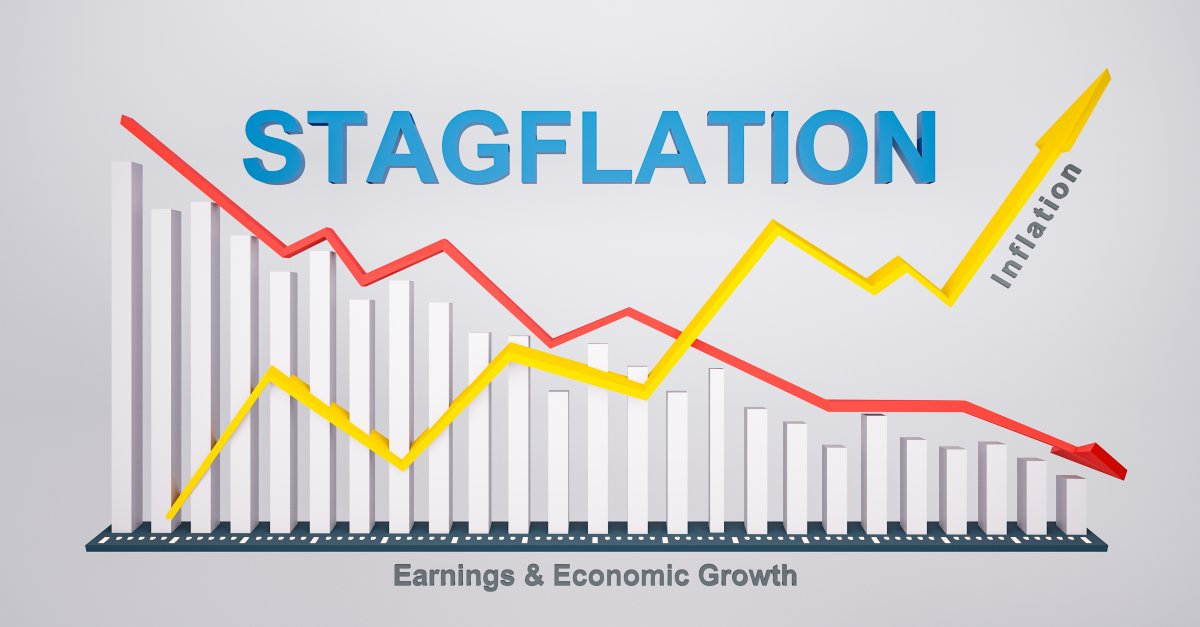
Stagflation is characterized by slow economic growth and relatively high unemployment—or economic stagnation—which is at the same time accompanied by rising prices (i.e., inflation). Stagflation can be alternatively defined as a period of inflation combined with a decline in the gross domestic product (GDP).

CITE: https://www.r2library.com/Resource/Title/0826102549

The term, a portmanteau of stagnation and inflation, is generally attributed to Iain Macleod, a British Conservative Party politician who became Chancellor of the Exchequer in 1970.

MORE: https://medicalexecutivepost.com/2019/06/25/what-is-a-portmanteau/

Key Takeaways According to Investopedia

  • Stagflation refers to an economy that is experiencing a simultaneous increase in inflation and stagnation of economic output.
  • Stagflation was first recognized during the 1970s when many developed economies experienced rapid inflation and high unemployment as a result of an oil shock.1
  • The prevailing economic theory at the time could not easily explain how stagflation could occur.
  • Since the 1970s, rising price levels during periods of slow or negative economic growth have become somewhat of the norm rather than an exceptional situation.

***

COMMENTS APPRECIATED

Thank You

***

FINANCE: https://www.amazon.com/Comprehensive-Financial-Planning-Strategies-Advisors/dp/1482240289/ref=sr_1_1?ie=UTF8&qid=1418580820&sr=8-1&keywords=david+marcinko

***

The Three [3] Types of Banks

Join Our Mailing List Understanding Differences

[By Dr. David Edward Marcinko MBA CMP™]

SPONSOR: http://www.CertifiedMedicalPlanner.org

CMP logo

***

dem-thinkingThere are several different kinds of banks.

A general understanding of these types is suggested for any medical professional prior to launching a self-directed [ME, Inc], or even a guided investment strategy or wealth building portfolio effort with a financial advisor [FA], stock broker or wealth manager, etc.

This banking information is usually not included in any text on financial planning, or related, until now.

CITE: https://www.r2library.com/Resource/Title/082610254

Definition of Retail Bank

A retail bank is a typical small mass-market financial institution in which individual customers use local branches; usually of larger commercial banks. Services offered include savings and checking accounts, mortgages, personal loans, debit/credit cards and certificates of deposit (CDs).

Definition of Commercial Bank

A financial institution that provides services, such as accepting deposits, giving business loans and auto loans, mortgage lending, and basic investment products like savings accounts and certificates of deposit. The traditional commercial bank is a brick and mortar institution with tellers, safe deposit boxes, vaults and ATMs.

However, some commercial banks do not have any physical branches and require consumers to complete all transactions by phone or Internet. In exchange, they generally pay higher interest rates on investments and deposits, and charge lower fees.

Definition of Investment Bank

Investment banking activities are different than those of retail and commercial banking and include underwriting securities, acting as an intermediary between an issuer of securities and the investing public, facilitating mergers and other corporate reorganizations, and also acting as a broker for institutional clients.

***

Bankers

***

Assessment

This brief review provides a retrospective on implications for modernity.

More:

Conclusion

Your thoughts and comments on this ME-P are appreciated. Feel free to review our top-left column, and top-right sidebar materials, links, URLs and related websites, too. Then, subscribe to the ME-P. It is fast, free and secure.

Speaker: If you need a moderator or speaker for an upcoming event, Dr. David E. Marcinko; MBA – Publisher-in-Chief of the Medical Executive-Post – is available for seminar or speaking engagements. Contact: MarcinkoAdvisors@msn.com

OUR OTHER PRINT BOOKS AND RELATED INFORMATION SOURCES:

***

BANK of AMERICA: Equity Inflow Warning!

By Staff Reporters

***

***

Inflows to domestic stocks neared a record last week as bets on a bottom forming spurred major dip-buying across U.S. equities. The optimism, however, is likely premature, according to Bank of America.

Analysts at the bank just noted that allocations to equities reached the third-highest sum since 2008 during the five-day period, according to client data — a sign investors believe indicates that the market sell-off is nearing an end.

But BoA contested the notion that the worst is behind for the stock market

“Last week, during which the S&P 500 rallied 1.5% off recent lows, clients were big net buyers of U.S. equities,” the analysts stated, noting that the $6.1 billion total of inflows was the third largest inflow in the banks data history since ’08 and the fifth consecutive week of inflows.

“Our view? More volatility likely ahead.”

***

COMMENTS APPRECIATED

Thank You

FINANCE: https://www.routledge.com/Comprehensive-Financial-Planning-Strategies-for-Doctors-and-Advisors-Best/Marcinko-Hetico/p/book/9781482240283

****

PODCAST: The AWS Model for Healthcare Change?

By Eric Bricker MD

***

***

BUSINESS MEDICINE: https://www.amazon.com/Business-Medical-Practice-Transformational-Doctors/dp/0826105750/ref=sr_1_9?ie=UTF8&qid=1448163039&sr=8-9&keywords=david+marcinko

***

COMMENTS APPRECIATED

Thank You

****

STOCKS FALL HARD, THEN SOAR: SS COLA = 8.7 Percent

By Staff Reporters

***

***

Social Security just announced an 8.7 percent cost of living adjustment, the largest inflation adjustment to benefits in four decades — a welcome development for millions of older Americans struggling to keep up with fast-rising living costs.

The Dow Jones Industrial Average dropped 500 points at the starting bell, down 1.7% and undercutting its Sept. 30th low. The S&P 500 index sank 2.3% and the NASDAQ composite swooned 3%.

Then Stocks Soared Despite the Hotter-Than-Expected Inflation Report

U.S. equities closed out the day noticeably higher, ending six-straight days of declines, despite the release of today’s key inflation data. The markets seemed to shrug off another hotter-than-expected consumer price inflation (CPI) report, which boosted expectations that the Fed will have to remain aggressive with its monetary policy tightening plans.

***

COMMENTS APPRECIATED

Thank You

****

FINANCE: https://www.routledge.com/Comprehensive-Financial-Planning-Strategies-for-Doctors-and-Advisors-Best/Marcinko-Hetico/p/book/9781482240283

***

PREDICTIONS: Core Inflation

By Staff Reporters

***

***

Economy: Yesterday brought more sinister inflation news when the September producer price index, which measures wholesale prices, came in higher than expected.

But the headliner is today when the consumer price index appears. Economists predict core inflation will hit a 40-year high, according to Bloomberg, so none of this is likely to get the Fed to chill on rate hikes.

***

COMMENTS APPRECIATED

THANK YOU

***

FINANCE: https://www.routledge.com/Comprehensive-Financial-Planning-Strategies-for-Doctors-and-Advisors-Best/Marcinko-Hetico/p/book/9781482240283

***

Understanding the Cost of Not-for-Profit Hospital Capital

Join Our Mailing List

A “Must-Know” Economic Concept for Not-for-Profit Hospital Executives

Hospital[By Calvin W. Wiese; MBA, CPA]

It is critical to understand and to measure the total cost of capital for any hospital or healthcare organization. Lack of understanding and appreciation of the total cost of capital is widespread, particularly among not-for-profit hospital executives.

The capital structure includes long-term debt and equity; total capital is the sum of these two. Each of these components has cost associated with it. For the long-term debt portion, this cost is explicit: it is the interest rate plus associated costs of placement and servicing.

Equity Cost

For the equity portion, the cost is not explicit and is widely misunderstood. In many cases, hospital capital structures include significant amounts of equity that has accumulated over many years of favorable operations. Too many physician executives wrongly attribute zero cost to the equity portion of their capital structure. Although it is correct that generally accepted accounting principles continue to assign a zero cost to equity, there is opportunity cost associated with equity that needs to be considered. This cost is the opportunity available to utilize that capital in alternative ways.

Equity Greater than Cost of Debt

In general, the cost attributed to equity is the return expected by the equity markets on hospital equity. This can be observed by evaluating the equity prices of hospital companies whose equity is traded on public stock exchanges. Usually the equity prices will imply cost of equity in the range of 10% to 14%; or lower recently. Almost always, the cost of equity implied by hospital equity prices traded on public stock exchanges will substantially exceed the cost of long-term debt.

Thus, while many hospital executives will view the cost of equity to be substantially less than the cost of debt (i.e., to be zero), in nearly all cases, the appropriate cost of equity will be substantially greater than the cost of debt.

The Weighted Average Cost of Capital

Hospitals need to measure their weighted average cost of capital (WACC). WACC is the cost of long-term debt multiplied by the ratio of long-term debt to total capital plus the cost of equity multiplied by the ratio of equity to total capital (where total capital is the sum of long-term debt and equity).

Assessment

WACC is then used as the basis for capital charges associated with all capital investments. Capital investments should be expected to generate positive returns after applying this capital charge based on the WACC. Capital investments that don’t generate returns exceeding the WACC consume enterprise value; those that generate returns exceeding WACC increase enterprise value. Hospital executives need to be rewarded for increasing enterprise value.

Conclusion

Your thoughts and comments on this ME-P are appreciated. Feel free to review our top-left column, and top-right sidebar materials, links, URLs and related websites, too. Then, subscribe to the ME-P. It is fast, free and secure.

Link: http://feeds.feedburner.com/HealthcareFinancialsthePostForcxos

Speaker: If you need a moderator or speaker for an upcoming event, Dr. David E. Marcinko; MBA – Publisher-in-Chief of the Medical Executive-Post – is available for seminar or speaking engagements. Contact: MarcinkoAdvisors@msn.com

OUR OTHER PRINT BOOKS AND RELATED INFORMATION SOURCES:

DICTIONARIES: http://www.springerpub.com/Search/marcinko
PHYSICIANS: www.MedicalBusinessAdvisors.com
PRACTICES: www.BusinessofMedicalPractice.com
HOSPITALS: http://www.crcpress.com/product/isbn/9781466558731
CLINICS: http://www.crcpress.com/product/isbn/9781439879900
BLOG: www.MedicalExecutivePost.com
FINANCE: Financial Planning for Physicians and Advisors
INSURANCE: Risk Management and Insurance Strategies for Physicians and Advisors

Product DetailsProduct Details

WHY: We Bought UBER as the Stock Fell?

By Vitaliy N. Katsenelson CFA

***

***

Uber is the second most controversial stock we’ve ever owned (first place goes to Softbank). Most people have used Uber’s service, and thus everyone has an opinion and the media loves writing articles about Uber. The company has a history of not making any money. I’ve written a long research piece on why Uber, despite (or maybe because of) being a controversial company, has the makings of being a terrific long-term investment.
 
The pandemic had a mixed impact on Uber. Its core ride sharing business, which was supposed to turn profitable right before the pandemic, was significantly affected by the virus. The impact was immediate – people stopped traveling and started socially distancing.
 
But even after the economy reopened and people were willing to take Ubers again, the company did not just snap to profitability; it had to rebuild its driver network. Uber had to pay extra bonuses to drivers, whose pockets had just been stuffed with government stimulus checks, to get them to put their Netflix remote controls down, get off the couch, and start driving again. This was very expensive but necessary – one of Uber’s competitive advantages lies in the depth of its driver network. Without drivers, Uber ride share has no product. Consumers expect to push the button on their Uber app and get a car in 15 minutes or less. I remember worrying in spring 2021 that Uber would take a conservative stance in bringing their drivers back, in order to preserve cash. Uber did anything but – it showered its drivers with cash, burning billions of dollars in the process. It was the right thing to do. Lyft has been slower to respond and today is still struggling with a driver shortage, where Uber doesn’t have this problem. We are glad that we bet on the right company and the right management.
 
At this point in time, Uber’s international ride share business has recovered to the pre-pandemic level, but the US business is lagging behind at 70% of its pre-pandemic highs.
 
The pandemic was a tremendous help to Uber Eats, which at the time was still a nascent food delivery business. Today Eats generates similar revenues to the rideshare business. During the pandemic Uber Eats was fighting with US competitor Doordash for market share and losing a lot of money in the process, but its profitability turned positive in the latest quarter.
 
Today, Uber Eats is barely profitable, but management believes this business has the potential to be very profitable, and it is profitable outside of the US. We’ll believe it when we see it. But we think Uber can build a very profitable advertising business on top of this. The Uber Eats app is a giant marketplace for restaurants, where they are competing for consumers’ dollars throughout the day. Just as Amazon is making billions on advertising on its platform, so can Uber. These advertising dollars come with an 80-90% margin, and it takes little effort (cost) to generate them. The bulk of these revenues will fall straight to Uber’s bottom line.
 
Recent Progress
 
Uber reported a terrific quarter in May. Its revenues and bookings were up 39%. It was the third positive EBITDA quarter in a row. The market yawned at these results and sent the stock down with the rest of the NASDAQ.
 
A week later, in a memo to Uber employees, CEO Dara Khosrowshahi admitted that the environment has changed – the market doesn’t want EBITDA profitability, it wants cash flows. EBITDA is an acronym; it stands for “earnings before a lot of important stuff,” like interest expense, taxes, depreciation, and amortization.
 
Dara pointed out in his memo that the company needs to pay attention to costs, to slow down driver incentives, to be more cautious in hiring (he wrote, “working at Uber is a privilege”); and the company needs to learn how to do more with less. In other words, EBITDA and the unlimited funding party are over; investors want the company to show them the money – free cash flows.
 
(Uber’s EBITDA is about $1 billion greater than the company’s free cash flows. Uber is guiding to be free cash flow positive by the end of 2022. It looks like an achievable goal.)
 
I feel somewhat conflicted about this memo. I really don’t like it when a company takes cues from the market on what to do. On one side, the company is owned by shareholders, so the management is hired by shareholders, so it should listen to them.
 
But!

Uber has roughly 2 billion shares outstanding. 35 million Uber shares change hands daily. A simple calculation would show that the Uber shareholder base turns over every 57 trading days. The reality is that maybe 20-40% of shares are owned by long-term shareholders (like us) and the rest of the volume comes from short-term renters who have never opened the company’s annual report and treat the stock as a four-letter trading vehicle.
 
Uber’s management works for this silent minority that does not vote every day on the stock market with their buys and sells. Those who trade Uber’s shares three times a day, the ones who sent Uber’s stock down, don’t know how to spell EBITDA or care about Uber’s free cash flows.
 
In Dara’s defense, I think he was reacting not just to the lower stock price but also to the meeting with shareholders he’d had the previous week (with the silent minority). Also, he was right with his message, which applies not only to Uber but to a lot of tech companies. The environment has changed.
 
Companies are complex organizations that are run not by computer-like superhumans but by regular people who are given as many hours in the day as everyone else. People who, in addition to managing thousands of employees, have families, drive kids to school, fight with their spouses, worry about their careers and retirement, etc. Yes, they may project the confidence of Greek gods; they may be more eloquent speakers, live in bigger houses, drive more luxurious cars than you and I and their poodles may get fancier haircuts; but their world is actually not all that different from ours. They are humans.
 
These people can only focus on so many things at a time. In a high-growth phase, when capital is abundant for everyone, their focus shifts to growth at any cost. There is a lot of competition for limited talent, and their hiring practices get loose. A lot of exciting ideas land on their desks, which results in too many balls in the air, too many projects with questionable profitability being funded. But more revenue rolls in every day. Capital markets are throwing money at you and everyone is fighting for market share, ignoring the cost.
 
I run a much smaller company, but I observed this in my own behavior a few years ago. As our growth accelerated, I found that I started paying less attention to our cost structure; I started working ungodly hours; I made questionable hiring decisions (which I have since resolved). I can only do so many things well. I have learned since to put many projects in the future pile, realizing that my team and I can only have so many balls in the air before we start dropping them.
 
Similar dynamics happen to executives of larger companies, just on a grander scale with more external pressure and more constituents to deal with.
 
Low interest rates are very stimulative to investors’ imagination. Low interest rates love the promised land, far far away. Nothing brings this imagination back to mother earth like rising interest rates. Uber and the rest of Silicon Valley have entered into “show me the (free cash flow) money” land. I would not be surprised if we started seeing minor layoffs coming from Uber as it rationalizes some of its pie in the sky projects and focuses on doing more with less.
 
This is great news for shareholders, not so good news for tech workers who got used to the idea of making three hundred thousand dollars a few years after college, and not so good for the Silicon Valley housing market.
 
Let me explain why we are not swayed by the recent decline in Uber’s stock price but actually welcomed it and bought more shares.
 
Uber is a dominant global business with a significant growth runway and an insurmountable competitive advantage. The rideshare and eats businesses still have a tiny share of the potential market and will be growing at a high rate for a long, long time (especially the rideshare business).
 
Uber’s competitive advantage comes from several sources:
 
Network Effect
 
Today a consumer pulls up an Uber app, taps a button, and a car shows up in 15 minutes or less. This two-sided network of consumers and drivers is incredibly difficult to build and disrupt.
 
Scale
 
Uber has the largest global platform. It is in 10,000 cities in 71 countries; thus it can spread its R&D across a large revenue base. Being in different markets allows the company to tinker with different business models and adapt what it learns in one market to others. For instance, in Japan Uber doesn’t have its own drivers but the service is used to hail taxis. In 2022 Uber announced that by 2025 it will do the unthinkable; it will bring taxis onto its app in all of its markets. Taxi drivers love this, because how much they make per ride will not change, but they’ll spend a lot less time driving without passengers. The user experience will not change, except that when you order a car, instead of a Toyota Corolla you’ll get picked by a taxi. Uber’s profit per ride will remain the same, but it will double the supply side of drivers in its network in 3 years.
 
On the last earnings call, Uber also announced that it will start pricing rides based not on miles traveled but on the attractiveness of the trip for the driver. For instance, when a driver drops off passenger at the airport, he can get pick up another passenger in a matter of minutes. Thus, he won’t be driving back empty. This ride is more attractive and will be priced on a lower per-mile basis. However, if the passenger is going to the outskirts of a city, where the driver would have to drive back for half an hour without a passenger, this ride will be more expensive on a per-mile basis, compensating the driver for lower utilization. This is a very difficult math and data problem that requires a tremendous amount of R&D effort. Uber can solve it for the US market and apply the algorithm to the rest of the world. Its competitors may not have the ability to do this.
 
Being in different markets also diversifies Uber’s regulatory and competitive risks. If a competitor in one market starts a price war, Uber can successfully wage this fight with other markets subsidizing the at-war market.
 
Name Recognition
 
Uber is synonymous with rides hare. Uber is not the company that invented the ride share business model – that was created by a company called Sidecar, which borrowed the concept from a nonprofit company called Homobile, which provided ride share services for that LGBTQ community in San Francisco. Both Homobile and Sidecar are lost as footnotes in the history books. Uber is the app most people think of when they… actually, Uber is trying to expand what people think about when they think of Uber. Today in some markets you can order a ride, food, alcohol, and groceries; send a package across town; rent a car from other private owners and rent-a-car companies; and even buy bus tickets.
 
Providing all these services helps to increase drivers’ earnings, as they drive people in the morning and evening and deliver food, packages, and groceries in between. Uber is achieving this by developing a super app – one app for everything. Super apps are very popular in China.
 
This brings us to another important advantage: UberOne, Uber’s version of Amazon Prime – you pay $9.99 a month or $99 a year and you get discounts across all of Uber’s offerings. Per Uber management, UberOne’s users spend 2.7 times more than an average user of Uber. Amazon trained us to default to its website when we need to buy something. We stopped comparison shopping (especially for low-ticket items) and now we just hop on Amazon and buy. Uber’s goal is to create a similar muscle memory with Uber customers, and UberOne may lead us there.
 
Uber competitors are coming out with their versions of loyalty products. This is good for the industry overall, as it will cement market shares and stop price wars.
 
Uber’s Valuation
 
To value a company, it needs to have earnings (free cash flow). This means that the company will stop relying on the kindness of strangers – capital markets. Very good news. But this doesn’t mean that the company is worth much above zero. Uber will be free cash flow breakeven by the end of 2022. Uber’s significant earnings (free cash flow) power doesn’t lie that far in the future.
 
Unlike a traditional digital business, Uber lives in both the analog (real) world and the digital one. The analog business (recruiting and supporting drivers) brings a higher fixed-cost structure, and this is why, till this day, Uber has been losing money.
 
Our analytical model is very simple: Today Uber is at scale, and so 40-60 cents of every incremental revenue dollar fall directly to Uber’s bottom line. Thus, Uber’s profitability will grow not at a linear but at an exponential rate. Wall Street estimates that Uber will generate $7 billion of free cash flows in 2026 (or about $3.50 per share). Our own estimates are not much different, though Dara’s focus on “showing the money” may lead to achieving this number sooner.
 
Uber owns a chunk of China’s Didi and other rideshare businesses, which a few months were worth as much as $7 per share.
 
We find ourselves in the somewhat uncomfortable place of not knowing how much Uber stock is worth. But, we know it is worth a lot more than the current price. Uber has a lot of optionality that lies in the future. For instance, grocery and alcohol delivery are in a nascent state which may turn into real businesses. Uber Freight has the potential to become a larger business than rideshare and food delivery combined. Freight shipping (think of all those semi-trucks you see out on the interstate) is a very fragmented market that is mostly operated with technological efficiencies from the 1970s. Uber has a good shot at transforming and dominating this market. This business broke even last quarter and has about $600 million of revenues.
 
A client asked about the risk of investing in autonomous driving. I spent a lot of time thinking about autonomous when I researched Tesla (we’d be delighted to mail you my Tesla book). It will be a long time before it becomes ubiquitous. The technology is not ready for prime time unless the weather is perfect (God forbid it rains or snows) and the car operates in a very discrete environment (within a few city blocks).
 
We still need to develop a legal framework to answer a simple question: Who is responsible for an accident caused by an autonomous vehicle? But let’s say autonomous cars hit the market tomorrow. There are 150 million cars on the road in the US today. You’ll need to have millions of auto-cars on the road to be a threat to Uber. Remember, the key to a successful rideshare business is the car showing up in less than 15 minutes after you request it. It would take a long time to build an autonomous fleet. The most likely scenario is that autonomous cars will join Uber’s platform as another, likely cheaper, service for brave souls.
 
We look at a portfolio as a portfolio. I know, this is the tritest sentence ever written. But it is important to remember that value comes in different shapes and sizes. Our goal is to build a diversified portfolio of high-quality, undervalued businesses. For a lot of stocks we own, value stares you in the face in the form of the earnings that are right in front of you. In fact, that is the case with almost all the stocks we own. Uber requires us to look a bit further, as its earnings power will be unveiled by revenue growth and time. In the context of the portfolio, Uber makes a lot of sense; and over the years, as the company shows us the money, it will look like a perfect fit in our portfolio; but at that point the stock price will, hopefully, be a lot higher.

***
COMMENTS APPRECIATED

Thank You

***

FINANCIAL PLANNING: https://www.routledge.com/Comprehensive-Financial-Planning-Strategies-for-Doctors-and-Advisors-Best/Marcinko-Hetico/p/book/9781482240283

BUSINESS MEDICINE: https://www.routledge.com/Comprehensive-Financial-Planning-Strategies-for-Doctors-and-Advisors-Best/Marcinko-Hetico/p/book/9781482240283

****

More on Medical Practice Business Costs for Entrepreneurial Physicians

Unknown and Under-Appreciated by Many

By Rick Kahler CFP®

I recently talked with an administrator of a private medical practice about some of the financial challenges she faces in dealing with the medical system, insurers, and patients.

Some of the insights she gave me into the realities that private physicians face in providing medical care were rather disturbing.

***

Here are a few of them.

Let’s start with the insurers who account for the bulk of their revenue. Many payments for procedures from insurance companies (including Medicare) are below the cost of providing the service. This forces physicians to make up the difference on other procedures or find other sources of income to sustain the profitability of the practice.

Conversely, in markets that have just one hospital, the insurance companies have no leverage. If the insurers won’t pay what the hospitals demand, the hospitals can threaten to drop out of the network, leaving the insurers with nowhere to send their insureds in those markets. The insurers end up agreeing to pay the hospitals more.

Charges for services provided in-house at the hospital can end up being substantially higher than those same services done by outside providers.

Example:

She gave me an example of a lab test that cost $1,500 to $2,000 at the hospital lab but $35 to $80 at an independent lab. Patients do have the option to direct the hospital to use an independent lab. But, how many people know that and will have the presence of mind to make the request? While it makes financial sense to price-shop if you have a high deductible HSA plan, there isn’t much incentive if your plan has low deductibles.

Collections

Another challenge is collecting from patients. She says a surprising percentage of Americans maintain checking accounts with no money or keep checks from accounts which have long been closed. While writing bad checks is a crime, those who game the system know they can probably get by with writing a low-dollar check because the cost of pursuing justice is much more than the check is worth.

Most companies would never do business with such a person again. Healthcare professionals tend to have a bias toward giving everyone services, so these same people do return requesting care. She said she and her physician employer have had huge internal arguments about this. Her position is that these people take advantage of the physician in a premeditated fashion and don’t deserve to be extended services. The physician argues that everyone, even deadbeats, deserves healthcare. Since the practice doesn’t provide life-and-death services, she was able to get the physician to agree that if someone has an outstanding bill they need to settle it upfront, in cash, before any new services are provided.

Then there are those who use credit cards and then fraudulently dispute the charges. Some providers let this go because of the difficulty of proving that the charge is legitimate. It requires photographs of customers during the transaction, copies of driver’s licenses, customers’ signatures on the paperwork, and notarized statements from the provider verifying that this was the person who received services and presented the credit card.

***

http://www.CertifiedMedicalPlanner.org

***

SSNs

A final interesting point concerned patients’ Social Security numbers. She said the only time these are ever needed is when an outstanding bill is sent for collection. Otherwise, they are never accessed or used.

Assessment

Finally, she was quick to add that only a small fraction of their patients premeditate stealing from them. She also stressed that not all insurance companies or hospitals behave unethically, and some do wonderful, humane acts of kindness. Nevertheless, the lack of integrity that does occur on both sides is infuriating and adds to the cost of health services.

Conclusion

Your thoughts and comments on this ME-P are appreciated. Feel free to review our top-left column, and top-right sidebar materials, links, urls and related websites, too. Then, subscribe to the ME-P. It is fast, free and secure.

Speaker: If you need a moderator or speaker for an upcoming event, Dr. David E. Marcinko; MBA – Publisher-in-Chief of the Medical Executive-Post – is available for seminar or speaking engagements.

Contact: MarcinkoAdvisors@msn.com

Subscribe: MEDICAL EXECUTIVE POST for curated news, essays, opinions and analysis from the public health, economics, finance, marketing, I.T, business and policy management ecosystem.

Product Details

***

Invite Dr. Marcinko

***

PODCAST: IC-HRA [Individual Coverage – Health Reimbursement Arrangement] Explained

Health Insurance Job Options

By Eric Bricker MD

***

***

DEFINITION: ICHRA (we pronounce it “ick-rah”) stands for “Individual Coverage Health Reimbursement Arrangement” (not the common misnomer of individual coverage health reimbursement accounts)  and is available for employers to start using as of January 2020. ICHRA is an evolution of another type of HRA, called a QSEHRA, that was created in 2017. Both allow employers to reimburse employees tax-free for individual health insurance, but ICHRA represents a “super-charged” version of QSEHRA with higher limits and greater design flexibility that will appeal.

More: https://www.takecommandhealth.com/ichra-guide

CITE: https://www.r2library.com/Resource/Title/082610254

***

***

COMMENTS APPRECIATED

Thank You

***

HEALTH INSURANCE: https://www.amazon.com/Dictionary-Health-Insurance-Managed-Care/dp/0826149944/ref=sr_1_4?ie=UTF8&s=books&qid=1275315485&sr=1-4

***

HOSPITALS: https://www.amazon.com/Financial-Management-Strategies-Healthcare-Organizations/dp/1466558733/ref=sr_1_3?ie=UTF8&qid=1380743521&sr=8-3&keywords=david+marcinko

***

The Foreign Exchange Market Explained

FOREX Illustrated for Physicians and all Investors

Join Our Mailing List

The infographic explains the basics of Forex and presents an excellent starting point for doctor-investors or anyone who is curious about how to trade Forex.

It’s also great for experienced Forex traders who want to explain what they do to colleagues, friends and family.

Source: CMSFOREX

Conclusion

Your thoughts and comments on this ME-P are appreciated. Feel free to review our top-left column, and top-right sidebar materials, links, URLs and related websites, too. Then, subscribe to the ME-P. It is fast, free and secure.

Link: http://feeds.feedburner.com/HealthcareFinancialsthePostForcxos

Speaker: If you need a moderator or speaker for an upcoming event, Dr. David E. Marcinko; MBA – Publisher-in-Chief of the Medical Executive-Post – is available for seminar or speaking engagements. Contact: MarcinkoAdvisors@msn.com

OUR OTHER PRINT BOOKS AND RELATED INFORMATION SOURCES:

DICTIONARIES: http://www.springerpub.com/Search/marcinko
PHYSICIANS: www.MedicalBusinessAdvisors.com
PRACTICES: www.BusinessofMedicalPractice.com
HOSPITALS: http://www.crcpress.com/product/isbn/9781466558731
CLINICS: http://www.crcpress.com/product/isbn/9781439879900
BLOG: www.MedicalExecutivePost.com
FINANCE: Financial Planning for Physicians and Advisors
INSURANCE: Risk Management and Insurance Strategies for Physicians and Advisors

Product Details  Product Details

CATHIE WOOD: Speaks on ARK Innovation

By Staff Reporters

***

***

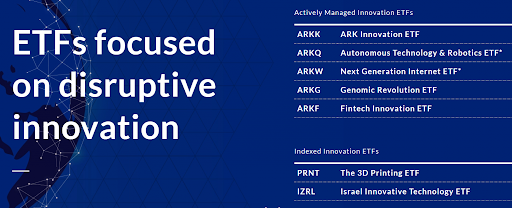
Cathie Wood, whose tech-heavy ARK Innovation ETF fell more than 60% this year after soaring during the pandemic, fired off an open letter to the Fed saying rapid rate rises are a mistake.

***

FINANCE: https://www.routledge.com/Comprehensive-Financial-Planning-Strategies-for-Doctors-and-Advisors-Best/Marcinko-Hetico/p/book/9781482240283

COMMENTS APPRECIATED

Thank You

***

Top FOREX Indicators

Join Our Mailing List

A chart-driven trading market?

[By J. Honi]

Foreign currency exchange, or Forex, is a chart-driven trading market that uses an electronic network to quickly process currency trades. The action is fast-paced and traders often use technical indicators on their charts to help predict price movement. Hundreds of indicators are available in Forex trading, and most charting packages offer an extensive list from which to choose.

But, some Forex indicators are particularly popular and should be learned first.

Top FOREX Indicators

Moving Average

A moving average is a quick visual representation of the overall bias in Forex price action. The moving average line is created by averaging the closing prices of the last many days or minutes and plotting this calculation on each bar of a chart. As these plotted points are connected, a line is drawn. A moving average sloped positively suggests an upward trend, while a declining moving average suggests a bearish trend. According to Forex Realm, the moving average indicator is used more often than any other indicator. Its interpretations are vast and each trader may develop his own strategy. Some moving averages act as obstacles for price action. In an up trend, a 20-period moving average may lead to price bounces every time a decline brings a Forex price down to this average.

Moving Average Convergence/Divergence

The Moving Average Convergence/Divergence (MACD) is the most popular indicator used in Forex trading, according to Forex Realm. This indicator uses two moving averages. As prices increase in momentum, either up or down, the distances between two moving averages will also increase. The MACD measures this difference and plots it as a separate line in a graph below the price chart. Momentum can thus be quantified and visualized quickly. The length of the two moving averages may vary, and the interpretation of this calculation has many implications. As a tool to recognize divergence, this indicator is unmatched. When prices rise but momentum simultaneously falls, this divergence often leads to swift price reversals.

Stochastic

The Forex Indicators Guide lists the “stochastic” indicator as one of the top two Forex indicators. This indicator plots a graph under the price chart just like the MACD, and many traders interpret the two in similar ways. However, the stochastic derives its calculations using a much more complex formula. The formula analyzes the closing position of prices in relation to previous prices, and in this way offers its own definition of price momentum. Unlike the MACD, the stochastic has upper and lower limits of 100 and 0. Near these areas, the Forex market analyzed is said to be “overbought” or “oversold.” Traders often use these moments to predict price reversals. As a note of caution, however, a market can remain overbought or oversold for much longer than a trader expects.

More:

The Foreign Exchange Market Explained

Conclusion

Your thoughts and comments on this ME-P are appreciated. Feel free to review our top-left column, and top-right sidebar materials, links, URLs and related websites, too. Then, subscribe to the ME-P. It is fast, free and secure.

Link: http://feeds.feedburner.com/HealthcareFinancialsthePostForcxos

Speaker: If you need a moderator or speaker for an upcoming event, Dr. David E. Marcinko; MBA – Publisher-in-Chief of the Medical Executive-Post – is available for seminar or speaking engagements. Contact: MarcinkoAdvisors@msn.com

OUR OTHER PRINT BOOKS AND RELATED INFORMATION SOURCES:

DICTIONARIES: http://www.springerpub.com/Search/marcinko
PHYSICIANS: www.MedicalBusinessAdvisors.com
PRACTICES: www.BusinessofMedicalPractice.com
HOSPITALS: http://www.crcpress.com/product/isbn/9781466558731
CLINICS: http://www.crcpress.com/product/isbn/9781439879900
BLOG: www.MedicalExecutivePost.com
FINANCE: Financial Planning for Physicians and Advisors
INSURANCE: Risk Management and Insurance Strategies for Physicians and Advisors

Product Details  Product Details

NTFs MARKETPLACE: Put Down by CNN

R.I.P.

By Staff Reporters

***

***

CNN was just accused of a “rug pull” after it suddenly shut down its Web3 project Vault by CNN, leaving collectors blindsided. The news network sparked outrage among collectors who paid thousands for non-fungible tokens sold by Vault, CNN’s own NFT marketplace, which was set up in 2021 to “offer collectors the opportunity to own a piece of history.” Investors could pay for digital ownership of CNN news reports or artistic interpretations. 

Members were told that the company had decided to end what it said was originally a “6-week experiment” and that they would be compensated “pro rata based on the total purchase price of each wallet’s NFTs according to a snapshot taken on October 6, 2022.” A separate message from CNN staffer “Jason” confirmed that this would amount to “roughly 20% of the original mint price for each Vault NFT owned.”

Developers also added that the NFTs would remain under the ownership of those who bought them, and that the website would remain open to be used as a marketplace so that collections could still be viewed. Additionally, unsold NFTs are to be burned, making the remainder “rarer.” 

READ: https://gizmodo.com/cnn-nfts-vault-1849642160

***

FINANCE: https://www.routledge.com/Comprehensive-Financial-Planning-Strategies-for-Doctors-and-Advisors-Best/Marcinko-Hetico/p/book/9781482240283

COMMENTS APPRECIATED

Thank You

****

What is the FOREX MARKET?

CMP logo

By Dr. David E. Marcinko MBA CMP®

SPONSOR: http://www.CertifiedMedicalPlanner.org

The foreign exchange market is a global decentralized or over-the-counter market for the trading of currencies. This market determines foreign exchange rates for every currency. It includes all aspects of buying, selling and exchanging currencies at current or determined prices.

In terms of trading volume, it is by far the largest market in the world, followed by the credit market.

CITE: https://www.r2library.com/Resource/Title/0826102549

The forex market is not dominated by a single market exchange, but a global network of computers and brokers from around the world. Forex brokers act as market makers as well and may post bid and ask prices for a currency pair that differs from the most competitive bid in the market.

The forex market is made up of two levels—the interbank market and the over-the-counter (OTC) market. The interbank market is where large banks trade currencies for purposes such as hedging, balance sheet adjustments, and on behalf of clients. The OTC market, on the other hand, is where individuals trade through online platforms and brokers.

INDICATORS: https://medicalexecutivepost.com/2014/02/08/top-forex-indicators/

NOTE: FOREX.com is a registered FCM and RFED with the CFTC and member of the National Futures Association (NFA # 0339826). Forex trading involves significant risk of loss and is not suitable for all physicians or investors.

***

YOUR COMMENTS ARE APPRECIATED.

Thank You

FINANCE: https://www.amazon.com/Comprehensive-Financial-Planning-Strategies-Advisors/dp/1482240289/ref=sr_1_1?ie=UTF8&qid=1418580820&sr=8-1&keywords=david+marcinko

***

Risk Management, Liability Insurance, and Asset Protection Strategies for Doctors and Advisors : Best Practices from Leading Consultants and Certified Medical Planners™ book cover

ORDER: https://www.routledge.com/Risk-Management-Liability-Insurance-and-Asset-Protection-Strategies-for/Marcinko-Hetico/p/book/9781498725989

***

Dr. Dave Marcinko at YOUR Service in 2022

Join Our Mailing List

Book Marcinko for your Next Financial Planning Seminar, Meeting or Medical Business Event 

By Ann Miller RN MHA

Professor and physician executive David Edward Marcinko MBBS DPM MBA MEd BSc CMP® is originally from Loyola University MD, Temple University in Philadelphia and the Milton S. Hershey Medical Center in PA; Oglethorpe University, and Atlanta Hospital & Medical Center in GA; and the Aachen City University Hospital, Koln-Germany. He is one of the most innovative global thought leaders in health care business and entrepreneurship today.

Dr. Marcinko is a multi-degreed educator, board certified physician, surgical fellow, hospital medical staff President, Chief Education Officer and philanthropist with more than 400 published papers; 5,150 op-ed pieces and over 125+ international presentations to his credit; including the top 10 biggest pharmaceutical companies and financial services firms in the nation. He is also a best-selling Amazon author with 30 published text books in four languages [National Institute of Health, Library of Congress and Library of Medicine].

Dr. Marcinko is past Editor-in-Chief of the prestigious “Journal of Health Care Finance”, and a former Certified Financial Planner®, who was named “Health Economist of the Year” in 2001. He is a Federal and State court approved expert witness featured in hundreds of peer reviewed medical, business, management and trade publications [AMA, ADA, APMA, AAOS, Physicians Practice, Investment Advisor, Physician’s Money Digest and MD News].

As a licensed insurance agent, RIA and SEC registered endowment fund manager, Dr. Marcinko is Founding Dean of the fiduciary focused CERTIFIED MEDICAL PLANNER® chartered designation education program; as well as Chief Editor of the HEALTH DICTIONARY SERIES® Wiki Project. His professional memberships include: ASHE, AHIMA, ACHE, ACME, ACPE, MGMA, FMMA and HIMSS.

Dr. Marcinko is a MSFT Beta tester, Google Scholar, “H” Index favorite and one of LinkedIn’s “Top Cited Voices”.

Book Marcinko

David Edward Marcinko (2)

Join Our Mailing List

PODCAST: The “Value Hole” in Health Insurance Plan Design

By Eric Bricker MD

***

***

COMMENTS APPRECIATED

Thank You

***

HEALTH INSURANCE: https://www.amazon.com/Dictionary-Health-Insurance-Managed-Care/dp/0826149944/ref=sr_1_4?ie=UTF8&s=books&qid=1275315485&sr=1-4

***

SPEAKER: Jamie Dimon at the JPM Techstars Conference

By Staff Reporters

***

***

PMorgan CEO Jamie Dimon just warned that the U.S. is headed for a recession in the next six to nine months as volatile markets coincide with disorderly financial conditions. Speaking to CNBC’s Julianna Tatebaum at the JPM Techstars conference in London, Dimon said U.S. consumers would be in better shape this time around than the 2008 global financial crisis but the current factors contributing to a recession were still a cause for concern. 

“But you can’t talk about the economy without talking about stuff in the future – and this is serious stuff,” Dimon said, citing inflation, quantitative easing, and Russia’s war with Ukraine

“These are very, very serious things which I think are likely to push the U.S. and the world – I mean, Europe is already in recession, and they’re likely to put the U.S. in some kind of recession six to nine months from now,” he said. 

NOTE: Dimon’s comments came after the September jobs report, released last Friday, showed that businesses kept hiring at a brisk pace, unemployment fell back to a half-century low and average pay rose.

***

COMMENTS APPRECIATED

Thank You

***

FINANCE: https://www.routledge.com/Comprehensive-Financial-Planning-Strategies-for-Doctors-and-Advisors-Best/Marcinko-Hetico/p/book/9781482240283

***

PODCAST: The MEDICARE COST REPORT Explained

Not For DoctorsNot Managerial Cost Accounting

By Eric Bricker MD

****

***

YOUR COMMENTS ARE APPRECIATED.

Thank You

HOSPITALS: https://www.amazon.com/Financial-Management-Strategies-Healthcare-Organizations/dp/1466558733/ref=sr_1_3?ie=UTF8&qid=1380743521&sr=8-3&keywords=david+marcinko

MORE: https://www.amazon.com/Hospitals-Healthcare-Organizations-Management-Operational/dp/1439879907/ref=sr_1_4?s=books&ie=UTF8&qid=1334193619&sr=1-4

***