Transform Your Financial Insights into Lasting Change

Turn Financial A-Ha Moments Into Lasting Change With Memory Re-Consolidation

By Rick Kahler MSFS CFP

***

***

Have you ever had a light bulb moment about money?

Maybe you leave a workshop, a therapy session, or a conversation with a financial advisor, feeling as if you have finally cracked the code. You understand why you keep overspending. You see the pattern that keeps you procrastinating about saving and investing. You feel the reason you panic about money, even when you know you are okay. In that moment, it all seems so clear.

Yet a week later, you are right back at it. Swiping the credit card. Avoiding the budget. Losing sleep over the same worries you thought you had just solved. What happened to that breakthrough? Why did it not last?

BRAIN ANCHORING: https://medicalexecutivepost.com/2024/10/22/anchoring-initial-mental-brain-trickery/

I’ve experienced this myself, more times than I’d like to admit. Recently, I found a book that explains why: Unlocking the Emotional Brain by Bruce Ecker, Robin Ticic, and Laurel Hulley. The authors explain that lasting change happens through something called “memory re-consolidation.” It is the brain’s way of updating emotional patterns we have carried for years—often since childhood.

Most of us have old money stories tucked away in our emotional memory. Suppose, for example, as a child you were scolded for asking a neighbor how much money they earned. This and other similar experiences that left you feeling shamed or dismissed taught you that it was rude to talk about money.

Such early experiences are filed away as emotional truths. They shape what feels true, even years later as an adult, whether or not that “truth” is still relevant.

NEUROLINK: https://medicalexecutivepost.com/2023/03/07/neurolink-brain-chips-rejected-by-the-fda/

As an adult, you may have come to understand that talking about money is often essential for your emotional and financial well being. But when the moment comes to have a money conversation, your body still freezes up. That is not weakness. That is your brain pulling up the old file.

Here is where memory re-consolidation comes in. The brain does not update the file just because you think new thoughts. It updates when you have a new experience that feels different. Maybe someone listens without judgment, or you realize you are talking about money and still feel safe. That emotional mismatch tells the brain, “Maybe this file is not true anymore.”

But the update is not finished. To make the change stick, you have to hold both the old belief and the new experience together for a little while. It is like showing your brain two pictures: here is how it used to feel, and here is how it feels now. That moment of holding both is when the rewrite happens.

Even more interesting, the brain keeps the file open for several hours after the shift. What you do in that window can help the change settle in—or not. If you rush back into busyness or distractions, you might accidentally let the old version save itself again.

BRAIN HEALTH: https://medicalexecutivepost.com/2025/02/19/brain-health-bilingualism/

So what can we do to give those shifts a better chance of sticking? I have noticed that insights gained during a retreat or workshop, with ample time to focus and reflect, are more likely to last. Even in our everyday lives, we can slow down, even for a few minutes, to write about what we felt, check in with our bodies, or talk with someone who supports us. We can protect a little bit of quiet space before diving back into the noise.

The next time you have a money breakthrough, try giving yourself that space. Consciously notice both the old belief and the new experience. Give the re-consolidation time to settle in.

Then, the next time your brain pulls up that old money story, you’ll have access to the updated, more accurate version.

COMMENTS APPRECIATED

EDUCATION: Books

Like and Refer

***

***

If the Government Can Take A 15% Cut From Nvidia, Who Is Next?

By Rick Kahler; MSFP CFP

***

***

This month, the U.S. government demanded a direct cut of a company’s foreign sales as the price for letting those sales happen.

Tech companies Nvidia and AMD had been stuck in regulatory limbo over selling their newest AI chips to China. According to an August 12, 2025, Reuters article by Karen Freifeld, Nvidia CEO Jensen Huang had even received a public “green light” for the company’s H20 chip, but the Commerce Department would not issue the export licenses.

The stalemate ended only after Huang met with President Trump and agreed to a deal: the licenses would be granted, but the U.S. Treasury would get 15% of all H20 revenue from China. AMD agreed to identical terms for its MI308 chip. Two days later, both companies had their licenses.

The numbers are staggering. Bernstein Research estimates Nvidia could sell $15 billion worth of H20 chips in China this year, and AMD about $800 million of MI308s. That is more than $2 billion flowing straight to Washington, not as taxes but as a contractual price for market access. The legality of this arrangement is questionable, and the deal also raises security concerns.

It is worth noting the administration first asked for 20% before “settling” on 15%. This was not a polite request but a “take it or leave it” demand. From a behavioral economics standpoint, the decision was predictable. The pain of losing an entire market is far greater than the pain of losing a fraction of it.

How is this any different from a tariff? A tariff is a standardized, legally defined tax that applies broadly to certain goods and is collected under public trade policy. This 15% cut is a one-off, privately negotiated condition aimed at just two companies, tied to export license approval. It is taken from gross revenue, not profit, meaning the government gets paid on every dollar of sales before the companies cover a single expense.

“Tax farmming” is an old practice where the state sold the right to collect taxes for a fixed sum, allowing the collectors to keep the rest. Its use in France made some people enormously rich, made everyone else furious, and eventually helped spark the French Revolution. Similar systems appeared in Ottoman Egypt, Qing China, and the early Dutch Republic until abuses finally brought them down.

The Nvidia/AMD deal is not exactly tax farming, but it is a similar dynamic. The government’s role is no longer just regulating. It is stepping in as a business partner, taking a direct share of private sales. Supporters might call it a smart use of national leverage. Critics will see a step away from free-market capitalism toward something more political and transactional.

Nor is this deal a one-off. In June, the administration approved foreign investment in U.S. Steel only after securing a “golden share” that gives it veto power over strategic corporate decisions. History teaches us that once a government finds a way to take a cut, it rarely stops with one sector. Today it is steel and AI chips to China. Tomorrow it could be pharmaceuticals, energy, or consumer goods.

What is the likely impact for average Americans? Money flowing to the U.S. Treasury from a source other than taxpayers may seem like a benefit. Yet any company required to give away 15% of its gross revenue, which could equal its entire profit, has to compensate in some way. The most likely result is higher prices. Hiking prices on computer chips sold to China may not seem to be a big deal—until you consider that many of the products that use those chips are sold to U.S. consumers.

COMMENTS APPRECIATED

Subscribe, Like and Refer

***

***

Beware of Borrowing That Helps Your Advisor – Not You

By Rick Kahler MSFP CFP

***

***

When Maria needed $400,000 for a down payment on a new home, her broker at a large Wall Street firm offered a solution: “Don’t sell investments and trigger capital gains. Just take out a margin loan.”

A margin loan is a line of credit from a brokerage firm, secured by the client’s investment portfolio. It offers quick access to cash with no immediate tax consequences and minimal paperwork. But the convenience comes at a cost. As of mid-2025, margin loan interest rates range from 6.25% to over 11%.

Margin loan recommendations are often presented by brokers as tax-savvy strategies that allow clients to access “tax-free” cash while keeping their portfolios intact. In many cases, however, the math benefits the advisor more than the investor. The cost of borrowing often exceeds what an investor is likely to earn by holding on.

For example, let’s assume an interest rate of 7.5% on Maria’s $400,000 margin loan. While borrowing delayed the payment of $20,000 in capital gains tax, she will eventually have to pay that tax anyway unless she holds the investments until her death. Two years later, with portfolio returns of 4% annually, she had earned around $32,000 from the $400,000 in investments she might have sold. Meanwhile, she had paid $60,000 in interest—leaving her some $28,000 worse off. That’s without factoring in ongoing interest payments, or the risks of a margin call if the investments securing the loan drop in value.

Why do advisors keep recommending margin loans? Because selling investments reduces the portfolio size and the advisor’s fee. Borrowing keeps the portfolio intact and the compensation unchanged—while the firm receives additional income from interest on the loan. In some cases, advisors suggest using margin loans to buy more investments, increasing both the portfolio and the fee they collect.

None of this is illegal. But when the borrowing cost is higher than expected returns and the advisor benefits financially, the ethics are questionable. The client takes the risk, while the advisor keeps the revenue.

This kind of conflict appears more often in portfolios where compensation is tied to asset volume and the company’s primary culture rewards gathering assets over delivering unbiased advice. By contrast, fee-only financial planning and investment advisors typically operate on simpler hourly, flat, or tiered fee structures. Their compensation doesn’t depend on whether a client borrows, sells, or holds. The culture of the firm focuses on conflict-free advice aligned with the client’s best interest.

Wall Street brokers are often held to a fiduciary standard, but structure still matters. In 2024 the SEC reported their examinations of brokers would continue to focus on advisor recommendations unduly influenced by the company’s compensation and incentives.

There are rare situations where a margin loan may be appropriate. A client with large unrealized gains might use a short-term margin loan to minimize taxes. An elderly investor might borrow tax-free rather than sell assets that will receive a step-up in basis at their death. Even in those cases, the math must be exact and the client must clearly understand the risks, including the possibility of a margin call.

If your advisor recommends a margin loan, especially to buy more investments, ask strong questions. What’s the interest rate? What return is realistic? What are the tax consequences of selling? How does this affect the advisor’s income?

If you don’t get direct answers, that’s a warning sign.

In a high-rate, low-return environment, margin loans rarely favor the client. The exceptions are narrow. The risks are significant. And the conflict of interest is measurable.

Sometimes the smartest move is the simplest: sell what you need, pay the tax, and leave leverage out of your plan.

COMMENTS APPRECIATED

Like and Subscribe

***

***

Do Political Biases Shape Your Financial Planner’s Advice?

Subscribe to continue reading

Subscribe to get access to the rest of this post and other subscriber-only content.

ELDER ABUSE: Financial Exploitation Protection

By Rick Kahler CFP

***

***

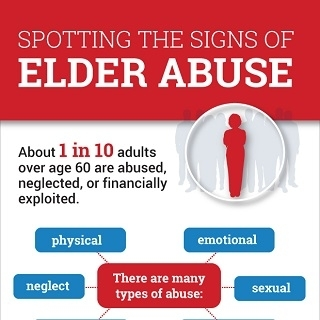
One serious risk to financial wellbeing in retirement that is difficult to talk about is financial exploitation. Someone whose cognitive abilities are declining is vulnerable to harm from both financial predators and their own financial misjudgments. Protecting such clients is a crucial part of a financial advisor’s role.

A little-known but important law, the Senior Safe Act, was enacted in 2018. It encourages financial advisors and institutions to report suspected elder abuse by offering immunity from legal liability when reports are made in good faith and with reasonable care. To qualify for these protections, financial professionals must undergo annual training to recognize the signs of exploitation and know how to act on their suspicions.

In many ways, the Senior Safe Act mirrors the duty of therapists to report when clients are threats to themselves, such as when a client becomes suicidal. Just as a therapist must balance confidentiality with the moral and legal responsibility to protect their client from harm, a financial advisor must weigh privacy against the need to prevent financial exploitation. Both roles rely on professional judgment, training, and the courage to act when the stakes are high.

Financial advisors, accountants, and attorneys are often the first to notice troubling signs that someone is being taken advantage of financially. These might include sudden large withdrawals, changes to account ownership or beneficiaries, or a newly and overly involved friend or family member. Behavioral shifts like confusion, anxiousness, secretiveness, or uncharacteristic deference are also red flags. These patterns are unsettling and demand attention, even when stepping in is uncomfortable.

Reporting possible elder abuse isn’t always straightforward, especially if the suspected abuser is a family member. As an advisor, I worry about misunderstandings, potential conflicts with the family, and even the possibility of damaging a relationship with the client. None of this is easy, But when the signs of exploitation become clear, staying silent could mean allowing harm to continue. That’s a risk I can’t take.

One of the tools I started using decades ago is the trusted contact disclosure form. This simple but powerful document allows clients to name someone my firm can contact if they notice unusual activity, such as a suspicious withdrawal or transfer. The trusted contact does not have control over the client’s account but serves as a resource to verify their well-being and ensure that their financial decisions align with their long-term goals. If you as a client have not signed such a form, it’s worth discussing with your advisor as a preventative step.

If you are concerned about the financial well-being of an elderly loved one, it’s crucial to alert not only their financial advisor but also other professionals like accountants, attorneys, or bankers. These professionals may have insights or access to information you don’t have, and by sharing your concerns, you provide a broader picture that can help them detect and address issues more effectively. Even if they are already monitoring for red flags, your input can provide valuable context to guide their next steps.

Difficult though it may be, stepping into uncomfortable territory is often essential to protecting vulnerable individuals. Whether it’s a financial advisor detecting exploitation or a therapist intervening in a mental health crisis, the goal is the same—to prevent harm while respecting the person’s autonomy.

The Senior Safe Act is a reminder that sometimes the most impactful safeguards work quietly behind the scenes. Taking simple steps like completing a trusted contact form or encouraging your loved one to work with a reputable, fiduciary advisor can make all the difference. Vigilance is an act of care that helps protect someone’s financial assets as well as their dignity and well-being.

COMMENTS APPRECIATED

Subscribe and Refer

***

***

ASSET PROTECTION: Records Verification

By Rick Kahler MSFP CFP®

***

***

OVER HEARD IN THE FINANCIAl ADVISOR’S LOUNGE

A basic strategy for asset protection is to hold various assets in different entities. Putting real estate, small businesses, and other assets into trusts, corporations, or limited liability companies (LLCs) is effective protection that is relatively easy to put into practice. Not only do I recommend this strategy to clients, I use it myself. Recently, however, I discovered a potential downside.

About 25 years ago, I invested in some rare coins in a corporation I owned and put them into a safe deposit box owned by the corporation. When my business relocated 12 years ago, the safe deposit box billing was not forwarded to the new address and was never paid again. Last year I went to retrieve the coins from the safe deposit box, which I had not visited in 25 years. I discovered the box had been drilled open three years earlier and my collection turned over to the unclaimed property division of the State Treasurer’s office.

I was told getting the coins back would be simple enough. I just needed to verify that I owned the company which owned them by providing the corporation’s tax ID number. However, the corporation no longer existed. I didn’t have a record of its tax ID number. The IRS wouldn’t verify the number without my giving them the address the company had used. That address was a post office box number that I no longer used and couldn’t remember. The state’s position was “no tax ID, no coins.” The only verification of my identity as owner of the corporation was my signature on the bank’s safe deposit box application. Eventually, with the support of bank officers who were willing to swear that I was who I claimed to be, I got my coin collection back.  The hassle involved in this process was a reminder of an important component of asset protection. Maintain accurate records so you don’t end up hiding assets from yourself.

***

***

A good start is to create a master file of all the entities that hold your assets. This can be any system that’s easy for you to use: a computer spreadsheet, a set of file folders, or a single paper list. Share it as appropriate with your CPA, attorney, or financial planner. The master list should include the name of each company, its date of incorporation, tax ID number, address, and other relevant information like phone or bank account numbers. Also keep an inventory of the assets each company owns.

Once you’ve created a master list, it’s essential to keep it up to date as you buy or sell assets, close companies, or transfer ownership. Set up a system, as well, to remind yourself of tasks like filing tax returns, completing minutes of annual meetings, and paying the annual safe deposit box rent. Make your record-keeping easier by eliminating unnecessary complications.

For example, you probably don’t need a separate address for each trust, corporation, or LLC. Instead of creating a separate company for each asset, you might consider grouping smaller assets within one entity. I’d suggest first discussing the pros and cons with an attorney or financial planner. For larger assets like real estate, I do recommend holding each one separately.

When I talk to clients about asset protection, I mention that part of the price we pay for it is an increase in paperwork. It’s easy to accept that idea with casual good intentions. The case of my reclaimed coin investment is a good reminder of the importance of keeping up with that paperwork. If we don’t, we might protect ourselves right out of access to our own assets.

COMMENTS APPRECIATED

Subscribe, Refer and Like

***

***

Why Tariffs Won’t Bring Back the “Good Old Days”

By Rick Kahler MSFP CFP

***

***

If I had a dollar for every time someone referred to the “good old days,” of the American economy, I could probably buy a vintage diner, jukebox and all, and still have enough left for a slice of apple pie.

The newest round of on-again, off-again tariffs is built around that same kind of nostalgia. Slapping big taxes on goods from other countries will supposedly protect American jobs and industries. The aim is to bring factories back, boost wages, and make the country more self-reliant.

This is a powerful story that taps into a deep feeling that we’ve lost control. Supporters argue that the U.S. has opened its markets and played by the rules, allowing many other countries to prosper at its expense, while America has been in a long, slow economic decline. This story frames the U.S. as a victim, with tariffs a form of payback to punish countries that have “taken advantage of us.”

Except that story is a myth. Rather than punishing foreign economies, the pain of tariffs hits Americans at home. Our businesses face costlier goods, consumers pay higher prices at the store, and the ripple effects include falling sales, layoffs, and frayed trade relationships.

In addition, the U.S. economy has actually been booming. Over the past three decades, the U.S. has pulled far ahead of most developed nations. In 2008, the American economy was about the same size as the Eurozone’s. Today, it’s nearly twice as large. Wages have risen. Even the poorest U.S. state now has a higher per-person income than countries like France, Japan, or the U.K.

So why do so many people still feel like we’re falling behind?

First, the growth hasn’t reached everyone, especially in rural America. In some areas and industries, jobs have disappeared and opportunities have dwindled.

Second, many people who are doing okay themselves have bought into a powerful, repeated myth that things are going terribly for everyone else.

This narrative takes hold in people’s internal voices, the parts of themselves shaped by past pain, fear, or frustration. Tariffs, then, can feel like a way to stand up and take action. It makes perfect sense to want to relieve anxiety by shutting the world out and protecting what is left.

Yet, when we act from fear or anger without pausing to reflect, we tend to overcorrect or trade one set of problems for another. This is what many economists and business leaders see happening with tariffs. Even supporters of tariffs are beginning to admit they’re a gamble. Many are still willing to take that gamble if it means restoring something they feel they’ve lost, a sense of purpose, security, and control.

Reacting out of fear in this way is not likely to create lasting solutions. A more challenging but more productive approach would be to take time to listen with compassion to those inner voices, helping them move past anxiety to find answers based in truth rather than myth. Maybe real liberation comes from letting go of narratives that no longer serve us, choosing a future built on connection, courage, and clarity.

Because if we keep heading down an isolationist path, turning inward out of fear, the future might not be the golden age we imagine. It might look a lot more like the actual 1950s, before the civil rights movement, before women fully entered the workforce, before the innovations that made the U.S. economy a global leader. A time more isolated, less equal, and far less dynamic than the one we’ve come to idealize.

That’s a version of the past we don’t need to relive, no matter what nostalgic song is playing on the jukebox.

COMMENTS APPRECIATED

Like and Refer

***

***

SOCIAL SECURITY: Is Not a Ponzi Scheme

By Rick Kahler CFP

***

***

Lately, I’ve been hearing the same question from clients and readers alike: “Is Social Security even going to be there in five years?” Fueling this concern is a recent viral comment from Elon Musk, who told Joe Rogan that Social Security is “the biggest Ponzi scheme of all time.” That quote has been repeated in every corner of the internet, stirring up uncertainty and fear.

Elon Musk is a genius, but his brilliance in technology and innovation doesn’t automatically translate into expertise in public policy. When it comes to Social Security, he’s outside his lane. Calling it a Ponzi scheme may make for a great soundbite, but it’s a fundamental mischaracterization.

Social Security is not a Ponzi scheme. Not even close.

A Ponzi scheme is a form of financial fraud that lures investors with the promise of high returns. Instead of earning those returns through legitimate investments, the scheme pays earlier investors using money from newer ones. Eventually, the model collapses when there aren’t enough new participants to keep it going, leaving most people with significant losses. This is what happened to those who trusted Bernie Madoff, operator of one of the worst Ponzi schemes in history. Ponzi schemes are illegal, deceptive, and doomed from the start.

Social Security, in contrast, is a government-run, pay-as-you-go tax program. It’s fully transparent; you know exactly where your money is going. The payroll taxes you and your employer pay are used to provide income to today’s retirees, people with disabilities, and surviving family members of deceased workers. This isn’t a con, it’s a social contract.

So why the confusion? Part of the issue is that Social Security does, on the surface, resemble the flow of a Ponzi scheme: money coming in from the young to support the old. But similarity in structure doesn’t make it fraudulent. The program does not promise high returns, it promises a modest, inflation-adjusted benefit to support people as they age.

Social Security does face challenges. The trust fund reserves, built up during years when payroll taxes exceeded payouts, are projected to run dry around 2033. If Congress does nothing, benefits will need to be cut by about 20%. That’s serious, but it’s a solvency issue, not a scam.

And the solvency issue is fixable. There are numerous bipartisan proposals to shore up the system for the long term, from raising the payroll tax cap to gradually adjusting benefits. These aren’t radical ideas, they’re common-sense repairs. A bipartisan mix of 100 CFPs in a room could work out a solution in two days.

When clients ask me if the system will be around in five years, what they’re really asking is: Can I trust it? Can I trust the government? Can I trust that my years of work and tax payments will mean something in retirement? These are not just policy questions. They are emotional questions based on fear of scarcity and a desire for security. When someone with Elon Musk’s influence wrongly calls Social Security a Ponzi scheme, his attention-grabbing soundbite shakes the emotional foundation of that trust.

If we’re serious about preserving Social Security, let’s start by calling it what it is: a commitment to our elders. A tax-supported promise to care for one another across generations.

Social Security is not a fraud, it’s a shared responsibility based on the kind of society we want and woven into the fabric of American life. Yes, it needs some adjustments, but it’s not broken. Rather than eroding public trust with misleading comparisons, we should be focused on debating public policy and how we can strengthen and sustain the program for future generations.

***

ME-P NOTE: An increase in Social Security benefits is on the horizon, providing a potential financial cushion against rising inflation. The Cost of Living Adjustment (COLA) for 2025 is set at 2.5% monthly, translating to an average annual increase of approximately $600 for beneficiaries. This adjustment is based on the Consumer Price Index for Urban Wage Earners and Clerical Workers. While not guaranteed annually, COLA has historically been implemented in most years due to persistent inflationary trends.

COMMENTS APPRECIATED

Like and Refer

***

***

FEAR BASED GOLD FEVER: Protect Yourself

By Rick Kahler CFP

***

***

On January 21, 1980, in what I thought was a brilliant financial move, I bought gold. At what was then an all-time high of $873 an ounce.

Fast forward 45 years, and here we are again. Gold is on a tear, priced just over $3,000 an ounce at the time of this writing. It needs to rise another 16% to reach its inflation-adjusted record and many analysts think it might just get there.

What’s driving this gold rally? The same thing that drove it in 1980—fear.

Back then, the U.S. was grappling with rising inflation, double-digit price increases, and interest rates in the high teens. Investors feared that the dollar and stock market would collapse, that their hard-earned savings would erode into oblivion, and that gold was a safe haven. Sound familiar?

Today, inflation is less dramatic and the stock market would have to go a long way down to even register as a bear market, but it’s still a major concern. Central banks are buying gold at record levels. Gold-backed ETFs, which had been seeing years of outflows, are finally pulling investors back in.

For most, gold isn’t just an investment, it’s an emotional hedge against uncertainty. Back in 1980, I wasn’t thinking about long-term strategy. I was reacting to fear. Inflation had hit 14%, and like many others, I was convinced the dollar would soon be worthless. Gold, I thought, was my best shot at preserving wealth.

The problem? Inflation eventually cooled; it had dropped to an average of 3.5% by the mid-1980s. Gold prices tumbled along with it. Investors who, like me, bought at the peak, 45 years later still haven’t broken even on an inflation-adjusted basis. (My $873 purchase price, adjusted for inflation, equates to $3,580 today.) If I had stuck with a well-diversified portfolio, I likely would have fared much better over time.

Over the years, I’ve come to realize that our financial decisions aren’t just about numbers. They’re deeply influenced by our Internal Financial System™, a framework that helps explain why we handle money the way we do. I now see that my decision to buy gold was a battle between different financial “parts” of myself.

One part panicked, convinced that money was about to become worthless. Another saw gold prices soaring and didn’t want to miss out. Yet another part convinced me that buying at the peak was still a smart move. Had I paused and examined these internal voices, I might have made a different decision.

My gold purchase shows why emotionally driven investment decisions rarely lead to great financial outcomes. Instead of asking, “Is gold a smart long-term investment?” I was asking, “How do I make sure I don’t lose everything?” Those are two very different questions.

If you’re thinking about buying gold, I urge you to consider these questions:

“Am I investing from a place of fear or strategy?” If you’re rushing in because you’re scared of inflation, pause and reassess.

“How does gold fit into my broader financial plan?” Gold can be a great hedge—if held in appropriate amounts in a diversified portfolio. It is best viewed as catastrophic financial insurance, rather than an investment.

“Am I reacting to headlines or making a well-thought-out decision?” The financial media loves a good gold rally. But remember, markets move in cycles. Today’s rally may be history repeating itself.

Back in 1980, fear persuaded me that gold was a sure thing. I forgot an essential caveat—there are no sure things in investing. If bad market timing were an Olympic sport, I’d have taken home the gold (pun intended) for least profitable performance.

COMMENTS APPRECIATED

Refer and Like

***

***

The Missing Piece in America’s Health Care Debate

By Rick Kahler CFP™

http://www.KahlerFinancial.com

***

The recent horrifying murder of UnitedHealthcare Group CEO Brian Thompson has called attention to the anger many Americans feel about our health care system. This tragedy has thrust the very real issue of health care costs back into the headlines.

One article on the topic, from Ken Alltucker for USA Today, offered seven reasons why Americans pay so much for health care with such poor results. When I saw the headline, I thought, “Finally, someone’s going to bring up the elephant in the room: taxes.”

The seven reasons included bloated administrative costs, lack of price transparency, overpaid specialists, higher prescription drug prices, and more. But I didn’t see a word about how, compared to other developed nations with “cheaper” health care, Americans pay far lower taxes. That omission feels like leaving a critical piece of the puzzle off the table.

***

***

In reality, countries with universal health care are not pulling off some magic trick of efficiency. They are simply collecting the money differently—through significantly higher taxes. Americans, on the other hand, pay for health care more directly, through out-of-pocket costs and insurance premiums.

In a column last year, I did the math. Americans spend about 17.8% of GDP on health care, plus 27.7% of GDP in taxes. That’s a total of 45.5%. Now compare that to twelve European countries with universal health care. They spend a median of 11.5% of GDP on health care and collect 41.9% of GDP in taxes. Total? 53.4%. In other words, Americans are spending 7.9% less overall on healthcare and taxes combined.

The saving isn’t what it appears, though. A fair comparison of healthcare costs and taxes needs to account for the fact that universal healthcare systems cover 100% of their populations, while the U.S. system currently leaves about 8% uninsured. If you factor in the cost of covering our uninsured residents, the U.S. likely spends a comparable percentage of income on healthcare as European countries with universal systems.

***

***

Our system is far from perfect. As the USA Today article points out, administrative costs are bloated. Harvard’s David Cutler estimates up to 25% of our health spending goes toward paperwork, phone calls, and processing. Price transparency is practically nonexistent. The cost of a diagnostic test might vary from $300 to $3,000 depending on where you go. We pay much more for prescription drugs and many procedures than those same treatments cost in other developed nations. Another issue is the fee-for-service model that rewards doctors for ordering more tests and procedures, whether or not patients get better.

We can do better. Innovations like value-based care, where providers are paid for outcomes rather than procedures, could help shift the system toward real results. Greater price transparency would empower patients to make informed choices and force providers to compete. And addressing administrative inefficiencies could save billions.

Yet fixing the system requires being honest about trade-offs. If we want universal health care at European price rates, we need to accept European tax rates. That’s the part of the conversation that often gets left out. It’s easy to be angry at hospitals, insurance companies, and drug manufacturers—and yes, they all have plenty to answer for. But we also need to face the reality that we’ve chosen a system that prioritizes lower taxes over centralized health care.

Anger may have put the flaws in our health care system in the spotlight. Finding genuine solutions will require moving beyond expressions of anger and frustration. It will demand thoughtful discussions about what kind of health care system, as individuals and as a nation, that we want and how we are willing to fund it.

EDUCATION: Books

COMMENTS APPRECIATED

Refer and Subscribe

***

***

POA: Power of Attorney Mistakes

The Power of Attorney Mistake That Could Cost You Everything

By Rick Kahler CFP®

***

***

Recently, reading a training manual on elder abuse, I was reminded of a financial risk that is often overlooked. One of the fastest and easiest ways to unravel your financial security is to have the wrong person gain control of your money.

The example in the manual mirrored a heartbreaking situation I once experienced with a long-term client. As her mental and physical health declined, this single woman moved into assisted living. Her newly designated power of attorney, a relative from out of town, took control of her financial affairs.

Almost immediately, without consulting us, the relative began making large withdrawals, closed her accounts, and transferred funds elsewhere. They challenged the financial plan, investments, and strategies we had established to safeguard the client’s financial security and provide for her long-term care. Even though their actions threatened the client’s wellbeing, we were powerless to stop them. Our only recourse was to report the behavior to the authorities.

This heartbreaking and frustrating experience underscored just how critical it is to be mindful when executing a Power of Attorney. Besides designating someone you trust, it is wise to build in safeguards to prevent even a well-meaning relative from inadvertently derailing a carefully constructed financial plan.

***

***

One such safeguard is to include a financial advisor in your POA—as long as that person is a fee-only, fiduciary advisor with an obligation to act in your best interests. In many cases, advisors are hesitant to suggest this option because they are sensitive to the potential conflict of interest and do not want to appear self-serving. An unfortunate reality is that you should be cautious if an advisor, particularly one who sells products on commission, seems eager to be added to your POA.

Including your financial advisor in your POA does not mean you designate them as your agent to manage your affairs. Instead, you include a clause naming them as the professional of record you want your designated agent to continue working with. This creates continuity and accountability. It prevents your agent from replacing your advisor with someone who may be unfamiliar with your needs and goals, unqualified, or untrustworthy.

Your advisor might also recommend adding a secondary safeguard, such as naming an attorney or accountant to oversee the selection of a successor advisor in case your current advisor is unable to continue. This additional layer of protection ensures that the financial professionals guiding your portfolio remain aligned with your best interests. Taking these extra steps can save you—and your loved ones—from significant financial stress down the road.

Including safeguards in your POA is not about mistrusting your loved ones, but about equipping them with the right resources and support to act in your best interest. Financial management is complex, and it requires expertise that most people, even those with the best intentions, may not possess.

One of the hardest parts about planning for diminished financial capacity is the emotional aspect. No one likes to imagine a time when they might not be able to manage their own money. But in reality, taking steps now to protect your financial future is the ultimate act of control. It can help ensure that your wishes are respected and the financial foundation you’ve worked so hard to build remains intact.

Remember, too, that avoiding conversations often increases financial vulnerability. If you don’t have a POA or aren’t comfortable with what you do have, now is the time to bring it up with your advisor, attorney, or a trusted family member. These safeguards are about protecting yourself. They also support those you will rely on to care for you and your financial legacy,

COMMENTS APPRECIATED

Refer, Subscribe and Like

***

***

INSURANCE: How To Get Results On Homeowner Claims

By Rick Kahler; CFP®

http://www.KahlerFinancial.com

***

***

If you have ever filed a homeowners insurance claim, you know it can feel more like an endurance test than a straightforward process. While insurers are legally required to honor valid claims, they have strong financial incentives to delay, underpay, or deny them whenever possible.

Over the years, I’ve learned this the hard way. The most recent lesson started when a hailstorm hit my home in June 2023. I promptly filed an insurance claim. I also made up a story that leaving someone more qualified than me in charge would free me from a part-time job as a contractor, so I relied on a roofing contractor to handle the whole claim, including the gutter and siding damage. That was my first mistake.

About 15 months later, my roof and gutters were replaced, but the siding repairs and painting remained undone. Every time the insurance company reassigned my claim to a new adjuster, I had to start over. When I called the contractor after a period of inactivity, they said the adjuster had ghosted them, so they’d given up—and I still owed them the full roofing bill.

At that point, I had two choices: pay out of pocket for the unfinished work or escalate. I chose the latter. I filed a complaint with the state insurance division, contacted my agent, reached out to the last adjuster, hired my own painter, and withheld final payment to the contractor. I also made it clear that I was prepared to take legal action if necessary. That was not a bluff.

Within a week, things started moving. Seven days later, the insurance company reinspected my home and sent a check covering all but $3,000 of the painting costs. After nearly two years of delays and excuses, progress finally happened when I took matters into my own hands.

Delay is a common insurer tactic. They’ll repeatedly ask for more documentation, take months to respond, or swap adjusters to force you to restart the process—all in hopes that you’ll give up or accept a lower payout.

Another common tactic is the lowball offer. Insurers often rely on software that underestimates damages or send adjusters unfamiliar with actual repair costs. Accepting their first offer without question can be a costly mistake. It’s wise to get independent repair estimates or even hire a public adjuster who works for you rather than the insurance company.

Insurers also deny claims based on fine print, arguing that damage was pre-existing, caused by poor maintenance, or excluded under some obscure clause. Knowing your policy inside out and keeping pre-loss photos can help you counter these claims.

Another trick? Steering homeowners toward “preferred” contractors who work at discounted rates and may prioritize the insurer’s interests over yours. Getting independent estimates ensures repairs are done properly.

For homeowners stuck in an insurance battle, persistence is key. Withholding final payment until work is complete, filing a complaint with the state insurance division, and even considering small claims court can help push a claim forward. If the dispute is within your state’s small claims limit—often between $10,000 and $25,000—filing may push the insurer to settle.

Assuming my contractor would handle everything was my biggest mistake, and it cost me nearly two years of frustration. Even though progress happened quickly once I took control, my claim isn’t over. I suspect I will be filing legal action in small claims court against the insurance company, contractor, and insurance agent.

If you need to navigate an insurance claim, be persistent and attentive. Keeping records, pushing back on delays, and escalating when necessary can mean the difference between being shortchanged and getting the settlement you deserve.

COMMENTS APPRECIATED

Subscribe, Refer and Like

***

***

DYING BROKE: Frugality OR Freedom

By Rick Kahler CFP™

http://www.KahlerFinancial.com

**

***

Dying Broke. It’s a goal for those retirees who embrace the idea of spending their hard-earned wealth during their lifetimes. Their aim is to enjoy the fruits of their labor while they can and spend the last penny just as they take their last breath. The concept feels both pragmatic and poetic.

But here’s the twist: While the concept may conjure images of lavish spending sprees and exotic vacations, that’s rarely what I see in practice. Many of my clients who identify as Die Brokers aren’t recklessly burning through their wealth. In fact, the opposite is often true.

This is because their approach to spending and giving is shaped by a lifetime of frugal money scripts that are incredibly hard to shake. Many Boomers grew up with financial uncertainty, learning to save and sacrifice to protect themselves and their families. Even after decades of financial success, those habits don’t just disappear. The idea of “spending down” their wealth, even intentionally, feels unnatural and irresponsible. There is an internal tug-of-war between their stated desire to enjoy their wealth and their deeply rooted fear of running out.

This paradox can significantly affect retirees’ financial planning. While Die Brokers may express a strong commitment to living fully, their money behavior often reveals a need for reassurance that their money will last for their lifetime.

For many Boomers, including myself, those frugal money scripts have served us well for decades. They’ve provided financial stability and peace of mind. But in this stage of life, they can also hold us back from experiencing the freedom we’ve worked so hard to achieve—especially in the time we have left when we can still physically enjoy it. The challenge is finding balance, honoring the values that got us here while allowing ourselves permission to live fully.

Shifting from a scarcity mindset to one of abundance is no small feat.

Here are four ways to start turning those old money scripts into permission to spend and give intentionally:

  1. Reframe wealth as a tool rather than a safety net. Recognize that money is about opportunity as well as security. Spending with intention can bring joy and meaning, whether it’s funding a family trip, supporting a cause, or splurging on a bucket list item.
  2. Work with your financial advisor to analyze your retirement spending and the probability of running out of money. The amount they suggest you can spend may surprise you—it’s often far higher than your frugal money scripts would lead you to believe.
  3. Experiment with incremental giving. If parting with your wealth feels daunting, start small. Gift modest amounts to family, friends, or charities and notice how it feels. Seeing the immediate impact of your generosity can help ease the transition and loosen the grip of those old money scripts.
  4. Set intentional spending goals instead of vaguely aiming to “enjoy your wealth.” Identify specific ways you want to use your money to enhance your life or the lives of others. Having a clear plan can turn spending into a meaningful act rather than an exercise in guilt.

For many of us, the Die Broke mentality is not about recklessness or extravagance. It’s about learning to let go. Despite our bold talk of spending down to the last penny, most of us will likely leave behind more than we planned. And maybe that’s just fine—especially for our kids and grand kids. Perhaps being a Die Broker is really about giving ourselves permission to live with intention, to savor what we’ve built, and to enjoy living to the fullest the rich life our frugality has helped provide.

EDUCATION: Books

COMMENTS APPRECIATED

Refer and Subscribe

***

***

DOCTOR: What’s Your Net Worth?

How Would You Respond … if Asked?

By Rick Kahler MS CFP® http://www.KahlerFinancial.com

Rick Kahler CFPFinancial professionals like me think nothing of asking clients this question.

But, if the tables were turned, though, and clients or prospective clients asked the same question of us, how would we respond?

The “Talk”

Every now and then this issue comes up in conversations among financial planners. Some advisors think their net worth is none of their clients’ business, any more than doctors’ cholesterol levels are any business of their patients.

Others are concerned that a single number like net worth is incomplete information and can even be misleading. Knowing a financial professional has a net worth of, say, five million dollars doesn’t necessarily mean the person is trustworthy or a capable financial planner. Net worth tells prospective clients nothing about where the money came from. The planner may have inherited it, won the lottery, earned it through a business other than financial planning, earned it from commissions on poor investments, or even obtained it illegally.

Wither the “Number”

Nor does net worth reveal anything useful about the understanding of money or knowledge of financial planning. I’ve worked with plenty of multi-millionaires who were skilled at making money but were horrible money managers and inept at investing. Even more, there are many brilliant young planners who haven’t had the time to accumulate a large net worth.

I suspect that most clients who want to know about their planners’ net worth actually have several deeper questions in mind. Some may be asking if the professional actually follows his or her own advice. Imagine how troubling it might be to find out your financial planner doesn’t have a retirement plan, is a habitual over-spender, or hasn’t gotten around to making a will.

Other Reasons Why

Another reason for the question may be a concern whether the planner is financially stable and will be around in the future. During the Great Recession, many financial professionals saw their revenues fall by 30% to 40%. Some who did not have a business emergency reserve had to resort to laying off staff, cutting services, or in some cases closing their doors.

Still another concern may be whether the planner is familiar with a potential client’s particular financial issues. This is especially true of high net worth clients. They need to know a planner can relate to the complexities, responsibilities, and emotional challenges of managing wealth.

***

Net Worth MDs

***

The Questions

All of these are legitimate concerns. Knowing a financial planner’s net worth, however, doesn’t address those concerns. To discover whether a planner is a good fit for you, it would be more useful to ask questions like the following:

  • Do you follow the same advice you give clients? Give me some examples.
  • Do you have six months’ living expenses in an emergency account?
  • Do you invest your money in the same manner you will invest mine?
  • If I were to run a credit report on you, what would it tell me?
  • What are some of the things you have learned from your financial mistakes?
  • Tell me what your company has in place for emergency planning and succession planning.
  • Tell me why you can relate to someone with my net worth and the issues I am facing.

Assessment

If a planner is offended by these questions or dances around answering them, that may be a red flag. If a planner offers answers freely and transparently, you may have found someone who provides exceptional service. Planners who share some of their own financial information are clearly committed to building the trust that is so essential between planner and client.

As a prospective client, you may hesitate to ask these questions even though you want to know the answers. Don’t be shy; ask.

More:

Conclusion

Your thoughts and comments on this ME-P are appreciated. Feel free to review our top-left column, and top-right sidebar materials, links, URLs and related websites, too. Then, subscribe to the ME-P. It is fast, free and secure.

Speaker: If you need a moderator or speaker for an upcoming event, Dr. David E. Marcinko; MBA – Publisher-in-Chief of the Medical Executive-Post – is available for seminar or speaking engagements. Contact: MarcinkoAdvisors@msn.com

OUR OTHER PRINT BOOKS AND RELATED INFORMATION SOURCES:

Financial Planning MDs 2015TEXT BOOK

Comprehensive Financial Planning Strategies for Doctors and Advisors: Best Practices from Leading Consultants

ESTATE Planning Basics

Rick Kahler MS CFP

By Rick Kahler MS CFP®

Supposedly, the most frightening words one spouse can hear from the other are, “Honey, we need to talk.” Even more frightening, however, is, “Honey, we need to talk about estate planning.”

What can you do if you want to get serious about estate planning, but your spouse doesn’t?

Here are a few suggestions:

  1. Consider ways to persuade a reluctant spouse to participate

First, give up nagging. In my years of financial planning, I’ve seen how ineffective it is from either an advisor or a spouse.

Instead, it might be worthwhile to do some research and show your spouse some of the specific consequences of not planning. Depending on the complexity of your circumstances, you may find it worthwhile to consult an attorney, accountant, or financial advisor. You can also find a great deal of helpful information, such as state probate and intestacy laws, online.

If you have no wills, find out how your state laws distribute assets when someone dies without a will. Show your spouse how that distribution would affect your family. In many cases, intestacy laws are still designed around a traditional one-marriage-with-children family structure. They may fail to provide for members of families that don’t fit that mold—for example, by disregarding stepchildren and step grandchildren.

If you have wills but made them years ago, take a close look at their provisions. Show your spouse—with numbers, if you can—exactly who would benefit and who would not. Your spouse may be persuaded to take action if he or she sees the specific ways that yesterday’s wills don’t provide for today’s family. Even if this accomplishes nothing beyond convincing your spouse to destroy an outdated will, it may be worthwhile. An outdated will, in some cases, can be worse than none at all.

It’s quite likely that neither of these approaches will succeed. This leaves you with the next-best option.

  1. Do what you can on your own

With your own separate property, you can do any estate planning you want, including executing a will and setting up a living trust. I would also strongly encourage you to execute powers of attorney for financial and health decisions.

However, you might be surprised at the limits on estate planning for assets you consider yours. One important provision is that married people cannot name anyone except each other as beneficiaries on retirement plans without the spouse’s permission. Suppose, for example, you would like to name your children from a previous marriage as beneficiaries on a retirement account as a way of providing fairly for them if your spouse died intestate. You would need your spouse’s consent to do so.

Also, a will executed by one spouse does not affect assets held jointly or in trust, annuities, retirement plans, or individually held bank or brokerage accounts that have a TOD (transfer on death) provision.

Assuming you cannot persuade your spouse to participate in estate planning, and assuming you have done whatever individual planning you can, there’s one more step you can take.

  1. Educate yourself.

Do your best to create and maintain a complete inventory of assets you and your spouse hold jointly, as well as your separate retirement accounts, insurance policies, and other individual assets. Include account locations, approximate balances, and access information. Having this information will be invaluable if you end up as the administrator of your spouse’s estate.

Ironically, the person who benefits most from your separate estate planning may be your non-planning spouse. Yet doing whatever you can-will also help you be prepared, just in case you need to deal with the consequences of your spouse’s lack of planning.

***

death

***

Assessment

Some basic; but important thoughts.

Conclusion

Your thoughts and comments on this ME-P are appreciated. Feel free to review our top-left column, and top-right sidebar materials, links, URLs and related websites, too. Then, subscribe to the ME-P. It is fast, free and secure.

Speaker: If you need a moderator or speaker for an upcoming event, Dr. David E. Marcinko; MBA – Publisher-in-Chief of the Medical Executive-Post – is available for seminar or speaking engagements. Contact: MarcinkoAdvisors@msn.com

OUR OTHER PRINT BOOKS AND RELATED INFORMATION SOURCES:

Risk Management, Liability Insurance, and Asset Protection Strategies for Doctors and Advisors: Best Practices from Leading Consultants and Certified Medical Planners™8Comprehensive Financial Planning Strategies for Doctors and Advisors: Best Practices from Leading Consultants and Certified Medical Planners™

***

Ride Sharing for Elderly Patients

Emerging Transportation Models

By Rick Kahler CFP

For elderly people facing the reality of diminishing capabilities, a service that can help maintain their independence is ridesharing.

Ride – Sharing

Ridesharing is hardly news for most Americans, particularly those in urban areas. After all, it has been around for a decade. In more rural areas of the US, however, ridesharing is just becoming an option. In my home town of Rapid City, South Dakota, for example, Lyft started operations only recently, and Uber  began last September.

Many of us in rural parts of the US, myself included, use ridesharing primarily when we travel. It has changed the way I travel in large cities, and I appreciate it for its convenience, flexibility, and economical cost.

For many others outside of big cities, however, especially senior citizens, ridesharing has the potential to be a game changer for those willing to take advantage of it.

There are a lot of emotional benefits and pitfalls to ridesharing for seniors. The greatest benefit is that, instead of relying on the gratuity and schedules of friends, family, and limited public transportation, they can literally reclaim most of the freedom they once had when they could drive. This alone can be uplifting and empowering. It allows seniors who may be isolated socially to reenter their communities and gives them a renewed sense of independence and autonomy.

However, I find many seniors emotionally resistant and reluctant to embrace the benefits of ridesharing. Many fear the unknown and unfamiliarity of ridesharing. Using the app inherently means owning a smart phone, which many seniors resist. Even those who have smartphones may feel overwhelmed about downloading and learning the app. This is where reaching out to younger family and friends to show you the ropes can be critical.

Another factor that often contributes to reluctance to use the freedom and convenience of ridesharing is a money script of frugality. The assumption may be “I can’t afford it.” While this can be absolutely true for some, many who could easily afford ridesharing also buy into that belief.

Economically, using ridesharing can cost the same as or less than owning a car. This is especially the case if you don’t have a demanding schedule and your need for transportation is moderate for activities like grocery shopping, medical appointments, and occasional social events.

Example:

Let’s assume you average one 10-mile round trip per day, or seven per week.  If you owned a car the gas would cost $50 a month. Insurance could run about $100. Oil, changing tires, servicing, and periodic repairs could average another $50 a month. That’s a total of $200 a month in out-of-pocket costs. The biggest cost is the depreciation on your car. Let’s assume your car is worth $20,000. You could expect it to depreciate 1% per month or around $200. That puts the total cost of owning the car at $400 per month.

Ridesharing costs about $7.00 each way when you are traveling up to 5 miles. That puts the daily average cost at $14.00 per trip, or $420 a month, about the same cost as owning a car—and a cost that could be covered for months through selling your vehicle.

***

***

Assessment

Ridesharing can open up a whole new world of convenience, autonomy, and choices. Its benefits can even be a matter of life and death when seniors reach that difficult time when they can still legally drive but in reality they should not. With physical impairments like deteriorating vision and slower reaction time, driving means putting themselves and others at risk. Having the option of ridesharing can make that tough decision to give up driving just a little easier.

Your thoughts are appreciated.

***

Risk Management, Liability Insurance, and Asset Protection Strategies for Doctors and Advisors: Best Practices from Leading Consultants and Certified Medical Planners™8Comprehensive Financial Planning Strategies for Doctors and Advisors: Best Practices from Leading Consultants and Certified Medical Planners™

***

Select and Check Your Stock Broker and Financial Advisor?

Shopping Suggestions

Rick Kahler MS CFP

By Rick Kahler MS CFP®

Shopping for a financial adviser you can trust has never been easy. The Department of Labor [DOL] rule requiring brokers to act in a fiduciary capacity when dealing with retirement plan assets has not made it any easier. The government’s intent was to help consumers clearly distinguish when financial professionals can be relied upon to give unbiased financial advice or when they are acting in their own interests to sell a financial product. Unfortunately, the rule has only exacerbated the confusion.

When shopping for financial advisers, you need to investigate their education, niche, process, compensation structure, and experience to see whether they are a good fit for your needs. Equally important, it’s up to you to do a background check and determine whose interest the adviser is looking out for. No one else will do it for you.

Two-Steps

Here are two important steps you can take to greatly increase your chances of getting someone who will truly be looking out for you.

First, ask any adviser you deal with to sign a statement affirming they will act in the capacity of a fiduciary to you, meaning you will be a client, not a customer. A copy of this form can be found at www.advisorperspectives.com. Advisers unwilling to sign the Form Adv are not likely to be fiduciaries who will put your interests first.

Second, check the adviser’s background. If advisers receive any type of fee, they are held to a fiduciary standard automatically by the SEC. Still, it’s wise to check their background for any misconduct, which you can do at www.adviserinfo.sec.gov. If advisers sell securities, mutual funds, private REITs, or limited partnerships and receive any type of commission, they will be regulated by FINRA. You can go to BrokerCheck.finra.org to view their records for misconduct.

It’s important to check an adviser’s background because being found guilty of misconduct doesn’t mean they can’t actively be selling financial products.

For example, in a March 7 article at kitces.com, financial planner and writer Michael Kitces points out that over 73% of FINRA-registered brokers who FINRA lists as having a misconduct “are still employed a year later, despite the fact that such brokers are a whopping 5x more likely to engage in misconduct again in the future.”

Kitces explains that while just 7.3% of all FINRA brokers have some type of misconduct on their records, only about half of them actually lose their jobs and about half of those find employment with another firm. Additionally, it seems some firms have more of a culture of employing brokers with misconduct.

***

Wall Street

***

The top five brokerage firms with the highest (15% or more) concentration of brokers with misconduct are Oppenhiemer & Co, First Allied Securities, Wells Fargo Advisers Financial Network, UBS Financial Services, and Cetera Advisers. This is according to a working paper, “The Market for Financial Adviser Misconduct,” by Mark Egan, Gregor Matvos, and Amit Seru, business school professors at the University of Chicago and University of Minnesota. Geographic location also makes a big difference with the states of California, Florida, and New York having counties with much higher concentrations of brokers guilty of misconduct (15 – 30%) than states like Pennsylvania, Kansas, Iowa, Kentucky, and Vermont with the counties having the lowest concentration (2 – 3%).

Kitces reminds us that the “single greatest predictor of whether a broker will engage in misconduct is whether he/she has engaged in any prior misconduct.”

Assessment

For this reason, it’s crucial to make FINRA’s Broker Check part of your research before hiring a financial adviser. Before trusting any adviser to put your interests first, look out for your own interests by investigating the adviser’s history.

Conclusion

Your thoughts and comments on this ME-P are appreciated. Feel free to review our top-left column, and top-right sidebar materials, links, URLs and related websites, too. Then, subscribe to the ME-P. It is fast, free and secure.

Speaker: If you need a moderator or speaker for an upcoming event, Dr. David E. Marcinko; MBA – Publisher-in-Chief of the Medical Executive-Post – is available for seminar or speaking engagements. Contact: MarcinkoAdvisors@msn.com

OUR OTHER PRINT BOOKS AND RELATED INFORMATION SOURCES:

Comprehensive Financial Planning Strategies for Doctors and Advisors: Best Practices from Leading Consultants and Certified Medical Planners™

***

More on “Money Psychology” for Doctors

By Rick Kahler MS CFP® ChFC CCIM http://www.KahlerFinancial.com

Rick Kahler CFPAnyone who sent a check to the IRS last month certainly doesn’t need to be convinced that there is a relationship between money and feelings. I can personally attest that paying a hefty tax brings up a great deal of painful emotion.

Unification

The case for the union of money and psychology is overwhelming. Almost everyone experiences fear, sadness, grief, anger, or happiness around money events. Large life events like divorce, death, bankruptcy, losing a job, and selling a home clearly involve money and evoke emotions.

We may be less likely to notice the psychological aspects of smaller money events. Yet even acts like paying monthly bills, buying birthday gifts, or shopping for groceries have an emotional component.

The Research

Researchers like psychologist Daniel Kahneman PhD (who won the Nobel prize in economics) find that 90% of all financial decisions are made emotionally, not logically. Even the seemingly cold and calculating world of investing is driven by emotions. Economic theory is being set on its head as economist are slowly coming to realize that, regarding money, consumers often don’t make rational decisions that are in their best interests.

Yet decades after a small group of pioneering financial planners and therapists first met to explore the relationship of emotions and money, the field of financial psychology is still in its infancy. It’s really no wonder.

The Money Side

On the money side of the equation, we have institutions like large brokerage houses, insurance companies, and banks. Like all businesses, they need to be profitable. Any concern these institutions may have about the union of finance and psychology is likely to focus on ways to manipulate customers’ emotions in order to sell more of their goods and services.

The Emotional Side

On the emotional side, psychologists and therapists rarely mention money issues. When they do talk about money, it’s often in the context of their own fees. Their training doesn’t address the idea that both they and their clients may have emotional issues or beliefs around money that could be destructive.

Tax

The Gap

This leaves a big gap. In the middle of it are consumers who don’t know how to develop healthier patterns of behavior around money. They may overspend to relieve stress, feel overwhelmed by credit card debt, be unreasonably fearful about financial security, be overly trusting or overly suspicious, or give or lend too much to family members.

Some of these consumers have at least some idea that their destructive financial patterns are psychological. They may realize they need more than financial facts to change those patterns. Yet they may have no idea where to find the help they need.

More:

The Financial Planners

The one group of professionals that is moving to fill that need is client-focused financial planners. Unlike advisors who sell financial products, client-focused financial planners receive no commissions but charge fees for their advice. By law, they must act as fiduciaries and advocates for their clients.

Historically, financial planners have not embraced the notion of money psychology. Obtaining the Certified Financial Planner® designation still requires no formal training even in client communications or conflict resolution. Yet a small but growing group of client-centered financial planners is seeking out training in psychology and communication. A few even partner with financial therapists.

Assessment

The challenge for consumers is how to find these professionals. One source is the Financial Therapy Association, which has a list on its website at http://www.financialtherapyassociation.org.

Gradually, more consumers as well as professionals are realizing that it’s possible to combine financial knowledge and psychology to create more balanced relationships with money. This awareness is sure to increase the demand for financial psychology services. It will be exciting to watch this infant profession as it grows.

COACHING: https://medicalexecutivepost.com/coach/

Conclusion

Your thoughts and comments on this ME-P are appreciated. Feel free to review our top-left column, and top-right sidebar materials, links, URLs and related websites, too. Then, subscribe to the ME-P. It is fast, free and secure.

Speaker: If you need a moderator or speaker for an upcoming event, Dr. David E. Marcinko; MBA – Publisher-in-Chief of the Medical Executive-Post – is available for seminar or speaking engagements. Contact: MarcinkoAdvisors@msn.com

***

Risk Management, Liability Insurance, and Asset Protection Strategies for Doctors and Advisors: Best Practices from Leading Consultants and Certified Medical Planners™8Comprehensive Financial Planning Strategies for Doctors and Advisors: Best Practices from Leading Consultants and Certified Medical Planners™


***

Investment Adviser v. Mutual Fund Manager

“What’s the difference … and why pay fees to both?”

By Rick Kahler MS CFP®

http://www.KahlerFinancial.com

Rick Kahler MS CFPQuestions – from doctors – like these remind me that the workings of the financial services industry which I tend to take for granted but can be confusing to people outside the field.

The following analogy may help to explain.

Orchestra Analogy

Think of an orchestra. The investment adviser is the equivalent of the director/conductor and the money managers are the instrumentalists. Each one is a specialist who plays a particular type of instrument, and it takes a variety of these specialists to make up the orchestra.

Specialists

The broad specialties are the types of instruments, such as strings, brass, winds, and percussion. These are the equivalent of fund managers who specialize in asset classes like equities, bonds, real estate, commodities, and absolute returns.

Sub-Specialists

Within each specialty are a variety of subspecialists. Winds, for example, include clarinets, oboes, and saxophones—which are further divided into alto, soprano, tenor, and bass. The brass section has French horns, trumpets, and trombones. The divisions and sub-divisions go on and on. Similarly, within the various asset classes are a great many mutual fund managers who specialize in narrower subcategories.

Conductor

The task of the orchestra conductor-director is to pick, not just the best musicians, but the best mix of musicians. A group with only trumpets or every subspecialty of percussion, no matter how skilled, isn’t an orchestra. Before auditioning a single musician, the director’s first task is to clarify the purpose of the ensemble being created. A different mix of instruments will be required for a symphony, a marching band, an intimate chamber group, or a dance band. It all depends on what the audience wants.

The conductor-director needs to weigh the various musicians’ abilities against their cost and their specific specialties against the needs of the orchestra. When the right mix of players has been chosen, the director needs to pick the appropriate music, assemble the group, and rehearse. The director’s talent, experience, and leadership skills all serve to help the right players produce the right sound for their audiences.

***

globe

***

It takes similar coordination and skill to put together the right mix of asset classes and mutual fund managers to produce the best results for various clients, especially since there are some 17,000 mutual funds to choose from.

Fees

Just as both the orchestra director and the musicians are paid based on their skills and their work, both mutual fund managers and investment advisers are paid based on the assets they manage. Mutual fund managers earn 0.05% to 3.0%. Financial advisers earn 0.30% to 3.0%. An informed consumer could pay as low as 0.35% while an uninformed consumer could pay up to 6% a year, which would eat up most of the investment returns.

One essential responsibility for an adviser, then, is to choose mutual fund managers whose fees are low.

However, the cost of the mutual fund manager isn’t the be-all and end-all. One must also weigh performance, just as an orchestra director might pay more to get an outstanding musician who would add significant value to the performances.

Example:

For example, my firm’s overall average fee for mutual fund managers is 0.5%. We could get that as low as 0.1%, which might be impressive at first glance.

However, we would give up 0.25% to 1.00% of net return in some areas, resulting in poorer outcomes for the clients.

***

INV_03_15_XMIT.indd

***

Assessment

Skilled direction of an orchestra is obviously more art than science. Skilled coordination of mutual fund managers is the same. Both require knowledge, integrity, and commitment to the quality of the final product.

Channel Surfing the ME-P

Have you visited our other topic channels? Established to facilitate idea exchange and link our community together, the value of these topics is dependent upon your input. Please take a minute to visit. And, to prevent that annoying spam, we ask that you register. It is fast, free and secure.

Conclusion

Your thoughts and comments on this ME-P are appreciated. Feel free to review our top-left column, and top-right sidebar materials, links, URLs and related websites, too. Then, subscribe to the ME-P. It is fast, free and secure.

Speaker: If you need a moderator or speaker for an upcoming event, Dr. David E. Marcinko; MBA – Publisher-in-Chief of the Medical Executive-Post – is available for seminar or speaking engagements. Contact: MarcinkoAdvisors@msn.com

OUR OTHER PRINT BOOKS AND RELATED INFORMATION SOURCES:

Comprehensive Financial Planning Strategies for Doctors and Advisors: Best Practices from Leading Consultants and Certified Medical Planners(TM)

The POWER of Three

Join Our Mailing List

Rick Kahler MS CFP

By Rick Kahler MSFS CFP®

At a recent workshop sponsored by the Center for Action and Contemplation, I was introduced to a principle that could be a helpful way to frame and change hurtful money behaviors. It’s based on the work of Adrian Bejan, a professor of mechanical engineering at Duke University, whose Constructal Law describes the physics of life as a flow system.

Flow Systems

Flow systems consist of three interweaving forces: affirming (what moves or flows), denying (what opposes or resists), and reconciling (what brings the first two into a new relationship).

With a sailboat, for example, the affirming force is the wind. The denying force is the rudder. The reconciling force is the helmsman who figures out how to bring the two oppositional forces together. When the helmsman finds the right balance between the wind and the rudder, the boat sails forward. Without the helmsman there is no forward progress, and a sailboat floats aimlessly.

Law of Three

In human interaction, philosophers often refer to this principle as the Law of Three. One place we can see it is in the US government. We have an affirming force (a Democratic Senator, say) that proposes a bill and the denying force (perhaps a Republican House member) that opposes it. The result is gridlock unless the third reconciling force (perhaps moderate members of both parties) can merge mutually acceptable pieces of both the affirming and denying forces into new legislation.

It’s important to recognize that no force is inherently good or bad, and neither is the reconciliation always positive. For example, Hitler was the reconciling force of the two opposing forces in pre-WWII Germany.

***

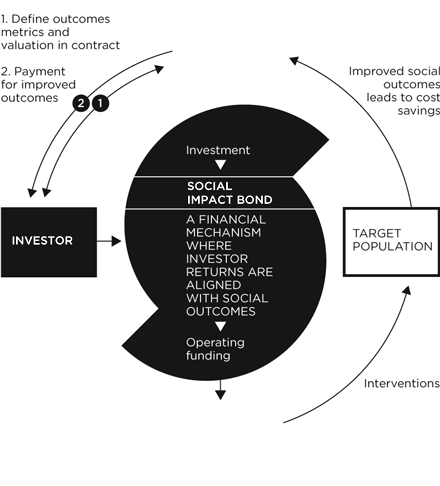
SIB flow chart

The key to transformation—creating a new system or behavior—is becoming aware of the two conflicting forces and finding a way forward

***

How can we apply the Law of Three to our finances?

Take the example of a chronic overspender who tried for years to reduce his spending and live within his means. The problem was his love for “big boy” toys. There wasn’t a boat, ATV, motorcycle, or power tool that didn’t call to him. Predictably, like a sailboat without a helmsman, his financial ship was blown about aimlessly and in danger of sinking deeper and deeper in debt.

When he learned about the Law of Three, he initially thought the affirming force was his desire for financial solvency and the resisting force was his penchant for the toys. Actually it was just the opposite. The affirming force was his unrestrained desire for the toys and the resisting force was the nagging reminder of financial insolvency. He came to recognize that the missing third force was a conscious relationship with the toys.

He had a long-time pattern of struggling with the desire, unsuccessfully trying to resist it, and feeling ashamed and guilty when he finally gave in and bought the new toy. His first step toward change was to notice what went on emotionally when he began craving another toy, and he identified a pattern of feeling empty, lonely, and anxious at those times. Focusing on the anticipation of buying the new toy pushed aside the difficult feelings. He also came to see that he found much of his identity as the guy with the newest toy.

Assessment

With financial therapy, he was able to reconcile the historical causes of those emotions with the desire for the toys and financial solvency. This shift allowed him to greatly reduce his spending on toys but still occasionally and consciously buy one. He was able to live within his budget and begin funding a retirement plan. Becoming able to apply the reconciling force allowed him to move forward with his financial goals. 

Conclusion

Your thoughts and comments on this ME-P are appreciated. Feel free to review our top-left column, and top-right sidebar materials, links, URLs and related websites, too. Then, subscribe to the ME-P. It is fast, free and secure.

Speaker: If you need a moderator or speaker for an upcoming event, Dr. David E. Marcinko; MBA – Publisher-in-Chief of the Medical Executive-Post – is available for seminar or speaking engagements. Contact: MarcinkoAdvisors@msn.com

OUR OTHER PRINT BOOKS AND RELATED INFORMATION SOURCES:

Risk Management, Liability Insurance, and Asset Protection Strategies for Doctors and Advisors: Best Practices from Leading Consultants and Certified Medical Planners™8Comprehensive Financial Planning Strategies for Doctors and Advisors: Best Practices from Leading Consultants and Certified Medical Planners™

***


Are You a One Percenter?

Join Our Mailing List

Well … Are you Doctor?

Rick Kahler MS CFP

By Rick Kahler MSFS CFP

What would it take for you to become a one percenter? How much net worth would put you in the wealthiest one percent in the United States?

In a recent discussion with a colleague, I suggested this number was $1.2 million. He said $9 million. Turns out the real answer, which is surprisingly hard to find, probably falls somewhere in between $1.2 million and $9 million. I have read several articles that put it in the range of $3 to $5 million.

Joshua Kennon, author of The Complete Idiot’s Guide to Investing, 3rd Edition, discusses this topic in more detail in an article posted to his blog in September 2011. He cites several sources and points out the differing methods used by the Federal Reserve Board (which uses the $9 million figure) and the IRS (which favors $1.2 million) to arrive at their numbers.

Regardless of the net worth needed to enter the top 1%, the media usually focuses on the amount of a household’s annual income as what really determines what makes someone rich. We know the income of the rich is growing faster than the income of the poor and middle class. What isn’t reported as often is that the percentage of Americans considered “rich” is also increasing by leaps and bounds. This is different from the rich getting richer. This means an increasing number of Americans are joining the ranks of the rich and the upper middle class.

***

untitled

***

In June 2016, Stephen J. Rose, a nationally recognized labor economist affiliated with the Income and Benefits Policy Center at the Urban Institute, published a report titled “The Growing Size and Incomes of the Upper Middle Class.” His research covered a 36-year period from 1979 through 2014. He found that the number of households earning $350,000 or more a year (adjusted for inflation) increased eighteen times, from 0.1% of the population in 1979 to 1.8% in 2014. The upper middle class, those households earning between $100,000 to $350,000, increased two and one-half times, from 12.9% to 29.4%.

With more people earning more money and moving into the rich and upper middle class categories, it would stand to reason that fewer people would be left in the categories of middle class, lower middle class, and poor. The middle class, households earning $50,000 to $100,000, shrank from 38.8% to 32.0%. The lower middle class, households earning from $30,000 to $50,000, declined from 23.9% to 17.1%. The poor, households earning under $30,000, contracted from 24.3% to 19.8%.

Good News?

That is really good news. It means that today, the average American is earning more money than was the case 36 years ago. Perhaps our economic system isn’t as broken as some would have us believe.

With so many political candidates and activists focused on issues like income inequality, it’s easy to assume that more and more Americans are sinking to the bottom economically. Before making such assumptions, it’s important to factor in real data like that cited in Rose’s report.

The plight of those who unfortunately remain on the bottom is a real concern that deserves attention. Yet it is only one part of the whole picture. Many others are able to move upward, an individual and societal accomplishment that is worth celebrating.

Assessment

Instead of taking more from those who do succeed, it would be more useful to focus on what we can do to help others emulate them. The middle and upper middle classes tend to receive less attention than either the poor or the rich, yet these categories make up the majority of Americans. There is always room for others to join them. 

Conclusion

Your thoughts and comments on this ME-P are appreciated. Feel free to review our top-left column, and top-right sidebar materials, links, URLs and related websites, too. Then, subscribe to the ME-P. It is fast, free and secure.

Speaker: If you need a moderator or speaker for an upcoming event, Dr. David E. Marcinko; MBA – Publisher-in-Chief of the Medical Executive-Post – is available for seminar or speaking engagements. Contact: MarcinkoAdvisors@msn.com

OUR OTHER PRINT BOOKS AND RELATED INFORMATION SOURCES:

Comprehensive Financial Planning Strategies for Doctors and Advisors: Best Practices from Leading Consultants and Certified Medical Planners™

***

On the DOL’s New Fiduciary Rule

Join Our Mailing List

By Rick Kahler MSFS CFP®

Rick Kahler MS CFPThe Department of Labor’s groundbreaking new Fiduciary Rule may change the legal responsibilities of advisors who sell financial products for consumers’ retirement accounts.

Financial services industry pundits aren’t sure whether the new rule is a giant step in the right direction or a successful dodging of a bullet by Wall Street.

Original Intent

The original intent was to require those selling financial products for retirement plans to act as fiduciaries—advisors required to put clients’ interests ahead of their own.

One proposed provision was a “restricted asset list” which would have banned the sale of high-commission products like private REITs and annuities to IRAs and other retirement plans. Wall Street brokers were “expecting a punch in the face that would force a dramatic overhaul of how they dealt with their customers,” notes Joshua Brown, CEO of Ritholtz Wealth Management, in an April 6 article at Fortune.com.

As adopted, the final rule allows financial salespeople to still sell all the controversial illiquid high-commissioned products they currently sell, as long as the brokerage firm can document the product is in the client’s best interest. Brown says this amounts to a “love tap.”

The Pundits

Bob Veres, editor of Inside Information, sees the new Fiduciary Rule as still a big win for consumers and fiduciary advisors. In an April 8 column, he writes, “professional financial planners and advisors have achieved a victory, and the Wall Street and independent broker-dealer service models have been dealt a blow.”

Veres argues that the new fiduciary duty to act in the client’s best interest will by itself preclude financial salespeople from justifying the sale of high-commissioned products in IRAs. He also points out that salespeople will no longer be allowed to receive “fat commissions” for recommending annuities and non-traded REITS, and therefore are unlikely to recommend these products.

Financial planner and writer Michael Kitces [a friend of this ME-P and advocate of iMBA’s online Certified Medical Planner® fiduciary focused professional charter education certification program] suggests the DOL’s concession allowing the current questionable financial products to still be purchased by IRAs may be “a brilliantly executed strategy of conceding to the financial services industry the exact parts that didn’t actually matter in the long run . . . yet keeping the key components that mattered the most,” the fiduciary duty to the client.

MORE: http://www.CertifiedMedicalPlanner.org

Brown believes salespeople will continue recommending higher-cost products “so long as a justification can be made for their being recommended (quality, performance, etc.).”

He adds, “Advisors will still be able to sell the proprietary products of their own firm so long as they can enunciate the reason why these products are in their customers’ “best interests” – a hurdle whose height will probably be adjusted on a case-by-case basis as no one really knows what it means yet.”

Kitces contends the new law will ultimately give the consumer the power through the courts to define what is and isn’t in their best interests. He points out:

***

PetreGloveimage-300x200

***

“In other words, while the DOL fiduciary rule didn’t outright regulate what Wall Street can and cannot do, it did change the legal standard by which those actions will be judged and ensure that eventually the courts will have the opportunity to rule on these fiduciary conflicts.”

While the new rule only applies to retirement assets, Veres and Brown see it as a step toward requiring a fiduciary standard for all investment advice. I tend to agree.

Assessment

Since so many small investors hold retirement accounts, applying a fiduciary standard to those investments may help more consumers understand the difference between fiduciary advisors and product salespeople. As the industry moves toward full compliance with the rule by the April 2017 deadline, we may see an increase in consumer demand for financial advisors who put clients’ interests first.

Conclusion

Your thoughts and comments on this ME-P are appreciated. Feel free to review our top-left column, and top-right sidebar materials, links, URLs and related websites, too. Then, subscribe to the ME-P. It is fast, free and secure.

Speaker: If you need a moderator or speaker for an upcoming event, Dr. David E. Marcinko; MBA – Publisher-in-Chief of the Medical Executive-Post – is available for seminar or speaking engagements. Contact: MarcinkoAdvisors@msn.com

OUR OTHER PRINT BOOKS AND RELATED INFORMATION SOURCES:

Risk Management, Liability Insurance, and Asset Protection Strategies for Doctors and Advisors: Best Practices from Leading Consultants and Certified Medical Planners™  Risk Management, Liability Insurance, and Asset Protection Strategies for Doctors and Advisors: Best Practices from Leading Consultants and Certified Medical Planners™

***

Seeking the “Perfect” Investment

Join Our Mailing List

If I only had a crystal ball

Rick Kahler MS CFP

By Rick Kahler MS CFP®  http://www.KahlerFinancial.com

“If I only had a crystal ball.” Every investor has probably made this wish from time to time; even physician-executives. We would all like a way to avoid the emotional pain and anxiety that are sure to come when our portfolios lose value due to inevitable market downturns.

The Pain – The Pain

Surely a perfect investment would spare us that pain. Suppose a mutual fund manager with a crystal ball knew which 10% of the 500 largest U. S. stocks would earn the highest returns for each upcoming five-year period. Investing only in those stocks should ensure gain with no pain.

According to an article by Bob Veres, editor of Inside Information, someone has looked back over more than 80 years to track such a hypothetical perfect fund. Alpha Architect, a research company, divided the 500 largest U.S. stocks into deciles and imagined a fund investing in only the 10% known to have the highest returns for the next five years. Beginning January 1, 1927, the hypothetical portfolio was adjusted every five years. If you could have purchased it then and held it to the end of 2009, you would have earned just under 29% a year. Lots of gain, no pain at all, right?

Enter the Bear

Except for the particularly bad bear market that started in 1929, when you would have seen your investment plummet 75.96%. Or the one-year period starting at the end of March 1937, when the fund would have fallen more than 44%.

Or, the nine more times over the years that the fund dropped by 20% or more. It lost 22% in 1974 when the S&P 500 was up 20%. In 2000-2001 you’d have watched it plummet 34% while the S&P 500 was only down 21%. Or how about the 20% drop from the end of September through the end of November 2002, at a time when the S&P 500 was sailing along with a 15% positive return.

Yes, the long-term returns in this “perfect” investment were amazing. The full ride, however, offered many opportunities for anxiety and even terror, when investors would have been strongly tempted to bail.

***

brain

***

Alpha Architect

Alpha Architect concluded that even if God—who presumably doesn’t need a crystal ball to have perfect foresight—were running this mutual fund, He would have lost a lot of investors. During the rough patches, many would have lost faith in His management skill.

Investors who are ultimately successful learn to hang on through thick and thin, knowing that markets eventually recover. Yet even if we could choose a perfect investment, staying with it for the long term is a challenge.

Speed Demons

One of the reasons market declines are so frightening is that they happen much faster than market gains.

Ben Carlson, author of A Wealth of Common Sense: Why Simplicity Trumps Complexity in Any Investment Plan, looked at all the bear markets and bull markets going back to 1928. The bull market rallies averaged 57% returns, while bear markets averaged losses of 24%. The bull markets lasted an average of 474 days. The bear market drops were more intense, compressed into an average of just 232 days before the next upturn.

Even when, by percentage, the gains far outweigh the losses, the more gradual pace of the bull markets doesn’t attract our attention in the same way as the heart-stopping downturns of bear markets.

Assessment

Veres calls the Alpha Architect research “a lesson in humility and patience.” We can’t look into the future with a real crystal ball. However, looking back at market patterns with an imaginary one can help us protect ourselves from our own tendency to bail out in the face of adversity.

Conclusion

Your thoughts and comments on this ME-P are appreciated. Feel free to review our top-left column, and top-right sidebar materials, links, URLs and related websites, too. Then, subscribe to the ME-P. It is fast, free and secure.

Speaker: If you need a moderator or speaker for an upcoming event, Dr. David E. Marcinko; MBA – Publisher-in-Chief of the Medical Executive-Post – is available for seminar or speaking engagements. Contact: MarcinkoAdvisors@msn.com

OUR OTHER PRINT BOOKS AND RELATED INFORMATION SOURCES:

[PHYSICIAN FOCUSED FINANCIAL PLANNING AND RISK MANAGEMENT COMPANION TEXTBOOK SET]

  Risk Management, Liability Insurance, and Asset Protection Strategies for Doctors and Advisors: Best Practices from Leading Consultants and Certified Medical Planners™  Comprehensive Financial Planning Strategies for Doctors and Advisors: Best Practices from Leading Consultants and Certified Medical Planners™

[Dr. Cappiello PhD MBA] *** [Foreword Dr. Krieger MD MBA]

Front Matter with Foreword by Jason Dyken MD MBA

***

Understanding Your Real Rate of Return [RROR]

Join Our Mailing List

Some Modern ROR versus RORR Musings

Rick Kahler MS CFPBy Rick Kahler MS CFP®

http://www.KahlerFinancial.com

Is there anything more important than the overall rate of return you earn on your investment portfolio?

Yes, there is. It’s the real rate of return.

Past Half Decade

Over the past five years, even diversified portfolios have earned relatively low returns. Many investors are fearful that this has significantly reduced the income they can expect to receive upon retirement.

To see whether that fear is justified, let’s look at some numbers. Based on a model portfolio I follow that holds nine different asset classes, the average return for the past three years (after all fees and expenses) was 2.45%. The five-year return was a little better at 2.67%. However, the seven-year return was 5.62%.

If an expected long-term (10 years or more) overall return on the same portfolio was 5.00%, at first glance it appears the portfolio slightly exceeded its expectation for seven years, but fell considerably short the last three and five years.

Now – Take a Second Glance

But, if there is a first glance, you know there is a second glance coming. And that second glance highlights a seemingly obscure fact that changes the picture considerably. In every future return expectation, there is also another estimate that rarely is mentioned, but which is as important as the rate of return. This is the rate of inflation.

While the long-term expected overall return was 5.00%, the long-term expected rate of inflation was 3.00%. That means there was an expectation the investments would earn 2.00% above the rate of inflation.

This is known as the real rate of return (RROR) and it’s far more important than the overall rate of return.

For example, if the projected inflation rate was 4%, the expected real rate of return would have been 1%. At a projected inflation rate of 6%, the real rate of return would have actually been negative.

Most financial planners base their projections of a client’s retirement income on the real rate of return. A real rate of return of 2% is very common.

The Real Rate of Return

Taking into account the real rate of return, what has actually happened over the past three, five, and seven years? Overall expected returns have definitely been lower over the past three and five years. So has the rate of inflation. While the estimated inflation rate was 3.00%, the actual inflation rate was significantly lower, at 0.78% for the past three years and 1.03% for the past five. Subtracting these numbers from the overall rate of return (2.45% for three years and 2.67 for five years) gives us the real rates of return: 1.68% and 1.64% for the last three and five years. Compared with the estimated real return of 2.00%, this is slightly lower but still close to hitting the target.

***

stock market

***

Looking at the seven-year real rate of return, things go from “ok” to “phenomenal.” While the overall rate of return of 5.62% was higher than the expected return of 5.00%, the inflation rate was 1.03% instead of the expected 3.00%. This resulted in a real rate of return of 4.59%, more than double the expected real rate of return.

Bottom Line

The bottom line is that those investors who have been in the market for seven years will have more to spend in retirement than previously projected. In investment circles, this is called a home run.

For physician investors discouraged by recent overall return numbers, a second look might give you cause to cheer up. If you’ve invested in a diversified portfolio, rebalanced, and stayed the course during market crashes, things may be better than they seem.

Assessment

Thanks to one of the lowest inflation rates in modern history, you could be further ahead than you thought.

Conclusion

Your thoughts and comments on this ME-P are appreciated. Feel free to review our top-left column, and top-right sidebar materials, links, URLs and related websites, too. Then, subscribe to the ME-P. It is fast, free and secure.

Speaker: If you need a moderator or speaker for an upcoming event, Dr. David E. Marcinko; MBA – Publisher-in-Chief of the Medical Executive-Post – is available for seminar or speaking engagements. Contact: MarcinkoAdvisors@msn.com

OUR OTHER PRINT BOOKS AND RELATED INFORMATION SOURCES:

Risk Management, Liability Insurance, and Asset Protection Strategies for Doctors and Advisors: Best Practices from Leading Consultants and Certified Medical Planners™8Comprehensive Financial Planning Strategies for Doctors and Advisors: Best Practices from Leading Consultants and Certified Medical Planners™

***

On Socially Responsible Investing

Join Our Mailing List

Balancing profits, people and the planet

Rick Kahler MS CFP

By Rick Kahler MS CFP®  http://www.KahlerFinancial.com

Balancing profits, people, and the planet can be tricky. Many physicians and other investors prefer to put their funds into companies that not only make money, but that also reflect the investors’ values. Some take this concept, often described as “socially conscious” or “socially responsible” investing, very seriously. There are also financial advisors who specialize in this niche.

Yet investing in companies whose values align with your own is not as simple as it may seem.

Business owners and corporate executives

In my experience with business owners and corporate executives, most of them take an interest in bettering the people who work with them, the planet, and their own lives. They run their companies with integrity. They don’t break the law. They respect their customers and don’t take advantage of them, but give them fair value in exchange for their money. They offer compensation and working conditions that will attract and retain good employees. Ultimately, they understand that ethical business practices are not only the right thing to do, but the best way to run profitable businesses.

But, how do you as an investor know whether a company is bettering  people and the planet while it is making a profit? One method is to choose companies in which to invest by using some type of socially responsible screening. Such screening looks to exclude companies producing products that harm people or the earth, or companies judged to have poor corporate cultures.

The challenges

One challenge with using such screens is that we don’t all have the same definitions of what may be socially or morally offensive. Investor A may not want to own stock in oil or mining companies. Investor B may be concerned about goods produced in unsafe working conditions. Investor C may not want to support companies that sell tobacco or alcohol.

A second challenge is that companies change. They may expand, diversify, or merge with other companies until it’s difficult to pinpoint their values, products, and company culture. A company may sell a lot of great products that do a lot of good for people, but have one division that produces a product some investors may find offensive. And it’s even harder to screen for companies that have good cultures—especially since there’s no clear definition of a “good” culture.

Choices

Investors can choose mutual funds that include only socially responsible companies, but any such fund is almost guaranteed to include companies that you would otherwise exclude.

If you are serious about investing only in companies that support your values, it’s essential to research them before you invest and monitor them regularly to ensure their practices or products don’t change. You also may find it necessary to give companies or SRI funds a little leeway—settling for perhaps 95% compliance with your values rather than insisting on 100%.

But sadly, even if you could invest your money in the shares of companies that totally support your values, doing so may not have much impact on that company, its people, or the planet. One reason for this is that your investment is likely to be a miniscule fraction of the company’s stock.

In addition, most often when we invest in stocks, we do not buy shares directly from the company. We buy shares, through a stock exchange, that are being sold by other investors. The profits or losses involved in trading those stocks accrue to the third-party buyers and sellers. They don’t directly affect the company’s bottom line.

***

gv

***

Assessment

For most small investors, making a difference through socially responsible investing may be an illusory goal. Its only real impact may be to help us feel better about ourselves.

Conclusion

Your thoughts and comments on this ME-P are appreciated. Feel free to review our top-left column, and top-right sidebar materials, links, URLs and related websites, too. Then, subscribe to the ME-P. It is fast, free and secure.

Speaker: If you need a moderator or speaker for an upcoming event, Dr. David E. Marcinko; MBA – Publisher-in-Chief of the Medical Executive-Post – is available for seminar or speaking engagements. Contact: MarcinkoAdvisors@msn.com

OUR OTHER PRINT BOOKS AND RELATED INFORMATION SOURCES:

***

[WHERE LEARNING IS A plus+]

Career Development, Products and Services

“The informed voice of a new generation of fiduciary advisors for healthcare”

CMP logo

http://www.CertifiedMedicalPlanner.org 

 Our New Text – “Take a Peek Inside – Now Available

Comprehensive Financial Planning Strategies for Doctors and Advisors: Best Practices from Leading Consultants and Certified Medical Planners(TM)

Front Matter with Foreword by Jason Dyken MD MBA

logos

“BY DOCTORS – FOR DOCTORS – PEER REVIEWED – FIDUCIARY FOCUSED”

***

Do You Have a “Stomach of Steel” in this Stock Market Environment?

Join Our Mailing List 

The Wall Street Journal Called

Rick Kahler MS CFP

By Rick Kahler CFP® CLU MS http://www.KahlerFinancial.com

[FOMC Holds Steady Today]

A few weeks ago, when the US markets started dropping dramatically, a reporter for The Wall Street Journal called. He asked me if I had received any calls from worried clients. I told him I had heard from 5% of my clients. “What changes in their portfolios are you making?” he asked.

“I’m not making any changes to my investment strategy.”

He expressed amazement that I was not “doing something.” Most investors and their advisors he was speaking with were making “adjustments” to their portfolios. He told me I must have a “stomach of steel.”

Hardly. My gut is certainly not immune to those fearful sinking feelings that go along with market plunges. What I do have is enough experience to trust my long-term investment strategy.

The time most investors and advisors decide an investment strategy doesn’t work is when their portfolios lose value, usually due to a decline in US stocks. This confuses me.

Here’s why:

First, I’m confused that so many investors believe it’s possible to move in and out of markets in such a way that their portfolios will rarely, if ever, suffer a negative return.

This is magical or delusional thinking. The only investor I’m aware of who consistently produced positive returns, year after year, was a fellow by the name of Bernie Madoff. If you have never heard of this investment wizard, he’s the one who is now serving a life sentence in a federal prison for propagating a Ponzi scheme that robbed billions of dollars from investors.

Short-term or moderate-term losses are inevitable in any portfolio that seeks to earn returns above those offered by a bank Certificate of Deposit. Usually, in the long run, markets recover and so does your portfolio.

Sadly, too many investors turn short-term losses into long-term losses by abandoning their investment strategy when the US markets turn down. This locks in their losses, never to be recovered.

If your portfolio is widely diversified among many markets—like bonds, emerging markets, commodities, real estate, TIPs, and various investment strategies—you will almost always have an asset class losing money. You will also almost always have an asset class making money. If not, you probably don’t have a diversified portfolio.

Here’s the second reason I’m confused.

Most investment strategies assume that the US market will decline, and they have a strategy in place for dealing with those declines. For a buy-and-hold investor, the strategy is to do absolutely nothing. For a strategic asset allocator like myself, it’s to rebalance frequently by selling appreciating asset classes and buying into those in decline. By not making changes to clients’ portfolios during a market decline, I am not “doing nothing;” I am simply continuing to follow an investment strategy.

Because most of my clients have learned over time to trust this strategy, relatively few of them make panicky calls to my office during downturns. Yet I have noticed a direct correlation between US stock market declines and my daily phone call volume. Many of the calls are from reporters wanting to know what I am doing and am telling clients. My response—that I’m not doing anything different—is the same thing I told them when the markets last declined in 2011 and before that in 2009, 2008, 2002, 2001, 2000, 1997, etc.

***

untitled

***

Assessment

This isn’t the response an anxious client or a concerned reporter wants to hear. When the emotional center of the brain is overcome with panic and fear, taking action helps relieve anxiety. If that short-term action is selling into volatile stock markets, however, it often turns out to be a long-term mistake.

Conclusion

Your thoughts and comments on this ME-P are appreciated. Feel free to review our top-left column, and top-right sidebar materials, links, URLs and related websites, too. Then, subscribe to the ME-P. It is fast, free and secure.

Speaker: If you need a moderator or speaker for an upcoming event, Dr. David E. Marcinko; MBA – Publisher-in-Chief of the Medical Executive-Post – is available for seminar or speaking engagements. Contact: MarcinkoAdvisors@msn.com

OUR OTHER PRINT BOOKS AND RELATED INFORMATION SOURCES:

Comprehensive Financial Planning Strategies for Doctors and Advisors: Best Practices from Leading Consultants and Certified Medical Planners(TM)

Front Matter with Foreword by Jason Dyken MD MBA

logos

“BY DOCTORS – FOR DOCTORS – PEER REVIEWED – FIDUCIARY FOCUSED”

***

Is Social Security a Rip-Off?

Join Our Mailing List

 “WHERE DID THAT MONEY GO?”

Rick Kahler MS CFP

By Rick Kahler MS CFP http://www.KahlerFinancial.com

A reader recently forwarded me an email that began, “Who died before they collected Social Security?” It asked how many people only collected a small portion of what they paid into Social Security because they, or a spouse, died soon after retiring. Then it screamed in all caps, “WHERE DID THAT MONEY GO?”

Introduction

The rest of the piece, after calculations of how much an average person pays into Social Security, suggested the government is short-changing those who die before they receive back in benefits everything they paid in. It claimed that Social Security premiums were to have been put in a “locked box,” that instead they were loaned to the US Treasury, and that Social Security is therefore running out of money.

The many misstatements and errors in this piece highlight a common misunderstanding about the Social Security insurance program. It is not an income tax. Nor; is it actually insurance – or an investment!

Example:

If you earn a salary, you are familiar with the FICA (Federal Insurance Contributions Act) tax that, like federal income tax, is withheld from your paycheck. Everyone must pay it on their first $118,500 of earned income. The current rate for employees is 7.65% (6.2% for Social Security and 1.45% for Medicare), an amount matched by employers. The self-employed pay 15.3%.

FICA payments are not an income tax, but are insurance premiums used to fund the Social Security program. It is a direct transfer program, meaning the money coming into the plan is immediately paid out to retired or disabled participants. The proceeds are not directly deposited to the general account to be spent however Congress wishes.

***

train station

***

The Tipping Point?

However, in the past, because more money came into Social Security than was paid out in benefits, the program did loan the excess to the US Treasury Department (receiving bonds in return) to fund the operating expenses of the federal government. The program built up a significant investment in US Treasuries until 2010, when it began paying more out in benefits than it receives from participants. The program is now beginning to redeem the bonds. Officials project that in 2033 the program will have depleted the investment in bonds and will need to either adjust benefits, raise the payroll tax, or borrow from the US Treasury.

What it’s not?

  • Social Security isn’t insurance in the sense that insurance pays only when a person suffers a loss. With Social Security, everyone who has worked for more than 10 years will collect a monthly income upon retirement.
  • SS is also not a savings account or a retirement plan like an IRA or a 401(k). It is not set aside in a segregated account with your name on it. The money you pay in doesn’t accumulate or earn interest. If Social Security were designed as a retirement plan that would refund what participants pay in, plus some type of return, the payroll tax would far surpass 15.3%.

What it is?

So if Social Security isn’t an income tax, an insurance plan, or a retirement plan, what is it? It’s an annuity. Participants are guaranteed a monthly income for life; a lesser amount if they retire at age 62 or a higher amount if they wait until full retirement age or later.

Like any annuity, when you die the payments stop. The amount of the payroll tax/premium incorporates actuarial estimates of how many people will die before the average mortality age or live long past it. The money paid in by people who die early is not “missing.”

Assessment

If you have questions about Social Security, you can find detailed information at www.socialsecurity.gov. It’s a much more reliable source than anonymous forwarded emails.

Conclusion

Your thoughts and comments on this ME-P are appreciated. Feel free to review our top-left column, and top-right sidebar materials, links, URLs and related websites, too. Then, subscribe to the ME-P. It is fast, free and secure.

Speaker: If you need a moderator or speaker for an upcoming event, Dr. David E. Marcinko; MBA – Publisher-in-Chief of the Medical Executive-Post – is available for seminar or speaking engagements. Contact: MarcinkoAdvisors@msn.com

OUR OTHER PRINT BOOKS AND RELATED INFORMATION SOURCES:

Risk Management, Liability Insurance, and Asset Protection Strategies for Doctors and Advisors: Best Practices from Leading Consultants and Certified Medical Planners™8Comprehensive Financial Planning Strategies for Doctors and Advisors: Best Practices from Leading Consultants and Certified Medical Planners™


“The medical education system is grueling and designed to produce excellence in medical knowledge and patient care. What it doesn’t prepare us for is the slings and arrows that come our way once we actually start practicing medicine. Successfully avoiding these land mines can make all the difference in the world when it comes to having a fulfilling practice. Given the importance of risk management and mitigation, you would think these subjects would be front and center in both medical school and residency – ‘they aren’t.’

Thankfully, the brain trust over at iMBA Inc., has compiled this comprehensive guide designed to help you navigate these mine fields so that you can focus on what really matters – patient care.”

 Dennis Bethel MD [Emergency Medicine Physician]


Can Physicians Achieve their Financial Independence [Day] Without Budgeting?

Join Our Mailing List

A New Twist on an old Holiday Tradition

[By Rick Kahler CFP® MS ChFC CCIM]

Doctor – Here’s a new twist on an old Resolution: If you want to give yourself the security of financial independence, try budgeting the way many wealth accumulators do.

The secret? They don’t budget!

Your first reaction might be, “Of course these people don’t budget! They have so much money, they don’t need to.”

That may be true for some of those who have money today, but I’m referring to people who want to remain wealthy or those who are “wealth accumulators.” These are people who don’t start out with money, but who build up significant wealth over time.

Live on Less

Many successful wealth accumulators, and too few medical professionals, don’t follow a detailed budget in the traditional sense. Instead, they develop the habit of living on less than they make. They do this by setting clear priorities. Here is how it works:

The List

1. Out of every dollar earned, take taxes out first. If you receive a paycheck from an employer, this is done for you. On any earnings where taxes aren’t withheld, estimate the amount of tax you’ll owe and stick it into savings.

2. Take out 15% to 30% to invest for your future. When you’re just starting out, you may have to begin with a much lower percentage, but begin and be consistent. Research tells us if you have 30 years until retirement and you plan to live for 30 years after retirement, you need to save 17% of your salary to maintain the same standard of living upon retirement. When you get a raise, contribute two-thirds of it to your investments and use one-third for increasing your lifestyle. If you want to become financially independent, this step is essential.

3. Save another 10% to 20% for emergencies and short-term needs like vacations, Christmas, and replacing vehicles. Again, you may have to start with a lower percentage, but begin with whatever you can, and be consistent.

4. Take out 5% to 10% for giving.

5. Live on the rest. Pay the bills as they come in, and use what’s left over for discretionary lifestyle spending.

Sounds simple, right? Of course, “simple” isn’t necessarily the same as “easy.” By now, if you’ve done the math, you can see that following this plan means living on as little as one-half to even one-third of your gross earnings.

***

Image processed by CodeCarvings Piczard ### FREE Community Edition ### on 2013-05-29 19:30:54Z | http://piczard.com | http://codecarvings.com

Image permission to the ME-P and iMBA Inc., and processed by CodeCarvings Piczard at piczard.com

***

Assessment

If you’re living from paycheck to paycheck, just barely managing to pay the bills, the idea of living on half of what you make goes beyond absurd. It probably seems impossible. It may, in the short term, be impossible.

Yet there are ways to live on less than you earn, even if to begin with it’s only a little less. Share a cheap apartment with a roommate. Drive an old car that you don’t have to make payments on. Eat at home. Buy used furniture and second-hand clothes. Get a temporary second job solely for the purpose of building up some savings.

What is most important is developing the pattern of living on less than you make. Fostering a frugal mindset is absolutely essential if you want to achieve financial independence. When you commit to saving first—even if you can only save a small amount—you have made one of the wisest financial decisions you can ever make.

This non-budgeting spending style takes away much of the pressure of trying to follow a rigid budget. There’s no need to keep track of envelopes or categories. You’ve made the hard decisions first, and you get to spend everything in the checkbook.

Budgeting without a budget can turn you into a wealth accumulator. It works because you take your future off the top.

The Author

Rick Kahler, Certified Financial Planner®, MS, ChFC, CCIM, is the founder and president of Kahler Financial Group in Rapid City, South Dakota. In 2009 his firm was named by Wealth Manager as the largest financial planning firm in a seven-state area. A pioneer in the evolution of integrating financial psychology with traditional financial planning profession, Rick is a co-founder of the five-day intensive Healing Money Issues Workshop offered by Onsite Workshops of Nashville, Tennessee. He is one of only a handful of planners nationwide who partner with professional coaches and financial therapists to deliver financial coaching and therapy to his clients. Learn more at KahlerFinancial.com

Conclusion      

Your thoughts and comments on this ME-P are appreciated. Feel free to review our top-left column, and top-right sidebar materials, links, URLs and related websites, too. Then, subscribe to the ME-P. It is fast, free and secure.

ME-P and Independence Day 2010

Speaker: If you need a moderator or speaker for an upcoming event, Dr. David E. Marcinko; MBA – Publisher-in-Chief of the Medical Executive-Post – is available for seminar or speaking engagements. Contact: MarcinkoAdvisors@msn.com

OUR OTHER PRINT BOOKS AND RELATED INFORMATION SOURCES:

Product DetailsProduct DetailsProduct Details

Product Details  Product Details

   From the Publisher

“One needs to have the right words, and to use seemingly everyday terms in a way that economists and healthcare financial experts speak. Simply put, my suggestion is to refer to the Dictionary of Healthcare Economics and Finance frequently, and ‘reap'”.

Thomas E. Getzen, PhD Executive Director, International Health Economics Association (iHEA) Professor of Risk, Insurance and Healthcare Management The Fox School of Business-Temple University Philadelphia, Pennsylvania

Product Details

Comprehensive Financial Planning Strategies for Doctors and Advisors: Best Practices from Leading Consultants and Certified Medical Planners(TM)

On Hiring Home Contractors

Join Our Mailing List

By Rick Kahler MS CFP http://www.KahlerFinancial.com

Rick Kahler MS CFP

Doctors Beware!

This time of year, half the homeowners in town are trying to hire landscapers. All of us check our phones even in the middle of meetings or medical appointments, because we desperately hope it might be the yard guy calling back.

As my wife and I work on our yard, however, I’m proceeding with caution. Several years ago I hired a landscaper and paid him $2,000 up-front as a down payment on the work. We never saw a single bush, tree, or shrub. We never saw him or the money again, either.

In response to my recent column about filing consumer complaints, I heard from a reader who is struggling to get recourse from an unethical building contractor. It’s a horror story about bullying, failed inspections, outrageous costs to fix shoddy work, and an expensive lawsuit.

Both this homeowner and I made the same mistake: we trusted someone who turned out not to be trustworthy, and we paid in advance.

Whether you’re hiring someone to redesign your yard, build or remodel a house, create a website for your business, or provide any other kind of service, you can’t afford to just assume that person is trustworthy. It’s your responsibility as the customer to protect your interests in the transaction.

The Hiring List

Here are some ways to increase your chances of finding ethical and competent contractors before you hire anyone:

  1. Be wary of anyone who seems to lack experience or qualifications. Even someone just starting a business should be able to show you related experience or training.
  2. Look for someone who is professional and businesslike. That includes putting estimates and quotes in writing, providing references, and focusing on helping you create what you want rather than telling you what you should want.
  3. Say “no, thanks,” immediately to any contractor who shows a cavalier attitude about requirements like licensing, permits, and inspections.
  4. Use caution with contractors who don’t apply in their own businesses the skills they are trying to sell to you. If you need a website, for example, don’t hire a developer whose own site is a mess.
  5. Get references, and contact them. Ask specific questions about the kind of work the contractor did for them and what the experience was like.
  6. Don’t hire out of desperation, as I did with my so-called landscaper. If you have trouble finding someone to do the work you want done, it’s all too easy to skip essentials like checking references when a candidate does show up. That oversight could cost you dearly.

***

 home

***

The Project List

Once you do hire a contractor, continue to protect yourself as the project proceeds:

  1. Never pay in advance. Reputable building contractors, for example, should have the resources to buy materials up front. For any services, don’t pay in full until the work is done to your satisfaction. If there is a problem, withholding payment is often your best leverage for getting it resolved.
  2. Pay attention throughout the work. Make sure you get copies of all permits and inspection reports. Insist on fixes for small problems, and follow up to make sure they’re taken care of. As the customer, you should never feel like a trespasser on your own project.
  3. Address serious problems promptly, in a serious way. If issues are not being resolved, don’t hesitate to file complaints with consumer protection agencies, contact professional associations, or involve an attorney.

Finally, when you do receive quality work or service, acknowledge it. Express your satisfaction, write references or positive reviews, and recommend the business to others.

Assessment

One way to discourage predatory or incompetent contractors is to support ethical, trustworthy professionals.

Channel Surfing

Have you visited our other topic channels? Established to facilitate idea exchange and link our community together, the value of these topics is dependent upon your input. Please take a minute to visit. And, to prevent that annoying spam, we ask that you register.

Link: http://feeds.feedburner.com/HealthcareFinancialsthePostForcxos

Conclusion

Your thoughts and comments on this ME-P are appreciated. Feel free to review our top-left column, and top-right sidebar materials, links, URLs and related websites, too. Then, subscribe to the ME-P. It is fast, free and secure.

Speaker: If you need a moderator or speaker for an upcoming event, Dr. David E. Marcinko; MBA – Publisher-in-Chief of the Medical Executive-Post – is available for seminar or speaking engagements. Contact: MarcinkoAdvisors@msn.com

OUR OTHER PRINT BOOKS AND RELATED INFORMATION SOURCES:

Comprehensive Financial Planning Strategies for Doctors and Advisors: Best Practices from Leading Consultants and Certified Medical Planners(TM)

On Depressing Investments?

Join Our Mailing List 

OR … Boring is Good!

By Rick Kahler MS CFP® http://www.KahlerFinancial.com

Rick Kahler MS CFP“We are in both a depressing and boring investment environment.”

That not-so-cheery statement came from Cliff Asness, Ph.D., managing and founding principal of AQR Capital Management, LLC, in a recent address to investment advisors gathered at the University of Chicago’s Gleacher Center.

Personally, I can handle “boring” investment environments just fine. Actually, when it comes to my investments I much prefer boring to exciting. I had all the investing excitement I need for a lifetime in 2008-2009. It’s the “depressing” portion of Asness’s remarks that caught my attention.

He maintains that both bonds and stocks are expensive when judged by their historical means—bonds in the 97th and stocks in the 92nd percentile.

  • Does that mean stock and bond markets are in a bubble? Asness says not.
  • Is a stock or bond market crash likely?

According to Asness, it’s anybody’s guess, because, “We really don’t know what causes crashes. It’s folly to try and predict a crash.”

While Asness doesn’t believe markets are in a bubble or that a crash is impending, what he had to say about expectations for future portfolio returns was certainly depressing.

Historical Review

Over the past 115 years, according to Asness’s data, the real return on a 60/40 portfolio (one holding 60% stocks and 40% bonds) has ranged from as high as 11% to as low as 2.2%. A real return is net of inflation. So, for example, if the total return is 8% and inflation is 3%, the real return is 5%. If inflation is only 1% and the total return is 6%, then the real return is 5%.

Now; for the depressing part. The real return of bonds is currently 0% while that of stocks is 3.7%. Do the math and that’s a 2.2% real return for a 60/40 portfolio. That puts the current real returns from stocks in a historical 8th percentile and bonds in the 3rd percentile.

The bottom line is that if you want high odds that in retirement you will never run out of money, you will need to limit your withdrawals to the real return of 2.2%. This leaves the return that equals the inflation rate in the portfolio to preserve the purchasing power of the portfolio. That means for every $1 million you have in investments you can withdraw $22,000 a year in income on which to live.

That is depressing, especially when you consider the professional norm for withdrawal rates is around 4%. For many years I’ve conservatively advocated for 3% withdrawal rates, which if Asness is right could turn out to be aggressive.

So What’s a Physician or other Investor to Do?

Asness’s advice is a bit self-serving, as his company, AQR, is one of the leading mutual fund managers of alternative investment strategies. That said, what he recommends agrees largely with what I’ve written for 24 years: that investors diversify their portfolios among more asset classes than just stocks and bonds.

Additional asset classes that can bolster portfolio returns and lower volatility are commodities, real estate, TIPS bonds, and alternative investment strategies such as long/short, arbitrage, and managed futures mutual funds.

Another option is to increase what you are saving for retirement and reduce your withdrawal rate expectations to something less than the traditional 4%.

***

Photo of hands of businesspeople during discussing

Stock Market

***

Marketing Timing?

Whatever you do, there is one thing Asness and I agree you should not consider. Don’t try to time the market. Selling out stocks and bonds, going to cash, and buying back into the market when the time is “right” almost guarantees a depressing future.

Assessment

Instead, rely on the boring strategy of investing for the long term with asset class diversification. It’s an effective investing anti-depressant.

Channel Surfing

Have you visited our other topic channels? Established to facilitate idea exchange and link our community together, the value of these topics is dependent upon your input. Please take a minute to visit. And, to prevent that annoying spam, we ask that you register.

Link: http://feeds.feedburner.com/HealthcareFinancialsthePostForcxos

Conclusion

Your thoughts and comments on this ME-P are appreciated. Feel free to review our top-left column, and top-right sidebar materials, links, URLs and related websites, too. Then, subscribe to the ME-P. It is fast, free and secure.

Speaker: If you need a moderator or speaker for an upcoming event, Dr. David E. Marcinko; MBA – Publisher-in-Chief of the Medical Executive-Post – is available for seminar or speaking engagements. Contact: MarcinkoAdvisors@msn.com

OUR OTHER PRINT BOOKS AND RELATED INFORMATION SOURCES:

Risk Management, Liability Insurance, and Asset Protection Strategies for Doctors and Advisors: Best Practices from Leading Consultants and Certified Medical Planners™8Comprehensive Financial Planning Strategies for Doctors and Advisors: Best Practices from Leading Consultants and Certified Medical Planners™

Sponsors Welcomed

And, credible sponsors and like-minded advertisers are always welcomed.

Advertise with Us!

Do Commisson-Based Fiduciary Financial Advisors EVEN Exist?

Join Our Mailing List

Sometimes the Case?

By Rick Kahler MS CFP http://www.KahlerFinancial.com

Rick Kahler MS CFPCan a financial advisor represent your best interests and still earn a commission? Surprisingly, this can sometimes be the case.

But … It’s up to you to find out.

Fiduciary

Being required to put the consumer’s interest first, which means representing a client rather than selling products and services to a customer is called having a fiduciary duty. While fee-only planners are inherently fiduciaries, they don’t exclusively own the fiduciary domain. The definition of a fiduciary duty does not inherently ban receiving commissions. Numerous statutes and applications of common law can require someone receiving a commission from selling a financial product to act in a fiduciary capacity.

One such circumstance was discussed in a blog post at http://www.kitces.com by Duane Thompson, president of Potomac Strategies, LLC, a legislative and public relations consulting firm.

Registered Investment Advisor

Those registered with the SEC as Registered Investment Advisors (RIA) under the Investment Advisers Act of 1940 are required to uphold a fiduciary standard of care. Advisors must register as RIAs if they, “for compensation, engage in the business of advising others” about investing in securities and as a central part of the business.

The 1940 Act has almost nothing to say about linking compensation to fiduciary responsibility. While large firms selling financial products can argue whether they must register as RIAs, it is clear that anyone registered as an RIA is held to a fiduciary standard, regardless of their compensation structure.

That said, the chances are an advisor who is compensated 100% by commissions is not an RIA and not held to a fiduciary standard. Of the 11,475 adviser firms registered with the SEC, only four are commission only, according to Thompson. Of the remainder, those that receive  a commission also charge some type of fee.

The Odds

The overwhelming odds are that, if you don’t pay a fee to a company giving investment advice or selling a financial product, they are not legally required to look after your best interests.

Even though an RIA who is totally or in part compensated by commissions has a legal obligation to put your interests first, they may still have a conflict of interest, which the SEC requires them to disclose. The size of that conflict of interest depends on the percentage of an adviser’s revenue derived from selling financial products.

Example:

For example, a RIA receiving 90% of their revenue from the sale of financial products has a large conflict of interest. The sustainability of the company and advisers’ careers depends upon sales. Arguably it’s going to be very difficult for an adviser to remain unbiased, especially if what may be in the client’s best interest is a no-load, low cost index mutual fund or variable annuity; which pay no commission.

Conversely, an advisor receiving 99% of their revenue from fees and 1% from commissions on the sale of low-cost term life insurance has almost no conflict. The sale of the insurance is most likely a convenience for clients and has an insignificant financial impact to the adviser.

face-off

[Fiduciary Advisor versus Sales Man/Woman] 

In order to find out the likelihood of advisers upholding a fiduciary standard, first ask whether they are a RIA with the SEC. If not, they owe you no fiduciary responsibility. You are a customer.

Assessment

If an adviser is an RIA, however, don’t assume there is no conflict of interest that may taint the fiduciary relationship. Ask how much of the firm’s gross revenue comes from commissions on the sale of financial products and how much comes from fees paid directly by clients. The higher the percentage of revenue that comes from fees, the lower the conflict of interest and the greater the chance you will receive unbiased, client-centered advice.

Conclusion

Your thoughts and comments on this ME-P are appreciated. Feel free to review our top-left column, and top-right sidebar materials, links, URLs and related websites, too. Then, subscribe to the ME-P. It is fast, free and secure.

Speaker: If you need a moderator or speaker for an upcoming event, Dr. David E. Marcinko; MBA – Publisher-in-Chief of the Medical Executive-Post – is available for seminar or speaking engagements. Contact: MarcinkoAdvisors@msn.com

OUR OTHER PRINT BOOKS AND RELATED INFORMATION SOURCES:

Comprehensive Financial Planning Strategies for Doctors and Advisors: Best Practices from Leading Consultants and Certified Medical Planners(TM)

Women Retirement Confidence

Join Our Mailing List 

Financial Preparation

By Rick Kahler MS CFP® http://www.KahlerFinancial.com

Rick Kahler MS CFPWhen it comes to being financially prepared for retirement, Chinese women are the most confident women in the world. In fact, they are almost twice as confident as their US counterparts.

The Survery

This conclusion comes from a 2014 global survey, the Aegon Retirement Readiness Index. It found that the percentage of women saying they are very confident or extremely confident about retirement is 42% in China, 35% in India, 29% in Brazil, 22% in the US, and 18% in Canada.

The survey included responses from 16,000 employees and retirees in 15 countries, half of whom were women. About 62% of the women were married, 52% had some higher education, and 80% took an active role in managing the household finances.

The Insights

Several aspects of this survey really caught my attention:

  • I was puzzled that only two developed countries—the US and Canada—made the top five. The first three—China, India, and Brazil—were  emerging markets with little or no social safety nets in place.
  • Even more notable is that, in the US and Canada, the number of women who do not feel prepared to retire (38% in the US and 36% in Canada) is almost twice as high as the number that are confident about retirement.
  • And more notable yet is that the bottom five includes three developed countries with strong social safety nets. In France, Japan, and Spain, less than 6% of women reported retirement confidence, while 60% or higher said they had no confidence.

It seems puzzling that the countries with large social safety nets spawned less retirement confidence than did developed countries with little or no safety net. Why isn’t it the opposite? Why aren’t women in countries where government plays a big part in retirement income more confident?

The Answer?

Therein may lay the answer. Possibly because of the lack of government retirement programs, people in the emerging market countries like China, India, and Brazil realize they cannot count on anyone but themselves in retirement. They know they must begin saving a significant amount of their income, starting early in life, to be able to sustain themselves in retirement. A failure to do so will result in them literally being “thrown out onto the street” or into the “poor house.” As harsh as that may sound to our Western ears, the reality must be a powerful motivator.

***

Depression

***

The Reality

This reality was brought home to me by two people I met on visits to China and India. One Chinese woman in her 20’s told me she saved a third of her income. She said, “People in America don’t need to save. China doesn’t have the social safety nets you have.” Part of surviving in their society is to learn money skills and how to save early in life for emergencies and retirement. A man I met in India told me much the same story; he had his retirement fully funded by age 45.

In the US and most other developed countries, government programs like Social Security have become the retirement plan of the masses. Yet the majority of women in developed countries don’t seem to find comfort in those programs.

However, neither do they save like their emerging market counterparts. In fact, 56% of Americans live hand to mouth, according to a 2005 survey of retirement savings for baby boomers and others, by Sharon A. Devaney and Sophia T. Chiremba, reported at the US Bureau of Labor Statistics [USBLS].

Assessment

What might motivate women globally to gain confidence in their retirement preparedness? I don’t know. But based on the results of this survey, the answer won’t be found in more government programs.

Conclusion

Your thoughts and comments on this ME-P are appreciated. Feel free to review our top-left column, and top-right sidebar materials, links, URLs and related websites, too. Then, subscribe to the ME-P. It is fast, free and secure.

Speaker: If you need a moderator or speaker for an upcoming event, Dr. David E. Marcinko; MBA – Publisher-in-Chief of the Medical Executive-Post – is available for seminar or speaking engagements. Contact: MarcinkoAdvisors@msn.com

OUR OTHER PRINT BOOKS AND RELATED INFORMATION SOURCES:

Comprehensive Financial Planning Strategies for Doctors and Advisors: Best Practices from Leading Consultants and Certified Medical Planners(TM)

Getting the Most from College 529 Plans

Join Our Mailing List 

A List of Suggestions

By Rick Kahler MS CFP® http://www.KahlerFinancial.com

Rick Kahler CFPWhen it comes to 529 college savings plans, the best strategy is to start early and start big. Don’t wait to set up an account until your teenager is starting to wonder which schools might offer skateboarding scholarships.

These accounts are excellent vehicles to save for college, in large part because of the tax-free growth they offer. Here are some suggestions for getting the most benefit from a 529 plan.

The List

1. Start as early as possible. The best time to start a 529 plan is at birth. Well, maybe a few weeks later; you do need to wait until the kid gets a Social Security number. The earlier an account is established, the more years of growth it will provide. Ideally, the plan and the child will grow together.

2. In the early years, invest more aggressively. It would be a shame to open a plan for a two-year-old and put everything in a money market fund or bonds; the goal in early years is growth. It’s a good idea to invest heavily in equities for about the first 10 years, then gradually move to bonds and other low-risk options. Many plans have an age-based option that does this automatically.

3. Fund the plan as much as you can when the child is young. Obviously, this can be a challenge for young families. If you can, however, it’s good to start with higher monthly amounts even if you need to taper off your contributions as the child gets older. The goal is to get as much into the plan as you can.

4. Consider using the five-year option. If someone has the ability to put a large amount into a child’s 529 plan all at once, it’s possible to contribute as much as $70,000 that is considered a contribution in advance for the following five years. The five-year period is to minimize federal gift tax purposes. This option might be most applicable for grandparents as part of their own estate planning.

5. Pay attention to fees and performance. Many 529 plans are sold through investment firms, and the commissions paid to those firms vary. Some offer mutual funds with relatively high annual fees. Fees are required to be clearly disclosed. It’s also a good idea to look at the performance of the fund managers. As an example of how to find this information, the South Dakota 529 plan has a FAQ section on its website with details on fees, performance, and funds.

6. Compare several state plans. While some states do offer tax breaks for residents who use their 529 plans, you aren’t limited to the plan from your own state. You can open new accounts in or move existing accounts to other states.

7. The more plans, the better. One child can be the beneficiary of several plans, perhaps set up by parents and both sets of grandparents. Or grandparents, say, could contribute to accounts opened by parents. The potential disadvantage here is that the money then belongs to the owner of the account.

***

college

***

One Last Point

Don’t get so excited by the idea of maximizing a 529 plan that you forget one essential guideline: Parents should fund their own retirement accounts ahead of funding college accounts for the kids.

Assessment

There are many places to find a little extra money for kids’ 529 plans. A few possibilities are cash gifts from relatives, contributions from grandparents, tax refunds, or bonuses. But the worst place to find that money is your own retirement fund. It isn’t wise to sacrifice a healthy retirement plan in order to create a healthy 529 plan.

More: Comprehensive Financial Planning Strategies for Doctors and Advisors: Best Practices from Leading Consultants and Certified Medical Planners™

Conclusion

Your thoughts and comments on this ME-P are appreciated. Feel free to review our top-left column, and top-right sidebar materials, links, URLs and related websites, too. Then, subscribe to the ME-P. It is fast, free and secure.

Speaker: If you need a moderator or speaker for an upcoming event, Dr. David E. Marcinko; MBA – Publisher-in-Chief of the Medical Executive-Post – is available for seminar or speaking engagements. Contact: MarcinkoAdvisors@msn.com

OUR OTHER PRINT BOOKS AND RELATED INFORMATION SOURCES:

Product Details

Product DetailsProduct Details

The Dating and Money Conversation for Medical Students

Join Our Mailing List 

Honey, We Need to Talk … About Finances!

By Rick Kahler MS CFP® http://www.KahlerFinancial.com

Rick Kahler CFPWe are al aware of the student debt load crisis in this country.

But, one of the challenges at the beginning of a romantic relationship is having “the conversation” about an equally important issue for any couple: money.

Even more so for medical students, interns, residents, nurses, young doctors and medical professionals!

For example:

  1. What is okay to ask a potential partner about money, and when?
  2. How do you bring the subject up without seeming like a braggart, a coldhearted miser, or someone looking for a meal ticket?

There really ought to be some rules of etiquette for exploring this essential topic; something like, “by the sixth date, it’s appropriate to start undressing financially.” Unfortunately, we don’t have such guidelines.

The Money Minefield

Money is a topic fraught with emotional richness. In other words, it’s a minefield. Money is one of the top sources of conflict for couples, so if you’re dating, it’s crucial to learn a potential partner’s earnings, net worth, money habits, and financial beliefs. At the same time, talking specifically about money is so forbidden in our culture that we have no idea how to initiate a conversation about it.

Here are a few suggestions that might help:

1. Figure out your own money beliefs first. Before you even sign up with a dating site or accept your friend’s offer to set you up with her brother-in-law’s second cousin, think about what you want and need financially from a partner. Do you care if someone’s net worth is much higher or lower than yours? Is a certain level of debt a deal-breaker? What lifestyle are you comfortable with?

2. Tell before you ask. Begin with appropriate self-disclosure, in small steps, about your earnings, your long-term financial goals, or your beliefs about debt or spending. See how potential partners react. If they don’t disclose in turn, seem very uncomfortable with the conversation, or have beliefs or money habits much different from yours, you may be seeing red flags.

3. Observe. Watch how people handle money. Are there any patterns around spending or the use of credit cards that seem to indicate either overspending or excessive frugality? Do they throw cash around, or do they leave restaurant tips that Ebenezer Scrooge would be proud of?

Does someone’s home show signs of hoarding or stinginess? (A candlelight dinner of takeout Chinese at a card table is one thing for college students, but quite another for middle-aged professionals.) Do their cars or houses seem poorly maintained? Does their lifestyle seem more lavish than the typical earnings in their career field would support?

4. Listen. Despite the taboo on talking directly about money, we indirectly reveal a lot about our money beliefs by what we say. Notice how dates talk about saving or spending. Do they seem worried about money or reluctant to spend it even on basic needs? Do they seem angry about money or resentful of successful people? Do they boast about financial successes, things they own, or get-rich-quick schemes?

5. Ask. Even if everything else is all moonlight and roses. When you meet someone who seems like “the one,” don’t set aside everything that matters to you about money. Instead, remember how important this issue is to the long-term health of a relationship. Even if you can’t do it gracefully, ask the money questions. Talk frankly about debt, spending, saving for retirement, and each other’s expectations around lifestyles and careers.

Dating Currency

Assessment

Being the one to initiate that difficult money conversation doesn’t mean you’re coldhearted, unromantic, or greedy. It simply means you recognize that money is too important a topic to ignore. When we enter into a romantic relationship, it’s tempting to think that love means not having to talk about money. In truth, love means having the courage to talk about money.

Conclusion

Your thoughts and comments on this ME-P are appreciated. Feel free to review our top-left column, and top-right sidebar materials, links, URLs and related websites, too. Then, subscribe to the ME-P. It is fast, free and secure.

Speaker: If you need a moderator or speaker for an upcoming event, Dr. David E. Marcinko; MBA – Publisher-in-Chief of the Medical Executive-Post – is available for seminar or speaking engagements. Contact: MarcinkoAdvisors@msn.com

OUR OTHER PRINT BOOKS AND RELATED INFORMATION SOURCES:

  Product Details

***

Risk Management, Liability Insurance, and Asset Protection Strategies for Doctors and Advisors: Best Practices from Leading Consultants and Certified Medical Planners™8Comprehensive Financial Planning Strategies for Doctors and Advisors: Best Practices from Leading Consultants and Certified Medical Planners™

***

Invite Dr. Marcinko

***


On Parents’ Inheritance Excuses

Join Our Mailing List 

An Estate Planning Follow-Up Discussion

By Rick Kahler CFP® http://www.KahlerFinancial.com

Rick Kahler CFPPreviously on this ME-P, we explored three fears that stop adult children from talking with parents about their estate plans, even though such conversations could greatly benefit both generations.

These are: “It’s none of my business,” “I don’t want them to think I am greedy,” and, “It will ruin our relationship.”

Parents Fear, Too!

Children aren’t alone in their fear of approaching this topic. Most parents are just as reluctant—and for the same basic reasons. In my experience, parents’ biggest reasons for not talking with kids about legacy intentions are: “It’s none of their business,” “If I share financial information, they will take advantage of me,” and “Talking about money will hurt our relationship.”

Let’s look at each of these:

“It’s none of their business.” This is certainly true, unless you’ve made it their business. If you name a child as an executor of a will, a successor trustee of a trust, or an agent in a Durable Power of Attorney, you have made it that child’s business to know your business.

Shared Decision Making  

To throw a child into suddenly having to make financial decisions in your best interest without knowing what they must manage, where assets are held, and what your wishes are is unfair to both you and your child. Any time you put someone in a position of authority in any of your estate documents, it’s essential to carefully go through the document with them and to disclose details of the assets they will make decisions on. Start with showing them your financial statements, the contact information of your trusted advisors, and a listing of where you hold all your accounts.

If you feel you can’t trust a child with such information today, then why do you feel you can trust them as your agent or executor tomorrow? If you don’t trust a child, you’re better off to name a bank trust office or trust company to these positions.

Bank

“If I share financial information, they will take advantage of me.” This fear may be justified if your child has a history of taking advantage of you. If not, they probably aren’t going to start now. Preparing a child for an inheritance is not only prudent, it’s also a loving act of kindness you can give your child.

Sudden Money

I have worked with several families where children had no idea of their parents’ net worth. In every case, it was much higher than the kids ever imagined. Suddenly, they learned they were about to inherit hundreds of thousands or millions of dollars in various investments they knew nothing about. I witnessed these heirs try to cope with a plethora of emotions and money scripts, in addition to needing to learn the mechanics of managing a portfolio of investments. Without proper preparation, it’s not uncommon for what parents intended as a loving gift of wealth to turn into a destructive force of misery.

“Talking about money will hurt our relationship.” Parents are just as terrified to have money conversations with their kids as kids are afraid to talk with them. And no wonder—it’s parents who teach kids the no-talk rule in the first place.

Parental Wisdom

As parents, you can exercise the wisdom of age and begin the family money conversations. It may be helpful to have the first meeting with your financial planner or estate attorney, or engage the help of a financial therapist. You might be amazed to find that talking with your kids about money in a straightforward and healthy way can actually help your relationships.

Assessment

Do your kids a favor and break the no-talk rule. It’s a gift to both generations.

Conclusion

Your thoughts and comments on this ME-P are appreciated. Feel free to review our top-left column, and top-right sidebar materials, links, URLs and related websites, too. Then, subscribe to the ME-P. It is fast, free and secure.

Link: http://feeds.feedburner.com/HealthcareFinancialsthePostForcxos

Speaker: If you need a moderator or speaker for an upcoming event, Dr. David E. Marcinko; MBA – Publisher-in-Chief of the Medical Executive-Post – is available for seminar or speaking engagements. Contact: MarcinkoAdvisors@msn.com

OUR OTHER PRINT BOOKS AND RELATED INFORMATION SOURCES:

DICTIONARIES: http://www.springerpub.com/Search/marcinko
PHYSICIANS: www.MedicalBusinessAdvisors.com
PRACTICES: www.BusinessofMedicalPractice.com
HOSPITALS: http://www.crcpress.com/product/isbn/9781466558731
CLINICS: http://www.crcpress.com/product/isbn/9781439879900
BLOG: www.MedicalExecutivePost.com
FINANCE: Financial Planning for Physicians and Advisors
INSURANCE: Risk Management and Insurance Strategies for Physicians and Advisors

Product Details  Product Details

On Our Financial Comfort Zones

Join Our Mailing List 

Exploring the Range

By Rick Kahler CFP® http://www.KahlerFinancial.com

Rick Kahler CFPTry to imagine the enormous range of possible financial conditions in which human beings can live. At the lowest end is bare subsistence—the minimum food and shelter possible to sustain life. At the highest end is unlimited wealth—multi-billionaires with more than they, their children, and their grandchildren could possibly spend.

Think: Abraham Maslow’s hierarchy of needs.

The Rest of Us

Most of us, including doctors of course, live in relatively narrow bands somewhere in between these extremes. In Wired for Wealth, we describe these bands as “financial comfort zones.”  People who share a financial comfort zone tend to have similar incomes, lifestyles, spending and savings habits, and beliefs about money.

For those growing up in wealthy families, “normal” may include private schools, international travel, live-in household help, and expectations of an Ivy-League education followed by a lucrative career.

Those growing up in families with limited incomes will inhabit a much lower financial comfort zone. Their “normal” might include shopping at thrift stores, squeaking by from month to month, and having little or no expectation of higher education.

In both cases, the expectations people grow up with tend to keep them in their financial comfort zones. These zones are artificial financial boundaries that we impose on ourselves, and they are not necessarily defined by what we can or cannot afford. Yet we become uncomfortable if we move too far outside them.

Expanding the Zone

Certainly, people can and do expand their financial comfort zones. Children who grow up in low-income families, for example, may be able to get an education and go on to careers that bring them financial success far beyond that of their parents.

The real problems arise when circumstances unexpectedly push people out of their financial comfort zones.

Out of the Zone

I once had a client couple inherit several million dollars. They had no idea Mom had that much money. All at once, they had the means to move into a much higher financial comfort zone. Yet their reaction was depression. They came into my office asking, “What is wrong with us?” We spent some time exploring their money beliefs and discovered their number-one money script was “Money we didn’t earn isn’t worth having.” Moving slowly out of their financial comfort zone thru their-own efforts would have been fine. Being shoved out of it by an unearned inheritance was a challenge.

It’s no wonder that many people, coming into unexpected wealth, unconsciously feel a need to get rid of it. It’s one way to get back into the familiar zone where they know how things work, they are comfortable, and they belong.

Solo Doc

The Higher Zone

The same thing can happen to those in higher financial comfort zones. Suppose a high-earning medical or professional couple, who are accustomed to an affluent lifestyle, lose nearly half their net worth in an economic downturn. Then; one of them is laid off. They aren’t going to starve. In fact, they could scale back their spending a great deal and still live perfectly comfortably.

Yet this may not seem like an option to them. Changing their financial circumstances would move them out of the place they belong. It’s possible they may go into debt or spend down the assets they do have left, jeopardizing their financial future, in order to maintain a lifestyle that keeps them in their financial comfort zone.

Assessment

Ironically, this couple would have a better chance of returning to their financial comfort zone if they were willing to live below it until their financial circumstances improved. Choosing to live at the low end of your financial comfort zone so you can invest for the future is one of the most important ways to build long-term financial independence and lasting financial comfort.

More:

Conclusion

Your thoughts and comments on this ME-P are appreciated. Feel free to review our top-left column, and top-right sidebar materials, links, URLs and related websites, too. Then, subscribe to the ME-P. It is fast, free and secure.

Link: http://feeds.feedburner.com/HealthcareFinancialsthePostForcxos

Speaker: If you need a moderator or speaker for an upcoming event, Dr. David E. Marcinko; MBA – Publisher-in-Chief of the Medical Executive-Post – is available for seminar or speaking engagements. Contact: MarcinkoAdvisors@msn.com

OUR OTHER PRINT BOOKS AND RELATED INFORMATION SOURCES:

Health Dictionary Series: http://www.springerpub.com/Search/marcinko

Practice Management: http://www.springerpub.com/product/9780826105752

Physician Financial Planning: http://www.jbpub.com/catalog/0763745790

Medical Risk Management: http://www.jbpub.com/catalog/9780763733421

Hospitals: http://www.crcpress.com/product/isbn/9781439879900

Physician Advisors: www.CertifiedMedicalPlanner.org

Product Details  Product Details

Product DetailsProduct Details

Got Cash Money in the Bank?

Join Our Mailing List

Is it Really a Long-Term Investment?

By Rick Kahler CFP® http://www.KahlerFinancial.com

Rick Kahler CFPGot money in the bank? Of course, that’s a good thing.

But, more than a fourth of Americans think the best long-term investment strategy is money in the bank. However, that may be a bad thing!

So, what about medical professionals; and what is a doctor to do?

The Bankrate Survey

Here is the rather discouraging result of a July survey by Bankrate. One of its questions was, “For money you wouldn’t need for more than 10 years, which one of the following do you think would be the best way to invest the money?”

Cash was the top choice at 26%, followed by real estate at 23%. Sixteen percent of the respondents chose precious metals such as gold. Only 14% would put their long-term investment into the stock market, and just 8% thought bonds were the best choice.

Head-on-Desk Syndrome

Doh! That thumping sound you hear is me banging my head on my desk.

I assume those who opted for cash did so because keeping money in the bank seemed to be the safest choice. For long-term investing, however, that safety is an illusion. The best and safest place to put your nest egg for the future is not in the bank, but in a well-diversified portfolio with a variety of asset classes.

Here’s why:

Savings accounts and CDs are safe places to store relatively small amounts of cash that you expect to need within the next few months or years. The funds are protected by insurance. You know exactly where your money is, and you can get your hands on it anytime you want.

Short Term Stability

This short-term safety does not make the bank a good place for money you will need for retirement or other needs ten years or so into the future. It may seem like safe investing because the amount in your account never goes down. You’re always earning interest. Yet, over time, that interest isn’t enough to keep pace with inflation. The purchasing power of your money decreases, which means you’re actually losing money. It just doesn’t feel like a loss because you don’t see the loss in value.

Stock Markets Fluctuate

In contrast, the stock market fluctuates. The media reports constantly that “the DOW is up” or “NASDAQ is down,” as if those day-to-day numbers matter. This fosters a perception that investing in the stock market is risky. Combine that with the scarcity of education about finances and economics, and it’s no wonder that so many people are afraid of the stock market and view investing almost as a form of gambling.

Wise long-term investing in the stock market is anything but gambling. Instead of trying to buy and sell a few stocks as their prices go up and down, wise investors neutralize the impact of market fluctuations by owning a vast assortment of assets.

A Dual Strategy

This is accomplished with a two-part strategy.

1. The first is to invest in mutual funds rather than individual stocks. With just one mutual fund that invests in an index of stocks, you might own thousands of different companies. Your hard-earned fortune isn’t dependent on the fortunes of just a few companies.

2. The second component is asset class diversification. An asset class is a type of investment, such as U. S. and International stocks, U. S. and International bonds, real estate investment trusts, commodities, market neutral funds, Treasury Inflation-Protected Securities, and junk bonds. Ideally, a diversified portfolio should include nine or more asset classes.

###

MD Retirement planning

###

Assessment

By holding small amounts of a great many different companies and asset classes, you spread your risk so broadly that the inevitable fluctuations are small ripples rather than steep gains or losses. As some types of investments decline in value, other types will be gaining value. Over the long term, the entire portfolio grows.

And, in the long term and for most medical professionals, investing this way is usually safer than money in the bank.

Conclusion

Your thoughts and comments on this ME-P are appreciated. Feel free to review our top-left column, and top-right sidebar materials, links, URLs and related websites, too. Then, subscribe to the ME-P. It is fast, free and secure.

Link: http://feeds.feedburner.com/HealthcareFinancialsthePostForcxos

Speaker: If you need a moderator or speaker for an upcoming event, Dr. David E. Marcinko; MBA – Publisher-in-Chief of the Medical Executive-Post – is available for seminar or speaking engagements. Contact: MarcinkoAdvisors@msn.com

OUR OTHER PRINT BOOKS AND RELATED INFORMATION SOURCES:

DICTIONARIES: http://www.springerpub.com/Search/marcinko
PHYSICIANS: www.MedicalBusinessAdvisors.com
PRACTICES: www.BusinessofMedicalPractice.com
HOSPITALS: http://www.crcpress.com/product/isbn/9781466558731
CLINICS: http://www.crcpress.com/product/isbn/9781439879900
ADVISORS: www.CertifiedMedicalPlanner.org
PODIATRISTS: www.PodiatryPrep.com
BLOG: www.MedicalExecutivePost.com
FINANCE: Financial Planning for Physicians and Advisors
INSURANCE: Risk Management and Insurance Strategies for Physicians and Advisors

Product Details  Product Details

The Doctor’s Path to Wealth?

And … for us all

By Rick Kahler CFP® http://www.KahlerFinancial.com

Rick Kahler CFPAfter three decades as a financial planner, working with successful wealth-builders, you’d think I would have a clear idea of the right path for creating wealth.

Instead, what I’ve learned is that there is no such thing. Here are just a few of the paths that aren’t the sure routes to wealth they might seem to be:

Several Paths

1. Education and career choices. Going into a field like law or medicine might seem to guarantee financial success. Not necessarily. I’ve seen many physicians, for example, who have accumulated significant wealth. I’ve seen just as many who live paycheck to paycheck.

2. High earnings. Again, this isn’t the reliable predictor of wealth it would seem to be. True, someone who spends decades in low-wage jobs is unlikely to be able to accumulate much financial security. But a person earning $1 million a year will not necessarily have a larger net worth than someone earning $75,000. I’ve seen people who worked as janitors, nurses, and mechanics become millionaires. I’ve worked with others, earning a hundred times more in careers like sales or entertainment, who reach retirement age with absolutely nothing.

3. Owning your own business. Many hard-working, creative entrepreneurs build successful businesses that provide wealth, not just for themselves, but for their children and grandchildren. Others might see a business or even a series of businesses fail. Still others might work hard all their lives but never achieve more than the equivalent of an average salary in their field.

4. Investment choices. Some people have had great success investing in various types of real estate, businesses, and commodities. Others have lost everything they ever owned investing in those same vehicles.

Some Commonalities

So, sorry, I can’t give you a simple list of the top ways to build wealth. There’s little commonality in how my successful clients have made their money. What I can suggest are a few ways to help you find your own path to accumulating wealth.

1. Define “wealth” in your own way. Maybe you’re willing to live frugally in order to accumulate enough money to feel secure that your needs will be met even if you live to be 100. Maybe wealth to you is living a lavish lifestyle and being willing to work hard to pay for it. You might see wealth as the satisfaction and responsibility of having your own business. Maybe it means being able to give generously. Or perhaps you define wealth as the freedom of owning little and traveling around the world on a bicycle.

2. Know what you are willing to sacrifice—and what you are not—in order to accumulate wealth. There’s nothing wrong with earning a high salary doing work you hate for a time, as part of an overall strategy to get you to doing something you love. But doing so for a lifetime is hardly the road to either happiness or wealth.

3. Think long term. The most reliable way to build lifetime wealth, with the lowest risk, is through a long-term commitment to diversified investing. Yet even those who are successful on riskier paths to wealth take the long view. Business owners may fail more than once before they succeed. And those who have made fortunes in high-risk investments have also lost fortunes. They understand that success is about taking calculated risks.

4. Learn to make conscious financial decisions. I’ve seen many intelligent, capable people stuck in financial chaos and poverty because of emotional pain and dysfunction. Emotional health may not be essential for building financial wealth. It is, however, essential if you want to use that wealth to support a rich and satisfying life.

###

Stock Market

More:

Conclusion

Your thoughts and comments on this ME-P are appreciated. Feel free to review our top-left column, and top-right sidebar materials, links, URLs and related websites, too. Then, subscribe to the ME-P. It is fast, free and secure.

Speaker: If you need a moderator or speaker for an upcoming event, Dr. David E. Marcinko; MBA – Publisher-in-Chief of the Medical Executive-Post – is available for seminar or speaking engagements. Contact: MarcinkoAdvisors@msn.com

OUR OTHER PRINT BOOKS AND RELATED INFORMATION SOURCES:

***

  Risk Management, Liability Insurance, and Asset Protection Strategies for Doctors and Advisors: Best Practices from Leading Consultants and Certified Medical Planners™8Comprehensive Financial Planning Strategies for Doctors and Advisors: Best Practices from Leading Consultants and Certified Medical Planners™

***

Invite Dr. Marcinko

***

On the “Selling Points” for Whole-Life and Universal-Life Insurance

Join Our Mailing List 

De-Bunking Conventional Sale Wisdom

By Rick Kahler MS CFP® ChFC CCIM http://www.KahlerFinancial.com

Rick Kahler CFP“You need to protect yourself and your family with life insurance that you won’t outlive.”

This is one of the common selling points for whole life or universal life rather than term life insurance. At first glance, it seems to make a lot of sense. Of course you don’t want to outlive your life insurance. Having it pay benefits upon your death is the reason you buy it.

This statement, however, misses one essential fact. Many people don’t need to worry about outliving their life insurance, because they outlive their need for life insurance.

Outliving the Need

We don’t all need life insurance throughout our entire lives, any more than we do auto or homeowners’ insurance. If you no longer drive a car, you don’t need auto insurance. If you no longer own a home, you don’t need homeowners’ insurance.

For example, in circumstances like the following, you may no longer need life insurance:

  • First;  when you and your spouse have accumulated enough assets and income streams to independently care for yourselves.
  • Second;  when your children are self-sufficient adults.
  • Third;  when your estate is too small to owe estate taxes or liquid enough to pay the estate taxes.

Primary Purpose

The primary purpose of life insurance is to replace the future income of a primary breadwinner. Two groups most likely to need it are middle-aged couples saving for retirement and parents of minor children. Ideally, most young families should have over $-1 million in life insurance to provide for the children if either parent should die prematurely.

Yet many of them are unable to afford the higher premiums for this much “permanent” insurance. Their choices are to underfund their needs with a smaller permanent policy or purchase an affordable 30-year term policy.

As we age, the probability of dying becomes greater. Therefore, a $1 million life policy costs much less for a 25-year-old than a 75-year-old. It doesn’t matter if the policy is cash value, whole life, universal life, or level term, the cost of providing the life insurance component increases every year.

Psychological Aversions

Yet most human brains have a psychological aversion to price increases. In order to please their customers with life insurance premiums that didn’t increase every year, insurance companies came out with level term policies. Essentially, the premiums are averaged out by overcharging in the early years of the policy and undercharging in the later years.

insurance

Higher  Premiums

Whole life and universal life insurance policies don’t have that same averaging. To be “permanent,” the premiums must be much higher in order to fund a savings account that grows over time and is often used to offset a significant portion of the death benefit in the later years of the insured’s life. Usually, if the insured cancels the policy, a portion of the premiums will be refunded.

Cash Value

A cash value policy may occasionally be a good estate planning tool, generally for those with substantial wealth. It might be used to fund an irrevocable life insurance trust upon the second spouse’s death, perhaps to pay taxes on an illiquid estate like a family farm or other property. It also can be used for those wanting to leave the bulk of an estate to charity and still provide income to their children. These strategies rarely apply to those whose primary goal is basic income replacement for their families.

Assessment

One of the ironies of insurance in general is that we all know it’s essential and we all hope never to need it. For most people, life insurance is not really an exception to this. Its primary purpose is not to provide us with investment income, but to provide our families with income if we aren’t there.

More:

Conclusion

Your thoughts and comments on this ME-P are appreciated. Feel free to review our top-left column, and top-right sidebar materials, links, URLs and related websites, too. Then, subscribe to the ME-P. It is fast, free and secure.

Link: http://feeds.feedburner.com/HealthcareFinancialsthePostForcxos

Speaker: If you need a moderator or speaker for an upcoming event, Dr. David E. Marcinko; MBA – Publisher-in-Chief of the Medical Executive-Post – is available for seminar or speaking engagements. Contact: MarcinkoAdvisors@msn.com

OUR OTHER PRINT BOOKS AND RELATED INFORMATION SOURCES:

Product Details  Product Details

Risk Management, Liability Insurance, and Asset Protection Strategies for Doctors and Advisors: Best Practices from Leading Consultants and Certified Medical Planners™
Comprehensive Financial Planning Strategies for Doctors and Advisors: Best Practices from Leading Consultants and Certified Medical Planners™

Physician-Investors and the “F” Word

Join Our Mailing List

“Fiduciary”

By Rick Kahler MS CFP® ChFC CCIM http://www.KahlerFinancial.com

Rick Kahler CFPOkay, I did it again in a recent column. And, I got into trouble again. That’s what I get for using the F-word.

Mea Culpa

My most recent transgression was to point out the simple fact that insurance agents are compensated by commissions on the products they sell. They have no fiduciary duty to legally act in the best interests of their customers.

Every time I remind readers that sellers of financial products do not have a fiduciary duty to their customers, I get indignant responses from financial salespeople who seem to think I have accused them of being unethical.

Ethics

Not so. Someone who sells financial products may well operate with integrity. In fact, their licenses typically require that they be “fair” and “honest.” These salespeople may care about their customers and be committed to selling only products that they believe will meet their customers’ needs.

But being a fair, honest, and ethical salesperson is not the same thing as having a legal fiduciary duty to the consumer. The word “fiduciary” has a specific meaning in our legal system. It describes those in positions of trust or authority who are required by law to act in the best interests of those they represent. A fiduciary is an advocate for the consumer, who is legally termed a “client.”

Of Doctors and Attorneys

Doctors and attorneys have fiduciary relationships with their patients and clients. The executor of an estate is a fiduciary. So is a trustee, someone acting under a power of attorney, or an agent hired to represent you. Real estate agents can be fiduciaries if they are engaged to represent either buyers or sellers.

Financial planners can also be fiduciaries. Yet those who offer financial advice and services in conjunction with the sale of a financial product are not fiduciaries.

Fiuduciary

Follow the Money

How can you generally tell whether a financial professional is required by law to act in your best interests? Simple. You follow the money. Wherever the professional’s compensation comes from is most likely where the fiduciary responsibility goes.

If you hire a fee-only financial planner, you are directly paying that person for professional advice and services. The planner receives his or her income from you and others like you. You are clients, not customers, and the planner is legally obligated to act on your behalf.

This is not the case if you buy financial investment products or receive financial advice from someone who is compensated by commissions. It doesn’t matter whether this person’s business card says “financial consultant,” “financial planner,” “investment advisor,” or “broker.” Anyone can use those terms.

Commission Sales

But, if someone is paid by commissions from financial companies, he or she is a sales representative whose fiduciary responsibility is to those companies. They may call you their “client,” but in the legal sense, you are not. You are a customer who buys products from a salesperson. Just like those who sell cars, groceries, or shoes, these salespeople owe their primary loyalty to their employers. They are obliged to operate in the best interests of themselves and their companies.

This relationship has a built-in conflict of interest. Because financial salespeople make most of their money from commissions, their recommendations to customers are usually biased toward investments that will be the most profitable for themselves. Their legal responsibilities are to act fairly and honestly. Most either don’t or won’t disclose the amounts and sources of their commissions

More:

Assessment

A financial salesperson who is not a fiduciary certainly can act with integrity. I know many who do. That means they are honest people who want to thrive in business by selling legitimate products in a responsible and ethical way. It does not, however, make them fiduciaries.

Conclusion

Your thoughts and comments on this ME-P are appreciated. Feel free to review our top-left column, and top-right sidebar materials, links, URLs and related websites, too. Then, subscribe to the ME-P. It is fast, free and secure.

Link: http://feeds.feedburner.com/HealthcareFinancialsthePostForcxos

Speaker: If you need a moderator or speaker for an upcoming event, Dr. David E. Marcinko; MBA – Publisher-in-Chief of the Medical Executive-Post – is available for seminar or speaking engagements. Contact: MarcinkoAdvisors@msn.com

OUR OTHER PRINT BOOKS AND RELATED INFORMATION SOURCES:

DICTIONARIES: http://www.springerpub.com/Search/marcinko
PHYSICIANS: www.MedicalBusinessAdvisors.com
PRACTICES: www.BusinessofMedicalPractice.com
HOSPITALS: http://www.crcpress.com/product/isbn/9781466558731
CLINICS: http://www.crcpress.com/product/isbn/9781439879900
BLOG: www.MedicalExecutivePost.com
FINANCE: Financial Planning for Physicians and Advisors
INSURANCE: Risk Management and Insurance Strategies for Physicians and Advisors

Product Details  Product Details

Are Doctors NOW Members of the Middle Class?

In OR Out?

By Dr. David Edward Marcinko MBA CMP®

By Rick Kahler MS CFP® ChFC CCIM

Rick Kahler CFPThe middle class Marketers target it. Politicians champion it. Economists talk about it. Most of us consider ourselves part of it. FAs want to serve it.

Yet, when I’ve asked for a clear definition, I have not found anybody yet that really can tell me what “middle class” is.

Definition

I recently posted on Twitter that $90,000 was a middle-class household income and that it would take a nest egg of $3 million to generate that income in retirement.

A couple of my colleagues responded that my figures were way too high and accused me of being out of touch. As a lifelong South Dakotan, I’m used to being seen as “out of touch,” but the idea that $90,000 was beyond a middle-class income intrigued me.

I figured a few minutes with Google would point me to a definition of “middle class.” It wasn’t that simple. I soon discovered that neither politicians, nor economists, sociologists, nor financial advisors can agree on what makes someone middle class. It is a little easier to define a middle class income.

USA Today

I did find an excellent article in USA Today by Dan Horn of the Cincinnati Inquirer. He cited three surveys that attempted to define the middle class by income. The Pew Charitable Trust describes it as the middle 20%, an income range from $32,900 to $64,000. The U.S. Census Bureau disagrees.

They say a middle class income is the middle 60%, an income range of $20,600 to $102,000. The U.S. Department of Commerce begs to differ with both and says an income between $50,800 and $122,000 puts you in the middle class. Combining the income range of the three studies ($20,600 to $122,000) puts two-thirds of all income earners in the middle class.

My Personal POV

For me, defining middle class with such a broad income range just raises more questions than it answers.

First of all, the same income that will provide a comfortable middle-class lifestyle in a place like the Black Hills of South Dakota won’t necessarily do the same in San Francisco or Boston.

Second, if you want to assure yourself of a middle-class income throughout your lifetime, you apparently have to get rich.

Concept of expensive education - dollars and diploma

Case Model

Let’s assume a young couple, both allied healthcare professionals, earn $45,000 each for a household income of $90,000. Let’s assume they want to save enough to provide a similar income in retirement without counting on Social Security. To generate that income, with a 99% certainty they will never run out of money, how much will they need to save?

While financial advisors’ responses will vary, most will agree this couple would need between $2 million and $4 million in today’s dollars. Let’s settle on $3 million. If they each saved $1,000 monthly to 401k’s (about 25% of their salaries), our young couple could save $6,600,000 million ($3 million in today’s dollars adjusted for inflation) by the time they reached age 65.

However, while a couple needs $3 million to produce a middle-class income, someone with a net worth of $3 million is in the financial top 2% of Americans. That’s hardly middle class.

And to complicate things further, Gallup polls have shown that most Americans think anyone with a net worth of $1 million is rich. Yet having $1 million when you retire will generate a secure lifetime income of $30,000. So the net worth that we define as wealthy provides an income that we define as barely middle class.

More:

Assessment

Confused yet? I certainly am. There’s just one thing I’m still sure of. If you want a middle-class lifestyle after you retire, what you’d better do now is live a modest middle-class lifestyle so you can save enough to qualify as rich.

Conclusion

And so, are doctors members of the middle class – in potential retirement income under this model? Your thoughts and comments on this ME-P are appreciated. Feel free to review our top-left column, and top-right sidebar materials, links, URLs and related websites, too. Then, subscribe to the ME-P. It is fast, free and secure.

Link: http://feeds.feedburner.com/HealthcareFinancialsthePostForcxos

Speaker: If you need a moderator or speaker for an upcoming event, Dr. David E. Marcinko; MBA – Publisher-in-Chief of the Medical Executive-Post – is available for seminar or speaking engagements. Contact: MarcinkoAdvisors@msn.com

OUR OTHER PRINT BOOKS AND RELATED INFORMATION SOURCES:

DICTIONARIES: http://www.springerpub.com/Search/marcinko
PHYSICIANS: www.MedicalBusinessAdvisors.com
PRACTICES: www.BusinessofMedicalPractice.com
HOSPITALS: http://www.crcpress.com/product/isbn/9781466558731
CLINICS: http://www.crcpress.com/product/isbn/9781439879900
BLOG: www.MedicalExecutivePost.com
FINANCE: Financial Planning for Physicians and Advisors
INSURANCE: Risk Management and Insurance Strategies for Physicians and Advisors

Product Details  Product Details

Product DetailsProduct Details

Finding Emotional Freedom [Access the Truth Your Brain Already Knows]

Join Our Mailing List

Book Review

By Rick Kahler MS CFP® ChFC CCIM http://www.KahlerFinancial.com

Rick Kahler CFP“It’s not about the money.” This saying has become almost a cliché among financial planners and therapists who help clients address the emotional aspects of their relationships with money.

We keep using this phrase because it is so true. Overspending, taking unreasonable risks, money conflicts that strain marriages, failing to learn from money mistakes, and a host of other problematic money patterns are not about money. They are about emotions. And since brain researchers tell us that 90% of all decisions are made emotionally, it literally “pays” to pay attention to your emotions.

Because money affects so many aspects of our lives, it’s only natural that destructive behavior around money is one of the ways people try to cope with emotional pain. Money dysfunction is really no different from other destructive behaviors like addiction or codependency. Like them, it can have high physical, emotional, relationship, and financial costs.

The more I learn about the relationship between our emotions and our money choices, the more I understand why financial knowledge alone isn’t enough to help people change unhelpful behaviors that keep them stuck. I am convinced of the value of financial therapy and other forms of counseling to help people create financial and emotional balance in their lives. It’s clear to me that psychotherapy offers clear financial benefits as well as emotional ones.

The Book

A new book by Dave Jetson, Finding Emotional Freedom: Access the Truth Your Brain Already Knows, addresses these issues in one of the more clear and succinct manners I’ve encountered.

Dave is one of the few counselors in the nation who understands and practices financial therapy. In his practice and workshops, he uses experiential therapy techniques that access both the conscious and unconscious parts of the brain to help people recover from any type of abuse and trauma, including financial. I’ve seen first-hand how effective this work is.

I also know that Dave is one of those rare guides who’s actually done and succeeded at what he teaches. He is one of those who walks the walk. Now he has written a book describing that walk.

Finding Emotional Freedom includes a clear, readable description of how our brains process emotions. This is useful, even critical information for anyone who wants to make wiser money choices.

Finding Emotional Freedom: Access the Truth Your Brain Already

Co-Dependency

Dave also describes how codependency develops and some of the patterns it takes. Many of these patterns—from addictions, to shopping as “retail therapy,” to excessive taking care of others—have financial as well as emotional costs.

Even though Dave offers financial therapy and has created a workshop on Financial Recovery, he doesn’t specifically discuss financial codependency in this book. This doesn’t mean the issue is not important. In fact, it serves to underscore the principle that that many money issues really are not about the money.

Assessment

Finally, this book explains how experiential therapy works and the deep changes it can make. Finding Emotional Freedom shows the possibilities for not only healing emotional wounds, but for increasing your emotional intelligence. It’s a powerful book, and I highly recommend it.

When I was starting out as a financial planner 30 years ago, I wouldn’t necessarily have even picked up a book like this, much less have felt comfortable recommending it to clients. Now I know better.

What I have learned over those years is that real financial planning is about much more than just the money. Providing investment advice that helps people achieve financial health is certainly important. But the larger role of a financial planner is to help clients prosper. Real prosperity includes not only financial health, but also emotional health and happiness.

Conclusion

Your thoughts and comments on this ME-P are appreciated. Feel free to review our top-left column, and top-right sidebar materials, links, URLs and related websites, too. Then, subscribe to the ME-P. It is fast, free and secure.

Link: http://feeds.feedburner.com/HealthcareFinancialsthePostForcxos

Speaker: If you need a moderator or speaker for an upcoming event, Dr. David E. Marcinko; MBA – Publisher-in-Chief of the Medical Executive-Post – is available for seminar or speaking engagements. Contact: MarcinkoAdvisors@msn.com

OUR OTHER PRINT BOOKS AND RELATED INFORMATION SOURCES:

Health Dictionary Series: http://www.springerpub.com/Search/marcinko

Practice Management: http://www.springerpub.com/product/9780826105752

Physician Financial Planning: http://www.jbpub.com/catalog/0763745790

Medical Risk Management: http://www.jbpub.com/catalog/9780763733421

Hospitals: http://www.crcpress.com/product/isbn/9781439879900

Physician Advisors: www.CertifiedMedicalPlanner.org

Product Details  Product Details

Value Focused Frugality for Medical Professionals

Join Our Mailing List 

Authentic versus Misguided Frugality?

By Rick Kahler MS CFP® ChFC CCIM

http://www.KahlerFinancial.com

Rick Kahler CFPMedical professionals and those who successfully build wealth have one trait in common: they understand the art of frugality.

The Millionaires Next Door

These unassuming millionaires know how to live on much less than they make, and they know how to save money. But those behaviors alone aren’t enough. Why? Because not spending money today does not always result in having more money tomorrow!

On Frugal Types

Frugality for its own sake can result in doing without things that matter to you, failing to take care of basic needs like your health, and living with a sense of deprivation. It can also lead to spending more money, not less, in the long run.

Frugality for the sake of enhancing your life, on the other hand, features an eye for value. Most people who build wealth are masters at the art of getting value.

Thinking Savings        

There are many ways we might think we are saving money, but actually the opposite is true. We end up spending more money in the long term. Here are a few of the ways we can fail to get value:

1. Not spending the money to have legal documents drawn. A poorly-worded agreement—or even worse, no written agreement at all—can cost you a bundle in future legal fees or even result in your losing a business or other asset.

2. Doing your own taxes. Unless your finances are so simple you can file the 1040-EZ, you’re better off to pay a professional who will find deductions you’re likely to miss.

3. Buying a new car to save money on repairs. An occasional repair bill for a few hundred dollars is still a lot cheaper than a monthly payment.

4. “Saving” money by spending on bargains you don’t need or want. This includes settling for what’s cheapest instead of looking for the best price on what you really want.

5. Going without insurance. At a minimum, you should have homeowner’s or renter’s insurance, car insurance with maximum liability amounts, and a high-deductible health insurance policy. A loss or liability that isn’t covered can cost you everything you have.

6. Not getting regular medical checkups. “An ounce of prevention is worth a pound of cure” is a cliché because it’s so true.

7. Looking only at the initial price tag without comparing long-term costs. A more expensive but higher-quality item, whether it’s a car or a pair of shoes, might last much longer and be a better value than something cheaper.

8. Not focusing on value for services when purchasing investments. A discount broker, for example, isn’t always a better deal than a full-service broker. For “A” shares of mutual funds, you may pay the same in commissions without getting any personalized help. If you use a discount broker, be sure to purchase “no-load” funds, which don’t have commissions.

9. Paying hidden costs for financial advice. Writing a check to a fee-only planner may seem too expensive. Yet Bob Veres, editor of Inside Information, says that investors who don’t pay directly for the financial advice they get often pay two times more in hidden costs for the “free” advice. If you buy investments products from a financial salesperson, keep asking questions until you know exactly what you’re paying in commissions and fees.

10. Paying off a low-interest loan instead of putting the money into a retirement account. If you can earn more than you pay in interest, it may be wiser to keep making loan payments.

Fiscal Cliff

Assessment

Frugality that focuses on value is an essential wealth-building tool. Those who use it well do more than just save money. They know how to get the most value for the money they do spend. Do you, doctor?

Conclusion

Your thoughts and comments on this ME-P are appreciated. Feel free to review our top-left column, and top-right sidebar materials, links, URLs and related websites, too. Then, subscribe to the ME-P. It is fast, free and secure.

Link: http://feeds.feedburner.com/HealthcareFinancialsthePostForcxos

Speaker: If you need a moderator or speaker for an upcoming event, Dr. David E. Marcinko; MBA – Publisher-in-Chief of the Medical Executive-Post – is available for seminar or speaking engagements. Contact: MarcinkoAdvisors@msn.com

OUR OTHER PRINT BOOKS AND RELATED INFORMATION SOURCES:

DICTIONARIES: http://www.springerpub.com/Search/marcinko
PHYSICIANS: www.MedicalBusinessAdvisors.com
PRACTICES: www.BusinessofMedicalPractice.com
HOSPITALS: http://www.crcpress.com/product/isbn/9781466558731
CLINICS: http://www.crcpress.com/product/isbn/9781439879900
BLOG: www.MedicalExecutivePost.com
FINANCE: Financial Planning for Physicians and Advisors
INSURANCE: Risk Management and Insurance Strategies for Physicians and Advisors


Product Details  Product Details

A New IRA Withdrawal Limit Proposal

Join Our Mailing List 

Capping Tax-Advantaged Retirement Plans?

By Rick Kahler MS CFP® ChFC CCIM http://www.KahlerFinancial.com

Rick Kahler CFP“Max out your retirement plans every year” has long been standard advice I’ve given to working adults, and all medical professionals, who want to secure a reliable income when they retire.

Individual Retirement Accounts (IRAs), along with 401(k), 403(b), and profit sharing plans offered by some employers, are among the most accessible ways for middle-class workers to provide for retirement and build wealth.

If a proposal in President Obama’s budget plan is approved by Congress, however, retirement plans may no longer be the first and best stop along the road to financial independence.

The New Proposal

The proposal would limit a person’s total withdrawals from all tax-advantaged retirement plans to the amount it would cost to purchase an immediate annuity paying $205,000 a year. And, it appears to not be indexed for inflation. The articles I’ve read and my own calculations suggest this would mean capping retirement accounts at around $3 million.

From the sketchy details available so far, the proposal appears to target traditional IRAs and other tax-deferred retirement plans. Contributions to these accounts are made with pre-tax dollars, and the earnings in the account are not taxed until they are withdrawn.

Since 58% of Americans don’t have any retirement plan, my guess is they will pay little attention to this proposal. Saving $3 million dollars seems well out of reach. While that may be true in today’s dollars, it most likely will not be true in future dollars.

If inflation over the next 40 years matches that of the past 40, a $3,000,000 IRA in 2053 will be equal to $575,000 today. If today’s 25-year-old, retiring then, wanted to be sure the money would last another 40 years, the IRA would provide an income equivalent to about $1,500 a month.

Tax-Advantaged Retirement Plans

Even in today’s dollars, the $3 million maximum isn’t as unreachable as it may seem. Employees can currently contribute a maximum of $5,500 per year ($6,500 for those 50 and older) to Roth or traditional IRAs. Small business owners and the self-employed may have SIMPLE (savings incentive match plan for employees) or SEP (simplified employee pension) IRAs. The maximum annual contribution is currently $17,000 for a SIMPLE and $51,000 for a SEP. A self-employed plumber, business owner, or doctor who was a conscientious saver with a diversified portfolio could certainly accumulate $3 million over a lifetime.

Or, suppose the wife of a small business owner, or doctor, was a self-employed counselor with her own SEP plan. If he died at age 58 and she inherited his IRA, the combined totals could easily put her over the $3 million cap.

###

MD Retirement planning

Unclear Options

It isn’t clear how the proposal would equate the withdrawal rate with the cap. One possibility would be to raise the required minimum distribution amount, which would erode the value of an IRA more quickly.

Another option would be to penalize excess accumulations with a hefty tax of 40% or more. Of course, the President could follow in Argentina’s footsteps and just confiscate any amount over the cap.

Any of these would add to the diminution of retirement plans as a vehicle for income during retirement.

The Caveat

The proposal includes this statement:

“But, under current rules, some wealthy individuals are able to accumulate many millions of dollars in these accounts, substantially more than is needed to fund reasonable levels of retirement saving.”

Assessment

Apparently we, as individual citizens, are not considered capable of defining “reasonable levels” of retirement saving for ourselves. The real goal of this plan appears to be wealth distribution, instead of encouraging more Americans to save and provide for their own retirement.

More:

If this proposal is passed, retirement plans will play a much smaller role in many middle class Americans’ golden years.

Channel Surfing the ME-P

Have you visited our other topic channels? Established to facilitate idea exchange and link our community together, the value of these topics is dependent upon your input. Please take a minute to visit. And, to prevent that annoying spam, we ask that you register. It is fast, free and secure.

Conclusion

Your thoughts and comments on this ME-P are appreciated. Feel free to review our top-left column, and top-right sidebar materials, links, URLs and related websites, too. Then, subscribe to the ME-P. It is fast, free and secure.

Speaker: If you need a moderator or speaker for an upcoming event, Dr. David E. Marcinko; MBA – Publisher-in-Chief of the Medical Executive-Post – is available for seminar or speaking engagements. Contact: MarcinkoAdvisors@msn.com

OUR OTHER PRINT BOOKS AND RELATED INFORMATION SOURCES:

Product Details  Product Details

Be Your Own Banker?

Join Our Mailing List 

BYOB—or not

By Rick Kahler MS CFP® ChFC CCIM www.KahlerFinancial.com

Rick Kahler CFPDoctors – I’m not inviting you to a “bring your own beverage” party. I’m warning you away from a get-rich scheme called “Be Your Own Banker.”

This idea has floated around the Internet and late-night television for a while now. One of the latest versions is touted on a website that I’m not going to name because I don’t want anyone getting sucked into what is essentially one step from being a scam.

Once you drill down past the initial layers of ambiguity, the basic concept seems simple enough. You buy a large whole-life insurance policy. After you pay into it for several years, it will accumulate a cash value. Then, any time you make a major purchase like a new car, you can borrow against your insurance policy instead of going to a bank.

Paying Your Self

According to the people selling this concept, you are the big winner here because you’re paying interest to yourself, not the bank.

The BYOB salespeople are incredible marketers. This must be where political campaign managers ply their trade in between elections. They blast our financial system, banks and bankers, mutual fund managers, and financial advisors. They profess to care about the customers they call “clients.”

The half-truths and misstatements from these sellers are enough to elevate the blood pressure of any fee-only financial planner. They use terms like “depositing cash into a life insurance policy” and “having control of your own banking system.”

Amid all this unbelievable double-talk, they forget to mention one little detail. All that money that you “invest” in your whole life insurance policy is paid in the form of premiums. You aren’t paying it to yourself. You’re paying it to large life insurance companies—which, by the way, are an integral part of the financial system they blast.

###

good news

A Closer Look

Let’s look at some actual numbers. You pay $12,500 a year in premiums for a $125,000 whole life insurance policy. In four years, after paying in a total of $50,000, you would have $46,110 dollars in your account. Yes, this is less than you put in, as the fees and premiums add up to be more than the growth rate. You can borrow up to 90% of the net value, or $41,500.

You will pay the company 5% for borrowing your own money. Supposedly, the interest is paid to yourself and adds to the cash value of the policy. But a deeper look shows that the interest you pay yourself must be over and above the interest paid to the company, which is just another name for “premium.” The insurance company charges you interest regardless of the “interest” you pay yourself.

What happens if you don’t pay back the loan? The interest keeps compounding, adding to the amount of the loan and eating up the cash value of the policy. This could eventually leave you facing some nasty tax consequences, potentially including having to pay income taxes on phantom income.

Instead of paying that $12,500 a year in premiums, you could put it into a deductible 401(k) plan and invest the funds in a diversified portfolio. You’d even be better off to put it into a taxable account. Then if you needed a new car or water heater, you’d have cash and wouldn’t have to borrow from yourself or anyone else.

Assessment

After spending hours researching “being your own banker,” my staff and I understand what BYOB really means. It stands for “Bring Your Own Bottle”—of pain reliever. You’ll need it for the headache of trying to understand this slick advertising scheme. It makes no sense for anyone except those selling the life insurance policy.

Conclusion

Your thoughts and comments on this ME-P are appreciated. Feel free to review our top-left column, and top-right sidebar materials, links, URLs and related websites, too. Then, subscribe to the ME-P. It is fast, free and secure.

Link: http://feeds.feedburner.com/HealthcareFinancialsthePostForcxos

Speaker: If you need a moderator or speaker for an upcoming event, Dr. David E. Marcinko; MBA – Publisher-in-Chief of the Medical Executive-Post – is available for seminar or speaking engagements. Contact: MarcinkoAdvisors@msn.com

OUR OTHER PRINT BOOKS AND RELATED INFORMATION SOURCES:

DICTIONARIES: http://www.springerpub.com/Search/marcinko
PHYSICIANS: www.MedicalBusinessAdvisors.com
PRACTICES: www.BusinessofMedicalPractice.com
HOSPITALS: http://www.crcpress.com/product/isbn/9781466558731
CLINICS: http://www.crcpress.com/product/isbn/9781439879900
BLOG: www.MedicalExecutivePost.com
FINANCE: Financial Planning for Physicians and Advisors
INSURANCE: Risk Management and Insurance Strategies for Physicians and Advisors

Product Details  Product Details

Understanding Vacation Time Shares

Join Our Mailing List 

Including Participatory Vacation Exchanges

By Rick Kahler MS CFP® ChFC CCIM http://www.KahlerFinancial.com

Rick Kahler CFPFor residents of places like the Black Hills, where the first day of spring usually brings a snowstorm, timeshares for resorts in Florida or Mexico can have a lot of appeal. They seem like a fun idea for a vacation in the sunshine as well as a good deal financially.

My Research

Over the past 30 years I’ve researched hundreds of timeshare offers. I’ve never bought one. When you take a close look at the numbers and the restrictions, they simply don’t add up to a good value.

One of the biggest problems with timeshares in general is that they can lock you into a specific vacation. Spending a week at that resort in Mexico in February, exploring the local area and relaxing by the pool, might be wonderful for a year or even several years. But eventually you may get tired of going to the same location, doing the same things, and seeing the same people. After a while, even a rut person like me might want to do something different.

PVEs

Some timeshares mitigate this problem by participating in vacation exchanges [PVEs] like RCI, Interval International, and others. These services will add on a fee.

Not Liquid

You might think that, if you get tired of a timeshare, you can just sublease or sell it. These aren’t necessarily easy to do. There may be restrictions on subleasing, which is another good reason to read the fine print before you sign any timeshare contract. Selling is often difficult, and you certainly aren’t likely to get back your original purchase price. Meanwhile, you’re  paying annual fees whether you use the timeshare or not.

Total Costs

In figuring the cost of a timeshare, those annual fees are what really get you. You’re told up front what the fees are at the time you buy a timeshare. Yet you have no control over what the fees may be in five or ten years. The only thing you can count on is that they will increase.

Examples:

To illustrate these points, I recently investigated a resale site that listed a timeshare in a property in Boston, MA. It originally sold for $20,000 and was priced at $1,000. I passed on the opportunity because of the high fees.

In another example, I once took a serious look at a timeshare in a luxury apartment complex in London. It seemed like a possibility for fulfilling one of my dreams, living part of the year in Europe.

It wasn’t. As the salesperson told me, comparing the cost to buy a timeshare versus the cost to stay as a non-member, it would take around 30 years to recoup the purchase price. Then I—or more likely, my heirs—would have ten more years to stay for “free.” Free, that is, except for the annual fees.

Dr. Marcinko at Johns Hopkins University

[ME-P Editor-in-Chief in a Spring Fever Garden] 

Investment in Lifestyle

The sales rep was quite clear that a membership at this complex wasn’t intended as a good financial investment. She described it as an “investment in lifestyle.”

So, when it comes to timeshares; that’s the bottom line. If the lifestyle being sold truly fits for you, and you believe it will continue to fit for the long term, then it’s possible that a timeshare may make sense.

Assessment

For most doctors and folks like us however, my conclusion is that most timeshares are too expensive even if someone gives you one. The annual fees alone will keep it from being a good value. I’ve never found one that was cheaper than getting a nice hotel or resort for a couple of weeks. Paying for a hotel stay will cost less in the long run, and you can enjoy relaxing vacations with no long-term commitment.

Conclusion

Your thoughts and comments on this ME-P are appreciated. Feel free to review our top-left column, and top-right sidebar materials, links, URLs and related websites, too. Then, subscribe to the ME-P. It is fast, free and secure.

Link: http://feeds.feedburner.com/HealthcareFinancialsthePostForcxos

Speaker: If you need a moderator or speaker for an upcoming event, Dr. David E. Marcinko; MBA – Publisher-in-Chief of the Medical Executive-Post – is available for seminar or speaking engagements. Contact: MarcinkoAdvisors@msn.com

Our Other Print Books and Related Information Sources:

Health Dictionary Series: http://www.springerpub.com/Search/marcinko

Practice Management: http://www.springerpub.com/product/9780826105752

Physician Financial Planning: http://www.jbpub.com/catalog/0763745790

Medical Risk Management: http://www.jbpub.com/catalog/9780763733421

Hospitals: http://www.crcpress.com/product/isbn/9781439879900

Physician Advisors: www.CertifiedMedicalPlanner.org

Product Details  Product Details

About Domestic Asset Protection Trusts

Join Our Mailing List

Is There Stronger Protection in DAPTs?

By Rick Kahler MS CFP® ChFC CCIM http://www.KahlerFinancial.com

Rick Kahler CFPMost financial advisors and attorneys who specialize in asset protection trusts have probably never visited South Dakota. Yet it’s one of their favorite places. A change made by the legislature this year has made them like it even more.

The reason asset protection experts are so fond of our state is that South Dakota is one of a few states (Nevada, Delaware, and Alaska are the others) to offer some of the strongest protections available for Domestic Asset Protection Trusts (About Domestic Asset Protection Trusts).

House Bill 1056

House Bill 1056, passed by the legislature and signed into law by Governor Dennis Daugaard, includes a small change in wording that makes DAPTs even stronger. The relevant section amends South Dakota Codified Law 55-16-15 by adding the five words shown here in all caps:

“Notwithstanding the provisions of §§ 55-16-9 to 55-16-14, inclusive, this chapter does not apply in any respect to any person to whom AT THE TIME OF TRANSFER the transferor is indebted on account of an agreement or order of court for the payment of support or alimony in favor of the transferor’s spouse, former spouse, or children, or for a division or distribution of property in favor of the transferor’s spouse or former spouse, to the extent of the debt.”

This change is not intended to allow divorcing spouses to hide assets from one another, cheat ex-spouses out of alimony, or avoid paying child support. Someone who owes alimony or child support to a former spouse cannot get out of that obligation by contributing assets to a DAPT. Any amounts owed at the time the trust is established must be paid. Attempting to avoid legitimate obligations through a DAPT would be fraud.

On Definitions and Meanings

What the new wording means is that, once a divorce settlement has been agreed upon, former spouses cannot come back later and make new claims against an ex-wife or ex-husband’s protected assets.

For many people, this change is irrelevant. Many divorcing couples, probably the majority, don’t have many financial assets and have never heard of a DAPT. They work out a financial settlement, go their separate ways, and that’s that.

Yet there are cases where this new law could make a huge difference.

Retirement vault

Here are just two examples: 

Suppose that at the time a couple divorce, the husband had just started a construction company. It had more debt than assets and wasn’t making any money yet. Several years later, business is booming and he is well on his way to becoming wealthy. Even though his ex-wife was not involved in building the company, she might try to benefit from his post-divorce success by suing for a share of his assets. He could protect those assets by contributing them to a DAPT.

Or suppose a divorce settlement required the wife to pay her husband a one-time cash amount in exchange for his share of their house and acreage. Several years after the divorce, he isn’t doing so well financially. She’s still living in the house, however, and the value of the property has increased significantly. He might sue to amend the original agreement in an effort to claim part of the real estate. His attempt to change the agreement after the fact couldn’t touch that property if she had contributed it to a DAPT.

Assessment

Until now, Nevada was the only state whose DAPT laws did not make an exception for former spouses. This change in the South Dakota law makes the two states very comparable in their DAPT provisions. It’s one more reason for asset protection professionals to find South Dakota a great place to do business. 

Conclusion

Your thoughts and comments on this ME-P are appreciated. Feel free to review our top-left column, and top-right sidebar materials, links, URLs and related websites, too. Then, subscribe to the ME-P. It is fast, free and secure.

Link: http://feeds.feedburner.com/HealthcareFinancialsthePostForcxos

Speaker: If you need a moderator or speaker for an upcoming event, Dr. David E. Marcinko; MBA – Publisher-in-Chief of the Medical Executive-Post – is available for seminar or speaking engagements. Contact: MarcinkoAdvisors@msn.com

OUR OTHER PRINT BOOKS AND RELATED INFORMATION SOURCES:

DICTIONARIES: http://www.springerpub.com/Search/marcinko
PHYSICIANS: www.MedicalBusinessAdvisors.com
PRACTICES: www.BusinessofMedicalPractice.com
HOSPITALS: http://www.crcpress.com/product/isbn/9781466558731
CLINICS: http://www.crcpress.com/product/isbn/9781439879900
BLOG: www.MedicalExecutivePost.com
FINANCE: Financial Planning for Physicians and Advisors
INSURANCE: Risk Management and Insurance Strategies for Physicians and Advisors

Product Details  Product Details

Paying for College

Join Our Mailing List

Maybe Not!

By Rick Kahler MS CFP® ChFC CCIM www.KahlerFinancial.com

Rick Kahler CFPDo you want to give your children the best possible chance to do well in college, earn higher salaries, and save more for their retirement? Then, don’t pay for their college education.

One of the most popular money scripts I encounter is the notion that being a good parent means paying for your child’s college. Many parents do this at the expense of taking care of themselves in retirement, which is a very high price to pay.

The most popular reason I hear from clients for funding children’s’ education is empowerment. They want to spare kids the burden of repaying school loans after graduation. They also want them to be able to focus on their studies without the distraction of having to work to put themselves through college. For most parents, allowing students to concentrate on classes so they can perform well, make better grades, and obtain better jobs, is a sacrifice worth making.

The Myth

There’s just one problem with this scenario. It’s a myth.

In most cases, parents who fund their kid’s’ college education are insuring they will actually do worse in school than those who have to pay their own way. This is the finding of new research conducted by Laura T. Hamilton, published January 7, 2012, by The American Sociological Review under the title “More Is More or More Is Less?” Her study shows that students whose education is funded by parents or through student loans actually have lower GPA’s than students who in some way must work to put themselves through school.

Hamilton found that students who have to “do something” requiring them to take personal responsibility for obtaining the funds for their education do best and carry higher GPA’s. This includes those who receive grants, scholarships, or veteran’s benefits, or who participate in work-study programs.

Parental funds or borrowing “provide the time, money, and proximity (i.e., living on or near campus) necessary to delve deeply into college peer cultures,” Hamilton notes. The gift of time that student loans and parental funding provide isn’t usually poured into studies. Instead, students tend to focus that extra time on increasing their social life. The average college student receiving money from loans or parents spends less time on studies in college than in high school. Even though they spend about 28 hours a week attending class and studying, the research found they devote a full 41 hours a week to social and recreational endeavors.

Put more succinctly, students who have to work to pay their way through college spend slightly more time studying and significantly less time partying.

The Results 

The net result in this is a big personal and societal lose-lose. Those of you who have sacrificed your retirement to help your children through college have potentially done harm to both your children and yourselves. Your kids have probably done worse in college, thus obtaining lower paying jobs. This loss of potential income has downsides for both children and parents. Previous research has shown that parents who don’t fully fund their own retirement years will actually end up costing their children five times as much as the kids would have spent by funding their own college education.

Understandably, a few of you are now choking on your last sip of coffee as you read the last paragraph. This is not at all the outcome you intended.

Money

Assessment

The evidence is clear. Parents who take care of fully funding their own retirement instead of sacrificing to pay for their kids’ education are not being selfish. Instead, they give their children something far more valuable than the cost of tuition: the gift of success and achievement.

Conclusion

Your thoughts and comments on this ME-P are appreciated. Feel free to review our top-left column, and top-right sidebar materials, links, URLs and related websites, too. Then, subscribe to the ME-P. It is fast, free and secure.

Link: http://feeds.feedburner.com/HealthcareFinancialsthePostForcxos

Speaker: If you need a moderator or speaker for an upcoming event, Dr. David E. Marcinko; MBA – Publisher-in-Chief of the Medical Executive-Post – is available for seminar or speaking engagements. Contact: MarcinkoAdvisors@msn.com

OUR OTHER PRINT BOOKS AND RELATED INFORMATION SOURCES:

DICTIONARIES: http://www.springerpub.com/Search/marcinko
PHYSICIANS: www.MedicalBusinessAdvisors.com
PRACTICES: www.BusinessofMedicalPractice.com
HOSPITALS: http://www.crcpress.com/product/isbn/9781466558731
CLINICS: http://www.crcpress.com/product/isbn/9781439879900
BLOG: www.MedicalExecutivePost.com
FINANCE: Financial Planning for Physicians and Advisors
INSURANCE: Risk Management and Insurance Strategies for Physicians and Advisors

Product Details  Product Details

Understanding the New “Inflation Tax”

Join Our Mailing List

More on the CPI

By Rick Kahler MS CFP® ChFC CCIM www.KahlerFinancial.com

Rick Kahler CFPWith all the talk recently, about tax rates and the fiscal cliff, hardly anyone has mentioned what is probably the most effective and least understood tax in the federal arsenal: inflation.

Wait a minute. Isn’t it confusing to call inflation a tax? It is. That confusion is exactly why inflation is the ultimate stealth tax.

The CPI Formula

One of the few deficit-reducing measures that had the support of both parties and President Obama is a change in the way the government measures inflation. Our lawmakers have agreed on another in a series of adjustments to the way they calculate the consumer price index (CPI). The proposed changes will understate the future CPI even more than the current formula already does.

This maneuver is a brilliant way for deficit-reducing lawmakers to both cut spending and increase taxes, without calling their action either a spending cut or a tax increase.

The “Chained” CPI

How is this possible? First, here’s a brief explanation of the proposed change, which is called the chained Consumer Price Index. According to an AP article published in the Rapid City Journal on December 5th, 2012, “the chained CPI assumes that as prices rise, consumers turn to lower-cost alternatives, reducing the amount of inflation they experience.”

The assumption is that, if the price of pork rises while chicken doesn’t, people will buy more chicken. Yet they’re still buying protein. Therefore, presto—no inflation has happened. This argument is like saying if the price of gasoline goes up and the cost of walking doesn’t, people will just walk more, so there’s no problem.

A Spending Cut

The chained CPI is a spending cut because many entitlement programs are indexed to the CPI. These include Social Security, government pensions, veterans benefits, and the interest on some of the national debt. The lower the increase in the CPI; the less benefits will rise.

The AP estimates that once the new CPI is fully phased in, a 65-year old on Social Security will receive $136 a year less. At age 75 the reduction will be $560 annually, and at 85 it will be $984 less.

In addition, as wages increase at the real inflation rate, entitlement programs won’t keep pace. Gradually, fewer people will be eligible for programs like food stamps, Medicaid, heating allowances, and Head Start.

###

cpi

A Tax Increase

The chained CPI is a tax increase for much the same reason. Many income tax brackets and deductions are indexed to inflation. Smaller annual adjustments to the brackets because of the lower CPI will push more people into higher tax brackets.

Tweaking the CPI is nothing new. Politicians from both parties have done so for years to give the illusion of a lower CPI than that calculated by previous methods.

ShadowStats.com, run by John Williams, calculates the current unemployment and inflation rates using the formulas from the 1980s. According to that methodology, the unemployment rate (U-6) is 15% and the CPI is 9%. Yet the government has tweaked the CPI so much that today the official CPI is 2.5%. Under this newest proposal, inflation would be 2.2%.

The Results

You may think understating the current CPI by 0.3% isn’t any big deal, but it is. The decrease represents a 12% drop in the inflation rate, which understates the increase in our cost of living. If your employer reduced your wages by 12%, you’d probably see it as a big deal.

Assessment

Proponents figure the newest CPI adjustment will save $200 billion in spending increases and raise $65 billion in new taxes over ten years. It doesn’t matter whether you call it inflation, chained CPI, or plain old gimmickry. A tax increase by any other name is still a tax increase.

Macro-Economics and What the ‘Chained CPI’ Could Mean for Social Security?

Conclusion

Your thoughts and comments on this ME-P are appreciated. Feel free to review our top-left column, and top-right sidebar materials, links, URLs and related websites, too. Then, subscribe to the ME-P. It is fast, free and secure.

Link: http://feeds.feedburner.com/HealthcareFinancialsthePostForcxos

Speaker: If you need a moderator or speaker for an upcoming event, Dr. David E. Marcinko; MBA – Publisher-in-Chief of the Medical Executive-Post – is available for seminar or speaking engagements. Contact: MarcinkoAdvisors@msn.com

Our Other Print Books and Related Information Sources:

Health Dictionary Series: http://www.springerpub.com/Search/marcinko

Practice Management: http://www.springerpub.com/product/9780826105752

Physician Financial Planning: http://www.jbpub.com/catalog/0763745790

Medical Risk Management: http://www.jbpub.com/catalog/9780763733421

Hospitals: http://www.crcpress.com/product/isbn/9781439879900

Physician Advisors: www.CertifiedMedicalPlanner.org

Product Details  Product Details