BOARD CERTIFICATION EXAM STUDY GUIDES Lower Extremity Trauma
[Click on Image to Enlarge]
ME-P Free Advertising Consultation
The “Medical Executive-Post” is about connecting doctors, health care executives and modern consulting advisors. It’s about free-enterprise, business, practice, policy, personal financial planning and wealth building capitalism. We have an attitude that’s independent, outspoken, intelligent and so Next-Gen; often edgy, usually controversial. And, our consultants “got fly”, just like U. Read it! Write it! Post it! “Medical Executive-Post”. Call or email us for your FREE advertising and sales consultation TODAY [678.779.8597] E-mail: MarcinkoAdvisors1738@outlook.com
Medical & Surgical e-Consent Forms
ePodiatryConsentForms.com
iMBA Inc., OFFICES
Suite #5901 Wilbanks Drive, Norcross, Georgia, 30092 USA [1.678.779.8597]. Our location is real and we are now virtually enabled to assist new long distance clients and out-of-town colleagues.
ME-P Publishing
SEEKING INDUSTRY INFO PARTNERS?
If you want the opportunity to work with leading health care industry insiders, innovators and watchers, the “ME-P” may be right for you? We are unbiased and operate at the nexus of theoretical and applied R&D. Collaborate with us and you’ll put your brand in front of a smart & tightly focused demographic; one at the forefront of our emerging healthcare free marketplace of informed and professional “movers and shakers.” Our Ad Rate Card is available upon request [678-779-8597].
Posted on February 25, 2025 by Dr. David Edward Marcinko MBA MEd CMP™
DEFINITION
“Show Me the Money”
By Staff Reporters
***
***
In some situations, an inheritance might complicate an estate and add to the estate tax burden. If there are sufficient assets and income to accomplish financial goals, more assets are not needed. A disclaimer may be useful. This is an unqualified refusal to accept a gift or inheritance, that is, when you “just say no”. You have decided not to accept a sizable gift made under a will, trust or other document.
When you disclaim the property, certain requirements must be met:
The disclaimer must be irrevocable;
The refusal must be in writing;
The refusal must be received within nine months;
You must not have accepted any interest in the property; and
As a result of the refusal, the property will pass to someone else.
The property passes under the terms of the decedents will, as if you had predeceased the decedent. If the filer of the disclaimer has control, the property will be included in the disclaimant’s estate and can only be passed to another as a gift for as an inheritance. The intent of the disclaimer is to renounce and never take control of the property.
Posted on February 25, 2025 by Dr. David Edward Marcinko MBA MEd CMP™
MEDICAL EXECUTIVE-POST–TODAY’SNEWSLETTERBRIEFING
***
Essays, Opinions and Curated News in Health Economics, Investing, Business, Management and Financial Planning for Physician Entrepreneurs and their Savvy Advisors and Consultants
“Serving Almost One Million Doctors, Financial Advisors and Medical Management Consultants Daily“
A Partner of the Institute of Medical Business Advisors , Inc.
A grand jury is investigating criminal misconduct at a Silicon Valley fintech firm where customer funds went missing, and has questioned an executive who raised alarms before the company collapsed, people familiar with the matter said. Synapse connected financial technology firms with banks, helping startups that marketed flashy savings apps find a place to park their digital customers’ funds. The middleman managed billions of dollars at its peak, before its sudden collapse in April left thousands of people unable to access their money.
The US Department of Justice is reportedly investigating the insurance giant UnitedHealthcare for its Medicare billing practices. The federal government is examining whether UnitedHealthcare is using patient diagnoses to illegally increase the lump sum monthly payments received through the Medicare Advantage program, according to a report in the Wall Street Journal.
US stocks sold off into the close on Monday as investors weighed the prospects of President Donald Trump’s tariff policies and also shifted focus to this week’s Nvidia (NVDA) earnings.
The Dow Jones Industrial Average (^DJI) was little changed on the heels of its worst week since October. The S&P 500 (^GSPC) fell 0.5%, while the tech-heavy NASDAQ Composite (^IXIC) fell 1.2%.
It has been said that most ordinary people should have at least three to six months of living expenses (not including taxes) in a cash-equivalent reserve fund that is easily accessible (i.e., liquid). The amount needed for a one-month reserve is equal to the amount of expenses for the month, rather than the amount of monthly income. This is because during no-income months there is no income tax.
However, the situation might not be the same for physicians in today’s harsh economic climate.
The New Realities
Now, some physician-focused financial advisors, financial planners and Certified Medical Planners™ suggest even more reserve fund savings; up to two years. That’s because many factors come into play when determining how much a particular doctor’s family should have.
For example:
Does the family have one income or two? If the doctor is in a dual-income family with stable incomes and they live on a single income, the need for a liquid reserve is less.
How stable is the doctor’s income source? If a sole provider with an unstable income who spends all of the income each month, the need for a liquid cash reserve is high.
Does the doctor own the practice, work in a clinic, medical group, hospital or healthcare system? In other words – employee (less control) or employer (more control).
What is the doctor’s medical specialty and how has managed care penetrated his locale, or affected her focus? What about a DO, DDS/DMD or DPM, etc.
How does the family use its income each month; does it have a saver, spender, or investor mentality?
Does the family anticipate the possibility of large expenses occurring in the future (medical practice start-up costs or practice purchase; children, medical school student debts; auto or home loans; and/or liability suits, etc)?
Pan physician lifestyle?
The Past
In the ancient past, a doctor may have opted for a nine-twelve month reserve if the need for security was high – and a six-to-nine month reserve if the need for security was low. But today, even more may be needed. How about 15-18 months, or more? Perhaps even 24 months!
So, the following questions may be helpful in determining the amount of reserve needed by the physician:
1. How long would it take you to find another job in your medical specialty if you suddenly found yourself unemployed – same for your spouse?
2. Would you have to relocate – same for your spouse?
3. How much do you spend each month on fixed or discretionary expenses and would you be willing to lower your monthly expenses if you were unemployed?
Assessment
Once the amount of reserve is determined, the doctor should use the appropriate investment vehicles for the funds.
At minimum, the reserve should be invested in a money market fund. For larger reserves, an ultra-short-term bond fund might be appropriate for amounts over three-six months. While even larger reserves might be kept in a short term bond fund depending on interest rates and trends.
So, what do the initials M.D. really mean? … More Dough!
How much reserve do you have and where is it stashed?
SPEAKING: Dr. Marcinko will be speaking and lecturing, signing and opining, teaching and preaching, storming and performing at many locations throughout the USA this year! His tour of witty and serious pontifications may be scheduled on a planned or ad-hoc basis; for public or private meetings and gatherings; formally, informally, or over lunch or dinner. All medical societies, financial advisory firms or Broker-Dealers are encouraged to submit a RFP for speaking engagements: MarcinkoAdvisors@outlook.com
Marcinko Associates is a financial guide. We help answer your questions in an empowering way. We educate and empower medical colleagues to understand their financial picture and to make better financial decisions. We strive to simplify everything, clear up confusion, and address specific needs and goals.
Whatever your financial situation, we do not shame, criticize, or sell. We enrich, educate and empower. We work with medical colleagues at every stage of their financial journey, through big life personal changes to annual employment reviews, in order to help them understand, invest, and protect their money and autonomy.
And, like the famed ‘Tibetan Sherpas“, we guide physician entrepreneurs from medical practice business plan creation, funding, start-up operations and strategic management improvement to maximize profits and stream-line patient care quality initiatives.
SPEAKING: Dr. Marcinko will be speaking and lecturing, signing and opining, teaching and preaching, storming and performing at many locations throughout the USA this year! His tour of witty and serious pontifications may be scheduled on a planned or ad-hoc basis; for public or private meetings and gatherings; formally, informally, or over lunch or dinner. All medical societies, financial advisory firms or Broker-Dealers are encouraged to submit a RFP for speaking engagements: MarcinkoAdvisors@outlook.com
9. We act with honesty, integrity and are always straightforward. 8. We strive to be innovative, creative, iconoclastic, and flexible. 7. We admit and learn from mistakes and don’t repeat them. 6. We work hard always as competitors are trying to catch up. 5. We treat others with dignity and respect. 4. We are the onus of consulting advice for the well being of others. 3. We fight complacency as former success is in the past. 2. The best management styles are timeless, not timely. 1. Our clients are colleagues and always come first.
SPEAKING: Dr. Marcinko will be speaking and lecturing, signing and opining, teaching and preaching, storming and performing at many locations throughout the USA this year! His tour of witty and serious pontifications may be scheduled on a planned or ad-hoc basis; for public or private meetings and gatherings; formally, informally, or over lunch or dinner. All medical societies, financial advisory firms or Broker-Dealers are encouraged to submit a RFP for speaking engagements: MarcinkoAdvisors@outlook.com
Posted on February 22, 2025 by Dr. David Edward Marcinko MBA MEd CMP™
MEDICAL EXECUTIVE-POST–TODAY’SNEWSLETTERBRIEFING
***
Essays, Opinions and Curated News in Health Economics, Investing, Business, Management and Financial Planning for Physician Entrepreneurs and their Savvy Advisors and Consultants
“Serving Almost One Million Doctors, Financial Advisors and Medical Management Consultants Daily“
A Partner of the Institute of Medical Business Advisors , Inc.
Stat: 700,000. That’s how many “unnecessary and expensive” injections pain management company Pain MD gave patients over eight years, according to court documents in a healthcare fraud case that led to four employees pleading guilty or being convicted. (KFF Health News)
Quote: “A small measles outbreak could be the start of a public health catastrophe that is completely preventable.”—Alok Patel, a pediatrician at Stanford Children’s Health, on why he worries about the current US measles outbreak (ABC News)
U.S. stocks plummeted on Friday on poor economic news. Consumer confidence weakened to the lowest level since November 2023, even as long-run inflation expectations rose to the highest since 1995. The services purchasing managers’ index fell into contractionary territory and January home sales contracted by more than expected.
The Dow Jones Industrial Index plunged by 724 points, or 1.6%, as of 3:30 p.m., the S&P 500 slid 1.6% and the NASDAQ Composite index fell about 2.1%. Adding to the negative sentiment: UnitedHealth fell almost 7% on news of a Justice Department investigation.
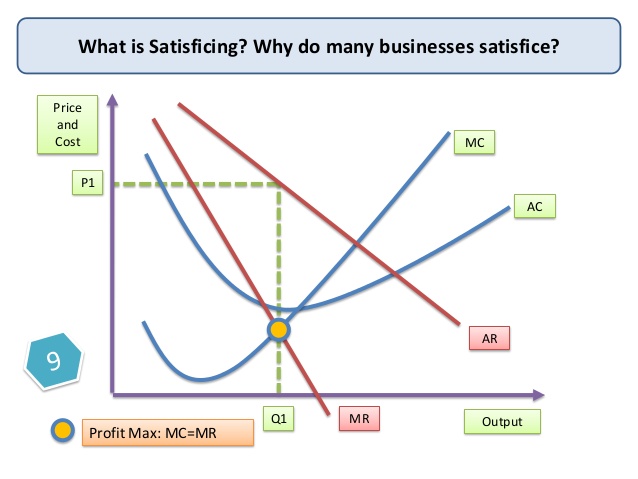
Satisficing is a business decision-making strategy or cognitive heuristic that entails searching through the available alternatives until an acceptability threshold is met.
The term economic satisficing, a portmanteau of satisfy and suffice, was introduced by Herbert A. Simon in 1956, although the concept was first posited in his 1947 book Administrative Behavior. Simon used satisficing to explain the behavior of decision makers under circumstances in which an optimal solution cannot be determined. He maintained that many natural problems are characterized by computational intractability or a lack of information, both of which preclude the use of mathematical optimization procedures.
He observed in his Nobel Prize in Economics speech that “decision makers can satisfice either by finding optimum solutions for a simplified world, or by finding satisfactory solutions for a more realistic world. Neither approach, in general, dominates the other, and both have continued to co-exist in the world of management science”.
“Satisficing” – a made-up word created by combining satisfactory and sufficient – indicates something good, but not great. Like the Canadian single-payer health system, like Medicare-for-All.
Understanding how economic behavior factors into health and health care decisions can benefit anyone interested in this field. However, the following groups of individuals may benefit most from the study of health economics:
Medical providers: Doctors, nurses, and assistants can evaluate new treatments, technologies, and services to determine ways to deliver value-based care. Medical providers benefit from understanding the economics behind these developments [MD/DO, DPM, DDS/DMD, RN, PA, etc].
Administrators: Health care administrators process insurance co-payments and manage financial metrics for health care providers. Learning the intricacies of health care economics can provide the necessary context as they liaise with insurance providers and use new technologies to process payments.
Policymakers or public health officials: Those who are in charge of policy decisions at the local, state, federal, or international levels benefit from understanding the economic relationship between stakeholders and the general public.
Business leaders: Because many Americans receive private insurance, health care becomes a major expense for employers. Business leaders must understand the health economics outlook to appease their employees, shareholders, and even their customers.
SPEAKING: Dr. Marcinko will be speaking and lecturing, signing and opining, teaching and preaching, storming and performing at many locations throughout the USA this year! His tour of witty and serious pontifications may be scheduled on a planned or ad-hoc basis; for public or private meetings and gatherings; formally, informally, or over lunch or dinner. All medical societies, financial advisory firms or Broker-Dealers are encouraged to submit a RFP for speaking engagements: MarcinkoAdvisors@outlook.com
Posted on February 21, 2025 by Dr. David Edward Marcinko MBA MEd CMP™
MEDICAL EXECUTIVE-POST–TODAY’SNEWSLETTERBRIEFING
***
Essays, Opinions and Curated News in Health Economics, Investing, Business, Management and Financial Planning for Physician Entrepreneurs and their Savvy Advisors and Consultants
“Serving Almost One Million Doctors, Financial Advisors and Medical Management Consultants Daily“
A Partner of the Institute of Medical Business Advisors , Inc.
The Dow Jones Industrial Average (^DJI) fell roughly 450 points, or around 1%. The S&P 500 (^GSPC) dropped 0.5%, pulling back after its second record close in a row on Wednesday, while the tech-heavy NASDAQ Composite (^IXIC) also lost about 0.5%.
Worries grew about coming headwinds for corporate America after Walmart beat on quarterly profit but issued cautious 2026 fiscal year guidance. Shares of the retail giant tumbled more than 6%. Walmart’s decline combined with more roughly 4% drops in Goldman Sachs (GS) and JPMorgan (JPM) weighed on the Dow.
Posted on February 20, 2025 by Dr. David Edward Marcinko MBA MEd CMP™
SAVE A LIFE
By Dr. David Edward Marcinko MBA MEd and Staff Reporters
***
***
Did you know more than 23,000 children experience cardiac arrest outside of the hospital each year?
Learn CPR today so you can be ready and become a part of the Nation of Lifesavers. Because no one, especially our most precious ones, should face a life-changing moment alone.
Posted on February 20, 2025 by Dr. David Edward Marcinko MBA MEd CMP™
MEDICAL EXECUTIVE-POST–TODAY’SNEWSLETTERBRIEFING
***
Essays, Opinions and Curated News in Health Economics, Investing, Business, Management and Financial Planning for Physician Entrepreneurs and their Savvy Advisors and Consultants
“Serving Almost One Million Doctors, Financial Advisors and Medical Management Consultants Daily“
A Partner of the Institute of Medical Business Advisors , Inc.
FDA recently approved the first new kind of painkiller since 1998. The drug, called Journavx and made by Vertex Pharmaceuticals, is a non-opioid medication, and the company says it comes with “no evidence of addictive potential.” One downside? At $15.50 per pill, it’s not cheap, and it’s not clear yet how much insurers will cover.
US stocks closed higher on Wednesday as investors weighed President Trump’s latest 25% tariff salvo and digested the Federal Reserve minutes for insight into future policy.
Wednesday’s minutes from the Fed’s January meeting revealed most central bank officials supported holding policy at restrictive levels amid concerns about persistent inflation.
Posted on February 19, 2025 by Dr. David Edward Marcinko MBA MEd CMP™
By Staff Reporters
SPONSOR: MarcinkoAssociates.com
***
***
Capital Market: This is a market where buyers and sellers engage in the trade of financial assets, including stocks and bonds. Capital markets feature several participants, including:
Companies: Firms that sell stocks and bonds to investors
Institutional investors: Investors who purchase stocks and bonds on behalf of a large capital base
Mutual funds: A mutual fund is an institutional investor that manages the investments of thousands of individuals
Hedge funds: A hedge fund is another type of institutional investor, which controls risk through hedging—a process of buying one stock and then shorting a similar stock to make money from the difference in their relative performance
Posted on February 19, 2025 by Dr. David Edward Marcinko MBA MEd CMP™
MEDICAL EXECUTIVE-POST–TODAY’SNEWSLETTERBRIEFING
***
Essays, Opinions and Curated News in Health Economics, Investing, Business, Management and Financial Planning for Physician Entrepreneurs and their Savvy Advisors and Consultants
“Serving Almost One Million Doctors, Financial Advisors and Medical Management Consultants Daily“
A Partner of the Institute of Medical Business Advisors , Inc.
US stocks were mixed on Tuesday to begin a holiday-shortened week of trading, with potential policy moves by the Federal Reserve and President Donald Trump in focus.
The benchmark S&P 500 (^GSPC) rose nearly 0.2%, with most of the games coming in the final 10 minutes of trading, to hit a fresh record close of 6,129.58. Meanwhile, the Dow Jones Industrial Average (^DJI) and NASDAQ Composite (^IXIC) finished barely in the green.
Stocks on Wall Street were largely cautious after Monday’s closure for Presidents Day as investors debate the future path of interest rates. Fed officials over the long weekend signaled a firm belief that rates should stay at current levels to combat rising inflation.
Treasury yields stepped higher as investors sought more clues to the chances of rate cuts this year, given recent data failed to give a clear steer. The benchmark 10-year yield (^TNX) rose to trade around 4.54%.
Whether you know it, or not, inflation is your biggest financial and investing enemy. Fortunately, the rule of 70 will tell you in how many years the value of money will be halved.
For example, you just need to divide 70 with the rate of inflation. So if the rate of inflation is 7%, then 70/7 = 10 years. Therefore, in 10 years, your 100 note will be worth 50.
Note: The phrase rule of thumb refers to an approximate method for doing something, based on practical experience rather than theory. This usage of the phrase can be traced back to the 17th century and has been associated with various trades where quantities were measured by comparison to the width or length of a human adult thumb.
Posted on February 17, 2025 by Dr. David Edward Marcinko MBA MEd CMP™
MSFT-HUG Update
By Dr. David Edward Marcinko; MBA MEd
***
***
MSHUG: Microsoft Healthcare Users Group (MS-HUG) unified with the Healthcare Information and Management Systems Society (HIMSS) as part of the HIMSS Users Group Alliance Program in October 2003.
Today, the unification strengthens the commitment of HIMSS and MS-HUG to better serve their members and the industry through a shared strategic vision to provide leadership and healthcare information technology solutions that improve the delivery of patient care.
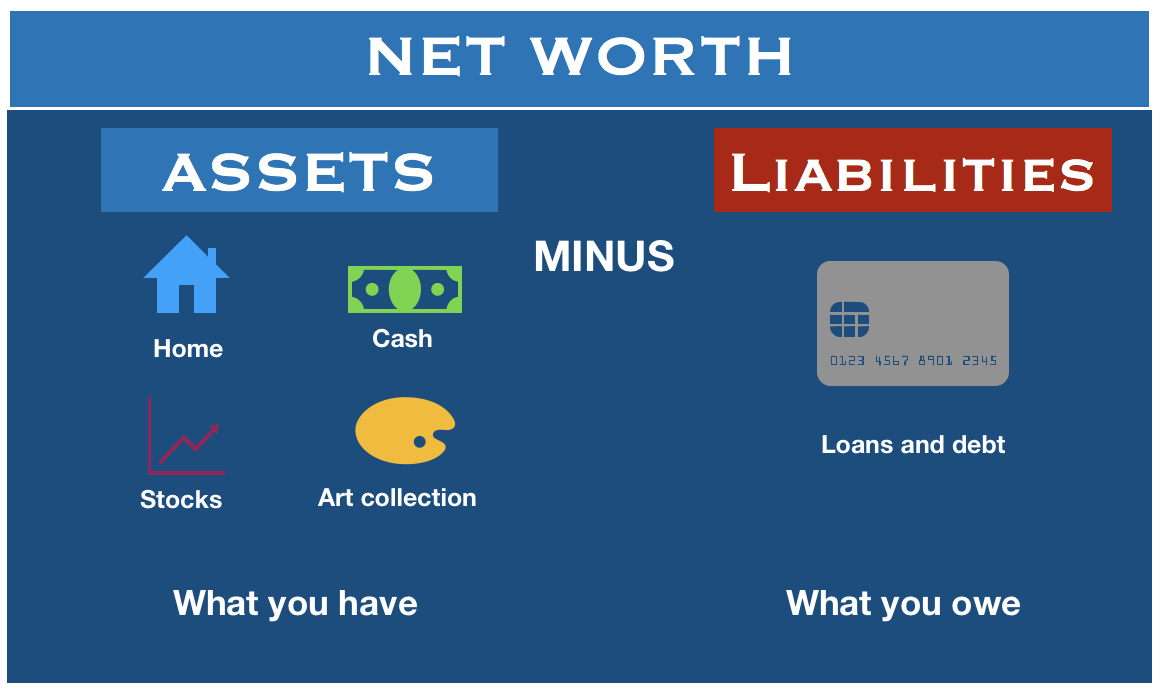
In retirement, according to Josephine Nesbit, your economic class can be broadly categorized into four distinct groups, each defined by their net worth and financial capabilities, ranging from retirees with limited resources to the wealthy. And, according to Moneywise, here are the net worth categories of the poor, middle class (and upper-middle class) and rich:
Poor retirees: Poor retirees are in the lower 20th percentile, and may have a net worth of around $10,000. This is often without property ownership, forcing many to rely mainly on Social Security or minimal pensions.
Middle-class retirees: Making up the 50th percentile, with a median net worth of approximately $281,000, this group usually includes home equity, retirement savings and a 401(k) plan.
Upper-middle-class retirees: These retirees possess a net worth between $201,800 and $608,900. They have diversified assets and enjoy a comfortable retirement cushion.
Rich retirees: In the 90th percentile, with net worth starting at $1.9 million, this group has much more financial freedom and is able to afford luxuries and legacy planning.
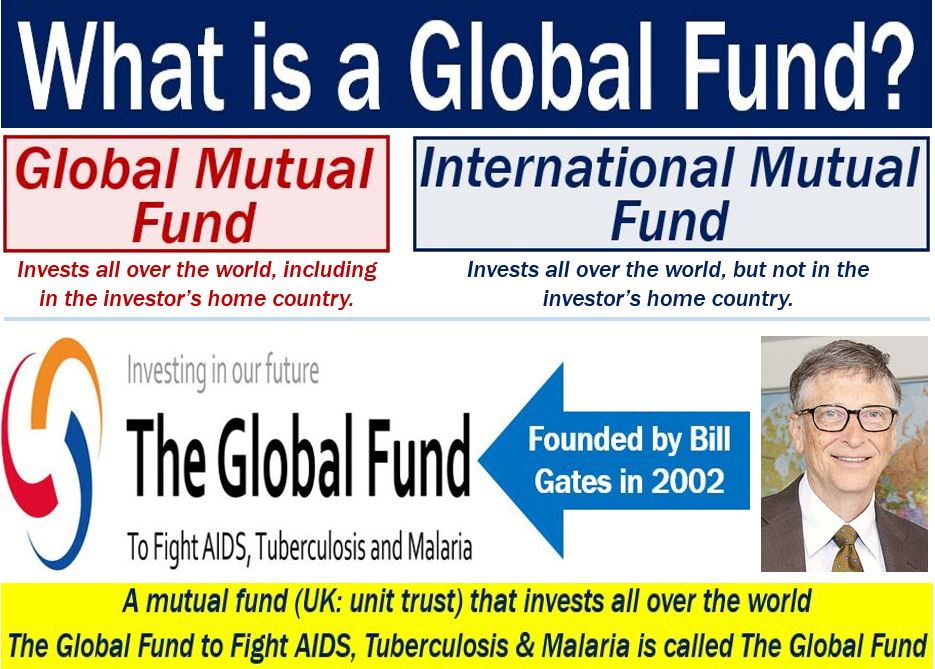
With international stock markets comprising about 40 percent of the world’s capitalization as of 2023, a broad range of investment opportunities exist outside the borders of the U.S.
For investors who are looking to diversify their mutual fund portfolio with exposure to companies located outside the U.S., there exist two basic choices: A global mutual fund or an international mutual fund.
By definition, international funds invest in non-U.S. markets, while global funds may invest in U.S. stocks alongside non-U.S. stocks.
Make a Choice: The definition may seem clear, but what may seem less clear is why an investor might select one over the other. The reason that an investor may select a global fund is to provide the portfolio manager with the latitude to move the fund’s investments among non-U.S. markets and the U.S. market in order to take advantage of the shifts in relative opportunities these markets may present at any given moment.
By investing in a global fund, the challenge for the investor is that he or she may not know at any point in time their total exposure to the U.S. market within the context of their overall portfolio.
An Inside Look: As a consequence, some investors want to manage their allocation risk by setting the broad asset allocation for their portfolio and then identifying funds that are within those asset classes. For these investors, an international fund may make more sense since it allows them to maintain a greater adherence to their desired domestic/international stock allocation.
Keep in mind that asset allocation is an approach to help manage investment risk. Asset allocation does not guarantee against investment loss. As you consider a global or an international fund, you should also be aware of the fund’s approach to the inherent currency risks. Some funds choose to engage in strategies that may mitigate the effects of currency fluctuations, while others consider currency movements – up and down – to be an element of portfolio performance.
Posted on February 14, 2025 by Dr. David Edward Marcinko MBA MEd CMP™
MEDICAL EXECUTIVE-POST–TODAY’SNEWSLETTERBRIEFING
***
Essays, Opinions and Curated News in Health Economics, Investing, Business, Management and Financial Planning for Physician Entrepreneurs and their Savvy Advisors and Consultants
“Serving Almost One Million Doctors, Financial Advisors and Medical Management Consultants Daily“
A Partner of the Institute of Medical Business Advisors , Inc.
US stocks moved higher on Thursday after President Donald Trump said he plans to introduce reciprocal tariffs as soon as April, while investors digested another report that suggested inflation is once again heating up.
The Dow Jones Industrial Average (^DJI) added more than 0.6%, while the S&P 500 (^GSPC) put on 0.7% after closing lower on Wednesday. The tech-heavy NASDAQ Composite (^IXIC) rose more than 1% as Nvidia (NVDA) and Tesla (TSLA) gained.
Posted on February 13, 2025 by Dr. David Edward Marcinko MBA MEd CMP™
MEDICAL EXECUTIVE-POST–TODAY’SNEWSLETTERBRIEFING
***
Essays, Opinions and Curated News in Health Economics, Investing, Business, Management and Financial Planning for Physician Entrepreneurs and their Savvy Advisors and Consultants
“Serving Almost One Million Doctors, Financial Advisors and Medical Management Consultants Daily“
A Partner of the Institute of Medical Business Advisors , Inc.
Consumer prices overall increased 3% from a year earlier, up from 2.9% the previous month, according to the Labor Department’s consumer price index, a measure of goods and service costs across the U.S. That’s the most since June and above the 2.9% expected by economists surveyed by Bloomberg.
Most U.S. stocks fell Wednesday after a report showed inflation is unexpectedly worsening for Americans.
The S&P 500 dropped 0.3%, though it had been on track for a much worse loss of 1.1% at the start of trading. The Dow Jones Industrial Average sank 225 points, or 0.5%, while the NASDAQ composite edged higher by less than 0.1%
Posted on February 12, 2025 by Dr. David Edward Marcinko MBA MEd CMP™
MEDICAL EXECUTIVE-POST–TODAY’SNEWSLETTERBRIEFING
***
Essays, Opinions and Curated News in Health Economics, Investing, Business, Management and Financial Planning for Physician Entrepreneurs and their Savvy Advisors and Consultants
“Serving Almost One Million Doctors, Financial Advisors and Medical Management Consultants Daily“
A Partner of the Institute of Medical Business Advisors , Inc.
Blue Cross Blue Shield will soon begin paying out $2.67 billion to customers follow a years-long lawsuit alleging that the health insurance giant broke antitrust laws. The litigation began in 2013, when a class-action lawsuit was filed against more than 35 Blue Cross Blue Shield health insurance plans. The lawsuit claims the company broke antitrust laws by limiting market competition, resulting in increased premiums and reduced options for customers.
US stocks closed mixed on Tuesday as investors assessed more tariff policy shifts from President Donald Trump and looked ahead to upcoming inflation data.
Traders also digested the start of Federal Chair Jerome Powell’s two-day testimony in Congress. In his opening remarks, Powell told lawmakers the Fed is not in a rush to adjust interest rates and reiterated the central bank’s stance of not commenting on trade policy.
The Dow Jones Industrial Average (^DJI) edged around 0.3% higher, while the benchmark S&P 500 (^GSPC) closed just above the flatline. The tech-heavy NASDAQ Composite (^IXIC) pulled back about 0.4%.
Accounts payable are short-term obligations to be paid by an organization. It arises from trading activities and other business-related expenses during the business, including parties from whom we have purchased goods or services and costs incurred for which money is yet to be paid, generally in the same financial year.
#2 – Accounts Receivable
Accounts Receivable form part of current assets and refer to amounts due from parties to whom we have sold goods or services or incurred expenses on their behalf for which money is yet to be realized. It may include debtors, bills receivable, etc., which can be converted into cash in the short term to ensure the organization’s liquidity.
#3 – Balance Sheet
A Balance Sheet is a reconciliation of assets (current and fixed) and liabilities (current and noncurrent), and capital invested in an organization. Stakeholders such as creditors, shareholders, and banks, which have granted loans to the organization and government, use the Balance Sheet to analyze the financial position, growth, and stability.
#4 – Current Assets
Current assets refer to an organization’s realizable resources in the short term, generally during the same financial year. They include cash/bank balance and assets that can convert into cash, ranging from short-term loans and advances, sundry debtors, short-term investments, etc.
#5 – Equity
Equity is the amount invested in the business by its owners, in the form of capital in the case of sole proprietorship and partnerships, or shares (equity and preference) of varying denominations in companies (public or private).
#6 – Expenses
All the money outflow (present or future) incurred for procuring goods and services to affect sales in a business (direct expenses) and incidental to the business (indirect expenses) as well as ancillary to the running of an organization are referred to as expenses
#7 – Fixed Assets
Fixed assets are tangible resources that an organization uses for carrying out daily operations of a business, such as land, plant and equipment, furniture and fixtures, buildings, machinery, etc., which are not purchased to be sold in the short term.
#8 – Ledger
Ledger is the book of entry for recording transactions in such a way that we come to know the outstanding debit or credit balance of an account in our business for which we record the opening balance, transactions made in that account, and the closing balance to find out the exact position of that particular account.
#9 – Income Statement
The Income statement forms part of the financial statements and tells us the exact position of our gross and net profit at a particular cut-off date. It is done by recording all the direct incomes and closing stock on the credit side and all direct expenses and opening stock on the debit side to find the gross profit and all the indirect incomes and indirect expenses similarly to find out the net profit.
#10 – Liabilities
Liabilities are the present (short term) and future(long term) obligations of an organization which represents the debts due to be paid for goods and services procured for the business in the past and include sundry creditors, short term loans and advances, bills payable, etc. which come under short term liabilities and debentures, term loans from a bank, long term loans and advances, etc. which come under long term liabilities.
#11 – Net Income
The profit or loss arrived at after deducting all direct and indirect expenses from all the direct and indirect incomes equals to net income made by a business which is the earning done by the business at a cut-off date and is very useful in comparing the growth and financial position of an organization from previous years as well as for adopting measures for the betterment of the profitability levels of the business.
#12 – Revenue
The gross income earned by the organization from carrying out core business activities without deduction of any expenses is termed as revenue earned by the organization, which also indicates the sale and other incomes in total.
#13 – Credit
Wherever an account is credited, it reduces the balance of an account in the case of real accounts, creates an obligation to pay an individual in the case of personal accounts, and increases the income side if a nominal account is credited.
#14 – Debit
Wherever an account is debited, it increases the balance of an account in the case of real accounts, creating an obligation to receive money from an individual in the case of personal accounts and increasing the expenses side if a nominal account is debited.
#15 – Audit
An audit is an examination of books of accounts prepared by an organization to validate the entries recorded and ensure the accuracy and correctness of the financial statements along with finding out any discrepancies in the books, including frauds, if any, hidden by the employees of the organization.
The desire for security and feelings of insecurity are the same thing.
The idea of security, financial or otherwise, is an illusion; human life is inherently insecure. But, this doesn’t mean we shouldn’t be prudent with risk and diligent financial planning with strategies like saving and investing.
However, according to colleague Eugene Schmuckler PhD, MBA,MEd seeking security is like many things; the more you try to grasp and obsess about financial security, the more quickly you will reach a point of diminishing returns. You will feel increasingly less secure at a certain point.
Posted on February 8, 2025 by Dr. David Edward Marcinko MBA MEd CMP™
MEDICAL EXECUTIVE-POST–TODAY’SNEWSLETTERBRIEFING
***
Essays, Opinions and Curated News in Health Economics, Investing, Business, Management and Financial Planning for Physician Entrepreneurs and their Savvy Advisors and Consultants
“Serving Almost One Million Doctors, Financial Advisors and Medical Management Consultants Daily“
A Partner of the Institute of Medical Business Advisors , Inc.
The U.S. added 143,000 jobs in January, fewer than economists expected, but the unemployment rate inched down to 4% from 4.1%, beating forecasts. Forecasters surveyed by Dow Jones had anticipated 169,000 payroll gains in January, after a surprisingly large 256,000 jump in December.
Last month, the Securities and Exchange Commission said Vanguard would pay more than $100 million to settle charges for misleading statements related to capital gains distributions and tax consequences for retail investors who held Vanguard Investor Target Retirement Funds in taxable accounts.
Major U.S. equities indexes moved lower to close out the trading week as the January jobs report showed slower-than-expected hiring but a down tick in the unemployment rate. Despite the slump in job additions, the overall resilience in the labor market could encourage the Federal Reserve to hold off on additional interest-rate cuts. The S&P 500 and the Dow ended Friday’s session with daily losses of roughly 1.0%. The tech-heavy NASDAQ fell 1.4%.
Most notable this month is the appointment of Tim Noel as the new CEO of UnitedHealthcare after former CEO Brian Thompson was fatally shot in New York City in December.
Visualize: How private equity tangled banks in a web of debt, from the Financial Times.
Posted on February 7, 2025 by Dr. David Edward Marcinko MBA MEd CMP™
MEDICAL EXECUTIVE-POST–TODAY’SNEWSLETTERBRIEFING
***
Essays, Opinions and Curated News in Health Economics, Investing, Business, Management and Financial Planning for Physician Entrepreneurs and their Savvy Advisors and Consultants
“Serving Almost One Million Doctors, Financial Advisors and Medical Management Consultants Daily“
A Partner of the Institute of Medical Business Advisors , Inc.
US stocks were mixed on Thursday in anticipation of Amazon’s (AMZN) quarterly results, as investors assessed the earnings season so far and eyed President Donald Trump’s fast-moving policy overhaul.
The Dow Jones Industrial Average (^DJI) fell 0.3%. The S&P 500 (^GSPC) rose more than 0.3%, and the tech-heavy NASDAQ Composite (^IXIC) popped 0.5% on the heels of two winning days in a row for the major gauges.
The tariff jitters that shook stocks earlier in the week may have eased, but markets are tracking incoming earnings for any company warnings. At the same time, tech- and chip-related results are being scrutinized for signals about the strength of AI demand.
Visualize: How private equity tangled banks in a web of debt, from the Financial Times.
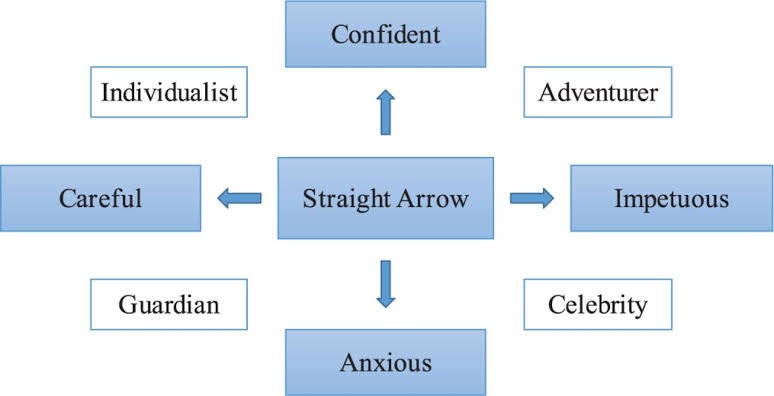
Fund managers Tom Bailard, Larry Biehl and Ron Kaiser identified five types of investors, each type characterized by their investment preferences and actions. These 5 types are: Individualists, Adventurers, Celebrities, Guardians and Straight Arrows. Key to the different categories is their different attitude to seeking professional financial advice. Defined below:
Individualists have faith in their own investment abilities so do not approach a financial adviser. But they are also cautious.
Adventurers are what may be called high rollers, in that they like big bets, tend not to diversify and are happy to put all their eggs in one basket. They, too, are unlikely to seek financial advice.
Celebrities tend to follow the crowd in investment terms but are aware of their lack of expertise so frequently consult advisers.
Guardians are fearful of losing money, thus prefer rock-solid investments such as government bonds. They, too, are likely to seek professional investment advice.
Straight Arrows exhibit some of the characteristics of individualists and some of adventurers.
Posted on February 6, 2025 by Dr. David Edward Marcinko MBA MEd CMP™
MEDICAL EXECUTIVE-POST–TODAY’SNEWSLETTERBRIEFING
***
Essays, Opinions and Curated News in Health Economics, Investing, Business, Management and Financial Planning for Physician Entrepreneurs and their Savvy Advisors and Consultants
“Serving Almost One Million Doctors, Financial Advisors and Medical Management Consultants Daily“
A Partner of the Institute of Medical Business Advisors , Inc.
One year after forming an alliance with pharmacy schools, Walgreens says it has taken steps to get more people interested in the profession and improve working conditions at the chain.
Walgreens announced the Deans Advisory Council last February, framing it as a collaboration with pharmacy schools to boost the number of students enrolling and address some of the broader issues in the industry, like burnout and declining reimbursements from pharmacy benefit managers.
US stocks recovered from losses on Wednesday to close higher on the day. Earnings from Alphabet (GOOG, GOOGL) and AMD (AMD) fell short, but Big Tech got a boost from a jump in Nvidia (NVDA) shares.
The tech-heavy NASDAQ Composite (^IXIC) rose 0.2%, while the benchmark S&P 500 (^GSPC) added 0.4%. The Dow Jones Industrial Average (^DJI) led the gains, rising 0.7%, or more than 300 points.
Posted on February 5, 2025 by Dr. David Edward Marcinko MBA MEd CMP™
MEDICAL EXECUTIVE-POST–TODAY’SNEWSLETTERBRIEFING
***
Essays, Opinions and Curated News in Health Economics, Investing, Business, Management and Financial Planning for Physician Entrepreneurs and their Savvy Advisors and Consultants
“Serving Almost One Million Doctors, Financial Advisors and Medical Management Consultants Daily“
A Partner of the Institute of Medical Business Advisors , Inc.
‘There are people with high I.Q.s who have fooled themselves on that one,’ Bill Gates the billionaire Microsoft co-founder told The New York Times. Gates’ comments come as Bitcoin has hit record highs in recent weeks, and the cryptocurrency industry as a whole has hailed the arrival of Donald Trump in the White House as a positive moment.
The President has said he will introduce policies supportive of digital currencies, and both him and his wife Melania launched their own meme coins last month. Cryptocurrency prices took a hit on Monday from the prospect of a trade war between the US and its trading partners, with some well-known digital assets seeing values fall more than 10 percent, AP News reported. However the notoriously volatile investment recovered later on Monday, with Bitcoin rebounding back above $100,000. Gates, who has a net worth of around $165 billion, has previously shared his skepticism around Bitcoin, and its volatility in particular.
US stocks closed higher on Tuesday, led by Big Tech, as investors assessed China’s instant retaliation to US President Donald Trump’s additional tariffs and the potential risks of a trade war.
Traders also took in fresh jobs data, with job openings declining more than expected in December. Investors are continuing to watch any signs of cooling in the labor market as the Federal Reserve debates future interest rate cuts in the face of sticky inflation.
The Dow Jones Industrial Average (^DJI) gained around 0.3%, while the benchmark S&P 500 (^GSPC) rose roughly 0.7%. The tech-heavy NASDAQ Composite (^IXIC) jumped nearly 1.4% to recoup some of Monday’s losses.
Beijing reacted swiftly on Tuesday to Trump’s additional 10% levies on Chinese imports going into effect at midnight. China slapped tariffs of 15% on US coal and liquified natural gas, starting Feb. 10, alongside 10% duties on imports of crude oil, farm equipment, and some autos.
Posted on February 4, 2025 by Dr. David Edward Marcinko MBA MEd CMP™
MEDICAL EXECUTIVE-POST–TODAY’SNEWSLETTERBRIEFING
***
Essays, Opinions and Curated News in Health Economics, Investing, Business, Management and Financial Planning for Physician Entrepreneurs and their Savvy Advisors and Consultants
“Serving Almost One Million Doctors, Financial Advisors and Medical Management Consultants Daily“
A Partner of the Institute of Medical Business Advisors , Inc.
Just moments after he was appointed by President Donald Trump to be the new acting director of the Consumer Financial Protections Bureau, Treasury Secretary Scott Bessent moved to halt the agency’s work investigating financial abuses and regulating deceptive banking practices impacting American consumers, according to a memo sent to employees and obtained by Scripps News.
This year is expected to be busy with healthcare mergers and acquisitions (M&A).Consulting company PwC reported that annual healthcare deals shot up 70% through November 15th compared to pre-Covid trends, and projected the trend will continue into 2025.
US stocks fell on Monday in reaction to the Trump administration’s scheduled tariff rollout against Canada and China, though the major averages pared heavier losses after President Donald Trump said the US would delay duties on Mexican imports by a month.
The tech-heavy NASDAQ Composite (^IXIC) closed down 1.2%, recouping a chunk of its earlier losses. Meanwhile, the S&P 500 (^GSPC) fell roughly 0.7%, and the Dow Jones Industrial Average (^DJI) fell 0.3%.
Book Dr. David E. MarcinkoMBA MEd CMPfor your Next Medical, Pharma or Financial Services Seminar orPersonal and Corporate Coaching Sessions
Dr. Marcinko enjoys personal coaching and public speaking and gives as many talks each year as possible, at a variety of medical society and financial services conferences around the country and world. These have included lectures and visiting professorships at major academic centers, keynote lectures for hospitals, economic seminars and health systems, keynote lectures at city and statewide financial coalitions, and annual keynote lectures for a variety of internal yearly meetings.
His talks tend to be engaging, iconoclastic, and humorous. His most popular presentations include a diverse variety of topics and typically include those in all iMBA, Inc’s textbooks, handbooks, white-papers and most topics covered on this blog.
Posted on February 3, 2025 by Dr. David Edward Marcinko MBA MEd CMP™
MEDICAL EXECUTIVE-POST–TODAY’SNEWSLETTERBRIEFING
***
Essays, Opinions and Curated News in Health Economics, Investing, Business, Management and Financial Planning for Physician Entrepreneurs and their Savvy Advisors and Consultants
“Serving Almost One Million Doctors, Financial Advisors and Medical Management Consultants Daily“
A Partner of the Institute of Medical Business Advisors , Inc.
UnitedHealthcare has agreed to a $2.5 million settlement in response to a class action lawsuit accusing the company of making unauthorized telemarketing calls. More than 12,000 individuals may be entitled to compensation, with payouts ranging from $350 to $1,000 per person, depending on how many claims are filed.
The lawsuit, filed under the Telephone Consumer Protection Act (TCPA), alleges that UnitedHealthcare placed calls to individuals without their consent between January 9, 2015, and January 9th, 2019. If you received these calls, you could be eligible for a cash settlement—but you must act before April 15th, 2025.
PALM BEACH, Fla. (AP) — President Donald Trump has fired the director of the Consumer Financial Protection Bureau, Rohit Chopra, in the latest purge of a Biden administration holdover. Chopra was one of the more important regulators from the previous Democratic administration who was still on the job since Trump took office on Jan. 20th.
A 2020 STAT analysis found more than two-thirds of Congress receiving a check from pharmaceutical companies that year. More recent data from Open Secrets likewise confirms that a large majority of leaders serving in the U.S. Congress and Senate receive significant contributions from pharmaceutical or health products companies, averaging $45,000 and $47,000 for Republicans and Democrats in the House of Representatives, respectively — and $50,000 and $69,000 for Republicans and Democrats in the Senate.
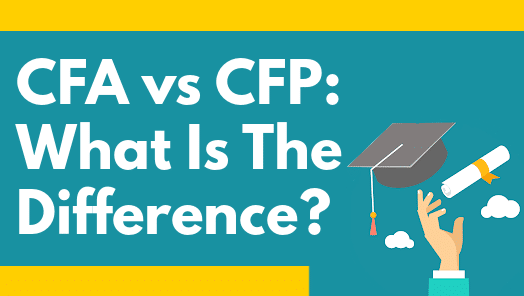
A certified financial planner (CFP®) helps individuals plan their financial futures. CFPs are not focused only on investments; they help their clients achieve specific long-term financial goals, such as saving for retirement, buying a house, or starting a college fund for their children.
To become a CFP®, a person must complete a course of study and then pass a two-part examination. The exam covers wealth management, tax palnning, insurance, retirement planning, estate planning, and other basic personal finance topics. These topics are all important for someone seeking to help clients achieve financial goals.
Chartered Financial Analyst (CFA)
A CFA, on the other hand, conducts investing in larger settings, normally for large investment firms on both the buy side and the sell side, mutual funds or hedge funds. CFAs can also provide internal financial analysis for corporations that are not in the investment industry. While a CFP® focuses on wealth management and planning for individual clients, a CFA focuses on wealth management for a corporation.
To become a CFA, a person must complete a rigorous course of study and pass three examinations over the course of two or more years. In addition, the candidate must adhere to a strict code of ethics and have four years of work experience in an investment decision-making setting.
Posted on February 1, 2025 by Dr. David Edward Marcinko MBA MEd CMP™
MEDICAL EXECUTIVE-POST–TODAY’SNEWSLETTERBRIEFING
***
Essays, Opinions and Curated News in Health Economics, Investing, Business, Management and Financial Planning for Physician Entrepreneurs and their Savvy Advisors and Consultants
“Serving Almost One Million Doctors, Financial Advisors and Medical Management Consultants Daily“
A Partner of the Institute of Medical Business Advisors , Inc.
US stocks lost ground on Friday after the White House said tariffs against Mexico, Canada, and China will take effect on Saturday, reigniting fears of a coming trade war with the nation’s closest trading partners. White House Press Secretary Karoline Leavitt said the president would impose 25% tariffs on goods from Mexico and Canada, as well as a 10% tariff on goods from China.
All three major gauges fell into the red Friday. The S&P 500 (^GSPC) lost 0.5% at the closing bell, while the Dow Jones Industrial Average (^DJI) shed 0.8%. The tech-heavy NASDAQ Composite (^IXIC) gave up 0.3%, reversing earlier gains.
The dramatic tariff news pushed aside more optimistic updates from earlier in the day, which had buoyed stocks. Solid earnings from Apple (AAPL) and an inflation reading that matched expectations lifted market sentiment for much of the day.
Finally, the S&P and the Nasdaq posted losses for the week of 1% and 1.6%, respectively. The Dow, meanwhile, recorded a weekly gain of 0.3%.
Posted on January 31, 2025 by Dr. David Edward Marcinko MBA MEd CMP™
MEDICAL EXECUTIVE-POST–TODAY’SNEWSLETTERBRIEFING
***
Essays, Opinions and Curated News in Health Economics, Investing, Business, Management and Financial Planning for Physician Entrepreneurs and their Savvy Advisors and Consultants
“Serving Almost One Million Doctors, Financial Advisors and Medical Management Consultants Daily“
A Partner of the Institute of Medical Business Advisors , Inc.
US stocks gained steam on Thursday afternoon as investors digested megacap tech earnings and waited for Apple (AAPL) results for more clues on prospects for Big Tech. The S&P 500 (^GSPC) gained 0.5%, while the Dow Jones Industrial Average (^DJI) rose nearly 0.4%. The tech-heavy NASDAQ Composite (^IXIC) was up nearly 0.3%.
And, after the Federal Reserve stood pat on interest rates as expected, investors have turned to parsing earnings reports — and in particular, the first wave of results from the “Magnificent Seven” companies that have driven broader stock market gains.
Posted on January 30, 2025 by Dr. David Edward Marcinko MBA MEd CMP™
MEDICAL EXECUTIVE-POST–TODAY’SNEWSLETTERBRIEFING
***
Essays, Opinions and Curated News in Health Economics, Investing, Business, Management and Financial Planning for Physician Entrepreneurs and their Savvy Advisors and Consultants
“Serving Almost One Million Doctors, Financial Advisors and Medical Management Consultants Daily“
A Partner of the Institute of Medical Business Advisors , Inc.
Over half the US population was affected by the Change Healthcare cyberattack last February, according to a statement from its parent company UnitedHealth Group. While United had told the federal government in October that 100 million people were hit by the attacks, an updated estimate on Monday put that number at 190 million.
The tech-heavy NASDAQ Composite (^IXIC) was down about 0.5%, retracing some of a bounce-back rally on Tuesday. The S&P 500 (^GSPC) was also down nearly 0.5%, while the Dow Jones Industrial Average (^DJI) lost 0.3%. In its statement on Wednesday, the Federal Reserve notably removed language from its December statement indicating that it was making progress towards its goal of 2% inflation, stating simply: “Inflation remains somewhat elevated.” Fed Chair Jerome Powell pushed back on that notion, referring to the change as “language cleanup” rather than intending to send a signal. Markets bounced off their lows of the day on Powell’s comments.
Posted on January 29, 2025 by Dr. David Edward Marcinko MBA MEd CMP™
MEDICAL EXECUTIVE-POST–TODAY’SNEWSLETTERBRIEFING
***
Essays, Opinions and Curated News in Health Economics, Investing, Business, Management and Financial Planning for Physician Entrepreneurs and their Savvy Advisors and Consultants
“Serving Almost One Million Doctors, Financial Advisors and Medical Management Consultants Daily“
A Partner of the Institute of Medical Business Advisors , Inc.
Bellwether Nvidia (NVDA) finished the day up nearly 9% after it shaved off a record $589 billion from its market cap on Monday.
Aided by Nvidia’s gains, the tech-heavy NASDAQ Composite (^IXIC) surged over 2%, coming off a closing loss of more than 3%. The S&P 500 (^GSPC) rose around 0.9%, while the Dow Jones Industrial Average (^DJI) gained roughly 0.3%.
Posted on January 28, 2025 by Dr. David Edward Marcinko MBA MEd CMP™
MEDICAL EXECUTIVE-POST–TODAY’SNEWSLETTERBRIEFING
***
Essays, Opinions and Curated News in Health Economics, Investing, Business, Management and Financial Planning for Physician Entrepreneurs and their Savvy Advisors and Consultants
“Serving Almost One Million Doctors, Financial Advisors and Medical Management Consultants Daily“
A Partner of the Institute of Medical Business Advisors , Inc.
Federal health agencies are canceled—well, their meetings are at least. In the days following his inauguration, President Donald Trump’s administration asked officials within the Department of Health and Human Services (HHS)—which has a $1.7 trillion budget and includes the FDA, the CDC, and the National Institutes of Health (NIH)—to stop all external communication, according to an internal memo. This means no new health advisories, social media posts, or website posts.
“As the new administration considers its plan for managing the federal policy and public communications processes, it is important that the president’s appointees and designees have the opportunity to review and approve any regulations, guidance documents, and other public documents and communications (including social media),” the memo read. The pause began on Jan. 21st, and according to the memo, will remain in effect until Feb. 1st
The FTC’s second interim staff report on consolidated pharmacy benefit managers (PBMs) found that the three largest of these middlemen—CVS Health’s Caremark Rx, Cigna Group’s Express Scripts, and UnitedHealth Group’s OptumRx—”marked up two specialty generic cancer drugs by thousands of percent and then paid their affiliated pharmacies hundreds of millions of dollars of dispensing revenue in excess of estimated acquisition costs for each drug annually.”
The NASDAQ tanked on Monday as a Chinese startup rattled faith in US leadership and profitability in AI, taking a hammer to Nvidia (NVDA), wiping out a record $589 billion in market value. The NASDAQ Composite (^IXIC) sank more than 3%, while the S&P 500 (^GSPC) dropped nearly 1.5%. The blue-chip Dow Jones Industrial Average (^DJI), which is less dependent tech stocks gained more than 0.6% as investors flocked to defensive sectors. Shares of Apple (AAPL) and software giant Salesforce (CRM) also bucked the tech rout.
Posted on January 27, 2025 by Dr. David Edward Marcinko MBA MEd CMP™
MEDICAL EXECUTIVE-POST–TODAY’SNEWSLETTERBRIEFING
***
Essays, Opinions and Curated News in Health Economics, Investing, Business, Management and Financial Planning for Physician Entrepreneurs and their Savvy Advisors and Consultants
“Serving Almost One Million Doctors, Financial Advisors and Medical Management Consultants Daily“
A Partner of the Institute of Medical Business Advisors , Inc.
The S&P 500 (^GSPC) just capped its best first four trading days under a new president since Ronald Reagan’s first week in 1985. And, the week ahead will bring investors a deluge of news that will put that rally to the test.
Earnings from more than 100 members of the S&P 500 — highlighted by results from tech heavyweights Meta (META), Microsoft (MSFT), Apple (AAPL), and Tesla (TSLA) — are set for release, with Wednesday serving as the week’s busiest. Starbucks (SBUX), Exxon (XOM), and Chevron (CVX) are also set to report.
On this coming ednesday afternoon, the Federal Reserve will also announce its latest monetary policy decision, with the central bank expected to keep interest rates unchanged and investors focused on what Fed Chairman Jay Powell has to say about the balance of 2025.
Last week, the S&P 500, NASDAQ Composite (^IXIC), and Dow Jones Industrial Average (^DJI) each rallied during a holiday-shortened four day trading week. Over the last five days, the S&P 500 and Dow have gained more than 2.8%; the tech index is leading gains over that period, rising more than 3.1%.
The FTC’s second interim staff report on consolidated pharmacy benefit managers (PBMs) found that the three largest of these middlemen—CVS Health’s Caremark Rx, Cigna Group’s Express Scripts, and UnitedHealth Group’s OptumRx—”marked up two specialty generic cancer drugs by thousands of percent and then paid their affiliated pharmacies hundreds of millions of dollars of dispensing revenue in excess of estimated acquisition costs for each drug annually.”
People have been concerned about the future of Medicare for years. Now that Donald Trump has begun his second term in office, the question becomes: What will happen next?
According to the JAMA Network and ABC News, here are some predictions for what may come:
There will be greater price transparency: During his first term, Trump worked to make prices more transparent to both individuals and health care organizations. This may very well continue.
More emphasis on Medicare Advantage plans: Under Project 2025, it’s possible that Medicare Advantage plans will become the “default option for Medicare coverage.” This could lead to a privatization of the program.
Medicare’s future remains to be seen. For now, the best thing current and future retirees can do is keep an eye on their coverage options and costs.
Posted on January 24, 2025 by Dr. David Edward Marcinko MBA MEd CMP™
MEDICAL EXECUTIVE-POST–TODAY’SNEWSLETTERBRIEFING
***
Essays, Opinions and Curated News in Health Economics, Investing, Business, Management and Financial Planning for Physician Entrepreneurs and their Savvy Advisors and Consultants
“Serving Almost One Million Doctors, Financial Advisors and Medical Management Consultants Daily“
A Partner of the Institute of Medical Business Advisors , Inc.
At the closing bell, the blue-chip Dow Jones Industrial Average was up 0.9% to 44,565.
And a late-day surge carried the NASDAQ Composite into positive territory in the aftermath of Wednesday’s prodigious AI-driven rally, the tech-heavy index rising 0.2% to 20,053.
MBA is the common abbreviation for a Master of Business Administration degree, and recipients typically stop attending school after receiving it.
However, those who are interested in conducting business research may decide to pursue a doctorate in business or management. Such students can earn a Ph.D. or a Doctor of Business Administration degree, commonly known as a DBA.
What ‘MSHA’ Stands For?
Master of Health Administration (MHA) and Master of Science in Health Administration (MSHA) are largely equivalent designations for degree programs that focus primarily on leadership and management of hospitals, healthcare organizations, and businesses that operate in the healthcare sector.
In contrast, an MBA in Health Administration is a Master of Business Administration degree program with a concentration, track, or specialization that provides students with several courses in topics specific to healthcare management and administration. Most of the coursework in an MBA program is devoted to general training in business functions, such as accounting, finance, logistics, marketing, personnel and project management.
MHA and MHSA programs devote all or most of their curriculum to studying the healthcare system, healthcare policy, and the application of business principles in the field of healthcare. MBA in Healthcare Administration programs devote only a portion of their curricula to topics specific to the healthcare sector.
Posted on January 23, 2025 by Dr. David Edward Marcinko MBA MEd CMP™
MEDICAL EXECUTIVE-POST–TODAY’SNEWSLETTERBRIEFING
***
Essays, Opinions and Curated News in Health Economics, Investing, Business, Management and Financial Planning for Physician Entrepreneurs and their Savvy Advisors and Consultants
“Serving Almost One Million Doctors, Financial Advisors and Medical Management Consultants Daily“
A Partner of the Institute of Medical Business Advisors , Inc.
Tech stocks led the market on Wednesday as Netflix (NFLX) stock surged to a record, while President Donald Trump’s boost to AI demand hopes outweighed fresh tariff worries.
The NASDAQ Composite (^IXIC) rose nearly 1.3%, bolstered by a jump in Netflix shares on the heels of surprisingly strong earnings. The S&P 500 (^GSPC) climbed more than 0.6% to close just shy of its record high of 6,090.
Posted on January 22, 2025 by Dr. David Edward Marcinko MBA MEd CMP™
MEDICAL EXECUTIVE-POST–TODAY’SNEWSLETTERBRIEFING
***
Essays, Opinions and Curated News in Health Economics, Investing, Business, Management and Financial Planning for Physician Entrepreneurs and their Savvy Advisors and Consultants
“Serving Almost One Million Doctors, Financial Advisors and Medical Management Consultants Daily“
A Partner of the Institute of Medical Business Advisors , Inc.
Stocks ended firmly higher on Tuesday, with the S&P 500 rising 0.88% and reclaiming the 6,000 point mark amid a pullback in Treasury yields and optimism over Donald Trump’s focus on deregulation, focused tariff strategies and the prospect of solid corporate earnings into the fourth quarter reporting season.
Tech stocks are likely to pace early gains in the Wednesday session, however, following the unveiling of a new AI joint venture called ‘Stargate’ that will include an initial $100 billion investment from SoftBank, Oracle Corp. (ORCL) and OpenAI.
Executive Order 14009, titled “Strengthening Medicaid and the Affordable Care Act,” includes several key components designed to increase access to affordable health care and reduce the number of uninsured Americans:
Reversal of Trump administration policies: The order sought to undo measures that limited ACA provisions or made healthcare less accessible.
Longer enrollment periods: The order encouraged states to lengthen enrollment periods and provided additional federal support. As a result, many states extended their enrollment windows to ensure broader access to affordable healthcare.
Restoration of pre-existing condition protections: Reaffirmed protections for individuals with pre-existing conditions and reinforced nondiscrimination policies in healthcare.
Immediate review of agency actions: The order directed various executive departments and agencies to review existing regulations, orders, and policies to ensure they align with the goal of strengthening Medicaid and the ACA.
xecutive Order 14070, titled “Continuing To Strengthen Americans’ Access to Affordable, Quality Health Coverage,” aimed to maintain and enhance Medicaid and the ACA. Key components included:
Enhanced marketplace subsidies: The order highlights the positive impact of the American Rescue Plan Act on access to coverage, including enhanced marketplace subsidies.
Extended postpartum Medicaid coverage: It provides options for states to extend postpartum Medicaid coverage.
New incentives for Medicaid expansion: The order includes new incentives for states to expand their Medicaid programs.
While IAs and FAs may seem the same, they are not the same. The Financial Industry Regulatory Authority (FINRA) and the Securities Exchange Commission (SEC) have clearly defined investment advisors as distinct from financial advisors.
The term financial advisor is a generic one that can encompass many different financial professionals, although it most commonly refers to stock brokers (individuals or companies that buy and sell securities).
Investment advisor, on the other hand, is a legal term and thus has a more clear-cut definition – or at least as clear as legalese is apt to be.
KEY DIFFERENCES:
Financial advisors help with all aspects of your finances, including saving, budgeting, insurance, retirement planning, and taxes.
Investment advisors focus specifically on choosing and managing investment portfolios.
Financial advisors offer broader financial guidance, while investment advisors concentrate solely on investments.
Investment advisors are held to the fiduciary standard, while financial advisors who work as brokers may operate under different rules.
U.S. Markets will be closed for Martin Luther King Jr. Day this Monday
The U.S. Markets will be closed on Monday, January 20th, 2025. Please be aware that, when making transactions after 4 p.m. EST on Friday, January 17th, 2025, you will receive the closing price as of Tuesday, January 21st 2025.
Martin Luther King Jr. Day is observed in the United States on the third Monday of January. This year coincides with the inauguration of President-elect Donald Trump.
Banks and government offices
Martin Luther King Jr. Day is a federal holiday, which means banks will be closed and government services as well, such as city offices, animal services, administrative offices of the police department, and administrative offices of fire department.
The U.S. Postal Service will not operate on Monday, along with other shipping services.
MBBS Degree [Bachelor of Medicine, Bachelor of Surgery]
The MBBS is usually a five-year undergraduate degree that medical students complete when they want to become doctors. However, some programs take six years to complete because the institution expects you to earn a Bachelor of Science (BSc) in your training.
By the time a student applies to a medical program, they have likely taken several foundational science courses as part of their high school (or secondary) education. For example, medical applicants in the United Kingdom are often expected to show high scores on their General Certificate of Secondary Education (GCSE) and A-levels.
Earning an MBBS means that students are certified to care for patients as junior physicians without specialized training. Graduates are expected to complete two years of additional training, which rotates them through different specialties. Once they identify a specialty they like, they can apply for additional training, which can take anywhere between three and eight years.
MD Degree [Doctor of Medicine]
The acronym “MD” stands for the Latin term “Medicinae Doctor,” which translates to “Doctor of Medicine” in English.
It refers to the title that students from the United States of America obtain after finishing medical school. Some countries consider the “MD” title a postgraduate doctoral degree that MBBS graduates can obtain with additional years of training.
The ICE 3-Month USD LIBOR interest rate is the average interest rate at which a selection of banks in London are prepared to lend to one another in American dollars with a maturity of 3 months.
The Bank of America US High Yield Constrained Index is a market value-weighted index of all domestic high-yield bonds and Yankee high-yield bonds (issued by a foreign entity and denominated in U.S. dollars), including deferred interest bonds and payment-in-kind securities.
The ICE BofA BB-B US High Yield Constrained Index is composed of U.S. dollar-denominated corporate debt publicly issued in the U.S. market rated BB through B, based on an average of Moody’s, S&P and Fitch ratings, with issuer exposure capped at 2%.
ICE BofA U.S. Convertible Index tracks the performance of publicly issued, exchange-listed US dollar denominated convertible securities of US companies with at least $50 million face amount outstanding and at least one month remaining to the final conversion date. Index constituents are market capitalization-weighted and rebalanced monthly.
ICE BofA ML MOVE Index is a widely used measure of bond market volatility, similar to the VIX Index for stocks. The MOVE Index (also known as the Merrill Lynch Option Volatility Estimate) is a yield-curve-weighted index that tracks the market’s expectation of volatility in the U.S. bond market based on 1-month Treasury options.
ICE Exchange-Listed Preferred & Hybrid Securities Index tracks the performance of exchange-listed US dollar denominated hybrid debt, preferred stock and convertible preferred stock publicly issued by corporations in the US domestic market. Preferred stock and notes must have a minimum amount outstanding of $100 million; convertible preferred stock must have at least $50 million face amount outstanding. Index constituents are market capitalization-weighted subject to certain constraints. The index is re-balanced monthly.
Posted on January 18, 2025 by Dr. David Edward Marcinko MBA MEd CMP™
MEDICAL EXECUTIVE-POST–TODAY’SNEWSLETTERBRIEFING
***
Essays, Opinions and Curated News in Health Economics, Investing, Business, Management and Financial Planning for Physician Entrepreneurs and their Savvy Advisors and Consultants
“Serving Almost One Million Doctors, Financial Advisors and Medical Management Consultants Daily“
A Partner of the Institute of Medical Business Advisors , Inc.
WASHINGTON — The US Supreme Court on Friday delivered a blow to TikTok by upholding a law that could potentially lead to the video-sharing social media platform being banned in the United States. The justices in an unsigned opinion with no dissents rejected a free speech challenge filed by the company, meaning the law is set to go into effect on Sunday as planned. The bipartisan law requires China-based TikTok owner ByteDance to divest itself of the company by Sunday, the day before President-elect Donald Trump is to take office. If no sale takes place, the platform used by millions of Americans will in theory be banned.
Legendary short seller Nate Andersonannounced this week that he is shutting down his firm, Hindenburg Research, due to extreme job stress. With only 11 employees, Anderson took gargantuan swings at companies—and their billionaire leaders. Hindenburg published deeply researched reports about companies it believed were overvalued and rife with corruption. It got its big break when it shorted electric truck-maker Nikola in 2020, calling the company an “intricate fraud.” Regulators took note, and it led to three fraud convictions for Nikola founder Trevor Milton.
US stocks jumped on Friday amid a tech stock revival as investors assessed a week of key data and earnings reports alongside potential policy shifts under a Trump administration.
The Dow Jones Industrial Average (^DJI) gained 0.8% while the S&P 500 (^GSPC) rose 1%, coming off a losing day for the major gauges. The tech-heavy NASDAQ Composite (^IXIC) put on 1.5% as Nvidia (NVDA) and Tesla (TSLA) shares nudged back into the green.
The US Department of Justice (DOJ) filed a lawsuit against Walgreens (WBA), one of the nation’s largest pharmacy chains, alleging widespread prescription drug practice violations. According to the DOJ, Walgreens improperly dispensed millions of prescriptions from August 2012 to the present day that either lacked “legitimate medical purpose” or were otherwise invalid.
The Bloomberg U.S. Universal Index represents the union of the U.S. Aggregate Index, U.S. Corporate High Yield Index, Investment Grade 144A Index, Eurodollar Index, U.S. Emerging Markets Index, and the non-ERISA eligible portion of the CMBS Index.
The index covers USD-denominated, taxable bonds that are rated either investment grade or high-yield. Some Bloomberg U.S. Universal Index constituents may be eligible for one or more of its contributing sub-components that are not mutually exclusive. These securities are not double-counted in the index.
The Bloomberg U.S. Universal Index was created on January 1st, 1999, with index history back-filled to January 1st, 1990.
Posted on January 17, 2025 by Dr. David Edward Marcinko MBA MEd CMP™
MEDICAL EXECUTIVE-POST–TODAY’SNEWSLETTERBRIEFING
***
Essays, Opinions and Curated News in Health Economics, Investing, Business, Management and Financial Planning for Physician Entrepreneurs and their Savvy Advisors and Consultants
“Serving Almost One Million Doctors, Financial Advisors and Medical Management Consultants Daily“
A Partner of the Institute of Medical Business Advisors , Inc.
The FTC’s second interim staff report on consolidated pharmacy benefit managers (PBMs) found that the three largest of these middlemen—CVS Health’s Caremark Rx, Cigna Group’s Express Scripts, and UnitedHealth Group’s OptumRx—”marked up two specialty generic cancer drugs by thousands of percent and then paid their affiliated pharmacies hundreds of millions of dollars of dispensing revenue in excess of estimated acquisition costs for each drug annually.”
The S&P 500 fell 0.2%. The NASDAQ 100 lost 0.7%. The Dow Jones Industrial Average slid 0.2%. A gauge of the “Magnificent Seven” megacaps slipped 1.9%. The Russell 2000 added 0.2%. The KBW Bank Index declined 0.2%.
The yield on 10-year Treasuries declined four basis points to 4.61%. The Bloomberg Dollar Spot Index rose 0.1%.
HFRX Equity Hedge Index serves as a daily-priced proxy for alternative strategies that maintain positions long and short, primarily in equity and equity derivative securities.
HFRX Fixed Income – Credit Index serves as a daily-priced proxy for alternative strategies that provide exposure to credit strategies. Credit strategies refers to a wide range of sub-strategies and may include corporate, sovereign, distressed, asset-backed, capital structure arbitrage, and other relative value approaches. Strategies may also include and utilize equity securities, credit derivatives, commodities, or currencies.
Posted on January 16, 2025 by Dr. David Edward Marcinko MBA MEd CMP™
MEDICAL EXECUTIVE-POST–TODAY’SNEWSLETTERBRIEFING
***
Essays, Opinions and Curated News in Health Economics, Investing, Business, Management and Financial Planning for Physician Entrepreneurs and their Savvy Advisors and Consultants
“Serving Almost One Million Doctors, Financial Advisors and Medical Management Consultants Daily“
A Partner of the Institute of Medical Business Advisors , Inc.
The U.S. Department of Labor reported a 0.4% increase in the monthly CPI after seasonal adjustment, overshooting the forecast of 0.3% and the previous value of 0.3%. On an annual basis, inflation climbed to 2.9%, up from 2.7% in November, the highest rate since July 2024.
US stocks ripped higher on Wednesday as high hopes for bank earnings paid off and a crucial consumer inflation update showed key prices increased less than expected in December.
The benchmark S&P 500 (^GSPC) popped more than 1.8%, while the Dow Jones Industrial Average (^DJI) rose more than 1.6%, or over 700 points. Meanwhile, the tech-heavy NASDAQ Composite (^IXIC) soared 2.5%.
Stocks took a leg higher after the Consumer Price Index (CPI) showed progress toward the Fed’s 2% inflation target in December. Prices climbed 0.2% month-on-month on a “core” basis, which strips out the more volatile costs of food and gas, an easing from November’s 0.3% gain. Over last year, core CPI rose 3.2%.
Capital One is being sued by the US government’s consumer watchdog agency for “cheating millions of consumers” and not paying more than $2 billion in interest to holders of its high-interest savings accounts.
As of January 1st 2025, beneficiaries enrolled in Part D prescription drug plans will have their out-of-pocket spending capped at $2,000 for the year. This new policy was part of President Joe Biden’s 2022 Inflation Reduction Act (IRA), which included other drug pricing measures such as capping the cost of insulin at $35 per month for seniors.
But only a small share of Medicare enrollees will benefit from the cap, according to an analysis from nonprofit organization AARP’s Public Policy Institute, as most don’t spend more than $2,000 annually on their medications after hitting their deductible (which is up to $590 for standard plans in 2025). Beneficiaries spent an average of $400 to $500 per year as of 2022, the Hill reported, citing data from the US Department of Health and Human Services (HHS).







 Support our online development, and advance our onground research initiatives in free market economics, as we seek to showcase the brightest Next-Gen minds.
THE ME-P DISCLAIMER: Posts, comments and opinions do not necessarily represent iMBA, Inc., but become our property after submission. Copyright © 2006 to-date. iMBA, Inc allows colleges, universities, medical and financial professionals and related clinics, hospitals and non-profit healthcare organizations to distribute our proprietary essays, photos, videos, audios and other documents; etc. However, please review copyright and usage information for each individual asset before submission to us, and/or placement on your publication or web site. Attestation references, citations and/or back-links are required. All other assets are property of the individual copyright holder.
Support our online development, and advance our onground research initiatives in free market economics, as we seek to showcase the brightest Next-Gen minds.
THE ME-P DISCLAIMER: Posts, comments and opinions do not necessarily represent iMBA, Inc., but become our property after submission. Copyright © 2006 to-date. iMBA, Inc allows colleges, universities, medical and financial professionals and related clinics, hospitals and non-profit healthcare organizations to distribute our proprietary essays, photos, videos, audios and other documents; etc. However, please review copyright and usage information for each individual asset before submission to us, and/or placement on your publication or web site. Attestation references, citations and/or back-links are required. All other assets are property of the individual copyright holder.
















 ***
***