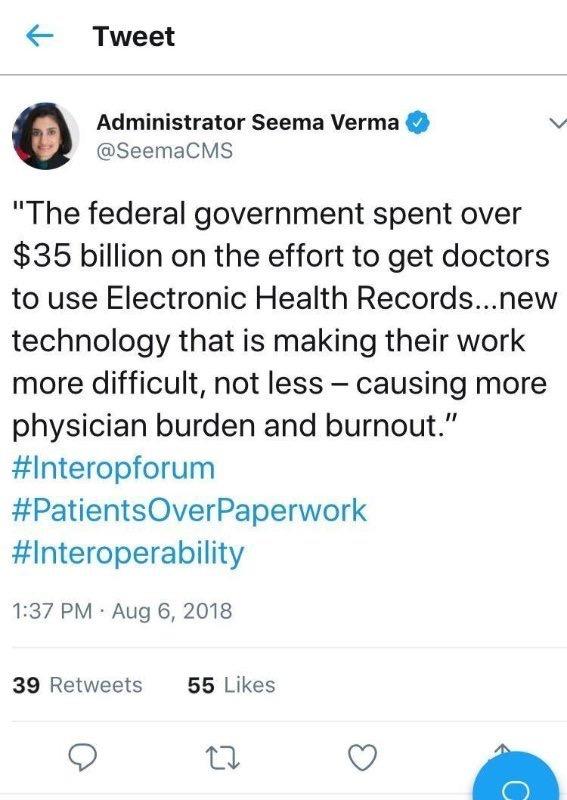
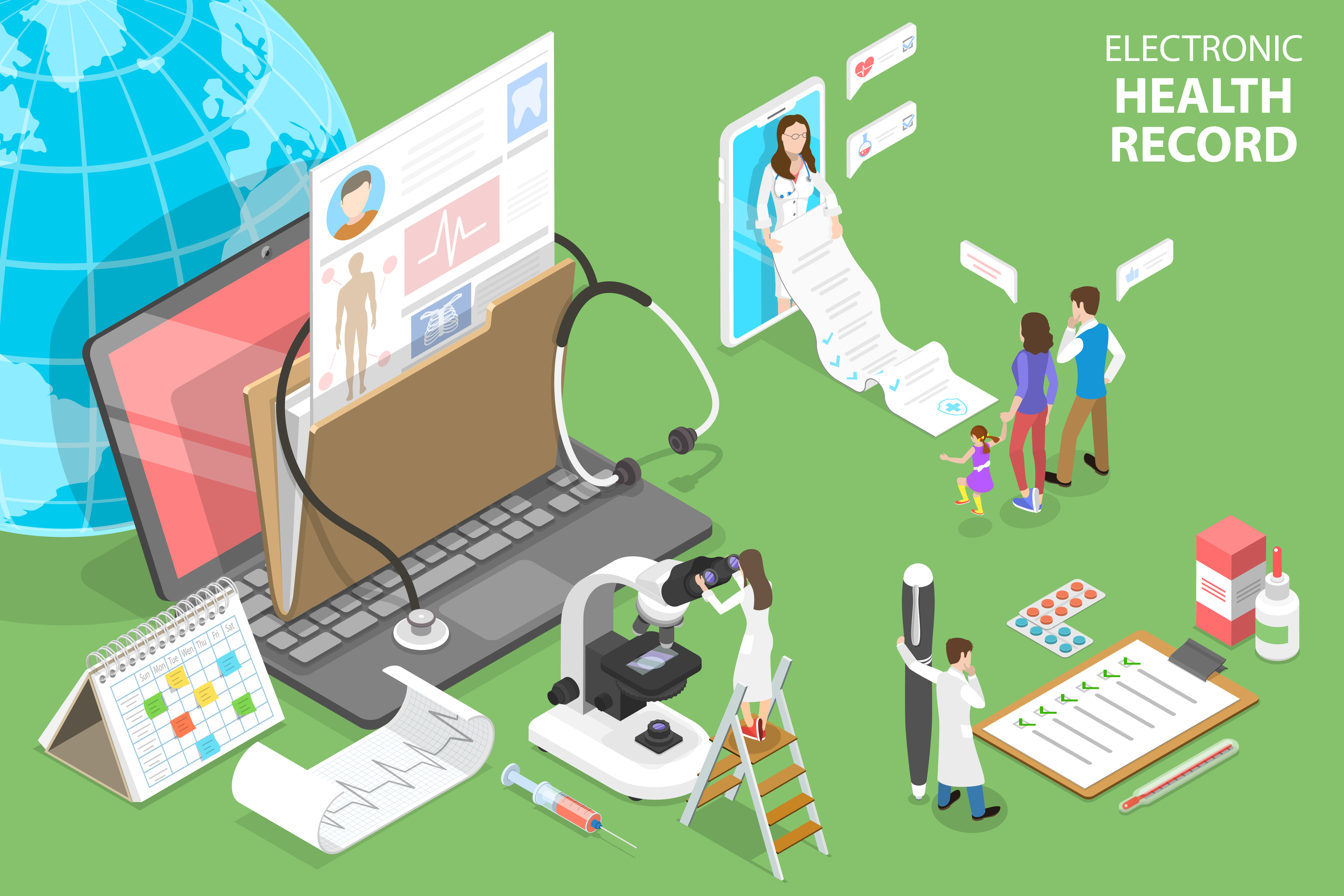
PODCAST: Health Care EMR and I.T. Inter-Operability Explained

By Eric Brikcer MD

***

Electronic Medical Record Interoperability is the Ability of Different Hospital Systems and Doctor Practices to Share Patient Data.

***

***

MEDICINE: https://www.amazon.com/Business-Medical-Practice-Transformational-Doctors/dp/0826105750/ref=sr_1_9?ie=UTF8&qid=1448163039&sr=8-9&keywords=david+marcinko

***

DHIT: https://www.amazon.com/Dictionary-Health-Information-Technology-Security/dp/0826149952/ref=sr_1_5?ie=UTF8&s=books&qid=1254413315&sr=1-5

***

The ME-P is Seeking Healthcare “Metaverse” Input

By Ann Miller RN MHA

***

***

Facebook’s latest release, Meta, is said to be the next evolution of social connection. A virtual, 3D network that allows connection and collaboration in ways many of us have never even considered! And while many are buzzing over how Meta will shape everything from education to healthcare – we are eager to get your opinion on our own ME-P ecosystem.

Can patients trust Facebook and others again?

Are you interested in exploring a new platform for connection?

Have you subscribed to the ME-P?

We want to hear all about it! We’re actively collaborating to bring your perspectives to the discussion around the Metaverse and the patient, economics, finance and healthcare community.

If you have insights or experiences to share – just comment and/or let us know.

***

THANK YOU

***

***

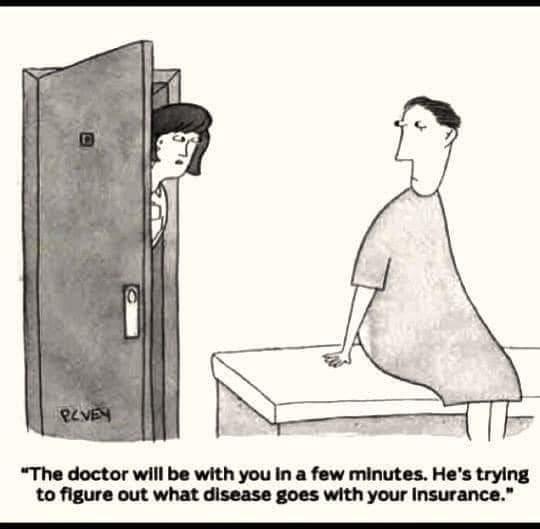
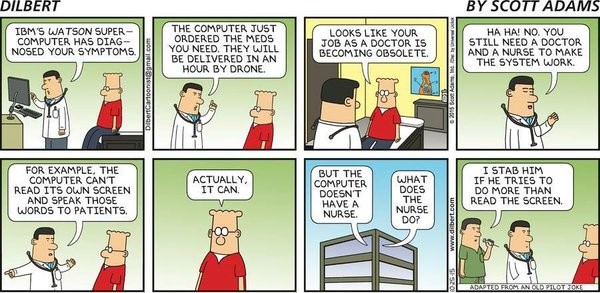
EMRs = To Laugh OR Cry?

SAD

[By staff reporters]

***

***

***

***

Conclusion

Your thoughts and comments on this ME-P are appreciated. Feel free to review our top-left column, and top-right sidebar materials, links, URLs and related websites, too. Then, subscribe to the ME-P. It is fast, free and secure.

Speaker: If you need a moderator or speaker for an upcoming event, Dr. David E. Marcinko; MBA – Publisher-in-Chief of the Medical Executive-Post – is available for seminar or speaking engagements.

Book Marcinko: https://medicalexecutivepost.com/dr-david-marcinkos-bookings/

Subscribe: MEDICAL EXECUTIVE POST for curated news, essays, opinions and analysis from the public health, economics, finance, marketing, IT, business and policy management ecosystem.

DOCTORS:

“Insurance & Risk Management Strategies for Doctors” https://tinyurl.com/ydx9kd93

“Fiduciary Financial Planning for Physicians” https://tinyurl.com/y7f5pnox

“Business of Medical Practice 2.0” https://tinyurl.com/yb3x6wr8

Product Details


The TOP 100 Digital Health Companies

****

See the source image

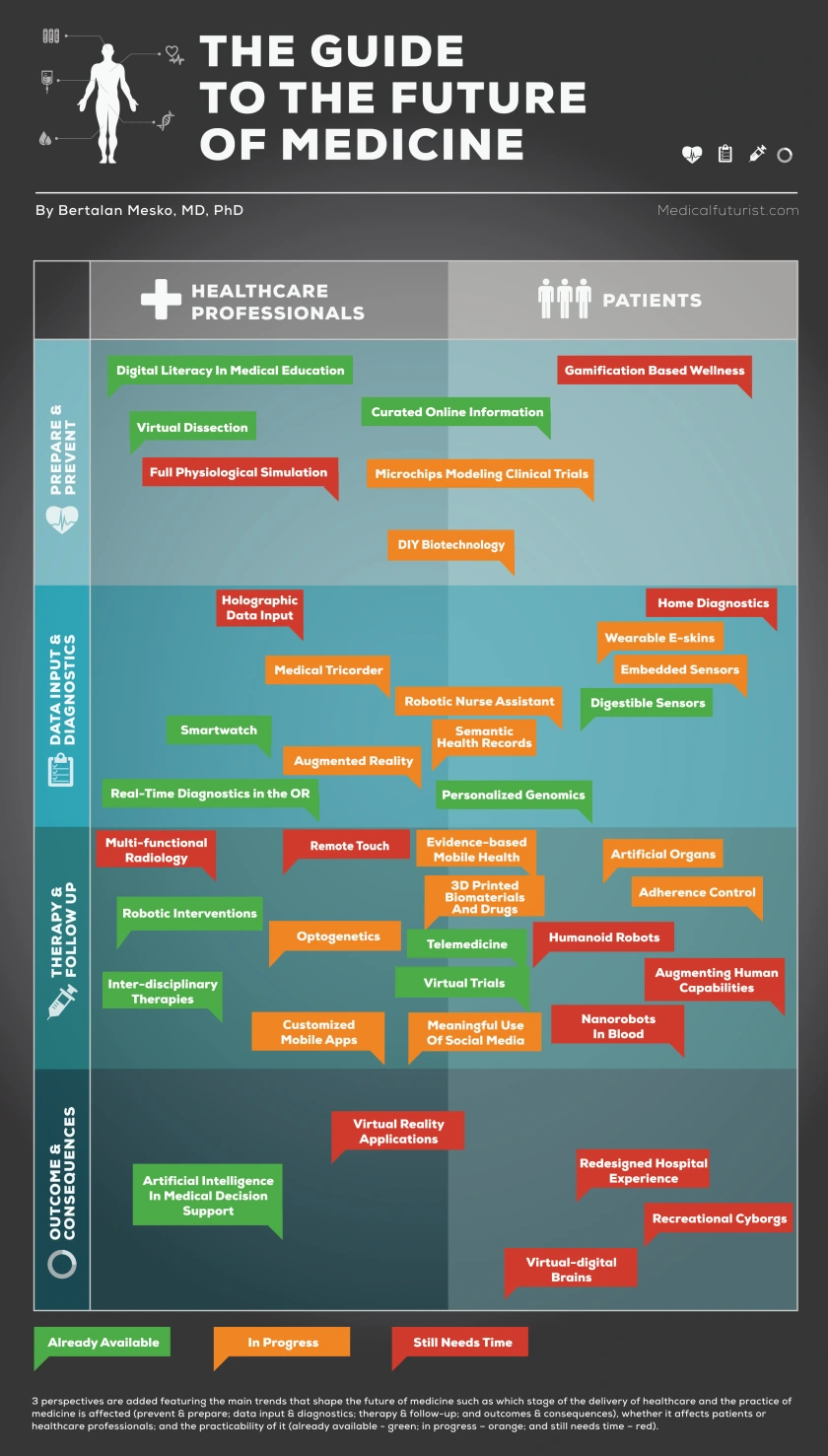
There are a zillion digital health companies on the market, each praising their own solution/product as they can. It is up to the market to decide if these are any good. But how would patients, hospital systems, clinics or even investors decide on their added value? With the help of experts.

It is the 4th time we collect The TOP100 Digital Health Companies. A curated list of the best companies of the thousands we encounter while doing our work at The Medical Futurist. Of them, we chose a hundred that represent the following key values: mindset for innovation, truly disruptive technology, viable business model and a clear dedication to digital health.

Take care,
Berci
Bertalan Meskó, MD
The Medical Futurist

***

YOUR COMMENTS ARE APPRECIATED.

***

Welcome ARPA-H [health]

By Dr. David Edward Marcinko MBA CMP

SPONSOR: http://www.CertifiedMedicalPlanner.org

***

Recent advances in biomedical and health sciences—from immunotherapy to treat cancer, to the highly effective COVID-19 vaccines—demonstrate the strengths and successes of the U.S. biomedical enterprise. Such advances present an opportunity to revolutionize how to prevent, treat, and even cure a range of diseases including cancer, infectious diseases, Alzheimer’s disease, and many others that together affect a significant number of Americans.

NIH: https://www.nih.gov/arpa-h

***

***

To improve the U.S. government’s capabilities to speed research that can improve the health of all Americans, President Biden is proposing the establishment of the Advanced Research Projects Agency for Health (ARPA-H). Included in the President’s FY2022 budget as a component of the National Institutes of Health (NIH) with a requested funding level of $6.5B available for three years, ARPA-H will be tasked with building high-risk, high-reward capabilities (or platforms) to drive biomedical breakthroughs—ranging from molecular to societal—that would provide transformative solutions for all patients.

MORE: https://thehealthcareblog.com/blog/2022/03/22/arpha-h-needs-to-think-bigger/

***

COMMENTS APPRECIATED

Thank You

Subscribe to the Medical Executive-Post

***

***

***

Virtual Care Training Should be a Core Competency Taught in Medical School

By Staff Reporters

***

***

  • 76% of clinicians believed virtual care training should be a core competency taught in medical school and for advanced nursing degrees.
  • 46% felt they weren’t adequately trained in virtual care by their practice or employer.
  • 40% of clinicians said advancements in remote patient monitoring will be critical.

Source: Wheel, “The Great ReExamination: Examining the Pandemic’s Challenging Working Conditions for Doctors and Nurses,” March 2022

***

COMMENTS APPRECIATED

Thank You

Subscribe to the Medical Executive-Post

***

***

PODCAST: Medical Supply Chain Management?

Our broken healthcare supply chain – what can be done

By Dr. Marion Mass MD

Dr. Marion Mass graduated from Medical School at Duke University. She completed internship and residency at Northwestern University’s Robert Lurie Children’s Hospital in Chicago. Dr. Mass has worked in the Philadelphia area as a pediatrician for 21 years.

Fixing Common Medical Device Supply Chain Break Points - # ...

PODCAST: https://www.youtube.com/watch?v=-BZEVnkkRAE

MARCINKO on SCM: https://medicalexecutivepost.com/2011/06/09/supply-chain-management-in-healthcare/

Your comments are appreciated.

THANK YOU

BUSINESS: https://www.amazon.com/Business-Medical-Practice-Transformational-Doctors/dp/0826105750/ref=sr_1_9?ie=UTF8&qid=1448163039&sr=8-9&keywords=david+marcinko

***

HIT: https://www.amazon.com/Dictionary-Health-Information-Technology-Security/dp/0826149952/ref=sr_1_5?ie=UTF8&s=books&qid=1254413315&sr=1-5

***

ANNOUNCING: A New Course In Digital Health

The Medical Futurist

By Dr. Bertalan Meskó MD PhD

***

I’m so happy and proud that I can finally share with you the biggest project The Medical Futurist has ever worked on: The Digital Health Course.

Today, we publicly launch the digital platform where you can learn about everything we and I personally find important about digital health. I mean EVERYTHING!

In this course I break down everything I’ve learned over the last 15 years about the future of healthcare and digital health, what changes are taking place now and over the next 5+ years, what impact they’ll have on you as a healthcare decision-maker, and exactly what you should be doing today to best position yourself or your company for this inevitable reality.

We designed this course to provide you with a complete overview of digital health, guide you through the technological aspects, and equip you to be able to predict and forecast what’s coming next.

From the basics and its definition, to why it’s a cultural transformation that is happening now, how it is a paradigm shift of care, how you can spot trends in it and forecast the near future.

***

***

As I guide you personally through the course, I have put my heart, brain and soul into the whole curriculum.

Sign up here > (free preview available)

***

***

***

METAVERSE: Healthcare Transformation -OR- Not?

By Bertalan Meskó, MD PhD
The Medical Futurist

***

***

HOW THE METAVERSE COULD (OR COULD NOT) TRANSFORM HEALTHCARE


If you’ve browsed the internet in the last couple of months, the term ‘metaverse’ is likely to have been thrown at you at least once. Facebook rebranded itself after the concept and other companies are adopting the metaverse with their own spin; betting heavily that it will be the next iteration of the internet where we will work and play alike.

It was time to dive into what the metaverse could mean to delivering healthcare.

READ MORE

***

***

COMMENTS APPRECIATED

Thank You

Subscribe to the Medical Executive-Post.com
***

TELE-HEALTH: Market Share of Outpatient Visits

By Staff Reporters

***

***

KFF: Share of Outpatient Visits by Telehealth, 2019-2021

 •  March 2019-Feb. 2020: 0% (Rounded, telehealth use was a negligible share prior to pandemic.)
 •  March-Aug. 2020: 13%
 •  Sept. 2020-Feb. 2021: 11%
 •  March-Aug. 2021: 8%

Source: KFF Health System Tracker, “Outpatient telehealth use soared early in the COVID-19 pandemic but has since receded,” February 10, 2022

***

COMMENTS APPRECIATED

Thank You

Subscribe to the Medical Executive-Post

***

***

H2 Healthcare Data Breach Report

MCOL Cyber Attacks

By Staff Reporters

***

Critical Insight: 2021 with 5 Findings

 •  In 2021, 45 million individuals were affected by healthcare cyber-attacks, up from 34 million in 2020.
 •  The total number of affected increased 32% over 2020, meaning that more records are exposed per breach each year.
 •  Breaches only rose 2.4% from 663 in 2020 to 679 in 2021 but still hit historic highs.
 •  Hacking/IT incidents continue as the most common cause of breaches with an increase of 10% in 2021.
 •  Hacking incidents at outpatient/specialty clinics saw a 41% increase in these types of breaches in 2021.

Source: Critical Insight via Fierce Healthcare, February 1, 2022

***

COMMENTS APPRECIATED

Thank You

Subscribe to the Medical Executive-Post

***

***

***

PODCAST: 15 Metrics for Successful Healthcare Companies

Phil Fisher Was One of the Greatest Entrepreneurial Investors of the 20th Century and a Source of Wisdom for Warren Buffett

By Eric Bricker MD

****

***

Related: https://thehealthcareblog.com/blog/2022/02/03/after-the-crash/?utm_campaign=THCB%20Reader&utm_medium=email&utm_source=Revue%20newsletter

***

COMMENTS APPRECIATED

Thank You

Subscribe to the Medical Executive-Post

***

***

***

Product Details

CITE: https://www.r2library.com/Resource/Title/0826102549

***

UPDATE: Crypto Advertisements on Super Bowl Sunday 2022

The Crypto Bowl and the Dot Com Bowl?

By Staff Reporters

***

CRYPTO CURRENCY: Tonight, about 117 million people will watch celebrities pitch cryptocurrency on the Super Bowl. In what’s being dubbed the “Crypto Bowl,” a batch of crypto exchanges including FTX, Coinbase, and Crypto.com, will air Super Bowl commercials at a cost of up to $7 million per 30-second spot. The game is even being held at a stadium named after SoFi, a company that offers crypto trading.\

BEWARE: https://www.msn.com/en-us/news/us/meet-the-crocodile-of-wall-street-rapper-accused-of-laundering-billions-of-dollars-in-crypto/ar-AATNmv6?li=BBnb7Kz

This isn’t the first time startups from an emerging industry have used the Super Bowl to introduce themselves to a mass audience. Does anyone remember the 2000 Super Bowl between the Rams and the Titans? That was known as the “Dot-Com Bowl.” Startups that were part of the dot-com wave of the early internet bought nearly 20% of the total ad slots in what is considered the peak of that tech bubble.

CITE: https://www.r2library.com/Resource/Title/082610254

Well, that bubble burst. In fact, according to journalist Neal Freyman, of the 14 dot-com companies that purchased Super Bowl ads that year, four are still active, five were acquired, and five (including Pets.com, OnMoney.com, and Epidemic.com) are either defunct or their status is unclear.

***

COMMENTS APPRECIATED

Thank You

Subscribe to the Medical Executive-Post

***

***

***

Guide to Telehealth

***

Guide to Telehealth – Then, Now, Tomorrow?
By Rebecca Chi

Healthcare providers have employed various forms of telehealth since long before the start of the coronavirus pandemic. Telehealth delivers knowledge and expertise to people and places that need it. A movement that largely began as a way to improve access to healthcare in rural communities saw explosive growth in 2020. Today, telehealth is in wide use and here to stay.

***

Advancing Value-Based Care Through Telehealth

What is telehealth?
The US Health Resources and Services Administration defines telehealth as any electronic information and telecommunications technology that is used to support and promote long-distance clinical healthcare, patient and professional health-related education, public health and health administration. Telehealth technologies benefit providers, healthcare organizations and patients.

The importance of telehealth
The key to maintaining population health and lowering expenditures is delivering timely access to high-quality care.

The US is struggling to improve the quality of healthcare and make the needed shift to value-based models. Innovative telehealth solutions that addressed our country’s worsening healthcare access problem reached the point of widespread adoption in 2020, when the pandemic pushed the healthcare system to its limits.

Telehealth increases convenience of care and access while decreasing costs and maximizing physician time. Providers, payers and employers are increasingly adopting various and connected types of telehealth solutions to improve healthcare operations and patient outcomes. Patients embrace the convenience, safety, accessibility and flexibility of telehealth options.

Click here to continue story. 

***

COMMENTS APPRECIATED.

Thank You

Subscribe to the Medical Executive-Post

***

What is a DAO [not DOA] in Health Care?

Decentralized Autonomous Organizations in Health Care?

By Staff Reporters

****

DEFINITION: A decentralized autonomous organization (DAO), sometimes called a decentralized autonomous corporation (DAC), is an organization represented by rules encoded as a computer program that is transparent, controlled by the organization members and not influenced by a central government. A DAO’s financial transaction record and program rules are maintained on a blockchain.

CITE: https://www.r2library.com/Resource/Title/082610254

****

Overview of Decentralized Autonomous Organization (DAO) | by IOSG | IOSG  Ventures | Medium

BLOCKCHAIN HEALTH: https://medicalexecutivepost.com/2018/11/02/on-blockchain-in-healthcare/

The precise legal status of this type of business organization is unclear. But, in healthcare, today?

DAOs in HEALTH CARE: https://thehealthcareblog.com/blog/2022/01/19/daos-may-rescue-healthcare/?utm_campaign=THCB%20Reader&utm_medium=email&utm_source=Revue%20newsletter

***
COMMENTS APPRECIATED

Thank You

Subscribe to the Medical Executive-Post

***

***

***

Comprehensive Financial Planning and Risk Management Strategies for Doctors and their Advisors

***

Best Practices from Leading Consultants and Certified Medical Planners

SPONSOR: http://www.CertifiedMedicalPlanner.org

CMP logo

***

***

Risk Management, Liability Insurance, and Asset Protection Strategies for Doctors and Advisors: Best Practices from Leading Consultants and Certified Medical Planners™

ORDER: https://www.routledge.com/Risk-Management-Liability-Insurance-and-Asset-Protection-Strategies-for/Marcinko-Hetico/p/book/9781498725989

***

ORACLE Buys CERNER Electronic Medical Records

By Staff Reporters

***

***

According to reporter Neal Freyman, Tech giant Oracle said it’s paying $28.3 billion to buy electronic medical records company Cerner, because anything that makes paperwork less excruciating seems like a savvy business play.

Oracle is known for being aggressive with acquisitions (it even rallied a group to try and buy TikTok last year), but Cerner is Oracle’s biggest purchase in its history. The deal is further evidence that health care is “on par with banking in terms of the importance to our future,” as cofounder Larry Ellison told analysts earlier this month.

  • In Cerner, Oracle will get the Klay Thompson of the electronic medical records market—a very influential player, but in second place behind Epic, which owns a 31% market share.

Bottom line: Big tech companies see a golden opportunity in bringing the health care industry to the cloud, given its size (health care spending accounts for almost 20% of US GDP), and its old-school record-keeping process. A Mayo Clinic study cited by Oracle showed that doctors and nurses spend an average of 1–2 hours on desk work for every hour they take to see patients.

***

EMR PODCAST: https://medicalexecutivepost.com/2021/08/29/podcast-on-electronic-medical-records/

***

COMMENTS APPRECIATED.

Thank You

Subscribe to the Medical Executive-Post

***

BUSINESS MEDICINE: https://www.amazon.com/Business-Medical-Practice-Transformational-Doctors/dp/0826105750/ref=sr_1_9?ie=UTF8&qid=1448163039&sr=8-9&keywords=david+marcinko

***

HIT: https://www.amazon.com/Dictionary-Health-Information-Technology-Security/dp/0826149952/ref=sr_1_5?ie=UTF8&s=books&qid=1254413315&sr=1-5

***
THANK YOU

***

TELE-MEDICINE Fraud, Abuse and New Barriers!

Telemedicine: Fraud and Abuse During the COVID Pandemic

By Susan Walberg

The COVID-19 pandemic has brought with it huge challenges for people all over the world; not only the obvious health-related concerns but also shutdowns, unemployment, financial difficulties, and a variety of lifestyle changes as a result.

When the COVID pandemic struck, CMS quickly recognized that access to care would be an issue, with healthcare resources strained and many providers or suppliers shutting down their offices or drastically limiting availability. Patients who needed routine care or follow-up visits were at risk for not receiving services during a time when healthcare providers were scrambling to enhance infection control measures and implement other new safety standards to protect patients and healthcare workers.

The Centers for Medicare and Medicaid Services (CMS) has responded by easing restrictions and regulatory burdens in order to allow patients to receive the healthcare services they need without undue access challenges. One key area that has changed is the restrictions related to telehealth services, which were previously only paid by Medicare under certain circumstances, such as patients living in remote areas.

Among the changes and waivers CMS has offered, telemedicine reimbursement is among the more significant. Telemedicine services, which includes office visits and ‘check ins’ are now allowed and reimbursed by Medicare. In addition to reimbursement changes, CMS has also relaxed the HIPAA privacy and information security enforcement standards, paving the way for providers to adopt a new model of providing services electronically.

TELE-HEALTH BARRIERS: https://www.statnews.com/2021/07/13/telehealth-provisions-emergency-patients/

See the source image

MORE:  https://medicalexecutivepost.com/2021/05/18/fraud-schemes-of-few-medical-providers/

Your thoughts are appreciated.

THANK YOU

***

UNDERSTANDING MEDICAL PRACTICE CYBER SECURITY RISKS

Mitigations for the Digital Health Era

 By Shahid N. Shah MS

There has been a tremendous explosion of information technology (IT) in healthcare caused by billions of dollars of government incentives for usage of digital healthcare tools. But, IT systems face threats with significant adverse impacts on institutional assets, patients, and partners if sensitive data is ever compromised. Every health enterprise is required to confidentiality, integrity and availability of its information assets (this is called “information assurance” or IA). Confidentiality means private or confidential information must not be disclosed to unauthorized persons. Integrity means that the information can be changed only in an authorized manner so as to maintain the correctness of the information. Availability defines the characteristic that information systems work as intended and all services are available to its users whenever necessary.

It is well known that healthcare organizations face and have been mitigating many risks such as investment risk, budgetary risk, program management risk, safety risk, and inventory risk for many years. What’s new in the last decade or so is that organizations must now manage risks related to information systems because  operating systems [OSs] are also at risk. IT is now just as a critical an asset as most other infrastructure managed by health systems. It is important that information security risks are given the same or more importance and priority as given to other organizational risks.

As health records move from paper native to digital native, it’s vital that organizations have information risk management programs and security procedures that woven into the culture of the organization. For this to happen, basic requirements of information security must be defined and implemented as part of both the operational and management processes. A framework that provides guidance on how to perform these activities, and the co-ordination required between these activities is needed.

INTRODUCTION

The Risk Management Framework (RMF), supported by the National Institute of Standards and Technology (NIST) provides this framework. The NIST 800 series publications provide a structured approach to achieve risk management. It provides broad guidance and not necessarily all the prescriptions, which means it can be tailored to meet the organization’s specific needs and providing the flexibility needed for the different organizations. Using the NIST RMF helps organizations with risk management not only in a repeatable manner, but also with greater efficiency and effectiveness. Healthcare information assurance is complex and without a framework that takes into account a broad risk management approach, it is difficult to consider all the intricacies involved.

NIST Risk Management Framework

The NIST Risk Management Framework consists of a six step process designed to guide organizations in managing the risks in their information systems. The various steps as defined in the NIST specifications are the following:

  • Categorize the information system and the information processed, stored, and transmitted by that system based on an impact analysis.
  • Select an initial set of baseline security controls for the information system based on the security categorization; tailoring and supplementing the security control baseline as needed based on an organizational assessment of risk and local conditions
  • Implement the security controls and describe how the controls are employed within the information system and its environment of operation.
  • Assess the security controls using appropriate assessment procedures to determine the extent to which the controls are implemented correctly, operating as intended, and producing the desired outcome with respect to meeting the security requirements for the system.
  • Authorize information system operation based on a determination of the risk to organizational operations and assets, individuals, other organizations, and the Nation resulting from the operation of the information system and the decision that this risk is acceptable.
  • Monitor the security controls in the information system on an ongoing basis including assessing control effectiveness, documenting changes to the system or its environment of operation, conducting security impact analyses of the associated changes, and reporting the security state of the system to designated organizational officials.

***

***

Worst case scenario

All information systems process, store and transmit information. What is the possible impact if a worst case scenario occurs that causes endangers this information? A structured way to find out the potential impact on the confidentiality, integrity and availability of information can be done through the first step of NIST RMP, the categorization of information systems. The NIST SP 800-60  provides such guidance. The potential impact is assigned qualitative values – low, moderate, or high. Based on these impact levels for each of the information type contained in the system, the high water mark level is calculated, that helps in selecting the appropriate controls in the subsequent steps.

Organizations need to mitigate risks adequately by selecting an appropriate set of controls that would work effectively. In the selection of security controls step, the set of controls are chosen based on the categorization of the information system, the high water mark and the goals of the organizations. These baseline controls are selected from NIST SP 800-53  specification, one of three sets of baseline controls, corresponding to low, moderate, high impact rating of the information system. These baseline controls can be modified to meet specific business needs and organization goals. These tailored controls can be supplemented with additional controls, if needed, to meet unique organizational policies and environment factors and its security requirements and its risk appetite. The minimum assurance requirements need to be specified here.

All the activities necessary for having the selected controls in place, is done in the implementation of security controls step. The implementation of the selected security controls will have an impact on the organization risks and its effects. NIST SP 800-70 can be used as guidance for the implementation. An implementation strategy has to be planned and the actions have to be defined and the implementation plan needs to be reviewed and approved, before the implementation is done.

Once the controls are implemented, then the assessment of security controls is done to find out whether the controls have been correctly implemented, working as intended, and giving the desired output with respect to the security requirements. In short, whether the applied security controls are indeed the right ones, done in the right way, giving the right outcome. NIST SP 800-53,, NIST 800-53A, NIST 800-115 can provide the necessary guidance, here.

IS authorization

The authorization of information systems is an official management decision, authorizing that the information system can be made operational, with the identified risks mitigated and the residual risks accepted, and is accountable for any adverse impacts on the confidentiality, integrity and availability of information systems. If the authorizing personnel find that the risks are not mitigated and hence can compromise the sensitive information, they can deny authorizing the information system. NIST SP 800-37 provides guidance on authorization. The authorizing personnel are to be involved actively throughout the risk management process.

Risk management is not one-time process, that once it is done, it is forgotten. It is a continuous process, to be integrated with day-to-day activities. One of the key aspects of any risk management is the monitoring of security controls to check whether the controls are performing as intended. The main focus of monitoring security controls is to know whether the controls are still effective over a period time, given the changes that occur in the information systems — the changes in hardware, software and firmware, the changes in environment factors, operating conditions etc. NIST SP 800-37  provides guidance about this. And if the security controls are found to be ineffective, the cycle starts again, with either re-categorization or selecting another set of baseline controls, or assessing the effectiveness of the controls once more etc.

And, in all the steps in risk management framework, one of the important aspects is communication. Appropriate documents needed to be generated in all the steps, reviewed and kept up-to-date.

Assessment

Organizational risk management provides great benefits to the organization because it helps to prioritize the resources, increase interoperability, and reduce costs incurred due to the adverse effects. It helps to prevent unauthorized access to personally identifiable information which will lead to security breaches.

Conclusion

Your thoughts are appreciated.

***

Product DetailsProduct Details

***

Healthcare Consumers Want Personalized Experiences

By Staff Reporters

A survey that Redpoint Global conducted with Dynata of more than 1,000 US healthcare consumers found:

 •  57% of healthcare consumers think retailers and/or financial services are better at providing personalized omnichannel experiences than healthcare
 •  29% said they expect frictionless check-in experiences across apps/phone calls/in-office
 •  34% expect data inputs in a healthcare portal (health history, surveys, insurance information, etc.) to
    reach providers
 •  24% of respondents said they did not utilize any sort of digital communication with providers during
    the pandemic
 •  14% said they had no contact with any healthcare provider during the same timeframe

Source: Redpoint Global, December 7, 2021

***

COMMENTS APPRECIATED.

Thank You

Subscribe to the Medical Executive-Post

***

***

PODCAST: Healthcare Re-Imagined

COMMON BRIDGE” WITH RICH HELPPIE

Richard Helppie's Common Bridge

Colleague Richard Helppie interviews Dean Clancy

Dean Clancy is a senior health care policy fellow at Americans for Prosperity and a nationally known health care freedom advocate and domestic policy expert with more than twenty years’ high-level policy experience in Congress, the White House, and the U.S. health care industry.

EDITOR’S NOTE: I first met Rich in B-school, when I was a student, back in the day. He was the Founder and CEO of Superior Consultant Holdings Corp. Rich graciously wrote the Foreword to one of my first textbooks on financial planning for physicians and healthcare professionals. Today, Rich is a successful entrepreneur in the technology, health and finance space.

-Dr. David E. Marcinko MBA CMP®

***

PODCAST: https://richardhelppie.com/dean-clancy/

ASSESSMENT: Your thoughts are appreciated.

***

THANK YOU

***

The Crypto-future through Bitcoin, Ethereum, Ripple XRP and IOTA

Peering into the Crypto-Future 

By Phil Baumann RN

In order to gain a clearer view of the impacts of the incoming future of technologies and their economic, behavioral, cultural, political and other impacts, categorization can perform useful veil-lifting.

I’ll let the reader do the deep-dive research into the technologies underlying each of these currencies, but here is a peeled-away breakdown of their respective categories:

Whether these specific “coins” succeed the slaughtering rapidity of techno-culture shocks remains to be seen.

Yes, they are traded assets that can make you rich or poor. That’s certainly interesting. What matters much more than their capital markets is that each has attempted to confront crucial problems that can liberate the ramifying “potential energies” of other technologies that can plug in to them.

Their premises spur economy-generating economies.

***

***

Don’t feel bad if you missed the Bitcoin gold-rush. That’s in the past. Sometimes understanding the world confers its own wealth (insert Latin aphorism here). If you run the currency of knowledge through the circuitry of imagination you gain the power of foresight.

Assessment:

That’s my two cents: take them and spread the wealth.

Disclosure: I hold Bitcoin (BTC), Ethereum (ETH), Ripple XRP and IOTA (MIOTA). But this post is not about finance per se nor is it about promoting these currencies as investments. Rather this post is about envisioning the four kinds of markets that the respective technologies underlying each of these four cryptocoins can help grow and power. These aren’t simply currencies and stores of monetary value – they are technologies.

Conclusion

Your thoughts and comments on this ME-P are appreciated. Feel free to review our top-left column, and top-right sidebar materials, links, URLs and related websites, too. Then, subscribe to the ME-P. It is fast, free and secure.

Speaker: If you need a moderator or speaker for an upcoming event, Dr. David E. Marcinko; MBA – Publisher-in-Chief of the Medical Executive-Post – is available for seminar or speaking engagements. Contact: MarcinkoAdvisors@msn.com

OUR OTHER PRINT BOOKS AND RELATED INFORMATION SOURCES:

Risk Management, Liability Insurance, and Asset Protection Strategies for Doctors and Advisors: Best Practices from Leading Consultants and Certified Medical Planners™8Comprehensive Financial Planning Strategies for Doctors and Advisors: Best Practices from Leading Consultants and Certified Medical Planners™

***

Crypto-Currency “GAS” FEES: Ethereum Network

***

By Staff Reporters

According to Wikipedia, a cryptocurrency, crypto-currency, or crypto is a collection of binary data which is designed to work as a medium of exchange. Individual coin ownership records are stored in a ledger, which is a computerized database using strong cryptography to secure transaction records, to control the creation of additional coins, and to verify the transfer of coin ownership. Cryptocurrencies are generally fiat currencies, as they are not backed by or convertible into a commodity. Some crypto schemes use validators to maintain the cryptocurrency. In a proof-of-stake model, owners put up their tokens as collateral. In return, they get authority over the token in proportion to the amount they stake. Generally, these token stakers get additional ownership in the token over time via network fees, newly minted tokens or other such reward mechanisms.

***

Product Details

CITE: https://www.r2library.com/Resource/Title/0826102549

Cryptocurrency does not exist in physical form (like paper money) and is typically not issued by a central authority. Cryptocurrencies typically use decentralized control as opposed to a central bank digital currency (CBDC). When a cryptocurrency is minted or created prior to issuance or issued by a single issuer, it is generally considered centralized. When implemented with decentralized control, each cryptocurrency works through distributed ledger technology, typically a blockchain, that serves as a public financial transaction database.

A cryptocurrency is a tradable digital asset or digital form of money, built on blockchain technology that only exists online. Cryptocurrencies use encryption to authenticate and protect transactions, hence their name. There are currently over a thousand different cryptocurrencies in the world, and many see them as the key to a fairer future economy.

Bitcoin, first released as open-source software in 2009, is the first decentralized cryptocurrency. Since the release of bitcoin, many other cryptocurrencies have been created.

***

***

Enter GAS

Gas refers to the unit that measures the amount of computational effort required to execute specific operations on the cryptocurrency Ethereum network. Since each Ethereum transaction requires computational resources to execute, each transaction requires a fee. Gas refers to the fee required to conduct a transaction on Ethereum successfully.

READ: https://www.morningbrew.com/daily/stories/ethereum-gas-fees?utm_campaign=etb&utm_medium=newsletter&utm_source=morning_brew&mid=349b552221c994e2540a304649746d7c

CITE: https://www.r2library.com/Resource/Title/082610254

Gas fees are paid in Ethereum’s native currency, ether (ETH). Gas prices are denoted in gwei, which itself is a denomination of ETH – each gwei is equal to 0.000000001 ETH (10-9 ETH).

NFT: https://www.morningbrew.com/emerging-tech/stories/2021/02/22/nft-market-tripled-last-year-gaining-even-momentum-2021?email=marcinkoadvisors@msn.com&mid=349b552221c994e2540a304649746d7c&uid=jotgRJS1MLYGk2SSdfbR4b5r

***

See the source image

***

For example: Instead of saying that your gas costs 0.000000001 ether, you can say your gas costs 1 gwei. The word ‘gwei’ itself means ‘giga-wei’, and it is equal to 1,000,000,000 wei. Wei itself (named after Wei Dai, creator of b-money) is the smallest unit of ETH

MORE: https://swyftx.com/learn/what-are-ethereum-gas-fees/

COMMENTS APPRECIATED.

Subscribe to the Medical Executive-Post

THANK YOU

***

***

PODCASTS: What is a STABLECOIN?

HEDGE AGAINST INFLATION

By Dr. David E. Marcinko MBA CMP®

CMP logo

SPONSOR: http://www.CertifiedMedicalPlanner.org

***

What Are Stablecoins? - CB Insights Research

***

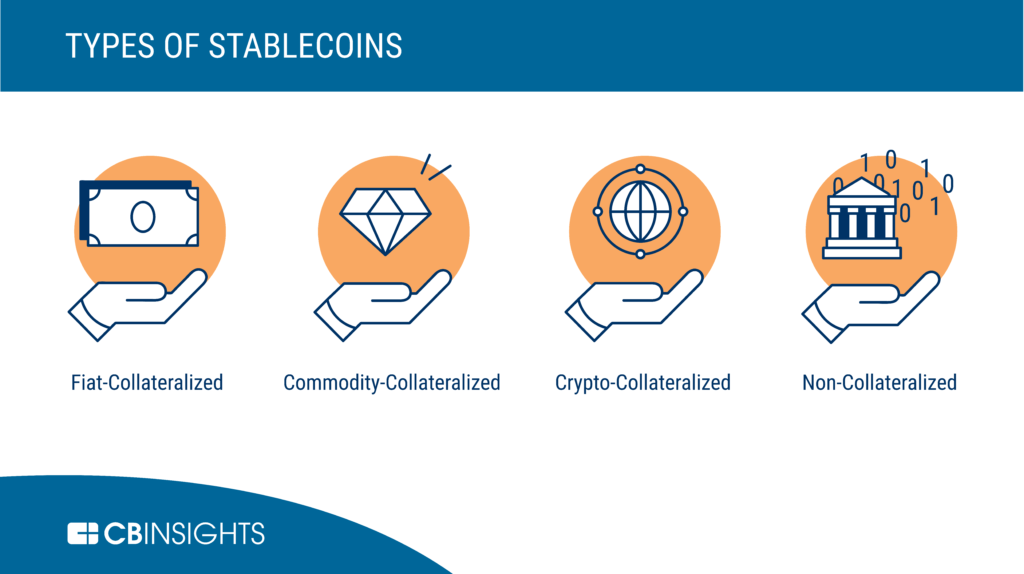
DEFINITION: Stablecoins are blockchain-based digital currencies that have been created with the aim to have a stable value. Stablecoins achieve price-stability through various different methods such as a peg against a fiat currency or a commodity, through collateralization against other cryptocurrencies or through algorithmic coin supply management.

CITE: https://www.r2library.com/Resource/Title/0826102549

Every stable coin includes a specific set of mechanisms that mostly behave in the same way. In general, stable coins keep collateral of the asset and manage the supply. In this way, they incentivize the market, which allows trade of the coin for no more or less than $1.

A stable coin can be considered the best depending on several factors: It should be stable. PAX is one the most stable stablecoin. It should be liquid and available on most exchanges. It should be backed by FIAT. PAX is 100% collateralized in US bank accounts. It should be regulated. It should be redeemable.

MORE: https://www.msn.com/en-us/money/markets/treasury-fed-fear-stablecoins-could-disrupt-financial-system/ar-AAOE7lO?li=BBnb7Kz

PODCAST #1: https://www.youtube.com/watch?v=O3rVWLhBIPo

PODCAST #2: https://www.youtube.com/watch?v=GsSSLDzKCOE

YOUR COMMENTS ARE APPRECIATED.

Thank You

***

DENTISTS: Don’t Write Many Prescriptions / Ransomware and Cyber News

A Personal Op-Ed Perspective

***

pruitt

By Darrell Pruitt DDS

***

Dentists simply don’t write that many prescriptions.

Henry Schein employees are not defending Stanley Bergman’s venture into e-prescription software. That is because they know it stinks. Digital prescriptions not only endanger patients and dental practices, but they offer no tangible benefits over paper. None!

Digital only increases the profits for Stanley Bergman and pharmaceutical interests – who eliminate data entry personnel from their payroll.

“First do no harm”

Ancient Greek physician Hippocrates.

EDITOR’S NOTE: We welcome back the op-eds of colleague Dr. Pruitt and trust he remains well in 2022.

***

Ransomware and Dentistry – Recent News

“Why Healthcare Will Remain a Top Cyberattack Target in 2022 – one of the main reasons criminals are interested in healthcare data is that it contains a lot of details, such as date of birth, Social Security numbers – the active ingredients for identity theft. You can get those data points from any number of places, but healthcare organizations are the richest sources.” Healthcare Info Security, December 28, 2021.https://www.govinfosecurity.com/interviews/healthcare-will-remain-top-cyberattack-target-in-2022-i-4999

“Ransomware in 2022: You May Be Screwed, but Without Insurance It Could Always Be Worse – A commentator recently summed up the risk of ransomware attack in 2022: ‘we’re all screwed.’ True enough. But that’s all the more reason to prepare right now. After all, the only thing worse than a ransomware attack is not having adequate insurance coverage when it occurs. The time to prepare is now.” National Law Review, Wednesday, January 5, 2022.
https://www.natlawreview.com/article/ransomware-2022-you-may-be-screwed-without-insurance-it-could-always-be-worse

“Insurers run from ransomware cover as losses mount” Summary:
– Lloyd’s of London discourages cyber expansion-sources
– Ransomware as profitable as Colombian cocaine cartels
– Some insurers asking policyholders to pay half of ransoms
– Attackers change strategy from scattergun to focused.Reuters, November 19, 2021.
https://www.reuters.com/markets/europe/insurers-run-ransomware-cover-losses-mount-2021-11-19/

Yep.  We’re all screwed. Well, not all of us.

 Paper remains the best deterrent to ransomware. 

COMMENTS APPRECIATED.

Subscribe to the Medical Executive-Post

Thank You

***

***

***

PODCAST: Technology Enabled Behavioral Healthcare in 2022?

A Critical Strategy for Population Health Management

By Michael Vergare MD

***

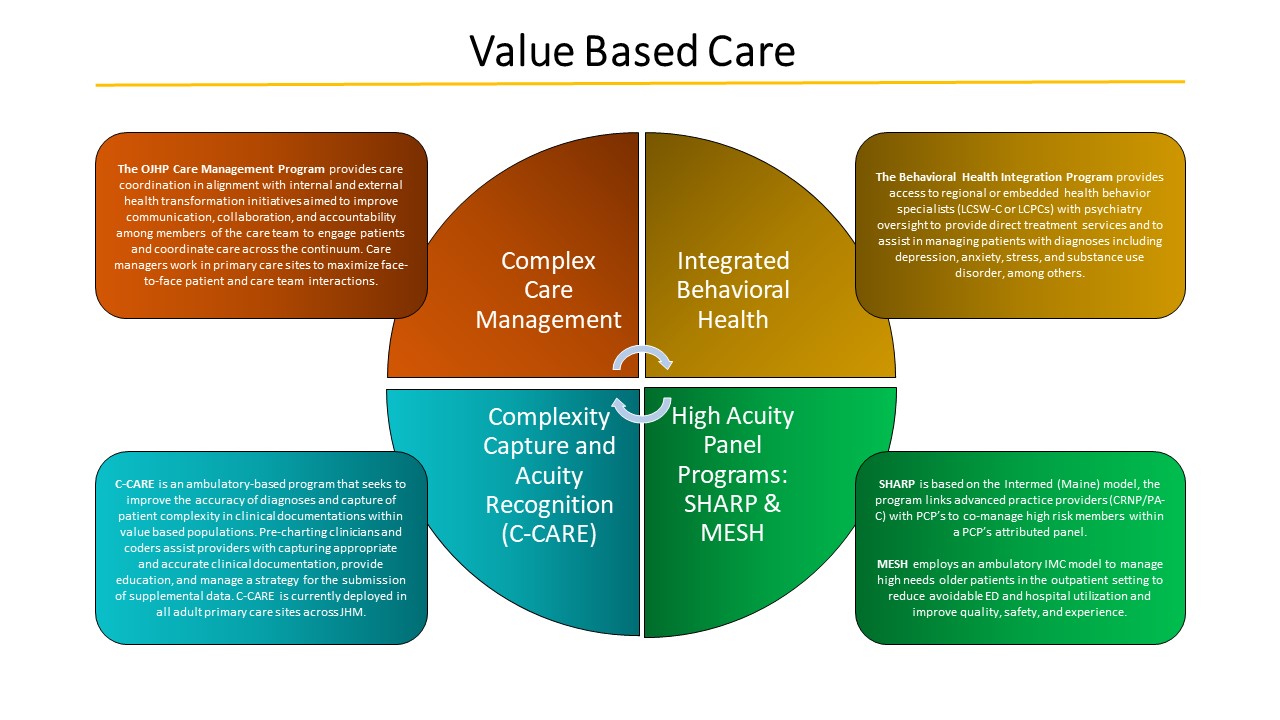
Value Based Care Definitions: https://www.r2library.com/Resource/Title/0826102549

High Value Care & Value-Based Care

PODCAST: https://www.healthsharetv.com/content/technology-enabled-behavioral-health-care-critical-strategy-population-health-management

YOUR COMMENTS ARE APPRECIATED.

***

Thank You

***

***

PODCAST: Why Tech Companies Fail at Health Care

HEALTH PLAN “AGE” AS RISK FACTOR

BY ERIC BRICKER MD

***

***

CITE: https://www.r2library.com/Resource/Title/082610254

COMMENTS APPRECIATED

***

RISK MANAGEMENT: https://www.routledge.com/Risk-Management-Liability-Insurance-and-Asset-Protection-Strategies-for/Marcinko-Hetico/p/book/9781498725989

THANK YOU

***

Is there a Lack of Guidelines on the Re-Use of Hardware or Electronic Media for Healthcare?

Join Our Mailing List 

What to do to mitigate risk

Shahid N. Shah MS

[By Shahid N. Shah MS]

It is a common scenario that the hardware and electronic media are re-used instead of being simply disposed. They can be reused either internally within the healthcare organization or they can be resold or donated to other organizations/individuals.

Whatever may be the nature of reuse, it is important that all ePHI are completely erased using official government approved wiping methods, before it is given out for re-use. If this is not done, there are fairly high chances of the data being exposed and there by compromising ePHI.

Major Mitigation

Specific policies and procedures needs to be defined which clearly provides guidelines on the measures to be adopted when hardware or electronic media are reused. Often the risks associated with internal reuse of these media are overlooked, and as such there are no guidelines. Even if it is internal reuse, the same level of risks associated with unauthorized access exists here. 

Secondary Mitigation

Policies and procedures which advocates the use of logs and book keeping for these reuse would help to track these media in a better way. 

Success criteria

Audit of the logs and book keeping records will provide the information on whether the policies are being followed. And, the risk assessment report will give a clearer picture whether this risk has been mitigated or not.

***

working with computer

*** 

ABOUT

Mr. Shahid N. Shah is an internationally recognized healthcare thought-leader across the Internet. He is a consultant to various federal agencies on technology matters and winner of Federal Computer Week’s coveted “Fed 100″ Award, in 2009. Over a twenty year career, he built multiple clinical solutions and helped design-deploy an electronic health record solution for the American Red Cross and two web-based eMRs used by hundreds of physicians with many large groupware and collaboration sites. As ex-CTO for a billion dollar division of CardinalHealth, he helped design advanced clinical interfaces for medical devices and hospitals. Mr. Shah is senior technology strategy advisor to NIH’s SBIR/STTR program helping small businesses commercialize healthcare applications. He runs four successful blogs: At http://shahid.shah.org he writes about architecture issues; at http://www.healthcareguy.com he provides valuable insights on applying technology in health care; at http://www.federalarchitect.com he advises senior federal technologists; and at http://www.hitsphere.com he gives a glimpse of HIT as an aggregator. Mr. Shah is a Microsoft MVP (Solutions Architect) Award Winner for 2007, and a Microsoft MVP (Solutions Architect) Award Winner for 2006. He also served as a HIMSS Enterprise IT Committee Member. Mr. Shah received a BS in computer science from the Pennsylvania State University and MS in Technology Management from the University of Maryland. 

Conclusion

Your thoughts and comments on this ME-P are appreciated. Feel free to review our top-left column, and top-right sidebar materials, links, URLs and related websites, too. Then, subscribe to the ME-P. It is fast, free and secure.

Speaker: If you need a moderator or speaker for an upcoming event, Dr. David E. Marcinko; MBA – Publisher-in-Chief of the Medical Executive-Post – is available for seminar or speaking engagements. Contact: MarcinkoAdvisors@msn.com

OUR OTHER PRINT BOOKS AND RELATED INFORMATION SOURCES:

***

[PHYSICIAN FOCUSED FINANCIAL PLANNING AND RISK MANAGEMENT COMPANION TEXTBOOK SET]

  Risk Management, Liability Insurance, and Asset Protection Strategies for Doctors and Advisors: Best Practices from Leading Consultants and Certified Medical Planners™Comprehensive Financial Planning Strategies for Doctors and Advisors: Best Practices from Leading Consultants and Certified Medical Planners™

***

PODCAST: NaviHealth Digital Health Start-Up

SOLD TO OPTUM

BY ERIC BRICKER MD

***

***

YOUR COMMENTS ARE APPRECIATED.

Thank You

***

***

***

OPEN LETTER on Dental Practice Management Ransomware

By Darrell Pruitt DDS

Dear Kiltesh Patel

CEO of tab32 dental practice management software

***
A recent report says “60% of organizations hit by ransomware-as-a-service attacks in the past 18 months.”

LINK:https://venturebeat.com/2021/11/15/report-60-of-orgs-hit-by-ransomware-as-a-service-attacks-in-the-past-18-months/

***

See the source image

QUERY: Doesn’t that mean that 60% of tab32 customers have been hit by ransomware as well?

QUERY: Have you yet come to the conclusion that ignoring dentists’ and patients’ concerns about security is a bad business decision?

Give it time! 

COMMENTS AND THOUGHTS ARE APPRECIATED.

***

***

Thank You

***

PODCAST: Microsoft Buys Nuance; IPOs

By THCB

Today on Health in 2 Point 00, Jess DaMassa claims to be blameless for the drama between Jonathan Bush and Glen Tullman. On Episode 198, we talk about Microsoft buying Nuance for $16 billion and $3 billion in debt – is Microsoft taking over healthcare, and is this going to slow Nuance down?

IPOs

Cohere Health raises $36 million in a Series B, working on improving prior authorizations between health plans and providers. We wrap up with a lightning round of IPO rumors regarding Privia Health, VillageMD, and Bright Health.

MORE: https://thehealthcareblog.com/blog/2021/04/13/healthin2point00-episode-198-microsoft-buys-nuance-lots-of-ipo-rumors/

Your thoughts are appreciated.

THANK YOU

***

PODCAST: The Future of Pharma

THE MEDICAL FUTURIST

By Bertalan Mesko MD PhD

***

***
YOUR COMMENTS ARE APPRECIATED.

Thank You

***

PODCAST: Virtual Primary Care

Article of Dr. Marshall Chin in the NEJM

By Eric Bricker MD

***

***

YOUR COMMENTS ARE APPRECIATED.

Thank You

***

***

PODCAST: Healthcare Bio-Statistics

Data Science in Healthcare

BY ERIC BRICKER MD

***

***
YOUR COMMENTS ARE APPRECIATED.

***

BIO-STATISTICS COURSE: https://www.youtube.com/watch?v=1Q6_LRZwZrc-

***

Comprehensive Financial Planning Strategies for Doctors and Advisors: Best Practices from Leading Consultants and Certified Medical Planners™

***

***

Dodging an Embarrassing Question about Electronic Dental Records

MORE ON EDR SECURITY

The Secrets of AmeriPlan® Corporation's Discount Dentistry ...

By Darrell K. Pruitt, DDS

Dental Care Alliance Data Breach Impacts More Than 1 Million Patients

NEWS FLASH!

Sarasota, FL-based Dental Care Alliance, LLC, a dental support organization with more than 320 affiliated dental practices across 20 states, has been hacked and the protected health information of more than a million individuals has potentially been compromised. The breach occurred on September 18, 2020, was detected on October 11, and was contained on October 13.”

Steve Alder

[HIPAA Journal – December 10, 2020]

LINK: https://www.hipaajournal.com/dental-care-alliance-data-breach-impacts-more-than-1-million-patients/

Currently I am in conversation on LinkedIn with a Chief Information Officer for an IT firm. He assures me that the cloud is more secure than paper dental records stored in heavy and loud metal filing cabinets, but cannot say why.

Meanwhile, I have never heard of a million paper dental records being stolen in one heist. Wouldn’t that require a truck or two? What’s more, once the thieves escape to their hideout, someone will have to enter the data onto computers – while struggling to interpret bad handwriting.

ASSESSMENT: Your thoughts are appreciated …. More later.

THANK YOU

Risk Management, Liability Insurance, and Asset Protection Strategies for Doctors and Advisors: Best Practices from Leading Consultants and Certified Medical Planners™

Textbook Order: https://www.routledge.com/Risk-Management-Liability-Insurance-and-Asset-Protection-Strategies-for/Marcinko-Hetico/p/book/9781498725989

***

DENTISTRY and Data Breaches

NO LONGER EVEN NOTICED?

Connect with Dr. Darrell Pruitt Dentist DDS Fort Worth, TX

BY DARRELL PRUITT DDS


Data breaches are now so common that hardly anyone in healthcare notices them – especially in dentistry. I imagine that more than half of the data breaches from dental offices are never reported, and their patients never warned that their identities might be available on the internet.

Whether you ignore this problem or not, this will not end well, folks.


CITE: “Healthcare Cyberattacks Target 2 TX Hospitals, Expose PHI – Lavaca Medical Center and Throckmorton County Memorial Hospital both suffered cyberattacks that led to PHI exposure.” By Jill McKeon for HealthcareIT News, November 3, 2021.https://healthitsecurity.com/news/healthcare-cyberattacks-target-2-tx-hospitals-expose-phi

YOUR COMMENTS ARE APPRECIATED.

***

***

Thank You

***

PODCAST: Electronic Medical Record Costs

Per Employee / Per Year

By Eric Bricker MD

***

***

CITE: https://www.r2library.com/Resource/Title/0826102549

***

YOUR COMMENTS ARE APPRECIATED.

Thank You

***

***

PODCAST: The RIGHT To REPAIR Electronics Movement

***

The right to repair electronics refers to proposed legislation that would provide the practical means for equipment owners to repair their devices, and not a new legal right. The implications for medicine are huge.

Advocates observe that while repair is legal under copyright law and patent law, owners are often prohibited from making their own repairs or hiring technicians they trust to help by manufacturer limitations on access to repair materials such as parts, tools, diagnostics, documentation and firmware.

***

See the source image

R2R ASSOCIATION: https://www.repair.org/stand-up/#:~:text=Right%20to%20Repair%20or%20%22Fair%20Repair%22%20legislation%20is,-%20not%20their%20distributors%2C%20retailers%2C%20or%20even%20franchisees.

MICROSOFT: https://www.digitaltrends.com/mobile/microsoft-expands-right-to-repair/

STEVE WOZNIAK PODCAST: https://lynnwoodtimes.com/2021/07/25/right-to-repair-wozniak/

***

YOUR COMMENTS ARE APPRECIATED.

Thank You

***

https://www.amazon.com/Dictionary-Health-Information-Technology-Security/dp/0826149952/ref=sr_1_5?ie=UTF8&s=books&qid=1254413315&sr=1-5

***

Can electronic dental records survive the ransomware cure?

***

By Darrell K. Pruitt DDS


Compared to hospitals, the business of dentistry is as simple as a lemonade stand. Dental practice management software is an option – not a necessity.

Thank goodness.

***

Do Dentists Need To Comply With HIPAA?

***


“Cyber Daily: Congress Inches Toward Response to Ransomware Attacks – U.S. legislators in the House and Senate have several bills in play that would put new requirements on companies [including dental offices] to report cyber incidents, including details about ransomware payments.”

WSJ.com, Oct. 11, 2021.
https://www.wsj.com/articles/cyber-daily-congress-inches-toward-response-to-ransomware-attacks-11633974966

As transparency makes it increasingly difficult for dentists to hide ransomware breaches from their patients by quietly paying the ransom (one or more times), paper dental records remain the gold standard of security. Practice management software is not only more expensive than paper records, but it vastly increases patients’ risk of identity theft while offering them NO TANGIBLE BENEFITS… Just ask anyone.

***

YOUR COMMENTS ARE APPRECIATED.

Thank You

***

RISK MANAGEMENT: https://www.routledge.com/Risk-Management-Liability-Insurance-and-Asset-Protection-Strategies-for/Marcinko-Hetico/p/book/9781498725989

***

The NOBEL PRIZE IN ECONOMICS

By Neal Freyman

***

Prizewinning Economists Show You Don’t Need a Lab
The three Nobel Prize winners in economics show that science is happening all around us—if we’re willing to look.

David Card, Joshua Angrist, and Guido Imbens, US-based economists who shared the prize awarded yesterday, helped pioneer the use of “natural experiments” to conduct studies on real-life situations as if they had happened in a tightly controlled lab.

Here’s one example: Card is most famous for his and Alan Krueger’s 1993 study on the effects of minimum wage on employment. They compared fast food jobs in New Jersey, which had just raised its minimum wage from $4.25 to $5.05, to fast food restaurants in neighboring Pennsylvania. The idea was that NJ and PA are generally pretty similar, so any observed differences in the labor market could lead to important conclusions about raising the minimum wage.

What did they find? That NJ’s higher minimum wage did not hurt job growth…and may have even increased employment. This shocked most experts at the time.

Bottom line: Natural experiments are now ubiquitous in economics research, but only because these Nobel Prize recipients showed what was possible. —NF

***

Product Details

CITE: https://www.r2library.com/Resource/Title/0826102549

YOUR COMMENTS ARE APPRECIATED.

Thank You

***

PODCAST: The 10 Top Technology Trends Shaping the Future of the Pharma

THE CULTURAL SHIFT

Dr. Bertalan Meskó, MD

The pharma industry has taken a big swung into digital transformation. All participants invest in digital health topics.

But as with all trending issues, and there is a lot of fuss that is hard to see through. As the medical community increasingly acknowledges the importance of digital health, the cultural shift we so often talk about is still a way to go. To change that, the first step is always getting to know what’s coming.

In this article, with podcast, Bert collected the trends changing the pharmaceutical industry.

ESSAY AND PODCAST: https://medicalfuturist.com/top-10-trends-shaping-future-pharma/?utm_source=The%20Medical%20Futurist%20Newsletter&utm_campaign=3a501b1978-EMAIL_CAMPAIGN_2021_09_05_Resend&utm_medium=email&utm_term=0_efd6a3cd08-3a501b1978-399696053&mc_cid=3a501b1978&mc_eid=40fee31c25#

YOUR THOUGHTS AND COMMENTS ARE APPRECIATED.

Thank You

***

****

PODCAST: Augmenting Physicians with Artificial Intelligence

BY ENTREPRENEUR MD

Well-Ai: Augmenting Physicians with AI

Artificial intelligence is all around us. From self-driving cars to shopping suggestions and everything in between.

In this episode of The Entrepreneur MD, we sit down with Sergei and Daniel from Well-Ai who share with us how their platform uses Artificial Intelligence to augment physicians and improve patient outcomes.

***

AI FOR GOOD - AI and Medicine - YouTube

PODCAST: https://cdn.transistor.fm/file/transistor/m/shows/18272/c1ab340b1747ec2fc5f5315b476e026b.mp3

****

YOUR COMMENTS ARE APPRECIATED.

Thank You

***

***

FDA: Database of Artificial Intelligence-Based Medical Devices

***

Faces of digital health 001 How long can you live with the help of digital  health? (Dr. Bertalan Mesko) | by Tjaša Zajc | Faces Of Digital Health |  Medium

By Bertalan Meskó, MD PhD

***

Two years ago, I was searching in the FDA’s database of artificial intelligence-based medical devices. The database had no such segment. What could I do? Started creating our own.

Together with fellow researchers at The Medical Futurist Institute, we created the first open-access, online database of FDA-approved A.I.-based technologies that got published in the prestigious journal npj Digital Medicine last year. Since then, we have repeatedly called upon the FDA to do its own database (and even offered ours), and finally, this past week the breakthrough happened: the FDA listed our database as a publicly available resource on the subject. I tell you why this step is important below.

Take care,
Berci
Bertalan Meskó, MD
The Medical Futurist

***

YOUR COMMENTS ARE APPRECIATED.

Thank You

***

***

PODCAST: Surescripts Explained

Gate Keeper for Electronic Prescribing

BY DR. ERIC BRICKER
****

***

YOUR COMMENTS ARE APPRECIATED.

Thank You

***

***

PODCAST: Healthcare, the Digital Eco-System and the Stock Market?

By Rajeev Ronanki

***

Investment guru Jim Cramer says buy stocks along the digitization of everything”.

But – Even Healthcare?

CITE: https://www.r2library.com/Resource/Title/0826102549

***

***

YOUR COMMENTS ARE APPRECIATED

Thank You

***

***