PATTERNICITY: Apophenia vs. Pareidolia

By Staff Reporters

***

***

Patternicity is our brain’s tendency to find patterns in random data. It’s why we see faces in clouds or think the stock market follows our horoscope. According to colleague Dan Ariely PhD, this quirk helped our ancestors survive by recognizing predator shapes in the bushes, but in modern times, it can lead us astray. Our brains love making connections, sometimes too much, seeing patterns where none exist.

So, when you’re convinced that your lucky socks influence your team’s performance, remind yourself: it’s just your brain’s patternicity at work.

Apophenia vs. Pareidolia

Now, “Apophenia is the general term for the human tendency to see patterns in meaningless data that may involve visual, auditory, or other senses,” according to Dr. Harold Hong, a psychiatrist from Raleigh, North Carolina. He points out that pareidolia is a specific form of apophenia that refers to seeing visual patterns in random or ambiguous visual stimuli, such as seeing a face in the clouds.

Apophenia and pareidolia are common occurrences, says Hong, and challenges often only present when someone becomes fixated on specific patterns or details that others perceive as random. “While both phenomena are natural human tendencies, they can become concerning if someone starts to fixate on specific patterns excessively,” he says, noting that apophenia may be prevalent in certain mental health conditions, such as obsessive-compulsive disorder (OCD).

COMMENTS
Subscribe Today!

***

***

RESPONSE: Flight -OR- Fight?

By Staff Reporters

***

***

The Fight or Flight Response is our built-in alarm system, ready to spring into action at the first sign of danger. Whether it’s a charging lion or an impending deadline, our bodies react the same way – heart racing, adrenaline pumping, ready to fight or flee. This ancient survival mechanism is great for escaping predators but less helpful when dealing with modern stressors.

So, the next time you feel your heart racing over a tough email or stock market loss, remember: it’s just your caveman brain doing its thing.

COMMENTS APPRECIATED

Subscribe Today!

***

***

BIAS: Of “Social Proof” and Influencers

INVESTING DEFINITION

By Dr. David Edward Marcinko MBA MEd

SPONSOR: http://www.MarcinkoAssociates.com

***

***

Social Proof is a subtle but powerful reality that having others agree with a decision one makes, gives that person more conviction in the decision, and having others disagree decreases one’s confidence in that decision. 

This bias is even more exaggerated when the other parties providing the validating/questioning opinions are perceived to be experts in a relevant field, or are authority figures, like doctors, attorneys, financial advisors, teachers and/or people on television.  In many ways, the short term moves in the stock market are the ultimate expression of social proof – the price of a stock one owns going up is proof that a lot of other people agree with the decision to buy, and a dropping stock price means a stock should be sold. 

According to colleague Dan Ariely PhD, when these stressors become extreme, it is of paramount importance that all participants in the financial planning and investing process have a clear understanding of what the long-term goals are, and what processes are in place to monitor the progress towards these goals. 

Without these mechanisms it is very hard to resist the enormous pressure to follow the crowd; think social media and related influences.

COMMENTS APPRECIATED

Subscribe Today!

***

***

Convertible Securities, Bonds and Corporate Securities

By Dr. David Edward Marcinko MBA MEd

SPONSOR: http://www.MarcinkoAssociates.com

***

***

Convertible securities are those that can be converted at the investor’s choice into other investments, normally into shares of the issuer’s underlying common stock. Convertibles are typically issued as bonds or preferred stock.

Convertible bonds, which provide an ongoing stream of income, can be converted into a preset number of shares of the company’s common stock and have a maturity date. Unlike common stock, which pays a variable dividend depending on a corporation’s earnings, convertible preferred stock pays a fixed quarterly dividend. It can be converted into common stock at any time, but often are perpetual.

Corporate securities (corporate bonds and notes) are debt instruments issued by corporations, as distinct from those issued by governments, government agencies, or municipalities.

Corporate securities typically have the following features: 1) they are taxable, 2) they tend to have more credit (default) risk than government or municipal securities, so they tend to have higher yields than comparable-maturity securities in those sectors; and 3) they are traded on major exchanges, with prices published in newspapers.

CITE: https://www.r2library.com/Resource/Title/0826102549

COMMENTS APPRECIATED

Subscribe Today!

***

***

NOVEMBER: Lung Cancer Awareness Month

***

***

November is Lung Cancer Awareness Month, which according to the CDC, is the third most common cancer in the US. There are about one in five lung cancer deaths each year across the country, and November is dedicated to increasing screening, reducing smoking, and finding new treatments.

MORE: https://www.lung.org/

COMMENTS APPRECIATED

Subscribe Today!

***

***

INVESTMENT STRATEGIES: Market Neutral and Extended Equity

By Staff Reporters

SPONSOR: http://www.MarcinkoAssociates.com

***

***

Equity market neutral strategies seek to eliminate the risks of the equity market by holding up to 100% of net assets in long equity positions and up to 100% of net assets in short equity positions. These strategies attempt to exploit differences in stock prices by being long and short in stocks within the same sector, industry, market capitalization, etc. If successful, these strategies should generate returns independent of the equity market.

Equity market neutral portfolios have two key sources of return: 1) the Treasury Bill return (the interest on proceeds from short sales held in cash as collateral), and 2) the difference (the “spread”) between the return on the long positions and the return on the short positions. Stock picking, rather than broad market moves, should drive most of a market-neutral strategy’s total return (save for any return from the 100% cash position).

CITE: https://www.r2library.com/Resource

Extended Equity Strategies attempt to provide better returns than possible with long-only investments

An example of an extended equity strategy is a 130/30 portfolio, which gets its designation from taking a 130% long position and a 30% short position. In practice, this would mean $100mm invested in stocks that are viewed as attractive.

Next, the manager would borrow and sell short $30mm of unattractive stocks. Then the manager uses the proceeds from the short sale to buy an additional $30mm of attractive stocks. This results in a portfolio that has 130% long and 30% short exposure to stocks, or “extended” exposure to equities relative to a long-only, 100% stock portfolio.

Note: It’s important to point out that here is the risk of theoretical unlimited amount of loss with short selling, (i.e. the price of the short-sold stocks increases; the long position can only go down to $0).

CITE: https://www.r2library.com/Resource

COMMENTS APPRECIATED

Subscribe Today!

Thank You

***

***

MEDICAL TESTS: The Surprise Paradox

By Staff Reporters

SPONSOR: http://www.MARCINKOASSOCIATES.com

THE SURPRISE MEDICAL TEST PARADOX

***

***

Classic Definition:  A doctor announces to her hospitalized patient that there will be a painful medical test sometime during the following week. The patient begins to speculate about when it might occur, until another patient announces that there is no reason to worry because a medical surprise test is impossible.

The test cannot be given on Friday, because by the end of the day on Thursday we would know that the test must be given the next day. Nor can the test be given on Thursday, because, given that we know that the test cannot be given on Friday, by the end of the day on Wednesday we would know that the test must be given the next day. And likewise for Wednesday, Tuesday, and Monday!

Modern Circumstance: The patient spends a restful weekend not worrying about the test, yet is very surprised when it is given on Wednesday. How could this happen?

Paradox Example: There are various versions of this paradox; one of them, called the Hangman, concerns a condemned prisoner who is clever but ultimately overconfident. The implications of the paradox are as yet unclear, and there is virtually no agreement about how it should be solved.

COMMENTS APPRECIATED

Subscribe Today!

***

***

***

FINANCIAL YIELDS: All About Fixed Income Securities

By Dr. David Edward Marcinko MBA MEd CMP™

SPONSOR: http://www.MarcinkoAssociates.com

SPONSOR: http://www.CertifiedMedicalPlanner.org

***

***

Yield: For bonds and other fixed-income securities, yield is a rate of return on those securities. There are several types of yields and yield calculations. “Yield to maturity” is a common calculation for fixed-income securities, which takes into account total annual interest payments, the purchase price, the redemption value, and the amount of time remaining until maturity.

Yield curve: A line graph showing the yields of fixed income securities from a single sector (such as Treasuries or municipals), but from a range of different maturities (typically three months to 30 years), at a single point in time (often at month-, quarter- or year-end). Maturities are plotted on the x-axis of the graph, and yields are plotted on the y-axis. The resulting line is a key bond market benchmark and a leading economic indicator.

Yield to maturity [real yield to maturity]: Yield to maturity is a common performance calculation for fixed-income securities, which takes into account total annual interest payments, the purchase price, the redemption value, and the amount of time remaining until maturity. Real yield to maturity is simply yield to maturity minus any “inflation premium” that had been added/priced in. (See Real yield.)

Yield ratio: A ratio of one yield divided by another. Most often used as a relative value measurement.

Yield spread: A “spread,” in fixed income parlance, is simply a difference. Yield spreads measure yield differences, typically between debt securities with high credit ratings (which typically have lower yields) and those with lower ratings (which typically have higher yields). Yield spreads can also be measured between debt securities with different maturities (shorter-maturity securities typically have lower yields and longer-maturity securities typically have higher yields).

Yield trap: An investment that can lure investors with an attractive yield that may not be fundamentally sustainable, or that may lead to undesired price volatility. Yield traps can lurk in both the equity and fixed income markets. They have a tendency to prey on those who can least afford them, including retirement investors looking for increased relative income and stability, who may have been too focused on their income goals and not enough on stability.

CITE: https://www.r2library.com/Resource/Title/0826102549

COMMENTS APPRECIATED

Subscribe Today!

***

***

PHYSICIAN: Pay Cuts in 2025

By Staff Reporters

***

***

Doctors, Facing Another Pay Cut, Call for Permanent Medicare Payment Reform

The Centers for Medicare and Medicaid Services (CMS) is moving forward with a 2.9% cut to physician payments in 2025 despite protest from major industry groups. CMS has finalized the calendar year 2025 Medicare Physician Fee Schedule rule that sets payment rates for next year and also outlines new policies focused on primary care, preserved telehealth flexibilities, and a strengthened Medicare Shared Savings Program (MSSP). 

But, provider groups were quick to condemn CMS’ decision to go ahead with the pay cut, which was proposed in the draft rule released in July. In a statement, Bruce Scott, MD, president of the American Medical Association (AMA), pointed out that that while physicians are receiving a 2.8% payment cut next year, medical practice costs for physicians will increase by 3.5% in 2025. After adjusted for inflation, Medicare reimbursement to physicians has decreased 29% since 2001, the AMA says.

Source: Heather Landi, Fierce Healthcare [11/2/24]

COMMENTS APPRECIATED

Thank You

***

***

Take the Physician-Focused FINANCIAL PLAN “Challenge”

Do You Have “What it Takes”?

Book Marcinko

DEM 2

By Professor David E. Marcinko MBBS DPM MBA MEd CMP®

Institute of Medical Business Advisors, Inc.

mba

www.CertifiedMedicalPlanner.org

cmp-logo16

My History

More than 20 years ago I crafted a comprehensive holistic financial plan for a young doctor colleague who was born in 1959. In fact, he was not even a medical student at the time; so “canned off-the-shelf plans”, computer generated software or generic spread sheets were not a viable creation option. It was all a granular, detailed, specific and cognitive work-product. Today, he is a board-certified internist.

So, in 2023, it is right and just to take a look back and see how well, or poorly, we’ve fared.

Now, I appreciate more than most how financial planning is a “process”; and not an isolated event. Yet, all sorts of “advisors” and “consultants” create and charge hefty fees for same, and on-going monitoring, every day.

The ME-P Challenge

Nevertheless, I challenge all you mid-career or senior financial planners /advisors to this competition; regardless of degree, certification or designation.

“Show me your financial plan” – AND – “I’ll show you my financial plan”

Here Comes the Judge

Then, our community of ME-P readers, subscribers, visitors and “judges” will decide the winner.

The contest is open to any financial advisor, planner, consultant, wealth manager, CFP®, CFA, insurance agent, CPA or CLU, ChFC, or stock-broker, etc., who is not afraid of transparency in his or her work product and purported expertise.

Of Financial Certifications and Designations

*** [Creating and Evaluating a physician focused financial plan]

***

Assessment

So, just send in a copy of any “blinded” physician-focused financial plan that is about 21 years old. We will post for all to see and review …. warts and all … including my own; three part mega-plan!

The winner will receive bragging rights, academic swagger, and expert promotion to our entire ME-P ecosystem and network of medical, business, law and graduate school communities; as well as physicians, nurses, healthcare executives and allied health care professionals.

An informed sought-after and lucrative sector – indeed!

IOW: Free publicity and positive “new-wave” PR – PRICELESS!

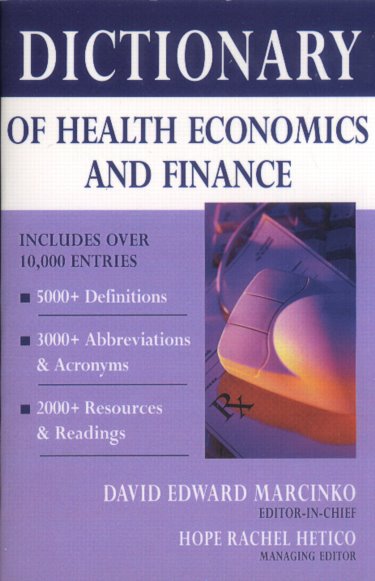
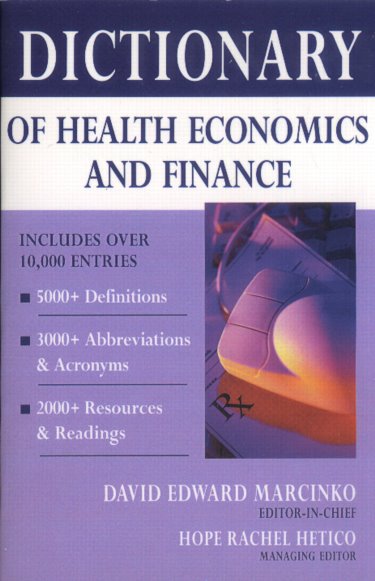
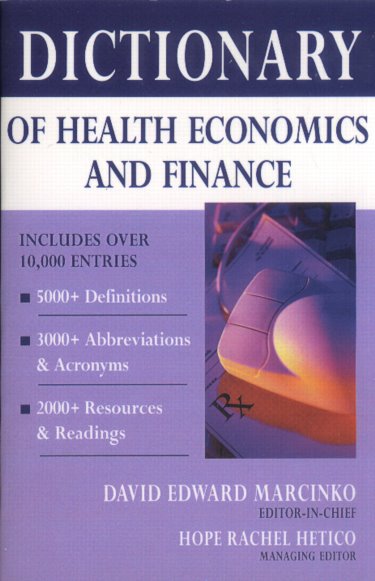
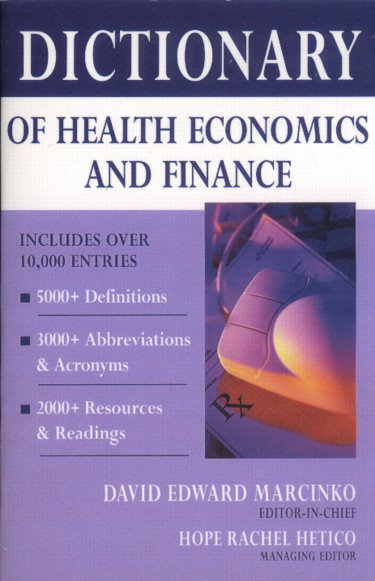
Of course, as an educator and professor of health economics and finance, we are pleased to present you with the deep medical business knowledge and detailed financial,managerial and accounting techniques used, with some real-life “tips and pearls” developed over the last two decades of R&D, right here:

MORE: Comprehensive Financial Planning Strategies for Doctors[Best Practices from Leading Consultants and Certified Medical Planners™]

MORE: Risk Management Liability Insurance, and Asset Protection Strategies for Doctors and Advisors [Best Practices from Leading Consultants and Certified Medical Planners™]

Conclusion

Your thoughts and comments on this ME-P are appreciated. Feel free to review our top-left column, and top-right sidebar materials, links, URLs and related websites, too. Then, subscribe to the ME-P. It is fast, free and secure.

Speaker: If you need a moderator or speaker for an upcoming event, Dr. David E. Marcinko; MBA – Publisher-in-Chief of the Medical Executive-Post – is available for seminar or speaking engagements. Contact: MarcinkoAdvisors@msn.com

OUR OTHER PRINT BOOKS AND RELATED INFORMATION SOURCES:

***

Risk Management, Liability Insurance, and Asset Protection Strategies for Doctors and Advisors: Best Practices from Leading Consultants and Certified Medical Planners™           8Comprehensive Financial Planning Strategies for Doctors and Advisors: Best Practices from Leading Consultants and Certified Medical Planners™

***

PART 1: My Sample Financial Plan I [Data gathering, goals and objectives]

PART 2: My Sample Financial Plan II [Data Analytics, Creation and Crafting]

PART 3: Request here: MarcinkoAdvisors@msn.com [Stress Testing and Completion]

***

← Back

Thank you for your response. ✨

BONDS: Zero Coupon [Pros & Cons]

DEFINITIONS

By Staff Reporters

SPONSOR: http://www.MarcinkoAssociates.com

***

***

Zero-coupon securities (aka zeros) are debt securities [bonds] that, unlike most of their debt security counterparts, make no periodic interest payments to investors. Instead, they are sold at a deep discount (with an imputed interest rate priced into the discount), then redeemed for their full face value at maturity.

CITE: https://www.r2library.com/Resource/Title/0826102549

When held to maturity, a zero’s entire return comes from the difference between its purchase price and its value at maturity.

COMMENTS APPRECIATED

Subscribe Today!

***

***

ANGUS DEATON’S: Paradox

By Staff Reporters

***

***

Angus Deaton’s 1980s studies, including one called “Why is consumption so smooth?” gave birth to a concept called the Deaton Paradox — in short, sharp shocks to income didn’t seem to cause similarly large shocks to consumption.

IOW: Consumption varies surprisingly smoothly despite sharp variations in income.

CITE: https://www.r2library.com/Resource/Title/0826102549

According to David Henderson, this was an important development in understanding the actions of consumers, causing economists to rethink the “permanent income hypothesis” developed by Milton Friedman, which suggested that people spend based on their lifetime income.

And, Mike Bird wrote a good article on Deaton the highlighted the Nobel Prize in Economics Committee.

COMMENTS APPRECIATED

Subscribe Today!

***

***

ECONOMIC: Paradoxes all Financial Advisors Should Know

BY DR. DAVID EDWARD MARCINKO MBA MEd CMP™

SPONSOR: http://www.MarcinkoAssociates.com

SPONSOR: http://www.CertifiedMedicalPlanner.org

***

***

A paradox is a logic and self-contradictory statement or a statement that runs contrary to one’s expectation. It is a statement that, despite apparently valid reasoning from true or apparently true premises, leads to a seemingly self-contradictory or a logically unacceptable conclusion. A paradox usually involves contradictory-yet-interrelated elements that exist simultaneously and persist over time. They result in “persistent contradiction between interdependent elements” leading to a lasting “unity of opposites”.

***

And so, as we plan for our financial future thru a New Year Resolution for 2025, it’s helpful to be cognizant of these paradoxes. While there’s nothing we can do to control or change them, there is great value in being aware of them, so we can approach them with the right tools and the right mindset.

According to Adam Grossman, here are seven [7] of the paradoxes that can bedevil financial decision-making, clients and financial advisors, alike:

  1. There’s the paradox that all of the greatest fortunes—Carnegie, Rockefeller, Buffett, Gates—have been made by owning just one stock. And yet the best advice for individual investors is to do the opposite: to own broadly diversified index funds. More: https://tinyurl.com/285vftx4
  2. There’s the paradox that the stock market may appear over valued and yet it could become even more overvalued before it eventually declines. And when it does decline, it may be to a level that is even higher than where it is today.
  3. There’s the paradox that we make plans based on our understanding of the rules—and yet Congress can change the rules on us at any time, as the recent 2024 election results attest.
  4. There’s the paradox that we base our plans on historical averages—average stock market returns, average interest rates, average inflation rates and so on—and yet we only lead one life, so none of us will experience the average.
  5. There’s the paradox that we continue to be attracted to the prestige of high-cost colleges, even though rational analysis that looks at return on investment tells us that lower-cost state schools are usually the better bet.
  6. There’s the paradox that early retirement seems so appealing—and has even turned into a movement—and yet the reality of early retirement suggests that we might be better off staying at our desks.
  7. There’s the paradox that retirees’ worst fear is outliving their money and yet few choose the financial product that is purpose-built to solve that problem: the single-premium immediate annuity.

CITE: https://www.r2library.com/Resource/Title/0826102549

How should you respond to these paradoxes? As you plan for your financial future, embrace the concept of “loosely held views.”

In other words, make financial plans, but continuously update your views, question your assumptions and rethink your priorities.

COMMENTS APPRECIATED

Subscribe Today!

***

***

PRIMARY MEDICAL CARE: The Paradox

BY DR. DAVID EDWARD MARCINKO MBA MEd CMP

Sponsor: http://www.CertifiedMedicalPlanner.org

***

***

Classic Definition: Despite rising costs, health care often is of poor quality. Evidence from a classic medical improvement outcomes study assessed care of patients with several chronic diseases. This study found that patients’ functional health status outcomes are similar to care rendered by specialists and generalists but that generalists use far fewer resources. Similar outcome at lower cost represents higher value.

Modern Circumstance: Current solutions to improving care quality may do more harm than good if they focus more on diseases than on people. Efforts to improve the parts (evidence-based care of specific diseases) may not necessarily improve the whole (the health of people and populations).

Expanding access to specialty care, for example, has been proposed as both a source of and a solution for deficiencies in quality of care. Primary care is touted as an essential building block of a high-value health care system even as it is undermined by systems attempting to improve the quality, effectiveness, and value of their health care..

Paradox Example: The above contradictions plague improvement efforts in health care systems around the world, particularly the United States The paradox is that compared with specialty care or with systems dominated by specialty medical care, primary care is associated with the following: (1) poorer quality care for individual diseases, yet (2) similar functional health status at lower cost for people with chronic disease, and (3) better quality, better health, greater health  equity and lower costs for whole peoples and populations.

And so, this contradiction plagues improvement efforts in health care systems around the world, particularly the United States.

Cite: Kurt Stange MD PhD and Robert Ferrer MD MPH

COMMENTS APPRECIATED

Thank You

***

***

BRICS: Economics Defined

By Staff Reporters

***

***

BRIC is an acronym for the economies of Brazil, Russia, India, China and South Africa,combined.

CITE: https://www.r2library.com/Resource/Title/0826102549

These are considered to be large developing economies that are part of a global, twenty-first century shift in economic power and influence away from the more established, traditional developed economies of the twentieth century.

COMMENTS APPRECIATED

Thank You

***

***

SORTINO: A Financial Risk Ratio

DEFINED

By Staff Reporters

SPONSOR: http://www.MarcinkoAssociates.com

***

***

The Sortino Ratio is similar to the Sharpe Ratio, it is a measure of risk-adjusted performance which looks at returns through the lens of the risk taken to achieve that performance, but instead of volatility of return, it uses downside variance as its measure of risk.

SHARP RATIO: https://medicalexecutivepost.com/2021/11/08/introducing-the-sharp-index/

COMMENTS APPRECIATED

Thank You

***

***

MEMORY: Fallibility

By Staff Reporters

***

***

Memory is Fallible. Think you have a great memory? Think again.

According to psychologist and colleague Dan Ariely PhD, memory is more like a game of telephone than a recording device. Each time you recall an event, your brain makes tiny edits, adding some flair or skipping the boring parts. It’s why you can’t remember where you left your keys but can vividly recall an embarrassing moment from high school.

So, the next time someone says, “I remember it like it was yesterday,” know that yesterday might be a heavily edited rerun.

COMMENTS APPRECIATED

Subscribe Today!

***

***

REO versus REIT

By Staff Reporters

SPONSOR: http://www.MarcinkoAssociates.com

***

***

Real Estate Operating Company (REOC)

A company that invests in real estate and whose shares trade on a public exchange.

Real Estate Investment Trust (REIT)

A real estate operating company (REOC) is similar to a real estate investment trust (REIT), except that an REOC will reinvest its earnings into the business, rather than distributing them to unit holders like REITs do.

Also, REOCs are more flexible than REITs in terms of what types of real estate investments they can make.

CITE: https://www.r2library.com/Resource/Title/0826102549

COMMENTS APPRECIATED

Thank You

***

***

FINANCIAL Derivatives

By Dr. David Edward Marcinko MBA MEd

SPONSOR: http://www.MarcinkoAssociates.com

***

***

Derivatives are securities whose performance and/or structure is derived from the performance and/or structure of other assets, interest rates, or indexes. If used moderately and in appropriate situations, derivatives can help stabilize portfolios and/or enhance returns. However, if used in excess and/or in inappropriate circumstances, they can be harmful, potentially causing portfolio instability and/or losses. Derivatives are similar to medicine in their behavior–usually safe when used as directed, potentially toxic when abused.

There are many different types of derivative securities and many different ways to use them. Some derivative securities, such as mortgage-related and other asset-backed securities, are in many respects like any other investment, although they may be more volatile or less liquid than more traditional debt securities.

Futures and options are commonly used for traditional hedging purposes to attempt to protect portfolios from exposure to changing interest rates, securities prices or currency exchange rates, and for cash management purposes as a low-cost method of gaining exposure to a particular securities market without investing directly in those securities.

Certain other derivative securities may be described as structured investments. A structured investment is a security whose value or performance is linked to an underlying index or other security or asset class. Structured investments include collateralized mortgage obligations (CMOs). Structured investments also include securities backed by other types of collateral.

CITE: https://www.r2library.com/Resource/Title/0826102549

COMMENTS APPRECIATED

Subscribe Today!

***

***

FINANCIAL PLANNING AND ECONOMIC: Mental Health Blocks

Subscribe to continue reading

Subscribe to get access to the rest of this post and other subscriber-only content.

KENNETH ARROW: Information Paradox

To sell information you need to give it away before the sale

By Dr. David Edward Marcinko MBA MEd

SPONSOR: http://www.MarcinkoAssociates.com

***

***

THE FATHER OF HEALTH ECONOMICS

According to Wikipedia, a fundamental tenet of the paradox is that the customer, i.e. the potential purchaser of the information describing a technology (or other information having some value, such as facts), wants to know the technology and what it does in sufficient detail as to understand its capabilities or have information about the facts or products to decide whether or not to buy it. Once the customer has this detailed knowledge, however, the seller has in effect transferred the technology to the customer without any compensation. This has been argued to show the need for patent protection [HIPPA].

CITE: https://www.r2library.com/Resource/Title/0826102549

If the buyer trusts the seller or is protected via contract, then they only need to know the results that the technology will provide, along with any caveats for its usage in a given context. A problem is that sellers lie, they may be mistaken, one or both sides overlook side consequences for usage in a given context, or some unknown-unknown affects the actual outcome.

MORE :https://www.nobelprize.org/prizes/economic-sciences/1972/arrow/facts/

COMMENTS APPRECIATED

Subscribe Today!

***

***

ARTIFICIAL Scarcity

By Staff Reporters

***

***

Artificial Scarcity refers to the intentional limitation of the availability of a product or resource to create a sense of rarity, which often drives up its perceived value and price.

Think: surge pricing

And, circumstances with insufficient competition can lead to suppliers exercising enough market power to constrict supply. The clearest example is a monopoly, where a single producer has complete control over supply and can extract a additional price.

By creating a temporary shortage, sellers or producers can increase demand and capitalize on consumers’ fear of missing out, thereby influencing market dynamics to their advantage. This strategy is frequently used in marketing, particularly for limited-edition items or high-demand products.

COMMENTS APPRECIATED

Subscribe Today!

***

***

RECIPROCITY: Science “Sales” in Action

FREE SAMPLES

The Art of Giving – And Receiving – Value!

By Staff Reporters

***

***

Imagine you’re at a party, and someone hands you a drink. Your first instinct? Find something to give back. This is [sales] reciprocity in action – our built-in psychological urge to repay kindness.

According to colleague Dan Ariely PhD, it’s like a cosmic balance sheet in our brains, ensuring we don’t owe anyone a favor. This is why companies give out free samples. They’re not just being nice; they know you’ll feel a pang of guilt if you walk away without buying something.

THINK: Free financial planning dinner seminar and prospecting event. That’s you – the Sales Prospect!

So, next time someone does you a favor, remember: it’s not just seller kindness, it’s science!

COMMENTS APPRECIATED

Subscribe Today!

***

***

CURRENCY OPTIONS: Hedging and Overlays

By Dr. David Edward Marcinko MBA MEd

SPONSOR: http://www.MarcinkoAssociates.com

***

***

Currency Hedging is a risk-management strategy, as part of a foreign investment strategy, currency hedging is designed to reduce the impact from changes in the relative values of currencies involved in the foreign investment strategy.

CITE: https://www.r2library.com/Resource/Title/0826102549

In any foreign investment strategy, a significant part of the potential risk and return comes from exposure to relative currency value fluctuations. If exposure to those currency fluctuations is minimized, investors can experience more of a “pure play” exposure to the foreign investments. There is a variety of possible currency hedging strategies, ranging from swaps, options, and spot contracts to simply buying foreign currencies.

Currency Overlay is a financial trading strategy used to separate the management of currency risk from other portfolio strategies. A currency overlay manager can seek to hedge the risk from adverse movements in exchange rates, and/or attempt to profit from tactical currency views.

CITE: https://www.r2library.com/Resource/Title/0826102549

COMMENTS APPRECIATED

Subscribe Today!

***

***

INVESTING NEWS: Stocks, Bonds, Oil, Gold, Bitcoin and Sectors Review Post Election

By Staff Reporters

SPONSOR: http://www.MarcinkoAssociates.com

BREAKING NEWS!

***

***

  • Stocks surged and stayed higher all yesterday day on news of Donald Trump’s presidential victory. The Dow rocketed over 1,350 points as soon as markets opened, and all three indexes ended the day at record highs.
  • Treasury yields have paralleled Trump’s chances of taking the White House for the last few weeks, and his election sent them soaring to over 4.46% at one point today.
  • Oil and gold both fell as the dollar rose after Trump’s win. The greenback popped on the promise of Trump’s protectionist tariff policies and the lower likelihood of the Fed cutting interest rates as fast as previously expected.
  • Bitcoin surged as traders celebrated the beginning of the new, friendlier regulatory environment that Trump promised during his campaign.

CITE: https://www.r2library.com/Resource/Title/0826102549

Sector check-up

  • Financials were the biggest sector mover Wednesday, up 6.16%, hitting a new high.
  • Industrials were up 3.93% Wednesday, hitting a new high.
  • Energy was up 3.54% in the session. It’s now 4.28% from the April high.
  • Real Estate fell 2.64% during trading. It’s now 5.6% from the high. 
  • Consumer Staples fell 1.5%. The sector is 5.76% from the September high.
  • Utilities fell 1%. It’s now 5.72% from the mid-October high.
  • Duke Energy was flat over the past three months, and it is 6.3% from the October high.

COMMENTS APPRECIATED

Please Subscribe!

***

***

COCKTAIL: Party Effect

By Staff Reporters

***

***

The cocktail party effect is the ability of the human hearing and auditory system to focus one’s listening attention on a particular speaker in a noisy environment, such as a crowded party. This allows people to focus on a specific conversation while filtering out other nearby conversations and background noise.

Consider that you’re at a crowded party, noise everywhere, but you hear your name mentioned across the room. How? Welcome to the Cocktail Party Effect.

Your brain is like a highly trained butler, filtering out the background chatter to catch something personally relevant. It’s not just your name, either; it could be juicy gossip or a mention of free pizza or an exciting new stock tip you’ve been considering; or even an IPO.

So, according to psychologist colleague Dan Ariely PhD, this selective attention keeps us sane in a noisy world, helping us focus on the things that matter – like whether that person just said “free drinks” or “freeloading, or “free-stock trading.”

COMMENTS APPRECIATED

Please Subscribe!

Thank You

***

***

DAILY UPDATE: Record Stock Market Blast Off Post Trump Presidential Election

MEDICAL EXECUTIVE-POST TODAY’S NEWSLETTER BRIEFING

***

Essays, Opinions and Curated News in Health Economics, Investing, Business, Management and Financial Planning for Physician Entrepreneurs and their Savvy Advisors and Consultants

Serving Almost One Million Doctors, Financial Advisors and Medical Management Consultants Daily

A Partner of the Institute of Medical Business Advisors , Inc.

http://www.MedicalBusinessAdvisors.com

SPONSORED BY: Marcinko & Associates, Inc.

***

http://www.MarcinkoAssociates.com

Daily Update Provided By Staff Reporters Since 2007.
How May We Serve You?
© Copyright Institute of Medical Business Advisors, Inc. All rights reserved. 2024

REFER A COLLEAGUE: MarcinkoAdvisors@msn.com

SPONSORSHIPS AVAILABLE: https://medicalexecutivepost.com/sponsors/

ADVERTISE ON THE ME-P: https://tinyurl.com/ytb5955z

Your Referral Count -0-

CITE: https://www.r2library.com/Resource

Stocks Up

  • One more group of stocks that soared on a Trump election: Big Tech companies with antitrust problems. Another Trump presidency should go a long way toward clearing up the regulatory hurdles many companies have faced recently, which is why Alphabet popped 3.99% and Amazon rose 3.8%.
  • CVS Health surged 11.33% after meeting revenue forecasts but missing earnings expectations. However, the miss was due to a one-time charge, so shareholders quickly forgave the healthcare retailer.
  • Planet Fitness gained 6.09% on a surprise bid for bankrupt fitness chain Blink Holdings in an attempt to bolster its own gym business.

Stocks Down

  • Super Micro Computer had a chance to show the world it wasn’t committing the fraud it has recently been accused of. Instead, the company announced it is still unable to determine when it will file the quarterly report due August 29. Shares crashed 18.05%.
  • Home builder stocks sank on fears that a Trump presidency will slow the rate of Fed rate cuts, keeping mortgage rates higher for longer. DR Horton fell 3.8%, Lennar dropped 4.84%, Pulte Group lost 3.09%, and Toll Brothers tumbled 1.46%.
  • Cannabis stocks were betting big on a ballot measure in Florida to allow the sale of recreational marijuana. The initiative’s failure sent shares of Curaleaf plummeting 29.17%, Trulieve Cannabis plunged 38.8%, and Ayr Wellness sank 55.87%.

CITE: https://tinyurl.com/2h47urt5

Here’s where the major benchmarks ended:

  • The S&P 500® index (SPX) rose 146.28 points (2.53%) to 5,929.04; the Dow Jones Industrial Average® ($DJI) added 1,508.05 points (3.57%) to 43,729.93; and the NASDAQ Composite® ($COMP) gained 544.29 points (2.95%) to 18,983.47—a new closing high. 
  • The 10-year Treasury note yield (TNX) surged 14 basis points to 4.43%, its highest level since July.
  • The CBOE Volatility Index® (VIX) fell sharply to 16.3 as election-related uncertainty diminished.

CITE: https://tinyurl.com/tj8smmes

Visualize: How private equity tangled banks in a web of debt, from the Financial Times.

COMMENTS APPRECIATED

PLEASE SUBSCRIBE: MarcinkoAdvisors@msn.com

Thank You

***

***

***

***

EDUCATIONAL TEXTBOOKS: https://tinyurl.com/4zdxuuwf

***

HINDSIGHT BIAS: The “Curse of Knowledge”

By Staff Reporters

SPONSOR: http://www.MarcinkoAssociates.com

***

***

The Curse of Knowledge and Hindsight Bias

Similar in ways to the availability heuristic (Tversky & Kahneman, 1974) and to some extent, the false consensus effect, once you (truly) understand a new piece of information, that piece of information is now available to you and often becomes seemingly obvious. It might be easy to forget that there was ever a time you didn’t know this information and so, you assume that others, like yourself, also know this information: the curse of knowledge.

Cite: https://medicalexecutivepost.com/2022/11/18/what-is-the-dunning-kruger-effect/

However, according to colleague Dan Ariely PhD, it is often an unfair assumption that others share the same knowledge. The hindsight bias is similar to the curse of knowledge in that once we have information about an event, it then seems obvious that it was going to happen all along.

I should have seen it [divorce, stock market crash/soar my smoking & lung cancer, unemployment, etc] coming!

COMMENTS APPRECIATED

Please Subscribe!

***

***

STOCK MARKETS: Roaring and Soaring!

BREAKING FINANCIAL NEWS

By Staff Reporters

SPONSOR: http://www.MarcinkoAssociates.com

***

***

Stocks just roared out of the gate this Wednesday morning following news that former President Donald Trump has secured a second term in the White House and Republicans won a majority in the Senate.

The Dow Jones Industrial Average rose 1,341 points, or about 3.1 percent, as the market opened, reaching a record high. It was the first time it has jumped more than 1,000 points in a single day since November 2022.

The S&P 500 also gained 1.9 percent, and the NASDAQ climbed 1.8 percent.

Despite concern from big business about Trump’s plan to impose blanket tariffs on imports to the U.S., Wall Street is anticipating tax cuts and deregulation during a second Trump presidency.

COMMENTS APPRECIATED

Subscribe Today

***

***

INVESTING RISKS: Retained Earnings, Weighted Assets and Sequence of Return

By

SPONSOR: http://www.MarcinkoAssociates.com

***

***

Retained Earnings Risk: Profits generated by a company that are not distributed to stockholders as dividends. Instead, they are either reinvested in the business or kept as a reserve for specific objectives, such as paying off debt or purchasing equipment. Retained earnings risks are also called “undistributed profits,” “undistributed earnings,” or “earned surplus.”

Risk-Weighted (or risk-adjusted) Assets: Within the context of measuring the financial stability of banks and other financial institutions, the risk-weighted assets figure is an aggregate of a financial institution’s assets (usually loans to its customers) after the loans have been individually adjusted for their risk. This involves multiplying each loan by a factor that reflects its risk. Low-risk loans are multiplied by a low number, high-risk by high. The aggregate number can then be used to calculate the financial institution’s capital ratio. Lower risk-weighted assets typically result in higher capital ratios, and higher risk-weighted assets usually translate to lower capital ratios.

Sequence-of-Returns Risk: The risk of market conditions impacting the overall returns of an investment portfolio during the period when a retiree is first starting to withdrawal money from investments as income. For example, if a retiree has to withdrawal income from his or her portfolio when market prices are depressed, the portfolio may lose out on the potential returns that income could have made once market prices recovered.

COMMENTS APPRECIATED

Subscribe Today!

***

***

METAVERSE MEDICINE: A Paradigm Shift?

By Dr. David Edward Marcinko MBA MEd

SPONSOR: http://www.MarcinkoAssociates.com

***

***

In what some are calling the next iteration of the internet, the metaverse is an unfamiliar digital world where you could be an avatar navigating computer-generated places and interacting with others in real time. In this space, the constraints of our physical, bricks and mortar world and travel habits fade. And new opportunities and challenges emerge.

CITE: https://www.r2library.com/Resource/Title/0826102549

For example:

  • Google in healthcare: The search giant has repeatedly successfully transferred its in-depth knowledge of algorithms in the field of medicine, particularly since it acquired DeepMind.
  • Apple in healthcare: Apple will keep on working on expanding the health features of its devices, Apple Watch and iPhones included.
  • Microsoft in healthcare: Microsoft’s cloud solutions provide integrated capabilities that make it easier to improve the healthcare experience.
  • Amazon in healthcare: Amazon will make further use of its vast knowledge of online shopping trends and behavior and will keep on providing what people need, from medicine to wearables.
  • IBM in healthcare: IBM has a lot to offer in federated learning, blockchain, and quantum computing.
  • Nvidia in healthcare: NVIDIA seems incredibly focused on its approach to healthcare. We can expect NVIDIA to be a leader in the use of artificial intelligence in healthcare.
  • Facebook in healthcare: The Metaverse developed by Facebook/Meta has incredible potential to revolutionize healthcare.

All this technology has huge potential because it uses both virtual reality (VR) and augmented reality (AR) technology to work in virtual spaces: All signs point to the metaverse being widely used as a disruptive change in healthcare, from better surgical precision to therapeutic uses to social-distance accommodations and more.

But along with these improvements come new problems that will change what we know about modern healthcare. The metaverse is a paradigm shift in healthcare that everyone involved needs to be aware of. This is because it changes how medical infrastructure is built, how startup costs are covered, and how data security and privacy are handled.

CITE: https://www.r2library.com/Resource/Title/0826102549

COMMENTS APPRECIATED

Subscribe Today!

***

***

GDP: Private Domestic Health Care Investments

By Dr. David Edward Marcinko MBA MEd CMP™

SPONSOR: http://www.MarcinkoAssociates.com

***

***

SPONSOR: http://www.CertifiedMedicalPlanner.org

GROSS PRIVATE DOMESTIC HEALTH CARE INVESTMENTS

Classic:  Investment purchases and private expenditures of healthcare firms, the value of related construction, and the change in inventory during the year.

Modern: Gross Revenue Per Day is the average amount charged by a hospital for one day of inpatient care (gross inpatient revenue divided by patient-census days).

CITE: https://www.r2library.com/Resource/Title/0826102549

Examples:

  • Gross Revenue Per Discharge: The average amount charged by a hospital to treat an inpatient from admission to discharge (gross inpatient revenue divided by discharges).
  • Gross Revenue Per Visit: The average amount charged by a hospital for an outpatient visit (gross outpatient revenue divided by outpatient visits).

COMMENTS APPRECIATED

Subscribe Today!

***

***

ARTIFICIAL INTELLIGENCE: Big Technology Stocks

By Staff Reporters

***

***

After its AI-related earnings disappointed Wall Street last quarter, Big Tech doubled down in the latest period:

  • Amazon spent $22.6 billion on property and equipment like data centers and chips. That’s an 81% spike from the same time last year.
  • Meta raised its low-end guidance for capex (capital expenditures), which could reach $40 billion by the end of the year. It beat earnings estimates, even with AR glasses subsidiary Reality Labs costing $4.4 billion in operating losses.
  • Apple is still betting on Apple Intelligence to boost sales. Most revenue came from the new iPhone 16, Apple Watch, and AirPods, but Apple services like TV+ and iCloud also grew massively to account for a quarter of the business.
  • Google crushed earnings estimates and revealed that more than 25% of all new code it writes is generated by AI (and reviewed by engineers).

CITE: https://www.r2library.com/Resource/Title/0826102549

COMMENTS APPRECIATED

Subscribe Today!

***

***

ECONOMICS: John B. Taylor’s Rule

By Dr. David Edward Marcinko MBA MEd

SPONSOR: http://www.MarcinkoAssociates.com

***

***

Named for a U.S. economist, the JB Taylor Rule is a mathematical monetary-policy formula that recommends how much a central bank should change its nominal short-term interest rate target (such as the U.S. Federal Reserve’s federal funds rate target) in response to changes in economic conditions, particularly inflation and economic growth. It’s typically viewed as guideline for raising short-term interest rates as inflation and potentially inflationary pressures increase. The rule recommends a relatively high interest rate (“tight” monetary policy) when inflation is above its target or when the economy is above its full employment level, and a relatively low interest rate (“easy” monetary policy) under the opposite conditions.

To illustrate, the monetary policy of the FOMC, changed throughout the 20th century. The period between the 1960s and the 1970s is evaluated by Taylor and others as a period of poor monetary policy; the later years typically characterized as stagflation. The inflation rate was high and increasing, while interest rates were kept low. Since the mid-1970s monetary targets have been used in many countries as a means to target inflation.

However, in the 2000s the actual interest rate in advanced economics, notably in the US, was kept below the value suggested by the Taylor rule.

CITE: https://www.r2library.com/Resource/Title/0826102549

COMMENTS APPRECIATED

Subscribe Today!

Thank You

***

***

“R-Squared” [Coefficient of Determination] Defined

By Dr. David Edward Marcinko MBA MEd CMP™

SPONSOR: http://www.MarcinkoAssociates.com

***

***

R-squared is an investment portfolio performance and risk measure that indicates how much of a portfolio’s performance fluctuations were attributable to movements in the portfolio’s benchmark index. R-squared can range from 0-100%.

CITE: https://www.r2library.com/Resource/Title/0826102549

IOW: R Squared, also known as the coefficient of determination, is a statistical measure used in the context of regression analysis. It represents the proportion of the variance in the dependent variable that is predictable from the independent variable(s). Essentially, it provides a measure of how well the observed outcomes are replicated by the model, based on the proportion of total variation of outcomes explained by the mode

For example, an R-squared of 100% indicates that all portfolio performance movements were attributable to movements in the benchmark index—they correlate perfectly to the benchmark.

Conversely, an r-squared of 0% indicates that there is no correlation between the performance movements of the portfolio and the benchmark.

Cite: http://www.CertifiedMedicalPlanner.org

COMMENTS APPRECIATED

Subscribe Today!

***

***

PHYSICIANS: Career Change Conundrum

By Dr. David Edward Marcinko MBA MEd CMP™

SPONSOR: https://marcinkoassociates.com/process-what-we-do/

***

***

Half of Physicians Plan to Change Career Paths

The Physicians Foundation conducted a survey on physician practice patterns and perspectives a few years ago. Here are some key findings from the report:

• 31% of physicians identify as independent practice owners or partners.
• Almost half (47%) of physicians plan to change career paths.
• 78% of physicians sometimes, often or always experience feelings of burnout.
• Nearly a quarter of physician time is spent on non-clinical paperwork.

This result is not good for Medicine.

Cite: The Physicians Foundation, September 2018

COMMENTS APPRECIATED

Subscribe Today!

***

***

HFRI: Fund of Funds Composite Index

By Dr. David Edward Marcinko MBA MEd

SPONSOR: http://www.MarcinkoAssociates.com

***

***

HFRI: Fund of Funds invests with multiple managers through funds or managed accounts. The strategy designs a diversified portfolio of managers with the objective of significantly lowering the risk (volatility) of investing with an individual manager.

CITE: https://www.r2library.com/Resource/Title/0826102549

The Fund of Funds manager may allocate funds to numerous managers within a single strategy, or with numerous managers in multiple strategies. The investor has the advantage of diversification among managers and styles with significantly less capital than investing with separate managers.

HFRI: https://hfr-wp-s3.s3.amazonaws.com/wp-content/uploads/2024/03/05142042/HFRI_formulaic_methodology.pdf

The HFRI Fund of Funds Index is not included in the HFRI Fund Weighted Composite Index.

COMMENTS APPRECIATED

Please subscribe!

Thank You

****

****

Recent Court Actions Provide Insight into Future of Fraud & Abuse Laws

By Health Capital Consultants, LLC

Two recent court actions may serve as harbingers for the future of healthcare fraud and abuse laws. In September 2024, a federal judge in the Southern District of West Virginia ordered parties in a qui tam False Claims Act and Stark Law case to brief the court on the implications of Loper Bright Enterprises v. Raimondo on the interpretation of the Stark Law to the case at hand.

That same month, a federal judge in the Middle District of Florida dismissed a qui tam lawsuit on a novel theory that the False Claims Act’s whistleblower provisions are unconstitutional.

This Health Capital Topics article discusses these cases and the potential impact on federal fraud and abuse laws. (Read more…)

COMMENTS APPRECIATED

Thank You

***

***

IN & OUT OF NETWORK: Medical Care

By Dr. David Edward Marcinko MBA MEd CMP™

SPONSOR: http://www.CertifiedMedicalPlanner.org

***

***

What does in-network mean?

In-network refers to a health care provider that has a contract with your health plan to provide health care services to its plan members at a pre-negotiated rate. Because of this relationship, you pay a lower cost-sharing when you receive services from an in-network doctor.

What does out-of-network mean?

Out-of-network refers to a health care provider who does not have a contract with your health insurance plan. If you use an out-of-network provider, health care services could cost more since the provider doesn’t have a pre-negotiated rate with your health plan. Or, depending on your health plan, the health care services may not be covered at all.

CITE: https://www.r2library.com/Resource/Title/0826102549

***

OUT OF NETWORK [OON] MEDICAL CARE

Classic: Any medical provider, supplier or facility that is in-network is one that has contracted with your health insurer to provide services;as above.

Modern: Depending on your plan, if you visit an out-of-network provider, it may not be covered or might be only partially covered. When making appointments with various doctors and service providers, you may notice some are listed as “in-network” while others are “out-of-network.”

THINK: Medicare Advantage {Part C] Plans

Example: You can expect a higher deductible and out-of-pocket limit at out-of-network providers. Your coinsurance and co-payment may also be higher for out-of-network providers.

COMMENTS APPRECIATED

Subscribe Today!

***

***

STRIPES: Separate Trading of Registered Interest and Principal of Securities)

By Staff Reporters

SPONSOR: http://www.MarcinkoAssociates.com

DEFINITIONS

***

***

STRIPS (Separate Trading of Registered Interest and Principal of Securities) is an acronym that describes both a government bond issuance program and the securities issued by the program. STRIPS are a form of zero-coupon security (defined below) created under the U.S. Treasury’s STRIPS program.

Originally, zero-coupon securities were created by broker-dealers who bought Treasury bonds and deposited these securities with a custodian bank. The broker-dealers then sold receipts representing ownership interests in the coupons or principal portions of the bonds.

CITE: https://www.r2library.com/Resource/Title/0826102549

Some examples of zero-coupon securities sold through custodial receipt programs are CATS (Certificates of Accrual on Treasury Securities), TIGRs (Treasury Investment Growth Receipts) and generic TRs (Treasury Receipts). The U.S. Treasury subsequently introduced a program called Separate Trading of Registered Interest and Principal of Securities (STRIPS), through which it exchanges eligible securities for their component parts and then allows the component parts to trade in book-entry form.

STRIPS are direct obligations of the U.S. government and have the same credit risks as other U.S. Treasury securities. STRIPS are generally considered the most liquid (easily bought and sold) zero-coupon securities.

GOVERNMENT: https://www.treasurydirect.gov/marketable-securities/strips/

COMMENTS APPRECIATED

Thank You

***

***

EMPLOYER’S: Pay for Health Insurance Paradox

By Dr. David Edward Marcinko MBA MEd CMP

SPONSOR: http://www.CertifiedMedicalPlanner.org

***

***

Classic Definition: Employers write checks that cover most health insurance premiums for employees and their dependents. But as the late Princeton health economist Uwe Reinhardt PhD once explained, employer-sponsored insurance is like a pickpocket taking money out of your wallet at a bar and buying you a drink. You appreciate the cocktail until you realize you paid for it yourself.

Modern Circumstance: With health coverage, employers write the check to the insurer, but employees bear the cost of the premium — the entire premium, not just the portion listed as their contribution on their pay stub. The premium money that goes to the insurance company is cash that employers would otherwise deposit in employees’ accounts like the rest of their salary.

CITE: https://www.r2library.com/Resource/Title/0826102549

Paradox Example: The fallacy paradox is in thinking an employer’s contribution comes out of profits. In fact, higher health insurance premiums mean lower wages for workers. Since 1999, health insurance premiums have increased 147 percent and employer profits have increased 148 percent. But in that time, average wages have hardly moved, increasing just 7 percent. Clearly workers’ wages, not corporate profits, have been paying for higher health insurance premiums. Health care costs are one — though not the only — reason wages have stagnated over the last few decades. With health insurance costs rising faster than growth in the economy, more labor costs go to benefits like health insurance and less to take-home pay. Yet the paradox that employees don’t pay for their own health insurance is widespread:

  • The first reason is that individuals cannot be sure what causes their wages to change or remain stagnant for decades.
  • The second reason is that employers want Americans to believe that they pay for their workers’ health insurance.
  • The third reason is that there are those who profit from the employment-based system: drug companies, device manufacturers, specialty physicians and high-income individuals.

And so, they all want you to believe companies are being magnanimous in giving you insurance, but they are not!

COMMENTS APPRECIATED

Thank You

***

***

QUARTERLY EARNINGS: Reports Disclosed

By Staff Reporters

***

***

Quarterly earning reports dropped

Meta reported record revenue but missed on user growth.

Microsoft beat revenue expectations thanks to the AI-driven demand for its Azure cloud platform.

Starbucks had a pretty meh report but CEO Brian Niccol revealed that the chain would stop charging extra for nondairy milk.

DoorDash reported its first operating profit since the pandemic.

Super Micro stock fell more than 30% during yesterday’s trading session after its auditor, Ernst & Young, resigned due to disagreements.

And, despite crypto getting renewed interest as of late, Coinbase missed on revenue and earnings

COMMENTS APPRECIATED

Subscribe Today!

***

***

CREDIT: All About Contractual Agreements

By Staff Reporters

SPONSOR: http://www.MarcinkoAssociates.com

DEFINITIONS

What Is CREDIT? Credit is a contractual agreement in which a borrower receives a sum of money or something else of value and commits to repaying the lender later, typically with interest. Credit is also the creditworthiness or credit history of an individual or a company. Good credit tells lenders you have a history of reliably repaying what you owe on loans. Establishing good credit is essential to getting a loan.

***

Credit Analysis is a form of financial analysis used primarily to determine the financial strength of the issuer of a security, and the ability of that issuer to provide timely payment of interest and principal to investors in the issuer’s debt securities. Credit analysis is typically an important component of security analysis and selection in credit-sensitive bond sectors such as the corporate bond market and the municipal bond market.

Credit Default Swap Index (CDX) is a credit derivative, based on a basket of CDS, which can be used to hedge credit risk or speculate on changes in credit quality.

Credit Default Swaps (CDS) are credit derivative contracts between two counter parties that can be used to hedge credit risk or speculate on changes in the credit quality of a corporation or government entity.

Credit Quality reflects the financial strength of the issuer of a security, and the ability of that issuer to provide timely payment of interest and principal to investors in the issuer’s securities. Common measurements of credit quality include the credit ratings provided by credit rating agencies such as Standard & Poor’s and Moody’s. Credit quality and credit quality perceptions are a key component of the daily market pricing of fixed-income securities, along with maturity, inflation expectations and interest rate levels.

Credit Rating Agency (CRA) is a company that assigns credit ratings for issuers of certain types of debt obligations as well as the debt instruments themselves. In the United States, the Securities and Exchange Commission (SEC) permits investment banks and broker-dealers to use credit ratings from “Nationally Recognized Statistical Rating Organizations” (NRSRO) for similar purposes. As of January 2012, nine organizations were designated as NRSROs, including the “Big Three” which are Standard and Poor’s, Moody’s Investor Services and Fitch Ratings.

A Credit Rating Downgrade by a credit rating agency (such as Standard & Poor’s, Moody’s or Fitch), of reducing its credit rating for a debt issuer and/or security. This is based on the agency’s evaluation, indicating, to the agency, a decline in the issuer’s financial stability, increasing the possibility of default (defined below). A downgrade should not to be confused with a default; a debt security can be downgraded without defaulting. (And, conversely, a debt issuer can suddenly default without being downgraded first–credit ratings and credit rating agencies are not infallible.)

Credit Ratings are measurements of credit quality provided by credit rating agencies). Those provided by Standard & Poor’s typically are the most widely quoted and distributed, and range from AAA (highest quality; perceived as least likely to default) down to D (in default). Securities and issuers rated AAA to BBB are considered/perceived to be “investment-grade”; those below BBB are considered/perceived to be non-investment-grade or more speculative.

Credit Risk is the risk that the inability or perceived inability of the issuers of debt securities to make interest and principal payments will cause the value of those securities to decrease. Changes in the credit ratings of debt securities could have a similar effect.

Credit Risk Transfer Securities (CRTS) are the unsecured obligations of the GSEs (Government Sponsored Enterprises). Although cash flows are linked to prepays and defaults of the reference mortgage loans, the securities are unsecured loans, backed by general credit rather than by specified assets.

CITE: https://www.r2library.com/Resource/Title/0826102549

COMMENTS APPRECIATED

Please Subscribe!

***

***

EARNINGS REPORTS: Magnificent Seven Stocks

By Staff Reporters

SPONSOR: http://www.MarcinkoAssociates.com

***

***

  • Investors waited for the Magnificent 7 stock reports to begin rolling last evening. The NASDAQ rose to a new high on optimism while the Dow Jones fell, and the S&P 500 split the difference.
  • Alphabet announced earnings after the bell yesterday, Microsoft and Meta Platforms reveal their latest quarters today, Amazon and Apple on Thursday afternoon.
  • The 10-year Treasury yield hit a 4-month high this afternoon before paring back a bit as traders struggle to find a signal in all the market noise.
  • Oil rebounded a bit from yesterday’s terrible day, though it still ended the trading session lower.

CITE: https://www.r2library.com/Resource/Title/0826102549

COMMENTS APPRECIATED

Subscribe Today!

***

***

“HOT STATE”: A Decision Paradox

By Staff Reporters

SPONSOR: http://www.MarcinkoAssociates.com

DEFINITION

***

***

Ever tried making a decision when you’re angry or excited? According to colleague Dan Ariely PhD, that’s a hot state – when emotions run high and logic takes a backseat. It’s like trying to think clearly in the middle of a storm.

Be you a doctor, CPA, attorney, engineer, husband, wife, parent, teacher or all others. In a hot state, we’re impulsive, making choices we might regret later. It’s why cooling off before making big decisions is always a good idea.

So, when your emotions are boiling over, take a step back, breathe, and wait for the storm to pass. You’ll make better choices when you’re in a calm, cool state.

MORE: https://tinyurl.com/3hsnvx9r

COMMENTS APPRECIATED

Thank You

***

***

BARRA: A Security Risk Factor Analysis

By Staff Reporters

SPONSOR: http://www.MarcinkoAssociates.com

***

***

Barra Risk Factor Analysis was created by Barra Inc.

CITE: https://www.r2library.com/Resource/Title/0826102549

It is a multi-factor model measures the overall risk associated with a security relative to the market. And, it incorporates over 40 data metrics, including earnings growth, share turnover and senior debt rating.

BARRA MSCI: https://tinyurl.com/yc3w5buc

COMMENTS APPRECIATED

Subscribe Today!

***

***

MOST VALUABLE: Stocks, Economic Indicators and Markets

By Staff Reporters

SPONSOR: http://www.MarcinkoAssociates.com

***

***

The five most valuable US companies in the S&P 500 report earnings this week, and updates on three key economic indicators are set to be released: 1. gross domestic product, 2. inflation, and 3. jobs report. Then, next week brings the election and another expected rate cut from the Federal Reserve.

CITE: https://www.r2library.com/Resource/Title/0826102549

  • Markets: All three stock indexes rose to start a week that will be filled with high-stakes data.
  • Stock spotlight: Trump Media & Technology Group gained almost 22% on Monday, following the former president and current GOP candidate’s Madison Square Garden rally. The rose means that Trump Media, which includes Truth Social, is now more valuable than Elon Musk’s X.

COMMENTS APPRECIATED

Thank You

***

***

RUSSELL®: Indexes

By Staff Reporters

SPONSOR: http://www.MarcinkoAssociates.com

DEFINITION

***

***

Russell 1000® Growth Index: Measures the performance of those Russell 1000 Index companies (the 1,000 largest publicly traded U.S. companies, based on total market capitalization) with higher price-to-book ratios and higher forecasted growth values.

Russell 1000® Index: A market-capitalization weighted, large-cap index created by Frank Russell Company to measure the performance of the 1,000 largest publicly traded U.S. companies, based on total market capitalization.

Russell 1000® Value Index: Measures the performance of those Russell 1000 Index companies (the 1,000 largest publicly traded U.S. companies, based on total market capitalization) with lower price-to-book ratios and lower forecasted growth values.

Russell 2000® Growth Index: Measures the performance of those Russell 2000 Index companies (the 2,000 smallest of the 3,000 largest publicly traded U.S. companies, based on total market capitalization) with higher price-to-book ratios and higher forecasted growth values.

Russell 2000® Index: Market-capitalization weighted index created by Frank Russell Company to measure the performance of the 2,000 smallest of the 3,000 largest publicly traded U.S. companies, based on total market capitalization.

Russell 2000® Value Index: Measures the performance of those Russell 2000 Index companies (the 2,000 smallest of the 3,000 largest publicly traded U.S. companies, based on total market capitalization) with lower price-to-book ratios and lower forecasted growth values.

Russell 2500™ Growth Index: Measures the performance of those Russell 2500 Index companies (the 2,500 smallest of the 3,000 largest publicly traded U.S. companies, based on total market capitalization) with higher price-to-book ratios and higher forecasted growth values.

Russell 2500™ Index: A market-capitalization weighted index created by Frank Russell Company to measure the performance of the 2,500 smallest of the 3,000 largest publicly traded U.S. companies, based on total market capitalization.

Russell 2500™ Value Index: Measures the performance of those Russell 2500 Index companies (the 2,500 smallest of the 3,000 largest publicly traded U.S. companies, based on total market capitalization) with lower price-to-book ratios and lower forecasted growth values.

Russell 3000® Growth Index: Measures the performance of the broad growth segment of the U.S. equity universe. It includes those Russell 3000 companies with higher price-to-book ratios and higher forecasted growth values.

Russell 3000® Index: Measures the performance of the largest 3,000 U.S. companies representing approximately 98% of the investable U.S. equity market.

Russell 3000® Utilities Index: A sub-index of the Russell 3000 Index, is a capitalization weighted index of companies in industries heavily affected by government regulation, including among others, basic public service providers (electricity, gas and water), telecommunication services, and oil and gas companies.

Russell 3000® Value Index: Measures the performance of the broad value segment of the U.S. equity universe. It includes those Russell 3000 companies with lower price-to-book ratios and lower forecasted growth values.

Russell Midcap® Growth Index: Measures the performance of those Russell Midcap Index companies (the 800 smallest of the 1,000 largest publicly traded U.S. companies, based on total market capitalization) with higher price-to-book ratios and higher forecasted growth values.

Russell Midcap® Index: Measures the performance of the 800 smallest of the 1,000 largest publicly traded U.S. companies, based on total market capitalization.

Russell Midcap® Value Index: Measures the performance of those Russell Midcap Index companies (the 800 smallest of the 1,000 largest publicly traded U.S. companies, based on total market capitalization) with lower price-to-book ratios and lower forecasted growth values.

Russell Top 200® Index: Measures the performance of the 200 largest securities of the 3,000 publicly traded U.S. companies in the Russell 3000® Index, based on total market capitalization. It is not an investment product available for purchase.

CITE: https://www.r2library.com/Resource/Title/0826102549

COMMENTS APPRECIATED

Thank You

***

***

DAILY UPDATE: Health-Care’s Future as Stocks Climb

MEDICAL EXECUTIVE-POST TODAY’S NEWSLETTER BRIEFING

***

Essays, Opinions and Curated News in Health Economics, Investing, Business, Management and Financial Planning for Physician Entrepreneurs and their Savvy Advisors and Consultants

Serving Almost One Million Doctors, Financial Advisors and Medical Management Consultants Daily

A Partner of the Institute of Medical Business Advisors , Inc.

http://www.MedicalBusinessAdvisors.com

SPONSORED BY: Marcinko & Associates, Inc.

***

http://www.MarcinkoAssociates.com

Daily Update Provided By Staff Reporters Since 2007.
How May We Serve You?
© Copyright Institute of Medical Business Advisors, Inc. All rights reserved. 2024

REFER A COLLEAGUE: MarcinkoAdvisors@msn.com

SPONSORSHIPS AVAILABLE: https://medicalexecutivepost.com/sponsors/

ADVERTISE ON THE ME-P: https://tinyurl.com/ytb5955z

Your Referral Count -0-

Healthcare’s future as HSBC Innovation Banking collaborated with LINUS and HLTH to help prepare the healthcare ecosystem for the future. The Health 2035 report goes in depth with discussions between visionaries in the ecosystem and studies of young physicians’ forecasts for what the state of care will be in the year 2035. Download the report.

CITE: https://www.r2library.com/Resource

Stocks Up

  • Trump Media & Technology Group soared 21.59% following a major rally at Madison Square Garden, an appearance on Joe Rogan’s podcast, and rising chances of winning the election. Fun fact: After this latest stock surge, Trump Media is now worth almost as much as social media network X.
  • Nio surged 10.46% thanks to an upgrade from Macquerie, whose analysts believe that the EV startup could see strong growth from new vehicle launches next year.
  • Spotify has earned a spot on Wells Fargo’s top pick playlist, with analysts confident the stock could rise over 20%. Shares rose 1.27%.
  • Lower oil prices hurt energy stock, but are a big boost for companies that spend a lot on fuel. Carnival Corp rose 4.83%, Royal Caribbean Cruises climbed 1.35%, and American Airlines popped 3.42%.

Stocks Down

  • Philips floundered 15.95% after the Dutch consumer goods manufacturer missed on earnings and lowered its full-year forecast.
  • Boeing continued to fall yet another 2.79%, this time on the news that it is raising $19 billion through a stock offering in the hopes that it fends off a credit rating downgrade.
  • Oil stocks took a beating thanks to a big decline for crude prices. Diamondback Energy fell 3.36%, APA Corp. dropped 4.51%, Exxon Mobil sank 0.49%, and BP lost 1.48%.

CITE: https://tinyurl.com/2h47urt5

Here’s where the major benchmarks ended:

  • The S&P 500® index (SPX)rose15.40points (0.27%) to 5,823.52; the Dow Jones Industrial Average® ($DJI) added 273.17 points (0.65%) to 42,387.57; and the NASDAQ Composite® ($COMP) gained 48.58 points (0.26%) to 18,567.19.
  • The 10-year Treasury note yield (TNX) climbed six basis points to 4.29%, the highest close since July 9.
  • The VIX fell to 19.53.

CITE: https://tinyurl.com/tj8smmes

Visualize: How private equity tangled banks in a web of debt, from the Financial Times.

COMMENTS APPRECIATED

PLEASE SUBSCRIBE: MarcinkoAdvisors@msn.com

Thank You

***

***

***

***

EDUCATIONAL TEXTBOOKS: https://tinyurl.com/4zdxuuwf

***

CORPORATE EARNINGS: Quarterly Reports

By Staff Reporters

***

***

Peak earnings season: Five of the Magnificent Seven Stocks will be among the 181 companies reporting their earnings this week. Alphabet is in the Mag Seven lead-off spot on Tuesday, Microsoft and Meta step to the plate on Wednesday, and Apple and Amazon rounding out the lineup and this baseball metaphor on Thursday. These companies account for almost 25% of the S&P 500, which is up 40% over the past year and not far off its record closing number from earlier this month. But, the approaching election, it could be a volatile week in the stock markets.

***

  • Markets: Stocks are currently driving the narrative on Wall Street. Last week, bonds sold off in a big way (driving yields to their highest level since July) in a sign investors are dialing back expectations of more aggressive rate cuts from the Federal Reserve.
  • Stocks nevertheless handled the bond volatility with aplomb, and with help from Tesla’s 22% one-day rise, the NASDAQ is sitting within 2% of its record high.

CITE: https://www.r2library.com/Resource/Title/0826102549

COMMENTS APPRECIATED
Thank You

***

***