







 Support our online development, and advance our onground research initiatives in free market economics, as we seek to showcase the brightest Next-Gen minds.
THE ME-P DISCLAIMER: Posts, comments and opinions do not necessarily represent iMBA, Inc., but become our property after submission. Copyright © 2006 to-date. iMBA, Inc allows colleges, universities, medical and financial professionals and related clinics, hospitals and non-profit healthcare organizations to distribute our proprietary essays, photos, videos, audios and other documents; etc. However, please review copyright and usage information for each individual asset before submission to us, and/or placement on your publication or web site. Attestation references, citations and/or back-links are required. All other assets are property of the individual copyright holder.
Support our online development, and advance our onground research initiatives in free market economics, as we seek to showcase the brightest Next-Gen minds.
THE ME-P DISCLAIMER: Posts, comments and opinions do not necessarily represent iMBA, Inc., but become our property after submission. Copyright © 2006 to-date. iMBA, Inc allows colleges, universities, medical and financial professionals and related clinics, hospitals and non-profit healthcare organizations to distribute our proprietary essays, photos, videos, audios and other documents; etc. However, please review copyright and usage information for each individual asset before submission to us, and/or placement on your publication or web site. Attestation references, citations and/or back-links are required. All other assets are property of the individual copyright holder.


By Eugene Schmuckler; PhD MBA MEd CTS
By Dr. David Edward Marcinko; MBA MEd
SPONSOR: http://www.HealthDictionarySeries.org
***
***
The Quiet Force Behind Human Success
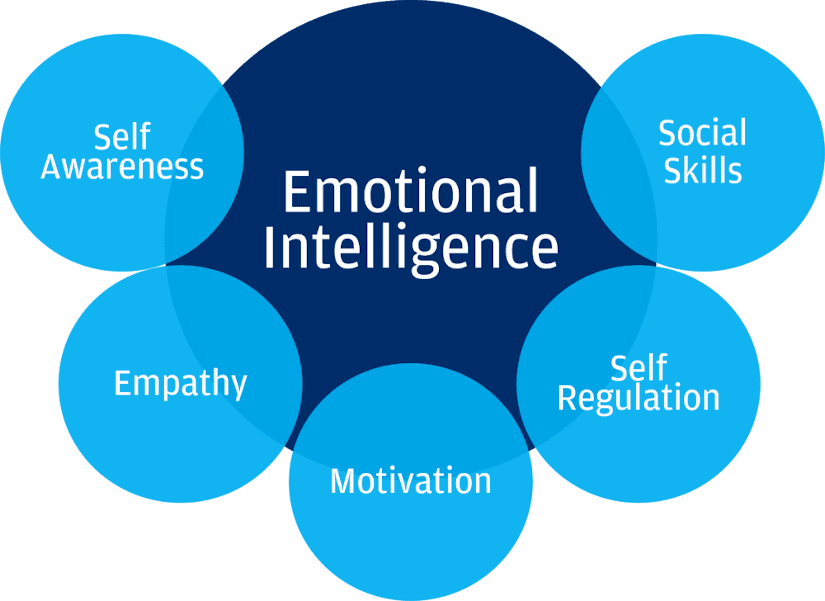
Emotional intelligence, often shortened to EQ, has become one of the most influential concepts in understanding human behavior. While traditional intelligence measures cognitive ability, EQ captures something more subtle: the capacity to work with emotions as functional tools rather than unpredictable forces. At its core, EQ involves four interconnected abilities—self‑awareness, self‑management, social awareness, and relationship management—each shaping how people interact with the world.
Self‑awareness is the foundation of EQ. It is the ability to notice your emotional states, understand what triggers them, and recognize how they influence your thoughts and actions. People with strong self‑awareness can identify when they are stressed, frustrated, or energized, and they can trace those feelings back to their sources. This awareness prevents emotions from operating in the background unchecked. Instead, emotions become signals that inform choices. Without self‑awareness, people often react impulsively or misinterpret their own motivations, making it difficult to grow or adapt.
Self‑management builds on this awareness by turning insight into action. It involves regulating emotional responses, staying composed under pressure, and choosing behaviors that align with long‑term goals rather than short‑term impulses. Someone with strong self‑management can feel anger without lashing out, feel anxiety without shutting down, and feel excitement without losing focus. This ability is not about suppressing emotions; it is about channeling them productively. In high‑stress environments—workplaces, classrooms, families—self‑management often becomes the difference between escalation and resolution.
Social awareness shifts the focus outward. It is the ability to read emotional cues in others, understand social dynamics, and empathize with different perspectives. People with strong social awareness notice tone, body language, and context. They can sense when someone is uncomfortable, overwhelmed, or disengaged, even if no words are spoken. This skill is essential for navigating diverse environments, where assumptions can easily lead to misunderstanding. Empathy, a key component of social awareness, allows individuals to connect with others on a deeper level, fostering trust and cooperation.
Relationship management is the outward expression of all the other components. It involves communicating clearly, resolving conflict, inspiring others, and building strong interpersonal connections. People with high EQ excel at difficult conversations because they can balance honesty with sensitivity. They can motivate teams, negotiate disagreements, and create environments where others feel valued. Relationship management is not about being agreeable; it is about being effective in interactions, even when situations are challenging.
Together, these four abilities make EQ a powerful predictor of success. In workplaces, EQ often outweighs technical skill in determining leadership potential. Leaders with high EQ can guide teams through uncertainty, adapt to change, and maintain morale. They understand that people are not machines; they respond to tone, trust, and emotional climate. In personal relationships, EQ fosters deeper connections and reduces unnecessary conflict. It helps individuals communicate needs clearly, listen actively, and respond with compassion rather than defensiveness.
***
***
One of the most compelling aspects of EQ is that it is learnable. Unlike fixed cognitive traits, emotional intelligence grows through practice and reflection. Developing self‑awareness might involve journaling, mindfulness, or simply pausing before reacting. Strengthening self‑management requires recognizing patterns—like shutting down during criticism or becoming reactive under stress—and experimenting with new responses. Building social awareness often means observing more carefully, asking questions, and being willing to see situations from perspectives other than your own. Improving relationship management involves practicing communication skills, setting boundaries, and learning to navigate conflict without avoidance or aggression.
Despite its benefits, EQ is sometimes misunderstood. Some assume it means being “nice” all the time, but EQ is not about avoiding difficult emotions. It is about handling them skillfully. Others believe EQ is innate, but research and experience show that emotional skills can grow throughout life. Still others think EQ is less important than cognitive intelligence, yet many high‑IQ individuals struggle in leadership or relationships because they lack emotional insight. EQ does not replace IQ; it complements it, creating a fuller picture of human capability.
In a world that is increasingly fast‑paced and interconnected, emotional intelligence has never been more essential. Technology may automate tasks, but it cannot replace empathy, intuition, or human connection. Workplaces rely on collaboration, families rely on communication, and communities rely on understanding. EQ strengthens all of these. It helps people navigate uncertainty, build resilience, and create environments where others feel seen and respected.
COMMENTS APPRECIATED
SPEAKING: Dr. Marcinko will be speaking and lecturing, signing and opining, teaching and preaching, storming and performing at many locations throughout the USA this year! His tour of witty and serious pontifications may be scheduled on a planned or ad-hoc basis; for public or private meetings and gatherings; formally, informally, or over lunch or dinner. All medical societies, financial advisory firms or Broker-Dealers are encouraged to submit an RFP for speaking engagements: CONTACT: Ann Miller RN MHA at MarcinkoAdvisors@outlook.com -OR- http://www.MarcinkoAssociates.com
Like, Refer and Subscribe
***
Share this:

Filed under: iMBA, Inc. | Tagged: Emotional Intelligence, empathy, EQ, IQ, leadership, personal-development, self-awareness |


Leave a Reply