MEDICARE: Open Enrollment Period Commences

By Staff Reporters & The Medicare Team

Medicare open enrollment—which runs from October 15th through December 7th this year—is your chance to check in on your Medicare plan and, if needed, change it.

***

***

Mark your calendars — Medicare Open Enrollment starts October 15th! Did you know new benefits are coming to Medicare drug coverage next year?

Starting in 2025, all Medicare plans will include a $2,000 cap on what you pay out-of-pocket for prescription drugs covered by your plan. So, it’s more important than ever to make sure your drugs are covered.

Also starting next year, you can choose to participate in a program that spreads your out-of-pocket drug costs across the calendar year, instead of paying all at once at the pharmacy. It’s called the Medicare Prescription Payment Plan — and you can opt in with your plan throughout the 2025 plan year. Contact your plan for more details.

Preview Coverage Options

Remember, Medicare plans can change from one year to the next, and so can your health needs. Preview and compare all your health and drug options and see if you can save!

The Medicare Team

***

***

MARCINKO & ASSOCIATES: Financial Planning and Business Management Education for Physicians

By Dr. David Edward Marcinko MBA MEd CMP

CONSULTING ADVICE – NOT SALES

“AT YOUR SERVICE”

E-mail: MarcinkoAdvisors@msn.com

SPONSOR: http://www.MarcinkoAssociates.com

Marcinko & Associates is financial guide. We help answer your questions in an empowering way. We educate and guide medical colleagues to understand their financial picture and to make better financial decisions. We strive to simplify everything, clear up confusion, and address specific needs and goals.

Simply put, we’re a financial services company on a mission to empower financial freedom for all healthcare professionals; only. We work with doctors, nurses, medical providers, individuals and all sizes of organizations to offer investment, wealth management and retirement solutions so everyone can have a clear and simple understanding of where their finances and career is today and where it is headed tomorrow.

Whatever your financial situation, we do not shame, criticize, or sell. We enrich, educate and empower. We work only with medical colleagues at every stage of their financial journey [students, interns, residents, practitioners, mid-career and mature physicians], through big life personal changes to annual employment reviews, in order to help them understand, invest, and protect their money and lifestyle.

CITE: https://www.r2library.com/Resource

For example, the following are current issues of review need for each Fall and Winter:

  • Financial planning reviews: 401-k, insurance, budget plans, investing, debt and savings, etc
  • Assess, develop, and align financial retirement and estate planning goals
  • Risk Management: Malpractice, home, life, medical, auto and personal indemnity
  • Life Insurance Need Reviews: whole, universal and term  
  • Business, operations, HR, employment negotiations and medical practice management
  • Annuity Need Reviews: Indexed and Fixed [Pros and Cons].

***

***

At Marcinko & Associates we discuss specific needs and answer specific questions. We educate and make personalized recommendations that you are free to use, incorporate or disregard. Referrals to trusted specialists and strategic alliance partners then occur if – and as – needed [pro re nata].

SPONSOR: http://www.CertifiedMedicalPlanner.org

***


AVOIDANT BEHAVIOR: Disease and Illness

COMMON SENSE PUBLIC AND POPULATION HEALTH

By Staff Reporters

***

***

According to colleague Dan Ariely PhD, Disease Avoidant Behavior are the actions we take to avoid illness, often driven by instinctive or learned responses. It’s why we wash our hands obsessively during flu season, wear a balaclava mask and/or avoid people who are sneezing or coughing.

Note: A balaclava is a form of cloth headgear designed to expose only part of the face, usually the eyes and mouth. Depending on style and how it is worn, only the eyes, mouth and nose, or just the front of the face are unprotected. Versions with enough of a full face opening may be rolled into a hat to cover the crown of the head or folded down as a collar around the neck.

This behavior is rooted in our evolutionary survival instincts, helping us steer clear of contagious health threats like RSV, COVID and the winter flu. While it’s usually a good thing, excessive disease avoidant behavior can lead to anxiety and social isolation.

So, balance caution with common sense and public/population health directives to stay healthy and sane.

COMMENTS APPRECIATED

Thank You

***

***

STOCK MARKET: A Zero Sum Bias?

By Staff Reporters

FINANCIAL / INVESTMENT ADVISORS & STOCK BROKERS

SPONSOR: http://www.MarcinkoAssociates.com

***

***

According to colleague Dan Ariely PhD, a Zero Sum Bias [ZSB] is the mistaken belief that one person’s gain is another’s loss. It’s like thinking the world is a giant pie with only so many slices. This mindset fuels competition and jealousy, making us forget that collaboration can create more pie. It’s why we sometimes root against others instead of working together.

Question: Is the stock market a zero-sum game? You frequently hear media refer to games and markets as zero-sum games.

Answer: Well, yes, we define the stock market as a zero-sum game, both in the short and in the long term, although it technically is incorrect. A zero-sum game is where one person’s gain is another person’s loss – thus there is no wealth created and the overall benefit is zero. This doesn’t apply to stocks, but it’s a zero-sum game in relation to a stock market benchmark.

For example, short-term trading in stocks is theoretically not a zero-sum game, and neither is long-term investing. But short-term trading is close to a zero-sum game, and long-term investing is a zero-sum game if we use a broad index as a benchmark.

Essentially, in other words, the stock market functions as an expansive network of zero-sum transactions; each trade engages a buyer and a seller–their perspectives on a security’s future value contrasting. These opposing views propel market prices: they mirror not only risk transfer but also potential reward—a dynamic process indeed! Traders and investors must grasp the crucial zero-sum aspect; it underscores trading’s inherent competitiveness. Effectively anticipating market trends and actions from other participants: therein lies success in this environment. 

CITE: https://www.r2library.com/Resource/Title/0826102549

So, next time you feel like someone else’s success diminishes your own, remember: there’s more than enough pie to go around.

COMMENTS APPRECIATED

Thank You

***

***

ORTHOPEDIC & PODIATRIC SURGERY: Ambulatory Surgery Centers

AVERAGE REVENUE PER CASE

By Staff Reporters

***

Podiatry is 3rd in Average Revenue Per Case in ASCs

***

Ambulatory Surgery Centers: Creating Value through Outpatient Surgery

***

Orthopedic surgery topped the pack for ASC revenue per case, according to VMG Health’s “Multi-Specialty ASC Benchmarking Study” for 2022.

The specialty was only the fourth most-represented among ASC cases, however. Nationally, gastroenterology was the most-represented specialty among ASCs, with 32 percent of all cases, followed by ophthalmology, with 26 percent, and pain management and orthopedics, with 22 and 21 percent, respectively.

Average revenue per case:

1. Orthopedics — $3,791

2. Gynecology — $3,117

3. Podiatry — $2,990

4. Urology — $2,724

5. Otolaryngology — $2,617

6. General surgery — $2,508

7. Plastic surgery — $2,264

8. Ophthalmology — $1,487

9. Pain management — $1,273

10. Gastroenterology — $1,079

Source: Marcus Robertson, Becker’s ASC [2/15/22]

***

ORDER INFECTION TEXTBOOK: https://tinyurl.com/ms647rnt

***

***

COMMENTS APPRECIATED

Thank You

Subscribe to the Medical Executive-Post

***

Dr. Marcinko Interviewed on Physician Retirement and Succession Planning

imba inc
***

Physicians Have Unique Challenges and Opportunities

ENCORE PRESENTATION

http://www.MarcinkoAssociates.com

By Ann Miller RN MHA CMP

[Executive-Director]

Medical Executive-Post Publisher-in-Chief, Dr. David Edward Marcinko MBA CMP™, and financial planner Paul Larson CFP™, were interviewed by Sharon Fitzgerald for Medical News, Inc. Here is a reprint of that interview.

Doctors Squeezed from both Ends

Physicians today “are getting squeezed from both ends” when it comes to their finances, according Paul Larson, president of Larson Financial Group. On one end, collections and reimbursements are down; on the other end, taxes are up. That’s why financial planning, including a far-sighted strategy for retirement, is a necessity.

Larson Speaks

“We help these doctors function like a CEO and help them quarterback their plan,” said Larson, a Certified Financial Planner™ whose company serves thousands of physicians and dentists exclusively. Headquartered in St. Louis, Larson Financial boasts 19 locations.

Larson launched his company after working with a few physicians and recognizing that these clients face unique financial challenges and yet have exceptional opportunities, as well.

What makes medical practitioners unique? One thing, Larson said, is because they start their jobs much later in life than most people. Physicians wrap up residency or fellowship, on average, at the age of 32 or even older. “The delayed start really changes how much money they need to be saving to accomplish these goals like retirement or college for their kids,” he said.

Another thing that puts physicians in a unique category is that most begin their careers with a student-loan debt of $175,000 or more. Larson said that there’s “an emotional component” to debt, and many physicians want to wipe that slate clean before they begin retirement saving.

Larson also said doctors are unique because they are a lawsuit target – and he wasn’t talking about medical malpractice suits. “You can amass wealth as a doctor, get sued in five years and then lose everything that you worked so hard to save,” he said. He shared the story of a client who was in a fender-bender and got out of his car wearing his white lab coat. “It was bad,” Larson said, and the suit has dogged the client for years.

The Three Mistake of Retirement Planning

Larson said he consistently sees physicians making three mistakes that may put a comfortable retirement at risk.

  1. The first is assuming that funding a retirement plan, such as a 401(k), is sufficient. It’s not. “There’s no way possible for you to save enough money that way to get to that goal,” he said. That’s primarily due to limits imposed by the Internal Revenue Service, which allows a maximum contribution of $49,000 annually if self-employed and just $16,500 annually until the age of 50. He recommends that physicians throughout their career sock away 20 percent of gross income in vehicles outside of their retirement plan.
  2. The second common mistake is making investments that are inefficient from a tax perspective. In particular, real estate or bond investments in a taxable account prompt capital gains with each dividend, and that’s no way to make money, he said.
  3. The third mistake, and it’s a big one, is paying too much to have their money managed. A stockbroker, for example, takes a fee for buying mutual funds and then the likes of Fidelity or Janus tacks on an internal fee as well. “It’s like driving a boat with an anchor hanging off the back,” Larson said.

Marcinko Speaks

Dr. David E. Marcinko MBADr. David E. Marcinko MBA MEd CPHQ, a physician and [former] certified financial planner] and founder of the more specific program for physician-focused fiduciary financial advisors and consultants www.CertifiedMedicalPlanner.org, sees another common mistake that wreaks havoc with a physician’s retirement plans – divorce.

He said clients come to him “looking to invest in the next Google or Facebook, and yet they will get divorced two or three times, and they’ll be whacked 50 percent of their net income each time. It just doesn’t make sense.”

Marcinko practiced medicine for 16 years until about 10 years ago, when he sold his practice and ambulatory surgical center to a public company, re-schooled and retired. Then, his second career in financial planning and investment advising began. “I’m a doctor who went to business school about 20 years ago, before it was in fashion. Much to my mother’s chagrin, by the way,” he quipped. Marcinko has written 27 books about practice management, hospital administration and business, physician finances, risk management, retirement planning and practice succession. He’s the founder of the Georgia-based Institute of Medical Business Advisors Inc.

ECON

Succession Planning for Doctors

Succession planning, Marcinko said, ideally should begin five years before retirement – and even earlier if possible. When assisting a client with succession, Marcinko examines two to three years of financial statements, balance sheets, cash-flow statements, statements of earnings, and profit and loss statements, yet he said “the $50,000 question” remains: How does a doctor find someone suited to take over his or her life’s work? “We are pretty much dead-set against the practice broker, the third-party intermediary, and are highly in favor of the one-on-one mentor philosophy,” Marcinko explained.

“There is more than enough opportunity to befriend or mentor several medical students or interns or residents or fellows that you might feel akin to, and then develop that relationship over the years.” He said third-party brokers “are like real-estate agents, they want to make the sale”; thus, they aren’t as concerned with finding a match that will ensure a smooth transition.

The only problem with the mentoring strategy, Marcinko acknowledged, is that mentoring takes time, and that’s a commodity most physicians have too little of. Nonetheless, succession is too important not to invest the time necessary to ensure it goes off without a hitch.

Times are different today because the economy doesn’t allow physicians to gradually bow out of a practice. “My overhead doesn’t go down if I go part-time. SO, if I want to sell my practice for a premium price, I need to keep the numbers up,” he noted.

Assessment

Dr. Marcinko’s retirement investment advice – and it’s the advice he gives to anyone – is to invest 15-20 percent of your income in an Vanguard indexed mutual fund or diversified ETF for the next 30-50 years. “We all want to make it more complicated than it really is, don’t we?” he said.

QUESTION: What makes a physician moving toward retirement different from most others employees or professionals? Marcinko’s answer was simple: “They probably had a better shot in life to have a successful retirement, and if they don’t make it, shame on them. That’s the difference.”

More:

Conclusion

Your thoughts and comments on this ME-P are appreciated. Feel free to review our top-left column, and top-right sidebar materials, links, URLs and related websites, too. Then, subscribe to the ME-P. It is fast, free and secure.

Speaker: If you need a moderator or speaker for an upcoming event, Dr. David E. Marcinko; MBA – Publisher-in-Chief of the Medical Executive-Post – is available for seminar or speaking engagements. Contact: MarcinkoAdvisors@msn.com

OUR OTHER PRINT BOOKS AND RELATED INFORMATION SOURCES:

PRACTICES: www.BusinessofMedicalPractice.com
HOSPITALS: http://www.crcpress.com/product/isbn/9781466558731
CLINICS: http://www.crcpress.com/product/isbn/9781439879900
BLOG: www.MedicalExecutivePost.com
FINANCE: Financial Planning for Physicians and Advisors
INSURANCE: Risk Management and Insurance Strategies for Physicians and Advisors

Product DetailsProduct DetailsProduct Details

Product Details  Product Details

Product DetailsProduct Details

Risk Management, Liability Insurance, and Asset Protection Strategies for Doctors and Advisors: Best Practices from Leading Consultants and Certified Medical Planners™8Comprehensive Financial Planning Strategies for Doctors and Advisors: Best Practices from Leading Consultants and Certified Medical Planners™
 ***

Efficient Market Hypothesis – or Perhaps Not?

Contradicting the Hypothesis

[A SPECIAL ME-P REPORT]

[By Timothy J McIntosh MBA CFP® MPH CMP™ [Hon]

[By Dr. David Edward Marcinko MBA MEd CMP™]

http://www.CertifiedMedicalPlanner.org

http://www.MarcinkoAssociates.com

***

Not everyone believes in the efficient market.  Numerous researchers over the previous decades have found stock market anomalies that indicate a contradiction with the hypothesis.  The search for anomalies is effectively the hunt for market patterns that can be utilized to outperform passive strategies.

white swan

[White Swan of the EMH]

Such stock market anomalies that have been proven to go against the findings of the EMH theory include:

  1. Low Price to Book Effect
  2. January Effect
  3. The Size Effect
  4. Insider Transaction Effect
  5. The Value Line Effect

The Anomalies

All the above anomalies have been proven over time to outperform the market.  For example, the first anomaly listed above is the Low Price to Book Effect.  The first and most discussed study on the performance of low price to book value stocks was by Dr. Eugene Fama and Dr. Kenneth R. French.  The study covered the time period from 1963-1990 and included nearly all the stocks on the NYSE, AMEX and NASDAQ. The stocks were divided into ten subgroups by book/market and were re-ranked annually.

In the study, Fama and French found that the lowest book/market stocks outperformed the highest book/market stocks by a substantial margin (21.4 percent vs. 8 percent).  Remarkably, as they examined each upward decile, performance for that decile was below that of the higher book value decile.  Fama and French also ordered the deciles by beta (measure of systematic risk) and found that the stocks with the lowest book value also had the lowest risk.

What is Value?

Today, most researchers now deem that “value” represents a hazard feature that investors are compensated for over time.  The theory being that value stocks trading at very low price book ratios are inherently risky, thus investors are simply compensated with higher returns in exchange for taking the risk of investing in these value stocks.

The Fama and French research has been confirmed through several additional studies.  In a Forbes Magazine 5/6/96 column titled “Ben Graham was right–again,” author David Dreman published his data from the largest 1500 stocks on Compustat for the 25 years ending 1994. He found that the lowest 20 percent of price/book stocks appreciably outperformed the market.

***

Ex-Cathedra black swan

[Ex-Cathedra or Black Swan Event]

Assessment

One item a medical professional should be aware of is the strong paradox of the efficient market theory.   If each investor believes the stock market were efficient, then all investors would give up analyzing and forecasting.  All investors would then accept passive management and invest in index funds.

But, if this were to happen, the market would no longer be efficient because no one would be scrutinizing the markets.  In actuality, the efficient market hypothesis actually depends on active investors attempting to outperform the market through diligent research

Channel Surfing the ME-P

Have you visited our other topic channels? Established to facilitate idea exchange and link our community together, the value of these topics is dependent upon your input. Please take a minute to visit. And, to prevent that annoying spam, we ask that you register. It is fast, free and secure.

More:

The Author

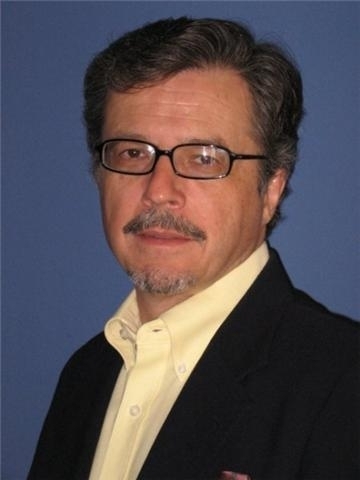
Timothy J. McIntosh is Chief Investment Officer and founder of SIPCO.  As chairman of the firm’s investment committee, he oversees all aspects of major client accounts and serves as lead portfolio manager for the firm’s equity and bond portfolios. Mr. McIntosh was a Professor of Finance at Eckerd College from 1998 to 2008. He is the author of The Bear Market Survival Guide and the The Sector Strategist.  He is featured in publications like the Wall Street Journal, New York Times, USA Today, Investment Advisor, Fortune, MD News, Tampa Doctor’s Life, and The St. Petersburg Times.  He has been recognized as a Five Star Wealth Manager in Texas Monthly magazine; and continuously named as Medical Economics’ “Best Financial Advisors for Physicians since 2004.  And, he is a contributor to SeekingAlpha.com., a premier website of investment opinion. Mr. McIntosh earned a Bachelor of Science Degree in Economics from Florida State University; Master of Business Administration (M.B.A) degree from the University of Sarasota; Master of Public Health Degree (M.P.H) from the University of South Florida and is a CERTIFIED FINANCIAL PLANNER® practitioner. His previous experience includes employment with Blue Cross/Blue Shield of Florida, Enterprise Leasing Company, and the United States Army Military Intelligence.
Conclusion

So, what about the “January Effect for 2025“?

Your thoughts and comments on this ME-P are appreciated. Feel free to review our top-left column, and top-right sidebar materials, links, URLs and related websites, too. Then, subscribe to the ME-P. It is fast, free and secure.

Speaker: If you need a moderator or speaker for an upcoming event, Dr. David E. Marcinko; MBA – Publisher-in-Chief of the Medical Executive-Post – is available for seminar or speaking engagements. Contact: MarcinkoAdvisors@msn.com
OUR OTHER PRINT BOOKS AND RELATED INFORMATION SOURCES:

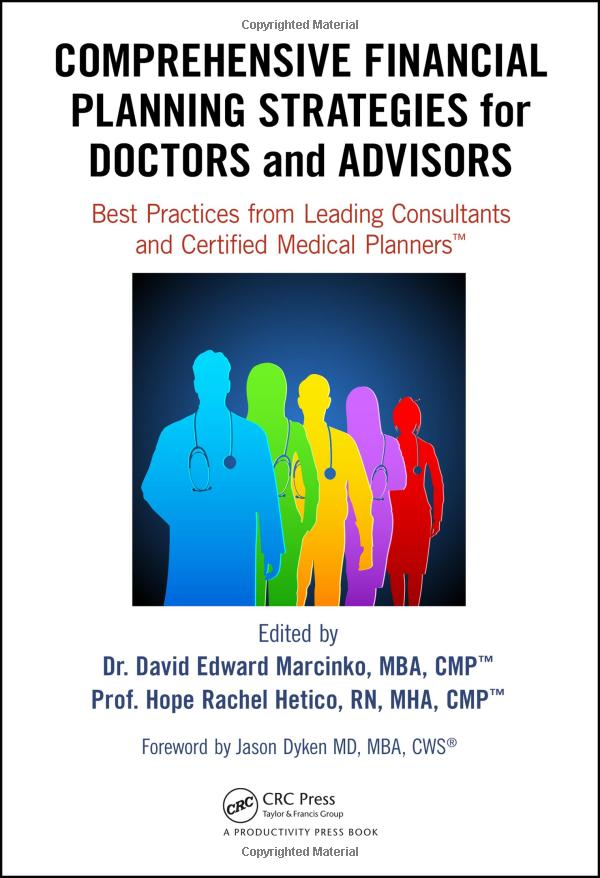
Comprehensive Financial Planning Strategies for Doctors and Advisors: Best Practices from Leading Consultants and Certified Medical Planners(TM)

Invite Dr. Marcinko

Medicare Advantage [Part C] Plans Face Headwinds

By Health Capital Consultants, LLC

***

***

With the annual enrollment period for Medicare Advantage (MA) plans slated to open in less than two months, many MA plans are cutting benefits and provider payments, while approving fewer claims. Further, after a decade of accelerated growth in the MA market, several MA plan executives have announced MA market exits and decreases in membership for the upcoming plan year.

CITE: https://www.r2library.com/Resource

This Health Capital Topics article discusses recently announced MA market exits, the reasons for those exits, and the current environment in which MA plans are operating. (Read more...)

COMMENTS APPRECIATED

Thank You

***

***

Integration as a Competitive Strategy in Healthcare Reform

Understanding Horizontal and Vertical Integration

ENCORE PRESENTATION

[By Robert James Cimasi MHA, AVA, CMP™]

Health Capital Consultants, LLC

St. Louis MO

Several potential benefits are associated with the integration of companies in the same or related industries. These synergistic benefits depend upon the type of companies and their integration strategies, as well as whether the anticipated transaction is a manifestation of horizontal consolidation or vertical integration.

Horizontal consolidation is “the acquisition and consolidation of like organizations or business ventures under a single corporate management, in order to produce synergy, reduce redundancies and duplication of efforts or products, and achieve economies of scale while increasing market share.”

Vertical integration involves the joining of organizations that are fundamentally different in their product and/or services offerings, i.e., “the aggregation of dissimilar but related business units, companies, or organizations under a single ownership or management in order to provide a full range of related products and services.”

Healthcare Locality

As healthcare is essentially a local business, horizontal integration within the local market has been limited by antitrust laws. Therefore, in order to control greater market share, a hospital’s strategy has required vertical integration. Healthcare providers and organizations have placed much emphasis on the benefits of vertical system integration in the last 10 or more years, whereby a single healthcare organization owns all of the elements needed to provide a continuum of care for all the needs of a given patient population. Much of this effect has stemmed from the desire to be able provide a “continuum of care,” i.e., to be able to single source contract for the healthcare needs of a patient population and to profit from implementing preventative healthcare and utilization management measures. The relative economic benefits of this type of vertical integration versus horizontal integration strategies remain the subject of great debate in academia and among the strategic managers of other industries. One lesson that may be drawn from other industries is that neither of these forms of integration is universally applicable or beneficial to every organization and market. There are also great costs to integration, which must be outweighed by the benefits. Each specific benefit should be identified and researched when examining the probable effects of integration, consolidation, mergers or divestitures as a competitive strategy.

Rapid Consolidation Periods

During the rapid consolidation and integration of healthcare providers, insurers, and purchasers, in recent years, there was much discussion of a concept termed “managed competition.” This term appears to have been an outgrowth of the term “managed care” and was viewed by many as the logical result of the integration of healthcare markets nationally. The concept of “managed competition” apparently related to an idealized vision of competition between very large, integrated providers (organized into integrated delivery systems), large, national managed care payors, and purchasing group coalitions that could achieve a balance of power between these interacting groups. However, many believe that the result of such an arrangement would more likely be a reduction in competition between members of each of these three groups and the creation of powerful bureaucratic and intractable organizations. Further, this scenario does not appear to effectively remove any of the existing barriers to competition and therefore doesn’t introduce any additional incentives for innovation to produce value for consumers which, of course, is the “sine qua non” of competition.

Disadvantages

The disadvantages of integration are becoming apparent, including:

  • the loss of autonomy;
  • increased bureaucracy;
  • difficulty in aligning incentives; and
  • other failed expectations.

Many organizations that sought strategic advantage through integration are ending those arrangements and now divesting acquired organizations.

Other Industries

In other industries, specialized providers of goods and services are increasingly able to offer customers a full range of services through affiliation and affinity with other independent specialists, made more seamless through the use of increasingly sophisticated communications and computing technologies. However, this move to “dis-integration” must also be carefully considered if organizations are not to make further costly organizational changes inspired by a rushed judgment of general market trends.

Porter Speaks

Michael Porter (et al.) wrote in the Harvard Business Review that,

In industry after industry, the underlying dynamic is the same: competition compels companies to deliver increasing value to customers. The fundamental driver of this continuous quality improvement and cost reduction is innovation. Without incentives to sustain innovation in health care, short-term cost savings will soon be overwhelmed by the desire to widen access, the growing health needs of an aging population, and the unwillingness of Americans to settle for anything less than the best treatments available. Inevitably, the failure to promote innovation will lead to lower quality or more rationing of care — two equally undesirable results.

Assessment

Therefore, if the emerging healthcare industry is to respond successfully to the Affordable Care Act [ACA] and related market pressures to reduce costs, then the healthcare market must first create incentives for innovation. The barriers to competition cannot include barriers to innovation as many do now. Physicians, nurses, healthcare purchasers, managers, and legislators must ensure innovation takes the forefront of any reform, if it is to be effective.

Conclusion

Your thoughts and comments on this ME-P are appreciated. Feel free to review our top-left column, and top-right sidebar materials, links, URLs and related websites, too. Then, subscribe to the ME-P. It is fast, free and secure.

Speaker: If you need a moderator or speaker for an upcoming event, Dr. David E. Marcinko; MBA – Publisher-in-Chief of the Medical Executive-Post – is available for seminar or speaking engagements. Contact: MarcinkoAdvisors@msn.com

OUR OTHER PRINT BOOKS AND RELATED INFORMATION SOURCES:

PHYSICIANS: www.MedicalBusinessAdvisors.com
HOSPITALS: http://www.crcpress.com/product/isbn/9781466558731
CLINICS: http://www.crcpress.com/product/isbn/9781439879900
BLOG: www.MedicalExecutivePost.com
FINANCE: Financial Planning for Physicians and Advisors
INSURANCE: Risk Management and Insurance Strategies for Physicians and Advisors

Product DetailsProduct DetailsProduct Details

Product Details  Product Details

   Product Details 

NOBEL PRIZE CHEMISTRY: David Baker, Demis Hassabis and John Jumper in 2024

BREAKING NEWS

By Staff Reporters

***

***

he 2024 Nobel Prize in chemistry has been awarded to a trio of scientists who used artificial intelligence to “crack the code” of almost all known proteins, the “chemical tools of life.”

The Nobel Committee lauded David Baker, a US biochemist, for completing “the almost impossible feat of building entirely new kinds of proteins,” along with Demis Hassabis and John Jumper, who work at Google DeepMind, for developing an AI model to predict proteins’ complex structures – a problem that had been unsolved for 50 years.

“The potential of their discoveries is enormous,” the committee said as the award was just announced in Sweden. The prize, seen as the pinnacle of scientific achievement, carries a cash award of 11 million Swedish kronor ($1 million).

READ: https://www.nobelprize.org

COMMENTS APPRECIATED

Thank You

***

***

What is the Cost Per Patient Acquisition [CPA]?

By Neal Baum MD

***

There’s a saying by John Wanamaker who pontificated, “Half the money I spend on advertising is wasted; the trouble is, I don’t know which half”.

Today you have opportunities to determine which parts of your marketing efforts are effective and what is wasted. However, you have to measure your marketing results.

This article will discuss marketing metrics and how to use them to get the best bang for your marketing buck.

***

***

The cost per acquisition (CPA)

Not all initial phone callers to a medical practice will convert to paying patients. The 50 patients who made appointments can be plugged into the equation, i.e., campaign costs divided by patients who became paying patients or $2,000 divided by 50 equals $40, representing the patient acquisition cost (PAC).

Now, if each patient who entered the practice spends $800 over the patient’s lifetime, that’s an increase in income of $40,000, not shabby for $2,000 in marketing expenses.

Source: Neil Baum, MD, Physicians Practice [8/26/22]

***

MORE: https://pubmed.ncbi.nlm.nih.gov/22834190/

BUSINESS MEDICINE: https://www.amazon.com/Business-Medical-Practice-Transformational-Doctors/dp/0826105750/ref=sr_1_9?ie=UTF8&qid=1448163039&sr=8-9&keywords=david+marcinko

***

COMMENTS APPRECIATED

Thank You

***

PODCAST: Is Private Equity Buying Doctors Illegal?

By Eric Bricker MD

***

***

COMMENTS APPRECIATED

Thank You

***

***

DAILY UPDATE: Pfizer Down While Stock Markets Ignite

MEDICAL EXECUTIVE-POST TODAY’S NEWSLETTER BRIEFING

***

Essays, Opinions and Curated News in Health Economics, Investing, Business, Management and Financial Planning for Physician Entrepreneurs and their Savvy Advisors and Consultants

Serving Almost One Million Doctors, Financial Advisors and Medical Management Consultants Daily

A Partner of the Institute of Medical Business Advisors , Inc.

http://www.MedicalBusinessAdvisors.com

SPONSORED BY: Marcinko & Associates, Inc.

***

http://www.MarcinkoAssociates.com

Daily Update Provided By Staff Reporters Since 2007.
How May We Serve You?
© Copyright Institute of Medical Business Advisors, Inc. All rights reserved. 2024

REFER A COLLEAGUE: MarcinkoAdvisors@msn.com

SPONSORSHIPS AVAILABLE: https://medicalexecutivepost.com/sponsors/

ADVERTISE ON THE ME-P: https://tinyurl.com/ytb5955z

Your Referral Count -0-

Activist investor takes $1 billion stake in Pfizer. The firm Starboard Value has amassed a stake in the pharma giant, which has struggled after reaching new heights during the pandemic, in hopes of turning the company around.

CITE: https://www.r2library.com/Resource

What’s up

  • If you can’t beat ‘em, join ‘em: WW International, aka WeightWatchers, soared 46.95% after the company announced it will begin offering GLP-1 weight-loss drugs.
  • Nvidia rose 4.05% after the Foxconn CEO told CNBC that AI demand is still incredibly strong.
  • Trump Technology & Media Group soared 18.54% after Tesla CEO Elon Musk appeared alongside the former president at a rally in Pennsylvania over the weekend.
  • Palantir popped 6.58% after the CTO of the data analytics firm appeared on CNBC and told everyone that his company is making mad money.
  • Welcome to the club: S&P Global announced that DocuSign is replacing MDU Resources Group in the S&P MidCap 400 index, while MDU is moving to the S&P SmallCap 600 index. Docusign rose 6.55% on the news, while MDU gained 2.44%.
  • Humana finally caught a break when a Bernstein analyst upgraded the stock today, writing that the health insurer has been hurt enough. Shares rose 2.92%.

What’s down

  • What goes up must come down: Chinese stocks, which have enjoyed an impressive rally recently, came tumbling back to Earth today after the country’s state planner didn’t announce any new stimulus measures. Bilibili fell 12.93%, JD.com lost 7.52%, Alibaba sold off 6.67%, and Nio dropped 8.10%.
  • Today’s oil selloff pummeled energy stocks: Valero Energy lost 5.31%, while Marathon Petroleum stumbled 7.66%.
  • Sphere Entertainment dropped 2.84% on the news that its CFO is leaving the company.
  • Super Micro Computer gave back 5.01% after its rally yesterday as investors pocketed their profits.

CITE: https://tinyurl.com/2h47urt5

Here’s where the major benchmarks ended:

  • The SPX rose 55.19 points (0.97%) to 5,751.15; the Dow Jones Industrial Average® ($DJI) added 126.13 points (0.30%) to 42,080.37; and the NASDAQ Composite® ($COMP) gained 259.01 points (1.45%) to 18,182.92.
  • The 10-year Treasury note yield (TNX) rose one basis point to 4.03%.
  • The CBOE Volatility Index® (VIX) sank to 21.24, still above its long-term average.

CITE: https://tinyurl.com/tj8smmes

COMMENTS APPRECIATED

PLEASE SUBSCRIBE: MarcinkoAdvisors@msn.com

Thank You

***

***

***

***

EDUCATIONAL TEXTBOOKS: https://tinyurl.com/4zdxuuwf

***

DAILY UPDATE: FluMist, Neural Data and the Jobs Report

MEDICAL EXECUTIVE-POST TODAY’S NEWSLETTER BRIEFING

***

Essays, Opinions and Curated News in Health Economics, Investing, Business, Management and Financial Planning for Physician Entrepreneurs and their Savvy Advisors and Consultants

Serving Almost One Million Doctors, Financial Advisors and Medical Management Consultants Daily

A Partner of the Institute of Medical Business Advisors , Inc.

http://www.MedicalBusinessAdvisors.com

SPONSORED BY: Marcinko & Associates, Inc.

***

http://www.MarcinkoAssociates.com

Daily Update Provided By Staff Reporters Since 2007.
How May We Serve You?
© Copyright Institute of Medical Business Advisors, Inc. All rights reserved. 2024

REFER A COLLEAGUE: MarcinkoAdvisors@msn.com

SPONSORSHIPS AVAILABLE: https://medicalexecutivepost.com/sponsors/

ADVERTISE ON THE ME-P: https://tinyurl.com/ytb5955z

Your Referral Count -0-


The FDA just approved FluMist from AstraZeneca for self- or caregiver administration for the prevention of influenza virus subtypes A and B.

Plus, August’s revised jobs report showed the US actually created 159,000 jobs, up from 142,000 initially reported last month.

People in CA will have explicit rights to their own “neural data”—covering anything a person thinks or physically/emotionally feels—which is designed to prevent companies from gathering and selling that type of personal info

COMMENTS APPRECIATED

PLEASE SUBSCRIBE: MarcinkoAdvisors@msn.com

Thank You

https://www.amazon.com/Comprehensive-Financial-Planning-Strategies-Advisors/dp/1482240289/ref=sr_1_1?ie=UTF8u0026amp;qid=1418580820u0026amp;sr=8-1u0026amp;keywords=david+marcinko

***

***

***

EDUCATIONAL TEXTBOOKS: https://tinyurl.com/4zdxuuwf

***

TELECOMMUNICATIONS: The Infinite Game

By Vitaliy Katsenelson, CFA

***

CABLE COMPANIES
CHTR, just like Comcast, showed only a very slight decline in broadband customers in the last quarter. Most of the decline came from the US government removing subsidies for rural customers. Overall, the business is doing very well.

I want to remind you that broadband is not a secularly challenged business, but an advantaged business that we believe will resume growth soon. 

Cable companies continue to offer a great product on the market, which is actually improving in quality as I type this because they are upgrading their networks to be as fast as fiber. They should be done with their full network upgrade in a year or so.

Also, cable companies have shown that they are very good at attracting wireless customers from wireless carriers. (They have grown their wireless business by 25% in 2024). The more we analyzed this industry. the more bearish we became on AT&T and Verizon.

Though owning cable stocks has not been rewarding (I’m being very gentle to myself), the more research we’ve done into the industry, the more convinced we’ve become that once the dust settles, their market share will not decrease but likely increase. Fixed wireless has taken all the share it will take and will start donating share to cable companies as customers get frustrated with intermittency of the service and usage caps. 

The industry is moving towards the bundle – one bill for broadband and wireless (and maybe TV service, though that has been marginalized by streamers). It’s a lot easier for cable companies to add wireless customers than for wireless companies to add wired broadband customers. 

This point is paramount! 

It costs very little for a cable company to add a wireless subscriber, as 80-90% of a subscriber’s data is traveling on Wi-Fi (i.e., the cable network is already there). 

Meanwhile, the cost of building out broadband is pushing into uneconomical territory, for several reasons. First of all, all the low-hanging fruit has already been picked. It costs, let’s say, $50-100 thousand dollars to lay a mile of fiber, whether that covers one or a thousand homes. High-density areas already have cable or fiber service. With the latest upgrades the cable industry is doing, both their upload and download speeds are on par with fiber. Second, labor costs have gone up significantly over the last few years.

Verizon just announced buying Frontier Communications for $20 billion. Frontier has 2.2 million fiber subscribers. With this purchase, Verizon is paying $9,000 per fiber subscriber.

Let’s examine the economics of this transaction:

Frontier gets about $800 a year of revenues from these broadband customers (on a par with Charter and Comcast). Let’s say they achieve a 23% margin (Frontier is barely a profitable business, so I’m using Charter’s margins). Thus, each customer will generate $184 of profit for them. So Verizon is paying $9,000 for $184 of profit, and it will take Verizon 49 years to break even on this transaction. 

As you can see, these economics make no sense. Verizon and AT&T are horrible at capital allocation, and this deal is a sign of supreme desperation. The market has been slow to see what we see in Charter and Comcast, and this is always our goal – we want the market to agree with us, later. 

Our very conservative estimate of Charter’s 2028 free cash flow per share is $48-60. In this estimate we are assuming no customer growth in broadband and 2% price increases a year. At 13-15 times free cash flows, we get a price of around $630-900 in 2028. Charter is trading at about $320 as I write this. 

We really like Charter’s management. We heard an anecdote about Charter CEO Chris Winfrey that warmed our soul. A week after he became CEO, Charter announced a huge, multibillion-dollar upgrade for its broadband network. This news sent the stock down 15%. (I wrote about it; we thought it was a great idea.) Anyway, someone met Chris at a party and told him, “That’s the right move, but very gutsy.” Chris said, “We build the company for our grandchildren.” This is what we want to see from our CEOs. They’re willing to sacrifice short-term profitability to improve the business’s moat.

Often, the idea of “creating shareholder value” is misunderstood. Paying employees poorly, abusing suppliers, and trying to rip off your customers is not going to create long-term (key term) shareholder value. It may bring short-term profits and boost the stock price, but it shortens the company’s growth runway and erodes its moat.

I don’t want to get off topic, but I’ve been thinking a lot about this. We’ve spent a lot of time studying the aircraft industry; our focus was Airbus, and thus we spent a lot of time looking at Boeing.

Boeing, under previous management, focused on “shareholder value creation.” It cut costs, laid off a lot of workers, including many quality control folks. Its “shareholder value creation” didn’t stop there; it willingly lied to regulators and took shortcuts in safety. Specifically, Boeing made critical design changes to its 737 MAX aircraft without fully informing regulators or pilots, and pushed for reduced pilot training requirements to save costs. These decisions directly contributed to two fatal crashes in 2018 and 2019, resulting in 346 deaths and the worldwide grounding of the 737 MAX for nearly two years.

Did its management actions maximize shareholder value? Well, it depends on the time frame. It boosted short-term earnings and drove the stock price higher. It may have made its CEO rich beyond belief.

But.

Over a longer time frame, these decisions have destroyed shareholder value. People used to say, “If it’s not Boeing, I’m not going.” Today, I become slightly more religious when I board a Boeing plane. The company has incurred over $20 billion in direct costs related to the 737 MAX crisis, including compensation to airlines and families of crash victims, and increased production costs. 

This doesn’t account for the incalculable damage to Boeing’s reputation and loss of market share. It gave Airbus an opening to produce more planes and take market share, with Airbus surpassing Boeing in deliveries and orders in recent years, particularly in the crucial narrow-body market.

We want to own companies that aim to maximize long-term shareholder value by treating all their stakeholders fairly. We want our companies to play the infinite game. What does “fairly” mean in this context? I’ll borrow from US Supreme Court Justice Potter Stewart, who famously dodged defining pornography by saying, “I know it when I see it.”

Update: After I wrote the above, Charter proposed to buy Liberty through a merger. We don’t own Charter directly, but rather through Liberty Broadband, which holds a 25% stake in Charter. Liberty was trading at a significant discount (around 30%) to the value of its Charter shares. Liberty agreed, but at a higher price. Our estimate of Liberty’s net asset value is about $88. The shares are trading at $75 as of this writing (up from $60). If the deal goes through we’ll end up owning shares of Charter at a significant discount.

COMMENTS APPRECIATED

Thank You

***

***

SMART PHONES: Not for All Financial Advisors or Doctors

DUMB PHONES ANYONE?

By Anonymous Reporter[s]

***

***

Allow us [me] to suggest the use of Android and iOS shortcuts that disable bio-metric unlocking on your cell phone.  

“If you use a bio-metric phone sensor [eye scan or fingerprint], you can be compelled to decrypt your device for law enforcement because a bio-metric is something you are,” lawyer Riana Pfefferkorn said in a 2019 talk at the Defcon security conference.

But, “If you use a pass-code to decrypt, typically, you can’t be compelled to unlock, because a pass-code is something that you know.” Her talk did not cover how claiming to have forgotten a pass-code would affect those issues. 

In either case, if your cell phone becomes in possession of federal investigators, you may faces the risk of them determining the unlock code through other means, like using such third-party tools as Cellebrite’s unlocking kits to defeat the phone’s security.

Stay Legal! Or simply invoked your Fifth Amendment right against self-incrimination; if needed. 

In conclusion: I [we] advise the awareness of cell phone privacy risks involved in having so much of your life stored on personal smart cell phone devices that you take almost everywhere. Stay Safe!

COMMENTS APPRECIATED

Thank You

***

***

About the Phillips Curve

[By staff reporters]

An important concept in macroeconomics

When Federal Reserve officials meet to decide whether to raise interest rates again, one question will be front and center according to Neil Irwin?

***

[Rate of Change of Wages against Unemployment

United Kingdom 1913–1948 from Phillips (1958)]

***

Question: How much faith should be placed in a line on a graph first drawn by a New Zealand economist nearly six decades ago, based on data on wages and employment in Britain dating to the 1860s?

The 57-Year-Old Chart That Is Dividing the Fed

More:

Assessment

So, if you believe in the traditional Phillips curve, as some at the Fed do, inflation should be taking off any day now?

Conclusion

Your thoughts and comments on this ME-P are appreciated. Feel free to review our top-left column, and top-right sidebar materials, links, URLs and related websites, too. Then, subscribe to the ME-P. It is fast, free and secure.

Speaker: If you need a moderator or speaker for an upcoming event, Dr. David E. Marcinko; MBA – Publisher-in-Chief of the Medical Executive-Post – is available for seminar or speaking engagements. Contact: MarcinkoAdvisors@msn.com

OUR OTHER PRINT BOOKS AND RELATED INFORMATION SOURCES:

***

Comprehensive Financial Planning Strategies for Doctors and Advisors: Best Practices from Leading Consultants and Certified Medical Planners(TM)

***

PODCAST: The Economic “KUZNETS” Curve

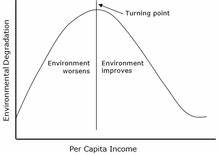
The “KUZNETS” Curve

Courtesy: www.CertifiedMedicalPlanner.org

In economics, a Kuznets curve (/ˈkʌznɛts/) graphs the hypothesis that as an economy develops, market forces first increase and then decrease economic inequality.

CITE: https://www.r2library.com/Resource

The hypothesis was first advanced by economist Simon Kuznets in the 1950s and 1960s.

PODCAST: https://www.bing.com/videos/search?q=Kuznets+Curve&view=detail&mid=A5D7EFB417EC37F3CDFEA5D7EFB417EC37F3CDFE&FORM=VIRE

Assessment: Your thoughts are appreciated.

BUSINESS, FINANCE AND INSURANCE TEXTS FOR DOCTORS:1

THANK YOU

Product DetailsProduct DetailsProduct Details

***

PODCAST: Health Insurance Company Subsidies

By Eric Bricker MD

COMMENTS APPRECIATED

***

https://www.amazon.com/Dictionary-Health-Insurance-Managed-Care/dp/0826149944/ref=sr_1_4?ie=UTF8&s=books&qid=1275315485&sr=1-4
***

California Passes Bill Regulating Private Equity Deals

By Health Capital Consultants, LLC

***

On August 31, 2024, the California legislature passed a bill that may curb private equity (PE) healthcare transactions in the state. The legislation is now on Governor Gavin Newsom’s desk for signature, who must sign or veto the bill by September 30, 2024. If signed into law, California will have the strictest regulation of PE deals of any state in the country.

CITE: https://www.r2library.com/Resource

This Health Capital Topics article discusses the new law and reviews the status of both state and federal regulation of PE. (Read more...)

COMMENTS APPRECIATED

Thank You

***

***

PODCAST: The Opioid Crisis Exposed By Mises Senior Fellow Dr. Mark Thornton

By Free Man Beyond the Wall

***

***

We welcomes Senior Mises Institute Fellow Dr. Mark Thornton to the show. Dr. Thornton recently gave a talk at the Mises Institute Supporters Summit on the opioid crisis that is plaguing the United States. Dr. Thornton lays out a short history of this tragic epidemic that is taking lives every day.

CITE: https://www.r2library.com/Resource/Title/0826102549

He addresses how doctors prescribe these drugs, how government regulates them and explains what happens when people are forced into the “black market” to sustain their addiction.

CITE: https://www.amazon.com/Dictionary-Health-Insurance-Managed-Care/dp/0826149944/ref=sr_1_4?ie=UTF8&s=books&qid=1275315485&sr=1-4

PODCAST HERE: https://freemanbeyondthewall.libsyn.com/episode-169-the-opioid-crisis

***

COMMENTS APPRECIATED

Thank You

***

BENEFICIARIES: Assigned to MSSP Accountable Care Organizations [ACOs]

Number of Beneficiaries Assigned to MSSP ACOs, 2012-2013 to 2022

By Charlene Ice

***

***

  1. 2012/2013: 3.2 million
  2. 2014: 4.9 million
  3. 2015: 7.3 million
  4. 2016: 7.7 million
  5. 2017: 9 million
  6. 2018: 10.5 million
  7. 2019: 10.4 million
  8. 2020: 11.2 million
  9. 2021: 10.7 million
  10. 2022: 11 million

Notes: “MSSP” denotes the Medicare Shared Savings Program
Source: Statista, June 20, 2022
Source URL: https://www.statista.com/statistics/1278948/number-of-benefi…

***

COMMENTS APPRECIATED

Thank You
***

DICTIONARY: https://www.amazon.com/Dictionary-Health-Insurance-Managed-Care/dp/0826149944/ref=sr_1_4?ie=UTF8&s=books&qid=1275315485&sr=1-4
***

When Medical Doctors are Entrepreneurs

***

By Michael Accad MD

***

In this article, I wish to introduce the reader to the theory of entrepreneurship advanced by Frank Knight (1885–1972), and show that the common, everyday work of the physician could be considered a form of entrepreneurial activity in the Knightian sense.

FRANK KNIGHT PhD: https://medicalexecutivepost.com/2019/06/12/what-is-knightian-uncertainty-in-economics/

***

READ: https://mises.org/library/when-medical-doctors-are-entrepreneurs

***

COMMENTS APPRECIATED

Thank You

Subscribe to the Medical Executive-Post

***

***

PODCAST: Patient Trust In Healthcare

By Eric Bricker MD

COMMENTS APPRECIATED

***

***

Dr. Richard H. Thaler and Behavioral Economics

A behavioral scientist

By Rick Kahler MS CFP®

Human beings make most of our decisions—including financial ones—emotionally, not logically. Unfortunately, too much of the time, our emotions lead us into financial choices that aren’t good for our financial well-being. This is hardly news to financial planners or financial therapists. Nor is it a surprise to any parent who has ever struggled to teach kids how to manage money wisely.

Economic Model Assumptions

Yet many of the economic models and theories related to investing are based on assumptions that, when it comes to money, people act rationally and in their own best interests. There’s a wide gulf between the way economists assume people behave around money and the way people actually make money choices. This doesn’t encourage financial advisors to rely on what economists say about financial patterns, trends, and what to expect from markets or consumers.

2017 Nobel Prize in Economics

It’s significant, then, that the 2017 Nobel Prize in Economics went to Dr. Richard H. Thaler, professor of behavioral science and economics at the University of Chicago Booth School of Business. Dr. Thaler’s work has focused on the differences between logical economic assumptions and real-world human behavior. His research not only demonstrates that people behave emotionally when it comes to money; it also shows that in many ways our irrational economic behavior is predictable.

This predictability can help advisors and organizations find ways to encourage people to make financial decisions in their own better interest. The book Nudge, by Dr. Thaler and Cass R. Sunstein, describes some of those methods.

Example:

One example is making participation the default option for company retirement programs like 401(k)’s. Employees are free to opt out, of course, but they need to actively choose to do so.

A second example is the “Save More Tomorrow” plan, which offers employees the option of automatically increasing their savings whenever they receive raises in the future.

Both of these examples rely on a predictable behavior—human inertia. Most of us tend to postpone, ignore, or forget to take action even when that action would be good for us. So if a system is set up so not taking action leaves us with the choice that serves us better, we are “nudged” toward helping ourselves toward a healthier financial future.

Integration

As one of the pioneers in integrating the emotional aspect of money behavior into the practice of financial planning, I’ve long since come to understand that managing money is about much more than numbers. The world of investing may seem to be cold and calculating, but it’s actually driven by emotions. I’m familiar with the work of researchers who have demonstrated that some 90% of all financial decisions are made emotionally rather than logically.

I was pleased in 2002 when one of those researchers, psychologist Daniel Kahneman, won the Nobel prize in economics for his studies of human behavioral biases and systematic irrational behaviors. (That research was done jointly with psychologist Amos Tversky, who died in 1996.)

I’m even more pleased to see the economics Nobel prize go to a behavioral researcher for the second time. Maybe the realm of economics is beginning to integrate the untidy realities of human emotions into its theories. Eventually, this might lead to new economic models that take into account the emotions that shape people’s money decisions and the fact that money is one of the most emotionally charged aspects of our lives.

Assessment

Perhaps economists are beginning to appreciate the truth of the statement Dr. Thaler made at a news conference after his prize was announced. “In order to do good economics, you have to keep in mind that people are human.”

Conclusion

Your thoughts and comments on this ME-P are appreciated. Feel free to review our top-left column, and top-right sidebar materials, links, urls and related websites, too. Then, subscribe to the ME-P. It is fast, free and secure.

Speaker: If you need a moderator or speaker for an upcoming event, Dr. David E. Marcinko; MBA – Publisher-in-Chief of the Medical Executive-Post – is available for seminar or speaking engagements.

EDITOR

Contact: MarcinkoAdvisors@msn.com

Subscribe: MEDICAL EXECUTIVE POST for curated news, essays, opinions and analysis from the public health, economics, finance, marketing, I.T, business and policy management ecosystem.

***

MICRO-CERTIFICATIONS: Financial Advisors Seeking Physician-Client Niche Success?

Micro-Credentials on the Rise

KNOWLEDGE RICHES IN NICHES

DR. DAVID EDWARD MARCINKO MBA MEd CMP

SPONSOR: http://www.CertifiedMedicalPlanner.org

***

***

Do you ever wish you could acquire specific information for your career activities without having to complete a university Master’s Degree or finish our entire Certified Medical Planner™ professional designation program? Well, Micro-Certifications from the Institute of Medical Business Advisors, Inc., might be the answer. Read on to learn how our three Micro-Certifications offer new opportunities for professional growth in the medical practice, business management, health economics and financial planning, investing and advisory space for physicians, nurses and healthcare professionals.

Micro-Certification Basics

Stock-Brokers, Financial Advisors, Investment Advisors, Accountants, Consultants, Financial Analyists and Financial Planners need to enhance their knowledge skills to better serve the changing and challenging healthcare professional ecosystem. But, it can be difficult to learn and demonstrate mastery of these new skills to employers, clients, physicians or medical prospects. This makes professional advancement difficult. That’s where Micro-Certification and Micro-Credentialing enters the online educational space. It is the process of earning a Micro-Certification, which is like a mini-degree or mini-credential, in a very specific topical area.

Micro-Certification Requirements

Once you’ve completed all of the requirements for our Micro-Certification, you will be awarded proof that you’ve earned it. This might take the form of a paper or digital certificate, which may be a hard document or electronic image, transcript, file, or other official evidence that you’ve completed the necessary work.

Uses of Micro-Certifications

Micro-Certifications may be used to demonstrate to physicians prospective medical clients that you’ve mastered a certain knowledge set. Because of this, Micro-Certifications are useful for those financial service professionals seeking medical clients, employment or career advancement opportunities.

Examples of iMBA, Inc., Micro-Certifications

Here are the three most popular Micro-Certification course from the Institute of Medical Business Advisors, Inc:

  • 1. Health Insurance and Managed Care: To keep up with the ever-changing field of health care physician advice, you must learn new medical practice business models in order to attract and assist physicians and nurse clients. By bringing together the most up-to-date business and medical prctice models [Medicare, Medicaid, PP-ACA, POSs, EPOs, HMOs, PPOs, IPA’s, PPMCs, Accountable Care Organizations, Concierge Medicine, Value Based Care, Physician Pay-for-Performance Initiatives, Hospitalists, Retail and Whole-Sale Medicine, Health Savings Accounts and Medical Unions, etc], this iMBA Inc., Mini-Certification offers a wealth of essential information that will help you understand the ever-changing practices in the next generation of health insurance and managed medical care.
  • 2. Health Economics and Finance: Medical economics, finance, managerial and cost accounting is an integral component of the health care industrial complex. It is broad-based and covers many other industries: insurance, mathematics and statistics, public and population health, provider recruitment and retention, health policy, forecasting, aging and long-term care, and Venture Capital are all commingled arenas. It is essential knowledge that all financial services professionals seeking to serve in the healthcare advisory niche space should possess.
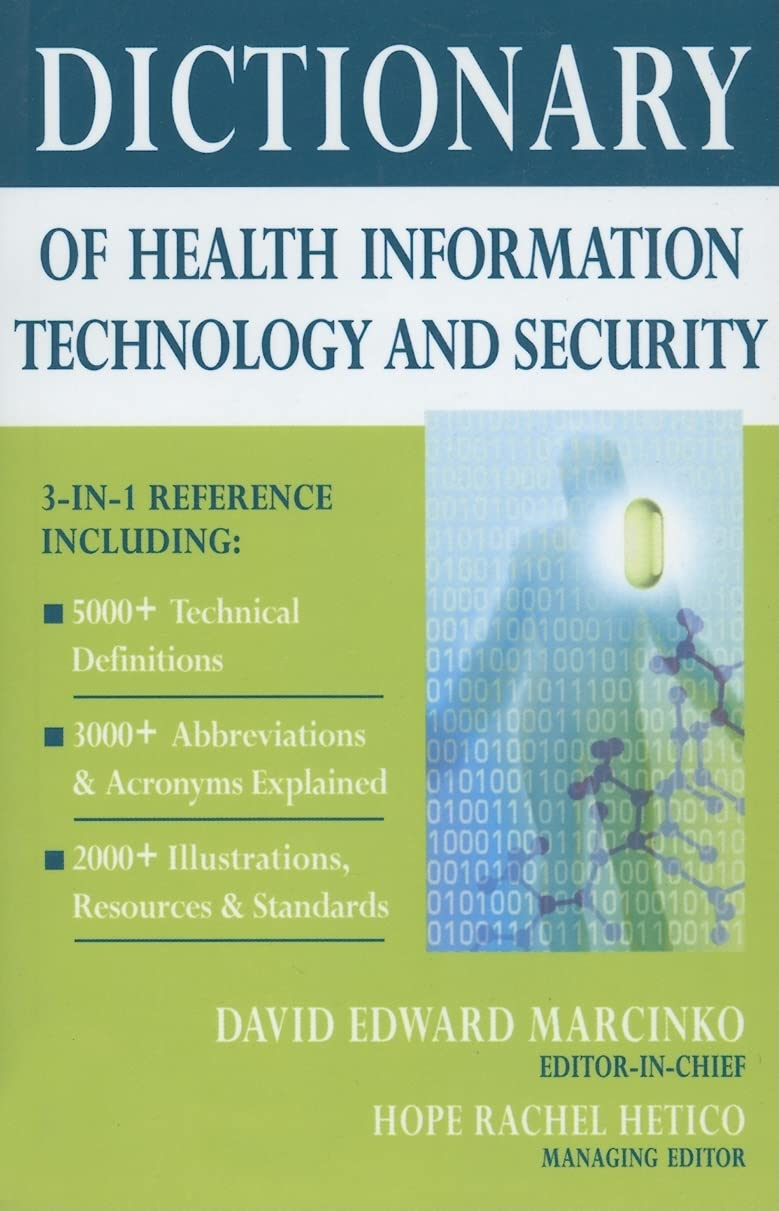
  • 3. Health Information Technology and Security: There is a myth that all physician focused financial advisors understand Health Information Technology [HIT]. In truth, it is often economically misused or financially misunderstood. Moreover, an emerging national HIT architecture often puts the financial advisor or financial planner in a position of maximum uncertainty and minimum productivity regarding issues like: Electronic Medical Records [EMRs] or Electronic Health Records [EHRs], mobile health, tele-health or tele-medicine, Artificial Intelligence [AI], benefits managers and human resource professionals.

Other Topics include: economics, finance, investing, marketing, advertising, sales, start-ups, business plan creation, financial planning and entrepreneurship, etc.

How to Start Learning and Earning Recognition for Your Knowledge

Now that you’re familiar with Micro-Credentialing, you might consider earning a Micro-Certification with us. We offer 3 official Micro-Certificates by completing a one month online course, with a live instructor consisting of twelve asynchronous lessons/online classes [3/wk X 4/weeks = 12 classes]. The earned official completion certificate can be used to demonstrate mastery of a specific skill set and shared with current or future employers, current clients or medical niche financial advisory prospects.

Mini-Certification Tuition, Books and Related Fees

The tuition for each Mini-Certification live online course is $1,250 with the purchase of one required dictionary handbook. Other additional guides, white-papers, videos, files and e-content are all supplied without charge. Alternative courses may be developed in the future subject to demand and may change without notice.

***

Contact: For more information, or to speak with an academic representative, please contact Ann Miller RN MHA CMP™ at: MarcinkoAdvisors@msn.com [24/7].

***

DAILY UPDATE: Visa, Coca-Cola, Cardinal & Advocate Health and Obesity as Markets Fall

MEDICAL EXECUTIVE-POST TODAY’S NEWSLETTER BRIEFING

***

Essays, Opinions and Curated News in Health Economics, Investing, Business, Management and Financial Planning for Physician Entrepreneurs and their Savvy Advisors and Consultants

Serving Almost One Million Doctors, Financial Advisors and Medical Management Consultants Daily

A Partner of the Institute of Medical Business Advisors , Inc.

http://www.MedicalBusinessAdvisors.com

SPONSORED BY: Marcinko & Associates, Inc.

***

http://www.MarcinkoAssociates.com

Daily Update Provided By Staff Reporters Since 2007.
How May We Serve You?
© Copyright Institute of Medical Business Advisors, Inc. All rights reserved. 2024

REFER A COLLEAGUE: MarcinkoAdvisors@msn.com

SPONSORSHIPS AVAILABLE: https://medicalexecutivepost.com/sponsors/

ADVERTISE ON THE ME-P: https://tinyurl.com/ytb5955z

Your Referral Count -0-

***

Cardinal Health has agreed in principle to acquire Integrated Oncology Network for more than $1.1 billion.


And … Advocate Health announced it will wipe clean more than 11,500 judgment liens on patients’ homes and real estate.

CITE: https://www.r2library.com/Resource

What’s up

  • Flutter Entertainment, parent company of betting app FanDuel, popped 5.06% after it revealed its impressive growth plans.
  • Hewlett Packard Enterprise rose 5.05% thanks to an upgrade from Barclays analysts who think that rising AI demand will increase the company’s server revenue.
  • Trump Media & Technology Group gained 10.48% after shareholders panicked that the end of its lockup period would mean big selling by insiders, fears that haven’t materialized.
  • Progress Software climbed 11.85% after a strong beat-and-raise earnings report.

What’s down

  • Southwest Airlines stumbled 4.57% after announcing it will cut service to and from Atlanta, a major hub for air travel, as it looks to save money ahead of a showdown with activist investor Elliott Investment Management.
  • Bank of America fell just 0.51% on the revelation that Warren Buffett can’t stop selling the stock.
  • KB Home sank 5.35% after the homebuilder beat revenue estimates but missed on earnings. It also issued a downbeat forecast for the rest of its fiscal year.
  • Global Payments dropped 6.37% thanks to a downgrade from BTIG analysts who were unimpressed by the payment provider’s near-term growth plans.

CITE: https://tinyurl.com/2h47urt5

  • The S&P 500® index (SPX) fell 10.68 points (–0.19%) to 5,722.25; the Dow Jones Industrial Average® ($DJI) dropped 293.47 points (–0.70%) to 41,914.75; the NASDAQ Composite® ($COMP) added 7.68 points (0.04%) to 18,082.21.
  • The 10-year Treasury note yield (TNX) climbed five basis points to 3.78% and seems stuck in a range between 3.7% and 3.8%.
  • The CBOE Volatility Index® (VIX) rose slightly to 15.51, still near its September lows.

CITE: https://tinyurl.com/tj8smmes

Coca-Cola pulled its new flavor, Spiced, from shelves after just six months because of dis-interest in it.

Visa was sued by the Justice Department for antitrust violations. The DOJ alleged in a complaint filed in Manhattan federal court that the payments giant is illegally monopolizing the debit card market by penalizing merchants who try to use alternatives, Bloomberg reported.

For the first time in more than a decade, the nationwide number of people with obesity hasn’t gone up, according to new CDC data showing that the condition appears in about 40% of US adults.

Visualize: How private equity tangled banks in a web of debt, from the Financial Times.

COMMENTS APPRECIATED

PLEASE SUBSCRIBE: MarcinkoAdvisors@msn.com

Thank You

***

***

***

***

EDUCATIONAL TEXTBOOKS: https://tinyurl.com/4zdxuuwf

***

HIDDEN RISKS: In “Religion” Stocks

By Vitaliy Katsenelson CFA

***

INTRODUCTION
STOCK MARKET FAITH

A basic property of religion is that the believer takes a leap of faith: to believe without expecting proof. Often you find this property of religion in other, unexpected places – for example, in the stock market. It takes a while for a company to develop a “religious” following: only a few high-quality, well-respected companies with long track records ever become worshiped by millions of investors.

My partner, Michael Conn, calls these “religion stocks.” The stock has to make a lot of shareholders happy for a long period of time to form this psychological link.

READ HERE: The Hidden Risk in “Religion” Stocks

COMMENTS APPRECIATED

Thank You

***

***

Elon Musk and Mike Burry MD Speak Out & About Consumer Debt

WARNING – WARNING

By Dr. David Edward Marcinko MBA MEd CMP

SPONSOR: http://www.CERTIFIEDMEDICALPLANNER.org

***

Echoing Elon Musk and my colleague medical Michael Burry MD has warned about American consumers’ debt woes.

Echoing the likes of Tesla’s Elon Musk and “The Big Short” investor Michael Burry, a veteran economist has warned that American households have racked up historic amounts of debt — and the economy will pay the price.

“Consumers are just waking up to the fact that they’re financing their spending by running up their credit cards, and that the interest on those credit cards is over the top, out of control, and off the hook right now,” Carl Weinberg told CNBC. Record credit-card debt threatens to spark a consumer-spending slowdown soon, Carl Weinberg said.

“That’s going to lead to a retrenchment in consumer spending as we get into the new year” the chief economist at High Frequency Economics said. Weinberg expects the US economy to cool but not slide into recession, and he sees inflation fading.

PS: Mike Burry contributed to our 800 page textbook on investing for physicians.

COMMENTS APPRECIATED

Thank You

***

MORE: https://www.routledge.com/Comprehensive-Financial-Planning-Strategies-for-Doctors-and-Advisors-Best/Marcinko-Hetico/p/book/9781482240283

***

BITCOIN: “Halving”

BITCOIN MINER HALVING

By Staff Reporters

***

***

DEFINITION: After the network mines 210,000 blocks—roughly every four years—the block chain reward given to Bitcoin miners for processing transactions is cut in half. This event is called halving because it cuts the rate at which new bitcoins are released into circulation in half. This rewards system will continue until about 2140, when the proposed limit of 21 million coins is reached. At that point, miners will be rewarded with fees for processing transactions, which network users will pay. These fees ensure miners are still incentivized to participate and keep the network going.

CITE: https://www.r2library.com/Resource

***

And, so, the total value of the world’s most popular cryptocurrency surpassed $1 trillion yesterday for the first time since 2021. The overall crypto market, meanwhile, broke $2 trillion in market cap, fueled by investor confidence. If crypto were a publicly traded company, it would be the fourth-largest in the world behind Microsoft, Apple, and Saudi Aramco.

***

***

HALVING – The quadrennial event, expected to take place today or tomorrow, was built into bitcoin’s original code to cut the amount of new coins going into circulation in half every four years. The purpose is to thwart inflation and increase the currency’s value. Bitcoin’s mysterious creator, Satoshi Nakamoto, designed the crypto so that only 21 million bitcoins would ever exist. It will take about a century to hit that number, but as it approaches the cutoff, the crypto hose slowly constricts. No one’s sure what happens next

Historically, halvings have coincided with big jumps in price—the coin’s first halving in 2012 saw the price jump from $12.35 to $127 within five months, according to Time. But critics argue that the narrative around halving is much stronger than the actual event. Even bitcoin experts aren’t sure what will happen with the volatile asset. It already hit a record high of over $73,750 in March, thanks to the spot bitcoin ETF approval. And, lest we forget, the whole FTX thing happened since the last halving.

COMMENTS APPRECIATED

Thank You

***

***

INTERVIEW: A Healthcare Financing Solution for Entrepreneurs?

Former: CEO and Founder
Superior Consultant Company, Inc.
[SUPC-NASD]

EDITOR’S NOTE: I first met Rich in B-school, when I was a student, back in the day. He was the Founder and CEO of Superior Consultant Holdings Corp. Rich graciously wrote the Foreword to one of my first textbooks on financial planning for physicians and healthcare professionals. Today, Rich is a successful entrepreneur in the technology, health and finance space.

-Dr. David E. Marcinko MBA MEd CMP®

***

Staff & Contributors - CHAMPIONS OF WAYNE

By Richard Helppie

Today for your consideration – How to fix the healthcare financing methods in the United States?

I use the term “methods” because calling what we do now a “system” is inaccurate. I also focus on healthcare financing, because in terms of healthcare delivery, there is no better place in the world than the USA in terms of supply and innovation for medical diagnosis and treatment. Similarly, I use the term healthcare financing to differentiate from healthcare insurance – because insurance without supply is an empty promise.

This is a straightforward, 4-part plan. It is uniquely American and will at last extend coverage to every US citizen while not hampering the innovation and robust supply that we have today. As this is about a Common Bridge and not about ideology or dogma, there will no doubt be aspects of this proposal that every individual will have difficulty with. However, on balance, I believe it is the most fair and equitable way to resolve the impasse on healthcare funding . . . .

CITE: https://www.r2library.com/Resource/Title/0826102549

Let me start in an area sure to raise the ire of a few. And that is, we have to start with eliminating the methods that are in place today. The first is the outdated notion that healthcare insurance is tied to one’s work, and the second is that there are overlapping and competing tax-supported bureaucracies to administer that area of healthcare finance.

Step 1 is to break the link between employment and health insurance. Fastest way to do that is simply tax the cost of benefits for the compensation that it is. This is how company cars, big life insurance policies and other fringe benefits were trimmed. Eliminating the tax-favored treatment of employer-provided healthcare is the single most important change that should be made.

Yes, you will hear arguments that this is an efficient market with satisfied customers. However, upon examination, it is highly risky, unfair, and frankly out of step with today’s job market.

Employer provided health insurance is an artifact from the 1940’s as an answer to wage freezes – an employer could not give a wage increase, but could offer benefits that weren’t taxed. It makes no sense today for a variety of reasons. Here are a few:

1. Its patently unfair. Two people living in the same apartment building, each making the same income and each have employer provided health insurance. Chris in unit 21 has a generous health plan that would be worth $25,000 each year. Pays zero tax on that compensation. Pat, in unit 42 has a skimpy plan with a narrow network, big deductibles and hefty co-pays. The play is worth $9,000 each year. Pat pays zero tax.

3. The insurance pools kick out the aged. Once one becomes too old to work, they are out of the employer plan and on to the retirement plan or over to the taxpayers (Medicare).

4. The structure is a bad fit. Health insurance and healthy living are longitudinal needs over a long period of time. In a time when people change careers and jobs frequently, or are in the gig economy, they are not any one place long enough for the insurance to work like insurance.

5. Creates perverse incentives. The incentives are weighted to have employers not have their work force meet the standards of employees so they don’t have to pay for the health insurance. Witness latest news in California with Uber and Lyft.

6. Incentives to deny claims abound. There is little incentive to serve the subscriber/patient since the likelihood the employer will shop the plan or the employee will change jobs means that stringing out a claim approval is a profitable exercise.

7. Employers have difficulty as purchasers. An employer large enough to supply health insurance has a diverse set of health insurance needs in their work force. They pay a lot of money and their work force is still not 100% happy.

Net of it, health insurance tied to work has outlived its usefulness. Time to end the tax-favored treatment of employer-based insurance. If an employer wants to provide health insurance, they can do it, but the value of that insurance is reflected in the taxable W-2 wages – now Pat and Chris will be treated equally.

Step 2 is to consolidate the multiple tax-supported bureaus that supply healthcare. Relieve the citizens from having to prove they are old enough, disabled enough, impoverished enough, young enough. Combine Medicare, Medicaid, CHIP, Tricare and even possibly the VA into a single bureaucracy. Every American Citizen gets this broad coverage at some level. Everyone pays something into the system – start at $20 a year, and then perhaps an income-adjusted escalator that would charge the most wealthy up to $75,000. Collect the money with a line on Form 1040.

I have not done the exact math. However, removing the process to prove eligibility and having one versus many bureaucracies has to generate savings. Are you a US Citizen? Yes, then here is your base insurance. Like every other nationalized system, one can expect longer waits, fewer referrals to a specialist, and less innovation. These centralized systems all squeeze supply of healthcare services to keep their spend down. The reports extolling their efficiencies come from the people whose livelihoods depend on the centralized system. However, at least everyone gets something. And, for life threatening health conditions, by and large the centralized systems do a decent job. With everyone covered, the fear of medical bankruptcy evaporates. The fear of being out of work and losing healthcare when one needs it most is gone.

So if you are a free market absolutist, then the reduction of vast bureaucracies should be attractive – no need for eligibility requirements (old enough, etc.) and a single administration which is both more efficient, more equitable (everyone gets the same thing). And there remains a private market (more on this in step 3) For those who detest private insurance companies a portion of that market just went away. There is less incentive to purchase a private plan. And for everyone’s sense of fairness, the national plan is funded on ability to pay. Bearing in mind that everyone has to pay something. Less bureaucracies. Everyone in it together. Funded on ability to pay.

Step 3 is to allow and even encourage a robust market for health insurance above and beyond the national plan – If people want to purchase more health insurance, then they have the ability to do so. Which increases supply, relieves burden on the tax-supported system, aligns the US with other countries, provides an alternative to medical tourism (and the associated health spend in our country) and offers a bit of competition to the otherwise monopolistic government plan.

Its not a new concept, in many respects it is like the widely popular Medigap plans that supplement what Medicare does not cover.

No one is forced to make that purchase. Other counties’ experience shows that those who choose to purchase private coverage over and above a national plan often cite faster access, more choice, innovation, or services outside the universal system, e.g., a woman who chooses to have mammography at an early age or with more frequency than the national plan might allow.  If the insurance provider can offer a good value to the price, then they will sell insurance. If they can deliver that value for more than their costs, then they create a profit. Owners of the company, who risk their capital in creating the business may earn a return.

For those of you who favor a free market, the choices are available. There will be necessary regulation to prevent discrimination on genetics, pre-existing conditions, and the like. Buy the type of plan that makes you feel secure – just as one purchases automobile and life insurance.For those who are supremely confident in the absolute performance of a centralized system to support 300+ million Americans in the way each would want, they should like this plan as well – because if the national plan is meeting all needs and no one wants perhaps faster services, then few will purchase the private insurance and the issuers will not have a business. Free choice. More health insurance for those who want it. Competition keeps both national and private plans seeking to better themselves.

Step 4 would be to Permit Access to Medicare Part D to every US Citizen, Immediately

One of the bright spots in the US Healthcare Financing Method is Medicare Part D, which provides prescription drug coverage to seniors. It is running at 95% subscriber satisfaction and about 40% below cost projections.

Subscribers choose from a wide variety of plans offered by private insurance companies. There are differences in formularies, co-pays, deductibles and premiums.

So there you have it, a four part plan that would maintain or increase the supply of healthcare services, universal insurance coverage, market competition, and lower costs. Its not perfect but I believe a vast improvement over what exists today. To recap:

1. Break the link between employment and healthcare insurance coverage, by taxing the benefits as the compensation they are.

2. Establish a single, universal plan that covers all US citizens paid for via personal income taxes on an ability-to-pay basis.  Eliminate all the other tax-funded plans in favor of this new one.

3. For those who want it, private, supplemental insurance to the national system, ala major industrialized nations.

4. Open Medicare Part D (prescription drugs) to every US citizen. Today.

YOUR THOUGHTS ARE APPRECIATED.

Thank You

***

HOSPITALS: https://www.amazon.com/Financial-Management-Strategies-Healthcare-Organizations/dp/1466558733/ref=sr_1_3?ie=UTF8&qid=1380743521&sr=8-3&keywords=david+marcinko

***

HEALTHCARE: https://www.amazon.com/Hospitals-Healthcare-Organizations-Management-Operational/dp/1439879907/ref=sr_1_4?s=books&ie=UTF8&qid=1334193619&sr=1-4

***

Individuals Working in Health Care Management Rose by 63.8%

By Staff Reporters

***

***

***
Individuals Working in Care Management Rose by 63.8% Nearly 100 entities responded to the Sixth Annual Survey of Healthcare Consumer Engagement Practices. According to the survey: 

•  65.8% of respondents reported that member experience was within the scope of their role in 2021:
 •  40.5% of respondents indicated their role included some responsibility for on-boarding and retention
 •  Individuals working in care management rose by 63.8%
 •  Individuals working in digital transformation rose by 50.4%
 •  Individuals working in population health grew by 47.1%
Source: Engagys, December 16, 2021
CITE: https://www.r2library.com/Resource/Title/082610254

Related: https://medicalexecutivepost.com/2018/02/28/growth-of-physicians-and-administrators-1970-2009/

***

***

COMMENTS APPRECIATED.

Thank You

Subscribe to the Medical Executive-Post

***

***

KITCHEN SINK: Stock Market Disclosures

By Staff Reporters

***

Technavio has announced its latest market research report titled Kitchen Sinks Market by End-user and Geography – Forecast and Analysis 2022-2026

***

Kitchen Sink stock market disclosures are a communication technique commonly used by political parties, public companies and businesses, although it’s not so well known by the public. The idea is to release all of your bad news at the same time rather than creating a drip-drip effect over an extended period of time.

CITE: https://www.r2library.com/Resource

Steven Barnett, professor of communications at the University of Westminster, says it’s used by organizations when they have some really shocking news they know they are not going to get away with burying. “You’re saying: ‘Let’s just sweep up every piece of bad news we’ve got, put it all in one place, take all of the flak and deal with it at the same time'”. “When you’re announcing the worst figures in your corporate history, you know it’s never going to be a page two story.”

It’s the opposite of the “dead cat” strategy where you distract people from something that is garnering a lot of attention. The idea being that, by placing a dead cat on the table, you make people look in a different direction.

CITE: https://medicalexecutivepost.com/2022/09/29/what-is-a-dead-cat-bounce/

“If you know that you have pretty appalling news, it makes absolute sense to get it all out at the same time because the speed and intensity of the news cycle demands that the agenda moves on so you know you’ll be out of the spotlight within 48 hours.”

COMMENTS APPRECIATED

Please Subscribe

***

***

“ENTERPRISE METAVERSE” Innovation and Entrepreneurship

WHAT IS IT?

On an earnings call last year Microsoft CEO Satya Nadella said the term “enterprise metaverse.”

By [Avatar] Dr. David Edward Marcinko MBA

DEFINITION: The Metaverse is a collective virtual shared space, created by the convergence of virtually enhanced physical reality and physically persistent virtual space, including the sum of all virtual worlds, augmented reality, and the Internet.

The word “metaverse” is made up of the prefix “meta” (meaning beyond) and the stem “verse” (a back formation from “universe“); the term is typically used to describe the concept of a future iteration of the internet, made up of persistent, shared, 3D virtual spaces linked into a perceived virtual universe.

INVITE DR. MARCINKO: https://medicalexecutivepost.com/dr-david-marcinkos-bookings/

Thank You

***

YOUR THOUGHTS ARE APPRECIATED

HEALTH IT: https://www.amazon.com/Dictionary-Health-Information-Technology-Security/dp/0826149952/ref=sr_1_5?ie=UTF8&s=books&qid=1254413315&sr=1-5

WHAT IS “GRESHAM’S LAW” OF MONEY ECONOMICS?

Is it still relevant today?

Courtesy: www.CertifiedMedicalPlanner.org

The law was named in 1860 by Henry Dunning Macleod, after Sir Thomas Gresham (1519–1579), who was an English financier during the Tudor dynasty. However, there are predecessors.

The law had been stated earlier by Nicolaus Copernicus. It was also stated in the 14th century, by Nicole Oresme in his treatise On the Origin, Nature, Law, and Alterations of Money, and by jurist and historian Al-Maqrizi (1364–1442) in the Mamluk Empire; and noted by Aristophanes in his play The Frogs, which dates from around the end of the 5th century BC.

***

***

IOW: It is the tendency for money of lower intrinsic value to circulate more freely than money of higher intrinsic and equal nominal value (often expressed as “Bad money drives out good”).

***

Gresham’s Law applies to new coins and worn coins. Worn coins are likely to have lost some of their metallic weight through wear and tear, so they should have less value than new coins. But government sets them to have the same value. Thus worn coins are artificially overvalued and new coins are artificially undervalued.

***

So, is Gresham’s Law still relevant today?

THINK: The modern Bitcoin, and related crypto-currency, controversy? We asked colleague Timothy J. McIntosh CFP® MPH CFA for some insights.

ESSAY: https://medicalexecutivepost.com/2014/01/23/understanding-currencies-bitcoins/

Assessment

Your thoughts are appreciated.

Conclusion

Feel free to review our top-left column, and top-right sidebar materials, links, URLs and related websites, too. Then, subscribe to the ME-P. It is fast, free and secure.

Speaker: If you need a moderator or speaker for an upcoming event, Dr. David E. Marcinko; MBA – Publisher-in-Chief of the Medical Executive-Post – is available for seminar or speaking engagements.

Book Marcinko: https://medicalexecutivepost.com/dr-david-marcinkos-bookings/

Subscribe: MEDICAL EXECUTIVE POST for curated news, essays, opinions and analysis from the public health, economics, finance, marketing, IT, business and policy management ecosystem.

DOCTORS:

“Insurance & Risk Management Strategies for Doctors” https://tinyurl.com/ydx9kd93

“Fiduciary Financial Planning for Physicians” https://tinyurl.com/y7f5pnox

“Business of Medical Practice 2.0” https://tinyurl.com/yb3x6wr8

HOSPITALS:

“Financial Management Strategies for Hospitals” https://tinyurl.com/yagu567d

“Operational Strategies for Clinics and Hospitals” https://tinyurl.com/y9avbrq5

***

Risk Management, Liability Insurance, and Asset Protection Strategies for Doctors and Advisors: Best Practices from Leading Consultants and Certified Medical Planners™8Comprehensive Financial Planning Strategies for Doctors and Advisors: Best Practices from Leading Consultants and Certified Medical Planners™

Fractional Reserve VERSUS Gerbil Banking

Cons from the Austrian School of Economics

By Staff Reporters

***

***

According to Coinmena, fractional reserve banking is a system in which banks are only required to have a fraction of bank deposits from their customers backed by actual cash on hand or available for withdrawal. This is done to expand the economy by enabling banks to free idle capital for commercial lending while keeping a sufficient amount for customer withdrawals.

The creation of the fractional reserve?

The fractional reserve system was first established by the Swedish Riksbank in 1668 after establishing the first central bank in the world. The idea came about after banks realized that there is a minimal chance that all the customers would come to claim their money from the bank at once; therefore, instead of hoarding the money in a vault, it could be used to grow and expand the economy through commercial loans. Fractional reserve banking became more popular around the world after the U.S. enacted The Federal Reserve Act of 1913, which created the Federal Reserve Bank, now known as the U.S. Central bank.

CITE: https://www.r2library.com/Resource/Title/0826102549

How does it work?

When a customer deposits money into their bank account, the money is no longer directly theirs. The bank holds custody of the customer deposits, and they provide the customer with a deposit account that they can withdraw their money from upon demand.

The bank now has full control of the money as the custodian. The bank can opt to reserve a small percentage of the deposited amount (fractional reserve) and loan the rest or use it for another commercial purpose. The reserve amount usually ranges between 3% to 10%. Although, during harsh economic times, the central banks can lower this reserve requirement to 0%. The Covid-19 pandemic forced central banks around the world to lower the reserve requirement to help stimulate the economy.

 Example

  • Customer A deposits 100,000 AED in Bank 1. Bank 1 loans Customer B 90,000 AED
  • Customer B deposits 90,000 AED in Bank 2. Bank 2 loans Customer C 81,000 AED
  • Customer C deposits 81,000 AED in Bank 3. Bank 3 loans Customer D 72,900 AED
  • Customer D deposits 72,900 AED in Bank 4. Bank 4 loans Customer E 65,610 AED
  • Customer E deposits 65,610 AED in Bank 5. Bank 5 loans Customer F 59,049 AED

 As you can see, the original amount of 100,000 AED has been expanded to represent deposited money for five accounts, and the total existing money supply is 468,559 AED, including the final loan. This is a basic representation of the money multiplier effect.

The system works on the basic principles of debt. The money deposited into the bank by a customer is considered a debt (liability) on the bank to the customer and an asset for the customer. The banks then loan out this money with an interest rate to make a profit for themselves and have the principal amount to pay back their original debt to the depositor (customer).

Pros & Cons of fractional reserve

Banks have the most benefit from a fractional reserve system as this is the way they make their profits. Additionally, customers can also earn interest through their savings or deposit account paid from the interest profits made by the bank. Governments also support this system because it encourages spending and provides economic stability and growth.

Economists from the Austrian School of Economics argue that this system is unsustainable and risky given that most countries rely on a credit-based system and not hard money. Additionally, a fractional reserve system runs the risk of a bank run. Essentially, if people lose faith in a bank to be able to pay back all the depositor’s money, it would trigger a  “run on the banks” or “bank run.” It is not typical behavior for customers to go claim their money from the bank all at once, but it has happened in the past, with the most notorious example being the 1929 Great Depression in the U.S. In this case, the banks would only be able to pay out only 3% of depositors, equal to the fractional reserve requirement.

More: https://www.sofi.com/learn/content/what-is-fractional-reserve-banking/

Related: https://www.washingtonpost.com/washington-post-live/2023/03/21/former-fdic-chair-sheila-bair-global-banking-system/?utm_campaign=mb&utm_medium=newsletter&utm_source=morning_brew

***

GERBIL BANKING

Link: https://fortune.com/2023/03/23/gerbil-banking-preceded-the-great-depression-were-seeing-it-again-today/

COMMENTS APPRECIATED

Thank You

***

ORDER: https://www.routledge.com/Comprehensive-Financial-Planning-Strategies-for-Doctors-and-Advisors-Best/Marcinko-Hetico/p/book/9781482240283

***

DAILY UPDATE: Microsoft and Intuitive Machines as the Stock Markets Rocket Upward!

MEDICAL EXECUTIVE-POST TODAY’S NEWSLETTER BRIEFING

***

Essays, Opinions and Curated News in Health Economics, Investing, Business, Management and Financial Planning for Physician Entrepreneurs and their Savvy Advisors and Consultants

Serving Almost One Million Doctors, Financial Advisors and Medical Management Consultants Daily

A Partner of the Institute of Medical Business Advisors , Inc.

http://www.MedicalBusinessAdvisors.com

SPONSORED BY: Marcinko & Associates, Inc.

***

http://www.MarcinkoAssociates.com

Daily Update Provided By Staff Reporters Since 2007.
How May We Serve You?
© Copyright Institute of Medical Business Advisors, Inc. All rights reserved. 2024

REFER A COLLEAGUE: MarcinkoAdvisors@msn.com

SPONSORSHIPS AVAILABLE: https://medicalexecutivepost.com/sponsors/

ADVERTISE ON THE ME-P: https://tinyurl.com/ytb5955z

Your Referral Count -0-

Microsoft will buy back up to $60 billion in shares and is boosting its dividend by about 10% (from 75 cents per share to 83 cents).

Stat: 60%. That’s how much Intuitive Machines’ stock jumped in early trading yesterday after NASA awarded the company a contract to “build moon data satellites.” (CNBC)

CITE: https://www.r2library.com/Resource

What’s up

  • Lower interest rates mean it’s cheaper to afford a car, a realization that helped propel Tesla up 7.36% today.
  • Darden Restaurants rose 8.25% as shareholders cheered a new deal between the Olive Garden parent company and Uber, whose shares rose 2.42% as well.
  • Airbnb gained 5.17% after CEO Brian Chesky noted that the company is working to expand long-term rental offerings of over 28 days.
  • MobilEye Global popped 14.99% after Intel announced it has no plans to sell any of its 88% stake in the autonomous driving company. Intel shares rose 1.78% as well.

What’s down

  • Trump Media & Technology Group fell 5.89% as the lockup period, during which early investors like the former president can’t sell their stake in the company, is about to end.
  • Progyny plummeted 32.65% after the health insurance benefits company announced it is losing a key customer that accounts for 12% of Progyny’s revenue.
  • Five Below sank 2.22% after JP Morgan analysts downgraded the stock, though they also boosted their price target.

CITE: https://tinyurl.com/2h47urt5

Here’s where the major benchmarks ended:

  • The SPX rose 95.38 points (1.70%) to 5,713.64; the $DJI added 522.09 points (1.26%) to 42,025.19; the NASDAQ Composite® ($COMP) added 440.68 points (2.51%) to 18,013.98.
  • The 10-year Treasury note yield (TNX) climbed five basis points to 3.74%, while the 2-year note yield was unchanged.
  • The CBOE Volatility Index® (VIX) slid to 16.33, registering its lowest close so far this month.

CITE: https://tinyurl.com/tj8smmes

Visualize: How private equity tangled banks in a web of debt, from the Financial Times.

COMMENTS APPRECIATED

PLEASE SUBSCRIBE: MarcinkoAdvisors@msn.com

Thank You

***

***

***

***

EDUCATIONAL TEXTBOOKS: https://tinyurl.com/4zdxuuwf

***

Can Austrian Economics Save Medicine?

By Michel Accad MD

***

***

Dr. Michel Accad: Can Austrian Economics Save Medicine?

About

Dr. Michel Accad is a practicing cardiologist who blogs for a medical audience at alertandoriented.com

Conclusion

Your thoughts and comments on this ME-P are appreciated. Feel free to review our top-left column, and top-right sidebar materials, links, URLs and related websites, too. Then, subscribe to the ME-P. It is fast, free and secure.

Speaker: If you need a moderator or speaker for an upcoming event, Dr. David E. Marcinko; MBA – Publisher-in-Chief of the Medical Executive-Post – is available for seminar or speaking engagements. Contact: MarcinkoAdvisors@msn.com

OUR OTHER PRINT BOOKS AND RELATED INFORMATION SOURCES:

[MEDICAL PRACTICE BUSINESS MANAGEMENT TEXTBOOK – 3rd.  Edition]

Product DetailsProduct Details

  [Foreword Dr. Hashem MD PhD] *** [Foreword Dr. Silva MD MBA]

***

DAILY UPDATE: Walgreens, Mental Health, M&As, Pfizer and Eli Lilly as the Markets Tank

MEDICAL EXECUTIVE-POST TODAY’S NEWSLETTER BRIEFING

***

Essays, Opinions and Curated News in Health Economics, Investing, Business, Management and Financial Planning for Physician Entrepreneurs and their Savvy Advisors and Consultants

Serving Almost One Million Doctors, Financial Advisors and Medical Management Consultants Daily

A Partner of the Institute of Medical Business Advisors , Inc.

http://www.MedicalBusinessAdvisors.com

SPONSORED BY: Marcinko & Associates, Inc.

***

http://www.MarcinkoAssociates.com

Daily Update Provided By Staff Reporters Since 2007.
How May We Serve You?
© Copyright Institute of Medical Business Advisors, Inc. All rights reserved. 2024

REFER A COLLEAGUE: MarcinkoAdvisors@msn.com

SPONSORSHIPS AVAILABLE: https://medicalexecutivepost.com/sponsors/

ADVERTISE ON THE ME-P: https://tinyurl.com/ytb5955z

Your Referral Count -0-

Stat: $106.8 million. That’s how much Walgreens agreed to pay the federal government to settle claims that the company fraudulently billed government programs for prescriptions that were never dispensed. (the Wall Street Journal)

Quote: “We put a Band-Aid on a chronic situation and that Band-Aid isn’t going to last.”—Roland Behm, co-founder of the Georgia Mental Health Policy Partnership advocacy group, on the shortage of mental health care services following the Apalachee High School shooting (KFF Health News)

EY’s latest monthly M&A report found that in August, the total value of large deals (worth $100+ million) reached $1.1 trillion, a 26% YoY jump. This was thanks in part to a 44% YoY increase in deal value last month, to $137 billion, according to the report.

CITE: https://www.r2library.com/Resource

What’s up

  • US Steel gained 1.57% as the battle over the future of the legacy steelmaker continues.
  • Intuitive Machines skyrocketed 38.33% thanks to a deal between the space communications company and NASA worth over $4.8 billion.
  • Victoria’s Secret popped 3.63% after Barclays analysts upgraded shares from “Underweight” to “Equal Weight.”
  • Barclays analysts were active today, boosting VF Corp. 3.89% by upgrading the shoewear company from “Equal Weight” to “Overweight.”
  • Duolingo rose 3.20% to a new all-time high, and though there was no news propelling the multilingual app higher, shares have continued to rise ever since its strong earnings announcement in early August.

What’s down

  • ResMed tumbled 5.12% thanks to a downgrade from Wolfe Research due to concerns that a new drug from Eli Lilly may eat into the med tech company’s share of the CPAP machine market.
  • eBay sank 2.64% after its CFO sold over $1.9 million in company stock.
  • Cencora fell 2.58% on the news that the drug distributor paid hackers $75 million in ransom over the course of three bitcoin installments, the largest cyberattack extortion payment ever.

CITE: https://tinyurl.com/2h47urt5

Here’s where the major benchmarks ended:

  • The S&P 500® index (SPX) fell 16.32 points (–0.29%) to 5,618.26; the Dow Jones Industrial Average® ($DJI) lost 103.08 points (–0.25%) to 41,503.10; the NASDAQ Composite® ($COMP) decreased 54.76 points (–0.31%) to 17,573.30.
  • The 10-year Treasury note yield rose four basis points to 3.69%.
  • The CBOE Volatility Index® (VIX) climbed to 18.23, the highest since September 10.

CITE: https://tinyurl.com/tj8smmes.

At the end of August, pharmaceutical giant Pfizer announced a new website called PfizerForAll, which provides information on common health issues like migraines or the flu and connects patients to tele-health services and prescription delivery services so they can get treatments and diagnostic tests delivered to their homes. Pfizer promotes some of its own therapies, including Paxlovid for Covid-19 and Nurtec for migraines, on the site.

And, that move came after rival pharmaceutical company Eli Lilly started LillyDirect in January, through which the company delivers prescriptions straight to patients. Eli Lilly also partnered with Amazon Pharmacy in March to deliver some of its medications to consumers’ doorsteps, including Ozempic competitor Zepbound, a GLP-1 weight loss drug.

COMMENTS APPRECIATED

PLEASE SUBSCRIBE: MarcinkoAdvisors@msn.com

Thank You

***

***

***

***

EDUCATIONAL TEXTBOOKS: https://tinyurl.com/4zdxuuwf

***

DE MARCINKO & ASSOCIATES: Financial, Business & Management Education and Advisory Opinions for Physicians

By Dr. David Edward Marcinko MBA MEd CMP

“AT YOUR SERVICE”

E-mail: MarcinkoAdvisors@msn.com

SPONSOR: http://www.MarcinkoAssociates.com

Marcinko & Associates is financial guide. We help answer your questions in an empowering way. We educate and guide medical colleagues to understand their financial picture and to make better financial decisions. We strive to simplify everything, clear up confusion, and address specific needs and goals.

Simply put, we’re a financial services company on a mission to empower financial freedom for all healthcare professionals; only. We work with doctors, nurses, medical providers, individuals and all sizes of organizations to offer investment, wealth management and retirement solutions so everyone can have a clear and simple understanding of where their finances and career is today and where it is headed tomorrow.

Whatever your financial situation, we do not shame, criticize, or sell. We enrich, educate and empower. We work only with medical colleagues at every stage of their financial journey [students, interns, residents, practitioners, mid-career and mature physicians], through big life personal changes to annual employment reviews, in order to help them understand, invest, and protect their money and lifestyle.

CITE: https://www.r2library.com/Resource

For example, the following are current issues of review need for each Fall and Winter:

  • Financial planning reviews: 401-k, insurance, budget plans, investing, debt and savings, etc
  • Assess, develop, and align financial retirement and estate planning goals
  • Risk Management: Malpractice, home, life, medical, auto and personal indemnity
  • Life Insurance Need Reviews: whole, universal and term  
  • Business, operations, HR, employment negotiations and medical practice management
  • Annuity Need Reviews: Indexed and Fixed [Pros and Cons].

***

***

At Marcinko & Associates we discuss specific needs and answer specific questions. We educate and make personalized recommendations that you are free to use, incorporate or disregard. Referrals to trusted specialists and strategic alliance partners then occur if – and as – needed [pro re nata].

SPONSOR: http://www.CertifiedMedicalPlanner.org

***


The Artificial Intelligence [AI] Revolution

By Vitaliy Katsenelson CFA

***

***

READ MORE HERE: The AI Revolution

COMMENTS APPRECIATED

Thank You

***

***

Financially Egalitarian Dating, Marriage and Divorce Mediation for Doctors

By Staff Reporters and Anju D. Jessani MBA

***

***

In 1972, husbands were the primary or sole breadwinners in 85% of U.S. married households, while 5% of wives made all or most of the money, and 11% of married couples had equal salaries. According to the Pew Research Center, things have changed quite a bit in 50 years.

Today, 55% of husbands are now the primary or sole financial supporters (a 35% drop). Financially egalitarian marriages have risen to 29% (more than a 160% increase), and 16% of married women provide the lioness’ share of family finances (a 220% increase).

MORE: https://medicalexecutivepost.com/2023/04/14/physician-salary-pay-gap/

RELATED: https://medicalexecutivepost.com/2021/12/14/new-study-compares-medicare-commercial-payment-gaps-by-specialty/

DIVORCE: https://medicalexecutivepost.com/2016/02/11/a-step-wise-approach-to-the-divorce-mediation-process-for-mds/

***

COMMENTS APPRECIATED

Thank You

***

ORDER: https://www.routledge.com/Risk-Management-Liability-Insurance-and-Asset-Protection-Strategies-for/Marcinko-Hetico/p/book/9781498725989

***

INDEX: Social Frailty of Life?

COMPREHENSIVE GERIATRIC ASSESSMENT

How likely are you to die within the next four years?

By Staff Reporters

***

***

A CGA social frailty index showing where you lie on a predicted mortality curve. If you’re under 45, we recommend using 45 as your age when you submit your answers, or the curve widget may not function properly.

You’ll notice a common theme if you take the quiz. This team understood the importance of family, social engagement, community and even fleeting relationships between strangers or acquaintances. It’s a refreshing take.

While many popular studies emphasize diet, lifestyle and self-destructive habits, this approach acknowledges the importance of the connections forming our lives’ foundations.

LINK: https://agsjournals.onlinelibrary.wiley.com/doi/epdf/10.1111/jgs.17446

***

ORDER: https://www.routledge.com/Risk-Management-Liability-Insurance-and-Asset-Protection-Strategies-for/Marcinko-Hetico/p/book/9781498725989

***

COMMENTS APPRECIATE

Thank You

***

PASSIVE INVESTING: Like Buying Used Cars is a Wise Strategy


By Rick Kahler MS CFP®

***

Need a car? Buy used. It’s what I always do. My sweet spot is a low-mileage vehicle two or three years old, which I routinely can find for 25% to 35% less than the original cost. I recommend this strategy to my clients, staff, and friends.If everyone followed this advice, you’d think the approach would eventually fail dismally. After all, someone has to buy new cars. No worries, though; there are millions of people who will continue to buy new cars. Financial planners have recommended this strategy for decades, and nothing has changed in the supply of great deals on low-mileage cars.The same applies to investors who invest “passively” in index mutual funds. Passive investors embrace a philosophy that extremely few investors can beat the average return of the stock market. Research by Dalbar, Inc. shows that over a 20-year-period, 97% of fund managers who tried to beat the market actually ended up doing worse than the market average. They suggest that, instead of paying a manager to try and beat the market, you pocket that money yourself and beat them by investing in low cost index mutual funds that simply earn average market returns.As you might guess, those pushing the high-fee mutual funds that are actively trying to beat the market returns are the big Wall Street firms that need your money to keep their companies thriving. Not surprisingly, these firms regularly attempt to dissuade investors from passive investing.

***

active mamt

***

An article at ETF.com by Larry Swedroe, the director of research for The BAM Alliance, lists a few of these attempts. Representatives for two large brokerage firms call passive investing “worse than Marxism” and those that do it “parasites.” Another, however, gives a more reasoned warning that is worth exploring. Tim O’Neill, global co-head of Goldman Sach’s investment management division, says “if passive investing gets too big, the market won’t function.”

Up to a point, this idea has some validity. Swedroe says, “Active managers play an important societal role. Specifically, their actions determine security prices, which in turn determine how capital is allocated. And it is the competition for information that keeps markets highly efficient, both in terms of information and capital allocation.”

Passive investors get a free ride at the expense of active investors. As Swedroe notes, they receive all the benefits from the role that active managers play without having to pay their costs. Passive investors need active investors to continue to believe they can beat the markets, just as used car buyers need new car buyers to supply them with used cars.

Just how likely is it that all the people who invest with active investors will figure out that paying active managers is not in their best interests and will shift to passive investing? About the same chance everyone will stop buying new cars.

Consider this. A study by Vanguard, one of the largest passive fund managers, found that $10 trillion, or 20% of the global market equity, is invested in index funds. More importantly, this 20% accounted for only 5% of all the trading. It’s the trading that drives market prices and makes markets efficient and liquid. Swedroe says “we are nowhere near” the chance that passive investing will become so dominant that the efficiency of the markets would be threatened.

Just as there is no immediate threat of the used car supply drying up because no one is buying new cars, there is also little chance that the majority of investors will give up the delusional dream of beating the market. That means wise used-car buyers and wise passive investors can keep on following their wise wealth-building strategies.

***

Conclusion

Your thoughts and comments on this ME-P are appreciated. Feel free to review our top-left column, and top-right sidebar materials, links, URLs and related websites, too. Then, subscribe to the ME-P. It is fast, free and secure.

Speaker: If you need a moderator or speaker for an upcoming event, Dr. David E. Marcinko; MBA – Publisher-in-Chief of the Medical Executive-Post – is available for seminar or speaking engagements.

Book Marcinko: https://medicalexecutivepost.com/dr-david-marcinkos-bookings/

Subscribe: MEDICAL EXECUTIVE POST for curated news, essays, opinions and analysis from the public health, economics, finance, marketing, IT, business and policy management ecosystem.

DOCTORS:

“Insurance & Risk Management Strategies for Doctors” https://tinyurl.com/ydx9kd93

“Fiduciary Financial Planning for Physicians” https://tinyurl.com/y7f5pnox

“Business of Medical Practice 2.0” https://tinyurl.com/yb3x6wr8

HOSPITALS:

“Financial Management Strategies for Hospitals” https://tinyurl.com/yagu567d

“Operational Strategies for Clinics and Hospitals” https://tinyurl.com/y9avbrq5

***

Risk Management, Liability Insurance, and Asset Protection Strategies for Doctors and Advisors: Best Practices from Leading Consultants and Certified Medical Planners™8Comprehensive Financial Planning Strategies for Doctors and Advisors: Best Practices from Leading Consultants and Certified Medical Planners™


On Standard & Poor’s Depository Receipts

Don’t be Afraid of ‘SPIDERS’

By Dr. David Edward Marcinko MBA MEd CMP™

http://www.CertifiedMedicalPlanner.org

[Publisher-in-Chief]

What they are – How they work?

No, I’m not talking about creepy, crawly insects. I’m referring to Standard & Poor’s Depository Receipts (SPDRs, or spiders), a derivative product, which combines many of the advantages of index funds with the superior trading flexibility of common stocks.

Creation

SPDRs were created in January 1993 by the American Stock Exchange. SPDRs are units in a trust holding the S&P 500 securities in proportion to their index weighting and which are adjusted as necessary to track changes made to the index by S&P. They pay quarterly cash dividend distributions based on the accumulated dividends paid by the stocks held in the SPDR trust minus an annual fee of about .19% of principal to cover trust expenses. They trade at approximately one-tenth the value of the index.

Conclusion

And so, your thoughts and comments on this ME-P are appreciated. Do you use SPDRs; why or why not? Feel free to review our top-left column, and top-right sidebar materials, links, URLs and related websites, too. Then, subscribe to the ME-P. It is fast, free and secure.

Speaker: If you need a moderator or speaker for an upcoming event, Dr. David E. Marcinko; MBA – Publisher-in-Chief of the Medical Executive-Post – is available for seminar or speaking engagements. Contact: MarcinkoAdvisors@msn.com

Subscribe Now: Did you like this Medical Executive-Post, or find it helpful, interesting and informative? Want to get the latest ME-Ps delivered to your email box each morning? Just subscribe using the link below. You can unsubscribe at any time. Security is assured.

Sponsors Welcomed: And, credible sponsors and like-minded advertisers are always welcomed.

Link: https://healthcarefinancials.wordpress.com/2007/11/11/advertise

Product DetailsProduct DetailsProduct Details

***

FEELING WEALTHY: How Much is [Really] Enough?

By Staff Reporters

***

***

At the most general level, economists may define wealth as “the total of anything of value” that captures both the subjective nature of the idea and the idea that it is not a fixed or static concept. Various definitions and concepts of wealth have been asserted by various people in different contexts. Defining wealth can be a normative process with various ethical implications, since often wealth maximization is seen as a goal or is thought to be a normative principle of its own. A community, region or country that possesses an abundance of such possessions or resources to the benefit of the common good is known as wealthy.

What does wealth mean to you?

In a recent survey by Edelman Financial Engines, 57% of respondents said they’d feel wealthy if they had $1 million in the bank. But for many people, that’s not enough.

Among those with $500,000 and $3 million in assets, 53% said it would take over $3 million in the bank for them to feel wealthy, and 33% said it would take over $5 million. Given that these are amounts some people will never even come close to amassing in their lifetimes, it may be hard to wrap your head around these answers.

***

ORDER: https://www.routledge.com/Comprehensive-Financial-Planning-Strategies-for-Doctors-and-Advisors-Best/Marcinko-Hetico/p/book/9781482240283

***

COMMENTS APPRECIATED

Thank You

***

On Poor Financial “Specialist” Advice

Dubious Financial Specialists?


By Rick Kahler MS CFP®

Even if you work with a financial planner, there are times you may also need the services of a financial specialist such as an attorney, accountant, or insurance agent.

Conflicted

In a situation where the specialist’s advice may seem to conflict with the suggestions of your financial planner, as a rule the specialist always has the last word. After all, they are the experts. Their particular knowledge is the reason your generalist financial planner recommended consulting them in the first place.

Occasionally, however, a specialist’s recommendations may not be in your best interest. Most are skilled professionals who are very good at their jobs and provide a great service to their clients in moving the financial planning process forward.

However, as in any profession, there are exceptions.

  • One example of this is when a specialist’s knowledge doesn’t adequately cover the particular needs of a client’s situation.
  • Another example is a specialist who has a conflict of interest because of receiving commissions for the sale of financial products.

Both of these may be more likely to occur when specialists are chosen less because of their skills and more because of a prior relationship with the client.

While most specialists are open to listening to another point of view, acknowledging errors, or learning new information, some are not. It’s those specialists who lack needed knowledge and are unwilling to admit errors that cause financial planners to lose sleep.

A Choice

If a planner disagrees with the client’s specialist and says so, this can put the client in a difficult and unenviable position of having to choose between two trusted professionals, one of whom may have some incorrect information.

Unfortunately, the client usually doesn’t have the training or knowledge to know which. If the client is forced to side with one professional against the other, at best this damages the ongoing ability of the professionals to work together and at worst it finds the client firing one or both.

Planners who choose to keep silent about the disagreement and defer to the specialist can save face as well as retain working relationships with both the client and the specialist. They can only hope that the apparent poor advice the specialist has given the client works out in the long run.

Most planners I know will weigh the severity of the issue, as well as the strength of the client’s relationships with them and the specialist, when deciding how forcefully to oppose poor advice. If the consequences are significant, many financial planners will risk losing their relationship with the client to point out a specialist’s error.

***

***

To Do List

What can you do to encourage your planner to level with you if one of your specialists is giving you advice that doesn’t serve you well?

I don’t have a definitive answer to this difficult question.

  • One thing I can suggest is that communication is essential. It’s important that you fully and openly explore any disagreement a planner expresses, no matter how insignificant it sounds.
  • My second suggestion is to minimize the chances of getting poor advice in the first place. Avoid anyone who might have a conflict of interest, especially if they receive commissions for selling you something. Don’t assume a professional you’ve worked with in other areas is qualified for this particular concern.

Assessment

Make sure your planner has thoroughly researched the specialist’s expertise, and don’t be afraid to ask questions about anything you don’t fully understand. Partner with your financial planner to choose a specialist carefully in the beginning, and you increase the likelihood that all of you will be able to work effectively as a team. 

Conclusion

Your thoughts and comments on this ME-P are appreciated. Feel free to review our top-left column, and top-right sidebar materials, links, URLs and related websites, too. Then, subscribe to the ME-P. It is fast, free and secure.

Speaker: If you need a moderator or speaker for an upcoming event, Dr. David E. Marcinko; MBA – Publisher-in-Chief of the Medical Executive-Post – is available for seminar or speaking engagements. Contact: MarcinkoAdvisors@msn.com

OUR OTHER PRINT BOOKS AND RELATED INFORMATION SOURCES:

Risk Management, Liability Insurance, and Asset Protection Strategies for Doctors and Advisors: Best Practices from Leading Consultants and Certified Medical Planners™        8Comprehensive Financial Planning Strategies for Doctors and Advisors: Best Practices from Leading Consultants and Certified Medical Planners™

***

Multi-Specialty Surveys for Physician Compensation – Released

By Health Capital Consultants, LLC

***

***

It’s the most wonderful time of the year – Survey Season! Beginning in late May each year, numerous industry normative benchmark physician production and compensation surveys begin publishing the most recent year’s reports. These healthcare and specialty specific surveys annually report specific types of physician compensation and productivity metrics across the country for various specialties and are widely used by hospitals, physician practices, and healthcare compensation and valuation experts, are often used for the determination of Fair Market Value (FMV) physician compensation for regulatory compliance purposes.

CITE: https://www.r2library.com/Resource

Additionally, the government has referenced and utilized industry normative benchmark compensation surveys (including those listed below) in reviewing and litigating physician compensation arrangements, indicating their reliance on this data as well. (Read more…)

COMMENTS APPRECIATED

Thank You

***

***

DAILY UPDATE: Google DOJ, Big Lots Bankrupt, Starbucks CEO, Rite Aid Private as Markets Rise

MEDICAL EXECUTIVE-POST TODAY’S NEWSLETTER BRIEFING

REMEMBER SEPTEMBER 11th – PATRIOT DAY

***

Essays, Opinions and Curated News in Health Economics, Investing, Business, Management and Financial Planning for Physician Entrepreneurs and their Savvy Advisors and Consultants

Serving Almost One Million Doctors, Financial Advisors and Medical Management Consultants Daily

A Partner of the Institute of Medical Business Advisors , Inc.

http://www.MedicalBusinessAdvisors.com

SPONSORED BY: Marcinko & Associates, Inc.

***

http://www.MarcinkoAssociates.com

Daily Update Provided By Staff Reporters Since 2007.
How May We Serve You?
© Copyright Institute of Medical Business Advisors, Inc. All rights reserved. 2024

REFER A COLLEAGUE: MarcinkoAdvisors@msn.com

SPONSORSHIPS AVAILABLE: https://medicalexecutivepost.com/sponsors/

ADVERTISE ON THE ME-P: https://tinyurl.com/ytb5955z

Your Referral Count -0-

Rite Aid completed its financial restructuring by eliminating $2 billion in debt and adding $2.5 billion in exit financing, as the slimmed-down chain is now led by a new CEO

Google reported to court yesterday to defend itself against monopoly allegations for the second time in less than a year in a new case that has the potential to strip the world’s largest online advertiser of a chunk of its ad business.

And, Apple and Google lost on appeal to the European Union’s highest court Tuesday in two separate cases requiring the tech giants to face billions of dollars in fines. The decisions by the Court of Justice of the European Union mark a significant win for the bloc’s antitrust chief Margrethe Vestager.

CITE: https://www.r2library.com/Resource

What’s up

  • Mission Produce soared 21.05% after the farming company announced impressive revenue growth last quarter thanks to rising avocado, blueberry, and mango prices. Rival produce producer Calavo Growers announced similarly strong results for much the same reasons, pushing shares 10.75% higher.
  • Alibaba rose 2.90% after its Hong Kong shares were added to a new program linking Hong Kong stocks with Chinese stock exchanges, which should help attract more investors.
  • Boot Barn, which is the name of a real company that sells Western apparel, popped 9.94% and hit an all-time high today after a JPMorgan analyst raised his price target 10%.

What’s down

  • Southwest Airlines descended 1.61% after Executive Chairman Gary Kelly announced he’ll retire next year in the face of activist investing pressure.
  • Ally Financial plummeted 17.65% after the consumer lending company’s CEO highlighted ongoing credit challenges in today’s economy.
  • JPMorgan sank 5.21% thanks to comments from its COO that investor expectations for net interest income, a key part of the bank’s business, are too high.
  • Hewlett Packard Enterprise dropped 8.41% on the news that the tech company will sell $1.35 billion in preferred stock to fund its acquisition of Juniper Networks.

CITE: https://tinyurl.com/2h47urt5

Here’s where the major benchmarks ended:

  • The SPX rose 24.47 points (0.45%) to 5,495.52; Dow Jones Industrial Average® ($DJI) fell 92.63 points (–0.23%) to 40,736.96; NASDAQ Composite® ($COMP)added 141.27 points (0.84%) 17,025.88.
  • The 10-year Treasury note yield (TNX) dropped five basis points to 3.64%, the lowest close since mid-2023.
  • The CBOE Volatility Index® (VIX) continued to pull back from last week’s elevations, closing at 19.08.

CITE: https://tinyurl.com/tj8smmes

Big Lots, the 1,300+ store discount chain, has filed for bankruptcy with a plan to sell itself to private equity firm Nexus Capital Management for ~$760 million and a commitment to keep offering “extreme bargains.”

The new CEO of Starbucks, Brian Niccol, formerly of Chipotle, is now officially in charge of the coffee chain.

Visualize: How private equity tangled banks in a web of debt, from the Financial Times.

COMMENTS APPRECIATED

PLEASE SUBSCRIBE: MarcinkoAdvisors@msn.com

Thank You

***

***

***

***

EDUCATIONAL TEXTBOOKS: https://tinyurl.com/4zdxuuwf

***