BOARD CERTIFICATION EXAM STUDY GUIDES Lower Extremity Trauma
[Click on Image to Enlarge]
ME-P Free Advertising Consultation
The “Medical Executive-Post” is about connecting doctors, health care executives and modern consulting advisors. It’s about free-enterprise, business, practice, policy, personal financial planning and wealth building capitalism. We have an attitude that’s independent, outspoken, intelligent and so Next-Gen; often edgy, usually controversial. And, our consultants “got fly”, just like U. Read it! Write it! Post it! “Medical Executive-Post”. Call or email us for your FREE advertising and sales consultation TODAY [678.779.8597] Email: MarcinkoAdvisors@outlook.com
Medical & Surgical e-Consent Forms
ePodiatryConsentForms.com
iMBA Inc., OFFICES
Suite #5901 Wilbanks Drive, Norcross, Georgia, 30092 USA [1.678.779.8597]. Our location is real and we are now virtually enabled to assist new long distance clients and out-of-town colleagues.
ME-P Publishing
SEEKING INDUSTRY INFO PARTNERS?
If you want the opportunity to work with leading health care industry insiders, innovators and watchers, the “ME-P” may be right for you? We are unbiased and operate at the nexus of theoretical and applied R&D. Collaborate with us and you’ll put your brand in front of a smart & tightly focused demographic; one at the forefront of our emerging healthcare free marketplace of informed and professional “movers and shakers.” Our Ad Rate Card is available upon request [678-779-8597].
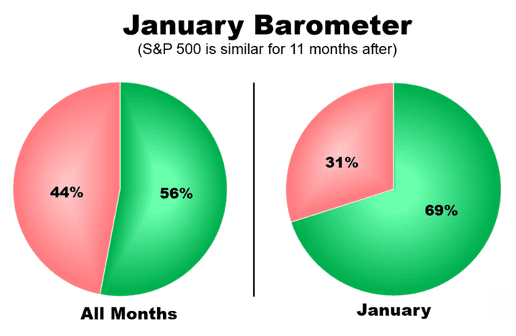
According to Rob Lenihan, of TheStreet, the January Barometer is a theory that says the investment performance of the S&P 500 in January is representative of the predicted performance of the entire year. The theory says that if stocks are higher in January, they should be higher for the year, and if they are lower in the first month, they’ll be lower for the year.
The S&P 500 finished down on January 31st, but the broad market ended up 2.6% for the month, so maybe we should heed the words of Wall Street legend Yale Hirsch, who first came up with the concept in 1972 in his Stock Trader’s Almanac, a widely read investment guide. Hirsch, by the way, also gave the world the Santa Claus Rally, which describes a rise in stock prices during the last five trading days in December and the first two trading days in the following January.
Analyst Stephen Guilfoyle said early this month in a post for TheStreet Pro that Santa Claus posted a loss this year, which was Santa’s second consecutive year in the red.
“No sweat,” the veteran trader said in his January 9th TheStreet Pro column. “That’s just a seasonal trade, and 2024 was a very nice year for U.S. equities in a broad sense.”
A certified financial planner (CFP®) helps individuals plan their financial futures. CFPs are not focused only on investments; they help their clients achieve specific long-term financial goals, such as saving for retirement, buying a house, or starting a college fund for their children.
To become a CFP®, a person must complete a course of study and then pass a two-part examination. The exam covers wealth management, tax palnning, insurance, retirement planning, estate planning, and other basic personal finance topics. These topics are all important for someone seeking to help clients achieve financial goals.
Chartered Financial Analyst (CFA)
A CFA, on the other hand, conducts investing in larger settings, normally for large investment firms on both the buy side and the sell side, mutual funds or hedge funds. CFAs can also provide internal financial analysis for corporations that are not in the investment industry. While a CFP® focuses on wealth management and planning for individual clients, a CFA focuses on wealth management for a corporation.
To become a CFA, a person must complete a rigorous course of study and pass three examinations over the course of two or more years. In addition, the candidate must adhere to a strict code of ethics and have four years of work experience in an investment decision-making setting.
(“Informed Voice of a New Generation of Fiduciary Advisors for Healthcare”)
For most lay folks, personal financial planning typically involves creating a personal budget, planning for taxes, setting up a savings account and developing a debt management, retirement and insurance recovery plan. Medicare, Social Security and Required Minimal Distribution [RMD] analysis is typical for lay retirement. Of course, we can assist in all of these activities, but lay individuals can also create and establish their own financial plan to reach short and long-term savings and investment goals.
But, as fellow doctors, we understand better than most the more complex financial challenges doctors can face when it comes to their financial planning. Of course, most physicians ultimately make a good income, but it is the saving, asset and risk management tolerance and investing part that many of our colleagues’ struggle with. Far too often physicians receive terrible guidance, have no time to properly manage their own investments and set goals for that day when they no longer wish to practice medicine.
For the average doctor or healthcare professional, the feelings of pride and achievement at finally graduating are typically paired with the heavy burden of hundreds of thousands of dollars in student loan debt.
You dedicated countless hours to learning, studying, and training in your field. You missed birthdays and holidays, time with your families, and sacrificed vacations to provide compassionate and excellent care for your patients. Amidst all of that, there was no time to give your finances even a second thought.
Between undergraduate, medical school, and then internship and residency, most young physicians do not begin saving for retirement until late into their 20s, if not their 30s. You’ve missed an entire decade or more of allowing your money and investments to compound and work for you. When it comes to addressing your financial health and security, there’s no time to waste.
Posted on January 31, 2025 by Dr. David Edward Marcinko MBA MEd CMP™
MEDICAL EXECUTIVE-POST–TODAY’SNEWSLETTERBRIEFING
***
Essays, Opinions and Curated News in Health Economics, Investing, Business, Management and Financial Planning for Physician Entrepreneurs and their Savvy Advisors and Consultants
“Serving Almost One Million Doctors, Financial Advisors and Medical Management Consultants Daily“
A Partner of the Institute of Medical Business Advisors , Inc.
US stocks gained steam on Thursday afternoon as investors digested megacap tech earnings and waited for Apple (AAPL) results for more clues on prospects for Big Tech. The S&P 500 (^GSPC) gained 0.5%, while the Dow Jones Industrial Average (^DJI) rose nearly 0.4%. The tech-heavy NASDAQ Composite (^IXIC) was up nearly 0.3%.
And, after the Federal Reserve stood pat on interest rates as expected, investors have turned to parsing earnings reports — and in particular, the first wave of results from the “Magnificent Seven” companies that have driven broader stock market gains.
Over the last few years, our portfolio has skewed more international, and this is the topic I want to address today. The US is a wonderful country and has many significant competitive advantages over the rest of the world. Despite all of its flaws, it has the most stable political system. It has great geography: It’s bordered by friendly neighbors to the north and south, and by mostly friendly oceans to the east and west. It has an abundance of natural resources. It is one of the largest democracies and has the right amount of capitalism (though we’ve been slipping in this department). We have the best capital markets, and the US is the best place in the world to start a new business, take risks and innovate. These factors led to the coronation of the US dollar as the world’s reserve currency.Ideally, in a perfect world, we’d want to have a portfolio of only US companies. Not because we are patriots, but because our life at IMA would be so much easier. Let me explain all the extra headaches we incur when we own foreign stocks. European markets open 7–8 hours earlier than ours; Japan is 16 hours ahead.
Thus, we have to place orders early in the morning, sometimes in the middle of the night. Our trading system, which links directly to US exchanges, allows us to buy or sell any US stock electronically, directly through our software. It is not linked to foreign exchanges, thus foreign trading comes with significantly more friction and consumes more time. Foreign stocks have multiple tickers, which constantly confuse our clients – this means we receive more inbound inquiries on them. US trading comes with zero commissions, allowing us to accumulate a position slowly, in tiny increments, with little effort. Brokers charge commissions on foreign stocks, so we have to be sensitive to how we are accumulating or disposing of a stock. I am sure I am missing half a dozen other headaches.
Yes, foreign stocks are a big headache for the IMA team. We are not a masochistic bunch, so let me explain why we go through this brain and time damage.Over the last decade the US has attracted the bulk of the capital flows, and the US stock market is trading at one of the highest valuations in US history. Historically, returns that followed such sky-high valuations have been mediocre at best. I wrote two books on this subject. How much you pay for a business, even if it is a great one, is important, as it is one of the key inputs determining your future returns. When we look for stocks, our searches are global. We look at the US and at foreign markets that have the rule of law. But our goal is to buy the stock that offers the highest risk-adjusted returns. For us to buy a foreign stock, it has to compensate us for the extra time and trouble involved – in other words it has to be a super-attractive investment.
Let me give you a few examples.
When we looked at defense companies, we examined all of them, in the US and internationally. We bought a few in the US but found that European defense companies were a more compelling proposition. First of all, Europe has been sipping Chianti, Bordeaux, Riesling, and Earl Grey for the last thirty years while collecting peace dividends and significantly underinvesting in defense. The US, to a large degree, became NATO.We have more enemies today than at any time in my lifetime, and they are stronger (China has a bigger manufacturing base than the US) and aligning with each other. There is an unthinkable war in Europe, where one country attacked another to steal its territory. China is contemplating invading Taiwan – a tiny island that produces the bulk of the world’s semiconductors. The Middle East is on fire. Rebels most of us didn’t even know existed are making the Red Sea unnavigable.
And from the European perspective, the US is becoming a fickle friend. Europe is racing to create a $500 billion defense fund, per the FT:Trump’s threat to withdraw US security guarantees from underspending Nato allies has spurred European capitals to explore more radical defense funding options, including joint borrowing that has traditionally been ruled out by fiscal hawks in Germany, the Netherlands and Denmark.
European defense spending is going up and will continue to go up, no matter who is in power and regardless of deficits. Thus, when we looked at defense companies, American counterparts were more expensive and had relatively shorter (though increasing) growth runways. We bought European defense stocks, and so far, it looks like we made the right bet.
On the surface, one of the main risks of buying foreign stocks is that we are making a bet against the US dollar. As you’ll see, this is a bit more nuanced than simply where stocks are listed.I don’t know where the dollar will be over the next five or ten years. Nobody does. Currencies are priced relative to one another. Thus, to forecast the US dollar versus the euro, I’d need two crystal balls – one for the US and another for the EU. I don’t have even one.There are a lot of policies the new administration wants to implement that may cause the dollar to appreciate. For instance, less regulation – if Musk succeeds – would be a huge positive for US economic growth. We need a lot more pragmatism in Washington, DC, something we’ve lost over the years.
But then, the US government embracing Bitcoin is probably one of the most idiotic policy ideas I’ve ever seen come from a politician (though there are contenders). It’s especially baffling when you consider that the only reason we’re not dealing with 20% mortgage rates and 30% car loans – despite our $36 trillion (and growing) debt – is that the US dollar remains the world’s reserve currency. The US dollar doesn’t have good contenders, and this is why the US government watering the seeds of one makes little sense to me. (I wrote about the problems with Bitcoin here).
Also, often foreign stocks are only foreign in name. This is where things get nuanced fast. Philip Morris International (PM) is listed on the NYSE but today gets most of its sales from outside the US. British American Tobacco (BTI), listed in London and also trading as an ADR (American depositary receipt) in the US – despite having “British” in its name – gets half of its sales from the US and half from the rest of the world. We own Swedish and Canadian oil companies. When it comes to oil companies, the location of their assets matter far more than where the companies themselves are listed. Most of the oil assets that these companies hold are in Canada. We chose these companies not only because they’re significantly undervalued and have strong balance sheets, but also because they’re led by exceptional management teams who excel at running the business and at capital allocation – an uncommon trait in the commodity space.
Also, oil is a global commodity, and while many factors affect its price, it’s also indirectly a bet on a weakening US dollar, since oil is priced in US dollars. We have to take this into account when constructing our portfolio.Then we have a UK company that makes components for the aerospace industry.
However, aerospace is a global industry, and over the longer term, the company’s stock performance will be tied entirely to what the aerospace industry as a whole is doing. Its performance will be indifferent to where it’s listed. We bought it at a fraction of the valuation of its American counterparts.We pay close attention to our concentration in a particular country, as well as to our exposure to specific currencies and industries. But as you can see, it’s a lot more nuanced and intricate than simply looking at where a company is traded. Our default choice it to buy American companies; but at the end of the day, our goal is to grow your wealth while keeping the volatility of your blood pressure low, so that you don’t have to worry about the markets. Today the average US stock is trading at a nosebleed valuation. High-quality, undervalued, well-managed foreign-listed stocks are where we’re finding opportunities to hopefully achieve this goal, even if it means more headaches for the IMA team. One more thought: In the late 1990s, value investors experienced both paradise and hell. As tech and dotcom stocks soared higher, there were many cheap stocks to choose from that were neglected by the inflating bubble. That was the paradise part – an abundance of undervalued companies to pick from while the crowd stampeded into the bubble. The hell, of course, was the pain of being left behind while the crowd uncorked champagne.Today, if you only invest in the US, you’re experiencing two hells. Your stocks are underperforming, and even inexpensive stocks are expensive.
Yes, welcome to double hell. European stocks, however, offer paradise today. True, Europe is not the place it used to be a few decades ago – which is precisely why nuance and stock picking are so important. Value stocks always look less exciting than the ones everyone is talking about.
I’d love to hear your thoughts, so please leave your comment and feedback here. Also, if you missed my previous article “Embracing Stock Market Stoicism”, you can read it and leave a comment here.
I’ve received emails from readers asking my thoughts on DeepSeek. I need to start with two warnings. First, the usual one: I’m a generalist value investor, not a technology specialist (last week I was analyzing a bank and an oil company), so my knowledge of AI models is superficial. Second, and more unusually, we don’t have all the facts yet.
But this story could represent a major step change in both AI and geopolitics. Here’s what we know: DeepSeek—a year-old startup in China that spun out of a hedge fund—has built a fully functioning large language model (LLM) that performs on par with the latest AI models. This part of the story has been verified by the industry: DeepSeek has been tested and compared to other top LLMs. I’ve personally been playing with DeepSeek over the last few days, and the results it spit out were very similar to those produced by ChatGPT and Perplexity—only faster.
This alone is impressive, especially considering that just six months ago, Eric Schmidt (former Google CEO, and certainly no generalist) suggested China was two to three years behind the U.S. in AI. But here’s the truly shocking—and unverified—part: DeepSeek claims they trained their model for only $5.6 million, while U.S. counterparts have reportedly spent hundreds of millions or even billions of dollars. That’s 20 to 200 times less.
The implications, if true, are stunning. Despite the U.S. government’s export controls on AI chips to China, DeepSeek allegedly trained its LLM on older-generation chips, using a small fraction of the computing power and electricity that its Western competitors have. While everyone assumed that AI’s future lay in faster, better chips—where the only real choice is Nvidia or Nvidia—this previously unknown company has achieved near parity with its American counterparts swimming in cash and datacenters full of the latest Nvidia chips. DeepSeek (allegedly) had huge compute constraints and thus had to use different logic, becoming more efficient with subpar hardware to achieve a similar result. In other words, this scrappy startup, in its quest to create a better AI “brain,” used brains where everyone else was focusing on brawn—it literally taught AI how to reason.
Enter the Hot Dog Contest
Americans love (junk) food and sports, so let me explain with a food-sport analogy. Nathan’s Famous International Hot Dog Eating Contest claims 1916 as its origin (though this might be partly legend). By the 1970s, when official records began, winning competitors averaged around 15 hot dogs. That gradually increased to about 25—until Takeru Kobayashi arrived from Japan in 2001 and shattered the paradigm by consuming 50 hot dogs, something widely deemed impossible. His secret wasn’t a prodigious appetite but rather his unique methodology; He separated hot dogs from buns and dunked the buns in water, completely reimagining the approach.
Then a few years later came Joey Chestnut, who built on Kobayashi’s innovation to push the record well beyond 70 hot dogs and up to 83. Once Kobayashi broke the paradigm, the perceived limits vanished, forcing everyone to rethink their methods. Joey Chestnut capitalized on it.
DeepSeek may be the Kobayashi of AI, propelling the whole industry into a “Joey Chestnut” era of innovation. If the claims about using older chips and spending drastically less are accurate, we might see AI companies pivot away from single-mindedly chasing bigger compute capacity and toward improved model design.
I never thought I’d be quoting Stoics to explain future GPU chip demand, but Epictetus said, “Happiness comes not from wanting more, but from wanting what you have.” Two millennia ago, he was certainly not talking about GPUs, but he may as well have been. ChatGPT, Perplexity, and Google’s Gemini will have to rethink their hunger for more compute and see if they can achieve more with wanting (using) what they have.
If they don’t, they’ll be eaten by hundreds of new startups, corporations, and likely governments entering the space. When you start spelling billions with an “M,” you dramatically lower the barriers to entry.
Until DeepSeek, AI was supposed to be in reach for only a few extremely well-funded companies, (the “Magnificent Ones”) armed with the latest Nvidia chips. DeepSeek may have broken that paradigm too.
The Nvidia Conundrum
The impact on Nvidia is unclear. On one hand, DeepSeek’s success could decrease demand for its chips and bring its margins back to earth, as companies realize that a brighter AI future might lie not in simply connecting more Nvidia processors but in making models run more efficiently. DeepSeek may have reduced the urgency to build more data centers and thus cut demand for Nvidia chips.
On the other hand (I’m being a two-armed economist here), lower barriers to entry will lead to more entrants and higher overall demand for GPUs. Also, DeepSeek claims that because its model is more efficient, the cost of inference (running the model) is a fraction of the cost of running ChatGPT and requires a lot less memory—potentially accelerating AI adoption and thus driving more demand for GPUs. So this could be good news for Nvidia, depending on how it shakes out.
My thinking on Nvidia hasn’t materially changed—it’s only a matter of time before Meta, Google, Tesla, Microsoft, and a slew of startups commoditize GPUs and drive down prices.
Likewise, more competition means LLMs themselves are likely to become commoditized—that’s what competition does—and ChatGPT’s valuation could be an obvious casualty.
Geopolitical Shockwaves
The geopolitical consequences are enormous. Export controls may have inadvertently spurred fresh innovation, and they might not be as effective going forward. The U.S. might not have the control of AI that many believed it did, and countries that don’t like us very much will have their own AI.
We’ve long comforted ourselves, after offshoring manufacturing to China, by saying that we’re the cradle of innovation—but AI could tip the scales in a direction that doesn’t favor us. Let me give you an example. In a recent
interview with the Wall Street Journal, OpenAI’s product chief revealed that various versions of ChatGPT were entered into programming competitions anonymously. Out of roughly 28 million programmers worldwide, these early models ranked in the top 2–3%. ChatGPT-o1 (the latest public release) placed among the top 1,000, and ChatGPT-o3 (due out in a few months) is in the top 175. That’s the top 0.000625%! If it were a composer, ChatGPT-o3 would be Mozart.
I’ve heard that a great developer is 10x more valuable than a good one—maybe even 100x more valuable than an average one. I’m aiming to be roughly right here. A 19-year-old in Bangalore or Iowa who discovered programming a few months ago can now code like Mozart using the latest ChatGPT. Imagine every young kid, after a few YouTube videos, coding at this level. The knowledge and experience gap is being flattened fast.
I am quite aware that I am drastically generalizing (I cannot stress this enough), and but the point stands: The journey from learning to code to becoming the “Mozart of programming” has shrunk from decades to months, and the pool of Mozarts has grown exponentially. If I owned software companies, I’d become a bit more nervous—the moat for many of them has been filled with AI.
Adapting, changing your mind, and holding ideas as theses to be validated or invalidated—not as part of your identity—are incredibly important in investing (and in life in general). They become even more crucial in an age of AI, as we find ourselves stepping into a sci-fi reality faster than we ever imagined. DeepSeek may be that catalyst, forcing investors and technologists alike to question long-held assumptions and reevaluate the competitive landscape in real time.
I’d love to hear your thoughts, so please leave your comment and feedback here. Also, if you missed my previous article “Escaping Stock Market Double Hell”, you can read it and leave a comment here.
Posted on January 28, 2025 by Dr. David Edward Marcinko MBA MEd CMP™
By Staff Reporters
***
***
Capital is not flowing from developed countries to developing countries despite the fact that developing countries have lower levels of capital per worker, and therefore higher returns to capital.
Classical economic theory predicts that capital should flow from rich countries to poor countries, due to the effect of diminishing returns of capital. Poor countries have lower levels of capital per worker – which explains, in part, why they are poor. In poor countries, the scarcity of capital relative to labor should mean that the returns related to the infusion of capital are higher than in developed countries.
In response, savers in rich countries should look at poor countries as profitable places in which to invest. In reality, things do not seem to work that way. Surprisingly little capital flows from rich countries to poor countries.
This puzzle, famously discussed in a paper by Robert Lucas in 1990, is often referred to as the “Lucas Paradox”.
Posted on January 26, 2025 by Dr. David Edward Marcinko MBA MEd CMP™
By Staff Reporters
***
***
Cognitive Dissonance is the discomfort experienced when holding conflicting cognitions, like believing in healthy eating while munching on a doghnut. It’s a mental tug-of-war that makes us squirm.
To reduce this discomfort according to colleague Dan Ariely PhD, we often change our beliefs or behaviors to align them. This is why smokers might downplay the health risks of smoking. Understanding cognitive dissonance helps us recognize these mental gymnastics and strive for consistency in our beliefs and actions.
So, next time you feel that mental itch, it’s cognitive dissonance asking for some resolution.
Posted on January 23, 2025 by Dr. David Edward Marcinko MBA MEd CMP™
By Staff Reporters
***
***
Fighting or arguing over text is also known as “fexting.”
While for some it might be more practical, it can harm relationships.
Misunderstandings and misinterpretations are more likely to happen over text.
Frequent arguments and disagreements between partners over text, also known as “fexting,” have become commonplace because of the convenience and ease of expressing your thoughts with text messages. We are all so used to communicating digitally in our daily lives that it can become an unconscious habit to express our feelings and frustrations via text message [SMS].
While IAs and FAs may seem the same, they are not the same. The Financial Industry Regulatory Authority (FINRA) and the Securities Exchange Commission (SEC) have clearly defined investment advisors as distinct from financial advisors.
The term financial advisor is a generic one that can encompass many different financial professionals, although it most commonly refers to stock brokers (individuals or companies that buy and sell securities).
Investment advisor, on the other hand, is a legal term and thus has a more clear-cut definition – or at least as clear as legalese is apt to be.
KEY DIFFERENCES:
Financial advisors help with all aspects of your finances, including saving, budgeting, insurance, retirement planning, and taxes.
Investment advisors focus specifically on choosing and managing investment portfolios.
Financial advisors offer broader financial guidance, while investment advisors concentrate solely on investments.
Investment advisors are held to the fiduciary standard, while financial advisors who work as brokers may operate under different rules.
Posted on January 21, 2025 by Dr. David Edward Marcinko MBA MEd CMP™
By Staff Reporters
***
***
According to colleague Dan Ariely PhD,Pre-Procurement Ownership is when you start to feel ownership over something before you actually have it. It’s like mentally moving into a house or car before you’ve signed the papers and moved in or driven away
This psychological quirk makes us more likely to commit to purchases because we’ve already imagined them as ours. Marketers exploit this by encouraging us to “try before you buy.”
So, next time you’re trying on a new men’s suit or woman’s skirt, be aware: your brain might already be claiming ownership.
Posted on January 20, 2025 by Dr. David Edward Marcinko MBA MEd CMP™
BREAKING NEWS
By Staff Reporters
***
***
WASHINGTON: 8:15 am: The President Joe Biden administration just preemptively pardoned Anthony Fauci, MD.
“Our nation relies on dedicated, selfless public servants every day. They are the lifeblood of our democracy,” Biden said in a statement just hours before President-elect Donald Trump is sworn into office.
“The issuance of these pardons should not be mistaken as an acknowledgment that any individual engaged in any wrongdoing, nor should acceptance be misconstrued as an admission of guilt for any offense,” Biden said in a statement.
Posted on January 19, 2025 by Dr. David Edward Marcinko MBA MEd CMP™
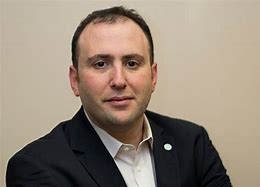
By Vitaliy Katsenelson CFA
***
***
Embracing Stock Market Stoicism
2024 brought me back to a core Stoic principle that I hold close to my heart: the dichotomy of control. Here’s the gist: Some things are within our power—our values, our character, our decisions—and some aren’t—like your brother-in-law’s random (and possibly dumb) comment, your spouse’s mood, or the fact that every traffic light turns red right as you pull up.
In investing, it’s the same. We can control:
The quality of our research—being logical and thorough in our research
Our decisions and discipline—systematically following our research
Our reactions—how we react to the news and external environmental pressure (I will discuss this at the end of the letter)
The market can price our stocks however it pleases on a month-to-month—or even year-to-year—basis. That’s the part we can’t control. We have to remember that these market prices are merely opinions, not final verdicts. The Stoics teach us to focus our energy on what we can influence (our process) and accept what we can’t (the market’s whims).
This probably sounds straightforward, but there’s a twist that makes it harder for you, the client, to see how this all plays out in real time. You can easily check the portfolio’s value—my decisions, not so much. In theory, I could make subpar investments and hide behind fancy Stoic talk.
That’s exactly the why of these very detailed letters: to show you our thinking, walk you through our individual decisions. I write, you read—that’s our agreement. You’re the judge of whether my process makes sense. But I can’t do that part for you.
The CPA and CMA designations cater to distinct professional focuses within the accounting and finance fields. A CPA is often seen as the gold standard for public accounting, emphasizing auditing, tax, and regulatory compliance. This certification is highly regarded for roles that require a deep understanding of financial reporting and external auditing. CPAs are frequently employed by public accounting firms, government agencies, and corporations that need to ensure their financial statements adhere to strict regulatory standards.
On the other hand, the CMA designation is tailored for professionals who aim to excel in management accounting and strategic financial management. CMAs are trained to analyze financial data to inform business decisions, focusing on internal processes and performance management. This makes the CMA particularly valuable for roles in corporate finance, strategic planning, and management consulting. Companies looking to optimize their internal financial operations and drive business strategy often seek out CMAs for their expertise in cost management, budgeting, and financial analysis.
The educational and experiential requirements for these certifications also differ. To become a CPA, candidates typically need to complete 150 semester hours of college education, which often includes a bachelor’s degree in accounting or a related field. Additionally, CPAs must pass the Uniform CPA Examination and meet specific state licensing requirements, which usually include a certain amount of professional experience.
In contrast, the CMA certification requires a bachelor’s degree in any discipline, two years of relevant work experience, and passing the two-part CMA exam. This flexibility in educational background can make the CMA more accessible to a broader range of professionals.
The ICE 3-Month USD LIBOR interest rate is the average interest rate at which a selection of banks in London are prepared to lend to one another in American dollars with a maturity of 3 months.
The Bank of America US High Yield Constrained Index is a market value-weighted index of all domestic high-yield bonds and Yankee high-yield bonds (issued by a foreign entity and denominated in U.S. dollars), including deferred interest bonds and payment-in-kind securities.
The ICE BofA BB-B US High Yield Constrained Index is composed of U.S. dollar-denominated corporate debt publicly issued in the U.S. market rated BB through B, based on an average of Moody’s, S&P and Fitch ratings, with issuer exposure capped at 2%.
ICE BofA U.S. Convertible Index tracks the performance of publicly issued, exchange-listed US dollar denominated convertible securities of US companies with at least $50 million face amount outstanding and at least one month remaining to the final conversion date. Index constituents are market capitalization-weighted and rebalanced monthly.
ICE BofA ML MOVE Index is a widely used measure of bond market volatility, similar to the VIX Index for stocks. The MOVE Index (also known as the Merrill Lynch Option Volatility Estimate) is a yield-curve-weighted index that tracks the market’s expectation of volatility in the U.S. bond market based on 1-month Treasury options.
ICE Exchange-Listed Preferred & Hybrid Securities Index tracks the performance of exchange-listed US dollar denominated hybrid debt, preferred stock and convertible preferred stock publicly issued by corporations in the US domestic market. Preferred stock and notes must have a minimum amount outstanding of $100 million; convertible preferred stock must have at least $50 million face amount outstanding. Index constituents are market capitalization-weighted subject to certain constraints. The index is re-balanced monthly.
Posted on January 18, 2025 by Dr. David Edward Marcinko MBA MEd CMP™
MEDICAL EXECUTIVE-POST–TODAY’SNEWSLETTERBRIEFING
***
Essays, Opinions and Curated News in Health Economics, Investing, Business, Management and Financial Planning for Physician Entrepreneurs and their Savvy Advisors and Consultants
“Serving Almost One Million Doctors, Financial Advisors and Medical Management Consultants Daily“
A Partner of the Institute of Medical Business Advisors , Inc.
WASHINGTON — The US Supreme Court on Friday delivered a blow to TikTok by upholding a law that could potentially lead to the video-sharing social media platform being banned in the United States. The justices in an unsigned opinion with no dissents rejected a free speech challenge filed by the company, meaning the law is set to go into effect on Sunday as planned. The bipartisan law requires China-based TikTok owner ByteDance to divest itself of the company by Sunday, the day before President-elect Donald Trump is to take office. If no sale takes place, the platform used by millions of Americans will in theory be banned.
Legendary short seller Nate Andersonannounced this week that he is shutting down his firm, Hindenburg Research, due to extreme job stress. With only 11 employees, Anderson took gargantuan swings at companies—and their billionaire leaders. Hindenburg published deeply researched reports about companies it believed were overvalued and rife with corruption. It got its big break when it shorted electric truck-maker Nikola in 2020, calling the company an “intricate fraud.” Regulators took note, and it led to three fraud convictions for Nikola founder Trevor Milton.
US stocks jumped on Friday amid a tech stock revival as investors assessed a week of key data and earnings reports alongside potential policy shifts under a Trump administration.
The Dow Jones Industrial Average (^DJI) gained 0.8% while the S&P 500 (^GSPC) rose 1%, coming off a losing day for the major gauges. The tech-heavy NASDAQ Composite (^IXIC) put on 1.5% as Nvidia (NVDA) and Tesla (TSLA) shares nudged back into the green.
The US Department of Justice (DOJ) filed a lawsuit against Walgreens (WBA), one of the nation’s largest pharmacy chains, alleging widespread prescription drug practice violations. According to the DOJ, Walgreens improperly dispensed millions of prescriptions from August 2012 to the present day that either lacked “legitimate medical purpose” or were otherwise invalid.
Posted on January 17, 2025 by Dr. David Edward Marcinko MBA MEd CMP™
By Staff Reporters
***
***
Premature Closure is the tendency to make quick, decisive judgments without considering all the evidence. It’s like jumping to conclusions on a trampoline – fast and often wrong. Our brains crave certainty and dislike ambiguity, leading us to close the case prematurely. This can save time but often results in mistakes and oversights. To avoid premature closure, take a step back, gather more information, and keep an open mind about this cognitive bias.
And so, colleague Dan Ariely PhD suggests that we remember: haste makes waste, especially in decision-making.
The Bloomberg U.S. Universal Index represents the union of the U.S. Aggregate Index, U.S. Corporate High Yield Index, Investment Grade 144A Index, Eurodollar Index, U.S. Emerging Markets Index, and the non-ERISA eligible portion of the CMBS Index.
The index covers USD-denominated, taxable bonds that are rated either investment grade or high-yield. Some Bloomberg U.S. Universal Index constituents may be eligible for one or more of its contributing sub-components that are not mutually exclusive. These securities are not double-counted in the index.
The Bloomberg U.S. Universal Index was created on January 1st, 1999, with index history back-filled to January 1st, 1990.
A Junk Rally is a general trend of out performance by companies that tend to score poorly along several dimensions, such as price-to-earnings (P/E) ratios, return on assets (ROA), balance sheet strength, levels of debt and volatility.
Posted on January 16, 2025 by Dr. David Edward Marcinko MBA MEd CMP™
MEDICAL EXECUTIVE-POST–TODAY’SNEWSLETTERBRIEFING
***
Essays, Opinions and Curated News in Health Economics, Investing, Business, Management and Financial Planning for Physician Entrepreneurs and their Savvy Advisors and Consultants
“Serving Almost One Million Doctors, Financial Advisors and Medical Management Consultants Daily“
A Partner of the Institute of Medical Business Advisors , Inc.
The U.S. Department of Labor reported a 0.4% increase in the monthly CPI after seasonal adjustment, overshooting the forecast of 0.3% and the previous value of 0.3%. On an annual basis, inflation climbed to 2.9%, up from 2.7% in November, the highest rate since July 2024.
US stocks ripped higher on Wednesday as high hopes for bank earnings paid off and a crucial consumer inflation update showed key prices increased less than expected in December.
The benchmark S&P 500 (^GSPC) popped more than 1.8%, while the Dow Jones Industrial Average (^DJI) rose more than 1.6%, or over 700 points. Meanwhile, the tech-heavy NASDAQ Composite (^IXIC) soared 2.5%.
Stocks took a leg higher after the Consumer Price Index (CPI) showed progress toward the Fed’s 2% inflation target in December. Prices climbed 0.2% month-on-month on a “core” basis, which strips out the more volatile costs of food and gas, an easing from November’s 0.3% gain. Over last year, core CPI rose 3.2%.
Capital One is being sued by the US government’s consumer watchdog agency for “cheating millions of consumers” and not paying more than $2 billion in interest to holders of its high-interest savings accounts.
As of January 1st 2025, beneficiaries enrolled in Part D prescription drug plans will have their out-of-pocket spending capped at $2,000 for the year. This new policy was part of President Joe Biden’s 2022 Inflation Reduction Act (IRA), which included other drug pricing measures such as capping the cost of insulin at $35 per month for seniors.
But only a small share of Medicare enrollees will benefit from the cap, according to an analysis from nonprofit organization AARP’s Public Policy Institute, as most don’t spend more than $2,000 annually on their medications after hitting their deductible (which is up to $590 for standard plans in 2025). Beneficiaries spent an average of $400 to $500 per year as of 2022, the Hill reported, citing data from the US Department of Health and Human Services (HHS).
Did you know that at MARCINKO & Associates, all medical colleagues throughout the United States may contact us when they are considering the sale, purchase, strategic operating improvement, merger, acquisition and/or other financial business or related personal financial planning transaction?
Our difference is “hard” knowledge and insider financial guidance that helps medical colleagues, nurses, private practitioners, clinics, ambulatory surgery, radiology and outpatient wound care centers realize their ultimate economic goals. This typically includes managerial and cost accounting, financial ratio analysis, fair market valuation business appraisals, business plan creation and personal financial planning.
Our “expert witness” business litigation support service and divorce mediation, arbitration, asset division, settlement and second opinion offerings are always available, as well.
And, our “soft” skill professional career guidance and mentoring center includes executive coaching, consulting and mentoring advisory programs for stressed, conflicted or burned-out physicians and medical practitioners.
Most importantly, our professional fees are reasonable and always transparent.
MARCINKO & Associates also serves universities, medical, business, graduate and nursing schools; physicians, dentists, podiatrists, optometrists and legal societies. This includes accountants, financial service providers, wealth and hedge fund managers, emerging entities, hospitals, CEOs and their BODs, the press, media and related organizations.
At DEMarcinko & Associates an “expert witness” possesses specialized knowledge in a particular field and is qualified to provide deposition or testimony in court and under oath. This testimony can be based on their personal experience, education, training or research. The role of an expert witness is to provide objective and unbiased opinions, analysis, and insights to help a lawyer, judge and/or jury understand technical or complex issues related to the case.
An expert witness can be called by either the prosecution or the defense in a legal case. The expert witness may be required to provide a written report or affidavit detailing their opinions, analyses and conclusions, and they may be asked to testify in court to provide oral testimony and answer questions from the judge and lawyers.
You can listen to a professional narration of this article on iTunes & online.
I have a problem with both growth and value demagogues.
Growth demagogues will argue that valuation is irrelevant for high-growth companies because the price you pay for growth doesn’t matter. They usually say this after a very extended move in growth stocks, where these investors look like gods that walk on water. They call value investors “accountants.”
The price you pay matters (this is not a new message). As we’ve discussed in the past, if you bought great, high-growth companies near the end of the Nifty Fifty bubble in the 1960s or near the end of the dotcom bubble in the 1990s, it took more than a decade to break even (after first struggling through double-digit losses).
Posted on January 11, 2025 by Dr. David Edward Marcinko MBA MEd CMP™
By Dr. David Edward Marcinko MBA MEd
***
***
Saying a patient’s name in the emergency room will almost ensure that person comes in that day.
A code cart next to an unstable patient is said to ward off evil spirits.
Traditional healers usually use superstition in their practices to manage human health problems and diseases.
Such practices create a conflict with the medical profession and its evidence-based practices.
***
So, what exactly is a Superstition? Does superstition change a measurable patient outcome, such as decreased anastomotic leak rate, surgical site infection, or mortality? Hard to say. But does it improve the surgeon’s confidence, thereby improving their performance? Likely so.
Science is not the opposite of superstition; it is the result of superstition, the result of humans trying to make sense of the world and prove each other wrong. We keep doing the things we do to maintain some semblance of control. In further defense of superstition, ritualistic behaviors ensure that the necessary boxes are checked and that we pay attention to the details. In surgery, details matter.
“Superstition is the irrational belief that an object or behavior has the power to influence an outcome, when there’s no logical connection between them. Most of us aren’t superstitious – but most of us are a ‘littlestitious.’” – Gretchen Rubin
So, until there is evidence to the contrary, I will keep tearing off the little patient labels and keeping their names with me in hopes that they do well after surgery.
Posted on January 10, 2025 by Dr. David Edward Marcinko MBA MEd CMP™
By Staff Reporters
***
***
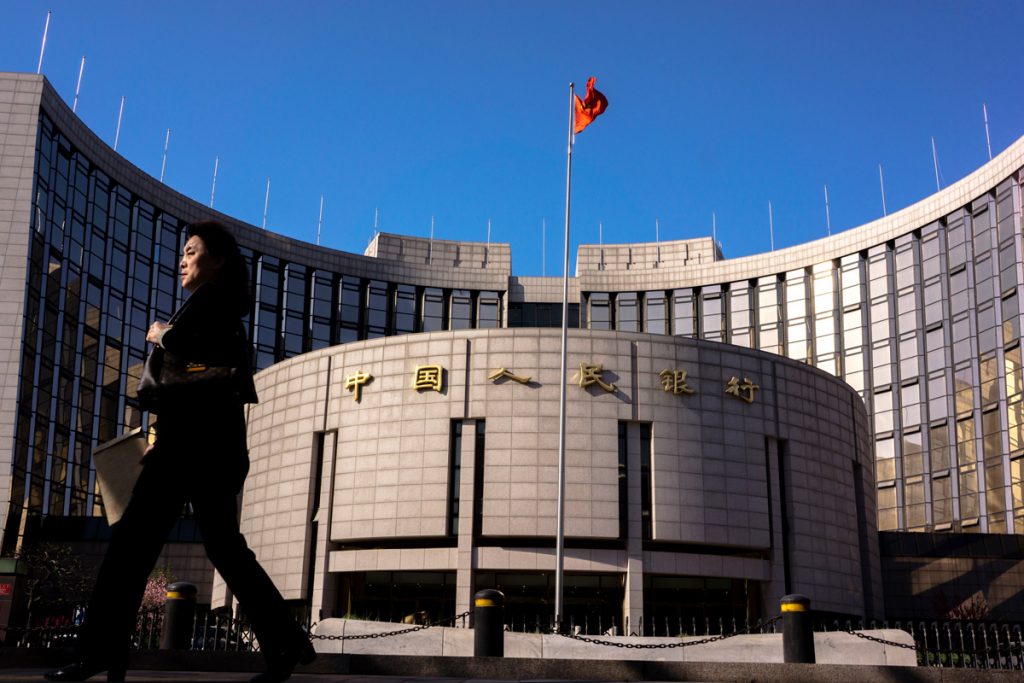
China’s 10-year bond yield plunged to a record low this month, while the Chinese currency [yuan] traded in Hong Kong on Wednesday hit its weakest against the U.S. dollar in more than a year.
The People’s Bank of China is “trying to cool down the market by suspending government bond buying,” said Larry Hu, chief China economist at Macquarie.
And, the U.S. economy added a much larger-than-expected total of new hires last month, adding more upward pressure to wage inflation and likely stoking a further selloff in U.S. Treasury bonds.
The Bureau of Labor Statistics said 256,000 new jobs were created last month, well ahead Wall Street’s 164,000 forecast and the down-wardly revised 212,000 reading from November.
***
Finally, Wall Street’s major averages are tumbling today as investors digested the hotter than expected jobs report. Early on and the S&P 500 (SP500) was -1.7%, the NASDAQ Composite (COMP:IND) was -2.2%, and the Dow (DJI) was -1.3%.
Posted on January 9, 2025 by Dr. David Edward Marcinko MBA MEd CMP™
By Staff Reporters
***
***
Sustainability focuses on meeting the needs of the present without compromising the ability of future generations to meet their needs. There are many different approaches to Sustainability, with motives varying from positive societal impact, to wanting to achieve competitive financial results, or both.
Methods of sustainable investing include active share ownership, integration of ESG factors, thematic investing, impact investing and exclusion among others.
Posted on January 8, 2025 by Dr. David Edward Marcinko MBA MEd CMP™
MEDICAL EXECUTIVE-POST–TODAY’SNEWSLETTERBRIEFING
***
Essays, Opinions and Curated News in Health Economics, Investing, Business, Management and Financial Planning for Physician Entrepreneurs and their Savvy Advisors and Consultants
“Serving Almost One Million Doctors, Financial Advisors and Medical Management Consultants Daily“
A Partner of the Institute of Medical Business Advisors , Inc.
Three UnitedHealth-owned insurance companies must pay over $165 million for misleading thousands of customers in Massachusetts into paying for additional health insurance, a state judge has ruled.
Nvidia stock (NVDA) tumbled more than 6% Tuesday, a day after shares closed at a record high in anticipation of CEO Jensen Huang’s keynote at the tech industry’s annual CES trade show in Las Vegas.
The Biden administration’s Consumer Financial Protection Bureau (CFPB) issued a new rule Tuesday that will hide an estimated $49 billion in medical debt from credit reports. The rule, which is slated to affect 15 million Americans, prohibits the inclusion of medical bills on credit reports and bars creditors from using medical information in making lending decisions. The policy specifically targets national credit-reporting companies Equifax, Experian and Transunion, which provide detailed evaluations of consumer finances to banks, employers and landlords.
Posted on January 7, 2025 by Dr. David Edward Marcinko MBA MEd CMP™
By Staff Reporters
***
***
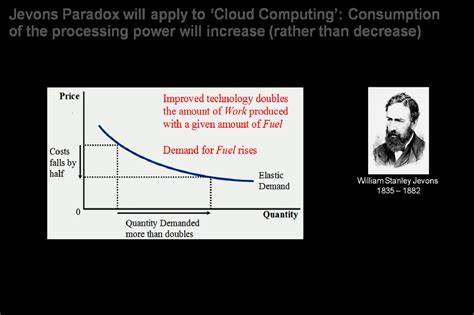
William S. Jevons Paradox suggests that increases in efficiency lead to even larger increases in demand; according to colleague Dan Ariely PhD.
The Jevons Paradox is when making something work better actually leads to using more of it, not less.
Imagine you have a really fast bike that makes you use less energy to speed up. Because it’s so good, you want to bike everywhere, even more than before. Now, even though your bike is better at saving energy, you end up using it so much that you may use even more energy overall
Posted on January 6, 2025 by Dr. David Edward Marcinko MBA MEd CMP™
By Staff Reporters
***
***
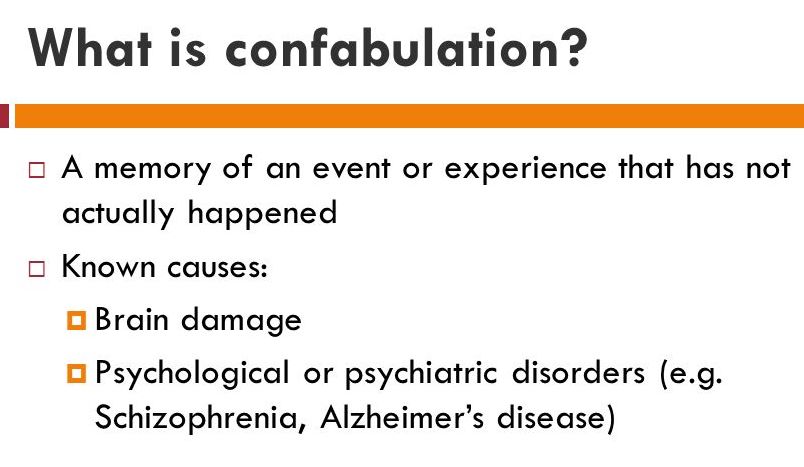
Confabulation Bias is the creation of false memories without the intent to deceive. Our brain fills in gaps, sometimes creating memories that feel real but are entirely fabricated.
According to colleague Dan Ariely PhD, this can happen especially when memory gaps are subconsciously filled to maintain coherence.
Posted on January 5, 2025 by Dr. David Edward Marcinko MBA MEd CMP™
By Reporters
***
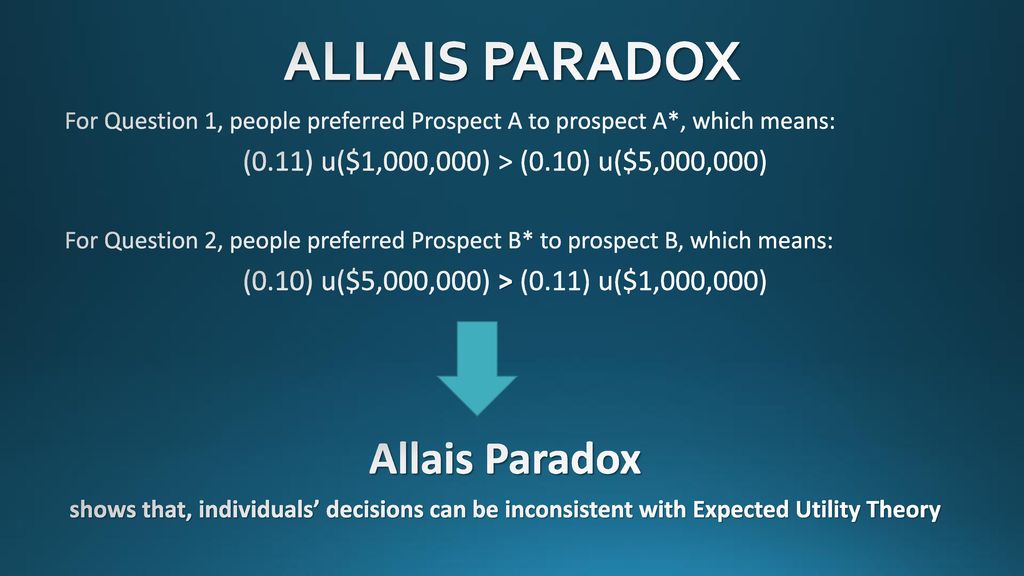
For Question 1, people preferred Prospect A to prospect A , which means: (0.11) u( 1,000,000) > (0.10) u( 5,000,000) For Question 2, people preferred Prospect B to prospect B, which means: (0.10) u( 5,000,000) > (0.11) u( 1,000,000) Allais Paradox. shows that, individuals’ decisions can be inconsistent with Expected Utility Theory.
***
Allais Paradox is a change in a possible outcome that is shared by different alternatives affects people’s choices among those alternatives, in contradiction with expected utility theory.
The Allais paradox is a choice problem designed by Maurice Allais 1953 to show an inconsistency of actual observed choices with the predictions of expected utility theory theory.
According to colleague Dan Ariely PhD, the Allais paradox demonstrates that individuals rarely make rational decisions consistently when required to do so immediately. The independence axiom of expected utility theory, which requires that the preferences of an individual should not change when altering two lotteries by equal proportions, was proven to be violated by the paradox.
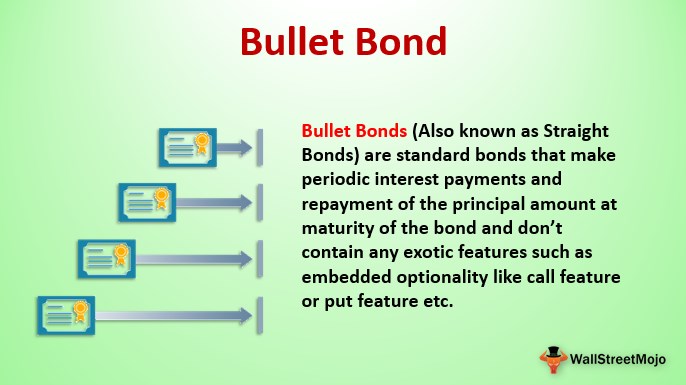
A Bullet bond structure is a bond portfolio structure that clusters a portfolio’s bond maturities around a single maturity (usually an intermediate-term maturity).
This structure tends to perform best when the yield curve is moving from flat to steep (long-term rates are rising faster than short-term rates, or short-term rates are falling faster than long-term rates).
Posted on January 4, 2025 by Dr. David Edward Marcinko MBA MEd CMP™
MEDICAL EXECUTIVE-POST–TODAY’SNEWSLETTERBRIEFING
***
Essays, Opinions and Curated News in Health Economics, Investing, Business, Management and Financial Planning for Physician Entrepreneurs and their Savvy Advisors and Consultants
“Serving Almost One Million Doctors, Financial Advisors and Medical Management Consultants Daily“
A Partner of the Institute of Medical Business Advisors , Inc.
Nvidia stock (NVDA) led gains among the “Magnificent Seven” tech stocks to start the new year after a group-wide sell-off in the last days of 2024. Shares of the AI chip-maker rose 4.5% Friday after gaining roughly 3% the prior day.
Quote: “If your credit card gets compromised, your bank will alert you, cancel it and send you get a new one. But your medical records have a long lifespan. They can be misused without detection for long periods of time, because it’s harder to identify malicious activity. That makes them very valuable.”—Geetha Thamilarasu, associate professor at the University of Washington Bothell, on why hackers want healthcare information (the Wall Street Journal)
That upswing followed a 4% dip between Christmas Eve and New Year’s Eve as megacap tech stocks dropped across the board in the absence of a “Santa Claus” rally, where the stock market typically enjoys a surge between December 24th and January 2nd. Tesla (TSLA) stock plunged nearly 13% over that time frame, while Amazon (AMZN) and Microsoft (MSFT) dropped more than 4%. Meanwhile, Meta (META) and Google (GOOG) fell just under 4%, and Apple (AAPL) dropped 3%.
Even with its December decline, Nvidia shares still ended 2024 up more than 150%. Wall Street analysts have remained bullish on the stock, estimating shares will rise to roughly $173 over the next year from their current level of $138, according to Yahoo Finance data.
Posted on January 2, 2025 by Dr. David Edward Marcinko MBA MEd CMP™
By Staff Reporters
***
***
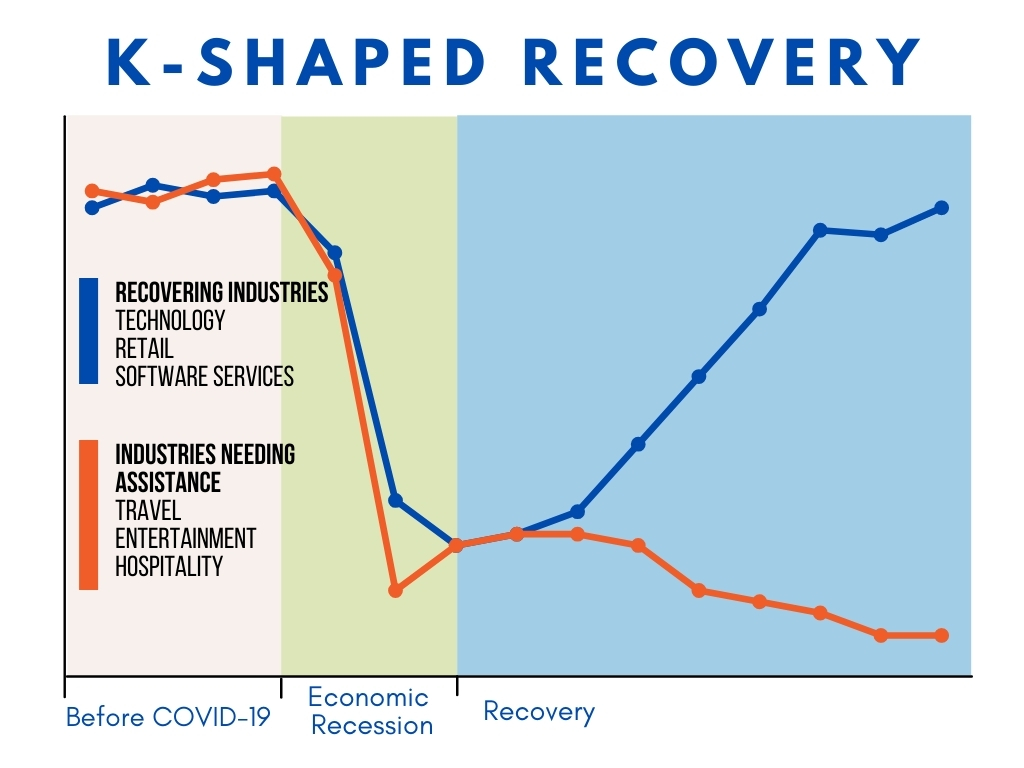
Understanding the K-shaped Economy
According to Olivia Voltaggio, in a V-shaped economy, things go down but then bounce back for everyone. In a K-shaped economy, the overall economy might go down. Only some parts of it recover, while others keep struggling.
In a K-shaped economy, people’s financial situations vary widely. Not everyone faces the same struggles. Lenders and financial institutions need to be flexible with strategy. They need to understand the different challenges their customers are dealing with.
Navigate with caution: The gaps in economic recovery highlight the importance of taking a careful, strategic approach.
How did we end up with a K-shaped recovery in 2024?
Inflation-driven price increases seem to be getting more stable. But, they may not reach the goal set by the government until 2026. This has made things more expensive for regular families.
For example, people with student loan debt had to start paying it back in October 2023. This was after a pandemic-induced grace period. Student loan repayment made budgeting harder. Borrowers might need to spend more on average than expected. For young adults (Gen Z), it could be even more.
Finally, more people are using credit cards because things are getting more expensive. Some are struggling to pay their credit card bills on time.
Posted on January 1, 2025 by Dr. David Edward Marcinko MBA MEd CMP™
MEDICAL EXECUTIVE-POST–TODAY’SNEWSLETTERBRIEFING
***
Essays, Opinions and Curated News in Health Economics, Investing, Business, Management and Financial Planning for Physician Entrepreneurs and their Savvy Advisors and Consultants
“Serving Almost One Million Doctors, Financial Advisors and Medical Management Consultants Daily“
A Partner of the Institute of Medical Business Advisors , Inc.
US stocks slipped Tuesday, closing 2024 with an uncharacteristic down note after a roaring year of trading. The S&P 500 (^GSPC) fell 0.4%. The Dow Jones Industrial Average (^DJI) dropped just below the flatline, while the tech-heavy NASDAQ Composite (^IXIC) led the losses at 0.9%.
Despite the sour final stretch, the benchmark S&P 500 closed 2024 up 23%, according to Yahoo Finance data. The tech-heavy NASDAQ Composite gained almost 30%. The Dow Jones Industrial Average posted a more modest 13% win. The S&P’s annual gain roughly matches 2023’s performance, logging the highest consecutive back-to-back annual gain in nearly 30 years.
At least 10 people are dead and 35 injured after a man drove a pickup truck into a large crowd on New Orleans’ Bourbon and Canal streets early New Year’s Day, officials said. The suspect is dead. President Biden has been notified.
In an early Wednesday press conference, New Orleans Police Department (NOPD) chief Anne Kirkpatrick said a man drove a pickup truck down Bourbon Street with “clear intent.”
“He was hell bent on creating the carnage and the damage he did,” Kirkpatrick said, adding that two NOPD officers are among those injured.
The man drove down Bourbon Street “at a very fast pace,” indicating “very intentional behavior [and] trying to run over as many people as he possibly could,” Kirkpatrick said.
At least one improvised explosive device was found on the scene, said FBI New Orleans special agent-in-charge Alethea Duncan, and officials are “working on confirming if this was a viable device or not.”
The FBI is taking over the investigation, officials said.
More updates are expected from NOPD headquarters at 11 a.m. and 3 p.m. local time.
Posted on December 31, 2024 by Dr. David Edward Marcinko MBA MEd CMP™
By Staff Reporters
***
***
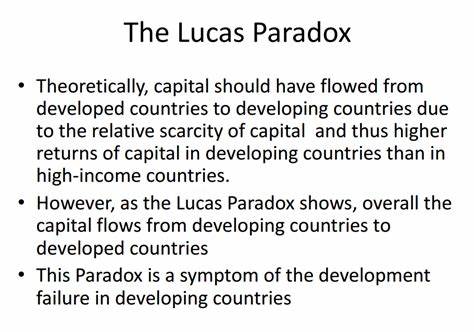
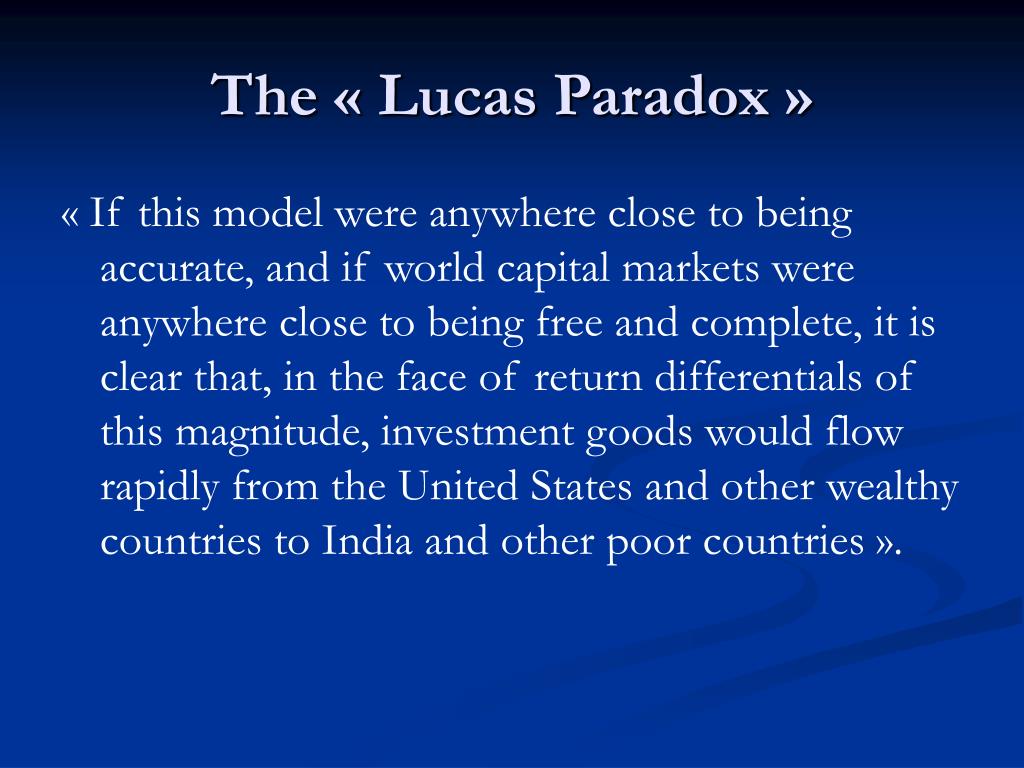
The Lucas Paradox occurs when capital is not flowing from developed countries to developing countries despite the fact that developing countries have lower levels of capital per worker, and therefore higher returns to capital.
According to Wikipedia, economic theory predicts that capital should flow from rich countries to poor countries, due to the effect of diminishing returns of capital. Poor countries have lower levels of capital per worker – which explains, in part, why they are poor. In poor countries, the scarcity of capital relative to labor should mean that the returns related to the infusion of capital are higher than in developed countries.
In response, savers in rich countries should look at poor countries as profitable places in which to invest. In reality, things do not seem to work that way. Surprisingly little capital flows from rich countries to poor countries. This puzzle was famously discussed in a paper by Robert Lucas PhD in 1990.
Posted on December 31, 2024 by Dr. David Edward Marcinko MBA MEd CMP™
By Staff Reporters
***
***
The Li Keqiang Index was created in 2010 by The Economist and measure’s China’s economy using three indicators: railway cargo volume, electricity consumption and bank loans.
The index is seen as an alternative to official gross domestic product numbers released by the Chinese government.
Posted on December 31, 2024 by Dr. David Edward Marcinko MBA MEd CMP™
MEDICAL EXECUTIVE-POST–TODAY’SNEWSLETTERBRIEFING
***
Essays, Opinions and Curated News in Health Economics, Investing, Business, Management and Financial Planning for Physician Entrepreneurs and their Savvy Advisors and Consultants
“Serving Almost One Million Doctors, Financial Advisors and Medical Management Consultants Daily“
A Partner of the Institute of Medical Business Advisors , Inc.
Stat: 4 in 10. That’s about how many US nursing home residents got an updated Covid-19 vaccine in the winter of 2023–24, according to the CDC, despite the recommendation that adults 65 and older get the new shot. (KFF)
Stocks fell on Monday, with the woes of the three major indexes continuing in the final week of the year as an otherwise strong 2024 comes to a close.
The benchmark S&P 500 (^GSPC) slipped more than 1% while the tech-heavy NASDAQ Composite (^IXIC) fell roughly 1.2%. The Dow Jones Industrial Average (^DJI) fell about 0.8%.
Stocks moved lower as the 10-year Treasury yield (^TNX) retreated from a seven-month high to hover near 4.55%. Stocks closed out last week with a Friday slide from Big Tech names like Tesla (TSLA) and Nvidia (NVDA), with the NASDAQ Composite falling 1.5% and the S&P 500 down over 1%.
Chinese state-sponsored hackers breached the U.S. Treasury Department’s computer security guardrails this month and stole documents in what Treasury called a “major incident,” according to a letter to lawmakers that was provided to Reuters on Monday.
The hackers compromised third-party cybersecurity service provider BeyondTrust and were able to access unclassified documents, the letter said.
Posted on December 30, 2024 by Dr. David Edward Marcinko MBA MEd CMP™
By Staff Reporters
***
***
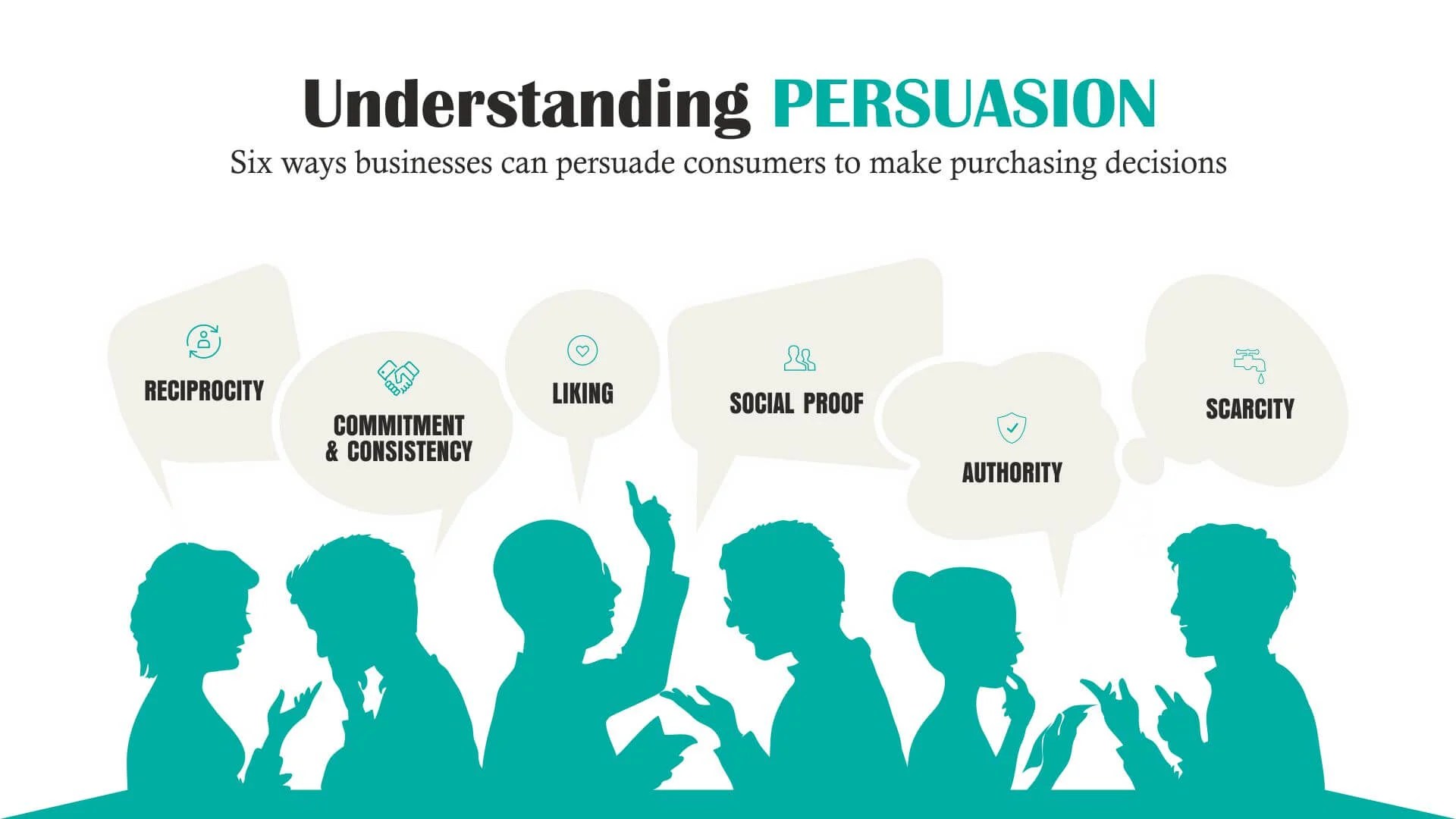
QUESTION: Ever tried convincing someone by arguing against your own point?
If so, that’s paradoxical persuasion. It’s like reverse psychology’s sophisticated cousin. By presenting the opposite argument, you make people defend your original point. It’s a mental judo move, using their own momentum against them. Next time you want someone to agree with you, try saying, “You’re right, maybe we shouldn’t get pizza.”
So, according to Dan Ariely PhD, watch as they passionately argue why pizza is, in fact, the best choice for dinner.
Posted on December 30, 2024 by Dr. David Edward Marcinko MBA MEd CMP™
By Staff Reporters
***
***
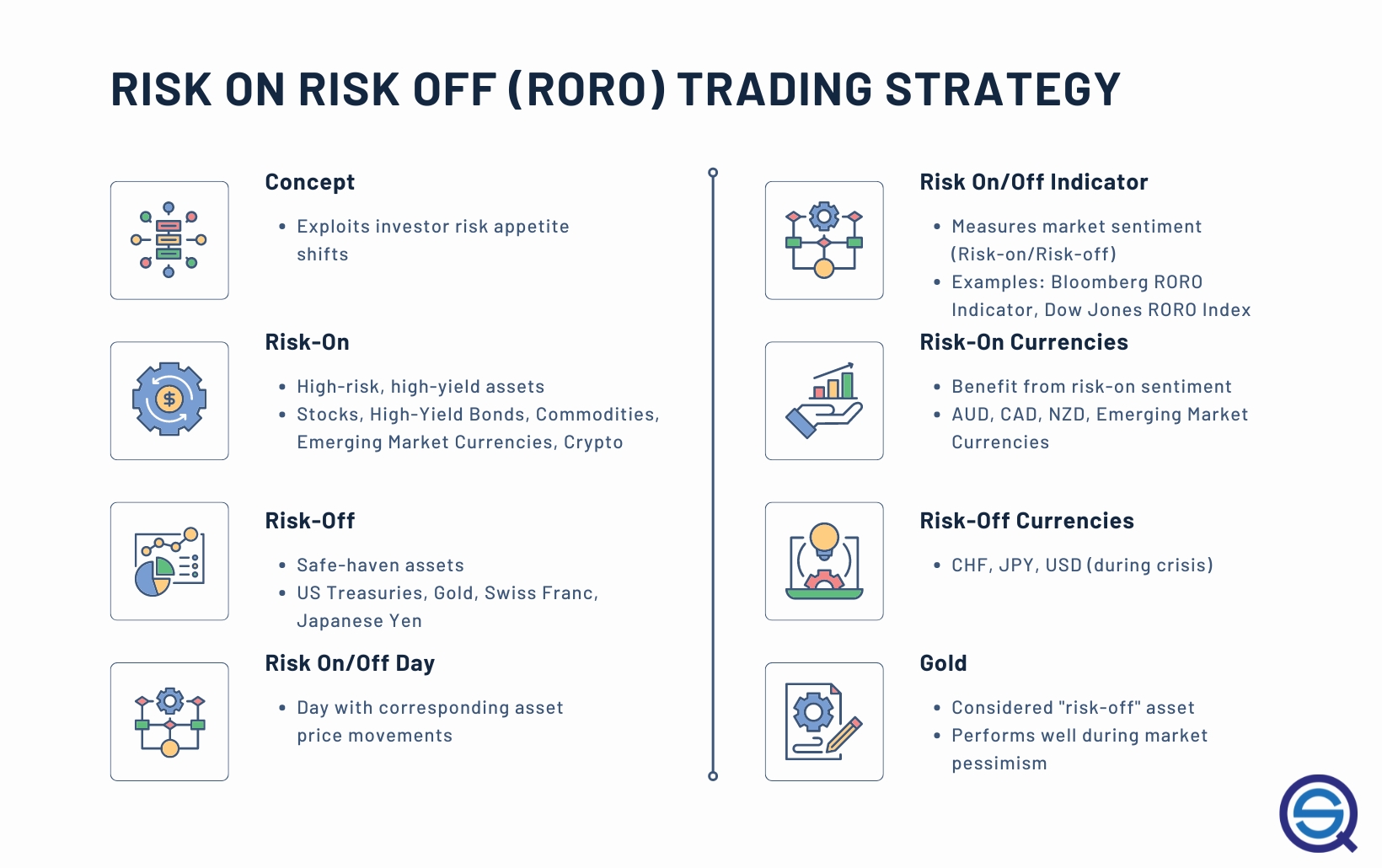
Risk-On
RO = Asset prices commonly follow the risk sentiment of the market. Investors look for changing sentiment through corporate earnings, macro-economic data, and global central bank action. An increase in the stock market or where stocks outperform bonds is said to be a risk-on environment.
Risk-on environments can be carried by expanding corporate earnings, optimistic economic outlook, accommodative central bank policies, and speculation. As the market displays strong influential fundamentals, investors perceive less risk about the market and its outlook.
Risk-Off
ROff = When stocks are selling off, and investors run for shelter to bonds or gold, the environment is said to be risk-off. Risk-off environments can be caused by widespread corporate earnings downgrades, contracting or slowing economic data, and uncertain central bank policy.
Just like the stock market rises in a risk-on environment, a drop in the stock market equals a risk-off environment. Investors jump from risky assets and pile into high grade bonds, U.S. Treasury bonds, gold, cash, and other safe havens
Risk-On Risk-Off?
Risk-on-risk-off investing relies on and is driven by changes in investor risk tolerance. Risk-on-risk-off (RORO) can also sway changes in investment activity in response to economic patterns. When risk is low, investors tend to engage in higher-risk investments. Investors tend to gravitate toward lower-risk investments when risk is perceived to be high.
Posted on December 29, 2024 by Dr. David Edward Marcinko MBA MEd CMP™
By Staff Reporters
***
***
Habituation is your brain’s way of tuning out repetitive stimuli. It’s like background noise – after a while, you stop noticing it. This mental autopilot helps us focus on new and important information, but it can also make us overlook the familiar. It’s why you might not notice a smell in your house that’s obvious to a visitor.
To combat habituation, according to colleague Dan Ariely PhD, try changing up your routine and environment. Fresh experiences keep your brain engaged and alert.
Posted on December 29, 2024 by Dr. David Edward Marcinko MBA MEd CMP™
By Staff Reporters
***
***
The anti-trust paradox suggests that antitrust enforcement artificially raised prices by protecting inefficient competitors from competition.
The Antitrust Paradox Book is an influential 1978 book by Robert Bork that criticized the state of US anti-trust law in the 1970s. A second edition, updated to reflect substantial changes in the law, was published in 1993. Bork has credited Aaron Director as well as other economists from the University of Chicago as influences.
Bork argued that the original intent of antitrust laws as well as economic efficiency makes consumer welfare and the protection of competition, rather than competitors, were the only goals of antitrust law.
Thus, while it was appropriate to prohibit cartels that fix prices and divide markets and mergers that create monopolies, practices that are allegedly exclusionary, such as vertical agreements and price discrimination, did not harm consumers and so should not be prohibited.
The paradox of antitrust enforcement was that legal intervention artificially raised prices by protecting inefficient enterprises from competition.
Posted on December 28, 2024 by Dr. David Edward Marcinko MBA MEd CMP™
By Staff Reporters
***
***
Envy / Jealousy: This bias also relates to the contrast and social proof biases. Prudent financial and business planning and related decision-making are based on real needs followed by desires. People’s happiness and satisfaction is often based more on one’s position relative to perceived peers rather than an ability to meet absolute needs.
The strong desire to “keep up with the Jones” can lead people to risk what they have and need for what they want. These actions can have a disastrous impact on important long-term financial goals.
According to colleague Dan Ariely PhD, clear communication and vivid examples of risks is often needed to keep people focused on important financial goals rather than spurious ones, or simply money alone, for its own sake.
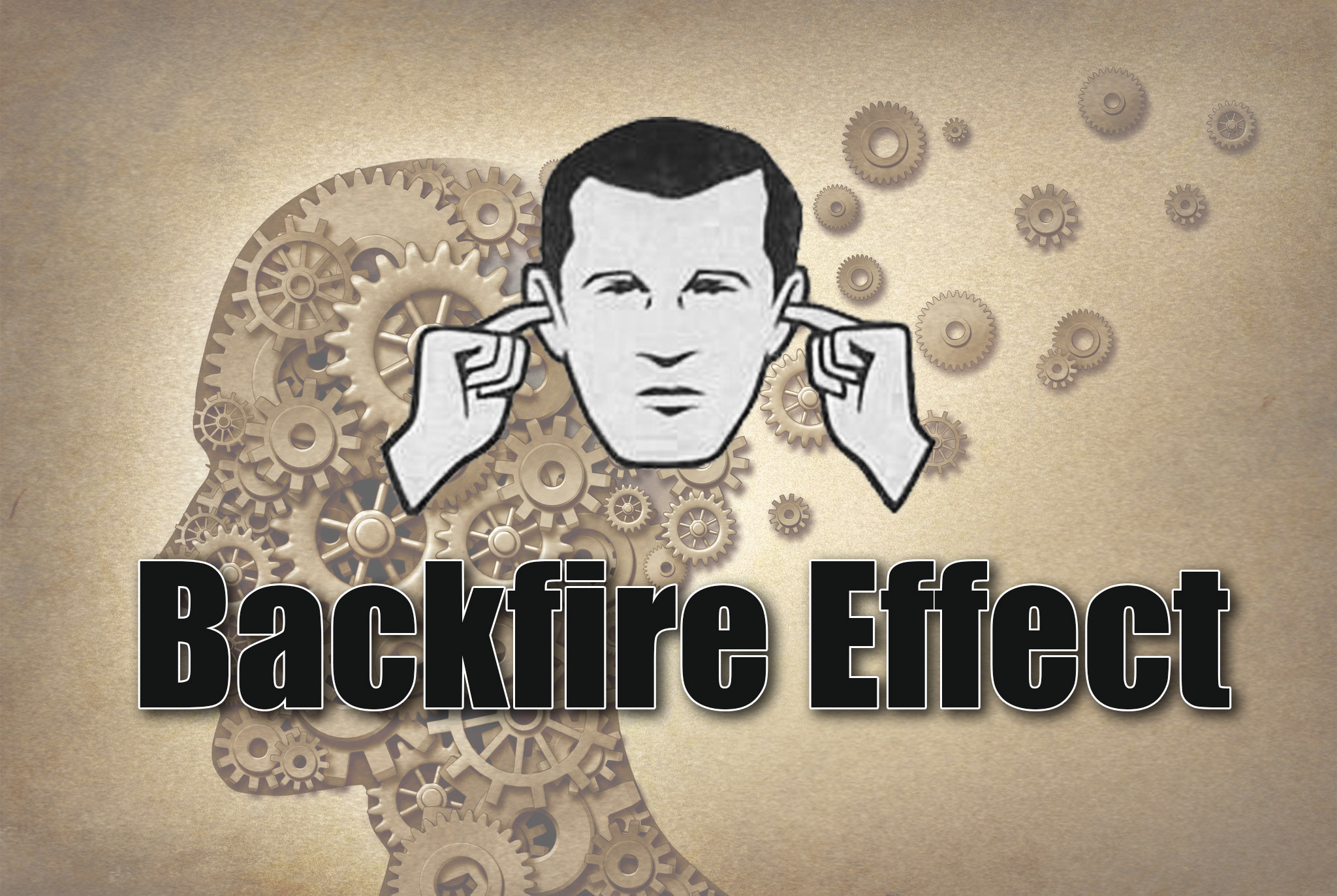
The Backfire Effect refers to the strengthening of a belief even after it has been challenged.
Cook and Lewandowsky (2011) explain it very well in the context of changing people’s minds in their Debunking Handbook. The backfire effect may work based on the same foundation as Declinism, in that we do not like change. It is also similar to negativity bias, in that we wish to avoid losing and other negative outcomes—in this case, one’s idea is being challenged or rejected (i.e. perceived as being made out to be “wrong”) and thus, they may hold on tighter to the idea than they had before.
However, according to colleague Dan Ariely PhD, there are caveats to the backfire effect—for example, we also tend to abandon a belief if there’s enough evidence against it with regard to specific facts.
Posted on December 27, 2024 by Dr. David Edward Marcinko MBA MEd CMP™
By Staff Reporters
***
***
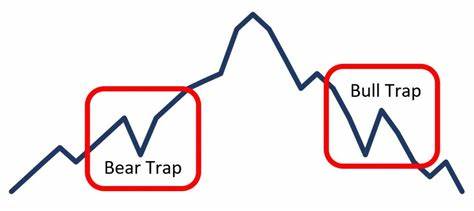
What Is a Bull Trap?
A bull trap, according to James Chen, is a false signal, referring to a declining trend in a stock, index, or other security that reverses after a convincing rally and breaks a prior support level. The move “traps” traders or investors that acted on the buy signal and generates losses on resulting long positions. A bull trap may also refer to a whipsaw pattern. Read: “Bull Trap.”
What is a Bear Trap
The opposite of a bull trap is a bear trap, which occurs when sellers fail to press a decline below a breakdown level.
Posted on December 27, 2024 by Dr. David Edward Marcinko MBA MEd CMP™
MEDICAL EXECUTIVE-POST–TODAY’SNEWSLETTERBRIEFING
***
Essays, Opinions and Curated News in Health Economics, Investing, Business, Management and Financial Planning for Physician Entrepreneurs and their Savvy Advisors and Consultants
“Serving Almost One Million Doctors, Financial Advisors and Medical Management Consultants Daily“
A Partner of the Institute of Medical Business Advisors , Inc.
Absent Congressional action, beginning January 1sy, 2025, the statutory limitations that were in place for Medicare telehealth services prior to the COVID-19 PHE will retake effect for most telehealth services.
This means most telehealth visits will not be covered by Medicare in 2025, unless Congress acts by the end of December 2024.
***
(Reuters) -The Dow Jones Industrial Average closed fractionally higher on Thursday, stretching its winning streak to five sessions despite light trading volumes and rising U.S. Treasury yields weighing on some of the dominant technology megacaps.
While the NASDAQ Composite and the S&P 500 were broadly unchanged, the indexes both finished slightly in negative territory. This snapped the NASDAQ’s four-session run of higher closes, and ended the S&P 500’s own run at three sessions.
On a day of few catalysts, investors responded to yields on U.S. government bonds inching higher, including the yield on the benchmark 10-year Treasury note hitting its highest since early May at 4.64% earlier in the session. And, a strong auction of seven-year notes early in the afternoon though helped yields come off slightly, with the 10-year note at 4.58% in late-afternoon trade.
Higher yields are traditionally seen as negative for growth stocks, as it raises the cost of their borrowing to fund expansion. With markets increasingly dominated by the megacap technology stocks known as the Magnificent Seven, crimping their performance – especially in lieu of other market catalysts – will put downward pressure on benchmark indexes.
The S&P 500 slipped 2.45 points, or 0.04%, to 6,037.59 points, while the NASDAQ Composite lost 10.77 points, or 0.05%, to 20,020.36. The Dow Jones Industrial Average rose 28.77 points, or 0.07%, to 43,325.80.
Six of the megacaps fell, with Tesla leading decliners with a 1.8% fall. The outlier was Apple, rising 0.3% and continuing to edge closer to becoming the first company in the world to hit a market value of $4 trillion.
Earnings per share (EPS): The portion of a company’s profits allocated to each outstanding share of its common stock. It is as an indicator of a company’s profitability.
Earnings yield: Earnings per share for the most recent 12 months, divided by the current market price per share; it is the inverse of the price to earnings (P/E) ratio.
EBITDA: Earnings before interest, taxes, depreciation and amortization (EBITDA) is an approximate measure of a company’s operating cash flow.
HFRI Fund of Funds Composite Index invests with multiple managers through funds or managed accounts. The strategy designs a diversified portfolio of managers with the objective of significantly lowering the risk (volatility) of investing with an individual manager. The Fund of Funds manager may allocate funds to numerous managers within a single strategy, or with numerous managers in multiple strategies. The investor has the advantage of diversification among managers and styles with significantly less capital than investing with separate managers. The HFRI Fund of Funds Index is not included in the HFRI Fund Weighted Composite Index.
HFRI Fund Weighted Composite Index is a global, equal-weighted index of over 2,000 single-manager funds that report to HFR Database. Constituent funds report monthly net of all fees performance in U.S. Dollar and have a minimum of $50 Million under management or a twelve (12) month track record of active performance. The HFRI Fund Weighted Composite Index does not include Funds of Hedge Funds.
Posted on December 25, 2024 by Dr. David Edward Marcinko MBA MEd CMP™
DEFINED
By Staff Reporters
***
***
In brushing scams, according to Norton, criminals trick e-commerce platforms into believing you purchased a product, allowing them to post fake verified reviews under your name. These verified reviews increase the product’s visibility on sites like Amazon or eBay. They especially happen during the holiday season.
Here’s how it works:
Information gathering: An unethical business gathers information about you through online sources such as people-search sites, data leaked through reaches, or info bought from an illegal marketplace.
Bogus account creation: The business creates an online shopping account with your information.
Shipment: They send a package to your address with no return address on the label.
Fraudulent review: They write a glowing review in your name for the product they sent you.







 Support our online development, and advance our onground research initiatives in free market economics, as we seek to showcase the brightest Next-Gen minds.
THE ME-P DISCLAIMER: Posts, comments and opinions do not necessarily represent iMBA, Inc., but become our property after submission. Copyright © 2006 to-date. iMBA, Inc allows colleges, universities, medical and financial professionals and related clinics, hospitals and non-profit healthcare organizations to distribute our proprietary essays, photos, videos, audios and other documents; etc. However, please review copyright and usage information for each individual asset before submission to us, and/or placement on your publication or web site. Attestation references, citations and/or back-links are required. All other assets are property of the individual copyright holder.
Support our online development, and advance our onground research initiatives in free market economics, as we seek to showcase the brightest Next-Gen minds.
THE ME-P DISCLAIMER: Posts, comments and opinions do not necessarily represent iMBA, Inc., but become our property after submission. Copyright © 2006 to-date. iMBA, Inc allows colleges, universities, medical and financial professionals and related clinics, hospitals and non-profit healthcare organizations to distribute our proprietary essays, photos, videos, audios and other documents; etc. However, please review copyright and usage information for each individual asset before submission to us, and/or placement on your publication or web site. Attestation references, citations and/or back-links are required. All other assets are property of the individual copyright holder.





























































 The Leading Business Education Network for Doctors, Financial Advisors and Health Industry Consultants