Military Health System Records

Expanding PHR Pilot Testing

By Staff Reporterscomputer-hardware2

According to Paul McCloskey, on April 08, 2009, the Military Health System [MHS] will extend its test of personal health records at Madigan Army Medical Center in Tacoma, Wash., to two additional health care venues in an attempt to test the technology in larger populations and more diverse care settings.

MiCare PHR Focus

The new projects will focus on using the MiCare Personal Health Record [PHR] as a tool for care coordination and a mechanism for patients to share health records across a mix of military and commercial providers and payer organizations, according to Col. Keith Salzman, chief of informatics at Madigan, which is hosting a pilot test of MHS’ MiCare PHR.

Assessment

Link: http://govhealthit.com/articles/2009/04/08/phr-pilot-testing.aspx?s=GHIT_140409

Conclusion

And so, your thoughts and comments on this Medical Executive-Post are appreciated? Feel free to review our top-left column, and top-right sidebar materials, links, URLs and related websites, too. Then, be sure to subscribe to this ME-P. It is fast, free and secure.

Link: http://feeds.feedburner.com/HealthcareFinancialsthePostForcxos

Speaker: If you need a moderator or speaker for an upcoming event, Dr. David E. Marcinko; MBA – Publisher-in-Chief of the Executive-Post – is available for seminar or speaking engagements. Contact: MarcinkoAdvisors@msn.com  or Bio: www.stpub.com/pubs/authors/MARCINKO.htm

Get our Widget: Get this widget!

Our Other Print Books and Related Information Sources:

Practice Management: http://www.springerpub.com/prod.aspx?prod_id=23759

Physician Financial Planning: http://www.jbpub.com/catalog/0763745790

Medical Risk Management: http://www.jbpub.com/catalog/9780763733421

Healthcare Organizations: www.HealthcareFinancials.com

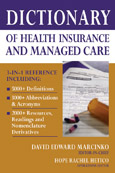
Health Administration Terms: www.HealthDictionarySeries.com

Physician Advisors: www.CertifiedMedicalPlanner.com

Subscribe Now:Did you like this Medical Executive-Post, or find it helpful, interesting and informative? Want to get the latest ME-Ps delivered to your email box each morning? Just subscribe using the link below. You can unsubscribe at any time. Security is assured.

Link: http://feeds.feedburner.com/HealthcareFinancialsthePostForcxos


HO-JFMS-CD-ROM

   www.HealthcareFinancials.com    

Allscript’s Glenn Tullman is Video Interviewed

Join Our Mailing List

Video Clip from the HIMSS Meeting

By Ann Miller; RN, MHA

[Executive-Director]

stk323168rknThere is a major controversy in the modern healthcare community over eMRs and how to pay for them; or even if they are effective in improving medical outcomes. Of course, by eMRs we mean interoperable medical records that span the pan-healthcare ecosystem; and not just the stand-alone digital records that many, if not most, physicians use in their daily practices to some degree or another.

Link: https://healthcarefinancials.wordpress.com/2009/03/10/on-the-hitech-act-of-2009/

Proponents

As readers of the ME-P are aware, one vocal camp supports certification and eMR industry mandates, standards, and governmental initiatives, etc. The recent $20 billion taxpayer input from the Obama Administration, courtesy of HITECH, further emboldens CCHIT and related wonks.

Opponents

One the other hand, one vocal ME-P opponent is dentist Darrell Pruitt. He and many others believe that current eMRs may be too expensive, unwieldy, and counter-productive. This camp advocates a mix of other data sources, technology processes and doctor/patient education to get us where we need to be in terms of improving medial outcomes; quicker and less expensively.

Assessment

Rather than read, research and write more on this controversy, which was apparently a red-hot topic at the recent HIMSS meeting, we have embedded a video link of Glen Tullman [CEO of Allscripts] and Mark Leavitt, [Chair of CCHIT], below.

Link: https://healthcarefinancials.wordpress.com/2009/03/02/cchit-is-prejudiced-and-lacks-diversity-%e2%80%93-an-indictment/

It even includes a clip of Jonathan Bush, CEO of AthenaHealth. And, although they don’t all agree; some common ground may be developing in this controversial issue.

Source: This link originally appeared on The Health Care Blog [THCB], by Matthew Holt.

Link: http://www.thehealthcareblog.com/the_health_care_blog/2009/04/cats-and-dogs-on-film–tullman-leavitt-bush.html#comments

Disclaimer:We are members of AHIMA, HIMSS, MS-HUG and SUNSHINE. We just released the Dictionary of Health Information Technology and Security, with Foreword by Chief Medical Information Officer Richard J. Mata; MD MS MS-CIS, of Johns Hopkins University; and the second edition of the Business of Medical Practice with Foreword by Ahmad Hashem; MD PhD, who was the Global Productivity Manager for the Microsoft Healthcare Solutions Group at the time.

Conclusion

Your thoughts and comments on this ME-P are appreciated. Feel free to review our top-left column, and top-right sidebar materials, links, URLs and related websites, too. Then, subscribe to the ME-P. It is fast, free and secure.

Speaker: If you need a moderator or speaker for an upcoming event, Dr. David E. Marcinko; MBA – Publisher-in-Chief of the Medical Executive-Post – is available for seminar or speaking engagements. Contact: MarcinkoAdvisors@msn.com

OUR OTHER PRINT BOOKS AND RELATED INFORMATION SOURCES:


Product Details 

On Continuity of Medical Care and HIMSS

Join Our Mailing List

Considering Pay-for-Retention [P-4-R]

By Darrell K Pruitt; DDSpruitt5

Here is the question on lots of minds these days; how can we change the way medical providers are paid so they are both incentivized and adequately compensated to provide consistent, high-quality, patient-centered medical homes?

My Novel Idea

Here is a solid, common sense idea; increase providers’ pay gradually according to how long the doctors retain patients – who are free to choose any doctor they wish.  Consistency is the mortar of a medical home [i.e., pay-4-retention]. 

An Ounce of Prevention 

If prevention, which predates eHRs by thousands of years, is more than just a modern buzzword, the nation can still shave much more expense from health care by promoting continual, personalized care for consumers than from digital health records alone – void of prevention incentives. Who in the audience still cannot understand that concept? Think of it this way. How do business leaders in the land of the free retain the best employees? They pay bonuses. Even waiters get tips to encourage interest in providing service consumers will return for. What do US physicians get?  Guaranteed cuts in their Medicaid payments over the next decade. Physicians no longer encourage their children to become doctors. Surprised? Scared? 

Consumers Should Rule 

In place of consumers ruling their healthcare in the US, well-positioned, giant stakeholders have persuaded lawmakers to offer physicians bonus money (that will later be taken away), not for curing patients, but for using digital records “in a meaningful manner.” It’s called “Mark and Michael Leavitts’ Clicking for Cash.”  Since the rules are made up along the way, they change like the weather. That is why the larger and more progressive medical facilities pay bonuses to retain their best “Coders” and other informatics specialists who keep up with the current Ingenix-styled games in order to maximize profits. It is my opinion that health care IT’s complexity works well with the economic stimulus plan to improve employment in the nation. Entrepreneurial stakeholders will continue to be movie-star popular right up until the complete collapse of Medicare.  Then they’ll be impossible to find www.HealthDictionarySeries.com

HIMSS 

Have you ever heard of HIMSS?

“The Healthcare Information and Management Systems Society (HIMSS) is the healthcare industry’s membership organization exclusively focused on providing leadership for the optimal use of healthcare information technology (IT) and management systems for the betterment of healthcare.”

– From the HIMSS Web site.

HIMSS Annual Meeting 

A week ago, HIMSS convened its annual convention in Chicago. The keynote speakers for the four day event were actor Dennis Quaid; followed by the Chairman and CEO of Kaiser Foundation Health Plan, George C. Halvorson; then the economist and former Chairman, Board of Governors of the Federal Reserve, Alan Greenspan, and finally; Jerry M. Linenger, MD, MSSM, MPH, PhD, Captain, Medical Corps, USN (Ret.), NASA Astronaut, and Space Analyst, NBC News. As one can tell, healthcare IT has lots of momentum. In fact, Dave Roberts, the HIMSS vice president for government relations confidently told Bob Brewin on NextGov.com

“The e-records initiative is an entitlement program like Social Security.” 

http://www.nextgov.com/nextgov/ng_20090406_1509.phpdhimc-book9

Another Entitlement Program – Entitlement for Whom

In Regina Herzlinger’s 2007 book “Who Killed Health Care?” the Harvard School of Business professor argues that entitled stakeholders, including a few ambitious members of HIMSS, are destroying health care in the name of reform. In the first half of her 260 page book, she spells out entrepreneurial malfeasance in simple well-annotated terms. In the last half, she describes why Consumer-Driven Health Care [CDHC] makes sense to her. Professor Herzlinger does not specifically mention the words “medical home” in her book, yet she emphasizes the importance of continuity of care. To promote continuity, she suggests that managed care insurance policies be extended to three years duration and longer.  Although she also does not mention dentistry, it is obvious to me that since chronic illnesses like diabetes are exacerbated by poor oral health, continuity of care in dentistry is of special importance.  It occasionally takes years to improve some patients’ oral health care. And sometimes we fail.

Assessment 

If these assumptions about continuity of care are accurate, it follows that the physical and economic health of the nation depends on long-term medical insurance contracts with employers and freedom-of-choice in providers. So is prevention worth holding ourselves accountable to consumers for once? Maybe it is just me, but I think unprecedented truth in healthcare will soon emerge regardless of stakeholders’ needs for confusion and obscurity.  It is called consumerism.  And it goes hand-in-hand with the Hippocratic Oath, the free-market and common sense.

Conclusion

Your thoughts and comments on this ME-P are appreciated. Feel free to review our top-left column, and top-right sidebar materials, links, URLs and related websites, too. Then, subscribe to the ME-P. It is fast, free and secure.

Link: http://feeds.feedburner.com/HealthcareFinancialsthePostForcxos

Speaker: If you need a moderator or speaker for an upcoming event, Dr. David E. Marcinko; MBA – Publisher-in-Chief of the Medical Executive-Post – is available for seminar or speaking engagements. Contact: MarcinkoAdvisors@msn.com

OUR OTHER PRINT BOOKS AND RELATED INFORMATION SOURCES:

Health Dictionary Series: http://www.springerpub.com/Search/marcinko

Practice Management: http://www.springerpub.com/product/9780826105752

Physician Financial Planning: http://www.jbpub.com/catalog/0763745790

Medical Risk Management: http://www.jbpub.com/catalog/9780763733421

Hospitals: http://www.crcpress.com/product/isbn/9781439879900

Physician Advisors: www.CertifiedMedicalPlanner.org

Product DetailsProduct DetailsProduct Details

Product Details  Product Details

Product DetailsProduct Details

More about Healthcare Organizations [Financial Management Strategies]

Our Print-Journal Preface

By Hope Rachel Hetico; RN, MHA, CMP™hetico1

As Managing Editor of a two volume – 1,200 pages – premium quarterly print journal, I am often asked about our Preface.

A Two-Volume Guide

As so, our hope is that Healthcare Organizations: [Financial Management Strategies] will shape the hospital management landscape by following three important principles.

What it is – How it works

1. First, we have assembled a world-class editorial advisory board and independent team of contributors and asked them to draw on their experience in economic thought leadership and managerial decision making in the healthcare industrial complex. Like many readers, each struggles mightily with the decreasing revenues, increasing costs, and high consumer expectations in today’s competitive healthcare marketplace. Yet, their practical experience and applied operating vision is a source of objective information, informed opinion, and crucial information for this manual and its quarterly updates.

2. Second, our writing style allows us to condense a great deal of information into each quarterly issue.  We integrate prose, applications and regulatory perspectives with real-world case models, as well as charts, tables, diagrams, sample contracts, and checklists.  The result is a comprehensive oeuvre of financial management and operation strategies, vital to all healthcare facility administrators, comptrollers, physician-executives, and consulting business advisors.

3. Third, as editors, we prefer engaged readers who demand compelling content. According to conventional wisdom, printed manuals like this one should be a relic of the past, from an era before instant messaging and high-speed connectivity. Our experience shows just the opposite.  Applied healthcare economics and management literature has grown exponentially in the past decade and the plethora of Internet information makes updates that sort through the clutter and provide strategic analysis all the more valuable. Oh, it should provide some personality and wit, too! Don’t forget, beneath the spreadsheets, profit and loss statements, and financial models are patients, colleagues and investors who depend on you.ho-journal9

www.HealthcareFinancials.com

Assessment

Rest assured, Healthcare Organizations: [Financial Management Strategies] will become an important peer-reviewed vehicle for the advancement of working knowledge and the dissemination of research information and best practices in our field. In the years ahead, we trust these principles will enhance utility and add value to your subscription. Most importantly, we hope to increase your return on investment [ROI] in some small increment.

Visit and Order Now

Specialty Technical Publishers

8 – 14th Street

Blaine, WA 98230

1-800-251-0381

orders@stpub.com

http://www.stpub.com/pubs/ho.htm

TOC: http://www.stpub.com/pdfs/toc_ho.pdf

Conclusion

And so, your thoughts and comments on this Medical Executive-Post, complimentary e-companion are appreciated. If you would like to contribute material or suggest topics for a future update, please contact me. Subscribers, have we attained our goals and objectives, as a work-in-progress in this preface statement?

Link: http://feeds.feedburner.com/HealthcareFinancialsthePostForcxos

Speaker: If you need a moderator or speaker for an upcoming event, Dr. David E. Marcinko; MBA – Publisher-in-Chief of the Executive-Post – is available for seminar or speaking engagements. Contact: MarcinkoAdvisors@msn.com  or Bio: www.stpub.com/pubs/authors/MARCINKO.htm

Get our Widget: Get this widget!

Our Other Print Books and Related Information Sources:

Practice Management: http://www.springerpub.com/prod.aspx?prod_id=23759

Physician Financial Planning: http://www.jbpub.com/catalog/0763745790

Medical Risk Management: http://www.jbpub.com/catalog/9780763733421

Healthcare Organizations: www.HealthcareFinancials.com

Health Administration Terms: www.HealthDictionarySeries.com

Physician Advisors: www.CertifiedMedicalPlanner.com

Subscribe Now: Did you like this Medical Executive-Post, or find it helpful, interesting and informative? Want to get the latest E-Ps delivered to your email box each morning? Just subscribe using the link below. You can unsubscribe at any time. Security is assured.

Link: http://feeds.feedburner.com/HealthcareFinancialsthePostForcxos

What HMO’s Seek in Private Managed Care Contracts

Join Our Mailing List

Whole Sale – Not Retail – Medicine is Growing

By Dr. David Edward Marcinko; MBA, CPHQ, CMP™

[Publisher-in-Chief]dem22

The conversion to managed healthcare, and capitation financing, is a significant marketing force and not merely a temporary business trend. More than 60% of all physicians (MD/DO) in the country are now employees of a MCO, HMO, PHO, etc. Those that embrace these forces will thrive, while those opposed will not.

Achieve Geographic Desirability

After you have evaluated the HMOs in your geographic area, you must then make your practice more attractive to them, since there are far too many physicians in most regions today. The following issues are considered by most MCO financial managers and business experts, as they decide whether or not to include you in their network.

General Standards:

1. Is there a local or community need for your practice, with a sound patient base that is not too small or large? Remember,  practices that already have a significant number of patients have some form of leverage since MCOs know  that patients do not like swithcing their primary care doctors or pediatrician, and women do not want to be forced to change their Ob/Gyn specialist. If the group leaves the plan, members may complain to their employers and  give a negative impression of the plan.   

2. A positive Return on Investment (ROI) from your economically sound practice is important to MCO’s because they wish to continue their relationship with you. Often, this means it is difficult for younger practitioners to enter a plan, since plan actuaries realize that there is a high attrition rate among new practitioners. On the other hand, they also realize that more established practices have high overhead costs and may tend to enter into less lucrative contract offerings just to pay the bills.

3. A merger or acquisition is a strategy for the MCO internal business plan that affords a seamless union should a practice decide to sell out or consolidate at a later date. Therefore, such as strategy should include things as: strong managerial and cost accounting principals, a group identity rather than individual mindset, profitability, transferable systems and processes, corporatized form of business, and a vertically integrated organization if a multi-specialty group.

4. Human resources, capital and IT service to synergism with existing MIS framework? This is often difficult for the solo or small group practice and may portend the need to consolidate with similar groups to achieve needed economies of scale and capital, especially in areas of high MCO penetration.

5. Consolidated financial statements conforming to GAAP (Generally Accepted Accounting Principals), IRC (Internal Revenue Code), OIJ (Office of the Inspector General), and other appraisal standards.

6. Strong and respected MD leadership in the medical and business community? MCO’s prefer to deal with physician executives with advanced degrees. You may not need a MBA or CPA, but you should be familiar with basic business, managerial and financial principals. This includes a conceptual understanding of horizontal and vertical integration, cost principals, cost volume analysis, financial ratio analysis and cost behavior? 

7. Be willing to treat all conditions and types of patients. The adage,”more risk equates to more reward” is still applicable and most groups should take all the full risk contracting they can handle, providing they are not pooled contracts.

8. Are you a team player or solo act? The former personality type might do better in a group or MCO driven practice, while a fee for service market is still possible and may be better suited to the latter personality type.

9. Valid license, DEA narcotics license, CME, adequate malpractice insurance, board qualification/certification, hospital privileges, agree with the managed care philosophy, and have partners in a group practice that meet all the same participation criteria.  Be available for periodic MCO review by a company representative.

Specific Medical Office Standards MCOs Desire

·         Clean, presentable with a professional appearance.

·         Readily accessible with barrier free design (OSHA).

·         Appropriate medical emergency and resuscitation equipment.

·         Waiting room to accommodate 5-7 patients with private changing areas.

·         Adequate capacity (i.e., 5,000-10,000 member minimum), BP and office assistants for the plan.

·         Office hour minimum (i.e., 20 hours/week)

·         24/7 on-call coverage with electronic tracking.

·         MCO approved sub-contractors.

Assessment

Always remember, in the game of negotiations, today’s enemy – may be tomorrow’s ally.

Conclusion

Your thoughts and comments on this ME-P are appreciated. Feel free to review our top-left column, and top-right sidebar materials, links, URLs and related websites, too. Then, subscribe to the ME-P. It is fast, free and secure.

Speaker: If you need a moderator or speaker for an upcoming event, Dr. David E. Marcinko; MBA – Publisher-in-Chief of the Medical Executive-Post – is available for seminar or speaking engagements. Contact: MarcinkoAdvisors@msn.com

OUR OTHER PRINT BOOKS AND RELATED INFORMATION SOURCES:

Product Details

About: Healthcare Organizations [Financial Management Strategies]

Our Print Mission Statement

[By Dr. David Edward Marcinko; MBA, CMP™]

Publisher-in-Chief

dem25As Editor-in-Chief of a two volume – 1,200 pages – premium quarterly print journal, I am often asked about our mission statement; or the journal’s raison d’etra.

A Two-Volume Guide

As so, Healthcare Organizations: [Financial Management Strategies], with its quarterly updates, will promote and integrate academic and applied research, and serve as a multi-disciplined communications forum for the dissemination of financial, managerial, business and related economic information to decision makers in hospitals, outpatient centers, clinics, medical practices and all mature and emerging healthcare organizations. 

Target Market and Ideal Reader

Healthcare Organizations [Financial Management Strategies] and its quarterly updates should be in the hands of all:

* CFOs, CEOs, COOs, CTOs, VPs and CIOs from every type of hospital and healthcare organization including: public, federal, state, Veteran’s Administration and Indian Health Services hospitals; district, rural, long-term care and community hospitals; specialty, children’s and rehabilitation hospitals; diagnostic imaging centers and laboratories; private, religious-sponsored, and psychiatric institutions.

*  Physician Hospital Organizations, Management Services Organizations (MSOs), Independent Practice Associations (IPAs), Group Practices Without Walls (GPWWs), Integrated Delivery Systems (IDSs) and their administrators, comptrollers, cost accountants, budget directors, cash managers, auditors, healthcare attorneys and consultants,  and actuaries, and all endowment fund directors, executives, consultants and strategic financial managers.

*  Ambulatory care centers, hospices, and outpatient clinics; skilled nursing facilities, integrated networks and group practices; academic medical centers, nurses and physician executives; business school and health administration students, and all economic decision-makers and directors of allopathic, dental, podiatric and osteopathic healthcare organizations.

Assessment

After publication, my suggestion is to read, study and act upon the guide in this way:

1. First, browse through the entire text.

2. Next, slowly read those chapters and sections that are of specific interest to your professional efforts.

3. Then, extrapolate portions that can be implemented in specific strategies helpful to your healthcare setting.

4. Finally, use its’ ME-P updates as a reference manual to return to time and time again; and enjoy!

Conclusion

Your thoughts and comments on this ME-P are appreciated. Feel free to review our top-left column, and top-right sidebar materials, links, URLs and related websites, too. Then, subscribe to the ME-P. It is fast, free and secure.

Speaker: If you need a moderator or speaker for an upcoming event, Dr. David E. Marcinko; MBA – Publisher-in-Chief of the Medical Executive-Post – is available for seminar or speaking engagements. Contact: MarcinkoAdvisors@msn.com

OUR OTHER PRINT BOOKS AND RELATED INFORMATION SOURCES:

Product DetailsProduct Details

I Jealously “Shake my Fist” at Somnath Basu PhD

On CFP® Mis [Trust] – One Doctor’s Painful Personal Experience

[“So Sorry to Say it … but I Told You So”]

By: Dr David Edward Marcinko; FACFAS, MBA, CMP™

[Publisher-in-Chief]dem21

According to Somnath Basu, writing on April 6, 2009 in Financial Advisor a trade magazine, the painful truth is that many financial practitioners are merely sales people masquerading, as financial planners [FPs] and/or financial advisors [FAs] in an industry whose ethical practices have a shameful track record. Well, I agree, and completely. This includes some who hold the Certified Financial Planner® designation, as well as the more than 98 other lesser related organizations, logo marks and credentialing agencies [none of which demand ERISA-like fiduciary responsibility]. For more on this topic, the ME-P went right to the source last month, in an exclusive interview with Ben Aiken; AIF® of Fi360.com  

fp-book4

The CFP® Credential – What Credential?

Basu further writes that stockbrokers and insurance agents who earn commissions from buying and selling stocks, insurance and other financial products realize that a Certified Financial Planner® credential will help grow the volume of their business or branch them into other related and lucrative products and services. After all, there are more than 55,000 of these “credentialed” folks. And, this marketing designation seems to have won the cultural wars in the hearts and minds of an unsuspecting – i.e., duped public; probably because of sheer numbers. Didn’t a CFP Board CEO state that its’ primary goal was growth, a few years ago? Can you say “masses of asses”, as the oft quoted Bill Gates of Microsoft used to say when only 2,000 micro-softies defeated 400,000 IBMers during the PC operating system wars of the early 1980’s. Quantity, and marketing money, can trump quality in the public-relations business; ya’ know … if you repeat the lie often enough … yada … yada … yada! Yet, as the so-called leading industry designation, the CFP® entry-barrier standard is woefully low. Moreover, the SEC’s [FINRA] Series #7 general securities licensure sales examination is not worth much more than a weekend’s study attention, even to the uninitiated.

insurance-book2

Easy In – Worth Less Out

In our experience, we agree with Basu and others who suggest that scores of lightly educated, and sometimes wholly in-articulate and impatient individuals are zipping through the CFP® Board of Standards approved curriculum in three to six months of online, on-ground, or “self-study”. But, that some can do so without a bachelor’s degree when they join wire-houses and financial institutions, which cannot be trusted to adequately train them, is an abomination. And, even more sadly, some of these CFP™ mark-holders, and other folks, believe they have actually received an “education” from same. Of course, their writing skills are often non-existent and I have cringed when told that, in their opinion, advertiser-driven trade magazines constitute “peer-reviewed” and academic publications. Incidentally, have you noticed how thin these trade-rags are getting lately? Much like the print newspaper industry, are they becoming dinosaurs? One agent even told me, point-blank, that his CLU designation was the equivalent of an “academic PhD in insurance.” This was at an industry seminar, where he thought I was a lay insurance prospect.

THINK: No critical thinking skills.

biz-book4

Education

There is another sentiment that may be applied in many of these cases; “hubris.” I mean, these CFP® people … just don’t know – how much they don’t know.”  The very real difference between training versus education is unknown to many wire-houses and FAs, isn’t it? And, please don’t get me started on the differences in pedagogy, heutagogy and androgogy. Moreover, it’s sad when we see truly educated youngsters become goaded by wire-houses into thinking that these practices are de-rigor for the industry. One such applicant to our Certified Medical Planner™ program, for example, had both an undergraduate degree in finance and a graduate degree in economics from the prestigious Johns Hopkins University – in my home town of Baltimore, MD [name available upon request]. He was told, in his Smith Barney wire-house training program, to eschew CMP™ accountability and RIA fiduciary responsibility, when working with potential physician and lay clients; but to get his CFP® designation to gather more clients. To mimic my now 12 year-old daughter; it seems that: SEC Suitability Rules – and – Fiduciary Accountability Drools. And, to quote Hollywood’s “Mr. T”; I pity the fools, er-a, I mean clients. But, T was an actor, and this is serious business.

cmp-logo1

Of CEU Credits and Ethics

Beside trade-marks and logos, we are all aware that continuing education, and a code of ethics, is another important marketing and advertising component of state insurance agents and CFP licensees. It’s that old “be” – or “pretend to be” – a trusted advisor clap-trap. Well, I say horse-feathers for two reasons. First, both my insurance and CFP® Continuing Educational Unit [CEU] requirements were completed by my daughter [while age 7-10], by filling in the sequentially identical and bubble-coded, multiple-choice, answer-blanks each year. Second, this included the mandatory “ethics” portions of each test. When I complained to my CEU vendor, and state insurance department, I was told to “enjoy-the-break.”  My daughter even got fatigued after the third of fourth time she took the “home-based tests” for me.  After I opened my big mouth, the exact order of questions was changed to increase acuity, but remained essentially the same, nevertheless. My daughter got bored, and quit taking the tests for me, shortly thereafter. She always “passed.”dhimc-book3

Thus, like Basu, I also find that far too many financial advisors are unwilling to devote the time necessary to achieve a sound education that will help attain their goals, and would rather sell variable or whole life products than simple term life, even when the suitability argument overwhelmingly suggests so, for a higher payday. We not only have met sale folks without undergraduate degrees, but also too many of those with only a HS diploma, or GED. Perhaps this is why a popular business truism suggests that the quickest way for the uneducated/under educated class to make big bucks, is in sales. Just note the many classified ads for financial advisors placed in the newspaper job-section, under the heading “sales.” Or, in more youthful cultural terms, “fake it – until you make it.”

Of the iMBA, Inc Experience

According to Executive Director Ann Miller RN MHA, and my experience at the Institute of Medical Business Advisors, Inc:

“Far too many financial advisors who contact us about matriculation in our online Certified Medical Planner™ program – in health economics and management for medical professionals – don’t even know what a Curriculum Vitae [CV] is? Instead, they send in Million Dollar Roundtable awards, Million Dollar Producer awards, or similar sales accomplishments as resume’ boosters. It is also not unusual for them to list some sort of college participation on their resumes, and websites, but no school affiliation or dates of graduation, etc. And, they become furious to learn that we require a college degree for our fiduciary focused CMP™ program, and not from an online institution, either. The onslaught of follow-up nasty phone-calls; faxes and emails are laughable [frightening] too.”  

www.MedicalBusinessAdvisors.com

Assessment

More often than not, it is the financial institutions that FAs and CFP™ certificants’ work for that reward sales behavior with higher commissions, rather than salaries; which encourage such behavior and create the vicious cycles that are now the norm.

THINK: ML, AIG, Citi, WAMU, Wachovia, Hartford, Prudential, etc.

Note: Original author of Restoring Trust in the CFP Mark, Somnath Basu PhD, is program director of the California Institute of Finance in the School of Business at California Lutheran University where he’s also a professor of finance. He can be reached at (805) 493 3980 or basu@callutheran.edu. We have asked him to respond further.

My Story: I am a retired surgeon and former Certified Financial Planner® who resigned my “marketing trademark” over the long-standing fiduciary flap. I watched this chicanery for more than a decade after protesting to magazines like Investment Advisor, Financial Advisor, Registered Rep, Financial Planner, the FPA, etc; up to, and even including the CFP® Board of Standards; to no avail. Feel free to contact me for a copy of a 43 page fax, and other supportive documentation from the CFP® Board of Standards – and their outsourced intellectual property attorneys – over a Federal trademark infringement lawsuit they tried to institute against me for innocent website errors placed by a visually impaired intern. Obviously, they disliked the launch of our CMP™ program. As a health economist and devotee of Ken Arrow PhD, I polity resigned my license, as holding no utility for me, to the shocked CFP Board. They later offered to consider re-instatement for a mere $600 fee with letter of explanation, to which I politely declined. Of course, my first thought after living in the streets of South Philadelphia while in medical school, during the pre-Rocky era, was to say f*** off – but I didn’t. Nevertheless, I still seem to be on their mailing list, years later. No doubt, the list is sold, and re-sold, to various advertisers for much geld. And, why shouldn’t they; an extra bachelor, master and medical degree holder on their PR roster looks pretty good. I distrust the CFP® Board almost as much as I distrust the AMA, and its parsed and disastrous big-pharma funding policies. Right is right – wrong is wrong – and you can’t fool all of the people, all of the time, especially in this age of internet transparency.

Shaking my Fist at Somnath … in Envy

And so, why do I shake my fist at Somnath Basu? It’s admittedly with congratulations, and a bit of schadenfreude, because he wrote an article more eloquently than I ever could, and will likely receive much more publicity [good or slings-arrows] for doing so. You know, it’s very true that one is never a prophet in his own tribe. Oh well, Mazel Tov anyway for stating the obvious, Somnath. The financial services industry – and more specifically – the CFP® emperor have no clothes! Duh!

ho-journal5

Good Guys and White Hats

Now that Basu’s article has appeared in Financial Advisor News e-magazine, the other industry trade magazines are sure to follow the CFP® certification denigration reportage, in copy-cat fashion. And, the fiduciary flap is just getting started. This is indeed unfortunate, because I do know many fine CFP® certificants, and non-CFP® certified financial advisors, who are well-educated, honest and work very diligently on behalf of their clients. It’s just a shame the public has no way of knowing about them – there is no white hat imprimatur or designation for same – most of whom are Registered Investment Advisors [RIAs] or RIA reps. For example, we know great folks like Douglas B. Sherlock MBA, CFA; Robert James Cimasi MHA, AVA, CMP™; J. Wayne Firebaugh, Jr CPA, CFP®, CMP™; Lawrence E. Howes MBA, CFP®; Pati Trites PhD; Gary A. Cook MSFS, CFP®, CLU; Tom Muldowney MSFS, CLU, CFP®, CMP™;  Jeffrey S. Coons PhD, CFP®; Alex Kimura MBA, CFP®; Ken Shubin-Stein MD, CFA; and Hope Hetico RN, MHA, CMP™; etc. And, to use a medical term, there are TNTC [too many, to count] more … thankfully!

Conclusion

Your thoughts and comments on this ME-P are appreciated. Feel free to review our top-left column, and top-right sidebar materials, links, URLs and related websites, too. Then, subscribe to the ME-P. It is fast, free and secure.

Speaker: If you need a moderator or speaker for an upcoming event, Dr. David E. Marcinko; MBA – Publisher-in-Chief of the Medical Executive-Post – is available for seminar or speaking engagements. Contact: MarcinkoAdvisors@msn.com

OUR OTHER PRINT BOOKS AND RELATED INFORMATION SOURCES:

Product DetailsProduct DetailsProduct Details

  Product DetailsProduct Details

Product Details

Social Media in Health 2.0

Join Our Mailing List

Emerging Collaborative Trends

[By Staff Reporters]

stk166326rkeAll readers of the ME-P are aware that social media is going to play a significant role in health 2.0 initiatives going forward.

Social Media Use Growing

According to Dan Bowman of FierceHealthIT, on April 3, 2009, whether we want it to happen or not, social media – much like mobile technology – is going to play a big role in the future of healthcare. From professional networks, to collaborative consumer media and doctor rating websites, healthcare professionals across the nation are jumping on the bandwagon. And, with the federal government pushing physicians’ offices to utilize electronic medical records, it is only a matter of time before healthcare make a concerted push into social media, as well.

Publishers and Editors

“As a medical, practice management and health economics writer for almost four decades, I appreciated how electronic connectivity and social media facilitates communication in a quick and effective manner, and allows broadcast to large groups of people”

Dr. David Edward Marcinko; MBA

[ME-P Publisher-in-Chief]

The Research

A Manhattan Research survey found that 60 million US healthcare consumers use social media to find healthcare information online. A similar survey found that 60 percent of physicians are interested in, or are already using physician social networks. That same study concluded that “physicians who are currently participating in online physician communities and social networks write a mean of 24 more prescriptions a week than” their more old-fashioned counterparts.

Assessment

Of course, more Rxs – or more medical care for that matter – is not a quality indicator at all. Nevertheless, social media is not to be taken lightly.

Link: http://www.fiercehealthit.com/tags/ozmosis?utm_medium=nl&utm_source=internal&cmp-id=EMC-NL-FHI&dest=FHI

Conclusion

Your thoughts and comments on this ME-P are appreciated. Feel free to review our top-left column, and top-right sidebar materials, links, URLs and related websites, too. Then, subscribe to the ME-P. It is fast, free and secure.

Speaker: If you need a moderator or speaker for an upcoming event, Dr. David E. Marcinko; MBA – Publisher-in-Chief of the Medical Executive-Post – is available for seminar or speaking engagements. Contact: MarcinkoAdvisors@msn.com

OUR OTHER PRINT BOOKS AND RELATED INFORMATION SOURCES:

Product Details

*** 

Doctors Preventing Medical Identity Theft

Join Our Mailing List

More on the “Red Flag” Rules

[Staff Reporters]

According to MedicalNews, Inc and Lynne Jeter, the Medicare “Red-Flag” rules are set to take affect on May 1, 2009.

Three Categories

And, according to David Williams, CPA, FHFMA, a healthcare partner for HORNE in Jackson, Mississippi, the Red Flag guidelines for hospitals, clinics and medical practices can be broken down into three categories.


1. Red Flags that definitely apply to healthcare:

  • Documents provided for identification appear altered or forged.
  • Photographs or a physical description on file are not consistent with the appearance of the patient.
  • Other inconsistent information identifies the patient.
  • Inconsistent signatures are on file.
  • Patient forms or applications appear forged, altered, or destroyed and re-assembled.

2. Red Flags that may apply to healthcare:

  • Statements sent to the patient – or guarantor – that is returned as un-deliverable despite ongoing transactions on active records.

3. Red Flags that most likely do not apply to healthcare:

  • A fraud alert is included with a consumer report.
  • A consumer reporting agency provides notice of a credit freeze in response to a request for a consumer report, a notice of address discrepancy, and/or unusual credit activity.
  • Financial institutions and creditors use challenge questions that the person opening the covered account cannot answer with readily available information.
  • A request is made for new, additional or replacement cards or the addition of authorized users on the account shortly after a change of address request.
  • A new revolving credit account is used in a manner commonly associated with known patterns of fraud patterns.
  • The use of a covered account is inconsistent with established patterns of activity on the account.
  • There is unexplained usage of a covered account that has been inactive for a reasonably lengthy period of time.

Assessment

Link: http://www.medicalnewsinc.com/news.php?viewStory=222

Conclusion

Your thoughts and comments on this ME-P are appreciated. Feel free to review our top-left column, and top-right sidebar materials, links, URLs and related websites, too. Then, subscribe to the ME-P. It is fast, free and secure.

Link: http://feeds.feedburner.com/HealthcareFinancialsthePostForcxos

Speaker: If you need a moderator or speaker for an upcoming event, Dr. David E. Marcinko; MBA – Publisher-in-Chief of the Medical Executive-Post – is available for seminar or speaking engagements. Contact: MarcinkoAdvisors@msn.com

OUR OTHER PRINT BOOKS AND RELATED INFORMATION SOURCES:

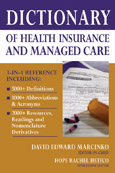
DICTIONARIES: http://www.springerpub.com/Search/marcinko
PHYSICIANS: www.MedicalBusinessAdvisors.com
PRACTICES: www.BusinessofMedicalPractice.com
HOSPITALS: http://www.crcpress.com/product/isbn/9781466558731
CLINICS: http://www.crcpress.com/product/isbn/9781439879900
BLOG: www.MedicalExecutivePost.com
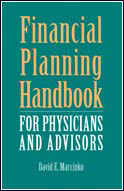
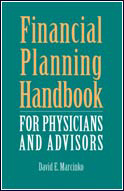
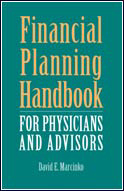
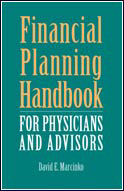
FINANCE: Financial Planning for Physicians and Advisors
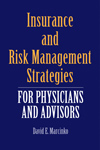
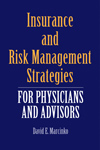
INSURANCE: Risk Management and Insurance Strategies for Physicians and Advisors

Product DetailsProduct DetailsProduct Details

Direct Reimbursement [DR] and RiskManagers.Us

Join Our Mailing List

Transparent Dental Benefits versus Confusion

[By Darrell K. Pruitt; DDS]

pruitt

“If you are not a part of the solution, there is good money to be made prolonging the problem.” 

Company slogan- www.riskmanagers.us

Meet Mr. William Rusteberg

Today, I met William Rusteberg on the PennWell forum when he replied to the thread, “Why the long NPI, BCBS-TX?” which I copied below, along with my response which includes a plug for Direct Reimbursement [DR].

http://community.pennwelldentalgroup.com/forum/topics/why-the-long-npi-bcbstx?page=1&commentId=2013420%3AComment%3A26976&x=1#2013420Comment26976

Mr. Rusteberg represents a company called RiskManagers.Us, whose specialty involves the benefits market, yet it is not exactly an insurance company – just like there is no such thing as true dental insurance.  RiskManagers.us is a firm that works directly with businesses to identify and develop cost-effective benefits packages – emphasizing transparency and fairness.  Now that is refreshing, friends! 

Defining RiskManagers.Us 

Here is how RiskManagers.us describes itself: 

“We do not work for an insurance company, we work for you. As an independent brokerage, and consulting firm we can represent any licensed insurance company in Texas, Colorado, Mississippi, Louisiana, Alabama, Illinois & Florida.”

If one visits the Web site’s “Reference Library,” here are some of the topics offered:

·         Self Funding – Need a second opinion?

·         Texas leads in transparency issues

·         Can’t get claim information? HB 2015 May Solve Your Problem

·         Medical Stop Loss Through a Captive

·         PPO Discounts – Games People Play

·         PPO Networks – Shell Game

·         Can Hospitals waive Deductibles in Texas?

“What is a NPI number?” 

Mr. Rusteberg’s initial question on the PennWell forum simply asked, “What is a NPI number?”  Following my explanation, he wrote: 

 “It seems that many of those in your profession would do well in accepting cash only, or directly working with employer groups who sponsor dental/medical plans on a direct pay basis. We have had good success in doing this for our clients – we have one employer in San Antonio who pays medical care providers directly and quickly – providers like it and the plan pays a fair and reasonable rate, not relying on a PPO network to “re-price” claims. We have done the same on dental plans, eliminating the insurance company, PPO network and paying dental care providers submitted charges directly and quickly. We see little or no trend increases on dental charges using this method. In my view, insurance companies interfere in patient – provider relationships in a financially detrimental way.”

Thanks for your reply.

My Response:

I like you, William; 

What you describe sounds like my all-time, personal favorite dental benefits plan. It is called Direct Reimbursement {DR}, and it not only gives the employer the unlimited capability to design a plan which reflects the level of commitment desired by the company, but most importantly, it naturally preserves quality of care by allowing employees unlimited freedom of choice in dentists.  And that’s as good as the market gets. 

http://www.directreimbursement.com/

In addition, since there are no NPI requirements for DR, employees are also permitted see dentists who decline NPI numbers for ethical reasons. That increases employees’ choice by 50% over BCBS-TX clients, according to recent information provided by the Healthcare IT Transition Group.

http://www.npidentify.com/stats.htm#states

Little Management Needed

Just like the benefits plans you mention, with DR, very little money is spent on management because such policies are so simple and transparent that there is no room for profit-enhancing (wasteful) confusion used by unethical companies like BCBSTX, Aetna, Cigna, UnitedHealth, Delta Dental, United Concordia, and so many other members of the National Association of Dental Plans (NADP).

Assessment

Without transparency and the invisible hand of freedom-of-choice, free-market competition for healthcare dollars disappears as fast as executive bonuses rise. We’ll see where it goes from here. It would sure be swell if a Direct Reimbursement representative takes interest in the conversation; anyone home? 

Conclusion

Your thoughts and comments on this ME-P are appreciated. Feel free to review our top-left column, and top-right sidebar materials, links, URLs and related websites, too. Then, subscribe to the ME-P. It is fast, free and secure.

Speaker: If you need a moderator or speaker for an upcoming event, Dr. David E. Marcinko; MBA – Publisher-in-Chief of the Medical Executive-Post – is available for seminar or speaking engagements. Contact: MarcinkoAdvisors@msn.com

OUR OTHER PRINT BOOKS AND RELATED INFORMATION SOURCES:

Product DetailsProduct Details

Defining Current Dental Terminology [CDT®] Codes

What they Are – How they Work

By Staff Reportersdhimc-book1

OMAP Unique Procedure Codes*

The HHS [Health and Human Services] Office of Medical Assistance Program’s [OMAP] unique procedure codes were originally listed in the appropriate service guides. The maintenance of these codes was the responsibility of OMAP. These procedure codes were reviewed as needed and deleted either when a program no longer exists or when other Healthcare Common Procedure Coding System [HCPCS] codes are created which fully describe the service. Most of the unique codes were created to meet the needs of specialized services or programs. OMAP’s unique procedure codes were all five character configurations with the following alpha/numeric combinations: four numeric/one alpha (e.g., 7300Y); three numeric, two alpha (e.g., 206EP); two alpha/three numeric (e.g., BA311); or three alpha/two numeric (e.g., VIS01).

Current Dental Terminology (CDT procedure codes)

The American Dental Association’s (ADA) Code on Dental Procedures and Nomenclature is contained in the CDT-3 user guide. The maintenance of these codes is the responsibility of the Council on Dental Benefit Programs with consultation from: Blue Cross and Blue Shield Association, the Health Insurance Association of America, the Health Care Financing Association, National Electronic Information Corporation, and the American Dental Association recognized dental specialty organizations. The ADA updates the user guide approximately every five years. CDT codes are five-character, alpha-numeric configurations (e.g., D2110). Contact the American Dental Association to obtain a current copy of the CDT-3 Users Manual.

* Note: Due to HIPAA (Health Insurance Portability and Accountability Act) requirements, Medicare Local codes and OMAP Unique codes were replaced with national standard procedure codes. 

www.HealthcareFinancials.com

ho-journal8

Assessment

For more terminology information, please refer to the Dictionary of Health Economics and Finance.

www.HealthDictionarySeries.com

Conclusion

And so, your thoughts and comments on this Medical Executive-Post are appreciated?

Link: http://feeds.feedburner.com/HealthcareFinancialsthePostForcxos

Speaker: If you need a moderator or speaker for an upcoming event, Dr. David E. Marcinko; MBA – Publisher-in-Chief of the Executive-Post – is available for seminar or speaking engagements. Contact: MarcinkoAdvisors@msn.com  or Bio: www.stpub.com/pubs/authors/MARCINKO.htm

Get our Widget: Get this widget!

Our Other Print Books and Related Information Sources:

Practice Management: http://www.springerpub.com/prod.aspx?prod_id=23759

Physician Financial Planning: http://www.jbpub.com/catalog/0763745790

Medical Risk Management: http://www.jbpub.com/catalog/9780763733421

Healthcare Organizations: www.HealthcareFinancials.com

Health Administration Terms: www.HealthDictionarySeries.com

Physician Advisors: www.CertifiedMedicalPlanner.com

Subscribe Now: Did you like this Medical Executive-Post, or find it helpful, interesting and informative? Want to get the latest ME-Ps delivered to your email box each morning? Just subscribe using the link below. You can unsubscribe at any time. Security is assured.

Link: http://feeds.feedburner.com/HealthcareFinancialsthePostForcxos

Product DetailsProduct DetailsProduct Details

Inspect our 2-Volume Hospital Print Guide [for Free]

ADVETISEMENT

Evaluate “Healthcare Organizations” [Financial Management Strategies] AND Order Now!

By Dr. David Edward Marcinko; MBA

By Professor Hope Rachel Hetico; RN, MHA

[Editor and Managing Editor]ho-journal10

As healthcare continues to evolve, leaders and executives have the formidable and immediate challenge of creating both short-term and long-term financial strategies. Given that today’s knowledge-base is different from that of even six-months ago, and the need is for solutions to tomorrow’s economic problems, success seems always just beyond your grasp!

Why Subscribe?

But fortunately, you can be ready; Healthcare Organizations: [Financial Management Strategies] is your blueprint for success. To ensure your organization’s competitive edge and perhaps even its survival, you must quickly gain the financial management tools and techniques necessary to lead in the 21st century. What you learn and implement using this Guide enables you to respond proactively to the rapidly changing healthcare environment. Your subscription to Healthcare Organizations: [Financial Management Strategies] not only helps you lead, it brings together healthcare executives and visionary thought leaders to help you develop essential models and successful financial management strategies, going forward.

www.HealthcareFinancials.com

Subscription Support

Specialty Technical Publishers is pleased to provide customer information and support services for Healthcare Organizations: [Financial Management Strategies] by phone, fax, or e-mail. Customer information services hours are between 7 am and 5 pm Pacific Standard Time; or http://www.stpub.com/pubs/custinfo.htm
Testimonials

“This well-organized financial management guide is easy to use and perfect for the healthcare organization, hospital or clinic manager; CFO, CEO, administrator or comptroller; CNO, CMO or physician-executive  who is tasked with developing, implementing and extending a comprehensive (and integrated) financial, accounting, health economics and enterprise-wide business management program.”

Operating Room Supervisor

Hospital Administrator

Baltimore, Maryland

Assessment 

For today … for tomorrow … for all healthcare organizations … for you! Remember, the Guide is available on a 30-day, risk-free trial. You may contact http://www.STPub.com at (604) 983-3434, fax (604) 983-3445, or e-mail at custinfo@stpub.com to place an order, or ask questions regarding pricing and/or availability. All shipments arrive within 5 to 10 days. Prepayment is required for all international shipments and a courier charge will be added to the subscription price. After hours, we suggest you review the STP website FAQs section for answer to your inquiry: www.stpub.com/pubs/custinfo.htm

Specialty Technical Publishers

8 – 14th Street

Blaine, WA 98230

1-800-251-0381 

orders@stpub.com

http://www.stpub.com/pubs/ho.htm

TOC: http://www.stpub.com/pdfs/toc_ho.pdf

Speaker: If you need a moderator or speaker for an upcoming event, Dr. David E. Marcinko; MBA – Publisher-in-Chief of the Executive-Post – is available for seminar or speaking engagements. Contact: MarcinkoAdvisors@msn.com  or Bio: www.stpub.com/pubs/authors/MARCINKO.htm

Get our Widget: Get this widget!

Subscribe Now: Did you like this Medical Executive-Post, or find it helpful, interesting and informative? Want to get the latest E-Ps delivered to your email box each morning? Just subscribe using the link below. You can unsubscribe at any time. Security is assured.

Link: http://feeds.feedburner.com/HealthcareFinancialsthePostForcxos

Opinion Poll on eMRs

SPONSORED ADVERTISEMENT

www.MedicalBusinessAdvisors.com

Please Vote

Defining Current Procedural Terminology [CPT®] Codes

What they are – How they work

By Staff Reportersdhimc-book

The American Medical Association’s Physicians’ Current Procedural Terminology® is contained in the CPT user guide. The maintenance of these codes is the responsibility of the American Medical Association with consultation from the AMA CPT Editorial Panel, Advisory Committee, and the AMA CPT Health Care Professionals Advisory Committee. Procedure codes in the CPT user guide are reviewed and revised annually. The Health Care Financing Administration’s – now CMS – Common Procedure Coding System [HCPCS] lists three levels:  

Level I National Codes

CPT codes are five-character, all numeric configurations (e.g., 99215). Contact the American Medical Association to obtain a current copy of the CPT® Users Manual.

Level II National Codes

The HCPCS Level II National codes are contained in the HCPCS user’s guide and are published in the Federal Register. The maintenance of these codes is the responsibility of the Health Care Financing Administration [CMS]. Procedure codes in the HCPCS user guide are reviewed and revised annually. HCPCS codes are five characters with one alpha and four numeric configurations (e.g., A0042). Contact any publishing company that provides medical coding reference books to obtain a current copy of the current HCPCS User Manual.

Level III Medicare Local Codes*

Historically, local Medicare carriers developed local procedure codes which were published in the local Medicare Newsletters. The maintenance of these codes was the responsibility of the local Medicare carrier. Medicare local procedure codes were all five-character configurations with the following alpha/numeric configuration: one alpha, (W, X, Y or Z) with four numeric configurations (e.g., Y5523); and two alphas, (W, X, Y or Z) same character with three numeric identifiers (e.g., XX001). Contact your local Medicare carriers to obtain their Medicare Newsletters.

* Note: Due to HIPAA (Health Insurance Portability and Accountability Act) requirements, Medicare Local codes and the Office of Medicare Assistance Program Unique [OMAPU] codes were replaced with national standard procedure codes. 

Assessment

For more terminology information, please refer to the Dictionary of Health Economics and Finance.

Conclusion

And so, your thoughts and comments on this Medical Executive-Post are appreciated?

Link: http://feeds.feedburner.com/HealthcareFinancialsthePostForcxos

Speaker: If you need a moderator or speaker for an upcoming event, Dr. David E. Marcinko; MBA – Publisher-in-Chief of the Medical Executive-Post – is available for seminar or speaking engagements. Contact: MarcinkoAdvisors@msn.com  or Bio: www.stpub.com/pubs/authors/MARCINKO.htm

Get our Widget: Get this widget!

Our Other Print Books and Related Information Sources:

Practice Management: http://www.springerpub.com/prod.aspx?prod_id=23759

Physician Financial Planning: http://www.jbpub.com/catalog/0763745790

Medical Risk Management: http://www.jbpub.com/catalog/9780763733421

Healthcare Organizations: www.HealthcareFinancials.com

Physician Advisors: www.CertifiedMedicalPlanner.com

Subscribe Now: Did you like this Medical Executive-Post, or find it helpful, interesting and informative? Want to get the latest ME-Ps delivered to your email box each morning? Just subscribe using the link below. You can unsubscribe at any time. Security is assured.

Link: http://feeds.feedburner.com/HealthcareFinancialsthePostForcxos

Product DetailsProduct DetailsProduct Details     

Evaluate our 2-Volume Institutional Print Guide

Healthcare Organizations [Financial Management Strategies]

ADVERTISEMENTho-journal2

www.HealthcareFinancials.com

Our 1,200 pages, 2-volume, quarterly institutional print guide Healthcare Organizations [Financial Management Strategies] is available on a 30-day, risk-free trial.

You may contact http://www.STPub.com at (604) 983-3434, fax (604) 983-3445, or e-mail at custinfo@stpub.com to place an order, or ask questions regarding pricing and/or availability.

All shipments arrive within 5 to 10 days. Prepayment is required for all international shipments and a small courier charge will be added to the subscription price.

After hours, we suggest you review the STP website FAQs section for answer to your inquiry: www.stpub.com/pubs/custinfo.htm

Assessment

Rest assured, Healthcare Organizations: [Financial Management Strategies] will become an important peer-reviewed vehicle for the advancement of working knowledge and the dissemination of research information and best practices in our field. In the years ahead, we trust these principles will enhance utility and add value to your subscription. Most importantly, we hope to increase your return on investment [ROI] by some small increment.

Review and Ordering Information:

Specialty Technical Publishers

8 – 14th Street

Blaine, WA 98230

1-800-251-0381

orders@stpub.com

http://www.stpub.com/pubs/ho.htm

TOC: http://www.stpub.com/pdfs/toc_ho.pdfcmp-logo

Note: The guide is sponsored by www.MedicalBusinessAdvisors.com with contributions from www.CertifiedMedicalPlanner.com and is edited by ME-P’s Dr. David E. Marcinko and Professor Hope R. Hetico; RN, MHA. Definitions and terms supplied by www.HealthDictionarySeries.com

Conclusion

And so, your thoughts and comments on this Medical Executive-Post are appreciated? Reviews from current journal-guide subscribers are encouraged and appreciated.

Speaker: If you need a moderator or speaker for an upcoming event, Dr. David E. Marcinko; MBA – Publisher-in-Chief of the Executive-Post – is available for seminar or speaking engagements. Contact: MarcinkoAdvisors@msn.com  or Bio: www.stpub.com/pubs/authors/MARCINKO.htm

Get our Widget: Get this widget!

Subscribe Now: Did you like this Medical Executive-Post, or find it helpful, interesting and informative? Want to get the latest E-Ps delivered to your email box each morning? Just subscribe using the link below. You can unsubscribe at any time. Security is assured.

Link: http://feeds.feedburner.com/HealthcareFinancialsthePostForcxos

Is JAMA Censoring Physician Dissent?

Allegedly Stoops to “Name-Calling”

By Dr. David Edward Marcinko; MBA, CMP™dem24

According to the Wall Street Journal Health Blog, Jonathan Leo, a professor of neuro-anatomy from a small university in Tennessee, critiqued a study published in the Journal of the America Medical Association [JAMA], and pointed out an association between the study’s author and a pharmaceutical company. He posted his thoughts on the website of the British Medical Journal [BMJ].

JAMA Responds

According to the report, a none-too-happy Leo then received calls from JAMA’s executive deputy editor, one Mr. Phil Fontanarosa. And surprisingly, Editor-in-Chief Dr. Catherine DeAngelis, MD got involved by asking Leo’s superiors to retract his post from the BMJ’s site. Sound familiar ME-P readers? According to Keven Pho MD, the WSJ called Dr. DeAngelis for comment, and this is how the interview allegedly went:

“This guy is a nobody and a nothing.”

She said of Leo.

“He is trying to make a name for himself. Please call me about something important.”

She added that Leo

“Should be spending time with his students instead of doing this.”

When asked if she called his superiors and what she said to them, DeAngelis supposedly said,

“It is none of your business.”

Environmental Scanning

One can only wonder if the AMA has adopted the strategy of former CDC Director Julie Gerberding, of Atlanta, GA. Local gossip suggests that one initiative under her noxious leadership was her so-called policy on “environment-scanning” or, monitoring the news-media, internet space, blogs, wikis and other venues to identify “emerging threats to the agencies” reputation.” WOWSA!

Link: https://healthcarefinancials.wordpress.com/2009/02/05/goodbye-julie-gerberding-md/

An Alternative Theory

My alternative opinion is the AMA might be taking censorship lessons from Blue Cross and Blue Shield of New Mexico [BCBSNM], and its’ public-relations representative and former reporter, Ross Blackstone of the Health Care Service Corporation [Blue Cross and Blue Shield of Illinois, New Mexico, Oklahoma and Texas].

Monitoring the ME-P?

Or, perhaps they are reading [Think: monitoring] this Medical Executive-Post itself? They may even be teaming up with Becky Kenny [media relations specialist with Blue Cross and Blue Shield of New Mexico] who goaded [threatened?] the trade magazine ModernHealthcare. As ME-P readers know, ModernHealthcare is an advertiser-driven media outlet that removed a perfectly acceptable post of diverging eHR opinion from its blogsite?

Industry Shame

Such acquiescence is both a sign of shameful health insurance industry [BCBSNM] heavy-handedness, and poor journalistic ethos from ModernHealthcare’s leadership. The BCBSNM public relations hacks, and media representatives, also appear as clueless shills who are no-doubt glad they are employed in these troubling economic times.

In other words, do they do what they are told? Jump Rover! Fetch Fido; etc! Or; are they more like the innocent child who spills grape juice on a white carpet? Let’s simply forgive them for their brainless duplicity. Yet, MH capitulated; how unfortunate!

Link: https://healthcarefinancials.wordpress.com/2009/03/04/don%e2%80%99t-rush-ehrs/

Doctors Censoring Patients [The Retro-Evolution]

By the way:

“What’s up with all this censoring?

The Internet has been publically available to the masses since 1995, and I was using electronic bulletin boards [eBBs] years before then. The next thing you know, doctors will start trying to censor the opinion of their patients, much like customers rate restaurants.

Ops! My bad! This has already occurred. Sorry!

The ironic thing here is that patients don’t know about quality care. But, they do know if they’ve been kept too long in the waiting room; or, if the doctor’s office staff was surly; or, if the doctor had a miserable bedside manner. So, the doctors are really being rated on their personality; not their medical acumen. I pity the fools. These medical guys, and healthcare guru gals, just don’t seem to realize that “perception is reality.”  But, they sure feign outrage at poor patient reviews.

Link: https://healthcarefinancials.wordpress.com/2009/03/02/doctors-censoring-patients/

Assessment

From my perspective, this is another public-relations disaster for JAMA, and especially Dr. DeAngelis, who must have known she was on the record with a national newspaper. After all, she is the editor of JAMA. Maybe not however, as we have previously opined that professional experts are not necessarily professional journalists.

Link: https://healthcarefinancials.wordpress.com/2009/03/09/healthcare-experts-versus-health-journalists

Of Cover-Ups and Crimes

“But, one must still wonder aloud; is this cover-up becoming worse than the proverbial crime?”

Resorting to personal attacks is somewhat unbecoming of the editor-in-chief of a prestigious medical journal, and reflects poorly on JAMA; don’t you think? Then again, JAMA and the AMA itself, is not as prestigious as it once was; is it?

In fact, when I asked ME-P managing-editor and Professor of Health Administration, Hope Rachel Hetico; RN, MHA, CMP™ to opine on admitted third-party limited information; she graciously replied with the utmost gentleness:

“With less than 25% of the nation’s MDs in the AMA; JAMA is probably still somewhat prestigious to those who don’t know any better; but many of us do know better. The older generation just needs some-time to catch up to modernity, and transparency – or resign. The top-down and command-control model of leadership is long gone – please be patient with them.”

Link: www.CertifiedMedicalPlanner.com

Link: www.MedicalBusinessAdvisors.com

Conclusion

And so, your thoughts and comments on this Medical Executive-Post are appreciated. Should Catherine DeAngelis MD resign over this incident? Please criticize or defend her actions. Is healthcare industry censorship on the rise – or is the industry just following-the-money? What do you think of ModernHealthcare or BCBSNM?

Is personal integrity – or scrutiny – the reason Joseph Biederman MD [Harvard’s controversial chief of pediatric psychopharmacology] ended his ties to the pharmaceutical industry recently for diagnosing bipolar disorder in children [as well as for the nature of big-pharma’s support behind his research]? Please opine.

Industry Indignation Index: 63

Disclaimer: I am not a member of the AMA. But, for a decade I was on the editorial staff of both a leading national medical, and surgical journal, back-in-the-day. I am currently the Editor-in-Chief of Healthcare Organizations [Financial Management Strategies] a 1,200 page, quarterly premium print-journal, available on a subscription basis.

Link: www.HealthcareFinancials.com

Speaker: If you need a moderator or speaker for an upcoming event, Dr. David E. Marcinko; MBA – Publisher-in-Chief of the Executive-Post – is available for seminar or speaking engagements. Contact: MarcinkoAdvisors@msn.com  or Bio: www.stpub.com/pubs/authors/MARCINKO.htm

Get our Widget: Get this widget!

Our Other Print Books and Related Information Sources:

Practice Management: http://www.springerpub.com/prod.aspx?prod_id=23759

Physician Financial Planning: http://www.jbpub.com/catalog/0763745790

Medical Risk Management: http://www.jbpub.com/catalog/9780763733421

Healthcare Organizations: www.HealthcareFinancials.com

Health Administration Terms: www.HealthDictionarySeries.com

Physician Advisors: www.CertifiedMedicalPlanner.com

Subscribe Now: Did you like this Medical Executive-Post, or find it helpful, interesting and informative? Want to get the latest E-Ps delivered to your email box each morning? Just subscribe using the link below. You can unsubscribe at any time. Security is assured.

Link: http://feeds.feedburner.com/HealthcareFinancialsthePostForcxos

Events-Planner: April 2009

ADVERTISEMENT

Events-Planner: APRIL 2009

Staff Writers

“Keeping track of important health economics and financial industry meetings, conferences and summits”

Welcome to this issue of the Medical Executive-Post and our Events-Planner. It contains the latest information on conferences, news, and relevant resources in healthcare finance, economics, research and development, business management, pharmaceutical pricing, and physician/entity reimbursement!  Watch for a new Events-Planner each month.

First, a little about us! The Executive-Post is still a newcomer. But today, we have almost 15,000 visitors and readers each month from all over the country, in addition to our growing subscriber base. We have been a successful collaborative effort, thanks to your contributions.  As a result, we are adding new resources daily.  And, we hope the website continues to provide the best place to go for journals, books, conferences, educational resources, tools, and other things you need to establish the value your healthcare consulting and financial advisory intervention. And so, enjoy the Executive-Post and our monthly Events-Planner with our compliments. 


A Look Ahead this Month


April 1: Print Edition Healthcare Journalism: If you would like to “step-up-your-game” and be considered as a peer-reviewed contributor to the third print edition of: The Business of Medical Practice [Advanced Profit Maximizing Techniques for Savvy Doctors]; contact Ann at: MarcinkoAdvisors@msn.com. There are several chapter topics still available. Now, the important dates:

April 1-3: Adv. Modeling Methods for Health Economic Evaluation, York, UK.

April 4-8: HIMSS Annual Conference, Chicago, IL.

April 6: Premier Forum on Medication Therapy Management and Patient Compliance Programs. CBI; Las Vegas, NV

April 7: FINRA Small Conference Series, New York, NY.

April 14: World health Care Congress; Washington, DC.

April 15-16: Tiburon CEO Summit, Ritz Carlton, New York, NY.

April 15-18: Academy of Managed Care Pharmacy’s 21st Annual Meeting and Showcase, Orlando, FL.

April 16-18: TIPAAA Annual Conference, Marriott River Center, San Antonio, TX.

April 20-24: Health Economics of Pharmaceuticals and Other Medical Interventions. Nice (Cannes) France.

April 21-22: Market Access Strategies for Personalized Medicines and Companion Diagnostics, Brussels, Belgium.

April 21-23: Introduction to Applied Health Economics: Methods for analysis of healthcare utilization and expenditure, University of York.
April 23-25: AIP Conference on Philanthropy, Rosemont, Ill.

April 25-29:  Society for Pain Practice Management Meeting, Phoenix, AZ.

April 26-29:  Wound Healing Society Symposium, Dallas, TX. 

Apr 27-28: 8th Annual Forum on Patient Compliance, Adherence and Persistency, Philadelphia, PA.

April 27-29: Workshop on Health Technology Assessment From Theory to Evidence to Policy, Toronto, CANADA.

April 28-May 1: Pharma Pricing and Market Access Outlook Europe, 2009, London.

April 29-May 2: American Geriatric Society Meeting, Chicago, IL.


Please send in your meetings and dates for listing in the next issue of our Events-Planner.

MarcinkoAdvisors@msn.com

Speaker: If you need a moderator or speaker for an upcoming event, Dr. David E. Marcinko; MBA – Publisher-in-Chief of the Executive-Post – is available for seminar or speaking engagements. Contact: MarcinkoAdvisors@msn.com  or Bio: www.stpub.com/pubs/authors/MARCINKO.htm

Subscribe Now: Did you like this Medical Executive-Post, or find it helpful, interesting and informative? Want to get the latest E-Ps delivered to your email box each morning? Just subscribe using the link below. It’s free. You can unsubscribe at any time. Security is assured.

Link: http://feeds.feedburner.com/HealthcareFinancialsthePostForcxos

Usual and Customary UnitedHealthcare?

Join Our Mailing List

More on “Sleazy” Healthcare Stakeholders

1-darrellpruitt

[By Darrell K. Pruitt; DDS]

If the leaders of the American Dental Association have the power and stoic determination to casually sweep aside trouble-making members who might tarnish their image, one would think that they could certainly avoid associating with sleazy healthcare stakeholders; such as UnitedHealthcare.

The Insurance Giants 

Have you ever suspected that insurance giants like UnitedHealthcare, WellPoint, Aetna and Cigna (and other members of the National Association of Dental Plans) lie to patients when the say a dentist’s fees are above “usual, customary and reasonable” levels?  You could be correct.  NY Attorney General Andrew Cuomo says UnitedHealthcare, WellPoint, Aetna and Cigna lie to physicians’ patients – understating New York state physician’s fees up to 28 percent.  Why would the crooks treat dentists’ patients any differently?

Employing Tapeworms to Control Fat

Cuomo caught UHC and others cheating their customers with smoke, mirrors and Ingenix – its wholly-owned data mining and consulting subsidiary.  Who would have guessed that UHC would tweak Ingenix to manipulate claims data to favor UHC and other insurance companies who subscribe to their services?  These are the same parasites who want to run the nation’s Pay-For-Performance (P4P) mandate – a cornerstone of President Bush’s healthcare reform ideas.  They want to tweak professional reputations for healthcare reform and the common good. 

And of Ingenix 

Ingenix is a full-service consulting business for insurers, backed with the credibility of 14 years of accumulated health claims it is privy to.  The “friend in the business” not only cooks the data to produce profit-enhancing Usual, Customary and Reasonable (UCR) fee schedules, Ingenix is also active in “pay-for-performance program assessment, strategy, planning, design, implementation, evaluation and improvement.” 

http://www.ingenixconsulting.com/about_history.html

So if you like the way UnitedHealthcare dental consultants treat you now, just wait until they are given authority to determine your worth to society using Ingenix leveraging tools.

P-4-P 

I first read about pay-for-performance [P4P] in dentistry in February 2006 in an email from Patrick Cannady who is an employee in the ADA Department of Dental Informatics.  He told me that nation-wide quality control in dentistry is an important benefit of having a HIPAA-compliant, paperless dental practice – and that the Department of Dental Informatics is very excited about the opportunity to help prepare US dentists for the future.  A month or so later, I learned that the NPI number the ADA still pushes on membership is the crucial legal link to government-approved P4P data-mills like Ingenix – a wholly-owned UnitedHealthcare profit center.  Do you think it is odd that the NPI is “voluntary,” yet irreversible?

AMA’s Award 

In January, the AMA was awarded $350 million in a lawsuit against UnitedHealthcare and Ingenix on behalf of physicians, and they plan to sue other major insurance companies as well.  So what has the ADA done to discourage UnitedHealthcare’s and other NADP members’ atrocious behavior that undeniably harms dental patients?  You won’t believe it when I tell you. Here’s more:  In a recent Associated Press interview, Sen. Jay Rockefeller, chairman of the Senate Commerce, Science and Transportation Committee, said UnitedHealthcare is nothing but a company of cheats.  He says, “They’re lowballing deliberately. They deliberately cut the numbers so the consumer has to pay more of the cost.”

http://www.google.com/hostednews/ap/article/ALeqM5gL4XFckx9sah3eFEMuHYD3V2WGhQD97763800

So if Cannady’s department is all for P4P and other benefits from interoperable digital records, the question on most ADA members’ minds should be:  What does the ADA think of UnitedHealthcare?

ADA News Online

Two weeks ago the ADA News Online posted an advertisement that looks like an article (with no byline) for the spring meeting of the American Association of Dental Consultants (AADC) on May 7-9 in Scottsdale, Arizona.

http://www.ada.org/prof/resources/pubs/adanews/adanewsarticle.asp?articleid=3493

Since it is so well known that UnitedHealthcare is the major funding sponsor of the AADC, the word in the neighborhood says AADC, like Ingenix, is another UnitedHealthcare profit center awaiting the wrecking-ball.

Link: http://www.google.com/hostednews/ap/article/ALeqM5gL4XFckx9sah3eFEMuHYD3V2WGhQD97763800

Assessment

Last year’s annual meeting of the dental consultants – who deny dental claims to protect the ethics in dentistry – featured ADA Senior Vice-President Dr. John Luther as a guest speaker.  Dr. Luther is Cannady’s boss.  He oversees the Department of Dental Informatics.  Yep.  The ADA is tight with UnitedHealthcare. One can tell a person’s character by the company he or she keeps. 

Conclusion

Your thoughts and comments on this ME-P are appreciated. Feel free to review our top-left column, and top-right sidebar materials, links, URLs and related websites, too. Then, subscribe to the ME-P. It is fast, free and secure.

Speaker: If you need a moderator or speaker for an upcoming event, Dr. David E. Marcinko; MBA – Publisher-in-Chief of the Medical Executive-Post – is available for seminar or speaking engagements. Contact: MarcinkoAdvisors@msn.com

OUR OTHER PRINT BOOKS AND RELATED INFORMATION SOURCES:

Product DetailsProduct DetailsProduct Details      

Reflections on a Tent Hospital

Thoughts on Pop-Up Healthcare Facilities

By Dr. David Edward Marcinko; FACFAS, MBA, CMP™

Publisher-in-Chiefdr-david-marcinko13

According to the Philadelphia Inquirer, February 10, 2009, it took Mark Ross about 22 minutes to inflate the hospital for the first time. Yesterday, he did it in 14 minutes. In the event of a large-scale emergency – a direct hit by a hurricane for example, or a plane in the Delaware River [Think Hudson River, NY]  – Ross and other volunteers can have the mobile hospital running anywhere in Southeastern Pennsylvania within two to four hours of the first alert.

The Valley Forge Experiment

The day before, on February 9, in Valley Forge PA, dozens of current and potential volunteers got to see three tan and white tents – and reams of equipment – for the first time. The $1 million cost was paid by state and federal governments. With a portable generator, 50 cots, 130 ventilators, 26 wireless cardiac monitors and 27 patient carts loaded with tongue depressors, eye shields and IV sets, the rapid-response team is intended to fill the 72- hour gap before federal emergency help arrives after a disaster.

Back-in-the-Day

Now, despite this Valley Forge innovation, mobile, semi-permanent and pop-up healthcare facilities are not a new machination in civilian life or non-warfare times. In fact, please allow me to tell you of my canvass tent-hospital experience, back in the late seventies.

My Tent Hospital

At the time, I was completing my training program as a senior attending resident [SAR], and surgical fellow. The “hospital” where I moonlighted was located in a sleepy town about 40 miles North of Atlanta, Ga. Driving there in my lime-green, oil-burning 1969 Chevrolet Impala with balding tires [retreads] was always novel experience.

As I recall history, the tent-hospital began as a private medical clinic in a three bedroom converted brick ranch-house that was the style in the late 1950s’-60s. It was the private practice of a solo practitioner-internist for his rural patients who lived on farms too far from the big city – or for patient’s who mistrusted the medical establishment. There were many. It grew quickly, from the days before Medicare/Medicaid reimbursements, to modernity.

Think Cirque du Soleil

Expanding to a larger facility, with sparse economic resources, necessitated innovative thinking at the time. The hospital itself was a very large circular tent [bulls-eye configuration], built on semi-permanent concrete foundation with trampoline-like floor. The tent was shaped like a disc or sphere. In the center was an operating room for the visiting general surgeon. The next concentric layer was comprised of four rooms. The admissions, records department and triage room; a dirty-room with toilet; a clean room with bed and shower; and a kitchen with doctor/nurse station and lounge. The next third outer concentric layer consisted of about twelve patient “rooms”. The patients entered each room from the inner second layer, while the doctors and nurses opened a door-slot on the outer third layer for the introduction of food, information, gowns and equipment, visitor chit-chat and medications, etc. Each room was muck like a dungeon, jail or cell [Recall the Seinfeld episode where Kramer housed visiting Asians in his cabinet drawer or shelf]. The docs and nurses continually circulated the third outer “floor” layer, ministering to their respective patients. By the way; no staff nurse ever complained of tired feet, leg soreness or calf cramps because of the springy trampoline-like floor.

Not a TV MASH Unit

tent-man

This “hospital” was not like a military MASH unit, at all. It was definitely civilian in nature, purpose and construct:

Think: Army CASH unit; not MASH unit.

CASH = Combat Army Surgical Hospital [semi-permanent].

MASH = Mobile Army Surgical Hospital [ambulatory]  

My Experiences

During my summer working there, I managed a small part-time, two-room medical clinic with a singular nurse. We treated all sort of minor injuries and ills, cuts, scrapes; boils and blisters; aches and sprains; dog bites, bee stings and allergies, and simple closed extremity fractures, infections, etc. I even operated on a half-dozen patients under local anesthesia with conscious sedation. For the holidays, I received presents from several nurses and patients who remembered me from the previous summer.

New Facility

My “tent hospital” was in operation for almost two decades before the founding physician retired. The site was replaced by a publically funded, much larger and permanent “modern” facility, as the surrounding suburbs grew. The new Woodstock Hospital is now a short-term facility, with 21 beds, but is not yet rated by any hospital service agency because of statistically low volume requirements. It is a District Authority owned hospital facility.

Source: Centers for Medicare and Medicaid Services for the years 2005-2007. 

Assessment

Now, here’s the thing. My tent-hospitals’ claim-to-fame was that it, at the time of closure, was the only hospital in the State of Georgia to have never had a hospital acquired [nosocomial] or post-operative infection? To my knowledge, the feat has not been duplicated in this state. Of course, the new facility was not so fortunate. Increased medical acuity, treatment services and a different-mobile patient population was cited as the likely culprit.

Conclusion

And so, your thoughts and comments on this Medical Executive-Post are appreciated. Quality initiatives are good. And, health 2.0 information technology is the future of medicine. But, sometimes, prologue is past.

Speaker: If you need a moderator or speaker for an upcoming event, Dr. David E. Marcinko; MBA – Publisher-in-Chief of the Executive-Post – is available for seminar or speaking engagements. Contact: MarcinkoAdvisors@msn.com  or Bio: www.stpub.com/pubs/authors/MARCINKO.htm

Our Other Print Books and Related Information Sources:

Practice Management: http://www.springerpub.com/prod.aspx?prod_id=23759

Physician Financial Planning: http://www.jbpub.com/catalog/0763745790

Medical Risk Management: http://www.jbpub.com/catalog/9780763733421

Healthcare Organizations: www.HealthcareFinancials.com

Health Administration Terms: www.HealthDictionarySeries.com

Physician Advisors: www.CertifiedMedicalPlanner.com

Subscribe Now: Did you like this Medical Executive-Post, or find it helpful, interesting and informative? Want to get the latest E-Ps delivered to your email box each morning? Just subscribe using the link below. You can unsubscribe at any time. Security is assured.

Link: http://feeds.feedburner.com/HealthcareFinancialsthePostForcxos

BCBS-TX Dental Insurance is Rude to Everyone

Why the Long NPI – BCBSTX?

[By Darrell Pruitt; DDS]pruitt5

More than a year ago, Dr. Robert Ahlstrom, an ADA [American Dental Association] and NHII (National Healthcare Information Infrastructure) task force member, told attendees to the ADA’s 3rd International Evidence-Based Dentistry Conference that the NPI number is

“Critical to the future of dentistry.” 

But, to this day, he refuses to reveal why. Even though I have learned that he is a very shy man on the Internet; on that Sunday in May in ADA Headquarters, he confidently added,

“It is only voluntary unless you want to get paid.” 

His case-closed proclamation shut down discussion cold in a Soviet manner. Did I mention that this occurred at an “Evidence-Based Dentistry” conference? Soviet East Germany was also called the German Democratic Republic.

NPI Harmful to Dentists and Patients

There is nothing evidence-based or otherwise about the NPI number – that benefits anyone but healthcare stakeholders. In fact, the number actually harms both dentists and patients. Like Ahlstrom, the irreversible NPI number is simply un-American. However, the NPI means profit for sleazy dental insurance companies like BCBS of Texas – especially when dentists’ reimbursements for work done long ago are delayed by NPI-NPPES screw-ups.  Some physicians’ payments have been delayed for a year or more because of NPPES crosswalk difficulties. Who needs that?

Veteran’s Example Scenario

A new patient called my office this week wanting an appointment to start a crown. We don’t normally block off two and one-half hours for a patient on the first visit, but the Veteran told my office manager that before he was recently discharged, they did a root canal, post build-up and temporary on a tooth that still needs a crown. I like to think other dentists would also risk big holes in their schedules for Veterans. We owe them at least that much.

BCBSTX Dental Insurance

When he showed up with his BCBSTX dental insurance information, my office manager had to tell him that even though his boss was promised by the BCBSTX sales representative that the dental benefits package he bought for his employees was good anywhere, it cannot be used in my office because I do not have an NPI number. I am licensed to practice dentistry in the state of Texas, but that is not enough for BCBSTX. Capricious qualifications are certainly their choice if they prefer to do business that way in Texas, but why does BCBSTX leave it to my office manager to inform their clients about their deception?  If a client who pays premiums to BCBSTX likes a dentist who does not have an NPI number, those premiums are pure profit for BCBSTX. It is easy to understand that the more obstacles BCBSTX can put between their clients and obligations to cover their dental bills, the bigger are the bonuses for executives. What’s more, BCBSTX’s leaders’ lousy work ethic permeates the entire dental insurance industry. Compared to BCBSTX executives, AIG executives who kept bonus money should be honored as national heroes. 

BCBSTX Rude to Everyone 

As the Veteran who almost became my patient works to fit him-self back into society, perhaps the next opportunity he has to break away from work for a few hours, he will be lucky enough to come across a dentist who has an NPI number. If things go well, BCBSTX will not have wasted a Veteran’s time twice – and wrecked a dentist’s schedule – for what? BCBSTX has nothing against Veterans in particular, they are rude to everyone.  Since nobody from the company can be held personally accountable, tyranny is as natural as Ponzi schemes.

Attention Texas Employers: 

I wish deceptive business practices which insurance companies use to cheat their clients were against the law in Texas. Attention Texas employers; as a dentist who has witnessed harm from BCBSTX, I warn you not to waste money on their dental plan. BCBSTX’s sales reps cannot be trusted to tell the truth and will aggravate your employees as well as neighborhood dentists. 

Assessment

If BCBSTX gets away with this dishonesty, what other senseless, but profit-enhancing hoops will they demand next year?  How many more dentists and patients can an Attorney General allow them to cheat before speaking up? Come out and fight for your honor, BCBSTX … or not.  I bring more than your best attorney can handle and I am waiting.

Conclusion

Your thoughts and comments on this ME-P are appreciated. Feel free to review our top-left column, and top-right sidebar materials, links, URLs and related websites, too. Then, subscribe to the ME-P. It is fast, free and secure.

Speaker: If you need a moderator or speaker for an upcoming event, Dr. David E. Marcinko; MBA – Publisher-in-Chief of the Medical Executive-Post – is available for seminar or speaking engagements. Contact: MarcinkoAdvisors@msn.com

OUR OTHER PRINT BOOKS AND RELATED INFORMATION SOURCES:

Product DetailsProduct Details

I Shake my Fist at Pfizer, Inc.

Join Our Mailing List

And, Laugh out Loud over D2D Marketing

By Dr. David Edward Marcinko; FACFAS, MBA, CMP™

[Publisher-in-Chiefdem22]

We all know how intrusive direct-to-consumer [D2C] marketing by the pharmaceutical industry has become. Especially for those male “enhancement” type drugs that seem to be a ubiquitous feature on TV, the print media and internet, etc.

No, I’m not talking about sildenafil citrate or minoxidil; although I do recall seeing them on TV for the last decade, or so; maybe more. The target audience for both keeps getting younger and younger; or am I getting older and older? Still, allow me to assure all ME-P readers that the problems they reportedly treat are not my own.

Gotcha!

For this post however, I am talking about antibiotics.

Pfizer Seriously

Seriously, we are all aware that D2C marketing, and patients, goad doctors into “action” during an office visit [i.e., prescribe], when perhaps they ought not to. A follow-up office visit is often able to be scheduled, too.

Think: the antibiotic drug resistance epidemic.

Therefore, I was so righteously upset recently that I had to go out for a premature hour-long run, as I have been doing almost daily for thirty years, just to cool off.

Why?

It’s because I received the email copied verbatim, below.

Doctor [my name was not used, but my personal email address was correct],

For decades, azithromycin has been proven clinically effective to fight infections in your patients. With Zmax, azithromycin is reformulated to provide the same powerful efficacy against infection in a single, well-tolerated, liquid dose.

Zmax — the novel one-dose formulation of azithromycin
Zmax is indicated for community-acquired pneumonia (CAP) in pediatric patients and adults and acute bacterial sinusitis (ABS) in adults. Zmax uses extended-release microspheres to deliver one well-tolerated, front-loaded dose.

Zmax is not to be confused with Zithromax®, Z-Pak®, or Tri-Pak®

By delivering 100% compliance with just one dose, Zmax is the only formulation of azithromycin that avoids the complexities of multiple-day dosing for your patients.3-5

Prescribe Zmax and save with the “Never Pay More Than $20” coupon
Prescribe Zmax as your antibiotic-of-choice for your patients with CAP and ABS.
Zmax guarantees that your patients never pay more than $20 with the cost-saving Zmax coupon. For more information, please visit
www.ZmaxInfo.com or www.PfizerPro.com/Zmax

Sincerely,
Raymond W. Urbanski; MD, PhD

Vice President
Clinical Development and Medical Affairs
Established Products Business Unit
Pfizer, Inc.

Now, I have prescribed Zithromax® in the past, and will probably do so again in the future. I have lectured for several big-pharma companies throughout the years, and have written a textbook on bone and soft tissue extremity infections, and their diagnosis and treatment. I have served, and still serve, as a medical expert witness in malpractice cases involving infectious diseases, etc. But, I do not, repeat, do not need to be reminded by personal email about this anti-microbial, or any other drug. Being spammed in the office is one thing; but please not at home. I “reply-cancelled” the email; I think. Will let you know, down-line.

Of Podcasts and Webcasts

Recently, I was asked to make several new-wave podcast and modern webcast presentations for physician distribution by third-party vendors of the pharmaceutical industry. From what I could gather, this sort of “product information” distribution has not been eagerly embraced by the profession to-date, and so they are searching for industry recognized “names” to do their bidding. And so, as an educator, I acquiesced regarding same. But, I do pine for the attractive female pharma-rep visits back-in-the-day; replete with food for “lunch and learn” office presentations [mea culpa].

Think: Sermo, if you want a medical opinion.     

Assessment

Poor Dr. Urbanski, by the looks of his sur-name, I bet he’s Polish like me. I also bet that he gets more than a few emails, cards, faxes and letters like this post.

So, here’s where you need to imagine me shaking my fist at Pfizer, Inc.

I also laugh mockingly, as well.

Click to play :

PS: Ray, call me; let’s do lunch.

Conclusion

Your thoughts and comments on this ME-P are appreciated. Feel free to review our top-left column, and top-right sidebar materials, links, URLs and related websites, too. Then, subscribe to the ME-P. It is fast, free and secure.

Link: http://feeds.feedburner.com/HealthcareFinancialsthePostForcxos

Speaker: If you need a moderator or speaker for an upcoming event, Dr. David E. Marcinko; MBA – Publisher-in-Chief of the Medical Executive-Post – is available for seminar or speaking engagements. Contact: MarcinkoAdvisors@msn.com

OUR OTHER PRINT BOOKS AND RELATED INFORMATION SOURCES:

DICTIONARIES: http://www.springerpub.com/Search/marcinko
PHYSICIANS: www.MedicalBusinessAdvisors.com
PRACTICES: www.BusinessofMedicalPractice.com
HOSPITALS: http://www.crcpress.com/product/isbn/9781466558731
CLINICS: http://www.crcpress.com/product/isbn/9781439879900
BLOG: www.MedicalExecutivePost.com
FINANCE: Financial Planning for Physicians and Advisors
INSURANCE: Risk Management and Insurance Strategies for Physicians and Advisors

Product DetailsProduct DetailsProduct Details    

HMO Physician Office Visit Co-Payment Creep

Patients Showing Doctors the Money [1999–2008]

By Staff Reporters

56371606

Copayment

2008

1999

$5

6%

23%

$10

16%

60%

$15

29%

12%

$20

30%

1%

Other

19%

3%

Source: Kaiser/HRETHRET Survey of Employer-Sponsored Health Benefits

www.kff.org

Assessment

Considering the “down and dirty” interest rate “rule of 72”, a twice doubling of copayments from $5 to $20, and a Hewlett-Packard 12-C hand-held financial calculator; allow us to suggest an annual copayment rise of 15% percent for the decade.

Conclusion

Your thoughts and comments on this ME-P are appreciated. Feel free to review our top-left column, and top-right sidebar materials, links, URLs and related websites, too. Then, subscribe to the ME-P. It is fast, free and secure.

Speaker: If you need a moderator or speaker for an upcoming event, Dr. David E. Marcinko; MBA – Publisher-in-Chief of the Medical Executive-Post – is available for seminar or speaking engagements. Contact: MarcinkoAdvisors@msn.com

OUR OTHER PRINT BOOKS AND RELATED INFORMATION SOURCES:

Product DetailsProduct DetailsProduct Details

***

Medical Real Estate Investments

Join Our Mailing List

Physician’s Need to Understand Compensation Methods

[By Staff Reporters]

Property Managers

Medical property managers are compensated for their services on an hourly or fee basis. In addition, they may be reimbursed for expenses related to the maintenance of the property, such as materials, and they may also pay for expenses incurred by subcontractors.

Fees

Fees usually are based on a percentage of gross collected rents, but are negotiable. Property managers of larger medical complexes may receive higher fees than managers of small complexes because of the details involved in managing larger properties. Fees also are affected by the total pro-forma income stream. In general, the better a manager enhances the property’s performance, the more the manager is paid.

Barter

Some owners pay fees and provide rent-free units for resident medical managers to handle on-site leasing; or for offices for managers to take care of buildings warranting on-site property management. Bartered phantom income may be reportable to the IRS.

fp-book11

Real Estate Brokers

Each state has specific requirements regarding the sales and leasing of medical, commercial and other real estate. Every state, however, has the clear and mandatory requirement that no commission or fee can be paid to anyone who is not licensed in that state as a real estate broker, an associate broker, or sales agent if the person represents or works on behalf of another. All fees and commissions must be paid to the company employing the broker, associate broker, or sales agent. Violation of these laws can have serious consequences to both the principal and the real estate broker.

Hybrid Compensation

A medical real estate broker is usually compensated by either a negotiated fee or a negotiated commission; or hybrid of both methods. Neither fees for work or commissions earned are set or standardized in any way. The amount earned or the amount paid is the result of an agreement. The agreement or contract must be in writing, under the Statute of Frauds, just as all real estate offers and contracts must be in writing sales or on leases of more than one year.

Commissions

If a broker is working on commission, h/she is paid only when she is successful and the sales transaction closes and title is passed to the buyer. Sales commission is established either in a Listing Agreement or a Buyers Brokerage Agreement. No fee is due if the sale does not occur. Rates of commission vary widely by city, region, and state. The amount of commission usually is a percentage of the sales price or a set amount. The percentage of commission is dependent on competition; effort required; to some degree, the size of the transaction; and market activity. For example, the sale of a large regional shopping center might be a 3% commission whereas the sale of a small retail building under $1 million might warrant a 7% commission.

Lease Execution Warrants Payment

Leasing commissions are based on gross rental income over the term of the lease, are due when the lease is executed by both landlord and tenant, and can be paid at one of the following times:

  1. On execution of the lease.
  2. Partly on lease execution and partly on occupancy; or
  3. On occupancy, depending on the landlord’s written agreement with the broker.

Leasing commissions usually are a negotiated percentage of gross rents, with the percentage varying dependent on type of lease. For example, the percentage rate of commission might be more on a net lease, in which the tenant pays all expenses, than if the same lease were structured on a gross or fully serviced basis; or in which the landlord provides services within the rents due. Commission on ground leases might range up to 10% and office space might range from 4% to 6%.

Example:

Term: 5 years (60 months)         

Monthly rental rate: $1,000 per month     

Gross rental income under the lease: $1,000 x 60 = $60,000        

Commission calculation (using a 6% rate): $60,000 x 6% = $3,600           

The fees paid under sales and leases are usually split between the colleague brokers working on the transaction and are shared between the listing agent and the selling or leasing agent under a co-brokerage agreement between the brokers. This too is a negotiated percentage. It is common for commissions to be split on a 50/50 basis, but it is not the rule. How the commission is divided between brokers depends on the transaction. The commission is often shared evenly between cooperating brokers, but the split ultimately is the seller and listing agent’s decision.

Hard-to-Move Properties

On extremely difficult medical real estate properties [as is seen in many parts of the country today], incentive splits may be offered. Incentive splits offer the selling or leasing agent a greater share of the commission if he or she is successful. Under commission agreements between a seller and a broker, or a buyer and a broker, in which the broker is representing a buyer, nothing is earned until the transaction is complete and the broker has added value, unless spelled out to the contrary in the agreement or the broker is working on a fee basis. On a typical sale, commissions are paid through escrow at closing. Leasing commissions are usually, but not always, paid upon lease execution.

Other forms of payment for property managers and real estate brokers

It has become increasingly common for medical property managers and real estate brokers, particularly when representing a buyer or a tenant, to work on a contractual basis. In these instances, the parties are paid on an hourly or set-fee basis, regardless of whether the transaction is completed. In some cases, a principal may decide he wants only some of the services offered, such as a lease review, and those are also paid on a negotiated basis for the service provided.

Assessment

Combinations of fixed fees and commission incentives also are common, but in most all cases there is not a set amount or standard fee charged by all brokers.

Conclusion

Your thoughts and comments on this ME-P are appreciated. Feel free to review our top-left column, and top-right sidebar materials, links, URLs and related websites, too. Then, subscribe to the ME-P. It is fast, free and secure.

Link: http://feeds.feedburner.com/HealthcareFinancialsthePostForcxos

Speaker: If you need a moderator or speaker for an upcoming event, Dr. David E. Marcinko; MBA – Publisher-in-Chief of the Medical Executive-Post – is available for seminar or speaking engagements. Contact: MarcinkoAdvisors@msn.com

OUR OTHER PRINT BOOKS AND RELATED INFORMATION SOURCES:

LEXICONS: http://www.springerpub.com/Search/marcinko
PHYSICIANS: www.MedicalBusinessAdvisors.com
PRACTICES: www.BusinessofMedicalPractice.com
HOSPITALS: http://www.crcpress.com/product/isbn/9781466558731
CLINICS: http://www.crcpress.com/product/isbn/9781439879900
ADVISORS: www.CertifiedMedicalPlanner.org
BLOG: www.MedicalExecutivePost.com

Product Details  Product Details

Independent Medical Practitioner as Solo Primary Care Surrogate

Join Our Mailing List

Doctors Facing a Bleak Future Business and Financial Planning Model

By Dr. David Edward Marcinko; MBA, CMP™

[Publisher-in-Chief]dem2

According to Physicians News, on March 19, 2009, the demand for family physicians is growing. Proposals for health system reform focus on increasing the number of primary care physicians in America. Yet, despite these trends, the number of future physicians who chose family medicine dipped this year, according to the 2009 National Resident Matching Program. What gives?

NRMP

The National Resident Matching Program [NRMP] recently announced that a total of 2,329 graduating medical students matched to family medicine training programs. This is a decrease in total student matches from 2008, when 2,404 family medicine residency positions were filled.

Primary Care Demand Explodes

Meanwhile, demand for primary care physicians continues to skyrocket. For example, in its most recent recruitment survey, Merritt Hawkins, a national physician recruiting company, reported primary care physician search assignments had more than doubled from 341 in 2003 to 848 last year. 

The Decline of Solo Medical Practitioners

Regular readers and subscribers to this Medical Executive- Post are aware of the declining number of solo medical practitioners; we have been sounding the alarm here, in our books, journal, speaking engagements and elsewhere for years now.dhimc-book4

In fact, the statistic that we often cite is that more than 40% of the nation’s physicians are employed doctors; not employers as in the past. This business model shift has occurred over the past decade or so, and has accelerated of late. The decline in solo and independent doctors has occurred elsewhere as well, but much more slowly [i.e., dentistry, podiatry and osteopathy] as these specialties have been somewhat isolated from the traditional allopathic mainstream.

Going forward, this solitary model seems to be a good thing, and a fortunate result of the un-intended consequence of previously keeping these folks out of the healthcare mainstream.

The Decline of Independent Medical Practitioners

Now, in the March 2009 issue of Healthcare Finance News, we learn that the number of hospital owned physician practices has been climbing over the last four years, according to the Medical Group Management Association [MGMA]. Think: PHOs back-in-the-day. ho-journal3

And, while this trend only marginally affects patients and patient care, it is quite disruptive to physicians, their families, personal wealth accumulation, retirement and estate planning endeavors.

For example, according to Professor Hope Rachel Hetico, RN, MHA, CMP™ of our firm www.MedicalBusinessAdvisors.com

“The professional good-will valuation component of a medical practice is being decimated. Today, some practices are being bought and sold for tangible asset value, only.

Assessment

Therefore, allow me to identify this emerging trend which suggests independent medical practice as reflective of solo primary medical care. In other words, as independence goes the way of the “dodo-bird”, so goes primary care practitioners precisely at a time when the later is needed more than the former.

Why? Employed doctors stay that way by making money for their employer and hospital-bosses. Specialists make more money than primary care doctors. So, if you want to stay an employed doctor; which specialty would you pursue?

Answer: The NRMP class this year spoke out loud and clear. Any specialty but primary care!

Channel Surfing the ME-P

Have you visited our other topic channels? Established to facilitate idea exchange and link our community together, the value of these topics is dependent upon your input. Please take a minute to visit. And, to prevent that annoying spam, we ask that you register. It is fast, free and secure.

Conclusion

Your thoughts and comments on this ME-P are appreciated. Feel free to review our top-left column, and top-right sidebar materials, links, URLs and related websites, too. Then, subscribe to the ME-P. It is fast, free and secure.

Speaker: If you need a moderator or speaker for an upcoming event, Dr. David E. Marcinko; MBA – Publisher-in-Chief of the Medical Executive-Post – is available for seminar or speaking engagements. Contact: MarcinkoAdvisors@msn.com

OUR OTHER PRINT BOOKS AND RELATED INFORMATION SOURCES:

Product DetailsProduct Details

Product Details 

Medical Practice Financial Statement Valuation Adjustments

Why Benchmarks are Out – and Scrutiny is In

By Dr. David Edward Marcinko; MBA, CMP™

Publisher-in-Chief

CEO: www.MedicalBusinessAdvisors.comdr-david-marcinko11

As discussed elsewhere on this ME-P, the medical practice appraiser’s primary goal is to determine the value of the business based on its expected earnings or cash flow. To accomplish this, the medical practice appraiser looks to the company’s historical financial statements to see how it has been reporting its earnings. Because of differences in accounting practices across organizations, the appraiser must analyze how the medical practice’s financial statements differ from those of other practices and how those differences might have an effect on the practice’s value. This is particularly true when the appraiser is comparing the performance of the medical practice company being valued with those of so-called industry benchmarks. In all instances, it is important that the appraiser compare numbers that have been accounted for in the same way. Below is a discussion of the most common adjustments.biz-book4

Nonrecurring or Extraordinary Items

Nonrecurring or extraordinary items of income or expense reported by the practice will be eliminated from the profit and loss statement. These include the following:

• Insurance settlements (income or expense) or life insurance proceeds on the death of the key physician-partner.

• Large payments in settlement of lawsuits (either as income or as expense).

• The gain or loss on the sale of certain assets or portions of the practice which are not likely to be repeated.

• Expenses related to the start-up or discontinuance of a new or old segment of the practice.

• Moving and related expenses.

• Expenses relating to fire or flood damage not covered by insurance.

• Adjustments to prior years’ financial statements when the practice discontinued an employee benefit (such as eliminating the company’s pension or profit-sharing plan).

• Adjustments for income and/or expenses related to non-operating assets, such as a portfolio of marketable securities not used in the practice or medical real estate held for investment purposes.fp-book12

Valuation Calculations

The appraiser needs to gather the following facts regarding the financial statements of the practice and may need to make adjustments to account for these differences. The information will give the appraiser an understanding of the company’s normalized earnings and will be used to make valuation calculations.

• How does a specialty practice [such as physiatry’s DME] value its inventory—LIFO or FIFO? In certain specialties, inventory is accounted for on the LIFO or “last-in, first-out” basis. When prices are rising, profits are reduced because the DME items being sold are presumably bought most recently at higher prices. The “old” or lower-cost inventory is held in reserve while the higher-cost inventory is sold off. This situation may reverse in times of recession and low or no inflation. At that point, profits will be distorted by the low-cost items. Recognizing these facts, practice owners have more commonly used FIFO or “first-in, first-out,” inventory accounting to value their inventory.

• What kind of reserves has the practice been taking for doubtful accounts receivable? Some doctors will not – or very slowly – write off bad debts or take reserves for them, and thus the income is improperly overstated. The appraiser will look at the actual bad debt expenses relative to the doubtful accounts receivable booked to determine if the practice’s adjustments are reasonable.

• How does the practice depreciate its hard assets? A variety of approved methods are used to depreciate assets over their useful lives. It is important for the appraiser to recognize the impact these methods have on corporate earnings. Some assets can be depreciated over a short time frame, which will mean higher annual write-offs; others, such as real estate, must be depreciated over a much longer period and thus will have a smaller impact on annual expenses.insurance-book6

Asset-Related Issues

The appraiser must address asset-related issues, such as:

• Has the practice’s assets been valued recently? If not, will current appraisals be required?

• Are any non-operating assets carried on the books of the practice? These assets may have to be valued separately and added to the operating value of the business.

Assessment

In our experience valuating medical practices, adjustments made for excess compensation and perquisites paid to the physician-owner and other family members, are the most common items of contention between buyer and seller.

For example, above average physician income usually equates to lower medical practice transferrable enterprise value; and vice versa.

Link: https://healthcarefinancials.wordpress.com/2007/11/30/90

Channel Surfing the ME-P

Have you visited our other topic channels? Established to facilitate idea exchange and link our community together, the value of these topics is dependent upon your input. Please take a minute to visit. And, to prevent that annoying spam, we ask that you register. It is fast, free and secure.

Conclusion

Your thoughts and comments on this ME-P are appreciated. Feel free to review our top-left column, and top-right sidebar materials, links, URLs and related websites, too. Then, subscribe to the ME-P. It is fast, free and secure.

Speaker: If you need a moderator or speaker for an upcoming event, Dr. David E. Marcinko; MBA – Publisher-in-Chief of the Medical Executive-Post – is available for seminar or speaking engagements. Contact: MarcinkoAdvisors@msn.com

OUR OTHER PRINT BOOKS AND RELATED INFORMATION SOURCES:

Product DetailsProduct Details

Reflections on Evidence Based Dentistry

Join Our Mailing List

My Search for Truth – 2009

[By Darrell Kellus Pruitt; DDS]pruitt4

Do the leaders of the American Dental Association [ADA] encourage critical thinking by membership?  Or; do they fear my opinion of what appears to be destructive and self-serving institutional bias in my ADA that favors businesses peripheral to the care of dental patients, and at patients’ expense?  I think it is clear that there are a few good ol’ boys imbedded in the fat ADA who prefer to hide behind a comfortable, but obsolete command-and-control ADA business model.  The mighty ostrich stuck its head in the sand. Then along came a noisy, gasoline-powered weed-whacker. Never saw it coming.

Evidence-Based Dentistry Champion Conference

On May 29-30, the First Annual “Evidence-Based Dentistry (EBD) Champion Conference” will be convened in ADA Headquarters in Chicago.  Just like last year, the meeting with a brand-new name is sponsored by Procter & Gamble and The Journal of Evidence-Based Dental Practice with Dr. Michael G. Newman as its Editor and Chief.  Even though this effort is enthusiastically supported by large corporations with products to sell, like P&G, managed care insurance companies such as Delta Dental, and electronic health records vendors such as Allscripts, the power of the reclusive stakeholders is further amplified by bureaucrats inside and outside the ADA – siphoning off my professional organization’s credibility.  That is my opinion based on actual contact with a few characters in this group. 

Evidence-Based Dentistry: 3rd International Conference

I attended the meeting last year when it was called “Evidence-Based Dentistry: 3rd International Conference” – I assume that in the last year, it lost its “international” status, and now caters only to “EBD Champions” (cheerleaders).  Last year, they were also looking for Champions for their EBD ideas, but the bias was better concealed.  I reported on the meeting in an article called “Evidence-Based Dentistry – My search for truth.”

http://community.pennwelldentalgroup.com/forum/topics/evidencebased-dentistry-my

Shortly into the meeting on May 4, 2008, I could tell by a show of hands from attendees that as a dentist who actually puts his hands in patients’ mouths as a regular part of his job; I was virtually alone in the auditorium.  This was confirmed by the volume of “Boo” directed at me later that day.  The Champions who had been selected months before the conference had already met that week and they were pumped. One could smell the zeal for EBD – whatever it means. 

Journal of Evidence-Based Dental Practice

In his introduction to last year’s conference, Dr. Michael G. Newman, Editor in Chief of the Journal of Evidence-Based Dental Practice, told attendees that P&G is providing all the information about EBD to all the dental schools in the nation. I will be honest with you.  Being booed last year for addressing what I think is the inferior quality of managed care dentistry during the final discussion period may have affected my attitude about EBD. In addition, being subsequently blocked from responding to a hurt and angry managed care discount dentistry broker by an ADA employee named Dr. Ron Zentz also disappointed me in my ADA.  Dr. Zentz told me “This is not the place for this” as he stood between me and the microphone. Later I could not get Zentz to concede the indisputable fact that quality is proportional to reward. When I pressed him for an answer to the managed care question, he stoically repeated exactly what the insurance representative said: “Whether the dentistry is managed care or not, it makes no difference in the quality of care.”  Here is something cute:  The event was an “Evidence-Based” conference on the second floor of the Headquarters of the ADA, and Dr. Zentz is employed in the ADA’s “unbiased” science department.  Get it?  Now that’s funny!

Trouble-Makers Don’t Get Invited Back

My bad behavior last year may have something to do with why I was not invited to attend this year, even though I worked hard on the prerequisite essays which I will share with you later.  Nevertheless, I have to warn that ADA-approved propaganda from P&G doesn’t strengthen this dentist’s confidence that our leaders are protecting the future of dentistry, friends. Take a look at what healthcare parasites have quietly done over the last decade or so to physicians’ practices with the blessing of the AMA, and counter to the interests of patients.  Those same parasites were in ADA Headquarters on May 4, 2008.  Our house at 211 East Chicago Avenue reeked. 

EDB Vagueness

Like the HIPAA Rule on which Newman’s favorite interpretation of EBD leans hard, the beauty of EBD is in its vagueness. Both HIPAA and EBD can mean damn well anything one needs them to mean, and stakeholders with lots of influence have their fingerprints and drool all over the plans.  For example, Dr. Robert Ahlstrom, a stakeholder and one of the speakers at last year’s conference uses HIPAA to support EBD and vice-versa according to closed-circuit, cause-I-said-so science that he evidently makes up as he goes.  It is difficult for me to imagine that Ahlstrom’s eleven reasons that HIPAA benefit dentistry – which he presented as testimony for HHS Secretary Michael Leavitt over a year ago – were approved by a committee. I think Ahlstrom made up his reasons while waiting in the hall for the NCVHS meeting to begin. If the reasons were indeed approved by an ADA committee, I extend my sympathy. It must be difficult for challenged people like that to safely find their way home from work every day. 

(See “HIPAA and Dentistry – About Ahlstrom’s Controversial HIPAA Testimony”) 

https://healthcarefinancials.wordpress.com/2009/01/08/hipaa-and-dentistry/

Where is the Evidence?

A few hours before Dr. Ahlstrom, an ADA NHII (National Health Information Infrastructure) Task Force member, took the podium, Dr. Newman pleaded with dentists to always ask, “Where is the evidence?”  I know Dr. Ahlstrom heard Dr. Newman’s words because Ahlstrom was sitting on the first row, next to ADA Senior VP Dr. John Luther, who is in charge of the ADA Department of Dental Informatics – a major beneficiary of EBD and HIPAA.

***

dental

***

Buzzwords 

I have come to the conclusion that EBD is a buzzword for a scheme supported by avaricious stakeholders who seek to regulate dentistry using healthcare IT.  I assume it will be left to Dr. Robert Ahlstrom to present the plan to the next administration in his special, fanciful way.  It is clear to me that the ADA is using Ahlstrom to lead American dentists down a computerized, cook-book path initially promoted several years ago at ADA Headquarters by none other than Newt Gingrich.  The path ends with the NPI, NPPES and Ingenix-style Pay-for-Performance instead of free-market competition and consumers’ desires.  Like Ahlstrom, EBD is little more than a tool.

Living with Rejection

I learned a couple of days ago that my application for this year’s conference was rejected.  A PDF letter signed by Dr. Michael Newman, Editor and Chief of the Journal of Evidence-Based Dental Practice stated that the competition for seats was intense this year, and that I just didn’t have what the selection committee was looking for in a “champion” – even though one can see by their essay questions that the EBD stakeholders desire dentists who can draw audiences. 

My Responses 

Below are my responses to this year’s questions that I posted on September 23, even before I hooked up with PennWell, and the ME-P.  I’m even more widely read now. 

Q: Are you involved in the treatment of populations with limited access to care?

Counseling people who have big problems and little money is part of the job. Almost every day I help patients make hard decisions that affect their appearance as well as health. Compromises are always difficult, especially when it involves children. I do my best to provide my patients with the information they need concerning their specific problems in a personal manner. In that respect, I am no different than almost all other dentists I know.

Q: Given the opportunity, how do you plan to disseminate the information and knowledge of EBD?

For dentistry-related news, I am arguably the most popular commentator on the Internet. If I am convinced that EBD is in patients’ best interest, I can promote the concept to a wider audience than anyone else in dentistry and it will not cost a thing. I can use any number of websites in addition to a private network of colleagues that has been in place for almost three years.  

If I leave the conference suspecting that stakeholders ambushed EBD to manipulate dentist-patient relationships for selfish reasons, I will work even more effectively to undermine it. Fair is fair.

Q: Are there any specific examples that demonstrate your ability to be a good disseminator?

Apart from having an increasingly popular column about healthcare matters on this ME-P https://healthcarefinancials.wordpress.com/?s=darrell+pruitt+dds ), I am always seeking new and innovative ways to attract attention to dentistry. I am very good at what I do.

Here is a simple demonstration of my talent: Googlesearch “Darrell Pruitt DDS.” You will discover that I’ve got what they call “googlejuice.” I create interesting content. People you need to reach read me.

The question is; does the ADA have the confidence to subject EBD to my critique? On the other hand, does the ADA have the courage not to?

Since I will not be allowed to keep colleagues in my neighborhood as informed in real-time and in detail as they should be, I invite one or more “EBD Champions” to describe what they learned following the Conference in May right here on this ME-P and PennWell forums.  And as always, I invite Dr. Robert Ahlstrom to discuss what he plans to do with my dental practice. 

Assessment

Tomorrow, as part of “Transparency and the ADA – a dissecting experiment,” I intend to post another question on the EBD link following my weekly report.  I will ask if Dr. Robert H. Ahlstrom will be addressing the audience before having my name put on a short-call list to replace late-cancellations.  Depending on the answer, I may go camping instead.

Channel Surfing the ME-P

Have you visited our other topic channels? Established to facilitate idea exchange and link our community together, the value of these topics is dependent upon your input. Please take a minute to visit. And, to prevent that annoying spam, we ask that you register. It is fast, free and secure.

Conclusion

Your thoughts and comments on this ME-P are appreciated. Feel free to review our top-left column, and top-right sidebar materials, links, URLs and related websites, too. Then, subscribe to the ME-P. It is fast, free and secure.

Speaker: If you need a moderator or speaker for an upcoming event, Dr. David E. Marcinko; MBA – Publisher-in-Chief of the Medical Executive-Post – is available for seminar or speaking engagements. Contact: MarcinkoAdvisors@msn.com

OUR OTHER PRINT BOOKS AND RELATED INFORMATION SOURCES:

Product DetailsProduct DetailsProduct Details

About Healthcare Employee Cash-Balance Plans

What they Are – How they Work

By Staff Reportershuman-drones

Motivated by cost savings, an increasing number of hospitals, healthcare systems and large healthcare organizations are converting their traditional legacy defined benefit pension plans to cash balance plans. While the trend seems sudden, it is not surprising. Healthcare related companies are reaping substantial savings from cash balance plans. And for the most part, younger doctors and other employees are enthusiastic about the plans.

However, older employees (age 50 or above) realize  that in switching from a traditional defined benefit [legacy] plan to a cash balance plan, their retirement benefits decreased, initiating an onslaught of overwhelmingly negative publicity. Indeed, several years ago, Congress rushed to pass legislation requiring employers to provide benefits computations to affected employees.

Overview

Even though many defined-benefit plans are under/over-funded, they are calculated on an actuarial basis and are quite costly to maintain. And because plan costs can vary from one year to the next, budgeting is difficult.

However, if a healthcare company terminates a pension plan, replacing it with a defined contribution plan such as a profit sharing plan, all employees must be 100% vested, any surplus is subject to income tax, and a portion of the surplus is subject to an additional excise tax even if all of it is transferred to a succession plan. A cash balance plan is a pension plan, so the change is viewed as an amendment to the pension plan. This is true even though in many respects the cash balance plan operates like a defined contribution plan.

The Cash Balance Planfp-book13

A cash balance plan works in the following manner: The sum accrued in a hospital’s employee’s defined benefit plan is converted to a lump sum cash value; the employer agrees to make specified contributions to the employee’s account based on compensation; and the account earns a specified rate of interest, say 5%. The employee receives regular statements showing the current cash value of his or her account. [The amount is listed as a lump sum amount even though it is usually paid as an annuity].

If the hospital or other employer already has a defined benefit pension plan and converts it to a cash balance plan, there is no tax on the surplus. The reason, as noted above, is that a cash balance plan is treated as a pension plan. Thus, the employer merely amended its pension plan and can use the existing surplus to provide the required contributions, which are usually less than the actuarial costs of maintaining a traditional pension plan. And, in the former bull market this recent decade, many employers did not have to make contributions at all. Today, of course, the opposite may be true.
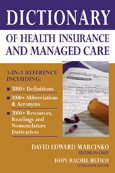
Example

Let’s say the average earnings on an investment is 15%, and the rate of interest payable to the plan is 5%. In recent years, many funds have earned 15% or more if they invested in an index fund. It was thought that, if continued, it would be quite some time before some employers are required to make any contributions out of their own funds. Not so today, however.

Clearly, the savings can be substantial, and the costs of maintaining the plan are easily budgeted for. These advantages convinced some public utilities, telephone companies, financial, hospitals and healthcare institutions to convert their plans to cash balance plans.  

Impact on Employees

The cash balance plan is actually a hybrid plan—a cross between a traditional defined benefit pension plan and a defined contribution plan. But one of the key differences between the cash balance plan and a defined benefit plan is the manner in which the benefits are calculated. In a traditional defined benefit plan, an employee’s retirement benefit grows slowly in the early years and more rapidly as he or she approaches retirement. By contrast, a cash balance plan increases growth in the early years and decreases growth in later years of employment.

Youngsters

Younger healthcare employees usually liked the change; before the recent financial meltdown. Their accounts were portable; they grew quickly; and could be rolled over into an IRA or into a new employer’s plan. And, their account balances were listed as lump sums, so they know precisely how much they’ve accumulated. Today unfortunately, they have mostly been decimated.

Oldsters

Older healthcare employees initially liked the concept because the values of their pensions (on an actuarial basis) were converted to dollar amounts so they could see how much had accrued in their accounts without having to calculate an anticipated pension award. But, after further review, it was evident that upon retirement the cash bonus plans would yield smaller pensions than the defined benefit plans. Opinions differ today?

Health Workers in the Middle

When a hospital or similar entity converts from a defined benefit plan to a cash balance plan, employees their late 40s may see their pensions reduced by 25% or more while older employees see reductions of up to 50%. If the formula for calculating benefits under the defined benefit plan is 2% times years of service, and high-five compensation, then each year of service increases an employee’s pension. More importantly each time high-five compensation increases, the amount is accrued back to the employee’s original date of employment. So, as a hospital employee gets older, the high five-has tremendous impact. An employee who is age 60 can actually accrue most of his or her pension in the last five years of employment.

www.HealthDictionarySeries.com

dhimc-book5

No “Mo”

Cash balance plans don’t have that type of momentum [“Mo”]. The company contributes a certain amount based upon compensation and a specified interest rate. Usually, the interest rate is based on the 30-year treasury rate (approximately 2.5%).

Closing the Gap

Some employers are offering a grandfathered benefit designed to reverse the penalty for older workers. For example, employees within 10 years of retirement (usually age 65) will receive the greater of the cash balance plan or the pension under the original plan. This reduces the cost savings for the company.

Some employers increase the contribution percentage for employees based on age (i.e., 7% of compensation is contributed for employees aged 40—rather than the standard 5%—and 9% of compensation for those aged 50).

Assessment

Finally, some hospital employees are offered special “sweetners” in the form of additional lump sum credits when converting from an existing plan to a cash plan. The best benefit provides that all existing employees will receive the greater of the old plan or the new plan upon retirement. Only a small number of employers typically adopt this approach.

Conclusion

And so, your thoughts and comments on this Medical Executive-Post are appreciated. Nurses, hospital workers and hospitalists – please opine and subscribe to the ME-P here – it’s fast free and secure:

Link: http://feeds.feedburner.com/HealthcareFinancialsthePostForcxos

Speaker: If you need a moderator or speaker for an upcoming event, Dr. David E. Marcinko; MBA – Publisher-in-Chief of the Executive-Post – is available for seminar or speaking engagements. Contact: MarcinkoAdvisors@msn.com  or Bio: www.stpub.com/pubs/authors/MARCINKO.htm

Get our Widget: Get this widget!

Our Other Print Books and Related Information Sources:

Practice Management: http://www.springerpub.com/prod.aspx?prod_id=23759

Physician Financial Planning: http://www.jbpub.com/catalog/0763745790

Medical Risk Management: http://www.jbpub.com/catalog/9780763733421

Healthcare Organizations: www.HealthcareFinancials.com

Health Administration Terms: www.HealthDictionarySeries.com

Physician Advisors: www.CertifiedMedicalPlanner.com

Subscribe Now: Did you like this Medical Executive-Post, or find it helpful, interesting and informative? Want to get the latest E-Ps delivered to your email box each morning? Just subscribe using the link below. You can unsubscribe at any time. Security is assured.

Link: http://feeds.feedburner.com/HealthcareFinancialsthePostForcxos

Consultants and Hospital Employment Statistics

Economic Conditions Better than Other Major Industries

By Staff Reporters

horizontal-nurses1According to Richard Pizzi, on March 9th, Healthcare Finance Newsweek reported that employment at US hospitals climbed 0.14 percent in February to a seasonally adjusted 4,719,300 people.

Bureau of Labor Statistics

Responding to just issued BLS data, the number employed was 6,800 more than in January and 131,800 more than in February 2008. Without seasonal adjustments, which remove the effects of fluctuations due to seasonal events, hospitals employed 4,703,700 people in February 2009, 2,200 more than in January and 130,100 more than a year ago.

Impact on Healthcare Consultants

This was good news for financial advisors, insurance agents and accountants; medical management consultants and health economists; HIT suppliers and related DME vendors, etc.

Assessment

The news was not so good in other areas of the American economy, however, as the national unemployment rate rose from 7.6 percent to 8.1 percent. The US economy shed an additional 651,000 jobs in February 2009. But, according to Rachel Pentin-Maki; RN, MHA of www.MedicalBusinessAdvisors.com

“Employment continues to be strong in almost all aspects of the healthcare industrial complex. This includes professionals, technicians, nurses and para-professionals, as well. However, in the long-term, we believe that medicine will not attract the best and brightest young minds in the future. The economic, political and competitive demographics are just not favorable.” 

Conclusion

And so, your thoughts and comments on this Medical Executive-Post are appreciated. Is healthcare really a recession proof industry? What about those bright young minds; where will they go for professional careers, instead?

Speaker: If you need a moderator or speaker for an upcoming event, Dr. David E. Marcinko; MBA – Publisher-in-Chief of the Executive-Post – is available for seminar or speaking engagements. Contact: MarcinkoAdvisors@msn.com  or Bio: www.stpub.com/pubs/authors/MARCINKO.htm

Get our Widget: Get this widget!

Our Other Print Books and Related Information Sources:

Practice Management: http://www.springerpub.com/prod.aspx?prod_id=23759

Physician Financial Planning: http://www.jbpub.com/catalog/0763745790

Medical Risk Management: http://www.jbpub.com/catalog/9780763733421

Healthcare Organizations: www.HealthcareFinancials.com

Health Administration Terms: www.HealthDictionarySeries.com

Physician Advisors: www.CertifiedMedicalPlanner.com

Subscribe Now: Did you like this Medical Executive-Post, or find it helpful, interesting and informative? Want to get the latest E-Ps delivered to your email box each morning? Just subscribe using the link below. You can unsubscribe at any time. Security is assured.

Link: http://feeds.feedburner.com/HealthcareFinancialsthePostForcxos

Apply to our Financial Advisor Consultant Listing Service

We’re collecting information on financial advisors, financial planners, accountants, attorneys and/or related folks in the Health 2.0 space who have a particular affinity or expertise advising doctors, nurses, medical professionals, and related others. And, we have been for some time, now.

New Channel Development for Medically Focused Financial Advisors and Management Consultants*

Beta-in-Progress

By Ann Miller; RN, MHA

[Executive Director]solo-consultant3     

A New Approach

Unfortunately, this usually means that some really interesting and smart folks, who purchase our books, dictionaries, print-journal, blog or email us; may get lost in the confusion. The result is that too many great medically focused consultants that we’d love to hear about are getting lost in the shuffle. And so, we’re trying something else instead.

Tell us about your Practice

Tell us about your financial advisory practice, and you may end up being mentioned in dispatches, or featured on a separate channel that we are developing. Selection and inclusion criteria include but are not limited to the following credentials:

  • Undergraduate or Graduate degree
  • Industry acknowledged certification or designation
  • Clean CRD record
  • Clean criminal record
  • Insurance agents need not apply
  • Stock brokers need not apply
  • Fiduciaries are encouraged
  • RIAs and independent advisors are encouraged
  • Published authors or educators are encouraged
  • Mission statement on physician niche focus required.

Assessment

So, if you want our readers to pay attention to your financial advisory practice or firm, this will get it into a systematic review process starring our crack staff.  Otherwise you may face the peril of lost notoriety to other non-specific niches; or referral sources.

Publisher’s Note: The inclusion or rejection decision is final; but not set in stone and our terms and conditions may change without notice; the beta project may also be cancelled at any time. We reserve the right to reject anyone, at any time, for any reason or no reason at all. This is a beta project-in-development. The advisors listed are not affiliated or endorsed by iMBA Inc., in any way. This is an advertisement opportunity only.

*NOTE: There is a $120 annual fee for this listing service. It is waived for subscribers of our two volume companion print journal, upon request. www.HealthcareFinancials.com

List Link: https://healthcarefinancials.wordpress.com/schedule-a-consultation/financial-advisor-listings/list-of-advisor-consultants/?preview=true&preview_id=8633&preview_nonce=a3203ab9f9

Conclusion

And so, your thoughts and comments on this Medical Executive-Post are appreciated. What do you think about this idea to develop a new promotional channel for truly physician focused financial advisors?

Speaker: If you need a moderator or speaker for an upcoming event, Dr. David E. Marcinko; MBA – Publisher-in-Chief of the Executive-Post – is available for seminar or speaking engagements. Contact: MarcinkoAdvisors@msn.com  or Bio: www.stpub.com/pubs/authors/MARCINKO.htm

Get our Widget: Get this widget!

Our Other Print Books and Related Information Sources:

Practice Management: http://www.springerpub.com/prod.aspx?prod_id=23759

Physician Financial Planning: http://www.jbpub.com/catalog/0763745790

Medical Risk Management: http://www.jbpub.com/catalog/9780763733421

Healthcare Organizations: www.HealthcareFinancials.com

Health Administration Terms: www.HealthDictionarySeries.com

Physician Advisors: www.CertifiedMedicalPlanner.com

Subscribe Now: Did you like this Medical Executive-Post, or find it helpful, interesting and informative? Want to get the latest E-Ps delivered to your email box each morning? Just subscribe using the link below. You can unsubscribe at any time. Security is assured.

Link: http://feeds.feedburner.com/HealthcareFinancialsthePostForcxos


Advetising in “Worth” and “Bloomberg” Magazines

Advertisers – Give Me a Break!

By Dr. David Edward Marcinko; MBA, CMP™dr-david-marcinko16

Did you know that financial advisor Judith Zabalaoui, age 71, considered a pioneer of the fee-only business-model of financial services sales, pleaded guilty to using a Ponzi scheme to embezzle more than $3 million from her New Orleans area clients between 1993 and 2007? Yep, it’s true, but this is not really noteworthy to many pundits considering the current financial meltdown on Wall Street. But, do you know … the rest of the story?

Resource Management Inc.

Most of Zabalaoui’s clients came from Resource Management Inc. in Metairie, La., which she founded in 1974, according to the Times Picayune. Apparently, she became a Certified Financial Planner® in 1979, but the certification expired in 1999.

Link: http://www.nola.com/business/t-p/index.ssf?/base/money-1/1233728420253000.xml&coll=1

Assessment

So, here’s the rub. According to reports, Resource Management Inc. was the only firm in the country where each of the principals were allegedly “selected” by Worth [1996 to present], Money [1987] and/or both magazines as one of the top financial consultants in the country. The company also made Bloomberg Wealth Manager’s list of top wealth managers in 2004.

Industry Indignation Index: 55

Now, with all due respect and humility, I have been asked several times by Worth and Bloomberg to “promote yourself” in their “advertiser-driven” publications as a top financial consultant; but never Money magazine. I have always refused their selection charges for same of $12-18,000.

Full disclosure: I am the Founder of www.CertifiedMedicalPlanner.com and a reformed insurance agent, registered investment advisor and Certified Financial Planner™.

Conclusion

And so, your thoughts and comments on this Medical Executive-Post are appreciated. Was Judith Zabalaoui a fiduciary and what about these magazine “best-of” awards? Are they worthwhile monikers or worthless sales advertisements? What about all the so-called financial certifications, designations and charters; meaningful or meaningless? What is your opinion?

Speaker: If you need a moderator or speaker for an upcoming event, Dr. David E. Marcinko; MBA – Publisher-in-Chief of the Executive-Post – is available for seminar or speaking engagements. Contact: MarcinkoAdvisors@msn.com  or Bio: www.stpub.com/pubs/authors/MARCINKO.htm

Our Other Print Books and Related Information Sources:

Practice Management: http://www.springerpub.com/prod.aspx?prod_id=23759

Physician Financial Planning: http://www.jbpub.com/catalog/0763745790

Medical Risk Management: http://www.jbpub.com/catalog/9780763733421

Healthcare Organizations: www.HealthcareFinancials.com

Health Administration Terms: www.HealthDictionarySeries.com

Physician Advisors: www.CertifiedMedicalPlanner.com

Subscribe Now: Did you like this Medical Executive-Post, or find it helpful, interesting and informative? Want to get the latest E-Ps delivered to your email box each morning? Just subscribe using the link below. You can unsubscribe at any time. Security is assured.

Link: http://feeds.feedburner.com/HealthcareFinancialsthePostForcxos

Integrating Financial and Medical Practice Succession Planning

Some Steps to Consider

By Dr. David Edward Marcinko; MBA, CMP™

[Publisher-in-Chief]dr-david-marcinko8

Medical practice succession planning is a dynamic process requiring current physician ownership and management to plan for the future and implement the resulting plan. Many doctors approach succession planning initially through retirement planning. Once they understand the issues and realities of the tax laws, they are much more amenable to working out a viable succession plan. At the Institute of Medical Business Advisors Inc, we find that some physician-clients have not clearly articulated their goals, but have many pieces of the plan that need to be organized and analyzed to meet their objectives; including both personal and financial issues.

Link: www.MedicalBusinessAdvisors.com

A Step Wise Process

The steps necessary for successful succession planning are as follows: 

  • Gathering and analyzing data and personal information
  • Contacting the doctor’s other advisors
  • Valuing the practice according to USPAP and IRS guidelines
  • Indentifying the right qualified physician purchaser
  • Projecting estate and transfer taxes
  • Presenting liquidity needs
  • Gathering additional corporate information
  • Identifying dispositive and financial goals
  • Analyzing the needs and desires of non-key employees

An Integrated Approach 

Succession planning can help address financial and nonfinancial issues in a timely manner. Proper planning can also help the doctor accomplish goals with effective, appropriate strategies that satisfy family needs as well as tax issues. Here is a triad approach:

1. First: Address financial and nonfinancial issues in a timely manner

As with other estate planning engagements, there is no due date for succession planning. The owner of a medical practice is busy growing and managing the office. S/he is often not focused on the desirable outcomes in an orderly practice succession. For example, if family members are involved in the practice, there is a good chance that personal issues will need to be addressed. These nonfinancial issues can be just as important as financial concerns when building a comprehensive, workable succession plan.

2. Next: Focus on taxes

Taxes are important because the medical practice probably represents the largest concentration of wealth in the doctor’s estate. When planning for estates with large amounts of wealth, doctors frequently ignore personal issues. It’s important not to make the critical error of maximizing tax savings but destroying the practice through a poor succession plan.

3. Finally: Identify and reach goals

When the physician-owner has addressed succession planning issues in a timely manner, s/he has the opportunity to develop the most effective objectives to accomplish goals. Given enough time, the doctor can even modify goals to reflect changes in the economic environments, as well changes in his or her personal life.

Assessment 

fp-book8

Medical practices exhibit particular strengths and weaknesses not typically found in publicly owned companies or non-professional family businesses. For example, many times the doctor doesn’t realize the type and amount of planning that needs to be done to transfer the business to a new doctor for maximum value. That is why doctors often need the advice of professionals to define goals and formulate medical practice succession strategies.

Conclusion

Your thoughts and comments on this ME-P are appreciated. Feel free to review our top-left column, and top-right sidebar materials, links, URLs and related websites, too. Then, subscribe to the ME-P. It is fast, free and secure.

Link: http://feeds.feedburner.com/HealthcareFinancialsthePostForcxos

Speaker: If you need a moderator or speaker for an upcoming event, Dr. David E. Marcinko; MBA – Publisher-in-Chief of the Medical Executive-Post – is available for seminar or speaking engagements. Contact: MarcinkoAdvisors@msn.com

OUR OTHER PRINT BOOKS AND RELATED INFORMATION SOURCES:

DICTIONARIES: http://www.springerpub.com/Search/marcinko
PHYSICIANS: www.MedicalBusinessAdvisors.com
PRACTICES: www.BusinessofMedicalPractice.com
HOSPITALS: http://www.crcpress.com/product/isbn/9781466558731
CLINICS: http://www.crcpress.com/product/isbn/9781439879900
BLOG: www.MedicalExecutivePost.com
FINANCE: Financial Planning for Physicians and Advisors
INSURANCE: Risk Management and Insurance Strategies for Physicians and Advisors

Product DetailsProduct DetailsProduct Details

Challenging Standard & Poor’s 500 Index

Join Our Mailing List

Dr. Jeremy Siegel Opines

[By Staff Reporters]56371606

According to Financial Advisor News – an electronic trade magazine on March 17 2009 – Standard & Poor’s underestimate the earnings of its S&P 500 Index. So says, Jeremy Siegel PhD, a finance professor at the University of Pennsylvania’s Wharton School of Business and author of Stocks for the Long Run.

The Dilemma

The problem started when the Wall Street Journal ran an op-ed piece by Siegel that argued Standard & Poor’s uses a “bizarre” methodology for calculating the earnings and P/E ratio for the S&P 500. In it, Siegel explained that the earnings of S&P 500 companies are currently treated equally, but should instead be weighted in proportion to their market capitalization. Market capitalization weighting, he noted, is used to measure the S&P 500 returns. Such a system gives larger weight to the earnings of a company such as Exxon-Mobil, and lower weight to an S&P 500 member such as Jones Apparel.

Siegel’s Example

For example, “a 10% rise in Exxon-Mobil’s price would boost the S&P 500 by 4.64 index points, while the same fall in Jones Apparel would have no impact since the change is far less than the one-hundredth of one point to which the index is routinely rounded,” Siegel wrote.

fp-book10

Outcome

As a result of the above, if capitalization weightings were applied to 2008, the earnings of S&P 500 companies would have been $71.10 per share instead of $39.73 per share.

S&P’s Support

In response, an S&P official said Siegel’s argument “fails the test of both logic and index mathematics.”

Conclusion

Your thoughts and comments on this ME-P are appreciated. Feel free to review our top-left column, and top-right sidebar materials, links, URLs and related websites, too. Then, subscribe to the ME-P. It is fast, free and secure.

Link: http://feeds.feedburner.com/HealthcareFinancialsthePostForcxos

Speaker: If you need a moderator or speaker for an upcoming event, Dr. David E. Marcinko; MBA – Publisher-in-Chief of the Medical Executive-Post – is available for seminar or speaking engagements. Contact: MarcinkoAdvisors@msn.com

OUR OTHER PRINT BOOKS AND RELATED INFORMATION SOURCES:

DICTIONARIES: http://www.springerpub.com/Search/marcinko
PHYSICIANS: www.MedicalBusinessAdvisors.com
PRACTICES: www.BusinessofMedicalPractice.com
HOSPITALS: http://www.crcpress.com/product/isbn/9781466558731
CLINICS: http://www.crcpress.com/product/isbn/9781439879900
BLOG: www.MedicalExecutivePost.com
FINANCE: Financial Planning for Physicians and Advisors
INSURANCE: Risk Management and Insurance Strategies for Physicians and Advisors

Product DetailsProduct DetailsProduct Details

Product Details  Product Details

This Time the Hospital Financial Crisis is Different

Oh Really … No so Fast!

Submitted by J. Wayne Firebaugh, Jr; CPA, CFP®, CMP™ho-journal2

Dr. Malcolm T. MacEachern, Director of Hospital Activities for the American College of Surgeons, presciently observed that:

… Our hospitals are now involved in the worst financial crisis they have ever experienced. It is absolutely necessary to all of us to put our heads together and try to find some solution. If we are to have effective results we must have concerted and coordinated immediate action. … Repeated adjustments of expenses to income have been made. Never before has there been such a careful analysis of hospital accounting and study of financial policies. It is entirely possible for us to inaugurate improvements in business methods which will lead to greater ways and means of financing hospitals in the future … It is true that all hospitals have already trimmed their sales to better meet the financial conditions of their respective communities. This has been chiefly through economies of administration. There has been more or less universal reduction in personnel and salaries; many economies have been affected. Everything possible has been done to reduce expenditures but this has not been sufficient to bring about immediate relief in the majority of instances. The continuance of the present economic conditions will force hospitals generally to further action. The time has come when this problem must be given even greater thought, both from its community and from its national aspect…

Source:  Steinberg, C. Overview of the US Healthcare System; American Hospital Association 2003.

Many hospital CXOs, healthcare administrators and physician executives would agree that Dr. MacEachern accurately describes today’s healthcare funding environment. However, they might be startled to learn that Dr. MacEachern made these observations in 1932! There is the old truism that there is nothing new under the sun.

American Hospital Association Statistics

Healthcare statistics suggested that the financial crisis is much the same today as it was for hospitals during the Great Depression. The American Hospital Association’s (AHA) reported gloomy statistics for hospitals include:

  • In 2001, 29% of hospitals had negative total margins.
  • Approximately $101.3 billion of uncompensated care was provided between 1997 and 2001 with an average annual increase of 16% during that time period.
  • Emergency departments in 62% of all hospitals report operating at, or over, capacity.
  • Technology costs are soaring as traditional technologies such as X-Ray machines, for $175,000, are being replaced by contemporary technologies such as CAT Scanners at $1 million that are in turn being replaced by CT Functional Imaging with PET Scans costing $2.3 million. Even such a “simple” instrument as a scalpel that costs $20, is being replaced by equipment for electrocautery costing $12,000, that is then being replaced by harmonic scalpels costing $30,000.
  • Between 2000 and 2002, 33% of hospitals reported increases in liability premiums of more than 100%.
  • The average age of hospital plants has increased 21% from 7.9 years to 9.6 years in just one decade.
  • In the four years ending 2002, hospital bond downgrades have outpaced hospital bond upgrades by almost 5 to 1.

Editor’s Assessment

As editor’s of the premium subscription, two volume, 1,200 pages, institutional print-guide Healthcare Organizations [Financial Management Strategies], we prefer engaged readers and contributors like Mr. Firebaugh, who demand and create compelling content like the above. Please review these links for same.

www.HealthcareFinancials.com

Info: http://www.stpub.com/pubs/ho.htm

TOC: http://www.stpub.com/pdfs/toc_ho.pdf

Purchase: Call 1-800-251-0381 or email orders@stpub.com

Conclusion

Always beware the words: “this time it’s different;” as it rarely is. And so, your thoughts and comments on this Medical Executive-Post are appreciated. Please opine and subscribe to the ME-P here; it’s fast, free and secure.

Link: http://feeds.feedburner.com/HealthcareFinancialsthePostForcxos

Speaker: If you need a moderator or speaker for an upcoming event, Dr. David E. Marcinko; MBA – Publisher-in-Chief of the Executive-Post – is available for seminar or speaking engagements. Contact: MarcinkoAdvisors@msn.com  or Bio: www.stpub.com/pubs/authors/MARCINKO.htm

Get our Widget: Get this widget!

Our Other Print Books and Related Information Sources:

Practice Management: http://www.springerpub.com/prod.aspx?prod_id=23759

Physician Financial Planning: http://www.jbpub.com/catalog/0763745790

Medical Risk Management: http://www.jbpub.com/catalog/9780763733421

Healthcare Organizations: www.HealthcareFinancials.com

Health Administration Terms: www.HealthDictionarySeries.com

Physician Advisors: www.CertifiedMedicalPlanner.com

Subscribe Now: Did you like this Medical Executive-Post, or find it helpful, interesting and informative? Want to get the latest E-Ps delivered to your email box each morning? Just subscribe using the link below. You can unsubscribe at any time. Security is assured.

Link: http://feeds.feedburner.com/HealthcareFinancialsthePostForcxos

Product Details  Product Details

About the Convenient Care Association

Developing Best Medical Practices and Retail Operating Standards

By Staff Reporters

horizontal-nurses2The Convenient Care Association [CCA] is comprised of companies, medical providers and healthcare systems that provide patients and consumers with accessible, affordable and quality healthcare in retail-based locations. The CCA works primarily to enhance and sustain the growth of the convenient care industry through sharing of best practices and common standards of operation. It was founded in October 2006.

About CCA

According to their website, the first Convenient Care Clinics [CCCs] opened in 2000, and the industry grew quickly since then. Today there are approximately 1,060 clinics in operation, and CCA member clinics represent more than 95% of the industry. To date, CCCs have served more than 3.5 million patients with its nurse practitioners [NPs] and physician assistants [PAs].

Link: http://www.ccaclinics.org/index.php?option=com_content&view=article&id=4&Itemid=11

Growth and Expansion

With this rapid expansion, and projected continued growth, it quickly became clear that the shared concerns and needs of both providers and patients could best be served through an association that allowed for: 

  • Sharing best practices, common standards of operation, experiences and ideas.
  • Developing common standards of operation to ensure the highest quality of care.
  • A united voice to advance the needs of CCCs and their customers
  • A unified effort to promote the concept of CCCs, and to respond to questions about this evolving industry.
  • Reaching out to the existing medical community and creating new partnerships.
  • Building synergies with traditional medical service providers.

Assessment

The Public Health Management Corporation [PHMC], a nonprofit public health institute, provides executive management and administrative support for the Convenient Care Association. For more information, contact Tine Hansen-Turton at (215) 731-7140.

Conclusion

And so, your thoughts and comments on this Medical Executive-Post are appreciated. Have you ever used a retail medical clinic and what was your experience? Will this business model save primary care medicine?

Speaker: If you need a moderator or speaker for an upcoming event, Dr. David E. Marcinko; MBA – Publisher-in-Chief of the Executive-Post – is available for seminar or speaking engagements. Contact: MarcinkoAdvisors@msn.com  or Bio: www.stpub.com/pubs/authors/MARCINKO.htm

Get our Widget: Get this widget!

Our Other Print Books and Related Information Sources:

Practice Management: http://www.springerpub.com/prod.aspx?prod_id=23759

Physician Financial Planning: http://www.jbpub.com/catalog/0763745790

Medical Risk Management: http://www.jbpub.com/catalog/9780763733421

Healthcare Organizations: www.HealthcareFinancials.com

Health Administration Terms: www.HealthDictionarySeries.com

Physician Advisors: www.CertifiedMedicalPlanner.com

Subscribe Now: Did you like this Medical Executive-Post, or find it helpful, interesting and informative? Want to get the latest E-Ps delivered to your email box each morning? Just subscribe using the link below. You can unsubscribe at any time. Security is assured.

Link: http://feeds.feedburner.com/HealthcareFinancialsthePostForcxos

Battered Health Journalists

9 of 10 Would Repeat Career Choice

By Staff Reportersred-appple

According to the Association of Health Care Journalists on March 12, 2009 pia@healthjournalism.ccsend.com, and on behalf of the Association of Health Care Journalists news@healthjournalism.org; a new survey cited newsroom cutbacks, lack of time for research and travel, and fewer opportunities for training at their news organization as factors making their jobs more challenging than ever; so says the recently released survey in conjunction with the Kaiser Family Foundation.

Fewer Drawbacks in Health Reporting

Moreover, while about 3 in 4 respondents said that US journalism was headed in the wrong direction, just more than half felt that way about health journalism. And two-thirds of respondents said health care journalism was headed in the right direction at their media outlet.

A Hardy Career

Fortunately, health journalists are a hardy bunch. Nearly three-quarters of health journalists surveyed said the amount of coverage given to health care topics has stayed the same or increased at their news organization and two-thirds said the quality of coverage has been stable or gotten better over the past few years.

Link: http://www.healthjournalism.org/resources-articles-details.php?id=94

Assessment

Despite the challenges and the uncertain times, 88 percent of respondents said if they had to make their career choice over again they would still go into health journalism. Interestingly, that was the same percentage of respondents who said they had health insurance.

Conclusion

And so, your thoughts and comments on this Medical Executive-Post are appreciated. Does this positive career choice percentage for health journalists match that of physicians today? Was this career choice query even asked of doctors two decades ago?

Speaker: If you need a moderator or speaker for an upcoming event, Dr. David E. Marcinko; MBA – Publisher-in-Chief of the Executive-Post – is available for seminar or speaking engagements. Contact: MarcinkoAdvisors@msn.com  or Bio: www.stpub.com/pubs/authors/MARCINKO.htm

Get our Widget: Get this widget!

Our Other Print Books and Related Information Sources:

Practice Management: http://www.springerpub.com/prod.aspx?prod_id=23759

Physician Financial Planning: http://www.jbpub.com/catalog/0763745790

Medical Risk Management: http://www.jbpub.com/catalog/9780763733421

Healthcare Organizations: www.HealthcareFinancials.com

Health Administration Terms: www.HealthDictionarySeries.com

Physician Advisors: www.CertifiedMedicalPlanner.com

Subscribe Now: Did you like this Medical Executive-Post, or find it helpful, interesting and informative? Want to get the latest E-Ps delivered to your email box each morning? Just subscribe using the link below. You can unsubscribe at any time. Security is assured.

Link: http://feeds.feedburner.com/HealthcareFinancialsthePostForcxos

A Physician by Any Other Name

Join Our Mailing List

Enter the Weekendalists and Laborists

[By Dr. David Edward Marcinko; MBA]

Publisher-in-Chief

dr-david-marcinko5More than a decade ago, in another career, I wrote a few articles for Richard L. Reece MD when he edited a print and emerging electronic trade publication for medical professionals. All very “fly”, at the time.

The Laborists

Now – according to Dr. Reece who cites the Boston Globe, in “The Birth of a Notion”, a Cape Cod and some other Massachusetts hospitals are hiring “laborists”; aka board-certified obstetricians to work regular shifts for the sole purpose of delivering babies.

www.MedicalBusinessAdvisors.com

New Causitive Drivers

What drives these new-wave specialists? The answer, of course, is the next-generation of physicians and their emerging new medical business and practice models. Much like my 12 year old daughter, it is a way of professionally breaking away from past generations, and asserting some independence and leadership. And, as Martha Stewart might say; “that’s a good thing.”

Many Reasonsbiz-book2

But, according to Reece, the real drivers are a combination of other things – the desire of doctors for regular hours, the shortage of specialists, physician burnout, the search for a safer hospital environment, the need for consistent, immediately available physician services, fear of dreaded malpractice suits, and consolidation of hospital-physicians services due to regulatory and economic pressures; etc.

Blended Generations

Dick is correct, of course, because it is not uncommon today to have three generations represented in healthcare. We have the Baby-boomers, Gen X and now, Gen Y. The Baby Boomer generation is saying with some sense of sadness that, “Medicine sure isn’t want it used to be!”, while Generation Xers are saying “It’s about time things changed!”, and the latest generation to enter the medical workforce, Gen Y’s, are saying “Ready or not, we’re here”.

http://www.BusinessofMedicalPractice.com

The Leadership Evolution

Each generation is extraordinarily complex, bringing various skills, expertise and expectations to the modern medical work environment. Determining the best method to unite such diverse thinking is one of the many challenges faced by physician executives and healthcare leaders. Is it any wonder that many medical leaders and executive in the Baby Boomer generation find themselves at a loss? The days of functional leadership are gone and suddenly, no one cares about the expertise of the Baby Boomers or how they climbed the corporate ladder, in medicine or elsewhere. Leadership in the era of Health 2.0 is no longer about command-control or dictating with intense focus on the bottom line; it is about collaboration, empowerment and communication. And, it is not about titles and nomenclature.

cmpLinguistic Evolution

As the linguistic evolution of terms progresses, the nomenclature of hospitalist was followed by that of intensivist, proceduralist, nocturalists, in-situ physician and even weekendalists. Think I’m kidding?

Link: http://medinnovationblog.blogspot.com/2009/02/hospital-based-doctorists.html

Assessment

I still like the causative analogy of my pre-teen daughter; it’s much simpler to understand. What do you think?  

References

1. Wachter, R and Goldman, R: “The Emerging Role of ‘Hospitalists’ in the American Health System’. In, New England Journal of Medicine; 335, 514-517, 1996

2. Kowalczyk, L: The Birth of a Notion: Hospitals Turning to Laborarists. Boston Globe, February 23, 2009

Conclusion

Your thoughts and comments on this ME-P are appreciated. Feel free to review our top-left column, and top-right sidebar materials, links, URLs and related websites, too. Then, subscribe to the ME-P. It is fast, free and secure.

Speaker: If you need a moderator or speaker for an upcoming event, Dr. David E. Marcinko; MBA – Publisher-in-Chief of the Medical Executive-Post – is available for seminar or speaking engagements. Contact: MarcinkoAdvisors@msn.com

OUR OTHER PRINT BOOKS AND RELATED INFORMATION SOURCES:

***

[PHYSICIAN FOCUSED FINANCIAL PLANNING AND RISK MANAGEMENT COMPANION TEXTBOOK SET]

  Risk Management, Liability Insurance, and Asset Protection Strategies for Doctors and Advisors: Best Practices from Leading Consultants and Certified Medical Planners™   Comprehensive Financial Planning Strategies for Doctors and Advisors: Best Practices from Leading Consultants and Certified Medical Planners™

[Dr. Cappiello PhD MBA] *** [Foreword Dr. Krieger MD MBA]

***

The No Insurance Club

Emerging Pre-Paid Cash-Based Medicine

By Bob Grove

no-insurance-clubHealthcare in America is in Turmoil. The No Insurance Club [NIC] feels private contracts may be the solution. More and more Americans are going without healthcare especially preventative healthcare. The reasons – costs are too high, patients can’t get accepted due to a pre-existing condition, companies are cutting back on benefits, people have been laid off from work; and the list goes on.

Governmental Solutions 

What’s being done to improve healthcare? Barack Obama and the Government want more control and regulation and the system seems to be leaning toward socialized care. Private insurance companies continue to increase premiums, which prices healthcare out of reach for the average American. Employers can no longer float the cost of insurance so they pass it on to their employees. Patients aren’t the only ones being affected by the current state of healthcare. More and more doctors are going out of business and hospitals are cutting back due to escalating costs and payment defaults.

Private Solutions 

The current remedy; Americans are taking out private major medical policies for catastrophic events with high-deductibles [MSA/HSAs] to keep monthly premiums down, or are turning to Medicaid, mini retail-clinics at grocery stores/pharmacies, and emergency room visits for common illnesses.

Innovative Solutions 

What about prevention and maintenance? More than 90 percent of health related issues can be taken care of with preventative care and maintenance but only a small percentage of Americans currently enjoy the benefit of preventative healthcare.

The No Insurance Club

The NIC has come up with a fresh look at healthcare by offering an affordable alternative to traditional insurance options.

NIC Benefits and Features 

The No Insurance Club connects patients with participating board certified physicians that will treat and care for preventative healthcare needs for a one-time prepaid annual membership fee:


  • NIC patients make a one-time annual payment that is typically less than a one-month premium with traditional insurance.
  • Patients receive up to 12 office visits per year that also include immunizations, $4 or less in-office prescriptions, and additional services including blood tests.
  • No deductible, no co-pays, no premiums.
  • No surprise bills to patients.
  • Viable alternative to COBRA for employees laid off from work.
  • Low cost option for the self-employed.

Assessment

What’s in it for the doctors? How about no insurance clerks, no need to snail mail medical insurance claims or use expensive electronic claims submission clearinghouse services, no bad debts or bad expense write-offs, no ARs; and fast cash! 

Link: http://www.noinsuranceclub.com/

I would be happy to speak with and connect ME-P readers, participating doctors and even patients for interviews to learn more about the NIC network and its benefits.

Bob Grove

Wild West PR

(801) 651-0290

bob@wildwestpr.com

Conclusion

And so, your thoughts and comments on this Medical Executive-Post are appreciated.

Speaker: If you need a moderator or speaker for an upcoming event, Dr. David E. Marcinko; MBA – Publisher-in-Chief of the Executive-Post – is available for seminar or speaking engagements. Contact: MarcinkoAdvisors@msn.com  or Bio: www.stpub.com/pubs/authors/MARCINKO.htm

Get our Widget: Get this widget!

Our Other Print Books and Related Information Sources:

Practice Management: http://www.springerpub.com/prod.aspx?prod_id=23759

Physician Financial Planning: http://www.jbpub.com/catalog/0763745790

Medical Risk Management: http://www.jbpub.com/catalog/9780763733421

Healthcare Organizations: www.HealthcareFinancials.com

Health Administration Terms: www.HealthDictionarySeries.com

Physician Advisors: www.CertifiedMedicalPlanner.com

Subscribe Now: Did you like this Medical Executive-Post, or find it helpful, interesting and informative? Want to get the latest E-Ps delivered to your email box each morning? Just subscribe using the link below. You can unsubscribe at any time. Security is assured.

Link: http://feeds.feedburner.com/HealthcareFinancialsthePostForcxos

Tele-Medicine is Growing

Join Our Mailing List

About SwiftMD.com

[By Staff Reporters]

radar1According to its website, SwiftMD isn’t just better telemedicine; it’s better medicine because of its physicians’ quality. Patient telephone calls are usually returned within 30 minutes, any time of the day or night. They employ a powerful eHR that is secure, HIPAA-compliant and keeps patients informed about their care. And, it is all done at an affordable price.

Link: www.SwiftMD.com

Features

Here is the prioritized way in which the telemedicine service is said to work:

  • Request – Call 1-877-WWW-SWIFT or request a consultation online.
  • Assess – No emergencies are accepted.
  • Response – A physician calls back, day or night, usually within 30 minutes.
  • Consult – The doctor discusses your condition, consults your eHR, diagnoses and recommends treatment.
  • Record – A SwiftMD health record is also available 24/7 for updated references.

Assessment

According to SwiftMD, the service is easy to us; no more driving across town; or sitting in waiting rooms. Just high-quality medical care when and where needed. Group, individual and family plans are available.

Link: http://www.swiftmd.com/xres/uploads/documents/SwiftMD-WhitePaper20080819a.pdf

UPDATE 2015

Why Teladoc Needs Medical Attention
The Wall Street Journal, October 4, 2015

Only 45% of Diabetes Patients Use Mobile Health Tools
mHealth Intelligence, October 2, 2015

AAFP Still Searching for Right Stance on Telemedicine
MedPage Today, October 2, 2015

Walgreens Expanding Telemedicine on Its App in the Next Month
MedCity News, October 1, 2015

Mobile Health Apps Fall Short in Protecting Data Privacy
Medscape, September 29, 2015

Mental-Health Apps Make Inroads With Consumers and Therapists
The Wall Street Journal, September 27, 2015

Conclusion

Your thoughts and comments on this ME-P are appreciated. Feel free to review our top-left column, and top-right sidebar materials, links, URLs and related websites, too. Then, subscribe to the ME-P. It is fast, free and secure.

Speaker: If you need a moderator or speaker for an upcoming event, Dr. David E. Marcinko; MBA – Publisher-in-Chief of the Medical Executive-Post – is available for seminar or speaking engagements. Contact: MarcinkoAdvisors@msn.com

OUR OTHER PRINT BOOKS AND RELATED INFORMATION SOURCES:

Product DetailsProduct DetailsProduct Details    

Problems with HIT in Minnesota

The Continuing eHR Saga

By Darrell K. Pruitt; DDSpruitt2

If you were one of fifty governors who decide to jump off a cliff because flying looks so cool, would you proudly race to be the first to grab the air? Blissfully, Minnesota Governor Tim Pawlenty is way ahead of the pack. He’s so confident in healthcare information technology [IT]  that he doesn’t even have to watch where he’s going – leaving him free to smile for the cameras. Now that’s cool.

Initial Ambitious Plans

Attention ME-P readers! Please gather around to watch a world-class belly-flop of a gutsy statewide eHR mandate. A few years ago, Governor Pawlenty had ambitious plans to lead the nation with an interoperable eHR system that was touted to include all providers – that means Minnesota dentists as well. Your landing could be vertical and abrupt, Pawlenty.

CCHIT Approved? 

In fairness to a brick, back in 2005 Pawlenty could not have predicted the economic collapse that began three years later, nor could he have known about the subsequent $19 billion eHR money that would be made available to providers – but only if they purchase healthcare IT software that is approved by the Certification Commission for Healthcare Information Technology (CCHIT).

CCHIT Laggards 

Even if the descending Pawlenty could have predicted the recent changes in the terrain, including the CCHIT qualification, he would have never guessed that to this day in March of 2009, the certifying commission would still be yet to certify even one single electronic dental record – thereby blocking Minnesota dentists from copious federal help in their efforts to become compliant in Pawlenty’s brave new state.

“The government is actually looking for places to spend the money where there is a strong likelihood of success stories”.

Mike Ubl

Executive Director Minnesota Health Information Exchange

[Owned by Blue Cross Blue Shield of Minnesota, HealthPartners, Medica, Fairview Health Services, UCare and the Minnesota Department of Health].

Link: http://www.twincities.com/ci_11830085

And that after this is accomplished, and the brave new world begins – When all men are paid for existing and no man must pay for his sins”.

-Rudyard Kipling

The CCHIT qualification was incredibly bad luck for Pawlenty’s nifty ideas of interoperability with all providers. When Minnesota dentists discover that they must pay $30 thousand for software they don’t want in order to practice in paradise, some may just swallow their pride, sell the portable ice-fishing house, and move to slow-moving Iowa.

Dentists, MDA and the ADA News

Why the surprisingly quick landing? If Pawlenty actually gave any consideration for dentistry at all, just like everyone else, he must have assumed that dentists’ concerns about digital records would be adequately attended to by the Minnesota Dental Association [MDA] and the American Dental Association. It was easy to make that mistake because of the enthusiasm for eDRs radiating from ADA Headquarters and expressed in confident terms in ADA News Online articles that have since stopped appearing.  Most eDR enthusiasts naturally assumed that by now the majority of dentists in the nation would be saving money, lives and trees with paperless practices. However, the ADA has been nowhere to be found for a long time. As it turns out, the professional organization has still not yet even contacted the certifying commission. We know this, because when I personally contacted CCHIT a few weeks ago, it caught them off guard. I was told that I was one of the first to ever mention dentistry.

Link: https://healthcarefinancials.wordpress.com/2009/03/02/cchit-is-prejudiced-and-lacks-diversity-%e2%80%93-an-indictmen

No Endorsements

To show how far the ADA has slipped, and as an example of its flagging influence on membership, I doubt that more than 5% of American dentists have made the ADA-endorsed leap from paper to digital. Why should they? It makes good business sense to wait, and most dentists are not techno-silly. Consider this; Even if a dentist is happy with a costly eDR system that demanded unanticipated time and effort to learn, in less than a year, CCHIT could determine that his or her favorite system is not worthy of certification because it does not integrate with physicians’ one-size-fits-all, CCHIT-certified eMRs. Tough luck, Minnesota dentists! Uncertified eDRs will be outlawed, while favored, large healthcare IT companies in Madison and Chicago will profit and pay more state taxes with Twin-Cities’ dollars. By then, all the stimulus money will be gone and lawmakers will no longer be giddy about eHRs due to the imminent explosion of data breaches everywhere caused by moving too fast. No return on investment [ROI] there. 

Assessment 

Still, Tim Pawlenty could have never known, yet away he sails with a stupid grin on his face.

Conclusion

And so, your thoughts and comments on this Medical Executive-Post are appreciated.

Speaker: If you need a moderator or speaker for an upcoming event, Dr. David E. Marcinko; MBA – Publisher-in-Chief of the Executive-Post – is available for seminar or speaking engagements. Contact: MarcinkoAdvisors@msn.com  or Bio: www.stpub.com/pubs/authors/MARCINKO.htm

Get our Widget: Get this widget!

Our Other Print Books and Related Information Sources:

Practice Management: http://www.springerpub.com/prod.aspx?prod_id=23759

Physician Financial Planning: http://www.jbpub.com/catalog/0763745790

Medical Risk Management: http://www.jbpub.com/catalog/9780763733421

Healthcare Organizations: www.HealthcareFinancials.com

Health Administration Terms: www.HealthDictionarySeries.com

Physician Advisors: www.CertifiedMedicalPlanner.com

Subscribe Now: Did you like this Medical Executive-Post, or find it helpful, interesting and informative? Want to get the latest E-Ps delivered to your email box each morning? Just subscribe using the link below. You can unsubscribe at any time. Security is assured.

Link: http://feeds.feedburner.com/HealthcareFinancialsthePostForcxos

On Emergency Funds for Physicians

dr-david-marcinko3Cash Reserves Now More Important Than Ever!

By Dr. David Edward Marcinko; MBA, CMP™

[Publisher-in-Chief]

CEO: www.MedicalBusinessAdvisors.com

This is a basic question in financial planning circles that has generated much activity in the medical community, of late. Previously considered so mundane – as to be dismissed by some haughty physicians – it has acquired increased urgency with the current financial meltdown.

What Security Level Desired?

Yet, the answer to this question is dependent upon the security level desired by the medical provider and his/her family. Traditionally, financial planners suggested most people with solid employment, and transferrable skills, have at least three months of living expenses (not including taxes) in a reserve fund that is easily accessible (i.e., liquid). The amount needed for a one-month reserve is equal to the amount of expenses for the month, rather than the amount of monthly income. This is because during no-income months – there is no income tax.

The Usual Checklist

We suggest the following questions as helpful in determining the amount of reserve needed by medical professionals:

1. How many incomes do you have in your household?

2. How secure is your current practice, or medical job?

3. Do you have other unrelated sources of income; medically or non-medically related?

4. How long would it take you to find another position in your specialty, if suddenly unemployed? [Hint: Assume one month per ten grand of income; at $150-k annually, this means searching for 15 months].

5. How much money do you spend, and save, each month?

6. Would you be willing [able] to lower your monthly [fixed or variable] expenses, if you were unemployed?

Many Factors to Considerinsurance-book1

But, many other factors come into play when determining how much money a particular physician and his/her family should have on hand. Does the family have one income or two? How stable is this income source? Does the doctor work for himself [managing partner], or is she employed [minority partner, associate, etc]? What kind of firm, company or hospital employs him; private, HMO, MCO, Federal or State entity? Does the family use all of the income each month? What about, life, health, disability or LTC insurance as fringe benefits? Does the family anticipate the possibility of large liability exposures and expenses occurring in the future (i.e., medical school or practice start-up debt, private tuition for the kids, medical expenses, liability suits etc.)? Are you willing to relocate for a new job?

Family Situation Appraisal

If the doctor is in a dual-income family – with stable incomes – and/or lives on a single income – the need for a liquid reserve is minimal; but still much more than for the average layman. On the other hand, if the doctor is a single individual, with an unstable income and she spends everything each month, the need for a liquid cash reserve is higher.

In the previous example, and in the stable past, the doctor may have opted for a six-to-nine month reserve if the need for security was high; and a three-to-six month reserve if the need for security was low. For the last five to seven years however, we have suggested to our medical clients that they expand this reserve cash corpus to 12-24 months; and as a blanket rule of thumb for all medical professionals. Of course, I was roundly criticized for it; until now.

Today, we are suggesting 3-5 years; with considerably less criticism. Cash is power, choice, swagger, potency, freedom and represents options. Acquire it!

Stashing the Cash

Once the amount of reserve is determined, the doctor should consider the appropriate investment vehicles for the reserve fund. At minimum, the reserve should be invested in a money market mutual fund with NAV @ 1.00 USD. Larger income earners may opt for tax-exempt money market mutual funds, as needed.  For larger reserves, an ultra-short term, no-low bond fund, might be appropriate for amounts over three months – in periods of deflation; not so during inflationary periods.

Assessment

Today, we recommend doctors keep 3-5 years of cash-on-hand. Yes, I am aware of the “paradox-of-thrift” conundrum. But, do you want to help the domestic GDP, or your family; you decide? Personally, my own concern is not the macro-economic milieu.

Full disclosure: I am a former insurance agent, registered investment advisor; board certified surgeon and Certified Financial Planner™

Conclusion

And so, your thoughts and comments on this Medical Executive-Post are appreciated. How stressed out are you, right now? You are sleepless if previously considered cash, as trash.

But, if sitting on a little pile; you should be sleeping like a baby.    

Link: http://feeds.feedburner.com/HealthcareFinancialsthePostForcxos

Speaker: If you need a moderator or speaker for an upcoming event, Dr. David E. Marcinko; MBA – Publisher-in-Chief of the Medical Executive-Post – is available for seminar or speaking engagements. Contact: MarcinkoAdvisors@msn.com

OUR OTHER PRINT BOOKS AND RELATED INFORMATION SOURCES:

LEXICONS: http://www.springerpub.com/Search/marcinko
PHYSICIANS: www.MedicalBusinessAdvisors.com
PRACTICES: www.BusinessofMedicalPractice.com
HOSPITALS: http://www.crcpress.com/product/isbn/9781466558731
CLINICS: http://www.crcpress.com/product/isbn/9781439879900
ADVISORS: www.CertifiedMedicalPlanner.org
BLOG: www.MedicalExecutivePost.com

***

Comprehensive Financial Planning Strategies for Doctors and Advisors: Best Practices from Leading Consultants and Certified Medical Planners(TM) 

Front Matter with Foreword by Jason Dyken MD MBA

logos

“BY DOCTORS – FOR DOCTORS – PEER REVIEWED – FIDUCIARY FOCUSED”

***

Enter our Writing Contest

You Must Submit – to Win

By Hope Hetico; RN, MHA, CMP™

Managing Editoridea2

Enter the Medical Executive Post submissions contest and just maybe you can become famous! Simply send in a written post about some aspect of the healthcare industrial complex, finance, administration, policy or health economics space that you are particularly knowledgeable about. Or, visit our topic channels for related ideas. Use you fertile imagination.

Rules

Submission must be original, not submitted elsewhere and under 1,000 words. Rest assured that grammar, spelling, citations and punctuation counts. Originality and thought-leadership is a must. Oh, you must be a subscriber and all copyright ownership will be transferred to us, as well. Your material may even be used in some iMBA, Inc print project or publication, now in-progress or in the future.

Grand Prize

Just think! You could become one of 3 finalists featured as an upcoming Medical Executive Post monthly column, with photographic byline, or even the grand prize winner who’ll receive our free best-selling hardcover textbook, the Business of Medical Practice.

Link: http://www.springerpub.com/prod.aspx?prod_id=23759

biz-book3

Contest Close

Submissions are due December 31, 2009. There are no limits to the number of times you may apply or the number of submissions you may send in. All results are final. The anonymous judges reserve the right of non-selection. And, we reserve the right to reject any content submission; for any reason perceived as reasonable, or unreasonable.

Conclusion

And so, your thoughts and comments on this Medical Executive-Post submissions contest are appreciated.

Subscribe Now: Did you like this Medical Executive-Post, or find it helpful, interesting and informative? Want to get the latest E-Ps delivered to your email box each morning? Just subscribe using the link below. You can unsubscribe at any time. Security is assured.

Link: http://feeds.feedburner.com/HealthcareFinancialsthePostForcxos

Speaker: If you need a moderator or speaker for an upcoming event, Dr. David E. Marcinko; MBA – Publisher-in-Chief of the Executive-Post – is available for seminar or speaking engagements.

Upcoming Health Economics Interview with Dr. David Marcinko

Coming Soon from Medical Business News, Inc

By Ann Miller; RN, MHA

ME-P Executive-Directordr-david-marcinko22

Medical Business News, Inc., the publisher of Medical News of Arkansas, is a leading source for healthcare industry news that is truly useful. With a professional readership comprised of physicians and key industry decision makers, Medical News publications are devoted entirely to healthcare issues that impact both clinical and administrative best practices. Written and edited specifically for healthcare professionals, MBN writers work with experts at the local, regional and national level to keep stakeholders informed about the ever-evolving healthcare system.

Out Reach

It is no wonder then, why local market MNA editor Jennifer Boulden recently contacted us to arrange an interview with Dr. David Edward Marcinko, our Publisher-in-Chief, who is also a former insurance agent, registered investment advisor, health economist and Certified Financial Planner™

Link: www.MedicalBusinessAdvisors.com  

Interview Topics

The wide open topic in this environment of medically specific lethargy and macro economic insecurity – personal and business planning for physicians. Of course, since this is a broad field, we will use the rating and ranking system of this blog to help Jennifer and her staff, winnow down categories to top-of-mind concerns of our ME-P subscribers and her MNA readers.

Link: www.HealthcareFinancials.com

Assessment

But, we also ask you to send in any particular issues that you may have in order to make the interview helpful and exciting for all concerned.

Link: www.HealthDictionarySeries.com

Conclusion

And so, your thoughts and comments on this Medical Executive-Post are appreciated.

Link: www.CertifiedMedicalPlanner.com

Speaker: If you need a moderator or speaker for an upcoming event, Dr. David E. Marcinko; MBA – Publisher-in-Chief of the Executive-Post – is available for seminar or speaking engagements. Contact: MarcinkoAdvisors@msn.com  or Bio: www.stpub.com/pubs/authors/MARCINKO.htm

Get our Widget: Get this widget!

Subscribe Now: Did you like this Medical Executive-Post, or find it helpful, interesting and informative? Want to get the latest E-Ps delivered to your email box each morning? Just subscribe using the link below. You can unsubscribe at any time. Security is assured.

Link: http://feeds.feedburner.com/HealthcareFinancialsthePostForcxos

Avi Baumstein and HIPAA Compliancy

A Ten-Step Process

By Darrell K. Pruitt; DDSpruitt

HIPAA inspections are coming. Are you still computerized? If so, are you prepared? The fines are steep if a dentist’s [optometrist, podiatrist, allopath or osteopath’s] computer is hacked and he or she is found to be not in compliance.

About Avi Baumstein

Avi Baumstein is an information security analyst at the University of Florida’s Health Science Center in Gainesville. He posted an article recently; on InformationWeek titled “Time to Get Serious about HIPAA.” Baumstein is one expert who should know.

Link: Ten Step Process

http://www.informationweek.com/news/industry/health-care/showArticle.jhtml?articleID=214600332&pgno=1&queryText=&isPrev=

Mr. Baumstein notes that in October, the HHS inspector general issued a report that was sharply critical of CMS (Medicare and Medicaid) for not enforcing HIPAA security. The embarrassing dope-slap of CMS leadership causes Baumstein and other experts in the security industry to anticipate more “proactive enforcement” (unannounced inspections) in the next year. 

From his article, I am led to believe that the last prerequisite for meaningful action to enforce security is a tax-paying and otherwise acceptable nominee for Secretary of Health and Human Services. Whoever Obama finally digs up [Kathy Sibelius] I think providers are in for significant changes. 

For example, it will be the Secretary who will ultimately decide if HIPAA inspections will be performed by new federal employees or PriceWaterhouseCoopers personnel – which was the former President’s administration’s “market approach” to helping the GDP by outsourcing policing duties, as well as accountability, to favored big businesses. (For those who are sensitive about political affiliations and become upset with me for saying unflattering things about your heroes, please don’t feel too hurt.  I’m a bi-partisan critic for natural reasons).

The ADA’s imaginary playing field and toy soldiers

“The electronic health record may not be the result of changes of our choice. They are going to be mandated. No one is going to ask, ‘Do you want to do this?’ No, it’s going to be, ‘You have to do this.’ That’s why we absolutely need the profession to be represented in the discussions about EHR to make sure our ideas are enacted to the greatest extent possible.”

ADA President-Elect Dr. John S. Findley,

In-house interview ADA News

October 7, 2008

In spite of President Findley’s manicured and traditional cause-I-say-so sound bite, the actual invisibility of ADA leadership in healthcare IT matters clearly hints that whatever happens in Obama’s healthcare reform, dentists’ and patients’ concerns stand little hope of being adequately represented by ADA representatives. 

For example, when I recently contacted CCHIT to ask about EHRs in dentistry, I was told that I was one of the first to even mention dentistry to the private and reclusive non-profit EHR certification club. I think that chunk of unexpected news blows a huge hole in President Findley’s boat. Want to see something hilariously scary in a darkly humorous way? The President’s campaign motto this time last year was “Findley for the future.” Get it?

In spite of the silent neglect of dentists’ interests by dental leaders from the top down, I would like to proclaim that there is accidental hope that future HIPAA inspectors will know more about dentistry than the jobless OSHA hired in the late 1980s during the HIV panic. I heard a rumor back then that OSHA sent an inspector to a dental office who didn’t know the difference between a microwave and an autoclave.

Panic and Urgency

Panic, a favored US government bureaucratic response, occurred when OSHA leaders found themselves suddenly under pressure from Congress over a mysterious disease that was raging out of control. Since immediate action was demanded, even if it was irrelevant and wasteful, OSHA leadership was so busy chasing shadows that it was hiring almost anyone just to cover their lower backs. Eventually, the panic subsided and yielded to a low level of common sense, thanks in large part to the intervention of the late Rep. Dr. Charlie Norwood of Georgia – a dentist and a courageous statesman. Nevertheless, because of the momentum of institutional panic, millions of healthcare dollars have been wasted on 99% superstition; incredible? Consider this.

In the last two decades, how many lives have been saved by covering dental chairs with plastic between patients? Now, how much does the effort raise dentists’ fees – thereby lowering accessibility and increasing disease and suffering among Americans? Furthermore, after each dental patient is released, the “contaminated” sheet of petroleum-based polyethylene is thrown away. I ask this: Are the reasons for inevitable environmental problems caused by regularly adding non-biodegradable plastic to the city dump based on evidence-based science? 

Of course not! This and other related acts of foolishness are nothing but lingering, costly superstition – now accepted as standard of care without proof of effectiveness. Here is how such absurdity happens: Some of those weekend miracles quickly hired by OSHA in the ‘80s went on to become prosperous and influential consultants with lots of ideas.

Since the US government is prone to panic followed much too quickly by careless and expensive overkill, national responses to adversity often stimulate lots of employment – evidence of need be damned. The OSHA surge of the 80s followed the AIDS scare. More recently, coming on the heels of the banking collapse, auditing has become one of the fastest growing fields in the industry. The feds cannot hire people with accounting skills fast enough. I contend that one should expect that for reasons and attitudes similar to those surrounding the increased funding for OSHA, it follows that news of frightening breaches of EHRs by the hundreds of thousands at a time has created a new nidus of power in a fresh, enthusiastic administration, as well as an enormous employment opportunity for anyone with knowledge of dentistry – like super-hygienists.

A hazy glimpse of the future and a promise to tie all this together soon

This brings us to a fanciful peek over the edge of the event horizon in dentistry. At the same time that HIPAA inspections of dental offices appear unavoidable, there is currently a turf war between fully licensed dentists and expanded duty “super-hygienists” who wish to be able to practice independently – limiting their invasive work to only easy fillings and simple extractions that in their assessment will not turn complicated.

Link: www.HealthcareFinancials.com

Turf Wars

This kind of war has been fought before, and physicians lost. Nurse-practitioners annexed physician turf like Sudetenland, and they are still grabbing lebensraum. CMS loves it. 

However, dentistry is different. It is my opinion that because of dental patients’ very personal reasons that include under-rated motivation from primal fear and terror, they will shun almost-dentists almost immediately – leaving graduates with huge student loan payments and lots of unused knowledge about dentistry.

Furthermore, I predict that when super-hygienists consider the expense of finishing out and leasing space at a shopping mall or department store, in addition to monthly loan payments to cover the price of dental equipment, or perhaps even the buy-in price to an insurance-sponsored dental franchise, a few will be discouraged from their initial intention to increase accessibility to dental care by lowering cost and quality.  

I think reality will cause a few super-hygienists to be readily lured from their initial goals upon entering two-year junior college programs that taught them nomenclature and the easy parts of doing dentistry. Unless they agreed to work in underserved areas in exchange for paid tuition, some will consider the benefits of working for commission for the US government as HIPAA inspectors. And later, the most successful of these will have the opportunity to continue their careers as HIPAA consultants with lots of ideas.

Are you following me so far? In conclusion, within two years, instead of real-dentists and almost-dentists being faced with uninformed HIPAA inspectors like OSHA’s shock-and-awe weekend miracle crews of the ‘80s, there will accidentally be thousands of nomenclature-savvy super-hygienists graduating across the nation looking for work about the time an acceptable HHS nominee finds his or her stride. What a story! 

Did I ever tell you that I once did a short stint as a screenplay writer? 

I guess I am being a little bit silly concerning super-hygienists, but do you see how all these pieces of history can conceivably come together at a time when the nation couldn’t be more vulnerable to wasting money on foolishness? Common sense about patients’ security is just not that common in Washington DC, and the absurdity of HIPAA is so great that the stunned silence it evokes actually causes the enforcement of folly to fit in well with the traditional Democratic tendencies of using big government to handle all possible contingencies caused by human frailties – even if that means micromanaging everyone. Who needs that? 

Every day, I am increasingly thankful that my office is not computerized. The sheet-metal box that contains my patients’ ledger cards does not have a USB port. Preparation for inspection is tricky by design.

Link: www.MedicalBusinessAdvisors.com

Assessment

Baumstein concedes that preparing for a HIPAA inspection is difficult because the law is intentionally vague:

“One goal of HIPAA was to be a one-size-fits-all, technology-neutral regulation.” 

Incredible; when you read the ten obligations Baumstein says a dentist must complete to be compliant with a vague mandate, you too may want to go back to a pegboard system – carbon paper and all.  

It seems to me that in 2003 or so, someone in the ADA Department of Dental Informatics should have warned ADA leadership about the obvious fact that as long as there is a dependable supply of cheap carbon paper in the nation, HIPAA enforcement has the potential to drive computers smoothly out of dentistry. Instead, there was silence followed by increased funding for the department’s budget, and the game was on. By 2005, at the urging of the former administration and healthcare IT stakeholder Newt Gingrich, the ADA News was posting articles pushing ADA members to quickly volunteer for irreversible NPI numbers for no good reason.  A trusting majority of members dutifully followed the tainted command. I am saddened by the loss few yet comprehend.

Link: www.HealthDictionarySeries.com

Conclusion

And so, your thoughts and comments on this Medical Executive-Post are appreciated. In bringing a close to this contiguous, here is something some may find interesting about the University of Florida, where Avi Baumstein works. Do you remember the 330,000 dental patient records that were hacked this fall from the Dental School located in Gainesville, Florida?  You guessed it; same college town – same health science center

And, as of last week that the dental school was still hemorrhaging patient data to who knows where. I bet by now, Baumstein knows more about HIPAA and dentistry than anyone in the nation How about you? 

Speaker: If you need a moderator or speaker for an upcoming event, Dr. David E. Marcinko; MBA – Publisher-in-Chief of the Executive-Post – is available for seminar or speaking engagements. Contact: MarcinkoAdvisors@msn.com  or Bio: www.stpub.com/pubs/authors/MARCINKO.htm

Get our Widget: Get this widget!

Our Other Print Books and Related Information Sources:

Practice Management: http://www.springerpub.com/prod.aspx?prod_id=23759

Physician Financial Planning: http://www.jbpub.com/catalog/0763745790

Medical Risk Management: http://www.jbpub.com/catalog/9780763733421

Healthcare Organizations: www.HealthcareFinancials.com

Health Administration Terms: www.HealthDictionarySeries.com

Physician Advisors: www.CertifiedMedicalPlanner.com

Get our Widget: Get this widget!

Subscribe Now: Did you like this Medical Executive-Post, or find it helpful, interesting and informative? Want to get the latest E-Ps delivered to your email box each morning? Just subscribe using the link below. You can unsubscribe at any time. Security is assured.

Link: http://feeds.feedburner.com/HealthcareFinancialsthePostForcxos