CCI: Consumer Confidence Index?

By Staff Reporters

***

***

A consumer confidence index (CCI) is an economic indicator published by various organizations in several countries.

In simple terms, increased consumer confidence indicates economic growth in which consumers are spending money, indicating higher consumption. Decreasing consumer confidence implies slowing economic growth, and so consumers are likely to decrease their spending.

CITE: https://www.r2library.com/Resource/Title/082610254

The idea is that the more confident people feel about the economy and their jobs and incomes, the more likely they are to make purchases. Declining consumer confidence is a sign of slowing economic growth and may indicate that the economy is headed into trouble.

FOR EXAMPLE:

Consumers’ assessment of current business conditions was mixed in November, 2022.

  • 18.2% of consumers said business conditions were “good,” up from 17.7%.
  • On the other hand, more consumers, 26.7%, said business conditions were “bad,” up from 24.0%.

Consumers’ appraisal of the labor market was somewhat more favorable.

  • 45.8% of consumers said jobs were “plentiful,” up from 44.8%.
  • 13.0% of consumers said jobs were “hard to get,” unchanged from last month.

OFFICIAL: https://www.conference-board.org/topics/consumer-confidence

***

Comprehensive Financial Planning Strategies for Doctors and Advisors: Best Practices from Leading Consultants and Certified Medical Planners™

ORDER: https://www.routledge.com/Comprehensive-Financial-Planning-Strategies-for-Doctors-and-Advisors-Best/Marcinko-Hetico/p/book/9781482240283

***

COMMENTS APPRECIATED

Thank You

***

DAILY UPDATE: Apple, Uber, Temu, Papa John’s, Icahn Enterprises & NFL Private Equity as Stock Markets Nudge Upward

MEDICAL EXECUTIVE-POST TODAY’S NEWSLETTER BRIEFING

***

Essays, Opinions and Curated News in Health Economics, Investing, Business, Management and Financial Planning for Physician Entrepreneurs and their Savvy Advisors and Consultants

Serving Almost One Million Doctors, Financial Advisors and Medical Management Consultants Daily

A Partner of the Institute of Medical Business Advisors , Inc.

http://www.MedicalBusinessAdvisors.com

SPONSORED BY: Marcinko & Associates, Inc.

***

http://www.MarcinkoAssociates.com

Daily Update Provided By Staff Reporters Since 2007.
How May We Serve You?
© Copyright Institute of Medical Business Advisors, Inc. All rights reserved. 2024

REFER A COLLEAGUE: MarcinkoAdvisors@msn.com

SPONSORSHIPS AVAILABLE: https://medicalexecutivepost.com/sponsors/

ADVERTISE ON THE ME-P: https://tinyurl.com/ytb5955z

Your Referral Count -0-

The National Football League is expected to vote to allow private equity ownership of franchises, marking a significant change to its ultra-exclusive ownership club. The vote, all but guaranteed to pass, is a historic softening by the NFL, which will be the last of the major sports leagues in North America to permit private equity ownership. The NBA, MLB and NHL currently allow PE to own up to 30% of a team, while the NFL’s expected cap is 10%.

And, the stock of PDD Holdings, parent company of the fast-growing Temu shopping app, sank more than 30% on Monday, losing more than $50 billion in market value, after the e-commerce giant posted disappointing revenue results and executives warned of rapid competition and non-business challenges that may dampen growth and profits going forward.

CITE: https://www.r2library.com/Resource

What’s up

  • Costco (+1.84%) hit an all-time high and topped $900/share for the first time. Don’t be surprised if it becomes the latest retailer to announce a stock split after Chipotle, Walmart, and Williams-Sonoma, according to Barron’s.
  • Hain Celestial Group, the better-for-you food company that makes those veggie straw snacks in your office pantry, popped 18.59% after beating profit expectations for the latest quarter.

What’s down

  • Hims & Hers, the direct-to-consumer provider of generics, fell 7.51% after Eli Lilly announced a cheaper version of its weight loss drug Zepbound.
  • Paramount Global dropped 7.15% after billionaire Edgar Bronfman Jr. decided he wouldn’t pursue an acquisition of the legacy media company. That leaves Skydance Media poised for an $8 billion takeover.
  • Cannabis stocks including Curaleaf Holdings (-13.52%), Canopy Growth (-9.56%), and Green Thumb Industries (-10.76%) went up in smoke when the DEA said it would hold its hearing over changing the classification of cannabis on Dec. 2—after the election.
  • Cava got bowled over 6.10% after its CEO and other insiders revealed stock sales.

CITE: https://tinyurl.com/2h47urt5

Here’s where the major benchmarks ended:

  • The S&P 500® index (SPX) rose 8.96 points (0.16%) to 5,625.80; the Dow Jones Industrial Average® ($DJI) rose 9.98 (0.02%) to 41,250.50; the NASDAQ Composite®($COMP) added 29.05 points (0.16%) to 17,754.82.
  • The 10-year Treasury note yield (TNX) increased nearly two basis points to 3.83%.
  • The CBOE Volatility Index® (VIX) slipped to 15.42.

About half of S&P 500 sectors finished in the green today. Financials have been on a roll lately amid rate cut hopes and continued their solid performance Tuesday, while energy did a 180 Tuesday as crude oil lost ground.

Treasury yields remained in their recent trading range, with the gap narrowing further between the 2-year and 10-year Treasury note yields to roughly seven basis points. The inversion, in which two-year yields hold a premium to 10-year yields, reached 100 basis points a year ago as the Fed rapidly raised rates. The 10-year yield got some traction today from a solid Consumer Confidence report.

CITE: https://tinyurl.com/tj8smmes

Apple has announced “it’s glowtime” for a Sept. 9th event during which the company is expected to debut the iPhone 16.

And, Uber was fined 290 million euros ($347 million) by Dutch regulators for transferring driver data from the EU to the US. It’s one of the biggest fines ever issued under the EU’s data privacy law.

Icahn Enterprises L.P.’s stock tumbled 11.5% Monday to close at a roughly 21-year low, after billionaire Carl Icahn’s publicly traded investing arm filed to sell up to $400 million of its depositary units in an “at-the-market offering.” The news comes after Icahn and his company agreed last week to pay $2 million in civil penalties for failing to make required disclosures relating to personal margin loans worth billions of dollars. The stock closed at $14.07, its lowest level since it closed at $14.04 on Nov. 25, 2003.

Papa John’s (NASDAQ:PZZA) rose 4% and then surged amid some takeover speculation concerning Restaurants Brands (QSR), the parent of Burger King and Tim Hortons. 

Visualize: How private equity tangled banks in a web of debt, from the Financial Times.

COMMENTS APPRECIATED

PLEASE SUBSCRIBE: MarcinkoAdvisors@msn.com

Thank You

***

***

***

***

EDUCATIONAL TEXTBOOKS: https://tinyurl.com/4zdxuuwf

***

FINANCING: A Medical Practice or Clinic?

By http://www.MarcinkoAssociates.com

***

Every medical practice, clinic or healthcare business needs financial organization. At Marcinko Associates, we provide it through our detailed annual reports.

For example, when starting out, the pre-construction phase of a medical practice is crucial, because it sets the course for a successful project. It includes business and financial assessments in which we learn about your goals, vision, financial realities and current clinic, practice and future facility needs.

MORE: https://marcinkoassociates.com/finances-practice/

COMMENTS APPRECIATED

Thank You

***

***

DAILY UPDATE: Nvidia Delayed and Covid Tests Mailed as Dow Rises and Technology Stocks Lag

MEDICAL EXECUTIVE-POST TODAY’S NEWSLETTER BRIEFING

***

Essays, Opinions and Curated News in Health Economics, Investing, Business, Management and Financial Planning for Physician Entrepreneurs and their Savvy Advisors and Consultants

Serving Almost One Million Doctors, Financial Advisors and Medical Management Consultants Daily

A Partner of the Institute of Medical Business Advisors , Inc.

http://www.MedicalBusinessAdvisors.com

SPONSORED BY: Marcinko & Associates, Inc.

***

http://www.MarcinkoAssociates.com

Daily Update Provided By Staff Reporters Since 2007.
How May We Serve You?
© Copyright Institute of Medical Business Advisors, Inc. All rights reserved. 2024

REFER A COLLEAGUE: MarcinkoAdvisors@msn.com

SPONSORSHIPS AVAILABLE: https://medicalexecutivepost.com/sponsors/

ADVERTISE ON THE ME-P: https://tinyurl.com/ytb5955z

Your Referral Count -0-

Nvidia will drop its Q2 numbers on Wednesday. Investors will also look for an update from CEO Jensen Huang about reported delays in production of the company’s highly anticipated new Blackwell chips.

CITE: https://www.r2library.com/Resource

Andersen, the US unit of Andersen Global, is considering an IPO in 2025, the Wall Street Journal reported. Andersen Global, an association of consulting firms, was formed in the wake of the 2002 collapse of Big Five accounting firm Arthur Andersen. The parent company has more than 17,000 employees worldwide and earned around $1.9 billion in revenue last year.

CITE: https://tinyurl.com/2h47urt5

What’s up

  • Kroger gained 1.6% as the antitrust trial began over its plan to merge with rival Albertsons in a $25 billion deal.
  • XPeng ADRs (American Depositary Receipts) spiked 7.90% on news that the Chinese EV maker’s CEO bought more than 2 million of the company’s shares. Those ADRs are still down nearly 50% this year. Here’s what an ADR is, by the way.

What’s down

  • Nvidia (-2.25%), Super Micro Computer (-8.27%), and Broadcom (-4.05%) stunk up the joint today. Investors are biting their nails ahead of Nvidia’s earnings report on Wednesday.
  • Uber dropped 2.30% on a day it was hit with a record $324 million fine by the Dutch data protection regulator for violating EU personal data rules.
  • Intel plopped 2% after CNBC reported on Friday that the chipmaker has hired advisors to help defend the castle against activist investors.

CITE: https://tinyurl.com/tj8smmes

Here’s where the major benchmarks ended:

  • The SPX dropped 17.77 points (–0.32%) to 5,616.84; the Dow Jones Industrial Average® ($DJI) rose 65.44 points (0.16%) to 41,240.52; the NASDAQ Composite®($COMP) fell 152.02 points (–0.85%) to 17.725.77.
  • The 10-year Treasury note yield (TNX) inched up about one basis point to nearly 3.82%.
  • The CBOE Volatility Index® (VIX) edged up to 16.09 but remains below its historic average.

Americans can receive free Covid-19 tests through the mail beginning next month.

COMMENTS APPRECIATED

PLEASE SUBSCRIBE: MarcinkoAdvisors@msn.com

Thank You

***

***

***

***

EDUCATIONAL TEXTBOOKS: https://tinyurl.com/4zdxuuwf

***

NDAs: Federal Judge Strikes Down Non-Compete [Disclosure] Agreement Ban

By Health Capital Consultants, LLC

***

***

On August 20th, 2024, a Texas federal judge stopped the FTC’s ban on non-compete agreements from going into effect on September 4, 2024. This decision comes after the FTC issued a final rule on April 23, 2024, that bans employers from imposing non-competes on their employees. The FTC asserted that this exploitative practice kept wages low and suppressed new ideas. While the FTC’s ban will affect all industries – not just healthcare – it comes at a time when healthcare employers across the U.S. are struggling with staffing shortages. 

This Health Capital Topics article reviews the court’s ruling and discusses the FTC’s ban on noncompete agreements. (Read more…)

***
COMMENTS APPRECIATED

Thank You

***

***

PODCAST: What is a “Leveraged” ETF?

WHAT IT IS – HOW IT WORKS

Traditional ETFs: https://medicalexecutivepost.com/2008/01/07/exchange-traded-funds-etfs/

***

***

Leveraged DEFINITION:

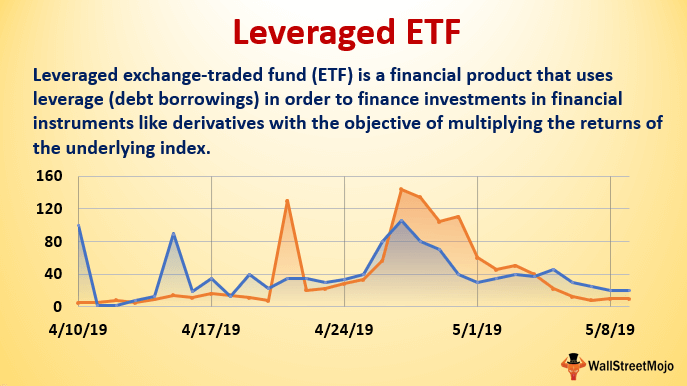
Leveraged ETFs have received tremendous media attention and are proving to be extremely popular with both individual and institutional investors. There are hundreds of leveraged ETFs, covering virtually every asset class and industry sector. The majority are double-leveraged, but there’s a sizeable group of triple-leveraged ETFs.

For professional investors, leveraged ETFs are useful in statistical arbitrage, short-term tactical strategies, and for use as short-term hedges without the need to roll futures. For individual investors, leveraged ETFs are alluring because of the potential for higher returns.

Citation: https://www.r2library.com/Resource/Title/0826102549

Now, some physicians and Uninformed investors might assume that the leverage returns are generated on a continuous basis, so that if an underlying index is up 5% for a month, the double-leveraged ETF will be up 10% for the same month; if the index is up 10% for 6 months, the ETF will be up 20%, and so forth. That is absolutely not the case. The leverage is determined on a daily basis and the returns for any other period usually will not be double or triple the underlying index.

In order for the leveraged funds to achieve appropriate levels of assets so they can provide their implied leverage, they have to rebalance daily. In the case of an ETF providing long 2-times leveraged exposure, they would typically attain exposure to a notional set of assets equal to 2 times their NAV.

Example: An example would be an ETF that takes in 100 units in assets that does a swap with a counterparty to provide exposure to 200 units in performing assets. The rebalancing activity of these funds will almost always be in the same direction as the market.

In essence, a leveraged ETF is essentially marked to market every night. It starts with a clean slate the next day, almost as if the previous day had not existed. This process produces daily leverage results. However, over time, the compounding of this reset can potentially vary the performance of the fund versus its underlying benchmark. This can result in either greater or lesser degrees of final leverage over individual holding periods.

PODCAST: https://www.investopedia.com/terms/l/leveraged-etf.asp

RELATED: https://smartasset.com/investing/what-is-a-leveraged-etf

ASSESSMENT: Your comments and thoughts are appreciated.

INVITATIONS: https://medicalexecutivepost.com/dr-david-marcinkos-bookings/

CONTACT: Ann Miller RN MHA

MarcinkoAdvisors@msn.com

Ph: 770-448-0769

Second Opinions: https://medicalexecutivepost.com/schedule-a-consultation/

DIY Textbooks: https://medicalexecutivepost.com/2021/04/29/why-are-certified-medical-planner-textbooks-so-darn-popular/

THANK YOU

***

FINANCE: https://www.amazon.com/Comprehensive-Financial-Planning-Strategies-Advisors/dp/1482240289/ref=sr_1_1?ie=UTF8&qid=1418580820&sr=8-1&keywords=david+marcinko

***

DAILY UPDATE: Nvidia, Medical Practice and Healthcare Costs

MEDICAL EXECUTIVE-POST TODAY’S NEWSLETTER BRIEFING

***

Essays, Opinions and Curated News in Health Economics, Investing, Business, Management and Financial Planning for Physician Entrepreneurs and their Savvy Advisors and Consultants

Serving Almost One Million Doctors, Financial Advisors and Medical Management Consultants Daily

A Partner of the Institute of Medical Business Advisors , Inc.

http://www.MedicalBusinessAdvisors.com

SPONSORED BY: Marcinko & Associates, Inc.

***

http://www.MarcinkoAssociates.com

Daily Update Provided By Staff Reporters Since 2007.
How May We Serve You?
© Copyright Institute of Medical Business Advisors, Inc. All rights reserved. 2024

REFER A COLLEAGUE: MarcinkoAdvisors@msn.com

SPONSORSHIPS AVAILABLE: https://medicalexecutivepost.com/sponsors/

ADVERTISE ON THE ME-P: https://tinyurl.com/ytb5955z

Your Referral Count -0-

Every medical practice, clinic or healthcare business needs cost and financial organization. We provide it through our detailed annual reports. When starting out, the pre-construction phase of a medical practice is crucial, because it sets the course for a successful project. It includes business and financial assessments, in which we learn about your goals, vision, financial realities and current and future facility needs.

***

CITE: https://www.r2library.com/Resource

Employers are Bracing for Healthcare Costs to Spike in 2025. Employers are up against escalating healthcare costs driven by mounting prescription drug expenses, inflation, and worsening chronic conditions, a new survey shows. The Business Group on Health released its annual Employer Health Care Strategy Survey, which examines the trends that large employers are watching and their plans to address the healthcare challenges they may face. The survey projects that healthcare cost trends will jump to 8% in 2025, growing from 6% in 2022. Actual healthcare costs have increased by 50% since 2017, according to the report.

Source: Paige Minemyer, Fierce Healthcare [8/20/24]

CITE: https://tinyurl.com/2h47urt5

  • Markets: Jerome Powell spoke in Jackson Hole on Friday and finally confirmed that interest rate cuts are on the way. The news set stocks up for a big finish to the week.
  • Stock spotlight: Nvidia was among the stocks that jumped, and investors will be keeping an eye on it this week, when the AI chipmaker reports earnings.

CITE: https://tinyurl.com/tj8smmes

Visualize: How private equity tangled banks in a web of debt, from the Financial Times.

COMMENTS APPRECIATED

PLEASE SUBSCRIBE: MarcinkoAdvisors@msn.com

Thank You

***

***

***

***

EDUCATIONAL TEXTBOOKS: https://tinyurl.com/4zdxuuwf

***

Selecting a Medical Practice Business Entity?

By http://www.MarcinkoAssociates.com

Incorporating a practice is something many doctors are unaware but at Marcinko Associates, Inc., we are here to help you in getting your medical practice or clinical business up and running. We believe this category is by far the most important when acquiring or starting a new practice as well as a continuing practice. Selecting a business entity that will be the most conducive to your overall clinic or medical practice objectives is vital. 

For example, clinic or medical business entity selection would include: Sole Proprietorship, Limited Liability Company, S-Corporation, C-Corporation, Professional Association or Non-profit organization.

***

***

Valuation of Hospitals [Competitive Environment]

By Health Capital Consultants, LLC

***

***

Demand for a variety of healthcare services – including those provided by hospitals – is likely to increase significantly in the near future, primarily as a result of the changing demographics of the U.S. population, most notably the growth in the number of Americans over the age of 65. Indeed, a Health Affairs study found that population aging alone will create approximately 0.74% annual growth in the demand for inpatient hospital services. While hospital consolidation is leading to operational efficiency for hospitals in providing services to an increasing number of patients, the federal government’s intensifying focus on anti-competitive behaviors in healthcare may hinder traditional consolidation efforts going forward.

CITE: https://www.r2library.com/Resource

This second installment in a five-part series on the valuation of hospitals reviews the competitive environment in which hospitals operate. (Read more...) 

COMMENTS APPRECIATED

Thank You

***

***

WHAT IS COMMON STOCK “PAR” VALUE?

WHAT IS COMMON STOCK “PAR” VALUE?

DEFINITION:

For common stock, the value on the books of the corporation. It has little to do with market value or even the original price of shares at first issuance. The difference between par and the price at first issuance is carried on the books of a corporation as “paid-in capital” or “capital surplus.”

CITE: https://www.r2library.com/Resource

***

Par value for preferred stocks is also liquidating value and the value on which dividends (expressed as a percentage) are paid, generally $100 per share.

THANK YOU
***

DAILY UPDATE: Telehealth and the RealPage

MEDICAL EXECUTIVE-POST TODAY’S NEWSLETTER BRIEFING

***

Essays, Opinions and Curated News in Health Economics, Investing, Business, Management and Financial Planning for Physician Entrepreneurs and their Savvy Advisors and Consultants

Serving Almost One Million Doctors, Financial Advisors and Medical Management Consultants Daily

A Partner of the Institute of Medical Business Advisors , Inc.

http://www.MedicalBusinessAdvisors.com

SPONSORED BY: Marcinko & Associates, Inc.

***

http://www.MarcinkoAssociates.com

Daily Update Provided By Staff Reporters Since 2007.
How May We Serve You?
© Copyright Institute of Medical Business Advisors, Inc. All rights reserved. 2024

REFER A COLLEAGUE: MarcinkoAdvisors@msn.com

SPONSORSHIPS AVAILABLE: https://medicalexecutivepost.com/sponsors/

ADVERTISE ON THE ME-P: https://tinyurl.com/ytb5955z

Your Referral Count -0-

CITE: https://www.r2library.com/Resource

Telehealth has taken more hits lately than a piñata at a birthday party. For example:

In April, UnitedHealth Group announced it was shutting down its Optum Virtual Care program. Days later, Walmart announced it would shutter both Walmart Health and Walmart Health Virtual Care.

And in July, Teladoc posted a net loss of $838 million in Q2. The drop was largely driven by an impairment charge of ~$800 million for BetterHelp, the virtual mental health platform it acquired in 2015, Fierce Healthcare reported. Executives attributed the decline to increased customer acquisition costs, among other factors.

CITE: https://tinyurl.com/2h47urt5

  • The Justice Department and the attorneys general of eight states sued RealPage, an apartment-pricing tool widely used by corporate landlords, alleging that it lowers competition by allowing property owners to coordinate higher rents.

CITE: https://tinyurl.com/tj8smmes

Visualize: How private equity tangled banks in a web of debt, from the Financial Times.

COMMENTS APPRECIATED

PLEASE SUBSCRIBE: MarcinkoAdvisors@msn.com

Thank You

***

***

***

***

EDUCATIONAL TEXTBOOKS: https://tinyurl.com/4zdxuuwf

***

DAILY UPDATE: Medicare Part C and CON Laws as Stocks Drift Higher

MEDICAL EXECUTIVE-POST TODAY’S NEWSLETTER BRIEFING

***

Essays, Opinions and Curated News in Health Economics, Investing, Business, Management and Financial Planning for Physician Entrepreneurs and their Savvy Advisors and Consultants

Serving Almost One Million Doctors, Financial Advisors and Medical Management Consultants Daily

A Partner of the Institute of Medical Business Advisors , Inc.

http://www.MedicalBusinessAdvisors.com

SPONSORED BY: Marcinko & Associates, Inc.

***

http://www.MarcinkoAssociates.com

Daily Update Provided By Staff Reporters Since 2007.
How May We Serve You?
© Copyright Institute of Medical Business Advisors, Inc. All rights reserved. 2024

REFER A COLLEAGUE: MarcinkoAdvisors@msn.com

SPONSORSHIPS AVAILABLE: https://medicalexecutivepost.com/sponsors/

ADVERTISE ON THE ME-P: https://tinyurl.com/ytb5955z

Your Referral Count -0-

Read: Georgia’s bipartisan effort to amend its “certificate of need” system to bring back shuttered rural hospitals. (KFF Health News)

CITE: https://www.r2library.com/Resource

Here’s where the major benchmarks ended:

  • The S&P 500® index (SPX) rose 63.97 points (1.15%) to 5,634.61, up 1.5% on the week; the Dow Jones Industrial Average® ($DJI) added 462.30 points (1.14%) to 41,175.08, up 1.3% for the week; the NASDAQ Composite®($COMP) advanced 258.43 points (1.47%) to 17,877.79, up 1.4% for the week.
  • The 10-year Treasury note yield (TNX) fell nearly six basis points to just under 3.81%.
  • The CBOE Volatility Index® (VIX) dropped sharply to 15.79, the lowest close since Monday.

CITE: https://tinyurl.com/2h47urt5

As Medicare Advantage (MA) enrollment grows, hospitals are breaking up with MA [Part C] insurance plans. Becker’s Healthcare reported that, so far in 2024, at least 17 systems ended a contract with an MA insurer.

CITE: https://tinyurl.com/tj8smmes

COMMENTS APPRECIATED

PLEASE SUBSCRIBE: MarcinkoAdvisors@msn.com

Thank You

***

***

***

***

EDUCATIONAL TEXTBOOKS: https://tinyurl.com/4zdxuuwf

***

TRANSACTIONAL STOCK ANALYSIS: What Is It?

Versus Technical Analysis

By Staff Reporters

***

***

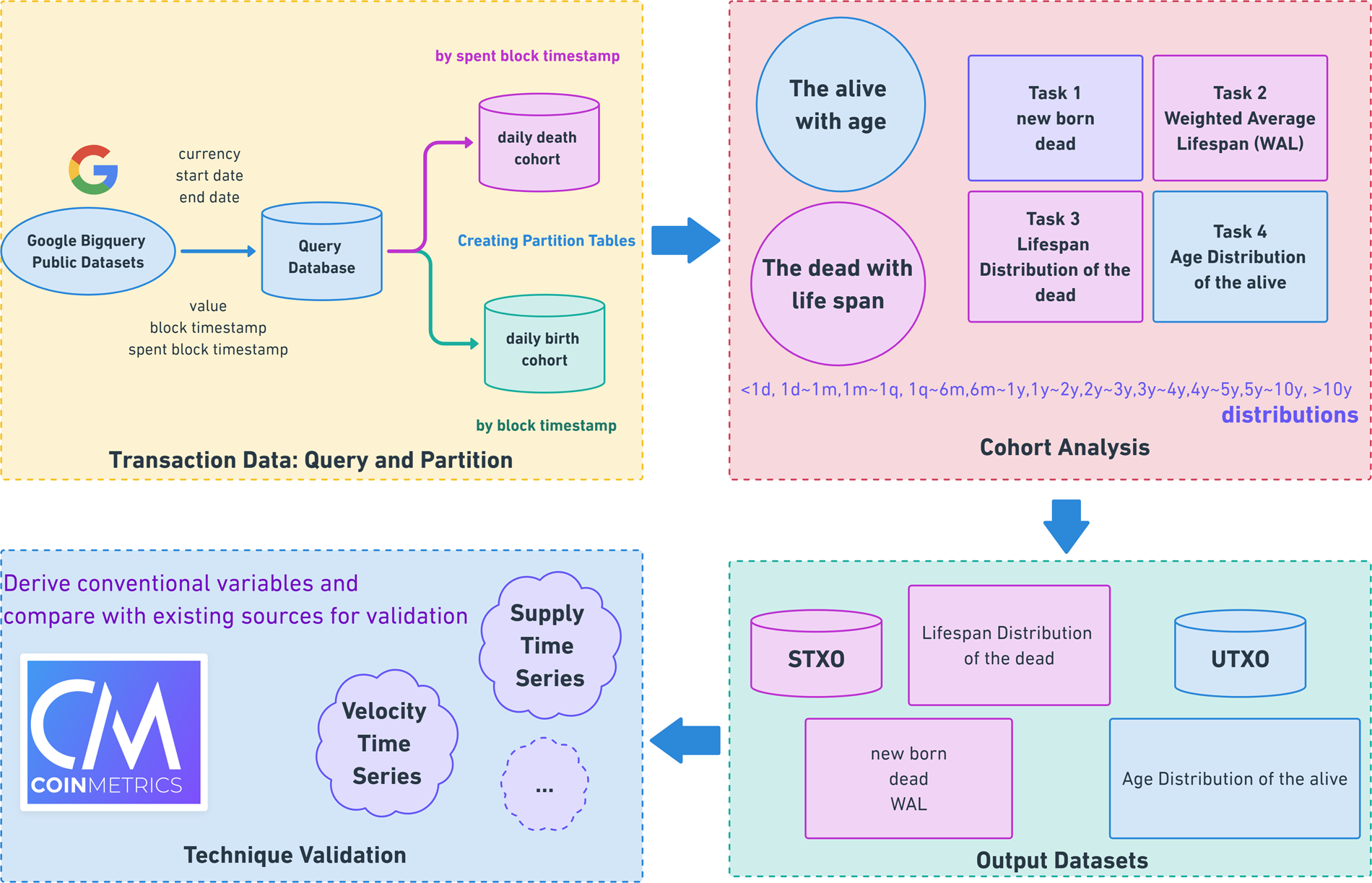
In traditional finance transaction data is guarded by exchanges, brokers, banks and regulators. It’s not accessible to everyone and big players pay a fortune for it.

But, in crypto, Transaction Data is public and on-chain – but it’s not usable by everyone. So, manually making sense of raw blockchain data is practically impossible. The data needs to be processed and analyzed to be made useful. That’s what sophisticated blockchain analytics tools are doing.

The combination of on-chain data and transaction analysis is something that hasn’t been before – in crypto or traditional finance. Getting access to transaction data and tools for searching and analyzing it will unlock a goldmine of potential insight.

People who have been on the inside of projects and see how the sausage is made know that the explanations for price movements are often simple and based on key players buying and selling. When the biggest holders are dumping the price is likely to go down. When a major new buyer takes a position prices are likely to go up.

That’s insight traditional Technical Analysis cannot provide, because it’s limited to looking at price movements. Transaction data, instead, is the underlying activity that generates prices in crypto.

CITE: https://www.r2library.com/Resource/Title/0826102549

Technical Analysis: https://medicalexecutivepost.com/2022/06/23/the-technicians/

Related: https://medicalexecutivepost.com/2022/09/25/what-is-sentimental-stock-market-analysis/

***

ORDER: https://www.amazon.com/Dictionary-Health-Information-Technology-Security/dp/0826149952/ref=sr_1_5?ie=UTF8&s=books&qid=1254413315&sr=1-5

ORDER MORE: : https://www.amazon.com/Financial-Management-Strategies-Healthcare-Organizations/dp/1466558733/ref=sr_1_3?ie=UTF8&qid=1380743521&sr=8-3&keywords=david+marcinko

***

COMMENTS APPRECIATED

Thank You

****

What is the Stock Market DEATH CROSS?

Is A Market Downside Ahead?

By Staff Reporters

***

Charles Schwab: The stock is about to form a death cross pattern as the 200-day and 50-day moving averages are about to cross each other. If this pattern forms, there are signs that the stock will continue falling as sellers target the key support at $60.8, its lowest point this month. A break above that level will see it drop to the psychological support at $55.

***

What Is a Death Cross?

The death cross is a technical chart pattern indicating the potential for a major sell-off. The death cross appears on a chart when a stock’s short-term moving average crosses below its long-term moving average. Typically, the most common moving averages used in this pattern are the 50-day and 200-day moving averages.

***

LINK: https://medicalexecutivepost.com/2022/02/09/what-is-a-bear-market-relief-rally/

CITE: https://www.r2library.com/Resource/Title/082610254

***

***

Summary:

  • The death cross is a bearish signal that’s issued when the short term moving average penetrates the falling long term moving average from above.
  • The most common settings for the averages are 50 and 200.
  • The death cross is a lagging indicator, which should be taken into consideration before relying on it for your own investments.

COMMENTS APPRECIATED

Thank You

Subscribe to the Medical Executive-Post

***

***

FINANCE: https://www.amazon.com/Comprehensive-Financial-Planning-Strategies-Advisors/dp/1482240289/ref=sr_1_1?ie=UTF8&qid=1418580820&sr=8-1&keywords=david+marcinko

***

DAILY UPDATE: Stock Markets Drop!

MEDICAL EXECUTIVE-POST TODAY’S NEWSLETTER BRIEFING

***

Essays, Opinions and Curated News in Health Economics, Investing, Business, Management and Financial Planning for Physician Entrepreneurs and their Savvy Advisors and Consultants

Serving Almost One Million Doctors, Financial Advisors and Medical Management Consultants Daily

A Partner of the Institute of Medical Business Advisors , Inc.

http://www.MedicalBusinessAdvisors.com

SPONSORED BY: Marcinko & Associates, Inc.

***

http://www.MarcinkoAssociates.com

Daily Update Provided By Staff Reporters Since 2007.
How May We Serve You?
© Copyright Institute of Medical Business Advisors, Inc. All rights reserved. 2024

REFER A COLLEAGUE: MarcinkoAdvisors@msn.com

SPONSORSHIPS AVAILABLE: https://medicalexecutivepost.com/sponsors/

ADVERTISE ON THE ME-P: https://tinyurl.com/ytb5955z

Your Referral Count -0-

CITE: https://www.r2library.com/Resource

What’s up

  • Zoom Video Communications zoomed 12.97% higher after beating earnings estimates and raising its revenue forecast for the year.
  • Crocs gained 1.04% after Williams Trading upgraded the company from Hold to Buy and boosted its price target to $163 from $135.
  • Deutsche Bank climbed 3.38% thanks to an announcement that it has reached a settlement with the majority of plaintiffs in its long-running case regarding its Postbank acquisition a decade ago.
  • Paramount Global rose 0.81% after its special committee extended its “go shop” period ahead of its potential merger with Skydance.

What’s down

  • Advance Auto Parts plummeted 17.47% thanks to a massive earnings miss this quarter and management’s prediction that earnings will drop for the rest of the year.
  • Nvidia fell 3.70% after it came to light that investors and insiders like CEO Jensen Huang keep selling their shares of the company.
  • Charles Schwab dropped 0.46% after TD Bank announced it will sell part of its stake in the company to cover recent fines.
  • Williams-Sonoma sank 9.21% due to a poor earnings report as consumers slow their spending with the home goods retailer.
  • Wolfspeed declined 5.38% after the chipmaker revealed that slowing EV sales had hurt its bottom line and that it’s closing one of its manufacturing plants to cut costs.

CITE: https://tinyurl.com/2h47urt5

Here’s where the major benchmarks ended:

  • The S&P 500 index (SPX) lost 50.21 points (–0.89%) to 5,570.64; the Dow Jones Industrial Average® ($DJI) fell 177.71 points (–0.43%) to 40,712.78; the NASDAQ Composite®($COMP) dropped 299.63 points (–1.67%) to 17,619.35. 
  • The 10-year Treasury note yield rose about eight basis points to 3.86%, roughly the midpoint of its recent range.
  • The CBOE Volatility Index® (VIX) climbed moderately to 17.66, the highest close since August 13.

CITE: https://tinyurl.com/tj8smmes

COMMENTS APPRECIATED

PLEASE SUBSCRIBE: MarcinkoAdvisors@msn.com

Thank You

***

***

***

***

EDUCATIONAL TEXTBOOKS: https://tinyurl.com/4zdxuuwf

***

What is Medical Practice FINANCIAL RATIO ANALYSIS?

BY DR. DAVID E. MARCINKO MBA MEd CMP®

CMP logo

SPONSOR: http://www.CertifiedMedicalPlanner.org

Financial ratio analysis typically involves the calculation of ratios that are financial and operational measures representative of the financial status of a clinic or medical practice enterprise.  These ratios are evaluated in terms of their relative comparison to generally established industry norms, which may be expressed as positive or negative trends for that industry sector. The ratios selected may function as several different measures of operating performance or financial condition of the subject entity.

CITE: https://www.r2library.com/Resource/Title/0826102549

Common types of financial indicators that are measured by ratio analysis include:

  • Liquidity. Liquidity ratios measure the ability of an organization to meet cash obligations as they become due, i.e., to support operational goals. Ratios above the industry mean generally indicate that the organization is in an advantageous position to better support immediate goals.  The current ratio, which quantifies the relationship between assets and liabilities, is an indicator of an organization’s ability to meet short-term obligations.  Managers use this measure to determine how quickly assets are converted into cash.
  • Activity. Activity ratios, also called efficiency ratios, indicate how efficiently the organization utilizes its resources or assets, including cash, accounts receivable, salaries, inventory, property, plant, and equipment.  Lower ratios may indicate an inefficient use of those assets.
  • Leverage. Leverage ratios, measured as the ratio of long-term debt to net fixed assets, are used to illustrate the proportion of funds, or capital, provided by shareholders (owners) and creditors to aid analysts in assessing the appropriateness of an organization’s current level of debt.  When this ratio falls equal to or below the industry norm, the organization is typically not considered to be at significant risk.
  • Profitability. Indicates the overall net effect of managerial efficiency of the enterprise. To determine the profitability of the enterprise for bench marking purposes, the analyst should first review and make adjustments to the owner(s) compensation, if appropriate.  Adjustments for the market value of the “replacement cost” of the professional services provided by the owner are particularly important in the valuation of professional medical practices for the purpose of arriving at an ”economic level” of profit.

The selection of financial ratios for analysis and comparison to the organization’s performance requires careful attention to the homogeneity of data. Bench marking of intra-organizational data (i.e., internal bench marking) typically proves to be less variable across several different measurement periods.

However, the use of data from external facilities for comparison may introduce variation in measurement methodology and procedure. In the latter case, use of a standard chart of accounts for the organization or recasting the organization’s data to a standard format can effectively facilitate an appropriate comparison of the organization’s operating performance and financial status data to survey results.

***

YOUR COMMENTS ARE APPRECIATED.

INVITE DR. MARCINKO: https://medicalexecutivepost.com/dr-david-marcinkos-

Thank You

***

Comprehensive Financial Planning Strategies for Doctors and Advisors: Best Practices from Leading Consultants and Certified Medical Planners™

MORE: https://www.routledge.com/Comprehensive-Financial-Planning-Strategies-for-Doctors-and-Advisors-Best/Marcinko-Hetico/p/book/9781482240283

***

DAILY UPDATE: Covid, Medicaid, DNC, Tesla, UAW, Boeing and the Roller-Coaster Stock Markets

MEDICAL EXECUTIVE-POST TODAY’S NEWSLETTER BRIEFING

***

Essays, Opinions and Curated News in Health Economics, Investing, Business, Management and Financial Planning for Physician Entrepreneurs and their Savvy Advisors and Consultants

Serving Almost One Million Doctors, Financial Advisors and Medical Management Consultants Daily

A Partner of the Institute of Medical Business Advisors , Inc.

http://www.MedicalBusinessAdvisors.com

SPONSORED BY: Marcinko & Associates, Inc.

***

http://www.MarcinkoAssociates.com

Daily Update Provided By Staff Reporters Since 2007.
How May We Serve You?
© Copyright Institute of Medical Business Advisors, Inc. All rights reserved. 2024

REFER A COLLEAGUE: MarcinkoAdvisors@msn.com

SPONSORSHIPS AVAILABLE: https://medicalexecutivepost.com/sponsors/

ADVERTISE ON THE ME-P: https://tinyurl.com/ytb5955z

Your Referral Count -0-

Stat: 2.4%. That’s the percentage of US emergency department visits that involved patients positive with Covid during the week ending August 16th, down from the prior week (but still high). (Becker’s Clinical Leadership)

Quote: “The pandemic was destructive and concerning and clearly demonstrated that Medicaid is so crucially important for our national safety net.”—Jennifer Babcock, SVP for Medicaid policy at the Association for Community Affiliated Plans, on state efforts to expand Medicaid (KFF Health News)

Read: Here are the healthcare-related topics to keep tabs on during the Democratic National Convention. (Stat)

CITE: https://www.r2library.com/Resource

What’s up

  • Target popped 11.25% thanks to an impressive earnings report that included a 36% increase in earnings.
  • Toll Brothers rose 5.59% after beating earnings estimates and raising its projections for home deliveries this year.
  • TJX Companies gained 6.06% and hit a new record high thanks to a strong beat-and-raise earnings report.
  • Ford climbed 1.54% after overhauling its EV plans, including canceling production of a new EV SUV and delaying a new EV plant.
  • Keysight Technologies soared 13.91% after beating earnings expectations and projecting an even stronger second half of the year ahead.
  • BigBear.ai skyrocketed 27.07% thanks to a new contract with the Federal Aviation Administration to provide IT and tech solutions.

What’s down

CITE: https://tinyurl.com/2h47urt5

Here’s where the major benchmarks ended:

  • The S&P 500® index (SPX) rose 23.73 points (0.42%) to 5,620.85; the Dow Jones Industrial Average® ($DJI) advanced 55.22 points (0.14%) to 40,890.49; the NASDAQ Composite®($COMP) added 102.04 points (0.57%) to 17,918.99.
  • The 10-year Treasury note yield (TNX) fell three basis points to just under 3.78%, near recent lows.
  • The CBOE Volatility Index® (VIX) increased to 16.27.

CITE: https://tinyurl.com/tj8smmes

Tesla cars manufactured in China were slapped with a new tariff by the European Union as part of the group’s crackdown on Chinese green-energy exports.

And, The UAW threatened to strike against Stellantis for allegedly reneging on its promise to reopen an Illinois factory, which the carmaker denies.

Finally, Boeing was forced to pause progress on its oft-delayed 777X aircraft after discovering a structural problem during test flights.

Visualize: How private equity tangled banks in a web of debt, from the Financial Times.

COMMENTS APPRECIATED

PLEASE SUBSCRIBE: MarcinkoAdvisors@msn.com

Thank You

***

***

***

***

EDUCATIONAL TEXTBOOKS: https://tinyurl.com/4zdxuuwf

***

PHYSICIAN ACQUISITION: The Art of Acquiring Your Medical Practice

Part Two: Medical Practice Valuation

By Dr. David Edward Marcinko, MBA, MED, CMP

www.CertifiedMedicalPlanner.org

In Part 1, we discussed how to establish fair market value (FMV) for a medical practice in the article, “Establish Your Practice’s Fair Market Value.” This time, we’ll review important terms and conditions for the sale acquisition and transaction.

LINK: https://medicalexecutivepost.com/2023/02/02/establish-your-practices-fair-market-value/

Valuation Types

Unfortunately, as a general rule, medical practice worth is presently deteriorating. A good medical practice is no longer a good business necessarily, and selling doctors can no longer automatically expect to extract a premium sale price. Nevertheless, appraising your medical practice on a periodic basis can play a key role in obtaining maximum value for it.

Competent practice valuation specialists typically charge a retainer to cover out-of-pocket expenses. Fees should not be based on a percentage of practice value, and may take 30-45 days to complete. Flat fees should be the norm because a sliding scale or percentage fee may be biased toward over-valuation in a declining marketplace. Fees range from $7,500-$50,000 for the small to large medical practice or clinic.

Expect to pay a retainer and sign a formal, professional engagement letter. Seek an unbiased and independent viewpoint. Buyer and sellers should each have their own independent appraisal done, using similar statistics, accounting measures, and economic assumptions.

At the Institute of Medical Business Advisors, Inc www.MedicalBusinessAdvisors.com we use three engagement levels that vary in intensity, purpose, and cost:

1. A comprehensive valuation provides an unambiguous value range. It is supported by most all procedures that valuators deem relevant, with mandatory onsite review. This gold standard is suitable for contentious situations. A written “opinion of value” is applicable for litigation support activities like depositions and trial. It is also useful for external reporting to bankers, investors, the public, Internal Revenue Service (IRS), etc.

2. A limited valuation lacks additional suggested Uniform Standards of Professional Appraisal Practice (USPAP) procedures. It is considered to be an “agreed upon engagement,” when the client is the only user. For example, it may be used when updating a buy/sell agreement, or when putting together a practice buy-in for a valued associate. This limited valuation would not be for external purposes, so no onsite visit is necessary and a formal opinion of value is not rendered.

3. An ad-hoc valuation is a low level engagement that provides a gross non-specific approximation of value based on limited parameters or concerns involved parties. Neither a written report nor an opinion of value is rendered. It is often used periodically as an internal organic growth/decline gauge.

Structure Sales Transactions and Acquisitions

When the practice price has been determined and agreed on, the actual sales deal can be structured in a couple of ways:

(1) Stock Purchase v. Asset Purchase

In an asset transaction, the buyer will receive a tax amortization benefit associated with the intangible value of the business. This tax amortization represents a non-cash expense benefiting the buyer. In this case, the present value of those future tax benefits is added to the business enterprise value.

(2) Corporate Transactions

Typical private deals in the past involved some multiple (ratio) of earning before income taxes (EBIT)—usually a combination of cash, restricted stock, notes receivable, and possibly assumption of liabilities. For some physician hospital organizations, and public deals, the receipt of common stock can increase the practice price by as much as 40-50 percent (to accept the corresponding business risk, in lieu of cash).

Complete the Deal

The deal structure will vary depending on whether the likely buyer is a private practitioner, health system or a corporate partner. Some key issues to consider in the “art of the deal” include:

  • Working capital (in or out?): Including working capital in the transaction will increase the sale price.
  • Stock vs. asset transaction: Structuring the deal as an asset purchase will increase practice value due to the tax amortization benefits received by the buyer for intangible assets of the practice.
  • Common stock premium: The total sale price can be significantly higher than a cash equivalent price for accepting the risk and relative illiquidity of common stock as part of the payment.
  • Physician compensation: If your goal is to maximize practice value, take home a lower salary to increase practice sale price. The reverse is also true.

Understand Private Deal Structure

Assuming a practice sale is a private transaction, deal negotiations are based on the following pricing methodologies:

Seller financing: Many transactions involve an earn-out arrangement where the buyer puts money down and pays the balance under a formula based on future revenues, or gives the seller a promissory note under similar terms. Seller financing decreases a buyer’s risks (the longer the terms, the lower the risk). Longer terms demand premiums, while shorter terms demand discounts. Premiums that buyers pay for a typical seller-financed practice are usually more than what you would expect from a simple time value of money calculation, as a result of buyer risk reduction from paying over time, rather than up front with a bank loan or all cash. Remember to obtain a life insurance policy on the buyer.

Down payment: The greater the down payment for acquisition of a medical practice, the greater the risk is to the buyer. Consequently, sellers who will take less money up front can command a higher than average price for their practice, while sellers who want more down usually receive less in the end.

Taxation: Tax consequences can have a major impact on the price of a medical practice. For instance, a seller who obtains the majority of the sales price as capital gains can often afford to sell for a much lower price and still pocket as much or more than if the sales price were paid as ordinary income. Value attributed to the seller’s patient list, medical records, name brand, good will, and files qualifies for capital gains treatment. Value paid for the selling doctor’s continuing assistance after the sale and value attributed to a non-compete agreement are taxed at ordinary income. A buyer willing to allocate more for items with capital gains treatment, or a seller willing to take more in ordinary income, can frequently negotiate a better price. This is the essence of economically prudent practice transition planning.

Sidestep Common Buyer Blunders

Here are 10 blunders to avoid, as a buyer:

1. Believing the selling doctor’s attestations. Always verify data through an independent appraisal.

2. Wanting to change the culture of the practice. Be careful: Patients may not adjust quickly to change.

3. Using all available cash without keeping a reserve for potential contingencies.

4. Creating a conflict with the seller by recognizing a weakness and continually focusing on it for a bargain price.

5. Failing to realize that managed care plan contracts can be lost quickly or may not be always transferable.

6. Suffering from analysis paralysis. Money cannot be made by continually checking out a medical practice, only by actually running one.

7. Not appreciating the uniqueness of each practice, and using inaccurate “rules of thumb” from the golden age of medicine.

8. Not realizing that practice worth and goodwill value have plummeted lately and continue to decline in most parts of the country.

9. Not understanding that practice brokers may play both sides of the buy/sell equation for profit. Brokers usually are not obligated to disclose conflicts of interest, are not fiduciaries, and do not provide testimony as a court-approved expert witness.

10. Not hiring an appraisal professional who will testify in court, if need be, using the IRS-approved USPAP methods of valuation. Always assume that the appraisal will be contested (many times, it is).

After pricing and contracting due diligence has been performed, the next step in the medical practice sale process—as Donald Trump might say—is just good, old-fashioned negotiation.

Electronic Downloads

Part I: Part I

Part II: Part II

Additional Reading:

Cimasi, R.J., A.P. Sharamitaro, T.A. Zigrang, L.A.Haynes. Valuation of Hospitals in a Changing Reimbursement and Regulatory Environment. Edited by David E. Marcinko. Healthcare Organizations: Financial Management Strategies. Specialty Technical Publishers, 2008.

Marcinko, D.E. “Getting it Right: How much is a plastic surgery practice really worth?” Plastic Surgery Practice, August 2006.

Marcinko, D.E., H.R. Hetico. The Business of Medical Practice (3rd ed). Springer Publishing,New York,N.Y., 2011.

Marcinko, D.E. and H.R. Hetico. Risk Management and Insurance Planning for Physicians and Advisors. Jones and Bartlett Publishers, Sudbury, Mass., 2007.

Marcinko, D.E. and H.R. Hetico. Financial Planning for Physicians and Advisors. Jones and Bartlett Publishers, Sudbury, Mass., 2007.

Marcinko, D.E. and H.R. Hetico. Dictionary of Health Insurance and Managed Care. Springer Publishers, New York, N.Y., 2007.

Marcinko, D.E. and H.R. Hetico. Dictionary of Health Economics and Finance. Springer Publishers,New York,N.Y., 2007.

Product Details  Product Details

   Product Details 

ELI LILLY: Zepbound and Mounjaro

By Staff Reporters

***

***

Eli Lilly said its weight loss drugs can prevent diabetes

Taking Zepbound or Mounjaro can cut the risk of developing Type 2 diabetes by 94% in overweight and pre-diabetic patients, according to a new study from the US drug maker.

The drugs, similar to Ozempic and Wegovy from rival company Novo Nordisk, cost more than $1,000 a month and have fueled Eli Lilly’s stock since hitting the market in recent years. The pharma giant sold ~$3.1 billion of Mounjaro last quarter, up from $980 million in the same period last year.

COMMENTS APPRECIATED

Thank You

***

***

FAIR MARKET VALUATION DETERMINATION: Medical Practices or Clinics

MEDICAL PRACTICE OR AMBULATORY SURGERY CENTER

MARCINKO ASSOCIATES, Inc.

http://www.MARCINKOASSOCIATES.com

***

FAIR MARKET VALUATION DETERMINATION

There are a Myriad of Reasons for Obtaining a Medical Practice Valuation and Appraisal Engagement:

  • Outright selling-buying
  • Partnership and Associate buy-in / buy-out
  • Mergers and Acquisitions
  • Organic growth tracking
  • Hospital integrations
  • Private and public reporting
  • Financing and Venture Capital
  • Estate and tax planning

Our Capability

We have the ability to provide extensive analysis of value components in healthcare practices and provide appraisals based on business, economic, and market conditions. This involves detailed examination of financials and clinical data in the context of numerous factors including medical specialty, physician supply and demand, payer mix, regulatory environment, regional dynamics, and risk premium.

CITE: https://www.r2library.com/Resource

***

READ MORE: https://marcinkoassociates.com/welcome-medical-colleagues/

THANK YOU

***

***

***

DAILY UPDATE: Medicare Part C & Healthcare Bankruptcies as Stock Market Volatility Rises

MEDICAL EXECUTIVE-POST TODAY’S NEWSLETTER BRIEFING

***

Essays, Opinions and Curated News in Health Economics, Investing, Business, Management and Financial Planning for Physician Entrepreneurs and their Savvy Advisors and Consultants

Serving Almost One Million Doctors, Financial Advisors and Medical Management Consultants Daily

A Partner of the Institute of Medical Business Advisors , Inc.

http://www.MedicalBusinessAdvisors.com

SPONSORED BY: Marcinko & Associates, Inc.

***

http://www.MarcinkoAssociates.com

Daily Update Provided By Staff Reporters Since 2007.
How May We Serve You?
© Copyright Institute of Medical Business Advisors, Inc. All rights reserved. 2024

REFER A COLLEAGUE: MarcinkoAdvisors@msn.com

SPONSORSHIPS AVAILABLE: https://medicalexecutivepost.com/sponsors/

ADVERTISE ON THE ME-P: https://tinyurl.com/ytb5955z

Your Referral Count -0-

Unlike previous election cycles, members of both political parties are skeptical of Medicare Advantage, prompting former HHS Secretary Alex Azar to say plans need to engage in “myth busting.”


Mass General Brigham is showing a slight year-over-year financial improvement across the first half of 2024.


And … a decline in healthcare bankruptcies appears to be driven by middle-market companies.

CITE: https://www.r2library.com/Resource

What’s up

What’s down

  • Lowe’s sank 1.18% after beating earnings expectations but missing on sales and, more importantly, announcing weaker sales lie ahead.
  • Paramount Global stumbled 1.08% after a new $4.3 billion bid to acquire the company came out of left field.
  • Boeing fell 4.24% on the announcement that the company is grounding its test fleet of the new 777X airplane due to, what else, maintenance issues.

CITE: https://tinyurl.com/2h47urt5

Here’s where the major benchmarks ended:

  • The SPX fell 11.13 points (–0.20%) to 5,597.12; the Dow Jones Industrial Average® ($DJI) dropped 61.56 points (–0.15%) to 40,834.97; the NASDAQ Composite®($COMP) ended 59.83 points lower (–0.33%) to 17,816.94.
  • The 10-year Treasury note yield (TNX) fell five basis points to 3.82%.
  • The CBOE Volatility Index® (VIX) climbed 8% to 15.84

CITE: https://tinyurl.com/tj8smmes

Visualize: How private equity tangled banks in a web of debt, from the Financial Times.

COMMENTS APPRECIATED

PLEASE SUBSCRIBE: MarcinkoAdvisors@msn.com

Thank You

***

***

***

***

EDUCATIONAL TEXTBOOKS: https://tinyurl.com/4zdxuuwf

***

What is the Investing “EFFICIENT MARKET ” Hypothesis?

By Dr. David Edward Marcinko MBA MEd CMP

SPONSOR: http://www.MarcinkoAssociates.com

According to colleagues Jeffrey S. Coons PhD CFA, the Efficient Market Hypothesis (EMH) states that securities are fairly priced based on information about their underlying cash flows and that physician investors should not expect to consistently outperform the market over the long-term. 

There are three distinct forms of EMH that vary by the type of information that is reflected in a security’s price:

Weak Form: This form holds that investors will not be able to use historical data to earn superior returns on a consistent basis.  In other words, the financial markets price securities in a manner that fully reflects all information contained in past prices.

Semi-Strong Form: This form asserts that security prices fully reflect all publicly available information. Therefore, investors cannot consistently earn above normal returns based solely on publicly available information, such as earnings, dividend, and sales data.

Strong Form: This form states that the financial markets price securities such that, all information (public and non-public) is fully reflected in the securities price; investors should not expect to earn superior returns on a consistent basis, no matter what insight or research they may bring to the table. 

While a rich literature has been established for doctors regarding to test whether EMH actually applies in any of its three forms in real world markets – probably the most difficult evidence to overcome for backers of EMH is the existence of a vibrant money management and mutual fund industry charging value-added fees for their services. 

In fact, no less than Warren Buffett has suggested that the markets are decidedly not efficient. 

COMMENTS APPRECIATED

Thank You

***

***

PREFERRED versus COMMON Stock?

Is there a Difference?

What is the Difference?

This image has an empty alt attribute; its file name is dem-at-wharton1.jpg

By Dr. David Edward Marcinko MBA MEd CMP®

CMP logo

SPONSORED: http://www.CertifiedMedicalPlanner.org

SPONSORED: http://www.MarcinkoAssociates.com

A common stock is the least senior of securities issued by a company. 

A preferred stock, in contrast, is slightly more senior to common stock, since dividends owed to the preferred stockholders should be paid before distributions are made to common stockholders. 

However, distributions to preferred stockholders are limited to the level outlined in the preferred stock agreement (i.e., the stated dividend payments).  Like a fixed income security, preferred stocks have a specific periodic payment that is either a fixed dollar amount or an amount adjusted based upon short-term market interest rates. 

However, unlike fixed income securities, preferred stocks typically do not have a specific maturity date and preferred stock dividend payments are made from the corporation’s after tax income rather than its pre-tax income.  Likewise, dividends paid to preferred stockholders are considered income distributions to the company’s equity owners rather than creditors, so the issuing corporation does not have the same requirement to make dividend distributions to preferred stockholders. 

So, preferred stock is generally referred to as a “hybrid” security, since it has elements similar to both fixed income securities (i.e., a stated periodic payments) and equity securities (i.e., shareholders are considered owners of the issuing company rather than creditors). 

Convertible preferred stocks (and convertible corporate bonds) are also considered hybrid securities since they have both equity and fixed income characteristics.   A convertible security whether a preferred stock or a corporate bond, generally includes a provision that allow the security to be exchanged for a given number of common stock shares in the issuing corporation. The holder of a convertible security essentially owns both the preferred stock (or the corporate bond) and an option to exchange the preferred stock (or corporate bond) for shares of common stock in the company. 

ASSESSMENT: Thus, at times the convertible security may behave more like the issuing company’s common stock than it does the issuing company’s preferred stock (or corporate bonds), depending upon how close the common stock’s market price is to the designated conversion price of the convertible security.

CITATION: https://www.r2library.com/Resource/Title/0826102549

Your thoughts are appreciated.    

Comprehensive Financial Planning Strategies for Doctors and Advisors: Best Practices from Leading Consultants and Certified Medical Planners™

ORDER Textbook: https://www.amazon.com/Comprehensive-Financial-Planning-Strategies-Advisors/dp/1482240289/ref=sr_1_1?ie=UTF8&qid=1418580820&sr=8-1&keywords=david+marcinko

SECOND OPINIONS: https://medicalexecutivepost.com/schedule-a-consultation/

INVITE DR. MARCINKO: https://medicalexecutivepost.com/dr-david-marcinkos-bookings/

THANK YOU

***

DAILY UPDATE: NAR Commissions Down as Stock Markets Rise

MEDICAL EXECUTIVE-POST TODAY’S NEWSLETTER BRIEFING

***

Essays, Opinions and Curated News in Health Economics, Investing, Business, Management and Financial Planning for Physician Entrepreneurs and their Savvy Advisors and Consultants

Serving Almost One Million Doctors, Financial Advisors and Medical Management Consultants Daily

A Partner of the Institute of Medical Business Advisors , Inc.

http://www.MedicalBusinessAdvisors.com

SPONSORED BY: Marcinko & Associates, Inc.

***

http://www.MarcinkoAssociates.com

Daily Update Provided By Staff Reporters Since 2007.
How May We Serve You?
© Copyright Institute of Medical Business Advisors, Inc. All rights reserved. 2024

REFER A COLLEAGUE: MarcinkoAdvisors@msn.com

SPONSORSHIPS AVAILABLE: https://medicalexecutivepost.com/sponsors/

ADVERTISE ON THE ME-P: https://tinyurl.com/ytb5955z

Your Referral Count -0-

On last Saturday, a class-action settlement with the National Association of Realtors (NAR) went into effect, ripping up the playbook on how real estate agents are compensated. The NAR was accused of artificially inflating commission rates, which have historically ranged from 5% to 6%, a higher fee than the rest of the world. Consumer advocates hope the new rules will lead to lower commissions, shift power away from agents, and add transparency into what’s been an opaque system.

CITE: https://www.r2library.com/Resource

What’s up

  • AMD rose 4.52% on the news that it will acquire server manufacturer ZT Systems for $4.9 billion. While this escalates the AI arms race, competitor Nvidia rose 4.35% regardless.
  • FuboTV soared yet another 17.65% after a judge temporarily blocked the launch of a sports streaming service created by Disney, Warner Bros. Discovery, and Fox last week.
  • McDonald’s climbed 3.25% after Evercore ISI analysts raised their price target for the stock to $320 per share.
  • Zim Integrated Shipping Services rocketed 16.74% higher after the marine shipping company posted impressive earnings and raised its full-year guidance.

What’s down

  • Trump Media & Technology Group fell 3.56% as the Democratic National Convention kicks off in Chicago today, with investors fretful that the stock could be more volatile than usual during the event.
  • HP sank 3.65% after Morgan Stanley analysts downgraded the stock from Equal Weight to Overweight, though they kept their price target the same.
  • Sweetgreen dropped 6.82% thanks to Piper Sandler analysts downgrading the stock from Overweight to Neutral after the company’s big pop last week made shares too pricey.

CITE: https://tinyurl.com/2h47urt5

Here’s where the major benchmarks ended:

  • The S&P 500 index rose 54.00 points (0.97%) to 5,608.25; the Dow Jones Industrial Average® ($DJI) added 236.77 points (0.58%) to 40,896.53; the NASDAQ Composite®($COMP) points increased 245.05 (1.39%) to 17, 876.77.
  • The 10-year Treasury note yield (TNX) fell about two basis points to just under 3.87%.
  • The CBOE Volatility Index® (VIX) fell to 14.61, near one-month lows.

CITE: https://tinyurl.com/tj8smmes

Stat: 12%. That’s how much mpox vaccine maker Bavarian Nordic’s stock shot up after the WHO declared a global health emergency. (Fortune)

COMMENTS APPRECIATED

PLEASE SUBSCRIBE: MarcinkoAdvisors@msn.com

Thank You

***

***

***

***

EDUCATIONAL TEXTBOOKS: https://tinyurl.com/4zdxuuwf

***

What is an INVERSE ETF?

By Staff Reporters

***

***

What are inverse ETFs?

An inverse ETF, often known as a bear or short ETF, is an exchange-traded fund designed to profit from a market decline. These short-term, publicly traded investments are utilized by investors who believe that a particular market or individual security will lose value in the near future. They may use inverse ETFs as a way of hedging losses during a downturn.

“Inverse ETFs are a tool to hedge a stock portfolio,” according to John DeYonker. “If the S&P 500 is your benchmark, and it goes up 1%, then your hedge will go down 1% and vice versa. Hedging with inverse ETFs can reduce volatility for investors—it’s like insurance.”

Investors may also use inverse ETFs as a way to take advantage of a predicted decline. In this way, they may be used as an alternative to short selling. For example, if an investor believes that the oil industry will have a setback in the immediate future, they may choose to purchase an inverse ETF of securities tied to energy producers. If correct in their prediction, the investor’s inverse ETF may recognize a profit. If the investor is incorrect, and the market or individual security increases in price, they may see a loss.

An investor who believes that the S&P 500 will decline, for example, may choose to purchase shares of the ProShares Short S&P 500. This inverse ETF’s value is inversely proportional to the overall S&P 500 index.

Inverse ETFs are generally considered to be highly volatile investments, as their losses typically compound daily. This makes inverse ETFs more risky than the index to which they are tied.

CITE: https://en.wikipedia.org/wiki/Exchange-traded_fund

***

COMMENTS APPRECIATED

Thank You

RELATED: https://medicalexecutivepost.com/2021/12/26/podcast-what-is-a-leveraged-etf/?preview=true

MORE: https://www.routledge.com/Comprehensive-Financial-Planning-Strategies-for-Doctors-and-Advisors-Best/Marcinko-Hetico/p/book/9781482240283

***

J. POWELL: To Speak At Jackson Hole

By Staff Reporters

***

***

Later this week, central bankers will meet in the shadow of the Tetons for the Jackson Hole Symposium, an annual retreat for global economic officials to talk monetary policy.

CITE: https://www.r2library.com/Resource

The main event: Federal Reserve Chairman Jerome Powell’s keynote speech on Friday, which investors hope will clarify the timing and pace of interest rate cuts.

COMMENTS APPRECIATED

Thank You

***

***

REAL ESTATE Investing for Physicians

SOME GUIDELINES FOR COLLEAGUES

Touring with Marcinko | The Leading Business Education ...

By Dr. David Edward Marcinko MBA CMP®

SPONSOR: http://www.CertifiedMedicalPlanner.org

CMP logo

According to Rick Kahler MS CFP® ChFC CCIM [www.KahlerFinancial.com] real estate is one of the largest asset classes in the world. The family home is the largest asset many middle-class Americans own. And, real estate makes up a significant portion of the net worth of many wealth accumulators. Directly owning real estate is not an investment for the faint of heart, the armchair investor, or the uneducated. Most wealth accumulators would do well to leave direct ownership of real estate to the pros and invest in real estate investment trusts (REITs) instead [personal communication].

Still, as we have seen, the lure of investing in a tangible asset like real estate is enticing for high risk tolerant physician-investors who need a sense of control and interaction with their investments. If you are among them, here are a few guidelines that may keep you on a profitable path.

1. Don’t attempt to purchase investment real estate without the help of a commercial real estate specialist who is a fiduciary bound to look out for your best interest. Engage a Certified Commercial Investment Member (CCIM) with years of training and experience in analyzing and acquiring investment real estate. To find a CCIM near you, go to http://www.ccim.com.

2. You will sign a disclosure agreement that will tell you who the Realtor represents. Be sure the Realtor you engage represents you and not the seller, both parties, or neither party.

3. Never trust the income and expense data provided by the seller’s Realtor. While a seller represented by a CCIM will have a greater chance of supplying you with accurate data, most will significantly understate expenses and overstate the capitalization rate. Selling Realtors often understate the average annual cost of repairs and maintenance. I estimate this annual expense at 10%.

4. Another often understated expense is management. Many owners manage their own properties, so the selling broker doesn’t include an estimate for management expenses. They should. Real estate doesn’t manage itself, ever. You will either need to hire professional management or do your own management (always a scary proposition). Even if you do it yourself, you have an opportunity cost of your time, so you must include a management fee in the expenses. Most small residential apartments and single-family homes will pay 10% of their rents to a manager.

5. You must verify all the costs presented to you by the seller’s Realtor. Demand copies of at least the last three and preferably five years of tax returns. Research items like utility bills, property taxes, legal fees, insurance costs and repairs, maintenance costs, replacement reserves, tax preparation and all management fees. As a rule of thumb, expenses will average 40% of rental income on average-aged properties where the tenants pay all utilities except water. Newer properties may have expenses as low as 35%, while older properties can be as high as 50%.

6. By subtracting the vacancy rate and stabilized expenses from the rent, you will find the net operating income. This is the income you will put in your pocket—assuming the property is paid for. By dividing the net operating income by the purchase price, you will find the return you will receive on your investment, called the capitalization or “cap” rate. In Rapid City SD, for example, the cap rate tends to be 4% for single-family homes, 5% to 8% for duplexes to eight-plexes, and 8% to 12% for larger residential and commercial properties.

Citation: https://www.r2library.com/Resource/Title/0826102549

ASSESSMENT: Yes, physician-investors and all of us can build wealth with real estate. You just need to educate yourself, work hard, start conservatively, think long-term, and be prepared for lean years. This is not a quick or easy path to riches. Your comments are appreciated. Thank You.

INVESTING: https://www.amazon.com/Comprehensive-Financial-Planning-Strategies-Advisors/dp/1482240289/ref=sr_1_1?ie=UTF8&qid=1418580820&sr=8-1&keywords=david+marcinko

***

INVITE DR. MARCINKO: https://medicalexecutivepost.com/dr-david-marcinkos-bookings/

THANK YOU

***

Keep your Investing Options Open – Doctor

OR – Hedge your Bets

By Dr. David Edward Marcinko MBA MEd CMP™

http://www.CertifiedMedicalPlanner.org

[Publisher-in-Chief]

As a physician executive or investor, if you don’t ordinarily deal in options or other financial derivatives, you may need to brush up on puts and calls, straddles, strangles (or combinations), forwards, futures, swaps, spreads, and non-equity options such as stock index options. Options and other financial derivatives can be used by astute physicians, financial advisors and investment managers not only as a tool to better manage the investment risks potentially affecting portfolio returns, but to craft truly value-added investment strategies customized to meet investors’ needs. The three main types of risk of equity securities (individual company, industry, and market) can be mitigated with options.

Individual Company Risk

Individual company risk can be addressed with equity options in that company’s stock. Industry risk can be reduced through the use of narrow-based index options, while market risk can be mitigated with broad-based index options. Sophisticated hedging and risk management strategies can be designed using both equity and stock index options.

Exotic Stock Options?

Some doctors feel that options have been generally thought of as too risky or exotic or requiring too much capital, resulting in a general lack of comfort. A decade ago, these opinions have no doubt been shaped by the collapse of Bearings and the resulting bitter litigation by Proctor & Gamble and Gibson Greetings against Bankers Trust. Last decade, it was Enron, Tyco, WorldCom, Lehman Brothers, AIG, BA, Fannie, Freddie and all those involved in the “flash-crash” of 2008-09; etc.

Assessment

Generally, premiums paid in buying puts or calls are nondeductible capital expenditures and may produce a capital gain or loss depending upon whether the option is sold prior to exercise, the call expires unexercised, or, if the option is exercised, it is added to the basis of the stock (call) or deducted from it (put). Premiums received for writing puts or calls are not included in income upon receipt but are deferred until the option expires, is exercised, or a closing transaction is entered into. Non-equity options (index options) are marked to market at year end (same as for futures) with 60% considered long-term capital gain and 40% considered short-term.

Note: “An Introduction to Options and Other Financial Derivative Strategies,” by Thomas J. Boczar, Trust & Estates, February 1997, pp. 43–68, INTERTEC/K-III Publishing.

The primary objectives in using derivatives are:

1. Risk management and hedging (reducing or eliminating downside risk, monetizing a position, deferring and possibly avoiding capital gains taxes)

2. Leveraging investment capital

3. Enhancing after-tax returns

4. Creating customized risk/return profiles

Channel Surfing the ME-P

Have you visited our other topic channels? Established to facilitate idea exchange and link our community together, the value of these topics is dependent upon your input. Please take a minute to visit. And, to prevent that annoying spam, we ask that you register. It is fast, free and secure.

Conclusion

Your thoughts and comments on this ME-P are appreciated. Feel free to review our top-left column, and top-right sidebar materials, links, URLs and related websites, too. Then, subscribe to the ME-P. It is fast, free and secure.

Speaker: If you need a moderator or speaker for an upcoming event, Dr. David E. Marcinko; MBA – Publisher-in-Chief of the Medical Executive-Post – is available for seminar or speaking engagements. Contact: MarcinkoAdvisors@msn.com

OUR OTHER PRINT BOOKS AND RELATED INFORMATION SOURCES:

Product DetailsProduct DetailsProduct Details

     Product Details 

DAILY UPDATE: Monkey-Pox is Up but Health Insurance is Down

MEDICAL EXECUTIVE-POST TODAY’S NEWSLETTER BRIEFING

***

Essays, Opinions and Curated News in Health Economics, Investing, Business, Management and Financial Planning for Physician Entrepreneurs and their Savvy Advisors and Consultants

Serving Almost One Million Doctors, Financial Advisors and Medical Management Consultants Daily

A Partner of the Institute of Medical Business Advisors , Inc.

http://www.MedicalBusinessAdvisors.com

SPONSORED BY: Marcinko & Associates, Inc.

***

http://www.MarcinkoAssociates.com

Daily Update Provided By Staff Reporters Since 2007.
How May We Serve You?
© Copyright Institute of Medical Business Advisors, Inc. All rights reserved. 2024

REFER A COLLEAGUE: MarcinkoAdvisors@msn.com

SPONSORSHIPS AVAILABLE: https://medicalexecutivepost.com/sponsors/

ADVERTISE ON THE ME-P: https://tinyurl.com/ytb5955z

Your Referral Count -0-

CITE: https://www.r2library.com/Resource

The World Health Organization declared monkey-pox a global health emergency last Wednesday, about two years after pulling the same alarm on a different variant that infected almost 100,000 people worldwide and 32,000+ in the US, according to the New York Times.

CITE: https://tinyurl.com/2h47urt5

The number of people in the US without health insurance has been steadily rising since the official end of the Covid-19 public health emergency was declared in May 2023. The uninsured rate rose to 8.2% (or roughly 27 million people) in Q1 2024 after falling to a record low of 7.2% in Q2 2023, CDC data shows. That low was largely thanks to the Medicaid continuous enrollment policy that allowed all beneficiaries to keep their coverage until May 2023, according to Daniel Polsky, a health economist and professor at Johns Hopkins Carey Business School.

CITE: https://tinyurl.com/tj8smmes

Stocks: Global equities just scored their best week of 2024. Keep reading for a full breakdown of the bullish wave sweeping Wall Street and beyond.

Visualize: How private equity tangled banks in a web of debt, from the Financial Times.

COMMENTS APPRECIATED

PLEASE SUBSCRIBE: MarcinkoAdvisors@msn.com

Thank You

***

***

***

***

EDUCATIONAL TEXTBOOKS: https://tinyurl.com/4zdxuuwf

***

Put and Call OPTIONS RATIO?

By Staff Reporters

***

***

Options are contracts that give investors the right to buy or sell stocks, indexes or other financial securities at an agreed upon price and date. Puts are the option to sell while calls are the option to buy.

Specifically – A Call Option gives the buyer the right, but not the obligation to buy the underlying security at the exercise price, at or within a specified time. A Put Option gives the buyer the right, but not the obligation to sell the underlying security at the exercise price, at or within a specified time.

Ratio – When the ratio of puts to calls is rising, it is usually a sign investors are growing more nervous. A ratio above 1 is considered bearish. The Fear & Greed Index uses a bearish options ratio as a signal for Fear.

CITE: https://www.r2library.com/Resource/Title/0826102549

***

COMMENTS APPRECIATED

Thank You

***

***

Sample Medical Practice Sales Non-Disclosure Agreement

Customizable Medical Practice Example

[By Staff Reporters]insurance-book

The undersigned acknowledges that Hamilton Family Clinic (HFC) has furnished to the undersigned potential Investor (“Investor”) certain proprietary data (“Confidential Information”) relating to the business affairs and operations of Hamilton Family Clinic (HFC) for study and evaluation by Investor for possibly investing in Hamilton Family Clinic (HFC).

It is acknowledged by Investor that the information provided by Hamilton Family Clinic (HFC) is confidential; therefore, Investor agrees not to disclose it and not to disclose that any discussions or contracts with Hamilton Family Clinic (HFC) have occurred or are intended, other than as provided for in the following paragraph.

It is acknowledged by Investor that information to be furnished is in all respects confidential in nature, other than information which is in the public domain through other means and that any disclosure or use of same by Investor, except as provided in this agreement, may cause serious harm or damage to Hamilton Family Clinic (HFC), and its owners and officers.

Therefore, Investor agrees that Investor will not use the information furnished for any purpose other than as stated above, and agrees that Investor will not either directly or indirectly by agent, employee, or representative, disclose this information, either in whole or in part, to any third party; provided, however that (a) information furnished may be disclosed only to those directors, officers and employees of Investor and to Investor’s advisors or their representatives who need such information for the purpose of evaluating any possible transaction (it being understood that those directors, officers, employees, advisors and representatives shall be informed by Investor of the confidential nature of such information and shall be directed by Investor to treat such information confidentially), and (b) any disclosure of information may be made to which Hamilton Family Clinic (HFC) consents in writing. At the close of negotiations, Investor will return to Hamilton Family Clinic (HFC) all records, reports, documents, and memoranda furnished and will not make or retain any copy thereof.

__________________

Signature – and – Date

LINK: Sample

Assessment

No intent to practice law; sample customizable template only. Always consult an attorney or competent consultant familiar with your individual circumstances before use.

Conclusion

Your thoughts and comments on this ME-P are appreciated. Feel free to review our top-left column, and top-right sidebar materials, links, URLs and related websites, too. Then, subscribe to the ME-P. It is fast, free and secure.

Speaker: If you need a moderator or speaker for an upcoming event, Dr. David E. Marcinko; MBA – Publisher-in-Chief of the Medical Executive-Post – is available for seminar or speaking engagements. Contact: MarcinkoAdvisors@msn.com

OUR OTHER PRINT BOOKS AND RELATED INFORMATION SOURCES:

HOSPITALS: http://www.crcpress.com/product/isbn/9781466558731
CLINICS: http://www.crcpress.com/product/isbn/9781439879900
BLOG: www.MedicalExecutivePost.com
FINANCE: Financial Planning for Physicians and Advisors
INSURANCE: Risk Management and Insurance Strategies for Physicians and Advisors

Product DetailsProduct DetailsProduct Details

Product Details  Product Details

Why [Some] Doctors Won’t Ever Work for Uncle Sam

Understanding the Medical Career Path

[circa 2024]

cropped-dem 

By Dr. David E. Marcinko MBA, MEd, CMP

By Eugene Schmuckler PhD, MBA, CTS

www.MedicalBusinessAdvisors.com

MEDICARE FOR ALL?

Who seeks or writes about, physician careers under a M-4-Uber scenario?

When you think about careers, how many adults are truly aware of their own interests, values, strengths and weaknesses during their teen years? As with much of human behavior, career choices actually go through a series of stages.

Psychologists have for years identified stages of human development.  Kohlberg discussed stages of moral development. In the 1970’s, Daniel Levinson published The Season’s of a Man’s Life, a project he undertook when he began to look inward and tried to understand his behaviors, values and attitudes to work. Discussions with his university colleagues indicated that what he was experiencing was not unique to him.

Traditional Career Routes

For many years the prevailing thought was that the correct way to function in the labor market was to gain employment with a company progressing through the years until such time as you were eligible to receive the “gold watch”, the symbol of retirement. If you entered a professional discipline such as medicine or law, you did that for the rest of your life.

Alternate Career Paths

Today there are still individuals who follow these traditional patterns but there are other career paths that may be taken.

The most traditional career route follows a linear path, one that most of you have rejected. This entails gaining employment in a large, bureaucratic organization with a tall pyramidal structure [command-control]. It involves a series of upward (hopefully) moves in the organization until the career limit is reached. As the individual progresses upward in the organization he or she may work in different functional departments such as marketing, finance, and production. Organizations having these paths seek employees who tend to be highly oriented toward success defined in organizational terms and exhibit “leadership” skills. In general, these people demonstrate a strong commitment to the workplace. A person with this type of orientation (Organizationalist) exhibits the following tendencies:

  1. A strong identification with the organization; seeking organization rewards and advancement that are important measures of success and organizational status.
  2. High morale and job satisfaction.
  3. A low tolerance for ambiguity about work goals and assignments.
  4. Identification with superiors, showing deference toward them, conforming and complying out of a desire to advance; maintains the chain of command and compliance, and views respect for authority as the way to succeed.
  5. Emphasis on organizational goals of efficiency and effectiveness, avoiding controversy and showing concern for threats to organizational success.

As many readers of the Medical Executive-Post are aware, you have followed the expert medical career path, building a career on the basis of personal competence, or the development of a profession (legal or accounting professionals). As you are so painfully aware, you invest heavily, personally and financially in acquiring a particular skill and then you spend the major portion of your life following that skill. Unlike the pyramidal structure of the linear path, career paths are found in organizations that tend to be relatively flat, have departments in which there is a functional emphasis, emphasize quality and reliability, and have reward systems containing a strong recognition component.

md

Medical Professionals are Different

Medical professionals are folks who are job-centered – not organization centered – viewing the demands of the organization as a nuisance that they seek to avoid [THINK: Gregory House MD].

However, that avoidance is impossible since the healthcare professional must have an organization in which to work. This is even more prevalent in today’s era of managed health care and e-Health 2.0, than ever before. At work, professionals experience more role conflict and are more alienated. Medical professionals exhibit these four tendencies:

  1. An experience of occupational socialization that instills high standards of performance in the chosen field; highly ideological about work values.
  2. Sees organizational authority as non-rational when there is pressure to act in ways that are not professionally acceptable.
  3. Tends to feel that their skills are not fully utilized in organizations; self-esteem may be threatened when they do not have the opportunity to do those things for which they have been trained;
  4. Seeks recognition from other professionals outside the organization, and refuses to play the organizational status game except as it reflects their worth relative to others in the organization. Professionals are very concerned with personal achievement and doing well in their chosen field. Organizational rewards serve to reflect the professional’s importance relative to others in the system. This recognition may be extremely fulfilling, especially when he or she is accorded higher status and pay than others. In the absence of organizational rewards the professional may use material objects (large homes, expensive cars) as a way of reflecting status and accomplishment.

Performance not Authority

Medical professionals are of the opinion that successful performance, not compliance with authority, is more reinforcing. With this mindset it is not surprising why many medical practitioners balk at working in the managed health care, state-run or governmental lead healthcare environment. Many professionally oriented people come from the middle class and have become successful through a higher level of education or by other efforts to acquire competence.

The Spiral Career Path

Those on the spiral career path make periodic moves from one occupation to another. Individuals who follow this career path tend to have high personal growth motives and are relatively creative. Usually these changes come after you have developed competence in the occupation you are working in and you think it is time to change what you do. The ideal spiral career path is to move from one occupation to an area related to it. This enables you to use some of the basic knowledge that you developed in your past work and to transfer it to your new occupation. The difference between this path and the linear path discussed above is that in this case the mobility pattern is lateral, not upward.

The Transitory Career Path

People who take the transitory career path cannot seem to, and perhaps do not want to settle down. The pattern is one of consistent inconsistency in their work. These are individuals who may find a great deal of satisfaction working as healthcare consultants. The work style is marked by an ability to do many things reasonably well. They value independence and variety, and they work best in relatively loose and unstructured organizations that tolerate the type of freedom they demand in their work.

Sam (1)

The Indifferents          

We have so far discussed the four types of career paths and two career orientations. A final form of career orientation is that of the indifferents, those who simply work for a paycheck. Will this be the result of Obama care? These are individuals who do their work well, but they are not highly committed to their job or the organization. Some characteristics of indifferents are:

  1. More oriented toward leisure, not the work ethic (is it Friday yet?); separates work from more meaningful aspects of life, and seeks higher-order need satisfaction outside the work organization.
  2. Tends to be alienated from work and not committed to the organization.
  3. Rejects status symbols in organizations.
  4. Withdraws psychologically from work and organizations when possible.

Assessment

Indifferents are not necessarily born that way; some are actually a product of their work experiences. People who once had an organizational orientation and were highly loyal may no longer follow orders without question.

For example, you may have had a medical officer manager who very early in his or her career was extremely committed to you and your medical practice, hospital or healthcare organization. He or she may seek rewards and want to advance. However, in later career life, after having been passed over several times for promotion, the person seeks rewards elsewhere. Thus, it is possible that through office practices, your healthcare organization may turn highly committed organizationalists (or medical professionals) into relative indifferents; HMO patsies or grunts for Uncle Sam.

Conclusion

And so, your thoughts and comments on this ME-P are appreciated. Feel free to review our top-left column, and top-right sidebar materials, links, URLs and related websites, too. Then, be sure to subscribe. It is fast, free and secure.

Note: Dr. Gene Schmuckler is director of behavioral economics. He is an expert on physician career re-engineering, and a retired Professor of Organizational Behavior who taught Dr. Marcinko [our Publisher-in-Chief] in business school, a decade ago.

Speaker: If you need a moderator or speaker for an upcoming event, Dr. David E. Marcinko and Dr. Schmuckler are available for seminar or speaking engagements .Contact: MarcinkoAdvisors@msn.com

Subscribe Now: Did you like this Medical Executive-Post, or find it helpful, interesting and informative? Want to get the latest ME-Ps delivered to your email box each morning? Just subscribe using the home page link. You can unsubscribe at any time.

Sponsors Welcomed: And, credible sponsors and like-minded advertisers are always welcomed.Link: https://healthcarefinancials.wordpress.com/2007/11/11/advertise


Brousseau, K.R., Driver, M.J., Eneroth, K. and Larson, R.: Career Pandemonium: Realigning organizations and individuals. Academy of Management Executive 10 (4), 52-66. 1996

Presthus, R. The Organizational Society. New York, NY: St. Martin’s Press.

Product DetailsProduct DetailsProduct Details

   Product Details

Product DetailsProduct Details

Risk Management, Liability Insurance, and Asset Protection Strategies for Doctors and Advisors: Best Practices from Leading Consultants and Certified Medical Planners™8Comprehensive Financial Planning Strategies for Doctors and Advisors: Best Practices from Leading Consultants and Certified Medical Planners™

Invite Dr. Marcinko

***

DAILY UPDATE: Telehealth Down but Stock Markets Up for the Week

MEDICAL EXECUTIVE-POST TODAY’S NEWSLETTER BRIEFING

***

Essays, Opinions and Curated News in Health Economics, Investing, Business, Management and Financial Planning for Physician Entrepreneurs and their Savvy Advisors and Consultants

Serving Almost One Million Doctors, Financial Advisors and Medical Management Consultants Daily

A Partner of the Institute of Medical Business Advisors , Inc.

http://www.MedicalBusinessAdvisors.com

SPONSORED BY: Marcinko & Associates, Inc.

***

http://www.MarcinkoAssociates.com

Daily Update Provided By Staff Reporters Since 2007.
How May We Serve You?
© Copyright Institute of Medical Business Advisors, Inc. All rights reserved. 2024

REFER A COLLEAGUE: MarcinkoAdvisors@msn.com

SPONSORSHIPS AVAILABLE: https://medicalexecutivepost.com/sponsors/

ADVERTISE ON THE ME-P: https://tinyurl.com/ytb5955z

Your Referral Count -0-

CITE: https://www.r2library.com/Resource

In April, UnitedHealth Group announced it was shutting down its Optum Virtual Care program. Days later, Walmart announced it would shutter both Walmart Health and Walmart Health Virtual Care.

CITE: https://tinyurl.com/2h47urt5

And in July, Teladoc posted a net loss of $838 million in Q2. The drop was largely driven by an impairment charge of ~$800 million for BetterHelp, the virtual mental health platform it acquired in 2015, Fierce Healthcare reported. Executives attributed the decline to increased customer acquisition costs, among other factors.

CITE: https://tinyurl.com/tj8smmes

Finally, Stocks are way out of whack with reality, the WSJ argues. Nevertheless, a slew of encouraging economic data helped propel the S&P 500 to its best week of the year—a welcome change from the whiplash volatility of the week before. Bayer jumped after scoring an appeals court victory in a case over claims its Roundup weed killer causes cancer.

Visualize: How private equity tangled banks in a web of debt, from the Financial Times.

COMMENTS APPRECIATED

PLEASE SUBSCRIBE: MarcinkoAdvisors@msn.com

Thank You

***

***

***

***

EDUCATIONAL TEXTBOOKS: https://tinyurl.com/4zdxuuwf

***

What is a VIRTUAL CREDIT CARD?

What is is – How it works

By Staff Reporters

****

Do you need a Virtual Debit Card or a (VCC) Virtual Credit Cards? -

***

A virtual credit card is a randomly generated 16-digit number associated with your actual credit card account. Your credit card provider may offer this service as a way to protect against fraud whenever you shop without presenting your physical credit card.

CITE: https://www.r2library.com/Resource/Title/0826102549

MORE: https://bentoforbusiness.com/expense-management/virtual-card-definition/

METAL CREDIT CARDS? https://www.nerdwallet.com/article/credit-cards/best-metal-credit-cards?utm_source=taboola&utm_medium=native&utm_campaign=cc_mktg_paid_010222_traffic_cc_articles_prospecting_cm_desktop-contextual&utm_content=best-metal-cc_bocc#tblciGiC9aWPDzN9yXLpSuE8LDo3YRMDPuoFwO9ycCY6qixKJ8CCzj1com6y8rYu4wZdx

***

Comprehensive Financial Planning Strategies for Doctors and Advisors: Best Practices from Leading Consultants and Certified Medical Planners(TM)

ORDER: https://www.routledge.com/Comprehensive-Financial-Planning-Strategies-for-Doctors-and-Advisors-Best/Marcinko-Hetico/p/book/9781482240283

***

YOUR COMMENTS ARE APPRECIATED.

Subscribe to the Medical Executive-Post

Thank You

***

CREDIT CARD SWIPE FEES: Capped

Visa and Mastercard agree to $30 billion deal to cap credit card swipe fees

By Staff Reporters

***

***

After a nearly 20-year legal battle, the credit card behemoths said they’ll slightly reduce the 2% fees that they charge retailers every time a consumer uses one of their cards.

Retailers will also be able to adjust prices at checkout depending on the type of card used. The banks that issue cards—like JPMorgan Chase, Citigroup, and Bank of America—will likely bear the brunt of the changes, as they typically receive most of the revenue from swipe fees.

CITE: https://www.r2library.com/Resource/Title/082610254

COMMENTS APPRECIATED

Thank You

***

***

USE: Credit Cards -NOT- Debit Cards

By Staff Reporters

***

***

When you plastic, use a credit card instead of a debit card whenever possible.

Credit cards are protected under The Fair Credit Billing Act (FCBA), while debit cards are protected by the Electronic Fund Transfer Act (EFTA). As the Federal Trade Commission explains, the FCBA limits your potential liability to $50, while the EFTA can leave you responsible for up to $500 of fraudulent charges (and occasionally more) in certain situations.

CITE: https://www.r2library.com/Resource

***

***

COMMENTS APPRECIATED

Thank You

***

DAILY UPDATE: Medicare Drug Price Negotiations as Stock Markets Hold Steady

MEDICAL EXECUTIVE-POST TODAY’S NEWSLETTER BRIEFING

***

Essays, Opinions and Curated News in Health Economics, Investing, Business, Management and Financial Planning for Physician Entrepreneurs and their Savvy Advisors and Consultants

Serving Almost One Million Doctors, Financial Advisors and Medical Management Consultants Daily

A Partner of the Institute of Medical Business Advisors , Inc.

http://www.MedicalBusinessAdvisors.com

SPONSORED BY: Marcinko & Associates, Inc.

***

http://www.MarcinkoAssociates.com

Daily Update Provided By Staff Reporters Since 2007.
How May We Serve You?
© Copyright Institute of Medical Business Advisors, Inc. All rights reserved. 2024

REFER A COLLEAGUE: MarcinkoAdvisors@msn.com

SPONSORSHIPS AVAILABLE: https://medicalexecutivepost.com/sponsors/

ADVERTISE ON THE ME-P: https://tinyurl.com/ytb5955z

Your Referral Count -0-

CITE: https://www.r2library.com/Resource

Here’s where the major stock market benchmarks ended:

  • The S&P 500® index (SPX) rose slightly, up 11 points (0.2%) to end the day at 5,554.25, finishing up 3.9% for the week; the Dow Jones Industrial Average® ($DJI) jumped 96.7 points (0.24%) to close the week at 40,659.76, up 2.9% from last Friday; the NASDAQ Composite®($COMP) gained 37.2 points (0.21%) to 17,631.72, up 5.3% for the week.
  • The 10-year Treasury note yield (TNX) fell three basis points to just above 3.89%.
  • The Cboe Volatility Index (VIX) dropped to 14.74, the lowest in three weeks.

CITE: https://tinyurl.com/2h47urt5

What’s up

  • Bavarian Nordic, which makes an m-pox vaccine, jumped 15.64%, continuing its surge after the World Health Organization on Wednesday declared a public emergency over the disease’s spread in Africa.
  • Bayer popped 8.36% after the firm won a legal dispute against claims that its weedkiller Roundup causes cancer.
  • Rocket Lab rose 12.52% after the aerospace company announced it shipped two spacecraft to Cape Carnival in preparation for a launch to Mars.
  • H&R Block had its best day since 2022 (up 12.24%) after raising its dividend by 17% and announcing a $1.5 billion share buyback.
  • Maravai LifeSciences leaped 21.46% on reports that the drugmaker received a takeover offer from Repligen Corp.

What’s down

  • On the flip side of that last gainer, Repligen Corp. plummeted 9.26% on the takeover news.
  • Astera Labs dropped 5.52% after several investment firms, including Evercore and JPMorgan, lowered their price target for the chipmaker.
  • ReNew Energy Global dropped 5.91% after the company reported it missed earnings and revenue expectations yesterday.

CITE: https://tinyurl.com/tj8smmes

The Biden administration announced yesterday that Medicare used its newfound power to negotiate with drug makers to win landmark discounts for 10 widely prescribed drugs to treat ailments like heart disease, cancer, and diabetes. The Inflation Reduction Act, signed into law two years ago, allows the federal health insurance program to directly bargain with pharma companies for the first time.

Visualize: How private equity tangled banks in a web of debt, from the Financial Times.

COMMENTS APPRECIATED

PLEASE SUBSCRIBE: MarcinkoAdvisors@msn.com

Thank You

***

***

***

***

EDUCATIONAL TEXTBOOKS: https://tinyurl.com/4zdxuuwf

***

Documentation for a Medical Practice FMV Appraisal

Office Operations and Processes also Important

By Dr. David Edward Marcinko; MBA, MEd, CMP™

[Editor-in-Chief]

To successfully complete a medical practice financial analysis and fair-market valuation [FMV] engagement, the following is a description of the documents that are typically required.

According to Robert James Cimasi MHA, AVA, CMP™ of Health Capital Consultants LLC, most of this information is analogous to that required for the valuation of other types of healthcare service sector entities.

A. Important Documents

  • Historical Financial Statements

Important for identifying key variables and trends for analysis. The consultant should obtain year-end financial statements for a sufficient, relevant period to allow reliable analysis, e.g., the most recent three-five years. If, however, significant changes such as technological upgrades, product shifts, or environmental changes have occurred or the five-year period is not long enough, or too short, to assess the entity’s performance during changes in its business cycle or economic conditions, a longer or shorter period may be needed.

  • Tax Returns

Obtain tax returns to understand the entity’s tax position and to obtain additional accurate financial data. The returns provide a summary of tax policies and elections that affect tax expense and net income.

  • Forecasts and Proformas

Prospective financial information (e.g., forecasts, proformas, and budgets) should be requested to provide an indication of the entity’s opinion of its earnings potential as well as its historical ability to meet projections. This data may be especially useful if the consultant must produce a proforma or valuation of future earnings or cash flows.

  • Legal Documents

The consultant should review all significant legal documents to obtain an understanding of the ownership interests and relationships and to determine if contractual arrangements affect the entity’s operations and overall value. Some of the documents to be reviewed include:

Articles of Incorporation, stockholder, or partnership agreements. These agreements indicate ownership interests and the owners’ rights and obligations. Also, any stock option agreements should be considered. This will help the consultant determine or verify the type of interests involved.

Stock books. Review of these can help the consultant ascertain the relative size of various ownership interests and identify transactions in the entity’s stock.

Existing buy-sell agreements. These may provide an indication of the value of the entity or an ownership interest in it. Such agreements, however, are often structured based on factors other than the entity’s fair market value.

Purchase and sale agreements involving prior transactions of the entity’s stock. These provide indications of the entity’s value and any offers or letters of intent to sell or purchase stock should be carefully reviewed under IRS Revenue Ruling 59-60, which includes “Sales of the stock and the size of the block of stock to be valued” in a list of factors that, “although not all-inclusive are fundamental and require careful analysis in each case.” IRS Ruling 59-60 further requires:

   Sales of stock of a closely held corporation should be carefully investigated to determine whether they represent transactions at arm’s length. Forced or distress sales do not ordinarily reflect fair market value nor do isolated sales in small amounts necessarily control as the measure of value. This is especially true in the valuation of a controlling interest in a corporation. Since, in the case of closely-held stocks, no prevailing market prices are available, there is no basis for making an adjustment for blockage. It follows, therefore, that such stocks should be valued upon a consideration of all the evidence affecting the fair market value. The size of the block of stock itself is a relevant factor to be considered. Although it is true that a minority interest in an unlisted corporation’s stock is more difficult to sell than a similar block of listed stock, it is equally true that control of a corporation, either actual or in effect, representing as it does an added element of value, may justify a higher value for a specific block of stock.

Managed care and other service contracts. Types and numbers of managed care contracts should be reviewed, including whether they are with healthcare maintenance organizations (HMOs), preferred provider organizations (PPOs), or point-of-service (POS) contracts; whether they are on a discounted fee-for-service basis and if so, the size of the discount; whether they include a withhold percentage to only be paid based on quality criteria; or whether they are a flat fee per enrollee (“capitated”). Special terms such as the non-transferability of the contract to a new owner must be noted, e.g., managed care contracts often require that the provider be included on a panel of credentialed providers in order to contract to provide services.

Key doctor and managers’ employment contracts. Such agreements can reveal excess compensation above fair market value or “golden parachute” provisions in the event the business is sold.

Loan and lease agreements. These agreements may contain restrictive covenants, special demand clauses, or working capital requirements that affect the value of the entity. The length and terms of lease agreements is also important.

Documents relating to current, pending, or threatened litigation. These may indicate major contingent liabilities that may affect an entity’s value.

Patent/trademark documents. These documents may indicate the existence of valuable intangible assets. The absence of these documents could indicate the absence of a value consideration claimed by the client.

appraisers

  • Office operations and Staff

Consultants should also gain an understanding of the entity’s operations and key personnel. This can be accomplished by touring the facilities, interviewing key managers, and obtaining additional operational data. Obtaining enough information to thoroughly understand the entity, its operations, and its environment is the objective. The consultant becomes aware of operational data or contracts that may affect value by reviewing the following types of documents:

Corporate documents, including stockholder and director lists, compensation schedules for officers and directors, schedule of key man life insurance policies and organizational charts.

Operational documents, including practice business plans, brochures, price lists, catalogs and other product information, sales forecasts, data on customers and suppliers, and capital budgets.

Reports of other professionals, including appraisals on specific assets and reports by other consultants.

Other internal information, including documents or details relating to potential public offerings for debt or equity, venture capital prospectus or similar information, and tracking of incurred but not reported (IBNR) expenses.

  • Loan Agreements

The medical practice may have loaned or borrowed funds from affiliates. Such loan arrangements may require adjustments to be made to the economic value of the subject entity.

Uncollectible loans receivable should have been written off.

Collectible loans receivable may still be considered non-operating assets and evaluated separately.

Loans payable to related parties may be structured as demand notes, but there may be little chance that such loans will be repaid. Such loans may be considered either long-term debt or a form of owners’ equity.

B. Site Visit / Interview Information

The following types of information specific to the medical practice should be gathered by the financial executive or healthcare consultant. This information may be obtained through an interview, questionnaire, or preferably a site visit.

Valuation

  • Background Information

Include such information as the number of years the entity has operated at its current location and in the community, as well as the office hours.

  • Building Description

Include the location (urban/suburban), proximity to hospitals and other medical facilities, and its size, construction, electrical and computer wiring, age, access to parking, and so on.

  • Office Description

Approximate acquisition details and price, as well as ownership or lease details should be included.  The square footage and number of rooms, and a description of different office areas should be outlined, including, where applicable: medical equipment, including all diagnostic imaging and major medical equipment; pharmacy, laboratory, examination rooms, waiting rooms, and other areas.

  • Management Information Systems

Document types of hardware and software and the cost, age, and suitability of all components, including their management functions, reporting capabilities, and integration between programs.

  • History of the Practice Entity

Give the date founded and by whom, the number of full-time equivalent (FTE) physicians in practice by year, the physicians who have joined and left the entity, the dates they practiced at the entity, and their relationship and practice arrangement with the entity.

  • Office Staff Description

Include the number and types of non-physician positions as well as the tenure and salary of all current employees.

  • Competitive Analysis

Include details of hospital programs impacting practice, growth or decline in the volume of business and the reasons, association with other physicians, competitive strengths and threats, the number and volume of procedures performed, any change in the number and volume, and the corresponding fees.

  • Patient Base Information

Encompass income distribution and percentages from different payors, the number of new patients and total patients seen per week, the age mix of patients, the number of hours spent in patient care per week, and the number of surgeries performed.

  • Managed Care Environment

Detail the terms and conditions of all managed care contracts including discounts and withholds, the impact on referral patterns and revenues, willingness to participate in risk sharing contracts and capitation, and the entity’s managed care reporting capabilities.

  • Hospital Privileges and Facilities

List all hospital privileges held by physician members of the medical practice and the requirements for acquiring privileges at the different local hospitals.

  • Credit Policy and Collections

Include practice policies for billing and payment, use of collection agencies, acceptance of assignments, other sources of revenues, and an aged breakdown of accounts receivable.

  • Financial Management

Include cash management procedures and protections, credit lines and interest, controls to improve payment of accounts payable, late payment frequency, formal or informal financial planning methods, and budgeting processes.

  • Operational Assessment Include governance structure for the entity, detailing responsibilities and procedures for performance, conflicts, recruitment, outcomes measures, case management, reimbursement, income, continuing medical education (CME), credentialing, and utilization review.

Assessment

Allow for discussion of overall relationships with physicians in the community, practice concerns, and needs.

Source: “Research and Financial Benchmarking in the Healthcare Industry”

By Robert James Cimasi; MHA, ASA, CBA. AVA, CM&AA, CMP™
By Todd A. Zigrang; MHA, MBA, CHE
By Anne P. Sharamitaro; Esq

Conclusion

And so, your thoughts and comments on this ME-P are appreciated. What did we forget and what is your experience? Why did you need a medical practice valuation?

Your thoughts and comments on this ME-P are appreciated. Feel free to review our top-left column, and top-right sidebar materials, links, URLs and related websites, too. Then, subscribe to the ME-P. It is fast, free and secure.

Speaker: If you need a moderator or speaker for an upcoming event, Dr. David E. Marcinko; MBA – Publisher-in-Chief of the Medical Executive-Post – is available for seminar or speaking engagements. Contact: MarcinkoAdvisors@msn.com

OUR OTHER PRINT BOOKS AND RELATED INFORMATION SOURCES:

HOSPITALS: http://www.crcpress.com/product/isbn/9781466558731
CLINICS: http://www.crcpress.com/product/isbn/9781439879900
BLOG: www.MedicalExecutivePost.com
FINANCE: Financial Planning for Physicians and Advisorsation?

Product DetailsProduct Details

Product Details

Four Percent Rule VERSUS Rule of Twenty-Five

PHYSICIAN RETIREMENT PLANNING

By Staff Reporters

***

***

The rule of 25 is just a different way to look at another popular retirement rule, the 4% rule. It flips the equation (100/4% = 25) to emphasize a different part of the retirement planning process — withdrawing vs. saving.

The 4% rule outlines a safe rate to withdraw funds for 30 years without running out of money. On the other hand, the rule of 25 is a savings-focused approach, providing a quick estimate of how much you need to accumulate before exiting the workforce.

LINK: https://www.nerdwallet.com/calculator/retirement-calculator

Let’s consider a scenario to highlight the difference:

  • Rule of 25: After accounting for her Social Security and other sources of retirement income, Dr. Matie PhD plans to spend $40,000 a year in retirement. 40,000 x 25 = $1 million, so Matie would need $1 million invested to cover annual expenses of $40,000.
  • The 4% rule: Dr. Matie, now a retiree, has $1 million in retirement savings and follows the 4% rule. She can safely withdraw $40,000 annually (4% of $1 million).

CITE: https://www.r2library.com/Resource/Title/082610254

While the 4% rule helps plan withdrawals during retirement, the rule of 25 helps establish a savings goal before retirement begins.

COMMENTS APPRECIATED

Thank You

***

***

DAILY UPDATE: Cisco Lays Off as Stock Markets Blast Off

MEDICAL EXECUTIVE-POST TODAY’S NEWSLETTER BRIEFING

***

Essays, Opinions and Curated News in Health Economics, Investing, Business, Management and Financial Planning for Physician Entrepreneurs and their Savvy Advisors and Consultants

Serving Almost One Million Doctors, Financial Advisors and Medical Management Consultants Daily

A Partner of the Institute of Medical Business Advisors , Inc.

http://www.MedicalBusinessAdvisors.com

SPONSORED BY: Marcinko & Associates, Inc.

***

http://www.MarcinkoAssociates.com

Daily Update Provided By Staff Reporters Since 2007.
How May We Serve You?
© Copyright Institute of Medical Business Advisors, Inc. All rights reserved. 2024

REFER A COLLEAGUE: MarcinkoAdvisors@msn.com

SPONSORSHIPS AVAILABLE: https://medicalexecutivepost.com/sponsors/

ADVERTISE ON THE ME-P: https://tinyurl.com/ytb5955z

Your Referral Count -0-

CITE: https://www.r2library.com/Resource

What’s up

What’s down

  • T-Mobile US fell 0.95% after the Committee on Foreign Investment in the US fined the company after sensitive customer data was exposed.
  • Dillard’s slid 10.85% after reporting lower earnings and sales than expected as the retailer struggles to lure customers through its doors.
  • AT&T stumbled 2.78% on the news that a major shareholder sold off a large portion of its stake in the company last quarter.
  • Pilgrim’s Pride dropped 3.28% thanks to a re-rating from Bank of America analysts pushing the company from Buy to Neutral.
  • Grab Holdings sank 7.42% after the app maker reported a terrible quarter.

CITE: https://tinyurl.com/2h47urt5

Here’s where the major benchmarks ended:

  • The S&P 500 index rose 88.02 points (1.61%) to 5,543.23; the Dow Jones Industrial Average® ($DJI) added 554.67 points (1.39%) to 40,563.06; the NASDAQ Composite advanced 401.89 points (2.34%) to 17,594.50. 
  • The 10-year Treasury note yield (TNX) rebounded about 10 basis points to nearly 3.93%, lifted by strong U.S. data. 
  • The CBOE Volatility Index® (VIX) finished at 15.45, the lowest since July 23 and back under the historic average near 19.

CITE: https://tinyurl.com/tj8smmes

Cisco will lay off 7% of its workforce to cut costs, although it projects an improvement in sales.

COMMENTS APPRECIATED

PLEASE SUBSCRIBE: MarcinkoAdvisors@msn.com

Thank You

***

***

***

***

EDUCATIONAL TEXTBOOKS: https://tinyurl.com/4zdxuuwf

***

On “Covered Call” Overlays

Buy / Writes

RB

By Ross Barnett Terry

www.TradersExclusive.com

There are many benefits that come with the ownership of stock. They range from prestige to the opportunity to be invested and, through dividends and other corporate actions, share in the prosperity of the company in question. At times we are even awarded shares of stock from companies we are affiliated. The overall goal should always be wealth accumulation. After all, why stay invested in or even work for a company that you truly do not believe in?

The benefits, as stated, all afford the chance at wealth accumulation. Once we start to look at that rate we can even better understand the fact that stocks are truly an investment vehicle similar to bonds, real estate, commodities, etc.

 What is a Call Option?

In its simplest definition, a call option is a contract that specifies that: 1) for a specified price; 2) for a specified amount in time; 3) for a specified price; 4) on a specifically identified or predetermined underlying, in this case, an exchange listed company stock. The contract gives the owner the right to take delivery of shares at the strike price.

CITE: https://www.r2library.com/Resource/Title/0826102549

Example:

In early February, if a physician or other investor wanted to take a position in shares of Pfizer (NYSE: PFE) which are say trading around $31.00. He would be invest $3,100.00 for every 100 shares. Buying a  calls on the $32.00 strike at say .68 and with an expiration date of April 2015 affords the investor the chance at appreciation on 100 shares out to the 3rd week in April  after the strike price (32.00) + the price of the option (.68) (in this case 32.68) is surpassed. That’s less than a penny a day to have the chance at participating in an up move, while being afforded that chance at a greatly reduced risk. So the trade of is foregoing a 5.41% appreciation for a 97.81% reduction in risk. The owner of the option can only lose the price they pay for the contract where as the owner of shares stands to risk any and all of the share value in question.

***

***

We can now see certain benefits that favor owning calls in lieu of owning shares of stock. But why write calls. First understand that, when you enter into a short call position, the seller is guaranteeing that, at any point during the life of the contract the buyer can exercise his right to take possession of those shares and the seller must deliver the shares upon assignment of the short contract.

The benefit of writing a call is that it enhances the rate of return. Normally; but not always, stocks move up or down in reaction to earnings calls or specific event news possibly even industry related. That said once investors react and stocks stabilize, call premiums tend to settle down. This presents the opportunity to enhance the rate of return on shares owned.

Example:

A physician corporate executive owns 1,000 shares of xyz stock and is restricted from selling those shares. Same as renting a condominium that we own for investing, selling options on a monthly basis provides a similar income stream that the rent from the condominium provides.

The executive, physician or investor owns the shares which using the above example of PFE trading at $31.00 is a cash value equivalent $31,000.00. Selling the February 32.5 call on the 1st trading day of the month for say .10 affords the owner of the shares a chance to gain a .03% rate of return in around 21 days’ time, while being afforded the luxury of the stock being able to appreciate to $32.60 which is the predetermined sale price via the sale of the call. If the owner of the shares does this each month they can gain another 3.87% return which, in addition offers a little downside protection should shares fall under pressure for whatever reason.

Professional Management?

Professional management allows for strategic points when stocks react to news or simple market weighting. “The determination to exercise or not must be weighed with all the benefits and costs taken into account; this will require additional homework by the investor” (Grigoletto, 2008). The most important aspect of call writing is active management. The reality is that only approximately 17% of options get exercised. Many expire worthless, some are traded out of before expiration, and some, such as the ones that end up in the money, just slightly above the strike do not warrant being exercised. With the returns investors face today, every possible avenue must be, at the very least, addressed and understood so they can make careful choices based on educated decisions. Considering a separately managed account by industry professionals may be an excellent alternative for many.

More:

Selling

As always in selling options, just as in any type of investment, careful analysis of the underlying investment vehicle in question is key. Additionally, in selling monthly options, the risk of assignment is greatly reduces and the seller can essentially determine how close to the price the owner wants to overlay. Fundamental analysis can help to reduce the chance at assignment. Before seeking advice, the best thing to do is contact an accountant, as well as using due diligence in researching which Registered Investment Advisor [RIA] may best suits your needs.

Assessment

But that said, always remember; the overall goal should is wealth accumulation, capital appreciation and overall enhancement of return on capital. As for the reason to own stocks, again after all, why stay invested in or even work for a company that you truly do not believe in?

Channel Surfing the ME-P

Have you visited our other topic channels? Established to facilitate idea exchange and link our community together, the value of these topics is dependent upon your input. Please take a minute to visit. And, to prevent that annoying spam, we ask that you register. It is fast, free and secure.

About the Author

  • Present: Capital Wealth Planning, LLC
  • Illinois Indiana Regional Business Development Officer
  • Previous: Think Or Swim, LLC
  • Registered Securities Representative
  • Market Maker Chicago Board of Options Exchange (CBOE) 1985 – 2004

Reference

Conclusion

Your thoughts and comments on this ME-P are appreciated. Feel free to review our top-left column, and top-right sidebar materials, links, URLs and related websites, too. Then, subscribe to the ME-P. It is fast, free and secure.

Speaker: If you need a moderator or speaker for an upcoming event, Dr. David E. Marcinko; MBA – Publisher-in-Chief of the Medical Executive-Post – is available for seminar or speaking engagements. Contact: MarcinkoAdvisors@msn.com

OUR OTHER PRINT BOOKS AND RELATED INFORMATION SOURCES:

Comprehensive Financial Planning Strategies for Doctors and Advisors: Best Practices from Leading Consultants and Certified Medical Planners(TM)

DAILY UPDATE: Hospital Private Equity and AI with Upbeat DJIA

MEDICAL EXECUTIVE-POST TODAY’S NEWSLETTER BRIEFING

***

Essays, Opinions and Curated News in Health Economics, Investing, Business, Management and Financial Planning for Physician Entrepreneurs and their Savvy Advisors and Consultants

Serving Almost One Million Doctors, Financial Advisors and Medical Management Consultants Daily

A Partner of the Institute of Medical Business Advisors , Inc.

http://www.MedicalBusinessAdvisors.com

SPONSORED BY: Marcinko & Associates, Inc.

***

http://www.MarcinkoAssociates.com

Daily Update Provided By Staff Reporters Since 2007.
How May We Serve You?
© Copyright Institute of Medical Business Advisors, Inc. All rights reserved. 2024

REFER A COLLEAGUE: MarcinkoAdvisors@msn.com

SPONSORSHIPS AVAILABLE: https://medicalexecutivepost.com/sponsors/

ADVERTISE ON THE ME-P: https://tinyurl.com/ytb5955z

Your Referral Count -0-

Private equity (PE) firms might make it rain cash for investors, but hospitals under their ownership are facing an asset drought, according to a research letter published in JAMA on July 30th. While fans of PE argue it can bring much-needed financial resources to struggling hospitals, the data disagrees. “Private equity acquisitions appear to have depleted, rather than augmented, hospital assets,” the authors, a group of physicians from medical institutions across the US, wrote.

CITE: https://www.r2library.com/Resource

What’s up

What’s down

  • Peloton Interactive stumbled 4.64% on the news of a deal allowing Google’s Fitbit users to have access to Peloton classes.
  • Brinker International sank 10.51% after the parent company of Chili’s announced lower-than-expected earnings last quarter.
  • Ouster plummeted 27.44% after the lidar manufacturer reported disappointing revenue last quarter and forecast for worse to come next quarter.
  • Starbucks fell 2.09% as investors took some profits after yesterday’s gigantic pop.

CITE: https://tinyurl.com/2h47urt5

Here’s where the major benchmarks ended:

  • The S&P 500 rose 20.78 points (0.38%) to 5,455.21; the Dow Jones Industrial Average® ($DJI) added 242.75 points (0.61%) to 40,008.39; the NASDAQ Composite®($COMP) squeaked out a slight gain of 4.99points (0.03%) to 17,192.60.
  • The 10-year Treasury note yield (TNX) dropped three basis points to 3.82%, the lowest close in more than a week.
  • The Cboe Volatility Index® (VIX) fell to 16.22, the lowest since July 23.

CITE: https://tinyurl.com/tj8smmes

Stat: 21%. That’s the percentage of US physicians who are still paying off student loan debt. (Becker’s Hospital Review)

Quote: “The federal government is particularly ineffective and slow these days.”—Rep. Brianna Titone, a Colorado Democrat, on why states need to “step up” and make their own laws regulating the use of artificial intelligence in healthcare (Axios)

Read: A US Olympic athlete is taking advantage of free healthcare to catch up on preventive care while in Paris. (the Washington Post)

Visualize: How private equity tangled banks in a web of debt, from the Financial Times.

COMMENTS APPRECIATED

PLEASE SUBSCRIBE: MarcinkoAdvisors@msn.com

Thank You

***

***

***

***

EDUCATIONAL TEXTBOOKS: https://tinyurl.com/4zdxuuwf

***

The Long and Short of Portfolio Construction

Long-Short Portfolio Construction vs. Long-Only

SPONSOR: http://www.MarcinkoAssociates.com

best-dem-1

[By Dr. David Edward Marcinko MBA MEd CMP™]

SPONSOR: http://www.CertifiedMedicalPlanner.org

Long-Short is an active portfolio construction discipline that balances long positions in high expected return securities and short positions in low expected return securities of approximately equal value and market sensitivity. This type of portfolio is “neutralized” or immunized against changes in value of the underlying market and, therefore, has zero systematic (beta) risk. If the selected securities perform as expected, the long-short positions will provide a positive return, whether the market rises or falls.

Misconceptions

While long-short portfolios are often perceived and portrayed as much costlier and much riskier than long-only, it is inherently neither. Much of the incremental cost and risk is either largely dependent on the amount of leverage employed or controllable via optimization. Those costs and risks that are not controllable—financial intermediation costs of borrowing shares to short, the trading costs incurred to meet long-short balancing, margin requirements, uptick rules, and the risks of unlimited losses on short positions—do not invalidate the viability of long-short strategies.

Long-Short Advantages

Compared with long-only portfolios, long-short portfolios offer enhanced flexibility not only in the control of risk and pursuit of return, but also in asset allocation. Basic market-neutral portfolios achieve a return consisting of three components: (1) interest on funds held as a liquidity buffer, (2) interest on the short sale proceeds maintained with the broker, and (3) the return spread between the aggregate long and aggregate short positions in the portfolios.

Disadvantages

Share borrow-ability and uptick rules make short-selling more difficult and costly than going long. Also, it may be legally or contractually restricted for some investors, such as mutual funds. Inefficiencies may be concentrated in overpriced stocks and, accordingly, short sales of the most overpriced stocks may offer higher positive returns than long purchases of underpriced stocks.

Assessment

Long-only portfolios are confined to altering the weighting of securities within an index in order to realize an excess return. Long-short portfolios are not constrained by index weights and, because they can short securities, they can “underweight” a security by as much as investment insights and risk considerations dictate. Long-short portfolios can be enhanced by “equitizing” them using stock index futures.

Note: “The Long and Short on Long-Short” by Bruce I. Jacobs and Kenneth N. Levy, The Journal of Investing, Spring 1997, pp. 73–86, Institutional Investor, Inc.

Conclusion

Your thoughts and comments on this ME-P are appreciated. Feel free to review our top-left column, and top-right sidebar materials, links, URLs and related websites, too. Then, subscribe to the ME-P. It is fast, free and secure.

Speaker: If you need a moderator or speaker for an upcoming event, Dr. David E. Marcinko; MBA – Publisher-in-Chief of the Medical Executive-Post – is available for seminar or speaking engagements. Contact: MarcinkoAdvisors@msn.com

OUR OTHER PRINT BOOKS AND RELATED INFORMATION SOURCES:

Product DetailsProduct DetailsProduct Details***

The GOLD and Gold Miners Chart-Book

By Merk Investments

***

READ BOOK: https://www.merkinvestments.com/downloads/2022-09-01-gold-chart-book.pdf

***

***

COMMENTS APPRECIATED

Thank You

***

CITE: https://www.r2library.com/Resource/Title/082610254

***

COMMODITIES UTILITY: Gold v. Silver

By Staff Reporters

***

***

Commodities trading means you’re buying and selling raw materials rather than finished products (like a house) or financial assets (like stocks and bonds). Commodities are assets like corn, coffee, lumber and ore. One common form of commodities trading is investing in precious metals, namely gold and silver. As an investment asset, gold and silver have very different properties and uses in a portfolio.

CITE: https://www.r2library.com/Resource/Title/082610254

Gold vs. Silver: Utility

The biggest thing that differentiates precious metal investing from other commodity investing is utility. For most other commodities, investors judge value based on supply and consumer demand. If you want to invest in coffee beans, for example, you can judge prices by how much coffee people are currently drinking, how tastes are changing, etc.

Precious metals are different in that they have relatively low commercial utility. Compared with other metals, here are relatively few consumer or industrial uses for assets like gold and silver.

However, silver does have much more industrial and commercial use than gold. Approximately half of all silver bought and sold on the market is used commercially, with applications ranging from dentistry to electronics. (This is still quite small compared to other metals, which are almost entirely used for production.)

By contrast, gold has very few commercial applications aside from jewelry. This gives investors a basis on which to judge and predict price movements for silver, since you can make decisions based on factors such as industry need and how the global economy is moving.

***

COMMENTS APPRECIATED

Thank You

***

MORE: https://medicalexecutivepost.com/2022/09/22/the-gold-and-gold-miners-chart-book/

FINANCE: https://www.routledge.com/Comprehensive-Financial-Planning-Strategies-for-Doctors-and-Advisors-Best/Marcinko-Hetico/p/book/9781482240283

***

WTI: Crude Oil

West Texas Intermediate

By Staff Reporters

***


***

What it is: The North American crude oil benchmark, known as West Texas Intermediate (WTI), is one of three main oil benchmarks used around the globe. While WTI is sourced primarily from Texas, it’s considered one of the highest-quality oils and is often refined into gasoline.

How it works: WTI is the physical commodity behind oil futures contracts traded on the New York Mercantile Exchange. Oil futures = financial instruments that allow investors to buy “abstract oil.” When the futures contract expires, that investment is converted into IRL oil, cashed out, or rolled into a future futures contract.

Why it matters: Oil prices are affected by economic conditions, supply and demand, and geopolitical forces. The coronavirus pandemic caused a historic collapse in prices this spring, and while prices have stabilized, the outlook is shaky.

COMMENTS APPRECIATED

Thank You

***

***

DAILY UPDATE: United Health, CVS, Talkspace, Health Catalyst and the Rocketing Stock Markets

MEDICAL EXECUTIVE-POST TODAY’S NEWSLETTER BRIEFING

***

Essays, Opinions and Curated News in Health Economics, Investing, Business, Management and Financial Planning for Physician Entrepreneurs and their Savvy Advisors and Consultants

Serving Almost One Million Doctors, Financial Advisors and Medical Management Consultants Daily

A Partner of the Institute of Medical Business Advisors , Inc.

http://www.MedicalBusinessAdvisors.com

SPONSORED BY: Marcinko & Associates, Inc.

***

http://www.MarcinkoAssociates.com

Daily Update Provided By Staff Reporters Since 2007.
How May We Serve You?
© Copyright Institute of Medical Business Advisors, Inc. All rights reserved. 2024

REFER A COLLEAGUE: MarcinkoAdvisors@msn.com

SPONSORSHIPS AVAILABLE: https://medicalexecutivepost.com/sponsors/

ADVERTISE ON THE ME-P: https://tinyurl.com/ytb5955z

Your Referral Count -0-

CITE: https://www.r2library.com/Resource

The Fierce Healthcare team recapped second quarter earnings for the country’s biggest payers and health tech companies. See how UnitedHealth, CVS, Talkspace and Health Catalyst fared.


Walgreens could sell its stake in VillageMD and Roche may sell health tech startup Flatiron Health.


And … Texas Children’s Hospital reduced its workforce by 5%, or approximately 1,000 jobs. Keep up with other cuts with Fierce Healthcare’s layoff tracker.

CITE: https://tinyurl.com/2h47urt5

What’s up

What’s down

  • Trump Media & Technology Group sank 3.62% following the Donald Trump and Elon Musk interview on X.
  • Tencent Music Group plummeted 15.18% thanks to a mixed quarter with lower revenue but a higher subscriber count.
  • ViaSat tanked 22.57% after the company revealed that some of its biggest shareholders plan to sell 11.2 million shares of the satellite company.
  • Baxter International slid 6.53% after it struck a deal with The Carlyle Group to sell its kidney-care unit for $3.8 billion.

CITE: https://tinyurl.com/tj8smmes

Here’s where the major benchmarks ended:

  • The S&P 500® index (SPX)rose 90.04points (1.68%) to 5,434.43; the Dow Jones Industrial Average® ($DJI) added 408.63 points (1.04%) to 39,765.64; the NASDAQ Composite®($COMP)rallied406.99points (2.43%) to 17,187.61.
  • The 10-year Treasury note yield (TNX) fell about six basis points to 3.85%.
  • The CBOE Volatility Index dropped nearly 13% to 18.04, its lowest close since July 31.

Every S&P sector besides energy finished higher today, with info tech and consumer discretionary in the lead and both gaining more than 2%.

Visualize: How private equity tangled banks in a web of debt, from the Financial Times.

COMMENTS APPRECIATED

PLEASE SUBSCRIBE: MarcinkoAdvisors@msn.com

Thank You

***

***

***

***

EDUCATIONAL TEXTBOOKS: https://tinyurl.com/4zdxuuwf

***

The [Negative] Short-Term Implications of Investment Portfolio Diversification

Delving Deeper into Asset Allocation

By Lon Jefferies MBA CFP® CMP®

Lon JeffriesAsset allocation is one of the key factors contributing to long-term investment success.

When designing a portfolio that represents their risk tolerance, investors should be aware that a portfolio that is 50% stocks is likely to obtain approximately half of the gain when the market advances but suffer only half the loss when the market declines.

This general principle frequently holds true over extended investing cycles, but can waiver during shorter holding periods.

Case Model

For example, a fairly typical physician client of mine who has a 50% stock, 50% bond portfolio has obtained a return of 4.62% over the last 12 months, while the S&P 500 has obtained a return of 14.31% over the same time period (as of 10/30/14).

An investor expecting to obtain half the return of the index would anticipate a return of 7.15%, and by this measuring stick, has underperformed the market by over 2.50% during the last year.

What caused this differential?

Answer

The issue resides in how we define “the market.” In this example, we use the S&P 500 index as a measure for how the market as a whole is performing. As you may know, the S&P 500 (and the Dow Jones Industrial Average, for that matter) consists solely of large company U.S. stocks.

Of course, a diversified portfolio owns a mixture of large, mid, and small cap U.S. stocks, as well as international and emerging market equities. Consequently, comparing the performance of a basket of only large cap stocks to the performance of a diversified portfolio made up of a variety of different asset classes isn’t an apples-to-apples comparison.

***

Stock_Market

***

Frequently, the diversified portfolio will outperform the non-diversified large cap index because several of the components of the diversified portfolio will obtain higher returns than those achieved by large cap holdings.

However, the past 12 months has been a case where a diversified portfolio underperformed the large cap index because large cap stocks were the best performing asset class over the time period. In fact, over the last twelve months, there has been a direct correlation between company size and stock performance (as of 10/30/14):

  • Large Cap Stocks (S&P 500): 14.92%
  • Mid Cap Stocks (Russell Mid Cap): 11.08%
  • Small Cap Stocks (Russell 2000): 4.45%
  • International Stocks (Dow Jones Developed Markets): -1.05%
  • Emerging Market Stocks (iShares MSCI Emerging Markets): -1.04%

Since large cap stocks were the best performing element of a diversified portfolio over the last 12 months, in retrospect, an investor would have obtained a superior return by owning only large cap stocks during the period as opposed to owning a diversified mix of different equities. Does this mean owning only large cap stocks rather than a diversified portfolio is the best investment approach going forward? Of course not.

Year after year, we don’t know which asset category will provide the best return and a diversified portfolio ensures we have exposure to each year’s big winner. Additionally, although large caps were this year’s winner, they could easily be next year’s big loser, and a diversified portfolio ensures we don’t have all our investment eggs in one basket.

Financial Planning MDs 2015

Comprehensive Financial Planning Strategies for Doctors and Advisors: Best Practices from Leading Consultants and Certified Medical Planners™

Assessment

Don’t be overly concerned if your diversified portfolio is underperforming a non-diversified benchmark over a short period of time. As always, long-term results should be more heavily weighted than short-term swings, and having a diversified portfolio is likely to maximize the probability of coming out ahead over an extended period.

Conclusion

Your thoughts and comments on this ME-P are appreciated. Feel free to review our top-left column, and top-right sidebar materials, links, URLs and related websites, too. Then, subscribe to the ME-P. It is fast, free and secure.

Speaker: If you need a moderator or speaker for an upcoming event, Dr. David E. Marcinko; MBA – Publisher-in-Chief of the Medical Executive-Post – is available for seminar or speaking engagements. Contact: MarcinkoAdvisors@msn.com

OUR OTHER PRINT BOOKS AND RELATED INFORMATION SOURCES:

Product Details  Product Details

Why I Hate Non-Publicly Traded REITS

On Product Frustration

Lon JefferiesBy Lon Jefferies MBA CFP® CMP®

As my experience in the financial planning and investment advisory industries has grown over the years, there is one investment that I’ve seen no logical reason to own — non-publicly traded real estate investment trusts.

Josh Brown, one of my favorite analysts and author of TheReformedBroker.com nailed each of my frustrations with these products. Here is a significant excerpt from his post:

 ***

I consider non-traded REITs or nREITS to be part of the group of investments that are just absolute murderholes for clients – they pay the brokers so much that they cannot possibly work out (and they rarely do without all kinds of aggravation and additional costs). Further, I have yet to hear a single credible explanation as to why a broker would recommend a non-traded REIT over a public REIT other than compensation. The only explanation that makes sense to me is that 7% is a lot more than the 1% commission you get doing an agency trade on a NYSE-traded REIT. A reader with experience in the industry sent this to me and I found it hilarious. Below, a fictional, transparent conversation between an indie broker and his “client” that would never occur…

If Brokers Were Transparent:

Rep:

Before we wrap up our quarterly portfolio review I would like to talk to you about a new investment I think you might be interested in.  You have been looking for more income and this is an investment vehicle that pays a 7% dividend.

Client:

Sounds great, give me the details.

Rep:

With your portfolio size and risk tolerance I would recommend a $100,000 investment.  Given that amount let’s first go over the fees. If you invest $100,000 I will be paid a commission of $7,000. My firm is going to get $1,500 – $2,000 in revenue share. My wholesaler, the salesman that works for the investment’s sponsor company, will get $1,000. He is a great guy, buys me dinner and takes me golfing. The sponsor company is going to get around $3,000 to pay for some of the costs they incurred in setting up the investment. So after Day 1 there will be around $87,000 left over to actually invest.  I bet you are getting excited.

Client:

Are you on drugs? Why would I pay 13% in fees on anything?

Rep:

Don’t worry, it won’t feel like you are paying $13,000 in fees. The rules allow my firm to report your investment at $100,000 on your statement. You never really know what its worth but you will think you never lost money. Pretty sweet huh?

Client:

You have to be kidding.

Rep:

No, this is a really good investment. Let me tell you about the income component before you jump to any conclusions. Like I said this investment pays a 7% dividend and the dividend won’t change.

Client:

That sounds high and how do you know it won’t change?

Rep:

You see, the sponsor just picks the 7% dividend number out of thin air. Here’s how it works. You see the vehicle you are going to invest in is new and it’s going to take the firm a while before your net $87,000 is actually invested. Later on, maybe 2-4 years from now they will have the money fully invested and it will generate actual cash flow. So they just pay a quarterly dividend of 7% by giving you your money back. This is great from a tax perspective because return of capital isn’t taxed as income.

Client:

Are we on hidden camera or something?

Rep:

Ha, you are funny. I bet this next benefit will change your mind.

Client:

I hope so or I should start looking for another financial advisor.

Rep:

This is the best feature. You can’t sell your investment until the sponsor has the opportunity to create liquidity. You might be locked up in this investment for 7-10 years.

Client:

This feels like the Twilight Zone. Your firm allows you to sell this crap?

Rep:

Oh yeah, our firm sells a ton of it. In fact independent broker dealer firms like mine sold over $20 billion of these investments in 2013. Think about that. Reps like me made over $140 million dollars and our firms pocketed $20-$30 million.

Client:

This is crazy, what is this investment?

Rep:

Non-traded REITs. $100,000 sound about right?

***

Currency

***

Josh touched on every part of these investments that I despise — excessive commission paid to the so-called “financial advisor” (salesman), a supposed “dividend” that is really just paying the investor his own money back (essentially providing an interest-free loan), and a complete lack of liquidity and transparency.

When I begin working with a new client who owns one of these products, it is impossible to obtain accurate, current information on the investment (not even a true value is apparent). Even worse, if the client wants to sell the investment he would need to do so at pennies on the dollar. For the most part, once an investor purchases one of these products he just needs to forget about it and hope that one day he can get his money back.

Assessment

The bottom line is that if your advisor ever recommends a non-publicly traded REIT, I’d strongly recommend you walk out the door and start searching for a true financial advisor with a fiduciary responsibility to act in your best interest.

Conclusion

Your thoughts and comments on this ME-P are appreciated. Feel free to review our top-left column, and top-right sidebar materials, links, URLs and related websites, too. Then, subscribe to the ME-P. It is fast, free and secure.

Speaker: If you need a moderator or speaker for an upcoming event, Dr. David E. Marcinko; MBA – Publisher-in-Chief of the Medical Executive-Post – is available for seminar or speaking engagements. Contact: MarcinkoAdvisors@msn.com

OUR OTHER PRINT BOOKS AND RELATED INFORMATION SOURCES:

Product Details  Product Details

***

On non-traded real estate investment trusts (REITS)

Private real estate investment trusts (REITS)

By Rick Kahler CFP®

In February 2016, I published an article that was not kind to non-traded or private real estate investment trusts (REITS). Unlike the traded variety that can be sold immediately on a public exchange, non-traded REITS have no public market if you want to liquidate the shares, making them much more illiquid. I contended that even though non-traded REITS had some theoretical benefits, the high fees and commissions, illiquidity, lack of transparency, and lack of a track record associated with them negate any advantage. My longstanding recommendation has been to stay with traded public REITS for your portfolio.

That article was picked up by Barron’s, where it was read by Tom Lonergan of JLL Income Property Trust. He agreed with me that most non-traded REITS did have all the negatives I listed, but pointed out that others did not. While I was skeptical, I decided to investigate further.

A Sleuth

My investigation over the past year did turn up a handful of non-traded REITS that don’t pay a commission, have reasonable fees, have limited liquidity, offer transparency, and do have an existing portfolio of properties that offers an easily discernable track record. This article is my acknowledgement that not all non-traded REITS are equal.

First, why should you even care if real estate is in your portfolio? The biggest reason is that it’s the third largest asset class, behind bonds and stocks. Of all that real estate, about 7% is owned by public REITS. The remaining 93% is owned by publicly traded corporations, private partnerships and REITS, and individuals.

One of the strongest arguments for including a non-traded REIT in your portfolio is that it acts much more like directly owning real estate than a traded REIT. The big difference between non-traded and traded REITS is volatility. Traded REITS are more volatile than stocks. Traded REITS have a potential annual volatility (referred to as standard deviation) of 22%, while the stocks of large companies are 16%. A non-traded REIT has a volatility of around 2%, which is almost that of bonds at 3%.

Why the huge difference in non-traded and traded REITS when they are the same asset class? The answer is liquidity. With traded REITS, liquidity is both a major strength and an Achilles heel. Traded REITS are subject to public sentiment, just like stocks. Their price is driven by behavior. Since they are liquid and can be bought and sold in a nanosecond, their price can swing wildly. In this regard, traded REITS act more like a stock investment than a real estate investment.

Non-traded REITS, just like rental houses or office buildings owned directly by an investor, can’t be traded or liquidated quickly. The price of a non-traded REIT is set by the value of the properties that are owned, not public sentiment. That is why the share value of traded REITS dropped around 75% in 2009, while non-traded REITS dropped around 25%. The properties owned by the traded REITS didn’t decrease any more than the non-traded REITS, but the wholesale panic in the public exchanges dropped their share value three times more than the decline in the actual value of the real estate.

***

***

Assessment

As with many things in life, when it comes to real estate we can’t have our cake and eat it too. One factor that makes real estate such a stable investment is that it is inherently illiquid. You can’t have both liquidity and low volatility. But you can have a non-traded REIT that has limited liquidity, a track record, with reasonable fees and no commission. However, you do have to look hard to find them.

Conclusion

Your thoughts and comments on this ME-P are appreciated. Feel free to review our top-left column, and top-right sidebar materials, links, urls and related websites, too. Then, subscribe to the ME-P. It is fast, free and secure.
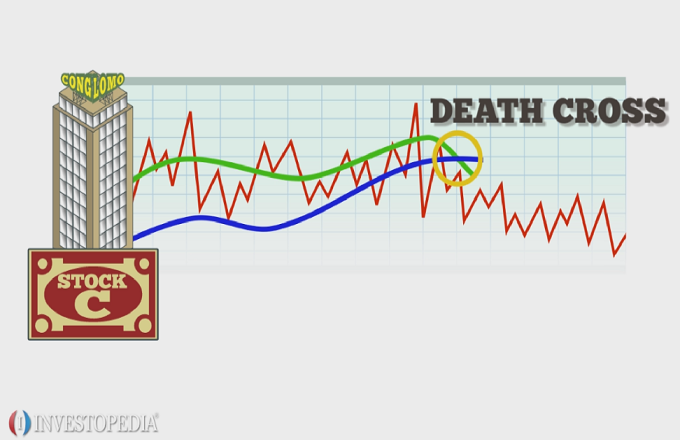
Speaker: If you need a moderator or speaker for an upcoming event, Dr. David E. Marcinko; MBA – Publisher-in-Chief of the Medical Executive-Post – is available for seminar or speaking engagements.

Contact: MarcinkoAdvisors@msn.com

Subscribe: MEDICAL EXECUTIVE POST for curated news, essays, opinions and analysis from the public health, economics, finance, marketing, I.T, business and policy management ecosystem.

***

***

https://www.routledge.com/Comprehensive-Financial-Planning-Strategies-for-Doctors-and-Advisors-Best-Practices-from-Leading-Consultants-and-Certified-Medical-PlannersTM/Marcinko-Hetico/p/book/9781482240283