BOARD CERTIFICATION EXAM STUDY GUIDES Lower Extremity Trauma
[Click on Image to Enlarge]
ME-P Free Advertising Consultation
The “Medical Executive-Post” is about connecting doctors, health care executives and modern consulting advisors. It’s about free-enterprise, business, practice, policy, personal financial planning and wealth building capitalism. We have an attitude that’s independent, outspoken, intelligent and so Next-Gen; often edgy, usually controversial. And, our consultants “got fly”, just like U. Read it! Write it! Post it! “Medical Executive-Post”. Call or email us for your FREE advertising and sales consultation TODAY [678.779.8597] Email: MarcinkoAdvisors@outlook.com
Medical & Surgical e-Consent Forms
ePodiatryConsentForms.com
iMBA Inc., OFFICES
Suite #5901 Wilbanks Drive, Norcross, Georgia, 30092 USA [1.678.779.8597]. Our location is real and we are now virtually enabled to assist new long distance clients and out-of-town colleagues.
ME-P Publishing
SEEKING INDUSTRY INFO PARTNERS?
If you want the opportunity to work with leading health care industry insiders, innovators and watchers, the “ME-P” may be right for you? We are unbiased and operate at the nexus of theoretical and applied R&D. Collaborate with us and you’ll put your brand in front of a smart & tightly focused demographic; one at the forefront of our emerging healthcare free marketplace of informed and professional “movers and shakers.” Our Ad Rate Card is available upon request [678-779-8597].
We make second investment portfolio opinions affordable
Approximately 1 million allopathic physicians, 150,000 dentists, 200,000 osteopaths, 15,000 podiatrists and 6 million nurses often find it difficult to get an unbiased and fiduciary second opinion on their retirement or brokerage accounts. By offering second opinions for a flat fee, the monetary barriers that prevented colleagues from receiving a second opinion in the past have been removed.
We make second investment portfolio opinions convenient
Here’s how we work: you book an initial appointment with us, answer a few preliminary questions and email us your portfolio information. We then provide a second opinion. It is then up to you to incorporate or not.
We make second investment portfolio opinions timely
Financial markets, jobs and colleague age change like the weather. It is not always okay to wait a week, year or more, to seek a professional second financial portfolio opinion. You need to receive an opinion now. That’s where we come in. We are standing by, ready to take your email [MarcinkoAdvisors@outlook.com] and schedule a free initial consultation within two or three days, or less.
We make second investment portfolio opinions accurate
Fiduciary and non-sales orientated second opinions have the power to change financial lives in the long term. We’ve seen it happen many times. What characterizes a good second opinion? Three things: the opinion must be individualized to your investment portfolio[s], informed and results-oriented. That’s the informed fiduciary approach we take. We are colleagues and look forward to working with you.
Posted on June 13, 2025 by Dr. David Edward Marcinko MBA MEd CMP™
MEDICAL EXECUTIVE-POST–TODAY’SNEWSLETTERBRIEFING
***
Essays, Opinions and Curated News in Health Economics, Investing, Business, Management and Financial Planning for Physician Entrepreneurs and their Savvy Advisors and Consultants
“Serving Almost One Million Doctors, Financial Advisors and Medical Management Consultants Daily“
A Partner of the Institute of Medical Business Advisors , Inc.
Oracle popped 13.31% after the cloud computing giant beat Wall Street forecasts on both the top and bottom lines last quarter.
CardinalHealth climbed 4.55% after the healthcare products maker raised its fiscal guidance for the year.
CureVac NV exploded 37.59% on the news that BioNTech will acquire the pharma company in an all-stock deal worth $1.25 billion.
Datadog rose 3.43% thanks to an upgrade from analysts at Wolfe Research, who think the cybersecurity company has an opportunity for rapid growth thanks to AI.
What’s down
Boeing sank 4.79% after an Air India 787 flying from Ahmedabad to London crashed with 242 people aboard. Engine maker GE Aerospace fell 2.25% as well.
GameStop plummeted 22.45% after the video game retailer announced late yesterday that it will sell $1.75 billion in convertible bonds to buy more bitcoin.
Speaking of raising money, nuclear startup Oklo fell 5.22% on the news that it will sell $400 million of common stock in a public offering.
OxfordIndustries, parent company of Tommy Bahama and Lily Pulitzer, dropped 14.03% after cutting its fiscal guidance due to tariffs.
Posted on June 12, 2025 by Dr. David Edward Marcinko MBA MEd CMP™
A Basic Overview for Emerging Physician and Medical Professional Investors
By Somnath Basu; PhD, MBA
There are three basic considerations in any investment decision.
1] The first is the understanding of the investment objective or why the investment is being made. While this may seem somewhat irrelevant at first – why would you be investing if you do not know what you are doing – combining investment objectives can pose problems down-stream.
For example, if you are saving for your retirement so that you can afford the retirement lifestyle you desire (the investment objective), your saving plan should not include any savings you are making for your children’s education (a separate investment objective). Compounding the two savings streams in one plan can very easily lead to one or both of the plans failing.
2] The second consideration is the time horizon of the investment. As a rough guide, investments that need to mature in the next 5-7 years can be considered as short term, 8-15 years as medium term and the rest as long term.
3] Finally, and probably the most important consideration of all is the importance you attach (priority) to achieving your investment objective; in other words, how safe and secure should your investments be. For example, if you are 70 years old and considering how you should invest your retirement funds so that your expenses are covered say for the next 25 years, you do not want a large margin of error in how your investments turn out; you can ill afford to be broke when you are older and hence you want your investments to be as secure as possible.
On the other hand, if the investment is for a second home or a boat, for example, you may wish to engage in some risk taking which may help in lowering your upfront investment needs. It is very important for any investor to clearly understand how much loss they can bear from any investment decision.
Decision Matrix
It is useful to express the investment framework described above as a simple decision matrix. Using the matrix (shown below) as a decision support system should clarify and simplify most investment decisions.
Understanding where in the matrix your decision falls is a very good first step of your decision. Both these elements (safety and time) will ultimately decide the kinds of financial instruments that will reside in your portfolio. We will examine the structure of each of the 9 possible combinations shown in the matrix. Before doing so, let us start by examining the various investment alternatives (e.g. stocks, bonds, etc.) since they have an implicit connection with the two dimensions portrayed in our matrix.
Stocks
Stocks are the most well known and popular form of financial investments. Stocks may be further segregated between large cap and small cap stocks, where the term “cap” is surrogate for the size of the underlying corporation or firm.
Stocks may represent investments in both domestic and international companies. Within the international category, stocks may represent corporations registered in developed (safer) or emerging (riskier) markets. In terms of our matrix dimensions, stocks are best suited when the decision is of medium or long term. In terms of safety, large cap (both domestic and international) stocks are the safest, while small cap and emerging market stocks are the most risky. The riskier the stock, the greater are the profit possibilities as are the chances of large losses.
Bonds
The second common type of investment are bonds Generally, bonds are much safer than stocks with the exception of a class of bonds known as high yield (or junk) bonds. Bonds are issued by companies, governments (domestic and international) and other agencies such as local governments (municipal bonds or “munis” which are especially desirable for those in high income tax rate categories) and quasi-government agencies such as Federal Home Loan Bank, Student Loan Administration, Agricultural Cooperative Banks, etc (collectively known as “Agency” bonds such as Ginnie/Fannie/Sallie Mae, Freddie Mac, etc.).
Government bonds are the safest, followed by agency and municipal bonds and then by bonds issues by corporations.
Corporate bonds may be safe (which are assigned credit safety ratings such as AAA, AA, BBB, etc.) or risky (junk bonds with ratings such as BB, CCC, CC etc.).
Bonds can be used for all time horizons, their maturities ranging from 3 months to 30 years. Very short term bond and bond like instruments (with maturities of one year or less) are known as money market securities which are generally safer than most other investments.
Alternate Investments
Other types of investments include real estate (long term, risky), commodities (such as energy, basic building materials, precious metals, etc.) which are also risky and which may be used for both short term and long term purposes and provide a good hedge (counter balance) in an inflationary environment, derivatives (options and futures) which are very risky and typically short term in nature. Derivatives are generally suggested for very sophisticated investors and are best left alone otherwise.
Risk Reduction
A very important feature about investments is that when various types of investments are bundled together in a portfolio, they help to reduce the risk of the investment decision without affecting the profits in a comparable way. This basic aspect of mixing various kinds of investments (stocks, bonds, etc) to reduce risk is known as diversification and it is a “must” for any investment portfolio. It is a “must” because this technique of risk reduction is generally costless (unless you are paying a financial advisor to do this for you) and it is very worthwhile. All other methods of risk reduction have cost implications.
Scenario Matrix
Armed with this nomenclature regarding various investment types we can now go about examining what the 9 combination (Scenario) portfolios may look like for investment purposes.
Starting with Scenario 1, if you wish to make a short term decision that is very important to you and needs to be very safe, investments should be made in very short term bonds (government or treasury bills)and other similar money market (short term, safe) securities. International short term bonds of developed countries may also be included. Such investment products are generally available through mutual funds or Exchange Traded Funds (or ETFs). ETFs are just like mutual funds except that they are usually cheaper, much easier to buy and sell and may provide tax deferral benefits.
If your investment falls in the Scenario 2 category, include agency/municipal bonds as well as some domestic and international (developed country) large cap stocks while for Scenario 3, smaller portions of small cap and emerging market stocks may be added proportionately while reducing some of the safer investments.
If your investment was a Scenario 4 type of investment, corporate large cap stocks (both domestic and international) could be added to agency or corporate (domestic and international) bonds. Before investing in stocks (in any Scenario) for this Scenario 4, a good question to ask is the following: how profitable were stock investments in the last 3-5 years? If the answer is “very profitable” then reduce the proportion of stocks as compared to bonds in the portfolio. If the last few years were not good, then it would be good to increase their comparable shares. The main reason for this “fine tuning” is that the fortunes of stocks (and many other types of investments) follow a cyclical pattern and the cycle is related to the general cycle of economic (GDP) growth and contraction.
It can be seen now how Scenarios 5 and 6 (as also 8 and 9) will follow a similar pattern as before, increasing proportionally in stocks (of all sizes, domestic/international), real estate, commodities, etc. Portfolios falling in these groups may also include some small cap and emerging market stocks as well as high yield or junk bonds. The proportion of these riskier investments would of course be higher for Scenario 6 over Scenario 5 (and Scenario 9 over 8).
For Scenario 7, the investment portfolio would typically resemble one that would be like an opposite of the portfolio in Scenario 1 and would include a greater proportion of large cap (domestic/international) stocks and a much smaller proportion of bonds. As we move towards Scenarios 8 and 9, the portfolios would be dominated by small cap and emerging market stocks as well as junk bonds.
Assessment
In the discussion above, I have tried to generalize the investment decision in a simplifying way. While the discussion may have centered more on stocks and bonds, it is important to note that all portfolios must “diversify” the investment risks by expanding upon the various types of investment products contained in the portfolios. The very fact that a portfolio contains various types of investments will ensure that the portfolio will perform better than those which are not as well diversified. This will be so in spite of any one of the investment types underperforming at any point in time and the diversification benefit will be received consistently over long periods of time. A popular analogy to this diversification benefit is the common phrase of not putting all eggs in one basket.
Editor’s Note: Somnath Basu PhD is program director of the California Institute of Finance in the School of Business at California Lutheran University where he’s also a professor of finance. He can be reached at (805) 493 3980 or basu@callutheran.edu
Conclusion
The above approach to investment decision-making can be considered as a basic template that can be used universally. For those seeking greater sophistication and who have a foundation built on the above model, expert advice is strongly recommended.
And so, your thoughts and comments on this ME-P are appreciated. Financial advisors please chime in on the debate? Is Basu correct; why or why not? Review our top-left column, and top-right sidebar materials, links, URLs and related websites, too. Then, be sure to subscribe to the ME-P. It is fast, free and secure.
Speaker: If you need a moderator or speaker for an upcoming event, Dr. David E. Marcinko; MBA – Publisher-in-Chief of the Medical Executive-Post – is available for seminar or speaking engagements. Contact: MarcinkoAdvisors@outlook.com
Subscribe Now: Did you like this Medical Executive-Post, or find it helpful, interesting and informative? Want to get the latest ME-Ps delivered to your email box each morning? Just subscribe using the link below. You can unsubscribe at any time. Security is assured.
Sponsors Welcomed
And, credible sponsors and like-minded advertisers are always welcomed.
Posted on June 12, 2025 by Dr. David Edward Marcinko MBA MEd CMP™
Accidental Death and Dismemberment
By AI
***
***
What is AD&D insurance?
AD&D insurance combines two types of coverage: an accidental death policy that pays out if you die in an accident, and a dismemberment policy that pays out if you have a serious injury such as losing a limb or becoming paralyzed because of an accident. The beneficiary of your AD&D policy (such as your spouse) collects the money in the case of an accidental death, and you collect it if you suffer one of the injuries outlined in the policy.
Here’s the catch: The death or injury must be the direct result of an accident. So, for example, if you have a heart attack while you’re driving and get into a fatal car crash, your beneficiaries probably won’t receive any money.
***
***
While AD&D insurance can offer financial peace of mind to you and your loved ones in the event of an accident, it won’t pay out if you die from natural causes or a terminal illness — so it’s not a replacement for life insurance. And since it doesn’t cover all injuries or disabilities, it isn’t as comprehensive as disability insurance either.
Be aware that insurers often sell accidental death insurance without dismemberment coverage. These policies pay out only if you die and won’t cover an accident that leaves you seriously injured but alive.
Posted on June 12, 2025 by Dr. David Edward Marcinko MBA MEd CMP™
MEDICAL EXECUTIVE-POST–TODAY’SNEWSLETTERBRIEFING
***
Essays, Opinions and Curated News in Health Economics, Investing, Business, Management and Financial Planning for Physician Entrepreneurs and their Savvy Advisors and Consultants
“Serving Almost One Million Doctors, Financial Advisors and Medical Management Consultants Daily“
A Partner of the Institute of Medical Business Advisors , Inc.
CVS and Cigna’s pharmacy benefit managers (PBMs), Caremark and Express Scripts, respectively, are suing Arkansas after the state signed a bill on April 16 that would ban vertical integration between PBMs and pharmacies. The companies filed two separate lawsuits on May 29th claiming the Arkansas law is unconstitutional and “unenforceable.”
PapaJohn’s popped 7.45% on a report from Semafor that the pizza chain is being taken private.
Oklo roared 29.48% higher after the nuclear power startup announced it has been conditionally selected to provide power to an Air Force base in Alaska.
Dave & Buster’s Entertainment won big, jumping 17.74% after the gaming restaurant chain reported a lower-than-expected decline in same-store sales.
GeneralMotors rose 1.92% on the automaker’s announcement that it will spend $4 billion to make more cars in the US.
SailPoint soared 14.66% after the cybersecurity company reported better-than-expected earnings last quarter and raised its fiscal forecast.
RigettiComputing rose 11.39% thanks to some optimistic comments from Nvidia CEO Jensen Huang.
What’s down
GameStop tumbled 5.31% after the video game retailer revealed disappointing revenue growth last quarter, though it did report a profit.
Chewy lost 10.98% despite beating Wall Street’s forecasts last quarter, likely due to the pet food retailer’s already-sky-high share price.
SunRun sank 1.81% on a downgrade from Jefferies analysts, who think the solar power provider faces too many headwinds if residential demand drops.
GitLab plunged 10.60% after the online software developer issued a worse-than-expected revenue forecast for the coming quarter.
LockheedMartin stumbled 4.26% after the Pentagon cut its order for new F-35 fighter jets in half.
Steel stocks took it on the chin today thanks to a report that the US and Mexico are nearing a deal that would reduce the 50% tariff on steel imports. Cleveland-Cliffs fell 8.10%, Nucor lost 6.06%, and Steel Dynamics tumbled 2.82%.
Bonds: The 10-year yield fell after CPI came in lower than analysts expected. The Treasury Department’s auction of 10-year bonds also went well, with strong participation from traders a key sign of demand for fixed income. Zero Coupon: https://medicalexecutivepost.com/2024/11/12/bonds-zero-coupon/
FIVE INVESTING MISTAKES OF DOCTORS; PLUS 1 VITAL TIP
As a former US Securities and Exchange Commission [SEC] Registered Investment Advisor [RIA] and business school professor of economics and finance, I’ve seen many mistakes that doctors must be aware of, and most importantly, avoid. So, here are the top 5 investing mistakes along with suggested guideline solutions.
Mistake 1: Failing to Diversify Investment but Beware Di-Worsification
A single investment may become a large portion of your portfolio as a result of solid returns lulling you into a false sense of security. The Magnificent Seven stocks are a current example:
Apple, up +5,064%% since 1/18/2008
Amazon, up +30,328% since 9/6/2002
Alphabet, up +1,200% since 7/20/2012
Tesla, up +21,713% since 11/16/2012
Meta, up +684% since 2/20/2015
Microsoft, up +22% since 12/21/2023
Nvidia, up +80,797% since 4/15/2005
Guideline: The Magnificent Seven [7] has grown from 9% of the S&P 500 at the end of 2013 to 31% at the end of 2024! That means even if you don’t own them, you’re still very exposed if you have an Index Fund [IF] or Exchange Traded Fund [ETF] that tracks the market. Accordingly, diversification is the only free lunch in investing which can reduce portfolio risk. But, remember the Wall Street insider aphorism that states: “Di-Versification Means Always Having to Say Your Sorry.”
The term “Di-Worsification” was coined by legendary investor Peter Lynch in his book, One Up On Wall Street to refer to over-diversifying an investment portfolio in such a way that it reduces your overall risk-return characteristics. In other words, the potential return rises with an increase in risk and invested money can render higher profits only if willing to accept a higher possibility of losses [1].
A podiatrist can easily fall into the trap of chasing securities or mutual funds showing the highest return. It is almost an article of faith that they should only purchase mutual funds sporting the best recent performance. But in fact, it may actually pay to shun mutual funds with strong recent performance. Unfortunately, many struggle to appreciate the benefits of their investment strategy because in jaunty markets, people tend to run after strong performance and purchase last year’s winners.
Similarly, in a market downturn, investors tend to move to lower-risk investment options, which can lead to missed opportunities during subsequent market recoveries. The extent of underperformance by individual investors has often been the most awful during bear markets. Academic studies have consistently shown that the returns achieved by the typical stock or bond fund investors have lagged substantially.
Guideline: Understand chasing performance does not work.Continually monitor your investments and don’t feel the need to invest in the hottest fund or asset category. In fact, it is much better to increase investments in poor performing categories (i.e. buy low). Also keep in remind rebalancing of assets each year is key. If stocks perform poorly and bonds do exceptionally well, then rebalance at the end of the year. In following this strategy, this will force a doctor into buying low and selling high each year.
Often doctors make their investment decisions under the belief that stocks will consistently give them solid double-digit returns. But the stock markets go through extended long-term cycles.
In examining stock market history, there have been 6 secular bull markets (market goes up for an extended period) and 5 secular bear markets (market goes down) since 1900. There have been five distinct secular bull markets in the past 100+ years. Each bull market lasted for an extended period and rewarded investors.
For example, if an investor had started investing in stocks either at the top of the markets in 1966 or 2000, future stock market returns would have been exceptionally below average for the proceeding decade. On the other hand, those investors fortunate enough to start building wealth in 1982 would have enjoyed a near two-decade period of well above average stock market returns. They key element to remember is that future historical returns in stocks are not guaranteed. If stock market returns are poor, one must consider that he or she will have to accept lower projected returns and ultimately save more money to make up for the shortfall. For example,
The May 6th, 2010, flash crash, also known as the crash of 2:45, was a United States trillion-dollar stock market plunge which started at 2:32 pm EST and lasted for approximately 36 minutes.
And, investors who have embraced the “buy the dip” strategy in 2025 have been handsomely rewarded, with the S&P 500 delivering its strongest post-pull back returns in over three decades.
According to research from Bespoke Investment Group, the S&P 500 has gained an average of 0.36% in the trading session following a down day so far in 2025. The only year with a comparable performance was 2020, which saw a 0.32% average post-dip gain [2].
The most recent example came on May 27, 2025 when the S&P 500 surged more than 2% after falling 0.7% in the final session before the holiday weekend. The rally was sparked by President Trump’s decision to scale back huge previously threatened tariffs on EU —a recurring catalyst behind many of 2025’s rebound.
Guideline: Beware of projecting forward historical returns. Doctors should realize that the stock markets are inherently volatile and that, while it is easy to rely on past historical averages, there are long periods of time where returns and risk deviate meaningfully from historical averages.
Some doctors believe they are “smarter than the market” and can time when to jump in and buy stocks or sell everything and go to cash. Wouldn’t it be nice to have the clairvoyance to be out of stocks on the market’s worst days and in on the best days?
Using the S&P 500 Index, our agile imaginary doctor-investor managed to steer clear of the worst market day each year from January 1st, 1992 to March 31st, 2012. The outcome: s/he compiled a 12.42% annualized return (including reinvestment of dividends and capital gains) during the 20+ years, sufficient to compound a $10,000 investment into $107,100.
But what about another unfortunate doctor-investor that had the mistiming to be out of the market on the best day of each year. This ill-fated investor’s portfolio returned only 4.31% annualized from January 1992 – March 2012, increasing the $10,000 portfolio value to just $23,500 during the 20 years. The design of timing markets may sound easy, but for most all investors it is a losing strategy.
More contemporaneously on December 18th 2024, the DJIA plummeted 2.5%, while the S&P 500 declined 3% and the NASDAQ tumbled 3.5%
Guideline: If it looks too good to be true, it probably is. While jumping into the market at its low and selling right at the high is appealing in theory, we should recognize the difficulties and potential opportunity and trading costs associated with trying to time the stock market in practice. In general, colleagues are be best served by matching their investment with their time horizon and looking past the peaks / valleys along the way.
Mistake 5: Failing to Recognize the Impact of Fees and Expenses
A free dinner seminar or a polished stock-broker sales pitch may hide the total underlying costs of an investment. So, fees absolutely matter.
The first costing step is determining what the fees actually are. In a mutual fund, these costs are found in the company’s obligatory “Fund Facts”. This manuscript clearly outlines all the fees paid–including up front fees (commissions and loads), deferred sales charges and any switching fees. Fund management expense ratios are also part of the overall cost. Trading costs within the fund can also impact performance.
Here is a list of the traditional mutual fund fees:
Front End Load: The commission charged to purchase a fund through a stock broker or financial advisor. The commission reduces the amount you have available to invest. Thus, if you start with $100,000 to invest, and the advisor charges up to an 8 percent front end load, you end up actually investing $92,000.
Deferred Sales Charge (DSC) or Back End Load: Imposed if you sell your position in the mutual fund within a pre-specified period of time (normally one – five years). It is initiated at a higher start percentage (i.e. as high as 10 percent) and declines over a specific period of time.
Operating Fees: Costs of the mutual fund including the management fee rewarded to the manager for investment services. It also includes legal, custodial, auditing and marketing fees.
Annual Administration Fee: Many mutual fund companies also charge a fee just for administering the account – usually under $100-150 per year.
Guideline: Know and understand all fees.
For example: A 1 percent disparity in fees may not seem like much but it makes a considerable impact over a long time period.
Consider a $100,000 portfolio that earns 8 percent before fees, grows to $320,714 after 20 years if the investor pays a 2 percent operating fee. In comparison, if s/he opted for a fund that charged a more reasonable 1 percent fee, after 20 years, the portfolio grows to be $386,968 – a divergence of over $66,000!
This is the value of passive or index investing. In the case of an index fund, fees are generally under 0.5 percent, thus offering even more savings over a long period of time.
One Vital Tip: Investing Time is on Your Side
Despite thousands of TV shows, podcasts, textbooks, opinions and university studies on investing, it really only has three simple components. Amount invested, rate of return and time. By far, the most important item is time! For example:
Nvidia: if you invested $1,000 in 2009, you’d have $338,103 today.
Apple: if you invested $1,000 in 2008, you’d have $48,005 today.
Netflix: if you invested $1,000 in 2004, you’d have $495,679 today.
Unfortunately, this list of investing mistakes is still being made by many doctors. Fortunately, by recognizing and acting to mitigate them, your results may be more financially fruitful and mentally quieting.
REFERENCES:
1. Lynch, Peter: One Up on Wall Street [How to Use What You Already Know to Make Money in the Market]: Simon and Shuster (2nd edition) New York, 2000.
1. Marcinko, DE; Comprehensive Financial Planning Strategies for Doctors and Advisors [Best Practices from Leading Consultants and Certified Medical Planners™] Productivity Press, New York, 2017.
2. Marcinko, DE: Dictionary of Health Economics and Finance. Springer Publishing Company, New York, 2006.
3. Marcinko, DE; Risk Management, Liability Insurance, and Asset Protection Strategies for Doctors and Advisors [Best Practices from Leading Consultants and Certified Medical Planners™] CRC Press, New York, 2015.
BIO: As a former university Professor and Endowed Department Chair in Austrian Economics, Finance and Entrepreneurship, the author was a NYSE Registered Investment Advisor and Certified Financial Planner for a decade. Later, he was a private equity and wealth manager
SPEAKING: Dr. Marcinko will be speaking and lecturing, signing and opining, teaching and preaching, storming and performing at many locations throughout the USA this year! His tour of witty and serious pontifications may be scheduled on a planned or ad-hoc basis; for public or private meetings and gatherings; formally, informally, or over lunch or dinner. All medical societies, financial advisory firms or Broker-Dealers are encouraged to submit an RFP for speaking engagements: CONTACT: Ann Miller RN MHA at MarcinkoAdvisors@outlook.com -OR-http://www.MarcinkoAssociates.com
Posted on June 11, 2025 by Dr. David Edward Marcinko MBA MEd CMP™
MEDICAL EXECUTIVE-POST–TODAY’SNEWSLETTERBRIEFING
***
Essays, Opinions and Curated News in Health Economics, Investing, Business, Management and Financial Planning for Physician Entrepreneurs and their Savvy Advisors and Consultants
“Serving Almost One Million Doctors, Financial Advisors and Medical Management Consultants Daily“
A Partner of the Institute of Medical Business Advisors , Inc.
Tesla climbed another 5.67% on signs that Elon Musk and President Trump are mending fences and on hype around the robotaxi reveal this week.
TSMC rose 2.63% after the semiconductor company reported that its revenue in the month of May rose 39.6% year over year.
Disney rose 2.65% higher a day after agreeing to purchase Comcast’s stake in streaming service Hulu for $438.7 million. Comcast climbed 2.95%.
Solar stocks got a bit of hope after the Wall Street Journal reported that tech companies are lobbying Congress to keep clean energy subsidies in the tax and spending bill. SolarEdge rose 11.81%, and Sunrun gained 7.13%.
Insmed exploded 28.65% thanks to strong results for the biopharma company’s new treatment for pulmonary arterial hypertension.
Casey’s General Store rose 11.59% after the retailer crushed Wall Street’s profit expectations last quarter and raised its dividend.
McDonald’s lost 1.43% thanks to a double downgrade from Redburn Atlantic analysts, who think the fast food titan’s slowing foot traffic and headwinds from obesity drugs will hurt its growth. That’s the company’s third downgrade in three days.
Stocks: Markets meandered higher as investors awaited news from ongoing US & China trade negotiations in London. Commerce Secretary Howard Lutnick said talks were going well and could continue into tomorrow.
Commodities: Oil soared to its highest price since April on hopes that a trade deal between the world’s largest economies could spur demand, but plunged back to earth after the US said oil output will fall next year.
Crypto: After just barely holding on last week, Bitcoin has now stayed above $100,000 for 30 days straight for the first time ever—a signal to traders that there’s a new level of support for the crypto king.
Posted on June 10, 2025 by Dr. David Edward Marcinko MBA MEd CMP™
By Health Capital Consultants, LLC
***
***
On May 13th, 2025, the CMS Center for Medicare & Medicaid Innovation (CMMI) introduced a new strategic plan for its models going forward. After ending four payment models early and canceling two not-yet-implemented models in March 2025, the agency had promised to release a new strategy. Nearly two weeks later, CMMI released that strategy, as well as a preliminary evaluation of, and changes to, one of its core payment models.
This Health Capital Topics article will review CMMI’s recent actions and what initial indications these actions provide. (Read more…)
Posted on June 10, 2025 by Dr. David Edward Marcinko MBA MEd CMP™
By AI
***
***
Stocks: Equities inched higher on a handful of optimistic headlines. First, the US and China trade teams met in London today with hopes the two superpowers could resolve disputes over export curbs. Also, a new survey from the New York Fed found that consumer expectations for inflation eased across all time horizons in May. STOCKS: https://medicalexecutivepost.com/2025/04/18/stocks-basic-definitions/
Posted on June 10, 2025 by Dr. David Edward Marcinko MBA MEd CMP™
MEDICAL EXECUTIVE-POST–TODAY’SNEWSLETTERBRIEFING
***
Essays, Opinions and Curated News in Health Economics, Investing, Business, Management and Financial Planning for Physician Entrepreneurs and their Savvy Advisors and Consultants
“Serving Almost One Million Doctors, Financial Advisors and Medical Management Consultants Daily“
A Partner of the Institute of Medical Business Advisors , Inc.
Stat: $18 billion. One report says that’s how much hospitals and health systems spent combating workplace violence in 2023. (the American Hospital Association)
The trading platform eToro rose 10.58% and touched a record high after analysts began coverage of the stock. They generally had nice things to say.
Aviation startups like Archer (+10.50%), Joby (+13.67%), Vertical Aerospace (+15.24%), and Blade Air Mobility (+11.58%) all popped after President Trump signed an executive order on Friday intended to spur drone manufacturing.
Stablecoin issuer Circle can’t stop won’t stop after its IPO last week, popping another 7.24% for its third straight day of gains.
Robinhood (-1.98%) and AppLovin (-8.21%) fell after S&P Dow Jones Indices decided not to include them—or anyone else—in the S&P 500 index.
Intuitive Surgical sank 5.55% after getting its first “sell” rating on the Street from Deutsche Bank analyst Imron Zafar, who argued that the medtech company is going to face some cutthroat competition over the next few years.
EchoStar, a satellite and wireless company, dropped 8.52% after the WSJ reported it was considering filing for chapter 11 bankruptcy.
The Children’s Place tumbled 32.22% after a rough earnings report for the kids’ clothing store: It posted a quarterly loss nearly 3x projections and revenue decreased 10% year over year.
Posted on June 9, 2025 by Dr. David Edward Marcinko MBA MEd CMP™
By AI
***
***
A POD (Payable on Death) or TOD (Transfer on Death) account is a type of bank account where the account owner names a beneficiary to receive the account assets when the owner dies.
Key points about these accounts include:
Beneficiaries can be anyone, including minors, non-U.S. citizens, and organizations.
The beneficiary needs to provide a certified copy of the deceased’s death certificate to the bank or brokerage firm.
The assets are transferred immediately upon the account owner’s death.
Probate avoidance: By sidestepping probate, POD and TOD accounts streamline the distribution of assets post-death, allowing beneficiaries to gain access to these funds with greater speed.
Simplicity: Setting up these accounts is generally straightforward, often requiring just the completion of a form at the bank or brokerage firm.
No additional cost: There’s usually no cost to establish these accounts, aligning with the needs of individuals seeking a cost-effective method of transferring assets.
Cons
Joint ownership complexity. When an account is jointly owned, the beneficiary of the account won’t receive the assets until the surviving owner(s) die. The same applies to accounts owned in states with tenancy by the entirety for married couples.
Naming alternative beneficiaries: These accounts do not allow for the nomination of alternative beneficiaries if the primary beneficiary or beneficiaries predecease the account owner. This could lead to the assets being subjected to probate if the primary beneficiary is no longer alive at the time of the account holder’s death.
Transfers only happen after death: These accounts stipulate that the person must pass away before the beneficiary can access the funds – a restriction that could prove troublesome if the beneficiary requires access to these assets during the account holder’s life or if the account owner becomes incapacitated during their lifetime.
Posted on June 9, 2025 by Dr. David Edward Marcinko MBA MEd CMP™
By AI
***
***
Wall Street is stable right now as the technology trade has come roaring back.
The S&P 500 climbed above 6,000 points for the first time since February, while all three indexes posted their fifth winning week in the last seven. The S&P is now just over 2% from its all-time high.
Meanwhile, recent IPOs are party rocking, especially the stablecoin issuer Circle that went public last Thursday.
Many doctors are surprised to learn of an alternative investment known as a hedge fund, pooled investment vehicle or private investment fund. Unlike mutual funds, they can be structured in many ways. However, these funds cannot be marketed or advertised, but they are far from illegal or illicit.
In fact, physicians were among the early investors in one the most successful hedge funds. Warren Buffett got his start in 1957 running the Buffett Partnership, a hedge fund not open to the public. His first appearance as a money manager was before a group of physicians in Omaha, Nebraska. Eleven decided to invest some money with him. A few then followed into Berkshire Hathaway Inc, now among the most highly valued companies in the world.
And, more recently, Scion Asset Management® LLC, is a private investment firm founded and led by my eloquent colleague Michael J. Burry, MD and featured in the movie, The Big Short. Other hedge fund mangers of note include: George Soros, Carl Icahn, Ken Griffin, David Tepper, John Paulson and Bill Ackman.
A hedge fund is a limited partnership of private investors whose money is managed by professional fund managers who use a wide range of strategies; including leveraging [debt] or trading of non-traditional assets [real-estate, collectible, commodities, cyrpto-currency, etc] to earn above-average returns. Hedge funds are considered a risky alternative investment and usually require a high minimum investment or net worth. This person is known as an “accredited investor” or “Regulation D” investor by the US Securities Exchange Commission and must have the following attributes:
A net worth, combined with spouse, of over $1 million, not including primary residence
An income of over $200,000 individually, or $300,000 with a spouse, in each of the past two years
The hurdle rate is part of the fund manager’s performance incentive compensation. Also known as a “benchmark,” it is the amount, expressed in percentage points an investor’s capital must appreciate before it becomes subject to a performance incentive fee. Podiatrists should view the hurdle rate as a form of protection or the fee arrangement.
The hurdle rate benchmarks a single year’s performance and may be considered mutually exclusive of any other year, or the hurdle rate may compound each year. The former case is more common. In the latter case, a portfolio manager failing to attain a hurdle rate in the first year will find the effective hurdle rate considerably higher during the second year.
Once a fund manager attains the hurdle rate, the investor’s capital account may be charged a performance incentive fee only on the performance above and beyond the hurdle rate. Alternatively, the account may be charged a performance fee for the entire level of performance, including the performance required to attain the hurdle rate. Other variations on the use of the hurdle rate exist, and are limited only by the contract signed between the fund manager and the investor. The hurdle rate is not generally a negotiating point, however.
Example: A fund charges a performance fee with a 6 percent hurdle rate, calculated in mutually exclusive manner. A podiatrist places $100,000 with the fund. The first year’s performance is 5 percent. The doctor therefore owes no performance fee during the first year because the portfolio manager did not attain the hurdle rate. During year two, the portfolio manager guides the fund to a 7 percent return. Because the hurdle rate is mutually exclusive of any other year, the portfolio manager has attained the 6 percent hurdle rate and is entitled to a performance fee.
High Water Mark
Some hedge funds feature a “high water mark” provision known as a ”loss-carry forward.” As with the hurdle rate, the high water mark is a form of protection. It is an amount equal to the greatest value of an investor’s capital account, adjusted for contributions and withdrawals. The high water mark ensures that the manager charges a performance incentive fee only on the amount of appreciation over and above the high water mark set at the time the performance fee was last charged. The current trend is for newer funds to feature this high water mark, while older, larger funds may not feature it.
Example: A fund charges a 20 percent performance fee with a high water mark but no hurdle rate. A podiatrist contributes $100,000 to the fund. During the first year, the hedge fund manager grows that capital account to $110,000 and charges a 20 percent performance fee, or $2,000. The ending capital account balance and high water mark is therefore $108,000. During year two, the account falls back to $100,000, but the high water mark remains $108,000. During year three, in order for the manager to charge a performance fee, the manager must grow the capital account to a level above $108,000.
Claw Back Provision
Rarely, a hedge fund may provide investors with a “claw back” provision. This term results in a refund to the investor of all or part of a previously charged performance fee if a certain level of performance is not attained in subsequent years. Such refunds in the face of poor or inadequate performance may not be legal in some states or under certain authorities.
ASSESSMENT
Managers of hedge funds, like colleague Dimitri Sogoloff MBA who is the CEO of Horton Point investment-technology firm, often aim to produce returns that are relatively uncorrelated with market indices and are consistent with investors’ desired level of risk.
While hedging may reduce some risks overall, they cannot all be eliminated. According to a report by the Hennessee Group, hedge funds were approximately one-third less volatile between 1993 and 2010.
For a podiatrist who already holds mutual funds and/or individual stocks and bonds, a hedge fund may provide diversification and reduce overall portfolio risk. Consider investing in them with care.
2. Burry, Michael, J: Hedge Funds [Wall Street Personified]. In, Marcinko, DE and Hetico, HR: Comprehensive Financial Planning Strategies for Doctors and Advisors [Best Practices from Leading Consultants and Certified Medical Planners™] Productivity Press, New York, 2017.
3. Marcinko, DE and Hetico, HR: Risk Management, Liability Insurance, and Asset Protection Strategies for Doctors and Advisors [Best Practices from Leading Consultants and Certified Medical Planners™]. Productivity Press, New York, 2015.
4. Marcinko, DE: Dictionary of Health Economics and Finance. Springer Publishing Company, NY 2006
SPEAKING: Dr. Marcinko will be speaking and lecturing, signing and opining, teaching and preaching, storming and performing at many locations throughout the USA this year! His tour of witty and serious pontifications may be scheduled on a planned or ad-hoc basis; for public or private meetings and gatherings; formally, informally, or over lunch or dinner. All medical societies, financial advisory firms or Broker-Dealers are encouraged to submit a RFP for speaking engagements: MarcinkoAdvisors@outlook.com
Posted on June 8, 2025 by Dr. David Edward Marcinko MBA MEd CMP™
Call for Manuscripts, Articles, Essays, Comments or Opinions
Dear Medical and Financial Services Colleagues, Health Economists, CPAs, JDs, Insurance Agents and Consultants,
The Medical Executive-Post (ME-P), supported by iMBA Inc., with (ISSN 13: 978-1-4665-5873-1] is currently accepting manuscripts for publication.
The ME-P is an open access, multidisciplinary, international, blind peer-reviewed and non-peer-reviewed electronic forum which publishes high-quality solicited and unsolicited research, commentary, opinions, curated news and review articles in English, in all areas of Physician Focused Financial Planning, health economics, finance, accounting, medical practice management, health law, IT, policy and administration. We have over 50 topic channels.
Rapid Response Peer-Review
ME-P is a rapid response forum that publishes daily. One of our objectives is to inform contributors (authors) of the decision on their manuscript(s) within 48 hours of submission. Following acceptance, a paper would be published in the next available issue. The ME-P provides immediate open access to published articles without any barrier.
***
[ME-P Fast Review, Turn-Around and Publishing Time]
***
Broad Exposure Potential
Publishing your news, opinions or comments, essays or articles with the ME-P means that they will be available to millions of readers and researchers because our large and diverse readership base comprises millions of collaborators. Our forum supports the free downloading of published articles by scholars for use as materials for lecture, by government officials for policy making, professors, colleges, universities and educators, and by corporate researchers and FAs to selected firms and organizations world-wide.
Blog Citations
Assessment
Also, ME-P is a member of several local and international organizations, making it possible for the far and wide distribution of published materials. We ask you to support this initiative by publishing your thoughts, comments, articles and original paper(s) 0n this forum, and in our textbooks and white-papers, etc.
WHAT YOU “MUST KNOW“ ABOUT FINANCIAL ADVISORY FEES
Investment fees still matter despite dropping dramatically over the past several decades due to computer automation, algorithms and artificial intelligence, etc. And, they can make a big difference to your financial health. So, before buying any investment, it’s vital to uncover all real financial advisor and stock broker costs.
1. Up-front salesperson commissions. It is easy to ask; “If I buy this investment today and want to get out tomorrow, how much money do I get back?” If the answer is not “all your money,” the difference is probably upfront fees and commissions. These fees may run as high as 30% of the money invested. If you were to earn 5% a year on the investment, it would take 8 years just to break even.
2. Ongoing advisory fees. These are monthly, quarterly, or annual fees paid to advisors for their investment advice and oversight. This includes working with you to pick the asset classes, set diversification, select a portfolio manager, optimize taxes, re-balance holdings and other periodic tasks.
These fees have many names including wrap fee or investment advisory fees. The normal “rule of thumb” is 1% of assets managed, although fees can range from 0 to 7%. Today, it can even be as low as .5%. It can be charged even if the advisor receives an upfront commission. It can be easy to see, or hidden in the fine print.
3. Additional service fees. Find out specifically what services are included financial advisory fees. Additional fees for financial planning or other services are rarely disclosed. They can range from minimal hand-holding focused on your investments to comprehensive financial planning.
4. Ongoing managerial expense ratio fees. These are incredibly well hidden that you may not see them in your statements or invoices. The only way to know is to read the prospectus or other third party analysis, like Morningstar.com. And, they can vary greatly for the same investment, depending on the class of share you buy.
For example, American Fund’s New Perspective Fund’s expense ratio ranges from 0.45% to 1.54%. The average expense ratio of a mutual fund that invests in stocks is 1.35%. Conversely, the average expense ratio of a Vanguard S&P 500 Fund is 0.10%. The difference of 1.25% is staggering over time.
5. Miscellaneous fees. Some advisors charge $50 – $100 a year per account to open or close an account, and even fees to dollar cost average your funds into the market.
6. Transaction fees. Every time you buy or sell a fund, a fee is typically paid to a custodian. These can range from $5 to hundreds of dollars per transaction.
7. Fee Only: Paid directly by clients for their services and can’t receive other sources of compensation, such as payments from fund providers. Act as a fiduciary, meaning they are obligated to put their clients’ interests first
8. Fee Based: Paid by clients but also via other sources, such as commissions from financial products that clients purchase. Brokers and dealers (or registered representatives) are simply required to sell products that are “suitable” for their clients.
A “suitable” investment is defined by FINRA as one that fits the level of risk that an investor is willing and able, as measured by personal financial circumstances, to take on. The Financial Industry Regulatory Authority is a private American corporation that acts as a Self Regulatory Organization (SRO) that regulates member stock brokerage firms and exchange markets. These criteria must be met. It is not enough to state that an investor has a risk-friendly investment profile. In addition, they must be in a financial position to take certain chances with their money. It is also necessary for them to
A hedge fund is a limited partnership of private investors whose money is managed by professional fund managers who use a wide range of strategies; including leveraging [debt] or trading of non-traditional assets [real-estate, collectible, commodities, cyrpto-currency, etc] to earn above-average returns. Hedge funds are considered a risky alternative investment and usually require a high minimum investment or net worth. This person is known as an “accredited investor” or “Regulation D” investor by the US Securities Exchange Commission and must have the following attributes:
A net worth, combined with spouse, of over $1 million, not including primary residence
An income of over $200,000 individually, or $300,000 with a spouse, in each of the past two years
Choose the fee structure. The fee structure should align with your needs. Consider the type of advice you seek, the number of times needed and the complexity of your financial situation. You can always negotiating tactics are free to ask for a better deal.
Compare fees. It is essential to research and compare different fees. Be sure to read the fine print for details or costs that are not a base fee.
Robo-advisors: For simple investment goals, with little specificity, robo-advisors may be a cost-effective option. They charge lower fees than conventional financial advisors and provide an automated, algorithmic approach to managing your investments.
Assessment
The average cost of working with a human financial advisor in 2024 was 0.5% to 2.0% of assets managed, $200 to $400 per hourly consultation, a flat fee of $1,000 to $3,000 for a one-time service, and/or a 3% to 6% commission fee on the product types sold.
When ruminating over financial advisory fees; read and understand the contract with disclosures, do not sign a confidentiality or non-disclosure agreement, and do not waive your right to a lawsuit. According to colleague Dr. Charles F. Fenton IIII JD, forced legal settlements almost always favor the advisor over the client.
2. Marcinko, DE and Hetico, HR; Comprehensive Financial Planning Strategies for Doctors and Advisors [Best Practices from Leading Consultants and Certified Medical Planners™] Productivity Press, New York, 2017.
3. Marcinko, DE: Dictionary of Health Economics and Finance. Springer Publishing Company, NY 2006
SPEAKING: Dr. Marcinko will be speaking and lecturing, signing and opining, teaching and preaching, storming and performing at many locations throughout the USA this year! His tour of witty and serious pontifications may be scheduled on a planned or ad-hoc basis; for public or private meetings and gatherings; formally, informally, or over lunch or dinner. All medical societies, financial advisory firms or Broker-Dealers are encouraged to submit a RFP for speaking engagements: MarcinkoAdvisors@outlook.com
Stocks: The S&P 500 touched 6,000 points for the first time since February and wrapped up its fifth positive week in the past seven following a better-than-expected jobs report. The vibes got even better in the afternoon following a President Trump announcement that the US and China trade teams will meet in London on Monday. STOCKS: https://medicalexecutivepost.com/2025/04/18/stocks-basic-definitions/
Bonds: Treasury yields ticked up in response to the solid May jobs report, a sign that investors were reducing bets on the scale of rate cuts this year. That’s not what Trump wants to hear: He urged Fed Chair Jerome Powell to slash interest rates by a jumbo-sized full point to pour “rocket fuel” on the economy. REVENUE BONDS: https://medicalexecutivepost.com/2024/12/20/bonds-revenue/
Oil: Oil prices have gone sideways for three straight weeks now, trading within a $4 range around $65/barrel since the middle of May. We’ll let you know when something interesting happens. CRUDE OIL:https://medicalexecutivepost.com/2024/08/14/wti-crude-oil/
If you’re looking at this tab, chances are you are fed up, burned out, seeking a better work-life balance, looking for a new non-clinical career, thinking of retirement, or all of the above. Perhaps you are just looking to regain the joy and meaning in your medical career. No worries! You may have come to the right place.
We work only with doctors, dentists, podiatrists, nurses, technicians and healthcare providers who struggle with personal and professional disillusionment, burnout, financial distress and an unbalanced life – all of which can happen at any stage of a medical career.
Through our coaching sessions, medical and healthcare professionals and colleagues can achieve a more meaningful, purposeful, and financially flourishing life.
Posted on June 7, 2025 by Dr. David Edward Marcinko MBA MEd CMP™
By AI
BREAKING NEWS
***
***
Job growth is slowing, but still bigger than expected
US employers added 139,000 jobs last month, government data released yesterday shows—that’s less than the down-wardly revised 147,000 new jobs that were added in April, but more than economists had predicted. Meanwhile, the unemployment rate held steady.
Overall, the highly anticipated jobs report reflects employers growing more cautious in the face of the economic uncertainty brought on by the trade war, but so far, there doesn’t seem to be a steep drop off in the labor market. That could give the Fed reason to stay in wait-and-see mode on interest rates, though President Trump still used the occasion to urge Jerome Powell to cut rates “a full point” on Truth Social.
Posted on June 7, 2025 by Dr. David Edward Marcinko MBA MEd CMP™
MEDICAL EXECUTIVE-POST–TODAY’SNEWSLETTERBRIEFING
***
Essays, Opinions and Curated News in Health Economics, Investing, Business, Management and Financial Planning for Physician Entrepreneurs and their Savvy Advisors and Consultants
“Serving Almost One Million Doctors, Financial Advisors and Medical Management Consultants Daily“
A Partner of the Institute of Medical Business Advisors , Inc.
Circle Internet Group, the stablecoin issuer,followed up its epic IPO day on Thursday with another banger, soaring 29.80%.
Coreweave closed out a roller coaster week with a 3.78% gain. The recently public AI cloud computing company is up 158% in the past month, and its tie-up with Applied Digital boosted that stock by another 8.54% today.
Rocket Lab (+9.34%) was one of several SpaceX competitors to receive a small boost following Elon Musk’s blowup with President Trump, which could threaten SpaceX’s contracts with the government.
Omada continued the strong run of recent IPOs. The virtual chronic care company jumped 21.05% in its debut on the Nasdaq today.
What’s down
Lululemon plunged 19.80% after cutting its full-year guidance due to the “dynamic macroenvironment” (CEO-speak for tariff uncertainty and people opting for baggier clothes than yoga pants). The company said it will increase prices on some items to offset the tariffs.
Docusign tanked 18.97% after warning that its billings for the year would come in lower than estimates as it transitions to an AI-driven model.
Broadcom failed to live up to exceedingly lofty expectations for its Q3 revenue forecast, causing shares of the giant semiconductor supplier to dip 5%.
Stat: $16 billion. That’s how much an HHS watchdog found in health program overspending, fraudulent billing, and possible cost savings in a six-month span. (Axios)
Visualize: How private equity tangled banks in a web of debt, from the Financial Times.
Markets: Stocks fell yesterday as investors readied themselves for today’s jobs report. The May jobs report is expected to show hiring slowed while the unemployment rate held flat. The data release will come as investors closely watch for any further signs of slowing in the US labor market.
The Bureau of Labor Statistics data is slated for release at 8:30 a.m. ET, today. Economists expect non-farm payroll to have risen by 125,000 in May and the unemployment rate to have held steady at 4.2%, according to consensus estimates compiled by Bloomberg.
Posted on June 6, 2025 by Dr. David Edward Marcinko MBA MEd CMP™
MEDICAL EXECUTIVE-POST–TODAY’SNEWSLETTERBRIEFING
***
Essays, Opinions and Curated News in Health Economics, Investing, Business, Management and Financial Planning for Physician Entrepreneurs and their Savvy Advisors and Consultants
“Serving Almost One Million Doctors, Financial Advisors and Medical Management Consultants Daily“
A Partner of the Institute of Medical Business Advisors , Inc.
Americans are squirreling away a larger percentage of their earnings than ever before. In the first three months of the year, Americans stashed an average of 14.3% of their income in their 401(k)s, up from 13.5% in 2020, according to Fidelity Investments, which manages millions of accounts. That’s a record, and it also nearly approaches the 15% that’s recommended to be able to maintain your lifestyle after a 40-year career, as per the Wall Street Journal.
PlanetLabs exploded 49.37% thanks to the satellite imagery stock beating Wall Street forecasts, posting its first quarter of positive cash flow and record revenue.
MongoDB soared 12.84% after the software company crushed analyst estimates last quarter and projected better-than-expected earnings next quarter.
Five Below continued the trend of discount retailers beating expectations, rising 5.59% on an impressive beat-and-raise earnings report.
Land’sEnd missed revenue forecasts but beat on profits last quarter. Shares climbed 13.02% after the clothing company promised tariffs won’t hurt its bottom line.
Scott’sMiracleGro rose 11.04% after the fertilizer titan reiterated its healthy forward guidance.
What’s down
Tesla fell yet again today, down another 14.26% thanks to a growing rift between CEO Elon Musk and President Trump.
Procter & Gamble fell 1.90% after the consumer goods giant announced it will slash 7,000 jobs over the next two years.
Brown-Forman tumbled 17.92% on poor earnings for the alcohol maker and worse-than-expected forecasts for the coming year.
Kimberly-Clark lost 2.27% due to an agreement to sell a majority stake in its international Kleenex tissue business.
PVH plunged 17.96% after the parent company of brands like Calvin Klein beat earnings estimates last quarter but predicted a much worse quarter ahead.
ChargePoint Holdings plummeted 22.49% thanks to a rough quarter for the EV charging company.
Posted on June 5, 2025 by Dr. David Edward Marcinko MBA MEd CMP™
By Health Capital Consultants, LLC
***
***
On April 11th, 2025, the Centers for Medicare & Medicaid Services (CMS) released its proposed rules for the payment and policy updates for the Medicare inpatient prospective payment system (IPPS) and long-term care hospital prospective payment system (LTCH PPS) for fiscal year (FY) 2026.
This Health Capital Topics article will discuss the proposed rule and the implications for stakeholders. (Read more…)
As many medical, dental and podiatric colleagues are aware, Environmental, Social and Governance (ESG) investing refers to a set of standards for a company’s behavior used by socially conscious investors to screen potential investments. Over the last decade, or so, I have seen many investors pursing this laudable aim.
Yet, more than 80% of private equity fund managers have now stepped away from at least one deal due to ESG concerns, according to the 2023 BDO Private Capital Survey. The reasons are complex, and point towards fund managers’ sentiment towards risk-reward in the current economic environment.
This retreat from ESG is due to backlash from conservatives who are critical of the idea that mutual fund managers should be considering any other factor but a company’s share holders in their investment decisions. Accusations of “Greenwashing” have also plagued many ESG funds, which is when an asset management firm charging higher fees or a specific thematic fund without actually delivering a unique investment strategic competitive advantage.
Greenwashing is the process of conveying a false impression or misleading information about how a company’s products are environmentally sound. Greenwashing involves making an unsubstantiated claim to deceive consumers and / or investors into believing that a company’s products are environmentally friendly or have a greater positive environmental impact than they actually do. Greenwashing may also occur when a company attempts to emphasize sustainable aspects of a product to overshadow the company’s involvement in environmentally damaging practices.
According to internationally known linguistics and cognitive science Professor,Mackenzie Hope Marcinko PhD of the University of Delaware, greenwashing is performed through the use of environmental imagery, misleading labels, cognitive biases and tendencies hiding tradeoffs. Greenwashing is also a play on the term “Whitewashing,” which means using false information to intentionally hide wrongdoing, errors or an unpleasant situation in an attempt to make it seem less bad than it really is.
To be sure, uncertainty around ESG regulations in the USA is leading financial deal makers to tread carefully. For example, Jim ClaytonMBA, aprivate equity advisor also from the University of Delaware recently stated:
“We’re a year past when the SEC said they were going to issue ESG reporting standards for public filers which has created more noise in the system.”
“People are nervous about what I would call ESG-intense exposed industries, in other words, those with “heavy carbon footprints”.
And, a federal judge in Texas said that American Airlines violated federal law by basing investment decisions for its employee retirement plan on environmental, social, and other non-financial factors. The ruling in January 2025 by US District Judge Reed O’Connor appeared to be the first of its kind amid growing backlash by conservatives to an uptick in socially-conscious investing. O’Connor said American had breached its legal duty to make investment decisions based solely on the financial interests of 401(k) plan beneficiaries by allowing BlackRock, its asset manager and a major shareholder, to focus on environmental, social and corporate governance (ESG) factors.
Even the State of Florida pulled $2 billion from the investment management firm BlackRock in the largest divestment ever made. Florida Governor Ron DeSantis claimed that by taking ESG standards into account when making investment decisions, the firm isn’t prioritizing the financial bottom line for Floridians.
Assessment
But, for a few years at least, things were indeed good. In 2020 and 2021, ESG funds outperformed the market by ~4.3%.
Conclusion
So, always remember [caveat emptor]: let the buyer beware!
2. Marcinko, DE; Comprehensive Financial Planning Strategies for Doctors and Advisors [Best Practices from Leading Consultants and Certified Medical Planners™] Productivity Press, New York, 2017
3. Marcinko, DE: Dictionary of Health Economics and Finance. Springer Publishing Company, NY 2006.
SPEAKING: Dr. Marcinko will be speaking and lecturing, signing and opining, teaching and preaching, storming and performing at many locations throughout the USA this year! His tour of witty and serious pontifications may be scheduled on a planned or ad-hoc basis; for public or private meetings and gatherings; formally, informally, or over lunch or dinner. All medical societies, financial advisory firms or Broker-Dealers are encouraged to submit a RFP for speaking engagements: MarcinkoAdvisors@outlook.com
Posted on June 5, 2025 by Dr. David Edward Marcinko MBA MEd CMP™
MEDICAL EXECUTIVE-POST–TODAY’SNEWSLETTERBRIEFING
***
Essays, Opinions and Curated News in Health Economics, Investing, Business, Management and Financial Planning for Physician Entrepreneurs and their Savvy Advisors and Consultants
“Serving Almost One Million Doctors, Financial Advisors and Medical Management Consultants Daily“
A Partner of the Institute of Medical Business Advisors , Inc.
HealthEquity jumped 8.96% after the health savings account custodian boosted its fiscal guidance for the year ahead.
What’s down
Tesla tumbled 3.55% on weak sales data from China and Germany.
Apple fell 0.22% thanks to a downgrade from Needham analysts, who think the company’s valuation is way too high.
Wells Fargo lost 0.36% after the Federal Reserve lifted its 2018 cap on the bank’s assets.
What goes up must come down: ConstellationEnergy sank 4.31% after Citigroup downgraded the nuclear power provider, warning it’s not getting its money’s worth with Meta Platforms.
Asana plunged 20.47% after the work management software maker announced fiscal forecasts that came in below Wall Street’s expectations.
Flowserve lost 6.27% and ChartIndustries dropped 9.46% after the two industrial manufacturers agreed to an all-stock merger of equals.
50% tariffs on steel and aluminum went into effect today. To celebrate, President Trump hopped on Truth Social to put China’s President Xi on blast ahead of an expected call between the two heads of state. And, Temu lost 58% of its daily users thanks to tariffs.
The president also pushed Jerome Powell to “LOWER THE RATE” following terrible private sector job numbers. Stocks are seemingly immune to tough trade talk and interest rate rants at this point, but bond yields sank on fears of slower economic growth.
The US dollar slipped, propelling gold higher as investors sought safety.
A proxy statement tells you a lot about a company’s management and board of directors, providing details about compensation, large shareholders, and the accounting firm that audits the company books. It also includes information about shareholder resolutions and the board’s responses to those proposals.
Each publicly traded company files a proxy statement with the Securities and Exchange Commission (SEC) every year, and it’s used by shareholders to help cast votes on their proxy ballots. The board may provide recommendations to vote for or against a proposal, but investors should do their best to collect the facts and make a decision on their own.
According to Motley Fool, about once every year, for most companies, you will have the right to vote your shares on a variety of topics related to the companies you own in your portfolio. These are called proxy votes. Regular individual shareholders generally receive one vote per share owned. Some companies have multiple classes of shares, and management and other insiders will have a higher level of voting power (for example, 10 votes per share).
Every year, you will receive a proxy statement in the mail or electronically. This document gives you insight into a variety of important issues to consider and vote on using your proxy ballot.
Quishing, or QR phishing, is a cybersecurity threat in which attackers use QR codes to redirect victims to malicious websites or prompt them to download harmful content. The goal of this attack is to steal sensitive information, such as passwords, financial data, or personally identifiable information (PII), and use that information for other purposes, such as identity theft, financial fraud, or ransomware.
This type of phishing often bypasses conventional defenses like secure email gateways. Notably, QR codes in emails are perceived by many secure email gateways as meaningless images, making the users vulnerable to specific forms of phishing attacks. QR codes can also be presented to intended victims in a number of other ways.
QR codes, or Quick Response codes, are two-dimensional barcodes that can be scanned easily with a camera or a code reader application. The main component of a QR code is data storage. QR codes have the capability to store significant amounts of information including URLs, product details, or contact information. Scanning technology allows smartphone cameras or code readers to easily and quickly access the website to which the URL points.
In a quishing attack, the attackers create a QR code and link it to a malicious website. Typically, the attacker will embed the QR code in phishing emails, social media, printed flyers, or physical objects, and use social engineering techniques to entice the victims. For example, victims might receive an email urging them to access an encrypted voice message via a QR code for a chance to win a cash prize.
Upon using their phones to scan the QR code, victims are directed to the malicious site. The site may prompt victims to enter private information, such as login information, financial details, or personal information. In the example above, the site may request the user’s name, email, address, date of birth, or account login information.
Once this sensitive information is captured, attackers can exploit it for various malicious purposes, including identity theft, financial fraud, or ransomware.
Posted on June 4, 2025 by Dr. David Edward Marcinko MBA MEd CMP™
MEDICAL EXECUTIVE-POST–TODAY’SNEWSLETTERBRIEFING
***
Essays, Opinions and Curated News in Health Economics, Investing, Business, Management and Financial Planning for Physician Entrepreneurs and their Savvy Advisors and Consultants
“Serving Almost One Million Doctors, Financial Advisors and Medical Management Consultants Daily“
A Partner of the Institute of Medical Business Advisors , Inc.
Ford climbed 2.10% after the automaker reported an impressive 16% increase in sales last month thanks to employee pricing promotions.
Pinterest popped 3.84% thanks to an upgrade from JPMorgan, who applauded the social media site’s recent focus on monetization efforts.
SignetJewelers proved once again that diamonds are forever, rising 12.49% thanks to strong earnings last quarter.
CredoTechnology exploded 14.80% thanks to the high-speed connectivity solutions provider crushing earnings forecasts after it tripled its sales last quarter.
Parsons gained 7.01% despite the defense tech company slashing its fiscal forecast due to uncertainty in the Pentagon.
FergusonEnterprises rose 17.23% on the news that tariffs won’t have much of an effect on the plumbing and heating parts supplier.
MoonLakeImmunotherapeutics soared 17.95% on a report in the Financial Times that it may be acquired by Merck.
Hims & Hers Health fell 3.59% on the news that it will acquire European digital health platform Zava.
Bumble tumbled 6.45% on a downgrade from JPMorgan analysts, who think the dating app is losing market share to Hinge.
EchoStar sank 11.31% after the telecommunications company announced it will not make an interest payment, its second missed payment amid an FCC investigation.
FactSet Research Systems lost 4.83% on the announcement of a new CEO.
Posted on June 3, 2025 by Dr. David Edward Marcinko MBA MEd CMP™
By Health Capital Consultants, LLC
***
***
A recent joint report by the National Association of Accountable Care Organizations (NAACOS) and Innovaccer Inc., a healthcare artificial intelligence (AI) company, found tangible evidence that the U.S. healthcare delivery system is indeed moving toward value-based care (VBC).
Fifteen years after the passage of the Patient Protection and Affordable Care Act (ACA), which promoted VBC through the advent of ACOs and other alternative payment models, there is finally evidence that providers are actually moving in that direction.
This Health Capital Topics article reviews the joint report on “The State and Science of Value-based Care 2025.”(Read more…)
Posted on June 3, 2025 by Dr. David Edward Marcinko MBA MEd CMP™
MEDICAL EXECUTIVE-POST–TODAY’SNEWSLETTERBRIEFING
***
Essays, Opinions and Curated News in Health Economics, Investing, Business, Management and Financial Planning for Physician Entrepreneurs and their Savvy Advisors and Consultants
“Serving Almost One Million Doctors, Financial Advisors and Medical Management Consultants Daily“
A Partner of the Institute of Medical Business Advisors , Inc.
Meta Platforms popped 3.62% on a report in the Wall Street Journal that the company is going all-in on using AI to create advertisements.
Applied Digital skyrocketed 48.46% after the data center operator announced two 15-year leases with CoreWeave that will bring in $7 billion in new revenue. CoreWeave rose 7.99%.
BioNTech soared 18.05% on news of a multibillion-dollar collaboration with Bristol Myers Squibb to develop cancer treatments. Bristol Myers Squibb rose 1.06%.
Moderna gained 1.84% thanks to the FDA’s approval of its new Covid vaccine, though it’s only for certain patients.
Blueprint Medicines exploded 26.09% after the biopharma company agreed to be acquired by Sanofi for $9.5 billion.
Auto stocks suffered from fears of higher pricing thanks to President Trump’s steel tariff hike. GeneralMotors tumbled 3.87%, Ford fell 3.86%, and Stellantis slid 3.55%.
Sports-betting stocks took a loss after Illinois lawmakers decided to tax the companies $0.25 per wager made on their apps. DraftKings lost 5.99%, and FlutterEntertainment dropped 2.74%.
Advertising stocks sank on Meta Platforms’ announcement of AI advances in its advertisements. Omnicom Group lost 4.02%, and WPP Group fell 2.45%.
Markets: Stocks closed out a winning month Friday with the S&P500 having its best one since 2023. But the markets are still rattled by the trade war, and stocks wavered during the day after President Trump accused China of breaching its recent trade deal with the US. Investors declined to fall into the Gap after the retail chain said tariffs would cost it up to $150 million this fiscal year.
A thought experiment is a mental exercise where you imagine a situation or scenario to explore an idea, test a theory, or examine a problem. It does not involve physical experiments or data. Instead, it uses reasoning, imagination, and logic to draw conclusions or raise important questions.
Sometimes referred to as the Inverted Spectrum Problem or the Knowledge Argument, this thought experiment is meant to stimulate discussions against a purely physical view of the universe, namely the suggestion that the universe, including mental processes, is entirely physical. This thought experiment tries to show that there are indeed non-physical properties — and attainable knowledge — that can only be learned through conscious experience.
Mary is a brilliant scientist who is, for whatever reason, forced to investigate the world from a black and white room via a black and white television monitor. She specializes in the neuro-physiology of vision and acquires, let us suppose, all the physical information there is to obtain about what goes on when we see ripe tomatoes, or the sky, and use terms like ‘red’, ‘blue’, and so on. She discovers, for example, just which wavelength combinations from the sky stimulate the retina, and exactly how this produces via the central nervous system the contraction of the vocal cords and expulsion of air from the lungs that results in the uttering of the sentence ‘The sky is blue’…What will happen when Mary is released from her black and white room or is given a color television monitor? Will she learn anything or not?
Put another way, Mary knows everything there is to know about color except for one crucial thing: She’s never actually experienced color consciously. Her first experience of color was something that she couldn’t possibly have anticipated; there’s a world of difference between academically knowing something versus having actual experience of that thing.
Posted on June 2, 2025 by Dr. David Edward Marcinko MBA MEd CMP™
BREAKING NEWS
By Staff Reporters
***
***
Stanley Fischer, one of the most influential economists of recent decades, has died. He was 81. His death was confirmed by the WSJ and Bank of Israel, where he served as governor from 2005 to 2013.
Fischer served as vice chairman of the Federal Reserve from 2014 to 2017. He left his biggest mark in prior decades, as professor of economics at the Massachusetts Institute of Technology, second in command at the International Monetary Fund, and at the Bank of Israel. In those roles, Fischer helped shape how an entire generation of central bankers and economic policymakers do their jobs.
Fischer was born in 1943 in Northern Rhodesia (now the independent country of Zambia) and first came to the U.S. in 1966 to get a Ph.D. at MIT.
After several years at the University of Chicago, he joined the faculty of MIT.
According to wikipedia, the S&P 500 Dividend Aristocrats is a stock market index composed of the companies in the S&P 500 index that have increased their dividends in each of the past 25 consecutive years. It was launched in May 2005.
There are other indexes of dividend aristocrats that vary with respect to market cap and minimum duration of consecutive yearly dividend increases. Components are added when they reach the 25-year threshold and are removed when they fail to increase their dividend during a calendar year or are removed from the S&P 500. However, a study found that the stock performance of companies improves after they are removed from the index The index has been recommended as an alternative to bonds for investors looking to generate income.
To invest in the index, there are several exchange traded funds (ETFs), which seek to replicate the performance of the index.
Posted on June 1, 2025 by Dr. David Edward Marcinko MBA MEd CMP™
By Staff Reporters and AI
***
***
Positional goods are goods and services that people value because of their limited supply, and because they convey a high relative standing within society.
A donor-advised fund is a private account created to manage and distribute charitable donations on behalf of an organization, family, or individual. Donor-advised funds can democratize philanthropy by aggregating the contributions of multiple donors, thus multiplying their impact on worthy causes. Donor-advised funds also have abundant tax advantages.
Donor-advised funds have become increasingly popular, as they offer the donor greater ease of administration while still allowing them to maintain significant control over the placement and distribution of charitable gifts. But, unlike private foundations, donor-advised fund holders enjoy a federal income tax deduction of up to 60% of adjusted gross income (AGI) for cash contributions and up to 30% of AGI for the appreciated securities they donate. Donors to these funds can contribute cash, stock shares, and other assets. When they transfer assets such as limited-partnership interests, they can avoid capital gains taxes and receive immediate fair market value tax deductions.
According to the National Philanthropic Trust’s 2023 Donor-Advised Fund Report, these funds have continued to grow in recent years, despite some headwinds including the Covid-19 pandemic and occasional stock market setbacks. Total grants awarded by donor-advised funds in 2022 increased by 9% to $52.16 billion, while total contributions rose by 9% to $85.5 billion.
Many donor-advised funds accept non-cash assets—such as checks, wire transfers, and cash positions from a brokerage account—in addition to cash and cash equivalents.
Donating non-cash assets may be more beneficial for individuals and businesses, leading to bigger tax bigger write-offs.
Posted on June 1, 2025 by Dr. David Edward Marcinko MBA MEd CMP™
By Staff Reporters and AI
***
***
Consistency and Commitment Tendency: Human beings have evolved – probably both genetically and socially – to be consistent. It is easier and safer to deal with others if they honor their commitments and if they behave in a consistent and predictable manner over time. This allows people to work together and build trust that is needed for repeat dealings and to accomplish complex tasks.
In the jungle, this trust was necessary to for humans to successfully work as a team to catch animals for dinner, or fight common threats. In business and life it is preferable to work with others who exhibit these tendencies. Unfortunately, the downside of these traits is that people make errors in judgment because of the strong desire not to change, or be different (“lemming effect” or “group-think”). So the result is that most people will seek out data that supports a prior stated belief or decision and ignore negative data, by not “thinking outside the box”.
Additionally, future decisions will be unduly influenced by the desire to appear consistent with prior decisions, thus decreasing the ability to be rational and objective. The more people state their beliefs or decisions, the less likely they are to change even in the face of strong evidence that they should do so. This bias results in a strong force in most people causing them to avoid or quickly resolve the cognitive dissonance that occurs when a person who thinks of themselves as being consistent and committed to prior statements and actions encounters evidence that indicates that prior actions may have been a mistake.
According to colleague Dan Ariely PhD, it is particularly important therefore for advisors to be aware that their communications with clients and the press clouds the advisor’s ability to seek out and process information that may prove current beliefs incorrect. Since this is obviously irrational, one must actively seek out negative information, and be very careful about what is said and written, being aware that the more you shout it out, the more you pound it in.







 Support our online development, and advance our onground research initiatives in free market economics, as we seek to showcase the brightest Next-Gen minds.
THE ME-P DISCLAIMER: Posts, comments and opinions do not necessarily represent iMBA, Inc., but become our property after submission. Copyright © 2006 to-date. iMBA, Inc allows colleges, universities, medical and financial professionals and related clinics, hospitals and non-profit healthcare organizations to distribute our proprietary essays, photos, videos, audios and other documents; etc. However, please review copyright and usage information for each individual asset before submission to us, and/or placement on your publication or web site. Attestation references, citations and/or back-links are required. All other assets are property of the individual copyright holder.
Support our online development, and advance our onground research initiatives in free market economics, as we seek to showcase the brightest Next-Gen minds.
THE ME-P DISCLAIMER: Posts, comments and opinions do not necessarily represent iMBA, Inc., but become our property after submission. Copyright © 2006 to-date. iMBA, Inc allows colleges, universities, medical and financial professionals and related clinics, hospitals and non-profit healthcare organizations to distribute our proprietary essays, photos, videos, audios and other documents; etc. However, please review copyright and usage information for each individual asset before submission to us, and/or placement on your publication or web site. Attestation references, citations and/or back-links are required. All other assets are property of the individual copyright holder.







 What’s down




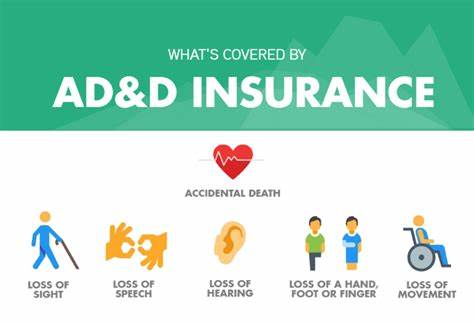




















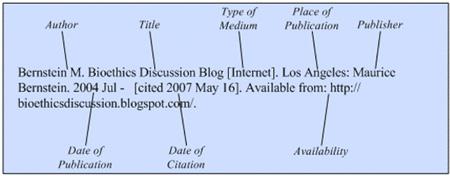































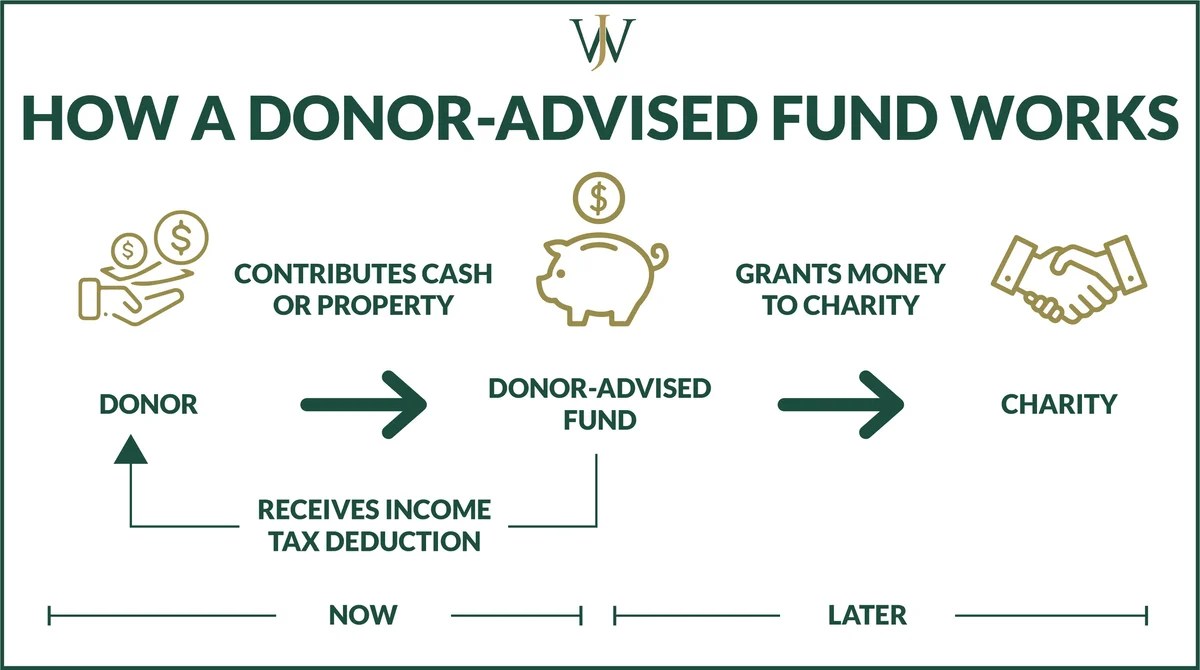



 The Leading Business Education Network for Doctors, Financial Advisors and Health Industry Consultants