THE CARTOON: Shrink

Cartoons on Topics in Psychiatry and Medicine

http://www.TheCartoonShrink.com

By Staff Reporters

***

***

Emily Watters, M.D. is an adult psychiatrist. She lives and practices in the bay area. She works in both community psychiatry and in private practice. She loves to teach, especially through sketches and comics.

Questions contribute to understanding and you are welcome to reach out to her at: thecartoonshrink@gmail.com

COMMENTS APPRECIATED

Thank You

***

***

DAILY UPDATE: The CHIPS and Science Act & the FOMC as Stocks Edge Higher

MEDICAL EXECUTIVE-POST TODAY’S NEWSLETTER BRIEFING

***

Essays, Opinions and Curated News in Health Economics, Investing, Business, Management and Financial Planning for Physician Entrepreneurs and their Savvy Advisors and Consultants

Serving Almost One Million Doctors, Financial Advisors and Medical Management Consultants Daily

A Partner of the Institute of Medical Business Advisors , Inc.

http://www.MedicalBusinessAdvisors.com

SPONSORED BY: Marcinko & Associates, Inc.

***

http://www.MarcinkoAssociates.com

Daily Update Provided By Staff Reporters Since 2007.
How May We Serve You?
© Copyright Institute of Medical Business Advisors, Inc. All rights reserved. 2024

REFER A COLLEAGUE: MarcinkoAdvisors@msn.com

Your Referral Count -0-

SPONSORSHIPS AVAILABLE: https://medicalexecutivepost.com/sponsors/

ADVERTISE ON THE ME-P: https://tinyurl.com/ytb5955z

***

It’ll be a big week for hot takes on the US economy, after the Federal Reserve meeting Tuesday and Wednesday and the April jobs report dropping Friday. Because inflation has been sticking around, the FOMC is expected to hold interest rates steady at this meeting and for the foreseeable future. On the jobs front, economists are projecting another strong month for employment growth.

CITE: https://www.r2library.com/Resource

In 2022, with bipartisan support, Congress passed the CHIPS and Science Act, an ambitious plan to juice domestic manufacturing of a product vital to national security: semiconductors. Two years later, the government has doled out more than half of the CHIPS Act’s $39 billion in incentives. According to the Financial Times

  • Chip companies and their suppliers have announced US investments of $327 billion over the next 10 years, per the Semiconductor Industry Association.
  • Construction of manufacturing facilities for computing and electronics devices has jumped 15x, government data shows.
  • By 2030, the US will likely produce around 20% of the world’s most advanced chips, according to USCommerce Secretary Gina Raimondo. Right now, it’s making 0%.

The proposed factories are massive and could transform regional economies. Micron, which received $6.1 billion in federal grants last week, plans to invest $100 billion in a manufacturing campus near Syracuse.

CITE: https://tinyurl.com/2h47urt5

Here’s where the major benchmarks ended:

  • The S&P 500® index (SPX) rose 16.21 points (0.3%) to 5,116.17, its highest close in over two weeks; the Dow Jones Industrial Average® ($DJI) gained 146.43 points (0.4%) to 38,386.09, the NASDAQ Composite® ($COMP) advanced 55.18 points (0.4%) to 15,983.08.
  • The 10-year Treasury note yield (TNX) fell more than 5 basis points to 4.616%.
  • The CBOE Volatility Index® (VIX) declined 0.36 to  14.67.

Communication services shares were among the market’s weakest performers Monday, reversing last Friday’s upswing as Alphabet (GOOGL) dropped more than 3% and Meta Platforms (META) lost 2.4%. Banks and retailers were also soft. The Philadelphia Semiconductor Index (SOX) climbed for the sixth-straight day and ended near a three-week high even though its biggest member, Nvidia (NVDA), ended little changed.

In other markets, the U.S. Dollar Index ($DXY) faded from early gains but is still up about 1% in April, driven by expectations domestic rates will remain high. “The U.S. dollar’s strength continues to reflect the relative strength of the economy and the wide interest rate differentials between the United States and other major developed markets,” Schwab Center for Financial Research analysts said in a report.

Despite last week’s strength, the S&P 500 index and the NASAQ Composite are still down 2.6% and 2.4%, respectively, for April and on track to break five-month winning streaks.

CITE: https://tinyurl.com/tj8smmes

Humana expects to exit Medicare Advantage (MA) markets in 2025, company executives told investors. The company reported its first quarter earnings April 24th. Humana posted $741 million in net income in the first quarter of 2024, beating investor expectations, but pulled its 2025 earnings guidance. 

COMMENTS APPRECIATED

PLEASE SUBSCRIBE: MarcinkoAdvisors@msns.com

Thank You

***

***

***

***

EDUCATIONAL TEXTBOOKS: https://tinyurl.com/4zdxuuwf

***

MEDICARE PART C: Humana Used A.I. Tool from UnitedHealth to Deny Medicare Advantage Claims

LAWSUIT

***

Humana Used AI Tool from UnitedHealth to Deny Medicare Advantage Claims 

Humana used an artificial intelligence tool owned by UnitedHealth Group to wrongfully deny Medicare Advantage [Part C] members’ medical claims, according to a class-action complaint filed on Dec. 12th. The lawsuit was filed in the U.S. District Court for the Western District of Kentucky and is the latest legal action against major insurers such as UnitedHealthcare and Cigna for allegedly using automated data tools to wrongfully deny members’ claims.

The complaint against Humana, the country’s second-largest Medicare Advantage insurer, accuses the company of using an AI tool called nH Predict to determine how long a patient will need to remain in post-acute care and overrides physicians’ determinations for the patient. The plaintiffs claim Humana set a goal to keep post-acute facility stay lengths for MA members within 1% of nH Predict’s estimations. Employees who deviate from the algorithm’s estimates are “disciplined and terminated, regardless of whether a patient requires more care,” the lawsuit alleges. When decisions made by the algorithm are appealed, they are allegedly overturned 90% of the time.

Source: Jakob Emerson  Becker’s Payer Issues [12/13/23]

COMMENTS APPRECIATED

Thank You

***

***

HUMANA: Exits Medicare Part C Plan Markets

By Staff Reporters

***

***

Humana Plans to Leave Some Medicare Advantage Markets in 2025

Humana expects to exit Medicare Advantage (MA) markets in 2025, company executives told investors. The company reported its first quarter earnings April 24th. Humana posted $741 million in net income in the first quarter of 2024, beating investor expectations, but pulled its 2025 earnings guidance. 

On an April 24th 2024 call with investors, Humana executives said it will look to pull back benefits and exit some markets, as CMS continues phasing in risk adjustment changes. CMS published its final MA rate notice for 2025 earlier this month. The agency slightly cut benchmark payments and continued phasing in coding changes. Humana previously said the agency’s rates were lower than its expectations.

Other payers have signaled they will likely cut benefits to accommodate the rate notice. 

Source: Rylee Wilson, Becker’s Payer Issues [4/25/24]

CITE: https://www.r2library.com/Resource

COMMENTS APPRECIATED

Thank You

***

ORDER: https://www.amazon.com/Dictionary-Health-Insurance-Managed-Care/dp/0826149944/ref=sr_1_4?ie=UTF8&s=books&qid=1275315485&sr=1-4
***

National Supply Chain Management Day: Health Care “White Paper”

By Staff Reporters

Dr. David Edward Marcinko MBA MEd CMP

***

National Supply Chain Management Day is celebrated on April 29th every year to mark the binding importance of the global supply chain in the everyday lives of people. National Supply Chain Day brings all stakeholders together to share recent developments in the field. Introduced in 2020 by a Georgia-based packaging outlet, this holiday aims to raise awareness about the way a supply chain affects all of us, and how we can be better partners and benefactors of the global supply chain management system.

***

***

One of the most iconic symbols of the COVID economy was the epic backlog of container ships waiting to dock at the ports of Los Angeles and Long Beach. At one point this year, that backup was longer than the line at Trader Joe’s on a Saturday, stretching 109 ships deep and almost 60 miles from the coast.

But now, the shipping situation is almost back to normal. As of last week, the number of ships waiting to drop off their goods stood at just four, according to the WSJ. Plus, the cost of sending a 40-foot container from Shanghai to LA has plummeted from its peak of more than $12,000 to almost $2,000, nearing its pre-COVID average.

The fact that goods are once again flowing smoothly through US ports is a hopeful sign that inflation, which was instigated in part by supply chain snarls, could start to abate.

CITE: https://www.r2library.com/Resource/Title/082610254

READ MORE: https://medicalexecutivepost.com/2011/06/09/supply-chain-management-in-healthcare

WHITE PAPER: https://medicalexecutivepost.com/wp-content/uploads/2011/06/scm-dr.-dem-sample.pdf

***

COMMENTS APPRECIATED

Thank You

***

ORDER: https://www.amazon.com/Hospitals-Healthcare-Organizations-Management-Operational/dp/1439879907/ref=sr_1_4?s=books&ie=UTF8&qid=1334193619&sr=1-4

****

DAILY UPDATE: 24/7 NYSE Trading with Last Week’s Market Round-Up

MEDICAL EXECUTIVE-POST TODAY’S NEWSLETTER BRIEFING

***

Essays, Opinions and Curated News in Health Economics, Investing, Business, Management and Financial Planning for Physician Entrepreneurs and their Savvy Advisors and Consultants

Serving Almost One Million Doctors, Financial Advisors and Medical Management Consultants Daily

A Partner of the Institute of Medical Business Advisors , Inc.

http://www.MedicalBusinessAdvisors.com

SPONSORED BY: Marcinko & Associates, Inc.

***

http://www.MarcinkoAssociates.com

Daily Update Provided By Staff Reporters Since 2007.
How May We Serve You?
© Copyright Institute of Medical Business Advisors, Inc. All rights reserved. 2024

REFER A COLLEAGUE: MarcinkoAdvisors@msn.com

Your Referral Count -0-

SPONSORSHIPS AVAILABLE: https://medicalexecutivepost.com/sponsors/

ADVERTISE ON THE ME-P: https://tinyurl.com/ytb5955z

***

Last week stocks shrugged off the news that the Fed’s favorite inflation gauge ticked up last month as strong earnings reports from Big Tech pushed them higher giving the NASDAQ and the S&P 500 their best weeks since November. Google parent Alphabet had its best day since July 2015 after showing that some of its Artificial Intelligence investments are paying off for its first-ever dividend distribution.

CITE: https://www.r2library.com/Resource

The New York Stock Exchange (NYSE) recently asked market participants to share how they’d feel about trading 24/7.

According to Morning Brew, The tradition-shattering proposal by the world’s busiest stock exchange, which operates from 9:30am to 4pm ET Monday–Friday, would make stocks no different from other assets that never stop trading, like crypto and government bonds.

The NYSE’s curiosity comes as the startup 24 Exchange, backed by Mets owner Steve Cohen, is seeking SEC permission to launch a round-the-clock stock exchange. 24 Exchange wants to cater to the growing contingent of amateur investors, some of whom prefer to trade after their kids go to bed. If the NYSE decides to become an exchange that never sleeps, it’d likely upend the day-to-day of the pros on Wall Street. So, let’s consider what 24/7 trading would look like, who’d be in the green, and who’s kept up at night by the prospect. For example:

The NYSE currently allows people to trade stocks outside regular hours from 4am until the market opens and after the closing bell until 8pm, but there are fewer participants trading, and those transactions often come with higher fees. Meanwhile, brokerages like Robinhood and Interactive Brokers have found success in letting investors put in orders for many stocks and stock indexes overnight.

  • Robinhood recently said its overnight trading options are a hit, with trading outside of the NYSE’s regular hours accounting for as much as 25% of activity on the platform.
  • Many customers aren’t used to waiting around for the NYSE to “ding a bell two times a day,” Robinhood’s Chief Brokerage Officer Steve Quirk told Bloomberg.

Many of these nocturnal transactions on brokerage apps happen because of the time difference with the Asia Pacific region, where investors are increasingly eager to tap into the US stock market when most Americans are asleep. The trades are enabled by organizations like Blue Ocean, which are seeing skyrocketing demand for cross-border services. Having the NYSE run 24/7 would make it easier for investors in different time zones to participate in the US stock market.

Proponents also say it could make morning trading less volatile by allowing investors to react to big news (like an Elon Musk tweet about Tesla) as soon as it happens rather than waiting for markets to open.

CITE: https://tinyurl.com/2h47urt5

Meanwhile, stocks popped off last week thanks to Big Tech’s impressive earnings, with the S&P 500 and NASDAQ posting their best weeks since November. Nvidia notched its best weekly gain in almost a year (up 15%), adding nearly $290 billion in market capitalization.

COMMENTS APPRECIATED

PLEASE SUBSCRIBE: MarcinkoAdvisors@msns.com

Your Referral Count -0-

Thank You

***

***

***

***

EDUCATIONAL TEXTBOOKS: https://tinyurl.com/4zdxuuwf

***

Modern Portfolio Theory and Asset Allocation [Not Correlation]

THE CORRELATION HOT TOPIC

SPONSOR: http://www.MarcinkoAssociates.com

By Dr. David Edward Marcinko MBA CMP©

SPONSOR: http://www.CertifiedMedicalPlanner.org

CMP logo

Modern Portfolio Theory approaches investing by examining the complete market and the full economy. MPT places a great emphasis on the correlation between investments. 

DEFINITION:

Correlation is a measure of how frequently one event tends to happen when another event happens. High positive correlation means two events usually happen together – high SAT scores and getting through college for instance. High negative correlation means two events tend not to happen together – high SATs and a poor grade record.

No correlation means the two events are independent of one another. In statistical terms two events that are perfectly correlated have a “correlation coefficient” of 1; two events that are perfectly negatively correlated have a correlation coefficient of -1; and two events that have zero correlation have a coefficient of 0.

Correlation has been used over the past twenty years by institutions and financial advisors to assemble portfolios of moderate risk.  In calculating correlation, a statistician would examine the possibility of two events happening together, namely:

  • If the probability of A happening is 1/X;
  • And the probability of B happening is 1/Y; then
  • The probability of A and B happening together is (1/X) times (1/Y), or 1/(X times Y).

There are several laws of correlation including;

  1. Combining assets with a perfect positive correlation offers no reduction in portfolio risk.  These two assets will simply move in tandem with each other.
  2. Combining assets with zero correlation (statistically independent) reduces the risk of the portfolio.  If more assets with uncorrelated returns are added to the portfolio, significant risk reduction can be achieved.
  3. Combing assets with a perfect negative correlation could eliminate risk entirely.   This is the principle with “hedging strategies”.  These strategies are discussed later in the book.

Citation: https://www.r2library.com/Resource/Title/0826102549

BUT – CORRELATION IS NOT CAUSATION

https://medicalexecutivepost.com/2021/02/05/correlation-is-not-causation/

In the real world, negative correlations are very rare 

Most assets maintain a positive correlation with each other.  The goal of a prudent investor is to assemble a portfolio that contains uncorrelated assets.  When a portfolio contains assets that possess low correlations, the upward movement of one asset class will help offset the downward movement of another.  This is especially important when economic and market conditions change.

As a result, including assets in your portfolio that are not highly correlated will reduce the overall volatility (as measured by standard deviation) and may also increase long-term investment returns. This is the primary argument for including dissimilar asset classes in your portfolio. Keep in mind that this type of diversification does not guarantee you will avoid a loss.  It simply minimizes the chance of loss. 

In the table provided by Ibbotson, the average correlation between the five major asset classes is displayed. The lowest correlation is between the U.S. Treasury Bonds and the EAFE (international stocks).  The highest correlation is between the S&P 500 and the EAFE; 0.77 or 77 percent. This signifies a prominent level of correlation that has grown even larger during this decade.   Low correlations within the table appear most with U.S. Treasury Bills.

Historical Correlation of Asset Classes

Benchmark                             1          2          3         4         5         6            

1 U.S. Treasury Bill                  1.00    

2 U.S. Bonds                          0.73     1.00    

3 S&P 500                               0.03     0.34     1.00    

4 Commodities                         0.15     0.04     0.08      1.00      

5 International Stocks              -0.13    -0.31    0.77      0.14    1.00       

6 Real Estate                           0.11      0.43    0.81     -0.02    0.66     1.00

Table Source: Ibbotson 1980-2012

Comprehensive Financial Planning Strategies for Doctors and Advisors: Best Practices from Leading Consultants and Certified Medical Planners™

ORDER Textbook: https://www.amazon.com/Comprehensive-Financial-Planning-Strategies-Advisors/dp/1482240289/ref=sr_1_1?ie=UTF8&qid=1418580820&sr=8-1&keywords=david+marcinko

SECOND OPINIONS: https://medicalexecutivepost.com/schedule-a-consultation/

INVITE DR. MARCINKO: https://medicalexecutivepost.com/dr-david-marcinkos-bookings/

THANK YOU

***

Hedging the Portfolio with Weapons of Mass Destruction

A SPECIAL REPORT

By Vitaliy N. Katsenelson CFA

***

Uber’s business is doing extremely well. It has reached escape velocity – the company’s expenses have grown at a slow rate while its revenues are growing at 22% a year. This caused profit margins to expand and earnings and free cash flows to skyrocket. Our investment in Uber was based on the assumption that its services would become a utility – just like water and electricity. The company’s name is synonymous with ride sharing. 

I must confess that the biggest risk to our investment in Uber is me. Yes, you read that right. Uber has an incredible growth runway. It is not just going after ride sharing and food delivery, where it still has plenty of room to grow, it is also making serious inroads into the grocery market. It has terrific management that is putting a lot of daylight between Uber and its competitors.

READ MORE HERE: https://tinyurl.com/3975rtyu

COMMENTS APPRECIATED

Thank You

***

***

DAILY UPDATE: Republic First Bank Seized and Sold to Fulton Bank

MEDICAL EXECUTIVE-POST TODAY’S NEWSLETTER BRIEFING

***

Essays, Opinions and Curated News in Health Economics, Investing, Business, Management and Financial Planning for Physician Entrepreneurs and their Savvy Advisors and Consultants

Serving Almost One Million Doctors, Financial Advisors and Medical Management Consultants Daily

A Partner of the Institute of Medical Business Advisors , Inc.

http://www.MedicalBusinessAdvisors.com

SPONSORED BY: Marcinko & Associates, Inc.

***

http://www.MarcinkoAssociates.com

Daily Update Provided By Staff Reporters Since 2007.
How May We Serve You?
© Copyright Institute of Medical Business Advisors, Inc. All rights reserved. 2024

REFER A COLLEAGUE: MarcinkoAdvisors@msn.com

SPONSORSHIPS AVAILABLE: https://medicalexecutivepost.com/sponsors/

ADVERTISE ON THE ME-P: https://tinyurl.com/ytb5955z

***

Republic First Bank. The FDIC said regulators seized the troubled Philadelphia-based bank and agreed to sell it to Fulton Bank. While news of a regional bank failure might take you back to March 2023 when Silicon Valley Bank bit the dust, Republic First was much smaller than SVB (and much smaller than the similarly named First Republic, which ultimately got absorbed by JPMorgan Chase as regional banks struggled). And, because there’s already a buyer, there are no lingering questions about the safety of deposits.

So, while the first bank failure of the year is a sign that regional banks are still in a bad way, it’s unlikely to spur a larger crisis.

CITE: https://www.r2library.com/Resource

COMMENTS APPRECIATED

PLEASE SUBSCRIBE: MarcinkoAdvisors@msns.com

Thank You

***

***

***

***

EDUCATIONAL TEXTBOOKS: https://tinyurl.com/4zdxuuwf

***

HOSPITALS: “Weighted Average Cost of Capital”

By Dr. David Edward Marcinko MBA CMP

***

SPONSOR: http://www.MARCINKOASSOCIATES.com

***

The Cost of Hospital Capital Is “WACC”

It is critical for physician executives to understand and to measure the total cost of hospital capital. Lack of understanding and appreciation of the total cost of capital is widespread, particularly among not-for-profit hospital and physician executives. The capital structure includes long-term debt and equity; total capital is the sum of these two, and, each of these components has cost associated with it.

For the long-term debt portion, this cost is explicit—it is the interest rate plus associated costs of placement and servicing. For the equity portion, the cost is not explicit and is widely misunderstood. In many cases, hospital capital structures include significant amounts of equity that has accumulated over many years of favorable operations.

Far too many executives wrongly attribute zero cost to the equity portion of their capital structure. Although it is correct that generally accepted accounting principles continue to assign a zero cost to equity, there is opportunity cost associated with equity that needs to be considered. This cost is the opportunity available to utilize that capital in alternative ways.

***

***

In general, the cost attributed to equity is the return expected by the equity markets on hospital equity. This can be observed by evaluating the equity prices of hospital companies whose equity is traded on public stock exchanges. Usually, the equity prices will imply cost of equity in the range of 10%–14%. Almost always, the cost of equity implied by hospital equity prices traded on public stock exchanges will substantially exceed the cost of long-term debt. Thus, while many hospital executives will view the cost of equity to be substantially less than the cost of debt (i.e., to be zero) in nearly all cases, the appropriate cost of equity will be substantially greater than the cost of debt.

Hospitals need to measure their weighted average cost of capital (WACC). WACC is the cost of long-term debt multiplied by the ratio of long-term debt to total capital plus the cost of equity multiplied by the ratio of equity to total capital (where total capital is the sum of long-term debt and equity).

WACC is then used as the basis for capital charges associated with all capital investments. Capital investments should be expected to generate positive returns after applying this capital charge based on the WACC. Capital investments that do not generate returns exceeding the WACC consume enterprise value; those that generate returns exceeding WACC increase enterprise value. Therefore, physician and hospital executives need to be rewarded for increasing enterprise value.

***

COMMENTS APPRECIATED

Thank You

***

***

Medical [Dental] Anti-Defamation Contracts and Doctor Accountability

Was the ADA Complicit?

By D. Kellus Pruitt DDS

If you were to walk into my dental office with a toothache, and I told you that before I relieve your pain, you have to agree not to say bad things about me on the internet, how badly would the tooth have to be hurting to keep you from walking out the door?

The article, “Toothache lawsuit may stifle medical gag orders against online rants”, by JoNel Aleccia, was posted on MSN.com years ago.

[Robert Lee, 42] who had a bad toothache has filed a class-action lawsuit against his New York dentist after she required him to sign a contract promising not to trash-talk her online — and then fined him thousands of dollars trying to enforce it.”

Aleccia adds: “[Dr. Stacy Makhnevich] was among hundreds of medical professionals nationwide in recent years who refused to care for patients unless they signed anti-defamation contracts. In the contracts, the doctors and dentists promised not to evade federal patient privacy protections in exchange for patients’ agreeing not to post public comments about them.”

The Dentist

Other than its obvious ineffectiveness for this particular Manhattan dentist, whose practice is on the 69 th. floor of the Chrysler Building, Lexington Avenue at East 42St., (212) 697-4400, what’s wrong with this business plan?

First of all, aside from the insult, if a dentist required you to sign a contract forfeiting your right to express your opinion about the quality of care even before being seen, how confident would it make you feel about the doctor’s abilities?

The HIPAA Question

Then there’s HIPAA. It’s sad that healthcare providers on the 69th.  floor of the Chrysler Building would take advantage of vulnerable Americans who don’t understand that their right to privacy isn’t something that can be withheld – even as part of a twisted “copyright” deal intended to enable a dentist to dodge accountability. It seems to me like the Office of Civil Rights as well as the Attorney General should be alerted. How is threatening a patient’s privacy in return for direly-needed treatment different than extortion?

The Gotcha!

Mr. Lee had forgotten the contract until months later when he allegedly discovered that Dr. Makhnevich had overcharged him by about $4,000, improperly filed the insurance and then refused to provide him with the documents he needed to file the claim himself. That’s when he started posting rants on sites like Yelp and DoctorBase, such as, “Avoid at all cost! Scamming their customers!” and “Honestly, how do you live with yourself? Just try being a decent human being.”

“Within days, Makhnevich demanded that the sites remove the comments and threatened to sue Lee. She also said he was infringing on her copyright provisions and started sending invoices for fines of $100 a day. By October, the total topped $4,600, he said.”

The Service

Since the dentist purchased the right to use Medical Justice Inc. anti-defamation contracts to prevent complaints from dis-satisfied customers from being discussed on the internet, I say she is due a refund. What’s more, if she’s given any trouble about it, she should get on the internet and complain – if she didn’t forfeit that right as part of the agreement.

The ADA

So where did Dr. Stacy Makhnevich learn about Medical Justice Inc.’s ineffective, unethical and probably illegal anti-defamation contract service? Of all places, it may well have been in ADA Headquarters, 211 E. Chicago Ave., Chicago, (312) 440-2500

Dr. Jeffrey Segal [MD, JD], the neurosurgeon and founder of Medical Justice Services Inc. which sold providers like Dr. Makhnevich the right to use his company’s contracts, was a featured speaker at the American Dental Association’s [ADA] annual Benefits Conference last year.

The ADA leadership’s decision to invite Dr. Segal to advertise his product at a benefits conference (?) reveals the old timers’ underlying paranoia that makes them prefer silence from members as well as their own dental patients.

Assessment

Since the ADA effectively put its stamp of approval on Medical Justice’s anti-defamation contracts, don’t you think the ADA News should at least post a warning about the liability to members who attended Dr. Segal’s presentation in ADA Headquarters? Let’s watch dentistry’s leaders ignore the abysmal results of yet another half-baked blunder caused by people too proud to listen.

Conclusion

Your thoughts and comments on this ME-P are appreciated. Feel free to review our top-left column, and top-right sidebar materials, links, URLs and related websites, too. Then, subscribe to the ME-P. It is fast, free and secure.

Speaker: If you need a moderator or speaker for an upcoming event, Dr. David E. Marcinko; MBA – Publisher-in-Chief of the Medical Executive-Post – is available for seminar or speaking engagements. Contact: MarcinkoAdvisors@msn.com

OUR OTHER PRINT BOOKS AND RELATED INFORMATION SOURCES:

Product Details  Product Details

Product Details

FTC: Non-Competition Contract Clause Agreements?

By Staff Reporters

***

***

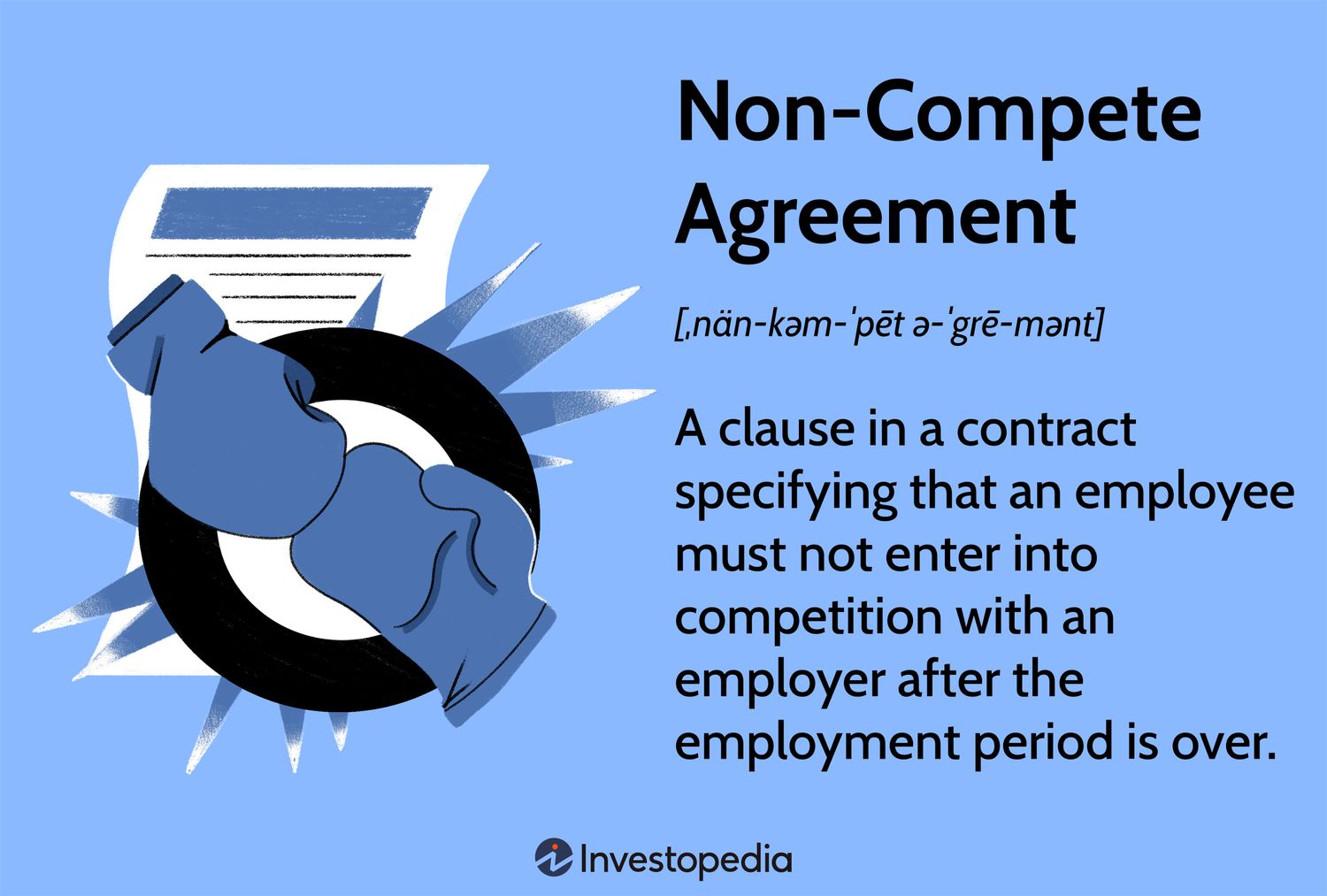
FTC Votes 3-2  to Ban Non-Compete Agreements, but Legal Challenges Expected

The Federal Trade Commission (FTC) just voted 3-2 to issue a final rule striking new non-compete agreements for all workers and phasing out existing non-competes for all but senior executives across “most employers.” The ban does not apply to non-profits including many of the country’s healthcare provider organizations due to the limitations of the FTC’s jurisdiction, one of several points of contention that has been raised by hospital industry groups that have opposed the ban.

The final rule will take effect 120 days after its publication in the Federal Register. To be in compliance, impacted employers will need to stop enforcing existing non-competes with workers other than senior executives, inform those who are no longer bound by existing non-competes and stop initiating new non-competes for all workers going forward, FTC staff said during an open meeting on the final rule held last week.

Source: Dave Muoio, Fierce Healthcare [4/23/24]

Moreover, the stay-or-pay contract practice requires nurses to put in a certain amount of time “or be required to pay money to their employer for an alleged debt, which could be tied to so-called training, a sign-on bonus, or other costs their employer claims are related to their employment,” according to National Nurses United (NNU), a union that represents about a quarter of a million registered nurses (RNs).

“The new FTC rule is a step in the right direction for nurses and those aspiring to take on this critical role in our communities,” NNU President Nancy Hagans said in a statement.

MORE: https://tinyurl.com/bdethdwh

COMMENTS APPRECIATED

Thank You

***

***

Behavioral Finance for Doctors?

On the Psychology of Investing [Book Review]

By Peter Benedek, PhD CFA

Founder: www.RetirementAction.com

Some of the pioneers of behavioral finance are Drs. Kahneman, Twersky and Thaler. This short introduction to the subject is based on John Nofsinger’s little book entitled “Psychology of Investing” an excellent quick read for all medical professionals or anyone who is interested in learning more about behavioral finance.

Rational Decisions?

Much of modern finance is built on the assumption that investors “make rational decisions” and “are unbiased in their predictions about the future”, however this is not always the case.

Cognitive errors come from (1) prospect theory (people feel good/bad about gain/loss of $500, but not twice as good/bad about a gain/loss of $1,000; they feel worse about a $500 loss than feel good about a $500 gain); (2) mental accounting (meaning that people tend to create separate buckets which they examine individually), (3) Self-deception (e.g. overconfidence), (4) heuristic simplification (shortcuts) and (4) mood can affect ability to reach a logical conclusion.

John Nofsinger’s Book

The following are some of the major chapter headings in Nofsinger’s book, and represent some of the key behavioral finance concepts.

Overconfidence leads to: (1) excessive trading (which in turn results in lower returns due to costs incurred), (2) underestimation of risk (portfolios of decreasing risk were found for single men, married men, married women, and single women), (3) illusion of knowledge (you can get a lot more data nowadays on the internet) and (4) illusion of control (on-line trading).

Pride and Regret leads to: (1) disposition effect (not only selling winners and holding on to the losers, but selling winners too soon- confirming how smart I was, and losers to late- not admitting a bad call, even though selling losers increases one’s wealth due to the tax benefits), (2) reference points (the point from where one measures gains or losses is not necessarily the purchase price, but may perhaps be the most recent 52 week high and it is most likely changing continuously- clearly such a reference point will affect investor’s judgment by perhaps holding on to “loser” too long when in fact it was a winner.)

Considering the Past in decisions about the future, when future outcomes are independent of the past lead to a whole slew of more bad decisions, such as: (1) house money effect (willing to increase the level of risk taken after recent winnings- i.e. playing with house’s money), (2) risk aversion or snake-bite effect (becoming more risk averse after losing money), (3) trying to break-even (at times people will increase their willing to take higher risk to try to recover their losses- e.g. double or nothing), (4) endowment or status quo effect (often people are only prepared to sell something they own for more than they would be willing to buy it- i.e. for investments people tend to do nothing, just hold on to investments they already have) (5) memory and decision making ( decisions are affected by how long ago did the pain/pleasure occur or what was the sequence of pain and pleasure), (6) cognitive dissonance (people avoid important decisions or ignore negative information because of pain associated with circumstances).

Mental Accounting is the act of bucketizing investments and then reviewing the performance of the individual buckets separately (e.g. investing at low savings rate while paying high credit card interest rates).

Examples of mental accounting are: (1) matching costs to benefits (wanting to pay for vacation before taking it and getting paid for work after it was done, even though from perspective of time value of money the opposite should be preferred0, (2) aversion to debt (don’t like long-term debt for short-term benefit), (3) sunk-cost effect (illogically considering non-recoverable costs when making forward-going decisions). In investing, treating buckets separately and ignoring interaction (correlations) induces people not to sell losers (even though they get tax benefits), prevent them from investing in the stock market because it is too risky in isolation (however much less so when looked at as part of the complete portfolio including other asset classes and labor income and occupied real estate), thus they “do not maximize the return for a given level of risk taken).

In building portfolios, assets included should not be chosen on basis of risk and return only, but also correlation; even otherwise well educated individuals make the mistake of assuming that adding a risky asset to a portfolio will increase the overall risk, when in fact the opposite will occur depending on the correlation of the asset to be added with the portfolio (i.e. people misjudge or disregard interactions between buckets, which are key determinants of risk).

This can lead to: (1) building behavioral portfolios (i.e. safety, income, get rich, etc type sub-portfolios, resulting in goal diversification rather than asset diversification), (2) naïve diversification (when aiming for 50:50 stock:bond allocation implementing this as 50:50 in both tax-deferred (401(k)/RRSP) accounts and taxable accounts, rather than placing the bonds in the tax-deferred and stocks in taxable accounts respectively for tax advantages), (3) naïve diversification in retirement accounts (if five investment options are offered then investing 1/5th in each, thus getting an inappropriate level of diversification or no diversification depending on the available choices; or being too heavily invested in one’s employer’s stock).

Representativenes may lead investors to confusing a good company with a good investment (good company may already be overpriced in the market; extrapolating past returns or momentum investing), and familiarity to over-investment in one’s own employer (perhaps inappropriate as when stock tanks one’s job may also be at risk) or industry or country thus not having a properly diversified portfolio.

Emotions can affect investment decisions: mood/feelings/optimism will affect decision to buy or sell risky or conservative assets, even though the mood resulted from matters unrelated to investment. Social interactions such as friends/coworkers/clubs and the media (e.g. CNBC) can lead to herding effects like over (under) valuation.

Financial Strategies

Nofsinger finishes with a final chapter which includes strategies for:

(i) beating the biases: (1) Understand the biases, (2) define your investment objectives, (3) have quantitative investment criteria, i.e. understand why you are buying a specific investor (or even better invest in a passive fashion), (4) diversify among asset classes and within asset classes (and don’t over invest in your employer’s stock), and (5) control your investment environment (check on stock monthly, trade only monthly and review progress toward goals annually).

(ii) using biases for the good: (1) set new employee defaults for retirement plans to being enrolled, (2) get employees to commit some percent of future raises to automatically go toward retirement (save-more-tomorrow).

Assessment

Buy the book (you can get used copies through Amazon). As indicated it is a quick read and occasionally you may even want to re-read it to insure you avoid the biases or use them for the good. Also, the book has long list of references for those inclined to delve into the subject more deeply.

You might even ask “How does all this Behavioral Finance coexist with Efficient Market theory?” and that’s a great question that I’ll leave for another time.

More: SSRN-id2596202

Conclusion

Your thoughts and comments on this ME-P are appreciated. Feel free to review our top-left column, and top-right sidebar materials, links, URLs and related websites, too. Then, subscribe to the ME-P. It is fast, free and secure.

Speaker: If you need a moderator or speaker for an upcoming event, Dr. David E. Marcinko; MBA – Publisher-in-Chief of the Medical Executive-Post – is available for seminar or speaking engagements. Contact: MarcinkoAdvisors@msn.com

OUR OTHER PRINT BOOKS AND RELATED INFORMATION SOURCES:

***

Risk Management, Liability Insurance, and Asset Protection Strategies for Doctors and Advisors: Best Practices from Leading Consultants and Certified Medical Planners™8Comprehensive Financial Planning Strategies for Doctors and Advisors: Best Practices from Leading Consultants and Certified Medical Planners™

DAILY UPDATE: Cannabis, Healthcare and the Stock Market Rally!

MEDICAL EXECUTIVE-POST TODAY’S NEWSLETTER BRIEFING

***

Essays, Opinions and Curated News in Health Economics, Investing, Business, Management and Financial Planning for Physician Entrepreneurs and their Savvy Advisors and Consultants

Serving Almost One Million Doctors, Financial Advisors and Medical Management Consultants Daily

A Partner of the Institute of Medical Business Advisors , Inc.

http://www.MedicalBusinessAdvisors.com

SPONSORED BY: Marcinko & Associates, Inc.

***

http://www.MarcinkoAssociates.com

Daily Update Provided By Staff Reporters Since 2007.
How May We Serve You?
© Copyright Institute of Medical Business Advisors, Inc. All rights reserved. 2024

REFER A COLLEAGUE: MarcinkoAdvisors@msn.com

Your Referral Count -0-

SPONSORSHIPS AVAILABLE: https://medicalexecutivepost.com/sponsors/

ADVERTISE ON THE ME-P: https://tinyurl.com/ytb5955z

***

Here’s where the major stock market benchmarks ended:

  • The S&P 500 index gained 51.54 points (1.0%) to 5,099.96, up 2.7% for the week; the Dow Jones Industrial Average® ($DJI) increased 153.86 points (0.4%) to 38,239.66, up 0.7% for the week; the NASDAQ Composite jumped 316.14 points (2.0%) to 15,927.90, up 4.2% for the week.
  • The 10-year Treasury note yield (TNX) lost about 4 basis points to 4.665%.
  • The CBOE Volatility Index® (VIX) fell 0.34 to 15.03.

Alphabet’s rally helped communication services reverse Thursday’s downturn, which was driven by disappointing quarterly results from Meta Platforms (META). The S&P 500 Communication Services index ($SP500#50) surged 4.7% Friday and ended the week with a 2.7% gain. Semiconductor shares were also strong, led by a 6% gain in Nvidia (NVDA). The Russell 2000® Index (RUT) added 1.1% Friday and posted a 2.8% advance for the week.

In other markets, WTI Crude Oil (/CL) futures rose slightly Friday, ending around $83.65 per barrel and shutting down a three-week losing streak.

CITE: https://www.r2library.com/Resource

  • Midi Health, a health clinic geared toward women in midlife, raised $60 million in Series B funding to expand its network to 150 clinicians by the end of the year, among other efforts. (MobiHealthNews)
  • “We’re fooling ourselves if we think that’s cheap or can be done less expensively.”—Carmela Coyle, president and CEO of the California Hospital Association, on hospital finances and cutting costs (AP)
  • The federal government implemented new staffing rules to improve patient care, but most nursing homes won’t be able to meet that demand. (KFF Health News/NPR)

CITE: https://tinyurl.com/2h47urt5

The Biden administration is considering a change that would downgrade cannabis from a Schedule I drug to a Schedule III drug this year. The reclassification would have major effects on the business of cannabis, but for that to happen, the Drug Enforcement Agency needs proof of medical effectiveness.

CITE: https://tinyurl.com/tj8smmes

COMMENTS APPRECIATED

PLEASE SUBSCRIBE: MarcinkoAdvisors@msns.com

Thank You

***

***

***

***

EDUCATIONAL TEXTBOOKS: https://tinyurl.com/4zdxuuwf

***

DAILY UPDATE: GDP Worries as Markets Stumble with Meta but other Technology Stocks are Good

MEDICAL EXECUTIVE-POST TODAY’S NEWSLETTER BRIEFING

***

Essays, Opinions and Curated News in Health Economics, Investing, Business, Management and Financial Planning for Physician Entrepreneurs and their Savvy Advisors and Consultants

Serving Almost One Million Doctors, Financial Advisors and Medical Management Consultants Daily

A Partner of the Institute of Medical Business Advisors , Inc.

http://www.MedicalBusinessAdvisors.com

SPONSORED BY: Marcinko & Associates, Inc.

***

http://www.MarcinkoAssociates.com

Daily Update Provided By Staff Reporters Since 2007.
How May We Serve You?
© Copyright Institute of Medical Business Advisors, Inc. All rights reserved. 2024

REFER A COLLEAGUE: MarcinkoAdvisors@msn.com

SPONSORSHIPS AVAILABLE: https://medicalexecutivepost.com/sponsors/

ADVERTISE ON THE ME-P: https://tinyurl.com/ytb5955z

***

New GDP numbers out yesterday show a worrying combo of stubborn inflation + waning growth that dampens hopes for a potential interest rate cut. Per the latest data from the Bureau of Economic Analysis, the first quarter of 2024 was a confounding one:

  • GDP increased at a 1.6% annualized rate, far below projections of 2.4% and notably down from 3.4% at the end of 2023.
  • While slow growth would typically signal that the Fed could cut rates, another metric complicates matters: Consumer prices (excluding volatile categories), a solid indicator of inflation, shot up to a much higher than anticipated 3.7%.

***

Meta reported record Q1 revenue yesterday, but it was overshadowed by the billions of dollars the company is spending in its efforts to win the Artificial Intelligence race and make the Metaverse happen. Investors were unhappy with the company’s forecast that its spending will rise by $10 billion dollars to support Artificial Intelligence development, sending Meta’s stock price down 15% after hours.

Here’s where the major benchmarks ended:

  • The S&P 500 index fell 23.21 points (0.5%) to 5,048.42; the Dow Jones Industrial Average lost 375.12 points (1.0%) to 38,085.80; the NASDAQ Composite® ($COMP) shed 100.99 points (0.6%) to 15,611.76.
  • The 10-year Treasury note yield (TNX) rose about 5 basis points to 4.704%.
  • The CBOE Volatility Index® (VIX) fell 0.64 to 15.33.

Communication services shares were the weakest S&P 500 sector Thursday behind the plunge in Meta Platforms. Late Wednesday, the Facebook parent provided lighter-than-expected second-quarter revenue guidance, while CEO Mark Zuckerberg discussed spending in currently unprofitable pursuits such as artificial intelligence (AI) and mixed reality. Meta’s first-quarter earnings and revenue both came above analysts ‘ estimates, however.

Meta’s slump helped send the S&P 500 Communication Services index ($SP500#50) down 4%. Banks were also particularly soft amid concern that persistently high interest rates may compress lender margins. Semiconductor and transportation shares were among the few pockets of strength.

CITE: https://www.r2library.com/Resource

But, Alphabet, Microsoft, and Snap reported Q1 earnings yesterday, and were generally good. Alphabet issued its first-ever dividend and authorized $70 billion in stock buybacks, after it beat Wall Street’s revenue expectations. Microsoft also beat revenue forecasts on the strength of its cloud services. And Snap shares soared after it topped estimates and impressed investors with its 422 million global daily active users. It was a much-needed boost for the sector after Meta spooked the market with how much it’s spending on AI.

CITE: https://tinyurl.com/tj8smmes

COMMENTS APPRECIATED

PLEASE SUBSCRIBE: MarcinkoAdvisors@msns.com

Thank You

***

***

***

***

EDUCATIONAL TEXTBOOKS: https://tinyurl.com/4zdxuuwf

***

MICROSOFT: The Artificial Intelligence Revolution

By Staff Reporters

***

***

Microsoft is looking at a broader AI future than just OpenAI

Microsoft has been at the forefront of the AI revolution through its $13 billion stake in the ChatGPT-maker, but recently it showed it’s also making other Artificial Intelligence bets, announcing it will pursue several partnerships and is investing $2.1 billion in French startup Mistral AI. Mistral’s tech will be available to Microsoft Azure users.

And then Microsoft President Brad Smith told Axios that OpenAI CEO Sam Altman is “brilliant”, but …… Read Axios Story.

Perhaps even to counter Mark Zuckerbergs META Platform.

CITE: https://www.r2library.com/Resource

COMMENTS APPRECIATED

Thank You

***

***

PODCAST: Artificial Intelligence in Medicine

MACHINE LEARNING AND NATURAL LANGUAGE PROCESSING

By Eric Bricker MD

***

***

YOUR COMMENTS ARE APPRECIATED.

Thank You

***

Thank You

***

US INCOME GAP: A New Reality Check for Doctors NOT Going Broke!

Sobering News for all Medical Professionals

To Be Thankful

By Ann Miller RN MHA CMP

SPONSOR: https://marcinkoassociates.com/

***

***

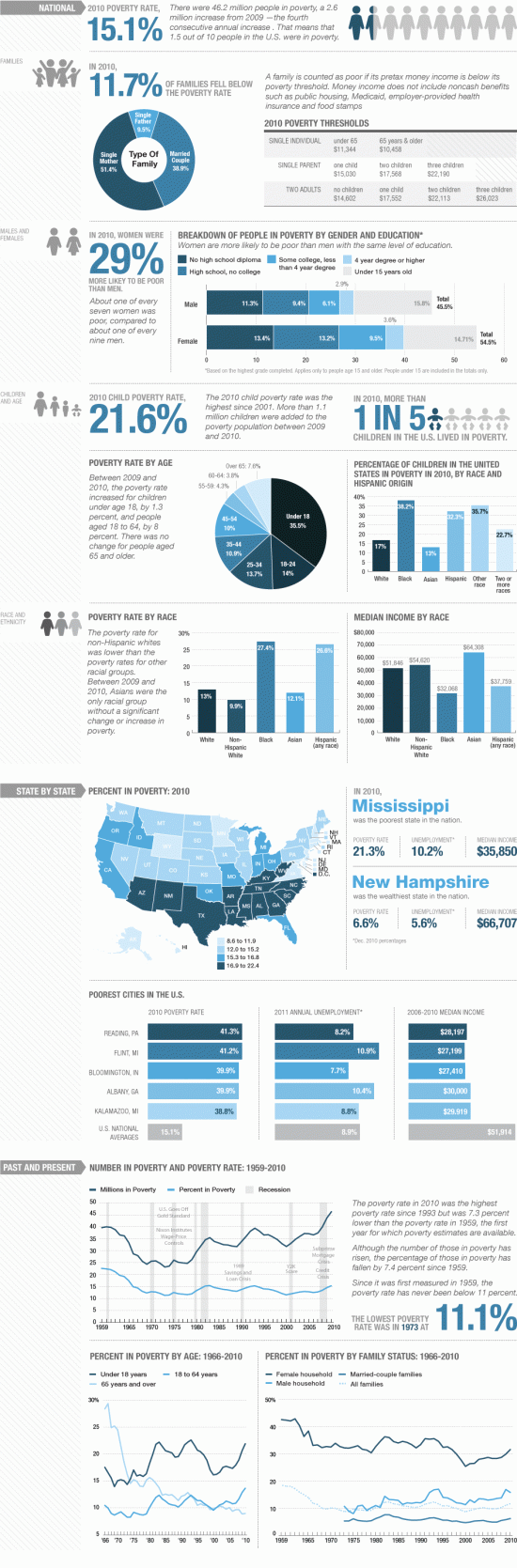
Poverty in America

***

Assessment

Conclusion

Your thoughts and comments on this ME-P are appreciated. Feel free to review our top-left column, and top-right sidebar materials, links, URLs and related websites, too. Then, subscribe to the ME-P. It is fast, free and secure.

Speaker: If you need a moderator or speaker for an upcoming event, Dr. David E. Marcinko; MBA – Publisher-in-Chief of the Medical Executive-Post – is available for seminar or speaking engagements. Contact: MarcinkoAdvisors@msn.com

Our Other Print Books and Related Information Sources:

Hospitals: http://www.crcpress.com/product/isbn/9781439879900

Physician Advisors: www.CertifiedMedicalPlanner.org

Product DetailsProduct DetailsProduct Details

  Product Details

***

FOR 4 BIG BANKS: A Big Quarter

By Staff Reporters

***

***

An uptick in corporate dealmaking fueled investment banking growth at the four largest US banksJPMorgan Chase, Bank of America, Wells Fargo, and Citibank—as well as at Goldman Sachs and Morgan Stanley. The result was “one of [investment banking’s] best quarters” since the Fed began hiking rates in 2022, the Wall Street Journal reported. Their earnings releases over the last week either matched or beat the consensus forecasts for revenue and earnings per share, according to the WSJ.

“It’s clear that we’re in the early stages of a reopening of the capital markets,” Goldman Sachs CEO David Solomon said in an earnings call last Monday. Goldman reported that growth in its investment banking and trading pushed its net income up 28% year over year, beating analyst expectations. Solomon said he expects more M&A activity will keep boosting the demand for debt underwriting at Goldman, which saw a 32% Year over Year jump in internet-banking revenue.

Solomon’s sunny outlook was beclouded the next day by Fed Chair Jerome Powell. The Fed had hoped inflation reports would show it could cut rates soon without overheating the economy, but instead inflation has continued to tick up.

COMMENTS APPRECIATED

Subscribe Today

***

***

DOCTOR: Money “Disorders”

Behavioral Finance –  Are You Guilty?

By Rick Kahler MS CFP® ChFC CCIM www.KahlerFinancial.com

As a young adult, what could you spend money on that would be a wise investment in your financial future? A home? Medical school education? A money management class?

Well, all of these may be good ideas, but there’s something else you can buy that could make an even greater difference in your long-term financial health: counseling.

Behavioral Finance

What does psychological counseling have to do with money? Sometimes; a lot!

For example, I was recently interviewed by a reporter for an article about money disorders. The conversation reminded me just how many problems can result from dysfunctional money beliefs and behaviors. Money disorders can impair people’s functioning and disrupt their lives just as significantly as disorders like alcoholism or other addictions.

CITE: https://www.r2library.com/Resource

Common Maladies

Some common money disorders include the following:

  • Compulsive Spending is a consuming focus on spending. It can include buying things you can’t afford as well as shopping where no money is actually spent
  • Financial Enabling is a codependent attempt to help others that actually does more harm than good. A pattern of bailing kids out financially is a good example.
  • Hoarding is compulsively buying and storing things that you don’t need or will never use.
  • Financial Infidelity is keeping money secrets (such as spending, saving, or investment mistakes) from your partner because you would be ashamed to have them find out.
  • Financial Incest is inappropriate sharing of worries or financial details in ways that violate the boundaries between children and adults.
  • Workaholism, especially medical professionals, is a consuming focus on work or earning to a point of damaging your relationships.
  • Under-spending is frugality taken to extremes, such as inadequate spending on health care, nutrition, shelter, or clothing even when you can afford them.

Not about Money

How many of the above “disorders” are you guilty of?

All these disorders have one thing in common: fundamentally, they aren’t about the money. A given pattern of behavior around money can be someone’s unconscious response to emotional pain, in the same way addiction or anger might be.

For that particular person, the money behavior may just happen to be the medicator that works to cope with deep emotional stress. While one person may find relief in alcohol or drugs and another may find it in work, someone else might use shopping or hoarding as a way to feel better and function in the world.

An Addiction?

Just like addictions, however, money disorders only relieve pain for a short time. In the long term, they only cause more pain. The result is an escalating cycle of destructive behavior that has many negative consequences, including financial ones.

Rag Mags

To see how emotional health and financial health are linked, all you have to do is read a celebrity magazine or look around at the people you know. I’ve seen high-earning doctors and other medical professionals who have a negative self-worth because they can’t control their spending. We all know people who bounce from one financial mess to another, never seeming to learn from their money mistakes. Some very capable and intelligent doctors struggle financially and in their careers because of emotional issues that have nothing directly to do with money.

Counseling

Counseling to resolve emotional issues may seem to be a low-priority expense that comes far down the list after basic needs like housing, food, and transportation. Yet for anyone who struggles to overcome destructive patterns of behavior—even those that aren’t directly about money—counseling can pay off in very real monetary ways.

Assessment

Emotionally healthy and confident people make better choices about relationships, careers, and other major aspects of their lives. They also make better choices about money. This is why counseling is more than an investment in your emotional health. It can also make a measurable difference in your financial health.

Conclusion

Your thoughts and comments on this ME-P are appreciated. Feel free to review our top-left column, and top-right sidebar materials, links, URLs and related websites, too. Then, subscribe to the ME-P. It is fast, free and secure.

Speaker: If you need a moderator or speaker for an upcoming event, Dr. David E. Marcinko; MBA – Publisher-in-Chief of the Medical Executive-Post – is available for seminar or speaking engagements. Contact: MarcinkoAdvisors@msn.com

Risk Management, Liability Insurance, and Asset Protection Strategies for Doctors and Advisors: Best Practices from Leading Consultants and Certified Medical Planners™8Comprehensive Financial Planning Strategies for Doctors and Advisors: Best Practices from Leading Consultants and Certified Medical Planners™

Product Details

DAILY UPDATE: Retirement Security Rule, National Drug Take Back Day, Spotify, Cleveland Clinic, NAR and the Mixed Stock Markets

MEDICAL EXECUTIVE-POST TODAY’S NEWSLETTER BRIEFING

***

Essays, Opinions and Curated News in Health Economics, Investing, Business, Management and Financial Planning for Physician Entrepreneurs and their Savvy Advisors and Consultants

Serving Almost One Million Doctors, Financial Advisors and Medical Management Consultants Daily

A Partner of the Institute of Medical Business Advisors , Inc.

http://www.MedicalBusinessAdvisors.com

SPONSORED BY: Marcinko & Associates, Inc.

***

http://www.MarcinkoAssociates.com

Daily Update Provided By Staff Reporters Since 2007.
How May We Serve You?
© Copyright Institute of Medical Business Advisors, Inc. All rights reserved. 20224

REFER A COLLEAGUE: MarcinkoAdvisors@msn.com

SPONSORSHIPS AVAILABLE: https://medicalexecutivepost.com/sponsors/

ADVERTISE ON THE ME-P: https://tinyurl.com/ytb5955z

***

Otherwise known as “National Prescription Drug Take Back Day,” National Drug Take Back Day on April 25th is sponsored by the Drug Enforcement Agency. Its goal is to keep the public aware of the dangers of prescription drug use and misuse. Many Americans don’t know how to safely dispose of the prescription drugs that have been sitting in the medicine cabinet past their prime. Using these expired drugs, or using someone else’s, is dangerous and puts both the public and the environment at risk.

CITE: https://www.r2library.com/Resource

Spotify made money in Q1. According to Morning Brew, the streaming music giant grew its revenue last quarter by 20% to $3.8 billion on a record $180 million in profit, it announced yesterday. The smash report comes after Spotify cut costs last year, which included laying off more than a quarter of its workforce. The company also raised prices in 2023 for the first time in a decade as it further expanded beyond music into audio books and other categories. Spotify shares soared ~11% following the news.

***

Here’s where the major benchmarks ended:

  • The S&P 500 index® (SPX) rose 1.08 points (0.02%) to 5,071.63; the Dow Jones Industrial Average® ($DJI) fell 42.77 points (0.1%) to 38,460.92; the NASDAQ Composite® ($COMP) added 16.11 points (0.1%) to 15,712.75.
  • The 10-year Treasury note yield rose more than 4 basis points to 4.644%.
  • The CBOE Volatility Index® (VIX) rose 0.28 to 15.97.

Transportation shares were among the market’s weakest performers Wednesday behind a drop of more than 10% in Old Dominion Freight Line (ODFL), which reported lighter-than-expected quarterly revenue. The shipper’s nosedive helped send the Dow Jones Transportation Average ($DJT) down 2.3%. Consumer staples, semiconductors, and utilities posted moderate advances. The Dow Jones Utility Index ($DJU) gained for the sixth straight day and ended at a three-and-a-half-month high.

***

The National Association of Realtors’ $418 million settlement over an alleged conspiracy to inflate commissions received preliminary approval yesterday. It’s a new world order: Sellers won’t have to pay buyers’ agents anymore. There’s been talk of a metaphorical death of real estate agents, or a mass extinction; the jury is still out, but RE/MAX cofounder and chairman Dave Liniger doesn’t seem too concerned. 

CITE: https://tinyurl.com/2h47urt5

The Labor Department announced it has finalized its Retirement Security Rule, which aims to protect American workers who are saving for retirement and relying on advice from fiduciaries for it. The new rule will update the definition of an investment advice fiduciary under the Employee Retirement Income Security Act and the Internal Revenue Code.

CITE: https://tinyurl.com/tj8smmes

Clinicians don’t always get it right, and their mistakes can be costly: Studies show misdiagnoses lead to roughly 800,000 patient deaths or permanent disabilities each year in the US and cost the healthcare system an estimated $20 billion annually. Cleveland Clinic is using telehealth to try to combat misdiagnoses via its virtual second opinions program, which has saved an average of $8,705 per patient by avoiding unnecessary treatments, according to an analysis released in March.

COMMENTS APPRECIATED

PLEASE SUBSCRIBE: MarcinkoAdvisors@msns.com

Thank You

***

***

***

***

EDUCATIONAL TEXTBOOKS: https://tinyurl.com/4zdxuuwf

***

DOCTORS & DENTISTS: Obtain a Financial Planning and Economic Education Consultation

You’ve Earned a Reduced Rate Second-Opinion in 2024

***

SPONSOR: http://www.CertifiedMedicalPlanner.org

SPONSOR: http://www.MARCINKOASSOCIATES.com

***

We have partnered with fiduciary focused financial advisors and fee-only financial consultants who understand the needs of doctors, dentists and medical professionals. More importantly, they understand how the healthcare industrial complex is currently in flux.

READ: https://marcinkoassociates.com/financial-planning/

INVITATION: So, If you are a colleague, schedule a conversation with one of them to review your goals to see if they can help.

ANN MILLER RN MHA CMP

Please email us at: MarcinkoAdvisors@msn.com

***

***

DAILY UPDATE: Nike Lay-Offs & Retirement “Rule of 55” as Stock Markets Zoom Upward

MEDICAL EXECUTIVE-POST TODAY’S NEWSLETTER BRIEFING

***

Essays, Opinions and Curated News in Health Economics, Investing, Business, Management and Financial Planning for Physician Entrepreneurs and their Savvy Advisors and Consultants

Serving Almost One Million Doctors, Financial Advisors and Medical Management Consultants Daily

A Partner of the Institute of Medical Business Advisors , Inc.

http://www.MedicalBusinessAdvisors.com

SPONSORED BY: Marcinko & Associates, Inc.

***

http://www.MarcinkoAssociates.com

Daily Update Provided By Staff Reporters Since 2007.
How May We Serve You?
© Copyright Institute of Medical Business Advisors, Inc. All rights reserved. 20224

REFER A COLLEAGUE: MarcinkoAdvisors@msn.com

SPONSORSHIPS AVAILABLE: https://medicalexecutivepost.com/sponsors/

ADVERTISE ON THE ME-P: https://tinyurl.com/ytb5955z

***

Stat: 740. That’s how many employees Nike will lay off at its Oregon HQ before the end of June. In February, Nike CEO John Donahoe informed employees of the company’s plan to reduce 2% of its workforce, which would mean around 1,600 employees in total. (USA Today)

CITE: https://www.r2library.com/Resource

Let’s say you leave your job at any time during or after the calendar year you turn 55 (or age 50 if you’re a public safety employee with a government defined-benefit plan). Under a little-known separation-of-service provision, often referred to as the “rule of 55,” you may be able take distributions (though some plans may allow only one lump-sum withdrawal) from your 401(k), 403(b), or other qualified retirement plan free of the usual 10% early-withdrawal penalties. However, be aware that you’ll still owe ordinary income taxes on the amount distributed.  This exception applies only to the plan (including any consolidated accounts) that you were contributing to when you separated from service. It does not extend to IRAs.

CITE: https://tinyurl.com/2h47urt5

Here’s where the major benchmarks ended:

  • The S&P 500 index rose 59.95 points (1.2%) to 5,070.55; the Dow Jones Industrial Average gained 263.71 points (0.7%) to 38,503.69; the NASDAQ Composite® ($COMP) surged 245.33 points (1.6%) to 15,696.64.
  • The 10-year Treasury note yield (TNX) decreased about 2 basis points to 4.602%.
  • The CBOE Volatility Index® (VIX) fell 1.25 to 15.69.

Similar to Monday, chipmakers were among the market’s strongest areas, carrying the Philadelphia Semiconductor Index (SOX) to a 2.2% advance. Retailers and communication services shares were also strong. The Dow Jones Utility Index ($DJU) gained for the fifth straight day and ended at its highest level in over three months. The Russell 2000® Index (RUT) surged nearly 2%. 

CITE: https://tinyurl.com/tj8smmes

COMMENTS APPRECIATED

PLEASE SUBSCRIBE: MarcinkoAdvisors@msns.com

Thank You

***

***

***

***

EDUCATIONAL TEXTBOOKS: https://tinyurl.com/4zdxuuwf

***

EARNINGS WEEK: Four Magnificent Seven Stocks Plus 4 More “Blue Chips” Reporting

By Staff Reporters

***

***

Busy earnings week will focus on the Magnificent Seven

Big Tech is leading the stock-market rout, but in the coming days, it has the opportunity to turn things around. Magnificent Seven members Microsoft, Meta, Alphabet, and Tesla are among the 178 S&P 500 companies scheduled to report their earnings this jam-packed week.

Other blue-chip stocks reporting include GM, Boeing, IBM, and PepsiCo.

CITE: https://www.r2library.com/Resource

COMMENTS APPRECIATED

Thank You

***

***

DAILY UPDATE: The CPI, Korion Health and the Stock Markets Rebound

MEDICAL EXECUTIVE-POST TODAY’S NEWSLETTER BRIEFING

***

Essays, Opinions and Curated News in Health Economics, Investing, Business, Management and Financial Planning for Physician Entrepreneurs and their Savvy Advisors and Consultants

Serving Almost One Million Doctors, Financial Advisors and Medical Management Consultants Daily

A Partner of the Institute of Medical Business Advisors , Inc.

http://www.MedicalBusinessAdvisors.com

SPONSORED BY: Marcinko & Associates, Inc.

***

http://www.MarcinkoAssociates.com

Daily Update Provided By Staff Reporters Since 2007.
How May We Serve You?
© Copyright Institute of Medical Business Advisors, Inc. All rights reserved. 20224

REFER A COLLEAGUE: MarcinkoAdvisors@msn.com

SPONSORSHIPS AVAILABLE: https://medicalexecutivepost.com/sponsors/

ADVERTISE ON THE ME-P: https://tinyurl.com/ytb5955z

Happy Shakespeare Day

***

The March Consumer Price Index, which the Bureau of Labor Statistics released last week, revealed that core inflation hit 3.8% Year over Year in March, rising for the first time in 12 months. That’s moving in the wrong direction for the Fed, whose goal is to bring inflation down to 2%.

CITE: https://www.r2library.com/Resource

Here’s where the major benchmarks ended:

  • The S&P 500 index rose 43.37 points (0.9%) to 5,010.60; the Dow Jones Industrial Average® ($DJI) gained 253.58 points (0.7%) to 38,239.98; the NASDAQ Composite advanced 169.30 points (1.1%) to 15,451.31.
  • The 10-year Treasury note yield (TNX) was little changed at 4.617%.
  • The CBOE Volatility Index® (VIX) fell 1.41 to 16.39.

Chipmaker strength lifted the Philadelphia Semiconductor Index (SOX) up 1.7% Monday, partially reclaiming last week’s 9.2% tumble. Banking shares were also among the strongest sectors, while the Russell 2000® Index (RUT) advanced 1%. WTI crude futures earlier dropped to just a few cents above $82 per barrel, the lowest intraday price since late March.

CITE: https://tinyurl.com/2h47urt5

Telemedicine has a lot of potential to bridge barriers and make it convenient for people to access healthcare. But it’s limited by lack of tools. Your doctor can’t reach through the computer screen.”—Akshaya Anand, co-founder of Korion Health, on the startup’s efforts to create an electronic stethoscope for clinicians to record heart and lung movement (Maryland Today)

CITE: https://tinyurl.com/tj8smmes

COMMENTS APPRECIATED

PLEASE SUBSCRIBE: MarcinkoAdvisors@msns.com

Thank You

***

***

***

***

EDUCATIONAL TEXTBOOKS: https://tinyurl.com/4zdxuuwf

***

DAILY UPDATE: Anti-Competitive Practices in Healthcare and the NASDAQ and S&P 500 Losing Streak!

HAPPY EARTH DAY

By Staff Reporters

***

***

Feds Open Online Portal for Reporting AntiCompetitive Practices in Healthcare

Federal agencies want to hear from the public about monopolistic and anticompetitive behavior within the healthcare industry. Last Thursday, the Federal Trade Commission (FTC), the Department of Justice (DOJ) and the Department of Health and Human Services (HHS) unveiled HealthyCompetition.gov, an online portal where anyone can submit a healthcare competition complaint for potential investigation.

These submissions, the agencies said, can help the agencies ensure healthcare organizations provide quality care and pay their employees a fair wage.

Source: Dave Muoio, Fierce Healthcare [4/18/24]

CITE: https://www.r2library.com/Resource

The S&P 500 just had its worst week in more than a year, and the NASDAQ is on a four-week losing streak. Blame skepticism that AI will meaningfully boost profits: Since the NASDAQ peaked last month, the largest US tech companies have lost more than $930 billion in market value. NVIDIA alone lost $212 billion in value on Friday, its biggest plunge since March 2020.

PS: Exxon Mobil is worth more than Tesla for the first time in more than a year.

COMMENTS APPRECIATED

Thank You

***

***

EARTH DAY: Celebrate 2024!

CELEBRATE AND PREPARE

***

Earth Day is an annual event on April 22nd to demonstrate support for environmental protection.

First held on April 22, 1970, it now includes a wide range of events coordinated globally by EARTHDAY.ORG (formerly Earth Day Network) including 1 billion people in more than 193 countries.[ The official theme for 2024 is “Planet vs. Plastics.” 2025 will be the 55th anniversary of Earth Day.

***

ED2013

***

Homepage

COMMENTS APPRECIATED

Thank You

***

PODCAST: CVS Corporate History

By Eric Bricker MD

***

COMMENTS APPRECIATED

Please Subscribe

***

***

***

Why the Survival and Dominance of Car Manufacturers is Far from Certain

A SPECIAL REPORT

(In case you missed it)

***

#12: Vitaliy Katsenelson, Value Investor (invest like Buffett, stocks ...

By Vitaliy Katsenelson CFA

***

I am going to share with you excerpts from a research paper I wrote in 2018 about Tesla and electrical vehicles (EVs), which I have turned into a small book for reader convenience (it is available for free, here). I want to share these essays with you today because we are at a pivotal moment for traditional carmakers, and these essays, which I have not updated, present an important thinking framework about the industry.

It is easier to convince shareholders and the board of directors to invest money into new factories when the demand for EVs is growing, even if you are losing money per vehicle. At least there is hope that once you get to scale and perfect new technology, the losses will turn into profits.

However, when the demand for electrical vehicles stutters and your inventory of EVs starts piling up – which is exactly what is happening right now – investing in EVs becomes very difficult (I wrote about it here).

Retreating to what you know, what has worked for almost a century, what doesn’t generate huge losses with every vehicle sold, and what your current workforce is trained for, and comfortable producing, seems like a natural decision. The decisions traditional carmakers will make over the next year or two will be very important for what their future looks like a decade or two from now.
Why the Survival and Dominance of Car Manufacturers is Far from Certain

CITE: https://www.r2library.com/Resource

COMMENTS APPRECIATED

Thank You

***

***

DAILY UPDATE: BoA “De-Banks”, Hospitals Merge and Walmart Health Grows as the NASDAQ Dives

MEDICAL EXECUTIVE-POST TODAY’S NEWSLETTER BRIEFING

***

Essays, Opinions and Curated News in Health Economics, Investing, Business, Management and Financial Planning for Physician Entrepreneurs and their Savvy Advisors and Consultants

Serving Almost One Million Doctors, Financial Advisors and Medical Management Consultants Daily

A Partner of the Institute of Medical Business Advisors , Inc.

http://www.MedicalBusinessAdvisors.com

SPONSORED BY: Marcinko & Associates, Inc.

***

http://www.MarcinkoAssociates.com

Daily Update Provided By Staff Reporters Since 2007.
How May We Serve You?
© Copyright Institute of Medical Business Advisors, Inc. All rights reserved. 20224

REFER A COLLEAGUE: MarcinkoAdvisors@msn.com

SPONSORSHIPS AVAILABLE: https://medicalexecutivepost.com/sponsors/

ADVERTISE ON THE ME-P: https://tinyurl.com/ytb5955z

***

A group of 15 financial officers representing 13 states issued a warning to Bank of America over its alleged practices of “politicized de-banking” targeting conservatives. In a letter to Bank of America CEO Brian Moynihan, the officials said the bank’s practices threaten its own financial health and reputation with customers while simultaneously harming the U.S. economy and Americans’ civil liberties. They pointed to examples of Bank of America shuttering the accounts belonging to Christian groups and leaders and joining a net-zero climate alliance in addition to its poor viewpoint diversity rating.

CITE: https://www.r2library.com/Resource

Texas and Missouri will soon have about two dozen Walmart health centers, the retail giant announced this month, adding to its 50-site roster. The company plans to open eight clinics in the Houston metro area, 10 sites in the Dallas-Fort Worth area, and four facilities in Kansas City by the end of 2024, Modern Healthcare reported.

CITE: https://tinyurl.com/2h47urt5

Hospitals reported the strongest quarter of mergers and acquisitions since 2020, according to consulting firm Kaufman Hall. Four of the 20 announced transactions in the first quarter of 2024 were “megamergers” and brought in $12 billion in revenue in that time period, per the firm’s analysis. The era of consolidation is here.

CITE: https://tinyurl.com/tj8smmes

Here’s where the major benchmarks ended:

  • The S&P 500 index fell 43.89 points (0.9%) to 4,967.23, down 3% for the week; the Dow Jones Industrial Average gained 211.02 points (0.6%) to 37,986.40, little changed for the week; the NASDAQ Composite lost 319.49 points (2.1%) to 15,282.01, down 5.5% for the week.
  • The 10-year Treasury note yield (TNX) dropped more than 2 basis points to 4.623%, still up about 10 basis points for the week.
  • The CBOE Volatility Index® (VIX) rose 0.71 to 18.71.

Nvidia (NVDA) plunged 10% to lead the chip sector lower, sending the Philadelphia Semiconductor Index (SOX) down 4.1% to a two-and-a-half-month low. Communication Services shares were also among the weakest sectors, fueled by Netflix weakness. There were several pockets of strength, however. Banking shares posted firm gains Friday behind stronger-than-expected quarterly results from some regional lenders. Utilities also advanced.

The S&P 500 has fallen 5.5% from a record close March 28, more than halfway to the 10% threshold that’s traditionally viewed as a correction. The NASDAQ Composite is down 7.1% from a record close on April 11th.

COMMENTS APPRECIATED

PLEASE SUBSCRIBE: MarcinkoAdvisors@msns.com

Thank You

***

***

***

***

EDUCATIONAL TEXTBOOKS: https://tinyurl.com/4zdxuuwf

***

DAILY UPDATE: Stark Laws & 23andMe as Wall Street Pulls Back

MEDICAL EXECUTIVE-POST TODAY’S NEWSLETTER BRIEFING

***

Essays, Opinions and Curated News in Health Economics, Investing, Business, Management and Financial Planning for Physician Entrepreneurs and their Savvy Advisors and Consultants

Serving Almost One Million Doctors, Financial Advisors and Medical Management Consultants Daily

A Partner of the Institute of Medical Business Advisors , Inc.

http://www.MedicalBusinessAdvisors.com

SPONSORED BY: Marcinko & Associates, Inc.

***

http://www.MarcinkoAssociates.com

Daily Update Provided By Staff Reporters Since 2007.
How May We Serve You?
© Copyright Institute of Medical Business Advisors, Inc. All rights reserved. 20224

REFER A COLLEAGUE: MarcinkoAdvisors@msn.com

SPONSORSHIPS AVAILABLE: https://medicalexecutivepost.com/sponsors/

ADVERTISE ON THE ME-P: https://tinyurl.com/ytb5955z

***

If the practice makes a reasonable effort to collect from a patient who is experiencing financial hardship (e.g., job loss due to COVID-19), providers may be able to offer a discount (e.g., settle for 70% of the amount owed) without violating Stark Law, says Reed Tinsley, CPA, healthcare consultant in Houston, Texas. “But remember that just because even if someone doesn’t have a job, they could still have money,” he adds. “There are a lot of people out there with big savings accounts.”

CITE: https://tinyurl.com/tj8smmes

Source: Lisa A. Eramo, MA, Keith A. Reynolds, Physicians Practice [4/3/24]

  • 23andMe cofounder and CEO Anne Wojcicki wants to take the once-hot DNA company private. 23andMe said a Special Committee would evaluate the proposal in light of other options. The company’s valuation has tumbled since its stock market debut in 2021. The struggling DNA company once valued in the billions — was essentially worthless as of Wednesday.
  • But,shares soared Thursday less than three years after it began selling shares. Wojcicki told board members she is proposing to acquire the company in a potential go-private transaction, according to a filing with the Securities and Exchange Commission.

CITE: https://www.r2library.com/Resource

Here’s where the major benchmarks ended:

  • The S&P 500 index fell 11.09 points (0.2%) to 5,011.12; the Dow Jones Industrial Average® ($DJI) rose 22.07 points (0.1%) to 37,775.38; the NASDAQ Composite lost 81.88 points (0.5%) to 15,601.50.
  • The 10-year Treasury note yield (TNX) gained almost 5 basis points to 4.633%.
  • The CBOE Volatility Index® (VIX) dropped 0.22 to 17.99.

Weakness in chip maker shares pushed the Philadelphia Semiconductor Index (SOX) down 1.7% to a two-month low. Biotechnology and consumer discretionary shares were also among the weakest sectors. Energy companies eroded as WTI Crude Oil (/CL) futures dropped for a third straight trading day and closed at a three-week low. 

The S&P 500 is on track for its third consecutive weekly decline, its weakest stretch since September, while the NASDAQ Composite appears headed for a fourth straight weekly slide.

CITE: https://tinyurl.com/2h47urt5

COMMENTS APPRECIATED

PLEASE SUBSCRIBE: MarcinkoAdvisors@msns.com

Thank You

***

***

***

***

EDUCATIONAL TEXTBOOKS: https://tinyurl.com/4zdxuuwf

***

RETIREMENT: Can Doctors Afford It?

By Staff Reporters

SPONSOR: http://www.MarcinkoAssociates.com

***

***

You’ve got a sense of your ideal retirement age. And you’ve probably made certain plans based on that timeline. But what if you’re forced to retire sooner than you expect? Aging baby-boomers, corporate medicine, the medical practice great resignation and/or the pandemic, etc?

RESIGNATION: https://medicalexecutivepost.com/2021/12/12/healthcare-industry-hit-with-the-great-resignation-retirement/

Early retirement is nothing new, but it’s clear how much the COVID-19 pandemic has affected an aging workforce. Whether due to downsizing, objections to vaccine mandates, concerns about exposure risks, other health issues, or the desire for more leisure time, the retired general population grew by 3.5 million over the past two years—compared to an annual average of 1 million between 2008 and 2019—according to the Pew Research Center.1 At the same time, a survey conducted by the National Institute on Retirement Security revealed that more than half of Americans are concerned that the COVID-19 pandemic has impacted their ability to achieve a secure retirement.2

***

***

There’s no need to panic, but those numbers make one thing clear, says Rob Williams, managing director of financial planning, retirement income, and wealth management for the Schwab Center for Financial Research. Flexible and personalized financial planning that addresses how you’d cope if you had to retire early can help you make the best use of all your resources. 

So – Here are six steps to follow. We’ll use as an example a person who’s seeing if they could retire five years early, but the steps remain the same regardless of your individual time frame.

Step 1: Think strategically about pension and Social Security benefits

For most retirees, Social Security and (to a lesser degree) pensions are the two primary sources of regular income in retirement. You usually can collect these payments early—at age 62 for Social Security and sometimes as early as age 55 with a pension. However, taking benefits early will mean that you get smaller monthly benefits for the rest of your life. That can matter to your bottom line, even if you expect Social Security to be merely the icing on your retirement cake.

On the Social Security website, you can find a projection of what your benefits would be if you were pushed to claim them several years early. But if you’re part of a two-income couple, you may want to make an appointment at a Social Security office or with a financial professional to weigh the potential options.

For example, when you die, your spouse is eligible to receive your monthly benefit if it’s higher than his or her own. But if you claim your benefits early, thus receiving a reduced amount, you’re likewise limiting your spouse’s potential survivor benefit.

If you have a pension, your employer’s pension administrator can help estimate your monthly pension payments at various ages. Once you have these estimates, you’ll have a good idea of how much monthly income you can count on at any given point in time.

***

Step 2: Pressure-test your 401(k)

In addition to weighing different strategies to maximize your Social Security and/or pension, evaluate how much income you could potentially derive from your personal retirement savings—and there’s a silver lining here if you’re forced to retire early. 

Rule of 55

Let’s say you leave your job at any time during or after the calendar year you turn 55 (or age 50 if you’re a public safety employee with a government defined-benefit plan). Under a little-known separation-of-service provision, often referred to as the “rule of 55,” you may be able take distributions (though some plans may allow only one lump-sum withdrawal) from your 401(k), 403(b), or other qualified retirement plan free of the usual 10% early-withdrawal penalties. However, be aware that you’ll still owe ordinary income taxes on the amount distributed. 

This exception applies only to the plan (including any consolidated accounts) that you were contributing to when you separated from service. It does not extend to IRAs. 

4% rule

There’s also a simple rule of thumb suggesting that if you spend 4% or less of your savings in your first year of retirement and then adjust for inflation each year following, your savings are likely to last for at least 30 years—given that you make no other changes to your withdrawals, such as a lump sum withdrawal for a one-time expense or a slight reduction in withdrawals during a down market. 

To see how much monthly income you could count on if you retired as expected in five years, multiply your current savings by 4% and divide by 12. For example, $1 million x .04 = $40,000. Divide that by 12 to get $3,333 per month in year one of retirement. (Again, you could increase that amount with inflation each year thereafter.) Then do the same calculation based on your current savings to see how much you’d have to live on if you retired today. Keep in mind that your money will have to last five years longer in this instance.

Knowing the monthly amount your current savings can generate will give you a clearer sense of whether you’ll have a shortfall—and how large or small it might be. Use our retirement savings calculator to test different saving amounts and time frames.

Step 3: Don’t forget about health insurance, doctor!

Nobody wants to spend down a big chunk of their retirement savings on unanticipated healthcare costs in the years between early retirement and Medicare eligibility at age 65. If you lose your employer-sponsored health insurance, you’ll want to find some coverage until you can apply for Medicare. 

Your options may include continuing employer-sponsored coverage through COBRA, insurance enrollment through the Health Insurance Marketplace at HealthCare.gov, or joining your spouse’s health insurance plan. You may also find discounted coverage through organizations you belong to—for example, the AARP. 

Step 4: Create a post-retirement budget

To make sure your retirement savings will cover your expenses, add up the monthly income you could get from pensions, Social Security, and your savings. Then, compare the total to your anticipated monthly expenses (including income taxes) if you were to retire five years early and are eligible, and choose to file, for Social Security and pension benefits earlier. 

Take into account various life events and expenditures you may encounter. You may not pay off your mortgage by the date you’d planned. Your spouse might still be working (which can add income but also prolong certain expenses). Or your children might not be out of college yet. 

You’re probably fine if you anticipate that your monthly expenses will be lower than your income. But if you think your expenses would be higher than your early-retirement income, some suggest that you take one or more of these measures:

  • Retire later; practice longer.
  • Save more now to fill some of the potential gap.
  • Trim your budget so there’s less of a gap down the road.
  • Consider options for medical consulting or part-time work—and begin to explore some of those opportunities now.

To the last point, finding a physician job later in life can be challenging, but certain employment agencies specialize in this area. If you can find work you like that covers a portion of your expenses, you’ll have the option of delaying Social Security and your company pension to get higher payments later—and you can avoid dipping into your retirement savings prematurely. 

***

Risk Management, Liability Insurance, and Asset Protection Strategies for Doctors and Advisors: Best Practices from Leading Consultants and Certified Medical Planners™

ORDER: https://www.routledge.com/Risk-Management-Liability-Insurance-and-Asset-Protection-Strategies-for/Marcinko-Hetico/p/book/9781498725989

***

Step 5: Protect your portfolio

When you retire early, you have to walk a fine line with your portfolio’s asset allocation—investing aggressively enough that your money has the potential to grow over a long retirement, but also conservatively enough to minimize the chance of big losses, particularly at the outset.

“Risk management is especially important during the first few years of retirement or if you retire early,” Rob notes, because it can be difficult to bounce back from a loss when you’re drawing down income from your portfolio and reducing the overall number of shares you own.  

To strike a balance between growth and security, start by making sure you have enough money stashed in relatively liquid, relatively stable investments—such as money market accounts, CDs, or high-quality short-term bonds—to cover at least a year or two of living expenses. Divide the rest of your portfolio among stocks, bonds, and other fixed-income investments. And don’t hesitate to seek professional help to arrive at the right mix. 

***

CMP logo

SPONSOR: http://www.CertifiedMedicalPlanner.org

Many people are unaccustomed to thinking about their expenses because they simply spend what they make when working, Rob says. But one of the most valuable decisions you can make about your life in retirement is to reevaluate where your money is going now.

This serves two aims. First, it’s a reality check on the spending plan you’ve envisioned for retirement, which may be idealized (e.g., “I’ll do all the home maintenance and repairs!”). Second, it enables you to adjust your spending habits ahead of schedule—whichever schedule you end up following. This gives you more control and potentially more income. 

Step 6: Reevaluate your current spending

For example, if you’re not averse to downsizing, moving to a less expensive home could reduce your monthly mortgage, property tax, and insurance payments while freeing up equity that could also be invested to provide additional monthly income.

“When you are saving for retirement, time is on your side”. You lose that advantage when you’re forced to retire early, but having a backup plan that anticipates the possibility of an early retirement can make the unknowns you face a lot less daunting.

CITE: https://www.r2library.com/Resource/Title/082610254

References:

1Richard Fry, “Amid the Pandemic, A Rising Share Of Older U.S. Adults Are Now Retired”, Pew Research Center, 11/04/2021, https://www.pewresearch.org/fact-tank/2021/11/04/amid-the-pandemic-a-rising-share-of-older-u-s-adults-are-now-retired/.

2Tyler Bond, Don Doonan and Kelly Kenneally, “Retirement Insecurity 2021: Americans’ Views of Retirement”, Nirsonline.Org, 02/2021, https://www.nirsonline.org/wp-content/uploads/2021/02/FINAL-Retirement-Insecurity-2021-.pdf.

COMMENTS APPRECIATED.

Thank You

Subscribe to the Medical Executive-Post

***

***

StubHub! Plans to Go Public?

By Staff Reporters

***

***

StubHub is an American ticket exchange and resale company. It provides services for buyers and sellers of tickets for sports, concerts, theater, and other live entertainment events. By 2015, it was the world’s largest ticket marketplace. While the company does not currently disclose its financials, in 2015 it had over 16 million unique visitors and nearly 10 million live events per month. StubHub was founded in 2000 by Eric Baker and Jeff Fluhr. The company was acquired by eBay for $310 million in 2007, and again acquired in 2020 by Viagogo.

StubHub reportedly plans to go public this summer?

According to The Information, the ticketing giant was last valued at $16.5 billion in 2021, but could still call off the public listing if it fails to land that figure.

The news comes amid a post-pandemic resurgence for live events, boosted by massive tours from Beyoncé and Taylor Swift. Though StubHub revenue jumped 40% in 2023 from the year before, it’s saddled with more than $2 billion in debt, which could test investors’ willingness to buy.

Rival ticketing service SeatGeek is also said to be mulling an IPO later this year.

COMMENTS APPRECIATED?

Subscribe today

***

***

PODCAST: Statistics in Health Care Finance

By Eric Bricker MD

***

***

COMMENTS APPRECIATED

Thank You

Subscribe to the Medical Executive-Post

Specificity versus Sensitivity: https://medicalexecutivepost.com/2020/03/20/medical-laboratory-sensitivity-versus-specificity/

Correlation versus Causation: https://medicalexecutivepost.com/2021/02/05/correlation-is-not-causation/?preview_id=239347&preview_nonce=a2cdc51424&preview=true

False Positives and Negatives: https://medicalexecutivepost.com/2019/09/14/what-are-false-positive-and-false-negative-tests/

***

Risk Management, Liability Insurance, and Asset Protection Strategies for Doctors and Advisors: Best Practices from Leading Consultants and Certified Medical Planners™

ORDER: https://www.routledge.com/Risk-Management-Liability-Insurance-and-Asset-Protection-Strategies-for/Marcinko-Hetico/p/book/9781498725989

RELATED: https://www.amazon.com/Business-Medical-Practice-Transformational-Doctors/dp/0826105750/ref=sr_1_9?ie=UTF8&qid=1448163039&sr=8-9&keywords=david+marcinko

***

DAILY UPDATE: PBM Pricing Structure and UnitedHealth Cyber Fury as Stock Markets Tumble

MEDICAL EXECUTIVE-POST TODAY’S NEWSLETTER BRIEFING

***

Essays, Opinions and Curated News in Health Economics, Investing, Business, Management and Financial Planning for Physician Entrepreneurs and their Savvy Advisors and Consultants

Serving Almost One Million Doctors, Financial Advisors and Medical Management Consultants Daily

A Partner of the Institute of Medical Business Advisors , Inc.

http://www.MedicalBusinessAdvisors.com

SPONSORED BY: Marcinko & Associates, Inc.

***

http://www.MarcinkoAssociates.com

Daily Update Provided By Staff Reporters Since 2007.
How May We Serve You?
© Copyright Institute of Medical Business Advisors, Inc. All rights reserved. 20224

REFER A COLLEAGUE: MarcinkoAdvisors@msn.com

SPONSORSHIPS AVAILABLE: https://medicalexecutivepost.com/sponsors/

ADVERTISE ON THE ME-P: https://tinyurl.com/ytb5955z

Pharmacy Benefits Managers often need more transparency regarding their pricing structures and the rebates they negotiate with drug manufacturers. Some argue that PBMs might receive hidden fees or undisclosed profits from drug manufacturers in exchange for favorable positioning on their formularies (lists of covered medications). This can be seen as a form of kickback, which is illegal.

CITE: https://tinyurl.com/tj8smmes

Lawmakers Express Fury Toward UnitedHealth in Change Attack Hearing on the fallout surrounding the unprecedented cyberattack on Change Healthcare in late February. Individuals representing the American Hospital Association, private cybersecurity groups and providers testified before members of the House Energy and Commerce Committee on April 16th to discuss the healthcare industry’s response to the attack and how the federal government should act.

CITE: https://tinyurl.com/2h47urt5

In March, the cyber criminal organization received $22 million in bitcoins, though UnitedHealth Group has not addressed whether the company paid the ransom. On April 15th, ransomware group RansomHub posted files on its dark web leak site comprising of personal and protected health information on patients whose data was taken in the hack. The files also include contracts and agreements between Change and its clients, marking the first time hackers have posted data from the attack.

CITE: https://tinyurl.com/tj8smmes

Source: Jakob Emerson, Becker’s Hospital Review

Stocks started the day strong yesterday but ended up slumping before the market closed as investors pulled back on tech stocks, including Nvidia. United Airlines took off after releasing a strong forecast for the year despite saying it took a $200 million hit because of Boeing’s troubles.

Here’s where the major benchmarks ended:

  • The S&P 500 index lost 29.20 points (0.6%) to 5,022.21; the Dow Jones Industrial Average declined 45.66 points (0.1%) to 37,753.31; the NASDAQ Composite dropped 181.88 points (1.2%) to 15,683.37.
  • The 10-year Treasury note yield (TNX) decreased more than 7 basis points to 4.585%.
  • The CBOE Volatility Index® (VIX) fell 0.20 to 18.20.

ASML’s slump helped send the Philadelphia Semiconductor Index (SOX) down 3.3% to its lowest level since late February. Transportation shares were also under pressure after trucking company J.B. Hunt Transport Services (JBHT) dropped 8.1% in the wake of disappointing quarterly numbers. Energy shares slipped as WTI Crude Oil (/CL) futures fell 3% to a three-week low. 

CITE: https://www.r2library.com/Resource

COMMENTS APPRECIATED

PLEASE SUBSCRIBE: MarcinkoAdvisors@msns.com

Thank You

***

***

***

***

EDUCATIONAL TEXTBOOKS: https://tinyurl.com/4zdxuuwf

***

CERTIFIED MEDICAL PLANNER™ Niche Financial Advisor Professional Designation

Think Different – Be Different  – Thrive

[By Ann Miller RN MHA]

Letterhead CMP

http://www.CertifiedMedicalPlanner.org

Dear Physician Focused Financial Advisors

Did you know that desperate doctors of all ages are turning to knowledgeable financial advisors and medical management consultants for help? Symbiotically too, generalist advisors are finding that the mutual need for knowledge and extreme niche synergy is obvious.

***

planning

***

But, there was no established curriculum or educational program; no corpus of knowledge or codifying terms-of-art; no academic gravitas or fiduciary accountability; and certainly no identifying professional designation that demonstrated integrated subject matter expertise for the increasingly unique healthcare focused financial advisory niche … Until Now! 

***

CMP logo

http://www.CertifiedMedicalPlanner.org

Enter the CMPs

“The informed voice of a new generation of fiduciary advisors for healthcare”

Think Different

 [Think Different – Be Different – Thrive]

InfoGraphic

http://e.infogr.am/enter_the_certified_medical_planner?src=embed

CMP logo

http://www.CertifiedMedicalPlanner.org

***

So, if you are looking to supplement your knowledge, income and designations; and find other qualified professionals you may want to consider the CMP® program.

Enter the Certified Medical Planner™ charter professional designation. And, CMPs™ are FIDUCIARIES, 24/7.

Channel Surfing the ME-P

Have you visited our other topic channels? Established to facilitate idea exchange and link our community together, the value of these topics is dependent upon your input. Please take a minute to visit. And, to prevent that annoying spam, we ask that you register. It is fast, free and secure.

Conclusion

Your thoughts and comments on this ME-P are appreciated. Feel free to review our top-left column, and top-right sidebar materials, links, URLs and related websites, too. Then, subscribe to the ME-P. It is fast, free and secure.

***

Become a CMP

***

Speaker: If you need a moderator or speaker for an upcoming event, Dr. David E. Marcinko; MBA – Publisher-in-Chief of the Medical Executive-Post – is available for seminar or speaking engagements. Contact: MarcinkoAdvisors@msn.com

OUR OTHER PRINT BOOKS AND RELATED INFORMATION SOURCES:

 Comprehensive Financial Planning Strategies for Doctors and Advisors: Best Practices from Leading Consultants and Certified Medical Planners(TM)* 8

FINANCIAL ADVISORS: Finally Website Posting Their Fees?

Nevertheless – Physicians and All Investors Must be AWARE & INFORMED!

SPONSOR: http://www.MARCINKOASSOCIATES.com

Dr. David E. Marcinko MBA MEd CMP®

***


CMP logo

SPONSOR: http://www.CertifiedMedicalPlanner.org

Many financial planning websites mention fees, as required, but still remain opaque to potential clients because the advisor wants to control the discussion and understandably wishes to avoid the website shopper phenomenon.

But, physicians and all investors can still control the discussion, and still provide transparency, because posting up front pricing information doesn’t mean presenting information in a vacuum!

For example, a 1%/year fee doesn’t have to just be 1%; it can be 1%, compared to an industry average cost of X%, where the average cost of an actively managed mutual fund is Y%.

***

See the source image

***

Similarly, it doesn’t have to be a retainer fee of $1,000/year; it can be a retainer fee for less than the cost of a monthly cable bill! And, a financial plan doesn’t cost $1,500; it costs 8-12 hours of staff time to craft extensive, customized solutions; but saves the doctor-client so much more!

And, if services have a range of potential prices, they might be provided with some insight into the factors that impact the price. Modern young and internet savvy doctors expect this sort of information.

ASSESSMENT: Your thoughts are appreciated.

LINK: https://medicalexecutivepost.com/2015/04/06/understanding-the-failure-to-recognize-mutual-fund-fees/

MORE: https://medicalexecutivepost.com/2015/02/12/a-review-of-investing-expenses/

LINK: https://medicalexecutivepost.com/2018/04/26/the-six-types-of-investment-fees/

Comprehensive Financial Planning Strategies for Doctors and Advisors: Best Practices from Leading Consultants and Certified Medical Planners™

ORDER Textbook: https://www.amazon.com/Comprehensive-Financial-Planning-Strategies-Advisors/dp/1482240289/ref=sr_1_1?ie=UTF8&qid=1418580820&sr=8-1&keywords=david+marcinko

SECOND OPINIONS: https://medicalexecutivepost.com/schedule-a-consultation/

INVITE DR. MARCINKO: https://medicalexecutivepost.com/dr-david-marcinkos-bookings/

THANK YOU

***

JAMIE DIMON: Speaks on the Economy and Artificial Intelligence

By Staff Reporters

***

***

Jamie Dimon is bearish on a soft landing but bullish on AI

In his annual letter to shareholders, JPMorgan Chase CEO Jamie Dimon just said that the odds interest rates return to the Fed’s target of 2% without triggering a recession are “a lot lower” than the 70%–80% chance that several markets seem to have priced in.

Dimon said JPMorgan is preparing for interest rates to possibly spike to 8% in the coming years, citing geopolitical risks, the green transition, and higher energy costs (but he’s notorious for having cautious outlooks). Artificial intelligence also topped Dimon’s list of pressing issues, and he’s “completely convinced” that AI’s impact will be “extraordinary”—maybe even as revolutionary as the printing press or the steam engine.

CITE: https://www.r2library.com/Resource

COMMENTS APPRECIATED

Thank You

***

***

INVESTMENT BANKING UPDATE: Rules, securities markets, brokerage accounts, margin and debt review

http://www.MARCINKOAssociates.com

A Primer for Investors and Entrepreneurial Medical Professionals

Dr. David Edward Marcinko; MBA, CMP™

SPONSOR: http://www.CertifiedMedicalPlanner.org

Investment banking is so back. All of the biggest banks have reported their first-quarter 2024 results, and their earnings have been as good as, if not better than, expected. Higher interest rates ate into the spoils—Bank of America reported yesterday that its profit dropped 18% compared to the same period last year—but investment banking arms did well, especially since many banks increased their fees, and deal making and IPOs started to pick up again. But despite perking up, investment banking activity is still below where it used to be. Strong consumer spending also helped banks out, with credit card income rising and people and businesses continuing to need loans.

[PART 1 OF 8]

BC Dr. Marcinko

NOTE: This is an eight part ME-P series based on a weekend lecture I gave more than a decade ago to an interested group of graduate, business and medical school students. The material is a bit dated and some facts and specifics may have changed since then. But, the overall thought-leadership information of the essay remains interesting and informative. We trust you will enjoy it.

Introduction

The history, function and processes of the investment banking industry, and the rules and regulations of the securities industry and their respective markets, as well as the use of  brokerage accounts, margin and debt, will be briefly reviewed in this ME-P series.

An understanding of these concepts is required of all doctors and medical professionals as they pursue a personal investment strategy.

INVESTMENT BANKING AND SECURITIES UNDERWRITING

New economy corporate events of the past several years have provided many financial signs and symptoms that indicate a creeping securitization of the for-profit healthcare industrial complex. Similarly, fixed income medical investors should understand how Federal and State regulations impact upon personal and public debt needs. For, without investment banking firms, it would be almost impossible for private industry, medical corporations and government to raise needed capital.

Introduction

When a corporation such as a physician practice management company (PPMC), or similar entity needs, to raise capital for growth or expansion, there are two methods. Raising debt or equity. If equity is used, the corporation can market securities directly to the public by contacting its current stockholders and asking them to purchase the new securities in a  rights offering, by advertising or by hiring salespeople. Although this last example is somewhat exaggerated, it illustrates that there is a cost to selling new securities, which may be considerable if the firm itself undertakes the task.

For this reason, most corporations employ help in marketing new securities by using the services of investment bankers who sell new securities to the general public.  Although the investment banking is an exciting and vital industry, many SEC rules regulating it are not. Nevertheless, it is important for all physician executives to understand basic concepts of the industry if raising public money is ever a possibility or anticipated goal. It is also important for individual healthcare investors  to understand something about securities underwriting to reduce the likelihood of fraudulent investment schemes or ill-conceived transactions which ultimately result in monetary loss.

Fundamentals of the Investment Banking Industry

Investment bankers are not really bankers at all. The fact that the word banker appears in the name is partially responsible for the  false impressions that exist in the medical community regarding the functions they perform.

For example, they are not permitted to accept deposit, provide checking accounts, or perform other activities normally construed to be commercial banking activities. An investment bank is simply a firm that specializes in helping other corporations obtain the money they need under the most advantageous terms possible.

When it comes to the actual process of having securities issued, the corporation approaches an investment banking firm, either directly, or through a competitive selection process and asks it to act as adviser and distributor.  Investment bankers, or under writers, as they are sometimes called, are middlemen in the capital markets for corporate securities.

The medical corporation requiring the funds discuss the amount, type of security to be issued, price and other features of the security, as well as the cost to issuing the securities. All of these factors are negotiated in a process known as known as negotiated underwriting. If mutually acceptable terms are reached, the investment banking firm will be the middle man through which the securities are sold to the general public. Since such firms have many customers, they are able to sell new securities, without the costly search that individual corporations may require to sell its own security. Thus, although the firm in need of  additional capital must pay for the service, it is usually able to raise the additional capital at less expense through the use of an investment banker, than by selling the securities itself.

The agreement between the investment banker and the corporation may be one of two types. The investment bank may agree to purchase, or underwrite, the entire issue of securities and to re-offer them to the general public. This is  known as a firm commitment.

When an investment banker agrees to underwrite such a sale,  it  agrees to supply the corporation with a specified amount of money. The firm buys the securities with the intention to resell them. If it fails to sell the securities, the investment banker must still pay the agreed upon sum. Thus, the risk of selling rests with the underwriter and not with the company issuing the securities.

The alternative agreement is a best efforts agreement in which the investment banker makes his best effort to sell the securities acting on behalf of the issuer, but does not guarantee a specified amount of money will be raised.

When a corporation raises new capital through a public offering of stock, on might inquire from where does the stock come? The only source the corporation has is authorized, but previously un-issued stock. Anytime authorized, but previously un-issued stock (new stock) is issued to the public, it is known as a primary offering. If it’s the very first time the corporation is making the offering, it’s also known as the Initial Public Offering (IPO). Anytime there is a primary offering of stock, the issuing corporation is raising additional equity capital.

A secondary offering, or distribution, on the other hand, is defied as an offering of a large block of outstanding stock. Most frequently, a secondary offering is the sale of a large block of stock owned by one or more stockholders. It is stock that has previously been issued and is now being re-sold by investors. Another case would be when a corporation re-sells its treasury stock.

Prior to any further discussions of investment banking, there are several industry terms that’s should  be defined.

For example, an agent buys or sells securities for the account and risk of another party, and charges a commission. In the securities business, the terms broker and agent are used synonymously. This is not true of the insurance industry.

On the other hand, a principal is one who acts as a dealer rather than an agent or broker. A dealer buys and sells for his own account Finally, the dealer makes money by buying at one price and selling at a higher price. Thus, it is easy to understand how an investment banking firm earns money handling a best efforts offering; they make a commission on every share they sell.

  Comprehensive Financial Planning Strategies for Doctors and Advisors: Best Practices from Leading Consultants and Certified Medical Planners™

The Securities Act of 1933 (Act of Full Disclosure)

When a corporation makes a public offering of its stock, it is bound by the provisions of the Securities Act of 1933, which is also known as the Act of Full Disclosure. The primary requirement of  the Act is that the corporation must file a registration statement (full disclosure) with the Securities and Exchange Commission (SEC); containing some of the following items:

  • Description of the business entity raising the money.
  • Biographical data regarding officers and directors of the issuer.
  • Listing of share holdings of officers, directors, and holders of more than 10% of the issuer’s securities (insiders).
  • Financial statements including a breakdown of existing capitalization (existing debt and equity structure).
  • Intended use of offering proceeds.
  • Legal proceedings involving the issuer, such as suits, antitrust actions or strikes.

Acting in its capacity as an adviser to the corporation, the investment banking firm files out the registration statement with the SEC. It then takes the SEC a period of time to review the information in the registration statement. This is the “cooling off period” and the issue is said to be “in registration” during this time. When the Act written in 1933, Congress thought that 20 days would be enough time from the filing date, until the effective date the sale of  securities is permitted.

In reality, it frequently takes much longer than 20 days for the SEC to complete its review. But, regardless of how long it lasts, it’s known as the cooling off period. At the end of the cooling off period, the SEC will either accept the issue or they will send a letter back to the issuer, and the underwriter, explaining that there is incomplete information in the registration statement. This letter is known as a deficiency letter. It will postpone the effectiveness of the registration statement until the deficiency is remedied. Even if initially, or eventually approved, an effective registration does not mean that the SEC has approved the issue.

For example, the following well known disclaimer statement written in bold red ink, is required to be placed in capital letters on the front cover page of every prospectus:

###

THESE SECURITIES HAVE NOT BEEN APPROVED OR DISAPPROVED BY THE SECURITIES AND EXCHANGE COMMISSION NOR HAS THE COMMISSION PASSED UPON THE ACCURACY OR ADEQUACY OF THIS PROSPECTUS. ANY REPRESENTATION TO THE CONTRARY IS A CRIMINAL OFFENSE.

###

During the cooling off period, the investment bank tries to create interest in the market place for the issue. In order to do that, it distributes a preliminary prospectus, more commonly known as a “red herring”. It is known as a red herring because of the red lettering on the front page.  The statement on the very top with the date is printed in red as well as the statements on the left hand margin of the preliminary prospectus.

The cost of printing the red herring is borne by the investment bank, since they are  trying to market it.. The red herring includes information from the registration statement that will be most helpful for potential medical investors trying to make a decision. It describes the company and the securities to be issued; includes the firm’s financial statements; its current activities; the regulatory bodies to which it is subject; the nature of its competition; the management of the corporation, and what the expected proceeds will be used for. Two very important items  missing from the red herring are the public offering price and the effective date of the issue, as neither are known for certain at this point in time.

The public offering price is generally determined on the date that the securities become effective for sale (effective date). Waiting until the last minute enables the investment bankers to price the new issue in line with current market conditions. Since the investment banker uses the red herring to try to create interest in the market place, stock brokers [aka: Registered Representatives (RRs) with a Series # 7 general securities license –  After a 2 hour multiple-choice computerize test, I held this license for a decade ) will send copies of the red herring to their clients for whom they feel the issue is a suitable investment. The SEC is very strict on what can be said about an issue, in registration.

In fact, during the pre-filing period (the time when the negotiations are going on between the issuer\and underwriter), absolutely nothing can be said about it to anyone.  For example, if the regulators find out that your stock broker discussed with you  the fact that his firm was negotiating with an issuer for a possible public offering, he could be fined, or jailed.

During the cooling off period (the time when the red herring is being distributed), nothing may be sent to you; not a research report, nor a recommendation from another firm, or even the sales literature. The only thing you are permitted to receive is the red herring. The red herring is used to acquaint prospects with essential information about the offering. If you are interested in purchasing the security, then you will receive an “indication of interest”, but you can still not make a purchase or send money.

No sales may be made until the effective date; all that can be used to generate interest is the red herring.

Conclusion

Your thoughts and comments on this ME-P are appreciated. Feel free to review our top-left column, and top-right sidebar materials, links, URLs and related websites, too. Then, subscribe to the ME-P. It is fast, free and secure.

Link: http://feeds.feedburner.com/HealthcareFinancialsthePostForcxos

Speaker: If you need a moderator or speaker for an upcoming event, Dr. David E. Marcinko; MBA – Publisher-in-Chief of the Medical Executive-Post – is available for seminar or speaking engagements. Contact: MarcinkoAdvisors@msn.com

OUR OTHER PRINT BOOKS AND RELATED INFORMATION SOURCES

Product DetailsProduct DetailsProduct Details

***

ONC: Push-Back Against Health IT Blocking Dis-Incentives

By Staff Reporters

***

Certified Health Information Technology Reported by Clinicians for ...

***

DEFINITION: The Office of the National Coordinator for Health Information Technology (ONC) is a staff division of the Office of the Secretary, within the U.S. Department of Health and Human Services. ONC leads national health IT efforts, charged as the principal federal entity to coordinate nationwide efforts to implement and use the most advanced health information technology [HIT] and the electronic exchange of health information.

CITE: https://www.r2library.com/Resource

***

***

And so, hospitals and medical groups are now pushing back on ONC’s proposed information blocking disincentives, arguing that the financial penalties are “excessive,” “unfair” and will discourage participation in value-based care programs [VBC].

VBC: https://medicalexecutivepost.com/2023/08/14/value-based-care-guidelines-and-best-practices/

COMMENTS APPRECIATED

Thank You

***

***

DAILY UPDATE: Tesla Lay Offs, Mammograms, Physician Pay, UnitedHealth and Tele-Health as Stock Markets Close Mixed

MEDICAL EXECUTIVE-POST TODAY’S NEWSLETTER BRIEFING

***

Essays, Opinions and Curated News in Health Economics, Investing, Business, Management and Financial Planning for Physician Entrepreneurs and their Savvy Advisors and Consultants

Serving Almost One Million Doctors, Financial Advisors and Medical Management Consultants Daily

A Partner of the Institute of Medical Business Advisors , Inc.

http://www.MedicalBusinessAdvisors.com

SPONSORED BY: Marcinko & Associates, Inc.

***

http://www.MarcinkoAssociates.com

Daily Update Provided By Staff Reporters Since 2007.
How May We Serve You?
© Copyright Institute of Medical Business Advisors, Inc. All rights reserved. 20224

REFER A COLLEAGUE: MarcinkoAdvisors@msn.com

SPONSORSHIPS AVAILABLE: https://medicalexecutivepost.com/sponsors/

ADVERTISE ON THE ME-P: https://tinyurl.com/ytb5955z

***

Stat: 10%. That’s the percentage of Tesla employees that will be impacted by its global workforce reduction. Elon Musk sent an email to employees on Monday informing them of the layoffs, which he said were made to “reduce costs and increase productivity,” according to the WSJ. The move comes as the electric vehicle maker deals with a wider slowdown in EV sales. (the Wall Street Journal)

CITE: https://www.r2library.com/Resource

UnitedHealth Group, reeling from the Change cyberattack, recorded a loss of $1.4 billion in the first quarter. Still, its EPS exceeded expectations and the stock is trading up.


The Florida Medicaid market is a big prize for insurers. Just three plans earned statewide contracts, starting in October.


And … physicians made steady pay gains last year, but increases were undercut by inflation rates. See how other specialties fared, according to a report from Medscape.

The social determinants of health can impact a woman’s chance of being up to date with her mammogram, according to a recent Centers for Disease Control and Prevention report. Women are less likely to get a mammogram if they feel socially isolated, have lost a job or don’t have reliable transportation.


And…A major House subcommittee is considering whether to issue another short-term extension on telehealth flexibilities as they continue to evaluate cost and quality issues or to enact permanent changes to virtual care reimbursement.  The American Telemedicine Association is pushing Congress to make permanent the Medicare telehealth flexibilities implemented during the COVID-19 pandemic.

CITE: https://tinyurl.com/tj8smmes

Here’s where the major benchmarks ended:

  • The S&P 500® index (SPX) declined 10.41 points (0.2%) to 5,051.41, its lowest close in almost two months; the Dow Jones Industrial Average® ($DJI) advanced 63.86 points (0.2%) to 37,798.97; the NASDAQ Composite® ($COMP) eased 19.77 points (0.1%) to 15,865.25.
  • The 10-year Treasury note yield gained almost 4 basis points to 4.667%.
  • The CBOE Volatility Index® (VIX) fell 0.83 to 18.40.

Scaled-back expectations for Fed rate cuts continued to burden interest-rate-sensitive sectors, such as banks and utilities. The KBW Regional Bank Index (KRX) lost 1.4% and ended near a five-month low. The small-cap Russell 2000® Index (RUT) dropped 0.4% and ended at a two-month low.

In other markets, the U.S. dollar index (DXY) strengthened for the fifth consecutive trading day and hit its highest level since late October, reflecting expectations rates will stay elevated. 

CITE: https://tinyurl.com/2h47urt5

COMMENTS APPRECIATED

PLEASE SUBSCRIBE: MarcinkoAdvisors@msns.com

Thank You

***

***

***

***

EDUCATIONAL TEXTBOOKS: https://tinyurl.com/4zdxuuwf

***

WHAT IS A “CLOSED-END” MUTUAL FUND

REVIEW OF OPEN AND CLOSED MUTUAL FUNDS

SPONSOR: http://www.MarcinkoAssociates.com

By staff reporters

A closed-end fund (CEF) or closed-ended fund is a collective investment model based on issuing a fixed number of shares which are not redeemable from the fund.

CITE: https://www.r2library.com/Resource/Title/0826102549

Unlike open-end funds, new shares in a closed-end fund are not created by managers to meet demand from investors. Instead, the shares can be purchased and sold only in the market, which is the original design of the mutual fund, which predates open-end mutual funds but offers the same actively-managed pooled investments.

***

***

TEXTBOOK ORDER: https://www.amazon.com/Comprehensive-Financial-Planning-Strategies-Advisors/dp/1482240289/ref=sr_1_1?ie=UTF8&qid=1418580820&sr=8-1&keywords=david+marcinko

16th NATIONAL: Healthcare Decision Day 2024

By Staff Reporters

***

National Healthcare Decisions Day (NHDD) is an annual initiative celebrated on April 16th. Its purpose is to inspire, educate, and empower the public and healthcare providers about the importance of advance care planningNHDD encourages individuals to express their wishes regarding healthcare, and it emphasizes that providers and facilities should respect those wishes, whatever they may be.

Here are some key points about NHDD:

Let’s continue spreading awareness about advance care planning and making informed decisions about our health and well-being.

COMMENTS APPRECIATED

Subscribe Today

***

***

Investment Adviser v. Mutual Fund Manager

“What’s the difference … and why pay fees to both?”

By Rick Kahler MS CFP®

http://www.KahlerFinancial.com

Rick Kahler MS CFPQuestions – from doctors – like these remind me that the workings of the financial services industry which I tend to take for granted but can be confusing to people outside the field.

The following analogy may help to explain.

Orchestra Analogy

Think of an orchestra. The investment adviser is the equivalent of the director/conductor and the money managers are the instrumentalists. Each one is a specialist who plays a particular type of instrument, and it takes a variety of these specialists to make up the orchestra.

Specialists

The broad specialties are the types of instruments, such as strings, brass, winds, and percussion. These are the equivalent of fund managers who specialize in asset classes like equities, bonds, real estate, commodities, and absolute returns.

Sub-Specialists

Within each specialty are a variety of subspecialists. Winds, for example, include clarinets, oboes, and saxophones—which are further divided into alto, soprano, tenor, and bass. The brass section has French horns, trumpets, and trombones. The divisions and sub-divisions go on and on. Similarly, within the various asset classes are a great many mutual fund managers who specialize in narrower subcategories.

Conductor

The task of the orchestra conductor-director is to pick, not just the best musicians, but the best mix of musicians. A group with only trumpets or every subspecialty of percussion, no matter how skilled, isn’t an orchestra. Before auditioning a single musician, the director’s first task is to clarify the purpose of the ensemble being created. A different mix of instruments will be required for a symphony, a marching band, an intimate chamber group, or a dance band. It all depends on what the audience wants.

The conductor-director needs to weigh the various musicians’ abilities against their cost and their specific specialties against the needs of the orchestra. When the right mix of players has been chosen, the director needs to pick the appropriate music, assemble the group, and rehearse. The director’s talent, experience, and leadership skills all serve to help the right players produce the right sound for their audiences.

***

globe

***

It takes similar coordination and skill to put together the right mix of asset classes and mutual fund managers to produce the best results for various clients, especially since there are some 17,000 mutual funds to choose from.

Fees

Just as both the orchestra director and the musicians are paid based on their skills and their work, both mutual fund managers and investment advisers are paid based on the assets they manage. Mutual fund managers earn 0.05% to 3.0%. Financial advisers earn 0.30% to 3.0%. An informed consumer could pay as low as 0.35% while an uninformed consumer could pay up to 6% a year, which would eat up most of the investment returns.

One essential responsibility for an adviser, then, is to choose mutual fund managers whose fees are low.

However, the cost of the mutual fund manager isn’t the be-all and end-all. One must also weigh performance, just as an orchestra director might pay more to get an outstanding musician who would add significant value to the performances.

Example:

For example, my firm’s overall average fee for mutual fund managers is 0.5%. We could get that as low as 0.1%, which might be impressive at first glance.

However, we would give up 0.25% to 1.00% of net return in some areas, resulting in poorer outcomes for the clients.

***

INV_03_15_XMIT.indd

***

Assessment

Skilled direction of an orchestra is obviously more art than science. Skilled coordination of mutual fund managers is the same. Both require knowledge, integrity, and commitment to the quality of the final product.

Channel Surfing the ME-P

Have you visited our other topic channels? Established to facilitate idea exchange and link our community together, the value of these topics is dependent upon your input. Please take a minute to visit. And, to prevent that annoying spam, we ask that you register. It is fast, free and secure.

Conclusion

Your thoughts and comments on this ME-P are appreciated. Feel free to review our top-left column, and top-right sidebar materials, links, URLs and related websites, too. Then, subscribe to the ME-P. It is fast, free and secure.

Speaker: If you need a moderator or speaker for an upcoming event, Dr. David E. Marcinko; MBA – Publisher-in-Chief of the Medical Executive-Post – is available for seminar or speaking engagements. Contact: MarcinkoAdvisors@msn.com

OUR OTHER PRINT BOOKS AND RELATED INFORMATION SOURCES:

Comprehensive Financial Planning Strategies for Doctors and Advisors: Best Practices from Leading Consultants and Certified Medical Planners(TM)

DAILY UPDATE: Dental and Digital Health Start-Ups as Stock Markets Collapse Again!

MEDICAL EXECUTIVE-POST TODAY’S NEWSLETTER BRIEFING

***

Essays, Opinions and Curated News in Health Economics, Investing, Business, Management and Financial Planning for Physician Entrepreneurs and their Savvy Advisors and Consultants

Serving Almost One Million Doctors, Financial Advisors and Medical Management Consultants Daily

A Partner of the Institute of Medical Business Advisors , Inc.

http://www.MedicalBusinessAdvisors.com

SPONSORED BY: Marcinko & Associates, Inc.

***

http://www.MarcinkoAssociates.com

Daily Update Provided By Staff Reporters Since 2007.
How May We Serve You?
© Copyright Institute of Medical Business Advisors, Inc. All rights reserved. 20224

REFER A COLLEAGUE: MarcinkoAdvisors@msn.com

SPONSORSHIPS AVAILABLE: https://medicalexecutivepost.com/sponsors/

ADVERTISE ON THE ME-P: https://tinyurl.com/ytb5955z

***

Here’s where the major stock market benchmarks ended:

  • The S&P 500 index fell 61.59 points (1.2%) to 5,061.82; the Dow Jones Industrial Average lost 248.13 points (0.7%) to 37,735.11; the NASDAQ Composite® ($COMP) dropped 290.08 points (1.8%) to 15,885.02.
  • The 10-year Treasury note yield (TNX) surged almost 12 basis points to 4.618%.
  • The CBOE Volatility Index® (VIX) rose 1.92 to 19.23.

Interest-rate-sensitive sectors like real estate and utilities were among the weakest performers Monday. Technology shares were also under pressure. The small-cap Russell 2000® Index (RUT) shed 1.4% and ended at a two-month low.

In other markets, the U.S. dollar index (DXY) strengthened for the fourth consecutive trading day and hit its highest level since early November, reflecting expectations rates will stay elevated. Volatility based on the VIX jumped near 19.50, its highest level since late October.

Monday’s session also produced technical damage on the charts of benchmarks like the S&P 500, which closed under its 50-day simple moving average, currently around 5,114, for the first time since early November. The S&P 500 has dropped almost 4% from a record intraday high posted March 28th.

CITE: https://www.r2library.com/Resource

And, after a tough funding year for digital health startups, the first quarter of 2024 saw a flurry of deals announced—a “positive signal” that the funding landscape is looking up, according to Adriana Krasniansky, head of research at digital health strategy group and venture fund Rock Health’s advisory arm. Overall, the number of digital health funding deals (133) that closed in Q1 was the highest in six quarters, though the average deal size ($20.6 million) was smaller, according to a Rock Health report. Total funding for digital health startups was $2.7 billion, the lowest level since 2019. An increase in the frequency of deals—even if they’re smaller—is a good sign, according to Krasniansky.

CITE: https://tinyurl.com/2h47urt5

Dental startup Tend aims to simplify the patient billing process via a partnership with health tech startup Cedar, the companies announced on April 11th, 2024. The US spends roughly $165 billion per year on dental services as of 2022, according to professional organization the American Dental Association—but the payment experience can be “opaque” and “confusing,” Matthew Fitzgerald, chief marketing officer at Tend, told Healthcare Brew. “From the outset, Tend has sought to innovate the dental experience by leveraging technology and hospitality to build a company around the patient,” Tend CEO Troy Bage said in a statement. “By partnering with Cedar, we’ll be able to streamline and simplify the payment process for all our members—further enhancing their overall experience with Tend, while unlocking new ways for us to elevate engagement.”

CITE: https://tinyurl.com/tj8smmes

COMMENTS APPRECIATED

PLEASE SUBSCRIBE: MarcinkoAdvisors@msns.com

Thank You

***

***

***

***

EDUCATIONAL TEXTBOOKS: https://tinyurl.com/4zdxuuwf

***

Understanding the Failure to Recognize Mutual Fund Fees

 Going Granular and Deep with Obligatory “Fund Facts”

SPONSOR: http://www.MARCINKOASSOCIATES.com

[By Dr. David Edward Marcinko MBA CMP™]

DEM blueAn attractive investment and a polished sales pitch can often hide the underlying costs of the investment, leading some medical professionals to give up a significant portion of the long-term growth of their assets to fees. Fees absolutely matter.

In a good market investors have a propensity to ignore them and in challenging markets they are scrutinized, but in the end no matter what type of market we are in fees do make a substantial difference in your long-term investment returns.

Assessing the Worth of the Investment

The first step in assessing the worth of the investment under consideration is figuring out what the fees actually are.  If a medical professional is investing in a mutual fund, these costs are found in mutual fund company’s now obligatory “Fund Facts”.

This manuscript clearly outlines all the fees paid – including upfront fees (or commissions/loads), deferred sales charges, and any switching fees.  Fund management expense ratios are also part of the overall cost of ownership. Trading costs within the mutual fund can also impact performance.

The List of Fees Keep Coming … and Coming!

Here is a list of the traditional fees from investing in a mutual fund:

  • Front end load: It is the commission charged to purchase the fund through a broker or financial advisor. The commission reduces the amount you have available to invest. Thus if you start with $100,000 to invest and the advisor charges a 5 percent front end load, you end up actually investing $95,000.
  • Deferred Sales Charge (DSC) or back end load: Charge imposed if you sell your position in the mutual fund within a pre-specified period of time (normally five years). It is initiated at a higher start percentage (i.e. as high as 10 percent) and declines over a specific period of time.
  • Operating Fees: These are costs charged by the mutual fund including the management fee rewarded to the manager for investment services. It also includes legal, custodial, auditing and marketing.
  • Annual Administration Fee: Many mutual fund companies also charge an additional fee just for administering the account – usually under $150 per year. A 1 percent disparity in fees for a medical professional may not seem like a lot. But fees do make a considerable impact over a longer time period. [For example, a $100,000 portfolio that earns 8 percent before fees, grows to $320,714 after 20 years if the client pays a 2 percent operating fee. In comparison, if the investor opted for a fund that charges a more reasonable 1 percent fee, after 20 years, the portfolio grows to be $386,968 – a divergence of over $66,000! For many investors, this is the value of passive or index investing. In the case of an index fund, fees are generally under 0.5 percent, thus offering even more fee savings over an elongated period of time].

***

  fd9dd41a78cfc9c81d890534ddf26cce

[The Carousel of Fees]

Assessment

Fees and expenses can have significant impact on the performance of your investments. Always monitor the costs of an investment program to ensure that fees and expenses are reasonable for the services provided and are not consuming a disproportionate amount of the investment returns.

Conclusion

Your thoughts and comments on this ME-P are appreciated. Feel free to review our top-left column, and top-right sidebar materials, links, URLs and related websites, too. Then, subscribe to the ME-P. It is fast, free and secure.

Speaker: If you need a moderator or speaker for an upcoming event, Dr. David E. Marcinko; MBA – Publisher-in-Chief of the Medical Executive-Post – is available for seminar or speaking engagements. Contact: MarcinkoAdvisors@msn.com

OUR OTHER PRINT BOOKS AND RELATED INFORMATION SOURCES:

Comprehensive Financial Planning Strategies for Doctors and Advisors: Best Practices from Leading Consultants and Certified Medical Planners(TM)

DAILY UPDATE: IRS Tax Day April 15th Exceptions as American Savings Rate is Down along with Nike, Jeep, Medicare Part C and these States?

MEDICAL EXECUTIVE-POST TODAY’S NEWSLETTER BRIEFING

“Worried about an IRS audit? Avoid what’s called a red flag. That’s something the IRS always looks for. For example, say you have some money left in your bank account after paying taxes. That’s a red flag.

― Jay Leno

***

Essays, Opinions and Curated News in Health Economics, Investing, Business, Management and Financial Planning for Physician Entrepreneurs and their Savvy Advisors and Consultants

Serving Almost One Million Doctors, Financial Advisors and Medical Management Consultants Daily

A Partner of the Institute of Medical Business Advisors , Inc.

http://www.MedicalBusinessAdvisors.com

SPONSORED BY: Marcinko & Associates, Inc.

***

http://www.MarcinkoAssociates.com

Daily Update Provided By Staff Reporters Since 2007.
How May We Serve You?
© Copyright Institute of Medical Business Advisors, Inc. All rights reserved. 20224

REFER A COLLEAGUE: MarcinkoAdvisors@msn.com

SPONSORSHIPS AVAILABLE: https://medicalexecutivepost.com/sponsors/

ADVERTISE ON THE ME-P: https://tinyurl.com/ytb5955z

***

HAPPY APRIL 15th 2024

Americans are saving less at their lowest pace in more than a year, and are apparently spending more than the growth of their incomes, according to an analysis by Wells Fargo that was shared with Newsweek.

In February, the personal savings rate hit 3.6 percent, “marking the lowest rate at which households saved in 14 months,” Wells Fargo economists noted in the Thursday report, adding that spending outpaced income growth for the month. The savings rate is higher than the below 3 percent level it fell to following the COVID-19 pandemic, but is nevertheless way down from the pre-pandemic rate of 6 percent.

CITE: https://www.r2library.com/Resource

The deadline for most people to file a 2023 tax return with the IRS is fast approaching; returns are due by 11:59 p.m., in your time zone, on Monday, April 15th today, with some exceptions. Taxpayers in Massachusetts and Maine have until April 17th to file and pay taxes because of the Patriots’ Day and Emancipation Day holidays. There are also extensions in some areas impacted by extreme weather. Individuals and businesses impacted by the October 7th attack on Israel have also been given an extension, the IRS announced. There are extensions for certain active-duty military members and citizens living abroad.

CITE: https://tinyurl.com/2h47urt5

Nike announced plans to lay off around 1,600 employees, or about 2% of its global workforce, as part of a $2 billion cost-cutting strategy. CEO John Donahoe said performance has not been the best and took responsibility. Donahoe said, “This is a painful reality and not one that I take lightly.”

CITE: https://tinyurl.com/tj8smmes

Stellantis is the world’s fourth-largest automaker by sales, behind Toyota, Volkswagen Group, and Hyundai Motor Group. The company designs, manufactures, and sells automobiles bearing its 14 brands: Abarth, Alfa Romeo, Chrysler, Citroën, Dodge, DS, Fiat, Jeep, Lancia, Maserati, Opel, Peugeot, Ram, and Vauxhall. Their headquarters is located in Amsterdam, and they have over 300,000 employees in 130 countries.

***

The Biden administration wants to make changes to private Medicare insurance plans that officials say will help seniors find plans that best suit their needs, promote access to behavioral health care and increase use of extra benefits such as fitness and dental plans. “We want to ensure that taxpayer dollars actually provide meaningful benefits to enrollees,” said Health and Human Services Secretary Xavier Becerra. If finalized, the proposed rules rolled out Monday could also give seniors faster access to some lower-cost drugs. Administration officials said the changes, which are subject to a 60-day comment period, build on recent steps taken to address what they called confusing or misleading advertisements for Medicare Advantage [Part C] plans. Just over half of those eligible for Medicare get coverage through a private insurance plan rather than traditional, government-run Medicare.

***

Healthcare varies substantially by state based on dozens of factors. The same is valid for cities. Some of this is due to the availability of medical facilities. Some have to do with health habits. Some have to do with incomes and poverty levels. People who live in poor states, based on income, almost always have unhealthy populations. A new study from Renew Bariatrics shows the “Healthiest (and Unhealthiest) States in the US—2024 Rankings,” and reviews alcohol use, diabetes, drug overdoses, mental health, isolation, tobacco use, exercise, and the presence of heart disease, obesity, and cancer. These, taken together, create an index from 0 to 100, with 100 being the worst possible score. These are the most expensive states to live in.

COMMENTS APPRECIATED

PLEASE SUBSCRIBE: MarcinkoAdvisors@msns.com

Thank You

***

***

***

***

EDUCATIONAL TEXTBOOKS: https://tinyurl.com/4zdxuuwf

***