BREAKING NEWS! Jerome Powell Reduces FOMC Rates

***

***

The Federal Reserve’s decision today to reduce the federal funds rate marks a pivotal moment in the central bank’s ongoing effort to navigate a complicated economic landscape. Under the leadership of Chair Jerome Powell, the Federal Open Market Committee voted to cut its benchmark interest rate by 25 basis points, bringing the target range down to 3.50%–3.75%. This move, the third rate cut of the year, reflects the Fed’s attempt to balance persistent inflation pressures with signs of weakening momentum in the labor market and broader economy.

Powell’s approach has been defined by caution, flexibility, and a willingness to adjust policy as new data emerges. Today’s cut underscores that philosophy. Although inflation has eased from its peak, it remains elevated enough to warrant vigilance. At the same time, job growth has slowed, and several indicators point to cooling demand. By trimming rates, the Fed aims to support economic activity without reigniting the inflationary surge that dominated the previous two years.

The decision was not without internal debate. Members of the committee were divided, with some arguing that further easing risks undermining progress on inflation, while others warned that failing to act could deepen labor‑market weakness. Powell acknowledged these tensions in his remarks, emphasizing that there is “no risk‑free path” and that the committee must weigh competing risks carefully. His message suggested that while the Fed is open to additional cuts if conditions deteriorate, the bar for further action has risen now that rates are approaching what policymakers view as a neutral range.

Financial markets reacted swiftly. Equities rallied on expectations that lower borrowing costs will support corporate earnings and investment. Bond yields dipped as investors priced in a more accommodative policy stance. Yet the broader economic implications will unfold over time. For households, the cut may translate into slightly lower rates on mortgages, auto loans, and credit cards, offering modest relief. For businesses, cheaper financing could encourage expansion and hiring.

Today’s rate reduction highlights the delicate balancing act facing the Federal Reserve. Powell must steer the economy between the twin risks of inflation and recession, all while navigating political scrutiny and incomplete economic data. The latest move signals confidence that the economy can regain momentum without sacrificing price stability, but it also reflects the uncertainty that continues to shape monetary policy. As the year draws to a close, the Fed’s actions today will play a central role in shaping the economic trajectory of the months ahead.

***

***

COMMENTS APPRECIATED

EDUCATION: Books

INFLATION: Impact on the Average Middle-Class Family

Subscribe to continue reading

Subscribe to get access to the rest of this post and other subscriber-only content.

MONEY: Macro-Economic Velocity

By Dr. David Edward Marcinko MBA MEd

BASIC DEFINITIONS

***

***

The velocity of money is a fundamental concept in macroeconomics that measures how quickly money circulates through the economy. It reflects the frequency with which a unit of currency is used to purchase goods and services within a given time period. This metric is crucial for understanding economic activity, inflation, and the effectiveness of monetary policy.

At its core, the velocity of money is calculated using the formula:

Velocity = GDPMoney Supply\text{Velocity} = \frac{\text{GDP}}{\text{Money Supply}}

This equation shows how many times money turns over in the economy to support a given level of economic output. For example, if the GDP is $20 trillion and the money supply (say, M2) is $10 trillion, the velocity is 2—meaning each dollar is used twice in a year to purchase goods and services.

There are different measures of money supply used in this calculation, most commonly M1 and M2. M1 includes the most liquid forms of money, such as cash and checking deposits, while M2 includes M1 plus savings accounts and other near-money assets. The choice of which measure to use depends on the context and the specific economic analysis being conducted.

The velocity of money is influenced by several factors:

  • Consumer and business confidence: When people feel optimistic about the economy, they are more likely to spend rather than save, increasing velocity.
  • Interest rates: Higher interest rates can encourage saving and reduce spending, lowering velocity. Conversely, lower rates can stimulate borrowing and spending.
  • Inflation expectations: If people expect prices to rise, they may spend more quickly, increasing velocity.
  • Technological and structural changes: Innovations in digital payments and shifts in consumer behavior can also affect how quickly money moves.

Historically, the velocity of money has fluctuated with economic cycles. During periods of economic expansion, velocity tends to rise as spending increases. In contrast, during recessions or periods of uncertainty, velocity often falls as consumers and businesses hold onto cash. For instance, during the 2008 financial crisis and the early stages of the COVID-19 pandemic, velocity dropped sharply due to reduced consumer spending and increased saving.

In recent years, the U.S. has experienced persistently low velocity, even amid significant increases in the money supply. This phenomenon has puzzled economists and raised questions about the effectiveness of monetary policy. Despite aggressive stimulus measures, much of the new money has remained in savings or financial markets rather than circulating through the real economy.

Understanding the velocity of money is essential for policymakers. A low velocity may signal weak demand and justify expansionary fiscal or monetary policies. Conversely, a high velocity could indicate overheating and the need for tightening measures to prevent inflation.

In conclusion, the velocity of money is a dynamic indicator of economic vitality. It helps economists and central banks assess the flow of money, the strength of demand, and the potential for inflation.

While often overlooked by the public, it plays a vital role in shaping economic policy and understanding the broader health of the economy.

COMMENTS APPRECIATED

EDUCATION: Books

SPEAKING: Dr. Marcinko will be speaking and lecturing, signing and opining, teaching and preaching, storming and performing at many locations throughout the USA this year! His tour of witty and serious pontifications may be scheduled on a planned or ad-hoc basis; for public or private meetings and gatherings; formally, informally, or over lunch or dinner. All medical societies, financial advisory firms or Broker-Dealers are encouraged to submit an RFP for speaking engagements: CONTACT: Ann Miller RN MHA at MarcinkoAdvisors@outlook.com -OR- http://www.MarcinkoAssociates.com

Like, Refer and Subscribe

***

***

ECONOMICS: Micro V. Micro Differences

By Dr. David Edward Marcinko MBA MEd

***

***

Understanding the Differences Between Microeconomics and Macroeconomics

Economics is the study of how societies allocate scarce resources to meet the needs and wants of individuals. It is broadly divided into two main branches: microeconomics and macroeconomics. While both aim to understand economic behavior and decision-making, they differ significantly in scope, focus, and application. Understanding these differences is essential for grasping how economies function at both individual and national levels.

2025 Nobel: https://medicalexecutivepost.com/2025/10/14/nobel-prize-economics-2025/

Microeconomics: The Study of Individual Units

Microeconomics focuses on the behavior of individual economic agents—such as consumers, firms, and households—and how they make decisions regarding resource allocation. It examines how these entities interact in specific markets, how prices are determined, and how supply and demand influence economic outcomes.

Key concepts in microeconomics include:

  • Demand and Supply: Microeconomics analyzes how the quantity of goods demanded by consumers and the quantity supplied by producers interact to determine market prices.
  • Elasticity: This measures how responsive demand or supply is to changes in price or income.
  • Consumer Behavior: Microeconomics studies how individuals make choices based on preferences, budget constraints, and utility maximization.
  • Production and Costs: It explores how firms decide on the optimal level of output and the costs associated with production.
  • Market Structures: Microeconomics categorizes markets into perfect competition, monopolistic competition, oligopoly, and monopoly, each with distinct characteristics and implications for pricing and output.

Microeconomic analysis is crucial for understanding how specific sectors operate, how businesses strategize, and how consumers respond to changes in prices or income. For example, a company might use microeconomic principles to determine the price point that maximizes profit or to assess the impact of a new competitor entering the market.

Macroeconomics: The Study of the Economy as a Whole

Macroeconomics, on the other hand, deals with the performance, structure, and behavior of an entire economy. It looks at aggregate indicators and phenomena, such as national income, unemployment, inflation, and economic growth. Macroeconomics seeks to understand how the economy functions at a broad level and how government policies can influence economic outcomes.

Key areas of macroeconomics include:

  • Gross Domestic Product (GDP): This measures the total value of goods and services produced within a country and serves as a key indicator of economic health.
  • Unemployment: Macroeconomics examines the causes and consequences of unemployment and the effectiveness of policies aimed at reducing it.
  • Inflation and Deflation: It studies changes in the general price level and their impact on purchasing power and economic stability.
  • Fiscal and Monetary Policy: Macroeconomics evaluates how government spending, taxation, and central bank actions influence economic activity.
  • International Trade and Finance: It explores exchange rates, trade balances, and the impact of globalization on national economies.

Macroeconomic analysis is essential for policymakers, economists, and financial institutions. For instance, central banks use macroeconomic data to set interest rates, while governments design fiscal policies to stimulate growth or curb inflation.

Interdependence Between Micro and Macro

Despite their differences, microeconomics and macroeconomics are deeply interconnected. Micro-level decisions collectively shape macroeconomic outcomes. For example, widespread consumer spending boosts aggregate demand, influencing GDP and employment levels. Conversely, macroeconomic conditions—such as inflation or interest rates—affect individual behavior. A rise in interest rates may discourage borrowing and reduce consumer spending, impacting businesses at the micro level.

Economists often use insights from both branches to develop comprehensive models and forecasts. For instance, understanding consumer behavior (micro) helps predict changes in aggregate consumption (macro), which in turn informs policy decisions.

Austrian Economics: https://medicalexecutivepost.com/2025/10/11/keynesian-versus-austrian-economics/

Conclusion

Microeconomics and macroeconomics offer distinct yet complementary perspectives on economic activity. Microeconomics provides a granular view of individual decision-making and market dynamics, while macroeconomics offers a broader understanding of national and global economic trends. Together, they form the foundation of economic theory and practice, guiding businesses, governments, and individuals in making informed decisions.

A well-rounded grasp of both branches is essential for anyone seeking to understand how economies function and evolve in an increasingly complex world.

COMMENTS APPRECIATED

EDUCATION: Books

SPEAKING: Dr. Marcinko will be speaking and lecturing, signing and opining, teaching and preaching, storming and performing at many locations throughout the USA this year! His tour of witty and serious pontifications may be scheduled on a planned or ad-hoc basis; for public or private meetings and gatherings; formally, informally, or over lunch or dinner. All medical societies, financial advisory firms or Broker-Dealers are encouraged to submit an RFP for speaking engagements: CONTACT: Ann Miller RN MHA at MarcinkoAdvisors@outlook.com -OR- http://www.MarcinkoAssociates.com

Like, Refer and Subscribe

***

***

The Economy, Stocks and Commodities

By. A.I. and Staff Reporters

SPONSOR: http://www.CertifiedMedicalPlanner.org

***
***

  • Economy: Headline PCE rose from 2.6% on an annual basis in July to 2.7% in August, while core PCE stayed flat at 2.9%—all in line with analyst expectations.
  • Stocks: Solid inflation numbers helped equities arrest their recent selloff and offset the latest batch of tariffs. However, all three major indexes still ended the week lower than where they started.
  • Commodities: Oil climbed as Ukrainian drones continue to strike Russian energy infrastructure. Meanwhile, gold hit another all-time high, and rose above $3,800 for the first time ever at one point today.

COMMENTS APPRECIATED

EDUCATION: Books

Like, Refer and Subscribe

***

***

DAILY UPDATE: CPI Up as Sock Markets End Mixed

MEDICAL EXECUTIVE-POST TODAY’S NEWSLETTER BRIEFING

***

Essays, Opinions and Curated News in Health Economics, Investing, Business, Management and Financial Planning for Physician Entrepreneurs and their Savvy Advisors and Consultants

Serving Almost One Million Doctors, Financial Advisors and Medical Management Consultants Daily

A Partner of the Institute of Medical Business Advisors , Inc.

http://www.MedicalBusinessAdvisors.com

SPONSORED BY: Marcinko & Associates, Inc.

***

http://www.MarcinkoAssociates.com

Daily Update Provided By Staff Reporters Since 2007.
How May We Serve You?
© Copyright Institute of Medical Business Advisors, Inc. All rights reserved. 2025

REFER A COLLEAGUE: MarcinkoAdvisors@outlook.com

SPONSORSHIPS AVAILABLE: https://medicalexecutivepost.com/sponsors/

ADVERTISE ON THE ME-P: https://tinyurl.com/ytb5955z

Your Referral Count -0-

CITE: https://www.r2library.com/Resource

The consumer price index, a broad-based measure of goods and services costs, increased 0.3% on the month, putting the 12-month inflation rate at 2.7%, the Bureau of Labor Statistics reported Tuesday. The numbers were right in line with the Dow Jones consensus. Excluding volatile food and energy prices, core inflation picked up 0.2% on the month, with the annual rate moving to 2.9%, also matching the respective estimates.

CITE: https://tinyurl.com/2h47urt5

Stocks up

  • Citigroup gained 3.68% after the big bank reported better-than-expected earnings.
  • CoreWeave climbed 6.21% on the news that it will build a $6 billion AI data center in Pennsylvania.
  • Trade Desk jumped 6.59% thanks to its inclusion in the S&P 500, replacing the outgoing Ansys.
  • The Trump administration has launched a probe into drone imports. Drones use polysilicon, a key ingredient for solar panels, and tariffs on the material could help boost profitability for domestic manufacturers like First Solar, which rose 6.90%.
  • National Fuel Gas rose 5.65% after the energy company caught a rare double upgrade from Bank of America analysts, who like the energy company’s improved productivity.

Stocks down

  • BlackRock fell 5.86% after the world’s largest asset manager reported that a single client pulled $52 billion last quarter.
  • It wasn’t a great day for other big banks: Wells Fargo sank 5.43% after cutting its 2025 net interest income guidance, while JPMorgan Chase lost 0.74% despite beating sales and profit estimates.
  • Albertsons tumbled 5.02% even though the grocer reported a solid quarter thanks to strong pharmacy sales and digital revenue.
  • Newmont dropped 5.71% on the news that CFO Karyn Ovelmen is leaving the gold miner.

CITE: https://tinyurl.com/tj8smmes

Visualize: How private equity tangled banks in a web of debt, from the Financial Times.

COMMENTS APPRECIATED

PLEASE SUBSCRIBE: MarcinkoAdvisors@outlook.com

Thank You

***

***

***

***

EDUCATIONAL TEXTBOOKS: https://tinyurl.com/4zdxuuwf

***

Stocks, Bonds & Commodities

By A.I.

***

***

COMMENTS APPRECIATED

Like and Subscribe

***

***

Stocks, Bonds and Commodities

By AI

***

***

COMMENTS APPRECIATED

Like and Subscribe

***

***

MARKETS: Stocks and Bonds

By AI

***

***

COMMENTS APPRECIATED

Like and Subscribe

***

***

FINANCIAL PARADOX: Compounding Interest and Time

SPONSOR: http://www.MarcinkoAssociates.com

***

***

Time is both our ally and our enemy

If you stash $100,000 in cash under your mattress in three decades, you might not have lost a single dollar, but the value of your money has undoubtedly gone down over time.

Inflation: https://medicalexecutivepost.com/2025/02/18/inflation-rule-of-70-doubling-time/

Because of inflation, each dollar will buy you less and less over time—your purchasing power decreases.  In this sense, time is cruel to the value of money and today’s dollar is worth more than tomorrow’s.

Baumols Paradox: https://medicalexecutivepost.com/2025/05/22/paradox-baumols-economic-cost-disease/

In the case of investments, compounding interest relies on time to reveal its true magic.

Oxymoron: https://medicalexecutivepost.com/2025/03/29/paradox-v-oxymoron/

Example: A young physician investor can invest less money over a longer period of time than an older investor who invests more money over a shorter period and ends up with more in the end. Compounding returns grow exponentially, making time more than an ally – but a force of the universe driving growth.  Time is certainly our ally in investing, but you’ll kick yourself wishing you had invested earlier when you witness compounding after a few years (or a decade).

Investing Paradox: https://medicalexecutivepost.com/2024/12/22/financial-planning-investing-paradoxes/

COMMENTS APPRECIATED

Like, Subscribe and Refer

***

***

STAGFLATION? Slow Growth, High Unemployment and Rising Prices.

DEFINED

By Staff Reporters

***

***

Stocks ticked down yesterday, ending a six-day rally after some influential CEOs—including JPMorgan Chase’s Jamie Dimon—warned that markets have grown too complacent about tariffs and potential stagflation. But it was a spectacular day for Warby Parker, which climbed more than 15% after Google announced it’s partnering with the eyewear company on Google Glass (RIP) a new smart glasses device.

***

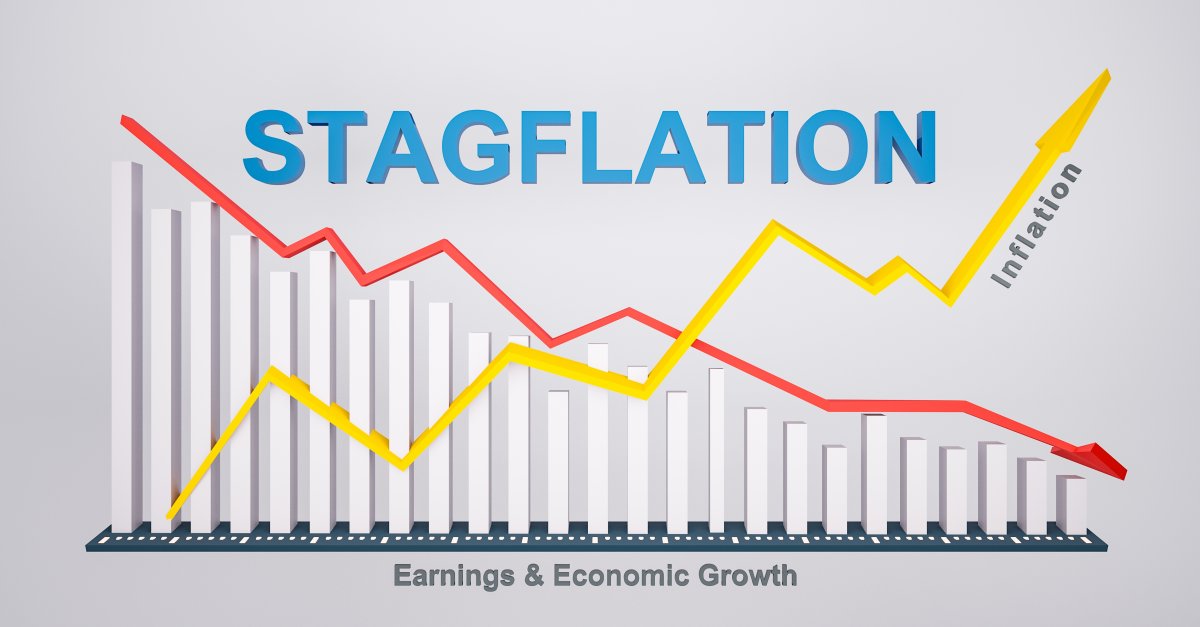
  • Stagflation is the simultaneous appearance in an economy of slow growth, high unemployment, and rising prices.
  • Once thought by economists to be impossible, stagflation has occurred repeatedly in the developed world since the 1970s.
  • Policy solutions for slow growth tend to worsen inflation, and vice versa. That makes stagflation hard to fight.

Stagflation is the combination of high inflation, stagnant economic growth, and elevated unemployment.

The term stagflation, a blend of “stagnation” and “inflation,” was popularized by British politician Lain MacLeod in the 1960s, during a period of economic distress in the United Kingdom. It gained broader recognition in the 1970s after a series of global economic shocks, particularly the 1973 oil crisis, which disrupted supply chains and led to rising prices and slowing growth. Stagflation challenges traditional economic theories, which suggest that inflation and unemployment are inversely related, as depicted by the Phillips Curve.

***

***

According to Wikipedia, stagflation presents a policy dilemma, as measures to curb inflation—such as tightening monetary policy—can exacerbate unemployment, while policies aimed at reducing unemployment may fuel inflation.

In economic theory, there are two main explanations for stagflation: supply shocks, such as a sharp increase in oil prices, and misguided government policies that hinder industrial output while expanding the money supply too rapidly.

NOTE: A portmanteau word or part of a word made by combining the spellings and meanings of two or more other words or word parts (such as smog from smoke and fog).

MORE: https://medicalexecutivepost.com/2019/06/25/what-is-a-portmanteau/

The stagflation of the 1970s led to a re-evaluation of Keynesian economic policies and contributed to the rise of alternative economic theories, including monetarism and supply-side economics.

PHILLIPS CURVE: https://medicalexecutivepost.com/2024/10/04/about-the-phillips-curve/

COMMENTS APPRECIATED

Read, Like, Refer and Subscribe
***

***

Stock Markets Up Slightly, Recession Still Possible as Oil Tumbles

By Staff Reporters

SPONSOR: http://www.MarcinkoAssociates.com

***

***

  • Markets started the day down yesterday but regained lost ground throughout the afternoon as investors decided that any day with no new tariff announcements is a good day.
  • Be advised: Fed Chair Jerome Powell warned that “supply shocks” pose a challenge for the economy, and that interest rates may need to remain higher for longer. Meanwhile, JPMorgan Chase CEO Jamie Dimon said a recession is still on the table.
  • Oil took a tumble on comments by President Trump that the US is nearing a deal with Iran over its nuclear program that could lift sanctions against the country.

COMMENTS APPRECIATED

Like and Subscribe

EDUCATION: Books

SPEAKING: Dr. Marcinko will be speaking and lecturing, signing and opining, teaching and preaching, storming and performing at many locations throughout the USA this year! His tour of witty and serious pontifications may be scheduled on a planned or ad-hoc basis; for public or private meetings and gatherings; formally, informally, or over lunch or dinner. All medical societies, financial advisory firms or Broker-Dealers are encouraged to submit a RFP for speaking engagements: MarcinkoAdvisors@outlook.com 

***

***

Why Tariffs Won’t Bring Back the “Good Old Days”

By Rick Kahler MSFP CFP

***

***

If I had a dollar for every time someone referred to the “good old days,” of the American economy, I could probably buy a vintage diner, jukebox and all, and still have enough left for a slice of apple pie.

The newest round of on-again, off-again tariffs is built around that same kind of nostalgia. Slapping big taxes on goods from other countries will supposedly protect American jobs and industries. The aim is to bring factories back, boost wages, and make the country more self-reliant.

This is a powerful story that taps into a deep feeling that we’ve lost control. Supporters argue that the U.S. has opened its markets and played by the rules, allowing many other countries to prosper at its expense, while America has been in a long, slow economic decline. This story frames the U.S. as a victim, with tariffs a form of payback to punish countries that have “taken advantage of us.”

Except that story is a myth. Rather than punishing foreign economies, the pain of tariffs hits Americans at home. Our businesses face costlier goods, consumers pay higher prices at the store, and the ripple effects include falling sales, layoffs, and frayed trade relationships.

In addition, the U.S. economy has actually been booming. Over the past three decades, the U.S. has pulled far ahead of most developed nations. In 2008, the American economy was about the same size as the Eurozone’s. Today, it’s nearly twice as large. Wages have risen. Even the poorest U.S. state now has a higher per-person income than countries like France, Japan, or the U.K.

So why do so many people still feel like we’re falling behind?

First, the growth hasn’t reached everyone, especially in rural America. In some areas and industries, jobs have disappeared and opportunities have dwindled.

Second, many people who are doing okay themselves have bought into a powerful, repeated myth that things are going terribly for everyone else.

This narrative takes hold in people’s internal voices, the parts of themselves shaped by past pain, fear, or frustration. Tariffs, then, can feel like a way to stand up and take action. It makes perfect sense to want to relieve anxiety by shutting the world out and protecting what is left.

Yet, when we act from fear or anger without pausing to reflect, we tend to overcorrect or trade one set of problems for another. This is what many economists and business leaders see happening with tariffs. Even supporters of tariffs are beginning to admit they’re a gamble. Many are still willing to take that gamble if it means restoring something they feel they’ve lost, a sense of purpose, security, and control.

Reacting out of fear in this way is not likely to create lasting solutions. A more challenging but more productive approach would be to take time to listen with compassion to those inner voices, helping them move past anxiety to find answers based in truth rather than myth. Maybe real liberation comes from letting go of narratives that no longer serve us, choosing a future built on connection, courage, and clarity.

Because if we keep heading down an isolationist path, turning inward out of fear, the future might not be the golden age we imagine. It might look a lot more like the actual 1950s, before the civil rights movement, before women fully entered the workforce, before the innovations that made the U.S. economy a global leader. A time more isolated, less equal, and far less dynamic than the one we’ve come to idealize.

That’s a version of the past we don’t need to relive, no matter what nostalgic song is playing on the jukebox.

COMMENTS APPRECIATED

Like and Refer

***

***

DAILY UPDATE: Inflation Down, Wage Garnishments Up but Stocks Finish Mixed

MEDICAL EXECUTIVE-POST TODAY’S NEWSLETTER BRIEFING

***

Essays, Opinions and Curated News in Health Economics, Investing, Business, Management and Financial Planning for Physician Entrepreneurs and their Savvy Advisors and Consultants

Serving Almost One Million Doctors, Financial Advisors and Medical Management Consultants Daily

A Partner of the Institute of Medical Business Advisors , Inc.

http://www.MedicalBusinessAdvisors.com

SPONSORED BY: Marcinko & Associates, Inc.

***

http://www.MarcinkoAssociates.com

Daily Update Provided By Staff Reporters Since 2007.
How May We Serve You?
© Copyright Institute of Medical Business Advisors, Inc. All rights reserved. 2025

REFER A COLLEAGUE: MarcinkoAdvisors@outlook.com

SPONSORSHIPS AVAILABLE: https://medicalexecutivepost.com/sponsors/

ADVERTISE ON THE ME-P: https://tinyurl.com/ytb5955z

Your Referral Count -0-

CITE: https://www.r2library.com/Resource

Inflation fell by one tenth of a percentage point to 2.3% for the year ending in April, the Bureau of Labor Statistics reported Tuesday in an update to the consumer price index. Forecasters had expected inflation to hold at 2.4%. 

CITE: https://tinyurl.com/2h47urt5

What’s up

  • Coinbase exploded 23.97% on the news that the crypto trading platform will be added to the S&P 500 next week.
  • Nvidia climbed back into the elite $3 trillion market cap club today, rising 5.63% on the announcement that it will send 18,000 AI chips to Saudi Arabia.
  • Solar stocks soared after early drafts of a Republican tax and spending bill revealed renewable energy cuts weren’t as bad as feared. First Solar climbed 22.66%, while SunRun popped 8.58%.
  • Super Micro Computer climbed 16.02% thanks to Raymond James analysts initiating their coverage of the server maker with an “outperform” rating.
  • Boeing rose 2.46% now that the Chinese government has removed its ban on domestic airlines accepting orders from the plane manufacturer.
  • Rising sentiment powered popular momentum stocks higher today: Palantir rose 8.14%, AppLovin climbed 6.38%, Robinhood Markets jumped 8.95%, and Hims & Hers Health gained 15.92%.

What’s down

  • Honda Motor fell 4.20% after the company warned that tariffs will ding its bottom line and postponed its plans to build an EV plant in Canada.
  • Hertz Global plunged 16.93% after it missed analyst estimates across the board and announced it will offer fewer cars for rentals this year.
  • Enphase Energy lost 4.82% on a downgrade from Barclays analysts, who foresee slower demand for residential solar power products.
  • Rigetti Computing dropped 14.59% after the quantum computing company failed to live up to the high expectations that strong results from its competitors had given shareholders.

CITE: https://tinyurl.com/tj8smmes

Wage garnishment for defaulted student loans to begin this summer.

COMMENTS APPRECIATED

PLEASE SUBSCRIBE: MarcinkoAdvisors@outlook.com

Thank You

***

***

***

***

EDUCATIONAL TEXTBOOKS: https://tinyurl.com/4zdxuuwf

***

OSTRICH BIAS: Negative Information

SPONSOR: http://www.CertifiedMedicalPlanner.org

Financial Advisor, Planner and Insurance Agent Information

By Staff Reporters

***

***

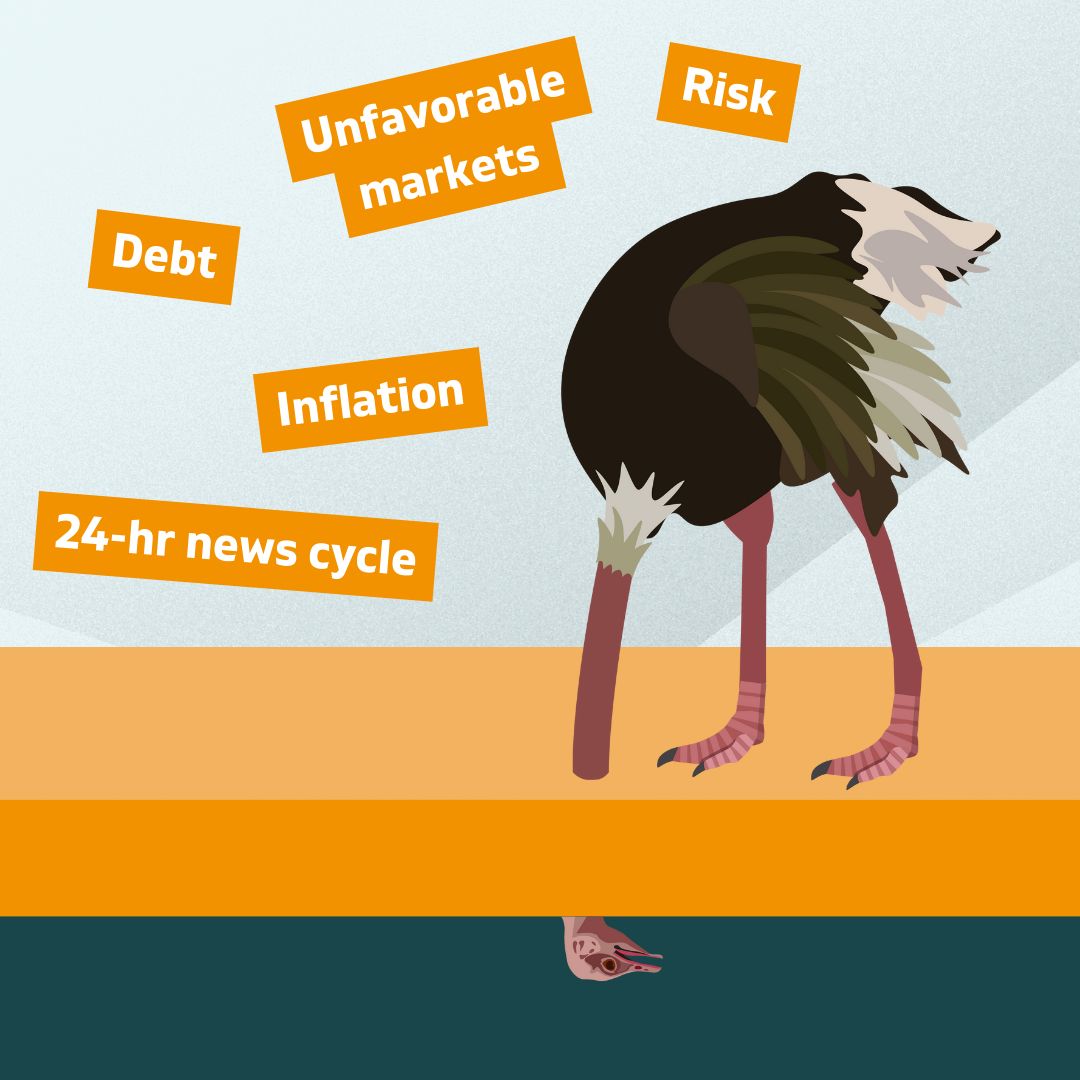
Ostrich Bias is a behavioral phenomenon describing the tendency of individuals to avoid or ignore information that they perceive as negative or threatening. This term is derived from the popular but inaccurate belief that ostriches bury their heads in the sand when faced with danger, even though they do not exhibit such behavior.

Evidence: There is neuro-scientific evidence of the ostrich effect. Sharot et al. (2012) investigated the differences in positive and negative information when updating existing beliefs. Consistent with the ostrich effect, participants presented with negative information were more likely to avoid updating their beliefs; wills, estate plans, investment portfolios, and insurance policies, etc..

Moreover, they found that the part of the brain responsible for this cognitive bias was the left IFG – inferior frontal gyrus – by disrupting this part of the brain with TMS – transcranial magnetic stimulation – participants were more likely to accept the negative information provided.

EXAMPLE: The Ostrich Bias can cause someone to avoid looking at their bills, because they’re worried about seeing how far behind they are on home mortgage payments, credit cards, education or auto loans, etc.

COMMENTS APPRECIATED

The Medical Executive-Post is a  news and information aggregator and social media professional network for medical and financial service professionals.

Feel free to submit education content to the site as well as links, text posts, images, opinions and videos which are then voted up or down by other members. Comments and dialog are especially welcomed.

Daily posts are organized by subject. ME-P administrators moderate the activity. Moderation may also conducted by community-specific moderators who are unpaid volunteers.

Invite Dr. Marcinko

Refer and Like

***

***

CONSUMERS: Worried about the Economy

By Staff Reporters

***

***

Consumer sentiment is a statistical measurement of the overall health of the economy as determined by consumer opinion. It takes into account how people feel about their current financial health, the health of the economy in the short-term, and the prospects for longer-term economic growth. It is widely considered to be a useful economic indicator.

Consumer sentiment emerged as an economic statistic during the mid-20th century and has since become a barometer that influences public and economic policy. It is considered a lagging indicator because it takes people several months to notice and feel the effects of changes in economic activity.

American consumers are Worried about the Economy

Consumer sentiment dropped 8% from March to April amid worries about inflation, according to the University of Michigan’s closely watched survey. Though sentiment edged up slightly from an even lower reading earlier in the month, inflation expectations climbed to their highest since 1991 as consumers fret about the potential impact of tariffs.

And even beyond possible rising prices, things could be about to get rougher for consumers: Major retailers have warned that unless President Trump’s tariff policy toward China changes, they’re likely to encounter empty store shelves in a few weeks.

Like and Refer

***

***

FEAR BASED GOLD FEVER: Protect Yourself

By Rick Kahler CFP

***

***

On January 21, 1980, in what I thought was a brilliant financial move, I bought gold. At what was then an all-time high of $873 an ounce.

Fast forward 45 years, and here we are again. Gold is on a tear, priced just over $3,000 an ounce at the time of this writing. It needs to rise another 16% to reach its inflation-adjusted record and many analysts think it might just get there.

What’s driving this gold rally? The same thing that drove it in 1980—fear.

Back then, the U.S. was grappling with rising inflation, double-digit price increases, and interest rates in the high teens. Investors feared that the dollar and stock market would collapse, that their hard-earned savings would erode into oblivion, and that gold was a safe haven. Sound familiar?

Today, inflation is less dramatic and the stock market would have to go a long way down to even register as a bear market, but it’s still a major concern. Central banks are buying gold at record levels. Gold-backed ETFs, which had been seeing years of outflows, are finally pulling investors back in.

For most, gold isn’t just an investment, it’s an emotional hedge against uncertainty. Back in 1980, I wasn’t thinking about long-term strategy. I was reacting to fear. Inflation had hit 14%, and like many others, I was convinced the dollar would soon be worthless. Gold, I thought, was my best shot at preserving wealth.

The problem? Inflation eventually cooled; it had dropped to an average of 3.5% by the mid-1980s. Gold prices tumbled along with it. Investors who, like me, bought at the peak, 45 years later still haven’t broken even on an inflation-adjusted basis. (My $873 purchase price, adjusted for inflation, equates to $3,580 today.) If I had stuck with a well-diversified portfolio, I likely would have fared much better over time.

Over the years, I’ve come to realize that our financial decisions aren’t just about numbers. They’re deeply influenced by our Internal Financial System™, a framework that helps explain why we handle money the way we do. I now see that my decision to buy gold was a battle between different financial “parts” of myself.

One part panicked, convinced that money was about to become worthless. Another saw gold prices soaring and didn’t want to miss out. Yet another part convinced me that buying at the peak was still a smart move. Had I paused and examined these internal voices, I might have made a different decision.

My gold purchase shows why emotionally driven investment decisions rarely lead to great financial outcomes. Instead of asking, “Is gold a smart long-term investment?” I was asking, “How do I make sure I don’t lose everything?” Those are two very different questions.

If you’re thinking about buying gold, I urge you to consider these questions:

“Am I investing from a place of fear or strategy?” If you’re rushing in because you’re scared of inflation, pause and reassess.

“How does gold fit into my broader financial plan?” Gold can be a great hedge—if held in appropriate amounts in a diversified portfolio. It is best viewed as catastrophic financial insurance, rather than an investment.

“Am I reacting to headlines or making a well-thought-out decision?” The financial media loves a good gold rally. But remember, markets move in cycles. Today’s rally may be history repeating itself.

Back in 1980, fear persuaded me that gold was a sure thing. I forgot an essential caveat—there are no sure things in investing. If bad market timing were an Olympic sport, I’d have taken home the gold (pun intended) for least profitable performance.

COMMENTS APPRECIATED

Refer and Like

***

***

DAILY UPDATE: Stocks Crushed Again!

MEDICAL EXECUTIVE-POST TODAY’S NEWSLETTER BRIEFING

***

Essays, Opinions and Curated News in Health Economics, Investing, Business, Management and Financial Planning for Physician Entrepreneurs and their Savvy Advisors and Consultants

Serving Almost One Million Doctors, Financial Advisors and Medical Management Consultants Daily

A Partner of the Institute of Medical Business Advisors , Inc.

http://www.MedicalBusinessAdvisors.com

SPONSORED BY: Marcinko & Associates, Inc.

***

http://www.MarcinkoAssociates.com

Daily Update Provided By Staff Reporters Since 2007.
How May We Serve You?
© Copyright Institute of Medical Business Advisors, Inc. All rights reserved. 2025

REFER A COLLEAGUE: MarcinkoAdvisors@outlook.com

SPONSORSHIPS AVAILABLE: https://medicalexecutivepost.com/sponsors/

ADVERTISE ON THE ME-P: https://tinyurl.com/ytb5955z

Your Referral Count -0-

CITE: https://www.r2library.com/Resource

US stocks got crushed on Thursday, pulling back from the previous day’s historic rally amid concerns that President Trump’s broad trade offensive has become a direct confrontation with China.

CITE: https://tinyurl.com/2h47urt5

The S&P 500 (GSPC) dropped almost 3.5%, while the tech-heavy NASDAQ Composite (IXIC) tumbled 4.3%. The Dow Jones Industrial Average (^DJI) fell about 1,000 points, or 2.5%. The 10-year Treasury yield (^TNX), in high focus amid bond market whiplash, ended the day flat around 4.39%.

CITE: https://tinyurl.com/tj8smmes

The major averages sank to session lows after the White House confirmed updated tariff figures released on Thursday brings the total increased levies on Chinese goods to 145%, not 125% as previously stated.

Visualize: How private equity tangled banks in a web of debt, from the Financial Times.

COMMENTS APPRECIATED

PLEASE SUBSCRIBE: MarcinkoAdvisors@outlook.com

Thank You

***

***

***

***

EDUCATIONAL TEXTBOOKS: https://tinyurl.com/4zdxuuwf

***

TREASURY NOTES: Panic Attack Mode?

By Staff Reporters

***

***

Treasury notes are typically considered one of the world’s safest safe-haven assets—the US has always repaid bondholders on their investment, plus yield (interest). That’s why you can usually count on the bond market to rally when the stock market craters. And, vice-versa. But not this time:

  • The benchmark 10-year bond yield, which moves inversely to bond prices, had its steepest spike this week since the 2008 financial crisis. The 10-year yield is more closely watched than the 30-year yield (which also spiked) in part because it influences home and auto loan rates.
  • A Treasury auction of 3-year bonds on Tuesday was met with the softest demand since December 2023. That helped drive the bond sell-off on fears of a pullback among international investors, who hold $8.5 trillion in US Treasuries (Japan and China lead the pack).

COMMENTS APPRECIATED

Like, Refer and Subscribe

***

***

DAILY UPDATE: US Stock Markets Routed

MEDICAL EXECUTIVE-POST TODAY’S NEWSLETTER BRIEFING

***

Essays, Opinions and Curated News in Health Economics, Investing, Business, Management and Financial Planning for Physician Entrepreneurs and their Savvy Advisors and Consultants

Serving Almost One Million Doctors, Financial Advisors and Medical Management Consultants Daily

A Partner of the Institute of Medical Business Advisors , Inc.

http://www.MedicalBusinessAdvisors.com

SPONSORED BY: Marcinko & Associates, Inc.

***

http://www.MarcinkoAssociates.com

Daily Update Provided By Staff Reporters Since 2007.
How May We Serve You?
© Copyright Institute of Medical Business Advisors, Inc. All rights reserved. 2025

REFER A COLLEAGUE: MarcinkoAdvisors@outlook.com

SPONSORSHIPS AVAILABLE: https://medicalexecutivepost.com/sponsors/

ADVERTISE ON THE ME-P: https://tinyurl.com/ytb5955z

Your Referral Count -0-

CITE: https://www.r2library.com/Resource

US stocks pulled back on Tuesday, led by a nearly 2% decline in the NASDAQ, following two days of gains as investors concerned about an economic slowdown looked to the Federal Reserve’s policy meeting for insights.

The tech-heavy NASDAQ Composite (^IXIC) plummeted about 1.7% as Nvidia (NVDA) shares fell roughly 3% as its annual GTC event failed to impress investors. Other “Magnificent Seven” names also dragged down the tech-heavy index. Notably, those stocks are having their worst quarter in more than two years.

The Dow Jones Industrial Average (^DJI) and S&P 500 (^GSPC) also moved to the downside on Tuesday, dropping about 0.6% and 1.1%, respectively.

CITE: https://tinyurl.com/2h47urt5

Uncertainty still dogs markets as investors debate whether the sell-off that pushed the S&P 500 into correction territory is over. Traders now turn their attention to the Fed’s two-day policy meeting, which kicked off on Tuesday, for clues on the health of the economy and potential tariff risks.

Policymakers are largely expected to hold rates steady in their decision on Wednesday.

CITE: https://tinyurl.com/tj8smmes

Visualize: How private equity tangled banks in a web of debt, from the Financial Times.

COMMENTS APPRECIATED

PLEASE SUBSCRIBE: MarcinkoAdvisors@outlook.com

Thank You

***

***

***

***

EDUCATIONAL TEXTBOOKS: https://tinyurl.com/4zdxuuwf

***

CPI: February 2025

BREAKING NEWS

By Staff Reporters

***

***

The Consumer Price Index (CPI) for February found that the cost of goods and services rose 0.2% on the month. The annual rate of inflation was also up 2.8% — slightly less than expected.

Here’s a breakdown of several price changes for February:

  • Food: increase 0.2%
  • Energy: increase 0.2%
  • Electricity: increase 1.0%
  • New vehicles: decrease 0.1%
  • Used vehicles: increase 0.9%
  • Apparel: increase 0.6%
  • Shelter: increase 0.3%
  • Transportation: decrease 0.8%
  • Medical care services: increase 0.3%

The Bureau of Labor Statistics reported that according to its indexes, over the month the cost of medical care rose 0.3%, physicians’ services were 0.4% higher, hospital services added 0.1%, and prescription-drug costs were unchanged. 

COMMENTS APPRECIATED

Subscribe, Read and Refer

***

***

DAILY UPDATE: US Stocks Advance

MEDICAL EXECUTIVE-POST TODAY’S NEWSLETTER BRIEFING

***

Essays, Opinions and Curated News in Health Economics, Investing, Business, Management and Financial Planning for Physician Entrepreneurs and their Savvy Advisors and Consultants

Serving Almost One Million Doctors, Financial Advisors and Medical Management Consultants Daily

A Partner of the Institute of Medical Business Advisors , Inc.

http://www.MedicalBusinessAdvisors.com

SPONSORED BY: Marcinko & Associates, Inc.

***

http://www.MarcinkoAssociates.com

Daily Update Provided By Staff Reporters Since 2007.
How May We Serve You?
© Copyright Institute of Medical Business Advisors, Inc. All rights reserved. 2025

REFER A COLLEAGUE: MarcinkoAdvisors@outlook.com

SPONSORSHIPS AVAILABLE: https://medicalexecutivepost.com/sponsors/

ADVERTISE ON THE ME-P: https://tinyurl.com/ytb5955z

Your Referral Count -0-

CITE: https://www.r2library.com/Resource

Stock markets mostly rose Wednesday on both sides of the Atlantic as investors shrugged off Washington’s latest tariffs to focus on cooling US inflation and a Ukraine ceasefire plan.

Markets have worried that the tariffs could spark a surge in US inflation and drive a stake into the chances that the Federal Reserve cuts interest rates further. But government data released Wednesday showed US consumer inflation had slowed slightly to 2.8 percent in February — the first full month of Trump’s White House return.

That was slightly better than analysts expected. Core inflation, which excludes volatile food and energy prices, dipped to an annual rate of 3.1 percent. “The inflation data are a bright spot in the Federal Reserve’s battle against rising prices. They reinforce the expectation of three rate cuts later in 2025,” said Jochen Stanzl, chief market analyst at CMC Markets.

“Sentiment on Wall Street is so negative that these positive inflation figures could spark a broader recovery in stock prices,” he added.

CITE: https://tinyurl.com/2h47urt5

Wall Street’s main stock indices mostly closed higher with the tech-heavy NASDAQ Composite rising 1.2 percent. But the Dow dipped into the red, losing 0.2 percent.

CITE: https://tinyurl.com/tj8smmes

Visualize: How private equity tangled banks in a web of debt, from the Financial Times.

COMMENTS APPRECIATED

PLEASE SUBSCRIBE: MarcinkoAdvisors@outlook.com

Thank You

***

***

***

***

EDUCATIONAL TEXTBOOKS: https://tinyurl.com/4zdxuuwf

***

INFLATION: Rule of 70 [Doubling Time]

SPONSOR http://www.MarcinkoAssociates.com

DOUBLING TIME

By Staff Reporters

***

***

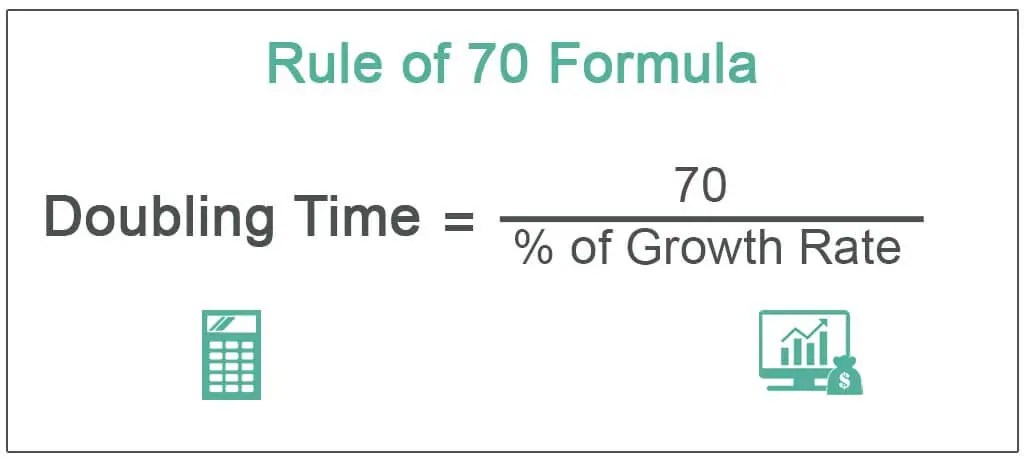
Whether you know it, or not, inflation is your biggest financial and investing enemy. Fortunately, the rule of 70 will tell you in how many years the value of money will be halved.

For example, you just need to divide 70 with the rate of inflation. So if the rate of inflation is 7%, then 70/7 = 10 years. Therefore, in 10 years, your 100 note will be worth 50.

Note: The phrase rule of thumb refers to an approximate method for doing something, based on practical experience rather than theory. This usage of the phrase can be traced back to the 17th century and has been associated with various trades where quantities were measured by comparison to the width or length of a human adult thumb.

COMMENTS APPRECIATED

Refer and Subscribe

***

***

DAILY UPDATE: Inflation Leaps as Wall Street Worries

MEDICAL EXECUTIVE-POST TODAY’S NEWSLETTER BRIEFING

***

Essays, Opinions and Curated News in Health Economics, Investing, Business, Management and Financial Planning for Physician Entrepreneurs and their Savvy Advisors and Consultants

Serving Almost One Million Doctors, Financial Advisors and Medical Management Consultants Daily

A Partner of the Institute of Medical Business Advisors , Inc.

http://www.MedicalBusinessAdvisors.com

SPONSORED BY: Marcinko & Associates, Inc.

***

http://www.MarcinkoAssociates.com

Daily Update Provided By Staff Reporters Since 2007.
How May We Serve You?
© Copyright Institute of Medical Business Advisors, Inc. All rights reserved. 2025

REFER A COLLEAGUE: MarcinkoAdvisors@outlook.com

SPONSORSHIPS AVAILABLE: https://medicalexecutivepost.com/sponsors/

ADVERTISE ON THE ME-P: https://tinyurl.com/ytb5955z

Your Referral Count -0-

CITE: https://www.r2library.com/Resource

Consumer prices overall increased 3% from a year earlier, up from 2.9% the previous month, according to the Labor Department’s consumer price index, a measure of goods and service costs across the U.S. That’s the most since June and above the 2.9% expected by economists surveyed by Bloomberg.

CITE: https://tinyurl.com/2h47urt5

Most U.S. stocks fell Wednesday after a report showed inflation is unexpectedly worsening for Americans.

The S&P 500 dropped 0.3%, though it had been on track for a much worse loss of 1.1% at the start of trading. The Dow Jones Industrial Average sank 225 points, or 0.5%, while the NASDAQ composite edged higher by less than 0.1%

CITE: https://tinyurl.com/tj8smmes

Visualize: How private equity tangled banks in a web of debt, from the Financial Times.

COMMENTS APPRECIATED

PLEASE SUBSCRIBE: MarcinkoAdvisors@outlook.com

Thank You

***

***

***

***

EDUCATIONAL TEXTBOOKS: https://tinyurl.com/4zdxuuwf

***

DAILY UPDATE: Healthcare Cyber Attacks as the FOMC Pauses Rates and Stock Markets Retreat

MEDICAL EXECUTIVE-POST TODAY’S NEWSLETTER BRIEFING

***

Essays, Opinions and Curated News in Health Economics, Investing, Business, Management and Financial Planning for Physician Entrepreneurs and their Savvy Advisors and Consultants

Serving Almost One Million Doctors, Financial Advisors and Medical Management Consultants Daily

A Partner of the Institute of Medical Business Advisors , Inc.

http://www.MedicalBusinessAdvisors.com

SPONSORED BY: Marcinko & Associates, Inc.

***

http://www.MarcinkoAssociates.com

Daily Update Provided By Staff Reporters Since 2007.
How May We Serve You?
© Copyright Institute of Medical Business Advisors, Inc. All rights reserved. 2025

REFER A COLLEAGUE: MarcinkoAdvisors@outlook.com

SPONSORSHIPS AVAILABLE: https://medicalexecutivepost.com/sponsors/

ADVERTISE ON THE ME-P: https://tinyurl.com/ytb5955z

Your Referral Count -0-

HAPPY LUNAR NEW YEAR

CITE: https://www.r2library.com/Resource

Over half the US population was affected by the Change Healthcare cyberattack last February, according to a statement from its parent company UnitedHealth Group. While United had told the federal government in October that 100 million people were hit by the attacks, an updated estimate on Monday put that number at 190 million.

CITE: https://tinyurl.com/2h47urt5

Tech stocks led markets lower on Wednesday as the broader mood stayed muted after the Federal Reserve’s latest interest rate decision saw the central bank keep rates unchanged in a range of 4.25%-4.5%.

The tech-heavy NASDAQ Composite (^IXIC) was down about 0.5%, retracing some of a bounce-back rally on Tuesday. The S&P 500 (^GSPC) was also down nearly 0.5%, while the Dow Jones Industrial Average (^DJI) lost 0.3%. In its statement on Wednesday, the Federal Reserve notably removed language from its December statement indicating that it was making progress towards its goal of 2% inflation, stating simply: “Inflation remains somewhat elevated.” Fed Chair Jerome Powell pushed back on that notion, referring to the change as “language cleanup” rather than intending to send a signal. Markets bounced off their lows of the day on Powell’s comments.

CITE: https://tinyurl.com/tj8smmes

Visualize: How private equity tangled banks in a web of debt, from the Financial Times.

COMMENTS APPRECIATED

PLEASE SUBSCRIBE: MarcinkoAdvisors@outlook.com

Thank You

***

***

***

***

EDUCATIONAL TEXTBOOKS: https://tinyurl.com/4zdxuuwf

***

DAILY UPDATE: Dow Up While NASDAQ Drops

MEDICAL EXECUTIVE-POST TODAY’S NEWSLETTER BRIEFING

***

Essays, Opinions and Curated News in Health Economics, Investing, Business, Management and Financial Planning for Physician Entrepreneurs and their Savvy Advisors and Consultants

Serving Almost One Million Doctors, Financial Advisors and Medical Management Consultants Daily

A Partner of the Institute of Medical Business Advisors , Inc.

http://www.MedicalBusinessAdvisors.com

SPONSORED BY: Marcinko & Associates, Inc.

***

http://www.MarcinkoAssociates.com

Daily Update Provided By Staff Reporters Since 2007.
How May We Serve You?
© Copyright Institute of Medical Business Advisors, Inc. All rights reserved. 2024

REFER A COLLEAGUE: MarcinkoAdvisors@outlook.com

SPONSORSHIPS AVAILABLE: https://medicalexecutivepost.com/sponsors/

ADVERTISE ON THE ME-P: https://tinyurl.com/ytb5955z

Your Referral Count -0-

CITE: https://www.r2library.com/Resource

The Producer Price Index, which tracks price changes companies see at a wholesale level, rose 3.3% over last year, up from 3% in November but less than economists expected. It rose 0.2% over the previous month, also less than expected. The report lays the groundwork for Wednesday’s heavily anticipated CPI print.

CITE: https://tinyurl.com/2h47urt5

US stocks closed mixed Tuesday as investors took in the first of two key inflation reports this week, which showed prices rose less than expected in December. Also in focus was a report that the incoming Trump administration could hike tariffs more gradually to ease inflationary pressures.

Investors will now turn their attention to Wednesday morning’s update on consumer prices, which are expected to remain sticky as the Federal Reserve continues its inflation fight.

On Tuesday, the benchmark S&P 500 (^GSPC) finished the trading day about 0.1% higher, while the tech-heavy NASDAQ Composite (^IXIC) dropped around 0.2% following a bumpy session on Wall Street. The Dow Jones Industrial Average (^DJI) moved roughly 0.5% higher to cap off back-to-back winning days for the blue chip index.

CITE: https://tinyurl.com/tj8smmes

Visualize: How private equity tangled banks in a web of debt, from the Financial Times.

COMMENTS APPRECIATED

PLEASE SUBSCRIBE: MarcinkoAdvisors@outlook.com

Thank You

***

***

***

***

EDUCATIONAL TEXTBOOKS: https://tinyurl.com/4zdxuuwf

***

K SHAPED: Economy and Recovery

By Staff Reporters

***

***

Understanding the K-shaped Economy

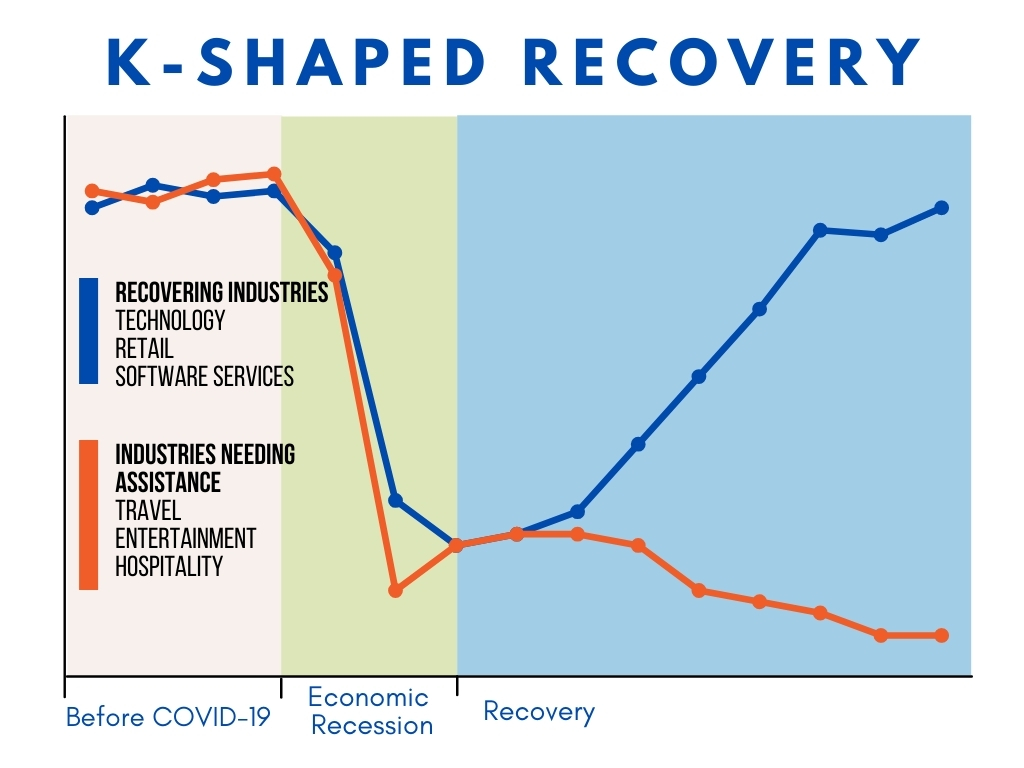
According to Olivia Voltaggio, in a V-shaped economy, things go down but then bounce back for everyone. In a K-shaped economy, the overall economy might go down. Only some parts of it recover, while others keep struggling.

In a K-shaped economy, people’s financial situations vary widely. Not everyone faces the same struggles. Lenders and financial institutions need to be flexible with strategy. They need to understand the different challenges their customers are dealing with.

Navigate with caution: The gaps in economic recovery highlight the importance of taking a careful, strategic approach.

How did we end up with a K-shaped recovery in 2024?

Inflation-driven price increases seem to be getting more stable. But, they may not reach the goal set by the government until 2026. This has made things more expensive for regular families.

For example, people with student loan debt had to start paying it back in October 2023. This was after a pandemic-induced grace period. Student loan repayment made budgeting harder. Borrowers might need to spend more on average than expected. For young adults (Gen Z), it could be even more.

Finally, more people are using credit cards because things are getting more expensive. Some are struggling to pay their credit card bills on time.

COMMENTS APPRECIATED

Like and Subscribe

***

***

NOMINAL YIELD: Calculation

DEFINED

By Staff Reporters

SPONSOR: http://www.MarcinkoAssociates.com

***

***

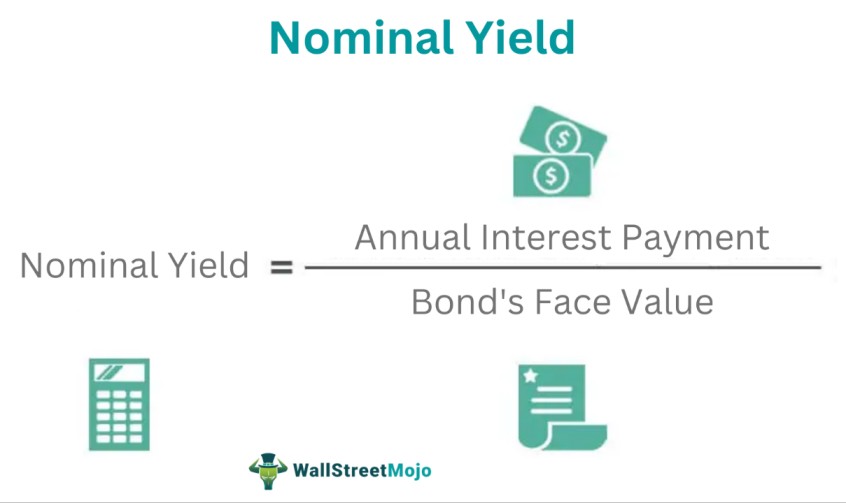
Nominal yield, for most bonds and other fixed-income securities, is simply the yield you see listed online or in newspapers. Most nominal fixed-income yields include some extra yield, an “inflation premium,” that is typically priced/added into the yields to help offset the effects of inflation.

Real yields, such as those for TIPS, don’t have the inflation premium. As a result, nominal yields are typically higher than TIPS yields and other real yields.

COMMENTS APPRECIATED

Like and Subscribe

***

***

DAILY UPDATE: Winter Solstice & Endo Health Solutions as Stock Markets Rebound

MEDICAL EXECUTIVE-POST TODAY’S NEWSLETTER BRIEFING

***

Essays, Opinions and Curated News in Health Economics, Investing, Business, Management and Financial Planning for Physician Entrepreneurs and their Savvy Advisors and Consultants

Serving Almost One Million Doctors, Financial Advisors and Medical Management Consultants Daily

A Partner of the Institute of Medical Business Advisors , Inc.

http://www.MedicalBusinessAdvisors.com

SPONSORED BY: Marcinko & Associates, Inc.

***

http://www.MarcinkoAssociates.com

Daily Update Provided By Staff Reporters Since 2007.
How May We Serve You?
© Copyright Institute of Medical Business Advisors, Inc. All rights reserved. 2024

REFER A COLLEAGUE: MarcinkoAdvisors@outlook.com

SPONSORSHIPS AVAILABLE: https://medicalexecutivepost.com/sponsors/

ADVERTISE ON THE ME-P: https://tinyurl.com/ytb5955z

Your Referral Count -0-

The winter solstice, also called the hibernal solstice, occurs when either of Earth’s poles reaches its maximum tilt away from the Sun. This happens twice yearly, once in each hemisphere (North and South). For that hemisphere, the winter solstice is the day with the shortest period of daylight and longest night of the year, and when the Sun is at its lowest daily maximum elevation in the sky. Each polar region experiences continuous darkness or twilight around its winter solstice.

CITE: https://www.r2library.com/Resource

Stat: $200 million. That’s how much drug manufacturer Endo Health Solutions paid the federal government for profiting from the opioid crisis and racking up $4 billion in unpaid taxes. (ProPublica)

CITE: https://tinyurl.com/2h47urt5

US stocks bounced back Friday as investors digested key inflation data that showed a deceleration in price increases during the month of November.

The tech-heavy NASDAQ Composite (^IXIC) gained 1%. The Dow Jones Industrial Average (^DJI) added 1.2%, while the S&P 500 (^GSPC) rose 1.1%.

But the rebound wasn’t enough to overcome losses earlier in the week. All three major gauges finished the week lower. The NASDAQ gave up 1.8% while the Dow and the S&P both shed around 2%.

CITE: https://tinyurl.com/tj8smmes

Visualize: How private equity tangled banks in a web of debt, from the Financial Times.

COMMENTS APPRECIATED

PLEASE SUBSCRIBE: MarcinkoAdvisors@outlook.com

Thank You

***

***

***

***

EDUCATIONAL TEXTBOOKS: https://tinyurl.com/4zdxuuwf

***

FOMC: Cuts Interest Rates

BREAKING NEWS!

SPONSOR: http://www.MarcinkoAssociates.com

By Staff Reporters

***

***

The Federal Reserve cut interest rates by a quarter of a percentage point just now, delivering relief for borrowers at the central bank’s last meeting before President-elect Donald Trump takes office next month. The central bank predicted fewer rate cuts next year than it had previously indicated, however, suggesting concern that inflation may prove more difficult to bring under control than policymakers thought just a few months ago.

The move marked the third consecutive interest rate cut since the Fed opted to start dialing back its fight against inflation in the fall. The FOMC has lowered interest rates by a percentage point in recent months.

However, the Fed’s forecast said it anticipates only a half a percentage point of rate cuts next year and another half-percent cut in 2026.

COMMENTS APPRECIATED

Subscribe and Refer

***

***

EXPECTED: Breakeven Inflation Rate

Measure of Expected Inflation

By Staff Reporters

SPONSOR: http://www.MarcinkoAssociates.com

***

***

The breakeven inflation rate is the difference between the nominal yield (usually the market yield, which includes an inflation premium) on a fixed-income investment and the real yield (with no inflation premium) on an inflation-linked investment of similar maturity and credit quality.

So, if inflation averages more than the breakeven rate, the inflation-linked investment will outperform the investment with the nominal yield.

Conversely, if inflation averages below the breakeven rate, the investment with the nominal yield will outperform the inflation-linked investment.

Breakeven inflation rates are also considered useful measures of inflation expectations—higher breakeven rates represent higher inflation expectations (and higher relative prices for inflation-linked investments), while lower breakeven rates represent lower inflation expectations (and lower relative prices for inflation-linked investments).

Therefore, ideally, investors want to purchase inflation-linked investments when breakeven rates are relatively low because that’s typically when prices are also relatively low.

COMMENTS APPRECIATED

Thank You

***

***

FINANCIAL: Rule of 20 Defined

A Dimensionless Number

By Staff Reporters

SPONSOR: http://www.MarcinkoAssociates.com

***

***

What is the Rule of 20?

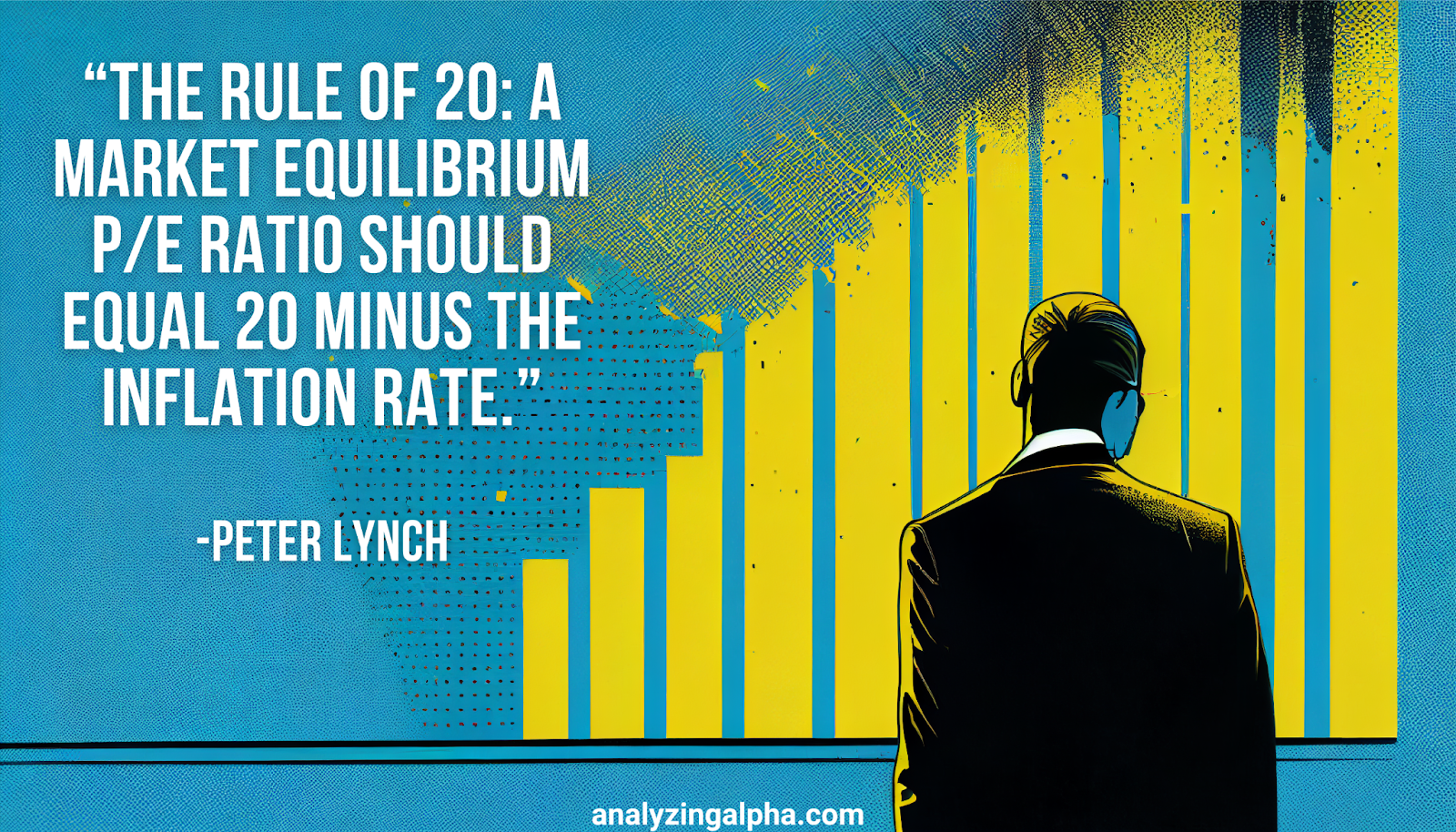
The Rule of 20 is a dimensionless number that adds the current 12-month trailing Price to Earnings Ratio to the annual change in an index of the annual consumer inflation rate. A reading below 20, while a market is trending lower, means that we could be near a bottom.

In the United States, the most common index used is the broad-based S&P 500, and CPI-U is used as a proxy for inflation.

The Rule of 20 is purportedly a rule from Peter Lynch. In chapter 39 of Graham and Dodd’s seminal Security Analysis, they mention: “We would suggest that about 20 times average earnings is as high a price as can be paid in an investment purchase of a common stock” … with no mention of inflation.

Lynch’s formulation attempts to factor the ‘gravity’ of interest rates into the fair value of a stock. And, as you can see, the measure has fluctuated quite a bit. However, it has returned to roughly the 20 level repeatedly.

MORE: https://dqydj.com/sp-500-rule-of-20-calculator/

COMMENTS APPRECIATED

Subscribe and Like!

***

***

DAILY UPDATE: Walgreens to PE as CPI Upticks and Markets Blast Off this Morning

MEDICAL EXECUTIVE-POST TODAY’S NEWSLETTER BRIEFING

***

Essays, Opinions and Curated News in Health Economics, Investing, Business, Management and Financial Planning for Physician Entrepreneurs and their Savvy Advisors and Consultants

Serving Almost One Million Doctors, Financial Advisors and Medical Management Consultants Daily

A Partner of the Institute of Medical Business Advisors , Inc.

http://www.MedicalBusinessAdvisors.com

SPONSORED BY: Marcinko & Associates, Inc.

***

http://www.MarcinkoAssociates.com

Daily Update Provided By Staff Reporters Since 2007.
How May We Serve You?
© Copyright Institute of Medical Business Advisors, Inc. All rights reserved. 2024

REFER A COLLEAGUE: MarcinkoAdvisors@msn.com

SPONSORSHIPS AVAILABLE: https://medicalexecutivepost.com/sponsors/

ADVERTISE ON THE ME-P: https://tinyurl.com/ytb5955z

Your Referral Count -0-

According to reporting from the Wall Street Journal, the pharmacy chain Walgreen’s is discussing selling to private equity (PE) firm Sycamore Partners, a deal that could close early next year. This comes following a tumultuous year for the company, which announced it would close 1,200 stores in October and laid off more than 250 employees in November. The PE firm is allegedly considering selling off pieces of the business or working with partners, sources told the Journal. Following the news, Walgreens’s stock jumped 28%, its biggest single-day increase since 1980, according to Yahoo Finance.

CITE: https://www.r2library.com/Resource

Inflation rose 2.7% on an annual basis in November, according to the latest government report on the Consumer Price Index, or CPI. Last month’s CPI was forecast to come in at 2.7%, according to economists surveyed by financial data firm FactSet. The Consumer Price Index, a basket of goods and services typically bought by consumers, tracks the change in those prices over time. 

CITE: https://tinyurl.com/2h47urt5

US stocks opened higher on Wednesday as investors digested another month of sticky inflation data that met economists’ expectations and likely pointed to a Federal Reserve interest rate cut next week. The Dow Jones Industrial Average (^DJI) increased about 0.2%, while the S&P 500 (^GSPC) jumped nearly 0.5%. The tech-heavy NASDAQ Composite (^IXIC) also added to across-the-board gains, rising roughly 0.8%.

CITE: https://tinyurl.com/tj8smmes

Visualize: How private equity tangled banks in a web of debt, from the Financial Times.

COMMENTS APPRECIATED

PLEASE SUBSCRIBE: MarcinkoAdvisors@msn.com

Thank You

***

***

***

***

EDUCATIONAL TEXTBOOKS: https://tinyurl.com/4zdxuuwf

***

BLACK FRIDAY: Profiting From “Reverse Supply Chain Logistics”

By Staff Reporters

***

Black Friday, one of the biggest shopping days of the year, is a half day for the stock market. Both stock exchanges close at 1:00 p.m. ET, with eligible options trading until 1:15 p.m. Normal trading hours resume on the Monday after Thanksgiving, also known as Cyber Monday, when many online retailers host major sales.

***

SPONSOR: http://www.MarcinkoAssociates.com

***

DEFINITION: Reverse logistics—or the supply-chain processes of returns—is a little-known but rapidly growing sector of the economy that’s booming alongside the rise in online shopping that started during the pandemic.

Now, as retailers crack down on returns to avoid hearing another “it was broken when I got it” excuse, some companies are counting on you to send your holiday gifts back. A “reverse logistics” industry has sprung up in recent years to take advantage of the more than $300 billion in returns Americans make every holiday season.

  • Venture capital firms pumped nearly $200 million into reverse logistics startups last year—over 2.5x as much as in 2021, according to Bloomberg.
  • Loop Returns, which sells software to companies looking to streamline the return process on the customer side, raised $115 million at the end of 2022.

Established companies see potential in reverse logistics as well. Last year, Uber launched a feature enabling drivers to pick up your packages and bring them to a returns center. Meanwhile, UPS, whose returns business has grown 25% since 2020, recently acquired the startup Happy Returns.

COMMENTS APPRECIATED

Thank You

***

***

MEDICAL ECONOMICS: Healthcare Inflation

By Staff Reporters

***

***

Inflation has hit record levels this year as demand for goods and services far outpaced supply, and many companies are still trying to bounce back from the shutdowns of early 2020. Health systems, which have razor-thin operating margins even in the best of times, aren’t an exception.

“In the past, we’ve always said that healthcare was kind of recession-proof because demand for healthcare keeps going, regardless of what’s happening in the economy,” said Tina Wheeler, leader of consulting firm Deloitte’s US healthcare practice.

But in the last year, inflation hovered around 8% for much of the year, while medical-care prices increased by only 4.8%, according to Wheeler. Since medical costs are negotiated between hospitals and payers years in advance, hospitals can’t just raise their prices now to keep up with the pace of inflation, said Gerard Brogan Jr., senior vice president and chief revenue officer at Northwell Health.

READ: https://medicalexecutivepost.com/2022/11/10/the-cpi-and-stock-markets/

Here’s how badly hospitals could be hurting:

  • Inflation could cause an additional $370 billion more in healthcare spending than the expected baseline increase by 2027, according to McKinsey.
  • The national health expenditure could grow at a rate of 7.1% over the next five years, compared to the expected economic growth rate of 4.7%, according to McKinsey.
  • By the end of 2021, total hospital expenses per adjusted discharge were up 20.1% compared to 2019, according to the trade group American Hospital Association.

Rising interest rates also hurt hospitals since their main access to capital is through issuing tax-exempt bonds, Wheeler said. The rising cost of capital limits hospitals’ ability to fund projects, like opening a new oncology center to treat patients, for example. Keep reading here

***

ORDER: https://www.amazon.com/Financial-Management-Strategies-Healthcare-Organizations/dp/1466558733/ref=sr_1_3?ie=UTF8&qid=1380743521&sr=8-3&keywords=david+marcinko

COMMENTS APPRECIATED

Thank You

***

DAILY UPDATE: United Health, Cigna and Inflation as Stock Markets Flatten

MEDICAL EXECUTIVE-POST TODAY’S NEWSLETTER BRIEFING

***

Essays, Opinions and Curated News in Health Economics, Investing, Business, Management and Financial Planning for Physician Entrepreneurs and their Savvy Advisors and Consultants

Serving Almost One Million Doctors, Financial Advisors and Medical Management Consultants Daily

A Partner of the Institute of Medical Business Advisors , Inc.

http://www.MedicalBusinessAdvisors.com

SPONSORED BY: Marcinko & Associates, Inc.

***

http://www.MarcinkoAssociates.com

Daily Update Provided By Staff Reporters Since 2007.
How May We Serve You?
© Copyright Institute of Medical Business Advisors, Inc. All rights reserved. 2024

REFER A COLLEAGUE: MarcinkoAdvisors@msn.com

SPONSORSHIPS AVAILABLE: https://medicalexecutivepost.com/sponsors/

ADVERTISE ON THE ME-P: https://tinyurl.com/ytb5955z

Your Referral Count -0-

UnitedHealth Group posted nearly $6.1 billion in profit last quarter, edging out Elevance Health with $5.6 billion. Paige Minemyer has more takeaways from third quarter earnings results.


Cigna told investors the company is no longer pursuing a merger with Humana, opting to avoid tricky questions from federal regulators.

CITE: https://www.r2library.com/Resource

STOCKS UP

  • EV startup Rivian popped 13.71% after announcing a new $5.8 billion joint venture with Volkswagen to collaborate on a new line of vehicles that will begin rolling off the assembly line in 2027.
  • Rocket Lab…rocketed 28.44% to a new all-time high after increasing revenue 55% last quarter and announcing the first launch deal for its new Neutron rocket.
  • Charter Communications will purchase Liberty Broadband in an all-stock deal. Charter shares rose 3.63% on the news, while Liberty shares sank 5.05%.
  • Cava reported strong earnings today, including impressive same-store sales growth of 18%. Shares soared on the open, though ended the day up just 1.57%.
  • Flutter Entertainment, parent company of sports betting app FanDuel, rose 6.89% to hit an all-time high thanks to incredibly strong betting on the NFL last quarter.

STOCKS DOWN

  • The problems continue at Super Micro Computer, which announced it will need EVEN MORE time to submit its quarterly 10-Q form to the SEC. That’s on top of the delayed filing of its annual 10-K filing from back in June—and if it doesn’t file that by November 16, the stock will be delisted from the Nasdaq. Shares sank 6.31%.
  • Spirit Airlines really may go bankrupt this time. The beleaguered airline has lost hope of merging with Frontier Airlines, so shares plunged 59.32%.
  • Maplebear, which is the parent company of Instacart, delivered bad news for shareholders: Next quarter will be worse than expected. Shares fell 11.01%.
  • SoundHound AI reported record revenue last quarter, but shares plummeted 17.06% after the voice recognition stock also revealed much lower margins.

CITE: https://tinyurl.com/2h47urt5

Here’s where the major benchmarks ended:

  • The S&P 500® index (SPX) rose 1.39 points (0.02%) to 5,985.38; the Dow Jones Industrial Average® ($DJI) added 47.21 points (0.11%) to 43,958.19; and the NASDAQ Composite® ($COMP) fell 50.66 points (–0.26%) to 19,230.74. 
  • The 10-year Treasury note yield added two basis points to 4.45%, just below last week’s four-month high.
  • The CBOE Volatility Index® (VIX) slid to 14.03, down sharply from above 20 early last week.

CITE: https://tinyurl.com/tj8smmes

The Labor Department on Wednesday reported that consumer prices in October rose 2.6% from a year earlier. That marks a pickup in the pace of inflation from September, when prices were up 2.4% on the year.

A digital token inspired by a Shiba Inu dog meme is now worth more than the company that pioneered the assembly line. Yesterday, dogecoin continued its post-election surge to become more valuable than 121-year-old Ford.

Visualize: How private equity tangled banks in a web of debt, from the Financial Times.

COMMENTS APPRECIATED

PLEASE SUBSCRIBE: MarcinkoAdvisors@msn.com

Thank You

***

***

***

***

EDUCATIONAL TEXTBOOKS: https://tinyurl.com/4zdxuuwf

***

DAILY UPDATE: FOMC Cuts Interest Rates as Stock Markets Rise

MEDICAL EXECUTIVE-POST TODAY’S NEWSLETTER BRIEFING

***

Essays, Opinions and Curated News in Health Economics, Investing, Business, Management and Financial Planning for Physician Entrepreneurs and their Savvy Advisors and Consultants

Serving Almost One Million Doctors, Financial Advisors and Medical Management Consultants Daily

A Partner of the Institute of Medical Business Advisors , Inc.

http://www.MedicalBusinessAdvisors.com

SPONSORED BY: Marcinko & Associates, Inc.

***

http://www.MarcinkoAssociates.com

Daily Update Provided By Staff Reporters Since 2007.
How May We Serve You?
© Copyright Institute of Medical Business Advisors, Inc. All rights reserved. 2024

REFER A COLLEAGUE: MarcinkoAdvisors@msn.com

SPONSORSHIPS AVAILABLE: https://medicalexecutivepost.com/sponsors/

ADVERTISE ON THE ME-P: https://tinyurl.com/ytb5955z

Your Referral Count -0-

The Federal Reserve cut interest rates by 0.25 percentage points Thursday, the second consecutive cut after a two-year rate-hike run to curb post-pandemic inflation.

CITE: https://www.r2library.com/Resource

What’s up

  • Lyft announced impressive earnings results thanks to more commuters using the ride-hailing service, as well as upbeat guidance for the future. Shares rose 22.92%.
  • Shareholders worried about a housing market slowdown hurting Zillow had nothing to fear: The real estate website crushed earnings estimates, and shares popped 23.77%.
  • Warner Bros. Discovery enjoyed its biggest single-quarter surge in subscribers ever thanks to streaming service Max, which sent shares soaring 11.81%.
  • Under Armour rocketed 23.33% higher after its cost-savings plan paid off last quarter and management guided for a strong quarter ahead.
  • Planet Fitness surprised shareholders with a solid quarter for the gym giant, as well as forecasts of more growth ahead. Shares climbed 11.26%.
  • Prison operators GEO Group and CoreCivic both surged on Trump’s election, and their rally continued today—in-spite of very different paths forward for each stock. GEO Group gained 13.63%, while CoreCivic rose 25.60%.

What’s down

  • Trump Media & Technology Group was one of the biggest winners on election night, and although the stock soared over the last few days, investors decided to take profits today. Shares sank 22.97%.
  • Wolfspeed plummeted 39.24% after announcing larger-than-expected losses last quarter, poor forecasts for next quarter, and layoffs to cut costs.
  • Match Group shareholders were heartbroken to hear that Tinder’s revenue fell last quarter, though strong revenue growth from Hinge helped ease the pain. Shares dropped 17.87%.
  • Virgin Galactic isn’t just a mean nickname from your high school years—it’s also a space stock that can’t make money to save its life. Shares fell 11.87%.

CITE: https://tinyurl.com/2h47urt5

Here’s where the major benchmarks ended:

  • The S&P 500® index (SPX) rose 44.06 points (0.74%) to 5,973.10; the Dow Jones Industrial Average® ($DJI) fell 0.59 points (0.00%) to 43,729.34; and the NASDAQ Composite® ($COMP) gained 285.99 points (1.51%) to 19,269.46.
  • The 10-year Treasury note yield (TNX) fell nine basis points to 4.34%, with most of the drop coming long before the Fed decision.
  • The CBOE Volatility Index® (VIX) continued its post-election plunge to 15.21.

CITE: https://tinyurl.com/tj8smmes

Visualize: How private equity tangled banks in a web of debt, from the Financial Times.

COMMENTS APPRECIATED

PLEASE SUBSCRIBE: MarcinkoAdvisors@msn.com

Thank You

***

***

***

***

EDUCATIONAL TEXTBOOKS: https://tinyurl.com/4zdxuuwf

***

ECONOMICS: John B. Taylor’s Rule

By Dr. David Edward Marcinko MBA MEd

SPONSOR: http://www.MarcinkoAssociates.com

***

***

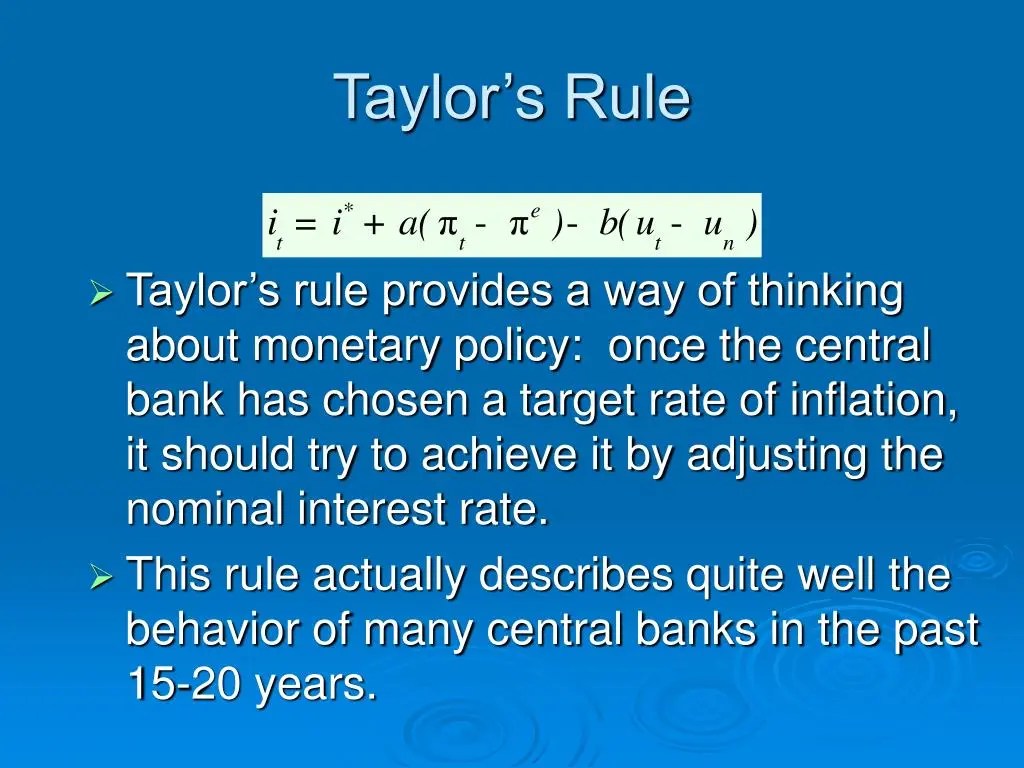
Named for a U.S. economist, the JB Taylor Rule is a mathematical monetary-policy formula that recommends how much a central bank should change its nominal short-term interest rate target (such as the U.S. Federal Reserve’s federal funds rate target) in response to changes in economic conditions, particularly inflation and economic growth. It’s typically viewed as guideline for raising short-term interest rates as inflation and potentially inflationary pressures increase. The rule recommends a relatively high interest rate (“tight” monetary policy) when inflation is above its target or when the economy is above its full employment level, and a relatively low interest rate (“easy” monetary policy) under the opposite conditions.

To illustrate, the monetary policy of the FOMC, changed throughout the 20th century. The period between the 1960s and the 1970s is evaluated by Taylor and others as a period of poor monetary policy; the later years typically characterized as stagflation. The inflation rate was high and increasing, while interest rates were kept low. Since the mid-1970s monetary targets have been used in many countries as a means to target inflation.

However, in the 2000s the actual interest rate in advanced economics, notably in the US, was kept below the value suggested by the Taylor rule.

CITE: https://www.r2library.com/Resource/Title/0826102549

COMMENTS APPRECIATED

Subscribe Today!

Thank You

***

***

MOST VALUABLE: Stocks, Economic Indicators and Markets

By Staff Reporters

SPONSOR: http://www.MarcinkoAssociates.com

***

***

The five most valuable US companies in the S&P 500 report earnings this week, and updates on three key economic indicators are set to be released: 1. gross domestic product, 2. inflation, and 3. jobs report. Then, next week brings the election and another expected rate cut from the Federal Reserve.

CITE: https://www.r2library.com/Resource/Title/0826102549

  • Markets: All three stock indexes rose to start a week that will be filled with high-stakes data.
  • Stock spotlight: Trump Media & Technology Group gained almost 22% on Monday, following the former president and current GOP candidate’s Madison Square Garden rally. The rose means that Trump Media, which includes Truth Social, is now more valuable than Elon Musk’s X.

COMMENTS APPRECIATED

Thank You

***

***

CORPORATE EARNINGS: Quarterly Reports

By Staff Reporters

***

***

Peak earnings season: Five of the Magnificent Seven Stocks will be among the 181 companies reporting their earnings this week. Alphabet is in the Mag Seven lead-off spot on Tuesday, Microsoft and Meta step to the plate on Wednesday, and Apple and Amazon rounding out the lineup and this baseball metaphor on Thursday. These companies account for almost 25% of the S&P 500, which is up 40% over the past year and not far off its record closing number from earlier this month. But, the approaching election, it could be a volatile week in the stock markets.

***

  • Markets: Stocks are currently driving the narrative on Wall Street. Last week, bonds sold off in a big way (driving yields to their highest level since July) in a sign investors are dialing back expectations of more aggressive rate cuts from the Federal Reserve.
  • Stocks nevertheless handled the bond volatility with aplomb, and with help from Tesla’s 22% one-day rise, the NASDAQ is sitting within 2% of its record high.

CITE: https://www.r2library.com/Resource/Title/0826102549

COMMENTS APPRECIATED
Thank You

***

***

DAILY UPDATE: Inflation Calm but Stock Markets Down

MEDICAL EXECUTIVE-POST TODAY’S NEWSLETTER BRIEFING

***

Essays, Opinions and Curated News in Health Economics, Investing, Business, Management and Financial Planning for Physician Entrepreneurs and their Savvy Advisors and Consultants

Serving Almost One Million Doctors, Financial Advisors and Medical Management Consultants Daily

A Partner of the Institute of Medical Business Advisors , Inc.

http://www.MedicalBusinessAdvisors.com

SPONSORED BY: Marcinko & Associates, Inc.

***

http://www.MarcinkoAssociates.com

Daily Update Provided By Staff Reporters Since 2007.
How May We Serve You?
© Copyright Institute of Medical Business Advisors, Inc. All rights reserved. 2024

REFER A COLLEAGUE: MarcinkoAdvisors@msn.com

SPONSORSHIPS AVAILABLE: https://medicalexecutivepost.com/sponsors/

ADVERTISE ON THE ME-P: https://tinyurl.com/ytb5955z

Your Referral Count -0-

Quote: “It looks like the global battle against inflation has largely been won, even if price pressures persist in some countries. In most countries, inflation is now hovering close to central bank targets…The decline in inflation without a global recession is a major achievement.”—IMF (CNN Business)

CITE: https://www.r2library.com/Resource

STOCKS UP

  • Spirit Airlines is back from the dead, soaring 46.67% on a Wall Street Journal report that it may end up merging with Frontier Airlines after all. Frontier Airlines rose 0.76% on the news.
  • AT&T climbed 4.65% after it beat earnings expectations in the third quarter, though it missed on revenue.
  • Starbucks fell hard late yesterday but recovered a bit this afternoon after new CEO Brian Niccol said the coffee chain is suspending its 2025 fiscal outlook. Shares rose 0.86% today.
  • Stride Technology sprinted 39.11% higher after the education technology company absolutely crushed earnings expectations.

STOCKS DOWN

  • Coca-Cola fizzled 2.07% after beating both top and bottom line expectations. The problem is that the only reason the soda giant performed well was because it raised prices, while demand for soft drinks slowed.
  • Enphase Energy plummeted 14.92% after the solar stock missed on both earnings and revenue expectations last quarter.
  • Boeing is a very familiar name in the “What’s down” section, and its latest earnings report did nothing to help. The manufacturing giant notched a $6 billion loss last quarter, and shares fell 1.76%.

CITE: https://tinyurl.com/2h47urt5

Here’s where the major benchmarks ended:

  • The SPX fell 53.78 points (–0.92%) to 5,797.42; the Dow Jones Industrial Average® ($DJI) lost 409.94 points (–0.96%) to 42,514.95; and the NASDAQ Composite ($COMP) dropped 296.47 points (–1.60%) to 18,276.65.
  • The 10-year Treasury note yield gained four basis points to 4.24%. 
  • The CBOE Volatility Index® (VIX) jumped to 19.37.

CITE: https://tinyurl.com/tj8smmes

Visualize: How private equity tangled banks in a web of debt, from the Financial Times.

COMMENTS APPRECIATED

PLEASE SUBSCRIBE: MarcinkoAdvisors@msn.com

Thank You

***

***

***

***

EDUCATIONAL TEXTBOOKS: https://tinyurl.com/4zdxuuwf

***

ECONOMICS: Price Gouging VS. Supply & Demand

NEBULOUS DEFINITIONS

By Staff Reporters

***

***

The simplest model of a market involves two things, supply and demand, and the price and quantity of the goods sold in the market are a function of both. When a natural disaster hits like Hurricane Helene, the immediate effect can be two-fold. In such situations, it is not unusual that the demand for certain products may increase. For example, if everyone is trying to leave the area, demand for gas may rise. The other effect is that supply for certain products may decrease. And, it may be more costly to transport gas in areas affected by a natural disaster, thus decreasing the supply of gas and in turn, increasing the price.

CITE: https://www.r2library.com/Resource

When supply decreases, the price of the good increases. And when demand increases, again the price of the good increases. So we would predict that the market price of gas, for example, would increase in areas recently affected by a hurricane. And in fact we do see this.

Price-gouging occurs when companies raise prices to unfair levels. There is no rule for what qualifies as price-gouging, but it is not an uncommon occurrence. For example in medicine, EpiPen costs is a current example of price increases that have been labeled unfair. 

Note: An epinephrine auto-injector (or adrenaline auto-injector, also known by the trade mark EpiPen) is a medical device for injecting a measured dose or doses of epinephrine (adrenaline) by means of auto-injector technology. It is most often used for the treatment of anaphylaxis. The first epinephrine auto-injector was brought to market in 1983.

Cite: https://tinyurl.com/55kmum86


COMMENTS APPRECIATED

Subscribe Today

***

***

FEDERAL RESERVE: Lowers Interest Rates as Expected

By Staff Reporters

BREAKING NEWS

***

***

Jerome Powell and the Federal Reserve Bank just said that it is cutting its benchmark interest rate by 0.50 percentage points, marking the first reduction in four years and moving to ease borrowing costs as inflation-weary consumers are grappling with high rates on everything from mortgages to credit cards.

It is the first drop in the federal funds rate — or what banks charge each other for short-term loans — since the U.S. central bank lowered rates to nearly zero in March 2020 amid an economic standstill caused by the pandemic.

But as prices surged during the health crisis, the FOMC repeatedly hiked rates into a target range of 5.25% to 5.5%, the highest in 23 years, in an effort to curb inflation.

CITE: https://www.r2library.com/Resource

COMMENTS APPRECIATED

Thank You

***

***

DAILY UPDATE: Softening U.S. Labor Market

MEDICAL EXECUTIVE-POST TODAY’S NEWSLETTER BRIEFING

***

Essays, Opinions and Curated News in Health Economics, Investing, Business, Management and Financial Planning for Physician Entrepreneurs and their Savvy Advisors and Consultants

Serving Almost One Million Doctors, Financial Advisors and Medical Management Consultants Daily

A Partner of the Institute of Medical Business Advisors , Inc.

http://www.MedicalBusinessAdvisors.com

SPONSORED BY: Marcinko & Associates, Inc.

***

http://www.MarcinkoAssociates.com

Daily Update Provided By Staff Reporters Since 2007.
How May We Serve You?
© Copyright Institute of Medical Business Advisors, Inc. All rights reserved. 2024

REFER A COLLEAGUE: MarcinkoAdvisors@msn.com

SPONSORSHIPS AVAILABLE: https://medicalexecutivepost.com/sponsors/

ADVERTISE ON THE ME-P: https://tinyurl.com/ytb5955z

Your Referral Count -0-

CITE: https://www.r2library.com/Resource

Recent data suggest that the US labor market is softening, and the Federal Reserve appears to be taking notice. The Fed gave a strong signal in July that it was prepared to cut the federal funds rate target by 25 basis points in September. And so, Vanguard RIA is anticipating an additional second 25-basis-point cut this year and a target range of 3.25%–3.5% at the end of 2025.

CITE: https://tinyurl.com/2h47urt5

  • The U.S. economy created 114,000 jobs in July, and the unemployment rate rose to 4.3%. The unemployment rate increase is attributable to labor force growth exceeding job growth rather than an increase in job losses.
  • Broad consumer prices rose in July at the slowest year-over-year pace since early 2021. The Consumer Price Index (CPI) rose by 2.9% compared with July 2023, with shelter price increases accounted for nearly 90% of the monthly increase. The report reaffirms our view that shelter inflation will remain sticky through the rest of the year as supply expands only slowly and demand remains steady.
  • The Fed’s preferred inflation measure to guide policymaking, the core Personal Consumption Expenditures (PCE) price index, held steady year-over-year in June, rising by 2.6%. We foresee the pace of core PCE rising to 2.9% by year-end because of challenging comparisons with year-earlier data.
  • The U.S. economy displayed continued resilience in the second quarter, with real GDP growth increasing by an annualized 2.8%, with support from increases in consumer spending, nonresidential fixed investment, and government spending. Through midyear, GDP growth is tracking largely in line with our 2% outlook for the year. 

CITE: https://tinyurl.com/tj8smmes

Visualize: How private equity tangled banks in a web of debt, from the Financial Times.

COMMENTS APPRECIATED

PLEASE SUBSCRIBE: MarcinkoAdvisors@msn.com

Thank You

***

***

***

***

EDUCATIONAL TEXTBOOKS: https://tinyurl.com/4zdxuuwf

***

DAILY UPDATE: Public Companies and the Stock Market Technology Sell-Off

MEDICAL EXECUTIVE-POST TODAY’S NEWSLETTER BRIEFING

***

Essays, Opinions and Curated News in Health Economics, Investing, Business, Management and Financial Planning for Physician Entrepreneurs and their Savvy Advisors and Consultants

Serving Almost One Million Doctors, Financial Advisors and Medical Management Consultants Daily

A Partner of the Institute of Medical Business Advisors , Inc.

http://www.MedicalBusinessAdvisors.com

SPONSORED BY: Marcinko & Associates, Inc.

***

http://www.MarcinkoAssociates.com

Daily Update Provided By Staff Reporters Since 2007.
How May We Serve You?
© Copyright Institute of Medical Business Advisors, Inc. All rights reserved. 2024

REFER A COLLEAGUE: MarcinkoAdvisors@msn.com

SPONSORSHIPS AVAILABLE: https://medicalexecutivepost.com/sponsors/

ADVERTISE ON THE ME-P: https://tinyurl.com/ytb5955z

***

The S&P 500 and NASDAQ both continued to sink under the weight of a tech selloff today, with semiconductors leading the way down. But even the Dow and Russell 2000, which have been the clear winners of the recent rally, took a beating today as investors assessed what a market rotation really means for them. 10-year Treasury yields bounced from recent lows as investors try to read between the lines of a full week of Fedspeak. Gold and oil both sold off a bit more today, though both remain near recent highs.

CITE: https://www.r2library.com/Resource

What’s up

What’s down

  • Domino’s Pizza sank 13.42% after it missed earnings expectations last quarter and warned it will open fewer stores for the rest of 2024.
  • Beyond Meat tanked 10.32% on a report from the Wall Street Journal that management is in talks to restructure the company’s debt.
  • Eli Lilly slid another 6.24% as its selloff continues thanks to news that rival Roche Holdings is on its way to developing a weight-loss pill.
  • Nokia dropped 7.05% after posting its worst quarterly sales since 2015. Seems like nobody is buying phones with the shape and durability of a brick any more.

CITE: https://tinyurl.com/2h47urt5

Here’s where the major benchmarks ended:

  • The S&P 500 index fell 43.68 points (–0.78%) to 5,544.59; the Dow Jones Industrial Average® ($DJI) lost 533.06 points (–1.29%) to 40,665.02; the NASDAQ Composite gave up 125.70 points (–0.7%) to 17,871.22.
  • The 10-year Treasury note yield (TNX) rose about four basis points to 4.18%.
  • The CBOE Volatility Index climbed sharply to 15.9, its highest close since late April.

CITE: https://tinyurl.com/tj8smmes

COMMENTS APPRECIATED

PLEASE SUBSCRIBE: MarcinkoAdvisors@msn.com

Thank You

***

***

***

***

EDUCATIONAL TEXTBOOKS: https://tinyurl.com/4zdxuuwf

***

INFLATION: Update FOMC

By Staff Reporters

***

***

Jerome Powell said the Fed won’t wait for 2% inflation to cut rates

The central bank won’t wait to hit its inflation target before bringing interest rates down but wants to have “greater confidence” that inflation will get there in order to make cuts, Powell said at the Economic Club of Washington, DC, in his first public event since June’s cooling inflation numbers came out.

CITE: https://www.r2library.com/Resource

MEDICAL INFLATION: https://medicalexecutivepost.com/2023/03/30/medical-economics-healthcare-inflation/

However, the FOMC chair wasn’t willing to get into specifics about when rate cuts might be coming.

COMMENTS APPRECIATED

Thank You

***

***

CONSUMER PRICE INDEX: Down Mid-Year 2024

INFLATION EASING

By Staff Reporters

***

***

For the first time since May 2020, the average cost of goods and services in the US made like a remote worker with wanderlust and dipped last month, the Labor Department just reported in July 2024, bolstering confidence that inflation is easing.

Carried by softening gas and rent prices, the consumer price index (CPI) decreased 0.1% in June, beating economists’ forecasts of a 0.1% monthly increase.

  • That dip brought down the annual CPI, which also beat expectations, to record a 3% year over year gain in June—a one-year price growth low and a rate last seen in early 2021.
  • Average gas prices fell 3.8% in June, after dropping 3.6% in May.
  • Shelter prices, which account for about one-third of the CPI, only rose 0.2% in June as rents cooled. It was the category’s smallest monthly rise in three years.

COMMENTS APPRECIATED

Thank You

***

***

What is the PRODUCER PRICE INDEX?

By Dr. David E. Marcinko MBA MEd CMP®

CMP logo

SPONSOR: http://www.CertifiedMedicalPlanner.org

DEFINITION: The PPI is a group of indexes that measure the change, over time, in the prices received by domestic producers of goods and services. It measures price changes from the perspective of the seller rather than the consumer, as with the CPI. The CPI would include imported goods, while the PPI is relevant to U.S. producers, and therefore would not include imports.

CITE: https://www.r2library.com/Resource/Title/0826102549

The PPI measures over 10,000 products and services. It reports the price changes prior to the retail level. This information is useful to the government in formulating fiscal and monetary policies. The data gathered from the PPI is often used in escalating purchase and sales contracts. That is the dollar amount to be paid at some time in the future.

NOTE: Long-term managed medical care contracts of the future will seek escalation clauses for increases in prices.

BLS: https://www.bls.gov/pPI/

full report: https://www.bls.gov/news.release/pdf/ppi.pdf

your comments are appreciated.

thank you

***

FINANCE: https://www.amazon.com/Comprehensive-Financial-Planning-Strategies-Advisors/dp/1482240289/ref=sr_1_1?ie=UTF8&qid=1418580820&sr=8-1&keywords=david+marcinko

***

INVITE DR. MARCINKO: https://medicalexecutivepost.com/dr-david-marcinkos-

***

DAILY UPDATE: Pfizer, MSFT and the NASDAQ Collapse

MEDICAL EXECUTIVE-POST TODAY’S NEWSLETTER BRIEFING

***

Essays, Opinions and Curated News in Health Economics, Investing, Business, Management and Financial Planning for Physician Entrepreneurs and their Savvy Advisors and Consultants

Serving Almost One Million Doctors, Financial Advisors and Medical Management Consultants Daily

A Partner of the Institute of Medical Business Advisors , Inc.

http://www.MedicalBusinessAdvisors.com

SPONSORED BY: Marcinko & Associates, Inc.

***

http://www.MarcinkoAssociates.com

Daily Update Provided By Staff Reporters Since 2007.
How May We Serve You?
© Copyright Institute of Medical Business Advisors, Inc. All rights reserved. 2024

REFER A COLLEAGUE: MarcinkoAdvisors@msn.com

SPONSORSHIPS AVAILABLE: https://medicalexecutivepost.com/sponsors/

ADVERTISE ON THE ME-P: https://tinyurl.com/ytb5955z

***

As drugs like Wegovy and Zepbound that help people slim down have enlarged its competitors’ bottom lines, Pfizer has struggled to keep up. But now it’s moving forward with the development of a once-daily version.

Here’s where the major benchmarks ended:

  • The S&P 500 index fell 49.37 points (0.8%) to 5,584.54; the Dow Jones Industrial Average® ($DJI) rose 32.39 points (0.1%) to 39,753.75; the NASDAQ Composite® ($COMP) collapsed and lost 364.04 points (1.95%) to 18,283.41 but remains up 22% year to date. The SPX is still up 17% this year.
  • The 10-year Treasury note yield dropped eight basis points to 4.19%.
  • The CBOE Volatility Index® (VIX) climbed to 12.99.

CITE: https://www.r2library.com/Resource

  • More specifically, the S&P 500 and NASDAQ broke their winning streaks today, closing in the red for the first time in over a week—though both did hit intraday highs at one point. The Dow finished the afternoon in the green, just barely.
  • Gold breached $2,400, and is closing in on a record high of $2,449.89 set back in May.
  • Oil rose on today’s CPI news, with the idea being that if inflation slows and the Fed cuts rates then economic activity will pick up, as will demand for crude.
  • Bond yields sank on CPI data while prices rose.

CITE: https://tinyurl.com/2h47urt5

According to the Wall Street Journal, Microsoft abandoned its post as an observer on the board after realizing it was bothering antitrust officials who were looking into the relationship between the two companies. Apple, which was expected to take a similar seat on the OpenAI board, will reportedly no longer do s

CITE: https://tinyurl.com/tj8smmes

COMMENTS APPRECIATED

PLEASE SUBSCRIBE: MarcinkoAdvisors@msn.com

Thank You

***

***

***

***

EDUCATIONAL TEXTBOOKS: https://tinyurl.com/4zdxuuwf

***