Critical Risk Management for Physicians Today

More Difficult than Ever Before

By Brian J. Knabe MD, Certified Medical Planner

www.SavantCapital.com

Historically, the term “risk management” has brought to mind one subject for the practicing physician – medical malpractice.  Unfortunately, physicians today face a multitude of other risks which may be more insidious and daunting than malpractice.  It is important to recognize these risks, and to have the appropriate procedures and policies in place to mitigate the risks.  These risks come from the federal government, state government, insurance companies, patients, employees, and even prospective employees.  Some risks, many unique to small businesses and medical practices, include the following:

  • Medicare recoupment risk – challenges to coding and subsequent billing by the physician.
  • Medicare fraud.  Numerous laws can be used by the federal government to go after the physician, including the Medicare and Medicaid Anti-Fraud and Abuse Statute, the RICO statute, and the Federal False Claims Act.  The recently enacted Patient Protection & Affordable Care Act aims to save money by increasing funding for anti-fraud efforts.
  • Insurance fraud.  An inquiry from Medicare to look for fraud in a physician’s practice is often followed by similar efforts by insurance companies.
  • The HIPPA Act of 1996 creates new definitions and penalties to use against the physician.
  • Self referral risks.  Federal regulations in this area include the Medicare Anti-Fraud and Abuse Statute, the Medicare Safe Harbor Regulations, and the Stark Amendment.
  • Federal agency risks.  These include regulations from the Occupational Health and Safety Agency (OSHA), Health and Human Services (HHS), the Drug Enforcement agency (DEA), and even the Environmental Protection Agency (EPA).
  • Anti-trust risks.  The Department of Justice (DOJ) and Federal Trade Commission (FTC) formulate regulations in this arena.
  • Managed care contractual risks.  Most managed care contracts require the individual physician rather than the professional corporation to sign the contract, thus placing the physician’s personal assets at risk.
  • Medical malpractice risks.  Although the vast majority of claims are paid by the insurance carrier, there can be other adverse consequences for the physician.  These include the risk of increased premiums, non-renewal of policies, and difficulty in getting replacement insurance.
  • Loss of income due to death or disability.  Most physicians recognize the importance of life insurance, but the medical professional is actually much more likely to lose income due to disability at some point in his or her career.

http://www.amazon.com/Insurance-Management-Strategies-Physicians-Advisors/dp/0763733423/ref=sr_1_6?ie=UTF8&qid=1375149801&sr=8-6&keywords=marcinko+david

The practicing physician should seek the advice of professionals with expertise in these areas.  Every practice should have an experienced attorney on retainer.  It is very important to seek advice from fiduciaries – experts who have no conflicts of interest and who can therefore act in the best interest of the client.  A Certified Medical Planner is such a fiduciary with training and expertise in these areas.

http://www.CertifiedMedicalPlanner.org

It can be particularly challenging to find an insurance advisor with no conflicts of interest, as this industry is built upon product sales and commissions.  One such insurance advisor is Scott Witt, a fee-only insurance advisor with Witt Actuarial Services (www.wittactuarialservices.com).

Others can be found with an internet search for “fee only insurance advisor”.

Conclusion

Your comments on this ME-P are appreciated. How do you select an advisor? Feel free to review our top-left column, and top-right sidebar materials, links, URLs and related websites, too. Then, be sure to subscribe. It is fast, free and secure.

Speaker: If you need a moderator or speaker for an upcoming event, Dr. David E. Marcinko; MBA – Publisher-in-Chief of the Medical Executive-Post – is available for seminar or speaking engagements. Contact: MarcinkoAdvisors@msn.com

Subscribe Now: Did you like this Medical Executive-Post, or find it helpful, interesting and informative? Want to get the latest ME-Ps delivered to your email box each morning? Just subscribe using the link below. You can unsubscribe at any time. Security is assured.

Sponsors Welcomed: And, credible sponsors and like-minded advertisers are always welcomed.

Link: https://healthcarefinancials.wordpress.com/2007/11/11/advertise

Product Details

Product DetailsProduct Details

***

PARADOX : Government Health Information is Trusted?

By Staff Reporters

***

***

A paradox is a statement that appears at first to be contradictory, but upon reflection then makes sense. This literary device is commonly used to engage a reader to discover an underlying logic in a seemingly self-contradictory statement or phrase. As a result, paradox allows readers to understand concepts in a different and even non-traditional

***

***

GOVERNMENT HEALTH INFORMATION IS TRUSTED?

Classic Definition: Despite the PP-ACA, there is ambivalence about the role of the US Government as a source of quality healthcare information. 

Modern Circumstance: Of brands presented to respondents in a Consumer Reports (50 percent), and AARP (37 percent) survey, they outpolled the “US Government Healthcare Quality Reporting Website” (36 percent) and Medicare Website (32 percent).

Paradox Example: The focus groups expressed “mixed reactions and raised doubts about government involvement in quality ratings information. At least one participant in each group expressed skepticism about trusting ‘the government’ to compile information.”

Younger consumers especially questioned the relevance of Medicare measures to the non-elderly population. Yet participants gravitated to “.gov” websites over “.org” websites as a more authoritative source.

CITE: Williams, Jason: Health Affairs, December 28, 2016

COMMENTS APPRECIATED

EDUCATION: Books

Like, Refer and Subscribe

***

***

New HHS-CMS Committee Announced

U.S. Department for Health & Human Services & Centers for Medicare & Medicaid Services

By Health Capital Consultants, LLC

***

***

On August 21, 2025, the U.S. Department for Health & Human Services (HHS) and the Centers for Medicare & Medicaid Services (CMS) announced the formation of a new Healthcare Advisory Committee.

The Committee is expected to be comprised of a group of experts who will make strategic recommendations to HHS Secretary Robert F. Kennedy Jr. and CMS Administrator Dr. Mehmet Oz.

This Health Capital Topics article discusses this announcement and potential implications on the healthcare industry. (Read more…)

COMMENTS APPRECIATED

Subscribe, Refer and Like

***

***

DOJ-HHS FCA Working Group Revived

By Health Capital Consultants, LLC

***

***

On July 2, 2025, the Department of Justice (DOJ) and Department of Health & Human Services (HHS) announced during the American Health Law Association (AHLA) Annual Meeting that the agencies have reestablished a Working Group to “strengthen” their ongoing collaboration, specifically as relates to the False Claims Act (FCA).

This Health Capital Topics article discusses the Working Group’s priorities and the implications for providers. (Read more…)

COMMENTS APPRECIATED

Like and Subscribe

***

***

Why [Too Many] Physician Colleagues Don’t Get Rich?

Subscribe to continue reading

Subscribe to get access to the rest of this post and other subscriber-only content.

DAILY UPDATE: FBI and FDA as Stock Markets Crash

MEDICAL EXECUTIVE-POST TODAY’S NEWSLETTER BRIEFING

***

Essays, Opinions and Curated News in Health Economics, Investing, Business, Management and Financial Planning for Physician Entrepreneurs and their Savvy Advisors and Consultants

Serving Almost One Million Doctors, Financial Advisors and Medical Management Consultants Daily

A Partner of the Institute of Medical Business Advisors , Inc.

http://www.MedicalBusinessAdvisors.com

SPONSORED BY: Marcinko & Associates, Inc.

***

http://www.MarcinkoAssociates.com

Daily Update Provided By Staff Reporters Since 2007.
How May We Serve You?
© Copyright Institute of Medical Business Advisors, Inc. All rights reserved. 2025

REFER A COLLEAGUE: MarcinkoAdvisors@outlook.com

SPONSORSHIPS AVAILABLE: https://medicalexecutivepost.com/sponsors/

ADVERTISE ON THE ME-P: https://tinyurl.com/ytb5955z

Your Referral Count -0-

***

CITE: https://www.r2library.com/Resource

  • The FBI has uncovered $14.6 billion worth of fraudulent claims submitted to Medicare, Medicaid and other government health care programs, the agency said on Monday in conjunction with the Department of Justice (DOJ). The investigation resulted in 324 defendants being charged, including 96 medical professionals.
  • Now, the DOJ, FBI and HHS say they are collaborating to create a health care data fusion center that will help them identify, investigate and prosecute health care fraud.
  • And yesterday, the entities announced a DOJ-HHS False Claims Act Working Group, in which HHS will refer potential False Claims Act violations to the DOJ. Read more about the working group, its members and its goals here.

CITE: https://tinyurl.com/2h47urt5

Stocks: US equities tumbled from record highs, dragged down by megacaps, as President Trump reignited the dormant trade war with fresh tariff warnings against major trading partners (more on that in a sec). Meanwhile, the dollar bounced 0.5% against a basket of other currencies.

Commodities: Oil gained despite OPEC+ deciding to raise crude production by 548,000 barrels per day beginning in August, a larger-than-expected increase. Ultimately, Wall Street analysts expect oil futures to drop below $60 a barrel by the end of the year due to the increase in production.

CITE: https://tinyurl.com/tj8smmes

Read: FDA Commissioner Marty Makary MD is revamping the agency, with plans to use more AI assistance. (the Wall Street Journal)

Visualize: How private equity tangled banks in a web of debt, from the Financial Times.

COMMENTS APPRECIATED

PLEASE SUBSCRIBE: MarcinkoAdvisors@outlook.com

Thank You

***

***

***

***

EDUCATIONAL TEXTBOOKS: https://tinyurl.com/4zdxuuwf

***

DAILY UPDATE: Express Scripts & CVS, HHS and the Roaring Stock Markets

MEDICAL EXECUTIVE-POST TODAY’S NEWSLETTER BRIEFING

***

Essays, Opinions and Curated News in Health Economics, Investing, Business, Management and Financial Planning for Physician Entrepreneurs and their Savvy Advisors and Consultants

Serving Almost One Million Doctors, Financial Advisors and Medical Management Consultants Daily

A Partner of the Institute of Medical Business Advisors , Inc.

http://www.MedicalBusinessAdvisors.com

SPONSORED BY: Marcinko & Associates, Inc.

***

http://www.MarcinkoAssociates.com

Daily Update Provided By Staff Reporters Since 2007.
How May We Serve You?
© Copyright Institute of Medical Business Advisors, Inc. All rights reserved. 2025

REFER A COLLEAGUE: MarcinkoAdvisors@outlook.com

SPONSORSHIPS AVAILABLE: https://medicalexecutivepost.com/sponsors/

ADVERTISE ON THE ME-P: https://tinyurl.com/ytb5955z

Your Referral Count -0-

CITE: https://www.r2library.com/Resource

Express Scripts and CVS, which owns Caremark, are suing Arkansas after it instituted a law banning vertical integration between pharmacies and PBMs

CITE: https://tinyurl.com/2h47urt5

🟢 What’s up

  • Circle Internet Group, the stablecoin issuer, followed up its epic IPO day on Thursday with another banger, soaring 29.80%.
  • Coreweave closed out a roller coaster week with a 3.78% gain. The recently public AI cloud computing company is up 158% in the past month, and its tie-up with Applied Digital boosted that stock by another 8.54% today.
  • Rocket Lab (+9.34%) was one of several SpaceX competitors to receive a small boost following Elon Musk’s blowup with President Trump, which could threaten SpaceX’s contracts with the government.
  • Omada continued the strong run of recent IPOs. The virtual chronic care company jumped 21.05% in its debut on the Nasdaq today.

What’s down

  • Lululemon plunged 19.80% after cutting its full-year guidance due to the “dynamic macroenvironment” (CEO-speak for tariff uncertainty and people opting for baggier clothes than yoga pants). The company said it will increase prices on some items to offset the tariffs.
  • Docusign tanked 18.97% after warning that its billings for the year would come in lower than estimates as it transitions to an AI-driven model.
  • Broadcom failed to live up to exceedingly lofty expectations for its Q3 revenue forecast, causing shares of the giant semiconductor supplier to dip 5%.

CITE: https://tinyurl.com/tj8smmes

Stat: $16 billion. That’s how much an HHS watchdog found in health program overspending, fraudulent billing, and possible cost savings in a six-month span. (Axios)

Visualize: How private equity tangled banks in a web of debt, from the Financial Times.

COMMENTS APPRECIATED

PLEASE SUBSCRIBE: MarcinkoAdvisors@outlook.com

Thank You

***

***

***

***

EDUCATIONAL TEXTBOOKS: https://tinyurl.com/4zdxuuwf

***

2 Fast 2 Furious: HHS Cuts on the Horizon

By Health Capital Consultants LLC

***

***

During the first 90 days of the Republican Party’s government trifecta (controlling the White House, Senate, and House of Representatives), both the Trump Administration and Congress have laid the groundwork for seismic change to the U.S. healthcare industry.

In an attempt to track the latest actions of the federal government’s legislative and executive branches affecting the healthcare industry since the first installment in our February issue, this Health Capital Topics article summarizes recent events in Washington and the impact of these changes on providers and patients. (Read more…)

COMMENTS APPRECIATED

Like and Refer

***

***

DAILY UPDATE: Newsmax Surges but HHS, FDA, CDC & Zelle Go Down as Jittery Stock Markets Rise

MEDICAL EXECUTIVE-POST TODAY’S NEWSLETTER BRIEFING

***

Essays, Opinions and Curated News in Health Economics, Investing, Business, Management and Financial Planning for Physician Entrepreneurs and their Savvy Advisors and Consultants

Serving Almost One Million Doctors, Financial Advisors and Medical Management Consultants Daily

A Partner of the Institute of Medical Business Advisors , Inc.

http://www.MedicalBusinessAdvisors.com

SPONSORED BY: Marcinko & Associates, Inc.

***

http://www.MarcinkoAssociates.com

Daily Update Provided By Staff Reporters Since 2007.
How May We Serve You?
© Copyright Institute of Medical Business Advisors, Inc. All rights reserved. 2025

REFER A COLLEAGUE: MarcinkoAdvisors@outlook.com

SPONSORSHIPS AVAILABLE: https://medicalexecutivepost.com/sponsors/

ADVERTISE ON THE ME-P: https://tinyurl.com/ytb5955z

Your Referral Count -0-

CITE: https://www.r2library.com/Resource

Stocks looked like a very concerning EKG recently, fluctuating throughout as investors weighed today’s tariff announcement. The Newsmax meme stock kept on surging, stacking a 180% gain on top of Monday’s 735% spike to skyrocket over 900% since the conservative media outlet went public earlier this week.

CITE: https://tinyurl.com/2h47urt5

U.S. stocks whipped through another dizzying day Wednesday in the final hours before President Donald Trump’s unveiling of the tariffs promised as part of his “Liberation Day,” which could drastically remake the global economy. The S&P 500 rose 0.7%, but only after careening between an earlier loss of 1.1% and a later gain of 1.1%. It’s had a pattern this week of opening with sharp drops only to finish the day higher.

The Dow Jones Industrial Average added 235 points, or 0.6%, and the NASDAQ composite climbed 0.9%. Both also veered from sharply lower in the morning to sharply higher in the afternoon before doubling back.

CITE: https://tinyurl.com/tj8smmes

Mass layoffs at health agencies begin. The purge of thousands of Health and Human Services (HHS) employees announced last week by Secretary Robert F. Kennedy Jr. started yesterday, with senior leaders at the FDA, CDC, and other departments saying they had been pushed out. Among those removed were the FDA’s chief tobacco regulator, its top veterinarian, and medical officers in charge of new drug approvals.

f you like to use Zelle to send money to others, you need to find a new solution. On April 1st, the digital payment app shut down.

Visualize: How private equity tangled banks in a web of debt, from the Financial Times.

COMMENTS APPRECIATED

PLEASE SUBSCRIBE: MarcinkoAdvisors@outlook.com

Thank You

***

***

***

***

EDUCATIONAL TEXTBOOKS: https://tinyurl.com/4zdxuuwf

***

DAILY UPDATE: NIH, FDA, CMS and HHS Nominees as Stock Markets Collapse

MEDICAL EXECUTIVE-POST TODAY’S NEWSLETTER BRIEFING

***

Essays, Opinions and Curated News in Health Economics, Investing, Business, Management and Financial Planning for Physician Entrepreneurs and their Savvy Advisors and Consultants

Serving Almost One Million Doctors, Financial Advisors and Medical Management Consultants Daily

A Partner of the Institute of Medical Business Advisors , Inc.

http://www.MedicalBusinessAdvisors.com

SPONSORED BY: Marcinko & Associates, Inc.

***

http://www.MarcinkoAssociates.com

Daily Update Provided By Staff Reporters Since 2007.
How May We Serve You?
© Copyright Institute of Medical Business Advisors, Inc. All rights reserved. 2025

REFER A COLLEAGUE: MarcinkoAdvisors@outlook.com

SPONSORSHIPS AVAILABLE: https://medicalexecutivepost.com/sponsors/

ADVERTISE ON THE ME-P: https://tinyurl.com/ytb5955z

Your Referral Count -0-

CITE: https://www.r2library.com/Resource

Dr. Jay Bhattacharya is officially the new NIH director. The Senate voted to confirm the Stanford University professor’s appointment on March 26 in a 53–47 vote. Marty Makary MD was also confirmed as FDA commissioner in the same hearing in a 56–44 vote. The appointments come as additional “healthcare disruptors,” alongside Robert F. Kennedy Jr.’s confirmation as HHS secretary and Mehmet Oz’s nomination as head of the Centers for Medicare and Medicaid Services. The nominees have faced backlash from the medical community following their controversial stances on topics like vaccinations and alternative medical practices.

CITE: https://tinyurl.com/2h47urt5

US stocks tanked on Friday as Wall Street grappled with President Trump’s escalating trade war and weighed signs of reinvigorated inflation pressures as consumer sentiment plummets.

The Dow Jones Industrial Average (^DJI) dropped more than 700 points or nearly 1.7%, while the benchmark S&P 500 (^GSPC) fell almost 2%. The NASDAQ Composite (^IXIC) dropped 2.7% as tech stocks led the declines.

CITE: https://tinyurl.com/tj8smmes

As noted above, the major averages fell on Friday after the release of a hotter-than-expected Personal Consumption Expenditures index reading, which includes the Federal Reserve’s preferred inflation gauge of “core” PCE. The reading showed prices increased more than expected last month, rising 0.4% month over month and 2.8% year over year, continuing a stubborn plateau on the path to the Fed’s 2% target.

Visualize: How private equity tangled banks in a web of debt, from the Financial Times.

COMMENTS APPRECIATED

PLEASE SUBSCRIBE: MarcinkoAdvisors@outlook.com

Thank You

***

***

***

***

EDUCATIONAL TEXTBOOKS: https://tinyurl.com/4zdxuuwf

***

DAILY UPDATE: HHS Cuts Jobs as US Stocks Slip

MEDICAL EXECUTIVE-POST TODAY’S NEWSLETTER BRIEFING

***

Essays, Opinions and Curated News in Health Economics, Investing, Business, Management and Financial Planning for Physician Entrepreneurs and their Savvy Advisors and Consultants

Serving Almost One Million Doctors, Financial Advisors and Medical Management Consultants Daily

A Partner of the Institute of Medical Business Advisors , Inc.

http://www.MedicalBusinessAdvisors.com

SPONSORED BY: Marcinko & Associates, Inc.

***

http://www.MarcinkoAssociates.com

Daily Update Provided By Staff Reporters Since 2007.
How May We Serve You?
© Copyright Institute of Medical Business Advisors, Inc. All rights reserved. 2025

REFER A COLLEAGUE: MarcinkoAdvisors@outlook.com

SPONSORSHIPS AVAILABLE: https://medicalexecutivepost.com/sponsors/

ADVERTISE ON THE ME-P: https://tinyurl.com/ytb5955z

Your Referral Count -0-

CITE: https://www.r2library.com/Resource

Health and Human Services Secretary Robert F. Kennedy Jr. is expected to announce 10,000 employees will be cut, the Wall Street Journal reported today—the latest round of layoffs in the Trump administration’s push to slash the size of the federal workforce.

CITE: https://tinyurl.com/2h47urt5

US stocks slid lower on Thursday after President Trump pushed ahead with hefty new tariffs on auto imports, stoking concerns about a potential full-on trade war and global economic harm. The S&P 500 (^GSPC) and the Dow Jones Industrial Average (^DJI) fell just over 0.3% on the heels of a losing day for the major gauges. The tech-heavy NASDAQ Composite (^IXIC) led the losses, falling more than 0.5%.

CITE: https://tinyurl.com/tj8smmes

Visualize: How private equity tangled banks in a web of debt, from the Financial Times.

COMMENTS APPRECIATED

PLEASE SUBSCRIBE: MarcinkoAdvisors@outlook.com

Thank You

***

***

***

***

EDUCATIONAL TEXTBOOKS: https://tinyurl.com/4zdxuuwf

***

HEALTH POLICY EDITION: Fast and Furious Pace

By Health Capital Consultants, LLC

***

***

Fast & Furious: Healthcare Policy Edition

During his first month in office, President Donald Trump’s administration has rolled out edicts calling for significant changes at a fast and furious pace, with a number of healthcare agencies and programs across the U.S. Department of Health & Human Services (HHS) targeted.

In an attempt to keep up with the latest actions of the legislative and executive branches of the federal government, this Health Capital Topics article summarizes recent events in Washington and the impact of these changes (both imminent and impending) on providers and patients. (Read more…)

COMMENTS APPRECIATED

Refer, Subscribe and Like

***

***

HOSPITAL: Price Transparency Improved by Executive Order

BREAKING NEWS

By Staff Reporters

***

***

WASHINGTON, Feb 25 (Reuters)U.S. President Donald Trump signed an executive order on Tuesday aiming to improve price transparency on healthcare costs by directing federal agencies to strictly enforce a 2019 order he signed during his first term.

The order directs the Departments of the Treasury, Labor, and Health and Human Services to within 90 days come up with a framework to enforce Trump’s 2019 executive order forcing health insurers and hospitals to disclose healthcare cost details.

***

***

This includes requiring the disclosure of actual prices not estimates, update existing guidance or proposing new regulations that ensure price information is standardized, and updating or issuing enforcement policies that guarantee compliance.

“You’re not allowed to even talk about it when you’re going to a hospital or see a doctor. And this allows you to go out and talk about it,” Trump told reporters as he signed the order. “It’s been unpopular in some circles because people make less money, but it’s great for the patient.”

Cite: https://pubmed.ncbi.nlm.nih.gov/22239329/

More: https://medicalexecutivepost.com/2023/01/19/podcast-sage-transparency-on-hospital-prices/

EDUCATION: Books

COMMENTS APPRECIATED

Read, Like and Subscribe

***

***

TRUMP ADMINISTRATION: Day-One Healthcare Moves

By Health Capital Consultants, LLC

In the first days of his second (nonconsecutive) presidential term, Donald Trump and his administration took a number of actions that will affect the healthcare industry in the near- and long-term. Further, the Trump Administration is reportedly poised to take a number of additional actions to pause, end, or otherwise change Biden-era initiatives.

Meanwhile, President Trump’s cabinet pick for the Department of Health & Human Services (HHS) hangs in the balance. This Health Capital Topics article reviews the new administration’s actions impacting the healthcare industry as of the date of publication. (Read more...)

COMMENTS APPRECIATED

Refer and Subscribe

***

***

DAILY UPDATE: Federal Health Agencies and PBMs as Technology Stock Plunge!

MEDICAL EXECUTIVE-POST TODAY’S NEWSLETTER BRIEFING

***

Essays, Opinions and Curated News in Health Economics, Investing, Business, Management and Financial Planning for Physician Entrepreneurs and their Savvy Advisors and Consultants

Serving Almost One Million Doctors, Financial Advisors and Medical Management Consultants Daily

A Partner of the Institute of Medical Business Advisors , Inc.

http://www.MedicalBusinessAdvisors.com

SPONSORED BY: Marcinko & Associates, Inc.

***

http://www.MarcinkoAssociates.com

Daily Update Provided By Staff Reporters Since 2007.
How May We Serve You?
© Copyright Institute of Medical Business Advisors, Inc. All rights reserved. 2025

REFER A COLLEAGUE: MarcinkoAdvisors@outlook.com

SPONSORSHIPS AVAILABLE: https://medicalexecutivepost.com/sponsors/

ADVERTISE ON THE ME-P: https://tinyurl.com/ytb5955z

Your Referral Count -0-

Federal health agencies are canceled—well, their meetings are at least. In the days following his inauguration, President Donald Trump’s administration asked officials within the Department of Health and Human Services (HHS)—which has a $1.7 trillion budget and includes the FDA, the CDC, and the National Institutes of Health (NIH)—to stop all external communication, according to an internal memo. This means no new health advisories, social media posts, or website posts.

“As the new administration considers its plan for managing the federal policy and public communications processes, it is important that the president’s appointees and designees have the opportunity to review and approve any regulations, guidance documents, and other public documents and communications (including social media),” the memo read. The pause began on Jan. 21st, and according to the memo, will remain in effect until Feb. 1st

CITE: https://www.r2library.com/Resource

The FTC’s second interim staff report on consolidated pharmacy benefit managers (PBMs) found that the three largest of these middlemen—CVS Health’s Caremark Rx, Cigna Group’s Express Scripts, and UnitedHealth Group’s OptumRx—”marked up two specialty generic cancer drugs by thousands of percent and then paid their affiliated pharmacies hundreds of millions of dollars of dispensing revenue in excess of estimated acquisition costs for each drug annually.”

CITE: https://tinyurl.com/2h47urt5

The NASDAQ tanked on Monday as a Chinese startup rattled faith in US leadership and profitability in AI, taking a hammer to Nvidia (NVDA), wiping out a record $589 billion in market value. The NASDAQ Composite (^IXIC) sank more than 3%, while the S&P 500 (^GSPC) dropped nearly 1.5%. The blue-chip Dow Jones Industrial Average (^DJI), which is less dependent tech stocks gained more than 0.6% as investors flocked to defensive sectors. Shares of Apple (AAPL) and software giant Salesforce (CRM) also bucked the tech rout.

CITE: https://tinyurl.com/tj8smmes

Visualize: How private equity tangled banks in a web of debt, from the Financial Times.

COMMENTS APPRECIATED

PLEASE SUBSCRIBE: MarcinkoAdvisors@outlook.com

Thank You

***

***

***

***

EDUCATIONAL TEXTBOOKS: https://tinyurl.com/4zdxuuwf

***

DAILY UPDATE: Capital One, CPI and Medicare as Wall Street Blasts Off

MEDICAL EXECUTIVE-POST TODAY’S NEWSLETTER BRIEFING

***

Essays, Opinions and Curated News in Health Economics, Investing, Business, Management and Financial Planning for Physician Entrepreneurs and their Savvy Advisors and Consultants

Serving Almost One Million Doctors, Financial Advisors and Medical Management Consultants Daily

A Partner of the Institute of Medical Business Advisors , Inc.

http://www.MedicalBusinessAdvisors.com

SPONSORED BY: Marcinko & Associates, Inc.

***

http://www.MarcinkoAssociates.com

Daily Update Provided By Staff Reporters Since 2007.
How May We Serve You?
© Copyright Institute of Medical Business Advisors, Inc. All rights reserved. 2024

REFER A COLLEAGUE: MarcinkoAdvisors@outlook.com

SPONSORSHIPS AVAILABLE: https://medicalexecutivepost.com/sponsors/

ADVERTISE ON THE ME-P: https://tinyurl.com/ytb5955z

Your Referral Count -0-

The U.S. Department of Labor reported a 0.4% increase in the monthly CPI after seasonal adjustment, overshooting the forecast of 0.3% and the previous value of 0.3%. On an annual basis, inflation climbed to 2.9%, up from 2.7% in November, the highest rate since July 2024.

CITE: https://www.r2library.com/Resource

US stocks ripped higher on Wednesday as high hopes for bank earnings paid off and a crucial consumer inflation update showed key prices increased less than expected in December.

The benchmark S&P 500 (^GSPC) popped more than 1.8%, while the Dow Jones Industrial Average (^DJI) rose more than 1.6%, or over 700 points. Meanwhile, the tech-heavy NASDAQ Composite (^IXIC) soared 2.5%.

Stocks took a leg higher after the Consumer Price Index (CPI) showed progress toward the Fed’s 2% inflation target in December. Prices climbed 0.2% month-on-month on a “core” basis, which strips out the more volatile costs of food and gas, an easing from November’s 0.3% gain. Over last year, core CPI rose 3.2%.

CITE: https://tinyurl.com/2h47urt5

Capital One is being sued by the US government’s consumer watchdog agency for “cheating millions of consumers” and not paying more than $2 billion in interest to holders of its high-interest savings accounts.

CITE: https://tinyurl.com/tj8smmes

As of January 1st 2025, beneficiaries enrolled in Part D prescription drug plans will have their out-of-pocket spending capped at $2,000 for the year. This new policy was part of President Joe Biden’s 2022 Inflation Reduction Act (IRA), which included other drug pricing measures such as capping the cost of insulin at $35 per month for seniors.

But only a small share of Medicare enrollees will benefit from the cap, according to an analysis from nonprofit organization AARP’s Public Policy Institute, as most don’t spend more than $2,000 annually on their medications after hitting their deductible (which is up to $590 for standard plans in 2025). Beneficiaries spent an average of $400 to $500 per year as of 2022, the Hill reported, citing data from the US Department of Health and Human Services (HHS).

COMMENTS APPRECIATED

PLEASE SUBSCRIBE: MarcinkoAdvisors@outlook.com

Thank You

***

***

***

***

EDUCATIONAL TEXTBOOKS: https://tinyurl.com/4zdxuuwf

***

DAILY UPDATE: Walmart, HHS and Geriatrics as Companies and Stock Market Still Rise

MEDICAL EXECUTIVE-POST TODAY’S NEWSLETTER BRIEFING

***

Essays, Opinions and Curated News in Health Economics, Investing, Business, Management and Financial Planning for Physician Entrepreneurs and their Savvy Advisors and Consultants

Serving Almost One Million Doctors, Financial Advisors and Medical Management Consultants Daily

A Partner of the Institute of Medical Business Advisors , Inc.

http://www.MedicalBusinessAdvisors.com

SPONSORED BY: Marcinko & Associates, Inc.

***

http://www.MarcinkoAssociates.com

Daily Update Provided By Staff Reporters Since 2007.
How May We Serve You?
© Copyright Institute of Medical Business Advisors, Inc. All rights reserved. 2024

REFER A COLLEAGUE: MarcinkoAdvisors@msn.com

SPONSORSHIPS AVAILABLE: https://medicalexecutivepost.com/sponsors/

ADVERTISE ON THE ME-P: https://tinyurl.com/ytb5955z

***

HAPPY JULY FOURTH

The S&P 500 broke above 5,500 yesterday and stayed there for the first time in market history, notching yet another all-time high for the index—its 32nd this year alone. With so much bullishness it’s understandable that investors may be wondering if we’re at the top yet, but chartists suggests gains tend to beget gains. The bulls have too much momentum to stop now—and if/when the FOMC cuts rates later this year, it seems likely that we’ll see more all-time highs in 2024? Any thoughts.

CITE: https://www.r2library.com/Resource

The Biden administration has awarded $206.3 million of funding to clinician training programs across 42 universities and provider organizations to bolster the nation’s geriatrics care workforce. Programs will be able to integrate geriatrics training into primary care and will work to educate older adults’ families on their care needs. Health and Human Services, in its announcement, noted that primary care providers are a crucial source of care for much of the aging population.


As Walmart shutters its primary care clinics, the retail giant inked a deal to sell its MeMD telehealth business to health tech startup Fabric. Fabric provides a telemedicine platform for a range of customers, including provider groups, with the goal of improving the clinician and patient experience, as well as operational efficiency. The acquisition will expand its provider network, add virtual behavioral health to the company’s services and build on Fabric’s employer and payer solutions.


And…The U.S. Supreme Court has overturned the Chevron deference, stripping power from federal agencies to interpret and enforce regulations. Courts no longer have to defer to reasonable agency interpretations. One healthcare attorney told Fierce Healthcare he predicts the Centers for Medicare & Medicaid Services will be under a microscope from the courts going forward, and there will be more scrutiny towards provider reimbursement cuts, drug pricing regulation and the Inflation Reduction Act.

CITE: https://tinyurl.com/2h47urt5

Here’s where the major benchmarks ended:

  • The S&P 500 index®(SPX)rose 28.01 points (0.51%) to 5,537.02; the Dow Jones Industrial Average® ($DJI) fell 23.85 points (-0.1%) to 39,308.00; the NASDAQ Composite® ($COMP) gained 159.54 points (0.9%) to 18,188.30.
  • The 10-year Treasury note yield (TNX) dropped seven basis points to 4.36%.
  • The CBOE Volatility Index® (VIX) held steady at 12.09.

What’s up

What’s down

  • First Foundation plummeted 23.81% after the bank announced it will raise $225 million to shore up a balance sheet burdened by commercial real estate loans.
  • Constellation Brands fell 3.76% after the alcoholic beverage maker reported stronger than expected earnings but missed Wall Street’s expectations on revenue.
  • Simulations Plus slid 14.87% after it reported strong third-quarter earnings but announced it’s cutting its dividend.
  • CureVac popped then dropped 6.59% after GSK bought the rights to the smaller pharma company’s Covid-19 and flu vaccines for $1.6 billion.

CITE: https://tinyurl.com/tj8smmes

COMMENTS APPRECIATED

PLEASE SUBSCRIBE: MarcinkoAdvisors@msn.com

Thank You

***

***

***

***

EDUCATIONAL TEXTBOOKS: https://tinyurl.com/4zdxuuwf

***

DAILY UPDATE: Uber Health, Lyft Healthcare, HHS Cyber Attacks as Markets Swoon

MEDICAL EXECUTIVE-POST TODAY’S NEWSLETTER BRIEFING

***

Essays, Opinions and Curated News in Health Economics, Investing, Business, Management and Financial Planning for Physician Entrepreneurs and their Savvy Advisors and Consultants

Serving Almost One Million Doctors, Financial Advisors and Medical Management Consultants Daily

A Partner of the Institute of Medical Business Advisors , Inc.

http://www.MedicalBusinessAdvisors.com

SPONSORED BY: Marcinko & Associates, Inc.

***

http://www.MarcinkoAssociates.com

Daily Update Provided By Staff Reporters Since 2007.
How May We Serve You?
© Copyright Institute of Medical Business Advisors, Inc. All rights reserved. 2024

REFER A COLLEAGUE: MarcinkoAdvisors@msn.com

Your referral Count -0-

SPONSORSHIPS AVAILABLE: https://medicalexecutivepost.com/sponsors/

ADVERTISE ON THE ME-P: https://tinyurl.com/ytb5955z

***

Here’s where the major benchmarks ended:

  • The S&P 500 index lost 14.40 points (0.3%) to 5,307.01; the Dow Jones Industrial Average® ($DJI) declined 201.95 points (0.5%) to 39,671.04; the NASDAQ Composite® ($COMP) slipped 31.08 points (0.2%) to 16,801.54.
  • The 10-year Treasury note yield (TNX) rose more than 1 basis point to 4.426%.
  • The CBOE Volatility Index® (VIX) increased 0.43 to 12.29.

Retailer shares were among the market’s weakest performers after Target’s (TGT) quarterly results, released before Wednesday’s open, fell short of expectations. Target shares tumbled 8% after the company reported revenue fell 3% in the first quarter from the year-earlier period. During the company’s earnings call, Target CEO Brian Cornell noted “continued soft trends in discretionary categories” contributed to the revenue decline.

Energy companies were also under pressure after WTI Crude Oil (/CL) futures closed at a three-month low just above $77 per barrel.

CITE: https://www.r2library.com/Resource

Following a series of high-profileand costlycyberattacks against the healthcare industry, the federal government is stepping in with a $50+ million initiative intended to boost hospital cybersecurity, a division of the Department of Health and Human Services (HHS) announced on May 20th.

CITE: https://tinyurl.com/2h47urt5

Uber Health will begin rolling out a new solution designed for caregivers this summer, allowing individuals to add a caregiver to their Uber profile. That caregiver can then see and spend that person’s health benefits on eligible services, request rides to doctors’ appointments or order groceries. In the coming months, Uber Health will be working with Medicare Advantage, Medicaid and commercial plans to offer the solution.


U.S. Sens. Sheldon Whitehouse and Bill Cassidy, M.D., want to reform how primary care providers get paid through Medicare, and they also want to hear from the healthcare industry about the best way to do it. Together, they introduced a bipartisan bill, the Pay PCPs Act (S. 4338), last week to better support and improve pay for high-quality primary care providers. 


And… digital maternal health company Babyscripts announced a partnership with Lyft Healthcare to offer sponsored rides for people who are pregnant or postpartum and face barriers to transportation. The Lyft partnership will identify transportation-insecure patients and offer free rides to in-person appointments in traditional care settings and community-based healthcare services and programs.

CITE: https://tinyurl.com/tj8smmes

COMMENTS APPRECIATED

PLEASE SUBSCRIBE: MarcinkoAdvisors@msns.com

Thank You

***

***

***

***

EDUCATIONAL TEXTBOOKS: https://tinyurl.com/4zdxuuwf

***

DAILY UPDATE: Anti-Competitive Practices in Healthcare and the NASDAQ and S&P 500 Losing Streak!

HAPPY EARTH DAY

By Staff Reporters

***

***

Feds Open Online Portal for Reporting AntiCompetitive Practices in Healthcare

Federal agencies want to hear from the public about monopolistic and anticompetitive behavior within the healthcare industry. Last Thursday, the Federal Trade Commission (FTC), the Department of Justice (DOJ) and the Department of Health and Human Services (HHS) unveiled HealthyCompetition.gov, an online portal where anyone can submit a healthcare competition complaint for potential investigation.

These submissions, the agencies said, can help the agencies ensure healthcare organizations provide quality care and pay their employees a fair wage.

Source: Dave Muoio, Fierce Healthcare [4/18/24]

CITE: https://www.r2library.com/Resource

The S&P 500 just had its worst week in more than a year, and the NASDAQ is on a four-week losing streak. Blame skepticism that AI will meaningfully boost profits: Since the NASDAQ peaked last month, the largest US tech companies have lost more than $930 billion in market value. NVIDIA alone lost $212 billion in value on Friday, its biggest plunge since March 2020.

PS: Exxon Mobil is worth more than Tesla for the first time in more than a year.

COMMENTS APPRECIATED

Thank You

***

***

DAILY UPDATE: IRS Tax Day April 15th Exceptions as American Savings Rate is Down along with Nike, Jeep, Medicare Part C and these States?

MEDICAL EXECUTIVE-POST TODAY’S NEWSLETTER BRIEFING

“Worried about an IRS audit? Avoid what’s called a red flag. That’s something the IRS always looks for. For example, say you have some money left in your bank account after paying taxes. That’s a red flag.

― Jay Leno

***

Essays, Opinions and Curated News in Health Economics, Investing, Business, Management and Financial Planning for Physician Entrepreneurs and their Savvy Advisors and Consultants

Serving Almost One Million Doctors, Financial Advisors and Medical Management Consultants Daily

A Partner of the Institute of Medical Business Advisors , Inc.

http://www.MedicalBusinessAdvisors.com

SPONSORED BY: Marcinko & Associates, Inc.

***

http://www.MarcinkoAssociates.com

Daily Update Provided By Staff Reporters Since 2007.
How May We Serve You?
© Copyright Institute of Medical Business Advisors, Inc. All rights reserved. 20224

REFER A COLLEAGUE: MarcinkoAdvisors@msn.com

SPONSORSHIPS AVAILABLE: https://medicalexecutivepost.com/sponsors/

ADVERTISE ON THE ME-P: https://tinyurl.com/ytb5955z

***

HAPPY APRIL 15th 2024

Americans are saving less at their lowest pace in more than a year, and are apparently spending more than the growth of their incomes, according to an analysis by Wells Fargo that was shared with Newsweek.

In February, the personal savings rate hit 3.6 percent, “marking the lowest rate at which households saved in 14 months,” Wells Fargo economists noted in the Thursday report, adding that spending outpaced income growth for the month. The savings rate is higher than the below 3 percent level it fell to following the COVID-19 pandemic, but is nevertheless way down from the pre-pandemic rate of 6 percent.

CITE: https://www.r2library.com/Resource

The deadline for most people to file a 2023 tax return with the IRS is fast approaching; returns are due by 11:59 p.m., in your time zone, on Monday, April 15th today, with some exceptions. Taxpayers in Massachusetts and Maine have until April 17th to file and pay taxes because of the Patriots’ Day and Emancipation Day holidays. There are also extensions in some areas impacted by extreme weather. Individuals and businesses impacted by the October 7th attack on Israel have also been given an extension, the IRS announced. There are extensions for certain active-duty military members and citizens living abroad.

CITE: https://tinyurl.com/2h47urt5

Nike announced plans to lay off around 1,600 employees, or about 2% of its global workforce, as part of a $2 billion cost-cutting strategy. CEO John Donahoe said performance has not been the best and took responsibility. Donahoe said, “This is a painful reality and not one that I take lightly.”

CITE: https://tinyurl.com/tj8smmes

Stellantis is the world’s fourth-largest automaker by sales, behind Toyota, Volkswagen Group, and Hyundai Motor Group. The company designs, manufactures, and sells automobiles bearing its 14 brands: Abarth, Alfa Romeo, Chrysler, Citroën, Dodge, DS, Fiat, Jeep, Lancia, Maserati, Opel, Peugeot, Ram, and Vauxhall. Their headquarters is located in Amsterdam, and they have over 300,000 employees in 130 countries.

***

The Biden administration wants to make changes to private Medicare insurance plans that officials say will help seniors find plans that best suit their needs, promote access to behavioral health care and increase use of extra benefits such as fitness and dental plans. “We want to ensure that taxpayer dollars actually provide meaningful benefits to enrollees,” said Health and Human Services Secretary Xavier Becerra. If finalized, the proposed rules rolled out Monday could also give seniors faster access to some lower-cost drugs. Administration officials said the changes, which are subject to a 60-day comment period, build on recent steps taken to address what they called confusing or misleading advertisements for Medicare Advantage [Part C] plans. Just over half of those eligible for Medicare get coverage through a private insurance plan rather than traditional, government-run Medicare.

***

Healthcare varies substantially by state based on dozens of factors. The same is valid for cities. Some of this is due to the availability of medical facilities. Some have to do with health habits. Some have to do with incomes and poverty levels. People who live in poor states, based on income, almost always have unhealthy populations. A new study from Renew Bariatrics shows the “Healthiest (and Unhealthiest) States in the US—2024 Rankings,” and reviews alcohol use, diabetes, drug overdoses, mental health, isolation, tobacco use, exercise, and the presence of heart disease, obesity, and cancer. These, taken together, create an index from 0 to 100, with 100 being the worst possible score. These are the most expensive states to live in.

COMMENTS APPRECIATED

PLEASE SUBSCRIBE: MarcinkoAdvisors@msns.com

Thank You

***

***

***

***

EDUCATIONAL TEXTBOOKS: https://tinyurl.com/4zdxuuwf

***

HEALTHCARE PRIVATE EQUITY: Federal Regulators Launch Inquiry

By Health Capital Consultants, LLC

On March 5th, 2024, the Department of Justice’s (DOJ’s) Antitrust Division, the Federal Trade Commission (FTC), and the Department of Health and Human Services (HHS), announced the launch of a multi-agency inquiry – in the form of a request for information (RFI) and public workshop – focusing on the increasing control of private equity (PE) and other corporations over the healthcare industry.

This Health Capital Topics article discusses the agencies recent actions and how it appears to be in line with the government’s recent moves to crack down on anti-competitive actions in healthcare. (Read more…)

COMMENTS APPRECIATED

Thank You

***

***

HEALTH FRAUD: Abuse Control Program Annual Report

By Staff Reporters

***

***

Healthcare Fraud and Abuse Control Program Annual Report Released

In Fiscal Year (FY) 2022, the Department of Justice (DOJ) opened more than 809 new criminal healthcare fraud investigations. Federal prosecutors filed criminal charges in over 419 cases involving at least 680 defendants. More than 477 defendants were convicted of healthcare fraud related crimes during the year. Also, in FY 2022, DOJ opened more than 774 new civil healthcare fraud investigations and had over 1,288 civil healthcare fraud matters pending at the end of the fiscal year. 

Federal Bureau of Investigation (FBI) investigative efforts resulted in over 499 operational disruptions of criminal fraud organizations and the dismantlement of the criminal hierarchy of more than 132 healthcare fraud criminal enterprises. In FY 2022, investigations conducted by HHS’s Office of Inspector General (HHS-OIG) resulted in 661 criminal actions against individuals or entities that engaged in crimes related to Medicare and Medicaid, and 726 civil actions, which include false claims, unjust-enrichment lawsuits filed in Federal district court, and civil monetary penalty (CMP) settlements. HHS-OIG excluded 2,332 individuals and entities from participation in Medicare, Medicaid, and other Federal healthcare programs.

Source: U.S. Department of Health and Human Services and U.S. Department of Justice

COMMENTS APPRECIATED

Thank You

***

***

HEALTHCARE: Business News

By Staff Reporters

***

***

House Democrats want CMS to better monitor Medicare Advantage plans’ use of AI tools to ensure they don’t allow an unusually high level of restrictive and repeated denials.


Kaiser Permanente continues to rebound from a rough 2022 and pulled in $239 million in net income in Q3. That marks a dramatic turnaround from the $1.5 billion net loss the integrated system had seen a year prior.

CITE: https://www.r2library.com/Resource


And … during the Milken Institute’s Future of Health Summit Monday, former HHS Secretary Alex Azar and current department chief Xavier Becerra sparred over the Biden administration’s approach to negotiating Medicare drug prices.

***

***

Finally, family physicians utilizing value-based payment (VBP) models reported burnout relief in a study from EHR company Elation Health and the American Academy of Family Physicians. Burnout among providers decreased once practices passed a threshold of 75% financial investment in VBP models.

COMMENTS APPRECIATED

Thank You

***

***

***

DAILY UPDATE: HIPPA Web-Tracker Lawsuit and Bank Deposits Delayed as Markets Jump Again!

“FALL BACK WEEKEND”

By Staff Reporters

***

***

The biggest U.S. hospital lobbying group just sued the Biden administration over new guidance barring hospitals and other medical providers from using trackers to monitor users on their websites. The American Hospital Association (AHA), along with the Texas Hospital Association and two nonprofit Texas health systems, filed a lawsuit against the U.S. Department of Health and Human Services (HHS) in federal court in Fort Worth, Texas. The lawsuit accuses the agency of overstepping its authority when it issued the guidance in December, 2022.

***

***

Bank of America customers have been warned of delays to deposits following an unspecified issue that is affecting “multiple financial institutions”. The company reassured customers on Friday that their accounts remained “secure” and that no action was needed. A statement appearing on customer phone applications read: “Some deposits from 11/3 may be temporarily delayed due to an issue impacting multiple financial institutions.

Wells Fargo and Chase just reported similar situations.

***

Here is where the major benchmarks ended:

  • The S&P 500 Index was up 40.56 points (0.9%) at 4,358.34; the Dow Jones Industrial Average (DJI) was up 222.24 points (0.7%) at 34,061.32, up 5.1% for the week; the NASDAQ Composite (COMP) was up 184.09 points (1.4%) at 13,478.28, up 6.6% for the week.
  • The 10-year Treasury note yield was down about 9 basis points at 4.577%.
  • CBOE’s Volatility Index (VIX) was down 0.75 at 14.91.

Banks and other financial companies led Friday’s gainers, on hopes easing Treasury yields will relieve some pressure on lenders’ balance sheets. The KBW Regional Banking Index (KRX) surged 3.3% to end at a seven-week high, while Goldman Sachs Group (GS) shares jumped 4.4% to lead Dow gainers.

Retailer shares were also strong, as were small-caps in general, as the Russell 2000 Index (RUT) posted a gain of 7.6% for the week.

CITE: https://www.r2library.com/Resource

COMMENTS APPRECIATED

Thank You

***

***

***

HACKED: Peachtree Orthopedics Medical Practice

ATLANTA, GEORGIA

By Staff Reporters

***

***

A large orthopedic practice in Atlanta notified patients last week of a data breach. In a letter to patients, Peachtree Orthopedics warns personal information may have been exposed during an incident in April, 2023.

From April 14th to April 20th an unauthorized party gained access to the company’s network, and that information potentially impacted included patients’ “address, date of birth, driver’s license number, Social Security number, medical treatment/ diagnosis information, treatment cost and other financial and related information

This is the third hack Peachtree Orthopedics has reported to the U.S. Department of Health and Human Services (HHS) in the last seven years, according to federal data. According to HHS, this breach is impacting 34,691 patients.

LINK: https://ocrportal.hhs.gov/ocr/breach/breach_report.jsf

COMMENTS APPRECIATED

Thank You

***

***

BEWARE: Ransomware Attacks in Healthcare

HHS CYBER SECURITY PROGRAM

By Staff Reporters

***

***

According to Healthcare Brew, the rising tide of ransomware attacks in healthcare is exacting a hefty price from hospitals and other medical providers who’ve had their data locked up by cyberattacks.

Healthcare providers face potential costs arising from more than just the initial ransom; targeted systems have seen lost patient revenue, the need for remediation, and additional recovery costs. And even the largest health systems in the country aren’t immune to the costly ripple effects, such as delayed patient care, including surgeries, that can linger even after an initial attack.

“Not only is the frequency [of ransomware attack] picking up, but I’d say the magnitude or the size is also getting bigger,” said Brian Tanquilut, a healthcare services analyst at Jefferies.

CommonSpirit Health, one of the nation’s largest hospital chains, was hit with a high-profile cyberattack in October. The system has not publicly disclosed the financial fallout, but a Dec. 1 update published on the company’s website said that the cyberattackers gained access to personal information for some patients and that an investigation is ongoing. Chad Burns, a spokesperson for CommonSpirit, declined requests for an interview.

A report from the cybersecurity firm Sophos determined that “the average remediation cost [from a ransomware attack] went up from $1.27 million in 2020 to $1.85 million in 2021.” For others, it’s much more costly.

CITE: https://www.r2library.com/Resource/Title/082610254

Tenet Healthcare, a Dallas-based healthcare company, reported a loss of about $100 million attributed to a ransomware attack in April, according to its second-quarter earnings report. San Diego-based Scripps Health said a ransomware attack cost it nearly $113 million in May and June 2021 primarily due to lost revenue, along with recovery costs. Keep reading here.

***

ORDER: https://www.amazon.com/Dictionary-Health-Information-Technology-Security/dp/0826149952/ref=sr_1_5?ie=UTF8&s=books&qid=1254413315&sr=1-5

***

COMMENTS APPRECIATED

Thank You

***

CDC: Mandy Cohen MD to Head CDC

CONGRATULATIONS DR. COHEN

By Staff Reporters

***

***

President Joe Biden on Friday said that he planned to appoint Dr. Mandy Cohen, the former North Carolina health secretary, as the next director of the Centers for Disease Control and Prevention, a widely expected move that marks a major transition at the federal agency tasked with overseeing the nation’s public health infrastructure.

READ: https://time.com/6287961/mandy-cohen-new-cdc-head/

***

COMMENTS APPRECIATED

Thank You

***

***

ADVISORY OPINION: Allows Nurse Practitioner Support in Hospitals

NURSE PRACTITIONERS [NPs]

By Health Capital Consultants, LLC

***

***

Advisory Opinion Allows Nurse Practitioner Support in Hospitals

On December 19, 2022, the Department of Health and Human Services (HHS) Office of Inspector General (OIG) published Advisory Opinion (AO) No. 22-20, analyzing the utilization of nurse practitioners (NPs) in lieu of attending physicians within medical units. The OIG concluded that the arrangement utilizing NPs in certain medical units, subject to several safeguards, presented a low risk for fraud or abuse.

CITE: https://www.r2library.com/Resource/Title/0826102549

As noted by legal experts, this AO deviates from OIG’s typical approach to limiting arrangements involving potential remuneration from a hospital to its referring physicians. (Read more…)

***

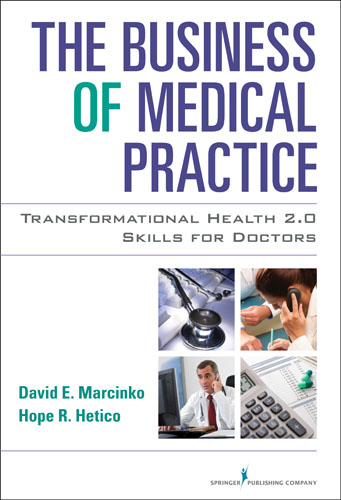
ORDER: https://www.amazon.com/Business-Medical-Practice-Transformational-Doctors/dp/0826105750/ref=sr_1_9?ie=UTF8&qid=1448163039&sr=8-9&keywords=david+marcinko

***

COMMENTS APPRECIATED

Thank You

***

What is the INDIAN HEALTH SERVICE?

ABOUT THE I.H.S

By Dr. Dvid Edward Marcinko MBA CMP®

CMP logo

SPONSOR: http://www.CertifiedMedicalPlanner.org

According to Wikipedia, the Indian Health Service (IHS) is an operating division (OPDIV) within the U.S. Department of Health and Human Services (HHS). IHS is responsible for providing direct medical and public health services to members of federally-recognized Native American Tribes and Alaska Native people. IHS is the principal federal health care provider and health advocate for Indian people.

The IHS provides health care in 36 states to approximately 2.2 million out of 3.7 million American Indians and Alaska Natives (AI/AN). As of April 2017, the IHS consisted of 26 hospitals, 59 health centers, and 32 health stations. Thirty-three urban Indian health projects supplement these facilities with a variety of health and referral services. Several tribes are actively involved in IHS program implementation. Many tribes also operate their own health systems independent of IHS. It also provides support to students pursuing medical education in order staff Indian health programs.

***

EDITOR’S NOTE: I did a rotation at a Federally Qualified Health Center through the I.H.S. when I was a surgical fellow back in the day. I enjoyed it immensely. Consulting services since then.

***

Indian Health Service Announces Expansion of Specialty ...

***

GOVERNMENT: https://www.ihs.gov/

CONGRESS: https://blog.petrieflom.law.harvard.edu/2021/06/03/indian-health-service-biden-congress/

ASSESSMENT: Your thoughts are appreciated.

INVITE DR. MARCINKO: https://medicalexecutivepost.com/dr-david-marcinkos-bookings/

THANK YOU

***

Medicare Part C [Advantage Plan] Allegations & Investigations

By Office of Inspector General and the HHS

***

***

READ REPORT: https://oig.hhs.gov/oei/reports/OEI-09-18-00260.asp

OIG: https://oig.hhs.gov/oei/reports/OEI-09-18-00260.pdf

***

COMMENTS APPRECIATED

Thank You

BUSINESS MEDICINE: https://www.amazon.com/Business-Medical-Practice-Transformational-Doctors/dp/0826105750/ref=sr_1_9?ie=UTF8&qid=1448163039&sr=8-9&keywords=david+marcinko

HEALTH INSURANCE: https://www.amazon.com/Dictionary-Health-Insurance-Managed-Care/dp/0826149944/ref=sr_1_4?ie=UTF8&s=books&qid=1275315485&sr=1-4

***

SUPREME COURT: Rules Against HHS Drug Pricing [340-B] Program

By Health Capital Consultants, LLC

***

***

U.S. Supreme Court Rules Against HHS in 340B Case

On June 15, 2022, the U.S. Supreme Court released its decision regarding the cuts made by the Department of Health and Human Services (HHS) to the 340B Drug Pricing Program, finding that HHS acted outside its statutory authority in changing reimbursement rates for one group of hospitals without first surveying them on their costs.

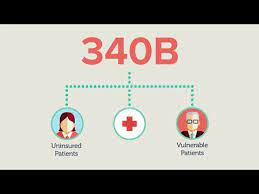
The 340B Drug Pricing Program allows hospitals and clinics that treat low-income, medically underserved patients to purchase certain “specified covered outpatient drugs” at discounted prices. (Read more…)

***

COMMENTS APPRECIATED

Thank You

***

***

***

List of Healthcare IT Trade Associations

Advancing Medical Practice Success with Strategic Relationships

By Staff ReportersHDS

To be efficient in healthcare delivery today, doctors must partner and understand the resources and affiliations that are available to them. Here is a brief list of several healthcare trade associations and leading industry vendors submitted for your review.

AHIMA
The American Health Information Management Association (AHIMA) is the premier association of health information management professionals. AHIMA’s 51,000 members are dedicated to the effective management of personal health information needed to deliver quality healthcare to the public. Founded in 1928 to improve the quality of medical records, AHIMA is committed to advancing the health information management profession in an increasingly electronic and global environment through leadership in advocacy, education, certification, and lifelong learning.

EHRA
HIMSS EHRA is a trade association of Electronic Health Record (EHR) vendors that addresses national efforts to create interoperable EHRs in hospital and ambulatory care settings. HIMSS EHRA operates on the premise that the rapid, widespread adoption of EHRs will help improve the quality of patient care and the productivity of the healthcare system. The primary mission of the association is to provide a forum for the EHR vendor community relative to standards development, the EHR certification process, interoperability, performance and quality measures, and other EHR issues that may become the subject of increasing government, insurance and physician association initiatives and requests.

HIMSS
HIMSS (Healthcare Information and Management Systems Society) is the healthcare industry’s membership organization exclusively focused on providing leadership for the optimal use of healthcare information technology and management systems for the betterment of human health. Founded in 1961 with offices in Chicago, Washington D.C., and other locations across the country, HIMSS represents approximately 17,000 individual members and some 275 member corporations that employ more than 1 million people. HIMSS frames and leads healthcare public policy and industry practices through its advocacy, educational and professional development initiatives designed to promote information and management systems’ contributions to ensuring quality patient care.

HITSP
The Healthcare Information Technology Standards Panel serves as a cooperative partnership between the public and private sectors for achieving a widely accepted and useful set of standards specifically to enable and support widespread interoperability among healthcare software applications, as they will interact in a local, regional, and national health information network for the United States. Comprised of a wide range of stakeholders, the Panel will assist in the development of the U.S. Nationwide Health Information Network (NHIN) by addressing issues such as privacy and security within a shared healthcare information system. The Panel is sponsored by the American National Standards Institute (ANSI) in cooperation with strategic partners such as the Healthcare Information and Management Systems Society (HIMSS), the Advanced Technology Institute (ATI), and Booz Allen Hamilton. Funding for the Panel is being provided via the ONCHIT contract award from the U.S. Department of Health and Human Services.

HL7
Health Level Seven is an American National Standards Institute (ANSI)-accredited Standards Developing Organization (SDO) operating in the healthcare clinical and administrative data arena. It is a not-for-profit volunteer organization made up of providers, vendors, payers, consultants, government groups, and others who develop clinical and administrative data standards for healthcare. Health Level Seven develops specifications; the most widely used being a messaging standard that enables disparate healthcare applications to exchange keys sets of clinical and administrative data.

MSHUG
Microsoft Healthcare Users Group (MS-HUG) unified with the Healthcare Information and Management Systems Society (HIMSS) as part of the HIMSS Users Group Alliance Program in October 2003. The unification strengthens the commitment of HIMSS and MS-HUG to better serve their members and the industry through a shared strategic vision to provide leadership and healthcare information technology solutions that improve the delivery of patient care.

WEDI
The Workgroup for Electronic Data Interchange [WEDI’s] goal is to improve the quality of healthcare through effective and efficient information exchange and management. They aim to provide leadership and guidance to the healthcare industry on how to use and leverage the industry’s collective knowledge, expertise, and information resources to improve the quality, affordability, and availability of healthcare.

Assessment

As the health information technology industry evolves, we will continue to contribute our expertise to foster ideas that shape the future of healthcare by offering more examples similar to the above.

Conclusion

And so, your thoughts and comments on this Medical Executive-Post are appreciated. Who did we miss? Feel free to review our top-left column, and top-right sidebar materials, links, URLs and related websites, too. Then, be sure to subscribe

Speaker: If you need a moderator or speaker for an upcoming event, Dr. David E. Marcinko; MBA – Publisher-in-Chief of the Medical Executive-Post – is available for seminar or speaking engagements. Contact: MarcinkoAdvisors@msn.com

OUR OTHER PRINT BOOKS AND RELATED INFORMATION SOURCES:

Product DetailsProduct DetailsProduct Details

RENEWED: US Covid-19 Public Health Emergency

By Ahmed Aboulenein

***

***

WASHINGTON (Reuters) – The United States on Wednesday renewed the COVID-19 public health emergency, allowing millions of Americans to keep getting free tests, vaccines and treatments for at least three more months.

The public health emergency was initially declared in January 2020, when the coronavirus pandemic began. It has been renewed each quarter since and was due to expire on April 16.

The Department of Health and Human Services (HHS) in a statement said it was extending the public health emergency and that it will give states 60 days notice prior to termination or expiration.

This could be the last time HHS Secretary Xavier Becerra extends it, policy experts have said.

MORE: https://www.msn.com/en-us/news/us/us-renews-covid-19-public-health-emergency/ar-AAWbaqa?li=BBnb7Kz

***

COMMENTS APPRECIATED

Thank You

***

***

Tele-Health Financial Expansion

BY HEALTH CAPITAL CONSULTANTS, LLC

****

Additional $20 Million Directed to Rural Telehealth Expansion

It has been well documented that the COVID-19 pandemic resulted in unprecedented increases in telemedicine utilization across the U.S. However, rural providers and patients, as evidenced by their lower rates of telemedicine usage during this time, have not been able to take advantage of the opportunities provided by telemedicine to the same extent as urban providers.

On August 18, 2021, the Health Resources and Services Administration (HRSA) of the Department of Health and Human Services (HHS) announced the latest attempt to ameliorate this issue – the distribution of nearly $20 million to 36 recipients for the purpose of strengthening telehealth services in rural and underserved communities and expanding innovation and quality. (Read more…)

CITE: https://www.r2library.com/Resource/Title/0826102549

***

YOUR COMMENTS ARE APPRECIATED.

Thank You

***

***

2021 Prescription Drug Payment Model from HHS

Administration Announces Prescription Drug Payment Model
***
By staff reporters
***
HHS Secretary Alex Azar has announced a drug payment model through the Center for Medicare and Medicaid Innovation at the Centers for Medicare & Medicaid Services that will lower Medicare Part B payments for certain drugs to the lowest price for similar countries and save American taxpayers and beneficiaries more than $85 billion over seven years.
***
***
Starting in January, the model, known as the Most Favored Nation (MFN) Model, will test an innovative way for Medicare to pay no more for high cost, physician-administered Medicare Part B drugs than the lowest price charged in other similar countries.
***
Following the President’s recent Executive Orders to lower drug prices and improve access to life-saving medications, the MFN Model will protect current beneficiary access to Medicare Part B drugs, make them more affordable, and address the disparity of drug costs between the U.S. and other countries.
***
Source: CMS [11/20/20]

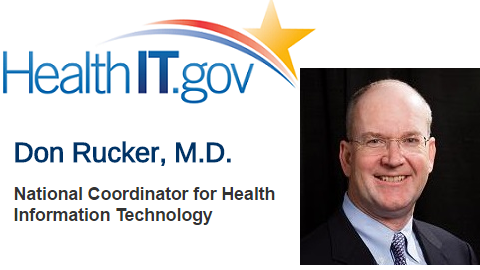
Meet Don Rucker MD – The New NCHIT for the US-HHS

Join Our Mailing List 

National Coordinator for Health Information Technology

[By staff reporters]

We are pleased to announce that Don Rucker has been named the new National Coordinator for Health Information Technology at the U.S. Department of Health and Human Services (HHS).

Dr. Rucker, a physician leader with national clinical informatics success, has a strong scientific, computational and practical background in medical computing and decision sciences, he was a co-developer of the first Microsoft Windows based electronic medical record in the world.

Additionally, Dr. Rucker was a designer of the computerized physician order entry [CPOE] module that won the 2003 HIMSS Nicholas Davies Award as the best hospital computer system in the US.

Conclusion

Your thoughts and comments on this ME-P are appreciated. Feel free to review our top-left column, and top-right sidebar materials, links, URLs and related websites, too. Then, subscribe to the ME-P. It is fast, free and secure.

Speaker: If you need a moderator or speaker for an upcoming event, Dr. David E. Marcinko; MBA – Publisher-in-Chief of the Medical Executive-Post – is available for seminar or speaking engagements. Contact: MarcinkoAdvisors@msn.com

OUR OTHER PRINT BOOKS AND RELATED INFORMATION SOURCES:

Product DetailsProduct Details

***

EHRs, ADA Leaders and Conflict of Interest

Join Our Mailing List 

A decade later ….?


By D. Kellus Pruitt DDS

In July 2007, Dr. Robert H. Ahlstrom, representing the American Dental Association and by default, all US dentists, testified before the National Committee on Vital and Health Statistics (NCVHS) on the benefits of EHRs in dentistry.

His testimony is featured in an official document titled:

“Testimony of the American Dental Association, National Committee on Vital and Health Statistics Subcommittee on Standards and Security July 31, 2007

http://www.ncvhs.hhs.gov/070731p08.pdf

Here are the ADA’s 11 selling points which Dr. Ahlstrom presented to HHS in support of electronic dental records:

  1. Dental office computer systems will be compatible with those of the hospitals and plans they conduct business with. Referral inquiries will be handled easily.
  2. Vendors will be able to supply low-cost software solutions to physicians/dentists who support standards-based electronic data interchange. Costs associated with mailing, faxing and telephoning will decrease.
  3. All administrative tasks can be accomplished electronically. Dentists will have more time to devote to direct care.
  4. Dentists will have a more complete data set of the patient they are treating, enabling better care.
  5. Patients seeking information on enrollment status or health care benefits will be given more accurate, complete and easier-to-understand information.
  6. Consumer documents will be more uniform and easier to read.
  7. Cost savings to providers and plans will translate in less costly health care for consumers. Premiums and charges will be lowered.
  8. Patients will save postage and telephone costs incurred in claims follow-up.
  9. Patients will have the ability to see what is contained in their medical and dental records and who has accessed them. Patient records will be adequately protected through organizational policies and technical security controls.
  10. Visits to dentists and other health care providers will be shorter without the burden of filling out forms.
  11. Consumer correspondence with insurers about problems with claims will be reduced.

Not one of Ahlstrom’s 11 promises has been fulfilled. None …. Total failure!

A decade later, it has become clear that the nation was misled by ambitious leaders of the American Dental Association who have since enjoyed power and/or profit from members’ misinformed adoption of digital records.

***

***

 In my opinion, the grandest deception in the history of dentistry is clearly a result of a secretive not-for-profit corporation’s conflict of interest. This very important business lesson would have been lost to history if I hadn’t been documenting the true progress of EHRs in dentistry.

I (alone?) recognized very early that paperless was doomed simply because the needs of dentists and their patients was secondary to implementation of third-parties’ half-baked, selfish ideas. And I got spanked for that by the same ADA leadership behind Ahlstrom’s tainted testimony to Congress.

My ADA membership was suspended, and I still have not been told why. All the President of the Texas Dental Association would tell me is, “You know what you did.”

Assessment 

To this day, dental EHRs are both increasingly less secure than paper dental records as well as increasingly more expensive. What’s more, they offer no tangible benefits for the patients. ADA leadership failed my profession.

Transparency is accountability.

Conclusion

Your thoughts and comments on this ME-P are appreciated. Feel free to review our top-left column, and top-right sidebar materials, links, URLs and related websites, too. Then, subscribe to the ME-P. It is fast, free and secure.

Speaker: If you need a moderator or speaker for an upcoming event, Dr. David E. Marcinko; MBA – Publisher-in-Chief of the Medical Executive-Post – is available for seminar or speaking engagements. Contact: MarcinkoAdvisors@msn.com

OUR OTHER PRINT BOOKS AND RELATED INFORMATION SOURCES:

Product DetailsProduct Details

***

On Physicians Texting [SMS]

Join Our Mailing List 

Some Technical Considerations

By Carol Miller BSN RN MBA PMP [Miller Consulting]

Carol S. Miller

Text (SMS = Short Message Service) Messaging has become nearly ubiquitous on mobile devices. According to one survey, approximately 72 percent of mobile phone users send text messages (TMs).

Clinical medical care is not immune from the trend, and in fact physicians appear to be embracing texting on par with the general population. Another survey found that 73 percent of physicians text other physicians about work.

(Source:  Journal of AHIMA, “HIPAA Compliance for Clinician Texting”, by Adam Green, April 2012)

Advantages

Texting can offer providers numerous advantages for clinical care. It may be the fastest and most efficient means of sending information in a given situation, especially with factors such as background noise, spotty wireless network coverage, lack of access to a desktop or laptop, and a flood of e-mails clogging inboxes.

Further, texting is device neutral—it will work on personal or provider-supplied devices of all shapes and sizes. Because of these advantages, physicians may utilize texting to communicate clinical information, whether authorized to do so or not.

Risks

All forms of communication involve some level of risk. Text messaging merely represents a different set of risks that, like other communication technologies, needs to be managed appropriately to ensure both privacy and security of the information exchanged.

Text messages, like all digital data,  may reside on a mobile device indefinitely, where the information can be exposed to unauthorized third parties due to theft, loss, or recycling of the device. Text messages often can be accessed without any level of authentication, meaning that anyone who has access to the mobile phone may have access to all text messages on the device without the need to enter a password.

***

AA9tsnE

***

Texts also are generally not subject to central monitoring by the IT department. Although text messages communicated wirelessly are usually encrypted by the carrier, interception and decryption of such messages can be done with inexpensive equipment and freely available software (although a substantial level of sophistication is needed.

If text messages are used to make decisions about patient care, then they may be subject to the rights of access and amendment. There is a risk of noncompliance with the privacy rule if the covered entity cannot provide patients with access to or amend such text messages.

The Wireless Association

According to 2012 data from CTIA–The Wireless Association, U.S. citizens alone exchange nearly 200 billion text messages every month. So it’s not surprising that an increasing number of clinicians are using text messaging to exchange clinical information, along with a wide range of other modes — smartphones, pagers, computerized physician order entry, emails, etc. Electronic communication is certainly faster, can be more efficient, enhances clinical collaboration and enables clinicians to focus on patient care. But with these benefits comes an increased risk of security breaches.

(Source:  Clarifying the Confusion about HIPAA – Compliant Texting, by Megan Hardiman and Terry Edwards, May 2013)

Unfortunately, vendor hype about the Health Insurance Portability and Accountability Act [HIPAA] is causing many hospitals and health systems to implement stop-gap measures that address part — but not all — of a problem. To identify all vulnerabilities, health care leaders need to consider not only text messaging, but all mechanisms by which protected health information in electronic form is transmitted — as well as the security of those mechanisms.

Mobile device-to-mobile device SMS text messages are generally not secure because they lack encryption.  The sender does not know with certainty that his or her message is indeed received by the intended recipient.  In addition, telecommunications vendor/wireless carrier may store the text messages.

Recent HHS guidance indicates text messaging, as a means of communicating PHI, can be permissible under HIPAA depending in large part on the adequacy of the controls used.  A hospital or provider may be approved for texting after performing a risk analysis or implementing a third-party messaging solution that incorporates measures to establish a secure communication platform that will allow texting on approved mobile devices.

***

AA9tvIj

***

The Ponemon Institute

A study reported in Computer World in May 2013 by the Ponemon Institute with 577 healthcare and It professional in facilities that ranged from fewer than 100 beds to over 500 beds stated that fifty-one percent of the respondents felt HIPAA compliance requirements can be a barrier to providing effective patient care.

Specifically HIPAA reduces time available for patient care (85% of the respondents), makes access to electronic patient information difficult (79% of the respondents) and restricts the use of electronic mobile communications (56% of the respondents).

The study stated “respondents agreed that the deficient communications tools currently in use decrease productivity and limit the time doctors have to spend with patients. “ They also stated “they recognized the value of implementing smartphones, text messaging and other modern forms of communications, but cited overly restrictive security policies as a primary reason why these technologies were not used.”

Clinicians in the survey stated that only 45% of each workday is spent with patients; the remaining 55% is spent communicating and collaborating with other clinicians and using the electronic medical record and other clinical IT systems.

Several other statements made were:

  • Because of the need for security, hospitals and other healthcare organizations continue to use older, outdate technology such as pagers, email and facsimile machines. The use of older technology can also delay patient discharges – now taking an average of 102 minutes.
  • The Ponemon Institute estimated that the lengthy discharge process costs the U.S. hospital industry more than $3.189 billion a year in lost revenue, with another $5 billion lost through decrease doctor productivity and use of outdated technology. Secure text messaging could cut discharge time by 50 minutes.

(Source:  Computer World, “HIPAA rules, outdate tech cost U.S. hospitals $3.38 B a year”, by Lucas Mearian, May, 2013)

***

smart phone mobile ME-P

***

Assessment

Several suggestions offered for these preferred mobile devises are:  1) ensure encryption and access to individuals who need to have access; 2) use secure texting applications; and 3) even consider alerting employees with warnings before they send an email or share files that lets them know they are liable for the information sent

Channel Surfing the ME-P

Have you visited our other topic channels? Established to facilitate idea exchange and link our community together, the value of these topics is dependent upon your input. Please take a minute to visit. And, to prevent that annoying spam, we ask that you register. It is fast, free and secure.

ABOUT CAROL MILLER; BSN, MBA, PMP millerconsultgroup@gmail.com ACT IAC Executive Committee Vice Chairwoman at-Large HIMSS NCA Board Member [President – Miller Consulting Group] Phone: 703-407-4704 and Fax: 703-790-3257

Ms. Carol S. Miller has an extensive healthcare background in operations, business development and capture in both the public and private sector. Over the last 10 years she has provided management support to projects in the Department of Health and Human Services, Veterans Affairs, and Department of Defense medical programs. In most recent years, Carol has served as Vice President and Senior Account Executive for NCI Information Systems, Inc., Assistant Vice President at SAIC, and Program Manager at MITRE. She has led the successful capture of large IDIQ/GWAC programs, managed the operations of multiple government contracts, interacted with many government key executives, and increased the new account portfolios for each firm she supported. She earned her MBA from Marymount University; BS in Business from Saint Joseph’s College, and BS in Nursing from the University of Pittsburgh. She is a Certified PMI Project Management Professional (PMP) (PMI PMP) and a Certified HIPAA Professional (CHP), with Top Secret Security clearance issued by the DoD in 2006. Ms. Miller is also a HIMSS Fellow.

Conclusion

How does this relate to emails? Your thoughts and comments on this ME-P are appreciated. Feel free to review our top-left column, and top-right sidebar materials, links, URLs and related websites, too. Then, subscribe to the ME-P. It is fast, free and secure.

Speaker: If you need a moderator or speaker for an upcoming event, Dr. David E. Marcinko; MBA – Publisher-in-Chief of the Medical Executive-Post – is available for seminar or speaking engagements. Contact: MarcinkoAdvisors@msn.com

OUR OTHER PRINT BOOKS AND RELATED INFORMATION SOURCES:

Product DetailsProduct Details

Should HHS Secretary Kathleen Sebelius be Replaced?

 Join Our Mailing List

A Voting and Opinion Poll

[By Ann Miller RN MHA]

We are all aware that critics are calling for the head of Kathleen Sebelius after the clumsy online rollout of the PP-ACA.

And so, we ask:

Assessment

After you vote; please leave a cogent opinion, too.

Conclusion

Your thoughts and comments on this ME-P are appreciated. Feel free to review our top-left column, and top-right sidebar materials, links, URLs and related websites, too. Then, subscribe to the ME-P. It is fast, free and secure.

Link: http://feeds.feedburner.com/HealthcareFinancialsthePostForcxos

Speaker: If you need a moderator or speaker for an upcoming event, Dr. David E. Marcinko; MBA – Publisher-in-Chief of the Medical Executive-Post – is available for seminar or speaking engagements. Contact: MarcinkoAdvisors@msn.com

OUR OTHER PRINT BOOKS AND RELATED INFORMATION SOURCES:

LEXICONS: http://www.springerpub.com/Search/marcinko
PHYSICIANS: www.MedicalBusinessAdvisors.com
PRACTICES: www.BusinessofMedicalPractice.com
HOSPITALS: http://www.crcpress.com/product/isbn/9781466558731
CLINICS: http://www.crcpress.com/product/isbn/9781439879900
ADVISORS: www.CertifiedMedicalPlanner.org
BLOG: www.MedicalExecutivePost.com

Product DetailsProduct Details

Product Details

The RAND Corporation’s Health IT Legacy‏

Join Our Mailing List 

Understanding ObamaCare and HIT Data Breaches

[By Darrell K. Pruitt DDS]

1-darrellpruittTwo current topics in the HIT industry: (1) A dishonest 2005 RAND study set up lawmakers for disappointment in electronic health records, which are essential to Obamacare, and (2) I told you so.

The Reports

Just the other day, there were reports of two data breaches of EHRs involving over 734,000 patients in Texas and California.

http://www.ihealthbeat.org/articles/2013/10/23/health-facilities-in-california-texas-report-health-data-breaches

For reasons like this, the wisdom of an ambitious mandate for paperless healthcare by 2014 is beginning to be questioned by the same lawmakers who were sucked in years ago by RAND’s tainted 2005 study.

According to the vendor-friendly results gleaned from vendor-friendly data supplied by vendors, EHRs should have started saving 100,000 lives and $77 billion a year, years ago. Predictably, that has not happened. Far from it!

The Findings 

The happy findings – discredited even by RAND in January of this year – were paid for by Cerner and GE, who profited immensely from their RAND investment. Since nationwide adoption of EHRs became a bi-partisan goal with bubbly beginnings and millions of campaign dollars, the costs and danger of healthcare IT didn’t appear to bother conservatives until three months after RAND admitted the study was garbage.

In April, six GOP senators, led by Sen. John Thune (R-S.D.), released a detailed report criticizing HHS Secretary Kathleen Sebelius’ execution of a $35 billion initiative to promote EHRs as part of the ARRA stimulus package. (See: “GOP senators raise concerns with push for electronic medical records,” by Sam Baker, April 16, 2013, The Hill).

http://thehill.com/blogs/healthwatch/medicare/294273-gop-senators-raise-concerns-with-push-for-electronic-medical-records

Wither ARRA?

Have you ever wondered why ARRA was passed as a jobs bill rather than as part of healthcare reform? Any ideas?

More recently, with the conservatives’ failure to stop Obamacare even by shutting down government, EHRs have become recognized as the ACA’s next best weakness. Yesterday, Greg Scandlen, writing for RightSideNews.com, posted “The Tyranny of Electronic Systems.” It goes downhill from there.

http://www.rightsidenews.com/2013102333379/life-and-science/health-and-education/the-tyranny-of-electronic-systems.html

Even More

Also yesterday, Michelle Mailkin writing for Townhall.com, an ultra-conservative website similar to RightSideNews, posted, “Don’t Forget Obamacare’s Electronic Medical Records Wreck.

http://townhall.com/columnists/michellemalkin/2013/10/23/dont-forget-obamacares-electronic-medical-records-wreck-n1730172?utm_source=TopBreakingNewsCarousel&utm_medium=story&utm_campaign=BreakingNewsCarousel

Assessment 

Conservatives found traction: Without the anticipated healthcare savings from EHRs, Obamacare will not survive. These times are not as happy for EHR stake-holders as RAND led them to expect.

Conclusion

Your thoughts and comments on this ME-P are appreciated. Feel free to review our top-left column, and top-right sidebar materials, links, URLs and related websites, too. Then, subscribe to the ME-P. It is fast, free and secure.

Link: http://feeds.feedburner.com/HealthcareFinancialsthePostForcxos

Speaker: If you need a moderator or speaker for an upcoming event, Dr. David E. Marcinko; MBA – Publisher-in-Chief of the Medical Executive-Post – is available for seminar or speaking engagements. Contact: MarcinkoAdvisors@msn.com

OUR OTHER PRINT BOOKS AND RELATED INFORMATION SOURCES:

LEXICONS: http://www.springerpub.com/Search/marcinko
PHYSICIANS: www.MedicalBusinessAdvisors.com
PRACTICES: www.BusinessofMedicalPractice.com
HOSPITALS: http://www.crcpress.com/product/isbn/9781466558731
CLINICS: http://www.crcpress.com/product/isbn/9781439879900
ADVISORS: www.CertifiedMedicalPlanner.org
BLOG: www.MedicalExecutivePost.com

Product DetailsProduct DetailsProduct Details

Product Details  Product Details

Product DetailsProduct Details

Product Details

Hospital Information Systems and the PP-ACA

Join Our Mailing List

Extension of Hospital Information Systems Beyond the Hospital

By Brent A. Metfessel MD

Dr. MetfesselThe Patient Protection and Affordable Care Act (ACA), affirmed after the November 7th 2012 presidential election, includes a number of policies and potential projects with the aim of improving quality of care while reducing costs – or at least greatly slowing increases in health care costs from year to year.

Included in this effort are CMS payment incentives for providers that can show care patterns that meet the goals of high quality, cost-efficient care.

HHS and ACOs 

On March 31, 2011, the Department of Health and Human Services (HHS) released a set of proposed new rules to aid clinicians, hospitals, and other health facilities and providers to improve coordination of care for Medicare patients using a model known as Accountable Care Organizations (ACOs). ACOs that are shown to lower health care cost growth while meeting CMS quality benchmarks, including measures of patient/caregiver experience of care, care coordination, patient safety, preventive health, and health of high-risk populations, will receive incentive payments as part of the Medicare Shared Savings Program.

But, in some proposed models ACOs may also be held accountable for shared losses.

Care Co-ordination

Coordination of care means that hospitals, physician offices, and other providers have a complete record of patients’ episodes of care, including diagnostic tests, procedures, and medication information.  This potentially would decrease extra costs from unnecessary duplication of services as well as reducing medical errors from incomplete understanding of the patients’ illness histories and medical care provided.

It is also believed that better coordination of care may prevent 30-day hospital readmissions (which occur for nearly one in five Medicare discharges), since needed post-discharge care would be more readily obtainable with more aggressive care coordination.

Medicare patients in ACOs, however, would still be allowed to see providers outside of the ACO, and proposals exist to prevent physicians in ACOs from being penalized for patients with a greater illness severity or complexity.

According to a CMS analysis, ACOs may result in Medicare savings of up to $960 million over three years.  Although the Affordable Care Act’s ACO provisions primarily target Medicare beneficiaries, private insurers are also beginning to create care models based on the accountable care paradigm.  Insurers could offer similar incentives to the ACO model described above, and which might include features such as performance based contracting or tiered benefit models that favor physicians who score highly on care quality and cost-efficiency measures.

Balance

Only the Beginning

ACOs and other implementations of the accountable care paradigm, however, are in their beginning stages, with a number of pilots around the country currently being conducted to more fully evaluate the concept, and there still is some controversy over the best way to achieve these goals. It is a continuing balancing act.

The critical point here is that in all likelihood, with the advent of the ACA and other initiatives, stemming the upward tide of medical cost increases becomes an even higher priority, and no matter what the final models will look like, the success of any of the models requires a high level of care coordination – requiring information systems that are fully compatible and allow seamless and errorless transmission of information between sites of service and the various providers that can be involved in patient care.

More:

  1. Ground Breaking Book Explains Why Accountable Care Organizations May Be the Answer the Health Care Industry Has Been Seeking!
  2. Evaluating ACOs at Mid-Launch
  3. How Using a ‘Scorecard’ Can Smooth Your Hospital’s Transition to a Population Health-Based Reimbursement Model
  4. Doubting the Accountable Care Organization B-Model

Assessment

Thus, wherever a patient goes for care, all the information needed to provide high-quality and cost-efficient care is immediately available.

References

Feds Take Critical Look at Meaningful Use Payments”, InformationWeek Healthcare, October 24, 2012.  http://www.informationweek.com/healthcare/policy/feds-take-critical-look-at-meaningful-us/240009661 [Accessed on November 2, 2012].

Conclusion

Your thoughts and comments on this ME-P are appreciated. Feel free to review our top-left column, and top-right sidebar materials, links, URLs and related websites, too. Then, subscribe to the ME-P. It is fast, free and secure.

Link: http://feeds.feedburner.com/HealthcareFinancialsthePostForcxos

Speaker: If you need a moderator or speaker for an upcoming event, Dr. David E. Marcinko; MBA – Publisher-in-Chief of the Medical Executive-Post – is available for seminar or speaking engagements. Contact: MarcinkoAdvisors@msn.com

OUR OTHER PRINT BOOKS AND RELATED INFORMATION SOURCES:

LEXICONS: http://www.springerpub.com/Search/marcinko
PHYSICIANS: www.MedicalBusinessAdvisors.com
PRACTICES: www.BusinessofMedicalPractice.com
HOSPITALS: http://www.crcpress.com/product/isbn/9781466558731
CLINICS: http://www.crcpress.com/product/isbn/9781439879900
ADVISORS: www.CertifiedMedicalPlanner.org
PODIATRISTS: www.PodiatryPrep.com
BLOG: www.MedicalExecutivePost.com

Product DetailsProduct Details

Product Details

Healthcare Adversaries [video]

Join Our Mailing List

Of HHS and AHIP

By Darrell K. Pruitt DDS

pruitt6If HHS and AHIP continue to give doctors the bum’s rush, what languages can we expect migrant providers to speak well?

The Conference

Last week, I came across a video of a health care conference held a month ago at the University of Miami. During a discussion period, a Miami spinal surgeon named Dr. Nordham warned that more Medicare pay cuts will make small, solo practices like his unsustainable.

Karen Speaks

Panelist Karen Ignagni, who is president and the CEO of America’s Health Insurance Plans (AHIP), reacted defensively in favor of continued unsustainable discounts – but with a hasty, disingenuous response: “We’re seeing out of network charges of 95 times Medicare fees.” While as if on cue, former HHS Secretary Donna Shalala, who is also president of the university, offered her cold interpretation of the small business owner’s legitimate fears: “He’s really complaining that the price is going down [according to law].”

Shalala Speaks

After also ignoring the physician’s plea, “There needs to be more transparency,” Shalala and Ignagni continue an irrelevant, buzzword-filled discussion with each other using flowing hand gestures while shutting out the doctor’s attempts to bring the conversation back on topic. Then abruptly, without giving Dr. Nordham the opportunity to say another word, Shalala slammed the door: “…. I think we’ll take the next question, thank you.” Then she threw him a bone, “It’s a very important question, though.”

###

MD with eHR

Assessment

The 4 minutes of unvarnished disrespect of Dr. Nordham is so transparent that one wonders whether Shalala and Ignagni were even aware that their half-baked PR game was being recorded for C-span.

http://www.c-spanvideo.org/event/214023 (from 2:09:53 to 2:13:42)

They probably thought nobody stays up that late.

More: Chapter 13: IT, eMRs & GroupWare

Conclusion

Your thoughts and comments on this ME-P are appreciated. Feel free to review our top-left column, and top-right sidebar materials, links, URLs and related websites, too. Then, subscribe to the ME-P. It is fast, free and secure.

Link: http://feeds.feedburner.com/HealthcareFinancialsthePostForcxos

Speaker: If you need a moderator or speaker for an upcoming event, Dr. David E. Marcinko; MBA – Publisher-in-Chief of the Medical Executive-Post – is available for seminar or speaking engagements. Contact: MarcinkoAdvisors@msn.com

Our Other Print Books and Related Information Sources:

Health Dictionary Series: http://www.springerpub.com/Search/marcinko

Practice Management: http://www.springerpub.com/product/9780826105752

Physician Financial Planning: http://www.jbpub.com/catalog/0763745790

Medical Risk Management: http://www.jbpub.com/catalog/9780763733421

Hospitals: http://www.crcpress.com/product/isbn/9781439879900

Physician Advisors: www.CertifiedMedicalPlanner.org

Product Details

Confusion About “Meaningful Use” Reigns

Join Our Mailing List

Are Doctors Embracing or Ignoring ARRA?

By D. Kellus Pruitt DDS

pruittAre physicians embracing ARRA Meaningful Use cash incentives or ignoring them? That depends on whom one asks.

Doctors versus the Feds

National progress towards Meaningful Use of expensive EHRs depends on whether one talks to federal employees whose jobs depend on the stimulus mandate, or doctors who purchase EHRs to improve care rather than to use them … Meaningfully.

The Feds

Today, Joseph Conn, writing for ModernHealthcare, posted a rosy outlook for MU adoption according to researchers working for HHS’ Office of the National Coordinator (ONC). They base their optimism for job security on a recent National Center for Health Statistics (NCHS) survey:

“A growing number of office-based physicians are using more-robust EHRs that have higher-level functions needed to help the doctors qualify for federal EHR incentive payments [for Meaningful Use] and assist them in providing better, safer care for patients, the researchers reported.” (See “Researchers: More doctors using more-sophisticated EHRs”).

http://www.modernhealthcare.com/article/20121212/NEWS/312129956/researchers-more-doctors-using-more-sophisticated-ehrsJust

eMR and HIT Security

The Doctors

However, yesterday, in an InformationWeek article by Ken Terry titled, “Meaningful Use Doesn’t Drive Doctors’ EHR Selection,” doctors suggested a more depressing future for MU sophistication based on the same NCHS survey:

“Jason Mitchell, MD, assistant director of the Center for Health IT at the American Academy of Family Physicians (AAFP), told InformationWeek Healthcare that he found [the lagging adoption of MU-capable EHRs] puzzling. While there’s no doubt that Meaningful Use has driven much of the increase in EHR use, he said, it seems strange that so many physicians would buy and implement EHRs that could not be used to show Meaningful Use.”

http://www.informationweek.com/healthcare/electronic-medical-records/meaningful-use-doesnt-drive-doctors-ehr/240144093

Assessment

Whom should doctors believe – HHS employees who give away billions of stimulus dollars for Meaningful Use, or family physicians who have determined that the subsidy isn’t worth the cost and effort?

Conclusion

Your thoughts and comments on this ME-P are appreciated. Feel free to review our top-left column, and top-right sidebar materials, links, URLs and related websites, too. Then, subscribe to the ME-P. It is fast, free and secure.

Link: http://feeds.feedburner.com/HealthcareFinancialsthePostForcxos

Speaker: If you need a moderator or speaker for an upcoming event, Dr. David E. Marcinko; MBA – Publisher-in-Chief of the Medical Executive-Post – is available for seminar or speaking engagements. Contact: MarcinkoAdvisors@msn.com

OUR OTHER PRINT BOOKS AND RELATED INFORMATION SOURCES:

DICTIONARIES: http://www.springerpub.com/Search/marcinko
PHYSICIANS: www.MedicalBusinessAdvisors.com
PRACTICES: www.BusinessofMedicalPractice.com
HOSPITALS: http://www.crcpress.com/product/isbn/9781466558731
CLINICS: http://www.crcpress.com/product/isbn/9781439879900
BLOG: www.MedicalExecutivePost.com
FINANCE: Financial Planning for Physicians and Advisors
INSURANCE: Risk Management and Insurance Strategies for Physicians and Advisors


Product Details

Enter the HIPAA Fear Mongers

Join Our Mailing List

Fear of HIPAA Sells

[By Darrelkl K. Pruitt DDS]

“The HHS Office for Civil Rights (OCR) can show up at your door and ask to perform an audit on short notice, and your organization will need to be ready, or face fines of up to $50,000 per day for each regulatory provision violated.”

– Gene Kraemer [Customer Relationship Director at The Coding Institute]

http://www.audioeducator.com/hipaa-audits-and-enforcement-042412.html?utm_medium=email&utm_source=E99NAGAJ&utm_campaign=E99NAGAJ

The most successful of opportunistic HIPAA consultants are the scariest

As a dentist for almost 30 years, I’ve noticed that along with even rumors of mandate enforcement, ambitious compliance consultants’ fear-inspiring ads start interrupting happier thoughts. It happened with OSHA’s push into dentistry 20 years ago and we clearly see the aggressive sales pitches with HIPAA as well.

The scariest part of Gene Kraemer’s description of HIPAA’s tedious requirements and bankruptcy-level liabilities is that he is simply telling the truth. So if you are a HIPAA covered dentist, be scared.

On the other hand, if you don’t store or send your patients’ digital PHI – choosing instead to use the US Mail – you are increasingly fortunate in the dentistry market. For one thing, our patients are fed up with identity thefts, and paper dental records are the gold standard in security. In addition, nothing is holding down your competitors’ costs for HIPAA compliance and it is increasing much faster than the cost of postage.

De-identify now or lose computerization, Doc. If your patients’ PHI is not present it simply cannot be hacked by an identity thief. Guaranteed more secure than Cloud. Arguably more secure than even paper dental records.

Or … You can hire The Coding Institute.

You can bet Gene Kraemer isn’t someone who would hold down the cost of compliance.


From: Gene_Kraemer@mail.vresp.com

Subject: HIPAA Audits & Enforcement: New Penalties & Push for Compliance – Final Notice!

Good Morning,

The US Department of Health and Human Services (HHS) is currently implementing audits to meet requirements in the HITECH Act in the American Recovery and Reinvestment Act of 2009 (ARRA) for performing periodic audits of compliance with the HIPAA Privacy and Security Rules, and up to 150 random HIPAA compliance audits will be performed by the end of 2012.  While in the past, audits had been performed only at entities that had had a complaint filed against them, the new rule calls for audits whether or not there is a complaint.  This means, the HHS Office for Civil Rights (OCR) can show up at your door and ask to perform an audit on short notice, and your organization will need to be ready, or face fines of up to $50,000 per day for each regulatory provision violated.

Join us for this live audio conference on Tuesday, April 24, 2012 at 1 pm ET | 12 pm CT | 11 am MT | 10 am PT. This conference is being presented by Jim Sheldon-Dean, the founder and director of compliance services at Lewis Creek Systems, LLC, a Vermont-based consulting firm founded in 1982, providing information privacy and security regulatory compliance services to health care firms and businesses throughout the Northeast and nationally. He serves on the HIMSS Information Systems Security Workgroup, the Workgroup for Electronic Data Interchange Privacy and Security Workgroup, and co-chairs the WEDI HIPAA Updates sub-workgroup.  Sheldon-Dean is a participating member of the advisory board of Vermont Information Technology Leaders (VITL), and has participated in VITL’s Vermont Health Information Technology Plan working group, VITL’s Physician EMR adoption project, and the Security Workgroup of the New Hampshire/Vermont Strategic HIPAA Implementation Plan (NHVSHIP).

Highlights of the session :

• Fines and penalties for violations of the HIPAA regulations have been significantly increased and now include mandatory fines for willful negligence that begin at $10,000 minimum.

• HIPAA Audits have been few and far between in the past, but that’s now changing – the HHS will be auditing HIPAA covered entities and business associates even if there have been no complaints or problems reported.

• What HHS OCR is likely to ask you if you are selected for an audit, and what you’ll have to have prepared already when they do.

• The rules are that you need to comply with will be explained. Learn about the policies you can adopt that can help you come into compliance and be prepared for an audit.

• How the HIPAA rules have changed and how you may need to change. How you work to keep up with them.

• How having a good compliance process can help you stay compliant and respond to audits more easily.

• The documentation needed to survive an audit and avoid fines will be described.

• A discussion on what you’ll need to think about to deal with current and future threats to the security of patient information.

If interested, please click the following link to register and get your early bird discount : –

http://www.audioeducator.com/hipaa-audits-and-enforcement-042412.html?utm_medium=email&utm_source=E99NAGAJ&utm_campaign=E99NAGAJ

Please apply discount code “GENE20” at checkout to get your $20 discount on early registration.

Looking forward to having you onboard here.

Thanks,

Gene Kraemer

Customer Relationship Director

The Coding Institute LLC

2222 Sedwick Drive,

Durham, NC 27713

************************************************************************************8*************************

Conclusion

Your thoughts and comments on this ME-P are appreciated. Feel free to review our top-left column, and top-right sidebar materials, links, URLs and related websites, too. Then, subscribe to the ME-P. It is fast, free and secure.

Speaker: If you need a moderator or speaker for an upcoming event, Dr. David E. Marcinko; MBA – Publisher-in-Chief of the Medical Executive-Post – is available for seminar or speaking engagements. Contact: MarcinkoAdvisors@msn.com

OUR OTHER PRINT BOOKS AND RELATED INFORMATION SOURCES:

Product Details

Product Details

Promoting “National Family [Medical] History Day” 2011

AKA Thanksgiving Day

By Staff Reporters

Join Our Mailing List

Did you know that each year since 2004, the Surgeon General has declared Thanksgiving to be National Family History Day?

Over the holiday season or at other times when families gather, the Surgeon General encourages Americans to talk about, and to write down, the health problems that seem to run in their family.  PHRs are a perfect tool in this regard.

Moreover, doctors speak about the FH with patients every day, and as they commence office work on this Black Friday. Of course, learning about a family’s health history may help ensure a longer, healthier future together too!

Assessment

For information from the Office of the Surgeon General, please visit http://www.hhs.gov/familyhistory/

Conclusion                

And so, your thoughts and comments on this ME-P are appreciated. Feel free to review our top-left column, and top-right sidebar materials, links, URLs and related websites, too. Then, subscribe to the ME-P. It is fast, free and secure.

Link: http://feeds.feedburner.com/HealthcareFinancialsthePostForcxos

Speaker: If you need a moderator or speaker for an upcoming event, Dr. David E. Marcinko; MBA – Publisher-in-Chief of the Medical Executive-Post – is available for seminar or speaking engagements. Contact: MarcinkoAdvisors@msn.com

Our Other Print Books and Related Information Sources:

Health Dictionary Series: http://www.springerpub.com/Search/marcinko

Practice Management: http://www.springerpub.com/product/9780826105752

Physician Financial Planning: http://www.jbpub.com/catalog/0763745790

Medical Risk Management: http://www.jbpub.com/catalog/9780763733421

Healthcare Organizations: www.HealthcareFinancials.com

Physician Advisors: www.CertifiedMedicalPlanner.com

Subscribe Now: Did you like this Medical Executive-Post, or find it helpful, interesting and informative? Want to get the latest ME-Ps delivered to your email box each morning? Just subscribe using the link below. You can unsubscribe at any time. Security is assured.

Link: http://feeds.feedburner.com/HealthcareFinancialsthePostForcxos

Sponsors Welcomed: And, credible sponsors and like-minded advertisers are always welcomed.

Link: https://healthcarefinancials.wordpress.com/2007/11/11/advertise

Product Details

“Meaningful Use” for Ambulatory Care Medical Practices

Join Our Mailing List

EHR Objectives and Measures

By Shahid N. Shah MS  

For ambulatory care practices and physicians there are about 25 objectives and measures that must be met to become a “meaningful user”. Keep in mind that meaningful use is not tied to a certified EHR alone; in fact, unless you use the EHR properly and in all the ways the government wants you to, you will not be a “meaningful user”.

Don’t be fooled by EHR vendors guaranteeing that they will make you a “meaningful user” – no vendor’s software, no matter how nice, can get your staff to use the software in the way the government wants. You, as the CIO of your practice, are the only one that can guarantee that. In fact, you don’t even need an EHR from a vendor to meet the requirements – you can even roll your own, use open source, or find any other means.

Fear and Promises

In general, as long as you can attest and send data to the government that they require you can do it in any way that you want. Be aware that some unscrupulous vendors are scaring practices and making promises that they cannot keep.

Final MU Rules

The final Meaningful Use (MU) Rule was published by HHS on July 13, 2010. It defines 24 objectives for and measures eligible hospitals that could be met to become a meaningful user and qualify for incentive funding. There is a “core set” that must be met by all institutions and a “menu set” of from which organizations must implement at least 5 objectives.

Core Set Objectives

These are the “core set” of 14 objectives that must be met by all institutions and a “menu set” of 10 from which organizations must implement at least 5 objectives (at least 1 public health objective must be chosen from that set).

  1. Use Computer Provider Order Entry (CPOE).
  2. Implement drug-drug, drug-allergy, and drug-formulary checks.
  3. Record demographics.
  4. Implement one clinical decision support rule.
  5. Maintain an up-to-date problem list of current and active diagnoses based on ICD-9-CM or SNOMED CT.
  6. Maintain active medication list.
  7. Maintain active medication allergy list.
  8. Record and chart changes in vital signs.
  9. Record smoking status for patients 13 years or older.
  10. Report hospital clinical quality measures to CMS or States.
  11. Provide patients with an electronic copy of their health information, upon request.
  12. Provide patients with an electronic copy of their discharge instructions at time of discharge, upon request.
  13. Capability to exchange key clinical information among providers of care and patient-authorized entities electronically.
  14. Protect electronic health information.

Menu Set Objectives

These are the “menu set” of 10 objectives from which organizations must implement at least 5. At least one public health objective must be chosen from this set as well (numbers 8 or 9). Drug-formulary checks.

  1. Record advanced directives for patients 65 years or older.
  2. Incorporate clinical lab test results as structured data.
  3. Generate lists of patients by specific conditions.
  4. Use certified EHR technology to identify patient-specific education resources and provide to patient, if appropriate.
  5. Medication reconciliation.
  6. Summary of care record for each transition of care/referrals.
  7. Capability to submit electronic data to immunization registries/systems.
  8. Capability to provide electronic submission of reportable lab results to public health agencies.
  9. Capability to provide electronic syndromic surveillance data to public health agencies.

Government Agencies and Participants Involved in MU

As you can see in the Figure, the Office of the National Coordinator for Healthcare IT (ONCHIT) is a component of the Department of Health and Human Services (HHS). ONCHIT, usually abbreviated just ONC, is the principal policy group of the Federal Government that defines and manages NHIN.

Figure Link: Figure 

* ONC is responsible for coordinating with the Department of Commerce’s National Institute of Standards and Technology (NIST) on the specifications for the NHIN standards.

* The HIT Policy and HIT Standards Committees are the working groups that advise ONC on what to put in the standards.

* NIST is responsible for coming up with the test materials (assertions, procedures, methods, tools, data, and so on) that will be used to certify working systems 

Conclusion

Your thoughts and comments on this ME-P are appreciated. Feel free to review our top-left column, and top-right sidebar materials, links, URLs and related websites, too. Then, subscribe to the ME-P. It is fast, free and secure.

Link: http://feeds.feedburner.com/HealthcareFinancialsthePostForcxos

Speaker: If you need a moderator or speaker for an upcoming event, Dr. David E. Marcinko; MBA – Publisher-in-Chief of the Medical Executive-Post – is available for seminar or speaking engagements. Contact: MarcinkoAdvisors@msn.com

OUR OTHER PRINT BOOKS AND RELATED INFORMATION SOURCES:

Product Details 

Content Exchange and Vocabulary Standards for eMRs

Understanding Terms and Definitions

By Shahid N. Shah MS

As per the HHS rules, vocabulary standards are standardized nomenclatures and e-code sets used to describe clinical problems and procedures, medications, and allergies for eMRs. Some commons terms and definitions are listed below:

Terms and Definitions

  • ASTM’s CCR – for most of your basic patient summary exchange needs the CCR will meet your needs. If you’re moving from low or no interoperability today to some interoperable capabilities then CCR is your best starting place.
  • International Classification of Diseases, 9th Revision, Clinical Modifications (ICD-9- CM) or SNOMED CT® should populate a problem list. If you’re not familiar with both standards and are unsure where to start, go with ICD-9 for problem lists. SNOMED is not commonly supported in the broad EMR industry but ICD-9 support is quite common so start there.
  • Health Level Seven (HL7) Clinical Document Architecture (CDA) Release 2 (R2) Level 2 CCD – for more advanced patient summary exchange needs the HL7 CDA is recommended. If you’re already supporting CCR exchange and it’s not meeting your needs then HL7 CDA is the next logical place to go.
  • For patient summary exchanges, HHS expect the following fields to be populated: problem list; medication list; medication allergy list; procedures; vital signs; units of measure; lab orders and results; and, where appropriate, discharge summary.
  • ICD-9-CM [ACD-10] or American Medical Association (AMA) Current Procedural Terminology (CPT®) Fourth Edition (CPT–4) to populate information related to procedures. Both of these standards are support broadly by most existing vendors so going with either or both is good.
  • For medication lists, HHS requires the use of codes from a drug vocabulary the National Library of Medicine has identified as an RxNorm drug data source provider with a complete data set integrated within RxNorm.
  • For lab results, HHS requires the use of LOINC® to populate information in a patient summary record related to lab orders and results when LOINC® codes have been received from a laboratory and are retained and subsequently available in your EMR. HHS states that in instances where LOINC® codes have not been received from a laboratory, the use of any local or proprietary code is permitted. HHS does not require these local or proprietary codes to be converted to LOINC® codes in order to populate a patient summary record.
  • For the purposes of electronic prescribing, your vendor must be capable of using NCPDP SCRIPT 8.1 or NCPDP SCRIPT 8.1 and 10.6. With respect to a vocabulary standard, your vendor must use codes from a drug vocabulary currently integrated into the NLM’s RxNorm. For the purposes of performing a drug formulary check, your vendor must be capable of using NCPDP Formulary & Benefits Standard 1.0 adopted by HHS (73 FR 18918).
  • There are standards required for insurance data like eligibility checking and submissions of claims. ASC X12N and NCPDP standards (Versions 4010/4010A and 5010 and Versions 5.1 and D.0, respectively) should be used for these transactions. It’s important to realize that Version 4010 is being phased out in favor of Version 5010 so your vendors need to support both at this time and must be able to move exclusively to Version 5010 in the future.
  • For the purposes of electronically submitting calculated quality measures required by CMS or by States, your vendor must be capable of using the CMS PQRI 2008 Registry XML Specification. Going forward, HL7 Quality Reporting Document Architecture (QRDA) Implementation Guide based on HL7 CDA Release 2 may be allowed but for now focus on the CMS PQRI requirements until HHS provides more guidance in the future.
  • For the purposes of submitting lab results to public health agencies, your vendor must be capable of using HL7 2.5.1.
  • For the purposes of electronically submitting information to public health agencies for surveillance and reporting, your vendor must be capable of using HL7 2.3.1 or HL7 2.5.1 as a content exchange standard. At this time HHS not required adverse event reporting nor have they adopted a specific vocabulary standard for submitting information to public health agencies for surveillance and reporting.
  • For the purposes of electronically submitting information to immunization registries your vendor must be capable of using HL7 2.3.1 or HL7 2.5.1 as a content exchange standard and the CDC maintained HL7 standard code set CVX -Vaccines Administered18 as the vocabulary standard.

Assessment

www.BusinessofMedicalPractice.com

Conclusion

And so, your thoughts and comments on this ME-P are appreciated. Feel free to review our top-left column, and top-right sidebar materials, links, URLs and related websites, too. Then, subscribe to the ME-P. It is fast, free and secure.  

Speaker: If you need a moderator or speaker for an upcoming event, Dr. David E. Marcinko; MBA – Publisher-in-Chief of the Medical Executive-Post – is available for seminar or speaking engagements. Contact: MarcinkoAdvisors@msn.com and http://www.springerpub.com/Search/marcinko

Get our Widget: Get this widget!

Our Other Print Books and Related Information Sources:

Health Dictionary Series: http://www.springerpub.com/Search/marcinko 

Practice Management: http://www.springerpub.com/product/9780826105752

Physician Financial Planning: http://www.jbpub.com/catalog/0763745790

Medical Risk Management: http://www.jbpub.com/catalog/9780763733421

Healthcare Organizations: www.HealthcareFinancials.com

Physician Advisors: www.CertifiedMedicalPlanner.com

Subscribe Now: Did you like this Medical Executive-Post, or find it helpful, interesting and informative? Want to get the latest ME-Ps delivered to your email box each morning? Just subscribe using the link below. You can unsubscribe at any time. Security is assured.

Link: http://feeds.feedburner.com/HealthcareFinancialsthePostForcxos

Sponsors Welcomed: And, credible sponsors and like-minded advertisers are always welcomed.

Link: https://healthcarefinancials.wordpress.com/2007/11/11/advertise

Product DetailsProduct DetailsProduct Details       

More on the Meaningful Use of eMRs

Join Our Mailing List

Final Meaningful Use Rules Released by HHS on July 13, 2010.

[By Shahid N. Shah MS]

Link: http://shahid.shah.org

For ambulatory care practices and physicians there are about 25 objectives and measures that must be met to become a “meaningful user”. Keep in mind that meaningful use is not tied to a certified EHR alone; in fact, unless you use the EHR properly and in all the ways the government wants you to, you will not be a “meaningful user”. Don’t be fooled by EHR vendors guaranteeing that they will make you a “meaningful user” – no vendor’s software, no matter how nice, can get your staff to use the software in the way the government wants. You, as the CIO of your practice, are the only one that can guarantee that. In fact, you don’t even need an EHR from a vendor to meet the requirements – you can even roll your own, use open source, or find any other means. But, in general, as long as you can attest and send data to the government that they require you can do it in any way that you want. Be aware that some unscrupulous vendors are scaring practices and making promises that they cannot keep.

Final MU Rules

The final Meaningful Use (MU) Rule was published by HHS on July 13, 2010. It defines 24 objectives for and measures eligible hospitals that could be met to become a meaningful user and qualify for incentive funding. There is a “core set” that must be met by all institutions and a “menu set” of from which organizations must implement at least 5 objectives.

Core Set Objectives

These are the “core set” of 14 objectives that must be met by all institutions and a “menu set” of 10 from which organizations must implement at least 5 objectives (at least 1 public health objective must be chosen from that set).

  1. Use Computer Provider Order Entry (CPOE).
  2. Implement drug-drug, drug-allergy, and drug-formulary checks.
  3. Record demographics.
  4. Implement one clinical decision support rule.
  5. Maintain a problem list of current and active Dxs based on ICD-9-CM or SNOMED CT.
  6. Maintain active medication list.
  7. Maintain active medication allergy list.
  8. Record and chart changes in vital signs.
  9. Record smoking status for patients 13 years or older.
  10. Report hospital clinical quality measures to CMS or States.
  11. Provide patients with an electronic copy of their health information, upon request.
  12. Provide patients an e-copy of discharge instructions at time of discharge, upon request.
  13. Exchange key clinical e-information among providers and patient-authorized entities.
  14. Protect electronic health information.

Menu Set Objectives

These are the “menu set” of 10 objectives from which organizations must implement at least 5. At least one public health objective must be chosen from this set as well (numbers 8, 9, or 10).

  1. Drug-formulary checks.
  2. Record advanced directives for patients 65 years or older.
  3. Incorporate clinical lab test results as structured data.
  4. Generate lists of patients by specific conditions.
  5. Use certified eHR technology to identify patient-specific education resources and provide to patient, if appropriate.
  6. Medication reconciliation.
  7. Summary of care record for each transition of care/referrals.
  8. Capability to submit electronic data to immunization registries/systems.
  9. Capability to provide electronic submission of reportable lab results to public health agencies.
  10. Capability to provide electronic syndromic surveillance data to public health agencies.

Assessment

As can be seen in the link below, the Office of the National Coordinator for Healthcare IT (ONCHIT) is a component of the Department of Health and Human Services (HHS). ONCHIT, usually abbreviated just ONC, is the principal policy group of the Federal Government that defines and manages NHIN.

  • ONC is responsible for coordinating with the Department of Commerce’s National Institute of Standards and Technology (NIST) on the specifications for the NHIN standards.
  • The HIT Policy and HIT Standards Committees are the working groups that advise ONC on what to put in the standards.
  • NIST is responsible for coming up with the test materials (assertions, procedures, methods, tools, data, and so on) that will be used to certify working systems.

Conclusion

Your thoughts and comments on this ME-P are appreciated. Feel free to review our top-left column, and top-right sidebar materials, links, URLs and related websites, too. Then, subscribe to the ME-P. It is fast, free and secure.

Speaker: If you need a moderator or speaker for an upcoming event, Dr. David E. Marcinko; MBA – Publisher-in-Chief of the Medical Executive-Post – is available for seminar or speaking engagements. Contact: MarcinkoAdvisors@msn.com

OUR OTHER PRINT BOOKS AND RELATED INFORMATION SOURCES:

Product Details