BOARD CERTIFICATION EXAM STUDY GUIDES Lower Extremity Trauma
[Click on Image to Enlarge]
ME-P Free Advertising Consultation
The “Medical Executive-Post” is about connecting doctors, health care executives and modern consulting advisors. It’s about free-enterprise, business, practice, policy, personal financial planning and wealth building capitalism. We have an attitude that’s independent, outspoken, intelligent and so Next-Gen; often edgy, usually controversial. And, our consultants “got fly”, just like U. Read it! Write it! Post it! “Medical Executive-Post”. Call or email us for your FREE advertising and sales consultation TODAY [678.779.8597] Email: MarcinkoAdvisors@outlook.com
Medical & Surgical e-Consent Forms
ePodiatryConsentForms.com
iMBA Inc., OFFICES
Suite #5901 Wilbanks Drive, Norcross, Georgia, 30092 USA [1.678.779.8597]. Our location is real and we are now virtually enabled to assist new long distance clients and out-of-town colleagues.
ME-P Publishing
SEEKING INDUSTRY INFO PARTNERS?
If you want the opportunity to work with leading health care industry insiders, innovators and watchers, the “ME-P” may be right for you? We are unbiased and operate at the nexus of theoretical and applied R&D. Collaborate with us and you’ll put your brand in front of a smart & tightly focused demographic; one at the forefront of our emerging healthcare free marketplace of informed and professional “movers and shakers.” Our Ad Rate Card is available upon request [678-779-8597].
The Biden administration is confident it will succeed in the courts against Merck & Co’s lawsuit filed on Tuesday, the White House said, defending the Medicare health insurance program’s authority to seek deals on medicine prices. “We are confident we will succeed in the courts: there is nothing in the Constitution that prevents Medicare from negotiating lower drug prices,” White House spokeswoman Karine Jean-Pierre said in a statement.
Behind negative returns for shares of UnitedHealth and Merck, as noted above, UnitedHealth’s shares were off $14.28, or 2.9%, while those of Merck have dropped $3.23, or 2.9%. A $1 move in any one of the 30 components of the Dow results in a 6.59-point swing. In summary:
***
Here is where the major benchmarks ended yesterday:
The S&P 500® Index was up 10.04 points (0.2%) at 4283.84; the Dow Jones industrial average was up 10.48 at 33,573.34; the NASDAQ Composite was up about 47 points (0.36%) at 13,276.42.
The 10-year Treasury yield was little changed at 3.687%.
Posted on May 31, 2023 by Dr. David Edward Marcinko MBA MEd CMP™
By Staff Reporters
***
***
Workers appear to value paid time off even more than having employer-funded health insurance, a recent study found. The Pew Research Center report called “How Americans view their jobs” found 62% of the 5,900 people surveyed felt it’s “extremely” important to have paid time off for vacations or minor illness, with a further 27% saying it’s “very” important. That’s higher than the 51% who said employer-funded health insurance was extremely important, with 28% saying it’s very important.
And, here is where the major market benchmarks ended yesterday:
The S&P 500 Index was up 0.07 point at 4205.52; the Dow Jones industrial average was down 50.56 (0.2%) at 33,042.78; the NASDAQ Composite was up 41.74 (0.32%) at 13,017.43.
The 10-year Treasury yield was down about 13 basis points at 3.694%.
CBOE’s Volatility Index was little changed at 17.46.
Oilfield services companies and others in energy were among the weakest performers as crude oil futures dropped more than 4% to less than $70 a barrel, reflecting ample supply.
Consumer staples and health care were also weak. The U.S. dollar index was down slightly after rising earlier to its highest level since mid-March.
Posted on May 29, 2023 by Dr. David Edward Marcinko MBA MEd CMP™
By Staff Reporters
***
***
Though it’s not likely to be discussed at a funeral, the popular methods of body disposal—traditional burial or cremation—both pose major environmental hazards. In recent years, natural interment has made a comeback, with promises to protect the planet. But a Dutch inventor created eco-conscious coffins made from mushroom-like structures and hemp that will decompose within 45days of burial.
So, here are eight eco-friendly ways to make your last act on Earth a kind one.
Posted on May 26, 2023 by Dr. David Edward Marcinko MBA MEd CMP™
***
***
Even though timely follow-up care for self-harm or mental illness has been shown to prevent hospitalizations, reduce the chances of a repeat visit, and improve overall outcomes, less than a third of children receive follow-up care within seven days of their ED visit, and just over half (56%) receive care within a month, according to a recent study from Ann & Robert H. Lurie Children’s Hospital of Chicago.
More than a quarter of the children in the study returned to the ED within six months.
Posted on May 24, 2023 by Dr. David Edward Marcinko MBA MEd CMP™
By Anonymous
***
***
The HHS OIG Fall 2022 report was recently released to Congress. On page 20, there are many referrals to seven inappropriate payments to a variety of Medicare “Advantage” Plans. Topping the list is Humana. The OIG claims that Humana in the time period studied falsified records to receive $34.4M worth of payments they received from CMS for risk diagnosis code risk assessments. If even half this amount is true, it is unconscionable that Humana is not severely fined, their executives terminated and subjected to criminal proceedings, and they should be banned from the Medicare program for ten years. This is no different from how other healthcare providers are criminalized, so the question is, why is the insurance industry treated different and preferentially when they commit fraud?
These OIG studies are great reads, but up until now, they have done nothing to stop the insurance industry’s abusive practices of denying “clean claims”, denying claims after prior authorization, ignoring CCI edits, “losing” charts sent for review and then claiming higher error rates to Congress, paying providers often less than 50% of Medicare, and this the last draw… falsifying data so they can be paid more from CMS. When will this madness stop? When will providers have the gumption to actually act out the famous quote, “I’m mad as hell and I’m not going take it anymore!” (from the movie Network), and Peter Finch it!
Posted on May 23, 2023 by Dr. David Edward Marcinko MBA MEd CMP™
MENTAL HEATH AMERICA
By Staff Reporters
***
***
MENTAL HEALTH PARITY ACT
Atlanta, GA – Governor Brian P. Kemp, joined by First Lady Marty Kemp and their three daughters, Lt. Governor Geoff Duncan, Speaker David Ralston, members of the House and Senate, and mental health advocates, to sign the Mental Health Parity Act (HB1013) into law.
You may view his remarks from the bill signing ceremony below, and you can watch the full ceremony here.
***
Mental Health Rights
People living with mental health conditions are people. They have people they love, activities they enjoy, and dreams for their lives. As people, they deserve to be treated with dignity, and under the law they have rights and protections.
Unfortunately, it has long been the case that individuals with mental health conditions are among the most abused and discriminated against in our country. From leaving people to languish in overcrowded state hospitals to lobotomies and forced sterilization, the treatment of those with mental health conditions is a dark stain on our history as a nation.
While we have come a long way, abuse and discrimination continue to be serious problems today. The shackling or restraining of children, keeping people out of work, and denying access to services are just a few examples of the way we continue to fail the 1 in 5 Americans that has a diagnosable mental health disorder.
This is not just a small issue for a small group of people: half of all Americans will experience a diagnosable mental health condition in their lifetime. If it is not us being directly impacted, it is likely that it will be our family members, friends, or loved ones– whether we know it or not. Beyond struggles in education or employment, we see the loss of human dignity and even human life for the people we love and care about when we do not work to address abuses in the system.
For Mental Health America, the fight against abuse and discrimination is essential to our history and continues to guide our work. MHA’s symbol, which sits in our national office, is the Bell of Hope cast from the chains and shackles that were used to restrain individuals in old state hospitals. As an organization, MHA is committed to the principles of human and civil rights inherent to the concept of equal justice under the law.
Posted on May 23, 2023 by Dr. David Edward Marcinko MBA MEd CMP™
By Staff Reporters
***
***
Here is where the major benchmarks ended yesterday:
The S&P 500® Index was up 0.65 point at 4192.63; the Dow Jones industrial average was down 140.05 (0.4%) at 33,286.58; the NASDAQ Composite was up 62.88 (0.5%) at 12,720.78.
The 10-year Treasury yield was up about 3 basis points at 3.721%.
CBOE’s Volatility Index was up 0.38 at 17.19.
The NASDAQ-100 Index ended at a 13-month high, driven by gains in large tech companies. Lenders were also particularly strong, with the KBW Regional Banking Index up nearly 3%. Oilfield services companies also rose as crude oil futures ticked higher. Consumer staples was among the weaker sectors.
***
Debt ceiling negotiations could result in less funding for state and local health officials to combat STDs. Remote work is making it easier for some family caregivers to fill care gaps. An RSV vaccine for pregnant women is another step closer to approval. Congress will question CIGNA over its practice of rejecting medical claims by the hundreds of thousands every month.
Posted on May 19, 2023 by Dr. David Edward Marcinko MBA MEd CMP™
By Staff Reporters
***
***
Today is World Family Doctor Day—and the US needs more family doctors. By 2026, 21% of family medicine and other primary care physicians will have reached retirement age, while demand for primary care is expected to grow 4%.
World Family Doctor Day is on May 19th every year. Founded by the World Organization of Family Doctors (W.O.N.C.A.) in 2010, World Family Doctor Day has now grown into a global celebration of the importance of family doctors in health care. Taking part in this event is a great way to show appreciation for the important role family medicine plays in providing patients with individualized, comprehensive, and long-term health care. Family doctors around the world have made significant contributions to medicine — now is the time to recognize that. It’s also a moment to recognize the advancements in family medicine and the unique efforts of primary care teams worldwide.
So we, at the ME-P, hope all the family doctors take time to relax from their busy schedules and enjoy the springtime blooms as we trust those April showers brought lots of May flowers.
Posted on May 17, 2023 by Dr. David Edward Marcinko MBA MEd CMP™
By Staff Reporters
President Joe Biden said Monday he intends to nominate a new director for the National Institutes of Health. Dr. Monica Bertagnolli, a surgical oncologist and cancer researcher, was picked by Biden as the successor to Francis Collins.
“Dr. Bertagnolli has spent her career pioneering scientific discovery and pushing the boundaries of what is possible to improve cancer prevention and treatment for patients, and ensuring that patients in every community have access to quality care,” Biden said in a statement. “As Director of the National Cancer Institute, Dr. Bertagnolli has advanced my Cancer Moonshot to end cancer as we know it.”
Posted on May 15, 2023 by Dr. David Edward Marcinko MBA MEd CMP™
NARROW NETWORKS
By Staff Reporters
An increasing number of insurers now promote “narrow network” plans that can be less expensive than more traditional offerings. However, that added affordability comes with a tradeoff that could leave you with fewer options for covered medical services.
Understanding Narrow Networks: Narrow network plans are similar to the health maintenance organizations (HMOs). Like standard HMOs, these plans limit coverage to a select group of physicians, specialists and hospitals. However, narrow network plans can be even more restrictive in the number of providers they include. Those providers generally have been proven to have higher measured quality and better outcomes for patients. They also typically agree to lower reimbursements from insurers, which can mean lower premiums and out-of-pocket expenses for consumers. You’re more likely to see narrow networks — which include narrow pharmacy networks — if you shop for your own health insurance on HealthCare.gov or your state’s insurance exchange. They’re less common in the plan options provided by private employers.
Advantages Beyond the Savings The fact that narrow network plans include fewer providers doesn’t mean you’ll be getting lower quality care. In fact, many insurers require providers to have a proven track record that’s focused on their patients’ health outcomes. And they can offer a number of additional advantages, beyond just lower costs:
Coordinated care. Working within a single health system can mean better communication between your doctors. You might also have easier access to all your medical records through a dedicated online portal.
No referrals. Traditional HMO plans generally require a referral from your primary care physician for any consultations with a specialist. Many narrow network plans eliminate this requirement.
Added benefits. Many narrow network plans offer benefits designed to keep high-risk patients healthier. These can include options like free health coaching and live video services that enable remote, online medical consultations.
CONS: The biggest disadvantage to narrow network plans is less choice. Insurers keep these plans more affordable by negotiating lower reimbursements with health care providers. In return, those providers could see patient rosters grow, because smaller networks also mean less competition for those within the network. Smaller networks also can mean:
A need to change physicians. Your current primary care physician and specialists might not be included in the plan. This can mean starting over with new doctors who aren’t familiar with your particular health concerns.
Longer drives. With fewer choices, you may be forced into a longer commute to see an in-network physician. This could become a hardship for those in rural locations.
Lack of specialty options. A smaller network might not include the broad range of specialists large networks typically include.
Posted on May 12, 2023 by Dr. David Edward Marcinko MBA MEd CMP™
By Staff Reporters
***
***
Happy 203rd birthday to Florence Nightingale, the founder of modern nursing. She rose to fame during the Crimean War, when her hygiene standards substantially reduced the mortality rate at army hospitals. The healthcare industry still relies on some of her ideas, such as using data as a tool to improve hospital care. The “lady with the lamp” is still lighting the path forward.
Posted on May 11, 2023 by Dr. David Edward Marcinko MBA MEd CMP™
By Health Capital Consultants, LLC
***
***
On January 30th, 2023, President Joseph Biden announced that the public health emergency (PHE) and national emergency declaration related to the COVID-19 pandemic will finally end on May 11, 2023, after being in place for over three years.
And so, this Health Capital Topics article will discuss the changes that will take place after both declarations cease, and the implications for stakeholders. (Read more…)
Posted on May 10, 2023 by Dr. David Edward Marcinko MBA MEd CMP™
By Health Capital Consultants, Inc
***
***
On February 22, 2023, UnitedHealth Group’s (UHG’s) Optum division, the health insurance giant’s care delivery arm, acquired Crystal Run Healthcare, a New York based physician group of almost 400 physicians, nurse practitioners, and other providers
This significant move is just the latest in UHG’s concerted effort over the past few years to acquire outpatient providers, surgery centers, and physician groups. This Health Capital Topics article will briefly survey some of the insurer’s recent acquisitions and initiatives to expand their physician services network. (Read more…)
Posted on May 7, 2023 by Dr. David Edward Marcinko MBA MEd CMP™
By Staff Reporters
***
***
Tele-Health medical providers are cheering the Drug Enforcement Agency (DEA) move to temporarily extend virtual prescribing flexibility.
The DEA is looking to buy some time to consider whether it should require patients to see doctors face-to-face to get prescriptions for controlled drugs or continue to allow Tele-Health prescriptions. The agency received a record 38,000 public comments on its proposed rule.
Posted on May 6, 2023 by Dr. David Edward Marcinko MBA MEd CMP™
By Ann Miller RN MHACMP™
INTRODUCING OUR NEXT GENERATION e-BOOK LIBRARYFROM iMBA, Inc.
An e-book is an electronic or digital book that can be read on a computer or a handheld device.
Our new e-books consists of text, images, and are fixed to a specific spot on the page.
And, our e-books are a data files similar in content and structure to a word-processing document that comes in a PDF format. To use our e-books, you need to purchase and download it to a device that has a .pdf file reader app, such as ADOBE® or similar on a smartphone, tablet or computer. A PDF, also known as a portable document format, is the format most people are familiar with and used in our e-books. PDFs are known for their ease of use and ability to hold custom layouts. They are the most commonly used e-Book formats, especially by professionals and adult-learners.
You can then access the e-book and read it, or highlight pages and even take side notes.
e-Books Save Money
With no manufacturing, printing, binding or shipping costs, e-Books are cheaper than traditional hard or paper back books.The price of each specialized and highly niche focused e-Book [50-100 pages] is only $25, whereas similar paperback printed books of this type generally cost $145, or more!
Posted on May 4, 2023 by Dr. David Edward Marcinko MBA MEd CMP™
By Staff Reporters
MAY THE FOURTH BE WITH YOU
***
***
Many pharma companies reported earnings in the last week, and the common thread is crashing Covid-related sales.
For example, AstraZeneca’s Covid medication sales dropped $1.5b in Q1, Merck’s Covid antiviral sales fell 88% from the same quarter in 2022, and Roche’s diagnostics division sales fell 28% from Q1 2022, thanks to low Covid-test demand. Clearly, pharma companies have to figure out how to pivot their strategies in a post-Covid world.
The CDCwill not continue to track Covid-19 community spread as the country enters the endemic stage of the pandemic.
***
The Food and Drug Administration approved Wednesday the first-ever vaccine to combat severe respiratory syncytial virus, or RSV. Arexvy, the new vaccine developed by GlaxoSmithKline, was approved for adults 60 and older and was 82% effective at preventing lower respiratory tract illness caused by RSV, according to trial data. It was also 94% effective in those who had at least one underlying medical condition.
***
The Federal Reserve voted unanimously to raise interest rates by a quarter point yesterday, the tenth rate hike since the central bank started its battle against inflation last March. The move comes amid ongoing fragility in the banking sector triggered partly by higher interest rates, and following the collapse of three regional banks. Markets had anticipated the rate hike, and remained fairly muted after the Fed’s announcement.
***
Finally, here’s where the major indexes ended up:
The S&P 500® Index was down 28.83 points at 4090.75; the Dow Jones industrial average was down 270.29 (0.8%) at 33,414.24; the NASDAQ Composite was down 55.18 (0.5%) at 12,025.33.
The 10-year Treasury yield was down about 7 basis points at 3.367%.
CBOE’s Volatility Index was up 0.52 at 18.30.
Energy companies were among the market’s weakest performers as crude oil continued a recent decline, with WTI crude futures falling more than 4% under $70 a barrel—a nearly six-week low.
Semiconductor and financial shares were also weak. The U.S. dollar index dropped sharply in the wake of the Fed announcement before rebounding.
Posted on May 3, 2023 by Dr. David Edward Marcinko MBA MEd CMP™
FOR MEDICAL AND HEALTHCARE ENTREPRENEURS AND INNOVATORS
By Dr. David Edward Marcinko MBA MEdCMP®
I was asked by business schools and medical colleagues – and their bankers, CPAs and advisors – to speak about this topic several times last year before the pandemic.
Now, with the specter of M-4-A etc; it certainly is a vital concern to all young entrepreneurs, doctors & medical professionals whether live, audio recorded or in podcast form. And so, here is a written transcript of a recent presentation for your review.
Now, with the specter of tele-health, tele-medicine, M-4-A etc; it certainly is a vital concern to all young doctors & medical professionals whether live, audio recorded or in podcast form. And so, here is a written transcript of a recent presentation for your review.
Posted on April 29, 2023 by Dr. David Edward Marcinko MBA MEd CMP™
By Staff Reporters
***
***
Compensation pay for US workers picked up in the first three months of the year, showing that a major source of inflationary pressure persists and cementing the path for an interest rate hike at the Federal Reserve’s meeting next week. The Employment Cost Index, released Friday by the Bureau of Labor Statistics, showed that workers were paid 1.2% more in wages and benefits in the first quarter from the prior three-month period. That’s up from analysts’ expectations of 1.1%.
Markets: Stocks rose yesterday, finishing strong to give the Dow its best month since January. But First Republic Bank tanked again as rumors flew about its fate, again.
Economy: For all the Fed watchers, new data released makes it look like another rate hike could be in store next week. The data shows wages are still trending upward, and one of the Fed’s favorite inflation measures rose slightly last month.
Here’s where markets ended.
The S&P 500 Index was up 34.13 (0.8%) at 4169.48, a nearly three-month high; the Dow Jones industrial average was up 272.00 (0.8%) at 34,098.16; the NASDAQ Composite was up 84.35 (0.7%) at (12,226.58.
The 10-year Treasury yield was down about 9 basis points at 3.437%.
CBOE’s Volatility Index was down 1.27 at 15.76.
Energy companies were among the strongest sectors today with help from a rally in crude oil futures. Transportation and financial stocks were also strong. Utilities and consumer discretionary sectors were among the weakest sectors.
Posted on April 29, 2023 by Dr. David Edward Marcinko MBA MEd CMP™
APRIL 23-29, 2023
By Staff Reporters
***
This celebration is to honor and appreciate the important role laboratory professionals play in improving diagnostic innovation and accuracy, particularly in light of the rapidly evolving global public health climate. Join us in acknowledging and appreciating their contributions and commitment!
Medical Laboratory Professionals Week, an annual celebration of medical laboratory professionals and pathologists who play a vital role in health care and patient advocacy, takes place between April 23-29, 2023. CLSI is one of 17 laboratory medicine organizations responsible for coordinating this annual celebration of this profession.
Posted on April 27, 2023 by Dr. David Edward Marcinko MBA MEd CMP™
By Staff Reporters
***
***
The two tech giants posted earnings that showed they’re both on solid footing, despite investors’ concerns that growth would slow to a trickle. For Alphabet, Google search advertising revenue grew again after a quarter in the red. And Microsoft’s all-important cloud division posted better-than-expected sales. Both companies stated AI could impact their businesses, but they differed in their predictions: Microsoft characterized AI as a much more disruptive force than Google did.
Get ready for earnings calls from pharmaceutical companies: Eli Lilly, AstraZeneca, AbbVie, and more quarterly calls this week. Investors will watch AbbVie’s sales numbers, as Amgen introduced the first biosimilar version of AbbVie’s blockbuster arthritis drug, Humira, in January. In its last call, AbbVie executives said they expected to lose $7.9 billion in Humira sales in 2023
The S&P 500 Index was down 15.64 points (0.4%) at 4055.99; the Dow Jones industrial average was down 228.96 (0.7%) at 33,301.87; the NASDAQ Composite was up 55.19 (0.5%) at 11,854.35.
The 10-year Treasury yield was up about 4 basis points at 3.439%.
Posted on April 26, 2023 by Dr. David Edward Marcinko MBA MEd CMP™
THE EIGHT [8] GIFTS
By Staff Reporters
***
***
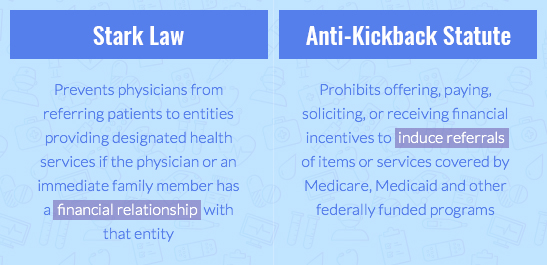
Much like the False Claims Act, the Anti-Kickback Statute (AKS) remains a frequent tool used by the Department of Justice to investigate the healthcare industry. Unlike the False Claims Act, the AKS imposes criminal penalties on violators.
The leaders of a physicians’ practice may be held liable for what others in the practice do, even if the leader did not know precisely what was going on. It has been called the “crime of doing nothing.”
1. Providing free dinners or lunches to physicians
2. Travel expenses paid to physicians
3. Entering into consulting or research agreements with physicians under which payments are made but minimal (or zero) work is done in return
4. Other gifts, such as electronics or tickets to sporting events
5. Laboratory pays a specimen processing fee to physicians above the fair value for those fees
6. Physician retention or recruitment agreements, when those agreements provide for payments above fair market value or are made with the intent to induce Medicare referrals
7. Agreements for speaking or teaching where the payments are above fair market value or made with the intent to induce referrals
8. Discount schemes that do not meet the safe harbor requirements
Source: Sara Kropf and Logan Lutton, Physicans Practice
Posted on April 25, 2023 by Dr. David Edward Marcinko MBA MEd CMP™
By Staff Reporters
***
***
Physicians Who Accept Medicare, Medicaid at All-time Low of 65%
Reduced Medicare and Medicaid payments are having more physicians considering reducing those patient bases, according to Medscape’s “Physician Compensation Report” for 2023. Sixty-five percent of physicians surveyed said they would continue treating current Medicare or Medicaid patients and take on new ones, according to the report. Medscape said it is the lowest percentage it has seen in its annual compensation reports. Five years ago, 71 percent of physicians said they would continue treating current Medicare or Medicaid patients and take on new ones.
For the report, Medscape collected responses from 10,011 physicians across more than 29 specialties. The data was collected between Oct. 7, 2022, and Jan. 17, 2023. Eight percent of physicians surveyed said they would not take on new Medicare patients, and 5 percent said they would not take new Medicaid patients. Four percent said they will stop treating some or all of their current Medicare patients and will not take on new ones, and 3 percent said the same about Medicaid patients. Twenty-two percent said they have not yet decided how they will move forward regarding Medicare and Medicaid patients, according to the report.
Source: Andrew Cass, Becker’s Payer Issues [4/18/23]
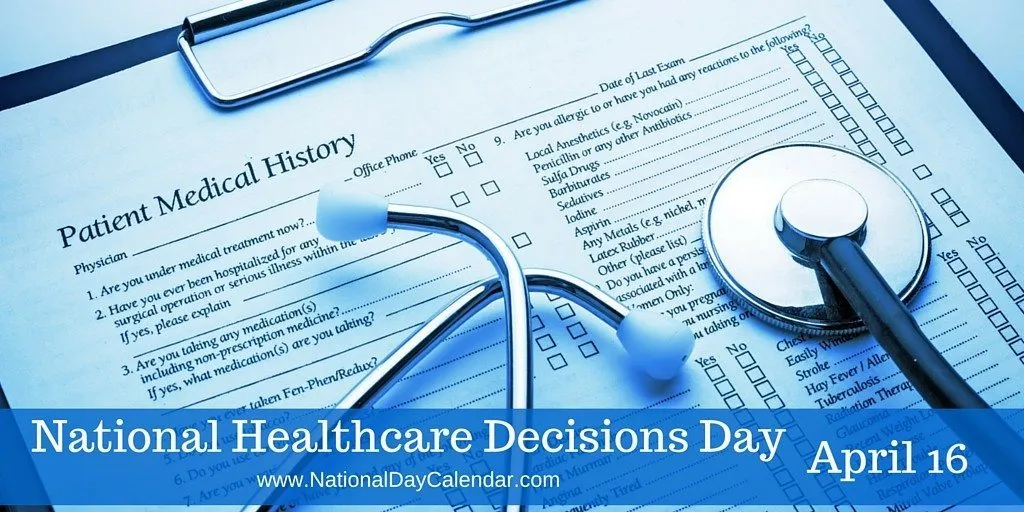
National Healthcare Decisions Day (NHDD) exists to inspire, educate and empower the public and providers about the importance of advance care planning. NHDD is an initiative to encourage patients to express their wishes regarding healthcare and for providers and facilities to respect those wishes, whatever they may be.
NHDD was founded in 2008 by Nathan Kottkamp, a Virginia-based health care lawyer, to provide clear, concise, and consistent information on healthcare decision-making to both the public and providers/facilities through the widespread availability and dissemination of simple, free, and uniform tools (not just forms) to guide the process.
NHDD is a series of independent events held across the country, supported by a national media and public education campaign. In all respects, NHDD is inclusive and brings a variety of players in the larger healthcare, legal, and religious community together to work on a common project, to the benefit of patients, families, and providers. A key goal of NHDD is to demystify healthcare decision-making and make the topic of advance care planning inescapable. Among other things, NHDD helps people understand that advance healthcare decision-making includes much more than living wills; it is a process that should focus first on conversation and choosing an agent.
As of June 2016, The Conversation Project has been responsible for the management, finances, and structure of NHDD. NHDD’s founder, Nathan Kottkamp, continues to be involved in NHDD and provides leadership by ensuring the maintenance of NHDD’s high quality resources and support for the community.
DEFINITION: What is advance care planning for financial advisors and lawyers?
Advance care planning involves discussing and preparing for future decisions about your medical care if you become seriously ill or unable to communicate your wishes with your estate planning attorney or financial advisor. Having meaningful conversations with your loved ones is the most important part of advance care planning. Many people also choose to put their preferences in writing by completing legal documents called advance directives.
What are advance directives?
Advance directives are legal documents that provide instructions for medical care and only go into effect if you cannot communicate your own wishes.
The two most common advance directives for health care are the living will and the durable power of attorney for health care.
Living will: A living will is a legal document that tells doctors how you want to be treated if you cannot make your own decisions about emergency treatment. In a living will, you can say which common medical treatments or care you would want, which ones you would want to avoid, and under which conditions each of your choices applies. Learn more about preparing a living will.
Durable power of attorneyfor health care: A durable power of attorney for health care is a legal document that names your health care proxy, a person who can make health care decisions for you if you are unable to communicate these yourself. Your proxy, also known as a representative, surrogate, or agent, should be familiar with your values and wishes. A proxy can be chosen in addition to or instead of a living will. Having a health care proxy helps you plan for situations that cannot be foreseen, such as a serious car accident or stroke. Learn more about choosing a health care proxy.
Think of your advance directives as living documents that you review at least once each year and update if a major life event occurs such as retirement, moving out of state, or a significant change in your health.
Advance care planning is not just for people who are very old or ill. At any age, a medical crisis could leave you unable to communicate your own health care decisions. Planning now for your future health care can help ensure you get the medical care you want and that someone you trust will be there to make decisions for you.
Advance care planning for people with dementia. Many people do not realize that Alzheimer’s disease and related dementias are terminal conditions and ultimately result in death. People in the later stages of dementia often lose their ability to do the simplest tasks. If you have dementia, advance care planning can give you a sense of control over an uncertain future and enable you to participate directly in decision-making about your future care. If you are a loved one of someone with dementia, encourage these discussions as early as possible. In the later stages of dementia, you may wish to discuss decisions with other family members, your loved one’s health care provider, or a trusted friend to feel more supported when deciding the types of care and treatments the person would want.
What happens if you do not have an advance directive?
If you do not have an advance directive and you are unable to make decisions on your own, the state laws where you live will determine who may make medical decisions on your behalf. This is typically your spouse, your parents if they are available, or your children if they are adults. If you are unmarried and have not named your partner as your proxy, it’s possible they could be excluded from decision-making. If you have no family members, some states allow a close friend who is familiar with your values to help. Or they may assign a physician to represent your best interests. To find out the laws in your state, contact your state legal aid office or state bar association.
Will an advance directive guarantee your wishes are followed?
An advance directive is legally recognized but not legally binding. This means that your health care provider and proxy will do their best to respect your advance directives, but there may be circumstances in which they cannot follow your wishes exactly. For example, you may be in a complex medical situation where it is unclear what you would want. This is another key reason why having conversations about your preferences is so important. Talking with your loved ones ahead of time may help them better navigate unanticipated issues.
There is the possibility that a health care provider refuses to follow your advance directives. This might happen if the decision goes against:
The health care provider’s conscience
The health care institution’s policy
Accepted health care standards
In these situations, the health care provider must inform your health care proxy immediately and consider transferring your care to another provider.
Other advance care planning forms and orders from doctors
You might want to prepare documents to express your wishes about a single medical issue or something else not already covered in your advance directives, such as an emergency. For these types of situations, you can talk with a doctor about establishing the following orders:
Do not resuscitate (DNR) order: A DNR becomes part of your medical chart to inform medical staff in a hospital or nursing facility that you do not want CPR or other life-support measures to be attempted if your heartbeat and breathing stop. Sometimes this document is referred to as a do not attempt resuscitation (DNR) order or an allow natural death (AND) order. Even though a living will might state that CPR is not wanted, it is helpful to have a DNR order as part of your medical file if you go to a hospital. Posting a DNR next to your hospital bed might avoid confusion in an emergency. Without a DNR order, medical staff will attempt every effort to restore your breathing and the normal rhythm of your heart.
Do not intubate (DNI) order: A similar document, a DNI informs medical staff in a hospital or nursing facility that you do not want to be on a ventilator.
Do not hospitalize (DNH) order: A DNH indicates to long-term care providers, such as nursing home staff, that you prefer not to be sent to a hospital for treatment at the end of life.
Out-of-hospital DNR order: An out-of-hospital DNR alerts emergency medical personnel to your wishes regarding measures to restore your heartbeat or breathing if you are not in a hospital.
Physician orders for life-sustaining treatment (POLST) and medical orders for life-sustaining treatment (MOLST) forms:These forms provide guidance about your medical care that health care professionals can act on immediately in an emergency. They serve as a medical order in addition to your advance directive. Typically, you create a POLST or MOLST when you are near the end of life or critically ill and understand the specific decisions that might need to be made on your behalf. These forms may also be called portable medical orders or physician orders for scope of treatment (POST). Check with your state department of health to find out if these forms are available where you live.
At enrollment, Medicare in the future could offer three advancedirectives with goals of care: DirectiveA: CONSENT to treat — inpatient medical treatment DirectiveB: CONSENT to comfort — home bound holistic care DirectiveC: CHOOSE against medical advice — outpatient palliative resources.
Posted on April 13, 2023 by Dr. David Edward Marcinko MBA MEd CMP™
By Staff Reporters
***
***
A significant study recently published in the Annals of Vascular Surgery has uncovered a troubling correlation between loss of health insurance coverage and increased risk of amputation. Led by Dr. Tze Woei Tan, a vascular surgeon and associate professor, the research team from the University of Arizona and Keck School of Medicine of USC, which includes co-senior author Dr. David G. Armstrong, a podiatric surgeon and professor of surgery, brings attention to this important issue. Titled “The Impact of Health Insurance Loss on Amputation Rates in the United States,” the study highlights the consequences of losing insurance coverage.
Researchers examined a large cohort of patients at risk of peripheral artery disease (PAD) and diabetic foot complications, noting that those without insurance were more likely to experience amputation. The study found that individuals who lost their insurance coverage were 2.5 times more likely to undergo a major amputation compared to those with continuous coverage. This striking difference emphasizes the importance of consistent access to healthcare and the potential consequences of gaps in insurance.
Posted on April 12, 2023 by Dr. David Edward Marcinko MBA MEd CMP™
By Health Capital Consultants, LLC
***
***
GROWING SCRUTINY OF TELE-MEDICINE
On July 20, 2022, the Office of Inspector General (OIG) of the U.S. Department of Health & Human Services (HHS) released a Special Fraud Alert on telemedicine. On the same day, the U.S. Department of Justice (DOJ) announced a “nationwide coordinated law enforcement action” against 36 defendants, and the Centers for Medicare & Medicaid Services (CMS) Center for Program Integrity announced administrative actions against 52 providers, related to alleged telemedicine arrangements. These coordinated actions indicate a growing scrutiny of telemedicine arrangements by federal government regulators. (Read more...)
Posted on April 10, 2023 by Dr. David Edward Marcinko MBA MEd CMP™
NOW AVAILABLE
By Staff Reporters via CMS
***
***
Open Payments is a national disclosure program that promotes a transparent and accountable healthcare system. Open Payments houses a publicly accessible database of payments that reporting entities, including drug and medical device companies, make to certain healthcare providers, which are referred to as covered recipients.
Pre-publication review and dispute for the Program Year 2022 Open Payments data opened on April 1st and is available through May 15th, 2023. Disputes must be initiated by May 15th, 2023 in order to be reflected in the June 2023 data publication.
Posted on April 7, 2023 by Dr. David Edward Marcinko MBA MEd CMP™
Happy 75th Birthday
By Staff Reporters
***
***
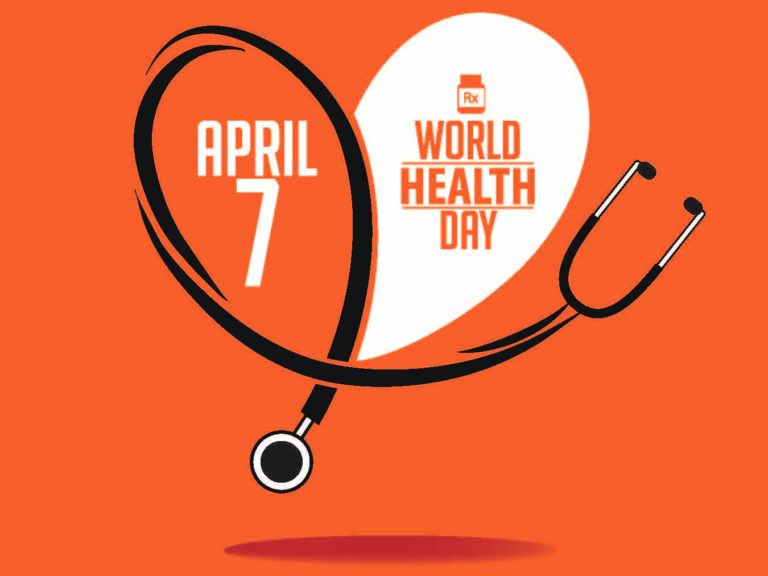
It’s World Health Day and the 75th birthday of the World Health Organization (WHO). Thanks to the WHO, we have almost eradicated diseases like polio and smallpox, and the organization led the largest-ever response to a global health crisis against the Covid-19 pandemic.
So, why not Celebrate this WorldHealthDay by taking care of yourself? It doesn’t have to be tough or uninteresting to eat a well-balanced, nutrient-dense diet, reduce alcohol intake or go for a walk or other exercise. And, stick around for next year!
Recent congressional actions and a white paper authored by officials from the Department of Justice (DOJ), Federal Trade Commission (FTC), and the American Medical Association (AMA) are pushing for the removal of barriers for physician-owned hospitals (POHs), potentially paving a path by which these controversial facilities can be established and expanded going forward. (Read more…)
Posted on April 2, 2023 by Dr. David Edward Marcinko MBA MEd CMP™
All about the Medical Executive-PostBusiness Model
***
One of the questions we receive most often from readers of the Medical Executive-Post is how can we “afford” to give away so much content for free. Or stated another way, “how do we get paid for all of this?”
The simple answer is that we know many (or even most) of you will simply take the ideas that we share and implement them yourself. Do-It-YourSelfers can always simply purchase our texts, books and peer reviewed handbooks redacted in more than a thousand, medical, law, business and graduate schools, as well as the Library of Congress,Institute of Health and Library of Congress.
On the other hand, some of you will realize you need some additional help.
For example:
Maybe as a financial advisor you’re “stuck” in your financial planning business and recognize that some outside assistance is necessary to help you get to the next level of niche specificity thru our Certified Medical Planner™ chartered certification program designation. Helping physicians of all specialty types in a fiduciary focused manner is the proverbial Win-Win for all concerned.
OR, perhaps you are seeking a glossary of terms and definitions in heath economics, finance, accounting, insurance, managed care, health information technology and security; found in our Health Dictionary Series Wiki Project? Free and print versions are available.
OR, as a doctor maybe your medical practice is growing so much you just hit a wall where you don’t have time to do it all for your patients. After all, with only “so much” time available every day and week, it’s vital to delegate or outsource anything that isn’t really core to your practice and management skill set.
OR, maybe you are even starting, buying or selling your medical practice and need our financial and valuation services. Part (1) – Part (2) – Part (3) Financial, estate, investing and retirement planning services are also available.
OR, you may just need a second informed opinion about a topic not listed; there are a myriad of issues to consider in the competitive ecosystem today.
So, in the meantime, I hope that the ME-P content continues to be helpful food for thought, and perhaps we’ll have an opportunity to cross paths soon at a future conferences or podcasts. Feel free to invite us to speak at your own seminar/podcast online V-log, as well.
Posted on April 2, 2023 by Dr. David Edward Marcinko MBA MEd CMP™
WORKPLACE MEDICAL VIOLENCE
By Staff Reporters
***
***
Workplace safety is no joke. Slips and trips can lead to a hospital visit—though at least it’s a quick commute for healthcare workers in states with high rates of workplace injuries. In fact, Maine, Oregon, and Vermont had the highest rates of nonfatal workplace accidents and injuries, according to an analysis shared with Healthcare Brew via email of 2021 US Bureau of Labor Statistics data compiled by High Rise Financial, a pre-settlement legal funding company.
What do these states also have in common? According to HealthcareBrew, nursing, ranked within the top 10 most popular professions in each state.
Maine had the highest rate of workplace accidents: 4.7 out of every 100 full-time workers in the state were involved in a nonfatal workplace accident in 2021, High Rise Financial found. That is 67.9% higher than the country’s yearly average. In 2021, 30,270 of the 592,000 registered employees in Maine were home healthcare workers or registered nurses. MaineHealth was the state’s largest private employer in 2021 with approximately 20,500 employees, per the Maine Center for Workforce Research and Information. But the state’s high accident rate isn’t a failure—it suggests that Maine workers are reporting accidents and injuries before they become more serious and require workers’ compensation, Maine Public Radio reported. The most recent data from 2011 shows that workers’ compensation losses cost hospitals nationwide $2 billion, the Occupational Safety and Health Administration found.
If tedious workplace safety rules sound like a pain, try having an accident. “Slips, trips, and falls,” especially without a wet floor warning sign, are the top causes of workplace accidents that are eligible for pre-settlement funding, according to the High Rise Financial analysis. Even a small slip could lead to a back injury, a broken bone, or a concussion—no banana peel needed.
It’s not all doom and gloom: The CDC has generously curated a list of songs with workplace safety and health themes to liven up your nine-to-five. Just be sure to wear nonslip shoes if you feel like dancing.
Posted on April 1, 2023 by Dr. David Edward Marcinko MBA MEd CMP™
By Health Capital Consultants, LLC
***
***
Medicare Advantage (MA) plans, also known as Part C plans, serve as a supplement or an alternative to Original (also called Traditional) fee-for-service (FFS) Medicare Part A and Part B coverage, but they are still part of the Medicare program.
Most of these plans also include Part D (drug) coverage. MA was created by Congress to offer seniors an alternative to Original Medicare – with an emphasis on treating and managing the health of the whole patient. MA plans are offered to Medicare beneficiaries by Medicare-approved private companies, known as MA Organizations (MAOs), that must follow rules set by Medicare. (Read more…)
Posted on March 30, 2023 by Dr. David Edward Marcinko MBA MEd CMP™
By Staff Reporters
***
***
CVS expects to finalize its $8 billion acquisition of Signify Health this week, the retail pharmacy giant said yesterday. CVS beat out both Amazon and UnitedHealth Group to buy Signify, a value-based provider network. The company announced the deal last September, and executives said they expect it to close “on or around March 29th.”
In a phone call following the deal announcement, Shawn Guertin, EVP and CFO at CVS, said the company anticipates that acquiring Signify will “generate attractive returns” for CVS. The acquisition strengthens CVS’s goal of becoming a value-based healthcare company and could give it a leg up over rival Walgreens. Both companies have doubled down on value-based care in the last couple of years, making several multi-billion dollar deals, such as Walgreens’s $5.2 billion VillageMD acquisition in 2021 and CVS’s $10.6 billion takeover of Oak Street Health.
***
***
The U.S. Food and Drug Administration has approved NARCAN, an overdose-reversing nasal spray, for over-the-counter, non-prescription sale, the agency just announced. The FDA green light marks the first naloxone product approved for use without a prescription. Naloxone rapidly reverses the effects of an opioid overdose, including situations where fentanyl is involved. In the 12-month period ending in October 2022, the United States recorded 101,750 overdose deaths, primarily from opioids including fentanyl, according to the FDA.
“Today’s action paves the way for the life-saving medication to reverse an opioid overdose to be sold directly to consumers in places like drug stores, convenience stores, grocery stores and gas stations, as well as online,” the agency said in a news release.
***
Here’s how the major indexes performedyesterday:
The S&P 500® Index rose roughly 57 points (1.42%) to 4027.83; the Dow Jones industrial average was up 323 points (1.0%) at 32717.73; the NASDAQ Composite was up 210 points (1.79%) at 11926.24.
The 10-year Treasury yield was little changed at 3.575%.
CBOEs Volatility Index was down 80 basis points (4.01%) at 19.17.
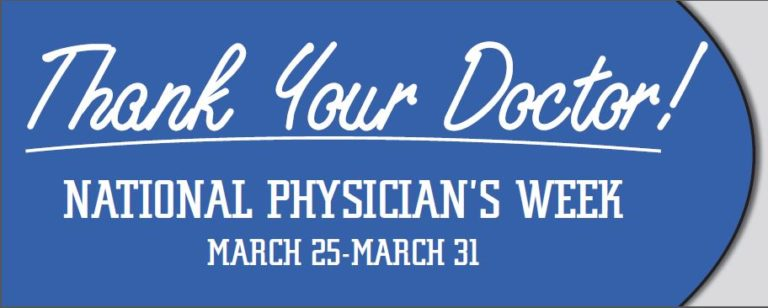
This National Physicians Week, from March 25–31, we can show doctors we appreciate them as much as they deserve with creative gifts, simple notes, and appreciation posts online.
Doctors deal with years of school, grueling shifts, and emotionally difficult decisions, and still manage to care for us with focus and kindness. Physicians drastically improve the duration and quality of life for everyone, and throughout history have done their best to use cutting-edge science to care for others.
Physician appreciation is also symbolized by a red carnation, so be sure to bring one to your favorite doc this week!
***
***
Here Are the Top Ten Ways To Celebrate National Physicians Week in 2023:
Send a doctor red carnation and/or gift of your choice to show appreciation.
Host a Zoom or virtual celebration.
Doctors can take the day off (If the schedule permits)
Record and post a video to show gratitude for your doctor and physicians nationwide.
Encourage others and spread the word about National Physicians Week on and offline.
Write or share an article about National Physicians Week.
Offer product or service discounts to doctors.
Host an office party to celebrate staff physicians.
Plan a happy hour or networking event for physicians and the community.
Posted on March 26, 2023 by Dr. David Edward Marcinko MBA MEd CMP™
A SURVEY-POLL
By Staff Reporters
***
A recent poll of 2,510 American adults by Ipsos found:
• 87% of Americans feel politicians have lost touch with what the public needs from their health care. • 86% of Americans agree that Congress should focus on cracking down on abusive health insurance practices that make it harder for people to get the care they need. • 71% of Americans would rather see Congress focus more on reducing the overall costs of health care coverage such as premiums, deductibles, and co-pays.







 Support our online development, and advance our onground research initiatives in free market economics, as we seek to showcase the brightest Next-Gen minds.
THE ME-P DISCLAIMER: Posts, comments and opinions do not necessarily represent iMBA, Inc., but become our property after submission. Copyright © 2006 to-date. iMBA, Inc allows colleges, universities, medical and financial professionals and related clinics, hospitals and non-profit healthcare organizations to distribute our proprietary essays, photos, videos, audios and other documents; etc. However, please review copyright and usage information for each individual asset before submission to us, and/or placement on your publication or web site. Attestation references, citations and/or back-links are required. All other assets are property of the individual copyright holder.
Support our online development, and advance our onground research initiatives in free market economics, as we seek to showcase the brightest Next-Gen minds.
THE ME-P DISCLAIMER: Posts, comments and opinions do not necessarily represent iMBA, Inc., but become our property after submission. Copyright © 2006 to-date. iMBA, Inc allows colleges, universities, medical and financial professionals and related clinics, hospitals and non-profit healthcare organizations to distribute our proprietary essays, photos, videos, audios and other documents; etc. However, please review copyright and usage information for each individual asset before submission to us, and/or placement on your publication or web site. Attestation references, citations and/or back-links are required. All other assets are property of the individual copyright holder.




























![New Product Business Plan Sample [2021 Updated] | OGScapital](https://www.ogscapital.com/wp-content/uploads/2013/09/newproductbusinesspan-736x440.png)














































 The Leading Business Education Network for Doctors, Financial Advisors and Health Industry Consultants