INATTENTIONAL Blindness

By Staff Reporters

***

***

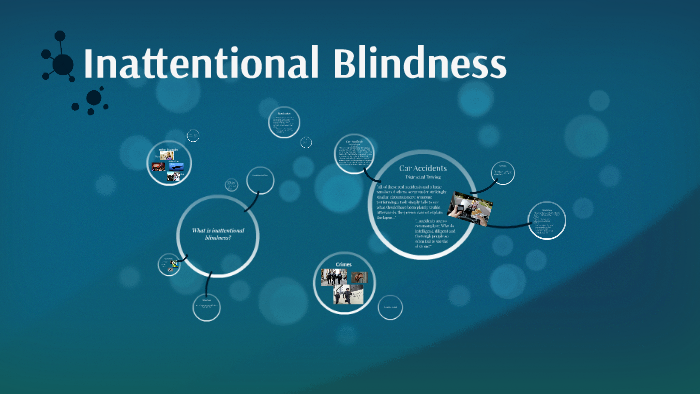
Inattentional Blindness: Is a psychological phenomenon where individuals fail to notice unexpected stimuli in their visual field when their attention is focused on a specific task or object.

This occurs because the brain prioritizes processing information relevant to the task at hand, leading to a temporary inability to perceive other, potentially significant details in the environment. Experiments, such as the famous “invisible gorilla” study, illustrate how people can completely miss prominent objects or events when their attention is directed elsewhere.

And, according to colleague Dan Ariely PhD, inattentional blindness highlights the limitations of human perception and attention, emphasizing that what we see is often influenced by where we focus our cognitive resources.

COMMENTS APPRECIATED

Subscribe and Like

EDUCATION: Books

***

***

INSURANCE: How To Get Results On Homeowner Claims

By Rick Kahler; CFP®

http://www.KahlerFinancial.com

***

***

If you have ever filed a homeowners insurance claim, you know it can feel more like an endurance test than a straightforward process. While insurers are legally required to honor valid claims, they have strong financial incentives to delay, underpay, or deny them whenever possible.

Over the years, I’ve learned this the hard way. The most recent lesson started when a hailstorm hit my home in June 2023. I promptly filed an insurance claim. I also made up a story that leaving someone more qualified than me in charge would free me from a part-time job as a contractor, so I relied on a roofing contractor to handle the whole claim, including the gutter and siding damage. That was my first mistake.

About 15 months later, my roof and gutters were replaced, but the siding repairs and painting remained undone. Every time the insurance company reassigned my claim to a new adjuster, I had to start over. When I called the contractor after a period of inactivity, they said the adjuster had ghosted them, so they’d given up—and I still owed them the full roofing bill.

At that point, I had two choices: pay out of pocket for the unfinished work or escalate. I chose the latter. I filed a complaint with the state insurance division, contacted my agent, reached out to the last adjuster, hired my own painter, and withheld final payment to the contractor. I also made it clear that I was prepared to take legal action if necessary. That was not a bluff.

Within a week, things started moving. Seven days later, the insurance company reinspected my home and sent a check covering all but $3,000 of the painting costs. After nearly two years of delays and excuses, progress finally happened when I took matters into my own hands.

Delay is a common insurer tactic. They’ll repeatedly ask for more documentation, take months to respond, or swap adjusters to force you to restart the process—all in hopes that you’ll give up or accept a lower payout.

Another common tactic is the lowball offer. Insurers often rely on software that underestimates damages or send adjusters unfamiliar with actual repair costs. Accepting their first offer without question can be a costly mistake. It’s wise to get independent repair estimates or even hire a public adjuster who works for you rather than the insurance company.

Insurers also deny claims based on fine print, arguing that damage was pre-existing, caused by poor maintenance, or excluded under some obscure clause. Knowing your policy inside out and keeping pre-loss photos can help you counter these claims.

Another trick? Steering homeowners toward “preferred” contractors who work at discounted rates and may prioritize the insurer’s interests over yours. Getting independent estimates ensures repairs are done properly.

For homeowners stuck in an insurance battle, persistence is key. Withholding final payment until work is complete, filing a complaint with the state insurance division, and even considering small claims court can help push a claim forward. If the dispute is within your state’s small claims limit—often between $10,000 and $25,000—filing may push the insurer to settle.

Assuming my contractor would handle everything was my biggest mistake, and it cost me nearly two years of frustration. Even though progress happened quickly once I took control, my claim isn’t over. I suspect I will be filing legal action in small claims court against the insurance company, contractor, and insurance agent.

If you need to navigate an insurance claim, be persistent and attentive. Keeping records, pushing back on delays, and escalating when necessary can mean the difference between being shortchanged and getting the settlement you deserve.

COMMENTS APPRECIATED

Subscribe, Refer and Like

***

***

How to Invest When There’s Nowhere to Hide

By Vitaliy Katsenelson; CFA

***

***

How to Invest When There’s Nowhere to Hide
I was having lunch with a close friend of mine. He mentioned that he had accumulated a significant sum of money and did not know what to do with it. It was sitting in bonds, and inflation was eating its purchasing power at a very rapid rate.

He is a dentist and had originally thought about expanding his business, but a shortage of labor and surging wages turned expanding into a risky and low-return investment. He complained that the stock market was extremely expensive. I agreed.*

He said that the only thing left was residential real estate. I pushed back. “What do you think will happen to the affordability of houses if – and most likely when – interest rates go up? Inflation is now 6%. I don’t know where it will be in a year or two, but what if it becomes a staple of the economy? Interest rates will not be where they are today. Even at 5% interest rates [I know, a number unimaginable today] houses become unaffordable to a significant portion of the population. Yes, borrowers’ incomes will be higher in nominal terms, but the impact of the doubling of interest rates on the cost of mortgages will be devastating to affordability.”

He rejoined, “But look at what happened to housing over the last twenty years. Housing prices have consistently increased, even despite the financial crisis.”

I agreed, but I qualified his statement: “Over the past twenty, actually thirty, years interest rates declined. I honestly don’t know where interest rates will be in the future. But probabilistically, knowing what we know now, the chances that they are going to be higher, much higher, are more likely than their staying low. Especially if you think that inflation will persist.”

We quickly shifted our conversation toward more meaningful topics, like kids.

It seems that every year I think we have finally reached the peak of crazy, only to be proven wrong the next year. The stock market and thus index funds, just like real estate, have only gone one way – up. Index funds became the blunt instrument of choice in an always-rising market. So far, this choice has paid off nicely.

The market is the most expensive it has ever been, and thus future returns of the market and index funds will be unexciting. (I am being gentle here.)

You don’t have to be a stock market junkie to notice the pervasive feeling of euphoria. But euphoria is a temporary, not a permanent emotion; and at least when it comes to the stock market, it is usually supplanted by despair. Market appreciation that was driven by expanding valuations was not a gift but a loan – the type of loan that must always be paid back with a high rate of interest.

I don’t know what straw will break the feeble back of this market or what will cause the music to stop (there, you got two analogies for the price of none). We are in an environment where there are very few good options. If you do nothing, your savings will be eaten away by inflation. If you do something, you find that most assets, including the stock market as a whole, are incredibly overvalued.

This is why what we do at IMA is so important.

We are doing the only sensible thing that you can do today. We spend very little time thinking about straws or what will cause the music to stop or how overvalued the market is. We are focusing all our energy on patiently building a portfolio of high-quality, cash-generative, significantly undervalued businesses that have pricing power.

This has admittedly been less rewarding than taking risky bets on unimaginably expensive assets. It may lack the excitement of sinking money into the darlings you see in the news every day, but we hope that our stocks will look like rare gems when the euphoria condenses into despair. As we keep repeating in every letter, the market is insanely overvalued. Our portfolio is anything but – we don’t own “the market”.

*A question may arise: Why did I not tell my dentist friend to pick individual stocks? He runs a busy dental practice and wouldn’t have the time or the training to pick stocks.

Why didn’t I offer him our services? IMA manages all my and my family’s liquid assets, but I have a rule that I never (ever!) break – I don’t manage my friends’ money. I’ll help them as much as possible with free advice but will never have a professional relationship with them. I intentionally create a separation between my personal and professional lives. After a difficult day in the market, I want to be able to go for beers with friends and leave the market at the office.

Also, this simplifies my relationships with my friends. There is no ambiguity in our friendship.

COMMENTS APPRECIATED

Refer, Like and Subscribe

***

***

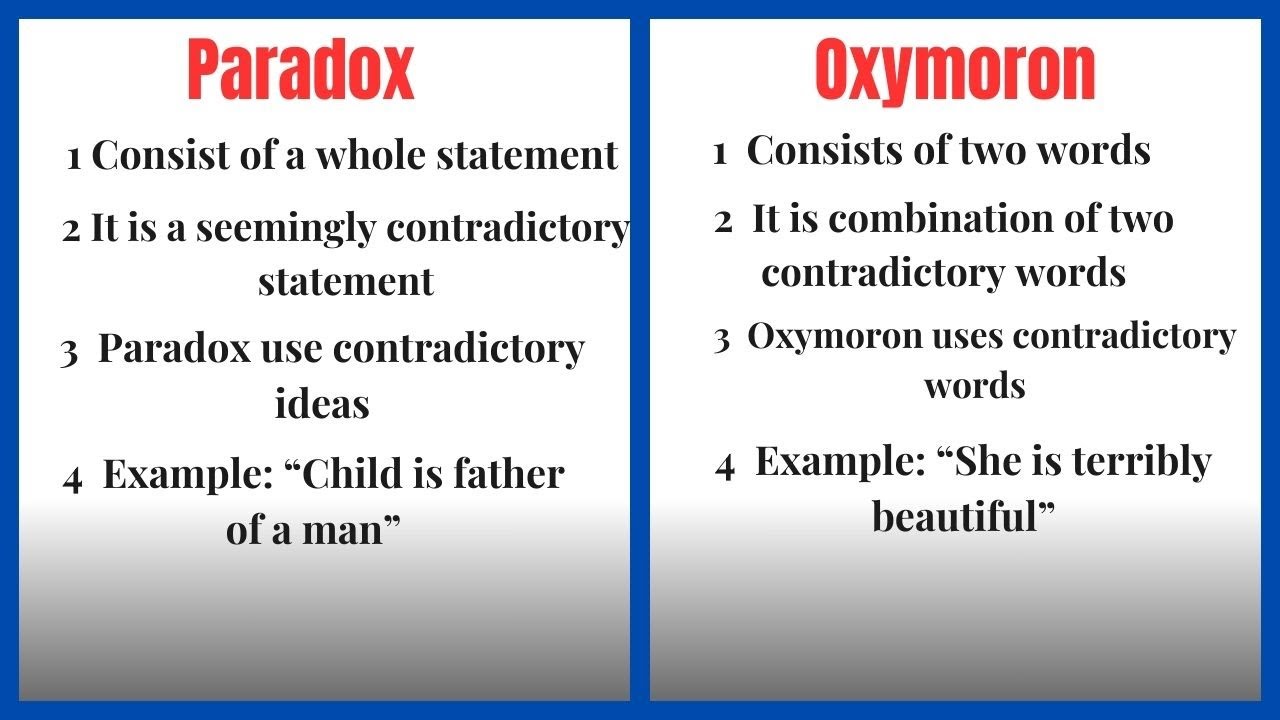
MORTON’S FORK: A Hobson’s Choice & Paradox

By Staff Reporters

***

***

A Morton’s fork is a type of false dilemma in which contradictory observations lead to the same conclusion.

Morton’s Fork: Claims its origin from John Morton, the Archbishop of Canterbury, a public policymaker who used convoluted and contradictory logic to establish tax laws in the mid-15th century.

He contended that whoever lived humbly must be saving much money and hence would be able to pay higher taxes; and those that lived lavish lives were obviously rich, so they could also pay higher taxes.

In other words: a Hobsons Choice between two equally unpleasant alternatives.

COMMENTS APPRECIATED

Subscribe, Refer and Like

***

***

FACILITY CHARGE: Healthcare Service Fees

DEFINITION

By Staff Reporters

***

***

FACILITY CHARGE DEFINED

Classic: Service fee submitted for payment by a healthcare facility, such as a clinic, hospital or ambulatory care center.

Modern: Facility fees are expenses charged by hospitals to cover their overhead – the funding needed to keep the lights on, machines running, and doors open, etc. People who receive outpatient care at hospital-owned buildings are charged a facility fee, in addition to treatment costs and fees charged, individually, by doctors.

Examples: How to Fight Facility Fees:

  • Check with your health agent or insurer. Many insurers don’t cover facility fees or cover only a portion. 
  • Talk to your doctor. It’s hard to tell whether a facility is hospital-run or whether your doctor works for a health system.
  • Negotiate hard.

COMMENTS APPRECIATED

Refer, Like and Subscribe

***

***

DENTISTRY: DDS versus DMD Degree

DENTAL ADA DEGREES

By Colgate and Staff Reporters

***

***

DDS vs. DMD Degree

DDS and DMD are the acronyms of the degrees dentists earn after finishing dental school. DDS means Doctor of Dental Surgery, and DMD can mean either Doctor of Medicine in Dentistry or Doctor of Dental Medicine. While the names are different, the American Dental Association (ADA) explains that they represent the same education. Some universities may grant dental graduates with a DDS, and others grant a DMD, but both degrees have the same requirements.

According to the ADA, the Baltimore College of Dental Surgery established the first Doctor of Dental Surgery degrees in 1840. When Harvard University started its dental school in 1867, their degrees were called Dentariae Medicinae Doctorate (Doctor of Medicine in Dentistry) because Harvard uses Latin names for their degrees. Even though these degrees are based on the same educational requirements, they still have different names.

Difference Between a DDS and a DMD Degree?

Today, many universities award a DMD degree. Dentists with either a DDS or a DMD are educated to practice general dentistry. All dentists receive a rigorous education. First, dental schools typically require a four-year undergraduate education. Afterward, graduates go to dental school for another four years of classroom training, clinical training, and dental laboratory training.

Dental students spend the first two years of dental school studying biomedical sciences courses like anatomy, biochemistry, pathology, and pharmacology. The last two years are focused on clinical and laboratory training.

After graduating from dental school, dentists must pass a national written examination called the National Board Dental Examination, followed by a regional clinical board examination. Dentists must also pass a jurisprudence examination about state laws before being given a license to practice dentistry in that state.

Post Graduate Education After a DDS or DMD

Most dentists stick with practicing general dentistry. However, some choose to specialize in a particular area of dentistry after earning their degree. Training programs range from two to six years, depending upon the specialty area. There are several dental specialties, including endodontics, orthodontics, periodontics, prosthodontics, oral surgery, and pediatric dentistry. The ADA can help you find a dentist with a specialty that fits you best.

Dentists receive a rigorous education and have to pass several exams to be able to practice. Whether they have a DDS or DMD after their name, you should choose a dentist based on their skills, types of services provided, communication, and professionalism.

COMMENTS APPRECIATED

Refer and Subscribe

***

***

ABBREVIATIONS GLOSSARY: Risk Management, Insurance and Asset Protection for Physicians

By Staff Reporters

SPONSOR: http://www.HealthDictionarySeries.org

***

***

RISK MANAGEMENT, LIABILITY INSURANCE AND ASSET PROTECTION ABBREVIATIONS

[Glossary of Important Acronyms]

Much has been written and much has been opined on the topic of medical risk management, insurance, asset protection and professional liability for physicians and healthcare providers in this textbook; and elsewhere.

But occasionally, we all still get lost in a wide array of abbreviations, acronyms, and initialisms that are constantly changing in this ecosystem.

And so, this glossary serves as a ready reference for those who want to know about these medical risk management definitions in a quick and ready fashion.

Acronyms and Abbreviations

AAASC             American Association of Ambulatory Surgery Centers

AAHP                American Association of Health Plans

ABN                  advance beneficiary notice

ABQAUR          American Board of Quality Assurance and Utilization Review

ACE                   acute care episode

ACHCE             American College of Health Care Executives

ACS                   American College of Surgeons

ADA                  Americans with Disabilities Act

ADC                  average daily census

ADL                  activities of daily living

ADT                  Admission/Discharge/Transfer

AHA                  American Hospital Association

AHIMA             American Health Information Management Association

AHRQ               Agency for Healthcare Research and Quality

AI                      average inventory

AIMR                Association for Investment Management and Research

AIR                    assumed interest rate

ALE                   annualized loss expectancy

ALF                   assisted living facility

ALOS                average length of stay

AMA                 American Medical Association

AMBAC            AMBAC Indemnity Corporation

AMGA               American Medical Group Association

ANSI                 American National Standards Institute

AP                     accounts payable

APA                  American Psychiatric Association

APC                   ambulatory payment classification

APG                   ambulatory payment group

APR                   annual percentage rate

AR                     accounts receivable

ASA                   American Society of Appraisers

ASC                   ambulatory surgery centers; also Accredited Standards Committee

ASHA                American Surgical Hospital Association

ASO                   administrative services only

ASTC                 ancillary service technical component

ATM                  asynchronous transfer mode

AVG                  ambulatory visit group

BANTA             best alternative to negotiated agreement

BBA                  Balanced Budget Act of 1997

BBRA                Balanced Budget Refinement Act [1999]

BCP                   business continuity planning

BEA                   break-even analysis

BEP                   break-even point

BIPA                 Benefits Improvement and Protection Act [2000]

BLS                   Bureau of Labor Statistics

BPD                   border protection device

BS                      balance sheet

BSA                   Bank Secrecy Act

BVS                   business valuation standard

CA                     certificate authority

CAC                  Carrier Advisory Committee

CAS                   cost accounting standards

CASB                Cost Accounting Standards Board

CC                     common criteria [for IT Security Evaluation —ISO/IEC 15408];
complication or comorbidity [for MS-DRGs]

CCA                  certified cost accountant

CCC                   cash conversion cycle

CCEVS              common criteria evaluation and validation scheme

CCHIT               Certification Commission for Healthcare Information Technology

CCU                  critical care unit

CDC                  Centers for Disease Control and Prevention

CDH                  consumer-directed healthcare

CDHP                consumer-directed healthcare plan

CDPM               Clinical Data Project Manager

CDSS                 clinical decision support system

CEO                   Chief Executive Officer

CF                      conversion factor

CFA                   Chartered Financial Analyst

CFO                   Chief Financial Officer

CFR                   Code of Federal Regulations

CHAMP             Children’s Health and Medicare Protection Act of 2007

CHAMPUS        Civilian Health and Medical Program of the Uniformed Services

CHE                   Certified Healthcare Executive

CHIPS               Center for Healthcare Industry Performance Studies

CIA                    Corporate Integrity Agreement

CIO                    Chief Information Officer

CIP                    Customer Identification Program

CIS                    computer information systems

CLIA                 Clinical Laboratory Improvement Act

CLT                   capitation liability theory

CME                  continuing medical education

CMI                   case mix index

CMIO                Chief Medical Information Officer

CMIS                 contribution margin income statement

CMN                  Certificate of Medical Necessity

CMP                  Certified Medical Planner ™

CMS                  Centers for Medicare and Medicaid Services [formerly HCFA]

COD                  cash on delivery

COGME             Council of Graduate Medical Education

COH                  cash on hand

COLA                cost of living allowance

CON                  Certificate of Need

COO                  Chief Operating Officer

COSO                Committee of Sponsoring Organizations

COTS                 commercial off-the-shelf

CPHQ                Certified Physician in Healthcare Quality

CPIM                 Certificate in Production and Inventory Management

CPI-U                Consumer Price Index—urban

CPM                  critical (clinical) path method

CPOE                computerized physician order entry [system]

CPR                   computer-based patient record

CPT                   current procedural terminology

CQI                    continuous quality improvement

CRL                   Certification Revocation List

CRM                  customer relationship management

CRVS                California Relative Value Studies

CSO                   Chief Security Officer

CT scan              computed tomography scan [also called CAT scan]

CUSIP               Committee on Uniform Security Identification Procedures

CVE                   common vulnerabilities and exposures

CVPA                cost-volume-profit analysis

CY                     calendar year

DAC                  discretionary access control

DBMS                database management system

DCF                   discounted [net] cash flow

DEA                  Drug Enforcement Agency

DHHS                Department of Health and Human Services

DHMR               Designated Healthcare Management Representative

DIO                   days inventory outstanding

DLH                  doctor labor hours

DME                  durable medical equipment

DNFB                discharged, not finally billed

D&O                  directors and officers

DO                     Doctor of Osteopathy

DOA                  dead on arrival

DoD                   Department of Defense

DOJ                   Department of Justice

DOT                  Department of Transportation

DPH                  Department of Public Health

DPM                  Doctor of Podiatric Medicine

DPO                  days payable outstanding

DPP                   direct participation program

DRA                  Deficit Reduction Act of 2005

DRG                  diagnosis-related group

DES                   disease-specific care

DSH                   disproportionate share hospital [adjustment]

DSO                   days sales outstanding

DSS                   decision support system

DVP                  delivery versus payment

DWC                 days working capital

EAP                   Employee Assistance Program

EBDIT               earnings before depreciation, interest and taxes

EBM                  evidence-based medicine

ECP                   Exposure Control Plan

ED                     emergency department

EDI                    Electronic Data Interchange

EDSS                 Executive Decision Support System

EEOC                Equal Employment Opportunity Commission

EHCR                Efficient Healthcare Consumer Response Report

EHO                  emerging healthcare organization

EHR                   electronic health record

EIN                    employer identification number

E&M                  evaluation and management

EMR                  electronic medical record(s)

EMTALA           Emergency Medical Treatment and Active Labor Act

EOB                   explanation of benefits

EOMB               Explanation of Medicare Benefits

EOQ                  economic order quantity

EOQC                economic order quantity cost [analysis]

EPA                   Environmental Protection Agency

ePHI                  electronic personal health information

EPO                   exclusive provider organization

EPR                   electronic patient record

EPRI                  Emergency Preparedness Resource Inventory

ERISA               Employee Retirement Income Security Act

ERP                   enterprise resource planning

FACT Act          Fair and Accurate Credit Transactions Act of 2003

FAR                   federal acquisition regulation

FASB                 Financial Accounting Standards Board

FBCA                Federal Bridge Certification Authority

FC                      fixed cost

FCA                   False Claims Act

FDA                   Food and Drug Administration

FEHBP              federal employees health benefits program

FF&E                 furniture, fixtures and equipment

FFS                    fee-for-service

FGIC                  Financial Guaranty Insurance Company

FHA                   Federal Housing Administration

FIFO                  first in first out

FIPS                   Federal Information Processing Standard

FMAP                Federal Medical Assistance Percentage

FMLA                Family Medical Leave Act

FMV                  fair market value                                                                                                                                                                                                                    

FTP                    file transfer protocol

FV                     fair value

  • FY                     fiscal year

GAAP                generally accepted accounting principles

GAO                  [U.S.] Government Accountability Office (name changed in 2004 from General Accounting Office)

GDP                   gross domestic product

GIGO                 garbage in, garbage out

GMC                  guaranteed mortgage certificate

GNMA               Government National Mortgage Association

GNP                   gross national product

GPWW              Group Practice Without Walls

GSA                   General Services Administration

HARA               Healthcare Accounts Receivable Analysis [report]

HCCM               Hierarchical Condition Category Management

HCFA                [former] Health Care Financing Administration

HCFAC              Healthcare Fraud and Abuse Control [program]

HCFMA             Health Care Financial Management Association

HCPCS              healthcare common procedure coding system

HCSS                 Health Care Staffing Services

HD-HCP            high deductible healthcare plan

HEDIS               Health Plan Employer Data and Information Set

HFMA               Healthcare Financial Management Association

HH                     home health

HHA                  home health agency

HHCA               home healthcare agency

HHRG                home health resource group

[D]HHS             [Department of] Health and Human Services

HIM                   health information management

HIMSS               Health Information and Management Systems Society

HIPAA              Health Insurance Portability and Accountability Act [of 1996]

HIPDB               Healthcare Integrity and Protection Data Bank

HIPPS                health insurance prospective payment system

HIS                    hospital information system

HISAC               Healthcare Information Sharing and Analysis Center

HIT                    healthcare information technology

HMMIS              hospital materials management information system

HMO                 health maintenance organization

HOPPS              hospital outpatient prospective payment system

HR                     Human Resources

HSA                   health systems agency; also health savings account

HSG                   hospital service group

HSRV                hospital-specific relative value

I&A                   identification and authentication

IBA                    Institute of Business Appraisers

IBNR                 incurred but not reported [expenses]

ICD-9-CM          International Classification of Diseases, Ninth Revision, Clinical Modification [10-CM]

ICP                    inventory conversion period

ICSI                   Institute for Clinical Systems Improvement

IDS                    integrated delivery system; also intrusion detection system

IDTF                  independent diagnostic testing facilities

IHS                    Indian Health Services

IME                   indirect medical education [adjustment]

IOM                   Institute of Medicine

IPA                    Independent Physician Association; also Independent Practice Association

IPPS                  [Medicare] inpatient prospective payment system

IRB                    Institutional Review Boards

IRC                    Internal Revenue Code

IRR                    internal rate of return

IRS                    Internal Revenue Service

ISAC                  Information Sharing and Analysis Center

ISMS                  information security management system

ISO                    International Standards Organization

ISP                     Internet service provider

I-SPY Act          Internet Spyware Prevention Act

IT                       information technology

ITL                    Information Technology Laboratory

ITR                    inventory turnover ratio

JAMA                 Journal of the American Medical Association

JCAHO              [former] Joint Commission on Accreditation of Healthcare Organizations

[now known as the The Joint Commission-TJC]

JIT                     just-in-time

[inventory management]

LAN                  local area network

LCC                   life-cycle cost

LEP                   limited English proficiency

LIFO                  last in, first out

LIS                     Laboratory Information Systems

LISW                 Licensed Independent Social Worker

LLC                   Limited Liability Company

LLP                   Limited Liability Partnership

LMFT                Licensed Marriage and Family Therapist

LPCC                 Licensed Professional Clinical [Mental Health] Counselor

LOS                   length of stay

LVN                  licensed vocational nurse

LPN                   licensed practical nurse

LRAC                long-range average cost

LRRA                Liability Risk Retention Act

LSP                    limited service provider

LTCPP               long-term care pharmacy provider

MABC               medical activity-based costing

MAC                  monitored anesthesia care; also mandatory access control

MB                    marginal benefit

MBT                  Mechanical Biological Treatment [organization]

MC                    marginal cost

MCC                  major complication or co-morbidity

MCM                 mixed cost method

MCO                  managed care organization

MCS                  Monte Carlo Simulation

MD                    medical doctor

MDC                  major diagnostic category

MEC                  modified endowment contract

MedPAC            Medicare Payment Advisory Commission

MGMA              Medical Group Management Association

MI                      Medical Informatics

MIS                    management information services

MLIC                 malpractice liability insurance component

MMA                 Medicare Prescription Drug, Modernization, and Improvement Act of 2003

MMCO              Medicare Managed Care Organizations

MOE                  maximum office efficiency

MPCA               medical practice cost analysis

MPT                  Modern Portfolio Theory

MR                    medical records, marginal revenue

MSA                  medical savings account

MSCI                 Metals Service Center Institute

MS-DRG            Medicare Severity DRG

MSDS                material safety data sheet

MSO                  management services organization

MUD                 medically unnecessary days

MVO                 mean variance optimization

NACVA             National Association of Certified Valuation Analysts

NAICS               North American Industry Classification System

NAIP                 National Association of Inpatient Physicians

NAHC               National Association of Healthcare Consultants

NASD                National Association of Securities Dealers

NASDAQ          National Association of Securities Dealers Automated Quotations

NAT                  network address translation

NAV                  net asset value

NBER                National Bureau of Economic Research

NCFFR              National Commission on Fraudulent Financial Reporting

NCPDP              National Council for Prescription Drug Programs

NCQA               National Committee for Quality Assurance

NCUA               National Credit Union Administration

NCVHS             National Committee on Vital and Health Statistics

NDC                  National Drug Code

NEJM                New England Journal of Medicine

NGC                  National Guideline Clearinghouse

NIAP                 National Information Assurance Partnership

NIC                    net interest cost

NIOSH               National Institute of Occupational Safety and Health

NIS                    net income statement

NISAC               National Infrastructure Simulation and Analysis Center

NIST                  National Institute of Standards and Technology

NOW account     negotiable order of withdrawal account

NPDB                National Practitioner Data Bank

NPI                    National Provider Identification [number]

NPP                   Notice of Privacy Practices

NPS                   national provider system

NPV                  net present value

NQF                   National Quality Forum

NRC                  National Research Council

NRV                  net-realized accounts receivable value

NSA                   National Security Agency

NTFS                 new technology file system

NTPA                net target profit analysis

NYSE                New York Stock Exchange

OBO                  order book official

OBRA                Omnibus Budget Reconciliation Act [of 1989]

OCC                  Option Clearing Corporation

OCR                  optical character recognition; also Office of Civil Rights

OFAC                Office of Foreign Assets Control

OFPP                 Office of Federal Procurement Policy

OID                   original issue discount

OIG                    Office of the Inspector General [U.S. Department of Health and Human Services]

OMB                  Office of Management and Budget

OPHC                Office of Prepaid Health Care

OPIM                 other potentially infectious material

OPPS                 outpatient prospective payment system

OS                     operating system

OSI                    open systems interconnect

OR                     operating room

OSHA                Occupational Safety and Health Administration

OSJ                    Office of Supervisory Jurisdiction

OTC                   over-the-counter

P4P                    pay-for-performance

P/E                     price to earnings [ratio]

P/R                    price to revenue [ratio]

PAC                   planned amortization certificate

PAY                  post-acquisition year

PC                     [mortgage] participation certificate; also personal computer

PCC                   project cost of capital

PCMCIA            Personal Computer Memory Card International Association

PCP                   primary care physician

PDA                  personal digital assistant

PDX                   Patient Data Exchange

PE[C]                 practice expense [component]

PEO                   professional employer organization

PFS                    patient financial services

PG                     purchasing group

PHA                  public housing authority

PHI                    protected health information

PHN                  Private Health Network

PHO                  physician-hospital organization

PHR                   patient health record

PIN                    personal identification number

PIO                    public information office

PKI                    public/private key informatics/infrastructure

PKIX                 public key infrastructure for X.509 certificates

PLIC                  [mal]practice liability insurance component

PMG                  primary medical group

PM/PM              per member per month

PO                     purchase order

POC                   point-of-care

POL                   physician office laboratory

POS                   point-of-service

POSP                 point of service plan

PP                      projection profile

PP&E                property, plant, and equipment

PPE                   personal protective equipment

PPMC                physician practice management company

PPO                   preferred provider organization

PPS                    [Medicare] prospective payment system

PR                     pregnancy and related conditions

PROM               programmable read-only memory

PSI                     patient safety indicator

PSN                   provider-sponsored network

PSO                   provider-sponsored organization

Pt                       patient

PTO                   paid time off

PWC                  physician work component

PY                     projected year

QA                     quality assurance

QI                      quality improvement

RA                     registration authority

RADIUS            remote authentication dial-in user service

RAN                  Revenue Anticipation Note

RBAC                role-based access control

RBRVG             resource-based relative value group

RBRVS              resource-based relative value scale

RBRVU             resource-based relative value unit

RDBMS             regional database management system

REIT                  real estate investment trust

RERVU             resource-based relative value unit

REV/PP             revenue per patient

RFI                    request for information

RFID                  radio frequency identification device [scanner]

RFP                   request for payment

RHIO                 Regional Health Information Organization

RN                     Registered Nurse

RNANS             Registered Nurses Association of Nova Scotia

ROE                   return on equity

ROI                    return on investment

ROM                  read-only memory

ROP                   re-order point

RRG                   risk-retention group

RSNA                Radiological Society of North America

RUG-III             resource utilization group III

RVS                   relative value scale

RVUm               relative value unit – malpractice

RVUpe               relative value unit – practice expenses

RVUw               relative value unit – work

rWACC              relative weighted average cost of capital

S&P                   Standard and Poor’s

SaaS                   Software-as-a-Service

SAMHSA           Substance Abuse and Mental Health Services Administration

SAN                   storage area network

SARS                 Sever Acute Respiratory Syndrome

SBBI                  Stocks, Bonds, Bills and Inflation [Yearbook]

SCIM                 supply chain inventory management

SCF                    statement of cash flows

SCM                  supply chain management

SCP                   standard cost profile

SD                     standard deviation

SDLC                 system development life cycle

SDN                   specially designated nationals

SDO                   standards development organization

SEC                   Securities and Exchange Commission

SERP                 supplemental extended reporting policy

SESIP                sharps with engineered sharps injury protection

SHM                  Society of Hospital Medicine

SIC                    Standard Industrial Code

SIPC                  Securities Investor Protection Corporation

SLA                   service level agreement

SMA                  special miscellaneous account

SMD                  Society of Medical Dental Management Consultants

SMS                   socioeconomic monitoring system

SMTP                simple mail transfer protocol

SNF                   skilled nursing facility

SNMP                simple network management protocol

SP                      special publication

SSH                   single-specialty hospitals

SSL                    secure socket layer

STP                    standard treatment protocol

SVPN                secure virtual private network

TEL                   Terror Exclusion List

TFC                   total fixed cost

TIC                    true interest cost

TIN                    tax identification number

TLS                    transport layer security

TPA                   third party administrator

TQIM                 total quality and improvement management

TQM                  total quality management

UCC                  Uniform Commercial Code

UCSF                 University of California at San Francisco

UDP                  user datagram protocol

UFS                   unix file system

UIIRC                University of Iowa Injury Prevention Research Center

UM                    utilization management

UPIN                 Unique Provider Identification Number

UR                     utilization review

USPAP              Uniform Standards of Professional Appraisal Practices

v                        variance

VA                     Veterans Affairs

VAR                  value at risk

VC                     variable cost

VOC                  volatile organic chemicals

VPN                  virtual private network

WACC               weighted average cost of capital

WAN                 wide area network

WHO                 World Health Organization

WIA                   weighted industry average

WORM              wrote once-read many

READINGS

  • Marcinko, DE and Hetico, RN: Dictionary of Health Insurance and Managed Care. Springer Publishing, New York, NY 2007
  • Marcinko, DE and Hetico, RN: Dictionary of Health Information Technology and Security. Springer Publishing, New York, NY 2009
  • Marcinko, DE and Hetico, RN: Dictionary of Health Economics and Finance. Springer Publishing, New York, NY 2008

EDUCATION: Books

HEALTHCARE ADMINISTRATION BLOGS 

  • Candid CIO: Will Weider, CIO of Ministry Health Care and Affinity Health System, offers his perspectives on administration issues in this blog.
  • Christina’s Considerations: Christina Thielst is a hospital and healthcare administrator and entrepreneur with a deep desire for continually improving the health of the community being served. This is her blog.
  • Healing Hospitals — Formerly Ask a Hospital President: F. Nicholas “Nick” Jacobs has more than 20 years experience in hospital management, with an acknowledged reputation for innovation and consumer-centered leadership.
  • Hospital Impact: Part of the Fierce network of health sites, this site is becoming popular among healthcare administrators for its news updates, tips and opinions on health care matters.
  • Leading the Way to Medical Excellence: the president of McLeod Health non-profit institutions provides weekly insights into his facilities and health care in general.
  • Let’s Talk Health Care: Bruce Bullen, Interim Chief Executive Officer at Harvard Pilgrim in Massachusetts, provides and open and ongoing conversation about health care administration.
  • Life as a Healthcare CIO: Dr. John Halamka records his experiences with infrastructure, applications, policies, management, and governance as he supports 3,000 doctors, 18,000 faculty and about three million patients.
  • Managed Care Matters: Joe Paduda shares his knowledge on managed care for group health, health policy, health research, and medical news for insurers, employers, and healthcare providers.
  • More than Medicine: Tom Quinn, president and CEO of Community General Hospital in Syracuse, New York, began his career as a hospital kitchen worker. His perspective on administration reflects his knowledge on how hospitals work from every angle.
  • Regis University Health Services Administration Blog: Learn more about a college health service through the blog provided by its health administrator, Michael Jackson.
  • Running a Hospital: A CEO of a large Boston hospital shares thoughts on hospitals, medicine and health care issues.
  • St. Joseph Medical Center: Chief Executive Officer at St. Joseph Medical Center in Missouri, Mr. Kashman, provides personal insight into administrative matters and general topics.
  • Todd’s Perspective: Todd Linden, president and CEO of Grinnell Regional Medical Center, offers insights into medical administration and guest bloggers provide insight into various departments.
  • Wachter’s World: This blog focuses on hospitals, hospitalists, quality, safety, policy and much more from Robert M. Wachter, MD, Professor and Associate Chairman of the Department of Medicine at the University of California, San Francisco.

                 Legal Matters

  • Drug and Device Law: This blog contains an attorney’s personal views (and those of several other Dechert attorneys) on topics that arise in the defense of pharmaceutical and medical device product liability litigation.
  • Drug Injury Watch: Learn more about drug injury lawsuits from an attorney who represents patients and their families.
  • FDA Law Blog: Hyman, Phelps & McNamara, P.C. is the largest dedicated food and drug law firm in the country. Their knowledge about laws and regulations governing drugs, medical devices, foods, dietary supplements, and cosmetics is helpful to anyone interested in these topics.
  • Health Care Law Blog: Bob Coffield’s expertise lies in helping businesses and health care providers weave through a variety of state and federal health care regulations and assisting them in business transactions.
  • Health Plan Law: This site contains information about group health plans, claims administration and related ERISA fiduciary issues. This site also contains tutorials.
  • HealthBlawg: this is David Harlow’s popular health care law blog, offering expert insights and easy-to-understand analysis.
  • Healthcare Law Blog: Holland & Hart’s healthcare practice provides insight into this arena, including HIPAA, Stark law, the Anti-kickback Statute and more.
  • HIPAA Blog: Join in on this discussion of medical privacy issues often buried in “political arcana.”
  • HIPAA, HiTech & HIT: This updated blog brings insight into legal issues, developments and other pertinent information that relates to the creation, use and exchange of electronic health records.
  • HIT Blawg: This blog is focused on national health information technology legal trends and current news on this topic.
  • Home Care Law Blog: Learn more about legal and policy issues in the home health care, private duty and hospice industries from Gilliland & Markette LLP.
  • Med Law Blog: This law blog focuses on topics that range from compliance to contracts and from employee benefits to HIPAA and HIT.
  • Physician Law: This blog provides and easy way to stay on top of current news, updates and useful tips relating to legal issues that affect physicians and non-institutional providers.

                 eHealth and Health IT

  • Chilmark Research: This blog provides perspectives on key IT trends in the healthcare sector.
  • davidrothman.net: David is the Information Services Specialist at the Community General Hospital Medical Library, but he also provides great ideas for 2.0 tools and tips for healthcare industry professionals on this blog.
  • e-CareManagement blog: Vince Kuraitis, owner of Better Health Technologies, LLC, has a passion for disease management and care coordination that dates back to 1995.
  • e-HealthExpert: A non-profit organization provides a free and open forum to support the development of expertise in the field of eHealth, Healthcare Information Systems, and Health IT (Clinical IT).
  • eHealth: John Sharp is an IT Manager for a major medical center in Northeast Ohio, with a focus on ehealth, personal health records, Web 2.0 technologies, Windows Sharepoint Services and project management.
  • Found In Cache: If you would prefer a professional’s take on social media matters, Web sites and all things technological, then follow Ed Bennett, a technology expert for a Maryland medical care system.
  • Future Health IT: A health IT and EPR advocate from the UK provides a format to discuss the future of health care and IT.
  • Informaticopia: This UK blogger provides eclectic news and views on health informatics and elearning.
  • MedGadget: Stay ahead of the gadget curve with this site, which offers information about the newest health care gadgets on the market as well as emerging medical technologies.
  • Neil Versel’s Healthcare IT Blog: A healthcare journalist’s provides his views on the major segment of the industry he covers — and, he provides a ton of links to other sites as well.
  • Schwartz Healthcare IT Blog: A variety of authors from Schwartz Communications provide insights into ways to use IT effectively within healthcare facilities.
  • The Health IT Channel: For a different perspective on IT and EHR as well as other health care issues, watch a few videos at this site.
  • The Healthcare IT Guy: The CEO of Netspective, a Java/.NET consultancy that specializes in healthcare IT with an emphasis on e-health, EMRs, data integration, and legacy modernization, supplies tips and information for physicians and healthcare administration.

ACKNOWLEDGEMENTS: To Mackenzie H. Marcinko PhD of iMBA Inc., Perry D’Alessio CPA CMP™ [Hon] New York, NY; and Daniel B.  Moisand CFP®, Principal for Moisand Fitzgerald Tamayo, Melbourne, FL.

COMMENTS APPRECIATED

Refer, Like and Subscribe

***

***

***

***

BEAT: Base-Erosion Anti-Abuse Tax (BEAT)

By Staff Reporters

***

***

Base-Erosion Anti-Abuse Tax (BEAT): The 2017 tax reforms moved the U.S. from a worldwide taxation system to a quasi-territorial system, so foreign earnings are no longer included in a company’s domestic tax base.

To discourage companies operating in the U.S. from avoiding tax liability by shifting profits out of the country, Congress imposed a 10% minimum tax called Base-Erosion Anti-Abuse Tax (BEAT). The BEAT rate will increase from 10% to 12.5% in 2026. 

COMMENTS APPRECIATED

Refer and Subscribe

***

***

LEVERAGE FINANCIAL RATIOS for Doctors

By CFI Team and Staff Reporters

SPONSOR: http://www.MarcinkoAssociates.com

***

***

Leverage Financial Ratios

Leverage ratios measure the amount of capital that comes from debt. In other words, leverage financial ratios are used to evaluate a company’s debt levels. Common leverage ratios include the following:

The debt ratio measures the relative amount of a company’s assets that are provided from debt:

Debt ratio = Total liabilities / Total assets

The debt to equity ratio calculates the weight of total debt and financial liabilities against shareholders’ equity:

Debt to equity ratio = Total liabilities / Shareholder’s equity

The interest coverage ratio shows how easily a company can pay its interest expenses:

Interest coverage ratio = Operating income / Interest expenses

The debt service coverage ratio reveals how easily a company can pay its debt obligations:

Debt service coverage ratio = Operating income / Total debt service

EDUCATION: Books

COMMENTS APPRECIATED

Refer and Subscribe

***

***

STOCK: Common V. Preferred V. Hybrid Securities

BY DR. DAVID EDWARD MARCINKO; MBA MEd CMP™

SPONSOR: http://www.MarcinkoAssociates.com

***

***

Common Stock versus Preferred Stock

A common stock is the least senior of securities issued by a company.  A preferred stock, in contrast, is slightly more senior to common stock, since dividends owed to the preferred stockholders should be paid before distributions are made to common stockholders. 

However, distributions to preferred stockholders are limited to the level outlined in the preferred stock agreement (i.e., the stated dividend payments).  Like a fixed income security, preferred stocks have a specific periodic payment that is either a fixed dollar amount or an amount adjusted based upon short-term market interest rates.  However, unlike fixed income securities, preferred stocks typically do not have a specific maturity date and preferred stock dividend payments are made from the corporation’s after tax income rather than its pre-tax income.  Likewise, dividends paid to preferred stockholders are considered income distributions to the company’s equity owners rather than creditors, so the issuing corporation does not have the same requirement to make dividend distributions to preferred stockholders. 

Preferred Stock

Thus, preferred stock is generally referred to as a “hybrid” security, since it has elements similar to both fixed income securities (i.e., a stated periodic payments) and equity securities (i.e., shareholders are considered owners of the issuing company rather than creditors). 

Hybrid Securities

Convertible preferred stocks (and convertible corporate bonds) are also considered hybrid securities since they have both equity and fixed income characteristics.   A convertible security whether a preferred stock or a corporate bond, generally includes a provision that allow the security to be exchanged for a given number of common stock shares in the issuing corporation. The holder of a convertible security essentially owns both the preferred stock (or the corporate bond) and an option to exchange the preferred stock (or corporate bond) for shares of common stock in the company. 

Thus, at times the convertible security may behave more like the issuing company’s common stock than it does the issuing company’s preferred stock (or corporate bonds), depending upon how close the common stock’s market price is to the designated conversion price of the convertible security.

EDUCATION: Books

SPEAKING: Dr. Marcinko will be speaking and lecturing, signing and opining, teaching and preaching, storming and performing at many locations throughout the USA this year! His tour of witty and serious pontifications may be scheduled on a planned or ad-hoc basis; for public or private meetings and gatherings; formally, informally, or over lunch or dinner. All medical societies, financial advisory firms or Broker-Dealers are encouraged to submit a RFP for speaking engagements:

COMMENTS APPRECIATED

Refer, Like and Subscribe

***

***

SEPARATE ACCOUNTS: Management for Physicians

DEFINITION

BY DR. DAVID EDWARD MARCINKO; MBA MED CMP™

***

***
SPONSOR: http://www.MarcinkoAssociates.com

Separate Account Management offers medical professionals customized personal money management services.  In the typical separate account structure, a money manager invests the individual’s assets in stocks and bonds (as opposed to mutual funds providing exposure to specific asset classes) on a discretionary basis. 

For physicians and healthcare providers with significant investment assets (e.g., $100,000), a separately managed portfolio can be customized to reflect their tax situation, social investment guidelines, and cash flow needs.

An additional benefit of the separate account management structure is that a client’s portfolio may be positioned over time as opportunities arise, rather than forcing stocks into the portfolio without regard to current conditions.

Although separate account management generally offers a higher degree of customization than mutual funds, fees for separate account management are generally consistent with mutual funds fees, especially given that separate account managers may discount their fees for larger portfolios.

EDUCATION: Books

SPEAKING: Dr. Marcinko will be speaking and lecturing, signing and opining, teaching and preaching, storming and performing at many locations throughout the USA this year! His tour of witty and serious pontifications may be scheduled on a planned or ad-hoc basis; for public or private meetings and gatherings; formally, informally, or over lunch or dinner. All medical societies, financial advisory firms or Broker-Dealers are encouraged to submit a RFP for speaking engagements: MarcinkoAdvisors@outlook.com 

COMMENTS APPRECIATED

Subscribe, Refer and Like

***

***

MedPAC: Recommends Hospital & Physician Payment Updates

By Health Capital Consultants, LLC

***

***

MedPAC Recommends Hospital & Physician Payment Updates

During its January 2025 meeting, the Medicare Payment Advisory Commission (MedPAC) reviewed and endorsed recommendations for Medicare payment reform and updates. Among other decisions, the commission recommended revisions to the annual Medicare Physician Fee Schedule (MPFS) update methodology and increased pay rates to hospitals under the Inpatient Prospective Payment System (IPPS).

This Health Capital Topics article reviews MedPAC’s recommendations, responses from industry stakeholders, and the likelihood that the commission’s recommendations will be enacted by Congress. (Read more…)

COMMENTS APPRECIATED

Refer, Like and Subscribe

EDUCATION: Books

***

***

SEED FUNDING: Money and Capital

DEFINITIONS

By Staff Reporters

SPONSOR: http://www.MarcinkoAssociates.com

***

***

Seed money, also known as seed funding or seed capital, is a form of securities offering in which an investor puts capital in a startup company in exchange for an equity stake or convertible note stake in the company.

The term seed suggests that this is a very early investment, meant to support the business until it can generate cash of its own, or until it is ready for further investments. Seed money options include friends and family funding, seed venture capital funds, angel funding, and crowdfunding.

Types of Seed funding

  • Friends and family funding: This type of seed funding involves raising money from friends and family members.
  • Angel investing: As mentioned above, angel investors are wealthy individuals who provide seed funding in exchange for equity ownership.
  • Seed accelerators: These are programs that provide startups with seed funding, mentorship, and resources to help them grow their businesses.
  • Crowdfunding: This type of funding allows startups to raise money from a large number of people, typically through an online platform.
  • Incubators: These are organizations that provide startups with seed funding, office space, and resources to help them grow their businesses.
  • Government grants: Some government agencies provide seed funding for startups working on specific projects or in specific industries.
  • Corporate ventures: Some big companies set up venture arms to provide seed funding to startups in their industry or complementary field.
  • Micro-Venture Capital: A type of venture capital that provides seed funding to new startups and early-stage companies with a small amount of money.

COMMENTS APPRECIATED

Refer and Subscribe

***

***

EDGAR: What it Is & How it Works?

Electronic Data Gathering, Analysis, and Retrieval

By Staff Reporters

***

***

EDGAR (Electronic Data Gathering, Analysis, and Retrieval) is an internal database system operated by the U.S. Securities and Exchange Commission (SEC) that performs automated collection, validation, indexing, and accepted forwarding of submissions by companies and others who are required by law to file forms with the SEC. The database contains a wealth of information about the commission and the securities industry which is freely available to the public via the Internet.

In September 2017, SEC Chairman Jay Clayton revealed the database had been hacked and that companies’ data may have been used by criminals for insider trading.

MORE: https://www.sec.gov/edgar/search/

COMMENTS APPRECIATED

Refer, Like and Subscribe

EDUCATION: Books

***

***

TIME VALUE MONEY: Present Dollars – Future Dollars

BY DR. DAVID EDWARD MARCINKO; MBA MEd CMP™

SPONSOR: http://www.MarcinkoAssociates.com

***

***

[A] Marketability and Liquidity

Marketability and liquidity are two concepts that are interrelated but often confused by the medical professional. Marketability deals with the speed at which an asset can be turned into cash. Liquidity, on the other hand, deals with an asset that can be turned to cash without a significant loss of value. A physician’s practice may still be good investment, but is it not particularly marketable or liquid. A common stock traded on the New York Stock Exchange can be easily sold for its quoted fair market value.

[B] The Time Value of Money

To the young physician starting a career, the time value of money is not a primary concern. It involves spending dollars in the future compared with spending today. Paying off high student loans while earning a relatively low salary leaves barely enough for present personal consumption. In the past, the rationale to spend today, forsaking the future, was not only a function of necessity but stemmed from the probability that future income would grow appreciably higher. Today, this is no longer a given for medical professionals.

In the simplest terms, a dollar today is worth more than a dollar tomorrow. The supply and demand for a dollar today to be paid back in the future is what determines interest rates.  This calls for an understanding of the concepts of present and future value.

Present value is what you have today. So a dollar is a worth a dollar.Future value is what that dollar will grow to when compounded at a given interest rate. If you started with 100 dollars and earned 10 percent for five years, you would end up with 161 dollars.

Year                  Paying                  Interest                 Ending                Interest

                      Amount of                 Factor                 Amount              (annual)

1                       $ 100                       1.10                  $ 110.00                 $ 10.00

2                          110                       1.10                     121.00                    11.00

3                          121                       1.10                     133.10                    12.10                               

4                          133.10                  1.10                     146.41                    13.31

5                          146.41                  1.10                     161.05                    14.64      

                                                                                                                 $ 61.05

Whenever you do not have a financial calculator, such as a Hewlett-Packard 12-C, Texas Instruments BA III plus, apps, SAAS, or computer spreadsheet or handy, you can figure future value with this formula.

FV = PV (1 + i)^N

FV is future value and PV is present value. The periodic interest rate is represented by the i. The number of periods being compounded is the n. The N means to the power of some number. In the example above, the equation would appear as follows:

FV = $100(1+.1)^2

FV = $100(1.21)

FV = $121

                                                                                                   N

Likewise, the formula for present value is: PV = amount / (1 + i )

Other time value of money concepts, easily determined with a calculator, or interest table include the future value of multiple (equal) cash flows (ordinary annuity); conversion to an annuity due; the present value of multiple (equal) cash flows (ordinary annuity); and the conversion to an annuity due.

Example: Determining a Funding Amount

Dr. Smith has a daughter who plays the piano very well. He wishes to accumulate funds for his daughter Mackenzie’s advanced music education. He estimates that she will need $6,000 per year in today’s dollars, and will start school at age 18. She is 10 years old now. Costs are expected to increase 6 percent annually. Dr. Smith and his financial advisor believe that he can earn 9 percent after tax on his funds. How much is required?

Step # 1: Determine the future value of $6,000, 8 years from now. Or, what will Mackenzie’s first-year piano school cost, considering inflation?

Using a financial calculator, such as the HP 12-C: @ 8n (years), 6i (interest rate); $ 6,000 PV; the future value is $9,563

Step # 2: Next, determine the lump sum necessary to provide the above amount at the start of each year (present value annuity due).

Again, using the HP12-C @ $9,563 PMT; g7 (PVAD); 4 N; 1.09/1.06 i; the present value is $36, 702.  

Step # 3: Compute the annual savings required at the end of each year (ordinary annuity) to provide the lump sum needed at age 18.

Finally, calculate with the HP 12-C @ g8 (ordinary annuity); $ 36,702 FV; 8N; 9i, and solve for PMT = $ 3,328.

EDUCATION: Books

SPEAKING: Dr. Marcinko will be speaking and lecturing, signing and opining, teaching and preaching, storming and performing at many locations throughout the USA this year! His tour of witty and serious pontifications may be scheduled on a planned or ad-hoc basis; for public or private meetings and gatherings; formally, informally, or over lunch or dinner. All medical societies, financial advisory firms or Broker-Dealers are encouraged to submit a RFP for speaking engagements: MarcinkoAdvisors@outlook.com 

COMMENTS APPRECIATED

Subscribe, Refer and Like.
***

***

SIGNS: Aging Check-Up

How to check for signs of aging?

By Staff Reporters

***

***

Standing on one leg

Dr. Claudio Gil Araujo’s 12-year study in Brazil of 1,702 people enlisted participants to try the above exercise (it was then repeated on the other leg.) One hundred and twenty-three people died in the 10 years that followed – equivalent to an 84 per cent heightened risk of death, when adjustments for underlying conditions, age and sex were made. 

Causation has yet to be established. However: “this rapid and objective feedback… adds useful information regarding mortality risk in middle-aged and older men and women,” the paper reports.

And, the findings of the study has led to Araujo pushing for balance tests to be part of health screenings for the elderly due to correlation between poor balance and various medical conditions – from hearing loss to severe diseases such as Parkinson’s and Alzheimer’s.

Even if you are considered to be a healthy adult, the inability to balance on one leg for over 20 seconds could be linked to an increased risk of small blood vessel damage in the brain, reduced cognitive function and strokes.

EDUCATION: Books

COMMENTS APPRECIATED

Refer and Subscribe

***

***

IRS: Three Year Rule

DEFINITION

By Staff Reporters

***

***

The IRS three-year rule, formally known as the statute of limitations, establishes a three-year window from the date you file your tax return or the due date of the return, whichever is later. During this period, both you and the IRS can make changes to your tax return. This means you have three years to claim a refund if you discover you overpaid, and the IRS has three years to audit your return or assess additional taxes if they find discrepancies.

This rule isn’t just about setting deadlines — it’s about creating a fair playing field. It gives taxpayers enough time to discover and correct mistakes while also allowing the IRS a reasonable time frame to verify the accuracy of returns. The clock typically starts ticking on April 15th of the year following the tax year, unless you filed early or received an extension.

However, there are important exceptions to this rule. If you underreport your income by more than 25%, the IRS gets six years to audit your return. And if you never file a return or file a fraudulent one, there is no statute of limitations. The IRS can come knocking at any time.

For most taxpayers, though, once three years have passed, the IRS can no longer come back and demand more money.

COMMENTS APPRECIATED

Refer, Read and Subscribe

***

***

STOCKS: Fractional Shares for Young Medical Professionals

By Staff Reporters

***

***

Suppose, as a medical or nursing school student, or new practitioner, you want to invest in a company, but its stock price may be higher than what you want, or can afford, to pay.

Instead of buying a whole share of stock, you can buy a fractional share, which is a “slice” of stock that represents a partial share, for very little money (ie., $5 at Charles Schwab).

***

***

Example: If a company’s stock is selling at $1,000 a share and you were buying $200 worth of it, you would own 0.2 (20%) of a share. With stock slices, investing has never been more accessible.

COMMENTS APPRECIATED

Refer, Like and Subscribe

EDUCATION: Books

***

***

PARADOX OF EDUCATION: Cumulative Advantage and Disadvantage

By Staff Reporters

***

***

Classic Definition: Social status snowballs in either direction because people like associating with successful people, so doors are opened for them, and avoid associating with unsuccessful people, for whom doors are closed.

Modern Circumstance: Education’s positive effect on health gets larger as people age. The large socioeconomic differences in health among older Americans mostly accrue earlier in adulthood on gradients set by educational attainment. Education develops abilities that help individuals gain control of their own lives, encouraging and enabling a healthy life.

Paradox Example: The health-related consequences of education accumulate on many levels, from the socioeconomic (including work and income) and behavioral (including health behaviors like exercising) to the physiological and intra-cellular. Some accumulations influence each other.

In particular, a low sense of control over one’s own life accelerates physical impairment, which in turn decreases the sense of control. That feedback progressively concentrates good physical functioning and a firm sense of personal control together in the better educated while concentrating physical impairment and a sense of powerlessness together in the less well educated, creating large differences in health in old age.

COMMENTS APPRECIATED

Refer, Reply and Subscribe

EDUCATION: Books

***

IPO: Road Show with Pros and Cons

By Staff Reporters

SPONSOR: http://www.MarcinkoAssociates.com

***

***

What Is a Roadshow?

In general, a roadshow is a series of meetings or presentations in which key members of a private company, usually executives, pitch the initial public offering, or IPO, to prospective investors. Effectively, the company is taking its branding message on the road to meet with investors in different cities, hence the name.

The IPO roadshow presentation is an important part of the IPO process in which a company sells new shares to the public for the first time. Whether a company’s IPO succeeds or not can hinge on interest generated among investors before the stock makes its debut on an exchange.

There are also some cases where company executives will embark on a road show to meet with investors to talk about their company, even if they’re not planning an IPO.

Pros and Cons of a Roadshow

According to Rebecca Lake, if the company goes public and no one buys its shares, then the IPO ends up being a flop, which can affect the company’s success in the near and long term. If the company experiences an IPO pop, in which its price goes much higher than its initial offering price, it could be a sign that underwriters mispriced the stock.

A roadshow is also important for helping determine how to price the company’s stock when the IPO launches. If the roadshow ends up being a smashing success, for example, that can cause the underwriters to adjust their expectations for the stock’s IPO price.

On the other hand, if the roadshow doesn’t seem to be generating much buzz around the company at all, that could cause the price to be adjusted downward.

In a worst-case scenario, the company may decide to pull the plug on the IPO altogether or to go a different route, such as a private IPO placement.

COMMENTS APPRECIATED

Refer, Like and Subscribe

***

***

MAGNIFICENT SEVEN: Companies Defined

By Copilot

***

***

The “Magnificent Seven” refers to a group of seven technology giants that have significantly influenced the stock market. These companies are:

  1. Alphabet (GOOGL)
  2. Amazon (AMZN)
  3. Apple (AAPL)
  4. Meta Platforms (META)
  5. Microsoft (MSFT)
  6. Nvidia (NVDA)
  7. Tesla (TSLA)

Why Are They Significant?

These companies are at the forefront of technological innovation, driving advancements in artificial intelligence, cloud computing, e-commerce, social media, and electric vehicles. Their market dominance and financial performance have a substantial impact on major stock indices like the S&P 5002.

Performance

  • Alphabet: Despite a 31% climb over the past year, Alphabet remains the cheapest of the group, trading at 20 times forward earnings estimates.
  • Amazon: Amazon’s cloud unit is delivering an annual revenue run rate of $115 billion thanks to its AI offerings.
  • Apple: Apple has seen a 989% total return for investors over the past decade.
  • Meta Platforms: Meta is the best-performing stock year-to-date among the Magnificent Seven, up over 25%.
  • Microsoft: Microsoft has generated a 989% total return for investors over the past decade.
  • Nvidia: Nvidia remains the best performer over the past year, up 55%.
  • Tesla: Tesla is the worst-performing stock in the group for 2025, down 25.66% year-to-date.

These companies have reshaped industries and become powerhouses in the global economy, wielding significant influence over market trends and investor sentiment.

COMMENTS APPRECIATED

Refer, Like and Subscribe

EDUCATION: Books

***

***

HONEYPOTS versus HONEYNETS: Information Technology

By Staff Reporters

***

***

What is Honeypot?

A Honeypot is a network-attached system used as a trap for cyber-attackers to detect and study the tricks and types of attacks used by hackers. It acts as a potential target on the internet and informs the defenders about any unauthorized attempt at the information system.

Honeypots are mostly used by large companies and organizations involved in cybersecurity. It helps cybersecurity researchers to learn about the different types of attacks used by attackers. It is suspected that even cyber criminals use these honeypots to decoy researchers and spread wrong information. The cost of a honeypot is generally high because it requires specialized skills and resources to implement a system such that it appears to provide an organization’s resources while still preventing attacks at the back end and access to any production system.

Advantages of Honeypot

  • Acts as a rich source of information and helps collect real-time data.
  • Identifies malicious activity even if encryption is used.
  • Wastes hackers’ time and resources.
  • Improves security.

Disadvantages of Honeypot

  • Being distinguishable from production systems, it can be easily identified by experienced attackers.
  • Having a narrow field of view, it can only identify direct attacks.
  • A honeypot once attacked can be used to attack other systems.
  • Fingerprinting(an attacker can identify the true identity of a honeypot ).

What is Honeynet?

A honeynet is made up of two or more honeypots connected via a network. Having a linked network of honeypots can be beneficial. It allows organizations to trace how an attacker interacts with a single resource or network point while also monitoring how a hacker moves between network points and interacts with numerous points at the same time.

The goal is to induce hackers to believe that they have successfully breached the network. Having more false network destinations makes the arrangement appear more realistic.

COMMENTS APPRECIATED

Refer, Like and Subscribe

EDUCATION: Books

***

***

STOCK DIVIDENDS: Company Earnings Distribution

BY DR. DAVID EDWARD MARCINKO; MBA MEd CMP™

***

SPONSOR: http://www.MarcinkoAssociates.com

DEFINITION

If the definition of a security is title to a stream of cash flows, then the dividends a company is expected to pay to equity shareholders on a periodic basis (e.g., quarterly) are a clear source of return for an investor.  A dividend is simply a distribution of (some portion of) the company’s earnings to equity shareholders.  Like a bond yield, a stock’s dividend yield can be used to measure the income return on the stock. 

To determine a stock’s dividend yield, the trailing year’s dividends per share paid are divided by the current stock price.  However, a key difference between a dividend yield and a bond yield is the level of certainty that can be assumed regarding future payments, since a bond’s coupon is generally predetermined and its payment is expected to be senior to the payment of dividends.

After a company has determined that it has earned a profit, management has to decide what to do with those profits.  One choice is to distribute the earnings to shareholders in the form of dividends, while another option is to reinvest the profits in the company.  A company’s management may determine that the shareholders interest is best served by using the earnings to pursue growth opportunities (e.g., capital expansion, research & development, etc.) at the corporate level.  Thus, when management believes that its investment opportunities are likely to produce a higher return than what investors’ could generate with their dividends or that reinvestment is needed to maintain its financial strength, the company will retain the earnings. 

One of the biggest myths in investing is capital appreciation accounts for the largest part of investors’ gains. Dividends, or cash payments to shareholders, actually account for a substantial part of an equity investor’s total return. In fact since 1926, dividends have accounted for more than 40% of the total return of the S&P 500 stock index. In the last decade (2000-2009), the S&P 500’s total return of -9% would have been a heftier loss of -24% had it not been for the 15% contribution from dividends.

History has shown that dividends have been a powerful source of total return in a diversified investment portfolio, especially during periods of market turbulence. In examining the prior eight decades of stock market performance, dividends often account for more than 2/3 of the total return (1930s, 1940s, 1970s, & 2000s).  If an investor avoided dividend paying stocks during these elongated time periods, most of the total gains would be lost. 

***

DIVIDEND CONTRIBUTION OF S&P 500 RETURN BY DECADE   
 S&P 500 CumulativeDividendsAverage 
 Price %DividendTotal% of TotalPayout 
YearsChangeContribution*ReturnReturnRatio** 
       
1930s-41.9%56.0%14.1%>100%90.1% 
1940s34.8%100.3%135.0%74.3%59.4% 
1950s256.7%180.0%436.7%41.2%54.6% 
1960s53.7%54.2%107.9%50.2%56.0% 
1970s17.2%59.1%76.4%77.4%45.5% 
1980s227.4%143.1%370.5%38.6%48.6% 
1990s315.7%117.1%432.8%27.0%47.6% 
2000s-24.1%15.0%-9.1%>100%35.3% 
2010s27.9%8.4%36.3%23.1%28.4% 
as of 12/31/12      

Source: Strategas

During those decades such as the 2000s where the stock market struggled to advance, dividends were a significant element for investor survival.  This is not only due to the dividends alone, but also the risk element of stocks that pay dividends.  Dividend stocks have historically provided lower overall volatility and stronger downside protection when markets decline. Since 1927, dividend stocks have consistently held up better than the broader market during downturns. You can measure downside risk through a statistic known as downside capture ratio.

Downside capture ratio is a statistical measure of overall performance in a down stock market. An investment category, or investment manager, who has a down-market ratio less than 100 has outperformed the index during a falling stock market. 

For example, a down-market capture ratio of 80 indicates that the portfolio measure declined only 80% as much as the index during the period. The downside capture ratio of high-dividend-yielding stocks, since 1927, has been 81% or lower over various long-term periods.  Put a better way, during months that the S&P 500 stock index fell, dividend stocks declined by nearly 19% less than the broader market.

***

DOWNSIDE AND UPSIDE CAPTURE RATIOS OF HIGH DIVIDEND STOCKS – 1927 TO 2011  
The lower the number, the better    
                                                                            Downside 
                                                                              Capture Ratio 
   
Since 192781.53 
50-year67.45 
30-year65.86 
20-year65.83 
10-year81.61 
   

Source: Kenneth French as of 12/31/11

EDUCATION: Books

SPEAKING: Dr. Marcinko will be speaking and lecturing, signing and opining, teaching and preaching, storming and performing at many locations throughout the USA this year! His tour of witty and serious pontifications may be scheduled on a planned or ad-hoc basis; for public or private meetings and gatherings; formally, informally, or over lunch or dinner. All medical societies, financial advisory firms or Broker-Dealers are encouraged to submit a RFP for speaking engagements: CONTACT: MarcinkoAdvisors@outlook.com 

COMMENTS APPRECIATED

Refer, Subscribe and Like

***

***

DENTISTS: Prescribing Limits

Rx – What Dentists Can’t Do

By Staff Reporters

***

***

Dentists are limited to prescribing medications that address oral and dental health only.

For example, they cannot provide prescriptions for conditions unrelated to dentistry, such as chronic illnesses like diabetes or respiratory infections. Additionally, dentists do not prescribe medications for mental health or hormonal issues.

These limitations ensure that dental professionals focus strictly on oral health and leave more complex medical issues to general physicians or specialists. This distinction helps protect patients from receiving inappropriate or harmful treatments outside the dentist’s expertise.

COMMENTS APPRECIATED

Refer and Subscribe

***

***

FEBRUARY: National Cancer Prevention Month

By Staff Reporters

***

***

February is National Cancer Prevention Month. While life can become unpredictable with challenges and setbacks like a cancer diagnosis, there are many things you can do today to reduce your risk of developing this illness. So, the experts at Mary Bird Perkins Cancer Center recommend the following

LIFESTYLE HABITS

  • Eat healthy: Eating well-balanced meals that include fruits and vegetables, whole grain foods, low or non-fat dairy products, and limited red or processed meats can all help reduce cancer risks.
  • Exercise: Aim for at least 150 minutes of moderate-intensity or 75 minutes of vigorous-intensity activity each week. Physical activity lowers stress hormones, improves the immune system, and is associated with living a long, healthy life. Regular participation in physical activity has been linked to a decreased risk of colon, breast, lung, and endometrial cancer.
  • Maintain a healthy weight: Try to achieve and maintain a healthy weight throughout your life.
  • Avoid tobacco: Don’t smoke or use smokeless tobacco.
  • Limit alcohol: Drink alcohol in moderation, if at all.

MORE: https://www.msn.com/en-us/health/other/february-recognized-as-national-cancer-prevention-month/ar-AA1zlQk1?ocid=BingNewsSerp

EDUCATION: Books

COMMENTS APPRECIATED

Refer and Subscribe

***

***

DOCTORATE: Speech Pathology

By Staff Reporters

***

***

Becoming a speech language pathologist requires earning a master’s degree accredited by ASHA (American Speech-Language-Hearing Association). A doctorate will take a minimum of three years to complete in addition to the master’s degree. These subjects are typically studied:

  • Aphasia
  • Fluency disorders
  • Craniofacial disorders
  • Augmentative communication
  • Disorders of phonology and articulation
  • Swallowing disorders
  • Cognitive effects on language

In speech pathology, there are several different choices when it comes to the most advanced degrees in the business:

  • Doctor of Philosophy in Speech Pathology (PhD) – A PhD is the oldest and most traditional type of doctoral degree. This path is most closely associated with research and academic study of speech pathology. PhDs may be heavily invested in becoming professors in SLP or in performing high-level research that drives the field forward with groundbreaking new therapies or diagnostic programs.
  • Doctor of Clinical Speech Pathology (SLP-D) – The SLP-D is the clinical doctorate in speech pathology. The education is just as advanced and in-depth as in a PhD program, but the focus is more on treatment and working directly with patients than with research and academics.
  • Doctor of Education (EdD) – Although an EdD is not technically a degree specific to speech pathology, many practitioners consider earning an EdD as their most advanced degree. That’s because so many speech pathologists practice in education specifically. According to ASHA, 43 percent of SLPs work in schools.

The US Department of Labor [USDOL] does not track the specific salaries offered to doctoral-level speech pathologists. But according to 2020 data, the top ten percent in the profession can make more than $122,790 per year.

Again, while a PhD, EdE or SLP-D may use the title “Dr,” they are different than an MD/DO/DPM/DDS/DMD as they cannot write prescriptions or perform surgery.

COMMENTS APPRECIATED

Refer and Subscribe

***

***

AUDITORY: Ear Illusions?

VIRAL AUDIO DEBATES

By Staff Reporters

***

***

Auditory Illusions are like magic tricks for your ears. They make you hear things that aren’t there or misinterpret sounds. Think of the famous “Yanny or Laurel” debate – two people hear completely different words from the same audio clip.

NOTE: Yanny or Laurel is an auditory illusion that became popular in May 2018, in which a short audio recording of speech can be heard as one of two words. 53 percent of over 500,000 respondents to a Twitter poll reported hearing a man saying the word “Laurel”, while 47 percent of people reported hearing a voice saying the name “Yanny”. Analysis of the sound frequencies has confirmed that both sets of sounds are present in the mixed recording, but some users focus on the higher-frequency sounds in “Yanny” and cannot seem to hear the lower sounds of the word “Laurel”. When the audio clip is slowed to lower frequencies, the word “Yanny” is heard by more listeners, while faster playback loudens “Laurel.”

According to colleague Dan Ariely PhD, our brains love patterns, sometimes too much, leading us to hear phantom sounds or misinterpret music lyrics. It’s a reminder that our senses are easily fooled, so don’t believe everything you hear.

COMMENTS APPRECIATED

Like and Subscribe!

***

***

GROWTH STOCKS: Physicians Grabbing the Investing Momentum

CATCHING THE GROWTH MOMENTUM

BY DR.DAVID EDWARD MARCINKO; MBA MED CMP™

SPONSOR: http://www.MarcinkoAssociates.com

***

***

Investing in Growth Stocks – Catching the Momentum [BIG-MO]

The growth style of investing focuses on companies with strong earnings and accelerating capital growth. A growth investor will make investment decisions based on forecasts of continuing growth in earnings. Growth investing emphasizes qualitative criteria, including value judgments about the company, its markets, its management, and its ability to extract future earnings growth from the particular industry.

Quantitative indicators of interest to the growth investor include high Price/Earnings ratios, Price/Sales ratios, and low dividend yields. A high P/E ratio suggests that the market is prepared to pay more per share in anticipation of future earnings. A low dividend yield suggests that the company is reinvesting rather than distributing profits. These indicators are considered in relation to the company’s immediate competitors. The companies with the highest P/E ratios relative to their industry will often be dominant within their market segment and have strong growth prospects. Growth investors will generally focus on premium and leading-edge companies.

***

***

Some industry sectors by their nature have stronger growth characteristics, particularly more innovative and speculative industries. 

For example, during the bull market run on the U.S. stock markets during the late 1990s, the technology sector was a major area of growth investment.   On observing strong earnings growth, a growth investor will decide whether to buy shares based on whether the company’s growth is going to continue at its present rate, to increase, or to decrease.  If it is expected to increase, the growth investor will consider it a candidate for purchase.  The key research question is: at what point will the company’s growth flatten out, or fall? If a company’s growth rate slows or reverses, it is no longer attractive to a growth investor. Growth investors are normally prepared to pay a premium for what they believe to be high quality shares. The potential downside in growth investing is that if a company goes into sudden decline and the share price falls, you can lose capital value rapidly.

Growth stocks, like the current “Magnificent-Seven“, carry high expectations of above-average future growth in earnings and above-average valuations.  Investors expect these stocks to perform well in the future and are willing to pay high P/E multiples for this expected growth.   The danger is that the price may become too high. Generally, once a company sports a P/E ratio above 50, the risk significantly escalates. Many technology growth stocks traded at a P/E ratio of above 100 during 1999. This is unsustainable.  No company in the history of the stock market has been able to maintain such a high P/E level for a sustained period of time. 

EDUCATION: Books

SPEAKING: Dr. Marcinko will be speaking and lecturing, signing and opining, teaching and preaching, storming and performing at many locations throughout the USA this year! His tour of witty and serious pontifications may be scheduled on a planned or ad-hoc basis; for public or private meetings and gatherings; formally, informally, or over lunch or dinner. All medical societies, financial advisory firms or Broker-Dealers are encouraged to submit a RFP for speaking engagements: MarcinkoAdvisors@outlook.com 

COMMENTS APPRECIATED

Refer, Like and Subscribe

***

***

PATIENTS: Self Diagnostic Risks

PAGING DOCTOR GOOGLE

BY DR. DAVID EDWARD MARCINKO; MBA MEd CMP™

SPONSOR: http://www.MarcinkoAssociates.com

***

***

While health care is not “do-it-yourself,” an informed patient can be an asset. A poorly informed patient, on the other hand, clearly complicates treatment. Assume the responsibility of being the primary information source and educator for your patient. To help deal with a self-diagnosing patient, consider the following as suggested by: David B. Troxel, MD, Medical Consultant to The Doctors Company:

  • Encourage patients to always check with you about the accuracy of information obtained from external sources. Use the intake time to find out what Internet information the patient has found.
  • Directly discuss what the patient has read, even if the patient’s external source is a good one in your professional opinion. The exchange enhances your relationship with the patient and can increase treatment compliance. Welcome questions, and help put the patient’s information in the appropriate context.
  • Provide your patient with a list of Web sites that provide accurate information, such as the Centers for Disease Control and Prevention (www.cdc.gov). Make sure the patient understands the limitations of the Internet.
  • Document in the patient’s chart your diagnosis, your treatment management plan, and medication prescribed, as well as the reasons behind your decisions.

EDUCATION: Books

SPEAKING: Dr. Marcinko will be speaking and lecturing, signing and opining, teaching and preaching, storming and performing at many locations throughout the USA this year! His tour of witty and serious pontifications may be scheduled on a planned or ad-hoc basis; for public or private meetings and gatherings; formally, informally, or over lunch or dinner. All medical societies, financial advisory firms or Broker-Dealers are encouraged to submit a RFP for speaking engagements: MarcinkoAdvisors@outlook.com 

COMMENTS APPRECIATED

Refer, Like and Subscribe

***

***

HOSPITAL: Price Transparency Improved by Executive Order

BREAKING NEWS

By Staff Reporters

***

***

WASHINGTON, Feb 25 (Reuters)U.S. President Donald Trump signed an executive order on Tuesday aiming to improve price transparency on healthcare costs by directing federal agencies to strictly enforce a 2019 order he signed during his first term.

The order directs the Departments of the Treasury, Labor, and Health and Human Services to within 90 days come up with a framework to enforce Trump’s 2019 executive order forcing health insurers and hospitals to disclose healthcare cost details.

***

***

This includes requiring the disclosure of actual prices not estimates, update existing guidance or proposing new regulations that ensure price information is standardized, and updating or issuing enforcement policies that guarantee compliance.

“You’re not allowed to even talk about it when you’re going to a hospital or see a doctor. And this allows you to go out and talk about it,” Trump told reporters as he signed the order. “It’s been unpopular in some circles because people make less money, but it’s great for the patient.”

Cite: https://pubmed.ncbi.nlm.nih.gov/22239329/

More: https://medicalexecutivepost.com/2023/01/19/podcast-sage-transparency-on-hospital-prices/

EDUCATION: Books

COMMENTS APPRECIATED

Read, Like and Subscribe

***

***

FEBRUARY: National Children’s Dental Health Month

AMERICAN DENTAL ASSOCIATION

By ADA and Staff Reporters

***

Every day should be about children’s dental health

This is the message behind the ADA’s National Children’s Dental Health Month resources for 2025. Observed nationally each February, the recognition brings together thousands of dedicated professionals, health care providers and educators to promote the benefits of good oral health to children, their caregivers, teachers and many others.

The ADA is offering new materials to celebrate and promote the importance of children’s dental health, not only during the month of February, but all year.

Posters and flyers emphasizing the importance of brushing are available for free download in two kid-friendly, topical designs and two sizes, 8.5″x11″ and 11″x17″. Matching coloring sheets are offered in 8.5″x11″. All materials have instructions for proper brushing and are available in English and Spanish from ADA.org/NCDHM.

***

***

In addition, the ADA’s 2025 Brushing Calendar is available for free download. This 12-month calendar is valuable year-round for promoting healthy behaviors like brushing twice a day with a fluoride toothpaste to help prevent dental disease. Kids can track their daily brushing and flossing routines and exercise their creativity by coloring the calendar image for each month.

Another tool, the NCDHM Program Planning Guide, provides resources for program coordinators, dental societies, teachers and parents to promote the benefits of good oral health to children. The guide includes easy-to-do activities, program planning tips, a sample NCDHM proclamation and more.

“The sooner children understand the value of good oral health habits, the more likely they are to continue these habits well into adulthood,” said ADA President Brett Kessler, D.D.S. “The ADA is proud that NCDHM will once again equip some of the most influential figures in kids’ lives — like parents, educators and health care providers — to help set our nation’s kids on the path to a lifetime of healthy smiles and healthier lives.”

National Children’s Dental Health Month observances began with a one-day event in Cleveland and a one-week celebration in Akron, Ohio, in February 1941. Since then, the concept has evolved into a nationwide program.

The ADA held the first national observance of Children’s Dental Health Day on February 8th, 1949. The one-day event became a week long event in 1955, and in 1981 the program was extended to a month long celebration known today as National Children’s Dental Health Month.

For questions about NCDHM resources, please email ncdhm@ada.org. For oral health resources, visit MouthHealthy.org.

EDUCATION: Books

COMMENTS APPRECIATED

Refer and Subscribe

***

***

INHERITANCE: Disclaimers

DEFINITION

“Show Me the Money”

By Staff Reporters

***

***

In some situations, an inheritance might complicate an estate and add to the estate tax burden.  If there are sufficient assets and income to accomplish financial goals, more assets are not needed. A disclaimer may be useful.  This is an unqualified refusal to accept a gift or inheritance, that is, when you “just say no”.  You have decided not to accept a sizable gift made under a will, trust or other document. 

When you disclaim the property, certain requirements must be met:

  • The disclaimer must be irrevocable;
  • The refusal must be in writing;
  • The refusal must be received within nine months;
  • You must not have accepted any interest in the property; and
  • As a result of the refusal, the property will pass to someone else.

The property passes under the terms of the decedents will, as if you had predeceased the decedent. If the filer of the disclaimer has control, the property will be included in the disclaimant’s estate and can only be passed to another as a gift for as an inheritance. The intent of the disclaimer is to renounce and never take control of the property.

EDUCATION: Books

COMMENTS APPRECIATED

Refer, Like and Subscribe

***

***

MACRO-FORECASTING: The True Value

By Vitaliy Katsenelson CFA

***

***

The True Value of Macro Forecasting
While in Omaha for the Berkshire Hathaway annual meeting one year, I participated in an investment panel hosted by a local chapter of the Young Presidents’ Organization. I had the privilege of sharing the stage with such industry giants as Tom Russo, a partner of Gardner Russo & Gardner (famous for knowing more about consumer stocks than the management that runs them), and Tom Gayner, president and CIO of Markel Corp., a specialty insurance company that on many levels resembles the Berkshire of 30 years ago.

We were asked how much time a value investor should spend on macro forecasting. Usually macro forecasting is frowned upon in the value investing community, and Berkshire CEO Warren Buffett has everything to do with that. He is famous for saying (and I am paraphrasing), “My decision making would not change even if I knew what the Federal Reserve will do with interest rates next month.” There is sound logic behind this: Forecasting the economy is incredibly difficult in the short run. The economy is not unlike a black box with hundreds of gauges on it that in the near term give you conflicting readings about what’s inside it.

For this reason macro forecasting was disapproved of by value investors, and for 20 years this attitude paid off. The economic climate was favorable, the stock market was in overdrive, price-earnings ratios were expanding. Macro did not matter — until the housing bubble and financial crisis. Value investors who had had their heads in the sand got annihilated.

Things in life often swing, pendulum-like, from one extreme to another. Right after a crisis every investor is a macro expert. It’s kind of hilarious: Investors who just a few years earlier didn’t even know the names of most economic indicators are now spitting them out in conversations as though they had absorbed them with their mother’s milk. So what should investors do — become macro experts or economic ignoramuses?

Believe it or not, there is a logical and, more important, a practical answer to this question. As an investor you want to spend very little time on forecasting the weather (that is, what the Fed will do with interest rates next month or the rate of growth of the economy). Weather forecasting, first of all, is not always accurate, but it will certainly consume a lot of time and energy, and the forecasts have a very finite shelf life. Yesterday’s weather is irrelevant today. As long as you own companies that can survive rain without catching pneumonia — even a few weeks of rain — weather forecasting is a waste of time. This is what Buffett was implying by saying he didn’t want to be a macro forecaster.

However, instead of being a weatherman (or weatherwoman), as an investor you want to pay serious attention to “climate change” — significant shifts in the global economy that can impact your portfolio. This is exactly what Buffett did over the past few decades — he was warning about the weak dollar because of trade-deficit imbalances (he even put on a trade that bet against the dollar). He also warned about derivatives — “weapons of mass destruction” — and tried to cleanse them from the portfolio of General Re (an insurance company Berkshire acquired) as fast as he could.

COMMENTS APPRECIATED

Refer, Like and Subscribe

***

***

ORTHOREXIA NERVOSA: Defined

By Staff Reporters

***

***

Orthorexia is an obsession with eating healthy food. For people who develop the eating disorder, the intention to eat nutritious food turns into a fixation. Instead of generally striving to eat more healthy foods, people with OCD orthorexia cut out entire food groups they feel aren’t healthy, which can result in nutritional deficiencies, mental health challenges, and social isolation.

The signs of orthorexia can also be very difficult to identify, says Sadi Fox, PhD, a licensed psychotherapist who has been working with people with eating disorders for 10 years. Since eating healthy is generally perceived as a good thing, people with orthorexia might be praised for their disorder, not know they have a problem, and not end up getting the help they need—which is the case for some patients who work with Fox. “A lot of people are just like, ‘Whoa, I didn’t even realize how deep [into my eating disorder] I was,’” she says.

People with orthorexia might make food choices based on different approaches they see on social media, but that doesn’t necessarily mean it’s backed by science, says Fox. Narrowing down the foods you eat, especially based on misinformation, is a “slippery slope” for other disordered behaviors, she adds.

COMMENTS APPRECIATED

Refer and Subscribe

***

***

CES: Las Vegas Consumer Electronics Show

FULL ARTICLE WITH TAKE AWAY POINTS

By Vitaliy Katsenelson CFA

***

***

Key Take Away Points

  • The Consumer Electronics Show revealed that robotaxis are expanding beyond just Waymo, with multiple players entering the market – this fragmentation could actually benefit Uber’s switchboard system and transform sectors like school transportation.
  • Chinese EV manufacturers have leapfrogged traditional auto manufacturing much like Africa skipped landlines for mobile phones – their fresh designs and cost advantages could seriously challenge Western incumbents if tariffs weren’t a factor.
  • Autonomous and remote-controlled equipment is set to revolutionize traditional industries like construction, mining, and farming – transforming physically demanding jobs into office work and potentially reshaping immigration policy needs.
  • The path to cracking the US market has fundamentally changed – companies no longer need traditional retail gatekeepers like Best Buy or Costco, just a product and Amazon advertising budget, as demonstrated by companies like Renpho.
  • Brand value remains crucial in an era of rapid technology commoditization – your observations of the 15 Oura ring competitors and the GoPro story demonstrate that without strong brand differentiation, even good products can’t command premium pricing in today’s market.

***

***

Full Article

I wrote this from Las Vegas, where my son Jonah and I were at CES (the Consumer Electronics Show). 

In investing and life, it’s very easy to get tunnel vision – doing what works and staying in your comfort zone. I wanted to attend CES to shake myself out of this pattern.

It’s hard to describe how massive this event is. It sprawls through five enormous pavilions at the Las Vegas Convention Center and takes up two floors of the Venetian Hotel. It is attended by over one hundred thousand people. 

Here are my initial, off-the-cuff, somewhat random thoughts from CES. 

Robotaxis There were several robotaxi companies here, in addition to Alphabet’s Waymo. Multiple robotaxis are going to hit the market over the next few years; it won’t be just Waymo. Most will start geofenced (they’ll work in specific areas), just like Waymo did. 

This is good news for Uber: The more fragmented the robotaxi market, the more players are in this market, the more valuable is Uber’s switchboard system (which will bring higher utilization to robotaxi operators). 

This will also hugely transform public transportation. Think about school buses – that market is primed for disruption since most buses follow the same route every day in a relatively small area.

Chinese EVs Chinese electric cars are awesome. This reminds me of what happened in Africa. Most of Africa skipped phone landlines completely and went straight to wireless phones. Similarly, Chinese automakers weren’t great at making regular gas-powered cars (everyone else had dominated that space), so they just leapfrogged straight to electric cars. And leapfrog they did – they’ll make even Tesla work hard. 

I can’t speak for their reliability, but their designs are fresh; and without labor unions mandating how many workers need to screw in a single lightbulb, they’re much cheaper than Western alternatives.

If they hit the US market without tariffs, they would decimate the incumbents – similar to what Japanese carmakers did in the early 80s to the Big Three.

Machines on Autopilot Autonomous and remote-controlled equipment is going to change construction, mining, and farming completely. Imagine excavators digging dirt on a project in the middle of nowhere, operated remotely from air-conditioned urban offices – maybe even by experienced operators brought out of retirement. 

Jobs that were physically demanding and that pulled workers away from their families are going to become regular nine-to-five office jobs. This means workers can have normal family lives and work longer – way past when they’d normally have to retire due to the physical demands of the job.

Or picture a colony of Caterpillar trucks working autonomously 24/7 at a mine site. The efficiency and safety gains would be huge. You’ll still need workers, but different workers, and fewer of them.

Think about agriculture. All those jobs that “Americans don’t want to do” will be done by tractors or other farm equipment going through strawberry fields, using AI to spray pesticides only where needed and collecting apples and oranges.

Here’s an economic observation with slight policy overtones: The nature of the job market will change. This is one of those turning points in history where our immigration policy should be forward-thinking, adjusted for the world where AI will be playing a larger role in it (that is inevitable), not just focused on the past and today’s needs.

***


***

Cracking the US Market China has a significant competitive advantage in manufacturing; it has a very robust ecosystem and well-oiled supply chain – nothing new here. Its labor is no longer the cheapest, but Chinese manufacturing is getting more automated. 

We talked to one of the chief designers of Renpho, a Hong Kong company that makes digital scales (among other gadgets) and is the number one seller of those scales on Amazon. They outsource all manufacturing to China, and the factory that manufactures their scales is completely automated. 

What’s also interesting is that in the past, to break into the US market, you had to have relationships with Best Buy and Costco. They were the gatekeepers and also the quality-control testers. Today, all you need is a product. You have direct access to the US consumer through Amazon – you just have to be willing to spend on Amazon advertising to promote your product.

Brand or Bust It’s incredible how fast technology gets commoditized. There are literally fifteen (!) companies selling Oura-like rings (sleep-tracking biometric devices worn as a ring; I’ve been wearing one for five years).

In technology, you need to keep moving all the time or you’ll be eaten by the competition (true in life in general), but you also need a strong brand. I couldn’t tell the difference between my Oura ring and the fifteen replicas, most of them sold at a fraction of Oura’s price. But I trust Oura, and that’s the power of the brand.

I remember researching GoPro stock after it got bombed out (down 80%). During our research, I found that GoPro was selling their cameras for $300-400, while Chinese-made, no-name replicas were sold on Amazon for $40. These replicas didn’t have GoPro’s brand, but they had tens of thousands of five-star (hard to fake) reviews on Amazon. GoPro may have been exceptional (loved by pros), and these no-name cameras were just okay, but they were 10 times cheaper.

I put GoPro stock into the “too hard” pile and moved on – thank God I did; after declining 80%, the stock fell another 80%.

This brings me back to the value of a brand. GoPro wasn’t worth 10x more to consumers than Chinese no-name alternatives. Can Oura command 10x pricing over its no-name competitors? I don’t know. That’s the beauty of investing – I don’t have to have an actionable opinion on everything. With time I have become very comfortable saying “I don’t know.” Investing is one of the few professions where you don’t have to have an answer for everything. “I don’t know” should be the default answer, unless you do know. Which isn’t that often.

Global Tech Showdown Korean companies are really dominating screen technology. LG and several other Korean companies showed off transparent, glass-like LCD screens at CES. Imagine sitting in your self-driving car, and your windows are both regular see-through glass and LCD screens at the same time. Our lives are slowly becoming what we used to see in sci-fi movies, and these screens are definitely a leap in that direction.

CES is a truly global show, with technology on display that spans every aspect of our future. There were a lot of companies from Asia (especially China). In certain pavilions focused on consumer or business hardware, China completely dominated the exhibits. There were quite a few large American companies and many American startups, mostly focused on software (though all their hardware was manufactured in Asia). America still dominates in software.

A few, mainly Chinese, companies were showcasing their humanoid robots. One robot was slowly but accurately moving and stacking boxes in a defined area. Others were roaming more freely and were good at avoiding objects. At this point, these robots have the IQ of a smart dog, an average cat (now cat lovers will love me), or Siri. I bet in a few years this will have changed.

I was only mildly surprised by how few European companies were at the show. It’s a very broad generalization, but Europe seems to be running on fumes of past glory. Western Europe has become a pro at regulation and mastered the redistribution of wealth (activities that don’t help innovation or economic growth), and not much else. Yes, there are exceptions, but that’s the point – they are exceptions. If Europe doesn’t change course, eventually it will run out of fumes.

The beauty of learning is that you don’t always know everything you’ve learned at the moment of learning. Often, you’re just depositing data points that will crystallize into insights at a much later date. I don’t know if CES will become an every-year tradition or something I do sporadically, but it’s definitely fertile ground for learning.

COMMENTS APPRECIATED

Like, Refer and Subscribe

***

***

HEALTHCARE: Paradox of Choice

By Staff Reporters

***

***

ORIGINAL: May 2021 | Matt Cohlmia

As the future of healthcare becomes digitized, the threat of disruption to health systems has never been greater. Despite their best intentions, the flood of new competitors and ever-proliferating modalities of care each compete for patient attention, creating the potential for a fragmented, confusing, and impersonal patient experience.  At the same time, health systems possess the breadth of care, the access to data, and the patient trust to become their community’s preferred partner in care.

But to achieve success, they must leverage these resources to create easy to navigate and personalized experiences for their patients, and for the first time ever, those are within reach.

READ: https://blog.providence.org/digital-innovation-content/the-paradox-of-choice

EDUCATION: Books

COMMENTS APPRECIATED

Refer and Subscribe

***

***

DOCTORATE: Physical Therapy

By Staff Reporters

***

***

A Doctor of Physical Therapy (DPT) helps people improve their mobility and physical functioning, manage pain, and prevent disability. After earning an undergraduate degree, a person can enroll in a DPT program, which is typically three years. The curriculum includes courses in biology, anatomy, physiology, kinesiology (movement), neurology, cardiopulmonary (heart and lung) rehabilitation, behavioral sciences, and pharmacology.

Clinical rotations are a major component of DPT education. They may perform clinical rotations in various settings including a PT clinic, hospital, nursing care facility, rehabilitation clinic, and school.  At the end of their coursework and clinical rotation, a student earns a DPT degree but still must pass a state licensure exam to practice as a physical therapist.2

On average, a DPT in the U.S. makes $105,710 per year, according to 2024 statistics.

While a DPT may use the title “Dr,” they are different from an MD/DO/DPM/DDS. A DPT cannot write prescriptions or perform surgery. A DPT is also different from a PhD (Doctor of Philosophy). DPT is treatment-focused, whereas the PhD is research-focused.

COMMENTS APPRECIATED

Refer, Like and Subscribe

***

***

NEWEST THOUGHTS: Physician Personal Emergency Fund Size is Getting Complicated

SPONSOR: http://www.MarcinkoAssociates.com

***

By Dr. David Edward Marcinko MBA MEd

***

It has been said that most ordinary people should have at least three to six months of living expenses (not including taxes) in a cash-equivalent reserve fund that is easily accessible (i.e., liquid).  The amount needed for a one-month reserve is equal to the amount of expenses for the month, rather than the amount of monthly income. This is because during no-income months there is no income tax.  

However, the situation might not be the same for physicians in today’s harsh economic climate. 

The New Realities

Now, some physician-focused financial advisors, financial planners and Certified Medical Planners™ suggest even more reserve fund savings; up to two years. That’s because many factors come into play when determining how much a particular doctor’s family should have.

For example: 

  • Does the family have one income or two? If the doctor is in a dual-income family with stable incomes and they live on a single income, the need for a liquid reserve is less.  
  • How stable is the doctor’s income source? If a sole provider with an unstable income who spends all of the income each month, the need for a liquid cash reserve is high. 
  • Does the doctor own the practice, work in a clinic, medical group, hospital or healthcare system? In other words – employee (less control) or employer (more control). 
  • What is the doctor’s medical specialty and how has managed care penetrated his locale, or affected her focus? What about a DO, DDS/DMD or DPM, etc.
  • How does the family use its income each month; does it have a saver, spender, or investor mentality?  
  • Does the family anticipate the possibility of large expenses occurring in the future (medical practice start-up costs or practice purchase; children, medical school student debts; auto or home loans; and/or liability suits, etc)?  
  • Pan physician lifestyle?

The Past 

In the ancient past, a doctor may have opted for a nine-twelve month reserve if the need for security was high – and a six-to-nine month reserve if the need for security was low. But today, even more may be needed.  How about 15-18 months, or more? Perhaps even 24 months!

So, the following questions may be helpful in determining the amount of reserve needed by the physician: 

1. How long would it take you to find another job in your medical specialty if you suddenly found yourself unemployed – same for your spouse?

2. Would you have to relocate – same for your spouse? 

3. How much do you spend each month on fixed or discretionary expenses and would you be willing to lower your monthly expenses if you were unemployed? 

Assessment

Once the amount of reserve is determined, the doctor should use the appropriate investment vehicles for the funds. 

At minimum, the reserve should be invested in a money market fund. For larger reserves, an ultra-short-term bond fund might be appropriate for amounts over three-six months. While even larger reserves might be kept in a short term bond fund depending on interest rates and trends. 

So, what do the initials M.D. really mean? … More Dough!

How much reserve do you have and where is it stashed?

COMMENTS APPRECIATED

Refer and Subscribe

EDUCATION: Books

SPEAKING: Dr. Marcinko will be speaking and lecturing, signing and opining, teaching and preaching, storming and performing at many locations throughout the USA this year! His tour of witty and serious pontifications may be scheduled on a planned or ad-hoc basis; for public or private meetings and gatherings; formally, informally, or over lunch or dinner. All medical societies, financial advisory firms or Broker-Dealers are encouraged to submit a RFP for speaking engagements: MarcinkoAdvisors@outlook.com 

***

SCAM BAITING: Defined

By Staff Reporters

***

***

Scam baiting (or scambaiting) is a form of internet vigilantism primarily used towards advance-fee fraud, IRS impersonation scams, technical support scams, pension scams and consumer financial fraud.

Scambaiters pose as potential victims to waste the time and resources of scammers, gather information useful to authorities, and publicly expose scammers. They may document scammers’ tools and methods, warn potential victims, provide discussion forums, disrupt scammers’ devices and systems using remote access trojans and computer viruses, or take down fraudulent webpages, while some scam baiters simply call scammers to annoy them and waste their time dealing with a scam baiter, therefore allowing scammers less time to scam potential victims.

Some scambaiters are motivated by a sense of civic duty, some simply engage for their own amusement, or a combination of both.

COMMENTS APPRECIATED

Refer and Subscribe

EDUCATION: Books

***

***

STOCKDALE: Paradox

By Staff Reporters

***

***

According to colleague Eugene Schmuckler PhD MBA MEd, the Stockdale Pardox suggests that “You must never confuse faith that you will prevail in the end—which you can never afford to lose—with the discipline to confront the most brutal facts of your current reality, whatever they might be.”

COMMENTS APPRECIATED

Refer and Subscribe

***

***

PRIVATE EQUITY: Terms and Definitions

By Staff Reporters

SPONSOR: http://www.MarcinkoAssociates.com

***

***

Capital Call: Definition and Explanation

A capital call is a notice sent to investors requesting that they contribute additional capital to a private equity fund. Capital calls are made when the fund manager has identified a new investment opportunity that requires additional funds.

Investors must be prepared to respond to capital calls with the required funds in a timely manner, as failure to do so could result in penalties or even the loss of their investment.

Carried Interest: Understanding the Concept

Carried interest is a form of incentive fee paid to private equity fund managers. This fee is calculated as a percentage of the profits generated by the fund’s investments.

Carried interest is often criticized as a tax loophole, as it is treated as capital gains, which are taxed at a lower rate than ordinary income.

Deal Flow: What it Means for Investors

Deal flow refers to the number of potential investment opportunities that a private equity firm evaluates. A robust deal flow is important for private equity firms, as it provides a pipeline of potential investments to consider.

Investors may want to investigate a private equity firm’s deal flow as part of their due diligence process, as a strong deal flow can indicate the firm has a good track record of finding attractive investment opportunities.

Due Diligence: A Key Step in Private Equity Investing

Due diligence is the process of evaluating a potential investment opportunity to assess its viability. This process involves a thorough investigation of the company’s financials, operations, and management team.

Due diligence is a critical step in the private equity investment process, as it helps to identify potential risks associated with an investment opportunity. Investors who skip due diligence do so at their own risk.

Exit Strategy: How Private Equity Firms Make Money

Exit strategy refers to the plan that private equity firms have in place to cash out of their investments. Private equity firms typically exit investments through an initial public offering (IPO), a sale to another company, or a management buyout.

Exit strategy is critical to the private equity investment process, as it is how investors ultimately make returns on their investments.

Fund of Funds: An Overview

A fund of funds is a type of investment fund that invests in other investment funds. In the private equity space, fund of funds typically invest in a portfolio of private equity funds.

Fund of funds can be a good way for investors to gain exposure to a wider range of private equity investments with less risk than investing in individual funds.

General Partner vs Limited Partner: What’s the Difference?

The general partner is the party responsible for managing the private equity fund and making investment decisions. Limited partners, on the other hand, are typically passive investors who provide capital but have little involvement in the investment process.

The distinction between general partners and limited partners is important for investors to understand, as it can impact their level of involvement in the investment process.

Investment Horizon: A Crucial Factor in Private Equity Investments

Investment horizon refers to the length of time an investor plans to hold an investment. In the private equity space, investment horizons can be several years or even a decade.

Investment horizon is a critical factor for investors to consider, as it impacts the level of liquidity they will have and the returns they can expect to make on their investment.

Leveraged Buyout (LBO): Definition and Examples

A leveraged buyout is a type of acquisition where the acquiring company uses a significant amount of debt to finance the purchase. The idea is that the acquired company’s assets will be used as collateral to secure the debt.

Leveraged buyouts can be an effective way for private equity firms to acquire companies with minimal capital investment. However, the use of leverage also increases the risk associated with these types of acquisitions.

Management Fee vs Performance Fee: Understanding the Two

The management fee is the fee paid to the general partner for managing the private equity fund. The performance fee, or carried interest, is paid based on the fund’s performance and returns generated for investors.

The distinction between management fees and performance fees is important for investors to understand, as it affects the level of fees they will be responsible for paying.

Pitchbook: A Guide to Creating an Effective Pitchbook

A pitchbook is a presentation used by private equity firms to pitch their investment strategy to potential investors. An effective pitchbook should be clear, well-organized, and provide a compelling rationale for why investors should consider investing in the fund.

Investors reviewing a fund’s pitchbook should look for evidence of a well-thought-out investment strategy and a track record of successful investments.

Private Placement Memorandum (PPM): What it is and Why It Matters

A private placement memorandum is a legal document provided to potential investors that details the terms of the private equity fund. It includes information on the fund’s investment strategy, expected returns, fees, and risks associated with the investment.

Reviewing a fund’s private placement memorandum is a critical step in the due diligence process, as it provides investors with a comprehensive understanding of the investment opportunity.

Recapitalization: A Strategy for Restructuring a Company

Recapitalization is a strategy used by private equity firms to restructure a company’s capital structure. This can involve issuing debt to pay off equity holders or issuing equity to pay off debt holders.

Recapitalization is often used to improve a company’s financial position and increase its value, making it a key tool in the private equity arsenal.

Valuation Techniques Used in Private Equity Investing

Valuation techniques are used to determine the value of a private company. These techniques can include discounted cash flow analysis, market multiples analysis, and asset-based valuation.

Understanding valuation techniques is important for investors, as it allows them to evaluate the relative value of investment opportunities and make informed investment decisions.

COMMENTS APPRECIATED

Refer and Subscribe

***

***

SATISFICING: In Health Economics

A decision-making strategy 

[By staff reporters]

SPONSOR: http://www.MarcinkoAssociates.com

***

What is satisficing? Definition and meaning - Market Business News

***

Satisficing is a business decision-making strategy or cognitive heuristic that entails searching through the available alternatives until an acceptability threshold is met.

The term economic satisficing, a portmanteau of satisfy and suffice, was introduced by Herbert A. Simon in 1956, although the concept was first posited in his 1947 book Administrative Behavior. Simon used satisficing to explain the behavior of decision makers under circumstances in which an optimal solution cannot be determined. He maintained that many natural problems are characterized by computational intractability or a lack of information, both of which preclude the use of mathematical optimization procedures.

CITE: https://www.r2library.com/Resource/Title/082610254

He observed in his Nobel Prize in Economics speech that “decision makers can satisfice either by finding optimum solutions for a simplified world, or by finding satisfactory solutions for a more realistic world. Neither approach, in general, dominates the other, and both have continued to co-exist in the world of management science”.

******

Assessment

“Satisficing” – a made-up word created by combining satisfactory and sufficient – indicates something good, but not great. Like the Canadian single-payer health system, like Medicare-for-All.

KEN ARROW PhD: https://medicalexecutivepost.com/2010/08/17/on-professor-kenneth-arrow-phd/

MORE: https://www.acsh.org/news/2018/09/18/canadas-single-payer-health-system-satisfices-13272

Conclusion: Your thoughts are appreciated.

***

***

HEALTH ECONOMICS: Who Should Study and Learn this Dismal Science?

DR. DAVID EDWARD MARCINKO MBA MEd CPHQ CMP™

By Staff Reporters

SPONSOR: http://www.MarcinkoAssociates.com

***

***

Who should study health economics?

Understanding how economic behavior factors into health and health care decisions can benefit anyone interested in this field. However, the following groups of individuals may benefit most from the study of health economics:

  • Medical providers: Doctors, nurses, and assistants can evaluate new treatments, technologies, and services to determine ways to deliver value-based care. Medical providers benefit from understanding the economics behind these developments [MD/DO, DPM, DDS/DMD, RN, PA, etc].
  • Administrators: Health care administrators process insurance co-payments and manage financial metrics for health care providers. Learning the intricacies of health care economics can provide the necessary context as they liaise with insurance providers and use new technologies to process payments.
  • Policymakers or public health officials: Those who are in charge of policy decisions at the local, state, federal, or international levels benefit from understanding the economic relationship between stakeholders and the general public.
  • Business leaders: Because many Americans receive private insurance, health care becomes a major expense for employers. Business leaders must understand the health economics outlook to appease their employees, shareholders, and even their customers.

EDUCATION: Books

SPEAKING: Dr. Marcinko will be speaking and lecturing, signing and opining, teaching and preaching, storming and performing at many locations throughout the USA this year! His tour of witty and serious pontifications may be scheduled on a planned or ad-hoc basis; for public or private meetings and gatherings; formally, informally, or over lunch or dinner. All medical societies, financial advisory firms or Broker-Dealers are encouraged to submit a RFP for speaking engagements: MarcinkoAdvisors@outlook.com 

COMMENTS APPRECIATED

Refer and Subscribe

***

***

FEBRUARY: American Heart Month

SAVE A LIFE

By Dr. David Edward Marcinko MBA MEd and Staff Reporters

***

***

Did you know more than 23,000 children experience cardiac arrest outside of the hospital each year?

Learn CPR today so you can be ready and become a part of the Nation of Lifesavers. Because no one, especially our most precious ones, should face a life-changing moment alone.

CPR: https://www.heart.org/en/nation-of-lifesavers

COMMENTS APPRECIATED

Refer and Subscribe

***

***

DAILY UPDATE: New Non-Opioid Medication as Stock Markets Pop

MEDICAL EXECUTIVE-POST TODAY’S NEWSLETTER BRIEFING

***

Essays, Opinions and Curated News in Health Economics, Investing, Business, Management and Financial Planning for Physician Entrepreneurs and their Savvy Advisors and Consultants

Serving Almost One Million Doctors, Financial Advisors and Medical Management Consultants Daily

A Partner of the Institute of Medical Business Advisors , Inc.

http://www.MedicalBusinessAdvisors.com

SPONSORED BY: Marcinko & Associates, Inc.

***

http://www.MarcinkoAssociates.com

Daily Update Provided By Staff Reporters Since 2007.
How May We Serve You?
© Copyright Institute of Medical Business Advisors, Inc. All rights reserved. 2025

REFER A COLLEAGUE: MarcinkoAdvisors@outlook.com

SPONSORSHIPS AVAILABLE: https://medicalexecutivepost.com/sponsors/

ADVERTISE ON THE ME-P: https://tinyurl.com/ytb5955z

Your Referral Count -0-

CITE: https://www.r2library.com/Resource

FDA recently approved the first new kind of painkiller since 1998. The drug, called Journavx and made by Vertex Pharmaceuticals, is a non-opioid medication, and the company says it comes with “no evidence of addictive potential.” One downside? At $15.50 per pill, it’s not cheap, and it’s not clear yet how much insurers will cover.

CITE: https://tinyurl.com/2h47urt5

US stocks closed higher on Wednesday as investors weighed President Trump’s latest 25% tariff salvo and digested the Federal Reserve minutes for insight into future policy.

The benchmark S&P 500 (^GSPC) moved up about 0.2%, hitting a fresh record high of 6,144.15, after notching a record on Tuesday as well. The NASDAQ Composite (^IXIC) and the Dow Jones Industrial Average (^DJI) both rose about 0.1%.

Wednesday’s minutes from the Fed’s January meeting revealed most central bank officials supported holding policy at restrictive levels amid concerns about persistent inflation.

CITE: https://tinyurl.com/tj8smmes

Visualize: How private equity tangled banks in a web of debt, from the Financial Times.

COMMENTS APPRECIATED

PLEASE SUBSCRIBE: MarcinkoAdvisors@outlook.com

Thank You

***

***

***

***

EDUCATIONAL TEXTBOOKS: https://tinyurl.com/4zdxuuwf

***

CAPITAL MARKETS: Defined

By Staff Reporters

SPONSOR: MarcinkoAssociates.com

***

***

Capital Market: This is a market where buyers and sellers engage in the trade of financial assets, including stocks and bonds. Capital markets feature several participants, including:

  • Companies: Firms that sell stocks and bonds to investors
  • Institutional investors: Investors who purchase stocks and bonds on behalf of a large capital base
  • Mutual funds: A mutual fund is an institutional investor that manages the investments of thousands of individuals
  • Hedge funds: A hedge fund is another type of institutional investor, which controls risk through hedging—a process of buying one stock and then shorting a similar stock to make money from the difference in their relative performance

COMMENTS APPRECIATED

Refer and Subscribe

***

***

***

OPTOMETRY Doctor [OD]

By Staff Reporters

***

***

Optometry Doctor [OD]: An optometrist has an Optometry Doctor (OD) degree and can assess overall eye health and the quality of a person’s vision through a comprehensive examination. They diagnose and treat many eye disorders that do not require surgery or further specialized care. An optometrist can also identify symptoms of other health conditions that may affect the eyes, such as diabetes. Some also specialize in a field like pediatric care.

Optometrists [OD] and ophthalmologists [MD/DO] are both eye doctors, but they have different types of training and areas of expertise. If you need an eye exam—and think you may need glasses or contact lenses—an optometrist is a good first choice. To become an optometrist, a person needs to complete four years of additional education after a bachelor’s degree. Sometimes they complete a residency as well.

Now, ODs are licensed doctors and can prescribe medication. However, optometrists have a defined scope of practice that that revolves largely around the eyes. Optometrists can not prescribe all the same medications that your family doctor or ophthalmologist can.

So, if your eye issue requires surgery, or for specific conditions related to your eyes or overall health, you’ll want to visit an ophthalmologist [MD/DO].

On average, an optometrist in the U.S. makes about $131,860 per year, according to 2023 statistics.

COMMENTS APPRECIATED

Refer and Subscribe

***

***

BRAIN HEALTH: Bilingualism

Bilinguals show evidence of brain maintenance in Alzheimer’s disease

By Staff Reporters

***

***

A new analysis of neuro-imaging data has found that individuals with Alzheimer’s disease who speak only one language (monolinguals) have reduced hippocampal volume in the brain. This reduction was not observed in individuals who speak at least two languages (bilinguals).

The research was published in Bilingualism: Language and Cognition.

COMMENTS APPRECIATED

Refer and Subscribe

***

***

INFLATION: Rule of 70 [Doubling Time]

SPONSOR http://www.MarcinkoAssociates.com

DOUBLING TIME

By Staff Reporters

***

***

Whether you know it, or not, inflation is your biggest financial and investing enemy. Fortunately, the rule of 70 will tell you in how many years the value of money will be halved.

For example, you just need to divide 70 with the rate of inflation. So if the rate of inflation is 7%, then 70/7 = 10 years. Therefore, in 10 years, your 100 note will be worth 50.

Note: The phrase rule of thumb refers to an approximate method for doing something, based on practical experience rather than theory. This usage of the phrase can be traced back to the 17th century and has been associated with various trades where quantities were measured by comparison to the width or length of a human adult thumb.

COMMENTS APPRECIATED

Refer and Subscribe

***

***