INDUSTRY STATURE: Certified Medical Planner®

SPONSOR: http://www.CertifiedMedicalPlanner.org

***

***

OUR OEUVRE’ OF TEXT BOOKS IS GROWING WITH OUR INDUSTRY STATURE

We believe that by writing and sharing our experiences in standard textbook, white-paper and new media electronic format, our experts are able to address most areas of physician-focused financial planning, business or medical practice management needs in an understandable and unbiased manner.

But, we recognize that some consultants and financial advisors may appreciate reading current medical business management theory, healthcare economics, technology or financial planning information privately, prior to becoming a Certified Medical Planner® professional.

However, there is a virtual information overload out there, little of which addresses the pragmatic concerns of the modern medical provider or healthcare industry. None imparts the wisdom to become a better financial advisor or medical management consultant. All motivate the purchase of products.

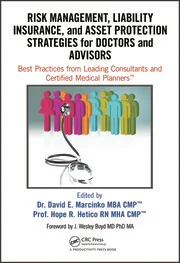
Therefore, as part of the iMBA Research Library for the Certified Medical Planner® program, we highly recommend the following in-house produced books. You may even recognize some of our nationally known contributing authors and CMPs®.

CITE: https://www.r2library.com/Resource/Title/0826102549

TEXT BOOKS AND HAND BOOKS

iMBA Inc offers links to these publications, to members, and non-members, alike:

***

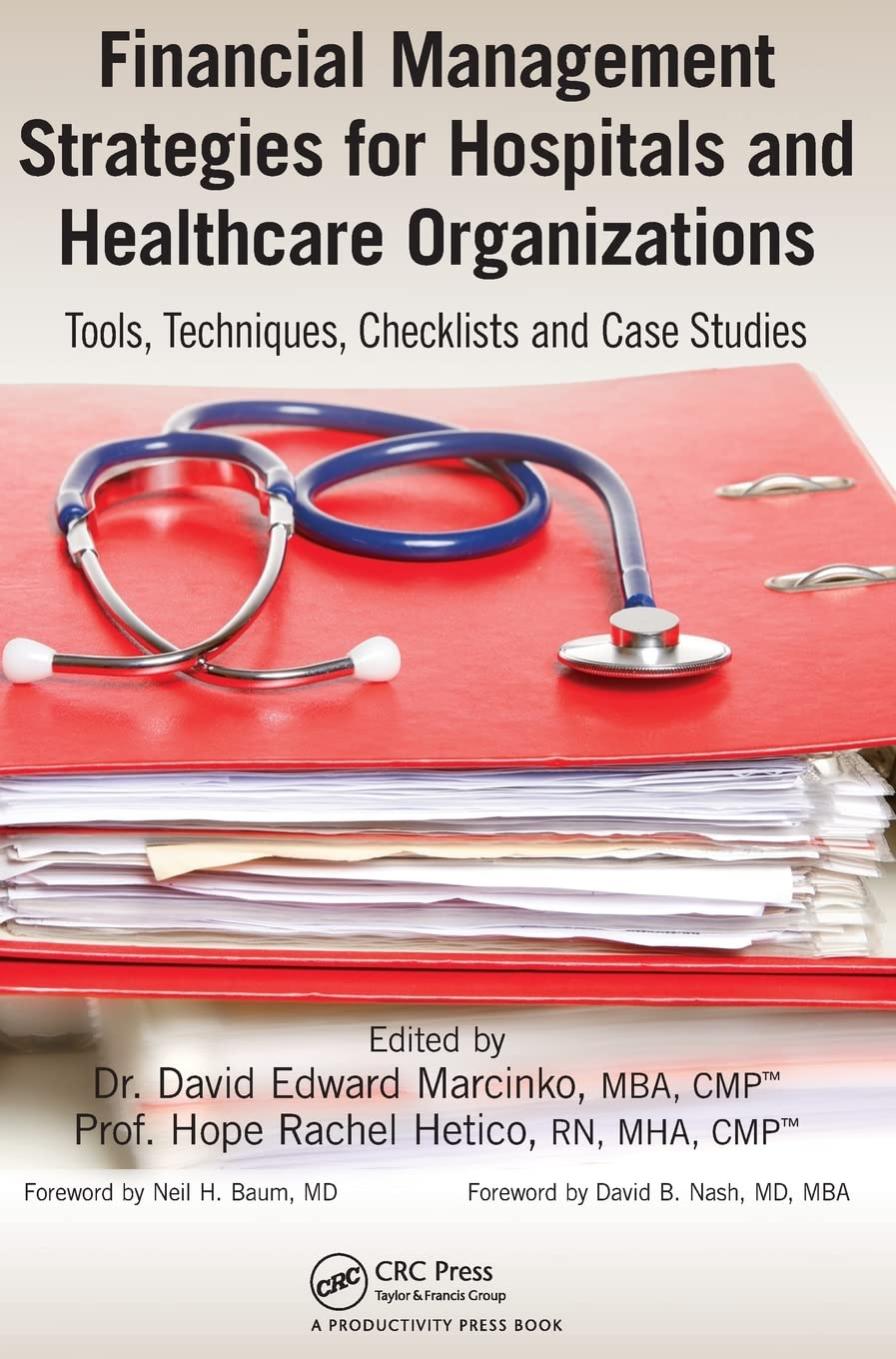
ORDER: https://www.amazon.com/Financial-Management-Strategies-Healthcare-Organizations/dp/1466558733/ref=sr_1_3?ie=UTF8&qid=1380743521&sr=8-3&keywords=david+marcinko

***

ORDER: https://www.amazon.com/Business-Medical-Practice-Transformational-Doctors/dp/0826105750/ref=sr_1_9?ie=UTF8&qid=1448163039&sr=8-9&keywords=david+marcinko

ENJOY THEM ALL

***

FOMC: Interest Rates Up?

By Staff Reporters

***

***

DEFINITION:

According to Wikipedia, the Federal Open Market Committee (FOMC), a committee within the Federal Reserve System (the Fed), is charged under United States law with overseeing the nation’s open market operations (e.g., the Fed’s buying and selling of United States Treasury securities). This Federal Reserve committee makes key decisions about interest rates and the growth of the United States money supply. Under the terms of the original Federal Reserve Act, each of the Federal Reserve banks was authorized to buy and sell in the open market bonds and short term obligations of the United States Government, bank acceptances, cable transfers, and bills of exchange. Hence, the reserve banks were at times bidding against each other in the open market. In 1922, an informal committee was established to execute purchases and sales. The Banking Act of 1933 formed an official FOMC.

The FOMC is the principal organ of United States national monetary policy. The Committee sets monetary policy by specifying the short-term objective for the Fed’s open market operations, which is usually a target level for the federal funds rate (the rate that commercial banks charge between themselves for overnight loans).

The FOMC also directs operations undertaken by the Federal Reserve System in foreign exchange markets, although any intervention in foreign exchange markets is coordinated with the U.S. Treasury, which has responsibility for formulating U.S. policies regarding the exchange value of the dollar.

The Federal Reserve is set to announce today whether it will impose another interest rate hike, the central bank’s latest move in a months long fight that has eased inflation but risks plunging the U.S. into a recession.

The Fed [FOMC] has put forward a string of borrowing cost increases as it tries to slash price hikes by slowing the economy and choking off demand. The approach, however, risks tipping the U.S. economy into a downturn and putting millions out of work.

CITE: https://www.r2library.com/Resource/Title/0826102549

And so, at a meeting in December 2022, the Fed raised its short-term borrowing rate a half-percentage point, pulling back from three consecutive 0.75% increases and signaling confidence that sky-high inflation could be brought down to normal levels.

Economists expect the Fed to continue softening its approach with a 0.25% rate hike today? The decision comes weeks after a government report showed that inflation slowed in December, marking six consecutive months of easing price increases.

***

COMMENTS APPRECIATED

Thank You

***

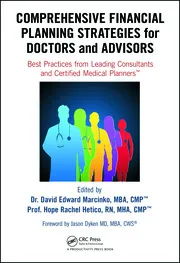
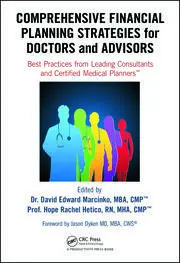
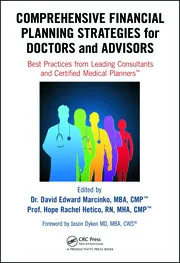
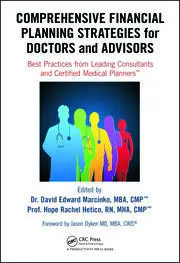
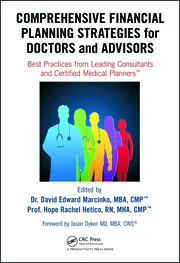
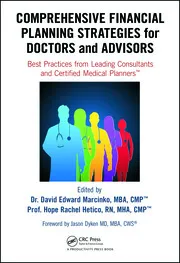
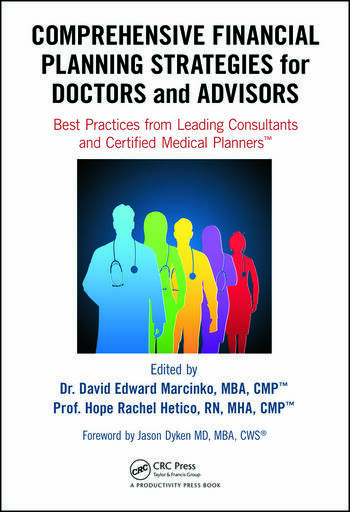
ORDER: https://www.routledge.com/Comprehensive-Financial-Planning-Strategies-for-Doctors-and-Advisors-Best/Marcinko-Hetico/p/book/9781482240283

***

HEALTHCARE: Top A.I. Companies to Watch!

By Bertalan Mesko MD PhD

***

***

TOP ARTIFICIAL INTELLIGENCE COMPANIES IN HEALTHCARE TO KEEP AN EYE ON 

More and more companies set the purpose to disrupt healthcare with the help of artificial intelligence. Given how fast these companies come and go, it can prove to be hard to stay up-to-date with the most promising ones.

CITE: https://www.r2library.com/Resource/Title/0826102549

So, I collected the most prominent names currently on the market ranging from start-ups to tech giants to keep an eye on in the future.

***

COMMENTS APPRECIATED

Thank You

***

ORDER: https://www.amazon.com/Dictionary-Health-Information-Technology-Security/dp/0826149952/ref=sr_1_5?ie=UTF8&s=books&qid=1254413315&sr=1-5

***

Artificial Intelligence Passes U.S. Medical Licensing Exam

ChatGPT

By Staff Reporters

***

***

Two papers show that large language models, including ChatGPT, can pass the USMLE. The papers highlighted different approaches to using large language models to take the USMLE, which is comprised of three exams: Step 1, Step 2 CK, and Step 3. ChatGPT is an artificial intelligence (AI) search tool that mimics long-form writing based on prompts from human users. It was developed by OpenAI, and became popular after several social media posts showed potential uses for the tool in clinical practice, often with mixed results.

According to Victor Tseng, MD, of Ansible Health in Mountain View, California, and colleagues, the results showed “new and surprising evidence” that this AI tool was up to the challenge. Tseng and team noted that ChatGPT was able to perform at >50% accuracy across all of the exams, and even achieved 60% in most of their analyses. While the USMLE passing threshold does vary between years, the authors said that passing is approximately 60% most years.

Source: Michael DePeau-Wilson, Medpage Today [1/19/23]

RELATED: https://medicalexecutivepost.com/2013/06/21/will-future-doctors-need-a-medical-license/

***

***

ORDER: https://www.amazon.com/Dictionary-Health-Information-Technology-Security/dp/0826149952/ref=sr_1_5?ie=UTF8&s=books&qid=1254413315&sr=1-5

COMMENTS APPRECIATED

Thank You

***

PODCAST: Hospital Money Problems 2023

INFLATION AND COMPETITION

By Eric Bricker MD

***

***

ORDER: https://www.amazon.com/Hospitals-Healthcare-Organizations-Management-Operational/dp/1439879907/ref=sr_1_4?s=books&ie=UTF8&qid=1334193619&sr=1-4

***

ORDER: https://www.amazon.com/Financial-Management-Strategies-Healthcare-Organizations/dp/1466558733/ref=sr_1_3?ie=UTF8&qid=1380743521&sr=8-3&keywords=david+marcinko

COMMENTS APPRECIATED

Thank You

***

HEALTHCARE FRAUD: Predatory Senior Medicare Scams

By Staff Reporters

***

***

As you likely know, the US spends much on healthcare ($4.3 trillion in 2021, to be exact). But did you also know that healthcare fraud makes up a not-so-small piece of that pie?

The National Health Care Anti-Fraud Association (NHCAA), a national organization that works to prevent health insurance fraud, conservatively estimates that 3% of the US’s total annual healthcare spend—a hearty $129 billion—is lost to healthcare fraud. Some government agencies estimate that percentage to be as high as 10% (that’s $430 billion), according to the NHCAA.

Overall, Medicare fraud costs the US about $60 billion each year, Nicole Liebau, national resource center director for Senior Medicare Patrol, a government-funded organization designed to help prevent Medicare fraud, told Healthcare Brew, though she added that “the exact figure is impossible to measure.”

CITE: https://www.r2library.com/Resource/Title/082610254

While Medicare fraud isn’t new, the US saw a rise in one particular tactic during the pandemic: a durable medical equipment (DME) scheme.

How the schemes work.

In a DME scheme, scammers target Medicare patients—often after a procedure or an injury—and cold-call them to offer free equipment, said Jennifer Stewart, senior associate general counsel and senior director of fraud prevention and investigation at Blue Cross Blue Shield of Massachusetts. The scammers offer consumers items like lidocaine, wheelchairs, walkers, or braces.

The scammers have roped in doctors—who are often unaware they’re working with scammers instead of legitimate medical companies—to sign off on prescriptions that are then used to bill Medicare for the equipment, Stewart said. Sometimes patients actually receive the products, and sometimes they don’t.

“It’s really dangerous because [a prescription like lidocaine] could have reactions with other medications. The durable medical equipment isn’t sized for them, and certainly the doctor who treated their injury didn’t prescribe it […] There is a lot of patient harm involved,” Stewart said. Keep reading here.

***

COMMENTS APPRECIATED

Thank You

***

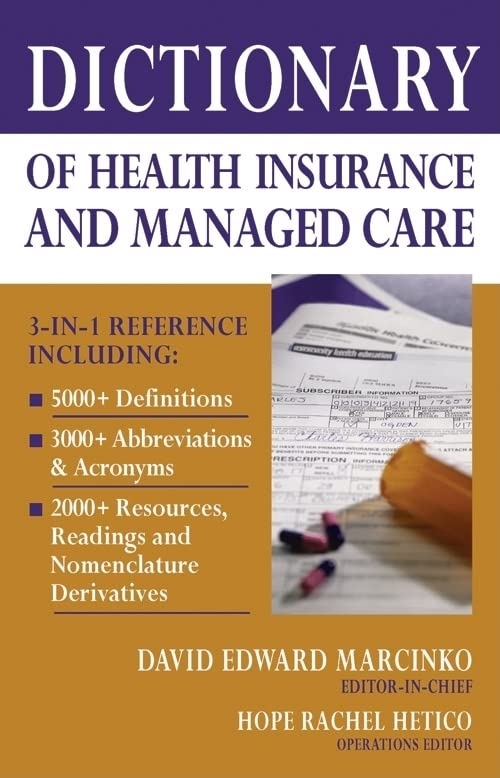
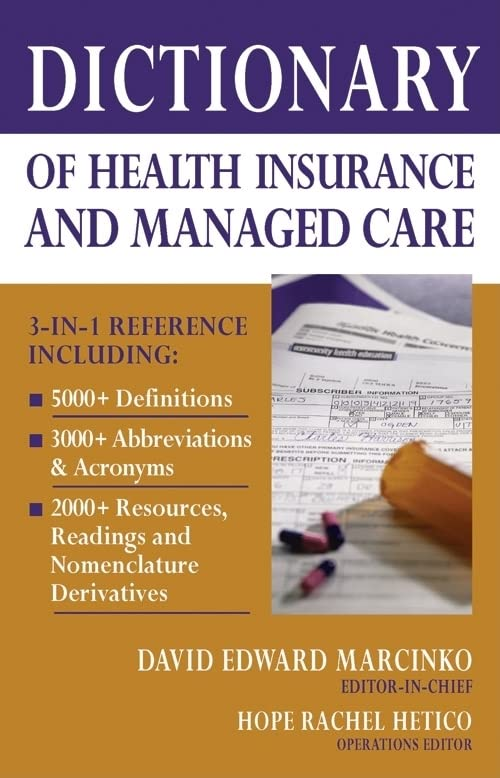
ORDER: https://www.amazon.com/Dictionary-Health-Insurance-Managed-Care/dp/0826149944/ref=sr_1_4?ie=UTF8&s=books&qid=1275315485&sr=1-4

***

“BEAR” it …. So Says Leon Cooperman?

By Staff Reporters

***

***

DEFINITION

A bear market is when a market experiences prolonged price declines. It typically describes a condition in which securities prices fall 20% or more from recent highs amid widespread pessimism and negative investor sentiment.

Bear markets are often associated with declines in an overall market or index like the S&P 500, but individual securities or commodities can also be considered to be in a bear market if they experience a decline of 20% or more over a sustained period of time—typically two months or more. Bear markets also may accompany general economic downturns such as a recession. Bear markets may be contrasted with upward-trending bull markets.

CITE: https://www.r2library.com/Resource/Title/082610254

***

So, If you are feeling optimistic the new year will usher in a change in stock market dynamics and shift sentiment from bear to bull-forget about it!? Leon Cooperman has some bad news for you.

The billionaire investor has been a fully-fledged bear for a while now and 2023 has done little to change his stance. “Anybody looking for a new bull market any time soon is looking the wrong way,” Cooperman said.

In fact, Cooperman thinks there’s only a 5% chance the S&P 500 sees out 2023 above the 4,400 mark (up 13% from current levels), believing the stock market is far likelier to head back down from here.

Cooperman evidently knows a thing or two about investing in bear markets, and if we’re to heed his advice, it’s best to look for ‘safe havens’ to shield from further incoming volatility. OR- Maybe not!

***

ORDER: https://www.routledge.com/Comprehensive-Financial-Planning-Strategies-for-Doctors-and-Advisors-Best/Marcinko-Hetico/p/book/9781482240283

***

COMMENTS APPRECIATED

Thank You

***

ABOUT: “Turn-it-In”

By Staff Reporters

SPONSOR: http://www.CertifiedMedicalPlanner.org

***

Turnitin (stylized as turnitin) is an Internet-based plagiarism detection service run by the American company Turnitin, LLC, a subsidiary of Advance Publications.

LINK: http://www.TurnItIn.com

Founded in 1998, it sells its licenses to universities and high schools who then use the software as a service (SaaS) website to check submitted documents against its database and the content of other websites with the aim of identifying plagiarism. Results can identify similarities with existing sources and can also be used in formative assessment to help students learn to avoid plagiarism and improve their writing.

Students may be required to submit work to Turnitin as a requirement of taking a certain course or class. The software has been a source of controversy, with some students refusing to submit, arguing that requiring submission implies a presumption of guilt. Some critics have alleged that use of this proprietary software violates educational privacy as well as international intellectual-property laws, and exploits students’ works for commercial purposes by permanently storing them in Turnitin’s privately held database.

ChatGPT: https://medicalexecutivepost.com/2023/01/17/chatgpt-a-microsoft-start-up-venture/

Turnitin, LLC also runs the informational website plagiarism.org and offers a similar plagiarism-detection service for newspaper editors and book and magazine publishers called iThenticate. Other tools included with the Turnitin suite are GradeMark (online grading and corrective feedback) and PeerMark (student peer-review service).

NOTE: According to Wikipedia, in March 2019, Advance Publications acquired private Turnitin, LLC for US$1.75 billion.

***

COMMENTS APPRECIATED

Thank You

***

ORDER: https://www.amazon.com/Dictionary-Health-Information-Technology-Security/dp/0826149952/ref=sr_1_5?ie=UTF8&s=books&qid=1254413315&sr=1-5

***

CRYPTO-CURRENCY: Trades 24/7/365

***

***

The US stock and bond markets are closed today for MLK Day, so we’ll have to wait 24 more hours to see if this year-opening rally will continue for a third week.

But crypto currency trades 24/7, and the same hopeful inflation news that’s been lifting stocks has also given life to beaten-down cryptocurrencies. Bitcoin gained for the 11th straight day on Saturday, topping $20,000 for the first time in more than two months.

So, here are some ways in which the non-stop crypto market affects institutions — banks and exchanges, in particular.

The stock market takes a break every day, and every weekend. That gives all the players in the market — individual investors and institutions — a chance to assess and reposition their assets for their next moves. But since crypto trades all the time, there are stretches during the 24-hour day when banks and exchanges are effectively closed, and money isn’t being moved around as quickly or efficiently as it would during business hours.

This can cause lags — if a crypto trader is trying to deposit money into their crypto exchange account to execute a trade at, say, 2 am ET on a Sunday night, that money won’t actually move until the next day. That has the potential to cause some friction in the markets.

CITE: https://www.r2library.com/Resource/Title/0826102549

In short, there’s a mismatch between the standard business hours of many institutions and the 24-hour nature of the crypto markets, which may have an effect on the markets.

MORE: https://www.newsnow.co.uk/h/Business+&+Finance/Cryptocurrencies

COMMENTS APPRECIATED

Thank You

***

ORDER: https://www.routledge.com/Comprehensive-Financial-Planning-Strategies-for-Doctors-and-Advisors-Best/Marcinko-Hetico/p/book/9781482240283

***

MEDICARE SUPPLEMENT INSURANCE: Part G

What is it and How Does it Work?

By Staff Reporters

***

Did you know that Medicare Plan G is the most popular Medicare Supplement with Baby Boomer clients? Everyone has heard of Plan F, but what is Medicare Supplement Plan G? What does Plan G cover?

Medicare Plan G coverage is very similar to Plan F, which is no longer available for people new to Medicare on or after January 1st, 2020. Plan G offers great value for beneficiaries willing to pay a small annual deductible. After that, Plan G provides full coverage for all of the gaps in Medicare. It pays for your Medicare Part A hospital deductible, co-pays, and coinsurance. It also covers the 20% that Medicare Part B doesn’t cover. Doctors and other healthcare providers must accept a Medigap Plan G if they accept Original Medicare. Plan G policies can be used across the U.S. since they do not have network limitations, and the premium costs can be very reasonable for the coverage you receive.

As you can see below, Supplement Plan G covers almost everything that F does, except for the Part B deductible.

***

***

Medicare Plan G, also called Medigap Plan G, is an increasingly popular Supplement

Reasons:

First, Plan G covers each of the gaps in Medicare except for the annual Part B deductible. This deductible is only $226 in 2023. In fact, if you have a Plan F that has been in place for years, it can probably help you on premiums by looking at Plan G. When you shop for benefits, you can often find a Supplement Plan G that saves quite a bit in premiums over Plan F, usually substantially more than the $226 deductible that you’ll pay out.

Second, it has great coverage. For hospital stays, it covers all your hospital expenses. Most importantly, it pays the hospital deductible, which is over $1,600 in 2023. It also covers the expensive daily co-pays that you might encounter for a hospital stay that runs longer than 60 days. It provides an additional 365 days in the hospital after your Medicare benefits run out, and it covers your skilled nursing facility co-insurance, too.

What Other Medical Services Does Plan G Cover?

Medicare Supplement Plan G covers your percentage of any medical benefit that Original Medicare covers, except for the outpatient deductible. So, it helps to pay for inpatient hospital costs, such as the first three pints of blood, skilled nursing facility care, and hospice care. It also covers outpatient medical services such as doctor visits, lab work, diabetes supplies, cancer treatment, durable medical equipment, x-rays, ambulance, surgeries and much more. This means Plan G covers the coverage gaps with Original Medicare and all Plan G products must provide you with the exact same coverage.

Medicare pays first, then Plan G pays the remaining amount after you pay the once annual deductible. In addition, Plan G Medicare Supplements offer up to $50,000 in foreign travel emergency benefits (up to plan limits).

Related Article: Medicare Costs for 2023

CITE: https://www.r2library.com/Resource/Title/082610254

***

ORDER: https://www.routledge.com/Comprehensive-Financial-Planning-Strategies-for-Doctors-and-Advisors-Best/Marcinko-Hetico/p/book/9781482240283

COMMENTS APPRECIATED

Thank You

***

AFFORDABILITY: Healthcare on Notice for Patients

By Staff Reporters

***

***

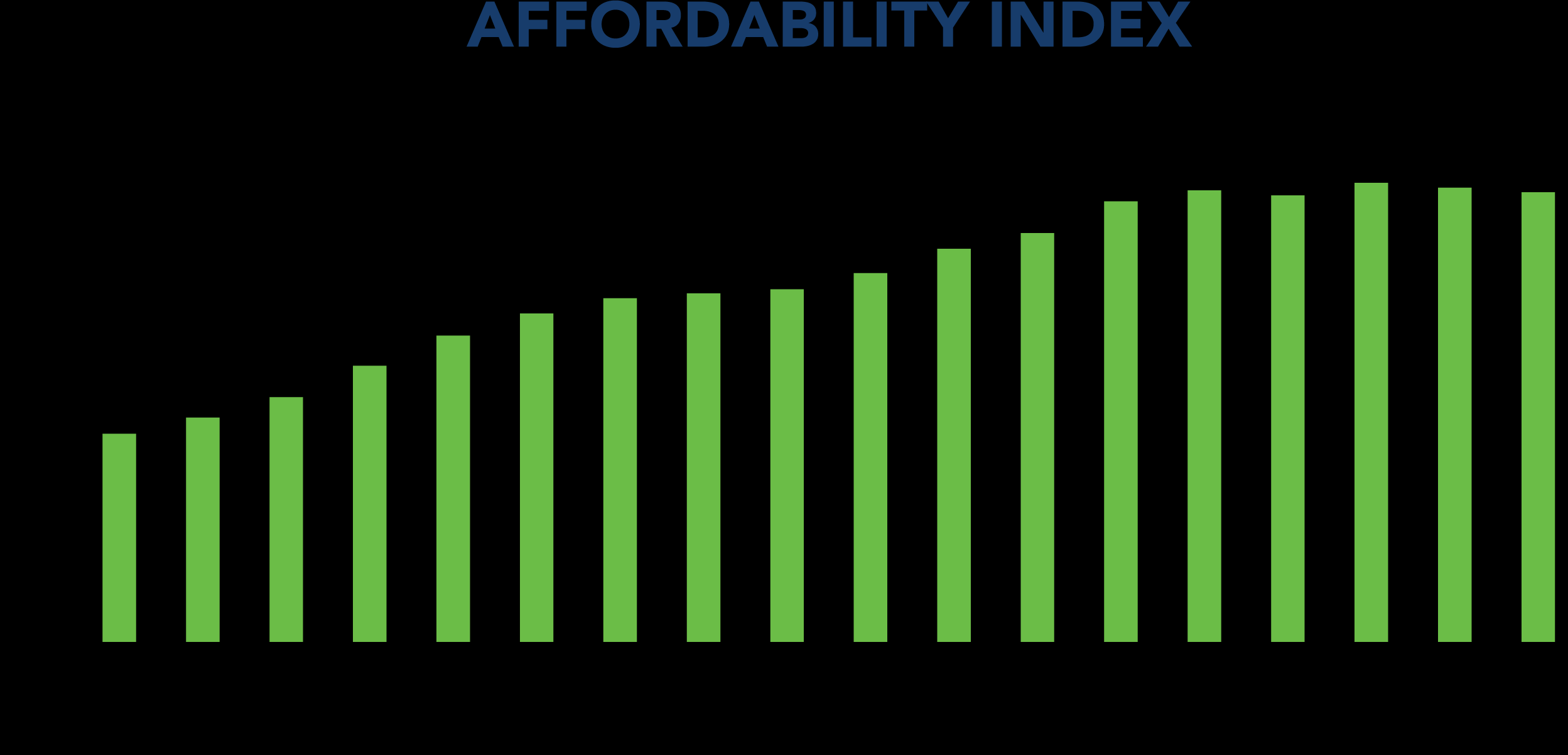
People living in the US are finding it increasingly difficult to afford needed health services—even with employer-sponsored health insurance, a new analysis suggests.

CITE: https://www.r2library.com/Resource/Title/0826102549

Researchers at the NYU School of Global Public Health (GPH) examined data from the National Health Interview Survey—an annual CDC survey—that was collected from 2000 to 2020 for 230,000+ adults who received health insurance through an employer or union. Both men and women found most healthcare services to be less affordable now compared to the early 2000s, according to the finding of the NYU analysis reported in a December 2022 JAMA abstract. Women, in particular, found all types of health services to be less affordable than men.

From a nationally representative survey which is conducted annually, researchers included data from 5,545 women and 5,353 men sampled in 2020, and found that about 6% of women reported they couldn’t afford needed medical care. This compares to just 3% of slightly larger sample groups from 2000, per the analysis. By contrast, about 3% of men gave that response in 2020, compared to 2% in 2000.

Avni Gupta, a doctoral student in the public health policy and management department at NYU GPH and the lead author of the analysis, offered that “lower incomes and higher healthcare needs among women could be driving these differences in reported affordability.”

And, José Pagán, the department chair and co-author of the JAMA analysis, said people with employer-sponsored coverage—the largest source of health insurance for people living in the US—“generally think they are protected.”

“[B]ut our findings show that health-related benefits have been eroding over time,” he said; according to Healthcare Brew

***

ORDER: https://www.amazon.com/Dictionary-Health-Insurance-Managed-Care/dp/0826149944/ref=sr_1_4?ie=UTF8&s=books&qid=1275315485&sr=1-4

***

COMMENTS APPRECIATED

Thank You

***

PROFESSIONAL DESIGNATION: Certified Medical Planner™

By Ann Miller RN MHA CMP

***

[WHERE LEARNING IS A plus+]

Career Development, Products and Services

“The informed voice of a new generation of fiduciary advisors for healthcare”

http://www.CertifiedMedicalPlanner.org 

CMP

[Best Practices from Leading Consultants and Certified Medical Planners™]

logos

“BY DOCTORS – FOR DOCTORS – PEER REVIEWED – FIDUCIARY FOCUSED”

***

***

METAVERSE: Expert Consensus in Medicine?

By Staff Reporters

***

***

A multi-disciplinary panel of doctors and IT experts from Asia, the United States, and Europe analyzed published articles regarding expert consensus on the Medical Internet of Things, with reference to study results in the field of metaverse technology.

READ HERE: https://reader.elsevier.com/reader/sd/pii/S2588914122000016?token=4509ACBB9748F76769BCB6562B7413EAFAA5D83509412E53E17AC36F08A581B66B0F4E7B2D31A444F80A603E8FF22792&originRegion=us-east-1&originCreation=20221015174759

***

MEDICINE: https://www.amazon.com/Business-Medical-Practice-Transformational-Doctors/dp/0826105750/ref=sr_1_9?s=books&ie=UTF8&qid=1287563112&sr=1-9

***

CITE: https://www.amazon.com/Dictionary-Health-Information-Technology-Security/dp/0826149952/ref=sr_1_5?ie=UTF8&s=books&qid=1254413315&sr=1-5

CITE: https://www.r2library.com/Resource/Title/082610254

COMMENTS APPRECIATED

Thank You

***

What is a CENTRAL BANK DIGITAL CURRENCY?

By Staff Reporters

***

***

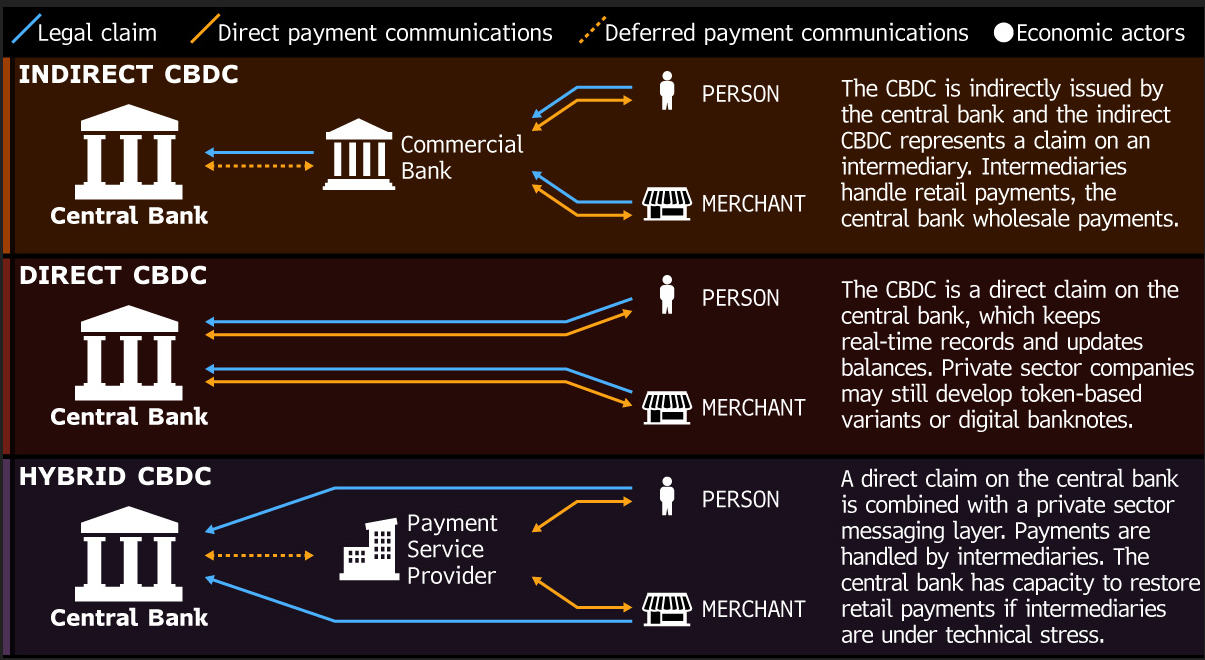
DEFINITION: A CBDC is a digital form of central bank money that is widely available to the general public.

CITE: https://www.r2library.com/Resource/Title/082610254

“Central bank money” refers to money that is a liability of the central bank. In the United States, there are currently two types of central bank money: physical currency issued by the Federal Reserve and digital balances held by commercial banks at the Federal Reserve.

While Americans have long held money predominantly in digital form—for example in bank accounts, payment apps or through online transactions—a CBDC would differ from existing digital money available to the general public because a CBDC would be a liability of the Federal Reserve, not of a commercial bank.

MORE: https://www.federalreserve.gov/faqs/what-is-a-central-bank-digital-currency.htm

***

COMMENTS APPRECIATED

Thank You

***

ORDER: https://www.routledge.com/Comprehensive-Financial-Planning-Strategies-for-Doctors-and-Advisors-Best/Marcinko-Hetico/p/book/9781482240283

***

MEDICAL PRIOR AUTHORIZATION: Proposed Modernization from CMS

By Health Capital Consultants, LLC

***

***

CMS Proposes Modernizing Prior Authorizations

On December 6, 2022, the Centers for Medicare & Medicaid Services (CMS) proposed a modernization of the prior authorization process for health insurance. The proposed rule seeks to require certain insurers to implement electronic prior authorization, shorten decision timeframes, and make the process more transparent and efficient.

CITE: https://www.r2library.com/Resource/Title/082610254

The rule includes “five key provisions and five Requests for Information,” aiming to “improve patient and provider access to health information and streamline processes related to prior authorization for medical items and services.” This Health Capital Topics article will review those provisions and requests for information, as well as stakeholder responses to the proposals. (Read more…)

***

COMMENTS APPRECIATED

Thank You

***

ORDER: https://www.routledge.com/Comprehensive-Financial-Planning-Strategies-for-Doctors-and-Advisors-Best/Marcinko-Hetico/p/book/9781482240283

***

FTX: Celebrities Named in Lawsuit

SUSPICIOUS AFFINITY MARKETING?

By Staff Reporters

***

***

DEFINITION: Affinity marketing is a concept that consists of a partnership between a company and an organization that gathers persons sharing the same interests to bring a greater consumer base to their service, product or opinion. This partnership is known as an affinity group.

CITE: https://www.r2library.com/Resource/Title/082610254

***

So, after the collapse of Sam Bankman-Fried’s crypto exchange FTX, a number of celebs who had acted as ambassadors for the company were named as defendants in a class-action suit against it.

Comedian and Seinfeld creator Larry David, Tampa Bay Buccaneers quarterback Tom Brady, and basketball stars Shaquille O’Neal and Stephen Curry were likely trading lawyer recommendations in the A-lister group chat.

Beware celebrity and affinity marketing!

***

COMMENTS APPRECIATED

Thank You

***

ORDER: https://www.routledge.com/Comprehensive-Financial-Planning-Strategies-for-Doctors-and-Advisors-Best/Marcinko-Hetico/p/book/9781482240283

***

MICROSOFT: IPO Value Today?

By Staff Reporters

***

***

Value of a $1,000 investment in Microsoft’s IPO today

Microsoft completed its initial public offering (IPO) on March 13, 1986, at a price of $21 per share. Since then, the company has grown so valuable, and its stock price has soared so high, that management opted to conduct nine stock splits over time to ensure its shares remained accessible to small investors.

CITE: https://www.r2library.com/Resource/Title/082610254

Had you invested $1,000 in Microsoft at its IPO, you would have acquired 47 shares at $21 per share. Adjusting for the stock splits, you’d actually have 13,536 shares today with a cost basis of $0.0729 per share. 

Given Microsoft now trades at $238.73 per share, that translates to a return of 327,401%.

In dollar terms, that $1,000 investment in 1986 would be worth a whopping $3.23 million today. But it gets better, because Microsoft has paid a dividend since 2003 — and assuming you never sold a single share along the way, you’d have also received $341,513 in dividends.

Given Microsoft continues to pay a quarterly dividend of $0.68 per share, you would still be collecting a cool $36,817 each year, or 36 times your initial $1,000 outlay. That’s the power of long-term investing.

***

***

ORDER: https://www.routledge.com/Comprehensive-Financial-Planning-Strategies-for-Doctors-and-Advisors-Best/Marcinko-Hetico/p/book/9781482240283

COMMENTS APPRECIATED

Thank You

***

VALUE STOCKS: Now Seeking Bargains?

Dr. David Edward Marcinko MBA CMP

SPONSOR: http://www.CertifiedMedicalPlanner.org

***

***

The bargain-hunting value style is looking for shares that are under priced in relation to the company’s future potential. A value investor will invest in a company in the expectation that its shares will increase in value over time. Value investing is based essentially on quantitative criteria; asset values, cash flow, and discounted future earnings. The key properties of value shares are low Price/Earnings, Price/Sales ratios, and normally higher dividend yields. 

CITE: https://www.r2library.com/Resource/Title/082610254

No Christmas Rally this year!

So, on observing a company’s earnings growth, a value manager will decide whether to buy shares based on the company’s consistency or recovery prospects. The key research questions are: 1) Does the current P/E ratio warrant an investment in a slow growth company or, 2) Is the company a higher growth candidate that has dropped in price due to a temporary problem.  If this is the case, will the company’s earnings growth recover, and if so, when? The key to value investing is to find bargain shares (priced low historically or for temporary and/or irrational reasons), avoiding shares that are merely cheap (priced low because the company is failing).

The buying opportunity is identified when a company undergoing some immediate problems is perceived to have good chances of recovery in the medium to long term.  If there is a loss in market confidence in the company, the share price may fall, and the value investor can step in. Once the share price has achieved a suitable value, reflecting the predicted turnaround in company performance, the shareholding is sold, realizing a capital gain. A potential risk in value investing is that the company may not turn around, in which case the share price may stay static or fall.

***

COMMENTS APPRECIATED

Thank You

***

ORDER: https://www.routledge.com/Comprehensive-Financial-Planning-Strategies-for-Doctors-and-Advisors-Best/Marcinko-Hetico/p/book/9781482240283

***

DAILY UPDATE: Sovereign Wealth Funds, Mortgages and the Dimming U.S. Markets

By Staff Reporters

***

***

Sovereign wealth funds could be selling roughly $29 billion in equities by the end of December. Meanwhile, U.S. defined benefit pension plans would need to shift up to $70 billion from equities to bonds to hit their targets, reports Bloomberg quoting the JPMorgan estimates. “The recent equity market correction and bond rally are consistent with the rebalancing hypothesis,” Bloomberg quoted Vincent Deluard, a macro strategist at StoneX. 

DEFINITION: A sovereign wealth fund, sovereign investment fund, or social wealth fund is a state-owned investment fund that invests in real and financial assets such as stocks, bonds, real estate, precious metals, or in alternative investments such as private equity fund or hedge funds. Sovereign wealth funds invest globally.

CITE: https://www.r2library.com/Resource/Title/082610254

And, in a recent interview with CNN, Bank of America CEO Brian Moynihan said he’s concerned the housing market will continue to challenge buyers in the coming years. Moynihan pointed to sky-high mortgage rates as a big reason buyers might continue to struggle — especially first-time buyers with more limited financial resources. Moynihan also said there could be two more years of pain in the housing market before things cool off and homes become more available and affordable. And that’s a tough pill to swallow.

Finally, U.S. stocks were lower, adding to last week’s declines, as the global markets continued to grapple with the ultimate impact of aggressive monetary policy tightening around the world. Last week, the Fed, European Central Bank, Bank of England, and Swiss National Bank all increased their benchmark interest rates by 50 basis points, fostering recession concerns.

Treasury yields traded higher, and the U.S. dollar was unchanged, while crude oil gained ground, and gold was lower.

Other equity news was light, as L3Harris Technologies announced an agreement to acquire Aerojet Rocketdyne with an enterprise value of $4.7 billion, while shares of Madrigal Pharmaceuticals surged after positive trial results for its NASH and liver fibrosis treatment.

A busy week of housing data commenced, as the NAHB’s December Housing Market Index unexpectedly deteriorated.

Asia finished mostly lower as China’s COVID concerns weighed on sentiment, though European stocks were mostly higher, rebounding from last week’s decline as the global markets digest the recent rate hikes on both sides of the pond.

***

ORDER: https://www.routledge.com/Risk-Management-Liability-Insurance-and-Asset-Protection-Strategies-for/Marcinko-Hetico/p/book/9781498725989

***

COMMENTS APPRECIATED

Thank You

***

AUTO INSURANCE and the [Rising] Corona Virus Flu

By Staff Reporters

***

***

Here’s what Covid vaccines have to do with auto insurance

A new study of 11 million adults in Canada revealed that people who weren’t vaccinated against Covid were 72% more likely to get into car accidents where at least one person had to go to the hospital.

CITE: https://www.r2library.com/Resource/Title/082610254

Now, that doesn’t mean your jab protects against car accidents, of course, but it does suggest that folks who reject public health recommendations might also reject road rules. The difference was striking enough that the researchers said doctors should discuss road safety with unvaccinated patients, and that car insurance companies might want to factor it into their rates.

BUT ALWAYS REMEMBER :https://medicalexecutivepost.com/2021/02/05/correlation-is-not-causation/

***

COMMENTS APPRECIATED

Thank You

***

ORDER: https://www.amazon.com/Dictionary-Health-Insurance-Managed-Care/dp/0826149944/ref=sr_1_4?ie=UTF8&s=books&qid=1275315485&sr=1-4

***

FTX SCANDAL: Who is John J. Ray III?

By Staff Reporters

***

***

FTX’s New Chief Executive Officer?

***

John J. Ray III (born January 1959) is an American attorney and insolvency professional. He specializes in recovering funds from failed corporations. He was appointed CEO of cryptocurrency exchange FTX in the aftermath of its November 2022 collapse.

MORE: https://financialservices.house.gov/uploadedfiles/hhrg-117-ba00-wstate-rayj-20221213.pdf

He previously served as chairman of Enron Creditors Recovery Corp., a company tasked with recovering creditor funds from Enron in the wake of its accounting scandal and subsequent collapse. He also worked on the bankruptcies of Nortel, Residential Capital, and Overseas Shipholding.

CITE: https://www.r2library.com/Resource/Title/082610254

***

COMMENTS APPRECIATED

Thank You

***

ORDER: https://www.amazon.com/Dictionary-Health-Information-Technology-Security/dp/0826149952/ref=sr_1_5?ie=UTF8&s=books&qid=1254413315&sr=1-5

***

PUMPERS & DUMPERS: Social Media Influencers Charged in Scheme

By Staff Reporters

***

***

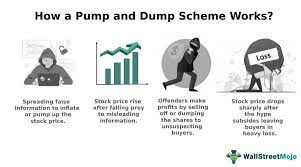
DEFINITION: Pump and dump (P&D) is a form of securities fraud that involves artificially inflating the price of an owned stock through false and misleading positive statements, in order to sell the cheaply purchased stock at a higher price. Once the operators of the scheme “dump” (sell) their overvalued shares, the price falls and investors lose their money. This is most common with small-cap cryptocurrencies and very small corporations/companies, i.e. “microcaps“.

CITE: https://www.r2library.com/Resource/Title/082610254

While fraudsters in the past relied on cold calls, the Internet now offers a cheaper and easier way of reaching large numbers of potential investors through spam email, investment research websites, social media, and misinformation.

***

And so, Federal prosecutors and the SEC have accused seven popular Twitter and Discord users of wielding social media to manipulate stock prices—pumping the shares and then selling off mass quantities for profit once they rose.

An additional defendant, whose Twitter handle was @DipDeity, was charged with aiding and abetting the alleged fraud for hosting a podcast that featured and promoted the seven influencers as skilled traders to follow.

Each influencer charged had well over 100,000 followers and, according to the SEC, the group earned about $100 million total in the scheme.

***

ORDER: https://www.routledge.com/Comprehensive-Financial-Planning-Strategies-for-Doctors-and-Advisors-Best/Marcinko-Hetico/p/book/9781482240283

***

COMMENTS APPRECIATED

Thank You

***

DAILY UPDATE: Markets Down Amid FOMC’s Monetary Policy

By Staff Reporters

***

***

U.S. equities did an about-face and finished lower following the monetary policy decision from the Fed. The Central Bank increased the target for its benchmark interest rate by 50 basis points (bps), which was widely expected and a moderation from the 75-bp hikes over the past four meetings. However, in his presser Chairman Powell reiterated that the Committee still had a ways to go to reach its goals.

Treasury yields finished little changed in choppy trading after the Fed’s announcement, and the U.S. dollar was lower, while crude oil prices gained ground and gold traded to the downside.

Equity news was on the lighter side, as Delta Air Lines increased its Q4 earnings outlook and offered upbeat long-term guidance, while Lennox International issued a 2023 forecast that missed estimates.

On the economic front, mortgage applications snapped a two-week losing streak, and import prices moderated more than expected.

Asia finished mostly higher following yesterday’s favorable U.S. inflation report, while markets in Europe diverged as investors awaited today’s Fed decision, which will be followed by tomorrow’s announcements from the European Central Bank and Bank of England.

***

CITE: https://www.r2library.com/Resource/Title/082610254

***

ORDER: https://www.routledge.com/Comprehensive-Financial-Planning-Strategies-for-Doctors-and-Advisors-Best/Marcinko-Hetico/p/book/9781482240283

***
COMMENTS APPRECIATED

Thank You

****

PODCAST: Financial Deception in Healthcare

THIRTY EXAMPLES

By Eric Bricker MD

***

***

Citation: https://www.r2library.com/Resource/Title/0826102549

***

***

ORDER: https://www.routledge.com/Risk-Management-Liability-Insurance-and-Asset-Protection-Strategies-for/Marcinko-Hetico/p/book/9781498725989

***

COMMENTS APPRECIATED

Thank You

****

RBP: The Rise of Reference Based Pricing & The Future of Health Care 

By Bill Rusteberg

***

***

The New Payer You Never Heard Of 

For 35 years we have lived in the world of managed care. Consumers have been conditioned to believe networks of “preferred” providers ensure better access, better benefits, lower cost and convenient claim settlement.  

In the beginning managed care worked. Not all hospitals and physician groups were in networks and competition helped create cost savings for consumers and their employers. But over time consumers demanded more access and eventually almost all providers were “preferred” and in-network. Today less than 5% of all claims are out-of-network yet medical costs have increased. While professional providers are typically paid using managed care fee schedules, hospitals and other facilities are usually paid a percentage of whatever they charge, and over time, those charges have continued to increase.  

As a result, we are seeing the rise of Reference Based Pricing (RBP) claim reimbursement strategies. RBP strategies are gaining popularity with self-funded employer plans particularly as a way to bring more transparency and accountability to health care pricing. 

The new payer you never heard of are local employers breaking away from the status quo.  You will not see recognizable logos or insurance company names on their health insurance I.D. cards. You may wonder “what kind of insurance is this?” 

What is Reference Based Pricing? 

RBP sets uniform provider payments relative to a benchmark. The most commonly used benchmark is the Medicare Fee Schedule, a widely known payment methodology. Because Medicare fee schedules are on the low end of provider reimbursement, RBP health plans typically add a margin to ensure fair and equitable payment and profits for medical care givers.  Margins can range from 120% to 150% of Medicare and more.  

PPO networks, on the other hand, set opaque pricing at an arbitrary number to which an arbitrary discount is applied. Instead of this top down approach, RBP health plans utilize a bottom up approach.  

In addition, employers are not privy to negotiated PPO rates while reimbursement allowances are transparent and clearly disclosed in RBP plans. This is one of several important distinctions between managed care pricing strategies and RBP.  

An extension of RBP may include detailed claim audit protocols to facility claims prior to claim settlement. These audits typically produce savings of 5 – 7%. Managed care contracts, on the other hand, typically prohibit or severely limit an employer’s right to audit claims, another important difference.  

The Growth of Reference Based Pricing 

While many readers may view this as something new, it’s simply another form of the indemnity plans that were common prior to the advent of managed care in the early 80’s.  

The first RBP health plan in Texas was established in 2008 in San Antonio. Since then the concept has gained national momentum and is growing most rapidly among mid-size self-funded employers. However, we are beginning to see larger employers such as the state of Montana adopting this strategy for their employee benefit program. The Oklahoma State Medical Association adopted RBP strategies for their member health plans several years ago and has since expanded their program offering to Texas medical providers. 

Medical Community Reaction 

Since inception of Reference Based Pricing plans (RBP) in San Antonio fifteen years ago, professional providers have generally accepted patients insured through these plans.  Professional providers, particularly primary care physicians, may earn more under this payment methodology than earned under many managed care contracts. In addition, RBP plans do not intrude on the physician-patient relationship as there are no contractual terms and conditions providers are bound to accept.  

Hospitals have generally remained opposed to RBP plans, yet few patients are turned away for care because reimbursement levels are fair and reasonable. In those rare instances a patient is turned away RBP plans often arrange a bundled cash payment at mutually agreed reimbursement levels that are often less than what the plan would have otherwise paid.    

Action Plan for Physicians and Their Administrators 

With the explosive grown of RBP plans, physicians and their administrators should establish an action plan for RBP patients or potential patients seeking their services. What transpires at the point of contact with a patient can be critical. A knowledgeable staff insures adequate controls in determining patient financial responsibility. Turning away patients is not always a good business practice and is unnecessary in cases where RBP payment parameters are within a practice’s normal scope of acceptance.  

Always check for network logos on the members’ I.D. card. When calling an unfamiliar health plan or TPA to verify eligibility and benefits, ask what provider network(s) the plan uses for physicians and hospitals.  

If the customer service representative says that there is no hospital or professional network or that the plan is “open access”, ask whether the plan pays hospitals and/or physicians based on a standard reference price or a fixed % of Medicare.  

Staff administration should pre-determine the minimum level of acceptable payment based on a % of Medicare. This will empower intake clerks, at the point of contact, to determine if a plan’s reimbursement level is adequate and approved by administration. This will also assist intake clerks in determining each patient’s responsibility. Some RBP plans clearly indicate the basis of claim payment on member’s I.D. cards, i.e., “Plan Pays XXX% of Medicare.” 

If procedures are regularly performed in a facility setting and there is a choice of hospitals or ambulatory surgery centers, staff should ask whether the plan has any direct contracts or has a good working relationship with any of the local facilities. Most RBP plans have established direct agreements with certain local providers or are interested in doing so.  

It takes very little effort to certify a patient’s financial ability to pay for services. Verification is a phone call away. Intake clerks should be trained to ask the right questions, applying the answers against pre-determined parameters of acceptance rather than reliance upon a list of “approved insurance plans.” Turning patients away at the front desk when their insurance coverage pays as much as or more than “approved” plans is poor business.  

Partnering With Employer Health Plans 

A professional provider would be wise to reach out directly to local employers adopting RBP plans to arrange direct agreements, especially when it is discovered an employer important to the practice has adopted RBP. A direct agreement with an employer sponsored health plan would eliminate balance billing and provide steerage. Typically direct RBP agreements are no more than one page in length and contain a 30 day out clause. There are no third party intermediaries involved. 

Some RBP plans allow professionals to name their price. A sharing arrangement between the health plan and plan member assures full payment based on a mutually agreed pricing benchmark. For example, a plan may set its claim exposure at 120% of Medicare. A professional provider may agree to accept 150% of Medicare. The 30% differential would be borne by the plan member in the form of a pre-set co-pay amount. There would be no co-pay through providers who have agreed to accept the plans benchmark pricing, in this example 120% of Medicare. A tiered co-pay strategy solves provider access issues, benefiting providers, patients and employer health plan budgetary constraints.  

The Future of Reference Based Pricing 

RBP strategies are a transitory phenomenon, a bridge serving as a basis for more change to come in a dynamic market.  

RBP health plans will continue to gain market share in the next several years as more independent third party administrators (TPAs) and insurance companies are offering RBP options with new entrants into the market almost monthly. 

Professional providers should understand that RBP is yet another way to pay health care claims and would be wise to acclimate to this kind of pricing. As the Medicare eligible population of the United States increases from 17% in 2015 to 23% in 2023, professional providers will see more patients at Medicare rates than ever before. The good news for professional providers is RBP plans generally pay more. 

There is good news for employers too. RBP plans give self-funded employers a powerful cost containment tool that can make health care more affordable for their employees.  

You can expect to see a growing number of patients insured through RBP plans seeking your services. It would be good business to understand this growing trend now in order to accommodate them. RBP will create opportunities for physician-led bundles and other direct contracting strategies that benefit local employers, giving you more control and save money for your patients.  

The Future 

Reference Based Pricing is a transitory phenomenon leading to something better for all stakeholders. We are seeing a new trend rising in health care financing that removes third party barriers between patients and their physicians. 

Removing third party intermediaries between providers and the patients they serve is the foundation on which to provide better benefits at a lower cost for health care consumers. Cash pay settlements at the point of service, in real time, will be a major component of that, getting back to the way care and doctor-patient relationships once were, without the intervention of an insurance company. 

Plan members will pay cash at the time of service through plan sponsored funding. Physicians will receive cash payment by way of pre-negotiated electronic super bill at the time of service. No claims filing and no chasing patient share required, saving providers both time and expense. Hospitals will be paid in full on day of service too, saving time and expense filing claims and chasing patient share. 

Community based health plans will adopt a cash pay network of medical caregivers. Access and delivery of care on a local, collaborative basis by mutually controlling costs in a direct relationship with one another as opposed to the indirect relationships we find in our current carrier-driven dynamic will be key to providing community members with responsive and affordable access to care.  

Community health plans will adopt Direct Primary Care as a key focal point for all subsequent care. Capitated rates will replace fee-for-service fee schedules. Primary care physicians will, for the first time in their careers, devote 100% of their working hours to treating patients, not burdened with EMR’s and other administrative functions at the beck and call of third party intermediaries.  

One example of a Community Health Plan is currently under development in central Texas. It will incorporate ER, Lab & Radiology, and direct primary care at a capitated rate of less than $125. A cash based reimbursement wrap for all other covered services through a cash pay provider network will cover remaining covered medical services.  

The reader may find this to be a pipe dream that will never happen. On the contrary, it’s happening now and it’s growing faster than a melting raspa on a scorching August afternoon in deep South Texas. It’s the new payer you’ve never heard of. 

CITE: https://www.r2library.com/Resource/Title/082610254

MORE: https://medicalexecutivepost.com/2022/09/26/podcast-reference-based-pricing-for-medical-facility-fees/

***

COMMENTS APPRECIATED

Thank You

***

ORDER: https://www.amazon.com/Dictionary-Health-Insurance-Managed-Care/dp/0826149944/ref=sr_1_4?ie=UTF8&s=books&qid=1275315485&sr=1-4

***

PODCAST: Healthcare is Great for People with Medicare.

***

Greater than 90% of Medicare Beneficiaries Are Satisfied with Their Care

By Eric Bricker MD

***

***

COMMENTS APPRECIATED

Thank You

Subscribe to the Medical Executive-Post

CITE: https://www.r2library.com/Resource/Title/0826102549

***

***

BUSINESS MEDICINE: https://www.amazon.com/Business-Medical-Practice-Transformational-Doctors/dp/0826105750/ref=sr_1_9?ie=UTF8&qid=1448163039&sr=8-9&keywords=david+marcinko

***

ORGANIZATIONS: https://www.amazon.com/Financial-Management-Strategies-Healthcare-Organizations/dp/1466558733/ref=sr_1_3?ie=UTF8&qid=1380743521&sr=8-3&keywords=david+marcinko

***

WASH SALE RULE: Not For Cryptocurrency?

By Staff Reporters

***

DEFINITION

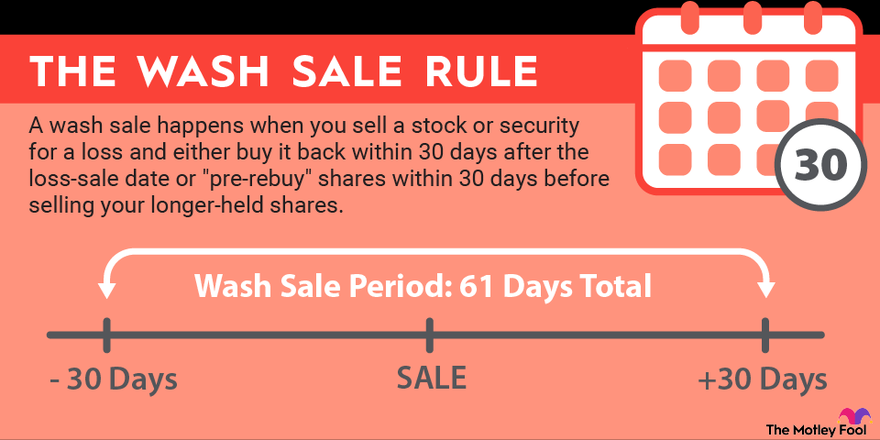
The wash-sale rule prohibits selling an investment for a loss and replacing it with the same or a “substantially identical” investment 30 days before or after the sale. If you do have a wash sale, the IRS will not allow you to write off the investment loss which could make your taxes for the year higher than you hoped.

CITE: https://www.r2library.com/Resource/Title/082610254

***

***

Don’t get soaked by the wash sale

Even if you sell at a loss from a brokerage account or IRA, it still might not want to permanently exit a portfolio position. It may want to get back into an investment now at a cheaper cost with room to re-grow.

BUT – Just wait a moment, according to the IRS “wash-sale” rule.

The IRS will not count a capital loss if, within 30 days before the sale or within 30 days afterwards, the taxpayer is also buying or acquiring a “substantially identical” investment. The rule applies to investments like stocks, bonds, mutual funds, exchange traded funds and options – but not cryptocurrency.

The basic trick is just keeping track of the days. Another skill is considering what counts as “substantially identical” for the fast-moving investor who sees a buying opportunity either 30 days before or after the day of sale.

An investor could sell a stock and buy an exchange traded fund or mutual fund that contains the stock and not run afoul of the rule, Going the other way, from a mutual fund or ETF containing a stock to a direct stock purchase, also will not trigger the rule, he noted.

EXAMPLE: Suppose an investor has several investment accounts — perhaps one is a long-term account and the other is more for short-term trades. The rule applies across the account. So if one sells and the other buys within 30 days before or after, the wash-sale rule will scrap the capital loss.

Buying and selling shares of two different funds tracking the same index within the 30-day period could also cause the wash sale rule to kick in. However, a move like selling a piece of an ETF tracking the S&P 500, and then soon buying an ETF tracking the Russell 1000 Index would be OK according to a tutorial from Charles Schwab SCHW, +3.70%. “That would preserve your tax break and keep you in the market with about the same asset allocation,” an explainer said.

But while someone’s eyeing a repurchase and letting the wash-sale window close one place, they may have a chance to start the tax strategy process in a different part of their portfolio. “There’s really tax loss harvesting opportunities across a number of different asset classes this year.”

***

COMMENTS APPRECIATED

Thank You

***

ORDER: https://www.routledge.com/Comprehensive-Financial-Planning-Strategies-for-Doctors-and-Advisors-Best/Marcinko-Hetico/p/book/9781482240283

***

TESTIFY: Bankman-Fried of FTX Goes to the U.S. House Panel

By Mehnaz Yasmin and Kanishka Singh

***

***

FTX’s Sam Bankman-Fried is set to testify before a U.S. House committee on Tuesday, the cryptocurrency exchange’s founder and the congressional panel said on Friday, as regulators investigate his role in the wake of its collapse. The chair of the House of Representatives Committee on Financial Services, Maxine Waters, told Reuters on Thursday that she was prepared to subpoena Bankman-Fried if he did not agree to appear before the panel, which is holding a hearing as part of its probe into FTX.

***

ORDER :https://www.amazon.com/Dictionary-Health-Information-Technology-Security/dp/0826149952/ref=sr_1_5?ie=UTF8&s=books&qid=1254413315&sr=1-5

***

In a statement late on Friday, the panel said it would hear from newly appointed FTX CEO John Ray and from Bankman-Fried, FTX’s founder and former CEO, on Tuesday.

“I still do not have access to much of my data — professional or personal. So there is a limit to what I will be able to say, and I won’t be as helpful as I’d like,” Bankman-Fried said on Friday on Twitter. “But as the committee still thinks it would be useful, I am willing to testify on the 13th,” he added.

The hybrid hearing is scheduled for 10 a.m. ET (1500 GMT) on Tuesday, the committee said.

***

ORDER: https://www.routledge.com/Comprehensive-Financial-Planning-Strategies-for-Doctors-and-Advisors-Best/Marcinko-Hetico/p/book/9781482240283

***
COMMENTS APPRECIATED

Thank You

***

PODCAST: The Fiscal Multiplier Effect

By Staff Reporters

***

***

Generally, they are defined as the ratio of a change in output (ΔY) to a discretionary change in government spending or tax revenue (ΔG or ΔT) (Spilimbergo and others, 2009). Thus, the fiscal multiplier measures the effect of a $1 change in spending or a $1 change in tax revenue on the level of GDP.

CITE: https://www.r2library.com/Resource/Title/082610254

***

LINK: https://www.tutor2u.net/economics/reference/multiplier-effect

***

COMMENTS APPRECIATED

Thank You

***

ORDER: https://www.routledge.com/Comprehensive-Financial-Planning-Strategies-for-Doctors-and-Advisors-Best/Marcinko-Hetico/p/book/9781482240283

***

PODCAST: Fractional Reserve Banking

By Staff Reporters

***

Fractional reserve banking is a system in which only a fraction of bank deposits are backed by actual cash on hand and available for withdrawal. This is done to theoretically expand the economy by freeing capital for lending. Today, most economies’ financial systems use fractional reserve banking.

CITE: https://www.r2library.com/Resource/Title/082610254

***

***

LINK: https://www.youtube.com/watch?v=gd8B-zrMSYk

***

COMMENTS APPRECIATED

THANK YOU

***

ORDER: https://www.routledge.com/Comprehensive-Financial-Planning-Strategies-for-Doctors-and-Advisors-Best/Marcinko-Hetico/p/book/9781482240283

***

Understanding the “Language” of Healthcare Finance, IT, Economics, Investing and Insurance

By Ann Miller RN MHA CMP

Courtesy: http://www.CertifiedMedicalPlanner.org

The ME-P is Doing Its’ Part with Comprehensive Dictionaries and Glossaries

Product DetailsProduct DetailsProduct Details

[Click on each icon for a larger view]

CITE: https://www.r2library.com/Resource/Title/082610254

***

PODCAST: Hospital Debt and Tax Exempt Bonds

By Eric Bricker MD

***

***

CITE: https://www.r2library.com/Resource/Title/082610254

COMMENTS APPRECIATED

Thank You

***

ORDER: https://www.routledge.com/Comprehensive-Financial-Planning-Strategies-for-Doctors-and-Advisors-Best/Marcinko-Hetico/p/book/9781482240283

****

What is a Rapid Learning Health System?

The RLH – From Concept to Action

[By Staff Reporters]

According to Greene, Reid and Larson, clinicians and health systems are facing widespread challenges, including changes in care delivery, escalating health care costs, and the need to keep up with rapid scientific discovery.

Re-organizing U.S. health care and changing its practices to render better, more affordable care requires transformation in how health systems generate and apply knowledge. The “rapid-learning health system” is posited as a conceptual strategy to spur such transformation – leverages and recent developments in health information technology and a growing health data infrastructure to access and apply evidence in real time, while simultaneously drawing knowledge from real-world care-delivery processes to promote innovation and health system change on the basis of rigorous research.

***

TLHCS

[A Rapid Learning Health System]

***

The Essay

This article describes an evolving learning health system at Group Health Cooperative, the 6 phases characterizing its approach, and examples of organization-wide applications.

Link: http://www.ncbi.nlm.nih.gov/pubmed/22868839

It is a practical model that promotes bidirectional discovery and an open mind at the system level, resulting in willingness to make changes on the basis of evidence that is both scientifically sound and practice-based.

Assessment

Rapid learning must be valued as a health system property to realize its full potential for knowledge generation and application.

Citation

Implementing the learning health system: from concept to action. Greene SM1, Reid RJ, Larson EB. Author information: Group Health Cooperative, 320 Westlake Avenue North, GHQ E2N, Seattle, WA 98109, USA. greene.sm@ghc.org

Channel Surfing the ME-P

Have you visited our other topic channels? Established to facilitate idea exchange and link our community together, the value of these topics is dependent upon your input. Please take a minute to visit. And, to prevent that annoying spam, we ask that you register. It is fast, free and secure.

More:

Conclusion

Your thoughts and comments on this ME-P are appreciated. Feel free to review our top-left column, and top-right sidebar materials, links, URLs and related websites, too. Then, subscribe to the ME-P. It is fast, free and secure.

More: http://onlinelibrary.wiley.com/doi/10.1002/hast.134/abstract

Speaker: If you need a moderator or speaker for an upcoming event, Dr. David E. Marcinko; MBA – Publisher-in-Chief of the Medical Executive-Post – is available for seminar or speaking engagements. Contact: MarcinkoAdvisors@msn.com

OUR OTHER PRINT BOOKS AND RELATED INFORMATION SOURCES:

Product DetailsProduct Details

PHYSICIAN PAYMENTS: The Financial Compensation Battle Continues

By Staff Reporters

***

***

Paying paying doctors and medical providers for their services may seem simple on the surface, but it’s actually extremely complex. Enter two of the most commonly heard phrases in healthcare: “fee-for-service” and “value-based care,” two models insurers use to decide how much to pay providers. According to Healthcare Brew:

  1. Under a fee-for-service model, providers are paid for each individual service they perform, like a blood test or an X-ray, according to Jennifer Clawson, partner and director of value-based health systems at Boston Consulting Group. A service is provided, and the doctor gets a fixed fee for providing it. Simple enough.
  2. The value-based care model is a bit more complicated, as there are many types of value-based payments. What makes them “value-based” is that payers take patient outcomes into consideration, aka they consider the relative value. “The core of value-based care is ultimately, ‘How do I get a better outcome for less money?’” said Sam Hendler, managing director at private equity firm Thomas H. Lee Partners.

One type of value-based payment is called a bundled payment, Clawson said. Say you have a heart condition and need to get a stent put in. There are usually several providers involved in that process, e.g., a primary care doctor, cardiac surgeon, and anesthesiologist. An insurer gives the health system a set amount of money to cover everyone involved in the procedure, and the health system decides how to divvy it up.

Another type of value-based payment is called capitation, and there’s multiple types of capitation payments. It’s sort of like a bundled payment, but instead of insurers paying a set amount per procedure, they’re paying a set amount to cover an entire population of patients with a specific disease, like diabetes.

CITE: https://www.r2library.com/Resource/Title/082610254

COMMENTS APPRECIATED

Thank You

ORDER: https://www.amazon.com/Business-Medical-Practice-Transformational-Doctors/dp/0826105750/ref=sr_1_9?s=books&ie=UTF8&qid=1287563112&sr=1-9

****

AMAZON: Healthcare Act II

By Heath Capital Consultants, LLC

***

***

The launch of Amazon Clinic comes less than two months after the announcement that Amazon Care would be shut down. Amazon Clinic, the retail giant’s virtual and in-person medical care service, was rolled out in 2019 as a pilot employee benefit for their own employees and quickly expanded to servicing non-Amazon employers across the U.S. (including large companies such as Hilton, TrueBlue, and Silicon Labs) by 2021.

CITE: https://www.r2library.com/Resource/Title/082610254

The service combined virtual and in-person care, offering home health services, telehealth appointments, and prescription delivery. (Read more…) 

***

RELATED: https://medicalexecutivepost.com/2022/09/06/more-about-the-end-of-amazon-care/

MORE: https://medicalexecutivepost.com/2022/09/05/amazons-new-move-in-health-care/

COMMENTS APPRECIATED

Thank You

***

ORDER: https://www.amazon.com/Dictionary-Health-Insurance-Managed-Care/dp/0826149944/ref=sr_1_4?ie=UTF8&s=books&qid=1275315485&sr=1-4

***

Sat GREENISH: On Black-Friday?

By Staff Reporters

***

***

On ground and On line shoppers didn’t let concerns about higher prices or a recession keep them from a record-setting this Black Friday.

Consumers spent a record $9.29 billion while online shopping yesterday, Black Friday, according to Adobe Analytics which tracks more than 85% of the top 100 U.S. online retailers. That’s an increase of 2.8% over a year ago – surpassing the previous online Black Friday sales high mark of $9.03 billion in 2023.

Nearly half (48%) of online sales were made over smartphones, up from 55% last year, according to the company’s 2023 Holiday Shopping Trends & Insights Report.

***

COMMENTS APPRECIATED

Thank You

***

ORDER: https://www.routledge.com/Comprehensive-Financial-Planning-Strategies-for-Doctors-and-Advisors-Best/Marcinko-Hetico/p/book/9781482240283

***

PODCAST: What is Apophenia?

Apophenia is the tendency to mistakenly perceive connections and meaning between unrelated things. The termwas coined by psychiatrist Klaus Conrad in his 1958 publication on the beginning stages of schizophrenia.

Conrad defined it as “unmotivated seeing of connections [accompanied by] a specific feeling of abnormal meaningfulness”. He described the early stages of delusional thought as self-referential, over-interpretations of actual sensory perceptions, as opposed to hallucinations.

LINK: https://www.amazon.com/Dictionary-Health-Insurance-Managed-Care/dp/0826149944/ref=sr_1_4?ie=UTF8&s=books&qid=1275315485&sr=1-4

 ***

***

Man in the Moon refers to any of several pareidolic images of a human face, head or body that certain traditions recognize in the disc of the full moon.

Pareidolia is the tendency for incorrect perception of a stimulus as an object, pattern or meaning known to the observer, such as seeing shapes in clouds, seeing faces in inanimate objects or abstract patterns, or hearing hidden messages in music. Pareidolia is a subcategory of apophenia.

PODCAST: https://www.bing.com/videos/search?q=Apophenia%3a&ru=%2fvideos%2fsearch%3fq%3dApophenia%253a%26FORM%3dHDRSC3&view=detail&mid=7A6D44176273D21435437A6D44176273D2143543&&FORM=VDRVRV

Your thoughts and comments are appreciated.

TEXTS FOR DOCTORS

THANK YOU

Product DetailsProduct DetailsProduct Details

***

MORE: Tax Loss Harvesting

Tax Loss Harvesting

By Vitaliy Katsenelson, CFA

DEFINITION: https://medicalexecutivepost.com/2022/11/06/tax-loss-harvesting-what-it-is/

***

Tax Lost Harvesting with Examples

I enjoy writing about taxes as much as I enjoy going to the dentist. But I feel what I am about to say is important. We – including yours truly – have been mindlessly conditioned to do tax selling at the end of every year to reduce our tax bills. On the surface it makes sense. There are realized gains – why don’t we create some tax losses to offset them?

Here is the problem. With a few exceptions, which I’ll address at the end, tax-loss selling makes no logical sense. Let me give you an example.

Let’s say there is a stock, XYZ. We bought it for $50; we think it is worth $100. Fourteen months later we got lucky and it declined to $25. Assuming our estimate of its fair value hasn’t changed, we get to buy $1 of XYZ now for 25 cents instead of 50 cents.

But as of this moment we also have a $25 paper loss. The tax-loss selling thinking goes like this: Sell it today, realize the $25 loss, and then buy it in 31 days. (This is tax law; if we buy it back sooner the tax loss will be disqualified.) This $25 loss offsets the gains we took for the year. Everybody but Uncle Sam is happy.

Since I am writing about this and I’ve mentioned above I’d rather be having a root canal, you already suspect that my retort to the above thinking is a great big NO!

In the first place, we are taking the risk that XYZ’s price may go up during our 31-day wait. We really have no idea and rarely have insights as to what stocks will do in the short term. Maybe we’ll get lucky again and the price will fall further. But we’re selling something that is down, so risk in the long run is tilted against us. Also, other investors are doing tax selling at the same time we are, which puts additional pressure on the stock.

Secondly – and this is the most important point – all we are doing is pushing our taxes from this year to future years. Let’s say that six months from now the stock goes up to $100. We sell it, and… now we originate a $75, not a $50, gain. Our cost basis was reduced by the sale and consequent purchase to $25 from $50. This is what tax loss selling is – shifting the tax burden from this year to next year. Unless you have an insight into what capital gains taxes are going to be in the future, all you are doing is shifting your current tax burden into the future.

Thirdly, in our first example we owned the stock for 14 months and thus took a long-term capital loss. We sold it, waited 31 days, and bought it back. Let’s say the market comes back to its senses and the price goes up to $100 three months after we buy it back. If we sell it now, that $75 gain is a short-term gain. Short-term gains are taxed at your ordinary income tax bracket, which for most clients is higher than their capital gain tax rate. You may argue that we should wait nine months till this gain goes from short-term to long-term. We can do that, but there are costs: First, we don’t know where the stock price will be in nine months. And second, there is an opportunity cost – we cannot sell a fully priced $1 to buy another $1 that is on fire sale.

Final point. Suppose we bought a stock, the price of which has declined in concert with a decrease of its fair value; in other words, the loss is not temporary but permanent.  In this case, yes, we should sell the stock and realize the loss. 

We are focused on the long-term compounding of your wealth. Thus our strategy has a relatively low portfolio turnover. However, we always keep tax considerations in mind when making investment decisions, and try to generate long-term gains (which are more tax efficient) than short term gains. 

We understand that each client has their unique tax circumstances. For instance, your income may decline in future years and thus your tax rate, too. Or higher capital gains may put you in a different income bracket and thus disqualify you from some government healthcare program.

We are here to serve you, and we’ll do as much or as little tax-loss selling as you instruct us to do. We just want you to be aware that with few exceptions tax-loss selling does more harm than good.

***

ORDER: https://www.routledge.com/Comprehensive-Financial-Planning-Strategies-for-Doctors-and-Advisors-Best/Marcinko-Hetico/p/book/9781482240283

CITE: https://www.r2library.com/Resource/Title/082610254

***

COMMENTS APPRECIATED

Thank You

***

What is EISOPTROPHOBIA?

NOW YOU SEE ME – NOW I DON’T WANT TO SEE MYSELF

***

***

By Dr. David Edward Marcinko MBA CMP®

CMP logo

SPONSOR: http://www.CertifiedMedicalPlanner.org

DEFINITION: Eisoptrophobia  is the fear of mirrors or, more specifically, of seeing your own reflection in a mirror. Looking into a mirror can cause people with eisoptrophobia shame or distress.

The term is derived from the Greek “eis” and “optikos”. Even though the sufferers know their fear is irrational, they experience excessive anxiety when they look into the mirror.

ASSESSMENT: Your thoughts are appreciated.

***

***

ORDER DICTIONARY: https://www.amazon.com/Dictionary-Health-Insurance-Managed-Care/dp/0826149944/ref=sr_1_4?ie=UTF8&s=books&qid=1275315485&sr=1-4

INVITE DR. MARCINKO: https://medicalexecutivepost.com/dr-david-marcinkos-

THANK YOU

***

What is Hermeneutics?

To Understand … and be Understood

By Dr. David E. Marcinko MBA

Hermeneutics (/ˌhɜːrməˈnjuːtɪks/) is the theory and methodology of interpretation, originally the interpretation of biblical texts, wisdom literature, and philosophical texts.

Hermeneutics is more than interpretive principles or methods we resort to when immediate comprehension fails. Rather, hermenetics is the art of understanding and of making oneself understood.

***

***

MORE: https://medium.com/@danpantelo/hermeneutics-why-people-interpret-things-differently-870f35436fe8

Conclusion

Your thoughts and comments on this ME-P are appreciated. Feel free to review our top-left column, and top-right sidebar materials, links, URLs and related websites, too. Then, subscribe to the ME-P. It is fast, free and secure.

Speaker: If you need a moderator or speaker for an upcoming event, Dr. David E. Marcinko; MBA – Publisher-in-Chief of the Medical Executive-Post – is available for seminar or speaking engagements. Contact: MarcinkoAdvisors@msn.com

***

ORDER: http://www.HealthDictionarySeries.org

HDS

Product Details      Product Details

Product Details

PODCAST: What is a “Potemkin” Village?

“Fake It – Till You Make It”

Courtesy: www.CertifiedMedicalPlanner.org

By Dr. David E. Marcinko MBA

Originally, a Potemkin Village was any construction whose sole purpose was to provide an external façade making people believe a failing country was prosperous.

DEFINITION: https://en.wikipedia.org/wiki/Potemkin_village

The term comes from a fake portable village built to impress Empress Catherine II by her lover Grigory Potemkin, during her journey to Crimea, in 1787.

PODCAST: https://www.bing.com/videos/search?q=potemkin+village&qpvt=potemkin+village&view=detail&mid=D6C49B8CE683A2E7053ED6C49B8CE683A2E7053E&&FORM=VRDGAR&ru=%2Fvideos%2Fsearch%3Fq%3Dpotemkin%2Bvillage%26qpvt%3DPotemkin%2BVillage%26FORM%3DVDRE

The term “Potemkin” has spawned other linguistic machinations, as well:

P-NUMBERS: Are made up and appear to be valid and legitimate but are not based in reality.

P-POLITICS: Candidates who say have a certain amount of donated money but have actually received less.

LINK: https://www.amazon.com/Dictionary-Health-Economics-Finance-Marcinko/dp/0826102549/ref=sr_1_6?ie=UTF8&s=books&qid=1254413315&sr=1-6

P-HOSPITALS: Impressive, but actually sham facades, in Wuhan, China?

P-NETWORKS: Erroneous quantitative data point like “counts”, “likes” or “winks” for posts on social media forums or e-boards; etc.

LINK: https://thefuturebuzz.com/2012/06/12/social-proofiness-spotting-digital-potemkin-numbers/

Conclusion: Do you know of any other word derivations? Please opine.

THANK YOU

Product DetailsProduct DetailsProduct Details

***

PODCAST: What is Anscombe’s Quartet?

The Need for Data Visualization

Courtesy: www.CertifiedMedicalPlanner.org

Anscombe’s Quartet comprises four data sets that have nearly identical simple descriptive statistics, yet have very different distributions and appear very different when graphed. Each dataset consists of eleven (x,y) points.

LINK: https://www.amazon.com/Dictionary-Health-Information-Technology-Security/dp/0826149952/ref=sr_1_5?ie=UTF8&s=books&qid=1254413315&sr=1-5

They were constructed in 1973 by the statistician Francis Anscombe to demonstrate both the importance of graphing data before analyzing it and the effect of outliers and other influential observations on statistical properties. He described the article as being intended to counter the impression among statisticians that “numerical calculations are exact, but graphs are rough.”

So, always plot that data!

***

PODCAST: https://www.bing.com/videos/search?q=Anscombe%e2%80%99s+Quartet%3a+&&view=detail&mid=68A62E7AB26B2B6EE69668A62E7AB26B2B6EE696&&FORM=VRDGAR&ru=%2Fvideos%2Fsearch%3Fq%3DAnscombe%25e2%2580%2599s%2BQuartet%253a%2B%26FORM%3DHDRSC3

Assessment: Your thoughts and comments are appreciated.

Product DetailsProduct DetailsProduct Details

DICTIONARIES FOR PHYSICIAN-EXECUTIVES AND MEDICAL CXOs

***