“Magnificent Seven” Stocks Down while Bitcoin Up

STATE OF THE UNION EVENING

***

  • Markets: Stocks rose yesterday as investors watched Jerome Powell tell lawmakers that he still expects to cut interest rates this year, just not right away.
  • Stock spotlight: Troubled regional lender New York Community Bancorp, which fell 40% before soaring back up after announcing it’s getting $1 billion from investors, including ex-Treasury Secretary Steven Mnuchin’s firm.

***

***

Meanwhile, Stocks tumbled on Tuesday as several of the “Magnificent Seven” tech giants shed some of their gains from earlier this year, dragging the entire market with them. One of those companies was Apple, which fell about 3% after a report suggested that iPhone sales in China have plunged in the first six weeks of 2024.

And, Bitcoin set a new record yesterday, briefly jumping past $69k before falling back down to ~$62k. The rally highlighted the crypto’s seemingly rapid recovery from the nail-in-the-coffin that was FTX’s demise in 2022.

COMMENTS APPRECIATED

Thank You

***

***

FINANCIAL PLANNING: Physician and Fiduciary Focused

(“Informed Voice of a New Generation of Fiduciary Advisors for Healthcare”)

By Dr. David Edward Marcinko MBA CMP

http://www.MarcinkoAssociates.com

As fellow doctors, we understand better than most the more complex financial challenges physicians can face when it comes to their financial planning. Of course, most physicians ultimately make a good income, but it is the saving, asset and risk management tolerance and investing part that many of our colleagues’ struggle with. Far too often physicians receive terrible guidance, have no time to properly manage their own investments and set goals for that day when they no longer wish to practice medicine.

For the average doctor or healthcare professional, the feelings of pride and achievement at finally graduating are typically paired with the heavy burden of hundreds of thousands of dollars in student loan debt.

You dedicated countless hours to learning, studying, and training in your field. You missed birthdays and holidays, time with your families, and sacrificed vacations to provide compassionate and excellent care for your patients. Amidst all of that, there was no time to give your finances even a second thought.

Between undergraduate, medical school, and then internship and residency, most young physicians do not begin saving for retirement until late into their 20s, if not their 30s. You’ve missed an entire decade or more of allowing your money and investments to compound and work for you. When it comes to addressing your financial health and security, there’s no time to waste.

And you may be misled by unscrupulous “advisors”.

For example:

Question: Do you know the difference between a “Fee-Only” and a “Fee-Based financial advisor? Not knowing may cost you tens of thousands of dollars, or more, in excessive advisory fees.

MORE: https://marcinkoassociates.com/financial-planning/

Of course, all of this compound’s physician stress and burnout related issues, as well.

MORE: https://marcinkoassociates.com/process-what-we-do/

COMMENTS APPRECIATED

Thank You

***

***

DAILY UPDATE: Super Micro Joins S&P 500 as Markets Still Rise

By Staff Reporters

***

***

Another record-high to start Monday.

The S&P 500 closed Friday at its highest level ever, having posted gains in 16 out of the last 18 weeks for the first time since 1971. And the index is getting a flashy new stock today: the server-maker Super Micro. Super Micro is the AI all-star you’ve never heard of, jumping over 20x in the past two years and more than 200% in 2024 alone.

CITE: https://www.r2library.com/Resource

COMMENTS APPRECIATED

Thank You

***

***

PEP: What is a Pooled Employer “Defined Contribution” Plan?

RETIREMENT PLANNING

By Staff Reporters

***

***

A PEP is a defined contribution plan, such as a 401(k), in which multiple employers can participate. When employers join a PEP, they delegate their named fiduciary role to a third-party pooled plan provider (PPP). PEP fiduciary oversight falls on the PPP rather than the employer. And although each PPP may set its own eligibility requirements, businesses joining a PEP benefit plan needn’t operate in the same industry or geographical area.

PEP plans provide viable 401(k) alternatives for small business owners who may otherwise struggle to compete for talent against large organizations with comprehensive benefits packages.

CITE: https://www.r2library.com/Resource/Title/082610254

Other advantages include: Less in-house administration: The PPP assumes responsibility for much of the plan administration, handling all plan documentation, governmental filings and ongoing compliance. Employee payroll deductions are left to the employer, but these can be efficiently managed with the help of a payroll service provider that integrates payroll and benefits.

Tax credits can help offset PEP start-up costs. For the first three years of participation, employers may be eligible for a tax credit of $5,000 annually, with an additional $500 available to those who set up automatic enrollment. Under Secure Act 2.0, an additional credit of up to $1,000 per employee for eligible employer contributions may apply to employers with up to 50 employees for the preceding taxable year. This credit phases out from 51 to 100 employees.

Businesses participating in single-employer retirement plans (SEP) must independently communicate and coordinate with their record-keeper, custodian, investment advisor, trustee and auditor. With PEP, all these tasks and services are bundled into one, saving employers time and money.

Despite its advantages, a PEP does have some drawbacks, particularly when compared to an SEP. Unlike a PEP, an SEP gives employers more of the following:

  • Flexibility: Employers can customize the design of their plan to meet their retirement goals and the needs of their employees.
  • Control: Employers are not dependent on the actions or decisions of others and can access information and resolve problems directly without the need of a third party.
  • Choice: Employers have the unilateral freedom to choose a different service provider, move their plan or negotiate better pricing if they are unsatisfied with the cost or quality of service.

COMMENTS APPRECIATED

Thank You

***

***

SPAC: Smack Down

By Staff Reporters

***

***

2023 was a bad year for SPACs. 2024 may be even tougher, if the SEC has anything to say about it. Last week, the agency approved rules intended to increase investor protections around SPACs and bring their treatment more in line with that of traditional IPOs.

Special purpose acquisition companies, or SPACs, are companies that go public through IPOs with the intent of merging with or acquiring private companies, known as target companies. The target companies can then be publicly listed without having to go through an IPO. SPACs, which allow companies to go public more quickly than ordinary IPOs, became popular in 2020 and 2021. But the “SPAC boom” ended in 2022 as the market worsened, and the SEC first proposed the tighter regulations it just released. In 2023, only 31 SPACs went public, compared with 613 in 2021.

CITE: https://www.r2library.com/Resource

SEC Chair Gary Gensler, a longtime critic of SPACs, hailed the new regulations as a means of safeguarding investors.

“Just because a company uses an alternative method to go public does not mean that its investors are any less deserving of time-tested investor protections,” he said in a statement.

***

***
COMMENTS APPRECIATED

Thank You

***

DAILY UPDATE: Consumer Spending Down While CVS Earnings Up

By Staff Reporters

***

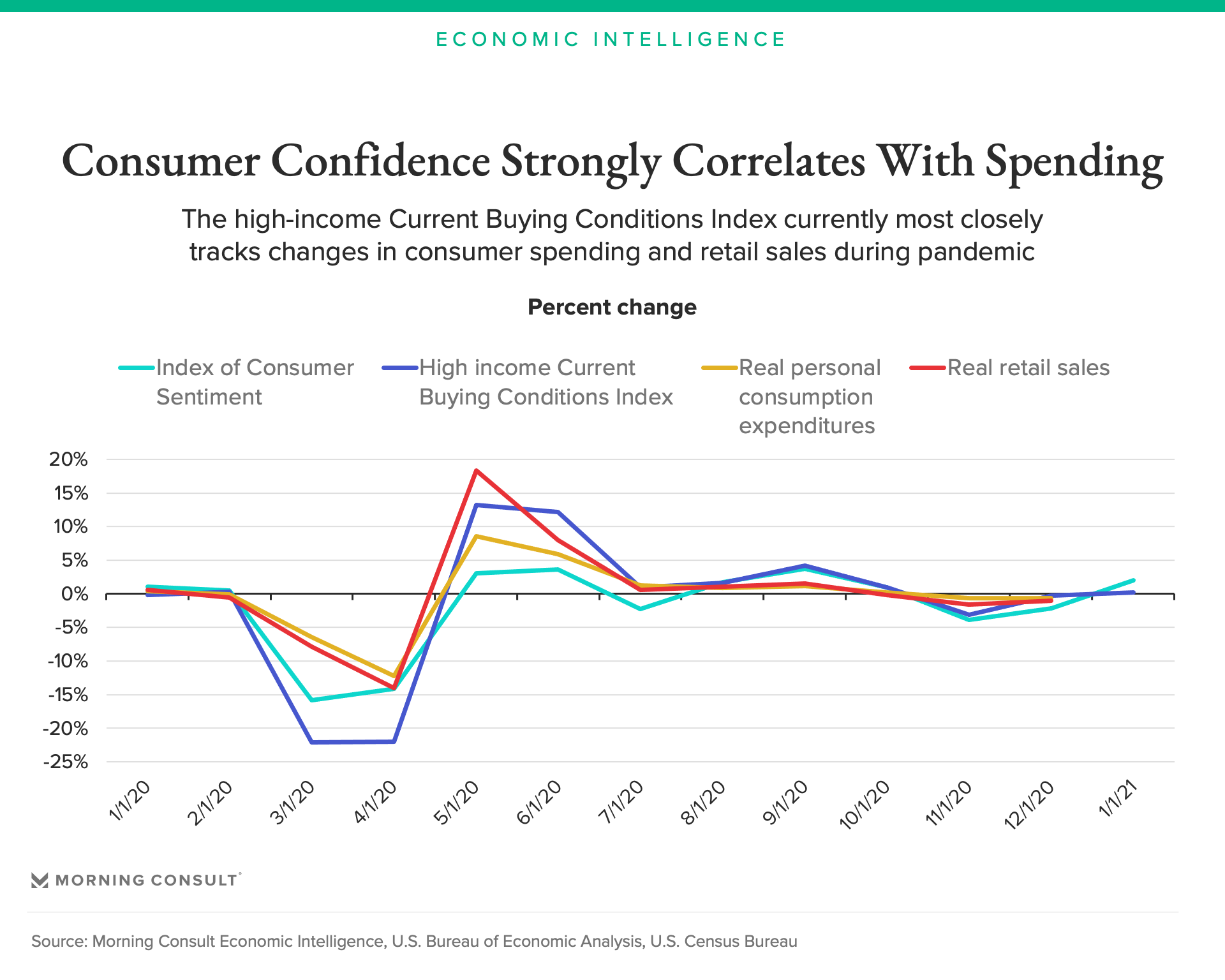
To See What’s Next For Consumer Spending, Take a Closer Look at High ...
  • Stat: 0.8%. That’s how much consumer spending fell in January 204—a much bigger dip than expected (CNBC).

CITE: https://www.r2library.com/Resource

CVS reported strong results for its healthcare segment in 2023, showing a 10.2% increase in revenue compared to the prior year. Still, executives lowered the segment’s 2024 guidance in anticipation of rising medical costs, according to earnings released this month.

Finally, the US stock market reopens today after the long weekend, and everyone’s still talking about the Magnificent Seven. That’s because, according to a new report from Deutsche Bank, profits at these seven tech giants are greater than the profits of all publicly traded companies in nearly every G20 country. And in terms of market value, they’d be the second-largest national stock exchange in the world. Goldman Sachs sees this party lasting all night: It raised its 2024 target for the S&P 500 for the second time.

COMMENTS APPRECIATED

Thank You

***

***

Order Our “Best-Selling” Healthcare Administration Dictionaries

Get ’em … While They are Hot!

By Ann Miller RN MHA

[ME-P Executive Director]

Just click on the book icon to order; get any one or all three! You’ll be glad you did.

 Product Details

Product Details

Product Details

Speaker: If you need a moderator or speaker for an upcoming event, Dr. David E. Marcinko; MBA – Publisher-in-Chief of the Medical Executive-Post – is available for seminar or speaking engagements. Contact: MarcinkoAdvisors@msn.com

HOSPITAL OPERATING MARGINS: Non-Profits Still Down

By Staff Reporters

***

***

Operating margins at not-for-profit hospitals are expected to “gradually improve” in 2024 but will still lag far behind pre-pandemic levels, according to a January report from credit rating agency Fitch Ratings.

Median operating margins for not-for-profit hospitals dipped to record lows during the pandemic, falling to 0.2% in 2022, according to the agency, which has yet to report numbers for 2023. In 2019, the median not-for-profit hospital operating margin was 2.4%, according to Moody’s.

Despite signs that margins are improving, they’re still “nowhere near” where they were pre-2020, and a “larger expense base will keep huge gains unlikely,” according to Fitch.

CITE: https://www.r2library.com/Resource

“2024 will not be markedly better and certainly not the V-shaped recovery we’re hoping for,” Kevin Holloran, senior director and sector head at Fitch, said in a statement.

COMMENTS APPRECIATED

Thank You

***

***

***

BANKS: Down

By Staff Reporters

***

***

Commercial real estate has been on the struggle bus since the pandemic hit in 2020, and now it’s taking regional banks along for the ride.

CITE: https://www.r2library.com/Resource

Recently, New York Community Bancorp (NYCB) shares took an 11% tumble—on top of a 38% plunge on Wednesday—after the bank said it’s dealing with surging losses from office buildings and multifamily apartment buildings. It’s a sign that commercial real estate (CRE) lenders are reckoning with the fact that they might not get their money back as commercial landlords struggle with high vacancies and interest rates:

  • More than $2.2 trillion in US commercial property loans will come due by 2027, according to the Wall Street Journal.
  • The default risk is worse for regional banks, where CRE loans make up nearly 29% of all assets, versus 6.5% at big national banks.

The KBW Regional Banking Index also dropped 9.2% since Wednesday, the most since Silicon Valley Bank’s collapse last year. (Coincidentally, most of the assets of Signature Bank, which failed shortly after SVB, were bought by NYCB.)

COMMENTS APPRECIATED

Thank You

***

***

ENTREPRENEURS: Physicians and Medical Professionals

By Dr. David Edward Marcinko MBA

SPONSOR: http://www.MARCINKOASSOCIATES.com

***

***

SERVING ALL PHYSICIANS AND HEALTHCARE PROVIDERS

At D.E. Marcinko & Associates our clients traditionally are medical entrepreneurs that include physicians [MD, MBBS, DPM and DO], dentists [DDS and DMD], Registered Nurses [RNs], Certified Registered Nurse Anesthetists [CRNA], Physician Assistants [PA] and Nurse Practitioners [NP]. A growing cohort of clients include medical technologists, physical, speech and occupational therapists, etc.

The above healthcare providers are naturally segregated into three career tranches: 1. New practitioners, 2] Mid-Career practitioners and 3] Mature practitioners. We serve them all and are fully prepared for any special needs situation that may arise in any tranche [death, divorce, adverse risk event and/or bankruptcy, reorganization, etc].

At D. E. Marcinko & Associates, our colleagues are located throughout the United States. They are considering the sale, purchase, strategic or operational improvement, merger, acquisition and/or other business or personal financial planning transaction. Our guidance helps doctors, nurses, practices, clinics, ambulatory surgery centers, outpatient wound care facilities realize their ultimate goals.

We can do it all for you, or educate and guide do it yourself colleagues to reach the best possible outcomes.

READ MORE: https://marcinkoassociates.com/welcome-medical-colleagues/

COMMENTS APPRECIATED

Thank You

***

***

BUYING: Home Economics

By Staff Reporters

***

***

A report released last month by the National Association of Realtors (NAR) confirms what many Americans suspect: home affordability is down. Due to rising interest rates and low inventory, NAR found that the average income of a home buyer between July 2022 and June 2023 was $107,000, up from $88,000 the year prior—one of the highest levels since NAR started tracking in 1981.

But the housing market continues to churn. The organization found…

  • More and more home buyers are single women. The share of single women buying homes is almost double that of men. They’re also slightly older—a single woman buying her first home is 38 on average, while a single man is 33 years old.
  • Buyers are older. The average first-time home buyer is 35, up from 29 in the 1980s, but it’s older people who are buying up the three-bedrooms after selling their starter homes: NAR found that the median age of a repeat home buyer last year was 58. In 1981, it was 36 years old.

COMMENTS APPRECIATED

Thank You
***

***

Can this Doctor RETIRE?

AFFORDABILITY IN 2024

By Staff Reporters

SPONSOR: http://www.MARCINKOASSOCIATES.com

***

***

CAN THIS DOCTOR RETIRE – HE ASKS?

I’m a late career entry and 55 year old burned out doctor who wants out. Can I retire in 2 years with a pension of $6,100 a month (net). I have $825,000 in my 401(k) and 457 plan and a mortgage of $95,000 at 5.30%. I am not planning to move and will retire in place.

SOME THOUGHTS AND ANSWERS?

Congratulations on you solid retirement fund on top of a pending pension. 

The first step you should take is to create a detailed budget for your retirement years. Consider expected living costs, healthcare expenses, travel and any other major expenses. Many folks make the mistake of setting up a monthly budget, but keep out significant milestones that are often costly, such as paying for a child’s college education or wedding.

Next, you should figure out your plan for housing. Mortgage payments, upkeep and taxes are important considerations. There was no mention of mortgage equity. 

Another factor to take into account is state and Federal tax projections. If the 401(k) funds are all pre-tax dollars, any distributions will be taxable and there may be penalties if funds are withdrawn prior to 59 ½ years old. That will impact your retirement plan if you’re preparing to retire at 57-58.

It also sounds like you haven’t taken into account your Social Security allowance. It’s possible that your pension is one that comes with a government pension offset which would explain why you didn’t include it. On the other hand, maybe you’re thinking it’s far out enough that it doesn’t factor into your calculations?

Finally, you may want to look for a fee-only financial advisor that is paid directly by the client and doesn’t receive commissions for recommending financial products. So, advice is less biased. And get a fiduciary advisor which means they are required to put your best interests ahead of their own. 

Also, someone with medical niche specificity. Good Luck!

***

NOTE: This is not an offer to buy or sell any security or interest. All investing involves risk, including loss of principal. Working with an adviser may come with potential downsides such as payment of fees (which will reduce returns). There are no guarantees that working with an adviser will yield positive returns. The existence of a fiduciary duty does not prevent the rise of potential conflicts of interest.

Refer a Colleague: MarcinkoAdvisors@msn.com

***

COMMENTS APPRECIATED

Thank You

***

***

COMPETITION: Apple, MSFT & Google

Chat-Bots

By Staff Reporters

***

***

Microsoft just unseated Apple yesterday as the world’s most valuable publicly traded company…and then gave the throne right back. The AI-fueled stock rally that Microsoft has enjoyed for months finally buoyed the software company’s market capitalization to $2.9 trillion Thursday-Firday morning, briefly edging past Apple’s $2.89 trillion. Apple had been the most valuable company in the world for a year and a half, and on-and-off for more than a decade.

Apple was back on top by midday, but Microsoft’s momentary reign—the fourth time it’s briefly overtaken Apple since 2018—indicates that the tables may be turning between these longtime rivals.

CITE: https://www.r2library.com/Resource

***

Employees in its streaming divisions, Google cut about a thousand roles across its Assistant and core engineering teams, The Verge reported. The company is also reportedly removing 17 “underutilized” features from its voice-activated Google Assistant software, which launched in 2016 to compete with Apple’s Siri and Amazon’s Alexa. Google announced last year that it would integrate its generative AI chatbot, Bard, into Assistant.

***

COMMENTS APPRECIATED

Thank You

***

***

DAILY UPDATE: Canadian Drugs, ACA and the Mixed Stock Markets

By Staff Reporters

***

SPONSOR: http://www.MarcinkoAssociates.com

***

***

States that have long pushed the FDA to allow drug importation from Canada touted the move as a major step forward in their efforts to lower prescription drug spending and rein in healthcare costs. But while the idea of importing drugs from Canada is new for states, some businesses have been using existing drug import pathways to help consumers save money on certain high-cost medications.

***

More than 20 million US residents—a record number, according to the Biden administration—have signed up for health insurance through the Affordable Care Act’s marketplaces. (the New York Times)

***

Here’s where the major benchmarks ended:

Stocks were a mixed bag yesterday as investors pored over the first big earnings reports and new data showing that wholesale prices surprisingly went down in December. Airlines took a hit after Delta beat earning expectations but lowered its profit forecast.

  • The S&P 500 index rose 3.59 points (0.1%) to 4,783.83, up 1.8% for the week; the Dow Jones Industrial Average® (DJI) fell 118.04 points (0.3%) to 37,592.98, up 0.3% for the week; the NASDAQ Composite rose 2.57 points to 14,972.76, up 3.1% for the week.
  • The 10-year Treasury note yield (TNX) fell about 3 basis points to 3.943%.
  • The CBOE® Volatility Index (VIX) rose 0.26 to 12.70.

Retailers and consumer discretionary shares were among the market’s weakest performers Friday, and regional banks were also under pressure. The KBW Regional Banking Index (KRX) fell 2% for the week and ended at a one-month low. Energy shares led gainers behind strength in crude oil futures. The small-cap-focused Russell 2000® Index (RUT) ended little-changed for the week but is still down 3.8% so far this year.

CITE: https://www.r2library.com/Resource

COMMENTS APPRECIATED

Thank You

***

***

BANKS: JPMorgan Chase, BoA, Wells Fargo and CitiGroup Report

By Staff Reporters

***

***

JPMorgan Chase’s profit fell in the fourth quarter as the lender set aside nearly $3 billion to help refill a government deposit insurance fund. JPMorgan and several major banks are required to pay a bulk of the $16 billion to replenish the Federal Deposit Insurance Corporation’s deposit insurance fund (DIF), which was drained after Silicon Valley Bank and Signature Bank failed last year.

***

Bank of America’s fourth-quarter profit shrank as the lender took $3.7 billion in combined charges to refill a government deposit insurance fund and phase out a loan index. Its net interest income (NII) – the difference between what banks earn from loans and pay to depositors – fell 5% to $13.9 billion as the company spent more to keep customer deposits and demand for loans stayed subdued amid high interest rates.

***

Wells Fargo press release (NYSE:WFC): Q4 Non-GAAP EPS of $1.29 beats by $0.20. Revenue of $20.48B (+2.2% Y/Y) beats by $100M. Shares -1% PM. Fourth quarter 2023 results included: ◦ $(1.9) billion, or ($0.40) per share, of expense from an FDIC special assessment ◦ $(969) million, or ($0.20) per share, of severance expense for planned actions ◦ $621 million or $0.17 per share, of discrete tax benefits related to the resolution of prior period tax matters ◦ Provision for credit losses in fourth quarter 2023 included an increase in the allowance for credit losses driven by credit card and commercial real estate loans, partially offset by a lower allowance for auto loans. The change in allowance for credit losses also included higher net loan charge-offs for commercial real estate office and credit card loans

***

Citigroup (C) is in the middle of a complicated restructuring. It made it clear Wednesday that its fourth quarter earnings report Friday will be complicated, too.

The giant New York-based bank said in a regulatory document it will take more than $3 billion in one-time reserves and expenses as part of those fourth quarter results. They include everything from a $1.3 billion reserve build for currency exposure in Argentina and Russia to $780 million in charges related to severance costs and other aspects of a wide-ranging restructuring of the bank led by CEO Jane Fraser.

CITE: https://www.r2library.com/Resource

***

***

COMMENTS APPRECIATED

Thank You
***

***

DAILY UPDATE: Stock Markets Rocket Upward

By Staff Reporters

***

SPONSOR: http://www.MarcinkoAssociates.com

***

***

Investors are a day away from an inflation report that may offer some direction in a young year that has seen markets meander, with a brief sell-off and a partial rally back. More action may come as Wall Street banks kick off earnings season on Friday.

Here is where the major benchmarks ended:

  • The S&P 500 index rose 26.95 points (0.6%) to 4,783.45, a two-year closing high; the Dow Jones Industrial Average® (DJI) increased 170.57 points (0.5%) to 37,695.73; the NASDAQ Composite gained 111.94 points (0.8%) to 14,969.65.
  • The 10-year Treasury note yield (TNX) added about 2 basis points to 4.04%.
  • The CBOE® Volatility Index (VIX) fell 0.06 to 12.70.

Among market sectors, the S&P 500 Communication Services Index (SP500#50), which includes “mega-cap” tech companies like Google parent Alphabet (GOOGL) and Facebook parent Meta Platforms (META), gained 1.2% and ended near a two-year high. Consumer discretionary shares were also firm. Energy stocks were one of the weakest performers behind a 1.3% drop in crude oil futures.

Peterson noted strength in tech shares may in part reflect news from this week’s Consumer Electronics Show in Las Vegas, with escalating bullishness surrounding artificial intelligence (AI) driving further gains in Nvidia (NVDA) and other chip companies capable of serving the most advanced forms of AI. Nvidia has jumped more than 10% so far this week and posted a record high for the third straight day.

CITE: https://www.r2library.com/Resource

COMMENTS APPRECIATED

Thank You

***

***

DOWN: Digital Health Care Funding

By Dr. David Edward Marciniko MBA CMP

SPONSOR: http://www.MarcinkoAssociates.com

***

***

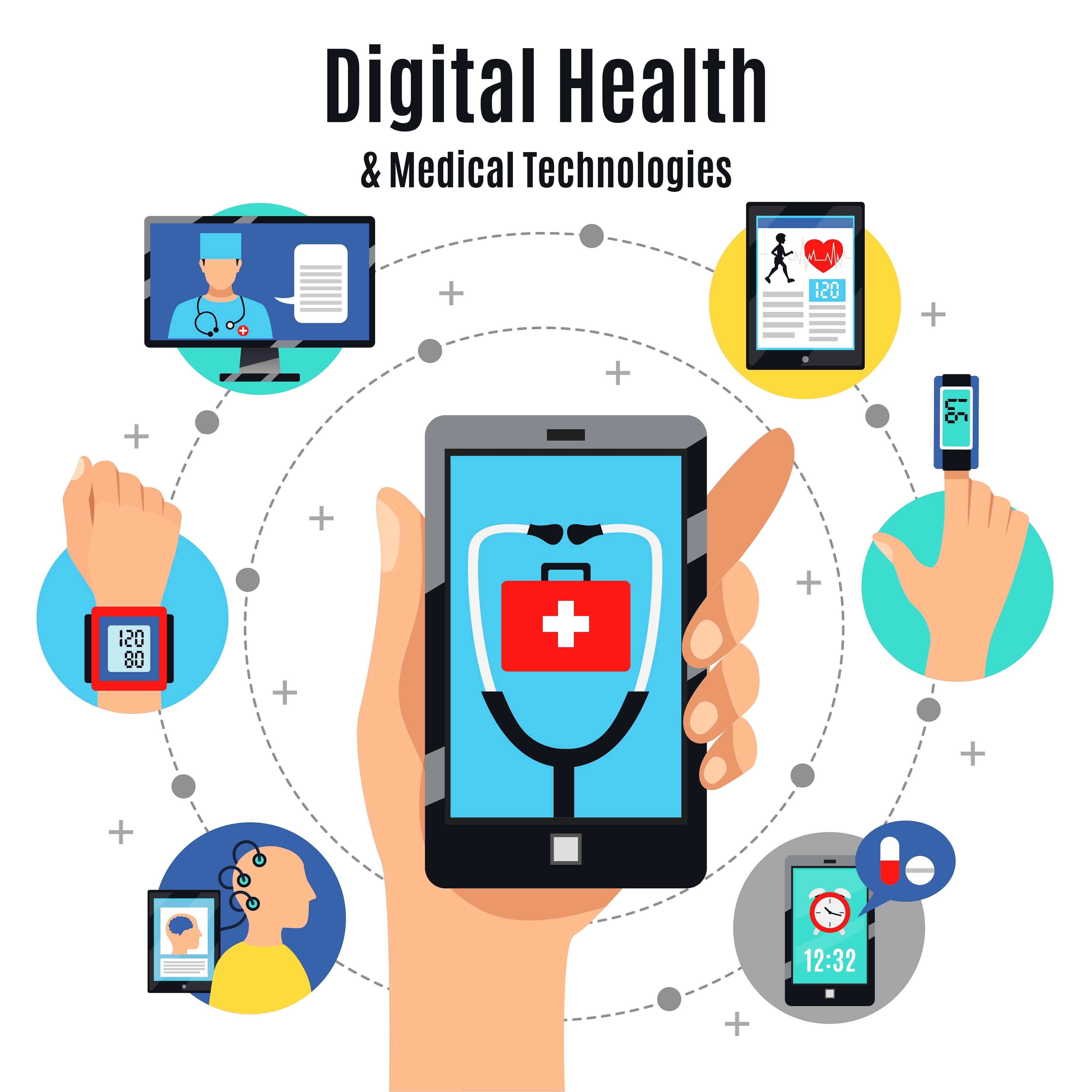
DEFINITION: According to the Food and Drug Administration [FDA], the broad scope of digital health includes categories such as mobile health (mHealth), health information technology (IT), wearable devices, tele-health and tele-medicine, and personalized medicine. From mobile medical apps and software that support the clinical decisions doctors make every day to artificial intelligence and machine learning, digital technology has been driving a revolution in health care. Digital health tools have the vast potential to improve our ability to accurately diagnose and treat disease and to enhance the delivery of health care for the individual. Digital health technologies use computing platforms, connectivity, software, and sensors for health care and related uses. These technologies span a wide range of uses, from applications in general wellness to applications as a medical device. They include technologies intended for use as a medical product, in a medical product, as companion diagnostics, or as an adjunct to other medical products (devices, drugs, and biologics). They may also be used to develop or study medical products.

Cite: http://tinyurl.com/2jbafuc7

***

As many investors predicted, digital health funding took a dive in 2023, according to Rock Health’s year-end funding report. Startups got creative to stay afloat but many digital health founders will have to “face the music” in 2024, the VC firm’s analysts say.

CITE: https://www.r2library.com/Resource

Editor’s Note: I am on the Advisory Board of Medblob™a start-up based in Boston, MA. The digital mission of Medblob™ is to improve community and national health by allowing patients to better manage their health, providers to better treat their patients, and researchers to have the best information to discover cures to the most prevalent and pernicious diseases.

COMMENTS APPRECIATED

Thank You

***

***

DAILY UPDATE: Stocks Rocket Back for Highest 2024 Close as Key Inflation Updates Loom

By Staff Reporters

***

SPONSOR: http://www.MarcinkoAssociates.com

***

***

Here is where the major benchmarks ended:

Bond yields and stock prices often move inversely to each other, in part because higher interest rates on virtually risk-free bonds lower the premium investors can expect from riskier assets like stocks, making it less appealing to buy equities. Last week, the 10-year Treasury yield briefly increased to 4.10%, near a three-week high, before dropping back near 4% Monday.

  • The S&P 500 index was up 66.30 points (1.4%) at 4,763.54; the Dow Jones Industrial Average was up 216.90 points (0.6%) at 37,683.01; the NASDAQ Composite was up 319.70 points (2.2%) at 14,843.77.
  • The 10-year Treasury note yield (TNX) was down about 3 basis points at 4.015%.
  • The CBOE® Volatility Index (VIX) was down 0.28 at 13.07.

Semiconductors shares were among the strongest performers, helped by a surge of 6.4% in Nvdia Corp. (NVDA), the top 2023 performer in the S&P 500 with a gain of 239%. Small-cap stocks were also firm as were consumer discretionary and communication services. The Russell 2000® Index (RUT) gained 1.9% to partly climb back from last week’s 3.7% drop.

Energy shares were soft because crude oil futures sank nearly 4% following reports Saudi Arabia lowered its prices.

CITE: https://www.r2library.com/Resource

COMMENTS APPRECIATED

Thank You

***

***

DAILY UPDATE: Crypto-Currency, ETFs and the Stock Markets

By Staff Reporters

***

SPONSOR: http://www.MarcinkoAssociates.com

***

The Markets as of 10:00am ET. Here’s what these numbers mean.
Markets: One week into 2024, stocks and bonds are off to their worst start in 21 years as investors maybe got a bit ahead of their skis in anticipating Fed rate cuts.

This week, Wall Street will be focused on fresh inflation data and the beginning of Q4 earnings season.


Bitcoin ETF cleared for launch? The first spot bitcoin ETF—could be approved by regulators this week in what would be a watershed moment for Wall Street’s embrace of digital tokens. The hype around these proposed funds, which would allow regular investors to gain exposure to bitcoin without buying it directly, drove bitcoin’s price up 162% over the past year.

Here is where the major benchmarks ended:

  • The S&P 500 Index was up 84.15 points (1.9%) at 4,495.70; the Dow Jones Industrial Average (DJI) was up 489.83 points (1.4%) at 34,827.70; the NASDAQ Composite (COMP) was up 326.64 points (2.4%) at 14,094.38.
  • The 10-year Treasury note yield (TNX) was down about 18 basis points at 4.453%.
  • CBOE’s Volatility Index (VIX) was down 0.60 at 14.16.

The small-cap focused Russell 2000 Index (RUT), which has lagged large-cap benchmarks for most of the year, jumped more than 5% Tuesday. Small-caps are often seen as being more exposed to the economic cycle and had suffered because of concerns that high interest rates could push the economy into recession.

Other interest rate-sensitive sectors, such as real estate, materials, and utilities, also saw outsize gains.

CITE: https://www.r2library.com/Resource

COMMENTS APPRECIATED

Thank You

***

***

DAILY UPDATE: Walgreens’s Dividend Dives as Stocks Post Down Week

By Staff Reporters

***

SPONSOR: http://www.MarcinkoAssociates.com

***

DEFINITION: A stock dividend is a payment to shareholders that consists of additional shares rather than cash. The distributions are paid in fractions per existing share. For example, if a company issues a stock dividend of 5%, it will pay 0.05 shares for every share owned by a shareholder. The owner of 100 shares would get five additional shares.

CITE: https://www.r2library.com/Resource

Stat: 3.9%. That’s Walgreens’s new dividend yield after the pharmacy chain cut its quarterly dividend of 7.0%. The company said that it was using the money to “strengthen [its] long-term balance sheet and cash position.” Walgreens stock fell 11% the day after the announcement. (CNBC)

Here is where the major benchmarks ended:

  • The S&P 500 index was up 8.56 points (0.2%) at 4,697.24, down 1.6% for the week; the Dow Jones Industrial Average® (DJI) was up 25.77 points (0.1%) at 37,466.11, down 0.6% for the week; the NASDAQ Composite® (COMP) was up 13.77 points (0.1%) at 14,524.07, down 3.2% for the week.
  • The 10-year Treasury note yield (TNX) was up about 6 basis points at 4.051%.
  • The CBOE® Volatility Index (VIX) was down 0.77 at 13.36.

Consumer staples and real estate ranked among the market’s weakest performers Friday, and technology shares remained under pressure with tech bellwether Apple (AAPL) extending this week’s nearly-6% slide and ending near a two-month low. Financial shares were one of the stronger sectors with the Philadelphia KBW Bank Index (BKX) rising 1.6% to a 10-month high. Small-cap stocks remained in the red with the Russell 2000® Index (RUT) ending the week down 3.7%. 

COMMENTS APPRECIATED

Refer a Colleague: MarcinkoAdvisors@msn.com

Your referral Count: 0

Thank You

***

***

DAILY UPDATE: Second Apple Downgrade with Mixed Markets as Investors Await Payroll Data and Lilly Sells Medications Directly to Patients

By Staff Reporters

***

SPONSOR: http://www.MarcinkoAssociates.com

***

Here’s where the major benchmarks ended:

  • The S&P 500® index (SPX) was down 16.13 points (0.3%) at 4,688.68; the Dow Jones Industrial Average® (DJI) was up 10.15 points at 37,440.34; the NASDAQ Composite was down 81.91 points (0.6%) at 14,510.30.
  • The 10-year Treasury note yield (TNX) was up about 9 basis points at 3.997%.
  • The CBOE® Volatility Index (VIX) was up 0.08 at 14.12.

Oilfield services and consumer discretionary shares were also among the market’s weakest performers Thursday. Banking and health care were among the strongest sectors, illustrating renewed investor interest in stocks that lagged the broader market last year.

CITE: https://www.r2library.com/Resource

And, Eli Lilly is poised to sell medicine directly to consumers — with an emphasis on newly popular weight-loss drugs — in a move toward cutting out the controversial middle players in drug distribution.

COMMENTS APPRECIATED

Refer a Colleague: MarcinkoAdvisors@msn.com

Your referral Count: 0

Thank You

***

***

DAILY UPDATE: Technology Stocks Tank on Perihelion Day

By Staff Reporters

***

Today the Earth is the closest it can get to the sun, a point in orbit known as perihelion, which happens every year two weeks after the December solstice.

***

SPONSOR: http://www.MarcinkoAssociates.com

Here’s where the major benchmarks ended:

  • The S&P 500® index (SPX) was down 38.02 points (0.8%) at 4,704.81; the Dow Jones Industrial Average® (DJI) was down 284.85 points (0.8%) at 37,430.19; the NASDAQ Composite was down 173.73 points (1.2%) at 14,592.21.
  • The 10-year Treasury note yield (TNX) was down about 3 basis points at 3.91%.
  • The CBOE® Volatility Index (VIX) was up 0.84 at 14.04.

In addition to tech shares, retailers and banks were also among the market’s weakest performers Wednesday. Small-cap stocks were also under pressure with the Russell 2000® Index (RUT) down about 2.7% to a three-week low. Energy shares strengthened behind a jump of nearly 4% in crude oil futures.

COMMENTS APPRECIATED

Refer a Colleague: MarcinkoAdvisors@msn.com

Thank You

***

***

DAILY UPDATE: Apple and the “Magnificent 7” Stocks Drop with the Markets

By Staff Reporters

***

SPONSOR: http://www.MarcinkoAssociates.com

***

Driving much of the tech slump was a 4% drop by Apple’s stock, a dive precipitated by an analyst downgrade questioning why the $2.9 trillion (market capitalization) company is trading at such an expensive valuation considering its negative earnings and profit growth.

Other members of the “magnificent seven” tech stocks, which gained a collective $5.1 trillion in market cap last year, also flailed Tuesday. Alphabet, Amazon, Meta, Microsoft, Nvidia and Meta each fell 1.6% or more, while Tesla was the sole magnificent seven member in the green, as its shares slipped less than 1% after reporting more fourth-quarter electric vehicle deliveries than fore-casted.

Here is where the major benchmarks ended:

  • The S&P 500 index was down 27.00 points (0.6%) at 4,742.83; the Dow Jones Industrial Average® (DJI) was up 25.50 points (0.1%) at 37,715.04; the NASDAQ Composite was down 245.41 points (1.6%) at 14,765.94.
  • The 10-year Treasury note yield (TNX) was up about 7 basis points at 3.931%.
  • The CBOE® Volatility Index (VIX) was up 0.73 at 13.18.

Semiconductor companies led the way lower Tuesday after Bloomberg reported Netherlands-based ASML Holding NV (ASML) canceled shipments of some of its machines to China at the request of U.S. President Biden’s administration weeks before export bans on the high-end chipmaking equipment came into effect. The Philadelphia Semiconductor Index (SOX) tumbled 3.7%. Health care and energy sectors were among the few areas of strength, the latter gaining despite a 1.6% drop in crude oil futures.

COMMENTS APPRECIATED

Refer a Colleague: MarcinkoAdvisors@msn.com

Your referral Count: 0

Thank You

***

***

DAILY UPDATE: ChristianaCare Settles FCA Lawsuit as Stock Markets Celebrate 2023 but Start Off Rocky in 2024

By Staff Reporters

***

SPONSOR: http://www.MarcinkoAssociates.com

***

ChristianaCare agreed to pay $47.1 million to resolve illegal kickback allegations flagged by its former chief compliance officer.

***

Markets: The stock market was closed yesterday to give investors time to celebrate New Year’s Day 2024. As the just passed old year, 2023, provided plenty of reasons to pop bottles and celebrate:

For example, global stock markets had their best year since 2019, and all three major US indexes finished the year higher than they started it, with tech company gains pushing the NASDAQ up the most. Even among tech giants, Nvidia was a standout, boosted by A.I. suddenly being everywhere.

But, all major markets are down as of this posting time, today.

CITE: https://www.r2library.com/Resource

COMMENTS APPRECIATED

Refer a Colleague: MarcinkoAdvisors@msn.com

Thank You

***

***

HAPPY NEW YEAR: From All of Us at the ME-P

***

www.CERTIFIEDMEDICALPLANNER.org

www.MARCINKOASSOCIATES.com

***

***

EDUCATION: https://marcinkoassociates.com/textbooks-academic-catalog/

***

 From us all to you and yours.
Here’s to making a difference and paying it forward today, in 2024, and beyond. 

THANK YOU

***

DAILY UPDATE: S&P 500 is High as McKinsey Settles Opioid Claims

***

The S&P 500 has climbed about 24% in 2023, hovering right around its all-time high. And, the NASDAQ Composite is up 44%, although the tech-heavy index still has some ground to cover before it starts carving out new all-time highs of its own.

***

By Staff Reporters

***

SPONSOR: http://www.MarcinkoAssociates.com

***

Consulting firm McKinsey and Co. has agreed to pay $78 million to settle claims from insurers and health care funds that its work with drug companies helped fuel an opioid addiction crisis. The agreement was revealed late Friday in documents filed in federal court in San Francisco. The settlement must still be approved by a judge.

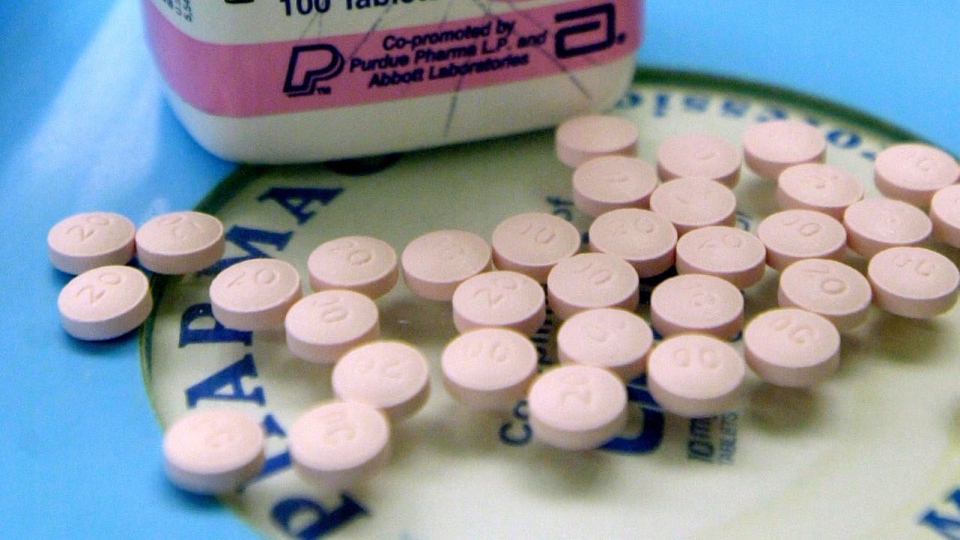
Under the agreement, McKinsey would establish a fund to reimburse insurers, private benefit plans and others for some or all of their prescription opioid costs. The insurers argued that McKinsey worked with Purdue Pharma – the maker of OxyContin – to create and employ aggressive marketing and sales tactics to overcome doctors’ reservations about the highly addictive drugs. Insurers said that forced them to pay for prescription opioids rather than safer, non-addictive and lower-cost drugs, including over-the-counter pain medication. They also had to pay for the opioid addiction treatment that followed.

COMMENTS APPRECIATED

Refer a Colleague: MarcinkoAdvisors@msn.com

Thank You

***

***

DAILY UPDATE: Stocks Fall on Last Day of a Strong 2023 Year

By Staff Reporters

***

SPONSOR: http://www.MarcinkoAssociates.com

***

Here’s where the major benchmarks ended:

  • The S&P 500 index fell 13.52 points (0.28%) to 4,769.83; the Dow Jones Industrial Average® was down 20.56 points (0.05%) at 37,689.54; the NASDAQ Composite® (COMP) was down 83.78 points (-0.56%) at 15,011.35.
  • The 10-year Treasury note yield (TNX) rose nearly 2 basis points to 3.86%. 
  • The CBOE® Volatility Index (VIX) finished nearly unchanged at 12.51, still near recent four-year lows.

The S&P 500 and Dow Jones Industrial Average posted their ninth consecutive weekly advances, but the NASDAQ Composite finished slightly lower for the week, hurt in part by a soft performance from Apple (AAPL). The Russell 2000® Index (RUT) fell 1.18% on Friday but climbed 15% for the year.

CITE: https://www.r2library.com/Resource

COMMENTS APPRECIATED

Refer a Colleague: MarcinkoAdvisors@msn.com

Your referral Count: 0

Thank You

***

***

DAILY UPDATE: Another Health System Data Breach as the “Magnificent Seven” Stocks End Mixed

By Staff Reporters

***

SPONSOR: http://www.MarcinkoAssociates.com

***

A health system in Michigan has experienced its second cybersecurity breach this year, affecting more than 1 million patients, according to state officials. Michigan Attorney General Dana Nessel announced Tuesday there was a breach at HealthEC, a vendor that provides services to Corewell Health’s southeast Michigan properties. The breach exposed patients’ personal and medical information.

***

***

With Nvidia and Tesla on the rise, acronyms like FAANG and MAMAA no longer cut it: The top tech giants (Amazon, Alphabet, Apple, Meta, Google, plus Nvidia and Tesla) have now been dubbed the “Magnificent Seven.” Buoyed by the generative AI gold rush, they were responsible for 29% of the S&P 500’s total value.

Here is where the major benchmarks ended:

Here’s where the major benchmarks ended:

  • The S&P 500 index was up 1.77 points at 4,783.35; the Dow Jones Industrial Average was up 53.58 points (0.1%) at 37,710.10; the NASDAQ Composite® (COMP) was down 4.04 points at 15,095.14.
  • The 10-year Treasury note yield (TNX) was up nearly 6 basis points at 3.844%.
  • The CBOE® Volatility Index (VIX) was up 0.03 at 12.46.

The S&P 500, Dow Jones Industrial Average, and NASDAQ Composite are all on track for a ninth consecutive weekly advance. Other parts of the market Thursday turned in mixed performances. The Russell 2000® Index (RUT) fell 0.4% but is still on track for a seventh consecutive weekly gain and has climbed 17% for the year.

COMMENTS APPRECIATED

Refer a Colleague: MarcinkoAdvisors@msn.com

Your referral Count: 0

Thank You

***

***

DEFLATION: Another Holiday Surprise?

By Staff Reporters

***

***

Deflation could be arriving this holiday season. Walmart CEO Doug McMillon recently said deflation may be on the horizon, citing a decline in the prices of grocery items such as chicken and eggs. McMillion said that although some items like beef remain expensive, he expects prices on other staples to come down in the coming months.

CITE: https://www.r2library.com/Resource/Title/082610254

It’s the latest welcome news for everyone feeling the squeeze from inflation and rising interest rates.

  • Target Chief Growth Officer Christina Hennington said earlier this week that the average price of basics fell three percentage points between Q2 and Q3.
  • JCPenney announced last month that it planned to keep prices for Black Friday the same or lower than last year.

COMMENTS APPRECIATED

Thank You

***

***

DAILY UPDATE: 2023 Business Start-Up Failure Review with Stock Market Gains

By Staff Reporters

***

SPONSOR: http://www.MarcinkoAssociates.com

***

***

3,200 business startups failed in 2023, according to PitchBook data. Those startups raised more than $27 billion combined, or roughly the 2022 GDP of Cambodia. (Business Insider).

***

Here’s where the major benchmarks ended:

  • The S&P 500 index was up 6.83 points (0.1%) at 4,781.58; the Dow Jones Industrial Average was up 111.19 points (0.3%) at 37,656.52; the NASDAQ Composite® (COMP) was up 24.60 points (0.2%) at 15,099.18.
  • The 10-year Treasury note yield was down over 9 basis points at 3.791%.
  • The CBOE® Volatility Index (VIX) was down 0.49 at 12.50.

Small-cap stocks continued a strong finish to the year as the Russell 2000® Index (RUT) gained 0.3% to settle at its highest level since April 2022. Retailer shares were among the market’s strongest performers amid reports of strong holiday sales. The S&P Retail Select Industry Index (SPSIRE) rose 0.6% and ended near an 11-month high.

In other markets, the U.S. dollar traded around $1.11 versus the euro (EUR/USD), its weakest level since late July and a reflection of expectations that lower rates in the United States will prompt investors to seek higher returns elsewhere.

CITE: https://www.r2library.com/Resource

COMMENTS APPRECIATED

Refer a Colleague: MarcinkoAdvisors@msn.com

Your referral Count: 0

Thank You

***

***

IRS: A Late PayPal Gift for 2023 Tax Returns

GOODBYE FORM 1099-Ks

By Staff Reporters

***

***

The IRS just said it is again delaying the implementation of a 2021 law that requires payment platforms such as Venmo, Paypal or Cash App to send tax forms called 1099-Ks to anyone who received more than $600 in the current tax year. 

It’s the second consecutive year the IRS has delayed enacting the new regulation, after the tax agency last year pushed off the new law until 2023. On Tuesday, the IRS said it will push the regulation back another year “to reduce taxpayer confusion” after hearing from taxpayers, tax professionals and payment processors.

CITE: https://www.r2library.com/Resource/Title/082610254

COMMENTS APPRECIATED

Thank You

***

***

DAILY UPDATE: Holiday Spending Solid as Stock Market Rally Continues

By Staff Reporters

***

***

SPONSOR: http://www.MarcinkoAssociates.com

***

Consumer spending grew solidly this holiday season, rebuking concerns of a slowdown and reinforcing positive signals about the U.S. economy as it approaches the end of a tumultuous year.

Buying among shoppers rose 3.1% over the holidays compared to the same period last year, according to data released on Tuesday by Mastercard SpendingPulse, which measures in-store and online purchases from November 1st to December 24th across all forms of payment. The data is not adjusted for inflation.

***

Here’s where the major benchmarks ended: 

  • The S&P 500 index was up 20.12 points to 4,774.75 up 0.42%; the Dow Jones Industrial Average was up 159.36 points at 37,54533, up 0.2% ; the NASDAQ Composite® (COMP) was up 81.6 points to 15,074.57 up 0.54% to start the week.  
  • The 10-year Treasury note yield (TNX) was down 1 basis point to 3.895%.
  • The CBOE® Volatility Index (VIX) was down 0.38% to 12.98.

Small-cap stocks continued to outpace their larger cousins, a common theme lately. The Russell 2000® Index rose Tuesday following six weeks of gains. Financials and real estate sectors were among strongest S&P 500 performers during the session, and the Russell 2000 has a heavy exposure to financials. In other markets, the U.S. Dollar Index (DXY) extended its recent slide and now trades at five-month lows, reflecting ideas that potentially lower interest rates may prompt investors to seek higher returns elsewhere.

With just three trading days left in 2023, the S&P 500 and other major equity benchmarks are poised to turn in a strong year that may more than make up for 2022’s losses. With Tuesday’s gains factored in, the SPX is closing in on its all-time high close just below 4,800 posted in early 2022. Through Tuesday, the S&P 500 was up more than 24% for the year, after tumbling 19.4% in 2022. The Dow Jones Industrial Average and the NASDAQ Composite were up 13% and 44%, respectively, after losing 8.8% and 33% in 2022.

CITE: https://www.r2library.com/Resource

COMMENTS APPRECIATED

Refer a Colleague: MarcinkoAdvisors@msn.com

Your referral Count: 0

Thank You

***

***

HOLIDAY BONUS: Wall Street is Down

By Staff Reporters

***

***

For the second straight year, Wall Street bankers should prepare for smaller bonuses this holiday season, according to a report from consulting firm Johnson Associates. Cash bonuses for investment bankers in particular could shrivel up to 25% compared to 2022. Now, bonuses often account for a huge share of bankers’ total compensation. In some cases, they can be double their salary. That adds up to tens of billions of dollars in Wall Street’s bonus pot, which hit an all-time high in 2021.

But two years later, the economy looks a lot different.

For example, IPOs have slowed, interest rates are up, and we’re down a few banks. Investment bankers aren’t the only ones feeling the effects:

  • Regional bankers are likely to see bonuses fall 10%–20%.
  • Workers in asset management and sales could get 5%–10% less this year.
  • The only groups expected to receive bonus bumps this year are wealth managers and retail or commercial bankers at major global banks. Goldman Sachs is also reportedly considering bigger (but still unspecified) bonuses to keep top traders.

COMMENTS APPRECIATED

Thank You

***

***

What is the SANTA CLAUS Stock Market Rally?

LATE DECEMBER – EARLY JANUARY RISE

By Staff Reporters

***

***

RALLY: A rally is a period of sustained increases in the prices of stocks, bonds or indices … An increase in prices during a primary trend bear market is called a bear market rally. A bear market rally is sometimes defined as an increase of 10% to 20%.

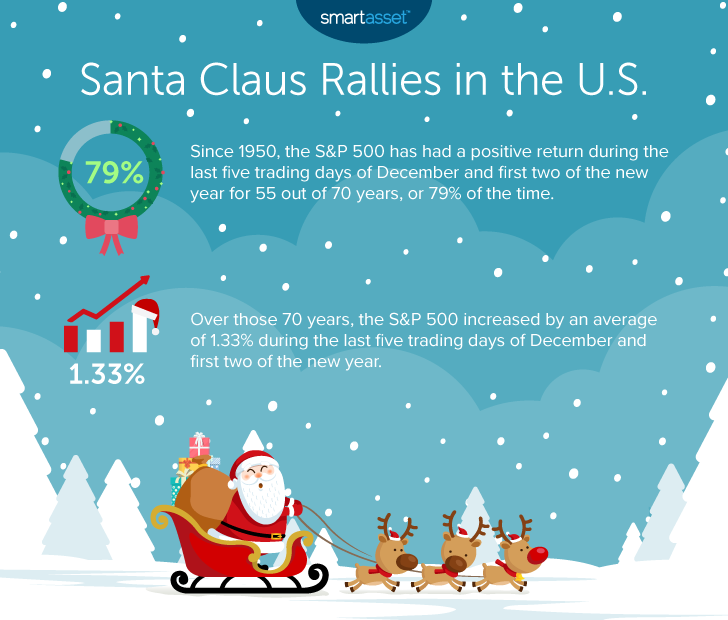
Now, a Santa Claus Rally describes a sustained increase in the stock market that occurs in the last week of December through the first two trading days in January. There are numerous explanations for the causes of a Santa Claus rally including tax considerations, a general feeling of optimism and happiness on Wall Street, and the investing of holiday bonuses.

CITE: https://www.r2library.com/Resource/Title/0826102549

Another theory is that some very large institutional investors, a number of which are more sophisticated and pessimistic, tend to go on vacation at this time, leaving the market to retail investors, who tend to be more bullish.

YOUR COMMENTS ARE APPRECIATED.

Thank You

***

ORDER: https://www.amazon.com/Comprehensive-Financial-Planning-Strategies-Advisors/dp/1482240289/ref=sr_1_1?ie=UTF8&qid=1418580820&sr=8-1&keywords=david+marcinko

***

A Financial Early “Christmas Eve Carol” [Parts 1 and 2]

By Rick Kahler MS CFP®

http://www.KahlerFinancial.com

Rick Kahler MS CFPFor me, the Christmas season doesn’t seem complete without Charles Dickens’s A Christmas Carol. I’ve long been captivated by the transformation of the cold-hearted and calculating Mr. Scrooge, the seemingly inherent goodness of Bob Cratchit, and the haunting visits of the Ghosts of Christmas.

As a student of Dickens’s fable, I’ve been amazed at the wisdom and universal truths contained in that seemingly simple story. I have discovered that Mr. Scrooge isn’t merely the villain he’s often made out to be, nor is Cratchit the straightforward hero.

It’s not uncommon for the average American to have a stressful, even adversarial relationship with money, especially since half of Americans have no savings or investments and live month to month. Stress over money is especially exacerbated during the Christmas season each year. Many Americans borrow heavily on credit cards for gifts and end up stressing for months afterward trying to pay the bill.

Financial Transformations

How ironic that what Dickens unveils in the short A Christmas Carol is a powerful process for financial transformation (or any desired transformation). Dickens gives us a four-step process that anyone can employ to change destructive financial behaviors.

A few years ago I co-authored a book, The Financial Wisdom of Ebenezer Scrooge that highlights the subtle wisdom of Dickens’s story as it pertains to transforming one’s behavior around finances. The story became the heart of a successful model employed by financial planners and therapists to help transform a person’s relationship with money.

***

***

The Story

The first big event in the story is the visit to Scrooge by the ghost of his old business partner, Jacob Marley. Scrooge takes to heart Marley’s warning to change his ways, thereby becoming willing to consider changing. Psychologists would call this an intervention.

The first and most important step toward transformation needs to be a personal realization that something is amiss with your behavior and it’s you who wants to contemplate changing, as opposed to someone else insisting you ought to or should change. Meaningful and sustainable change comes only from within, not without. Blaming personal financial problems on family, employers, the wealthy, or the government just keeps a person stuck in delusion.

What is the key to developing an internal desire to change? Addiction recovery programs call this “hitting bottom.” I describe it as reaching a state of openness to accept the facts and circumstances as they are, not as you wish they were. It is becoming convinced that change is crucial and that you are passionately ready to take action to change.

On that Christmas Eve, inexplicably, Scrooge was finally ready consider the message his old friend Marley had tried to deliver to him on many Christmas Eves previously.

In the book Changing for Good, psychologist James O. Prochaska and his co-authors describe this as moving from the stage of pre-contemplation to contemplation. Scrooge was willing to consider that his firmly entrenched world view might be skewed and to consider seeing the facts for what they were, not as he assumed they were.

***

bear

***

We may not be misers like Scrooge, but when it comes to our beliefs around money, we have as many delusions as he did. A few of the more popular of these beliefs, or money scripts, are: “More money is the answer,” “The stock market is a gamble,” “I work hard so I deserve to spend money,” and, “If I work hard I will make money.”

Assessment

Becoming willing to consider change is half the battle to free ourselves from destructive financial behavior based on these delusions. But it is only half. Next time we will look at three additional steps to transformation.

Part 2: A Financial “Christmas Carol” [Part 2]

Channel Surfing the ME-P

Have you visited our other topic channels? Established to facilitate idea exchange and link our community together, the value of these topics is dependent upon your input. Please take a minute to visit. And, to prevent that annoying spam, we ask that you register. It is fast, free and secure.

Conclusion

Your thoughts and comments on this ME-P are appreciated. Feel free to review our top-left column, and top-right sidebar materials, links, URLs and related websites, too. Then, subscribe to the ME-P. It is fast, free and secure.

Speaker: If you need a moderator or speaker for an upcoming event, Dr. David E. Marcinko; MBA – Publisher-in-Chief of the Medical Executive-Post – is available for seminar or speaking engagements. Contact: MarcinkoAdvisors@msn.com

OUR OTHER PRINT BOOKS AND RELATED INFORMATION SOURCES:

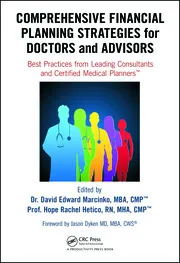
Comprehensive Financial Planning Strategies for Doctors and Advisors: Best Practices from Leading Consultants and Certified Medical Planners(TM)

IRS: Gift and Estate Tax Exempt Limits Increased

By Staff Reporters

***

***

Annual Gift Tax Exclusion Increased

Currently, you can give any number of people up to $17,000 each in a single year without taxation. For 2024, this will be increased to $18,000. For married couples, $36,000 will be available to be given to beneficiaries, tax-free, beginning next year.

Lifetime Gift Tax Exemption

Additionally, the IRS has announced that the lifetime estate and gift tax exemption will increase to $13.61 million in 2024. If a gift exceeds the annual limit ($17,000 this year, $18,000 in 2024), that does not automatically prompt a gift tax. The difference is simply taken from the person’s lifetime exemption limit and no taxes are owed.

COMMENTS APPRECIATED

Thank You

***

***

DAILY UPDATE: Happy “Festivus” with Drug Delays as the Stock Market Win Streak Continues

By Staff Reporters

***

SPONSOR: http://www.MarcinkoAssociates.com

***

Festivus is a secular holiday on December 23rd as an alternative to the pressures and commercialism of the Christmas Season. Originally created by author Daniel O’Keefe, Festivus entered popular culture after it was made the focus of the 1997 Seinfeld episode which O’Keefe’s son, Dan,co-wrote.

The non-commercial holiday’s celebration includes a Festivus dinner, an unadorned aluminum Festivus pole, practices such as the “airing of grievances” and “feats of strength”, and the labeling of easily explainable events as “Festivus miracles”. The TV episode refers to it as “a Festivus for the rest of us”.

It has been described both as a parody holiday festival and as a form of playful consumer resistance. Journalist Allen Salkin describes it as “the perfect secular theme for an all-inclusive December gathering”.

***

***

(Bloomberg) — Drug-makers are slow-walking products to market to get around President Joe Biden’s plan to lower medication prices.

Companies from Roche Holding AG to biotech Alnylam Pharmaceuticals Inc. are among those delaying or evaluating therapies in light of the government’s new ability to negotiate for lower prices. Firms that normally try to sell drugs as soon as possible are suspending clinical trials and shifting timelines, while patient groups are demanding change. 

Here is where the major benchmarks ended:

Here’s where the major benchmarks ended:

  • The S&P 500 index was up 7.88 points (0.2%) at 4,754.63, up 0.8% for the week; the Dow Jones Industrial Average was down 18.38 points at 37,385.97, up 0.2% for the week; the NASDAQ Composite® (COMP) was up 29.11 points (0.2%) at 14,992.97, up 1.2% for the week.
  • The 10-year Treasury note yield (TNX) was up about 1 basis point at 3.901%.
  • The CBOEe® Volatility Index (VIX) was down 0.62 at 13.03.

Small-cap stocks continued a strong finish to the year. The Russell 2000® Index (RUT) rose 0.8% Friday to end at its highest level since April 2022 and rose 2.5% for the week, the small-cap benchmark’s sixth consecutive weekly gain. Regional banks and utilities were also among the strongest performers. In other markets, the U.S. Dollar Index (DXY) extended its recent slide and dropped to its weakest level since late July, reflecting ideas an outlook for lower interest rates may prompt investors to seek higher returns elsewhere.

Finally, with just four trading days left in 2023, the S&P 500 and other major equity benchmarks are poised to turn in a strong year that may more than make up for 2022’s losses. Through Friday, the S&P 500 was up nearly 24% for the year, after tumbling 19.4% in 2022. The Dow Jones Industrial Average and the NASDAQ Composite were up 13% and 43%, respectively, after losing 8.8% and 33% in 2022.

COMMENTS APPRECIATED

Refer a Colleague: MarcinkoAdvisors@msn.com

Your referral Count: 0

Thank You

***

***

EMPLOYEE LAYOFFS: A Different Type of Holiday “Window Dressing”

END-OF-YEAR FINANCE

By Staff Reporters

***

***

We’ve discussed end of year mutual fund “window-dressing” before on this ME-P. Essentially, with mutual funds, window dressing refers to the superficial changes a fund might make to its portfolio of holdings to appear more attractive to current and prospective investors. At a glance, a potential investor might be drawn in with what appears to be good performance. 

For example, a mutual fund management team might choose to sell losing stocks and buy winning ones at or around the end of a quarter. This strategy hides weak performance and gives investors a perception of impressive returns. 
CITE: https://www.r2library.com/Resource/Title/082610254

Window dressing in stocks is an example from another part of the world of finance, as public companies sometimes use window dressing when reporting earnings. Depending on the specifics, this practice can range from “creative accounting” to something bordering on or actually qualifying as fraud.

For example, some economics researchers cite rounding as a manipulative form of window dressing. A firm might round $5.99 million in quarterly earnings up to $6 million because the round number can be more psychologically attractive.

MORE: https://medicalexecutivepost.com/2023/12/02/what-is-mutual-fund-window-dressing/

***

The GM-owned self-driving car company Cruise will lay off 24% of its staff (~900 employees) as well as nine executives following a serious autonomous taxi crash in San Francisco in October 2023 and the vehicles’ subsequent banning in the state of California.

Cruise’s staff reduction appears mostly due to the safety concerns around the company’s robo-taxis, but it comes after a deluge of other high-profile companies made major cuts just before the holidays:

  • Etsy. The online marketplace said it was laying off 11% of its staff. CEO Josh Silverman blamed the macroeconomic environment and previous over-hiring despite gross merchandise sales remaining flat since 2021.
  • Hasbro. The toymaker laid off 1,100 workers (roughly 20% of its staff) after a period of less-than-stellar toy sales following a pandemic surge. This most recent layoff is in addition to the 800 jobs it cut earlier this year.
  • Spotify. The streaming giant announced its third round of 2023 layoffs earlier this month. The company cut 1,500 jobs, which equates to about 17% of staff.
  • Why do companies do this?

Pre-holiday layoffs might seem especially cruel, but sadly, they aren’t uncommon. December job cuts are the quickest way for companies to pad the balance sheet and EOY reports before they show them to shareholders. Plus, it means they’ll have to give out fewer end-of-year bonuses.

COMMENTS APPRECIATED

Thank You

***

***

DAILY UPDATE: Three Arrows Capital is Down as Stock Markets Rebound

By Staff Reporters

***

SPONSOR: http://www.MarcinkoAssociates.com

***

***

Almost $1 billion in assets belonging to the founders of cryptocurrency hedge fund Three Arrows Capital have been frozen by a British Virgin Islands court, according to the firm’s liquidator. The court issued an order preventing co-founders Su Zhu and Kyle Davies, as well as Davies’ wife Kelly Chen, from transferring or selling assets worth up to $1.14 billion, the liquidator Teneo said in an emailed statement, adding that it estimates creditors are owed roughly $3.3 billion. 

***

Here is where the major benchmarks ended:

Here’s where the major benchmarks ended:

  • The S&P 500® index (SPX) was up 48.40 points (1.0%) at 4,746.75; the Dow Jones Industrial Average was up 322.35 points (0.9%) at 37,404.35; the NASDAQ Composite®(COMP) was up 185.92 points (1.3%) at 14,963.87.
  • The 10-year Treasury note yield (TNX) was up about 1 basis point at 3.89%.
  • The CBOE® Volatility Index (VIX) was down 0.02 at 13.65, after earlier rising to 14.49.

Among market sectors, Micron Technology’s gain helped send the Philadelphia Semiconductor Index (SOX) up 2.8%. Retail and transportation shares were also among the strongest performers.

The Russell 2000® Index (RUT), which is largely small cap focused, rose 1.7% and is on track for a sixth consecutive weekly gain.

COMMENTS APPRECIATED

Refer a Colleague: MarcinkoAdvisors@msn.com

Your referral Count: 0

Thank You

***

***

Of Gray Rhinos & Other Financial Threats!

Rick Kahler MS CFP

By Rick Kahler MS CFP®

“There he is,” our South African guide whispered excitedly. About 200 feet away stood a black rhino, the rarest and most aggressive of the rhinos. The rhino focused his full attention on us as he repeatedly took a few steps and stopped. After several minutes, he moved so a bush blocked our view of him. “Ok, he is using the bush as a cover and is probably going to charge. We need to leave. Start walking backward and keep your eyes in the direction where you saw the rhino.”

As I started backing up as fast as I could, the guide barked in his loudest whisper, “Don’t run! If he charges drop to the ground; he won’t trample you.” I can’t say I was comforted by this bit of information.

This experience taught me a rhino on the horizon represents a real and present danger.

Ignoring it can result in paying a heavy price

At this year’s FPA Retreat, one of the speakers was Michele Wucker, author of The Gray Rhino: How to Recognize and Respond to the Obvious Dangers We Ignore. She said that when it comes to financial planning and investments, rhinos loom everywhere. Wucker described these dangers as different from elephants and black swans.

The elephant in the room is something we see but no one is going to do anything about. It’s not going anywhere, and we will construct our life to accommodate it. Common financial elephants that I see are adult children financially dependent upon enabling parents, a financially controlling spouse with a history of poor financial decisions, or a family member addicted to spending,

A black swan is unpredictable, something we don’t even see. It can be the loss of a job, the sudden death of a breadwinner, or the collapse of a highly rated financial institution.

The grey rhino is something you know is stalking you. You know it is coming, but you don’t know when. The trick to avoiding a rhino is recognizing and acting on the obvious dangers we ignore.

***

Ex-Cathedra black swan

[Black Swan]

***

There are a lot of grey rhinos in the financial world

Here are a few common ones:

1. The next stock market crash. I guarantee you the stock market will crash at some time in the future. The best plan I know is to prepare yourself to do nothing, so you don’t panic and sell.
2. Death. It is certainly inevitable, yet the majority of Americans don’t have a will.
3. Health costs. At some point in your life you will need health care, and good health care is, and will always be, expensive.
4. House and vehicle repairs. Normal wear and tear should come as no surprise.

Yet another critter lurks around the financial landscape: the bat. Where I live, bats show up every evening at dusk, without fail. Financial bats are equally predictable.

These are future events or expenses that we know are coming, such as:

1. College. Subtract each minor child’s age from 18. That’s the number of years you have to save to fund their college education.
2. Retirement. Subtract your age from the age at which you want to quit working. This is how many years you have to accumulate enough wealth to replace your salary.
3. Taxes. We even know the day and the hour on this one.
4. Birthday and Christmas gifts. These come every year, just as reliably as the bats.

Assessment

What’s the best way to cope with this financial zoo? I suggest emulating another animal—the lowly ant from Aesop’s fable. Unlike the happy-go-lucky grasshopper, the ant put away resources so it was prepared for future hardships.

Conclusion

Your thoughts and comments on this ME-P are appreciated. Feel free to review our top-left column, and top-right sidebar materials, links, URLs and related websites, too. Then, subscribe to the ME-P. It is fast, free and secure.

Speaker: If you need a moderator or speaker for an upcoming event, Dr. David E. Marcinko; MBA – Publisher-in-Chief of the Medical Executive-Post – is available for seminar or speaking engagements. Contact: MarcinkoAdvisors@msn.com

OUR OTHER PRINT BOOKS AND RELATED INFORMATION SOURCES:

Risk Management, Liability Insurance, and Asset Protection Strategies for Doctors and Advisors: Best Practices from Leading Consultants and Certified Medical Planners™8Comprehensive Financial Planning Strategies for Doctors and Advisors: Best Practices from Leading Consultants and Certified Medical Planners™

***

DAILY UPDATE: First Day of Winter as FedEx and the Stock Markets Crash!

HAPPY WINTER SOLSTICE

By Staff Reporters

***

SPONSOR: http://www.MarcinkoAssociates.com

***

***

Astronomical winter begins at the winter solstice, which is the shortest day of the year. This means days get longer during winter—very slowly at first, but at ever-larger daily intervals as the March Equinox approaches, heralding the start of spring.

Locations closer to the poles experience larger differences in day length throughout the year, so winter days are shorter there. In Toronto, the shortest day is just under 8 hours and 56 minutes long; in Miami, roughly 2000 kilometers or 1200 miles farther south, it lasts about 10 hours and 32 minutes.

Places within the polar circles experience polar night during all or part of the winter season when the Sun does not rise at all.

Here is where the major benchmarks ended:

Here’s where the major benchmarks ended:

  • The S&P 500 index (SPX) was down 70.02 points (1.5%) at 4,698.35; the Dow Jones Industrial Average (DJI) was down 475.92 points (1.3%) at 37,082.00; the NASDAQ Composite® (COMP) was down 225.28 points (1.5%) at 14,777.94.
  • The 10-year Treasury note yield (TNX) was down about 6 basis points at 3.858%.
  • The CBOE® Volatility Index (VIX) was up 1.14 at 13.67.

Shares of semiconductors and banks were among the weakest performers Wednesday, giving back some recent gains after ranking among upside leaders during the recent rally.

Transportation shares also slumped behind weakness in FedEx. The Dow Jones Transportation Index (DJT) fell 1.5% and ended at its lowest level in a week. 

COMMENTS APPRECIATED

Refer a Colleague: MarcinkoAdvisors@msn.com

Your referral Count: 0

Thank You

***

***

DOL: Proposes “Best Interest” Retirement Investment Advice

SPONSOR: http://www.MARCINKOASSOCIATES.com

***

***

The Department of Labor’s proposal aims to close governance loopholes and require financial advisers to give retirement advice in the best interests of savers rather than chase the highest payday.

“Bad financial advice by unscrupulous financial advisers driven by their own self-interest can cost a retiree up to 1.2% per year in lost investment,” President Biden said. “That doesn’t sound like much but if you’re living long, it’s a lot of money.

MORE: https://medicalexecutivepost.com/2023/03/11/recast-an-interview-with-fiduciary-bennett-aikin-aif-2/

“Over a lifetime, it can add up to 20% less money when they retire. For a middle-class household, that can amount to tens of thousands of dollars over time.”

MORE: https://marcinkoassociates.com/financial-planning/

FIDUCIARY OATH: https://medicalexecutivepost.com/2023/02/19/the-fiduciary-oath/

***
COMMENTS APPRECIATED

Thank You

***

***