DONATE: Your Body to Science?

***

Advancing the Science of Medicine with a Priceless, No Cost Option

Everything we know about the human body comes from studying whole body donors. At MedCure, they connect you or your loved ones to the physicians, surgeons, and researchers who are continuing this vital work. Their discoveries and innovations help people live longer, make treatments less invasive, and create new ways to prevent illness or disease.

https://www.amazon.com/Dictionary-Health-Insurance-Managed-Care/dp/0826149944/ref=sr_1_4?ie=UTF8&s=books&qid=1275315485&sr=1-4

They are constantly overwhelmed by the incredible generosity and selflessness of donors.  MedCure honors their gifts by covering, upon acceptance, all expenses related to the donation process. These costs include transportation from the place of passing, cremation, and a certified copy of the death certificate, as well as the return of cremated remains to the family or a scattering of the ashes at sea. By request, they can provide a family letter that shares more detailed information on how you or your loved one contributed to medical science.

***

How to Donate Your Body to Science | Discover Magazine

***

READ: https://www.msn.com/en-us/health/wellness/what-exactly-happens-when-you-donate-your-body-to-science/ar-AAPaNJm?li=BBnb7Kz

CRYONICS: https://www.cryonics.org/

LONGEVITY: https://medicalexecutivepost.com/2021/09/26/podcasts-jeff-bezos-and-altos-longevity-labs/

RELATED: https://www.msn.com/en-us/news/crime/crematorium-owner-faces-10-years-for-improper-body-storage-charges-license-revoked/ar-AAPaCLV?li=BBnb7Kz

Body Facts: https://lifehacker.com/14-weird-facts-about-the-human-body-you-probably-never-1847829288/slides/2

YOUR COMMENTS ARE APPRECIATED.

***

https://www.amazon.com/Hospitals-Healthcare-Organizations-Management-Operational/dp/1439879907/ref=sr_1_4?s=books&ie=UTF8&qid=1334193619&sr=1-4

Thank You

***

35 INNOVATORS Under 35 Years of Age

M.I.T TECHNOLOGY IN REVIEW

The 35 Innovators Under 35 is a yearly opportunity to take a look at not just where technology is now, but where it’s going and who’s taking it there. More than 500 people are nominated every year, and from this group MIT editors pick the most promising 100 to move on to the semifinalist round.

Their work is then evaluated by a panel of judges who have expertise in such areas as artificial intelligence, biotechnology, software, energy, and materials. With the insight gained from these rankings, the MIT editors pick the final list of 35.

Global Finance Names The Innovators 2016 | Global Finance ...

READ: https://www.technologyreview.com/innovators-under-35/2021/?truid=349b552221c994e2540a304649746d7c&utm_source=the_download&utm_medium=email&utm_campaign=the_download.unpaid.engagement&utm_term=&utm_content=06-30-2021&mc_cid=478000030a&mc_eid=72aee829ad

ASSESSMENT: Your thoughts are appreciated. How many are in healthcare and fin-technology?

INVITE DR. MARCINKO: https://medicalexecutivepost.com/dr-david-marcinkos-

COMMENTS APPRECIATED

***

THANK YOU

***

PODCAST: More on Health Insurance from a Medical Technology CEO

A Professional and Personal look at Health Insurance, with Karl Albrecht
Rich talks with the president of Action Benefits, Karl Albrecht about the state of Health Insurance. 

Albrecht also gives a candid insight to his personal fight with pancreatic cancer and how being a Health Insurance executive as well as a patient, has given him a unique perspective on how things work, and how they could improve.
Image

BY RICHARD HELPPIE

PODCAST: https://richardhelppie.com/karl_albrecht/

YOUR COMMENTS ARE APPRECIATED.

Thank You

***

***

***

“For-Profit” Medicare Advantage Plan Growth

By Staff Reporters

***

***

Chartis: For-Profit Medicare Advantage Plan Growth 2022

 •  UnitedHealth Group: 765K new lives
 •  Centene Corporation: 338K new lives
 •  CVS Health/Aetna: 323K new lives
 •  Humana: 315K new lives
 •  Bright Health: 109K new lives

Source: The Chartis Group, “Medicare Advantage Enrollment Continues to Surge in an Increasingly Complex and Competitive Landscape,” February 2022

***

***

***

Ethics in Modern Healthcare

Join Our Mailing List

The Access to Medical Care Dilemma

By David E. Marcinko MBA

By Render S. Davis; MHA, CHE

[Certified Healthcare Executive]

Crawford Long Hospital at Emory University

Atlanta, Georgia, USA
biz-book

In his book, “Back to Reform”, author Charles Dougherty writes that “cost containment is the goal for the healthy.  Access is the goal for the sick.” 

A Meaningless Distinction

So, for an increasing number of Americans, the concerns experienced in-vitro, in-vivo, or described on this Medical Executive-Post blog, are almost meaningless because they are, for the most part, outside the structure of the current health care system. Why?

  • Employers are downsizing staff or cutting out health insurance benefits in an effort to be financially successful in a global economy.
  • Demands for greater government accountability in the expenditure of tax dollars have brought about increasingly more stringent eligibility requirements for safety-net programs like Medicaid. 
  • As insurance becomes more expensive or government programs undergo budget cuts, people are being excised from the system.
  • New competitive demands have fostered unprecedented consolidations, mergers, and closures of healthcare facilities.

This shake-out may have served to greatly reduce the overcapacity that plagued the system, but it has been done with greater emphasis on cutting costs than on fostering efficiency and effectiveness in creating a true system of care delivery. 

The Healthcare Commodity Issue

Those who view health care as little different from any other commodity available through the free market see the present access concerns as simply a byproduct of the inevitable restructuring of the system. While they argue that we must adhere to market solutions to solve our health care access problems, others demand a different approach calling for governmental national health insurance or some form of subsidized care providing at least a basic level of treatment for all citizens. 

Moreover, while Americans continue to proudly tout that we do not explicitly ration care as do some other countries (notably Great Britain and Canada); we tacitly accept a health care system that implicitly excludes citizens who are unable to overcome financial barriers to access.

Care Access Issues

Access to care represents the most visible issue at the very foundation of the ethical principle of justice. 

In their text, “Principles of Biomedical Ethics”, authors Thomas Beauchamp, Ph.D. and James F. Childress, Ph.D. point out that “justice” is subject to interpretation and may even be evoked to support the positions of parties in direct opposition.

A Philosophical Mixed Bag

For example, those who support the predominant principle of distributive justice – the fair allocation of resources based on laws or cultural rules – still must decide on what basis these resources will be used. 

On the other hand, this mix-ed bad of philosophical thoughts include among others:

  • Utilitarians, who argue for resource distribution based on achieving the “greatest good for the greatest number.”
  • Libertarians, who believe that recipients of resources should be those who have made the greatest contributions to the production of those resources – a free market approach to distribution.
  • Egalitarians, that support the distribution of resources based on the greatest need, irrespective of contribution or other considerations. 

Consequently, developing a system of access based on “justice” will be fraught with enormous difficulty.

The Current System

In the current health care environment, access to medical care is approaching crisis levels as increasing malpractice insurance premiums are driving physicians from high-risk specialties such as obstetrics, emergency medicine, and surgery in record numbers. 

The impact is most dramatic in rural and under-served areas of the country where sole-practitioners and small group practices are discontinuing services, leaving local citizens with no choice but to forego care or travel greater distances to regional medical centers to find necessary treatment. 

At the same time, significant budget cuts at both the federal and state levels have seriously eroded funding for Medicaid, leaving this especially-vulnerable segment of the population with even fewer options than before.

Issues Moving to the Forefront

Two areas of the medical care access dilemma are moving to the forefront.

1. The first is in emergency medicine.

An initial study by the Federal Centers for Disease Control and Prevention, cited statistics showing that in the decade ending in 2001, emergency room visits increased 20 percent, while the number of emergency departments shrank 15 percent. Increasingly, hospitals have closed emergency departments due to increasing costs, staffing shortages, and declining payments for services. This crisis comes at a time when post 9/11 fears of terrorism and global disease outbreaks like Severe Acute Respiratory Syndrome (SARS) have placed an even greater burden on the delivery of emergency services.  It continues and is exacerbated, even today.

For example, Arthur Kellerman, MD, former director of emergency services at Atlanta’s Grady Memorial Hospital, the city’s only level one trauma center, writes that “the situation is alarming and has been for some time… It’s unconscionable that we are not coming to terms with the Achilles’ heel of our health care system.”

2. The second area that will grow in significance is in the area of genetic testing.

As technological capabilities improve, medicine’s ability to examine an individual’s genetic makeup will open up remarkable opportunities to predict a person’s susceptibility to certain diseases or handicapping conditions. From a scientific standpoint, we are on the threshold of an extraordinary new era in medicine, where identifications of and treatments for potential illnesses may begin before the person is even born.

“Medicine’s Iceberg”

However, there is a more troubling access side to the potential of genetic testing as noted by Johns Hopkins University president, Dr. William R. Brody. He described genetic testing as “medicine’s iceberg,” where serious dangers for access to care are lurking beneath the surface. 

According to Brody, heated debate has already begun regarding the value of genetic information to insurance companies who could use the information to determine premium levels, even the overall insurability, for individuals and/or families with a member identified through testing as predisposed to a catastrophic and/or potentially expensive medical condition.

In this scenario, infants manifesting a genetic predisposition to certain illnesses or potential behavior disorders may find themselves faced with lifelong un-insurability based on the results of prenatal genetic testing.

Assessment

Furthermore, Brody persuasively argues that the potential of this technology, regardless of the incredible scientific potential it offers, could lead to dramatically diminished access to health insurance for tens of thousands of individuals and families and bring about an “end to private health insurance as we know it.”  He suggests that some form of community-rated, universal health insurance may be the only reasonable alternative to assure that Americans at all levels, from indigent and working poor, to the most affluent, may receive needed, basic medical care. 

CONCLUSION

Your thoughts and comments on this ME-P are appreciated. Feel free to review our top-left column, and top-right sidebar materials, links, URLs and related websites, too. Then, subscribe to the ME-P. It is fast, free and secure.

Link: http://feeds.feedburner.com/HealthcareFinancialsthePostForcxos

Speaker: If you need a moderator or speaker for an upcoming event, Dr. David E. Marcinko; MBA – Publisher-in-Chief of the Medical Executive-Post – is available for seminar or speaking engagements. Contact: MarcinkoAdvisors@msn.com

OUR OTHER PRINT BOOKS AND RELATED INFORMATION SOURCES:

DICTIONARIES: http://www.springerpub.com/Search/marcinko
PHYSICIANS: www.MedicalBusinessAdvisors.com
PRACTICES: www.BusinessofMedicalPractice.com
HOSPITALS: http://www.crcpress.com/product/isbn/9781466558731
CLINICS: http://www.crcpress.com/product/isbn/9781439879900
BLOG: www.MedicalExecutivePost.com
FINANCE: Financial Planning for Physicians and Advisors
INSURANCE: Risk Management and Insurance Strategies for Physicians and Advisors

Product DetailsProduct Details

Product Details

Invite Dr. Marcinko

Meth Mouth and TEETH!

More About Meth Mouth and Teeth [MMT]

By Anonymous DEA Agent

METH: Crystal meth is the common name for crystal methamphetamine, a strong and highly addictive drug that affects the central nervous system. There is no legal use for it.

It comes in clear crystal chunks or shiny blue-white rocks. Also called “ice” or “glass,” it’s a popular party drug. Usually, users smoke crystal meth with a small glass pipe, but they may also swallow it, snort it, or inject it into a vein. People say they have a quick rush of euphoria shortly after using it. But it’s dangerous. It can damage your body and cause severe psychological problems

Meth Mouth Teeth is severe tooth decay and tooth loss, as well as tooth fracture, acid erosion, and other oral problems, potentially symptomatic of extended use of the drug methamphetamine. The condition is thought to be caused by a combination of side effects of the drug and lifestyle factors, which may be present in long-term users.

However, the legitimacy of meth mouth as a unique condition has been questioned because of the similar effects of some other drugs on teeth. Images of diseased mouths are often used in anti-drug campaigns.

 ******

EDITOR’S NOTE: I do not know if this is a legitimate picture or not. But, I do suggest that we all “Just Say No to Drugs”. And; as a dental school drop out, I have an affinity for all pro-dentite colleagues.

MORE: https://www.maine.gov/dhhs/mecdc/population-health/odh/documents/downloadable-brochures/meth-mouth.pdf

Conclusion

Your thoughts and comments on this ME-P are appreciated. Feel free to review our top-left column, and top-right sidebar materials, links, URLs and related websites, too. Then, subscribe to the ME-P. It is fast, free and secure.

Link: http://feeds.feedburner.com/HealthcareFinancialsthePostForcxos

Speaker: If you need a moderator or speaker for an upcoming event, Dr. David E. Marcinko; MBA – Publisher-in-Chief of the Medical Executive-Post – is available for seminar or speaking engagements. Contact: MarcinkoAdvisors@msn.com

***

Product DetailsProduct DetailsProduct Details

***

IRS & PHYSICIANS: Married Filing Separately May Save Taxes?

By Staff Reporters

****

The IRS considers taxpayers married if they are legally married under state law, live together in a state-recognized common-law marriage, or are separated but have no separation maintenance or final divorce decree as of the end of the tax year.

CITE: https://www.r2library.com/Resource/Title/082610254

Of the 150.3 million tax returns filed in 2016, the latest year for which the IRS has published statistics, 3.07 million belonged to twosomes who filed separately.

  • These partners reported individual income and expenses on individual tax returns.
  • They had to agree on either itemizing expenses or using the standard deduction.
  • By filing separately, their similar incomes, miscellaneous deductions or medical expenses likely helped them save taxes.

***

Consequences of Filing Married Separate | SC Associates

Filing separately with similar incomes

A couple may pay the IRS less by filing separately when both physician spouses work and earn about the same amount.

  • When they compare the tax due amount under both joint and separate filing statuses, they may discover that combining their earnings puts them into a higher tax bracket.
  • Their savings depends on a variety of other factors, however, including their investment situation and whether they have children.
  • The “married filing separately” status cuts the deductions for IRA contributions and eliminates certain tax credits, among other tax breaks.

Using miscellaneous deductions by filing separately (for tax years prior to 2018)

Miscellaneous deductions can lower taxable income, but in order to enter them on Schedule A, they must add up to more than 2% of adjusted gross income (AGI).

  • Physician or other spouses with union dues, job-search costs, tax-preparation fees and un-reimbursed business expenses may find their miscellaneous deductions don’t qualify when their higher combined income raises their AGI.
  • A spouse who travel frequently for business could rack up a sizable tally in airline fees for baggage and itinerary changes that makes the miscellaneous deduction worth pursuing.

Beginning in 2018, these types of miscellaneous expenses are no longer deductible.

Filing separately to save with unforeseen expenses

Adjusted gross income also determines if a couple can use un-reimbursed health care costs and casualty losses on Schedule A to save taxes.

  • Unless out-of-pocket medical expenses exceed 7.5% of AGI for 2021, they don’t qualify as a deduction.
  • Casualty losses must also total more than 10% of AGI and occur in a federally declared disaster area.

The spouse with the loss or substantial medical outlay calculates deductibility against his or her own lower AGI when the couple files separate returns. When one spouse can lower taxable income this way, married filing separately might trim a couple’s overall tax burden.

Filing separately to guard the future

When you don’t want to be liable for your partner’s tax bill, choosing the married-filing-separately status offers financial protection: the IRS won’t apply your refund to your spouse’s balance due. Separate returns make sense to prevent the IRS from seizing a spouse’s tax refund when the other has fallen behind on child support payments.

Couples in the process of divorcing may shun joint returns to avoid post-divorce complications with the IRS, while a spouse who questions her partner’s tax ethics may feel more comfortable living a separate tax life.

Couples living in community-property states should consider state law when deciding how to file.

***

COMMENTS APPRECIATED

Thank You

Subscribe to the Medical executive-Post

***

***

PODCAST: Medical Supply Chain Management?

Our broken healthcare supply chain – what can be done

By Dr. Marion Mass MD

Dr. Marion Mass graduated from Medical School at Duke University. She completed internship and residency at Northwestern University’s Robert Lurie Children’s Hospital in Chicago. Dr. Mass has worked in the Philadelphia area as a pediatrician for 21 years.

Fixing Common Medical Device Supply Chain Break Points - # ...

PODCAST: https://www.youtube.com/watch?v=-BZEVnkkRAE

MARCINKO on SCM: https://medicalexecutivepost.com/2011/06/09/supply-chain-management-in-healthcare/

Your comments are appreciated.

THANK YOU

BUSINESS: https://www.amazon.com/Business-Medical-Practice-Transformational-Doctors/dp/0826105750/ref=sr_1_9?ie=UTF8&qid=1448163039&sr=8-9&keywords=david+marcinko

***

HIT: https://www.amazon.com/Dictionary-Health-Information-Technology-Security/dp/0826149952/ref=sr_1_5?ie=UTF8&s=books&qid=1254413315&sr=1-5

***

Entrepreneurship Treatises

The teacher of entrepreneurship as a role model

[Students’ and teachers’ perceptions]

By Staff Reporters

LINK: iencedirect.com/science/article/abs/pii/S1472811719301375

Your thoughts are appreciated.

THANK YOU

***

***

PHARMACISTS PODCAST: Job Effectiveness?

By Staff Reporters

****

54% of Pharmacists Lack Time to Complete Their Job Effectively

According to the “2022 Medication Access Report“:

 •  54% of pharmacists said they lack time to complete their job effectively.
 •  Of the 54%, 81% cited inadequate staffing and 73% cited time-consuming administrative tasks.
 •  Physicians felt strained by unprecedented demands, with 42% reporting burnout and 69% feeling depressed.

Source: CoverMyMeds via PR Newswire, February 8, 2022

***

***

COMMENTS APPRECIATED

Thank You

Subscribe to the Medical Executive_Post

***

***

***

“IDES OF MARCH” and U.S. Debt Limits 2022

BEWARE THE “IDES OF MARCH”

CMP logo

Courtesy:www.CertifiedMedicalPlanner.org

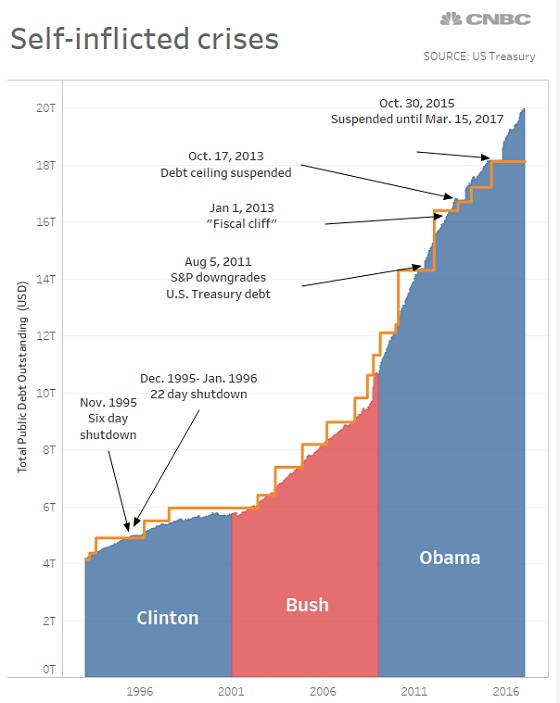
Debts and Settlement is Due

The Ides of March was a day in the Roman calendar that corresponds to 15 March. It was marked by several religious observances and was notable for the Romans as a deadline for settling debts.

In 44 BC, it became notorious as the date of the assassination of Julius Caesar which made the Ides of March a turning point in Roman history.

***

***

MORE: https://en.wikipedia.org/wiki/Ides_of_March

***

***

Assessment: Your thoughts and comments are appreciated.

2022 UPDATE: https://home.treasury.gov/policy-issues/financial-markets-financial-institutions-and-fiscal-service/debt-limit

***

Subscribe to the Medical Executive-Post

THANK YOU

***

***

Most Physician Compensation Plans Still Productivity-Based

By Health Capital Consultants, LLC

***

Study: Most Physician Compensation Plans Still Productivity-Based

A study conducted by the RAND Corporation and published in the January 2022 issue of the Journal of the American Medical Association (JAMA) seeking to determine whether health systems primarily incentivize volume or value in their physician compensation models found that almost all physicians are still compensated through a volume-based model that rewards productivity over the value of care provided.

CITE: https://www.r2library.com/Resource/Title/0826102549

These study results are in direct contradiction to the longstanding narrative that the U.S. healthcare delivery system is shifting away from volume-based reimbursement and toward VBR. (Read more…) 

***

***
COMMENTS APPRECIATED

Thank You

Subscribe to the Medical Executive-Post

***

***

***

***

“Robo-Examiners” Let CERTIFIED MEDICAL PLANNER™ Candidates Take Control

“Robo-Examiners” Let Adult-Learners Take Control

Dr. David Marcinko MBA
[Founding CEO and President]

Enter the CMPs

cmp

The concept of a self-taught and student motivated, but automated outcomes driven classroom may seem like a nightmare scenario for those who are not comfortable with computers. Now everyone can breathe a sigh of relief, because the Institute of Medical Business Advisors just launched an “automated” final examination review protocol that requires no programming skill whatsoever.

In fact, everything is designed to be very simple and easy to use. Once a student’s examination “blue-book” is received, computerized “robotic reviewers” correct student assignments and quarterly test answers. This automated examination model lets the robots correct tests and exams, while the students concentrate on guided self-learning.

***

http://www.CertifiedMedicalPlanner.org

***

Assessment

According to Eugene Schmuckler PhD MBA MEd, Dean of the CERTIFIED MEDICAL PLANNER® professional designation and certification program,

“This option allows the modern adult-learner save both time and money as s/he progresses toward the ultimate goal of board certification as a CMP® mark holder.”

The trend is growing and iMBA, Inc., is leading the way.

***

Risk Management, Liability Insurance, and Asset Protection Strategies for Doctors and Advisors: Best Practices from Leading Consultants and Certified Medical Planners™8Comprehensive Financial Planning Strategies for Doctors and Advisors: Best Practices from Leading Consultants and Certified Medical Planners™

***

AMA: Prior Authorization and Patient Harm?

By Staff Reporters

***

***
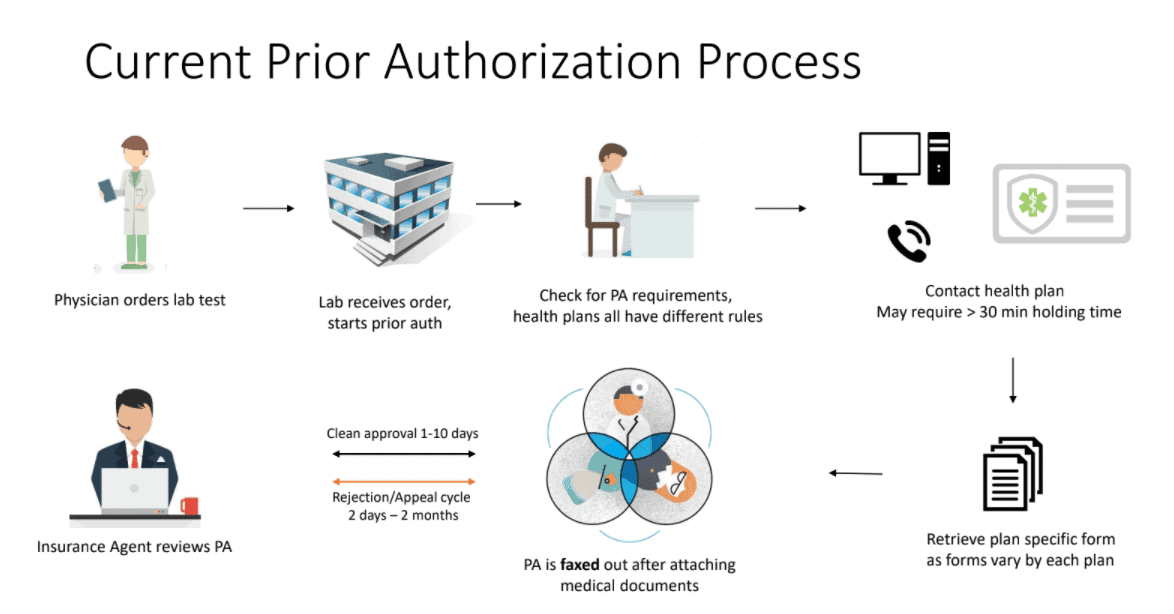
Prior Authorization and Patient Harm

 •  34% of physicians report that PA has led to a serious adverse event for a patient in their care.
 •  24% of physicians report that PA has led to a patient’s hospitalization.
 •  18% of physicians report that PA has led to a life-threatening event or required intervention to prevent  permanent impairment or damage.
 •  8% of physicians report that PA has led to a patient’s disability/permanent bodily damage, congenital anomaly/birth defect or death.

Source: AMA, “2021 AMA prior authorization (PA) physician survey,” February 2022

***

COMMENTS APPRECIATED

Thank You

Subscribe to the Medical Executive-Post.com

***

***

***

Happy “Pi” Day 2022

Happy “Pi” Day

Dr. David E. Marcinko MBA

MORE: https://en.wikipedia.org/wiki/Pi_Day

***

***

PI

***

CITE: https://www.r2library.com/Resource/Title/082610254

COMMENTS APPRECIATED

Thank You

***

***

Drugs, Money and the Middleman

Join Our Mailing List

PIPELINE TO PROFITS

A little more about that … Kaiser Health News infographic!

untitled

By Dr. David E. Marcinko MBA via Georgia Pharmacy Association

***

Recently, KHN ran an infographic from Kaiser Health News that gave a rough explanation of how the money flows in the sale of a brand-name drug.

After thinking about it a bit, Greg Reybold, Vice President of Public Policy & Association Counsel for the Georgia Pharmacy Association, noticed some fundamental flaws.

The infographic helps shed light on a process that lacks fundamental transparency,” he said, but it doesn’t reflect all of the practices engaged in by some PBMs.”

Furthermore, he added,

“There are times, unbeknownst to patients, when some PBMs charge patients copays that are significantly higher than the cost of the drugs themselves, or they steer patients to brand name drugs for which the PBM receives a rebate when there is a less costly generic available.”

He also noted the infographic:

“reflects that the pharmacy make a profit — when in fact there are many times pharmacies lose money on prescriptions they fill through low reimbursements, the imposition of different types of fees, and aggressive audits.”

http://www.gpha.org/

Conclusion

Your thoughts and comments on this ME-P are appreciated. Feel free to review our top-left column, and top-right sidebar materials, links, URLs and related websites, too. Then, subscribe to the ME-P. It is fast, free and secure.

Speaker: If you need a moderator or speaker for an upcoming event, Dr. David E. Marcinko; MBA – Publisher-in-Chief of the Medical Executive-Post – is available for seminar or speaking engagements. Contact: MarcinkoAdvisors@msn.com

OUR OTHER PRINT BOOKS AND RELATED INFORMATION SOURCES:

Product DetailsProduct Details

***


CONCLUSION: The Six Commandments of Value Investing

***

Investing and Chess

By Vitaliy Katsenelson, CFA

***

Conclusion: Investing and Chess 

I read somewhere that chess is a game of small advantages. When the game starts, the players are equal – both hold the same number of pieces in the same positions. But then every move either adds to your position (competitive advantage) or subtracts from it. These little decisions (resulting in a better pawn structure, a more secure king, a centrally positioned knight, and so on) that you make with every move accumulate into victory. 

Investing is not that much different, especially in today’s world where access to information has flattened. A mutual fund that manages $100 billion may spend $100 million on research, but that $100 million doesn’t buy any more than what a patient value investor can glean by reading financial statements. 

I am not talking about Warren Buffett either, who doesn’t even have a PC in his office. Ted Weschler and Todd Combs (Warren Buffett’s right-hand men) achieved phenomenal investment success without a fancy research department by simply reading carefully and following our Six Commandments. 

The key to succeeding in this irrational world is to actively ingrain each one of these principles into your investment operating system, improving your process just a little on a daily basis, and then success will follow. 

Finally, this would not be a worthy chapter if I did not contradict myself, just a little. Investing is also unlike chess. Investing affords us a luxury that few people appreciate: You can choose your own opponent. In chess tournaments, you don’t get to choose your opponent. Tournament organizers match you to someone with an equal rating; then as you win, you are progressively matched against better opponents. 

In investing, you are the “tournament organizer.” You get to walk into the room and, instead of choosing the geekiest opponent – the dude with thick glasses who hasn’t been on a date in years and has only thought and dreamt about chess – you can go for the muscular guy who spends five hours a day in the gym, and only joined the tournament because he lost a bet. 

Money doesn’t know how you made it. A hundred dollars made by solving easy problems (buying stocks where both your IQ and EQ were at their highest) buys as much as a hundred dollars that caused you to lose your hair. In investing, you don’t have to solve the problems that everyone else is solving. There are thousands of stocks out there, and your portfolio needs only a few dozen.

***

COMMENTS APPRECIATED

Thank You

Subscribe to the Medical Executive-Post

***

***

BALANCE BILLING: The Emerging “No Surprise” Act

Balance Medical Billing

By Dr. David E. Marcinko MBA CMP®

CMP logo

The No Surprises Act is looking to make the practice of out of network balance billing a thing of the past.

CITE: https://www.r2library.com/Resource/Title/0826102549

***

No Surprises Act: New Law to Protect Against Surprise ...

***

Beginning in 2022, there will be few situations in which a patient can receive a bill for out-of-network care they believed would be covered by their insurance company. This new rule should especially benefit patients in emergency situations who don’t have the time or luxury to dig up the details on every provider they encounter.

CONGRESS: https://www.congress.gov/bill/116th-congress/house-bill/3630/

The No Surprises Act also requires insurance companies to provide patients with at least 90 days of coverage if an in-network provider moves out of network. That way, patients aren’t forced to switch providers immediately if such a move happens while they’re in the middle of a treatment plan.

DOCTORS: https://www.elixirehr.com/what-the-no-surprises-act-means-for-healthcare-providers/

Now, the No Surprises Act does have its limitations. Patients can still get a bill for out-of-network care if they visit an urgent care clinic for non-emergency purposes. Also, if consumers are informed that the care they’re about to receive is out of network and they give written consent to move forward, then they may get billed for that care even once the new rule takes effect.

CMS: https://www.cms.gov/nosurprises

YOUR COMMENTS ARE APPRECIATED.

***

***

Thank You

***

***

PODCAST: The Causes of High Healthcare Costs Explained

By Eric Bricker MD

***

***

COMMENTS APPRECIATED

Thank You

Subscribe to the Medical Executive-Post

***

CITE: https://www.r2library.com/Resource/Title/0826102549

***

***

***

***

#6: The Six Commandments of Value Investing

***

6. In the long run, stocks revert to their fair value

***

***

EDITOR’S NOTE: Although it has been some time since speaking live with busy colleague Vitaliy Katsenelson CFA, I review his internet material frequently and appreciate this ME-P series contribution. I encourage all ME-P readers to do the same and consider his value investing insights carefully.

By Vitaliy Katsenelson, CFA

***

6. In the long run, stocks revert to their fair value

Reversion to fair value is not a pie-in-the-sky concept. If a stock is significantly undervalued for a long time, then this undervaluation gets cured, eventually. That can happen through share buybacks – the company can basically buy all of its shares and take itself private.

Or it can happen by the company’s paying out its earnings in dividends, thus creating yields that the market will not be able to ignore. Or the company’s competitors will realize that it is cheaper for them to buy the company than to replicate its assets on their own. Either way, undervaluation gets cured.

This faith that undervaluation will not last forever is paramount to value investing. But this is not your regular faith, which requires belief without proof. This is evidence-supported faith with hundreds of years of data to back it. Just look at the US stock market: it has gone through cycles when it was incredibly cheap and others when it was incredibly expensive. At some points in its journey from one extreme to the other, it touched its fair value, even if it was transitory.

Historically, value investing (owning undervalued companies) has done significantly better than other strategies. Paradoxically, the reason it has done well in the long run is because it did not work consistently in the short run. If something works consistently (keyword), everybody piles into it and it stops working.

These aforementioned cycles of temporary brilliance and dumbness are not just common to us mere mortals. Even Warren Buffett’s Berkshire Hathaway goes through them. As just one example, in 1999, when the stock market went up 21%, Berkshire Hathaway stock declined 19%. In 1999, the financial press was writing obituaries for Buffett’s investment prowess.

Suddenly, in 1999, Buffett’s IQ was lagging the market by 40%. At the time, investors were infatuated with internet stocks that were not making money but that were supposed to have a bright future. Investors were selling unsexy “old economy” stocks that Buffett owned in order to buy the “new economy” ones.

If at the end of 1999, you were to sell Berkshire Hathaway and buy the S&P 500 instead, you would have done the easy thing, but it would have been a large (though very common) mistake. Over the next three years Berkshire Hathaway gained over 30% while the S&P declined over 40%. During the year 1999, Buffett’s IQ did not change much; in fact, the (book) value of businesses Berkshire Hathaway owned went up by 0.5% that year. But in 1999, the market’s attention was somewhere else and it chose to price Berkshire Hathaway 19% lower. 

As a value investor, if you do a reasonable job estimating what the business is worth, then at some point the stock market will price it accordingly. You need to have faith. I am acutely aware how wishful this statement sounds. But this faith, the belief in mean reversion, has to be deeply ingrained in our psyche. It will allow us to remain rational when people around us are not. 

***

CITE: https://www.r2library.com/Resource/Title/0826102549

COMMENTS APPRECIATED

Editor’s Final Note; Many thanks to VK for this timely series on value investing. Our ME-P readers appreciate you.

Thank You

Subscribe to the Medical Executive-Post

***

***

PODCAST: On the Corporate Practice of Medicine Laws

IS PRIVATE EQUITY BUYING DOCTORS ILLEGAL?

By Eric Bricker MD

***

***
YOUR COMMENTS APPRECIATED

Thank You

***

***

#5: The Six Commandments of Value Investing

***

***

EDITOR’S NOTE: Although it has been some time since speaking live with busy colleague Vitaliy Katsenelson CFA, I review his internet material frequently and appreciate this ME-P series contribution. I encourage all ME-P readers to do the same and consider his value investing insights carefully.

By Vitaliy Katsenelson, CFA

***

5. Risk is a permanent loss of capital (not volatility)

Conventional wisdom views volatility as risk. Not value investors. We befriend volatility, embrace it, and try to take advantage of it. For someone who has not researched a company, it is not readily apparent whether a decline in shares is temporary or permanent. After all, if you don’t know what the company is worth, the quoted price becomes the quotient of intrinsic value. If you do know what the company is worth, then the change in intrinsic value is all that is going to matter. The price quoted on the exchange will be your friend, allowing you to take advantage of the difference between intrinsic value and quoted stock price. If the quoted stock price is significantly cheaper than your estimated intrinsic value, you buy it (or buy more of it if you already own it). If the opposite is true, you sell it.

What is a company worth?

Determining the intrinsic value requires a combination of art and science, in that order – it is not quoted on the exchanges. We go about this the same way a businessman would figure how much he’d want to pay for a gas station or a McDonald’s franchise. Analysis of each company will be different, but at the core we estimate the cash flows the business will produce for shareholders in the long run (at least ten years) and what the business will be worth then (based on our estimate of its earnings power at the time). The combination of the two provides us an approximation of what the business is worth now. To further embed “the right” type of risk analysis into our investment operating system, we build financial models. Models help us to understand businesses better and provide insights as to which metrics matter and which don’t. They allow us to stress test the business: We don’t just look at the upside but spend a lot of times looking at the downside – we try to “kill” the business. We look at known risks and try to imagine unknown ones; we try to quantify their impact on cash flows. This “killing” helps to us understand how much of a discount (margin of safety) we should demand to what the business is worth. By applying this discount to fair value, we arrive at a buy price. For every stock we buy we probably look at a few dozen (at least).

For instance, if we are looking at a company that is selling products or services to consumers, we’ll be focusing on customer-acquisition costs. We try to drill down to the essential operating metrics of each company. If it’s a convenience store retailer, we’ll look into gallons of gas sold and profit per gallon. If it’s an oil driller, we’ll look at utilization rates, rigs in service, average revenue per rig per day. If it’s a pharmaceuticals company, we’ll have revenue lines for each major drug it sells and model the company for the eventuality that patents will run out. (Revenues usually decline 80-90% when a patent expires).

These models help us to understand the economics of the business. We usually build two type of models. We start with what we call the “tablecloth” model. This is a very detailed, in-depth model that zeros in on different aspects of the business. But the risk we run with a tablecloth model is that we get lost in the trees and forget about the forest.

This brings us to our “napkin” model. It’s a much simpler and smaller model that focuses only on the essentials of the business. It is easier to build the tablecloth model than the “napkin.” If we can build a napkin model, that means we understand the drivers of the business – we understand what matters. Models are important because they help us remain rational. It is only the matter of time before a stock we own will “blow up” (or, in layman’s terms, decline).

In this type of analysis, what happens this month, this quarter, or even this year is only important in the context of the long run – unless the company’s good or bad earnings report in any quarter changes our assumptions on the company’s long-term cash flows. If you methodically focus on what the company is worth and if your Total IQ is maximized, then price fluctuations are just noise. Volatility becomes your friend because you can rationally take advantage of it. It’s an under-appreciated gift from Mr. Market.

Side Note: As an advisor, I feel it is one of my great responsibilities to be an honest and clear communicator. There is an asymmetry of information between us and our clients. We have invested weeks and months of research into the analysis of each stock; therefore, we have a good idea what each company is worth. Our clients have not done this research, and they should not have to – that is what they hired us to do.This is why we pour our heart and soul into our quarterly letters – we want to close this informational gap and so we try as hard as we can to explain what we think the companies in our portfolio are worth. Our letters are often 15-20 pages long. 

***
COMMENTS APPRECIATED

Thank You

Subscribe to the Medical Executive-Post

***

****

The New “Fiduciary” Rule

 Really? Whose side is your financial advisor on?


By Rick Kahler CFP®

If it weren’t already hard enough to understand whose side your financial advisor is on, it got more complicated on June 9, 2017. As of that date, all financial advisors who sell products are required to forego any sales agenda and give advice that would benefit their clients or customers (called “fiduciary advice”).

Does this sound too good to be true? It is!

This rule only pertains to rollovers into an IRA from a qualified plan like a 401(k), and only to the investment recommendations for that IRA account.

Any other account is still fair game for stuffing full of high-commission and high-fee products that mainly benefit salespeople and their companies.

Also, in case you think your IRA is now protected from high-cost products, there’s one more catch. Salespeople are not required to look out for your best interests if they explain to you how and why they intend to give advice that instead primarily benefits themselves and their brokerage company.

While this new law will probably confuse consumers more than it helps, it may be a first step toward something larger.

Here is the sad truth

Most Americans believe they already receive objective, fiduciary advice. The overwhelming odds are that they don’t.

You face odds of ten to one that your advisor is a salesperson who is not required to put your financial interests first. Most Americans purchase their investments from the half a million brokers who earn commissions if they can convince you to buy an expensive alternative to the thriftier, better-performing investment options on the market. That’s more than ten times the number of advisors who adhere to a fiduciary standard. Government research estimates that consumers lost $17 billion a year to conflicted advice in the recommendations related to retirement plans made by brokers and sales agents posing as advisors.

The bottom line is that at best, only one out of every ten financial advisors puts your interests first. The actual number of real fiduciary advisors may actually be even lower than this discouraging figure.

A Study

A mystery shopper study in the Boston area found that only 2.4% of the “advisors” it surveyed (most were almost certainly brokers) made what most would consider to be fiduciary recommendations.

On the other side, 85% advocated switching out of a thrifty portfolio with excellent funds into something a bit more self-serving.

The Brokerage industry

The brokerage industry—that is, the larger Wall Street firms, independent broker-dealer organizations and life insurance organizations—repeatedly fought the fiduciary rule in court, arguing, in some cases, that their brokers and insurance agents shouldn’t be held to this standard. The courts refused to block the rule.

It gets worse

Brokers are held to a sales standard, but it’s a very low one that is appropriately known as “compliance.” They are required to “know their customer” and to make investment recommendations that would be “suitable” to someone in that customer’s circumstances.

In addition, a new study found that 8% of all brokers have a record of serious misconduct, and nearly half of those were kept on at their firms even after getting caught.

Assessment

There is one simple way to determine whether you’re working with somebody you can trust. Ask your advisor directly to provide a written and signed one-page statement that he or she will act in your best interests.

***

If the broker hems and haws, hold onto your wallet or purse. Chances are any recommendations you receive will cost you money, a cost only disclosed somewhere deep in the fine print of whatever agreement you sign. If the advisor signs the statement, chances are you will receive fiduciary advice. 

Conclusion

Your thoughts and comments on this ME-P are appreciated. Feel free to review our top-left column, and top-right sidebar materials, links, URLs and related websites, too. Then, subscribe to the ME-P. It is fast, free and secure.

Speaker: If you need a moderator or speaker for an upcoming event, Dr. David E. Marcinko; MBA – Publisher-in-Chief of the Medical Executive-Post – is available for seminar or speaking engagements. Contact: MarcinkoAdvisors@msn.com

OUR OTHER PRINT BOOKS AND RELATED INFORMATION SOURCES:

Risk Management, Liability Insurance, and Asset Protection Strategies for Doctors and Advisors: Best Practices from Leading Consultants and Certified Medical Planners™8Comprehensive Financial Planning Strategies for Doctors and Advisors: Best Practices from Leading Consultants and Certified Medical Planners™

***

ANNOUNCING: A New Course In Digital Health

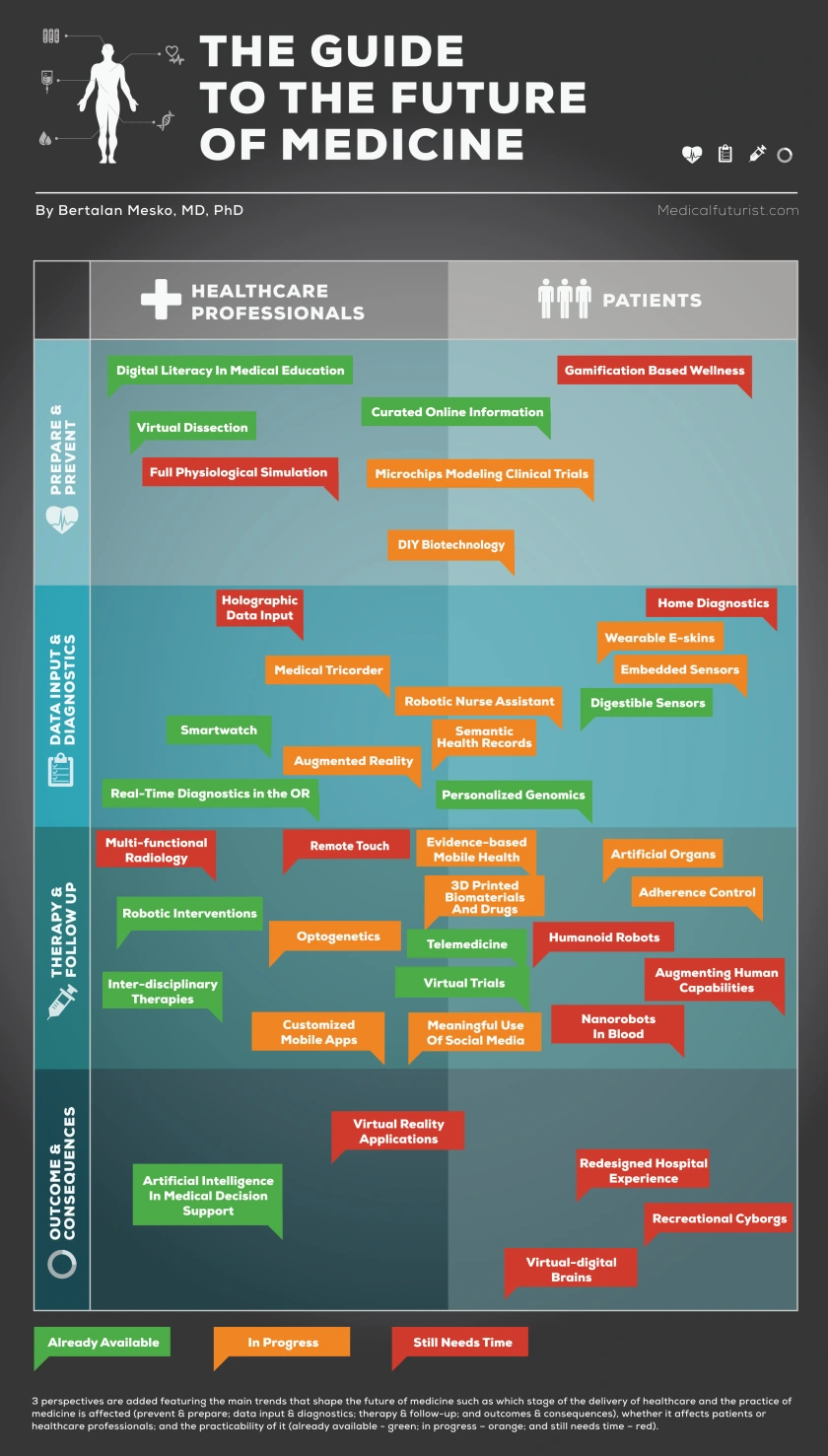
The Medical Futurist

By Dr. Bertalan Meskó MD PhD

***

I’m so happy and proud that I can finally share with you the biggest project The Medical Futurist has ever worked on: The Digital Health Course.

Today, we publicly launch the digital platform where you can learn about everything we and I personally find important about digital health. I mean EVERYTHING!

In this course I break down everything I’ve learned over the last 15 years about the future of healthcare and digital health, what changes are taking place now and over the next 5+ years, what impact they’ll have on you as a healthcare decision-maker, and exactly what you should be doing today to best position yourself or your company for this inevitable reality.

We designed this course to provide you with a complete overview of digital health, guide you through the technological aspects, and equip you to be able to predict and forecast what’s coming next.

From the basics and its definition, to why it’s a cultural transformation that is happening now, how it is a paradigm shift of care, how you can spot trends in it and forecast the near future.

***

***

As I guide you personally through the course, I have put my heart, brain and soul into the whole curriculum.

Sign up here > (free preview available)

***

***

***
#4: The Six Commandments of Value Investing

***

***

EDITOR’S NOTE: Although it has been some time since speaking live with busy colleague Vitaliy Katsenelson CFA, I review his internet material frequently and appreciate this ME-P series contribution. I encourage all ME-P readers to do the same and consider his value investing insights carefully.

By Vitaliy Katsenelson, CFA

***

4. Margin of safety – leave room in your buy price for being wrong

Margin of safety is a function of two dimensions: a company’s quality and its growth.

I am generalizing here, but exogenous events have a greater impact on a lower-quality business than a higher-quality one. Thus a high-quality company needs a lower margin of safety than a lower-quality one.

A company that is growing earnings and paying dividends has time on its side and thus may not need as much margin of safety as a lower-growing one.

We quantify both a company’s quality and growth, and thus margin of safety is deeply embedded in our investment operating system.

The larger discount to the stock’s fair value (the $1) the less clairvoyance you need to have about the future of the business. For instance, in 2013, when Apple stock was trading at $400 (pre-split) we didn’t have to have a very clear crystal ball about Apple’s future; Apple just had to be able to barely fog the mirror.

In later years, at $900, we need to have a lot more precision in our analysis of Apple’s future. 

CITE: https://www.r2library.com/Resource/Title/082610254

***

COMMENTS APPRECIATED

Thank You

Subscribe to the Medical Executive-Post

***

***

#3: The Six Commandments of Value Investing (Part 2)

***

EDITOR’S NOTE: Although it has been some time since speaking live with busy colleague Vitaliy Katsenelson CFA, I review his internet material frequently and appreciate this ME-P series contribution. I encourage all ME-P readers to do the same and consider his value investing insights carefully.

By Vitaliy Katsenelson, CFA

***

***

3. The market is there to serve you, not the other way around (Part 2)

First, we increase it by subtraction, by shrinking our universe to stocks that lie within both our IQ and EQ comfort zones.

We are very careful about stocks or industries where either our IQ or EQ is questionable. For instance, we have recognized that our IQ is low when it comes to non-revenue-generating, single-future-product biotech companies. We have zero analytical insights into this business. None.

We find that our EQ is fairly low when it comes to complex financial businesses. We don’t invest in any.

The beauty of investing is that we only need 20-30 stocks, and we get to choose which problems we want to tackle. We usually like easy problems.

In other professions, that is a luxury you don’t have. If you are an orthopedic surgeon, you are not going to tell your patient that you only operate on right knees because the last time out you had a bad experience with a left knee.

Second, we look for areas where our EQ is highest.

Over the years, we’ve discovered that our EQ is much higher with higher-quality companies. Therefore, for every company in our portfolio or on our watch list, we quantify quality. And with very rare exceptions, we own only very-high-quality companies.

We quantify quality for another reason, too. As value investors, we are innately focused on a margin of safety. We found that if you don’t quantify quality, it is very easy to lower your standards when you reach for value, especially in a very expensive market.

We went a step further: Quality, for us, is a filter. If a company doesn’t pass its quality test, it is dead to us. It may have high growth prospects, pay high dividends, and it may sell at a mouthwatering valuation. But if it failed our quality test, it is still dead to us.

By quantifying quality, we can keep the overall quality of our portfolio very high. Just as importantly, we can keep our EQ high, too.

By maximizing both our IQ and EQ for individual stocks, we maximize the Total IQ of the portfolio. Thus, when we get punched in the mouth, we are able to rationally reanalyze a stock and may decide to buy more, do nothing, or sell.

We cautiously guard our EQ and long-term horizon. We don’t let the outside world come unchecked into our daily life. For instance, we spend little time watching business TV during the day, as we find it to be toxic to our time horizon and to our investor (as opposed to trader) mentality. For the same reason, we also don’t look at our portfolio more than twice a day.

Finally, and this applies to professional investors only, you need to have clients who will allow you to maintain your EQ. Following the Six Commandments is practically impossible if your clients don’t believe in them.

Here’s a real example:

On my recent purchase of Apple stock coming off a one year top and heading down.

On January 25th, 2013 at 3:55 pm I got this email from a client, David:

David and I talked on the phone, and I tried to explain our logic. I’m not going to bore you with that, but it was along the lines of “incredible brand, high recurrence of revenues, great management, a quarter of market capitalization in cash; we tried to kill it (we lowered its margins, cut sales) and we simply couldn’t.”

I told David that the price of the stock is an opinion of value, not a final verdict – he didn’t care. He’d talked to his neighbor who was a famous technician, who said, “Apple is going down.” To which my response was, “If it declines that will be a blessing – the company is buying back stock, and we are going to buy more.”

The “technician” was right: Apple declined from $455 ($65 split-adjusted), our initial purchase price, to $395 ($56 split-adjusted). We bought more Apple as it fell. This encounter also made me realize how this negative psychology around Apple was creating an opportunity in Apple, and I wrote a two-part article describing the aforementioned incident as evidence of that.

What I did not say in that article is that we had to amicably part ways with David. I tried very hard to communicate the Six Commandments to him, but he was not willing to (re)learn. Keeping him as a client would erode my overall EQ and would have impacted other clients.

Your mental state is as important as your ability to analyze a company’s balance sheet or your ability to value the business. You may spend days sharpening your investment process, your analytical skills; but in the end, if your EQ is low nothing else will matter.

CITE: https://www.r2library.com/Resource/Title/082610254

***

COMMENTS APPRECIATED

Thank Yo

Subscribe to the Medical Executive-Post

****

METAVERSE: Healthcare Transformation -OR- Not?

By Bertalan Meskó, MD PhD
The Medical Futurist

***

***

HOW THE METAVERSE COULD (OR COULD NOT) TRANSFORM HEALTHCARE


If you’ve browsed the internet in the last couple of months, the term ‘metaverse’ is likely to have been thrown at you at least once. Facebook rebranded itself after the concept and other companies are adopting the metaverse with their own spin; betting heavily that it will be the next iteration of the internet where we will work and play alike.

It was time to dive into what the metaverse could mean to delivering healthcare.

READ MORE

***

***

COMMENTS APPRECIATED

Thank You

Subscribe to the Medical Executive-Post.com
***

Healthcare Industry Hit with the Great Resignation & Retirement

Healthcare Industry Hit with the Great Resignation & Retirement

BY HEALTH CAPITAL CONSULTANTS, LLC

The COVID-19 pandemic has served as a catalyst for two current healthcare workforce trends: the Great Retirement and the Great Resignation.

CITE: https://www.r2library.com/Resource/Title/0826102549

While the Great Resignation among physicians and other clinicians has been well reported, a potential onslaught of retirements by senior executives may further impact hospitals and health systems at an already precarious time.

Should you quit, or wait to be fired?

This Health Capital Topics article will discuss some of the key challenges and issues surrounding healthcare’s Great Retirement and Great Resignation. (Read more…) 

YOUR COMMENTS ARE APPRECIATED.

Risk Management, Liability Insurance, and Asset Protection Strategies for Doctors and Advisors : Best Practices from Leading Consultants and Certified Medical Planners™ book cover

ORDER: https://www.routledge.com/Risk-Management-Liability-Insurance-and-Asset-Protection-Strategies-for/Marcinko-Hetico/p/book/9781498725989

***

Thank You

***

#3: The Six Commandments of Value Investing (Part 1)

***

The Six Commandments of Value Investing (Part 1)

***

EDITOR’S NOTE: Although it has been some time since speaking live with busy colleague Vitaliy Katsenelson CFA, I review his internet material frequently and appreciate this ME-P series contribution. I encourage all ME-P readers to do the same and consider his value investing insights carefully.

By Vitaliy Katsenelson, CFA

***

The Six Commandments of Value Investing
3. The market is there to serve you, not the other way around.

Part 1
: The market is there to price stocks on a daily basis, but it doesn’t value them on a daily basis. In the long run (the yardstick here is years, not days or months) the market will value stocks, but in the short run stock price movements are random. 

Despite this randomness, the media will always find a rational explanation for a move. However, trying to understand randomness and predict stock movements in the short run is like trying to have an intelligent conversation with a two-year-old. It may be fun, but it will consume a lot of your time and energy, and the outcome is far from certain. 

Stock fluctuations should be looked upon as a natural and benign feature of the stock market, but only if you know what the asset is worth. To make Mr. Market serve us and not become its slave, here is what we do.

If we know a stock is worth $1, then if its price falls from 50 cents to 30 cents (a 40% decline), that’s a blessing for several reasons: The company can now buy back a lot more of its stock at lower prices, and we can add to our position. After all, it’s 40% cheaper. 

Here is the key, though: You have to make sure that what you thought was worth $1 is still worth $1.

To quote Mike Tyson, “Everyone has a plan till they get punched in the mouth.” How do you remain rational when Mr. Market has just smashed you in the face by repricing your $1 stock from 50 cents to 30 cents? Maybe Mr. Market is right and that company’s fair value was never really $1 but only 40 cents?

To remain rational, we focus on maximizing our Total IQ. I know we were not supposed to have math, especially this early in the book. But indulge me with this little equation: Total IQ = IQ x EQ (where EQ <=1)Before I explain I want to stress this point: Your IQ, EQ, and thus Total IQ will vary from stock to stock and from industry to industry.

Let’s start with IQ.

IQ – our intellectual capacity to analyze problems – will vary with the problem in front of us. Just as we breezed through some subjects in college and struggled with others, our ability to understand the current and future dynamics of various companies and industries will fluctuate as well. This is why we buy stocks that fall within our sphere of competence. We tend to stick with ones where our IQ is the highest.

As I have mentioned before but will continue to repeat: If investing were an exact science – a formulaic process by which you could (in a vacuum) constantly test and retest your hypotheses and repeat your results – then EQ, our emotional quotient, would be irrelevant.

If we were characters from Star Trek – with complete control over our emotions, like Mr. Spock, or lacking emotions entirely, like Lieutenant Commander Data – then our EQ wouldn’t matter. However, investing is not a science and we are humans. We have plenty of emotions, and thus EQ is a very important part of this equation.

Though we usually think about our capacity to analyze problems as being dependable and stable over time, it isn’t.

First, emotions distort probabilities. So, even if my intellectual capacity to analyze a problem is not impacted, my brain may be solving a distorted problem.

Second, my IQ is not constant, and my ability to process information effectively declines under emotional stress. I either lose the big picture or overlook important details. This dilemma is not unique to me; I’m sure it affects all of us to varying degrees.

A friend of mine who is a terrific investor, and who will remain nameless (though his name is George), once told me that he never invests in grocery store stocks because he can’t be rational when he holds them. If we spent some Freudian time with him, we’d probably discover that he experienced a traumatic childhood event at the grocery store (he may have been caught shoplifting a candy bar when he was eight), or he may have had a bad experience with a grocery stock early in his career. The reason for his problem is irrelevant, though. What is important is that he has realized that his high IQ will be impaired by his low EQ if he owns grocery stocks.

The higher my EQ is with regard to a particular company, the more likely my Total IQ will not degrade when things go wrong (or even when they go right). This is why in the little formula above, EQ cannot be greater than 1. In your most emotionally stable state (when EQ = 1), your Total IQ will equal your IQ.

There is a good reason why doctors don’t treat their own children: Their ability to be rational (properly weighing probabilities) may be severely compromised by their emotions. 

CITE: https://www.r2library.com/Resource/Title/082610254

***

COMMENTS APPRECIATED

Thank You

Subscribe to the Medical Executive-Post

***

****

Common Entrepreneurial Mistakes

BY JONATHAN MASE R.N.

***

***

Being an entrepreneur is not necessarily easy, and many people that try to become entrepreneurs wind up failing. It’s important to recognize the risk of failure before you decide to walk down this path. Being an entrepreneur is very rewarding, and you can find success if you can do things right.

Keep reading to learn about common entrepreneurial mistakes that you can avoid to give yourself a better chance of realizing your entrepreneurial goals. 

READ: https://jonathanmase.wordpress.com/2021/08/06/common-entrepreneurial-mistakes/

Your comments are appreciated.

THANK YOU

MD Entrepreneurs: https://medicalexecutivepost.com/2021/07/29/minnovation-for-physician-entrepreneurs/

***

****

PODCAST: Hospital “Out-Patient” Department Pricing Explained

***

Hospitals Are Paid More for SAME SERVICE in Outpatient Department Than Doctors Are Paid in Office.

For Example, the SAME Echocardiogram Costs $600 in a Hospital Outpatient Department and $250 in a Doctor’s Office.

By Dr. Eric Bricker MD

***

***

COMMENTS APPRECIATED

Thank You

Subscribe to the Medical Executive-Post

***

***

***

#2: The Six Commandments of Value Investing

2. Long-term time horizon (both analytical and expectation to hold) 

EDITOR’S NOTE: Although it has been some time since speaking live with busy colleague Vitaliy Katsenelson CFA, I review his internet material frequently and appreciate this ME-P series contribution. I encourage all ME-P readers to do the same and consider his value investing insights carefully.

By Vitaliy Katsenelson, CFA

***

***

The Six Commandments
of Value Investing

***
2. Long-term time horizon (both analytical and expectation to hold) 
A long-term time horizon is extremely important for value investors for several reasons: 
First, it is impossible predict how a stock will be priced in the short run. Short-term stock behavior is random, and thus its forecasting (at least using tools available to investors) cannot be turned into a repeatable process. 

Second, having a longer time horizon than Wall Street is a very important competitive advantage. The Street’s time horizon is very short – measured in months, maybe quarters, but rarely in years. 

Money flows into mutual funds and hedge funds are driven by recent performance, so Wall Street is obsessed with the short term. This creates time arbitrage. Stocks get punished because their immediate future may look unattractive, but if you look at them as businesses, that short-term performance is just a pimple on your long-term timeline. 

So, how do we embed a long-term time horizon into our process?

First, we always look at earnings and cash flows at least three (often five) years out. This forces us to look at the company’s normalized earnings power and ignores the short term. All our models focus on what the company will be worth based on its earnings power in three to five years. Then we discount (bring that future value forward to today at an 18%-40% discount rate, depending on the company’s quality) to see what we want to pay for this company today. 
Looking at the business at least three to five years out has a very important side effect: It adds “growth” to the portfolio from earnings and dividends. Stock returns come from three sources: price-to-earnings (P/E) expansion, earnings growth, and dividends. 

P/E expansion is finite – it’s a one-time shot in the arm. Let’s say a stock’s P/E goes from an undervalued 12 to a fairly valued 15 – a 25% return. If this company doesn’t grow earnings and/or pay dividends, that 25% will be our total return. The risk of owning this type of “one-shot” stock is that without earnings growth or dividends, time is not on your side – you don’t get paid to wait.

If your time horizon is three years, that 25% return gets truncated to an annual return of only 8% a year. But if this company, in addition to trading at a depressed P/E, pays a 3% dividend and grows earnings 7% a year, that is an additional, repeatable 10% return a year. This elongation of the time horizon embeds growth in our portfolio and also forces us to demand a much higher discount for stocks that don’t pay dividends and don’t grow their earnings. 

***

COMMENTS ARE APPRECIATED

Thank You

Subscribe to the Medical Executive-Post

***

****

PODCAST: Economic “Rent-Seeking” in Health Care

By Eric Bricker MD

***

***

CITE: https://www.r2library.com/Resource/Title/082610254

COMMENTS APPRECIATED

Thank You

Subscribe to the Medical Executive-Post

***

***

****

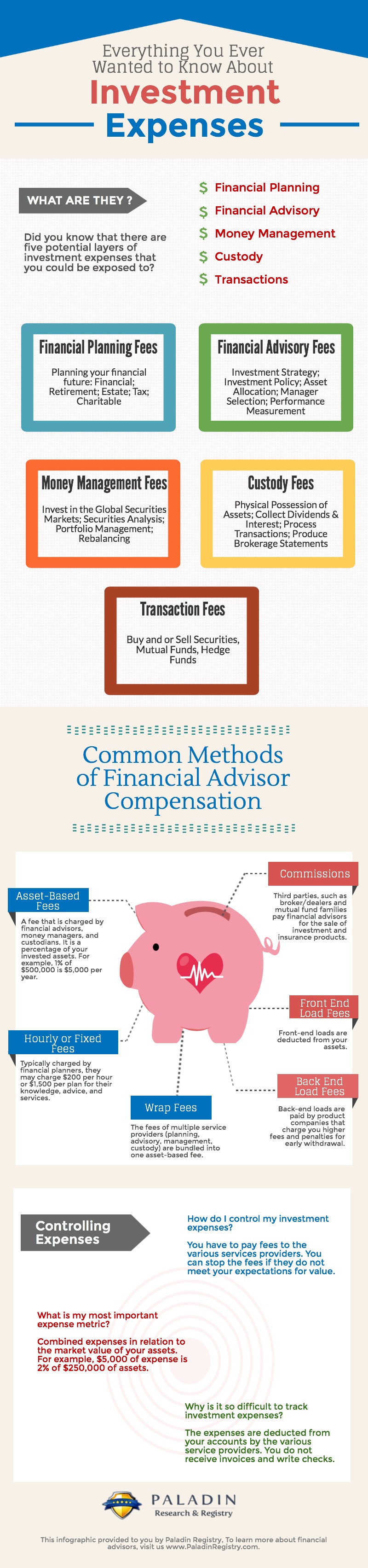
A Review of Investing Expenses

Join Our Mailing List

Peeling Back the Layers of Fees

By PALADIN [Research & Registry]

Advisor Pay

Channel Surfing the ME-P

Have you visited our other topic channels? Established to facilitate idea exchange and link our community together, the value of these topics is dependent upon your input. Please take a minute to visit. And, to prevent that annoying spam, we ask that you register. It is fast, free and secure.

Conclusion

Your thoughts and comments on this ME-P are appreciated. Feel free to review our top-left column, and top-right sidebar materials, links, URLs and related websites, too. Then, subscribe to the ME-P. It is fast, free and secure.

Speaker: If you need a moderator or speaker for an upcoming event, Dr. David E. Marcinko; MBA – Publisher-in-Chief of the Medical Executive-Post – is available for seminar or speaking engagements. Contact: MarcinkoAdvisors@msn.com

OUR OTHER PRINT BOOKS AND RELATED INFORMATION SOURCES:

Comprehensive Financial Planning Strategies for Doctors and Advisors: Best Practices from Leading Consultants and Certified Medical Planners(TM)* 8

#1: The Six Commandments of Value Investing

1. A stock is partial ownership of a business 

***

By Vitaliy N. Katsenelson CFA

EDITOR’S NOTE: Although it has been some time since speaking live with busy colleague Vitaliy Katsenelson CFA, I review his internet material frequently and appreciate this ME-P series contribution. I encourage all ME-P readers to do the same and consider his value investing insights carefully.

***

The Six Commandments of Value Investing
Introduction

I wrote the core of this chapter in preparation for a speech I gave at an investment conference. In my speech, I wanted to show how at my firm, we took the Six Commandments of Value Investing and embedded them in our investment operating system. 

Since I was speaking to fellow value investors, this speech was written not to promote my firm but to educate. I was going to rewrite the speech for this chapter and make a bit less about us and more about you –but each attempt resulted in a dull chapter. So here is a much extended version of my original speech. 

The Six Commandments

These are the Six Commandments of Value Investing. I don’t expect any value investors reading this to be surprised by any one of them. They were brought down from the mountain by Ben Graham in his book Security Analysis.

1)    A stock is fractional ownership of a business (not trading sardines).
2)    Long-term time horizon (both analytical and expectation to hold)
3)    Mr. Market is there to serve us (know who’s the boss).
4)    Margin of safety – leave room in your buy price for being wrong.
5)    Risk is permanent loss of capital (not volatility).
6)    In the long run stocks revert to their fair value.

These commandments are very important and they sound great, but in the chaos of our daily lives it is so easy for them to turn into empty slogans. 

A slogan without execution is a lie. For these “slogans” not to be lies, we need to deeply embed them in our investment operating system – our analytical framework and our daily routines – and act on them.

The focus of this chapter goes far beyond explaining what these commandments are: My goal is to give you a practical perspective and to show you how we embed the Six Commandments in our investment operating system at my firm. 

1. A stock is partial ownership of a business 

The US and most foreign markets we invest in are very liquid. We can sell any stock in our portfolios with ease – a few clicks and a few cents per share commission and it’s gone. This instant liquidity, though it can be tremendously beneficial (we wish selling a house were that easy, fast, and cheap), can also have harmful unintended consequences: It tends to shrink the investor’s analytical time horizon and often transforms investors into pseudo-investors. 

For true traders, stocks are not businesses but trading widgets. Pork bellies, orange futures, stocks are all the same to them. Traders try to find some kind of order or a pattern in the hourly and daily chaos (randomness) of financial markets. As an investor, I cannot relate to traders –not only do we not belong to the same religion, we live in very different universes. 
Over the years I’ve met many traders, and I count a few as my dear friends. None of them confuse what they do with investing. In fact, traders are very explicit that their rules of engagement with stocks are very different from those of investors. 

I have little insight to share with traders in these pages. My message is really to market participants who on the surface look at stocks as if they were investments but who have been morphed by the allure of the market’s instant liquidity into pseudo-investors. They are not quite traders – because they don’t use traders’ tools and are not trying to find order in the daily noise – but they aren’t investors, either, because their time horizon has been shrunk and their analysis deformed by market liquidity. 

The best way to contrast the investor with the pseudo-investor is by explaining what an investor is. A true investor would do the same analysis of a public company that he would do for a private one. He’d analyze the company’s business, guestimate earnings power and cash flows. Assess its moat – the ability to protect cash flows from competition. Try to look “around the corner” to various risks. Then figure out what the business is worth and decide what price he’d want to pay for it (your required discount to what the business is worth). For an investor, the analysis would be the same if his $100,000 was buying 20% of a private business or 0.002% of a public one. This is how your rational uncle would analyze a business – your Warren Buffett or Ben Graham. 

How do we maintain this rational attitude and prevent the stock market from turning us into pseudo-investors? Very simple. We start by asking, “Would we want to own this business if the stock market was closed for 10 years?” (Thank you, Warren Buffett). This simple question changes how we look at stocks. 

Now, the immediate liquidity that is so alluring in a stock, and that turns investors into pseudo-investors, is gone from our analysis. Suddenly, quality – valuation, cash flows, competitive advantage, return on capital, balance sheet, management – has a much different, more complete meaning.

***

COMMENTS APPRECIATED

Thank You

Subscribe to the Medical Executive-Post

***

***

An Update on Maslow’s Hierarchy of e-Needs for Modernity

Join Our Mailing List

Understanding the New-Wave Social Media that Fuels Them

[By Staff Writers]

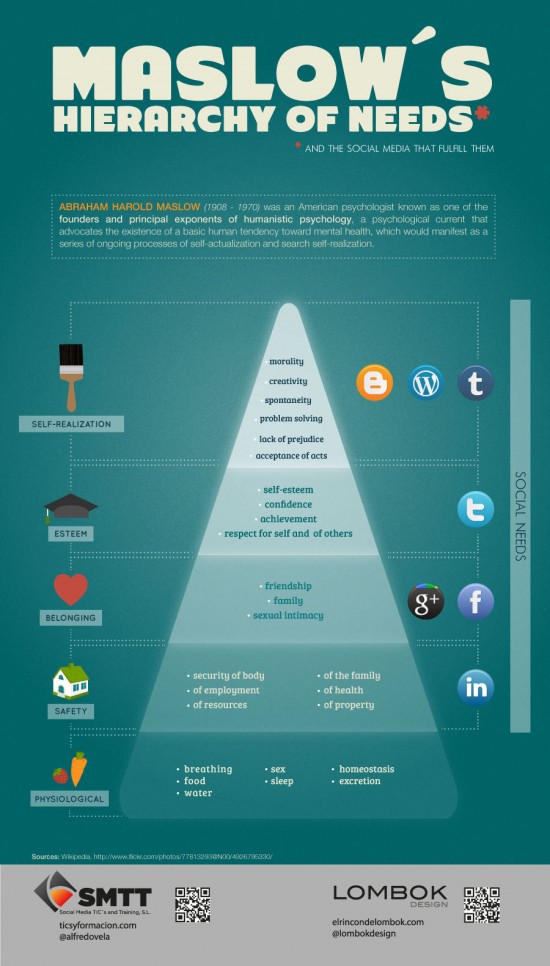
All medical professionals, and some FAs and behavioral economists, realize that Maslow’s hierarchy of needs is often portrayed in the shape of a pyramid, with the largest and most fundamental levels of needs at the bottom, and the need for self-actualization at the top.

So, this infographic takes Maslow’s theory and looks at the electronic social media tools that fulfill these needs.

Source: ticsyformacion.com

Assessment

Yet, another new-paradigm assessment of social media for doctors, financial advisors … and us all.


Product DetailsProduct DetailsProduct Details

Product Details  Product Details

Product Details

Conclusion

Your thoughts and comments on this ME-P are appreciated. Feel free to review our top-left column, and top-right sidebar materials, links, URLs and related websites, too. Then, subscribe to the ME-P. It is fast, free and secure.

Speaker: If you need a moderator or speaker for an upcoming event, Dr. David E. Marcinko; MBA – Publisher-in-Chief of the Medical Executive-Post – is available for seminar or speaking engagements. Contact: MarcinkoAdvisors@msn.com

OUR OTHER PRINT BOOKS AND RELATED INFORMATION SOURCES:

Risk Management, Liability Insurance, and Asset Protection Strategies for Doctors and Advisors: Best Practices from Leading Consultants and Certified Medical Planners™

***

Why You CAN’T Turn Your Roth IRA Into a Billion-Dollar Tax Shelter

By Nadia Sussman, Sherene Strausberg and Justin Elliott

ProPublica is a Pulitzer Prize-winning investigative newsroom. Sign up for The Big Story newsletter to receive stories like this one in your inbox. Series: The Secret IRS Files Inside the Tax Records of the .001%

***

The Roth IRA: What It Is and How It Works | Personal ...

***

Last week, ProPublica published the story of how PayPal co-founder and tech investor Peter Thiel was able to turn a Roth IRA initially worth around $2,000 into a jaw-dropping $5 billion tax-free retirement stash in just 20 years.

The story is even more remarkable because Congress created the Roth IRA in 1997 to encourage middle-class Americans to save for their golden years. Most Americans have struggled to do even that; the average account was worth about $39,000 in 2018. But Thiel and other billionaires have managed to turn their mundane Roths into giant onshore tax shelters.

Thiel was able to launch his Roth into the stratosphere through a complicated strategy involving the purchase of nonpublic stock at bargain prices — the kind of deal most people can’t access. Experts say it risked running afoul of rules designed to prevent IRAs from becoming illegal tax shelters. (Thiel’s spokesman didn’t respond to questions.)

Other ultrawealthy Americans have used different means to build Roths worth tens or hundreds of millions of dollars. Senate Finance Chairman Ron Wyden is now looking at how to end the use of the Roth as “yet another tax dodge that allows mega millionaires and billionaires to avoid paying taxes.”

How are they able to do it while you can’t? Check out our explainer of one way the Roth works for the ultrawealthy and not for you.

***

Your thoughts and comments are appreciated.

Citation: https://www.r2library.com/Resource/Title/0826102549

MORE: https://www.routledge.com/Comprehensive-Financial-Planning-Strategies-for-Doctors-and-Advisors-Best/Marcinko-Hetico/p/book/9781482240283

***

THANK YOU

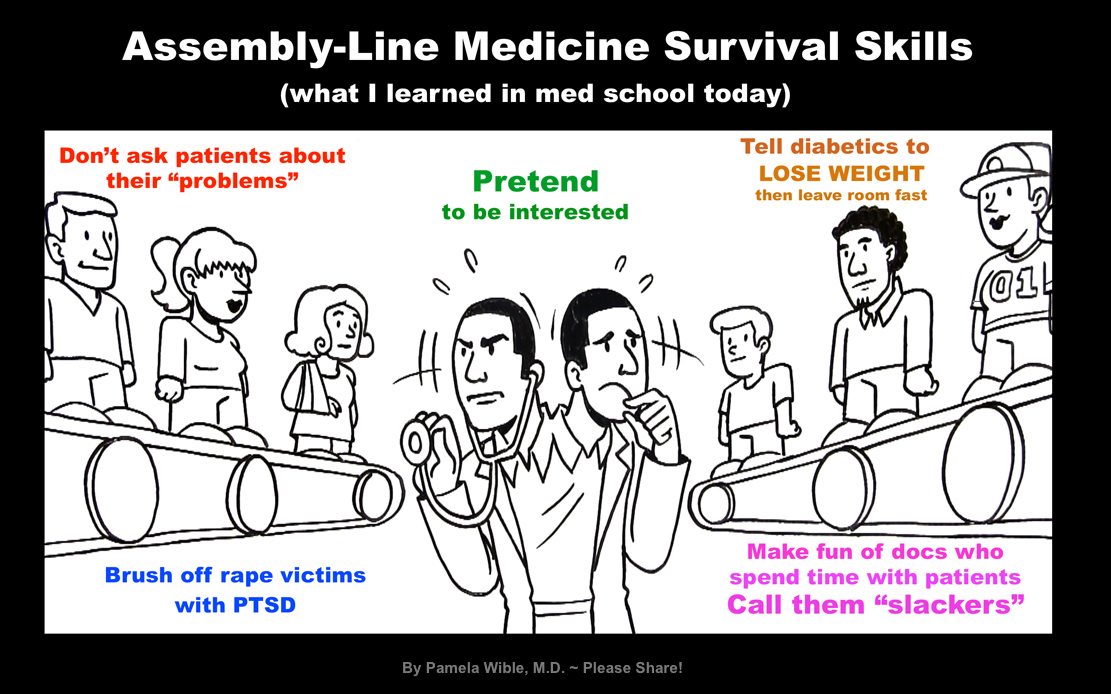
Assembly Line Medicine Survival Skills

WHAT I LEARNED IN MEDICAL SCHOOL TODAY

By Pamela Wible MD

***

***

COMMENTS APPRECIATED

Thank You

Subscribe to the Medical Executive-Post

***

***

***