Transform Your Financial Insights into Lasting Change

Turn Financial A-Ha Moments Into Lasting Change With Memory Re-Consolidation

By Rick Kahler MSFS CFP

***

***

Have you ever had a light bulb moment about money?

Maybe you leave a workshop, a therapy session, or a conversation with a financial advisor, feeling as if you have finally cracked the code. You understand why you keep overspending. You see the pattern that keeps you procrastinating about saving and investing. You feel the reason you panic about money, even when you know you are okay. In that moment, it all seems so clear.

Yet a week later, you are right back at it. Swiping the credit card. Avoiding the budget. Losing sleep over the same worries you thought you had just solved. What happened to that breakthrough? Why did it not last?

BRAIN ANCHORING: https://medicalexecutivepost.com/2024/10/22/anchoring-initial-mental-brain-trickery/

I’ve experienced this myself, more times than I’d like to admit. Recently, I found a book that explains why: Unlocking the Emotional Brain by Bruce Ecker, Robin Ticic, and Laurel Hulley. The authors explain that lasting change happens through something called “memory re-consolidation.” It is the brain’s way of updating emotional patterns we have carried for years—often since childhood.

Most of us have old money stories tucked away in our emotional memory. Suppose, for example, as a child you were scolded for asking a neighbor how much money they earned. This and other similar experiences that left you feeling shamed or dismissed taught you that it was rude to talk about money.

Such early experiences are filed away as emotional truths. They shape what feels true, even years later as an adult, whether or not that “truth” is still relevant.

NEUROLINK: https://medicalexecutivepost.com/2023/03/07/neurolink-brain-chips-rejected-by-the-fda/

As an adult, you may have come to understand that talking about money is often essential for your emotional and financial well being. But when the moment comes to have a money conversation, your body still freezes up. That is not weakness. That is your brain pulling up the old file.

Here is where memory re-consolidation comes in. The brain does not update the file just because you think new thoughts. It updates when you have a new experience that feels different. Maybe someone listens without judgment, or you realize you are talking about money and still feel safe. That emotional mismatch tells the brain, “Maybe this file is not true anymore.”

But the update is not finished. To make the change stick, you have to hold both the old belief and the new experience together for a little while. It is like showing your brain two pictures: here is how it used to feel, and here is how it feels now. That moment of holding both is when the rewrite happens.

Even more interesting, the brain keeps the file open for several hours after the shift. What you do in that window can help the change settle in—or not. If you rush back into busyness or distractions, you might accidentally let the old version save itself again.

BRAIN HEALTH: https://medicalexecutivepost.com/2025/02/19/brain-health-bilingualism/

So what can we do to give those shifts a better chance of sticking? I have noticed that insights gained during a retreat or workshop, with ample time to focus and reflect, are more likely to last. Even in our everyday lives, we can slow down, even for a few minutes, to write about what we felt, check in with our bodies, or talk with someone who supports us. We can protect a little bit of quiet space before diving back into the noise.

The next time you have a money breakthrough, try giving yourself that space. Consciously notice both the old belief and the new experience. Give the re-consolidation time to settle in.

Then, the next time your brain pulls up that old money story, you’ll have access to the updated, more accurate version.

COMMENTS APPRECIATED

EDUCATION: Books

Like and Refer

***

***

Dynamic Strategies in Broker-Dealer Recruitment

By Staff Reporter and A.I.

SPONSOR: http://www.MarcinkoAssociates.com

***

***

The Evolving Landscape of Broker-Dealer Recruitment

Broker-dealer recruitment has become a dynamic and competitive arena within the financial services industry. As firms vie for top talent, the strategies and incentives used to attract and retain financial advisors have evolved significantly. In an environment shaped by regulatory changes, technological innovation, and shifting advisor expectations, broker-dealers must continuously refine their recruitment approaches to remain competitive and relevant.

At the heart of broker-dealer recruitment is the pursuit of experienced financial advisors who bring with them established client relationships and significant assets under management. These advisors are highly sought after because they can generate immediate revenue and enhance a firm’s market presence. According to recent industry reports, firms like LPL Financial, Commonwealth, and Cetera have ramped up their recruitment efforts by investing in platform enhancements, rebranding initiatives, and technology upgrades to appeal to both seasoned professionals and the next generation of advisors.

One of the most significant trends in broker-dealer recruitment is the emphasis on value-added services. Advisors today are not merely looking for the highest payout or signing bonus; they are increasingly drawn to firms that offer robust support systems, including compliance assistance, marketing resources, and advanced technology platforms. Broker-dealers that can demonstrate a commitment to advisor growth and client service excellence are more likely to attract top-tier talent.

Another key factor influencing recruitment is the cultural fit between the advisor and the firm. Advisors often seek environments that align with their personal values and business philosophies. As such, firms are placing greater emphasis on showcasing their culture, leadership, and long-term vision during the recruitment prhttps://medicalexecutivepost.com/2024/09/05/beware-the-brokerage-accounts/ocess. This cultural alignment can be a decisive factor in an advisor’s decision to join or remain with a firm.https://medicalexecutivepost.com/2024/09/05/beware-the-brokerage-accounts/

The competitive nature of the industry has also led to the rise of aggressive recruitment tactics, including lucrative transition packages and equity offers. While these financial incentives can be effective, they are increasingly being supplemented by strategic differentiators such as flexible affiliation models, access to alternative investment platforms, and opportunities for practice acquisition or succession planning.

Moreover, the recruitment landscape is being reshaped by broader economic and regulatory forces. The implementation of Regulation Best Interest (Reg BI) and the ongoing impact of high interest rates have prompted advisors to reassess their affiliations and seek firms that provide clarity, stability, and strategic guidance. Broker-dealers that proactively address these concerns and offer transparent, advisor-centric solutions are better positioned to succeed in the recruitment race.

In conclusion, broker-dealer recruitment is no longer just about offering the biggest check. It is about creating a compelling value proposition that resonates with advisors’ professional goals and personal values. Firms that invest in technology, culture, and advisor support—while remaining agile in response to industry trends—will be best equipped to attract and retain the talent necessary for long-term success.

COMMENTS APPRECIATED

EDUCATION: Books

SPEAKING: Dr. Marcinko will be speaking and lecturing, signing and opining, teaching and preaching, storming and performing at many locations throughout the USA this year! His tour of witty and serious pontifications may be scheduled on a planned or ad-hoc basis; for public or private meetings and gatherings; formally, informally, or over lunch or dinner. All medical societies, financial advisory firms or Broker-Dealers are encouraged to submit an RFP for speaking engagements: CONTACT: Ann Miller RN MHA at MarcinkoAdvisors@outlook.com -OR- http://www.MarcinkoAssociates.com

Like, Refer and Subscribe

***

***

PROSPECT THEORY: In Client Empowerment and Financial Decision Making

By Dr. David Edward Marcinko MBA MEd

SPONSOR: http://www.MarcinkoAssociates.com

***

***

PROSPECT THEORY

In the early 1980s, Daniel Kahneman and Amos Tverskey proved in numerous experiments that the reality of decision making differed greatly from the assumptions held by economists. They published their findings in Prospect Theory: An analysis of decision making under risk, which quickly became one of the most cited papers in all of economics.

KAHNEMAN: https://medicalexecutivepost.com/2024/03/28/rip-daniel-kahneman-phd/

To understand the importance of their breakthrough, we first need to take a step back and explain a few things. Up until that point, economists were working under a normative model of decision making. A normative model is a prescriptive approach that concerns itself with how people should make optimal decisions. Basically, if everyone was rational, this is how they should act.

INVESTING PSYCHOLOGY: https://medicalexecutivepost.com/2025/02/21/investing-psychology/

***

***

REAL-LIFE EXAMPLE

Amanda, an RN client, was just informed by her financial advisor that she needed to re-launch her 403-b retirement plan. Since she was leery about investing, she quietly wondered why she couldn’t DIY. Little does her Financial Advisor know that she doesn’t intend to follow his advice, anyway! So, what went wrong?

The answer may be that her advisor didn’t deploy a behavioral economics framework to support her decision-making. One such framework is the “prospect theory” model that boils client decision-making into a “three step heuristic.”
 
According to colleague Eugene Schmuckler PhD MBA MEd CTS, Prospect theory makes the unspoken biases that we all have more explicit. By identifying all the background assumptions and preferences that clients [patients] bring to the office, decision-making can be crafted so that everyone [family, doctor and patient] or [FA, client and spouse] is on the same page.

INVESTING MIND TRAPS: https://medicalexecutivepost.com/2025/06/12/psychology-common-finance-and-investing-mind-traps/

Briefly, the three steps are:

1. Simplify choices by focusing on the key differences between investment [treatment] options such as stock, bonds, cash, and index funds. 

2. Understanding that clients [patients] prefer greater certainty when it comes to pursuing financial [health] gains and are willing to accept uncertainty when trying to avoid a loss [illness].

3. Cognitive processes lead clients and patients to overestimate the value of their choices thanks to survivor bias, cognitive dissonance, appeals to authority and hindsight biases.

 CITE: Jaan E. Sidorov MD [Harrisburg, PA] 

Assessment

Much like in healthcare today, the current mass-customized approaches to the financial services industry fall short of recognizing more personalized advisory approaches like prospect theory and assisted client-centered investment decision-making.  

COMMENTS APPRECIATED

EDUCATION: Books

SPEAKING: Dr. Marcinko will be speaking and lecturing, signing and opining, teaching and preaching, storming and performing at many locations throughout the USA this year! His tour of witty and serious pontifications may be scheduled on a planned or ad-hoc basis; for public or private meetings and gatherings; formally, informally, or over lunch or dinner. All medical societies, financial advisory firms or Broker-Dealers are encouraged to submit an RFP for speaking engagements: CONTACT: Ann Miller RN MHA at MarcinkoAdvisors@outlook.com -OR- http://www.MarcinkoAssociates.com

Like and Subscribe

***

***

PHYSICIANS: Do You Use A Financial Advisor?

By Staff Reporters

***

***

TO: All Physicians and Dentists

QUESTION?

Do you use a financial advisor?

What has been your experience with him or her?

THANK YOU

Do Political Biases Shape Your Financial Planner’s Advice?

Subscribe to continue reading

Subscribe to get access to the rest of this post and other subscriber-only content.

FINANCIAL COACHING: For Physicians

By Staff Reporters

SPONSOR: http://www.MarcinkoAssociates.com

***

***

DEAR COLLEAGUES

If you are just starting out managing your finances and don’t know where to begin, a financial coach may be a good option for you. They are helpful for someone who wants to become proficient in the basics of finance, from learning how to budget or save money to building an emergency fund or creating a plan for paying off debt. If you have short-term money goals, like saving for a big purchase or just practicing better money habits, a financial coach can help you reach them by working with you to create a plan and holding you accountable. Even more for physicians and most all medical professionals.

Pros and Cons of Working with a Financial Coach
A financial coach can have a positive impact on your financial well–being and your life in a number of ways:

  • Financial coaches see the bigger picture of how you relate to money. They can help you develop better habits, resulting in positive personal growth.
  • By providing education and encouragement, they can reduce financial stress, confusion, and what it is about money that overwhelms you.
  • Through accountability and support, they can help you accomplish your goals and help you feel more confident in your finances.
  • Available 24/7/365.
  • Modest fees.

At you service.
Dr. David Edward Marcinko MBA MEd CMP

CONTACT: MarcinkoAdvisors@outlook.com

LINK: https://medicalexecutivepost.com/2025/01/23/personal-coaching-dr-marcinko-at-your-service/

COMMENTS APPRECIATED

REFER AND SUBSCRIBE

***

***

DOCTOR INVESTING MISTAKES: Top Five PLUS 1 Vital Tip

***

***

By Dr. David Edward Marcinko MBA MEd CMP

SPONSOR: http://www.MarcinkoAssociates.com

***

FIVE INVESTING MISTAKES OF DOCTORS; PLUS 1 VITAL TIP

As a former US Securities and Exchange Commission [SEC] Registered Investment Advisor [RIA] and business school professor of economics and finance, I’ve seen many mistakes that doctors must be aware of, and most importantly, avoid. So, here are the top 5 investing mistakes along with suggested guideline solutions.

Mistake 1: Failing to Diversify Investment but Beware Di-Worsification

A single investment may become a large portion of your portfolio as a result of solid returns lulling you into a false sense of security. The Magnificent Seven stocks are a current example:

  • Apple, up +5,064%% since 1/18/2008 
  • Amazon, up +30,328% since 9/6/2002 
  • Alphabet, up +1,200% since 7/20/2012 
  • Tesla, up +21,713% since 11/16/2012 
  • Meta, up +684% since 2/20/2015 
  • Microsoft, up +22% since 12/21/2023 
  • Nvidia, up +80,797% since 4/15/2005 

Guideline: The Magnificent Seven [7] has grown from 9% of the S&P 500 at the end of 2013 to 31% at the end of 2024! That means even if you don’t own them, you’re still very exposed if you have an Index Fund [IF] or Exchange Traded Fund [ETF] that tracks the market. Accordingly, diversification is the only free lunch in investing which can reduce portfolio risk. But, remember the Wall Street insider aphorism that states: “Di-Versification Means Always Having to Say Your Sorry.” 

The term “Di-Worsification” was coined by legendary investor Peter Lynch in his book, One Up On Wall Street to refer to over-diversifying an investment portfolio in such a way that it reduces your overall risk-return characteristics. In other words, the potential return rises with an increase in risk and invested money can render higher profits only if willing to accept a higher possibility of losses [1].

IPO: https://medicalexecutivepost.com/2025/03/02/ipo-road-show-with-pros-and-cons/

Mistake 2: Chasing Stock Market Performance

A podiatrist can easily fall into the trap of chasing securities or mutual funds showing the highest return. It is almost an article of faith that they should only purchase mutual funds sporting the best recent performance. But in fact, it may actually pay to shun mutual funds with strong recent performance. Unfortunately, many struggle to appreciate the benefits of their investment strategy because in jaunty markets, people tend to run after strong performance and purchase last year’s winners. 

Similarly, in a market downturn, investors tend to move to lower-risk investment options, which can lead to missed opportunities during subsequent market recoveries. The extent of underperformance by individual investors has often been the most awful during bear markets. Academic studies have consistently shown that the returns achieved by the typical stock or bond fund investors have lagged substantially.

Guideline: Understand chasing performance does not work.Continually monitor your investments and don’t feel the need to invest in the hottest fund or asset category.  In fact, it is much better to increase investments in poor performing categories (i.e. buy low). Also keep in remind rebalancing of assets each year is key. If stocks perform poorly and bonds do exceptionally well, then rebalance at the end of the year. In following this strategy, this will force a doctor into buying low and selling high each year. 

STOCKS: https://medicalexecutivepost.com/2025/04/18/stocks-basic-definitions/

Mistake 3: Assuming Annual Returns Follow Historical Averages

Often doctors make their investment decisions under the belief that stocks will consistently give them solid double-digit returns. But the stock markets go through extended long-term cycles.

In examining stock market history, there have been 6 secular bull markets (market goes up for an extended period) and 5 secular bear markets (market goes down) since 1900. There have been five distinct secular bull markets in the past 100+ years. Each bull market lasted for an extended period and rewarded investors.   

For example, if an investor had started investing in stocks either at the top of the markets in 1966 or 2000, future stock market returns would have been exceptionally below average for the proceeding decade. On the other hand, those investors fortunate enough to start building wealth in 1982 would have enjoyed a near two-decade period of well above average stock market returns.  They key element to remember is that future historical returns in stocks are not guaranteed. If stock market returns are poor, one must consider that he or she will have to accept lower projected returns and ultimately save more money to make up for the shortfall. For example,

The May 6th, 2010, flash crash, also known as the crash of 2:45, was a United States trillion-dollar stock market plunge which started at 2:32 pm EST and lasted for approximately 36 minutes.

And, investors who have embraced the “buy the dip” strategy in 2025 have been handsomely rewarded, with the S&P 500 delivering its strongest post-pull back returns in over three decades.

According to research from Bespoke Investment Group, the S&P 500 has gained an average of 0.36% in the trading session following a down day so far in 2025. The only year with a comparable performance was 2020, which saw a 0.32% average post-dip gain [2]. 

The most recent example came on May 27, 2025 when the S&P 500 surged more than 2% after falling 0.7% in the final session before the holiday weekend. The rally was sparked by President Trump’s decision to scale back huge previously threatened tariffs on EU —a recurring catalyst behind many of 2025’s rebound. 

Guideline: Beware of projecting forward historical returns. Doctors should realize that the stock markets are inherently volatile and that, while it is easy to rely on past historical averages, there are long periods of time where returns and risk deviate meaningfully from historical averages.

REVENUE BONDS: https://medicalexecutivepost.com/2024/12/20/bonds-revenue/

***

***

Mistake 4: Attempting to Time the Stock Market

Some doctors believe they are “smarter than the market” and can time when to jump in and buy stocks or sell everything and go to cash. Wouldn’t it be nice to have the clairvoyance to be out of stocks on the market’s worst days and in on the best days?  

Using the S&P 500 Index, our agile imaginary doctor-investor managed to steer clear of the worst market day each year from January 1st, 1992 to March 31st, 2012. The outcome: s/he compiled a 12.42% annualized return (including reinvestment of dividends and capital gains) during the 20+ years, sufficient to compound a $10,000 investment into $107,100.

But what about another unfortunate doctor-investor that had the mistiming to be out of the market on the best day of each year. This ill-fated investor’s portfolio returned only 4.31% annualized from January 1992 – March 2012, increasing the $10,000 portfolio value to just $23,500 during the 20 years. The design of timing markets may sound easy, but for most all investors it is a losing strategy. 

More contemporaneously on December 18th 2024, the DJIA plummeted 2.5%, while the S&P 500 declined 3% and the NASDAQ tumbled 3.5% 

Guideline: If it looks too good to be true, it probably is. While jumping into the market at its low and selling right at the high is appealing in theory, we should recognize the difficulties and potential opportunity and trading costs associated with trying to time the stock market in practice. In general, colleagues are be best served by matching their investment with their time horizon and looking past the peaks / valleys along the way.

ALTERNATIVE INVESTMENTS: https://medicalexecutivepost.com/2025/05/12/stocks-and-alternative-investments/

Mistake 5: Failing to Recognize the Impact of Fees and Expenses

A free dinner seminar or a polished stock-broker sales pitch may hide the total underlying costs of an investment.  So, fees absolutely matter.

The first costing step is determining what the fees actually are. In a mutual fund, these costs are found in the company’s obligatory “Fund Facts”. This manuscript clearly outlines all the fees paid–including up front fees (commissions and loads), deferred sales charges and any switching fees. Fund management expense ratios are also part of the overall cost. Trading costs within the fund can also impact performance. 

Here is a list of the traditional mutual fund fees:

  • Front End Load: The commission charged to purchase a fund through a stock broker or financial advisor. The commission reduces the amount you have available to invest.  Thus, if you start with $100,000 to invest, and the advisor charges up to an 8 percent front end load, you end up actually investing $92,000.
  • Deferred Sales Charge (DSC) or Back End Load: Imposed if you sell your position in the mutual fund within a pre-specified period of time (normally one – five years).  It is initiated at a higher start percentage (i.e. as high as 10 percent) and declines over a specific period of time.
  • Operating Fees: Costs of the mutual fund including the management fee rewarded to the manager for investment services. It also includes legal, custodial, auditing and marketing fees.
  • Annual Administration Fee:  Many mutual fund companies also charge a fee just for administering the account – usually under $100-150 per year.

Guideline: Know and understand all fees.

For example: A 1 percent disparity in fees may not seem like much but it makes a considerable impact over a long time period. 

Consider a $100,000 portfolio that earns 8 percent before fees, grows to $320,714 after 20 years if the investor pays a 2 percent operating fee. In comparison, if s/he opted for a fund that charged a more reasonable 1 percent fee, after 20 years, the portfolio grows to be $386,968 – a divergence of over $66,000! 

This is the value of passive or index investing. In the case of an index fund, fees are generally under 0.5 percent, thus offering even more savings over a long period of time. 

One Vital Tip: Investing Time is on Your Side

Despite thousands of TV shows, podcasts, textbooks, opinions and university studies on investing, it really only has three simple components. Amount invested, rate of return and time. By far, the most important item is time! For example:

  • Nvidia: if you invested $1,000 in 2009, you’d have $338,103 today.
  • Apple: if you invested $1,000 in 2008, you’d have $48,005 today.
  • Netflix: if you invested $1,000 in 2004, you’d have $495,679 today.

Start prudently investing now and do not wait!

ETFs: https://medicalexecutivepost.com/2025/01/06/etfs-alternatively-weighted-investments/

CONCLUSION

Unfortunately, this list of investing mistakes is still being made by many doctors. Fortunately, by recognizing and acting to mitigate them, your results may be more financially fruitful and mentally quieting.

REFERENCES:

1. Lynch, Peter: One Up on Wall Street [How to Use What You Already Know to Make Money in the Market]: Simon and Shuster (2nd edition) New York, 2000.

2. https://www.bespokepremium.com

Readings:

1. Marcinko, DE; Comprehensive Financial Planning Strategies for Doctors and Advisors [Best Practices from Leading Consultants and Certified Medical Planners™] Productivity Press, New York, 2017. 

2. Marcinko, DE: Dictionary of Health Economics and Finance. Springer Publishing Company, New York, 2006.

3. Marcinko, DE; Risk Management, Liability Insurance, and Asset Protection Strategies for Doctors and Advisors [Best Practices from Leading Consultants and Certified Medical Planners™] CRC Press, New York, 2015.

BIO: As a former university Professor and Endowed Department Chair in Austrian Economics, Finance and Entrepreneurship, the author was a NYSE Registered Investment Advisor and Certified Financial Planner for a decade. Later, he was a private equity and wealth manager

COMMENTS APPRECIATED

SPONSOR: http://www.CertifiedMedicalPlanner.org

Subscribe, Like and Refer

***

EDUCATION: Books

SPEAKING: Dr. Marcinko will be speaking and lecturing, signing and opining, teaching and preaching, storming and performing at many locations throughout the USA this year! His tour of witty and serious pontifications may be scheduled on a planned or ad-hoc basis; for public or private meetings and gatherings; formally, informally, or over lunch or dinner. All medical societies, financial advisory firms or Broker-Dealers are encouraged to submit an RFP for speaking engagements: CONTACT: Ann Miller RN MHA at MarcinkoAdvisors@outlook.com -OR- http://www.MarcinkoAssociates.com

***

***

ASSET PROTECTION: Records Verification

By Rick Kahler MSFP CFP®

***

***

OVER HEARD IN THE FINANCIAl ADVISOR’S LOUNGE

A basic strategy for asset protection is to hold various assets in different entities. Putting real estate, small businesses, and other assets into trusts, corporations, or limited liability companies (LLCs) is effective protection that is relatively easy to put into practice. Not only do I recommend this strategy to clients, I use it myself. Recently, however, I discovered a potential downside.

About 25 years ago, I invested in some rare coins in a corporation I owned and put them into a safe deposit box owned by the corporation. When my business relocated 12 years ago, the safe deposit box billing was not forwarded to the new address and was never paid again. Last year I went to retrieve the coins from the safe deposit box, which I had not visited in 25 years. I discovered the box had been drilled open three years earlier and my collection turned over to the unclaimed property division of the State Treasurer’s office.

I was told getting the coins back would be simple enough. I just needed to verify that I owned the company which owned them by providing the corporation’s tax ID number. However, the corporation no longer existed. I didn’t have a record of its tax ID number. The IRS wouldn’t verify the number without my giving them the address the company had used. That address was a post office box number that I no longer used and couldn’t remember. The state’s position was “no tax ID, no coins.” The only verification of my identity as owner of the corporation was my signature on the bank’s safe deposit box application. Eventually, with the support of bank officers who were willing to swear that I was who I claimed to be, I got my coin collection back.  The hassle involved in this process was a reminder of an important component of asset protection. Maintain accurate records so you don’t end up hiding assets from yourself.

***

***

A good start is to create a master file of all the entities that hold your assets. This can be any system that’s easy for you to use: a computer spreadsheet, a set of file folders, or a single paper list. Share it as appropriate with your CPA, attorney, or financial planner. The master list should include the name of each company, its date of incorporation, tax ID number, address, and other relevant information like phone or bank account numbers. Also keep an inventory of the assets each company owns.

Once you’ve created a master list, it’s essential to keep it up to date as you buy or sell assets, close companies, or transfer ownership. Set up a system, as well, to remind yourself of tasks like filing tax returns, completing minutes of annual meetings, and paying the annual safe deposit box rent. Make your record-keeping easier by eliminating unnecessary complications.

For example, you probably don’t need a separate address for each trust, corporation, or LLC. Instead of creating a separate company for each asset, you might consider grouping smaller assets within one entity. I’d suggest first discussing the pros and cons with an attorney or financial planner. For larger assets like real estate, I do recommend holding each one separately.

When I talk to clients about asset protection, I mention that part of the price we pay for it is an increase in paperwork. It’s easy to accept that idea with casual good intentions. The case of my reclaimed coin investment is a good reminder of the importance of keeping up with that paperwork. If we don’t, we might protect ourselves right out of access to our own assets.

COMMENTS APPRECIATED

Subscribe, Refer and Like

***

***

HEDGE FUND: Hiring Separate Managers?

SPONSOR: http://www.CertifiedMedicalPlanner.org

By Staff Reporters

***

***

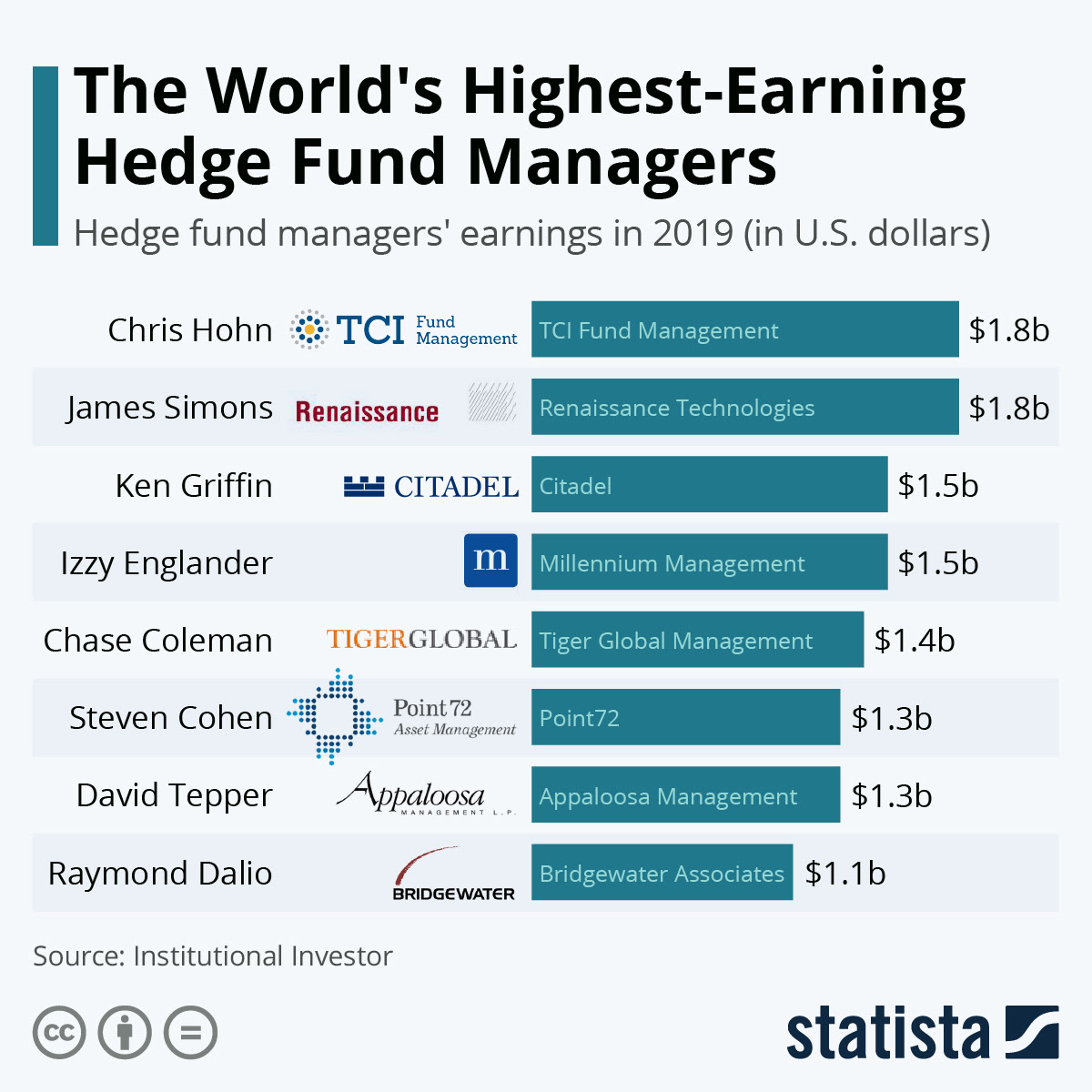
A hedge fund is a limited partnership of private investors whose money is pooled and managed by professional fund managers. These managers use a wide range of strategies, including leverage (borrowed money) and the trading of nontraditional assets, to earn above-average investment returns. A hedge fund investment is often considered a risky, alternative investment choice and usually requires a high minimum investment or net worth. Hedge funds typically target wealthy investors.

Growing Funds: https://medicalexecutivepost.com/2025/01/15/hedge-funds-a-growing-sector-of-investing/

***

I want to invest with a manager that has the skills to “hedge” a portfolio, but I do not wish to mix my money with other investors as in a hedge fund.

QUESTION: Can I hire hedge fund managers to manage my account separately?

Some hedge fund managers do take the time to recruit and manage separate accounts, with or without the help of referring brokers.

However, before long the administrative burden of managing so many separate accounts can become quite significant. Hence, the minimums for such separate accounts are generally much higher than if one were to invest in the manager’s hedge fund.

Hedge Fees: https://medicalexecutivepost.com/2024/07/09/hedge-funds-understanding-fees-and-costs/

The best feature of these separate accounts is that potentially every aspect of the investment account, including fees, is negotiable. Other features include greater transparency and increased liquidity, since separately managed accounts can often be shut down on short notice.

Hedge Monitors: https://medicalexecutivepost.com/2024/07/09/how-to-monitor-hedge-funds/

Investors must be aware, however, that for practical purposes the portfolio manager generally will buy and sell the same securities in the separately managed accounts that the portfolio manager buys and sells in the hedge fund, yet the expenses incurred by the investor will likely be higher.

Hedge IRA: https://medicalexecutivepost.com/2025/04/02/hedge-funds-in-individual-retirement-accounts/

COMMENTS APPRECIATED

Read, Like, Refer and Subscribe

***

***

OSTRICH BIAS: Negative Information

SPONSOR: http://www.CertifiedMedicalPlanner.org

Financial Advisor, Planner and Insurance Agent Information

By Staff Reporters

***

***

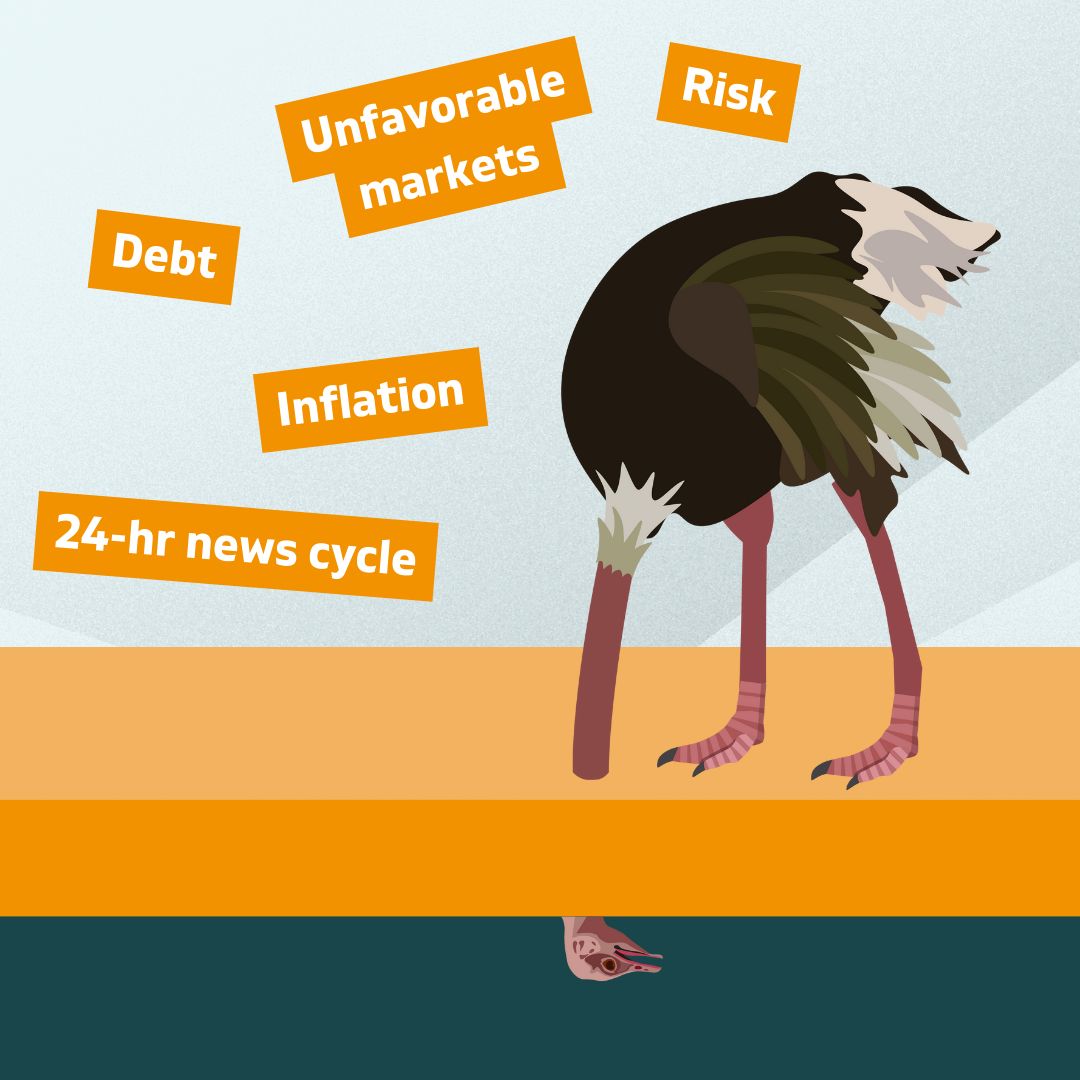
Ostrich Bias is a behavioral phenomenon describing the tendency of individuals to avoid or ignore information that they perceive as negative or threatening. This term is derived from the popular but inaccurate belief that ostriches bury their heads in the sand when faced with danger, even though they do not exhibit such behavior.

Evidence: There is neuro-scientific evidence of the ostrich effect. Sharot et al. (2012) investigated the differences in positive and negative information when updating existing beliefs. Consistent with the ostrich effect, participants presented with negative information were more likely to avoid updating their beliefs; wills, estate plans, investment portfolios, and insurance policies, etc..

Moreover, they found that the part of the brain responsible for this cognitive bias was the left IFG – inferior frontal gyrus – by disrupting this part of the brain with TMS – transcranial magnetic stimulation – participants were more likely to accept the negative information provided.

EXAMPLE: The Ostrich Bias can cause someone to avoid looking at their bills, because they’re worried about seeing how far behind they are on home mortgage payments, credit cards, education or auto loans, etc.

COMMENTS APPRECIATED

The Medical Executive-Post is a  news and information aggregator and social media professional network for medical and financial service professionals.

Feel free to submit education content to the site as well as links, text posts, images, opinions and videos which are then voted up or down by other members. Comments and dialog are especially welcomed.

Daily posts are organized by subject. ME-P administrators moderate the activity. Moderation may also conducted by community-specific moderators who are unpaid volunteers.

Invite Dr. Marcinko

Refer and Like

***

***

Providing Physician Centric [Not Advisor Centric] Holistic Financial Planning Advice

BY DR. DAVID EDWARD MARCINKO MBA MEd CMP

***

SPONSOR: http://www.MarcinkoAssociates.com

***

Selecting a Healthcare Focused Financial Advisory Team

Most retail financial services products are designed to enhance the well-being of the Financial Advisor and vendor at the expense of clients.

The clients get only the leftovers.

Of course, no one tells them that secret.

They have to figure it out for themselves.

As the old line goes, “Where are the customers’ boats?”

Rowland, M: Planning Periscope [Where Advisors are the Clients]. Financial Advisors Magazine; page 36, April 2014.

EDUCATION: Books

SPEAKING: Dr. Marcinko will be speaking and lecturing, signing and opining, teaching and preaching, storming and performing at many locations throughout the USA this year! His tour of witty and serious pontifications may be scheduled on a planned or ad-hoc basis; for public or private meetings and gatherings; formally, informally, or over lunch or dinner. All medical societies, financial advisory firms or Broker-Dealers are encouraged to submit a RFP for speaking engagements: MarcinkoAdvisors@outlook.com 

COMMENTS APPRECIATED

Refer, Like and Subscribe

***

***

FINANCIAL ADVISORS: Real Monetary Worth?

BY DR. DAVID EDWARD MARCINKO; MBA MEd CMP®

***

SPONSOR: http://www.MarcinkoAssociates.com

***

SO – HOW MUCH IS A “FINANCIAL ADVISOR” REALLY WORTH?

This blog holds a rather uncomplimentary opinion of financial advisors, and the financial services and brokerage industry as a whole; deserved, or not? The entire site hints at this attitude as well, in favor of a going it alone or ME, Inc investing when possible. Nevertheless, it is reasonable to wonder how much boost in net-returns might an educated and informed, fee transparent and honest, fiduciary focused “financial advisor” add to a clients’ investment portfolio; all things being equal [ceteris paribus].

And, can it be quantified?

Well, according to Vanguard Brokerage Services®, perhaps as much as 3%? In a decade long paper from the Valley Forge, PA based mutual fund and ETF giant, Vanguard said financial advisors can generate returns through a framework focused on five wealth management principles:

Being an effective behavioral coach: Helping clients maintain a long-term perspective and a disciplined approach is arguably one of the most important elements of financial advice. (Potential value added: up to 1.50%).

Applying an asset location strategy: The allocation of assets between taxable and tax-advantaged accounts is one tool an advisor can employ that can add value each year. (Potential value added: from 0% to 0.75%).

Employing cost-effective investments: This component of every advisor’s tool kit is based on simple math: Gross return less costs equals net return. (Potential value added: up to 0.45%).

Maintaining the proper allocation through rebalancing: Over time, as investments produce various returns, a portfolio will likely drift from its target allocation. An advisor can add value by ensuring the portfolio’s risk/return characteristics stay consistent with a client’s preferences. (Potential value added: up to 0.35%).

Implementing a spending strategy: As the retiree population grows, an advisor can help clients make important decisions about how to spend from their portfolios. (Potential value added: up to 0.70%).

Source: Financial Advisor Magazine, page 20, April 2014.

Assessment

However, Vanguard notes that while it’s possible all of these principles could add up to 3% in net returns for clients, it’s more likely to be an intermittent number than an annual one because some of the best opportunities to add value happen during extreme market lows and highs when angst or giddiness [fear and greed] can cause investors to bail on their well-thought-out investment plans.

And, is the study applicable to doctors and allied healthcare providers? Doe Vanguard have a vested interest in the topic. What about fee based versus fee-only financial advice?

Conclusion

Finally, recognize the plethora of other financial planning life-cycle topics addressed in this ME-P were not included in the Vanguard investment portfolio-only study a decade ago. 

And what about today with contemporaneous internet advising, chat-rooms, linkedin, robo-advisors, reddit and the like?

COMMENTS APPRECIATED

Read, Subscribe and Like

EDUCATION: Books

***

***

MARCINKO & ASSOCIATES: Core Operating Values

SPONSOR: http://www.MarcinkoAssociates.com

***

By Dr. David Edward Marcinko MBA MEd

***

D. E. Marcinko & Associates Core Operating Values

9.   We act with honesty, integrity and are always straightforward.
8.   We strive to be innovative, creative, iconoclastic, and flexible.
7.   We admit and learn from mistakes and don’t repeat them.
6.   We work hard always as competitors are trying to catch up.
5.   We treat others with dignity and respect.
4.   We are the onus of consulting advice for the well being of others.
3.   We fight complacency as former success is in the past.
2.   The best management styles are timeless, not timely.
1.   Our clients are colleagues and always come first.

EDUCATION: Books

SPEAKING: Dr. Marcinko will be speaking and lecturing, signing and opining, teaching and preaching, storming and performing at many locations throughout the USA this year! His tour of witty and serious pontifications may be scheduled on a planned or ad-hoc basis; for public or private meetings and gatherings; formally, informally, or over lunch or dinner. All medical societies, financial advisory firms or Broker-Dealers are encouraged to submit a RFP for speaking engagements: MarcinkoAdvisors@outlook.com 

COMMENTS APPRECIATED

Refer and Subscribe

Doctor Entrepreneur's Podcast | Libsyn Directory

***

Bielard, Biehl and Kaiser: Five-Way Investor Personality Model

BEHAVIORAL PSYCHOLOGY AND PROFESSIONAL FINANCIAL ADVICE

By Staff Reporters

SPONSOR: http://www.MarcinkoAssociates.com

***

***

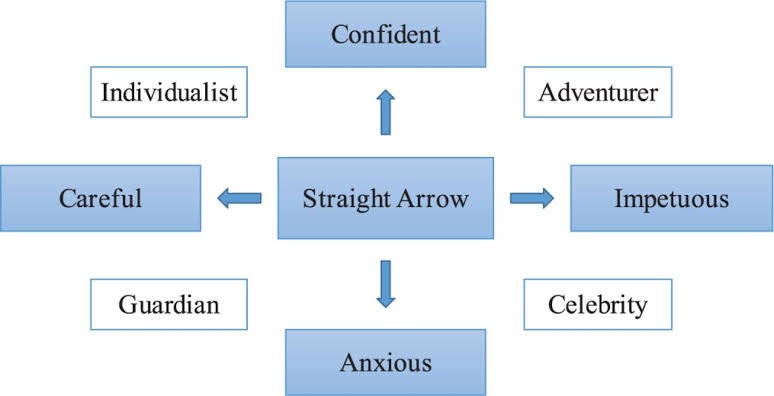
Fund managers Tom Bailard, Larry Biehl and Ron Kaiser identified five types of investors, each type characterized by their investment preferences and actions. These 5 types are: Individualists, Adventurers, Celebrities, Guardians and Straight Arrows. Key to the different categories is their different attitude to seeking professional financial advice. Defined below:

Individualists have faith in their own investment abilities so do not approach a financial adviser. But they are also cautious.

Adventurers are what may be called high rollers, in that they like big bets, tend not to diversify and are happy to put all their eggs in one basket. They, too, are unlikely to seek financial advice.

Celebrities tend to follow the crowd in investment terms but are aware of their lack of expertise so frequently consult advisers.

Guardians are fearful of losing money, thus prefer rock-solid investments such as government bonds. They, too, are likely to seek professional investment advice.

Straight Arrows exhibit some of the characteristics of individualists and some of adventurers.

COMMENTS APPRECIATED

Refer and Subscribe

***

***

CFP versus CFA

CERTIFIED FINANCIAL PLANNER versus CERTIFIED FINANCIAL ANALYST

By Staff Reporters

SPONSOR: http://www.MarcinkoAssociates.com

***

***

Certified Financial Planner (CFP®)

A certified financial planner (CFP®) helps individuals plan their financial futures. CFPs are not focused only on investments; they help their clients achieve specific long-term financial goals, such as saving for retirement, buying a house, or starting a college fund for their children.

To become a CFP®, a person must complete a course of study and then pass a two-part examination. The exam covers wealth management, tax palnning, insurance, retirement planning, estate planning, and other basic personal finance topics. These topics are all important for someone seeking to help clients achieve financial goals.

Chartered Financial Analyst (CFA)

A CFA, on the other hand, conducts investing in larger settings, normally for large investment firms on both the buy side and the sell side, mutual funds or hedge funds. CFAs can also provide internal financial analysis for corporations that are not in the investment industry. While a CFP® focuses on wealth management and planning for individual clients, a CFA focuses on wealth management for a corporation.

To become a CFA, a person must complete a rigorous course of study and pass three examinations over the course of two or more years. In addition, the candidate must adhere to a strict code of ethics and have four years of work experience in an investment decision-making setting.

COMMENTS APPRECIATED

Refer and Subscribe

***

***

FINANCIAL PLANNING: Specifically for Physicians and Medical Professionals

By http://www.MarcinkoAssociates.com

***

***

(“Informed Voice of a New Generation of Fiduciary Advisors for Healthcare”)

For most lay folks, personal financial planning typically involves creating a personal budget, planning for taxes, setting up a savings account and developing a debt management, retirement and insurance recovery plan. Medicare, Social Security and Required Minimal Distribution [RMD] analysis is typical for lay retirement. Of course, we can assist in all of these activities, but lay individuals can also create and establish their own financial plan to reach short and long-term savings and investment goals.

But, as fellow doctors, we understand better than most the more complex financial challenges doctors can face when it comes to their financial planning. Of course, most physicians ultimately make a good income, but it is the saving, asset and risk management tolerance and investing part that many of our colleagues’ struggle with. Far too often physicians receive terrible guidance, have no time to properly manage their own investments and set goals for that day when they no longer wish to practice medicine.

For the average doctor or healthcare professional, the feelings of pride and achievement at finally graduating are typically paired with the heavy burden of hundreds of thousands of dollars in student loan debt.

You dedicated countless hours to learning, studying, and training in your field. You missed birthdays and holidays, time with your families, and sacrificed vacations to provide compassionate and excellent care for your patients. Amidst all of that, there was no time to give your finances even a second thought.

Between undergraduate, medical school, and then internship and residency, most young physicians do not begin saving for retirement until late into their 20s, if not their 30s. You’ve missed an entire decade or more of allowing your money and investments to compound and work for you. When it comes to addressing your financial health and security, there’s no time to waste.

And you may be misled by unscrupulous “advisors”.

MORE: https://marcinkoassociates.com/financial-planning/

***

***

Investment Advisor [IA] VERSUS Financial Advisor [FA]

DEFINITIONS

By Staff Reporters

SPONSOR: http://www.MarcinkoAssociates.com

***

***

While IAs and FAs may seem the same, they are not the same. The Financial Industry Regulatory Authority (FINRA) and the Securities Exchange Commission (SEC) have clearly defined investment advisors as distinct from financial advisors.

The term financial advisor is a generic one that can encompass many different financial professionals, although it most commonly refers to stock brokers (individuals or companies that buy and sell securities).

Investment advisor, on the other hand, is a legal term and thus has a more clear-cut definition – or at least as clear as legalese is apt to be.

KEY DIFFERENCES:

  • Financial advisors help with all aspects of your finances, including saving, budgeting, insurance, retirement planning, and taxes.
  • Investment advisors focus specifically on choosing and managing investment portfolios.
  • Financial advisors offer broader financial guidance, while investment advisors concentrate solely on investments.
  • Investment advisors are held to the fiduciary standard, while financial advisors who work as brokers may operate under different rules.

MORE: https://www.financestrategists.com/financial-advisor/advisor-types/investment-advisor/

COMMENTS APPRECIATED

Refer and Subscribe

***

***

OUTCOME: Bias

By Staff Reporters

***

***

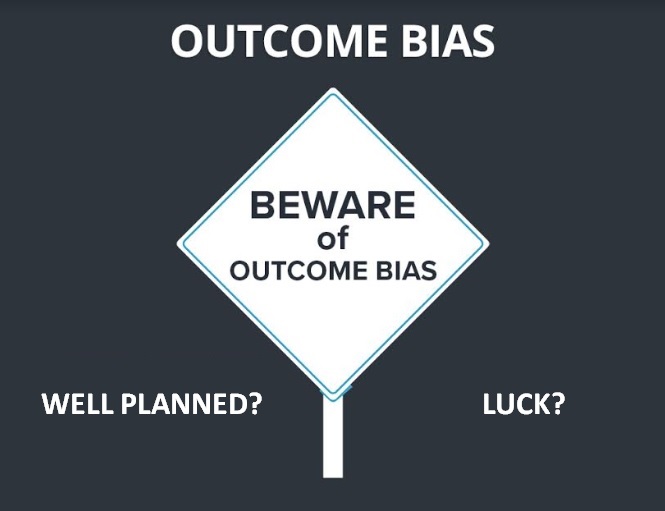
Outcome bias is judging a decision based on its result rather than the quality of the decision at the time it was made.

It’s like saying a bad poker play was smart because you won the hand. Or, a bad stock picker or financial advisor was good because the price went up!

According to psychologist and colleague Dan Ariely PhD, this bias ignores the process and focuses solely on the outcome. It’s why we celebrate lucky breaks and criticize thoughtful risks that didn’t pan out.

So, the next time you’re evaluating a decision, focus on the reasoning behind it, not just the end result.

COMMENTS APPRECIATED

Subscribe Today!

***

***

COUNTDOWN: To End of Year BOI Reporting?

Beneficial Ownership Information

By Staff Reporters

***

***

Small business owners face severe penalties if they don’t report to the federal government by year’s end. And, thousands of businesses may not realize they are subject to a new reporting process mandated under the Corporate Transparency Act, which went into effect in January 2024. Even lawyers, doctors, financial advisors and accountants are affected; along with “mom and pop”business owners.

For most eligible businesses, the filing deadline is Jan. 1, 2025, according to the U.S. Chamber of Commerce. “Those who fail to file by this deadline — or fail to update this information if needed — could face up to two years imprisonment and fines up to $10,000, in addition to civil penalties of up to $591 per day,” the U.S. Chamber of Commerce website reads.

Businesses that meet the reporting criteria must submit a Beneficial Ownership Information Report to the U.S. Department of Treasury’s Financial Crimes Enforcement Network (FinCEN), according to the U.S. Chamber of Commerce.

The law was created “to combat illicit activity including tax fraud, money laundering and financing for terrorism by capturing more ownership information for specific U.S. businesses operating in or accessing the country’s market,” the chamber website explained.

COMMENTS APPRECIATED

BREAKING NEWS

A federal court has ruled that the beneficial ownership information (BOI) reporting requirements established by the Corporate Transparency Act (CTA) are unconstitutional123. The decision is currently under appeal1.

Subscribe and Refer Today

***

***

CONTRAST EFFECT: Cognitive Bias

FOR FINANCIAL ADVISORS

By Dr. David Edward Marcinko MBA MEd CMP

SPONSOR: http://www.CertifiedMedicalPlanner.org

***

***

Sensation, emotion and cognition work by Contrast Effect [cognitive bias]. 

Now, such perception is not only on an absolute scale, it also functions relative to prior stimuli.  This is why room temperature water feels hot when experienced after being exposed to the cold.  It is also why the cessation of negative emotions “feels” so good. 

Cognitive bias functioning also works on this principle.  So one’s ability to analyze information and draw conclusions is very much related to the context with in which the analysis takes place, and to what information was originally available.  This is why it is so important to manage one’s own expectations as well as those of a financial advisor’s or stock broker’s clients. 

For example, a client is much more likely to be satisfied with a 10% portfolio return if they were expecting 7% than if they were hoping for 15%.

COMMENTS APPRECIATED

Subscribe, Like and Refer Today!

***

***

BIAS: Of “Social Proof” and Influencers

INVESTING DEFINITION

By Dr. David Edward Marcinko MBA MEd

SPONSOR: http://www.MarcinkoAssociates.com

***

***

Social Proof is a subtle but powerful reality that having others agree with a decision one makes, gives that person more conviction in the decision, and having others disagree decreases one’s confidence in that decision. 

This bias is even more exaggerated when the other parties providing the validating/questioning opinions are perceived to be experts in a relevant field, or are authority figures, like doctors, attorneys, financial advisors, teachers and/or people on television.  In many ways, the short term moves in the stock market are the ultimate expression of social proof – the price of a stock one owns going up is proof that a lot of other people agree with the decision to buy, and a dropping stock price means a stock should be sold. 

According to colleague Dan Ariely PhD, when these stressors become extreme, it is of paramount importance that all participants in the financial planning and investing process have a clear understanding of what the long-term goals are, and what processes are in place to monitor the progress towards these goals. 

Without these mechanisms it is very hard to resist the enormous pressure to follow the crowd; think social media and related influences.

COMMENTS APPRECIATED

Subscribe Today!

***

***

ECONOMIC: Paradoxes all Financial Advisors Should Know

BY DR. DAVID EDWARD MARCINKO MBA MEd CMP™

SPONSOR: http://www.MarcinkoAssociates.com

SPONSOR: http://www.CertifiedMedicalPlanner.org

***

***

A paradox is a logic and self-contradictory statement or a statement that runs contrary to one’s expectation. It is a statement that, despite apparently valid reasoning from true or apparently true premises, leads to a seemingly self-contradictory or a logically unacceptable conclusion. A paradox usually involves contradictory-yet-interrelated elements that exist simultaneously and persist over time. They result in “persistent contradiction between interdependent elements” leading to a lasting “unity of opposites”.

***

And so, as we plan for our financial future thru a New Year Resolution for 2025, it’s helpful to be cognizant of these paradoxes. While there’s nothing we can do to control or change them, there is great value in being aware of them, so we can approach them with the right tools and the right mindset.

According to Adam Grossman, here are seven [7] of the paradoxes that can bedevil financial decision-making, clients and financial advisors, alike:

  1. There’s the paradox that all of the greatest fortunes—Carnegie, Rockefeller, Buffett, Gates—have been made by owning just one stock. And yet the best advice for individual investors is to do the opposite: to own broadly diversified index funds. More: https://tinyurl.com/285vftx4
  2. There’s the paradox that the stock market may appear over valued and yet it could become even more overvalued before it eventually declines. And when it does decline, it may be to a level that is even higher than where it is today.
  3. There’s the paradox that we make plans based on our understanding of the rules—and yet Congress can change the rules on us at any time, as the recent 2024 election results attest.
  4. There’s the paradox that we base our plans on historical averages—average stock market returns, average interest rates, average inflation rates and so on—and yet we only lead one life, so none of us will experience the average.
  5. There’s the paradox that we continue to be attracted to the prestige of high-cost colleges, even though rational analysis that looks at return on investment tells us that lower-cost state schools are usually the better bet.
  6. There’s the paradox that early retirement seems so appealing—and has even turned into a movement—and yet the reality of early retirement suggests that we might be better off staying at our desks.
  7. There’s the paradox that retirees’ worst fear is outliving their money and yet few choose the financial product that is purpose-built to solve that problem: the single-premium immediate annuity.

CITE: https://www.r2library.com/Resource/Title/0826102549

How should you respond to these paradoxes? As you plan for your financial future, embrace the concept of “loosely held views.”

In other words, make financial plans, but continuously update your views, question your assumptions and rethink your priorities.

COMMENTS APPRECIATED

Subscribe Today!

***

***

New “Physician-Focused” Financial Planning Book Reviewers Needed

Join Our Mailing List 

Discerning the “Best Emerging Practices” in Financial Planning for Doctors and Health Professionals

http://www.CertifiedMedicalPlanner.org

By Ann Miller RN MHA AdviceforDoctors@Outlook.com

[ME-P Executive Director]

The Medical Executive-Post occasionally fact-checks and codifies the posts and comments of our readers, subscribers and other experts in order to present them in book form. This is a form of academic, or cognitive, crowd-sourcing. It might also be called a form of private Wikipedia styled information gathering. We may use it to create new books, up-date prior books, or fill in the gaps of books-in-progress.

Book Reviewers  

And so, we are requesting informed [MD-DO-DDSs] doctors and [FA, CFP, CPA, CMP, PhD, CFA or MBA] related folks, or other knowledgeable readers and subscribers to review the Table of Contents of our current project, now under review. We wish to ensure no important topics of interest are omitted for modernity. Editorial writing and assistance will be provided.

www.CertifiedMedicalPlanner.org

Our ME-P Book Review Format:

An easy to follow, and typical book review format, usually starts with the preliminaries such as stating the title of the book, its author, place of publication, publisher, date of publication, and the number of pages. This is completed by us.

What follows next is the making of an introduction to at least give the readers a preview of the review. It is sometimes followed by background information of the book in order to set out criteria in judging a book.

This includes the author’s basic information such as the era in which he wrote the book, or how it relates to his life experience.

Then it is followed by writing a short summary of the content or text of a novel, history book, or any other type of book.

Testimonials, Too!

Crafting a brief, 2-3 sentence, informal testimonial is also needed.

Books

Assessment

This is highly confidential peer-reviewed styled publishing; do not disclose material. MarcinkoAdvisors@msn.com

Conclusion

Your thoughts and comments on this ME-P are appreciated. Feel free to review our top-left column, and top-right sidebar materials, links, URLs and related websites, too. Then, subscribe to the ME-P. It is fast, free and secure.

Link: http://feeds.feedburner.com/HealthcareFinancialsthePostForcxos

Speaker: If you need a moderator or speaker for an upcoming event, Dr. David E. Marcinko; MBA – Publisher-in-Chief of the Medical Executive-Post – is available for seminar or speaking engagements. Contact: MarcinkoAdvisors@msn.com

OUR OTHER PRINT BOOKS AND RELATED INFORMATION SOURCES:

DICTIONARIES: http://www.springerpub.com/Search/marcinko
PHYSICIANS: www.MedicalBusinessAdvisors.com
PRACTICES: www.BusinessofMedicalPractice.com
HOSPITALS: http://www.crcpress.com/product/isbn/9781466558731
CLINICS: http://www.crcpress.com/product/isbn/9781439879900
BLOG: www.MedicalExecutivePost.com
FINANCE: Financial Planning for Physicians and Advisors
INSURANCE: Risk Management and Insurance Strategies for Physicians and Advisors

Product DetailsProduct DetailsProduct Details

Product Details  Product Details

Product DetailsProduct Details

Product Details

How to Become A Financial Advisor [Learned Profession or Professional Sales Force?]

Join Our Mailing List

A Recent E-mail that I Received

By Dr. David Edward Marcinko MBA, CMP™

www.CertifiedMedicalPlanner.com

[Editor-in-Chief]

As a former certified financial planner for almost 15 years, I was surprised to recently receive the following unedited e-mail correspondence.

Dear Marcinko,

If you are clever, have a way with people, or are a born salesperson, then becoming financial advisor could be your ticket to paradise.

Maybe not exactly paradise, but you could definitely have a ticket to a rewarding career. If you’re thinking about starting out as a new financial advisor – you may already be half the way there.

Why?

Because it’s an occupation where your life challenges will give you the understanding and empathy needed to work with your clients. Have you ever been in the position where you had to figure out a budget for your children’s education? Or manage an over extended credit card? These life situations will aid an individual on the path to become a financial consultant.

Requirements to Be a Financial Advisor

Even though a formal education is not a necessity to become financial adviser, it helps if you’ve taken certain courses.

What degree do you need to become a financial advisor? A bachelor’s degree in Finance, Economics, Accounting, Commerce, Business or Marketing would be a good start. A degree won’t assure you of a startling career but it may help get your foot in the door.

Rumor has it that a degree in psychology is also an asset as financial advising is as much about counseling as it is about advising. There are a plethora of people with all sorts of emotional entanglements around their financial lives.

Licenses

So, what licenses do you need to be a financial advisor? Some companies will assist a newbie in the financial advisory business and place them into a special program that will help them to obtain the required regulatory licenses such as a Series 66, this license permits them to vend annuities and mutual funds. It’s also possible to manage your own training. You can take part-time courses in order to qualify for the CFP (Certified Financial Planner) exam.

There are roughly over 286 universities and colleges that will assist you in preparing for the CFP exam. How long does it take to become a financial advisor? In order to qualify for the exam you will also need three years full-time working experience with a financial planning establishment.

Statistics state that over 40% regularly fail this all important exam. Its worth the time and effort as with this certification you are deemed as a certified financial planner and demand a higher salary.

Assessment

Hot tip: Stay away from insurance companies for financial employment. They’ll insist that you sign everyone including the dog and your grandmother. Then get rid of you if you don’t procure sufficient business. Banks are better they will bring in the clients for you.

Conclusion

And so, your thoughts and comments on this ME-P are appreciated. Are financial advisors true professionals; or a truely professional sales force?

Please review our top-left column, and top-right sidebar materials, links, URLs and related websites, too. Then, subscribe to the ME-P. It is fast, free and secure. Are financial advisors true professionals, or a professional sales force?

Link: http://feeds.feedburner.com/HealthcareFinancialsthePostForcxos

Speaker: If you need a moderator or speaker for an upcoming event, Dr. David E. Marcinko; MBA – Publisher-in-Chief of the Medical Executive-Post – is available for seminar or speaking engagements. Contact: MarcinkoAdvisors@msn.com

Our Other Print Books and Related Information Sources:

Health Dictionary Series: http://www.springerpub.com/Search/marcinko

Practice Management: http://www.springerpub.com/product/9780826105752

Physician Financial Planning: http://www.jbpub.com/catalog/0763745790

Medical Risk Management: http://www.jbpub.com/catalog/9780763733421

Healthcare Organizations: www.HealthcareFinancials.com

Physician Advisors: www.CertifiedMedicalPlanner.com

Subscribe Now: Did you like this Medical Executive-Post, or find it helpful, interesting and informative? Want to get the latest ME-Ps delivered to your email box each morning? Just subscribe using the link below. You can unsubscribe at any time. Security is assured.

Link: http://feeds.feedburner.com/HealthcareFinancialsthePostForcxos

Sponsors Welcomed: And, credible sponsors and like-minded advertisers are always welcomed.

Link: https://healthcarefinancials.wordpress.com/2007/11/11/advertise

Product Details  Product Details

What is the Role of a Physician-Focused Financial Advisor?

Changing Times – Demand Changing Roles

By Dr. David Edward Marcinko MBA, CMP™

Editor-in-Chief

www.HealthcareFinancials.com

As a financial advisor for more than 15 years, it has been my experience that many doctors who require assistance in developing a comprehensive personal financial plan also need help with implementing any investment planning recommendations. While perhaps not so true before the “flash-crash” of 2008-09, the issue seems especially true today as retirement portfolios have been decimated, and the specter of healthcare reform is no longer just a threat but a political reality. The mindset of hubris has been replaced by a tone of fear in many medical colleagues.

The Financial Advisors

Physician investors who develop an investment plan may use a competent financial advisor [FA] or other specialist in the investment area. A financial advisor can help clients understand their current financial situations and develop strategies for achieving their goals. Other FAs are specialists that help clients design and implement plans for investing. Still others use a more comprehensive approach to the entire financial planning process with extreme degrees of healthcare specificity

www.CertifiedMedicalPlanner.com

These Certified Medical Planners™ are fiduciaries at all times and put client needs first as registered investment advisors [RIAs], not commissioned sales agents or mere stock-brokers despite often confusing monikers.

Implementation

Implementation may be accomplished using professionally managed portfolios and mutual funds. The following shows how a plan may be implemented with an advisor assisting the physician-investor. The process may include:

• Developing investment policy and strategies

• Selecting and implementing managed portfolios and mutual funds

• Evaluating performance on a periodic basis

• Periodically reviewing and adjusting the investment plan as required

Note: The advisor may provide all of the investment services, or the physician investor may use other advisors in the process.

Example: 

A financial planner has developed a number of financial planning recommendations for a client. One recommendation is to develop a written investment plan, review current investments, and implement changes. The planner has recommended an investment advisor experienced in selecting and monitoring managed portfolios and mutual funds. The financial planner will meet with the client and advisor initially and once each year to monitor the plan.

Example: 

A financial planner has developed a financial plan for a client. The financial planner specializes in developing investment policy but not in implementing investments. The financial planner will use asset allocation software and develop a written long-term plan for the client. The doctor-client will work with a major brokerage firm to implement the plan using managed portfolios and mutual funds. The financial planner will monitor the brokerage firm and help the client evaluate performance.

Example:

A financial planner has developed a financial plan for a physician-client and will assist the client in developing asset allocation strategies. The planner has extensive knowledge in implementing the asset allocation strategies using managed portfolios and mutual funds. The planner will select and monitor the choices. The planner will provide the client with a quarterly performance report and meet with the client every six months to review the plan and strategies.

Assessment

Understanding the above is more critical than ever as physician-income continues to shrink going forward in the era of healthcare reform.

Conclusion

And so, your thoughts and comments on this ME-P are appreciated. Feel free to review our top-left column, and top-right sidebar materials, links, URLs and related websites, too. Do you seek professional assistance with your investing needs, or do you go-it-alone; why or why not? Then, subscribe to the ME-P. It is fast, free and secure.

Speaker: If you need a moderator or speaker for an upcoming event, Dr. David E. Marcinko; MBA – Publisher-in-Chief of the Medical Executive-Post – is available for seminar or speaking engagements. Contact: MarcinkoAdvisors@msn.com and http://www.springerpub.com/Search/marcinko

Get our Widget: Get this widget!

Our Other Print Books and Related Information Sources:

Health Dictionary Series: http://www.springerpub.com/Search/marcinko

Practice Management: http://www.springerpub.com/product/9780826105752

Physician Financial Planning: http://www.jbpub.com/catalog/0763745790

Medical Risk Management: http://www.jbpub.com/catalog/9780763733421

Healthcare Organizations: www.HealthcareFinancials.com

Physician Advisors: www.CertifiedMedicalPlanner.com

Subscribe Now: Did you like this Medical Executive-Post, or find it helpful, interesting and informative? Want to get the latest ME-Ps delivered to your email box each morning? Just subscribe using the link below. You can unsubscribe at any time. Security is assured.

Link: http://feeds.feedburner.com/HealthcareFinancialsthePostForcxos

Sponsors Welcomed: And, credible sponsors and like-minded advertisers are always welcomed.

Link: https://healthcarefinancials.wordpress.com/2007/11/11/advertise


Product DetailsProduct DetailsProduct Details       

Product Details  Product Details

   Product Details 

On American Health Care and Financial Services Competitiveness

A MEMORIAL DAY OPINION – EDITORIAL

[Innovation – Not Nationalization – Can Again Lead]

By Dr. David Edward Marcinko; FACFAS, MBA, CPHQ, CMP™

[Publisher-in-Chief]

By Hope Rachel Hetico; RN, MHA, CPHQ, CMP™

[Managing Editor]

Ann Miller; RN, MHA

[Executive-Director]

American Flag

On this 2010 Memorial Day weekend, please allow us to directly reflect for a moment on the decline of the healthcare, banking and financial services industry in America. And; then somewhat indirectly comment on the hopeful emergence of the web 2.0 phenomena of which we all are a part. The competitive applicability to these sectors should be appreciated by the insightful ME-P reader.

Collapse of Command and Control Monopolies and Oligarchies   

Old monopolies everywhere are crumbling because of tougher new competitors and the transparency wrought by electronic connectedness. For example, our old newspaper has to compete with the internet, your electric utility company battles low-cost local start-ups, telephone companies must begin installing fiber optic lines to fend off cable companies; and RIAs and fiduciary focused financial advisors [FAs] will supplant BDs and stock brokers in the financial services sector.

www.CertifiedMedicalPlanner.com

cmp-logo

The airline industry collapsed a few years ago, the banking industry has just collapsed, and the auto industry is recovering as we pen this post. [We have a particular affinity for the auto sector however, as the son of a UAW member and step-daughter of Michiganders]. Regardless, the rush to more intense competition cannot be stopped. As a doctor, FA or other business competitor; you either keep pace or get crushed by quasi-oligarchic organizations like the American Medical Association [AMA], American Podiatric Medical Association [FPMA], American Dental Association [ADA], American Osteopathic Medical Association AOMA], Financial Planning Association [FPA], Certified Financial Planner Board of Standards [CFP BoS], College for Financial Planning [CFP] or the National Association of Personal Financial Advisors [NAPFA], etc. What have they, and Wall Street, done for you … lately? Scandal, taint, doubt, lost-credibility, a business-as-usual ennui, lethargy and ruin! Enter www.Sermo.com

Link: https://healthcarefinancials.wordpress.com/2009/04/19/calling-for-cfp%c2%ae-fiduciary-status-real-education-and-higher-duty/#comment-4136

Health Insurance Companies

In the last-generation of health insurance companies and related fraternal medical organizations, patients exercised great control over physician selection, had quicker access to specialists and encountered fewer restrictions on care. The reverse was true with financial services. But, because of advancing technology, aging demographics, intense R&D, global manufacturing, and escalating domestic HR costs – competitive market forces against traditional and structured staff model managed care companies – many industry analysts [like us] predicted growth would decline [Yes, greed was also involved as healthcare was presumed a recession-proof sector; and didn’t we all own behemoth big-pharma and HMO stocks in our 401-K, and 403-B plans]? But now, many former stock-brokers and FAs are going rogue; er – independent!

“Although inefficiencies in any business often open up in the short term, and can be greatly exploited by creative and visionary entrepreneurs – as in most business structures – market forces will prevail in the long run”.

Leo F. Mullin, MBA

[Former CEO – Delta Airlines]Shadows

Next-Gen with “Fly”

Fortunately, a new generation of enlightened physician and FA entrepreneurs is coming “out-of-the-shadows” as new-wave web 2.0 corporations and RIAs are becoming more flexible, competitive and market responsive. Simultaneously, monolithic and collectivist political ideas keep trying to regulate the medical and financial services workplace with rules, regulations and contracts to control entire populations. Yet, in the new healthcare economy, this new generation of doctors and FAs with “fly,” is headed toward more competition; not less – with more collaboration with patients and clients – regaining self autonomy.

Physician and FA Advocates

Meanwhile, as medical professionals, FAs and patient advocates, we must all choose between staying flexible to ride out tough times – or – adopting a hard, brittle line that will crack under the pressure of competition. We know where we stand at the ME-P, do you?

Flexibility and Virtual Reality

In recent years, many large corporations and top-down business models were not market responsive and change was not inherent in their DNA. These traditional organizations represented a rigid or “used-to-be” mentality, not a flexible or “wanna-be” mindset; according to business columnist Alan Webber. Some financial advisory corporations, and today’s emerging health 2.0 initiatives, may possess the market nimbleness that cannot be recreated in a controlled or collectivist [nationalistic] environment. And so, going forward, it is not difficult to imagine the following new rules for the new financial and virtual medical ecosystem.

[A] Rule No. 1

Forget about “SEC suitability and FINRA rules”, large office suites, surgery centers, fancy equipment, larger hospitals and the bricks and mortar that comprised traditional medical practices or financial product delivery systems. One doctor or niche focused FA with a great idea, good bedside manners or competitive advantage, can outfox a slew of public servants, the AMA, SEC, ADA or FINRA “faux copy-cat examiners”, while still serving the public – and patients – and making money. It’s now a unit-of-one economy where “Me Inc.”, is the standard. Physicians and FAs must maneuver for advantages that boost their standing and credibility among patients, peers, payers, customers and clients. Examples include patient satisfaction surveys; outcomes research analysis, evidence-based-medicine, physician economics credentialing and true integrated fiduciary-focused financial planning.

However, we should also realize the power of networking, vertical integration and the establishment of virtual RIAs or medical practices, which come together to treat a patient, or help a client, and then disband when a successful outcome is achieved. Job security is earned with more successful outcomes; not necessarily a degree, automatic AUMs, certifications or onsite presence. In fact, some competition experts, like Shirley Svorny PhD, a professor of economics and chair of the Department of Economics at California State University, wonder if a medical degree is a barrier – rather than enabler – of affordable healthcare.

Link: https://healthcarefinancials.wordpress.com/2009/01/08/medical-licensing-obstacle-to-affordable-quality-care

Others even presume the establishment of virtual medical schools and hospitals, where students and doctors learn and practice their art on cyber-entities that look and feel like real patients, but are generated electronically through the wonders of virtual reality units. The same can be said for the financial services industry, although much farther down-line given its current slow rate of real education and quasi-professional acceptance.

[B] Rule No. 2

Challenge conventional wisdom, think outside the traditional box, recapture your dreams and ambitions, disregard conventional gurus and work harder than you have ever worked before. Remember the old saying, “if everyone is thinking alike, then nobody is thinking”. Do collective-nistas and nationalized healthcare advocates react rationally; or irrationally? [THINK: Wall Street, medical unions]

[C] Rule No 3

Differentiate yourself among your healthcare and financial advisory peers. Do or learn something new and unknown by your competitors. Market your accomplishments and let the world know. Be a non-conformist. Conformity is an operational standard and a straitjacket on creativity. Doctors and FAs should create and innovate, not blindly follow organization or political “union” leaders [shop stewards, BDs, etc] into oblivion.

[D] Rule No 4

Realize that the present situation is not necessarily the future. Attempt to see the future and discern your place in it. Master the art of the quick change with fast but informed decision making. Do what you love, disregard what you don’t, and let the fates have their way with you. Then, decide for yourself if you are of this ilk – and adhere to any of the above rules? Or, just become an employed [government, BD] doctor or FA shill. Just remember that the political party, or monopoly that can give you a job, can also take it away [THINK: LB, ML, Wachovia, national healthcare, etc].

CP 1

Memorial Day Considerations

Finally, on this Memorial Day weekend, consider that life and career is a journey, and that in this country we have the choice to ponder or pursue any, and all of the above options, and more. We have the ability to think, cogitate and ruminate, as we have done here today. So – please – thank those who have helped turn this idealistic philosophy, into pragmatic daily reality.

For us personally, we thank Bonze Star Medal Winner Captain Cecelia T. Perez, RN. Now – ponder and consider – who do you thank? If no one has impacted you up-close on this Memorial Day weekend and national holiday, please visit our military channel to reflect, comment and opine.

Link: https://healthcarefinancials.wordpress.com/category/military-medicine

Conclusion

And so, your thoughts and comments on this Medical Executive-Post are appreciated. Feel free to review our top-left column, and top-right sidebar materials, links, URLs and related websites, too. Then, be sure to subscribe to the ME-P. It is fast, free and secure.

Link: http://feeds.feedburner.com/HealthcareFinancialsthePostForcxos

Speaker: If you need a moderator or speaker for an upcoming event, Dr. David E. Marcinko; MBA – Publisher-in-Chief of the Executive-Post – is available for seminar or speaking engagements. Contact: MarcinkoAdvisors@msn.com  or Bio: www.stpub.com/pubs/authors/MARCINKO.htm

Get our Widget: Get this widget!

Our Other Print Books and Related Information Sources:

Practice Management: http://www.springerpub.com/prod.aspx?prod_id=23759

Physician Financial Planning: http://www.jbpub.com/catalog/0763745790

Medical Risk Management: http://www.jbpub.com/catalog/9780763733421

Healthcare Organizations: www.HealthcareFinancials.com

Health Administration Terms: www.HealthDictionarySeries.com

Physician Advisors: www.CertifiedMedicalPlanner.com

Subscribe Now: Did you like this Medical Executive-Post, or find it helpful, interesting and informative? Want to get the latest ME-Ps delivered to your email box each morning? Just subscribe using the link below. You can unsubscribe at any time. Security is assured.

Link: http://feeds.feedburner.com/HealthcareFinancialsthePostForcxos

Dr. Somnath Basu on Investing

Join Our Mailing List

He Writes for the Medical Executive-Post

By Ann Miller; RN, MHA

[Executive-Director]

Dr. Somnath Basu is no stranger to the ME-P, or the financial planning community. He is a Professor of Finance at California Lutheran University and the Director of its California Institute of Finance.

Academic Background

Dr Basu earned his BA in Economics, University of Delhi, MBA (Finance), Marquette University and a PhD (Finance), University of Arizona. He is well published and is an award winning teacher. He has significant consulting experience with US Fortune 100 companies, advising institutional money managers and in developing proprietary finance and planning software. He serves on various Boards and committees including the CFP (chaired the Model Curriculum Revision Committee) Board of Standards and the Financial Planning Association.

Basu’s New Book

His new book, co-authored with Professors’ Block and Hirt, Investment Planning for Financial Professionals is available now, published by McGraw Hill, in May 2006.

Link: http://www.amazon.com/Investment-Planning-Geoffrey-Hirt/dp/0071437215/ref=sr_1_1?ie=UTF8&s=books&qid=1265918999&sr=1-1

Additional essays by Dr. Basu can be viewed at: http://blog.fpaforfinancialplanning.org/author/somnathbasufpa/

He also writers a column for the Journal of Financial Services Professionals. He can be reached at:

Contact Dr. Somnath Basu
Director – California Institute of Finance
Cell: 805 405 4448
Work: 805 493 3980
http://www.clunet.edu/cif

Conclusion

Your thoughts and comments on this ME-P are appreciated. Feel free to review our top-left column, and top-right sidebar materials, links, URLs and related websites, too. Then, subscribe to the ME-P. It is fast, free and secure.

Speaker: If you need a moderator or speaker for an upcoming event, Dr. David E. Marcinko; MBA – Publisher-in-Chief of the Medical Executive-Post – is available for seminar or speaking engagements. Contact: MarcinkoAdvisors@msn.com

OUR OTHER PRINT BOOKS AND RELATED INFORMATION SOURCES:

Comprehensive Financial Planning Strategies for Doctors and Advisors: Best Practices from Leading Consultants and Certified Medical Planners(TM)

The Scott Brown versus Healthcare Reform Poll

The Sott Brown Opinion Poll

By Staff Writers

In what some pundits are calling the “Boston Massacre” in liberal Massachusetts, Republican Scott Brown rode a wave of voter anger to win the US Senate seat held by the late Edward M. Kennedy for nearly half a century, leaving President Barack Obama’s health care overhaul in doubt and marring the end of his first year in office.

Our ME-P Audience

As a financial advisor, we know you are aware of the rise in healthcare stocks yesterday. And, as a medical executive or healthcare professional, we know you have been against the public option, and healthcare reform, in its current version.  The AMA is not your friend – nor does it represent you.

The Question Is?

And so, do you believe that last Tuesday’s Republican victory in Massachusetts means the current Democratic health care bill will not be on the President’s desk in 2010?

Please VOTE:

ME-P Thought-Leader [MD] in the News

Brian J. Knabe MD of Savant Capital Management

By Max Alexander

Dow Jones Newswires; 212-416-2245 Brian J. Knabe MD

Lots of doctors get burnt out dealing with the business end of medicine. But Brian Knabe, a family practice physician in Rockford, Ill., had such a passion for crunching numbers that he became a financial planner.

Knabe, 42 years old, still sees patient’s two half-days a week. He also teaches residents for another half-day at the University of Illinois – College of Medicine.

Most of the week, he’s a certified financial planner with Savant Capital Management.

“I hear all the jokes,” says Knabe, “the most popular being some version of, ‘Hey I guess my portfolio’s doing so badly, they had to bring in the doctor.'”

When the laughter dies down – it doesn’t take long – people often ask what motivated him to transition from medicine into finance.

His short answer is what you’d expect from a wealth adviser: “I wanted to diversify my career.”

The long answer includes a lifelong passion for math that runs in the family. Knabe’s father and brother are both engineers, and the doctor himself majored in bioengineering at Marquette University. “In college, I loved calculus, statistics and differential equations,” he says.

Growing up in Rockford, his best friend was Brent Brodeski, a partner at Savant, and Knabe had been a client of the firm since 1995. “For years, I joked with Brian, ‘If you ever get bored with medicine, you can join us,'” says Brodeski. “Three years ago he called and said, ‘I’ll take you up on that.’ I was floored.”

Knabe wasn’t bored with medicine. “I love taking care of patients, and the intellectual stimulation of the field,” he says. “So I told the partners at Savant that I would only do this if they allowed me to continue practicing medicine part-time.” Meanwhile, he went back to Marquette and got his CFP credentials.

About half of Knabe’s financial clients are doctors, who appreciate his insider’s knowledge of their work and financial issues. Both fields involve privacy and trust, he notes, and both involve planning for the future. They also involve an element of uncertainty.

Sometimes his advice is specifically health-related.

“One client I was working with was a couple where the husband had a terminal illness,” recalls Knabe. “I worked closely with the family in planning living will issues and durable power of attorney for health care. I’ve helped other clients wade through health insurance and disability issues.”

Yes, financial clients do sometimes ask him for medical advice, but he stops them before they can unbutton their shirt.

“If they have a problem and need a diagnosis, I’ll tell them where to go to get a second opinion,” he says.

Link: http://online.wsj.com/article_email/BT-CO-20090914-711325-kIyVDAtMEM5TzEtNDIxMDQwWj.html 

Managing Editor’s Note:Become a CMP

Dr. Knabe is also enrolled in the www.CertifiedMedicalPlanner.com program in health economics and medical practice management for financial advisors and healthcare consultants.

Conclusion

And so, your thoughts and comments on this Medical Executive-Post are appreciated. Feel free to review our top-left column, and top-right sidebar materials, links, URLs and related websites, too. Then, be sure to subscribe to the ME-P. It is fast, free and secure.

Link: http://feeds.feedburner.com/HealthcareFinancialsthePostForcxos

Speaker: If you need a moderator or speaker for an upcoming event, Dr. David E. Marcinko; MBA – Publisher-in-Chief of the Executive-Post – is available for seminar or speaking engagements. Contact: MarcinkoAdvisors@msn.com 

Get our Widget: Get this widget!

Our Other Print Books and Related Information Sources:

Practice Management: http://www.springerpub.com/prod.aspx?prod_id=23759

Physician Financial Planning: http://www.jbpub.com/catalog/0763745790

Medical Risk Management: http://www.jbpub.com/catalog/9780763733421

Healthcare Organizations: www.HealthcareFinancials.com

Health Administration Terms: www.HealthDictionarySeries.com

Physician Advisors: www.CertifiedMedicalPlanner.com

Understanding the Need for Onsite Practice Management Visits

Interview Information also Important

By Dr. David E. Marcinko and Staff Reporters

SPONSOR: http://www.CertifiedMedicalPlanner.org

According to Robert James Cimasi MHA, ASA, AVA, CMP™ of Health Capital Consultants, LLC, in St. Louis, MO, the following types of information specific to medical practices should be gathered by the financial executive, financial advisor or healthcare consultant when performing a practice enhancement engagement, or especially, an economic valuation and appraisal. This information may be obtained through an interview, questionnaire, or preferably a site visit:

  • Background Information: Include such information as the number of years the entity has operated at its current location and in the community, as well as the office hours.
  • Building Description: Include the location (urban/suburban), proximity to hospitals and other medical facilities, and its size, construction, electrical and computer wiring, age, access to parking, and so on.
  • Office Description: Approximate acquisition details and price, as well as ownership or lease details should be included.  The square footage and number of rooms, and a description of different office areas should be outlined, including, where applicable: medical equipment, including all diagnostic imaging and major medical equipment; pharmacy, laboratory, examination rooms, waiting rooms, and other areas.
  • Management Information Systems: Document types of hardware and software and the cost, age, and suitability of all components, including their management functions, reporting capabilities, and integration between programs.
  • History of the Entity: Give the date founded and by whom, the number of full-time equivalent (FTE) physicians in practice by year, the physicians who have joined and left the entity, the dates they practiced at the entity, and their relationship and practice arrangement with the entity.
  • Staff Description: Include the number and types of non-physician positions as well as the tenure and salary of all current employees.
  • Competitive Analysis: Include details of hospital programs impacting practice, growth or decline in the volume of business and the reasons, association with other physicians, competitive strengths and threats, the number and volume of procedures performed, any change in the number and volume, and the corresponding fees.
  • Patient Base Information: Encompass income distribution and percentages from different payors, the number of new patients and total patients seen per week, the age mix of patients, the number of hours spent in patient care per week, and the number of surgeries performed.
  • Managed Care Environment: Details the terms and conditions of all managed care contracts including discounts and withholds, the impact on referral patterns and revenues, willingness to participate in risk sharing contracts and capitation, and the entity’s managed care reporting capabilities.
  • Hospital Privileges and Facilities: List all hospital privileges held by physician members of the medical practice and the requirements for acquiring privileges at the different local hospitals.
  • Credit Policy and Collections: Include practice policies for billing and payment, use of collection agencies, acceptance of assignments, other sources of revenues, and an aged breakdown of accounts receivable.
  • Financial Management: Include cash management procedures and protections, credit lines and interest, controls to improve payment of accounts payable, late payment frequency, formal or informal financial planning methods, and budgeting processes.
  • Operational Assessment: Include governance structure for the entity, detailing responsibilities and procedures for performance, conflicts, recruitment, outcomes measures, case management, reimbursement; income, continuing medical education (CME), credentialing, and utilization review.

Assessment

http://www.CertifiedMedicalPlanner.org

The financial advisor must also allow for discussion of overall relationships with physicians in the community, practice concerns, and needs.

Conclusion

And so, your thoughts and comments on this Medical Executive-Post are appreciated. Have you ever had such an onsite visit? Was it by a fiduciary financial advisor or medical management consultant; or other? What was the outcome? Feel free to review our top-left column, and top-right sidebar materials, links, URLs and related websites, too. Then, be sure to subscribe to the ME-P. It is fast, free and secure.

Speaker: If you need a moderator or speaker for an upcoming event, Dr. David E. Marcinko; MBA – Publisher-in-Chief of the Executive-Post – is available for seminar or speaking engagements. Contact: MarcinkoAdvisors@msn.com

Subscribe Now: Did you like this Medical Executive-Post, or find it helpful, interesting and informative? Want to get the latest ME-Ps delivered to your email box each morning? Just subscribe using the link below. You can unsubscribe at any time. Security is assured.

Link: http://feeds.feedburner.com/HealthcareFinancialsthePostForcxos

Sponsors Welcomed

And, credible sponsors and like-minded advertisers are always welcomed.

Link: https://healthcarefinancials.wordpress.com/2007/11/11/advertise

About Certified Medical Planner™


SPONSOR NOTICE


Top 10 Reasons to Become a

Certified Medical Planner™


1. Expertise: Provide health economics, business and financial advice to physicians.

2. Credibility: Gain health industry recognition and fiduciary clout.

3. Opportunity: Focus on the lucrative and expanding physician advisory niche.

4. Recognition: Join a select group of advisory experts.

5. Distinction: Become quality; rather than product driven.

6. Achievement: 500 hours of financial, health economics and management education.

7. Evidence: Validate deep healthcare industry knowledge.

8. Resource: CMP™ text and hand books, dictionaries, and institutional print journal.

9. Distinction: Set yourself apart with our chartered logo and trade-mark identity.

10. Commitment: Become the “go-to” financial advisor for all medical professionals.


www.CertifiedMedicalPlanner.com


cmp-logo3

 Speaker: If you need a moderator or speaker for an upcoming event, Dr. David E. Marcinko; MBA – Publisher-in-Chief of the Executive-Post – is available for seminar or speaking engagements. Contact: MarcinkoAdvisors@msn.com  or Bio: www.stpub.com/pubs/authors/MARCINKO.htm

Get our Widget: Get this widget!

Subscribe Now: Did you like this Medical Executive-Post, or find it helpful, interesting and informative? Want to get the latest ME-Ps delivered to your email box each morning? Just subscribe using the link below. You can unsubscribe at any time. Security is assured.

Link: http://feeds.feedburner.com/HealthcareFinancialsthePostForcxos

I Jealously “Shake my Fist” at Somnath Basu PhD

On CFP® Mis [Trust] – One Doctor’s Painful Personal Experience

[“So Sorry to Say it … but I Told You So”]

By: Dr David Edward Marcinko; FACFAS, MBA, CMP™

[Publisher-in-Chief]dem21

According to Somnath Basu, writing on April 6, 2009 in Financial Advisor a trade magazine, the painful truth is that many financial practitioners are merely sales people masquerading, as financial planners [FPs] and/or financial advisors [FAs] in an industry whose ethical practices have a shameful track record. Well, I agree, and completely. This includes some who hold the Certified Financial Planner® designation, as well as the more than 98 other lesser related organizations, logo marks and credentialing agencies [none of which demand ERISA-like fiduciary responsibility]. For more on this topic, the ME-P went right to the source last month, in an exclusive interview with Ben Aiken; AIF® of Fi360.com  

fp-book4

The CFP® Credential – What Credential?

Basu further writes that stockbrokers and insurance agents who earn commissions from buying and selling stocks, insurance and other financial products realize that a Certified Financial Planner® credential will help grow the volume of their business or branch them into other related and lucrative products and services. After all, there are more than 55,000 of these “credentialed” folks. And, this marketing designation seems to have won the cultural wars in the hearts and minds of an unsuspecting – i.e., duped public; probably because of sheer numbers. Didn’t a CFP Board CEO state that its’ primary goal was growth, a few years ago? Can you say “masses of asses”, as the oft quoted Bill Gates of Microsoft used to say when only 2,000 micro-softies defeated 400,000 IBMers during the PC operating system wars of the early 1980’s. Quantity, and marketing money, can trump quality in the public-relations business; ya’ know … if you repeat the lie often enough … yada … yada … yada! Yet, as the so-called leading industry designation, the CFP® entry-barrier standard is woefully low. Moreover, the SEC’s [FINRA] Series #7 general securities licensure sales examination is not worth much more than a weekend’s study attention, even to the uninitiated.

insurance-book2

Easy In – Worth Less Out

In our experience, we agree with Basu and others who suggest that scores of lightly educated, and sometimes wholly in-articulate and impatient individuals are zipping through the CFP® Board of Standards approved curriculum in three to six months of online, on-ground, or “self-study”. But, that some can do so without a bachelor’s degree when they join wire-houses and financial institutions, which cannot be trusted to adequately train them, is an abomination. And, even more sadly, some of these CFP™ mark-holders, and other folks, believe they have actually received an “education” from same. Of course, their writing skills are often non-existent and I have cringed when told that, in their opinion, advertiser-driven trade magazines constitute “peer-reviewed” and academic publications. Incidentally, have you noticed how thin these trade-rags are getting lately? Much like the print newspaper industry, are they becoming dinosaurs? One agent even told me, point-blank, that his CLU designation was the equivalent of an “academic PhD in insurance.” This was at an industry seminar, where he thought I was a lay insurance prospect.

THINK: No critical thinking skills.

biz-book4

Education

There is another sentiment that may be applied in many of these cases; “hubris.” I mean, these CFP® people … just don’t know – how much they don’t know.”  The very real difference between training versus education is unknown to many wire-houses and FAs, isn’t it? And, please don’t get me started on the differences in pedagogy, heutagogy and androgogy. Moreover, it’s sad when we see truly educated youngsters become goaded by wire-houses into thinking that these practices are de-rigor for the industry. One such applicant to our Certified Medical Planner™ program, for example, had both an undergraduate degree in finance and a graduate degree in economics from the prestigious Johns Hopkins University – in my home town of Baltimore, MD [name available upon request]. He was told, in his Smith Barney wire-house training program, to eschew CMP™ accountability and RIA fiduciary responsibility, when working with potential physician and lay clients; but to get his CFP® designation to gather more clients. To mimic my now 12 year-old daughter; it seems that: SEC Suitability Rules – and – Fiduciary Accountability Drools. And, to quote Hollywood’s “Mr. T”; I pity the fools, er-a, I mean clients. But, T was an actor, and this is serious business.

cmp-logo1

Of CEU Credits and Ethics

Beside trade-marks and logos, we are all aware that continuing education, and a code of ethics, is another important marketing and advertising component of state insurance agents and CFP licensees. It’s that old “be” – or “pretend to be” – a trusted advisor clap-trap. Well, I say horse-feathers for two reasons. First, both my insurance and CFP® Continuing Educational Unit [CEU] requirements were completed by my daughter [while age 7-10], by filling in the sequentially identical and bubble-coded, multiple-choice, answer-blanks each year. Second, this included the mandatory “ethics” portions of each test. When I complained to my CEU vendor, and state insurance department, I was told to “enjoy-the-break.”  My daughter even got fatigued after the third of fourth time she took the “home-based tests” for me.  After I opened my big mouth, the exact order of questions was changed to increase acuity, but remained essentially the same, nevertheless. My daughter got bored, and quit taking the tests for me, shortly thereafter. She always “passed.”dhimc-book3

Thus, like Basu, I also find that far too many financial advisors are unwilling to devote the time necessary to achieve a sound education that will help attain their goals, and would rather sell variable or whole life products than simple term life, even when the suitability argument overwhelmingly suggests so, for a higher payday. We not only have met sale folks without undergraduate degrees, but also too many of those with only a HS diploma, or GED. Perhaps this is why a popular business truism suggests that the quickest way for the uneducated/under educated class to make big bucks, is in sales. Just note the many classified ads for financial advisors placed in the newspaper job-section, under the heading “sales.” Or, in more youthful cultural terms, “fake it – until you make it.”

Of the iMBA, Inc Experience

According to Executive Director Ann Miller RN MHA, and my experience at the Institute of Medical Business Advisors, Inc:

“Far too many financial advisors who contact us about matriculation in our online Certified Medical Planner™ program – in health economics and management for medical professionals – don’t even know what a Curriculum Vitae [CV] is? Instead, they send in Million Dollar Roundtable awards, Million Dollar Producer awards, or similar sales accomplishments as resume’ boosters. It is also not unusual for them to list some sort of college participation on their resumes, and websites, but no school affiliation or dates of graduation, etc. And, they become furious to learn that we require a college degree for our fiduciary focused CMP™ program, and not from an online institution, either. The onslaught of follow-up nasty phone-calls; faxes and emails are laughable [frightening] too.”  

www.MedicalBusinessAdvisors.com

Assessment

More often than not, it is the financial institutions that FAs and CFP™ certificants’ work for that reward sales behavior with higher commissions, rather than salaries; which encourage such behavior and create the vicious cycles that are now the norm.

THINK: ML, AIG, Citi, WAMU, Wachovia, Hartford, Prudential, etc.

Note: Original author of Restoring Trust in the CFP Mark, Somnath Basu PhD, is program director of the California Institute of Finance in the School of Business at California Lutheran University where he’s also a professor of finance. He can be reached at (805) 493 3980 or basu@callutheran.edu. We have asked him to respond further.

My Story: I am a retired surgeon and former Certified Financial Planner® who resigned my “marketing trademark” over the long-standing fiduciary flap. I watched this chicanery for more than a decade after protesting to magazines like Investment Advisor, Financial Advisor, Registered Rep, Financial Planner, the FPA, etc; up to, and even including the CFP® Board of Standards; to no avail. Feel free to contact me for a copy of a 43 page fax, and other supportive documentation from the CFP® Board of Standards – and their outsourced intellectual property attorneys – over a Federal trademark infringement lawsuit they tried to institute against me for innocent website errors placed by a visually impaired intern. Obviously, they disliked the launch of our CMP™ program. As a health economist and devotee of Ken Arrow PhD, I polity resigned my license, as holding no utility for me, to the shocked CFP Board. They later offered to consider re-instatement for a mere $600 fee with letter of explanation, to which I politely declined. Of course, my first thought after living in the streets of South Philadelphia while in medical school, during the pre-Rocky era, was to say f*** off – but I didn’t. Nevertheless, I still seem to be on their mailing list, years later. No doubt, the list is sold, and re-sold, to various advertisers for much geld. And, why shouldn’t they; an extra bachelor, master and medical degree holder on their PR roster looks pretty good. I distrust the CFP® Board almost as much as I distrust the AMA, and its parsed and disastrous big-pharma funding policies. Right is right – wrong is wrong – and you can’t fool all of the people, all of the time, especially in this age of internet transparency.

Shaking my Fist at Somnath … in Envy

And so, why do I shake my fist at Somnath Basu? It’s admittedly with congratulations, and a bit of schadenfreude, because he wrote an article more eloquently than I ever could, and will likely receive much more publicity [good or slings-arrows] for doing so. You know, it’s very true that one is never a prophet in his own tribe. Oh well, Mazel Tov anyway for stating the obvious, Somnath. The financial services industry – and more specifically – the CFP® emperor have no clothes! Duh!

ho-journal5

Good Guys and White Hats

Now that Basu’s article has appeared in Financial Advisor News e-magazine, the other industry trade magazines are sure to follow the CFP® certification denigration reportage, in copy-cat fashion. And, the fiduciary flap is just getting started. This is indeed unfortunate, because I do know many fine CFP® certificants, and non-CFP® certified financial advisors, who are well-educated, honest and work very diligently on behalf of their clients. It’s just a shame the public has no way of knowing about them – there is no white hat imprimatur or designation for same – most of whom are Registered Investment Advisors [RIAs] or RIA reps. For example, we know great folks like Douglas B. Sherlock MBA, CFA; Robert James Cimasi MHA, AVA, CMP™; J. Wayne Firebaugh, Jr CPA, CFP®, CMP™; Lawrence E. Howes MBA, CFP®; Pati Trites PhD; Gary A. Cook MSFS, CFP®, CLU; Tom Muldowney MSFS, CLU, CFP®, CMP™;  Jeffrey S. Coons PhD, CFP®; Alex Kimura MBA, CFP®; Ken Shubin-Stein MD, CFA; and Hope Hetico RN, MHA, CMP™; etc. And, to use a medical term, there are TNTC [too many, to count] more … thankfully!

Conclusion

Your thoughts and comments on this ME-P are appreciated. Feel free to review our top-left column, and top-right sidebar materials, links, URLs and related websites, too. Then, subscribe to the ME-P. It is fast, free and secure.

Speaker: If you need a moderator or speaker for an upcoming event, Dr. David E. Marcinko; MBA – Publisher-in-Chief of the Medical Executive-Post – is available for seminar or speaking engagements. Contact: MarcinkoAdvisors@msn.com

OUR OTHER PRINT BOOKS AND RELATED INFORMATION SOURCES:

Product DetailsProduct DetailsProduct Details

  Product DetailsProduct Details

Product Details

About Sharkey, Howes & Javer

Advertisement

Enhanced Listing about Our Practiceshj

At Sharkey, Howes & Javer, we specialize in people, their money and their choices. We offer our clients peace of mind and the guidance to help them make wise lifetime decisions along their path to success.

Team Approach

We are a team, working in partnership with our clients and their other professional advisors to ensure a comprehensive approach to long-lasting financial decisions.

Our History

We were established in Denver, Colorado in 1990, when Eileen M. Sharkey, CFP®, formed the firm of Sharkey, Howes & Javer, a partnership with Lawrence E. Howes, MBA, CFP® and Joel B. Javer, CLU, CFP®. Since then, our team of professional planners and support staff has grown to serve over 1000 clients.

Industry Acknowledged Certifications

Larry Howes, MBA, AIF®, CFP® is a founder and principal of Sharkey, Howes & Javer, Inc., a firm that provides financial planning and portfolio management to individuals and businesses. He received his MBA from Regis University and Bachelor of Science degree in Management from Metropolitan State College in Denver and was admitted to the Registry of Financial Planning Practitioners in 1986. He received his CFP® designation in 1987. Larry was awarded an AIF®, Accredited Investment Fiduciary, in 2004 from the University of Pittsburgh. He is also a Certified Medical Planner™ (Hon).

Fiduciary – Yes

RIA – Yes

Published Authors and Educators

Mr. Howes is an adjunct professor of financial planning at Metropolitan State College – Denver.

Larry teaches the Investment course for the Certified Financial Planning certification program for Metro.

Larry is a featured writer for the Metropolitan Denver Dental Society’s journal entitled Articulator.  Larry is also a featured writer for Colorado Medicine.  In addition, Larry co-authored the Estate Planning and Execution chapter in the book entitled the Financial Planning Handbook for Physicians and Advisors


fp-book14

Clean CRD record – Yes

Clean Criminal record – Yes


More information:

Tammy K. Durnford; MA

Manager of Client Relations

tammy@shwj.com

Sharkey, Howes & Javer, Inc.

720 S. Colorado Blvd.

Suite 600 South Tower

Denver, Colorado 80246

303-639-5100

800-557-9380

Fax 303-759-2335

Website: www.shwj.com

Product Details  Product Details


Challenging Standard & Poor’s 500 Index

Join Our Mailing List

Dr. Jeremy Siegel Opines

[By Staff Reporters]56371606

According to Financial Advisor News – an electronic trade magazine on March 17 2009 – Standard & Poor’s underestimate the earnings of its S&P 500 Index. So says, Jeremy Siegel PhD, a finance professor at the University of Pennsylvania’s Wharton School of Business and author of Stocks for the Long Run.

The Dilemma

The problem started when the Wall Street Journal ran an op-ed piece by Siegel that argued Standard & Poor’s uses a “bizarre” methodology for calculating the earnings and P/E ratio for the S&P 500. In it, Siegel explained that the earnings of S&P 500 companies are currently treated equally, but should instead be weighted in proportion to their market capitalization. Market capitalization weighting, he noted, is used to measure the S&P 500 returns. Such a system gives larger weight to the earnings of a company such as Exxon-Mobil, and lower weight to an S&P 500 member such as Jones Apparel.

Siegel’s Example

For example, “a 10% rise in Exxon-Mobil’s price would boost the S&P 500 by 4.64 index points, while the same fall in Jones Apparel would have no impact since the change is far less than the one-hundredth of one point to which the index is routinely rounded,” Siegel wrote.

fp-book10

Outcome

As a result of the above, if capitalization weightings were applied to 2008, the earnings of S&P 500 companies would have been $71.10 per share instead of $39.73 per share.

S&P’s Support

In response, an S&P official said Siegel’s argument “fails the test of both logic and index mathematics.”

Conclusion

Your thoughts and comments on this ME-P are appreciated. Feel free to review our top-left column, and top-right sidebar materials, links, URLs and related websites, too. Then, subscribe to the ME-P. It is fast, free and secure.

Link: http://feeds.feedburner.com/HealthcareFinancialsthePostForcxos

Speaker: If you need a moderator or speaker for an upcoming event, Dr. David E. Marcinko; MBA – Publisher-in-Chief of the Medical Executive-Post – is available for seminar or speaking engagements. Contact: MarcinkoAdvisors@msn.com

OUR OTHER PRINT BOOKS AND RELATED INFORMATION SOURCES:

DICTIONARIES: http://www.springerpub.com/Search/marcinko
PHYSICIANS: www.MedicalBusinessAdvisors.com
PRACTICES: www.BusinessofMedicalPractice.com
HOSPITALS: http://www.crcpress.com/product/isbn/9781466558731
CLINICS: http://www.crcpress.com/product/isbn/9781439879900
BLOG: www.MedicalExecutivePost.com
FINANCE: Financial Planning for Physicians and Advisors
INSURANCE: Risk Management and Insurance Strategies for Physicians and Advisors

Product DetailsProduct DetailsProduct Details

Product Details  Product Details

A Due-Diligence ‘Condom’ for Physician Investors

Join Our Mailing List

Using Financial Advisors with Increased Safety

[By Dr. David Edward Marcinko; MBA, CMP™]dr-david-marcinko8

Following the Bernie Madoff investment scheme, and related financial industry scandals, here are seven “red-flags” that should have alerted physician-investors to proceed with extreme caution. Always consider them before making an investment with any financial advisor [FA], registered representative [RR] or financial advisory firm, regardless of reputation, size, referral recommendation or so-called industry certifications and designations. In other words, according to Robert James Cimasi; MHA, AVA, and a Certified Medical Planner™ from Health Capital Consultants LLC, of St. Louis, MO;” trust no one and paddle your own canoe.”

Red Flags of Cautious Investing

As a former insurance agent, financial advisor, registered representative, investment advisor and Certified Financial Planner™ for more than a decade, the existence of any one of the following items may be a “red-flag” of caution to any investor:

  • Acting as its’ own custodian, clearance firm or broker-dealer, etc.
  • Lack of a well-known accounting firm review with regular reporting.
  • Unreliable or sporadic written performance reports.
  • Rates-of-return that don’t seem to track industry benchmarks.
  • Seeming avoidance of regulatory oversight, transparency or review.
  • Lack of recognized written fiduciary accountability in favor of lower brokerage “sales suitability” standards.
  • No Investment Policy Statement [IPS]. 

Assessment

Let a word to the wise be sufficient going forward. But, in hindsight, a healthy dose of skepticism might have prevented this situation in the first place. As is the usual case, fear and greed often seem to rule the day. Just as there is no such thing as safe sex – just safer sex – there is no thing as safe intermediary investing. But, exercising some common sense will surely make investing with any financial advisor much safer. It’s like a condom for your money. 

For more information on the topic of fiduciary standards – which we have championed for the last ten years in our books, texts, white-papers, journal and online educational Certified Medical Planner™ program for FAs – watch out for our exclusive Medical Executive-Post interview with Bennett Aikin AIF®, Communications Coordinator of www.fi360.com coming in March. Ben, an Accredited Investment Fiduciary® did a great job with the tough questions submitted by our own Ann Miller; RN, MHA and Hope Hetico; RN, MHA, CMP™. Don’t miss it!

Disclaimer

I am the Managing Partner for http://www.CertifiedMedicalPlanner.org and I agree with this message.

Conclusion

Your thoughts and comments on this ME-P are appreciated. Feel free to review our top-left column, and top-right sidebar materials, links, URLs and related websites, too. Then, subscribe to the ME-P. It is fast, free and secure.

Speaker: If you need a moderator or speaker for an upcoming event, Dr. David E. Marcinko; MBA – Publisher-in-Chief of the Medical Executive-Post – is available for seminar or speaking engagements. Contact: MarcinkoAdvisors@msn.com

OUR OTHER PRINT BOOKS AND RELATED INFORMATION SOURCES:

Product Details

***

RIA Merger Mania and the Medical PPMC Fiasco

What is Old is New Again -or- Lessons Learned

By Dr. David Edward Marcinko; MBA, CMP™

 dr-david-marcinko9According to the article Great Expectations-Disappointing Realities that recently appeared in Registered Representative, a trade magazine for the financial services industry, by John Churchill, the booming stock market of the last five years saw many Registered Investment Advisory [RIA] firms sell a portion of their future cash flows in return for cash and stock in an acquiring consolidating firm. This is known as a roll-up, or consolidator, business model. I am quite familiar with it, as both a doctor and financial advisor. I believe my dual perspective of both camps is somewhat unique, as well.

The NYSE Collapse

As the stock market collapsed in 2008-09, many RIAs who previously sold stakes to these “roll-up” consolidator firms began scrambling to pay quarterly preferred disbursements.  What gives, many implored? As a reformed Certified Financial Planner™, RIA representative, financial advisor and insurance agent, I can draw many parallels from these present day RIA consolidators to the similar Physician Practice Management Corporation roll-up fiasco of 1999-2000? Indeed, I can, and will [www.HealthcareFinancials.com]

My Experience with Medical Practice Consolidators

As a clinician and surgeon, I was the past president of a privately held regional Physician Practice Management Corporation [PPMC] in the Midwest. I assumed this route about a decade ago, by happenstance and background, when I helped consolidate 95 solo medical practices with about $50 million in revenues. But, our small company’s IPO roll-up attempt was aborted due to adverse market conditions, in 1999. Fortunately, a conservative business model based on debt, not the equity which was all the rage at the time, saved us right before the crash of 2000. So, we harvested fiscally conservative physicians who lost only a few operational start-up bucks; but no significant dollars.

On the other hand, those PPMCs roll-ups based on equity lost much more. In fact, according to the Cain Brothers index of public PPMCs, more than 95% of all equity value was lost by doctor-investors hoping to cash in on Wall Street’s riches they did not rightly deserve; not by practicing medicine but by betting on rising stock prices. So, projecting a repeat disaster from medicine, to the contemporary RIA consolidator business model, was not a great leap for me. And unfortunately, this was one of the few times I was all too correct in my prognostications.

PPMC’s Today

The type of medical consolidator or roll-up, formally called the Physician Practice Management Corporation [PPMC], was left for dead by the year 1999. Even survivors like Pediatrix Medical Group saw its stock drop precipitously. And, more than a few private medical practices had to be bought back by the same physicians that sold out to the PPMCs originally.

RIA Example

I sure hope this does not occur with FAs, as well. But, if an entity is being bought back and accounts receivables are being purchased, FAs should be careful not to pick this item up as income twice. The costs can be immense to the RIA practice, as later clients of mine learned the hard way.

Buy-Backs

For example, let’s say a family practice [or RIA?] purchased itself back from a PPMC, or RIA consolidator. Part of the mandatory purchase price, approximately $200,000 (the approximate net realizable value of the accounts receivable), was paid to the PPMC to buy back accounts receivable [ARs] generated by the physicians buying back their practice. Now, if an office administrator unknowingly begins recording the cash receipts specifically attributable to the purchased accounts receivable as patient fee income; trouble begins to brew. If left uncorrected, this error can incorrectly added $200,000 in income to this practice and cost it (a C Corporation) approximately $70,000 in additional income tax ($200,000 in fees x 35% tax rate). The error in the above example is that the PPMC [or RIA consolidator] must record the portion of the purchase price it received for the accounts receivable as patient [advisory] fee income. The buyer practice has merely traded one asset – cash – for another asset, the accounts receivable [ARs].  When the practice collects these particular receivables, the credit is applied against the purchased accounts receivable (an asset), rather than to patient [RIA] fees.  

RIA Revolution Follows PPMC Evolution

Today, surviving medical PPMCs are evolving from first generation multi-specialty national concerns, to second generation regional single specialty groups [my type], to third generation regional concerns, and finally to fourth generation Internet enabled service companies providing both business to business [B2B] solutions to affiliated medical practices, as well as business like consumer health solutions to plan members [healthcare 2.0]. I trust this sort of positive morphing will occur, over time, with the RIA consolidators. Perhaps yes, or no [www.HealthDictionarySeries.com]

RIA Consolidators

Among the most distressed RIA roll-up entities today may be the publically traded National Financial Partners and its more than 180 acquired firms, with more than 320 members in 41 states and Puerto Rico. NFP specializes in life insurance and wealth transfers, corporate and executive benefits, and financial planning and investment advisory services. Jessica M. Bibliowicz has been NFP’s President and CEO since inception in 1999. She is the daughter of Sandy Weill, and a member of the Board of Overseers for the Weill Medical College and Graduate School of Medical Sciences of Cornell University. NFP’s stock has declined from a high of $56 more than a year ago, to a current trading range of $3-4.           

And the Question Is?

And so, the question that MDs and RIAs should have asked when contemplating this business model was simply this: would I but the stock of an acquiring roll-up company if I were not part of the deal?

Valuable Consideration

Why? When MDs and RIAs sell to a consolidator, part of their “valuable consideration” is stock equity, so confidence and a conscientious work ethic is important. But, these “‘sell-out” entities are not retirement vehicles according to former financial advisor Hope Rachel Hetico; RN, MHA, CMP™ – a nurse executive and managing partner for www.MedicalBusinessAdvisors.com. Hope is also managing editor of this blog forum.

Assessment

More pointedly, according to one seller mentioned in the Churchill article,

“the whole [consolidator] pyramid is built on cash flows based on incremental growth and hugely optimistic projections of that growth”.  

Conclusion

Rest assured, the consolidator business model can be very successful; just think H. Wayne Huizenga’s Blockbuster Video and Waste Management, Inc. And so, your thoughts and comments on this Medical Executive-Post are appreciated? Why didn’t consolidation work in medicine, or with the RIAs? Or, reframed, why did consolidation work in the garbage collections industry and video store space? Can the fiercely independent RIA space learn something from the fiercely independent medical space?

Speaker: If you need a moderator or speaker for an upcoming event, Dr. David E. Marcinko; MBA – Publisher-in-Chief of the Executive-Post – is available for seminar or speaking engagements. Contact: MarcinkoAdvisors@msn.com  or Bio: www.stpub.com/pubs/authors/MARCINKO.htm

Our Other Print Books and Related Information Sources:

Practice Management: http://www.springerpub.com/prod.aspx?prod_id=23759

Physician Financial Planning: http://www.jbpub.com/catalog/0763745790

Medical Risk Management: http://www.jbpub.com/catalog/9780763733421

Healthcare Organizations: www.HealthcareFinancials.com

Health Administration Terms: www.HealthDictionarySeries.com

Physician Advisors: www.CertifiedMedicalPlanner.com

Subscribe Now: Did you like this Medical Executive-Post, or find it helpful, interesting and informative? Want to get the latest E-Ps delivered to your email box each morning? Just subscribe using the link below. You can unsubscribe at any time. Security is assured.

Link: http://feeds.feedburner.com/HealthcareFinancialsthePostForcxos


About National Compliance Services, Inc.

Want, Need or Risk Reduction Mechanism?
Staff Reporters

cmp-logo6

As readers and subscribers to the Medical Executive Post, and our related print periodicals, dictionaries and books are aware, choosing the right financial consulting firm, or consultant, is always a challenging task www.HealthCareFinancials.com Today, this is true more than ever, given the financial meltdown and the all too obvious shenanigans of Wall Street www.HealthDictionarySeries.com Lay and physician investors alike are affected; along with related financial advisors of all stripes, degrees and designations [spurious or more credible] www.MedicalBusinessAdvisors.com

National Compliance Services

According to the National Compliance Services, Inc. [NCS] website, an experienced team of customer-oriented professionals is in place that strives to meet personal and corporate compliance needs so that clients can focus on areas of expertise www.NCSonline.com

A Protean Focus

NCS operates in the financial compliance and regulatory services industry. Its strength may be in providing efficient, and reasonably priced products and services for many different sub-arenas, such as: investment and financial advisors, hedge and mutual funds, stock-brokers and broker-dealers. Their customized services are designed to structure a compliance program that is appropriate for any individual, or firm’s unique regulatory needs. NCS works to ensure compliance with applicable federal and/or state rules and regulations.

Range of Products and Services

NCS has offered its personalized services to more than 6,000 clients, both domestically and internationally. Their consultants include former regulatory examiners, accountants, attorneys, and other individuals with extensive hands-on industry experience.

Verification Services

NCS also offers a standard or customized line of verification services to Mutual Funds, Hedge Funds, Custodians, Broker-Dealers, Investment Advisers, and Third-Party Vendors. Verification services can be customized to include any or all of the following:

  • Firm Registration/Notice Filing with the Proper Jurisdiction(s)
  • Adviser Representative Registration(s)
  • Adviser Representative Degree(s) or Professional Designation(s)
  • Firm Reported Disciplinary History
  • Adviser Representative Reported Disciplinary History
  • Proper Registration of Solicitors
  • Proper Registration of Wholesalers and Third-Party Vendors
  • Bank Background and Activity Reports, and
  • OFAC Checks, etc.

Assessment

Moreover, claims of verification for over 15,000 Registered Investment Advisers, and Investment Adviser Representatives, seem plausible. For example, NCS recently contacted www.CertifiMedicalPlanner.com to verify the good-standing of a member and charter-holder.

Contact Info:

For further information, please contact:

Alex Aghyarian
National Compliance Services, Inc
Verification Technician
Phone: 561.330.7645 ext 302 and Fax: 561.330.7044
aaghyarian@ncsonline.com

Conclusion

And so, your thoughts and comments on this Medical Executive-Post are appreciated. Verification in most any space is worthwhile of course; but is membership in a vague or nebulous organization helpful or harmful to the uninitiated?

Speaker: If you need a moderator or speaker for an upcoming event, Dr. David E. Marcinko; MBA – Publisher-in-Chief of the Executive-Post – is available for seminar or speaking engagements. Contact: MarcinkoAdvisors@msn.com  or Bio: www.stpub.com/pubs/authors/MARCINKO.htm

Our Other Print Books and Related Information Sources:

Practice Management: http://www.springerpub.com/prod.aspx?prod_id=23759

Physician Financial Planning: http://www.jbpub.com/catalog/0763745790

Medical Risk Management: http://www.jbpub.com/catalog/9780763733421

Healthcare Organizations: www.HealthcareFinancials.com

Health Administration Terms: www.HealthDictionarySeries.com

Physician Advisors: www.CertifiedMedicalPlanner.com

Subscribe Now: Did you like this Medical Executive-Post, or find it helpful, interesting and informative? Want to get the latest E-Ps delivered to your email box each morning? Just subscribe using the link below. You can unsubscribe at any time. Security is assured.

Link: http://feeds.feedburner.com/HealthcareFinancialsthePostForcxos

Advisors Fees vs. Brokerage Commissions

Join Our Mailing List

Beware Assets-under-Management [AUMs]

[Dr. David Edward Marcinko MBA, CMP™]

dem-thinking

I don’t think that doctor-colleagues realize how much more a fee-based financial planner – or financial advisor – might take from a physician-client using an assets-under-management [AUM] subscription business model; than a traditional commission-based stock broker? Of course, commissions are what stock-brokers earn; and “broker” is a bad word today. The more politically correct term seems to be “planner” or “advisor” or “vice-president” or ‘wealth manager”; and these folks earn “fees” along with their confusing nom de plumes. But should they?

Example:

Look at 1% of $100,000 which comes to $1,000 per year. If a doctor-client is in it “for the long haul,” we can see why financial advisors want this money for the “long haul.” Twenty years of this model comes out to nearly $20,000 in fees [assuming zero growth]. If a financial advisor was going to stick the doctor in some investment and leave him alone, would it not have been better to take a one-time $5,000 commission, say at 5%? This way the doctor-client keeps the remaining $15,000. If the money actually grows over time – which it should in the long run – the advisor earns even more.

False Arguments

Now, don’t try to accept the false argument that this puts financial advisors “on the same side of the fence”, as the physician-client or that it allows advisors to take better care them. First off, clients should be taken care of, well. But, it also encourages the advisor to “risk-more to earn more”, and/or to goad the doctor-client into putting more money into the subscription-based account, rather than paying off the mortgage, for example. In fact, the recent mortgage crisis and stock market meltdown suggests that this deceptive argument may have been more common than realized. So, why not ask your advisor/broker to explain both ways s/he gets paid; and then decide for yourself – fees versus commissions?

Assessment

Of course, in today’s world of “assets-under-management,” the word “commission” is taboo. No “real financial planner” takes commissions; he or she would rather manage investments for a “fee” that lasts forever.

PS: Financial advisors really don’t mange most of these accounts, anyway. They are aggregated and outsourced to other firms, for a small sub-fee [a bit less than the original 1%]. The advisor then sends a nice quarterly report to the doctor, as if they did all the work!  Now, do you realize why the best name for these folks is “asset gatherers”; they often do little more than market and sell.

Conclusion

Your thoughts and comments on this ME-P are appreciated. Feel free to review our top-left column, and top-right sidebar materials, links, URLs and related websites, too. Then, subscribe to the ME-P. It is fast, free and secure.

Speaker: If you need a moderator or speaker for an upcoming event, Dr. David E. Marcinko; MBA – Publisher-in-Chief of the Medical Executive-Post – is available for seminar or speaking engagements. Contact: MarcinkoAdvisors@msn.com

OUR OTHER PRINT BOOKS AND RELATED INFORMATION SOURCES:

Product Details  Product Details

Product Details