Musings on a Famous Portfolio Asset Allocation Study

Some Critics Claim Brinson, Hood, and Beebower Conclusions Wrong

[By Dr. David Edward Marcinko MBA CMP™]

http://www.CertifiedMedicalPlanner.org

[Publisher-in-Chief]

Frequently, we hear the axiom that asset allocation is the most important investment decision, explaining 93.6% of portfolio returns. The presumption has been that once the risk tolerance and time horizon have been established, investing is simply a matter of implementing a fixed mix of stocks, bonds, and cash using mutual funds selected for this purpose. This axiom is based on a famous study by Brinson, Hood, and Beebower (BHB) published in the Financial Analysts Journal in July/August 1986. It is the stuff of most modern business school and graduate students in economics and finance.

Enter the Critics

One critic claims that BHB’s conclusions and the interpretation of their conclusions are wrong, stating that because of several methodological problems, BHB needed to make certain assumptions for their analysis to go forward. They assumed that the average asset-class weights for the 10-year period studied are the same as the actual normal policy weights; that investments in foreign stocks, real estate, private placements, and venture capital can be proxied by a mix of stocks, bonds, and cash; and that the benchmarks for stocks, bonds, and cash against which fund performance was measured are appropriate. The author believes that each of these assumptions can lead to a faulty measurement of success or failure at market timing and stock selection.

The Jahnke Study

William Jahnke claims that BHB erred in their focus on explaining the variation of quarterly portfolio returns rather than portfolio returns over the 10-year period studied. According to the study, asset allocation policy explains only a small fraction of the range of 10-year portfolio returns earned by the pension funds reported in the study. The author concluded that this discrepancy is caused by the effect of compounding returns. He adds that BHB were wrong to use variance of quarterly returns rather than the standard deviation. Use of standard deviation would reduce the often cited 93.6% to about 79%. Moreover, BHB did not consider the cost of investing, such as operating expenses, management fees, brokerage commissions, and other trading costs, which are more significant for individual investors than for the pension plans studied. Jahnke claims that excessive costs can reduce wealth accumulation by 50%.

Note: (“The Asset Allocation Hoax,” William W. Jahnke, Journal of Financial Planning, February 1997, Institute of Certified Financial Planners [303] 759-4900).

Assessment

Finally, the author takes issue with establishing long-term fixed asset class weights. Asset allocation should be a dynamic process. Higher equity return expectations should in turn produce larger equity allocations, other things being equal.

Certified Medical Planner

Conclusion

Are doctors different than the average investor noted in this essay?

Your thoughts and comments on this ME-P are appreciated. Feel free to review our top-left column, and top-right sidebar materials, links, URLs and related websites, too. Then, subscribe to the ME-P. It is fast, free and secure.

Link: http://feeds.feedburner.com/HealthcareFinancialsthePostForcxos

Speaker: If you need a moderator or speaker for an upcoming event, Dr. David E. Marcinko; MBA – Publisher-in-Chief of the Medical Executive-Post – is available for seminar or speaking engagements. Contact: MarcinkoAdvisors@msn.com

OUR OTHER PRINT BOOKS AND RELATED INFORMATION SOURCES:

Product Details

  Risk Management, Liability Insurance, and Asset Protection Strategies for Doctors and Advisors: Best Practices from Leading Consultants and Certified Medical Planners™8Comprehensive Financial Planning Strategies for Doctors and Advisors: Best Practices from Leading Consultants and Certified Medical Planners™

Invite Dr. Marcinko

***

Join the ME-P and Become a CERTIFIED MEDICAL PLANNER™

ADVERTISEMENT

Sponsored by: http://www.CertifiedMedicalPlanner.org

As a medical professional, are you looking for ways to make your practice more profitable and boost your efficiency?

Or, as a financial advisor to doctors, are you looking to develop deeper relationships of knowledge and trust with your physician clients?

We can help!

Well, look no more! We can help. Designed with both advisors and physicians’ needs in mind, the ME-P website is filled with practical advice on the most-requested topics. Join us by subscribing so you can read about practice management and physician focused financial planning, and network with your fellow physicians and FAs. You don’t even have to leave the office!

More than 50 topics

  • The ABCs of RVUs
  • Hospital/Practice Integration
  • Employment Contracts
  • eHR Incentives are Here
  • How Health Reform Will Affect You
  • 5010 Transaction Standards
  • Malpractice and liability
  • Fiduciary standards
  • Financial advisors versus planners
  • SEC and FINRA rules and regulations
  • Health economics, finance and insurance
  • Medical business models
  • ACA, and so much more!

Enter the Certified Medical Planners

A Working-White Paper:

Enter the CMPs

Assessment

Get all the benefits of a personal consultant without the hassle and expense of traveling. Subscribe today. Read posts and comment on more than 50 topical channels addressing the hottest topics in medical practice and financial management today.

CMP.Candidate.Welcome

Link: http://www.CertifiedMedicalPlanner.org

Conclusion

Your thoughts and comments on this ME-P are appreciated. Feel free to review our top-left column, and top-right sidebar materials, links, URLs and related websites, too. Then, subscribe to the ME-P. It is fast, free and secure.

Speaker: If you need a moderator or speaker for an upcoming event, Dr. David E. Marcinko; MBA – Publisher-in-Chief of the Medical Executive-Post – is available for seminar or speaking engagements. Contact: MarcinkoAdvisors@msn.com

OUR OTHER PRINT BOOKS AND RELATED INFORMATION SOURCES:

Product DetailsProduct DetailsProduct Details

Product Details  Product Details

   Product Details 

***

[PHYSICIAN FOCUSED FINANCIAL PLANNING AND RISK MANAGEMENT COMPANION TEXTBOOK SET]

  Risk Management, Liability Insurance, and Asset Protection Strategies for Doctors and Advisors: Best Practices from Leading Consultants and Certified Medical Planners™Comprehensive Financial Planning Strategies for Doctors and Advisors: Best Practices from Leading Consultants and Certified Medical Planners™

***

The MEDICAL EXECUTIVE-POST [Join Us]

By Staff Reporters

***

***

The ME-P is a reader-supported publication.

To receive new posts and support our work, consider becoming a free or paid subscriber.

SPONSORSHIPS: https://medicalexecutivepost.com/sponsors/

***

CERTIFIED MEDICAL PLANNER: http://www.CertifiedMedicalPlanner.org

THANK YOU

****

Over Heard in the DOCTOR’S LOUNGE

On “Hard Working” HMO Physicians

CMP logo

SPONSOR: http://www.CertifiedMedicalPlanner.org

***

By Dr. David E. Marcinko MBA CMP®

INVITE DR. MARCINKO: https://medicalexecutivepost.com/dr-david-marcinkos-

One of my favorite patients told me this anecdote as he recalled the story of the old man who spent a day watching his physician son treating HMO patients in the office. 

The doctor had been working at his usual feverish pace all morning, and although he was working hard, bitterly complained to his dad that he was not making as much money as he used to.

Finally, the old man interrupted him and said,

“Son, why don’t you just treat the sick patients?” 

The doctor-son looked annoyed at his father, and responded,

“Dad, can’t you see, I don’t have time to treat just the sick ones.”

***

COMMENTS ARE APPRECIATED.

***

FINANCE: https://www.amazon.com/Comprehensive-Financial-Planning-Strategies-Advisors/dp/1482240289/ref=sr_1_1?ie=UTF8&qid=1418580820&sr=8-1&keywords=david+marcinko

***

BUSINESS: https://www.amazon.com/Business-Medical-Practice-Transformational-Doctors/dp/0826105750/ref=sr_1_9?ie=UTF8&qid=1448163039&sr=8-9&keywords=david+marcinko

***

PODCAST: What is the “Diluted” Stock Effect?

WHAT IT IS – HOW IT WORKS

BY DR. DAVID E. MARCINKO MBA CMP®

CMP logo

SPONSOR: http://www.CertifiedMedicalPlanner.org

The lowering of the book or market value of the shares of a company’s stock as a result of more shares outstanding. A company’s initial registration may include more shares than are initially issued when the company goes public for the first time.

Later, an issue of more stock by a company (called a “primary offering,” distinguished from the “initial public offering”) dilutes the existing shares outstanding. 

Also, earnings-per-share calculations are said to be “fully diluted” when all common stock equivalents (convertible securities, rights, and warrants) are included. “Fully diluted” numbers are used in analysis when there is a likelihood of conversion or exercise of rights and warrants.

CITE: https://www.r2library.com/Resource/Title/0826102549

***

How does dilution affect my shares? | Startupxplore Blog

***

PODCAST: https://duckduckgo.com/?q=Dilutive%22+Stock&t=newext&atb=v275-2&iax=videos&ia=videos&iai=https%3A%2F%2Fwww.youtube.com%2Fwatch%3Fv%3DtjQzJ7GY0GY

ASSESSMENT: Your thoughts are appreciated.

Comprehensive Financial Planning Strategies for Doctors and Advisors: Best Practices from Leading Consultants and Certified Medical Planners™

ORDER TEXTBOOK: https://www.routledge.com/Comprehensive-Financial-Planning-Strategies-for-Doctors-and-Advisors-Best/Marcinko-Hetico/p/book/9781482240283

INVITE DR. MARCINKO: https://medicalexecutivepost.com/dr-david-marcinkos-

THANK YOU

***

October is “Financial Planning” Month [Especially for Medical Professionals]

By Staff Reporters

SPONSOR: http://www.CertifiedMedicalPlanner.org

***

***

U.S. Financial Planning Month is observed nationwide during October.

With the holiday season coming up (aka hefty gifting expenses) and the new year just around the corner, Financial Planning Month is a great opportunity to get your finances and budgets in order before life gets too busy.

CALL US TODAY TO GET STARTED: https://medicalexecutivepost.com/coach/

CALL FOR A SECOND OPINION: https://medicalexecutivepost.com/schedule-a-consultation/

***

***

FINANCE: https://www.routledge.com/Comprehensive-Financial-Planning-Strategies-for-Doctors-and-Advisors-Best/Marcinko-Hetico/p/book/9781482240283

***

COMMENTS APPRECIATED

Thank You

***

The Three [3] Types of Banks

Join Our Mailing List Understanding Differences

[By Dr. David Edward Marcinko MBA CMP™]

SPONSOR: http://www.CertifiedMedicalPlanner.org

CMP logo

***

dem-thinkingThere are several different kinds of banks.

A general understanding of these types is suggested for any medical professional prior to launching a self-directed [ME, Inc], or even a guided investment strategy or wealth building portfolio effort with a financial advisor [FA], stock broker or wealth manager, etc.

This banking information is usually not included in any text on financial planning, or related, until now.

CITE: https://www.r2library.com/Resource/Title/082610254

Definition of Retail Bank

A retail bank is a typical small mass-market financial institution in which individual customers use local branches; usually of larger commercial banks. Services offered include savings and checking accounts, mortgages, personal loans, debit/credit cards and certificates of deposit (CDs).

Definition of Commercial Bank

A financial institution that provides services, such as accepting deposits, giving business loans and auto loans, mortgage lending, and basic investment products like savings accounts and certificates of deposit. The traditional commercial bank is a brick and mortar institution with tellers, safe deposit boxes, vaults and ATMs.

However, some commercial banks do not have any physical branches and require consumers to complete all transactions by phone or Internet. In exchange, they generally pay higher interest rates on investments and deposits, and charge lower fees.

Definition of Investment Bank

Investment banking activities are different than those of retail and commercial banking and include underwriting securities, acting as an intermediary between an issuer of securities and the investing public, facilitating mergers and other corporate reorganizations, and also acting as a broker for institutional clients.

***

Bankers

***

Assessment

This brief review provides a retrospective on implications for modernity.

More:

Conclusion

Your thoughts and comments on this ME-P are appreciated. Feel free to review our top-left column, and top-right sidebar materials, links, URLs and related websites, too. Then, subscribe to the ME-P. It is fast, free and secure.

Speaker: If you need a moderator or speaker for an upcoming event, Dr. David E. Marcinko; MBA – Publisher-in-Chief of the Medical Executive-Post – is available for seminar or speaking engagements. Contact: MarcinkoAdvisors@msn.com

OUR OTHER PRINT BOOKS AND RELATED INFORMATION SOURCES:

***

What is the FOREX MARKET?

CMP logo

By Dr. David E. Marcinko MBA CMP®

SPONSOR: http://www.CertifiedMedicalPlanner.org

The foreign exchange market is a global decentralized or over-the-counter market for the trading of currencies. This market determines foreign exchange rates for every currency. It includes all aspects of buying, selling and exchanging currencies at current or determined prices.

In terms of trading volume, it is by far the largest market in the world, followed by the credit market.

CITE: https://www.r2library.com/Resource/Title/0826102549

The forex market is not dominated by a single market exchange, but a global network of computers and brokers from around the world. Forex brokers act as market makers as well and may post bid and ask prices for a currency pair that differs from the most competitive bid in the market.

The forex market is made up of two levels—the interbank market and the over-the-counter (OTC) market. The interbank market is where large banks trade currencies for purposes such as hedging, balance sheet adjustments, and on behalf of clients. The OTC market, on the other hand, is where individuals trade through online platforms and brokers.

INDICATORS: https://medicalexecutivepost.com/2014/02/08/top-forex-indicators/

NOTE: FOREX.com is a registered FCM and RFED with the CFTC and member of the National Futures Association (NFA # 0339826). Forex trading involves significant risk of loss and is not suitable for all physicians or investors.

***

YOUR COMMENTS ARE APPRECIATED.

Thank You

FINANCE: https://www.amazon.com/Comprehensive-Financial-Planning-Strategies-Advisors/dp/1482240289/ref=sr_1_1?ie=UTF8&qid=1418580820&sr=8-1&keywords=david+marcinko

***

Risk Management, Liability Insurance, and Asset Protection Strategies for Doctors and Advisors : Best Practices from Leading Consultants and Certified Medical Planners™ book cover

ORDER: https://www.routledge.com/Risk-Management-Liability-Insurance-and-Asset-Protection-Strategies-for/Marcinko-Hetico/p/book/9781498725989

***

What is a DIVIDEND ARISTOCRAT Stock?

By Dr. David Edward Marcinko MBA CMP®

SPONSOR: http://www.CertifiedMedicalPlanner.org

CMP logo

A Dividend Aristocrat is a stock that has exhibited a remarkable level of consistency, measured by the fact that only those S&P 500 companies that have increased their annual dividend for 25 straight years — or more — can be called one. The name was coined by cable TV personality and investor Jim Cramer

These companies have raised their dividends through good times and bad, including recessions, crashes, and pandemics. Being able to continue doing so is a tribute to their stability and strength. Now, the past 18 months have been a particularly difficult economic environment to operate in, and some companies were forced to slash or hold the line on their dividends as a result.

CITE: https://www.r2library.com/Resource/Title/0826102549

But others are just fine, like investment manager T. Rowe Price (NASDAQ: TROW), which increased its dividend for the 35th straight year in 2022. It is located in Baltimore Maryland not far from where I grew up. In fact, I used to play stick ball, as a kid, in the parking lot.

UPDATE: https://www.msn.com/en-us/money/markets/down-between-15-and-53-3-top-dividend-aristocrats-that-are-too-cheap-to-ignore/ar-AA10oFN9?cvid=962479fd28494731a0cd106028a00940

YOUR COMMENTS ARE APPRECIATED.

CITE: https://www.r2library.com/Resource/Title/0826102549

FOREWORD: https://medicalexecutivepost.com/wp-content/uploads/2007/10/dr-getzen.pdf

FINANCE: https://www.amazon.com/Comprehensive-Financial-Planning-Strategies-Advisors/dp/1482240289/ref=sr_1_1?ie=UTF8&qid=1418580820&sr=8-1&keywords=david+marcinko

****

What is EBITDA?

A TERM ALL PHYSICIAN INVESTORS MUST KNOW

CMP logo

SPONSOR: http://www.CertifiedMedicalPlanner.org

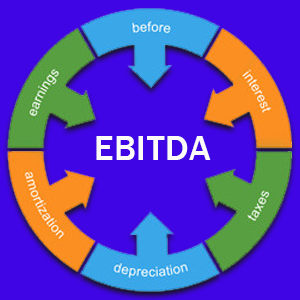
What Is Earnings Before Interest, Taxes, Depreciation, and Amortization (EBITDA)?

***

EBITDA, or earnings before interest, taxes, depreciation, and amortization, is a measure of a company’s overall financial performance and is used as an alternative to net income in some circumstances. EBITDA, however, can be misleading because it strips out the cost of capital investments like property, plant, and equipment.

This metric also excludes expenses associated with debt by adding back interest expense and taxes to earnings. Nonetheless, it is a more precise measure of corporate performance since it is able to show earnings before the influence of accounting and financial deductions.

Why EBITDA is still a Great Financial Management Metric

Simply put, EBITDA is a measure of profitability. While there is no legal requirement for companies to disclose their EBITDA, according to the U.S. generally accepted accounting principles (GAAP), it can be worked out and reported using the information found in a company’s financial statements.

The earnings, tax, and interest figures are found on the income statement, while the depreciation and amortization figures are normally found in the notes to operating profit or on the cash flow statement. The usual shortcut to calculate EBITDA is to start with operating profit, also called earnings before interest and tax (EBIT) then add back depreciation and amortization.

CITE: https://www.r2library.com/Resource/Title/0826102549

***

Comprehensive Financial Planning Strategies for Doctors and Advisors: Best Practices from Leading Consultants and Certified Medical Planners™

MORE: https://www.routledge.com/Comprehensive-Financial-Planning-Strategies-for-Doctors-and-Advisors-Best/Marcinko-Hetico/p/book/9781482240283

YOUR COMMENTS ARE APPRECIATED

Thank You

***

What is a “DEAD CAT” BOUNCE?

HOW IT WORKS

SPONSOR: http://www.CertifiedMedicalPlanner.org

CMP logo

By Dr. David E. Marcinko MBA CMP®

***

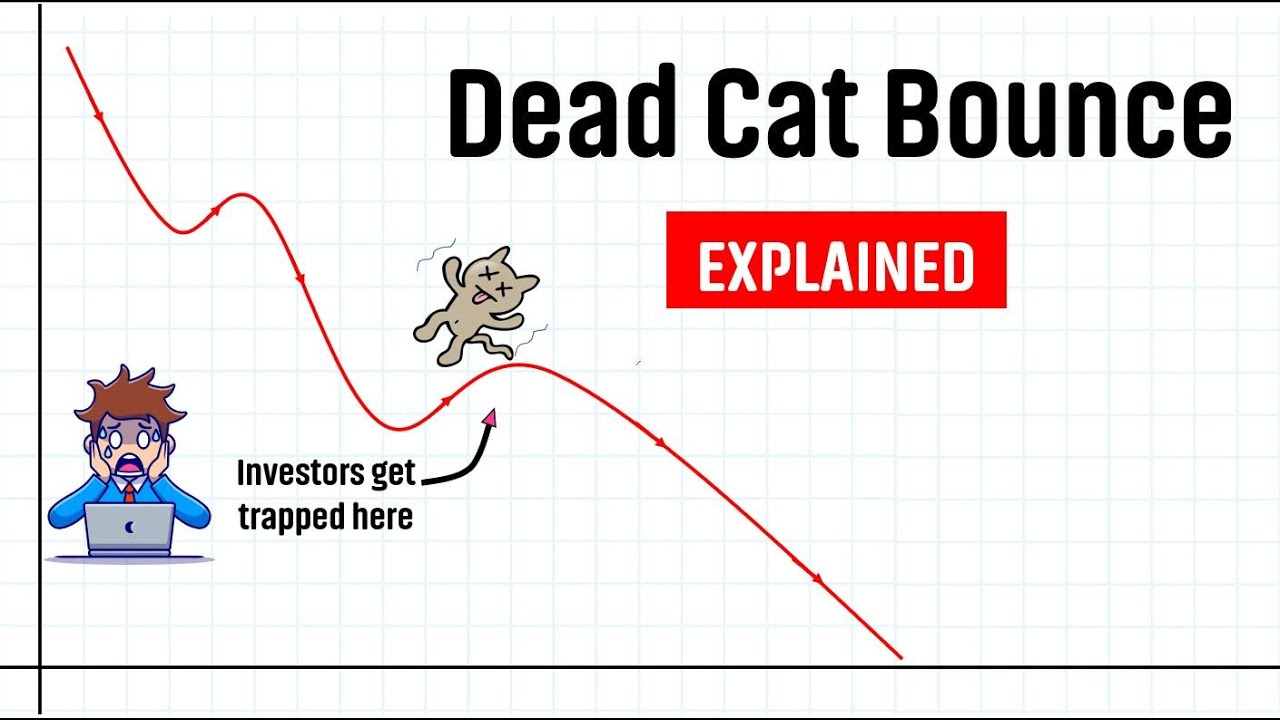
In finance, a dead cat bounce is a small, brief recovery in the price of a declining stock.

****

***

Derived from the idea that “even a dead cat will bounce if it falls from a great height”, the phrase, which originated on Wall Street, is also popularly applied to any case where a subject experiences a brief resurgence during or following a severe decline.

  • The dead cat bounce is a sudden and temporary increase in stock price caused by investors erroneously believing that the stock price’s reached its lowest.
  • The dead cat bounce can only be fully accurately determined with concrete data in hindsight.
  • Both falsely identifying a stock price trough (i.e., falling victim to a dead cat bounce) and falsely identifying a true price trough as a dead cat bounce will result in negative financial consequences.

CITE: https://www.r2library.com/Resource/Title/0826102549

YOUR COMMENTS ARE APPRECIATED.

FINANCE: https://www.amazon.com/Comprehensive-Financial-Planning-Strategies-Advisors/dp/1482240289/ref=sr_1_1?ie=UTF8&qid=1418580820&sr=8-1&keywords=david+marcinko

Thank You

***

New Medical Practice Entrepreneurial Business Rules for Young Physicians [circa 2022]

Join Our Mailing List

Go “Out-of-Box” – OR – Go Employee

By Dr. David Edward Marcinko MBA CMP™ www.CertifiedMedicalPlanner.org

There are more than 950,000 physicians in the United States. Yet, the brutal supply and demand, and demographic calculus of the matter is that there are just too many aging patients chasing too few doctors. Compensation and reimbursement is plummeting as Uncle Sam becomes the payer-of-choice for more than 52% of us. More so, going forward with the PP-ACA OR, perhaps not so much after the Trump election.

Furthermore, many large health care corporations, hospitals, and clinical and medical practices have not been market responsive to this change. Some physicians with top-down business models did not recognize the changing health care ecosystem or participatory medicine climate. Change is not inherent in the DNA of traditionalists. These entities and practitioners represented a rigid or “used-to-be” mentality, not a flexible or “want-to-be” mindset.

Yet today’s physicians and emerging Health 2.0 initiatives must possess a market nimbleness that cannot be recreated in a command-controlled or collectivist environment. Going forward, it is not difficult to imagine the following rules for the new virtual medical culture, and young physicians of the modern era.

A. Rule 1

Forget about large office suites, surgery centers, fancy equipment, larger hospitals, and the bricks and mortar that comprised traditional medical practices. One doctor with a great idea, good bedside manners, or competitive advantage can outfox a slew of insurance companies, Certified Public Accountants, or the Associate Management Accountant, while still serving patients and making money. It is now a unit-of-one economy where “ME Inc.,” is the standard. Physicians must maneuver for advantages that boost their standing and credibility among patients, peers, and payers.

Examples include patient satisfaction surveys, outcomes research analysis, evidence-based-medicine, direct reimbursement compensation, physician economic credentialing, and true patient-centric medicine. Physicians should realize the power of networking, vertical integration, and the establishment of virtual offices that come together to treat a patient and then disband when a successful outcome is achieved. Job security is earned with more successful outcomes; not a magnificent office suite or onsite presence.

B. Rule 2

Challenge conventional wisdom, think outside the traditional box, recapture your dreams and ambitions, disregard conventional gurus, and work harder than you have ever worked before. Remember the old saying, “if everyone is thinking alike, then nobody is thinking.” Do traditionalists or collective health care reform advocates react rationally or irrationally?

For example, some health care competition and career thought-leaders, such as Shirley Svorny, PhD, a professor of economics and chair of the Department of Economics at California State University, Northridge, wonder if a medical degree is a barrier—rather than enabler—of affordable health care. An expert on the regulation of health care professionals, including medical professional licensing, she has participated in health policy summits organized by Cato and the Texas Public Policy Foundation. She argues that licensure not only fails to protect consumers from incompetent physicians, but, by raising barriers to entry, makes health care more expensive and less accessible.

Institutional oversight and a sophisticated network of private accrediting and certification organizations, all motivated by the need to protect reputations and avoid legal liability, offer whatever consumer protections exist today.

C. Rule 3

Differentiate yourself among your health care peers. Do or learn something new and unknown by your competitors. Market your accomplishments and let the world know. Be a non-conformist. Conformity is an operational standard and a straitjacket on creativity. Doctors must create and innovate, not blindly follow entrenched medical societies into oblivion.

For example, the establishment of virtual medical schools and hospitals, where students, nurses, and doctors learn and practice their art on cyber entities that look and feel like real patients, can be generated electronically through the wonders of virtual reality units.

D. Rule 4

Realize that the present situation is not necessarily the future. Attempt to see the future and discern your place in it. Master the art of quick change with fast, but informed decision making. Do what you love, disregard what you do not, and let the fates have their way with you.

Assessment

I receive a couple of phone calls each month from young doctors on this topic. I ask them to decide if they are of the philosophical ilk to adhere to the above rules; or become another conformist and go along … to get along? In other words, get fly!

Or, become an employed, or government doctor.  Just remember … the entity that gives you a job, can also take it away.

Sample fly: http://crossoverhealth.com/

MORE: Marriage Business

Conclusion

Your thoughts and comments on this ME-P are appreciated. Feel free to review our top-left column, and top-right sidebar materials, links, URLs and related websites, too. Then, subscribe to the ME-P. It is fast, free and secure.

Link: http://feeds.feedburner.com/HealthcareFinancialsthePostForcxos

Speaker: If you need a moderator or speaker for an upcoming event, Dr. David E. Marcinko; MBA – Publisher-in-Chief of the Medical Executive-Post – is available for seminar or speaking engagements. Contact: MarcinkoAdvisors@msn.com

OUR OTHER PRINT BOOKS AND RELATED INFORMATION SOURCES:

LEXICONS: http://www.springerpub.com/Search/marcinko
PHYSICIANS: www.MedicalBusinessAdvisors.com
PRACTICES: www.BusinessofMedicalPractice.com
HOSPITALS: http://www.crcpress.com/product/isbn/9781466558731
CLINICS: http://www.crcpress.com/product/isbn/9781439879900
ADVISORS: www.CertifiedMedicalPlanner.org
BLOG: www.MedicalExecutivePost.com


Product DetailsProduct DetailsProduct Details

Product Details  Product Details

Product Details

Product Details 

VALUATION: Approaches for Common Stocks

A BRIEF REVIEW FOR PHYSICIAN INVESTORS

By Dr. David Edward Marcinko MBA CMP™

CMP logo

SPONSOR: http://www.CertifiedMedicalPlanner.org

QUESTION: We are in near bear market correction territory – especially for tech stocks – so what are the 2 major types of valuation approaches for common stock?

UPDATE: https://www.msn.com/en-us/money/markets/stock-market-news-live-updates-sandp-500-dow-fall-amid-mixed-bank-earnings-retail-sales-miss/ar-AASL74g?li=BBnb7Kz

TECH: https://www.msn.com/en-us/money/markets/nasdaq-near-a-10percent-correction-isnt-the-sell-signal-you-probably-think-it-is/ar-AASL22m?li=BBnbfcL

ANSWER: There are basically two different approaches for common stock valuation; top-down and bottom-up.  Under either of the two fundamental approaches, a physician investor will have to work with individual company data.  In reality, each of these approaches is used by investors and security analysts when doing fundamental analysis.  

CITE: https://www.r2library.com/Resource/Title/082610254

With the bottom-up approach, investors focus directly on a company’s prospects. Analysis of such information as the company’s products, its competitive position, and its financial status leads to an estimate of the company’s earnings potential, and, ultimately, its value in the market.  Considerable time and effort are required to produce the type of detailed financial analysis needed to understand a firm’s standing. The emphasis in this approach is on finding companies with good long-term growth prospects, and making accurate earnings estimates. 

The top-down approach is the opposite of the bottom-up approach. Investors begin with the economy and the overall market, considering such important factors as interest rates and inflation. They next consider likely industry prospects, or sectors of the economy that are likely to do particularly well (or particularly poorly). Finally, having decided that factors are favorable for investing, and having determined which parts of the overall economy are likely to perform well, individual companies are analyzed.

***

COMMENTS APPRECIATED.

Thank You

Subscribe to the Medical Executive-Post

***

RISK MANAGEMENT: https://www.amazon.com/Comprehensive-Financial-Planning-Strategies-Advisors/dp/1482240289/ref=sr_1_1?ie=UTF8&qid=1418580820&sr=8-1&keywords=david+marcinko

***

Risk Management, Liability Insurance, and Asset Protection Strategies for Doctors and Advisors : Best Practices from Leading Consultants and Certified Medical Planners™ book cover

ORDER: https://www.routledge.com/Risk-Management-Liability-Insurance-and-Asset-Protection-Strategies-for/Marcinko-Hetico/p/book/9781498725989

***

What is Techno SCAM-BAITING?

BY ANONYMOUS

SPONSOR: http://www.CertifiedMedicalPlanner.org

CMP logo

Scam-Baiting Behind the Scenes

The most basic form of scambaiting sets out to waste a scammer’s time. At a minimum, scambaiters attempt to make scammers answer countless questions or perform pointless and random tasks. By keeping a scammer busy, scambaiters claim they’re preventing the scammer from defrauding a real victim.

Scambaiting may also be conducted with a specific purpose in mind. Sometimes scambaiters attempt to obtain an offender’s bank account information, for instance, which they then report to a financial institution. But there are other, less benevolent motives in the scambaiting community.

Thousands of scambaiters are organised on the 419eater forum, which describes itself as the “largest scambaiting community on earth”, with over 1.7 million forum threads. The forum was first established in 2003 to tackle the growing issue of 419 emails – a scam that promises people huge sums of cash in return for a small upfront fee.

419eater provides a particularly interesting case study because members are incentivised and rewarded for their scambaits through a unique system of icons, regarded as trophies, that they can obtain in their profile’s signature lines.

***

Romance Scam : Find Out How We Uncovered This Chinese Scam

***

MORE: https://www.theguardian.com/technology/2021/oct/03/who-scams-the-scammers-meet-the-amateur-scambaiters-taking-on-the-crooks?utm_source=pocket-newtab

Healthcare: https://www.scamwatch.gov.au/types-of-scams/buying-or-selling/health-medical-products

Medical Insurance: https://www.reddit.com/r/scambait/comments/jsgffx/just_got_a_scam_call_to_sign_me_up_for_bogus/

YOUR COMMENTS ARE APPRECIATED.

***

THANK YOU

***

RECAST: An Interview with Fiduciary Bennett Aikin AIF®

On Financial Fiduciary Accountability

[By Dr. David E. Marcinko MBA CMP™]

[By Ann Miller; RN, MHA]

Currently, there is a growing dilemma in the financial sales and services industry. It goes something like this:

  • What is a financial fiduciary?
  • Who is a financial fiduciary?
  • How can I tell if my financial advisor is a fiduciary?

Now, in as much as this controversy affects laymen and physician-investors alike, we went right to the source for up-to-date information regarding this often contentious topic, for an email interview and Q-A session, with Ben Aikin.ben-aikin

About Bennett Aikin AIF® and fi360.com

Bennett [Ben] Aikin is the Communications Coordinator for fi360.com. He oversees all communications for fi360. His responsibilities include messaging, brand management, copyrights and trademarks, and publications. Mr. Aikin received his BA in English from Virginia Tech in 2003 and is currently an MS candidate in Journalism from Ohio University.

Q. Medical Executive Post 

You have been very helpful and gracious to us. So, let’s get right to it, Ben. In the view of many; attorneys, doctors, CPAs and the clergy are fiduciaries; most all others who retain this title seem poseurs; sans documentation otherwise.

A. Mr. Aikin

You are correct. Attorneys, doctors and clergy are the prototype fiduciaries. They have a clear duty to put the best interests of their clients, patients, congregation, etc., above their own. [The duty of a CPA isn’t as clear to me, although I believe you are correct]. Furthermore, this is one of the first topics we address in our AIF training programs, and what we call the difference between a profession and an industry.  The three professions you name have three common characteristics that elevate them from an industry to a profession:

  1. Recognized body of knowledge
  2. Society depends upon practitioners to provide trustworthy advice
  3. Code of conduct that places the clients’ best interests first

Q. Medical Executive Post 

It seems that Certified Financial Planner®, Chartered Financial Analysts, Registered Investment Advisors and their representatives, Registered Representative [stock-brokers] and AIF® holders, etc, are not really financial fiduciaries, either by legal statute or organizational charter. Are we correct, or not? Of course, we are not talking ethics or morality here. That’s for the theologians to discuss.

A. Mr. Aikin

One of the reasons for the “alphabet soup”, as you put it in one of your white papers [books, dictionaries and posts] on financial designations, is that while there is a large body of knowledge, there is no one recognized body of knowledge that one must acquire to enter the financial services industry.  The different designations serve to provide a distinguisher for how much and what parts of that body of knowledge you do possess.  However, being a fiduciary is exclusively a matter of function. 

In other words, regardless of what designations are held, there are five things that will make one a fiduciary in a given relationship:

  1. You are “named” in plan or trust documents; the appointment can be by “name” or by “title,” such as CFO or Head of Human Resources
  2. You are serving as a trustee; often times this applies to directed trustees as well
  3. Your function or role equates to a professional providing comprehensive and continuous investment advice
  4. You have discretion to buy or sell investable assets
  5. You are a corporate officer or director who has authority to appoint other fiduciaries

So, if you are a fiduciary according to one of these definitions, you can be held accountable for a breach in fiduciary duty, regardless of any expertise you do, or do not have. This underscores the critical nature of understanding the fiduciary standard and delegating certain duties to qualified “professionals” who can fulfill the parts of the process that a non-qualified fiduciary cannot.

Q. Medical Executive Post 

How about some of the specific designations mentioned on our site, and elsewhere. I believe that you may be familiar with the well-known financial planner, Ed Morrow, who often opines that there are more than 98 of these “designations”? In fact, he is the founder of the Registered Financial Consultants [RFC] designation. And, he wrote a Foreword for one of our e-books; back-in-the-day. His son, an attorney, also wrote as a tax expert for us, as well. So, what gives?

A. Mr. Aikin

As for the specific designations you list above, and elsewhere, they each signify something different that may, or may not, lend itself to being a fiduciary: For example:

• CFP®: The act of financial planning does very much imply fiduciary responsibility.  And, the recently updated CFP® rules of conduct does now include a fiduciary mandate:

• 1.4 A certificant shall at all times place the interest of the client ahead of his or her own. When the certificant provides financial planning or material elements of the financial planning process, the certificant owes to the client the duty of care of a fiduciary as defined by CFP Board. [from http://www.cfp.net/Downloads/2008Standards.pdf]

•  CFA: Very dependent on what work the individual is doing.  Their code of ethics does have a provision to place the interests of clients above their own and their Standards of Practice handbook makes clear that when they are working in a fiduciary capacity that they understand and abide by the legally mandated fiduciary standard.

• FA [Financial Advisor]: This is a generic term that you may find being used by a non-fiduciary, such as a broker, or a fiduciary, such as an RIA.

• RIA: Are fiduciaries.  Registered Investment Advisors are registered with the SEC and have obligations under the Investment Advisers Act of 1940 to provide services that meet a fiduciary standard of care.

• RR: Registered Reps, or stock-brokers, are not fiduciaries if they are doing what they are supposed to be doing.  If they give investment advice that crosses the line into “comprehensive and continuous investment advice” (see above), their function would make them a fiduciary and they would be subject to meeting a fiduciary standard in that advice (even though they may not be properly registered to give advice as an RIA).

• AIF designees: Have received training on a process that meets, and in some places exceeds, the fiduciary standard of care.  We do not require an AIF® to always function as a fiduciary. For example, we allow registered reps to gain and use the AIF® designation. In many cases, AIF designees are acting as fiduciaries, and the designation is an indicator that they have the full understanding of what that really means in terms of the level of service they provide.  We do expect our designees to clearly disclose whether they accept fiduciary responsibility for their services or not and advocate such disclosure for all financial service representatives.

Q. Medical Executive Post 

Your website, http://www.fi360.com, seems to suggest, for example, that banks/bankers are fiduciaries. We have found this not to be the case, of course, as they work for the best interests of the bank and stockholders. What definitional understanding are we missing?

A. Mr. Aikin

Banks cannot generally be considered fiduciaries.  Again, it is a matter of function. A bank may be a named trustee, in which case a fiduciary standard would generally apply.  Banks that sell products are doing so according to their governing regulations and are “prudent experts” under ERISA, but not necessarily held to a fiduciary standard in any broader sense.

Q. Medical Executive Post 

And so, how do we rectify the [seemingly intentional] industry obfuscation on this topic. We mean, our readers, subscribers, book and dictionary purchasers, clients and colleagues are all confused on this topic. The recent financial meltdown only stresses the importance of understanding same.

For example, everyone in the industry seems to say they are the “f” word. But, our outreach efforts to contact traditional “financial services” industry pundits, CFP® practitioners and other certification organizations are continually met with resounding silence; or worse yet; they offer an abundance of parsed words and obfuscation but no confirming paperwork, or deep subject-matter knowledge as you have kindly done. We get the impression that some FAs honesty do-not have a clue; while others are intentionally vague.

A. Mr. Aikin

All of the evidence you cite is correct.  But that does not mean it is impossible to find an investment advisor who will manage to a fiduciary standard of care and acknowledge the same. The best way to rectify confusion as it pertains to choosing appropriate investment professionals is to get fiduciary status acknowledged in writing and go over with them all of the necessary steps in a fiduciary process to ensure they are being fulfilled. There also are great resources out there for understanding the fiduciary process and for choosing professionals, such as the Department of Labor, the SEC, FINRA, the AICPA’s Personal Financial Planning division, the Financial Planning Association, and, of course, Fiduciary360.

We realize the confusion this must cause to those coming from the health care arena, where MD/DO clearly defines the individual in question; as do other degrees [optometrist, clinical psychologist, podiatrist, etc] and medical designations [fellow, board certification, etc.]. But, unfortunately, it is the state of the financial services industry as it stands now.

Q. Medical Executive Post 

It is as confusing for the medical community, as it is for the lay community. And, after some research, we believe retail financial services industry participants are also confused. So, what is the bottom line?

A. Mr. Aikin

The bottom line is that lay, physician and all clients have a right to expect and demand a fiduciary standard of care in the managing of investments. And, there are qualified professionals out there who are providing those services.  Again, the best way to ensure you are getting it is to have fiduciary status acknowledged in writing, and go over the necessary steps in a fiduciary process with them to ensure it is being fulfilled.

Q. Medical Executive Post 

The “parole-evidence” rule, of contract law, applies, right? In dealing with medical liability situations, the medics and malpractice attorneys have a rule: “if it wasn’t written down, it didn’t happen.”  

A. Mr. Aikin

An engagement contract accepting fiduciary status should trump a subsequent attempt to claim the fiduciary standard didn’t apply. But, to reiterate an earlier point, if someone acts in one of the five functional fiduciary roles, they are a fiduciary whether they choose to acknowledge it or not.  I have attached a sample acknowledgement of fiduciary status letter with copies of our handbook, which details the fiduciary process we instruct in our programs, and our SAFE, which is basically a checklist that a fiduciary should be able to answer “Yes” to every question to ensure the entire fiduciary process is being covered.

Q. Medical Executive Post 

It is curious that you mention checklists. We have a post arguing that very theme for doctors and hospitals as they pursue their medial error reduction, and quality improvement, endeavors. And, we applaud your integrity, and wish only for clarification on this simple fiduciary query?

A. Mr. Aikin

Simple definition: A fiduciary is someone who is managing the assets of another person and stands in a special relationship of trust, confidence, and/or legal responsibility.

Q. Medical Executive Post 

Who is a financial fiduciary and what, if any, financial designation indicates same?

A. Mr. Aikin

Functional definition: See above for the five items that make you a fiduciary.

Financial designations that unequivocally indicate fiduciary duty: Short answer is none, only function can determine who is a fiduciary. 

Q. Medical Executive Post 

Please repeat that?

A. Mr. Aikin

Financial designations that indicate fiduciary duty: none. It is the function that determines who is a fiduciary.  Now, having said that, the CFP® certification comes close by demanding their certificants who are engaged in financial planning do so to a fiduciary standard. Similarly, other designations may certify the holder’s ability to perform a role that would be held to a fiduciary standard of care.  The point is that you are owed a fiduciary standard of care when you engage a professional to fill that role or they functionally become one.  And, if you engage a professional to fill a non-fiduciary role, they will not be held to a fiduciary standard simply because they have a particular designation.  One of the purposes the designations serve is to inform you what roles the designation holder is capable of fulfilling.

It is also worth keeping in mind that just being a fiduciary doesn’t equate to a full knowledge of the fiduciary standard. The AIF® designation indicates having been fully trained on the standard.

Q. Medical Executive Post 

Yes, your website mentions something about fiduciaries that are not aware of same! How can this be? Since our business model mimics a medical model, isn’t that like saying “the doctor doesn’t know he is doctor?” Very specious, with all due respect!

A. Mr. Aikin

I think it is first important to note that this statement is referring not just to investment professionals.  Part of the audience fi360 serves is investment stewards, the non-professionals who, due to facts and circumstances, still owe a fiduciary duty to another.  Examples of this include investment committee members, trustees to a foundation, small business owners who start 401k plans, etc.  This is a group of non-sophisticated investors who may not be aware of the full array of responsibilities they have. 

However, even on the professional side I believe the statement isn’t as absurd as it sounds.  This is basically a protection from both ignorant and unscrupulous professionals.  Imagine a registered representative who, either through ignorance or design, begins offering comprehensive and continuous investment advice.  Though they may deny or be unaware of the fact, they have opened themselves up to fiduciary liability. 

Q. Medical Executive Post 

Please clarify the use of arbitration clauses in brokerage account contracts for us. Do these disclaim fiduciary responsibility? If so, does the client even know same?

A. Mr. Aikin

By definition, an engagement with a broker is a non-fiduciary relationship.  So, unless other services beyond the scope of a typical brokerage account contract are specified, fiduciary responsibility is inherently not applicable.  Unfortunately, I do imagine there are clients who don’t understand this. Furthermore, AIF® designees are not prohibited from signing such an agreement and there are some important points to understand the reasoning.

First, by definition, if you are entering into such an agreement, you are entering into a non-fiduciary relationship. So, any fiduciary requirement wouldn’t apply in this scenario.

Second, if this same question were applied into a scenario of a fiduciary relationship, such as with an RIA, this would be a method of dispute resolution, not a practice method. So, in the event of dispute, the advisor and investor would be free to agree to the method of resolution of their choosing. In this scenario, however, typically the method would not be discussed until the dispute itself arose.

Finally, it is important to know that AIF/AIFA designees are not required to be a fiduciary. It is symbolic of the individuals training, knowledge and ongoing development in fiduciary processes, but does not mean they will always be acting as a fiduciary.

Q. Medical Executive Post 

Don’t the vast majority of arbitration hearings find in favor of the FA; as the arbitrators are insiders, often paid by the very same industry itself?

A. Mr. Aikin

Actual percentages are reported here: http://www.finra.org/ArbitrationMediation/AboutFINRADR/Statistics/index.htm However, brokerage arbitration agreements are a dispute resolution method for disputes that arise within the context of the securities brokerage industry and are not the only means of resolving differences for all types of financial advisors.  Investment advisers, for example, are subject to respond to disputes in a variety of forums including state and federal courts.  Clients should look at their brokerage or advisory agreement to see what they have agreed to. If you wanted to go into further depth on this question, we would recommend contacting Brian Hamburger, who is a lawyer with experience in this area and an AIFA designee. Bio page: http://www.hamburgerlaw.com/attorneys/BSH.htm.

Q. Medical Executive Post 

What about our related Certified Medical Planner® designation, and online educational program for financial advisors and medical management consultants? Is it a good idea – reasonable – for the sponsor to demand fiduciary accountability of these charter-holders? Cleary, this would not only be a strategic competitive advantage, but advance the CMP™ mission to put medical colleagues first and champion their cause www.CertifiedMedicalPlanner.org above all else. 

A. Mr. Aikin

I think it is a good idea for any plan sponsor to demand fiduciary status be acknowledged from anyone engaged to provide comprehensive and continuous investment advice.  I also think it is a good idea to be proactive in verifying that the fiduciary process is being followed.

Q. Medical Executive Post 

Is there anything else that we should know about this topic?

A. Mr. Aikin

Yes, a further note about fi360’s standards. I wrote generically about the fiduciary standard, because there is one that is defined by multiple sources of regulation, legislation and case law.  The process defined in our handbooks, we call a Fiduciary Standard of Excellence, because it covers that minimum standard and also best practice standards that go above and beyond.  All of our Practices, which comprise that standard, are legally substantiated in our Legal Memoranda handbook, which was written by Fred Reish’s law firm, who is considered a leading ERISA attorney.

Additional resources:

Q. Medical Executive Post 

Thank you so much for your knowledge and willingness to frankly share it with the Medical-Executive-Post.

Assessment

All are invited to continue the conversation with Mr. Aikin, asynchronously online, or thru this contact information:

fi360.com
438 Division Street
Sewickley, PA 15143
412-741-8140 Phone
866-390-5080 Toll-free phone
412-741-8142 Fax

Conclusion

Your thoughts and comments on this ME-P are appreciated. Feel free to review our top-left column, and top-right sidebar materials, links, URLs and related websites, too. Then, subscribe to the ME-P. It is fast, free and secure.

Link: http://feeds.feedburner.com/HealthcareFinancialsthePostForcxos

Speaker: If you need a moderator or speaker for an upcoming event, Dr. David E. Marcinko; MBA – Publisher-in-Chief of the Medical Executive-Post – is available for seminar or speaking engagements. Contact: MarcinkoAdvisors@msn.com

OUR OTHER PRINT BOOKS AND RELATED INFORMATION SOURCES:

LEXICONS: http://www.springerpub.com/Search/marcinko
PRACTICES: www.BusinessofMedicalPractice.com
HOSPITALS: http://www.crcpress.com/product/isbn/9781466558731
CLINICS: http://www.crcpress.com/product/isbn/9781439879900
ADVISORS: www.CertifiedMedicalPlanner.org
BLOG: www.MedicalExecutivePost.com

Product DetailsProduct DetailsProduct Details

Product Details  Product Details

Product DetailsProduct Details

Product Details

Risk Management, Liability Insurance, and Asset Protection Strategies for Doctors and Advisors: Best Practices from Leading Consultants and Certified Medical Planners™8Comprehensive Financial Planning Strategies for Doctors and Advisors: Best Practices from Leading Consultants and Certified Medical Planners™

The BUSINESS of Medical Practice

“NO MARGIN – NO MISSION”

Within Reason

***

BY DR. DAVID E. MARCINKO MBA CMP®

SPONSOR: http://www.CertifiedMedicalPlanner.org

CMP logo

INVITE DR. MARCINKO: https://medicalexecutivepost.com/dr-david-marcinkos-

Your thoughts are appreciated.

THANK YOU

***

Why 75+ Years of American Finance Should Matter to Physician Investors

A Graphic Presentation [1861-1935] with Commentary from the Publisher

By Dr. David Edward Marcinko FACFAS MBA CPHQ CMP™

http://www.CertifiedMedicalPlanner.org

As our private iMBA Inc clients, ME-P subscribers, textbook and dictionary purchasers, seminar attendees and most ME-P readers know, Ken Arrow is my favorite economist. Why?

About Kenneth J. Arrow, PhD

Well, in 1972, Nobel Laureate Kenneth J. Arrow, PhD shocked Academe’ by identifying health economics as a separate and distinct field. Yet, the seemingly disparate insurance, asset allocation, econometric, statistical and portfolio management principles that he studied have been transparent to most financial professionals and wealth management advisors for years; at least until now.

Nevertheless, to informed cognoscenti, they served as predecessors to the modern healthcare advisory era. In 2004, Arrow was selected as one of eight recipients of the National Medal of Science for his innovative views. And, we envisioned the ME-P at that time to present these increasingly integrated topics to our audience.

Healthcare Economics Today

Today – as 2022 passes – savvy medical professionals, management consultants and financial advisors are realizing that the healthcare industrial complex is in flux; along with the Russian war, domestic inflation and this dynamic may be reflected in the overall flagging economy.

Like many laymen seeking employment, for example, physicians are frantically searching for new ways to improve office revenues and grow personal assets, because of the economic dislocation that is Managed Care, Medi Care and Obama Care [ACA], the depressed business cycle, etc.

Moreover, the largest transfer of wealth in US history is – or was – taking place as our lay elders and mature doctors sell their practices or inherit parents’ estates. Increasingly, the artificial academic boundary between the traditional domestic economy, financial planning and contemporaneous medical practice management is blurring.

I’m Not a Cassandra

Yet, I am no gloom and doom Cassandra like I have been accused, of late. I am not cut from the same cloth as a Jason Zweig, Jeremy Grantham or Nouriel Roubini PhD, for example.

However, I do subscribe to the philosophy of Hope for the Best – Plan for the Worst.

And so dear colleagues, I ask you, “Are the latest swings in the economic, healthcare and financial headlines making you wonder when it will ever stop?”

The short answer is: “It will never stop” because what’s been happening isn’t any “new normal”; it’s just the old normal playing out before a new audience; sans the war.

What audience?

The next-generation of investors, FAs, management consultants and the medical professionals of Health 2.0.

How do I know all this?

History tells me so! Just read this work, and opine otherwise, or reach a different conclusion.

Evidence from the American Financial Scene, circa 1861-1935

The work was created by L. Merle Hostetler in 1936, while he was at Cleveland College of Western Reserve University (now known as Case Western Reserve University). I learned of him while in B-School, back in the day.

At some point after it was printed, he added the years 1936-1938. Mr. Hostetler became a Financial Economist at the Federal Reserve Bank of Cleveland in 1943. In 1953 he was made Director of Research. He resigned from the Bank in 1962 to work for Union Commerce Bank in Cleveland. He died in 1990.

The volume appears to be self published and consists of a chart, approximately 85′ long, fan-folded into 40 pages with additional years attached to the last page. It also includes a “topical index” to the chart and some questions of technical interest which can be answered by the chart.

Link: http://fraser.stlouisfed.org/75years

Assessment

And so, as with Sir John Templeton’s [whose son is an MD] four most dangerous words in investing (It’s different this time), Hostetler effectively illustrates that it wasn’t so different in his era, and maybe—just maybe—it isn’t so different today for all these conjoined fields.

Conclusion      

Your thoughts and comments on this ME-P are appreciated. While not exactly a “sacred cow,” there is a current theory that investors will experience higher volatility and lower global returns for the foreseeable future.

In fact, it has gained widespread acceptance, from the above noted Cassandra’s and others, as problems in Europe persist and threats of a double-dip recession loom. But, how true is this notion; really?

Is Hostetler correct, or not; and why?

Feel free to review our top-left column, and top-right sidebar materials, links, URLs and related websites, too. Then, subscribe to the ME-P. It is fast, free and secure.

Speaker: If you need a moderator or speaker for an upcoming event, Dr. David E. Marcinko; MBA – Publisher-in-Chief of the Medical Executive-Post – is available for seminar or speaking engagements. Contact: MarcinkoAdvisors@msn.com

Our Other Print Books and Related Information Sources:

DOCTORS:

“Insurance & Risk Management Strategies for Doctors” https://tinyurl.com/ydx9kd93

“Fiduciary Financial Planning for Physicians” https://tinyurl.com/y7f5pnox

“Business of Medical Practice 2.0” https://tinyurl.com/yb3x6wr8
HOSPITALS:

“Financial Management Strategies for Hospitals” https://tinyurl.com/yagu567d

“Operational Strategies for Clinics and Hospitals” https://tinyurl.com/y9avbrq5

Subscribe Now: Did you like this Medical Executive-Post, or find it helpful, interesting and informative? Want to get the latest ME-Ps delivered to your email box each morning? Just subscribe using the link below. You can unsubscribe at any time. Security is assured.

Link: http://feeds.feedburner.com/HealthcareFinancialsthePostForcxos

Sponsors Welcomed: And, credible sponsors and like-minded advertisers are always welcomed. Link: https://healthcarefinancials.wordpress.com/2007/11/11/advertise

Product DetailsProduct DetailsProduct Details

  Risk Management, Liability Insurance, and Asset Protection Strategies for Doctors and Advisors: Best Practices from Leading Consultants and Certified Medical Planners™8Comprehensive Financial Planning Strategies for Doctors and Advisors: Best Practices from Leading Consultants and Certified Medical Planners™

   Product Details

Happy NATIONAL DOCTOR’s Day 2022

By Staff Reporters

To all our valued physicians readers and subscribers

***

You have always been the shield defending and healing patients in our communities. Now more than ever, you have become a guiding light through uncertainty as we navigate toward a brighter future.

This is our chance to thank you for your hard work and incredible impact!

***

***

THANK YOU

Medical Executive-Post

CERTIFIED MEDICAL PLANNER™

http://www.CertifiedMedicalPlanner.org

***

What are OTC “PINK” Sheets?

LOW PRICED “PENNY STOCKS?

By Dr. David E. Marcinko MBA CMP®

SPONSOR: http://www.CertifiedMedicalPlanner.org

CMP logo

Pink sheets are an over-the-counter (OTC) market that connects broker-dealers electronically. There is no trading floor and the quotations are also all done electronically. Since there is no central trading floor or stock exchange like the New York Stock Exchange (NYSE), the pink sheet-listed companies do not have the same criteria to fulfill as the companies listed on national stock exchanges. Many stocks listed on the pink sheets are low-priced penny stocks that trade for under $5 a share.

CITE: https://www.r2library.com/Resource/Title/0826102549

Pink sheets got their name because the original pink sheets listing the stocks were actually printed and distributed on pink pieces of paper. Trading over-the-counter (OTC) refers to the process of how securities listed on the pink sheets are traded through a broker-dealer network.

MORE: https://en.wikipedia.org/wiki/OTC_Markets_Group

Pink Sheets | Explanation | Examples with Advantages and Disadvantages

YOUR COMMENTS ARE APPRECIATED.

Thank You

****

Welcome ARPA-H [health]

By Dr. David Edward Marcinko MBA CMP

SPONSOR: http://www.CertifiedMedicalPlanner.org

***

Recent advances in biomedical and health sciences—from immunotherapy to treat cancer, to the highly effective COVID-19 vaccines—demonstrate the strengths and successes of the U.S. biomedical enterprise. Such advances present an opportunity to revolutionize how to prevent, treat, and even cure a range of diseases including cancer, infectious diseases, Alzheimer’s disease, and many others that together affect a significant number of Americans.

NIH: https://www.nih.gov/arpa-h

***

***

To improve the U.S. government’s capabilities to speed research that can improve the health of all Americans, President Biden is proposing the establishment of the Advanced Research Projects Agency for Health (ARPA-H). Included in the President’s FY2022 budget as a component of the National Institutes of Health (NIH) with a requested funding level of $6.5B available for three years, ARPA-H will be tasked with building high-risk, high-reward capabilities (or platforms) to drive biomedical breakthroughs—ranging from molecular to societal—that would provide transformative solutions for all patients.

MORE: https://thehealthcareblog.com/blog/2022/03/22/arpha-h-needs-to-think-bigger/

***

COMMENTS APPRECIATED

Thank You

Subscribe to the Medical Executive-Post

***

***

***

The Millennial Spend on COVID-19 Tests?

By Dr. David E. Marcinko MBA CMP®

SPONSOR: http://www.CertifiedMedicalPlanner.org

***

***

Millennials Spent the most on COVID-19 tests ($142)

A recent ValuePenguin survey found out-of-pocket costs for COVID-19 tests on average varied by age groups as follows:

 •  Gen Zers (ages 18-25): $125
 •  Millennials (ages 26-41): $142
 •  Gen Xers (ages 42-56): $101
 •  Baby boomers (ages 57-76): $59

Source: ValuePenguin, “COVID-19 Testing Survey: Americans Talk Out-of-Pocket Charges, Bill Negotiations, Barriers,” February 14, 2022

CITE: https://www.r2library.com/Resource/Title/082610254

***

COMMENTS APPRECIATED

Thank You

Subscribe to the Medical Executive-Post

***

***

***

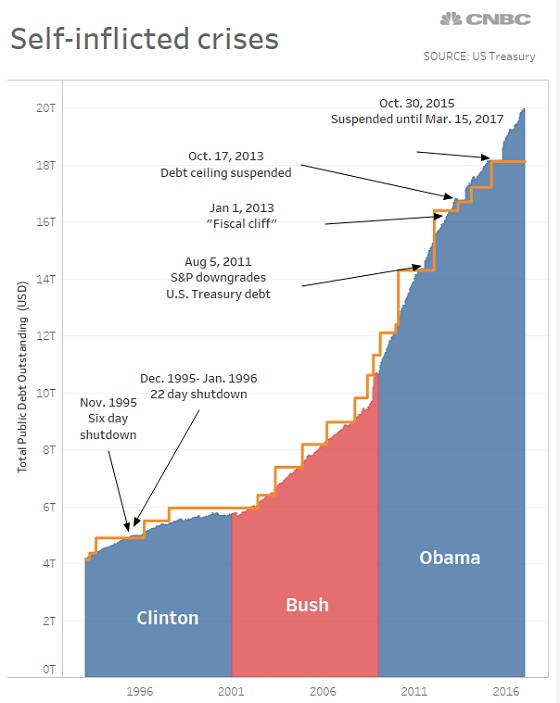
“IDES OF MARCH” and U.S. Debt Limits 2022

BEWARE THE “IDES OF MARCH”

CMP logo

Courtesy:www.CertifiedMedicalPlanner.org

Debts and Settlement is Due

The Ides of March was a day in the Roman calendar that corresponds to 15 March. It was marked by several religious observances and was notable for the Romans as a deadline for settling debts.

In 44 BC, it became notorious as the date of the assassination of Julius Caesar which made the Ides of March a turning point in Roman history.

***

***

MORE: https://en.wikipedia.org/wiki/Ides_of_March

***

***

Assessment: Your thoughts and comments are appreciated.

2022 UPDATE: https://home.treasury.gov/policy-issues/financial-markets-financial-institutions-and-fiscal-service/debt-limit

***

Subscribe to the Medical Executive-Post

THANK YOU

***

***

BALANCE BILLING: The Emerging “No Surprise” Act

Balance Medical Billing

By Dr. David E. Marcinko MBA CMP®

CMP logo

The No Surprises Act is looking to make the practice of out of network balance billing a thing of the past.

CITE: https://www.r2library.com/Resource/Title/0826102549

***

No Surprises Act: New Law to Protect Against Surprise ...

***

Beginning in 2022, there will be few situations in which a patient can receive a bill for out-of-network care they believed would be covered by their insurance company. This new rule should especially benefit patients in emergency situations who don’t have the time or luxury to dig up the details on every provider they encounter.

CONGRESS: https://www.congress.gov/bill/116th-congress/house-bill/3630/

The No Surprises Act also requires insurance companies to provide patients with at least 90 days of coverage if an in-network provider moves out of network. That way, patients aren’t forced to switch providers immediately if such a move happens while they’re in the middle of a treatment plan.

DOCTORS: https://www.elixirehr.com/what-the-no-surprises-act-means-for-healthcare-providers/

Now, the No Surprises Act does have its limitations. Patients can still get a bill for out-of-network care if they visit an urgent care clinic for non-emergency purposes. Also, if consumers are informed that the care they’re about to receive is out of network and they give written consent to move forward, then they may get billed for that care even once the new rule takes effect.

CMS: https://www.cms.gov/nosurprises

YOUR COMMENTS ARE APPRECIATED.

***

***

Thank You

***

***

CURRENCY: Devaluation versus Depreciation

KNOW THE FINANCIAL DIFFERENCE

****

BY DR. DAVID E. MARCINKO MBA CPM®

INVITE: https://medicalexecutivepost.com/dr-david-marcinkos-bookings/

Competitive World 27

CMP logo

SPONSOR: http://www.CertifiedMedicalPlanner.org

Devaluation is the deliberate downward adjustment of the value of a country’s money related to another currency, group of currencies or currency standard. It is often confused with depreciation and is the opposite of revaluation which refers to the readjustment of a currency exchange rate.

CITE: https://www.r2library.com/Resource/Title/0826102549

Definition

The government of a country may decide to devalue its currency and like depreciation it is not the result of non-governmental activities.

One reason a country made devalue its currency is to combat a trade imbalance. Devaluation reduces the cost of a country’s export rendering them more competitive in the Global market which is which in turn increases the cost of imports.

If imports are more expensive domestic consumers are less likely to purchase them further strengthening domestic businesses because exports increase and imports decrease there is typically a better balance of payments because the trade deficit shrinks. In short a country that devalue its currency can produce is difficult because there is a greater demand for cheaper exports.

***

***

In accountancy, depreciation refers to two aspects of the same concept: first, the actual decrease of fair value of an asset, such as the decrease in value of factory equipment each year as it is used and wear, and second, the allocation in accounting statements of the original cost of the assets to periods in which the assets are used (depreciation with the matching principle).

Depreciation is thus the decrease in the value of assets and the method used to reallocate, or “write down” the cost of a tangible asset (such as equipment) over its useful life span. Businesses depreciate long-term assets for both accounting and tax purposes. The decrease in value of the asset affects the balance sheet of a business or entity, and the method of depreciating the asset, accounting-wise, affects the net income, and thus the income statement that they report.

CITE: https://www.r2library.com/Resource/Title/0826102549

Generally, the cost is allocated as depreciation expense among the periods in which the asset is expected to be used.

YOUR COMMENTS ARE APPRECIATED.

Thank You

***

ORDER TEXT: https://www.routledge.com/Comprehensive-Financial-Planning-Strategies-for-Doctors-and-Advisors-Best/Marcinko-Hetico/p/book/9781482240283

***

The CERTIFIED MEDICAL PLANNER® Program Curriculum

BY DR. DAVID E. MARCINKO MBA CMP®

CMP

THE NEXT GENERATION OF FIDUCIARY FOCUSED FINANCIAL PLANNING AND MEDICAL MANAGEMENT ADVICE FOR DOCTORS

****

VISIT: http://www.CERTIFIEDMEDICALPLANNER.org

CURRICULUM: Enter the CMPs

BE AWARE ALL ADVISORS … NEXT GEN FINANCIAL ADVICE IS HERE?

CMP logo

Are you a financial planner, insurance agent or investment advisor seeking to assist your physician clients with medical practice enhancement solutions, along with healthcare targeted financial planning services, but don’t know where to turn for help?

OR, maybe you’ve already had a bad experience with a young physician or astute healthcare professional client that was actually more informed than you in these areas?

CITE: https://www.r2library.com/Resource/Title/0826102549

OR, a doctor/nurse client who demanded a true fiduciary advisor [not fee-based advice, with no dual licenses and no arbitration clauses] documented in writing].

Read this decade old Federal Government report to learn what can happen when your advisor is not an informed Certified Medical Planner© designated medical management practitioner.

Then, become a Certified Medical Planner© and thrive by helping others …. first!

GOV: https://oig.hhs.gov/fraud/docs/alertsandbulletins/consultants.pdf

True yesterday … more true today.

****

Risk Management, Liability Insurance, and Asset Protection Strategies for Doctors and Advisors: Best Practices from Leading Consultants and Certified Medical Planners™
Comprehensive Financial Planning Strategies for Doctors and Advisors: Best Practices from Leading Consultants and Certified Medical Planners™
Product Details

***

CONTACT: Ann Miller RN MHA CMP®

Phone: 770-448-0769

EMAIL: MarcinkoAdvisors@msn.com

***

Comprehensive Financial Planning and Risk Management Strategies for Doctors and their Advisors

***

Best Practices from Leading Consultants and Certified Medical Planners

SPONSOR: http://www.CertifiedMedicalPlanner.org

CMP logo

***

***

Risk Management, Liability Insurance, and Asset Protection Strategies for Doctors and Advisors: Best Practices from Leading Consultants and Certified Medical Planners™

ORDER: https://www.routledge.com/Risk-Management-Liability-Insurance-and-Asset-Protection-Strategies-for/Marcinko-Hetico/p/book/9781498725989

***

What is a REIT, Really?

REITs – The Margarine of Real Estate Investing

See the source image

By Dr. Dennis Bethel MD

By Dr. David E. Marcinko MBA CMP®

CMP logo

SPONSOR: http://www.CertifiedMedicalPlanner.org

Just like real estate, butter has been around for thousands of years.  Sometime in the 1800’s someone decided that there was a need for something that looked like butter, tasted similar to butter, but wasn’t butter.  Along came margarine.  Real estate investment trusts (REITs) are the margarine of the real estate investing world.

NAREIT, the National Association of Real Estate Investment Trusts, answers the question

What is a REIT?” in the following way:

“A REIT, or Real Estate Investment Trust, is a type of real estate company modeled after mutual funds.  REITs were created by Congress in 1960 to give all Americans – not just the affluent – the opportunity to invest in income producing real estate in a manner similar to how many Americans invest in stocks and bonds through mutual funds.  Income-producing real estate refers to land and the improvements on it – such as apartments, offices or hotels.  REITs may invest in the properties themselves, generating income through the collection of rent or they may invest in mortgages or mortgage securities tied to the properties, helping to finance the properties and generating interest income.”

While REITs typically own real estate, investors in REITs do not.  REITs are paper assets that represent interest in a company that owns and operates income producing properties.  In essence they are real estate flavored stock.  As such, REITs are generally highly correlated with the stock market.

***

https://www.sgobserver.com/wp-content/uploads/2018/08/Screen-Shot-2018-08-26-at-8.41.54-pm.png

***

TERMINOLOGY

When discussing REITs, you encounter the following terminology – public, private, traded, and non-traded.  Public REITs can be designated as non-traded or traded depending on whether or not they are traded on a stock exchange.

Since traded REITs are traded on the stock exchange, they enjoy a high degree of liquidity just like any other stock.  Unfortunately, traded REITs tend to follow the economic cycles and can closely correlate with the stock market.  This can lead to a higher degree of volatility than what is usually seen with physical real estate.  Additionally, they do not afford the investor the tax-advantages that come with investments in physical real estate.

MORE: https://medicalexecutivepost.com/2017/11/15/on-non-traded-real-estate-investment-trusts-reits/

Private REITs and non-traded public REITs are not traded on an exchange.  These are usually offered to accredited investors through broker-dealer networks.  These REITs are illiquid and generally have high fees.  They have been plagued with transparency issues as well as conflicts of interest.  Valuation of this stock is difficult and can be misleading to the investor.  Due diligence is very important as the quality of non-traded REITs can vary widely.

MORE: https://medicalexecutivepost.com/2014/06/13/why-i-hate-non-publicly-traded-reits/

ASSESSMENT: Your thoughts and comments are appreciated.

Risk Management, Liability Insurance, and Asset Protection Strategies for Doctors and Advisors : Best Practices from Leading Consultants and Certified Medical Planners™ book cover

ORDER TEXTBOOK: https://www.routledge.com/Risk-Management-Liability-Insurance-and-Asset-Protection-Strategies-for/Marcinko-Hetico/p/book/9781498725989

Comprehensive Financial Planning Strategies for Doctors and Advisors: Best Practices from Leading Consultants and Certified Medical Planners™

ORDER TEXTBOOK: https://www.routledge.com/Comprehensive-Financial-Planning-Strategies-for-Doctors-and-Advisors-Best/Marcinko-Hetico/p/book/9781482240283

INVITE DR. MARCINKO: https://medicalexecutivepost.com/dr-david-marcinkos-

THANK YOU

***

Medical FINANCIAL PLANNING “Holistic” STRATEGIES

BY AND FOR PHYSICIANS AND THEIR ADVISORS

INVITE DR. MARCINKO: https://medicalexecutivepost.com/dr-david-marcinkos-

***

SPONSOR: http://www.CertifiedMedicalPlanner.org

CMP logo

***

PODCASTS: What is a STABLECOIN?

HEDGE AGAINST INFLATION

By Dr. David E. Marcinko MBA CMP®

CMP logo

SPONSOR: http://www.CertifiedMedicalPlanner.org

***

What Are Stablecoins? - CB Insights Research

***

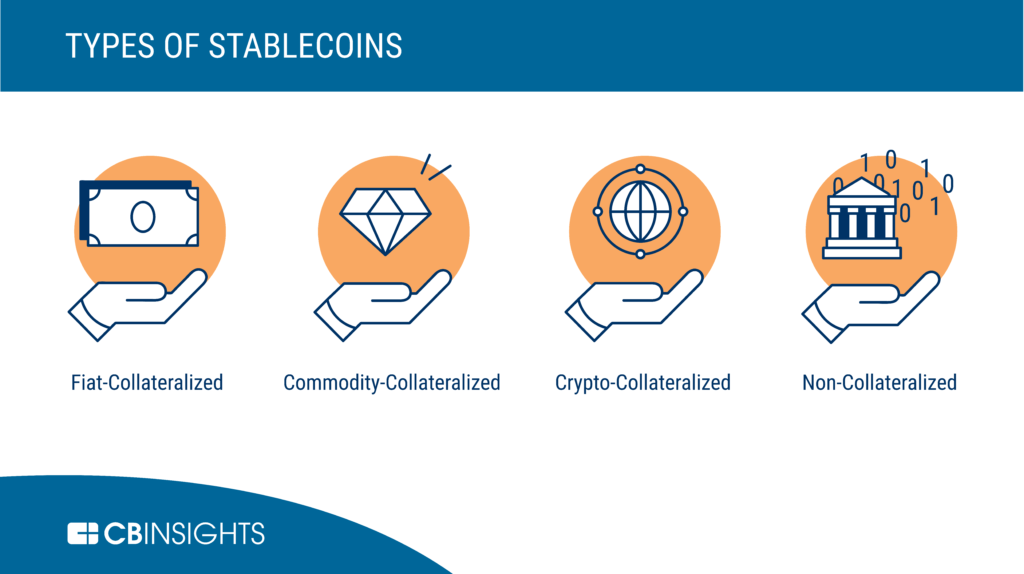
DEFINITION: Stablecoins are blockchain-based digital currencies that have been created with the aim to have a stable value. Stablecoins achieve price-stability through various different methods such as a peg against a fiat currency or a commodity, through collateralization against other cryptocurrencies or through algorithmic coin supply management.

CITE: https://www.r2library.com/Resource/Title/0826102549

Every stable coin includes a specific set of mechanisms that mostly behave in the same way. In general, stable coins keep collateral of the asset and manage the supply. In this way, they incentivize the market, which allows trade of the coin for no more or less than $1.

A stable coin can be considered the best depending on several factors: It should be stable. PAX is one the most stable stablecoin. It should be liquid and available on most exchanges. It should be backed by FIAT. PAX is 100% collateralized in US bank accounts. It should be regulated. It should be redeemable.

MORE: https://www.msn.com/en-us/money/markets/treasury-fed-fear-stablecoins-could-disrupt-financial-system/ar-AAOE7lO?li=BBnb7Kz

PODCAST #1: https://www.youtube.com/watch?v=O3rVWLhBIPo

PODCAST #2: https://www.youtube.com/watch?v=GsSSLDzKCOE

YOUR COMMENTS ARE APPRECIATED.

Thank You

***

Personal Financial Planning for Physicians and Medical Colleagues

ME Inc = Going it Alone but with a Team

BY DR. DAVID EDWARD MARCINKO MBA CMP®

CMP logo

SPONSOR: http://www.CertifiedMedicalPlanner.org

The physician, nurse, or other medical professional should easily recognize that there are a vast array of opportunities, obstacles, and pitfalls when it comes to managing one’s finances.  Still, with some modicum of effort, the basic aspects of insurance, investments, taxes, accounting, portfolio management, retirement and estate planning, debt reduction, asset protection and practice management can be largely self-taught. Yet, it is realized that nuances and subtleties can make a well-intentioned financial plan fall short.  The devil truly is in the details.  Moreover, none of these areas can be addressed in isolation. It is common for a solution in one area to cause a new set of problems in another. 

Accordingly, most health care practitioners would be well served to hire [independent, hourly compensated and prn] financial help. Unlike some medical problems, financial issues may not cause any “pain” or other obvious symptoms.  Medical professionals tend to have far more complex financial situations than most lay people. Despite the complexities of the new world of health reform, far too many either do nothing; or give up all control totally, to an external advisor. This either/or mistake can be costly in many ways, and should be avoided. 

In reality, and at various time in their careers, the medical professional needs a team comprised of at least a financial analyst, lawyer, management consultant, risk manager [actuary, mathematician or insurance counselor] and accountant. At various points in time, each member of the team, or significant others, will properly assume a role of more or less importance, but the doctor must usually remain the “quarterback” or leader; in the absence of a truly informed other, or Certified Medical Planner™.

This is necessary because only the doctor has the personal self-mandate with skin in the game, to take a big picture view.  And, rightly or wrongly, investments dominate the information available regarding personal finance and the attention of most physicians.  One is much more likely to need or want to discuss the financial markets with their financial advisor than private letter rulings by the IRS, or with their estate planning attorney or tax accountant. While hiring for expertise is a good idea, there is sinister way advisors goad doctors into using all their retail services; all of the time. That artifice is – the value of time. 

True integrated physician focused and financial planning is at its core a service business, not a product or sales endeavor. And, increasingly money is more likely to be at the top of the list for providers as the healthcare environment is contracting.

So, eschewing the quarterback model of advice, and choosing to self-educate thru this book and elsewhere, may be one of the best efforts a smart physician can make.

ASSESSMENT: Your thoughts are appreciated.

Comprehensive Financial Planning Strategies for Doctors and Advisors: Best Practices from Leading Consultants and Certified Medical Planners™

ORDER TEXTBOOK: https://www.routledge.com/Comprehensive-Financial-Planning-Strategies-for-Doctors-and-Advisors-Best/Marcinko-Hetico/p/book/9781482240283

RELATED TEXTS: https://medicalexecutivepost.com/2021/04/29/why-are-certified-medical-planner-textbooks-so-darn-popular/

INVITE DR. MARCINKO: https://medicalexecutivepost.com/dr-david-marcinkos-

THANK YOU!

*****

Today is FIBONACCI NUMBERS DAY

MATH NERDS

By Dr. David E. Marcinko MBA

SPONSOR: http://www.CertifiedMedicalPlanner.org

Fibonacci, also known as Leonardo Bonacci, Leonardo of Pisa, or Leonardo Bigollo Pisano, was an Italian mathematician from the Republic of Pisa, considered to be “the most talented Western mathematician of the Middle Ages”

CITE:https://www.r2library.com/Resource/Title

Today, 11/23, is the second holiest day of the year for math nerds after Pi Day. Why? Because it’s Fibonacci Day. If you forgot about the Fibonacci series from middle school, it goes 0, 1, 1, 2, 3, 5, 8, 13, 21, and so on, formed by taking the sum of the previous two numbers to create the next number in the sequence.

Fibonacci numbers can be found in many aspects of the natural world, including petal arrangements in flowers, the shape of hurricanes, a honeybee’s family tree, and even DNA molecules.

So yeah, to quote Jack Black in School of Rock, “Math is a really cool thing.”

***

The Fibonacci Sequence Is Everywhere—Even the Troubled Stock Market |  Science | Smithsonian Magazine

***
YOUR COMMENTS ARE APPRECIATED.

***

***

Thank You

***

RISK FACTORS COMMON TO PHYSICIANS

SOME COMMON RISK FACTORS FOR MEDICAL COLLEAGUES TO APPRECIATE

BY DR. DAVID E. MARCINKO MBA CMP®

CMP logo

SPONSOR: http://www.CertifiedMedicalPlanner.org

AN INCOMPLETE LIST = T.N.T.C.

  • Do you and or any family members drive a vehicle?
  • Do you have employees?
  • Do you have a professional malpractice exposure?
  • Do you have legal responsibility to protect medical, EMRs or personal and patient financial data?
  • Are you married and do you have assets not protected by a prenuptial agreement?
  • Do you have a current tax obligation?
  • Do you own a business?
  • Are you a board member, officer, or director of a corporation, foundation, religious or educational organization?
  • Do you engage in activities like hunting, flying, boating, etc?
  • Do you have business or domestic partners whose actions create joint and several liabilities for you?
  • Do you have personal guarantees on real estate or for business loans; or family members?
  • Do you have tail liability for professional services performed in the past?
  • Have you made specific legal or financial representations that others have relied upon in a business context?
  • What kind and what dollar amount of insurance and legal planning have you implemented against these exposures?

***

FOREWORD BY J. WESLEY BOYD MD PhD MA

[Professor of Psychiatry Harvard and Yale University]

***

ASSESSMENT: Your thoughts and comments are appreciated.

ORDER TEXTBOOK: https://www.routledge.com/Risk-Management-Liability-Insurance-and-Asset-Protection-Strategies-for/Marcinko-Hetico/p/book/9781498725989

INVITE DR. MARCINKO: https://medicalexecutivepost.com/dr-david-marcinkos-

THANK YOU

***

What is QUANTITATIVE EASING?

Q.E.

By Dr. David E. Marcinko MBA CMP®

CMP logo

SPONSOR: http://www.CertifiedMedicalPlanner.org

QE (Quantitative Easing = compound noun)

Although standard definitions will tell you that it is a ‘monetary policy’ used by central banks to stimulate the national economy, in reality it is more as follows:

– A cleverly disguised word that simply means ‘money printing’.

CITE: https://www.r2library.com/Resource/Title/0826102549

Central banks use QE as a disguise for increasing the money supply, as to monetize its increasing debt.

For a more technical analysis of the actual mechanics of QE, I invite you to read the article entitled QE for Dummies.

Examples:

1. The Central Bank embarked on another round of QE in hopes that it can kick-start the economy.

2. Ben Bernanke is set to begin the Fed’s taper of QE as soon as next month.

***
YOUR COMMENTS ARE APPRECIATED.

***

THANK YOU

***

CAUTION: Avoid 401-K Retirement Plan RMD Forgetfulness?

***

DON’T FORGET to make mandatory withdrawals in retirement!

By Dr. David E. Marcinko MBA CMP®

CMP logo

SPONSOR: http://www.CertifiedMedicalPlanner.org

Once you do retire, and put your physician or medical career behind you, it’s important to realize that, at some point, the IRS expects you to draw down your 401(k) balance. Starting at age 72, you need to take required minimum distributions (RMDs).

Your annual RMD amount depends on the balance of your 401(k) and a formula that determines your life expectancy.

***

RMD Age Jumps to 72 in 2020 After SECURE Act - 401K Specialist

***

QUERY: But – What happens if you don’t take your RMD for the year?

ANSWER: Well, you could end up paying a penalty. In fact, it’s a pretty hefty penalty of up to 50% of the amount you were supposed to withdraw. Paying that penalty can be pretty costly for someone living in retirement. As long as you’re vigilant and stay on top of the situation, though, you can avoid the penalty as well as these other costly 401(k) mistakes.

***
YOUR COMMENTS ARE
APPRECIATED.

Thank You

Risk Management, Liability Insurance, and Asset Protection Strategies for Doctors and Advisors : Best Practices from Leading Consultants and Certified Medical Planners™ book cover

***

ORDER: https://www.routledge.com/Risk-Management-Liability-Insurance-and-Asset-Protection-Strategies-for/Marcinko-Hetico/p/book/9781498725989

***

“Churning”, “Front Running” and “Pumping & Dumping”

BE ALERT AND BE AWARE

By Dr. David E. Marcinko MBA CMP®

https://certifiedmedicalplannerdotorg1.files.wordpress.com/2012/03/cmp-logo17.jpg

SPONSOR: http://www.CertifiedMedicalPlanner.org

Front Running (Definition, Examples) | How Traders Use it?

Churning: The practice of a provider seeing a patient more often than is medically necessary, primarily to increase revenue through an increased number of visits. A practice, in violation of SEC rules, where a salesperson affects a series of transactions in a customer’s account which are excessive in size and/or frequency in relation to the size and investment objectives of the account. An insurance agent who is churning an account is normally seeking to maximize the income (in commissions, sales credits or mark-ups) derived from the account.  

FRONT-RUNNING: Form of market manipulation where a broker/dealer delays processing of a large customer trade in an underlying security until the firm can execute an options trade in that security in anticipation of the client’ s trade impact on the underlying security.

Pump and dump: A a form of securities fraud that involves artificially inflating the price of an owned stock through false and misleading positive statements, in order to sell the cheaply purchased stock at a higher price. Once the operators of the scheme “dump” their overvalued shares, the price falls and investors lose their money.

Citation: https://www.r2library.com/Resource/Title/0826102549

Your comments are appreciated.

INVITE DR. MARCINKO: https://medicalexecutivepost.com/dr-david-marcinkos-bookings/

THANK YOU

***

What are “MEME” Stocks?

A FINANCIAL EXPLANATION

By Dr. David E. Marcinko MBA CMP®

CMP logo

SPONSOR: http://www.CertifiedMedicalPlanner.org

***

Image result for meme stocks

***

DEFINITION: The meaning of meme stocks is sort of self-explanatory: hyped stocks that perform well. But from a fundamental perspective, they shouldn’t do well at all.

CITE: https://www.r2library.com/Resource/Title/0826102549

For example, Reddit forums and social media hype drive meme stocks. Speculators on Twitter and Reddit united together to trade their favorite companies in hopes of driving them “to the moon.” 

It may not be fair to call them speculators. These hype beasts want to buy and hold stocks of companies that might not have a great long-term outlook.

Brokerages like Robinhood helped level the playing field with apps and ‘easier’ access. That’s giving retail traders more opportunity. Robinhood traders can buy with just a few clicks on their smartphones and use partial positions to buy chunks of stocks.

And it’s helped create meme stock madness.

MORE: https://www.msn.com/en-us/money/savingandinvesting/7-meme-stocks-with-the-most-potential-for-runaway-success/ss-AAPQbYU?li=BBnbfcL

***

***

YOUR COMMENTS RE APPRECIATED.

Thank You

***

Become a Board CERTIFIED MEDICAL PLANNER®

***

CMP logo

Help Physicians and Medical Professionals Thrive

[FINANCIAL PLANNING AND MEDICAL PRACTICE MANAGEMENT]

***

XPAS

***

LEARN MORE HERE: https://medicalexecutivepost.com/2021/10/02/the-certified-medical-planner-curriculum/

CONTACT: ANN MILLER RN MHA CMP®

Phone: 770-448-0769

EMAIL: MarcinkoAdvisors@msn.com

***

***

What Exactly is a Financial DAO?

A decentralized autonomous organization

DR. DAVID EDWARD MARCINKO FACFAS MBA CFP MBBS [Hon] [Executive Summary] -  PDF Free Download

BY. DR. DAVID EDWARD MARCINKO MBA CMP®

CMP logo

SPONSOR: http://www.CertifiedMedicalPlanner.org

****

What is DAO - Decentralized Autonomous Organizations

A decentralized autonomous organization (DAO), sometimes called a decentralized autonomous corporation (DAC), is an organization represented by rules encoded as a computer program that is transparent, controlled by the organization members and not influenced by a central government. A DAO’s financial transaction record and program rules are maintained on a blockchain. The precise legal status of this type of business organization is unclear.

A well-known example, intended for venture capital funding, was The DAO, which launched with $150 million in crowdfunding in June 2016, and was nearly immediately hacked and drained of US$50 million in cryptocurrency. The hack was reversed in the following weeks, and the money restored, via a hard fork of the Ethereum blockchain: the Ethereum miners and clients switched to the new fork.

CITE: https://www.r2library.com/Resource/Title/0826102549

MORE: https://www.msn.com/en-us/money/topstocks/what-is-a-dao/ar-AAOIpjw?li=BBnb7Kz

***

YOUR THOUGHTS AND COMMENTS ARE APPRECIATED.

***

Thank You

***

What is the US DEBT CEILING?

IN BRIEF

***

Invite Dr. Marcinko | The Leading Business Education Network for Doctors,  Financial Advisors and Health Industry Consultants

By Dr. David E. Marcinko MBA CMP®

CMP logo

SPONSOR: http://www.CertifiedMedicalPlanner.org

What is the domestic national debt ceiling? 

A cap on how much the US government can borrow to finance its operations. 

  • It was introduced during World War I so that Congress wouldn’t have to approve every bond issuance by the Treasury Department as it had done previously—freeing up more time for name-calling. 
  • The debt ceiling has been suspended dozens of times over the years, including 3x during the Trump administration. 

CITE: https://www.r2library.com/Resource/Title/0826102549

****

Debt Ceiling: Definition, Current Status

***

Without suspending the debt ceiling, the US wouldn’t be able to borrow money to pay its bills—and things would get ugly if that happened. The federal government would have to slash spending for programs like Medicaid, local governments would find it harder to borrow, and financial markets could go haywire.

In short, a failure to act would “produce widespread economic catastrophe,” Treasury Secretary Janet Yellen wrote in the Wall Street Journal. 

Important note: The debt ceiling doesn’t account for new spending, like the $3.5 trillion proposal the Democrats have on the table. Instead, it’s about spending Congress has already authorized, such as paying out Social Security. Over the years, the debt ceiling has become a “political weapon,” according to the AP, as each party tries to blame the other for their spending habits and for heaping more debt on the US. 

IRS: https://home.treasury.gov/policy-issues/financial-markets-financial-institutions-and-fiscal-service/debt-limit

YOUR COMMENTS ARE APPRECIATED.

***

CITE: https://www.r2library.com/Resource/Title/0826102549

Product Details

INVITE DR. MARCINKO: https://medicalexecutivepost.com/dr-david-marcinkos-

Thank You

***

The “BACK-DOOR” & MEGA Roth IRA?

A conversion can get you into a Roth IRA—even if your income is too high

By Dr. David E. Marcinko MBA CMP®

CMP logo

SPONSOR: http://www.CertifiedMedicalPlanner.org

If you’re a physician looking to get ahead on planning for retirement, you’re likely familiar with individual retirement accounts, or IRAs. An IRA is a tax-advantaged vehicle that helps you grow your retirement savings. Roth IRAs are particularly attractive, because you don’t pay taxes on withdrawals in retirement.

CITE: https://www.r2library.com/Resource/Title/0826102549

There’s one problem: you can’t contribute to a Roth IRA directly if you make above a certain income. A backdoor IRA, though, can solve your problem by allowing you to convert a traditional IRA into a Roth.

Here’s how it works:

First, place your contribution in a traditional IRA—which has no income limits.

Then, move the money into a Roth IRA using a Roth conversion.

But make sure you understand the tax consequences before using this strategy.

Review Roth IRA income limits

See the source image

How a MEGA Backdoor Roth Works

The mega backdoor Roth allows you to put up to $38,500 in a Roth IRA or Roth 401(k) in 2021, on top of the regular contribution limits for those accounts. If you have a Roth 401(k) at work (and the plan allows for the mega option as described below), generally you can choose whether the final destination of your mega contributions is the Roth 401(k) or a Roth IRA. If your employer offers only a traditional 401(k), then your mega contributions would end up in a Roth IRA.

Here’s a quick summary of what you need to have in place for the ideal mega backdoor Roth strategy:

  • A 401(k) plan that allows “after-tax contributions.” After-tax contributions are a separate bucket of money from your traditional and Roth 401(k) contributions. About 43% of 401(k) plans allow after-tax contributions, according to a 2017 survey of large and midsize employers by consulting firm Willis Towers Watson.
  • Your employer offers either in-service distributions to a Roth IRA — that is, you can take money out of the 401(k) plan while you’re still working at the company — or lets you move money from the after-tax portion of your plan into the Roth 401(k) part of the plan. If you’re not sure, ask your human resources department or plan administrator.
  • You’ve got money left over to save, even after maxing out your regular 401(k) and Roth IRA contributions.

***
YOUR COMMENTS ARE APPRECIATED.

***

Thank You

INVITE DR. MARCINKO: https://medicalexecutivepost.com/dr-david-marcinkos-

***

What is the KIDDIE TAX?

VITAL FOR PHYSICIAN PARENTS TO UNDERSTAND

By Dr. David E. Marcinko MBA CMP®

CMP logo

SPONSOR: http://www.CertifiedMedicalPlanner.org

Do your children have income-generating assets in a custodial account?

If so, be sure you understand the so-called kiddie tax.

This law was passed to discourage wealthier individuals from transferring assets to their children to take advantage of their lower tax rates. The kiddie tax has seen many iterations but current rules tax a minor child’s unearned income—including capital gains distributions, dividends, and interest income—at the parents’ tax rate if it exceeds the annual limit ($2,200 in 2021).

The Kiddie Tax - Baker Holtz

The tax applies to dependent children under the age of 18 at the end of the tax year (or full-time students younger than 24) and works like this:

  • The first $1,100 of unearned income is covered by the kiddie tax’s standard deduction, so it isn’t taxed.
  • The next $1,100 is taxed at the child’s marginal tax rate.
  • Anything above $2,200 is taxed at the parents’ marginal tax rate.

CITE: https://www.r2library.com/Resource/Title/0826102549

So – If your child also has earned income, say from a summer job or legitimate work in your medical office or practice, the rules become more complicated.

To learn more, see IRS Publication 929

YOUR COMMENTS ARE APPRECIATED.

Thank You

INVITE DR. MARCINKO: https://medicalexecutivepost.com/dr-david-marcinkos-

****

The Board CERTIFIED MEDICAL PLANNER® Professional Chartered Designation Program

VISIT: http://www.CERTIFIEDMEDICALPLANNER.org

CURRICULUM: Enter the CMPs

Physicians Beware … the Medical Management Consultants?

CMP logo

Are you a doctor desperate for practice enhancement solutions, but don’t know where to turn for help? Or, maybe you’ve already had a bad experience with a non-fiduciary business consultant, or management guru, more interested in his bottom line than your success?

Read this decade old Federal Government report to learn what can happen when your advisor is not an informed Certified Medical Planner© designated medical management practitioner.

GOV: https://oig.hhs.gov/fraud/docs/alertsandbulletins/consultants.pdf

True yesterday … more true today.

***

CERTIFIED MEDICAL PLANNER™ Designation: A.I. Allows Adult Learners Take Control

“Robo-Examiners” Let CMP™ Candidates Take Control

Dr. David Marcinko MBA CMP™
[Founding CEO and President]

Enter the CMPs

cmp

The concept of a self-taught and student motivated, but automated outcomes driven classroom may seem like a nightmare scenario for those who are not comfortable with computers. Now everyone can breathe a sigh of relief, because the Institute of Medical Business Advisors just launched an “automated” final examination review protocol that requires no programming skill whatsoever.

In fact, everything is designed to be very simple and easy to use. Once a student’s examination “blue-book” is received, computerized “robotic reviewers” correct student assignments and quarterly test answers. This automated examination model lets the robots correct tests and exams, while the students concentrate on guided self-learning.

READ: https://medicalexecutivepost.com/2020/07/09/robo-examiners-let-cmp-candidates-take-control/

MORE: https://medicalexecutivepost.com/2020/06/16/discover-the-best-medical-risk-management-and-insurance-planning-practices-of-leading-cmps/

Your thoughts and comments are appreciated.

THANK YOU

***

AGI: What it is – How it Works?

ADJUSTED GROSS INCOME

https://medicalexecutivepost.com/wp-content/uploads/2018/06/david-edward-marcinko.png

BY Dr. DAVID EDWARD MARCINKO MBA CMP®

CMP logo

SPONSOR: http://www.CertifiedMedicalPlanner.org

The U.S. individual tax return is based around the concepts of Adjusted Gross Income (AGI) and Taxable Income (TI).  AGI is the amount that shows up at the bottom of page one of Form 1040, individual income tax return.  It is the sum of all of the taxpayer’s income less certain allowed adjustments (like alimony, one-half of self-employment taxes, a percentage of self-employed health insurance, retirement plan contributions and IRAs, moving expenses, early withdrawal penalties and interest on student loans).  This amount is important because it is used to calculate various limitations within the area of itemized deductions (e.g., medical deductions: 10 percent of AGI; miscellaneous itemized deductions: 2 percent of AGI). 

When a healthcare professional taxpayer hears the phrase “an above the line deduction”, the line being referenced is the AGI line on the tax return.  Generally, it is better for a deduction to be an above the line deduction, because that number helps a taxpayer in two ways.  First, it reduces AGI, and second, since it reduces AGI, it is also reducing the amounts of limitations placed on other deductions as noted above.

Obviously, if there is an above the line there is also a “below the line” deduction.  These below the line deductions are itemized deductions (or the standard deduction if itemizing is not used) plus any personal exemptions allowed. AGI less these deductions provides the taxable income on which income tax is actually calculated. All of that being said, it is better for a deduction to be an above the line deduction. Although this is a bit dry, it helps to understand the concepts in order to know where items provide the most benefit to the medical professional taxpayer.

                            PERSONAL TAXATION CALCULATIONS

Gross Income (all income, from whatever source derived, including illegal activities, cash, indirect for the benefit of, debt forgiveness, barter, dividends, interest, rents, royalties, annuities, trusts, and alimony payments-no more)

    Less non-taxable exclusions (municipal bonds, scholarships, inheritance, insurance

                                            proceeds, social security and unemployment income [full or

                                            partial exclusion], etc.).

Total Income

    Less Deductions for AGI (alimony, IRA contributions, capital gains, 1/2 SE tax,

                                               moving, personal, business and investment expenses, and

                                               penalties, etc.). 

Adjusted Gross Income (bottom Form 1040)

    Less Itemized Deductions from AGI, (medical, charitable giving, casualty,

involuntary conversions, theft, job and miscellaneous expenses, etc.), or

    Less Standard Deduction (based on filing status)

    Less Personal Exemptions (per dependents, subject to phase outs)

Taxable Income

   Calculate Regular Tax

      Plus Additional Taxes (AMT, etc.)

      Minus Credits (child care, foreign tax credit, earned income housing, etc.)

      Plus Other Taxes

Total Tax Due

YOUR THOUGHTS ARE APPRECIATED.

CITE: https://www.r2library.com/Resource/Title/0826102549

Thank You

***

***

FINANCIAL PLANNING AND INVESTING FOR PHYSICIANS: Purchase Textbook Today & Relax Tomorrow

“MANIC MONDAY” 2021

INVITE DR. MARCINKO: https://medicalexecutivepost.com/dr-david-marcinkos-bookings/

YOUR THOUGHTS ARE APPRECIATED

SPONSOR: http://www.CertifiedMedicalPlanner.org

CMP logo

THANK YOU

***

FINANCIAL PLANNING: Strategies for Physicians and their Advisors

A Textbook Review

SECOND OPINIONS: https://medicalexecutivepost.com/schedule-a-consultation/

INVITE DR. MARCINKO: https://medicalexecutivepost.com/dr-david-marcinkos-bookings/

SPONSOR: http://www.CertifiedMedicalPlanner.org

CMP logo

THANK YOU

***

What is a MEME Stock?

MEME ME!

BY PROFESSOR DR. DAVID EDWARD MARCINKO MBA Certified Medical Planner®
CMP logo

SPONSOR: http://www.CertifiedMedicalPlanner.org

A “MEME” stock isn’t as easily defined as a growth or value stock, so to give it a definitive categorization would be inappropriate. Nor would actually categorizing it alongside growth and value stocks. They won’t be found in textbooks anytime soon, but to overlook their impact could potentially be an expensive oversight.

CITE: https://www.r2library.com/Resource/Title/0826102549

Stonks Meme, Explained: What Can It Teach You About Actual ...

READ: https://blog.mywallst.com/what-is-a-meme-stock/#:~:text=A%20meme%20stock%20isn%E2%80%99t%20as%20easily%20defined%20as,their%20impact%20could%20potentially%20be%20an%20expensive%20oversight.

DIY Textbooks: https://medicalexecutivepost.com/2021/04/29/why-are-certified-medical-planner-textbooks-so-darn-popular/

INVITE DR. MARCINKO: https://medicalexecutivepost.com/dr-david-marcinkos-

CONTACT: Ann Miller RN MH

[Executive Director]

MarcinkoAdvisors@msn.com

***