What is the “5-100” Insurance Rule?

THE 5 -100 “Policy” Rule 

BY DR. DAVID E. MARCINKO MBA CMP®

CMP logo

SPONSOR: http://www.CertifiedMedicalPlanner.org

With any universal life insurance policy (and certainly all variable life policies), fluctuating rates of return, the actual timing of the premium payments, and potential internal policy changes by the insurance company, all contribute to results that will probably differ substantially from the original illustration. 

RULE: The 5 – 100 Rule states that as a result of accounting for these elements, all initial projections of cash value beyond 5 years, will necessarily be 100 percent incorrect when compared to actuality. 

A prudent policy owner should therefore keep on top of any changes and react accordingly.  If a policy owner ignores his/her policy for even 5 years, any adverse changes could be so drastic as to make rectifying them very costly.

Citation: https://www.r2library.com/Resource/Title/0826102549

Your thoughts are appreciated.

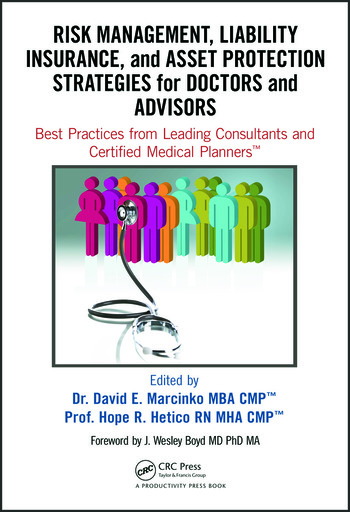
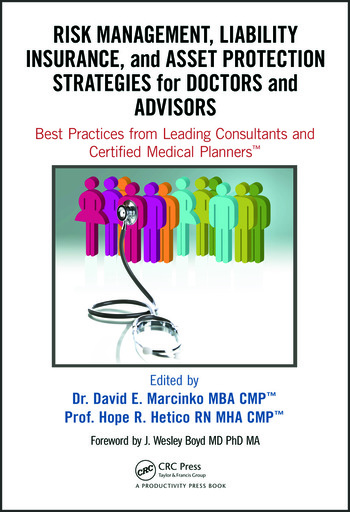
Risk Management, Liability Insurance, and Asset Protection Strategies for Doctors and Advisors: Best Practices from Leading Consultants and Certified Medical Planners™

ORDER TEXTBOOK: https://www.routledge.com/Risk-Management-Liability-Insurance-and-Asset-Protection-Strategies-for/Marcinko-Hetico/p/book/9781498725989

SECOND OPINIONS: https://medicalexecutivepost.com/schedule-a-consultation/

INVITE DR. MARCINKO: https://medicalexecutivepost.com/dr-david-marcinkos-

THANK YOU

***

The Benefits of Dentistry Unhurried

And Medicine, too?

[By Kellus Pruitt DDS]

1-darrellpruittThe hidden truth about managed care dentistry: Unhurried dentistry is generally of higher quality than hurried dentistry; anyone up to challenging this economic law?

Dental Handiwork

Dental care includes intricate handwork performed to exacting tolerances in sensitive mouths of nervous patients. When dentists compete on discounts (fast dentistry) instead of quality (slow dentistry), fear of bankruptcy fuels the race to the bottom with clueless, vulnerable patients.

 “‘Slow medicine’ strikes a chord – Nearly 500 people — doctors, nurses and ordinary people with an interest in health care — attended a forum Thursday to hear Dr. Victoria Sweet, a physician and author, talk about how ‘slow medicine’ could improve the quality of life of patients. Sweet is Associate Clinical Professor of Medicine at University of California, San Francisco.”

Melinda Morales for the Visalia Times-Delta

[Visalia, California – October 16, 2014]

http://www.visaliatimesdelta.com/story/news/local/2014/10/17/slow-medicine-strikes-chord/17400861/

Morales writes: “When Sweet told the audience she had once wondered to herself, ‘If I could do one thing to improve the quality of health care, what would it be?’ and then followed it up with her solution, ‘I would put time back into the hands of physicians,’ the audience burst into applause.”

***

Insightful or clueless dentist?

***

Enjoy the Teeth

Dentistry is far more enjoyable for all concerned when it is not rushed in order to squeeze out a profit from unsustainable pay offered by unaccountable, conniving discount dentistry brokers … like CIGNA.

“Cigna to launch rating system that ADA calls scientifically flawed – Cigna will launch in 2015 what it calls a cost-effectiveness designation program that rates in-network dentists based on cost and utilization patterns. These ratings will appear as stars within Cigna’s provider directory. According to Cigna, dentists who receive a three-star rating have a fee schedule that results in greater potential cost savings within their geographical area.”

Kelly Soderlund

[ADA News, October 13, 2014]

Good reporting, ADA News

This isn’t the first time CIGNA has been busted for selling intentionally misinformed, captive patients discount healthcare with no quality control – depriving Americans of the opportunity to choose providers which most patients prefer. Seven years ago, CIGNA and other insurers were reprimanded for employing Ingenix, UnitedHealth Group’s wholly-owned ranking algorithm designed to drive clients from out-of-network providers to cheaper in-network providers:

“Attorney General Cuomo Announces Agreement With Cigna Creating A New National Model For Doctor Ranking Programs – NEW YORK, NY (October 29, 2007) – Attorney General Andrew M. Cuomo today announced an agreement with one of the nation’s largest health insurers, CIGNA HealthCare (NYSE: CI), as part of his industry-wide investigation into doctor ranking programs. Under the agreement, CIGNA will enhance its doctor ranking program, fully disclosing to consumers and physicians all aspects of its ranking system. Additionally, CIGNA will retain an oversight monitor known as a Ratings Examiner (‘Rx’) who will oversee compliance with all aspects of the agreement and will report to the Attorney General every six months.”

Eric T. Schneiderman

[Office of Current NY State Attorney General]

http://www.ag.ny.gov/press-release/attorney-general-cuomo-announces-agreement-cigna-creating-new-national-model-doctor

See also, “UnitedHealth Group Shenanigans – Ingenix’s Lack of Independence”

Dr. David Edward Marcinko MBA

[Medical Executive-Post, January 16, 2009]

https://medicalexecutivepost.com/2009/01/16/unitedhealth-group-shenanigans/

As you can see, history reveals that Cuomo fruitlessly reminded CIGNA that price is only one variable in “cost-effectiveness.” As dentists and their patients know, correcting careless mistakes is always more costly than doing the job right the first time with the best materials for reasonable pay.

***

slow down

***

CIGNA Speaks

Cigna spokeswoman Karen Eldred tells ADA News,

“Cigna remains committed to introducing enhancements to the mycigna.com’s dental network directory that provide customers with cost [but not quality] transparency and insights when using their dental benefits.”

If anyone in the ADA is allowed to consider non-member dentists’ advice, I would recommend publicly confronting CIGNA with an easy to document comparison of the popularity of CIGNA’s one, two and three star, cost-effective dentists with competitors using doctoroogle.com – arguably the most transparent dentist-rating site in the nation.

http://texas.doctoroogle.com/

Anyone who is interested in performing the simple, consumer-friendly study is almost certain to discover a direct correlation between the amount of time dentists can afford to invest in their work and their preference by patients in the community.

More:

Assessment

Have you ever experienced a cost-effective injection of local anesthetic?

Hurried Care?

Conclusion

Your thoughts and comments on this ME-P are appreciated. Feel free to review our top-left column, and top-right sidebar materials, links, URLs and related websites, too. Then, subscribe to the ME-P. It is fast, free and secure.

Speaker: If you need a moderator or speaker for an upcoming event, Dr. David E. Marcinko; MBA – Publisher-in-Chief of the Medical Executive-Post – is available for seminar or speaking engagements. Contact: MarcinkoAdvisors@msn.com

OUR OTHER PRINT BOOKS AND RELATED INFORMATION SOURCES:

Product DetailsProduct DetailsProduct Details

DR. ANTHONY FAUCI: Retires after 50 Years of Service

By Dr. David Edward Marcinko MBA

[Editor-in-Chief]

***

***

I first met my esteemed colleague Tony Fauci MD more than 30 years ago as a young surgical resident in Atlanta. My esteem for him has grown immensely since then. After all, he is an American physician-scientist and immunologist serving as the director of the National Institute of Allergy and Infectious Diseases and the Chief Medical Advisor to the President

And so, upon his retirement, Dr. Anthony Fauci urged Americans to get their reformulated Covid boosters in his final White House press briefing yesterday. Fauci, the nation’s top infectious disease official and the leader of the NIAID since 1984, announced recently that he’d be stepping down to “pursue the next chapter” of his career in December, 2022.

Dr. Fauci’s final plea comes as public health officials warn that a “viral jumbalaya” of respiratory infections threatens to push hospitals to the brink this coming winter.

RSV: https://medicalexecutivepost.com/2022/11/19/public-health-rsv-versus-covid/

***

***

Quote: “My final message—maybe the final message I give you from this podium—is that, please, for your own safety, for that of your family, get your updated Covid-19 shot as soon as you’re eligible, to protect yourself, your family, and your community.”

We should all heed his advice.

Thank you for your service, Tony!

***

ORDER: https://www.amazon.com/Dictionary-Health-Insurance-Managed-Care/dp/0826149944/ref=sr_1_4?ie=UTF8&s=books&qid=1275315485&sr=1-4

***

COMMENTS APPRECIATED

Thank You

***

COVID: US Public Health Emergency Extended

By Staff Reporters

***

***

The US will extend its Covid public health emergency through the spring of 2023 in anticipation of another winter surge.

The emergency, first issued in January 2020, broadens eligibility for both Medicaid and the Children’s Health Insurance Program, and the government estimates that ~15 million people will lose their benefits from those programs once it ends.

***

COMMENT APPRECIATED

Thank You

***

ORDER: https://www.amazon.com/Dictionary-Health-Insurance-Managed-Care/dp/0826149944/ref=sr_1_4?ie=UTF8&s=books&qid=1275315485&sr=1-4

***

Meta, Apple, TSA Deflation and Mastodon

By Staff Reporters

***

***

  • Meta will reportedly begin to lay off thousands of employees this week in what could amount to the company’s most significant job cuts since it was founded in 2004.
  • Apple said that iPhone 14 production has been hamstrung by Covid restrictions at its huge assembly plant in China.
  • PreCheck deflation: TSA is lowering the price for its PreCheck program ahead of the holiday travel season.
  • Mastodon, a Twitter-esque social media site, has seen a spike in users since Musk’s takeover of the bird app.

***

ORDER: https://www.routledge.com/Risk-Management-Liability-Insurance-and-Asset-Protection-Strategies-for/Marcinko-Hetico/p/book/9781498725989

***

COMMENTS APPRECIATED

Thank You

***

MEDICAL BILLING: Down and Up Coding?

By Staff Reporters

***

***

DEFINITION

Upcoding is a type of fraud where healthcare providers submit inaccurate billing codes to insurance companies in order to receive inflated reimbursements. These false “current procedural technology” (CPT) submissions indicate that doctors provided patients with treatments that were more complex, costly, and time-consuming than what they actually received. This unlawful scheme is a violation of the False Claims Act (FCA) because it defrauds federal programs including Medicare, Medicaid, and Tricare.

CITE: https://www.r2library.com/Resource/Title/082610254

***

There are nearly 7,800 CPT codes used by healthcare providers. Collectively, these codes represent all of the procedures, conditions, and drugs that are currently reimbursable by the health insurance industry. Each one of them has an associated cost for individuals and insurance companies, based upon the urgency of the issue and the complexity of the decision-making required of the healthcare provider. Medicaid and Medicare reimburse providers based on this system.
For example, a five-minute consultation with a nurse for a minor medical question would receive a different, less expensive CPT than the one for a full examination by a doctor lasting 45-minutes. However, if the physician charges the federal programs for the more expensive 45-minute examination when the five-minute consultation is what actually occurred, this would constitute upcoding.

Unbundling

Unbundling is another common form of upcoding. This fraudulent scheme involves billing for individual procedures that are usually performed and billed together under a single CPT code. In some cases, the billing codes for complicated medical operations have associated components built into their CPTs. For example, a hip replacement surgery may factor in the costs of the surgeon’s as well as the use of the operating room. Unbundling occurs when a healthcare provider submits each component within a CPT to Medicare or Medicaid separately. This creates a cost redundancy where wrongdoers can unlawfully seek reimbursement for the same procedure several times over.

CMS: https://www.cms.gov/Outreach-and-Education/Medicare-Learning-Network-MLN/MLNProducts/Downloads/Fraud-Abuse-MLN4649244.pdf

What Is Downcoding?

Downcoding is the opposite of upcoding. If you perform a service but record the CPT for a lower-level service, that is downcoding. Downcoding also leaves you vulnerable to an audit, which is never good. But, it can also cost a practice thousands of dollars a year in lost revenue because you’re not getting the higher rate of pay that you would if you had recorded the service properly.

According to the National Correct Coding Initiative (NCCI): “Physicians must avoid downcoding. If an HCPCS/CPT code exists that describes the services performed, the physician must report this code rather than report a less comprehensive code with other codes describing the services not included in the less comprehensive code.”

MORE: https://zeemedicalbilling.com/what-is-upcoding-and-downcoding-in-medical-billing/

***

HERE: https://www.ncbi.nlm.nih.gov/pmc/articles/PMC8649706/

COMMENTS APPRECIATED

Thank You

***

ORDER: https://www.amazon.com/Business-Medical-Practice-Transformational-Doctors/dp/0826105750/ref=sr_1_9?ie=UTF8&qid=1448163039&sr=8-9&keywords=david+marcinko

***

ORDER: https://www.routledge.com/Risk-Management-Liability-Insurance-and-Asset-Protection-Strategies-for/Marcinko-Hetico/p/book/9781498725989

****

CVS, Walgreens and Walmart: Opioid Settlement

By Staff Reporters

***

***

CVS, Walgreens, and Walmart agree to pay $13 billion over opioids

The pharmacy chains have reached a tentative deal to settle thousands of lawsuits brought by state and local governments that accuse them of contributing to the opioid epidemic.

If the deal goes through, CVS and Walgreens will each cough up around $5 billion, and Walmart will reportedly be on the hook for $3 billion.

***

COMMENTS APPRECIATED

Thank You

***

ORDER: https://www.routledge.com/Risk-Management-Liability-Insurance-and-Asset-Protection-Strategies-for/Marcinko-Hetico/p/book/9781498725989

***

National Mammography Day 2022

Join Our Mailing List

Within National Breast Cancer Awareness Month

[By Staff Reporters]

Annually observed on the third Friday-Saturday in October, as part of National Breast Cancer Awareness Month, October 22nd. is National Mammography Day. This day serves as a reminder to all women that the best defense is early detection.

What to Do

  • Perform regular monthly self-examinations.
  • Make sure you get your regular physician checkups.
  • Make your mammography appointment today!

History

President Bill Clinton proclaimed the first National Mammography Day in 1993.

0aa45

Don’t forget male breast cancer

Male breast neoplasm is a relatively rare cancer in men that originates from the breast. As it presents a similar pathology as female breast cancer, assessment and treatment relies on experiences and guidelines that have been developed in female patients. The optimal treatment is currently not known.

Incidence

According to Wikipedia, about one percent of breast cancer develops in males. It is estimated that about 2,140 new cases are diagnosed annually in the United States (US) and about 300 in the United Kingdom (UK). The number of annual deaths in the US is about 450. In a study from India, eight out of 1,200 (0.7%) male cancer diagnoses in a pathology review represented breast cancer. Incidences of male breast cancer have been increasing which raise the probability of other family members developing the disease. The relative risk of breast cancer for a female with an affected brother is approximately 30% higher than for a female with an affected sister. The tumor can occur over a wide age range, but typically appears in men in their sixties and seventies. Known risk factors include radiation exposure, exposure to female hormones (estrogen), and genetic factors.

High estrogen exposure may occur by medications, obesity, or liver disease, and genetic links include a high prevalence of female breast cancer in close relatives. Chronic alcoholism has been linked to male breast cancer. The highest risk for male breast cancer is carried by men with Klinefelter syndrome. Male BRCA mutation carriers are thought to be at higher risk for breast cancer as well, with roughly 10% of male breast cancer cases carrying BRCA2 mutations, and BRCA1 mutation being in the minority.

Conclusion

Your thoughts and comments on this ME-P are appreciated. Feel free to review our top-left column, and top-right sidebar materials, links, URLs and related websites, too. Then, subscribe to the ME-P. It is fast, free and secure.

Speaker: If you need a moderator or speaker for an upcoming event, Dr. David E. Marcinko; MBA – Publisher-in-Chief of the Medical Executive-Post – is available for seminar or speaking engagements. Contact: MarcinkoAdvisors@msn.com

OUR OTHER PRINT BOOKS AND RELATED INFORMATION SOURCES:

Product DetailsProduct Details

Product Details

Dr. Dave Marcinko at YOUR Service in 2022

Join Our Mailing List

Book Marcinko for your Next Financial Planning Seminar, Meeting or Medical Business Event 

By Ann Miller RN MHA

Professor and physician executive David Edward Marcinko MBBS DPM MBA MEd BSc CMP® is originally from Loyola University MD, Temple University in Philadelphia and the Milton S. Hershey Medical Center in PA; Oglethorpe University, and Atlanta Hospital & Medical Center in GA; and the Aachen City University Hospital, Koln-Germany. He is one of the most innovative global thought leaders in health care business and entrepreneurship today.

Dr. Marcinko is a multi-degreed educator, board certified physician, surgical fellow, hospital medical staff President, Chief Education Officer and philanthropist with more than 400 published papers; 5,150 op-ed pieces and over 125+ international presentations to his credit; including the top 10 biggest pharmaceutical companies and financial services firms in the nation. He is also a best-selling Amazon author with 30 published text books in four languages [National Institute of Health, Library of Congress and Library of Medicine].

Dr. Marcinko is past Editor-in-Chief of the prestigious “Journal of Health Care Finance”, and a former Certified Financial Planner®, who was named “Health Economist of the Year” in 2001. He is a Federal and State court approved expert witness featured in hundreds of peer reviewed medical, business, management and trade publications [AMA, ADA, APMA, AAOS, Physicians Practice, Investment Advisor, Physician’s Money Digest and MD News].

As a licensed insurance agent, RIA and SEC registered endowment fund manager, Dr. Marcinko is Founding Dean of the fiduciary focused CERTIFIED MEDICAL PLANNER® chartered designation education program; as well as Chief Editor of the HEALTH DICTIONARY SERIES® Wiki Project. His professional memberships include: ASHE, AHIMA, ACHE, ACME, ACPE, MGMA, FMMA and HIMSS.

Dr. Marcinko is a MSFT Beta tester, Google Scholar, “H” Index favorite and one of LinkedIn’s “Top Cited Voices”.

Book Marcinko

David Edward Marcinko (2)

Join Our Mailing List

“Best” Physician Focused Financial Planning and Medical Practice Management Books for 2022

[Doctor-Advisor]

CAREER DEVELOPMENT

Buy from Amazon

Learn How to Profit and Thrive in the PP-ACA Era

BOOK FOREWORD / TESTIMONIAL

Best Sellers

Product Details

Product DetailsProduct Details

Product DetailsProduct DetailsProduct Details

###

Comprehensive Financial Planning Strategies for Doctors and Advisors: Best Practices from Leading Consultants and Certified Medical Planners(TM)

Comprehensive Financial Planning Strategies for Doctors and Advisors: Best Practices from Leading Consultants

***

site

***

Three Fundamental Criteria All Physicians Should Consider before Investing

Join Our Mailing List

Re-Appreciating the Basic Three Rs …

By Guy P. Jones CFP® www.guypjones.com

Guy P. Jones

Physician-investors are often confronted with a myriad of decisions concerning any potential investment not the least of which is:

“When or how should I change my investment strategy?”

Given the choice of investment options, there are three criteria by which any investment you make should be evaluated: Risk, Reward and Liquidity.

  • Risk, in a financial context, is defined as: The probability that the actual return on an investment will be lower than the expected return.  For our purposes and for most people, it equates to whether there is the potential to lose money on an investment and how much of a risk you are willing to take in order to achieve an acceptable return.

One measurement of the risk or volatility of market-based investments can be quantified by the beta of an investment.  Beta is a measurement of volatility of an investment and is measured against how volatile an investment is relative to the market.  The beta of the market is always 1.00, so any investment that has a beta of less than 1.00 is less volatile and conversely, one with a beta greater than 1.00 is more volatile.   The desired result is low beta (low volatility) investments that have higher returns vs. the market.  Each of our institutional-class money managers utilize investments that collectively have a beta that is lower than the market while generating results that avoided the steep losses of the stock market in 2000-02 and 2008.*

  • Reward, in a financial context, is the positive return on your investment.  The rule of thumb is that the reward – or return on investment – is directly proportional to the amount of risk that one is willing to assume- i.e. – the higher the risk, the higherreturn on investment.

In addition, traditional thinking says in order to reap stock market-like returns, you have to invest in the stock market.  In our managed portfolios, that is not necessarily the case.  Two of our investment managers, who do not invest in the stock market, have generated average returns over the past 7 and 10 years that are equal to or better than returns of the stock market over similar timeframes with 76-84% less risk as measured by the beta of each manager*

  • Liquidity, in a financial context, means how quickly you can get your hands on your cash or is the ability to get your money whenever you need it.  One of the first things I advise anyone to have is a liquid emergency fund of readily available cash.  By having available cash, you don’t have to convert another asset to cash and create a transaction that could result in potentially adverse tax consequences or worse, trigger losses.  I often see clients sacrifice higher returns that they could be earning on idle cash because of their perceived need for absolute liquidity of their money.  But what if there was a way to have both?  Wouldn’t you want higher returns in low risk, low-volatility assets as well as the ability to get at those assets quickly?

With our multi-manager investment platform, investors have the ability to have a portion of their assets held in a safe, liquid money market account while also having their remaining assets diversified in a variety of low risk, low-volatility investments.

financial risk

More:

Assessment

*Past performance is not a guarantee or indicator of future performance

Conclusion

Your thoughts and comments on this ME-P are appreciated. Feel free to review our top-left column, and top-right sidebar materials, links, URLs and related websites, too. Then, subscribe to the ME-P. It is fast, free and secure.

Speaker: If you need a moderator or speaker for an upcoming event, Dr. David E. Marcinko; MBA – Publisher-in-Chief of the Medical Executive-Post – is available for seminar or speaking engagements. Contact: MarcinkoAdvisors@msn.com

OUR OTHER PRINT BOOKS AND RELATED INFORMATION SOURCES:

Product DetailsProduct DetailsProduct Details

Product Details  Product Details

On Cultural Sensitivity in Education and Medicine

Join Our Mailing List

A Modern Integral Component of Healthcare Training

[By Render S. Davis MHA CHE]

[By Dr. David Edward Marcinko MBA]

***

While America has often been called a “nation of immigrants,” it has never been more true than today. Consequently, the challenge for physicians and other health care providers, in both large cities and small communities, is meeting the health care needs of increasingly diverse and multi-cultural populations who speak different languages and have social norms, traditions, and values that may substantially differ from their own. Problems arise when clinicians expect, even demand, that patients and their families discard their cultural foundations and adhere to the health care provider’s view of the care and decision-making process.

Instead, the health care team should be more aware of and sensitive to the values and beliefs of patients who come from other cultures; working within to assure that the patient’s individual rights are supported and wishes honored to the fullest extent possible.

In her award-winning book, The Spirit Catches You and You Fall Down, Ann Fadiman chronicled this tragic clash of two cultures in medical care for a child of the traditional Hmong people of Laos, transplanted to California after the Vietnam War.

In the book, Fadiman recounts a conversation with Professor Arthur Kleinman of Harvard University, a highly regarded expert in multicultural relations and conflict, who noted that “If you cannot see that your own culture has its own set of interests, emotions, and biases, how can you expect to deal successfully with someone else’s culture?”

***

anatomy-254129_640

***

Former U.S. Surgeon General David Satcher, M.D., Ph.D., now Director of the Satcher Health Leadership Institute at Morehouse College of Medicine in Atlanta, Georgia, helped develop a special curriculum designed to foster greater cultural competence among physicians and health care providers.

Called the “CRASH Course,” the program emphasizes:

  1. Cultural Awareness. Acknowledging the diversity and legitimacy of the many cultures that make up the fabric of American Society;
  2. Respect. Valuing other cultural norms, even if they differ or conflict with your own;
  3. Assess and affirm. Understanding the points of both congruence and difference among cultural approaches to decision-making; learning how to achieve the best outcomes within the cultural framework of the patient and family unit;
  4. Sensitivity and self awareness. Being secure in your own values; while willing to be flexible in working through cultural differences with others;
  5. Humility. Recognizing that every culture has legitimacy and that no one is an expert in what is best for others; being willing to subordinate your values for those of another to achieve the goals of treatment.

There is little doubt that multi-cultural sensitivity will continue to grow as an increasingly integral component of medical education and risk management in health care practice.

Dr. Marcinko Teaching Philosophy

***

anatomy-254120_640

**

Channel Surfing the ME-P

Have you visited our other topic channels? Established to facilitate idea exchange and link our community together, the value of these topics is dependent upon your input. Please take a minute to visit. And, to prevent that annoying spam, we ask that you register. It is fast, free and secure.

More:

Conclusion

Your thoughts and comments on this ME-P are appreciated. Feel free to review our top-left column, and top-right sidebar materials, links, URLs and related websites, too. Then, subscribe to the ME-P. It is fast, free and secure.

About the Author

Render Davis was a Certified Healthcare Executive, now retired from Crawford Long Hospital at Emory University, in Atlanta, GA He served as Assistant Administrator for General Services, Policy Development, and Regulatory Affairs from 1977-95.  He is a founding board member of the Health Care Ethics Consortium of Georgia and served on the consortium’s Executive Committee, Advisory Board, Futility Task Force, Strategic Planning Committee, and chaired the Annual Conference Planning Committee, for many years.  

Speaker: If you need a moderator or speaker for an upcoming event, Dr. David E. Marcinko; MBA – Publisher-in-Chief of the Medical Executive-Post – is available for seminar or speaking engagements. Contact: MarcinkoAdvisors@msn.com

OUR OTHER PRINT BOOKS AND RELATED INFORMATION SOURCES:

Product DetailsProduct Details

Invite Dr. Marcinko

Product DetailsProduct Details

***

What is a CONTENT DELIVERY NETWORK, Doctor?

CDNs and What They Mean to Physicians

BY J.M.

[Anonymous IT Expert]

DOCTOR – Do you like the internet? Do you use EMRs/EHRs? Do you like fast internet? Of course you do.

But, without a strong infrastructure of content delivery networks (CDNs), website loading times would be too slow to stream tele-health/tele-medicine visits or tela-radiology services; not to mention Netflix, or argue with Reddit strangers or your patients; etc.

CDNs are geographically distributed networks of servers that handle processing and speed up internet delivery. In practice, CDNs make website content like HTML pages, JavaScript files, style-sheets, images, and videos load faster. They also reduce bandwidth costs, handle more traffic, and provide a little security protection. 

  • CDNs don’t actually host web content, but instead keep cached versions of it at the ready in edge servers. 

***

How CDN Works? How to Find the Cheapest CDN Provider?

***

Fastly is one of a number of significant CDN providers that help form the infrastructure of the internet. And while the outage shows the breadth of its reach, it’s far from the biggest player—Akami, Cloudflare, and Amazon CloudFront take up 75% of revenue in CDN space, per Intricately.

But Fastly, one of the world’s largest cloud computing companies itself, just had an outage that shut down its CDN service, affecting major websites including the New York Times, HBO Max, and the British government’s homepage. 

ASSESSMENT: Were you or your clinic or hospital affected? Your thoughts and comments are appreciated.

ORDER DICTIONARY: https://medicalexecutivepost.com/wp-content/uploads/2007/10/foreword-mata.pdf

INVITE DR. MARCINKO: https://medicalexecutivepost.com/dr-david-marcinkos-

THANK YOU

***

UPDATE: SPACS, Markets and Covid-19 Fraud

By Staff Reporters

***

***

Chamath Palihapitiya, the billionaire investor who once claimed to be the next Warren Buffett, is winding down two of his special purpose acquisition companies (SPACs) and returning $1.5 billion to investors. It marks the symbolic end to the SPAC bubble that Palihapitiya is credited with instigating.

***

  • Markets: Investors pre-gamed the Fed’s big interest rate decision coming this afternoon by sending stocks lower and Treasury yields higher; they’re sweating what’s expected to be the central bank’s third 75-basis-point hike in a row to tamp down inflation. Speaking of inflation, Ford’s stock had its worst day in 11 years after warning of $1 billion in extra supplier costs.

***

Finally, the Justice Department charged 47 people for allegedly carrying out the single largest Covid relief fraud scheme to date. Feds say that by exploiting a program meant to feed needy Minnesota children, the defendants stole $250 million. Prosecutors say the fraud was committed by a network of individuals connected to the nonprofit Feeding Our Future and was overseen by the nonprofit’s founder, Aimee Bock. Feeding Our Future was one of a handful of organizations Minnesota trusted to oversee the distribution of meals to children in low-income families during the pandemic. Instead, prosecutors allege, the organization operated a “pay-to-play scheme” in which individuals submitted fake meal sites and children’s names, raking in government money with fraudulent invoices.

COMMENTS APPRECIATED

Thank You

***

RELATED: https://www.amazon.com/Financial-Management-Strategies-Healthcare-Organizations/dp/1466558733/ref=sr_1_3?ie=UTF8&qid=1380743521&sr=8-3&keywords=david+marcinko

****

AMA Joins Class-Action Suit Against CIGNA

By Paige Minemyer

***

***

The AMA and 2 State Medical Societies Join Class-Action Suit Against CIGNA

The American Medical Association (AMA) has joined a class-action lawsuit against Cigna, alleging the insurer underpaid for claims filed by providers in the contracted MultiPlan network. MultiPlan is the country’s largest third-party network, and Cigna contracts with it to access providers. According to the lawsuit, which was initially filed in June, Cigna reimbursed for claims from providers in MultiPlan’s network at its non-participating providers rate rather than at the rate expected for a MultiPlan contract.

As such, the insurer “significantly underpaid claims, and put patients at risk of balance billing,” the plaintiffs claim. “It also breached its fiduciary duties, including its duty to honor written plan terms and its duty of loyalty, because its conduct serves Cigna’s own economic self-interest and elevates Cigna’s interests above the interests of plan member patients,” according to the lawsuit.

Paige Minemyer, Fierce Healthcare [9/13/22]

***
COMMENTS APPRECIATED

Thank You

***

BUSINESS MEDICINE: https://www.amazon.com/Business-Medical-Practice-Transformational-Doctors/dp/0826105750/ref=sr_1_9?ie=UTF8&qid=1448163039&sr=8-9&keywords=david+marcinko

***

PODCAST: Google Starts a Health Insurance Stop-Loss Company

By Eric Bricker MD

***

***

COMMENTS APPRECIATED

Thank You

***

INSURANCE: https://www.amazon.com/Dictionary-Health-Insurance-Managed-Care/dp/0826149944/ref=sr_1_4?ie=UTF8&s=books&qid=1275315485&sr=1-4

***

PODCAST: A Block Chain Video

What it is – How it works

***

***

PODCAST: http://www.realitysharesadvisors.com/indexes/blockchain-index/

Conclusion

Your thoughts and comments on this ME-P are appreciated. Feel free to review our top-left column, and top-right sidebar materials, links, urls and related websites, too. Then, subscribe to the ME-P. It is fast, free and secure.

Speaker: If you need a moderator or speaker for an upcoming event, Dr. David E. Marcinko; MBA – Publisher-in-Chief of the Medical Executive-Post – is available for seminar or speaking engagements.

Book Marcinko: https://medicalexecutivepost.com/dr-david-marcinkos-bookings/

Subscribe: MEDICAL EXECUTIVE POST for curated news, essays, opinions and analysis from the public health, economics, finance, marketing, I.T, business and policy management ecosystem.

***

The DENTAL Witness Stand

***

By Darrell Pruitt DDS

***

Today I was on the witness stand in a Dallas County courthouse for 2 hours testifying as an expert witness in an injury case involving a dentist who failed to pay attention to a patient’s safety. The three year old girl was brought into the dental operatory while hugging her mom, face-to-face. The mom and child were in that same position when they were seated in the dental chair – with the child’s legs straddling her mom’s waist, and extending a few inches beyond the back of the chair.

The dentist entered the operatory and reclined the chair by pushing a button on the control module. The hinge mechanism severely pinched the child’s right foot, breaking all 5 metatarsals. She will have problems with her foot the rest of her life.

The lesson, Doc: Never ever recline a dental chair unless all limbs are visibly clear of pinch points.

***
COMMENTS APPRECIATED

Thank You

RELATED: https://www.routledge.com/Risk-Management-Liability-Insurance-and-Asset-Protection-Strategies-for/Marcinko-Hetico/p/book/9781498725989

***

A Fiduciary Comes with Responsibilities to the Client

By Stephen Kelley, CSA

***

***

As a Registered Investment Adviser (RIA) with a Series #65 securities license, we hold a fiduciary duty to you. This means that we are legally bound to put your interests above those of anyone else, including ourselves.

Now you might reasonably think that anyone offering financial advice or services to clients is required to be a fiduciary. Sadly, if you thought that, you’d be wrong. Some estimates claim that only 15 percent of advisors have a fiduciary duty to their clients. The Paladin Registry puts the number even lower, estimating that just one in 12 (8.3 percent) advisors have a fiduciary responsibility.

For the most part, stockbrokers (also called “Registered Representatives,” “Account Executives,” “Financial Advisors,” or “Wealth Managers”) are not fiduciaries, even though they are allowed to portray themselves as full-service investment advisors. If your stockbroker/registered representative/account executive/financial advisor/wealth manager holds a series seven [#7] securities license, then it’s probable that they aren’t a fiduciary.

This was made amply clear in the movie, “The Wolf of Wall Street,” a biopic about Jordan Belfort, a stockbroker who made his fortune selling junk stocks and bonds to middle-class investors: in other words, by cheating them. Much of it was perfectly legal. The SEC went after Belfort’s company, Stratton Oakmont, for nearly a decade before it was able to shut it down. The point being that even in the face of egregious wrongdoing, theft, fraud and a virtual sea of drugs and blatant hedonism, the securities laws in this country are so loose that it took billions in theft and a decade of suspected and known fraud to step in and stop the abuse. And this movie was based on a true story.

That’s why a fiduciary duty is so important to a client. Being a fiduciary is a legal distinction. A Registered Investment Advisor (RIA) or Investment Advisor Representative (IAR) who holds a Series #65 securities license, subject to the Investment Advisers Act of 1940, is a fiduciary. The legal investment advising standards that govern a non-fiduciary stockbroker and a fiduciary Registered Investment Advisor are very different.

A Registered Investment Advisor is legally required to follow the “trust” standard — the highest known in law — which requires it to place the interests of its clients ahead of its own and fulfill critical fiduciary duties of trust and confidence. Under the fiduciary trust standard, a Registered Investment Advisor must provide its “best advice” to a client. A non-fiduciary stockbroker (like the coveted Series #7 of “The Wolf of Wall Street”) follows only the “suitability” standard, which doesn’t require a stockbroker to place the interests of his clients ahead of its own. Under the non-fiduciary suitability standard, a stockbroker need provide only “suitable advice” to his clients — even if the stockbroker knows that the advice is not the best advice for the client.

***

The table below helps summarize which professionals are fiduciaries.

Type of ProfessionalAre They A Fiduciary?
PhysicianYes
LawyerYES/Maybe
CPANo
Trust OfficerYes
Stock BrokerNo
Insurance AgentNo
Registered RepresentativeNo
CFP PractitionerMaybe
Financial PlannerMaybe
Registered Investment AdviserYes
NAFPA-Registered Financial AdvisorYes

***

MORE: https://medicalexecutivepost.com/2022/05/21/an-interview-with-bennett-aikin-aif/

RELATED: https://www.kitces.com/blog/the-4-different-types-of-financial-advisor-fiduciaries/

CFPs: https://medicalexecutivepost.com/2016/11/18/why-we-cannot-assume-cfp-equals-fiduciary/

INVESTING: https://www.routledge.com/Comprehensive-Financial-Planning-Strategies-for-Doctors-and-Advisors-Best/Marcinko-Hetico/p/book/9781482240283

COMMENTS APPRECIATED

Thank You

***

STOP-LOSS Health Insurance?

What is stop-loss insurance AND how does it work?

By Staff Reporters

***

***

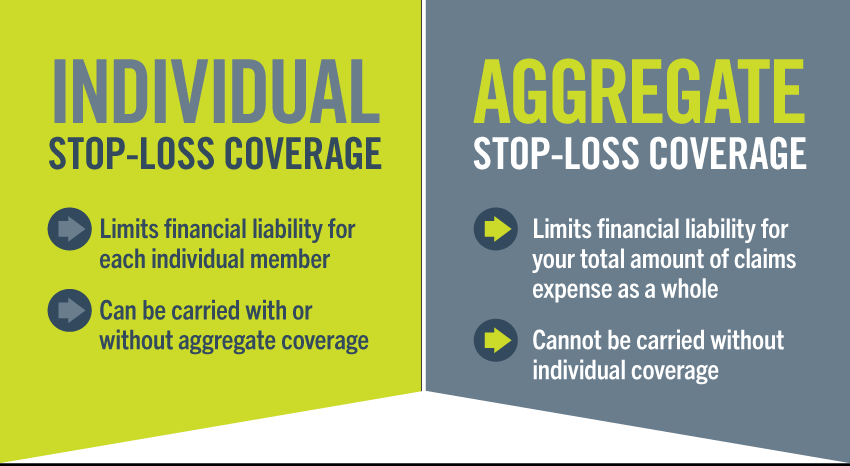
A stop-loss health insurance policy covers claims above a health insurance plan’s retained claims. The claims fund of a self-funded employer will pay claims up to the predetermined deductible for each of the company’s covered employees. The role of the stop-loss is to cover all claims above these deductible levels.

CITATION: https://www.r2library.com/Resource/Title/0826102549

According to RoundStone Insurance, aggregate stop-loss insurance is designed to protect an employer who self-funds their employee health plan from higher-than-anticipated payouts for claims. Stop-loss insurance is similar to high-deductible insurance, and the employer remains responsible for claims below the deductible amount.

An individual stop-loss insurance carrier determines the average expected monthly claims per employee / per month PEPM based on the employer’s history. Then, this figure is multiplied by a percentage ranging from 110%-150%. That determined amount is then multiplied by the enrollment on a monthly basis to establish the aggregate deductible.

DHIMA: https://www.amazon.com/Dictionary-Health-Insurance-Managed-Care/dp/0826149944/ref=sr_1_4?ie=UTF8&s=books&qid=1275315485&sr=1-4

BUSINESS: https://www.amazon.com/Business-Medical-Practice-Transformational-Doctors/dp/0826105750/ref=sr_1_9?ie=UTF8&qid=1448163039&sr=8-9&keywords=david+marcinko

***

COMMENTS APPRECIATED

Thank You

Subscribe to the Medical Executive-Post

***

New Medical Informed Consent Dilemma

Join Our Mailing List

Emerging Problems

By Dr. David Edward Marcinko; MBA, CMP™

[Publisher-in-Chief]dem21

According to the Dictionary of Health Insurance and Managed Care, informed consent is the oral and written communication process between a patient and physician that results in the agreement to undergo a particular procedure, surgical intervention or medical treatment.

Unfortunately, a lack of standardization surrounding this process represents a major risk for patients and surgeons, and may lead to inaccurate patient expectations, lost or incomplete consent forms, missing encounter documentation and delays in critical surgeries and procedures.

History: Render S. Davis of Emory University [2008 recipient of the Health Care Ethics Consortium’s Heroes in Healthcare Ethics Award] writes for us in the Business of Medical Practice www.MedicalBusinessAdvisors.com that the concept of informed consent is rooted in medical ethics and codified as a legal principle. It is based on the assertion that a competent person has the right to determine what is done to him or her [self-regulated autonomy].

Rationale: The American Medical Association recommends that its members disclose and discuss the following with their patients:  

  • The patient’s diagnosis, if known,
  • The nature and purpose of a proposed treatment or procedure,
  • The risks and benefits of a proposed treatment or procedure,
  • Alternatives (regardless of cost or health insurance coverage),
  • The risks and benefits of the alternative treatments and,
  • The risks and benefits of not the procedure.

The requirements for informed consent are spelled out in statutes and case law in all 50 states. It is a necessary protocol for all hospitals, medical clinics, podiatry practices and ASCs.

Inadequacy of Traditional Consent Forms-to-Date

The typical informed consent process, particularly one that relies solely on traditional generic consent forms, is often inadequate, incomplete or offers the potential for not fully explaining and documenting a particular procedure to a given patient. 

Traditional consent forms are subject to errors and omissions, such as missing signatures (patient, provider or witness), missing procedure(s), and missing dates that place the validity of consent at risk. Lost or misplaced forms may result in delayed or postponed procedures often at the expensive of costly operating room time. Moreover, far too many forms are generic in nature and wholly unsuited for a specific patient or increasingly sophisticated medical procedure.

Patient Safety Background

According to the Institute of Medicine’s [IOM] repot, To Err is Human, more than 1 million injuries and nearly 100,000 deaths occur annually in the United States due to mistakes in medical care. Wrong patient, wrong-side, wrong-procedure and wrong-toe surgery are particularly egregious. In fact, these are among several other “never-events” that Medicare, and an increasing number of private insurance companies are refusing to reimburse.

Based on the need to make healthcare safer, the Agency for Healthcare Research and Quality (AHRQ) undertook a study to identify patient safety issues and develop recommendations for “best practices”.

AHRQ Evidence Report

The AHRQ report identified the challenge of addressing shortcomings such as missed, incomplete or not fully comprehended informed consent, as a significant patient safety opportunity for improvement.

The authors of the AHRQ report hypothesized that better informed patients “are less likely to experience errors by acting as another layer of protection.” And, the AHRQ study ranked a more interactive informed consent process among the top 11 practices supporting more widespread implementation.

General Accounting Office report found that malpractice insurance premiums were relatively flat for most of the 1990’s, but projections began to increase dramatically to 2010.

Results of Improper Informed Consent

Failure to obtain adequate informed consent, depending on state law, may place surgeons, resident, fellows, ambulatory and office surgery centers, medical clinics and hospitals at risk for litigation ranging from medical negligence to assault and battery.

Proceedings Involving Informed Consent

Informed consent is often a factor in medical malpractice litigation. Some attorneys note that physicians are liable, and that plaintiffs may be able to recover damages, in cases involving improper informed consent, even if the procedure is successful. Inadequate informed consent is often cited as a secondary cause in malpractice complaints and anecdotal evidence suggests this strategy may be especially pursued in podiatric malpractices cases.

Avoiding Litigation

The AMA advises its membership of the following regarding informed consent:  

“To protect yourself in litigation, in addition to carrying adequate liability insurance, it is important that the communications process itself be documented. Good documentation can serve as evidence in a court of the law that the process indeed took place. A timely and thorough documentation in the patient’s chart by the physician providing the treatment and/or performing the procedure can be a strong piece of evidence that the physician engaged the patient in an appropriate discussion.”

Impact of Comprehensive Informed Consent Forms

Another study found that providing informed consent information to patients in written form increased comprehension of the procedure. It was also hypothesized that: 

  • Better informed patients are more compliant with medical advice and recover faster.
  • Informed consent discussions strengthen physician-patient relationships and increase patients’ confidence in their doctor.
  • Well informed patients are more engaged in their own care, and are thus less likely to experience surgical errors than more passive, or less informed patients. 

Medical Ethics

The ethical foundation of informed consent is based on the creation of an environment that supports respect for patients and protects their right to autonomous, informed participation in all collaborative Healthcare 2.0 decisions. 

Assessment 

Thus, the essence of the informed consent problems of modern medicine today!

More: http://www.ePodiatryConsentForms.com 

Channel Surfing the ME-P

Have you visited our other topic channels? Established to facilitate idea exchange and link our community together, the value of these topics is dependent upon your input. Please take a minute to visit. And, to prevent that annoying spam, we ask that you register. It is fast, free and secure.

Conclusion

Your thoughts and comments on this ME-P are appreciated. Feel free to review our top-left column, and top-right sidebar materials, links, URLs and related websites, too. Then, subscribe to the ME-P. It is fast, free and secure.

Speaker: If you need a moderator or speaker for an upcoming event, Dr. David E. Marcinko; MBA – Publisher-in-Chief of the Medical Executive-Post – is available for seminar or speaking engagements. Contact: MarcinkoAdvisors@msn.com

OUR OTHER PRINT BOOKS AND RELATED INFORMATION SOURCES:

Product Details  Product Details

New Wave FIN-TECH Business Models?

FINANCIAL SERVICES:

New business models and big opportunities

By MIT Technology Review

CMP logo

Courtesy: http://www.CertifiedMedicalPlanner.org

The financial services industry is turning to bold initiatives to propel from pandemic response to business growth. And, among financial services institutions, 62% are looking to ramp up tech investments, and another 62% expect to move IT and business functions to the cloud, compared with 46% across industries.

For example, in a recent report, Nucleus Research found that cloud deployments deliver four times the return on investment as on-premises deployments do.

Link: https://www.technologyreview.com/2021/04/29/1023266/new-business-models-big-opportunity-financial-services/?mc_cid=3ae91e4c2b&mc_eid=72aee829ad

INDUSTRY RELATED: https://medicalexecutivepost.com/2014/09/24/is-the-financial-services-industry-all-fed-up/

TRANSFORMATION: https://medicalexecutivepost.com/2016/12/28/the-most-transformational-era-in-financial-services-since-the-1980s/

Your thoughts are appreciated.

THANK YOU

***

PODCAST: In-Patient Psychiatric Care

By Eric Bricker MD

***

***

RELATED: https://medicalexecutivepost.com/2013/02/13/a-review-of-mental-healthcare-provider-types/

***

COMMENTS APPRECIATED

Thank You

***

ORDER: https://www.barnesandnoble.com/w/risk-management-liability-insurance-and-asset-protection-strategies-for-doctors-and-advisors-david-edward-marcinko/1137103900?ean=9781498725989

***

***

About Medical Workplace Violence

Join Our Mailing List

UPDATE

At least three people are dead and multiple people are injured following a shooting at the Natalie Building at St. Francis Hospital in Tulsa, Oklahoma.

Link: https://www.msn.com/en-us/news/crime/at-least-3-dead-multiple-people-injured-in-shooting-at-oklahoma-medical-office/ar-AAXYITO?li=BBnb7Kz

More than Physical Assault

[By Staff Reporters and Dr. David E. Marcinko MBA]

Business Med PracticeWorkplace violence is more than physical assault.

According to trauma specialist Eugene Schmuckler; PhD, MBA, CTS opining and writing in www.BusinessofMedicalPractice.com; workplace violence is any act in which a person is abused, threatened, intimidated, harassed, or assaulted in his or her employment. Swearing, verbal abuse, playing “pranks,” spreading rumors, arguments, property damage, vandalism, sabotage, pushing, theft, physical assaults, psychological trauma, anger-related incidents, rape, arson, and murder are all examples of workplace violence.

The RNANS

The Registered Nurses Association of Nova Scotia [RNANS], a leading study group, defines violence as “any behavior that results in injury whether real or perceived by an individual, including, but not limited to, verbal abuse, threats of physical harm, and sexual harassment.” As such, medical workplace violence includes:

· threatening behavior — such as shaking fists, destroying property, or throwing objects;

· verbal or written threats — any expression of intent to inflict harm;

· harassment — any behavior that demeans, embarrasses, humiliates, annoys, alarms, or verbally abuses a person and that is known or would be expected to be unwelcome. This includes words, gestures, intimidation, bullying, or other inappropriate activities;

· verbal abuse — swearing, insults, or condescending language;

· muggings — aggravated assaults, usually conducted by surprise and with intent to rob; or

· physical attacks — hitting, shoving, pushing, or kicking.

Cause and Affect

Workplace violence can be brought about by a number of different actions in the workplace. It may also be the result of non-work related situations such as domestic violence or “road rage.” Workplace violence can be inflicted by an abusive employee, a manager, supervisor, co-worker, customer, family member, patient, physician, nurse, or even a stranger.

The UI-IPRC 

The University of Iowa – Injury Prevention Research Center [UI-IPRC] classifies most workplace violence into one of four categories.

· Type I Criminal Intent — Results while a criminal activity (e.g., robbery) is being committed and the perpetrator had no legitimate relationship to the workplace.

· Type II Customer/Client — The perpetrator is a customer or client at the workplace (e.g., healthcare patient) and becomes violent while being assisted by the worker.

· Type III Worker on Worker — Employees or past employees of the workplace are the perpetrators.

· Type IV Personal Relationship — The perpetrator usually has a personal relationship with an employee (e.g., domestic violence in the workplace).

Conclusion

Your thoughts and comments on this ME-P are appreciated. Feel free to review our top-left column, and top-right sidebar materials, links, URLs and related websites, too. Then, subscribe to the ME-P. It is fast, free and secure.

Link: http://feeds.feedburner.com/HealthcareFinancialsthePostForcxos

Speaker: If you need a moderator or speaker for an upcoming event, Dr. David E. Marcinko; MBA – Publisher-in-Chief of the Medical Executive-Post – is available for seminar or speaking engagements. Contact: MarcinkoAdvisors@msn.com

OUR OTHER PRINT BOOKS AND RELATED INFORMATION SOURCES:

DICTIONARIES: http://www.springerpub.com/Search/marcinko
PHYSICIANS: www.MedicalBusinessAdvisors.com
PRACTICES: www.BusinessofMedicalPractice.com
HOSPITALS: http://www.crcpress.com/product/isbn/9781466558731
CLINICS: http://www.crcpress.com/product/isbn/9781439879900
ADVISORS: www.CertifiedMedicalPlanner.org
PODIATRISTS: www.PodiatryPrep.com
BLOG: www.MedicalExecutivePost.com
FINANCE: Financial Planning for Physicians and Advisors
INSURANCE: Risk Management and Insurance Strategies for Physicians and Advisors

Product Details 

PODCAST: Health Insurance Carrier Stock Market Performance

By Eric Bricker MD

***

***

CITE: https://www.r2library.com/Resource/Title/082610254

***

COMMENTS APPRECIATED

Thank You

***

***

***

MEDICARE Fraud and Abuse Scams

REPORTING SCAMS

By Staff Reporters

***

***

LINK: https://www.medicare.gov/basics/reporting-medicare-fraud-and-abuse

BLOG: https://www.medicare.gov/blog/how-to-protect-medicare-card

SPOOFS: https://www.bing.com/videos/search?q=medicare+phone+scams&&view=detail&mid=147902000F772B221DC9147902000F772B221DC9&&FORM=VRDGAR&ru=%2Fvideos%2Fsearch%3Fq%3Dmedicare%2Bphone%2Bscams%26FORM%3DHDRSC3

***

COMMENTS APPRECIATED

Thank You

***

RISK MANAGEMENT: https://www.amazon.com/Management-Liability-Insurance-Protection-Strategies-ebook/dp/B01A8TCDES/ref=sr_1_1?keywords=david+marcinko&qid=1652959760&sr=8-1

***

***

***

The BUSINESS of Medical Practice

“NO MARGIN – NO MISSION”

Within Reason

***

BY DR. DAVID E. MARCINKO MBA CMP®

SPONSOR: http://www.CertifiedMedicalPlanner.org

CMP logo

INVITE DR. MARCINKO: https://medicalexecutivepost.com/dr-david-marcinkos-

Your thoughts are appreciated.

THANK YOU

***

PODCAST: Mental Health Interview with Milton L. Mack Jr.

RIP NAOMI JUDD

[Original Rebroadcast]

The Common Bridge by Rick Helppie

Mental Health, Jury Bias, and Judicial Reform, with the Honorable Milton L. Mack Jr.
Rich brings back the Honorable Milton L. Mack, Jr. for a discussion on Mental Health, Jury Bias, and Judicial Reform. Judge Mack has been a leading voice on how mental health issues affect over half of the court cases in the US and how this needs to be addressed in judicial reform. He has also been on the forefront of bringing cutting edge technology into the courtroom.

***

PODCAST: https://richardhelppie.com/podcasts/

***
COMMENTS APPRECIATED.

***

BUSINESS MEDICINE: https://www.amazon.com/Business-Medical-Practice-Transformational-Doctors/dp/0826105750/ref=sr_1_9?ie=UTF8&qid=1448163039&sr=8-9&keywords=david+marcinko

***

RISK MANAGEMENT: https://www.routledge.com/Risk-Management-Liability-Insurance-and-Asset-Protection-Strategies-for/Marcinko-Hetico/p/book/9781498725989

Thank You

***

Stress Testing your Investment Portfolio

Join Our Mailing List

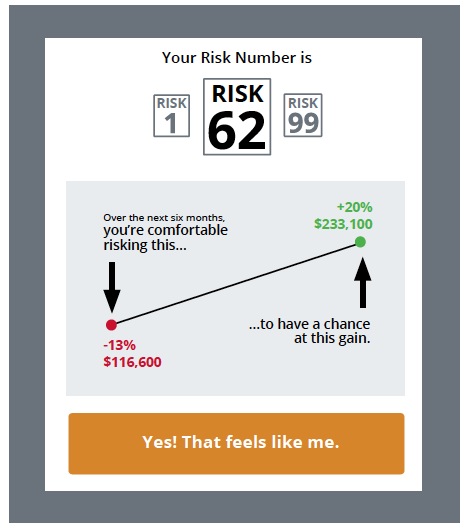
What is Your Risk Number?

DG

[By David Gratke]

Are your current investments aligned with YOUR investment goals and expectations in 2022?

As we all know, the global financial markets have responded tremendously to the past seven years of Global Central Bank monetary polices. i.e. asset prices, stocks, bonds and real estate have all gone up in price as a result. But now, we have the pandemic and Ukraine war to consider.

So, when have you last ‘stress-tested’ your portfolio to see how durable it may through various market cycles? And, how do you determine if your current investment holdings are right for you? Maybe they are too conservative, or just the opposite, still too aggressive?  Maybe they are right where they need to be, but how do you know, how do you measure that?

  • Capture you Risk Tolerance
  • See if your portfolio fits you.
  • OK, How do I Start?

By simply answering a few questions, and spending 10 minutes of your time, based upon the size of your investment portfolio, you will quickly determine your own tolerance for risk.

Comparing your Risk Number to your Portfolio

Now that you have calculated your Risk Number, how does that number compare to your actual portfolio holdings? Is the portfolio you have today, the one you started with some time ago regarding risk and return? Is it still in alignment with your original expectations?

Does your portfolio have?

  • Too much risk?
  • Is it too conservative?
  • Or, is it just right
  • What if the market drops significantly? Instead, what if the market goes up significantly? See how your current portfolio will fair in any one of these market conditions:
  • Let’s put your portfolio onto the treadmill; just like the doctor’s office.
  • How do you know, how do you measure?

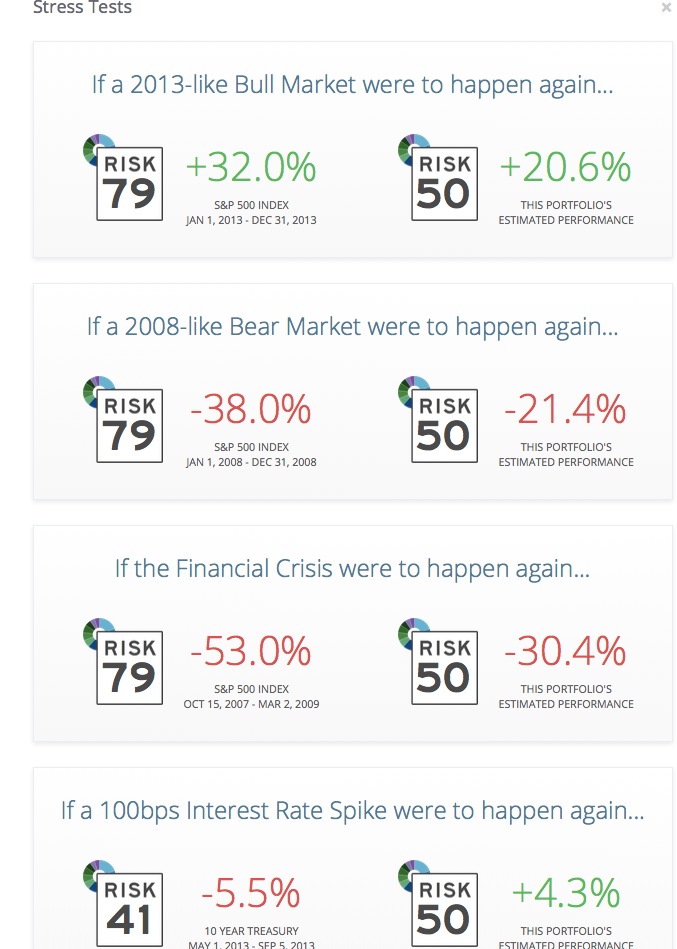
Let’s Stress Test your Portfolio

  1. Bull Market (Prices generally rise)
  2. Bear Market (Prices generally fall)
  3. Financial Crisis
  4. Rising Interest Rates

***

ScreenShot2015-06-01at11_34_02AM_113439

***

  • Are the results in alignment with your expectations?
  • Any ‘hot spots’ you need to know about?
  • Are there any individual holdings that will cause you loss of sleep over?
  • Maybe investments don’t generate enough income?
  • Maybe investments fluctuate too much in price?
  • Now you can have a look and see if there are any ‘hot spots’ where you may need to re-balance a portion of your holdings based upon these findings.

***

2

Yes! That feels like me

***

Congratulations. Once you have determined your Risk Number, and perhaps re-aligned your current portfolio to your Risk Number, then yes, you DO have the portfolio that is right for you, one that ‘feels like you’.

ABOUT

David Gratke is chief executive officer of Gratke Wealth LLC in Beaverton, Ore. A Registered Investment Advisory Firm.

***

Conclusion

Your thoughts and comments on this ME-P are appreciated. How does the current market tumult affect this ME-P or your own investing strategy? Feel free to review our top-left column, and top-right sidebar materials, links, URLs and related websites, too. Then, subscribe to the ME-P. It is fast, free and secure.

***

Risk Management, Liability Insurance, and Asset Protection Strategies for Doctors and Advisors: Best Practices from Leading Consultants and Certified Medical Planners™8Comprehensive Financial Planning Strategies for Doctors and Advisors: Best Practices from Leading Consultants and Certified Medical Planners™

“Physicians who don’t understand modern risk management, insurance, business and asset protection principles are sitting ducks waiting to be taken advantage of by unscrupulous insurance agents and financial advisors; and even their own prospective employers or partners. This comprehensive volume from Dr. David Marcinko, and his co-authors, will go a long way toward educating physicians on these critical subjects that were never taught in medical school or residency training.”

Dr. James M. Dahle MD FACEP [Editor of The White Coat Investor, Salt Lake City, Utah]

***

USA “With time at a premium, and so much vital information packed into one well organized resource, this comprehensive textbook should be on the desk of everyone serving in the healthcare ecosystem. The time you spend reading this frank and compelling book will be richly rewarded.”

Dr. J. Wesley Boyd MD PhD MA [Harvard Medical School, Boston, Massachusetts, USA]

PODCAST: 50% of Medical Treatments Have Unknown Effectiveness

By Eric Bricker MD

***

***

COMMENTS APPRECIATED

Thank You

Subscribe to the Medical Executive-Post

***

ORDER: https://www.routledge.com/Risk-Management-Liability-Insurance-and-Asset-Protection-Strategies-for/Marcinko-Hetico/p/book/9781498725989

***

***

RENEWED: US Covid-19 Public Health Emergency

By Ahmed Aboulenein

***

***

WASHINGTON (Reuters) – The United States on Wednesday renewed the COVID-19 public health emergency, allowing millions of Americans to keep getting free tests, vaccines and treatments for at least three more months.

The public health emergency was initially declared in January 2020, when the coronavirus pandemic began. It has been renewed each quarter since and was due to expire on April 16.

The Department of Health and Human Services (HHS) in a statement said it was extending the public health emergency and that it will give states 60 days notice prior to termination or expiration.

This could be the last time HHS Secretary Xavier Becerra extends it, policy experts have said.

MORE: https://www.msn.com/en-us/news/us/us-renews-covid-19-public-health-emergency/ar-AAWbaqa?li=BBnb7Kz

***

COMMENTS APPRECIATED

Thank You

***

***

INDUSTRIAL ORGANIZATION: For Hospitals, Clinics and Healthcare CXOs, CEOs, CMOs and CTOs, etc.

MANAGEMENT STRATEGIES, TOOLS TEMPLATES AND CASE STUDIES

***

Reviews:

Hospitals and Health Care Organizations is a must-read for any physician and other health care provider to understand the multiple, and increasingly complex, interlocking components of the U.S. health care delivery system, whether they are employed by a hospital system, or manage their own private practices.

The operational principles, methods, and examples in this book provide a framework applicable on both the large organizational and smaller private practice levels and will result in better patient care. Physicians today know they need to better understand business principles and this book by Dr. David E. Marcinko and Professor Hope Rachel Hetico provides an excellent framework and foundation to learn important principles all doctors need to know.
―Richard Berning, MD, Pediatric Cardiology

… Dr. David Edward Marcinko and Professor Hope Rachel Hetico bring their vast health care experience along with additional national experts to provide a health care model-based framework to allow health care professionals to utilize the checklists and templates to evaluate their own systems, recognize where the weak links in the system are, and, by applying the well-illustrated principles, improve the efficiency of the system without sacrificing quality patient care. … The health care delivery system is not an assembly line, but with persistence and time following the guidelines offered in this book, quality patient care can be delivered efficiently and affordably while maintaining the financial viability of institutions and practices.
―James Winston Phillips, MD, MBA, JD, LLM

***

***

***

PURCHASE: https://www.amazon.com/dp/B00BC9IIUM?ref_=k4w_oembed_faGUzLlJ9ojLIx&tag=kpembed-20&linkCode=kpd

***

Doctors “Pay Up” OR ELSE “Don’t Work”

Physicians Suspected of Mental Health Issues

J. Wesley Boyd M.D., Ph.D.

I used to be an Associate Director in a state physician health program (PHP) and I served as a consultant when the state of North Carolina audited its PHP. Now, roughly twice a month I am contacted by a physician somewhere in the U.S. who is, effectively, being extorted.

How are they being extorted? These physicians are forced to either pay tens of thousands of dollars to for-profit evaluation/treatment centers or else lose their ability to practice medicine.

LINK: https://www.psychologytoday.com/us/blog/almost-addicted/201912/doctors-pay-or-else-dont-work#=

MD Mental CARE: https://www.psychologytoday.com/us/blog/almost-addicted/201904/why-physicians-who-need-psychiatric-care-go-kansas

MEDICAL BOARDS: https://medicalexecutivepost.com/2016/07/14/a-brief-history-of-medical-boards/

EDITOR’S NOTE: Colleague J. Wesley Boyd, M.D., Ph.D., is a professor of psychiatry and medical ethics at Baylor College of Medicine. He is also a lecturer on global health and social medicine at Harvard Medical School. He writes on issues of social justice, human rights, immigration and asylum, access to care, and substance use disorders. And, he is the author of the book, Almost Addicted, which won the Will Solemine Award for Excellence in Medical Writing from the New England American Medical Writer’s Association. Dr. Boyd also contributed to our major textbook on Risk Management, Liability Insurance and Asset Protection Strategies for Doctors and Advisors. We appreciate his work and contributions.

Dr. David E. Marcinko MBA

***

Risk Management, Liability Insurance, and Asset Protection Strategies for Doctors and Advisors: Best Practices from Leading Consultants and Certified Medical Planners™

ORDER TEXTBOOK: https://www.routledge.com/Risk-Management-Liability-Insurance-and-Asset-Protection-Strategies-for/Marcinko-Hetico/p/book/9781498725989

INVITE DR. MARCINKO: https://medicalexecutivepost.com/dr-david-marcinkos-

THANK YOU

***

A Review of Investing Expenses

Join Our Mailing List

Peeling Back the Layers of Fees

By PALADIN [Research & Registry]

Advisor Pay

Channel Surfing the ME-P

Have you visited our other topic channels? Established to facilitate idea exchange and link our community together, the value of these topics is dependent upon your input. Please take a minute to visit. And, to prevent that annoying spam, we ask that you register. It is fast, free and secure.

Conclusion

Your thoughts and comments on this ME-P are appreciated. Feel free to review our top-left column, and top-right sidebar materials, links, URLs and related websites, too. Then, subscribe to the ME-P. It is fast, free and secure.

Speaker: If you need a moderator or speaker for an upcoming event, Dr. David E. Marcinko; MBA – Publisher-in-Chief of the Medical Executive-Post – is available for seminar or speaking engagements. Contact: MarcinkoAdvisors@msn.com

OUR OTHER PRINT BOOKS AND RELATED INFORMATION SOURCES:

Comprehensive Financial Planning Strategies for Doctors and Advisors: Best Practices from Leading Consultants and Certified Medical Planners(TM)* 8

The CERTIFIED MEDICAL PLANNER® Program Curriculum

BY DR. DAVID E. MARCINKO MBA CMP®

CMP

THE NEXT GENERATION OF FIDUCIARY FOCUSED FINANCIAL PLANNING AND MEDICAL MANAGEMENT ADVICE FOR DOCTORS

****

VISIT: http://www.CERTIFIEDMEDICALPLANNER.org

CURRICULUM: Enter the CMPs

BE AWARE ALL ADVISORS … NEXT GEN FINANCIAL ADVICE IS HERE?

CMP logo

Are you a financial planner, insurance agent or investment advisor seeking to assist your physician clients with medical practice enhancement solutions, along with healthcare targeted financial planning services, but don’t know where to turn for help?

OR, maybe you’ve already had a bad experience with a young physician or astute healthcare professional client that was actually more informed than you in these areas?

CITE: https://www.r2library.com/Resource/Title/0826102549

OR, a doctor/nurse client who demanded a true fiduciary advisor [not fee-based advice, with no dual licenses and no arbitration clauses] documented in writing].

Read this decade old Federal Government report to learn what can happen when your advisor is not an informed Certified Medical Planner© designated medical management practitioner.

Then, become a Certified Medical Planner© and thrive by helping others …. first!

GOV: https://oig.hhs.gov/fraud/docs/alertsandbulletins/consultants.pdf

True yesterday … more true today.

****

Risk Management, Liability Insurance, and Asset Protection Strategies for Doctors and Advisors: Best Practices from Leading Consultants and Certified Medical Planners™
Comprehensive Financial Planning Strategies for Doctors and Advisors: Best Practices from Leading Consultants and Certified Medical Planners™
Product Details

***

CONTACT: Ann Miller RN MHA CMP®

Phone: 770-448-0769

EMAIL: MarcinkoAdvisors@msn.com

***

PODCAST: Health Insurance Costs Have Risen 55% in the Last Decade

***

By Eric Bricker MD

***

Health Insurance Cost Has Risen 55% in the last 10 Years. The Annual Health Insurance Cost for Family Coverage is Now $21,000 Per Year

***

Dysfunctional Employee Benefits Article in Journal of the American Medical Association

***

***

COMMENTS APPRECIATED

Thank You

Subscribe to the Medical Executive-Post

***

***

***

CITE: https://www.r2library.com/Resource/Title/082610254

***

Comprehensive Financial Planning and Risk Management Strategies for Doctors and their Advisors

***

Best Practices from Leading Consultants and Certified Medical Planners

SPONSOR: http://www.CertifiedMedicalPlanner.org

CMP logo

***

***

Risk Management, Liability Insurance, and Asset Protection Strategies for Doctors and Advisors: Best Practices from Leading Consultants and Certified Medical Planners™

ORDER: https://www.routledge.com/Risk-Management-Liability-Insurance-and-Asset-Protection-Strategies-for/Marcinko-Hetico/p/book/9781498725989

***

UPDATE: Stock Markets, the Economy and Pandemic

By Staff Reporters

CMP logo

SPONSOR: http://www.CertifiedMedicalPlanner.org

***

  • Stock Markets: US stocks staged a big afternoon comeback for the second day in a row … but still not big enough to close in the green. American Express was the top performer in both the S&P and the Dow after the company reported its highest billings volume ever in Q4. And, enthusiasm over meme stocks more broadly appears to be dwindling along with cryptos. And, while NASDAQ took a hit, Microsoft reported quarterly sales of more than $50 billion for the first time ever.

  • Economy: The weight of the financial world is on Jerome Powell’s shoulders today. The Federal Reserve chair will provide an update on the central bank’s views on sky-high inflation and its plan for interest rate hikes this year (though none are expected until March).
  • Pandemic: Pfizer and BioNTech started clinical trials for an Omicron-specific vaccine yesterday. The results will help the pharma partners decide whether to replace their current jab formula with one that targets the most dominant Covid variant. The new vaccine is being tested both as a three-shot series for un-vaccinated participants and as a booster for the already vaccinated.
  • CITE: https://www.r2library.com/Resource/Title/082610254

***

COMMENTS APPRECIATED

Thank You

Subscribe to the Medical Executive-Post

***

***

Happy National BLUE MONDAY 2022

By Staff Reporters

***

Blue Monday is considered to be the most depressing day of the year, but some people may be confused whether this label is real or just pseudoscience.

There are claims around this time of year that this specific day commonly coincides with the arrival of some of the year’s toughest psychological challenges.

Issues can include a combination of particularly bleak winter weather, the post-Christmas comedown and being wracked with guilt over yet more failed New Year’s resolutions.

And, additionally, people have over the past two years witnessed the trauma of dealing with the concerns about COVID-19’s effects on physical and mental health.

As with every year, Blue Monday rolls around every year on the first month’s third Monday, meaning in 2022 it is said to arrive today, on January 17th.

QUESTION: However, is this specific time of the year something people should really note?

COMMENTS APPRECIATED.

***

Thank You

Image result for bluemonday

MORE: https://nationaltoday.com/blue-monday/

Please Subscribe to the Medical Executive-Post

***

Exploding Head Syndrome: https://www.sleepassociation.org/sleep-disorders/more-sleep-disorders/exploding-head-syndrome/

****

ORDER: https://www.routledge.com/Risk-Management-Liability-Insurance-and-Asset-Protection-Strategies-for/Marcinko-Hetico/p/book/9781498725989

***

PANDEMIC “versus” EPIDEMIC: A Review

PANDEMIC “versus” EPIDEMIC

Dr. David E. Marcinko MBA

Courtesy: www.CertifiedMedicalPlanner.org

Is there a Difference? – Know the Difference!

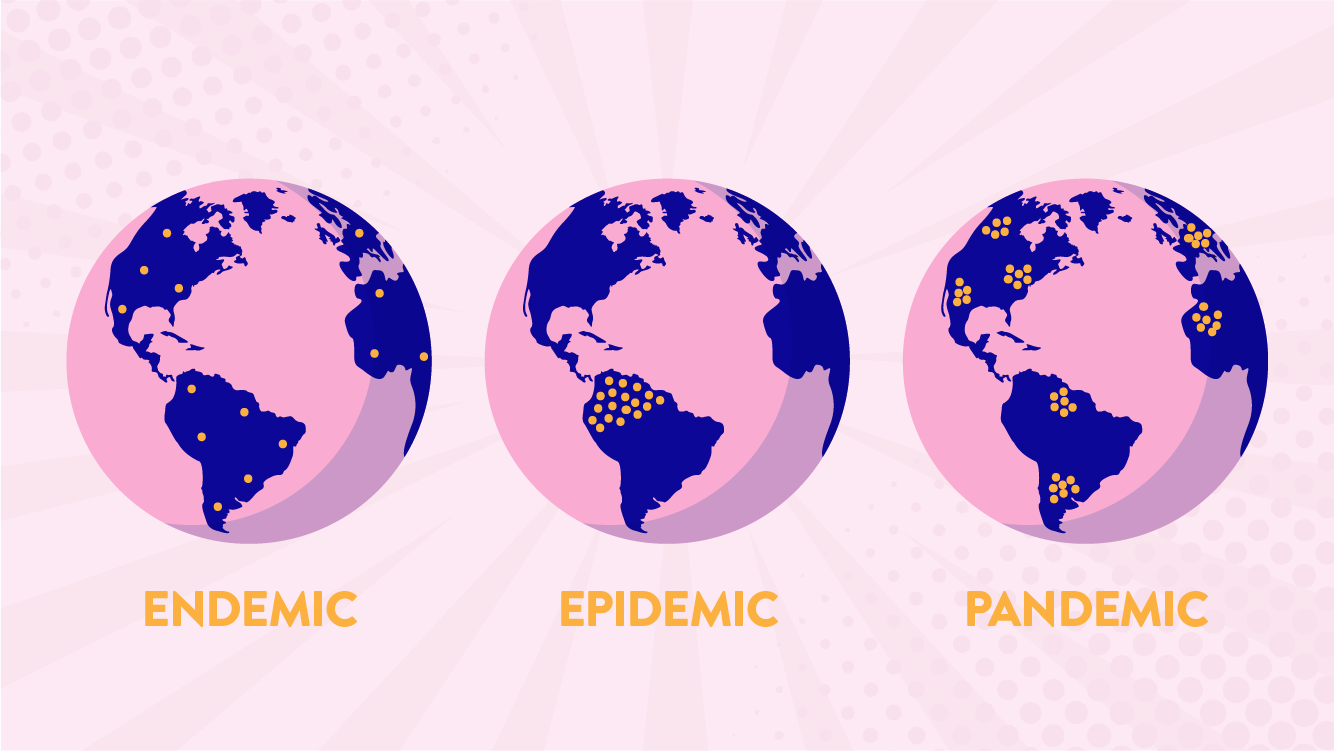
A Pandemic (from Greek πᾶν pan “all” and δῆμος demos “people”) is an epidemic of disease that has spread across a large region; for instance multiple continents, or even worldwide. A widespread endemic disease that is stable in terms of how many people are getting sick from it is not a pandemic.

Further, flu pandemics generally exclude recurrences of seasonal flu. Throughout history, there have been a number of pandemics, such as smallpox and tuberculosis. One of the most devastating pandemics was the Black Death, which killed an estimated 100 million people in the 14th century. Some recent pandemics include: HIV, Spanish flu, 2009 flu pandemic and H1N1.

LINK: https://www.amazon.com/Dictionary-Health-Insurance-Managed-Care/dp/0826149944/ref=sr_1_4?ie=UTF8&s=books&qid=1275315485&sr=1-4

An Epidemic is the rapid spread of infectious disease to a large number of people in a given population within a short period of time, usually two weeks or less.

For example, in meningococcal infections, an attack rate in excess of 15 cases per 100,000 people for two consecutive weeks is considered an epidemic.

***

Epidemic vs Pandemic | Technology Networks

***

LINK: https://www.amazon.com/Dictionary-Health-Insurance-Managed-Care/dp/0826149944/ref=sr_1_4?ie=UTF8&s=books&qid=1275315485&sr=1-4

Key Differences

  • Epidemics is the outbreak of the disease in a community while pandemic is the outbreak of the disease globally.
  • SARS was an epidemic while AIDS was an pandemic.
  • Pandemic disease has the same origin or source where so ever it gets spread while the same disease is spreading with different sources in each country, it refers to epidemic.
  • Epidemic when extending to greater levels becomes a pandemic.

MORE: https://www.verywellhealth.com/difference-between-epidemic-and-pandemic-2615168

ENDEMIC: If you translate it literally, endemic means “in the population.” It derives from the Greek endēmos, which joins en, meaning “in,” and dēmos, meaning “population.” “Endemic” is often used to characterize diseases that are generally found in a particular area; malaria, for example, is said to be endemic to tropical and subtropical regions. This use differs from that of the related word epidemic in that it indicates a more or less constant presence in a particular population or area rather than a sudden, severe outbreak within that region or group.

Conclusion: Your thoughts are appreciated.

***

Product DetailsProduct DetailsProduct Details

THANK YOU

Medical FINANCIAL PLANNING “Holistic” STRATEGIES

BY AND FOR PHYSICIANS AND THEIR ADVISORS

INVITE DR. MARCINKO: https://medicalexecutivepost.com/dr-david-marcinkos-

***

SPONSOR: http://www.CertifiedMedicalPlanner.org

CMP logo

***

Asset Protection Issues For [Physician] Crypto Investors

***

Ike Z. Devji J.D. - Tempe, Arizona - Lawyer | Lawyer Directory

By Ike Devji, J.D.

Crypto currency is all the rage and continues to make some coin investors small fortunes even as prices swing widely and scams emerge. These are some basic defensive measures to keep your digital wallet safe.

READ MORE: https://www.proassetprotection.com/asset-protection-for-crypto-investors/

EDITOR’S NOTE: Ike Devji contributed to our textbook on Risk Management for Doctors and Advisors. We appreciated his important chapter contribution.

Risk Management, Liability Insurance, and Asset Protection Strategies for Doctors and Advisors: Best Practices from Leading Consultants and Certified Medical Planners™

ORDER TEXTBOOK: https://www.routledge.com/Risk-Management-Liability-Insurance-and-Asset-Protection-Strategies-for/Marcinko-Hetico/p/book/9781498725989

Your comments are appreciated.

THANK YOU

***

PODCAST: Direct Healthcare Contracting

How it Works for Employers and Hospitals?

BY DR. ERIC BRICKER MD

***

***
COMMENTS APPRECIATED.

***

****

CITE: https://www.r2library.com/Resource/Title/082610254

***

RISK MANAGEMENT TEXT: https://www.routledge.com/Risk-Management-Liability-Insurance-and-Asset-Protection-Strategies-for/Marcinko-Hetico/p/book/9781498725989

Thank You

***

PODCASTS: Employer Sponsored Health Plans Explained [Part I and II]

Self and Fully Insured Fundamentals and Basics

[A Two Part Presentation]

DR. ERIC BRICKER MD

***

***
COMMENTS ARE APPRECIATED.

Thank You

***

***

***

****

CITE: https://www.r2library.com/Resource/Title/0826102549

***

PODCAST: Why Tech Companies Fail at Health Care

HEALTH PLAN “AGE” AS RISK FACTOR

BY ERIC BRICKER MD

***

***

CITE: https://www.r2library.com/Resource/Title/082610254

COMMENTS APPRECIATED

***

RISK MANAGEMENT: https://www.routledge.com/Risk-Management-Liability-Insurance-and-Asset-Protection-Strategies-for/Marcinko-Hetico/p/book/9781498725989

THANK YOU

***