Understanding Commodities Investing

Join Our Mailing List

Investing in Raw Materials

[By Staff Writers]

According to Jeff Coons, PhD, CFP™, a commodity is a standardized asset that is typically used as an input for production of one or more products.  Almost any raw material or product that has very consistent characteristics irrespective of the producer (i.e., little to no differentiation between producers) may be considered a commodity.

Commodity Examples:

Examples of commodities that are traded broadly in the financial markets include food products, such as wheat and pork bellies, and metals, such as gold and aluminum.  In most cases, the trading of commodities is done through futures.

A Supply / Demand Hedge

Commodities do not have ongoing cash payments associated with them. Instead, a commodity’s value is a result of supply and demand for the asset as a consumable or as an input for other goods. 

Thus, while some physician-investors use commodity futures as a hedge to offset changes in the value of the commodity between now and the date the commodity is needed by the investor, others will make commodity investments based upon a belief that the supply/demand relationship will change in their favor. 

GOLD: https://medicalexecutivepost.com/2021/12/18/gold-investing/

Assessment

In the latter case, commodities represent a knowledge-based market in which an investor must believe that he/she has a better perspective on the future price of the commodity than other speculators. Consequently, if a physician-investor does not have superior information regarding the future supply and demand for the commodity, then commodity investments become generally less attractive as compared to investments providing ongoing cash payments.

Conclusion

Your thoughts and comments on this ME-P are appreciated. Feel free to review our top-left column, and top-right sidebar materials, links, URLs and related websites, too. Then, subscribe to the ME-P. It is fast, free and secure.

Link: http://feeds.feedburner.com/HealthcareFinancialsthePostForcxos

Speaker: If you need a moderator or speaker for an upcoming event, Dr. David E. Marcinko; MBA – Publisher-in-Chief of the Medical Executive-Post – is available for seminar or speaking engagements. Contact: MarcinkoAdvisors@msn.com

OUR OTHER PRINT BOOKS AND RELATED INFORMATION SOURCES:

DICTIONARIES: http://www.springerpub.com/Search/marcinko
PHYSICIANS: www.MedicalBusinessAdvisors.com
PRACTICES: www.BusinessofMedicalPractice.com
HOSPITALS: http://www.crcpress.com/product/isbn/9781466558731
CLINICS: http://www.crcpress.com/product/isbn/9781439879900
BLOG: www.MedicalExecutivePost.com
FINANCE: Financial Planning for Physicians and Advisors
INSURANCE: Risk Management and Insurance Strategies for Physicians and Advisors

Product Details  Product Details

How We INVEST IN INFLATION?

STRATEGIES AND MITIGATION

Finding investments to weather the storm. Strategies and ways to mitigate inflation risk, including investing in businesses with pricing power, capital intensity, and investing abroad.

By Vitaliy Katsenelson CFA

COMMENTS ARE APPRECIATED.

Thank You

***

***

PODCAST: Inflation Update

NOT TRANSITORY … YET!

imausa-vitaliy-katsenelson

By Vitaliy Katsenelson CFA

Here is my advice to you

Instead of straining your eyes, you can strain your ears and listen to the following articles. I’m providing links to my pieces on the inflation landscape (read, listen) and how we invest in inflation (read, listen).

***

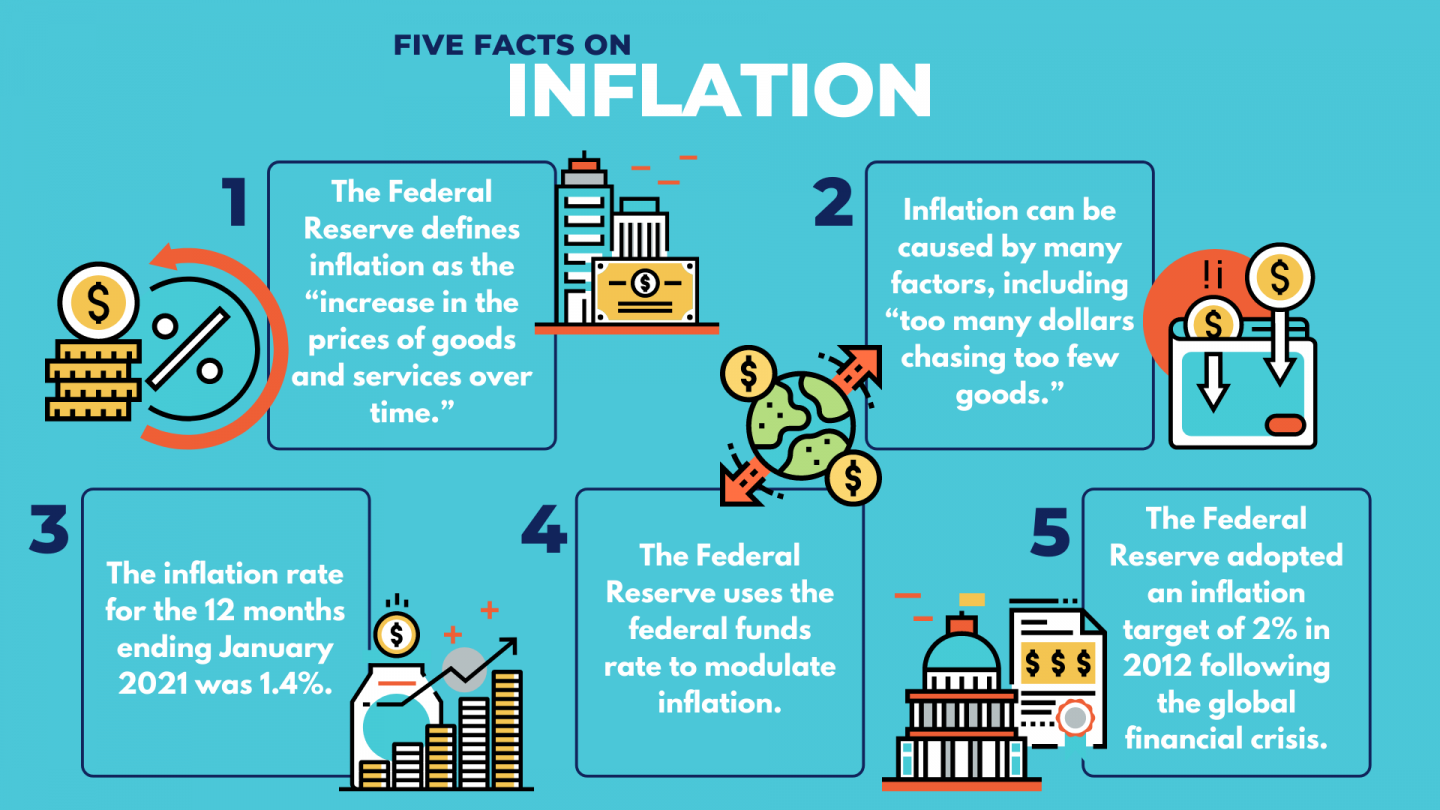
Five Facts On Inflation | RealClearPolicy

***
YOUR COMMENTS ARE APPRECIATED.

Thank You

CITE: https://www.r2library.com/Resource/Title/0826102549

***

***

Stock Market Open New Year’s Eve 12/31/2021

Bond Markets to Close Early Friday

By Staff reporters

***

The stock market, buoyed by a Santa Claus rally and a banner year, will have one more day to extend its gains.

Both the New York Stock Exchange and NASDAQ will be open on New Year’s Eve. Bond markets will close early at 2 p.m. Friday.

The markets typically close on New Year’s Day but this year the holiday falls on a Saturday, when they would have shuttered anyway. Last week, the New York Stock Exchange and Nasdaq closed on Friday, Christmas Eve, in observance of Christmas, which also fell on a Saturday.

***

***

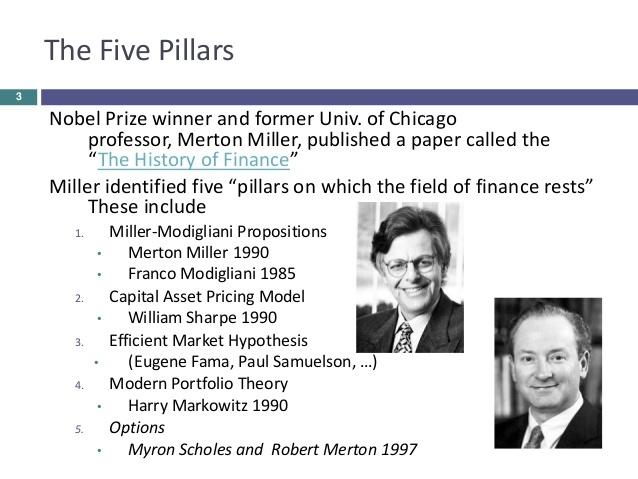
The Five Pillars of Finance

A Solid Foundation for Investing

[By staff reporters]

***

***

Conclusion

Your thoughts and comments on this ME-P are appreciated. Feel free to review our top-left column, and top-right sidebar materials, links, URLs and related websites, too. Then, subscribe to the ME-P. It is fast, free and secure.

Speaker: If you need a moderator or speaker for an upcoming event, Dr. David E. Marcinko; MBA – Publisher-in-Chief of the Medical Executive-Post – is available for seminar or speaking engagements.

Book Marcinko: https://medicalexecutivepost.com/dr-david-marcinkos-bookings/

Subscribe: MEDICAL EXECUTIVE POST for curated news, essays, opinions and analysis from the public health, economics, finance, marketing, IT, business and policy management ecosystem.

DOCTORS:

“Insurance & Risk Management Strategies for Doctors” https://tinyurl.com/ydx9kd93

“Fiduciary Financial Planning for Physicians” https://tinyurl.com/y7f5pnox

“Business of Medical Practice 2.0” https://tinyurl.com/yb3x6wr8

HOSPITALS:

“Financial Management Strategies for Hospitals” https://tinyurl.com/yagu567d

“Operational Strategies for Clinics and Hospitals” https://tinyurl.com/y9avbrq5

***

Risk Management, Liability Insurance, and Asset Protection Strategies for Doctors and Advisors: Best Practices from Leading Consultants and Certified Medical Planners™8Comprehensive Financial Planning Strategies for Doctors and Advisors: Best Practices from Leading Consultants and Certified Medical Planners™

HOLIDAY SHOPPING: “Virtual” and “Mobile” Wallets?

By Staff Reporters

***

From improved organization to ease of use and increased security, virtual wallets are transforming the way we pay for things; especially during the holiday and Christmas Seasons.

CITE: https://www.r2library.com/Resource/Title/082610254

Here’s everything you need to know.

***

***
COMMENTS APPRECIATED.

Thank You

***

***

MERRY CHRISTMAS EVE 2021: Stock Markets and Medicine

BY STAFF REPORTERS

***

***

COMMENTS APPRECIATED

***

***

UPDATE: Stock Markets and the Economy

By staff reporters

***

***

COMMENTS APPRECIATED.

Thank You

***

UPDATE: Markets, Money and Covid

***

  • Markets: Down big one day, up big the next—that’s the Omicron-era stock market for you. Stocks surged yesterday following a 3-day losing streak, with travel companies leading the way.
  • Covid: The FDA is set to authorize Covid pills from Pfizer and Merck this week, Bloomberg reports. These treatments, which are intended to be taken by vulnerable people shortly after they are infected, could significantly reduce the burden on strained hospitals. Experts say the pills are a pandemic medical milestone second only to vaccines.
  • CITE: https://www.r2library.com/Resource/Title/082610254

***

***

COMMENTS APPRECIATED.

Thank You

***

UPDATE: Stock Markets and Politics

By Staff Reporters

***

  • Markets: With Omicron concerns swirling and President Biden’s big spending plan KO’d by Senator Joe Manchin, the S&P posted its biggest three-day drop since September. Tesla shares have now fallen back to their price before their big Hertz deal was announced in October.
  • Build Back Better: Goldman Sachs cut its economic growth forecast for next year after Joe Manchin said he wouldn’t vote for Democrats’ $2 trillion social spending bill. But yesterday the senator detailed some changes to the bill he’d support, reviving hopes that negotiations could resume in January.
  • CITE: https://www.r2library.com/Resource/Title/082610254

UPDATE: https://www.msn.com/en-us/money/markets/us-futures-rebound-after-stock-market-sell-off-but-omicron-risks-remain/ar-AAS1fv3?li=BBnb7Kz

COMMENTS APPRECIATED.

***

Thank You

***

UPDATE: Value Investing as Oil Gets Cheaper

As Oil Gets Cheaper – What Would Ben Graham Do?

By Vitaliy Katsenelson CFA

In terms of excitement, investing usually rivals watching paint dry. This has not been the case lately.

LINKOil Gets Cheaper – What Would Ben Graham Do?

Risk Management, Liability Insurance, and Asset Protection Strategies for Doctors and Advisors: Best Practices from Leading Consultants and Certified Medical Planners™Comprehensive Financial Planning Strategies for Doctors and Advisors: Best Practices from Leading Consultants and Certified Medical Planners™

 COMMENTS APPRECIATED.

Thank You

UPDATE: https://oilprice.com/

***


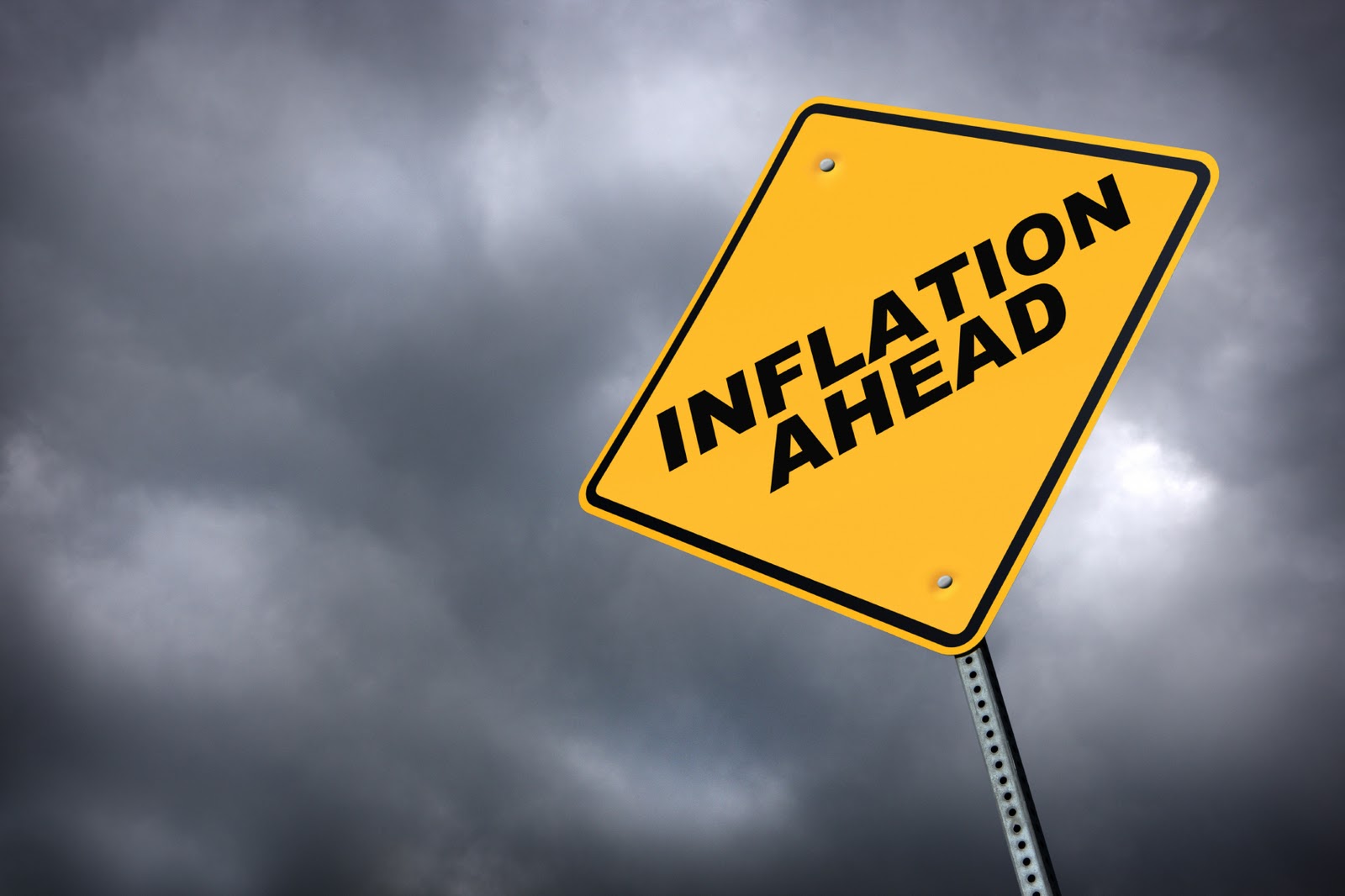
INFLATION Is Here – UPDATE?

But for How Long?

See the source image

Vitaliy N. Katsenelson, CFA

[CEO & Chief Investment Officer]

READERS

DEFINITION: In economics, inflation (or less frequently, price inflation) is a general rise in the price level of an economy over a period of time. When the general price level rises, each unit of currency buys fewer goods and services; consequently, inflation reflects a reduction in the purchasing power per unit of money – a loss of real value in the medium of exchange and unit of account within the economy. The opposite of inflation is deflation, a sustained decrease in the general price level of goods and services. The common measure of inflation is the inflation rate, the annualized percentage change in a general price index, usually the consumer price index, over time.

CITATION: https://www.r2library.com/Resource/Title/0826102549

***

See the source image

***

DEAR READERS

This essay is going to be long.
I blame inflation, be it transitory or not, for inflating its length. 

The number one question I am asked by clients, friends, readers, and random strangers is, are we going to have inflation? 

I think about inflation on three timelines: short, medium, and long-term

The pandemic disrupted a well-tuned but perhaps overly optimized global economy and time-shifted the production and consumption of various goods. For instance, in the early days of the pandemic automakers cut their orders for semiconductors. As orders for new cars have come rolling back, it is taking time for semiconductor manufacturers, who, like the rest of the economy, run with little slack and inventory, to produce enough chips to keep up with demand. A $20 device the size of a quarter that goes into a $40,000 car may have caused a significant decline in the production of cars and thus higher prices for new and used cars. (Or, as I explained to my mother-in-law, all the microchips that used to go into cars went into a new COVID vaccine, so now Bill Gates can track our whereabouts.)

Here is another example. The increase in new home construction and spike in remodeling drove demand for lumber while social distancing at sawmills reduced lumber production – lumber prices spiked 300%. Costlier lumber added $36,000 to the construction cost of a house, and the median price of a new house in the US is now about $350,000.

The semiconductor shortage will get resolved by 2022, car production will come back to normal, and supply and demand in the car market will return to the pre-pandemic equilibrium. High prices in commodities are cured by high prices. High lumber prices will incentivize lumber mills to run triple shifts. Increased supply will meet demand, and lumber prices will settle at the pre-pandemic level in a relatively short period of time. That is the beauty of capitalism! 

Most high prices caused by the time-shift in demand and supply fall into the short-term basket, but not all. It takes a considerable amount of time to increase production of industrial commodities that are deep in the ground – oil, for instance. Low oil prices preceding the pandemic were already coiling the spring under oil prices, and COVID coiled it further. It will take a few years and increased production for high oil prices to cure high oil prices. Oil prices may also stay high because of the weaker dollar, but we’ll come back to that.

Federal Reserve officials have told us repeatedly they are not worried about inflation; they believe it is transitory, for the reasons I described above. We are a bit less dismissive of inflation, and the two factors that worry us the most in the longer term are labor costs and interest rates. 

Let’s start with labor costs 

During a garden-variety recession, companies discover that their productive capacity exceeds demand. To reduce current and future output they lay off workers and cut capital spending on equipment and inventory. The social safety net (unemployment benefits) kicks in, but not enough to fully offset the loss of consumer income; thus demand for goods is further reduced, worsening the economic slowdown. Through millions of selfish transactions (microeconomics), the supply of goods and services readjusts to a new (lower) demand level. At some point this readjustment goes too far, demand outstrips supply, and the economy starts growing again.

This pandemic was not a garden-variety recession 

The government manually turned the switch of the economy to the “off” position. Economic output collapsed. The government sent checks to anyone with a checking account, even to those who still had jobs, putting trillions of dollars into consumer pockets. Though output of the economy was reduced, demand was not. It mostly shifted between different sectors within the economy (home improvement was substituted for travel spending). Unlike in a garden-variety recession, despite the decline in economic activity (we produced fewer widgets), our consumption has remained virtually unchanged. Today we have too much money chasing too few goods– that is what inflation is. This will get resolved, too, as our economic activity comes back to normal.

But …

Today, though the CDC says it is safe to be inside or outside without masks, the government is still paying people not to work. Companies have plenty of jobs open, but they cannot fill them. Many people have to make a tough choice between watching TV while receiving a paycheck from big-hearted Uncle Sam and working. Zero judgement here on my part – if I was not in love with what I do and had to choose between stacking boxes in Amazon’s warehouse or watching Amazon Prime while collecting a paycheck from a kind uncle, I’d be watching Sopranos for the third time. 

To entice people to put down the TV remote and get off the couch, employers are raising wages. For instance, Amazon has already increased minimum pay from $15 to $17 per hour. Bank of America announced that they’ll be raising the minimum wage in their branches from $20 to $25 over the next few years. The Biden administration may not need to waste political capital passing a Federal minimum wage increase; the distorted labor market did it for them. 

These higher wages don’t just impact new employees, they help existing employees get a pay boost, too. Labor is by far the biggest expense item in the economy. This expense matters exponentially more from the perspective of the total economy than lumber prices do. We are going to start seeing higher labor costs gradually make their way into higher prices for the goods and services around us, from the cost of tomatoes in the grocery store to the cost of haircuts.

Only investors and economists look at higher wages as a bad thing. These increases will boost the (nominal) earnings of workers; however, higher prices of everything around us will negate (at least) some of the purchasing power. 

Wages, unlike timber prices, rarely decline. It is hard to tell someone “I now value you less.” Employers usually just tell you they need less of your valuable time (they cut your hours) or they don’t need you at all (they lay you off and replace you with a machine or cheap overseas labor). It seems that we are likely going to see a one-time reset to higher wages across lower-paying jobs. However, once the government stops paying people not to work, the labor market should normalize; and inflation caused by labor disbalance should come back to normal, though increased higher wages will stick around.

There is another trend that may prove to be inflationary in the long-term: de-globalization.  Even before the pandemic the US set plans to bring manufacturing of semiconductors, an industry deemed strategic to its national interests, to its shores. Taiwan Semiconductor and Samsung are going to be spending tens of billions of dollars on factories in Arizona.  

The pandemic exposed the weaknesses inherent in just-in-time manufacturing but also in over reliance on the kindness of other countries to manufacture basic necessities such as masks or chemicals that are used to make pharmaceuticals.  Companies will likely carry more inventory going forward, at least for a while.  But more importantly more manufacturing will likely come back to the US. This will bring jobs and a lot of automation, but also higher wages and thus higher costs.  

If globalization was deflationary, de-globalization is inflationary  

We are not drawing straight-line conclusions, just yet. A lot of manufacturing may just move away from China to other low-cost countries that we consider friendlier to the US; India and Mexico come to mind.  

And then we have the elephant in the economy – interest rates, the price of money. It’s the most important variable in determining asset prices in the short term and especially in the long term. The government intervention in the economy came at a significant cost, which we have not felt yet: a much bigger government debt pile. This pile will be there long after we have forgotten how to spell social distancing
 
The US government’s debt increased by $5 trillion to $28 trillion in 2020 – more than a 20% increase in one year! At the same time the laws of economics went into hibernation: The more we borrow the less we pay for our debt, because ultra-low interest rates dropped our interest payments from $570 billion in 2019 to $520 billion in 2020. 

That is what we’ve learned over the last decade and especially in 2020: The more we borrow the lower interest we pay. I should ask for my money back for all the economics classes I took in undergraduate and graduate school.

This broken link between higher borrowing and near-zero interest rates is very dangerous. It tells our government that how much you borrow doesn’t matter; you can spend (after you borrow) as much as your Republican or Democratic heart desires. 

However, by looking superficially at the numbers I cited above we may learn the wrong lesson. If we dig a bit deeper, we learn a very different lesson: Foreigners don’t want our (not so) fine debt. It seems that foreign investors have wised up: They were not the incremental buyer of our new debt – most of the debt the US issued in 2020 was bought by Uncle Fed. Try explaining to your kids that our government issued debt and then bought it itself. Good luck.

Let me make this point clear: Neither the Federal Reserve, nor I, nor a well-spoken guest on your business TV knows where interest rates are going to be (the total global bond market is bigger even than the mighty Fed, and it may not be able to control over interest rates in the long run). But the impact of what higher interest rates will do the economy increases with every trillion we borrow. There is no end in sight for this borrowing and spending spree (by the time you read this, the administration will have announced another trillion in spending). 

Let me provide you some context about our financial situation 


The US gross domestic product (GDP) – the revenue of the economy – is about $22 trillion, and in 2019 our tax receipts were about $3.5 trillion. Historically, the-10 year Treasury has yielded about 2% more than inflation. Consumer prices (inflation) went up 4.2% in April. Today the 10-year Treasury pays 1.6%; thus the World Reserve Currency debt has a negative 2.6% real interest rate (1.6% – 4.2%). 

These negative real (after inflation) interest rates are unlikely to persist while we are issuing trillions of dollars of debt. But let’s assume that half of the increase is temporary and that 2% inflation is here to stay. Let’s imagine the unimaginable. Our interest rate goes up to the historical norm to cover the loss of purchasing power caused by inflation. Thus it goes to 4% (2 percentage points above 2% “normal” inflation). In this scenario our federal interest payments will be over $1.2 trillion (I am using vaguely right math here). A third of our tax revenue will have to go to pay for interest expense. Something has to give. It is not going to be education or defense, which are about $230 billion and $730 billion, respectively. You don’t want to be known as a politician who cut education; this doesn’t play well in the opponent’s TV ads. The world is less safe today than at any time since the end of the Cold War, so our defense spending is not going down (this is why we own a lot of defense stocks). 

The government that borrows in its own currency and owns a printing press will not default on its debt, at least not in the traditional sense. It defaults a little bit every year through inflation by printing more and more money. Unfortunately, the average maturity of our debt is about five years, so it would not take long for higher interest expense to show up in budget deficits. 

Money printing will bring higher inflation and thus even higher interest rates

If things were not confusing enough, higher interest rates are also deflationary 

We’ve observed significant inflation in asset prices over the last decade; however, until this pandemic we had seen nothing yet. Median home prices are up 17% in one year. The wild, speculative animal spirits reached a new high during the pandemic. Flush with cash (thanks to kind Uncle Sam), bored due to social distancing, and borrowing on the margin (margin debt is hitting a 20-year high), consumers rushed into the stock market, turning this respectable institution (okay, wishful thinking on my part) into a giant casino. 

It is becoming more difficult to find undervalued assets. I am a value investor, and believe me, I’ve looked (we are finding some, but the pickings are spare). The stock market is very expensive. Its expensiveness is setting 100-year records. Except, bonds are even more expensive than stocks – they have negative real (after inflation) yields.

But stocks, bonds, and homes were not enough – too slow, too little octane for restless investors and speculators. Enter cryptocurrencies (note: plural). Cryptocurrencies make Pets.com of the 1999 era look like a conservative investment (at least it had a cute sock commercial). There are hundreds if not thousands of crypto “currencies,” with dozens created every week. (I use the word currency loosely here. Just because someone gives bits and bytes a name, and you can buy these bits and bytes, doesn’t automatically make what you’re buying a currency.)

“The definition of a bubble is when people are making money all out of proportion to their intelligence or work ethic.”

By Mike Burry MD
[The Big Short]

I keep reading articles about millennials borrowing money from their relatives and pouring their life savings into cryptocurrencies with weird names, and then suddenly turning into millionaires after a celebrity CEO tweets about the thing he bought. Much ink is spilled to celebrate these gamblers, praising them for their ingenious insight, thus creating ever more FOMO (fear of missing out) and spreading the bad behavior.

Unfortunately, at some point they will be writing about destitute millennials who lost all of their and their friends’ life savings, but this is down the road. Part of me wants to call this a crypto craziness a bubble, but then I think, Why that’s disrespectful to the word bubble, because something has to be worth something to be overpriced. At least tulips were worth something and had a social utility. (I’ll come back to this topic later in the letter).

But ….

When interest rates are zero or negative, stocks of sci-fi-novel companies that are going to colonize and build five-star hotels on Mars are priced as if El Al (the Israeli airline) has regular flights to the Red Planet every day of the week except on Friday (it doesn’t fly on Shabbos). Rising interest rates are good defusers of mass delusions and rich imaginations. 

In the real economy, higher interest rates will reduce the affordability of financed assets. They will increase the cost of capital for businesses, which will be making fewer capital investments. No more 2% car loans or 3% business loans. Most importantly, higher rates will impact the housing market. 

Up to this point, declining interest rates increased the affordability of housing, though in a perverse way: The same house with white picket fences (and a dog) is selling for 17% more in 2021 than a year before, but due to lower interest rates the mortgage payments have remained the same. Consumers are paying more for the same asset, but interest rates have made it affordable.

At higher interest rates housing prices will not be making new highs but revisiting past lows. Declining housing prices reduce consumers’ willingness to improve their depreciating dwellings (fewer trips to Home Depot). Many homeowners will be upside down in their homes, mortgage defaults will go up… well, we’ve seen this movie before in the not-so-distant past. Higher interest rates will expose a lot of weaknesses that have been built up in the economy. We’ll be finding fault lines in unexpected places – low interest has covered up a lot of financial sins.

And then there is the US dollar, the world’s reserve currency. Power corrupts, but the unchallenged and unconstrained the power of being the world’s reserve currency corrupts absolutely. It seems that our multitrillion-dollar budget deficits will not suddenly stop in 2021. With every trillion dollars we borrow, we chip away at our reserve currency status (I’ve written about this topic in great detail, and things have only gotten worse since). And as I mentioned above, we’ve already seen signs that foreigners are not willing to support our debt addiction. 

A question comes to mind.
Am I yelling fire where there is not even any smoke? 

Higher interest rates is anything but a consensus view today. Anyone who called for higher rates during the last 20 years is either in hiding or has lost his voice, or both. However, before you dismiss the possibility of higher rates as an unlikely plot for a sci-fi novel, think about this. 

In the fifty years preceding 2008, housing prices never declined nationwide. This became an unquestioned assumption by the Federal Reserve and all financial players. Trillions of dollars of mortgage securities were priced as if “Housing shall never decline nationwide” was the Eleventh Commandment, delivered at Temple Sinai to Goldman Sachs. Or, if you were not a religious type, it was a mathematical axiom or an immutable law of physics. The Great Financial Crisis showed us that confusing the lack of recent observations of a phenomenon for an axiom may have grave consequences. 

Today everyone (consumers, corporations, and especially governments) behaves as if interest rates can only decline, but what if… I know it’s unimaginable, but what if ballooning government debt leads to higher interest rates? And higher interest rates lead to even more runaway money printing and inflation? 

This will bring a weaker dollar 

A weaker US dollar will only increase inflation, as import prices for goods will go up in dollar terms. This will create an additional tailwind for commodity prices. 

If your head isn’t spinning from reading this, I promise mine is from having written it. 

To sum up: A lot of the inflation caused by supply chain disruption that we see today is temporary. But some of it, particularly in industrial commodities, will linger longer, for at least a few years. Wages will be inflationary in the short-term and will reset prices higher, but once the government stops paying people not to work, wage growth should slow down. Finally, in the long term a true inflationary risk comes from growing government borrowing and budget deficits, which will bring higher interest rates and a weaker dollar with them, which will only make inflation worse and will also deflate away a lot of assets.

THE END
UPDATE: https://www.msn.com/en-us/news/us/how-us-inflation-rate-is-impacting-americans-wallets-before-the-holiday-season/vi-AAROG5J

CURRENT: https://www.msn.com/en-us/money/markets/us-treasury-yields-tick-lower-on-fears-omicron-will-dent-recovery/ar-AARYSKy?li=BBnbfcL

Your thoughts are appreciated.

THANK YOU

***
See the source image

PODCAST: Is Value Investing Dead?

Vitaliy Katsenelson CFA

***

Recent : DOW , NASDAQ , NVIDIA CORPORATION , GENERAL ELECTRIC COMPANY , PAYPAL HOLDINGS, INC. Market DOW 35,365.44 ▼ -532.20 NASDAQ 15,169.68 ▼ -10.75 S&P 500 4,620.64 ▼ -48.03 WTI Futures 70.86 ▼ -1.52

***

DEFINITION: Value investing is an investmentparadigm that involves buying securities that appear underpriced by some form of fundamental analysis. The various forms of value investing derive from the investment philosophy first taught by Benjamin Graham and David Dodd at Columbia Business School in 1928, and subsequently developed in their 1934 text Security Analysis.

Citation: https://www.r2library.com/Resource/Title/0826102549

***

See the source image

***

PODCAST: Is Value Investing Dead?

ASSESSMENT: Your comments are appreciated.

THANK YOU

***

The Ten Year Treasury Note

WHAT IT IS – HOW IT WORKS – WHY?

By Staff Reporters

***

10-Year Note

What it is: The 10-year Treasury note is a debt instrument the U.S. government issues to fund itself. The Federal Reserve closely watches the “yield” (i.e. the return on investment) as a benchmark for other interest rates.

How it works: The U.S. Treasury issues bonds that are auctioned to investment banks by the Federal Reserve; banks can then sell those bonds to investors. The 10-year matures over—you guessed it—10 years, with interest paid out every six months until the full value is paid out at the end.

Why it matters: The 10-year is considered another safe-haven asset for investors. But as demand goes up, the yield goes down. Investors can even end up paying more than the face value of the Treasury note (but some are willing to accept the tradeoff for the low-risk investment).

CITE: https://www.r2library.com/Resource/Title/082610254

***

COMMENTS APPRECIATED.

***

Thank You

***

UPDATE: Markets and Medicine

By Staff Reporters

***

The Federal Reserve announced that it will stop buying bonds about three months earlier than initially planned. The Fed now plans to trim its monthly Treasury and mortgage-backed security purchases by $30 billion a month starting next month. The new pace is expected to put an end to bond buying by March.

CITE: https://www.r2library.com/Resource/Title/0826102549

The Fed also announced that it would leave interest rates unchanged at near-zero percent. The announcement paves the way for three interest rate hikes by the end of 2022, which could weigh on tech and growth stocks.

UPDATE: https://www.msn.com/en-us/money/news/tech-takes-a-beating-as-central-banks-pull-back/vi-AARTp0n

  • Markets: Stocks reversed their post-Federal Reserve announcement rally with a stinker of a day—especially tech stocks. Semiconductor companies like AMD and Nvidia got particularly thwacked.
  • Covid: The CDC recommended adults use Moderna’s and Pfizer’s Covid vaccines over J&J’s due to the risk of developing rare but serious blood clots.

MORE: https://www.msn.com/en-us/money/markets/stocks-fall-as-investors-digest-feds-latest-move/vi-AARTm2C

***
COMMENTS APPRECIATED.

***

***

Thank You

***

Stock Markets and the Economy

UPDATES

By Staff Reporters

***

  • Markets: Stocks stumbled yesterday as investors anxiously await an update from the Federal Reserve this afternoon. Uber shares bucked the trend after CEO Dara Khosrowshahi said the company had its “best week ever” for overall gross bookings, which encompasses its ride-sharing and delivery units.
  • Economy: The Fed will make a big announcement today about its inflation-fighting strategy. Fresh data released yesterday—showing that producer prices rose at their fastest pace on record—will put even more pressure on the central bank to wind down its stimulus measures quickly and chart out a plan to hike interest rates.
  • CITE: https://www.r2library.com/Resource/Title/082610254

Chained CPI: https://medicalexecutivepost.com/2012/12/21/what-chained-cpi-could-mean-for-social-security/

FED UPDATE: https://www.msn.com/en-us/money/markets/fed-chair-jerome-powell-to-confirm-hawkish-turn-tee-up-faster-taper-2022-rate-hikes/ar-AARPZAW?li=BBnb7Kz

SUMMERS SPEAKS: https://www.msn.com/en-us/money/markets/summers-says-fed-will-struggle-to-engineer-soft-landing-as-he-frets-about-spontaneous-deflating-in-markets/ar-AARPA77?li=BBnb7Kz

***

***

YOUR COMMENTS APPRECIATED.

Thank You

UPDATE: Stock Market

By Staff Reporters

***

Markets: Meme stocks like GameStop surged at the beginning of the year, but they’re now in a big funk as investors dump riskier assets.

An index of 37 stocks favored by retail traders hit its lowest level in seven months, and lost almost 25% of its value in just the last three weeks.

CITE: https://www.r2library.com/Resource/Title/082610254

MEME Stocks: https://medicalexecutivepost.com/2021/10/23/what-are-meme-stocks/

PEEK AHEAD TODAY: https://www.msn.com/en-us/money/markets/a-peek-into-the-markets-us-stock-futures-down-ahead-of-producer-price-index/ar-AARNFUs?li=BBnb7Kz

***

***
COMMENTS APPRECIATED.

Thank You

***

Stock MARKET Update

ALL TIME HIGHS?

***

  • Markets: The S&P begins the week after closing at an all-time high last Friday. The index has closed at a record more times this year (67) than in any other year since 1995. It needs 10 more to tie the mark.
  • More S&P fun facts: Microsoft, Alphabet, Apple, Nvidia, and Tesla alone account for over a third of the S&P’s gains this year.
  • CITE: https://www.r2library.com/Resource/Title/082610254

NOTE: 35,630.18market open‎-340.81 (‎-0.95%)as of 12/13/2021, 11:31 AM EST

COMMENTS APPRECIATED.

***

Thank You

***

2021-Tax Hits on Distributed Stock Market Gains

Doctors Must Understand the Tax Man

By Staff Reporters

***

Mutual-fund physician and other investors with holdings in taxable accounts need to prepare for a tax hit on distributed gains — even if they reinvest the distributions. They can offset some or all of the gains (and taxes) if they’ve sold positions at a loss.

CITE: https://www.r2library.com/Resource/Title/082610254

Physicians and people who own mutual funds in tax-sheltered accounts such as 401(k)s or individual retirement accounts and are reinvesting the distributions, on the other hand, don’t have to worry. In those accounts, taxes only count when investors sell holdings in retirement, and those who have funds in qualified Roth IRAs won’t have to pay even then.

MORE: https://www.marketwatch.com/story/brace-yourself-for-an-extra-tax-hit-from-large-mutual-fund-payouts-11639175633?mod=home-page

***

Comprehensive Financial Planning Strategies for Doctors and Advisors: Best Practices from Leading Consultants and Certified Medical Planners™

ORDER: https://www.amazon.com/Comprehensive-Financial-Planning-Strategies-Advisors/dp/1482240289/ref=sr_1_1?ie=UTF8&qid=1418580820&sr=8-1&keywords=david+marcinko

***
YOUR COMMENTS ARE APPRECIATED.

Thank You

***

Economic Market Update

END OF “WHAT A WEEK”

By Staff Reporters

***

Wall Street closed lower on Thursday as investors banked some profits after three straight days of gains and turned their focus toward upcoming inflation data and how it might influence the Federal Reserve’s meeting next week.

So, what about today-prognostications?

YOUR COMMENTS ARE APPRECIATED.

Thank You

***

***

Economic Market Update

By Staff Reporters

***

***

YOUR COMMENTS ARE APPRECIATED.

***

***

THANK YOU

***

TRIFECTA Update: Markets, Covid and Congress

TOPICS PREVIOUSLY MENTIONED ON THE ME-P

By Staff Reporters

***

  • Markets: Omicron who? Fed tapering what? Stocks continued to roar back from their post-Thanksgiving hangover, with tech shares leading the way. The NASDAQ had its best day since March.
  • Covid: Pfizer’s Covid-19 vaccine is less effective, but still provides some protection, against the Omicron variant, an early study from South Africa showed.
  • US Government: Congress had a busy evening. Lawmakers reached a deal to raise the country’s debt ceiling, and the House passed a $768 billion defense policy bill that increases pay for service members.
  • Citation: https://www.r2library.com/Resource/Title/0826102549

***
YOUR COMMENTS ARE APPRECIATED.

***

Thank You

***

Bitcoin “Hodling” and Gresham’s Law

MISES INSTITUTE

BY Connor Mortell

In 2013, a bitcoiner posted “I AM HODLING” on a bitcoin forum, intending to write that he was holding during a large price drop. He was explaining that most people are not successful traders and as a result they will inevitably just lose out in the process of trying to time the bear market, so instead he encouraged that bitcoiners should hold and trust bitcoin.

Citation: https://www.r2library.com/Resource/Title/0826102549

Since that day, this typo, “hodl,” has worked its way into the everyday vernacular of bitcoiners. It now represents the stance that not only should one not attempt to trade bitcoin through bull and bear runs, but also should not sell bitcoin under any circumstances because whatever asset it is one may purchase with it will one day be outperformed by bitcoin. For some purposes, this may be helpful, but for the adoption of a private money, this is exceedingly dangerous.

REF: https://medicalexecutivepost.com/2018/11/09/what-is-greshams-law-of-money-economics/

See the source image

READ HERE: https://mises.org/power-market/bitcoin-hodling-and-greshams-law

Your thoughts and comments are appreciated.

THANK YOU

****

MARKETS and OMICRON Launch Week Ahead

Stock Market Investing Perspectives

By Staff Reporters

***

***

***

COMMENTS ARE APPRECIATED.

Thank You

***

Recent Weekend Stock Market Volatility

By Staff Reporters

***

WHAT A WEEK!

  • Markets: Stocks ended a topsy-turvy week with another stinker yesterday, dragged netherward (big word alert) by the tech sector. Meta shares nearly entered a bear market, falling almost 20% from a closing record in September. Still, the S&P was down less than 1% for the week.
  • CITE: https://www.r2library.com/Resource/Title/0826102549
  • Covid: The first bits of solid Omicron data are starting to trickle out. One study from South Africa showed that the new variant may cause a higher rate of reinfection in people who already got Covid. Critical information on the effectiveness of current vaccines against Omicron could come in a few days, a WHO scientist said.

COMMENTS APPRECIATED.

Thank You

***

***

Stock Markets with Economic Update

***

By staff reporters

***

  • Markets: Stocks Gone Wild, the major indexes all bounced back from a bruising Wednesday, led by travel and hospitality stocks. Omicron has the markets looking like a sine wave this week.
  • Other updates: Congress passed a short-term spending bill to avoid a government shutdown this weekend. Plus, it’s jobs report day. Economists expect a meaty gain of 550,000 jobs in November, which would be the biggest number since July.

***
YOUR
COMMENTS ARE APPRECIATED.

***

Thank You

***

The Bear MARKETS and Cyber ECONOMY

By Staff Reporters

  • Markets: Stocks dropped sharply in the post-Thanksgiving trading session on Friday due to concerns over the new Covid variant, Omicron. The Dow fell 2.5% for its worst day of the year, and the S&P also tumbled 2.3%. Oil prices and travel stocks also got rocked given fresh worries over travel demand, while “stay-at-home” names like Peloton and Zoom got a boost.
See the source image
  • Economy: It’s still way too early to know the impact of Omicron on economic growth. As we laid out last week, the Fed is under pressure to accelerate the winding down of its stimulus measures in order to battle inflation, but the new variant could change the calculus. Investors dialed back their expectations of a sooner-than-expected rate increase on Friday.

YOUR COMMENTS ARE APPRECIATED.

Thank You

***

***

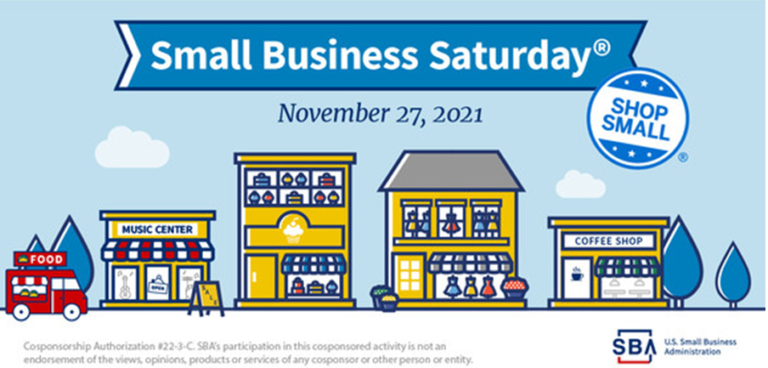
SMALL BUSINESS SATURDAY 2021

SPEND AND CELEBRATE

By Staff Reporters

Saturday, November 27, 2021 is Small Business Saturday – a day to celebrate and support small businesses and all they do for their communities.

CITE: https://www.r2library.com/Resource/Title/0826102549

This year, we know that small businesses need our support now more than ever as they navigate, retool and pivot from the effects of the coronavirus pandemic.

***

See the source image

THANK YOU

***

***

***

PODCAST: NaviHealth Digital Health Start-Up

SOLD TO OPTUM

BY ERIC BRICKER MD

***

***

YOUR COMMENTS ARE APPRECIATED.

Thank You

***

***

***

Today is FIBONACCI NUMBERS DAY

MATH NERDS

By Dr. David E. Marcinko MBA

SPONSOR: http://www.CertifiedMedicalPlanner.org

Fibonacci, also known as Leonardo Bonacci, Leonardo of Pisa, or Leonardo Bigollo Pisano, was an Italian mathematician from the Republic of Pisa, considered to be “the most talented Western mathematician of the Middle Ages”

CITE:https://www.r2library.com/Resource/Title

Today, 11/23, is the second holiest day of the year for math nerds after Pi Day. Why? Because it’s Fibonacci Day. If you forgot about the Fibonacci series from middle school, it goes 0, 1, 1, 2, 3, 5, 8, 13, 21, and so on, formed by taking the sum of the previous two numbers to create the next number in the sequence.

Fibonacci numbers can be found in many aspects of the natural world, including petal arrangements in flowers, the shape of hurricanes, a honeybee’s family tree, and even DNA molecules.

So yeah, to quote Jack Black in School of Rock, “Math is a really cool thing.”

***

The Fibonacci Sequence Is Everywhere—Even the Troubled Stock Market |  Science | Smithsonian Magazine

***
YOUR COMMENTS ARE APPRECIATED.

***

***

Thank You

***

PODCAST: Microsoft Buys Nuance; IPOs

By THCB

Today on Health in 2 Point 00, Jess DaMassa claims to be blameless for the drama between Jonathan Bush and Glen Tullman. On Episode 198, we talk about Microsoft buying Nuance for $16 billion and $3 billion in debt – is Microsoft taking over healthcare, and is this going to slow Nuance down?

IPOs

Cohere Health raises $36 million in a Series B, working on improving prior authorizations between health plans and providers. We wrap up with a lightning round of IPO rumors regarding Privia Health, VillageMD, and Bright Health.

MORE: https://thehealthcareblog.com/blog/2021/04/13/healthin2point00-episode-198-microsoft-buys-nuance-lots-of-ipo-rumors/

Your thoughts are appreciated.

THANK YOU

***

What is QUANTITATIVE EASING?

Q.E.

By Dr. David E. Marcinko MBA CMP®

CMP logo

SPONSOR: http://www.CertifiedMedicalPlanner.org

QE (Quantitative Easing = compound noun)

Although standard definitions will tell you that it is a ‘monetary policy’ used by central banks to stimulate the national economy, in reality it is more as follows:

– A cleverly disguised word that simply means ‘money printing’.

CITE: https://www.r2library.com/Resource/Title/0826102549

Central banks use QE as a disguise for increasing the money supply, as to monetize its increasing debt.

For a more technical analysis of the actual mechanics of QE, I invite you to read the article entitled QE for Dummies.

Examples:

1. The Central Bank embarked on another round of QE in hopes that it can kick-start the economy.

2. Ben Bernanke is set to begin the Fed’s taper of QE as soon as next month.

***
YOUR COMMENTS ARE APPRECIATED.

***

THANK YOU

***

CAUTION: Avoid 401-K Retirement Plan RMD Forgetfulness?

***

DON’T FORGET to make mandatory withdrawals in retirement!

By Dr. David E. Marcinko MBA CMP®

CMP logo

SPONSOR: http://www.CertifiedMedicalPlanner.org

Once you do retire, and put your physician or medical career behind you, it’s important to realize that, at some point, the IRS expects you to draw down your 401(k) balance. Starting at age 72, you need to take required minimum distributions (RMDs).

Your annual RMD amount depends on the balance of your 401(k) and a formula that determines your life expectancy.

***

RMD Age Jumps to 72 in 2020 After SECURE Act - 401K Specialist

***

QUERY: But – What happens if you don’t take your RMD for the year?

ANSWER: Well, you could end up paying a penalty. In fact, it’s a pretty hefty penalty of up to 50% of the amount you were supposed to withdraw. Paying that penalty can be pretty costly for someone living in retirement. As long as you’re vigilant and stay on top of the situation, though, you can avoid the penalty as well as these other costly 401(k) mistakes.

***
YOUR COMMENTS ARE
APPRECIATED.

Thank You

Risk Management, Liability Insurance, and Asset Protection Strategies for Doctors and Advisors : Best Practices from Leading Consultants and Certified Medical Planners™ book cover

***

ORDER: https://www.routledge.com/Risk-Management-Liability-Insurance-and-Asset-Protection-Strategies-for/Marcinko-Hetico/p/book/9781498725989

***

COMPREHENSIVE FINANCIAL PLANNING STRATEGIES

For Doctors and Advisors

BOOK REVIEWS WITH FOREWORD

Reviews

Written by doctors and healthcare professionals, this textbook should be mandatory reading for all medical school students―highly recommended for both young and veteran physicians―and an eliminating factor for any financial advisor who has not read it. The book uses jargon like ‘innovative,’ ‘transformational,’ and ‘disruptive’―all rightly so! It is the type of definitive financial lifestyle planning book we often seek, but seldom find.
LeRoy Howard MA CMPTM,Candidate and Financial Advisor, Fayetteville, North Carolina

I taught diagnostic radiology for over a decade. The physician-focused niche information, balanced perspectives, and insider industry transparency in this book may help save your financial life.
Dr. William P. Scherer MS, Barry University, Ft. Lauderdale, Florida

This book was crafted in response to the frustration felt by doctors who dealt with top financial, brokerage, and accounting firms. These non-fiduciary behemoths often prescribed costly wholesale solutions that were applicable to all, but customized for few, despite ever-changing needs. It is a must-read to learn why brokerage sales pitches or Internet resources will never replace the knowledge and deep advice of a physician-focused financial advisor, medical consultant, or collegial Certified Medical Planner™ financial professional.
―Parin Khotari MBA,Whitman School of Management, Syracuse University, New York

In today’s healthcare environment, in order for providers to survive, they need to understand their current and future market trends, finances, operations, and impact of federal and state regulations. As a healthcare consulting professional for over 30 years supporting both the private and public sector, I recommend that providers understand and utilize the wealth of knowledge that is being conveyed in these chapters. Without this guidance providers will have a hard time navigating the supporting system which may impact their future revenue stream. I strongly endorse the contents of this book.

―Carol S. Miller BSN MBA PMP,President, Miller Consulting Group, ACT IAC Executive Committee Vice-Chair at-Large, HIMSS NCA Board Member

This is an excellent book on financial planning for physicians and health professionals. It is all inclusive yet very easy to read with much valuable information. And, I have been expanding my business knowledge with all of Dr. Marcinko’s prior books. I highly recommend this one, too. It is a fine educational tool for all doctors.

―Dr. David B. Lumsden MD MS MA,Orthopedic Surgeon, Baltimore, Maryland

There is no other comprehensive book like it to help doctors, nurses, and other medical providers accumulate and preserve the wealth that their years of education and hard work have earned them.
―Dr. Jason Dyken MD MBA, Dyken Wealth Strategies, Gulf Shores, Alabama

I plan to give a copy of this book written
by doctors and for doctors’ to all my prospects, physician, and nurse clients. It may be the definitive text on this important topic.
―Alexander Naruska CPA, Orlando, Florida

Health professionals are small business owners who need to apply their self-discipline tactics in establishing and operating successful practices. Talented trainees are leaving the medical profession because they fail to balance the cost of attendance against a realistic business and financial plan. Principles like budgeting, saving, and living below one’s means, in order to make future investments for future growth, asset protection, and retirement possible are often lacking. This textbook guides the medical professional in his/her financial planning life journey from start to finish. It ranks a place in all medical school libraries and on each of our bookshelves.
―Dr. Thomas M. DeLauro DPM, Professor and Chairman – Division of Medical Sciences, New York College of Podiatric Medicine

Physicians are notoriously excellent at diagnosing and treating medical conditions. However, they are also notoriously deficient in managing the business aspects of their medical practices. Most will earn $20-30 million in their medical lifetime, but few know how to create wealth for themselves and their families. This book will help fill the void in physicians’ financial education. I have two recommendations: 1) every physician, young and old, should read this book; and 2) read it a second time!
―Dr. Neil Baum MD, Clinical Associate Professor of Urology, Tulane Medical School, New Orleans, Louisiana

I worked with a Certified Medical Planner™ on several occasions in the past, and will do so again in the future. This book codified the vast body of knowledge that helped in all facets of my financial life and professional medical practice.
Dr. James E. Williams DABPS, Foot and Ankle Surgeon, Conyers, Georgia

***

Comprehensive Financial Planning Strategies for Doctors and Advisors: Best Practices from Leading Consultants and Certified Medical Planners™

***

YOUR THOUGHTS ARE APPRECIATED.

SECOND OPINIONS: https://medicalexecutivepost.com/schedule-a-consultation/

INVITE DR. MARCINKO: https://medicalexecutivepost.com/dr-david-marcinkos-bookings/

Thank You

On the TAXATION of Capital Gains and Losses

UPDATE FOR PHYSICIANS AND ALL INVESTORS

By Dr. David E. Marcinko MBA CMP®

CMP logo

SPONSOR: http://www.CertifiedMedicalPlanner.org

Almost everything you own and use for personal or investment purposes is a capital asset. Examples include a home, personal-use items like household furnishings, and stocks or bonds held as investments. When you sell a capital asset, the difference between the adjusted basis in the asset and the amount you realized from the sale is a capital gain or a capital loss.

CITE: https://www.r2library.com/Resource/Title/0826102549

Generally, an asset’s basis is its cost to the owner, but if you received the asset as a gift or inheritance, refer to Topic No. 703 for information about your basis.

For information on calculating adjusted basis, refer to Publication 551, Basis of Assets. You have a capital gain if you sell the asset for more than your adjusted basis. You have a capital loss if you sell the asset for less than your adjusted basis. Losses from the sale of personal-use property, such as your home or car, aren’t tax deductible.

IRS: https://www.irs.gov/taxtopics/tc409

MORE: https://medicalexecutivepost.com/2021/04/23/bidens-capital-gains-tax-proposal/

RELATED: https://medicalexecutivepost.com/2021/05/01/capital-gains-tax-non-sense/

YOUR COMMENTS ARE APPRECIATED.

Thank You

***

DENTISTRY and Data Breaches

NO LONGER EVEN NOTICED?

Connect with Dr. Darrell Pruitt Dentist DDS Fort Worth, TX

BY DARRELL PRUITT DDS


Data breaches are now so common that hardly anyone in healthcare notices them – especially in dentistry. I imagine that more than half of the data breaches from dental offices are never reported, and their patients never warned that their identities might be available on the internet.

Whether you ignore this problem or not, this will not end well, folks.


CITE: “Healthcare Cyberattacks Target 2 TX Hospitals, Expose PHI – Lavaca Medical Center and Throckmorton County Memorial Hospital both suffered cyberattacks that led to PHI exposure.” By Jill McKeon for HealthcareIT News, November 3, 2021.https://healthitsecurity.com/news/healthcare-cyberattacks-target-2-tx-hospitals-expose-phi

YOUR COMMENTS ARE APPRECIATED.

***

***

Thank You

***

Dig Deeper Than CFP® To Find a Financial Planner

CFP® is a Designation  – Not a Guarantee!

By Rick Kahler CFP®

I have long recommended that consumers look for a Certified Financial Planning (CFP) certificant when shopping for a financial planner.

But don’t stop there. A CFP is no guarantee that someone is a competent, ethical, fiduciary professional. It only ensures that you are choosing from a pool of 85,000 financial services providers who are educated in the technical aspects of financial planning. It doesn’t mean the person is engaged in financial planning, is a fiduciary, or has a spotless ethical history.

In a troubling Wall Street Journal article on August 9, 2019, columnist Jason Zwieg writes that the “CFP Board’s online search directory neglected to inform the public that thousands of planners listed” have known “customer complaints, criminal histories, financial problems or regulatory proceedings.”

“Among these CFPs were 499 who have faced criminal charges, 324 who left a previous firm amid allegations of misconduct, 323 who had been disciplined or investigated by regulators and 68 who filed bankruptcy within the past 10 years,” Zweig notes. Yet none were ever disciplined by the CFP Board.

Let’s not lose perspective—these “bad apples” amount to less than 2% of CFP certificants. Every profession has those few who use its licensing and credentialing as a cover to manipulate, deceive, and abuse consumers. No amount of regulation or oversight will ever eliminate all the crooks.

In addition, you cannot simply assume because a professional has a certain license, designation, or formal degree that they are competent. In the graduate class I teach at Golden Gate University, not all students earn As and Bs. Many earn Cs. A few earn Ds and Fs. While I am not sure the D and F group ever graduate, I am sure I would not want them doing my financial planning without convincing evidence that their poor performance in my class was a one-off due to extenuating circumstances.

As the consumer, you cannot know if a prospective financial planner was that student. Nor can you know if they have a tainted criminal background, unless you dig deeper.

That digging includes looking for any past criminal or disciplinary charges brought by licensing agencies. It also includes determining whether the advisor is legally bound to a fiduciary standard—required to put your interests ahead of theirs—but has any conflicts of interest, especially by making a significant amount of their income from commissions on the sale of financial products.

Here are a few tips for digging deeper:

  1. Go to brokercheck.finra.org to see if FINRA has brought disciplinary actions against the advisor.
  2. Go to the SEC’s website to look for disciplinary actions.
  3. Have the prospective advisor sign a written disclosure that you are a client and they have a fiduciary duty to put your interests above their own, rather than a customer where they have no such obligation and will usually put the interests of their company first. Many advisors, especially those not legally bound to be fiduciaries, don’t understand the difference, so insist on getting this assurance in writing.
  4. Have the prospective advisor sign a statement disclosing what percentage of their company’s gross revenues comes from fees charged to clients.  These might be paid as hourly fees, annual retainers, or separate charges for advice. The lower the percentage of income from fees, the greater the chance of a significant conflict of interest. I recommend finding firms receiving over 90% of gross revenue from fees; I prefer 100% because such firms advertise themselves as “fee-only” or will offset any commissions against a flat fee.

Assessment

To find a trustworthy financial planner, I still recommend the CFP designation. Just remember that it’s a starting point, not a guarantee.

Conclusion

Your thoughts and comments on this ME-P are appreciated. Feel free to review our top-left column, and top-right sidebar materials, links, URLs and related websites, too. Then, subscribe to the ME-P. It is fast, free and secure.

Link: http://feeds.feedburner.com/HealthcareFinancialsthePostForcxos

Speaker: If you need a moderator or speaker for an upcoming event, Dr. David E. Marcinko; MBA – Publisher-in-Chief of the Medical Executive-Post – is available for seminar or speaking engagements. Contact: MarcinkoAdvisors@msn.com

Risk Management, Liability Insurance, and Asset Protection Strategies for Doctors and Advisors: Best Practices from Leading Consultants and Certified Medical Planners™8Comprehensive Financial Planning Strategies for Doctors and Advisors: Best Practices from Leading Consultants and Certified Medical Planners™

***

The “Halloween Indicator” [Investment Strategy]

What it is – How it works?

[By Dr. Marcinko and staff reporters]

Sell in May and go away is an investment strategy for stocks based on a theory (sometimes known as the Halloween indicator) that the period from November to April inclusive has significantly stronger growth on average than the other months.

***

thumbnail_IMG_0533_edit1

“DANCE OF DEATH”

[Copyright 2018 iMBA Inc., All rights reserved. USA]

***

The Strategy

In such strategies, stocks are sold at the start of May and the proceeds held in cash (e.g. a money market fund); stocks are bought again in the autumn, typically around Halloween. “Sell in May” can be characterised as the belief that it is better to avoid holding stock during the summer period.

Though this seasonality is often mentioned informally, it has largely been ignored in academic circles (perhaps being assumed to be a mere superstition). Nonetheless analysis by Bouman and Jacobsen (2002) shows that the effect has indeed occurred in 36 out of 37 countries examined, and since the 17th century (1694) in the United Kingdom; it is strongest in Europe. While the effect may reflect a failure of the efficient-market hypothesis, alternatives exist such as small sample size or time variation in expected stock market returns.

***

halloween

***

Causes the Effect

Although it’s not clear what causes the effect, what’s most interesting is that it shows that stock market returns in many countries during the period May–October are systematically negative or lower than the short-term interest rate, which also goes against the efficient-market hypothesis. Stock market returns should not be predictably lower than the short-term interest rate (risk free rate).

Popular media often refer to this market wisdom in the month of May, claiming that in the six months to come things will be different and the pattern will not show.

However, as the effect has been strongly present in most developed markets (including the United States, Canada, Japan, the United Kingdom and most European countries) in the last decade – especially May–October 2009 – these claims are often proved wrong.

That said, between April 30 and October 30, 2009, the FTSE 100 gained 20% (from 4,189.59 to 5,044.55)

Academics

The effect has largely been ignored in academic circles. The idea contradicts much established theory, especially the efficient-market hypothesis.

Maberly and Pierce extended the data to April 2003. They also tested the strategy for April 1982 through April 2003 except for two months, October 1987 and August 1998. They found that it doesn’t work well in the time period April 1982–September 1987 plus November 1987–July 1998 plus September 1998–April 2003.[7] Other regression models using the same data but controlling for extreme outliers have found the Halloween effect to still be significant.[8]

“Sell in May and go away” has persisted as a profitable market-timing strategy for stock investors, according to a follow-up study by Andrade, Chhaochharia and Fuerst (2012). They find that the Sell-in-May seasonal pattern persists after the end of Bouman and Jacobsen’s (2002) sample. This is important in showing that the Halloween effect is not a statistical fluke detected by data mining. Strikingly, in the 1998–2012 sample on average November–April returns are larger than May–October returns in all 37 markets they study. On average, the difference is equal to about 10% percentage points. Also strikingly, the magnitude of the difference is the same in Bouman and Jacobsen’s (2002) and in the out-of-sample analysis of Andrade, Chhaochharia and Fuerst (2012). Further backtesting by Mebane Faber has shown this effect has been in place since 1950.

Source: Sell in May Wikipedia, the free encyclopedia

***

BBmmXXC

http://www.msn.com/en-us/money/markets/best-6-months-for-stocks-could-be-right-around-the-corner/ar-BBmma2Y?li=AA4Zjn&ocid=U348DHP

***

More: 

Even More:

Much More:

Assessment

Was this indicator appropriate for 2018?

Conclusion

Your thoughts and comments on this ME-P are appreciated. Feel free to review our top-left column, and top-right sidebar materials, links, URLs and related websites, too. Then, subscribe to the ME-P. It is fast, free and secure.

Speaker: If you need a moderator or speaker for an upcoming event, Dr. David E. Marcinko; MBA – Publisher-in-Chief of the Medical Executive-Post – is available for seminar or speaking engagements. Contact: MarcinkoAdvisors@msn.com

OUR OTHER PRINT BOOKS AND RELATED INFORMATION SOURCES:

***

Comprehensive Financial Planning Strategies for Doctors and Advisors: Best Practices from Leading Consultants and Certified Medical Planners(TM)

***

PODCAST: Private Equity Partially Buying Medical Group Practices

OLDER DOCTORS SELLING OUT

BY ERIC BRICKER MD

****

***

YOUR COMMENTS ARE APPRECIATED.

Thank You

***

***

***

“Churning”, “Front Running” and “Pumping & Dumping”

BE ALERT AND BE AWARE

By Dr. David E. Marcinko MBA CMP®

https://certifiedmedicalplannerdotorg1.files.wordpress.com/2012/03/cmp-logo17.jpg

SPONSOR: http://www.CertifiedMedicalPlanner.org

Front Running (Definition, Examples) | How Traders Use it?

Churning: The practice of a provider seeing a patient more often than is medically necessary, primarily to increase revenue through an increased number of visits. A practice, in violation of SEC rules, where a salesperson affects a series of transactions in a customer’s account which are excessive in size and/or frequency in relation to the size and investment objectives of the account. An insurance agent who is churning an account is normally seeking to maximize the income (in commissions, sales credits or mark-ups) derived from the account.  

FRONT-RUNNING: Form of market manipulation where a broker/dealer delays processing of a large customer trade in an underlying security until the firm can execute an options trade in that security in anticipation of the client’ s trade impact on the underlying security.

Pump and dump: A a form of securities fraud that involves artificially inflating the price of an owned stock through false and misleading positive statements, in order to sell the cheaply purchased stock at a higher price. Once the operators of the scheme “dump” their overvalued shares, the price falls and investors lose their money.

Citation: https://www.r2library.com/Resource/Title/0826102549

Your comments are appreciated.

INVITE DR. MARCINKO: https://medicalexecutivepost.com/dr-david-marcinkos-bookings/

THANK YOU

***

What are “MEME” Stocks?

A FINANCIAL EXPLANATION

By Dr. David E. Marcinko MBA CMP®

CMP logo

SPONSOR: http://www.CertifiedMedicalPlanner.org

***

Image result for meme stocks

***

DEFINITION: The meaning of meme stocks is sort of self-explanatory: hyped stocks that perform well. But from a fundamental perspective, they shouldn’t do well at all.

CITE: https://www.r2library.com/Resource/Title/0826102549

For example, Reddit forums and social media hype drive meme stocks. Speculators on Twitter and Reddit united together to trade their favorite companies in hopes of driving them “to the moon.” 

It may not be fair to call them speculators. These hype beasts want to buy and hold stocks of companies that might not have a great long-term outlook.

Brokerages like Robinhood helped level the playing field with apps and ‘easier’ access. That’s giving retail traders more opportunity. Robinhood traders can buy with just a few clicks on their smartphones and use partial positions to buy chunks of stocks.

And it’s helped create meme stock madness.

MORE: https://www.msn.com/en-us/money/savingandinvesting/7-meme-stocks-with-the-most-potential-for-runaway-success/ss-AAPQbYU?li=BBnbfcL

***

***

YOUR COMMENTS RE APPRECIATED.

Thank You

***

The “BADLANDS” Off-Shore Tax Havens in South Dakota

By Morning Brew, NF and Staff Reporters

One of the world’s most prolific offshore tax havens is located more than 1,000 miles from any shore.

The US state of South Dakota now rivals notorious tax shelters like Panama, the Cayman Islands, and Switzerland as a destination for the top 0.01% to shield their  wealth from the grubby hands of tax authorities, the newly released Pandora Papers show.

Product Details

CITE: https://www.r2library.com/Resource/Title/0826102549

Quick recap: The Pandora Papers, published one week ago, represent one of the biggest leaks of financial docs in history. They show how celebrities, world leaders, and business magnates take advantage of opaque financial laws to hold onto as much of their wealth as they can…and, in some cases, get away with crimes.

And while none of that is particularly surprising, what is surprising is the changing geography of tax havens. The ultrarich are taking their money out of traditional tax shelters like the island of Jersey (one of the Channel Islands) and stashing it in rural US states like Nevada, Wyoming, and, most of all…South Dakota.

  • Of the more than 200 US trusts appearing in the Pandora Papers, 81 were located in South Dakota.

South Dakota’s trust industry held $367 billion in anonymous, untraceable assets in 2020, a nearly 4x increase from $75.5 billion in 2011. And these trusts aren’t catering to cattle ranchers who made it big—they’re linked to individuals in 40 different countries outside the US.

The bigger issue? 28 US-based trusts are linked to individuals or companies accused of misconduct overseas, such as money laundering, bribery, and human rights abuses, per the Washington Post.

***

Badlands National Park Has Stunning Landscapes and Diverse Wildlife -  Here's How to Experience It (Video) | Travel + Leisure

And now the question you’ve all been waiting for…

Why South Dakota?

It’s not why most people arrive in South Dakota—by accident. For decades, the state has intentionally loosened regulations on its financial services sector to grow its economy and create finance jobs, particularly in the city of Sioux Falls.

This deregulation push, spurred by trust industry insiders, turned a South Dakotan trust into “the most potent force-field money can buy,” wrote the Guardian’s Oliver Bullough.

By setting up a trust in South Dakota…

  • Your assets are protected from claims by creditors, angry clients, or even your ex-spouse (a level of security not afforded by other tax havens).
  • You are not subject to income tax, inheritance tax, or capital gains tax in the state…because South Dakota has none of those.
  • You never actually have to go to South Dakota.

In sum, if you’re a shady billionaire or a corrupt president of a Latin American country with something to hide, South Dakota looks like a mighty attractive place to shield your fortune from governments.

Or, rather, the US more broadly is an attractive place to hide your wealth. After years of bashing “offshore” havens for sheltering tax avoiders, the US has moved up to second in the world rankings for financial secrecy.

YOUR COMMENTS ARE APPRECIATED.

MORE: https://www.msn.com/en-us/money/markets/the-worlds-rich-and-powerful-are-stashing-dollar500-billion-in-this-tax-haven/ar-AAPw6Ny?li=BBnb7Kz

MORE: https://www.msn.com/en-us/news/politics/opinion-the-reason-its-so-easy-for-wealthy-americans-to-hide-their-money-%e2%80%94-and-how-to-stop-it/ar-AAPzf9W?li=BBnb7Kz

Thank You

Comprehensive Financial Planning Strategies for Doctors and Advisors: Best Practices from Leading Consultants and Certified Medical Planners™

ORDER: https://www.routledge.com/Comprehensive-Financial-Planning-Strategies-for-Doctors-and-Advisors-Best/Marcinko-Hetico/p/book/9781482240283

***

Risk Management, Liability Insurance, and Asset Protection Strategies for Doctors and Advisors : Best Practices from Leading Consultants and Certified Medical Planners™ book cover

***

RISK MANAGEMENT: https://www.routledge.com/Risk-Management-Liability-Insurance-and-Asset-Protection-Strategies-for/Marcinko-Hetico/p/book/9781498725989

***

PROSPECT THEORY: Client Empowerment for Financial Decision Making

OVERHEARD IN THE DOCTOR’S LOUNGE

Image result for doctors lounge

By Jaan E. Sidorov MD

***
DEFINITION:
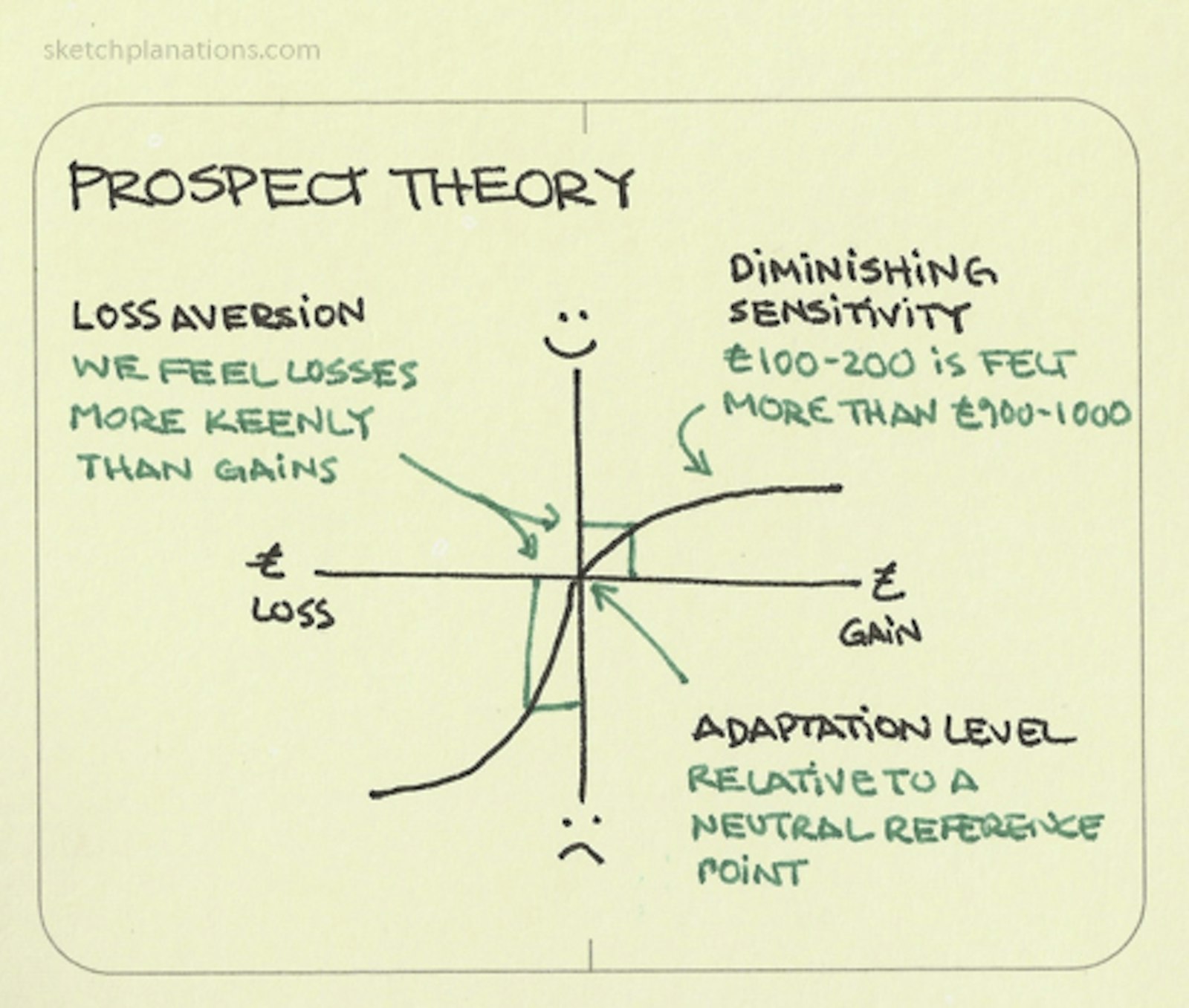
Prospect theory is a theory of behavioral economics and behavioral finance that was developed by Daniel Kahneman and Amos Tversky in 1979. The theory was cited in the decision to award Kahneman the 2002 Nobel Memorial Prize in Economics.

CITE: https://www.r2library.com/Resource/Title/0826102549

CASE MODEL:

Amanda, an RN client, was just informed by her financial advisor that she
needed to re-launch her 403-b retirement plan. Since she was leery about
investing, she quietly wondered why she couldn’t DIY. Little does her FA know
that she doesn’t intend to follow his advice, anyway! So, what went wrong?


The answer may be that her advisor didn’t deploy a behavioral economics
framework to support her decision-making. One such framework is the
“prospect theory” model that boils client decision-making into a “three step
heuristic.”

Prospect theory makes the unspoken biases that we all have more explicit. By
identifying all the background assumptions and preferences that clients
[patients] bring to the office, decision-making can be crafted so that everyone
[family, doctor and patient] or [FA, client and spouse] is on the same page.

****

Prospect theory - Sketchplanations

***
Briefly, the three steps are:

  • Simplify choices by focusing on the key differences between investment
    [treatment] options such as stock, bonds, cash, and index funds.
  • Understanding that clients [patients] prefer greater certainty when it comes to
    pursuing financial [health] gains and are willing to accept uncertainty when
    trying to avoid a loss [illness].
  • Cognitive processes lead clients and patients to overestimate the value of their choices thanks to survivor bias, cognitive dissonance, appeals to authority
    and hindsight biases.

ASSESSMENT

Much like in healthcare today, the current mass-customized approaches to the financial services industry fall short of recognizing more personalized advisory approaches like prospect theory and assisted client-centered investment decision-making.

YOUR COMMENTS ARE APPRECIATED.

Thank You

***

Risk Management, Liability Insurance, and Asset Protection Strategies for Doctors and Advisors: Best Practices from Leading Consultants and Certified Medical Planners™

RISK MANAGEMENT: https://www.routledge.com/Risk-Management-Liability-Insurance-and-Asset-Protection-Strategies-for/Marcinko-Hetico/p/book/9781498725989

***


PODCAST: “Signify Health” Start-Up Risk Adjustments [Medicare Advantage Part C]

BY ERIC BRICKER MD

***


***
YOUR COMMENTS ARE APPRECIATED.

Thank You

***

Comprehensive Financial Planning Strategies for Doctors and Advisors: Best Practices from Leading Consultants and Certified Medical Planners™

***

FINANCIAL PLANNING: https://www.routledge.com/Comprehensive-Financial-Planning-Strategies-for-Doctors-and-Advisors-Best/Marcinko-Hetico/p/book/9781482240283

***

***

On Bull -OR- Bear Markets?

YOU DECIDE AND OPINE

By Dr. David E. Marcinko MBA

The Plot Thickens

Autumn is here, and leaves aren’t the only thing falling.

Bull market breaks a new record on Wall Street. So what's a bull market? -  ABC News

After seven months of higher monthly closes, plus one record-setting high early in the month, the benchmark S&P 500® Index wobbled its way to a 5% pullback in September. The causes were many—uncertainty emanating from Washington, inflation, supply chain problems, and softer earnings growth forecasts—and now the horizon is looking foggy as we gaze ahead toward the final months of 2021.

Shipping bottlenecks and a near-record number of job openings are raising costs and putting upward pressure on wages, which may start to hurt profit margins, and the twin specters of inflation and higher interest rates are making investors wonder when the Federal Reserve might step in to raise interest rates.

Related: https://medicalexecutivepost.com/2016/03/18/doctors-and-bull-and-bear-markets/

But, if there’s a potential bright spot, we have to look across the sea to the Eurozone, where the signs point toward an era of increased government spending that could be positive for global economic growth.

CITE: https://www.r2library.com/Resource/Title/0826102549

And then came October, 2021; thus far!

Bull -OR- Bear?

YOUR COMMENTS ARE APPRECIATED.

***

RISK MANAGEMENT: https://www.routledge.com/Risk-Management-Liability-Insurance-and-Asset-Protection-Strategies-for/Marcinko-Hetico/p/book/9781498725989

Thank You

***

Two Vital IRS Audit Flags for Physicians

For Doctors and all Investors

By Hayden Adams

Image result for irs

***

Red Flag #1: Under reporting income

Generally speaking, all income is taxable unless it’s specifically excluded, as is the case with certain gifts and inheritances. In most instances, the income you earn will be reported to both you and the government on an information return, such as a Form 1099 or W-2. If the income you report doesn’t match the IRS’s records, you could face problems down the road—so be sure you include the income from all of the following forms that are applicable to your situation:

  • 1099-B: The form on which financial institutions report capital gains.
  • 1099-DIV: The form on which financial institutions report dividends.
  • 1099-MISC: The form used to report various types of income, such as royalties, rents, payments to independent contractors, and numerous other types of income.
  • 1099-R:The form on which financial institutions report withdrawals from tax-advantaged retirement accounts.
  • Form 1099-INT: The form on which financial institutions report interest income.
  • Form SSA-1099:The form on which the Social Security Administration reports Social Security benefits (a portion of which may be taxable, depending on your level of income).
  • Form W-2:The form on which employers report total annual compensation, payroll taxes, contributions to retirement accounts, and other information.

If you receive an inaccurate statement of income, immediately contact the responsible party to request a corrected form and have them resend the documents to both you and the IRS as soon as possible to avoid delaying your tax return. Also, be aware that you must report income for which there is no form, such as renting out your vacation home.

CITE: https://www.r2library.com/Resource/Title/0826102549

***

Red Flag #2: Misreporting investment gains

When you sell an investment, you’ll need to know both the cost basis (what you paid for the investment) and the sale price to determine your net gain or loss. The cost basis of your investment may need to be adjusted to account for commissions, fees, stock splits, or other events, which could help reduce your taxable gain or increase your net loss.

Financial institutions are required to adjust your investments’ cost basis and provide that information on a Form 1099. However, brokerages aren’t required to report the cost basis for investments purchased prior to a certain date, which means you’ll be responsible for supplying that information (see the table below). Be sure to keep records of all investment purchases and sales—even those for which your brokerage is responsible.

Your reporting responsibility

Depending on security type and date of purchase, you—rather than your brokerage—could be responsible for reporting the cost basis of your investment to the IRS.

CITE: https://www.r2library.com/Resource/Title/0826102549

***

Security typeInvestor’s responsibility if
Stocks (including real estate investment trusts)Acquired before 01/01/2011
Mutual funds, exchange-traded funds, and dividend reinvestment plansAcquired before 01/01/2012
Other specified securities, including most bonds, derivatives, and options

***

YOUR COMMENTS ARE APPRECIATED.

Thank You

***

***

UBER Investing Analysis Update

By Vitaliy Katsenelson Contrarian Edge

***

***

YOUR COMMENTS ARE APPRECIATED.

Thank You

***

Comprehensive Financial Planning Strategies for Doctors and Advisors: Best Practices from Leading Consultants and Certified Medical Planners™

FINANCIAL PLANNING: https://www.routledge.com/Comprehensive-Financial-Planning-Strategies-for-Doctors-and-Advisors-Best/Marcinko-Hetico/p/book/9781482240283

***

GE Update for Physicians and Investors

BY STEVE WINOKER

Hi David,

I hope this note finds you well. Here at GE, September was an important month for us. We concluded our annual strategy reviews with each business, complementing the quarterly operating reviews with a longer-term focus. I had the opportunity to participate in many of the review processes and came away impressed with our progress, leadership team, and the growth opportunities that lie ahead as we innovate for the future of flight, precision health, and energy transition.

In my last investor update, I shared the exciting news that GE announced an agreement to acquire BK Medical, and in the spirit of growth and innovation, I’d like to share a few more recent business highlights that illustrate how our teams are delivering for our customers:

  • At Aviation, Bamboo Airways signed a Memorandum of Understanding agreement to purchase GEnx engines for its Boeing 787-9 aircraft. This order of 10 firm and 20 options, valued at a list price of approximately $2 billion, will help the airline expand its transcontinental flight network. Dang Tat Thang, CEO of Bamboo Airways, said, “The selection of the GEnx engines for our Boeing 787-9 aircraft will help increase the operational efficiency and service quality of Bamboo Airways on Vietnam-U.S. nonstop flights as well as many potential international routes.”
  • Renewable Energy announced today that it received an order to supply Haliade-X turbines for Massachusetts’s Vineyard Wind 1, the first utility-scale offshore wind installation in the U.S. Additionally, our Haliade-X offshore wind prototype turbine recently became the first in the industry to operate at 14 MW, increasing our customers’ ability to produce more power from a single turbine.
  • Gas Power announced the delivery, installation, and commissioning of four TM2500 aeroderivative gas turbines in only 42 days to supplement renewable power generation for the State of California’s Department of Water Resources during peak demand season. GE’s TM2500s start and ramp up quickly in just minutes and will help enhance the reliability and sustainability of California’s grid.

See the source image

We’re excited about what the future holds, as our teams are highly focused on executing for our customers, leveraging lean to drive meaningful progress and innovating for a more sustainable world.

We look forward to sharing more on our 3Q’21 earnings call on Tuesday, October 26. As always, I welcome your feedback.

Best,
Steve

***

Comprehensive Financial Planning Strategies for Doctors and Advisors: Best Practices from Leading Consultants and Certified Medical Planners™

MORE: https://www.routledge.com/Comprehensive-Financial-Planning-Strategies-for-Doctors-and-Advisors-Best/Marcinko-Hetico/p/book/9781482240283

***