RISK ADJUSTED RATE OF RETURN: In Finance

By Dr. David Edward Marcinko MBA MEd

***

***

In the realm of finance and investment, the pursuit of profit is inseparable from the presence of risk. Every investor, whether an individual or an institution, must grapple with the reality that higher returns often come with greater uncertainty. To evaluate investments effectively, it is not enough to look at raw returns alone. Instead, one must consider how much risk was undertaken to achieve those returns. This balance is captured by the concept of the risk-adjusted rate of return, a cornerstone of modern portfolio theory and investment analysis.

The risk-adjusted rate of return measures the profitability of an investment relative to the risk assumed. Unlike simple return calculations, which only show the percentage gain or loss, risk-adjusted metrics incorporate volatility and other forms of uncertainty. For example, two investments may both yield a 10% annual return, but if one is highly volatile and the other is stable, the stable investment is more attractive when viewed through a risk-adjusted lens. This approach ensures that investors are not misled by high returns that are achieved through excessive risk-taking.

Several tools have been developed to calculate risk-adjusted returns. The Sharpe Ratio is among the most widely used. It measures excess return per unit of risk, with risk defined as the standard deviation of returns. A higher Sharpe Ratio indicates that an investment is delivering better returns for the level of risk taken. Another measure, the Treynor Ratio, evaluates returns relative to systematic risk, using beta as the risk measure. The Sortino Ratio refines the Sharpe Ratio by focusing only on downside volatility, thereby distinguishing between harmful risk and general fluctuations. Each of these metrics provides a different perspective, but all share the same goal: to assess whether the reward justifies the risk.

The importance of risk-adjusted returns extends beyond individual securities to entire portfolios. Portfolio managers use these metrics to compare strategies, evaluate asset allocations, and determine whether their investment approach aligns with client objectives. For instance, a hedge fund may report impressive raw returns, but if those returns are accompanied by extreme volatility, its risk-adjusted performance may be inferior to that of a conservative mutual fund. By incorporating risk-adjusted measures, investors can make more informed decisions and build portfolios that reflect their risk tolerance and long-term goals.

Risk-adjusted returns also play a vital role in distinguishing skill from luck in investment management. A manager who consistently delivers high risk-adjusted returns demonstrates genuine expertise in navigating markets. Conversely, a manager who achieves high raw returns through excessive risk-taking may simply be gambling with investor capital. This distinction is critical for institutions and individuals alike, as it ensures that performance evaluations are grounded in sustainability rather than short-term speculation.

Of course, risk-adjusted metrics are not without limitations. They often rely on historical data, which may not accurately predict future outcomes. Market conditions can change rapidly, and past volatility may not reflect future risks. Additionally, different metrics may yield conflicting results, complicating the decision-making process. Despite these challenges, risk-adjusted returns remain indispensable because they encourage investors to look beyond superficial gains and consider the broader context of risk management.

In conclusion, the risk-adjusted rate of return is a fundamental concept in investment analysis. By integrating both risk and reward into a single measure, it empowers investors to evaluate opportunities more effectively, compare diverse assets, and build resilient portfolios. While no metric is flawless, the emphasis on risk-adjusted performance ensures that investment decisions are not driven solely by the pursuit of high returns but by the pursuit of sustainable, well-balanced growth. In a financial landscape defined by uncertainty, the ability to measure success in terms of both profit and prudence is what ultimately separates wise investing from reckless speculation.

COMMENTS APPRECIATED

EDUCATION: Books

SPEAKING: Dr. Marcinko will be speaking and lecturing, signing and opining, teaching and preaching, storming and performing at many locations throughout the USA this year! His tour of witty and serious pontifications may be scheduled on a planned or ad-hoc basis; for public or private meetings and gatherings; formally, informally, or over lunch or dinner. All medical societies, financial advisory firms or Broker-Dealers are encouraged to submit an RFP for speaking engagements: CONTACT: Ann Miller RN MHA at MarcinkoAdvisors@outlook.com -OR- http://www.MarcinkoAssociates.com

Like, Refer and Subscribe

***

***

HEALTH CARE SPENDING: Projected to Exceed $8.5 Trillion by 2033

By Health Capital Consultants LLC

***

***

On June 25th, 2025, the Centers for Medicare & Medicaid Services (CMS) released its forecast on U.S. healthcare spending through 2033. The analysis, published in Health Affairs, estimated healthcare spending growth in 2024 and projected the growth into 2033. CMS found that overall healthcare spending growth has decreased slightly but is still elevated compared to pre-pandemic levels, and is expected to continue to moderately grow.

This Health Capital Topics article examines the factors underlying the forecasts. (Read more…) 

COMMENTS APPRECIATED

Like and Subscribe

***

***

Wolfram Alpha Pros and Cons

brantleymotes

It is going to be very difficult to show students the beauty of Wolfram Alpha and still find ways to prevent them from turning to the dark side of its power. This website is great for showing multiple representations of certain data, and it is lightning quick in producing answers compared to your hand on a tedious problem. While these two pros are at the forefront and really all that one needs to hear to become interested in exploring the site, the tide can easily and quickly turn from being a task servant to a task I’ll-do-it-all-for-you-every-time-and-you-do-nothing. One student in our 5040 class suggested that we might show this to our students at the end of the year when we are reviewing for final exams. The only problem with this is that they will not forget about this website the following year. With these things in mind, the best policy…

View original post 157 more words

PRIVATE EQUITY: Role in Vascular Medical Care

***

***

Role of Private Equity in Vascular Care,” authored by HCC’s Todd A. Zigrang and Jessica Bailey-Wheaton, as well as Bhagwan Satiani, MD, and Hiranya A. Rajasinghe, MD, was featured in the recent issue of the Journal of Vascular Surgery – Vascular Insights published by the Society of Vascular Surgery.

 Read Here

COMMENTS APPRECIATED

Like and Refer

EDUCATION: Books

***

***

TESLA: My Current Thoughts

By Vitaliy Katsenelson CFA

***

***

Tesla market value of $780 billion mostly reflects Elon’s future dreams, not car sales. The reality? Only $100-180 billion tied to the actual vehicle business.

***

Current thoughts on Tesla (TSLA)

Tesla has a market capitalization as of this writing of $780 billion. It made around $14 billion of profit in 2023 and $7 billion in 2024. A good chunk of profit comes not from selling cars but from regulatory credits. It sold fewer cars in 2024 than in 2023. Unless we see a significant shift change in battery capacity, speed of charging, and improved quality and availability of charging infrastructure, we have reached peak EV penetration (I wrote about this earlier).

However, today Tesla is not trading based on car sales but on future dreams of self-driving robo-taxis, robots, semis, and whatever else Elon dreams up. The car company may be worth $100–180 billion; the rest is what investors are willing to pay for Elon’s dreams.

Quick thoughts on each dream:

Self-driving: I would not trust my life or my kids’ lives to a car company that only uses cameras. They are passive sensors that have limited range and are easily impacted by bad weather. I’ve used Tesla self-driving software – it is great most of the time, except when it’s not – and then it might kill you or others.

Robo-taxis: They may work in geo-fenced areas, but they pose a huge reputational risk to Tesla. One death and this business is done. That’s what happened to Uber’s self-driving business, and why Google’s Waymo has taken a much more conservative route. It uses radar/lidar and launched the service in geo-fenced areas first.

Semis: They were announced in 2017 and were going to hit the road the next year. They are still not out there. I suspect Elon is waiting for a breakthrough in battery technology.

Robots: Exciting, huge market, but this will be a crowded field.

New competition: There are lots of Chinese EVs invading Europe and the rest of the world. BYD looks like a real competitor.

China looked like a great opportunity for Tesla, but may turn into a liability if the trade war intensifies.

Finally, though at times he seems superhuman, Musk is constrained by the number of hours in the day. As of today he is running Tesla, SpaceX, Twitter (x.com), xAI (the maker of Grok – a ChatGPT competitor), The Boring Company, Neuralink, and oh, yes, DOGE. The EV market is getting more, not less, competitive.

Tesla needs an un-distracted Elon Musk.

COMMENTS APPRECIATED

Refer and Like

***

***

OBTAIN: An Unbiased Second Financial Planning Opinion

By Ann Miller RN MHA CPHQ CMP

***

***

Finally … Fiduciary second investing and financial planning opinions right here!

Telephonic or electronic advice for medical professionals that is:

  • Objective, affordable, medically focused and financially personalized
  • Rendered by a pre-screened financial consultant for doctors and medical professionals
  • Offered on a pay-as-you-go basis, by phone or secure e-mail transmission

The iMBA Discussion Forum™ is a physician-to-financial advisor telephone or e-mail portal that connects independent financial professionals to doctors, nurses or healthcare executives desiring affordable and unbiased financial planning advice.

Medical professionals and healthcare executives can now receive direct access to pre-screened iMBA professionals in the areas of Investing, Financial Planning, Asset Allocation, Portfolio Management, Insurance, Mortgage and Lending, Human Resources, Retirement Planning and Employee Benefits. To assist our medical professional and healthcare executive members, we can be contracted with per-minute or per-project fees, and contacted by client phone, email or secure instant messaging.

***

http://www.MARCINKOASSOCIATES.com

E-mail CONTACT: MarcinkoAdvisors@outlook.com

***

***

Thank You

Providing Physician Centric [Not Advisor Centric] Holistic Financial Planning Advice

BY DR. DAVID EDWARD MARCINKO MBA MEd CMP

***

SPONSOR: http://www.MarcinkoAssociates.com

***

Selecting a Healthcare Focused Financial Advisory Team

Most retail financial services products are designed to enhance the well-being of the Financial Advisor and vendor at the expense of clients.

The clients get only the leftovers.

Of course, no one tells them that secret.

They have to figure it out for themselves.

As the old line goes, “Where are the customers’ boats?”

Rowland, M: Planning Periscope [Where Advisors are the Clients]. Financial Advisors Magazine; page 36, April 2014.

EDUCATION: Books

SPEAKING: Dr. Marcinko will be speaking and lecturing, signing and opining, teaching and preaching, storming and performing at many locations throughout the USA this year! His tour of witty and serious pontifications may be scheduled on a planned or ad-hoc basis; for public or private meetings and gatherings; formally, informally, or over lunch or dinner. All medical societies, financial advisory firms or Broker-Dealers are encouraged to submit a RFP for speaking engagements: MarcinkoAdvisors@outlook.com 

COMMENTS APPRECIATED

Refer, Like and Subscribe

***

***

THEORY: Linguistics and Cognitive Sciences

By Staff Reporters

Sponsor: http://www.MarcinkoAssociates.com

***

***

Avram Noam Chomsky is an American professor known for his traditional work in linguistics and political activism. Sometimes called “the father of modern linguistics”, Chomsky is also one of the founders of the field of cognitive science. He is a laureate professor of linguistics at the University of Arizona and an professor emeritus at MIT.

And so, modern linguists today approach their work with scientific rigor and perspective [STEM], although they use methods that were once thought to be solely an academic discipline of the humanities.

Contrary to this humanitarian belief, according to Professor Mackenzie Hope Marcinko PhD of the University of Delaware, linguistics is now multidisciplinary. It overlaps each of the human sciences including psychology, neurology, anthropology, and sociology. Linguists conduct formal studies of sound structure, grammar and meaning, but also investigate the history of language families, and research language acquisition.

COMMENTS APPRECIATED

Subscribe and Refer

***

***

The Best and Worst Investment Decisions I’ve Made

By Vitaliy Katsenelson CFA

***

***

Today, I’m going to share stories about my best and worst investment decisions. But don’t worry, this isn’t just a brag-and-cringe session about making or losing money. These stories are about the valuable lessons learned, and how these adventures in investing helped shape my current approach. 

The Best Investment Decision

In investing, you don’t get extra points for creativity or difficulty. A million dollars earned while you are smiling buys as many potatoes as a million dollars that cost you your marriage and hair.

However, from a personal, creative satisfaction perspective, our investment in Uber was one of our best. That’s not to say that it has been the most successful decision from a financial perspective, at least not yet.

Uber doesn’t fit into the traditional value stock category. Until 2023, the third year of our ownership, it never made money. It was a stock everyone hated. After we bought it, I had clients reach out to me asking if I had been kidnapped and someone else was making these purchases of Uber.

We bought more shares very opportunistically during and after the pandemic. I wrote a long research report on it, which you can read here.

On one hand, Uber’s switchboard is a digital business, but the company also has a physical presence in thousands of cities, which incurs costs (the analog side of the business). Additionally, the availability of cheap money caused the ride-share market to go crazy and act rationally irrational, as competitors jostled in a land grab.

My thesis consisted of several insights:

  1. Unlike traditional-tech, digital-only companies, Uber is a hybrid, both digital and analog. Thus, its cost structure is much higher than that of other companies. This, in part, explains the higher losses.
  2. It has a strong brand; its name has become a verb.
  3. The rideshare market is inevitable and will only continue to grow. Uber is not just in competition with taxis, second cars, or seldomly used cars; it is also in competition with the favors we ask of friends and relatives, such as dropping us off at the mechanic or picking us up from the doctor’s office.
  4. Uber has global scale, which its competitors lack, allowing it to spread R&D across more markets.
  5. As its revenue grows, each incremental dollar comes with a very high margin, which directly drops to the bottom line. Therefore, at some point, its earnings will explode to the upside as fixed costs stop growing, allowing it to scale.

The Uber story is not over; we still own the stock. I don’t want to do a celebratory dance. But this idea came with a lot of creative satisfaction. There is another point of pride here. Despite our very tumultuous ownership of this stock, we remained rational (I have written about that here). We bought more when it became extremely undervalued, and I would be lying if I said that was psychologically easy – it was not, but we followed our research and process.

The Worst Investment Decision

My worst investments that resulted in losses had several things in common: They were low-quality companies; their financials were complex and not transparent (for instance, one-time items were labeled as “one-time” every quarter); and they had questionable management. 

However, they were all considered “cheap”… until they were not. Now, I hope you see why I am dogmatic about quality. 

However.

When you are wrong on an investment and you lose money, the most you can lose is 100%. I have learned a lot from those. But they were not my worst investments. Those were the ones where I left 300–400% on the table when I sold too soon. Let me detail two examples.

EA – Electronic Arts

We bought EA in the early 2010s. I wrote about it – you can read my investment case for it here. To sum up, games were moving from being sold in stores to being digital downloads, which would lead to higher margins (don’t have to pay for packaging and Best Buy to sell them). The market for games was exploding, as every adult and teenager had a gaming device in their hands – a smartphone. The market for video games was going to be much larger. EA was the largest player in that space, with great franchises.

The following two years of ownership were very painful. EA had a few big game flops, and the market did not care about improving fundamentals. The stock kept declining. We continued to buy more. Every time we bought more shares, the stock fell further. Fast-forward a year or two. The stock doubled from our original purchase, but I was mentally exhausted. I did a celebratory dance and sold the stock. The stock then went up another 4x within a few years after we sold it. It went up for the right reasons – its earnings exploded to the upside, in line with my original thesis.

The sale was a mistake, not because the price went up but because I let frustration over the stock-price decline (volatility) get to me. Investing is a mental game. I learned from this adventure that it is important to zoom out and not obsess over individual stocks in the portfolio. This is why we have a portfolio. It was a very costly but educational mistake. Our ownership of Uber was not a walk in the park, either – just look at the stock price over the last few years. But I had learned my lesson from EA and was able to do the analysis, update our model, and zoom out.

In investing, there is a big difference between intellectual and tactile knowledge. I am going to go PG-13 on you for a second and quote the irascible Charlie Munger: “Learning about investing through a model portfolio is like learning about sex through romantic novels.” A big part of investing is observing yourself as an investor – your thoughts and emotions as you ride the actual rollercoaster of owning a stock.

I also made an important modification to our process.

We always value every company in the portfolio on earnings (free cash flows) at least four years out. Why four years? Three seems too short. There is no magic in this number, other than it being longer than most analyst estimates. We do this for all stocks in the portfolio, and then the total return for each is calculated and annualized. If a company has strong growth potential, it may appear to be expensive based on current earnings; but in reality, it may actually be cheap based on earnings projected four years from now.

On the other side of the spectrum, a company that has no growth or dividends may seem “cheap” based on its current earnings multiple, but this cheapness may quickly dissipate once a total return is calculated using future earnings. Time is on the side of growing businesses and the enemy of the ones that stand still. Therefore, a non-growing or slow-growing business needs a much greater discount (margin of safety) to secure a spot in our portfolio.

I want to stress another point. We sometimes sell a stock and then it goes higher. If we sold it for the right fundamental reasons, this doesn’t bother me. There is very little to learn.

Twilio

I’ll give you another crazy example. We bought Twilio at $25 in 2017 or so. Our thesis was that they had built the largest digital telecommunications network, which gave them a brief competitive advantage. They were also spending 5x more on R&D than competitors to build applications around this network, which would give them long-term advantages.

The stock price went up to $60 in a few months without anything significantly changing, so we sold a third of our position. Then it went up to $90, and we sold some more. To our disbelief, we sold the rest at around $120, a bit before the pandemic.

During the pandemic, Twilio’s price hit $400. I had zero regret about not holding on to the shares. Absolutely none. Twilio’s profitability did not match the stock market’s opinion of its price. Twilio’s stock price was as crazy to me at $250 as it was at $300 or $400. After reviewing our models, we concluded that even $120 was at the extreme end of our optimistic assumptions. Fast-forward to today, where the stock is at $60 or so. We are currently sharpening our pencils, but we have not bought the stock – yet.

Selling EA was a mistake; selling Twilio was not.

***


Key takeaways

  • My “best investment decision” with Uber wasn’t just about financial gains, but the creative satisfaction it brought. It taught me the value of sticking to our research and process, even when it’s psychologically challenging.
  • The worst investments often share common traits: low-quality companies, complex financials, questionable management, and the illusion of being “cheap.” This reinforces my dogmatic stance on prioritizing quality.
  • Sometimes, the costliest mistakes aren’t the ones where you lose money, but those where you leave significant gains on the table by selling too soon. My experience with EA taught me this lesson the hard way.
  • There’s a crucial difference between intellectual and tactile knowledge in investing. Actually owning stocks and experiencing the emotional roller coaster is invaluable for developing as an investor.
  • Selling a stock that later increases in value isn’t always a mistake if the decision was based on sound fundamental reasons. My experience with Twilio illustrates this point – sometimes it’s right to sell even if the price continues to climb.

NOTE: Please read the following important disclosure here.

COMMENTS APPRECIATED

Refer, Subscribe and Like

***

***

RHETORIC: Ancient Art of Discourse

By Staff Reporters

***

***

Wikipedia suggests that Rhetoric is the art of persuasion . It is one of the three ancient arts of discourse (trivium) along with grammar and logic/dialectic.

As an academic discipline within the humanities, rhetoric aims to study the techniques that speakers or writers use to inform, persuade, and motivate their audiences.

And, according to Professor Mackenzie Hope Marcinko PhD, rhetoric also provides heuristics for understanding, discovering, and developing arguments for particular situations.

COMMENTS APPRECIATED

Refer, Subscribe and Like

***

***

***

INSURANCE: How To Get Results On Homeowner Claims

By Rick Kahler; CFP®

http://www.KahlerFinancial.com

***

***

If you have ever filed a homeowners insurance claim, you know it can feel more like an endurance test than a straightforward process. While insurers are legally required to honor valid claims, they have strong financial incentives to delay, underpay, or deny them whenever possible.

Over the years, I’ve learned this the hard way. The most recent lesson started when a hailstorm hit my home in June 2023. I promptly filed an insurance claim. I also made up a story that leaving someone more qualified than me in charge would free me from a part-time job as a contractor, so I relied on a roofing contractor to handle the whole claim, including the gutter and siding damage. That was my first mistake.

About 15 months later, my roof and gutters were replaced, but the siding repairs and painting remained undone. Every time the insurance company reassigned my claim to a new adjuster, I had to start over. When I called the contractor after a period of inactivity, they said the adjuster had ghosted them, so they’d given up—and I still owed them the full roofing bill.

At that point, I had two choices: pay out of pocket for the unfinished work or escalate. I chose the latter. I filed a complaint with the state insurance division, contacted my agent, reached out to the last adjuster, hired my own painter, and withheld final payment to the contractor. I also made it clear that I was prepared to take legal action if necessary. That was not a bluff.

Within a week, things started moving. Seven days later, the insurance company reinspected my home and sent a check covering all but $3,000 of the painting costs. After nearly two years of delays and excuses, progress finally happened when I took matters into my own hands.

Delay is a common insurer tactic. They’ll repeatedly ask for more documentation, take months to respond, or swap adjusters to force you to restart the process—all in hopes that you’ll give up or accept a lower payout.

Another common tactic is the lowball offer. Insurers often rely on software that underestimates damages or send adjusters unfamiliar with actual repair costs. Accepting their first offer without question can be a costly mistake. It’s wise to get independent repair estimates or even hire a public adjuster who works for you rather than the insurance company.

Insurers also deny claims based on fine print, arguing that damage was pre-existing, caused by poor maintenance, or excluded under some obscure clause. Knowing your policy inside out and keeping pre-loss photos can help you counter these claims.

Another trick? Steering homeowners toward “preferred” contractors who work at discounted rates and may prioritize the insurer’s interests over yours. Getting independent estimates ensures repairs are done properly.

For homeowners stuck in an insurance battle, persistence is key. Withholding final payment until work is complete, filing a complaint with the state insurance division, and even considering small claims court can help push a claim forward. If the dispute is within your state’s small claims limit—often between $10,000 and $25,000—filing may push the insurer to settle.

Assuming my contractor would handle everything was my biggest mistake, and it cost me nearly two years of frustration. Even though progress happened quickly once I took control, my claim isn’t over. I suspect I will be filing legal action in small claims court against the insurance company, contractor, and insurance agent.

If you need to navigate an insurance claim, be persistent and attentive. Keeping records, pushing back on delays, and escalating when necessary can mean the difference between being shortchanged and getting the settlement you deserve.

COMMENTS APPRECIATED

Subscribe, Refer and Like

***

***

DYING BROKE: Frugality OR Freedom

By Rick Kahler CFP™

http://www.KahlerFinancial.com

**

***

Dying Broke. It’s a goal for those retirees who embrace the idea of spending their hard-earned wealth during their lifetimes. Their aim is to enjoy the fruits of their labor while they can and spend the last penny just as they take their last breath. The concept feels both pragmatic and poetic.

But here’s the twist: While the concept may conjure images of lavish spending sprees and exotic vacations, that’s rarely what I see in practice. Many of my clients who identify as Die Brokers aren’t recklessly burning through their wealth. In fact, the opposite is often true.

This is because their approach to spending and giving is shaped by a lifetime of frugal money scripts that are incredibly hard to shake. Many Boomers grew up with financial uncertainty, learning to save and sacrifice to protect themselves and their families. Even after decades of financial success, those habits don’t just disappear. The idea of “spending down” their wealth, even intentionally, feels unnatural and irresponsible. There is an internal tug-of-war between their stated desire to enjoy their wealth and their deeply rooted fear of running out.

This paradox can significantly affect retirees’ financial planning. While Die Brokers may express a strong commitment to living fully, their money behavior often reveals a need for reassurance that their money will last for their lifetime.

For many Boomers, including myself, those frugal money scripts have served us well for decades. They’ve provided financial stability and peace of mind. But in this stage of life, they can also hold us back from experiencing the freedom we’ve worked so hard to achieve—especially in the time we have left when we can still physically enjoy it. The challenge is finding balance, honoring the values that got us here while allowing ourselves permission to live fully.

Shifting from a scarcity mindset to one of abundance is no small feat.

Here are four ways to start turning those old money scripts into permission to spend and give intentionally:

  1. Reframe wealth as a tool rather than a safety net. Recognize that money is about opportunity as well as security. Spending with intention can bring joy and meaning, whether it’s funding a family trip, supporting a cause, or splurging on a bucket list item.
  2. Work with your financial advisor to analyze your retirement spending and the probability of running out of money. The amount they suggest you can spend may surprise you—it’s often far higher than your frugal money scripts would lead you to believe.
  3. Experiment with incremental giving. If parting with your wealth feels daunting, start small. Gift modest amounts to family, friends, or charities and notice how it feels. Seeing the immediate impact of your generosity can help ease the transition and loosen the grip of those old money scripts.
  4. Set intentional spending goals instead of vaguely aiming to “enjoy your wealth.” Identify specific ways you want to use your money to enhance your life or the lives of others. Having a clear plan can turn spending into a meaningful act rather than an exercise in guilt.

For many of us, the Die Broke mentality is not about recklessness or extravagance. It’s about learning to let go. Despite our bold talk of spending down to the last penny, most of us will likely leave behind more than we planned. And maybe that’s just fine—especially for our kids and grand kids. Perhaps being a Die Broker is really about giving ourselves permission to live with intention, to savor what we’ve built, and to enjoy living to the fullest the rich life our frugality has helped provide.

EDUCATION: Books

COMMENTS APPRECIATED

Refer and Subscribe

***

***

ARTHUR SELDON: Free State Education Report

By Staff Reporters

***

***

The Reform of “Free” State Education: Arthur Seldon and the Education Voucher Scheme (1957-88), Hsiao-Yuh KuHistory of Education: , v53 n4 p748-772 2024

***

Arthur Seldon (1916-2005) was a significant British neo-liberal economist in the second half of the twentieth century. From 1957 to 1988, as the “engine room” of the Institute of Economic Affairs, Seldon had been advocating the reform of “free” state education. He vigorously argued for education vouchers, by which each parent could be provided with purchasing power and school choice.

From the mid-1960s, his ideas gradually attracted the attention of the Conservatives and contributed to the rise of the New Right and Thatcherism in the 1980s. Despite this, previous literature seldom explores Seldon’s work in relation to education in greater depth. To fill the lacuna, this paper aims to provide a deeper understanding of Seldon’s neo-liberal ideas about education and his approaches in promoting reform agenda.

READ: https://eric.ed.gov/?q=source%3A%22History+of+Education%22&ff1=subPolitics+of+Education&id=EJ1428693

COMMENTS APPRECIATED

Refer and Subscribe

***

***

My Thoughts on Artificial Intelligence [AI]

By Vitaliy Katsenelson CFA

***

***

Article available in Spanish here.

A century ago, one fifth of the country was involved in agriculture. Due to the transformation of farming technology, only 1% of the country is now involved in farming, while our supermarkets are flooded with cheap food. I could be wrong, but I don’t see the 19% of the country who used to farm wandering around unemployed. They have retrained to do other things.

Innovation disrupts, but it also creates new jobs and improves the standard of living of society. A century ago, you could not have imagined most of the jobs we have today. I’m not just talking about social media celebrities; think about software engineers, data scientists, cybersecurity experts, etc. In fact, most white-collar jobs you see today did not exist 100 years ago. Yes, if you specialized in driving horse-powered carriages, you had to acquire new skills.

AI will displace many jobs, but it will also empower people with new productivity tools. Microsoft Excel replaced jobs that required people to add up rows of numbers with calculators, but it created many more. In the 1960s, corporations had departments filled with typists. A photocopier and then the personal computer put these hardworking folks out of a job, but they retrained to do other things.

If we have a victim mentality, AI will run us over; if we embrace it and adapt it to our lives, it may become our best friend to do the jobs we are doing, while our soon-to-be-unemployed coworkers complain about AI.

AI may have a similar impact on our lives as electricity did. Unless it becomes sentient and just like the Terminator, it turns against us (smarter people than me cannot agree on this, especially on a reasonable time frame, so I withhold my opinion on it), it will likely improve our lives significantly. One industry that immediately comes to mind is healthcare – we need major disruption in that sector.

AI may disrupt and completely reshuffle the power dynamics in some industries. Travel, for example, comes to mind; we may start looking for trips and booking tickets with the help of our AI assistant without going to the travel websites. Some companies will adapt and become winners, while others won’t and will become market-share donors.

As I am typing this, I realize (again, something I do daily now) how important management is. In our analysis, we should pay close attention to how companies are embracing AI. Are they giving it lip service or are they really adopting it and changing the business to take advantage of it?

ChatGPT is a statistical representation of things found on the web, which will increasingly include ITS OWN output (directly and secondhand). You post something picked up from it and it will use it to reinforce its own knowledge. Progressively a self-licking lollipop.

If you want to see ChatGPT creating art, for the fun of it, spend some time on myfavoriteclassical.com, where I post music articles. Every single picture there is created by AI. I love impressionist artists, and thus I love these little AI creations. However, if you zoom in closer, you’ll find violinists playing with toothpicks, pianists with three hands and cellists with multiple arms and legs.

This self-licking lollipop is impressive, but it still has a lot to learn. (By the way, if you have not signed up to receive my classical music-only articles, you have an opportunity to do it here).

Finally, the more we rely on AI and the more content it creates, the less creative it and we become.

COMMENTS APPRECIATED

Refer and Subscribe

***

***

DEEPSEEK Breaks the A.I. Paradigm

By Vitaliy Katsenelson CFA

***

DeepSeek Breaks the AI Paradigm

***

I’ve received emails from readers asking my thoughts on DeepSeek. I need to start with two warnings. First, the usual one: I’m a generalist value investor, not a technology specialist (last week I was analyzing a bank and an oil company), so my knowledge of AI models is superficial. Second, and more unusually, we don’t have all the facts yet.

But this story could represent a major step change in both AI and geopolitics. Here’s what we know:
DeepSeek—a year-old startup in China that spun out of a hedge fund—has built a fully functioning large language model (LLM) that performs on par with the latest AI models. This part of the story has been verified by the industry: DeepSeek has been tested and compared to other top LLMs. I’ve personally been playing with DeepSeek over the last few days, and the results it spit out were very similar to those produced by ChatGPT and Perplexity—only faster.

This alone is impressive, especially considering that just six months ago, Eric Schmidt (former Google CEO, and certainly no generalist) suggested China was two to three years behind the U.S. in AI.
But here’s the truly shocking—and unverified—part: DeepSeek claims they trained their model for only $5.6 million, while U.S. counterparts have reportedly spent hundreds of millions or even billions of dollars. That’s 20 to 200 times less.

The implications, if true, are stunning. Despite the U.S. government’s export controls on AI chips to China, DeepSeek allegedly trained its LLM on older-generation chips, using a small fraction of the computing power and electricity that its Western competitors have. While everyone assumed that AI’s future lay in faster, better chips—where the only real choice is Nvidia or Nvidia—this previously unknown company has achieved near parity with its American counterparts swimming in cash and datacenters full of the latest Nvidia chips. DeepSeek (allegedly) had huge compute constraints and thus had to use different logic, becoming more efficient with subpar hardware to achieve a similar result. In other words, this scrappy startup, in its quest to create a better AI “brain,” used brains where everyone else was focusing on brawn—it literally taught AI how to reason.

Enter the Hot Dog Contest

Americans love (junk) food and sports, so let me explain with a food-sport analogy. Nathan’s Famous International Hot Dog Eating Contest claims 1916 as its origin (though this might be partly legend). By the 1970s, when official records began, winning competitors averaged around 15 hot dogs. That gradually increased to about 25—until Takeru Kobayashi arrived from Japan in 2001 and shattered the paradigm by consuming 50 hot dogs, something widely deemed impossible. His secret wasn’t a prodigious appetite but rather his unique methodology; He separated hot dogs from buns and dunked the buns in water, completely reimagining the approach.

Then a few years later came Joey Chestnut, who built on Kobayashi’s innovation to push the record well beyond 70 hot dogs and up to 83. Once Kobayashi broke the paradigm, the perceived limits vanished, forcing everyone to rethink their methods. Joey Chestnut capitalized on it.

DeepSeek may be the Kobayashi of AI, propelling the whole industry into a “Joey Chestnut” era of innovation. If the claims about using older chips and spending drastically less are accurate, we might see AI companies pivot away from single-mindedly chasing bigger compute capacity and toward improved model design.

I never thought I’d be quoting Stoics to explain future GPU chip demand, but Epictetus said, “Happiness comes not from wanting more, but from wanting what you have.” Two millennia ago, he was certainly not talking about GPUs, but he may as well have been. ChatGPT, Perplexity, and Google’s Gemini will have to rethink their hunger for more compute and see if they can achieve more with wanting (using) what they have.

If they don’t, they’ll be eaten by hundreds of new startups, corporations, and likely governments entering the space. When you start spelling billions with an “M,” you dramatically lower the barriers to entry.

Until DeepSeek, AI was supposed to be in reach for only a few extremely well-funded companies, (the “Magnificent Ones”) armed with the latest Nvidia chips. DeepSeek may have broken that paradigm too.

The Nvidia Conundrum

The impact on Nvidia is unclear. On one hand, DeepSeek’s success could decrease demand for its chips and bring its margins back to earth, as companies realize that a brighter AI future might lie not in simply connecting more Nvidia processors but in making models run more efficiently. DeepSeek may have reduced the urgency to build more data centers and thus cut demand for Nvidia chips.

On the other hand (I’m being a two-armed economist here), lower barriers to entry will lead to more entrants and higher overall demand for GPUs. Also, DeepSeek claims that because its model is more efficient, the cost of inference (running the model) is a fraction of the cost of running ChatGPT and requires a lot less memory—potentially accelerating AI adoption and thus driving more demand for GPUs. So this could be good news for Nvidia, depending on how it shakes out.

My thinking on Nvidia hasn’t materially changed—it’s only a matter of time before Meta, Google, Tesla, Microsoft, and a slew of startups commoditize GPUs and drive down prices.

Likewise, more competition means LLMs themselves are likely to become commoditized—that’s what competition does—and ChatGPT’s valuation could be an obvious casualty.

Geopolitical Shockwaves

The geopolitical consequences are enormous. Export controls may have inadvertently spurred fresh innovation, and they might not be as effective going forward. The U.S. might not have the control of AI that many believed it did, and countries that don’t like us very much will have their own AI.

We’ve long comforted ourselves, after offshoring manufacturing to China, by saying that we’re the cradle of innovation—but AI could tip the scales in a direction that doesn’t favor us.
Let me give you an example. In a recent

interview with the Wall Street Journal, OpenAI’s product chief revealed that various versions of ChatGPT were entered into programming competitions anonymously. Out of roughly 28 million programmers worldwide, these early models ranked in the top 2–3%. ChatGPT-o1 (the latest public release) placed among the top 1,000, and ChatGPT-o3 (due out in a few months) is in the top 175. That’s the top 0.000625%! If it were a composer, ChatGPT-o3 would be Mozart.

I’ve heard that a great developer is 10x more valuable than a good one—maybe even 100x more valuable than an average one. I’m aiming to be roughly right here. A 19-year-old in Bangalore or Iowa who discovered programming a few months ago can now code like Mozart using the latest ChatGPT. Imagine every young kid, after a few YouTube videos, coding at this level. The knowledge and experience gap is being flattened fast.

I am quite aware that I am drastically generalizing (I cannot stress this enough), and but the point stands: The journey from learning to code to becoming the “Mozart of programming” has shrunk from decades to months, and the pool of Mozarts has grown exponentially. If I owned software companies, I’d become a bit more nervous—the moat for many of them has been filled with AI.

Adapting, changing your mind, and holding ideas as theses to be validated or invalidated—not as part of your identity—are incredibly important in investing (and in life in general). They become even more crucial in an age of AI, as we find ourselves stepping into a sci-fi reality faster than we ever imagined. DeepSeek may be that catalyst, forcing investors and technologists alike to question long-held assumptions and reevaluate the competitive landscape in real time.
I’d love to hear your thoughts, so please leave your comment and feedback here. Also, if you missed my previous article “Escaping Stock Market Double Hell”, you can read it and leave a comment here.

COMMENTS APPRECIATED

Subscribe and Refer

***

***

EMBRACING Stock Market Stoicism

By Vitaliy Katsenelson CFA

***

***

Embracing Stock Market Stoicism 

2024 brought me back to a core Stoic principle that I hold close to my heart: the dichotomy of control. Here’s the gist: Some things are within our power—our values, our character, our decisions—and some aren’t—like your brother-in-law’s random (and possibly dumb) comment, your spouse’s mood, or the fact that every traffic light turns red right as you pull up.

In investing, it’s the same. We can control:

  • The quality of our research—being logical and thorough in our research
  • Our decisions and discipline—systematically following our research
  • Our reactions—how we react to the news and external environmental pressure (I will discuss this at the end of the letter)

The market can price our stocks however it pleases on a month-to-month—or even year-to-year—basis. That’s the part we can’t control. We have to remember that these market prices are merely opinions, not final verdicts. The Stoics teach us to focus our energy on what we can influence (our process) and accept what we can’t (the market’s whims).

This probably sounds straightforward, but there’s a twist that makes it harder for you, the client, to see how this all plays out in real time. You can easily check the portfolio’s value—my decisions, not so much. In theory, I could make subpar investments and hide behind fancy Stoic talk.

That’s exactly the why of these very detailed letters: to show you our thinking, walk you through our individual decisions. I write, you read—that’s our agreement. You’re the judge of whether my process makes sense. But I can’t do that part for you.

CONTINUE READING: https://investor.fm/embracing-stock-market-stoicism/?mc_cid=25f3bd9eb4&mc_eid=7a63a03234

COMMENTS APPRECIATED

Like, Refer and Subscribe

***

***

PODCAST: Farzad Mostashari MD and “Aledade”Primary Care

By Shahid N Shah

***

***

Our guest on this episode is Dr. Farzad Mostashari. Farzad is the co-founder and CEO of Aledade, a primary care enablement company that partners with independent PCPs to transition to value-based care and, as a result, maintain their independence.

Founded in 2014, Aledade works with 11,000 physicians across 40 states and DC, accounting for 1.7M patients under management in Medicare, Medicare Advantage, Commercial and Medicaid contracts. Farzad previously served as the National Coordinator for Health IT in the Department of Health and Human Services, he completed medical school at the Yale School of Medicine and a Master’s in Population Health from Harvard’s T.H. Chan School of Public Health. Earlier this year, Aledade raised a $123M Series E round of funding led by OMERS Growth Equity.

***

In this episode, colleague Shahid N. Shah will discuss with Farzad about (1) his journey to starting Aledade and the role policy expertise and evidence have played in the company’s success (2) why he and the company are betting on independent physicians as the drivers of change in value-based care and (3) how Aledade became the rare profitable health tech company.

-Dr. David Edward Marcinko MBA MEd

PODCAST: https://soundcloud.com/wharton-pulse-podcast/mostashari-aledade

***

ORDER: https://www.amazon.com/Dictionary-Health-Information-Technology-Security/dp/0826149952/ref=sr_1_5?ie=UTF8&s=books&qid=1254413315&sr=1-5

***

ORDER: https://www.amazon.com/Business-Medical-Practice-Transformational-Doctors/dp/0826105750/ref=sr_1_9?ie=UTF8&qid=1448163039&sr=8-9&keywords=david+marcinko

COMMENTS APPRECIATED

Thank You

***

PHYSICIAN PERSONAL COACHING: Financial Planning and Retirement Consulting

SPONSORED BY: http://www.MarcinkoAssociates.com

***

***

Most doctors report feeling overworked and are considering a change in career, according to a new poll.

Doximity, a virtual network for physicians, found that 81% doctors surveyed last fall said they felt overworked—a slight decline from 86% who reported burnout in 2022 but still up from 73% in 2021. Meanwhile, about three in five doctors said they were considering early retirement (30%), looking for another employer (15%), or leaving the profession altogether (14%), the poll found.

The findings, released last year, come amid reports of rising rates of physician burnout and dissatisfaction since after the Covid-19 pandemic.

LEARN MORE: https://tinyurl.com/y3j2t3ab

COMMENTS APPRECIATED

Thank You

***

***

What If You Could Start From Scratch – Doctor?

How would you restart your career in medicine?

[By Dr. David Edward Marcinko MBA MEd CMP™]

We’ve known this physician-client-friend for 10 years, and while he didn’t tell us what he wanted to discuss, we knew it was important.

After exchanging pleasantries, he shocked me: He said he’s totally unfulfilled in his current job and wants to do something new.

We were floored because he is an outstanding doctor – at the top of his game. From the outside looking in, he appears to be “living the dream”.

After that bombshell, we asked him the question we couldn’t get out of our mind: “Are you afraid?”

“Yes,” he said; “Afraid and relieved.”

His relief stemmed from the fact that he is going to shed the tremendous demands of being a doctor at the highest levels. He was afraid because he didn’t know what was next.

We thought afterward, “What a courageous and totally refreshing move.”

ME-P Doctors, Advisors and Consultants

A Fantasy Reboot

That dialogue triggered a larger internal conversation within; and with others.

  • What would you do if you could start from scratch?
  • How would you proceed if you could just wipe the slate clean and restart your career in medicine?

For those quietly pondering a similar path, three great opportunities seem crystal clear.

First, we would create our own practice playbook. Discard the ready-made choices served up by your old practice. For the independent physician today, there’s almost infinite variety. The pleasure in creating your own approach is that there are so many options. Your patients will appreciate the greater choice and flexibility, too.

Second, we would whole-heartedly embrace technology; but not necessarily EHRs at this time. Rather, build your own HIT framework to complement your medical practice. Innovate across your entire operations – everything from medical records, to online appointment access, secure FAX machines, to patient portals and laboratory results reporting to your own mobile phone app. Freeing yourself from your current archaic technology will be life altering by itself.

5 new rules for how doctors interact with health care IT

Third, cull the difficult people from your life. These are the naysayers who weigh you down – superiors, colleagues or patients. Negativity is corrosive, and it always lingers. It also distracts you from giving others your best. While you’re at it, cull the skills you mastered to survive in your career so you can focus on those that really matter.

Non-Traditional Doctors

Case Model

So, we wanted to share one of the all-time greatest reboots we know because it shows what is possible if you believe in yourself.

A decade ago, one of our osteopathic physician clients delivered some bad news. She was quitting her job as a medical associate, to transition into her own direct pay concierge practice.

At the time, this was unheard of: No one walked away from a potential medical practice partnership to become a solo physician. But, Sue had a different vision. She wasn’t fulfilled and she knew it. With the support of her husband, she decided there was a better way. So she started from scratch.

How did it work out?

Unbelievably well – but NOT overnight!

With our meager assistance, Sue’s been cash flow positive for the last 7 years, and now earns more money than before, with less stress; and she is the captain of her ship. A few colleagues who have worked with her have even gone on to achieve comparable success. She’s become a role model to others too, and she remains one our heroes.

The Decision

Starting from scratch may or may not translate into more money, but it often means this: More happiness in your life. Sue’s decision, just like our friend who bared his soul to us over coffee, were both made for the right reasons.

We wish our friend well on his journey, confident knowing that a happy ending is just over the horizon for him, too.

Product DetailsProduct Details

Assessment

Send us your own success/failure story, so we might learn from you. Would you even stay in medicine or transition/begin another career; anew?

Conclusion

Your thoughts and comments on this ME-P are appreciated. Feel free to review our top-left column, and top-right sidebar materials, links, URLs and related websites, too. Then, subscribe to the ME-P. It is fast, free and secure.

Speaker: If you need a moderator or speaker for an upcoming event, Dr. David E. Marcinko; MBA – Publisher-in-Chief of the Medical Executive-Post – is available for seminar or speaking engagements. Contact: MarcinkoAdvisors@msn.com

OUR OTHER PRINT BOOKS AND RELATED INFORMATION SOURCES:

Financial Planning MDs 2015

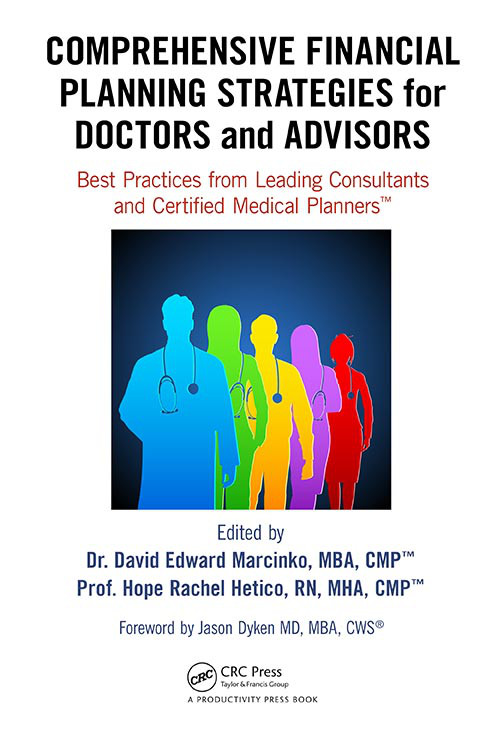
Comprehensive Financial Planning Strategies for Doctors and Advisors: Best Practices from Leading Consultants and Certified Medical Planners™

Dr. Marcinko Interviewed on Physician Retirement and Succession Planning

imba inc
***

Physicians Have Unique Challenges and Opportunities

ENCORE PRESENTATION

http://www.MarcinkoAssociates.com

By Ann Miller RN MHA CMP

[Executive-Director]

Medical Executive-Post Publisher-in-Chief, Dr. David Edward Marcinko MBA CMP™, and financial planner Paul Larson CFP™, were interviewed by Sharon Fitzgerald for Medical News, Inc. Here is a reprint of that interview.

Doctors Squeezed from both Ends

Physicians today “are getting squeezed from both ends” when it comes to their finances, according Paul Larson, president of Larson Financial Group. On one end, collections and reimbursements are down; on the other end, taxes are up. That’s why financial planning, including a far-sighted strategy for retirement, is a necessity.

Larson Speaks

“We help these doctors function like a CEO and help them quarterback their plan,” said Larson, a Certified Financial Planner™ whose company serves thousands of physicians and dentists exclusively. Headquartered in St. Louis, Larson Financial boasts 19 locations.

Larson launched his company after working with a few physicians and recognizing that these clients face unique financial challenges and yet have exceptional opportunities, as well.

What makes medical practitioners unique? One thing, Larson said, is because they start their jobs much later in life than most people. Physicians wrap up residency or fellowship, on average, at the age of 32 or even older. “The delayed start really changes how much money they need to be saving to accomplish these goals like retirement or college for their kids,” he said.

Another thing that puts physicians in a unique category is that most begin their careers with a student-loan debt of $175,000 or more. Larson said that there’s “an emotional component” to debt, and many physicians want to wipe that slate clean before they begin retirement saving.

Larson also said doctors are unique because they are a lawsuit target – and he wasn’t talking about medical malpractice suits. “You can amass wealth as a doctor, get sued in five years and then lose everything that you worked so hard to save,” he said. He shared the story of a client who was in a fender-bender and got out of his car wearing his white lab coat. “It was bad,” Larson said, and the suit has dogged the client for years.

The Three Mistake of Retirement Planning

Larson said he consistently sees physicians making three mistakes that may put a comfortable retirement at risk.

  1. The first is assuming that funding a retirement plan, such as a 401(k), is sufficient. It’s not. “There’s no way possible for you to save enough money that way to get to that goal,” he said. That’s primarily due to limits imposed by the Internal Revenue Service, which allows a maximum contribution of $49,000 annually if self-employed and just $16,500 annually until the age of 50. He recommends that physicians throughout their career sock away 20 percent of gross income in vehicles outside of their retirement plan.
  2. The second common mistake is making investments that are inefficient from a tax perspective. In particular, real estate or bond investments in a taxable account prompt capital gains with each dividend, and that’s no way to make money, he said.
  3. The third mistake, and it’s a big one, is paying too much to have their money managed. A stockbroker, for example, takes a fee for buying mutual funds and then the likes of Fidelity or Janus tacks on an internal fee as well. “It’s like driving a boat with an anchor hanging off the back,” Larson said.

Marcinko Speaks

Dr. David E. Marcinko MBADr. David E. Marcinko MBA MEd CPHQ, a physician and [former] certified financial planner] and founder of the more specific program for physician-focused fiduciary financial advisors and consultants www.CertifiedMedicalPlanner.org, sees another common mistake that wreaks havoc with a physician’s retirement plans – divorce.

He said clients come to him “looking to invest in the next Google or Facebook, and yet they will get divorced two or three times, and they’ll be whacked 50 percent of their net income each time. It just doesn’t make sense.”

Marcinko practiced medicine for 16 years until about 10 years ago, when he sold his practice and ambulatory surgical center to a public company, re-schooled and retired. Then, his second career in financial planning and investment advising began. “I’m a doctor who went to business school about 20 years ago, before it was in fashion. Much to my mother’s chagrin, by the way,” he quipped. Marcinko has written 27 books about practice management, hospital administration and business, physician finances, risk management, retirement planning and practice succession. He’s the founder of the Georgia-based Institute of Medical Business Advisors Inc.

ECON

Succession Planning for Doctors

Succession planning, Marcinko said, ideally should begin five years before retirement – and even earlier if possible. When assisting a client with succession, Marcinko examines two to three years of financial statements, balance sheets, cash-flow statements, statements of earnings, and profit and loss statements, yet he said “the $50,000 question” remains: How does a doctor find someone suited to take over his or her life’s work? “We are pretty much dead-set against the practice broker, the third-party intermediary, and are highly in favor of the one-on-one mentor philosophy,” Marcinko explained.

“There is more than enough opportunity to befriend or mentor several medical students or interns or residents or fellows that you might feel akin to, and then develop that relationship over the years.” He said third-party brokers “are like real-estate agents, they want to make the sale”; thus, they aren’t as concerned with finding a match that will ensure a smooth transition.

The only problem with the mentoring strategy, Marcinko acknowledged, is that mentoring takes time, and that’s a commodity most physicians have too little of. Nonetheless, succession is too important not to invest the time necessary to ensure it goes off without a hitch.

Times are different today because the economy doesn’t allow physicians to gradually bow out of a practice. “My overhead doesn’t go down if I go part-time. SO, if I want to sell my practice for a premium price, I need to keep the numbers up,” he noted.

Assessment

Dr. Marcinko’s retirement investment advice – and it’s the advice he gives to anyone – is to invest 15-20 percent of your income in an Vanguard indexed mutual fund or diversified ETF for the next 30-50 years. “We all want to make it more complicated than it really is, don’t we?” he said.

QUESTION: What makes a physician moving toward retirement different from most others employees or professionals? Marcinko’s answer was simple: “They probably had a better shot in life to have a successful retirement, and if they don’t make it, shame on them. That’s the difference.”

More:

Conclusion

Your thoughts and comments on this ME-P are appreciated. Feel free to review our top-left column, and top-right sidebar materials, links, URLs and related websites, too. Then, subscribe to the ME-P. It is fast, free and secure.

Speaker: If you need a moderator or speaker for an upcoming event, Dr. David E. Marcinko; MBA – Publisher-in-Chief of the Medical Executive-Post – is available for seminar or speaking engagements. Contact: MarcinkoAdvisors@msn.com

OUR OTHER PRINT BOOKS AND RELATED INFORMATION SOURCES:

PRACTICES: www.BusinessofMedicalPractice.com
HOSPITALS: http://www.crcpress.com/product/isbn/9781466558731
CLINICS: http://www.crcpress.com/product/isbn/9781439879900
BLOG: www.MedicalExecutivePost.com
FINANCE: Financial Planning for Physicians and Advisors
INSURANCE: Risk Management and Insurance Strategies for Physicians and Advisors

Product DetailsProduct DetailsProduct Details

Product Details  Product Details

Product DetailsProduct Details

Risk Management, Liability Insurance, and Asset Protection Strategies for Doctors and Advisors: Best Practices from Leading Consultants and Certified Medical Planners™8Comprehensive Financial Planning Strategies for Doctors and Advisors: Best Practices from Leading Consultants and Certified Medical Planners™
 ***

SMART PHONES: Not for All Financial Advisors or Doctors

DUMB PHONES ANYONE?

By Anonymous Reporter[s]

***

***

Allow us [me] to suggest the use of Android and iOS shortcuts that disable bio-metric unlocking on your cell phone.  

“If you use a bio-metric phone sensor [eye scan or fingerprint], you can be compelled to decrypt your device for law enforcement because a bio-metric is something you are,” lawyer Riana Pfefferkorn said in a 2019 talk at the Defcon security conference.

But, “If you use a pass-code to decrypt, typically, you can’t be compelled to unlock, because a pass-code is something that you know.” Her talk did not cover how claiming to have forgotten a pass-code would affect those issues. 

In either case, if your cell phone becomes in possession of federal investigators, you may faces the risk of them determining the unlock code through other means, like using such third-party tools as Cellebrite’s unlocking kits to defeat the phone’s security.

Stay Legal! Or simply invoked your Fifth Amendment right against self-incrimination; if needed. 

In conclusion: I [we] advise the awareness of cell phone privacy risks involved in having so much of your life stored on personal smart cell phone devices that you take almost everywhere. Stay Safe!

COMMENTS APPRECIATED

Thank You

***

***

Elon Musk and Mike Burry MD Speak Out & About Consumer Debt

WARNING – WARNING

By Dr. David Edward Marcinko MBA MEd CMP

SPONSOR: http://www.CERTIFIEDMEDICALPLANNER.org

***

Echoing Elon Musk and my colleague medical Michael Burry MD has warned about American consumers’ debt woes.

Echoing the likes of Tesla’s Elon Musk and “The Big Short” investor Michael Burry, a veteran economist has warned that American households have racked up historic amounts of debt — and the economy will pay the price.

“Consumers are just waking up to the fact that they’re financing their spending by running up their credit cards, and that the interest on those credit cards is over the top, out of control, and off the hook right now,” Carl Weinberg told CNBC. Record credit-card debt threatens to spark a consumer-spending slowdown soon, Carl Weinberg said.

“That’s going to lead to a retrenchment in consumer spending as we get into the new year” the chief economist at High Frequency Economics said. Weinberg expects the US economy to cool but not slide into recession, and he sees inflation fading.

PS: Mike Burry contributed to our 800 page textbook on investing for physicians.

COMMENTS APPRECIATED

Thank You

***

MORE: https://www.routledge.com/Comprehensive-Financial-Planning-Strategies-for-Doctors-and-Advisors-Best/Marcinko-Hetico/p/book/9781482240283

***

LABOR DAY: 2024 Message from the Editor


Dear Medical Executive-Post Readers and Subscribers

To give my health a boost, I’m taking a complete break from alcohol, sugar, cookies, ice cream, coffee and tea for the entire month of September. Besides that, I’ll also prioritize sleep and increase my exercise from 7 to at least 10 times [hours] a week. This will allow me to focus on my diet and mental well-being. It’s essentially a month of health and wellness rejuvenation.

I’ve chosen to focus on alcohol and sugar because I want to challenge the idea that moderate drinking is part of a healthy lifestyle. In reality, only those who maintain a healthy lifestyle can afford to enjoy alcohol in moderation. But, sugar is everywhere and must be minimized for Type II diabetes and weight control.

Moreover, the long-term and excessive intake of sugary beverages and refined sugars can negatively impact your overall caloric intake and create a domino effect on your health. For example, excess sugar in the body can turn into fat deposits and lead to fatty liver disease.

A low sugar diet can help you lose weight and also help you manage and/or prevent diabetes, heart disease5 and stroke, reduce inflammation, and even improve your mood and the health of your skin. That’s why the low sugar approach is a key tenet of other well-known healthy eating patterns, such as the Mediterranean diet and the DASH diet.

And so, do you also commit to such “factory resets” now and then? Please comments. Do, enjoy the Labor Day Weekend, Bar-B-Ques with friends, family and colleagues.

I hope you continue to find the Medical Executive-Post useful!

Many thanks for your referrals.

***

Best regards,
Dr. David Edward Marcinko MBA MEd CMP
Editor and Chief

***

ECONOMIC INDICATORS: “Lipstick Index” and “Cosmetic” Others?

By Staff Reporters

SPONSOR: http://www.CertifiedMedicalPlanner.org

***

***

DEFINITION: According to Wikipedia, the lipstick index is a term coined by Leonard Lauder, chairman of the board of Estee Lauder, used to describe increased sales of cosmetics during the early 2000s recession. Lauder made the claim that lipstick sales could be an economic indicator, in that purchases of cosmetics – lipstick in particular – tend to be inversely correlated to economic health. The speculation was that women substitute lipstick for more expensive purchases like dresses and shoes in times of economic distress.

Lauder identified the Lipstick index as sales across the Estee Lauder family of brands. Subsequent recessions, including the late-2000s recession, provided controverting evidence to Lauder’s claims, as sales have actually fallen with reduced economic activity. Conversely, lipstick sales have experienced growth during periods of increased economic activity. As a result, the lipstick index has been discredited as an economic indicator. The increased sales of cosmetics in 2001 has since been attributed to increased interest in celebrity-designed cosmetics brands.

In the 2010s, many media outlets reported that with the rise of nail art as fad in the English-speaking countries and as far afield as Japan and the Philippines, nail-polish had replaced lipstick as the main affordable indulgence for women in place of bags and shoes during recession, leading to talk of a Nail Polish index. Similar sentiment was noted during the coronavirus pandemic, when the mandated use of face masks to prevent the spread of the disease resulted in an increase of eye makeup purchases, suggesting a Mascara index.

CITE: https://www.r2library.com/Resource

***

Now, decades after former Estée Lauder chairman Leonard Lauder first recognized the infamous “lipstick index”—the idea that cosmetics sales hold steady and sometimes spike during economic downturns—the same company posted a relatively downbeat earnings report.

Currently, the economy’s not great, but not abysmal, which makes for two possible interpretations of Estée Lauder’s latest report: Either the economy’s better than it seems, or the lipstick index was always a bit off.

The cosmetics giant reported declining sales figures, while weakening its full-year forecast. “For full-year fiscal 2023, we delivered organic sales growth and prestige beauty share gains in many developed and emerging markets, but Asia travel retail pressured results, particularly in skin care, and we continued to experience softness in North America,” the report said.

***

Waffle House Index: https://medicalexecutivepost.com/2022/10/08/what-is-the-waffle-house-index/

COMMENTS APPRECIATED

Thank You

***

***

***

J. POWELL: To Speak At Jackson Hole

By Staff Reporters

***

***

Later this week, central bankers will meet in the shadow of the Tetons for the Jackson Hole Symposium, an annual retreat for global economic officials to talk monetary policy.

CITE: https://www.r2library.com/Resource

The main event: Federal Reserve Chairman Jerome Powell’s keynote speech on Friday, which investors hope will clarify the timing and pace of interest rate cuts.

COMMENTS APPRECIATED

Thank You

***

***

PODCAST: Healthcare Start-Ups, Accelerators and Incubators

By Eric Bricker MD

***

***

COMMENTS APPRECIATED

Thank You

***

***

PODCAST: Artificial Intelligence in Healthcare

By Eric Bricker MD

***

COMMENTS APPRECIATED

Thank You

***

***

SPEAKING: MARCINKO Associates, Inc.

CAREER DEVELOPMENT

By: http://www.MarcinkoAssociates.com

***

***

As CEO and favorite on the lecture circuit, medical and entrepreneurial futurist Dr. David Edward Marcinko MBA MEd CMP™ enjoys public speaking and gives many talks each year to a variety of conferences around the country, Asia and Europe. He is often quoted in the media, with speaking engagements to more than 135 financial, educational and state medical societies and business groups in an entertaining and witty fashion.

These include seminar speaking engagements and interviews for TV, radio, news and trade magazines, podcasts, blogs and vlogs, and Key-note speeches for colleges, universities, hospitals, business schools or commencement exercises; End-note lectures at city, state, regional or national coalitions on capitalism and free-markets; and annual Break-out sessions for a variety of public and population healthcare policy, management and administration colloquia and meetings.

Past sponsors include Medical Pharmaceutical Companies [Pfizer, Glaxo, Smith-Klein-Fujisawa, Novartis, Shering, Terumo, Sunoviom, Schering-Plough, Sepracor and Aventis, etc]; and Financial Services Corporations [First Global Financial Advisors, Merrill Lynch, Sun-Trust, The Principal, and Pacific Life Insurance Company, etc].

SEMINARS: https://marcinkoassociates.com/speaking-seminars/

CONTACT: Ann Miller RN MHA for public speaking and interview information, professional fees and related engagement details: MarcinkoAdvisors@msn.com

THANK YOU

***

OMAHA: Breakfast Meeting 2024

By Vitaliy Kensenelson CFA

***

***

Breakfast in Omaha Meeting 2024 – Session One
While I was in Omaha attending the BRK annual meeting, I hosted Q&A sessions for my readers. Due to high reader interest, what started out as a simple breakfast get-together turned into two breakfast sessions and an afternoon session. We had so much interest that we were still unable to accommodate all of our readers – we had 200 folks on the waiting list.

I was exhausted, but I really enjoyed answering questions and meeting readers. The upside of this is that we have three video recordings.

Over the next three weeks, I will share the videos from each session. For those who prefer to read, I will also include a lightly edited full transcript.

For those who don’t have the time to read 15 pages or watch an hour-long video, I’ll include my favorite excerpts from each session.

COMMENTS APPRECIATED

Thank You

***

***

INVITE: Professor Marcinko to Your Next Seminar or Event

See You Soon

CMP logo

SPONSOR: http://www.CertifiedMedicalPlanner.org

Colleagues know that I enjoy personal coaching and public speaking and give as many talks each year as possible, at a variety of medical society and financial services conferences around the country and world. All in a Corona safe environment.

Avatar of Dr. Marcinko Speaking as MSL

MARCINKO in the METAVERSE

These include lectures and visiting professorships at major academic centers, keynote lectures for hospitals, economic seminars and health systems, end-note lectures at city and statewide financial coalitions, and annual lectures for a variety of internal yearly meetings.

LIVE or PODCAST enabled, as well.

Topics Link: imba-inc-firm-services

Teleconference: https://medicalexecutivepost.com/2020/10/14/me-marcinko-and-my-avatar/

My Fond Farewell to Tuskegee University

And so, we appreciate your consideration.

Invite Dr. Marcinko

CONTACT: ANN MILLER RN MHA CMP®

[ME-P Executive-Director]

PH: 770-448-0769

EM: MarcinkoAdvisors@msn.com

THANK YOU

***

PHYSIOLOGY v. PSYCHOLOGY: The Financial Planning Divide

THE PHYSIOLOGIC v. PSYCHOLOGICAL FINANCIAL PLANNING DIVIDE

[Holistic Life Planning, Behavioral Economics & Trading Addiction]

READ HERE: Psychology Behavioral Economics Finance

***

***
By Dr. David Edward Marcinko MBA MEd CMP

COMMENTS APPRECIATED

THANK YOU
***

***

RE-BROADCAST: An Interview with Fiduciary Bennett Aikin AIF®

On Financial Fiduciary Accountability

[By Dr. David E. Marcinko MBA MEd CMP™]

[By Ann Miller; RN, MHA]

Currently, there is a growing dilemma in the financial sales and services industry. It goes something like this:

  • What is a financial fiduciary?
  • Who is a financial fiduciary?
  • How can I tell if my financial advisor is a fiduciary?

Now, in as much as this controversy affects laymen and physician-investors alike, we went right to the source for up-to-date information regarding this often contentious topic, for an email interview and Q-A session, with Ben Aikin.ben-aikin

About Bennett Aikin AIF® and fi360.com

Bennett [Ben] Aikin is the Communications Coordinator for fi360.com. He oversees all communications for fi360. His responsibilities include messaging, brand management, copyrights and trademarks, and publications. Mr. Aikin received his BA in English from Virginia Tech in 2003 and is currently an MS candidate in Journalism from Ohio University.

Q. Medical Executive Post 

You have been very helpful and gracious to us. So, let’s get right to it, Ben. In the view of many; attorneys, doctors, CPAs and the clergy are fiduciaries; most all others who retain this title seem poseurs; sans documentation otherwise.

A. Mr. Aikin

You are correct. Attorneys, doctors and clergy are the prototype fiduciaries. They have a clear duty to put the best interests of their clients, patients, congregation, etc., above their own. [The duty of a CPA isn’t as clear to me, although I believe you are correct]. Furthermore, this is one of the first topics we address in our AIF training programs, and what we call the difference between a profession and an industry.  The three professions you name have three common characteristics that elevate them from an industry to a profession:

  1. Recognized body of knowledge
  2. Society depends upon practitioners to provide trustworthy advice
  3. Code of conduct that places the clients’ best interests first

Q. Medical Executive Post 

It seems that Certified Financial Planner®, Chartered Financial Analysts, Registered Investment Advisors and their representatives, Registered Representative [stock-brokers] and AIF® holders, etc, are not really financial fiduciaries, either by legal statute or organizational charter. Are we correct, or not? Of course, we are not talking ethics or morality here. That’s for the theologians to discuss.

A. Mr. Aikin

One of the reasons for the “alphabet soup”, as you put it in one of your white papers [books, dictionaries and posts] on financial designations, is that while there is a large body of knowledge, there is no one recognized body of knowledge that one must acquire to enter the financial services industry.  The different designations serve to provide a distinguisher for how much and what parts of that body of knowledge you do possess.  However, being a fiduciary is exclusively a matter of function. 

In other words, regardless of what designations are held, there are five things that will make one a fiduciary in a given relationship:

  1. You are “named” in plan or trust documents; the appointment can be by “name” or by “title,” such as CFO or Head of Human Resources
  2. You are serving as a trustee; often times this applies to directed trustees as well
  3. Your function or role equates to a professional providing comprehensive and continuous investment advice
  4. You have discretion to buy or sell investable assets
  5. You are a corporate officer or director who has authority to appoint other fiduciaries

So, if you are a fiduciary according to one of these definitions, you can be held accountable for a breach in fiduciary duty, regardless of any expertise you do, or do not have. This underscores the critical nature of understanding the fiduciary standard and delegating certain duties to qualified “professionals” who can fulfill the parts of the process that a non-qualified fiduciary cannot.

Q. Medical Executive Post 

How about some of the specific designations mentioned on our site, and elsewhere. I believe that you may be familiar with the well-known financial planner, Ed Morrow, who often opines that there are more than 98 of these “designations”? In fact, he is the founder of the Registered Financial Consultants [RFC] designation. And, he wrote a Foreword for one of our e-books; back-in-the-day. His son, an attorney, also wrote as a tax expert for us, as well. So, what gives?

A. Mr. Aikin

As for the specific designations you list above, and elsewhere, they each signify something different that may, or may not, lend itself to being a fiduciary: For example:

• CFP®: The act of financial planning does very much imply fiduciary responsibility.  And, the recently updated CFP® rules of conduct does now include a fiduciary mandate:

• 1.4 A certificant shall at all times place the interest of the client ahead of his or her own. When the certificant provides financial planning or material elements of the financial planning process, the certificant owes to the client the duty of care of a fiduciary as defined by CFP Board. [from http://www.cfp.net/Downloads/2008Standards.pdf]

•  CFA: Very dependent on what work the individual is doing.  Their code of ethics does have a provision to place the interests of clients above their own and their Standards of Practice handbook makes clear that when they are working in a fiduciary capacity that they understand and abide by the legally mandated fiduciary standard.

• FA [Financial Advisor]: This is a generic term that you may find being used by a non-fiduciary, such as a broker, or a fiduciary, such as an RIA.

• RIA: Are fiduciaries.  Registered Investment Advisors are registered with the SEC and have obligations under the Investment Advisers Act of 1940 to provide services that meet a fiduciary standard of care.

• RR: Registered Reps, or stock-brokers, are not fiduciaries if they are doing what they are supposed to be doing.  If they give investment advice that crosses the line into “comprehensive and continuous investment advice” (see above), their function would make them a fiduciary and they would be subject to meeting a fiduciary standard in that advice (even though they may not be properly registered to give advice as an RIA).

• AIF designees: Have received training on a process that meets, and in some places exceeds, the fiduciary standard of care.  We do not require an AIF® to always function as a fiduciary. For example, we allow registered reps to gain and use the AIF® designation. In many cases, AIF designees are acting as fiduciaries, and the designation is an indicator that they have the full understanding of what that really means in terms of the level of service they provide.  We do expect our designees to clearly disclose whether they accept fiduciary responsibility for their services or not and advocate such disclosure for all financial service representatives.

Q. Medical Executive Post 

Your website, http://www.fi360.com, seems to suggest, for example, that banks/bankers are fiduciaries. We have found this not to be the case, of course, as they work for the best interests of the bank and stockholders. What definitional understanding are we missing?

A. Mr. Aikin

Banks cannot generally be considered fiduciaries.  Again, it is a matter of function. A bank may be a named trustee, in which case a fiduciary standard would generally apply.  Banks that sell products are doing so according to their governing regulations and are “prudent experts” under ERISA, but not necessarily held to a fiduciary standard in any broader sense.

Q. Medical Executive Post 

And so, how do we rectify the [seemingly intentional] industry obfuscation on this topic. We mean, our readers, subscribers, book and dictionary purchasers, clients and colleagues are all confused on this topic. The recent financial meltdown only stresses the importance of understanding same.

For example, everyone in the industry seems to say they are the “f” word. But, our outreach efforts to contact traditional “financial services” industry pundits, CFP® practitioners and other certification organizations are continually met with resounding silence; or worse yet; they offer an abundance of parsed words and obfuscation but no confirming paperwork, or deep subject-matter knowledge as you have kindly done. We get the impression that some FAs honesty do-not have a clue; while others are intentionally vague.

A. Mr. Aikin

All of the evidence you cite is correct.  But that does not mean it is impossible to find an investment advisor who will manage to a fiduciary standard of care and acknowledge the same. The best way to rectify confusion as it pertains to choosing appropriate investment professionals is to get fiduciary status acknowledged in writing and go over with them all of the necessary steps in a fiduciary process to ensure they are being fulfilled. There also are great resources out there for understanding the fiduciary process and for choosing professionals, such as the Department of Labor, the SEC, FINRA, the AICPA’s Personal Financial Planning division, the Financial Planning Association, and, of course, Fiduciary360.

We realize the confusion this must cause to those coming from the health care arena, where MD/DO clearly defines the individual in question; as do other degrees [optometrist, clinical psychologist, podiatrist, etc] and medical designations [fellow, board certification, etc.]. But, unfortunately, it is the state of the financial services industry as it stands now.

Q. Medical Executive Post 

It is as confusing for the medical community, as it is for the lay community. And, after some research, we believe retail financial services industry participants are also confused. So, what is the bottom line?

A. Mr. Aikin

The bottom line is that lay, physician and all clients have a right to expect and demand a fiduciary standard of care in the managing of investments. And, there are qualified professionals out there who are providing those services.  Again, the best way to ensure you are getting it is to have fiduciary status acknowledged in writing, and go over the necessary steps in a fiduciary process with them to ensure it is being fulfilled.

Q. Medical Executive Post 

The “parole-evidence” rule, of contract law, applies, right? In dealing with medical liability situations, the medics and malpractice attorneys have a rule: “if it wasn’t written down, it didn’t happen.”  

A. Mr. Aikin

An engagement contract accepting fiduciary status should trump a subsequent attempt to claim the fiduciary standard didn’t apply. But, to reiterate an earlier point, if someone acts in one of the five functional fiduciary roles, they are a fiduciary whether they choose to acknowledge it or not.  I have attached a sample acknowledgement of fiduciary status letter with copies of our handbook, which details the fiduciary process we instruct in our programs, and our SAFE, which is basically a checklist that a fiduciary should be able to answer “Yes” to every question to ensure the entire fiduciary process is being covered.

Q. Medical Executive Post 

It is curious that you mention checklists. We have a post arguing that very theme for doctors and hospitals as they pursue their medial error reduction, and quality improvement, endeavors. And, we applaud your integrity, and wish only for clarification on this simple fiduciary query?

A. Mr. Aikin

Simple definition: A fiduciary is someone who is managing the assets of another person and stands in a special relationship of trust, confidence, and/or legal responsibility.

Q. Medical Executive Post 

Who is a financial fiduciary and what, if any, financial designation indicates same?

A. Mr. Aikin

Functional definition: See above for the five items that make you a fiduciary.

Financial designations that unequivocally indicate fiduciary duty: Short answer is none, only function can determine who is a fiduciary. 

Q. Medical Executive Post 

Please repeat that?

A. Mr. Aikin

Financial designations that indicate fiduciary duty: none. It is the function that determines who is a fiduciary.  Now, having said that, the CFP® certification comes close by demanding their certificants who are engaged in financial planning do so to a fiduciary standard. Similarly, other designations may certify the holder’s ability to perform a role that would be held to a fiduciary standard of care.  The point is that you are owed a fiduciary standard of care when you engage a professional to fill that role or they functionally become one.  And, if you engage a professional to fill a non-fiduciary role, they will not be held to a fiduciary standard simply because they have a particular designation.  One of the purposes the designations serve is to inform you what roles the designation holder is capable of fulfilling.

It is also worth keeping in mind that just being a fiduciary doesn’t equate to a full knowledge of the fiduciary standard. The AIF® designation indicates having been fully trained on the standard.

Q. Medical Executive Post 

Yes, your website mentions something about fiduciaries that are not aware of same! How can this be? Since our business model mimics a medical model, isn’t that like saying “the doctor doesn’t know he is doctor?” Very specious, with all due respect!

A. Mr. Aikin

I think it is first important to note that this statement is referring not just to investment professionals.  Part of the audience fi360 serves is investment stewards, the non-professionals who, due to facts and circumstances, still owe a fiduciary duty to another.  Examples of this include investment committee members, trustees to a foundation, small business owners who start 401k plans, etc.  This is a group of non-sophisticated investors who may not be aware of the full array of responsibilities they have. 

However, even on the professional side I believe the statement isn’t as absurd as it sounds.  This is basically a protection from both ignorant and unscrupulous professionals.  Imagine a registered representative who, either through ignorance or design, begins offering comprehensive and continuous investment advice.  Though they may deny or be unaware of the fact, they have opened themselves up to fiduciary liability. 

Q. Medical Executive Post 

Please clarify the use of arbitration clauses in brokerage account contracts for us. Do these disclaim fiduciary responsibility? If so, does the client even know same?

A. Mr. Aikin

By definition, an engagement with a broker is a non-fiduciary relationship.  So, unless other services beyond the scope of a typical brokerage account contract are specified, fiduciary responsibility is inherently not applicable.  Unfortunately, I do imagine there are clients who don’t understand this. Furthermore, AIF® designees are not prohibited from signing such an agreement and there are some important points to understand the reasoning.

First, by definition, if you are entering into such an agreement, you are entering into a non-fiduciary relationship. So, any fiduciary requirement wouldn’t apply in this scenario.

Second, if this same question were applied into a scenario of a fiduciary relationship, such as with an RIA, this would be a method of dispute resolution, not a practice method. So, in the event of dispute, the advisor and investor would be free to agree to the method of resolution of their choosing. In this scenario, however, typically the method would not be discussed until the dispute itself arose.

Finally, it is important to know that AIF/AIFA designees are not required to be a fiduciary. It is symbolic of the individuals training, knowledge and ongoing development in fiduciary processes, but does not mean they will always be acting as a fiduciary.

Q. Medical Executive Post 

Don’t the vast majority of arbitration hearings find in favor of the FA; as the arbitrators are insiders, often paid by the very same industry itself?

A. Mr. Aikin

Actual percentages are reported here: http://www.finra.org/ArbitrationMediation/AboutFINRADR/Statistics/index.htm However, brokerage arbitration agreements are a dispute resolution method for disputes that arise within the context of the securities brokerage industry and are not the only means of resolving differences for all types of financial advisors.  Investment advisers, for example, are subject to respond to disputes in a variety of forums including state and federal courts.  Clients should look at their brokerage or advisory agreement to see what they have agreed to. If you wanted to go into further depth on this question, we would recommend contacting Brian Hamburger, who is a lawyer with experience in this area and an AIFA designee. Bio page: http://www.hamburgerlaw.com/attorneys/BSH.htm.

Q. Medical Executive Post 

What about our related Certified Medical Planner® designation, and online educational program for financial advisors and medical management consultants? Is it a good idea – reasonable – for the sponsor to demand fiduciary accountability of these charter-holders? Cleary, this would not only be a strategic competitive advantage, but advance the CMP™ mission to put medical colleagues first and champion their cause www.CertifiedMedicalPlanner.org above all else. 

A. Mr. Aikin

I think it is a good idea for any plan sponsor to demand fiduciary status be acknowledged from anyone engaged to provide comprehensive and continuous investment advice.  I also think it is a good idea to be proactive in verifying that the fiduciary process is being followed.

Q. Medical Executive Post 

Is there anything else that we should know about this topic?

A. Mr. Aikin

Yes, a further note about fi360’s standards. I wrote generically about the fiduciary standard, because there is one that is defined by multiple sources of regulation, legislation and case law.  The process defined in our handbooks, we call a Fiduciary Standard of Excellence, because it covers that minimum standard and also best practice standards that go above and beyond.  All of our Practices, which comprise that standard, are legally substantiated in our Legal Memoranda handbook, which was written by Fred Reish’s law firm, who is considered a leading ERISA attorney.

Additional resources:

Q. Medical Executive Post 

Thank you so much for your knowledge and willingness to frankly share it with the Medical-Executive-Post.

Assessment

All are invited to continue the conversation with Mr. Aikin, asynchronously online, or thru this contact information:

fi360.com
438 Division Street
Sewickley, PA 15143
412-741-8140 Phone
866-390-5080 Toll-free phone
412-741-8142 Fax

Conclusion

Your thoughts and comments on this ME-P are appreciated. Feel free to review our top-left column, and top-right sidebar materials, links, URLs and related websites, too. Then, subscribe to the ME-P. It is fast, free and secure.

Speaker: If you need a moderator or speaker for an upcoming event, Dr. David E. Marcinko; MBA – Publisher-in-Chief of the Medical Executive-Post – is available for seminar or speaking engagements. Contact: MarcinkoAdvisors@msn.com

OUR OTHER PRINT BOOKS AND RELATED INFORMATION SOURCES:

HOSPITALS: http://www.crcpress.com/product/isbn/9781466558731
CLINICS: http://www.crcpress.com/product/isbn/9781439879900
ADVISORS: www.CertifiedMedicalPlanner.org
BLOG: www.MedicalExecutivePost.com

Product DetailsProduct DetailsProduct Details

Product Details  Product Details

Product DetailsProduct Details

Product Details

Risk Management, Liability Insurance, and Asset Protection Strategies for Doctors and Advisors: Best Practices from Leading Consultants and Certified Medical Planners™8Comprehensive Financial Planning Strategies for Doctors and Advisors: Best Practices from Leading Consultants and Certified Medical Planners™

PODCAST: Hospital Price Transparency Website

BILLY EATS MEDICAL BILLS

By Eric Bricker MD

***

***

COMMENTS APPRECIATED

Thank You

***

***

***

PODCAST: BUDGET MISTAKES: Kill Employee Health Plans

By Eric Bricker MD

***

***

COMMENTS APPRECIATED

Thank You

***

***

***

FTC: Finalizes Ban on Non-Compete Agreements

By Health Capital Consultants LLC

***

***

On April 23rd, 2024, the Federal Trade Commission (FTC) issued a final rule that would ban employers from imposing non-competes on their employees. The FTC asserts that this exploitative practice keeps wages low, and suppresses new ideas. Notably, while the final rule will affect all industries, not just healthcare, this proposal comes at a time when healthcare employers across the U.S. are struggling with staffing shortages.

Existing noncompetes for the majority of workers will no longer be enforceable after the rule goes into effect (i.e., 120 days after publication in the Federal Register); however, the FTC ban appears likely to face a legal challenge, and it could be years before it can take effect.

Under the final rule, noncompetes for senior executives can remain in force under the new ruling, but employers may not enter in or attempt to enforce any new noncompetes, even if that includes a senior executive. The Commission also recognizes that they have no jurisdiction over not-for-profit entities, however they reserve the right to evaluate any entity’s non-profit status. The FTC specifically stated that “some portion of the 58% of hospitals that claim tax-exempt status as nonprofits and the 19% of hospitals that are identified as State or local government hospitals in the data cited by AHA likely fall under the Commission’s jurisdiction and the final rule’s purview.”

While most healthcare employees and workers, including physicians, believe that the ruling is long overdue and that noncompetes “impede patient access to care, limit physicians’ ability to choose their employer, contribute to burnout and stifle competition,” the American Hospital Association (AHA), stated that the “FTC’s final rule banning non-compete agreements for all employees across all sectors of the economy is bad law, bad policy, and a clear sign of an agency run amok.

Look for next month’s (May 2024) Health Capital Topics article that will discuss, in more detail, the final rule, reactions from healthcare industry stakeholders, and potential implications for healthcare valuations (both business and compensation valuations).

MORE: (Read the FTC’s Press Release Here)

COMMENTS APPRECIATED

Thank You

***

***

Hedging the Portfolio with Weapons of Mass Destruction

A SPECIAL REPORT

By Vitaliy N. Katsenelson CFA

***

Uber’s business is doing extremely well. It has reached escape velocity – the company’s expenses have grown at a slow rate while its revenues are growing at 22% a year. This caused profit margins to expand and earnings and free cash flows to skyrocket. Our investment in Uber was based on the assumption that its services would become a utility – just like water and electricity. The company’s name is synonymous with ride sharing. 

I must confess that the biggest risk to our investment in Uber is me. Yes, you read that right. Uber has an incredible growth runway. It is not just going after ride sharing and food delivery, where it still has plenty of room to grow, it is also making serious inroads into the grocery market. It has terrific management that is putting a lot of daylight between Uber and its competitors.

READ MORE HERE: https://tinyurl.com/3975rtyu

COMMENTS APPRECIATED

Thank You

***

***

Behavioral Finance for Doctors?

On the Psychology of Investing [Book Review]

By Peter Benedek, PhD CFA

Founder: www.RetirementAction.com

Some of the pioneers of behavioral finance are Drs. Kahneman, Twersky and Thaler. This short introduction to the subject is based on John Nofsinger’s little book entitled “Psychology of Investing” an excellent quick read for all medical professionals or anyone who is interested in learning more about behavioral finance.

Rational Decisions?

Much of modern finance is built on the assumption that investors “make rational decisions” and “are unbiased in their predictions about the future”, however this is not always the case.

Cognitive errors come from (1) prospect theory (people feel good/bad about gain/loss of $500, but not twice as good/bad about a gain/loss of $1,000; they feel worse about a $500 loss than feel good about a $500 gain); (2) mental accounting (meaning that people tend to create separate buckets which they examine individually), (3) Self-deception (e.g. overconfidence), (4) heuristic simplification (shortcuts) and (4) mood can affect ability to reach a logical conclusion.

John Nofsinger’s Book

The following are some of the major chapter headings in Nofsinger’s book, and represent some of the key behavioral finance concepts.

Overconfidence leads to: (1) excessive trading (which in turn results in lower returns due to costs incurred), (2) underestimation of risk (portfolios of decreasing risk were found for single men, married men, married women, and single women), (3) illusion of knowledge (you can get a lot more data nowadays on the internet) and (4) illusion of control (on-line trading).

Pride and Regret leads to: (1) disposition effect (not only selling winners and holding on to the losers, but selling winners too soon- confirming how smart I was, and losers to late- not admitting a bad call, even though selling losers increases one’s wealth due to the tax benefits), (2) reference points (the point from where one measures gains or losses is not necessarily the purchase price, but may perhaps be the most recent 52 week high and it is most likely changing continuously- clearly such a reference point will affect investor’s judgment by perhaps holding on to “loser” too long when in fact it was a winner.)

Considering the Past in decisions about the future, when future outcomes are independent of the past lead to a whole slew of more bad decisions, such as: (1) house money effect (willing to increase the level of risk taken after recent winnings- i.e. playing with house’s money), (2) risk aversion or snake-bite effect (becoming more risk averse after losing money), (3) trying to break-even (at times people will increase their willing to take higher risk to try to recover their losses- e.g. double or nothing), (4) endowment or status quo effect (often people are only prepared to sell something they own for more than they would be willing to buy it- i.e. for investments people tend to do nothing, just hold on to investments they already have) (5) memory and decision making ( decisions are affected by how long ago did the pain/pleasure occur or what was the sequence of pain and pleasure), (6) cognitive dissonance (people avoid important decisions or ignore negative information because of pain associated with circumstances).

Mental Accounting is the act of bucketizing investments and then reviewing the performance of the individual buckets separately (e.g. investing at low savings rate while paying high credit card interest rates).

Examples of mental accounting are: (1) matching costs to benefits (wanting to pay for vacation before taking it and getting paid for work after it was done, even though from perspective of time value of money the opposite should be preferred0, (2) aversion to debt (don’t like long-term debt for short-term benefit), (3) sunk-cost effect (illogically considering non-recoverable costs when making forward-going decisions). In investing, treating buckets separately and ignoring interaction (correlations) induces people not to sell losers (even though they get tax benefits), prevent them from investing in the stock market because it is too risky in isolation (however much less so when looked at as part of the complete portfolio including other asset classes and labor income and occupied real estate), thus they “do not maximize the return for a given level of risk taken).

In building portfolios, assets included should not be chosen on basis of risk and return only, but also correlation; even otherwise well educated individuals make the mistake of assuming that adding a risky asset to a portfolio will increase the overall risk, when in fact the opposite will occur depending on the correlation of the asset to be added with the portfolio (i.e. people misjudge or disregard interactions between buckets, which are key determinants of risk).

This can lead to: (1) building behavioral portfolios (i.e. safety, income, get rich, etc type sub-portfolios, resulting in goal diversification rather than asset diversification), (2) naïve diversification (when aiming for 50:50 stock:bond allocation implementing this as 50:50 in both tax-deferred (401(k)/RRSP) accounts and taxable accounts, rather than placing the bonds in the tax-deferred and stocks in taxable accounts respectively for tax advantages), (3) naïve diversification in retirement accounts (if five investment options are offered then investing 1/5th in each, thus getting an inappropriate level of diversification or no diversification depending on the available choices; or being too heavily invested in one’s employer’s stock).

Representativenes may lead investors to confusing a good company with a good investment (good company may already be overpriced in the market; extrapolating past returns or momentum investing), and familiarity to over-investment in one’s own employer (perhaps inappropriate as when stock tanks one’s job may also be at risk) or industry or country thus not having a properly diversified portfolio.

Emotions can affect investment decisions: mood/feelings/optimism will affect decision to buy or sell risky or conservative assets, even though the mood resulted from matters unrelated to investment. Social interactions such as friends/coworkers/clubs and the media (e.g. CNBC) can lead to herding effects like over (under) valuation.

Financial Strategies

Nofsinger finishes with a final chapter which includes strategies for:

(i) beating the biases: (1) Understand the biases, (2) define your investment objectives, (3) have quantitative investment criteria, i.e. understand why you are buying a specific investor (or even better invest in a passive fashion), (4) diversify among asset classes and within asset classes (and don’t over invest in your employer’s stock), and (5) control your investment environment (check on stock monthly, trade only monthly and review progress toward goals annually).

(ii) using biases for the good: (1) set new employee defaults for retirement plans to being enrolled, (2) get employees to commit some percent of future raises to automatically go toward retirement (save-more-tomorrow).

Assessment

Buy the book (you can get used copies through Amazon). As indicated it is a quick read and occasionally you may even want to re-read it to insure you avoid the biases or use them for the good. Also, the book has long list of references for those inclined to delve into the subject more deeply.

You might even ask “How does all this Behavioral Finance coexist with Efficient Market theory?” and that’s a great question that I’ll leave for another time.

More: SSRN-id2596202

Conclusion

Your thoughts and comments on this ME-P are appreciated. Feel free to review our top-left column, and top-right sidebar materials, links, URLs and related websites, too. Then, subscribe to the ME-P. It is fast, free and secure.

Speaker: If you need a moderator or speaker for an upcoming event, Dr. David E. Marcinko; MBA – Publisher-in-Chief of the Medical Executive-Post – is available for seminar or speaking engagements. Contact: MarcinkoAdvisors@msn.com

OUR OTHER PRINT BOOKS AND RELATED INFORMATION SOURCES:

***

Risk Management, Liability Insurance, and Asset Protection Strategies for Doctors and Advisors: Best Practices from Leading Consultants and Certified Medical Planners™8Comprehensive Financial Planning Strategies for Doctors and Advisors: Best Practices from Leading Consultants and Certified Medical Planners™

DOCTORS & DENTISTS: Obtain a Financial Planning and Economic Education Consultation

You’ve Earned a Reduced Rate Second-Opinion in 2024

***

SPONSOR: http://www.CertifiedMedicalPlanner.org

SPONSOR: http://www.MARCINKOASSOCIATES.com

***

We have partnered with fiduciary focused financial advisors and fee-only financial consultants who understand the needs of doctors, dentists and medical professionals. More importantly, they understand how the healthcare industrial complex is currently in flux.

READ: https://marcinkoassociates.com/financial-planning/

INVITATION: So, If you are a colleague, schedule a conversation with one of them to review your goals to see if they can help.

ANN MILLER RN MHA CMP

Please email us at: MarcinkoAdvisors@msn.com

***

***

Why the Survival and Dominance of Car Manufacturers is Far from Certain

A SPECIAL REPORT

(In case you missed it)

***

#12: Vitaliy Katsenelson, Value Investor (invest like Buffett, stocks ...

By Vitaliy Katsenelson CFA

***

I am going to share with you excerpts from a research paper I wrote in 2018 about Tesla and electrical vehicles (EVs), which I have turned into a small book for reader convenience (it is available for free, here). I want to share these essays with you today because we are at a pivotal moment for traditional carmakers, and these essays, which I have not updated, present an important thinking framework about the industry.

It is easier to convince shareholders and the board of directors to invest money into new factories when the demand for EVs is growing, even if you are losing money per vehicle. At least there is hope that once you get to scale and perfect new technology, the losses will turn into profits.

However, when the demand for electrical vehicles stutters and your inventory of EVs starts piling up – which is exactly what is happening right now – investing in EVs becomes very difficult (I wrote about it here).

Retreating to what you know, what has worked for almost a century, what doesn’t generate huge losses with every vehicle sold, and what your current workforce is trained for, and comfortable producing, seems like a natural decision. The decisions traditional carmakers will make over the next year or two will be very important for what their future looks like a decade or two from now.
Why the Survival and Dominance of Car Manufacturers is Far from Certain

CITE: https://www.r2library.com/Resource

COMMENTS APPRECIATED

Thank You

***

***

Invite Dr. Marcinko to Speak at your Next Seminar, Webcast or Big Event in 2024?

Invite Dr. Marcinko

The Choice is Up to You

http://www.MarcinkoAssociates.com

***

Colleagues know that I enjoy personal coaching and public speaking and give as many talks each year as possible, at a variety of medical society and financial services conferences around the country and world.

These include lectures and visiting professorships at major academic centers, keynote lectures for hospitals, economic seminars and health systems, keynote lectures at city and statewide financial coalitions, and annual keynote lectures for a variety of internal yearly meetings.

 Topics Link: imba-inc-firm-services

My Fond Farewell to Tuskegee University

And so, we appreciate your consideration.

Invite Dr. Marcinko

THANK YOU!

***

DAILY UPDATE: Nvidia in Medicine, IRs and the Big Banks

By Staff Reporters

SAFE SOLAR ECLIPSE DAY

***

***


NVIDIA
is accelerating the pace of healthcare innovation! Last week they unveiled a suite of AI microservices for developers, launched cutting-edge healthcare AI tools, and deepened their collaborations with giants like Johnson & Johnson. Plus, they’re ramping up investment in clinical trials and drug design. 

Do you ever struggle with finding the best sources of information about healthcare AI? Check out my new video, where I share my favorite newsletters, websites, sub-reddits, and a list of must-follow experts. With this toolkit, you won’t miss anything important. Also, I hope you enjoyed a restful and Happy Spring Break – should you celebrate it!

Bertalan Meskó, PhD
The Medical Futurist

READ MORE: https://www.cnbc.com/2024/03/24/nvidias-ai-ambitions-in-medicine-and-health-care-are-becoming-clear.html?utm_source=The+Medical+Futurist+Newsletter&utm_campaign=f5908296a8-EMAIL_CAMPAIGN_2024_04_07_Resend&utm_medium=email&utm_term=0_efd6a3cd08-f5908296a8-399696053&mc_cid=f5908296a8&mc_eid=40fee31c25

***

Last week, several Fed officials said they were in no rush to slash interest rates in 2024, which investors have been banking on this year. Meanwhile, oil prices have risen to five-month highs due to concerns about supply shocks in key areas around the world.

And, Wall Street is preparing for a crammed week, with crucial inflation data dropping on Wednesday and big banks (JPMorgan, Wells Fargo, Citigroup) inaugurating earnings season on Friday. The pressure is on companies to post beefy profits to back up their strong stock performance in Q1.

CITE: https://www.r2library.com/Resource

COMMENTS APPRECIATED

Subscribe Today

Thank You

***

***

***

Why Some Career Doctors Still DO NOT Get Rich?

SOME DIFFERENT REASONS WHY DOCTORS DON’T GET RICH

“Physicians have a significantly low propensity to accumulate substantial wealth.”

Thomas Stanley – Author “The Millionaire Next Door”

[New York Times]

How come doctors fail to get rich? Re-read the above!

http://www.MarcinkoAssociates.com

By Dr. David Edward Marcinko MBA CMP®

CMP logo

SPONSOR: http://www.CertifiedMedicalPlanner.org

The Institute of Medical Business Advisors Inc identified several reasons based on observations working with medical professional and physician clients over the years.

A late start

By the time doctors finish medical school and residency they’re typically in their middle or late thirties. Many have families to feed, and substantial student loans to pay off. It will be years before they can even start accumulating wealth. Consider that physicians typically enter careers at later ages, often with larger debts from training. Some specialties may not lead a case until 10 years of practice, and many specialties have limited longevity. Peak earning years may also be shorter for health care providers than other professionals. Financial survival skills are paramount for converting the limited earnings time period to personal financial security.

Challenging socio-political environment

It is increasingly challenging to practice medicine. With the Medicare Trust Fund slated to go bust in 2019, the Center for Medicare and Medicare Service (CMS) is increasingly resorting to cutting physician reimbursements and implementing capitation and bundled value based medical payments models. The medical reimbursement effects of the PP-ACA are not yet fully discerned; but appear to continue the decline in compensation. And to illustrate this potential governmental control, in what other industry can participants debate the simple question, “who is the customer?”

Lifestyle expectations

Society expects a doctor to live like a doctor, dress like a doctor, and drive like a doctor. Meeting social expectations can be quite expensive.

Time and energy

A doctor can’t be just a doctor any more. S/he also has to deal with ever increasing regulatory mandates, paperwork requirements by state and federal agencies and capricious insurance companies. It is estimated that for every hour spent on patient care, and additional half-hour is spent on paperwork. To-date, the use of electronic medical records has exacerbated; not ameliorated this problem. The demand on their time is mind-boggling. A typical doctor works a ten- to twelve-hour day. After work and family, they simply don’t have time and energy left to do comprehensive financial planning.

Financially naïve

Doctors are smart. They’re highly trained in their area of expertise. But, that doesn’t translate into understanding about finance or economics. Because they are smart, it’s easy for them to think they can easily master and execute concepts of personal financial planning, as well. Often, they don’t.

Lack of trust and delegation

Many doctors don’t trust financial advisors working for major Wall Street banks. They have the good instinct to realize that their interests are not aligned. Not knowing there are independent advisors out there who observe a strict fiduciary standard, they tend to do everything by themselves.

In fact, Paul Larson CFP®, President-CEO of the firm LARSON Financial Group LLC, noted a disquieting trend among physician client in his firm [personal communication]. Almost 90% of them fail to take care of their own family finances in a comprehensive manner; while only 10% are succeeding.  The strategies in this chapter and book are common to their success.

Too Trusting

Another aspect of naivety, many physicians do not realize that the financial advisory industry lacks the same discipline and regulation that the average physician operates in. A primary care doctor would never even attempt a complicated surgery on a patient, but is trained to refer such patients to a specialist in the field with the proper training and experience. Financial Advisors often come from a sales background and are trained to keep a client in house even if the advisor is lacking in expertise. Also, many physicians are not trained to discern a qualified financial advisor from a sales person dressed up like a financial advisor. It is illegal to call yourself a physician in the United States unless you have the credentials to back it up; yet, anyone in the US can legally call themselves a financial advisor or a financial planner.

Your thoughts are appreciated.

Comprehensive Financial Planning Strategies for Doctors and Advisors : Best Practices from Leading Consultants and Certified Medical Planners™ book cover

SECOND OPINIONS: https://medicalexecutivepost.com/schedule-a-consultation/

INVITE DR. MARCINKO: https://medicalexecutivepost.com/dr-david-marcinkos-bookings/

DOCTORS ARE VERY DIFFERENT: https://marcinkoassociates.com/doctors-unique/

DIY Textbook Order: https://www.amazon.com/Comprehensive-Financial-Planning-Strategies-Advisors/dp/1482240289/ref=sr_1_1?ie=UTF8&qid=1418580820&sr=8-1&keywords=david+marcinko

THANK YOU

***

PODCAST: Time To Get Serious About Healthcare Costs

By Eric Bricker MD

***

***

CITE: https://www.r2library.com/Resource

***

***

***

***

INVESTING: Putting a Charge Back into the EV Market

By Vitaliy Katsenelson CFA

***

***

Over the last few months, electric car sales seem to have gone from hot to cold. Hertz is dumping 20% of its 100,000 Tesla fleet, and Ford is cutting production of its F-150 Lightning. Tesla has gone from raising prices to cutting them. In fact, Tesla is reducing prices so much that the CEO of Stellantis (a merger between Fiat and Peugeot) has expressed concern that if other automakers join Tesla CEO Elon Musk in implementing similar cuts, it will result in a bloodbath for the industry.

And so, are electric cars a fad, like beanie babies, pet rocks, or fidget spinners?
The short answer is no. The full answer comes with a lot of nuance. READ HERE:

Putting a Charge Back into the EV Market

COMMENTS APPRECIATED

Thank You

***

***

INVESTING: A New Era of Global Tensions

By Vitaliy Katsenelson CFA

***

***

You don’t have to worry about the market and its crazy valuations. That’s your neighbor’s problem, not yours. In building your portfolio, we are aiming for resilience.

READ: https://investor.fm/investing-in-a-new-era-of-global-tensions/?mc_cid=e9237c7145&mc_eid=671e2735cc

COMMENTS APPRECIATED

Thank You

***

***

Health Care Entity: Venture Capital Funding

http://www.MARCINKOASSOCIATES.com

***

***

Venture capital funding in the digital health space cooled a bit in 2022 following a red-hot 2021. Overall, digital health companies raised $15.3 billion last year, down from the $29.1 billion raised in 2021—but still above the $14.1 billion raised in 2020, according to Rock Health a seed fund that supports digital health startups.

MORE: https://marcinkoassociates.com/fmv-appraisals/

Nevertheless, analysts predict VC investors and bankers will still put a good amount of money into digital health in 2024 and 2025, especially in alternative care, drug development, health information technology technology, EMRs and software that reduces physician workload.

CITE: https://www.r2library.com/Resource

Of course. an essential first part of attracting VC interest and money is the crafting and presentation of your formal business plan [“elevator pitch”]; as well as the needed technical and managerial experience. This is crucial for success and exactly where we can assist.

***

READ MORE: https://marcinkoassociates.com/welcome-medical-colleagues/

CONTACT: MarcinkoAdvisors@msn.com

***

***

PODCAST: Secret to Health Insurance Company Profits

INTER COMPANY ELIMINATIONS

By Eric Bricker MD

***

***

COMMENTS APPRECIATED

Thank You

***

***

Healthcare Corporate Business Updates

By Staff Reporters

***

***

Walgreens tapped Mary Langowski, a former CVS Health executive, to lead its U.S. healthcare segment. The move comes as the retail pharmacy giant looks to boost profitability in its healthcare business.


CVS Health cut its outlook for 2024 on the back of higher medical costs in the fourth quarter. The drugstore chain, which owns Aetna, joins other healthcare companies to see a spike in utilization.


And … following up on a federal law passed in September to increase competition among organ transplant contractors, HRSA is issuing requests for proposals for several different contracts.

CITE: https://www.r2library.com/Resource


COMMENTS APPRECIATED

Thank You

***

***

META: Stock Up!

By Staff Reporters

***

***

2022 was a rough year for Meta. Inflation and high interest rates dinged the company, and Apple made changes to its operating system that made it harder for brands to target customers, and rival TikTok kept on growing. Meta’s stock price fell more than 60%.

But the company saw a dramatic turnaround of its fortunes in 2023. Its full-year net income rose 69% over 2022 to $39.1 billion. Its diluted earnings per share went from $8.59 to $14.87, a 73% YoY jump. Q4 2023 was especially good for Meta: Its net income more than tripled and its revenue rose 25%.

And for the first time, the company gave out cash dividends to investors. Technology analyst Ben Barringer described the move to CNBC as a “symbolic moment” that showed Meta viewed itself as a “mature, grown-up business.”

Meta’s success, though, required paring down. It reduced operating expenses in 2023 by laying off some 20,000 people, slashing its headcount by 22%. It spent $2.5 billion on “facilities consolidation,” or reducing its office footprint. The changes were part of a plan to make the company “leaner” so it would be better able to weather volatility over the next five to 10 years, CEO Mark Zuckerberg said.

COMMENTS APPRECIATED

Thank You

***

***

IMPLICATION OF WITHDRAWALS IN A MODERATE INTEREST RATE ENVIRONMENT

  A SPECIAL ME-P REPORT

A Retrospective Review … and Implications for Modernity

[Copyright Manning & Napier Advisors, Inc.]

Dr. Jeff Coons

By Jeff Coons PhD CFA

By Dr. David Edward Marcinko MBA CMP

SPONSOR: http://www.CertifiedMedicalPlanner.org

The general trend of declining interest rates experienced over the last several decades, part of a long-term trend Manning & Napier Advisors, Inc. and others have focused on since the early 1980’s, created new challenges for managing investment portfolios with regular and significant cash withdrawals.

Historical Review

This continuing report, first prepared 25 years ago, will provide an analysis of the investment implications of withdrawals in light of the secular shift in the economic and market conditions today. This analysis and historical review aims to guide decisions as to the appropriate level of withdrawals from an account in the more current moderate interest rate environment of 2014; and estimated thru to 2023.

The Questions

Declining interest rates restrict the ability to generate income from high quality investments, so a greater proportion of a given withdrawal requirement must come from the potential price appreciation of the securities.  Of course, the inherently volatile nature of the financial markets makes price appreciation the less predictable of the sources of total return available to fund withdrawal needs.

The natural questions that arise from this observation include:

  • What withdrawal rate inhibits the ability to pursue long-term capital growth as a primary investment objective?
  • What withdrawal rate may create a significant risk of a sustained deterioration of capital?
  • What is a reasonable range of withdrawal rates given the relatively low interest rate environment that we face? 

The answer to the first question can be derived from interest rates and dividend yields.  With a dividend yield of 1.0%-2.0% on stocks (e.g., the yield on the S&P 500 Index as of December 2000 was 1.2%) and yields on intermediate-term and long-term fixed income securities between 5.0% and 6.0% (e.g., as of December 2000, a one-year Treasury Bill had a yield of 5.4% and a thirty-year Treasury bond had a yield of 5.5%), growth-oriented portfolios should generally produce a level of income adequate to allow 2.5%-3.5% withdrawals on an annual basis.

Thus, rates of withdrawal of less than 3.5% generally should not inhibit the pursuit of long-term capital growth as a primary investment objective.

***

Portfolio analysis

***

Management Approach

To establish the high end of the achievable withdrawals under a management approach pursuing long-term capital growth, consider some historical evidence.

Assume that withdrawals are taken from each of three portfolios (i.e., 100% stocks, 80% stocks/20% bonds, and 50% stocks/50% bonds using data from Ibbotson Associates, Inc.) starting at the beginning of 1973.  How many years did it take to regain the original capital of the portfolio?

As can be seen in the following table, it took between 4-8 years for these portfolios to recover from the 1973-74 bear market with a 5.0% withdrawal rate.  If withdrawals are at a 7.5% rate per year, over ten years elapsed before the original capital was restored.

Finally, with a 10.0% withdrawal rate, it took between 13-15 years to restore the capital.  While the 1973-74 bear market was severe, it is not the worst bear market that can be used to illustrate the risk of significant withdrawals taken when the portfolio’s market value is depressed.

The clear conclusion is that withdrawals of greater than 5.0% are a potential impediment to pursuing long-term capital growth, given the long periods required to restore capital for the various growth-oriented asset mixes offered in this analysis.

***

When Was Original (12/72) Capital Restored?
  1. 0% W/D
 

  1. 5% W/D
 

  1. 0% W/D
 100% Stock  9/80(7.75 years) 6/83(10.5 years) 6/86(14.5 years)
80% Stock/ 20% Bond  9/80(7.75 years) 3/83(10.25 years) 6/86(14.5 years)
50% Stock/ 50% Bond  12/76(4.0 years) 3/83(10.25 years) 3/87(15.25 years)

***

Another key issue to remember is that the withdrawal rates above are a percentage of current market value, so the dollar value of the cash withdrawn from the account is assumed to decline in a bear market.  However, most of us think of our withdrawal needs in terms of dollars instead of percentages (e.g., $50,000 from a $1,000,000 account, which translates to 5%).

If we attempt to maintain the dollar value of withdrawals in bear market periods, the percentage of current market value being withdrawn actually increases, and the impact on the portfolio far exceeds the example provided above.

SAMPLE:

To demonstrate, consider maintaining withdrawals of $50,000, $75,000 and $100,000 on an account with a $1,000,000 market value as of 12/72 (see table below).

In the case of a $50,000 annual withdrawal, approximately 8-10 years elapse before the original $1,000,000 market value is restored.  If the withdrawals are $75,000 per year, 13 years elapse for the 50/50 asset mix and almost 19 years pass for the 80/20 asset mix before the $1,000,000 is restored.  For the 100% stock portfolio, nearly 25 years elapse before the original $1,000,000 is restored.

Finally, for $100,000 withdrawals off of a $1,000,000 market value in 1972, all capital in the account is depleted within 10-15 years given these withdrawals.  Thus, the risk of significant cash withdrawals having a detrimental impact on the ability to preserve and grow capital is much more pronounced when withdrawals remain high in dollar terms.

***

When Was Original Capital ($1,000,000 in 12/72) Restored?
$50,000 W/D  $75,000 W/D  $100,000 W/D
 100% Stock  3/83(10.25 years) 9/97(24.75 years) Capital Depleted9/83
80% Stock/ 20% Bond  12/80(8.0 years) 9/91(18.75 years) Capital Depleted3/85
50% Stock/ 50% Bond  9/80(7.75 years) 3/86(13.25 years) Capital Depleted9/87

***

So far, the major point we have established is that a withdrawal rate of 2.5%-3.5% may be achievable without hampering the pursuit of long-term capital growth, but withdrawals of 5% or greater may have a significant impact on the ability to manage for growth.  Therefore, accounts expected to experience withdrawals of 4%-5% (or greater) should be managed with a goal of satisfying these withdrawal needs on a regular basis first, with the pursuit of capital growth taking secondary importance.

However, the analysis provided above also implies that there is a rate of withdrawals that forces us to focus on capital preservation, because depletion of capital is a likely outcome.  For withdrawals in the range of 10.0%, the example above shows that the risk of depletion of capital is significant at these high annual levels, especially if the withdrawals are on a dollar basis and not adjusted by the decline of current market value in a bear market.

In fact, with long-term U.S. government bond yields at approximately 5.0%-6.0%, annual withdrawals greater than 7.5% are likely to be too high to allow a manager to effectively pursue long-term capital growth without a high degree of risk to the capital of the account.  That is, since attempts to provide returns above the current Treasury yields imply risk of volatility, and volatility can lead to the examples provided above, withdrawals at 7.5% or more and maintained on a dollar basis imply a high likelihood that original capital will be depleted over a 15-20 year period.

In general, the current level of yields in the market imply that management of a portfolio requiring over 7.5% per year in withdrawals faces a strong possibility of depleting capital under any scenario, and so portfolio management should focus on dampening market volatility so as to extend the life of the capital for as long as possible as it is drawn down.

Final Questions

The final question[s] (i.e., the appropriate level of withdrawals) is driven by both the client’s need for the assets and the parameters outlined above:

  1. Withdrawals less than 3.5% of current market value should not inhibit the pursuit of long-term capital growth as a primary objective.
  2. Withdrawal rates between 3.6% and 7.4% require a primary focus on satisfying withdrawal needs over the market cycle, possibly with a secondary goal of long-term capital growth to protect future withdrawal needs.
  3. Withdrawal rates greater than 7.5% are likely to result in a depletion of capital, so the goal should be to manage the drawdown of capital by dampening year-to-year volatility of the portfolio.

While we all would like to achieve capital growth, the ability to pursue growth-oriented strategies depends on the flexibility to moderate withdrawals, if required by market conditions, and on the overall reliance on these assets.

As another example, an endowment can control its withdrawals to some extent, but there is a level beyond which the belt cannot be tightened without harming the services being funded.

Yet another example comes from a physician-executive or someone living primarily on an IRA account, especially after becoming accustomed to the high (and falling) interest rate/high asset return environment of the last fifteen years.  Aggressively pursuing capital growth in the face of large withdrawals may result in exposure to significant risk of depletion of the IRA assets when other sources of income are unavailable.

If, on the other hand, the IRA was a small part of the wealth available in retirement, then there is some flexibility to work towards long-term capital growth.

Financial Planning MDs 2015

Implications for defined benefit retirement plans

A defined benefit retirement plan may have an outside source of funding to help restore capital (i.e., contributions from the employer), but defined contribution and Taft-Hartley plans have much less of a safety net.  As a result, the risk taken to pursue growth in the face of significant withdrawals must take into account the nature of the assets and the problems associated with a deterioration of capital in the account.

Assessment

And so, withdrawals can have a significant impact on the ability of a manager to preserve capital and pursue long-term capital growth.  However, while lessening the level of withdrawals will help provide flexibility for the manager to pursue these goals, the need for the assets may require that withdrawals are maintained at a certain level.  Once withdrawals are minimized, the manager should focus on investment goals that correspond with this minimum level.

If withdrawals are below 3% of current market value, pursuit of long-term capital growth can be a primary objective.  Withdrawals between 4% and 7.5% of market value on an annual basis require a focus on working towards satisfying these annual needs.  Long-term capital growth, in this case, should be a secondary goal.

Finally, if withdrawals are above a 7.5% annual rate, then the investment management approach should focus on preserving capital and dampening market volatility so as to work towards allowing the assets to last as long as possible as they are drawn down.

NOTE: The 10-year Treasury rate’s just fell below 3.91% after Fed, ECB nominees; today.

Conclusion

This historical review paper provides a retrospective review of IRs and implications for modernity.

Your thoughts and comments on this ME-P are appreciated. Feel free to review our top-left column, and top-right sidebar materials, links, URLs and related websites, too. Then, subscribe to the ME-P. It is fast, free and secure.

Speaker: If you need a moderator or speaker for an upcoming event, Dr. David E. Marcinko; MBA – Publisher-in-Chief of the Medical Executive-Post – is available for seminar or speaking engagements. Contact: MarcinkoAdvisors@msn.com

Product DetailsProduct DetailsProduct Details

Product Details

Product Details

***

Invite Dr. Marcinko

***