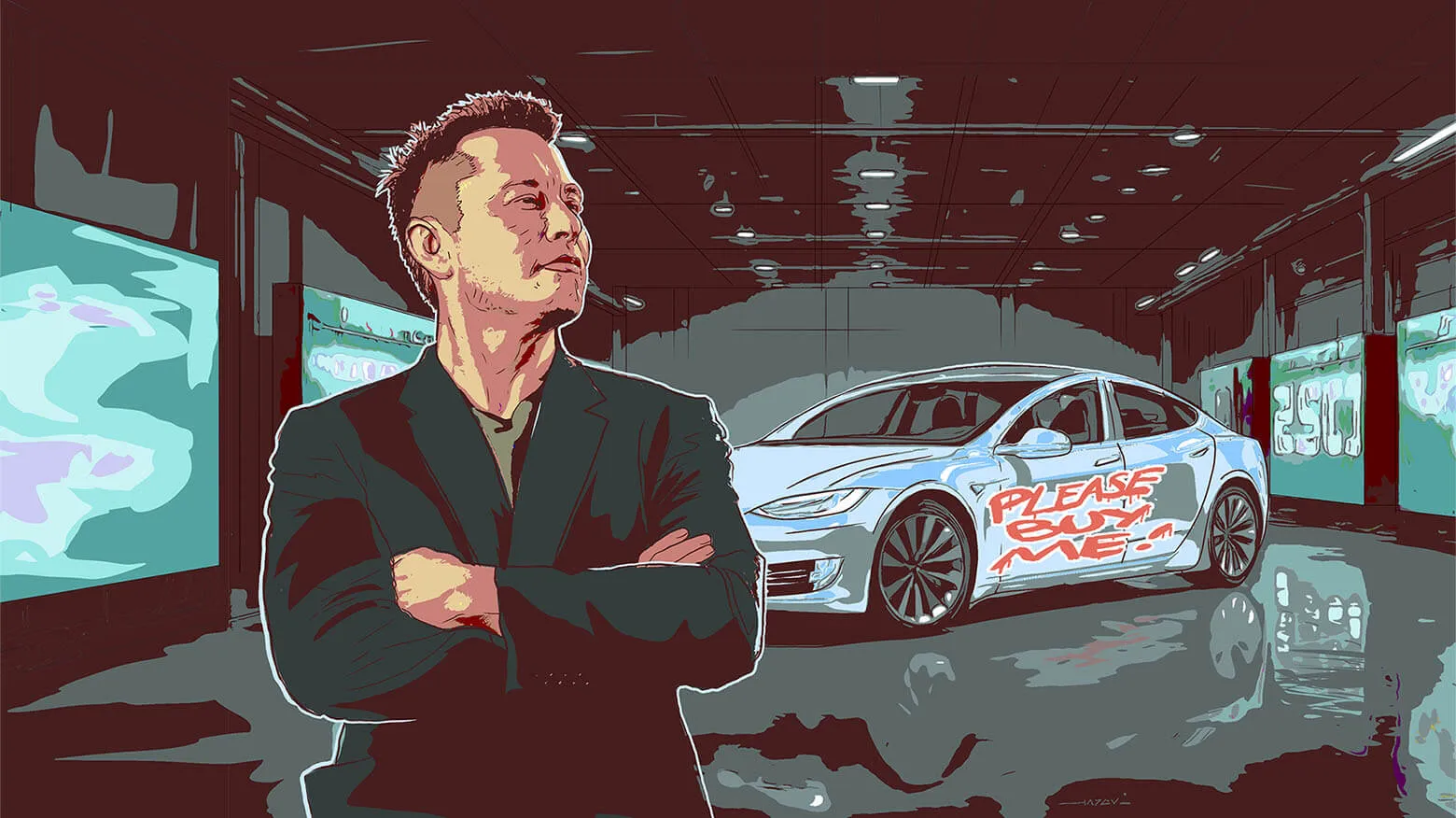


QUESTION: Should Elon Musk Merge Tesla and SpaceX?

By Dr. David Edward Marcinko; MBA MEd

SPONSOR: http://www.MarcinkoAssociates.com

***

***

The question of whether Elon Musk should merge Tesla and SpaceX into a single industrial titan is one of the most provocative thought experiments in modern business. Together, the companies command a combined valuation deep into the trillions, dominating electric vehicles (EVs) and aerospace respectively. While a consolidation could theoretically create an unrivaled technological superpower, the operational realities, financial risks, and strategic misalignments suggest that Elon Musk should keep Tesla and SpaceX as separate entities. Splitting the companies protects their individual missions, shields them from cross-contamination of financial risk, and respects their vastly different corporate governance structures.


The Allure of the Conglomerate: Synergy and Shared Intellect

Proponents of a merger point to the undeniable technological overlap between the two firms. Tesla is an AI and robotics company disguised as an automaker. SpaceX is an advanced manufacturing powerhouse disguised as a rocket company.

  • Materials and Engineering: The two companies already share knowledge. Tesla’s Cybertruck utilizes an ultra-hard stainless-steel alloy reminiscent of SpaceX’s Starship.
  • The “Master Plan” Synergy: A combined entity could seamlessly blend SpaceX’s Starlink satellite network with Tesla’s Full Self-Driving (FSD) ecosystem, ensuring global autonomous vehicle connectivity even in the most remote areas.
  • Talent Magnets: Merging would allow Musk to fluidly deploy elite engineering talent across automotive, robotics, and aerospace projects without navigating complex inter-company consulting agreements.

While these synergies look highly attractive on paper, the practical execution of a formal corporate merger introduces severe systemic vulnerabilities.


The Capital Structure Chasm: Public vs. Private

The structural incompatibility of Tesla and SpaceX presents the most formidable barrier to a merger.

FeatureTeslaSpaceX
Market StatusPublicly traded (NASDAQ)Privately held
Primary PressureQuarterly earnings and marginsMulti-decade capital deployment
Investor MandateNear-term profitability & scaleLong-term capital appreciation

Tesla answers to public shareholders, index funds, and stringent regulatory bodies like the SEC. Its stock price is highly volatile, driven by quarterly delivery numbers and retail investor sentiment.

Conversely, SpaceX operates out of the public eye. This privacy is essential because building a multi-planetary civilization requires massive, upfront capital expenditures with no guarantee of near-term returns. If SpaceX were absorbed into public Tesla, the immense costs and spectacular, fiery testing failures of the Starship program could trigger panic on Wall Street, cratering the combined company’s stock.


Mission Drift and Execution Risk

Both companies are attempting to solve some of the hardest engineering problems in human history. Forcing them into a single corporate structure risks catastrophic mission drift.

  • Tesla’s Mission: Accelerate the world’s transition to sustainable energy.
  • SpaceX’s Mission: Make humanity a multi-planetary species.

Managing a global automotive supply chain, launching gigafactories, and achieving level-5 vehicle autonomy require intense, undivided operational focus. Simultaneously, building reusable moon rockets and colonizing Mars requires an entirely different risk tolerance and regulatory framework.

Consolidating these distinct corporate cultures into an omnibus “Musk Industries” would create an bureaucratic nightmare. The executive bandwidth required to oversee a combined entity would overextend leadership, dulling the fast-moving agility that made both startups successful in the first place.


The Contagion of Risk

In corporate finance, keeping entities separate acts as a firewall. If one company faces a severe crisis, the other remains insulated. Merging Tesla and SpaceX removes this firewall, exposing both to existential contagion.

If a systemic battery defect or an autonomous driving lawsuit heavily penalized Tesla’s balance sheet, a merged entity would have to divert capital away from rocket development to save the automotive division. Conversely, a catastrophic failure in SpaceX’s launch business could tie up the assets of the entire conglomerate, choking Tesla’s ability to fund its next-generation vehicle platforms.

By remaining independent, SpaceX can utilize private funding rounds to weather aerospace downturns, while Tesla can leverage public equity markets to scale its energy and robotics businesses.


Conclusion: Independent but Aligned

Elon Musk should not combine Tesla and SpaceX. The current model—where the companies exist as separate legal entities but maintain an informal, collaborative relationship—is highly effective. It yields all the benefits of cross-pollinated engineering and shared vision without any of the regulatory friction, public market panic, or structural liability of a formal merger.

Tesla must remain a lean, public powerhouse dedicated to transforming Earth’s energy landscape. SpaceX must remain a agile, private pioneer focused on the stars. Keeping them separate ensures that a setback in an automotive factory won’t ground a mission to Mars, and a rocket failure won’t stall the transition to clean energy.

EDUCATION: Books

SPEAKING: Dr. Marcinko will be speaking and lecturing, signing and opining, teaching and preaching, storming and performing at many locations throughout the USA this year! His tour of witty and serious pontifications may be scheduled on a planned or ad-hoc basis; for public or private meetings and gatherings; formally, informally, or over lunch or dinner. All medical societies, financial advisory firms or Broker-Dealers are encouraged to submit an RFP for speaking engagements: CONTACT: Ann Miller RN MHA at MarcinkoAdvisors1738@outlook.com -OR- http://www.MarcinkoAssociates.com

Like, Refer and Subscribe

SEND IN YOUR TOPIC IDEAS, TODAY!

HOSPITALS: http://www.crcpress.com/product/isbn/9781466558731

CLINICS: http://www.crcpress.com/product/isbn/9781439879900

ADVISORS: www.CertifiedMedicalPlanner.org

FINANCE: Financial Planning for Physicians and Advisors

INSURANCE: Risk Management and Insurance Strategies for Physicians and Advisors

Dictionary of Health Economics and Finance

Dictionary of Health Information Technology and Security

Dictionary of Health Insurance and Managed Care

***

The SpaceX IPO

By Dr. David Edward Marcinko; MBA MEd

SPONSOR: http://www.MarcinkoAssociates.com

***

A Defining Moment in Stock Market and Space Industry History

The long‑anticipated SpaceX initial public offering arrived yesterday, marking one of the most transformative moments in modern financial and technological history. After years of speculation, private funding rounds, and intense public fascination, the company founded by Elon Musk has officially entered the public markets. The debut instantly captured global attention, not only because of SpaceX’s reputation for bold engineering achievements, but also because of the unprecedented scale of investor demand surrounding the offering. Today’s IPO represents far more than a financial milestone; it signals a shift in how markets value space‑based infrastructure, satellite communications, and the future of human expansion beyond Earth.

SpaceX’s decision to go public comes at a time when the company has matured into a diversified aerospace and technology powerhouse. What began in 2002 as a scrappy startup with the audacious goal of lowering the cost of space travel has evolved into a multi‑division enterprise with influence across several industries. Its launch services dominate the global market, its Starlink satellite network has become a critical communications platform, and its Starship program aims to redefine deep‑space transportation. The company’s rapid growth and expanding ambitions created mounting pressure from investors and the public, many of whom have been eager for the chance to participate financially in SpaceX’s mission. This IPO finally opened that door.

The offering was met with extraordinary enthusiasm. Demand for shares surged well beyond the supply available, with both institutional and retail investors competing for a stake in the company. Trading platforms reported unusually high activity as markets opened, reflecting the widespread belief that SpaceX represents not just a strong business opportunity but a cultural and technological phenomenon. The company’s valuation soared immediately, placing it among the most valuable publicly traded firms in the world on its first day. This remarkable debut underscores the confidence investors have in SpaceX’s long‑term vision and its ability to execute on projects that once seemed like science fiction.

One of the key drivers of investor excitement is the success of Starlink, SpaceX’s satellite‑based internet service. Starlink has grown rapidly, providing high‑speed connectivity to millions of users across remote and underserved regions. Its global reach and subscription‑based revenue model have made it the company’s most stable and profitable division. For many investors, Starlink represents the foundation of SpaceX’s financial strength, offering predictable income that supports the company’s more ambitious ventures. The IPO allows the public to invest in this expanding communications network while also gaining exposure to SpaceX’s broader technological ecosystem.

Another major factor behind today’s historic debut is the company’s leadership in reusable rocket technology. SpaceX revolutionized the aerospace industry by proving that rockets could be launched, landed, and flown again at a fraction of traditional costs. This breakthrough not only reduced the price of access to space but also positioned the company as the preferred launch provider for governments, private companies, and scientific institutions worldwide. The reliability and efficiency of SpaceX’s launch operations have created a competitive advantage that few rivals can match, further boosting investor confidence.

Despite the celebratory atmosphere surrounding the IPO, the company’s future is not without challenges. Space exploration and satellite deployment are capital‑intensive endeavors, requiring massive investments in research, manufacturing, and infrastructure. SpaceX’s ambitious plans—including building a sustainable presence on Mars, expanding Starlink’s satellite constellation, and developing orbital data centers—will demand significant resources. Investors must balance their enthusiasm with an understanding of the risks inherent in such large‑scale engineering projects. Yet even with these uncertainties, the overwhelming demand for shares suggests that the market believes SpaceX is uniquely positioned to overcome obstacles and continue pushing the boundaries of what is technologically possible.

The cultural impact of this IPO cannot be overstated. SpaceX has become a symbol of human ambition, inspiring millions with its dramatic rocket landings, bold missions, and vision for interplanetary life. By going public, the company has invited the world to participate directly in that vision. For many investors, buying shares is not just a financial decision but a statement of belief in the future of space exploration. The IPO transforms SpaceX from a privately held pioneer into a publicly shared endeavor, expanding its community of supporters and stakeholders.

In addition, the IPO has already begun reshaping the broader technology and aerospace sectors. Competing companies, satellite operators, and launch providers now face a publicly traded giant with vast resources and a loyal investor base. The ripple effects of today’s debut will likely influence market strategies, investment flows, and innovation priorities across multiple industries. SpaceX’s entry into the public markets signals that space is no longer a niche domain but a central arena for technological and economic growth.

UPDATE

• SpaceX soared Friday in its blockbuster stock market debut, with shares gaining 19% after Wall Street’s biggest-ever IPO.• The rocket and AI company, which Elon Musk founded in 2002, is now valued at over $2 trillion, joining Musk’s Tesla as one of the world’s top-ten most valuable companies.• Musk, who owns nearly half the company’s stock, has now made history as the world’s first trillionaire.

COMMENTS APPRECIATED

EDUCATION: Books

SPEAKING: Dr. Marcinko will be speaking and lecturing, signing and opining, teaching and preaching, storming and performing at many locations throughout the USA this year! His tour of witty and serious pontifications may be scheduled on a planned or ad-hoc basis; for public or private meetings and gatherings; formally, informally, or over lunch or dinner. All medical societies, financial advisory firms or Broker-Dealers are encouraged to submit an RFP for speaking engagements: CONTACT: Ann Miller RN MHA at MarcinkoAdvisors2026@outlook.com -OR- http://www.MarcinkoAssociates.com

Like, Refer and Subscribe

HOSPITALS: http://www.crcpress.com/product/isbn/9781466558731

CLINICS: http://www.crcpress.com/product/isbn/9781439879900

ADVISORS: www.CertifiedMedicalPlanner.org

FINANCE:Financial Planning for Physicians and Advisors

INSURANCE:Risk Management and Insurance Strategies for Physicians and Advisors

Dictionary of Health Economics and Finance

Dictionary of Health Information Technology and Security

Dictionary of Health Insurance and Managed Care

***

TESLA: My Current Thoughts

By Vitaliy Katsenelson CFA

***

***

Tesla market value of $780 billion mostly reflects Elon’s future dreams, not car sales. The reality? Only $100-180 billion tied to the actual vehicle business.

***

Current thoughts on Tesla (TSLA)

Tesla has a market capitalization as of this writing of $780 billion. It made around $14 billion of profit in 2023 and $7 billion in 2024. A good chunk of profit comes not from selling cars but from regulatory credits. It sold fewer cars in 2024 than in 2023. Unless we see a significant shift change in battery capacity, speed of charging, and improved quality and availability of charging infrastructure, we have reached peak EV penetration (I wrote about this earlier).

However, today Tesla is not trading based on car sales but on future dreams of self-driving robo-taxis, robots, semis, and whatever else Elon dreams up. The car company may be worth $100–180 billion; the rest is what investors are willing to pay for Elon’s dreams.

Quick thoughts on each dream:

Self-driving: I would not trust my life or my kids’ lives to a car company that only uses cameras. They are passive sensors that have limited range and are easily impacted by bad weather. I’ve used Tesla self-driving software – it is great most of the time, except when it’s not – and then it might kill you or others.

Robo-taxis: They may work in geo-fenced areas, but they pose a huge reputational risk to Tesla. One death and this business is done. That’s what happened to Uber’s self-driving business, and why Google’s Waymo has taken a much more conservative route. It uses radar/lidar and launched the service in geo-fenced areas first.

Semis: They were announced in 2017 and were going to hit the road the next year. They are still not out there. I suspect Elon is waiting for a breakthrough in battery technology.

Robots: Exciting, huge market, but this will be a crowded field.

New competition: There are lots of Chinese EVs invading Europe and the rest of the world. BYD looks like a real competitor.

China looked like a great opportunity for Tesla, but may turn into a liability if the trade war intensifies.

Finally, though at times he seems superhuman, Musk is constrained by the number of hours in the day. As of today he is running Tesla, SpaceX, Twitter (x.com), xAI (the maker of Grok – a ChatGPT competitor), The Boring Company, Neuralink, and oh, yes, DOGE. The EV market is getting more, not less, competitive.

Tesla needs an un-distracted Elon Musk.

COMMENTS APPRECIATED

Refer and Like

***

***