Medicare Advantage [Part C] Plans Face Headwinds

By Health Capital Consultants, LLC

***

***

With the annual enrollment period for Medicare Advantage (MA) plans slated to open in less than two months, many MA plans are cutting benefits and provider payments, while approving fewer claims. Further, after a decade of accelerated growth in the MA market, several MA plan executives have announced MA market exits and decreases in membership for the upcoming plan year.

CITE: https://www.r2library.com/Resource

This Health Capital Topics article discusses recently announced MA market exits, the reasons for those exits, and the current environment in which MA plans are operating. (Read more...)

COMMENTS APPRECIATED

Thank You

***

***

Integration as a Competitive Strategy in Healthcare Reform

Understanding Horizontal and Vertical Integration

ENCORE PRESENTATION

[By Robert James Cimasi MHA, AVA, CMP™]

Health Capital Consultants, LLC

St. Louis MO

Several potential benefits are associated with the integration of companies in the same or related industries. These synergistic benefits depend upon the type of companies and their integration strategies, as well as whether the anticipated transaction is a manifestation of horizontal consolidation or vertical integration.

Horizontal consolidation is “the acquisition and consolidation of like organizations or business ventures under a single corporate management, in order to produce synergy, reduce redundancies and duplication of efforts or products, and achieve economies of scale while increasing market share.”

Vertical integration involves the joining of organizations that are fundamentally different in their product and/or services offerings, i.e., “the aggregation of dissimilar but related business units, companies, or organizations under a single ownership or management in order to provide a full range of related products and services.”

Healthcare Locality

As healthcare is essentially a local business, horizontal integration within the local market has been limited by antitrust laws. Therefore, in order to control greater market share, a hospital’s strategy has required vertical integration. Healthcare providers and organizations have placed much emphasis on the benefits of vertical system integration in the last 10 or more years, whereby a single healthcare organization owns all of the elements needed to provide a continuum of care for all the needs of a given patient population. Much of this effect has stemmed from the desire to be able provide a “continuum of care,” i.e., to be able to single source contract for the healthcare needs of a patient population and to profit from implementing preventative healthcare and utilization management measures. The relative economic benefits of this type of vertical integration versus horizontal integration strategies remain the subject of great debate in academia and among the strategic managers of other industries. One lesson that may be drawn from other industries is that neither of these forms of integration is universally applicable or beneficial to every organization and market. There are also great costs to integration, which must be outweighed by the benefits. Each specific benefit should be identified and researched when examining the probable effects of integration, consolidation, mergers or divestitures as a competitive strategy.

Rapid Consolidation Periods

During the rapid consolidation and integration of healthcare providers, insurers, and purchasers, in recent years, there was much discussion of a concept termed “managed competition.” This term appears to have been an outgrowth of the term “managed care” and was viewed by many as the logical result of the integration of healthcare markets nationally. The concept of “managed competition” apparently related to an idealized vision of competition between very large, integrated providers (organized into integrated delivery systems), large, national managed care payors, and purchasing group coalitions that could achieve a balance of power between these interacting groups. However, many believe that the result of such an arrangement would more likely be a reduction in competition between members of each of these three groups and the creation of powerful bureaucratic and intractable organizations. Further, this scenario does not appear to effectively remove any of the existing barriers to competition and therefore doesn’t introduce any additional incentives for innovation to produce value for consumers which, of course, is the “sine qua non” of competition.

Disadvantages

The disadvantages of integration are becoming apparent, including:

  • the loss of autonomy;
  • increased bureaucracy;
  • difficulty in aligning incentives; and
  • other failed expectations.

Many organizations that sought strategic advantage through integration are ending those arrangements and now divesting acquired organizations.

Other Industries

In other industries, specialized providers of goods and services are increasingly able to offer customers a full range of services through affiliation and affinity with other independent specialists, made more seamless through the use of increasingly sophisticated communications and computing technologies. However, this move to “dis-integration” must also be carefully considered if organizations are not to make further costly organizational changes inspired by a rushed judgment of general market trends.

Porter Speaks

Michael Porter (et al.) wrote in the Harvard Business Review that,

In industry after industry, the underlying dynamic is the same: competition compels companies to deliver increasing value to customers. The fundamental driver of this continuous quality improvement and cost reduction is innovation. Without incentives to sustain innovation in health care, short-term cost savings will soon be overwhelmed by the desire to widen access, the growing health needs of an aging population, and the unwillingness of Americans to settle for anything less than the best treatments available. Inevitably, the failure to promote innovation will lead to lower quality or more rationing of care — two equally undesirable results.

Assessment

Therefore, if the emerging healthcare industry is to respond successfully to the Affordable Care Act [ACA] and related market pressures to reduce costs, then the healthcare market must first create incentives for innovation. The barriers to competition cannot include barriers to innovation as many do now. Physicians, nurses, healthcare purchasers, managers, and legislators must ensure innovation takes the forefront of any reform, if it is to be effective.

Conclusion

Your thoughts and comments on this ME-P are appreciated. Feel free to review our top-left column, and top-right sidebar materials, links, URLs and related websites, too. Then, subscribe to the ME-P. It is fast, free and secure.

Speaker: If you need a moderator or speaker for an upcoming event, Dr. David E. Marcinko; MBA – Publisher-in-Chief of the Medical Executive-Post – is available for seminar or speaking engagements. Contact: MarcinkoAdvisors@msn.com

OUR OTHER PRINT BOOKS AND RELATED INFORMATION SOURCES:

PHYSICIANS: www.MedicalBusinessAdvisors.com
HOSPITALS: http://www.crcpress.com/product/isbn/9781466558731
CLINICS: http://www.crcpress.com/product/isbn/9781439879900
BLOG: www.MedicalExecutivePost.com
FINANCE: Financial Planning for Physicians and Advisors
INSURANCE: Risk Management and Insurance Strategies for Physicians and Advisors

Product DetailsProduct DetailsProduct Details

Product Details  Product Details

   Product Details 

DAILY UPDATE: MyChart, Meta, Zelle and Acadia as the DJIA Rises

MEDICAL EXECUTIVE-POST TODAY’S NEWSLETTER BRIEFING

***

Essays, Opinions and Curated News in Health Economics, Investing, Business, Management and Financial Planning for Physician Entrepreneurs and their Savvy Advisors and Consultants

Serving Almost One Million Doctors, Financial Advisors and Medical Management Consultants Daily

A Partner of the Institute of Medical Business Advisors , Inc.

http://www.MedicalBusinessAdvisors.com

SPONSORED BY: Marcinko & Associates, Inc.

***

http://www.MarcinkoAssociates.com

Daily Update Provided By Staff Reporters Since 2007.
How May We Serve You?
© Copyright Institute of Medical Business Advisors, Inc. All rights reserved. 2024

REFER A COLLEAGUE: MarcinkoAdvisors@msn.com

SPONSORSHIPS AVAILABLE: https://medicalexecutivepost.com/sponsors/

ADVERTISE ON THE ME-P: https://tinyurl.com/ytb5955z

Your Referral Count -0-

Stat: 150. That’s how many health systems use AI to help draft replies on MyChart, sometimes without disclosing this to patients. (the New York Times)

Contained in a roughly 200-page quarterly filing from JPMorgan Chase last month were eight words that underscore how contentious the bank’s relationship with the government has become. The lender disclosed that the Consumer Financial Protection Bureau could punish JPMorgan for its role in Zelle, the giant peer-to-peer digital payments network. The bank is accused of failing to kick criminal accounts off its platform and failing to compensate some scam victims.

CITE: https://www.r2library.com/Resource

Stocks Up

Bristol-Myers Squibb rose 1.56% after the FDA approved its new drug for schizophrenia, the first new treatment of its kind in decades. Some analysts expect the drug, Cobenfy, to bring in $6 billion in peak annual revenue.

  • Trump Media gained 5.58% despite a co-founder of its Truth Social platform cashing out nearly all of his shares—worth about $100 million at current prices.
  • Chinese EV maker Nio added another 12.80% to bring its weekly gains to nearly 25%. It’s benefiting from the overall euphoria around Chinese stocks and anticipation over its quarterly delivery numbers due next week.
  • Speaking of the Chinese government’s stimulus measures, investors are wagering that the Macau locations of Las Vegas Sands Corp. (up 5.59%) and Wynn Resorts (up 7.24%) will see more visitors.
  • IonQ, a quantum computing company based in College Park, MD (go Terps), shot up 20.47% after inking a contract with the US Air Force Research Lab.

Stocks down

  • Nvidia dropped 2.17%. Bloomberg reported that the Chinese government is ramping up the pressure on local tech companies to move away from using Nvidia AI chips and lean more on domestic suppliers.
  • WeightWatchers, whose shares are down more than 90% this year, booted its CEO Sima Sistani, who pivoted the company to weight-loss drugs. Investors aren’t betting a change at the top will lead to a turnaround, sending shares 2.11% lower on the day.
  • Globe Life sank 4.74% after the US Equal Employment Opportunity Commission found that the life insurance company tolerated a “pervasive pattern of harassing conduct” at one of its top sales agencies, per Business Insider.

CITE: https://tinyurl.com/2h47urt5

Here’s where the major benchmarks ended:

  • The S&P 500® index (SPX) lost 7.20 points (–0.13%) to 5,738.17 to end the week up 0.62%; the Dow Jones Industrial Average® ($DJI) added 137.89 points (0.33%) to 42,313.00 to end the week up 0.59%; the NASDAQ Composite® ($COMP) fell 70.70 points (–0.39%) to 18,119.59 to end the week up 0.95%.
  • The 10-year Treasury note yield (TNX) fell four basis points to 3.75%, up two basis points for the week.
  • The CBOE Volatility Index® (VIX) jumped to 16.64.

CITE: https://tinyurl.com/tj8smmes

Meta is facing a fine of $102 million for storing some users’ passwords in “plaintext”. The social media giant has admitted to poor password management.

Acadia and the Department of Justice just reached a ~$20M agreement to settle accusations that the company billed Medicare, Medicaid, and TRICARE for medically unnecessary inpatient mental health services. Acadia found itself under pressure after a New York Times investigation published earlier in September allegedly found that the company kept patients in facilities against their will to maximize insurance payments.

COMMENTS APPRECIATED

PLEASE SUBSCRIBE: MarcinkoAdvisors@msn.com

Thank You

***

***

***

***

EDUCATIONAL TEXTBOOKS: https://tinyurl.com/4zdxuuwf

***

CMS: A New Primary Care Medicine Model

“MAKING CARE PRIMARY”

By Health Capital Consultants, LLC

***

***

CMS Announces New Primary Care Model

On June 8, 2023, the Centers for Medicare and Medicaid Services (CMS) announced the establishment of Making Care Primary (MCP) Model, a voluntary primary care model that will be tested in Colorado, Massachusetts, Minnesota, New Mexico, North Carolina, New York, New Jersey, and Washington.

Launched on July 1, 2024, the 10 ½ year model will seek to improve the coordination and management of care, enable primary care clinicians to form relationships with healthcare specialists, and form community-based connections to address the health needs of patients, as well as health-related social needs such as nutrition and housing.
CITE: https://www.r2library.com/Resource

This Health Capital Topics article will discuss the new MCP Model and its implications for the healthcare industry. (Read more...)

***

***

COMMENTS APPRECIATED

Thank You

***

PODCAST: Patient Trust In Healthcare

By Eric Bricker MD

COMMENTS APPRECIATED

***

***

MICRO-CERTIFICATIONS: Financial Advisors Seeking Physician-Client Niche Success?

Micro-Credentials on the Rise

KNOWLEDGE RICHES IN NICHES

DR. DAVID EDWARD MARCINKO MBA MEd CMP

SPONSOR: http://www.CertifiedMedicalPlanner.org

***

***

Do you ever wish you could acquire specific information for your career activities without having to complete a university Master’s Degree or finish our entire Certified Medical Planner™ professional designation program? Well, Micro-Certifications from the Institute of Medical Business Advisors, Inc., might be the answer. Read on to learn how our three Micro-Certifications offer new opportunities for professional growth in the medical practice, business management, health economics and financial planning, investing and advisory space for physicians, nurses and healthcare professionals.

Micro-Certification Basics

Stock-Brokers, Financial Advisors, Investment Advisors, Accountants, Consultants, Financial Analyists and Financial Planners need to enhance their knowledge skills to better serve the changing and challenging healthcare professional ecosystem. But, it can be difficult to learn and demonstrate mastery of these new skills to employers, clients, physicians or medical prospects. This makes professional advancement difficult. That’s where Micro-Certification and Micro-Credentialing enters the online educational space. It is the process of earning a Micro-Certification, which is like a mini-degree or mini-credential, in a very specific topical area.

Micro-Certification Requirements

Once you’ve completed all of the requirements for our Micro-Certification, you will be awarded proof that you’ve earned it. This might take the form of a paper or digital certificate, which may be a hard document or electronic image, transcript, file, or other official evidence that you’ve completed the necessary work.

Uses of Micro-Certifications

Micro-Certifications may be used to demonstrate to physicians prospective medical clients that you’ve mastered a certain knowledge set. Because of this, Micro-Certifications are useful for those financial service professionals seeking medical clients, employment or career advancement opportunities.

Examples of iMBA, Inc., Micro-Certifications

Here are the three most popular Micro-Certification course from the Institute of Medical Business Advisors, Inc:

  • 1. Health Insurance and Managed Care: To keep up with the ever-changing field of health care physician advice, you must learn new medical practice business models in order to attract and assist physicians and nurse clients. By bringing together the most up-to-date business and medical prctice models [Medicare, Medicaid, PP-ACA, POSs, EPOs, HMOs, PPOs, IPA’s, PPMCs, Accountable Care Organizations, Concierge Medicine, Value Based Care, Physician Pay-for-Performance Initiatives, Hospitalists, Retail and Whole-Sale Medicine, Health Savings Accounts and Medical Unions, etc], this iMBA Inc., Mini-Certification offers a wealth of essential information that will help you understand the ever-changing practices in the next generation of health insurance and managed medical care.
  • 2. Health Economics and Finance: Medical economics, finance, managerial and cost accounting is an integral component of the health care industrial complex. It is broad-based and covers many other industries: insurance, mathematics and statistics, public and population health, provider recruitment and retention, health policy, forecasting, aging and long-term care, and Venture Capital are all commingled arenas. It is essential knowledge that all financial services professionals seeking to serve in the healthcare advisory niche space should possess.
  • 3. Health Information Technology and Security: There is a myth that all physician focused financial advisors understand Health Information Technology [HIT]. In truth, it is often economically misused or financially misunderstood. Moreover, an emerging national HIT architecture often puts the financial advisor or financial planner in a position of maximum uncertainty and minimum productivity regarding issues like: Electronic Medical Records [EMRs] or Electronic Health Records [EHRs], mobile health, tele-health or tele-medicine, Artificial Intelligence [AI], benefits managers and human resource professionals.

Other Topics include: economics, finance, investing, marketing, advertising, sales, start-ups, business plan creation, financial planning and entrepreneurship, etc.

How to Start Learning and Earning Recognition for Your Knowledge

Now that you’re familiar with Micro-Credentialing, you might consider earning a Micro-Certification with us. We offer 3 official Micro-Certificates by completing a one month online course, with a live instructor consisting of twelve asynchronous lessons/online classes [3/wk X 4/weeks = 12 classes]. The earned official completion certificate can be used to demonstrate mastery of a specific skill set and shared with current or future employers, current clients or medical niche financial advisory prospects.

Mini-Certification Tuition, Books and Related Fees

The tuition for each Mini-Certification live online course is $1,250 with the purchase of one required dictionary handbook. Other additional guides, white-papers, videos, files and e-content are all supplied without charge. Alternative courses may be developed in the future subject to demand and may change without notice.

***

Contact: For more information, or to speak with an academic representative, please contact Ann Miller RN MHA CMP™ at: MarcinkoAdvisors@msn.com [24/7].

***

PODCAST: How Does Medical Debt Impact Your Credit Report?

By Eric Bricker MD

***

***

COMMENTS APPRECIATED

Thank You

***

***

INTERVIEW: A Healthcare Financing Solution for Entrepreneurs?

Former: CEO and Founder
Superior Consultant Company, Inc.
[SUPC-NASD]

EDITOR’S NOTE: I first met Rich in B-school, when I was a student, back in the day. He was the Founder and CEO of Superior Consultant Holdings Corp. Rich graciously wrote the Foreword to one of my first textbooks on financial planning for physicians and healthcare professionals. Today, Rich is a successful entrepreneur in the technology, health and finance space.

-Dr. David E. Marcinko MBA MEd CMP®

***

Staff & Contributors - CHAMPIONS OF WAYNE

By Richard Helppie

Today for your consideration – How to fix the healthcare financing methods in the United States?

I use the term “methods” because calling what we do now a “system” is inaccurate. I also focus on healthcare financing, because in terms of healthcare delivery, there is no better place in the world than the USA in terms of supply and innovation for medical diagnosis and treatment. Similarly, I use the term healthcare financing to differentiate from healthcare insurance – because insurance without supply is an empty promise.

This is a straightforward, 4-part plan. It is uniquely American and will at last extend coverage to every US citizen while not hampering the innovation and robust supply that we have today. As this is about a Common Bridge and not about ideology or dogma, there will no doubt be aspects of this proposal that every individual will have difficulty with. However, on balance, I believe it is the most fair and equitable way to resolve the impasse on healthcare funding . . . .

CITE: https://www.r2library.com/Resource/Title/0826102549

Let me start in an area sure to raise the ire of a few. And that is, we have to start with eliminating the methods that are in place today. The first is the outdated notion that healthcare insurance is tied to one’s work, and the second is that there are overlapping and competing tax-supported bureaucracies to administer that area of healthcare finance.

Step 1 is to break the link between employment and health insurance. Fastest way to do that is simply tax the cost of benefits for the compensation that it is. This is how company cars, big life insurance policies and other fringe benefits were trimmed. Eliminating the tax-favored treatment of employer-provided healthcare is the single most important change that should be made.

Yes, you will hear arguments that this is an efficient market with satisfied customers. However, upon examination, it is highly risky, unfair, and frankly out of step with today’s job market.

Employer provided health insurance is an artifact from the 1940’s as an answer to wage freezes – an employer could not give a wage increase, but could offer benefits that weren’t taxed. It makes no sense today for a variety of reasons. Here are a few:

1. Its patently unfair. Two people living in the same apartment building, each making the same income and each have employer provided health insurance. Chris in unit 21 has a generous health plan that would be worth $25,000 each year. Pays zero tax on that compensation. Pat, in unit 42 has a skimpy plan with a narrow network, big deductibles and hefty co-pays. The play is worth $9,000 each year. Pat pays zero tax.

3. The insurance pools kick out the aged. Once one becomes too old to work, they are out of the employer plan and on to the retirement plan or over to the taxpayers (Medicare).

4. The structure is a bad fit. Health insurance and healthy living are longitudinal needs over a long period of time. In a time when people change careers and jobs frequently, or are in the gig economy, they are not any one place long enough for the insurance to work like insurance.

5. Creates perverse incentives. The incentives are weighted to have employers not have their work force meet the standards of employees so they don’t have to pay for the health insurance. Witness latest news in California with Uber and Lyft.

6. Incentives to deny claims abound. There is little incentive to serve the subscriber/patient since the likelihood the employer will shop the plan or the employee will change jobs means that stringing out a claim approval is a profitable exercise.

7. Employers have difficulty as purchasers. An employer large enough to supply health insurance has a diverse set of health insurance needs in their work force. They pay a lot of money and their work force is still not 100% happy.

Net of it, health insurance tied to work has outlived its usefulness. Time to end the tax-favored treatment of employer-based insurance. If an employer wants to provide health insurance, they can do it, but the value of that insurance is reflected in the taxable W-2 wages – now Pat and Chris will be treated equally.

Step 2 is to consolidate the multiple tax-supported bureaus that supply healthcare. Relieve the citizens from having to prove they are old enough, disabled enough, impoverished enough, young enough. Combine Medicare, Medicaid, CHIP, Tricare and even possibly the VA into a single bureaucracy. Every American Citizen gets this broad coverage at some level. Everyone pays something into the system – start at $20 a year, and then perhaps an income-adjusted escalator that would charge the most wealthy up to $75,000. Collect the money with a line on Form 1040.

I have not done the exact math. However, removing the process to prove eligibility and having one versus many bureaucracies has to generate savings. Are you a US Citizen? Yes, then here is your base insurance. Like every other nationalized system, one can expect longer waits, fewer referrals to a specialist, and less innovation. These centralized systems all squeeze supply of healthcare services to keep their spend down. The reports extolling their efficiencies come from the people whose livelihoods depend on the centralized system. However, at least everyone gets something. And, for life threatening health conditions, by and large the centralized systems do a decent job. With everyone covered, the fear of medical bankruptcy evaporates. The fear of being out of work and losing healthcare when one needs it most is gone.

So if you are a free market absolutist, then the reduction of vast bureaucracies should be attractive – no need for eligibility requirements (old enough, etc.) and a single administration which is both more efficient, more equitable (everyone gets the same thing). And there remains a private market (more on this in step 3) For those who detest private insurance companies a portion of that market just went away. There is less incentive to purchase a private plan. And for everyone’s sense of fairness, the national plan is funded on ability to pay. Bearing in mind that everyone has to pay something. Less bureaucracies. Everyone in it together. Funded on ability to pay.

Step 3 is to allow and even encourage a robust market for health insurance above and beyond the national plan – If people want to purchase more health insurance, then they have the ability to do so. Which increases supply, relieves burden on the tax-supported system, aligns the US with other countries, provides an alternative to medical tourism (and the associated health spend in our country) and offers a bit of competition to the otherwise monopolistic government plan.

Its not a new concept, in many respects it is like the widely popular Medigap plans that supplement what Medicare does not cover.

No one is forced to make that purchase. Other counties’ experience shows that those who choose to purchase private coverage over and above a national plan often cite faster access, more choice, innovation, or services outside the universal system, e.g., a woman who chooses to have mammography at an early age or with more frequency than the national plan might allow.  If the insurance provider can offer a good value to the price, then they will sell insurance. If they can deliver that value for more than their costs, then they create a profit. Owners of the company, who risk their capital in creating the business may earn a return.

For those of you who favor a free market, the choices are available. There will be necessary regulation to prevent discrimination on genetics, pre-existing conditions, and the like. Buy the type of plan that makes you feel secure – just as one purchases automobile and life insurance.For those who are supremely confident in the absolute performance of a centralized system to support 300+ million Americans in the way each would want, they should like this plan as well – because if the national plan is meeting all needs and no one wants perhaps faster services, then few will purchase the private insurance and the issuers will not have a business. Free choice. More health insurance for those who want it. Competition keeps both national and private plans seeking to better themselves.

Step 4 would be to Permit Access to Medicare Part D to every US Citizen, Immediately

One of the bright spots in the US Healthcare Financing Method is Medicare Part D, which provides prescription drug coverage to seniors. It is running at 95% subscriber satisfaction and about 40% below cost projections.

Subscribers choose from a wide variety of plans offered by private insurance companies. There are differences in formularies, co-pays, deductibles and premiums.

So there you have it, a four part plan that would maintain or increase the supply of healthcare services, universal insurance coverage, market competition, and lower costs. Its not perfect but I believe a vast improvement over what exists today. To recap:

1. Break the link between employment and healthcare insurance coverage, by taxing the benefits as the compensation they are.

2. Establish a single, universal plan that covers all US citizens paid for via personal income taxes on an ability-to-pay basis.  Eliminate all the other tax-funded plans in favor of this new one.

3. For those who want it, private, supplemental insurance to the national system, ala major industrialized nations.

4. Open Medicare Part D (prescription drugs) to every US citizen. Today.

YOUR THOUGHTS ARE APPRECIATED.

Thank You

***

HOSPITALS: https://www.amazon.com/Financial-Management-Strategies-Healthcare-Organizations/dp/1466558733/ref=sr_1_3?ie=UTF8&qid=1380743521&sr=8-3&keywords=david+marcinko

***

HEALTHCARE: https://www.amazon.com/Hospitals-Healthcare-Organizations-Management-Operational/dp/1439879907/ref=sr_1_4?s=books&ie=UTF8&qid=1334193619&sr=1-4

***

AMA: Calls Out Skinny Health Insurance Networks!

By Staff Reporters

***

***

Patients aren’t the only ones voicing concerns over the state of the US health insurance industry. The American Medical Association’s (AMA) policy making arm just called for new oversight and standards that ensure health plans don’t improperly limit patient access to in-network care.

The AMA House of Delegates voted to establish and enforce health insurance network adequacy standards as it met in National Harbor, Maryland, last year. The body adopted the proposal—along with several others—as part of the AMA’s continued efforts to ensure health plans meet patient needs and are held accountable for narrow networks.

The association said inadequate networks can create difficulties for patients in need of new or continued care. They can further limit patient choice when it comes to who is able to treat them and where they can be treated.

COMMENTS APPRECIATED

Thank You

***

***

Effects of Affordable Care Act on Uninsured Hospitalization

By Nima Khodakarami PhD and Benjamin Ukert PhD

Evidence from Texas

***

***

Medical care services before the health service is performed—became standard practice beginning with Medicare and Medicaid legislation in the 1960s.

Although research has uncovered disparities in prior coverage for cancer patients based on race, little has been known to date on the role of prior authorization in increasing or decreasing these disparities.

CITE: https://www.r2library.com/Resource

To learn more about the issue, Benjamin Ukert, Ph.D., an assistant professor of health policy and management in the Texas A&M University School of Public Health, and a colleague at Penn State conducted a retrospective study of data provided by a major national commercial insurance provider on 18,041 patients diagnosed with cancer between Jan. 1st, 2017, and April 1st, 2020.

The study is published in the journal Health Services Research.

READ: https://onlinelibrary.wiley.com/doi/epdf/10.1111/1475-6773.14334

COMMENTS APPRECIATED

Thank You

***

***

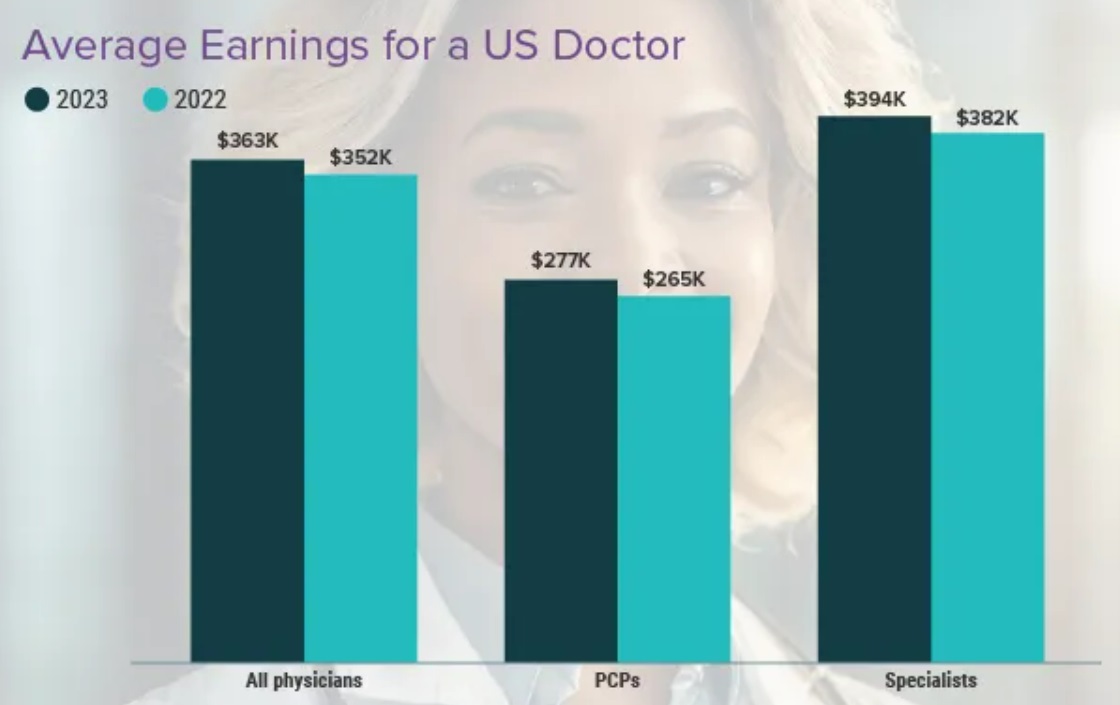
Multi-Specialty Surveys for Physician Compensation – Released

By Health Capital Consultants, LLC

***

***

It’s the most wonderful time of the year – Survey Season! Beginning in late May each year, numerous industry normative benchmark physician production and compensation surveys begin publishing the most recent year’s reports. These healthcare and specialty specific surveys annually report specific types of physician compensation and productivity metrics across the country for various specialties and are widely used by hospitals, physician practices, and healthcare compensation and valuation experts, are often used for the determination of Fair Market Value (FMV) physician compensation for regulatory compliance purposes.

CITE: https://www.r2library.com/Resource

Additionally, the government has referenced and utilized industry normative benchmark compensation surveys (including those listed below) in reviewing and litigating physician compensation arrangements, indicating their reliance on this data as well. (Read more…)

COMMENTS APPRECIATED

Thank You

***

***

PHYSICIAN FINANCIAL & BUSINESS ADVICE ONLY – Not Sales!

MISSION STATEMENT

Open Letter from the CEO

Dr. David Edward Marcinko MBA CMP™

http://www.MarcinkoAssociates.com

ALL MEDICAL AND HEALTHCARE COLLEAGUES

Did you know that at MARCINKO & Associates, all medical colleagues throughout the United States may contact us when they are considering the sale, purchase, strategic operating improvement, merger, acquisition and/or other financial business or related personal financial planning transaction?

MORE: https://marcinkoassociates.com/welcome-medical-colleagues/

***

Our difference is “hard” knowledge and insider financial guidance that helps medical colleagues, nurses, private practitioners, clinics, ambulatory surgery, radiology and outpatient wound care centers realize their ultimate economic goals. This typically includes managerial and cost accounting, financial ratio analysis, fair market valuation business appraisals, business plan creation and personal financial planning.

MORE: https://marcinkoassociates.com/fmv-appraisals/

Our “expert witness” business litigation support service and divorce mediation, arbitration, asset division, settlement and second opinion offerings are always available, as well.

MORE: https://marcinkoassociates.com/expert-witness/

And, our “soft” skill professional career guidance and mentoring center includes executive coaching, consulting and mentoring advisory programs for stressed, conflicted or burned-out physicians and medical practitioners.

Most importantly, our professional fees are reasonable and always transparent.

MARCINKO & Associates also serves universities, medical, business, graduate and nursing schools; physicians, dentists, podiatrists, optometrists and legal societies. This includes accountants, financial service providers, wealth and hedge fund managers, emerging entities, hospitals, CEOs and their BODs, the press, media and related organizations.

MORE: https://marcinkoassociates.com/speaking-seminars/

Contact us for an educational white-paper on most any topic.

MORE: https://marcinkoassociates.com/case-studies/

***

Now, please review our website to learn more.

And, always retain us when needed.

How May We Serve You?

DAVID EDWARD MARCINKO

email: MarcinkoAdvisors@msn.com

***

© Copyright: Institute of Medical Business Advisors, Inc. All rights reserved, USA. Present to 2024.

DOJ Intervenes in Fraud & Abuse Case Against Tennessee Hospital

By Health Capital Consultants, LLC

***

On July 26, 2024, the U.S. Department of Justice (DOJ) filed a complaint in intervention against Murphy Medical Center, doing business as Erlanger Western Carolina Hospital, and Chattanooga-Hamilton County Hospital Authority, doing business as the Erlanger Health System and Erlanger Medical Center. The government’s complaint, filed in the U.S. District Court for the Western District of North Carolina, alleges that Erlanger violated the Stark Law, and subsequently submitted false claims to the Medicare program in violation of the False Claims Act (FCA).

CITE: https://www.r2library.com/Resource

This Health Capital Topics article reviews the allegations underlying the case. (Read more...) 

COMMENTS APPRECIATED

Thank You

***

***

DAILY UPDATE: Medicare Part D Drugs, Kidney Donor Tax Credits, UnitedHealth and the Robust Stock Markets with DJIA at Record High

MEDICAL EXECUTIVE-POST TODAY’S NEWSLETTER BRIEFING

***

Essays, Opinions and Curated News in Health Economics, Investing, Business, Management and Financial Planning for Physician Entrepreneurs and their Savvy Advisors and Consultants

Serving Almost One Million Doctors, Financial Advisors and Medical Management Consultants Daily

A Partner of the Institute of Medical Business Advisors , Inc.

http://www.MedicalBusinessAdvisors.com

SPONSORED BY: Marcinko & Associates, Inc.

***

http://www.MarcinkoAssociates.com

Daily Update Provided By Staff Reporters Since 2007.
How May We Serve You?
© Copyright Institute of Medical Business Advisors, Inc. All rights reserved. 2024

REFER A COLLEAGUE: MarcinkoAdvisors@msn.com

SPONSORSHIPS AVAILABLE: https://medicalexecutivepost.com/sponsors/

ADVERTISE ON THE ME-P: https://tinyurl.com/ytb5955z

Your Referral Count -0-

CITE: https://www.r2library.com/Resource

What’s up

  • Dell Technologies rose 4.33% after beating analyst estimates on both the top and bottom lines thanks to strong AI demand.
  • Marvell Technology popped 9.16% after beating analyst estimates on both the top and bottom lines thanks to, believe it or not, strong AI demand.
  • MongoDB gained 18.34% after beating analyst estimates on both the top and bottom lines thanks to, you’re never going to guess, strong AI demand.

What’s down

  • After accidentally announcing earnings earlier than it intended, Gap fell 1.67%, despite earnings actually looking pretty good.
  • Super Micro Computer sank another 2.48% as the fallout from short seller Hindenburg Research’s latest report continues.
  • Elastic NV plummeted 26.49% after the software maker announced a weak quarterly report and forecast worse quarters ahead.
  • Alnylam Pharmaceuticals stumbled 8.47% in spite of announcing positive Phase 3 trial results for its new heart disease drug. Shareholders don’t think the new drug is as groundbreaking as it could’ve been compared to offerings from competitors like BridgeBio, which popped 13.12% on the news.

CITE: https://tinyurl.com/2h47urt5

Here’s where the major benchmarks ended:

  • The SPX climbed 56.44 points (1.01%) to 5,648.40, roughly flat for the week; the $DJI rose 228.03 points (0.55%) to 41,563.08, up almost 1% for the week; the NASDAQ Composite®($COMP) added 197.19 points (1.13%) to 17,713.62, down nearly 1% from a week ago.
  • The 10-year Treasury note yield (TNX) climbed three basis points to 3.91% but fell about 20 basis points in August.
  • The CBOE Volatility Index® (VIX) fell moderately to 14.96, well below levels above 30 recorded earlier this month.

CITE: https://tinyurl.com/tj8smmes

The Centers for Medicare and Medicaid Services (CMS) has been doing victory laps since announcing discounts on August 15 for 10 of the most expensive Medicare Part D drugs, a change that is set to go into effect in 2026. These discounts, called maximum fair prices (MFPs), kick off annual negotiations between the CMS and drug manufacturers. The negotiations were made possible by the Inflation Reduction Act (IRA), which also brings other changes such as Medicare Part D benefit redesign.

Visualize: How private equity tangled banks in a web of debt, from the Financial Times.

And, Remember NFTs? This is an excellent history of OpenSea, the largest NFT marketplace, and all the chaos within its walls.

COMMENTS APPRECIATED

PLEASE SUBSCRIBE: MarcinkoAdvisors@msn.com

Thank You

***

***

***

***

EDUCATIONAL TEXTBOOKS: https://tinyurl.com/4zdxuuwf

***

DAILY UPDATE: McKesson, CMS and Epic as Stocks Lost Ground

MEDICAL EXECUTIVE-POST TODAY’S NEWSLETTER BRIEFING

***

Essays, Opinions and Curated News in Health Economics, Investing, Business, Management and Financial Planning for Physician Entrepreneurs and their Savvy Advisors and Consultants

Serving Almost One Million Doctors, Financial Advisors and Medical Management Consultants Daily

A Partner of the Institute of Medical Business Advisors , Inc.

http://www.MedicalBusinessAdvisors.com

SPONSORED BY: Marcinko & Associates, Inc.

***

http://www.MarcinkoAssociates.com

Daily Update Provided By Staff Reporters Since 2007.
How May We Serve You?
© Copyright Institute of Medical Business Advisors, Inc. All rights reserved. 2024

REFER A COLLEAGUE: MarcinkoAdvisors@msn.com

SPONSORSHIPS AVAILABLE: https://medicalexecutivepost.com/sponsors/

ADVERTISE ON THE ME-P: https://tinyurl.com/ytb5955z

Your Referral Count -0-

McKesson plans to grow its oncology platform by investing nearly $2.5 billion for a 70% stake in Community Oncology Revitalization Enterprise Ventures (Core Ventures), which was launched earlier this year by Florida Cancer Specialists & Research Institute (FCS). The institute is a group practice of more than 250 physicians, 280 advanced practice providers and almost 100 Florida locations that will remain independent following the deal’s close. The deal will bring advanced treatments and improved care to patients while reducing the overall cost of care, McKesson’s chief executive said.


The Centers for Medicare & Medicaid Services (CMS) issued a new report detailing total complaints related to the No Surprises Act and Affordable Care Act compliance. Providers and consumers earned $4.18 million in relief. More than 12,000 complaints were tied to the No Surprises Act compliance, 10,300 of which were against providers, facilities and air ambulance services. Most of such complaints were about surprise billing for non-emergency services at an in-network facility, followed by surprise billing for emergency services and good faith estimates.


And…Electronic health records giant Epic recently announced plans to transition its customers to TEFCA, the Trusted Exchange Framework and Common Agreement, a nationwide network to exchange patient data that was mandated by the 21st Century Cures Act back in 2016. On the same day, Carequality, an interoperability network that Epic belongs to, also announced that it plans to align with TEFCA. As one of the largest health IT vendors in the industry, Epic’s commitment to moving customers over to TECFA is noteworthy and will likely help to drive adoption, health IT experts say.  

CITE: https://www.r2library.com/Resource

What’s up

  • Chewy gained 11.06% today as profits at the online pet supplies retailer surged last quarter, easily beating projections.
  • Ambarella, a semiconductor company, jumped 10.63% after topping Q2 revenue estimates.
  • Box rose 10.83% with the cloud company upping its sales outlook for the year.
  • AeroVironment was up 9.06% after the defense firm secured a $990 million five-year contract with the US Army.

What’s down

  • Super Micro Computer plunged 19.02% after announcing it would delay filing its annual financial disclosures with the SEC. Yesterday, short-seller Hindenburg Research accused the high-flying server maker of “glaring accounting red flags” and other sketchy business practices.
  • Abercrombie & Fitch’s 21% revenue growth last quarter wasn’t enough to impress investors, who sent the retailer’s stock down 16.99%. They got spooked when CFO Fran Horowitz mentioned the “increasingly uncertain environment” in the second half of the year.
  • Trump Media stock dipped below $20/share for the first time since the Truth Social owner went public in March. It’s down more than 75% from its intraday peak set that month.
  • Foot Locker beat top and bottom line estimates for the second quarter. But its stock dropped 10.24% when it kept its full-year outlook steady and announced store closures in Asia and Europe.

CITE: https://tinyurl.com/2h47urt5

Here’s where the major benchmarks ended:

  • The S&P 500® index (SPX) fell 33.62 points (–0.60%) to 5,592.18; the Dow Jones Industrial Average® ($DJI) declined 159.08 (–0.39%) to 41,091.42; the NASDAQ Composite®($COMP) dropped 198.79 points (–1.12%) to 17,556.03.
  • The 10-year Treasury note yield (TNX) rose about one basis point to 3.84%.
  • The CBOE Volatility Index® (VIX) climbed to 16.95, back toward levels seen nearly a week ago.

CITE: https://tinyurl.com/tj8smmes

Visualize: How private equity tangled banks in a web of debt, from the Financial Times.

COMMENTS APPRECIATED

PLEASE SUBSCRIBE: MarcinkoAdvisors@msn.com

Thank You

***

***

***

***

EDUCATIONAL TEXTBOOKS: https://tinyurl.com/4zdxuuwf

***

DAILY UPDATE: Nvidia, Medical Practice and Healthcare Costs

MEDICAL EXECUTIVE-POST TODAY’S NEWSLETTER BRIEFING

***

Essays, Opinions and Curated News in Health Economics, Investing, Business, Management and Financial Planning for Physician Entrepreneurs and their Savvy Advisors and Consultants

Serving Almost One Million Doctors, Financial Advisors and Medical Management Consultants Daily

A Partner of the Institute of Medical Business Advisors , Inc.

http://www.MedicalBusinessAdvisors.com

SPONSORED BY: Marcinko & Associates, Inc.

***

http://www.MarcinkoAssociates.com

Daily Update Provided By Staff Reporters Since 2007.
How May We Serve You?
© Copyright Institute of Medical Business Advisors, Inc. All rights reserved. 2024

REFER A COLLEAGUE: MarcinkoAdvisors@msn.com

SPONSORSHIPS AVAILABLE: https://medicalexecutivepost.com/sponsors/

ADVERTISE ON THE ME-P: https://tinyurl.com/ytb5955z

Your Referral Count -0-

Every medical practice, clinic or healthcare business needs cost and financial organization. We provide it through our detailed annual reports. When starting out, the pre-construction phase of a medical practice is crucial, because it sets the course for a successful project. It includes business and financial assessments, in which we learn about your goals, vision, financial realities and current and future facility needs.

***

CITE: https://www.r2library.com/Resource

Employers are Bracing for Healthcare Costs to Spike in 2025. Employers are up against escalating healthcare costs driven by mounting prescription drug expenses, inflation, and worsening chronic conditions, a new survey shows. The Business Group on Health released its annual Employer Health Care Strategy Survey, which examines the trends that large employers are watching and their plans to address the healthcare challenges they may face. The survey projects that healthcare cost trends will jump to 8% in 2025, growing from 6% in 2022. Actual healthcare costs have increased by 50% since 2017, according to the report.

Source: Paige Minemyer, Fierce Healthcare [8/20/24]

CITE: https://tinyurl.com/2h47urt5

  • Markets: Jerome Powell spoke in Jackson Hole on Friday and finally confirmed that interest rate cuts are on the way. The news set stocks up for a big finish to the week.
  • Stock spotlight: Nvidia was among the stocks that jumped, and investors will be keeping an eye on it this week, when the AI chipmaker reports earnings.

CITE: https://tinyurl.com/tj8smmes

Visualize: How private equity tangled banks in a web of debt, from the Financial Times.

COMMENTS APPRECIATED

PLEASE SUBSCRIBE: MarcinkoAdvisors@msn.com

Thank You

***

***

***

***

EDUCATIONAL TEXTBOOKS: https://tinyurl.com/4zdxuuwf

***

Valuation of Hospitals [Competitive Environment]

By Health Capital Consultants, LLC

***

***

Demand for a variety of healthcare services – including those provided by hospitals – is likely to increase significantly in the near future, primarily as a result of the changing demographics of the U.S. population, most notably the growth in the number of Americans over the age of 65. Indeed, a Health Affairs study found that population aging alone will create approximately 0.74% annual growth in the demand for inpatient hospital services. While hospital consolidation is leading to operational efficiency for hospitals in providing services to an increasing number of patients, the federal government’s intensifying focus on anti-competitive behaviors in healthcare may hinder traditional consolidation efforts going forward.

CITE: https://www.r2library.com/Resource

This second installment in a five-part series on the valuation of hospitals reviews the competitive environment in which hospitals operate. (Read more...) 

COMMENTS APPRECIATED

Thank You

***

***

DAILY UPDATE: United Health, CVS, Talkspace, Health Catalyst and the Rocketing Stock Markets

MEDICAL EXECUTIVE-POST TODAY’S NEWSLETTER BRIEFING

***

Essays, Opinions and Curated News in Health Economics, Investing, Business, Management and Financial Planning for Physician Entrepreneurs and their Savvy Advisors and Consultants

Serving Almost One Million Doctors, Financial Advisors and Medical Management Consultants Daily

A Partner of the Institute of Medical Business Advisors , Inc.

http://www.MedicalBusinessAdvisors.com

SPONSORED BY: Marcinko & Associates, Inc.

***

http://www.MarcinkoAssociates.com

Daily Update Provided By Staff Reporters Since 2007.
How May We Serve You?
© Copyright Institute of Medical Business Advisors, Inc. All rights reserved. 2024

REFER A COLLEAGUE: MarcinkoAdvisors@msn.com

SPONSORSHIPS AVAILABLE: https://medicalexecutivepost.com/sponsors/

ADVERTISE ON THE ME-P: https://tinyurl.com/ytb5955z

Your Referral Count -0-

CITE: https://www.r2library.com/Resource

The Fierce Healthcare team recapped second quarter earnings for the country’s biggest payers and health tech companies. See how UnitedHealth, CVS, Talkspace and Health Catalyst fared.


Walgreens could sell its stake in VillageMD and Roche may sell health tech startup Flatiron Health.


And … Texas Children’s Hospital reduced its workforce by 5%, or approximately 1,000 jobs. Keep up with other cuts with Fierce Healthcare’s layoff tracker.

CITE: https://tinyurl.com/2h47urt5

What’s up

What’s down

  • Trump Media & Technology Group sank 3.62% following the Donald Trump and Elon Musk interview on X.
  • Tencent Music Group plummeted 15.18% thanks to a mixed quarter with lower revenue but a higher subscriber count.
  • ViaSat tanked 22.57% after the company revealed that some of its biggest shareholders plan to sell 11.2 million shares of the satellite company.
  • Baxter International slid 6.53% after it struck a deal with The Carlyle Group to sell its kidney-care unit for $3.8 billion.

CITE: https://tinyurl.com/tj8smmes

Here’s where the major benchmarks ended:

  • The S&P 500® index (SPX)rose 90.04points (1.68%) to 5,434.43; the Dow Jones Industrial Average® ($DJI) added 408.63 points (1.04%) to 39,765.64; the NASDAQ Composite®($COMP)rallied406.99points (2.43%) to 17,187.61.
  • The 10-year Treasury note yield (TNX) fell about six basis points to 3.85%.
  • The CBOE Volatility Index dropped nearly 13% to 18.04, its lowest close since July 31.

Every S&P sector besides energy finished higher today, with info tech and consumer discretionary in the lead and both gaining more than 2%.

Visualize: How private equity tangled banks in a web of debt, from the Financial Times.

COMMENTS APPRECIATED

PLEASE SUBSCRIBE: MarcinkoAdvisors@msn.com

Thank You

***

***

***

***

EDUCATIONAL TEXTBOOKS: https://tinyurl.com/4zdxuuwf

***

DAILY UPDATE: Aetna Ratings Down as Stock Markets Flatten

MEDICAL EXECUTIVE-POST TODAY’S NEWSLETTER BRIEFING

***

Essays, Opinions and Curated News in Health Economics, Investing, Business, Management and Financial Planning for Physician Entrepreneurs and their Savvy Advisors and Consultants

Serving Almost One Million Doctors, Financial Advisors and Medical Management Consultants Daily

A Partner of the Institute of Medical Business Advisors , Inc.

http://www.MedicalBusinessAdvisors.com

SPONSORED BY: Marcinko & Associates, Inc.

***

http://www.MarcinkoAssociates.com

Daily Update Provided By Staff Reporters Since 2007.
How May We Serve You?
© Copyright Institute of Medical Business Advisors, Inc. All rights reserved. 2024

REFER A COLLEAGUE: MarcinkoAdvisors@msn.com

SPONSORSHIPS AVAILABLE: https://medicalexecutivepost.com/sponsors/

ADVERTISE ON THE ME-P: https://tinyurl.com/ytb5955z

Your Referral Count -0-

Aetna, CVS’s health insurance arm and the third largest payer in the US, is struggling amid higher medical costs and lower Medicare Advantage star ratings. After CVS reported a nearly 40% YoY drop in operating income in its Q2 2024 earnings released on August 7th, President and CEO Karen Lynch announced the company will replace Aetna’s president, Brian Kane, and initiate a $2 billion cost-savings plan.

CITE: https://www.r2library.com/Resource

What’s up

  • Nvidia jumped 4.08% after it was named a top “rebound” stock by Bank of America.
  • Keycorp leaped 9.24% on the news that the Bank of Nova Scotia will invest $2.8 billion in the company.
  • Robinhood Markets rose 3.46% due to an upgrade from Piper Sandler analysts who say the company’s sudden decline gives it an attractive entry point.
  • Monday.com popped 14.78% thanks to a strong earnings report from the software maker, due in no small part to sealing the largest deal in company history.
  • Barrick Gold soared 9.36% after beating earnings estimates on both the top and bottom lines thanks to the rising price of gold.

What’s down

Here’s where the major stock benchmarks ended:

  • The S&P 500®  index (SPX)added 0.23(0.00%) to 5,344.39; the Dow Jones Industrial Average® ($DJI) fell 140.53 points (–0.36%) to 39,357.01; the NASDAQ Composite rose 35.30points (0.21%) to 16,780.61.
  • The 10-year Treasury note yield (TNX) fell three basis points to just under 3.91%.
  • The CBOE Volatility Index® (VIX) increased 0.34 points (1.67%) to 20.71.

CITE: https://tinyurl.com/2h47urt5

Stat: 8.2%. That’s the percentage of people in the US without health insurance in the first quarter of 2024. (Healthcare Dive)

CITE: https://tinyurl.com/tj8smmes

Visualize: How private equity tangled banks in a web of debt, from the Financial Times.

COMMENTS APPRECIATED

PLEASE SUBSCRIBE: MarcinkoAdvisors@msn.com

Thank You

***

***

***

***

EDUCATIONAL TEXTBOOKS: https://tinyurl.com/4zdxuuwf

***

DAILY UPDATE: Medicare, Google & Meta, FTX and the Rising Markets

MEDICAL EXECUTIVE-POST TODAY’S NEWSLETTER BRIEFING

***

Essays, Opinions and Curated News in Health Economics, Investing, Business, Management and Financial Planning for Physician Entrepreneurs and their Savvy Advisors and Consultants

Serving Almost One Million Doctors, Financial Advisors and Medical Management Consultants Daily

A Partner of the Institute of Medical Business Advisors , Inc.

http://www.MedicalBusinessAdvisors.com

SPONSORED BY: Marcinko & Associates, Inc.

***

http://www.MarcinkoAssociates.com

Daily Update Provided By Staff Reporters Since 2007.
How May We Serve You?
© Copyright Institute of Medical Business Advisors, Inc. All rights reserved. 2024

REFER A COLLEAGUE: MarcinkoAdvisors@msn.com

SPONSORSHIPS AVAILABLE: https://medicalexecutivepost.com/sponsors/

ADVERTISE ON THE ME-P: https://tinyurl.com/ytb5955z

Your Referral Count -0-

FTX was ordered to pay $12.7 billion to customers. All customers will recoup their deposits that were locked when the crypto exchange went under in 2022, the Commodity Futures Trading Commission just said last Thursday.

CITE: https://www.r2library.com/Resource

Read: How one-hour patient home visits allowed insurers to collect $15 billion from Medicare between 2019 and 2021. (the Wall Street Journal)

CITE: https://tinyurl.com/2h47urt5

What’s up

  • Sweetgreen popped 33.33% after a strong earnings report coupled with forecasts of higher-than-expected sales in 2024.
  • Doximity soared 38.70% thanks to a beat-and-raise quarter from the medical platform that has been investing in its own DoximityGPT AI model.
  • Nikola rose 8.21% after a surprisingly strong quarter in which sales soared 318%.
  • Unity Software jumped 8.22% despite revenue coming in lower year over year, but it was still higher than Wall Street expected.
  • Take-Two Interactive Software surged 4.35% after it beat earnings estimates last quarter, but no word yet on how its Gearbox acquisition is helping its bottom line, nor when GTA 6 is going to be released.
  • Expedia traveled 10.21% higher due to an earnings beat, with the company sidestepping a consumer spending slowdown quite nicely.

What’s down

CITE: https://tinyurl.com/tj8smmes

Here’s where the major benchmarks ended:

  • The S&P 500® index (SPX) rose 25 points (0.5%) to 5,344.16, ending the week little changed; the Dow Jones Industrial Average® ($DJI) rose 51 points (0.1%) to 39,497.54 to end the week down about 0.6%; the NASDAQ Composite® ($COMP) ended 85 points higher (0.5%) at 16,745.30, leaving it about 0.2% lower for the week.
  • The 10-year Treasury note yield (TNX) dropped five basis points to 3.944%.
  • The Cboe Volatility Index (VIX) declined three points (13%) to 20.7.

Google and Meta teamed up to target teens with ads for Instagram on YouTube, going against Google’s own rules, the Financial Times reported.

COMMENTS APPRECIATED

PLEASE SUBSCRIBE: MarcinkoAdvisors@msn.com

Thank You

***

***

***

***

EDUCATIONAL TEXTBOOKS: https://tinyurl.com/4zdxuuwf

***

DAILY UPDATE: Intel, Colon Cancer, Fewer Cardiologists and UnitedHealth Tactics as the Stock Markets Tank!

MEDICAL EXECUTIVE-POST TODAY’S NEWSLETTER BRIEFING

***

Essays, Opinions and Curated News in Health Economics, Investing, Business, Management and Financial Planning for Physician Entrepreneurs and their Savvy Advisors and Consultants

Serving Almost One Million Doctors, Financial Advisors and Medical Management Consultants Daily

A Partner of the Institute of Medical Business Advisors , Inc.

http://www.MedicalBusinessAdvisors.com

SPONSORED BY: Marcinko & Associates, Inc.

***

http://www.MarcinkoAssociates.com

Daily Update Provided By Staff Reporters Since 2007.
How May We Serve You?
© Copyright Institute of Medical Business Advisors, Inc. All rights reserved. 2024

REFER A COLLEAGUE: MarcinkoAdvisors@msn.com

SPONSORSHIPS AVAILABLE: https://medicalexecutivepost.com/sponsors/

ADVERTISE ON THE ME-P: https://tinyurl.com/ytb5955z

Your Referral Count -0-

***

Stat: $895. That’s the out-of-pocket cost for a blood test that screens for colon cancer, which may receive more widespread insurance coverage now that it has FDA approval. (CNBC)

Quote: “There’s no question that the health statistics of rural America are worse than the health statistics of more urban America.”—Robert Harrington, a cardiologist and dean of Weill Cornell Medicine, on the lack of cardiologists in rural parts of the US (the Washington Post)

Read: Critics say that UnitedHealth has used questionable tactics and exploitation to achieve dominance in healthcare. (Stat)

CITE: https://www.r2library.com/Resource

Intel is slashing 15% of its staff as part of a $10 billion plan to reduce costs, the tech company announced in its second-quarter earnings Thursday.

CITE: https://tinyurl.com/2h47urt5

What’s up

What’s down

CITE: https://tinyurl.com/tj8smmes

Visualize: How private equity tangled banks in a web of debt, from the Financial Times.

COMMENTS APPRECIATED

PLEASE SUBSCRIBE: MarcinkoAdvisors@msn.com

Thank You

***

***

***

***

EDUCATIONAL TEXTBOOKS: https://tinyurl.com/4zdxuuwf

***

Daniel Vande Lune MD on How HCQIA provided immunity is misused by hospitals for sham peer-review

Join Our Mailing List

Originally posted on Disrupted Physician

PUBLISHER’S NOTE: From time-to-time the ME-P might re-post an essay or opinion of vital interest to our readers and industrial ecosystem. This article is one of those times from an Award Winning Blogger and physician colleague from the Disrupted Physician. Feel free to visit his website directly and support his work as you deem fit.

https://www.gofundme.com/PHPReform

Langan MD

 The Ability for Hospitals to Hide behind the Immunity of HCQIA and the Abuse and Coercion by the PHP: my story and caveats.

I have been asked to write a guest blog and whole heartedly agreed. I am not afraid to tell my story ……

***

Guest Post: Dr. Daniel Vande Lune, MD discusses how HCQIA provided immunity is misused by hospitals for sham peer-review — Disrupted Physician

***

Conclusion

Your thoughts and comments on this ME-P are appreciated. Feel free to review our top-left column, and top-right sidebar materials, links, URLs and related websites, too. Then, subscribe to the ME-P. It is fast, free and secure.

Speaker: If you need a moderator or speaker for an upcoming event, Dr. David E. Marcinko; MBA – Publisher-in-Chief of the Medical Executive-Post – is available for seminar or speaking engagements. Contact: MarcinkoAdvisors@msn.com

OUR OTHER PRINT BOOKS AND RELATED INFORMATION SOURCES:

Risk Management, Liability Insurance, and Asset Protection Strategies for Doctors and Advisors: Best Practices from Leading Consultants and Certified Medical Planners™

***

DAILY UPDATE: Healthcare Costs, Lobbyists and Private Equity as Technology Drowns

MEDICAL EXECUTIVE-POST TODAY’S NEWSLETTER BRIEFING

***

Essays, Opinions and Curated News in Health Economics, Investing, Business, Management and Financial Planning for Physician Entrepreneurs and their Savvy Advisors and Consultants

Serving Almost One Million Doctors, Financial Advisors and Medical Management Consultants Daily

A Partner of the Institute of Medical Business Advisors , Inc.

http://www.MedicalBusinessAdvisors.com

SPONSORED BY: Marcinko & Associates, Inc.

***

http://www.MarcinkoAssociates.com

Daily Update Provided By Staff Reporters Since 2007.
How May We Serve You?
© Copyright Institute of Medical Business Advisors, Inc. All rights reserved. 2024

REFER A COLLEAGUE: MarcinkoAdvisors@msn.com

SPONSORSHIPS AVAILABLE: https://medicalexecutivepost.com/sponsors/

ADVERTISE ON THE ME-P: https://tinyurl.com/ytb5955z

Your Referral Count -0-

***

In the second quarter, 14 healthcare organizations spent more than a million dollars lobbying the federal government for healthcare policy change, led by the American Hospital Association and AARP.

CITE: https://www.r2library.com/Resource

Sen. Ed Markey (D-Massachusetts) and Rep. Pramila Jayapal (D-Washington) introduced strengthened legislation to rein in the actions of private equity firms that invest in healthcare facilities. The Health Over Wealth Act would require PE firms to put out reports on the facilities’ pay of executives, set up escrow accounts and receive a license from the Department of Health & Human Services prior to investing in healthcare facilities.

CITE: https://tinyurl.com/2h47urt5

The Federal Open Market Committee (FOMC) meeting ending tomorrow is widely expected to conclude with no interest rate move. Instead, it could serve as a platform to help prepare market participants for a possible cut at the September meeting.

Here’s where the major benchmarks ended:

  • The S&P 500® (SPX) index lost 27.1 points (–0.5%) to 5,436.44; the Dow Jones Industrial Average® ($DJI) climbed 203.4 points (0.5%) to 40,743.33; the NASDAQ Composite®($COMP) fell 222.78 points (–1.3%) to 17,147.42. 
  • The 10-year Treasury note yield (TNX) dropped about two basis points to 4.14%.
  • The CBOE Volatility Index® (VIX) jumped to 17.77, not far below last week’s highs.

What’s up

  • Paypal popped 8.59% after announcing impressive earnings and proving it’s got nothing to fear from Apple’s moves into the online payment world.
  • JetBlue Airways soared 12.31% thanks to a surprise profit last quarter rather than the loss analysts expected.
  • Affirm Holdings rose 2.31% due to an upgrade from “neutral” to “buy” from Bank of America analysts.
  • Tenable Holdings surged 9.30% after the cybersecurity company made it clear it’s willing to take acquisition offers.
  • F5 jumped 12.99% thanks to a beat-and-raise earnings report.

What’s down

CITE: https://tinyurl.com/tj8smmes

Visualize: A key measure of employer healthcare costs is poised for its biggest annual increase in more than a decade as more people use mental health care and get prescriptions for new, expensive drugs—yes, including Ozempic—according to a new PwC report.

COMMENTS APPRECIATED

PLEASE SUBSCRIBE: MarcinkoAdvisors@msn.com

Thank You

***

***

***

***

EDUCATIONAL TEXTBOOKS: https://tinyurl.com/4zdxuuwf

***

SCOTUS: Rejects Chevron Deference [Healthcare Industry Implications]

By Health Capital Consultants, LLC

***

***

On June 28, 2024, the U.S. Supreme Court issued a seismic decision explicitly overruling the Chevron doctrine,” which will limit the ability of federal agencies to rely on their own interpretation of the laws they administer.

Under the Chevron doctrine, more commonly referred to as Chevron deference, courts were mandated to uphold a federal agency’s interpretation of a statute as long as it was reasonable.

This Health Capital Topics article discusses the Chevron doctrine, the Supreme Court’s decision, and the impact of this ruling on the healthcare industry. (Read more…)

COMMENTS APPRECIATED

Thank You

***

***

DAILY UPDATE: Hacking Hospitals and Urinary Catheter Scam as Broad Stock Markets Gain

MEDICAL EXECUTIVE-POST TODAY’S NEWSLETTER BRIEFING

***

Essays, Opinions and Curated News in Health Economics, Investing, Business, Management and Financial Planning for Physician Entrepreneurs and their Savvy Advisors and Consultants

Serving Almost One Million Doctors, Financial Advisors and Medical Management Consultants Daily

A Partner of the Institute of Medical Business Advisors , Inc.

http://www.MedicalBusinessAdvisors.com

SPONSORED BY: Marcinko & Associates, Inc.

***

http://www.MarcinkoAssociates.com

Daily Update Provided By Staff Reporters Since 2007.
How May We Serve You?
© Copyright Institute of Medical Business Advisors, Inc. All rights reserved. 2024

REFER A COLLEAGUE: MarcinkoAdvisors@msn.com

SPONSORSHIPS AVAILABLE: https://medicalexecutivepost.com/sponsors/

ADVERTISE ON THE ME-P: https://tinyurl.com/ytb5955z

***

According to a recent report in the Washington Post, a $3 billion scam involving urinary catheters has brought to light serious flaws in Medicare, prompting strong calls for reform.

CITE: https://www.r2library.com/Resource

Here’s where the major benchmarks ended:

  • The S&P 500 rose about 60 points (1.1%) to 5,459.10; the Dow Jones Industrial Average was up 654 points (1.6%) at 40,589.34; the NASDAQ Composite ended 176 points higher (1.0%) at 17,357.88.
  • The 10-year Treasury note yield (TNX) fell five basis points to 4.197%.
  • The CBOE Volatility Index® (VIX) slipped 10% to 16.56.

What’s up

What’s down

  • Dexcom plummeted 40.66% after management cut the diabetes monitoring company’s full-year revenue guidance.
  • Biogen sank 7.15% after European regulators denied marketing authorization for the pharma company’s new Alzheimer’s drug.
  • Weight Watchers fell 12.50% after Morgan Stanley analysts downgraded the company from overweight to equal weight based on the long-term headwinds it faces from obesity drugs.

CITE: https://tinyurl.com/2h47urt5

The US is raising alarm bells about a North Korean hacking group that broke into NASA, two US Air Force bases, and several defense companies.  The FBI, NSA and State Department just called out the North Korean hacking group “Andariel” for committing cyber espionage and using ransomware attacks on US hospitals to fund its operations. 

CITE: https://tinyurl.com/tj8smmes

Stat: 524. That’s how many employees Optum is laying off in California. (Becker’s Health IT)

COMMENTS APPRECIATED

PLEASE SUBSCRIBE: MarcinkoAdvisors@msn.com

Thank You

***

***

***

***

EDUCATIONAL TEXTBOOKS: https://tinyurl.com/4zdxuuwf

***

DAILY UPDATE: The US Economy of KH and Medicare [Part C] with Mixed Stock Markets

MEDICAL EXECUTIVE-POST TODAY’S NEWSLETTER BRIEFING

***

Essays, Opinions and Curated News in Health Economics, Investing, Business, Management and Financial Planning for Physician Entrepreneurs and their Savvy Advisors and Consultants

Serving Almost One Million Doctors, Financial Advisors and Medical Management Consultants Daily

A Partner of the Institute of Medical Business Advisors , Inc.

http://www.MedicalBusinessAdvisors.com

SPONSORED BY: Marcinko & Associates, Inc.

***

http://www.MarcinkoAssociates.com

Daily Update Provided By Staff Reporters Since 2007.
How May We Serve You?
© Copyright Institute of Medical Business Advisors, Inc. All rights reserved. 2024

REFER A COLLEAGUE: MarcinkoAdvisors@msn.com

SPONSORSHIPS AVAILABLE: https://medicalexecutivepost.com/sponsors/

ADVERTISE ON THE ME-P: https://tinyurl.com/ytb5955z

***

The Wall Street Journal explores what Kamala Harris as president would mean for the economy. (the Wall Street Journal)

  • Q2 GDP was shockingly strong, with today’s reading of 2.8% growth outpacing the 2.1% economists expected.
  • The Japanese yen is rising while US tech stocks are falling.
  • You’re in my seat: Southwest Airlines is getting rid of its open seating arrangement and shifting to assigned seats.
  • 32 charts that tell you everything you need to know about markets midway through 2024 at a glance.
  • The Fed should cut interest rates at next week’s meeting, according to the former president of the Federal Reserve Bank of New York.
  • Bill Ackman is trying to turn social media stardom into profit.

CITE: https://www.r2library.com/Resource

Here’s where the major stock market benchmarks ended:

  • The S&P 500® index (SPX) fell about 28 points (0.5%) to 5,399.22; the Dow Jones Industrial Average® ($DJI) rose 81 points (0.2%) to 39,935.07; the NASDAQ Composite ended 161 points lower (0.9%) at 17,181.72.
  • The 10-year Treasury note yield (TNX) dropped four basis points to 4.255%.
  • The CBOE Volatility Index® (VIX)declined 0.6% to 17.94.

What’s up

What’s down

  • Universal Music Group tumbled 23.54% after subscription and streaming revenues fell well short of analyst expectations.
  • Ford plummeted 18.40% for the automaker’s worst day of trading since 2009 after it missed profit expectations and provided no positive forecast for the quarters ahead.
  • Lululemon slid 9.09% thanks to a downgrade from Citi analysts from “buy” to “neutral” predicated on a sales slowdown.
  • Royal Caribbean sank 7.61% after the company indicated that it’s facing a slowdown in demand.
  • Edwards Lifesciences crashed 31.27% thanks to a mixed earnings report, as well as management’s guidance that sales for its key heart valve replacement therapy will sink next quarter.

CITE: https://tinyurl.com/2h47urt5

Thousands of seniors are losing coverage at local hospitals as problems plague Medicare Advantage. Lower payout rates for Medicare and Medicaid are sparking insurance companies to leave certain areas and change coverage options across the country.

CITE: https://tinyurl.com/tj8smmes

COMMENTS APPRECIATED

PLEASE SUBSCRIBE: MarcinkoAdvisors@msn.com

Thank You

***

***

***

***

EDUCATIONAL TEXTBOOKS: https://tinyurl.com/4zdxuuwf

***

DAILY UPDATE: Digital Therapeutics, FSEDs, Medical Costs and the NASDAQ Collapse

MEDICAL EXECUTIVE-POST TODAY’S NEWSLETTER BRIEFING

***

Essays, Opinions and Curated News in Health Economics, Investing, Business, Management and Financial Planning for Physician Entrepreneurs and their Savvy Advisors and Consultants

Serving Almost One Million Doctors, Financial Advisors and Medical Management Consultants Daily

A Partner of the Institute of Medical Business Advisors , Inc.

http://www.MedicalBusinessAdvisors.com

SPONSORED BY: Marcinko & Associates, Inc.

***

http://www.MarcinkoAssociates.com

Daily Update Provided By Staff Reporters Since 2007.
How May We Serve You?
© Copyright Institute of Medical Business Advisors, Inc. All rights reserved. 2024

REFER A COLLEAGUE: MarcinkoAdvisors@msn.com

SPONSORSHIPS AVAILABLE: https://medicalexecutivepost.com/sponsors/

ADVERTISE ON THE ME-P: https://tinyurl.com/ytb5955z

***

You’ve heard of an emergency department and an urgent care center, but have you heard of a freestanding emergency department (FSED)? While only 1% of FSEDs were freestanding in 2001, that figure jumped to 11% in 2016, totaling 566 facilities nationwide. The concept of FSEDs dates back to the 1970s, when these facilities provided emergency care to people in rural areas who didn’t have convenient access to hospitals. In 2001, there were only 50 FSEDs in the US—now there are about 745, according to 2018 research by the Emergency Medicine Network, which Herscovici worked on.

CITE: https://www.r2library.com/Resource

Here’s where the major benchmarks ended:

  • The S&P 500 fell about 129 points (2.3%) to 5,427.13; the Dow Jones Industrial Average shed 504 points (1.3%) to 39,853.87; the NASDAQ Composite ended 655 points lower (3.6%) at 17,342.41.
  • The 10-year Treasury note yield (TNX) rose four basis points to 4.291%.
  • The CBOE Volatility Index® (VIX) surged 23% to 18.13.

What’s up

  • Enphase Energy gained 12.80% despite missing earnings estimates as investors cheered management’s very positive forecast for the solar company’s future.
  • AT&T phoned in a 5.22% pop after reporting a stronger than expected increase in its number of wireless subscribers, a key metric its competitor Verizon recently missed on.
  • Mattel rose yet another 9.80% as takeover rumors continue to swirl, with reports that rival toy maker Hasbro could place a competing bid.
  • Seagate Technology jumped 4.02% thanks to a strong earnings report from the hardware maker.

What’s down

  • Visa slid 4.01% after missing analyst estimates for revenue thanks to slower consumer spending.
  • AMC Entertainment Holdings fell 7.68% after the company tried to get ahead of bad news and released preliminary earnings that impressed nobody.
  • Vertiv Holdings sank 13.64% despite beating earnings estimates, with investors seemingly worried about the AI play’s sky-high valuation.
  • General Dynamics stumbled 3.32% thanks to fewer deliveries of its high-end jets last quarter.
  • Lamb Weston dropped like a hot potato, plunging 28.24% after the frozen food supplier announced earnings well below expectations and forecast a terrible second half of the year.

CITE: https://tinyurl.com/2h47urt5

The Centers for Medicare and Medicaid Services (CMS) proposed CPT payment codes for some digital therapeutics products for the first time, potentially paving a pathway toward widespread reimbursement for the nascent industry.

CITE: https://tinyurl.com/tj8smmes

In 2025, medical costs are projected to increase 8% in the group market and 7.5% in the individual market—the highest levels seen in 13 years—according to an analysis from consulting firm PwC’s Health Research Institute. The anticipated rise is mainly pinned on inflationary pressure, expensive pharmaceuticals, and an increasing number of patients seeking mental health care, analysts found.

COMMENTS APPRECIATED

PLEASE SUBSCRIBE: MarcinkoAdvisors@msn.com

Thank You

***

***

***

***

EDUCATIONAL TEXTBOOKS: https://tinyurl.com/4zdxuuwf

***

HEALTH EXPENDITURES: Projected to Approach $8 Trillion by 2032

By Health Capital Consultants LLC

***

On June 12, 2024, the Centers for Medicare & Medicaid Services (CMS) released their health insurance enrollment and national health expenditure (NHE) projections for 2023 through 2032. The annually-updated NHE is the official U.S. estimate of insurance enrollment and health spending. CMS projects that, between 2023 and 2032, the NHE’s annual growth rate of 5.6% will surpass the U.S. gross domestic product (GDP) annual growth rate of 4.3%. As a result, health spending as a share of the U.S. GDP is expected to jump from 17.3% in 2022 to 19.7% in 2032.

This Health Capital Topics article reviews the notable findings from CMS’s projections. (Read more…) 

***

***

COMMENTS APPRECIATED

Thank You

***

DAILY UPDATE: UnitedHealth Group and PBMs as Technology Stocks Soar

MEDICAL EXECUTIVE-POST TODAY’S NEWSLETTER BRIEFING

***

Essays, Opinions and Curated News in Health Economics, Investing, Business, Management and Financial Planning for Physician Entrepreneurs and their Savvy Advisors and Consultants

Serving Almost One Million Doctors, Financial Advisors and Medical Management Consultants Daily

A Partner of the Institute of Medical Business Advisors , Inc.

http://www.MedicalBusinessAdvisors.com

SPONSORED BY: Marcinko & Associates, Inc.

***

http://www.MarcinkoAssociates.com

Daily Update Provided By Staff Reporters Since 2007.
How May We Serve You?
© Copyright Institute of Medical Business Advisors, Inc. All rights reserved. 2024

REFER A COLLEAGUE: MarcinkoAdvisors@msn.com

SPONSORSHIPS AVAILABLE: https://medicalexecutivepost.com/sponsors/

ADVERTISE ON THE ME-P: https://tinyurl.com/ytb5955z

***

Here’s where the major stock market benchmarks ended:

The Cboe Volatility Index® (VIX) fell sharply to 14.91.

The S&P 500® index (SPX) rose 59.41 points (1.1%) to 5,564.41; the Dow Jones Industrial Average® ($DJI) climbed 127.91 points (0.3%) to 40,415.44; the NASDAQ Composite® ($COMP)jumped 280.63 points (1.6%) to 18,007.57. 

The 10-year Treasury note yield (TNX) added two basis points to 4.26%.

CITE: https://www.r2library.com/Resource

What’s up

What’s down

  • Crowdstrike withered another 13.46% as the fallout from what’s being hailed as the largest IT outage in history continues to punish the stock.
  • Trump Media & Technology Group dipped 0.83% during the trading session after President Biden’s announcement that he’s dropping out of the presidential race.
  • Verizon sank 6.04% after whiffing on its earnings report, missing on revenue thanks to customers holding on to their old phones for longer.
  • Ryanair crumbled 15.41% following an earnings report that revealed the company’s earnings after taxes sank an eye-watering 46% last quarter.
  • Starbucks dropped 3.43% on a report by the Wall Street Journal late last week that activist investor Elliott Investment Management has taken a stake in the coffee chain.

CITE: https://tinyurl.com/2h47urt5

The US House of Representatives Committee on Oversight and Accountability is holding a hearing tomorrow, bringing in PBMs from around the US to testify on “their role in rising healthcare costs.” The hearing comes soon after an FTC report found PBMs to have an “outsized influence” on drug pricing.

CITE: https://tinyurl.com/tj8smmes

The February cyberattack on a UnitedHealth Group subsidiary may have exposed the health data of one in three Americans, but the nation’s largest health insurance company by market cap and revenue returned to profitability in the second quarter, beating Wall Street expectations and reporting net income of $4.2 billion.

COMMENTS APPRECIATED

PLEASE SUBSCRIBE: MarcinkoAdvisors@msn.com

Thank You

***

***

***

***

EDUCATIONAL TEXTBOOKS: https://tinyurl.com/4zdxuuwf

***

MEDICARE DOCTOR SALARY RATES: Would Cut Pay 3%

By Staff Reporters

***

***

Orthopedic doctors and surgeons earn on average 558 thousand U.S. dollars annually. This makes Orthopedic doctors and surgeons the most well-compensated physicians in the United States as of 2024, followed by plastic surgeons. Plastic surgeons were, by far, the highest earning physicians in the U.S. in 2023. An orthopedic physician specializes in injuries and diseases involving bones, muscles, joints, nerves and other parts of the musculoskeletal system.

Although orthopedic doctors and surgeons have the highest average annual salary, from 2023 to 2024 their compensation actually decreased by 3 percent. In comparison, compensation for physicians specialized in physical medicine and rehabilitation increased 11 percent during this time, while plastic surgeons saw the largest decrease of 13 percent. The region with the highest annual compensation for physicians was West North Central in 2024, with physicians earning some 404 thousand U.S. dollars in this region.

There are currently around 29.2 active physicians per 10,000 people in the U.S. Around 29 percent of physicians in the U.S. are aged between 56 and 65 years, while only 11 percent are 35 years or younger. The vast majority of physicians are employed by hospitals or groups and work an average of 51 hours per week.

***

Medicare Rates in 2025 Would Cut Pay For Docs by About 3%

And so, Federal officials on July 11th proposed Medicare rates that effectively would cut physician pay by about 3% in 2025, touching off a fresh round of protests from medical associations. The 2025 draft base rate, or conversion factor, is slated to drop to $32.36 from the current level of $33.29, the Centers for Medicare & Medicaid Services said.

This proposed cut is mostly due to the 5-year freeze in the physician schedule base rate mandated by the 2015 Medicare Access and CHIP Reauthorization Act (MACRA). Congress designed MACRA with an aim of shifting clinicians toward programs that would peg pay increases to quality measures.

Source: Kerry Dooley Young, MD Edge [7/11/25]

COMMENTS APPRECIATED

Thank You

***

***

PODCAST: Early Retirement and Health Insurance

By Staff Reporters

***

***

COMMENTS APPRECIATED

Thank You

***

ORDER: https://www.amazon.com/Dictionary-Health-Insurance-Managed-Care/dp/0826149944/ref=sr_1_4?ie=UTF8&s=books&qid=1275315485&sr=1-4

***

DAILY UPDATE: UnitedHealth, Aetna, Long Covid and Physician Burnout as NASDAQ Collapses

as MEDICAL EXECUTIVE-POST TODAY’S NEWSLETTER BRIEFING

***

Essays, Opinions and Curated News in Health Economics, Investing, Business, Management and Financial Planning for Physician Entrepreneurs and their Savvy Advisors and Consultants

Serving Almost One Million Doctors, Financial Advisors and Medical Management Consultants Daily

A Partner of the Institute of Medical Business Advisors , Inc.

http://www.MedicalBusinessAdvisors.com

SPONSORED BY: Marcinko & Associates, Inc.

***

http://www.MarcinkoAssociates.com

Daily Update Provided By Staff Reporters Since 2007.
How May We Serve You?
© Copyright Institute of Medical Business Advisors, Inc. All rights reserved. 2024

REFER A COLLEAGUE: MarcinkoAdvisors@msn.com

SPONSORSHIPS AVAILABLE: https://medicalexecutivepost.com/sponsors/

ADVERTISE ON THE ME-P: https://tinyurl.com/ytb5955z

***

The Dow surged another 240 points as the cyclical rotation continues, sending the index to its 22nd record closing high of the year. The S&P 500 had its worst day since late April, while the NASDAQ slumped to its worst finish since December 2022. The last time the Dow rose on the same day the S&P 500 fell by more than 1% was all the way back in 1999. Gold hit a record high yesterday on hopes of a rate cut, not a hike. Oil bubbled up thanks to an Energy Information Administration report highlighting higher demand and lower crude inventories. Bond yields stayed steady throughout the trading session before sinking slightly 20-year Treasury bond auction.

CITE: https://www.r2library.com/Resource

Here’s where the major benchmarks ended:

  • The S&P 500® index (SPX) fell 78.93 points (–1.39%) to 5,588.27; the Dow Jones Industrial Average added 243.6 points (0.59%) to 41,198.08; the NASDAQ Composite plunged 512.41 points (–2.77%) to 17,996.92.
  • The 10-year Treasury note yield (TNX) dropped just below 4.15%.
  • The CBOE Volatility Index jumped sharply to 14.48.

What’s up

  • VF Corp. rose 13.64% on the news that it is selling its Supreme brand to EssilorLuxottica for $1.5 billion.
  • Roche soared 7.55% after the Swiss pharmaceutical company announced it has made strides in developing a weight-loss and diabetes treatment that uses a pill rather than an injection. Competitors sank on the news, with Eli Lilly declining 3.78% and Novo Nordisk falling 3.87%.
  • GitLab popped 9.34% on a report that the software developer is exploring a sale, potentially to cloud company Datadog, whose shares fell 7.35%.
  • Johnson & Johnson rose a tepid 3.67% thanks to a mixed earnings announcement that included beating expectations this quarter but warning of lower profits ahead.

What’s down

  • Spirit Airlines descended 10.76% to a new all-time low after warning that both earnings and revenue will come in lower than expected this coming quarter.
  • Five Below plummeted 25.05% after its CEO, who has helmed the company for over a decade, announced his departure smack in the middle of a very difficult year.
  • J.B. Hunt tanked 6.88% thanks to a poor second-quarter earnings report in which earnings and revenue came in well below analyst expectations.
  • Charles Schwab fell yet another 5.34% as the hits keep coming. Today, the culprit was a price target downgrade from Bank of America analysts.
  • Elevance Health slipped 5.96% despite beating analyst expectations this quarter, but warning that Medicaid membership declined.

CITE: https://tinyurl.com/2h47urt5

UnitedHealth Group has bounced back in the second quarter, reaffirming its guidance for the year as it posts a profit of $4.2 billion


An audit of Aetna Health of Texas found significant errors in how the health plan calculated the qualifying payment amount for air ambulance services, raising more questions over broader noncompliance in the industry for the No Surprises Act.


And … clinical decision software company Regard pocketed $61 million in series B funding to scale its reach in healthcare as investors have a growing appetite for AI-powered startups.

CITE: https://tinyurl.com/tj8smmes

A study published in JAMA this month found that nearly 7% of the US population (or roughly 18 million people) have had long Covid. Symptoms of the condition vary widely, but often include fatigue, brain fog, and post-exertional malaise (meaning symptoms worsen after minimal exertion), according to the CDC. Booster shots may help protect against long Covid, the JAMA study suggested.

And, President Joe Biden tested positive for COVID-19 while campaigning in Las Vegas with ‘mild symptoms’.

Physician burnout is on the decline after spiking to unprecedented levels during the Covid-19 pandemic, according to a survey from professional group the American Medical Association (AMA).

COMMENTS APPRECIATED

PLEASE SUBSCRIBE: MarcinkoAdvisors@msn.com

Thank You

***

***

***

***

EDUCATIONAL TEXTBOOKS: https://tinyurl.com/4zdxuuwf

***

DAILY UPDATE: Apple, Macy’s, Goldman, Banks, Companies and the Roaring DJIA

MEDICAL EXECUTIVE-POST TODAY’S NEWSLETTER BRIEFING

***

Essays, Opinions and Curated News in Health Economics, Investing, Business, Management and Financial Planning for Physician Entrepreneurs and their Savvy Advisors and Consultants

Serving Almost One Million Doctors, Financial Advisors and Medical Management Consultants Daily

A Partner of the Institute of Medical Business Advisors , Inc.

http://www.MedicalBusinessAdvisors.com

SPONSORED BY: Marcinko & Associates, Inc.

***

http://www.MarcinkoAssociates.com

Daily Update Provided By Staff Reporters Since 2007.
How May We Serve You?
© Copyright Institute of Medical Business Advisors, Inc. All rights reserved. 2024

REFER A COLLEAGUE: MarcinkoAdvisors@msn.com

SPONSORSHIPS AVAILABLE: https://medicalexecutivepost.com/sponsors/

ADVERTISE ON THE ME-P: https://tinyurl.com/ytb5955z

***

  • The Dow jumped 700 points at one point today, its biggest single-day surge this year. The S&P 500 spent the entire trading session in positive territory, ending the afternoon at another record close, while the NASDAQ was flat most of the day as tech stocks sat out the rally.
  • Bitcoin continued to surge, rising as high as $65,191 as predictions of a second Trump presidency helped erase the cryptocurrency’s recent losses.
  • Gold hit a new record as hopes of a rate hike continue to rise, while oil sank on the news of slower economic growth in China translating to lower demand for crude.
  • The Russell 2000 enjoyed its 5th straight gain of 1% or more for the first time since 1979 as small caps make their comeback (more on that below).

***

Apple released public beta versions of the newest software for iPhone, Mac, iPad, and Apple Watch. Macy’s ended talks of a buyout with investment firms Arkhouse Management and Brigade Capital Management after months of wrangling. Goldman Sachs was the latest big bank to benefit from rebounding investment banking fees as deals start making a comeback.

CITE: https://www.r2library.com/Resource

Despite such challenges as high interest rates, a sluggish M&A market, and increased regulatory scrutiny, bank executives are feeling optimistic about the road ahead. That’s according to KPMG’s 2024 US Banking Industry Outlook Survey, published last month, which polled 200 senior executives at US banks of varying sizes in March 2024.

CITE: https://tinyurl.com/2h47urt5

Here’s where the major benchmarks ended:

  • The S&P 500® index (SPX) rose 35.98 points (0.64%) to 5,667.20; the Dow Jones Industrial Average® ($DJI) climbed 742.76 points (1.85%) to 40,954.48; the NASDAQ Composite® ($COMP) added 36.77 points (0.2%) to 18,509.34.
  • The 10-year Treasury note yield (TNX) fell slightly to just under 4.17%.
  • The CBOE Volatility Index® (VIX) ticked up to 13.19, still near three-week highs.

What’s up

  • Match Group climbed 7.46% after activist investor Starboard Value revealed it has taken a 6.6% stake in the matchmaking company.
  • Bank of America rose 5.35% on strong earnings, and management’s expectation that the bank’s net interest income will rise this year.
  • UnitedHealth Group popped 6.49% after beating analyst earnings estimates, missing revenue expectations, and most importantly, avoided higher costs after a recent cyberattack.
  • Shopify surged 8.57% thanks to an analyst upgrade from “neutral” to “buy” on the company’s turnaround efforts. Shares of Etsy rose 6.33% in sympathy.
  • GRAIL boomed 24.76% on the news that it is kicking off the clinical trials of its new cancer detection test.
  • Home builders’ hot streak continues: Hopes of a rate cut are fueling a rally for home builder stocks, with D.R. Horton up 6.64%, Lennar rising 6.55%, KB Home gaining 7.17%, and Builders FirstSource popping 8.11%.

What’s down

CITE: https://tinyurl.com/tj8smmes

COMMENTS APPRECIATED

PLEASE SUBSCRIBE: MarcinkoAdvisors@msn.com

Thank You

***

***

***

***

EDUCATIONAL TEXTBOOKS: https://tinyurl.com/4zdxuuwf

***

DAILY UPDATE: PBMs Scrutinized as Companies Report and Stock Markets Rotate

MEDICAL EXECUTIVE-POST TODAY’S NEWSLETTER BRIEFING

***

Essays, Opinions and Curated News in Health Economics, Investing, Business, Management and Financial Planning for Physician Entrepreneurs and their Savvy Advisors and Consultants

Serving Almost One Million Doctors, Financial Advisors and Medical Management Consultants Daily

A Partner of the Institute of Medical Business Advisors , Inc.

http://www.MedicalBusinessAdvisors.com

SPONSORED BY: Marcinko & Associates, Inc.

***

http://www.MarcinkoAssociates.com

Daily Update Provided By Staff Reporters Since 2007.
How May We Serve You?
© Copyright Institute of Medical Business Advisors, Inc. All rights reserved. 2024

REFER A COLLEAGUE: MarcinkoAdvisors@msn.com

SPONSORSHIPS AVAILABLE: https://medicalexecutivepost.com/sponsors/

ADVERTISE ON THE ME-P: https://tinyurl.com/ytb5955z

***

Though the accountant shortage is still a concern, a shortage of AI and tech skills might be a more pressing issue right now. That’s according to a pulse survey by consulting firm RGP and YouGov, which polled 213 US financial professionals at the director level and above this June.

Read: What do you do when you hit your insurance deductible? Some people throw parties. (the New York Times)

CITE: https://www.r2library.com/Resource

Here’s where the major benchmarks ended:

  • The S&P 500® index (SPX) rose 15.87 points (0.28%) to 5,631.22; the Dow Jones Industrial Average® ($DJI) climbed 210.82 points (0.53%) to 40,211.72, a new record-high close; the NASDAQ Composite® ($COMP) added 74.12 points (0.4%) to 18,472.57. 
  • The 10-year Treasury note yield (TNX) gained four basis points to just below 4.23%.
  • The CBOE Volatility Index® (VIX) increased to 13.14, its highest close since June 24.

What’s up

  • Bitcoin-related stocks rose alongside the crypto rally today, with Coinbase up 11.39% and Microstrategy climbing 15.36%.
  • Gun manufacturers always rise after a major shooting incident, and the assassination attempt on Donald Trump certainly meets that criteria. Sturm, Ruger & Company jumped 5.44%, and Smith & Wesson rose 11.38%.
  • Stelco Holdings rocketed 73.98% higher on the news that the Canadian steelmaker will be acquired by Cleveland Cliffs for $2.8 billion.
  • AutoNation popped 2.01% on the news that it’s cutting $1.50 off of its EPS for the latest quarter due to the CDK cyberattack. Apparently getting ahead of the bad news is actually good news?

What’s down

  • Macy’s sank 11.76% after the department store’s board voted to end acquisition negotiations with activist investors Arkhouse and Brigade.
  • Burberry fell 16.08% after a poor quarterly report, a profit warning, and the ousting of its CEO.
  • AES plummeted 10.01% thanks to a storm cutting power to thousands of the utility company’s customers throughout Ohio.
  • SolarEdge Technologies dropped 15.36% after the company announced it will lay off 400 employees to improve profitability. Shares of solar competitors slumped in sympathy: First Solar fell 8.50%, Sunrun sank 8.95%, and Sunnova Energy fell 9.96%.

CITE: https://tinyurl.com/2h47urt5

The Federal Trade Commission (FTC) frequently sets its sights on healthcare, which has previously included efforts to crack down on data privacy and ban noncompetes in contracts. Lately, the agency has turned its attention to pharmacy benefit managers (PBMs)—the groups that negotiate drug prices between insurers and pharmaceutical manufacturers—to shed light on how they impact the healthcare industry.

CITE: https://tinyurl.com/tj8smmes

Stat: 23.5%. That’s how much Covid-related emergency room visits increased in a week at the beginning of this month. (CDC)

COMMENTS APPRECIATED

PLEASE SUBSCRIBE: MarcinkoAdvisors@msn.com

Thank You

***

***

***

***

EDUCATIONAL TEXTBOOKS: https://tinyurl.com/4zdxuuwf

***

Hospitals Transferring Patient Medical Debt

To RIP Medical Debt

By Anonymous

***

***

***

CREDIT CARDS: Medical Debt?

By Staff Reporters

***

***

What is a medical credit card?

Medical credit cards are typically offered through healthcare providers such as physicians, veterinarians, dentists, and even hospitals. Unlike major credit cards, you can’t use them for cash advances or to purchase items like groceries, gasoline, or airline tickets.

CITE: https://www.r2library.com/Resource

The cards are only accepted by participating medical providers for certain medical services or procedures. 

READ: https://www.experian.com/blogs/ask-experian/should-you-use-medical-credit-card/

COMMENTS APPRECIATED

Thank You

***

***

Medical Workplace Violence Prevention Guidelines

http://www.MARCINKOAssociates.com

Earliest Guidelines in California Program

By Eugene Schmuckler; PhD MBA MEd CTS

By Dr. David E. Marcinko MBA MEd CMP

UPDATE

Assassination attempt on Donald J.Trump

At least 5 people are dead and multiple people are injured following a shooting at the Natalie Building at St. Francis Hospital in Tulsa, Oklahoma.

***

The impact of medical workplace violence became widely exposed on November 6, 2009 when 39 year old Army psychiatrist Maj. Nidal M. Hasan MD, a 1997 graduate of Virginia Tech University who received a medical doctorate in psychiatry from the Uniformed Services University of the Health Sciences in Bethesda, Maryland, and served as an intern, resident and fellow at the Walter Reed Army Medical Center in the District of Columbia, went on a savage 100 round shooting spree and rampage that killed 13 people and injured 32 others. In April 2010 he was transferred to Bell County Jail in Belton, Texas awaiting trial.

Federal Government Guidelines

The federal government and some states have developed guidelines to assist employers with workplace violence prevention. For instance, one of the earliest sets of guidelines for a comprehensive workplace violence prevention program was published in 1993 by California OSHA. This resulted from the murder of a state employee. In 1996, Guidelines for Preventing Workplace Violence for Healthcare and Social Service Workers was published by OSHA.

OSHA Guidelines

In its guidelines, OSHA sets forth the following essential elements for developing a violence prevention program:

  • Management commitment — as seen by high-level management involvement and support for a written workplace violence prevention policy and its implementation.
  • Meaningful employee involvement — in policy development, joint management-worker violence prevention committees, post-assault counseling and debriefing, and follow-up are all critical program components.
  • Worksite analysis — includes regular walk-through surveys of all patient care areas and the collection and review of all reports of worker assault. A successful job hazard analysis must include strategies and policies for encouraging the reporting of all incidents of workplace violence, including verbal threats that do not result in physical injury.
  • Hazard prevention and control — includes the installation and maintenance of alarm systems in high-risk areas. It may also include the training and posting of security personnel in emergency departments. Adequate staffing is an essential hazard prevention measure, as is adequate lighting and control of access to staff offices and secluded work areas.
  • Pre-placement and periodic training and education — must include educationally appropriate information regarding the risk factors for violence in the healthcare environment and control measures available to prevent violent incidents. Training should include skills in aggressive behavior identification and management, especially for staff working in the mental health and emergency departments.

On May 17, 1999, Governor Gary Locke signed the New Workplace Violence Prevention Act for the state of Washington. This act mandates that each healthcare setting in the state implement a plan to reasonably prevent and protect employees from violence.

New Washington Workplace Violence Prevention Act

According to this act, prevention plans need to address security considerations related to:

  • physical attributes of the healthcare setting;
  • staffing, including security staffing;
  • personnel policies;
  • first aid and emergency procedures;
  • reporting of violent acts; and
  • employee education and training.

Prior to the development of an actual plan, a security and safety assessment needs to be conducted to identify existing or potential hazards. The training component of the plan must include the following topics:

  • general safety procedures;
  • personal safety procedures;
  • the violence escalation cycle;
  • violence-predicting factors;
  • means of obtaining a patient history form from a patient with violent behavior;
  • strategies to avoid physical harm;
  • restraining techniques;
  • appropriate use of medications as chemical restraints;
  • documenting and reporting incidents;
  • the process whereby employees affected by a violent act may debrief;
  •  any resources available to employee for coping with violence; and
  • the healthcare setting’s workplace violence prevention plan.

Assessment

The act further mandates that any hospital operated and maintained by the State of Washington for the care of the mentally ill is required to provide violence prevention training to affected employees identified in the plan on a regular basis and prior.

Conclusion

Your thoughts and comments on this ME-P are appreciated. Feel free to review our top-left column, and top-right sidebar materials, links, URLs and related websites, too. Then, subscribe to the ME-P. It is fast, free and secure.

Speaker: If you need a moderator or speaker for an upcoming event, Dr. David E. Marcinko; MBA – Publisher-in-Chief of the Medical Executive-Post – is available for seminar or speaking engagements. Contact: MarcinkoAdvisors@msn.com

OUR OTHER PRINT BOOKS AND RELATED INFORMATION SOURCES:

PHYSICIANS: www.MedicalBusinessAdvisors.com
HOSPITALS: http://www.crcpress.com/product/isbn/9781466558731
CLINICS: http://www.crcpress.com/product/isbn/9781439879900
BLOG: www.MedicalExecutivePost.com
FINANCE: Financial Planning for Physicians and Advisors
INSURANCE: Risk Management and Insurance Strategies for Physicians and Advisors

Product Details 

MDs RETIRING: 23,000 Physicians Will Retire by 2026

By Staff Reporters

SPONSOR: http://www.CertifiedMedicalPlanner.org

***

***

Thousands of doctors are expected to reach retirement age in the next three years, and their replacements won’t be physicians.

CITE: https://www.r2library.com/Resource/Title/0826102549

Instead, physician assistants (PAs) and nurse practitioners (NPs) will increasingly provide primary care services, according to a report from consulting firm Mercer.

MORE: https://www.healthcare-brew.com/stories/2023/03/16/non-mds-will-provide-primary-care?cid=31157347.24865&mid=349b552221c994e2540a304649746d7c&utm_campaign=hcb&utm_medium=newsletter&utm_source=morning_brew

***

RELATED: https://www.kevinmd.com/2023/04/rural-americas-health-care-crisis-unmasking-the-physician-shortage-epidemic.html

COMMENTS APPRECIATED

Thank You

***

***

PODCAST: “Real ACOs Haven’t Been Tried Yet!”

What is an Accountable Care Organization?

DEFINITION: ACOs are groups of doctors, hospitals, and other health care providers, who come together voluntarily to give coordinated high-quality care to their patients. The goal of coordinated care is to ensure that patients get the right care at the right time, while avoiding unnecessary duplication of services and preventing medical errors. When an ACO succeeds both in delivering high-quality care and spending health care dollars more wisely, the ACO will share in the savings.

Citation: https://www.r2library.com/Resource/Title/0826102549

****

QUESTION: What happens when you’re a healthcare policy wonk and the pilot study for your pet program has failed miserably? 

ANSWER: You declare “Success!” in the editorial pages of the New England Journal of Medicine and demand that the program become nationwide and mandatory. I kid you not.  This is exactly what happens.

Thankfully, Anish Koka is vigilant and explains the blatant obfuscations and manipulations that the central planners engage in to have their way.

***

And so, In this video, Anish and colleague Michel Accad, MD, will reveal the machinations, take the culprits to task, and discuss pertinent questions regarding health care organization: 

  • Does “capitation” reduce costs? 
  • Do employed physicians necessarily utilize fewer resources? 
  • What happens when a HMO and a traditional fee-for-service health system operate side-by-side in a community?
BMC and Accountable Care - Boston Medical Center

Enjoy!

PODCAST: http://alertandoriented.com/real-acos-havent-been-tried-yet/

Your thoughts are appreciated.

THANK YOU

***

***

ACOs: Regulatory Environment Scrutiny

By Health Capital Consultants, LLC

***

Because of the federal government’s preference for, and reliance on the success of, accountable care organizations (ACOs), some ACOs assume their legal status shields the organization from legal scrutiny on all issues.

However, since the 2010 advent of ACOs, the law has adapted uniquely to these organizations. This fourth installment of a five-part series on the valuation of ACOs will discuss this unique regulatory environment in which ACOs operate. (Read more…) 

COMMENTS APPRECIATED

Thank You

***

***

***

Medical Franchises, MLM and In-Office Dispensation

BY Dr. DAVID EDWARD MARCINKO MBA MEd CMP

http://www.MARCINKOASSOCIATES.com

***

***
Healthcare Business and Medical Franchises

The International Franchise Association (IFA) estimates that that about $1 trillion in sales, or 40% of all retail sales, were made through franchised establishment last decade. On the positive side, franchises offer a branded practice concept with management training and access to proprietary methods, marketing and advertising campaigns and a host of support. Moreover, there are franchises available for virtually every healthcare product or service, including: diet, weight loss and fitness; vein care and laser surgery; vitamins, nutriceuticals and pharmaceuticals; plastic and cosmetic surgery; dermatology, tanning and skin care; home healthcare and extended, etc.

CITE: https://www.r2library.com/Resource

Some well know established healthcare and medical franchises are: Doctors Express, Being There Senior Care, Home Care Assistance, Personal Training Institute, Inches-A-Weigh, Remedy Intelligent Staffing, Visiting Angels, Unlimited MedSearch, prnYourHealth and Any Lab Test Now.

On the downside, franchises incur high start-up costs, rules and obligations, payment of franchise percentages and many contractual obligations.

Questions to consider when contemplating this business entity include:

 Franchise stability, track record, licensing and costs.
 Training, support and proximity of other franchises.
 Independence, ownership laws, contracts and dispute resolutions,
 Screening methods, market size and potential market share.
 Replacement cost and transferability?

For more information on Uniform Franchise Offerings Circulars (UFOCs) contact:

Frandata
1130 Connecticut Avenue, NW
Washington DC 20036
202.659.8640

International Franchise Association7
1350 New York Avenue, NW
Washington, DC 20005
202.628.800

Multi-Level Marketing and In-Office Dispensation


A multi-level marketing (MLM) business delivers products or services through a chain of independent distributors rather than traditional retail business outlets. Existing medical practices not only pursue income ancillary, but it is not unusual for beginning practitioners to plan for and include it in their start-up models and business plans.

The first layer is usually the distributor who must sell products/services and recruit additional members to produce a hierarchical organization with many employees. Each distributor profits from direct sales, and from a varying commission stream down-line. It may be best to investigate before you leap into these situations since some may be fraudulent pyramid schemes that sell no useful product or service, and requires only recruiting others into the scheme. Be sure to obtain a Dunn & Bradstreet or TRW credit
report about any MLM company and inquire about current litigation. Most authorities agree that it take 3-5 years before serious money is made in the MLM business.

Moreover, care must be taken with this model. According to colleague Stephen Barrett MD, writing on the Mirage of Multilevel Marketing: “Many any physicians are selling health-related multi-level products to patients in their offices. The companies most involved have included Amway (now doing business as Quixtar), Body Wise, Nu Skin (Interior Design), Rexall, and Juice Plus+. Doctors are typically recruited with promises that the extra income will replace income lost to managed-care.

Back, in December 1997, the AMA Council on Ethical and Judicial Affairs (CEJA) advised against profiting from the sale of “non- health-related products” to their patients. Although CEJA’s policy statement does
not mention products sold through multilevel marketing, CEJA’s chairman said the statement was triggered by the growing number of physicians who had added an Amway distributorship to their practice.”

COMMENTS APPRECIATED

Thank You

***

***

DAILY UPDATE: Mike Bloomberg, Arianna Huffington and Andreessen Horowitz as Stock Markets Tread Lightly

MEDICAL EXECUTIVE-POST TODAY’S NEWSLETTER BRIEFING

***

Essays, Opinions and Curated News in Health Economics, Investing, Business, Management and Financial Planning for Physician Entrepreneurs and their Savvy Advisors and Consultants

Serving Almost One Million Doctors, Financial Advisors and Medical Management Consultants Daily

A Partner of the Institute of Medical Business Advisors , Inc.

http://www.MedicalBusinessAdvisors.com

SPONSORED BY: Marcinko & Associates, Inc.

***

http://www.MarcinkoAssociates.com

Daily Update Provided By Staff Reporters Since 2007.
How May We Serve You?
© Copyright Institute of Medical Business Advisors, Inc. All rights reserved. 2024

REFER A COLLEAGUE: MarcinkoAdvisors@msn.com

SPONSORSHIPS AVAILABLE: https://medicalexecutivepost.com/sponsors/

ADVERTISE ON THE ME-P: https://tinyurl.com/ytb5955z

***

Most medical students at Johns Hopkins University won’t have to pay tuition anymore thanks to a $1 billion gift from Michael Bloomberg.

CITE: https://www.r2library.com/Resource

Here’s where the major benchmarks ended:

  • The S&P 500 index®(SPX) rose 4.13 points (0.1%) to 5,576.98; the Dow Jones Industrial Average® ($DJI) fell 52.82 points (0.1%) to 39,291.97; the NASDAQ Composite® ($COMP) climbed 25.55 points (0.1%) to 18,429.9.
  • The 10-year Treasury note yield increased two basis points to 4.29%.
  • The CBOE Volatility Index® (VIX) inched up to 12.49, still near recent lows.

What’s up

  • Tesla rose 3.71%, putting the company squarely in the green year to date as investors continue to celebrate the automaker’s strong delivery numbers.
  • Corning rose yet another 3.76%, extending the glassmaker’s gains as it quickly becomes the new hot AI stock du jour.
  • Kymera Therapeutics shot 23.40% higher after its partner Sanofi gave the go-ahead for further studies of its experimental skin disease treatment.
  • Jumia Technologies soared 29.79% after Benchmark analysts initiated coverage of the African e-commerce company with a “buy” rating.
  • Sony rose 4.46% on the news that it has nothing to do with the merger of Paramount and Skydance as shareholders celebrate dodging a Paramount-shaped bullet.

What’s down

  • Albemarle dropped 8.76% after Baird analysts warned that lower lithium demand will translate to lower profits for the miner in its upcoming second quarter.
  • BP sank 4.80% after management warned of lower-than-expected profits and a writedown of its German refining facility to the tune of up to $2 billion.
  • Helios Technologies fell 10.94% on the news that the CEO of the industrial manufacturer had been placed on paid leave for potentially violating the company’s code of ethics.
  • Helen of Troy plummeted 27.73% after the Hydro Flask maker announced terrible earnings and lowered its fiscal year outlook.
  • UiPath fell 6.90% on the announcement that the software company will cut 10% of its workforce.

CITE: https://tinyurl.com/2h47urt5

OpenAI’s venture fund and Arianna Huffington’s Thrive Global are jointly funding a new startup that aims to build an AI health coach to promote healthier lifestyles.


Function Health, a health tech company focused on preventive medicine, recently closed a series A round led by Andreessen Horowitz (a16z) Bio + Health along with a slew of celebrity investors.


And … made possible by the American Rescue Plan, the Biden administration is putting $27.5 million toward women’s behavioral health.

CITE: https://tinyurl.com/tj8smmes

COMMENTS APPRECIATED

PLEASE SUBSCRIBE: MarcinkoAdvisors@msn.com

Thank You

***

***

***

***

EDUCATIONAL TEXTBOOKS: https://tinyurl.com/4zdxuuwf

***

CYBERSECURITY: Healthcare Podcast

***

“Victims of cyber extortion and ransomware increase in 2024”

By Dan Raywood for SC Magazine, July 8, 2024.
https://www.scmagazine.com/news/victims-of-cyber-extortion-and-ransomware-increase-in-2024

“…small businesses with fewer than 1,000 employees are four times more likely to be impacted by attackers than medium and large businesses.” That’s us, Doc. (You might not get this kind of news from the American Dental Association).

DARRELL PRUITT DDS

***

Protecting Healthcare: Unveiling the Cybersecurity Imperative

Podcast: A Conversation with Dan Dotson

RICH HELPPIE The Common Bridge

EDITOR’S NOTE: I first met Rich in B-school, when I was a student, back in the day. He was the Founder and CEO of Superior Consultant Holdings Corp. Rich graciously wrote the Foreword to one of my first textbooks on financial planning for physicians and healthcare professionals. Today, Rich is a successful entrepreneur in the technology, health and finance space.

-Dr. David E. Marcinko MBA MEd CMP®

COMMENTS APPRECIATED

Thank You

***

***

PRIVATE EQUITY: Ownership in Physician Practices

By NIHCM

***

***

Private equity acquisition of physician practices continues to grow nationwide. New research focused on specialists in dermatology, gastroenterology, and ophthalmology shows the impact of the trend.

CITE: https://www.r2library.com/Resource/Title/0826102549

Novel evidence by NIHCM grantee Jane Zhu, MD, and her team, reveals shifts in workforce composition and hiring patterns after private equity firms obtain physician practices. The researchers’ findings are particularly important for policymakers and practices considering selling to private equity firms. Highlights include:

  • A significant yearly increase in the number of advanced practice providers at private equity-acquired practices, specifically nurse practitioners and physician assistants. 
  • In acquired practices, entering clinicians replaced exiting clinicians at a higher rate than at non-private equity-acquired practices.

This work adds to the research team’s previous findings, including the geographic variations in private equity ownership across six medical specialties, and the impact of private equity on health care costs and utilization.

***

ORDER: https://www.routledge.com/Comprehensive-Financial-Planning-Strategies-for-Doctors-and-Advisors-Best/Marcinko-Hetico/p/book/9781482240283

***

COMMENTS APPRECIATED

Thank You

***