BOARD CERTIFICATION EXAM STUDY GUIDES Lower Extremity Trauma
[Click on Image to Enlarge]
ME-P Free Advertising Consultation
The “Medical Executive-Post” is about connecting doctors, health care executives and modern consulting advisors. It’s about free-enterprise, business, practice, policy, personal financial planning and wealth building capitalism. We have an attitude that’s independent, outspoken, intelligent and so Next-Gen; often edgy, usually controversial. And, our consultants “got fly”, just like U. Read it! Write it! Post it! “Medical Executive-Post”. Call or email us for your FREE advertising and sales consultation TODAY [678.779.8597] Email: MarcinkoAdvisors@outlook.com
Medical & Surgical e-Consent Forms
ePodiatryConsentForms.com
iMBA Inc., OFFICES
Suite #5901 Wilbanks Drive, Norcross, Georgia, 30092 USA [1.678.779.8597]. Our location is real and we are now virtually enabled to assist new long distance clients and out-of-town colleagues.
ME-P Publishing
SEEKING INDUSTRY INFO PARTNERS?
If you want the opportunity to work with leading health care industry insiders, innovators and watchers, the “ME-P” may be right for you? We are unbiased and operate at the nexus of theoretical and applied R&D. Collaborate with us and you’ll put your brand in front of a smart & tightly focused demographic; one at the forefront of our emerging healthcare free marketplace of informed and professional “movers and shakers.” Our Ad Rate Card is available upon request [678-779-8597].
Gibson’s paradox is based on an economic observation made by British economist Alfred Herbert Gibson regarding the positive correlation between interest rates and wholesale price levels. John Maynard Keynes later called this relationship a paradox because he claimed that it could not be explained by existing economic theories.
There have been possible explanations raised by economists to solve Gibson’s paradox over the decades. But as long as the relationship between interest rates and prices remains artificially de-linked, there may not be enough interest by today’s macro-economists to pursue it any further.
In the end, Gibson’s paradox was neither Gibson’s (having been previously discovered by others) nor a true paradox (as plausible explanations already existed at the time of Keynes’s writing and more have been explored since) and is of little interest beyond being a historical footnote to the gold standard era.
These are considered to be large developing economies that are part of a global, twenty-first century shift in economic power and influence away from the more established, traditional developed economies of the twentieth century.
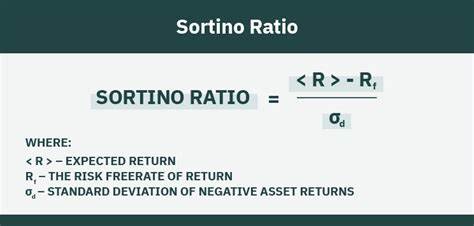
The Sortino Ratio is similar to the Sharpe Ratio, it is a measure of risk-adjusted performance which looks at returns through the lens of the risk taken to achieve that performance, but instead of volatility of return, it uses downside variance as its measure of risk.
Posted on November 10, 2024 by Dr. David Edward Marcinko MBA MEd CMP™
By Staff Reporters
***
***
Memory is Fallible. Think you have a great memory? Think again.
According to psychologist and colleague Dan Ariely PhD, memory is more like a game of telephone than a recording device. Each time you recall an event, your brain makes tiny edits, adding some flair or skipping the boring parts. It’s why you can’t remember where you left your keys but can vividly recall an embarrassing moment from high school.
So, the next time someone says, “I remember it like it was yesterday,” know that yesterday might be a heavily edited rerun.
A company that invests in real estate and whose shares trade on a public exchange.
Real Estate Investment Trust (REIT)
A real estate operating company (REOC) is similar to a real estate investment trust (REIT), except that an REOC will reinvest its earnings into the business, rather than distributing them to unit holders like REITs do.
Also, REOCs are more flexible than REITs in terms of what types of real estate investments they can make.
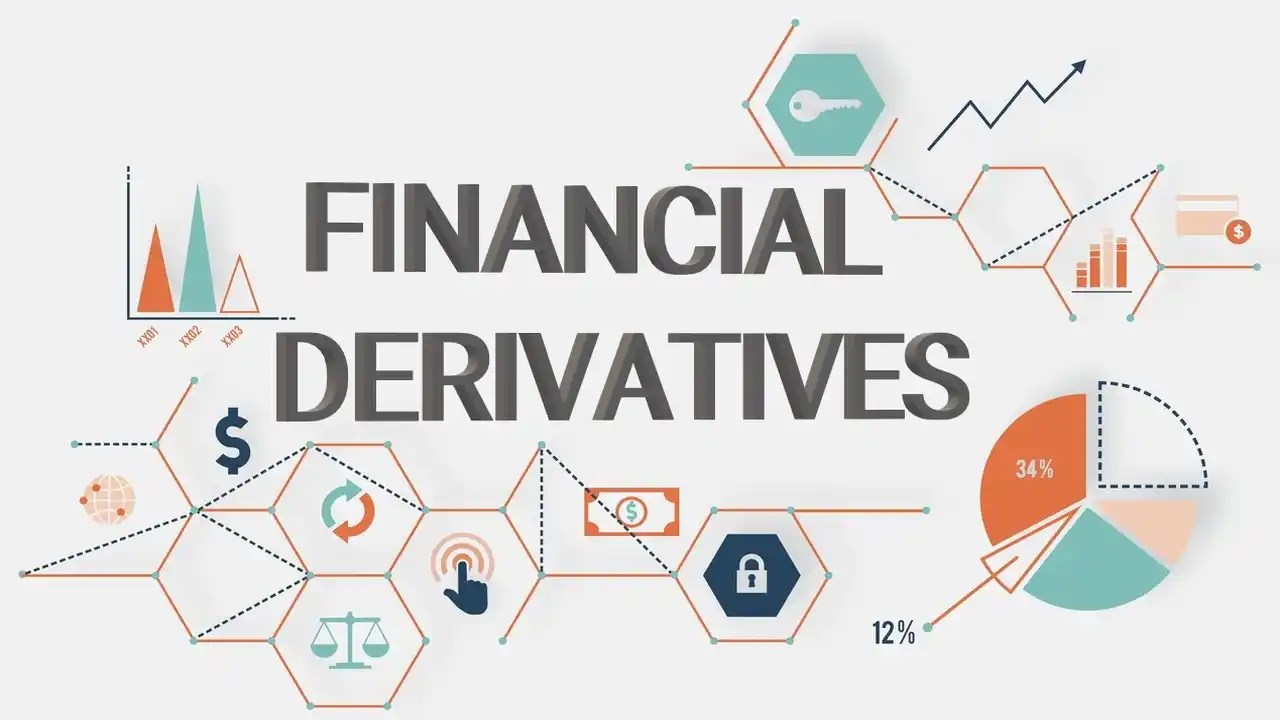
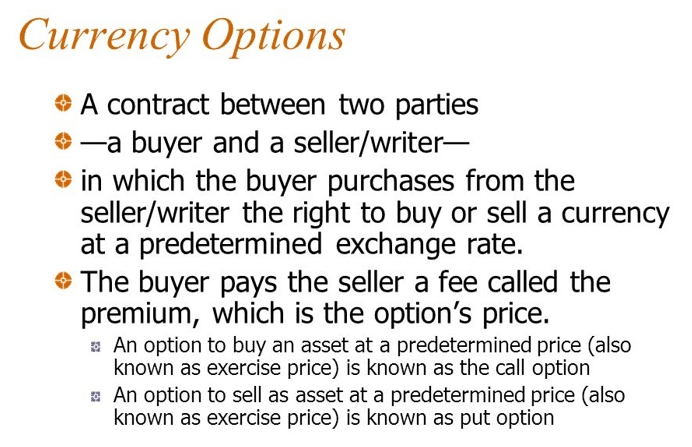
Derivatives are securities whose performance and/or structure is derived from the performance and/or structure of other assets, interest rates, or indexes. If used moderately and in appropriate situations, derivatives can help stabilize portfolios and/or enhance returns. However, if used in excess and/or in inappropriate circumstances, they can be harmful, potentially causing portfolio instability and/or losses. Derivatives are similar to medicine in their behavior–usually safe when used as directed, potentially toxic when abused.
There are many different types of derivative securities and many different ways to use them. Some derivative securities, such as mortgage-related and other asset-backed securities, are in many respects like any other investment, although they may be more volatile or less liquid than more traditional debt securities.
Futures and options are commonly used for traditional hedging purposes to attempt to protect portfolios from exposure to changing interest rates, securities prices or currency exchange rates, and for cash management purposes as a low-cost method of gaining exposure to a particular securities market without investing directly in those securities.
Certain other derivative securities may be described as structured investments. A structured investment is a security whose value or performance is linked to an underlying index or other security or asset class. Structured investments include collateralized mortgage obligations (CMOs). Structured investments also include securities backed by other types of collateral.
According to Wikipedia, a fundamental tenet of the paradox is that the customer, i.e. the potential purchaser of the information describing a technology (or other information having some value, such as facts), wants to know the technology and what it does in sufficient detail as to understand its capabilities or have information about the facts or products to decide whether or not to buy it. Once the customer has this detailed knowledge, however, the seller has in effect transferred the technology to the customer without any compensation. This has been argued to show the need for patent protection [HIPPA].
If the buyer trusts the seller or is protected via contract, then they only need to know the results that the technology will provide, along with any caveats for its usage in a given context. A problem is that sellers lie, they may be mistaken, one or both sides overlook side consequences for usage in a given context, or some unknown-unknown affects the actual outcome.
Currency Hedging is a risk-management strategy, as part of a foreign investment strategy, currency hedging is designed to reduce the impact from changes in the relative values of currencies involved in the foreign investment strategy.
In any foreign investment strategy, a significant part of the potential risk and return comes from exposure to relative currency value fluctuations. If exposure to those currency fluctuations is minimized, investors can experience more of a “pure play” exposure to the foreign investments. There is a variety of possible currency hedging strategies, ranging from swaps, options, and spot contracts to simply buying foreign currencies.
Currency Overlay is a financial trading strategy used to separate the management of currency risk from other portfolio strategies. A currency overlay manager can seek to hedge the risk from adverse movements in exchange rates, and/or attempt to profit from tactical currency views.
Posted on November 8, 2024 by Dr. David Edward Marcinko MBA MEd CMP™
MEDICAL EXECUTIVE-POST–TODAY’SNEWSLETTERBRIEFING
***
Essays, Opinions and Curated News in Health Economics, Investing, Business, Management and Financial Planning for Physician Entrepreneurs and their Savvy Advisors and Consultants
“Serving Almost One Million Doctors, Financial Advisors and Medical Management Consultants Daily“

A Partner of the Institute of Medical Business Advisors , Inc.
The Federal Reserve cut interest rates by 0.25 percentage points Thursday, the second consecutive cut after a two-year rate-hike run to curb post-pandemic inflation.
Lyft announced impressive earnings results thanks to more commuters using the ride-hailing service, as well as upbeat guidance for the future. Shares rose 22.92%.
Shareholders worried about a housing market slowdown hurting Zillow had nothing to fear: The real estate website crushed earnings estimates, and shares popped 23.77%.
Warner Bros. Discovery enjoyed its biggest single-quarter surge in subscribers ever thanks to streaming service Max, which sent shares soaring 11.81%.
UnderArmour rocketed 23.33% higher after its cost-savings plan paid off last quarter and management guided for a strong quarter ahead.
Planet Fitness surprised shareholders with a solid quarter for the gym giant, as well as forecasts of more growth ahead. Shares climbed 11.26%.
Prison operators GEOGroup and CoreCivic both surged on Trump’s election, and their rally continued today—in-spite of very different paths forward for each stock. GEO Group gained 13.63%, while CoreCivic rose 25.60%.
What’s down
Trump Media & Technology Group was one of the biggest winners on election night, and although the stock soared over the last few days, investors decided to take profits today. Shares sank 22.97%.
Wolfspeed plummeted 39.24% after announcing larger-than-expected losses last quarter, poor forecasts for next quarter, and layoffs to cut costs.
Match Group shareholders were heartbroken to hear that Tinder’s revenue fell last quarter, though strong revenue growth from Hinge helped ease the pain. Shares dropped 17.87%.
Virgin Galactic isn’t just a mean nickname from your high school years—it’s also a space stock that can’t make money to save its life. Shares fell 11.87%.
The S&P 500®index (SPX) rose 44.06 points (0.74%) to 5,973.10; the Dow Jones Industrial Average® ($DJI) fell 0.59 points (0.00%) to 43,729.34; and the NASDAQ Composite®($COMP) gained 285.99 points (1.51%) to 19,269.46.
The 10-year Treasury note yield (TNX) fell nine basis points to 4.34%, with most of the drop coming long before the Fed decision.
The CBOE Volatility Index® (VIX) continued its post-election plunge to 15.21.
Stocks surged and stayed higher all yesterday day on news of Donald Trump’s presidential victory. The Dow rocketed over 1,350 points as soon as markets opened, and all three indexes ended the day at record highs.
Treasuryyields have paralleled Trump’s chances of taking the White House for the last few weeks, and his election sent them soaring to over 4.46% at one point today.
Oil and gold both fell as the dollar rose after Trump’s win. The greenback popped on the promise of Trump’s protectionist tariff policies and the lower likelihood of the Fed cutting interest rates as fast as previously expected.
Bitcoin surged as traders celebrated the beginning of the new, friendlier regulatory environment that Trump promised during his campaign.
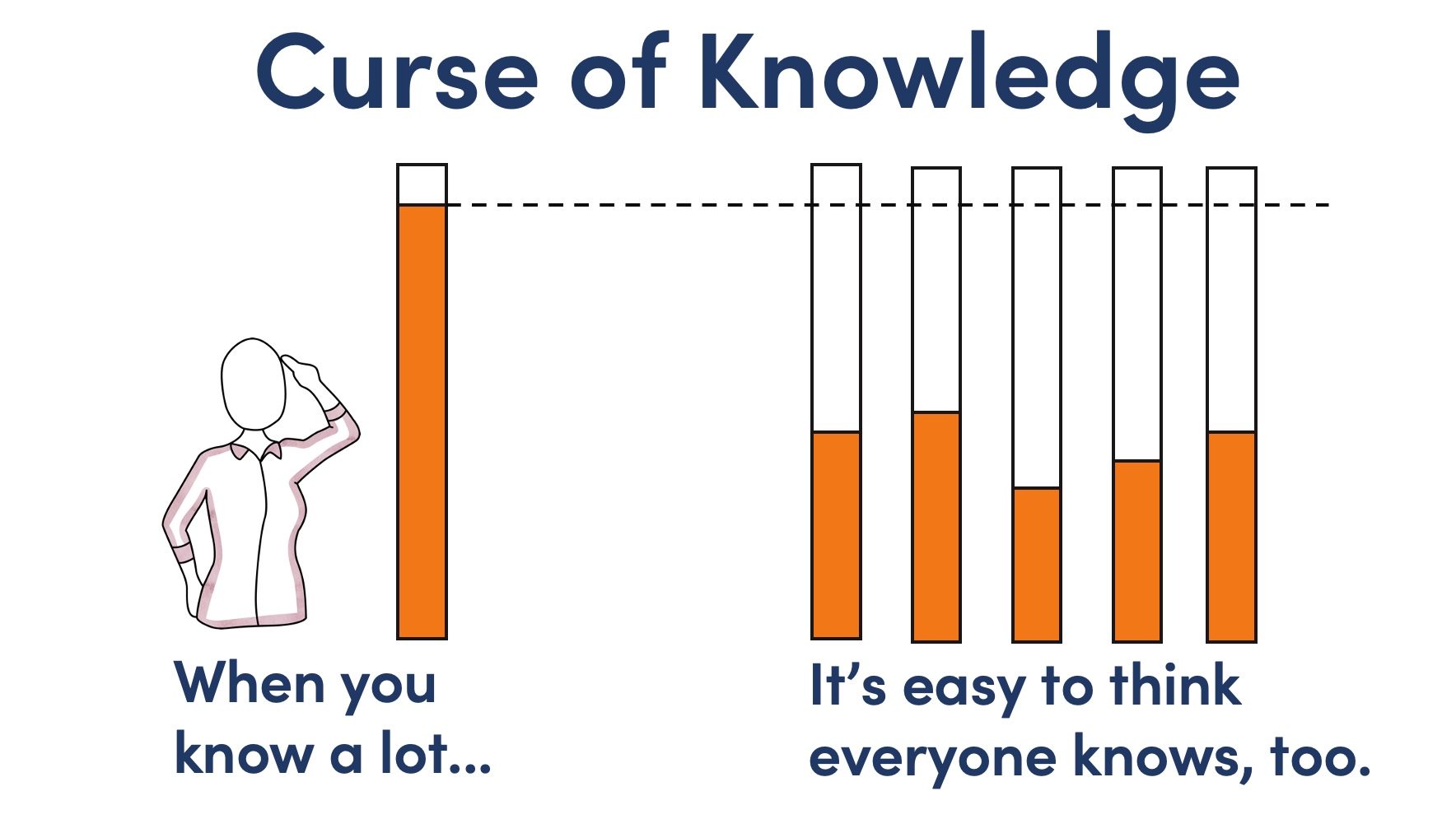
Similar in ways to the availability heuristic (Tversky & Kahneman, 1974) and to some extent, the false consensus effect, once you (truly) understand a new piece of information, that piece of information is now available to you and often becomes seemingly obvious. It might be easy to forget that there was ever a time you didn’t know this information and so, you assume that others, like yourself, also know this information: the curse of knowledge.
However, according to colleague Dan Ariely PhD, it is often an unfair assumption that others share the same knowledge. The hindsight bias is similar to the curse of knowledge in that once we have information about an event, it then seems obvious that it was going to happen all along.
I should have seen it [divorce, stock market crash/soar my smoking & lung cancer, unemployment, etc] coming!
Retained Earnings Risk: Profits generated by a company that are not distributed to stockholders as dividends. Instead, they are either reinvested in the business or kept as a reserve for specific objectives, such as paying off debt or purchasing equipment. Retained earnings risks are also called “undistributed profits,” “undistributed earnings,” or “earned surplus.”
Risk-Weighted (or risk-adjusted) Assets: Within the context of measuring the financial stability of banks and other financial institutions, the risk-weighted assets figure is an aggregate of a financial institution’s assets (usually loans to its customers) after the loans have been individually adjusted for their risk. This involves multiplying each loan by a factor that reflects its risk. Low-risk loans are multiplied by a low number, high-risk by high. The aggregate number can then be used to calculate the financial institution’s capital ratio. Lower risk-weighted assets typically result in higher capital ratios, and higher risk-weighted assets usually translate to lower capital ratios.
Sequence-of-Returns Risk: The risk of market conditions impacting the overall returns of an investment portfolio during the period when a retiree is first starting to withdrawal money from investments as income. For example, if a retiree has to withdrawal income from his or her portfolio when market prices are depressed, the portfolio may lose out on the potential returns that income could have made once market prices recovered.
Classic: Investment purchases and private expenditures of healthcare firms, the value of related construction, and the change in inventory during the year.
Modern: Gross Revenue Per Day is the average amount charged by a hospital for one day of inpatient care (gross inpatient revenue divided by patient-census days).
Gross Revenue Per Discharge: The average amount charged by a hospital to treat an inpatient from admission to discharge (gross inpatient revenue divided by discharges).
Gross Revenue Per Visit: The average amount charged by a hospital for an outpatient visit (gross outpatient revenue divided by outpatient visits).
Posted on November 5, 2024 by Dr. David Edward Marcinko MBA MEd CMP™
By Staff Reporters
***
***
After its AI-related earnings disappointed Wall Street last quarter, Big Tech doubled down in the latest period:
Amazon spent $22.6 billion on property and equipment like data centers and chips. That’s an 81% spike from the same time last year.
Meta raised its low-end guidance for capex (capital expenditures), which could reach $40 billion by the end of the year. It beat earnings estimates, even with AR glasses subsidiary Reality Labs costing $4.4 billion in operating losses.
Apple is still betting on Apple Intelligence to boost sales. Most revenue came from the new iPhone 16, Apple Watch, and AirPods, but Apple services like TV+ and iCloud also grew massively to account for a quarter of the business.
Google crushed earnings estimates and revealed that more than 25% of all new code it writes is generated by AI (and reviewed by engineers).
Posted on November 5, 2024 by Dr. David Edward Marcinko MBA MEd CMP™
MEDICAL EXECUTIVE-POST–TODAY’SNEWSLETTERBRIEFING
***
Essays, Opinions and Curated News in Health Economics, Investing, Business, Management and Financial Planning for Physician Entrepreneurs and their Savvy Advisors and Consultants
“Serving Almost One Million Doctors, Financial Advisors and Medical Management Consultants Daily“
A Partner of the Institute of Medical Business Advisors , Inc.
Among consideration for CVS is splitting up its assets: CVS Pharmacy, pharmacy benefit managerCVS Caremark, and insurance arm Aetna. The company has reportedly been in talks with bankers about the move, Reuters reported early this month.
Just as Nvidia will replace Intel, Sherwin Williamswill replaceDow Inc. on the Dow (how embarrassing, getting kicked off an index you share a name with). Sherwin Williams popped 4.59%, while Dow Inc. fell 2.08%.
Peloton pedaled 3.59% higher on a double upgrade from Bank of America analysts, who like the bike company’s higher profit outlook and hiring of new CEO Peter Stern from Ford.
Yum! China, the company that operates Pizza Hut and KFC restaurants in China, climbed 7.12% after announcing that new store openings translated into better-than-expected revenue and earnings last quarter.
STOCKS DOWN
Nuclear energy stocks took a big hit today after the Federal Energy Regulatory Commission ruled that Talen Energycould not increase the amount of energy its nuclear plant in Susquehanna, PA, produces in order to power an Amazon data center. Talen fell 2.23%, Vistra Corp sank 3.18%, and Constellation Energy plummeted 12.46%.
Clinical data from a Viking Therapeutics trial shows its weight-loss pill is effective. Shares soared then sank 13.36% as investors took profits.
The S&P 500®index (SPX) dipped 16.11 points (–0.28%) to 5,712.69; the $DJI dropped 257.59 points (–0.61%) to 41,794.60; and the $COMP lost 59.93 points (–0.33%) to 18,179.98.
The 10-year Treasury note yield (TNX) fell five basis points to 4.31%.
The CBOE Volatility Index® (VIX)edged up to 22.11, still below last week’s peaks.
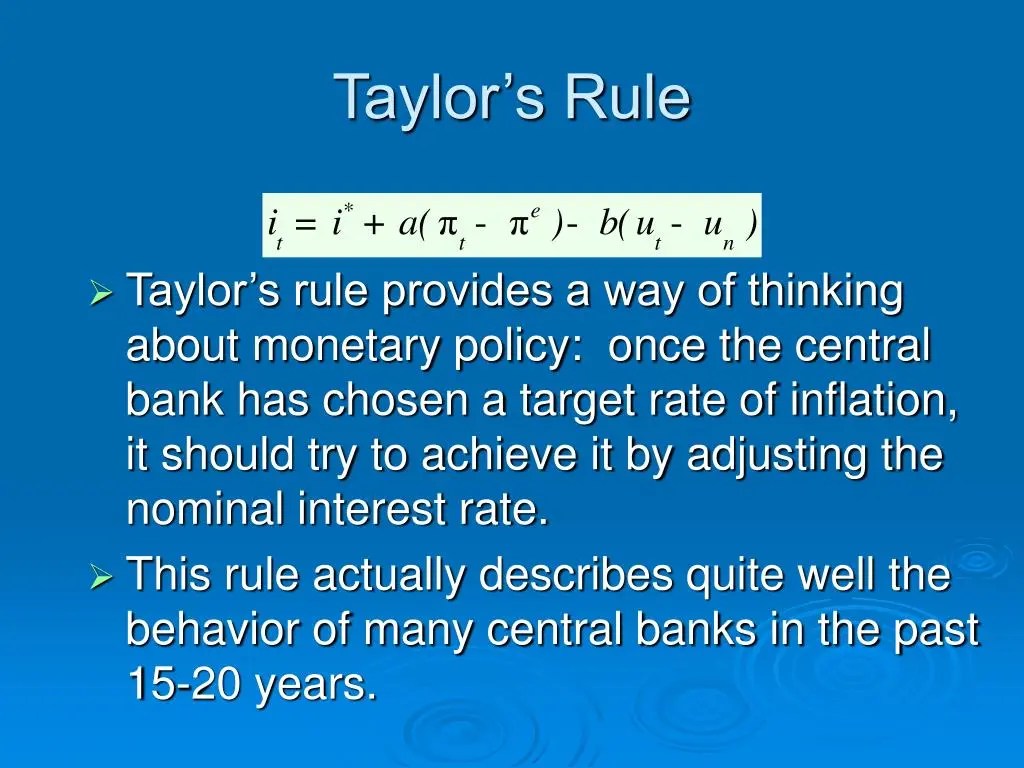
Named for a U.S. economist, the JB Taylor Rule is a mathematical monetary-policy formula that recommends how much a central bank should change its nominal short-term interest rate target (such as the U.S. Federal Reserve’s federal funds rate target) in response to changes in economic conditions, particularly inflation and economic growth. It’s typically viewed as guideline for raising short-term interest rates as inflation and potentially inflationary pressures increase. The rule recommends a relatively high interest rate (“tight” monetary policy) when inflation is above its target or when the economy is above its full employment level, and a relatively low interest rate (“easy” monetary policy) under the opposite conditions.
To illustrate, the monetary policy of the FOMC, changed throughout the 20th century. The period between the 1960s and the 1970s is evaluated by Taylor and others as a period of poor monetary policy; the later years typically characterized as stagflation. The inflation rate was high and increasing, while interest rates were kept low. Since the mid-1970s monetary targets have been used in many countries as a means to target inflation.
However, in the 2000s the actual interest rate in advanced economics, notably in the US, was kept below the value suggested by the Taylor rule.
HFRI: Fund of Funds invests with multiple managers through funds or managed accounts. The strategy designs a diversified portfolio of managers with the objective of significantly lowering the risk (volatility) of investing with an individual manager.
The Fund of Funds manager may allocate funds to numerous managers within a single strategy, or with numerous managers in multiple strategies. The investor has the advantage of diversification among managers and styles with significantly less capital than investing with separate managers.
Posted on November 3, 2024 by Dr. David Edward Marcinko MBA MEd CMP™
By Health Capital Consultants, LLC
Two recent court actions may serve as harbingers for the future of healthcare fraud and abuse laws. In September 2024, a federal judge in the Southern District of West Virginia ordered parties in a qui tamFalse Claims Act and Stark Law case to brief the court on the implications of Loper Bright Enterprises v. Raimondo on the interpretation of the Stark Law to the case at hand.
That same month, a federal judge in the Middle District of Florida dismissed a qui tam lawsuit on a novel theory that the False Claims Act’s whistleblower provisions are unconstitutional.
This Health Capital Topics article discusses these cases and the potential impact on federal fraud and abuse laws. (Read more…)
In-network refers to a health care provider that has a contract with your health plan to provide health care services to its plan members at a pre-negotiated rate. Because of this relationship, you pay a lower cost-sharing when you receive services from an in-network doctor.
What does out-of-network mean?
Out-of-network refers to a health care provider who does not have a contract with your health insurance plan. If you use an out-of-network provider, health care services could cost more since the provider doesn’t have a pre-negotiated rate with your health plan. Or, depending on your health plan, the health care services may not be covered at all.
Classic: Any medical provider, supplier or facility that is in-network is one that has contracted with your health insurer to provide services;as above.
Modern: Depending on your plan, if you visit an out-of-network provider, it may not be covered or might be only partially covered. When making appointments with various doctors and service providers, you may notice some are listed as “in-network” while others are “out-of-network.”
THINK: Medicare Advantage {Part C] Plans
Example: You can expect a higher deductible and out-of-pocket limit at out-of-network providers. Your coinsurance and co-payment may also be higher for out-of-network providers.
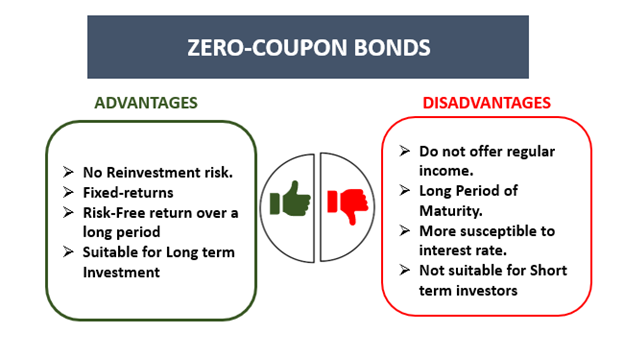
STRIPS (Separate Trading of Registered Interest and Principal of Securities) is an acronym that describes both a government bond issuance program and the securities issued by the program. STRIPS are a form of zero-coupon security (defined below) created under the U.S. Treasury’s STRIPS program.
Originally, zero-coupon securities were created by broker-dealers who bought Treasury bonds and deposited these securities with a custodian bank. The broker-dealers then sold receipts representing ownership interests in the coupons or principal portions of the bonds.
Some examples of zero-coupon securities sold through custodial receipt programs are CATS (Certificates of Accrual on Treasury Securities), TIGRs (Treasury Investment Growth Receipts) and generic TRs (Treasury Receipts). The U.S. Treasury subsequently introduced a program called Separate Trading of Registered Interest and Principal of Securities (STRIPS), through which it exchanges eligible securities for their component parts and then allows the component parts to trade in book-entry form.
STRIPS are direct obligations of the U.S. government and have the same credit risks as other U.S. Treasury securities. STRIPS are generally considered the most liquid (easily bought and sold) zero-coupon securities.
Classic Definition: Employers write checks that cover most health insurance premiums for employees and their dependents. But as the late Princeton health economist Uwe Reinhardt PhD once explained, employer-sponsored insurance is like a pickpocket taking money out of your wallet at a bar and buying you a drink. You appreciate the cocktail until you realize you paid for it yourself.
Modern Circumstance: With health coverage, employers write the check to the insurer, but employees bear the cost of the premium — the entire premium, not just the portion listed as their contribution on their pay stub. The premium money that goes to the insurance company is cash that employers would otherwise deposit in employees’ accounts like the rest of their salary.
Paradox Example: The fallacy paradox is in thinking an employer’s contribution comes out of profits. In fact, higher health insurance premiums mean lower wages for workers. Since 1999, health insurance premiums have increased 147 percent and employer profits have increased 148 percent. But in that time, average wages have hardly moved, increasing just 7 percent. Clearly workers’ wages, not corporate profits, have been paying for higher health insurance premiums. Health care costs are one — though not the only — reason wages have stagnated over the last few decades. With health insurance costs rising faster than growth in the economy, more labor costs go to benefits like health insurance and less to take-home pay. Yet the paradox that employees don’t pay for their own health insurance is widespread:
The first reason is that individuals cannot be sure what causes their wages to change or remain stagnant for decades.
The second reason is that employers want Americans to believe that they pay for their workers’ health insurance.
The third reason is that there are those who profit from the employment-based system: drug companies, device manufacturers, specialty physicians and high-income individuals.
And so, they all want you to believe companies are being magnanimous in giving you insurance, but they are not!
Posted on November 1, 2024 by Dr. David Edward Marcinko MBA MEd CMP™
MEDICAL EXECUTIVE-POST–TODAY’SNEWSLETTERBRIEFING
***
Essays, Opinions and Curated News in Health Economics, Investing, Business, Management and Financial Planning for Physician Entrepreneurs and their Savvy Advisors and Consultants
“Serving Almost One Million Doctors, Financial Advisors and Medical Management Consultants Daily“
A Partner of the Institute of Medical Business Advisors , Inc.
Comcast popped 3.39% on the news that it is exploring a separation of its cable business. The network operator got a boost this quarter from the Olympics, but still lost 365,000 cable TV customers.
Peloton Interactive pedaled 27.82% higher after the bike maker beat earnings expectations and introduced a new CEO.
Carvana accelerated 19.23% on an impressive beat-and-raise earnings report that caps off the car seller’s incredible comeback.
Booking Holdings, owner of Kayak and Priceline, hit a record high after the travel company reported shockingly strong earnings. Shares rose 4.76%
What was down
Trading in shares of Trump Media & Technology Group was halted yet again today after the meme stock sank dramatically to start the day. Shares ended the trading session down 11.72%.
Estee Lauder plummeted 20.84% on a triple whammy of bad news: The cosmetics retailer missed earnings estimates, pulled its forecast, AND cut its dividend. Ouch.
Super Micro Computer continued to tumble today, declining another 11.97% as the fallout from the resignation of its financial auditor raises the threat of the semiconductor stock getting delisted from the Nasdaq.
eBay sank 8.18% after beating earnings expectations but issuing disappointing earnings guidance heading into the holiday season.
The SPX fell 108.22 (–1.86%) to 5,705.45; the Dow Jones Industrial Average® ($DJI) dropped 378.08 points (–0.90%) to 41,763.46; and the NASDAQ Composite®($COMP) lost 512.78 points (–2.76%) to 18,095.15 and has now fallen in two of the last four months.
The 10-year Treasury note yield (TNX) added two basis points to 4.28%.
The VIX rose to 22.6, the highest since October 8.
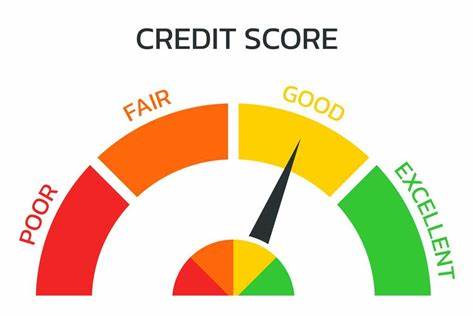
What Is CREDIT? Credit is a contractual agreement in which a borrower receives a sum of money or something else of value and commits to repaying the lender later, typically with interest. Credit is also the creditworthiness or credit history of an individual or a company. Good credit tells lenders you have a history of reliably repaying what you owe on loans. Establishing good credit is essential to getting a loan.
***
Credit Analysis is a form of financial analysis used primarily to determine the financial strength of the issuer of a security, and the ability of that issuer to provide timely payment of interest and principal to investors in the issuer’s debt securities. Credit analysis is typically an important component of security analysis and selection in credit-sensitive bond sectors such as the corporate bond market and the municipal bond market.
Credit Default Swap Index (CDX) is a credit derivative, based on a basket of CDS, which can be used to hedge credit risk or speculate on changes in credit quality.
Credit Default Swaps (CDS) are credit derivative contracts between two counter parties that can be used to hedge credit risk or speculate on changes in the credit quality of a corporation or government entity.
Credit Quality reflects the financial strength of the issuer of a security, and the ability of that issuer to provide timely payment of interest and principal to investors in the issuer’s securities. Common measurements of credit quality include the credit ratings provided by credit rating agencies such as Standard & Poor’s and Moody’s. Credit quality and credit quality perceptions are a key component of the daily market pricing of fixed-income securities, along with maturity, inflation expectations and interest rate levels.
Credit Rating Agency (CRA) is a company that assigns credit ratings for issuers of certain types of debt obligations as well as the debt instruments themselves. In the United States, the Securities and Exchange Commission (SEC) permits investment banks and broker-dealers to use credit ratings from “Nationally Recognized Statistical Rating Organizations” (NRSRO) for similar purposes. As of January 2012, nine organizations were designated as NRSROs, including the “Big Three” which are Standard and Poor’s, Moody’s Investor Services and Fitch Ratings.
A Credit Rating Downgrade by a credit rating agency (such as Standard & Poor’s, Moody’s or Fitch), of reducing its credit rating for a debt issuer and/or security. This is based on the agency’s evaluation, indicating, to the agency, a decline in the issuer’s financial stability, increasing the possibility of default (defined below). A downgrade should not to be confused with a default; a debt security can be downgraded without defaulting. (And, conversely, a debt issuer can suddenly default without being downgraded first–credit ratings and credit rating agencies are not infallible.)
Credit Ratings are measurements of credit quality provided by credit rating agencies). Those provided by Standard & Poor’s typically are the most widely quoted and distributed, and range from AAA (highest quality; perceived as least likely to default) down to D (in default). Securities and issuers rated AAA to BBB are considered/perceived to be “investment-grade”; those below BBB are considered/perceived to be non-investment-grade or more speculative.
Credit Risk is the risk that the inability or perceived inability of the issuers of debt securities to make interest and principal payments will cause the value of those securities to decrease. Changes in the credit ratings of debt securities could have a similar effect.
Credit Risk Transfer Securities (CRTS) are the unsecured obligations of the GSEs (Government Sponsored Enterprises). Although cash flows are linked to prepays and defaults of the reference mortgage loans, the securities are unsecured loans, backed by general credit rather than by specified assets.
Investors waited for the Magnificent 7 stock reports to begin rolling last evening. The NASDAQ rose to a new high on optimism while the Dow Jones fell, and the S&P 500 split the difference.
Alphabet announced earnings after the bell yesterday, Microsoft and MetaPlatforms reveal their latest quarters today, Amazon and Apple on Thursday afternoon.
The 10-year Treasury yield hit a 4-month high this afternoon before paring back a bit as traders struggle to find a signal in all the market noise.
Oil rebounded a bit from yesterday’s terrible day, though it still ended the trading session lower.
Ever tried making a decision when you’re angry or excited? According to colleague Dan Ariely PhD, that’s a hot state – when emotions run high and logic takes a backseat. It’s like trying to think clearly in the middle of a storm.
Be you a doctor, CPA, attorney, engineer, husband, wife, parent, teacher or all others. In a hot state, we’re impulsive, making choices we might regret later. It’s why cooling off before making big decisions is always a good idea.
So, when your emotions are boiling over, take a step back, breathe, and wait for the storm to pass. You’ll make better choices when you’re in a calm, cool state.
It is a multi-factor model measures the overall risk associated with a security relative to the market. And, it incorporates over 40 data metrics, including earnings growth, share turnover and senior debt rating.
The five most valuable US companies in the S&P 500 report earnings this week, and updates on three key economic indicators are set to be released: 1. gross domestic product, 2. inflation, and 3. jobs report. Then, next week brings the election and another expected rate cut from the Federal Reserve.
Markets:All three stock indexes rose to start a week that will be filled with high-stakes data.
Stock spotlight: Trump Media & Technology Group gained almost 22% on Monday, following the former president and current GOP candidate’s Madison Square Garden rally. The rose means that Trump Media, which includes Truth Social, is now more valuable than Elon Musk’s X.
Russell 1000® Growth Index: Measures the performance of those Russell 1000 Index companies (the 1,000 largest publicly traded U.S. companies, based on total market capitalization) with higher price-to-book ratios and higher forecasted growth values.
Russell 1000® Index: A market-capitalization weighted, large-cap index created by Frank Russell Company to measure the performance of the 1,000 largest publicly traded U.S. companies, based on total market capitalization.
Russell 1000® Value Index: Measures the performance of those Russell 1000 Index companies (the 1,000 largest publicly traded U.S. companies, based on total market capitalization) with lower price-to-book ratios and lower forecasted growth values.
Russell 2000® Growth Index: Measures the performance of those Russell 2000 Index companies (the 2,000 smallest of the 3,000 largest publicly traded U.S. companies, based on total market capitalization) with higher price-to-book ratios and higher forecasted growth values.
Russell 2000® Index: Market-capitalization weighted index created by Frank Russell Company to measure the performance of the 2,000 smallest of the 3,000 largest publicly traded U.S. companies, based on total market capitalization.
Russell 2000® Value Index: Measures the performance of those Russell 2000 Index companies (the 2,000 smallest of the 3,000 largest publicly traded U.S. companies, based on total market capitalization) with lower price-to-book ratios and lower forecasted growth values.
Russell 2500™ Growth Index: Measures the performance of those Russell 2500 Index companies (the 2,500 smallest of the 3,000 largest publicly traded U.S. companies, based on total market capitalization) with higher price-to-book ratios and higher forecasted growth values.
Russell 2500™ Index: A market-capitalization weighted index created by Frank Russell Company to measure the performance of the 2,500 smallest of the 3,000 largest publicly traded U.S. companies, based on total market capitalization.
Russell 2500™ Value Index: Measures the performance of those Russell 2500 Index companies (the 2,500 smallest of the 3,000 largest publicly traded U.S. companies, based on total market capitalization) with lower price-to-book ratios and lower forecasted growth values.
Russell 3000® Growth Index: Measures the performance of the broad growth segment of the U.S. equity universe. It includes those Russell 3000 companies with higher price-to-book ratios and higher forecasted growth values.
Russell 3000® Index: Measures the performance of the largest 3,000 U.S. companies representing approximately 98% of the investable U.S. equity market.
Russell 3000® Utilities Index: A sub-index of the Russell 3000 Index, is a capitalization weighted index of companies in industries heavily affected by government regulation, including among others, basic public service providers (electricity, gas and water), telecommunication services, and oil and gas companies.
Russell 3000® Value Index: Measures the performance of the broad value segment of the U.S. equity universe. It includes those Russell 3000 companies with lower price-to-book ratios and lower forecasted growth values.
Russell Midcap® Growth Index: Measures the performance of those Russell Midcap Index companies (the 800 smallest of the 1,000 largest publicly traded U.S. companies, based on total market capitalization) with higher price-to-book ratios and higher forecasted growth values.
Russell Midcap® Index: Measures the performance of the 800 smallest of the 1,000 largest publicly traded U.S. companies, based on total market capitalization.
Russell Midcap® Value Index: Measures the performance of those Russell Midcap Index companies (the 800 smallest of the 1,000 largest publicly traded U.S. companies, based on total market capitalization) with lower price-to-book ratios and lower forecasted growth values.
Russell Top 200® Index: Measures the performance of the 200 largest securities of the 3,000 publicly traded U.S. companies in the Russell 3000® Index, based on total market capitalization. It is not an investment product available for purchase.
Posted on October 28, 2024 by Dr. David Edward Marcinko MBA MEd CMP™
By Staff Reporters
***
***
Peak earnings season: Five of the Magnificent SevenStocks will be among the 181 companies reporting their earnings this week. Alphabet is in the Mag Seven lead-off spot on Tuesday, Microsoft and Meta step to the plate on Wednesday, and Apple and Amazon rounding out the lineup and this baseball metaphor on Thursday. These companies account for almost 25% of the S&P 500, which is up 40% over the past year and not far off its record closing number from earlier this month. But, the approaching election, it could be a volatile week in the stock markets.
***
Markets: Stocks are currently driving the narrative on Wall Street. Last week, bonds sold off in a big way (driving yields to their highest level since July) in a sign investors are dialing back expectations of more aggressive rate cuts from the Federal Reserve.
Stocks nevertheless handled the bond volatility with aplomb, and with help from Tesla’s 22% one-day rise, the NASDAQ is sitting within 2% of its record high.
A defined benefit (DB) pension plan is a type of pension plan in which an employer/sponsor promises a specified pension payment, lump-sum or combination thereof on retirement that is predetermined by a formula based on the employee’s earnings history, tenure of service and age, rather than depending directly on individual investment returns.
Traditionally, many governmental and public entities, as well as a large number of corporations, provide defined benefit plans, sometimes as a means of compensating workers in lieu of increased pay.
CITE: Wikipedia
Defined Contribution Pension Plan
A defined contribution (DC) plan is a type of retirement plan in which the employer, employee or both make contributions on a regular basis. Individual accounts are set up for participants and benefits are based on the amounts credited to these accounts (through employee contributions and, if applicable, employer contributions) plus any investment earnings on the money in the account. In defined contribution plans, future benefits fluctuate on the basis of investment earnings.
The most common type of defined contribution plan is a savings and thrift plan. Under this type of plan, the employee contributes a predetermined portion of his or her earnings (usually pretax) to an individual account, all or part of which is matched by the employer.
Posted on October 26, 2024 by Dr. David Edward Marcinko MBA MEd CMP™
MEDICAL EXECUTIVE-POST–TODAY’SNEWSLETTERBRIEFING
***
Essays, Opinions and Curated News in Health Economics, Investing, Business, Management and Financial Planning for Physician Entrepreneurs and their Savvy Advisors and Consultants
“Serving Almost One Million Doctors, Financial Advisors and Medical Management Consultants Daily“
A Partner of the Institute of Medical Business Advisors , Inc.
The SPX fell 1.74 points (–0.03%) to 5,808.12 to end the week down 0.96%; the $DJI lost 259.96 points (–0.61%) to 42,114.40 to end the week down 2.68%; and the $COMP rose 103.12 points (0.56%) to 18,518.61 to end the week up 0.16%.
The 10-year Treasury note yield (TNX) added three basis points to 4.23%.
The CBOE Volatility Index® (VIX) climbed sharply to 19.95, nearing recent highs. The 20 level is an area to watch next week, as it traditionally signals more volatile markets.
Pick a direction already: On Wednesday, Spirit Airlines soared 30% on news of a possible merger with Frontier. On Thursday, shares plunged 21% as investors took their profits. Today, shares are back up 15.05% after Spirit announced it will cut jobs and sell planes in an effort to boost profits.
Texas Roadhouse sizzled like a porterhouse T-bone, rising 3.58% after announcing that earnings rose 32% last quarter.
Deckers Outdoor popped 10.57% thanks to soaring demand for Hoka shoes, helping the footwear company beat earnings estimates and raise forecasts.
Newell Brands may not be a household name, but they make household goods like Sharpies, Elmer’s Glue, and Crock-Pot—all things that people bought a ton of last quarter, which is why shares soared 21.59% today.
Apple is just fine, thanks: The Market Cap King got a rare analyst downgrade from KeyBanc, which is worried about lower demand from China. Shareholders were unfazed, and the stock rose 0.36%.
STOCKS DOWN
AutoNation hasn’t shaken off the aftereffects of a major cyberattack in July just yet, which is why revenue and earnings both missed estimates last quarter. Shares fell 4.46% today.
Colgate-Palmolive announced a beat-and-raise quarter, but it wasn’t enough to impress shareholders, who pushed the consumer staples giant down 4.14%.
Mohawk Industries was the worst-performing stock on the market at one point today, falling 13.70% after the flooring manufacturer reported disappointing earnings and lowered its fiscal forecast.
Online education company Coursera got an F from shareholders after the company lowered its revenue guidance for the full fiscal year. Shares dropped 9.83%.
Newmont had its worst day in over a decade yesterday after the gold miner reported shockingly bad earnings, with higher costs offsetting the rising price of gold. Shares continued to fall 1.69% today.
A young clinician representative advising to consider the cost versus value of medicine. Health care concept for economic cost-effectiveness analysis, driving down medical costs, improved access.
***
Value Based CareClassic Definition: Value-based care is a type of payment model that pays doctors and hospitals for treating patients in the right place, at the right time and with just the right amount of care. You can look at it as a financial incentive to motivate healthcare providers to meet specific performance measures related to the quality and efficiency of the process. The same way, it penalizes weaker experiences, such as medical errors. The concept is often counter-intuitive.
Modern Circumstance: As healthcare costs continue to rise, value-based care has been growing in popularity compared to the traditional fee-for-service method.
Think: HMOs, PPOs, capitation payments and Medicare Advantage [Part C].
Paradox Examples:
Payment: A physician paid through fee-for-service compensation might like to see a packed medical office waiting room. More patients and services equate to higher pay. But, the same doctor paid through a VBC contract might wish to see an emptier waiting room as s/he will get the exact same daily pay for seeing fewer patients and working much less.
Prospectivity: Traditional Fee-for-Service medicine treats sick patients. VBC medicine seeks to keep patients healthy and out of the doctor’s office.
Posted on October 25, 2024 by Dr. David Edward Marcinko MBA MEd CMP™
MEDICAL EXECUTIVE-POST–TODAY’SNEWSLETTERBRIEFING
***
Essays, Opinions and Curated News in Health Economics, Investing, Business, Management and Financial Planning for Physician Entrepreneurs and their Savvy Advisors and Consultants
“Serving Almost One Million Doctors, Financial Advisors and Medical Management Consultants Daily“
A Partner of the Institute of Medical Business Advisors , Inc.
Applications to MBA programs are up 12% in 2024 after declining for two years, according to the Graduate Management Admission Council, which surveys business school admissions offices.
Apple and Goldman Sachs were ordered to pay $89 million by the Consumer Financial Protection Bureau for failing to address thousands of consumer disputes of Apple Card transactions.
Apple is cutting production of Vision Pro due to slow sales. The tech giant is scaling down production of its $3,500 Vision Pro VR headset and might halt assembly of new ones next month,
UPS delivered a strong earnings report, with revenue beating analyst expectations for the first time in two years. Shares popped 5.28%.
ServiceNow rose 5.41% to a new all-time high thanks to a beat-and-raise third-quarter earnings report powered by higher AI demand for the enterprise software company.
Whirlpool climbed 11.20% after announcing solid earnings and reiterating guidance for the rest of the fiscal year, reassuring worried shareholders.
Molina Healthcare soared 17.67% after beating both top and bottom line estimates in the third quarter, thanks to the health insurer reaping the rewards of higher Medicaid payouts.
STOCKS DOWN
IBM dropped 6.17% on disappointing third-quarter results, missing on both top and bottom line forecasts thanks to lower consulting and infrastructure revenue.
Peloton pedaled higher yesterday after Greenlight Capital’s David Einhorn declared that the company was undervalued while he was pedaling on a Peloton. The stunt only worked for a quick sprint, though, with shares back down 2.07% today.
TKO Group Holdings got hit with a piledriver after the owner of the WWE and UFC announced it is acquiring several entertainment companies, including Professional Bull Riders. Investors bucked shares off 8.69%.
Keurig Dr. Pepper fizzled 4.80% thanks to lower sales last quarter, though the company is trying to bolster revenue by acquiring energy drink maker Ghost.
Air taxi startup Lilium crashed 61.50% on the news that its main subsidiaries have run out of cash and are filing for insolvency.
The S&P 500® index (SPX) rose 12.44 points (0.21%) to 5,809.86; the $DJI fell 140.59 points (–0.33%) to 42,374.36; and the NASDAQ Composite® ($COMP) added 138.83 points (0.76%) to 18,415.49.
The 10-year Treasury note yield fell four basis points to 4.20%.
The CBOE Volatility Index® (VIX) was about flat at 19.18.
Posted on October 24, 2024 by Dr. David Edward Marcinko MBA MEd CMP™
QUESTION EVERYTHING?
By Staff Reporters
***
***
Question: Why do we follow orders, even when they seem wrong?
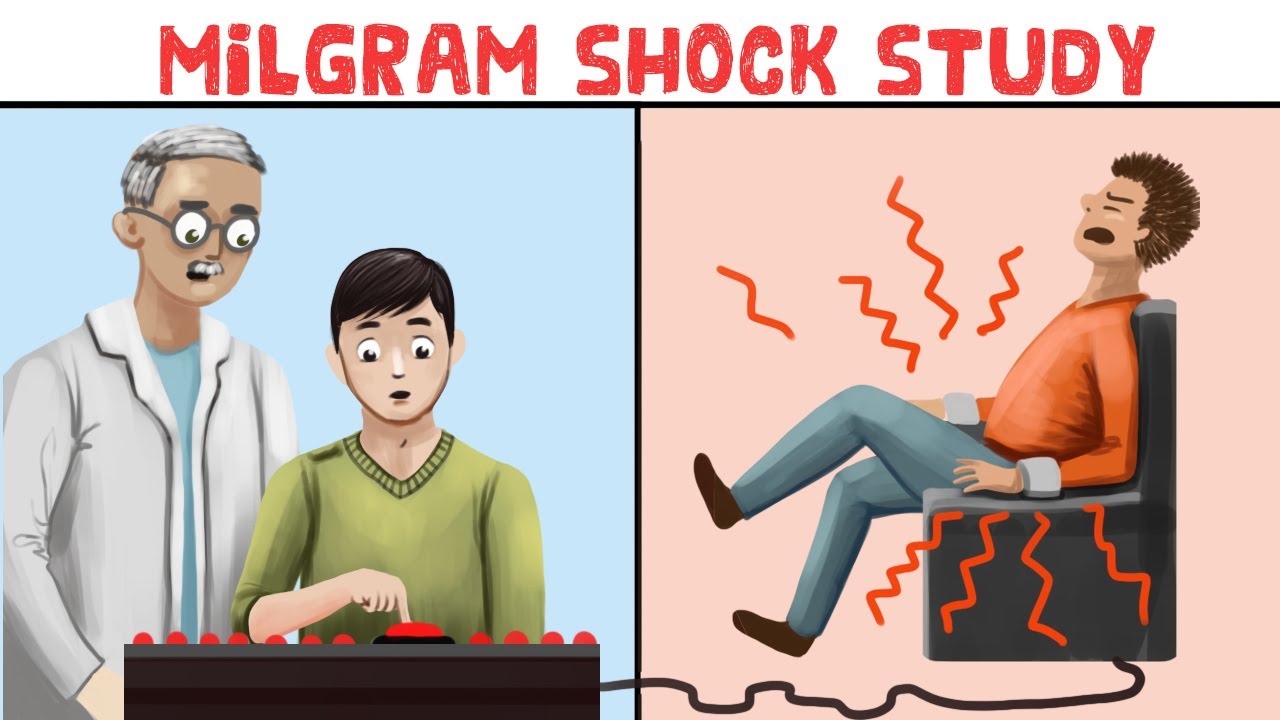
According to colleague Dan Ariely PhD,Obedience to Authority is a powerful force, making us do things we wouldn’t normally do. Think of the infamous Milgram experiment, where people shocked others because a guy in a lab coat told them to do so. It’s our brain’s way of outsourcing decision-making to someone else. While it can keep society orderly, it also explains why people sometimes follow questionable orders.
Milgram’s experiments posed the question: Would people obey orders, even if they believed doing so would harm another person?
Milgram’s findings suggested the answer was yes, they would. The experiments have long been controversial, both because of the startling findings and the ethical problems with the research. More recently, experts have re-examined the studies, suggesting that participants were often coerced into obeying and that at least some participants recognized that the other person was just pretending to be shocked. Such findings call into question the study’s validity and authenticity, but some replications suggest that people are surprisingly prone to obeying authority.
So, question authority [doctor, financial advisor, accountant, clergy, professor and lawyer, etc] – just not your GPS.
Posted on October 23, 2024 by Dr. David Edward Marcinko MBA MEd CMP™
COGNITIVE BIASES
By Staff Reporters
***
***
The following are two common psychological biases. Some biases are learned while others are genetically determined (and often socially reinforced). They are prevalent in most areas in life.
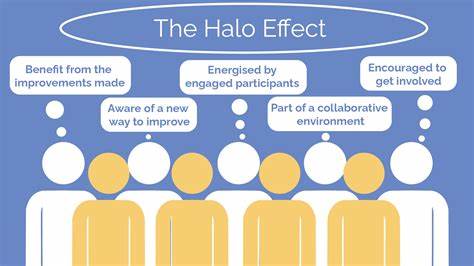
Halo Effect
The halo effect is the cognitive bias where the perception of one positive trait influences the perception of other traits. It’s like assuming a good-looking person is also kind and smart. This mental shortcut simplifies our judgments but often leads to inaccurate assessments.
Marketers and politicians love the halo effect, using it to create a positive overall impression.
To counteract the halo effect, consciously separate individual traits and evaluate them independently. Remember: not everything that shines is gold.
Hero Placebo Effect
The hero placebo effect is the phenomenon where believing in the efficacy of a hero or leader enhances their perceived effectiveness. It’s like thinking a charismatic coach makes the team better just by being there. This belief can boost morale and performance, creating a self-fulfilling prophecy.
However, it can also lead to overestimating the hero’s actual impact. So, while it’s great to have inspiring leaders, remember: true success comes from collective effort, not just the aura of a single hero.
Posted on October 22, 2024 by Dr. David Edward Marcinko MBA MEd CMP™
COGNITIVE BIASES
By Staff Reporters
***
***
According to colleague Dan Ariely PhD,anchoring is the mental trick your brain plays when it latches onto the first piece of information it gets, no matter how irrelevant. You might know this as ‘ first impressions ’ – when someone relies on their own first idea of a person or situation.
Imagine you’re buying a car, and the salesperson starts with a high price. That number sticks in your mind and influences all your subsequent negotiations. Anchoring can skew our decisions and perceptions, making us think the first offer is more important than it is. Or, subsequent offers lower than they really are.
So, the next time you’re haggling or making a big decision, be aware of that initial anchor dragging you down.
There is no shortage of analysis for anyone interested in investing. A search for the term “stock market analysis” turned up 16 million hits on Google and well over 200,000 hits each on Bing, and Yahoo.
***
***
The majority of stock market analysis can be lumped into three broad groups: fundamental, technical, and sentimental. Here’s a close look at SA.
Sentimental Analysis
Sentimental analysis attempts to measure the market in terms of the attitudes of investors. Sentimental analysis starts from the assumption that the majority of investors are wrong. In other words, that the stock market has the potential to disappoint when “masses of investors” believe prices are headed in a particular direction.
Sentiment analysts are often referred to as contrarians who look to invest against the majority view of the market.
For example, if the majority of professional market watchers expect a stock price to trend higher, sentiment analysts may look for prices to disappoint the majority and trend lower.
Which approach is best?
There is no clear answer to that question.
But it’s important to remember three things:
Past performance does not guarantee future results, actual results will vary, and the best approach may be to create a portfolio based on your time horizon, risk tolerance, and goals.
Keep in mind that the return and principal value of stock prices will fluctuate as market conditions change.
And shares, when sold, may be worth more or less than their original cost.
Conclusion
Your thoughts and comments on this ME-P are appreciated. Feel free to review our top-left column, and top-right sidebar materials, links, URLs and related websites, too. Then, subscribe to the ME-P. It is fast, free and secure.
Speaker: If you need a moderator or speaker for an upcoming event, Dr. David E. Marcinko; MBA – Publisher-in-Chief of the Medical Executive-Post – is available for seminar or speaking engagements.
Subscribe: MEDICAL EXECUTIVE POST for curated news, essays, opinions and analysis from the public health, economics, finance, marketing, IT, business and policy management ecosystem.
Posted on October 21, 2024 by Dr. David Edward Marcinko MBA MEd CMP™
By Staff Reporters
***
***
The Meaningful Endowment Effect is the tendency to value things more highly when they’re personally meaningful. It’s why a homemade gift can feel priceless while a store-bought one feels ordinary. Or, a coveted sports car, etc.
Our brains attach emotional significance to objects, inflating their value. This effect explains why we hang onto mementos and keepsakes, even if they’re not objectively valuable.
So, next time you’re de-cluttering, remember: it’s not just stuff, it’s meaningful stuff.
Posted on October 17, 2024 by Dr. David Edward Marcinko MBA MEd CMP™
By Dr. David E. Marcinko MBAMEd CMP
SWARM INTELLIGENCE IN MEDICINE
***
Warm Learning or Swarm Intelligence, is how swarms of bees or birds move in response to their environment.
When applied to data there is “more peer-to-peer communications, more peer-to-peer collaboration, more peer-to-peer learning and that’s the reason why swarm learning will become more and more important as … as the center of gravity shifts” from centralized to decentralized data.
Medicine Example:
Consider this example, “A hospital trains their machine learning models on chest X-rays and sees a lot of tuberculosis cases, but very little of lung collapsed cases. So therefore, this neural network model, when trained, will be very sensitive to what’s detecting tuberculosis and less sensitive towards detecting lung collapse.”
“However, we get the converse of it in another hospital. So what you really want is to have these two hospitals combine their data so that the resulting neural network model can predict both situations better. But since you can’t share that data, swarm learning comes in to help reduce that bias of both the hospitals.”
And this means, “each hospital is able to predict outcomes, with accuracy and with reduced bias, as though you have collected all the patient data globally in one place and learned from it.”
Moreover, it’s not just hospital and patient data that must be kept secure. What swarm learning does is to try to avoid or reduce the sharing of data, or totally prevent the sharing of data, to [a model] where you only share the insights, or you share the learnings.
According to colleague Dan Ariely PhD, a Zero Sum Bias [ZSB] is the mistaken belief that one person’s gain is another’s loss. It’s like thinking the world is a giant pie with only so many slices. This mindset fuels competition and jealousy, making us forget that collaboration can create more pie. It’s why we sometimes root against others instead of working together.
Question: Is the stock market a zero-sum game? You frequently hear media refer to games and markets as zero-sum games.
Answer: Well, yes, we define the stock market as a zero-sum game, both in the short and in the long term, although it technically is incorrect. A zero-sum game is where one person’s gain is another person’s loss – thus there is no wealth created and the overall benefit is zero. This doesn’t apply to stocks, but it’s a zero-sum game in relation to a stock market benchmark.
For example, short-term trading in stocks is theoretically not a zero-sum game, and neither is long-term investing. But short-term trading is close to a zero-sum game, and long-term investing is a zero-sum game if we use a broad index as a benchmark.
Essentially, in other words, the stock market functions as an expansive network of zero-sum transactions; each trade engages a buyer and a seller–their perspectives on a security’s future value contrasting. These opposing views propel market prices: they mirror not only risk transfer but also potential reward—a dynamic process indeed! Traders and investors must grasp the crucial zero-sum aspect; it underscores trading’s inherent competitiveness. Effectively anticipating market trends and actions from other participants: therein lies success in this environment.
Posted on October 12, 2024 by Dr. David Edward Marcinko MBA MEd CMP™
By Staff Reporters
***
***
Back-End Ratio or Back Ratio
DEFINITION: The sum of your monthly mortgage payment and all other monthly debts (credit cards, car payments, student loans, etc.) divided by your monthly pre-tax income.
Traditionally, lenders wouldn’t give people loans that increased this ratio past 36%, but they often do now.
A class action lawsuit has been filed in Minnesota against UnitedHealth Group (NYSE:UNH) over allegations that the health insurer and its subsidiary, NaviHealth, used a faulty algorithm to deny rehabilitation care for Medicare Advantage beneficiaries. California-based Clarkson Law Firm filed the lawsuit in the U.S. District Court of Minnesota on Tuesday following an investigative report published by the health-focused news site Stat.
It alleges that UnitedHealth and its subsidiary, NaviHealth, used the computer algorithm named nH Predict to “systematically deny claims” of patients recovering from debilitating illnesses in nursing homes. According to the lawsuit, despite its 90% error rate, the company used the algorithm to deny claims, knowing that only 0.2% would appeal its decision. According to Stat, Humana (HUM), the nation’s second-largest player in the Medicare Advantage market behind UnitedHealth (UNH), also uses nH Predict. UnitedHealth (UNH) denied it used the NaviHealth predict tool to arrive at coverage decisions.
***
***
Ironically, UnitedHealth’s (NYSE:UNH) Optum Rx unit announced plans to move eight insulin products to “preferred” status on formularies to further expand the number of patients benefiting from $35 or less monthly out-of-pocket costs for the lifesaving therapy.
Optum Rx, UNH’s pharmacy benefit manager (PBM), said that effective January 1, 2024, all short- and rapid-acting insulins will move to Tier 1 in commercial formularies, a list of drugs the company maintains to indicate coverage for insured patients.
“A reliable way to make people believe in falsehoods is frequent repetition, because familiarity is not easily distinguished from truth.” – Daniel Kahneman
As I was watching with interest more [fake] news such as stories surrounding evidence by citations of Russian involvement in US elections and fake prices leading to some violent market gyrations as in Bitcoin and the Corona Virus Pandemic, and societal musings around the thematic of hoaxes … we decided to offer this theme.
Enter the WOOZLE
And so, the Woozle effect, also known as evidence by citation, or a woozle, occurs when frequent citation of previous publications that lack evidence misleads individuals, groups and the public into thinking or believing there is evidence, and non-facts become urban myths and factoids.
Posted on October 4, 2024 by Dr. David Edward Marcinko MBA MEd CMP™
IN PRIVATE EQUITY AND MEDICINE
By Staff Reporters
***
***
PRIVATE EQUITY
In private equity, the J curve is used to illustrate the historical tendency of private equity funds to deliver negative returns in early years and investment gains in the outlying years as the portfolios of companies mature.
And, according to Wikipedia, in the early years of the fund, a number of factors contribute to negative returns including management fees, investment costs and under-performing investments that are identified early and written down. Over time the fund will begin to experience unrealized gains followed eventually by events in which gains are realized (e.g., IPOs, mergers and acquisitions, leveraged recapitalizations).
Historically, the J curve effect has been more pronounced in the US, where private equity firms tend to carry their investments at the lower of market value or investment cost and have been more aggressive in writing down investments than in writing up investments. As a result, the carrying value of any investment that is under performing will be written down but the carrying value of investments that are performing well tend to be recognized only when there is some kind of event that forces the PE to mark up the investment.
The steeper the positive part of the J curve, the quicker cash is returned to investors. A private equity firm that can make quick returns to investors provides investors with the opportunity to reinvest that cash elsewhere. Of course, with a tightening of credit markets, private equity firms have found it harder to sell businesses they previously invested in. Proceeds to investors have reduced. J curves have flattened dramatically. This leaves investors with less cash flow to invest elsewhere, such as in other private equity firms. The implications for private equity could well be severe. Being unable to sell businesses to generate proceeds and fees means some in the industry have predicted consolidation among private equity firms.
MEDICINE
In medicine, the “J curve” refers to a graph in which the x-axis measures either of two treatable symptoms (blood pressure or blood cholesterol level) while the y-axis measures the chance that a patient will develop cardiovascular disease (CVD). It is well known that high blood pressure or high cholesterol levels increase a patient’s risk.
Paradoxically, what is less well known is that plots of large populations against CVD mortality often take the shape of a J curve which indicates that patients with very low blood pressure and/or low cholesterol levels are also at increased risk.
In economics, a Kuznets curve (/ˈkʌznɛts/) graphs the hypothesis that as an economy develops, market forces first increase and then decrease economic inequality.
Posted on October 3, 2024 by Dr. David Edward Marcinko MBA MEd CMP™
NEBULOUS DEFINITIONS
By Staff Reporters
***
***
The simplest model of a market involves two things, supply and demand, and the price and quantity of the goods sold in the market are a function of both. When a natural disaster hits like Hurricane Helene, the immediate effect can be two-fold. In such situations, it is not unusual that the demand for certain products may increase. For example, if everyone is trying to leave the area, demand for gas may rise. The other effect is that supply for certain products may decrease. And, it may be more costly to transport gas in areas affected by a natural disaster, thus decreasing the supply of gas and in turn, increasing the price.
When supply decreases, the price of the good increases. And when demand increases, again the price of the good increases. So we would predict that the market price of gas, for example, would increase in areas recently affected by a hurricane. And in fact we do see this.
Price-gouging occurs when companies raise prices to unfair levels. There is no rule for what qualifies as price-gouging, but it is not an uncommon occurrence. For example in medicine, EpiPen costs is a current example of price increases that have been labeled unfair.
Note: An epinephrine auto-injector (or adrenaline auto-injector, also known by the trade mark EpiPen) is a medical device for injecting a measured dose or doses of epinephrine (adrenaline) by means of auto-injector technology. It is most often used for the treatment of anaphylaxis. The first epinephrine auto-injector was brought to market in 1983.
Posted on October 2, 2024 by Dr. David Edward Marcinko MBA MEd CMP™
SIGMOID CURVE
By Staff Reporters
***
DEFINITION
The S curve refers to a chart that is used to describe, visualize, and predict the performance of a project or business overtime. More specifically, it is a logistic curve that plots the progress of a variable by relating it to another variable over time.
The term S curve was developed as a result of the shape that the data takes. Projects on the S curve often experience a slow growth at the beginning, rapid growth in the middle, and slow growth and at the end. The maximum point of acceleration is called the point of inflexion. It is at this point that the project or business returns to the initial slow growth it started from.