WHO / WHAT Are the Best Predictors of Stock Market Performance?

Join Our Mailing List

ME-P Special Report

Lon Jefferies

By Lon Jefferies MBA CFP®

WHO Are the Best Predictors of Stock Market Performance?

Every day CNBC airs dozens of “financial professionals” making market forecasts. Similarly, every financial publication has multiple pieces regarding the future of the stock market. With so much information, how is it possible to determine who is worth listening to and what information to incorporate into your investment strategy?

Dropping Names

Without dropping any names, I’d suggest that the more confident a market pundit is about his or her prediction, the more you should question their advice.

People who make strong, unwavering forecasts are interesting to watch and appear as intelligent, appealing leaders whose advice is worth following. Meanwhile, people who frequently say phrases such as “it depends,” “maybe,” or even “I don’t know” don’t seem to be adding much value and don’t appear to be any more knowledgeable than the average investor. Yet, I’d suggest you tune out the stanch forecaster pounding his fist on the table as he speaks and rather listen closely to the individual who is less willing to make firm predictions.

Stock market performance

Stock market performance is clearly not a result of any singular factor such as whether or not companies will generate more profits than expected. If this was the case, making market predictions would be easy – one could simply guess the answer to be yes or no and have a 50% chance of being correct. Rather, hitting profit targets is only point A on a long list of factors impacting stock market performance.

Point B may be whether or not the Federal Reserve will raise interest rates during their next meeting. Again, our market forecaster could guess yes or no to this question and have a 50% chance of being correct. However, when considering both factors A and B, now our market forecaster has to be right twice on two issues where there is only a 50% probability of being correct on each. Simple math tells us there is only a 25% chance that this will occur (50% x 50% = 25%).

Point C may be whether the republicans or the democrats win the 2016 election. Again, there is a 50% chance of either possibility. Now there are three factors in play, each with a 50% probability, so the probability that the market pundit will get all three factors correct is 12.5% (50% x 50% x 50% = 12.5%).

Point D may be whether the US dollars strengthens or weakens when compared to other currencies. Again, there is a 50% chance of getting this right, so when we consider all four factors, there is now a 6.25% chance of getting it right (50% x 50% x 50% x 50% = 6.25%).

The equation

There are hundreds of factors that go into this equation. Will Greece have another economic crisis? Will the price of oil go up or down? Will a war breakout with Russia? This is exactly why forecasting market performance is so difficult!

For this reason, the people who make the best forecasters are people who say phrases such as “perhaps,” “however,” and “on the other hand” a lot. Doing so illustrates that the individual has looked at the situation from a lot of different perspectives and realizes that everything may not go according to plan. These types of people also tend to admit when they are wrong more willingly and update their analysis utilizing the latest information available, even if the new information doesn’t reflect what they previously anticipated. Their thought process is likely: “I got point A wrong, so I need to adjust my thinking on point B, which will have an impact on point C, so how does this change my perspective on point D.” We’ll call this a point-A-to-point-B-to-point-C-to-point-D mentality.

By comparison, the forecaster who makes the strong prediction while staring into the camera likely utilizes more of a point-A-to-point-D mentality. They are less likely to admit that there are more factors affecting market performance than can be managed, and less likely to incorporate new information that doesn’t coincide with his previous prediction when making forward-looking forecasts. Their thought process is likely: “I may have gotten point A wrong, but that doesn’t matter. All that matters is point D and I believe I got that right when making my prediction.” This approach is obviously less logic-based than the approach taken by the forecaster who knows there are too many factors to enable an individual to make a confident prediction.

***

idea

***

Assessment

While people who make confident predictions regarding market performance are entertaining to watch and provide advice that is simple to follow (he said buy, so I’ll buy), their advice is not likely to be any more accurate than other market pundits. In fact, if they are unwilling to admit when they get any potential factor concerning market performance wrong, their advice may be more damaging then useful.  By comparison, market forecasters who utilize phrases such as “however,” “it is hard to say,” and “I’m not sure” provide advice that may come off as unhelpful or impossible to follow, but it is these people who provide logic-based nuggets of information that are likely to benefit your investment portfolio.

ABOUT

Lon Jefferies, a Certified Financial Planner™ (CFP), is a fee-only financial advisor and trusted fiduciary at Net Worth Advisory Group in Salt Lake City, Utah. He is dedicated to providing comprehensive financial planning and investment management on a fee-only basis.

Conclusion

Your thoughts and comments on this ME-P are appreciated. Feel free to review our top-left column, and top-right sidebar materials, links, URLs and related websites, too. Then, subscribe to the ME-P. It is fast, free and secure.

Speaker: If you need a moderator or speaker for an upcoming event, Dr. David E. Marcinko; MBA – Publisher-in-Chief of the Medical Executive-Post – is available for seminar or speaking engagements. Contact: MarcinkoAdvisors@msn.com

OUR OTHER PRINT BOOKS AND RELATED INFORMATION SOURCES:

 ***

[PHYSICIAN FOCUSED FINANCIAL PLANNING AND RISK MANAGEMENT COMPANION TEXTBOOK SET]

  Risk Management, Liability Insurance, and Asset Protection Strategies for Doctors and Advisors: Best Practices from Leading Consultants and Certified Medical Planners™  Comprehensive Financial Planning Strategies for Doctors and Advisors: Best Practices from Leading Consultants and Certified Medical Planners™

[Dr. Cappiello PhD MBA] *** [Foreword Dr. Krieger MD MBA]

***

To all UNHAPPY Financial Advisors, JDs, CPAs and Physician-Focused Insurance Agents in 2022

Join Our Mailing List

AVOID COLLATERAL ECONOMIC DAMAGE OF HEALTH CARE REFORM – AS A CERTIFIED MEDICAL PLANNER PROFESSIONAL

By Eugene Schnmuckler PhD MBA MEd CTS

[Academic Provost and Dean]

CMP logo

http://www.CertifiedMedicalPlanner.org

ME-P Doctors, Advisors and Consultants

The healthcare industrial complex represents a large and diverse collateral support industry, and the livelihood of synergistic professionals who advise doctors depend on it. So, if you want to be an outstanding financial advisor in the healthcare space, you better read this book and learn something about physician specific financial planning.

Better yet! Combine financial planning and practice management and become a Certified Medical Planner ™. Then, integrate this knowledge, and CMPmark of distinction, into your current financial advisory or healthcare consulting practice.

Or, as some of the following financial services professionals are learning, you might just become more collateral economic damage in the current managed healthcare debacle, if you don’t.

Certified Public Accountants

The nation’s 330,000 or so CPAs know little about the new healthcare dynamics and financial planning. Many often feel as though they are laboring away in obscurity and that their doctor clients do not appreciate what they do or how hard they work.

If you are a CPA, your workweek is ridiculously long, especially January through April; and you often deliver bad news to your doctor clients. You do not earn a generous salary, but you do receive their ire for your efforts. Even ex-SEC chief Arthur Levitt said, “Accounting is clearly a profession in crisis”, after reviewing Arthur Andersen, LLP’s role in Enron Corporation’s collapse, in 2002; not to mention the Global Crossing Ltd, Vivendi Universal, Warnaco, Martha Stewart and WorldCom fiascos.

So, you begin to scratch your head and ponder, quietly at first, and then out loud. Perhaps advising and managing the medical practice of a physician, or providing consulting services to other medical professionals is an opportunity that won’t require a new client base? You can keep your accounting practice during the first four months of the year, and supplement your income with something that may actually earn more than you are making now.

A light then goes off in your head. Epiphany! Enter iMBA’s Certified Medical Planner(CMP) professional certification program, exhorting accountants to “integrate personal financial planning with medical practice management”, through an additional 500 hours of online managerial and planning experience.

However, terms such as capitated medicine; per member-per month fixed fees; payment withholds’; activity based costing with CPT codes; utilization and acuity rates; and more investment and financial nomenclature is likely quite unfamiliar to you.

Furthermore, you may not have the temperament to be responsible for the financial affairs of others. Then you realize that CMPs along with MBAs and CFPs may actually be the new denizens of the healthcare bean counting and practice management scene. Rather than present numbers of the historic past, they make logical and mathematical inferences about the future.

Slowly, you realize that this has occurred because these professionals are proactive, not reactive, as the accounting profession is loosing its premier advisory position within the medical profession. Since doctors are paid a fixed fee amount, regardless of the number of services performed, these futuristic projections are the most important accounting numbers in healthcare today.

In fact, your research suggests that as a result, nearly every major accounting firm has created a financial advisory unit, or acquired one. Moss-Adams acquired Financial Securities in Seattle. Plante and Moran’s advisory unit is one of the largest and most successful in Michigan. And, 1st Global now offers a turnkey program that allows nearly every accounting firm to create its own advisory unit overnight.Even, the AICPA is providing encouragement to CPAs who wish to provide more professional client services by uniting with Fidelity to serve as a professional vendor. And, the PFS designation is about to be abandoned by the AICPA.

Doctor Advisor Teamwork

Tax Attorneys and Lawyers 

As a tax planning, health-law or estate attorney, you already know that almost every legal magazine around has articles or advertisements proposing that you become a financial planning professional or business consultant to your physician clients. Moreover, lawyers of all stripes are being pushed toward interdisciplinary alliances by encroachment on their turf by the Big Four consulting firms. With audits of publicly held companies now a commodity, the giant law firms are getting more of their revenues from consulting fees; and that puts them into direct competition with you and other legal professionals.

Of all careers, you know how absolutely onerous it is to practice medicine today, and are finally thankful that you did not take that career route many years ago. So, like your neighbor the accountant, you begin to explore that potential of developing a service line extension to your legal practice, in order to assist your medical colleagues who have been hit on hard economic times.

In fact, you soon realize that more than 90,000 trust, probate and estate planning attorneys like yourself are interested in pursuing financial planning in the next decade. Sure, you know its difficult to get a CLU or variable annuity license, or become a Certified Financial Planner (CFP), but earning your law degree was no cinch either. And, you reckon, advising physicians has got to be easier than law, or less stressful than the corporate lifestyle of your CMP trained brother-in-law, right?

So, you set out to stretch your legal horizons with an online Certified Medical Plannercertification program and explore the basic legal nuances of those topics not available in law school when you were a student. Things like medical fraud and abuse; managed care compliance audits and Medicare recoupments; PP-ACA, RACS, OSHA, DEA, HIPAA and EPA standards; anti-trust issues; and managed care contract dilemmas or de-selection appeals.

What a brave new world the legal profession has become! Even the American Bar Association’s commission on multi-disciplinary practice has recommended that lawyers be permitted to share fees and become partners with financial planners, money managers and other similar professionals.

As a real life example, the venerated Baltimore brokerage firm of Legg Mason, Inc, has recently teamed up with the Boston law firm of Bingham Danna, LLC, to create one of the first marriages between a law and securities firm. If you want in on the challenge, and bucks, you’d better acquire at least a working knowledge of health care administration, or perhaps help craft some new case law, or assist your doctor-clients in some other fashion; otherwise, you will remain a legal document producer.

Financial Planners and Investment Advisors

As a CFP, CFA, investment advisor or general securities representative, you realize that the financial service sector is going to become the next great growth opportunity of the 21st Century, despite the fact that the stagnant stock market in 2003-2004 set profits for the securities industry back by seven years.

Even H & R Block, and the Charles Schwab Corporation are trying to build medical professional interest in their respective firms and compete with your independent practice. They are fervently wooing away one group or another to interface with their embryonic financial advisory programs. Meanwhile, more than 260,000 of the nation’s brokers are moving into the investment advisory and financial planning business, as transactions have become commoditized.

A recent survey conducted for the Financial Planning Association clearly demonstrated the dominance of registered investment advisors, over stockbrokers, among clients 35-49 years old. With the average Merrill Lynch private client well over 60, it’s easy to spot the future vulnerability of this business model.

When asked to determine the added value of key industry players, baby boomers in a recent Dalbar study ranked financial planners first, followed by stockbrokers, CPAs, mutual fund companies, insurance agents, and commercial bankers, respectively. Even if you are a CFP, and despite the proliferation of investment advisors, evidence suggests that your individual impact is still narrow.

Furthermore, another Prince & Associates study of 778 affluent individuals including physicians, each with more than 5 million dollars to invest, examined the relationship between clients and their providers of five key financial services; retirement planning, estate planning, investment management, executive benefits and health-disability insurance. Prince found that 59 percent of the clients had been serviced in only one area by a particular advisor. Despite the significant assets of each client, the advisers have been unsuccessful at broadening these relationships– a key indicator that many affluent clients do not have a primary financial adviser.

Among the challenges you face to broaden your influence is to offer your clients value added services, perhaps by establishing your expertise in the medical niche and capitalize on being different (your unique knowledge-based value proposition). You must not remain just another of the more than 250,000, or so individuals who claim to be financial planners, with a collective universe of an additional 700,000, who purport to be financial advisors, in some fashion or another. You must begin to develop the strategic competitive advantage of practice management knowledge to synergize with your existing financial services product line.

Like the physicians you advise, you must consider becoming a specialist. In the highly coveted healthcare space, this specialist to high net worth doctors, is known as a Certified Medical Plannerpractitioner.

Integrated practice management and financial planning will also become much more competitive among physicians because they are aware of the above fusion. No one is suggesting therefore, that you abandon your core financial advisory business for medical practice management. It is merely a fact that healthcare has drastically changed during the past decade, and the knowledge you used yesterday will no longer be enough for you to get by on in the future.

Medical practice management is the natural outgrowth of traditional financial planning services, and investment advice in turn, is central to the implementation of a unified medical office and personal financial plan. The most successful financial planners therefore, may be CMPs and CFPs who incorporate medical management services into their practices.

cmp-program1

Insurance Agents and Counselors

As a traditional life insurance agent, it seems that almost all your colleagues are acquiring a general securities license, or CFP designation in addition to the CLU or ChFC after their name. Currently, there are more than 3 million insurance agents, half of which are independent. They are being pressured to move toward financial planning, as distribution of insurance products over the Internet spreads like wildfire.

Meanwhile, the same insurance and investment companies that are knocking on your door are also courting the medical professionals with their practice enhancement programs. Even if you are not interested in going into the financial planning business, you have seen the status of the American College erode of late, even as your own insurance business has declined because of the World Wide Web and various discounted insurance companies.

And, in the eyes of your former golden goose doctor-clients, you may have become a charlatan and everyone is clamoring for a piece of your insurance business and cloaking it in the guise of the contemporary topic of the day; medical practice management and financial planning. Think this is an exaggerated statement? An October 1997 survey conducted by Deloitte & Touche Consulting Group of New York, found insurance agents ranked last in having the trust of a wide selection of the public! Erosion has continued, ever since.

So, how do you regain this lost trust, and what about this new entity known as managed care? How do you learn about it at this stage in your career? What ever happened to the traditional indemnity health insurance, with its deductible and 80/20payment scheme? It was so easy to sell, provided good coverage, and the agent made a nice profit.

As an insurance agent, all you want to know is, can I still sell insurance and make a living? Like the struggling doctors you seek to advise, and the collateral advisors above, you find yourself asking, how do I talk the talk, and walk the walk, in this new era of medical insurance turmoil?

Slowly, as you read, study and learn about the Certified Medical Plannercertification program, you become empowered with the knowledge and ideas for new insurance product derivatives, that actually provide value to your physician clients. You are no longer just an insurance salesman, but a trusted medical risk management advisor.

Congratulations!

You can avoid the managed care economic ripple effect. Act now!

CMP logo

Office: Dean of Admissions

Certified Medical PlannerDesignation Program

Institute of Medical Business Advisors, Inc

Peachtree Plantation – West

Suite # 5901 Wilbanks Drive

Norcross, Georgia 30092-1141

770.448.0769 (voice)

770.361.8831 (fax)

http://www.MedicalBusinessAdvisors.com

http://www.CertifiedMedicalPlanner.org

MarcinkoAdvisors@msn.com

Conclusion

Your thoughts and comments on this ME-P are appreciated. Feel free to review our top-left column, and top-right sidebar materials, links, URLs and related websites, too. Then, subscribe to the ME-P. It is fast, free and secure.

Speaker: If you need a moderator or speaker for an upcoming event, Dr. David E. Marcinko; MBA – Publisher-in-Chief of the Medical Executive-Post – is available for seminar or speaking engagements. Contact: MarcinkoAdvisors@msn.com

OUR OTHER PRINT BOOKS AND RELATED INFORMATION SOURCES:

Financial Planning MDs 2015

Comprehensive Financial Planning Strategies for Doctors and Advisors: Best Practices from Leading Consultants

PODCAST: How Fees Impact Your Retirement Savings

How 1% Fees Can Eat Up 30% of Your Nest Egg

By Sally Brandon

***

LINK: https://www.rebalance360.com/expert-advice/fees-impact-retirement-savings/

***

In this brief video, Rebalance IRA‘s Vice President of Client Services, Sally Brandon, details the direct impact that hidden and unfair fees can have on your retirement nest egg.

The firm works to make sure you retire with as much of your hard-earned savings as possible.

How 1% Fees Can Eat Up 30% of Your Nest Egg

Conclusion

Your thoughts and comments on this ME-P are appreciated. Feel free to review our top-left column, and top-right sidebar materials, links, URLs and related websites, too. Then, subscribe to the ME-P. It is fast, free and secure.

Speaker: If you need a moderator or speaker for an upcoming event, Dr. David E. Marcinko; MBA – Publisher-in-Chief of the Medical Executive-Post – is available for seminar or speaking engagements. Contact: MarcinkoAdvisors@msn.com

OUR OTHER PRINT BOOKS AND RELATED INFORMATION SOURCES:

Comprehensive Financial Planning Strategies for Doctors and Advisors: Best Practices from Leading Consultants and Certified Medical Planners™

***

The “Deeper Dive” Costs of College Debt

Unintended Consequences?

[By Rick Kahler MSFS CFP]  [Dr. David Marcinko MBA]

Not only is a college education a door to higher wages, but providing that education is an important segment of our economy and a huge source of good paying jobs.

In 2017 the average salary for the country’s 624,822 full-time college instructors was $82,240, according to an annual study from the Department of Education’s National Center of Education Statistics.

The old days

In the days before college loans were as easy to get as the common cold, college costs were due in cash. Students and parents had to save money or pay tuition out of their earnings. Many students worked their way through college. Those without savings, the ability or desire for college jobs, or high enough grades for scholarships didn’t go to college.

Since colleges competed for students, market forces controlled the tuition rates. Raising tuition too much resulted in fewer students and smaller revenues. The two forces of supply (college capacity) and demand (the ability to pay tuition) kept college costs in check.

Understandably, borrowing to pay for college tuition was difficult. What sane bank or investor would loan money to an unemployed teenager with no collateral to speak of? If you could find someone willing to make such a risky loan, the interest rate was high.

Politics

Well-intended politicians decided it wasn’t fair that those without the means to pay tuition were denied college educations. Their solution was to require taxpayers to underwrite college loans, sometimes at interest rates lower than those available to the most creditworthy.

With tuition money easy to obtain through low-cost, government backed loans, demand for a college education increased. With the increased demand came higher tuition costs. This easy money is the primary reason that college tuition costs have far outpaced inflation and have gone up twice as fast as medical costs since 1985.

***

***

Consequences

Unfortunately, one consequence of loaning money to those deemed poor risks is that a high percentage of those borrowers are unable to repay the debt.  It should come as no surprise that 10.7% of all student loans are currently 90 days or more in default. Conversely, the composite default rate on mortgages, credit cards, and auto loans is 0.82% as of October 2018.

Today, taxpayers are on the hook for over 92% of the $1.5 trillion in outstanding student loans made to over 44 million borrowers, according to a June 13, 2018, Forbes article by Zack Friedman, “Student Loan Debt Statistics in 2018.” Only home mortgages exceed student loan debt.

And the appetite for loans continues to rise. The average student from the Class of 2016 graduated with over $37,000 of college debt. It isn’t uncommon for a medical student to amass over $200,000 of student loan debt. This year we will add another $120 billion in college debt to the books.

The more college debt that graduates take into the workplace, the less they have to spend for vehicles, rent, and consumer goods. The damage to the credit ratings of the 10.7% who are in default will also hinder their purchasing power for years to come.

******

Assessment

If taxpayers ever decide to quit footing the bill, my hunch is that many colleges’ tuition rates will fall as hard as housing prices did in Florida, Arizona, and California in 2009. Lower tuition costs would create a financial hardship for most colleges and the some 4,000,000 people employed in higher education.

Politically, I don’t expect that to happen. Colleges are big business with a lot of money and influence in Congress. Further, a college education is becoming viewed as a right that should be free. In the meantime, savvy students will do whatever they can to minimize their college tuition and graduate debt-free.

***

***

COACH

***

Conclusion

Your thoughts and comments on this ME-P are appreciated. Feel free to review our top-left column, and top-right sidebar materials, links, URLs and related websites, too. Then, subscribe to the ME-P. It is fast, free and secure.

Speaker: If you need a moderator or speaker for an upcoming event, Dr. David E. Marcinko; MBA – Publisher-in-Chief of the Medical Executive-Post – is available for seminar or speaking engagements.

Book Marcinko: https://medicalexecutivepost.com/dr-david-marcinkos-bookings/

Subscribe: MEDICAL EXECUTIVE POST for curated news, essays, opinions and analysis from the public health, economics, finance, marketing, IT, business and policy management ecosystem.

DOCTORS:

“Insurance & Risk Management Strategies for Doctors” https://tinyurl.com/ydx9kd93

“Fiduciary Financial Planning for Physicians” https://tinyurl.com/y7f5pnox

“Business of Medical Practice 2.0” https://tinyurl.com/yb3x6wr8

***

Product Details


The NATIONAL Emergency Fund!

How Much?

By Staff Reporters

***

Grant Cardone is a self-made millionaire, author and sales training expert. He recommends hitting a lofty savings goal — $100,000 — and then investing any money earned after you hit that amount. “You need to prove to yourself that you can go out and get money,” he wrote in a 2018 post for CNBC. “Saving $100,000 shows that you have an ability to make money and then to keep it. Most people can’t do either of those things. Once you can earn and save, then you can start building wealth.”

***

***

NEF: https://www.aol.com/finance/much-cash-stashed-national-emergency-113034956.html

READ HERE: https://www.msn.com/en-us/money/personalfinance/how-much-should-you-have-in-your-emergency-fund-3-financial-experts-weigh-in/ar-AAZZ8e3?cvid=87320afb8c6649f38290bea7b3da7b7e

PHYSICIANS: https://medicalexecutivepost.com/2007/12/05/emergency-funds/

***

COMMENTS APPRECIATED

Thank You

***

A Fiduciary Comes with Responsibilities to the Client

By Stephen Kelley, CSA

***

***

As a Registered Investment Adviser (RIA) with a Series #65 securities license, we hold a fiduciary duty to you. This means that we are legally bound to put your interests above those of anyone else, including ourselves.

Now you might reasonably think that anyone offering financial advice or services to clients is required to be a fiduciary. Sadly, if you thought that, you’d be wrong. Some estimates claim that only 15 percent of advisors have a fiduciary duty to their clients. The Paladin Registry puts the number even lower, estimating that just one in 12 (8.3 percent) advisors have a fiduciary responsibility.

For the most part, stockbrokers (also called “Registered Representatives,” “Account Executives,” “Financial Advisors,” or “Wealth Managers”) are not fiduciaries, even though they are allowed to portray themselves as full-service investment advisors. If your stockbroker/registered representative/account executive/financial advisor/wealth manager holds a series seven [#7] securities license, then it’s probable that they aren’t a fiduciary.

This was made amply clear in the movie, “The Wolf of Wall Street,” a biopic about Jordan Belfort, a stockbroker who made his fortune selling junk stocks and bonds to middle-class investors: in other words, by cheating them. Much of it was perfectly legal. The SEC went after Belfort’s company, Stratton Oakmont, for nearly a decade before it was able to shut it down. The point being that even in the face of egregious wrongdoing, theft, fraud and a virtual sea of drugs and blatant hedonism, the securities laws in this country are so loose that it took billions in theft and a decade of suspected and known fraud to step in and stop the abuse. And this movie was based on a true story.

That’s why a fiduciary duty is so important to a client. Being a fiduciary is a legal distinction. A Registered Investment Advisor (RIA) or Investment Advisor Representative (IAR) who holds a Series #65 securities license, subject to the Investment Advisers Act of 1940, is a fiduciary. The legal investment advising standards that govern a non-fiduciary stockbroker and a fiduciary Registered Investment Advisor are very different.

A Registered Investment Advisor is legally required to follow the “trust” standard — the highest known in law — which requires it to place the interests of its clients ahead of its own and fulfill critical fiduciary duties of trust and confidence. Under the fiduciary trust standard, a Registered Investment Advisor must provide its “best advice” to a client. A non-fiduciary stockbroker (like the coveted Series #7 of “The Wolf of Wall Street”) follows only the “suitability” standard, which doesn’t require a stockbroker to place the interests of his clients ahead of its own. Under the non-fiduciary suitability standard, a stockbroker need provide only “suitable advice” to his clients — even if the stockbroker knows that the advice is not the best advice for the client.

***

The table below helps summarize which professionals are fiduciaries.

Type of ProfessionalAre They A Fiduciary?
PhysicianYes
LawyerYES/Maybe
CPANo
Trust OfficerYes
Stock BrokerNo
Insurance AgentNo
Registered RepresentativeNo
CFP PractitionerMaybe
Financial PlannerMaybe
Registered Investment AdviserYes
NAFPA-Registered Financial AdvisorYes

***

MORE: https://medicalexecutivepost.com/2022/05/21/an-interview-with-bennett-aikin-aif/

RELATED: https://www.kitces.com/blog/the-4-different-types-of-financial-advisor-fiduciaries/

CFPs: https://medicalexecutivepost.com/2016/11/18/why-we-cannot-assume-cfp-equals-fiduciary/

INVESTING: https://www.routledge.com/Comprehensive-Financial-Planning-Strategies-for-Doctors-and-Advisors-Best/Marcinko-Hetico/p/book/9781482240283

COMMENTS APPRECIATED

Thank You

***

Stay Alert for Investment Scams Involving Cryptocurrency

By Charles Schwab

***

***

Stay alert for investment scams involving cryptocurrency
 
At Schwab, we’re committed to helping you protect your assets. One way we do that is by raising awareness of the increase in fraudulent investment schemes (“scams”) involving cryptocurrencies and digital assets. While investing involves taking some risks, being scammed shouldn’t be one of them.
What do scams look like? Investment scams target investors by promising quick, guaranteed returns. Although “investment pitches” vary, using fraudulent cryptocurrency investment opportunities to entice targets is a common approach.

Once targeted investors indicate interest, they are often instructed to wire funds abroad or to a third party’s personal account, or to transfer cryptocurrency. Fake websites and/or applications often create the illusion of a legitimate trading or investment platform and gain trust. However, once funds have been transferred, they are difficult to trace and retrieve.
5 Investment Scam Red Flags 
Guaranteed” high investment returns, supposedly with little or no risk, and sounding too good to be true.
Unlicensed or unregistered sellers. Use Investor.gov to check out the background of anyone offering you an investment in securities.
Skyrocketing account values. Investments that appear to rapidly increase in value are often fake.
Fake testimonials. Scammers often pay people to provide fake reviews, so never rely solely on testimonials in making an investment decision.
Fake contacts. Take caution if someone approaches you through social media with an investment opportunity. Pretending to be a friend or to have a mutual acquaintance is a common tactic used to gain trust.

***

COMMENTS APPRECIATED

Thank You

***

MORE: https://medicalexecutivepost.com/2022/02/22/cryptocurrency-trades-and-income-taxes-2021/

IT: https://www.amazon.com/Dictionary-Health-Information-Technology-Security/dp/0826149952/ref=sr_1_5?ie=UTF8&s=books&qid=1254413315&sr=1-5

***

The Ex-Dividend Stock Date?

WHAT IS THE “EX-DIVIDEND” STOCK DATE?

By Staff Reporters

DEFINITION: Occurs when dividends are declared by a company’s board of directors, they are payable on a certain date (“payable date”) to shareholders recorded on the company’s books as of a stated earlier date (“record date”).

Purchasers of the stock on or after the record date are not entitled to receive the recently declared dividend, so the ex-dividend date is the number of days it takes to settle a trade before the record date (currently three business days). A stock’s price on its ex-dividend date appears in the newspaper with an X beside it.

CITE: https://www.r2library.com/Resource/Title/082610254

THANK YOU
***

***

COMMENTS APPRECIATED

Thank You

***

MEGA-MILLIONS Mathematics!

By Neal Freyman

[Morning Brew]

***

***

THE JACKPOT: https://www.msn.com/en-us/money/markets/the-mega-millions-jackpot-is-now-810-million-here-s-how-much-would-go-to-taxes-if-there-s-a-winner/ar-AAZWHdU?cvid=a4e3994481cf435a8c98f9fcb51ebc67

***

The Mega Millions will hold a drawing tonight for a jackpot of $810 million. If won at that amount, it’d be the fourth-largest lottery prize in history.

Let’s get this out of the way first: You won’t win the jackpot. You just…won’t. The odds of winning are about 1-in-302 million, which means you’re far more likely to die from a meteorite strike or go to the ER because of a pogo stick injury than win the Mega Millions.

But let’s say you do win (because someone has to). Once you regain consciousness after fainting, you’ll be faced with a decision: Take the lump sum all at once, or spread the payout over decades in what’s called an “annuity.”

Here’s how each would work.

  • Lump sum: You’ll receive a payment of $470.1 million, after the 24% federal tax withholding takes a ~$113 million bite out of your total winnings. Plus, the 37% top marginal tax rate means you’ll fork over more of your prize to Uncle Sam come tax season.
  • Annuity: You’ll receive an immediate payment followed by 29 annual installments over the next 30 years, with each cash infusion increasing by 5% to account for inflation.

So which should you take?

Most people who win the lottery choose the lump sum, and it’s not hard to see why: You can make more money. Thanks to the magic of compound interest, you can invest your lottery winnings right away, and even with a conservative rate of return, make far more over 30 years than you can with the smaller droplets of cash provided by the annuity.

That said, the lump sum may not be for everyone. Are you the type of person who invested in dogecoin right before Elon Musk hosted SNL? If so, the annuity could offer some self-imposed fiscal discipline to prevent you from blowing all your winnings—which definitely happens. The internet is littered with stories of lottery winners who squandered their fortune, or otherwise watched their lives fall apart after thinking they had made it. One small study in Florida found that lottery winners were more likely to declare bankruptcy in three to five years than the average American.

Bottom line: You’re not going to win the Mega Millions (because we are), so consider this a lighthearted economics thought experiment and nothing more.

MORE: https://medicalexecutivepost.com/2008/01/22/selecting-advisors-for-the-emerging-or-suddenly-wealthy-doctor/

RELATED: https://medicalexecutivepost.com/2008/01/20/celebrating-a-physician%e2%80%99s-financial-windfall/

MORE: https://www.msn.com/en-us/entertainment/news/financial-planners-to-the-next-mega-millions-winner-keep-quiet-about-it/ar-AAZXL57?cvid=3f214c6667e74a3c8d36d15800d594e6

***

COMMENTS APPRECIATED

Thank You

***

UNICORNS: Successful Private Companies?

The Healthcare, IT AND FINANCIAL Sectors

DEFINITION: A private, non-public, company valued at more than a billion dollars.

CITE: https://www.r2library.com/Resource/Title/0826102549

Now, just five months into 2021, there were 199 new companies that reached unicorn status (a private company with a $1+ billion valuation), eclipsing the 163 companies that reached unicorn status in all of 2020, according to Crunchbase data shared with Emerging Tech Brew. And it’s not just a pandemic rebound: That figure is higher than any full-year total over the last nine years. 

***

***

Landscape lowdown 

After a 2020 full of stagnation and uncertainty, the VC scene is making up for lost time and then some. 

“Many of the concerns…that ground deal making to a halt have largely been alleviated in what many investors see as a new normal,” Joshua Chao, venture capital analyst at PitchBook told us. “We’re now seeing VCs invest in companies outside of their immediate networks and it’s just full steam ahead on deal making and fundraising.” 

Deena Shakir, partner at Lux Capital, said VCs are branching out of their traditional comfort zones to chase opportunities, leading to stiff competition and unprecedented valuations.

  • “Everyone [is] inching further upstream and downstream than their normal sweet spot,” Shakir said. “Hedge funds [are] now leading seed deals and seed funds [are] participating in growth deals.”

Why so exuberant? Blame the same Big Acceleration society underwent since Covid hit: the shift to digital. Tami Hutchinson, VP at Intel Capital, told us the pandemic-fueled digital transformation has now become “a critical must-have for all enterprises,” creating opportunities for startups to serve that need.

Health Care: Health care, financial services, and privacy and security are the most popular sectors for new $1+ billion companies, per Crunchbase. Shakir echoed that idea, saying Lux is most excited by deals at the intersections of “clinical data and AI, hardware and software, care delivery and clinical insights, [and] physical and digital security.”

More proof…

  • In Q1 2021, digital health startups amassed a record $6.7 billion in funding, on pace to eclipse the $14 billion raised in all of 2020.
  • On the fintech side, Webull, the Chinese-owned Robinhood rival, reached unicorn status in February after a $150 million funding round.
  • Israeli cybersecurity firm Wiz is an example of a fresh unicorn in the space—it was valued at $1.7 billion as of May 2021.

Looking ahead…VCs say it’s a safe bet to assume that more billion-dollar companies are on the horizon this year.

“For entrepreneurs, this is possibly one of the most founder-friendly periods we’ve seen in several years—all-time highs for valuations across the board coupled with all-time lows for deals,” Chao said.

ASSESSMENT: Your thoughts and comments are appreciated.

MORE: https://www.amazon.com/Business-Medical-Practice-Transformational-Doctors/dp/0826105750/ref=sr_1_9?ie=UTF8&qid=1448163039&sr=8-9&keywords=david+marcinko

RELATED: https://www.amazon.com/Comprehensive-Financial-Planning-Strategies-Advisors/dp/1482240289/ref=sr_1_1?ie=UTF8&qid=1418580820&sr=8-1&keywords=david+marcinko

THANK YOU

***

UPDATE: U.S. Budget Deficit, Emojis and the Marriage Penalty

By Staff Reporters

***

***

The U.S. budget deficit shrank 49% to $89 billion in June from $174 billion a year earlier, reflecting the end of Covid-relief spending and an increase in tax revenue. Specifically, government spending fell in June by 12% to $550 billion compared to $623 billion in the same month one year ago.

World Emoji Day on July 17th is a celebration of all emojis. Last year, the World Emoji Awards helped crown the Most Popular New Emoji, the Most Anticipated Emoji and the Most 2021 Emoji!

A report from the American Community Survey found, “A one-percentage point increase in the marriage penalty tax rate decreases the probability of marrying for females with children by 3.69 percentage points. For males, a one-point tax increase translates to a 0.21-point decline in the probability of marrying if they have kids and a 1.54-point decline if not.”

***

COMMENTS APPRECIATED

Thank You

MORE: https://www.amazon.com/Comprehensive-Financial-Planning-Strategies-Advisors/dp/1482240289/ref=sr_1_1?ie=UTF8&qid=1418580820&sr=8-1&keywords=david+marcinko

***

New Wave FIN-TECH Business Models?

FINANCIAL SERVICES:

New business models and big opportunities

By MIT Technology Review

CMP logo

Courtesy: http://www.CertifiedMedicalPlanner.org

The financial services industry is turning to bold initiatives to propel from pandemic response to business growth. And, among financial services institutions, 62% are looking to ramp up tech investments, and another 62% expect to move IT and business functions to the cloud, compared with 46% across industries.

For example, in a recent report, Nucleus Research found that cloud deployments deliver four times the return on investment as on-premises deployments do.

Link: https://www.technologyreview.com/2021/04/29/1023266/new-business-models-big-opportunity-financial-services/?mc_cid=3ae91e4c2b&mc_eid=72aee829ad

INDUSTRY RELATED: https://medicalexecutivepost.com/2014/09/24/is-the-financial-services-industry-all-fed-up/

TRANSFORMATION: https://medicalexecutivepost.com/2016/12/28/the-most-transformational-era-in-financial-services-since-the-1980s/

Your thoughts are appreciated.

THANK YOU

***

Value v. Growth Fund Managers

Understanding Investment Styles

By Dr. David Edward Marcinko; MBA, CMPbiz-book1

A mutual or hedge fund manager’s investment style is defined by the means or strategies used to accomplish the fund’s stated objective. Most managers have a strategy they believe to be the key to maximizing risk-adjusted investment returns. For example, two equity managers may seek growth of capital or capital appreciation over the long term. The strategies they use to achieve that goal can be vastly different, however, as evidenced by their choice of securities.

Style Characteristics

Astute physician-investors are aware that there are four, main manager style characteristics: value vs. growth, top-down vs. bottom-up—which can be refined further by additional approaches. Certain statistics and information reveal a manager’s style. An investor may prefer one style or one combination over another

Approaches Vary

Style approaches can be used in tactical asset allocation. Research has shown that one style tends to outperform the other during certain periods. If investors believe they can identify when one style will outperform the other, they could overweight the favored approach. More and more fund complexes are now offering funds in each style; especially for large healthcare entities and other institutions.

Value vs. Growth

Manager autonomy and style is an important consideration.

  1. Value managers focus on a company’s assets or net worth and attempt to place a value on such assets: if their valuation is greater than the market’s valuation, the security is a candidate for ownership. Benjamin Graham, the father of value investing, believed this approach to selecting securities would eventually be recognized by the market, rewarding patient, long-term investors. In today’s service economy, value managers also attempt to value the intangible assets of a company, such as franchise value or human capital. Value managers tend to be contrarians—they buy out-of-favor stocks or stocks not widely followed or recommended by analysts. Value managers also look at the breakup value of a company (what the individual parts could be sold for). They buy cheap stocks: stocks with low P/E ratios or low price-to-book value relative to the market, and stocks of established companies that pay dividends.
  2. Growth managers look at corporate earnings and focus on improving or accelerating earnings. They look at the trend of an industry or market sector (for example, environmental technology) to see if there is future sales-growth potential. They may lean toward companies that are dominant in the industry or have a product or service that will dramatically improve their market share. Growth managers typically own stocks with higher P/E ratios than the market average; these stocks may not be out of favor, but they may have been overlooked by market analysts. Growth stocks usually are not high-income-paying stocks.

Assessment

Prior to the recent financial meltdown, growth and momentum investing was the norm. Now it is value investing. What about the future for the physician-investor?

Conclusion

And so, your thoughts and comments on this Medical Executive-Post are appreciated.

Speaker: If you need a moderator or speaker for an upcoming event, Dr. David E. Marcinko; MBA – Publisher-in-Chief of the Medical Executive-Post – is available for seminar or speaking engagements. Contact: MarcinkoAdvisors@msn.com 

Product DetailsProduct DetailsProduct Details

UPDATE: Market Predictions and the Global Economy?

By Staff Reporters

***

***

  • Predictions: The stock market could surge 7% this week as quarter-end re-balancing leads to a buying spree in equities, according to JPMorgan. The bank expects re-balancing trades to favor equities after a year-to-date decline of nearly 20%. “Next week’s re-balance is important since equity markets were down significantly over the past month, quarter and six-month time periods.”
  • Markets: With the S&P having plunged nearly 18% this year, expect W. Buffett to preach the value of value stocks (aka steady, non-flashy public companies). By one measure, they’re on track to beat growth stocks by the widest margin in more than two decades, according to the WSJ.
  • Global economy: Russia defaulted on its foreign-currency sovereign debt for the first time since the Bolshevik Revolution in 1918 after failing to pay bondholders $100 million worth of interest by the end of a 30-day grace period. The default marks the beginning of a complex legal journey for bondholders, but it’s not expected to have any major consequences for the Russian economy, which has already been battered by Western sanctions.

CITE: https://www.r2library.com/Resource/Title/0826102549

***

COMMENTS APPRECIATED

Thank You

***

***

ENCORE: How to Interview an Investment Portfolio Manager?

Selection Criteria Critical for Physicians

By Dr. David Edward Marcinko; MBA, CMP™

[Publisher-in-Chief and former certified financial plannerdem2]

Recently in the Atlanta area, two high-profile financial advisors and portfolio investment managers have been charged with client embezzlement, malfeasance, and more!

The first was Kirk Wright, a Harvard-educated fund manager who was convicted last week in a fraud scheme that bilked investors out of tens of millions of dollars.  He later hanged himself, according to the Fulton County Georgia medical examiner’s office.  A federal jury convicted Wright last week on all 47 counts of mail fraud, securities fraud and money laundering stemming from a scam run through his firm, International Management Associates. High-profile clients included sports-stars, celebrities and several well-known local physicians.

The second, Frederick J. Barton, received a Securities and Exchange Commission (SEC) civil action letter on June 3rd, 2008. Barton, formerly a registered representative of a national, registered broker-dealer and two entities he controlled: TwinSpan Capital Management, LLC (TwinSpan), an investment adviser formerly registered with the Commission, and Barton Asset Management, LLC (Barton Asset Management). The Commission alleges that, between 1999 and 2007, Barton, acting individually or through TwinSpan or Barton Asset Management, engaged in three separate securities frauds-including one involving a patient suffering from Alzheimer’s disease-and through his misconduct obtained over $3 million in ill-gotten gains. The Commission further alleges that he then spent his ill-gotten gains, among other things, to send his children to an exclusive private school, fund his own investment portfolio, and service his credit card debts. 

Manager Selection

So, how can the medical professional reduce the potential for similar behavior from his/her portfolio manager?

The first way is to skip the middle-man and “do-it-yourself.” But, doctors are sometimes hard-pressed to following this directive because of time constraints, knowledge paucity, fear/greed and/or disinterest; among other reasons.

The second way, of course, is to outsource the task by hiring a financial advisor. But, how do you find a financial advisor (easy), and more importantly, how do you discern a good fit (personally and professionally)? Still, there is no guarantee of honesty or capability.

But, your odds can be improved with insider knowledge of the financial services industry; a common-theme of the ME-P. And so, the following checklist may be a good place to start the selection, or triage process.  

SAMPLE: Engagement Letter

Mr. Joseph H. Sample

Vice President

Medical Capital Management of Nevada, LLC

RE: Letter to Request Pre-Interview Information from Portfolio Manager

Dear [Mr. Name]:

Thank you for agreeing to meet with us on [date, time] in our office. We are in the process of interviewing several portfolio investment managers.

So that we may obtain consistent information in our evaluation, we would appreciate the coverage of specific areas during your presentation. We are particularly interested in information regarding your approach to investment management in the following areas:

Investment philosophy and approach

• Describe your management style and any changes you have made over the past decade.

• Describe your investment decision-making process.

• Do you make the decisions or do you rely on others, and if so, who?

• Describe your sources of research.

• What contact, if any, do you have with the management of companies in which you invest?

• Briefly describe the sell disciplines employed by you and your firm.

• Describe whether/how you use top-down or bottom-up approaches to investment selection.

• Are you value or growth orientated; hedged or not; domestic or international?

Track record

• Please supply performance data by 5, 10 and 15-year intervals.

• Please supply performance records compared to benchmarks you feel appropriate.

• If balanced management, please provide performance data by asset class.

• Provide MPT or APT statistics such as beta, alpha, standard deviations, etc.

• What are your cash holdings; fully invested or selectively invested at various times?

• Turnover history and number of securities, industries and sectors; are guidelines in place?

• Typical portfolio percentage of largest ten positions.

Firm/advisor background

Please provide us with information regarding your background, including general information about the organization. In particular, please cover:

• The stability of ownership, managers, analysts or others directly involved in management.

• Who makes the investment decisions and how the firm dictates policy to managers?

• A description of expenses, including management fees, commissions, and other expenses.

• A detailed description of the growth of money under management over the past ten years.

• Please discuss the flexibility in design and management of a client’s portfolio by managers.

• If your firm is multidisciplined, what are your areas of expertise?

• Who is the custodian of securities? Does the firm have insurance?

Manager background

Please provide the resume(s) of the manager(s) as well as information about the manager’s style and consistency. Additional items of interest include:

• The manager’s record with other firms, if employed less than ten years.

• How the manager does research, including use of analysts and outside research?

• Regarding the decision process, what steps does the manager actually take?

• Manager’s ownership status in the firm?

• History of asset growth under the specific manager.

• Examples of past successes and failures on investment decisions.

Statistics

Please provide the following statistical information:

• Price/earnings ratios compared to market

• Price/book ratios compared to market

• Average earnings growth data

• Average market cap of companies in portfolio

• Average dividend yield information

• Average maturity and/or duration of fixed-income portfolios (and how this is managed)

• Average credit rating of fixed-income portfolios

• Where short-term funds are invested

Communication

• How often do you provide portfolio and performance reports?

• How do you compare performance to the market? What benchmarks do you use?

• Who will meet with us (and how often)?

• Who is the primary and secondary contact?

• Does the firm provide investment newsletters or promotional literature, with sample?

• Is the portfolio manager(s) available to meet or discuss issues with the client or advisor?

Compliance

• Are you a fiduciary? Will you sign-off as same?

• Are you a stoke-broker or registered representative?

• What securities licenses do you hold?

• Are you independent?

• Who is your broker-dealer?

• Who is your custodian and clearinghouse?

• Are you a RIA or RIA representative?

• May we please see you ADV Parts I, II, III

• May we review a sample investment policy statement?

• May we see your CRD report?

• Must we sign an arbitration clause?

• What educational degrees have earned?

• What financial/securities designation do you hold?

• What peer-reviewed or non-peered reviewed material have you published, and where? 

• What medical specificity do you possess?

• Do you hold the AIF® and/or AIFA® designations, and adhere to its code-of-ethics?

• Are you a [CMP] Certified Medical Planner™?

• Are you a [CFP] Certified Financial Planner™ with health economics knowledge?

• How do/can you demonstrate you specific knowledge on the heath care space?

Thank you.

Dr. Michael B. Sample; MD/DO

Managing Partner – Medical Associates of Nevada, PC  

Assessment

Some financial advisors, insurance agents, portfolio and wealth managers speak of “prospecting”, “hunting” or “screening” clients. In fact, potential doctor-clients are often, not-so-charmingly called, “prospects”.

Don’t you think it’s about time that the “tables-are-turned” by informed medical professionals, as the “hunted-becomes-the-hunter”, by the informed physician? Triage well, and always remember; caveat emptor and vendor emptor!

What other criteria should be included in this engagement letter, or personal interview itself? What has been your experience with portfolio manager selection? How do you select same, and what has been your success rate? Why don’t you do-it-yourself? Please comment and opine.

Conclusion

Your thoughts and comments on this ME-P are appreciated. Feel free to review our top-left column, and top-right sidebar materials, links, URLs and related websites, too. Then, subscribe to the ME-P. It is fast, free and secure.

Speaker: If you need a moderator or speaker for an upcoming event, Dr. David E. Marcinko; MBA – Publisher-in-Chief of the Medical Executive-Post – is available for seminar or speaking engagements. Contact: MarcinkoAdvisors@msn.com

OUR OTHER PRINT BOOKS AND RELATED INFORMATION SOURCES:

Product DetailsProduct DetailsProduct Details

Product Details  Product Details

Great Depression versus Great Recession [A Voting Opinion Poll]

Join Our Mailing List

Yesterday versus Today?

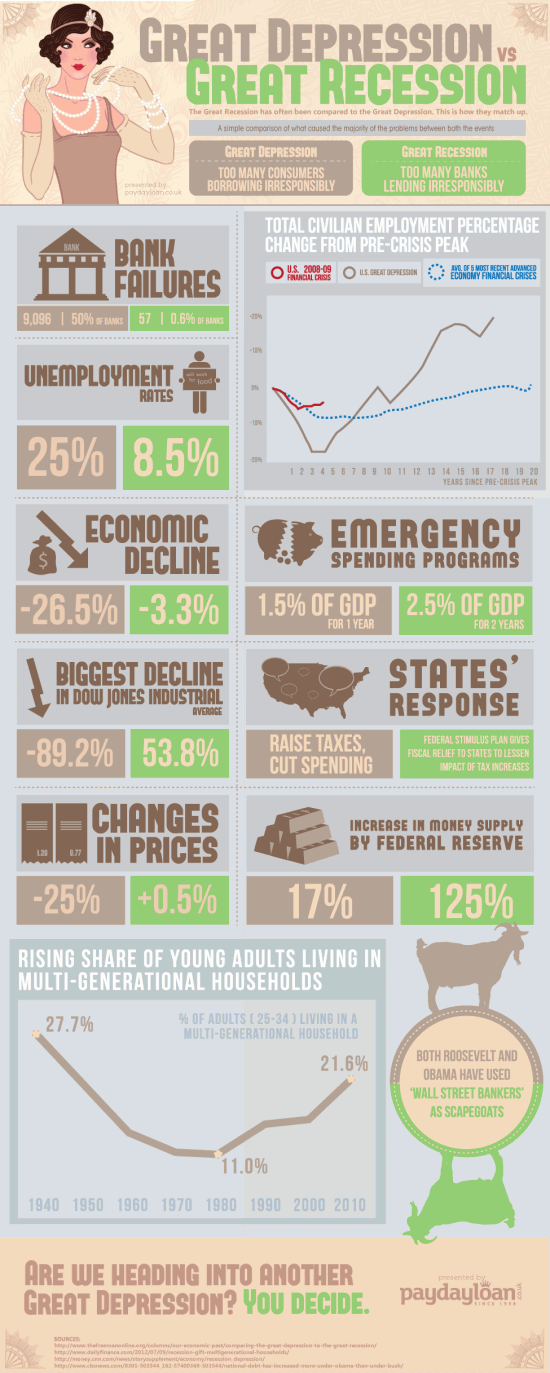
The Great Depression is often compared to the 2001-08  Great Recession. There are some interesting facts when comparing the Great Depression to the Great Recession. It may even be considered scary when laid out directly in front of you.

The cause of the Great Depression was because people were borrowing too much money, unlike the Great Recession where the banks were lending too much money irresponsibly. Don’t forget that what was once a recession turned into the Great Depression because of unemployment rates reaching 25%, bank failures covering half of all banks, and more.

Both Roosevelt and Obama have used “wall street bankers” as a scapegoat.

***

***

View more interesting facts about the Great Depression and Recession by viewing this infographic presented by Payday Loan.

Assessment

Do you think we are going into another Great Depression in 2022?

Conclusion

Your thoughts and comments on this ME-P are appreciated. Feel free to review our top-left column, and top-right sidebar materials, links, URLs and related websites, too. Then, subscribe to the ME-P. It is fast, free and secure.

Link: http://feeds.feedburner.com/HealthcareFinancialsthePostForcxos

Speaker: If you need a moderator or speaker for an upcoming event, Dr. David E. Marcinko; MBA – Publisher-in-Chief of the Medical Executive-Post – is available for seminar or speaking engagements. Contact: MarcinkoAdvisors@msn.com

OUR OTHER PRINT BOOKS AND RELATED INFORMATION SOURCES:

***

Risk Management, Liability Insurance, and Asset Protection Strategies for Doctors and Advisors: Best Practices from Leading Consultants and Certified Medical Planners™8Comprehensive Financial Planning Strategies for Doctors and Advisors: Best Practices from Leading Consultants and Certified Medical Planners™

***

Product DetailsProduct DetailsProduct Details

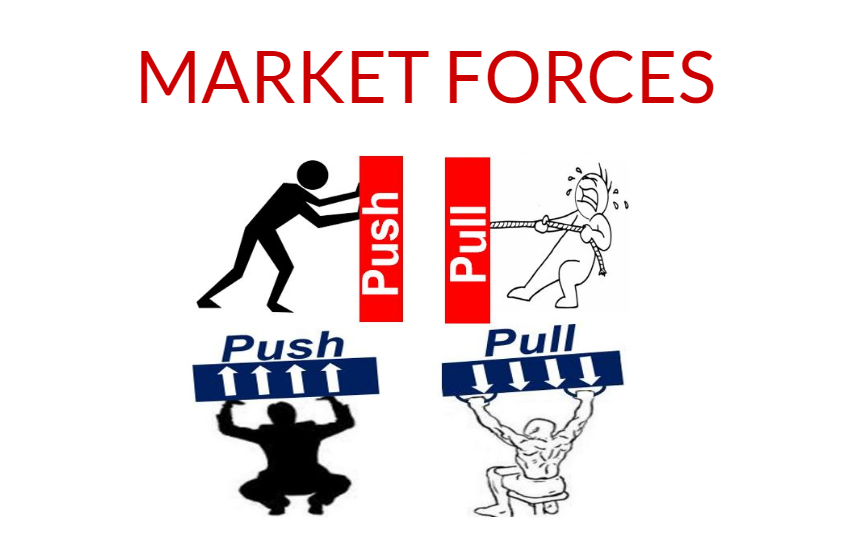
UPDATE: ARK Innovation, Dr. Burry, the Yield/Equity Push-Pull and Monkeypox

By Staff Reporters

***

***

Cathie Wood’s ARK Innovation fund composed of high-growth tech stocks is up 17% since hitting rock bottom on May 11th compared to the S&P’s 4.4% gain over the same period.

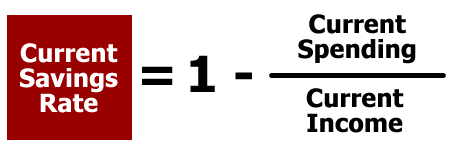
Americans are burning through their savings and might virtually exhaust them within months. Colleague Michael Burry MD warned the US economy could suffer once consumers empty out their savings accounts. “The Big Short” investor expects rising debt and reduced savings to hit growth and company profits.

The push and pull between bond yields and equities continue with stock gains kept in check by a drop in Treasuries that pushed a swath of rates above 3%.

The CDC raised its alert level for Monkeypox to level 2 recommending that travelers wear masks, among other health measures.

***

COMMENTS APPRECIATED

Thank You

***

***

Risk Aversion and Investment Alternatives

Join Our Mailing List

Understanding Financial Tolerance in the New Era

[By Dr. David E. Marcinko MBA and Staff Reporters]

Some physicians and financial planners prefer to use a specific approach in determining these difficult-to-determine areas, in lieu of one of several psychological tests that are currently available.

Examples of this specific approach follow.

Investment Temperament

Which statement best describes your investment temperament? Please indicate by ranking the items below from 1 to 4, with 1 being the most descriptive and 4 being the least descriptive. Also, please indicate the extent of your risk aversion by indicating what percentage of your assets you would feel comfortable investing in each category (for example, 50% in the first category, 25% in the second, etc.).

***

Numerical   Percentage  
ranking   allocation  
* I prefer only the safest of investments.
* I am interested only in “blue-chip” investments.
* An occasional risk is worth the effort for above-average potential reward.
* I’m willing to put everything on the line if the potential reward is large enough.

Listed below are various forms of investments. Please indicate your familiarity with each.

  Familiarity
Description High   Low
Certificates of deposit 5 4 3 2 1
Treasury bills 5 4 3 2 1
Other short-term fixed income 5 4 3 2 1
Stocks 5 4 3 2 1
U.S. government bonds 5 4 3 2 1
Corporate bonds 5 4 3 2 1
Municipal bonds 5 4 3 2 1
Mutual funds 5 4 3 2 1
Real estate—direct ownership 5 4 3 2 1
Real estate—limited partnerships 5 4 3 2 1
Oil and gas 5 4 3 2 1
Collectibles 5 4 3 2 1
Precious metals 5 4 3 2 1
Insurance products 5 4 3 2 1

Assessment

Any other thoughts on behavioral finance topics, like this?

Conclusion

Your thoughts and comments on this ME-P are appreciated. Feel free to review our top-left column, and top-right sidebar materials, links, URLs and related websites, too. Then, subscribe to the ME-P. It is fast, free and secure.

Link: http://feeds.feedburner.com/HealthcareFinancialsthePostForcxos

Speaker: If you need a moderator or speaker for an upcoming event, Dr. David E. Marcinko; MBA – Publisher-in-Chief of the Medical Executive-Post – is available for seminar or speaking engagements. Contact: MarcinkoAdvisors@msn.com

OUR OTHER PRINT BOOKS AND RELATED INFORMATION SOURCES:

DICTIONARIES: http://www.springerpub.com/Search/marcinko
PHYSICIANS: www.MedicalBusinessAdvisors.com
PRACTICES: www.BusinessofMedicalPractice.com
HOSPITALS: http://www.crcpress.com/product/isbn/9781466558731
CLINICS: http://www.crcpress.com/product/isbn/9781439879900
BLOG: www.MedicalExecutivePost.com
FINANCE: Financial Planning for Physicians and Advisors
INSURANCE: Risk Management and Insurance Strategies for Physicians and Advisors

Product Details  Product Details

Risk Management, Liability Insurance, and Asset Protection Strategies for Doctors and Advisors: Best Practices from Leading Consultants and Certified Medical Planners™8Comprehensive Financial Planning Strategies for Doctors and Advisors: Best Practices from Leading Consultants and Certified Medical Planners™

PODCAST: The “Economy” – How it Affects Everyone

By Rich Helppie

THE COMMON BRIDGE

The Second of a Two-Part Episode with Beata Kirr

***

***

PODCAST LINK: https://tinyurl.com/zrxdxzya

***

COMMENTS APPRECIATED

Thank You

***

COLLEAGUE: Dr. Mike Burry Opines on the Markets

***

By Dr. David Edward Marcinko MBA

***

Big Short’ investor Michael Burry MD warns stocks will crash and rallies won’t last.

  • “The Big Short” investor Michael Burry expects a far steeper decline in the stock market.
  • The Scion Asset Management chief’s view is based on how past crashes have played out.
  • Burry warned brief rallies were likely, and joked about his penchant for premature predictions.

Michael Burry, the hedge fund manager of “The Big Short” fame, rang the alarm on the “greatest speculative bubble of all time in all things” last summer. He warned the retail investors piling into meme stocks and cryptocurrencies that they were careening towards the “mother of all crashes.”

***

Mike also wrote a popular chapter in our financial planning textbook for physician investors. With our appreciation and gratitude.

***

COMMENTS APPRECIATED

Thank You

***

***

RECAST: An Interview with Fiduciary Bennett Aikin AIF®

On Financial Fiduciary Accountability

[By Dr. David E. Marcinko MBA CMP™]

[By Ann Miller; RN, MHA]

Currently, there is a growing dilemma in the financial sales and services industry. It goes something like this:

  • What is a financial fiduciary?
  • Who is a financial fiduciary?
  • How can I tell if my financial advisor is a fiduciary?

Now, in as much as this controversy affects laymen and physician-investors alike, we went right to the source for up-to-date information regarding this often contentious topic, for an email interview and Q-A session, with Ben Aikin.ben-aikin

About Bennett Aikin AIF® and fi360.com

Bennett [Ben] Aikin is the Communications Coordinator for fi360.com. He oversees all communications for fi360. His responsibilities include messaging, brand management, copyrights and trademarks, and publications. Mr. Aikin received his BA in English from Virginia Tech in 2003 and is currently an MS candidate in Journalism from Ohio University.

Q. Medical Executive Post 

You have been very helpful and gracious to us. So, let’s get right to it, Ben. In the view of many; attorneys, doctors, CPAs and the clergy are fiduciaries; most all others who retain this title seem poseurs; sans documentation otherwise.

A. Mr. Aikin

You are correct. Attorneys, doctors and clergy are the prototype fiduciaries. They have a clear duty to put the best interests of their clients, patients, congregation, etc., above their own. [The duty of a CPA isn’t as clear to me, although I believe you are correct]. Furthermore, this is one of the first topics we address in our AIF training programs, and what we call the difference between a profession and an industry.  The three professions you name have three common characteristics that elevate them from an industry to a profession:

  1. Recognized body of knowledge
  2. Society depends upon practitioners to provide trustworthy advice
  3. Code of conduct that places the clients’ best interests first

Q. Medical Executive Post 

It seems that Certified Financial Planner®, Chartered Financial Analysts, Registered Investment Advisors and their representatives, Registered Representative [stock-brokers] and AIF® holders, etc, are not really financial fiduciaries, either by legal statute or organizational charter. Are we correct, or not? Of course, we are not talking ethics or morality here. That’s for the theologians to discuss.

A. Mr. Aikin

One of the reasons for the “alphabet soup”, as you put it in one of your white papers [books, dictionaries and posts] on financial designations, is that while there is a large body of knowledge, there is no one recognized body of knowledge that one must acquire to enter the financial services industry.  The different designations serve to provide a distinguisher for how much and what parts of that body of knowledge you do possess.  However, being a fiduciary is exclusively a matter of function. 

In other words, regardless of what designations are held, there are five things that will make one a fiduciary in a given relationship:

  1. You are “named” in plan or trust documents; the appointment can be by “name” or by “title,” such as CFO or Head of Human Resources
  2. You are serving as a trustee; often times this applies to directed trustees as well
  3. Your function or role equates to a professional providing comprehensive and continuous investment advice
  4. You have discretion to buy or sell investable assets
  5. You are a corporate officer or director who has authority to appoint other fiduciaries

So, if you are a fiduciary according to one of these definitions, you can be held accountable for a breach in fiduciary duty, regardless of any expertise you do, or do not have. This underscores the critical nature of understanding the fiduciary standard and delegating certain duties to qualified “professionals” who can fulfill the parts of the process that a non-qualified fiduciary cannot.

Q. Medical Executive Post 

How about some of the specific designations mentioned on our site, and elsewhere. I believe that you may be familiar with the well-known financial planner, Ed Morrow, who often opines that there are more than 98 of these “designations”? In fact, he is the founder of the Registered Financial Consultants [RFC] designation. And, he wrote a Foreword for one of our e-books; back-in-the-day. His son, an attorney, also wrote as a tax expert for us, as well. So, what gives?

A. Mr. Aikin

As for the specific designations you list above, and elsewhere, they each signify something different that may, or may not, lend itself to being a fiduciary: For example:

• CFP®: The act of financial planning does very much imply fiduciary responsibility.  And, the recently updated CFP® rules of conduct does now include a fiduciary mandate:

• 1.4 A certificant shall at all times place the interest of the client ahead of his or her own. When the certificant provides financial planning or material elements of the financial planning process, the certificant owes to the client the duty of care of a fiduciary as defined by CFP Board. [from http://www.cfp.net/Downloads/2008Standards.pdf]

•  CFA: Very dependent on what work the individual is doing.  Their code of ethics does have a provision to place the interests of clients above their own and their Standards of Practice handbook makes clear that when they are working in a fiduciary capacity that they understand and abide by the legally mandated fiduciary standard.

• FA [Financial Advisor]: This is a generic term that you may find being used by a non-fiduciary, such as a broker, or a fiduciary, such as an RIA.

• RIA: Are fiduciaries.  Registered Investment Advisors are registered with the SEC and have obligations under the Investment Advisers Act of 1940 to provide services that meet a fiduciary standard of care.

• RR: Registered Reps, or stock-brokers, are not fiduciaries if they are doing what they are supposed to be doing.  If they give investment advice that crosses the line into “comprehensive and continuous investment advice” (see above), their function would make them a fiduciary and they would be subject to meeting a fiduciary standard in that advice (even though they may not be properly registered to give advice as an RIA).

• AIF designees: Have received training on a process that meets, and in some places exceeds, the fiduciary standard of care.  We do not require an AIF® to always function as a fiduciary. For example, we allow registered reps to gain and use the AIF® designation. In many cases, AIF designees are acting as fiduciaries, and the designation is an indicator that they have the full understanding of what that really means in terms of the level of service they provide.  We do expect our designees to clearly disclose whether they accept fiduciary responsibility for their services or not and advocate such disclosure for all financial service representatives.

Q. Medical Executive Post 

Your website, http://www.fi360.com, seems to suggest, for example, that banks/bankers are fiduciaries. We have found this not to be the case, of course, as they work for the best interests of the bank and stockholders. What definitional understanding are we missing?

A. Mr. Aikin

Banks cannot generally be considered fiduciaries.  Again, it is a matter of function. A bank may be a named trustee, in which case a fiduciary standard would generally apply.  Banks that sell products are doing so according to their governing regulations and are “prudent experts” under ERISA, but not necessarily held to a fiduciary standard in any broader sense.

Q. Medical Executive Post 

And so, how do we rectify the [seemingly intentional] industry obfuscation on this topic. We mean, our readers, subscribers, book and dictionary purchasers, clients and colleagues are all confused on this topic. The recent financial meltdown only stresses the importance of understanding same.

For example, everyone in the industry seems to say they are the “f” word. But, our outreach efforts to contact traditional “financial services” industry pundits, CFP® practitioners and other certification organizations are continually met with resounding silence; or worse yet; they offer an abundance of parsed words and obfuscation but no confirming paperwork, or deep subject-matter knowledge as you have kindly done. We get the impression that some FAs honesty do-not have a clue; while others are intentionally vague.

A. Mr. Aikin

All of the evidence you cite is correct.  But that does not mean it is impossible to find an investment advisor who will manage to a fiduciary standard of care and acknowledge the same. The best way to rectify confusion as it pertains to choosing appropriate investment professionals is to get fiduciary status acknowledged in writing and go over with them all of the necessary steps in a fiduciary process to ensure they are being fulfilled. There also are great resources out there for understanding the fiduciary process and for choosing professionals, such as the Department of Labor, the SEC, FINRA, the AICPA’s Personal Financial Planning division, the Financial Planning Association, and, of course, Fiduciary360.

We realize the confusion this must cause to those coming from the health care arena, where MD/DO clearly defines the individual in question; as do other degrees [optometrist, clinical psychologist, podiatrist, etc] and medical designations [fellow, board certification, etc.]. But, unfortunately, it is the state of the financial services industry as it stands now.

Q. Medical Executive Post 

It is as confusing for the medical community, as it is for the lay community. And, after some research, we believe retail financial services industry participants are also confused. So, what is the bottom line?

A. Mr. Aikin

The bottom line is that lay, physician and all clients have a right to expect and demand a fiduciary standard of care in the managing of investments. And, there are qualified professionals out there who are providing those services.  Again, the best way to ensure you are getting it is to have fiduciary status acknowledged in writing, and go over the necessary steps in a fiduciary process with them to ensure it is being fulfilled.

Q. Medical Executive Post 

The “parole-evidence” rule, of contract law, applies, right? In dealing with medical liability situations, the medics and malpractice attorneys have a rule: “if it wasn’t written down, it didn’t happen.”  

A. Mr. Aikin

An engagement contract accepting fiduciary status should trump a subsequent attempt to claim the fiduciary standard didn’t apply. But, to reiterate an earlier point, if someone acts in one of the five functional fiduciary roles, they are a fiduciary whether they choose to acknowledge it or not.  I have attached a sample acknowledgement of fiduciary status letter with copies of our handbook, which details the fiduciary process we instruct in our programs, and our SAFE, which is basically a checklist that a fiduciary should be able to answer “Yes” to every question to ensure the entire fiduciary process is being covered.

Q. Medical Executive Post 

It is curious that you mention checklists. We have a post arguing that very theme for doctors and hospitals as they pursue their medial error reduction, and quality improvement, endeavors. And, we applaud your integrity, and wish only for clarification on this simple fiduciary query?

A. Mr. Aikin

Simple definition: A fiduciary is someone who is managing the assets of another person and stands in a special relationship of trust, confidence, and/or legal responsibility.

Q. Medical Executive Post 

Who is a financial fiduciary and what, if any, financial designation indicates same?

A. Mr. Aikin

Functional definition: See above for the five items that make you a fiduciary.

Financial designations that unequivocally indicate fiduciary duty: Short answer is none, only function can determine who is a fiduciary. 

Q. Medical Executive Post 

Please repeat that?

A. Mr. Aikin

Financial designations that indicate fiduciary duty: none. It is the function that determines who is a fiduciary.  Now, having said that, the CFP® certification comes close by demanding their certificants who are engaged in financial planning do so to a fiduciary standard. Similarly, other designations may certify the holder’s ability to perform a role that would be held to a fiduciary standard of care.  The point is that you are owed a fiduciary standard of care when you engage a professional to fill that role or they functionally become one.  And, if you engage a professional to fill a non-fiduciary role, they will not be held to a fiduciary standard simply because they have a particular designation.  One of the purposes the designations serve is to inform you what roles the designation holder is capable of fulfilling.

It is also worth keeping in mind that just being a fiduciary doesn’t equate to a full knowledge of the fiduciary standard. The AIF® designation indicates having been fully trained on the standard.

Q. Medical Executive Post 

Yes, your website mentions something about fiduciaries that are not aware of same! How can this be? Since our business model mimics a medical model, isn’t that like saying “the doctor doesn’t know he is doctor?” Very specious, with all due respect!

A. Mr. Aikin

I think it is first important to note that this statement is referring not just to investment professionals.  Part of the audience fi360 serves is investment stewards, the non-professionals who, due to facts and circumstances, still owe a fiduciary duty to another.  Examples of this include investment committee members, trustees to a foundation, small business owners who start 401k plans, etc.  This is a group of non-sophisticated investors who may not be aware of the full array of responsibilities they have. 

However, even on the professional side I believe the statement isn’t as absurd as it sounds.  This is basically a protection from both ignorant and unscrupulous professionals.  Imagine a registered representative who, either through ignorance or design, begins offering comprehensive and continuous investment advice.  Though they may deny or be unaware of the fact, they have opened themselves up to fiduciary liability. 

Q. Medical Executive Post 

Please clarify the use of arbitration clauses in brokerage account contracts for us. Do these disclaim fiduciary responsibility? If so, does the client even know same?

A. Mr. Aikin

By definition, an engagement with a broker is a non-fiduciary relationship.  So, unless other services beyond the scope of a typical brokerage account contract are specified, fiduciary responsibility is inherently not applicable.  Unfortunately, I do imagine there are clients who don’t understand this. Furthermore, AIF® designees are not prohibited from signing such an agreement and there are some important points to understand the reasoning.

First, by definition, if you are entering into such an agreement, you are entering into a non-fiduciary relationship. So, any fiduciary requirement wouldn’t apply in this scenario.

Second, if this same question were applied into a scenario of a fiduciary relationship, such as with an RIA, this would be a method of dispute resolution, not a practice method. So, in the event of dispute, the advisor and investor would be free to agree to the method of resolution of their choosing. In this scenario, however, typically the method would not be discussed until the dispute itself arose.

Finally, it is important to know that AIF/AIFA designees are not required to be a fiduciary. It is symbolic of the individuals training, knowledge and ongoing development in fiduciary processes, but does not mean they will always be acting as a fiduciary.

Q. Medical Executive Post 

Don’t the vast majority of arbitration hearings find in favor of the FA; as the arbitrators are insiders, often paid by the very same industry itself?

A. Mr. Aikin

Actual percentages are reported here: http://www.finra.org/ArbitrationMediation/AboutFINRADR/Statistics/index.htm However, brokerage arbitration agreements are a dispute resolution method for disputes that arise within the context of the securities brokerage industry and are not the only means of resolving differences for all types of financial advisors.  Investment advisers, for example, are subject to respond to disputes in a variety of forums including state and federal courts.  Clients should look at their brokerage or advisory agreement to see what they have agreed to. If you wanted to go into further depth on this question, we would recommend contacting Brian Hamburger, who is a lawyer with experience in this area and an AIFA designee. Bio page: http://www.hamburgerlaw.com/attorneys/BSH.htm.

Q. Medical Executive Post 

What about our related Certified Medical Planner® designation, and online educational program for financial advisors and medical management consultants? Is it a good idea – reasonable – for the sponsor to demand fiduciary accountability of these charter-holders? Cleary, this would not only be a strategic competitive advantage, but advance the CMP™ mission to put medical colleagues first and champion their cause www.CertifiedMedicalPlanner.org above all else. 

A. Mr. Aikin

I think it is a good idea for any plan sponsor to demand fiduciary status be acknowledged from anyone engaged to provide comprehensive and continuous investment advice.  I also think it is a good idea to be proactive in verifying that the fiduciary process is being followed.

Q. Medical Executive Post 

Is there anything else that we should know about this topic?

A. Mr. Aikin

Yes, a further note about fi360’s standards. I wrote generically about the fiduciary standard, because there is one that is defined by multiple sources of regulation, legislation and case law.  The process defined in our handbooks, we call a Fiduciary Standard of Excellence, because it covers that minimum standard and also best practice standards that go above and beyond.  All of our Practices, which comprise that standard, are legally substantiated in our Legal Memoranda handbook, which was written by Fred Reish’s law firm, who is considered a leading ERISA attorney.

Additional resources:

Q. Medical Executive Post 

Thank you so much for your knowledge and willingness to frankly share it with the Medical-Executive-Post.

Assessment

All are invited to continue the conversation with Mr. Aikin, asynchronously online, or thru this contact information:

fi360.com
438 Division Street
Sewickley, PA 15143
412-741-8140 Phone
866-390-5080 Toll-free phone
412-741-8142 Fax

Conclusion

Your thoughts and comments on this ME-P are appreciated. Feel free to review our top-left column, and top-right sidebar materials, links, URLs and related websites, too. Then, subscribe to the ME-P. It is fast, free and secure.

Link: http://feeds.feedburner.com/HealthcareFinancialsthePostForcxos

Speaker: If you need a moderator or speaker for an upcoming event, Dr. David E. Marcinko; MBA – Publisher-in-Chief of the Medical Executive-Post – is available for seminar or speaking engagements. Contact: MarcinkoAdvisors@msn.com

OUR OTHER PRINT BOOKS AND RELATED INFORMATION SOURCES:

LEXICONS: http://www.springerpub.com/Search/marcinko
PRACTICES: www.BusinessofMedicalPractice.com
HOSPITALS: http://www.crcpress.com/product/isbn/9781466558731
CLINICS: http://www.crcpress.com/product/isbn/9781439879900
ADVISORS: www.CertifiedMedicalPlanner.org
BLOG: www.MedicalExecutivePost.com

Product DetailsProduct DetailsProduct Details

Product Details  Product Details

Product DetailsProduct Details

Product Details

Risk Management, Liability Insurance, and Asset Protection Strategies for Doctors and Advisors: Best Practices from Leading Consultants and Certified Medical Planners™8Comprehensive Financial Planning Strategies for Doctors and Advisors: Best Practices from Leading Consultants and Certified Medical Planners™

Is the Financial “Stagflation” Risk Real?

Is Stagflation Risk Real?

By Merk Insight

***

DEFINITION: In economics, stagflation or recession-inflation is a situation in which the inflation rate is high, the economic growth rate slows, and unemployment remains steadily high. It presents a dilemma for economic policy, since actions intended to lower inflation may exacerbate unemployment.

CITE: https://www.r2library.com/Resource/Title/082610254

***

***

***

A few days ago, I had the pleasure of attending the Hoover Monetary Conference – I would call it a Powwow of central bankers, if there had not been an actual Powwow a few steps outside the venue. While Hoover is known to reflect “hawkish” views, “hawks” and “doves” alike used the question of whether the Fed is “behind the curve” to argue all things inflation and stagflation.

I left the conference even more concerned about the risk of stagflation; let me explain.

Please read our latest insight: Is Stagflation Risk Real?

***
COMMENTS APPRECIATED

Thank You

***

****

Financial Planning Advice that Changed My Life

A PODCAST

By Vitaliy Katsenelson CFA

One of the best wedding gifts I received was lunch with my friend, Mark. Here, I reflect on the financial advice Mark gave me then, and how it could help young people like my son Jonah settle into adulthood with a lot more forward-thinking.

***

You can read this article online at:

 https://contrarianedge.com/personal-finance-advice-that-changed-my-life/

Comprehensive Financial Planning Strategies for Doctors and Advisors: Best Practices from Leading Consultants and Certified Medical Planners™

***

Does Money REALLY Buy Happiness?

Maybe IT CAN

Psychological Considerations

***

Money Can Buy Happiness After All, According to New Study

***

R&D 2010: https://www.pnas.org/content/107/38/16489

R&D 2021: https://www.pnas.org/content/118/4/e2016976118

DEM: https://medicalexecutivepost.com/2020/12/11/the-science-of-happiness/

YOUR THOUGHTS AND COMMENTS ARE APPRECIATED.

Thank You

***

The ME-P is Seeking Healthcare “Metaverse” Input

By Ann Miller RN MHA

***

***

Facebook’s latest release, Meta, is said to be the next evolution of social connection. A virtual, 3D network that allows connection and collaboration in ways many of us have never even considered! And while many are buzzing over how Meta will shape everything from education to healthcare – we are eager to get your opinion on our own ME-P ecosystem.

Can patients trust Facebook and others again?

Are you interested in exploring a new platform for connection?

Have you subscribed to the ME-P?

We want to hear all about it! We’re actively collaborating to bring your perspectives to the discussion around the Metaverse and the patient, economics, finance and healthcare community.

If you have insights or experiences to share – just comment and/or let us know.

***

THANK YOU

***

***

On All Things “Fiduciary”

My Journey From Financial Advisor to Journalist to Fiduciary Ambassador

By Kathleen M. McBride, AIFA® [Founder, Fiduciarypath, LLC]

EDITOR’S NOTE: Kathleen M. McBride, AIFA®, Founder, Fiduciarypath, LLC and CEFEX-certified analyst, talks about her journey from advisor to journalist to fiduciary ambassador.

Dr. David E. Marcinko MBA

[Editor-in-Chief]

Image result for fiduciary

LINK: https://www.fi360.com/blog/post/all-things-fiduciary

Your thoughts are appreciated.

Comprehensive Financial Planning Strategies for Doctors and Advisors: Best Practices from Leading Consultants and Certified Medical Planners™

ORDER: https://www.amazon.com/Comprehensive-Financial-Planning-Strategies-Advisors/dp/1482240289/ref=sr_1_1?ie=UTF8&qid=1418580820&sr=8-1&keywords=david+marcinko

THANK YOU

***

UPDATE: The Housing and Single Family Rental Markets

By Staff Reporters

***

***

HOMES: Last year was a really good time to own a home—like, historically good. For the first time on record, homeowners earned more from the increase in home values than income from their jobs, according to Zillow. The numbers: The typical US home increased $52,667 in value, while the median full-time worker earned about $50,000 before taxes.

Rentals: Single-family rental prices jumped 12.6% from a year earlier, according to the latest CoreLogic Single-Family Rent Index. All major metropolitan areas saw increases, but the Sun Belt experienced by far the biggest gains, with Miami’s asking rents up almost 39%.

***

***

COMMENTS APPRECIATED

Thank You

Subscribe to the Medical Executive-Post

***

***

My Investing “Sell” Principle

The Renaissance of Pipelines

Vitaliy N. Katsenelson, CFA - YouTube

By Vitaliy N. Katsenelson, CFA

A client recently asked me whether there is a difference in our sell discipline between high and low growth companies.

Selling is one of the hardest parts of investing. I wrote a lot on the subject in the past, but let’s zoom in on how our selling practice differs between high-growth companies with long runways for compounding and slow-growth companies.

LINK: https://contrarianedge.com/our-sell-discipline/

AUDIO: https://investor.fm/the-renaissance-of-pipelines-and-our-sell-discipline-ep-113

Your thoughts are appreciated.

EDITOR’S NOTE: It has been a few years since I spoke with my colleague Vitaliy. But, I read his newsletters and blog regularly and suggest all ME-P readers do the same.

Dr. David E. Marcinko; MBA

[Editor-in-Chief]

Comprehensive Financial Planning Strategies for Doctors and Advisors: Best Practices from Leading Consultants and Certified Medical Planners(TM)

BOOK: https://www.amazon.com/Comprehensive-Financial-Planning-Strategies-Advisors/dp/1482240289/ref=sr_1_1?ie=UTF8&qid=1418580820&sr=8-1&keywords=david+marcinko

THANK YOU

***

UPDATE: Medical Debt, Credit Reports & Spring

By Staff Reporters

***

***

Medical Debt. The top three credit reporting agencies—Equifax, Experian, and TransUnion—said recently that they’ll remove most medical debt from consumers’ credit reports beginning this summer. This move will wipe out almost 70% of medical debts that can sometimes stick around for up to seven years on Americans’ credit reports and make it harder for them to buy a house, car, or take out other loans.

Spring: Today is the first day of Spring [aka the vernal equinox or one of two moments of the year when the Sun is exactly above the Equator].

***

HAPPY SPRING 2022

Editor-in-Chef: Dr. David Edward Marcinko MBA CMP™

COMMENTS APPRECIATED

Thank You

Subscribe to the Medical Executive-Post

***

***

****

CONCLUSION: The Six Commandments of Value Investing

***

Investing and Chess

By Vitaliy Katsenelson, CFA

***

Conclusion: Investing and Chess 

I read somewhere that chess is a game of small advantages. When the game starts, the players are equal – both hold the same number of pieces in the same positions. But then every move either adds to your position (competitive advantage) or subtracts from it. These little decisions (resulting in a better pawn structure, a more secure king, a centrally positioned knight, and so on) that you make with every move accumulate into victory. 

Investing is not that much different, especially in today’s world where access to information has flattened. A mutual fund that manages $100 billion may spend $100 million on research, but that $100 million doesn’t buy any more than what a patient value investor can glean by reading financial statements. 

I am not talking about Warren Buffett either, who doesn’t even have a PC in his office. Ted Weschler and Todd Combs (Warren Buffett’s right-hand men) achieved phenomenal investment success without a fancy research department by simply reading carefully and following our Six Commandments. 

The key to succeeding in this irrational world is to actively ingrain each one of these principles into your investment operating system, improving your process just a little on a daily basis, and then success will follow. 

Finally, this would not be a worthy chapter if I did not contradict myself, just a little. Investing is also unlike chess. Investing affords us a luxury that few people appreciate: You can choose your own opponent. In chess tournaments, you don’t get to choose your opponent. Tournament organizers match you to someone with an equal rating; then as you win, you are progressively matched against better opponents. 

In investing, you are the “tournament organizer.” You get to walk into the room and, instead of choosing the geekiest opponent – the dude with thick glasses who hasn’t been on a date in years and has only thought and dreamt about chess – you can go for the muscular guy who spends five hours a day in the gym, and only joined the tournament because he lost a bet. 

Money doesn’t know how you made it. A hundred dollars made by solving easy problems (buying stocks where both your IQ and EQ were at their highest) buys as much as a hundred dollars that caused you to lose your hair. In investing, you don’t have to solve the problems that everyone else is solving. There are thousands of stocks out there, and your portfolio needs only a few dozen.

***

COMMENTS APPRECIATED

Thank You

Subscribe to the Medical Executive-Post

***

***

#5: The Six Commandments of Value Investing

***

***

EDITOR’S NOTE: Although it has been some time since speaking live with busy colleague Vitaliy Katsenelson CFA, I review his internet material frequently and appreciate this ME-P series contribution. I encourage all ME-P readers to do the same and consider his value investing insights carefully.

By Vitaliy Katsenelson, CFA

***

5. Risk is a permanent loss of capital (not volatility)

Conventional wisdom views volatility as risk. Not value investors. We befriend volatility, embrace it, and try to take advantage of it. For someone who has not researched a company, it is not readily apparent whether a decline in shares is temporary or permanent. After all, if you don’t know what the company is worth, the quoted price becomes the quotient of intrinsic value. If you do know what the company is worth, then the change in intrinsic value is all that is going to matter. The price quoted on the exchange will be your friend, allowing you to take advantage of the difference between intrinsic value and quoted stock price. If the quoted stock price is significantly cheaper than your estimated intrinsic value, you buy it (or buy more of it if you already own it). If the opposite is true, you sell it.

What is a company worth?

Determining the intrinsic value requires a combination of art and science, in that order – it is not quoted on the exchanges. We go about this the same way a businessman would figure how much he’d want to pay for a gas station or a McDonald’s franchise. Analysis of each company will be different, but at the core we estimate the cash flows the business will produce for shareholders in the long run (at least ten years) and what the business will be worth then (based on our estimate of its earnings power at the time). The combination of the two provides us an approximation of what the business is worth now. To further embed “the right” type of risk analysis into our investment operating system, we build financial models. Models help us to understand businesses better and provide insights as to which metrics matter and which don’t. They allow us to stress test the business: We don’t just look at the upside but spend a lot of times looking at the downside – we try to “kill” the business. We look at known risks and try to imagine unknown ones; we try to quantify their impact on cash flows. This “killing” helps to us understand how much of a discount (margin of safety) we should demand to what the business is worth. By applying this discount to fair value, we arrive at a buy price. For every stock we buy we probably look at a few dozen (at least).

For instance, if we are looking at a company that is selling products or services to consumers, we’ll be focusing on customer-acquisition costs. We try to drill down to the essential operating metrics of each company. If it’s a convenience store retailer, we’ll look into gallons of gas sold and profit per gallon. If it’s an oil driller, we’ll look at utilization rates, rigs in service, average revenue per rig per day. If it’s a pharmaceuticals company, we’ll have revenue lines for each major drug it sells and model the company for the eventuality that patents will run out. (Revenues usually decline 80-90% when a patent expires).

These models help us to understand the economics of the business. We usually build two type of models. We start with what we call the “tablecloth” model. This is a very detailed, in-depth model that zeros in on different aspects of the business. But the risk we run with a tablecloth model is that we get lost in the trees and forget about the forest.

This brings us to our “napkin” model. It’s a much simpler and smaller model that focuses only on the essentials of the business. It is easier to build the tablecloth model than the “napkin.” If we can build a napkin model, that means we understand the drivers of the business – we understand what matters. Models are important because they help us remain rational. It is only the matter of time before a stock we own will “blow up” (or, in layman’s terms, decline).

In this type of analysis, what happens this month, this quarter, or even this year is only important in the context of the long run – unless the company’s good or bad earnings report in any quarter changes our assumptions on the company’s long-term cash flows. If you methodically focus on what the company is worth and if your Total IQ is maximized, then price fluctuations are just noise. Volatility becomes your friend because you can rationally take advantage of it. It’s an under-appreciated gift from Mr. Market.
Side Note: As an advisor, I feel it is one of my great responsibilities to be an honest and clear communicator. There is an asymmetry of information between us and our clients. We have invested weeks and months of research into the analysis of each stock; therefore, we have a good idea what each company is worth. Our clients have not done this research, and they should not have to – that is what they hired us to do.This is why we pour our heart and soul into our quarterly letters – we want to close this informational gap and so we try as hard as we can to explain what we think the companies in our portfolio are worth. Our letters are often 15-20 pages long. 

***
COMMENTS APPRECIATED

Thank You

Subscribe to the Medical Executive-Post

***

****

The New “Fiduciary” Rule

 Really? Whose side is your financial advisor on?


By Rick Kahler CFP®

If it weren’t already hard enough to understand whose side your financial advisor is on, it got more complicated on June 9, 2017. As of that date, all financial advisors who sell products are required to forego any sales agenda and give advice that would benefit their clients or customers (called “fiduciary advice”).

Does this sound too good to be true? It is!

This rule only pertains to rollovers into an IRA from a qualified plan like a 401(k), and only to the investment recommendations for that IRA account.

Any other account is still fair game for stuffing full of high-commission and high-fee products that mainly benefit salespeople and their companies.

Also, in case you think your IRA is now protected from high-cost products, there’s one more catch. Salespeople are not required to look out for your best interests if they explain to you how and why they intend to give advice that instead primarily benefits themselves and their brokerage company.

While this new law will probably confuse consumers more than it helps, it may be a first step toward something larger.

Here is the sad truth

Most Americans believe they already receive objective, fiduciary advice. The overwhelming odds are that they don’t.

You face odds of ten to one that your advisor is a salesperson who is not required to put your financial interests first. Most Americans purchase their investments from the half a million brokers who earn commissions if they can convince you to buy an expensive alternative to the thriftier, better-performing investment options on the market. That’s more than ten times the number of advisors who adhere to a fiduciary standard. Government research estimates that consumers lost $17 billion a year to conflicted advice in the recommendations related to retirement plans made by brokers and sales agents posing as advisors.

The bottom line is that at best, only one out of every ten financial advisors puts your interests first. The actual number of real fiduciary advisors may actually be even lower than this discouraging figure.

A Study

A mystery shopper study in the Boston area found that only 2.4% of the “advisors” it surveyed (most were almost certainly brokers) made what most would consider to be fiduciary recommendations.

On the other side, 85% advocated switching out of a thrifty portfolio with excellent funds into something a bit more self-serving.

The Brokerage industry

The brokerage industry—that is, the larger Wall Street firms, independent broker-dealer organizations and life insurance organizations—repeatedly fought the fiduciary rule in court, arguing, in some cases, that their brokers and insurance agents shouldn’t be held to this standard. The courts refused to block the rule.

It gets worse

Brokers are held to a sales standard, but it’s a very low one that is appropriately known as “compliance.” They are required to “know their customer” and to make investment recommendations that would be “suitable” to someone in that customer’s circumstances.

In addition, a new study found that 8% of all brokers have a record of serious misconduct, and nearly half of those were kept on at their firms even after getting caught.

Assessment

There is one simple way to determine whether you’re working with somebody you can trust. Ask your advisor directly to provide a written and signed one-page statement that he or she will act in your best interests.

***

If the broker hems and haws, hold onto your wallet or purse. Chances are any recommendations you receive will cost you money, a cost only disclosed somewhere deep in the fine print of whatever agreement you sign. If the advisor signs the statement, chances are you will receive fiduciary advice. 

Conclusion

Your thoughts and comments on this ME-P are appreciated. Feel free to review our top-left column, and top-right sidebar materials, links, URLs and related websites, too. Then, subscribe to the ME-P. It is fast, free and secure.

Speaker: If you need a moderator or speaker for an upcoming event, Dr. David E. Marcinko; MBA – Publisher-in-Chief of the Medical Executive-Post – is available for seminar or speaking engagements. Contact: MarcinkoAdvisors@msn.com

OUR OTHER PRINT BOOKS AND RELATED INFORMATION SOURCES:

Risk Management, Liability Insurance, and Asset Protection Strategies for Doctors and Advisors: Best Practices from Leading Consultants and Certified Medical Planners™8Comprehensive Financial Planning Strategies for Doctors and Advisors: Best Practices from Leading Consultants and Certified Medical Planners™

***

#4: The Six Commandments of Value Investing

***

***

EDITOR’S NOTE: Although it has been some time since speaking live with busy colleague Vitaliy Katsenelson CFA, I review his internet material frequently and appreciate this ME-P series contribution. I encourage all ME-P readers to do the same and consider his value investing insights carefully.

By Vitaliy Katsenelson, CFA

***

4. Margin of safety – leave room in your buy price for being wrong

Margin of safety is a function of two dimensions: a company’s quality and its growth.

I am generalizing here, but exogenous events have a greater impact on a lower-quality business than a higher-quality one. Thus a high-quality company needs a lower margin of safety than a lower-quality one.

A company that is growing earnings and paying dividends has time on its side and thus may not need as much margin of safety as a lower-growing one.

We quantify both a company’s quality and growth, and thus margin of safety is deeply embedded in our investment operating system.

The larger discount to the stock’s fair value (the $1) the less clairvoyance you need to have about the future of the business. For instance, in 2013, when Apple stock was trading at $400 (pre-split) we didn’t have to have a very clear crystal ball about Apple’s future; Apple just had to be able to barely fog the mirror.

In later years, at $900, we need to have a lot more precision in our analysis of Apple’s future. 

CITE: https://www.r2library.com/Resource/Title/082610254

***

COMMENTS APPRECIATED

Thank You

Subscribe to the Medical Executive-Post

***

***

#3: The Six Commandments of Value Investing (Part 1)

***

The Six Commandments of Value Investing (Part 1)

***

EDITOR’S NOTE: Although it has been some time since speaking live with busy colleague Vitaliy Katsenelson CFA, I review his internet material frequently and appreciate this ME-P series contribution. I encourage all ME-P readers to do the same and consider his value investing insights carefully.

By Vitaliy Katsenelson, CFA

***

The Six Commandments of Value Investing
3. The market is there to serve you, not the other way around.

Part 1
: The market is there to price stocks on a daily basis, but it doesn’t value them on a daily basis. In the long run (the yardstick here is years, not days or months) the market will value stocks, but in the short run stock price movements are random. 

Despite this randomness, the media will always find a rational explanation for a move. However, trying to understand randomness and predict stock movements in the short run is like trying to have an intelligent conversation with a two-year-old. It may be fun, but it will consume a lot of your time and energy, and the outcome is far from certain. 

Stock fluctuations should be looked upon as a natural and benign feature of the stock market, but only if you know what the asset is worth. To make Mr. Market serve us and not become its slave, here is what we do.

If we know a stock is worth $1, then if its price falls from 50 cents to 30 cents (a 40% decline), that’s a blessing for several reasons: The company can now buy back a lot more of its stock at lower prices, and we can add to our position. After all, it’s 40% cheaper. 

Here is the key, though: You have to make sure that what you thought was worth $1 is still worth $1.

To quote Mike Tyson, “Everyone has a plan till they get punched in the mouth.” How do you remain rational when Mr. Market has just smashed you in the face by repricing your $1 stock from 50 cents to 30 cents? Maybe Mr. Market is right and that company’s fair value was never really $1 but only 40 cents?

To remain rational, we focus on maximizing our Total IQ. I know we were not supposed to have math, especially this early in the book. But indulge me with this little equation: Total IQ = IQ x EQ (where EQ <=1)Before I explain I want to stress this point: Your IQ, EQ, and thus Total IQ will vary from stock to stock and from industry to industry.

Let’s start with IQ.

IQ – our intellectual capacity to analyze problems – will vary with the problem in front of us. Just as we breezed through some subjects in college and struggled with others, our ability to understand the current and future dynamics of various companies and industries will fluctuate as well. This is why we buy stocks that fall within our sphere of competence. We tend to stick with ones where our IQ is the highest.

As I have mentioned before but will continue to repeat: If investing were an exact science – a formulaic process by which you could (in a vacuum) constantly test and retest your hypotheses and repeat your results – then EQ, our emotional quotient, would be irrelevant.

If we were characters from Star Trek – with complete control over our emotions, like Mr. Spock, or lacking emotions entirely, like Lieutenant Commander Data – then our EQ wouldn’t matter. However, investing is not a science and we are humans. We have plenty of emotions, and thus EQ is a very important part of this equation.

Though we usually think about our capacity to analyze problems as being dependable and stable over time, it isn’t.

First, emotions distort probabilities. So, even if my intellectual capacity to analyze a problem is not impacted, my brain may be solving a distorted problem.

Second, my IQ is not constant, and my ability to process information effectively declines under emotional stress. I either lose the big picture or overlook important details. This dilemma is not unique to me; I’m sure it affects all of us to varying degrees.

A friend of mine who is a terrific investor, and who will remain nameless (though his name is George), once told me that he never invests in grocery store stocks because he can’t be rational when he holds them. If we spent some Freudian time with him, we’d probably discover that he experienced a traumatic childhood event at the grocery store (he may have been caught shoplifting a candy bar when he was eight), or he may have had a bad experience with a grocery stock early in his career. The reason for his problem is irrelevant, though. What is important is that he has realized that his high IQ will be impaired by his low EQ if he owns grocery stocks.

The higher my EQ is with regard to a particular company, the more likely my Total IQ will not degrade when things go wrong (or even when they go right). This is why in the little formula above, EQ cannot be greater than 1. In your most emotionally stable state (when EQ = 1), your Total IQ will equal your IQ.

There is a good reason why doctors don’t treat their own children: Their ability to be rational (properly weighing probabilities) may be severely compromised by their emotions. 

CITE: https://www.r2library.com/Resource/Title/082610254

***

COMMENTS APPRECIATED

Thank You

Subscribe to the Medical Executive-Post

***

****

A Review of Investing Expenses

Join Our Mailing List

Peeling Back the Layers of Fees

By PALADIN [Research & Registry]

Advisor Pay

Channel Surfing the ME-P

Have you visited our other topic channels? Established to facilitate idea exchange and link our community together, the value of these topics is dependent upon your input. Please take a minute to visit. And, to prevent that annoying spam, we ask that you register. It is fast, free and secure.

Conclusion

Your thoughts and comments on this ME-P are appreciated. Feel free to review our top-left column, and top-right sidebar materials, links, URLs and related websites, too. Then, subscribe to the ME-P. It is fast, free and secure.

Speaker: If you need a moderator or speaker for an upcoming event, Dr. David E. Marcinko; MBA – Publisher-in-Chief of the Medical Executive-Post – is available for seminar or speaking engagements. Contact: MarcinkoAdvisors@msn.com

OUR OTHER PRINT BOOKS AND RELATED INFORMATION SOURCES:

Comprehensive Financial Planning Strategies for Doctors and Advisors: Best Practices from Leading Consultants and Certified Medical Planners(TM)* 8

An Update on Maslow’s Hierarchy of e-Needs for Modernity

Join Our Mailing List

Understanding the New-Wave Social Media that Fuels Them

[By Staff Writers]

All medical professionals, and some FAs and behavioral economists, realize that Maslow’s hierarchy of needs is often portrayed in the shape of a pyramid, with the largest and most fundamental levels of needs at the bottom, and the need for self-actualization at the top.

So, this infographic takes Maslow’s theory and looks at the electronic social media tools that fulfill these needs.

Source: ticsyformacion.com

Assessment

Yet, another new-paradigm assessment of social media for doctors, financial advisors … and us all.


Product DetailsProduct DetailsProduct Details

Product Details  Product Details

Product Details

Conclusion

Your thoughts and comments on this ME-P are appreciated. Feel free to review our top-left column, and top-right sidebar materials, links, URLs and related websites, too. Then, subscribe to the ME-P. It is fast, free and secure.

Speaker: If you need a moderator or speaker for an upcoming event, Dr. David E. Marcinko; MBA – Publisher-in-Chief of the Medical Executive-Post – is available for seminar or speaking engagements. Contact: MarcinkoAdvisors@msn.com

OUR OTHER PRINT BOOKS AND RELATED INFORMATION SOURCES:

Risk Management, Liability Insurance, and Asset Protection Strategies for Doctors and Advisors: Best Practices from Leading Consultants and Certified Medical Planners™

***

The CERTIFIED MEDICAL PLANNER® Program Curriculum

BY DR. DAVID E. MARCINKO MBA CMP®

CMP

THE NEXT GENERATION OF FIDUCIARY FOCUSED FINANCIAL PLANNING AND MEDICAL MANAGEMENT ADVICE FOR DOCTORS

****

VISIT: http://www.CERTIFIEDMEDICALPLANNER.org

CURRICULUM: Enter the CMPs

BE AWARE ALL ADVISORS … NEXT GEN FINANCIAL ADVICE IS HERE?

CMP logo

Are you a financial planner, insurance agent or investment advisor seeking to assist your physician clients with medical practice enhancement solutions, along with healthcare targeted financial planning services, but don’t know where to turn for help?

OR, maybe you’ve already had a bad experience with a young physician or astute healthcare professional client that was actually more informed than you in these areas?

CITE: https://www.r2library.com/Resource/Title/0826102549

OR, a doctor/nurse client who demanded a true fiduciary advisor [not fee-based advice, with no dual licenses and no arbitration clauses] documented in writing].

Read this decade old Federal Government report to learn what can happen when your advisor is not an informed Certified Medical Planner© designated medical management practitioner.

Then, become a Certified Medical Planner© and thrive by helping others …. first!

GOV: https://oig.hhs.gov/fraud/docs/alertsandbulletins/consultants.pdf

True yesterday … more true today.

****

Risk Management, Liability Insurance, and Asset Protection Strategies for Doctors and Advisors: Best Practices from Leading Consultants and Certified Medical Planners™
Comprehensive Financial Planning Strategies for Doctors and Advisors: Best Practices from Leading Consultants and Certified Medical Planners™
Product Details

***

CONTACT: Ann Miller RN MHA CMP®

Phone: 770-448-0769

EMAIL: MarcinkoAdvisors@msn.com

***

ON: IRS TAX Letter 6475

What it is?

By Staff Reporters

***

Some doctors and other taxpayers may receive IRS Letter 6475, which references the third Economic Impact Payment. While most recipients eligible for this stimulus check have already received their money in full, some taxpayers might now be eligible or entitled to more money based on their 2021 tax information by claiming a Recovery Rebate Credit on their upcoming tax return. Those people will need this form to confirm how much of the third stimulus check they already received from the government, if they received any at all. Learn more here.

REFERENCE: https://www.irs.gov/newsroom/irs-sending-information-letters-to-recipients-of-advance-child-tax-credit-payments-and-third-economic-impact-payments

***

COMMENTS APPRECIATED

Thank You

Subscribe to the Medical Executive-Post

***

***

Comprehensive Financial Planning and Risk Management Strategies for Doctors and their Advisors

***

Best Practices from Leading Consultants and Certified Medical Planners

SPONSOR: http://www.CertifiedMedicalPlanner.org

CMP logo

***

***

Risk Management, Liability Insurance, and Asset Protection Strategies for Doctors and Advisors: Best Practices from Leading Consultants and Certified Medical Planners™

ORDER: https://www.routledge.com/Risk-Management-Liability-Insurance-and-Asset-Protection-Strategies-for/Marcinko-Hetico/p/book/9781498725989

***

The BUSINESS [Economic] CYCLE: What is it Really?

Of Bull and Bear Markets, too!

See the source image

By Dr. David Edward Marcinko MBA CMP®

CMP logo

SPONSOR: http://www.CertifiedMedicalPlanner.org

The business cycle is also known as the economic cycle and reflects the expansion or contraction in economic activity. Understanding the business cycle and the indicators used to determine its phases may influence investment or economic business decisions and financial or medical planning expectations. Although often depicted as the regular rising and falling of an episodic curve, the business cycle is very irregular in terms of amplitude and duration.

Moreover, many elements move together during the cycle and individual elements seldom carry enough momentum to cause the cycle to move. However, elements may have a domino effect on one another, and this is ultimately drives the cycle.  We can also have a large positive cycle, coincident with a smaller but still negative cycle, as seen in the current healthcare climate of today.

CITE: https://www.r2library.com/Resource/Title/082610254

  1. First Phase: Trough to Recovery (production driven)

Scenario: A depressed GNP leads to declining industrial production and capacity utilization. Decreased workloads result in improved labor productivity and reduced labor (unit) costs until actual producer (wholesale) prices decline.

  1. Second Phase: Recovery to Expansion (consumer driven)

Scenario: CPI declines (due to reduced wholesale prices) and consumer real income rises, improving consumer sentiment and actual demand for consumer goods.

  1. Third Phase: Expansion to Peak (production driven)

Scenario: GNP rises leading to increased industrial production and capacity utilization. But, labor productivity declines and unit labor costs and producer (wholesale) prices rise.

  1. Fourth Phase: Peak to Contraction (consumer driven)

Scenario: CPI rises making consumer real income and sentiment erode until consumer demand, and ultimately purchases, shrink dramatically.  Recessions may occur and economists have an alphabet used to describe them.

For example, with a V, the drop and recovery is quick. For U, the economy moves up more sluggishly from the bottom. A W is what you would expect: repeated recoveries and declines. An L shaper recession describes a prolonged dry economic spell or even depression.


NOTE: Historically, contractions have had a shorter duration than expansions.

Bull and Bear Markets for Medical Professionals

A bull market is generally one of rising stock prices, while a bear market is the opposite. There are usually two bulls for every one bear market over the long term.

More specifically, a bear market is defined as a drop of twenty percent or more in a market index from its high, and can vary in duration and severity.  While a bull market has no such threshold requirement to exist, other than they exist between these two periods of sharp decline.

Whither the Bear?

As a doctor, your action plan in a bear market depends on many variables, with perhaps your age being the most important:

In your 30s:

  • Pay off debts, school or practice loans.
  • Invest in safe money market mutual funds, cash or CDs.
  • Start retirement plan or 401-K account.

In your 40s:

  • Increase your pension plan or 401-K contributions.
  • Stay weighted more toward equity investments.
  • Review your goals, risk tolerance and portfolio.

In your 50s:

  • Position assets for ready cash instruments.
  • Diversify into stock, bonds and cash.

Retirement:

  • Maintain 3 years of ready cash living expenses.
  • Reduce, but still maintain your exposure to equities.

ASSESSMENT: So, where are we right now in the economic business cycle? Your thoughts are appreciated.

ORDER TEXTBOOK: https://www.amazon.com/Comprehensive-Financial-Planning-Strategies-Advisors/dp/1482240289/ref=sr_1_1?ie=UTF8&qid=1418580820&sr=8-1&keywords=david+marcinko

SECOND OPINIONS: https://medicalexecutivepost.com/schedule-a-consultation/

INVITE DR. MARCINKO: https://medicalexecutivepost.com/dr-david-marcinkos-bookings/

THANK YOU

***