FIDUCIARY ADVICE: For Physicians, Nurses and Medical Professionals

By Ann Miller RN MHA CPHQ CMP

***

***

INVESTMENT ADVISORY & PORTFOLIO OPINIONS, MEDICAL START-UPS, ESTABLISHED PRACTICE VALUATIONS, BUSINESS MANAGEMENT AND EXPERT WITNESS CONSULTING

“FROM CHAOS-TO-CALM”

If you’re looking at this ME-P tab, chances are you are fed up, burned out, seeking practice management techniques or a better work-life balance; looking for a new non-clinical career, thinking of finance, investing, retirement, or all of the above. Perhaps you are just looking to regain the joy and meaning in your medical or professional career?

And so, we can help. From informal coaching and mentoring – to second opinions and more formal business, legal and/or financial consulting. Regardless, the need is real.

No Worries! You may have come to the right place.

A Fiduciary At Your Service

START HERE: https://davidedwardmarcinko.com/coach/

Thank You

***

DAILY UPDATE: RIP OceanGate Titan as Stocks Rise a Bit

By Staff Reporters

***

***

The marine mystery that captivated the world this week had a tragic conclusion: Authorities confirmed yesterday that they found broken pieces of the OceanGate Titan submersible near the Titanic wreckage it was en route to explore, meaning its five passengers are dead.

They are OceanGate CEO Stockton Rush, British explorer Hamish Harding, Titanic expert Paul-Henri Nargeolet, British-Pakistani businessman Shahzada Dawood, and his son, Suleman Dawood (who, according to his aunt, was “terrified” of the trip but ultimately went to please his dad for Father’s Day).

***

Here is where the major benchmarks ended yesterday

The S&P and NASDAQ found their way back into the green after a three-day losing streak, though the market overall has been a little sleepy this week.

Yesterday’s winner goes to Overstock which jumped after the online retailer agreed to buy Bed Bath & Beyond’s IP, name and digital assets for $21.5 million. But BB&B, which went bankrupt in April, won’t be able to keep its stores open as part of the deal.

And, the 10-year Treasury note yield (TNX) was little changed at 3.727%.

While, CBOE’s Volatility Index (VIX) was  was down 0.68 at 13.19.

Technology shares were among the weakest performers Wednesday, with the Philadelphia Semiconductor Index (SOX) dropping nearly 2% to near a two-week low.

Regional banks were also lower. Energy stocks led sector gainers as crude oil futures jumped nearly 2% to a two-week high on hopes for stronger demand from China.

Volatility based on the VIX sank to its lowest level since January 2020.

***

ORDER: https://www.routledge.com/Risk-Management-Liability-Insurance-and-Asset-Protection-Strategies-for/Marcinko-Hetico/p/book/9781498725989

ORDER: https://www.routledge.com/Comprehensive-Financial-Planning-Strategies-for-Doctors-and-Advisors-Best/Marcinko-Hetico/p/book/9781482240283

***

COMMENTS APPRECIATED

Thank You

***

DAILY UPDATE: Markets Fall on Jerome Powell’s Testimony

By Staff Reporters

***

***

Wall Street’s major averages yesterday, on Wednesday, ended lower for a third straight session, weighed down by losses in growth stocks. And, sentiment was dampened by Federal Reserve Chair Jerome Powell’s largely hawkish reiteration that more rate hikes were likely.

Powell in his published opening remarks to his two-day testimony to Congress said that nearly all policymakers expect that interest rates would have to be raised further by the end of the year. The Fed chief then, in responses to questions from lawmakers, said that it may “make sense” for the central bank to raise rates at a “more moderate pace” going forward.

***

So, here is where the major benchmarks ended:

  • The S&P 500 Index was down 23.02 points (0.5%) at 4,365.69; the Dow Jones Industrial Average (DJIA) was down 102.35 (0.3%) at 33,951.52; the NASDAQ Composite was down 165.10 (1.2%) at 13,502.20.
  • The 10-year Treasury note yield (TNX) was little changed at 3.727%.
  • Cboe’s Volatility Index (VIX) was  was down 0.68 at 13.19.

Technology shares were among the weakest performers Wednesday, with the Philadelphia Semiconductor Index (SOX) dropping nearly 2% to near a two-week low. Regional banks were also lower.

Energy stocks led sector gainers as crude oil futures jumped nearly 2% to a two-week high on hopes for stronger demand from China. Volatility based on the VIX sank to its lowest level since January 2020.

***

ORDER: https://www.routledge.com/Risk-Management-Liability-Insurance-and-Asset-Protection-Strategies-for/Marcinko-Hetico/p/book/9781498725989

ORDER: https://www.routledge.com/Comprehensive-Financial-Planning-Strategies-for-Doctors-and-Advisors-Best/Marcinko-Hetico/p/book/9781482240283

***

***

COMMENTS APPRECIATED

Thank You

***

FIDUCIARY OPINIONS: Secure Investment Advisory -OR- Medical Practice Management Advice

***

MARCINKO & ASSOCIATES, Inc.

Dr. David Edward Marcinko MBA CMP®

Certified Medical Planner®

SPONSOR: http://www.CertifiedMedicalPlanner.org

CMP logo

***

FINANCIAL PLANNING

CAREER DEVELOPMENT

MEDICAL PRACTICE BUY IN / OUT

INVESTMENT ANALYSIS

PORTFOLIO MANAGEMENT

MERGERS AND ACQUISITIONS

PRACTICE APPRAISALS AND VALUATIONS

RETIREMENT PLANNING

FEE-ONLY

***

CONTACT: Ann Miller RN MHA

EMAIL: MarcinkoAdvisors@msn.com

***

DAILY UPDATE: Stocks Slow in Late Day Trading

By Staff Reporters

***

***

Here is where the major benchmarks ended; yesterday

  • The S&P 500 Index was down 16.25 points (0.4%) at 4,409.59; the Dow Jones industrial average was down 108.94 (0.3%) at 34,299.12; the NASDAQ Composite was down 93.25 (0.7%) at 13,689.57.
  • The 10-year Treasury note yield (TNX) was up about 4 basis points at 3.769%.
  • CBOE’s Volatility Index (VIX) was down 0.97 at 13.53.

Retailers and regional banks were among the weakest performers Friday, and the Russell 2000 ended with a loss of about 1%.

Energy companies were among the strongest sectors thanks to crude oil futures extending a recent rally above $70 a barrel.

***

ORDER: https://www.routledge.com/Risk-Management-Liability-Insurance-and-Asset-Protection-Strategies-for/Marcinko-Hetico/p/book/9781498725989

ORDER: https://www.routledge.com/Comprehensive-Financial-Planning-Strategies-for-Doctors-and-Advisors-Best/Marcinko-Hetico/p/book/9781482240283

***

COMMENTS APPRECIATED

Thank You

***

DAILY UPDATE: UnitedHealth Group Down as Markets Up after FOMC Pause

By Staff Reporters

UnitedHealth Group expects to spend more of its members’ premiums on medical care in the second quarter, driven by a rise in outpatient care for Americans 65 and older in Medicare plans, CFO John Rex said Tuesday at a Goldman Sachs investor conference. Speaking at a Goldman Sachs healthcare conference, Tim Noel, CEO of UnitedHealth’s Medicare and retirement business, pointed to elevated demand for outpatient procedures from Medicare patients, per Reuters. 

“We’re seeing that more seniors are just more comfortable accessing services for things that they might have pushed off a bit like knees and hips,” Noel reportedly said at the conference. The elevated demand is expected to increase the company’s second-quarter costs and premiums look set to lag spending on claims. As a result, UnitedHealth said it expects its medical loss ratio for full-year 2023 to be in the upper end of its prior outlook. 

But, following the news, RBC Capital analyst Ben Hendrix reiterated UnitedHealth with an Outperform and maintained its $592 price target. Mizuho analyst Ann Hynes also reiterated UnitedHealth with a Buy and a $600 price target.

CITE: https://www.r2library.com/Resource

***

THE MARKETS

Here is where the major benchmarks ended:

  • The S&P 500 Index was up 3.58 points (0.1%) at 4,372.59; the Dow Jones Industrial Average (DJIA) was down 232.79 (0.7%) at 33,979.33; the NASDAQ Composite was up 53.16 (0.4%) at 13,626.48.
  • The 10-year Treasury note yield (TNX) was down about 4 basis points at 3.80%.
  • Cboe’s Volatility Index (VIX) was down 0.74 at 13.87.

Regional banks and retail were among the weakest sectors Wednesday. The KBW Regional Banking Index (KRX) tumbled from a 14-month high earlier in the day, ending down nearly 3%. Small-caps stocks also took a hit, as the Russell 2000 Index (RUT) fell 1.2%. The U.S. Dollar Index (DXY) rebounded sharply from a four-week low, boosted by the indications rates will stay higher for longer.

***

ORDER: https://www.routledge.com/Risk-Management-Liability-Insurance-and-Asset-Protection-Strategies-for/Marcinko-Hetico/p/book/9781498725989

ORDER: https://www.routledge.com/Comprehensive-Financial-Planning-Strategies-for-Doctors-and-Advisors-Best/Marcinko-Hetico/p/book/9781482240283

***

COMMENTS APPRECIATED

Thank You

***

***

CPI REPORT: May Round-Up 2023

By Staff Reporters

***

***

DEFINITION: A consumer price index (CPI) is a price index, the price of a weighted average market basket of consumer goods and services purchased by households. Changes in measured CPI track changes in prices over time.

CITE: https://www.r2library.com/Resource

***

4 Key Points from the Report

1. Energy is doing a lot of the work. Cheaper energy played a major role in pulling inflation down to 4% last month from 4.9% in April, per Axios. Gas prices plunged almost 20% from last year, when Russia’s invasion of Ukraine sent fuel costs to the moon, while broader energy prices fell nearly 12%.

2. “Revenge spending” is down. Once COVID pandemic lock downs lifted, Americans splurged on vacations, leisure, and recreation (new pickle ball paddles!) in what economists dubbed “revenge spending.” Now that everyone has taken their week long trip to Italy, there are signs that revenge spending is waning: Airfare prices dropped 13% annually in May and, according to the US Travel Association, hotel demand is below 2019 levels. Bad for your Instagram, but good for inflation.

3. Food prices are up. The cost of food ticked up 0.2% in May from April after staying flat in the previous two months, showing how inflation has persisted on grocery store shelves. But not all aisles are created equal—the price of eggs dropped nearly 14% from April (the biggest one-month drop since 1951), while fruit and veggie prices rose 1.3%.

4. More than anything else, rent is propping up inflation. Shelter costs are the largest category in the CPI report, and they’re still on the upward march, climbing 8.7% from a year earlier. The good news: Economists say this government data doesn’t reflect on-the-ground information, such as reports of softening rent by Zillow and Apartment List. Shelter costs in the CPI are expected to decline during the second half of the year.

***

***

COMMENTS APPRECIATED

Thank You

***

DAILY UPDATE: The Turkish Lira Plunges, Janet Yellen Speaks and the Markets Diverge

By Staff Reporters

***

***

Turkey’s lira plunged 7% to a record low yesterday in its biggest selloff since a historic 2021 crash, a move traders said is a “strong signal” that Ankara is moving away from state controls toward a freely traded currency. The currency has come under increasing pressure since President Tayyip Erdogan was re-elected on May 28. It was trading at 23.18 against the dollar at 1500 GMT, after touching a record low of 23.19, bringing its losses this year to around 20%.

***

Treasury Secretary Janet Yellen, in her first interview since the U.S. debt-ceiling was lifted last week by Congress, warned on Wednesday about the potential for banks to feel strain from their exposure to weakening commercial real estate valuations. Yellen was asked by CNBC “Squawk Box” host Andrew Ross Sorkin about if she’s worried about the state of estimated $20.7 trillion commercial real-estate market, particularly the office, and if weakness in the sector could potentially spark more bank failures.

“Well, I do think that there will be issues with respect to commercial real estate,” Yellen said. “Certainly, the demand for office space since we’ve seen such a big change in attitudes and behavior toward remote work has changed and especially in an environment of higher interest rates.”

***

The equities market diverged today between a small handful of strong-performing mega-cap companies, which delivered most of the gains recently in the big benchmark indexes, and the lagging majority. Such concentration suggests a weakness below the headline numbers that could become a problem down the line.

Here is where the major benchmarks ended today:

  • The S&P 500® Index (SPX) was down 16.33 points (0.4%) at 4267.52; the Dow Jones Industrial Average (DJIA) was up 91.74 (0.3%) at 33,665.02; the NASDAQ Composite (COMPX) was down 171.52 (1.3%) at 13,104.90.
  • The 10-year Treasury note yield (TNX) was up about 9 basis points at 3.791%.
  • CBOEs Volatility Index (VIX) was down 0.04 at 13.92.

Smaller financial companies were also in the spotlight again, with the KBW Regional Banking Index (KRX) continuing its rebound with a nearly 4% jump. Energy stocks were also strong as crude oil futures climbed more than 1%, and transportation companies also gained. Communication Services led decliners among S&P 500 sectors.

***

ORDER: https://www.routledge.com/Risk-Management-Liability-Insurance-and-Asset-Protection-Strategies-for/Marcinko-Hetico/p/book/9781498725989

ORDER: https://www.routledge.com/Comprehensive-Financial-Planning-Strategies-for-Doctors-and-Advisors-Best/Marcinko-Hetico/p/book/9781482240283

***

COMMENTS APPRECIATED

Thank You

***

BEWARE: Mobile Payment Service Apps Lack FDIC Insurance

Mobile money, mobile money transfers and mobile wallets

By Staff Reporters

***

***

DEFINITION: A mobile payment, also referred to as mobile money, mobile money transfer and mobile wallet, is any of various payment processing services operated under financial regulations and performed from or via a mobile device, as the cardinal class of digital wallet. Instead of paying with cash, cheque, or credit cards, a consumer can use a payment app on a mobile device to pay for a wide range of services and digital or hard goods. Although the concept of using non-coin-based currency systems has a long history, it is only in the 21st century that the technology to support such systems has become widely available.

Mobile payments began adoption in Japan in the 2000s and later all over the world in different ways. The first patent exclusively defined “Mobile Payment System” was filed in 2000.

Don’t use Mobile Payment Services to Park Cash, CFPB Warns.

Venmo may not be that much better than stuffing bills under your mattress when it comes to keeping your money safe long term, the Consumer Financial Protection Bureau recently cautioned.

The app and others, like CashApp, Apple Pay, and PayPal, aren’t banks, so the Federal Deposit Insurance Corporation doesn’t provide insurance for funds stored there, the CFPB pointed out. The agency said there are billions of dollars at risk if these apps suffer an SVB-like bank failure.

***

***

***

COMMENTS APPRECIATED

Thank You

***

***

DAILY UPDATE: The US Economy and Bureau of Labor Statistics Reports

By Staff Reporters

***

***

The US kept adding jobs according to new data from the Bureau of Labor Statistics. The economy gained 339,000 pay-rolled employees in May, more than in each of the preceding three months and way more than the 190,000 Dow Jones predicted (to be fair, expert estimates low-balled 13 of the last 16 job reports, according to CNBC. This growth happened despite climbing interest rates, inflation, recent bank failures, and a nerve-racking debt ceiling standoff that threatened to destroy the economy And, Wall Street interpreted the data as a big green “buy” sign. For example:

Stocks leaped up last week as investors celebrated the deal to lift the debt ceiling being showed that the economy is still going strong. In fact, Lululemon stretched toward the heavens after beating earnings expectations thanks to a 24% year over year jump in sales.

But not all indications pointed to the hot streak continuing indefinitely.

The unemployment rate inched, wage growth slowed, and workers appear less self-assured in the labor market:

  • The self-employed lost 369,000 people from its ranks in May, a possible sign that folks might be ditching the self-employment for the security of a traditional employer.
  • And, recent data shows the quit rate has declined from an all-time high in late 2021, bringing an end to the pandemic job-hopping trend dubbed the Great Resignation.
  • Ultimately, the Fed will have to use the conflicting and mixed economic indicators to decide whether to further crank up interest rates at their next meeting. The Federal Reserve has been hinting that it might cease raising interest rates, and investors seem convinced the central bank will follow through and at least “skip” a hike this month even though the labor market is still radiating heat.

***

COMMENTS APPRECIATED

Thank You

***

***

MORE Personal BUDGET Rules for Doctors

Personal Physician Budgeting Rules

BY DR. DAVID E. MARCINKO MBA CMP®

CMP logo

SPONSOR: http://www.CertifiedMedicalPlanner.org

NOTE: The US debt-ceiling bill just passed, June 1, 2023. So, here are some budgeting rules for doctors and medical professionals.

***

Budgeting is probably one of the greatest tools in building wealth. However, it is also one of the greatest weaknesses among physicians who tend to live a certain lifestyle. This includes living in an exclusive neighborhood, driving an expensive car, wearing imported suits and a fine watch, all of which do not lend themselves to expense budgeting. Only one in ten medical professionals has a personal budget. Fear, or a lack of knowledge, is a major cause of procrastination.

The following guidelines will assist in this microeconomic endeavor:

  1. Set reasonable goals and estimate annual income. Do not keep large amounts of cash at     home, or in the office. Deposit it in a money market account for safety and interest.
  1. Do not pay bills early, do not have more taxes withheld from your salary than you owe, and develop spending estimates and budget fixed expenses first. Fixed expenses are usually contractual, and may include housing, utilities, food, telephone, social security, medical, debt repayment, homeowner’ or renter’s insurance, auto, life and disability insurance, and maintenance, etc.
  1. Make variable expenses a priority. Variable expenses are not usually contractual, and may include clothing, education, recreational, travel, vacation, gas, entertainment, gifts, furnishings, savings, investments, etc.
  1. Trim variable expenses by 10-15 percent, and fixed expenses, when possible. Ultimately, all fixed expenses get paid and become variable in the long run.
  1. Use carve-out or set-asides for big ticket items and differentiate “wants from needs.”
  1. Know the difference between saving and investing. Savers tend to be risk adverse and     investors understand risk and takes steps to mitigate it.
  1. Determine shortfalls or excesses with the budget period.
  1. Track actual expenses.
  1. Calculate both income and expenses as a percentage of the total, and determine if there    is a better way to allocate resources. Then, review the budget on a monthly basis to determine if there is a variance. Determine if the variance was avoidable, unavoidable, or a result of inaccurate assumptions, and take needed corrective action.

***

Verify Your Budget and Follow a Financial Plan

The process of establishing a budget relies heavily on guesswork, and the use of software or “apps”, that seamlessly track expenditures and help your budget and your financial plan become more of reality. Most doctors underestimate their true expenses, so lumping and best guesses on expense usually prove very inaccurate. Personal financial software and mobile phone applications make the verification of budgets easier. Once your personal accounts are setup, free apps like MINT.com will let give you a detailed report on where your money is going and the adjustments you must make. Few professions make larger contributions to the Internal Revenue Service than physicians and the medical profession. It is very important to categorize different budget categories not only to be proactive about your expenses, but also to accurately reflect the effect your different expenditures have on your real savings capability. All expense dollars are not equal.

For example, a mortgage payment, which is mostly interest expense in the early years, is likewise mostly tax deductible. Spending money on your family vacation is typically not tax deductible. Itemized deductions, which are deductions that a US taxpayer can claim on their tax return in order to reduce their Adjustable Gross Income (AGI), may include such costs as property taxes, vehicle registration fees, income taxes, mortgage expense, investment interest, charitable contributions, medical expenses (to the extent the expenses exceed 10% of the taxpayers AGI) and more.

Employing a qualified certified medical planneR® that utilizes a cash-flow based financial planning software program may help the physician identify their actual after-tax projected cash flow and more accurately plan their future.

ASSESSMENT: Your thoughts are appreciated.

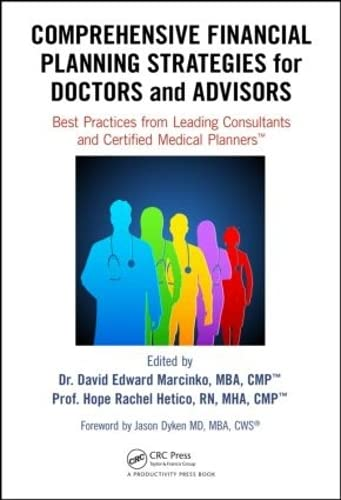
Comprehensive Financial Planning Strategies for Doctors and Advisors: Best Practices from Leading Consultants and Certified Medical Planners™

ORDER TEXTBOOK: https://www.routledge.com/Comprehensive-Financial-Planning-Strategies-for-Doctors-and-Advisors-Best/Marcinko-Hetico/p/book/9781482240283

INVITE DR. MARCINKO: https://medicalexecutivepost.com/dr-david-marcinkos-

THANK YOU

***

STUDENTS: Student Loan Repayments Commencing?

By Staff Reporters

***

***

Student loan payments could restart soon. Tucked into the debt ceiling deal agreed to by President Biden and House Speaker Kevin McCarthy is a measure that requires student loan borrowers to start paying their monthly bills again 60 days after June 30th.

A freeze on repayments has been in place since March 2020 due to COVID-19, and it’s been extended several times as the pandemic dragged on. This deadline for the resumption of payments is similar to the timeline previously laid out by President Joe Biden, but it prevents him from issuing another pause.

COLLEGE COSTS: https://medicalexecutivepost.com/2016/07/18/is-the-cost-of-a-college-education-really-worth-it/

GOV PSLF: https://studentaid.gov/manage-loans/forgiveness-cancellation/public-service

***

COMMENTS APPRECIATED

Thank You

***

***

FIDUCIARY: Obtain an Unbiased 2nd Financial Advisory -or- Economic Practice Management Opinion

***

Dr. David Edward Marcinko MBA CMP®

Certified Medical Planner®

SPONSOR: http://www.CertifiedMedicalPlanner.org

CMP logo

***

FINANCIAL PLANNING

CAREER DEVELOPMENT

MEDICAL PRACTICE BUY IN / OUT

INVESTMENT ANALYSIS

PORTFOLIO MANAGEMENT

MERGERS AND ACQUISITIONS

PRACTICE APPRAISALS AND VALUATIONS

RETIREMENT PLANNING

FEE-ONLY

***

CONTACT: Ann Miller RN MHA

EMAIL: MarcinkoAdvisors@msn.com

***

DAILY UPDATE: MAXIM Data Breach, Gold and the Markets

By Staff Reporters

***

***

Thousands of clients of Maxim Healthcare Services are about to receive a payment of up to $5,000 in compensation for a data breach. According to information obtained by The Sun, the private medical personnel company based in Columbia, Maryland; agreed to pay 2020 data breach claims filed in a class action lawsuit by residents of the state of California.

***

***

Gold futures tallied a third consecutive session decline settling at their lowest in nearly a week as further strength in the U.S. dollar pressured prices for the precious metal. Gold gave up early gains that had been driven by uncertainty surrounding a U.S. debt-ceiling deal in Congress.

***

And, here is where the major benchmarks ended yesterday:

  • The S&P 500 Index was down 30.34 points (0.7%) at 4115.24; the Dow Jones industrial average was down 255.59 (0.8%) at 32,799.92; the NASDAQ Composite was down 76.08 (0.6%) at 12,484.16.
  • The 10-year Treasury yield was up about 4 basis points at 3.742%.
  • CBOEs Volatility Index was up 1.52 at 20.04.

Technology and regional bank stocks were among the weakest sectors, with the Philadelphia Semiconductor Index down more than 2%. Energy was one of the few gainers among S&P 500 sectors as crude oil futures climbed to a three-week high of near $74 a barrel. The U.S. dollar index rose a third straight day to a two-month high.

***

ORDER: https://www.routledge.com/Risk-Management-Liability-Insurance-and-Asset-Protection-Strategies-for/Marcinko-Hetico/p/book/9781498725989

ORDER: https://www.routledge.com/Comprehensive-Financial-Planning-Strategies-for-Doctors-and-Advisors-Best/Marcinko-Hetico/p/book/9781482240283

***

COMMENTS APPRECIATED

Thank You

***

DAILY UPDATE: Stocks Up, Again!

By Staff Reporters

***

***

  • Markets: Stocks climbed for the second straight day as a last-minute deal to raise the debt ceiling begins to take shape. GOP House Speaker Kevin McCarthy and Democratic Senate Majority Leader Chuck Schumer signaled their chambers could vote next week on an agreement that would avert the US’ first-ever default.
  • Stock spotlight: Netflix shares popped after the streamer said its cheaper ad-supported plan is off to a hot start. Earlier this week, Netflix said that 25% of its new subscribers opted for the ad tier in regions where it’s available.

***

Here is where the major benchmarks ended yesterday:

  • The S&P 500 Index was up 39.28 points (0.9%) at 4198.05; the Dow Jones industrial average was up 115.14 (0.3%) at 33,535.91; the NASDAQ Composite was up 188.27 (1.5%) at 12,688.84.
  • The 10-year Treasury yield was up about 7 basis point at 3.65%.
  • CBOE’s Volatility Index was down 0.78 at 16.09.

The tech sector continued to be one of the market’s strongest performers, with the Philadelphia Semiconductor Index jumping nearly 3% and the Nasdaq-100 closing at a 13-month high. Real estate led decliners among S&P 500 sectors.

Also, the U.S. dollar index surged near a two-month high amid growing confidence the Fed won’t be lowering rates any time soon.

***

ORDER: https://www.routledge.com/Risk-Management-Liability-Insurance-and-Asset-Protection-Strategies-for/Marcinko-Hetico/p/book/9781498725989

ORDER: https://www.routledge.com/Comprehensive-Financial-Planning-Strategies-for-Doctors-and-Advisors-Best/Marcinko-Hetico/p/book/9781482240283

***

COMMENTS APPRECIATED

Thank You

***

CORPORATE EARNINGS: Review

By Staff Reporters

***

***

Earnings roundup

The following companies are in the earnings pipeline this week:

  • Home Depot is due to release its results for its last fiscal quarter before the market opens Tuesday. Analysts expect the home-improvement chain to report earnings of $3.81 per share, down from $4.09 during the same quarter a year earlier, according to Zacks Investment Research. Home improvement businesses benefited from increased spending on renovations during the pandemic but have struggled as inflation picked up. Home Depot’s shares were down about 0.9% Monday.
  • Target will follow Wednesday, with analysts predicting the big box retailer will report earnings of $1.75 per share, down from $2.19 the year before. Again, investors will be looking to see how Target has dealt with inflation and recession-wary shoppers. Its shares were up more than 1.3%.
  • Walmart wraps up big-retailer week Thursday. Analysts expect the retailer to report earnings of $1.31 per share, a slight improvement from $1.3 a year earlier. Its shares were down about 0.8%.
  • Cisco Systems (CSCO) will report results for the fiscal quarter ended in April on Wednesday. Analysts expect the software company to report earnings of $0.87 per share, up from $0.78 a year before.
  • Two major Chinese tech companies will also report results this week, with Baidu (BIDU) going first before market open Tuesday and Alibaba (BABA) following Thursday.

***

COMMENTS APPRECIATED

Thank You

***

***

e-BOOKS: For Doctors, Financial Advisors, CPAs, Insurance Agents, Medical Consultants and Health Law Attorneys

By Ann Miller RN MHA CMP

INTRODUCING OUR NEXT GENERATION e-BOOK LIBRARY FROM iMBA, Inc.

An e-book is an electronic or digital book that can be read on a computer or a handheld device.

Our new e-books consists of text, images, and are fixed to a specific spot on the page.

And, our e-books are a data files similar in content and structure to a word-processing document that comes in a PDF format. To use our e-books, you need to purchase and download it to a device that has a .pdf file reader app, such as ADOBE® or similar on a smartphone, tablet or computer. A PDF, also known as a portable document format, is the format most people are familiar with and used in our e-books. PDFs are known for their ease of use and ability to hold custom layouts. They are the most commonly used e-Book formats, especially by professionals and adult-learners.

You can then access the e-book and read it, or highlight pages and even take side notes.

e-Books Save Money

With no manufacturing, printing, binding or shipping costs, e-Books are cheaper than traditional hard or paper back books.The price of each specialized and highly niche focused e-Book [50-100 pages] is only $25, whereas similar paperback printed books of this type generally cost $145, or more!

Payable thru PayPal [3% courtesy surcharge applies].

MORE HERE: https://medicalexecutivepost.com/me-pr-a-new-feature/

COMMENTS APPRECIATED

Thank You

***

FORM ADV is a Must Read for Selecting a Financial “Advisor”

Form ADV – The Essential Document

Dr. David Edward Marcinko MBA - WEGO Health Awards Nominee

By Dr. David Edward Marcinko MBA CMP©

SPONSOR: http://www.CertifiedMedicalPlanner.org

CMP logo

Under law, financial advisors and planners must provide you with a form ADV Part II or a brochure that covers the same information.  Even if a brochure is provided, ask for the ADV.  While it is acceptable, even desirable, for the brochure to be easier to read than the ADV, the ADV is what is filed with the appropriate state or SEC.  If the brochure reads more like a slick sales brochure or the information in the brochure glosses over the items on the ADV to a high degree, one should consider eliminating the advisor from consideration.

FIDUCIARY: https://medicalexecutivepost.com/2023/03/11/recast-an-interview-with-fiduciary-bennett-aikin-aif-2/

Registering with a state or SEC gives an advisor a fiduciary duty to the client.  This is a high standard under the law. 

There are several types of advisors who are exempt from registering and filing an ADV. 

First, there are registered representatives (brokers).  Brokers have a fiduciary responsibility to their firms regardless of whether they are statutory employees or independent contractors. Not the client.

Second are attorneys and accountants whose advice is “incidental” to their legal or accounting practices. But, why would one hire someone whose advice is “incidental” to his primary profession?  A top-notch advisor is a full-time professional and should be registered.  One should insist that their advisor be registered.

CFP: https://medicalexecutivepost.com/2016/11/18/why-we-cannot-assume-cfp-equals-fiduciary/

The ADV will describe the advisor’s background and employment history, including any prior disciplinary issues.  It will describe the ownership of the firm and outline how the firm and advisor are compensated.  Any referral arrangements will be described.  If an advisor has an interest in any of the investments to be recommended, it must be listed as well as the fee schedule.  There is also a description of the types of investments recommended and the types of research information that is used.

ASSESSMENT: A review of the ADV should result in an alignment of what the advisor said during the interview and what is filed with the regulators.  If there is a clear discrepancy, choose another advisor.  If it is unclear, discuss the issue with the advisor.

Your thoughts and comments are appreciated.

Form ADV | Moneygrow.com | Registered Investment Advisor ...

SEC Headquarters
100 F Street, NE
Washington, DC 20549
(202) 942-8088

TEXTBOOK ORDER: ORDER Textbook: https://www.amazon.com/Comprehensive-Financial-Planning-Strategies-Advisors/dp/1482240289/ref=sr_1_1?ie=UTF8&qid=1418580820&sr=8-1&keywords=david+marcinko

Comprehensive Financial Planning Strategies for Doctors and Advisors: Best Practices from Leading Consultants and Certified Medical Planners™

SECOND OPINIONS: https://medicalexecutivepost.com/schedule-a-consultation/

INVITE DR. MARCINKO: https://medicalexecutivepost.com/dr-david-marcinkos-bookings/

THANK YOU

***

USA nears DEFAULT while Europe INFLATES!

By Staff Reporters

***

***

Treasury Secretary Janet Yellen warned yesterday that the US could run out of money to pay all its bills as early as June 1st if Congress does not raise or suspend the debt limit before then. The US’ first-ever default would be disastrous for financial markets, economists say.

***

Meanwhile, Europe’s painful inflation has inched higher, extending the squeeze on households and keeping pressure on the European Central Bank to unleash what could be another large interest rate increase. Consumer prices in the 20 countries using the euro currency jumped 7% in April from a year earlier, just up from the annual rate of 6.9% in March, the European Union statistics agency Eurostat said today. Food price inflation eased a little, falling to an annual rate of 13.6% from March’s 15.5%, while energy prices rose a more modest 2.5%. Core inflation, which excludes volatile food and fuel, slowed slightly but was still high at 5.6%, underlining the expectation that the ECB will press ahead with its campaign to beat inflation into submission with rate hikes.

***

COMMENTS APPRECIATED

Thank You

***

***

Meta, Chipotle, Microsoft, Eggs and Rent

ECONOMIC OUTPUT

By Staff Reporters

***

***

A government report on U.S. economic output in the first quarter will shed light on how consumers and businesses are faring under high inflation, rising interest rates and the onset of banking problems. Consumer spending, the primary driver of growth, and hiring were surprisingly strong at the start of the year, but more recently slowed as the Federal Reserve continued raising interest rates to cool the economy and curb rapid price increases. TO WIT:

***

Meta’s “Year of Efficiency” is off to a strong start: After three straight quarters of falling revenue last year, the company saw an uptick in ad sales for a 3% revenue jump from Q1 2022. Profits were down, but the company still beat expectations, and Facebook gained users again after losses last year. But not all of Mark Zuckerberg’s dreams are coming true—the company’s Metaverse unit lost almost $4 billion last quarter.

Chipotle—which hit near all-time highs after saying customers kept coming back for burrito bowls despite price increases.

The UK’s competition regulator blocked Microsoft’s bid to acquire the Call of Duty-maker saying it would hurt competition in the cloud gaming sector. The move came as a shock because the regulator had previously said Microsoft had assuaged its concerns about the console gaming market. The decision, which Microsoft plans to appeal, puts a strain on the deal while the companies wait for competition decisions from the EU and the US, where the FTC has already sued to scuttle it.

Finally, while egg prices have fallen dramatically, one sector of the economy remains stubbornly expensive: rents.

  • In the latest consumer price index report, the shelter category (aka rents) was the largest contributor by far to overall inflation. And despite moderating in recent months, rent growth remains 17% higher than 2021 levels.

COMMENTS APPRECIATED

Thank You

***

***

Physician Assets, Liabilities and Personal Net Worth

How are Assets and Liabilities Related to Doctor Net Worth?

cropped-dem

Dr. David E. Marcinko MBA  

Before the relationship among financial assets, liabilities and net worth can be examined, some based definitions must be understood. 

LINK: http://www.CertifiedMedicalPlanner.org

[A] Short-Term Assets

Short-term goals (less than 12 months) require liquidity or short-term assets. These assets include cash, checking and saving accounts, certificates of deposit, and money market accounts. These accounts have two things in common. The principal is guaranteed from risk of loss, and pay a very low interest rate.  As an investment, they are considered substandard and one would only keep what is actually needed for liquidity purposes in these accounts.           

[B] Long-Term Assets

Longer-term assets (more than 12 months) include real estate, mutual funds, retirement plans, stocks, and life insurance cash value policies. Bonds may also be an appropriate long-term investment asset for a number of reasons, for example, if you are seeking a regular and reliable stream of income or if you have no immediate need for the amount of the principal invested. Bonds also can be used to diversify your portfolio and reducing the overall risk that is inherent in stock investments. 

[C] Short-Term Liabilities

Short-term liabilities (less than 12 months) include credit card debt, utility bills, and auto loans or leasing. When a young doctor leaves residency and starts practice, the foremost concern is student debt. This is an unsecured debt that is not backed by any collateral, except a promise to pay. There are recourses that an unsecured creditor can take to recoup the bad debt. Usually, if the unsecured creditor is successful obtaining a judgment, it can force wages to be garnished, and the Department of Education can withhold up to ten percent of a wages without first initiating a lawsuit, if in default.  It is also probable that young medical professionals have been holding at least one credit card since their sophomore year in college.  Credit card companies consider college student the most lucrative target market and medical students hold their first card for an average of fifteen years. There are several other types of other unsecured debt, including department store cards, professional fees, medical and dental bills, alimony, child support, rent; utility bills, personal loans from relatives, and health club dues, to name a few.  

[D] Long-Term Liabilities

A secured debt, on the other hand, is debt that is pledged by a specific property. This is a collateralized loan. Generally, the purchased item is pledged with the proceeds of the loan. This would include long-term liabilities (more than 12 months) such as a mortgage, home equity loan, or a car loan. Although the creditor has the ability to take possession of your property in order to recover a bad debt, it is done very rarely. A creditor is more interested in recovering money. Sometimes, when borrowing money, there may be a requirement to pledge assets that are owned prior to the loan.  

For example, a personal loan from a finance company requires that you pledge all personal property such as your car, furniture, and equipment.  The same property may become subject to a judicial lien if you are sued and a judgment is made against you. In this case, you would not be able to sell or pledge these assets until the judgment is satisfied.

A common example of a lien would be from unpaid federal, state or local taxes. Doctors can be found personally liable for unpaid payroll taxes of employees in their professional corporations.  Be aware that some assets and liabilities defy short or long-term definition. When this happens, simply be consistent in your comparison of financial statements, over time. 

[E] Personal Physician Net Worth

Once the value of all personal assets and liabilities is known, net worth can be determined with the following formula: Net worth = assets minus liabilities. Obviously, higher is better.  In The Millionaire Next Door, Thomas H. Stanley, PhD, and William H. Danko give the following benchmark for net worth accumulation. Although conservative for physicians of a past generation, it may be more applicable in the future because of current managed care environment.

Here is the guide: Multiple your age by your annual pre-tax income from all sources – except inheritances – and divide by ten. 

Real-Life Medical Example: As an HMO pediatrician, Dr. Curtis earned $ 60,000 last year. So, if she is 35, her net worth should be at least $ 210,000.

How do you get to that point? In a word, consume less, save more and watch the student loans. Stanley and Danko found that the typical millionaire set aside 15 percent of earned income annually and has enough invested to survive 10 years, at current income levels if he stopped working.  Now, if Dr. Curtis lost her job tomorrow, how long could she pay herself the same salary? 

[F] Common Liability Management Mistakes

 A common liability management mistake is not recognizing when you are heading for trouble. If doctors are paying only the minimum payments on credit card debt, while continuing to charge purchases at a rate faster than the pay-down, trouble is brewing. If you don’t categorize your debt, you could find yourself paying down non-priority debt while ignoring priority debt.

A priority debt is one that is essential or subject to serious consequences, if not paid. Examples include rent, mortgage payments, utility bills, child support, car payments, unpaid taxes, and other secured debt. If in one month, a doctor had to choose between paying his accounting bill or his rent, it would be essential to pay the rent. 

CITE: https://www.r2library.com/Resource/Title/082610254

Conclusion

Your thoughts and comments on this ME-P are appreciated. Feel free to review our top-left column, and top-right sidebar materials, links, URLs and related websites, too. Then, subscribe to the ME-P. It is fast, free and secure.

Speaker: If you need a moderator or speaker for an upcoming event, Dr. David E. Marcinko; MBA – Publisher-in-Chief of the Medical Executive-Post – is available for seminar or speaking engagements. Contact: MarcinkoAdvisors@msn.com

OUR OTHER PRINT BOOKS AND RELATED INFORMATION SOURCES:Comprehensive Financial Planning Strategies for Doctors and Advisors: Best Practices from Leading Consultants and Certified Medical Planners(TM)Invite Dr. Marcinko

***

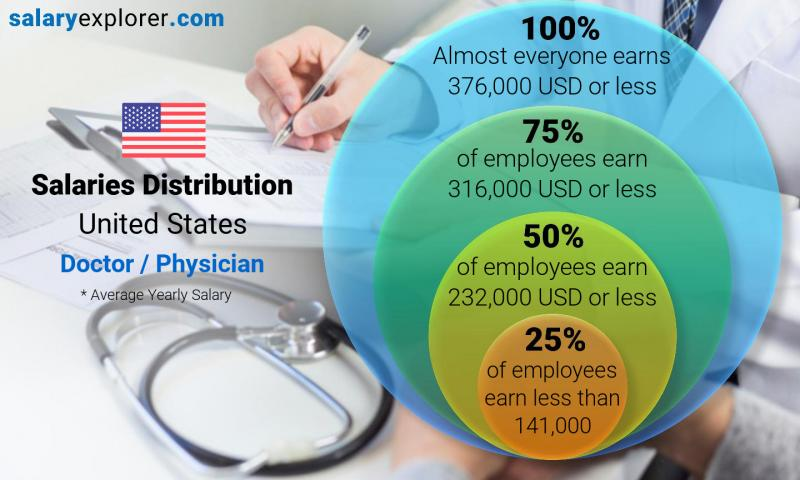
PHYSICIAN SALARY: Pay Gap

By Staff Reporters

***

***

A 2020 analysis of Doximity’s physician compensation data found that men physicians make an estimated $2 million more than women over the course of their careers.

LINK: https://www.statnews.com/2021/12/06/male-female-physician-salaries-gap-2-million-lifetime-earnings/#:~:text=A%20persistent%2025%25%20pay%20gap%20between%20female%20and,for%20specialty%2C%20hours%2C%20location%2C%20and%20years%20of%20experience.

Other findings:

  • Men physicians outearned women physicians by at least 10% across all specialties, except pediatric cardiology (9.2%) and nuclear medicine (3%).
  • Specialties with the largest gender pay gaps were: oral and maxillofacial surgery ($568,789 vs. $395,687), pediatric pulmonology ($282,272 vs. $227,958), allergy and immunology ($329,634 vs. $268,938), urology ($515,850 vs. $424,733), and ophthalmology ($468,515 vs. $387,295).
  • Specialities with the smallest gender pay gaps were: nuclear medicine ($394,231 vs. $382,431), pediatric cardiology ($334,384 vs. $303,622), pediatric gastroenterology ($293,771 vs. $264,135) hematology ($358,736 vs. $320,938), and medicine/pediatrics ($283,034 vs. $253,019).
  • CITE: https://www.r2library.com/Resource/Title/0826102549

***

RELATED: https://medicalexecutivepost.com/2022/01/21/personal-budgeting-for-physician-executives/

CAREERS: https://medicalexecutivepost.com/2022/10/01/careers-and-net-worth/

***
COMMENTS APPRECIATED

Thank You

***

***

Obtain a Second Financial Planning Opinion -OR- Medical Practice Management Analysis

****

By Dr. David Edward Marcinko MBA CMP®

CMP logo

SPONSOR: http://www.CertifiedMedicalPlanner.org

***

See the source image

***

2nd. Opinion HERE: https://medicalexecutivepost.com/schedule-a-consultation/

CONSULT: https://davidedwardmarcinko.com/coach/

CONTACT: Ann Miller RN MHA CMP®

PHONE: 770-448-0769

EMAIL: MarcinkoAdvisors@msn.com

THANK YOU

Product Details

ORDER: https://www.amazon.com/Business-Medical-Practice-Transformational-Doctors/dp/0826105750/ref=sr_1_9?ie=UTF8&qid=1448163039&sr=8-9&keywords=david+marcinko

***

Comprehensive Financial Planning Strategies for Doctors and Advisors: Best Practices from Leading Consultants and Certified Medical Planners™

MORE: https://www.routledge.com/Comprehensive-Financial-Planning-Strategies-for-Doctors-and-Advisors-Best/Marcinko-Hetico/p/book/9781482240283

****

The Stock Market, The Economy, Possible Outcomes, How to Invest

By Vitaliy Katsenelson, CFA

***

This is part one of the post winter seasonal letter I wrote to IMA clients, sharing my thoughts about the economy and the market. I tried something I’ve never done before. Instead of conveying my message through storytelling, I tried to compress my thoughts into short sentences. I summarized some 50,000 words into about 1,000 (a compression ratio of 50 to 1!). 

READ HERE: https://contrarianedge.com/the-stock-market-the-economy-possible-outcomes-how-to-invest/?utm_source=IMA++-+Main+Articles&utm_campaign=7b4f1d01d6-UBER_MONEY_MANAGER_KIDNAPPED_COPY_01&utm_medium=email&utm_term=0_f1c90406d1-7b4f1d01d6-55139025

***
COMMENTS APPRECIATED

Thank You

***

ORDER: https://www.routledge.com/Comprehensive-Financial-Planning-Strategies-for-Doctors-and-Advisors-Best/Marcinko-Hetico/p/book/9781482240283

***

Libertarian’s (Unexpected) View on the Bailout of the Banking System

By Vitaliy Katsenelson CFA

CLICK PHOTO FOR FULL REPORT

***

CITE: https://www.r2library.com/Resource/Title/082610254

COMMENTS APPRECIATED

Thank You

***

PODCAST: Submit a Financial Advisor Prospecting Video to Us [Experts Invited]

Welcome Financial Advisors

An Invitation to Prospect & Promote Your Self

Healthcare Prospecting with FAs in Mind

  • Would you like to present your self or firm, your strategic competitive advantage, and your value proposition to the medical community?
  • Would you like to share some unique financial planning, financial advisory or health economics pearls with your colleagues?
  • Would you like to see a new financial product or service in action before you start using it in your practice, or recommending it to physician clients?
  • Would you like to introduce yourself and prospect to the HNW medical community, for free?

If so …

Join your ME-P peers and colleagues. Get free access to on-demand videos and other presentations from leading financial advisors [FAs] and brought to you by www.MedicalExecutivePost.com.

The ME-P is your source for the best online-exclusive content in the financial advisory marketing, and financial planning e-prospecting space, for all healthcare professionals [physicians, podiatrists, osteopaths, dentists, chiropractors, nurses, medical CXOs, etc].

How to Submit a Video

To submit a personal or product presentation video [pod-cast], sponsor a video [pod-cast], or inquire about specific advertising on the ME-P, please contact Ann Miller RN MHA at: 770.448.0769 or MarcinkoAdvisors@msn.com

Video Formats

Acceptable 5-12 minute video formats include: Flash (in either SWF or FLA), MPEG, MP4, QuickTime or AVI. Submission of a podcast/video does not guarantee publishing on the ME-P website. FA submitted videos are subject to review by the Executive Editor. Company submitted videos are subject to review by the Publisher and Executive Editor.

SAMPLE PODCAST

In this encore podcast, Somnath Basu PhD MBA examines how the recent economic turmoil has changed financial planning clients’ attitudes and expectations.

White Paper: AgeBander

Dr. Basu is a popular ME-P contributor, commentator and “thought-leader”.

Basu Video Link: http://www.youtube.com/watch?v=jzAkB8h5v3Q

Copyright

Copyright © 2011 by the Institute of Medical Business Advisors, Inc www.MedicalBusinessAdvisors.com All rights reserved, USA. Opinions expressed by authors are their own and not necessarily those of iMBA Inc, the editorial staff, or any member of the editorial advisory board.

Privacy

ME-P and iMBA Inc pledges always to respect the privacy and anonymity of its users and participants. The information (the names, email addresses or any other contact information, personal or financial data) provided to us by our visitors in their registrations and communications with us is securely stored and not shared with any third party. We are committed to working with the Internet community in cultivating and maintaining trust between all its members.

PROSPECTING MADE EASY

PHYSICIANS: www.MedicalBusinessAdvisors.com
ADVISORS: http://www.CertifiedMedicalPlanner.org

COMMENTS APPRECIATED

Thank You

***

HOW: The ME-P Helps Your Financial Advisory Business or Medical Practice Grow?

All about the Medical Executive-Post Business Model

imba inc

***

One of the questions we receive most often from readers of the Medical Executive-Post is how can we “afford” to give away so much content for free. Or stated another way, “how do we get paid for all of this?”

The simple answer is that we know many (or even most) of you will simply take the ideas that we share and implement them yourself. Do-It-YourSelfers can always simply purchase our texts, books and peer reviewed handbooks redacted in more than a thousand, medical, law, business and graduate schools, as well as the Library of Congress, Institute of Health and Library of Congress.

LINK: https://medicalexecutivepost.com/2021/10/22/why-are-certified-medical-planner-textbooks-so-darn-popular/

On the other hand, some of you will realize you need some additional help.

For example:

Maybe as a financial advisor you’re “stuck” in your financial planning business and recognize that some outside assistance is necessary to help you get to the next level of niche specificity thru our Certified Medical Planner™ chartered certification program designation. Helping physicians of all specialty types in a fiduciary focused manner is the proverbial Win-Win for all concerned.

LINK: http://www.CertifiedMedicalPlanner.org

CMP

CMP logo

OR, perhaps you are seeking a glossary of terms and definitions in heath economics, finance, accounting, insurance, managed care, health information technology and security; found in our Health Dictionary Series Wiki Project? Free and print versions are available.

LINK: http://www.HealthDictionarySeries.org

LINK: https://medicalexecutivepost.com/2011/09/17/order-our-three-newest-best-selling-dictionaries/

HDS

OR, as a doctor maybe your medical practice is growing so much you just hit a wall where you don’t have time to do it all for your patients. After all, with only “so much” time available every day and week, it’s vital to delegate or outsource anything that isn’t really core to your practice and management skill set.

LINK: http://www.MedicalBusinessAdvisors.com

OR, maybe you are even starting, buying or selling your medical practice and need our financial and valuation services. Part (1) – Part (2) – Part (3) Financial, estate, investing and retirement planning services are also available.

OR, you may just need a second informed opinion about a topic not listed; there are a myriad of issues to consider in the competitive ecosystem today.

LINK: https://medicalexecutivepost.com/schedule-a-consultation/

Regardless, we may have solutions to help!


So, in the meantime, I hope that the ME-P content continues to be helpful food for thought, and perhaps we’ll have an opportunity to cross paths soon at a future conferences or podcasts. Feel free to invite us to speak at your own seminar/podcast online V-log, as well.

INVITATION LINK: https://medicalexecutivepost.com/dr-david-marcinkos-bookings/

With warm regards.

Fraternally.
Ann Miller RN MHA CMP

[Managing Director]

email: MarcinkoAdvisors@msn.com

Phone: 770-448-0769

***

***

DAILY UPDATE: Charles Schwab and the Major Market Indices

By Staff Reporters

***

***

Analysts at Morgan Stanley downgraded Charles Schwab Corp (NYSE: SCHW) on Tuesday, citing concerns over cash sorting and regulatory changes. But, Schwab CEO Walt Bettinger recently said that the company’s banking unit had enough liquidity to cover if 100% of its bank deposits ran off without having to sell a single security — Morgan Stanley says otherwise. Schwab’s recent performance has not been up to Morgan Stanley’s expectations, with customers moving cash out of sweep accounts into money market funds at a rate twice that which the bank had been modeling.

CITE: https://www.r2library.com/Resource/Title/082610254

***

Here’s how the major indexes performed Thursday.

  • The S&P 500® Index rose 23 points (0.57%) to 4050.84; the Dow Jones industrial average was up 141 points (0.43%) at 32859.03; the NASDAQ Composite was up 87 points (0.73%) at 12013.47.
  • The 10-year Treasury yield slipped 2 basis points to 3.555%.
  • CBOE’s Volatility Index was little changed at 19.14.

***

ORDER: https://www.routledge.com/Comprehensive-Financial-Planning-Strategies-for-Doctors-and-Advisors-Best/Marcinko-Hetico/p/book/9781482240283

***

COMMENTS APPRECIATED

Thank You

***

ESG Investing: Not So Hot … Anymore?

By Staff Reporters

Environmental, Social, and Corporate Governance

Florida is pulling $2 billion from BlackRock in the largest divestment ever made as part of the growing vendetta against Environmental, Social, and Governance (ESG) investing practices. Florida Governor Ron DeSantis and other Republican leaders claim that by taking ESG standards into account when making investment decisions, the firm isn’t prioritizing the bottom line. But, for a few years, things were good. In 2020 and 2021, ESG funds outperformed the market by ~4.3%.

DEFINITION: According to Wikipedia, ESG (environmental, social, and corporate governance) data reflect the externalities (costs to others) an organization is generating with respect to the environment, to society and to corporate governance. ESG data can be used by investors to assess the material risk the organization is taking and by the organization itself as metrics for strategic and managerial purposes. Investors may also use ESG data beyond assessing material risks to the organization in their evaluation of enterprise value, specifically by designing models based on assumptions that the identification, assessment and management of sustainability-related risks and opportunities in respect to all organizational stakeholders leads to higher long-term risk-adjusted return. Organizational stakeholders include but not limited to customers, suppliers, employees, leadership, and the environment.

CITE: https://www.r2library.com/Resource/Title/082610254

Since 2020, there has been accelerating interest in overlaying ESG data with the Sustainable Development Goals (SDGs), developed based on work by United Nations beginning in the 1980s.

LINK: http://www.ESG.org

The term ESG was popularly used first in a 2004 report titled “Who Cares Wins”, which was a joint initiative of financial institutions at the invitation of UN. In less than 20 years, the ESG movement has grown from a corporate social responsibility initiative launched by the United Nations into a global phenomenon representing more than US$30 trillion in assets under management. In the year 2019 alone, capital totaling US$17.67 billion flowed into ESG-linked products, an almost 525 percent increase from 2015, according to Morningstar, Inc.. Critics claim ESG linked-products have not had and are unlikely to have the intended impact of raising the cost of capital for polluting firms, and have accused the movement of greenwashing.

PODCAST: https://medicalexecutivepost.com/2022/10/10/podcast-what-is-financial-green-washing/

Now All Mad

DeSantis ran his most recent campaign on fighting the “woke ideology” he believes is infiltrating the state. As part of the fight, Florida passed a resolution in August that said ESG standards should be ignored when investing state funds.

And he’s not the only one:

  • Other Republican-controlled states, including Missouri and Louisiana, have moved almost $1.3 billion away from BlackRock for similar reasons.
  • Texas flagged BlackRock as a financial firm that boycotts the state’s energy industry (something BlackRock has denied).

Meanwhile, Democrats aren’t happy either…they criticize BlackRock and ESG investing in general for not going far enough (and for using lax standards that let oil giants onto lists of ESG investments).

Bottom line: According to the Morning Brew, BlackRock and Florida are now cursed to yell “How could you prioritize politics over returns?” back and forth for eternity, and the debate over ESG investing is far from over. Republicans are poised to take over the House—after a campaign season that BlackRock poured record cash into—so we’re likely to see more drama play out at the federal level soon.

***

COMMENTS APPRECIATED

Thank You

***

ORDER: https://www.routledge.com/Comprehensive-Financial-Planning-Strategies-for-Doctors-and-Advisors-Best/Marcinko-Hetico/p/book/9781482240283

***

First Republic and Silicon Valley Banks are NOT Microsoft!

By Staff Reporters

***

***

Wall Street’s $30 billion infusion into First Republic Bank didn’t manage to calm investors’ jitters about how banks are holding up. The regional bank’s stock tanked again Friday, dragging most of the market down with it. Moody’s Investors Service downgraded its credit rating on First Republic Bank to junk, citing a “deterioration in the bank’s financial profile.” First Republic’s debt rating was cut to B2 from Baa1, Moody’s said. Fitch Ratings and S&P Global Ratings downgraded First Republic Bank’s debt earlier this week.

The downgrade reflects “the deterioration in the bank’s financial profile and the significant challenges First Republic Bank faces over the medium term in light of its increased reliance on short-term and higher cost wholesale funding due to deposit outflows,” Moody’s analysts said in a release.

And, SVB’s parent company filed for Chapter 11 bankruptcy yesterday, buying it time to pay off creditors and making it easier to sell off its assets (but the bank itself, currently in the hands of the FDIC, isn’t part of the filing). Meanwhile, President Biden called on Congress to make it easier to punish bank executives if their mismanagement causes a bank to collapse, including allowing regulators to claw back their pay.

***

But Big Tech stocks got a boost from investors looking to park their cash in non-bank companies, pushing Microsoft to its best weeks in almost eight years.

CITE: https://www.r2library.com/Resource/Title/0826102549

***

COMMENTS APPRECIATED

Thank You

ORDER: https://www.routledge.com/Risk-Management-Liability-Insurance-and-Asset-Protection-Strategies-for/Marcinko-Hetico/p/book/9781498725989

***