Support our online development, and advance our onground research initiatives in free market economics, as we seek to showcase the brightest Next-Gen minds.
THE ME-P DISCLAIMER: Posts, comments and opinions do not necessarily represent iMBA, Inc., but become our property after submission. Copyright © 2006 to-date. iMBA, Inc allows colleges, universities, medical and financial professionals and related clinics, hospitals and non-profit healthcare organizations to distribute our proprietary essays, photos, videos, audios and other documents; etc. However, please review copyright and usage information for each individual asset before submission to us, and/or placement on your publication or web site. Attestation references, citations and/or back-links are required. All other assets are property of the individual copyright holder.
Support our online development, and advance our onground research initiatives in free market economics, as we seek to showcase the brightest Next-Gen minds.
THE ME-P DISCLAIMER: Posts, comments and opinions do not necessarily represent iMBA, Inc., but become our property after submission. Copyright © 2006 to-date. iMBA, Inc allows colleges, universities, medical and financial professionals and related clinics, hospitals and non-profit healthcare organizations to distribute our proprietary essays, photos, videos, audios and other documents; etc. However, please review copyright and usage information for each individual asset before submission to us, and/or placement on your publication or web site. Attestation references, citations and/or back-links are required. All other assets are property of the individual copyright holder.


By Dr. David Edward Marcinko; MBA MEd
SPONSOR: http://www.MarcinkoAssociates.com
***

***
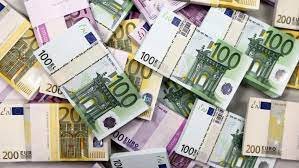
The euro is the official currency of the eurozone, a monetary union that today includes twenty European Union member states. It stands as one of the most ambitious economic and political projects in modern history. At its core, the euro represents an effort to bind European nations more closely together—economically, financially, and symbolically—after a century marked by conflict and fragmentation. Its creation was not simply a technical monetary reform but a statement of shared purpose. Understanding the euro requires examining its origins, its economic effects, and the challenges and opportunities it continues to generate for Europe and the wider world.
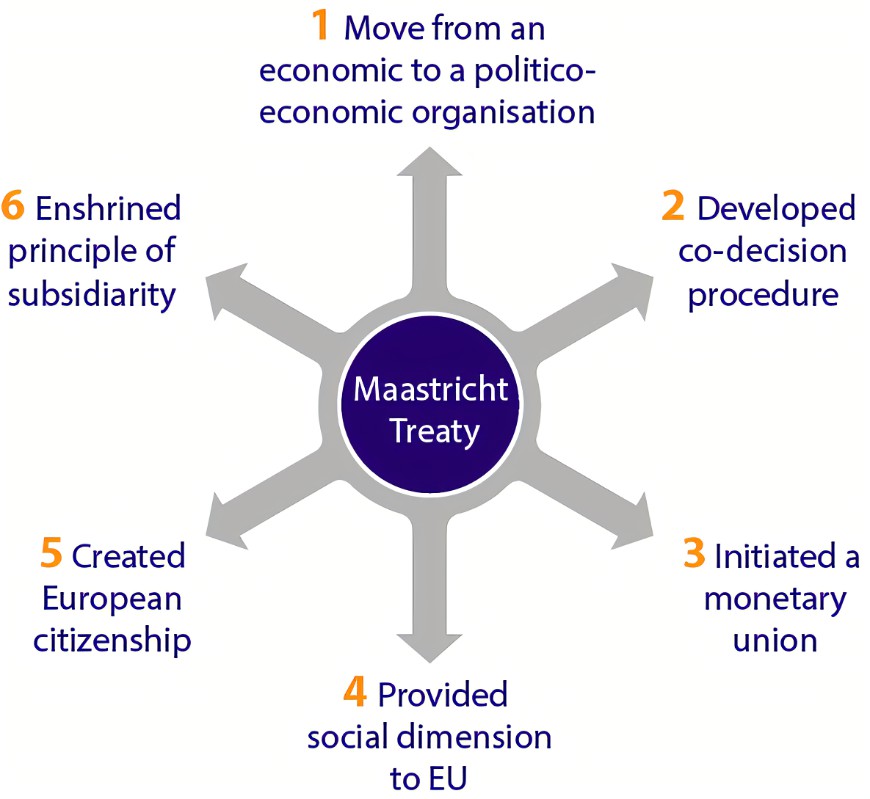
The origins of the euro lie in the broader project of European integration that began after World War II. Leaders of Western Europe believed that deeper economic interdependence would make future conflicts less likely. Over decades, this vision evolved into the European Economic Community and later the European Union. The idea of a single currency emerged as a logical next step: if member states were already committed to free movement of goods, services, capital, and people, then eliminating exchange‑rate fluctuations would further strengthen the single market. The Maastricht Treaty of 1992 formalized this goal, setting convergence criteria that countries had to meet before adopting the euro. These criteria—focused on inflation, interest rates, public debt, and budget deficits—were intended to ensure that participating economies were sufficiently aligned to share a currency.
When the euro was introduced in 1999 as a digital currency and in 2002 as physical notes and coins, it immediately became one of the world’s most important currencies. It simplified cross‑border trade and travel within Europe, reduced transaction costs, and increased price transparency. A consumer in Spain could compare prices with a retailer in Germany without worrying about exchange rates. Businesses operating across multiple countries could manage their finances more efficiently. The euro also strengthened Europe’s position in global finance. It became a major reserve currency, second only to the U.S. dollar, and a significant medium for international trade and investment.
Yet the euro has always been more than an economic tool. It is a political symbol of unity. For many Europeans, using the same currency reinforces a shared identity that transcends national borders. This symbolic power is one reason countries such as Estonia, Latvia, Lithuania, and Croatia chose to adopt the euro even after the global financial crisis. They viewed membership in the eurozone as a sign of stability, credibility, and belonging within the European project.
However, the euro has also faced serious challenges. One of the most significant is the tension between a shared monetary policy and national fiscal policies. Countries in the eurozone no longer control their own interest rates or exchange rates; these are set by the European Central Bank. But each country still manages its own budget. This creates a structural imbalance: nations with weaker economies cannot devalue their currency to regain competitiveness, nor can they independently adjust monetary policy during downturns. The eurozone debt crisis, which began around 2010, exposed these vulnerabilities. Countries such as Greece, Portugal, and Ireland faced severe financial distress, leading to bailouts, austerity measures, and intense political debate about the future of the currency union.
Despite these difficulties, the eurozone has taken steps to strengthen its institutional framework. New mechanisms for financial oversight, banking regulation, and crisis management have been introduced. These reforms aim to make the euro more resilient and to prevent future crises from spiraling into existential threats. The euro’s survival through these turbulent years demonstrated both the determination of member states to preserve the currency and the adaptability of the system itself.
Today, the euro continues to evolve. It plays a central role in discussions about Europe’s economic future, from debates over fiscal integration to conversations about digital currencies. The European Central Bank is exploring a digital euro, which could modernize payments and reinforce the currency’s global relevance. At the same time, the euro remains a touchstone in political debates about sovereignty, solidarity, and the balance between national and European authority.
In many ways, the euro is a work in progress—a currency built on compromise, cooperation, and the belief that shared prosperity requires shared responsibility. Its story reflects the broader story of European integration: ambitious, sometimes contentious, but ultimately driven by the desire to create a more stable and interconnected continent. Whether viewed as an economic instrument or a political symbol, the euro remains one of the most significant experiments in international cooperation of the modern era.
COMMENTS APPRECIATED
SPEAKING: Dr. Marcinko will be speaking and lecturing, signing and opining, teaching and preaching, storming and performing at many locations throughout the USA this year! His tour of witty and serious pontifications may be scheduled on a planned or ad-hoc basis; for public or private meetings and gatherings; formally, informally, or over lunch or dinner. All medical societies, financial advisory firms or Broker-Dealers are encouraged to submit an RFP for speaking engagements: CONTACT: Ann Miller RN MHA at MarcinkoAdvisors@outlook.com -OR- http://www.MarcinkoAssociates.com
Like, Refer and Subscribe
HOSPITALS: http://www.crcpress.com/product/isbn/9781466558731
CLINICS: http://www.crcpress.com/product/isbn/9781439879900
ADVISORS: www.CertifiedMedicalPlanner.org
FINANCE:Financial Planning for Physicians and Advisors
INSURANCE:Risk Management and Insurance Strategies for Physicians and Advisors
Dictionary of Health Economics and Finance
Dictionary of Health Information Technology and Security
Dictionary of Health Insurance and Managed Care
***
Share this:

Filed under: iMBA, Inc. | Tagged: economics, economy, euro, finance, Investing, Marcinko, politics | Leave a comment »