VARIETY: Insensitivity

By Staff Reporters

***

***

Variety Insensitivity is the tendency to under appreciate the value of variety in choices.

According to Dan Ariely PhD, it’s like always ordering the same dish at your favorite restaurant and forgetting how exciting new flavors can be. Our brains love routine, but this can lead to boredom and missed opportunities. Embracing variety can enhance experiences and satisfaction.

So, next time you’re stuck in a rut, shake things up and try something different. Your brain will thank you for the new stimulation.

COMMENTS APPRECIATED

Subscribe Today!

***

***

PATTERNICITY: Apophenia vs. Pareidolia

By Staff Reporters

***

***

Patternicity is our brain’s tendency to find patterns in random data. It’s why we see faces in clouds or think the stock market follows our horoscope. According to colleague Dan Ariely PhD, this quirk helped our ancestors survive by recognizing predator shapes in the bushes, but in modern times, it can lead us astray. Our brains love making connections, sometimes too much, seeing patterns where none exist.

So, when you’re convinced that your lucky socks influence your team’s performance, remind yourself: it’s just your brain’s patternicity at work.

Apophenia vs. Pareidolia

Now, “Apophenia is the general term for the human tendency to see patterns in meaningless data that may involve visual, auditory, or other senses,” according to Dr. Harold Hong, a psychiatrist from Raleigh, North Carolina. He points out that pareidolia is a specific form of apophenia that refers to seeing visual patterns in random or ambiguous visual stimuli, such as seeing a face in the clouds.

Apophenia and pareidolia are common occurrences, says Hong, and challenges often only present when someone becomes fixated on specific patterns or details that others perceive as random. “While both phenomena are natural human tendencies, they can become concerning if someone starts to fixate on specific patterns excessively,” he says, noting that apophenia may be prevalent in certain mental health conditions, such as obsessive-compulsive disorder (OCD).

COMMENTS
Subscribe Today!

***

***

DAILY UPDATE: 401[k] and Wamco as Stock Markets Crash!

MEDICAL EXECUTIVE-POST TODAY’S NEWSLETTER BRIEFING

***

Essays, Opinions and Curated News in Health Economics, Investing, Business, Management and Financial Planning for Physician Entrepreneurs and their Savvy Advisors and Consultants

Serving Almost One Million Doctors, Financial Advisors and Medical Management Consultants Daily

A Partner of the Institute of Medical Business Advisors , Inc.

http://www.MedicalBusinessAdvisors.com

SPONSORED BY: Marcinko & Associates, Inc.

***

http://www.MarcinkoAssociates.com

Daily Update Provided By Staff Reporters Since 2007.
How May We Serve You?
© Copyright Institute of Medical Business Advisors, Inc. All rights reserved. 2024

REFER A COLLEAGUE: MarcinkoAdvisors@msn.com

SPONSORSHIPS AVAILABLE: https://medicalexecutivepost.com/sponsors/

ADVERTISE ON THE ME-P: https://tinyurl.com/ytb5955z

Your Referral Count -0-

The Internal Revenue Service (IRS) ruled that employees at an unnamed company can designate a portion of their employer match to student debt repayments or health reimbursement accounts, in addition to their traditional 401(k).

CITE: https://www.r2library.com/Resource

STOCKS UP

  • Warren Buffett’s Midas touch gave a boost to Domino’s Pizza and Pool Corp. after Berkshire Hathaway announced it has bought shares of both companies. Domino’s popped to start the day but dropped 1.27%, while Pool climbed just 0.54%.
  • Palantir is jumping ship, moving from the NYSE to the Nasdaq. Shareholders liked the move, pushing the stock up 11.14%.
  • Bloom Energy…bloomed 59.19% on the news that the renewable energy company reached an agreement to provide utility company American Electric Power with 1 gigawatt worth of fuel cells.

STOCKS DOWN

  • What Buffett giveth, Buffett taketh away: Apple sank on the news that Berkshire Hathaway has sold shares of the company, and almost completely eliminated its position in Ulta Beauty. Apple fell 1.41%, while Ulta Beauty dropped 4.60%.
  • Shareholders were expecting the worst from Chinese online retailer Alibaba, and although the company actually beat earnings forecasts, it wasn’t enough—shares still sank 2.20%.
  • Applied Materials tumbled 9.20% after beating both top and bottom line expectations, but shareholders balked at the slowdown in several key businesses.
  • AST SpaceMobile plummeted 9.59% after reporting bigger losses and smaller sales than Wall Street wanted to see.

CITE: https://tinyurl.com/2h47urt5

Here’s where the major stock market benchmarks ended:

  • The SPX fell 78.55 points (–1.32%) to 5,870.62 to end the week down 2.08%; the Dow Jones Industrial Average® ($DJI) lost 305.87 points (–0.70%) to 43,444.99 to end the week down 1.24%; and the NASDAQ Composite® ($COMP) decreased 427.52 points (–2.24%) to 18,680.12 to end the week down 3.15%.
  • The 10-year Treasury note yield rose one basis point to 4.43% but added 12 basis points for the week. Shorter-term yields rose less.
  • The CBOE Volatility Index® (VIX) climbed sharply to 16.11 as stocks fell.

CITE: https://tinyurl.com/tj8smmes

The problems at storied bond manager Western Asset Management keep growing. Clients have pulled about $55 billion from Wamco, as the division is known, since mid-August, representing about 15% of its assets. Franklin Templeton, its 77-year-old parent company and one of the largest asset managers in the U.S., recently reported its steepest quarterly outflows on record.

Visualize: How private equity tangled banks in a web of debt, from the Financial Times.

COMMENTS APPRECIATED

PLEASE SUBSCRIBE: MarcinkoAdvisors@msn.com

Thank You

***

***

***

***

EDUCATIONAL TEXTBOOKS: https://tinyurl.com/4zdxuuwf

***

BIAS: Of “Social Proof” and Influencers

INVESTING DEFINITION

By Dr. David Edward Marcinko MBA MEd

SPONSOR: http://www.MarcinkoAssociates.com

***

***

Social Proof is a subtle but powerful reality that having others agree with a decision one makes, gives that person more conviction in the decision, and having others disagree decreases one’s confidence in that decision. 

This bias is even more exaggerated when the other parties providing the validating/questioning opinions are perceived to be experts in a relevant field, or are authority figures, like doctors, attorneys, financial advisors, teachers and/or people on television.  In many ways, the short term moves in the stock market are the ultimate expression of social proof – the price of a stock one owns going up is proof that a lot of other people agree with the decision to buy, and a dropping stock price means a stock should be sold. 

According to colleague Dan Ariely PhD, when these stressors become extreme, it is of paramount importance that all participants in the financial planning and investing process have a clear understanding of what the long-term goals are, and what processes are in place to monitor the progress towards these goals. 

Without these mechanisms it is very hard to resist the enormous pressure to follow the crowd; think social media and related influences.

COMMENTS APPRECIATED

Subscribe Today!

***

***

FATAL: Narcissism

BY DR. DAVID EDWARD MARCINKO MBA MEd

***

***

Imagine if Narcissus had a social media account. Fatal narcissism is what happens when self-love goes off the rails. It’s not just about admiring your reflection; it’s an all-consuming need for admiration and validation. Think endless selfies and humblebrags.

***

***

While a bit of narcissism is normal, fatal narcissism is like a black hole – it sucks in all attention and gives nothing back.

So, if my Instagram looks like a shrine to my own greatness, you might be witnessing fatal narcissism in action.

COMMENTS APPRECIATED

Subscribe Today!

***

***

Convertible Securities, Bonds and Corporate Securities

By Dr. David Edward Marcinko MBA MEd

SPONSOR: http://www.MarcinkoAssociates.com

***

***

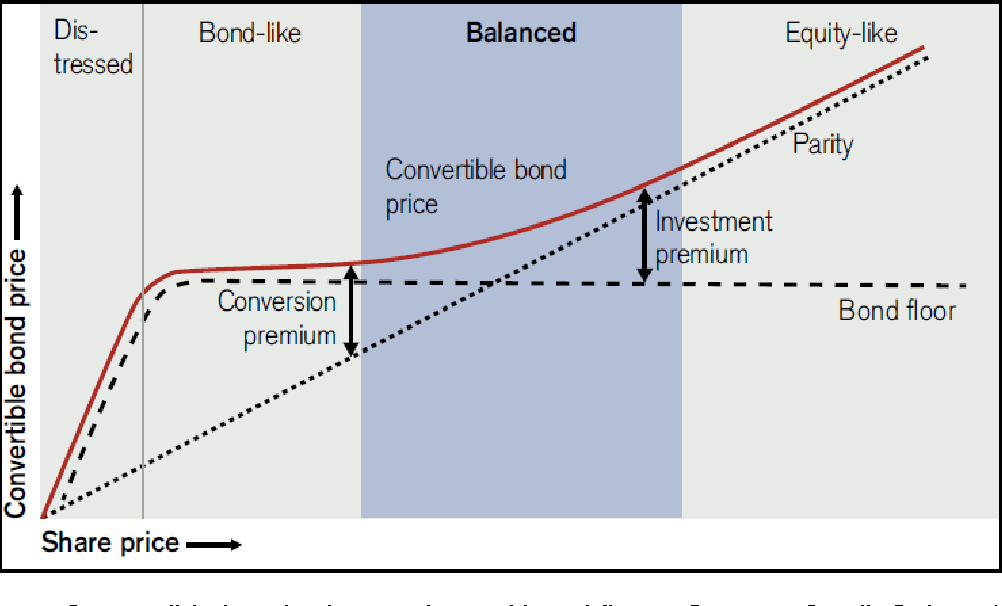
Convertible securities are those that can be converted at the investor’s choice into other investments, normally into shares of the issuer’s underlying common stock. Convertibles are typically issued as bonds or preferred stock.

Convertible bonds, which provide an ongoing stream of income, can be converted into a preset number of shares of the company’s common stock and have a maturity date. Unlike common stock, which pays a variable dividend depending on a corporation’s earnings, convertible preferred stock pays a fixed quarterly dividend. It can be converted into common stock at any time, but often are perpetual.

Corporate securities (corporate bonds and notes) are debt instruments issued by corporations, as distinct from those issued by governments, government agencies, or municipalities.

Corporate securities typically have the following features: 1) they are taxable, 2) they tend to have more credit (default) risk than government or municipal securities, so they tend to have higher yields than comparable-maturity securities in those sectors; and 3) they are traded on major exchanges, with prices published in newspapers.

CITE: https://www.r2library.com/Resource/Title/0826102549

COMMENTS APPRECIATED

Subscribe Today!

***

***

DAILY UPDATE: United Health, Cigna and Inflation as Stock Markets Flatten

MEDICAL EXECUTIVE-POST TODAY’S NEWSLETTER BRIEFING

***

Essays, Opinions and Curated News in Health Economics, Investing, Business, Management and Financial Planning for Physician Entrepreneurs and their Savvy Advisors and Consultants

Serving Almost One Million Doctors, Financial Advisors and Medical Management Consultants Daily

A Partner of the Institute of Medical Business Advisors , Inc.

http://www.MedicalBusinessAdvisors.com

SPONSORED BY: Marcinko & Associates, Inc.

***

http://www.MarcinkoAssociates.com

Daily Update Provided By Staff Reporters Since 2007.
How May We Serve You?
© Copyright Institute of Medical Business Advisors, Inc. All rights reserved. 2024

REFER A COLLEAGUE: MarcinkoAdvisors@msn.com

SPONSORSHIPS AVAILABLE: https://medicalexecutivepost.com/sponsors/

ADVERTISE ON THE ME-P: https://tinyurl.com/ytb5955z

Your Referral Count -0-

UnitedHealth Group posted nearly $6.1 billion in profit last quarter, edging out Elevance Health with $5.6 billion. Paige Minemyer has more takeaways from third quarter earnings results.


Cigna told investors the company is no longer pursuing a merger with Humana, opting to avoid tricky questions from federal regulators.

CITE: https://www.r2library.com/Resource

STOCKS UP

  • EV startup Rivian popped 13.71% after announcing a new $5.8 billion joint venture with Volkswagen to collaborate on a new line of vehicles that will begin rolling off the assembly line in 2027.
  • Rocket Lab…rocketed 28.44% to a new all-time high after increasing revenue 55% last quarter and announcing the first launch deal for its new Neutron rocket.
  • Charter Communications will purchase Liberty Broadband in an all-stock deal. Charter shares rose 3.63% on the news, while Liberty shares sank 5.05%.
  • Cava reported strong earnings today, including impressive same-store sales growth of 18%. Shares soared on the open, though ended the day up just 1.57%.
  • Flutter Entertainment, parent company of sports betting app FanDuel, rose 6.89% to hit an all-time high thanks to incredibly strong betting on the NFL last quarter.

STOCKS DOWN

  • The problems continue at Super Micro Computer, which announced it will need EVEN MORE time to submit its quarterly 10-Q form to the SEC. That’s on top of the delayed filing of its annual 10-K filing from back in June—and if it doesn’t file that by November 16, the stock will be delisted from the Nasdaq. Shares sank 6.31%.
  • Spirit Airlines really may go bankrupt this time. The beleaguered airline has lost hope of merging with Frontier Airlines, so shares plunged 59.32%.
  • Maplebear, which is the parent company of Instacart, delivered bad news for shareholders: Next quarter will be worse than expected. Shares fell 11.01%.
  • SoundHound AI reported record revenue last quarter, but shares plummeted 17.06% after the voice recognition stock also revealed much lower margins.

CITE: https://tinyurl.com/2h47urt5

Here’s where the major benchmarks ended:

  • The S&P 500® index (SPX) rose 1.39 points (0.02%) to 5,985.38; the Dow Jones Industrial Average® ($DJI) added 47.21 points (0.11%) to 43,958.19; and the NASDAQ Composite® ($COMP) fell 50.66 points (–0.26%) to 19,230.74. 
  • The 10-year Treasury note yield added two basis points to 4.45%, just below last week’s four-month high.
  • The CBOE Volatility Index® (VIX) slid to 14.03, down sharply from above 20 early last week.

CITE: https://tinyurl.com/tj8smmes

The Labor Department on Wednesday reported that consumer prices in October rose 2.6% from a year earlier. That marks a pickup in the pace of inflation from September, when prices were up 2.4% on the year.

A digital token inspired by a Shiba Inu dog meme is now worth more than the company that pioneered the assembly line. Yesterday, dogecoin continued its post-election surge to become more valuable than 121-year-old Ford.

Visualize: How private equity tangled banks in a web of debt, from the Financial Times.

COMMENTS APPRECIATED

PLEASE SUBSCRIBE: MarcinkoAdvisors@msn.com

Thank You

***

***

***

***

EDUCATIONAL TEXTBOOKS: https://tinyurl.com/4zdxuuwf

***

PODCAST: Farzad Mostashari MD and “Aledade”Primary Care

By Shahid N Shah

***

***

Our guest on this episode is Dr. Farzad Mostashari. Farzad is the co-founder and CEO of Aledade, a primary care enablement company that partners with independent PCPs to transition to value-based care and, as a result, maintain their independence.

Founded in 2014, Aledade works with 11,000 physicians across 40 states and DC, accounting for 1.7M patients under management in Medicare, Medicare Advantage, Commercial and Medicaid contracts. Farzad previously served as the National Coordinator for Health IT in the Department of Health and Human Services, he completed medical school at the Yale School of Medicine and a Master’s in Population Health from Harvard’s T.H. Chan School of Public Health. Earlier this year, Aledade raised a $123M Series E round of funding led by OMERS Growth Equity.

***

In this episode, colleague Shahid N. Shah will discuss with Farzad about (1) his journey to starting Aledade and the role policy expertise and evidence have played in the company’s success (2) why he and the company are betting on independent physicians as the drivers of change in value-based care and (3) how Aledade became the rare profitable health tech company.

-Dr. David Edward Marcinko MBA MEd

PODCAST: https://soundcloud.com/wharton-pulse-podcast/mostashari-aledade

***

ORDER: https://www.amazon.com/Dictionary-Health-Information-Technology-Security/dp/0826149952/ref=sr_1_5?ie=UTF8&s=books&qid=1254413315&sr=1-5

***

ORDER: https://www.amazon.com/Business-Medical-Practice-Transformational-Doctors/dp/0826105750/ref=sr_1_9?ie=UTF8&qid=1448163039&sr=8-9&keywords=david+marcinko

COMMENTS APPRECIATED

Thank You

***

MEDICAL TESTS: The Surprise Paradox

By Staff Reporters

SPONSOR: http://www.MARCINKOASSOCIATES.com

THE SURPRISE MEDICAL TEST PARADOX

***

***

Classic Definition:  A doctor announces to her hospitalized patient that there will be a painful medical test sometime during the following week. The patient begins to speculate about when it might occur, until another patient announces that there is no reason to worry because a medical surprise test is impossible.

The test cannot be given on Friday, because by the end of the day on Thursday we would know that the test must be given the next day. Nor can the test be given on Thursday, because, given that we know that the test cannot be given on Friday, by the end of the day on Wednesday we would know that the test must be given the next day. And likewise for Wednesday, Tuesday, and Monday!

Modern Circumstance: The patient spends a restful weekend not worrying about the test, yet is very surprised when it is given on Wednesday. How could this happen?

Paradox Example: There are various versions of this paradox; one of them, called the Hangman, concerns a condemned prisoner who is clever but ultimately overconfident. The implications of the paradox are as yet unclear, and there is virtually no agreement about how it should be solved.

COMMENTS APPRECIATED

Subscribe Today!

***

***

***

FINANCIAL YIELDS: All About Fixed Income Securities

By Dr. David Edward Marcinko MBA MEd CMP™

SPONSOR: http://www.MarcinkoAssociates.com

SPONSOR: http://www.CertifiedMedicalPlanner.org

***

***

Yield: For bonds and other fixed-income securities, yield is a rate of return on those securities. There are several types of yields and yield calculations. “Yield to maturity” is a common calculation for fixed-income securities, which takes into account total annual interest payments, the purchase price, the redemption value, and the amount of time remaining until maturity.

Yield curve: A line graph showing the yields of fixed income securities from a single sector (such as Treasuries or municipals), but from a range of different maturities (typically three months to 30 years), at a single point in time (often at month-, quarter- or year-end). Maturities are plotted on the x-axis of the graph, and yields are plotted on the y-axis. The resulting line is a key bond market benchmark and a leading economic indicator.

Yield to maturity [real yield to maturity]: Yield to maturity is a common performance calculation for fixed-income securities, which takes into account total annual interest payments, the purchase price, the redemption value, and the amount of time remaining until maturity. Real yield to maturity is simply yield to maturity minus any “inflation premium” that had been added/priced in. (See Real yield.)

Yield ratio: A ratio of one yield divided by another. Most often used as a relative value measurement.

Yield spread: A “spread,” in fixed income parlance, is simply a difference. Yield spreads measure yield differences, typically between debt securities with high credit ratings (which typically have lower yields) and those with lower ratings (which typically have higher yields). Yield spreads can also be measured between debt securities with different maturities (shorter-maturity securities typically have lower yields and longer-maturity securities typically have higher yields).

Yield trap: An investment that can lure investors with an attractive yield that may not be fundamentally sustainable, or that may lead to undesired price volatility. Yield traps can lurk in both the equity and fixed income markets. They have a tendency to prey on those who can least afford them, including retirement investors looking for increased relative income and stability, who may have been too focused on their income goals and not enough on stability.

CITE: https://www.r2library.com/Resource/Title/0826102549

COMMENTS APPRECIATED

Subscribe Today!

***

***

DAILY UPDATE: Bitcoin Fog as Chegg the DJIA and NASDAQ Drop

MEDICAL EXECUTIVE-POST TODAY’S NEWSLETTER BRIEFING

***

Essays, Opinions and Curated News in Health Economics, Investing, Business, Management and Financial Planning for Physician Entrepreneurs and their Savvy Advisors and Consultants

Serving Almost One Million Doctors, Financial Advisors and Medical Management Consultants Daily

A Partner of the Institute of Medical Business Advisors , Inc.

http://www.MedicalBusinessAdvisors.com

SPONSORED BY: Marcinko & Associates, Inc.

***

http://www.MarcinkoAssociates.com

Daily Update Provided By Staff Reporters Since 2007.
How May We Serve You?
© Copyright Institute of Medical Business Advisors, Inc. All rights reserved. 2024

REFER A COLLEAGUE: MarcinkoAdvisors@msn.com

SPONSORSHIPS AVAILABLE: https://medicalexecutivepost.com/sponsors/

ADVERTISE ON THE ME-P: https://tinyurl.com/ytb5955z

Your Referral Count -0-

The operator of the longest-running money laundering machine in dark web history, Bitcoin Fog, has been sentenced to 12 years and six months in US prison. Roman Sterlingov, 36, a Russian-Swedish national, was also ordered to repay more than half a billion dollars accrued from the cryptocurrency mixing service that he ran for a decade between 2011 and 2021.

CITE: https://www.r2library.com/Resource

Stocks Up

  • r Elliott Investment Management is at it again, this time with a $5 billion stake in industrial conglomerate Honeywell. Shares gained 3.87% on the news.
  • Shopify announced its ninth consecutive quarter of beating analyst revenue expectations, pushing shares up 21.04%.
  • Bad news is good news: 40% of the workforce at 23andMe is getting laid off to cut costs. Shareholders cheered, and shares climbed 2.17%.
  • Where’s the beef? Tyson Foods popped 6.55% after announcing strong earnings thanks to higher beef and chicken prices last quarter.
  • Sentinel One climbed 2.01% after Deutsche Bank analysts upgraded the cybersecurity stock from “hold” to “buy,” noting it should profit from CrowdStrike’s outage earlier this year.

Stocks Down

CITE: https://tinyurl.com/2h47urt5

Here’s where the major benchmarks ended:

  • The S&P 500® index (SPX) fell 17.36 points (–0.29%) to 5,983.99; the Dow Jones Industrial Average® ($DJI) lost 382.15 points (–0.86%) to 43,910.98; and the NASDAQ Composite® ($COMP) decreased 17.36 points (–0.09%) to 19,281.40.
  • The 10-year Treasury note yield added 12 basis points to 4.43%.
  • The CBOE Volatility Index® (VIX) fell to 14.81, unusual on a day when stocks lost ground.

CITE: https://tinyurl.com/tj8smmes

Chegg is on the verge of collapse. Its stock is down 99% since 2021, the Wall Street Journal reported, wiping out nearly $15 billion in market value.

Visualize: How private equity tangled banks in a web of debt, from the Financial Times.

COMMENTS APPRECIATED

PLEASE SUBSCRIBE: MarcinkoAdvisors@msn.com

Thank You

***

***

***

***

EDUCATIONAL TEXTBOOKS: https://tinyurl.com/4zdxuuwf

***

PHYSICIAN: Pay Cuts in 2025

By Staff Reporters

***

***

Doctors, Facing Another Pay Cut, Call for Permanent Medicare Payment Reform

The Centers for Medicare and Medicaid Services (CMS) is moving forward with a 2.9% cut to physician payments in 2025 despite protest from major industry groups. CMS has finalized the calendar year 2025 Medicare Physician Fee Schedule rule that sets payment rates for next year and also outlines new policies focused on primary care, preserved telehealth flexibilities, and a strengthened Medicare Shared Savings Program (MSSP). 

But, provider groups were quick to condemn CMS’ decision to go ahead with the pay cut, which was proposed in the draft rule released in July. In a statement, Bruce Scott, MD, president of the American Medical Association (AMA), pointed out that that while physicians are receiving a 2.8% payment cut next year, medical practice costs for physicians will increase by 3.5% in 2025. After adjusted for inflation, Medicare reimbursement to physicians has decreased 29% since 2001, the AMA says.

Source: Heather Landi, Fierce Healthcare [11/2/24]

COMMENTS APPRECIATED

Thank You

***

***

Take the Physician-Focused FINANCIAL PLAN “Challenge”

Do You Have “What it Takes”?

Book Marcinko

DEM 2

By Professor David E. Marcinko MBBS DPM MBA MEd CMP®

Institute of Medical Business Advisors, Inc.

mba

www.CertifiedMedicalPlanner.org

cmp-logo16

My History

More than 20 years ago I crafted a comprehensive holistic financial plan for a young doctor colleague who was born in 1959. In fact, he was not even a medical student at the time; so “canned off-the-shelf plans”, computer generated software or generic spread sheets were not a viable creation option. It was all a granular, detailed, specific and cognitive work-product. Today, he is a board-certified internist.

So, in 2023, it is right and just to take a look back and see how well, or poorly, we’ve fared.

Now, I appreciate more than most how financial planning is a “process”; and not an isolated event. Yet, all sorts of “advisors” and “consultants” create and charge hefty fees for same, and on-going monitoring, every day.

The ME-P Challenge

Nevertheless, I challenge all you mid-career or senior financial planners /advisors to this competition; regardless of degree, certification or designation.

“Show me your financial plan” – AND – “I’ll show you my financial plan”

Here Comes the Judge

Then, our community of ME-P readers, subscribers, visitors and “judges” will decide the winner.

The contest is open to any financial advisor, planner, consultant, wealth manager, CFP®, CFA, insurance agent, CPA or CLU, ChFC, or stock-broker, etc., who is not afraid of transparency in his or her work product and purported expertise.

Of Financial Certifications and Designations

*** [Creating and Evaluating a physician focused financial plan]

***

Assessment

So, just send in a copy of any “blinded” physician-focused financial plan that is about 21 years old. We will post for all to see and review …. warts and all … including my own; three part mega-plan!

The winner will receive bragging rights, academic swagger, and expert promotion to our entire ME-P ecosystem and network of medical, business, law and graduate school communities; as well as physicians, nurses, healthcare executives and allied health care professionals.

An informed sought-after and lucrative sector – indeed!

IOW: Free publicity and positive “new-wave” PR – PRICELESS!

Of course, as an educator and professor of health economics and finance, we are pleased to present you with the deep medical business knowledge and detailed financial,managerial and accounting techniques used, with some real-life “tips and pearls” developed over the last two decades of R&D, right here:

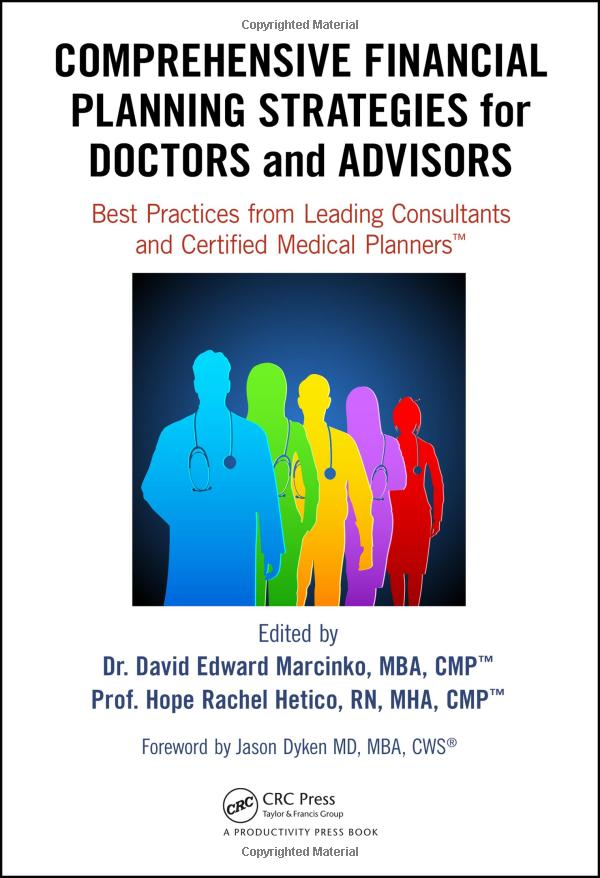
MORE: Comprehensive Financial Planning Strategies for Doctors[Best Practices from Leading Consultants and Certified Medical Planners™]

MORE: Risk Management Liability Insurance, and Asset Protection Strategies for Doctors and Advisors [Best Practices from Leading Consultants and Certified Medical Planners™]

Conclusion

Your thoughts and comments on this ME-P are appreciated. Feel free to review our top-left column, and top-right sidebar materials, links, URLs and related websites, too. Then, subscribe to the ME-P. It is fast, free and secure.

Speaker: If you need a moderator or speaker for an upcoming event, Dr. David E. Marcinko; MBA – Publisher-in-Chief of the Medical Executive-Post – is available for seminar or speaking engagements. Contact: MarcinkoAdvisors@msn.com

OUR OTHER PRINT BOOKS AND RELATED INFORMATION SOURCES:

***

Risk Management, Liability Insurance, and Asset Protection Strategies for Doctors and Advisors: Best Practices from Leading Consultants and Certified Medical Planners™           8Comprehensive Financial Planning Strategies for Doctors and Advisors: Best Practices from Leading Consultants and Certified Medical Planners™

***

PART 1: My Sample Financial Plan I [Data gathering, goals and objectives]

PART 2: My Sample Financial Plan II [Data Analytics, Creation and Crafting]

PART 3: Request here: MarcinkoAdvisors@msn.com [Stress Testing and Completion]

***

← Back

Thank you for your response. ✨

ECONOMIC: Paradoxes all Financial Advisors Should Know

BY DR. DAVID EDWARD MARCINKO MBA MEd CMP™

SPONSOR: http://www.MarcinkoAssociates.com

SPONSOR: http://www.CertifiedMedicalPlanner.org

***

***

A paradox is a logic and self-contradictory statement or a statement that runs contrary to one’s expectation. It is a statement that, despite apparently valid reasoning from true or apparently true premises, leads to a seemingly self-contradictory or a logically unacceptable conclusion. A paradox usually involves contradictory-yet-interrelated elements that exist simultaneously and persist over time. They result in “persistent contradiction between interdependent elements” leading to a lasting “unity of opposites”.

***

And so, as we plan for our financial future thru a New Year Resolution for 2025, it’s helpful to be cognizant of these paradoxes. While there’s nothing we can do to control or change them, there is great value in being aware of them, so we can approach them with the right tools and the right mindset.

According to Adam Grossman, here are seven [7] of the paradoxes that can bedevil financial decision-making, clients and financial advisors, alike:

  1. There’s the paradox that all of the greatest fortunes—Carnegie, Rockefeller, Buffett, Gates—have been made by owning just one stock. And yet the best advice for individual investors is to do the opposite: to own broadly diversified index funds. More: https://tinyurl.com/285vftx4
  2. There’s the paradox that the stock market may appear over valued and yet it could become even more overvalued before it eventually declines. And when it does decline, it may be to a level that is even higher than where it is today.
  3. There’s the paradox that we make plans based on our understanding of the rules—and yet Congress can change the rules on us at any time, as the recent 2024 election results attest.
  4. There’s the paradox that we base our plans on historical averages—average stock market returns, average interest rates, average inflation rates and so on—and yet we only lead one life, so none of us will experience the average.
  5. There’s the paradox that we continue to be attracted to the prestige of high-cost colleges, even though rational analysis that looks at return on investment tells us that lower-cost state schools are usually the better bet.
  6. There’s the paradox that early retirement seems so appealing—and has even turned into a movement—and yet the reality of early retirement suggests that we might be better off staying at our desks.
  7. There’s the paradox that retirees’ worst fear is outliving their money and yet few choose the financial product that is purpose-built to solve that problem: the single-premium immediate annuity.

CITE: https://www.r2library.com/Resource/Title/0826102549

How should you respond to these paradoxes? As you plan for your financial future, embrace the concept of “loosely held views.”

In other words, make financial plans, but continuously update your views, question your assumptions and rethink your priorities.

COMMENTS APPRECIATED

Subscribe Today!

***

***

PRIMARY MEDICAL CARE: The Paradox

BY DR. DAVID EDWARD MARCINKO MBA MEd CMP

Sponsor: http://www.CertifiedMedicalPlanner.org

***

***

Classic Definition: Despite rising costs, health care often is of poor quality. Evidence from a classic medical improvement outcomes study assessed care of patients with several chronic diseases. This study found that patients’ functional health status outcomes are similar to care rendered by specialists and generalists but that generalists use far fewer resources. Similar outcome at lower cost represents higher value.

Modern Circumstance: Current solutions to improving care quality may do more harm than good if they focus more on diseases than on people. Efforts to improve the parts (evidence-based care of specific diseases) may not necessarily improve the whole (the health of people and populations).

Expanding access to specialty care, for example, has been proposed as both a source of and a solution for deficiencies in quality of care. Primary care is touted as an essential building block of a high-value health care system even as it is undermined by systems attempting to improve the quality, effectiveness, and value of their health care..

Paradox Example: The above contradictions plague improvement efforts in health care systems around the world, particularly the United States The paradox is that compared with specialty care or with systems dominated by specialty medical care, primary care is associated with the following: (1) poorer quality care for individual diseases, yet (2) similar functional health status at lower cost for people with chronic disease, and (3) better quality, better health, greater health  equity and lower costs for whole peoples and populations.

And so, this contradiction plagues improvement efforts in health care systems around the world, particularly the United States.

Cite: Kurt Stange MD PhD and Robert Ferrer MD MPH

COMMENTS APPRECIATED

Thank You

***

***

MEMORY: Fallibility

By Staff Reporters

***

***

Memory is Fallible. Think you have a great memory? Think again.

According to psychologist and colleague Dan Ariely PhD, memory is more like a game of telephone than a recording device. Each time you recall an event, your brain makes tiny edits, adding some flair or skipping the boring parts. It’s why you can’t remember where you left your keys but can vividly recall an embarrassing moment from high school.

So, the next time someone says, “I remember it like it was yesterday,” know that yesterday might be a heavily edited rerun.

COMMENTS APPRECIATED

Subscribe Today!

***

***

REO versus REIT

By Staff Reporters

SPONSOR: http://www.MarcinkoAssociates.com

***

***

Real Estate Operating Company (REOC)

A company that invests in real estate and whose shares trade on a public exchange.

Real Estate Investment Trust (REIT)

A real estate operating company (REOC) is similar to a real estate investment trust (REIT), except that an REOC will reinvest its earnings into the business, rather than distributing them to unit holders like REITs do.

Also, REOCs are more flexible than REITs in terms of what types of real estate investments they can make.

CITE: https://www.r2library.com/Resource/Title/0826102549

COMMENTS APPRECIATED

Thank You

***

***

FINANCIAL Derivatives

By Dr. David Edward Marcinko MBA MEd

SPONSOR: http://www.MarcinkoAssociates.com

***

***

Derivatives are securities whose performance and/or structure is derived from the performance and/or structure of other assets, interest rates, or indexes. If used moderately and in appropriate situations, derivatives can help stabilize portfolios and/or enhance returns. However, if used in excess and/or in inappropriate circumstances, they can be harmful, potentially causing portfolio instability and/or losses. Derivatives are similar to medicine in their behavior–usually safe when used as directed, potentially toxic when abused.

There are many different types of derivative securities and many different ways to use them. Some derivative securities, such as mortgage-related and other asset-backed securities, are in many respects like any other investment, although they may be more volatile or less liquid than more traditional debt securities.

Futures and options are commonly used for traditional hedging purposes to attempt to protect portfolios from exposure to changing interest rates, securities prices or currency exchange rates, and for cash management purposes as a low-cost method of gaining exposure to a particular securities market without investing directly in those securities.

Certain other derivative securities may be described as structured investments. A structured investment is a security whose value or performance is linked to an underlying index or other security or asset class. Structured investments include collateralized mortgage obligations (CMOs). Structured investments also include securities backed by other types of collateral.

CITE: https://www.r2library.com/Resource/Title/0826102549

COMMENTS APPRECIATED

Subscribe Today!

***

***

KENNETH ARROW: Information Paradox

To sell information you need to give it away before the sale

By Dr. David Edward Marcinko MBA MEd

SPONSOR: http://www.MarcinkoAssociates.com

***

***

THE FATHER OF HEALTH ECONOMICS

According to Wikipedia, a fundamental tenet of the paradox is that the customer, i.e. the potential purchaser of the information describing a technology (or other information having some value, such as facts), wants to know the technology and what it does in sufficient detail as to understand its capabilities or have information about the facts or products to decide whether or not to buy it. Once the customer has this detailed knowledge, however, the seller has in effect transferred the technology to the customer without any compensation. This has been argued to show the need for patent protection [HIPPA].

CITE: https://www.r2library.com/Resource/Title/0826102549

If the buyer trusts the seller or is protected via contract, then they only need to know the results that the technology will provide, along with any caveats for its usage in a given context. A problem is that sellers lie, they may be mistaken, one or both sides overlook side consequences for usage in a given context, or some unknown-unknown affects the actual outcome.

MORE :https://www.nobelprize.org/prizes/economic-sciences/1972/arrow/facts/

COMMENTS APPRECIATED

Subscribe Today!

***

***

ARTIFICIAL Scarcity

By Staff Reporters

***

***

Artificial Scarcity refers to the intentional limitation of the availability of a product or resource to create a sense of rarity, which often drives up its perceived value and price.

Think: surge pricing

And, circumstances with insufficient competition can lead to suppliers exercising enough market power to constrict supply. The clearest example is a monopoly, where a single producer has complete control over supply and can extract a additional price.

By creating a temporary shortage, sellers or producers can increase demand and capitalize on consumers’ fear of missing out, thereby influencing market dynamics to their advantage. This strategy is frequently used in marketing, particularly for limited-edition items or high-demand products.

COMMENTS APPRECIATED

Subscribe Today!

***

***

RECIPROCITY: Science “Sales” in Action

FREE SAMPLES

The Art of Giving – And Receiving – Value!

By Staff Reporters

***

***

Imagine you’re at a party, and someone hands you a drink. Your first instinct? Find something to give back. This is [sales] reciprocity in action – our built-in psychological urge to repay kindness.

According to colleague Dan Ariely PhD, it’s like a cosmic balance sheet in our brains, ensuring we don’t owe anyone a favor. This is why companies give out free samples. They’re not just being nice; they know you’ll feel a pang of guilt if you walk away without buying something.

THINK: Free financial planning dinner seminar and prospecting event. That’s you – the Sales Prospect!

So, next time someone does you a favor, remember: it’s not just seller kindness, it’s science!

COMMENTS APPRECIATED

Subscribe Today!

***

***

CURRENCY OPTIONS: Hedging and Overlays

By Dr. David Edward Marcinko MBA MEd

SPONSOR: http://www.MarcinkoAssociates.com

***

***

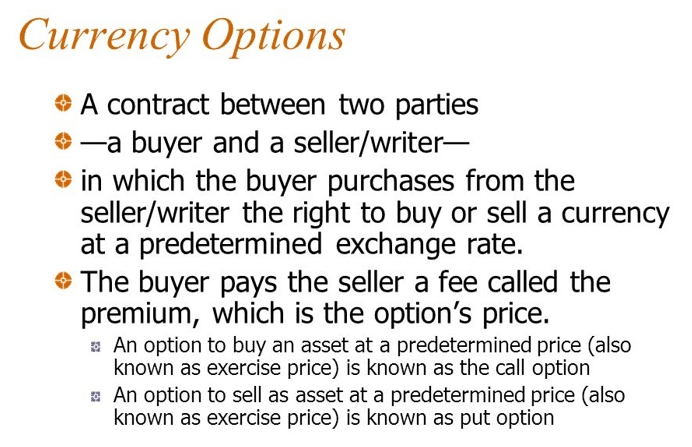
Currency Hedging is a risk-management strategy, as part of a foreign investment strategy, currency hedging is designed to reduce the impact from changes in the relative values of currencies involved in the foreign investment strategy.

CITE: https://www.r2library.com/Resource/Title/0826102549

In any foreign investment strategy, a significant part of the potential risk and return comes from exposure to relative currency value fluctuations. If exposure to those currency fluctuations is minimized, investors can experience more of a “pure play” exposure to the foreign investments. There is a variety of possible currency hedging strategies, ranging from swaps, options, and spot contracts to simply buying foreign currencies.

Currency Overlay is a financial trading strategy used to separate the management of currency risk from other portfolio strategies. A currency overlay manager can seek to hedge the risk from adverse movements in exchange rates, and/or attempt to profit from tactical currency views.

CITE: https://www.r2library.com/Resource/Title/0826102549

COMMENTS APPRECIATED

Subscribe Today!

***

***

PHYSICIAN PERSONAL COACHING: Financial Planning and Retirement Consulting

SPONSORED BY: http://www.MarcinkoAssociates.com

***

***

Most doctors report feeling overworked and are considering a change in career, according to a new poll.

Doximity, a virtual network for physicians, found that 81% doctors surveyed last fall said they felt overworked—a slight decline from 86% who reported burnout in 2022 but still up from 73% in 2021. Meanwhile, about three in five doctors said they were considering early retirement (30%), looking for another employer (15%), or leaving the profession altogether (14%), the poll found.

The findings, released last year, come amid reports of rising rates of physician burnout and dissatisfaction since after the Covid-19 pandemic.

LEARN MORE: https://tinyurl.com/y3j2t3ab

COMMENTS APPRECIATED

Thank You

***

***

COCKTAIL: Party Effect

By Staff Reporters

***

***

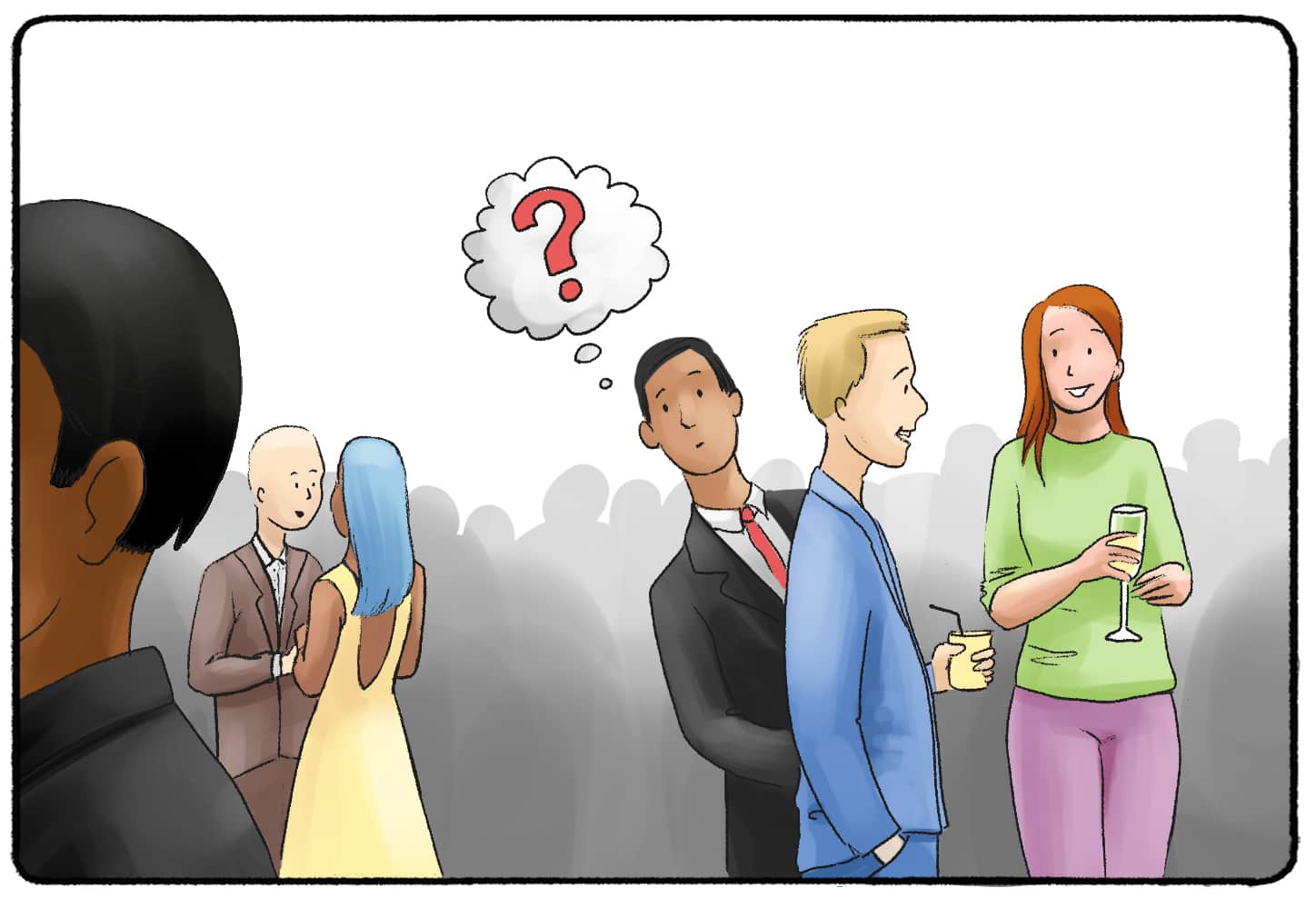
The cocktail party effect is the ability of the human hearing and auditory system to focus one’s listening attention on a particular speaker in a noisy environment, such as a crowded party. This allows people to focus on a specific conversation while filtering out other nearby conversations and background noise.

Consider that you’re at a crowded party, noise everywhere, but you hear your name mentioned across the room. How? Welcome to the Cocktail Party Effect.

Your brain is like a highly trained butler, filtering out the background chatter to catch something personally relevant. It’s not just your name, either; it could be juicy gossip or a mention of free pizza or an exciting new stock tip you’ve been considering; or even an IPO.

So, according to psychologist colleague Dan Ariely PhD, this selective attention keeps us sane in a noisy world, helping us focus on the things that matter – like whether that person just said “free drinks” or “freeloading, or “free-stock trading.”

COMMENTS APPRECIATED

Please Subscribe!

Thank You

***

***

HINDSIGHT BIAS: The “Curse of Knowledge”

By Staff Reporters

SPONSOR: http://www.MarcinkoAssociates.com

***

***

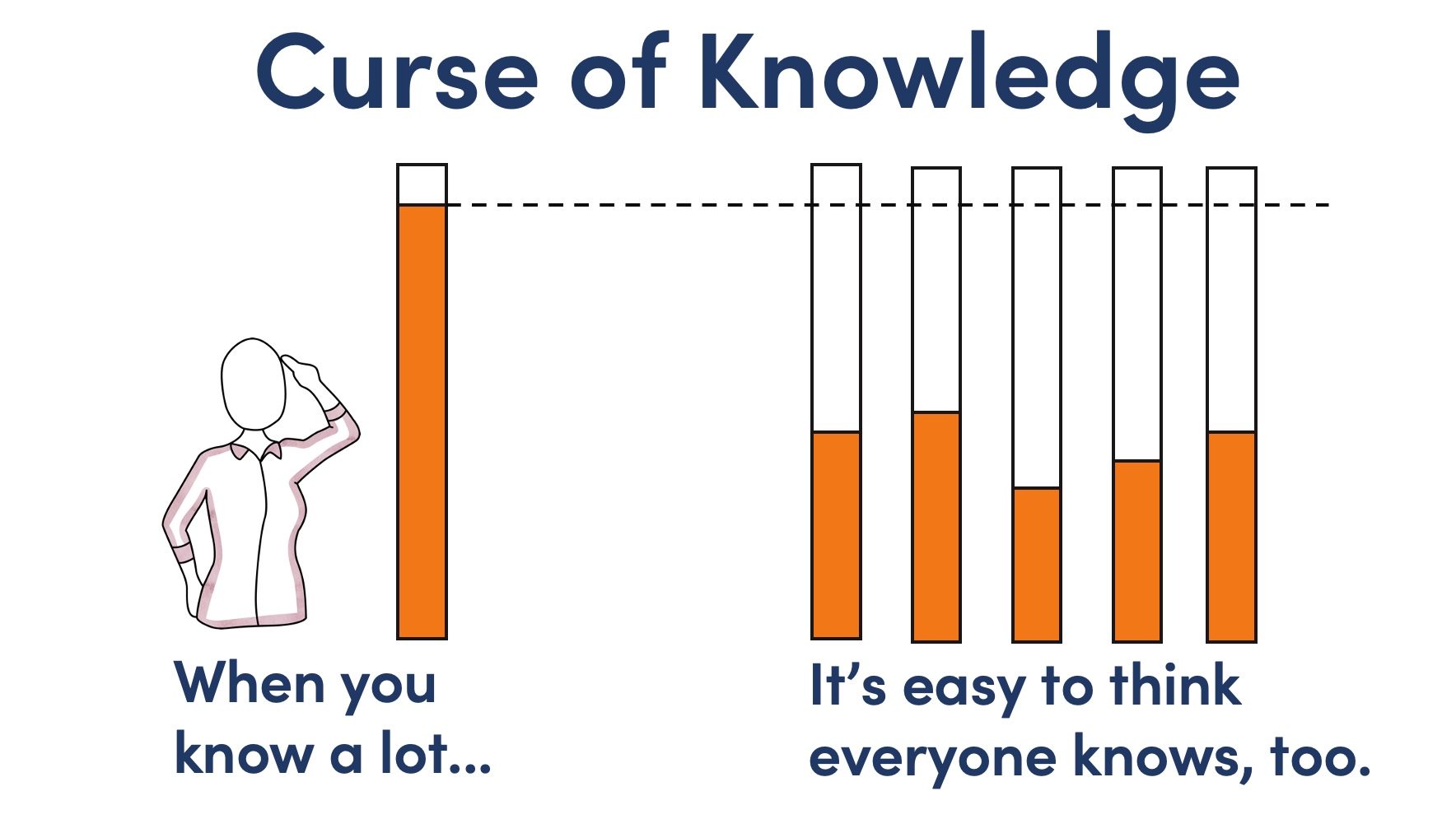
The Curse of Knowledge and Hindsight Bias

Similar in ways to the availability heuristic (Tversky & Kahneman, 1974) and to some extent, the false consensus effect, once you (truly) understand a new piece of information, that piece of information is now available to you and often becomes seemingly obvious. It might be easy to forget that there was ever a time you didn’t know this information and so, you assume that others, like yourself, also know this information: the curse of knowledge.

Cite: https://medicalexecutivepost.com/2022/11/18/what-is-the-dunning-kruger-effect/

However, according to colleague Dan Ariely PhD, it is often an unfair assumption that others share the same knowledge. The hindsight bias is similar to the curse of knowledge in that once we have information about an event, it then seems obvious that it was going to happen all along.

I should have seen it [divorce, stock market crash/soar my smoking & lung cancer, unemployment, etc] coming!

COMMENTS APPRECIATED

Please Subscribe!

***

***

HEALTHCARE: Where the Presidential Candidates Stand

By Health Capital Consultants, LLC

***

***

Where the Candidates Stand on Healthcare

With the Presidential Election just weeks away, healthcare has once again come front and center of national political discourse, as voters rank healthcare as an important issue, and Vice President Kamala Harris and former President Donald Trump tout their respective healthcare agendas.

While details related to future healthcare proposals have been light, both candidates do have political track records that can be examined for clues as to their priorities should they become president.

This Health Capital Topics article explores where the candidates stand on various issues related to healthcare. (Read more…)

COMMENTS APPRECIATED

Thank You

***

***

DAILY UPDATE: Home Buyers and Jeff Bezos as Stock Markets Soar!

MEDICAL EXECUTIVE-POST TODAY’S NEWSLETTER BRIEFING

***

Essays, Opinions and Curated News in Health Economics, Investing, Business, Management and Financial Planning for Physician Entrepreneurs and their Savvy Advisors and Consultants

Serving Almost One Million Doctors, Financial Advisors and Medical Management Consultants Daily

A Partner of the Institute of Medical Business Advisors , Inc.

http://www.MedicalBusinessAdvisors.com

SPONSORED BY: Marcinko & Associates, Inc.

***

http://www.MarcinkoAssociates.com

Daily Update Provided By Staff Reporters Since 2007.
How May We Serve You?
© Copyright Institute of Medical Business Advisors, Inc. All rights reserved. 2024

REFER A COLLEAGUE: MarcinkoAdvisors@msn.com

SPONSORSHIPS AVAILABLE: https://medicalexecutivepost.com/sponsors/

ADVERTISE ON THE ME-P: https://tinyurl.com/ytb5955z

Your Referral Count -0-

First-time homebuyers in 2024 had a median income of $97,000, and their median age was 38. ​​OpenAI and Jeff Bezos invested in Physical Intelligence, a robot startup with the aim of “bringing general-purpose AI into the physical world.”

CITE: https://www.r2library.com/Resource

Stocks Up

  • Cybersecurity darling Palantir soared 23.38% to a record high thanks to strong earnings, high AI demand, and big spending from the Department of Defense.
  • Astera Labs skyrocketed 37.70% after the semiconductor parts maker (and one of Nvidia’s key suppliers) announced strong earnings.
  • Crypto stocks had a great day thanks to a widespread cryptocurrency rally. Coinbase rose 4.13%, MicroStrategy gained 2.16%, and Riot Platforms jumped 8.13%.

Stocks Down

Trump Media & Technology Group arrested its recent downturn and popped 12% at one point today, but gave all those gains up and ended the day down 1.16%.

  • You’d think the end of a multi-week labor dispute costing billions of dollars would be a relief for shareholders, but Boeing still sank 2.62% on news that it’s reached an agreement with striking machinists.
  • It’s a me, lower revenue forecasts! Nintendo fell 1.68% after announcing that sales of its Switch console are starting to sag.
  • Wynn Resorts sagged 9.34% thanks to misses on both top and bottom line expectations last quarter.
  • Some of the smaller semiconductor stocks on the market took a beating today. NXP Semiconductor dropped 5.17% after announcing weaker-than-expected Q4 guidance, Lattice Semiconductor tumbled 1.37% after missing on sales forecasts and announcing job cuts, and while Cirrus Logic beat expectations this quarter, it still fell 7.09% on lower forecasts.

CITE: https://tinyurl.com/2h47urt5

Here’s where the major benchmarks ended:

  • The S&P 500® index (SPX) rose 70.07 points (1.23%) to 5,782.76; the Dow Jones Industrial Average® ($DJI) added 427.28 points (1.02%) to 42,221.88; and the NASDAQ Composite® ($COMP) increased 259.19 points (1.43%) to 18,439.17.
  • The 10-year Treasury note yield (TNX) dropped two basis points to 4.29%.
  • The CBOE Volatility Index® (VIX) slipped to 20.72.

CITE: https://tinyurl.com/tj8smmes

Visualize: How private equity tangled banks in a web of debt, from the Financial Times.

COMMENTS APPRECIATED

PLEASE SUBSCRIBE: MarcinkoAdvisors@msn.com

Thank You

***

***

***

***

EDUCATIONAL TEXTBOOKS: https://tinyurl.com/4zdxuuwf

***

METAVERSE MEDICINE: A Paradigm Shift?

By Dr. David Edward Marcinko MBA MEd

SPONSOR: http://www.MarcinkoAssociates.com

***

***

In what some are calling the next iteration of the internet, the metaverse is an unfamiliar digital world where you could be an avatar navigating computer-generated places and interacting with others in real time. In this space, the constraints of our physical, bricks and mortar world and travel habits fade. And new opportunities and challenges emerge.

CITE: https://www.r2library.com/Resource/Title/0826102549

For example:

  • Google in healthcare: The search giant has repeatedly successfully transferred its in-depth knowledge of algorithms in the field of medicine, particularly since it acquired DeepMind.
  • Apple in healthcare: Apple will keep on working on expanding the health features of its devices, Apple Watch and iPhones included.
  • Microsoft in healthcare: Microsoft’s cloud solutions provide integrated capabilities that make it easier to improve the healthcare experience.
  • Amazon in healthcare: Amazon will make further use of its vast knowledge of online shopping trends and behavior and will keep on providing what people need, from medicine to wearables.
  • IBM in healthcare: IBM has a lot to offer in federated learning, blockchain, and quantum computing.
  • Nvidia in healthcare: NVIDIA seems incredibly focused on its approach to healthcare. We can expect NVIDIA to be a leader in the use of artificial intelligence in healthcare.
  • Facebook in healthcare: The Metaverse developed by Facebook/Meta has incredible potential to revolutionize healthcare.

All this technology has huge potential because it uses both virtual reality (VR) and augmented reality (AR) technology to work in virtual spaces: All signs point to the metaverse being widely used as a disruptive change in healthcare, from better surgical precision to therapeutic uses to social-distance accommodations and more.

But along with these improvements come new problems that will change what we know about modern healthcare. The metaverse is a paradigm shift in healthcare that everyone involved needs to be aware of. This is because it changes how medical infrastructure is built, how startup costs are covered, and how data security and privacy are handled.

CITE: https://www.r2library.com/Resource/Title/0826102549

COMMENTS APPRECIATED

Subscribe Today!

***

***

RIP: Philip George Zimbardo PhD

March 23, 1933 – October 14, 2024

By Staff Reporters

***

***

Philip George Zimbardo was an American psychologist and a professor at Stanford University. He became known for his 1971 Stanford prison experiment, which was later criticized severely for both ethical and scientific reasons.

He authored various introductory psychology textbooks for college students, and other notable works, including The Lucifer Effect, The Time Paradox, and The Time Cure.

He was also the initiator and president of the Heroic Imagination Project.

Official website: philipzimbardo.com

COMMENTS APPRECIATED

Thank You

***

***

DAILY UPDATE: Nvidia, Intel, Oil, Bitcoin, Treasury Yields, CMS and Physician Pay

MEDICAL EXECUTIVE-POST TODAY’S NEWSLETTER BRIEFING

***

Essays, Opinions and Curated News in Health Economics, Investing, Business, Management and Financial Planning for Physician Entrepreneurs and their Savvy Advisors and Consultants

Serving Almost One Million Doctors, Financial Advisors and Medical Management Consultants Daily

A Partner of the Institute of Medical Business Advisors , Inc.

http://www.MedicalBusinessAdvisors.com

SPONSORED BY: Marcinko & Associates, Inc.

***

http://www.MarcinkoAssociates.com

Daily Update Provided By Staff Reporters Since 2007.
How May We Serve You?
© Copyright Institute of Medical Business Advisors, Inc. All rights reserved. 2024

REFER A COLLEAGUE: MarcinkoAdvisors@msn.com

SPONSORSHIPS AVAILABLE: https://medicalexecutivepost.com/sponsors/

ADVERTISE ON THE ME-P: https://tinyurl.com/ytb5955z

Your Referral Count -0-

CITE: https://www.r2library.com/Resource

Nvidia is replacing Intel on the Dow Jones Industrial Average, a shakeup to the blue-chip index that replaces a flagging semiconductor company with the primary vendor of GPUs for AI.

CITE: https://tinyurl.com/2h47urt5

  • Despite selling off last week, stocks spent Friday comfortably in the green thanks to strong earnings from big tech.
  • Treasury yields rose back above 4.3% as bonds sold off and investors poured money into risk assets.
  • Oil rose a bit on reports that Iran may retaliate against Israel sometime soon.
  • Bitcoin was unable to hold the line and continued to fall today as crypto volatility continues to escalate ahead of the election.

CITE: https://tinyurl.com/tj8smmes

Bipartisan Legislation Aims to Stop Medicare Cuts & Boost Physician Pay in 2025

Physicians and other healthcare practitioners may get a pay boost in 2025 through a bipartisan bill recently introduced in Congress. The proposed bill seeks to block planned Medicare pay cuts next year and would provide the first inflationary update to physician pay in years. The Medicare Patient Access and Practice Stabilization Act would counteract the 2.8% cut to the conversion factor proposed by the Centers for Medicare and Medicaid Services (CMS) in the draft CY-2025 Physician Fee Schedule. A stop-gap pay fix is usually enacted by Congress at the end of the year. 

Source: Emma Beavins, Fierce Healthcare [10/30/24].

COMMENTS APPRECIATED

PLEASE SUBSCRIBE: MarcinkoAdvisors@msn.com

Thank You

***

***

EDUCATIONAL TEXTBOOKS: https://tinyurl.com/4zdxuuwf

***

Recent Court Actions Provide Insight into Future of Fraud & Abuse Laws

By Health Capital Consultants, LLC

Two recent court actions may serve as harbingers for the future of healthcare fraud and abuse laws. In September 2024, a federal judge in the Southern District of West Virginia ordered parties in a qui tam False Claims Act and Stark Law case to brief the court on the implications of Loper Bright Enterprises v. Raimondo on the interpretation of the Stark Law to the case at hand.

That same month, a federal judge in the Middle District of Florida dismissed a qui tam lawsuit on a novel theory that the False Claims Act’s whistleblower provisions are unconstitutional.

This Health Capital Topics article discusses these cases and the potential impact on federal fraud and abuse laws. (Read more…)

COMMENTS APPRECIATED

Thank You

***

***

EMPLOYER’S: Pay for Health Insurance Paradox

By Dr. David Edward Marcinko MBA MEd CMP

SPONSOR: http://www.CertifiedMedicalPlanner.org

***

***

Classic Definition: Employers write checks that cover most health insurance premiums for employees and their dependents. But as the late Princeton health economist Uwe Reinhardt PhD once explained, employer-sponsored insurance is like a pickpocket taking money out of your wallet at a bar and buying you a drink. You appreciate the cocktail until you realize you paid for it yourself.

Modern Circumstance: With health coverage, employers write the check to the insurer, but employees bear the cost of the premium — the entire premium, not just the portion listed as their contribution on their pay stub. The premium money that goes to the insurance company is cash that employers would otherwise deposit in employees’ accounts like the rest of their salary.

CITE: https://www.r2library.com/Resource/Title/0826102549

Paradox Example: The fallacy paradox is in thinking an employer’s contribution comes out of profits. In fact, higher health insurance premiums mean lower wages for workers. Since 1999, health insurance premiums have increased 147 percent and employer profits have increased 148 percent. But in that time, average wages have hardly moved, increasing just 7 percent. Clearly workers’ wages, not corporate profits, have been paying for higher health insurance premiums. Health care costs are one — though not the only — reason wages have stagnated over the last few decades. With health insurance costs rising faster than growth in the economy, more labor costs go to benefits like health insurance and less to take-home pay. Yet the paradox that employees don’t pay for their own health insurance is widespread:

  • The first reason is that individuals cannot be sure what causes their wages to change or remain stagnant for decades.
  • The second reason is that employers want Americans to believe that they pay for their workers’ health insurance.
  • The third reason is that there are those who profit from the employment-based system: drug companies, device manufacturers, specialty physicians and high-income individuals.

And so, they all want you to believe companies are being magnanimous in giving you insurance, but they are not!

COMMENTS APPRECIATED

Thank You

***

***

“HOT STATE”: A Decision Paradox

By Staff Reporters

SPONSOR: http://www.MarcinkoAssociates.com

DEFINITION

***

***

Ever tried making a decision when you’re angry or excited? According to colleague Dan Ariely PhD, that’s a hot state – when emotions run high and logic takes a backseat. It’s like trying to think clearly in the middle of a storm.

Be you a doctor, CPA, attorney, engineer, husband, wife, parent, teacher or all others. In a hot state, we’re impulsive, making choices we might regret later. It’s why cooling off before making big decisions is always a good idea.

So, when your emotions are boiling over, take a step back, breathe, and wait for the storm to pass. You’ll make better choices when you’re in a calm, cool state.

MORE: https://tinyurl.com/3hsnvx9r

COMMENTS APPRECIATED

Thank You

***

***

BARRA: A Security Risk Factor Analysis

By Staff Reporters

SPONSOR: http://www.MarcinkoAssociates.com

***

***

Barra Risk Factor Analysis was created by Barra Inc.

CITE: https://www.r2library.com/Resource/Title/0826102549

It is a multi-factor model measures the overall risk associated with a security relative to the market. And, it incorporates over 40 data metrics, including earnings growth, share turnover and senior debt rating.

BARRA MSCI: https://tinyurl.com/yc3w5buc

COMMENTS APPRECIATED

Subscribe Today!

***

***

Challenging Investment Rules and Key Investor Traits

By Vitaliy Katenselson CFA

***

***

Today, we’re diving into two thought-provoking questions:

1. What’s a famous investment rule I don’t agree with?
2. Which key characteristics should a good investor have?

1. A Famous Investment Rule I Don’t Agree With: “Buy and Hold”

Buy and hold becomes a religion during bull markets. Then, holding a stock because you bought it is often rewarded through higher and higher valuations. There’s a Pavlovian bull market reinforcement – every time you don’t sell (hold) a stock, it goes higher.

Buying is a decision. So is holding, but it should not be a religion but a decision. The value of any company is the present value of its cash flows. When the present value of cash flows (per share) is less than the price of the stock, the stock should not be “held” but sold.

Warren Buffett is looked upon as the deity of buy and hold.

Look at Coca Cola when it hit $40 in 1999. Its earnings power at the time was about $0.80. It was trading at 50 times earnings. It was significantly overvalued, considering that most of the growth for this company was in the past.

Fast-forward almost a quarter of a century – literally a generation. Today the stock is at $60. It took more than a decade to reclaim its 1999 high. Today, Coke’s earnings power is around $1.50–1.90. Earnings have stagnated for over a decade. If you did not sell the stock in 1999, you collected some dividends, not a lot but some. The stock is still trading at 30–40x earnings. Unless they discover that Coke cures diabetes (not causes it), its earnings will not move much. It’s a mature business with significant health headwinds against it.

“Long-term” and “buy-and-hold” investing are often confused.

People should not own stocks unless they have a long-term time horizon. Long-term investing is an attitude, an analytical approach. When you build a discounted cash flow model, you are looking decades ahead. However, this doesn’t mean that you should stop analyzing the company’s valuation and fundamentals after you buy the stock, as they may change and affect your expected return. After you put in a lot of analytical work and buy the stock, you should not simply switch off your brain and become a mindless buy-and-hold investor.

This doesn’t mean you shouldn’t be patient, which I’ll discuss next; but holding, not selling, a stock is a decision.

2. Key Characteristics of a Good Investor

I’m going to sound a bit more preachy than usual, but it’s very difficult to answer this question in any other way.

You need three Ps – passion, patience, process.

Passion

Investing is not a 9-to-5 job; it’s a 24/7 adventure. Unlike flipping burgers or processing insurance claims, where you can clock in at 9 AM, fall into a stupor, and then reawaken at 5 PM when you clock out.

This should be your test: If you catch yourself treating investing as a 9-to-5 job, then you have little passion for it.

If this is the case, don’t do it (this probably applies to any choice of a profession). You don’t stand a chance against people for whom investing is a never-ending puzzle to be solved on their life’s journey. All of my investment friends are dripping with passion for investing; they are obsessed with it. None of them are in it only for the money.

You won’t last long in this profession if you’re not passionate about stocks.

Patience


Investing is like real life – the connection between effort and result is nonlinear. It is very loose.

You may be making all of the right rational decisions: You are buying stocks that lie within your EQ/IQ spectrum, and they are significantly undervalued, but the market simply doesn’t care. It just keeps sending your stocks down. To make things even more frustrating, while your stocks are declining, speculators who treat the stock market as a craps table at Caesars Palace are killing it, making money hand over fist. It’s painful. It is excruciatingly painful if you have the wrong client base.

This is where patience comes in. My father told me this story, which happened right before I was born.

My family lived in Murmansk, a city 125 miles north of the Arctic Circle in northwest Russia. My mom went to give birth to my brothers and me in Saratov, a city in central Russia, about 1200 miles from Murmansk. She wanted to be closer to her parents. My father could not leave work, so he stayed in Murmansk.

A few weeks before I was born, he went to visit his best friend, Alexander. He told him that he was worried about my mom and the birth. His friend told him something that I remember to this day (with a chuckle): “Naum, you did your part; you cannot go back and correct what you did. Now you just have to wait.”

Investing is patience punctuated by decisions.

As the French mathematician Blaise Pascal said, “All of humanity’s problems stem from man’s inability to sit quietly in a room alone.”

One more thought here: I try to take the temperature of my emotions and the mental activity of my brain. When I find myself overheating, with the stock market occupying my entire brain, I forcibly disconnect and unplug myself from it. The quality of my thoughts and decisions when my brain is overheating is likely to be low. So, I go for a walk in the park, read a fiction book, go see a movie, or visit an art museum.

Process


Managing someone else’s money is an incredible responsibility, which you may not fully appreciate during bull markets. But sideways and bear markets will remind you quickly.

I don’t want to over-glorify what we do – we are not curing cancer or saving people from burning buildings. But IMA clients entrust us with their life savings and tell me, “Vitaliy, please don’t screw it up.”

My decisions may determine whether our clients get to retire, pay for their medical expenses, or help their kids buy houses.

Staying rational when the world around you is melting up with greed or melting down in fear isn’t a capacity that one accidentally stumbles upon. You engineer it through a series of small, repeatable decisions – your investment process.

COMMENTS APPRECIATED

Thank You

***

***

EQUALITY: Investment Advice?

“What is good for the goose is good for the gander”

By Rick Kahler CFP®

There is an old adage that says, “What is good for the goose is good for the gander.

In today’s urbanized world, most of us probably wouldn’t have the slightest idea what’s good for geese. Yet we still know that this saying reminds us to be cautious about anyone who makes recommendations they don’t follow themselves.

This is especially important when it comes to investment advice.

Duopoly

Have you ever wondered how your investment advisor invests their money? Have you wondered if the agent selling you cash value life insurance as a retirement investment is investing their retirement in the same? Or whether an advisor recommending a specific mutual fund, stock investment, or bond issue buys the same for their own portfolio?

Ask

My suggestion is to stop wondering and ask. I rarely have a client or prospective client ask me whether I invest my own money in the same way I invest the funds of clients. Most people think it is just too personal to ask how an advisor is investing their own funds and that the advisor may take offense.

Yet knowing how anyone offering investment advice to you invests their own funds is highly relevant. It’s especially wise to ask this if someone is trying to sell you on an “exciting opportunity” that sounds too good to be true. An evasive or vague answer is an obvious red flag. But even with a fiduciary advisor, I believe asking how they invest their own money is a legitimate question. I for one am happy to answer it. Yes, the investment vehicles and strategies I recommend for clients are the same ones I use for myself.

If an advisor is recommending a strategy or investment for you that they don’t subscribe to or invest in themselves, then it’s a good idea to ask another question.

Why not?

Certainly, there are good reasons why an advisor would not have the same asset allocation that they recommend for you. They may be significantly younger or older, or they may have a significantly more aggressive or adverse tolerance for risk. But if your advisor outsources your investments to SEI but uses Vanguard for themselves, I would want to explore that. Or if your advisor is about the same age as you are, but has a significantly different asset allocation and uses none of the investments she recommends that you invest in, I would want to know why.

If an advisor suggests that you put 35% of your investment funds into a private REIT but they don’t own a private REIT, what’s the reason? Or if they are recommending you own a managed futures limited partnership but they don’t own that same partnership or any managed futures funds. Or, maybe they are recommending the A shares of an actively managed mutual fund but themselves purchase passively managed institutional shares.

If you don’t feel comfortable or knowledgeable enough to ask questions like these about specific investments, it’s still important to find out about an advisor’s broader approach to investing. Do they recommend that you “buy and hold,” yet they actively time the market with their own portfolio? Or maybe they actively trade your portfolio while following a “buy and hold” strategy themselves.

Assessment

While portfolio specifics might vary, I want any investment advisor to buy into the same investment philosophy they are recommending to me. If they are going to be timing the market with my funds, I want them to be making the same market moves with their own funds.

If a “sauce” isn’t good enough for the advisor personally, it isn’t good enough to recommend to clients.

Conclusion

Your thoughts and comments on this ME-P are appreciated. Feel free to review our top-left column, and top-right sidebar materials, links, URLs and related websites, too. Then, subscribe to the ME-P. It is fast, free and secure.

Speaker: If you need a moderator or speaker for an upcoming event, Dr. David E. Marcinko; MBA – Publisher-in-Chief of the Medical Executive-Post – is available for seminar or speaking engagements.

Book Marcinko: https://medicalexecutivepost.com/dr-david-marcinkos-bookings/

Subscribe: MEDICAL EXECUTIVE POST for curated news, essays, opinions and analysis from the public health, economics, finance, marketing, IT, business and policy management ecosystem.

***

A “Six Sigma”© Primer for the Home Care Industry

By: Christian Hernandez MBA – Apple Health Care Services

Richard Melnyck MBA MS

Mark Friedman PhD Department of Accounting

Howard Gitlow PhD Department of Management Science University Miami

christian hernandez
***
BACKGROUND
***
Homecare has long been one the most cost-effective methods of treating patients. Yet today, homecare providers face significant challenges: reimbursement cuts, mandatory accreditation, and influencing policy changes. So, how can homecare managers efficiently sustain a cutting edge, consistent and quality focused practice amidst this changing landscape?
***
It is time the homecare industry tap into the high-tech tools and proven management theories that together make up “Six sigma” management. This article will provide a solid point of reference for managers interested in adopting “Six Sigma” management. In today’s stiff economic climate, organizations are once again turning to “Six Sigma”strategies as a means to reduce their bottom lines.
***
However, its cost cutting aspect is technically more of a by product than the core of its theory. “Six Sigma” management is practiced in many organizations across all sectors of the global economy. Companies such as drug giant Merck, Cadbury, and Dunkin’ Brands are increasingly turning to Six Sigma to lift their bottom lines.
***
The term “Lean Management” is an old buzz word that still excites managers. Lean Management stems from the term Lean Manufacturing, which was a derivative of Total Quality Management (TQM) —considered one of the earlier versions of “Six Sigma”.
***
Over the years, “Six Sigma” has evolved from a ground-breaking management system to one of the most proven methods for instituting change, reducing errors and eliminating inefficiencies. These management utilities run through the entire spectrum of organizational applications, from confronting the serious issues mentioned above to routine business functions.
***
The resurgence of Japan’s economy in the 70’s and 80’s is largely attributed to TQM. “In the auto industry, manufacturers such as Toyota and Honda became major players. In the consumer goods market, companies such as Toshiba and Sony led the way. These foreign competitors were producing lower-priced products with considerably higher quality.”
***
Note: © Six Sigma is a trademark of the Motorola Corporation
***
Conclusion

Your thoughts and comments on this ME-P are appreciated. Feel free to review our top-left column, and top-right sidebar materials, links, URLs and related websites, too. Then, subscribe to the ME-P. It is fast, free and secure.

Speaker: If you need a moderator or speaker for an upcoming event, Dr. David E. Marcinko; MBA – Publisher-in-Chief of the Medical Executive-Post – is available for seminar or speaking engagements. Contact: MarcinkoAdvisors@msn.com

OUR OTHER PRINT BOOKS AND RELATED INFORMATION SOURCES:

HOSPITALS: http://www.crcpress.com/product/isbn/9781466558731
CLINICS: http://www.crcpress.com/product/isbn/9781439879900
BLOG: www.MedicalExecutivePost.com
FINANCE: Financial Planning for Physicians and Advisors
INSURANCE: Risk Management and Insurance Strategies for Physicians and Advisors

***

Product DetailsProduct Details

Product Details

PARADOX: Value Based Care

BY DR. DAVID EDWARD MARCINKO MBA MED CMP

Sponsor: http://www.CertifiedMedicalPlanner.org

***

A young clinician representative advising to consider the cost versus value of medicine. Health care concept for economic cost-effectiveness analysis, driving down medical costs, improved access.

***

Value Based Care Classic Definition: Value-based care is a type of payment model that pays doctors and hospitals for treating patients in the right place, at the right time and with just the right amount of care. You can look at it as a financial incentive to motivate healthcare providers to meet specific performance measures related to the quality and efficiency of the process. The same way, it penalizes weaker experiences, such as medical errors. The concept is often counter-intuitive.

CITE: https://www.r2library.com/Resource/Title/0826102549

Modern Circumstance: As healthcare costs continue to rise, value-based care has been growing in popularity compared to the traditional fee-for-service method.

Think: HMOs, PPOs, capitation payments and Medicare Advantage [Part C].

Paradox Examples:

  • Payment: A physician paid through fee-for-service compensation might like to see a packed medical office waiting room. More patients and services equate to higher pay. But, the same doctor paid through a VBC contract might wish to see an emptier waiting room as s/he will get the exact same daily pay for seeing fewer patients and working much less.
  • Prospectivity: Traditional Fee-for-Service medicine treats sick patients. VBC medicine seeks to keep patients healthy and out of the doctor’s office. 

Nursing Capitation: https://medicalexecutivepost.com/2024/07/07/on-nursing-capitation-reimbursement/

COMMENTS APPRECIATED

Thank You

***

***

HBCUs and the Production of Doctors

By Marybeth Gasman, Tiffany Smith, Carmen Ye, and Thai-Huy Nguyen

Abstract

An important issue facing the world of medicine and health care is the field’s lack of diversity, especially regarding African American doctors. African Americans made up 6% of all physicians in the U.S. in 2008, 6.9% of enrolled medical students in 2013 and 7.3% of all medical school applicants.

The existing literature on the lack of diversity within the medical field emphasizes the role that inclusion would play in closing the health disparities among racial groups and the benefits acquired by African Americans through better patient-doctor interactions and further respect for cultural sensitivity. A large portion of current research regarding Black medical students and education focuses on why minority students do not go into medical school or complete their intended pre-med degrees.

Common notions and conclusions are that many institutions do not properly prepare and support students, who despite drive and desire, may lack adequate high school preparation and may go through additional stress unlike their other peers. Historically Black Colleges and Universities (HBCUs) are institutions that were designed to support African American students by providing an educational learning environment that caters to their unique challenges and cultural understandings. Given that HBCUs have had much success in preparing minority students for STEM fields, and for medical school success more specifically, this article looks at the history of such universities in the context of medical education, their effective practices, the challenges faced by African Americans pursing medical education, and what they can do in the future to produce more Black doctors.

We also highlight the work of Xavier University and Prairie View A&M University, institutions that regularly rank among the top two and top ten producers, respectively, of future African American doctors among colleges and universities.

***

See the source image

****

READ: https://www.ncbi.nlm.nih.gov/pmc/articles/PMC6111265/

YOUR THOUGHTS AND COMMENTS ARE APPRECIATED.

IMG_7897

Dr. Marcinko at Tuskegee University

Thank You

INVITE DR. MARCINKO: https://medicalexecutivepost.com/dr-david-marcinkos-

***

***

MUSINGS: A Famous Portfolio Asset Allocation Study

Some Critics Claim Brinson, Hood, and Beebower Conclusions Wrong

By Dr. David Edward Marcinko MBA MEd CMP

http://www.MarcinkoAssociates.com

http://www.CertifiedMedicalPlanner.org

Frequently, we hear the axiom that asset allocation is the most important investment decision, explaining 93.6% of portfolio returns. The presumption has been that once the risk tolerance and time horizon have been established, investing is simply a matter of implementing a fixed mix of stocks, bonds, and cash using mutual funds selected for this purpose. This axiom is based on a famous study by Brinson, Hood, and Beebower (BHB) published in the Financial Analysts Journal in July/August 1986. It is the stuff of most modern business school and graduate students in economics and finance.

Enter the Critics

One critic claims that BHB’s conclusions and the interpretation of their conclusions are wrong, stating that because of several methodological problems, BHB needed to make certain assumptions for their analysis to go forward. They assumed that the average asset-class weights for the 10-year period studied are the same as the actual normal policy weights; that investments in foreign stocks, real estate, private placements, and venture capital can be proxied by a mix of stocks, bonds, and cash; and that the benchmarks for stocks, bonds, and cash against which fund performance was measured are appropriate. The author believes that each of these assumptions can lead to a faulty measurement of success or failure at market timing and stock selection.

The Jahnke Study

William Jahnke claims that BHB erred in their focus on explaining the variation of quarterly portfolio returns rather than portfolio returns over the 10-year period studied. According to the study, asset allocation policy explains only a small fraction of the range of 10-year portfolio returns earned by the pension funds reported in the study. The author concluded that this discrepancy is caused by the effect of compounding returns. He adds that BHB were wrong to use variance of quarterly returns rather than the standard deviation. Use of standard deviation would reduce the often cited 93.6% to about 79%. Moreover, BHB did not consider the cost of investing, such as operating expenses, management fees, brokerage commissions, and other trading costs, which are more significant for individual investors than for the pension plans studied. Jahnke claims that excessive costs can reduce wealth accumulation by 50%.

Note: (“The Asset Allocation Hoax,” William W. Jahnke, Journal of Financial Planning, February 1997, Institute of Certified Financial Planners [303] 759-4900).

Assessment

Finally, the author takes issue with establishing long-term fixed asset class weights. Asset allocation should be a dynamic process. Higher equity return expectations should in turn produce larger equity allocations, other things being equal.

Conclusion

Are doctors different than the average investor noted in this essay?

Your thoughts and comments on this ME-P are appreciated. Feel free to review our top-left column, and top-right sidebar materials, links, URLs and related websites, too. Then, subscribe to the ME-P. It is fast, free and secure.

Speaker: If you need a moderator or speaker for an upcoming event, Dr. David E. Marcinko; MBA – Publisher-in-Chief of the Medical Executive-Post – is available for seminar or speaking engagements. Contact: MarcinkoAdvisors@msn.com

OUR OTHER PRINT BOOKS AND RELATED INFORMATION SOURCES:

Product Details

  Risk Management, Liability Insurance, and Asset Protection Strategies for Doctors and Advisors: Best Practices from Leading Consultants and Certified Medical Planners™8Comprehensive Financial Planning Strategies for Doctors and Advisors: Best Practices from Leading Consultants and Certified Medical Planners™

Invite Dr. Marcinko

***

“Meaningful” Endowment Effect

By Staff Reporters

***

***

The Meaningful Endowment Effect is the tendency to value things more highly when they’re personally meaningful. It’s why a homemade gift can feel priceless while a store-bought one feels ordinary. Or, a coveted sports car, etc.

***

***

JAGUAR: https://medicalexecutivepost.com/2014/01/08/the-jaguar-touring-sedan-one-of-the-finest-luxury-cars-built-yesterday/

Our brains attach emotional significance to objects, inflating their value. This effect explains why we hang onto mementos and keepsakes, even if they’re not objectively valuable.

So, next time you’re de-cluttering, remember: it’s not just stuff, it’s meaningful stuff.

COMMENTS APPRECIATED

Thank You

***

***

PODCAST: Role of the “Entrepreneur” in Society

ACCORDING TO AUSTRIAN ECONOMISTS

BY PER BYLUND

Colleague Peter R. Quinones and Per Bylund return to the show to talk about the role of the entrepreneur not only in society, but according to the Austrian School of Economics. Medical perspectives are implied.

PODCAST: https://freemanbeyondthewall.libsyn.com/episode-312

YOUR THOUGHTS AND COMMENTS ARE APPRECIATED.

Thank You

***

***

DAILY UPDATE: CVS Health and AI Healthcare Chatbots as Stocks Reach New Highs

MEDICAL EXECUTIVE-POST TODAY’S NEWSLETTER BRIEFING

***

Essays, Opinions and Curated News in Health Economics, Investing, Business, Management and Financial Planning for Physician Entrepreneurs and their Savvy Advisors and Consultants

Serving Almost One Million Doctors, Financial Advisors and Medical Management Consultants Daily

A Partner of the Institute of Medical Business Advisors , Inc.

http://www.MedicalBusinessAdvisors.com

SPONSORED BY: Marcinko & Associates, Inc.

***

http://www.MarcinkoAssociates.com

Daily Update Provided By Staff Reporters Since 2007.
How May We Serve You?
© Copyright Institute of Medical Business Advisors, Inc. All rights reserved. 2024

REFER A COLLEAGUE: MarcinkoAdvisors@msn.com

SPONSORSHIPS AVAILABLE: https://medicalexecutivepost.com/sponsors/

ADVERTISE ON THE ME-P: https://tinyurl.com/ytb5955z

Your Referral Count -0-

***

CVS Health may be breaking up…with itself. The board of directors at CVS Health—the parent company of CVS Pharmacy, pharmacy benefit manager CVS Caremark, and insurance unit Aetna—are working with a group of bankers to review the company’s strategy, which according to Reuters, may lead to a split between its pharmacy division and Aetna.

CITE: https://www.r2library.com/Resource

Stocks Up

  • Apple climbed 1.23% on a Bloomberg report that iPhone 16 demand has been shockingly strong in China.
  • Verizon Communications will purchase $1 billion worth of US Cellular’s wireless spectrum licenses. Verizon rose just 0.34%—but it’s a huge deal for US Cellular, which popped 7.22%, and Telephone and Data Systems, which owns 82% of US Cellular, and soared 15.40%.
  • Intuitive Surgical rose to a new all-time high, climbing 10.01% on strong earnings powered by sales of its da Vinci device.
  • Lamb Weston, the company behind the french fries you overindulge in every time you go out to dinner, is being pushed by activist investor Jana Partners toward exploring a sale. Shareholders rejoiced, and the stock rose 10.17%.

Stocks Down

CVS Health sank 5.23% on the news that CEO Karen Lynch will be replaced by David Joyner after three years at the helm of the struggling pharmacy/retailer. Joyner ran the company’s pharmacy service business for the last two years.

  • WD-40 seems like the staple of all consumer staples, but the company missed on both revenue and earnings estimates last quarter. Shares fell 4.79% on the news.
  • American Express dropped 3.15% after the credit card company reported a rare miss today, beating bottom-line estimates but missing revenue forecasts last quarter.

  • MGP Ingredients makes all the booze you drink under different brand names, but people aren’t drinking enough. The beverage maker issued preliminary earnings that included a 24% drop in sales. Shares tanked 24.16%.

CITE: https://tinyurl.com/2h47urt5

Here’s where the major stock market benchmarks ended:

  • The S&P 500® index (SPX)rose 23.20 points (0.40%) to 5,864.67, a new record high close, to end the week up 0.85%; the Dow Jones Industrial Average® ($DJI) added 36.86 points (0.09%) to 43,275.91, also another record high finish, to end the week up 0.96%; and the $COMP gained 115.94 points (0.63%) to 18,489.55 to end the week up 0.80%.
  • The 10-year Treasury note yield (TNX) fell two basis points to 4.07%.
  • The CBOE Volatility Index® (VIX) fell to 18.17, the lowest since September 30.

CITE: https://tinyurl.com/tj8smmes

A new survey results may prompt health systems to second-guess some of their future plans. A recent University of Michigan survey found 74% of adults ages 50+ have “very little or no trust” in health info generated by AI. Maybe it’s not time to roll out chatbots on patient portals just yet.

COMMENTS APPRECIATED

PLEASE SUBSCRIBE: MarcinkoAdvisors@msn.com

Thank You

***

***

***

***

EDUCATIONAL TEXTBOOKS: https://tinyurl.com/4zdxuuwf

***

Do Doctors Use ChatGPT in Clinical Decisions?

By Staff Reporters

***

***

Are doctors using publicly available tools like ChatGPT? The answer, Fierce Healthcare finds, is yes. In the first in-depth look of its kind into physician use of public genAI tools, Fierce Healthcare spoke with nearly two dozen doctors, students, AI experts and regulators, and helped conduct a survey of more than 100 physicians. The reporting confirms that some doctors are turning to tools intended for non-clinical uses to make clinical decisions. 

More: https://jamanetwork.com/journals/jamainternalmedicine/fullarticle/2804309

A collaborative survey between Fierce Healthcare and physician social network Sermo found that 76% of respondents reported using general-purpose LLMs in clinical decision-making. With no standardized guidelines, lagging physician training and regulators racing to try to keep up with rapidly changing technology, guardrails to protect patients appear to be years behind current rates of utilization.

Source: Fierce Healthcare [10/8/24]

COMMENTS APPRECIATED

Thank You

***

***

FAST FACTS: Retirement Income in the USA

http://www.MarcinkoAssociates.com

By Staff Reporters

***

***

According to the National Institute on Retirement Security, almost 40 million households have no retirement savings at all. The Employee Benefit Research Institute (EBRI) estimates in its 2019 Retirement Security Projection Model that America’s current retirement savings deficit is $3.8 trillion.

What does that mean? Well, the EBRI report aggregates the savings deficit of all U.S. households headed by someone between the ages of 35 and 64, inclusive. In total, those households have $3.8 trillion fewer dollars in savings than they should have for retirement.

For more recent data, Fidelity Investments reported that in the third quarter of 2022 the average account balance for an IRA was $101,900. Employees with a 401(k) averaged $97,200, while those with a 403(b) had $87,400.

Fidelity also estimated that “an average retired couple age 65 in 2022 may need approximately $315,000 saved (after tax) to cover health care expenses in retirement.”  Keeping in mind that more Americans are also living longer than ever before, they will face more challenges to cover medical expenses in retirement.

COMMENTS APPRECIATED

Thank You

***

***

2024 NOBEL PRIZE ECONOMICS: Daron Acemoglu, James Robinson and Simon Johnson

By Staff Reporters

***

***

Authors of the seminal textbook Why Nations Fail, Daron Acemoglu, James Robinson, and former International Monetary Fund chief economist Simon Johnson will split the roughly $1 million cash prize for their research, which found a link between a country’s prosperity and the institutions it established during European colonization.

CITE: https://www.r2library.com/Resource/Title/0826102549

According to the award-winning research:

  • Places developed either “inclusive” or “extractive” institutions based on population density. The former allowed for inclusive governance (i.e., democracy), while the latter extracted resources to benefit a small group of elites.
  • Countries that developed inclusive institutions have experienced long-term prosperity; those with exclusive institutions haven’t. “Broadly speaking, the work that we have done favors democracy,” Acemoglu said.

Eample: In the twin cities of Nogales, on the US-Mexico border, the north and south parts of the transborder city have the same climate and the same resources, but the section in the US is far richer because of the country’s institutions, according to the researchers.

Critics. Some academics argue the Nobel winners’ premise ignores the effects of culture on prosperity. Others point to an irrefutable counterexample: China continues to experience explosive growth despite having an autocratic government.

COMMENTS APPRECIATED

Thank You

***

***

PODCAST: What is “SWARM” Learning?

By Dr. David E. Marcinko MBA MEd CMP

SWARM INTELLIGENCE IN MEDICINE

***

Warm Learning or Swarm Intelligence, is how swarms of bees or birds move in response to their environment.

When applied to data there is “more peer-to-peer communications, more peer-to-peer collaboration, more peer-to-peer learning and that’s the reason why swarm learning will become more and more important as … as the center of gravity shifts” from centralized to decentralized data.

DZNE : AI with Swarm Intelligence

Medicine Example:

Consider this example,  “A hospital trains their machine learning models on chest X-rays and sees a lot of tuberculosis cases, but very little of lung collapsed cases. So therefore, this neural network model, when trained, will be very sensitive to what’s detecting tuberculosis and less sensitive towards detecting lung collapse.”

“However, we get the converse of it in another hospital. So what you really want is to have these two hospitals combine their data so that the resulting neural network model can predict both situations better. But since you can’t share that data, swarm learning comes in to help reduce that bias of both the hospitals.”

And this means, “each hospital is able to predict outcomes, with accuracy and with reduced bias, as though you have collected all the patient data globally in one place and learned from it.”

Moreover, it’s not just hospital and patient data that must be kept secure. What swarm learning does is to try to avoid or reduce the sharing of data, or totally prevent the sharing of data, to [a model] where you only share the insights, or you share the learnings.

So, that’s why it is fundamentally more secure.

YOUR COMMENTS ARE APPRECIATED.

DR. GOH PODCAST: https://www.technologyreview.com/2021/08/16/1031738/a-new-age-of-data-means-embracing-the-edge/?mc_cid=30af99395f&mc_eid=72aee829ad

Thank You

***

DICTIONARY: https://www.amazon.com/Dictionary-Health-Information-Technology-Security/dp/0826149952/ref=sr_1_5?ie=UTF8&s=books&qid=1254413315&sr=1-5

***

PODCAST: Value Investing with Vitaliy Katsenelson CFA

***

Amazon.com: Vitaliy Katsenelson: Books, Biography, Blog, Audiobooks, Kindle

By Vitaliy N. Katsenelson, CFA

***

EDITOR’S NOTE: In this interview with investment website @GuruFocus, my colleague Vitaliy shares the full gamut of how he invests, where and why. He touches on the role of being eclectic when investing, how to invest abroad, and how value investors should think about macro-economics and finance, among many other important topics. Enjoy this fun and wide-ranging interview!

Dr. David Edward Marcinko MBA MEd CMP®

***

PODCAST: https://www.youtube.com/watch?v=eTSTbF0GwVw&t=69s

Your comments are appreciated.

THANK YOU

Subscribe to the Medical Executive-Post

***

FINANCE: https://www.amazon.com/Comprehensive-Financial-Planning-Strategies-Advisors/dp/1482240289/ref=sr_1_1?ie=UTF8&qid=1418580820&sr=8-1&keywords=david+marcinko

***

CRISPR: Play-by-Play of an Experiment

Scientists in Jennifer Doudna’s lab pull back the veil on their gene-editing process

***

Clustered Regularly InterSpaced Palindromic Repeat

By Hayden Field

***

***

CRISPR is a family of DNA sequences found in the genomes of prokaryotic organisms such as bacteria and archaea. These sequences are derived from DNA fragments of bacteriophages that had previously infected the prokaryote. They are used to detect and destroy DNA from similar bacteriophages during subsequent infections

CITE: https://www.amazon.com/Dictionary-Health-Information-Technology-Security/dp/0826149952/ref=sr_1_5?ie=UTF8&s=books&qid=1254413315&sr=1-5

And, we’ve posted about CRISPR before: https://medicalexecutivepost.com/2021/07/08/on-crispr-gene-editing/

So now, what is the use of CRISPR for antiobiotics?

READ: https://www.emergingtechbrew.com/stories/2022/07/26/from-infant-poop-to-trance-music-here-s-a-play-by-play-of-a-crispr-experiment?mid=349b552221c994e2540a304649746d7c

***

COMMENTS APPRECIATED

Thank You

***

FINANCIAL PLANNING: https://www.routledge.com/Comprehensive-Financial-Planning-Strategies-for-Doctors-and-Advisors-Best/Marcinko-Hetico/p/book/9781482240283

***

CHARITY LURE: Identifiable Victim Effect

IDENTIFIABLE PERPETRATOR EFFECT

By Staff Reporters

***

***

According to colleague Dan Ariely PhD, the The Identifiable Victim Effect [IVE] is why we’re more moved by one person’s story than by statistics. It’s easier to empathize with a single, identifiable victim than with a faceless group. Charities know this and often highlight individual stories to tug at our heartstrings. It’s a powerful reminder that our compassion is wired for personal connections.

The identifiable victim effect has two components. People are more inclined to help an identified victim than an unidentified one, and people are more inclined to help a single identified victim than a group of identified victims. Although helping an identified victim may be commendable, the identifiable victim effect is considered a cognitive bias. From a consequential point of view, the cognitive error is the failure to offer N times as much help to N unidentified victims.

The identifiable victim effect has a mirror image that is sometimes called the identifiable perpetrator effect. Research has shown that individuals are more inclined to mete out punishment, even at their own expense, when they are punishing a specific, identified perpetrator.

So, when you hear a touching story that makes you want to help, remember: it’s your brain responding to the power of a single, human face.

COMMENTS APPRECIATED

Thank You

***

***