VALUATION OF HOSPITALS: Reimbursement Environment

By Health Capital Consultants, LLC

The U.S. government is the largest payor of medical costs, through Medicare and Medicaid, and has a strong influence on reimbursement to hospitals. In 2022, Medicare and Medicaid accounted for an estimated $944.3 billion and $805.7 billion in healthcare spending, respectively. The prevalence of these public payors in the healthcare marketplace often results in their acting as a price setter, and being used as a benchmark for private reimbursement rates.

This third installment of the series discusses the reimbursement environment in which hospitals operate. (Read more…) 

COMMENTS APPRECIATED

Thank You

***

***

The “Shadow Self”

By Staff Reporters

***

***

The Shadow Self is like the dark twin you never knew you had. It’s the part of your personality that lurks in the background, hiding your less-than-perfect traits. Think of it as the villain in your personal movie, full of suppressed desires and impulses.

According to colleague Dan Ariely PhD, acknowledging your shadow self can be a bit like therapy – uncomfortable but ultimately enlightening.

So, embrace your inner Darth Vader, and you might just find a better balance between light and dark.

COMMENTS APPRECIATED

Subscribe Now!

***

***

PRIVATE Equity

DEFINITIONS

By Staff Reporters

SPONSOR: http://www.MarcinkoAssociates.com

***

***

Private equity consists of investments made directly into private companies that are not quoted on a public exchange. The majority of private equity consists of institutional investors and accredited investors who can commit large sums of money for long periods of time.

Accredited Investors: https://www.investopedia.com/terms/a/accreditedinvestor.asp

Private equity investments often demand long holding periods to allow for a turnaround of a distressed company or a liquidity event such as an initial public offering or sale to a public company.

COMMENTS APPRECIATED

Subscribe and Refer!

***

***

2025 MEDICARE: Agent & Broker Pay Day Changes

How insurance agents will be compensated for helping seniors?

By Staff Reporters

***

***

Health insurance agents offering support to seniors signing up for healthcare coverage will be compensated differently starting in 2025. For example:

The government will pay $100 more per enrollment to agents who sign seniors up for Medicare Advantage Plans or Medicare Part D for the first time — a significant increase from the proposed $31 pay increase for agents.

And, Medicare is ending sales incentives for agents who currently receive bonuses, including volume-based bonuses, for signing people up for Medicare Advantage Plans, Medigap Supplement Plans or Part D. Medicare is also putting a stop to agents and brokers collecting “administrative fees” above the fixed compensation cap the government has put in place.

The hope is that providing agents with fair initial compensation will no longer incentivize them to steer seniors towards plans that may not be a good fit.

CITE: https://www.r2library.com/Resource/Title/0826102549

PS: Medicare open enrollment ended December 7th, 2024. New plans commence January 1st, 2025

COMMENTS APPRECIATED

Subscribe and Refer!

Thank You

***

***

MUNICIPALS: Securities, Yield Curve and Yield Ratio

By Dr. David Edward Marcinko MBA MEd

SPONSOR: http://www.MarcinkoAssociates.com

***

***

Municipal Securities (munis): Debt securities typically issued by or on behalf of U.S. state and local governments, their agencies or authorities to raise money for a variety of public purposes, including financing for state and local governments as well as financing for specific projects and public facilities. In addition to their specific set of issuers, the defining characteristic of munis is their tax status. The interest income earned on most munis is exempt from federal income taxes. Interest payments are also generally exempt from state taxes if the bond owner resides within the state that issued the security. The same rule applies to local taxes.

Another interesting characteristic of munis: Individuals, rather than institutions, make up the largest investor base. In part because of these characteristics, munis tend to have certain performance attributes, including higher after-tax returns than other fixed income securities of comparable maturity and credit quality and low volatility relative to other fixed-income sectors.

The two main types of munis are general obligation bonds (GOs) and revenue bonds. GOs are munis secured by the full faith and credit of the issuer and usually supported by the issuer’s taxing power. Revenue bonds are secured by the charges tied to the use of the facilities financed by the bonds.

Municipal Yield Curve: The yield curve that illustrates the yields of a certain type of municipal security at its various maturities.

Municipal Yield Ratio: A yield ratio most often used to determine the relative value of municipal securities compared with U.S. Treasury securities. The ratio consists of the yield of a municipal security of a certain maturity divided by the yield of a U.S. Treasury security of the same maturity.

CITE: https://www.r2library.com/Resource/Title/0826102549

COMMENTS APPRECIATED

Subscribe Today!

***

***

PSYCHOLOGY EFFECTS: Halo Opinion and Horn Judgement

By Staff Reporters

***

***

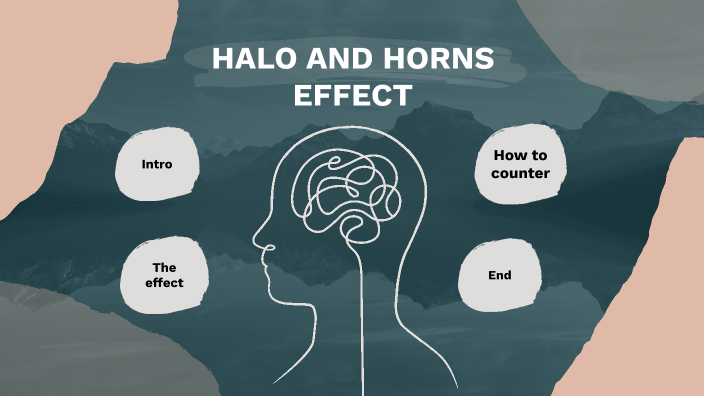
The halo effect is when your general impression of someone influences your opinion of their actual traits and actions. Basically, if you view a person positively in one way, you tend to assume their other attributes are also positive. For example, if you find out someone graduated from an elite university, you may assume they are highly intelligent and accomplished.

The opposite of the halo effect is the horn effect. This is when you make a snap judgment about someone on the basis of one negative trait. A single negative trait can lead to an unfairly negative overall impression of a person.

COMMENTS APPRECIATED

Please Subscribe and Refer!

***

***

ANTHEM BX/BS WEBSITE: Corporate Leaders Page Gone?

By Staff Reporters

BREAKING NEWS!

***

***

The internet web page listing the corporate leadership team behind Anthem Blue Cross Blue Shield (BCBS), one of America’s biggest health insurers, has disappeared from the company’s website.

The disappearance of the page listing the provider’s 25 highest-ranking employees was highlighted in a post shared to the r/antiwork subreddit on Reddit by the user u/wendysdriv

MORE: https://www.msn.com/en-us/money/companies/blue-cross-blue-shields-corporate-about-us-page-vanishes-from-website/ar-AA1voh7N

COMMENTS APPRECIATED

Subscribe and Like Today

***

***

OPPS: Final Rule Issued by CMS

By Health Capital Consultants, LLC

***

On November 1, 2024, CMS released its Outpatient Prospective Payment System (OPPS) and Ambulatory Surgical Center (ASC) Payment System Final Rule for calendar year 2025. The rule finalizes payment updates, revises current programs, and establishes new standards to address the ongoing maternal health crisis.

This Health Capital Topics article discusses the key OPPS changes and updates included in the Final Rule. (Read more…)

COMMENTS APPRECIATED

Subscribe Today!

***

***

DAILY UPDATE: Anthem Health Insurance Cost Cutting as Markets Pause

MEDICAL EXECUTIVE-POST TODAY’S NEWSLETTER BRIEFING

***

Essays, Opinions and Curated News in Health Economics, Investing, Business, Management and Financial Planning for Physician Entrepreneurs and their Savvy Advisors and Consultants

Serving Almost One Million Doctors, Financial Advisors and Medical Management Consultants Daily

A Partner of the Institute of Medical Business Advisors , Inc.

http://www.MedicalBusinessAdvisors.com

SPONSORED BY: Marcinko & Associates, Inc.

***

http://www.MarcinkoAssociates.com

Daily Update Provided By Staff Reporters Since 2007.
How May We Serve You?
© Copyright Institute of Medical Business Advisors, Inc. All rights reserved. 2024

REFER A COLLEAGUE: MarcinkoAdvisors@msn.com

SPONSORSHIPS AVAILABLE: https://medicalexecutivepost.com/sponsors/

ADVERTISE ON THE ME-P: https://tinyurl.com/ytb5955z

Your Referral Count -0-

Health insurance companies are under scrutiny for proposed changes to anesthesia billing policies, raising concerns about patient safety and fair compensation for medical professionals. Anthem, a major health insurer, recently announced a controversial policy limiting payments for anesthesia services in Connecticut, Missouri, and New York. The policy would only cover part of the documented anesthesia time during a patient’s surgery, a decision strongly opposed by the American Society of Anesthesiologists (ASA).

Breaking News: Anthem health insurance company is backing off of a controversial plan to limit coverage of anesthesia in at least one state, according to Connecticut’s comptroller.

CITE: https://www.r2library.com/Resource

WEEKLY UPDATE: SCHEDULE

December 6: November nonfarm payrolls, University of Michigan preliminary December Consumer Sentiment.

December 9: October final wholesale inventories, November consumer inflation expectations, and expected earnings from Toll Brothers (TOL) and MongoDB (MDB).

December 10: Third quarter productivity and unit labor costs and expected earnings from AutoZone (AZO).

December 11: November Consumer Price Index and expected earnings from Adobe (ADBE).

December 12: November Producer Price Index and expected earnings from Broadcom (AVGO), Ciena (CIEN), and Costco (COST).

CITE: https://tinyurl.com/2h47urt5

Here’s where the major benchmarks ended:

  •  The SPX fell 11.38 points (–0.19%) to 6,075.11; the Dow Jones Industrial Average® ($DJI) lost 248.33 points (–0.55%) to 44,765.71; and the NASDAQ Composite® ($COMP) declined 34.85 points (–0.18%) to 19,700.26.
  • The 10-year Treasury note yield was unchanged at 4.18%. 
  • The CBOE Volatility Index® (VIX)inched up to 13.46.

CITE: https://tinyurl.com/tj8smmes

Visualize: How private equity tangled banks in a web of debt, from the Financial Times.

COMMENTS APPRECIATED

PLEASE SUBSCRIBE: MarcinkoAdvisors@msn.com

Thank You

***

***

***

***

EDUCATIONAL TEXTBOOKS: https://tinyurl.com/4zdxuuwf

***

INSURANCE: Long Term Care Economics

LTC

By Anonymous Insurance Agent

***

***

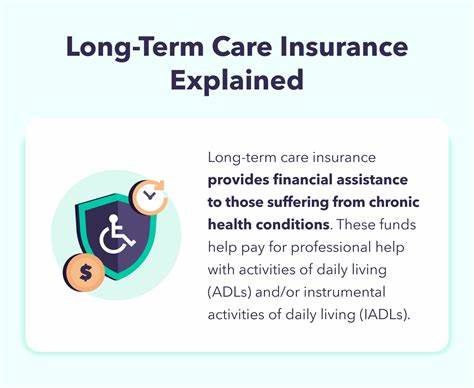
Some retired people live on a fixed income and many of them live right on the edge of their financial capability.  At some time in their life, they may have to make a choice regarding many purchases.  In this case, we will illustrate “choice” using a couple’s purchase of Long-Term-Care Insurance [LTCI].

Of course, economics is the study of choice; wants, needs and scarcity, etc. In our case, if they decide to make the purchase they commit to a lifetime of premium payments. The financial tradeoff is this; if they make the commitment to purchase LTCI, they must give up something else.

CITE: https://www.r2library.com/Resource/Title/0826102549

Example: In order to maintain a monthly premium of $100 ($1,200per year), an elderly patient, retired layman or couple must essentially relegate about $30,000 of financial assets to generate the $100 necessary to make an average premium payment (assumes a 7% rate of return with 4% withdrawal rate) or [4% X $30,000 = $1,200 year]. Thus, if the monthly premium cost is $500 per month, the elder must give up the use of $150,000 of retirement asset just to generate enough cash flow to pay for the LTC insurance. 

The married elder couple has to make the decision among lifestyle (dinners, vacations, gifts to children, prescription drugs, medical care or food and shelter) versus paying an insurance premium to provide for nursing home coverage for a need, which may be very real, but will not occur until sometime in the ambiguous future. 

And so, when faced with such a tough economics, neither of which delivers peace of mind or a respectable solution; many will simply decide that, in either case, they may already end up impoverished. 

Thus, many will often opt for the better lifestyle now … while they can enjoy it … together. 

COMMENTS APPRECIATED

Subscribe Today!

***

HEALTH INSURANCE: https://tinyurl.com/4cf6rat9

***

COUNTDOWN: To End of Year BOI Reporting?

Beneficial Ownership Information

By Staff Reporters

***

***

Small business owners face severe penalties if they don’t report to the federal government by year’s end. And, thousands of businesses may not realize they are subject to a new reporting process mandated under the Corporate Transparency Act, which went into effect in January 2024. Even lawyers, doctors, financial advisors and accountants are affected; along with “mom and pop”business owners.

For most eligible businesses, the filing deadline is Jan. 1, 2025, according to the U.S. Chamber of Commerce. “Those who fail to file by this deadline — or fail to update this information if needed — could face up to two years imprisonment and fines up to $10,000, in addition to civil penalties of up to $591 per day,” the U.S. Chamber of Commerce website reads.

Businesses that meet the reporting criteria must submit a Beneficial Ownership Information Report to the U.S. Department of Treasury’s Financial Crimes Enforcement Network (FinCEN), according to the U.S. Chamber of Commerce.

The law was created “to combat illicit activity including tax fraud, money laundering and financing for terrorism by capturing more ownership information for specific U.S. businesses operating in or accessing the country’s market,” the chamber website explained.

COMMENTS APPRECIATED

BREAKING NEWS

A federal court has ruled that the beneficial ownership information (BOI) reporting requirements established by the Corporate Transparency Act (CTA) are unconstitutional123. The decision is currently under appeal1.

Subscribe and Refer Today

***

***

MENTALITY: Mob and Herd … and More!

By Staff Reporters

MODERN DAY SOCIAL INFLUENCERS

***

***

Mob Mentality can occur in unfamiliar groups, social cues disappear, and behavior becomes influenced by the crowd. Mob mentality shows how people sometimes act in ways they wouldn’t alone, following the group’s lead. According to colleague Dan Ariely PhD, this effect can create a loss of personal accountability, leading to behavior that may not align with personal values.

Herd mentality is the tendency for people’s behavior or beliefs to conform to those of the group they belong to. The concept of herd mentality has been studied and analyzed from different perspectives, including biology, psychology and sociology. This psychological phenomenon can have profound impacts on human behavior.

QUESTION: What about social media sites and modern influencers today! So-called celebrity endorsements and political elections, too?

COMMENTS APPRECIATED

Subscribe and Refer Today!

***

***

IRS FORM 1099-K: Changes and Implementation?

By Staff Reporters

***

***

2024 LATE YEAR UPDATE

Who sends Form 1099-K?

Payment card companies, payment apps and online marketplaces are required to fill out Form 1099-K and send it to the IRS each year. They must also send a copy to you by January 31st. 2025

CITE: https://www.r2library.com/Resource/Title/0826102549

Who gets Form 1099-K:

You should get Form 1099-K for these situations:

1. If you take direct payment by credit or bank card for selling goods or providing services

If your customers or clients pay you directly by credit, debit or gift card, you’ll get a Form 1099-K from your payment processor or payment settlement entity, no matter how many payments you got or how much they were for.

Find what to do with Form 1099-K.

2. If you used a payment app or online marketplace and received a Form 1099-K

A payment app or online marketplace is required to send you a Form 1099-K if the payments you received for goods or services total over $5,000. However, they can send you a Form 1099-K with lower amounts. Whether or not you receive a Form 1099-K, you must still report any income on your tax return.

This includes payments for any:

  • Goods you sell, including personal items such as clothing or furniture
  • Services you provide
  • Property you rent

The payments can be made through any:

  • Payment app
  • Online community marketplace
  • Craft or maker marketplace
  • Auction site
  • Car sharing or ride-hailing platform
  • Ticket exchange or resale site
  • Crowdfunding platform
  • Freelance marketplace 

If you accept payments on different platforms, you could get more than one Form 1099-K.

Personal payments from family and friends should not be reported on Form 1099-K because they are not payments for goods or services.

Find what to do with Form 1099-K.

COMMENTS APPRECIATED

Subscribe Today

***

***

PODIATRY PREP: Pass All Your Board Certification Examinations

Celebrating Your Success!

***

pod_prep_text

Pass ALL the Certification Boards!

By: http://www.PodiatryPrep.org

The Foot and Ankle Research Consortium, Inc. (FARC) is the leading publisher of Podiatric educational software. Since 1992, we have been producing the most effective and innovative method of preparing for ALL the Podiatry Board Examinations.

CURIOUS STUDY: Hallux Valgus Met I

SCARF: scarf osteotomy

This includes: The American Board of Podiatric Surgery, The American Board Of Podiatric Orthopedics and Primary Podiatric Medicine, the American Podiatric Medical Specialties Board, ABLES and the PMLexis. (Now includes the latest information for all Board Re-Certifications).

CONTENTS: https://podiatryprep.org/compatibility-test/

Customization and private  tutoring services also available.

FAN CLUB: https://podiatryprep.org/podiatryprep-fan-club/

doctor_pass2

PURCHASE – PREPARE – PASS®

ORDER HERE: https://podiatryprep.org/order-form/

GOOD LUCK!

Thank You

BUSINESS: https://www.amazon.com/Business-Medical-Practice-Transformational-Doctors/dp/0826105750/ref=sr_1_9?ie=UTF8&qid=1448163039&sr=8-9&keywords=david+marcinko

***

RIP: Dr. Kelly Powers MS [Fox News Medical Contributor]

BREAKING NEWS!

“Rest-in-Peace”

Dr. Kelly Powers, a podiatric surgeon and Fox News medical contributor, died Sunday from a remission of brain cancer. She was 45. A a regular commentator on Fox News and Fox Business Network, Powers survived heart failure—symptoms of which she experienced on air while covering that very topic. “It’s crazy–I went into heart failure while doing a report on Fox Business–live–on heart health and talking about the subtle signs that women often miss.

You can’t make this up,” she told Preferred Health Magazine after she had also faced a bout with glioblastoma, which was detected in 2020. After several surgeries, Powers underwent chemotherapy and radiation, and eventually recovered. During that time, she became pregnant and had her now three-year-old son. That cancer returned this year, however. “She was a brave and beautiful soul who could make friends anywhere she went,” an obituary reads. “Kelly had a love for people and she was dedicated to helping others.”

Powers leaves behind her husband, Steven Doll, and son Bennett.

Read more at The Daily Beast.

COMMENTS APPRECIATED

Subscribe and Refer Today!

***

***

MPFS Final Rule Cuts Physician Payments [Will it Last?]

By Health Capital Consultants, LLC

***

***

On November 1, 2024, the Centers for Medicare & Medicaid Services (CMS) released its finalized Medicare Physician Fee Schedule (MPFS) for calendar year (CY) 2025, aiming “to strengthen primary care, expand access to preventive services, and further access to whole-person care.” While the finalized fee schedule cuts payments to physicians, Congress is considering legislation to override the cut.

This Health Capital Topics article discusses the provisions contained in the MPFS final rule, as well as the proposed “doc fix” legislation. (Read more…)

COMMENTS APPRECIATED

Subscribe Today!

***

***

DAILY UPDATE: Retail Pharmacies Down as the Stock Market Rally Stall Out

MEDICAL EXECUTIVE-POST TODAY’S NEWSLETTER BRIEFING

***

Essays, Opinions and Curated News in Health Economics, Investing, Business, Management and Financial Planning for Physician Entrepreneurs and their Savvy Advisors and Consultants

Serving Almost One Million Doctors, Financial Advisors and Medical Management Consultants Daily

A Partner of the Institute of Medical Business Advisors , Inc.

http://www.MedicalBusinessAdvisors.com

SPONSORED BY: Marcinko & Associates, Inc.

***

http://www.MarcinkoAssociates.com

Daily Update Provided By Staff Reporters Since 2007.
How May We Serve You?
© Copyright Institute of Medical Business Advisors, Inc. All rights reserved. 2024

REFER A COLLEAGUE: MarcinkoAdvisors@msn.com

SPONSORSHIPS AVAILABLE: https://medicalexecutivepost.com/sponsors/

ADVERTISE ON THE ME-P: https://tinyurl.com/ytb5955z

Your Referral Count -0-

Rite Aid filed for bankruptcy last October, and CVS and Walgreens reported steep losses over 2024.

CITE: https://www.r2library.com/Resource

STOCKS UP

  • AT&T climbed 4.58% thanks to a few big announcements during its investor day, including returning over $40 billion to shareholders via dividends and stock buybacks over the next three years.
  • Palantir popped 6.88% after the US government gave the cybersecurity darling the green light to let its cloud offerings handle classified data. It also helped that Barrons expects the company will be added to the Nasdaq 100 in 2025.
  • Speaking of Palantir, BigBear.ai soared 28.64% after the server company was touted as the next Palantir by the Economic Times.
  • Data center company Credo Technology Group skyrocketed 47.89% thanks to an impressive earnings report and a glowing fiscal forecast.

STOCKS DOWN

  • US Steel dropped 8.01% on President-elect Trump’s declaration that he will block the company’s acquisition by Nippon Steel.
  • Tesla sank 1.59% after a Delaware judge once again blocked Elon Musk’s $56 billion pay package. The case will go back to court yet again, and may eventually reach the Supreme Court.
  • Intel tumbled another 6.10% two days after CEO Pat Gelsinger was fired happily decided to retire.
  • The children aren’t alright: Children’s Place crashed 24.15% after the children’s clothing retailer announced its turnaround isn’t going so well.
  • South Korean stocks took a beating after the country’s president declared martial law. The country’s largest online retailer, Coupang, sank 3.74%, steel manufacturer Posco Holdings dropped 4.32%, and Samsung tumbled 3.71%.

CITE: https://tinyurl.com/2h47urt5

Here’s where the major benchmarks ended:

  •  The S&P 500® index (SPX) rose 2.73 points (0.05%) to 6,049.88; the Dow Jones Industrial Average® ($DJI) fell 76.47 points (–0.17%) to 44,705.53; and the NASDAQ Composite® ($COMP) added 76.96 points (0.40%) to 19,480.91.
  • The 10-year Treasury note yield added three basis points to 4.22% after falling below 4.17% at one point.
  • The CBOE Volatility Index® (VIX)held steady at 13.39.

CITE: https://tinyurl.com/tj8smmes

Visualize: How private equity tangled banks in a web of debt, from the Financial Times.

COMMENTS APPRECIATED

PLEASE SUBSCRIBE: MarcinkoAdvisors@msn.com

Thank You

***

***

***

***

EDUCATIONAL TEXTBOOKS: https://tinyurl.com/4zdxuuwf

***

TRAVEL: Deals on Tuesday

DEFINED

By Staff Reporters

***

***

Travel Tuesday, also known as Travel Deal Tuesday, is a marketing term for e-commerce transactions occurring on the Tuesday after Thanksgiving in the UJSA. It originated in 2017, when Hooper, an online flight marketplace, realized that the Tuesday after Thanksgiving was profitable for consumers to book flights. It is mainly a United States-based phenomenon. However, some overseas companies do recognize the holiday.

History

In 2017, Hopper, an online flight marketplace, created Travel Tuesday after realizing that in the post-Thanksgiving shopping period, the Tuesday after Thanksgiving was the most profitable time for consumers to book flights. Since then, major airline providers such as Orbitz, Travelocity and and Cheap Tickets have recognized the holiday. However, outside the United States, the holiday is rarely celebrated.

Impact

In 2018, Hopper stated that for them, the day offered the highest airfare sales in 2017, also noting that compared to Cyber Monday and Black Friday, fares were somewhat cheaper. In 2022, flight sales because of Travel Tuesday were thrice as much compared to the sales in the rest of the post-Thanksgiving period.

Note: From Wikipedia, the free encyclopedia

COMMENTS APPRECIATED

Subscribe Today!

***

***

BOND YIELDS: Real and Negative Returns

DEFINITIONS

By Dr. David Edward Marcinko MBA MEd

SPONSOR: http://www.MarcinkoAssociates.com

***

***

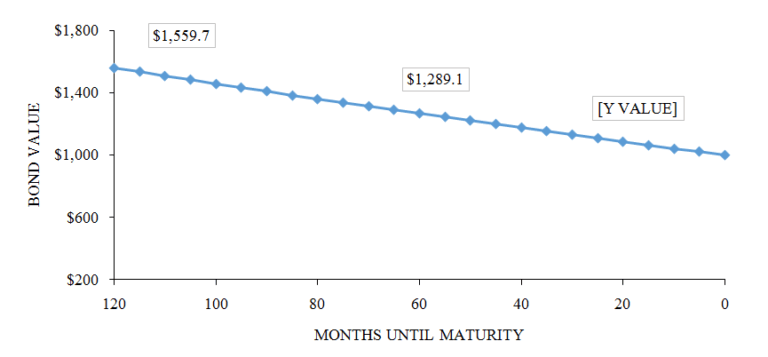
Real Bond Yield: For most bonds and other fixed-income securities, real yield is simply the yield you see listed online or in newspapers minus the premium added to help counteract the effects of inflation. Most “nominal” fixed-income yields include an “inflation premium” that is typically priced into the yields to help offset the effects of inflation.

Real yields, such as those for TIPS, don’t have the inflation premium. As a result, TIPS yields and other real yields are typically lower than most nominal yields

Negative Bond Yield: In a normal bond market environment, bond yields are positive, and bond issuers (including governments) make interest payments to investors who lend them money.

In an abnormal, or negative-yield environment, investors essentially pay the bond issuer to hold their money.

CITE: https://www.r2library.com/Resource/Title/0826102549

COMMENTS APPRECIATED

Subscribe Today!

***

***

CYBER SALES WEEK [Is is a Real Thing?]

By Staff Reporters

***

***

Cyber Week Defined

As first reported in the Forbes “Entrepreneurs” column on December 3rd, 2013: “Cyber Monday, the online counterpart to Black Friday, has been gaining unprecedented popularity – to the point where Cyber Sales are continuing on throughout the week.”

In fact, Peter Greenberg, Travel Editor for CBS News, further advises: “If you want a real deal on Black Friday, stay away from the mall. Black Friday and Cyber Monday are all part of Cyber Sales Week 

CITE: https://www.r2library.com/Resource/Title/0826102549

And so, Cyber Monday isn’t over yet for this year 2024: It’s morphed into Cyber Week, the actual final iteration of sales during the Black Friday-Cyber Monday discount season of 2024. A substantial number of retailers are maintaining their Black Friday-level discounts through today and some through tomorrow and the entire week.

Yes-Cyber Week is a real thing, so got for it. Buy it! Charge it!

COMMENTS APPRECIATED

SUBSCRIBE TODAY!

***

***

DAILY UPDATE: Intel CEO Out, Stellantis CEO Down and Mega Caps Up!

MEDICAL EXECUTIVE-POST TODAY’S NEWSLETTER BRIEFING

***

Essays, Opinions and Curated News in Health Economics, Investing, Business, Management and Financial Planning for Physician Entrepreneurs and their Savvy Advisors and Consultants

Serving Almost One Million Doctors, Financial Advisors and Medical Management Consultants Daily

A Partner of the Institute of Medical Business Advisors , Inc.

http://www.MedicalBusinessAdvisors.com

SPONSORED BY: Marcinko & Associates, Inc.

***

http://www.MarcinkoAssociates.com

Daily Update Provided By Staff Reporters Since 2007.
How May We Serve You?
© Copyright Institute of Medical Business Advisors, Inc. All rights reserved. 2024

REFER A COLLEAGUE: MarcinkoAdvisors@msn.com

SPONSORSHIPS AVAILABLE: https://medicalexecutivepost.com/sponsors/

ADVERTISE ON THE ME-P: https://tinyurl.com/ytb5955z

Your Referral Count -0-

The CEO Intel has been forced out after failing to return the American microchip company to the cutting edge, despite promises of billions from Joe Biden’s administration. Pat Gelsinger, who joined the Silicon Valley icon 45 years ago, said he had retired with immediate effect, three years after returning to the company with a pledge to resurrect US leadership in microchip technology.

CITE: https://www.r2library.com/Resource

STOCKS UP

  • Super Micro Computer has been declared innocent of financial wrongdoing by…Super Micro Computer. Shares popped 26.86% on news that the company’s internal investigation revealed nothing wrong with its finances.
  • Gap continues its hot streak, rising 6.45% today thanks to an upgrade from JPMorgan analysts who think the retailer could gain another 20% from here.
  • Dana isn’t just the name of your favorite dental hygiene technician—it’s also an auto parts manufacturer that received an upgrade from Barclays analysts today. Shares gained 13.30%.
  • XPeng announced record car deliveries last month. Shares of the Chinese automaker jumped 5.31%.

STOCKS DOWN

  • Archer Aviation is a company that makes flying taxis. If that doesn’t sound like a good investment, a lot of investors would agree: Short interest is mounting, pushing shares down 23.72% today. Competitor Joby Aviation dropped 9.39% as well.
  • Upstart Holdings sank 14.47% after the AI-powered lending company received a downgrade from JPMorgan analysts. LendingClub was downgraded as well, and fell 4.93%.
  • Not all Chinese automakers had a great Monday: Li Auto fell 3.72% after announcing car deliveries dropped 5.25% month over month.

CITE: https://tinyurl.com/2h47urt5

Here’s where the major benchmarks ended:

  • The S&P 500® index (SPX) rose 14.77 points (0.24%) to 6,047.15; the Dow Jones Industrial Average® ($DJI) fell 128.65 points (–0.29%) to 44,782.00; and the NASDAQ Composite® ($COMP) added 185.78 points (0.97%) to 19,403.95.
  • The 10-year Treasury note yield added two basis points to 4.20%. 
  • The CBOE Volatility Index® (VIX)eased to 13.44.

CITE: https://tinyurl.com/tj8smmes

Chrysler-parent Stellantis said CEO Carlos Tavares is stepping down, effective immediately, after the automaker’s sales and profit sharply declined this year. Shares dropped about 7% in Monday trading. Stellantis’s shares have fallen more than 40% this year. The company said Sunday that it wasn’t changing the financial guidance that it gave in October.

COMMENTS APPRECIATED

PLEASE SUBSCRIBE: MarcinkoAdvisors@msn.com

Thank You

***

***

***

***

EDUCATIONAL TEXTBOOKS: https://tinyurl.com/4zdxuuwf

***

“FREE STUFF”: Powerfully Irrational

BEWARE THE PSYCHOLOGY OF HOLIDAY SHOPPING!

[Online -OR- Onground]

By Staff Reporters

***

***

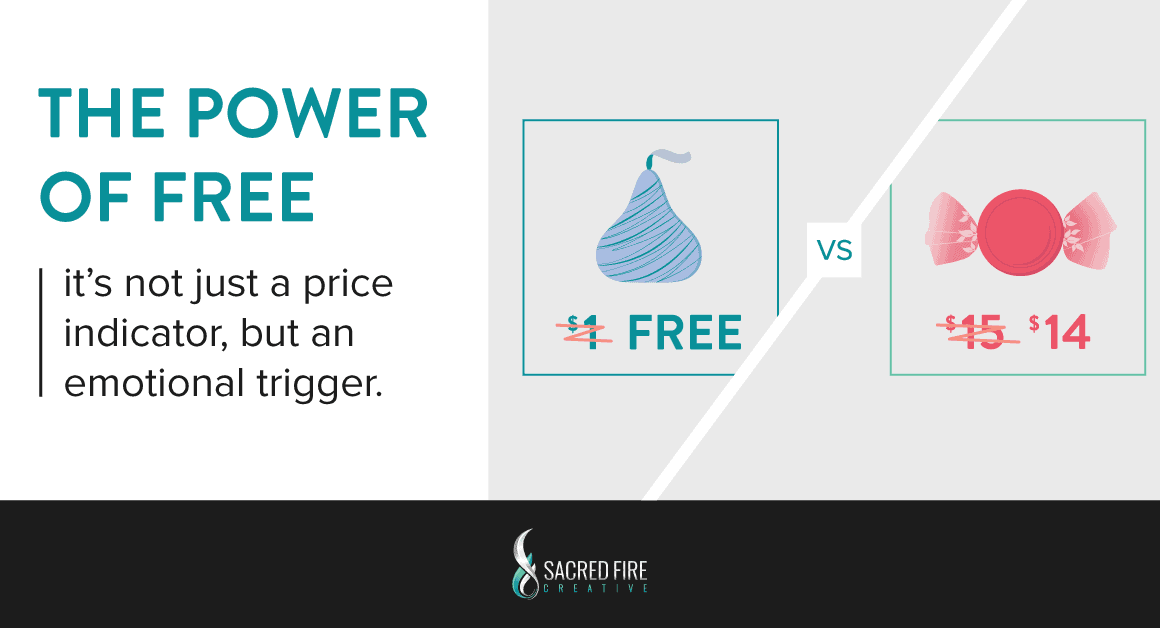
Power of Free

Who doesn’t love free stuff? The word “free” is like a magic spell that makes our rational minds go on vacation.

According to colleague Dan Ariely PhD, the power of free compels us to grab things we don’t need and make questionable choices. Why buy one and get one free when you can get two for the price of one? It’s the same deal, but free feels better.

IOW: Like other heuristics, the Power of Free is a mental shortcut that allows us to bypass rational thought and save effort to make quick decisions. Studies of the Power of Free have shown it to be closely linked to the Affect Heuristic. Specifically, it is linked to emotional and social thinking rather than transactional thinking. People become influenced by emotion and obligated to socially acceptable behaviors.

CITE: https://www.r2library.com/Resource/Title/0826102549

For example, say, a yoga studio charges extra to use their mats. This leads more people to pay the fee and use their mats for convenience. Then, say, the same yoga studio removed the extra fee more people would bring their mats from home instead of feeling guilty about borrowing one for class.

Removing a dollar value increases its inherent value and makes it more desirable. The type of product matters too. People are more likely to opt for a free product that is fun rather than functional. This is because emotion is more powerful than rational thinking under the influence of the Power of Free.

In another example, people are more likely to say “yes” to a free piece of cake or sample size of perfume than furniture polish or a bag of white flour.

So, next time you find yourself going to a free financial planning or retirement seminar with free dinner, or a free medical screening test, or free stock market portfolio review, just blame it on the irresistible and irrational power of free.

SPONSOR [not free]: http://www.MarcinkoAssociates.com

COMMENTS APPRECIATED

Refer – Like – Subscribe!

***

***

PRESIDENT: Pardons Son Robert Hunter Biden

BREAKING NEWS!

By Staff Reporters

***

President Joe Biden has just pardoned his son, Hunter Biden, who was convicted on federal gun charges and was due for sentencing in December, 2023.

Despite the White House’s assurances last month that the president had no intentions of pardoning his son, the announcement came through on Sunday evening that he had pardoned him.

READ: https://tinyurl.com/2hdpwrzj

***

COMMENTS APPRECIATED

Subscribe Today!

***

DAILY UPDATE: S&P 500, Gold, Treasury Yields and Bitcoin

By Staff Reporters

BREAKING NEWS: President Joe Biden just pardoned his son,Hunter Biden, sparing the younger Biden a possible prison sentence for federal felony gun and tax convictions and reversing his past promises not to use the extraordinary powers of the presidency for the benefit of his family members.

***

***

  • The short trading session didn’t stop the S&P 500 from hitting another new record today, and the S&P 500 and the Dow each wrapped up their best month of 2024 on a high note.
  • Meanwhile, November was the worst month for gold in over a year. Safe-haven investors sold the commodity while the US dollar soared following the election.
  • 10-year Treasury yields dropped to their lowest level in a month today as bond buyers bought in bulk.
  • Finally, bitcoin had one heck of a month. The crypto rose yet again today, and has climbed nearly 40% in November—though it has yet to break above $100,000.

CITE: https://www.r2library.com/Resource/Title/0826102549

COMMENTS APPRECIATED

Subscribe Today!

***

***

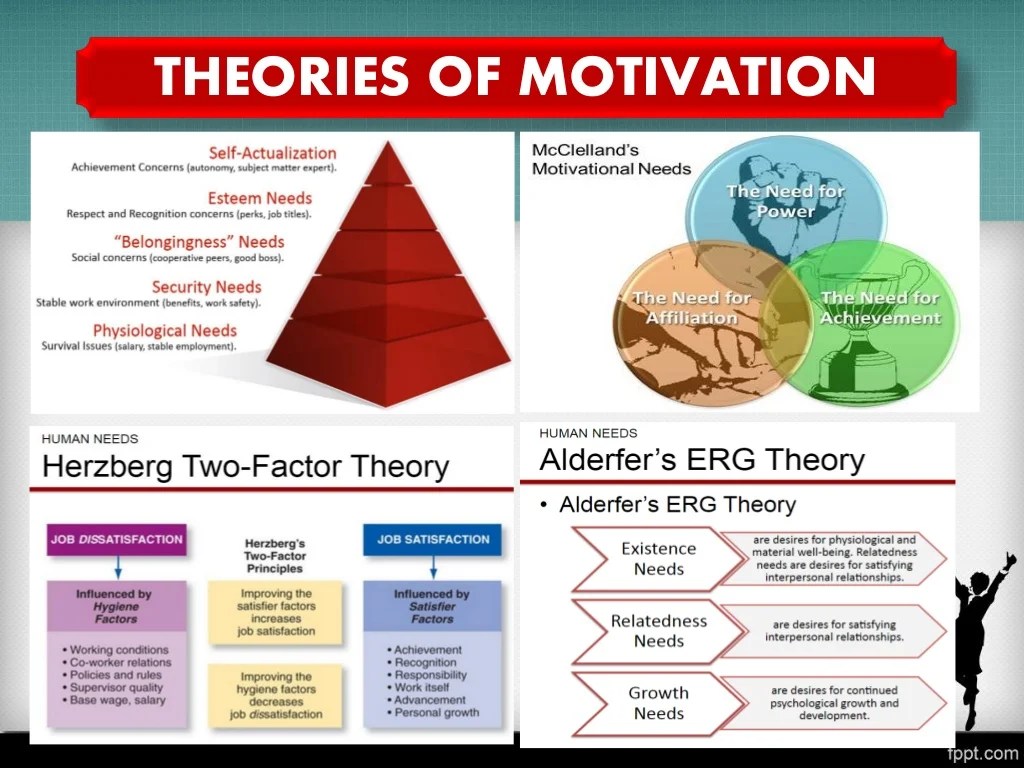
GOAL GRADIENTS: Motivational Theories

By Staff Reporters

***

***

The Goal Gradient effect is the phenomenon where people accelerate their efforts as they approach a goal. It’s like a runner sprinting to the finish line.

According to colleague Dan Ariely PhD, our motivation peaks when we see the goal within reach, driving us to work harder and faster. Marketers use this by showing progress bars and loyalty rewards. Knowing about the goal gradient can help us set milestones and maintain motivation throughout our tasks.

So, break your big goals into smaller ones and watch your productivity soar as you get closer to each milestone.

COMMENTS APPRECIATED

Subscribe Today!

***

***

ECONOMIC PARADOXES: Prosperity, Thrift, Toil, Value and Productivity

AUSTRIAN SCHOOL OF ECONOMICS

By Staff Reporters

***

***

A Paradox is a logical self-contradictory statement or a statement that runs contrary to one’s expectation. It is a statement that, despite apparently valid reasoning from true or apparently true premises, leads to a seemingly self-contradictory or a logically unacceptable conclusion. A paradox usually involves contradictory-yet-interrelated elements that exist simultaneously and persist over time. They result in “persistent contradiction between interdependent elements” leading to a lasting “unity of opposites”.

Here are five economic paradoxes from the Austrian School of Economics.

***

Prosperity: Why do generations that significantly improve the economic climate seem to generally rear a successor generation that consumes rather than produces?

Thrift: If everyone saves more money during times of recession, then aggregate demand will fall and will in turn lower total savings in the population.

Toil: If everyone tries to work during times of recession, lower wages will reduce prices, leading to more deflationary expectations, leading to further thrift, reducing demand and thereby reducing employment.

Value: [also known as Diamond-Water Paradox]: Water is more useful than diamonds, yet is a lot cheaper.

Productivity: [also known as Solow Computer Paradox]: Worker productivity may go down, despite technological improvements.

Note: The Austrian School of Economics promotes an economic and social thinking that is not trapped in unrealistic, mostly mathematical models. It does not see the economy as an object of state political regulation and central, almost engineering-like control. Rather, its analysis focuses on autonomous entrepreneurial action and the free interaction of individuals in the marketplace, which eludes both the logic of differential equations, and centrally planned political control.

COMMENTS APPRECIATED

Subscribe Today!

***

***

Record-Breaking Savings for ACOs in 2023

ACCOUNTABLE CARE ORGANIZATIONS

By Health Capital Consultants, LLC

***

On October 29, 2024, CMS announced Performance Year (PY) 2023 results for accountable care organizations (ACOs) participating its Medicare Shared Savings Program (MSSP). Notably, MSSP ACOs garnered the largest net savings in MSSP’s history – more than $2.1 billion.

This Health Capital Topics article discusses MSSP performance in 2023 and how this may inform value-based care going forward. (Read more…) 

COMMENTS APPRECIATED

Subscribe Today!

***

***

PARADOX: Medical Progress

By Dr. David Edward Marcinko MBA MEd CMP

SPONSOR: http://www.MarcinkoAssociates.com

***

***

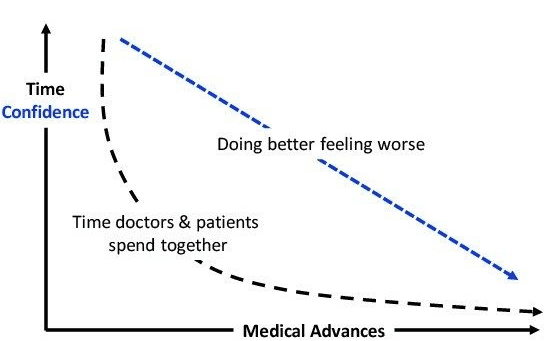
“Paradox of Medical Progress” is a language of medicine is loaded with misnomers, inaccuracies, and ambiguities, and is in need of reform.

Paradoxes on the other hand, deserve a different kind of attention. These seeming self-contradictions are set apart from other inconsistencies because of the truths they tell. The veracity of a paradox is at once appealing and vexing. Anyone who has tried to suppress a thought knows that trying not to think of white polar bears is a sure way to think of white polar bears!

The comic impact of a paradox was even famously explored in Joseph Heller’s Catch 22 and in Groucho Marx’s reluctance to be a member of any club that would accept him. However, the provocative nature of a paradox is its capacity to express familiar wisdom and this is particularly evident in medical science.

The more we learn, the more we learn how much we still have to learn; whereas, “what gets us into trouble is not what we don’t know, it’s what we know for sure that just ain’t so.

On the significance of the knowledge paradox in biology, Lewis Thomas regarded ignorance as the only scientific truth of which he was confident, and discovering “the depth and scope of ignorance” as the greatest contribution of modern science.

COMMENTS APPRECIATED

Please Subscribe Today!

***

***

Small Business Saturday

By Staff Reporters

***

***

Champion small businesses nationwide and #ShopSmall on Saturday, November 30th, 2024.

Now more than ever, small businesses need our support. Please join SBA and organizations across the country as they celebrate small business contributions to their communities by shopping at a small business on November 30th, Small Business Saturday.

Small Business Saturday was founded by American Express in 2010 and officially cosponsored by SBA since 2011. It is an important part of small businesses’ busiest shopping season.

  • In 2023, the reported projected spending in the U.S. from those who shopped at small businesses on Small Business Saturday was around $17 billion

Since 2010, the total reported U.S. spending at small businesses during the annual Small Business Saturday is an estimated $201 billion

  • Join the highly successful team of SBA, Women Impacting Public Policy (WIPP), and American Express in kicking off the 2024 holiday season. Support our nation’s more than 34 million independent businesses this Small Business Saturday and all holiday season long.

More: https://www.sba.gov/about-sba/organization/sba-initiatives/small-business-saturday

COMMENTS APPRECIATED

Subscribe Today!

***

***

AMA: 41 Senators Sign Letter to Stop Medicare Cuts

By Staff Reporters

***

***

In a sign of legislative momentum, 41 senators are supporting efforts to prevent a pending 2.8 percent cut in Medicare physician payments that will go into effect January 1st. The bipartisan letter led by Sens. John Boozman, R-Ark., and Peter Welch, D-Vt., to Senate leaders says the cuts would interfere with the ability of physicians to provide high-quality care. “These continued payment cuts undermine the ability of independent clinical practices – especially in rural and under served areas – to care for their communities,” the letter said.

The Senate letter follows one from the American Medical Association (AMA) and 127 other state medical associations and national medical societies asking Congress to use these last few congressional days to prevent the scheduled cuts. The letter to congressional leaders also urges Congress to provide a positive payment update for 2025. All 50 state medical societies – and DC— as well as 77 national medical societies signed.

Source: AMA

CITE: https://www.r2library.com/Resource/Title/0826102549

COMMENTS APPRECIATED

Subscribe Today!

***

***

DAILY UPDATE: Intel Suspends Dividend as Major Stock Index Climbs

MEDICAL EXECUTIVE-POST TODAY’S NEWSLETTER BRIEFING

***

Essays, Opinions and Curated News in Health Economics, Investing, Business, Management and Financial Planning for Physician Entrepreneurs and their Savvy Advisors and Consultants

Serving Almost One Million Doctors, Financial Advisors and Medical Management Consultants Daily

A Partner of the Institute of Medical Business Advisors , Inc.

http://www.MedicalBusinessAdvisors.com

SPONSORED BY: Marcinko & Associates, Inc.

***

http://www.MarcinkoAssociates.com

Daily Update Provided By Staff Reporters Since 2007.
How May We Serve You?
© Copyright Institute of Medical Business Advisors, Inc. All rights reserved. 2024

REFER A COLLEAGUE: MarcinkoAdvisors@msn.com

SPONSORSHIPS AVAILABLE: https://medicalexecutivepost.com/sponsors/

ADVERTISE ON THE ME-P: https://tinyurl.com/ytb5955z

Your Referral Count -0-

***

CITE: https://www.r2library.com/Resource

Computer company Intel didn’t just lower its dividend; it suspended it entirely earlier this year. The company’s CEO Pat Gelsinger said that the move was necessary due to liquidity needs and for the business to be able to “support the investments needed to execute our strategy.” Intel has been investing heavily in its foundry business, which has been a challenge. In the company’s most recent quarter, which ended on September 28th, the foundry business incurred an operating loss of $5.8 billion — more than four times the $1.4 billion loss it reported a year earlier.

CITE: https://tinyurl.com/2h47urt5

Here’s where the major benchmarks ended:

  • The SPX gained 33.64 points (0.6%) to 6,032.38; the $DJI rose 188.59 points (0.4%) to 44,910.65; and the NASDAQ Composite® ($COMP) advanced 157.69 points (0.8%) to 19,218.17.
  • The 10-year Treasury note yield fell five basis points to 4.19%.
  • The CBOE Volatility Index® (VIX) gave back 0.59 points to 13.51.

CITE: https://tinyurl.com/tj8smmes

Visualize: How private equity tangled banks in a web of debt, from the Financial Times.

COMMENTS APPRECIATED

PLEASE SUBSCRIBE: MarcinkoAdvisors@msn.com

Thank You

***

***

***

EDUCATIONAL TEXTBOOKS: https://tinyurl.com/4zdxuuwf

***

INVESTING: Absolute Return Fund

DEFINITION

SPONSOR: http://www.MarcinkoAssociates.com

By Staff Reporters

***

***

As an investment vehicle, an absolute return fund seeks to make positive returns by employing investment management techniques that differ from traditional mutual funds.

Absolute return investment techniques include using short selling, futures, options, derivatives, arbitrage, leverage and unconventional assets.

COMMENTS APPRECIATED

Subscribe Today

***

***

BLACK FRIDAY 2024: The Physician Micro-Economy

Is it Good for Retailers … but Bad for Doctors and Consumers?

***

If Black Friday 2024 is anything like 2023, retailers may not be swimming in cash while shoppers bathe in savings. Black Friday deals drew 212 million shoppers to stores in fabulous 2010 and collectively spent $39 billion on products and services.

And, the average amount spent by a Black Friday shopper in 2010 was a whopping $365.34.

***

***

Assessment

We predict Black Friday 2024 sales surpass 2023 with a slight increase over 20222 because of fewer shopping days; and the COVID pandemic explosion..

QUESTION: But, is Black Friday good for the [healthcare] economics sector post [thu] the pandemic? Do patients go shopping rather than to the doctor? What about inflation?

Channel Surfing the ME-P

Have you visited our other topic channels? Established to facilitate idea exchange and link our community together, the value of these topics is dependent upon your input. Please take a minute to visit. And, to prevent that annoying spam, we ask that you register. It is fast, free and secure.

Conclusion

Your thoughts and comments on this ME-P are appreciated.

Speaker: If you need a moderator or speaker for an upcoming event, Dr. David E. Marcinko; MBA – Publisher-in-Chief of the Medical Executive-Post – is available for seminar or speaking engagements. Contact: MarcinkoAdvisors@msn.com

OUR OTHER PRINT BOOKS AND RELATED INFORMATION SOURCES:

Product DetailsProduct DetailsProduct Details

Product Details  Product Details

   Product Details

BLACK FRIDAY: Profiting From “Reverse Supply Chain Logistics”

By Staff Reporters

***

Black Friday, one of the biggest shopping days of the year, is a half day for the stock market. Both stock exchanges close at 1:00 p.m. ET, with eligible options trading until 1:15 p.m. Normal trading hours resume on the Monday after Thanksgiving, also known as Cyber Monday, when many online retailers host major sales.

***

SPONSOR: http://www.MarcinkoAssociates.com

***

DEFINITION: Reverse logistics—or the supply-chain processes of returns—is a little-known but rapidly growing sector of the economy that’s booming alongside the rise in online shopping that started during the pandemic.

Now, as retailers crack down on returns to avoid hearing another “it was broken when I got it” excuse, some companies are counting on you to send your holiday gifts back. A “reverse logistics” industry has sprung up in recent years to take advantage of the more than $300 billion in returns Americans make every holiday season.

  • Venture capital firms pumped nearly $200 million into reverse logistics startups last year—over 2.5x as much as in 2021, according to Bloomberg.
  • Loop Returns, which sells software to companies looking to streamline the return process on the customer side, raised $115 million at the end of 2022.

Established companies see potential in reverse logistics as well. Last year, Uber launched a feature enabling drivers to pick up your packages and bring them to a returns center. Meanwhile, UPS, whose returns business has grown 25% since 2020, recently acquired the startup Happy Returns.

COMMENTS APPRECIATED

Thank You

***

***

INDEX: Li Keqiang

By Staff Reporters

***

***

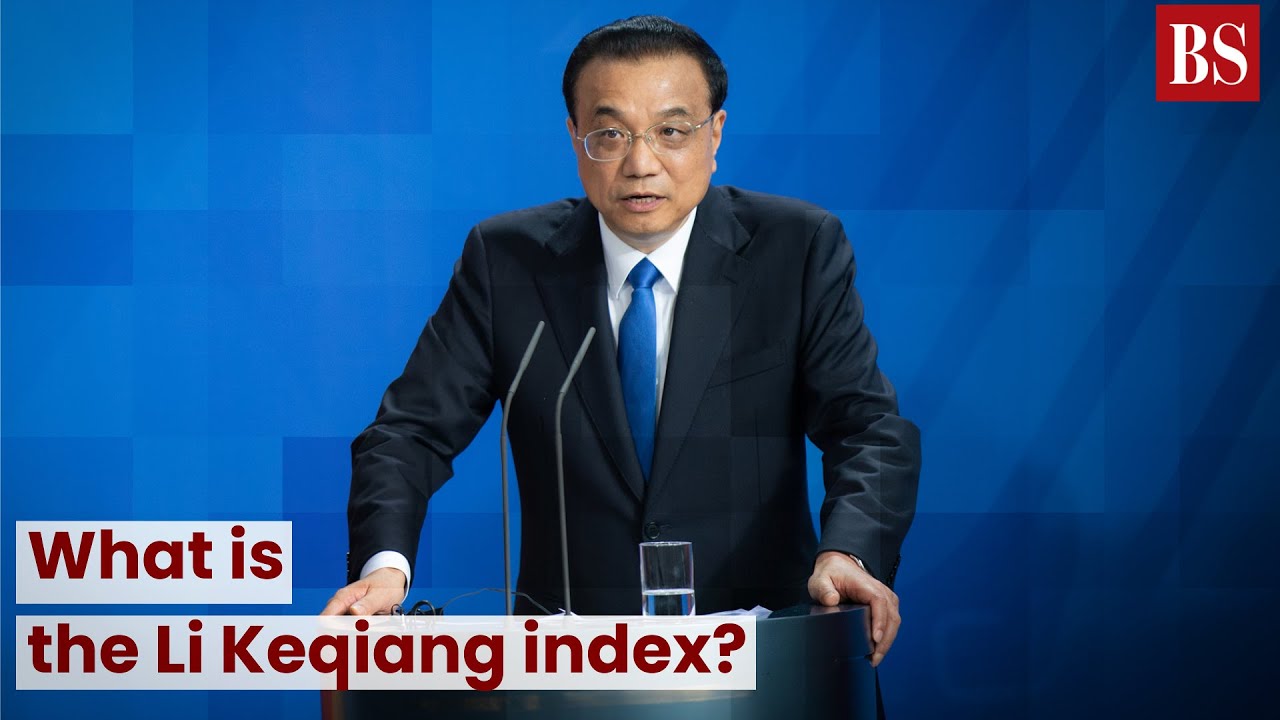
The Li Keqiang Index was created by The Economist and measure’s China’s economy using three indicators: railway cargo volume, electricity consumption and bank loans.

According to Wikipedia and a leaked US State Department Memorandum, Li Keqiang (then the Chinese Communist Party Committee Secretary of Liaoning) told a US ambassador in 2007 that the GDP figures in Liaoning were unreliable and that he himself used the three other indicators: [1] railway cargo volume, [2] electricity consumption and [3] bank loans

The “Keqiang index” is also used by Haitong Securities released in 2013, suggesting decelerating China’s economic growth since the beginning of 2013

The index is seen as an alternative to official gross domestic product numbers released by the Chinese government.

CITE: https://www.r2library.com/Resource/Title/0826102549

COMMENTS APPRECIATED

Thank You

Subscribe Today!

***

***

DAILY UPDATE: “Black” Friday?

By Staff Reporters

***

***

Black Friday is a colloquial term for the Friday after Thanksgiving in the United States, that is the Friday after 28th November. It traditionally marks the start of the Christmas shopping season in the United States. Many stores offer highly promoted sales at discounted prices and often open early, sometimes as early as midnight or even on Thanksgiving. Some stores’ sales continue to Monday (“Cyber Monday“) or for a week (“Cyber Week“).

Occurring on the fourth Friday in November unless November 1st is a Friday (in which case it’s the fifth Friday), Black Friday has routinely been the busiest shopping day of the year in the United States since 2005.

***

***

COMMENTS APPRECIATED

Thank You

***

NAVIGATING STOCK MARKET CYCLES: From Bulls to Nvidia [AI Edition]

By Viataliy Katsenelson CFA

***

***

I’m embarking on something I’ve never done before—I’ve enlisted AI to inform, educate, and maybe even entertain you. I took several essays I wrote and asked my bestie AI to transform them into a radio show-style conversation between two hosts. (The AI tool I used is Notebook LM, a product created by Google.) I didn’t write the scripts myself.

Here were my instructions to the AI: “Here’s my essay. I’m taking a break from writing. Educate, inform and entertain my readers.” That’s it. If what you hear doesn’t surprise you—or even shock you to your socks—I don’t know what will. The future is here.

These essays are just as relevant today as when I first wrote them this summer. You can read the original of the first essay here. Be sure to leave your comments about the conversation you’re about to hear, and feel free to share it with friends, enemies, or even random strangers.
Navigating Market Cycles: From Bulls to Nvidia – AI Edition
In this episode, my AI friends will discuss stock market math, sideways markets, the role of P/E in market cycles, impact of interest rates on P/E, economic analysis, Magnificent Seven stocks, NVIDIA, and a lot more.

COMMENTS APPRECIATED

Subscribe Today!

***

***

THANKSGIVING TURKEY: How Long to Cook the Bird?

By Staff Reporters

***

***

COMMENTS APPRECIATED

Thank You

***

ORDER: https://www.amazon.com/Dictionary-Health-Insurance-Managed-Care/dp/0826149944/ref=sr_1_4?ie=UTF8&s=books&qid=1275315485&sr=1-4

***

Physician Career Development Essay

Professional Medical Career Development

  • By Eugene Schmuckler; PhD, MBA
  • By Dr. David E. Marcinko MBA

Dr. Marcinko with ME-P Fans

Dr. Marcinko with Future Medical Students

Invite Dr. Marcinko

Jimmy’s mother called out to him at seven in the morning, “Jimmy, get up. It’s time for school.” There was no answer. She called again, this time more loudly, “Jimmy, get up! It’s time for school!” Once more there was no more answer.

Exasperated, she went to his room and shook him saying, “Jimmy, it’s time to get ready for school.” He answered, “Mother, I’m not going to school. There are fifteen hundred kids at that school and every one of them hates me. I’m not going to school.” “Get to school!” she replied sharply. “But, Mother, all the teachers hate me, too. I saw three of them talking the other day and one of them was pointing his finger at me. I know they all hate me so I’m not going to school,” Jimmy answered. “Get to school!” his mother demanded again. “But mother, I don’t understand it. Why would you want to put me through all of that torture and suffering?” he protested. “Jimmy, for two good reasons,” she fired back.

“First, you’re forty-two years old.”

“Secondly, you’re the principal.”

Introduction 

Many of us have had conversations with medical colleagues at which time sentiments of those expressed by Jimmy have been voiced. The career choice that was made many years ago is now, for some reason, no longer as exciting, interesting and enjoyable, as it was when we first began in the field. The career that was undertaken with great anticipation is now something to dread. 

The reason for this is occurrence is not that difficult to understand.  Two of the most important decisions individuals are asked to make are ones for which the least amount of training is offered: choice of spouse and choice of career. How many college students receive a degree in the field they identified when they first enrolled at the college or university?

In fact, how many entering freshmen list their choice of major as undecided? It is only during the sophomore year when a major must be declared is the choice actually made. So, career choices made at the age of 19 might be due to having taken a course that was interesting or easy, appeared to have many entry level jobs, did not require additional educational or professional training requirements, or was a form of the “family business.”

Now as an adult, the individual is functioning in a career field that was selected for him or her by an eighteen-year-old. How do we judge career success? A career represents more than just the job or sequence of jobs we hold in a lifetime. The typical standard for a successful career is by judging how high the individual goes in the organization, how much money is earned, or one’s standing attained in the profession.

Career success actually needs to be judged on several dimensions. Career adaptability refers to the willingness and capacity to change occupations and/or the work setting to maintain a standard of career progress. 

Many of you did not anticipate the changes in your chosen medical profession, or specialty, when you began your training. A second factor is career attitudes. These are your own attitudes about the work itself, our place of work, your level of achievement, and the relationship between work and other parts of your life.  Career identity is that part of your life related to occupational and organizational activities. This is the unique way in which we believe that we fit into the world.

Our career is only one part of our being. We play many roles in life each of which combine to make up or totality. At any point in time one role may be more important than another. The importance of the roles will generally change over time. Thus at some point you may choose to identify more with your career, and at other times, with your family. 

A final factor is career performance, a function of both the level of objective career success and the level of psychological success.  How much you earn and your reputation factor into, and reflect, objective career success. To be recognized as a “leader” in a field and asked to submit chapters for inclusion in books such as this may be a more important indicator of career success than money.   Psychological success is the second measure of career performance. It is achieved when your self-esteem, the value you place on yourself, increases.

As you can see, there is a direct relationship between psychological success and objective success. It may increase as you advance in pay and status at work or decrease with job disappointment and failure. Self-esteem may also increase as one begins to sense personal worth in other ways such as family involvement or developing confidence and competence in a particular field, such as consistently shooting par on the golf course. At that point, objective career success may be secondary in your life. This is why many persons choose to become active in their church or in politics. Even though one may have slowed down on the job, or in their professional career they can be extremely content with their life. 

Consider the following situation. You are traveling on business. Although you are on a direct flight, you have a one-hour layover before the second leg of the flight and your final destination. Leaving the plane, after having placed the “occupied” card on your seat you walk down the concourse. On the way, you encounter a friend that you knew in high school. The two of you sit to have a cup of coffee and then you realize that your departure time is rapidly approaching. In fact, you will be cutting it quite close. Running down the concourse you return to the gate only to find that the door has been closed, the jetway is being retracted and the plane is being backed away from the gate. You stare out the window watching the plane go to the end of the runway and then begin its takeoff. Something goes horrible wrong and the plane crashes on takeoff, bursting into flames. It is apparent that there will be no survivors. To the world you are on that plane (remember the occupied card). Traveling on business your generous insurance policy will be activated. In anticipation of being in a location where they may not have ATM machines you have a good deal of cash, sufficient for at least a month.

The question for you to consider is: What do you do?

For many of you this will be a good indicator of your career as well as personal success.  

Surgery

Medical Career Paths

In retrospect how many persons are truly aware of their own interests, values, strengths and weaknesses during their teen years?

As with much of human behavior, career choices actually go through a series of stages. Psychologists have for years identified stages of human development.  Kohlberg discussed stages of moral development. In the 1970’s, Daniel Levinson published The Season’s of a Man’s Life, a project he undertook when he began to look inward and tried to understand his behaviors, values and attitudes to work. Discussions with his university colleagues indicated that what he was experiencing was not unique to him.  

For many years the prevailing thought was that the correct way to function in the labor market was to gain employment with a company progressing through the years until such time as you were eligible to receive the “gold watch”, the symbol of retirement. If you entered a professional discipline such as medicine or law, you did that for the rest of your life. 

Today there are still individuals who follow these traditional patterns but there are other career paths that may be taken.  The most traditional career route follows a linear path, one that most of you have rejected. This entails gaining employment in a large, bureaucratic organization with a tall pyramidal structure. It involves a series of upward (hopefully) moves in the organization until the career limit is reached. As the individual progresses upward in the organization he or she may work in different functional departments such as marketing, finance, and production. Organizations having these paths seek employees who tend to be highly oriented toward success defined in organizational terms and exhibit “leadership” skills.

In general, these people demonstrate a strong commitment to the workplace. A person with this type of orientation (Organizationalist) exhibits the following tendencies:

1.  A strong identification with the organization; seeking organization rewards and advancement that are important measures of success and organizational status.

2.  High morale and job satisfaction.

3.  A low tolerance for ambiguity about work goals and assignments.

4. Identification with superiors, showing deference toward them, conforming and complying out of a desire to advance; maintains the chain of command and compliance, and views respect for authority as the way to succeed.

5. Emphasis on organizational goals of efficiency and effectiveness, avoiding controversy and showing concern for threats to organizational success. 

As readers of this essay, you have followed the expert career path, building a career on the basis of personal competence, or the development of a profession (professionals). As you are so painfully aware, you invest heavily, personally and financially in acquiring a particular skill and then you spend the major portion of your life following that skill.

Unlike the pyramidal structure of the linear path, career paths are found in organizations that tend to be relatively flat, have departments in which there is a functional emphasis, emphasize quality and reliability, and have reward systems containing a strong recognition component.  Medical professionals are persons who are job-centered – not organization centered – viewing the demands of the organization as a nuisance that they seek to avoid.

However, that avoidance is impossible since the professional must have an organization in which to work. This is even more prevalent in today’s era of managed health care. At work, professional experience more role conflict and are more alienated. 

Medical professionals exhibit these four tendencies: 

1.  An experience of occupational socialization that instills high standards of performance in the chosen field; highly ideological about work values.

2. Sees organizational authority as nonrational when there is pressure to act in ways that are not professionally acceptable.

3. Tends to feel that their skills are not fully utilized in organizations; self-esteem may be threatened when they do not have the opportunity to do those things for which they have been trained.

4. Seeks recognition from other professionals outside the organization, and refuses to play the organizational status game except as it reflects their worth relative to others in the organization.

Professionals are very concerned with personal achievement and doing well in their chosen field. Organizational rewards serve to reflect the professional’s importance relative to others in the system. This recognition may be extremely fulfilling, especially when he or she is accorded higher status and pay than others. In the absence of organizational rewards the professional may use material objects (large homes, expensive cars) as a way of reflecting status and accomplishment. 

Medical professionals are of the opinion that successful performance, not compliance with authority, is more reinforcing. With this mindset it is not surprising why may medical practitioners balk at working in the managed health care environment.

Many professionally oriented people come from the middle class and have become successful through a higher level of education or by other efforts to acquire competence.  Those on the spiral career path make periodic moves from one occupation to another. Individuals who follow this career path tend to have high personal growth motives and are relatively creative.

Usually, these changes come after you have developed competence in the occupation you are working in and you think it is time to change what you do. The ideal spiral career path is to move from one occupation to an area related to it. This enables you to use some of the basic knowledge that you developed in your past work and to transfer it to your new occupation. The difference between this path and the linear path discussed above is that in this case the mobility pattern is lateral, not upward. 

People who take the transitory career path cannot seem to, and perhaps do not want to settle down. The pattern is one of consistent inconsistency in their work. These are individuals who may find a great deal of satisfaction working as consultants. The work style is marked by an ability to do many things reasonably well. They value independence and variety, and they work best in relatively loose and unstructured organizations that tolerate the type of freedom they demand in their work.

We have so far discussed the four types of career paths and two career orientations.

A final form of career orientation is that of the indifferents, those who simply work for a paycheck. These are individuals who do their work well, but they are not highly committed to their job or the organization.

Some characteristics of indifferents are:

1.  More oriented toward leisure, not the work ethic (is it Friday yet?); separates work from more meaningful aspects of life, and seeks higher-order need satisfaction outside the work organization.

2. Tends to be alienated from work and not committed to the organization.

3. Rejects status symbols in organizations.

4. Withdraws psychologically from work and organizations when possible. 

Indifferents are not necessarily born that way; some are actually a product of their work experiences. People who once had an organizational orientation and were highly loyal may no longer follow orders without question.

For example, you may have had an officer manager who very early in his or her career was extremely committed to you and your organization. He or she may seek rewards and want to advance. However, in later career life, after having been passed over several times for promotion, the person seeks rewards elsewhere. Thus it is possible that through office practices, your organization may turn highly committed organizationalists (or professionals) into indifferents. 

surgery

Medical Career Evaluation

Studs Turkel, in his outstanding book Working, makes the comment that work is the mechanism by which many of us get our daily bread and our daily purpose. If this is to be the case then the workplace needs to offer us something more than a paycheck.

A few years back, the Wilson Learning Corporation surveyed 1,500 people asking “If you had enough money to live comfortably for the rest of your life, would you continue to work?

Seventy percent said that they would continue to work, but 60 percent of those said they would change jobs and seek “more satisfying” work.

Each of us has in fact been put in charge of our own careers. Our personal career management is a lifelong process. Our task is to be able to discover our place in the world where we will be able to enjoy a high level of wellness.

This requires us to now assess our career, not from the eyes of the sixteen year old that initially chose the career. The career you are now pursuing needs to be compatible with your own unique skills, knowledge, personality and interests. It is important to keep in mind that no one is married to his or her job. When it comes to the workplace most of us are in dating relationships. 

As part of your examining your current medical career, answer the following questions:

  • Why do you work?
  • What does work mean to you?
  • What do you want from work? 

Research shows that most people work for three major reasons.

The first of these is money. Not only is this necessary for our most basic needs it also serves as a means of determining our self-image.

A second reason is to be with other people. Being at work enables us to belong, to be part of something beyond ourselves. We become part of a team. Some offices consider co-workers to be part of an extended family. The work setting affords us the opportunity for receiving feedback, recognition and support.

The third most often given reason is that work validates us as people if we consider what we do as having meaning. “I chose the medical profession so as to make a difference.”

Individuals with career success have a sense of purpose, a feeling that their work has meaning and contributes to a worthwhile cause. This is not a trick question. How well does what you do in your office every day meet your needs for money, affiliation and meaning?  Without a sense of purpose on the job the chances are that your performance while adequate will not place you in the excellent category.

Therefore, it is necessary for each and every one of us to be able to succinctly answer the question, “What is the purpose of your job?” That is a tough question to answer.

As a medical professional you may have seen what you considered to be the purpose of your job radically changed due to changes in the way services are now delivered. While we cannot bring back the past we can work around the present. Think about this for a moment, “If you want something to happen make a space for it.” What this means that whether you remain in your current profession or move elsewhere there is a need for you to establish long-range, medium-range, short-range, mini, and micro goals.  

Long-range goals are those concerned with the overall style of life that you wish to live. Regardless of your current age these goals are necessary. Long-range goals don’t need to be too detailed, because like the federal budget surplus, changes will come along. Just as the government is making projections into the future you too need to be making projections including but not limited to retirement. 

Medium-range goals are goals covering the next five years or so. These are the goals that include the next step in your career. These are goals over which we have control and we are able to monitor them and see whether we are on track to accomplishing them and modify our efforts accordingly.

Short-range goals generally cover a period of time about one month to one year from now. These are goals that can be set quite realistically and we are able to see fairly quickly whether or not we are on track to reaching them. We don’t want to set these goals at impossible levels but we do want to stretch ourselves. After all, that is the reason you are probably reading this chapter.  

Mini-goals are those goals covering from about one day to one month. Obviously we have much greater control over these goals than you do over those of a longer-term. By thinking in small blocks of time there is much more control over each individual unit. 

Micro-goals are goals covering the next 15 minutes to an hour. These are the only goals over which you have direct control. Because of this direct control, micro-goals, even though modest in impact, are extraordinarily important, for it is only through these micro-goals that you can attain your larger goals.

If you don’t take steps toward your long-range goals in the next 15 minutes, when will you? The following 15 minutes? The 15 minutes after that? Sooner or later, you have to pick 15 minutes and get going.

At some point procrastination has to be put aside.  In thinking of your goals it now becomes necessary to evaluate your personal assets. Conducting this personal inventory requires you to identify your assets as well as your shortcomings.

First, look at a time in your life when you were performing at your best. What were your thoughts and feelings? How did you behave? What were you doing? Now look at the reverse when you were doing poorly. What were your thoughts and feelings at that time? How did you behave? What were you doing? If you are like others when you were at your best you described yourself as being confident, enthusiastic, organized, relaxed, focused, in control, friendly and decisive.

The flip side, when at your worst you were fearful, apathetic, messy, anxious, lacking direction, out of control, argumentative and frustrated. 

As you can see the emotions when we are at our best are all positive. This leads to the conclusion that it is to our advantage to be at our best as much as possible.

Being at our best derives from working in those areas where we contribute our talents to something we believe in.  As we continue our own personal inventory we need to look at our special abilities. That is, what are you good at and find easy to do.

doctors

Think of the following questions.

It’s not necessary to write down you answers just think about them:

1. How would you like to be remembered?

2. What have you always dreamed of contributing to the world?

3. Looking back on your life, what are some of your major contributions?

4. When people think of you, what might they say are your most outstanding characteristics?

5. What do you really want from your life and your work?

6. In what way may you still feel limited by the past? If so, by what?

7. What will it take to let go of what has happened, no matter how good or bad? Are you willing to let go?

8. How might the rut of conformity or comfort be limiting you? Why?

9. How different do you really want life to be? Why.

10. Have you ever stated what it is you truly desire? If no, why not?

11. How good could stand life to be?  

Thinking about remaining in your present career or moving into another one is not easy. You are at the edge of a cliff and need to decide if you are going to turn back or to trust in yourself to successfully make it down to the bottom. People who are afraid of the dark lose their fear with just the slightest of a light in the room.

As you have been going through this chapter you have been shining a light, however dim it may appear to you. You can see all of the items around you. The obstacles are there but with your advance knowledge you can anticipate ways to avoid them.  Having looked at and possibly re-evaluated your plans you can now do a thorough analysis of your assets.

The assets requiring the most scrutiny are the following:

1.Your talents and skills

2. Your intelligence

3. Your motivation

4. Your friends

5. Your education

6. Your family.

Your talents and skills are more than likely what has gotten you to the point you are at in your present career.

For purposes of definition talents are innate, skills are acquired. Some have talent in interpersonal relations and some in artistic pursuits. Skills may be selected to complement the already present talents. It is skills that are necessary for expanding your options. As you seek out new skill areas ask yourself these questions. Do the skills provide occupational relevance? Might you be able to get others to pay you to teach them the skill? Will the skill be useful throughout life? Will the skill help you conquer new environments and gain new experiences?

And, of course, is it something you like to do? Intelligence is considered to be the ability of the individual to cope with the world.

Originally, intelligence focused primarily in the area of cognitive skills. Recently attention has been directed to what is called emotional intelligence, a concept that directs attention to social skills. Whether you were able to breeze through your courses in college or you truly had to work hard, earning your degrees demonstrates a better than average amount of cognitive intellectual ability. In order to maximize your brainpower, challenge yourself regularly.

Motivation looks at how hard you are willing to work, your level of persistence, and the degree to which you want to do well. Different things motivate each of us and our personal motivators can vary from day to day. How many times have you had people say that they could not do your job? What are the activities that are attractive to you? More than likely an important motivator for you is to do something worthwhile.

It has also been found that we tend to perform at about the same level as those people who are close to us. What this means is that those people with whom you work are going to have s substantial impact on your motivation. 

Friends, of course, are invaluable assets. We use our friends as models for our own behavior. Those persons we consider friends share many of our attitudes, actions and opinions. With time we will change to be like our friends and they will change to become like us. Associating with those like us tends to temper our behavior. We try not to associate with the “wrong crowd” lest we become like them.  Education needs to be ongoing.

Recently, it was reported “all careers and businesses will be transformed by new technologies in often unpredictable ways. The era of the entrepreneur will make ‘boutique’ businesses more competitive with the behemoths, as mid-sized institutions get squeezed out. And, medical breakthroughs and the ongoing health movement will enhance-and extend-people’s lives.”

The implication of these changes is that new technologies often require a higher level of education and training to use them effectively and new biotechnology jobs will open up. The authors state that all the technological knowledge we work with today will represent only 1 percent of the knowledge that will be available in 2050.

The half-life of an engineer’s knowledge today is only five years; in ten years, 90 percent of what an engineer knows will be available on the computer.

In electronics, fully half of what a student learns as a freshman is obsolete by his or her senior year. The implication here is that all of us must get used to the idea of lifelong learning. Family influences who and what we are and do. They can be a support group or they can be a deterrent to your goals. It is incumbent on every individual reading this chapter to consult with immediate family members at all stages of your career planning process.    

Doctors Labor Day

Conclusion

This essay has presented an overview of initial career selection, career pathing and career change in order to help you determine what you truly want to be when you grow up.

As I write, I can not help but reflect on an anecdote shared with me by a colleague.

An individual came to see him expressing concern that at 40 years of age he still hadn’t reached a satisfactory point in his life. My colleague then asked him where he wanted to be. The response was “I don’t know” to which my colleague responded, “Congratulations, you’ve arrived.

Too many times I encounter in my practice, physicians who express the same statements. Unhappy with what they are doing they have no idea as to what it is they would like to be doing. 

Victor Frankl, a psychiatrist who was a holocaust survivor, created an entire school of psychotherapy based upon his experiences in the German concentration camps. In his book, Man’s Search for Meaning, he makes reference to the fact that it became possible for him to determine when a fellow prisoner was going to die simply by that person’s behavior – giving up.

Frankl writes, “Evermore people today have the means to live, but no meaning to live for.      

Thus, it may be appropriate to conclude with this anonymous poem. 

Take time to work-

It is the price of success.Take time to think-

It is the source of power.Take time to play-

It is the secret of perpetual youth.Take time to read- 

It is the fountain of wisdom.Take time to be friendly-

It is the road to happiness.Take time to love and be loved-

It is nourishment for the soul.Take time to share-  

It is too short a life to be selfish.Take time to laugh- 

It is the music of the heart.Take time to dream- 

It is hitching your wagon to a star.

Now, how do you view your medical, executive, professional or healthcare administrative career amid all the turmoil in the industry today? 


McNally, D. Even Eagles Need A Push, New York, NY: Delacorte Press, 1991.

Brousseau, K.R., Driver, M.J., Eneroth, K. and Larson, R.: Career Pandemonium: Realigning organizations and individuals. Academy of Management Executive 10 (4), 52-66. 1996

Presthus, R. The Organizational Society. New York, NY: St. Martin’s Press.Campbell, D. If You Don’t Know Where You are Going You’ll Probably End Up Somewhere Else, Niles, IL: Argus Communications, 1974. 

Campbell, D. op. cit.The Futurist, March–April 2001.

Risk Management, Liability Insurance, and Asset Protection Strategies for Doctors and Advisors: Best Practices from Leading Consultants and Certified Medical Planners™8Comprehensive Financial Planning Strategies for Doctors and Advisors: Best Practices from Leading Consultants and Certified Medical Planners™

[Dr. Cappiello PhD MBA] *** [Foreword Dr. Krieger MD MBA]

Front Matter with Foreword by Jason Dyken MD MBA

Invite Dr. Marcinko

***

2024 HAPPY THANKSGIVING DAY

Dr. David Edward Marcinko MBA

Ann Miller RN MHA

ME-P Staff Reporters

***

***

Securities Industry and Financial Markets Association (SIFMA)

CLOSINGS TODAY ON THANKSGIVING 2024

By Staff Reporters

***

***

United States stock markets will be closed on Thursday, November 28th and will close early on Friday, November 29th in observance of the Thanksgiving Holiday.

The NASDAQ and NYSE will both be closed on Thanksgiving and will open on November 29th, but close early at 1 p.m. ET. The U.S. bond market will also be closed on Thursday and are scheduled to close at 2 p.m. ET on Friday, according to the The Securities Industry and Financial Markets Association (SIFMA)..

After closing for the Thanksgiving holiday, and closing early on Black Friday, it will be business as usual on Wall Street until late December. The next scheduled stock market closure is on Wednesday, December 25th in observance of Christmas. Markets are also scheduled to close early on Christmas Eve

***

***

DAILY UPDATE: Intel, Tether as Technology Markets Lead Downturn

MEDICAL EXECUTIVE-POST TODAY’S NEWSLETTER BRIEFING

***

Essays, Opinions and Curated News in Health Economics, Investing, Business, Management and Financial Planning for Physician Entrepreneurs and their Savvy Advisors and Consultants

Serving Almost One Million Doctors, Financial Advisors and Medical Management Consultants Daily

A Partner of the Institute of Medical Business Advisors , Inc.

http://www.MedicalBusinessAdvisors.com

SPONSORED BY: Marcinko & Associates, Inc.

***

http://www.MarcinkoAssociates.com

Daily Update Provided By Staff Reporters Since 2007.
How May We Serve You?
© Copyright Institute of Medical Business Advisors, Inc. All rights reserved. 2024

REFER A COLLEAGUE: MarcinkoAdvisors@msn.com

SPONSORSHIPS AVAILABLE: https://medicalexecutivepost.com/sponsors/

ADVERTISE ON THE ME-P: https://tinyurl.com/ytb5955z

Your Referral Count -0-

HAPPY THANKSGIVING DAY 2024

Intel and the US government finalized a $7.9 billion grant from the CHIPS and Science Act that will help fund factory construction.

The cryptocurrency Tether is being used by organizations linked to Mexican drug cartels to launder tens of millions of dollars, 404 Media reported.

CITE: https://www.r2library.com/Resource

STOCKS UP

  • Unusual Machines got an unusually strong boost today, soaring 84.51% after Donald Trump Jr. announced he’s joining the drone maker’s advisory board.

  • Ambarella continued to climb another 5.89% today after the semiconductor company announced a strong beat-and-raise quarter.

  • Urban Outfitters isn’t just where you go to buy overpriced beanies—it’s also where you go for strong holiday revenue expectations. Shares rose 18.31% after the retailer’s best third quarter ever.
  • SolarEdge Technologies will close its energy storage division and lay off hundreds of employees to cut costs. Shares popped 8.55% on the announcement.
  • Iris Energy jumped 29.71% after the bitcoin miner announced it’s growing so quickly that it may be able to distribute funds to shareholders sooner than previously thought.

STOCKS DOWN

  • Symbotic plummeted 35.86% after the robotics company announced it won’t meet its financial filing deadline thanks to some accounting errors.
  • Dell may have impressed with its AI offerings, but earnings came up short last quarter. That, plus management’s “meh” forecast for the coming quarter, sent shares tumbling 12.25%.
  • HP sank 11.36% after it, too, projected worse-than-expected profits next quarter.
  • Keeping the trend alive, cybersecurity company CrowdStrike also anticipates lower earnings next quarter—a sign that it still hasn’t fully recovered from this summer’s massive IT outage. Shares dropped 4.59%.
  • Nordstrom actually beat earnings expectations and announced a solid sales forecast—but apparently, it wasn’t good enough. The retailer still lost 8.09% today.

CITE: https://tinyurl.com/2h47urt5

Here’s where the major benchmarks ended:

  •  The SPX fell 22.89 points (–0.38%) to 5,998.74; the Dow Jones Industrial Average® ($DJI) lost 138.25 points (–0.31%) to 44,722.06; and the NASDAQ Composite® ($COMP) dropped 115.10 points (–0.60%) to 19,060.48.
  • The 10-year Treasury note yield dropped six basis points to 4.24%, a one-month low close. 
  • The CBOE Volatility Index® (VIX)was close to flat at 14.14.

CITE: https://tinyurl.com/tj8smmes

Visualize: How private equity tangled banks in a web of debt, from the Financial Times.

COMMENTS APPRECIATED

PLEASE SUBSCRIBE: MarcinkoAdvisors@msn.com

Thank You

***

***

***

***

EDUCATIONAL TEXTBOOKS: https://tinyurl.com/4zdxuuwf

***

SALARY PRIME NUMBERS: Financial Success by Generation

By Staff Reporters

***

***

According to HVL from Morning Brew, a new survey from financial services company Empower ignited a conversation about what monetary success means. Turns out, it depends on who you ask. Boomers believe that success means having an annual salary of about $100,000. Gen Z thinks your mom can’t brag about you to her dentist until you earn $600k/year. On average, respondents said success is making $270,000 annually.

Additionally, less than 40% of respondents said they considered themselves financially successful. Almost 50% don’t believe they will achieve the level of success they desire.

But there was some good news: Forty-three percent said their idea of success didn’t depend on a specific sum of money. And almost 60% said happiness is most important, as long as happiness is defined as “being able to spend money on the things and experiences that bring the most joy.”

COMMENTS APPRECIATED

Subscribe Today!

***

***

THANKSGIVING: Donor Advised Funds

DONATION: In “Name” Only?

Staff Reporters

***

Proponents of DAFs say that their structure encourages giving: The tax deduction encourages wealthy patrons to dedicate money for charity even before they’ve decided which cause to support. “Donors may have good reasons to postpone grants,” a Stanford Law School article says..

In one hypothetical, a tech founder who “sells a startup for millions of dollars” may want to donate her takings but is too busy to immediately decide how to direct the funds; a DAF is a good choice for this person, the law article notes.

However, while DAFs could in theory grow the charitable pie, in practice, they too often allow the donor the illusion of charity while letting them keep control of their funds, critics say. 

While a gift to a DAF is treated the same as an outright gift to the Red Cross or United Way, in practice, it “effectively allows the donor to retain ongoing control over the charitable disposition and investment of the donated assets,” tax scholars Roger Colinvaux and Ray Madoff wrote in 2019. What’s more, “donors are under no obligation, and have no incentive, ever to release their advisory privileges to make the funds available for charitable use.”

And ultra wealthy donors get a substantially larger tax break than a middle-class worker. As much as 74 cents of every dollar given to charity comes back to the donor in the form of tax breaks, according to calculations by Colinvaux and Madoff, with the highest-earning donors getting the biggest benefits A person in the top tax bracket would save 37% of their federal income tax for every dollar they contribute with a charitable donation; a similar amount of state income tax; and, depending on what they donate and when, they can also avoid capital gains tax and estate tax. (By contrast, a typical worker who makes about $60,000 and doesn’t own stocks would save 22% from their cash contribution, in addition to any state tax savings.) 

What’s more, because there’s no way to track donations from particular DAF accounts, they act as a form of “dark money,” allowing donors to give vast sums, essentially anonymously, to a range of potentially unsavory organizations, including nonprofits that advocate for specific political causes or organizations classified as hate groups, IPS says. 

“This allows DAFs to be used to hide transfers — similar to the way the ultra-wealthy use multiple shell companies to hide the movement of money among offshore accounts,” IPS writes. 

All of these strategies are completely legal, the IPS notes, as are other potentially questionable tactics used by family foundations—such as paying family members to serve as foundation trustees or act as executives of foundations, sometimes at salaries in the hundreds of thousands of dollars a year. However, the IPS argues, they erode public trust in charities and the tax system overall.

“The fact that billionaires opt out of paying taxes, have these closely held family foundations and get to play God about where the money goes, that’s private power — unaccountable private power,” Collins said. 

“At this point philanthropy is at risk of becoming taxpayer-subsidized private power.”

COMMENTS APPRECIATED

Refer a Colleague: MarcinkoAdvisors@msn.com

Your Referral Count: 0

***

***

The NASDAQ, S&P 500, Dow and Treasury Yields Rise as Oil & Bitcoin Fall

By Staff Reporters

***

***

  • The S&P 500 and NASDAQ stayed in the green all day, with the S&P 500 hitting yet another new all-time high, while the Dow clawed its way out of negative territory to reach a new high as well.
  • The minutes from the last Federal Reserve meeting revealed that central bankers feel rate cuts are still warranted, though they’ll need to be gradual. Treasury yields rose on the news.
  • Oil fell after Israel and Lebanon agreed on a ceasefire deal.
  • Bitcoin continues to fall further away from the promised land of $100,000 as traders begin logging off ahead of the holiday—though bulls believe this is just a pullback to gather momentum ahead of the final push.

CITE: https://www.r2library.com/Resource/Title/0826102549

COMMENTS APPRECIATED

Subscribe Today

***

***