Stakeholder Changes for Involvement in Medical Homes [2012-13]

Join Our Mailing List

Update on the Patient Centered Medical Home Movement

By: www.MCOL.com

The medical home, also known as the patient-centered medical home (PCMH), is a team based health care delivery model led by a physician, PA, NP or ANP that provides comprehensive and continuous medical care to patients with the goal of obtaining maximized health outcomes. It is “an approach to providing comprehensive primary care for children, youth and adults”.

The provision of medical homes may allow better access to health care, increase satisfaction with care, and improve health. Joint principles that define a PCMH have been established through the cohesive efforts of the American Academy of Pediatrics (AAP), American Academy of Family Physicians (AAFP), American College of Physicians (ACP), and American Osteopathic Association (AOA).

MHs

Assessment

With a medical home, care coordination is an essential component of the PCMH. Care coordination requires additional resources such as health information technology, and appropriately trained staff to provide coordinated care through team-based models.

Additionally, payment models that compensate PCMHs for their effort devoted to care coordination activities and patient-centered care management that fall outside the face-face patient encounter may help encourage coordination.

More:

Conclusion

Your thoughts and comments on this ME-P are appreciated. Feel free to review our top-left column, and top-right sidebar materials, links, URLs and related websites, too. Then, subscribe to the ME-P. It is fast, free and secure.

Link: http://feeds.feedburner.com/HealthcareFinancialsthePostForcxos

Speaker: If you need a moderator or speaker for an upcoming event, Dr. David E. Marcinko; MBA – Publisher-in-Chief of the Medical Executive-Post – is available for seminar or speaking engagements. Contact: MarcinkoAdvisors@msn.com

OUR OTHER PRINT BOOKS AND RELATED INFORMATION SOURCES:
LEXICONS: http://www.springerpub.com/Search/marcinko
PHYSICIANS: www.MedicalBusinessAdvisors.com
PRACTICES: www.BusinessofMedicalPractice.com
HOSPITALS: http://www.crcpress.com/product/isbn/9781466558731
CLINICS: http://www.crcpress.com/product/isbn/9781439879900
ADVISORS: www.CertifiedMedicalPlanner.org
BLOG: www.MedicalExecutivePost.com

Product DetailsProduct DetailsProduct Details

Product DetailsProduct Details

Product Details

What All Doctors Need to Know About the Expiring Tax Provisions‏

Join Our Mailing List 

Avoid Losing Out on these Tax Breaks

By Bobby Whirley CPA and Kim Dore

Whirley & Associates, LLC

Certified Public Accountants

2500 Northwinds Parkway

Suite 190 – Alpharetta, GA 30009

770.932.1919 (ph) and 770.932.1192 (fax)

Dear ME-P Subscribers,

We wanted to let ME-P readers know about several important tax provisions affecting individuals and businesses that are slated to expire at the end of this year. While a budget conference is underway between the House and Senate, there is no way to know whether any agreement resulting from these negotiations will extend any expiring tax provisions. Because of this uncertainty, where possible, you should take action now to avoid losing out on tax breaks.

· Above-the-line deduction for certain higher education expenses – An above-the-line deduction is allowed for an individual taxpayer’s qualified tuition and related expenses. For 2013, the maximum deduction is $4,000 for taxpayers with modified AGI of not more than $65,000 ($130,000 for joint filers), and $2,000 for taxpayers with modified AGI that is equal to or more than the above amount but not more than $80,000 ($160,000 for joint filers). In general, the deduction is allowed for any tax year only to the extent the expenses are in connection with enrollment at an institution of higher education during that tax year. However, the deduction is allowed for qualified tuition and related expenses paid during a tax year if they are in connection with an academic term beginning during that tax year or during the first three months of the next tax year. The deduction does not apply for tax years beginning after 2013.

So, you may want to prepay in 2013 tuition due for an academic term beginning in Jan., Feb. or Mar. 2014 if that would increase your 2013 tax savings from the expiring deduction.

· Non-business energy credit –  Subject to limits (listed below), a taxpayer may be able to take a credit under Code Sec. 25C equal to the sum of: (1) 10% of the amount paid or incurred for qualified energy efficiency improvements, such as insulation material, exterior windows and skylights, and exterior doors, installed during 2013; and (2) any residential energy property costs, such as electric heat pumps, central air conditioners, natural gas, propane, or oil water heaters, or qualified natural gas, propane, and oil hot water boilers, paid or incurred in 2013. The expenses must be for property originally placed in service by the taxpayer and located in the U.S., and used as a principal residence at the time of installation. However, the credit is limited as follows:

·        A total combined credit limit of $500 for all tax years after 2005.

·        A combined credit limit of $200 for windows for all tax years after 2005.

·        A credit limit for residential energy property costs for 2013 of $50 for any advanced main air circulating fan; $150 for any qualified natural gas, propane, or oil furnace or hot water boiler; and $300 for any item of energy efficient building property.

So, if you have not made full use of the credit and are contemplating making such energy efficient improvements in the near future, you should do so before year-end to take advantage of the credit.

Tax

· Home mortgage debt forgiveness relief – For indebtedness discharged before Jan. 1, 2014, taxpayers generally may exclude up to $2 million of mortgage debt forgiveness on their principal residence. Gross income doesn’t include any discharge of qualified principal residence indebtedness. Generally, this relief allows the exclusion of income realized as a result of modification of the terms of the mortgage, foreclosure on a principal residence, or where the mortgage loan is not fully satisfied (e.g., in a short sale) and a lender cancels the unsatisfied debt. The basis of the taxpayer’s principal residence is reduced by the excluded amount, but not below zero.

So, if you are in the process of attempting to secure such relief from your lender you should take all possible steps to ensure that the discharge occurs before January 1st. of next year.

· Mortgage insurance premiums treated as deductible interest  – Mortgage insurance premiums paid or accrued by a taxpayer in connection with acquisition indebtedness with respect to the taxpayer’s qualified residence are treated as deductible qualified residence interest, subject to a phase-out based on the taxpayer’s AGI. However, this provision does not apply to premiums paid or accrued after Dec. 31, 2013 or properly allocable to any period after that date.

Thus, prepaying 2014 premiums this year won’t yield a deduction.

·  Above-the-line deduction for expenses of elementary and secondary school teachers. An eligible educator is allowed an above-the-line deduction, not in excess of $250, for otherwise allowable trade or business expenses paid or incurred by him in connection with books, supplies (other than nonathletic supplies for courses of instruction in health or physical education), computer equipment (including related software and services) and other equipment, and supplementary materials used by him in the classroom. The deduction is allowed only to the extent the expenses exceed the amount excludable for the tax year. This provision does not apply for tax years beginning after 2013.

So, a teacher who is not over the limit and who plans to purchase items in 2014 that would qualify for the deduction if it remained in effect should consider accelerating the purchases to 2013 to gain a deduction this year.

More:

Conclusion

Your thoughts and comments on this ME-P are appreciated. Feel free to review our top-left column, and top-right sidebar materials, links, URLs and related websites, too. Then, subscribe to the ME-P. It is fast, free and secure.

Link: http://feeds.feedburner.com/HealthcareFinancialsthePostForcxos

Speaker: If you need a moderator or speaker for an upcoming event, Dr. David E. Marcinko; MBA – Publisher-in-Chief of the Medical Executive-Post – is available for seminar or speaking engagements. Contact: MarcinkoAdvisors@msn.com

OUR OTHER PRINT BOOKS AND RELATED INFORMATION SOURCES:

LEXICONS: http://www.springerpub.com/Search/marcinko
PHYSICIANS: www.MedicalBusinessAdvisors.com
PRACTICES: www.BusinessofMedicalPractice.com
HOSPITALS: http://www.crcpress.com/product/isbn/9781466558731
CLINICS: http://www.crcpress.com/product/isbn/9781439879900
ADVISORS: www.CertifiedMedicalPlanner.org
BLOG: www.MedicalExecutivePost.com

Product Details  Product Details

Video on Wall Street’s View on Prospects for the Health Care Industry

Join Our Mailing List

Nashville Health Care Council

[By staff reporters]

The Nashville Health Care Council’s recent signature: “Wall Street’s View on Prospects for the Health Care Industry” panel discussion and video, offers timely insights and forecasts for Nashville’s $70 billion health care industry.

Medical tree

Video link: http://www.healthsharetv.com/content/wall-streets-view-prospects-health-care-industry

Assessment

The effects of the PP-ACA are still being revealed under the law of unintended consequences.

Conclusion

Your thoughts and comments on this ME-P are appreciated. Feel free to review our top-left column, and top-right sidebar materials, links, URLs and related websites, too. Then, subscribe to the ME-P. It is fast, free and secure.

Link: http://feeds.feedburner.com/HealthcareFinancialsthePostForcxos

Speaker: If you need a moderator or speaker for an upcoming event, Dr. David E. Marcinko; MBA – Publisher-in-Chief of the Medical Executive-Post – is available for seminar or speaking engagements. Contact: MarcinkoAdvisors@msn.com

OUR OTHER PRINT BOOKS AND RELATED INFORMATION SOURCES:

LEXICONS: http://www.springerpub.com/Search/marcinko
PHYSICIANS: www.MedicalBusinessAdvisors.com
PRACTICES: www.BusinessofMedicalPractice.com
HOSPITALS: http://www.crcpress.com/product/isbn/9781466558731
CLINICS: http://www.crcpress.com/product/isbn/9781439879900
ADVISORS: www.CertifiedMedicalPlanner.org
BLOG: www.MedicalExecutivePost.com

Product DetailsProduct Details

Product Details

Update on Estate and Probate Law

Join Our Mailing List 

INCREASING TRUST INCOME TAX EFFICIENCY AFTER ATRA WITH BETTER BYPASS TRUST OPTIONS [Ohio]

By Edwin P. Morrow III; JD LL.M, MBA CFP® RFC® CMP® [Hon]

Ed Morrow III JDDave, Ann and ME-P Readers,

Many doctors are flummoxed with whether they need any “AB” trust in light of the new tax laws.  

I’ve written quite a lot on this and have attached a short and a long version to review:

VIEW: Ohio Law

VIEW: Optimal Basis Increase Trust Sept 2013

You could delete the outdated ME-P sections on EGTTRA and replace them with some of this (although it may be too much for doctors and laypeople, so I’ve also toned-it-down similar to the shorter version above).

Assessment

Also, you should cover captive insurance companies if you have not already. Which physician/practice owners should consider it?  How do you start? How do you choose a captive manager and attorney?  What should you watch out for?  I could do that too, I think I have some material.

More on Alternative Insurance Companies:

More on Asset Protection:

ABOUT THE AUTHOR:

Mr. Edwin P. Morrow III, a friend of the Medical Executive-Post, is a Wealth Specialist and Manager, Wealth Strategies Communications Ohio State Bar Association Certified Specialist, Estate Planning, Probate and Trust Law Key Private Bank Wealth Advisory Services. 10 W. Second St., 27th Floor Dayton, OH 45402. He is an ME-P “thought leader”.

This essay is based on presentation by the author at the Wealth Management Conference at Columbus on June 13, 2013.

Conclusion

Your thoughts and comments on this ME-P are appreciated. Feel free to review our top-left column, and top-right sidebar materials, links, URLs and related websites, too. Then, subscribe to the ME-P. It is fast, free and secure.

Link: http://feeds.feedburner.com/HealthcareFinancialsthePostForcxos

Speaker: If you need a moderator or speaker for an upcoming event, Dr. David E. Marcinko; MBA – Publisher-in-Chief of the Medical Executive-Post – is available for seminar or speaking engagements. Contact: MarcinkoAdvisors@msn.com

OUR OTHER PRINT BOOKS AND RELATED INFORMATION SOURCES:

LEXICONS: http://www.springerpub.com/Search/marcinko
PHYSICIANS: www.MedicalBusinessAdvisors.com
PRACTICES: www.BusinessofMedicalPractice.com
HOSPITALS: http://www.crcpress.com/product/isbn/9781466558731
CLINICS: http://www.crcpress.com/product/isbn/9781439879900
ADVISORS: www.CertifiedMedicalPlanner.org
BLOG: www.MedicalExecutivePost.com

Product DetailsProduct DetailsProduct Details

Product Details  Product Details

Healthcare News TV Videos

Join Our Mailing List

Announcing More New Videos:

Advocacy

Conclusion: Your thoughts and comments on this ME-P are appreciated. Feel free to review our top-left column, and top-right sidebar materials, links, URLs and related websites, too. Then, subscribe to the ME-P. It is fast, free and secure.Link: http://feeds.feedburner.com/HealthcareFinancialsthePostForcxos

Speaker: If you need a moderator or speaker for an upcoming event, Dr. David E. Marcinko; MBA – Publisher-in-Chief of the Medical Executive-Post – is available for seminar or speaking engagements. Contact: MarcinkoAdvisors@msn.com

OUR OTHER PRINT BOOKS AND RELATED INFORMATION SOURCES:

LEXICONS: http://www.springerpub.com/Search/marcinko
PHYSICIANS: www.MedicalBusinessAdvisors.com
PRACTICES: www.BusinessofMedicalPractice.com
HOSPITALS: http://www.crcpress.com/product/isbn/9781466558731
CLINICS: http://www.crcpress.com/product/isbn/9781439879900
ADVISORS: www.CertifiedMedicalPlanner.org
BLOG: www.MedicalExecutivePost.com

Product DetailsProduct DetailsProduct Details

Product Details  Product Details

Product DetailsProduct Details

Product Details


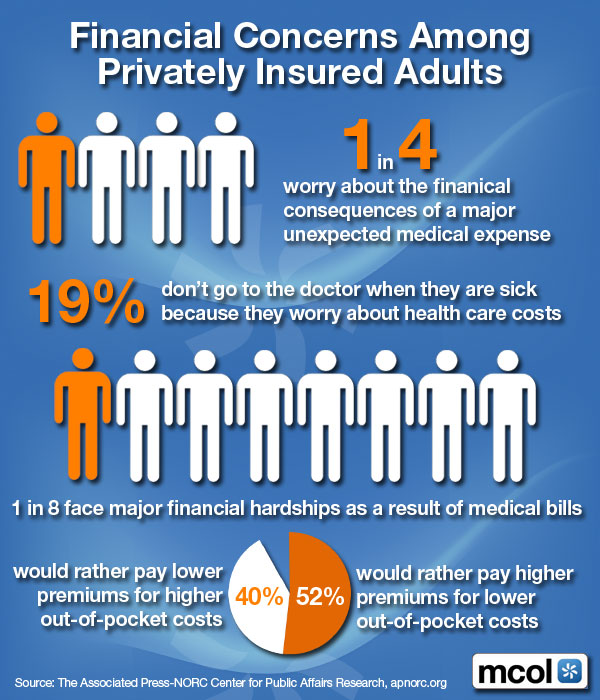
Percentage with Private Health Insurance 2013

Join Our Mailing List

An Infographic

By www.MCOL.com

ImageProxyDEM

Conclusion

Your thoughts and comments on this ME-P are appreciated. Feel free to review our top-left column, and top-right sidebar materials, links, URLs and related websites, too. Then, subscribe to the ME-P. It is fast, free and secure.

Link: http://feeds.feedburner.com/HealthcareFinancialsthePostForcxos

Speaker: If you need a moderator or speaker for an upcoming event, Dr. David E. Marcinko; MBA – Publisher-in-Chief of the Medical Executive-Post – is available for seminar or speaking engagements. Contact: MarcinkoAdvisors@msn.com

OUR OTHER PRINT BOOKS AND RELATED INFORMATION SOURCES:

LEXICONS: http://www.springerpub.com/Search/marcinko
PHYSICIANS: www.MedicalBusinessAdvisors.com
PRACTICES: www.BusinessofMedicalPractice.com
HOSPITALS: http://www.crcpress.com/product/isbn/9781466558731
CLINICS: http://www.crcpress.com/product/isbn/9781439879900
ADVISORS: www.CertifiedMedicalPlanner.org
BLOG: www.MedicalExecutivePost.com

Product DetailsProduct DetailsProduct Details

Product Details  Product Details

Product DetailsProduct Details

Product Details

Underwriting US Government Securities Issues

Join Our Mailing List

A Primer for Physician Investors and Medical Professionals

By: Dr. David Edward Marcinko; MBA, CMP™

[Editor-in-Chief] http://www.CertifiedMedicalPlanner.org

[PART 4 OF 8]

Dr. Marcinko at Emory University

NOTE: This is an eight part ME-P series based on a weekend lecture I gave more than a decade ago to an interested group of graduate, business and medical school students. The material is a bit dated and some facts and specifics may have changed since then. But, the overall thought-leadership information of the essay remains interesting and informative. We trust you will enjoy it.

Introduction

The underwriting of US Government securities is the largest underwriting market in the world, but are issued a bit differently than we have seen to date, in this series..

For example, there is no such thing as a negotiated underwriting on a US Government security. All offerings of the Treasury are sold by auction. The auction is conducted by the Federal Reserve Bank of New York in accordance with a published schedule. Unfortunately, they are not open to the public, just primary dealers. A bank or investment dealer is appointed by the president of the Federal Reserve Bank of New York and are the only entities authorized to buy and sell government securities in direct dealings with the FED. One becomes a primary dealer through qualifications of reputation, underwriting capacity, and adequacy of staff and facilities.

Currently, 13 and 26-week treasury bills are offered every week on Mondays, while 52- week bills are auctioned once a month. Treasury notes and bonds are auctioned much less frequently on a schedule that will not be asked on your exam. Those dealers wishing to acquire a particular Treasury security enter bids on a yield basis rather than at a specific  price. This method is sometimes called a Dutch auction. As a practical matter, about a week or so before the proposed auction, the Treasury announces the following four items: amount, maturity date, nominal or coupon rate anticipated, and  the minimum denominations available (except for T bills which don’t have interest coupons and always carry a minimum denomination of $10,000).

Can the individual medical professional purchase newly issued Treasuries? Yes! Rather than turning in a competitive bid, as the primary dealer does, the individual will turn in a non-competitive bid. Competitive bidding with governments is similar to the other competitive bidding discussed above. The underwriter turning in the lowest bid, wins. Due to the enormous size of Treasury offerings, it is extremely rare that the lowest bidder is able to take the entire issue. That being the case, the Treasury moves to the next best and the next best bidders, until most of the issue is taken. There is always a small portion left over for the non-competitive bidders.  Non-competitive bids may only be made in amounts of $1 million or less.  All non-competitive bids are automatically filled at the average yield of the competitive bids which have been accepted.

Underwriting  State Issues (Blue Sky Registration)

Unlike Federal issues, there are three types of State registration that are important for the medical professional to know:

Notification: This is the simplest form of registration and is used by a an issuer who has been in continuous operation for at least the previous three years.  Most, but not all, states permit registration by notification. 

Coordination: This occurs when an issuer wishes to coordinate a Federal registration under the Securities Act of 1933 with Blue Sky registration in one or more states. Under most circumstances, the Blue Sky registration automatically becomes effective when the Federal registration statement becomes effective.

Qualification: Any security may be registered in a state by qualification, but it’ s most commonly used by those issuers who are unable to use notification or coordination. Registration by Qualification becomes effective when so ordered by the State Administrator.

Exempt Securities

There are many securities which are exempt from the Act of ’33 registration and prospectus requirements. They include:

  • US Government and  Federal Agency issues.
  • Municipal, State issues and commercial paper with a maturity not in excess of 270 days.
  • Intra-state offerings (Rule 147)  because they are blue-sky chartered within the state.
  • Small Public offerings (Regulation A) if the value of the securities issued does not exceed $5,000,000 in any  12 month period. An issuer using the Regulation A exemption does not make the normal filings with the SEC in Washington. Instead, they file a simplified disclosure document with their SEC Regional Office, known as an Offering Statement. It must be file at least 10 business days prior to the initial offering of the securities. No securities may be sold unless issuer has furnished an offering circular (full disclosure document) to the purchaser at least 48 hours prior to the mailing of confirmation of the sale, and, if not completed within 9 months from the date of the offering circular, a revised circular must be filed. Every 6 months, issuers must file a report with the SEC of sales made under the Regulation A exemption until offering is completed.
  • Traditional insurance policies are considered to be securities and are exempt, as are fixed annuities. However, some of the newer forms of life insurance, like variable life, as well as variable annuities, have investment characteristics and, therefore are not exempt from registration.
  • Commercial paper and banker’s acceptances (9 month or shorter maturity), since they are money market instruments.

US capitol

The Private Placement (Regulation D) Securities Exemption

Since the Securities Act of 1933 requires disclosure of all public offerings (other than the exemptions just described), it should make sense that any securities offering not offered to the public would also be exempt. The Act provides a registration exemption for private placements, know as Regulation D.

Since one of the stated purposes of the Act of 1933 is to prevent fraud on the sale of new public issues, an issue which has only a limited possibility of injuring the public may be granted an exemption from registration. The SEC just doesn’t have the time to look at everything so they exempt offerings which do not constitute a “public offering”. Strict adherence to the provisions of the law, however, is expected and is scrutinized by the SEC. This exemption provision of the Act of ’33 lies within Regulation D.

Regulation D describes the type and number of investors who may purchase the issue, the dollar limitations on the issue, the manner of sale, and the limited disclosure requirements. Bear in mind at all times that from the issuer’s viewpoint, the principal justification for doing a private, rather than public offering, is to save time and money, not to evade the law. Remember, it is just as illegal to use fraud to sell a Regulation D issue as it is in a public issue. However, if done correctly, a Regulation D can save time and money, and six separate rules (501-506).

Rule 501: Accredited investors are defined as: corporations and partnerships with net worth of $5,000,000 not formed for the purpose of making the investment; corporate or partnership “insiders”; individuals and medical professionals with a net worth (individual or joint) in excess of $1,000,000; individuals with income in excess of $200,000 (or joint income of $300,000) in each of the last two years, with a reasonable expectation of having income in excess of $200,000 (joint income of $300,000) in the year of purchase; and any entity 100% owned by accredited investors.

Rule 502:  The violations of aggregation and integration are defined:

Aggregation: Sales of securities in violation of the dollar limitations imposed under Rules 504 and 505 (506 has no dollar limitations).

Integration: Sales of securities to too large a number of non-accredited investors, in violation of the “purchaser limitations” set forth in Rules 505 and 506 (504 has no “purchaser limitations”).

Rule 503: Sets forth notification requirements. An issuer will be considered in violation of Regulation D, and therefore subject to Federal penalties, if a Form D is not filed within 15 days after the Regulation D offering commences.

Rule 504: Enables a non-reporting company to raise up to $1,000,000 in a 12-month period without undergoing the time land expense of an SEC registration. Any number of accredited and non-accredited investors may purchase a 504 issue.

Rule 505: Enables corporations to raise up to $5,000,000 in a 12-month period without a registration. The “purchaser limitation” rule does apply here. It states that the number of non-accredited investors cannot exceed 35.

Rule 506: Differs from 505 in two significant ways. The dollar limit is waived and the issuer must take steps to assure itself that, if sales are to be made to non-accredited investors, those investors meet tests of investment “sophistication”. Generally speaking, this means that either the individual non-accredited investor has investment savvy and experience with this kind of offering, or he is represented by someone who has the requisite sophistication. This representative, normally a financial professional, such as an investment advisor, accountant, or attorney, is referred to in the securities business as a Purchaser Representative.

Obviously, we would have few problems if only medical investors in private placements were accredited investors, but that is not always the case. Since we are limited to a maximum of 35 non-accredited investors, how we count the purchasers becomes an important consideration. The SEC states that if a husband and wife each purchase securities in a private placement for their own accounts, they count as one non- accredited investor, not two. It would also be true that if these securities were purchased in UGMA accounts for their dependent children, we would still be counting only one non- accredited investor.

In the case of a partnership, it depends upon the purpose of the partnership. If the partnership was formed solely to make this investment, then each of the partners counts as an individual accredited or non-accredited investor based upon their own personal status, but if the partnership served some other purpose, such as a law firm, then it would only count as one purchaser .

Regulation D further states that no public advertising or solicitation of any kind is permitted. A tombstone ad may be used to advertise the completion of a private placement, not to announce the availability of the issue.

As a practical matter, however, whether required by the SEC or not, a Private Offering Memorandum for a limited partnership, for example, is normally prepared and furnished so that all investors receive disclosure upon which to base an investment judgment.

If any of the provisions of the Securities Act of 1933 are violated by an issuer, underwriter, or investor, this is known as “statutory underwriting”, underwriting securities in violation of statute. One who violates the ’33 Act is known as a statutory underwriter. One all too common example of this occurs when a purchaser of a Regulation D offering offers his unregistered securities for re-sale in violation of SEC Rule 144, an explanation of which is given below:

In simple English, SEC Rule 144 was created so that certain re-sales of already-existing securities could be made without having to file a complete registration statement with the SEC. The time and money involved in having to file such a registration is usually so prohibitive as to make it uneconomical for the individual seller. What kinds of re-sales are covered by Rule 144 and are important to the medical investor? Let’s first define a few terms.

Restricted Securities: Unregistered Securities purchased by a medical or other investor in a private placement. Also called Letter Securities, Legend Securities, referring to the fact that purchasers must sign an “Investment Letter” attesting to their understanding of the restrictions upon re-sale and to the “Legend” placed upon the certificates indicating restriction upon resale.

Control Person: A corporate director, officer, greater than 10% voting Stockholder, or the spouse of any of the preceding, are loosely referred to as Insiders or Affiliates due to their unique status within the issuer .

Control Stock: Stock held by a control person. What makes it control stock is who owns it, not so much how they acquired it.

Non-Affiliate:  An investor who is not a control person and has no other affiliation with the issuer other than as an owner of securities.

Rule 144 says that restricted securities cannot be offered for re-sale by any owner without first filing a registration statement with the SEC:

  1. unless the securities have been held in a fully paid-for status for at least two years;
  2. unless a notice of Sale is filed with the SEC at the time of sale and demonstrating compliance with Rule 144
  3. unless small certain quantity apply.

Your thoughts and comments on this ME-P are appreciated. Feel free to review our top-left column, and top-right sidebar materials, links, URLs and related websites, too. Then, subscribe to the ME-P. It is fast, free and secure.

Link: http://feeds.feedburner.com/HealthcareFinancialsthePostForcxos

Speaker: If you need a moderator or speaker for an upcoming event, Dr. David E. Marcinko; MBA – Publisher-in-Chief of the Medical Executive-Post – is available for seminar or speaking engagements. Contact: MarcinkoAdvisors@msn.com

OUR OTHER PRINT BOOKS AND RELATED INFORMATION SOURCES:

Product DetailsProduct DetailsProduct Details

Product DetailsProduct Details

Product Details

Risk Management, Liability Insurance, and Asset Protection Strategies for Doctors and Advisors: Best Practices from Leading Consultants and Certified Medical Planners™8Comprehensive Financial Planning Strategies for Doctors and Advisors: Best Practices from Leading Consultants and Certified Medical Planners™

The RAND Corporation’s Health IT Legacy‏

Join Our Mailing List 

Understanding ObamaCare and HIT Data Breaches

[By Darrell K. Pruitt DDS]

1-darrellpruittTwo current topics in the HIT industry: (1) A dishonest 2005 RAND study set up lawmakers for disappointment in electronic health records, which are essential to Obamacare, and (2) I told you so.

The Reports

Just the other day, there were reports of two data breaches of EHRs involving over 734,000 patients in Texas and California.

http://www.ihealthbeat.org/articles/2013/10/23/health-facilities-in-california-texas-report-health-data-breaches

For reasons like this, the wisdom of an ambitious mandate for paperless healthcare by 2014 is beginning to be questioned by the same lawmakers who were sucked in years ago by RAND’s tainted 2005 study.

According to the vendor-friendly results gleaned from vendor-friendly data supplied by vendors, EHRs should have started saving 100,000 lives and $77 billion a year, years ago. Predictably, that has not happened. Far from it!

The Findings 

The happy findings – discredited even by RAND in January of this year – were paid for by Cerner and GE, who profited immensely from their RAND investment. Since nationwide adoption of EHRs became a bi-partisan goal with bubbly beginnings and millions of campaign dollars, the costs and danger of healthcare IT didn’t appear to bother conservatives until three months after RAND admitted the study was garbage.

In April, six GOP senators, led by Sen. John Thune (R-S.D.), released a detailed report criticizing HHS Secretary Kathleen Sebelius’ execution of a $35 billion initiative to promote EHRs as part of the ARRA stimulus package. (See: “GOP senators raise concerns with push for electronic medical records,” by Sam Baker, April 16, 2013, The Hill).

http://thehill.com/blogs/healthwatch/medicare/294273-gop-senators-raise-concerns-with-push-for-electronic-medical-records

Wither ARRA?

Have you ever wondered why ARRA was passed as a jobs bill rather than as part of healthcare reform? Any ideas?

More recently, with the conservatives’ failure to stop Obamacare even by shutting down government, EHRs have become recognized as the ACA’s next best weakness. Yesterday, Greg Scandlen, writing for RightSideNews.com, posted “The Tyranny of Electronic Systems.” It goes downhill from there.

http://www.rightsidenews.com/2013102333379/life-and-science/health-and-education/the-tyranny-of-electronic-systems.html

Even More

Also yesterday, Michelle Mailkin writing for Townhall.com, an ultra-conservative website similar to RightSideNews, posted, “Don’t Forget Obamacare’s Electronic Medical Records Wreck.

http://townhall.com/columnists/michellemalkin/2013/10/23/dont-forget-obamacares-electronic-medical-records-wreck-n1730172?utm_source=TopBreakingNewsCarousel&utm_medium=story&utm_campaign=BreakingNewsCarousel

Assessment 

Conservatives found traction: Without the anticipated healthcare savings from EHRs, Obamacare will not survive. These times are not as happy for EHR stake-holders as RAND led them to expect.

Conclusion

Your thoughts and comments on this ME-P are appreciated. Feel free to review our top-left column, and top-right sidebar materials, links, URLs and related websites, too. Then, subscribe to the ME-P. It is fast, free and secure.

Link: http://feeds.feedburner.com/HealthcareFinancialsthePostForcxos

Speaker: If you need a moderator or speaker for an upcoming event, Dr. David E. Marcinko; MBA – Publisher-in-Chief of the Medical Executive-Post – is available for seminar or speaking engagements. Contact: MarcinkoAdvisors@msn.com

OUR OTHER PRINT BOOKS AND RELATED INFORMATION SOURCES:

LEXICONS: http://www.springerpub.com/Search/marcinko
PHYSICIANS: www.MedicalBusinessAdvisors.com
PRACTICES: www.BusinessofMedicalPractice.com
HOSPITALS: http://www.crcpress.com/product/isbn/9781466558731
CLINICS: http://www.crcpress.com/product/isbn/9781439879900
ADVISORS: www.CertifiedMedicalPlanner.org
BLOG: www.MedicalExecutivePost.com

Product DetailsProduct DetailsProduct Details

Product Details  Product Details

Product DetailsProduct Details

Product Details

Artistic Occupations without Health Insurance

Join Our Mailing List

Health Insurance Cost Update

By www.MCOL.com

ImageProxy

More:

Conclusion

Your thoughts and comments on this ME-P are appreciated. Feel free to review our top-left column, and top-right sidebar materials, links, URLs and related websites, too. Then, subscribe to the ME-P. It is fast, free and secure.

Link: http://feeds.feedburner.com/HealthcareFinancialsthePostForcxos

Speaker: If you need a moderator or speaker for an upcoming event, Dr. David E. Marcinko; MBA – Publisher-in-Chief of the Medical Executive-Post – is available for seminar or speaking engagements. Contact: MarcinkoAdvisors@msn.com

OUR OTHER PRINT BOOKS AND RELATED INFORMATION SOURCES:

LEXICONS: http://www.springerpub.com/Search/marcinko
PHYSICIANS: www.MedicalBusinessAdvisors.com
PRACTICES: www.BusinessofMedicalPractice.com
HOSPITALS: http://www.crcpress.com/product/isbn/9781466558731
CLINICS: http://www.crcpress.com/product/isbn/9781439879900
ADVISORS: www.CertifiedMedicalPlanner.org
BLOG: www.MedicalExecutivePost.com

Product Details  Product Details

Product DetailsProduct Details

Should We With-Hold Payment to Doctors, Financial Advisors and Others Who Make Mistakes?

Join Our Mailing List 

A Modified Reprint … and Different Perspective on “Never-Events”

By Dr. David Edward Marcinko FACFAS, MBA, CMP™

Dr. MarcinkoOK; I admit it. I played HS baseball as a youth. Today, I am a doctor and financial advisor. I owned and operated a surgical center and did musculoskeletal surgery for two decades.

Later, as a health economist and financial planner, I acted as an SEC registered investment advisor to medical colleagues for almost 15 years.  I’ve been a reporter, writer and journalist for three decades and Editor-in-Chief of this ME-P for eight years. Along my career path several physician-partners were dual degreed lawyers.

I still am deeply involved in all these activities as a hobbyist, consultant, part-time practitioner, editor and educator. Occasionally, I do make mistakes. There … I admit it. I am not perfect!

For example; I remember the time when I ordered the wrong patient medication dose [noted and corrected by an astute RN] – Dropped an infield fly ball and lost the game – Used the wrong corporate EBIDTA, for an estimated financial calculation, which cost me and the client a few bucks – Referenced the wrong citation and made an author angry – Forgot to check a reference source which made my publisher mad at me – AND – Confused two different medical malpractice cases I was reviewing to the chagrin of my defendant doctor and his attorney; etc, etc.  You get the picture.

Mea culpa – mea maxima culpa!

The Encore Post

And so, it is with delight that the ME-P re-posts the following essay – on mistakes – by colleague Dr. Michael Kirsch who is a gastroenterologist that blogs at MD Whistleblower.

Medical Errors Earn Hospitals Money – Who Knew?

In brief, it goes something like this.

Never-Events

The argument to withhold payment for medical care that resulted from medical error is potent.  This is known as a never-event because it is not supposed to happen – ever! Giving a patient the wrong blood type during a transfusion is a good example of a never-event.

Unfortunately – Keep in mind that defining a medical error is not as easy as it sounds.  One can easily imagine how easy it would be too confuse a medical complication, which is a blameless event, from an error or a negligent act.

Consider This

If the patient develops a complication, should I, the hospital and those I consult not be paid for the additional care required?

Now, by extension, let us consider some other professions in the same way; especially those for which I am associated.

IOW: Would every profession consent to returning fees for mistaken advice or service?  So, do you agree with the following?

  • Financial advisors should return fees if investment performance is below a designated threshold or differs from their peers.
  • Attorneys that offered ineffective legal arguments at trial should surrender fees after appeal.
  • A professional baseball player who drops a fly ball should lose a day’s pay.
  • A newspaper publisher should offer a rebate to all readers if a news story is found to be inaccurate owing to a lack of proper editorial oversight; etc.

I think you get the picture! And, see how I personalized these examples.

More

We realize that mistakes of all types cost money, as do some of the hypothetical examples above.  We also accept that financial incentives can change behavior and can be an effective tool.

Medical-errors

Assessment

But, every human endeavor has a finite error rate and we should be cautious before using an economic drone attack against only the medical profession; or even the others mentioned above … and more.

Let’s use a scalpel here and not a sledge hammer.  And, those of you outside of medicine; please feel free to explain why your occupation should be spared from this health reform strategy?

The Reprint: Would every profession consent to returning fees for mistakes?

Conclusion

Your thoughts and comments on this ME-P are appreciated. Feel free to review our top-left column, and top-right sidebar materials, links, URLs and related websites, too. Then, subscribe to the ME-P. It is fast, free and secure.

Link: http://feeds.feedburner.com/HealthcareFinancialsthePostForcxos

  • Speaker: If you need a moderator or speaker for an upcoming event, Dr. David E. Marcinko; MBA – Publisher-in-Chief of the Medical Executive-Post – is available for seminar or speaking engagements. Contact: MarcinkoAdvisors@msn.com


Product DetailsProduct Details

Risk Management, Liability Insurance, and Asset Protection Strategies for Doctors and Advisors: Best Practices from Leading Consultants and Certified Medical Planners™8Comprehensive Financial Planning Strategies for Doctors and Advisors: Best Practices from Leading Consultants and Certified Medical Planners™

***

Invite Dr. Marcinko

***

Modern Office Management Skills for Savvy Physicians

Join Our Mailing List

“Learning” about The Business of Medical Practice in Modernity

By Ann Miller RN MHA

www.BusinessofMedicalPractice.com

###

Medical Business Advisors

###

Product DetailsProduct DetailsProduct Details

###

LEXICONS: http://www.springerpub.com/Search/marcinko
PHYSICIANS: www.MedicalBusinessAdvisors.com
PRACTICES: www.BusinessofMedicalPractice.com
HOSPITALS: http://www.crcpress.com/product/isbn/9781466558731
CLINICS: http://www.crcpress.com/product/isbn/9781439879900
ADVISORS: www.CertifiedMedicalPlanner.org
BLOG: www.MedicalExecutivePost.com

###

Changes are Afoot at the CFP-Board of Directors

Join Our Mailing List 

Well-intentioned attempts to protect consumers backfire?

By Rick Kahler CFP® http://www.KahlerFinancial.com

Rick Kahler CFPIntegrity. Trustworthiness.

A commitment to clients’ best interests. These are all essential qualities for any advisor you entrust with your financial affairs.

One clue to financial planners’ trustworthiness is the certifications they hold. Designations such as CFP® (Certified Financial Planner) and Chartered Financial Consultant (ChFC) require adhering to certain professional standards and codes of ethics.

The organizations that maintain these standards safeguard the integrity of their professional designations and especially the well-being of consumers who seek out their members’ services. Yet sometimes, their well-intentioned attempts to protect consumers can backfire.

New Rules

The CFP® Board recently adopted new rules meant to prevent financial planners from calling themselves “fee-only” while still receiving commissions by selling financial products through separate companies. Now, CFP®s and members of their families can no longer own an interest in financial service companies that earn commissions if they wish to brand themselves as “fee only.”

This would be good, except the Board has cast its net so wide that it is catching the dolphins along with the sharks. It defines “financial service company” too broadly, including real estate firms, mortgage companies, and property management companies. It also illogically focuses on what clients could pay and what the planner could receive, rather than what clients do pay and what the planner does receive.

Example:

I have a minority interest in and occasionally receive dividends from a real estate brokerage and a property management firm. While I do maintain a license as a real estate broker, I am not active in the business. Because I could potentially receive a commission for selling real estate and because I do receive dividends, I’ve been told by a representative of the CFP® Board that I can no longer call myself “fee only” and must advertise myself as a “fee and commission” financial planner.

This would dishonestly insinuate I sell mutual funds, life insurance, or annuities. “Fee-only,” which to consumers means I sell no financial products, is much more accurate.

Disgruntled Calls Growing

I’ve received calls from other CFP®s affected in similar ways by the new rules.

Example:

One is a young fee-only planner who does not sell any financial products or own a portion of any company that does. Yet, he recently married a woman who owns a minority interest in her family’s property casualty insurance company. She holds an insurance license but does not work in the business. Because she, a “related party,” could legally receive commissions, her husband can no longer hold himself out as a “fee-only” CFP® and must list himself as a “fee and commission” planner.

00290065-0000-0000-0000-000000000000_bd9e518c-8b9e-4904-b459-4f2b1c196df1_20130621181508_noh8

Is the CFP-BOD, and the CFP® mark, in Jeopardy? [VOTE]

If a financial planner’s clients pay only fees and do not purchase financial products like mutual funds, insurance, and annuities from a related company, the CFP® Board needs to designate the planner as “fee only.” The same applies to planners who maintain financial services licenses (as those in Illinois must if they give insurance advice) but do not receive commissions. The CFP® Board should not consider companies that offer services unrelated to financial planning, such as selling and managing real estate or originating mortgages, as financial services companies.

I understand and fully support the CFP® Board’s intent to stop those who were abusing the brand of “fee only.” Yet the Board’s rules in their present form will only devalue the CFP® designation.

Assessment

It appears the only way I can continue to honestly advertise my practice as “fee-only” is to terminate as a CFP®. What’s most important for me is to be seen as a fiduciary planner, working with integrity in the best interest of my clients. I won’t dishonestly brand myself as a “fee and commission” planner to keep my CFP® designation.

Conclusion

Your thoughts and comments on this ME-P are appreciated. Feel free to review our top-left column, and top-right sidebar materials, links, URLs and related websites, too. Then, subscribe to the ME-P. It is fast, free and secure.

Link: http://feeds.feedburner.com/HealthcareFinancialsthePostForcxos

Speaker: If you need a moderator or speaker for an upcoming event, Dr. David E. Marcinko; MBA – Publisher-in-Chief of the Medical Executive-Post – is available for seminar or speaking engagements. Contact: MarcinkoAdvisors@msn.com

OUR OTHER PRINT BOOKS AND RELATED INFORMATION SOURCES:

LEXICONS: http://www.springerpub.com/Search/marcinko
PHYSICIANS: www.MedicalBusinessAdvisors.com
PRACTICES: www.BusinessofMedicalPractice.com
HOSPITALS: http://www.crcpress.com/product/isbn/9781466558731
CLINICS: http://www.crcpress.com/product/isbn/9781439879900
BLOG: www.MedicalExecutivePost.com

Product Details  Product Details

2014 Forecast of Medical Per Capita Claims

Join Our Mailing List

Cost Increases by Plan Type

By www.MCOL.com

###

ImageProxy

###

Your thoughts and comments on this ME-P are appreciated. Feel free to review our top-left column, and top-right sidebar materials, links, URLs and related websites, too. Then, subscribe to the ME-P. It is fast, free and secure.

Link: http://feeds.feedburner.com/HealthcareFinancialsthePostForcxos

Speaker: If you need a moderator or speaker for an upcoming event, Dr. David E. Marcinko; MBA – Publisher-in-Chief of the Medical Executive-Post – is available for seminar or speaking engagements. Contact: MarcinkoAdvisors@msn.com

OUR OTHER PRINT BOOKS AND RELATED INFORMATION SOURCES:

LEXICONS: http://www.springerpub.com/Search/marcinko
PHYSICIANS: www.MedicalBusinessAdvisors.com
PRACTICES: www.BusinessofMedicalPractice.com
HOSPITALS: http://www.crcpress.com/product/isbn/9781466558731
CLINICS: http://www.crcpress.com/product/isbn/9781439879900
ADVISORS: www.CertifiedMedicalPlanner.org
PODIATRISTS: www.PodiatryPrep.com
BLOG: www.MedicalExecutivePost.com

Product DetailsProduct Details

Product Details

Understanding Global Location Numbers Used in Healthcare Today

Join Our Mailing List 

Defining Global Location Numbers in Hospital Supply Chain Management

By Adam Higman and Brian Mullahey

By Kristin Spenik and Jerzy Kaczor

Product DetailsProduct DetailsProduct Details

Global Location Numbers (GLNs) are widely used throughout healthcare supply chain groups.

The Dictionary of Health Information Technology and Security defines a GLN as a unique, 13-digit number that links the name, industry, and address of a particular item that pinpoints the “legal, functional, or physical location within a business or organizational entity”, in particular hospitals and healthcare organizations.

  • Legal: Hospitals, healthcare organizations, distributors, suppliers, freight carriers, etc.
  • Functional: Specific departments within legal entities, i.e. purchasing departments, nursing stations, wards, etc. in hospitals
  • Physical: Hospital rooms, hospital wings, cabinets, shelving units, delivery points, loading docks, warehouses, etc.

AHRMM

According to the Association for Healthcare Resource & Materials Management, the premier organization for healthcare supply chain professionals, global locations numbers can recover your facility’s revenue stream, enhance the accuracy of documenting Group Purchasing Organization [GPO] sales, and end the use “of single purpose proprietary supplier numbers”.

The Objective

The ultimate objective is getting everyone involved in the supply chain process to use identical numbers.

For instance, if the GPO communicates to the manufacturer that your hospital utilizes a specific GLN, then it is more likely that the manufacturer will associate the hospital’s materials and supplies with the correct GPO contract price.

In addition, if distributors utilize GLNs along with manufacturers and producers to determine the manufacturer’s price that was given, the hospital will likely secure the correct rate when purchasing supplies directly from distributors.

Conclusion

Your thoughts and comments on this ME-P are appreciated. Feel free to review our top-left column, and top-right sidebar materials, links, URLs and related websites, too. Then, subscribe to the ME-P. It is fast, free and secure.

Link: http://feeds.feedburner.com/HealthcareFinancialsthePostForcxos

Speaker: If you need a moderator or speaker for an upcoming event, Dr. David E. Marcinko; MBA – Publisher-in-Chief of the Medical Executive-Post – is available for seminar or speaking engagements. Contact: MarcinkoAdvisors@msn.com

OUR OTHER PRINT BOOKS AND RELATED INFORMATION SOURCES:

LEXICONS: http://www.springerpub.com/Search/marcinko

PHYSICIANS: www.MedicalBusinessAdvisors.com

PRACTICES: www.BusinessofMedicalPractice.com

HOSPITALS: http://www.crcpress.com/product/isbn/9781466558731

CLINICS: http://www.crcpress.com/product/isbn/9781439879900

ADVISORS: www.CertifiedMedicalPlanner.org

PODIATRISTS: www.PodiatryPrep.com

BLOG: www.MedicalExecutivePost.com

Product DetailsProduct Details

Product Details

Hospital Information Systems and the PP-ACA

Join Our Mailing List

Extension of Hospital Information Systems Beyond the Hospital

By Brent A. Metfessel MD

Dr. MetfesselThe Patient Protection and Affordable Care Act (ACA), affirmed after the November 7th 2012 presidential election, includes a number of policies and potential projects with the aim of improving quality of care while reducing costs – or at least greatly slowing increases in health care costs from year to year.

Included in this effort are CMS payment incentives for providers that can show care patterns that meet the goals of high quality, cost-efficient care.

HHS and ACOs 

On March 31, 2011, the Department of Health and Human Services (HHS) released a set of proposed new rules to aid clinicians, hospitals, and other health facilities and providers to improve coordination of care for Medicare patients using a model known as Accountable Care Organizations (ACOs). ACOs that are shown to lower health care cost growth while meeting CMS quality benchmarks, including measures of patient/caregiver experience of care, care coordination, patient safety, preventive health, and health of high-risk populations, will receive incentive payments as part of the Medicare Shared Savings Program.

But, in some proposed models ACOs may also be held accountable for shared losses.

Care Co-ordination

Coordination of care means that hospitals, physician offices, and other providers have a complete record of patients’ episodes of care, including diagnostic tests, procedures, and medication information.  This potentially would decrease extra costs from unnecessary duplication of services as well as reducing medical errors from incomplete understanding of the patients’ illness histories and medical care provided.

It is also believed that better coordination of care may prevent 30-day hospital readmissions (which occur for nearly one in five Medicare discharges), since needed post-discharge care would be more readily obtainable with more aggressive care coordination.

Medicare patients in ACOs, however, would still be allowed to see providers outside of the ACO, and proposals exist to prevent physicians in ACOs from being penalized for patients with a greater illness severity or complexity.

According to a CMS analysis, ACOs may result in Medicare savings of up to $960 million over three years.  Although the Affordable Care Act’s ACO provisions primarily target Medicare beneficiaries, private insurers are also beginning to create care models based on the accountable care paradigm.  Insurers could offer similar incentives to the ACO model described above, and which might include features such as performance based contracting or tiered benefit models that favor physicians who score highly on care quality and cost-efficiency measures.

Balance

Only the Beginning

ACOs and other implementations of the accountable care paradigm, however, are in their beginning stages, with a number of pilots around the country currently being conducted to more fully evaluate the concept, and there still is some controversy over the best way to achieve these goals. It is a continuing balancing act.

The critical point here is that in all likelihood, with the advent of the ACA and other initiatives, stemming the upward tide of medical cost increases becomes an even higher priority, and no matter what the final models will look like, the success of any of the models requires a high level of care coordination – requiring information systems that are fully compatible and allow seamless and errorless transmission of information between sites of service and the various providers that can be involved in patient care.

More:

  1. Ground Breaking Book Explains Why Accountable Care Organizations May Be the Answer the Health Care Industry Has Been Seeking!
  2. Evaluating ACOs at Mid-Launch
  3. How Using a ‘Scorecard’ Can Smooth Your Hospital’s Transition to a Population Health-Based Reimbursement Model
  4. Doubting the Accountable Care Organization B-Model

Assessment

Thus, wherever a patient goes for care, all the information needed to provide high-quality and cost-efficient care is immediately available.

References

Feds Take Critical Look at Meaningful Use Payments”, InformationWeek Healthcare, October 24, 2012.  http://www.informationweek.com/healthcare/policy/feds-take-critical-look-at-meaningful-us/240009661 [Accessed on November 2, 2012].

Conclusion

Your thoughts and comments on this ME-P are appreciated. Feel free to review our top-left column, and top-right sidebar materials, links, URLs and related websites, too. Then, subscribe to the ME-P. It is fast, free and secure.

Link: http://feeds.feedburner.com/HealthcareFinancialsthePostForcxos

Speaker: If you need a moderator or speaker for an upcoming event, Dr. David E. Marcinko; MBA – Publisher-in-Chief of the Medical Executive-Post – is available for seminar or speaking engagements. Contact: MarcinkoAdvisors@msn.com

OUR OTHER PRINT BOOKS AND RELATED INFORMATION SOURCES:

LEXICONS: http://www.springerpub.com/Search/marcinko
PHYSICIANS: www.MedicalBusinessAdvisors.com
PRACTICES: www.BusinessofMedicalPractice.com
HOSPITALS: http://www.crcpress.com/product/isbn/9781466558731
CLINICS: http://www.crcpress.com/product/isbn/9781439879900
ADVISORS: www.CertifiedMedicalPlanner.org
PODIATRISTS: www.PodiatryPrep.com
BLOG: www.MedicalExecutivePost.com

Product DetailsProduct Details

Product Details

Top 12 Articles [Health Administration Reading List]

Join Our Mailing List

By Staff Reporters via Austin Frakt PhD

On Health Economics, Finance and Insurance, Quality Care and Organizational Behavior

1. Substantial Health And Economic Returns From Delayed Aging May Warrant A New Focus For Medical Research

By Dana Goldman and others (Health Affairs)

2. Trends Underlying Employer Sponsored Health Insurance Growth For Americans Younger Than Age Sixty-Five

By Carolina-Nicole Herrera and others (Health Affairs)

3. Accountable Care Organization Formation Is Associated With Integrated Systems But Not High Medical Spending

By David Auerbach, Hangsheng Liu, Peter Hussey, Christopher Lau, and Ateev Mehrotra (Health Affairs)

4. The Quality Of Care Delivered To Patients Within The Same Hospital Varies By Insurance Type

By Christine S. Spencer, Darrell J. Gaskin, and Eric T. Roberts  (Health Affairs)

5. Understanding State Variation In Health Insurance Dynamics Can Help Tailor Enrollment Strategies For ACA Expansion

By John Graves and Katherine Swartz (Health Affairs)

6. When Medicare Cuts Hospital Prices, Seniors Use Less Inpatient Care

By Chapin White and Tracy Yee (Health Affairs)

7. More Americans Living Longer With Cardiovascular Disease Will Increase Costs While Lowering Quality Of Life

By Ankur Pandya, Thomas Gaziano, Milton Weinstein, and David Cutler (Health Affairs)

8. Surgical Skill and Complication Rates after Bariatric Surgery

By John Birkmeyer and others (New England Journal of Medicine)

Reading list

9. Who Is in Control? The Determinants of Patient Adherence with Medication Therapy

By Sergei Koulayev, Niels Skipper and Emilia Simeonova (National Bureau of Economic Research)

10. Fifty Years of Family Planning: New Evidence on the Long-Run Effects of Increasing Access to Contraception

By Martha Bailey (National Bureau of Economic Research)

11. Identifying the Health Production Function: The Case of Hospitals

By John Romley and Neeraj Sood (National Bureau of Economic Research)

12. ACA Standoff

By Jeffrey Drazen and Gregory Curfman (New England Journal of Medicine)

Assessment

Feel free to send us links to your own hot topic reading list so that we may share.

Conclusion

Your thoughts and comments on this ME-P are appreciated. Feel free to review our top-left column, and top-right sidebar materials, links, URLs and related websites, too. Then, subscribe to the ME-P. It is fast, free and secure.

Link: http://feeds.feedburner.com/HealthcareFinancialsthePostForcxos

Speaker: If you need a moderator or speaker for an upcoming event, Dr. David E. Marcinko; MBA – Publisher-in-Chief of the Medical Executive-Post – is available for seminar or speaking engagements. Contact: MarcinkoAdvisors@msn.com

OUR OTHER PRINT BOOKS AND RELATED INFORMATION SOURCES:

LEXICONS: http://www.springerpub.com/Search/marcinko
PHYSICIANS: www.MedicalBusinessAdvisors.com
PRACTICES: www.BusinessofMedicalPractice.com
HOSPITALS: http://www.crcpress.com/product/isbn/9781466558731
CLINICS: http://www.crcpress.com/product/isbn/9781439879900
ADVISORS: www.CertifiedMedicalPlanner.org
PODIATRISTS: www.PodiatryPrep.com
BLOG: www.MedicalExecutivePost.com

Product DetailsProduct Details

Product Details

How to Transition into Medicare?

Join Our Mailing List

The Timing, Costs, and Factors to Know

By Lon Jefferies MBA CFP® http://www.NewWorthAdvice.com

Lon JeffriesDid you know that the choices you make during your first year of Medicare eligibility will have long-term financial consequences? Yes, it is true!

And unfortunately, most people and even medical professionals have to make these decisions at a time when they are only beginning to familiarize themselves with a complex program.

The Rules

If you don’t follow Medicare’s enrollment rules, you may pay lifelong penalties for coverage. You have a seven-month window to enroll in Medicare as you turn 65. This window begins three months before the month of your birthday, includes the month of your birthday, and continues for the following three months.

The Parts

Part A

In most cases, you should sign up for Medicare Part A, which covers hospital stays, when you turn 65, even if you have other health insurance coverage. There is no cost for this coverage as long as you have 40 quarters of work in which you paid FICA taxes.

However, be aware that you are not allowed to contribute to a health savings account (HSA) if you are receiving benefits from Medicare. Thus, you may want to defer beginning Part A to continue building up your HSA balance to help offset future healthcare costs not covered by Medicare.

Part B

Medicare Part B covers services and supplies that are needed to diagnose or treat medical conditions, and health care to prevent illness. The standard monthly premium for Part B in 2013 is $104.90, but individuals with a modified adjusted gross income (MAGI) more than $85,000 and couples with a MAGI more than $170,000 pay more.

The premium ranges from $146.90 to $335.70 for those with incomes above the thresholds. If you have group health insurance through your own or a spouse’s employer, you may want to delay beginning Part B.

However, for this to be done without penalty, be sure to enroll in Part B coverage within eight months of the time your employment ceases. Otherwise, for every 12-month period that you could have been enrolled in Medicare Part B but were not, you will pay a 10 percent penalty on your Part B premium for life.

Part D

Medicare Part D covers prescription drugs. This coverage is usually purchased at the same time as Part B.  Part D monthly premiums vary by plan. However, higher-income beneficiaries (singles with a MAGI over $85,000 and couples with a MAGI over $170,000) pay from $11.60 to $66.60 more each month.

There is also a late enrollment penalty for Part D that is one percent of the “national base beneficiary premium” ($31.17 in 2013) multiplied by the number of full months you went without drug coverage.

Part C

Note that Medicare Part C is not a separate benefit. Part C, sometimes referred to as a Medicare Advantage Plan [MAP], is the portion of Medicare that allows private health insurance companies to provide Medicare benefits.

Part C is an alternative method for obtaining the same coverage that Part A and Part B provide, but do so through private insurance providers with different rules, costs and coverage restrictions. You can also get Part D as part of the benefits package if you choose. Although significant research is required, determining whether Part C is a viable option for you is simply a matter of considering your health, the medical services you use regularly, your prescription drug medications, and your budget.

medicare

Assessment

Medicare is a complex program. Enrolling on time and making informed decisions about coverage can save you thousands of dollars each year during retirement.

Conclusion

Your thoughts and comments on this ME-P are appreciated. Feel free to review our top-left column, and top-right sidebar materials, links, URLs and related websites, too. Then, subscribe to the ME-P. It is fast, free and secure.

Link: http://feeds.feedburner.com/HealthcareFinancialsthePostForcxos

Speaker: If you need a moderator or speaker for an upcoming event, Dr. David E. Marcinko; MBA – Publisher-in-Chief of the Medical Executive-Post – is available for seminar or speaking engagements. Contact: MarcinkoAdvisors@msn.com

OUR OTHER PRINT BOOKS AND RELATED INFORMATION SOURCES:

DICTIONARIES: http://www.springerpub.com/Search/marcinko
PHYSICIANS: www.MedicalBusinessAdvisors.com
PRACTICES: www.BusinessofMedicalPractice.com
HOSPITALS: http://www.crcpress.com/product/isbn/9781466558731
CLINICS: http://www.crcpress.com/product/isbn/9781439879900
BLOG: www.MedicalExecutivePost.com
FINANCE: Financial Planning for Physicians and Advisors
INSURANCE: Risk Management and Insurance Strategies for Physicians and Advisors

Product DetailsProduct DetailsProduct Details

Product Details  Product Details

How the Medical Executive-Post Survived to our 8th Anniversary?

Join Our Mailing List

And … Why the American Medical News was Shuttered after 50 Years!

[Some Musing on our Eighth Anniversary]

Ann Miller RN MHA

[Executive-Director]

Happy BirthdayAccording to well known healthcare industry journalist Kevin B. O’Reilly, a dramatic drop in medical-publishing revenues caused the recent closure of the American Medical News, effective with a final edition of the newspaper published just last month.

Published for more than five decades, AMNews was hit hard by industrywide trends. The newspaper’s revenue fell by two-thirds during the last decade, as reported by Thomas J. Easley, senior vice-president and publisher of periodic publications for the American Medical Association [AMA].

Unsustainable financial losses forced the move despite the newspaper’s editorial quality, the AMA’s senior management reportedly said. But, the Association’s other news operations will be enhanced.

###

amn

###

What the Death of American Medical News Says About the Future of American Medicine

###

How we survive!

We’ve been online for eight years now. We have a skeleton staff, a scalable business model, an almost free distribution model, no print analog, and a tiny electronic advertising revenue stream.

Oh, let’s not forget some brilliant essayists, contrarian contributors, insightful commentators and controversial opinions that are often the elephant in the virtual room. 

Our gratitude to you all is without limits.

So, how else do we do it?

Interestingly – Our print books are good, better and best sellers. We’ve been releasing one major, semi-peer reviewed text each year …. and sales are brisk. And, we are now negotiating to begin our next and ninth volume for 2014-15. We maintain our own copy-rights, perform in-house editing, seek out the best contributing authors, and reduce the cost of numerous channels of distribution. How do we do it, year after year? In a word, professional crowdsourcing.

Our consulting business is increasingly robust, too. Cudos to healthcare reform, managed care, and the PP-ACA!

And … another thing

I ask again. How do we do it? How do we stay in business?

Here are some more ways to help-us, do just that:

  1. Subscribe to the ME-P site
  2. Tell a friend or colleague about us
  3. Visit our Blogroll list
  4. Use our classified ads or advertise with us
  5. Purchase a printed handbook, dictionary, software product or textbook
  6. Use our career and educational resources
  7. “Ask a Consultant” for free advice
  8. Request a strategic competitive consultation
  9. Hire us for a medical practice valuation or revenue enhancement review
  10. Request a medical business planning RFP
  11. Purchase a practice management checklist
  12. Seek out our financial planning advice
  13. Ask for second opinion; hire our thought-leaders
  14. Request a healthcare econometrics review
  15. Seek out our practice management or business advice
  16. Become a Certified Medical Planner™ www.CertifiedMedicalPlanner.org
  17. Request a speaker for a pharmaceutical seminar or health convention
  18. Attend a seminar, sponsor or take a learning-teaching cruise with us
  19. Donate to us …  and repeat
  20. Buy a link … and repeat again
  21. Send a thank you note to our Publisher-in-Chief and Managing Editor
  22. Visit us often to review, read, rant and rave.

Bottom Line Eight Years Out

The ME-P is an austere … Labor of Love.

Please support us: Support the “Medical Executive-Post”

Printable Donation Form: Printable Donation Form

Electronic Donations: www.e-junkie.com/ecom/gb.php?c=cart&i=641232&cl=109140&ejc=2

Multi-Year Pledge Form: Multi-Year Pledge

###

QuestionEverythingWallpaper

###

Assessment

So, does the demise of the American Medical News really say anything at all about the ME-P; in addition to the future of domestic medicine? How do we avoid the same fate? Please tell us. Question Everything … Trust No One … Paddle your Own Canoe … Keep the Faith!

Conclusion

Your thoughts and comments on this ME-P are appreciated. Did the AMNews forget the aphorism; No margin – No Mission?

Feel free to review our top-left column, and top-right sidebar materials, links, URLs and related websites, too. Then, subscribe to the ME-P. It is fast, free and secure.

Link: http://feeds.feedburner.com/HealthcareFinancialsthePostForcxos

Speaker: If you need a moderator or speaker for an upcoming event, Dr. David E. Marcinko; MBA – Publisher-in-Chief of the Medical Executive-Post – is available for seminar or speaking engagements. Contact: MarcinkoAdvisors@msn.com

OUR OTHER PRINT BOOKS AND RELATED INFORMATION SOURCES:

LEXICONS: http://www.springerpub.com/Search/marcinko
PHYSICIANS: www.MedicalBusinessAdvisors.com
PRACTICES: www.BusinessofMedicalPractice.com
HOSPITALS: http://www.crcpress.com/product/isbn/9781466558731
CLINICS: http://www.crcpress.com/product/isbn/9781439879900
ADVISORS: www.CertifiedMedicalPlanner.org
BLOG: www.MedicalExecutivePost.com

Product DetailsProduct DetailsProduct Details

Product Details  Product Details

Product DetailsProduct Details

Product Details

Some US Federal Budget Proposals

Join Our Mailing List

Government Shutdown Hoopla for Retirees, Inheritors and Savers

By Rick Kahler CFP® http://www.KahlerFinancial.com

Rick Kahler CFPLost in the hoopla over the government shutdown, defunding Obamacare, and raising the debt ceiling are some proposals contained in President Obama’s budget that will have a significant impact on retirees, inheritors, and savers.

Most of the President’s proposals are aimed at enforcing higher taxes on savers who maximize their retirement plans. This is a way to raise revenue for government entitlement programs, like subsidies for health insurance, Medicare, and Social Security.

Retirement and Retirees

Back from last year is his proposal to cap contributions to IRA’s and 401(k)’s when the balance reaches a level determined by a set formula which is tied to interest rates. The proposal sets the cap at $3.4 million initially. As interest rates rise, the cap will lower. When a saver’s IRA balance hits the cap, he or she will not be allowed to make further contributions to any retirement plan.

This will mostly affect savers who terminate employment and roll large accumulations from profit-sharing plans and lump-sum distributions from defined benefit plans into their IRA’s. It will shut down their ability to save into the future.

Taxes and Inheritors

The President has yet another plan to end tax-deductible contributions for upper income earners. Only 28% of a contribution would be deductible for any taxpayer whose bracket exceeds 28%. For a taxpayer in the highest bracket, this means a tax increase of about 50%.

Another of the President’s proposals would end the ability of anyone other than a spouse to inherit a tax-deferred IRA. Under the proposal, all non-spouses inheriting an IRA would have five years to terminate the IRA and pay income taxes on the distributions. This proposal really impacts Roth IRA conversions, as most parents convert traditional IRA’s to Roths with the intention of leaving their children a non-taxable sum of money that can continue to grow tax free during their lifetime. If the President’s proposal passes, many older savers will discover that the intentions behind their Roth conversions have been nullified.

Forced Savings and Savers

While President Obama wants to cap what successful savers can stash away in retirement plans, he also wants to force employees to save for retirement. Employers will be required to open IRA’s for every employee and to fund the plan at a minimum of 3% of the employee’s pay, unless the employee specifically opts out. The employee can contribute more than 3%, up to the $5,000 cap for those under 50 and $6,000 for those over 50.

Of course, savvy savers and ME-P readers know most of us need to be saving 20% to 50% of our salaries, depending on our ages, so saving just 3% of pay won’t amount to much in the way of retirement income.

Good News

On the positive side, the President wants to end required minimum distributions on IRA balances under $75,000. This will reduce some paperwork for savers with smaller IRA’s who are not making withdrawals.

Typically, most retirees with small IRA’s are those with less savings anyway, who need to take withdrawals from their IRA’s to make ends meet. So it’s doubtful this rule change will have much impact.

Finally, the President proposes letting inherited non-spousal IRA’s enjoy the same benefit of a 60-day rollover window on any distribution, similar to what they can do with a non-inherited IRA. This will simply eliminate a lot of confusion, as most people don’t understand the 60-day rollover provision does not include inherited IRA’s.

Shutdown[US Federal Government Shut-Down]

Assessment

Of course, whether any or all of these proposals make it into law is anyone’s guess. Anyone whose retirement and estate planning includes saving in IRA’s will want to keep an eye on these provisions as the budget moves through Congress.

Conclusion

Your thoughts and comments on this ME-P are appreciated. Feel free to review our top-left column, and top-right sidebar materials, links, URLs and related websites, too. Then, subscribe to the ME-P. It is fast, free and secure.

Link: http://feeds.feedburner.com/HealthcareFinancialsthePostForcxos

Speaker: If you need a moderator or speaker for an upcoming event, Dr. David E. Marcinko; MBA – Publisher-in-Chief of the Medical Executive-Post – is available for seminar or speaking engagements. Contact: MarcinkoAdvisors@msn.com

OUR OTHER PRINT BOOKS AND RELATED INFORMATION SOURCES:

LEXICONS: http://www.springerpub.com/Search/marcinko
PHYSICIANS: www.MedicalBusinessAdvisors.com
PRACTICES: www.BusinessofMedicalPractice.com
HOSPITALS: http://www.crcpress.com/product/isbn/9781466558731
CLINICS: http://www.crcpress.com/product/isbn/9781439879900
ADVISORS: www.CertifiedMedicalPlanner.org
PODIATRISTS: www.PodiatryPrep.com
BLOG: www.MedicalExecutivePost.com

Product DetailsProduct DetailsProduct Details

Product Details  Product Details

On Setting Your Household Budget [ugh!]

 Join Our Mailing List 

Trim Daily Expenditures or Don’t Sweat the Small Stuff?

By Lon Jefferies MBA CFP® http://www.NewWorthAdvice.com

Lon JefferiesHow often do you see articles containing money saving tips? Make dinner at home more often and eat out less, rent movies rather than going out, bring lunch to work rather than visit a restaurant, take advantage of coupons, and brew your coffee rather than driving-through Starbucks.

Do Advice Tips Work?

Are these tips worthwhile? If we spare the $8 expense of a lunch five days per week, 50 weeks per year, we could save $2,000 – nothing to scoff at!

However, what’s the cost of these savings? Eating at our desk everyday removes our ability to get outside and away from our work for that important hour, and prevents us from spending time, talking to, and laughing with friends. Is there a better way?

The DOL Report

According to a new study released by the Department of Labor, the average U.S household earns $65,132 per year before taxes, and spends an average of $50,631 on annual expenditures (excluding taxes and savings). Of that spending, $20,093, or 39.7%, goes towards housing expenses.

Additionally, $11,211, another 22.1%, goes towards transportation and automobiles. Combined, those elements make up 61.8% of the average household’s spending!

By comparison, only $10,835, or 21.4%, of our spending goes toward food, apparel and services, and entertainment combined. If we are going to explore ways to reduce spending, shouldn’t we start with the elements that are costing us the most?

Example:

For instance, most financial professionals say only 28% of our gross income should be committed to housing costs. Of the average $65,132 gross income, 28% would mean reducing our housing spending from $20,093 to $18,236, saving us $1,857 per year.

Assuming a 250-day work year, this savings could allow us to spend nearly $7.50 per day on lunch, enjoying our friends, and taking a break from the office.

More dramatically, reducing our mortgage payment by $500 per month, saving us $6,000 per year, pays for a whole lot of dinner and movie date nights.

Similarly, assume we spend $4 per day enjoying our morning coffee at Starbucks with friends five times a week, for 50 weeks a year. Annually this would cost us $1,000. Now suppose we purchase a nice used automobile for $15,000 rather than a new car for $25,000. This saves us $10,000 or 10 years worth of coffee breaks with friends (plus interest!).

Prioritize

Of course, everyone has different priorities. I suggest spending your money on what you are passionate about. For the occasional car fanatic, perhaps spending more on a car that makes you happy each day is preferable to other spending options.

Likewise, if homes happen to be your hot spot, heavy spending in this area makes sense.

Different Doctors?

However, I’d suggest that for most people, the experience of constantly eating with friends or spending a night out with your spouse is more likely to bring happiness than the possession of an expensive home or car. After all, would you rather eat out with friends or clip coupons alone in a large kitchen?

But, are doctors any different?

Budgets

Assessment

Consequently, reducing large expenses like a home mortgage or car loan may be the most effective way to stay within your budget and maintain your level of happiness – especially for docs!

Conclusion

Your thoughts and comments on this ME-P are appreciated. Feel free to review our top-left column, and top-right sidebar materials, links, URLs and related websites, too. Then, subscribe to the ME-P. It is fast, free and secure.

Speaker: If you need a moderator or speaker for an upcoming event, Dr. David E. Marcinko; MBA – Publisher-in-Chief of the Medical Executive-Post – is available for seminar or speaking engagements. Contact: MarcinkoAdvisors@msn.com

OUR OTHER PRINT BOOKS AND RELATED INFORMATION SOURCES:

Product Details  Product Details

Marketplace HIE Enrollment Update

Join Our Mailing List

In Selected States

[By www.MCOL.com]

###

enrollment

###

Conclusion

Your thoughts and comments on this ME-P are appreciated. Feel free to review our top-left column, and top-right sidebar materials, links, URLs and related websites, too. Then, subscribe to the ME-P. It is fast, free and secure.

Link: http://feeds.feedburner.com/HealthcareFinancialsthePostForcxos

Speaker: If you need a moderator or speaker for an upcoming event, Dr. David E. Marcinko; MBA – Publisher-in-Chief of the Medical Executive-Post – is available for seminar or speaking engagements. Contact: MarcinkoAdvisors@msn.com

OUR OTHER PRINT BOOKS AND RELATED INFORMATION SOURCES:

DICTIONARIES: http://www.springerpub.com/Search/marcinko
PHYSICIANS: www.MedicalBusinessAdvisors.com
PRACTICES: www.BusinessofMedicalPractice.com
HOSPITALS: http://www.crcpress.com/product/isbn/9781466558731
CLINICS: http://www.crcpress.com/product/isbn/9781439879900
BLOG: www.MedicalExecutivePost.com
FINANCE: Financial Planning for Physicians and Advisors
INSURANCE: Risk Management and Insurance Strategies for Physicians and Advisors

Product DetailsProduct DetailsProduct Details

Product DetailsProduct Details

How affordable is the new health care law – Really?

Join Our Mailing List 

Calculate your costs

[By Staff Reporters]

The Affordable Care Act is going to change health care for tens of millions of Americans.

But, what about the cost?

LET’S BEGIN

ACA

###

NOW CALCULATE

Whether you’re an individual who has health insurance or needs it, or a small business owner, you need to know how health care reform affects you.

What’s it going to cost? What’s happening in your state?

### 8C9220491-tdy-130929-aca-calculator-4x3-606p_blocks_desktop_large

### 

Link: http://www.nbcnews.com/health/how-affordable-new-health-care-law-really-calculate-your-cost-8C11296290

Conclusion

Your thoughts and comments on this ME-P are appreciated. Feel free to review our top-left column, and top-right sidebar materials, links, URLs and related websites, too. Then, subscribe to the ME-P. It is fast, free and secure.

Link: http://feeds.feedburner.com/HealthcareFinancialsthePostForcxos

Speaker: If you need a moderator or speaker for an upcoming event, Dr. David E. Marcinko; MBA – Publisher-in-Chief of the Medical Executive-Post – is available for seminar or speaking engagements. Contact: MarcinkoAdvisors@msn.com

OUR OTHER PRINT BOOKS AND RELATED INFORMATION SOURCES:

Health Dictionary Series: http://www.springerpub.com/Search/marcinko

Practice Management: http://www.springerpub.com/product/9780826105752

Physician Financial Planning: http://www.jbpub.com/catalog/0763745790

Medical Risk Management: http://www.jbpub.com/catalog/9780763733421

Hospitals: http://www.crcpress.com/product/isbn/9781439879900

Physician Advisors: www.CertifiedMedicalPlanner.org

Product DetailsProduct DetailsProduct Details

Product Details  Product Details

Product DetailsProduct Details

Understanding Basics of the Health Insurance Exchanges [HIEs]

Join Our Mailing List 

The Four Basic Categories of the PP-ACA

By Rick Kahler CFP® http://www.KahlerFinancial.com

Rick Kahler CFPThe opening date was yesterday, October 1, 2013. And today, the competition is lined-up and ready to go after bronze, silver, gold, and even platinum.

These competitors aren’t athletes, but insurance providers. The field they are entering is the new health insurance exchanges [HIEs] as mandated by Obamacare [ACA].

The New Year

Beginning January 1st 2014, nearly everyone in the US will need to have health insurance or pay a tax penalty. Those not insured through their employers can apply for coverage through these health insurance exchanges, also called “marketplaces.” Enrollment began October 1st, 2013 for coverage starting in January, 2014.

These exchanges are intended to make it easier to find insurance providers and compare their coverage and costs. Each state’s exchange website will list all the policies available in that state, with prices and policy provisions.

So far, over half of the states (including my State of South Dakota) have opted to use exchanges managed by the federal government instead of setting up their own.

The Four Basic [Colors] Categories

Bronze, silver, gold, and platinum describe the four basic categories of policies that will be available through the exchanges at different costs. Here is a very brief summary of each category.

Bronze

The least expensive option is a bronze plan, which might be the best choice for younger people with lower incomes and good health. The plan will pay 60% of health care costs and the insured will be responsible for 40%.

Silver

The second level, silver, will pay 70% of health care costs.

Gold and Platinum

Gold covers 80%, and a platinum plan covers 90%. Obviously, the categories with higher benefits also will have higher premiums.

The Essential Benefits

All these plans are required to cover “essential health benefits.” These include preventive and wellness care like cancer screening, chronic disease management, pediatric care, many prescription drugs, injury rehabilitation, mental health and addiction treatment, maternity and newborn care, hospitalization, and emergency services.

Companies are not allowed to deny coverage or charge more for those with pre-existing conditions. There are no lifetime benefit limits.

The Carrot and Stick Approach

The requirement to have health insurance coverage, the “stick” of Obamacare, is accompanied by a “carrot” in the form of federal subsidies to help pay insurance premiums. It’s estimated that two-thirds of Americans will be eligible for subsidies, which will be figured on a sliding scale. The upper limit for qualifying is four times the federal poverty level, which amounts to about $88,000 a year for a family of four.

Other Outlines

This ME-P summary is just the barest outline of the health care changes coming our way. To find out more, it’s a good idea to spend some time online, especially at two sites that offer a lot of helpful information.

  1. The First site is the federal government website at www.HealthCare.gov. It provides links to the state exchanges, plus detailed information that for the most part is explained in straightforward, plain English.
  2. The Second site is the Henry J. Kaiser Family Foundation at kff.org. An especially useful tool available here (http://kff.org/interactive/subsidy-calculator/) is a calculator to determine the federal subsidy that applies at your family’s income level.

Obamacare 2014

The elements of Obamacare that take effect in 2014 represent a huge shift in the way we cover health care costs. I strongly recommend that you start now to figure out what this will mean for you and your family.

###

Obama Care

###

Don’t wait until December and end up making hasty decisions in a last-minute rush. The more informed you are; the better insurance choices you can make.

Assessment

The changeover to the new insurance environment is likely to be chaotic and confusing. Navigating it will take some energy, commitment, and stamina. When all the scrambling is over, we can only hope the ultimate winners will be the American people.

Conclusion

Your thoughts and comments on this ME-P are appreciated. Feel free to review our top-left column, and top-right sidebar materials, links, URLs and related websites, too. Then, subscribe to the ME-P. It is fast, free and secure.

Link: http://feeds.feedburner.com/HealthcareFinancialsthePostForcxos

Speaker: If you need a moderator or speaker for an upcoming event, Dr. David E. Marcinko; MBA – Publisher-in-Chief of the Medical Executive-Post – is available for seminar or speaking engagements. Contact: MarcinkoAdvisors@msn.com

OUR OTHER PRINT BOOKS AND RELATED INFORMATION SOURCES:

DICTIONARIES: http://www.springerpub.com/Search/marcinko
PHYSICIANS: www.MedicalBusinessAdvisors.com
PRACTICES: www.BusinessofMedicalPractice.com
HOSPITALS: http://www.crcpress.com/product/isbn/9781466558731
CLINICS: http://www.crcpress.com/product/isbn/9781439879900
BLOG: www.MedicalExecutivePost.com
FINANCE: Financial Planning for Physicians and Advisors
INSURANCE: Risk Management and Insurance Strategies for Physicians and Advisors

Product DetailsProduct Details

Product Details

Affordable Care Act HIEs at Launch

Join Our Mailing List

Some Important Launching Information for Doctors and Business Owners

By Bobby Whirley CPA

[Whirley & Associates LLC – Alpharetta, GA]

Dear ME-P Readers,

The ACA (Affordable Care Act) requires employers to provide their workers with a notice about the state health insurance exchanges.

Today October 1st is the deadline for providing these notices.

These exchanges will sell insurance to individuals who don’t get coverage through their employers. The exchanges are also available to medical practices and small businesses, which may or may not currently offer heath care coverage.

The Fines?

Some doctors or business owners are concerned about paying a fine of up to $100 per day under the general non-compliance penalty provisions.

The recent notice of the Affordable Health Care Act states that there will be no penalty.  Please refer to http://www.dol.gov/ebsa/faqs/faq-noticeofcoverageoptions.html

If your medical practice, clinic or company is covered by the Fair Labor Standards Act (you have one or more employees, sales of over $500,000, and deal in interstate commerce), you must provide a written notice to your employees about the Health Insurance Marketplace by Oct 1, 2013.

Model Notices

The U.S. Department of Labor has two model notices to help employers comply. There is one model for employers who do not offer a health plan and another model for employers who offer a health plan or some or all employees.

More:

The model notices are also available in Spanish and MS Word format at http://www.dol.gov/ebsa/healthreform/

###

Health-Information-Exchange

###

Assessment

Employers may use one of these models, as applicable, or a modified version. More compliance assistance information is available in a Technical Release issued by the US Department of Labor.

Your thoughts and comments on this ME-P are appreciated. Feel free to review our top-left column, and top-right sidebar materials, links, URLs and related websites, too. Then, subscribe to the ME-P. It is fast, free and secure.

Link: http://feeds.feedburner.com/HealthcareFinancialsthePostForcxos

Speaker: If you need a moderator or speaker for an upcoming event, Dr. David E. Marcinko; MBA – Publisher-in-Chief of the Medical Executive-Post – is available for seminar or speaking engagements. Contact: MarcinkoAdvisors@msn.com

OUR OTHER PRINT BOOKS AND RELATED INFORMATION SOURCES:

LEXICONS: http://www.springerpub.com/Search/marcinko
PHYSICIANS: www.MedicalBusinessAdvisors.com
PRACTICES: www.BusinessofMedicalPractice.com
HOSPITALS: http://www.crcpress.com/product/isbn/9781466558731
CLINICS: http://www.crcpress.com/product/isbn/9781439879900
ADVISORS: www.CertifiedMedicalPlanner.org
BLOG: www.MedicalExecutivePost.com

Product DetailsProduct Details

Product Details

5 Car Interior Upgrades that Will Make Your Drive More Enjoyable

Join Our Mailing List 

I Love Used [Previously Owned] Cars –– But!

Dr. Marcinko

By Dr. David Edward Marcinko MBA CMP™

By Nalley Lexus Roswell

As a doctor and financial advisor, I love a good used car.

Why? Let some else take the monetary depreciation hit. A vehicle about 2-4 years old, depending on make or model, is usually about right.

Take my own favorite auto, for example. It is a Jaguar 2000 XJ-V8-L, and she is a classic beauty. My daughter even named her Ele; short for Elegant. And, I show her off every chance I get.

But, did I pay $90,000 for her as a new vehicle? No Way!

Ageism

Allow me to say it again.  I love a good used car. But unfortunately, cars like people, get old over time.

So, if your car is starting to look and feel a bit tired and you don’t have the cash, or are too smart to go for a new one, you can consider investing in some car interior upgrades. An interior upgrade doesn’t need to cost a fortune, and you might be surprised at what a difference it can make. And it is a nice treat for your car as Fall approaches.

My Jaguar's engine after a steam

My Five Tips

Here are 5 car interior upgrades we at are confident will help make your ride more enjoyable without breaking the bank.

1. New seat covers

Car seats quickly get worn and tired, fabric can get ripped or stained, and leather or PVC can age and crack, making the seats rather less comfortable. New seat covers could make a big difference. There are a huge variety of different covers on the market with styles to suit all budgets and tastes. If you want to spend a bit more, consider having some or all of the seats completely re-upholstered. You’ll soon be enjoying a much more comfortable drive.

2. Driver’s seat upgrades

If the driver’s seat really isn’t comfortable any more, then a more viable option might be to upgrade the whole seat. A sports seat will provide a more comfortable, responsive driving position, offering much more support to different parts of your body.

3. Upgraded audio system

Music can make even the longest car journeys more bearable, so why not consider investing in an upgraded audio system? Talk to your local dealer, or neighborhood kid, about getting a price on a new system and having it fitted. You may be quite limited by the dimensions of the cavity on your dashboard, so make sure you measure accurately and opt for a device that you can secure when the car is not in use to minimize the risk of theft.

4. Air purifier

Although you may use your air conditioner, the air in the cabin of your car can still get stale. Unless you open your car windows all the time, the chances are that you are continually breathing dead air. An air purifier can be bought cheaply, and in most cases, installs easily into the cigarette lighter socket.

5. Car mounts

Car mounts are an increasingly popular way for drivers and their passengers to make better use of their gadgets on the move. A dashboard car mount can help you store and use your iPhone or iPod Touch on the go. A mount on your sun visor can be used to keep your sunglasses safe and secure. You can even get a mount, which attaches to the back of the driver or front passenger seat and then folds down into a table for the rear passenger to use for a laptop.

###

Jaguar Touring sedan XJ-V8-LWB

###

Jaguar front seat

Conclusion

Your thoughts and comments on this ME-P are appreciated. Feel free to review our top-left column, and top-right sidebar materials, links, URLs and related websites, too. Then, subscribe to the ME-P. It is fast, free and secure.

Link: http://feeds.feedburner.com/HealthcareFinancialsthePostForcxos

Speaker: If you need a moderator or speaker for an upcoming event, Dr. David E. Marcinko; MBA – Publisher-in-Chief of the Medical Executive-Post – is available for seminar or speaking engagements. Contact: MarcinkoAdvisors@msn.com

OUR OTHER PRINT BOOKS AND RELATED INFORMATION SOURCES:

Health Dictionary Series: http://www.springerpub.com/Search/marcinko

Practice Management: http://www.springerpub.com/product/9780826105752

Physician Financial Planning: http://www.jbpub.com/catalog/0763745790

Medical Risk Management: http://www.jbpub.com/catalog/9780763733421

Hospitals: http://www.crcpress.com/product/isbn/9781439879900

Physician Advisors: www.CertifiedMedicalPlanner.org

Product Details  Product Details

HDHP Enrollment Stats for 2008-2013

Join Our Mailing List

Enrollment Stats for those Under Age 65

By www.MCOL.com

### HDHCP

###

Conclusion

Your thoughts and comments on this ME-P are appreciated. Feel free to review our top-left column, and top-right sidebar materials, links, URLs and related websites, too. Then, subscribe to the ME-P. It is fast, free and secure.

Link: http://feeds.feedburner.com/HealthcareFinancialsthePostForcxos

Speaker: If you need a moderator or speaker for an upcoming event, Dr. David E. Marcinko; MBA – Publisher-in-Chief of the Medical Executive-Post – is available for seminar or speaking engagements. Contact: MarcinkoAdvisors@msn.com

OUR OTHER PRINT BOOKS AND RELATED INFORMATION SOURCES:

Health Dictionary Series: http://www.springerpub.com/Search/marcinko

Practice Management: http://www.springerpub.com/product/9780826105752

Physician Financial Planning: http://www.jbpub.com/catalog/0763745790

Medical Risk Management: http://www.jbpub.com/catalog/9780763733421

Hospitals: http://www.crcpress.com/product/isbn/9781439879900

Physician Advisors: www.CertifiedMedicalPlanner.org

Product DetailsProduct Details

Some Modern Issues Impacting Hospital Revenue Cycles

Join Our Mailing List

By Carol S. Miller RN CPM MHA

By Dr. David Edward Marcinko MBA CMP™

Carol S. Miller “Collectively the healthcare industry spends over $350 Billion to submit and process claims while still working with cumbersome workflows, inefficient processes, and a changing landscape marked by increasing out-of-pocket cost for patients as well as increasing operating costs.”

The Norm Continues Downhill

For many years hospitals and healthcare organizations have struggled to maintain and improve their operating margins.  They continue to face a widening gap between their operating costs and the revenues required to cover not only current costs, but also to finance strategic growth initiatives and investments.

Faced with increased operational costs and associated declines in rates of reimbursement, many healthcare hospital executives and leaders are concerned that they will not achieve margin targets.  To stabilize the internal financial issue, some hospital have focused on lowering expenses in order to save costs – an area they control and an area that will show an immediate impact; however, that is not the best solution.

Beware Cost Reductions

Hospital executives are concerned with the effect that these reductions may have on patient quality and service.  Finding ways to maximize workflow to lower operating costs is vital.  Every dollar not collected negatively impacts short- and long term capital projects, lowers patient satisfaction scores and possibly affects quality of patient care.

Status Today

Hospitals, healthcare organizations and all medical providers are under great pressure to collect revenue in order to remain solvent. And so, here are some of the issues impacting the modern hospital revenue cycle as Obama-Care, or the PP-ACA of 2010, is launched next month?

Issues Impacting the Revenue Cycle

Several of the major leading issues facing the revenue cycle are:

  • Impact of Consumer-driven Health – This process has emerged as a new approach to the traditional managed care system, shifting payment flows and introducing new “non-traditional” parties into the claims processing workflow.  As market adoption enters the mainstream, consumer-driven health stands to alter the healthcare landscape more dramatically than anything we have seen since the advent of managed care.  This process places more financial responsibility on the consumer to encourage value-drive healthcare spending decisions.
  • Competing high-priority projects –Hospitals are feeling pressured to maximize collections primarily because they know changes are coming down the pike due to healthcare reform and they know they will need to juggle these major initiatives along with the day-to-day revenue cycle operations.
  • Lack of skilled resources in several areas – Hospital have struggled to find the right personnel with sufficient knowledge of project management, clinical documentation improvement, coding and other revenue cycle functions, resulting in inefficient operations.
  • Narrowing margins – Declines in reimbursement are forcing hospitals to look at their organization to determine if they can increase efficiencies and automate to save money.  Hospitals are faced with the potential of increased cost to upgrade and adapt clinical software while not meeting budget projections.  There are a number of factors contributing to the financial pressure including inefficient administrative processes such as redundant data collection, manual processes, and repetitive rework of claims submissions.  Also included are organizations using outdated processes and legacy technologies.
  • Significant market changes – Regardless of what happens with the Patient Protection and Affordable Care Act, hospitals will have to deal with fluctuating amounts of insured and uninsured patients and variable payments.
  • Limited access to capital – With the trend towards more complex and expensive systems, industry may not have the internal resources and funding to build and manage these systems that keep pace with the trends.
  • Need to optimize revenue – There are five core areas hospitals have to examine carefully and they are:
    • ICD-10 – This is an entirely new coding and health information technology issue but is also a revenue issues
    • System integration – Hospitals need to look at integrating software and hardware systems that can combine patient account billing, collections and electronic health records.
    • Clinical documentation – Meaningful use will require detailed documentation in order for payment to be made and this is another revenue issue.
    • Billing and claims management – Reducing denials and reject claims, training staff, improving point-of-service collections and decreasing delays in patient billing can improve the revenue cycle productivity,
    • Contract analysis – Hospitals need to focus more on negotiating rates with insurers in order to increase revenue.

Hospital

Conclusion

Your thoughts and comments on this ME-P are appreciated. Feel free to review our top-left column, and top-right sidebar materials, links, URLs and related websites, too. Then, subscribe to the ME-P. It is fast, free and secure.

Speaker: If you need a moderator or speaker for an upcoming event, Dr. David E. Marcinko; MBA – Publisher-in-Chief of the Medical Executive-Post – is available for seminar or speaking engagements. Contact: MarcinkoAdvisors@msn.com

OUR OTHER PRINT BOOKS AND RELATED INFORMATION SOURCES:

Product Details

Product DetailsProduct Details

***

Do creepy anti-Obamacare ads defile an icon?

Join Our Mailing List

Is Uncle Sam Under Attack?

via: The Joker

Featuring a bizarre Uncle Sam figure, these commercials are coming under fire from liberals as debasing a national figurehead.

###

creepy-uncle-sam

[CLICK HERE FOR VIDEO]

http://www.youtube.com/watch?v=R7cRsfW0Jv8

More:

Creepy ads target Obamacare

Assessment

What do you think?

Conclusion

Your thoughts and comments on this ME-P are appreciated. Feel free to review our top-left column, and top-right sidebar materials, links, URLs and related websites, too. Then, subscribe to the ME-P. It is fast, free and secure.

Link: http://feeds.feedburner.com/HealthcareFinancialsthePostForcxos

Speaker: If you need a moderator or speaker for an upcoming event, Dr. David E. Marcinko; MBA – Publisher-in-Chief of the Medical Executive-Post – is available for seminar or speaking engagements. Contact: MarcinkoAdvisors@msn.com

OUR OTHER PRINT BOOKS AND RELATED INFORMATION SOURCES:

DICTIONARIES: http://www.springerpub.com/Search/marcinko
PHYSICIANS: www.MedicalBusinessAdvisors.com
PRACTICES: www.BusinessofMedicalPractice.com
HOSPITALS: http://www.crcpress.com/product/isbn/9781466558731
CLINICS: http://www.crcpress.com/product/isbn/9781439879900
BLOG: www.MedicalExecutivePost.com
FINANCE: Financial Planning for Physicians and Advisors
INSURANCE: Risk Management and Insurance Strategies for Physicians and Advisors

Product DetailsProduct Details

On the Notice of Privacy Practices

Join Our Mailing List 

Encryption and HHS are Taking Hits

[By D. Kellus Pruitt DDS]

1-darrellpruittIt is bad politics for the President’s Department of Health and Human Services to get caught deceiving voters.

Word gets around much faster than it did before transparency sucked the power from the entrenched.

The NoPP

You know those Notice of Privacy Practices (NoPP) forms we are asked to sign in doctors’ offices? Since it makes no difference to anyone whether patients sign them or not, why needlessly waste everyone’s time? The NoPP is not an agreement, and just because virtually everyone is tricked into signing it, does not mean anyone reads it. HIPAA has become a source of danger to patients, with no redeeming value.

HHS Estimates 

According to the US Department of Health and Human Services own recent estimate:

“… many centuries of time—nearly 35 centuries, in fact, or just short of 30.7 million hours—will be devoted each year by healthcare providers and patients for the dissemination to patients and their acknowledgement of HIPAA notices of privacy practices [NoPP] for protected healthcare information, HHS estimates. Even at just 3 minutes apiece, with 613 million of these routine privacy notices to be delivered, signed and stored, the time adds up…”

-Joseph Conn

… “HHS estimates 32.8 million hours of interaction required to comply with privacy, security rules” …

-ModernHealtcare.com [September 5, 2013]

http://www.modernhealthcare.com/article/20130904/BLOG/309049995?AllowView=VW8xUmo5Q21TcWJOb1gzb0tNN3RLZ0h0MWg5SVgra3NZRzROR3l0WWRMWGJYZjBGRWxyd01qUzMyWmVpNTNnWUpiV2s=&utm_source=link-20130904-BLOG-309049995&utm_medium=email&utm_campaign=hits

Censorship Concerns? 

I tried to bring attention to this absurdity over a year ago – back when HHS was still keeping unfavorable news about EHRs hidden from voters using censorship:

… “Put another way, the ONLY reason for a doctor to ask patients if they feel like signing the NoPP is to protect already busy doctors from a HIPAA fine. How is that not senseless, yet admittedly humorous bureaucratic waste?” …

On July 3, 2012, my opinion of the waste that HHS recently confirmed was censored by an HHS employee from the taxpayer-supported Linkedin site, Health IT and Electronic Health Records. If that is not against federal law, it damn sure should be.

http://www.linkedin.com/groups/IT-in-Healthcare-Why-Building-3993178.S.216432610?qid=bafac2e5-fb9c-4a39-8348-5a3074abff67&trk=groups_items_see_more-0-b-ttl

Among the items that HHS requires providers include in Notices of Privacy Practice is a one-sentence statement addressing data breaches:

…“We will let you know promptly if a breach occurs that may have compromised the privacy or security of your information [unless it is encrypted]”…

http://www.hhs.gov/ocr/privacy/hipaa/npp_booklet_hc_provider.pdf

Now that it is widely known that encryption is no longer acceptably secure, protection from accountability is encryption vendors’ only remaining selling point. HIPAA stipulates that if breached patient information is encrypted according to standards set forth by the National Institute of Standards and Technology (NIST), doctors are freed from the tremendous cost of notifying (former) patients – even though patients’ privacy and security have been nevertheless compromised.

For example, two weeks ago, the NIST abandoned the very encryption standards that HIPAA demands. Oops! (See: “Government Standards Agency ‘Strongly’ Suggests Dropping its Own Encryption Standard,” by Jeff Larson and Justin Elliott, ProPublica, September 13, 2013).

http://www.propublica.org/article/standards-agency-strongly-suggests-dropping-its-own-encryption-standard

###

eMR Privacy

###

NSA Secrets 

US spy agency NSA’s secret success at decrypting previously impenetrable codes – which was revealed by former NSA contractor Edward Snowden – proves that today’s best encryption is tomorrow’s crossword puzzle. What’s more, once an individual’s medical identity is lost in the cloud, it can never be reeled back in.

And, when DNA records are included, a breach today could put the welfare of generations of Americans at risk.

A Gut-Check 

The ultimate gut-check: If your encrypted identity were fumbled, wouldn’t you want to be notified? Of course you would.

Assessment 

In my opinion, the HIPAA Rule should be immediately amended to demand notification of all individuals involved in all data breaches unless they allow opt out. Who knows? Some might prefer not to be bothered.

What is your opinion; doctor, patient and/or consultant?

Conclusion

Your thoughts and comments on this ME-P are appreciated. Feel free to review our top-left column, and top-right sidebar materials, links, URLs and related websites, too. Then, subscribe to the ME-P. It is fast, free and secure.

Speaker: If you need a moderator or speaker for an upcoming event, Dr. David E. Marcinko; MBA – Publisher-in-Chief of the Medical Executive-Post – is available for seminar or speaking engagements. Contact: MarcinkoAdvisors@msn.com

OUR OTHER PRINT BOOKS AND RELATED INFORMATION SOURCES:

Product DetailsProduct Details

How Many Die From Medical Mistakes in U.S. Hospitals?

Join Our Mailing List 

Patient SafetyExploring Quality of Care in the US

By Marshall Allen
ProPublica, Sep 19th, 2013, 10:03 am

AMIn 2010, the Office of Inspector General for Health and Human Services said that bad hospital care contributed to the deaths of 180,000 patients in Medicare alone in a given year.

Now comes a study in the current issue [1] of the Journal of Patient Safety that says the numbers may be much higher — between 210,000 and 440,000 patients [2] each year who go to the hospital for care suffer some type of preventable harm that contributes to their death, the study says.

That would make medical errors the third-leading cause of death in America [3], behind heart disease, which is the first, and cancer, which is second.

New Estimates

The new estimates were developed by John T. James, a toxicologist at NASA [4]’s space center in Houston who runs an advocacy organization called Patient Safety America [5]. James has also written a book [6] about the death of his 19-year-old son after what James maintains was negligent hospital care.

Asked about the higher estimates, a spokesman for the American Hospital Association said the group has more confidence in the IOM’s estimate of 98,000 deaths. ProPublica asked three prominent patient safety researchers to review James’ study, however, and all said his methods and findings were credible.

What’s the right number? Nobody knows for sure. There’s never been an actual count of how many patients experience preventable harm. So we’re left with approximations, which are imperfect in part because of inaccuracies in medical records and the reluctance of some providers to report mistakes.

Patient safety experts say measuring the problem is nonetheless important because estimates bring awareness and research dollars to a major public health problem that persists despite decades of improvement efforts.

“We need to get a sense of the magnitude of this,” James said in an interview.

James based his estimates on the findings of four recent studies that identified preventable harm suffered by patients – known as “adverse events” in the medical vernacular – using use a screening method called the Global Trigger Tool [7], which guides reviewers through medical records, searching for signs of infection, injury or error. Medical records flagged during the initial screening are reviewed by a doctor, who determines the extent of the harm.

Four Studies

In the four studies, which examined records of more than 4,200 patients hospitalized between 2002 and 2008, researchers found serious adverse events in as many as 21 percent of cases reviewed and rates of lethal adverse events as high as 1.4 percent of cases.

By combining the findings and extrapolating across 34 million hospitalizations in 2007, James concluded that preventable errors contribute to the deaths of 210,000 [2] hospital patients annually.

That is the baseline. The actual number more than doubles, James reasoned, because the trigger tool doesn’t catch errors in which treatment should have been provided but wasn’t, because it’s known that medical records are missing some evidence of harm, and because diagnostic errors aren’t captured.

An estimate of 440,000 deaths from care in hospitals “is roughly one-sixth of all deaths that occur in the United States each year,” James wrote in his study. He also cited other research that’s shown hospital reporting systems and peer-review capture only a fraction of patient harm or negligent care.

“Perhaps it is time for a national patient bill of rights for hospitalized patients,” James wrote. “All evidence points to the need for much more patient involvement in identifying harmful events and participating in rigorous follow-up investigations to identify root causes.”

###

Ankle-Leg Trauma

###

The Patient Safety Gurus

Dr. Lucian Leape, a Harvard pediatrician who is referred to the “father of patient safety,” [8] was on the committee that wrote the “To Err Is Human” report. He told ProPublica that he has confidence in the four studies and the estimate by James.

Members of the Institute of Medicine committee knew at the time that their estimate of medical errors was low, he said. “It was based on a rather crude method compared to what we do now,” Leape said. Plus, medicine has become much more complex in recent decades, which leads to more mistakes, he said.

Dr. David Classen, one of the leading developers [9]of the Global Trigger Tool, said the James study is a sound use of the tool and a “great contribution.” He said it’s important to update the numbers from the “To Err Is Human” report because in addition to the obvious suffering, preventable harm leads to enormous financial costs.

Dr. Marty Makary, a surgeon at The Johns Hopkins Hospital whose book “Unaccountable” calls for greater transparency in health care, said the James estimate shows that eliminating medical errors must become a national priority. He said it’s also important to increase the awareness of the potential of unintended consequences when doctors perform procedure and tests. The risk of harm needs to be factored into conversations with patients, he said.

Leape, Classen and Makary all said it’s time to stop citing the 98,000 number.

IOM’s Death Estimate

Still, hospital association spokesman Akin Demehin said the group is sticking with the Institute of Medicine’s estimate. Demehin said the IOM figure is based on a larger sampling of medical charts and that there’s no consensus the Global Trigger Tool can be used to make a nationwide estimate. He said the tool is better suited for use in individual hospitals.

The AHA is not attempting to come up with its own estimate, Demehin said.

Assessment

Dr. David Mayer, the vice president of quality and safety at Maryland-based MedStar Health [10], said people can make arguments about how many patient deaths are hastened by poor hospital care, but that’s not really the point. All the estimates, even on the low end, expose a crisis, he said.

“Way too many people are being harmed by unintentional medical error,” Mayer said, “and it needs to be corrected.”

Conclusion

Your thoughts and comments on this ME-P are appreciated. Feel free to review our top-left column, and top-right sidebar materials, links, URLs and related websites, too. Then, subscribe to the ME-P. It is fast, free and secure.

Link: http://feeds.feedburner.com/HealthcareFinancialsthePostForcxos

Speaker: If you need a moderator or speaker for an upcoming event, Dr. David E. Marcinko; MBA – Publisher-in-Chief of the Medical Executive-Post – is available for seminar or speaking engagements. Contact: MarcinkoAdvisors@msn.com

OUR OTHER PRINT BOOKS AND RELATED INFORMATION SOURCES:

DICTIONARIES: http://www.springerpub.com/Search/marcinko
PHYSICIANS: www.MedicalBusinessAdvisors.com
PRACTICES: www.BusinessofMedicalPractice.com
HOSPITALS: http://www.crcpress.com/product/isbn/9781466558731
CLINICS: http://www.crcpress.com/product/isbn/9781439879900
BLOG: www.MedicalExecutivePost.com
FINANCE: Financial Planning for Physicians and Advisors
INSURANCE: Risk Management and Insurance Strategies for Physicians and Advisors

Product DetailsProduct Details

It’s Here: Financial Management Strategies for Hospitals and Healthcare Organizations

Join Our Mailing List

Finally … Our Newest ME-P Textbook Release

By Ann Miller RN MHA

[Executive-Director]

In this book, a world-class editorial advisory board and an independent team of contributors draw on their experience in operations, leadership, and Lean managerial decision making to share helpful insights on the valuation of hospitals in today’s changing reimbursement and regulatory environments.

Using language that is easy to understand, Financial Management Strategies for Hospitals and Healthcare Organizations [Tools, Techniques, Checklists and Case Studies]  integrates prose, managerial applications, and regulatory policies with real-world case studies, models, checklists, reports, charts, tables, and diagrams. It has a natural flow, starting with costs and revenues, progressing to clinic and technology, and finishing with institutional and professional benchmarking. The book is organized into three sections:

  1. Costs and Revenues: Fundamental Principles
  2. Clinic and Technology: Contemporary Issues
  3. Institutional and Professional Benchmarking: Advanced Applications

The text uses healthcare financial management case studies to illustrate Lean management and operation strategies that are essential for healthcare facility administrators, comptrollers, physician-executives, and consulting business advisors. Discussing the advancement of financial management and health economic principles in healthcare, the book includes coverage of the financial features of electronic medical records, financial and clinical features of hospital information systems, entity cost reduction models, the financial future of mental health programs, and hospital revenue enhancements.

CASE MODEL: Managerial Costs

###

book

Description

Table of Contents

Editor Bio(s)

Reviews

Foreword.Baum

Foreword.Nash

###

The Companion Text

Product Details

BOOK FOREWORD / TESTIMONIAL

Conclusion

Your thoughts and comments on this ME-P are appreciated. Feel free to review our top-left column, and top-right sidebar materials, links, URLs and related websites, too. Then, subscribe to the ME-P. It is fast, free and secure.

Link: http://feeds.feedburner.com/HealthcareFinancialsthePostForcxos

And, send us a book review; the good, bad and ugly!

Speaker: If you need a moderator or speaker for an upcoming event, Dr. David E. Marcinko; MBA – Publisher-in-Chief of the Medical Executive-Post – is available for seminar or speaking engagements. Contact: MarcinkoAdvisors@msn.com

Product Details  Product Details

Some Prudent Thoughts on Hospital Stewardship

Join Our Mailing List 

And … Capital Formation

By Calvin Weise MBA CPA CMA

By Dr. David Edward Marcinko MBA CMP™

Some of the most important strategic decisions hospital executives make are related to capital expenditures. Almost every hospital has capital investment opportunities that are far in excess of their capital capacity. Capital investments are bets on the future. How these capital bets are placed has long-lasting implications. It is of utmost importance that hospitals bet right.

Hospitals as Businesses

Hospitals are capital intensive businesses. Hospital buildings are unique structures that require large amounts of capital to construct and maintain. Inside these buildings are pieces of expensive equipment that have fairly short lives. Technological innovations continually drive demand for new and more expensive equipment and facilities. The ability to continually generate capital is the lifeblood of hospitals.

But – Profits Needed

In order to compete and succeed, it’s imperative for hospitals to continually invest in large amounts of capital equipment and expensive facilities.

Capital investment is fueled by profit. In order to continually make the necessary capital investments, hospitals must be profitable. Hospitals unable to generate sufficient profit will fail to make important capital investments, weakening their ability to compete and survive.

Hospital managers bear important responsibility in choosing which capital investments to make. There are always more capital opportunities than capital capacity. In many cases, capital opportunities not taken by hospitals create openings for others with capital capacity to fill the vacuum. By not taking such opportunities, hospitals are weakened, and their operating risk increases.

Stewardship

Stewardship is a term that aptly describes the responsibility borne by hospital managers in making capital investments. The New Testament parable of the talents describes this kind of stewardship. In this story, a merchant entrusted three managers with money to invest. One manager was given five units, another two, and a third one. At the end of the investment period, the two managers given five units and two units reported a 100% return. The manager given one unit reported zero return — he was fired and his unit was given to the first manager.

CXOs are Stewards

This is stewardship — and hospital managers are stewards of their organizations’ assets. Too often, not-for-profit hospital managers hold an erroneous view of the returns expected of them. Like the third manager in the parable, they think zero return on equity is acceptable. They understand capital investment funded by debt needs to cover the interest on the debt, but they view capital investments funded by equity as having no cost associated with the equity.

From an accounting perspective, they are right. From a stewardship perspective they are dead wrong — just like the third manager in the parable.

###

Hospital

####

Here’s Why

As stewards, they are responsible for managing the entrusted assets. They can either put these assets at risk themselves, or they can put those assets in the market and let other managers put them at risk. If they choose to put them at risk themselves, then they have the mandate of creating as much value from putting them at risk as they would realize if they put them in the market for other managers to put at risk.

CXOs have the duty to realize returns that are equivalent to the returns they could realize in the market; otherwise, they should just put them in the market. They can either invest in hospital assets or work the assets themselves, or they can invest in financial market assets so others can work the assets. When they choose to invest in hospital assets, the required return is not zero. That’s the return they get fired for. The required return is equivalent to market returns.

Assessment

Thus, when evaluating performance of hospital management teams, the minimum acceptable performance level is return on equity that is equivalent to the return that could be realized by investing the hospital assets in the market. And when evaluating a capital investment opportunity, it is important to apply a capital charge equivalent to the hospital’s weighted cost of capital — a measure that imputes an appropriate cost to the equity portion of the capital along with the stated interest rate for the debt portion of the capital structure.

Conclusion

Your thoughts and comments on this ME-P are appreciated. Feel free to review our top-left column, and top-right sidebar materials, links, URLs and related websites, too. Then, subscribe to the ME-P. It is fast, free and secure.

Link: http://feeds.feedburner.com/HealthcareFinancialsthePostForcxos

Speaker: If you need a moderator or speaker for an upcoming event, Dr. David E. Marcinko; MBA – Publisher-in-Chief of the Medical Executive-Post – is available for seminar or speaking engagements. Contact: MarcinkoAdvisors@msn.com

OUR OTHER PRINT BOOKS AND RELATED INFORMATION SOURCES:

Health Dictionary Series: http://www.springerpub.com/Search/marcinko

Practice Management: http://www.springerpub.com/product/9780826105752

Physician Financial Planning: http://www.jbpub.com/catalog/0763745790

Medical Risk Management: http://www.jbpub.com/catalog/9780763733421

Hospitals: http://www.crcpress.com/product/isbn/9781439879900

Physician Advisors: www.CertifiedMedicalPlanner.org

Product DetailsProduct Details

More ME-P Industry Leading “WORKING WHITE-PAPERS”

Join Our Mailing List

OUR INDUSTRY “WORKING WHITE-PAPER” KNOWLEDGE SERIES … for only $99 each!

By Ann Miller RN MHA

[ME-P Executive Director]

At the ME-P working white-paper and iMBA Knowledge Center, we bring to life health administration best practices for BDs, RIAs, consulting firms, private equity and mutual fund companies, institutional wealth managers, physician-executives, administratrors, CXOs, hospitals and clinics, and large financial planning and business management firms.

Books

Certified Medical Planner

###

Therefore, as part of the combined ME-P and iMBA Research Library®, we highly recommend these Working White-Papers [WW-Ps] on various business management principles of the healthcare industry.

Topics: https://medicalexecutivepost.com/wp-content/uploads/2009/02/imba-inc-firm-services.pdf

Sample: http://certifiedmedicalplannerdotorg1.files.wordpress.com/2012/03/summary-white-paper-topics2.pdf

Checklists: https://medicalexecutivepost.com/office-checklists-on-cd-rom/

PayPal: Only $99 each.

ORDER HERE: MarcinkoAdvisors@msn.com

More Info

https://medicalexecutivepost.com/white-papers/

Business%20Optimization

On Our Financial Comfort Zones

Join Our Mailing List 

Exploring the Range

By Rick Kahler CFP® http://www.KahlerFinancial.com

Rick Kahler CFPTry to imagine the enormous range of possible financial conditions in which human beings can live. At the lowest end is bare subsistence—the minimum food and shelter possible to sustain life. At the highest end is unlimited wealth—multi-billionaires with more than they, their children, and their grandchildren could possibly spend.

Think: Abraham Maslow’s hierarchy of needs.

The Rest of Us

Most of us, including doctors of course, live in relatively narrow bands somewhere in between these extremes. In Wired for Wealth, we describe these bands as “financial comfort zones.”  People who share a financial comfort zone tend to have similar incomes, lifestyles, spending and savings habits, and beliefs about money.

For those growing up in wealthy families, “normal” may include private schools, international travel, live-in household help, and expectations of an Ivy-League education followed by a lucrative career.

Those growing up in families with limited incomes will inhabit a much lower financial comfort zone. Their “normal” might include shopping at thrift stores, squeaking by from month to month, and having little or no expectation of higher education.

In both cases, the expectations people grow up with tend to keep them in their financial comfort zones. These zones are artificial financial boundaries that we impose on ourselves, and they are not necessarily defined by what we can or cannot afford. Yet we become uncomfortable if we move too far outside them.

Expanding the Zone

Certainly, people can and do expand their financial comfort zones. Children who grow up in low-income families, for example, may be able to get an education and go on to careers that bring them financial success far beyond that of their parents.

The real problems arise when circumstances unexpectedly push people out of their financial comfort zones.

Out of the Zone

I once had a client couple inherit several million dollars. They had no idea Mom had that much money. All at once, they had the means to move into a much higher financial comfort zone. Yet their reaction was depression. They came into my office asking, “What is wrong with us?” We spent some time exploring their money beliefs and discovered their number-one money script was “Money we didn’t earn isn’t worth having.” Moving slowly out of their financial comfort zone thru their-own efforts would have been fine. Being shoved out of it by an unearned inheritance was a challenge.

It’s no wonder that many people, coming into unexpected wealth, unconsciously feel a need to get rid of it. It’s one way to get back into the familiar zone where they know how things work, they are comfortable, and they belong.

Solo Doc

The Higher Zone

The same thing can happen to those in higher financial comfort zones. Suppose a high-earning medical or professional couple, who are accustomed to an affluent lifestyle, lose nearly half their net worth in an economic downturn. Then; one of them is laid off. They aren’t going to starve. In fact, they could scale back their spending a great deal and still live perfectly comfortably.

Yet this may not seem like an option to them. Changing their financial circumstances would move them out of the place they belong. It’s possible they may go into debt or spend down the assets they do have left, jeopardizing their financial future, in order to maintain a lifestyle that keeps them in their financial comfort zone.

Assessment

Ironically, this couple would have a better chance of returning to their financial comfort zone if they were willing to live below it until their financial circumstances improved. Choosing to live at the low end of your financial comfort zone so you can invest for the future is one of the most important ways to build long-term financial independence and lasting financial comfort.

More:

Conclusion

Your thoughts and comments on this ME-P are appreciated. Feel free to review our top-left column, and top-right sidebar materials, links, URLs and related websites, too. Then, subscribe to the ME-P. It is fast, free and secure.

Link: http://feeds.feedburner.com/HealthcareFinancialsthePostForcxos

Speaker: If you need a moderator or speaker for an upcoming event, Dr. David E. Marcinko; MBA – Publisher-in-Chief of the Medical Executive-Post – is available for seminar or speaking engagements. Contact: MarcinkoAdvisors@msn.com

OUR OTHER PRINT BOOKS AND RELATED INFORMATION SOURCES:

Health Dictionary Series: http://www.springerpub.com/Search/marcinko

Practice Management: http://www.springerpub.com/product/9780826105752

Physician Financial Planning: http://www.jbpub.com/catalog/0763745790

Medical Risk Management: http://www.jbpub.com/catalog/9780763733421

Hospitals: http://www.crcpress.com/product/isbn/9781439879900

Physician Advisors: www.CertifiedMedicalPlanner.org

Product Details  Product Details

Product DetailsProduct Details

Upcoming Webinars and Health Administration Essays around the Net

Join Our Mailing List

By Staff Reporters

Some Topics of Interest for ME-P Readers

###

US capitol

###

Assessment

Enjoy these informative private sector and government publications.

Conclusion

Your thoughts and comments on this ME-P are appreciated. Feel free to review our top-left column, and top-right sidebar materials, links, URLs and related websites, too. Then, subscribe to the ME-P. It is fast, free and secure.

Link: http://feeds.feedburner.com/HealthcareFinancialsthePostForcxos

Speaker: If you need a moderator or speaker for an upcoming event, Dr. David E. Marcinko; MBA – Publisher-in-Chief of the Medical Executive-Post – is available for seminar or speaking engagements. Contact: MarcinkoAdvisors@msn.com

OUR OTHER PRINT BOOKS AND RELATED INFORMATION SOURCES:

Health Dictionary Series: http://www.springerpub.com/Search/marcinko

Practice Management: http://www.springerpub.com/product/9780826105752

Physician Financial Planning: http://www.jbpub.com/catalog/0763745790

Medical Risk Management: http://www.jbpub.com/catalog/9780763733421

Hospitals: http://www.crcpress.com/product/isbn/9781439879900

Physician Advisors: www.CertifiedMedicalPlanner.org

Product DetailsProduct DetailsProduct Details

Product Details  Product Details

Product DetailsProduct Details

On Hospital Re-Admissions

Join Our Mailing List

Counting Re-Admissions using an Infographic

By www.MCOL.com

###

ImageProxy

###

Conclusion

Your thoughts and comments on this ME-P are appreciated. Feel free to review our top-left column, and top-right sidebar materials, links, URLs and related websites, too. Then, subscribe to the ME-P. It is fast, free and secure.

Link: http://feeds.feedburner.com/HealthcareFinancialsthePostForcxos

Speaker: If you need a moderator or speaker for an upcoming event, Dr. David E. Marcinko; MBA – Publisher-in-Chief of the Medical Executive-Post – is available for seminar or speaking engagements. Contact: MarcinkoAdvisors@msn.com

OUR OTHER PRINT BOOKS AND RELATED INFORMATION SOURCES:

Health Dictionary Series: http://www.springerpub.com/Search/marcinko

Practice Management: http://www.springerpub.com/product/9780826105752

Physician Financial Planning: http://www.jbpub.com/catalog/0763745790

Medical Risk Management: http://www.jbpub.com/catalog/9780763733421

Hospitals: http://www.crcpress.com/product/isbn/9781439879900

Physician Advisors: www.CertifiedMedicalPlanner.org

Product DetailsProduct Details

On Target Date Retirement Funds for Physicians

Join Our Mailing List 

What You Haven’t Considered

By Lon Jefferies MBA CFP® http://www.NewWorthAdvice.com

Lon JefferiesAn increasing number of physician investors are utilizing target-date funds in their investment accounts and employer retirement plans.

In theory, an individual should select a target-date fund that matches their estimated year of retirement, such as the Vanguard Target Retirement 2015, or Fidelity Freedom 2020 fund. The philosophy of these funds is that as one ages, the proportion of stocks in their portfolio should decline, while their exposure to less volatile fixed-income positions increases.

My Concerns

While I agree with the concept that investors should continually make their portfolios less aggressive as they age, there are two concerns I have about utilizing these funds.

First and most obviously, an appropriate asset allocation for an individual physician investor as they enter retirement is dependent on their risk tolerance and is best not left to generalizations. At retirement, an aggressive doctor may be comfortable holding a portfolio that is 70 percent stocks while a more conservative investor may not be able to tolerate the volatility that accompanies a portfolio that has any more than 40 percent exposure to equities.

Of course, assuming these two investors retired around the same time, a target-date fund would place both in a one-size-fits-all asset mix.

Next, and perhaps less obvious but equally important is the fact that an asset allocation is better designed around when the investor will need the money as opposed to when they will retire.

Case Examples:

Consider two hospital employees who are retiring in 2015, and consequently, are invested in the Fidelity Freedom 2015 target-date fund (which is quite conservative – only 45 percent stocks and a 55 percent mix of bonds and cash). One of these employees will be taking an early retirement at age 59 and won’t be allowed to draw a Social Security benefit for at least three years.

As a result, this individual will need to draw a large amount of funds from his retirement account in order to pay for the first several years of retirement. The worst thing that could happen to a retiree is to endure a market crash shortly after leaving the workforce and suffers an excessive loss right as the funds are needed.

In such a case, the physician investor wouldn’t have time to wait for the market to recover and would be forced to sell at a loss. If money will need to be withdrawn sooner rather than later, sound financial planning says it should be invested in a conservative portfolio that is likely to limit loss, potentially similar to the 45 percent stock and 55 percent bond mix that the Fidelity Freedom 2015 fund provides.

###

Financial

###

Another Case Example:

Now consider that the second hospital employee invested in the Fidelity Freedom 2015 fund is age 67, will immediately be receiving a full Social Security benefit when he retires, and has a healthy pension from his employer. With two significant sources of income immediately upon leaving the workforce, this employee may not need to withdraw meaningful assets from his investment portfolio during the early years of his retirement.

Now, with a longer investment time frame before funds will be withdrawn, a more assertive portfolio is likely appropriate for this investor as he can afford to endure a full market cycle of pullbacks and advances while attempting to achieve superior gains.

Assessment

Hopefully this example illustrates the importance of considering other potential income sources and the timing of your expenses during retirement rather than simply treating target-date funds as your entire asset base. While the theory of target-date funds is sound, other factors should be considered before utilizing them as a significant portion of your investment nest egg.

Conclusion

Your thoughts and comments on this ME-P are appreciated. Feel free to review our top-left column, and top-right sidebar materials, links, URLs and related websites, too. Then, subscribe to the ME-P. It is fast, free and secure.

Link: http://feeds.feedburner.com/HealthcareFinancialsthePostForcxos

Speaker: If you need a moderator or speaker for an upcoming event, Dr. David E. Marcinko; MBA – Publisher-in-Chief of the Medical Executive-Post – is available for seminar or speaking engagements. Contact: MarcinkoAdvisors@msn.com

OUR OTHER PRINT BOOKS AND RELATED INFORMATION SOURCES:

Health Dictionary Series: http://www.springerpub.com/Search/marcinko

Practice Management: http://www.springerpub.com/product/9780826105752

Physician Financial Planning: http://www.jbpub.com/catalog/0763745790

Medical Risk Management: http://www.jbpub.com/catalog/9780763733421

Hospitals: http://www.crcpress.com/product/isbn/9781439879900

Physician Advisors: www.CertifiedMedicalPlanner.org

Product Details  Product Details

Financial Freedom through Commercial Real Estate Education and Investing

Join Our Mailing List

A Viable Alternate Investment Class for Physicians?

By Dennis Bethel MD  www.nesteggrx.com

dennis-bethelI’ve worked as an Emergency Medicine Physician for over a decade now.

Most of that time, I’ve also been investing in real estate.

Real estate has been good to me and I’ve been asked to share my story with this ME-P

RESIDENTIAL REAL ESTATE

Not long after graduating from residency in 2002, I began investing in real estate.  I watched my father-in-law make some money in residential real estate (1 – 4 units), read some books, and jumped in feet first.  I purchased and rented out single family homes, a triplex, and multiple four-plexes (quads).  What I didn’t realize at the time was that I made two critical errors.

My First Mistake

The first mistake was that I purchased residential real estate when I should have gone bigger and purchased commercial multifamily.  I had limited resources and I thought bigger properties were out of my reach.  At that time, I had not heard of fractional investing.

My Second Mistake

The second error, that is inherent to residential real estate, is that I became a landlord.  At times I managed properties and at other times I employed a property manager and limited myself to managing the manager.  Regardless, I was putting in a significant amount of time at my unintended second career as a landlord without the desired compensation.

Not Scaleable

Since there are no economies of scale with residential real estate the cash flow is small and unpredictable.  I was on the long, hard path to financial freedom.  The rents from my properties would someday replace my income as a physician, however, that wasn’t going to happen until I paid off the mortgages completely.  Until then it was going to be too inconsistent and I would have to ride several market cycles including the very painful down-turns.

THE MOVE TO COMMERCIAL REAL ESTATE

Unfortunately, chronic understaffing in the ER coupled with increased regulation and the rigors of shift-work had begun to catch up to me.  I was beginning to feel the effects of burnout.  I began to question whether I could make it 30 years.  I began to see earned-income as a trap in which you trade your valuable time for heavily-taxed income.

Then some devastating news, my wife tested positive for the BRCA (breast cancer) gene mutation.  That was a game changer.  I could no longer rest on my laurels, slowly burning out waiting for a comfortable retirement.  The future was uncertain, and I needed to ensure our wealth.  Come what may, I was determined that she would get the best health care money could buy.

I knew real estate was an incredible wealth building investment vehicle and my path to financial freedom.  In fact, 90% of the Forbes 400 (wealthiest people in the US) either made or retain their wealth in real estate.  While I was doing far better than my colleagues who invested in the stock market, I knew that I could do better.

My New Mission

I made it my mission to become an expert in real estate.  I read even more books as well as attended numerous conferences and seminars.  I invested heavily in my education, took advanced real estate investing classes, retained mentors, and developed networks.  I also grew my experience, buying and selling more properties.

I learned that although real estate won’t make you rich overnight, it needn’t take 30 years either.  I needed to transition out of residential real estate and go bigger into commercial multifamily.  I ultimately landed on multifamily, because shelter is a basic need.  People will give up their luxuries long before they give up the roof over their head.  The difference is that I now look for properties that are between 80 – 250 units.  These types of properties afford the investor true economies of scale that provide for predictable multisource income.  I invest in these properties fractionally, pooling my money with other like-minded investors.

MULTISOURCE INCOME

Real estate is the only investment I know of in which the investor makes his or her money in four different ways.

  • Cash Flow (monthly, quarterly, or yearly distributions of net profits)
  • Appreciation (increasing value of the property as net operating income increases)
  • Tax Benefits (can result in little to no taxes on income and gains)
  • Principal Pay Down (Increased equity as the loan gets paid down by the residents)

Multisource income is an incredible benefit of multifamily commercial real estate investing.  In fact, in all of my commercial properties, I have been able to obtain double-digit returns year after year.  Making money and compounding those gains is what investing is all about.

###

real estate

###

SAFETY PROFILE

While all investments have risk, the safety profile of multifamily commercial real estate is impressive.  Let’s compare it to business.  We’ve all heard that 9 out of every 10 businesses fail.  These failures are not just limited to small business.  Every year, many big businesses fail as well.  Names like Circuit City, Hostess, Borders, and Mervyns just to name a few.  Many other, well known, national brands teeter on the brink of insolvency.

In contrast, the commercial multifamily properties I invest in meet current Fannie Mae underwriting standards.  Nationally these properties have a paltry 1% – 2% foreclosure rate.  That rate is even lower in the best markets.  In the hands of a quality syndicator, in thriving markets, utilizing proven property management these properties are FAR safer than stocks for capital preservation, equity growth, and current income.

Additional safety measures include the use of non-recourse lending, the ability to insure against loss, and the use of sole purpose entity structures to eliminate any liability risk.

The “Conversation”

Switching from residential real estate to commercial has enabled me to provide for my family and has allowed me to work only part-time in the emergency department.  A few years ago, I walked into the physician lounge and overheard a conversation between two colleagues.  Both around 20 years my senior, were lamenting their inability to retire.  They had each invested heavily in the stock market without any diversification into real estate.  They bemoaned the fact that they had each worked 25 – 30 years in medicine and were nowhere close to retirement.  They wondered how I could afford to work so many fewer shifts than them with two young boys to raise.

An Eye-Opener

This interaction was eye-opening.  I was grateful for the decisions I had made but saddened by the fate of my 60 year old colleagues.  I’ve watched far too many of them push back retirement as the stock market and economic cycles ruined their plans.

Assessment

I knew I could help.  I have recently started an educational website intended to demystify the subject of real estate investing.  My mission is to help physicians and other health care workers find financial freedom through real estate investing and education.

We also provide quality real estate investments for busy professionals looking to diversify a portion of their portfolio out of the stock market and into commercial multifamily real estate without having to become a landlord.  We do this by helping like-minded professionals pool their resources together to buy quality multimillion dollar assets as fractional investors.

I invite you to visit my website at www.nesteggrx.com and explore the content to learn more about real estate and see if it might be right for you.

NOTE: This ME-P is NOT a personal or professional endorsement.

More:

Physician’s Acquiring Real-Estate

Conclusion

Your thoughts and comments on this ME-P are appreciated. Feel free to review our top-left column, and top-right sidebar materials, links, URLs and related websites, too. Then, subscribe to the ME-P. It is fast, free and secure.

Link: http://feeds.feedburner.com/HealthcareFinancialsthePostForcxos

Speaker: If you need a moderator or speaker for an upcoming event, Dr. David E. Marcinko; MBA – Publisher-in-Chief of the Medical Executive-Post – is available for seminar or speaking engagements. Contact: MarcinkoAdvisors@msn.com

OUR OTHER PRINT BOOKS AND RELATED INFORMATION SOURCES:

DICTIONARIES: http://www.springerpub.com/Search/marcinko
PHYSICIANS: www.MedicalBusinessAdvisors.com
PRACTICES: www.BusinessofMedicalPractice.com
HOSPITALS: http://www.crcpress.com/product/isbn/9781466558731
CLINICS: http://www.crcpress.com/product/isbn/9781439879900
BLOG: www.MedicalExecutivePost.com
FINANCE: Financial Planning for Physicians and Advisors
INSURANCE: Risk Management and Insurance Strategies for Physicians and Advisors

Product DetailsProduct DetailsProduct Details

Product Details  Product Details

Product DetailsProduct Details

Did the NSA End Obamacare?

Join Our Mailing List

Did ambitious NSA officials unintentionally end Obamacare years ago?

[By D. Kellus Pruitt DDS]

1-darrellpruittIf loss of trust in encryption ends Obamacare, can whistleblower Edward Snowden be blamed for that as well? Yep.

What’s even more ominous, the former National Security Agency contractor’s news that encrypted medical records are no longer secure reached Alaska on a weekend.

“Risky electronic health records: Alaska should make information exchange system safer – Imagine: The National Security Agency slips into your doctor’s office and peeks at your medical records,”

by Alaska ACLU executive director Joshua Decker was posted hours ago on Newsminer.com, out of Fairbanks.

http://www.newsminer.com/opinion/community_perspectives/risky-electronic-health-records-alaska-should-make-information-exchange-system/article_a9947eb0-1863-11e3-8153-001a4bcf6878.html

Decker questions the security of the state’s Health Information Exchange (HIE), and offers common sense but costly steps which arguably lessen the danger of privacy breaches – including giving patients the choice of “opting-in” to permit their encrypted, but increasingly vulnerable identities to be shared online via Obamacare’s exchanges.

My POV 

In my opinion, if informed Americans are given the choice of volunteering to risk identity theft, HIEs won’t be around a year from now, and neither will Obamacare. If informed Americans are not given a choice, the costs are even greater. Americans deserve honesty.

National Obamacare Hangs in the Balance

In a related, slow-burning game-changer, Obamacare hangs in the balance, not just for Alaska, but for the nation.

It was September 5th when the Guardian Weekly posted: “Revealed: how US and UK spy agencies defeat internet privacy and security,” written by James Ball, Julian Borger and Glenn Greenwald, and based on top secret NSA information Snowden stole.

http://www.theguardian.com/world/2013/sep/05/nsa-gchq-encryption-codes-security

Snowden told the Guardian that years ago, the NSA joined with the UK’s spy agency GCHQ (Government Communications Headquarters) to successfully make encryption obsolete – including for medical records.

Naturally, if properly informed Americans fear that secrets they tell their doctors might be breached, incorrect EHRs become less than worthless. They become dangerous.

More on Health Information Exchanges

What’s more, even before the added expense of waiting for Americans to opt-in to the exchanges – instead of discouraging them from opting-out – the very funding for the increasingly-battered Obamacare is based on a rumor of savings.

Starting years ago, health IT lobbyists, including former Speaker of the House Newt Gingrich, told lawmakers to expect annual savings of $77 billion and 100,000 lives – quoting the results of a once popular, EHR-friendly 2005 RAND study which was funded by General Electric and Cerner Corporation.

Obamacare

As you can see, while we were not paying attention, we were had!

The RAND Study

Predictably, both GE and Cerner profited immensely from the development and sales of EHR systems before the RAND study was widely discredited months ago – even by RAND.

According to a NY Times article from January, “Cerner’s revenue has nearly tripled since the report was released, to a projected $3 billion in 2013, from $1 billion in 2005.”

(See: “In Second Look, Few Savings From Digital Health Records by Reed Abelson and Julie Creswell, January 10, 2013).

http://www.nytimes.com/2013/01/11/business/electronic-records-systems-have-not-reduced-health-costs-report-says.html?_r=0

Assessment

Last weekend’s bad news for Obamacare is still under the radar, but I predict within days it will become apparent that the mounting obstacle between President Obama and healthcare reform will be in regaining trust his administration squandered while helping GE and Cerner profits at the expense of soon-to-be pissed off American patients.

Conclusion

Your thoughts and comments on this ME-P are appreciated. Feel free to review our top-left column, and top-right sidebar materials, links, URLs and related websites, too. Then, subscribe to the ME-P. It is fast, free and secure.

Link: http://feeds.feedburner.com/HealthcareFinancialsthePostForcxos

Speaker: If you need a moderator or speaker for an upcoming event, Dr. David E. Marcinko; MBA – Publisher-in-Chief of the Medical Executive-Post – is available for seminar or speaking engagements. Contact: MarcinkoAdvisors@msn.com

OUR OTHER PRINT BOOKS AND RELATED INFORMATION SOURCES:

DICTIONARIES: http://www.springerpub.com/Search/marcinko
PHYSICIANS: www.MedicalBusinessAdvisors.com
PRACTICES: www.BusinessofMedicalPractice.com
HOSPITALS: http://www.crcpress.com/product/isbn/9781466558731
CLINICS: http://www.crcpress.com/product/isbn/9781439879900
BLOG: www.MedicalExecutivePost.com
FINANCE: Financial Planning for Physicians and Advisors
INSURANCE: Risk Management and Insurance Strategies for Physicians and Advisors

Product DetailsProduct Details

Is a Stock Market Correction Imminent?

Join Our Mailing List

Destined for a significant pullback; or not!

By Lon Jefferies MBA CFP® http://www.NewWorthAdvice.com

Lon JefferiesThe market has allowed itself a well-deserved “cool down” period during the month of August. The S&P 500 was down 3.13% while the Dow Jones Industrial Average was down 4.45% for the month.

After Running of the Bulls

After the roaring bull market we’ve enjoyed since April 2009, it is natural for investors to question whether this is a turning point and the market is destined for a significant pullback.

Currently, it is valuable to remind ourselves that even through the woes of August, the S&P 500 is only down 4.5% from its recent all-time high.

Wall Street Writes

Additionally, it is useful to define some terms, as Josh Brown, one of my favorite Wall Street writers, recently did:

Percentage    Drop: Defined    As: Feels    Like:
less than   5% Pause “whatever”
5% to 10% Dip Refreshing
10%+ Correction Nerve-wracking
20%+ Bear Market Panic
50%+ Crash Can’t Get   Out of Bed

The Market Pause

You may have heard the word correction in the financial media lately. With a market pause still under 5%, it’s probably a bit early to start talking about a correction. Still, let’s assume we are headed for an actual correction, or a loss of 10% to 20%.

Expectations

What should we expect? Here are some interesting numbers that Mr. Brown accumulated:

  • Since the end of World War II (1945), there have been 27 corrections of 10% or more. Only 12 of these corrections evolved into bear markets (a loss of 20%+). The average decline during these 27 episodes has been 13.3% and they’ve taken an average of 71 trading days to play out.
  • On average, the market has endured a correction every 20 months. Of course, the corrections aren’t evenly spaced out — 25% of the corrections occurred during the 1970′s, and another 20% occurred during the secular bear market of 2000-2010. However, from 1982 through 2000, there was just four corrections of 10% or more. This is relevant as it illustrates that bull markets can run for a long time without a lot of drama.
  • Since the stock market’s bottom in March of 2009, there have been two corrections. In the spring of 2010 the S&P 500 lost 16% over 69 trading days. In the summer of 2011, the S&P 500 dropped a hair over 20% before snapping back. Technically, this qualified as a bear market, which would mean the current rally is only two years old as opposed to almost five years old if dated from March of 2009.
  • The market pulled back 9.9% during 60 days in the summer of 2012. While not quite a correction, this dip set up one of the greatest rallies of all time.
  • There have been 58 bull market rallies (defined as market advances of 20% or more) in the post-war period, and they have run for an average of 221 trading days and resulted in an average gain of 32%. Comparatively, when measured by both length and magnitude, the current bull market is overdue for a correction and has been for awhile.

###

Stock_Market

###

Financial Action Plan

So what should you do assuming we are heading for a correction?

First, it is critical to remind yourself that if you are following sound financial planning principals, you already have an investment portfolio that matches your risk tolerance and investment time horizon.

Remember that just because the market loses 10% doesn’t mean your portfolio will lose 10%. In fact, if you scaled back the assertiveness of your portfolio as you transitioned into retirement and your portfolio is only 60% stocks, your portfolio would likely only be down approximately 6%.

Second, in the instance of an investor with a portfolio that is 60% equities, recall that you selected such a portfolio because you deemed a 6% loss to be acceptable. In fact, if due diligence was completed when you selected an asset allocation, you were aware that the largest loss a 60% stock, 40% bond portfolio suffered during the last 44 years was -19.35% (2008).

Additionally, you were aware that such a loss could (and likely would) happen again and you determined that was acceptable.

Grinding Teeth

Thus, for medical professionals and other investors who have done their planning, the best thing to do in the event of a market correction is grit your teeth and do very little!

For those doctors who haven’t planned in advance, now would be an ideal time to do your homework and create a portfolio that matches your situation and behavior patterns.

Assessment

Once you’ve done your planning, all you need to do is remember what Josh Brown calls the ABCs of investing: Always Be Cool.

Conclusion

Your thoughts and comments on this ME-P are appreciated. Feel free to review our top-left column, and top-right sidebar materials, links, URLs and related websites, too. Then, subscribe to the ME-P. It is fast, free and secure.

Link: http://feeds.feedburner.com/HealthcareFinancialsthePostForcxos

Speaker: If you need a moderator or speaker for an upcoming event, Dr. David E. Marcinko; MBA – Publisher-in-Chief of the Medical Executive-Post – is available for seminar or speaking engagements. Contact: MarcinkoAdvisors@msn.com

OUR OTHER PRINT BOOKS AND RELATED INFORMATION SOURCES:

DICTIONARIES: http://www.springerpub.com/Search/marcinko
PHYSICIANS: www.MedicalBusinessAdvisors.com
PRACTICES: www.BusinessofMedicalPractice.com
HOSPITALS: http://www.crcpress.com/product/isbn/9781466558731
CLINICS: http://www.crcpress.com/product/isbn/9781439879900
BLOG: www.MedicalExecutivePost.com
FINANCE: Financial Planning for Physicians and Advisors
INSURANCE: Risk Management and Insurance Strategies for Physicians and Advisors

Product DetailsProduct DetailsProduct Details

Product Details  Product Details

September is National Preparedness Month

Join Our Mailing List

Fore-Warned is Fore-Armed

[By Staff Reporters]

September is National Preparedness Month — a time for all individuals and communities to better prepare for an emergency.

To get started, visit: www.ready.gov

###

Banner_NPM2013_square_250x250 (2)

###

Assessment

To learn how you can promote emergency preparedness in your community and access tools that will help, check out the 2013 Toolkit!

More:

Conclusion

Your thoughts and comments on this ME-P are appreciated. Feel free to review our top-left column, and top-right sidebar materials, links, URLs and related websites, too. Then, subscribe to the ME-P. It is fast, free and secure.

Speaker: If you need a moderator or speaker for an upcoming event, Dr. David E. Marcinko; MBA – Publisher-in-Chief of the Medical Executive-Post – is available for seminar or speaking engagements. Contact: MarcinkoAdvisors@msn.com

OUR OTHER PRINT BOOKS AND RELATED INFORMATION SOURCES:


Product DetailsProduct Details

Got Cash Money in the Bank?

Join Our Mailing List

Is it Really a Long-Term Investment?

By Rick Kahler CFP® http://www.KahlerFinancial.com

Rick Kahler CFPGot money in the bank? Of course, that’s a good thing.

But, more than a fourth of Americans think the best long-term investment strategy is money in the bank. However, that may be a bad thing!

So, what about medical professionals; and what is a doctor to do?

The Bankrate Survey

Here is the rather discouraging result of a July survey by Bankrate. One of its questions was, “For money you wouldn’t need for more than 10 years, which one of the following do you think would be the best way to invest the money?”

Cash was the top choice at 26%, followed by real estate at 23%. Sixteen percent of the respondents chose precious metals such as gold. Only 14% would put their long-term investment into the stock market, and just 8% thought bonds were the best choice.

Head-on-Desk Syndrome

Doh! That thumping sound you hear is me banging my head on my desk.

I assume those who opted for cash did so because keeping money in the bank seemed to be the safest choice. For long-term investing, however, that safety is an illusion. The best and safest place to put your nest egg for the future is not in the bank, but in a well-diversified portfolio with a variety of asset classes.

Here’s why:

Savings accounts and CDs are safe places to store relatively small amounts of cash that you expect to need within the next few months or years. The funds are protected by insurance. You know exactly where your money is, and you can get your hands on it anytime you want.

Short Term Stability

This short-term safety does not make the bank a good place for money you will need for retirement or other needs ten years or so into the future. It may seem like safe investing because the amount in your account never goes down. You’re always earning interest. Yet, over time, that interest isn’t enough to keep pace with inflation. The purchasing power of your money decreases, which means you’re actually losing money. It just doesn’t feel like a loss because you don’t see the loss in value.

Stock Markets Fluctuate

In contrast, the stock market fluctuates. The media reports constantly that “the DOW is up” or “NASDAQ is down,” as if those day-to-day numbers matter. This fosters a perception that investing in the stock market is risky. Combine that with the scarcity of education about finances and economics, and it’s no wonder that so many people are afraid of the stock market and view investing almost as a form of gambling.

Wise long-term investing in the stock market is anything but gambling. Instead of trying to buy and sell a few stocks as their prices go up and down, wise investors neutralize the impact of market fluctuations by owning a vast assortment of assets.

A Dual Strategy

This is accomplished with a two-part strategy.

1. The first is to invest in mutual funds rather than individual stocks. With just one mutual fund that invests in an index of stocks, you might own thousands of different companies. Your hard-earned fortune isn’t dependent on the fortunes of just a few companies.

2. The second component is asset class diversification. An asset class is a type of investment, such as U. S. and International stocks, U. S. and International bonds, real estate investment trusts, commodities, market neutral funds, Treasury Inflation-Protected Securities, and junk bonds. Ideally, a diversified portfolio should include nine or more asset classes.

###

MD Retirement planning

###

Assessment

By holding small amounts of a great many different companies and asset classes, you spread your risk so broadly that the inevitable fluctuations are small ripples rather than steep gains or losses. As some types of investments decline in value, other types will be gaining value. Over the long term, the entire portfolio grows.

And, in the long term and for most medical professionals, investing this way is usually safer than money in the bank.

Conclusion

Your thoughts and comments on this ME-P are appreciated. Feel free to review our top-left column, and top-right sidebar materials, links, URLs and related websites, too. Then, subscribe to the ME-P. It is fast, free and secure.

Link: http://feeds.feedburner.com/HealthcareFinancialsthePostForcxos

Speaker: If you need a moderator or speaker for an upcoming event, Dr. David E. Marcinko; MBA – Publisher-in-Chief of the Medical Executive-Post – is available for seminar or speaking engagements. Contact: MarcinkoAdvisors@msn.com

OUR OTHER PRINT BOOKS AND RELATED INFORMATION SOURCES:

DICTIONARIES: http://www.springerpub.com/Search/marcinko
PHYSICIANS: www.MedicalBusinessAdvisors.com
PRACTICES: www.BusinessofMedicalPractice.com
HOSPITALS: http://www.crcpress.com/product/isbn/9781466558731
CLINICS: http://www.crcpress.com/product/isbn/9781439879900
ADVISORS: www.CertifiedMedicalPlanner.org
PODIATRISTS: www.PodiatryPrep.com
BLOG: www.MedicalExecutivePost.com
FINANCE: Financial Planning for Physicians and Advisors
INSURANCE: Risk Management and Insurance Strategies for Physicians and Advisors

Product Details  Product Details

Informatics at the Intersection of Healthcare IT

An Informative Inforgraphic

Join Our Mailing List
Did you know that 50,000 HIT professionals will be needed in the next 7 years?
###
Well, that’s according to the University of Illinois at Chicago’s Online Health Informatics Program, which published an infographic asserting that the industry needs new ways to provide improved care, sans errors. And, healthcare informatics is where that potential resides.
###
But, what do healthcare informaticists actually do? What are the sub-disciplines of the practice? And, how do they enhance medical care delivery? … Scroll down to find out.

###

it

###

Related Resources

Conclusion

Your thoughts and comments on this ME-P are appreciated. Feel free to review our top-left column, and top-right sidebar materials, links, URLs and related websites, too. Then, subscribe to the ME-P. It is fast, free and secure.

Link: http://feeds.feedburner.com/HealthcareFinancialsthePostForcxos

Speaker: If you need a moderator or speaker for an upcoming event, Dr. David E. Marcinko; MBA – Publisher-in-Chief of the Medical Executive-Post – is available for seminar or speaking engagements. Contact: MarcinkoAdvisors@msn.com

OUR OTHER PRINT BOOKS AND RELATED INFORMATION SOURCES:

Health Dictionary Series: http://www.springerpub.com/Search/marcinko

Practice Management: http://www.springerpub.com/product/9780826105752

Physician Financial Planning: http://www.jbpub.com/catalog/0763745790

Medical Risk Management: http://www.jbpub.com/catalog/9780763733421

Hospitals: http://www.crcpress.com/product/isbn/9781439879900

Physician Advisors: www.CertifiedMedicalPlanner.org

Product DetailsProduct DetailsProduct Details

Product DetailsProduct Details

The Percentage of Covered Employees by Type of Health Plan

Join Our Mailing List

From 1988 to 2000

###

Health Plans

###

Conclusion

Your thoughts and comments on this ME-P are appreciated. Feel free to review our top-left column, and top-right sidebar materials, links, URLs and related websites, too. Then, subscribe to the ME-P. It is fast, free and secure.

Link: http://feeds.feedburner.com/HealthcareFinancialsthePostForcxos

Speaker: If you need a moderator or speaker for an upcoming event, Dr. David E. Marcinko; MBA – Publisher-in-Chief of the Medical Executive-Post – is available for seminar or speaking engagements. Contact: MarcinkoAdvisors@msn.com

OUR OTHER PRINT BOOKS AND RELATED INFORMATION SOURCES:

Health Dictionary Series: http://www.springerpub.com/Search/marcinko

Practice Management: http://www.springerpub.com/product/9780826105752

Physician Financial Planning: http://www.jbpub.com/catalog/0763745790

Medical Risk Management: http://www.jbpub.com/catalog/9780763733421

Hospitals: http://www.crcpress.com/product/isbn/9781439879900

Physician Advisors: www.CertifiedMedicalPlanner.org

Product DetailsProduct Details

How Medical and Financial Professionals can Teach their Children Fiscal Discipline

Join Our Mailing List

Exercising Pediatric Fiscal Discipline

By Andrew D. Schwartz CPA

Andrew SchwartzI’m a CPA and my wife is a CFP (Certified Financial Planner). Many ME-P readers are the same; or are doctors or nurses; or MBAs, PhD, CFAs; or other learned professionals, etc.

Even so, I think together we’ve done a lousy job teaching our two kids – Jonathan (age 15) and Lizzie (age 14) – much about personal finances. We have also done little to help them learn anything about exercising fiscal discipline.

Over the years, we’ve toyed with monthly allowances and paying our kids for doing their household chores. The problem is that we have never been consistent with doling out the promised $20 per month or with enforcing the rules they need to follow to even be eligible to receive their allowance.

Our Allowance System

So my family’s allowance system has evolved to something like this:

Child: “Dad and/or Mom, I’m getting together with friends. Can I have some money?”

Parent: “Sure thing, Jonathan and/or Lizzie. Will $20 be sufficient?”

Well, as my kids continue to grow up, we have reached the point where this conversation happens pretty regularly. Our kids have no incentive not to ask us for money, since we have a track record of giving them money whenever they ask. And they also don’t have an incentive to try to earn any money on their own, since we have gladly been supporting 100% of their spending.

Change is Coming

That’s all about to change. Financial responsibility for the Schwartz Clan, here we come. As a parent of a teenager, you might be asking, “How will you pull this off Andrew?”

For Christmas/Chanukah last winter, we gave each child a Pass Card issued by American Express.  These cards are only available to kids 13 or older.

Enter AMEX

According to American Express, “Pass is a prepaid reloadable Card parents give to teens. It’s safer than cash, and unlike a debit or credit card, teens can only spend what’s preloaded on the Card.” For my two kids, we loaded each card with $100, and then will reload the card on the tenth of each month with their $25 allowance.

Pass cardholders can spend money on the prepaid card pretty much anywhere that takes credit cards. And while parents do have the right to deny their kids access to cash from ATMs, we decided to set up the cards to allow ATM withdrawals. We can change this setting at any time, however. The first ATM transaction each month is free for each kid, and then there is a charge of $2 per withdrawal.

The Thought Process

In theory, when either kid spends all the money on the card, they are out of money until they next receive the $25 on the tenth of the month. Here is where my wife and I will need to exercise some parental discipline and not just dole out more spending money.

Instead, we need to try to use this opportunity to remind Jonathan or Lizzie that if they want to spend more than $25 per month, they can always babysit, shovel snow or rake leaves for our neighbors, work at my office during tax season, or try to find another job that hires 14 and 15 year-old kids to earn extra money.

Referral

Other Advantages

For parents, the Pass Card has a nifty web interface that allows parents the opportunity to view balance and purchase history online at any time, transfer additional funds into the card, or tweak the amount or frequency of the automatic reloads. Teens will also be able to logon to the Pass website under a separate login to monitor balances and activity.

According to the site, the Pass Card also provides your child some additional benefits similar to the benefits that come with the AMEX card, including:

  • Purchase Protection if an item purchased with the Pass Card breaks within 90 days
  • Roadside Assistance if your child’s car won’t start
  • Global Assist Services to provide your child with emergency services while traveling

Assessment

I hope the Pass Card works out well for my family and helps my wife and I teach my kids a little about personal finances and fiscal discipline.

Conclusion

Your thoughts and comments on this ME-P are appreciated. Feel free to review our top-left column, and top-right sidebar materials, links, URLs and related websites, too. Then, subscribe to the ME-P. It is fast, free and secure.

Speaker: If you need a moderator or speaker for an upcoming event, Dr. David E. Marcinko; MBA – Publisher-in-Chief of the Medical Executive-Post – is available for seminar or speaking engagements. Contact: MarcinkoAdvisors@msn.com

OUR OTHER PRINT BOOKS AND RELATED INFORMATION SOURCES:

Product DetailsProduct DetailsProduct Details

Product Details  Product Details

Product DetailsProduct Details

Afghanistan and Iraq’s Healthcare Costs

Join Our Mailing List

An Informative Infographic

###

war

###

Assessment

Over the next 40 years, Afghanistan and Iraq veterans will need an estimated $750 billion in healthcare, a challenge for the VA to innovate, especially when treating soldiers who grew up with the Internet.

Conclusion

Your thoughts and comments on this ME-P are appreciated. Feel free to review our top-left column, and top-right sidebar materials, links, URLs and related websites, too. Then, subscribe to the ME-P. It is fast, free and secure.

Link: http://feeds.feedburner.com/HealthcareFinancialsthePostForcxos

Speaker: If you need a moderator or speaker for an upcoming event, Dr. David E. Marcinko; MBA – Publisher-in-Chief of the Medical Executive-Post – is available for seminar or speaking engagements. Contact: MarcinkoAdvisors@msn.com

OUR OTHER PRINT BOOKS AND RELATED INFORMATION SOURCES:

Health Dictionary Series: http://www.springerpub.com/Search/marcinko

Practice Management: http://www.springerpub.com/product/9780826105752

Physician Financial Planning: http://www.jbpub.com/catalog/0763745790

Medical Risk Management: http://www.jbpub.com/catalog/9780763733421

Hospitals: http://www.crcpress.com/product/isbn/9781439879900

Physician Advisors: www.CertifiedMedicalPlanner.org

Product DetailsProduct DetailsProduct Details

Product Details  Product Details

Product DetailsProduct Details

R.I.P. Muriel “Mickie” Siebert

Join Our Mailing List

On Muriel Siebert

“Mickie” Siebert, founder of the brokerage firm that bears her name, Muriel Siebert & Co. Inc., bought a seat on the New York Stock Exchange in 1967.

She was one of the pioneers in the discount brokerage field, as she transformed Muriel Siebert & Company (now a subsidiary of Siebert Financial) into a discount brokerage in 1975, on the first day that Big Board members were allowed to negotiate commissions; the so-called “May Day” decision.

BORN: Sept. 12, 1932, in Cleveland.

DIED: Aug. 24, 2013, in New York.

EDUCATION: Attended Western Reserve University (now Case Western Reserve University) 1949-1952.

FAMILY: Never married and did not have any children.

Link: http://news.msn.com/obits/muriel-siebert-first-woman-member-of-the-nyse-dies?ocid=ansnews11

##

NYSE

###

Assessment

She was the first woman to become a member of the New York Stock Exchange [NYSE].

Visit: www.SiebertNet.com

Conclusion

Your thoughts and comments on this ME-P are appreciated. Feel free to review our top-left column, and top-right sidebar materials, links, URLs and related websites, too. Then, subscribe to the ME-P. It is fast, free and secure.

Link: http://feeds.feedburner.com/HealthcareFinancialsthePostForcxos

Speaker: If you need a moderator or speaker for an upcoming event, Dr. David E. Marcinko; MBA – Publisher-in-Chief of the Medical Executive-Post – is available for seminar or speaking engagements. Contact: MarcinkoAdvisors@msn.com

OUR OTHER PRINT BOOKS AND RELATED INFORMATION SOURCES:

Health Dictionary Series: http://www.springerpub.com/Search/marcinko

Practice Management: http://www.springerpub.com/product/9780826105752

Physician Financial Planning: http://www.jbpub.com/catalog/0763745790

Medical Risk Management: http://www.jbpub.com/catalog/9780763733421

Hospitals: http://www.crcpress.com/product/isbn/9781439879900

Physician Advisors: www.CertifiedMedicalPlanner.org

Product Details  Product Details

On Aging and Getting Better with Age

Join Our Mailing List

Consumer Reports on Health

By Rick Kahler CFP® http://www.KahlerFinancial.com

Rick Kahler CFP

How old is “old?” I don’t know exactly, but after my recent birthday I can say that it’s much older than 58. My 12-year-old son told me, “Dad, I’ve always thought of people who are over 60 as being really old. I don’t think of you as really old, so guess I will need to redefine what is old.”

Old Enough?

Still, I am old enough to know from personal experience that the body begins to slow down and fall apart as we age. I also know from working with clients that aging can be expensive. One of the biggest threats to a retirement nest egg, besides the possibility of outliving it, is the high cost of medical care for increasing health needs.

All this leaves me wondering if there is anything good about getting older.

Consumer Reports on Health

Well, yes, there is. A recent article in Consumer Reports on Health found there are some things that actually get better with age:

1. You get wiser.

This one seems intuitively obvious to me, but as I once heard a researcher say, “If you can’t measure something, it doesn’t exist.” Research conducted by the Universities of Texas and Michigan found that significantly more older people ranked in the top 20% in wisdom performance and the group with an average age of 65 consistently outperformed younger participants. Maybe there’s some truth to the joke about parents seeming to get smarter as their kids get older.

2. You have fewer difficult emotions.

A Gallup survey found that people in their 70’s and 80’s reported less stress, worry, and anger than younger respondents. I found it curious that stress peaks at age 25 and steadily declines, dropping rapidly from age 60 to 73. I guess that leaves me something to look forward to in a couple of years.

3. You become happier.

This was a surprise, especially given my projection that increasing aches and pains probably increase unhappiness. Again, the devil is in the definition of “happiness”. I suggest that we often equate happiness with well-being, which can be broken into three segments: physical, emotional, and financial. Stanford University found that aging is actually associated with increased emotional well-being. The article didn’t mention physical and financial well-being. Based on my experience, I expect that physical well-being decreases with age and financial well-being is dependent upon a complex host of variables.

4. Your marriage gets better.
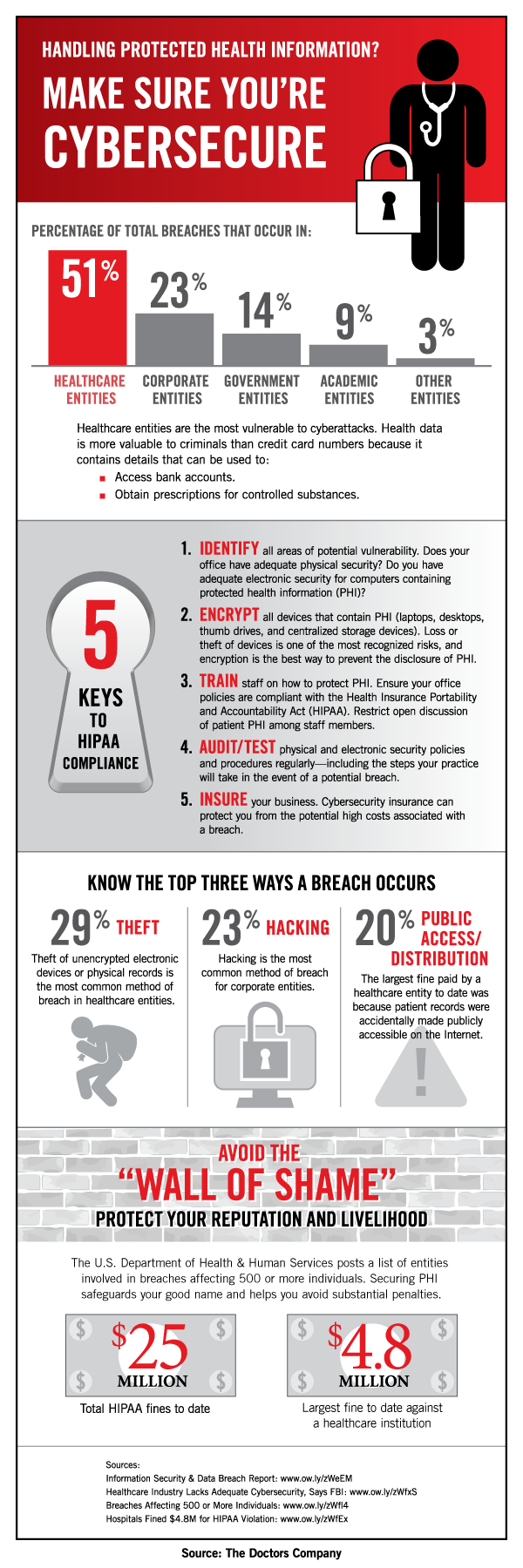
The Journal of Social and Personal Relationships found that older couples experience greater satisfaction and positive experiences with each other. The report also says happily married older people have better health, quality of life, and relationships with their children and friends. I think that is another one of those intuitively obvious facts that researchers still feel they must validate.

5. Your relationships get deeper and richer.

While younger people have more friends, the quality of older people’s relationships becomes richer. A study done by Case Western Reserve University found that volunteering was the most consistent predictor of cognitive well-being in people over age 72.

Assessment

Even with all these positives, old age isn’t exactly something to look forward to. Yet it doesn’t mean our golden years will necessarily be overridden with tarnish and rust. Living a healthy lifestyle and planning financially for retirement can certainly help make aging more comfortable. And clearly, aging is better than the alternative of not being around to grow old; especially when we factor in one last advantage of aging.

I haven’t yet experienced this personally, but I hear plenty about it from clients and friends. According to these sources, the best thing about aging is grandchildren.

Conclusion

Your thoughts and comments on this ME-P are appreciated. Feel free to review our top-left column, and top-right sidebar materials, links, URLs and related websites, too. Then, subscribe to the ME-P. It is fast, free and secure.

Link: http://feeds.feedburner.com/HealthcareFinancialsthePostForcxos

Speaker: If you need a moderator or speaker for an upcoming event, Dr. David E. Marcinko; MBA – Publisher-in-Chief of the Medical Executive-Post – is available for seminar or speaking engagements. Contact: MarcinkoAdvisors@msn.com

OUR OTHER PRINT BOOKS AND RELATED INFORMATION SOURCES:

Health Dictionary Series: http://www.springerpub.com/Search/marcinko

Practice Management: http://www.springerpub.com/product/9780826105752

Physician Financial Planning: http://www.jbpub.com/catalog/0763745790

Medical Risk Management: http://www.jbpub.com/catalog/9780763733421

Hospitals: http://www.crcpress.com/product/isbn/9781439879900

Physician Advisors: www.CertifiedMedicalPlanner.org

Product Details  Product Details

Product DetailsProduct Details

Comprehensive Financial Planning Strategies for Doctors and Advisors: Best Practices from Leading Consultants and Certified Medical Planners™