Understanding 4 Key Financial Psychological Biases

By Staff Reporters

SPONSOR: http://www.MarcinkoAssociates.com

***

***

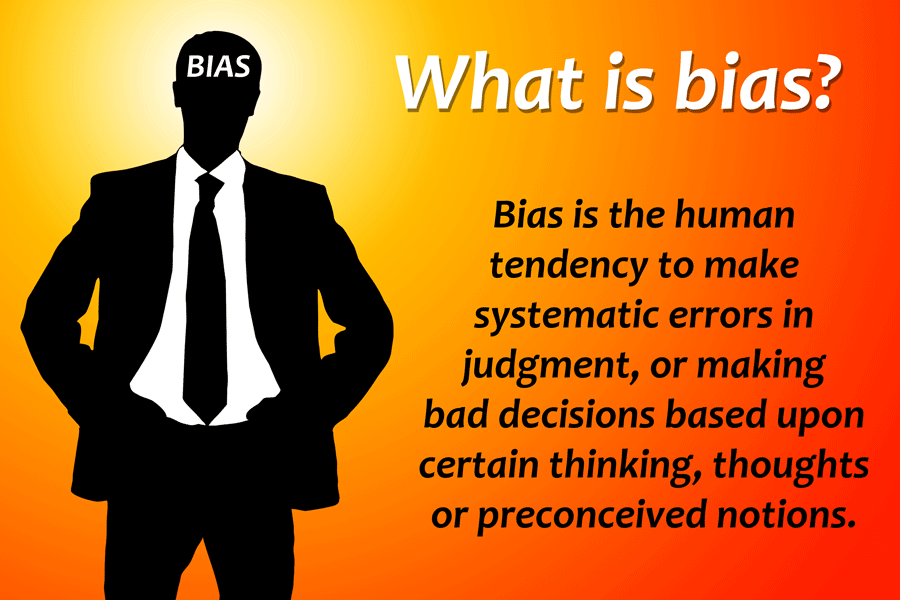
The following are 4 common financial psychological biases.  Some are learned while others are genetically determined (and often socially reinforced).  While this essay focuses on the financial and investing implications of these biases, they are prevalent in most areas in life.

STOCK MARKET: https://medicalexecutivepost.com/2024/10/13/stock-market-a-zero-sum-bias/

Loss aversion affected many investors during the stock market crash of 2007-08 or the flash crash of May 6, 2010 also known as the crash of 2:45. During the crash, many people decided they couldn’t afford to lose more and sold their investments.

Of course, this caused the investors to sell at market troughs and miss the quick, dramatic recovery.

Overconfident investing happens when we believe we can out-smart other investors via market timing or through quick, frequent trading.

Data convincingly shows that people who trade most often under-perform the market by a significant margin over time.

Mental accounting takes place when we assign different values to money depending on where we got it.

For instance, even though we may have an aggressive saving goal for the year, it is likely easier for us to save money that we worked for than money that was given to us as a gift.

Herd mentality makes it very hard for humans to not take action when everyone around us does.

For example, we may hear stories of people making significant profits buying, fixing up, and flipping homes and have the desire to get in on the action, even though we have no experience in real estate.

CITE: https://www.r2library.com/Resource/Title/0826102549

COMMENTS APPRECIATED

Thank You

***

***

ALTERNATE INVESTMENTS: 401[k] Accounts

By A.I. and Staff Reporters

***

***

President Trump is set to sign an executive order allowing alternative assets such as cryptocurrency, private equity investments, and real estate in 401(k) accounts. Those accounts are a veritable gold mine—Americans have stashed approximately $12.5 trillion away for retirement, and alternative asset managers have been chomping at the bit to get a piece of that pie.

WIND ENERGY: https://medicalexecutivepost.com/2012/08/20/wind-energy-alternate-investments/

According to Brew Markets, the changes have been a long time coming. All the way back in his first term, Trump ordered the Labor Department to review how to incorporate private equity investments into retirement accounts, an effort that was later reversed under President Biden. This latest move expands beyond private equity, coinciding with Trump’s push to bring crypto mainstream.

REAL ESTATE: https://medicalexecutivepost.com/2013/09/10/financial-freedom-through-commercial-real-estate-education-and-investing/

Proponents argue that alternative assets in 401(k) accounts will enhance investment diversification and could provide retirees with greater profits. Detractors note that these assets are less liquid, less transparent, and generally more risky than investing retirement funds into publicly traded stocks and bonds.

HEDGE FUNDS: https://medicalexecutivepost.com/2024/07/09/hedge-funds-understanding-fees-and-costs/

COMMENTS APPRECIATED

Like and Subscribe

***

***

Real Estate Agent VERSUS Realtor?

By AI

***

***

The terms “real estate agent” and “realtor” are often used interchangeably to describe a licensed professional who can help you buy or sell a home. But the terms have different meanings. 

Real Estate Investing: https://medicalexecutivepost.com/2025/04/14/physicians-on-real-estate-investing/

  • A realtor is a licensed salesperson who belongs to the National Association of Realtors (NAR), and must comply with NAR’s code of ethics. The term is capitalized when describing a NAR member, and NAR owns the trademark.
  • A real estate agent is simply a licensed salesperson who does not belong to NAR, and refers to any individual who holds a real estate salesperson’s license.

REITS: https://medicalexecutivepost.com/2024/08/13/on-non-traded-real-estate-investment-trusts-reits/

Should you hire a real estate agent or a realtor? Agents who belong to NAR aren’t necessarily better than non-member agents. NAR is just a trade association — not a licensing body — so membership is optional. 

Commercial RE: https://medicalexecutivepost.com/2013/09/10/financial-freedom-through-commercial-real-estate-education-and-investing/

COMMENTS APPRECIATED

Like and Refer

***

***

STOCKS: Basic Definitions

By Staff Reporters

SPONSOR: http://www.MarcinkoAssociates.com

***

***

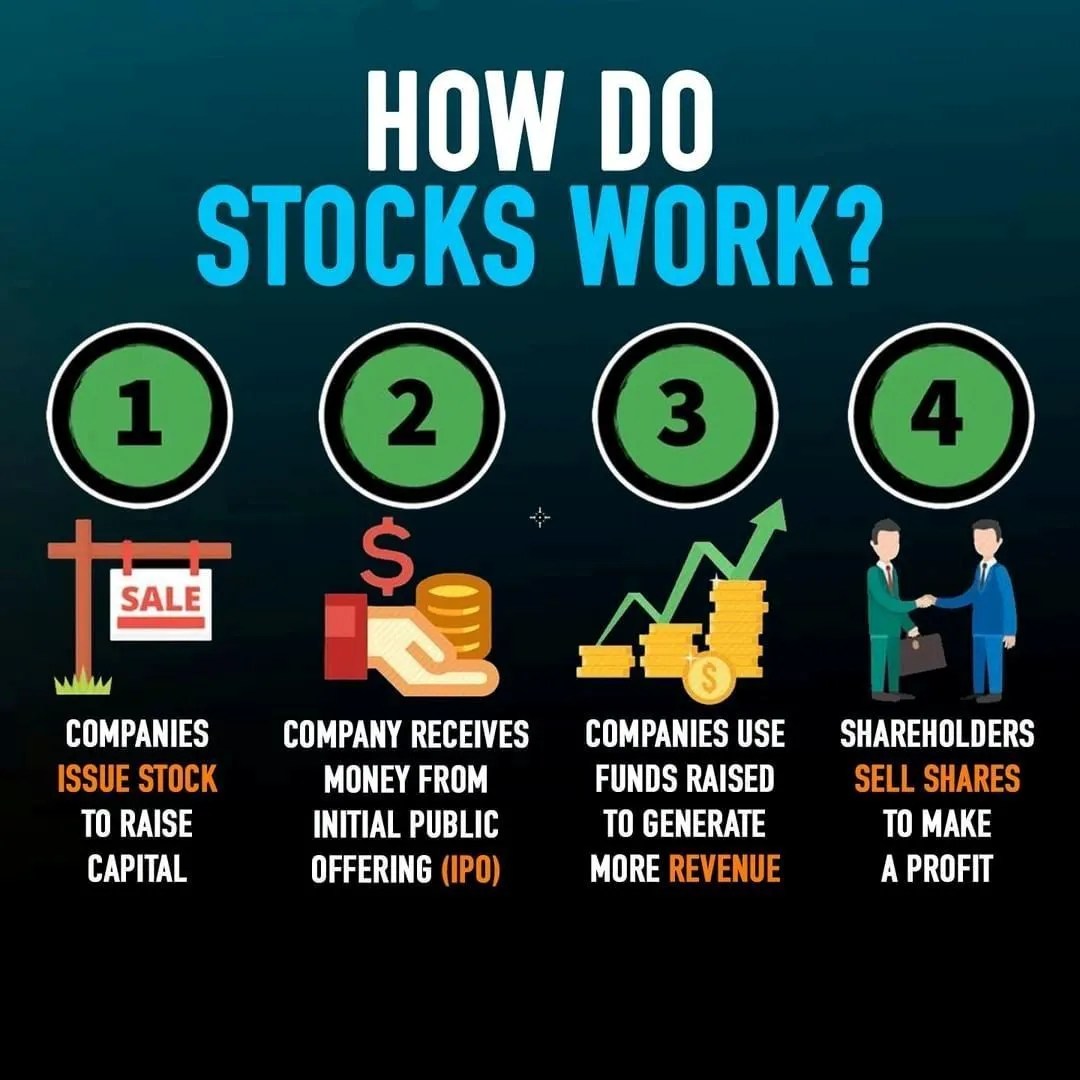
When you buy a share of stock, you are taking ownership in a company.  Collectively, the company is owned by all the shareholders, and each share represents a claim on assets and earnings.  If the company distributes profits to its shareholders, you should receive a proportionate share of the earnings.

Stocks are often categorized by the size of the company, or their market capitalization.  The market capitalization is determined by multiplying the number of outstanding shares by the current share price.  The most common market cap classes are small-cap (valued from $100 million to $1 billion), mid-cap ($1 billion to $10 billion), and large cap ($10 billion to $100 billion).

Stocks are also categorized by their sector, or the type of business the company conducts.  Common sectors include utilities, consumer staples, energy, communications, financial, health care, transportation, and technology.

***

***

Stocks are often viewed as being in one of two categories — growth or value.

  • Growth stocks are ones that are associated with high quality, successful companies that are expected to continue growing at a better-than-average rate as compared to the rest of the market.
  • Value stocks are ones that have generally solid fundamentals, but are currently out of favor with the market.  This may be due to the company being relatively new and unproven in the market, or because the company has recently experienced a decline due to the company’s sector being affected negatively.  An example of this would be if the federal government was to levy a new tax on all cell phones, thus negatively affecting all cell phone company stocks.

History has shown that, over time, stocks have provided a better return than bonds, real estate, and other savings vehicles.  As a result, stocks may be the ideal investment for investors with long-term goals.

COMMENTS APPRECIATED

Refer and Like

***

***

PHYSICIANS: On Real Estate Investing

OVER HEARD IN THE FINANCIAL ADVISOR’S LOUNGE

***

***

By Perry D’Alessio, CPA
[D’Alessio Tocci & Pell LLP]

What I see in my accounting practice is that significant accumulation in younger physician portfolio growth is not happening as it once did. This is partially because confidence in the equity markets is still not what it was; but that doctors are also looking for better solutions to support their reduced incomes.

For example, I see older doctors with about 25 percent of their wealth in the market, and even in retirement years, do not rely much on that accumulation to live on. Of this 25 percent, about 80 percent is in their retirement plan, as tax breaks for funding are just too good to ignore.

What I do see is that about 50 percent of senior physician wealth is in rental real estate, both in a private residence that has a rental component, and mixed-use properties. It is this that provides a good portion of income in retirement.

***

***

QUESTION: So, could I add dialog about real estate as a long term solution for retirement?

Yes, as I believe a real estate concentration in the amount of 5 percent is optimal for a diversified portfolio, but in a very passive way through mutual or index funds that are invested in real estate holdings and not directly owning properties.

Today, as an option, we have the ability to take pension plan assets and transfer marketable securities for rental property to be held inside the plan collecting rents instead of dividends.

Real estate holdings never vary very much, tend to go up modestly, and have preferential tax treatment due to depreciation of the property against income.

COMMENTS APPRECIATED

Read, Subscribe and Refer

EDUCATION: Books

***

***

MEDICAL PRACTICE: As a Financial Asset Class?

SPONSOR: http://www.MarcinkoAssociates.com

**

***

By Dr. David Edward Marcinko; MBA MEd CMP

***

What Is an Alternative Investment?

An alternative investment is a financial asset that does not fall into one of the conventional investment categories. Conventional categories include stocks, bonds, and cash. Alternative investments can include private equity or venture capital, hedge funds, managed futures, art and antiques, commodities, and derivatives contracts. Real estate is also often classified as an alternative investment.

QUESTION: But what about a medical, podiatric or dental practice?

***

***

An Alternate Asset Class Surrogate?

A medical practice is much like an alternative investment [AI], or alternate asset class in, two respects.

  • First, it provides the work environment that generates personal income which has been considered generous, to date. 
  • Second, it has inherent appreciation and sales value that can be part of an exit (retirement) or succession planning transfer strategy.

Conclusion

So, unlike the emerging thought that offers Social Security payments as a surrogate for an asset classes; or a federally insured AAA bond – a medical practice might also be considered by some folks as an asset class within a well diversified modern investment portfolio.

EDUCATION: Books

SPEAKING: Dr. Marcinko will be speaking and lecturing, signing and opining, teaching and preaching, storming and performing at many locations throughout the USA this year! His tour of witty and serious pontifications may be scheduled on a planned or ad-hoc basis; for public or private meetings and gatherings; formally, informally, or over lunch or dinner. All medical societies, financial advisory firms or Broker-Dealers are encouraged to submit a RFP for speaking engagements: MarcinkoAdvisors@outlook.com 

COMMENTS APPRECIATED

Read, Like, Refer and Subscribe

***

***

TRADITIONAL INVESTMENT PORTFOLIO DIVERSIFICATION MODEL: Routed by Larry Fink CEO of BlackRock?

BREAKING NEWS – MARKET VOLATILITY

By Staff Reporters

***

***

US stocks nosedived on Thursday, with the Dow tumbling more than 1,200 points as President Trump’s surprisingly steep “Liberation Day” tariffs sent shock waves through markets worldwide. The tech-heavy NASDAQ Composite (IXIC) led the sell-off, plummeting over 4%. The S&P 500 (GSPC) dove 3.7%, while the Dow Jones Industrial Average (^DJI) tumbled roughly 3%. [ongoing story].

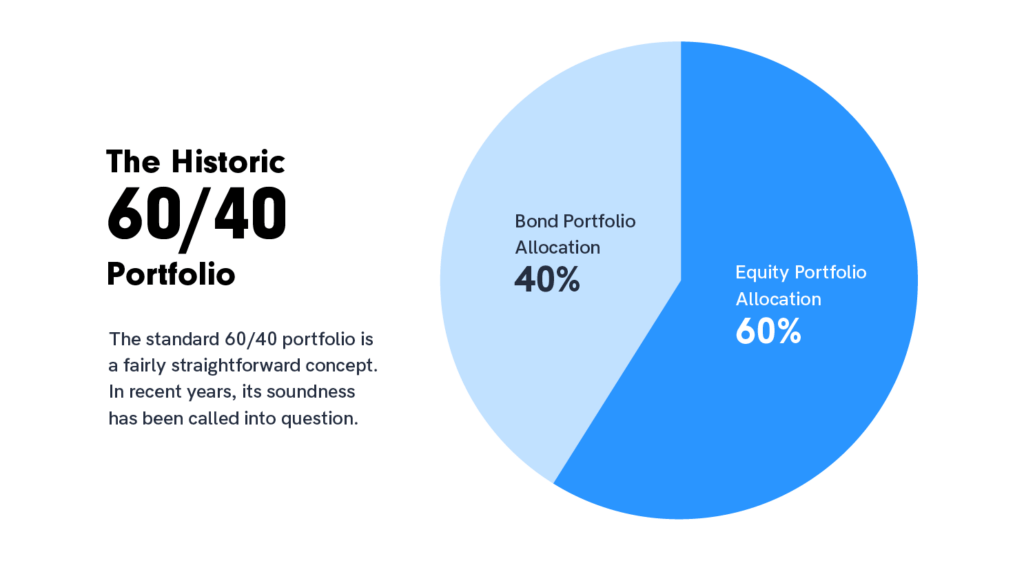
So, does the traditional 60 stock / 40 bond strategy still work or do we need another portfolio model?

***

The 60/40 strategy evolved out of American economist Harry Markowitz’s groundbreaking 1950s work on modern portfolio theory, which holds that investors should diversify their holdings with a mix of high-risk, high-return assets and low-risk, low-return assets based on their individual circumstances.

While a portfolio with a mix of 40% bonds and 60% equities may bring lower returns than all-stock holdings, the diversification generally brings lower variance in the returns—meaning more reliability—as long as there isn’t a strong correlation between stock and bond returns (ideally the correlation is negative, with bond returns rising while stock returns fall).

CORRELATION: https://medicalexecutivepost.com/2024/10/27/correlation-diversification-in-finance-and-investments/

For 60/40 to work, bonds must be less volatile than stocks and economic growth and inflation have to move up and down in tandem. Typically, the same economic growth that powers rallies in equities also pushes up inflation—and bond returns down. Conversely, in a recession stocks drop and inflation is low, pushing up bond prices.

***

  • But, the traditional 60/40 portfolio may “no longer fully represent true diversification,” BlackRock CEO Larry Fink writes in a new letter to investors.
  • Instead, the “future standard portfolio” may move toward 50/30/20 with stocks, bonds and private assets like real estate, infrastructure and private credit, Fink writes.
  • Here’s what experts say individual investors may want to consider before dabbling in private investments.

It may be time to rethink the traditional 60/40 investment portfolio, according to BlackRock CEO Larry Fink. In a new letter to investors, Fink writes the traditional allocation comprised of 60% stocks and 40% bonds that dates back to the 1950s “may no longer fully represent true diversification.

DI-WORSIFICATION: https://medicalexecutivepost.com/2024/04/09/what-is-financial-portfolio-di-worsification-2/

EDUCATION: Books

SPEAKING: Dr. Marcinko will be speaking and lecturing, signing and opining, teaching and preaching, storming and performing at many locations throughout the USA this year! His tour of witty and serious pontifications may be scheduled on a planned or ad-hoc basis; for public or private meetings and gatherings; formally, informally, or over lunch or dinner. All medical societies, financial advisory firms or Broker-Dealers are encouraged to submit a RFP for speaking engagements: MarcinkoAdvisors@outlook.com 

COMMENTS APPRECIATED

Read, Like, Subscribe and Refer

***

***

How to Invest When There’s Nowhere to Hide

By Vitaliy Katsenelson; CFA

***

***

How to Invest When There’s Nowhere to Hide
I was having lunch with a close friend of mine. He mentioned that he had accumulated a significant sum of money and did not know what to do with it. It was sitting in bonds, and inflation was eating its purchasing power at a very rapid rate.

He is a dentist and had originally thought about expanding his business, but a shortage of labor and surging wages turned expanding into a risky and low-return investment. He complained that the stock market was extremely expensive. I agreed.*

He said that the only thing left was residential real estate. I pushed back. “What do you think will happen to the affordability of houses if – and most likely when – interest rates go up? Inflation is now 6%. I don’t know where it will be in a year or two, but what if it becomes a staple of the economy? Interest rates will not be where they are today. Even at 5% interest rates [I know, a number unimaginable today] houses become unaffordable to a significant portion of the population. Yes, borrowers’ incomes will be higher in nominal terms, but the impact of the doubling of interest rates on the cost of mortgages will be devastating to affordability.”

He rejoined, “But look at what happened to housing over the last twenty years. Housing prices have consistently increased, even despite the financial crisis.”

I agreed, but I qualified his statement: “Over the past twenty, actually thirty, years interest rates declined. I honestly don’t know where interest rates will be in the future. But probabilistically, knowing what we know now, the chances that they are going to be higher, much higher, are more likely than their staying low. Especially if you think that inflation will persist.”

We quickly shifted our conversation toward more meaningful topics, like kids.

It seems that every year I think we have finally reached the peak of crazy, only to be proven wrong the next year. The stock market and thus index funds, just like real estate, have only gone one way – up. Index funds became the blunt instrument of choice in an always-rising market. So far, this choice has paid off nicely.

The market is the most expensive it has ever been, and thus future returns of the market and index funds will be unexciting. (I am being gentle here.)

You don’t have to be a stock market junkie to notice the pervasive feeling of euphoria. But euphoria is a temporary, not a permanent emotion; and at least when it comes to the stock market, it is usually supplanted by despair. Market appreciation that was driven by expanding valuations was not a gift but a loan – the type of loan that must always be paid back with a high rate of interest.

I don’t know what straw will break the feeble back of this market or what will cause the music to stop (there, you got two analogies for the price of none). We are in an environment where there are very few good options. If you do nothing, your savings will be eaten away by inflation. If you do something, you find that most assets, including the stock market as a whole, are incredibly overvalued.

This is why what we do at IMA is so important.

We are doing the only sensible thing that you can do today. We spend very little time thinking about straws or what will cause the music to stop or how overvalued the market is. We are focusing all our energy on patiently building a portfolio of high-quality, cash-generative, significantly undervalued businesses that have pricing power.

This has admittedly been less rewarding than taking risky bets on unimaginably expensive assets. It may lack the excitement of sinking money into the darlings you see in the news every day, but we hope that our stocks will look like rare gems when the euphoria condenses into despair. As we keep repeating in every letter, the market is insanely overvalued. Our portfolio is anything but – we don’t own “the market”.

*A question may arise: Why did I not tell my dentist friend to pick individual stocks? He runs a busy dental practice and wouldn’t have the time or the training to pick stocks.

Why didn’t I offer him our services? IMA manages all my and my family’s liquid assets, but I have a rule that I never (ever!) break – I don’t manage my friends’ money. I’ll help them as much as possible with free advice but will never have a professional relationship with them. I intentionally create a separation between my personal and professional lives. After a difficult day in the market, I want to be able to go for beers with friends and leave the market at the office.

Also, this simplifies my relationships with my friends. There is no ambiguity in our friendship.

COMMENTS APPRECIATED

Refer, Like and Subscribe

***

***

DAILY UPDATE: Nurses Strike as Stocks Decline

By Staff Reporters

***

***

About 1,300 nurses at Staten Island University Hospital (SIUH) will strike on April 2nd if contract negotiations fail, the New York State Nurses Association (NYSNA) announced Thursday. The union, which represents about 42,000 nurses across the state, is looking for higher wages and improved nurse-to-patient ratios for their members—sticking points for Northwell Health, according to NYSNA.

AI RN Replacements: https://gizmodo.com/nvidia-wants-replace-nurses-with-ai-1851347917?utm_campaign=hcb&utm_medium=newsletter&utm_source=morning_brew

CITE: https://www.r2library.com/Resource

Here’s where the major benchmarks ended:

  • The S&P 500 index sank 15.99 points (0.3%) to 5,218.19; the Dow Jones Industrial Average dropped 162.26 points (0.4%) to 39,313.64; the NASDAQ Composite lost 44.35 points (0.3%) to 16,384.47. 
  • The 10-year Treasury note yield (TNX) rose three basis points to 4.25% after a four-day retreat.
  • The CBOE Volatility Index® (VIX) edged up 0.14 to 13.20.

The energy sector followed crude oil prices and was the strongest sector Monday. Utilities and materials also saw strength. Weakest sectors included industrials, information technology, and real estate.

COMMENTS APPRECIATED

Thank You

***

***

BANKS: Down

By Staff Reporters

***

***

Commercial real estate has been on the struggle bus since the pandemic hit in 2020, and now it’s taking regional banks along for the ride.

CITE: https://www.r2library.com/Resource

Recently, New York Community Bancorp (NYCB) shares took an 11% tumble—on top of a 38% plunge on Wednesday—after the bank said it’s dealing with surging losses from office buildings and multifamily apartment buildings. It’s a sign that commercial real estate (CRE) lenders are reckoning with the fact that they might not get their money back as commercial landlords struggle with high vacancies and interest rates:

  • More than $2.2 trillion in US commercial property loans will come due by 2027, according to the Wall Street Journal.
  • The default risk is worse for regional banks, where CRE loans make up nearly 29% of all assets, versus 6.5% at big national banks.

The KBW Regional Banking Index also dropped 9.2% since Wednesday, the most since Silicon Valley Bank’s collapse last year. (Coincidentally, most of the assets of Signature Bank, which failed shortly after SVB, were bought by NYCB.)

COMMENTS APPRECIATED

Thank You

***

***

BUYING: Home Economics

By Staff Reporters

***

***

A report released last month by the National Association of Realtors (NAR) confirms what many Americans suspect: home affordability is down. Due to rising interest rates and low inventory, NAR found that the average income of a home buyer between July 2022 and June 2023 was $107,000, up from $88,000 the year prior—one of the highest levels since NAR started tracking in 1981.

But the housing market continues to churn. The organization found…

  • More and more home buyers are single women. The share of single women buying homes is almost double that of men. They’re also slightly older—a single woman buying her first home is 38 on average, while a single man is 33 years old.
  • Buyers are older. The average first-time home buyer is 35, up from 29 in the 1980s, but it’s older people who are buying up the three-bedrooms after selling their starter homes: NAR found that the median age of a repeat home buyer last year was 58. In 1981, it was 36 years old.

COMMENTS APPRECIATED

Thank You
***

***

DAILY UPDATE: Stocks Rocket Back for Highest 2024 Close as Key Inflation Updates Loom

By Staff Reporters

***

SPONSOR: http://www.MarcinkoAssociates.com

***

***

Here is where the major benchmarks ended:

Bond yields and stock prices often move inversely to each other, in part because higher interest rates on virtually risk-free bonds lower the premium investors can expect from riskier assets like stocks, making it less appealing to buy equities. Last week, the 10-year Treasury yield briefly increased to 4.10%, near a three-week high, before dropping back near 4% Monday.

  • The S&P 500 index was up 66.30 points (1.4%) at 4,763.54; the Dow Jones Industrial Average was up 216.90 points (0.6%) at 37,683.01; the NASDAQ Composite was up 319.70 points (2.2%) at 14,843.77.
  • The 10-year Treasury note yield (TNX) was down about 3 basis points at 4.015%.
  • The CBOE® Volatility Index (VIX) was down 0.28 at 13.07.

Semiconductors shares were among the strongest performers, helped by a surge of 6.4% in Nvdia Corp. (NVDA), the top 2023 performer in the S&P 500 with a gain of 239%. Small-cap stocks were also firm as were consumer discretionary and communication services. The Russell 2000® Index (RUT) gained 1.9% to partly climb back from last week’s 3.7% drop.

Energy shares were soft because crude oil futures sank nearly 4% following reports Saudi Arabia lowered its prices.

CITE: https://www.r2library.com/Resource

COMMENTS APPRECIATED

Thank You

***

***

DAILY UPDATE: Crypto-Currency, ETFs and the Stock Markets

By Staff Reporters

***

SPONSOR: http://www.MarcinkoAssociates.com

***

The Markets as of 10:00am ET. Here’s what these numbers mean.
Markets: One week into 2024, stocks and bonds are off to their worst start in 21 years as investors maybe got a bit ahead of their skis in anticipating Fed rate cuts.

This week, Wall Street will be focused on fresh inflation data and the beginning of Q4 earnings season.


Bitcoin ETF cleared for launch? The first spot bitcoin ETF—could be approved by regulators this week in what would be a watershed moment for Wall Street’s embrace of digital tokens. The hype around these proposed funds, which would allow regular investors to gain exposure to bitcoin without buying it directly, drove bitcoin’s price up 162% over the past year.

Here is where the major benchmarks ended:

  • The S&P 500 Index was up 84.15 points (1.9%) at 4,495.70; the Dow Jones Industrial Average (DJI) was up 489.83 points (1.4%) at 34,827.70; the NASDAQ Composite (COMP) was up 326.64 points (2.4%) at 14,094.38.
  • The 10-year Treasury note yield (TNX) was down about 18 basis points at 4.453%.
  • CBOE’s Volatility Index (VIX) was down 0.60 at 14.16.

The small-cap focused Russell 2000 Index (RUT), which has lagged large-cap benchmarks for most of the year, jumped more than 5% Tuesday. Small-caps are often seen as being more exposed to the economic cycle and had suffered because of concerns that high interest rates could push the economy into recession.

Other interest rate-sensitive sectors, such as real estate, materials, and utilities, also saw outsize gains.

CITE: https://www.r2library.com/Resource

COMMENTS APPRECIATED

Thank You

***

***

REAL ESTATE: Commissions

By Staff Reporters

***

A federal jury in Missouri last week found the National Association of Realtors and large brokerages conspired to keep commissions artificially high, finding them liable for $1.8 billion in damages.

MORE: https://medicalexecutivepost.com/2023/01/19/real-estate-for-physician-investors/

This decision could have a major impact on anyone buying or selling a home. For one, it could lead to a 30% decrease in the $100 billion Americans pay in real estate commissions every year, according to investment banking firm Keefe, Bruyette & Woods (KBW).

MORE: https://medicalexecutivepost.com/2022/12/07/daily-update-down-real-estate-and-down-markets/

***

***

DAILY UPDATE: Realtors Liable for $1.8-B as US Millionaires and Stock Markets Rise Anew

By Staff Reporters

***

SPONSOR: http://www.MarcinkoAssociates.com

***

KANSAS CITY, Mo.—A federal jury just found the National Association of Realtors and large residential brokerages liable for about $1.8 billion in damages after determining they conspired to keep commissions for home sales artificially high. The verdict could lead to industry wide upheaval by changing decades-old rules that have helped lock in commission rates even as home prices have skyrocketed—which has allowed real-estate agents to collect ever-larger sums. It comes in the first of two antitrust lawsuits arguing that unlawful industry practices have left consumers unable to lower their costs even though internet-era innovations have allowed many buyers to find homes themselves online.

Real Estate for Physicians: https://medicalexecutivepost.com/2023/01/19/real-estate-for-physician-investors/

The Sitzer/Burnett class action lawsuit alleged that some of the nation’s largest real estate companies, including NAR, Keller Williams, Anywhere (formerly, Realogy), RE/MAX, Berkshire Hathaway’s HomeServices of America and two of its subsidiaries conspired to inflate commissions.

Commercial Real Estate for Physicians: https://medicalexecutivepost.com/2022/05/03/on-doctors-investing-in-commercial-real-estate/

***

  • Over 12% of American families, or over 16 million, are millionaires, per the WSJ.
  • Median net worth for the 80th-90th income percentile saw net worth gains of 69% from 2019 to 2022.
  • The upper-middle class is growing and becoming wealthier, particularly among those aged 55-74.

It’s not just the top 1% that’s getting richer — over 16 million American families now have a net worth over $1 million. That’s over 12% of American families, according to a Wall Street Journal analysis of the Federal Reserve’s Survey of Consumer Finances of over 4,600 American households. This compares to just 9.8 million families who were millionaires in 2019, the WSJ found.

Physician Finances: https://marcinkoassociates.com/financial-planning/

The analysis further noted how nearly eight million families have wealth over $2 million, compared to 4.7 million in 2019. This was particularly pronounced among families in the 55-74 age range. On the whole, median net worth — which measures household assets like houses and vehicles, minus debts like mortgages and student loans — rose an inflation-adjusted 37% between 2019 and 2022 up to around $193,000. Meanwhile, the average net worth rose to over $1 million, though this is skewed by extremely wealthy Americans.

Net worth has increased for all income percentiles even amid rising interest rates, though while the top 10% jumped from $1.84 million to $2.65 million, the bottom 20% rose from $10,780 to $16,900.

CITE: https://www.r2library.com/Resource

Finally, here is where the major US stock market benchmarks ended:

Economists expect the Fed to leave interest rates unchanged today, allowing previous rate increases to take greater hold of the economy and granting the central bank time to assess whether another hike will be necessary. Investors and policymakers will closely scour comments made by Fed Chair Jerome Powell for clues about the central bank’s path over the remainder of the year.

  • The S&P 500 Index was up 26.98 points (0.7%) at 4,193.80, down 2.2% for the month; the Dow Jones Industrial Average was up 123.91 points (0.4%) at 33,052.87, down 1.4% for the month; the NASDAQ Composite was up 61.76 points (0.5%) at 12,851.24, down 2.8% for the month.
  • The 10-year Treasury note yield was up about 3 basis points at 4.909%.
  • CBOE’s Volatility Index (VIX) was down 1.61 at 18.14.

Real estate and financial shares were among the strongest performers Tuesday. Semiconductor companies were also higher. Energy shares lagged as crude oil futures extended their slide, dropping to near $81 a barrel to end at a two-month low. The U.S. dollar index (DXY) strengthened to near 11-month highs in the wake of a Bank of Japan (BoJ) policy shift.

COMMENTS APPRECIATED

Thank You

***

***

DAILY UPDATE: The Turkish Lira Plunges, Janet Yellen Speaks and the Markets Diverge

By Staff Reporters

***

***

Turkey’s lira plunged 7% to a record low yesterday in its biggest selloff since a historic 2021 crash, a move traders said is a “strong signal” that Ankara is moving away from state controls toward a freely traded currency. The currency has come under increasing pressure since President Tayyip Erdogan was re-elected on May 28. It was trading at 23.18 against the dollar at 1500 GMT, after touching a record low of 23.19, bringing its losses this year to around 20%.

***

Treasury Secretary Janet Yellen, in her first interview since the U.S. debt-ceiling was lifted last week by Congress, warned on Wednesday about the potential for banks to feel strain from their exposure to weakening commercial real estate valuations. Yellen was asked by CNBC “Squawk Box” host Andrew Ross Sorkin about if she’s worried about the state of estimated $20.7 trillion commercial real-estate market, particularly the office, and if weakness in the sector could potentially spark more bank failures.

“Well, I do think that there will be issues with respect to commercial real estate,” Yellen said. “Certainly, the demand for office space since we’ve seen such a big change in attitudes and behavior toward remote work has changed and especially in an environment of higher interest rates.”

***

The equities market diverged today between a small handful of strong-performing mega-cap companies, which delivered most of the gains recently in the big benchmark indexes, and the lagging majority. Such concentration suggests a weakness below the headline numbers that could become a problem down the line.

Here is where the major benchmarks ended today:

  • The S&P 500® Index (SPX) was down 16.33 points (0.4%) at 4267.52; the Dow Jones Industrial Average (DJIA) was up 91.74 (0.3%) at 33,665.02; the NASDAQ Composite (COMPX) was down 171.52 (1.3%) at 13,104.90.
  • The 10-year Treasury note yield (TNX) was up about 9 basis points at 3.791%.
  • CBOEs Volatility Index (VIX) was down 0.04 at 13.92.

Smaller financial companies were also in the spotlight again, with the KBW Regional Banking Index (KRX) continuing its rebound with a nearly 4% jump. Energy stocks were also strong as crude oil futures climbed more than 1%, and transportation companies also gained. Communication Services led decliners among S&P 500 sectors.

***

ORDER: https://www.routledge.com/Risk-Management-Liability-Insurance-and-Asset-Protection-Strategies-for/Marcinko-Hetico/p/book/9781498725989

ORDER: https://www.routledge.com/Comprehensive-Financial-Planning-Strategies-for-Doctors-and-Advisors-Best/Marcinko-Hetico/p/book/9781482240283

***

COMMENTS APPRECIATED

Thank You

***

DAILY UPDATE: Stocks Up, Again!

By Staff Reporters

***

***

  • Markets: Stocks climbed for the second straight day as a last-minute deal to raise the debt ceiling begins to take shape. GOP House Speaker Kevin McCarthy and Democratic Senate Majority Leader Chuck Schumer signaled their chambers could vote next week on an agreement that would avert the US’ first-ever default.
  • Stock spotlight: Netflix shares popped after the streamer said its cheaper ad-supported plan is off to a hot start. Earlier this week, Netflix said that 25% of its new subscribers opted for the ad tier in regions where it’s available.

***

Here is where the major benchmarks ended yesterday:

  • The S&P 500 Index was up 39.28 points (0.9%) at 4198.05; the Dow Jones industrial average was up 115.14 (0.3%) at 33,535.91; the NASDAQ Composite was up 188.27 (1.5%) at 12,688.84.
  • The 10-year Treasury yield was up about 7 basis point at 3.65%.
  • CBOE’s Volatility Index was down 0.78 at 16.09.

The tech sector continued to be one of the market’s strongest performers, with the Philadelphia Semiconductor Index jumping nearly 3% and the Nasdaq-100 closing at a 13-month high. Real estate led decliners among S&P 500 sectors.

Also, the U.S. dollar index surged near a two-month high amid growing confidence the Fed won’t be lowering rates any time soon.

***

ORDER: https://www.routledge.com/Risk-Management-Liability-Insurance-and-Asset-Protection-Strategies-for/Marcinko-Hetico/p/book/9781498725989

ORDER: https://www.routledge.com/Comprehensive-Financial-Planning-Strategies-for-Doctors-and-Advisors-Best/Marcinko-Hetico/p/book/9781482240283

***

COMMENTS APPRECIATED

Thank You

***

DAILY UPDATE: Business News Briefs Plus TESLA and the Markets

By Staff Reporters

***

***

1. Regional banks’ plight was Morgan Stanley’s perk. The bank saw nearly $20 billion in new client assets in the wake of the banking crisis that rocked smaller banks like First Republic. Why the bank became a “destination of choice” amid the crisis.

2. Taylor Swift was the only one asking the right question on FTX. The mega star didn’t sign a $100 million sponsorship deal with the crypto exchange because, unlike seemingly everyone in Silicon Valley, she did some form of due diligence.

3. The new-age pension plan. Fidelity and State Street are rolling out annuity options within their 401(k) products, The Wall Street Journal reports. But it comes with a hefty price tag, and not everyone is sold on it.

4. It’s starting to get scary in the housing market. Foreclosure filings were up 22% in Q1 compared to last year, and repossessions are headed in the wrong direction as well.

Finally, Fintel reports that on April 21, 2023, Goldman Sachs maintained coverage of Tesla (NASDAQ:TSLA) with a Buy recommendation. As of April 6th, 2023, the average one-year price target for Tesla is $203.14. The forecasts range from a low of $24.58 to a high of $315.00. The average price target represents an increase of 24.63% from its latest reported closing price of $162.99. The projected annual revenue for Tesla is $118,517MM, an increase of 37.75%. The projected annual non-GAAP EPS is $5.70.

CITE: https://www.r2library.com/Resource

***

  • The S&P 500® Index was up 3.52 points (0.1%) at 4137.04; the Dow Jones industrial average was up 66.44 (0.2%) at 33,875.40; the NASDAQ Composite was down 35.25 (0.3%) at 12,037.20.
  • The 10-year Treasury yield was down about 7 basis points at 3.50%.
  • CBOEs Volatility Index was up 0.12 at 16.89.

Real estate and financials were among Monday’s weakest-performing sectors, while energy companies led gainers thanks to a jump of about 1% in crude oil futures. The U.S. dollar index fell to about 101.37, its weakest level since mid-April, while Treasury yields eased slightly.

***

CITE: https://www.amazon.com/Dictionary-Health-Information-Technology-Security/dp/0826149952/ref=sr_1_5?ie=UTF8&s=books&qid=1254413315&sr=1-5

***

ORDER: https://www.routledge.com/Comprehensive-Financial-Planning-Strategies-for-Doctors-and-Advisors-Best/Marcinko-Hetico/p/book/9781482240283

***

COMMENTS APPRECIATED

Thank You

***

DAILY UPDATE: Jack Dorsey, Deutsche Bank and the Markets

By Staff Reporters

***

***

Short seller Hindenburg Research has hit another billionaire’s fortune with a report. Jack Dorsey, the co-founder of payments company Block and Twitter, saw his net worth tumble by $526 million, or 11%, to $4.4 billion after the US-based research firm led by Nathan Anderson accused Block of misleading investors in a March 23 report, according to Bloomberg. Dorsey isn’t on the list of the world’s 500 richest persons on the Bloomberg Billionaires Index currently. He was previously featured at number 456 with a net worth of $5.41 billion on March 22nd, per Insider’s scan of the Index on Wednesday.

***

Investors sparked a furious selloff in Deutsche Bank AG and thrust one of Europe’s most important lenders into the center of concerns about the health of the global financial system. Shares of Germany’s largest lender tumbled as much as 15%, their third consecutive day of losses, though they later regained some ground and were recently down 10%. The cost to insure against its default using credit-default swaps soared to their highest levels since 2020.

***

Chairman Jerome Powell was ambiguous this week about future Federal Reserve moves, suggesting “some additional policy firming may be needed.”

Treasury yields dropped near seven-month lows, a seeming indication of escalating recession worries after the Fed raised its benchmark lending rate nine times to a range of 4.75% to 5% over the past year. The release next week of updated data on consumer confidence, inflation, and economic growth will likely be in focus.

Monetary Policy: https://medicalexecutivepost.com/2023/03/17/the-modern-us-monetary-system/

The swings in stock prices this week “were consistent with the unclear outlook for monetary policy, the banking system, and the broader economy,” says Kevin Gordon, senior investment strategist at Charles Schwab. “More time needs to pass before we know the true impact of the expected tightening in credit conditions.”

  • The S&P 500® Index was up 22.27 (0.6%) at 3970.99; the Dow Jones industrial average was up 132.28 (0.4%) at 32,237.53; the NASDAQ Composite was up 36.56 (0.3%) at 11,823.96.
  • The 10-year Treasury yield was little changed at about 3.374%.
  • CBOE’s Volatility Index was down 0.87 at 21.74.

The real estate sector led the gainers Friday, followed by consumer staples and health care. Financials and consumer discretionary stocks edged lower, and technology stocks were little changed, though the tech-focused NASDAQ Composite still notched its second straight weekly gain. Gold and crude oil futures both declined, while the U.S. dollar strengthened.

***

ORDER: https://www.routledge.com/Comprehensive-Financial-Planning-Strategies-for-Doctors-and-Advisors-Best/Marcinko-Hetico/p/book/9781482240283

***

COMMENTS APPRECIATED

Thank You

***

A DENTIST ASKS: How to Invest When There’s Nowhere to Hide?

***

By Vitaliy Katsenelson CFA

***

How to Invest When There’s Nowhere to Hide
I was having lunch with a close friend of mine. He mentioned that he had accumulated a significant sum of money and did not know what to do with it. It was sitting in bonds, and inflation was eating its purchasing power at a very rapid rate.

He is a dentist and had originally thought about expanding his business, but a shortage of labor and surging wages turned expanding into a risky and low-return investment. He complained that the stock market was extremely expensive. I agreed.*

***

CITE: https://www.r2library.com/Resource/Title/082610254

COMMENTS APPRECIATED.

Subscribe to the Medical Executive-Post.

THANK YOU

***

INVESTING: https://www.amazon.com/Comprehensive-Financial-Planning-Strategies-Advisors/dp/1482240289/ref=sr_1_1?ie=UTF8&qid=1418580820&sr=8-1&keywords=david+marcinko

***

REAL ESTATE Investing for Physicians?

OVER HEARD IN THE ADVISOR’S LOUNGE

Real Estate and Physicians

What I see in my accounting practice is that significant accumulation in younger physician portfolio growth is not happening as it once did. This is partially because confidence in the equity markets is still not what it was; but that doctors are also looking for better solutions to support their reduced incomes.

For example, I see older doctors with about 25 percent of their wealth in the market, and even in retirement years, do not rely much on that accumulation to live on. Of this 25 percent, about 80 percent is in their retirement plan, as tax breaks for funding are just too good to ignore.

What I do see is that about 50 percent of senior physician wealth is in rental real estate, both in a private residence that has a rental component, and mixed-use properties. It is this that provides a good portion of income in retirement.

So; could I add dialog about real estate as a long term solution for retirement?

Yes, as I believe a real estate concentration in the amount of 5 percent is optimal for a diversified portfolio, but in a very passive way through mutual or index funds that are invested in real estate holdings and not directly owning properties.

Today, as an option, we have the ability to take pension plan assets and transfer marketable securities for rental property to be held inside the plan collecting rents instead of dividends.

Real estate holdings never vary very much, tend to go up modestly, and have preferential tax treatment due to depreciation of the property against income.

YOUR THOUGHTS ARE APPRECIATED.

GLEASONS GIVE A KID A DREAM | gleasonsgiveakidadream

Perry D’Alessio, CPA
[D’Alessio Tocci & Pell LLP]

THANK YOU

***