BOARD CERTIFICATION EXAM STUDY GUIDES Lower Extremity Trauma
[Click on Image to Enlarge]
ME-P Free Advertising Consultation
The “Medical Executive-Post” is about connecting doctors, health care executives and modern consulting advisors. It’s about free-enterprise, business, practice, policy, personal financial planning and wealth building capitalism. We have an attitude that’s independent, outspoken, intelligent and so Next-Gen; often edgy, usually controversial. And, our consultants “got fly”, just like U. Read it! Write it! Post it! “Medical Executive-Post”. Call or email us for your FREE advertising and sales consultation TODAY [678.779.8597] Email: MarcinkoAdvisors@outlook.com
Medical & Surgical e-Consent Forms
ePodiatryConsentForms.com
iMBA Inc., OFFICES
Suite #5901 Wilbanks Drive, Norcross, Georgia, 30092 USA [1.678.779.8597]. Our location is real and we are now virtually enabled to assist new long distance clients and out-of-town colleagues.
ME-P Publishing
SEEKING INDUSTRY INFO PARTNERS?
If you want the opportunity to work with leading health care industry insiders, innovators and watchers, the “ME-P” may be right for you? We are unbiased and operate at the nexus of theoretical and applied R&D. Collaborate with us and you’ll put your brand in front of a smart & tightly focused demographic; one at the forefront of our emerging healthcare free marketplace of informed and professional “movers and shakers.” Our Ad Rate Card is available upon request [678-779-8597].
Population health and public health are two interrelated disciplines that strive to enhance the health outcomes of communities. While they share a common mission—to reduce health disparities and promote wellness—their approaches, target populations, and operational frameworks differ significantly.
***
***
Public health is traditionally defined as the science and art of preventing disease, prolonging life, and promoting health through organized efforts and informed choices of society, organizations, public and private sectors, communities, and individuals. It focuses on the health of the general population and emphasizes broad interventions such as vaccination programs, sanitation, health education, and policy advocacy. Public health professionals often work in government agencies, nonprofit organizations, and academic institutions to implement community-wide initiatives that prevent disease and promote healthy behaviors.
***
***
In contrast, population health takes a more targeted approach. It refers to the health outcomes of a specific group of individuals, including the distribution of such outcomes within the group. This field is particularly concerned with the social determinants of health—factors like income, education, environment, and access to care—that influence health disparities. Population health strategies often involve data-driven interventions tailored to the needs of defined groups, such as rural communities, ethnic minorities, or patients with chronic conditions.
One key distinction lies in scope and granularity. Public health initiatives are typically designed for the entire population, aiming to create systemic change. For example, anti-smoking campaigns or water fluoridation programs benefit everyone regardless of individual risk. Population health, however, might focus on reducing diabetes rates among Hispanic adults in a specific urban area, using targeted outreach and culturally sensitive care models.
Another difference is in data utilization. Population health relies heavily on health informatics and analytics to identify trends, allocate resources, and evaluate outcomes. This evidence-based approach supports precision in addressing health inequities. Public health also uses data, but often at a broader level to guide policy and monitor general health indicators like life expectancy or disease prevalence.
Despite these differences, the two fields are complementary. Public health lays the foundation for healthy societies through preventive infrastructure, while population health builds on this by addressing nuanced needs within subgroups. Together, they form a holistic framework for improving health outcomes across diverse communities.
In today’s healthcare landscape, the integration of public and population health is increasingly vital. The COVID-19 pandemic underscored the importance of both approaches: public health measures like mask mandates and vaccination campaigns were essential, while population health efforts ensured vulnerable groups received targeted support.
In conclusion, while public health and population health differ in focus and methodology, they are united by a shared goal: to foster healthier communities. Understanding their distinctions enables more effective collaboration and innovation in health policy, care delivery, and community engagement.
SPEAKING: ME-P Editor Dr. David Edward Marcinko MBA MEd will be speaking and lecturing, signing and opining, teaching and preaching, storming and performing at many locations throughout the USA this year! His tour of witty and serious pontifications may be scheduled on a planned or ad-hoc basis; for public or private meetings and gatherings; formally, informally, or over lunch or dinner. All medical societies, financial advisory firms or Broker-Dealers are encouraged to submit an RFP for speaking engagements: CONTACT: Ann Miller RN MHA at MarcinkoAdvisors@outlook.com -OR-http://www.MarcinkoAssociates.com
Posted on May 1, 2025 by Dr. David Edward Marcinko MBA MEd CMP™
By Health Capital Consultants LLC
***
***
While the healthcare industry has been dealing with high employee turnover since the start of the COVID-19 pandemic, that turnover was largely among clinical staff.
However, a recent survey found that significant healthcare leadership turnover may also be on the horizon. AMN Healthcare subsidiary B.E. Smith found that nearly half of healthcare executives plan to leave their organization in the next year.
This Health Capital Topics article reviews the survey and the reasons behind the intended exits. (Read more…)
Posted on February 11, 2025 by Dr. David Edward Marcinko MBA MEd CMP™
MEDICAL EXECUTIVE-POST–TODAY’SNEWSLETTERBRIEFING
***
Essays, Opinions and Curated News in Health Economics, Investing, Business, Management and Financial Planning for Physician Entrepreneurs and their Savvy Advisors and Consultants
“Serving Almost One Million Doctors, Financial Advisors and Medical Management Consultants Daily“
A Partner of the Institute of Medical Business Advisors , Inc.
Community Health Center, Inc. (CHC) detected a data breach on Jan. 2 after identifying unusual activity within its computer systems. An investigation confirmed that a skilled hacker had accessed and extracted data but did not delete or lock any information. If CHC’s claims are accurate, this is a positive outcome, as hackers often deploy ransomware, a type of attack in which they lock systems and demand payment before restoring access.
Over one million Floridians have had their health insurance revoked as a result of a nationwide disenrollment from coverage that was previously safeguarded as part of the COVID-19 pandemic response. Medicaid and Children’s Health Insurance Program (CHIP) enrolment in Florida has fallen from 5.1 million to 3.8 million between March 2023 and October 2024, according to health care research non-profit the Kaiser Family Foundation (KFF).
US stocks bounced back on Monday as investors looked beyond President Trump’s latest tariff threats, including new levies on steel and aluminum imports.
The Dow Jones Industrial Average (^DJI) added nearly 0.4% after the blue-chip index on Friday booked its worst loss in nearly four weeks. The S&P 500 (^GSPC) rose roughly 0.6%, while the NASDAQ Composite (^IXIC) popped nearly 1% as shares of AI chip giant Nvidia (NVDA) surged 3%, along with other tech stocks.
Posted on January 20, 2025 by Dr. David Edward Marcinko MBA MEd CMP™
BREAKING NEWS
By Staff Reporters
***
***
WASHINGTON: 8:15 am: The President Joe Biden administration just preemptively pardoned Anthony Fauci, MD.
“Our nation relies on dedicated, selfless public servants every day. They are the lifeblood of our democracy,” Biden said in a statement just hours before President-elect Donald Trump is sworn into office.
“The issuance of these pardons should not be mistaken as an acknowledgment that any individual engaged in any wrongdoing, nor should acceptance be misconstrued as an admission of guilt for any offense,” Biden said in a statement.
Posted on December 31, 2024 by Dr. David Edward Marcinko MBA MEd CMP™
MEDICAL EXECUTIVE-POST–TODAY’SNEWSLETTERBRIEFING
***
Essays, Opinions and Curated News in Health Economics, Investing, Business, Management and Financial Planning for Physician Entrepreneurs and their Savvy Advisors and Consultants
“Serving Almost One Million Doctors, Financial Advisors and Medical Management Consultants Daily“
A Partner of the Institute of Medical Business Advisors , Inc.
Stat: 4 in 10. That’s about how many US nursing home residents got an updated Covid-19 vaccine in the winter of 2023–24, according to the CDC, despite the recommendation that adults 65 and older get the new shot. (KFF)
Stocks fell on Monday, with the woes of the three major indexes continuing in the final week of the year as an otherwise strong 2024 comes to a close.
The benchmark S&P 500 (^GSPC) slipped more than 1% while the tech-heavy NASDAQ Composite (^IXIC) fell roughly 1.2%. The Dow Jones Industrial Average (^DJI) fell about 0.8%.
Stocks moved lower as the 10-year Treasury yield (^TNX) retreated from a seven-month high to hover near 4.55%. Stocks closed out last week with a Friday slide from Big Tech names like Tesla (TSLA) and Nvidia (NVDA), with the NASDAQ Composite falling 1.5% and the S&P 500 down over 1%.
Chinese state-sponsored hackers breached the U.S. Treasury Department’s computer security guardrails this month and stole documents in what Treasury called a “major incident,” according to a letter to lawmakers that was provided to Reuters on Monday.
The hackers compromised third-party cybersecurity service provider BeyondTrust and were able to access unclassified documents, the letter said.
Posted on December 27, 2024 by Dr. David Edward Marcinko MBA MEd CMP™
MEDICAL EXECUTIVE-POST–TODAY’SNEWSLETTERBRIEFING
***
Essays, Opinions and Curated News in Health Economics, Investing, Business, Management and Financial Planning for Physician Entrepreneurs and their Savvy Advisors and Consultants
“Serving Almost One Million Doctors, Financial Advisors and Medical Management Consultants Daily“
A Partner of the Institute of Medical Business Advisors , Inc.
Absent Congressional action, beginning January 1sy, 2025, the statutory limitations that were in place for Medicare telehealth services prior to the COVID-19 PHE will retake effect for most telehealth services.
This means most telehealth visits will not be covered by Medicare in 2025, unless Congress acts by the end of December 2024.
***
(Reuters) -The Dow Jones Industrial Average closed fractionally higher on Thursday, stretching its winning streak to five sessions despite light trading volumes and rising U.S. Treasury yields weighing on some of the dominant technology megacaps.
While the NASDAQ Composite and the S&P 500 were broadly unchanged, the indexes both finished slightly in negative territory. This snapped the NASDAQ’s four-session run of higher closes, and ended the S&P 500’s own run at three sessions.
On a day of few catalysts, investors responded to yields on U.S. government bonds inching higher, including the yield on the benchmark 10-year Treasury note hitting its highest since early May at 4.64% earlier in the session. And, a strong auction of seven-year notes early in the afternoon though helped yields come off slightly, with the 10-year note at 4.58% in late-afternoon trade.
Higher yields are traditionally seen as negative for growth stocks, as it raises the cost of their borrowing to fund expansion. With markets increasingly dominated by the megacap technology stocks known as the Magnificent Seven, crimping their performance – especially in lieu of other market catalysts – will put downward pressure on benchmark indexes.
The S&P 500 slipped 2.45 points, or 0.04%, to 6,037.59 points, while the NASDAQ Composite lost 10.77 points, or 0.05%, to 20,020.36. The Dow Jones Industrial Average rose 28.77 points, or 0.07%, to 43,325.80.
Six of the megacaps fell, with Tesla leading decliners with a 1.8% fall. The outlier was Apple, rising 0.3% and continuing to edge closer to becoming the first company in the world to hit a market value of $4 trillion.
Posted on October 14, 2024 by Dr. David Edward Marcinko MBA MEd CMP™
COMMON SENSE PUBLIC AND POPULATION HEALTH
By Staff Reporters
***
***
According to colleague Dan Ariely PhD,Disease Avoidant Behavior are the actions we take to avoid illness, often driven by instinctive or learned responses. It’s why we wash our hands obsessively during flu season, wear a balaclava mask and/or avoid people who are sneezing or coughing.
Note: A balaclava is a form of cloth headgear designed to expose only part of the face, usually the eyes and mouth. Depending on style and how it is worn, only the eyes, mouth and nose, or just the front of the face are unprotected. Versions with enough of a full face opening may be rolled into a hat to cover the crown of the head or folded down as a collar around the neck.
This behavior is rooted in our evolutionary survival instincts, helping us steer clear of contagious health threats like RSV, COVID and the winter flu. While it’s usually a good thing, excessive disease avoidant behavior can lead to anxiety and social isolation.
So, balance caution with common sense and public/population health directives to stay healthy and sane.
Posted on September 30, 2024 by Dr. David Edward Marcinko MBA MEd CMP™
By Health Capital Consultants, LLC
***
***
For the first time since the COVID-19 pandemic, hospitals are finally reporting sustained, improved financial and operational performance. To date in 2024, hospitals have seen better margins, increased patient utilization, and a more stabilized workforce. Another result of this improved performance has been an increase in hospital transactional activity.
This Health Capital Topics article reviews the hospital sector performance to date, factors driving this improvement, and the impact on hospital transactional activity. (Read more...)
Posted on August 27, 2024 by Dr. David Edward Marcinko MBA MEd CMP™
MEDICAL EXECUTIVE-POST–TODAY’SNEWSLETTERBRIEFING
***
Essays, Opinions and Curated News in Health Economics, Investing, Business, Management and Financial Planning for Physician Entrepreneurs and their Savvy Advisors and Consultants
“Serving Almost One Million Doctors, Financial Advisors and Medical Management Consultants Daily“
A Partner of the Institute of Medical Business Advisors , Inc.
Nvidia will drop its Q2 numbers on Wednesday. Investors will also look for an update from CEO Jensen Huang about reported delays in production of the company’s highly anticipated new Blackwell chips.
Andersen, the US unit of Andersen Global, is considering an IPO in 2025, the Wall Street Journal reported. Andersen Global, an association of consulting firms, was formed in the wake of the 2002 collapse of Big Five accounting firm Arthur Andersen. The parent company has more than 17,000 employees worldwide and earned around $1.9 billion in revenue last year.
Kroger gained 1.6% as the antitrust trial began over its plan to merge with rival Albertsons in a $25 billion deal.
XPeng ADRs (American Depositary Receipts) spiked 7.90% on news that the Chinese EV maker’s CEO bought more than 2 million of the company’s shares. Those ADRs are still down nearly 50% this year. Here’s what an ADR is, by the way.
What’s down
Nvidia (-2.25%), Super Micro Computer (-8.27%), and Broadcom (-4.05%) stunk up the joint today. Investors are biting their nails ahead of Nvidia’s earnings report on Wednesday.
Uber dropped 2.30% on a day it was hit with a record $324 million fine by the Dutch data protection regulator for violating EU personal data rules.
Intel plopped 2% after CNBC reported on Friday that the chipmaker has hired advisors to help defend the castle against activist investors.
The SPX dropped 17.77 points (–0.32%) to 5,616.84; the Dow Jones Industrial Average® ($DJI) rose 65.44 points (0.16%) to 41,240.52; the NASDAQ Composite®($COMP) fell 152.02 points (–0.85%) to 17.725.77.
The 10-year Treasury note yield (TNX) inched up about one basis point to nearly 3.82%.
The CBOE Volatility Index® (VIX) edged up to 16.09 but remains below its historic average.
Americans can receive free Covid-19 tests through the mail beginning next month.
Posted on August 22, 2024 by Dr. David Edward Marcinko MBA MEd CMP™
MEDICAL EXECUTIVE-POST–TODAY’SNEWSLETTERBRIEFING
***
Essays, Opinions and Curated News in Health Economics, Investing, Business, Management and Financial Planning for Physician Entrepreneurs and their Savvy Advisors and Consultants
“Serving Almost One Million Doctors, Financial Advisors and Medical Management Consultants Daily“
A Partner of the Institute of Medical Business Advisors , Inc.
Stat: 2.4%. That’s the percentage of US emergency department visits that involved patients positive with Covid during the week ending August 16th, down from the prior week (but still high). (Becker’s Clinical Leadership)
Quote: “The pandemic was destructive and concerning and clearly demonstrated that Medicaid is so crucially important for our national safety net.”—Jennifer Babcock, SVP for Medicaid policy at the Association for Community Affiliated Plans, on state efforts to expand Medicaid (KFF Health News)
Read: Here are the healthcare-related topics to keep tabs on during the Democratic National Convention. (Stat)
La-Z-Boy fell 3.51% after the company missed earnings expectations and warned that sales will continue to sag like the cushions on an old recliner this year.
The S&P 500® index (SPX) rose 23.73 points (0.42%) to 5,620.85; the Dow Jones Industrial Average® ($DJI) advanced 55.22 points (0.14%) to 40,890.49; the NASDAQ Composite®($COMP) added 102.04 points (0.57%) to 17,918.99.
The 10-year Treasury note yield (TNX) fell three basis points to just under 3.78%, near recent lows.
The CBOE Volatility Index® (VIX) increased to 16.27.
Tesla cars manufactured in China were slapped with a new tariff by the European Union as part of the group’s crackdown on Chinese green-energy exports.
And, The UAW threatened to strike against Stellantis for allegedly reneging on its promise to reopen an Illinois factory, which the carmaker denies.
Finally, Boeing was forced to pause progress on its oft-delayed 777X aircraft after discovering a structural problem during test flights.
Visualize: How private equity tangled banks in a web of debt, from the Financial Times.
Posted on August 19, 2024 by Dr. David Edward Marcinko MBA MEd CMP™
MEDICAL EXECUTIVE-POST–TODAY’SNEWSLETTERBRIEFING
***
Essays, Opinions and Curated News in Health Economics, Investing, Business, Management and Financial Planning for Physician Entrepreneurs and their Savvy Advisors and Consultants
“Serving Almost One Million Doctors, Financial Advisors and Medical Management Consultants Daily“
A Partner of the Institute of Medical Business Advisors , Inc.
The World Health Organization declared monkey-pox a global health emergency last Wednesday, about two years after pulling the same alarm on a different variant that infected almost 100,000 people worldwide and 32,000+ in the US, according to the New York Times.
The number of people in the US without health insurancehas been steadily rising since the official end of the Covid-19 public health emergency was declared in May 2023. The uninsured rate rose to 8.2% (or roughly 27 million people) in Q1 2024 after falling to a record low of 7.2% in Q2 2023, CDC data shows. That low was largely thanks to the Medicaid continuous enrollment policy that allowed all beneficiaries to keep their coverage until May 2023, according to Daniel Polsky, a health economist and professor at Johns Hopkins Carey Business School.
Posted on July 18, 2024 by Dr. David Edward Marcinko MBA MEd CMP™
as MEDICAL EXECUTIVE-POST–TODAY’SNEWSLETTERBRIEFING
***
Essays, Opinions and Curated News in Health Economics, Investing, Business, Management and Financial Planning for Physician Entrepreneurs and their Savvy Advisors and Consultants
“Serving Almost One Million Doctors, Financial Advisors and Medical Management Consultants Daily“
A Partner of the Institute of Medical Business Advisors , Inc.
The Dow surged another 240 points as the cyclical rotation continues, sending the index to its 22nd record closing high of the year. The S&P 500 had its worst day since late April, while the NASDAQ slumped to its worst finish since December 2022. The last time the Dow rose on the same day the S&P 500 fell by more than 1% was all the way back in 1999. Gold hit a record high yesterday on hopes of a rate cut, not a hike. Oil bubbled up thanks to an Energy Information Administration report highlighting higher demand and lower crude inventories. Bond yields stayed steady throughout the trading session before sinking slightly 20-year Treasury bond auction.
The S&P 500® index (SPX) fell 78.93 points (–1.39%) to 5,588.27; the Dow Jones Industrial Average added 243.6 points (0.59%) to 41,198.08; the NASDAQ Composite plunged 512.41 points (–2.77%) to 17,996.92.
The 10-year Treasury note yield (TNX) dropped just below 4.15%.
The CBOE Volatility Index jumped sharply to 14.48.
What’s up
VF Corp. rose 13.64% on the news that it is selling its Supreme brand to EssilorLuxottica for $1.5 billion.
Roche soared 7.55% after the Swiss pharmaceutical company announced it has made strides in developing a weight-loss and diabetes treatment that uses a pill rather than an injection. Competitors sank on the news, with Eli Lilly declining 3.78% and Novo Nordisk falling 3.87%.
GitLab popped 9.34% on a report that the software developer is exploring a sale, potentially to cloud company Datadog, whose shares fell 7.35%.
Johnson & Johnson rose a tepid 3.67% thanks to a mixed earnings announcement that included beating expectations this quarter but warning of lower profits ahead.
What’s down
Spirit Airlines descended 10.76% to a new all-time low after warning that both earnings and revenue will come in lower than expected this coming quarter.
Five Below plummeted 25.05% after its CEO, who has helmed the company for over a decade, announced his departure smack in the middle of a very difficult year.
J.B. Hunt tanked 6.88% thanks to a poor second-quarter earnings report in which earnings and revenue came in well below analyst expectations.
Charles Schwab fell yet another 5.34% as the hits keep coming. Today, the culprit was a price target downgrade from Bank of America analysts.
Elevance Health slipped 5.96% despite beating analyst expectations this quarter, but warning that Medicaid membership declined.
UnitedHealthGroup has bounced back in the second quarter, reaffirming its guidance for the year as it posts a profit of $4.2 billion.
An audit of Aetna Health of Texas found significant errors in how the health plan calculated the qualifying payment amount for air ambulance services, raising more questions over broader noncompliance in the industry for the No Surprises Act.
And … clinical decision software company Regard pocketed $61 million in series B funding to scale its reach in healthcare as investors have a growing appetite for AI-powered startups.
A study published in JAMA this month found that nearly 7% of the US population (or roughly 18 million people) have had long Covid. Symptoms of the condition vary widely, but often include fatigue, brain fog, and post-exertional malaise (meaning symptoms worsen after minimal exertion), according to the CDC. Booster shots may help protect against long Covid, the JAMA study suggested.
And, President Joe Biden tested positive for COVID-19 while campaigning in Las Vegas with ‘mild symptoms’.
Physician burnout is on the decline after spiking to unprecedented levels during the Covid-19 pandemic, according to a survey from professional group the American Medical Association (AMA).
Posted on July 16, 2024 by Dr. David Edward Marcinko MBA MEd CMP™
MEDICAL EXECUTIVE-POST–TODAY’SNEWSLETTERBRIEFING
***
Essays, Opinions and Curated News in Health Economics, Investing, Business, Management and Financial Planning for Physician Entrepreneurs and their Savvy Advisors and Consultants
“Serving Almost One Million Doctors, Financial Advisors and Medical Management Consultants Daily“
A Partner of the Institute of Medical Business Advisors , Inc.
Though the accountant shortage is still a concern, a shortage of AI and tech skills might be a more pressing issue right now. That’s according to a pulse survey by consulting firm RGP and YouGov, which polled 213 US financial professionals at the director level and above this June.
Read: What do you do when you hit your insurance deductible? Some people throw parties. (the New York Times)
The S&P 500® index (SPX) rose 15.87 points (0.28%) to 5,631.22; the Dow Jones Industrial Average® ($DJI) climbed 210.82 points (0.53%) to 40,211.72, a new record-high close; the NASDAQ Composite® ($COMP) added 74.12 points (0.4%) to 18,472.57.
The 10-year Treasury note yield (TNX) gained four basis points to just below 4.23%.
The CBOE Volatility Index® (VIX) increased to 13.14, its highest close since June 24.
What’s up
Bitcoin-related stocks rose alongside the crypto rally today, with Coinbase up 11.39% and Microstrategy climbing 15.36%.
Gun manufacturersalways rise after a major shooting incident, and the assassination attempt on Donald Trump certainly meets that criteria. Sturm, Ruger & Company jumped 5.44%, and Smith & Wesson rose 11.38%.
AutoNation popped 2.01% on the news that it’s cutting $1.50 off of its EPS for the latest quarter due to the CDK cyberattack. Apparently getting ahead of the bad news is actually good news?
What’s down
Macy’s sank 11.76% after the department store’s board voted to end acquisition negotiations with activist investors Arkhouse and Brigade.
Burberry fell 16.08% after a poor quarterly report, a profit warning, and the ousting of its CEO.
AES plummeted 10.01% thanks to a storm cutting power to thousands of the utility company’s customers throughout Ohio.
SolarEdge Technologies dropped 15.36% after the company announced it will lay off 400 employees to improve profitability. Shares of solar competitors slumped in sympathy: First Solar fell 8.50%, Sunrun sank 8.95%, and Sunnova Energy fell 9.96%.
The Federal Trade Commission (FTC) frequently sets its sights on healthcare, which has previously included efforts to crack down on data privacy and ban noncompetes in contracts. Lately, the agency has turned its attention to pharmacy benefit managers (PBMs)—the groups that negotiate drug prices between insurers and pharmaceutical manufacturers—to shed light on how they impact the healthcare industry.
Posted on June 11, 2024 by Dr. David Edward Marcinko MBA MEd CMP™
MEDICAL EXECUTIVE-POST–TODAY’SNEWSLETTERBRIEFING
***
Essays, Opinions and Curated News in Health Economics, Investing, Business, Management and Financial Planning for Physician Entrepreneurs and their Savvy Advisors and Consultants
“Serving Almost One Million Doctors, Financial Advisors and Medical Management Consultants Daily“
A Partner of the Institute of Medical Business Advisors , Inc.
The end has come for the Covid-19-era federal Affordable Connectivity Program, which some critics say will make telehealth access challenging for millions in rural and tribal areas. (NPR/KFF Health News)
Here’s where the major benchmarks ended yesterday:
The S&P 500 index rose 13.80 points (0.3%) to 5,360.79; the Dow Jones Industrial Average® ($DJI) gained 69.05 points (0.2%) to 38,868.04; the NASDAQ Composite added 59.40 points (0.4%) to 17,192.53.
The 10-year Treasury note yield (TNX) rose almost 4 basis points to 4.467%.
The CBOE Volatility Index® (VIX) rose 0.52 to 12.74.
What’s up
Diamond Offshore Drilling rose 10.91% after fellow offshore drilling company NobleCorp. announced it would acquire Diamond in a cash and stock deal worth $1.6 billion total. Noble shares rose 6.08% on the news as well.
Crowdstrike, GoDaddy, and KKR will be added to the S&P 500 when the index rebalances at the end of the quarter. Crowdstrike rose 7.29%, GoDaddy rose 1.94%, and KKR was up 11.22% on the news.
Texas Pacific Land Corporation shares also rose 24.57% on the news that the company will be inducted into the S&P MidCap 400.
GameStop shares fell 12.04% today, after plummeting about 40% last Friday when the company announced earnings early and hundreds of thousands of people watched Roaring Kitty ramble about the stock.
French stocks sagged today on the news that pressure from the far-right opposition party have forced a snap national parliamentary election on June 30. Societe Generale fell 7.46%, and BNP Paribas fell 4.76%.
Stat: 42. That’s how many healthcare industry companies were named on the latest Fortune 500, which lists the largest corporations in the US based on revenue for fiscal year 2023. (Advisory Board)
In 2021, women’s life expectancy was 79.3, while men’s was 73.5—the largest gap since 1996, according to a new study in JAMA Internal Medicine. Covid contributed to 40% of the difference, as men are more likely to work in industries with high rates of exposure, like transportation (and women are more likely to be vaccinated).
But the opioid epidemic was also a major factor: Drug overdoses, which are more common in men than women, accounted for about 30% of the life expectancy gap.
Posted on May 19, 2024 by Dr. David Edward Marcinko MBA MEd CMP™
MEDICAL EXECUTIVE-POST–TODAY’SNEWSLETTERBRIEFING
***
Essays, Opinions and Curated News in Health Economics, Investing, Business, Management and Financial Planning for Physician Entrepreneurs and their Savvy Advisors and Consultants
“Serving Almost One Million Doctors, Financial Advisors and Medical Management Consultants Daily“
A Partner of the Institute of Medical Business Advisors , Inc.
Young adults are delaying life insurance purchases due to financial constraints and a preference for spending on immediate experiences. The insurance industry is responding with digital-first strategies and more flexible products.
The DJIA closed above 40,000 for the first time after briefly crossing the milestone the day before and clinching its fifth winning week. Reddit shot up after announcing a partnership with OpenAI that lets the AI train on your posts and gives Reddit advertising dollars and the ability to use the tech to make new tools.
But, GameStop stock plunged after the recently reinvigorated meme stock filed to sell 45 million new shares and revealed that sales were down last quarter.
You’ve got a sense of your ideal retirement age. And you’ve probably made certain plans based on that timeline. But what if you’re forced to retire sooner than you expect? Aging baby-boomers, corporate medicine, the medical practice great resignation and/or the pandemic, etc?
Early retirement is nothing new, but it’s clear how much the COVID-19 pandemic has affected an aging workforce. Whether due to downsizing, objections to vaccine mandates, concerns about exposure risks, other health issues, or the desire for more leisure time, the retired general population grew by 3.5 million over the past two years—compared to an annual average of 1 million between 2008 and 2019—according to the Pew Research Center.1 At the same time, a survey conducted by the National Institute on Retirement Security revealed that more than half of Americans are concerned that the COVID-19 pandemic has impacted their ability to achieve a secure retirement.2
***
***
There’s no need to panic, but those numbers make one thing clear, says Rob Williams, managing director of financial planning, retirement income, and wealth management for the Schwab Center for Financial Research. Flexible and personalized financial planning that addresses how you’d cope if you had to retire early can help you make the best use of all your resources.
So – Here are six steps to follow. We’ll use as an example a person who’s seeing if they could retire five years early, but the steps remain the same regardless of your individual time frame.
Step 1: Think strategically about pension and Social Security benefits
For most retirees, Social Security and (to a lesser degree) pensions are the two primary sources of regular income in retirement. You usually can collect these payments early—at age 62 for Social Security and sometimes as early as age 55 with a pension. However, taking benefits early will mean that you get smaller monthly benefits for the rest of your life. That can matter to your bottom line, even if you expect Social Security to be merely the icing on your retirement cake.
On the Social Security website, you can find a projection of what your benefits would be if you were pushed to claim them several years early. But if you’re part of a two-income couple, you may want to make an appointment at a Social Security office or with a financial professional to weigh the potential options.
For example, when you die, your spouse is eligible to receive your monthly benefit if it’s higher than his or her own. But if you claim your benefits early, thus receiving a reduced amount, you’re likewise limiting your spouse’s potential survivor benefit.
If you have a pension, your employer’s pension administrator can help estimate your monthly pension payments at various ages. Once you have these estimates, you’ll have a good idea of how much monthly income you can count on at any given point in time.
***
Step 2: Pressure-test your 401(k)
In addition to weighing different strategies to maximize your Social Security and/or pension, evaluate how much income you could potentially derive from your personal retirement savings—and there’s a silver lining here if you’re forced to retire early.
Rule of 55
Let’s say you leave your job at any time during or after the calendar year you turn 55 (or age 50 if you’re a public safety employee with a government defined-benefit plan). Under a little-known separation-of-service provision, often referred to as the “rule of 55,” you may be able take distributions (though some plans may allow only one lump-sum withdrawal) from your 401(k), 403(b), or other qualified retirement plan free of the usual 10% early-withdrawal penalties. However, be aware that you’ll still owe ordinary income taxes on the amount distributed.
This exception applies only to the plan (including any consolidated accounts) that you were contributing to when you separated from service. It does not extend to IRAs.
4% rule
There’s also a simple rule of thumb suggesting that if you spend 4% or less of your savings in your first year of retirement and then adjust for inflation each year following, your savings are likely to last for at least 30 years—given that you make no other changes to your withdrawals, such as a lump sum withdrawal for a one-time expense or a slight reduction in withdrawals during a down market.
To see how much monthly income you could count on if you retired as expected in five years, multiply your current savings by 4% and divide by 12. For example, $1 million x .04 = $40,000. Divide that by 12 to get $3,333 per month in year one of retirement. (Again, you could increase that amount with inflation each year thereafter.) Then do the same calculation based on your current savings to see how much you’d have to live on if you retired today. Keep in mind that your money will have to last five years longer in this instance.
Knowing the monthly amount your current savings can generate will give you a clearer sense of whether you’ll have a shortfall—and how large or small it might be. Use our retirement savings calculator to test different saving amounts and time frames.
Step 3: Don’t forget about health insurance, doctor!
Nobody wants to spend down a big chunk of their retirement savings on unanticipated healthcare costs in the years between early retirement and Medicare eligibility at age 65. If you lose your employer-sponsored health insurance, you’ll want to find some coverage until you can apply for Medicare.
Your options may include continuing employer-sponsored coverage through COBRA, insurance enrollment through the Health Insurance Marketplace at HealthCare.gov, or joining your spouse’s health insurance plan. You may also find discounted coverage through organizations you belong to—for example, the AARP.
Step 4: Create a post-retirement budget
To make sure your retirement savings will cover your expenses, add up the monthly income you could get from pensions, Social Security, and your savings. Then, compare the total to your anticipated monthly expenses (including income taxes) if you were to retire five years early and are eligible, and choose to file, for Social Security and pension benefits earlier.
Take into account various life events and expenditures you may encounter. You may not pay off your mortgage by the date you’d planned. Your spouse might still be working (which can add income but also prolong certain expenses). Or your children might not be out of college yet.
You’re probably fine if you anticipate that your monthly expenses will be lower than your income. But if you think your expenses would be higher than your early-retirement income, some suggest that you take one or more of these measures:
Retire later; practice longer.
Save more now to fill some of the potential gap.
Trim your budget so there’s less of a gap down the road.
Consider options for medical consulting or part-time work—and begin to explore some of those opportunities now.
To the last point, finding a physician job later in life can be challenging, but certain employment agencies specialize in this area. If you can find work you like that covers a portion of your expenses, you’ll have the option of delaying Social Security and your company pension to get higher payments later—and you can avoid dipping into your retirement savings prematurely.
When you retire early, you have to walk a fine line with your portfolio’s asset allocation—investing aggressively enough that your money has the potential to grow over a long retirement, but also conservatively enough to minimize the chance of big losses, particularly at the outset.
“Risk management is especially important during the first few years of retirement or if you retire early,” Rob notes, because it can be difficult to bounce back from a loss when you’re drawing down income from your portfolio and reducing the overall number of shares you own.
To strike a balance between growth and security, start by making sure you have enough money stashed in relatively liquid, relatively stable investments—such as money market accounts, CDs, or high-quality short-term bonds—to cover at least a year or two of living expenses. Divide the rest of your portfolio among stocks, bonds, and other fixed-income investments. And don’t hesitate to seek professional help to arrive at the right mix.
Many people are unaccustomed to thinking about their expenses because they simply spend what they make when working, Rob says. But one of the most valuable decisions you can make about your life in retirement is to reevaluate where your money is going now.
This serves two aims. First, it’s a reality check on the spending plan you’ve envisioned for retirement, which may be idealized (e.g., “I’ll do all the home maintenance and repairs!”). Second, it enables you to adjust your spending habits ahead of schedule—whichever schedule you end up following. This gives you more control and potentially more income.
Step 6: Reevaluate your current spending
For example, if you’re not averse to downsizing, moving to a less expensive home could reduce your monthly mortgage, property tax, and insurance payments while freeing up equity that could also be invested to provide additional monthly income.
“When you are saving for retirement, time is on your side”. You lose that advantage when you’re forced to retire early, but having a backup plan that anticipates the possibility of an early retirement can make the unknowns you face a lot less daunting.
Posted on April 3, 2024 by Dr. David Edward Marcinko MBA MEd CMP™
By Staff Reporters
***
Medicare Part C papers, glasses and stethoscope.
***
Humana and other managed-care stocks were down sharply in trading Tuesday after the Centers for Medicare and Medicaid Services announced an average 3.7% increase in revenue for Medicare Advantage plans in 2025. That amount is the same as the proposed increase the government had announced in January, but it came as a shock to investors who were hoping for a slight bump.
Humana (HUM) shares fell sharply in early Tuesday trading, while rivals UnitedHealth UNH and CVS Health (CVS) traded firmly in the red, as the health insurance industry received yet another blow to its 2024 profit forecasts. All three major health insurance groups have trailed the broader market this year, with Humana down nearly 25%, amid concern that profit margins will be hit by a surge in medical costs tied to a rise in elective procedures. Those procedures had been delayed by the Covid pandemic.
The S&P 500 index fell 37.96 points (0.7%) to 5,205.81; the Dow Jones Industrial Average lost 396.61 points (1.0%) to 39,170.24; the NASDAQ Composite slipped 156.38 points (1.0%) to 16,240.45.
The 10-year Treasury note yield was up almost 3 basis points to 4.357%.
The CBOE Volatility Index® (VIX) rose 0.96 to 14.61.
Retailer, biotechnology, and regional bank shares were among the weakest performers Tuesday, leading a broad market slump in which declining stocks outnumber advancers by a greater than three-to-one ratio. The small-cap Russell 2000® Index (RUT) lost 1.8% and settled at a two-week low.
Energy companies, by contrast, extended recent strength behind an ongoing climb in WTI Crude Oil (/CL) futures, which surpassed $85 per barrel for the first time since late October. The Philadelphia Oil Service Index (OSX) advanced 2.1% and ended at a 5-½-month high. Oil prices have surged this year due to OPEC production cuts and concern over supply disruptions stemming from the Middle East conflict.
Posted on March 3, 2024 by Dr. David Edward Marcinko MBA MEd CMP™
By Staff Reporters
***
***
Stocks were ripping last week, with the NASDAQ notching an all-time high and the S&P 500 closing above 5,100 for the first time. Tech stocks led the way, especially Nvidia, which closed with a market cap over $2 trillion. But trouble may be brewing at regional banks:New York Community Bancorpplummeted after swapping out its CEO and revealing it had found weaknesses in its risk controls.
The IRS is going after people who earned between $400,000 and $1 million but failed to file tax returns as far back as 2017.
***
Elon Musksued OpenAI and its co-founders, CEO Sam Altman and President Greg Brockman, Friday, alleging that they breached the organization’s founding agreement by letting it become too profit-motivated.
***
The CDC says you no longer need to isolate for five days if you have COVID-19 as long as you’re fever-free and your symptoms are improving.
Posted on December 26, 2023 by Dr. David Edward Marcinko MBA MEd CMP™
By Health Capital Consultants, LLC
***
***
On December 13, 2023, the Centers for Medicare & Medicaid Services (CMS) released its annual report on healthcare spending in the U.S., highlighting the growth in private insurance and Medicaid spending in 2022, which was offset by the declines in supplemental federal funding as a result of the COVID-19 pandemic.
Posted on October 10, 2023 by Dr. David Edward Marcinko MBA MEd CMP™
By Staff Reporters
***
***
Walgreens’ corporate management have announced that they would be closing 150 of its nearly 9,000 stores in the United States by the end of August 2024 as profits have declined. In an earnings call the Chief Financial Officer James Kehoe said that earnings sunk from $289 million to $118 million from the year prior in the third quarter, CEO Rosalind Brewer said.
***
Hospitalizations from COVID-19 pose a “continued public health threat”, particularly to those adults aged 65 and above. This is the warning of a study by researchers from the Centers for Disease Control and Prevention(CDC), which analyzed hospitalizations between January and August this year.
Markets: Investors will be focused on the outbreak of war in Israel and Gaza, which could lead to volatility in global stock markets and oil prices, depending on the escalation of the conflict. US oil futures jumped. Later in the week, the consumer price index report will give an update on the Fed’s fight against inflation.
Here is where the major benchmarks ended (the bond market was closed for Columbus Day):
The S&P 500 Index was up 27.16 points (0.6%) at 4,335.66; the Dow Jones Industrial Average (DJI) was up 197.07 points (0.6%) at 33,604.65; the NASDAQ Composite was up 52.90 points (0.4%) at 13,484.24.
CBOE’s Volatility Index (VIX) was up 0.25 at 17.70.
Posted on October 6, 2023 by Dr. David Edward Marcinko MBA MEd CMP™
By Staff Reporters
***
***
Citigroupannounced a major reorganization aimed at eliminating unnecessary management layers. It will involve layoffs, but the bank didn’t say how many.
One day after the CDC recommended that everyone above six months old get the new Covid booster,Moderna stock shot up. But it was mostly because the company showed it’s got a future beyond the virus with encouraging flu-shot trial results.
Elon Muskcalled for a regulator to ensure that AI development proceeds safely following a closed-door meeting with US lawmakers that also included Alphabet CEO Sundar Pichai and Meta’s Mark Zuckerberg—which was probably an awkward run-in for Musk.
Posted on September 12, 2023 by Dr. David Edward Marcinko MBA MEd CMP™
By Staff Reporters
***
***
The U.S. Food and Drug Administration authorized and approved updated COVID boosters on Monday amid rising cases and hospitalizations across the country. The boosters made by Pfizer-BioNTech and Moderna, were formulated to target variants that are currently circulating, which are related to XBB – an offshoot of the omicron variant.
The US economy is in a “rolling recession” and a full-blown downturn looms, Liz Ann Sonders says.
Weakness in consumer goods and manufacturing is being offset by strength in services, she noted.
Charles Schwab’s chief investment strategist doesn’t expect a bunch of interest—rate cuts in 2024.
***
Here is where the major benchmarks ended:
The S&P 500 Index was up 29.97 points (0.7%) at 4,487.46; the Dow Jones Industrial Average (DJIA) was up 87.13 points (0.3%) at 34,663.72; the NASDAQ Composite was up 156.37 points (1.1%) at 13,917.89.
The 10-year Treasury note yield (TNX) was up about 3 basis points at 4.29%.
CBOE’s Volatility Index (VIX) was down 0.03 at 13.81.
The consumer discretionary sector, which includes stocks like Tesla and Amazon (AMZN), gained nearly 3% and ended at an eight-week high. Health care and utilities were also higher. Energy shares dropped as crude oil futures eased, but oil prices remained near 10-month highs.
Posted on September 5, 2023 by Dr. David Edward Marcinko MBA MEd CMP™
A JOE BIDEN PROPOSAL
By Staff Reporters
***
***
WASHINGTON (Reuters) – President Joe Biden’s administration just proposed setting federal minimum staffing levels for nursing homes, a move aimed at addressing longtime complaints about abuse and neglect in the industry that were highlighted during the COVID-19 pandemic.
Biden pledged last year to protect American seniors’ lives and life savings by cracking down on nursing homes that commit fraud or endanger patients’ safety and address the chronic under staffing at long-term care facilities that was exposed during the pandemic.
The nursing home industry takes in nearly $100 billion a year from U.S. taxpayers, yet many under staff their facilities, the White House said. The new rule proposes that facilities have a registered nurse (RN) on site around the clock. It says each resident should receive 2.45 hours (two hours and 27 minutes) of care from a nurse aide every day, plus at least 33 minutes of care from an registered nurse every day.
Posted on September 2, 2023 by Dr. David Edward Marcinko MBA MEd CMP™
By Staff Reporters
***
***
Despite a recent rally, stocks couldn’t climb out of the deep hole they dug themselves earlier in the month, and all three major indexes finished August in the red.
Cannabis companies were the clear winner following news that the Department of Health and Human Services recommended that green pot should be reclassified as a lower-risk substance.
***
And, Anthony Fauci MD has said that there is “not going to be the tsunami of cases that we’ve seen” during the darkest days of the COVID-19 pandemic, following the emergence of two new variants of the virus. Speaking to the BBC, the former chief medical advisor to the president, who was regularly the face of the government’s response to the pandemic, played down the seriousness of the new strains, stressing that the vast majority of the population had enough immunity to prevent infections requiring medical intervention.
***
Markets: The Dow wrapped up its best week since July as investors celebrated another rock-solid jobs report. The economy added 187,000 jobs in August, and the unemployment rate rose to 3.8% from 3.5%—signs that the labor market is cooling, but not so fast that it’s likely to spark a recession.
Here is where the major benchmarks ended:
The S&P 500 Index was up 8.11 points (0.2%) at 4,515.77; the Dow Jones Industrial Average (DJIA) was up 115.80 points (0.3%) at 34,837.71, up 1.4% for the week; the NASDAQ Composite (COMP) was down 3.15 points at 14,031.81, up 3.2% for the week.
The 10-year Treasury note yield (TNX) was up about 7 basis points at 4.177%.
CBOE’s Volatility Index (VIX) was down 0.49 at 13.08.
Financial companies were among the strongest performers Friday, with the KBW Regional Banking Index (KRX) gaining about 2.5% to a three-week high.
Energy shares were also strong as WTI crude oil futures extended gains after the Energy Information Administration earlier this week reported a larger-than-expected drop in U.S. inventories. Crude futures surged nearly 3% to ended near $86 a barrel, the highest since mid-November. Consumer staples and consumer discretionary were among the weakest performers.
Posted on August 22, 2023 by Dr. David Edward Marcinko MBA MEd CMP™
By Staff Reporters
***
***
Stocks started the week on an upswing as technology companies rallied—including Nvidia, whose earnings report investors eagerly await tomorrow—helping the NASDAQ snap a four-day losing streak.
But, a new Covid variants are helping to push up the value of companies that make vaccines. Novavax, Moderna, BioNTech, and Pfizer rose yesterday as fall is likely to bring demand for boosters.
And, Atlanta-based Morris Brown Collegehas announced that the school is reinstating its Covid mask mandate for the next two weeks as a result of positive cases at the Atlanta University Center.
The historically black college posted a note on its official Instagram account noting that the protocols would be in effect for the next 14 days. This includes a requirement for mask-wearing by students and employees, physical distancing, contact tracing, and other significant efforts to reduce the spread of Covid-19 among the population on the Atlanta campus.
Posted on August 3, 2023 by Dr. David Edward Marcinko MBA MEd CMP™
By Staff Reporters
FOX News: A doctor appearing on MSNBC Tuesday said that Americans should start wearing masks for COVID again. Former Obama official and current MSNBC medical contributor Dr. Kavita Patel was brought on Jose Diaz-Balart Reports to discuss an uptick in COVID hospitalizations.
“If you’ve noticed more of your friends, neighbors, loved ones are testing positive for COVID, you’re not alone. According to the CDC, COVID-19 hospitalizations are up 12 percent from last week and, while we’re nowhere near previous levels, it’s still raising concerns,” Diaz-Balart said.
The number of COVID-19 hospitalizations is rising this summer in the U.S., according to the Centers for Disease Control and Prevention (CDC). More than 7,100 patients with COVID were hospitalized in the week of July 15, up from 6,444 the prior week, the sharpest percentage increase since December 2022.
Posted on August 1, 2023 by Dr. David Edward Marcinko MBA MEd CMP™
By Staff Reporters
***
***
This week executives from Pfizer, Moderna, AmerisourceBergen, Cigna, and other health companies are set to update investors on their latest financials and product offerings.
***
Markets: Stocks ended the day in the green closing out a July where all three major indexes ticked up—the NASDAQ most of all. It was the S&P 500’s fifth-straight month of gains, giving the index its best streak since 2021.
Palantir became the latest company to get a big AI boost after one analyst dubbed it the “Messi of A.I.” because the software company is poised to become a major player.
***
The Biden administration just announced it is forming a new Office of Long COVID Research and Practice to study the condition and help those who have been diagnosed with it. The office, which will be under the Department of Health and Human Services, “is charged with on-going coordination of the whole-of-government response to the longer-term effects of COVID-19,” according to a news release.
Posted on July 31, 2023 by Dr. David Edward Marcinko MBA MEd CMP™
By Staff Reporters
***
***
TESLA: A $10,000 investment in the EV maker’s shares placed in late July of 2015 would have, after two stock splits, grown to a monster pile of almost $2.25 million eight years later.
***
The number of COVID-19 hospitalizations is rising this summer in the U.S., according to the Centers for Disease Control and Prevention (CDC). Hospitalizations of people with the virus are up 10%, per CDC data — the sharpest increase since December 2022. More than 7,100 patients with COVID were hospitalized in the week of July 15th, up from 6,444 the prior week.
COVID-related emergency room visits are also on the rise, comprising 0.73% of visits as of July 21st, compared to 0.49% a month prior. “After roughly six, seven months of steady declines, things are starting to tick back up again,”Dr. Brendan Jackson, the CDC’s COVID-19 incident manager in Atlanta, Georgia, told NPR this week.
***
Meanwhile, a Chinese-linked company was found running an unlicensed California bio-laboratory that contained at least 20 potentially infectious diseases, including corona virus, HIV, hepatitis, and herpes. The warehouse was discovered by local and federal agents in Fresno County. The illegal and unlicensed laboratory was full of lab mice, medical waste, and hazardous materials.
Federal agents interviewed a man named Xiuquin Yao who was running a company at the warehouse called “Prestige BioTech.” Yao served as president of the company.
Posted on July 23, 2023 by Dr. David Edward Marcinko MBA MEd CMP™
By Staff Reporters
***
***
WASHINGTON (Reuters) -The White House just launched an office to prepare for and respond to potential pandemics, to be led by Paul Friedrichs, a military combat surgeon and retired Air Force major general who helped lead the Pentagon’s COVID response. The new Office of Pandemic Preparedness and Response Policy will also take over the duties of President Joe Biden’s current COVID-19 and m-pox response teams, the White House said. The office will be a charged with
“leading, coordinating, and implementing actions related to preparedness for, and response to, known and unknown biological threats or pathogens that could lead to a pandemic or to significant public health-related disruptions in the United States,” its statement said.
‘Threads’ was an attempt by Mark Zuckerberg to pull away traffic from Elon Musk and Twitter, as Zuckerberg and Musk have started a nasty feud. But, it appears that Zuckerberg’s attempt to steal traffic from Twitter is going horribly wrong. Reports released yesterday claim that the number of users on ‘Threads’ has decreased 70% since its July 7th launch. Vice ran a hilarious headline about the failed app, saying, “Threads is All The Worst Parts of Twitter And Instagram in One Very Bad App”
CITE: TheWrap reports on the 70% decrease in users ….
Posted on June 28, 2023 by Dr. David Edward Marcinko MBA MEd CMP™
By Staff Reporters
***
***
Over $200 billion from the U.S. government’s COVID-19 relief programs were likely stolen, a federal watchdog said on Tuesday, adding that the U.S. Small Business Administration (SBA) had weakened its controls in a rush to disburse the funds.
At least 17% of all funds related to the government’s coronavirus Economic Injury Disaster Loan (EIDL) and Paycheck Protection Program (PPP) schemes were disbursed to potentially fraudulent actors, according to a report released Tuesday by the SBA’s office of inspector general. Over the course of the pandemic, the SBA disbursed about $1.2 trillion of EIDL and PPP funds.
The SBA disputed the more than $200 billion figure put forward by the watchdog and said the inspector general’s approach had significantly overestimated fraud.
***
Here is where the major benchmarks ended, yesterday
The S&P 500 Index was up 49.59 points (1.2%) at 4,378.41; the Dow Jones Industrial Average (DJIA) was up 212.03 points (0.6%) at 33,926.74; the NASDAQ Composite was up 219.89 points (1.7%) at 13,555.67.
The 10-year Treasury note yield (TNX) was up about 5 basis points at 3.766%.
Cboe’s Volatility Index (VIX) was up 0.50 at 13.75.
Technology stocks led sector gainers, with the Philadelphia Semiconductor Index (SOX) rising nearly 4%. Consumer Discretionary and Retail shares were also higher. Energy shares lagged as crude oil futures dropped more than 2%.
Posted on May 12, 2023 by Dr. David Edward Marcinko MBA MEd CMP™
By Staff Reporters
***
***
Happy 203rd birthday to Florence Nightingale, the founder of modern nursing. She rose to fame during the Crimean War, when her hygiene standards substantially reduced the mortality rate at army hospitals. The healthcare industry still relies on some of her ideas, such as using data as a tool to improve hospital care. The “lady with the lamp” is still lighting the path forward.
Posted on May 11, 2023 by Dr. David Edward Marcinko MBA MEd CMP™
By Health Capital Consultants, LLC
***
***
On January 30th, 2023, President Joseph Biden announced that the public health emergency (PHE) and national emergency declaration related to the COVID-19 pandemic will finally end on May 11, 2023, after being in place for over three years.
And so, this Health Capital Topics article will discuss the changes that will take place after both declarations cease, and the implications for stakeholders. (Read more…)
Posted on May 11, 2023 by Dr. David Edward Marcinko MBA MEd CMP™
By Staff Reporters
***
***
Because the inflation data came in roughly as expected, Wall Street sees the door still open for the Federal Reserve to leave interest rates alone at its next meeting in June. That would be the first time it hasn’t raised rates at a meeting in more than a year, and a pause would offer some breathing room for the economy and financial markets.
Today is the last day of the US Covid-19 public health emergency, which has been in place since Jan. 31st, 2020. With it comes the end of certain Covid-era rules, though some telehealth protections have been extended through the end of 2024. Here’s to all the medical professionals who got us through, and a remembrance for the millions who lost their lives to Covid.
***
Brightline, a California-based mental health startup, laid off 20% of its staff this week following a data breach. North Carolina is the latest state to consider changes to the prior authorization process that advocates say delays care. A board member at Geisinger claims that consolidation prompted the healthcare provider to sell to Kaiser Permanente. Texas Gov. Greg Abbottsaid the state should address mental health issues in the wake of a shopping mall mass shooting, but did not call for gun control reform.
Finally, here is where the major benchmarks ended yesterday:
The S&P 500 Index was up 18.47 points (0.5%) at 4137.64; the Dow Jones industrial average was down 30.48 (0.1%) at 33,531.33; the NASDAQ Composite was up 126.89 (1.0%) at 12,306.44.
The 10-year Treasury yield was down about 8 basis points at 3.441%.
CBOE’s Volatility Index was down 0.80 at 16.91.
Oilfield services providers and other energy companies were among the laggards Wednesday, pressured by a more-than 1% drop in WTI crude oil futures.
Financial sector stocks struggling to escape the effects of the bank volatility earlier this spring helped push the KWB Regional Bank Index back near a 2½-year low reached last week.
Posted on May 8, 2023 by Dr. David Edward Marcinko MBA MEd CMP™
By Staff Reporters
***
***
The S&P 500 and the Dow are coming off their worst weeks since March. And even with the Fed signaling the end of interest rate hikes, analysts don’t expect the market to perk up all of a sudden. Goldman Sachs, Bank of America, and Morgan Stanley predict the S&P will end the year lower than its current level. US oil prices, meanwhile, have fallen for three consecutive weeks over economic concerns.
***
We mentioned the annual “Woodstock for Capitalists” meeting last week on this ME-P. Here are the highlights.
On the regional banking crisis: W. Buffett bashed leaders at the banks that failed this spring (First Republic, SVB, etc.), saying they “should suffer” and face “punishment.” But he also blamed the “totally crazy” bank regulations that incentivize bad behavior and “very poor” messaging around the debacle from politicians and the media. Buffett thinks the government was right to intervene to protect SVB depositors, claiming, “It would have been catastrophic” otherwise.
On the status of the dollar: “We are the reserve currency. I see no option for any other currency to be the reserve currency,” Buffett said. He called the notion of bitcoin or other tokens dethroning the dollar a “joke.”
On Berkshire’s investment in Apple: The value of Berkshire’s stake in Apple has ballooned to $151 billion, amounting to nearly half the value of its entire stock portfolio. “It just happens to be a better business than any we own,” Buffett said.
***
US ends Covid-19 public health emergency: Like Title 42, the US public health emergency for Covid-19 will end on this Thursday. That may limit access to testing for millions of Americans, but it won’t affect the availability of treatments and vaccines.
Posted on May 4, 2023 by Dr. David Edward Marcinko MBA MEd CMP™
By Staff Reporters
MAY THE FOURTH BE WITH YOU
***
***
Many pharma companies reported earnings in the last week, and the common thread is crashing Covid-related sales.
For example, AstraZeneca’s Covid medication sales dropped $1.5b in Q1, Merck’s Covid antiviral sales fell 88% from the same quarter in 2022, and Roche’s diagnostics division sales fell 28% from Q1 2022, thanks to low Covid-test demand. Clearly, pharma companies have to figure out how to pivot their strategies in a post-Covid world.
The CDCwill not continue to track Covid-19 community spread as the country enters the endemic stage of the pandemic.
***
The Food and Drug Administration approved Wednesday the first-ever vaccine to combat severe respiratory syncytial virus, or RSV. Arexvy, the new vaccine developed by GlaxoSmithKline, was approved for adults 60 and older and was 82% effective at preventing lower respiratory tract illness caused by RSV, according to trial data. It was also 94% effective in those who had at least one underlying medical condition.
***
The Federal Reserve voted unanimously to raise interest rates by a quarter point yesterday, the tenth rate hike since the central bank started its battle against inflation last March. The move comes amid ongoing fragility in the banking sector triggered partly by higher interest rates, and following the collapse of three regional banks. Markets had anticipated the rate hike, and remained fairly muted after the Fed’s announcement.
***
Finally, here’s where the major indexes ended up:
The S&P 500® Index was down 28.83 points at 4090.75; the Dow Jones industrial average was down 270.29 (0.8%) at 33,414.24; the NASDAQ Composite was down 55.18 (0.5%) at 12,025.33.
The 10-year Treasury yield was down about 7 basis points at 3.367%.
CBOE’s Volatility Index was up 0.52 at 18.30.
Energy companies were among the market’s weakest performers as crude oil continued a recent decline, with WTI crude futures falling more than 4% under $70 a barrel—a nearly six-week low.
Semiconductor and financial shares were also weak. The U.S. dollar index dropped sharply in the wake of the Fed announcement before rebounding.
Posted on February 19, 2023 by Dr. David Edward Marcinko MBA MEd CMP™
By Staff Reporters
***
***
HEALTH TRACKER UN-AVAILABLE
After three years of keeping us all updated on Covid case counts, Johns Hopkins University will stop updating its Covid-19 tracking dashboard next month. The tracker was viewed 2.5+ billion times and cost $13 million to run.
Posted on February 14, 2023 by Dr. David Edward Marcinko MBA MEd CMP™
AN UPDATE
By Centers for Disease Control and Prevention
***
***
The CDC is the nation’s leading science-based, data-driven, service organization that protects the public’s health. For more than 70 years, it put science into action to help children stay healthy so they can grow and learn; to help families, businesses, and communities fight disease and stay strong; and to protect the public’s health.
***
And now, Emory University in Atlanta Georgia says goodbye to COVID vaccine requirements and updates guidance. For those who would like to read a copy of the most recent CDC guidelines on COVID: click here.
Posted on February 9, 2023 by Dr. David Edward Marcinko MBA MEd CMP™
By Staff Reporters
***
***
According to Bloomberg, SoftBank Group Corp.’s first earnings report without founder Masayoshi Son went a lot like those he presided over the past few years: The Japanese conglomerate lost billions of dollars on failed startup bets.
***
ZOOM-The videoconferencing company that became a household name during Covid is cutting 15% of its workforce, or about 1,300 people. CEO Eric Yuan said the “uncertainty of the global economy” was partly to blame, but he also admitted the company “made mistakes.” To own up to those mistakes, Yuan said he’s reducing his upcoming fiscal year salary by 98% and ditching his 2023 corporate bonus. Zoom shares are down about 85% from their 2020 highs’ according to Bloomberg.
U.S. equities finished near their lows of the day as the markets continued to digest mixed earnings data and last night’s State of the Union Address from President Joe Biden. Meanwhile, yesterday’s commentary from Fed Chairman Jerome Powell remained in focus after he acknowledged that inflation pressures are coming down but more needs to be done to finish to job.
Earnings season continued in earnest, as Chipotle Mexican Grill missed estimates, but Uber Technologies topped quarterly expectations and issued a positive outlook, and Yum! Brands also bested the Street’s projections. Outside earnings, Activision Blizzard fell as U.K. regulators are challenging Dow member Microsoft Corporation’s near $69 billion takeover agreement of the gaming company.
The economic calendar was relatively light, but mortgage applications rebounded last week, and wholesale inventories were unrevised at its previously reported modest increase.
Treasury yields were lower, and the U.S. dollar was little changed, while crude oil prices were higher to add to a weekly advance, and gold saw a modest gain.
Asia finished mixed and Europe was mostly higher with the markets continuing to grapple with monetary policy uncertainty across the globe.
Posted on February 1, 2023 by Dr. David Edward Marcinko MBA MEd CMP™
By Staff Reporters
***
***
President Biden plans to end both the public health and national emergencies originally declared to address the Covid pandemic in 2020 (and extended several times since) on May 11th 2023.
The White House just disclosed the plan while opposing efforts by Republican lawmakers to end the emergency declarations immediately with a bill called the Pandemic Is Over Act. The end of the emergencies will mean that many Americans will have to start paying for COVID tests, treatments, and vaccines.
It also signals a shift in how serious the government considers the pandemic to be. But, is this wise?
Posted on November 29, 2022 by Dr. David Edward Marcinko MBA MEd CMP™
By Staff Reporters
***
***
More than 300 people are still dying each day on average from covid-19, most of them 65 or older, according to data from the Centers for Disease Control and Prevention. While that’s much lower than the 2,000 daily toll at the peak of the delta wave, it is still roughly two to three times the rate at which people die of the flu — renewing debate about what is an “acceptable loss.”
And, U.S. equities started off the new week with solid losses, as protests in China over its zero-tolerance COVID policy kept investors on edge. Adding to the mix, BlockFi filed for bankruptcy amid the continued fallout within the cryptocurrency markets. Equity news was in short supply on this Cyber Monday, with reports suggesting Black Friday weekend activity was solid despite the highly inflationary environment, while gaming stocks were in focus following a tentative agreement to renew casino licenses in Macau.
The economic calendar was light today, with the lone report of note showing manufacturing activity in the Dallas region unexpectedly improved but remained solidly in contraction territory.
Treasury yields were mixed, while the U.S. dollar rallied, crude oil prices were higher, and gold traded to the downside.
Markets in Asia and Europe finished lower amid the global uneasiness toward China.
Posted on November 19, 2022 by Dr. David Edward Marcinko MBA MEd CMP™
[Emergency Request]
By Staff Reporters
***
***
Children’s hospitals are asking the federal government to declare a public health emergency to help them deal with the surge of RSV cases. Infants are being hospitalized at seven times the rate of 2018.
DEFINITION: Respiratory syncytial virus, also called human respiratory syncytial virus and human orthopneumovirus, is a common, contagious airborne virus that causes infections of the respiratory tract. It is a negative-sense, single-stranded RNA virus.
Posted on November 12, 2022 by Dr. David Edward Marcinko MBA MEd CMP™
By Staff Reporters
***
***
The US will extend its Covid public health emergency through the spring of 2023 in anticipation of another winter surge.
The emergency, first issued in January 2020, broadens eligibility for both Medicaid and the Children’s Health Insurance Program, and the government estimates that ~15 million people will lose their benefits from those programs once it ends.
Posted on November 6, 2022 by Dr. David Edward Marcinko MBA MEd CMP™
By Staff Reporters
***
***
Markets: Stocks closed their otherwise terrible week on a high note following another solid jobs report for October. The US economy added 261,000 jobs last month, more than expected, though the unemployment rate ticked up to 3.7%. The Fed wants to see the labor market loosen up before it’s willing to slow down its rate hikes.
Stock spotlight: Carvana, the online used car retailer that surged during the pandemic, suffered its worst day ever and closed near its all-time low. Carvana’s plunge of more than 95% this year makes it a prime example of Covid darlings that were caught flat-footed when the macroeconomic environment deteriorated and pandemic trends (like huge demand for used cars) snapped back to normal.
DraftKings stock had its worst day on record, down nearly 28%, after revealing a longer-than-expected path to profitability.
***
Is China going to loosen its Covid policies? Investors pounced on rumors this week that Beijing was thinking about relaxing its draconian Covid precautions, sending Hong Kong’s Hang Seng Index to its best week in a decade. Separately, Reuters obtained a recording of a former Chinese disease control official telling a conference that China would be making big changes to its “dynamic-zero” Covid policy.
Posted on June 30, 2022 by Dr. David Edward Marcinko MBA MEd CMP™
By Staff Reporters
***
***
Under a law passed by Congress last November, cryptocurrency firms are supposed to begin recording their clients’ detailed transaction data in 2023, with reports sent to the IRS and to investors the following year. From the beginning, industry executives have pushed back, complaining that the legislation was drafted too broadly. Now, the Treasury Department and the Internal Revenue Service are likely to push off a January date for the firms to begin tracking data such as customers’ capital gains and losses, according to anonymous insiders. The move would mean the tax agency waits longer to get the kind of data it gets for stocks or bonds.
Bitcoin: $20,289.61
Markets: After another boring trading session, stocks wait to complete the first half of 2022—which will come at 4pm ET today.And, the carnage from Bed Bath & Beyond is a result of the company reporting a big sales decline from the previous year and showing CEO Mark Tritton the door.
Economy: Fed Chair Jerome Powell and two other central bank chiefs spoke about their inflation-combating efforts at a conference in Portugal. All three acknowledged that recent economic shocks (COVID, the war in Ukraine) have upended how inflation was understood for decades. “I think we now understand better how little we understand on inflation,” Powell said.
Posted on June 10, 2022 by Dr. David Edward Marcinko MBA MEd CMP™
Millennial Investing
***
By Vitaliy Katsenelson, CFA
***
***
COVID, Inflation, and Value Investing: Millennial Investing
I was recently interviewed by Millennial Investors podcast. They sent me questions ahead of time that they wanted to ask me “on the air”. I found some of the questions very interesting and wanted to explore deeper. Thus, I ended up writing answers to them (I think through writing). You can listen to the podcast here.
By the way, I often get asked how I find time to write. Do I even do investment research? Considering how much content I’ve been spewing out lately, I can understand these questions. In short – I write two hours a day, early in the morning (usually from 5–7am), every single day. I don’t have time-draining hobbies like golf. I rarely watch sports. I have a great team at IMA, and I delegate a lot. I spend the bulk of my day on research because I love doing it.
This is not the first time I was asked these questions. If you’d like to adapt some of my daily hacks in your life, read this essay.
How has Covid-19 changed the game of value investing?
Value investing has not changed. Its fundamental principles, which I describe in “The Six Commandments of Value Investing,” (one-click sign up here to receive it in your inbox) have not changed one iota. The principles are alive and well. What has changed is the environment – the economy.
I learned this from my father and Stoic philosophers: You want to break up complex problems into smaller parts and study each part individually. That way you can engage in more-nuanced thinking.
Let’s start with what has not changed. Our desire for in-person human interaction has not changed. At the beginning of the pandemic, we (including yours truly) were concerned about that. We were questioning whether we were going to ever be able to shake hands and hug again. However, the pandemic has not changed millions of years of human evolution – we still crave human warmth and personal interaction. We need to keep this in mind as we think about the post-pandemic world.
What we learned in 2021 is that coronavirus mutations make predicting the end of the pandemic an impossible exercise. From today’s perch it is safe to assume that Covid-19 will become endemic, and we’ll learn how to live with it. I am optimistic on science.
Let’s take travel, for example. Our leisure travel is not going to change much – we are explorers at heart, and as we discovered during the pandemic, we crave a change in scenery. However, I can see business travel resetting to a lower base post-pandemic, as some business trips get resolved by simple Zoom calls. Business travel is about 12% of total airline tickets, but those revenues come with much higher profit margins for airlines.
Work from home. I am still struggling with this one. The norms of the 20th-century workplace have been shaken up by the pandemic. Add the availability of new digital tools and I don’t need to be a Nostradamus to see that the office environment will be different.
By how much?
The work from home genie is out of the bottle. It will be difficult to squeeze it back in. My theory right now is that customer support, on-the-phone types of jobs may disproportionately get decentralized. The whole idea of a call center is idiotic – you push a lot of people into a large warehouse-like office space, where they sit six feet apart from each other and spend eight hours a day on the phone talking to customers without really interacting with each other. Current technology allows all this work to be done remotely.
On another hand, I can see that if you have a company where creative ideas are sparked by people bumping into each other in hallways, then work from home is less ideal. But again, I don’t think about it in binary terms, but more like it’s a spectrum. Even for my company. Before the pandemic, half of our folks worked outside of the IMA main office in Denver. Most of our future hires will be local, as I believe it is important for our culture. However, we provide a certain number of days a year of remote work as a benefit to our in-office employees.
From an investment perspective, we are making nuanced bets on global travel normalizing. We don’t own airlines – never liked those businesses, never will. Most of their profitability comes from travel miles – they became mostly flying banks.
Office buildings I also put into a too-difficult-to-call pile. There was already plenty overcapacity in office real estate before the pandemic, and office buildings were priced for perfection. The pandemic did not make them more valuable. Maybe some of that overcapacity will get resolved through conversion of office buildings into apartments. By the way, this is the beauty of having a portfolio of 20–30 stocks: I don’t need to own anything I am not absolutely head over heels in love with.
What is the importance of developing a process to challenge your own beliefs?
My favorite quote from Seneca is “Time discovers truth.” My goal is to discover the truth before time does. I try to divorce our stock ownership from our feelings.
Let me give you this example. If you watch chess grandmasters study their past games, they look for mistakes they have made, moves they should have made, so in the future they won’t make the same mistake twice. I have also noticed they say “white” and “black,” not “I” and “the opponent.” This little trick removes them from the game so that they can look for the best move for each side. They say “This is the best move for white”; “This is the best move for black.”
You hear over and over again from people like Warren Buffett and other value investors that we should buy great companies at reasonable prices, and I’d like to dig deeper on that idea and its two key parts, great companies and reasonable prices. Could you tell us what it takes for a company to qualify as a “great” company?
This question touches on Buffett’s transformation away from Ben Graham’s “statistical” approach, i.e., buying crappy companies that look numerically cheap at a significant discount to their fair value, to buying companies that have a significant competitive advantage, a high return on capital, and a growth runway for their earnings.
The first type of companies often will not be high-quality businesses and will most likely not be growing earnings much. Let’s say the company is earning $1. Its earnings power will not change much in the future – it is a $5 stock trading at 5 times earnings. If its fair value is $10, trading at 10 times earnings, And if this reversion to fair value happens in one year, you’ll make 100%. If it takes 5 years then your return will be 20% a year (I am ignoring compounding here). So time is not on your side. If it takes 10 years to close the fair value gap, your return halves. Therefore you need a bigger discount to compensate for that. Maybe, instead of buying that stock at a 50% discount, you need to buy a company that is not growing at a 70% discount, at $3 instead of $5. This was pre-Charlie Munger, “Ben Graham Buffett.”
Then Charlie showed him there was value in growth. If you find a company that has a moat around its business, has a high return on capital, and can grow earnings for a long time, its statistical value may not stare you in the face. But time is on your side, and there is a lot of value in this growth. If a company earns $1 today and you are highly confident it will earn $2 in five years, then over five years, if it trades at 10 times earnings, a no-growth company may be a superior investment if the valuation gap closes in less than 5 years, while one with growing earnings is a superior investment past year 5.
Both stocks fall into the value investing framework of buying businesses at a discount to their fair value, looking for a margin of safety. With the second one, though, you have to look into the future and discount it back. With the first one, because the lack of growth in the future is not much different from the present, you don’t have to look far.
There is a place for both types of stocks in the portfolio – there are quality companies that can still grow and there are companies whose growth days are behind them. In our process we equalize them by always looking four to five years out.
What qualifies as a “reasonable price”?
We are looking for a discount to fair value where fair value always lies four to five years out. In our discounted cash flow models, we look a decade out. Our required rate of return and discount to fair value will vary by a company’s quality. There are more things that can go wrong with lower-quality companies than with the better ones. High-quality companies are more future-proof and thus require lower discount rates. We are incredibly process-driven. We have a matrix by which we rate all companies on their quality and guestimate their fair value five years out, and this is how we arrive at the price we want to pay today.
Why do you believe that buying great companies sometimes isn’t a great investing strategy?
Because that is first-level thinking, which only looks at what stares you in the face – things that are obvious even to untrained eyes and thus to everyone. First-level thinking ignores second-order effects. If everyone knows a company is great, then its stock price gets bid up and the great company stops being a great investment. With second-level thinking you need to ask an additional question, which in this case is, what is the expected return? Being a great company is not enough; it has to be undervalued to be a good stock.
We are looking for great companies that are temporarily (key word) misunderstood and thus the market has fallen out of love with them. Over the last decade, when interest rates only declined, first-level thinking was rewarded. It almost did not matter how much you paid for a stock. If it was a great company, its valuations got more and more inflated.
You’re a big advocate of having a balanced investment approach that is able to weather all storms. What investments have you found that you expect will be able to hold their buying power if inflation persists through 2022 and 2023?
There are many different ways to answer this question. In fact, every time I give an answer to this question I arrive at a new answer. You want to own companies that have fixed costs. You want assets that have a very long life. I am thinking about pipeline companies, for instance. They require little upkeep expense, and their contracts allow for CPI increases (no decreases); thus higher inflation will add to their revenue while their costs will mostly remain the same.
We own tobacco companies, too. I lived in Russia in the early ’90s when inflation was raging. I smoked. I was young and had little money. I remember one day I discovered that cigarette prices had doubled. I had sticker shock for about a day. I gave up going to movies but somehow scraped up the money for cigarettes.
Whatever answer I give you here will be incomplete. It’s a complex problem, and so each stock requires individual analysis. In all honesty, you have to approach it on a case-by-case basis.
With higher inflation, you’d expect bond yields to rise, since bond investors will demand a higher return to keep pace with inflation. However, CPI inflation is currently over 6%, and the 10-year Treasury is sitting at 1.5%. Why haven’t we seen Treasury yields rise more, and what does it mean for investors if a spread this wide persists?
I am guessing here. My best guess is that so far investors have bought into the Fed’s rhetoric that inflation is transitory due to the economy’s rough reopening and supply chain problems. I wrote a long article on this topic. To sum up, part of the inflation is transitory but not all of it.
I am somewhat puzzled by the labor market today. I’ve read a few dozen very logical explanations for the labor shortage, from early retirement of baby boomers to the pandemic triggering a search for the meaning of life and thus people quitting dead jobs and all becoming Uber drivers or starting their own businesses. Labor is the largest expense on the corporate income statement, and if it continues to be scarce then inflation will persist.
I read that employees are now demanding to work from home because they don’t want to commute. The labor shortages are shifting the balance of power to employees for the first time in decades. This will backfire in the long run, as employers will be looking at how to replace employees with capital, in other words, with automation. If you run a fast-food restaurant and your labor costs are up 20–30% or you simply cannot hire anyone, you’ll be looking for a burger flipping machine.
If we continue to run enormous fiscal deficits, then the US dollar will crack. The pandemic has accelerated a lot of trends that were in place. We were on our way to losing our reserve currency status. Let me clarify: That is going to be a very slow, very incremental process. It will be slow because currency pricing is not an absolute but a relative endeavor, and the alternatives out there are not great. But two decades ago the US dollar was a no-brainer decision and today it is not. So we’ll see countries slowly diversifying away from it. A weaker US dollar means higher, non transitory inflation.
You wrote The Little Book of Sideways Markets, in which you point out that history shows that a sideways market typically occurs after a secular bull market. With the role that the Federal Reserve plays in the financial markets, do you still anticipate that valuations will normalize in the coming years?
I say yes, in part because declining interest rates have pushed all assets into stratospheric valuations. Rising bond yields and valuations pushed heavenward are incompatible. Yes, I expect valuations to do what they’ve done every time in history: to mean revert. In big part this will depend on interest rates, but if rates stay low because the economy stutters, then valuations will decline – this is what happened in Japan following their early-1990s bubble. Interest rates went to zero or negative, but valuations declined.
The stock market today is very much driven by the Federal Reserve’s monetary policy. Is there a point at which they are able to take the gas off the pedal and allow markets to normalize?
I am really puzzled by this. We simply cannot afford higher interest rates. Going into the pandemic our debt-to-GDP was increasing steadily despite the growing economy. In fact, you could argue that most of our growth has come from the accumulation of debt (the wonders of being the world’s reserve currency). Our debt has roughly equaled our GDP, and all of our economic growth in some years equaled the growth in government debt.
During the pandemic we added 40% to our debt in less than two years. We have higher debt-to-GDP than we had during WWII. After the war we reduced our debt. Also, we were a different economy then – we were rebuilding both the US and Europe. As a society we had a high tolerance for pain.
Just like debt increases stimulate growth, deleveraging reduces growth. Also, I don’t think politicians or the public care about high debt levels. So far debt has only brought prosperity. However, higher interest rates would blow a huge hole in government budgets. If the 10-year Treasury rises a few percentage points, interest rates will increase by the amount we spend on national defense. One thing I am certain about is that our defense spending will not decline, so higher interest rates will lead to money printing and thus inflation.
I am also puzzled by the impact of higher interest rates on the housing market. Housing will simply become unaffordable if interest rates go up a few percentage points. Loan-to-income requirements will price a huge number of people out of the market, and housing prices will have to decline. This Higher rates will also reduce the number of transactions in the real estate market, because people will be locked into their 2.5% mortgages, and if they sell they’d have to get 4-5-6% mortgages. There are a lot of second-order effects that we are not seeing today that will be obvious in hindsight. Housing prices drive demand in adjacent sectors such as home improvement. And think of the impact of higher rates on any large purchase, for example a car.
We’re seeing the continuing rise of China has a big player in the global economy, and I know you like to invest internationally. As a value investor, how do you think about China’s rise as a global powerhouse and how it might affect the financial markets?
During the Cold War there were two gravitational centers, and as a country you had to choose one – you were either with the Soviets or with the West. Something similar will likely transpire here, too. I have to be careful using the Cold War analogy, because the Cold War was driven by ideology – it was communism vs. capitalism. Now the tension is driven by economic competition and our unwillingness to pass the mantle of global leader to another country.
We are drawing red lines in technology. Data is becoming the new oil. China is using data to control people, and we want to make sure they don’t have control over our data. Therefore, the West wants to make sure that our technology is China-free. The US, Europe, and India will likely be pursuing a path where Chinese technology and Chinese intellectual property are largely disallowed. We have already seen this happening with Huawei being banned from the US and Western Europe. Other countries, including Russia, will have to make a choice. Russia will go with China.
Also, we are concerned that most chip production is centered in Taiwan, which at some point may be grabbed by China. The technological ecosystem would then have to undergo a significant transformation. This has already started to happen as we begin to bring chip production back to the US and Europe.
The pandemic made us realize that globalization had made us reliant on the kindness of strangers, and we found we could not even get facemasks or ventilators.
Globalization was deflationary; deglobalization will be inflationary.
This increased tension between countries has led to your investing in the defense industry. Could you tell us how you think about this industry?
Despite the rise of international tensions, the global defense industry has been one of sectors that still had reasonable (sometimes unreasonably good) valuations. We have invested in half a dozen US and European defense companies. The US defense budget is unlikely to decline in the near future. There is a common misperception that Republicans love defense and Democrats hate it. Those may be party taglines, but history shows that defense spending has been driven by macro factors – it did not matter who was the occupant of the White House.
There are a lot of things to like about defense businesses. They are an extension of the US or European governments. Most of them are friendly monopolies or duopolies. They have strong balance sheets, good returns on capital, and predictable and growing (maybe even accelerating) demand. They are noncyclical. They have inflation escalators built into their contracts. I don’t have to worry about technological disruptions. They are also a good macro hedge.
We added to our European defense stocks recently for several reasons. Europe has underinvested in defense, relying on the US Yet we have shown time and again that we may not be as dependable as we once were.
Posted on May 24, 2022 by Dr. David Edward Marcinko MBA MEd CMP™
By Staff Reporters
***
***
Snapchat shares tanked 30% in extended trading after the social media company told Wall Street that it would not meet revenue and profit targets this quarter.
Starbucks joins the Russian exodus as thecoffee chain will fully exit the Russian market several days after McDonald’s sold its Russian business. Russia is not a significant market for Starbucks, which derives less than 1% of its revenue from its 130 locations in the country.
Conan O’Brien has sold his digital media company, Team Coco, to SiriusXM in a heavyweight deal valued around $150 million. The acquisition is further proof that companies see big money in long conversations.
T-Bond: 2.854%
Capitalism:
Airbnb may shut down all of its mainland China listings by the summer.
Pfizer and BioNTech said that three doses of their Covid vaccine offer strong protection for kids younger than five, and they’ll submit the data to health regulators this week. No other vaccines are authorized yet for this age group.
Chipmaking giant Broadcom is in talks to acquire VMware in what would be among the biggest tech deals ever (nearly $60 billion, potentially).
Posted on May 17, 2022 by Dr. David Edward Marcinko MBA MEd CMP™
By Staff Reporters
***
***
The US COVID death toll officially reached 1 million, an amount greater than the combined populations of Boston and Orlando. Coming three months after the country reached 900,000 deaths and less than two and a half years after the first recorded US cases. It’s a reminder that despite dropped mask mandates and summer months approaching, the virus continues to be a threat.
New Omicron sub-variants that appear adept at eluding immunity from prior infections have caused yet another spike in reported cases and hospitalizations. US cases have jumped 60% over the past two weeks, to an average of 90,000 new cases every day.
That figure is far short of the real infection rate, as states have shuttered many large testing sites, and cases discovered from at-home tests often go unreported.







 Support our online development, and advance our onground research initiatives in free market economics, as we seek to showcase the brightest Next-Gen minds.
THE ME-P DISCLAIMER: Posts, comments and opinions do not necessarily represent iMBA, Inc., but become our property after submission. Copyright © 2006 to-date. iMBA, Inc allows colleges, universities, medical and financial professionals and related clinics, hospitals and non-profit healthcare organizations to distribute our proprietary essays, photos, videos, audios and other documents; etc. However, please review copyright and usage information for each individual asset before submission to us, and/or placement on your publication or web site. Attestation references, citations and/or back-links are required. All other assets are property of the individual copyright holder.
Support our online development, and advance our onground research initiatives in free market economics, as we seek to showcase the brightest Next-Gen minds.
THE ME-P DISCLAIMER: Posts, comments and opinions do not necessarily represent iMBA, Inc., but become our property after submission. Copyright © 2006 to-date. iMBA, Inc allows colleges, universities, medical and financial professionals and related clinics, hospitals and non-profit healthcare organizations to distribute our proprietary essays, photos, videos, audios and other documents; etc. However, please review copyright and usage information for each individual asset before submission to us, and/or placement on your publication or web site. Attestation references, citations and/or back-links are required. All other assets are property of the individual copyright holder.




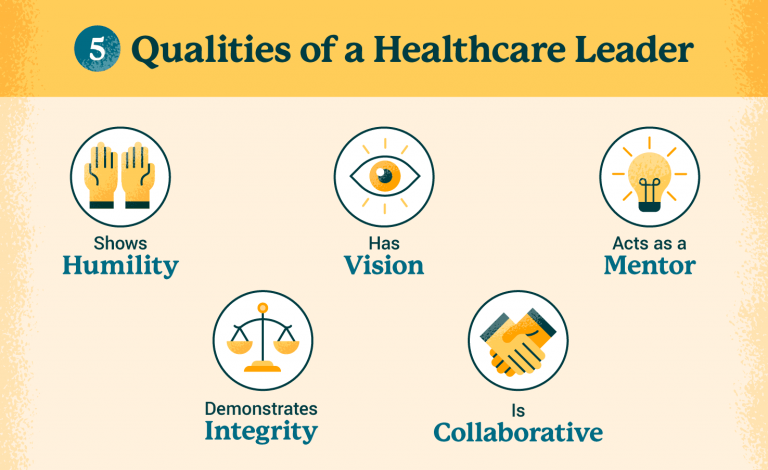









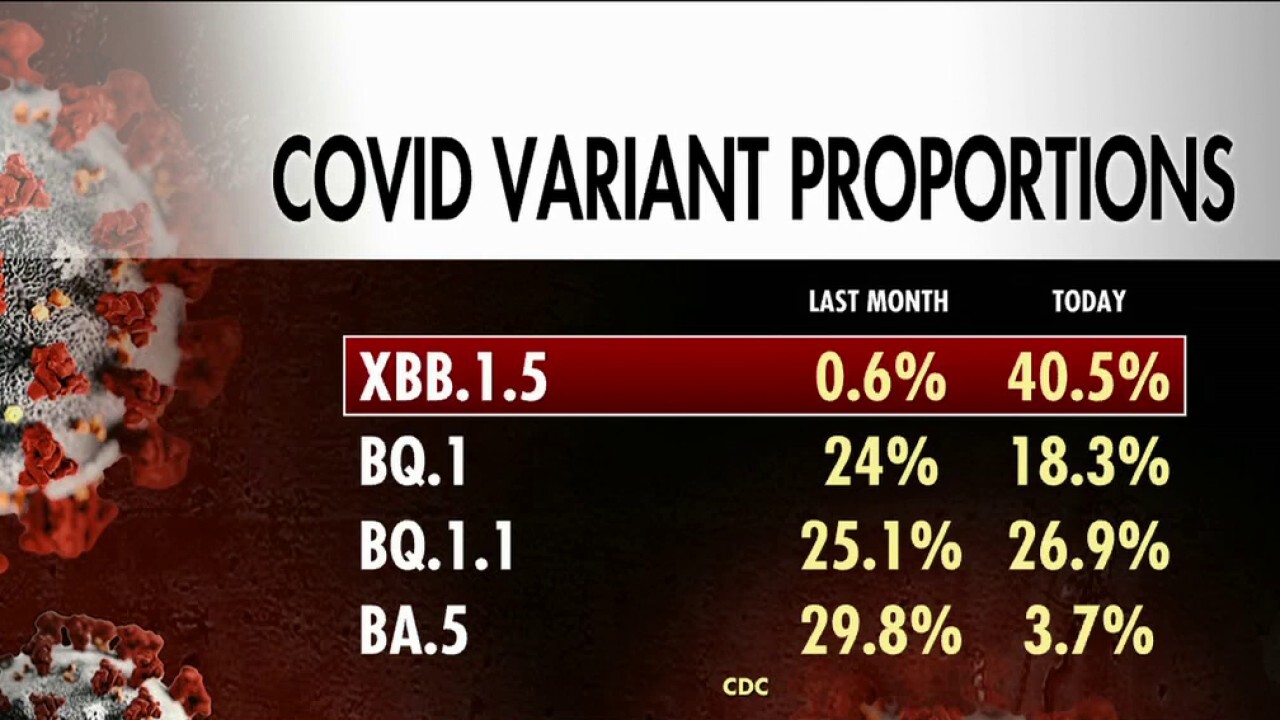


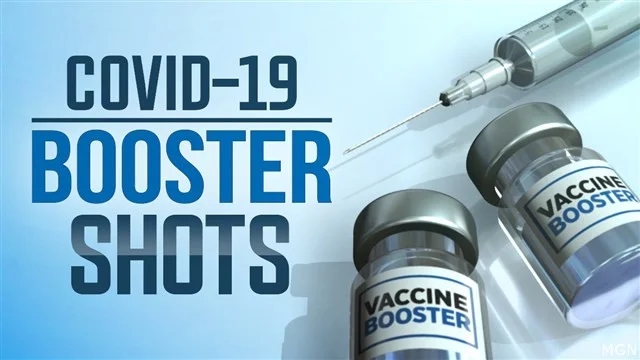












































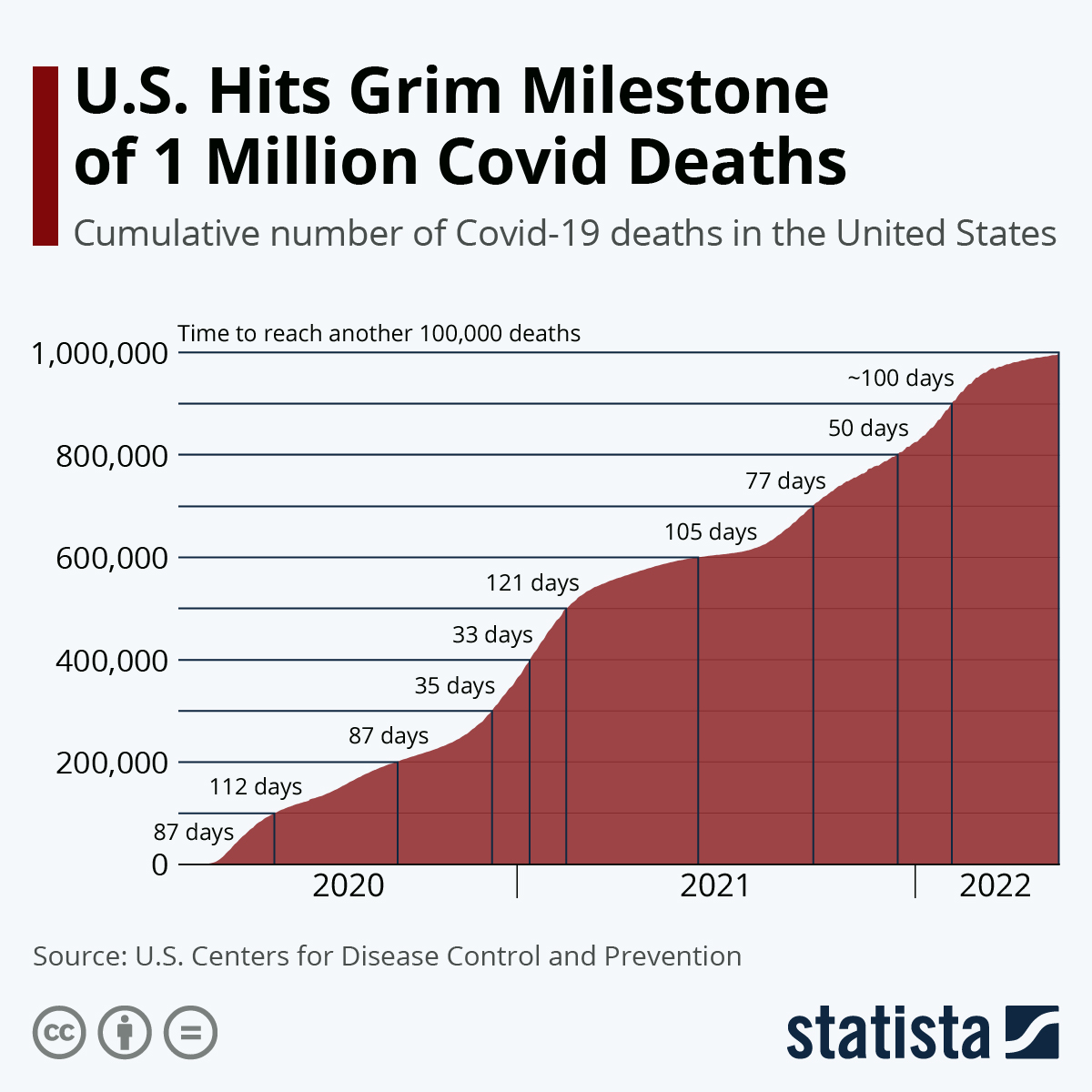

 The Leading Business Education Network for Doctors, Financial Advisors and Health Industry Consultants