Unlock Your Career with Micro-Certifications

Micro-Credentials on the Rise

KNOWLEDGE RICHES IN SPECIALTY NICHES

DR. DAVID EDWARD MARCINKO MBA MEd CMP

SPONSOR: http://www.CertifiedMedicalPlanner.org

***

***

Do you ever wish you could acquire specific information for your career activities without having to complete a university Master’s Degree or finish our entire Certified Medical Planner™ professional designation program? Well, Micro-Certifications from the Institute of Medical Business Advisors, Inc., might be the answer. Read on to learn how our three Micro-Certifications offer new opportunities for professional growth in the medical practice, business management, health economics and financial planning, investing and advisory space for physicians, nurses and healthcare professionals.

Micro-Certification Basics

Stock-Brokers, Financial Advisors, Investment Advisors, Accountants, Consultants, Financial Analyists and Financial Planners need to enhance their knowledge skills to better serve the changing and challenging healthcare professional ecosystem. But, it can be difficult to learn and demonstrate mastery of these new skills to employers, clients, physicians or medical prospects. This makes professional advancement difficult. That’s where Micro-Certification and Micro-Credentialing enters the online educational space. It is the process of earning a Micro-Certification, which is like a mini-degree or mini-credential, in a very specific topical area.

Micro-Certification Requirements

Once you’ve completed all of the requirements for our Micro-Certification, you will be awarded proof that you’ve earned it. This might take the form of a paper or digital certificate, which may be a hard document or electronic image, transcript, file, or other official evidence that you’ve completed the necessary work.

Uses of Micro-Certifications

Micro-Certifications may be used to demonstrate to physicians prospective medical clients that you’ve mastered a certain knowledge set. Because of this, Micro-Certifications are useful for those financial service professionals seeking medical clients, employment or career advancement opportunities.

Examples of iMBA, Inc., Micro-Certifications

Here are the three most popular Micro-Certification course from the Institute of Medical Business Advisors, Inc:

  • 1. Health Insurance and Managed Care: To keep up with the ever-changing field of health care physician advice, you must learn new medical practice business models in order to attract and assist physicians and nurse clients. By bringing together the most up-to-date business and medical prctice models [Medicare, Medicaid, PP-ACA, POSs, EPOs, HMOs, PPOs, IPA’s, PPMCs, Accountable Care Organizations, Concierge Medicine, Value Based Care, Physician Pay-for-Performance Initiatives, Hospitalists, Retail and Whole-Sale Medicine, Health Savings Accounts and Medical Unions, etc], this iMBA Inc., Mini-Certification offers a wealth of essential information that will help you understand the ever-changing practices in the next generation of health insurance and managed medical care.
  • 2. Health Economics and Finance: Medical economics, finance, managerial and cost accounting is an integral component of the health care industrial complex. It is broad-based and covers many other industries: insurance, mathematics and statistics, public and population health, provider recruitment and retention, health policy, forecasting, aging and long-term care, and Venture Capital are all commingled arenas. It is essential knowledge that all financial services professionals seeking to serve in the healthcare advisory niche space should possess.
  • 3. Health Information Technology and Security: There is a myth that all physician focused financial advisors understand Health Information Technology [HIT]. In truth, it is often economically misused or financially misunderstood. Moreover, an emerging national HIT architecture often puts the financial advisor or financial planner in a position of maximum uncertainty and minimum productivity regarding issues like: Electronic Medical Records [EMRs] or Electronic Health Records [EHRs], mobile health, tele-health or tele-medicine, Artificial Intelligence [AI], benefits managers and human resource professionals.

Other Topics include: economics, finance, investing, marketing, advertising, sales, start-ups, business plan creation, financial planning and entrepreneurship, etc.

How to Start Learning and Earning Recognition for Your Knowledge

Now that you’re familiar with Micro-Credentialing, you might consider earning a Micro-Certification with us. We offer 3 official Micro-Certificates by completing a one month online course, with a live instructor consisting of twelve asynchronous lessons/online classes [3/wk X 4/weeks = 12 classes]. The earned official completion certificate can be used to demonstrate mastery of a specific skill set and shared with current or future employers, current clients or medical niche financial advisory prospects.

Mini-Certification Tuition, Books and Related Fees

The tuition for each Mini-Certification live online course is $1,250 with the purchase of one required dictionary handbook. Other additional guides, white-papers, videos, files and e-content are all supplied without charge. Alternative courses may be developed in the future subject to demand and may change without notice.

***

Contact: For more information, or to speak with an academic representative, please contact Ann Miller RN MHA CMP™ at Email: MarcinkoAdvisors@msn.com [24/7].

***

Understanding Investment Fees: A Guide for Physicians

SPONSOR: http://www.MarcinkoAssociates.com

By Dr. David Edward Marcinko MBA MEd CMP™

***

***

MEDICAL COLLEAGUES BEWARE!

Investment fees still matter for physicians and all of us, despite dropping dramatically over the past several decades due to computer automation, algorithms and artificial intelligence, etc. And, they can make a big difference to your financial health. So, before buying any investment thru a financial advisor, planner, manager, stock broker, etc., it’s vital to understand these two often confusing costs.

***

***

Fee Only: Paid directly by clients for their services and can’t receive other sources of compensation, such as payments from fund providers. Act as a fiduciary, meaning they are obligated to put their clients’ interests first

Fee Based: Paid by clients but also via other sources, such as commissions from financial products that clients purchase. Brokers and dealers (registered representatives) are simply required to sell products that are “suitable” for their clients. Not a fiduciary.

EDUCATION: Books

SPEAKING: Dr. Marcinko will be speaking and lecturing, signing and opining, teaching and preaching, storming and performing at many locations throughout the USA this year! His tour of witty and serious pontifications may be scheduled on a planned or ad-hoc basis; for public or private meetings and gatherings; formally, informally, or over lunch or dinner. All medical societies, financial advisory firms or Broker-Dealers are encouraged to submit a RFP for speaking engagements: MarcinkoAdvisors@outlook.com 

COMMENTS APPRECIATED

Refer, Like and Subscribe

***

***

Understanding Asset Allocation for Investment Success

Delving Deeper into Asset Allocation

SPONSOR: http://www.CERTIFIEDMEDICALPLANNER.org

By Lon Jefferies MBA CFP® CMP®

Lon JeffriesAsset allocation is one of the key factors contributing to long-term investment success.

When designing a portfolio that represents their risk tolerance, investors should be aware that a portfolio that is 50% stocks is likely to obtain approximately half of the gain when the market advances but suffer only half the loss when the market declines.

This general principle frequently holds true over extended investing cycles, but can waiver during shorter holding periods.

Case Model

For example, a fairly typical physician client of mine who has a 50% stock, 50% bond portfolio has obtained a return of 4.62% over the last 12 months, while the S&P 500 has obtained a return of 14.31% over the same time period (as of 10/30/14).

An investor expecting to obtain half the return of the index would anticipate a return of 7.15%, and by this measuring stick, has underperformed the market by over 2.50% during the last year.

What caused this differential?

Answer

The issue resides in how we define “the market.” In this example, we use the S&P 500 index as a measure for how the market as a whole is performing. As you may know, the S&P 500 (and the Dow Jones Industrial Average, for that matter) consists solely of large company U.S. stocks.

Of course, a diversified portfolio owns a mixture of large, mid, and small cap U.S. stocks, as well as international and emerging market equities. Consequently, comparing the performance of a basket of only large cap stocks to the performance of a diversified portfolio made up of a variety of different asset classes isn’t an apples-to-apples comparison.

***

Stock_Market

***

Frequently, the diversified portfolio will outperform the non-diversified large cap index because several of the components of the diversified portfolio will obtain higher returns than those achieved by large cap holdings.

However, the past 12 months has been a case where a diversified portfolio underperformed the large cap index because large cap stocks were the best performing asset class over the time period. In fact, over the last twelve months, there has been a direct correlation between company size and stock performance (as of 10/30/14):

  • Large Cap Stocks (S&P 500): 14.92%
  • Mid Cap Stocks (Russell Mid Cap): 11.08%
  • Small Cap Stocks (Russell 2000): 4.45%
  • International Stocks (Dow Jones Developed Markets): -1.05%
  • Emerging Market Stocks (iShares MSCI Emerging Markets): -1.04%

Since large cap stocks were the best performing element of a diversified portfolio over the last 12 months, in retrospect, an investor would have obtained a superior return by owning only large cap stocks during the period as opposed to owning a diversified mix of different equities. Does this mean owning only large cap stocks rather than a diversified portfolio is the best investment approach going forward? Of course not.

Year after year, we don’t know which asset category will provide the best return and a diversified portfolio ensures we have exposure to each year’s big winner. Additionally, although large caps were this year’s winner, they could easily be next year’s big loser, and a diversified portfolio ensures we don’t have all our investment eggs in one basket.

Financial Planning MDs 2015

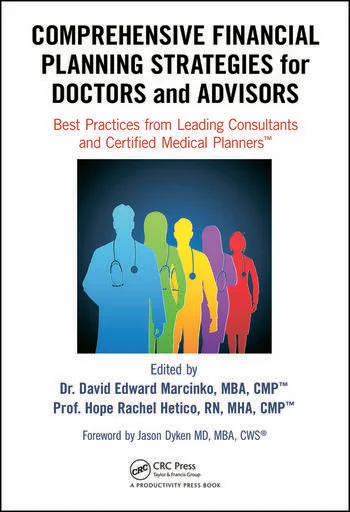
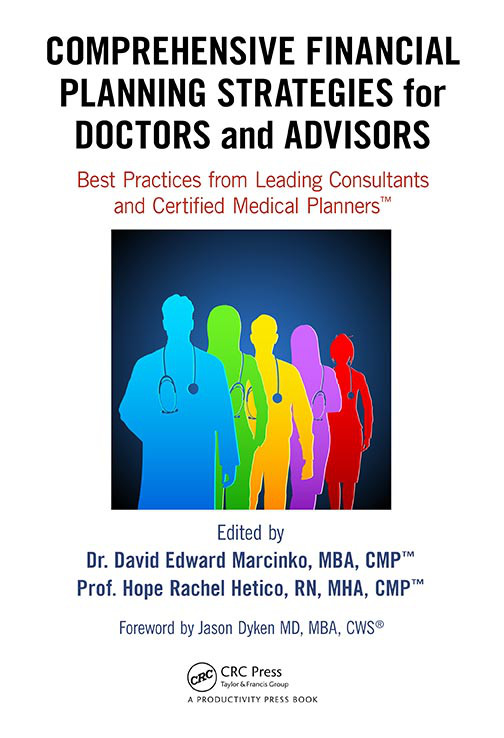
Comprehensive Financial Planning Strategies for Doctors and Advisors: Best Practices from Leading Consultants and Certified Medical Planners™

Assessment

Don’t be overly concerned if your diversified portfolio is underperforming a non-diversified benchmark over a short period of time. As always, long-term results should be more heavily weighted than short-term swings, and having a diversified portfolio is likely to maximize the probability of coming out ahead over an extended period.

Conclusion

Your thoughts and comments on this ME-P are appreciated. Feel free to review our top-left column, and top-right sidebar materials, links, URLs and related websites, too. Then, subscribe to the ME-P. It is fast, free and secure.

Speaker: If you need a moderator or speaker for an upcoming event, Dr. David E. Marcinko; MBA – Publisher-in-Chief of the Medical Executive-Post – is available for seminar or speaking engagements. Contact: MarcinkoAdvisors@msn.com

OUR OTHER PRINT BOOKS AND RELATED INFORMATION SOURCES:

Product Details  Product Details

Understanding Alpha: Non-Systematic ROI Explained

Understanding Non-Systematic Return on Investment

www.CertifiedMedicalPlanner.org

DEM 2013

[By Dr. David Edward Marcinko MBA MEd CMP™ ]

https://marcinkoassociates.com

According to Wayne Firebaugh CPA, CFP®, CMP™ alpha measures non-systematic return on investment [ROI], or the return that cannot be attributed to the market.

It shows the difference between a fund’s actual return and its expected performance given the level of systematic (or market) risk (as measured by beta).

Example

For example, a fund with a beta of 1.2 in a market that returns 10% would be expected to earn 12%. If, in fact, the fund earns a return of 14%, it then has an alpha of 2 which would suggest that the manager has added value. Conversely, a return below that expected given the fund’s beta would suggest that the manager diminished value.

In a truly efficient market, no manager should be able to consistently generate positive alpha. In such a market, the endowment manager would likely employ a passive strategy that seeks to replicate index returns. Although there is substantial evidence of efficient domestic markets, there is also evidence to suggest that certain managers do repeat their positive alpha performance.

In fact, a 2002 study by Roger Ibbotson and Amita Patel found that “the phenomenon of persistence does exist in domestic equity funds.” The same study suggested that 65% of mutual funds with the highest style-adjusted alpha repeated with positive alpha performances in the following year.

Product Details  Product Details

More Research

Additional research suggests that active management can add value and achieve positive alpha in concentrated portfolios.

A pre 2008 crash study of actively managed mutual funds found that “on average, higher industry concentration improves the performance of the funds. The most concentrated funds generate, after adjusting for risk … the highest performance. They yield an average abnormal return [alpha] of 2.56% per year before deducting expenses and 1.12% per year after deducting expenses.”

FutureMetrics

FutureMetrics, a pension plan consulting firm, calculated that in 2006 the median pension fund achieved record alpha of 3.7% compared to a 60/40 benchmark portfolio, the best since the firm began calculating return data in 1988. Over longer periods of time, an endowment manager’s ability to achieve positive alpha for their entire portfolio is more hotly debated.  Dimensional Fund Advisors, a mutual fund firm specializing in a unique form of passive management, compiled FutureMetrics data on 192 pension funds for the period of 1988 through 2005.

Their research showed that over this period of time approximately 75% of the pension funds underperformed the 60/40 benchmark. The end result is that many endowments will use a combination of active and passive management approaches with respect to some portion of the domestic equity segment of their allocation.

Assessment

One approach is known as the “core and satellite” method in which a “core” investment into a passive index is used to capture the broader market’s performance while concentrated satellite positions are taken in an attempt to “capture” alpha. Since other asset classes such as private equity, foreign equity, and real assets are often viewed to be less efficient, the endowment manager will typically use active management to obtain positive alpha from these segments.

Notes:

  • Ibbotson, R.G. and Patel, A.K. Do Winners Repeat with Style? Summary of Findings – Ibbotson & Associates, Chicago (February 2002).
  • Kacperczyk, M.T., Sialm, C., and Lu Zheng. On Industry Concentration of Actively Managed Equity Mutual Funds. University of Michigan Business School. (November 2002).
  • 2007 Annual US Corporate Pension Plan Best and Worst Investment Performance Report.  FutureMetrics, April 20, 2007.

Conclusion

Your thoughts and comments on this ME-P are appreciated. Feel free to review our top-left column, and top-right sidebar materials, links, URLs and related websites, too. Then, subscribe to the ME-P. It is fast, free and secure.

Speaker: If you need a moderator or speaker for an upcoming event, Dr. David E. Marcinko; MBA – Publisher-in-Chief of the Medical Executive-Post – is available for seminar or speaking engagements. Contact: MarcinkoAdvisors@outlook.com

OUR OTHER PRINT BOOKS AND RELATED INFORMATION SOURCES:

Risk Management, Liability Insurance, and Asset Protection Strategies for Doctors and Advisors: Best Practices from Leading Consultants and Certified Medical Planners™8Comprehensive Financial Planning Strategies for Doctors and Advisors: Best Practices from Leading Consultants and Certified Medical Planners™

Product DetailsProduct Details

Financial Self-Discovery for Medical Professionals

By Dr. David Edward Marcinko; MBA MEd CMP

PHYSICIAN COACHING: https://marcinkoassociates.com/process-what-we-do/

***

***

SPONSOR: http://www.CertifiedMedicalPlanner.org

A Financial Self Discovery Questionnaire for Medical Professionals

For understanding your relationship with money, it is important to be aware of yourself in the contexts of culture, family, value systems and experience.  These questions will help you.  This is a process of self-discovery.  To fully benefit from this exploration, please address them in writing.  You will simply not get the full value from it if you just breeze through and give mental answers.  While it is recommended that you first answer these questions by yourself, many people relate that they have enjoyed the experience of sharing them with others who are important to them. 

As you answer these questions, be conscious of your feelings, actually describing them in writing as part of your process. 

Childhood

  • What is your first memory of money?
  • What is your happiest moment with Money? Your most unhappy?
  • Name the miscellaneous money messages you received as a child.
  • How were you confronted with the knowledge of differing economic circumstances among people, that there were people “richer” than you and people “poorer” than you?

Cultural heritage

  • What is your cultural heritage and how has it interfaced with money?
  • To the best of your knowledge, how has it been impacted by the money forces?  Be specific.  
  • To the best of your knowledge, does this circumstance have any motive related to Money?
  • Speculate about the manners in which your forebears’ money decisions continue to affect you today? 

Family

  • How is/was the subject of money addressed by your church or the religious traditions of your forebears?
  • What happened to your parents or grandparents during the Depression?
  • How did your family communicate about money?
  • How?  Be as specific as you can be, but remember that we are more concerned about impacts upon you than historical veracity.
  • When did your family migrate to America (or its current location)?
  • What else do you know about your family’s economic circumstances historically?

Your parents

  • How did your mother and father address money?
  • How did they differ in their money attitudes?
  • How did they address money in their relationship?
  • Did they argue or maintain strict silence?
  • How do you feel about that today?

Please do your best to answer the same questions regarding your life or business partner(s) and their parents.

Childhood: Revisited

  • How did you relate to money as a child?  Did you feel “poor” or “rich”? 
    Relatively?  Or, absolutely?  Why?
  • Were you anxious about money?
    Did you receive an allowance?  If so, describe amounts and responsibilities.
  • Did you have household responsibilities?
  • Did you get paid regardless of performance?
  • Did you work for money?

If not, please describe your thoughts and feelings about that.

***

***

Same questions, as a teenager, young adult, older adult.

Credit

  • When did you first acquire something on credit?
  • When did you first acquire a credit card?
  • What did it represent to you when you first held it in your hands?
  • Describe your feelings about credit.
  • Do you have trouble living within your means?
  • Do you have debt?

Adulthood

  • Have your attitudes shifted during your adult life?  Describe.

Why did you choose your personal path? 
a)      Would you do it again?
b)      Describe your feelings about credit.

Adult attitudes

  • Are you money motivated? 
    If so, please explain why?  If not, why not? 
    How do you feel about your present financial situation? 
    Are you financially fearful or resentful?  How do you feel about that?
  • Will you inherit money?  How does that make you feel?
  • If you are well off today, how do you feel about the money situations of others? 
    If you feel poor, same question. 
  • How do you feel about begging?  Welfare?
    If you are well off today, why are you working?
  • Do you worry about your financial future?
  • Are you generous or stingy?  Do you treat?  Do you tip?
  • Do you give more than you receive or the reverse?  Would others agree?
  • Could you ask a close relative for a business loan?  For rent/grocery money?
  • Could you subsidize a non-related friend?  How would you feel if that friend bought something you deemed frivolous? 
  • Do you judge others by how you perceive they deal with their Money?
    Do you feel guilty about your prosperity?
    Are your siblings prosperous?
  • What part does money play in your spiritual life?
  • Do you “live” your Money values?

Conclusion

There may be other questions that would be useful to you.  Others may occur to you as you progress in your life’s journey. The point is to know your personal money issues and their ramifications for your life, work, and personal mission. 

This will be a “work-in-process” with answers both complex and incomplete.  Don’t worry. 

Just incorporate fine-tuning into your life’s process.

COMMENTS APPRECIATED

Read, Like, Refer and Subscribe

***

***

PHYSICIAN DIVORCE: “Buyer’s Settlement Remorse”

By A.I and Dr. David Edward Marcinko MBA MEd CMP

SPONSOR: http://www.CertifiedMedicalPlanner.org

***

***

Introduction

It is normal for physician litigants to develop a case of “buyer’s remorse” after any mediation or divorce settlement. They may feel disappointed after entering into a settlement agreement or feel that they received a bad deal.

PHYSICIAN DIVORCE: https://medicalexecutivepost.com/2025/08/14/physician-divorce-within-the-medical-profession/

Mediation: Some advantages of divorce mediation over divorce litigation include:

◊ Mediation is generally faster and less costly.

◊ Mediation is voluntary, private and confidential.

◊ Mediation facilitates creative and realistic solutions.

◊ Mediation allows parties to control their agreements.

◊ Mediation eliminates a win-lose atmosphere and result.

◊ Mediation provides a forum for addressing future disputes.

◊ Mediation fosters communication and helps mend relationships.

***

***

Settlement

And so, in a vast majority of cases, mediation and settlement is probably a good deal. In fact, it is probably a great deal because you are receiving something without having to risk losing. Remember, trial can be a crap-shoot, and nothing is worse than losing it all at the time of trial.

  • Bench trial verdict by a trial judge.
  • Jury trial verdict by your “peers.”

Instead, you entered into a settlement agreement and now your divorce case is over.

But beware since trying to get out of a settlement agreement reached at mediation or settlement is virtually impossible.

Why? Well, there is a strong interest by the court to enforce mediation and settlement agreements. The court wants your divorce case to be over and off its docket. There are a few very narrow exceptions; for example, if one party was truly coerced because someone held a gun to their head. But that rarely happens, and it certainly doesn’t happen to most doctors or dentists.

MEDIATION: https://medicalexecutivepost.com/2024/09/15/financially-egalitarian-dating-marriages-and-divorce-mediation-for-doctors/

Re-litigate?

Of course, you can fight against your mediation or settlement agreement if you like, but you won’t get too far. There’s an old adage in the law that a bad settlement is better than a great trial. That’s because no one knows how a judge or jury will rule come time of trial.

***

***

This buyers remorse phenomenon also isn’t uncommon among people who receive sudden wealth, whether through divorce settlements, inheritances, lottery winnings, or other windfalls.

Assessment

Financial advisors often see clients struggle with “sudden wealth syndrome”—the inability to properly manage a large sum of money they’re not accustomed to having.

Common mistakes include:

  • Lifestyle inflation without sustainable income to support it.
  • Poor investment decisions or lack of investment planning.
  • Emotional spending following traumatic life events like divorce.
  • Failure to set aside money for taxes on the settlement.
  • Not creating a long-term financial plan for the money.

So, do not let these mistakes happen to you!

COMMENTS APPRECIATED

EDUCATION: Books

SPEAKING: Dr. Marcinko will be speaking and lecturing, signing and opining, teaching and preaching, storming and performing at many locations throughout the USA this year! His tour of witty and serious pontifications may be scheduled on a planned or ad-hoc basis; for public or private meetings and gatherings; formally, informally, or over lunch or dinner. All medical societies, financial advisory firms or Broker-Dealers are encouraged to submit an RFP for speaking engagements: CONTACT: Ann Miller RN MHA at MarcinkoAdvisors@outlook.com -OR- http://www.MarcinkoAssociates.com

Like and Subscribe

***

***

PHARMACEUTICALS: Trump Tariff Plans

By A.I. and Staff Reporters

SPONSOR: http://www.CertifiedMedicalPlanner.org

***

***

Trump says pharma tariffs could be as high as 250%

The president revealed that he plans to formally announce tariffs on the pharmaceutical industry “within the next week or so” in an attempt to force drug manufacturing to the US, he told CNBC several days ago.

PBMs: https://medicalexecutivepost.com/2019/01/18/on-pbms-pharmacy-benefits-management/

It would start with a “small” tariff, Trump said, before rising to 150% in a year to a year and a half, and eventually to 250%.

Pharma companies have argued that tariffs could drive up costs and threaten their ability to fund research for new medicines.

COMMENTS APPRECIATED

Like and Subscribe

***

***

MONEY ADDICTED PHYSICIANS: The Investing and Stock Trading Personality of Doctors

By Dr. David Edward Marcinko MBA MEd CMP

SPONSOR: http://www.CertifiedMedicalPlanner.org

***

***

THE ADDICTIVE INVESTING / TRADING PERSONALITY OF DOCTORS

Dr. Donald J. Mandell, a pediatrician, always needs to leave the office fifteen minutes ahead of schedule. The reason is because it takes that long to make the necessary number of trips to ensure the front door is truly locked.

Dr. Kamela A. Shaw, a general surgeon, is constantly rushing to the bath room so that she can wash her hands. As far as she is concerned, it is not possible to get one’s hands clean enough considering the COVID pandemic or recent influenza outbreak.

Although the behaviors displayed by these two doctors are different, they are consistent in that each, to some degree, display behavior that might be called an obsessive-compulsive disorder [OCD].

COGNITIVE BIAS: https://medicalexecutivepost.com/2025/06/22/investing-cognitive-biases-for-financial-advisors-to-know-and-understand/

[A] When Investing or Trading In No Longer Fun

An obsession is a persistent, recurring preoccupation with an idea or thought. A compulsion is an impulse that is experienced as irresistible.

Obsessive-compulsive individuals feel compelled to think thoughts that they say they do not want to think or to carry out actions that they say are against their will. These individuals usually realize that their behavior is irrational, but it is beyond their control. In general, these individuals are preoccupied with orderliness, perfectionism, and mental and interpersonal control, at the expense of flexibility, openness, and efficiency. Specifically, behaviors such as the following may be seen:

  • Preoccupation with details.
  • Perfectionism that interferes with task completion.
  • Excessive devotion to work and office productivity.
  • Scrupulous and inflexible about morality (not accounted for by cultural or religious identification);
  • Inability to discard worn-out or worthless objects without sentimental value;
  • Reluctance to delegate tasks or to work with others.
  • Adopts a miserly spending style toward both self and others.
  • Demonstrates a rigid, inflexible and stubborn nature.

Most people resort to some minor obsessive-compulsive patterns under severe pressure or when trying to achieve goals that they consider critically important. In fact, many individuals refer to this as superstitious behavior. The study habits required for medical students entail a good deal of compulsive behavior.

As the above examples suggest, there are a variety of addictions possible. Recent news accounts have pointed out that even high-level governmental officials can experience sex addiction. The advent of social-media has led to what is referred to as Internet addiction where an individual is transfixed to a computer, tablet PC or smart-phone, “working” for hours on end without a specific project in mind. The simple act of “surfing”, “tweeting-X”, “texting” or merely posting opinions offers the person afflicted with the addiction some degree of satisfaction.

Still another form of addictive behavior is that of the individual with gambling disorder (GD).

GD is recognized as a mental disorder in the American Psychiatric Association’s Diagnostic and Statistical Manual of Mental Disorders-V. This is the behavior of an individual who is unable to resist the impulse to gamble. Many reasons have been posited for this type of behavior including the death instinct; a need to lose; a history of trauma; a wish to repeat a big win; identification with adults the “gambler” knew as an adolescent; and a desire for action and excitement. There are other explanations offered for this form of compulsive behavior. The act of betting allows the individual to express an immature bravery, courage, manliness, and persistence against unfavorable odds. By actually using money and challenging reality, he puts himself into “action” and intense emotion. By means of gambling, the addicted individual is able to pretend that he is favored by “lady luck,” specially chosen, successful, able to beat the system and escape from feelings of discontent.

Greed can also have addictive qualities. In fact, a poll conducted by the Chicago Tribune revealed that folks who earned less than $30,000 a year, said that $50,000 would fulfill their dreams, whereas those with yearly incomes of over $100,000 said they would need $250,000 to be satisfied. More recent studies confirm that goals keep getting pushed upward as soon as a lower level is reached.

PHYSICIAN IPS: https://medicalexecutivepost.com/2025/07/30/investment-policy-statement-construction-for-physicians-and-medical-professionals/

***

***

Question: So how much money is enough?

Answer: Just a little bit more.

Edward Looney, executive director of the Trenton, New Jersey based Council on Compulsive Gambling (CCG) reports that the number of individuals calling with trading-associated problems is doubling annually. In the mid 1980s, when the council was formed, the number of people calling the council’s hotline (1 – 800 Gambler) with stock-market gambling problems was approximately 1.5 percent of all calls received. In 1998 that number grew to 3 percent, and rose to 8 percent by 2012. Today, that number is largely unknown because of its pervasiveness, but Dr. Robert Custer, an expert on compulsive gambling reported, that stock market gamblers represent over 20 percent of the gamblers that he has diagnosed. It is evident that on-line trading presents a tremendous risk to the speculator.

The CCG describes some of the consequences:

  • Dr. Fred B. is a 43-year-old Asian male physician with a salary above $150,000 and in debt for more than $150,000. He is married with two children. He was a day trader.   
  • Michael Q. is a 28-year-old Hispanic male registered nurse. He is married and the father of one (7 month old) child. He earns $65,000 and lost $50,000 savings in day trading and is in debt for $30,000. He has suicidal ideation.

[B] A Question of Suitability

Since online traders are in it for many reasons, investment suitability rarely enters the picture, according to Stuart Kaswell, general counsel of the Securities Industry Association, in Washington, DC.  The kind of question that has yet to be confronted, by day or online trading firms, is a statement, such as: “Equities look good this year. We favor technology stocks. We have a research report on our Web page that looks at the social media industry.” Those kinds of things are seldom considered because they do not involve a specific recommendation of a specific stock, like Apple, Google, Groupon, Facebook or Twitter.

However, if a firm makes a specific recommendation to an investor, whether over the cell-phone, iPad®, fax machine, face-to-face, instagram or over the Internet, or Twitter-X, suitability rules should apply. Opining similarly on the “know your customer” requirements is Steven Caruso, of Maddox, Koeller, Harget & Caruso of New York City. “The on-line firms obviously claim that they do not have a suitability responsibility because they do not want the liability for making a mistake as far as determining whether the investor was suitable or buying any security. I think that ultimately more firms are going to be required to make a suitability, [or eventually fiduciary] determination on every trade”.

[C] On-line Traders and Stock Market Gamblers

Some of the preferred areas of stock market gambling that attract the interest of compulsive gamblers include options, commodities, penny stocks and bit-coins, index investing, new stock offerings, certain types of CAT bonds, crowd-sourcing initiatives,  and some contracts for government securities. These online traders and investment gamblers think of themselves as cautious long-term investors who prefer blue chip or dividend paying varieties. What they fail to take into consideration is that even seemingly blue chips can both rise and precipitously drop in value again, as seen in the summer of 2003, the “crash” of 2008, or the “flash crash” of May 6, 2010.  On this day, the DJIA plunged 1000 points (about 9%) only to recover those losses within minutes. It was the second largest point swing 1,010.14 points, and the biggest one-day point decline, 998.5 points, on an intraday basis in Dow Jones Industrial Average history.

Regardless of investment choice, the compulsive investment gambler enjoys the anticipation of following the daily activity surrounding these investments. Newspaper, hourly radio and television reports, streaming computer, tablet and smart phone banners and hundreds of periodicals and magazines add excitement in seeking the investment edge. The name of the game is action. Investment goals are unclear, with many participating simply for the feeling it affords them as they experience the highs and lows and struggles surrounding the play.  And, as documented by the North American Securities Administrators Association’s president, and Indiana Securities Commissioner, Bradley Skolnik, most day or online traders lose money. “On-line brokerage was new and cutting edge and we enjoyed the best stock market in generations, until the crashes. The message of most advertisements was “just do it”, and you’ll do well. The fact is that research and common sense suggest the more you trade, the less well you’ll do”.

Most day or online traders are young males, some who quit their day jobs before the just mentioned debacles; or more recently with the dismal economy. Many ceased these risky activities but there is some anecdotal evidence that is re-surging again with 2013-14 technology boom and market rise. Most of them start every day not owning any stock, then buy and sell all day long and end the trading day again without any stock – – just a lot of cash. Dr. Patricia Farrell, a licensed clinical psychologist states that day traders are especially susceptible to compulsive behaviors and addictive personalities. Mark Brando, registered principal for Milestone Financial, a day trading firm in Glendale, California states, “People that get addicted to trading employ the same destructive habits as a gambler. Often, it’s impossible to tell if a particular trade comes from a problem gambler or a legitimate trader.”

VALUE STOCKS: https://medicalexecutivepost.com/2025/02/28/value-stocks-bargain-hunting-investing-for-physicians/

Arthur Levitt, former Chairman of the Securities and Exchange Commission (SEC) in discussing the risks and misconceptions of investing are only amplified by on-line trading. In a speech before the National Press Club a few years ago, he attempted to impress individuals as to the risks and difficulties involved with day trading. Levitt cited four common misconceptions that knowledgeable medical professionals, and all investors, should know: 

  • Personal computers, tablets, mobile devices and smart-phones are not directly linked to the markets – Thanks to Level II computer software, day traders can have access to the same up-to-the-second information available to market makers on Wall Street.  “Although the Internet makes it seem as if you have a direct connection to the securities market, you don’t. Lines may clog; systems may break; orders may back-up.” 
  • The virtue of limit orders – “Price quotes are only for a limited number of shares; so only the first few investors will receive the currently quoted price. By the time you get to the front of the line, the price of the stock could be very different.” 
  • Canceling an order – “Another misconception is that an order is canceled when you hit ‘cancel’ on your computer. But, the fact is it’s canceled only when the market gets the cancellation. You may receive an electronic confirmation, but that only mean your request to cancel was received – not that your order was actually canceled”. 
  • Buying on margin – “if you plan to borrow money to buy a stock, you also need to know the terms of the loan your broker gave you. This is margin. In volatile markets, investors who put up an initial margin payment for a stock may find themselves required to provide additional cash if the price of the stock falls.

How then, can the medical professional or financial advisor tell if he or she is a compulsive gambler? A diagnostic may be obtained from Gamblers Anonymous. It is designed to screen for the identification of problem and compulsive gambling.

But, it is also necessary to provide a tool to be used by on-line traders. This questionnaire is as follows:

1. Are you trading in the stock market with money you may need during the next year?

2. Are you risking more money than you intended to?

3. Have you ever lied to someone regarding your on-line trading?

4. Are you risking retirement savings to try to get back your losses?

5. Has anyone ever told you that spend too much time on-line?

6. Is investing affecting other life areas (relationships, vocational pursuits, etc.)?

7. If you lost money trading in the market would it materially change your life?

8. Are you investing frequently for the excitement, and the way it makes you feel?

9. Have you become secretive about your on-line trading?

10. Do you feel sad or depressed when you are not trading in the market?

ALPHA: https://medicalexecutivepost.com/2025/07/02/managing-for-endowment-portfolio-alpha/

NOTE: If you answer to any of these questions you may be moving from investing to gambling.

***

***

The cost of compulsive gambling and day trading is high for the individual medical or lay professional, the family and society at large. Compulsive gamblers, in the desperation phase of their gambling, exhibit high suicide ideation, as in the case of Mark O Barton’s the murderous day-trader in Atlanta who killed 12 people and injured 13 more in July 29th 1999. His idea actually became a final act of desperation.

Less dramatically, for doctors, is a marked increase in subtle illegal activity. These acts include fraud, embezzlement, CPT® up-coding, medical over utilization, excessive full risk HMO contracting, Stark Law aberrations and other “white collar crimes.”  Higher healthcare and social costs in police, judiciary (civil and criminal) and corrections result because of compulsive gambling. The impact on family members is devastating. Compulsive gamblers cause havoc and pain to all family members. The spouses and other family members also go through progressive deterioration in their lives.

In this desperation phase, dysfunctional families are left with a legacy of anger, resentment, isolation, and in many instances, outright hate.    

[D] Day Trading Assessment

Internet day trading, like the Internet and telecommunications sectors, become something of a investment bubble a few years ago, suggesting that something lighter than air can pop and disappear in an instant. History is filled with examples: from the tulip mania of 1630 Holland and the British South Sea Bubble of the 1700’s; to the Florida land boom of the roaring twenties and the Great Crash of 1929; to the collapse of Japans stock and real estate market in early 1990’s; and to an all-time high of $1,926 for an ounce of commodity gold a few years ago. 

Today it is Ask: $3,388.30 USD Bid: $3,367.30 USD

CONCLUSION

To this list, one might again include smart-phone or mobile day trading.

Cite: Eugene Schmuckler PhD MBA MEd CTS

COMMENTS APPRECIATED

EDUCATION: Books

SPEAKING: Dr. Marcinko will be speaking and lecturing, signing and opining, teaching and preaching, storming and performing at many locations throughout the USA this year! His tour of witty and serious pontifications may be scheduled on a planned or ad-hoc basis; for public or private meetings and gatherings; formally, informally, or over lunch or dinner. All medical societies, financial advisory firms or Broker-Dealers are encouraged to submit an RFP for speaking engagements: CONTACT: Ann Miller RN MHA at MarcinkoAdvisors@outlook.com -OR- http://www.MarcinkoAssociates.com

Like and Subscribe

***

***

HOSPITALS: Understanding Different Types

By Dr. David Edward Marcinko MBA MEd CMP

SPONSOR: http://www.CertifiedMedicalPlanner.org

***

***

HOSPITAL TYPES DEFINED FOR MODERNITY

Acute Care Inpatient Hospital

An acute care inpatient hospital is a health care organization or “anchor hospital” in which a patient is treated for an acute (immediate and severe) episode of illness or the subsequent treatment of injuries related to an accident or trauma, or during recovery from surgery. Specialized personnel using complex and sophisticated technical equipment and materials usually render acute professional care in a hospital setting. Unlike chronic care, acute care is often necessary for only a short time. Measures of acute health care utilization are represented by three separate rates:

  1. Rate of admissions per 1000 patients.
  2. Average length of stay per admission.
  3. Total days of care per 1000 patients.

***

***

Psychiatric Hospital

A psychiatric hospital (behavioral health, mental hospital, or asylum) specializes in the treatment of patients with mental illness or drug-related illness or dependencies. Psychiatric wards differ only in that they are a unit of a larger hospital.

Specialty Hospital

A specialty hospital is a type of health care organization that has a limited focus to provide treatment for only certain illnesses such as cardiac care, orthopedic or plastic surgery, elder care, radiology / oncology services, neurological care, or pain management cases. These organizations are often owned by doctors who refer patients to them. In recent years, single-specialty hospitals have emerged in various locations in the United States. Instead of offering a full range of inpatient services, these hospitals focus on providing services relating to a single medical specialty or cluster of specialties.


Long-Term Care Hospital

A long-term care hospital is an entity that provides assistance and patient care for the activities of daily living (ADLs), including reminders and standby help for those with physical, mental, or emotional problems. This includes physical disability or other medical problems for 3 months or more (90 days). The criteria of five ADLs may also be used to determine the need for help with the following: meal preparation, shopping, light housework, money management, and telephoning. Other important considerations include taking medications, doing laundry, and getting around
outside.

Rural Hospital

The parameters of a rural hospital are determined based on distance. A rural hospital is defined as a hospital serving a geographic area 10 or more miles from the nexus of a population center of 30,000 or more.

More specifically, a rural hospital means an entity characterized by one of the following:

  1. Type A rural hospital—small and remote, has fewer than 50 beds, and is more than 30
    miles from the nearest hospital
  2. Type B rural hospital—small and rural, has fewer than 50 beds, and is 30 miles or less from
    the nearest hospital
  3. Type C rural hospital—considered rural and has 50 or more beds

COMMENTS APPRECIATED

EDUCATION: Books

SPEAKING: Dr. Marcinko will be speaking and lecturing, signing and opining, teaching and preaching, storming and performing at many locations throughout the USA this year! His tour of witty and serious pontifications may be scheduled on a planned or ad-hoc basis; for public or private meetings and gatherings; formally, informally, or over lunch or dinner. All medical societies, financial advisory firms or Broker-Dealers are encouraged to submit an RFP for speaking engagements: CONTACT: Ann Miller RN MHA at MarcinkoAdvisors@outlook.com -OR- http://www.MarcinkoAssociates.com

Like and Subscribe

***

***

FINANCIAL LIFE PLANNING? For Physicians and Medical Professionals

SPONSOR: http://www.MarcinkoAssociates.com

By Dr. David Edward Marcinko; MBA MEd CMP

***

***

SPONSOR: http://www.CertifiedMedicalPlanner.org

Life planning and behavioral finance as proposed for physicians and integrated by the Institute of Medical Business Advisors Inc., is unique in that it emanates from a holistic union of personal financial planning, human physiology and medical practice management, solely for the healthcare space.  Unlike pure life planning, pure financial planning, or pure management theory, it is both a quantitative and qualitative “hard and soft” science, with an ambitious economic, psychological and managerial niche value proposition never before proposed and codified, while still representing an evolving philosophy. Its’ first-mover practitioners are called Certified Medical Planners™.

Life planning, in general, has many detractors and defenders. Formally, it has been defined by Mitch Anthony, Gene R. Lawrence, AAMS, CFP© and Roy T. Diliberto, ChFC, CFP© of the Financial Life Institute, in the following trinitarian way.

Financial Life Planning is an approach to financial planning that places the history, transitions, goals, and principles of the client at the center of the planning process.  For the financial advisor or planner, the life of the client becomes the axis around which financial planning develops and evolves.

Financial Life Planning is about coming to the right answers by asking the right questions. This involves broadening the conversation beyond investment selection and asset management to exploring life issues as they relate to money.

Financial Life Planning is a process that helps advisors move their practice from financial transaction thinking, to life transition thinking. The first step is aimed to help clients “see” the connection between their financial lives and the challenges and opportunities inherent in each life transition.

But, for informed physicians, life planning’s quasi-professional and informal approach to the largely isolate disciplines of financial planning and medical practice management is inadequate. Today’s practice environment is incredibly complex, as compressed economic stress from HMOs managed care, financial insecurity from insurance companies, ACOs and VBC, Washington DC and Wall Street; liability fears from attorneys, criminal scrutiny from government agencies, and IT mischief from malicious electronic medical record [eMR] hackers. And economic bench marking from hospital employers; lost confidence from patients; and the Patient Protection and Affordable Care Act [PP-ACA] more than a decade ago. All promote “burnout” and converge to inspire a robust new financial planning approach for physicians and most all medical professionals. 

The iMBA Inc., approach to financial planning, as championed by the Certified Medical Planner™ professional certification designation program, integrates the traditional concepts of financial life planning, with the increasing complex business concepts of medical practice management. The former topics are presented in this textbook, the later in our recent companion text: The Business of Medical Practice [Transformational Health 2.0 Skills for Doctors].

***

***

For example, views of medical practice, personal lifestyle, investing and retirement, both what they are and how they may look in the future, are rapidly changing as the retail mentality of medicine is replaced with a wholesale and governmental philosophy. Or, how views on maximizing current practice income might be more profitably sacrificed for the potential of greater wealth upon eventual practice sale and disposition. 

Or, how the ultimate fear represented by Yale University economist Robert J. Shiller, in The New Financial Order: Risk in the 21st Century, warns that the risk for choosing the wrong profession or specialty, might render physicians obsolete by technological changes, managed care systems or fiscally unsound demographics. OR, if a medical degree is even needed for future physicians?

Say, what medical license?

Dr. Shirley Svorny, chair of the economics department at California State University, Northridge, holds a PhD in economics from UCLA. She is an expert on the regulation of health care professionals who participated in health policy summits organized by Cato and the Texas Public Policy Foundation. She argues that medical licensure not only fails to protect patients from incompetent physicians, but, by raising barriers to entry, makes health care more expensive and less accessible. Institutional oversight and a sophisticated network of private accrediting and certification organizations, all motivated by the need to protect reputations and avoid legal liability, offer whatever consumer protections exist today.

Yet, the opportunity to revise the future at any age through personal re-engineering, exists for all of us, and allows a joint exploration of the meaning and purpose in life. To allow this deeper and more realistic approach, the informed transformation advisor and the doctor client, must build relationships based on trust, greater self-knowledge and true medical business management and personal financial planning acumen.

[A] The iMBA Philosophy

As you read this ME-P website, we hope you will embrace the opportunity to receive the focused and best thinking of some very smart people. Hopefully, along the way you will self-saturate with concrete information that proves valuable in your own medical practice and personal money journey. Maybe, you will even learn something that is so valuable and so powerful, that future reflection will reveal it to be of critical importance to your life.  The contributing authors certainly hope so.

At the Institute of Medical Business Advisors, and thru the Certified Medical Planner™ program, we suggest that such an epiphany can be realized only if you have extraordinary clarity regarding your personal, economic and [financial advisory or medical] practice goals, your money, and your relationship with it. Money is, after only, no more or less than what we make of it. 

Ultimately, your relationship with it, and to others, is the most important component of how well it will serve you. 

COMMENTS APPRECIATED

Read, Subscribe, Like and Refer

EDUCATION: Books

SPEAKING: Dr. Marcinko will be speaking and lecturing, signing and opining, teaching and preaching, storming and performing at many locations throughout the USA this year! His tour of witty and serious pontifications may be scheduled on a planned or ad-hoc basis; for public or private meetings and gatherings; formally, informally, or over lunch or dinner. All medical societies, financial advisory firms or Broker-Dealers are encouraged to submit a RFP for speaking engagements: CONTACT: MarcinkoAdvisors@outlook.com 

***

PHYSICIANS: Personal Portfolio Management?

BY DR. DAVID EDWARD MARCINKO; MBA MEd CMP®

SPONSOR: http://www.CertifiedMedicalPlanner.org

***

***

SPONSOR: http://www.MarcinkoAssociates.com

Most individual physician portfolios are simply a list of stocks.  Doctors with such lists usually know the cost of each position and when they acquired it.  It is not unusual to find inherited low cost stocks in the account that have been held for many years.

When you inherit securities, a new cost basis is established (the price of the stock on the date of death or six months later—the executor of the estate makes this determination). Even though there would be no capital gain liability if the stock were sold immediately after date of death, most people simply don’t do anything, just hold the stock. Of course taxes should be considered when selling securities but the investment merit should be the overriding factor. 

***

***

Doctor and Accountant Opinions

In a personal communication, Mr. L. Eddie Dutton, CPA said, “First make an investment decision and if it fits into the tax plan, so much the better.  Doctors often wonder where they will get the money to pay the taxes.  I say to get it from the sale of the appreciated stock and cry all the way to the bank with your profit.”

Dr. Ernest Duty MD, a very successful private investor advises “Ask yourself this question: If you had the money instead of the stock, would you buy the stock?  If your answer is ‘Yes’ then, hold on to the stock but if you say ‘No, I wouldn’t buy that stock today’ then, sell it” [personal communication].

COMMENTS APPRECIATED

Read, refer, like and subscribe

EDUCATION: Books

SPEAKING: Dr. Marcinko will be speaking and lecturing, signing and opining, teaching and preaching, storming and performing at many locations throughout the USA this year! His tour of witty and serious pontifications may be scheduled on a planned or ad-hoc basis; for public or private meetings and gatherings; formally, informally, or over lunch or dinner. All medical societies, financial advisory firms or Broker-Dealers are encouraged to submit a RFP for speaking engagements: E-MAIL CONTACT: MarcinkoAdvisors@outlook.com 

***

***

The DOCTOR EFFECT

Dr. David Edward Marcinko; MBA MEd CMP™

Medical Colleagues Beware the Advisors

***

***

SPONSOR: http://www.MarcinkoAssociates.com

Several years ago a group of highly trusted and deeply  experienced financial advisors, insurance service professionals and estate planners noted that far too many of their mature retiring physician clients, using traditional stock brokers, management consultants and financial advisors, seemed to be less successful than those who went it alone. These Do-it-Yourselfers [DIYs] had setbacks and made mistakes, for sure. But, the ME Inc doctors seemed to learn from their mistakes and did not incur the high management and service fees demanded from general or retail one-size-fits-all “advisors.”

In fact, an informal inverse related relationship was noted, and dubbed the Doctor Effect.” In others words, the more consultants an individual doctor retained; the less well they did in all disciplines of the financial planning and medical practice management, continuum.

Of course, the reason for this discrepancy eluded many of them as Wall Street brokerages and wire-houses flooded the media with messages, infomercials, print, radio, TV, texts, tweets, dinners and internet ads to the contrary. Rather than self-learn the basics, the prevailing sentiment seemed to purse the holy grail of finding the “perfect financial advisor.”  This realization confirmed the industry culture which seemed to be:

Bread for the advisor – Crumbs for the client!

And so, Marcinko Associates formed a cadre’ of technology focused and highly educated multi-degreed doctors, nurses, financial advisors, attorneys, accountants, psychologists and educational visionaries who decided there must be a better way for their healthcare colleagues to receive financial planning advice, products and related advisory services within a culture of fiduciary responsibility.

We trust you agree with this specific niche knowledge, and collegial consulting philosophy, as illustrated thru our firm and these two books.

EDUCATION: Books

SPEAKING: Dr. Marcinko will be speaking and lecturing, signing and opining, teaching and preaching, storming and performing at many locations throughout the USA this year! His tour of witty and serious pontifications may be scheduled on a planned or ad-hoc basis; for public or private meetings and gatherings; formally, informally, or over lunch or dinner. All medical societies, financial advisory firms or Broker-Dealers are encouraged to submit a RFP for speaking engagements: MarcinkoAdvisors@outlook.com 

COMMENTS APPRECIATED

Like, Refer and Subscribe

***

***

***

FINANCIAL MODELING TERMS: All Physicians Should Review and Know

By Staff Reporters

SPONSOR: http://www.CertifiedMedicalPlanner.org

***

***

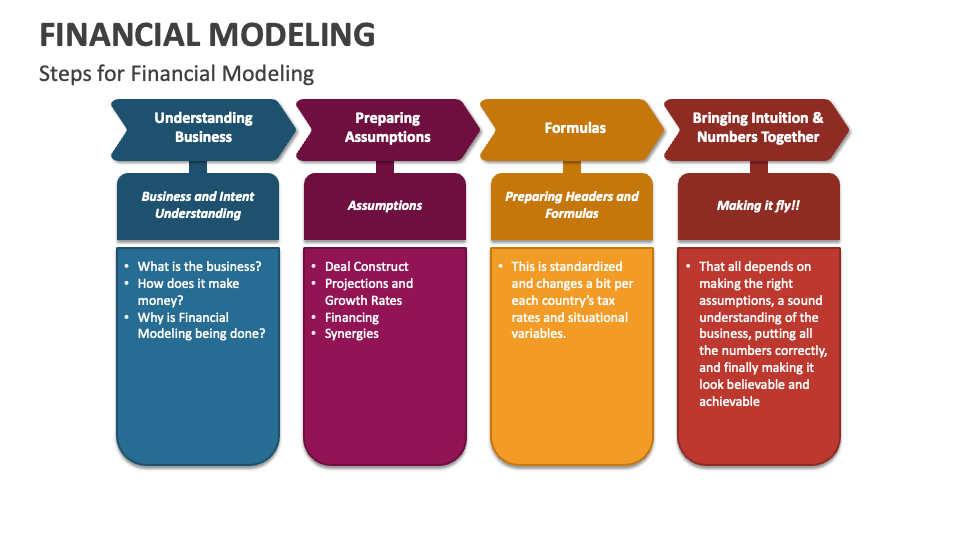
Financial Modeling is one of the most highly valued, but thinly understood, skills in financial analysis. The objective of financial modeling is to combine accounting, finance, and business metrics to create a forecast of a company’s future results.

According to Jeff Schmidt, a financial model is simply a spreadsheet, usually built in Microsoft Excel, that forecasts a business’s financial performance into the future. The forecast is typically based on the company’s historical performance and assumptions about the future and requires preparing an income statement, balance sheet, cash flow statement, and supporting schedules (known as a three-statement model, one of many types of approaches to financial statement modeling). From there, more advanced types of models can be built such as discounted cash flow analysis (DCF model), leveraged buyout (LBO), mergers and acquisitions (M&A), and sensitivity analysis

***

DEFINED TERMS

Discounted Cash Flow (DCF): A valuation method used to estimate the value of an investment based on its expected future cash flows, adjusted for the time value of money. It’s like deciding whether a treasure chest is worth diving for now, based on the gold coins you’ll be able to cash in later.

Sensitivity Analysis: This involves changing one variable at a time to see how it affects an outcome. Imagine tweaking your coffee-to-water ratio each morning to achieve the perfect brew strength.

Budget – A budget is the amount of money a department, function, or business can spend in a given period of time. Usually, but not always, finance does this annually for the upcoming year.

Rolling ForecastA rolling forecast maintains a consistent view over a period of time (often 12 months). When one period closes, finance adds one more period to the forecast.

Topside – A topside adjustment is an overlay to a forecast. This is typically completed by the corporate or headquarter team. As individual teams submit a forecast, the consolidated result might not make sense or align with expectations. When this occurs, the high-level teams use a topside adjustment to streamline or adjust the consolidated view.

Monte Carlo Simulation: Picture yourself at the casino, but instead of gambling your savings away, you’re using this technique to predict different outcomes of your business decisions based on random variables. It’s like playing financial roulette with the odds in your favor.

What-If Analysis: Ever daydream about what would happen if you took that leap of faith with your business? This tool allows you to explore various scenarios without risking a dime. It’s like trying on outfits in a virtual dressing room before making a purchase.

Leveraged Buyout (LBO) Model: This is a bit like orchestrating a heist, but legally. It’s about acquiring a company using borrowed money, with plans to pay off the debts with the company’s own cash flows. High stakes, high rewards.

Mergers and Acquisitions (M&A) Model: Picture two puzzle pieces coming together. This model evaluates how combining companies can create a new, more valuable entity. It’s the corporate version of a matchmaker.

Three Statement Model: The holy trinity of financial modeling, linking the income statement, balance sheet, and cash flow statement. It’s like weaving a tapestry where each thread is crucial to the overall picture.

Capital Asset Pricing Model (CAPM): A formula that calculates the expected return on an investment, considering its risk compared to the market. It’s like choosing the best roller coaster in the park, balancing thrill and safety.

Cash Flow Forecasting: This is your financial weather forecast, predicting the cash flow climate of your business. It helps you plan for sunny days and save for the rainy ones.

Cost of Capital: The price of financing your business, whether through debt or equity. It’s like the interest rate on your growth engine, pushing you to maximize every dollar invested.

Debt Schedule: A timeline of your business’s debts, showing when and how much you owe. It’s your roadmap to becoming debt-free, one milestone at a time.

Equity Valuation: Determining the value of a company’s shares. It’s like assessing the worth of a rare gemstone, ensuring investors pay a fair price for a piece of the treasure.

Financial Leverage: Using debt to amplify returns on investment. It’s like using a lever to lift a heavy object, increasing force but also risk.

Forecast Model: A crystal ball for your finances, projecting future performance based on past and present data. It’s your guide through the financial wilderness, helping you navigate with confidence.

Operating Model: A detailed blueprint of how a business generates value, mapping out operational activities and their financial impact. It’s like laying out the inner workings of a clock, ensuring every gear turns smoothly.

Revenue Growth Model: This tracks potential increases in sales over time, charting a course for expansion. It’s like plotting your ascent up a mountain, anticipating the effort required to reach the summit.

COMMENTS APPRECIATED

Subscribe, Like, Refer and Learn

***

***

HEDGE FUND: Wrap Fees?

Staff Reporters

SPONSOR: http://www.CertifiedMedicalPlanner.org

***

***

A hedge fund is a limited partnership of private investors whose money is pooled and managed by professional fund managers. These managers use a wide range of strategies, including leverage (borrowed money) and the trading of nontraditional assets, to earn above-average investment returns. A hedge fund investment is often considered a risky, alternative investment choice and usually requires a high minimum investment or net worth. Hedge funds typically target wealthy investors.

***

My stock broker is telling me about a “wrap-fee” program involving a hedge fund manager.

QUESTION: What is a Wrap Fee?

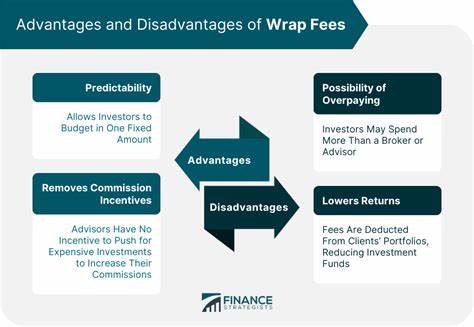
A wrap fee program is a service that provides investment advice and portfolio management to clients for one all-inclusive fee. The fee pays for the services provided to the client, including but not limited to securities transactions, portfolio management, research, brokerage, and administrative services. Wrap fee programs also provide an understanding of a client’s financial goals and objectives; research and selection of assets; implementation of investment decisions; account statements, and access to real-time financial data.

The Investment Advisers Act of 1940 regulates investment advisors when they offer these wrap fee programs and requires them to provide comprehensive disclosure documents before investing. This act helps ensure clients have access to all important information that affects their investment decisions.

QUESTION: Why do I need my stock broker? Can I just go directly to the hedge fund manager?

Yes, you can, but you may find a different fee arrangement when you reach the hedge fund manager, and you may be participating in an unethical transaction. When hedge fund managers set up separate accounts for wrap-fee clients, they agree to take a set fee in exchange for managing this money. They also enter into agreements with one or more brokers to help market this aspect of their money management business. A portion of the wrap fee you pay goes to the broker, and a portion goes to the manager. Incentive compensation is not generally used.

When approached directly, hedge fund managers will typically offer only the hedge fund, complete with incentive compensation and pooled investment features. However, if the hedge fund manager is willing to set up a separate account, it is possible that the investor will find the set fee much less than what he or she would have paid in a wrap fee account through a broker.

Finally, the very large caveat to all this is that the ethics of a hedge fund manager who steals clients from brokers with whom he has a marketing relationship ought to be called into question. And when it comes to hedge funds, the ethics of the manager are of paramount importance.

COMMENTS APPRECIATED

Read, Refer, Like and Subscribe

***

***

MEDICAL OFFICE: Patient Satisfaction Management

The “Soft Science” of Patient Relationship Management

***

By Dr. David Edward Marcinko; MBA MEd CMP

SPONSOR: http://www.CertifiedMedicalPlanner.org

***

INTRODUCTION

Patient satisfaction occurs when patient perceptions exceed their expectations. They get an intangible “something extra” from their visit, above what they paid for. When patient expectations match their perceptions, mutual obligations are fulfilled, making both practitioner and patient “break-even”.

The clinical result, within a relevant range, is only part of the patient’s perceptions. Numerous sub-conscious impressions comprise the remainder. We’ve all had patients love us despite a less than optimal result. We’ve all had patients angrily leave the practice over some non-clinical matter like a trivial billing dispute. A patient’s perception of any health care service is colored by a vast array of prior experiences that set up current expectations. The patient is pleased to the extent that his current perceptions exceed his/her pre existing expectations. This encompasses far more than the clinical result (within a relevant range), and includes such non-treatment issues as the demeanor of the staff, condition of the physical premises, psychological comfort during the visit, etc.

Remember, all patients talk about you anyway. In the past, a happy patient told four others about what a nice doctor you are. Today, patients post website comments or blogs immediately after their visits. They are more likely to complete treatment and follow instructions, thus obtaining a better medical outcome, and, generating additional fees for the practice. They pay quicker, cause less bad-debt and help create a pleasant environment for us to work in.

An unhappy patient vehemently tells nine others, onground or online, what a nasty greedy rip-off artist you are. Sad, but true! They are not as likely to complete treatment, thus incurring a less than optimal result, and generate fewer fees. They pay slower, if at all, create a stressed environment and detrimentally affect the attitude of other patients in the office.

Try to eliminate problems that might cause negative perceptions (i.e., a filthy restroom) and implement controls that help assure positive perceptions. Patient satisfaction is a soft managerial science. It is a numbers game. Most patients don’t pre-define what would be “acceptable” from this encounter, but have vaguely defined ranges of prior expectations anyway, gleaned from a lifetime of health care related experience. Any variance between these this “acceptable” range of expectations and each trivial encounter invokes some degree positive or negative feeling in the patient.

***

***

The total perception of the office experience is an aggregate of multiple trivial, often subliminal, observations. Patient satisfaction is an intangible and amorphous process complicated by:

Inter patient variables: Significant differences between patients in their “expectations”.
Intra patient variables: A single patient can perceive the same thing or situation differently at different times, depending on uncontrollable variables like mood, or, context of occurrence which may (sometimes and/or partially) be controllable by the practice.
Luck of the draw” in physical variables: Does Sally or Mary escort the patient to the exam room? Was it the blue or green exam room? Did the last patient to use the rest room, five minutes ago, leave a disgusting mess?
Heterogeneous staff variables: Even with appropriate training, people are not machines and have their own quirks.

ASSESSMENT

By proactively anticipating the entire visit, from the patient’s perspective, the practitioner can structure and arrange things such that most patients have, mostly positive perceptions, most of the time. This can be done despite all the potential hetero-genicity of the above factors. Patient satisfaction can be improved in any office, and can be done by anyone.

CONCLUSION

Because patient satisfaction is a multi-faceted amorphous subject, there are multiple correct approaches to the subject and no “cook book” recipe on how to proceed. Try and get the big picture. Identify the worst areas and fix them. Identify the best areas and reinforce them. Proceed slowly. It can be done one facet at a time. Adapt things to your own managerial style and personality. Be completely open to suggestion and change.

Finally, be aware that patient relationship and satisfaction implementation strategies frequently overlap.

EDUCATION: Books

SPEAKING: Dr. Marcinko will be speaking and lecturing, signing and opining, teaching and preaching, storming and performing at many locations throughout the USA this year! His tour of witty and serious pontifications may be scheduled on a planned or ad-hoc basis; for public or private meetings and gatherings; formally, informally, or over lunch or dinner. All medical societies, financial advisory firms or Broker-Dealers are encouraged to submit a RFP for speaking engagements: MarcinkoAdvisors@outlook.com 

COMMENTS APPRECIATED

Read Refer, Like and Subscribe

***

***

ACCOUNTABLE CARE ORGANIZATION: A Financially Toxic Contract Example for Physicians

SPONSOR: http://www.MarcinkoAssociates.com

By. Dr. David Edward Marcinko; MBA MEd CMP®

***

SPONSOR: http://www.CertifiedMedicalPlanner.org

***

WARNING – DISASTROUS ACO EXAMPLE – WARNING

GIVEN CASH FLOW MODEL

Suppose that in a new Accountable Care Organization [ACO] contract, a certain medical practice was awarded a new global payment or capitation styled contract that increased revenues by $100,000 for the next fiscal year. The practice had a gross margin of 35% that was not expected to change because of the new business. However, $10,000 was added to medical overhead expenses for another assistant and all Account’s Receivable (AR) are paid at the end of the year, upon completion of the contract.

Cost of Medical Services Provided (COMSP):

The Costs of Medical Services Provided (COMSP) for the ACO business contract represents the amount of money needed to service the patients provided by the contract.  Since gross margin is 35% of revenues, the COMSP is 65% or $65,000.  Adding the extra overhead results in $75,000 of new spending money (cash flow) needed to treat the patients. Therefore, divide the $75,000 total by the number of days the contract extends (one year) and realize the new contract requires about $ 205.50 per day of free cash flows.

Assumptions

Financial cash flow forecasting from operating activities allows a reasonable projection of future cash needs and enables the doctor to err on the side of fiscal prudence. It is an inexact science, by definition, and entails the following assumptions:

  • All income tax, salaries and Accounts Payable (AP) are paid at once.
  • Durable medical equipment inventory and pre-paid advertising remain constant.
  • Gains/losses on sale of equipment and depreciation expenses remain stable.
  • Gross margins remain constant.
  • The office is efficient so major new marginal costs will not be incurred.

***

***

Physician Reactions:

Since many physicians are still not entirely comfortable with global reimbursement, fixed payments, capitation or ACO reimbursement contracts; practices may be loath to turn away short-term business in the ACA era.  Physician-executives must then determine other methods to generate the additional cash, which include the following general suggestions:

1. Extend Account’s Payable

Discuss your cash flow difficulties with vendors and emphasize their short-term nature. A doctor and her practice still has considerable cache’ value, especially in local communities, and many vendors are willing to work them to retain their business

2. Reduce Accounts Receivable

According to most cost surveys, about 30% of multi-specialty group’s accounts receivable (ARs) are unpaid at 120 days. In addition, multi-specialty groups are able to collect on only about 69% of charges. The rest was written off as bad debt expenses or as a result of discounted payments from Medicare and other managed care companies. In a study by Wisconsin based Zimmerman and Associates, the percentages of ARs unpaid at more than 90 days is now at an all time high of more than 40%. Therefore, multi-specialty groups should aim to keep the percentage of ARs unpaid for more than 120 days, down to less than 20% of the total practice. The safest place to be for a single specialty physician is probably in the 30-35% range as anything over that is just not affordable.

The slowest paid specialties (ARs greater than 120 days) are: multi-specialty group practices; family practices; cardiology groups; anesthesiology groups; and gastroenterologists, respectively. So work hard to get your money, faster. Factoring, or selling the ARs to a third party for an immediate discounted amount is not usually recommended.

3. Borrow with Short-Term Bridge Loans

Obtain a line of credit from your local bank, credit union or other private sources, if possible in an economically constrained environment. Beware the time value of money, personal loan guarantees, and onerous usury rates. Also, beware that lenders can reduce or eliminate credit lines to a medical practice, often at the most inopportune time.

4. Cut Expenses

While this is often possible, it has to be done without demoralizing the practice’s staff.

5.  Reduce Supply Inventories

If prudently possible; remember things like minimal shipping fees, loss of revenue if you run short, etc.

6. Taxes

Do not stop paying withholding taxes in favor of cash flow because it is illegal.

Hyper-Growth Model:

Now, let us again suppose that the practice has attracted nine more similar medical contracts. If we multiple the above example tenfold, the serious nature of potential cash flow problem becomes apparent. In other words, the practice has increased revenues to one million dollars, with the same 35% margin, 65% COMSP and $100,000 increase in operating overhead expenses. 

Using identical mathematical calculations, we determine that $750,000 / 365days equals $2,055.00 per day of needed new free cash flows!  Hence, indiscriminate growth without careful contract evaluation and cash flow analysis is a prescription for potential financial disaster.

COMMENTS APPRECIATED

Subscribe, Read, Refer and Like

EDUCATION: Books

SPEAKING: Dr. Marcinko will be speaking and lecturing, signing and opining, teaching and preaching, storming and performing at many locations throughout the USA this year! His tour of witty and serious pontifications may be scheduled on a planned or ad-hoc basis; for public or private meetings and gatherings; formally, informally, or over lunch or dinner. All medical societies, financial advisory firms or Broker-Dealers are encouraged to submit a RFP for speaking engagements: CONTACT: MarcinkoAdvisors@outlook.com 

***

***

MERGER ARBITRAGE: Risk Arbitrage Defined

By Dr. David Edward Marcinko; MBA MEd CMP

***

Sponsor: http://www.CertifiedMedicalPlanner.org

***

Merger Arbitrage (a.k.a. Risk Arbitrage)

Merger risk arbitrage, while a subset of a larger strategy called event-driven arbitrage, represents a sufficient portion of the market-neutral universe to warrant separate discussion.

Merger arbitrage earned a bad reputation in the 1980s when Ivan Boesky and others like him came to regard insider trading as a valid investment strategy. That notwithstanding, merger arbitrage is a respected strategy and when executed properly, can be highly profitable. It bets on the outcomes of mergers, takeovers and other corporate events involving two stocks which may become one.

Example:

A classic example is acquisition of SDL Inc. (SDLI) by JDS Uniphase Corp (JDSU). On July 10, 2010 JDSU announced its intent to acquire SDLI by offering to exchange 3.8 shares of its own shares for one share of SDLI. At that time, the JDSU shares traded at $101 and SDLI at $320.5. It was apparent that there was almost 20 percent profit to be realized if the deal went through (3.8 JDSU shares at $101 are worth $383 while SDLI was worth just $320.5).

This apparent mispricing reflected the market’s expectation about the deal’s outcome. Since the deal was subject to the approval of the U.S. Justice Department and shareholders, there was some doubt about its successful completion.

Risk arbitrageurs who did their homework and properly estimated the probability of success bought shares of SDLI and simultaneously sold short shares of JDSU on a 3.8 to 1 ratio, thus locking in the future profit. Convergence took place about eight months later, in February 2011, when the deal was finally approved and the two stocks began trading at exact parity, eliminating the mis-pricing and allowing arbitrageurs to realize a profit.

***

***

Hedge Fund Research defines the strategy as follows:

Merger Arbitrage,also known as risk arbitrage, involves investing in securities of companies that are the subject of some form of extraordinary corporate transaction, including acquisition or merger proposals, exchange offers, cash tender offers and leveraged buy-outs. These transactions will generally involve the exchange of securities for cash, other securities or a combination of cash and other securities. Typically, a manager purchases the stock of a company being acquired or merging with another company, and sells short the stock of the acquiring company. A manager engaged in merger arbitrage transactions will derive profit (or loss) by realizing the price differential between the price of the securities purchased and the value ultimately realized when the deal is consummated. The success of this strategy usually is dependent upon the proposed merger, tender offer or exchange offer being consummated.

When a tender or exchange offer or a proposal for a merger is publicly announced, the offer price or the value of the securities of the acquiring company to be received is typically greater than the current market price of the securities of the target company. Normally, the stock of an acquisition target appreciates while the acquiring company’s stock decreases in value. If a manager determines that it is probable that the transaction will be consummated, it may purchase shares of the target company and in most instances, sell short the stock of the acquiring company. Managers may employ the use of equity options as a low-risk alternative to the outright purchase or sale of common stock. Many managers will hedge against market risk by purchasing S&P put options or put option spreads.

Cite: https://www.hfr.com See § 23.03[E].


COMMENTS APPRECIATED

Read, Learn, Subscribe and Like

***

***

CURRENT RATE OF RETURN: Defined

By Staff Reporters

SPONSOR: http://www.CertifiedMedicalPlanner.org

***

***

Current Rate of Return

An important concept for all medical professionals to understand is the current rate of return (CCR).

According to this principle, the current rate of a taxable return must be evaluated in reference to a similar non-taxable rate of return. This allows you to focus on your portfolio’s real (after-tax return), rather than its’ nominal, or stated return.

Now, since most medical professionals own a combination of both vehicles, it is important to calculate the average rate of return (ARR), as demonstrated in the following matrix. Usually, this will result in the assumption of more risk, for the possibility of great return.

To compare after tax yields, with taxable yields, use the following formulas:

Tax equivalent yield = yield / (1 – MTB), while taxable yield X (1-tax rate) = tax exempt yield.

Example: if the yield on a tax exempt municipal bond was 6%, and you are in a 28% tax bracket; the equivalent taxable yield (ETY), is 8.3%, calculated in the following manner: 06 / 1.00 – .28 =.083, or, 8.3% ETY. This means that you would need a taxable instrument paying almost 9 % to equal the 6 percent tax exempt bond.       

COMMENTS APPRECIATED

Subscribe, Read, Like and Refer

***

***

A NEW NORM: Revising Financial Planning Principles for Physicians?

DR. DAVID EDWARD MARCINKO; MBA MEd CMP

SPONSOR: http://www.MarcinkoAssociates.com

***

In 1972, Nobel Laureate Kenneth J. Arrow, PhD shocked academe’ by identifying health economics as a separate and distinct field. Yet, the seemingly disparate insurance, tax, risk management and financial planning principles that he also studied are just now becoming transparent to some medical professionals and their financial advisors. Despite the fact that a basic, but hardly promoted premise of this new wave financial planning era, is imprecision.

More: https://medicalexecutivepost.com/2024/11/09/arrow-information-paradox/

Nevertheless, to informed cognoscenti like Certified Medical Planners™, the principles served as predecessors to the modern physician-focused financial advisory niche sector. In 2004, Arrow was selected as one of eight recipients of the National Medal of Science for his innovative views.

More: http://www.CertifiedMedicalPlanner.org

And now, as a long bull market may be over, and if the current “new-normal” prevails – meaning a 4.5% real annualized rate of return on equities and a 1.5% real rate on bonds – wealth accumulation for all may be reduced.

An Imprecise Science

There is a major variable, dominant in any marketplace that pushes an economy in a forward direction. It is called consumerism. This became apparent while waiting in a doctor’s office one recent afternoon.

Scenario:

The front office receptionist, who appeared to be about 21 years old, was breaking for lunch and her replacement, who appeared not much older, came over to assist. Realizing the propensity for a long wait, one was taken by the size of waiting room and the number of patients coming in and out of the office. [Americans consume healthcare and a lot of it]. There was another notable peculiarity. The sample prescription bags being carried out the door were no match for the bags under everyone’s eyes, including the doctor’s. The office staff was probably working overtime, if not two jobs, and the doctor was working harder and faster in a managed care system.

Assessment

Why? So they all could afford to buy and voraciously consume for their children and themselves. Americans indeed work longer hours than any other industrialized nation.

Conclusion

Finally, as women medical professionals entered the workforce in unprecedented numbers, the stock markets reached an all time high in 2025, even as money was spent at a feverish pace as the Federal Reserve pumped out money in inflammatory fashion.

EDUCATION: Books

SPEAKING: Dr. Marcinko will be speaking and lecturing, signing and opining, teaching and preaching, storming and performing at many locations throughout the USA this year! His tour of witty and serious pontifications may be scheduled on a planned or ad-hoc basis; for public or private meetings and gatherings; formally, informally, or over lunch or dinner. All medical societies, financial advisory firms or Broker-Dealers are encouraged to submit a RFP for speaking engagements: CONTACT: MarcinkoAdvisors@outlook.com 

COMMENTS APPRECIATED

Refer, Like and Subscribe

***

***

CERTIFIED MEDICAL PLANNER™: Education for Financial Planners to Thrive with Doctor Clients!

Think Different – Be Different  – Thrive

[By Ann Miller RN MHA]

Letterhead CMP

http://www.CertifiedMedicalPlanner.org

Dear Physician Focused Financial Advisors

Did you know that desperate doctors of all ages are turning to knowledgeable financial advisors and medical management consultants for help? Symbiotically too, generalist advisors are finding that the mutual need for knowledge and extreme niche synergy is obvious.

***

planning

***

But, there was no established curriculum or educational program; no corpus of knowledge or codifying terms-of-art; no academic gravitas or fiduciary accountability; and certainly no identifying professional designation that demonstrated integrated subject matter expertise for the increasingly unique healthcare focused financial advisory niche … Until Now! 

***

CMP logo

http://www.CertifiedMedicalPlanner.org

Enter the CMPs

“The informed voice of a new generation of fiduciary advisors for healthcare”

Think Different

 [Think Different – Be Different – Thrive]

InfoGraphic

http://e.infogr.am/enter_the_certified_medical_planner?src=embed

CMP logo

http://www.CertifiedMedicalPlanner.org

***

So, if you are looking to supplement your knowledge, income and designations; and find other qualified professionals you may want to consider the CMP® program.

Enter the Certified Medical Planner™ charter professional designation. And, CMPs™ are FIDUCIARIES, 24/7.

Channel Surfing the ME-P

Have you visited our other topic channels? Established to facilitate idea exchange and link our community together, the value of these topics is dependent upon your input. Please take a minute to visit. And, to prevent that annoying spam, we ask that you register. It is fast, free and secure.

Conclusion

Your thoughts and comments on this ME-P are appreciated. Feel free to review our top-left column, and top-right sidebar materials, links, URLs and related websites, too. Then, subscribe to the ME-P. It is fast, free and secure.

***

Become a CMP

***

Speaker: If you need a moderator or speaker for an upcoming event, Dr. David E. Marcinko; MBA – Publisher-in-Chief of the Medical Executive-Post – is available for seminar or speaking engagements. Contact: MarcinkoAdvisors@msn.com

OUR OTHER PRINT BOOKS AND RELATED INFORMATION SOURCES:

 Comprehensive Financial Planning Strategies for Doctors and Advisors: Best Practices from Leading Consultants and Certified Medical Planners(TM)* 8

GDP: Private Domestic Health Care Investments

By Dr. David Edward Marcinko MBA MEd CMP™

SPONSOR: http://www.MarcinkoAssociates.com

***

***

SPONSOR: http://www.CertifiedMedicalPlanner.org

GROSS PRIVATE DOMESTIC HEALTH CARE INVESTMENTS

Classic:  Investment purchases and private expenditures of healthcare firms, the value of related construction, and the change in inventory during the year.

Modern: Gross Revenue Per Day is the average amount charged by a hospital for one day of inpatient care (gross inpatient revenue divided by patient-census days).

CITE: https://www.r2library.com/Resource/Title/0826102549

Examples:

  • Gross Revenue Per Discharge: The average amount charged by a hospital to treat an inpatient from admission to discharge (gross inpatient revenue divided by discharges).
  • Gross Revenue Per Visit: The average amount charged by a hospital for an outpatient visit (gross outpatient revenue divided by outpatient visits).

COMMENTS APPRECIATED

Subscribe Today!

***

***

EMPLOYER’S: Pay for Health Insurance Paradox

By Dr. David Edward Marcinko MBA MEd CMP

SPONSOR: http://www.CertifiedMedicalPlanner.org

***

***

Classic Definition: Employers write checks that cover most health insurance premiums for employees and their dependents. But as the late Princeton health economist Uwe Reinhardt PhD once explained, employer-sponsored insurance is like a pickpocket taking money out of your wallet at a bar and buying you a drink. You appreciate the cocktail until you realize you paid for it yourself.

Modern Circumstance: With health coverage, employers write the check to the insurer, but employees bear the cost of the premium — the entire premium, not just the portion listed as their contribution on their pay stub. The premium money that goes to the insurance company is cash that employers would otherwise deposit in employees’ accounts like the rest of their salary.

CITE: https://www.r2library.com/Resource/Title/0826102549

Paradox Example: The fallacy paradox is in thinking an employer’s contribution comes out of profits. In fact, higher health insurance premiums mean lower wages for workers. Since 1999, health insurance premiums have increased 147 percent and employer profits have increased 148 percent. But in that time, average wages have hardly moved, increasing just 7 percent. Clearly workers’ wages, not corporate profits, have been paying for higher health insurance premiums. Health care costs are one — though not the only — reason wages have stagnated over the last few decades. With health insurance costs rising faster than growth in the economy, more labor costs go to benefits like health insurance and less to take-home pay. Yet the paradox that employees don’t pay for their own health insurance is widespread:

  • The first reason is that individuals cannot be sure what causes their wages to change or remain stagnant for decades.
  • The second reason is that employers want Americans to believe that they pay for their workers’ health insurance.
  • The third reason is that there are those who profit from the employment-based system: drug companies, device manufacturers, specialty physicians and high-income individuals.

And so, they all want you to believe companies are being magnanimous in giving you insurance, but they are not!

COMMENTS APPRECIATED

Thank You

***

***

OCTOBER: “Financial Planning” Month for Doctors

DR. DAVID EDWARD MARCINKO MBA MEd CMP™

http://www.MarcinkoAssociates.com

History for Us All

http://www.CertifiedMedicalPlanner.org

***

***

History of Financial Planning Month

Financial planning as a concept has been around for a long time, but not as we know it today. When Loren Dunton set up the Society for Financial Counseling Ethics in 1969, or when the first graduating class of the College of Financial Planning graduated in 1973, financial planning was very different. It was centered around selling limited partnerships, which came to end with the Tax Reform Act of 1986.

However, financial planning re-emerged — all thanks to Richard Averitt III. The certified financial planner gave new meaning to financial planning, this time with a focus on who the client is and what their needs are. This approach was purely methodological in nature.

Soon after, financial planning picked up again. According to the Certified Financial Planner (C.F.P.) Board of Standards in Denver, today, there are more than 94,000 C.F.P.s worldwide, including over 48,000 in the U.S. Additionally, there are also organizations that have been set up for C.F.P.s, such as the Financial Planning Association (FPA), which has approximately 22,000 members.

And, don’t forget the emerging Certified Medical Planner professional fiduciary designation for physicians, dentists, nurses and allied healthcare clients.

Financial planning, as we know it now, includes investing, tax planning, retirement planning, and basically other ways to get your finances in order and create mindful budgets to ensure a safe and secure future. Getting a step ahead of your spending and finances is beneficial in the long run and Financial Planning Month in October is the perfect time to do that.

MORE: https://medicalexecutivepost.com/2022/10/27/october-national-financial-planning-month/

***

COMMENTS APPRECIATED

Thank You

***

ORDER: https://www.routledge.com/Comprehensive-Financial-Planning-Strategies-for-Doctors-and-Advisors-Best/Marcinko-Hetico/p/book/9781482240283

****

On Psychology, Financial Planning and Investing Bias

Psychological Biases Affecting Financial Planning and Investing

Dr. Marcinko at Johns Hopkins University

By Dr. David Edward Marcinko MBA MEd CMP®

http://www.MarcinkoAssociates.com

[Editor-in-Chief]

Sponsored: http://www.CertifiedMedicalPlanner.org

CMP logo

The following are some of the most common psychological biases.  Some are learned while others are genetically determined (and often socially reinforced).  While this essay focuses on the financial implications of these biases, they are prevalent in most areas in life.

[A] Incentives

It is broadly accepted that incenting someone to do something is effective, whether it be paying office staff a commissions to sell more healthcare products, or giving bonuses to office employees if they work efficiently to see more HMO patients.  What is not well understood is that the incentives cause a sub-conscious distortion of decision-making ability in the incented person.  This distortion causes the affected person – whether it is yourself or someone else – to truly believe in a certain decision, even if it is the wrong choice when viewed objectively.  Service professionals, including financial advisors and lawyers, are affected by this bias, and it causes them to honestly offer recommendations that may be inappropriate, and that they would recognize as being inappropriate if they did not have this bias.  The existence of this bias makes it important for each one of us to examine our incentive biases and take extra care when advising physician clients, or to make sure we are appropriately considering non-incented alternatives.

[B] Denial

Denial is a well known, but under-appreciated, psychological force.  Physicians, clients and professionals (like everyone else) are prone to the mistake of ignoring a painful reality, like putting off an unpleasant call (thus prolonging a problematic situation and potentially making it worse) or not opening account statements because of the desire not to see quantitative proof of losses.  Denial also manifests itself by causing human beings to ignore evidence that a mistake has been made.  If you think of yourself as a smart person (and what professional doesn’t?), then evidence pointing to the conclusion that a mistake has been made will call into question that belief, causing cognitive dissonance.  Our brains function to either avoid cognitive dissonance or to resolve it quickly, usually by discounting or rationalizing the disconfirming evidence. Not surprisingly, colleagues at Kansas State University and elsewhere, found that financial denial, including attempts to avoid thinking about or dealing with money, is associated with lower income, lower net worth, and higher levels of revolving credit.

[C] Consistency and Commitment Tendency

Human beings have evolved – probably both genetically and socially – to be consistent.  It is easier and safer to deal with others if they honor their commitments and if they behave in a consistent and predictable manner over time. This allows people to work together and build trust that is needed for repeat dealings and to accomplish complex tasks.  In the jungle, this trust was necessary to for humans to successfully work as a team to catch animals for dinner, or fight common threats.  In business and life it is preferable to work with others who exhibit these tendencies.  Unfortunately, the downside of these traits is that people make errors in judgment because of the strong desire not to change, or be different (“lemming effect” or “group-think”).  So the result is that most people will seek out data that supports a prior stated belief or decision and ignore negative data, by not “thinking outside the box”.  Additionally, future decisions will be unduly influenced by the desire to appear consistent with prior decisions, thus decreasing the ability to be rational and objective.  The more people state their beliefs or decisions, the less likely they are to change even in the face of strong evidence that they should do so.  This bias results in a strong force in most people causing them to avoid or quickly resolve the cognitive dissonance that occurs when a person who thinks of themselves as being consistent and committed to prior statements and actions encounters evidence that indicates that prior actions may have been a mistake.  It is particularly important therefore for advisors to be aware that their communications with clients and the press clouds the advisor’s ability to seek out and process information that may prove current beliefs incorrect.  Since this is obviously irrational, one must actively seek out negative information, and be very careful about what is said and written, being aware that the more you shout it out, the more you pound it in.

[D] Pattern Recognition

On a biological level, the human brain has evolved to seek out patterns and to work on stimuli-response patterns, both native and learned.  What this means is that we all react to something based on our prior experiences that had shared characteristics with the current stimuli.  Many situations have so many possible inputs that our brains need to take mental short cuts using pattern recognition we would not gain the benefit from having faced a certain type of problem in the past.  This often-helpful mechanism of decision-making fails us when past correlations or patterns do not accurately represent the current reality, and thus the mental shortcuts impair our ability to analyze a new situation.  This biologic and social need to seek out patterns that can be used to program stimuli-response mechanisms is especially harmful to rational decision-making when the pattern is not a good predictor of the desired outcome (like short term moves in the stock market not being predictive of long term equity portfolio performance), or when past correlations do not apply anymore.

[E] Social Proof

It is a subtle but powerful reality that having others agree with a decision one makes, gives that person more conviction in the decision, and having others disagree decreases one’s confidence in that decision.  This bias is even more exaggerated when the other parties providing the validating/questioning opinions are perceived to be experts in a relevant field, or are authority figures, like people on television.  In many ways, the short term moves in the stock market are the ultimate expression of social proof – the price of a stock one owns going up is proof that a lot of other people agree with the decision to buy, and a dropping stock price means a stock should be sold.  When these stressors become extreme, it is of paramount importance that all participants in the financial planning process have a clear understanding of what the long-term goals are, and what processes are in place to monitor the progress towards these goals.  Without these mechanisms it is very hard to resist the enormous pressure to follow the crowd; think social media.

[F] Contrast

Sensation, emotion and cognition work by contrast.  Perception is not only on an absolute scale, it also functions relative to prior stimuli.  This is why room temperature water feels hot when experienced after being exposed to the cold.  It is also why the cessation of negative emotions “feels” so good.  Cognitive functioning also works on this principle.  So one’s ability to analyze information and draw conclusions is very much related to the context with in which the analysis takes place, and to what information was originally available.  This is why it is so important to manage one’s own expectations as well as those of clients.  A client is much more likely to be satisfied with a 10% portfolio return if they were expecting 7% than if they were hoping for 15%.

[G] Scarcity

Things that are scarce have more impact and perceived value than things present in abundance.  Biologically, this bias is demonstrated by the decreasing response to constant stimuli (contrast bias) and socially it is widely believed that scarcity equals value.  People who feel an opportunity may “pass them by” and thus be unavailable are much more likely to make a hasty, poorly reasoned decision than they otherwise would.  Investment fads and rising security prices elicit this bias (along with social proof and others) and need to be resisted.  Understanding that analysis in the face of perceived scarcity is often inadequate and biased may help professionals make more rational choices, and keep clients from chasing fads.

[H] Envy / Jealousy

This bias also relates to the contrast and social proof biases.  Prudent financial and business planning and related decision-making are based on real needs followed by desires.  People’s happiness and satisfaction is often based more on one’s position relative to perceived peers rather than an ability to meet absolute needs.  The strong desire to “keep up with the Jones” can lead people to risk what they have and need for what they want.  These actions can have a disastrous impact on important long-term financial goals.  Clear communication and vivid examples of risks is often needed to keep people focused on important financial goals rather than spurious ones, or simply money alone, for its own sake.

[I] Fear

Financial fear is probably the most common emotion among physicians and all clients. The fear of being wrong – as well as the fear of being correct! It can be debilitating, as in the corollary expression on fear: the paralysis of analysis.

According to Paul Karasik, there are four common investor and physician fears, which can be addressed by financial advisors in the following manner:

  • Fear of making the wrong decision: ameliorated by being a teacher and educator.
  • Fear of change: ameliorated by providing an agenda, outline and/or plan.
  • Fear of giving up control: ameliorated by asking for permission and agreement.
  • Fear of losing self-esteem: ameliorated by serving the client first and communicating that sentiment in a positive manner.

https://images.routledge.com/common/jackets/crclarge/978148224/9781482240283.jpg

Textbook Order: https://www.amazon.com/Comprehensive-Financial-Planning-Strategies-Advisors/dp/1482240289/ref=sr_1_1?ie=UTF8&qid=1418580820&sr=8-1&keywords=david+marcinko

Psychological Traps

Now, as human beings, our brains are booby-trapped with psychological barriers that stand between making smart financial decisions and making dumb ones. The good news is that once you realize your own mental weaknesses, it’s not impossible to overcome them. 

In fact, Mandi Woodruff, a financial reporter whose work has appeared in Yahoo! Finance, Daily Finance, The Wall Street Journal, The Fiscal Times and the Financial Times among others; related the following mind-traps in a September 2013 essay for the finance vertical Business Insider; as these impediments are now entering the lay-public zeitgeist:

  • Anchoring happens when we place too much emphasis on the first piece of information we receive regarding a given subject. For instance, when shopping for a wedding ring a salesman might tell us to spend three months’ salary. After hearing this, we may feel like we are doing something wrong if we stray from this advice, even though the guideline provided may cause us to spend more than we can afford.
  • Myopia makes it hard for us to imagine what our lives might be like in the future. For example, because we are young, healthy, and in our prime earning years now, it may be hard for us to picture what life will be like when our health depletes and we know longer have the earnings necessary to support our standard of living. This short-sightedness makes it hard to save adequately when we are young, when saving does the most good.
  • Gambler’s fallacy occurs when we subconsciously believe we can use past events to predict the future. It is common for the hottest sector during one calendar year to attract the most investors the following year. Of course, just because an investment did well last year doesn’t mean it will continue to do well this year. In fact, it is more likely to lag the market.
  • Avoidance is simply procrastination. Even though you may only have the opportunity to adjust your health care plan through your employer once per year, researching alternative health plans is too much work and too boring for us to get around to it. Consequently, we stick with a plan that may not be best for us.
  • Loss aversion affected many investors during the stock market crash of 2008. During the crash, many people decided they couldn’t afford to lose more and sold their investments. Of course, this caused the investors to sell at market troughs and miss the quick, dramatic recovery.
  • Overconfident investing happens when we believe we can out-smart other investors via market timing or through quick, frequent trading. Data convincingly shows that people who trade most often under-perform the market by a significant margin over time.
  • Mental accounting takes place when we assign different values to money depending on where we get it from. For instance, even though we may have an aggressive saving goal for the year, it is likely easier for us to save money that we worked for than money that was given to us as a gift.
  • Herd mentality makes it very hard for humans to not take action when everyone around us does. For example, we may hear stories of people making significant profits buying, fixing up, and flipping homes and have the desire to get in on the action, even though we have no experience in real estate.
https://images.routledge.com/common/jackets/crclarge/978149872/9781498725989.jpg

Textbook Order: https://www.routledge.com/Risk-Management-Liability-Insurance-and-Asset-Protection-Strategies-for/Marcinko-Hetico/p/book/9781498725989

Your thoughts are appreciated.

THANK YOU

***

Efficient Market Hypothesis – or Perhaps Not?

Contradicting the Hypothesis

[A SPECIAL ME-P REPORT]

[By Timothy J McIntosh MBA CFP® MPH CMP™ [Hon]

[By Dr. David Edward Marcinko MBA MEd CMP™]

http://www.CertifiedMedicalPlanner.org

http://www.MarcinkoAssociates.com

***

Not everyone believes in the efficient market.  Numerous researchers over the previous decades have found stock market anomalies that indicate a contradiction with the hypothesis.  The search for anomalies is effectively the hunt for market patterns that can be utilized to outperform passive strategies.

white swan

[White Swan of the EMH]

Such stock market anomalies that have been proven to go against the findings of the EMH theory include:

  1. Low Price to Book Effect
  2. January Effect
  3. The Size Effect
  4. Insider Transaction Effect
  5. The Value Line Effect

The Anomalies

All the above anomalies have been proven over time to outperform the market.  For example, the first anomaly listed above is the Low Price to Book Effect.  The first and most discussed study on the performance of low price to book value stocks was by Dr. Eugene Fama and Dr. Kenneth R. French.  The study covered the time period from 1963-1990 and included nearly all the stocks on the NYSE, AMEX and NASDAQ. The stocks were divided into ten subgroups by book/market and were re-ranked annually.

In the study, Fama and French found that the lowest book/market stocks outperformed the highest book/market stocks by a substantial margin (21.4 percent vs. 8 percent).  Remarkably, as they examined each upward decile, performance for that decile was below that of the higher book value decile.  Fama and French also ordered the deciles by beta (measure of systematic risk) and found that the stocks with the lowest book value also had the lowest risk.

What is Value?

Today, most researchers now deem that “value” represents a hazard feature that investors are compensated for over time.  The theory being that value stocks trading at very low price book ratios are inherently risky, thus investors are simply compensated with higher returns in exchange for taking the risk of investing in these value stocks.

The Fama and French research has been confirmed through several additional studies.  In a Forbes Magazine 5/6/96 column titled “Ben Graham was right–again,” author David Dreman published his data from the largest 1500 stocks on Compustat for the 25 years ending 1994. He found that the lowest 20 percent of price/book stocks appreciably outperformed the market.

***

Ex-Cathedra black swan

[Ex-Cathedra or Black Swan Event]

Assessment

One item a medical professional should be aware of is the strong paradox of the efficient market theory.   If each investor believes the stock market were efficient, then all investors would give up analyzing and forecasting.  All investors would then accept passive management and invest in index funds.

But, if this were to happen, the market would no longer be efficient because no one would be scrutinizing the markets.  In actuality, the efficient market hypothesis actually depends on active investors attempting to outperform the market through diligent research

Channel Surfing the ME-P

Have you visited our other topic channels? Established to facilitate idea exchange and link our community together, the value of these topics is dependent upon your input. Please take a minute to visit. And, to prevent that annoying spam, we ask that you register. It is fast, free and secure.

More:

The Author

Timothy J. McIntosh is Chief Investment Officer and founder of SIPCO.  As chairman of the firm’s investment committee, he oversees all aspects of major client accounts and serves as lead portfolio manager for the firm’s equity and bond portfolios. Mr. McIntosh was a Professor of Finance at Eckerd College from 1998 to 2008. He is the author of The Bear Market Survival Guide and the The Sector Strategist.  He is featured in publications like the Wall Street Journal, New York Times, USA Today, Investment Advisor, Fortune, MD News, Tampa Doctor’s Life, and The St. Petersburg Times.  He has been recognized as a Five Star Wealth Manager in Texas Monthly magazine; and continuously named as Medical Economics’ “Best Financial Advisors for Physicians since 2004.  And, he is a contributor to SeekingAlpha.com., a premier website of investment opinion. Mr. McIntosh earned a Bachelor of Science Degree in Economics from Florida State University; Master of Business Administration (M.B.A) degree from the University of Sarasota; Master of Public Health Degree (M.P.H) from the University of South Florida and is a CERTIFIED FINANCIAL PLANNER® practitioner. His previous experience includes employment with Blue Cross/Blue Shield of Florida, Enterprise Leasing Company, and the United States Army Military Intelligence.

Conclusion

So, what about the “January Effect for 2025“?

Your thoughts and comments on this ME-P are appreciated. Feel free to review our top-left column, and top-right sidebar materials, links, URLs and related websites, too. Then, subscribe to the ME-P. It is fast, free and secure.

Speaker: If you need a moderator or speaker for an upcoming event, Dr. David E. Marcinko; MBA – Publisher-in-Chief of the Medical Executive-Post – is available for seminar or speaking engagements. Contact: MarcinkoAdvisors@msn.com

OUR OTHER PRINT BOOKS AND RELATED INFORMATION SOURCES:

Comprehensive Financial Planning Strategies for Doctors and Advisors: Best Practices from Leading Consultants and Certified Medical Planners(TM)

Invite Dr. Marcinko

TOP 25: Financial Accounting Concepts for Medical Practice Management

Your Top 25 Most Urgent Questions Answered by iMBA, Inc.

http://www.MarcinkoAssociates.com

By Dr. David Edward Marcinko; MBA, MEd, CMP™

www.CertifiedMedicalPlanner.com

cmp-logoThe modern medical practice is both similar, and unlike, other businesses today. This disparity often adds to confusion for the private practitioner. And so, the experts at iMBA Inc, list the top 25 most urgent questions in practice financial management, asked by clients to date.

Assessment

Since inception in 2000, the Institute of Medical Business Advisors Inc., has become one of North America’s leading professional health consulting and valuation firms; and focused provider of textbooks, CDs, tools, templates, onsite and distance education for the health economics, administration and financial management policy space. As competition and litigation support activities increase and the cognitive demands of the global marketplace change, iMBA Inc is well positioned with offices in five states and Europe, to meet the needs of medical colleagues, related advisory clients and corporate customers today; and into the future.

Link: iMBA Inc Q and As

Website: www.MedicalBusinessAdvisors.com

biz-book1

Conclusion

And so, your thoughts and comments on this Medical Executive-Post are appreciated. Tell us what you think. Send in your own questions. Feel free to review our top-left column, and top-right sidebar materials, links, URLs and related websites, too. Then, be sure to subscribe to the ME-P. It is fast, free and secure.

Speaker: If you need a moderator or speaker for an upcoming event, Dr. David E. Marcinko; MBA – Publisher-in-Chief of the Executive-Post – is available for seminar or speaking engagements. Contact: MarcinkoAdvisors@msn.com

Subscribe Now: Did you like this Medical Executive-Post, or find it helpful, interesting and informative? Want to get the latest ME-Ps delivered to your email box each morning? Just subscribe using the link below. You can unsubscribe at any time. Security is assured.

Sponsors Welcomed

And, credible sponsors and like-minded advertisers are always welcomed.

***

***

***

MICRO-CERTIFICATIONS: Financial Advisors Seeking Physician-Client Niche Success?

Micro-Credentials on the Rise

KNOWLEDGE RICHES IN NICHES

DR. DAVID EDWARD MARCINKO MBA MEd CMP

SPONSOR: http://www.CertifiedMedicalPlanner.org

***

***

Do you ever wish you could acquire specific information for your career activities without having to complete a university Master’s Degree or finish our entire Certified Medical Planner™ professional designation program? Well, Micro-Certifications from the Institute of Medical Business Advisors, Inc., might be the answer. Read on to learn how our three Micro-Certifications offer new opportunities for professional growth in the medical practice, business management, health economics and financial planning, investing and advisory space for physicians, nurses and healthcare professionals.

Micro-Certification Basics

Stock-Brokers, Financial Advisors, Investment Advisors, Accountants, Consultants, Financial Analyists and Financial Planners need to enhance their knowledge skills to better serve the changing and challenging healthcare professional ecosystem. But, it can be difficult to learn and demonstrate mastery of these new skills to employers, clients, physicians or medical prospects. This makes professional advancement difficult. That’s where Micro-Certification and Micro-Credentialing enters the online educational space. It is the process of earning a Micro-Certification, which is like a mini-degree or mini-credential, in a very specific topical area.

Micro-Certification Requirements

Once you’ve completed all of the requirements for our Micro-Certification, you will be awarded proof that you’ve earned it. This might take the form of a paper or digital certificate, which may be a hard document or electronic image, transcript, file, or other official evidence that you’ve completed the necessary work.

Uses of Micro-Certifications

Micro-Certifications may be used to demonstrate to physicians prospective medical clients that you’ve mastered a certain knowledge set. Because of this, Micro-Certifications are useful for those financial service professionals seeking medical clients, employment or career advancement opportunities.

Examples of iMBA, Inc., Micro-Certifications

Here are the three most popular Micro-Certification course from the Institute of Medical Business Advisors, Inc:

  • 1. Health Insurance and Managed Care: To keep up with the ever-changing field of health care physician advice, you must learn new medical practice business models in order to attract and assist physicians and nurse clients. By bringing together the most up-to-date business and medical prctice models [Medicare, Medicaid, PP-ACA, POSs, EPOs, HMOs, PPOs, IPA’s, PPMCs, Accountable Care Organizations, Concierge Medicine, Value Based Care, Physician Pay-for-Performance Initiatives, Hospitalists, Retail and Whole-Sale Medicine, Health Savings Accounts and Medical Unions, etc], this iMBA Inc., Mini-Certification offers a wealth of essential information that will help you understand the ever-changing practices in the next generation of health insurance and managed medical care.
  • 2. Health Economics and Finance: Medical economics, finance, managerial and cost accounting is an integral component of the health care industrial complex. It is broad-based and covers many other industries: insurance, mathematics and statistics, public and population health, provider recruitment and retention, health policy, forecasting, aging and long-term care, and Venture Capital are all commingled arenas. It is essential knowledge that all financial services professionals seeking to serve in the healthcare advisory niche space should possess.
  • 3. Health Information Technology and Security: There is a myth that all physician focused financial advisors understand Health Information Technology [HIT]. In truth, it is often economically misused or financially misunderstood. Moreover, an emerging national HIT architecture often puts the financial advisor or financial planner in a position of maximum uncertainty and minimum productivity regarding issues like: Electronic Medical Records [EMRs] or Electronic Health Records [EHRs], mobile health, tele-health or tele-medicine, Artificial Intelligence [AI], benefits managers and human resource professionals.

Other Topics include: economics, finance, investing, marketing, advertising, sales, start-ups, business plan creation, financial planning and entrepreneurship, etc.

How to Start Learning and Earning Recognition for Your Knowledge

Now that you’re familiar with Micro-Credentialing, you might consider earning a Micro-Certification with us. We offer 3 official Micro-Certificates by completing a one month online course, with a live instructor consisting of twelve asynchronous lessons/online classes [3/wk X 4/weeks = 12 classes]. The earned official completion certificate can be used to demonstrate mastery of a specific skill set and shared with current or future employers, current clients or medical niche financial advisory prospects.

Mini-Certification Tuition, Books and Related Fees

The tuition for each Mini-Certification live online course is $1,250 with the purchase of one required dictionary handbook. Other additional guides, white-papers, videos, files and e-content are all supplied without charge. Alternative courses may be developed in the future subject to demand and may change without notice.

***

Contact: For more information, or to speak with an academic representative, please contact Ann Miller RN MHA CMP™ at: MarcinkoAdvisors@msn.com [24/7].

***

Selecting Financial Advisors the Risky Way

Physician Due Diligence is Important

[By Daniel B. Moisand; CFP®, and the ME-P Staff]Tall Shadows

While the merits of hiring the right financial advisor [FA] may be clear, hiring the wrong one can be devastating. Medical professionals still tend to have higher incomes and are an attractive target for most financial institutions and scam artists. This fear is a poor excuse for not getting the assistance necessary. Advice about who to engage for financial assistance comes from a hodge-podge of disjointed sources. This leads to good intentions and bad results. Take caution when using the following as sources of advice.

Relying on Family and Friends

By far more people seek financial advice from trusted family members and friends than any other source.  This is only natural. It is essential to trust that you are getting advice from a source that means well. It is also important that you get along well with your advisors. Hesitating to communicate with your advisor, even a great advisor, can cause problems even more problematic that getting bad advice from someone you like. While these sources have a good handle on the essential elements of trust and rapport, it is the competence of the advice that is most often the issue. The life and money experiences of those who are close to you certainly have value, but they are not necessarily relevant to your unique goals and circumstances. THINK: Bernie Madoff.

Media

A few years ago, the dominant media force in consumer oriented financial matters was the print media.  Magazines and newsletters proliferated with the bull market. More recently however, television has supplanted print even in the bear market. For example, a study now estimates that 80 percent of what the average American knows about current events comes from TV. Why wait three weeks for the next issue when you can get a commentary instantly on the television? There is nothing wrong with watching shows that cover the markets or subscribing to a consumer finance magazine. It is certainly a good idea to be informed. However, be wary of the quality and applicability of information put out by the media.

The Internet

It is easy to run across an ad for prescriptions drugs on television. Images prance across the screen followed by a litany of potential side effects and the obligatory, “Ask your doctor about”. With the expansion of the information superhighway, more and more companies are going direct to the consumer in some manner or another.

Financially speaking this information can be of great benefit but should also generate more concern. It is very easy to project a particular image via the web. The webmaster controls the interaction from what you see to what you hear. One of the results of this is that the Internet has already garnered a reputation as a breeding ground for new scams. More prevalent, however, is the presentation of information meant to be useful that is simply wrong, misinterpreted, or misapplied. The most terrifying source of misinformation on the net is the chat rooms. Here the entire interaction is clouded by anonymity. Some people enter chat rooms because there is a comfort in anonymity when asking a question. There is also a danger in an anonymous answer. When it comes to something as important as your finances or your health, the prudent course should be to take all the advice with a grain of salt. A great deal of consideration to the quality of the source is in order. It is also essential that one understand the level of accountability a source may possess.   fp-book2

Assessment

Much has been written on financial advisor selection, here on the ME-P and elsewhere; but little on how not to select an advisor. We trust this information will be of assistance to the medical professional in some small increment. Send in your FA stories; both good and bad.

Channel Surfing the ME-P

Have you visited our other topic channels? Established to facilitate idea exchange and link our community together, the value of these topics is dependent upon your input. Please take a minute to visit. And, to prevent that annoying spam, we ask that you register. It is fast, free and secure.

Conclusion

Your thoughts and comments on this ME-P are appreciated. Feel free to review our top-left column, and top-right sidebar materials, links, URLs and related websites, too. Then, subscribe to the ME-P. It is fast, free and secure.

Speaker: If you need a moderator or speaker for an upcoming event, Dr. David E. Marcinko; MBA – Publisher-in-Chief of the Medical Executive-Post – is available for seminar or speaking engagements. Contact: MarcinkoAdvisors@msn.com

OUR OTHER PRINT BOOKS AND RELATED INFORMATION SOURCES:

Product Details  Product Details

Comprehensive Financial Planning Strategies for Doctors and Advisors: Best Practices from Leading Consultants and Certified Medical Planners™

***

What is ABSOLUTE [Intrinsic] VALUE?

A MATH AND FINANCIAL-INVESTING TERM

***

By Dr. David E. Marcinko MBA MEd CMP®

CMP logo

SPONSOR: http://www.CertifiedMedicalPlanner.org

In mathematics, the absolute value or modulus of a real number x, denoted |x|, is the non-negative value of x without regard to its sign. Namely, |x| = x if x is positive, and |x| = −x if x is negative (in which case −x is positive), and |0| = 0. For example, the absolute value of 3 is 3, and the absolute value of −3 is also 3. The absolute value of a number may be thought of as its distance from zero.

***

In finance, absolute value, also known as an intrinsic value, refers to a business valuation method that uses discounted cash flow (DCF) analysis to determine a company’s financial worth. The absolute value method differs from the relative value models that examine what a company is worth compared to its competitors. Absolute value models try to determine a company’s intrinsic worth based on its projected cash flows.

CITE: https://www.r2library.com/Resource/Title/0826102549

In investing, the key issues are as follows:

  • Absolute value refers to a business valuation method that uses discounted cash flow analysis to determine a company’s financial worth.
  • Investors can determine if a stock is currently under or overvalued by comparing what a company’s share price should be given its absolute value to the stock’s current price.
  • There are some challenges with using the absolute value analysis including forecasting cash flows, predicting accurate growth rates, and evaluating appropriate discount rates.
  • Absolute value, unlike relative value, does not call for the comparison of companies in the same industry or sector.

YOUR COMMENTS ARE APPRECIATED

***

***

FINANCE: https://www.routledge.com/Comprehensive-Financial-Planning-Strategies-for-Doctors-and-Advisors-Best/Marcinko-Hetico/p/book/9781482240283

Thank You

******

Discover the Best [Financial Planning and Investing] Practices of Leading Certified Medical Planners®

CMP logo

http://www.CertifiedMedicalPlanner.org 

 Our New Texts – “Take a Peek Inside – Now Available

Comprehensive Financial Planning Strategies for Doctors and Advisors: Best Practices from Leading Consultants and Certified Medical Planners(TM)

Front Matter with Foreword by Jason Dyken MD MBA

logos

“BY DOCTORS – FOR DOCTORS – PEER REVIEWED – FIDUCIARY FOCUSED”

***

Physician Medical Risk Management and Insurance Planning Practices of Leading CERTIFIED MEDICAL PLANNERS®

SPONSOR: http://www.CertifiedMedicalPlanner.org 

 Our New Texts – “Take a Peek Inside – Now Available

      Risk Management, Liability Insurance, and Asset Protection Strategies for Doctors and Advisors: Best Practices from Leading Consultants and Certified Medical Planners™  Risk Management, Liability Insurance, and Asset Protection Strategies for Doctors and Advisors: Best Practices from Leading Consultants and Certified Medical Planners™

 logos

“BY DOCTORS – FOR DOCTORS – PEER REVIEWED – FIDUCIARY FOCUSED”

SAMPLE: 21. Practice Risks

MORE: Risk Mgmt Leadership

***

How Stock-Brokers Execute Trades

What Every Physician-Investor Should Know

And … Why Trade Execution Isn’t Instantaneous!

By Dr. Gary L. Bode MSA CPA CMP [Hon]; PC

http://www.CertifiedMedicalPlanner.org

Dr. Gary Bode; CPA, MSA, CMP

Many physician investors who trade through online brokerage accounts assume they have a direct connection to the securities markets.

But, they don’t. When you press “enter,” your order is sent over the Internet to your broker – who in turn decides which market to send it to for execution. A similar process occurs when you call your broker to place a trade.

While trade execution is usually seamless and quick, it does take time. And prices can change quickly, especially in fast-moving markets. Because price quotes are only for a specific number of shares, MD investors may not always receive the price they saw on their screen or the price their broker quoted over the phone. By the time your order reaches the market, the price of the stock could be slightly – or very – different.

Note: No SEC regulations require a trade to be executed within a set period of time. But if firms advertise their speed of execution, they must not exaggerate or fail to tell investors about the possibility of significant delays.

Tip: To avoid buying or selling a stock at a price higher or lower than you wanted, place a limit order rather than a market order. A limit order is an order to buy or sell a security at a specific price. A buy limit order can only be executed at the limit price or lower, and a sell limit order can only be executed at the limit price or higher. When you place a market order, you can’t control the price at which your order will be filled.

Example: You want to buy the stock of a “hot” IPO that was initially offered at $9, but don’t want to end up paying more than $20 for the stock. Place a limit order to buy the stock at any price up to $20. By entering a limit order rather than a market order, you will not be caught buying the stock at $90 and then suffering immediate losses as the stock drops later in the day or the weeks ahead.

Caution: Your limit order may never be executed because the market price may quickly surpass your limit before your order can be filled. But by using a limit order you also protect yourself from buying the stock at too high a price. 

More:

ABOUT

Dr. Gary L. Bode was Chief Executive Officer of Comprehensive Practice Accounting, Inc., a firm specializing in providing tax solutions to medical professionals. Originally, he was a board certified podiatrist and managing partner of a multi-office medical practice for a decade before earning his Master of Science degree in Accounting from the University of North Carolina. He then served as Chief Financial Officer [CFO] for a private mental healthcare facility. Today, Dr. Bode is a nationally known Certified Public Accountant, financial author, educator, and speaker. Areas of expertise include producing customized managerial accounting reports, practice appraisals and valuations, restructurings, and innovative financial accounting as well as proactive tax positioning and tax return preparation for healthcare facilities. He has been quoted in Newsweek.

Conclusion

Your thoughts and comments on this ME-P are appreciated. Feel free to review our top-left column, and top-right sidebar materials, links, URLs and related websites, too. Then, subscribe to the ME-P. It is fast, free and secure.

Speaker: If you need a moderator or speaker for an upcoming event, Dr. David E. Marcinko; MBA – Publisher-in-Chief of the Medical Executive-Post – is available for seminar or speaking engagements. Contact: MarcinkoAdvisors@msn.com

OUR OTHER PRINT BOOKS AND RELATED INFORMATION SOURCES:

Comprehensive Financial Planning Strategies for Doctors and Advisors: Best Practices from Leading Consultants and Certified Medical Planners(TM)* 8

CROWD-FUNDING: Income Tax Implications

By Staff Reporters

SPONSOR: http://www.CertifiedMedicalPlanner.org

***

***

Crowdfunding is a popular way to raise money online. People often use crowdfunding to fund raise for a business, for charity, or for gifts. It’s important to know that money raised through crowdfunding may be taxable.

Do you have to pay taxes on the money you receive from GoFundMe, etc?

Generally, you will not owe taxes on donated funds you receive from a crowdfunding platform. The IRS considers the money received from GoFundMe to be a gift instead of income, so it is typically not taxable. A gift is any transfer of cash or property you make to an individual without receiving full consideration in return, according to the IRS. People who donate money to GoFundMe to help pay for medical expenses are typically doing it out of generosity and do not expect anything in return. 

Some money raised through crowdfunding may NOT be considered a gift.

Under federal tax law, gross income includes all income from any source, unless it’s excluded from gross income by law. In most cases, gifts aren’t included in the gross income of the person receiving the gift. Here’s what people involved in crowdfunding should know:

  • If a crowdfunding organizer is raising money on behalf of others, the money may not be included in the organizer’s gross income, as long as the organizer gives the money to the person for whom they organized the crowdfunding campaign.
  • If people donate to a crowdfunding campaign out of generosity and without expecting anything in return, the donations are gifts. Therefore, they will not be included in the gross income of the person for whom the campaign was organized.
  • However, not all contributions to crowdfunding campaigns are gifts and may be taxable.
  • When employers give to crowdfunding campaigns for an employee, those contributions are generally included in the employee’s gross income.

Taxpayers may want to consult a trusted tax pro for information and advice regarding how to treat amounts received from crowdfunding campaigns.

COMMENTS APPRECIATED

Thank You

***

***

Establishing Your Medical Practice’s Fair Market Value

Medical Practice Valuation

Product Details

By Dr. David Edward Marcinko, MBA, MEd, CMP

www.CertifiedMedicalPlanner.org

In recent years, the physician practice market has experienced a noticeable increase in practice merging and acquisitions. Medical practices are being acquired by health systems as a result of Accountable Care Organization (ACO) delivery models; etc.

For physicians, the decision to buy, sell, or merge a medical practice is more complicated than ever, and determining a medical practice’s worth is crucial to this process.

Value Isn’t an Absolute Number

A medical practice’s tangible and intangible assets can be grouped into two broad categories:

  • Physical assets: Examples are real estate, medical records, leaseholds, medical equipment and furnishings, and accounts receivable (A/R).
  • Non-physical assets: These include goodwill, restrictive covenants, buy/sell agreements, managed care contracts, and an assembled workforce.

Estimates of value differ markedly, depending on the purpose of the appraisal, the acumen of the appraiser, etc. To help determine the value, some important questions to consider are:

  • What is the value of the practice for purchase or sale?
  • What is the value of a practice for merger?
  • What is the value of practice assets for joint venture with a corporate partner?
  • What is the value to establish buy-in or buy-out arrangements for partners?
  • What is the value of practice assets for purchase or sale, apart from ongoing operations?

To answer these questions, physicians (buyers and sellers) must understand how practices are valuated—beginning with the following informal, and then more formal, definitions:

Informal Terms of Valuation

  • The “asking price” is often arbitrary and difficult to substantiate, and typically is reduced 25-50 percent after negotiations.
  • The “creative price” is derived by way of creative financing. For example, the practice may provide the down payment.
  • The “emotional price” may involve either a motivated buyer or seller, who pays an under- or overinflated price for the practice.
  • The “friendly price” is reserved for associates, partners, or other colleagues.
  • The “realistic price” is one that both buyer and seller believe is fair.

Formal Terms of Valuation

  • Most appraisers use “fair market value” (FMV) as the standard to derive a reasonable value for a practice. FMV means an arm’s length transaction between an unpressured, informed buyer and an unpressured, informed seller.
  • The “business enterprise value” of a practice equals a combination of all assets (tangible and intangible), and the working capital, of a continuing business.
  • The value of “owner’s equity” equals the combined values of all practice assets (tangible and intangible), less all practice liabilities (booked and contingent).
  • The “working capital value” equals the excess of current assets (cash, A/R, supplies, inventory, prepaid expenses, etc.) over current liabilities (accounts payable, accrued liabilities, etc.).

Realizing that there is no absolute sales price is the essence of FMV. When determining valuation, look for a price range with a reasonable floor and ceiling.

Understand The Lingo

If you are a practice buyer or seller, make sure you understand terms and appraisal definitions.

That’s a lesson George Farmer, a primary care physician in Florida, learned the hard way. He asked his accountant to appraise his business. When he was ready to sell, his attorney (who also happens to be his brother-in-law) drew up the sales contract. Farmer was pleased that the practice sold quickly for its full asking price.

What he didn’t know (but would discover) is that accounting or “book” value—the figure his accountant gave him—is far different than the FMV that he could have received.

Was the CPA wrong? Not really. Was the doctor incorrect? No. But each was operating under a different set of terms and definitions, without knowledge of each other’s perspectives.

How to Begin Valuation

The following steps should occur before the practice appraisal process begins:

  • Retain an appraiser (for each side) who understands the changing health care industry.
  • Aggregate historic practice business information and consolidated financial statements, operating statistics, payer mix, CPT® utilization, acuity rates, etc.
  • Eliminate one-time, non-recurring expenses, adjusted or normalized for excessive or below normal expenses.
  • Understand key assumptions used in financial projections.

To determine value, appraisers should follow the American Society of Appraisers’ Principles of Appraisal Practice and Code of Ethics. The IRS issued guidelines in 1995 further suggesting that appraisers use the general methods of the Uniform Standards of Professional Appraisal Practices (USPAP), which recognize three approaches to medical practice valuation.

1. Income Methods

There are two methods to value a practice by income:

(a) Capitalization Method: The excess earnings or capitalization method estimates value by dividing normalized historical or current income by an appropriate rate of return for the buyer. This method does not require assumptions.

(b) Discounted Method: Discounted Cash Flow (DCF): Analysis requires assumptions to estimate practice value by discounting future net cash flows to their present worth based on market rates of return required by an investor. Understanding the key assumptions produces a meaningful estimate of practice value. These assumptions may include:

  • projections of future practice revenue, productivity, reimbursement trends, and shifts in payer mix
  • projections of practice cost structures and projected physician compensation
  • after-tax practice cash flows
  • reinvestments to replace equipment or other assets
  • residual practice value at the end of the forecast period
  • discount rate based on the practice specific weighted average cost of capital
  • practice efficiencies, operations, and competitive market conditions

The DCF analysis consistently produces higher values than other methods of estimating practice value because there may be supportable reasons to forecast improvements in future practice performance.

2. Marketplace Multiples

Market transaction multiples are ratios developed by correlating actual practice sale prices to key practice performance measurements. Common multiples include comparisons of sale price to revenue, sale price to earnings before interest and taxes (EBIT), sale price to earnings before interest, taxes, and depreciation allowance (EBITDA), gross revenue, net revenue, and the sale price to number of physicians.

Market transaction multiples are typically limited to serving as a benchmark for testing the reasonableness of the other approaches. They are becoming less common and less useful.

3. Cost Approach

The cost approach calls for identification and separate valuation of all the practice assets, including goodwill, depreciated over 15 years.

The cost approach is more labor intensive than using the enterprise analysis to estimate practice value; especially for a new practice, which typically includes the expenses to acquire space, office furnishings, equipment, marketing, advertising, staff development, and losses incurred during the startup period. This estimate of “replacement cost or cost avoidance” value represents an upper limit (or ceiling) of value, and generally is not considered useful in estimating the value of an established medical practice.

Net Income Statement Adjustments

When analyzing a set of financial statements to determine practice value, adjustments (normalizations) generally are needed to produce a clearer picture of likely future income and distributable cash flow. It also allows more of an “apples to apples” line item comparison. This normalization process usually consists of making three main adjustments to a medical practice’s net income (profit and loss) statement.

1. Non-Recurring Items: Estimates of future distributable cash flow should exclude non-recurring items. Proceeds from the settlement of litigation, one-time gains/losses from the selling of assets or equipment, and large write-offs that are not expected to reoccur, each represent potential nonrecurring items. The impact of nonrecurring events should be removed from the practice’s financial statements to produce a clearer picture of likely future income and cash flow.

2. Perquisites: The buyer of a medical practice may plan to spend more or less than the current doctor-owner for physician executive compensation, travel and entertainment expenses, and other perquisites of current management. When determining future distributable cash flow, income adjustments to the current level of expenditures should be made for these items.

3. Non-cash Expenses: Depreciation expense, amortization expense, and bad debt expense are all non-cash items which impact reported profitability. When determining distributable cash flow, you must analyze the link between non-cash expenses and expected cash expenditures.

The annual depreciation expense is a proxy for likely capital expenditures over time. When capital expenditures and depreciation are not similar over time, an adjustment to expected cash flow is necessary.

Some practices reduce income through the use of bad debt expense rather than direct write-offs. Bad debt expense is a non-cash expense that represents an estimate of the dollar volume of write-offs that are likely to occur during a year. If bad debt expense is understated, practice profitability will be overstated.

Balance Sheet Adjustments

Adjustments also can be made to a practice’s balance sheet to remove non-operating assets and liabilities, and to restate asset and liability value at market rates (rather than cost rates).

Assets and liabilities that are unrelated to the core practice being valued should be added to or subtracted from the value, depending on whether they are acquired by the buyer. Examples include the asset value less outstanding debt of a vacant parcel of land, and marketable securities that are not needed to operate the practice. Other non-operating assets, such as the cash surrender value of officer life insurance, generally are liquidated by the seller and are not part of the business transaction.

Assessment

With a basic understanding of practice valuation and the steps involved, buyers and sellers will be better prepared for next steps.

Conclusion

Your thoughts and comments on this ME-P are appreciated. Feel free to review our top-left column, and top-right sidebar materials, links, URLs and related websites, too. Then, subscribe to the ME-P. It is fast, free and secure.

Speaker: If you need a moderator or speaker for an upcoming event, Dr. David E. Marcinko; MBA – Publisher-in-Chief of the Medical Executive-Post – is available for seminar or speaking engagements. Contact: MarcinkoAdvisors@msn.com

OUR OTHER PRINT BOOKS AND RELATED INFORMATION SOURCES:

Additional Reading:

Cimasi, Robert James: Valuation of Hospital in a Changing Reimbursement and Regulatory Environment. Marcinko, DE (Editor): Healthcare Organizations (Financial Management Strategies). Institute of Medical Business Advisors Inc., Atlanta, Ga., 2011

Marcinko, DE: “Getting it Right,” How Much is a Plastic Surgery Practice Really worth? Plastic Surgery Products, August 2006.

Marcinko, DE and Hetico, HR: The Business of Medical Practice (third edition). Springer Publishing,New York, N.Y., 2011.

Marcinko, DE and Hetico; HR: Risk Management and Insurance Planning for Physicians and Advisors, Jones and Bartlett Publishers, Sudbury,Mass., 2007.

Marcinko, DE and Hetico; HR: Financial Planning for Physicians and Advisors, Jones and Bartlett Publishers, Sudbury, Mass., 2007.

Marcinko, DE and Hetico, HR: Dictionary of Health Insurance and Managed Care, Springer Publishing, New York, N.Y., 2007.

Marcinko, DE and Hetico, HR: Dictionary of Health Economics and Finance, Springer Publishing, New York, N.Y., 2007.

Product DetailsProduct DetailsProduct Details

Product Details  Product Details

   Product Details 

Risk Management, Liability Insurance, and Asset Protection Strategies for Doctors and Advisors: Best Practices from Leading Consultants and Certified Medical Planners™8Comprehensive Financial Planning Strategies for Doctors and Advisors: Best Practices from Leading Consultants and Certified Medical Planners™

***

Invite Dr. Marcinko

***

PHYSICIAN ACQUISITION: The Art of Acquiring Your Medical Practice

Part Two: Medical Practice Valuation

By Dr. David Edward Marcinko, MBA, MED, CMP

www.CertifiedMedicalPlanner.org

In Part 1, we discussed how to establish fair market value (FMV) for a medical practice in the article, “Establish Your Practice’s Fair Market Value.” This time, we’ll review important terms and conditions for the sale acquisition and transaction.

LINK: https://medicalexecutivepost.com/2023/02/02/establish-your-practices-fair-market-value/

Valuation Types

Unfortunately, as a general rule, medical practice worth is presently deteriorating. A good medical practice is no longer a good business necessarily, and selling doctors can no longer automatically expect to extract a premium sale price. Nevertheless, appraising your medical practice on a periodic basis can play a key role in obtaining maximum value for it.

Competent practice valuation specialists typically charge a retainer to cover out-of-pocket expenses. Fees should not be based on a percentage of practice value, and may take 30-45 days to complete. Flat fees should be the norm because a sliding scale or percentage fee may be biased toward over-valuation in a declining marketplace. Fees range from $7,500-$50,000 for the small to large medical practice or clinic.

Expect to pay a retainer and sign a formal, professional engagement letter. Seek an unbiased and independent viewpoint. Buyer and sellers should each have their own independent appraisal done, using similar statistics, accounting measures, and economic assumptions.

At the Institute of Medical Business Advisors, Inc www.MedicalBusinessAdvisors.com we use three engagement levels that vary in intensity, purpose, and cost:

1. A comprehensive valuation provides an unambiguous value range. It is supported by most all procedures that valuators deem relevant, with mandatory onsite review. This gold standard is suitable for contentious situations. A written “opinion of value” is applicable for litigation support activities like depositions and trial. It is also useful for external reporting to bankers, investors, the public, Internal Revenue Service (IRS), etc.

2. A limited valuation lacks additional suggested Uniform Standards of Professional Appraisal Practice (USPAP) procedures. It is considered to be an “agreed upon engagement,” when the client is the only user. For example, it may be used when updating a buy/sell agreement, or when putting together a practice buy-in for a valued associate. This limited valuation would not be for external purposes, so no onsite visit is necessary and a formal opinion of value is not rendered.

3. An ad-hoc valuation is a low level engagement that provides a gross non-specific approximation of value based on limited parameters or concerns involved parties. Neither a written report nor an opinion of value is rendered. It is often used periodically as an internal organic growth/decline gauge.

Structure Sales Transactions and Acquisitions

When the practice price has been determined and agreed on, the actual sales deal can be structured in a couple of ways:

(1) Stock Purchase v. Asset Purchase

In an asset transaction, the buyer will receive a tax amortization benefit associated with the intangible value of the business. This tax amortization represents a non-cash expense benefiting the buyer. In this case, the present value of those future tax benefits is added to the business enterprise value.

(2) Corporate Transactions

Typical private deals in the past involved some multiple (ratio) of earning before income taxes (EBIT)—usually a combination of cash, restricted stock, notes receivable, and possibly assumption of liabilities. For some physician hospital organizations, and public deals, the receipt of common stock can increase the practice price by as much as 40-50 percent (to accept the corresponding business risk, in lieu of cash).

Complete the Deal

The deal structure will vary depending on whether the likely buyer is a private practitioner, health system or a corporate partner. Some key issues to consider in the “art of the deal” include:

  • Working capital (in or out?): Including working capital in the transaction will increase the sale price.
  • Stock vs. asset transaction: Structuring the deal as an asset purchase will increase practice value due to the tax amortization benefits received by the buyer for intangible assets of the practice.
  • Common stock premium: The total sale price can be significantly higher than a cash equivalent price for accepting the risk and relative illiquidity of common stock as part of the payment.
  • Physician compensation: If your goal is to maximize practice value, take home a lower salary to increase practice sale price. The reverse is also true.

Understand Private Deal Structure

Assuming a practice sale is a private transaction, deal negotiations are based on the following pricing methodologies:

Seller financing: Many transactions involve an earn-out arrangement where the buyer puts money down and pays the balance under a formula based on future revenues, or gives the seller a promissory note under similar terms. Seller financing decreases a buyer’s risks (the longer the terms, the lower the risk). Longer terms demand premiums, while shorter terms demand discounts. Premiums that buyers pay for a typical seller-financed practice are usually more than what you would expect from a simple time value of money calculation, as a result of buyer risk reduction from paying over time, rather than up front with a bank loan or all cash. Remember to obtain a life insurance policy on the buyer.

Down payment: The greater the down payment for acquisition of a medical practice, the greater the risk is to the buyer. Consequently, sellers who will take less money up front can command a higher than average price for their practice, while sellers who want more down usually receive less in the end.

Taxation: Tax consequences can have a major impact on the price of a medical practice. For instance, a seller who obtains the majority of the sales price as capital gains can often afford to sell for a much lower price and still pocket as much or more than if the sales price were paid as ordinary income. Value attributed to the seller’s patient list, medical records, name brand, good will, and files qualifies for capital gains treatment. Value paid for the selling doctor’s continuing assistance after the sale and value attributed to a non-compete agreement are taxed at ordinary income. A buyer willing to allocate more for items with capital gains treatment, or a seller willing to take more in ordinary income, can frequently negotiate a better price. This is the essence of economically prudent practice transition planning.

Sidestep Common Buyer Blunders

Here are 10 blunders to avoid, as a buyer:

1. Believing the selling doctor’s attestations. Always verify data through an independent appraisal.

2. Wanting to change the culture of the practice. Be careful: Patients may not adjust quickly to change.

3. Using all available cash without keeping a reserve for potential contingencies.

4. Creating a conflict with the seller by recognizing a weakness and continually focusing on it for a bargain price.

5. Failing to realize that managed care plan contracts can be lost quickly or may not be always transferable.

6. Suffering from analysis paralysis. Money cannot be made by continually checking out a medical practice, only by actually running one.

7. Not appreciating the uniqueness of each practice, and using inaccurate “rules of thumb” from the golden age of medicine.

8. Not realizing that practice worth and goodwill value have plummeted lately and continue to decline in most parts of the country.

9. Not understanding that practice brokers may play both sides of the buy/sell equation for profit. Brokers usually are not obligated to disclose conflicts of interest, are not fiduciaries, and do not provide testimony as a court-approved expert witness.

10. Not hiring an appraisal professional who will testify in court, if need be, using the IRS-approved USPAP methods of valuation. Always assume that the appraisal will be contested (many times, it is).

After pricing and contracting due diligence has been performed, the next step in the medical practice sale process—as Donald Trump might say—is just good, old-fashioned negotiation.

Electronic Downloads

Part I: Part I

Part II: Part II

Additional Reading:

Cimasi, R.J., A.P. Sharamitaro, T.A. Zigrang, L.A.Haynes. Valuation of Hospitals in a Changing Reimbursement and Regulatory Environment. Edited by David E. Marcinko. Healthcare Organizations: Financial Management Strategies. Specialty Technical Publishers, 2008.

Marcinko, D.E. “Getting it Right: How much is a plastic surgery practice really worth?” Plastic Surgery Practice, August 2006.

Marcinko, D.E., H.R. Hetico. The Business of Medical Practice (3rd ed). Springer Publishing,New York,N.Y., 2011.

Marcinko, D.E. and H.R. Hetico. Risk Management and Insurance Planning for Physicians and Advisors. Jones and Bartlett Publishers, Sudbury, Mass., 2007.

Marcinko, D.E. and H.R. Hetico. Financial Planning for Physicians and Advisors. Jones and Bartlett Publishers, Sudbury, Mass., 2007.

Marcinko, D.E. and H.R. Hetico. Dictionary of Health Insurance and Managed Care. Springer Publishers, New York, N.Y., 2007.

Marcinko, D.E. and H.R. Hetico. Dictionary of Health Economics and Finance. Springer Publishers,New York,N.Y., 2007.

Product Details  Product Details

   Product Details 

FINANCIAL EDUCATION PODCAST: CMPs™ are In … Are CPAs Out?

CERTIFIED MEDICAL PLANNER

By Staff Reporters

SPONSOR: http://www.CertifiedMedicalPlanner.og

***

Statistics: 7.4%. That’s the percentage drop in students who graduated with a degree in accounting in the 2021–2022 school year than the year before. Low starting salaries, heavy workloads, and uncertainty around AI are driving the exodus of students from choosing accounting degrees. (the Wall Street Journal).

MORE: https://www.wsj.com/lifestyle/careers/accounting-salary-cpa-shortage-dec2caa2?utm_campaign=mb&utm_medium=newsletter&utm_source=morning_brew

PODCAST: https://www.ted.com/talks/dan_bricklin_meet_the_inventor_of_the_electronic_spreadsheet

***
COMMENTS APPRECIATED
Thank You

***

***

OUR TAKE: Private Equity and Venture Capital

By Lon Jefferies MBA CMP™ CFP®

By Dr. David Edward Marcinko MBA CMP®

***

SPONSOR: http://www.CertifiedMedicalPlanner.org

SPONSOR: http://www.MarcinkoAssociates.com

Private equity and venture capital investments typically involve ownership of shares in a company and represent title to a portion of the company’s future earnings. However, private equity is an equity interest in a company or venture whose stock is not yet traded on a stock exchange.

Venture capital is typically a special case of private equity in which the investment is in a company or venture that has little financial history or is embarking on a high risk/high potential reward business strategy.

Like real estate, private equity and venture capital investments generally share a general lack of liquidity and a lack of comparability across different individual investments. The lack of liquidity comes from the fact that private equity and venture capital investments are typically not tradable on a stock exchange until the company has an IPO.

The lack of comparability is due to the fact that most private equity and venture capital investments are the result of direct negotiation between the investor/venture capitalist and the existing owners of the company  /venture.

With widely divergent terms and provisions across different investments, it is difficult to make general claims regarding the characteristics of private equity and venture capital investments.

COMMENTS APPRECIATED

Thank You

***

***

PODCAST: How Financial Advisors Acquire Physician Clients

It’s About Deep Niche Knowledge [An AV Presentation]

By Vicki Rackner MD

Enter the CMPs vicki

AUDIO-VIDEO PRESENTATION

PODCAST; https://www.youtube.com/watch?v=W0SGlL0UzXE#t=22

More:

About the Author

Vicki Rackner MD, author, speaker, ME-P thought-leader and President of Targeting Doctors, helps financial advisors accelerate their practice growth by acquiring more physician clients. She calls on her experience as a practicing surgeon, clinical faculty at the University of Washington School of Medicine and nationally-noted expert in physician engagement to offer a bridge between the world of medicine and the world of business.

Conclusion

MEDICAL ETHICS: Managing Risk is a Component of Real Health Caring

Demanding High Moral Standards of Self … and Economic HEALTHCARE Organizations

Dr. David Edward Marcinko MBA MEd CMP®

SPONSOR: http://www.CertifiedMedicalPlanner.org

CMP logo

It has been argued that physicians have abdicated the “moral high ground” in health care by their interest in seeking protection for their high incomes, their highly publicized self-referral arrangements, and their historical opposition toward reform efforts that jeopardized their clinical autonomy. 

Experts Speak

In his book Medicine at the Crossroads, colleague and Emory University professor Melvin Konnor, MD noted that “throughout its history, organized medicine has represented, first and foremost, the pecuniary interests of doctors.” He lays significant blame for the present problems in health care at the doorstep of both insurers and doctors, stating that “the system’s ills are pervasive and all its participants are responsible.” 

In order to reclaim their once esteemed moral position, physicians must actively reaffirm their commitment to the highest standards of the medical profession and call on other participants in the health care delivery system also to elevate their values and standards to the highest level.

Evolution

In the evolutionary shifts in models for care, physicians have been asked to embrace business values of efficiency and cost effectiveness, sometimes at the expense of their professional judgment and personal values.  While some of these changes have been inevitable as our society sought to rein in out-of-control costs, it is not unreasonable for physicians to call on payers, regulators and other parties to the health care delivery system to raise their ethical bar. 

Harvard University physician-ethicist Linda Emmanuel noted that “health professionals are now accountable to business values (such as efficiency and cost effectiveness), so business persons should be accountable to professional values including kindness and compassion.” 

Within the framework of ethical principles, John La Puma, M.D., wrote in Managed Care Ethics, that “business’s ethical obligations are integrity and honesty.  Medicine’s are those plus altruism, beneficence, non-maleficence, respect, and fairness.”

Incumbent in these activities is the expectation that the forces that control our health care delivery system, the payers, the regulators, and the providers will reach out to the larger community, working to eliminate the inequities that have left so many Americans with limited access to even basic health care. 

Charles Dougherty clarified this obligation in Back to Reform, when he noted that “behind the daunting social reality stands a simple moral value that motivates the entire enterprise”. 

ASSESSMENT

Health care is indeed grounded in caring. And, managing risk is a component of caring. It arises from a sympathetic response to the suffering of others.

YOUR THOUGHTS ARE APPRECIATED

ORDER TEXTBOOK: https://www.routledge.com/Risk-Management-Liability-Insurance-and-Asset-Protection-Strategies-for/Marcinko-Hetico/p/book/9781498725989

Risk Management, Liability Insurance, and Asset Protection Strategies for Doctors and Advisors: Best Practices from Leading Consultants and Certified Medical Planners™

INVITE DR. MARCINKO: https://medicalexecutivepost.com/dr-david-marcinkos-bookings/

THANK YOU

***

What Physician Investors STILL NEED TO KNOW about “Monte Carlo” Simulation?

Probability Forecasting and Investing

By Dr. David Edward Marcinko MBA MEd CMP™

[Editor-in-Chief] www.CertifiedMedicalPlanner.org

dr-david-marcinko1Recently, I had a physician-client ask me about Monte Carlo simulation. You know the routine: what it is and how it works, etc.

From Monaco

Named after Monte Carlo, Monaco, which is famous for its games of chance, MCS is a technique that randomly changes a variable over numerous iterations in order to simulate an outcome and develop a probability forecast of successfully achieving an outcome.

In endowment management, MCS is used to demonstrate the probability of “success” as defined by achieving the endowment’s asset growth and payout goals.  In other words, MCS can provide the endowment manager with a comfort level that a given payout policy and asset allocation success will not deplete the real value of the endowment.

Quantitative Tools Problematic

The problem with many quantitative tools is the divorce of judgment from their use. Although useful, MCS has limitations that should not supplant the endowment manager’s, FA or physician-investor’s, experience.

MCS generates an efficient frontier by relying upon several inputs: expected return, expected volatility, and correlation coefficients. These variables are commonly input using historical measures as proxies for estimated future performance. This poses a variety of problems.

  • First, the MCS will generally assume that returns are normally distributed and that this distribution is stationary.  As such, asset classes with high historical returns are assumed to have high future returns.
  • Second, MCS is not generally time sensitive. In other words, the MCS optimizer may ignore current environmental conditions that would cause a secular shift in a given asset class returns.
  • Third, MCS may use a mean variance optimizer [MVO] that may be subject to selection bias for certain asset classes. For example, private equity firms that fail will no longer report results and will be eliminated from the index used to provide the optimizer’s historical data.

Healthcare Investment Risks

A Tabular Data Example

This table compares the returns, standard deviations for large and small cap stocks for the 20-year periods ended in 1979 and 2010.

Twenty Year Risk & Return Small Cap vs. Large Cap (Ibbotson Data)

[IA Micro-Cap Value 14.66 17.44 24.69 0.44]

1979

2010

Risk

Return

Correlation

Risk

Return

Correlation

Small   Cap Stocks 30.8% 17.4% 78.0% 18.1% 26.85% 59.0%
Large   Cap Stocks 16.5% 8.1% 13.1% 15.06%

[Reproduced from “Asset Allocation Math, Methods and Mistakes.” Wealthcare Capital Management White Paper, David B. Loeper, CIMA, CIMC (June 2, 2001)]

The Problems

Professor David Nawrocki identified a number of problems with typical MCS in that their mean variance optimizers assume “normal distributions and correlation coefficients of zero, neither of which are typical in the world of financial markets.”

Dr. Nawrocki subsequently described a number of other issues with MCS including nonstationary distributions and nonlinear correlations.

Finally, Dr. Nawrocki quoted financial advisor, Harold Evensky MS CFP™ who eloquently notes that “[t]he problem is the confusion of risk with uncertainty.” Risk assumes knowledge of the distribution of future outcomes (i.e., the input to the Monte Carlo simulation). Uncertainty or ambiguity describes a world (our world) in which the shape and location of the distribution is open to question.

Assessment

Contrary to academic orthodoxy, the distribution of U.S. stock market returns is “far from normal.”[1] Other critics have noted that many MCS simulators do not run enough iterations to provide a meaningful probability analysis.

Conclusion

Your thoughts and comments on this ME-P are appreciated. Feel free to review our top-left column, and top-right sidebar materials, links, URLs and related websites, too. Then, subscribe to the ME-P. It is fast, free and secure.

Speaker: If you need a moderator or speaker for an upcoming event, Dr. David E. Marcinko; MBA – Publisher-in-Chief of the Medical Executive-Post – is available for seminar or speaking engagements. Contact: MarcinkoAdvisors@msn.com

OUR OTHER PRINT BOOKS AND RELATED INFORMATION SOURCES:


[1]   Nawrocki, D., Ph.D. “The Problems with Monte Carlo Simulation.” FPA Journal (November 2001).

Product Details  Product Details

Risk Management, Liability Insurance, and Asset Protection Strategies for Doctors and Advisors: Best Practices from Leading Consultants and Certified Medical Planners™8Comprehensive Financial Planning Strategies for Doctors and Advisors: Best Practices from Leading Consultants and Certified Medical Planners™

RE-BROADCAST: An Interview with Fiduciary Bennett Aikin AIF®

On Financial Fiduciary Accountability

[By Dr. David E. Marcinko MBA MEd CMP™]

[By Ann Miller; RN, MHA]

Currently, there is a growing dilemma in the financial sales and services industry. It goes something like this:

  • What is a financial fiduciary?
  • Who is a financial fiduciary?
  • How can I tell if my financial advisor is a fiduciary?

Now, in as much as this controversy affects laymen and physician-investors alike, we went right to the source for up-to-date information regarding this often contentious topic, for an email interview and Q-A session, with Ben Aikin.ben-aikin

About Bennett Aikin AIF® and fi360.com

Bennett [Ben] Aikin is the Communications Coordinator for fi360.com. He oversees all communications for fi360. His responsibilities include messaging, brand management, copyrights and trademarks, and publications. Mr. Aikin received his BA in English from Virginia Tech in 2003 and is currently an MS candidate in Journalism from Ohio University.

Q. Medical Executive Post 

You have been very helpful and gracious to us. So, let’s get right to it, Ben. In the view of many; attorneys, doctors, CPAs and the clergy are fiduciaries; most all others who retain this title seem poseurs; sans documentation otherwise.

A. Mr. Aikin

You are correct. Attorneys, doctors and clergy are the prototype fiduciaries. They have a clear duty to put the best interests of their clients, patients, congregation, etc., above their own. [The duty of a CPA isn’t as clear to me, although I believe you are correct]. Furthermore, this is one of the first topics we address in our AIF training programs, and what we call the difference between a profession and an industry.  The three professions you name have three common characteristics that elevate them from an industry to a profession:

  1. Recognized body of knowledge
  2. Society depends upon practitioners to provide trustworthy advice
  3. Code of conduct that places the clients’ best interests first

Q. Medical Executive Post 

It seems that Certified Financial Planner®, Chartered Financial Analysts, Registered Investment Advisors and their representatives, Registered Representative [stock-brokers] and AIF® holders, etc, are not really financial fiduciaries, either by legal statute or organizational charter. Are we correct, or not? Of course, we are not talking ethics or morality here. That’s for the theologians to discuss.

A. Mr. Aikin

One of the reasons for the “alphabet soup”, as you put it in one of your white papers [books, dictionaries and posts] on financial designations, is that while there is a large body of knowledge, there is no one recognized body of knowledge that one must acquire to enter the financial services industry.  The different designations serve to provide a distinguisher for how much and what parts of that body of knowledge you do possess.  However, being a fiduciary is exclusively a matter of function. 

In other words, regardless of what designations are held, there are five things that will make one a fiduciary in a given relationship:

  1. You are “named” in plan or trust documents; the appointment can be by “name” or by “title,” such as CFO or Head of Human Resources
  2. You are serving as a trustee; often times this applies to directed trustees as well
  3. Your function or role equates to a professional providing comprehensive and continuous investment advice
  4. You have discretion to buy or sell investable assets
  5. You are a corporate officer or director who has authority to appoint other fiduciaries

So, if you are a fiduciary according to one of these definitions, you can be held accountable for a breach in fiduciary duty, regardless of any expertise you do, or do not have. This underscores the critical nature of understanding the fiduciary standard and delegating certain duties to qualified “professionals” who can fulfill the parts of the process that a non-qualified fiduciary cannot.

Q. Medical Executive Post 

How about some of the specific designations mentioned on our site, and elsewhere. I believe that you may be familiar with the well-known financial planner, Ed Morrow, who often opines that there are more than 98 of these “designations”? In fact, he is the founder of the Registered Financial Consultants [RFC] designation. And, he wrote a Foreword for one of our e-books; back-in-the-day. His son, an attorney, also wrote as a tax expert for us, as well. So, what gives?

A. Mr. Aikin

As for the specific designations you list above, and elsewhere, they each signify something different that may, or may not, lend itself to being a fiduciary: For example:

• CFP®: The act of financial planning does very much imply fiduciary responsibility.  And, the recently updated CFP® rules of conduct does now include a fiduciary mandate:

• 1.4 A certificant shall at all times place the interest of the client ahead of his or her own. When the certificant provides financial planning or material elements of the financial planning process, the certificant owes to the client the duty of care of a fiduciary as defined by CFP Board. [from http://www.cfp.net/Downloads/2008Standards.pdf]

•  CFA: Very dependent on what work the individual is doing.  Their code of ethics does have a provision to place the interests of clients above their own and their Standards of Practice handbook makes clear that when they are working in a fiduciary capacity that they understand and abide by the legally mandated fiduciary standard.

• FA [Financial Advisor]: This is a generic term that you may find being used by a non-fiduciary, such as a broker, or a fiduciary, such as an RIA.

• RIA: Are fiduciaries.  Registered Investment Advisors are registered with the SEC and have obligations under the Investment Advisers Act of 1940 to provide services that meet a fiduciary standard of care.

• RR: Registered Reps, or stock-brokers, are not fiduciaries if they are doing what they are supposed to be doing.  If they give investment advice that crosses the line into “comprehensive and continuous investment advice” (see above), their function would make them a fiduciary and they would be subject to meeting a fiduciary standard in that advice (even though they may not be properly registered to give advice as an RIA).

• AIF designees: Have received training on a process that meets, and in some places exceeds, the fiduciary standard of care.  We do not require an AIF® to always function as a fiduciary. For example, we allow registered reps to gain and use the AIF® designation. In many cases, AIF designees are acting as fiduciaries, and the designation is an indicator that they have the full understanding of what that really means in terms of the level of service they provide.  We do expect our designees to clearly disclose whether they accept fiduciary responsibility for their services or not and advocate such disclosure for all financial service representatives.

Q. Medical Executive Post 

Your website, http://www.fi360.com, seems to suggest, for example, that banks/bankers are fiduciaries. We have found this not to be the case, of course, as they work for the best interests of the bank and stockholders. What definitional understanding are we missing?

A. Mr. Aikin

Banks cannot generally be considered fiduciaries.  Again, it is a matter of function. A bank may be a named trustee, in which case a fiduciary standard would generally apply.  Banks that sell products are doing so according to their governing regulations and are “prudent experts” under ERISA, but not necessarily held to a fiduciary standard in any broader sense.

Q. Medical Executive Post 

And so, how do we rectify the [seemingly intentional] industry obfuscation on this topic. We mean, our readers, subscribers, book and dictionary purchasers, clients and colleagues are all confused on this topic. The recent financial meltdown only stresses the importance of understanding same.

For example, everyone in the industry seems to say they are the “f” word. But, our outreach efforts to contact traditional “financial services” industry pundits, CFP® practitioners and other certification organizations are continually met with resounding silence; or worse yet; they offer an abundance of parsed words and obfuscation but no confirming paperwork, or deep subject-matter knowledge as you have kindly done. We get the impression that some FAs honesty do-not have a clue; while others are intentionally vague.

A. Mr. Aikin

All of the evidence you cite is correct.  But that does not mean it is impossible to find an investment advisor who will manage to a fiduciary standard of care and acknowledge the same. The best way to rectify confusion as it pertains to choosing appropriate investment professionals is to get fiduciary status acknowledged in writing and go over with them all of the necessary steps in a fiduciary process to ensure they are being fulfilled. There also are great resources out there for understanding the fiduciary process and for choosing professionals, such as the Department of Labor, the SEC, FINRA, the AICPA’s Personal Financial Planning division, the Financial Planning Association, and, of course, Fiduciary360.

We realize the confusion this must cause to those coming from the health care arena, where MD/DO clearly defines the individual in question; as do other degrees [optometrist, clinical psychologist, podiatrist, etc] and medical designations [fellow, board certification, etc.]. But, unfortunately, it is the state of the financial services industry as it stands now.

Q. Medical Executive Post 

It is as confusing for the medical community, as it is for the lay community. And, after some research, we believe retail financial services industry participants are also confused. So, what is the bottom line?

A. Mr. Aikin

The bottom line is that lay, physician and all clients have a right to expect and demand a fiduciary standard of care in the managing of investments. And, there are qualified professionals out there who are providing those services.  Again, the best way to ensure you are getting it is to have fiduciary status acknowledged in writing, and go over the necessary steps in a fiduciary process with them to ensure it is being fulfilled.

Q. Medical Executive Post 

The “parole-evidence” rule, of contract law, applies, right? In dealing with medical liability situations, the medics and malpractice attorneys have a rule: “if it wasn’t written down, it didn’t happen.”  

A. Mr. Aikin

An engagement contract accepting fiduciary status should trump a subsequent attempt to claim the fiduciary standard didn’t apply. But, to reiterate an earlier point, if someone acts in one of the five functional fiduciary roles, they are a fiduciary whether they choose to acknowledge it or not.  I have attached a sample acknowledgement of fiduciary status letter with copies of our handbook, which details the fiduciary process we instruct in our programs, and our SAFE, which is basically a checklist that a fiduciary should be able to answer “Yes” to every question to ensure the entire fiduciary process is being covered.

Q. Medical Executive Post 

It is curious that you mention checklists. We have a post arguing that very theme for doctors and hospitals as they pursue their medial error reduction, and quality improvement, endeavors. And, we applaud your integrity, and wish only for clarification on this simple fiduciary query?

A. Mr. Aikin

Simple definition: A fiduciary is someone who is managing the assets of another person and stands in a special relationship of trust, confidence, and/or legal responsibility.

Q. Medical Executive Post 

Who is a financial fiduciary and what, if any, financial designation indicates same?

A. Mr. Aikin

Functional definition: See above for the five items that make you a fiduciary.

Financial designations that unequivocally indicate fiduciary duty: Short answer is none, only function can determine who is a fiduciary. 

Q. Medical Executive Post 

Please repeat that?

A. Mr. Aikin

Financial designations that indicate fiduciary duty: none. It is the function that determines who is a fiduciary.  Now, having said that, the CFP® certification comes close by demanding their certificants who are engaged in financial planning do so to a fiduciary standard. Similarly, other designations may certify the holder’s ability to perform a role that would be held to a fiduciary standard of care.  The point is that you are owed a fiduciary standard of care when you engage a professional to fill that role or they functionally become one.  And, if you engage a professional to fill a non-fiduciary role, they will not be held to a fiduciary standard simply because they have a particular designation.  One of the purposes the designations serve is to inform you what roles the designation holder is capable of fulfilling.

It is also worth keeping in mind that just being a fiduciary doesn’t equate to a full knowledge of the fiduciary standard. The AIF® designation indicates having been fully trained on the standard.

Q. Medical Executive Post 

Yes, your website mentions something about fiduciaries that are not aware of same! How can this be? Since our business model mimics a medical model, isn’t that like saying “the doctor doesn’t know he is doctor?” Very specious, with all due respect!

A. Mr. Aikin

I think it is first important to note that this statement is referring not just to investment professionals.  Part of the audience fi360 serves is investment stewards, the non-professionals who, due to facts and circumstances, still owe a fiduciary duty to another.  Examples of this include investment committee members, trustees to a foundation, small business owners who start 401k plans, etc.  This is a group of non-sophisticated investors who may not be aware of the full array of responsibilities they have. 

However, even on the professional side I believe the statement isn’t as absurd as it sounds.  This is basically a protection from both ignorant and unscrupulous professionals.  Imagine a registered representative who, either through ignorance or design, begins offering comprehensive and continuous investment advice.  Though they may deny or be unaware of the fact, they have opened themselves up to fiduciary liability. 

Q. Medical Executive Post 

Please clarify the use of arbitration clauses in brokerage account contracts for us. Do these disclaim fiduciary responsibility? If so, does the client even know same?

A. Mr. Aikin

By definition, an engagement with a broker is a non-fiduciary relationship.  So, unless other services beyond the scope of a typical brokerage account contract are specified, fiduciary responsibility is inherently not applicable.  Unfortunately, I do imagine there are clients who don’t understand this. Furthermore, AIF® designees are not prohibited from signing such an agreement and there are some important points to understand the reasoning.

First, by definition, if you are entering into such an agreement, you are entering into a non-fiduciary relationship. So, any fiduciary requirement wouldn’t apply in this scenario.

Second, if this same question were applied into a scenario of a fiduciary relationship, such as with an RIA, this would be a method of dispute resolution, not a practice method. So, in the event of dispute, the advisor and investor would be free to agree to the method of resolution of their choosing. In this scenario, however, typically the method would not be discussed until the dispute itself arose.

Finally, it is important to know that AIF/AIFA designees are not required to be a fiduciary. It is symbolic of the individuals training, knowledge and ongoing development in fiduciary processes, but does not mean they will always be acting as a fiduciary.

Q. Medical Executive Post 

Don’t the vast majority of arbitration hearings find in favor of the FA; as the arbitrators are insiders, often paid by the very same industry itself?

A. Mr. Aikin

Actual percentages are reported here: http://www.finra.org/ArbitrationMediation/AboutFINRADR/Statistics/index.htm However, brokerage arbitration agreements are a dispute resolution method for disputes that arise within the context of the securities brokerage industry and are not the only means of resolving differences for all types of financial advisors.  Investment advisers, for example, are subject to respond to disputes in a variety of forums including state and federal courts.  Clients should look at their brokerage or advisory agreement to see what they have agreed to. If you wanted to go into further depth on this question, we would recommend contacting Brian Hamburger, who is a lawyer with experience in this area and an AIFA designee. Bio page: http://www.hamburgerlaw.com/attorneys/BSH.htm.

Q. Medical Executive Post 

What about our related Certified Medical Planner® designation, and online educational program for financial advisors and medical management consultants? Is it a good idea – reasonable – for the sponsor to demand fiduciary accountability of these charter-holders? Cleary, this would not only be a strategic competitive advantage, but advance the CMP™ mission to put medical colleagues first and champion their cause www.CertifiedMedicalPlanner.org above all else. 

A. Mr. Aikin

I think it is a good idea for any plan sponsor to demand fiduciary status be acknowledged from anyone engaged to provide comprehensive and continuous investment advice.  I also think it is a good idea to be proactive in verifying that the fiduciary process is being followed.

Q. Medical Executive Post 

Is there anything else that we should know about this topic?

A. Mr. Aikin

Yes, a further note about fi360’s standards. I wrote generically about the fiduciary standard, because there is one that is defined by multiple sources of regulation, legislation and case law.  The process defined in our handbooks, we call a Fiduciary Standard of Excellence, because it covers that minimum standard and also best practice standards that go above and beyond.  All of our Practices, which comprise that standard, are legally substantiated in our Legal Memoranda handbook, which was written by Fred Reish’s law firm, who is considered a leading ERISA attorney.

Additional resources:

Q. Medical Executive Post 

Thank you so much for your knowledge and willingness to frankly share it with the Medical-Executive-Post.

Assessment

All are invited to continue the conversation with Mr. Aikin, asynchronously online, or thru this contact information:

fi360.com
438 Division Street
Sewickley, PA 15143
412-741-8140 Phone
866-390-5080 Toll-free phone
412-741-8142 Fax

Conclusion

Your thoughts and comments on this ME-P are appreciated. Feel free to review our top-left column, and top-right sidebar materials, links, URLs and related websites, too. Then, subscribe to the ME-P. It is fast, free and secure.

Speaker: If you need a moderator or speaker for an upcoming event, Dr. David E. Marcinko; MBA – Publisher-in-Chief of the Medical Executive-Post – is available for seminar or speaking engagements. Contact: MarcinkoAdvisors@msn.com

OUR OTHER PRINT BOOKS AND RELATED INFORMATION SOURCES:

HOSPITALS: http://www.crcpress.com/product/isbn/9781466558731
CLINICS: http://www.crcpress.com/product/isbn/9781439879900
ADVISORS: www.CertifiedMedicalPlanner.org
BLOG: www.MedicalExecutivePost.com

Product DetailsProduct DetailsProduct Details

Product Details  Product Details

Product DetailsProduct Details

Product Details

Risk Management, Liability Insurance, and Asset Protection Strategies for Doctors and Advisors: Best Practices from Leading Consultants and Certified Medical Planners™8Comprehensive Financial Planning Strategies for Doctors and Advisors: Best Practices from Leading Consultants and Certified Medical Planners™

CAN: Doctor-Patient Intimacy be Electronic?

e Communication Tales from the Treatment Room

dem-2

By Dr. David Edward Marcinko MBA MEd CMP®

www.CertifiedMedicalPlanner.org

Today’s electronic media makes physician-patient communication possible; yet there is another kind of intimacy. ICTs—information and communication technologies—enable 24/7 monitoring of basic information such as blood pressure, glucose levels, pulse, and respiration, etc.

Example:

In one study, an ICT not only made it easier for patients to stay in touch with their doctors, the outcomes were also significantly better.[i] Today, Hippocrates is no longer trailing patients around the house to keep track of their snacks and moods. But Hippocrates has gone digital in the form of a wearable device that records subtle changes in biological markers and communicates them instantaneously to a health provider.

While this is obviously a great advance, we suggest you pause for a moment before plugging in.

Why?

ICTs and social media tools can make a difference to one of the most important dimensions—physiological outcomes. But you can have the latest interactive technology at your disposal and still fail to be connected.

Example:

A story that a friend told me shows how.

***

One morning, her elderly father was touching up the paint on his sailboat. Nearby, another boat-owner, who happened to be an emergency medical technician, noticed her father was struggling to breathe and that his lips had turned purple. A trip to the local community hospital led to a barrage of high-tech tests and procedures, a diagnosis of emphysema, later complications with cerebral hematomas, and hospitalizations and re-hospitalizations that brought him into contact with a neurologist, a neurosurgeon, a cardiologist, and a pulmonologist.

Throughout her father’s medical ordeal, the team of specialists stayed in touch with each other and the primary care physician via various electronic media. But one person remained out of the loop—her father. One day, six months into the experience, the primary care physician phoned our friend’s mother to check on his patient. Her father recalls thinking, “Why was he calling her?”

The physician was communicating, but he was emotionally disconnected.

***

The Moral

The moral of the story: communication needs to be patient-centered in both electronic and psychological terms. That means understanding how someone likes to communicate and making sure the medium fits the message. Electronic media are just part of the equation. The other is the doctor-patient relationship. Once a relationship is established, it may be fine to use e-mail to send information about dosage.

But, delivering a new diagnosis may require the extra effort of scheduling a phone call or a face-to-face visit. Today, since you have so many Health 2.0 choices, it takes some effort to select the right way to communicate in a particular situation.

Use the Right Relationship Strategy

A colleague recently shared another story about an encounter with a specialist.

Example:

***

After an examination for a minor ailment, he was told that there might be a medicated lotion that could ameliorate his condition. The doctor thought for a moment, then swiveled around to the computer on his desk. As our colleague watched the screen, his physician typed a few words into a search engine. Up popped a list and he wrote out a script. “Try this,” his doctor concluded. “I think it will help.”

It did, almost overnight.

***

The Moral

Even though his physical problem had disappeared completely, our colleague felt there was something missing in the interaction. “It bothered me that my doctor turned to the Web for help at that moment. He found a cure, but I felt he wasn’t paying attention to me.”

The physician is supposed to be an authority who has a special relationship to the patient. “Anybody can Google,” our colleague complained. Was he being unreasonable? Maybe.

But; this story tells us something important about technology—it cuts both ways.

***

aahnofx

***

Assessment

Everyone has their own preferences when it comes to how they want to interact with each other and with technology. If these preferences are explicit and aligned, the chances for a productive partnership are high. The preferences, however, are many and complex. You can easily get lost in the tangled thicket of interpersonal styles and virtual mediums.

In the Web 2.0 environment, it helps to narrow down the endless choices to just a few options.

MORE: Is Text Messaging being Overlooked as an Engagement Tool in Healthcare?

Conclusion

Your thoughts and comments on this ME-P are appreciated. Feel free to review our top-left column, and top-right sidebar materials, links, URLs and related websites, too. Then, subscribe to the ME-P. It is fast, free and secure.

Speaker: If you need a moderator or speaker for an upcoming event, Dr. David E. Marcinko; MBA – Publisher-in-Chief of the Medical Executive-Post – is available for seminar or speaking engagements. Contact: MarcinkoAdvisors@msn.com

OUR OTHER PRINT BOOKS AND RELATED INFORMATION SOURCES:

[i] Hanson, William M. The Edge of Medicine: The Technology That Will Change Our Lives. New York, NY: Palgrave Macmillan, 2008.

Product DetailsProduct Details

***

REVIEW: Style-Based Stock Portfolio Performance Evaluations

Stock or Manager Relevance Comparisons and Philosophy

By Dr. David Edward Marcinko MBA, MEd, CMP™

SPONSOR: http://www.CertifiedMedicalPlanner.org

[Publisher-in-Chief]

One relatively recent performance evaluation approach that was developed to help improve the relevance of comparisons is the separation of stock universes and managers by style. This classification method attempts to distinguish between stocks or manager philosophies based upon general financial characteristics of the investments.

The Managers

In very general terms, a manager is often a growth manager if the investment approach that the manager uses focuses on stocks showing growth and momentum in its earnings and price.

A value manager is generally considered to be a manager that attempts to identify under-valued securities based upon fundamental analysis of the company.  A stock may be considered either “growth” or “value” based on a given set of valuation measures such as price-to-earnings, price-to-book value, and dividend yield.

The Style

The goal of style-based performance comparisons is to take some of the biases of the market environment out of the comparison, since a portfolio’s returns will ideally be evaluated versus a universe of alternatives that represent similar investment characteristics facing the same basic market environment.  Thus, if the environment is one in which investors in stocks with strong past earnings and price momentum have generally performed better than those using fundamental analysis to find under-valued stocks, comparing the growth/momentum portfolio to a growth index or universe should help eliminate the bias.

Style-based universes can help the medical professional better understand the basic environment captured over a given performance time period.

However, there are significant limitations with the various approaches to constructing style-based stock and manager universes that should be understood if they are to be used in direct performance comparisons.  Taking style-based stock universes separately from style-based manager universe, one of the most significant issues regarding the categorization of stocks by “growth” and “value” styles is the lack of agreement in the specification of what a growth stock is versus a value stock.  With some universes divided by price-to-book value, others by price-to-earnings and/or dividend yields and some by combinations of similar variables, stocks are often classified very differently by two different stock universes.  Further, stocks move across a broad spectrum as their price and fundamentals change, resulting in stocks constantly moving between growth and value categories for any given universe.  If there is ambiguity in the rating of a given stock, then the difficulty is only compounded when we attempt to boil what may be complex investment processes of an investment manager or mutual fund portfolio manager to a simple classification of growth or value.  A beaten down cyclical stock that no self-respecting growth/momentum manager would purchase may be classified as “growth” because it has a high price-to-earnings ratio (i.e., from low earnings) or a high price-to-book value (i.e., from asset write-offs).  Value managers are not the only ones to own low valuation stocks that have improving earnings.

***

***

The second problem with style categorization is that managers are often misclassified or they purposefully “game” the categorization of their own process in order to appear more competitive.  As an example, if a manager that typically looks for relatively strong earnings/price momentum is lagging in a period when “growth” managers are outperforming, the rank of the manager can be improved simply by claiming a “value” approach.  Morningstar’s “style box” classification of mutual funds by size and style of the current portfolio highlight this problem for any given fund by showing how their portfolio has changed its classification annually.

Current Events

The stock market has been booming lately. Up almost 100% since March 2009, after being down almost 50%. And so, perhaps this is a good time to re-evaluate the performance of your investment portfolio[s].

Assessment

However, this leads to an interesting question for the medical professional or his/her advisor: If a manager is still using the same basic investment philosophy and disciplines, but their “style” category has changed according to the ratings service, should you fire them?  If the answer is “yes”, then the burden of monitoring and the cost of manager turnover are an inevitable part of narrow style based performance comparisons.

But, if the answer is “no,” then it is easy to see the difficulty of fitting every management approach into a simple style box.  The more reasonable alternative is to use style-based stock and manager universes as a tool for understanding the environment, rather than an absolute performance benchmark.

Conclusion

And so, your thoughts and comments on this ME-P are appreciated. Feel free to review our top-left column, and top-right sidebar materials, links, URLs and related websites, too. Then, subscribe to the ME-P. It is fast, free and secure.

Speaker: If you need a moderator or speaker for an upcoming event, Dr. David E. Marcinko; MBA – Publisher-in-Chief of the Medical Executive-Post – is available for seminar or speaking engagements. Contact: MarcinkoAdvisors@msn.com

Our Other Print Books and Related Information Sources:

Subscribe Now: Did you like this Medical Executive-Post, or find it helpful, interesting and informative? Want to get the latest ME-Ps delivered to your email box each morning? Just subscribe using the link below. You can unsubscribe at any time. Security is assured.

Sponsors Welcomed: And, credible sponsors and like-minded advertisers are always welcomed.

***

Product DetailsProduct DetailsProduct Details

  ***

HEDGE FUNDS: History in Brief

ABOUT | DAVID EDWARD MARCINKO

BY DR. DAVID E. MARCINKO MBA MEd CMP®

SPONSOR: http://www.MarcinkoAssociates.com

CMP logo

SPONSOR: http://www.CertifiedMedicalPlanner.org

The investment profession has come a long way since the door-to-door stock salesmen of the 1920s sold a willing public on worthless stock certificates. The stock market crash of 1929 and ensuing Great Depression of the 1930s forever changed the way investment operations are run. A bewildering array of laws and regulations sprung up, all geared to protecting the individual investor from fraud. These laws also set out specific guidelines on what types of investment can be marketed to the general public – and allowed for the creation of a set of investment products specifically not marketed to the general public. These early-mid 20th century lawmakers specifically exempted from the definition of “general public,” for all practical purposes, those investors that meet certain minimum net worth guidelines.

The lawmakers decided that wealth brings the sophistication required to evaluate, either independently or together with wise counsel, investment options that fall outside the mainstream. Not surprisingly, an investment industry catering to such wealthy individuals, such as doctors and healthcare professionals, and qualifying institutions has sprung up.

EARLY DAYS

The original hedge fund was an investment partnership started by A.W. Jones in 1949. A financial writer prior to starting his investment management career, Mr. Jones is widely credited as being the prototypical hedge fund manager. His style of investment in fact gave the hedge fund its name – although Mr. Jones himself called his fund a “hedged fund.” Mr. Jones attempted to “hedge,” or protect, his investment partnership against market swings by selling short overvalued securities while at the same time buying undervalued securities. Leverage was an integral part of the strategy. Other managers followed in Mr. Jones’ footsteps, and the hedge fund industry was born.

In those early days, the hedge fund industry was defined by the types of investment operations undertaken – selling short securities, making liberal use of leverage, engaging in arbitrage and otherwise attempting to limit one’s exposure to market swings. Today, the hedge fund industry is defined more by the structure of the investment fund and the type of manager compensation employed.

The changing definition is largely a sign of the times. In 1949, the United States was in a unique state. With the memory of Great Depression still massively influencing common wisdom on stocks, the post-war euphoria sparked an interest in the securities markets not seen in several decades. Perhaps it is not so surprising that at such a time a particularly reflective financial writer such as A.W. Jones would start an investment operation featuring most prominently the protection against market swings rather than participation in them. 

Citation: https://www.r2library.com/Resource/Title/0826102549

Apart from a few significant hiccups – 1972-73, 1987 and 2006-07 being most prominent – the U.S. stock markets have been on quite a roll for quite a long time now. So today, hedge funds come in all flavors – many not hedged at all. Instead, the concept of a private investment fund structured as a partnership, with performance incentive compensation for the manager, has come to dominate the mindscape when hedge funds are discussed. Hence, we now have a term in “hedge fund” that is not always accurate in its description of the underlying activity. In fact, several recent events have contributed to an even more distorted general understanding of hedge funds.

During 1998, the high profile Long Term Capital Management crisis and the spectacular currency losses experienced by the George Soros organization both contributed to a drastic reversal of fortune in the court of public opinion for hedge funds. Most hedge fund managers, who spend much of their time attempting to limit risk in one way or another, were appalled at the manner with which the press used the highest profile cases to vilify the industry as dangerous risk-takers. At one point during late 1998, hedge funds were even blamed in the lay press for the currency collapses of several developing nations; whether this was even possible got short thrift in the press.

Needless to say, more than a few managers have decided they did not much appreciate being painted with the same “hedge fund” brush. Alternative investment fund, private investment fund, and several other terms have been promoted but inadequately adopted. As the memory of 1998 and 2007 fades, “hedge fund” may once again become a term embraced by all private investment managers.

Photo by Alexander Mils

ASSESSMENT: Physicians, and all investors, should be aware, however, that several different terms defining the same basic structure might be used. Investors should therefore become familiar with the structure of such funds, independent of the label. The Securities Exchange Commission calls such funds “privately offered investment companies” and the Internal Revenue Service calls them “securities partnerships.”

Your thoughts are appreciated.

Comprehensive Financial Planning Strategies for Doctors and Advisors: Best Practices from Leading Consultants and Certified Medical Planners™

ORDER TEXTBOOK: https://www.routledge.com/Comprehensive-Financial-Planning-Strategies-for-Doctors-and-Advisors-Best/Marcinko-Hetico/p/book/9781482240283

INVITE DR. MARCINKO: https://medicalexecutivepost.com/dr-david-marcinkos-

THANK YOU

***

What is Hospital WACC?

By Calvin Weise CPA and Dr. David E. Marcinko MBA MEd CMP

SPONSOR: http://www.CertifiedMedicalPlanner.org

The Weighted Average Cost of Capital 

It is critical to understand and to measure the total cost of capital. Lack of understanding and appreciation of the total cost of capital is widespread, particularly among not-for-profit hospital executives. The capital structure includes long-term debt and equity; total capital is the sum of these two. Each of these components has cost associated with it. For the long-term debt portion, this cost is explicit: it is the interest rate plus associated costs of placement and servicing.

Equity portion

For the equity portion, the cost is not explicit and is widely misunderstood. In many cases, hospital capital structures include significant amounts of equity that has accumulated over many years of favorable operations. Too many executives wrongly attribute zero cost to the equity portion of their capital structure. Although it is correct that generally accepted accounting principles continue to assign a zero cost to equity, there is opportunity cost associated with equity that needs to be considered. This cost is the opportunity available to utilize that capital in alternative ways.

***

student-849825_640

***

In general, the cost attributed to equity is the return expected by the equity markets on hospital equity. This can be observed by evaluating the equity prices of hospital companies whose equity is traded on public stock exchanges. Usually the equity prices will imply cost of equity in the range of 10% to 14%.

Almost always, the cost of equity implied by hospital equity prices traded on public stock exchanges will substantially exceed the cost of long-term debt. Thus, while many hospital executives will view the cost of equity to be substantially less than the cost of debt (i.e., to be zero), in nearly all cases, the appropriate cost of equity will be substantially greater than the cost of debt.

http://www.HealthDictionarySeries.org

Hospitals need to measure their weighted average cost of capital (WACC).

WACC is the cost of long-term debt multiplied by the ratio of long-term debt to total capital plus the cost of equity multiplied by the ratio of equity to total capital (where total capital is the sum of long-term debt and equity).

WACC is then used as the basis for capital charges associated with all capital investments. Capital investments should be expected to generate positive returns after applying this capital charge based on the WACC. Capital investments that don’t generate returns exceeding the WACC consume enterprise value; those that generate returns exceeding WACC increase enterprise value.

Assessment

Hospital executives need to be rewarded for increasing enterprise value. 

Conclusion

Your thoughts and comments on this ME-P are appreciated. Feel free to review our top-left column, and top-right sidebar materials, links, URLs and related websites, too. Then, subscribe to the ME-P. It is fast, free and secure.

Speaker: If you need a moderator or speaker for an upcoming event, Dr. David E. Marcinko; MBA – Publisher-in-Chief of the Medical Executive-Post – is available for seminar or speaking engagements. Contact: MarcinkoAdvisors@msn.com

OUR OTHER PRINT BOOKS AND RELATED INFORMATION SOURCES:

Product DetailsProduct Details

***

DOCTORS & DENTISTS: Obtain a Financial Planning and Economic Education Consultation

You’ve Earned a Reduced Rate Second-Opinion in 2024

***

SPONSOR: http://www.CertifiedMedicalPlanner.org

SPONSOR: http://www.MARCINKOASSOCIATES.com

***

We have partnered with fiduciary focused financial advisors and fee-only financial consultants who understand the needs of doctors, dentists and medical professionals. More importantly, they understand how the healthcare industrial complex is currently in flux.

READ: https://marcinkoassociates.com/financial-planning/

INVITATION: So, If you are a colleague, schedule a conversation with one of them to review your goals to see if they can help.

ANN MILLER RN MHA CMP

Please email us at: MarcinkoAdvisors@msn.com

***

***

CERTIFIED MEDICAL PLANNER™ Niche Financial Advisor Professional Designation

Think Different – Be Different  – Thrive

[By Ann Miller RN MHA]

Letterhead CMP

http://www.CertifiedMedicalPlanner.org

Dear Physician Focused Financial Advisors

Did you know that desperate doctors of all ages are turning to knowledgeable financial advisors and medical management consultants for help? Symbiotically too, generalist advisors are finding that the mutual need for knowledge and extreme niche synergy is obvious.

***

planning

***

But, there was no established curriculum or educational program; no corpus of knowledge or codifying terms-of-art; no academic gravitas or fiduciary accountability; and certainly no identifying professional designation that demonstrated integrated subject matter expertise for the increasingly unique healthcare focused financial advisory niche … Until Now! 

***

CMP logo

http://www.CertifiedMedicalPlanner.org

Enter the CMPs

“The informed voice of a new generation of fiduciary advisors for healthcare”

Think Different

 [Think Different – Be Different – Thrive]

InfoGraphic

http://e.infogr.am/enter_the_certified_medical_planner?src=embed

CMP logo

http://www.CertifiedMedicalPlanner.org

***

So, if you are looking to supplement your knowledge, income and designations; and find other qualified professionals you may want to consider the CMP® program.

Enter the Certified Medical Planner™ charter professional designation. And, CMPs™ are FIDUCIARIES, 24/7.

Channel Surfing the ME-P

Have you visited our other topic channels? Established to facilitate idea exchange and link our community together, the value of these topics is dependent upon your input. Please take a minute to visit. And, to prevent that annoying spam, we ask that you register. It is fast, free and secure.

Conclusion

Your thoughts and comments on this ME-P are appreciated. Feel free to review our top-left column, and top-right sidebar materials, links, URLs and related websites, too. Then, subscribe to the ME-P. It is fast, free and secure.

***

Become a CMP

***

Speaker: If you need a moderator or speaker for an upcoming event, Dr. David E. Marcinko; MBA – Publisher-in-Chief of the Medical Executive-Post – is available for seminar or speaking engagements. Contact: MarcinkoAdvisors@msn.com

OUR OTHER PRINT BOOKS AND RELATED INFORMATION SOURCES:

 Comprehensive Financial Planning Strategies for Doctors and Advisors: Best Practices from Leading Consultants and Certified Medical Planners(TM)* 8

CERTIFIED MEDICAL PLANNERs™ to Grow and Thrive

Think Different – Be Different  – Thrive

[By Ann Miller RN MHA]

Letterhead CMP

http://www.CertifiedMedicalPlanner.org

Dear Physician Focused Financial Advisors

Did you know that desperate doctors of all ages are turning to knowledgeable financial advisors and medical management consultants for help? Symbiotically too, generalist advisors are finding that the mutual need for knowledge and extreme niche synergy is obvious.

***

planning

***

But, there was no established curriculum or educational program; no corpus of knowledge or codifying terms-of-art; no academic gravitas or fiduciary accountability; and certainly no identifying professional designation that demonstrated integrated subject matter expertise for the increasingly unique healthcare focused financial advisory niche … Until Now! 

***

CMP logo

http://www.CertifiedMedicalPlanner.org

Enter the CMPs

“The informed voice of a new generation of fiduciary advisors for healthcare”

Think Different

 [Think Different – Be Different – Thrive]

InfoGraphic

http://e.infogr.am/enter_the_certified_medical_planner?src=embed

CMP logo

http://www.CertifiedMedicalPlanner.org

***

So, if you are looking to supplement your knowledge, income and designations; and find other qualified professionals you may want to consider the CMP® program.

Enter the Certified Medical Planner™ charter professional designation. And, CMPs™ are FIDUCIARIES, 24/7.

Channel Surfing the ME-P

Have you visited our other topic channels? Established to facilitate idea exchange and link our community together, the value of these topics is dependent upon your input. Please take a minute to visit. And, to prevent that annoying spam, we ask that you register. It is fast, free and secure.

Conclusion

Your thoughts and comments on this ME-P are appreciated. Feel free to review our top-left column, and top-right sidebar materials, links, URLs and related websites, too. Then, subscribe to the ME-P. It is fast, free and secure.

***

Become a CMP

***

Speaker: If you need a moderator or speaker for an upcoming event, Dr. David E. Marcinko; MBA – Publisher-in-Chief of the Medical Executive-Post – is available for seminar or speaking engagements. Contact: MarcinkoAdvisors@msn.com

OUR OTHER PRINT BOOKS AND RELATED INFORMATION SOURCES:

 Comprehensive Financial Planning Strategies for Doctors and Advisors: Best Practices from Leading Consultants and Certified Medical Planners(TM)* 8