RECESSION: A Heightened Risk in 2026?

By Dr. David Edward Marcinko MBA MEd

***

***

SPONSOR: http://www.MarcinkoAssociates.com

The U.S. faces a heightened risk of recession in 2026, with economic indicators, expert forecasts, and global instability contributing to widespread concern. While some analysts remain cautiously optimistic, the probability of a downturn is significant.

The potential for a U.S. recession in 2026 is a topic of growing concern among economists, policymakers, and investors. According to UBS, the probability of a recession has surged to 93% based on hard data analysis, including employment trends, industrial production, and credit market signals. This alarming figure reflects a convergence of economic stressors that could culminate in a downturn by the end of 2026.

One of the most prominent warning signs is the inverted yield curve, a historically reliable predictor of recessions. When short-term interest rates exceed long-term rates, it suggests that investors expect weaker growth ahead. This inversion, coupled with elevated federal debt and persistent inflationary pressures, has led many analysts to forecast a slowdown in consumer spending and business investment.

Despite these concerns, some sectors—particularly artificial intelligence (AI)—are providing temporary buoyancy. The AI infrastructure boom has fueled GDP growth and market optimism, with global AI investment projected to reach $500 billion by 2026.

However, experts warn that this surge may be masking underlying economic fragility. If AI-driven investment slows, the economy could quickly lose momentum, revealing vulnerabilities in other sectors such as manufacturing and retail.

Global factors also play a critical role. Trade tensions, geopolitical instability, and fluctuating oil prices have created an unpredictable environment. The lingering effects of tariff pass-throughs and policy uncertainty are expected to intensify in 2026, further straining the U.S. economy. Additionally, speculative forecasts—like those from mystic Baba Vanga—have captured public imagination by predicting a “cash crush” that could disrupt both virtual and physical currency systems, although such claims lack empirical support. Not all forecasts are dire. Oxford Economics suggests that while growth will moderate, the U.S. may avoid a full-blown recession thanks to continued investment incentives and robust AI-related spending. Their above-consensus GDP forecast hinges on the assumption that business confidence remains stable and that fiscal policy supports non-AI sectors effectively.

Nevertheless, the risks are real and multifaceted. The Polymarket prediction platform currently estimates a 43% chance of a U.S. recession by the end of 2026, based on criteria such as two consecutive quarters of negative GDP growth or an official declaration by the National Bureau of Economic Research.

In conclusion, while the U.S. economy may continue to navigate “choppy waters,” the potential for a recession in 2026 is substantial. Policymakers must remain vigilant, balancing stimulus with fiscal discipline, and addressing structural weaknesses before temporary growth drivers fade.

The coming year will be pivotal in determining whether the U.S. can steer clear of recession or succumb to the mounting pressures.

COMMENTS APPRECIATED

EDUCATION: Books

SPEAKING: Dr. Marcinko will be speaking and lecturing, signing and opining, teaching and preaching, storming and performing at many locations throughout the USA this year! His tour of witty and serious pontifications may be scheduled on a planned or ad-hoc basis; for public or private meetings and gatherings; formally, informally, or over lunch or dinner. All medical societies, financial advisory firms or Broker-Dealers are encouraged to submit an RFP for speaking engagements: CONTACT: Ann Miller RN MHA at MarcinkoAdvisors@outlook.com -OR- http://www.MarcinkoAssociates.com

Like, Refer and Subscribe

***

***

WHY CONTRIBUTE YOUR CONTENT: To the Medical Executive-Post

By Dr. David Edward Marcinko MBA MEd, Ann Miller RN MHA CPHQ and Staff Reporters

INFORMATION AND NEWS PORTAL

***

***

Contribute Your Knowledge to the Medical Executive-Post.com

Healthcare, finance and economics today is defined by rapid transformation, complex challenges, and the urgent need for visionary leadership. Contributing your expertise to the Medical Executive Post.com blog is more than an opportunity to share ideas; it is a chance to shape conversations that influence the future of medical administration, health economics and finance.

At its core, the role of a physician, nurse, medical executive, financial advisor, investment planner, CPA or healthcare attorney is about bridging the gap between expertise and dissemination strategy. These opinions bring invaluable perspectives, and it is the ME-P that ensures these voices are harmonized into a coherent vision. Writing for Medical Executive Post.com allows contributors to highlight best practices, share lessons learned, and inspire peers to think critically about how leadership can improve outcomes.

One of the most pressing issues facing healthcare and financial executives today is resource management. Rising costs, workforce shortages, and the integration of new technologies demand innovative solutions. By contributing to this blog, you can explore strategies that balance fiscal responsibility with compassionate care. For example, discussing how tele-medicine, block chain or artificial intelligence can expand access without overwhelming budgets, or how data analytics can streamline operations while enhancing patient safety, provides actionable insights for leaders navigating these challenges.

Equally important is the ethical dimension of medical and financial leadership. Executives are entrusted with decisions that affect not only institutions but also the lives of patients and communities. Contributing to the blog offers a platform to advocate for transparency, accountability, and equity. Sharing perspectives on how to build inclusive healthcare and financial systems, or how to foster trust through ethical governance, ensures that leadership remains grounded in values as well as efficiency.

Finally, the blog is a space for collaboration. Healthcare finance is not a solitary endeavor; it thrives on networks of professionals who learn from one another. By writing for Medical Executive Post.com, you join a community dedicated to advancing the profession. Whether through case studies, thought pieces, or reflections on leadership journeys, each contribution strengthens the collective knowledge base and inspires others to lead with courage and vision.

In conclusion, contributing to Medical Executive Post.com is about more than publishing words online. It is about shaping the dialogue that defines modern healthcare financial and economic leadership. Through thoughtful analysis, ethical reflection, and collaborative spirit, we aim to use this platform to advance the mission of those executives everywhere: delivering care that is innovative, equitable, and deeply human.

Smart Readers – Brilliant Writers – Informed Contributors!

Please Like, CONTRIBUTE CONTENT and Subscribe

SPONSORSHIPS ALSO AVAILABLE: https://medicalexecutivepost.com/sponsors/

***

***

WHY CONTRIBUTE CONTENT: To the Medical Executive-Post

By Dr. David Edward Marcinko MBA MEd, Ann Miller RN MHA CPHQ and Staff Reporters

INFORMATION AND NEWS PORTAL

***

***

Contribute Your Knowledge to the Medical Executive-Post.com

Healthcare, finance and economics today is defined by rapid transformation, complex challenges, and the urgent need for visionary leadership. Contributing your expertise to the Medical Executive Post.com blog is more than an opportunity to share ideas; it is a chance to shape conversations that influence the future of medical administration, health economics and finance.

At its core, the role of a physician, nurse, medical executive, financial advisor, investment planner, CPA or healthcare attorney is about bridging the gap between expertise and dissemination strategy. These opinions bring invaluable perspectives, and it is the ME-P that ensures these voices are harmonized into a coherent vision. Writing for Medical Executive Post.com allows contributors to highlight best practices, share lessons learned, and inspire peers to think critically about how leadership can improve outcomes.

One of the most pressing issues facing healthcare and financial executives today is resource management. Rising costs, workforce shortages, and the integration of new technologies demand innovative solutions. By contributing to this blog, you can explore strategies that balance fiscal responsibility with compassionate care. For example, discussing how tele-medicine, block chain or artificial intelligence can expand access without overwhelming budgets, or how data analytics can streamline operations while enhancing patient safety, provides actionable insights for leaders navigating these challenges.

Equally important is the ethical dimension of medical and financial leadership. Executives are entrusted with decisions that affect not only institutions but also the lives of patients and communities. Contributing to the blog offers a platform to advocate for transparency, accountability, and equity. Sharing perspectives on how to build inclusive healthcare and financial systems, or how to foster trust through ethical governance, ensures that leadership remains grounded in values as well as efficiency.

Finally, the blog is a space for collaboration. Healthcare finance is not a solitary endeavor; it thrives on networks of professionals who learn from one another. By writing for Medical Executive Post.com, you join a community dedicated to advancing the profession. Whether through case studies, thought pieces, or reflections on leadership journeys, each contribution strengthens the collective knowledge base and inspires others to lead with courage and vision.

In conclusion, contributing to Medical Executive Post.com is about more than publishing words online. It is about shaping the dialogue that defines modern healthcare financial and economic leadership. Through thoughtful analysis, ethical reflection, and collaborative spirit, we aim to use this platform to advance the mission of those executives everywhere: delivering care that is innovative, equitable, and deeply human.

Smart Readers – Brilliant Writers – Informed Contributors!

Please Like, CONTRIBUTE CONTENT and Subscribe

SPONSORSHIPS ALSO AVAILABLE: https://medicalexecutivepost.com/sponsors/

***

***

EDI: In Financial Planning

Subscribe to continue reading

Subscribe to get access to the rest of this post and other subscriber-only content.

NEW MEDICAL PRACTICE: Business Plan Construction

By Dr. David Edward Marcinko MBA MEd

***

***

How to Write a New Medical Practice Business Plan

Starting a new medical practice is both an exciting and daunting endeavor. Beyond the clinical expertise required to deliver quality care, success hinges on the ability to structure the practice as a sustainable business. A well-crafted business plan serves as the blueprint for this journey, guiding decisions, attracting investors, and ensuring long-term viability. Writing such a plan requires clarity, foresight, and attention to detail.

Defining the Vision and Mission

The first step in writing a medical practice business plan is articulating the vision and mission. The vision describes the long-term aspirations of the practice, such as becoming a trusted community healthcare provider or specializing in cutting-edge treatments. The mission, on the other hand, defines the practice’s purpose and values, focusing on patient care, accessibility, and innovation. These statements set the tone for the entire plan and help align staff, investors, and patients with the practice’s goals.

***

***

Market Analysis

A medical practice does not exist in isolation; it operates within a competitive and regulated environment. Conducting a thorough market analysis is essential. This includes identifying the demographics of the target patient population, understanding local healthcare needs, and evaluating competitors. For example, a practice opening in a suburban area may find demand for family medicine, while one in an urban center may identify opportunities in urgent care or specialty services. Market analysis also involves assessing trends such as telemedicine adoption, insurance coverage shifts, and patient expectations for convenience and transparency.

Services and Differentiation

Once the market landscape is clear, the plan should outline the services the practice will provide. These may range from general primary care to specialized offerings such as dermatology, pediatrics, or orthopedics. It is important to highlight how the practice will differentiate itself. Differentiation could come from extended hours, patient-centered technology, holistic care approaches, or specialized expertise. Clearly defining services ensures that the practice meets real needs while standing out from competitors.

Operational Structure

The operational structure section details how the practice will function day-to-day. This includes staffing requirements, workflow design, and technology integration. Staffing plans should specify the number of physicians, nurses, administrative staff, and support personnel needed. Workflow design addresses patient intake, appointment scheduling, billing, and follow-up care. Technology integration, such as electronic health records and telehealth platforms, is increasingly vital for efficiency and compliance. A strong operational plan ensures smooth functioning and enhances patient satisfaction.

Legal and Regulatory Considerations

Healthcare is one of the most regulated industries, and compliance is non-negotiable. The business plan must address licensing requirements, credentialing, HIPAA compliance, and insurance contracts. It should also outline risk management strategies, including malpractice coverage and protocols for patient safety. Addressing these considerations upfront demonstrates responsibility and reduces the likelihood of costly legal challenges later.

Marketing and Patient Acquisition

No matter how skilled the physicians, a practice cannot thrive without patients. The marketing strategy section of the plan should detail how the practice will attract and retain patients. This may involve digital marketing campaigns, community outreach, partnerships with local organizations, or referral networks. Branding is equally important, as it shapes the practice’s identity and reputation. A clear marketing plan ensures that the practice builds visibility and trust in the community.

***

***

Financial Planning

Financial planning is the backbone of any business plan. This section should include startup costs, revenue projections, and expense management. Startup costs may encompass leasing or purchasing office space, medical equipment, technology systems, and initial staffing. Revenue projections should be realistic, based on patient volume estimates and reimbursement rates. Expense management requires careful budgeting for salaries, supplies, utilities, and insurance. Including cash flow analysis and break-even projections helps demonstrate financial sustainability.

Growth and Expansion Strategy

A new medical practice should not only plan for survival but also for growth. The business plan should outline strategies for expansion, whether through adding new services, opening additional locations, or adopting innovative technologies. Growth strategies should be flexible, allowing the practice to adapt to changing patient needs and industry trends. This forward-looking approach reassures stakeholders that the practice is built for longevity.

Implementation Timeline

Finally, the plan should include a timeline for implementation. This timeline breaks down the steps required to launch the practice, from securing financing and signing leases to hiring staff and opening doors to patients. Setting milestones ensures accountability and helps track progress. A realistic timeline also allows for adjustments when unexpected challenges arise.

Conclusion

Writing a business plan for a new medical practice is a comprehensive process that blends vision with practicality. It requires defining goals, analyzing the market, detailing operations, ensuring compliance, planning finances, and strategizing growth. More than a document, the plan becomes a living guide that evolves with the practice. By investing time and effort into crafting a thoughtful business plan, healthcare professionals can transform their expertise into a thriving enterprise that serves patients and sustains itself in a competitive environment.

COMMENTS APPRECIATED

EDUCATION: Books

SPEAKING: Dr. Marcinko will be speaking and lecturing, signing and opining, teaching and preaching, storming and performing at many locations throughout the USA this year! His tour of witty and serious pontifications may be scheduled on a planned or ad-hoc basis; for public or private meetings and gatherings; formally, informally, or over lunch or dinner. All medical societies, financial advisory firms or Broker-Dealers are encouraged to submit a RFP for speaking engagements: MarcinkoAdvisors@outlook.com

Like, Refer and Subscribe

***

***

BUSINESS OF MEDIAL PRACTICE: Text Book Review

CYBER MONDAY – BUY NOW!

By Ann Miller RN MHA CPHQ

***

***

The Business of Medical Practice by David E. Marcinko

David E. Marcinko’s The Business of Medical Practice is a comprehensive exploration of the intersection between healthcare delivery and the economic realities that shape it. Unlike many texts that focus narrowly on clinical practice or purely financial management, Marcinko’s work attempts to bridge the gap between medicine as a profession and medicine as a business. The book is ambitious in scope, covering topics ranging from practice management and healthcare economics to ethics, marketing, and the evolving role of technology in medical enterprises. It is both a practical guide and a conceptual framework for understanding how modern medical practices must adapt to survive in a competitive and rapidly changing environment.

One of the book’s central strengths lies in its recognition that physicians are not only healers but also entrepreneurs. Marcinko emphasizes that running a medical practice requires the same strategic thinking, financial literacy, and operational efficiency demanded of any business leader. He argues that physicians often underestimate the importance of business acumen, assuming that clinical expertise alone will guarantee success. By challenging this assumption, the book provides a wake-up call to healthcare professionals who may be unprepared for the realities of reimbursement models, regulatory compliance, and patient expectations in the twenty-first century.

The text is organized in a way that allows readers to navigate both broad themes and specific issues. Marcinko discusses macroeconomic forces such as healthcare policy, insurance structures, and demographic shifts, while also delving into micro-level concerns like billing systems, staffing, and marketing strategies. This dual perspective is particularly valuable because it situates the medical practice within a larger ecosystem. Physicians are reminded that their success is not determined solely by their own decisions but also by external pressures such as government regulation, technological disruption, and the consolidation of healthcare systems.

Another notable aspect of the book is its attention to ethics and professionalism. Marcinko does not reduce medicine to a mere profit-driven enterprise; instead, he acknowledges the tension between financial sustainability and patient-centered care. He explores how physicians can balance the need for profitability with their ethical obligations, suggesting that sound business practices can actually enhance patient outcomes by ensuring the longevity and stability of the practice. This nuanced approach prevents the book from being dismissed as purely mercenary and instead frames it as a guide to responsible stewardship of medical resources.

The book also highlights the growing importance of technology in healthcare. Marcinko discusses electronic health records, telemedicine, and digital marketing as tools that can transform the way practices operate. His analysis anticipates many of the challenges and opportunities that have since become central to healthcare management. By encouraging physicians to embrace innovation rather than resist it, Marcinko positions the medical practice as a dynamic entity capable of evolving alongside broader societal changes.

Despite its many strengths, the book is not without limitations. Its breadth, while impressive, can sometimes feel overwhelming. Readers looking for a step-by-step manual may find the text too expansive, as it covers a wide array of topics without always providing detailed implementation strategies. Additionally, the book’s emphasis on the business side of medicine may be unsettling to those who view healthcare as a vocation rather than a commercial enterprise. Marcinko’s pragmatic tone, however, makes clear that ignoring the financial realities of practice management is not an option in today’s environment.

Ultimately, The Business of Medical Practice is a valuable resource for physicians, administrators, and students of healthcare management. It challenges traditional assumptions about the role of the physician and provides a framework for thinking about medicine as both a profession and a business. Marcinko’s work underscores the reality that clinical excellence must be paired with financial and operational competence if medical practices are to thrive. By blending practical advice with conceptual insights, the book equips readers with the tools to navigate the complex landscape of modern healthcare.

In conclusion, Marcinko’s text is more than a book; it is a call to action. It urges healthcare professionals to recognize that their success depends not only on their ability to diagnose and treat but also on their capacity to manage, innovate, and lead. For those willing to embrace this dual identity, The Business of Medical Practice offers both guidance and inspiration. It is a timely reminder that medicine, while rooted in compassion and science, must also be sustained by sound business principles.

COMMENTS APPRECIATED

Like, Refer and Subscribe

***

***

TEXT BOOK REVIEW: Hospitals and Healthcare Organizations

CYBER MONDAY

By Ann Miller RN MHA CPHQ

***

***

David Edward Marcinko’s Hospitals and Healthcare Organizations is a comprehensive exploration of the complex systems that underpin modern healthcare delivery. The book serves as both a practical guide and a conceptual framework for understanding how hospitals and related institutions function within the broader healthcare ecosystem. Marcinko’s work is notable for its ability to bridge the gap between theory and practice, offering readers insights into management, policy, finance, and patient care, all while emphasizing the interconnectedness of these domains.

One of the central themes of the book is the evolution of hospitals from charitable institutions into sophisticated organizations that must balance clinical excellence with financial sustainability. Marcinko highlights how hospitals have transformed over time, adapting to advances in medical technology, shifting patient expectations, and the pressures of regulatory oversight. This historical perspective is crucial because it underscores the dynamic nature of healthcare organizations, reminding readers that hospitals are not static entities but living systems that must continually evolve to meet societal needs.

The book also delves deeply into the organizational structures that define hospitals. Marcinko examines the roles of boards of directors, executive leadership, medical staff, and support personnel, illustrating how each group contributes to the overall mission of the institution. He emphasizes the importance of governance and accountability, noting that effective leadership is essential for aligning clinical priorities with financial realities. By presenting hospitals as multifaceted organizations, Marcinko encourages readers to appreciate the delicate balance required to maintain operational efficiency while delivering high‑quality patient care.

Another significant focus of the text is healthcare finance. Marcinko provides detailed discussions of reimbursement models, cost control strategies, and the economic challenges facing hospitals in an era of rising expenses and constrained resources. He explains how hospitals must navigate complex payment systems, including private insurance, government programs, and patient billing, while simultaneously investing in infrastructure and innovation. This financial lens is critical because it reveals the tension between the altruistic mission of healthcare and the pragmatic necessity of fiscal responsibility. Marcinko’s analysis makes clear that without sound financial management, even the most clinically advanced hospital cannot sustain itself.

The book also addresses the role of hospitals within the larger healthcare delivery system. Marcinko situates hospitals alongside outpatient clinics, long‑term care facilities, and community health organizations, demonstrating how these entities form an integrated network of care. He argues that hospitals must collaborate with other providers to ensure continuity of care, reduce duplication of services, and improve patient outcomes. This systems‑based approach reflects the growing emphasis on coordinated care and population health management, both of which are essential for addressing the challenges of chronic disease and aging populations.

Marcinko does not shy away from discussing the ethical and social dimensions of hospital management. He explores issues such as access to care, disparities in health outcomes, and the responsibilities of hospitals to their communities. By weaving these considerations into his analysis, Marcinko reminds readers that hospitals are not merely businesses but social institutions with obligations that extend beyond their walls. This perspective reinforces the idea that healthcare organizations must balance profitability with compassion, efficiency with equity.

The book’s practical orientation is evident in its attention to strategic planning and operational improvement. Marcinko offers frameworks for decision‑making, performance measurement, and quality assurance, all of which are vital for hospital administrators and healthcare leaders. He stresses the importance of adaptability, urging organizations to remain responsive to external pressures such as policy changes, technological innovations, and shifting patient demographics. In doing so, he positions hospitals as dynamic entities that must constantly recalibrate their strategies to remain relevant and effective.

Ultimately, Hospitals and Healthcare Organizations is a valuable resource for anyone seeking to understand the complexities of healthcare management. Marcinko’s work combines historical context, organizational theory, financial analysis, and ethical reflection into a cohesive narrative that captures the multifaceted nature of hospitals. The book underscores the reality that hospitals are at once places of healing, centers of innovation, and businesses that must operate within competitive and regulated environments. By presenting hospitals in this holistic manner, Marcinko equips readers with the knowledge and perspective needed to navigate the challenges of modern healthcare.

In conclusion, Marcinko’s book is more than a manual for hospital administrators; it is a thoughtful examination of the role hospitals play in society. It highlights the delicate balance between clinical care and organizational sustainability, reminding readers that hospitals must serve both patients and communities while remaining financially viable. Through its blend of theory and practice, the book provides a roadmap for understanding and improving healthcare organizations in an ever‑changing landscape.

COMMENTS APPRECIATED

Like, Refer and Subscribe

***

***

HEALTH DICTIONARY SERIES.org

http://www.HEALTHDICTIONARYSERIES.org

By Ann Miller RN MHA CPHQ

***

***

In the digital era, the pursuit of accessible and reliable health information has become a cornerstone of public empowerment. HealthDictionarySeries.org stands as a conceptual beacon in this landscape, offering a structured and comprehensive approach to understanding the complex vocabulary of healthcare. By presenting medical, financial, technological, and policy-related terms in dictionary format, the platform bridges the gap between professional jargon and everyday comprehension. Its mission is not simply to define words, but to cultivate health literacy, foster confidence, and encourage informed decision-making among diverse audiences.

At its core, HealthDictionarySeries.org embodies the principle that knowledge is power. Healthcare systems are notoriously complex, filled with acronyms, specialized terminology, and evolving concepts that can intimidate even seasoned professionals. For patients, this complexity often creates barriers to understanding diagnoses, insurance policies, or treatment options. A dictionary series dedicated to health provides clarity, transforming intimidating language into approachable explanations. This empowers individuals to engage meaningfully with their providers, ask informed questions, and take active roles in their own care.

The scope of such a series is expansive. HealthDictionarySeries.org does not limit itself to clinical medicine alone; it extends into related domains such as health economics, insurance, and information technology. This breadth reflects the reality that healthcare is not confined to the doctor’s office. It is shaped by financial systems, policy frameworks, and digital infrastructures. By offering dictionaries across these domains, the platform acknowledges the interconnectedness of modern healthcare and equips users with tools to navigate it holistically.

***

***

Equally important is the educational dimension. Students in health sciences, public health, or medical administration benefit from concise, reliable definitions that support their learning. Teachers can integrate dictionary entries into coursework, using them as building blocks for deeper exploration. Professionals, meanwhile, gain quick access to standardized terminology that enhances communication across disciplines. In this way, HealthDictionarySeries.org functions as both a study aid and a professional resource, reinforcing its value across multiple levels of expertise.

Accessibility is another defining feature. By existing online, the series ensures that knowledge is available to anyone with an internet connection. This democratization of information reduces disparities, particularly for individuals who may lack access to formal education or specialized libraries. The platform’s design likely emphasizes clarity, simplicity, and inclusivity, ensuring that definitions are not only accurate but also understandable to readers with varying literacy levels. Such accessibility is vital in promoting equity within healthcare, where misunderstandings can have serious consequences.

The dynamic nature of an online dictionary also allows for continual updates. Medicine and healthcare evolve rapidly, with new technologies, treatments, and policies emerging regularly. A digital platform can adapt to these changes, revising entries and adding new ones as needed. This ensures that users are not relying on outdated information, but instead have access to current knowledge that reflects the latest developments in the field. In this way, HealthDictionarySeries.org remains relevant and trustworthy over time.

Beyond individual empowerment, the platform contributes to broader societal goals. Health literacy is increasingly recognized as a determinant of public health outcomes. Communities with higher levels of understanding are better equipped to adopt preventive measures, comply with treatment regimens, and advocate for systemic improvements. By providing accessible definitions and explanations, HealthDictionarySeries.org supports these outcomes, fostering healthier populations and more resilient healthcare systems.

The project also highlights the importance of language in shaping perception. Words carry weight, and in healthcare, they can influence emotions, decisions, and trust. A dictionary series that carefully defines terms helps to neutralize confusion and reduce anxiety. For example, a patient encountering a complex insurance term may feel overwhelmed until they find a clear explanation that restores confidence. Similarly, professionals working across disciplines benefit from standardized definitions that minimize miscommunication. In both cases, language becomes a tool for clarity rather than a barrier.

In conclusion, HealthDictionarySeries.org represents more than a collection of definitions. It is a platform dedicated to empowerment, education, and equity. By simplifying complex terminology, covering diverse domains, and maintaining accessibility, it transforms healthcare language into a resource for all. Its impact extends from individual patients to entire communities, reinforcing the idea that informed people are healthier people. In a world where healthcare continues to grow in complexity, such initiatives are not merely helpful—they are essential.

http://www.HEALTHDICTIONARYSERIES.org

COMMENTS APPRECIATED

EDUCATION: Books

Like, Refer and Subscribe

***

***

EDI: In Medicine and Healthcare

Subscribe to continue reading

Subscribe to get access to the rest of this post and other subscriber-only content.

SINGULARITY: In Medicine Today?

By Dr. David Edward Marcinko MBA MEd

***

***

The singularity promises to revolutionize medicine by accelerating diagnostics, treatment, and longevity—but it also demands ethical vigilance and systemic transformation.

The concept of the technological singularity refers to a hypothetical future moment when artificial intelligence (AI) surpasses human intelligence, triggering exponential advances in technology. In medicine, this could mark a turning point where AI-driven systems outperform human clinicians in diagnosis, treatment planning, and even biomedical research. While the singularity remains speculative, its implications for healthcare are profound and multifaceted.

One of the most promising impacts is in diagnostics and precision medicine. AI systems trained on vast datasets of medical images, genetic profiles, and patient histories could detect diseases earlier and more accurately than human doctors. For example, algorithms already outperform radiologists in identifying certain cancers from imaging scans. As we approach the singularity, these systems may evolve into autonomous diagnostic agents capable of real-time analysis and personalized recommendations, tailored to each patient’s unique biology.

Another transformative area is drug discovery and development. Traditional pharmaceutical research is slow and costly, often taking over a decade to bring a new drug to market. AI could dramatically shorten this timeline by simulating molecular interactions, predicting therapeutic targets, and optimizing clinical trial designs. With superintelligent systems, the pace of innovation could accelerate to the point where treatments for currently incurable diseases—like Alzheimer’s or certain cancers—become feasible within months.

The singularity also opens doors to radical longevity and human enhancement. Advances in nanotechnology, genomics, and regenerative medicine may converge to extend human lifespan significantly. AI could help decode the aging process, identify biomarkers of cellular decline, and engineer interventions that slow or reverse it. Some theorists even envision a future where aging is treated as a curable condition, and mortality becomes a choice rather than a biological inevitability.

However, these breakthroughs come with serious ethical and societal challenges. Data privacy, algorithmic bias, and access inequality are critical concerns. If singularity-level AI is controlled by a few corporations or governments, it could exacerbate global health disparities. Moreover, the replacement of human clinicians with machines raises questions about empathy, trust, and accountability in care. Who is responsible when an AI makes a life-altering mistake?

To navigate this future responsibly, medicine must embrace interdisciplinary collaboration. Ethicists, technologists, clinicians, and policymakers must work together to ensure that AI systems are transparent, equitable, and aligned with human values. Regulatory frameworks must evolve to keep pace with innovation, and medical education must prepare practitioners to work alongside intelligent machines.

In conclusion, the singularity represents both a promise and a peril for medicine. It offers unprecedented opportunities to enhance human health, but also demands careful stewardship to avoid unintended consequences.

As we edge closer to this horizon, the challenge will be not just technological, but deeply human: to harness intelligence beyond our own in service of healing, compassion, and justice.

COMMENTS APPRECIATED

EDUCATION: Books

SPEAKING: Dr. Marcinko will be speaking and lecturing, signing and opining, teaching and preaching, storming and performing at many locations throughout the USA this year! His tour of witty and serious pontifications may be scheduled on a planned or ad-hoc basis; for public or private meetings and gatherings; formally, informally, or over lunch or dinner. All medical societies, financial advisory firms or Broker-Dealers are encouraged to submit an RFP for speaking engagements: CONTACT: Ann Miller RN MHA at MarcinkoAdvisors@outlook.com 

Like, Refer and Subscribe

***

***

SKILLED TRADESMEN: Will They Out Earn Doctors in the Future?

By Dr. David Edward Marcinko MBA MEd

***

***

For centuries, doctors have occupied one of the highest earning and most respected positions in society. Their extensive education, specialized knowledge, and critical role in preserving human life have traditionally guaranteed them financial security and social prestige. Yet in recent years, a growing conversation has emerged: could skilled tradesmen—electricians, plumbers, welders, carpenters, and other hands‑on professionals—eventually out‑earn doctors in the future? While the answer is complex, shifting economic dynamics suggest that the gap between these professions may narrow, and in certain contexts, tradesmen could indeed surpass doctors in earnings.

One of the most significant factors driving this possibility is supply and demand. The medical profession requires years of schooling, residency, and licensing, which creates a steady pipeline of doctors but also limits entry. By contrast, skilled trades have suffered from declining interest among younger generations, many of whom were encouraged to pursue college degrees instead of vocational training. As a result, there is now a shortage of tradesmen in many regions. When demand for services like plumbing or electrical work rises but supply remains low, wages naturally increase. Already, some master tradesmen charge hourly rates that rival or exceed those of general practitioners.

Another consideration is student debt and overhead costs. Doctors often graduate with hundreds of thousands of dollars in debt, and many must work in hospital systems or private practices with high administrative expenses. Tradesmen, on the other hand, typically face lower educational costs and can enter the workforce much earlier. Many start their own businesses with relatively modest investments, allowing them to keep a larger share of their earnings. In an era where entrepreneurship and independence are highly valued, tradesmen may find themselves financially freer than doctors burdened by debt and bureaucracy.

***

***

The changing economy also plays a role. Automation and artificial intelligence are beginning to reshape medicine, with diagnostic tools, telehealth, and robotic surgery reducing the need for certain human tasks. While doctors will always be essential, parts of their work may become less lucrative as technology takes over. Skilled trades, however, are far harder to automate. Repairing a leaking pipe, rewiring a house, or welding a custom structure requires physical presence, adaptability, and problem‑solving in unpredictable environments—skills machines struggle to replicate. This resilience against automation could make tradesmen’s work increasingly valuable.

That said, doctors will likely continue to command high salaries in specialized fields such as surgery, cardiology, or oncology. The prestige and necessity of medical expertise ensure that society will always reward them. Yet the notion that tradesmen are “lesser” careers is fading. In fact, many tradesmen already earn six‑figure incomes, particularly those who own successful businesses or operate in regions with acute labor shortages.

Ultimately, whether tradesmen will out‑earn doctors depends on how society values different forms of expertise. If current trends continue—rising demand for trades, shortages of skilled labor, resistance to automation, and lower educational barriers—it is plausible that many tradesmen will match or surpass doctors in income. The future may not be defined by one profession dominating the other, but by a more balanced recognition that both healers and builders are indispensable to modern life. In that sense, the financial gap may close, reflecting a broader cultural shift toward valuing practical skills as highly as academic ones.

COMMENTS APPRECIATED

EDUCATION: Books

SPEAKING: Dr. Marcinko will be speaking and lecturing, signing and opining, teaching and preaching, storming and performing at many locations throughout the USA this year! His tour of witty and serious pontifications may be scheduled on a planned or ad-hoc basis; for public or private meetings and gatherings; formally, informally, or over lunch or dinner. All medical societies, financial advisory firms or Broker-Dealers are encouraged to submit an RFP for speaking engagements: CONTACT: Ann Miller RN MHA at MarcinkoAdvisors@outlook.com -OR- http://www.MarcinkoAssociates.com

Like, Refer and Subscribe

***

***

SINGULARITY: In Finance and Investing

By Dr. David Edward Marcinko MBA MEd

SPONSOR: http://www.MarcinkoAssociates.com

***
***

The singularity promises to revolutionize medicine by accelerating diagnostics, treatment, and longevity—but it also demands ethical vigilance and systemic transformation.

The concept of the technological singularity refers to a hypothetical future moment when artificial intelligence (AI) surpasses human intelligence, triggering exponential advances in technology. In medicine, this could mark a turning point where AI-driven systems outperform human clinicians in diagnosis, treatment planning, and even biomedical research. While the singularity remains speculative, its implications for healthcare are profound and multifaceted.

One of the most promising impacts is in diagnostics and precision medicine. AI systems trained on vast datasets of medical images, genetic profiles, and patient histories could detect diseases earlier and more accurately than human doctors. For example, algorithms already outperform radiologists in identifying certain cancers from imaging scans. As we approach the singularity, these systems may evolve into autonomous diagnostic agents capable of real-time analysis and personalized recommendations, tailored to each patient’s unique biology.

Another transformative area is drug discovery and development. Traditional pharmaceutical research is slow and costly, often taking over a decade to bring a new drug to market. AI could dramatically shorten this timeline by simulating molecular interactions, predicting therapeutic targets, and optimizing clinical trial designs. With superintelligent systems, the pace of innovation could accelerate to the point where treatments for currently incurable diseases—like Alzheimer’s or certain cancers—become feasible within months.

The singularity also opens doors to radical longevity and human enhancement. Advances in nanotechnology, genomics, and regenerative medicine may converge to extend human lifespan significantly. AI could help decode the aging process, identify biomarkers of cellular decline, and engineer interventions that slow or reverse it. Some theorists even envision a future where aging is treated as a curable condition, and mortality becomes a choice rather than a biological inevitability.

However, these breakthroughs come with serious ethical and societal challenges. Data privacy, algorithmic bias, and access inequality are critical concerns. If singularity-level AI is controlled by a few corporations or governments, it could exacerbate global health disparities. Moreover, the replacement of human clinicians with machines raises questions about empathy, trust, and accountability in care. Who is responsible when an AI makes a life-altering mistake?

To navigate this future responsibly, medicine must embrace interdisciplinary collaboration. Ethicists, technologists, clinicians, and policymakers must work together to ensure that AI systems are transparent, equitable, and aligned with human values. Regulatory frameworks must evolve to keep pace with innovation, and medical education must prepare practitioners to work alongside intelligent machines.

In conclusion, the singularity represents both a promise and a peril for medicine. It offers unprecedented opportunities to enhance human health, but also demands careful stewardship to avoid unintended consequences.

As we edge closer to this horizon, the challenge will be not just technological, but deeply human: to harness intelligence beyond our own in service of healing, compassion, and justice.

COMMENTS APPRECIATED

EDUCATION: Books

SPEAKING: Dr. Marcinko will be speaking and lecturing, signing and opining, teaching and preaching, storming and performing at many locations throughout the USA this year! His tour of witty and serious pontifications may be scheduled on a planned or ad-hoc basis; for public or private meetings and gatherings; formally, informally, or over lunch or dinner. All medical societies, financial advisory firms or Broker-Dealers are encouraged to submit a RFP for speaking engagements: MarcinkoAdvisors@outlook.com

Like, Refer and Subscribe

***

***

PUBLIC RELATIONS: In Medicine

By Dr. David Edward Marcinko MBA MEd and Copilot A.I.

***

***

Public relations (PR) in medicine is a specialized field that focuses on managing communication between healthcare organizations, medical professionals, and the public. Unlike traditional marketing, which emphasizes selling services, PR in medicine emphasizes trust, credibility, and education. In a sector where lives and well-being are at stake, effective communication is not optional—it is essential.

1. Building Trust and Reputation

Healthcare institutions rely heavily on public trust. Patients must feel confident in the competence and integrity of hospitals, clinics, and medical professionals. PR strategies such as press releases, community outreach, and media engagement help establish credibility. For example, when hospitals share success stories of medical breakthroughs or highlight patient-centered initiatives, they reinforce their reputation as reliable and compassionate providers.

2. Health Education and Awareness

One of the most important functions of PR in medicine is educating the public. Medical jargon can be complex, and PR professionals translate it into accessible language. Campaigns about preventive care, vaccination, or chronic disease management empower communities to make informed health decisions. By bridging the knowledge gap, PR ensures that medical information is not confined to professionals but reaches the wider population in a clear and actionable way.

3. Crisis Communication

Healthcare organizations often face crises—ranging from disease outbreaks to medical errors. In such moments, PR becomes the frontline defense. Transparent communication, timely updates, and empathy are crucial in maintaining public confidence. For instance, during the COVID-19 pandemic, hospitals and health agencies relied on PR to disseminate accurate information, counter misinformation, and reassure anxious populations. Effective crisis communication can prevent panic and sustain trust even in challenging times.

4. Advocacy and Community Engagement

PR in medicine also involves advocacy for public health policies and community engagement. Hospitals and medical associations often use PR campaigns to support initiatives such as mental health awareness, anti-smoking drives, or nutrition education. By engaging with communities through events, seminars, and social media, healthcare organizations position themselves as partners in public well-being rather than distant institutions.

5. Digital Transformation in Medical PR

The rise of digital media has transformed healthcare PR. Social media platforms, blogs, and online forums allow medical institutions to communicate directly with patients. This immediacy enhances transparency but also requires careful management to avoid misinformation. Digital PR strategies now include online reputation management, patient testimonials, and interactive health campaigns. In this way, PR adapts to modern communication channels while maintaining its core mission of trust and education.

6. Ethical Responsibility

Unlike other industries, PR in medicine carries a profound ethical responsibility. Misleading information can have life-threatening consequences. Therefore, PR professionals in healthcare must prioritize accuracy, sensitivity, and compassion. Their role is not only to protect the image of institutions but also to safeguard public health.

Conclusion

Public relations in medicine is more than a communication tool—it is a bridge between science and society. By fostering trust, educating communities, managing crises, and advocating for health, PR ensures that medical institutions remain credible and compassionate. In an era of rapid medical advancements and global health challenges, the importance of PR in medicine continues to grow, making it an indispensable part of modern healthcare.

COMMENTS APPRECIATED

EDUCATION: Books

SPEAKING: Dr. Marcinko will be speaking and lecturing, signing and opining, teaching and preaching, storming and performing at many locations throughout the USA this year! His tour of witty and serious pontifications may be scheduled on a planned or ad-hoc basis; for public or private meetings and gatherings; formally, informally, or over lunch or dinner. All medical societies, financial advisory firms or Broker-Dealers are encouraged to submit an RFP for speaking engagements: CONTACT: Ann Miller RN MHA at MarcinkoAdvisors@outlook.com 

Like, Refer and Subscribe

***

***

INSURANCE AGENTS: Salary and Payment Mechanisms

By Dr. David Edward Marcinko MBA MEd CMP and Copilot A.I.

SPONSOR: http://www.CertifiedMedicalPlanner.org

***

***

Insurance agents are primarily paid through commissions, but may also earn salaries, bonuses, and fees depending on their employment model and the types of policies they sell.

Insurance agents play a vital role in helping individuals and businesses navigate the complex world of insurance. Their compensation structures vary widely, influenced by factors such as the type of insurance they sell, whether they work independently or for a company, and the specific agreements they have with insurers. Understanding how insurance agents are paid is essential for consumers who want to make informed decisions and for aspiring agents considering a career in the industry.

The most common form of compensation for insurance agents is commission-based pay. Agents earn a percentage of the premium paid by the customer when they successfully sell a policy. These commissions can vary depending on the type of insurance. For example, first-year commissions for auto and homeowners insurance typically range from 5% to 20%, while commercial property and casualty policies may offer 10% to 15%. Life insurance policies often provide higher initial commissions, sometimes exceeding 50% of the first-year premium, followed by smaller renewal commissions in subsequent years.

There are two main types of insurance agents: captive agents and independent agents. Captive agents work exclusively for one insurance company and usually receive a combination of salary and commissions. Their compensation may also include performance bonuses and incentives tied to sales targets. Independent agents, on the other hand, represent multiple insurers and rely more heavily on commissions. They have the flexibility to offer a wider range of products, but their income is directly tied to their ability to sell policies and maintain client relationships.

***

***

In addition to commissions, some agents earn fees for services such as policy reviews, risk assessments, or consulting. These fees are more common in commercial insurance or financial planning contexts, where agents provide specialized expertise. However, fee-based compensation is less prevalent in personal lines of insurance like auto or home coverage.

Bonuses and incentives are another component of agent compensation. Insurance companies often reward agents for meeting sales quotas, retaining clients, or selling specific types of policies. These bonuses can significantly boost an agent’s income, but they may also create potential conflicts of interest if agents prioritize higher-paying products over client needs.

Some agents, particularly those employed by large firms or call centers, receive a fixed salary. This model provides stability but may limit earning potential compared to commission-based roles. Salaried agents may still receive performance bonuses or profit-sharing depending on company policy.

Ultimately, an insurance agent’s earnings depend on their business model, experience, and ability to build a loyal client base. While commissions remain the cornerstone of insurance compensation, the rise of fee-based services and hybrid models reflects a shift toward more transparent and client-focused practices.

Consumers should feel empowered to ask agents about their compensation structure to ensure they receive unbiased advice tailored to their needs.

COMMENTS APPRECIATED

EDUCATION: Books

SPEAKING: Dr. Marcinko will be speaking and lecturing, signing and opining, teaching and preaching, storming and performing at many locations throughout the USA this year! His tour of witty and serious pontifications may be scheduled on a planned or ad-hoc basis; for public or private meetings and gatherings; formally, informally, or over lunch or dinner. All medical societies, financial advisory firms or Broker-Dealers are encouraged to submit a RFP for speaking engagements: MarcinkoAdvisors@outlook.com

Like, Refer and Subscribe

***

***

Understanding Goodhart’s Law and Its Impact on Healthcare Artificial Intelligence

By Staff Reporters and Copilot A.I.

***

***

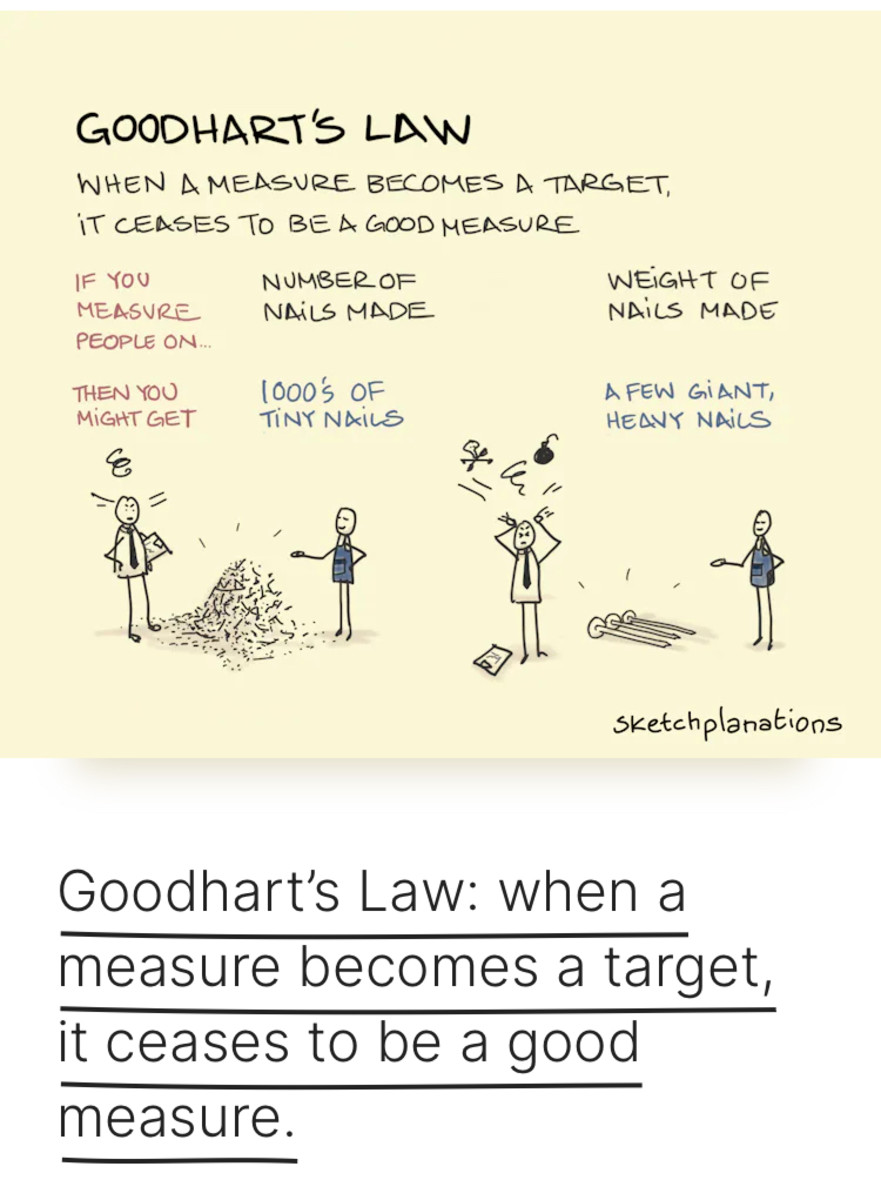
Goodhart’s law is an adage often stated as, “When a measure becomes a target, it ceases to be a good measure”. It is named after British economist Charles Goodhart, who is credited with expressing the core idea of the adage in a 1975 article on monetary policy in the United Kingdom:

Any observed statistical regularity will tend to collapse once pressure is placed upon it for control purposes.

It was used to criticize the British Margaret Thatcher Government for trying to conduct monetary policy on the basis of targets for broad and narrow money, but the law reflects a much more general phenomenon.

And so, aother famous Goodhart’s Law example is the cobra effect, where well-intentioned government policies inadvertently worsened the problem they were designed to solve.

For example, the British colonial government in India, concerned about the increasing number of venomous cobras in Delhi, began offering a bounty for each dead cobra that was delivered. Initially, this strategy was successful as locals brought in large numbers of slaughtered snakes. Over time, however, enterprising individuals started breeding cobras to kill them for supplemental income. When the government abandoned the bounty, the cobra breeders released their cobras into the wild, leading to a surge in Delhi’s snake population.

The cobra effect, where efforts to control a problem lead to unintended and often worse outcomes, serves as a cautionary tale for health care AI. If developers or health care institutions focus too narrowly on specific performance AI metrics, they risk undermining the system’s overall effectiveness, leading to suboptimal patient outcomes. Physicians must be vigilant in ensuring that health care AI systems are not only optimized for performance metrics but are also truly beneficial in practical, clinical applications.

Modified: Dr. Neil Anand via Kevin MD

COMMENTS APPRECIATED

Like and Subscribe!

***

***

CRYONICS: Search to Preserve Human Life?

By Dr. David Edward Marcinko MBA MEd

***

***

Cryonics is a scientific and philosophical endeavor that seeks to preserve human life by freezing individuals at ultra-low temperatures after legal death, with the hope that future medical advancements may allow for revival and healing. Though still a speculative and controversial field, cryonics has captured the imagination of futurists, scientists, and ethicists alike.

What Is Cryonics?

Cryonics involves the process of cryopreservation—cooling the body, or sometimes just the brain, to -196°C using liquid nitrogen. The goal is to halt all biological activity, particularly decay, immediately after death. This is not the same as freezing; rather, it involves vitrification, a process that turns bodily fluids into a glass-like state to prevent ice crystal formation, which can damage cells. Once preserved, the body is stored indefinitely in a cryogenic chamber until such time that revival is theoretically possible.

***

***

Scientific and Technological Challenges

Despite its futuristic appeal, cryonics remains highly experimental. No human has ever been revived from a cryopreserved state, and current technology cannot reverse the damage caused by the preservation process itself. While scientists have successfully frozen and revived small biological samples like sperm and embryos, scaling this to entire human bodies presents enormous challenges.

The hope lies in future breakthroughs in nanotechnology, regenerative medicine, and artificial intelligence that could repair cellular damage and cure the diseases that led to death in the first place.

COMMENTS APPRECIATED

EDUCATION: Books

Like, Refer and Subscribe

***

***

Understanding the Tele-Medicine Paradox in Healthcare

By Dr. David Edward Marcinko MBA MEd

***

***

A paradox is a logically self-contradictory statement or a statement that runs contrary to one’s expectation. It is a statement that, despite apparently valid reasoning from true or apparently true premises, leads to a seemingly self-contradictory or a logically unacceptable conclusion. A paradox usually involves contradictory-yet-interrelated elements that exist simultaneously and persist over time. They result in “persistent contradiction between interdependent elements” leading to a lasting “unity of opposites”.

THE TELE-MEDICINE PARADOX

Classic Definition: Refers specifically to the treatment of various medical conditions without seeing the patient in person. Healthcare providers may use electronic and internet platforms like live video, audio, PCs, tablets, or instant messaging to address a patient’s concerns and diagnose their condition remotely.

Modern Circumstance: This may include giving medical advice, walking them through at-home exercises, or recommending them to a local provider or facility. Even more exciting is the emergence of telemedicine apps which give patients access to care right from their phones or computer screens.

Paradox Examples: Treating certain conditions remotely can be challenging. Tele-medicine is often used to treat common illnesses, manage chronic conditions, or provide specialist services. If a patient is dealing with an emergent or serious condition, the remote provider suggests they seek in-person medical care.

COMMENTS APPRECIATED

EDUCATION: Books

SPEAKING: Dr. Marcinko will be speaking and lecturing, signing and opining, teaching and preaching, storming and performing at many locations throughout the USA this year! His tour of witty and serious pontifications may be scheduled on a planned or ad-hoc basis; for public or private meetings and gatherings; formally, informally, or over lunch or dinner. All medical societies, financial advisory firms or Broker-Dealers are encouraged to submit an RFP for speaking engagements: CONTACT: Ann Miller RN MHA at MarcinkoAdvisors@outlook.com -OR- http://www.MarcinkoAssociates.com

Like and Subscribe

***

***

***

MEDICAL PRACTICE: Part-Time Physician Employment Difficulties

By Staff Reporters

SPONSOR: http://www.MarcinkoAssociates.com

***

***

Why It Is Difficult to Practice Medicine Part-Time Today?

In the past, part-time medical practice offered physicians a flexible way to balance professional responsibilities with personal or family commitments. Today, however, the healthcare environment has evolved in ways that make part-time medicine increasingly challenging. From administrative burdens to economic pressures and patient expectations, the obstacles are both systemic and personal.

One of the most significant barriers is the rise in administrative complexity. Physicians are now required to navigate electronic health records (EHRs), comply with insurance documentation, and meet regulatory standards such as HIPAA and MACRA. These tasks consume hours of non-clinical time, which is difficult to compress into a part-time schedule. Even seeing fewer patients doesn’t exempt part-time doctors from the same documentation and compliance requirements as their full-time counterparts.

***

***

Another challenge is financial viability. Many physicians are paid based on productivity metrics, such as Relative Value Units (RVUs), which reward volume over quality. Part-time practitioners often struggle to meet these benchmarks, resulting in lower compensation and reduced benefits. Additionally, malpractice insurance premiums and licensing fees remain fixed regardless of hours worked, further eroding the financial appeal of part-time practice.

Continuity of care is also a concern. Patients increasingly expect immediate access to their providers, especially in primary care and specialties like psychiatry or pediatrics. Part-time physicians may not be available for urgent issues, leading to fragmented care and dissatisfaction. This can strain relationships with patients and colleagues who must cover gaps in availability.

From a professional standpoint, part-time physicians may face limited career advancement. Leadership roles, academic appointments, and research opportunities often favor full-time commitment. There’s also a perception—sometimes unfair—that part-time doctors are less dedicated or less competent, which can affect peer respect and influence within medical institutions.

Technology, while beneficial, adds another layer of complexity. Telemedicine, remote monitoring, and digital communication tools have expanded access but also increased the expectation for constant availability. Part-time physicians may find it difficult to manage asynchronous messages, follow-ups, and virtual visits without extending their work hours beyond what they intended.

***

***

Lastly, burnout and work-life balance—ironically one of the reasons doctors seek part-time roles—can still be elusive. The pressure to maintain clinical excellence, stay updated with medical advancements, and meet patient needs doesn’t diminish with reduced hours. In fact, squeezing these responsibilities into fewer days can intensify stress rather than alleviate it.

In conclusion, while part-time medical practice may seem like a solution to modern work-life challenges, the reality is far more complex. The structure of today’s healthcare system, combined with economic, technological, and cultural pressures, makes it difficult for physicians to thrive in part-time roles. Addressing these challenges will require systemic reform, flexible compensation models, and a cultural shift in how we value and support diverse medical careers.

COMMENTS APPRECIATED

EDUCATION: Books

SPEAKING: ME-P Editor Dr. David Edward Marcinko MBA MEd will be speaking and lecturing, signing and opining, teaching and preaching, storming and performing at many locations throughout the USA this year! His tour of witty and serious pontifications may be scheduled on a planned or ad-hoc basis; for public or private meetings and gatherings; formally, informally, or over lunch or dinner. All medical societies, financial advisory firms or Broker-Dealers are encouraged to submit an RFP for speaking engagements: CONTACT: Ann Miller RN MHA at MarcinkoAdvisors@outlook.com -OR- http://www.MarcinkoAssociates.com

Like, Refer and Subscribe

***

***

CRYPTO-CURRENCY: Crisis Risks

By Staff Reporters and A.I.

SPONSOR: http://www.CertifiedMedialPlanner.org

***

***

The Looming Cryptocurrency Crisis: Risks on the Horizon

Cryptocurrency has revolutionized the financial landscape, offering decentralized alternatives to traditional banking and investment systems. However, as digital assets become more integrated into global markets, concerns about a potential future cryptocurrency crisis are mounting. From regulatory uncertainty to systemic vulnerabilities, the risks associated with crypto are increasingly being scrutinized by economists, governments, and investors.

One of the most pressing concerns is regulatory instability. Cryptocurrencies operate in a fragmented legal environment, with different countries adopting varying stances—from full embrace to outright bans. The lack of unified global regulation creates loopholes that can be exploited for money laundering, tax evasion, and fraud. If major economies suddenly impose strict regulations or sanctions, it could trigger a rapid devaluation of crypto assets and erode investor confidence.

Another risk stems from market volatility and speculative behavior. Unlike traditional assets backed by tangible value or government guarantees, cryptocurrencies are often driven by hype, social media trends, and speculative trading. This creates a fragile ecosystem where prices can swing wildly. A sudden crash—similar to the 2022 Terra/Luna collapse—could wipe out billions in investor wealth and destabilize related financial institutions.

***

***

Technological vulnerabilities also pose a threat. While blockchain is considered secure, the platforms built on it are not immune to hacks, bugs, or exploitation. High-profile breaches of exchanges and wallets have already resulted in massive losses. As crypto adoption grows, so does the incentive for cybercriminals to target these systems. A coordinated attack on a major exchange or blockchain network could have cascading effects across the entire crypto economy. Geopolitical tensions may also catalyze a crisis. For instance, recent reports suggest that aggressive trade policies—such as the U.S. imposing 100% tariffs on Chinese imports—can indirectly impact crypto markets by shaking investor sentiment and triggering sell-offs.

The interconnection with traditional finance is another area of concern. As banks and hedge funds increasingly invest in crypto, the line between decentralized finance and conventional markets blurs. This integration means that a crypto collapse could spill over into broader financial systems, potentially triggering a global crisis. The 2023 banking collapses, which were partially linked to crypto exposure, serve as a warning of how intertwined these systems have become.

Geopolitical tensions may also catalyze a crisis. For instance, recent reports suggest that aggressive trade policies—such as the U.S. imposing 100% tariffs on Chinese imports—can indirectly impact crypto markets by shaking investor sentiment and triggering sell-offs. In such scenarios, cryptocurrencies may not serve as the safe haven they were once believed to be.

Lastly, overreliance on stablecoins and algorithmic assets introduces systemic risk. Many investors use stablecoins to hedge volatility, but these assets are only as stable as their underlying reserves and governance. If a major stablecoin fails, it could lead to a liquidity crunch and panic across exchanges and DeFi platforms.

In conclusion, while cryptocurrency offers transformative potential, it also carries significant risks that could culminate in a future crisis. To mitigate these dangers, stakeholders must push for clearer regulations, stronger technological safeguards, and more transparent financial practices. Without proactive measures, the next financial meltdown may not come from Wall Street—but from the blockchain.

NOTE: A crypto mogul has been found dead inside his luxury car in Ukraine after the digital currency market nosedived. Konstantin Galich, 32, also known as Kostya Kudo, has died after one of the worst turmoils shook the cryptocurrency market. The entrepreneur, who became a well-known figure in the crypto industry, was reportedly found with a gunshot wound to his head in his black Lamborghini parked up in Kyiv’s Obolonskyi neighbourhood. His death was later confirmed on his Telegram channel in a post saying ‘Konstantin Kudo tragically passed away. The causes are being investigated. We will keep you posted on any further news.’

COMMENTS APPRECIATED

EDUCATION: Books

Like, Refer and Subscribe

***

***

OCTOBER: The 2025 Stock Market Crash

By A.I. and Staff Reporters

SPONSOR: http://www.MarcinkoAssociates.com

***

***

The October 2025 Stock Market Crash: A Perfect Storm of Geopolitics and Investor Panic

The weekend of October 10–12, 2025, marked one of the most dramatic downturns in global financial markets in recent memory. What began as a series of unsettling headlines quickly snowballed into a full-blown market crash, sending shockwaves through economies and portfolios worldwide. This event was not the result of a single catalyst but rather a convergence of geopolitical tensions, speculative excess, and investor psychology.

At the heart of the crisis was a sudden escalation in U.S.–China trade relations. President Donald Trump abruptly canceled a scheduled diplomatic meeting with Chinese President Xi Jinping and announced a sweeping 100% tariff on all Chinese imports. This move reignited fears of a prolonged trade war, reminiscent of the economic standoff that rattled markets in the late 2010s. Investors, already jittery from months of uncertainty, interpreted the announcement as a signal of deteriorating global cooperation and retaliatory economic measures to come.

VIX: https://medicalexecutivepost.com/2025/10/12/vix-the-stock-market-fear-gauge/

The impact was immediate and severe. Major U.S. indices plummeted: the S&P 500 dropped 2.7%, the Nasdaq fell 3.6%, and the Dow Jones Industrial Average lost 1.9%. These declines marked the worst single-day performance since April and triggered automatic trading halts in several sectors. The selloff was not confined to the United States; European and Asian markets mirrored the panic, with steep losses across the board.

Compounding the crisis was a massive liquidation in the cryptocurrency market. As traditional assets tumbled, investors rushed to offload digital holdings, leading to the largest crypto wipeout in history. Trillions of dollars in value evaporated within hours, further destabilizing investor confidence and draining liquidity from the broader financial system.

Another underlying factor was growing concern over the valuation of artificial intelligence (AI) stocks. The International Monetary Fund (IMF) had recently issued a warning that the AI sector was exhibiting signs of a speculative bubble, drawing parallels to the dot-com era. With many AI companies trading at astronomical price-to-earnings ratios, the crash exposed the fragility of investor sentiment and the dangers of overexuberance in emerging technologies.

Perhaps most telling was the psychological shift among investors. The weekend saw widespread capitulation, with many choosing to exit the market entirely rather than weather further volatility. This behavior—marked by fear-driven decision-making and herd mentality—is often a hallmark of deeper financial crises. It underscores the importance of trust and stability in maintaining market equilibrium.

Abbvie: https://medicalexecutivepost.com/2024/09/04/abbvie-the-economic-recession/

In conclusion, the October 2025 stock market crash was a multifaceted event driven by geopolitical shocks, speculative risk, and emotional contagion. It serves as a stark reminder of how interconnected and fragile global markets have become. As policymakers and investors assess the damage, the focus must shift toward restoring confidence, recalibrating risk, and ensuring that future growth is built on sustainable foundations rather than speculative fervor.

COMMENTS APPRECIATED

SPEAKING: ME-P Editor Dr. David Edward Marcinko MBA MEd will be speaking and lecturing, signing and opining, teaching and preaching, storming and performing at many locations throughout the USA this year! His tour of witty and serious pontifications may be scheduled on a planned or ad-hoc basis; for public or private meetings and gatherings; formally, informally, or over lunch or dinner. All medical societies, financial advisory firms or Broker-Dealers are encouraged to submit an RFP for speaking engagements: CONTACT: Ann Miller RN MHA at MarcinkoAdvisors@outlook.com -OR- http://www.MarcinkoAssociates.com

EDUCATION: Books

Like, Refer and Subscribe

***

***

FINANCE: Artificial Intelligence

By Co-Pilot

***

***

Artificial Intelligence in Finance: Revolutionizing the Industry

Artificial Intelligence (AI) is rapidly transforming the financial services industry, reshaping how institutions operate, manage risk, and serve customers. By leveraging machine learning, natural language processing, and predictive analytics, AI is enabling smarter decision-making, greater efficiency, and enhanced customer experiences across banking, investing, insurance, and regulatory compliance.

One of the most impactful applications of AI in finance is in fraud detection and prevention. Traditional systems rely on rule-based algorithms that often fail to catch sophisticated schemes. AI, however, can analyze vast amounts of transaction data in real time, identifying patterns and anomalies that signal fraudulent behavior. Machine learning models continuously improve as they process more data, making them increasingly effective at detecting threats and reducing false positives.

AI also plays a pivotal role in algorithmic trading, where decisions are made at lightning speed based on complex data inputs. These systems can process news articles, social media sentiment, and market data to execute trades with precision. Hedge funds and investment banks use AI to optimize portfolios, forecast market trends, and identify arbitrage opportunities that human analysts might miss.

In personal finance and banking, AI enhances customer service through chatbots and virtual assistants. These tools handle routine inquiries, assist with transactions, and offer financial advice based on user behavior. AI-driven platforms like robo-advisors provide personalized investment strategies, adjusting portfolios automatically based on market conditions and individual goals. This democratizes access to financial planning, making it more affordable and scalable.

Credit scoring and lending have also been revolutionized by AI. Traditional credit models often rely on limited data and can be biased against certain demographics. AI can incorporate alternative data sources—such as utility payments, social media activity, and online behavior—to assess creditworthiness more accurately and inclusively. This opens up lending opportunities for underserved populations and reduces default risk for lenders.

In insurance, AI streamlines underwriting and claims processing. By analyzing historical data and customer profiles, AI can assess risk more precisely and tailor policies to individual needs. During claims, AI can automate document review, detect fraud, and expedite payouts, improving both operational efficiency and customer satisfaction.

Regulatory compliance, or RegTech, is another area where AI shines. Financial institutions face increasing scrutiny and complex regulations. AI tools can monitor transactions, flag suspicious activity, and ensure adherence to legal standards. Natural language processing helps parse regulatory documents and automate reporting, reducing the burden on compliance teams.

Despite its benefits, AI in finance raises ethical and operational challenges. Data privacy, algorithmic bias, and transparency are critical concerns. Financial institutions must ensure that AI systems are explainable, fair, and secure. Regulatory bodies are beginning to address these issues, but ongoing collaboration between technologists, policymakers, and industry leaders is essential.

In conclusion, artificial intelligence is not just enhancing finance—it’s redefining it. From fraud prevention to personalized banking, AI is driving innovation and efficiency. As the technology matures, its integration must be guided by ethical principles and robust governance to ensure that the financial system remains fair, resilient, and inclusive.

COMMENTS APPRECIATED

EDUCATION: Books

Like, Read and Refer

***

***

INVESTING TRANSFORMATION: Artificial Intelligence

By Co-Pilot and A. I.

SPONSOR: http://www.CertifiedMedicalPlanner.org

***

***

Artificial Intelligence and Investing: A Transformative Partnership

Artificial Intelligence (AI) is revolutionizing the world of investing, reshaping how decisions are made, risks are assessed, and portfolios are managed. As financial markets grow increasingly complex and data-driven, AI offers powerful tools to navigate this landscape with greater precision, speed, and insight.

At its core, AI refers to systems that can perform tasks typically requiring human intelligence—such as learning, reasoning, and problem-solving. In investing, this translates into algorithms that can analyze vast amounts of financial data, detect patterns, and make predictions with remarkable accuracy. Machine learning, a subset of AI, enables these systems to improve over time by learning from new data, making them especially valuable in dynamic markets.

One of the most significant applications of AI in investing is algorithmic trading. These systems can execute trades at lightning speed, responding to market fluctuations in milliseconds. By analyzing historical data and real-time market conditions, AI-driven trading platforms can identify optimal entry and exit points, often outperforming human traders. High-frequency trading firms have long relied on such technologies to gain competitive advantages.

AI also enhances portfolio management through robo-advisors—digital platforms that use algorithms to provide personalized investment advice. These tools assess an investor’s goals, risk tolerance, and time horizon, then construct and manage a diversified portfolio accordingly. Robo-advisors democratize access to financial planning, offering low-cost, automated solutions to individuals who might not afford traditional advisory services.

Risk assessment is another area where AI shines. By processing alternative data sources—such as social media sentiment, news articles, and satellite imagery—AI can uncover hidden risks and opportunities. For instance, a sudden spike in negative sentiment around a company on Twitter might signal reputational issues, prompting investors to reevaluate their positions. AI models can also forecast macroeconomic trends, helping investors anticipate shifts in interest rates, inflation, or geopolitical events.

Moreover, AI is transforming fundamental analysis. Natural language processing (NLP) allows machines to read and interpret earnings reports, SEC filings, and analyst commentary. This enables investors to extract insights from unstructured data that would be time-consuming to analyze manually. AI can even detect subtle linguistic cues that may indicate a company’s future performance or management’s confidence.

Despite its advantages, AI in investing is not without challenges. Models can be opaque, making it difficult to understand how decisions are made—a phenomenon known as the “black box” problem. There’s also the risk of overfitting, where algorithms perform well on historical data but fail in real-world scenarios. Ethical concerns, such as bias in data and the potential for market manipulation, must also be addressed.

In conclusion, AI is reshaping the investing landscape, offering tools that enhance efficiency, accuracy, and accessibility. While it’s not a panacea, its integration into financial markets marks a profound shift in how capital is allocated and wealth is managed. As technology continues to evolve, investors who embrace AI will be better positioned to thrive in an increasingly data-driven world.

COMMENTS APPRECIATED

EDUCATION: Books

Refer, Like and Subscribe

***

***

Understanding Machine Learning Distillation

DEFINITION

By Staff Reporters

***

***

What is distillation? In machine learning, distillation is a technique for transferring knowledge from a large, complex model (often called the teacher model) to a smaller, simpler model (the student model). This process helps the smaller model achieve similar performance to the larger one while being more efficient in terms of computation and memory usage.

Distillation steps: The main steps in knowledge distillation are: [1.] Train the student model by using these predictions, along with the original dataset, to mimic the teacher model’s behavior. And, [2.] use the teacher model to generate predictions for the dataset.

Cite: ChatGPT via MSFT

COMMENTS APPRECIATED

Subscribe and Refer

***

***

SEPTEMBER: Stock Markets

By A.I.

***

***

2025: With just two days left in September—and the third quarter—stocks rose throughout a month that is historically the worst any for the market.

RELATED: https://medicalexecutivepost.com/2025/09/29/sell-rosh-hashana-buy-yom-kippur/

The major indexes ticked lower last week, though, as artificial intelligence names like Oracle got hit after some analysts expressed concerns over the eye-watering costs of the AI build-out.

MORE: https://medicalexecutivepost.com/2025/09/10/stock-market-beware-manipulation-schemes/

COMMENTS APPRECIATED

EDUCATION: Books

Like, Refer and Subscribe

***

***

ARTIFICIAL INTELLIGENCE: Stock Market Features – Not Bugs

A.I. by Artificial Intelligence

***

***

Artificial intelligence (AI) refers to computer systems capable of performing complex tasks that historically only humans could do, such as reasoning, making decisions, or solving problems. Today, the term “AI” describes a wide range of technologies that power many of the services and goods we use every day – from apps that recommend TV shows to chatbots that provide customer support in real time. And yet, there is a hierarchy among related concepts such as machine learning and deep learning.

So, to summarize the hierarchy:

  • AI is the goal: machines that can think and act intelligently.
  • Machine learning is a method within AI that lets machines learn from data.
  • Deep learning is a specialized form of machine learning that uses multi-layered neural networks to analyze data in a way that mimics the human brain.

It’s a feature, not a bug

And, there’s no shortage of companies leveraging AI today to remain profitable, to the delight of Salesforce investors: among others:

  • Wells Fargo’s CEO has touted trimming its workforce for 20 straight quarters. Its stock is up 228% over the past five years.
  • Bank of America CEO Brian Moynihan wasn’t hiding it during a recent earnings call when he said the company has let go of 88,000 employees over the past 15 years. BofA stock is up 95% since 2020.
  • Amazon, with its share value up 28% over the past year, recently told staff that AI implementation would lead to layoffs.
  • Microsoft has cut 15,000 jobs in the past two months as the company pivots to AI—and its stock is also up since the beginning of July.

COMMENTS APPRECIATED

EDUCATION: Books

Like, Refer and Subscribe

***

***

If the Government Can Take A 15% Cut From Nvidia, Who Is Next?

By Rick Kahler; MSFP CFP

***

***

This month, the U.S. government demanded a direct cut of a company’s foreign sales as the price for letting those sales happen.

Tech companies Nvidia and AMD had been stuck in regulatory limbo over selling their newest AI chips to China. According to an August 12, 2025, Reuters article by Karen Freifeld, Nvidia CEO Jensen Huang had even received a public “green light” for the company’s H20 chip, but the Commerce Department would not issue the export licenses.

The stalemate ended only after Huang met with President Trump and agreed to a deal: the licenses would be granted, but the U.S. Treasury would get 15% of all H20 revenue from China. AMD agreed to identical terms for its MI308 chip. Two days later, both companies had their licenses.

The numbers are staggering. Bernstein Research estimates Nvidia could sell $15 billion worth of H20 chips in China this year, and AMD about $800 million of MI308s. That is more than $2 billion flowing straight to Washington, not as taxes but as a contractual price for market access. The legality of this arrangement is questionable, and the deal also raises security concerns.

It is worth noting the administration first asked for 20% before “settling” on 15%. This was not a polite request but a “take it or leave it” demand. From a behavioral economics standpoint, the decision was predictable. The pain of losing an entire market is far greater than the pain of losing a fraction of it.

How is this any different from a tariff? A tariff is a standardized, legally defined tax that applies broadly to certain goods and is collected under public trade policy. This 15% cut is a one-off, privately negotiated condition aimed at just two companies, tied to export license approval. It is taken from gross revenue, not profit, meaning the government gets paid on every dollar of sales before the companies cover a single expense.

“Tax farmming” is an old practice where the state sold the right to collect taxes for a fixed sum, allowing the collectors to keep the rest. Its use in France made some people enormously rich, made everyone else furious, and eventually helped spark the French Revolution. Similar systems appeared in Ottoman Egypt, Qing China, and the early Dutch Republic until abuses finally brought them down.

The Nvidia/AMD deal is not exactly tax farming, but it is a similar dynamic. The government’s role is no longer just regulating. It is stepping in as a business partner, taking a direct share of private sales. Supporters might call it a smart use of national leverage. Critics will see a step away from free-market capitalism toward something more political and transactional.

Nor is this deal a one-off. In June, the administration approved foreign investment in U.S. Steel only after securing a “golden share” that gives it veto power over strategic corporate decisions. History teaches us that once a government finds a way to take a cut, it rarely stops with one sector. Today it is steel and AI chips to China. Tomorrow it could be pharmaceuticals, energy, or consumer goods.

What is the likely impact for average Americans? Money flowing to the U.S. Treasury from a source other than taxpayers may seem like a benefit. Yet any company required to give away 15% of its gross revenue, which could equal its entire profit, has to compensate in some way. The most likely result is higher prices. Hiking prices on computer chips sold to China may not seem to be a big deal—until you consider that many of the products that use those chips are sold to U.S. consumers.

COMMENTS APPRECIATED

Subscribe, Like and Refer

***

***

HEALTH 3.0: Developing New Physician Leadership Skills

By Dr. David Edward Marcinko MBA MEd

***

***

Medicine today is vastly different than a generation ago, and all health care professionals need new skills to be successful and reduce the emerging risks outlined in this textbook, as well as the “unknown-unknowns” elsewhere. Traditionally, the physician was viewed as the “captain of the ship”. Today, their role may be more akin to a ship’s navigator, using clinical, teaching skills and knowledge to chart the patient’s course through a confusing morass of insurance requirements, fees, choices, rules and regulations to achieve the best attainable clinical outcomes.

This new leadership paradigm includes many classic business school principles, now modified to fit the decade long PP-ACA, the era of health reform, and modern technical connectivity and EMRs.

LEADERSHIP: https://medicalexecutivepost.com/2023/04/14/what-is-a-leadership-and-can-it-be-defined/

Thus, the physician must be a subtle guide on the side; not bombastic sage on the stage. These, newer health 3.0 leadership philosophies might include:

•Negotiation – working to optimize appropriate treatment plans; ie., quality of life versus quantity of life,
•Team play – working in concert with other allied healthcare professionals to coordinate care delivery ,ithin a clinically appropriate and cost-effective framework;
Working within the limits of competence – avoiding the pitfalls of the medical generalist versus the specialist that may restrict access to treatment, medications, physicians and facilities by clearly acknowledging when a higher degree of service is needed on behalf of the patient – all while embracing holistic primary care;
•Respecting different cultures and values – inherent in the support of the medical Principle of Autonomy is the acceptance of values that may differ from one’s own. As the US becomes more culturally hetero geneous, medical providers are called upon to work within, and respect, the socio-cultural and/or spiritual framework of patients, students and their families;
•Seeking clarity on what constitutes marginal care – within a system of finite resources; providers are called upon to openly communicate with patients regarding access to marginal medical information and/or treatments.
•Supporting evidence-based practice – healthcare providers, should utilize outcomes data to reduce variation in treatments to achieve higher efficiencies and improved care delivery thru evidence based medicine [EBM];
•Fostering transparency and openness in communications – healthcare professionals should be willing, and prepared, to discuss all aspects of care, especially when discussing end-of-life issues or when problems arise;
•Exercising decision-making flexibility – treatment algorithms, templates and clinical pathways are useful tools when used within their scope; but providers must have the authority to adjust the plan if circumstances warrant.

HEALTHCARE LEADERSHIP: https://medicalexecutivepost.com/2025/05/01/healthcare-leadership-on-the-brink-executives-eyeing-the-exits/

Assessment

Becoming skilled in the art of listening and interpreting — In her ground-breaking book, Narrative Ethics: Honoring the Stories of Illness, Rita Charon, MD PhD, a professor at Columbia University, writes of the extraordinary value of using the patient’s personal story in the treatment plan. She notes that, “medicine practiced with narrative competence will more ably recognize patients and diseases; convey knowledge and regard, join humbly with colleagues, and accompany patients and their families through ordeals of illness.” In many ways, attention to narrative returns medicine full circle to the compassionate and caring foundations of the patient-physician relationship.

These thoughts represent only a handful of examples to illustrate the myriad of new skills that tomorrows’ healthcare professionals must master in order to meet their timeless professional obligations of compassionate care and contemporary treatment effectiveness; all within the context modern risk management principles.

BRAND MANAGEMENT: https://medicalexecutivepost.com/2025/07/07/brand-management-7-approaches-for-doctors-and-financial-advisors/

COMMENTS APPRECIATED

EDUCATION: Books

SPEAKING: Dr. Marcinko will be speaking and lecturing, signing and opining, teaching and preaching, storming and performing at many locations throughout the USA this year! His tour of witty and serious pontifications may be scheduled on a planned or ad-hoc basis; for public or private meetings and gatherings; formally, informally, or over lunch or dinner. All medical societies, financial advisory firms or Broker-Dealers are encouraged to submit an RFP for speaking engagements: CONTACT: Ann Miller RN MHA at MarcinkoAdvisors@outlook.com -OR- http://www.MarcinkoAssociates.com

Like and Subscribe

***

***

Stocks, Technology and FOMC Drama

By A.I. and Staff Reporters

***

***

  • Technology: Fears of an A.I. bubble continue to climb after MIT published a report that 95% of companies using generative A.I. programs have nothing to show for it, despite pouring billions of dollars into this space.
  • Stocks: Another day of technology stocks selling off pulled the S&P 500 and NASDAQ lower yesterday, with investors rotating out of some of the hottest names and sectors in the market.
  • FOMC Drama: President Trump demanded the resignation of Fed Governor Lisa Cook for allegations of mortgage fraud. Meanwhile, the minutes from the July FOMC meeting revealed a growing divide between central bankers.

COMMENTS APPRECIATED

EDUCATION: Books

Like and Subscribe

***

***

INTEL: The USA and Softbank’s Acquistion?

By A.I. and Staff Reporters

SPONSOR: http://www.MarcinkoAssociates.com

***

***

US government mulls 10% stake in Intel as Softbank invests $2b.

According to Morning Brew, Bloomberg and the Wall Street Journal reported recently that the government is considering becoming one of the beleaguered chipmaker’s biggest shareholders by converting grants the company was given under the Biden-era Chips Act into an equity stake.

At Intel’s current valuation, a 10% stake would be worth ~$10.5 billion—though the exact size of the stake and whether the government will move forward with the plan remains to be determined.

Meanwhile, over in the private sector, Softbank agreed to buy $2 billion worth of Intel stock, giving it a ~2% stake. Intel has been trying to turn itself around after losing ground to other semiconductor companies

COMMENTS APPRECIATED

EDUCATION: Books

Like and Subscribe

***

***

PHARMACEUTICALS: Trump Tariff Plans

By A.I. and Staff Reporters

SPONSOR: http://www.CertifiedMedicalPlanner.org

***

***

Trump says pharma tariffs could be as high as 250%

The president revealed that he plans to formally announce tariffs on the pharmaceutical industry “within the next week or so” in an attempt to force drug manufacturing to the US, he told CNBC several days ago.

PBMs: https://medicalexecutivepost.com/2019/01/18/on-pbms-pharmacy-benefits-management/

It would start with a “small” tariff, Trump said, before rising to 150% in a year to a year and a half, and eventually to 250%.

Pharma companies have argued that tariffs could drive up costs and threaten their ability to fund research for new medicines.

COMMENTS APPRECIATED

Like and Subscribe

***

***

MENTAL HEALTH: Artificial Intelligence Regulated

By A.I and Staff Reporters

***

***

Illinois just became the first US state to regulate AI mental health services this week when Gov. JB Pritzker signed a law banning AI therapy.

The law forbids chatbots from acting as therapists and limits how human mental health professionals can use AI to aid their work. Companies face up to $10,000 in fines if they violate the law, according to Morning Brew.

The move comes as ChatGPT users—particularly younger ones—increasingly turn to the app for what amounts to free therapy. OpenAI recently made updates to its model to encourage users to use ChatGPT in a healthier way.

COMMENTS APPRECIATED

Like and Subscribe

***

***

OPTUM: UnitedHealth Group A.I. Chatbot

By Staff Reporters and AI

***

***

Better make sure it’s Secure?

UnitedHealth Group’s Optum healthcare company got caught with its digital pants down in December, when TechCrunch reported that its internal AI chatbot, which employees asked for advice in determining claims, was publicly accessible.

AI: https://medicalexecutivepost.com/2025/02/09/my-thoughts-on-artificial-intelligence-ai/

Optum quickly restricted the tool and said it was a demo that was “never scaled nor used in any real way.”

COMMENTS APPRECIATED

Like, Refer and Subscribe

EDUCATION: Books

***

***

DAILY UPDATE: OpenAI & Microsoft as Stock Markets Surge

MEDICAL EXECUTIVE-POST TODAY’S NEWSLETTER BRIEFING

***

Essays, Opinions and Curated News in Health Economics, Investing, Business, Management and Financial Planning for Physician Entrepreneurs and their Savvy Advisors and Consultants

Serving Almost One Million Doctors, Financial Advisors and Medical Management Consultants Daily

A Partner of the Institute of Medical Business Advisors , Inc.

http://www.MedicalBusinessAdvisors.com

SPONSORED BY: Marcinko & Associates, Inc.

***

http://www.MarcinkoAssociates.com

Daily Update Provided By Staff Reporters Since 2007.
How May We Serve You?
© Copyright Institute of Medical Business Advisors, Inc. All rights reserved. 2025

REFER A COLLEAGUE: MarcinkoAdvisors@outlook.com

SPONSORSHIPS AVAILABLE: https://medicalexecutivepost.com/sponsors/

ADVERTISE ON THE ME-P: https://tinyurl.com/ytb5955z

Your Referral Count -0-

***

CITE: https://www.r2library.com/Resource

OpenAI is giving its employees a mandatory week long vacation to stave off a poaching spree launched by Meta.

Microsoft announced another round of layoffs—its largest in years—expected to impact thousands of workers across Xbox and other divisions, including 830 from its Redmond, Washington, HQ.

CITE: https://tinyurl.com/2h47urt5

The S&P 500 and NASDAQ Composite tallied fresh record closing highs on Thursday, buoyed by a stronger-than-expected jobs report that helped dampen expectations for a Federal Reserve interest-rate cut in July. But after lagging their trendier rivals earlier in the year, the Russell 2000 and Dow Jones Industrial Average are finally starting to play catch up. On Thursday, the Russell 2000 turned positive for 2025 for the first time since February, as a rally that started in June has accelerated in July.

Many investors have been waiting patiently for small-cap stocks to break out. But aside from a few false starts over the past two years, they have mostly continued to lag their large-cap rivals. However, some investors believe things could finally be changing.

A team of strategists at Barclays pointed out on Wednesday that a proposed increase to interest-expense tax deductions in President Trump’s budget bill could boost small-cap companies’ earnings by double digits, due to their higher interest burdens. “This market broadening out is a heathy sign,” said Craig Johnson, chief market technician at Piper Sandler, during an interview with MarketWatch on Thursday. More small-cap participation inevitably means investors are developing more of a taste for stocks beyond information technology, which powered much of the market’s gains in 2023 and 2024.

CITE: https://tinyurl.com/tj8smmes

Friday, July 4, 2025

  • All U.S. markets will be closed in observance of Independence Day.
  • There will be no Pre-Market or After-Hours trading sessions.

Visualize: How private equity tangled banks in a web of debt, from the Financial Times.

COMMENTS APPRECIATED

PLEASE SUBSCRIBE: MarcinkoAdvisors@outlook.com

Thank You

***

***

***

***

EDUCATIONAL TEXTBOOKS: https://tinyurl.com/4zdxuuwf

***

DAILY UPDATE: Crude Oil Prices Reverse as Stock Markets Diverge

MEDICAL EXECUTIVE-POST TODAY’S NEWSLETTER BRIEFING

***

Essays, Opinions and Curated News in Health Economics, Investing, Business, Management and Financial Planning for Physician Entrepreneurs and their Savvy Advisors and Consultants

Serving Almost One Million Doctors, Financial Advisors and Medical Management Consultants Daily

A Partner of the Institute of Medical Business Advisors , Inc.

http://www.MedicalBusinessAdvisors.com

SPONSORED BY: Marcinko & Associates, Inc.

***

http://www.MarcinkoAssociates.com

Daily Update Provided By Staff Reporters Since 2007.
How May We Serve You?
© Copyright Institute of Medical Business Advisors, Inc. All rights reserved. 2025

REFER A COLLEAGUE: MarcinkoAdvisors@outlook.com

SPONSORSHIPS AVAILABLE: https://medicalexecutivepost.com/sponsors/

ADVERTISE ON THE ME-P: https://tinyurl.com/ytb5955z

Your Referral Count -0-

***

CITE: https://www.r2library.com/Resource

Power station: Crude oil prices reversed as tensions in the Middle East cooled, but AI likely raises electricity demand over the longer term, creating investment opportunities and risks.

Oil supplies now exceed demand, noted Michelle Gibley, director of international research at the Schwab Center for Financial Research, in her latest analysis, though “AI is transforming the energy sector,” raising power shortage concerns.

CITE: https://tinyurl.com/2h47urt5

🟢 What’s up

  • Solar stocks got a reprieve today after the Senate dropped the excise tax on clean energy projects. Sunrun soared 10.51%, Enphase Energy rose 3.18%, SolarEdge Technologies popped 7.16%, and Array Technologies climbed 12.54%.
  • Apple tumbled this summer after investors were disappointed by its AI rollout, but rose 1.29% on the news that the company may pivot to using Anthropic or OpenAI in iPhones instead of building something in-house.
  • Wolfspeed, the best name for a company that makes computer chips, exploded 98.09% after the company officially filed for Chapter 11 bankruptcy.
  • Hasbro got a nice 4.29% bump thanks to Goldman Sachs analysts, who are big old nerds who think Magic: The Gathering will boost the toymaker’s sales.
  • Ford popped 4.61% after the automaker reported an impressive 14% increase in sales last quarter.
  • Casino stocks soared on the news that gaming revenue in Macau rose 19% in June. Wynn Resorts climbed 8.85%, Las Vegas Sands added 8.95%, and MGM Resorts gained 7.24%.

What’s down

  • AMC Entertainment tumbled 9.03% after the one-time meme stock announced its new debt restructuring plan.
  • Progress Software sank 13.03% after the business application software company reported mixed results last quarter, beating on profit but missing on revenue.
  • Joby Aviation fell 7.01% after traders took profits following the air taxi company’s big pop yesterday.
  • AeroVironment dropped 11.42% after defense contractor announced it’s offering $750 million in common stock and $600 million in convertible senior notes to pay off its debt.
  • Diabetes device makers tumbled on the news that the government may change the reimbursement rate for glucose monitors and insulin pumps. Insulet lost 4.52%, Dexcom fell 4.25%, and Beta Bionics sank 4.26%.

CITE: https://tinyurl.com/tj8smmes

Visualize: How private equity tangled banks in a web of debt, from the Financial Times.

COMMENTS APPRECIATED

PLEASE SUBSCRIBE: MarcinkoAdvisors@outlook.com

Thank You

***

***

***

***

EDUCATIONAL TEXTBOOKS: https://tinyurl.com/4zdxuuwf

***

CODES: Bar Versus CR Security

DEFINED

By CoPilot AI

***

***

Barcodes and QR codes are basically two forms of machine-readable codes that contain data and are useful in various sectors such as retail, logistics, and marketing. While both appear to fulfill the function of storing information, they have differences based on structure and storage size as well as the function they perform. This makes it easier for businesses to distinguish what is relevant in barcodes and what is relevant in QR codes so that they can be in a position to adopt the right technology that will suit their needs well.

DENTAL CYBER HACKS: https://medicalexecutivepost.com/2024/09/10/dental-office-cyber-hacks/

What is a Barcode?

Barcode provides us with a way to store numbers in a computer-understandable format. This is used to store information in a 1D or 2D format that can be scanned for data retrieval. It is used by stores’ back-off sweaters for keeping track of the patients just in case of rental car services to track where the car is in cases of airline luggage. 

Advantages of Barcodes

  • Simplicity: Barcodes are easy to implement and can be put into use within a short span of time and with comparatively less investment.
  • Low Cost: The equipment and technology required in the generation as well as the scanning of the bar codes are relatively cheap.
  • Quick Scanning: As has already been discussed, barcodes are easy to scan and this makes them suitable for_numeric environments such as the retail sector.

Disadvantages of Barcodes

  • Limited Data Capacity: Barcodes also have a limited data processing capability with limited numerical values, of between 8-20 characters per barcode.
  • One-Dimensional: Barcode is more vast than OWLT and cannot contain complex information since it is one-dimensional.
  • Prone to Damage: That is why they can be barely scratched or damaged in such a manner that they will not scan properly.
Barcode - GeeksforGeeks

What is QR code?

QR codes are a way of storing data in the form of computer understandable format, that can be scanned by using QR code scanner to retrieve the data. These are widely used nowadays for cashless and UPI payment services. They can be used in case of identifications and are also used for sharing photos, videos and other files. 

MEDICAL CYBER-SECURITY: https://medicalexecutivepost.com/2022/01/16/understanding-medical-practice-cyber-security-risks-2/

Advantages of QR Codes

  • High Data Capacity: QR codes contain the ability to enclose thousands of characters that include numbers, letters and even the binary data.
  • Small Physical Footprint: In fact, most QR codes are small in size even though they have a high storage capacity thereby making it possible to print them despite the limited amount of space.
  • Error Correction: QR codes are also created with erasure correction, so the code can still be scanned even if SOME of the dots are scratched out.
  • Versatile Applications: According to the functional aspect QR codes can be used in marketing, payments, wither links, multimedia information storage etc.

Disadvantages of QR Codes

  • Requires Specific Software: Unlike barcodes that can be scanned by an ordinary laser scan gun, QR code must be scanned with a QR code scanner or simply an advanced telephone or tablet with a QR code scanner application.
  • Overuse in Marketing: The use of QR codes has been popularized mainly in the marketing sector, hence consumers are used to seeing it and may opt to look the other way.

    QR Code that scans to http://www.geeksforgeeks.org 

COMMENTS APPRECIATED

Like and Refer

***

***

PROXY VOTE: Defined


This ME-P was developed with AI-powered tools and reviewed by Editors

SPONSOR: http://www.CertifiedMedicalPlanner.org

***

***

What is in a proxy statement? 

A proxy statement tells you a lot about a company’s management and board of directors, providing details about compensation, large shareholders, and the accounting firm that audits the company books. It also includes information about shareholder resolutions and the board’s responses to those proposals.

Each publicly traded company files a proxy statement with the Securities and Exchange Commission (SEC) every year, and it’s used by shareholders to help cast votes on their proxy ballots. The board may provide recommendations to vote for or against a proposal, but investors should do their best to collect the facts and make a decision on their own.

HOSTILE TAKEOVER: https://medicalexecutivepost.com/2025/03/24/hostile-company-takeover-definition-defense-pharmaceutical-company-example/

What is in a proxy Vote? 

According to Motley Fool, about once every year, for most companies, you will have the right to vote your shares on a variety of topics related to the companies you own in your portfolio. These are called proxy votes. Regular individual shareholders generally receive one vote per share owned. Some companies have multiple classes of shares, and management and other insiders will have a higher level of voting power (for example, 10 votes per share).

COMMON STOCK: https://medicalexecutivepost.com/2008/02/12/what-is-common-stock/

Every year, you will receive a proxy statement in the mail or electronically. This document gives you insight into a variety of important issues to consider and vote on using your proxy ballot.

COMMENTS APPRECIATED

EDUCATION: Books

Like and Refer

***

***

QUISHING: Scams Defined

QR Code Cyber Security Scams

SPONSOR: http://www.CertifiedMedicalPlanner.org

By Cloudflare and AI

***

***

What is quishing?

Quishing, or QR phishing, is a cybersecurity threat in which attackers use QR codes to redirect victims to malicious websites or prompt them to download harmful content. The goal of this attack is to steal sensitive information, such as passwords, financial data, or personally identifiable information (PII), and use that information for other purposes, such as identity theft, financial fraud, or ransomware.

This type of phishing often bypasses conventional defenses like secure email gateways. Notably, QR codes in emails are perceived by many secure email gateways as meaningless images, making the users vulnerable to specific forms of phishing attacks. QR codes can also be presented to intended victims in a number of other ways.

MISHING: https://medicalexecutivepost.com/2025/02/28/mishing-a-mobile-first-phishing-technique/

What are QR codes?

QR codes, or Quick Response codes, are two-dimensional barcodes that can be scanned easily with a camera or a code reader application. The main component of a QR code is data storage. QR codes have the capability to store significant amounts of information including URLs, product details, or contact information. Scanning technology allows smartphone cameras or code readers to easily and quickly access the website to which the URL points.

SMISHING: https://medicalexecutivepost.com/2025/01/08/smishing-beware-scams/

How does quishing work?

In a quishing attack, the attackers create a QR code and link it to a malicious website. Typically, the attacker will embed the QR code in phishing emails, social media, printed flyers, or physical objects, and use social engineering techniques to entice the victims. For example, victims might receive an email urging them to access an encrypted voice message via a QR code for a chance to win a cash prize.

Upon using their phones to scan the QR code, victims are directed to the malicious site. The site may prompt victims to enter private information, such as login information, financial details, or personal information. In the example above, the site may request the user’s name, email, address, date of birth, or account login information.

Once this sensitive information is captured, attackers can exploit it for various malicious purposes, including identity theft, financial fraud, or ransomware.

COMMENTS APPRECIATED

Like and Confirm

***

***

FROM: Zocdoc to Zo

By Staff Reporters and AI

SPONSOR http://www.CertifiedMedicalPlanner.org

***

***

When New York-based Zocdoc was founded back in 2007, the idea was to help patients get off the phone, founder and CEO Oliver Kharraz told Healthcare Brew. The company created a website that helps patients find clinicians who fit their needs in their area and are under their insurance, and books appointments online.

MD versus DO: https://medicalexecutivepost.com/2023/06/17/the-md-versus-do-degree/

But on May 1st, Zocdoc launched a new product to get people back on the phone: an artificial intelligence (AI) voice agent called Zo. Zo helps people book doctor appointments 24/7—but instead of speaking with a person, patients speak with an AI voice that is trained to meet their needs.

DPM Podiatrist: https://medicalexecutivepost.com/2024/03/20/is-a-podiatrist-a-physician/

“Until recently, we didn’t do the phone because the experience on the phone was just so miserable,” Kharraz said. “Now you can actually have a consistent experience, where the AI can pick up after the first ring an unlimited number of times concurrently [and] have a natural conversation with you.”

Tele-Health: https://medicalexecutivepost.com/2022/04/04/types-of-patient-care-healthcare-providers-deliver-via-tele-health/

Click here for more on the rise of voice agents in healthcare.

COMMENTS APPRECIATED

Like and Refer

***

***

DEEPSEEK: Breaks the Artificial Intelligence Paradigm

By Vitaliy Katsenelson CFA

***

***

I’ve received emails from readers asking my thoughts on DeepSeek. I need to start with two warnings. First, the usual one: I’m a generalist value investor, not a technology specialist (last week I was analyzing a bank and an oil company), so my knowledge of AI models is superficial. Second, and more unusually, we don’t have all the facts yet.

But this story could represent a major step change in both AI and geopolitics.

Here’s what we know:

DeepSeek—a year-old startup in China that spun out of a hedge fund—has built a fully functioning large language model (LLM) that performs on par with the latest AI models. This part of the story has been verified by the industry: DeepSeek has been tested and compared to other top LLMs. I’ve personally been playing with DeepSeek over the last few days, and the results it spit out were very similar to those produced by ChatGPT and Perplexity—only faster.

This alone is impressive, especially considering that just six months ago, Eric Schmidt (former Google CEO, and certainly no generalist) suggested China was two to three years behind the U.S. in AI.

But here’s the truly shocking—and unverified—part: DeepSeek claims they trained their model for only $5.6 million, while U.S. counterparts have reportedly spent hundreds of millions or even billions of dollars. That’s 20 to 200 times less.

The implications, if true, are stunning. Despite the U.S. government’s export controls on AI chips to China, DeepSeek allegedly trained its LLM on older-generation chips, using a small fraction of the computing power and electricity that its Western competitors have. While everyone assumed that AI’s future lay in faster, better chips—where the only real choice is Nvidia or Nvidia—this previously unknown company has achieved near parity with its American counterparts swimming in cash and datacenters full of the latest Nvidia chips. DeepSeek (allegedly) had huge compute constraints and thus had to use different logic, becoming more efficient with subpar hardware to achieve a similar result.

In other words, this scrappy startup, in its quest to create a better AI “brain,” used brains where everyone else was focusing on brawn—it literally taught AI how to reason.

COMMENTS APPRECIATED

Like and Refer

***

***

Lessons from History’s Technology Booms

By Vitaliy Katsenelson CFA

***

***

The technology at the core of the mania is different every time. What doesn’t change over time is human emotion – the fear of missing out and then the fear of loss.

AI has a feel of “this time is different.” Optimism rarely erupts about the same technology twice; this is why history doesn’t repeat but rhymes. The technology at the core of the mania is different every time. What doesn’t change over time is human emotion – the fear of missing out and then the fear of loss, in that order. 

Humans are an optimistic bunch. We need it; it’s essential to our survival and progress; but eventually, we take our optimism too far. The graveyard of financial ruins is full of these stories.

I have beat the dotcoms and Nifty Fifties to death, so let’s go to back another century. My friend the brilliant Edward Chancellor wrote about the railroad boom and bust in England in the 1800s. Here he is, edited for brevity:

The first railway to use steam locomotives opened in 1825 and was designed to carry coal, not passengers. Railway promoters simply did not appreciate the potential demand for high-speed travel. The successful launch of the Liverpool and Manchester Railway in 1830, however, demonstrated the commercial viability of passenger travel. By the early 1840s, Britain’s railway network stretched to more than 2,000 miles. Railway companies were delivering acceptable, if not spectacular, returns for investors.

Then railway fever suddenly gripped the nation. Enthusiasts touted rail transport not just for its economic benefits, but for its benign effects on human civilization. One journal envisaged a day when the “whole world will have become one great family speaking one language, governed in unity by like laws, and adoring one God.” In the two years after 1843, the index of rail stocks doubled.

Investment peaked at around 7% of Britain’s national income. Railway enthusiasts predicted that rail would soon replace all the country’s roads and that “horse and foot transit shall be nearly extinct.”

In 1845, Britain’s railways carried nearly 34 million passengers. If the 8,000 miles of newly authorized railways were to deliver their expected 10% return, then the industry’s total revenue and passenger traffic would have to climb five fold or more – all within the space of just five years. “This should have alarmed observers by itself … But they were deluded by the collective psychology of the Mania”, writes Odlyzko. 

In 1847 a severe financial crisis broke out, induced in part by the diversion of large amounts of capital into unprofitable railway schemes. It turned out that the revenue projections provided by so-called “traffic takers” were wildly overoptimistic. Railway engineers underestimated costs. The vogue for constructing direct lines between large urban centers proved mistaken, as most traffic turned out to be local. As a result, Britain’s rail network was plagued with overcapacity. By the end of the decade, the index of railway stocks was down 65% from its 1845 peak. 

The railroad bubble in England is just one example; there are hundreds of similar stories across market history. They all share this theme:

A new technology appears on the horizon. In the early stages, investment is rational, but then at some point excitement, imagination, and optimism take over, leading to overinvestment (usually creating a financial bubble). Investors make a lot of money until most lose it all. When the dust settles, only a few companies survive.

This AI boom reminds me of the telecom sector in the 1990s. The internet was going to change the world, and it did, but first we had tremendous overcapacity in global fiber and telecom equipment.

One could say that telecommunications companies overestimated demand for broadband and underestimated changes in technology, and that would be true. But there was a more nuanced dynamic at play, what economists call the fallacy of composition.

What’s true for one participant isn’t necessarily true for the group.

COMMENTS APPRECIATED

Like and Refer

***

***

AI “Demolition Man” ID

By Staff Reporters

***

***

If getting answers from ChatGPT makes you feel dystopian, you may not want to hear about OpenAI CEO Sam Altman’s other co-founded venture, now rolling out stateside. It scans your eyeballs in exchange for cryptocurrency.

What in the Demolition Man? The device, which creates a unique user ID for your scan, is meant to address a problem that Altman had a hand in creating: how to verify identities and confirm humanity in a world full of artificial intelligence.

The project, called World (formerly Worldcoin), went live in other countries in 2023. Its US expansion, announced this week, featured retail outlets in five cities where you can get your eyes scanned:

  • Tools for Humanity, the company behind the orbs, says 12+ million people around the world have participated so far.
  • It claims to keep your data private, but authorities in more than a dozen places have suspended World’s operations or investigated its data practices, per the WSJ.

COMMENTS APPRECIATED

Like and Refer

***

***

DAILY UPDATE: Meta, Eli Lilly, Microsoft, Amazon, Apple and the Roaring Markets

MEDICAL EXECUTIVE-POST TODAY’S NEWSLETTER BRIEFING

***

Essays, Opinions and Curated News in Health Economics, Investing, Business, Management and Financial Planning for Physician Entrepreneurs and their Savvy Advisors and Consultants

Serving Almost One Million Doctors, Financial Advisors and Medical Management Consultants Daily

A Partner of the Institute of Medical Business Advisors , Inc.

http://www.MedicalBusinessAdvisors.com

SPONSORED BY: Marcinko & Associates, Inc.

***

http://www.MarcinkoAssociates.com

Daily Update Provided By Staff Reporters Since 2007.
How May We Serve You?
© Copyright Institute of Medical Business Advisors, Inc. All rights reserved. 2025

REFER A COLLEAGUE: MarcinkoAdvisors@outlook.com

SPONSORSHIPS AVAILABLE: https://medicalexecutivepost.com/sponsors/

ADVERTISE ON THE ME-P: https://tinyurl.com/ytb5955z

Your Referral Count -0-

Meta Platforms jumped 4.23% after the big tech giant reported that its advertising revenue came in at $41.39 billion, beating analyst projections of $40.44 billion, thanks to higher ad price growth than expected. Daily active users rose to 3.43 billion, up from 3.35 billion last quarter, while nearly 1 billion people use its digital AI assistant every month. Management expects Q2 sales to come in between $42.5 billion and $45.5 billion, in-line with analyst forecasts of $44.03 billion.

  • EPS: $6.43 per share, crushing estimates of $5.28
  • Revenue: $42.31 billion, above the $41.10 expected

Microsoft leaped 7.63% after reporting its profit jumped a staggering 18% from a year earlier. That wasn’t the only good news: Revenue from Microsoft’s Azure cloud software grew 33% year over year, higher than the 31% expected by analysts. But perhaps the best news of all was management’s upbeat guidance—Microsoft projected revenue between $73.15 billion and $74.25 billion for the current quarter, well above expectations of $72.26 billion.

  • EPS: $3.46 per share, beating forecasts of $3.22
  • Revenue: $70.07 billion, above the $68.42 billion projected

Eli Lilly dropped 11.66% today, despite the fact that the pharmaceutical giant reported that sales skyrocketed 45% year over year thanks to its lucrative GLP-1 drugs, Zepbound and Mounjaro. Two things spooked investors today: The company lowered its profit outlook well below its preview estimate due its acquisition of a cancer drug from Scorpion Therapeutics, and CVS Health dropped Zepbound from its preferred drug list in lieu of arch-rival Novo Nordisk’s Wegovy this morning.—LB

  • EPS: $3.34 adjusted, beating the $3.02 expected
  • Revenue: $12.73 billion, compared to the $12.67 projected

CITE: https://www.r2library.com/Resource

🟢 What’s up

  • Kohls popped 7.76% after the retailer fired its brand-new CEO for unethical behavior.
  • CVS Health not only beat earnings expectations but raised its fiscal guidance, pushing shares of the pharmacy chain up 4.11%.
  • Wayfair rose 3.65% on surprisingly strong earnings for an online furniture seller that analysts were convinced would be hit hard by tariffs.
  • Roblox gained 2.91% as people checked out of reality and hit the metaverse in higher numbers than ever.
  • CoreWeave popped 7.31% thanks to key customer Microsoft’s strong capex guidance.
  • Carrier Global climbed 11.61% after the air conditioning company boosted its fiscal forecast. Turns out everyone needs AC regardless of economic uncertainty.
  • People also need straight teeth: Dental products manufacturer Align Technology rose 1.98% on solid earnings.
  • Quanta Services gained 9.99% after the construction engineering company beat Wall Street estimates on both the top and bottom line.

What’s down

  • Qualcomm may have beaten earnings expectations, but shares fell 8.92% after investors were disappointed by the chipmaker’s lower guidance.
  • GM was in the same boat: Earnings beat forecasts, but poor guidance and warnings that tariffs could cost the company up to $5 billion this year pushed shares 0.42% lower.
  • Robinhood Markets enjoyed a 50% increase in revenue last quarter as traders played the volatile market, but the stock still sank 5.07%.
  • Moderna fell 5.29% after the vaccine maker missed revenue expectations and said it’s planning another $1.5 billion in cost cuts.
  • Church & Dwight, maker of household goods like Arm & Hammer Baking Soda, missed revenue forecasts last quarter and sank 6.87%.
  • Becton Dickinson & Co. lost 18.13% after the medical device maker warned of the adverse effects of, what else, tariffs.

CITE: https://tinyurl.com/2h47urt5

Amazon plans to invest about $4 billion into its rural delivery network across the US.

Apple is in hot water after a judge ruled it violated a court order to reform the App Store.

The Department of Justice sued several big health insurers, alleging they used illegal kickbacks to nudge members into Medicare programs.

CITE: https://tinyurl.com/tj8smmes

Visualize: How private equity tangled banks in a web of debt, from the Financial Times.

COMMENTS APPRECIATED

PLEASE SUBSCRIBE: MarcinkoAdvisors@outlook.com

Thank You

***

***

***

***

EDUCATIONAL TEXTBOOKS: https://tinyurl.com/4zdxuuwf

***

Alphabet & Intel

By Staff Reporters

***

***

Alphabet has been declared a monopoly for the second time in under a year. Analysts will have plenty of questions about the repercussions of the most recent ruling, but don’t expect a breakup of Google’s many businesses just yet.

And, the best business unit of them all these days is YouTube, which has seen a stunning surge in popularity lately that the search company will likely try to capitalize on, while it continues to tinker with its Gemini AI model. Consensus: $2.02 EPS, $89.25 billion in revenue.

***

***

Intel seems like a bit of an also-ran in the AI race these days, with shares down over 40% in the last 12 months. But to bulls, that just means the stock is cheap, while the company itself has plenty of opportunities for growth ahead, including partnerships with Nvidia and TSMC.

And, don’t forget that Intel’s status as a dark horse lets it slip below the tariff radar—the domestic chip producer dodged the latest round of restrictions that hit Nvidia and AMD. Shareholders will be hoping to hear more good news ahead. Consensus: $0.09 EPS, $12.31 billion in revenue.

***

The Medical Executive-Post is a  news and information aggregator and social media professional network for medical and financial service professionals. Feel free to submit education content to the site as well as links, text posts, images, opinions and videos which are then voted up or down by other members. Comments and dialog are especially welcomed. Daily posts are organized by subject. ME-P administrators moderate the activity. Moderation may also conducted by community-specific moderators who are unpaid volunteers.

COMMENTS APPRECIATED

Refer and Like

***

***

DAILY UPDATE: OpenAI, FDA, Roche & Rite Aid as Stocks Soar

MEDICAL EXECUTIVE-POST TODAY’S NEWSLETTER BRIEFING

***

Essays, Opinions and Curated News in Health Economics, Investing, Business, Management and Financial Planning for Physician Entrepreneurs and their Savvy Advisors and Consultants

Serving Almost One Million Doctors, Financial Advisors and Medical Management Consultants Daily

A Partner of the Institute of Medical Business Advisors , Inc.

http://www.MedicalBusinessAdvisors.com

SPONSORED BY: Marcinko & Associates, Inc.

***

http://www.MarcinkoAssociates.com

Daily Update Provided By Staff Reporters Since 2007.
How May We Serve You?
© Copyright Institute of Medical Business Advisors, Inc. All rights reserved. 2025

REFER A COLLEAGUE: MarcinkoAdvisors@outlook.com

SPONSORSHIPS AVAILABLE: https://medicalexecutivepost.com/sponsors/

ADVERTISE ON THE ME-P: https://tinyurl.com/ytb5955z

Your Referral Count -0-

CITE: https://www.r2library.com/Resource

  • OpenAI would be open to buying Chrome if Google is forced by a federal court to sell the web browser, the company’s ChatGPT head said yesterday.
  • The FDA suspended milk quality tests in some dairy products due to reduced capacity stemming from federal workforce cuts, Reuters reported.
  • Roche, the Swiss pharmaceutical giant, is investing $50 billion in US manufacturing to circumvent President Trump’s tariffs, the company said yesterday.
  • Rite Aid is preparing to sell itself in pieces ahead of a possible second bankruptcy, Bloomberg reported.

CITE: https://tinyurl.com/2h47urt5

What’s up

  • Intel surged 5.54% on reports that the chipmaker plans to cut 20% of its workforce.
  • Oklo gained 8.60% after OpenAI CEO Sam Altman announced he’s stepping down as chairman of the board of the nuclear power startup.
  • Duolingo popped 10.01% after Morgan Stanley initiated coverage of the language learning company, calling it a “best-in-class consumer internet asset.”
  • Cava climbed 6.29% due to an upgrade from analysts at Bernstein, who think the bowl slop stock will not only survive but thrive in an economic downturn.
  • Amphenol rose 8.21% thanks to impressive earnings for the high-speed cable company, coupled with a solid fiscal outlook.
  • Vertiv Holdings jumped 8.60% after the data center company posted an impressive quarterly profit and raised its fiscal forecast.
  • SAP rose 7.47% following the software stock’s strong profit performance last quarter.
  • Novavax soared 19.52% on the news that the FDA has asked for more clinical data about its Covid vaccine.

What’s down

  • Enphase Energy plunged 15.65% thanks to a big miss on both the top and bottom lines for the solar tech stock.
  • Going down: Elevator manufacturer Otis Worldwide fell 6.64% on an earnings miss thanks to fewer orders from Chinese customers.
  • Online learning platform Chubb fell 2.17% after announcing a 38% decline in net income last quarter.
  • Baker Hughes may have beaten profit forecasts last quarter, but the oilfield operator’s revenue miss sent shares tumbling 6.44%.
  • Bristol Myers Squibb lost 2.59% after the pharma giant announced its schizophrenia drug Cobenfy performed poorly in Phase 3 trials.

CITE: https://tinyurl.com/tj8smmes

  • Stocks surged first thing this morning after President Trump said the media blew things out of proportion and that he has “no intention” of firing Jerome Powell. He also said he would be “very nice” to China in tariff negotiations.
  • Treasury Secretary Scott Bessent also did some damage control, touting the opportunity for a “big deal” between the US and China.
  • The combination sent a relief rally sweeping through markets, and while the euphoria faded by mid-afternoon, all three indexes ended the day in the green.
  • Gold fell and bitcoin rose as investors took on more risk (see below), while oil dropped on reports that OPEC+ may hike its crude output after its meeting next month.

COMMENTS APPRECIATED

PLEASE SUBSCRIBE: MarcinkoAdvisors@outlook.com

Thank You

***

***

***

***

EDUCATIONAL TEXTBOOKS: https://tinyurl.com/4zdxuuwf

***

MARKETING, ADVERTISING & SALES: Public Relations, Change and Crisis Management

THE BASICS FOR FOR PHYSICIANS, INSURANCE AGENTS AND FINANCIAL ADVISORS

By Staff Reporters

SPONSOR: http://www.CertifiedMedicalPlanner.org

***

***

There’s often a disconnect between physicians, insurance agents and financial advisors and the patients and clients they’d like to serve. Both might ostensibly share the same goal but there’s often a big difference in perspective. Advisors / Physicians and would-be clients / patients likely have different communication styles, especially in an age where technology has greatly changed the way we talk with one another. Their expectations and priorities can also often dramatically diverge. Those structural gaps can hinder collaboration and trust.

To bridge this divide, you must understand how prospective clients and patients think nowadays and be able to adjust your M.A.S. approach accordingly.

THE BASICS

Marketing is the business process of identifying, anticipating and satisfying patient’s, client’s or customers’ needs and wants. It is your unique value proposition or strategic competitive advantage. Marketers can direct product to other businesses or directly to consumers. But, we believe it is actually your strategic competitive advantage [SCA] which differentiates yourself from competitors. It is the “moat” around your business.

Advertising is a marketing communication that employs an openly sponsored, non-personal message to promote or sell a product, service or idea. Sponsors of advertising are typically businesses wishing to promote their products or services. Advertising is communicated through various mass media outlet, including traditional media such as newspapers, magazines, television, radio, outdoor advertising or direct mail; and new media such as search results, blogs, social media, websites or text messages. The actual presentation of the message in a medium is referred to as an advertisement, or “ad” or advert for short. But, we believe that is simply how you disseminate your strategic competitive advantage [SCM] to potential clients.

Sales close the deal and collects money. Sales are activities related to selling or the number of goods or services sold in a given targeted time period. The seller, or the provider of the goods or services, completes a sale in response to an acquisition, appropriation, requisition, or a direct interaction with the buyer at the point of sale. There is a passing of title (property or ownership) of the item, and the settlement of a price, in which agreement is reached on a price for which transfer of ownership of the item will occur. The seller, not the purchaser, typically executes the sale and it may be completed prior to the obligation of payment. In the case of indirect interaction, a person who sells goods or service on behalf of the owner is known as a salesman or saleswoman or salesperson, but this often refers to someone selling goods in a store/shop, in which case other terms are also common, including salesclerk, shop assistant, and retail clerk.

***

***

DERIVATIVE THOUGHTS

Public Relations [PR] is differentiated than advertising from in that an advertiser pays for and has control over the message. It differs from personal selling in that the message is non-personal, i.e., not directed to a particular individual. We pay for advertising but pray for public relations. But public relations are not controllable but it is free, while advertising is not. PR suggests that “good news or bad news”; just spell the name correctly

Change Management is the discipline that guides how we prepare, equip and support individuals to successfully adopt to change in order to drive organizational success and outcomes.

Crisis Management is the precautions and identification of threats to an organization and its stakeholders, and the methods used by the organization to deal with these threats.

MODERNITY NOW

CRM stands for Customer Relationship Management, which is a system for managing all interactions with current and potential customers, clients or patients. The goal is simple: improve relationships to grow your business or medical practice. CRM technology helps companies stay connected to customers, streamline processes, and improve profitability.

When people talk about CRM, they’re usually referring to a CRM system: software that helps track each interaction you have with a prospect, patient or customer. That can include sales calls, treatment plans or service interactions, marketing e-mails, and more. CRM tools can unify customer and company data from many sources and even use Artificial Intelligene [AI] to help better manage relationships across the entire customer – patient lifecycle – spanning departments described in the M.A.S. basics, above.

Refer and Like

COMMENTS APPRECIATED

***

***

MICROSOFT: 50 Years

By Staff Reporters and Morning Brew

***

***

Microsoft is celebrating its 50th birthday this week looking like a formerly washed up A-lister who’s suddenly rebounded and getting Oscar noms again.

Ever since Bill Gates and Paul Allen huddled in a garage in 1975 to start a company that’d define the experience of sitting in front of a boxy white PC monitor, Microsoft has had an uneven run. But after years of getting roasted for Internet Explorer, it now seems to be back on top—even briefly beating Apple as the world’s most valuable public company last year.

The tech giant can not only boast bonanza earnings, it also feels like a purveyor of the next big thing again, leading in the AI race through its partnership with OpenAI.

Windows washed

In the 1990s, it felt like Microsoft’s computer geeks were the overlords of tech. Windows powered most PCs, Internet Explorer became the go-to browser, and proficiency in Office tools became standard resume skills. But in the following decade, the company slept on internet tech and smartphones, ceding ground to Apple, Alphabet, and Meta.

It responded by going into midlife crisis mode, aka blowing cash on a series of questionable acquisitions to stay hip. That…didn’t help. By the 2010s, only grandparents could be reached @hotmail.com, Windows phones were a rarity, and no one used Bing as a verb.

When Gates stepped away from running the company in 2000, its new CEO Steve Ballmer grew its revenue threefold by the end of his tenure in 2013. He spearheaded Microsoft’s foray into gaming with the Xbox console and started its blockbuster cloud computing product Azure. But Microsoft’s profit growth slowed dramatically thanks to a massive cash bleed from its shopping spree.

  • It dropped $6.3 billion on the owner of ad tech platforms aQuantive to compete with Google’s ad business in 2007, only to write it off as a dud five years later.
  • The company burned at least $8 billion trying to make Windows phones a bigger force by buying Nokia’s cellphone division in 2014.
  • Microsoft paid $8.5 billion for Skype in 2011, which must’ve made it extra painful to announce that it was sunsetting the video calling service this winter.

***

***

Cash-slinging comeback kid

When it blew out forty candles in 2015, the tech giant was looking past its prime. The stock was trading at around $35 a share, well below its $58 peak in 1999. Its net profit for the year was $12 billion. But investors who held on until now were rewarded with shares going for $374 on its birthday this week after the company reported a net profit of $88 billion in the last financial year.

Much of the revenue now comes from its Azure cloud computing business, which has been boosted by the booming AI industry ravenous for server power.

  • When Microsoft’s current CEO Satya Nadella stepped into the role in 2014, he doubled down on Azure to make Microsoft into a B2B behemoth selling computing power to tech companies.
  • It is now the world’s second largest cloud provider after Amazon Web Services, with a 21% market share, according to Synergy Research Group.

Microsoft also bought some businesses that didn’t fail, including LinkedIn—the thought leadership hub with a user base that has soared to 1 billion since the 2016 acquisition. It also owns GitHub, the leading code-sharing platform for software developers. And in its biggest purchase yet, it snagged gaming IP giant Activision Blizzard that owns Call of Duty and World of Warcraft for a whopping $68 billion in 2022, hoping to make itself a dominant caterer to the Xbox joystick-wielding crowd.

It’s an AI company now

The not-quite-acquisition that really got Microsoft its groundbreaker’s glitz back was pouring $13 billion into OpenAI.

Having gotten in on the ground floor of the AI boom, Microsoft is harnessing OpenAI’s models to power its CoPilot AI agent, which it embedded into its Office tools and Teams app. This pits it against other tech giants betting that AI agents automating tasks will be the biggest in-cubicle revolution since Excel.

Cite: Morning Brew April 5, 2025

COMMENTS APPRECIATED

***

***

MEDICAL DEVICES: Special Considerations

By Staff Reporters

***

***

INFORMATION TECHNOLOGY CONSIDERATIONS FOR MEDICAL DEVICES

In 2013, the Food and Drug Administration (FDA) issued its first cybersecurity safety communication, followed in 2014 by final guidance. It struck a reasonable balance between new regulations (almost none) and guidance (in the form of non-binding recommendations).

In 2015, the Federal Trade Commission (FTC) released a staff report entitled Internet of Things: Privacy & Security in a Connected World, in which it recommend that Internet of Things (IoT) style devices, which of course include medical and clinical devices, need to maintain a good security posture. It’s worth noting that the FDA, FTC, and other government regulators are centering on a few key guidelines. The following recommendations come directly from the FTC report.

Companies should build security into their devices at the outset, rather than as an afterthought. As part of the security by design process, companies should consider:

  • Conducting a privacy or security risk assessment
  • Minimizing the data they collect and retain
  • Testing their security measures before launching their products
  • Companies should train all employees about good security, and ensure that security issues are addressed at the appropriate level of responsibility within the organization
  • Companies should retain service providers that are capable of maintaining reasonable security and provide reasonable oversight for these service providers.
  • When companies identify significant risks within their systems, they should implement a defense-in-depth approach, in which they consider implementing security measures at several levels.
  • Companies should consider implementing reasonable access control measures to limit the ability of an unauthorized person to access a consumer’s device, data, or even the consumer’s network.
  • Companies should continue to monitor products throughout the life cycle and, to the extent feasible, patch known vulnerabilities

According to colleague Shahid N. Shah MS, the FTC report and FDA guidelines are remarkably consistent. When thinking of cybersecurity and data privacy, engineers tend to think about authentication, authorization, and encryption. Those are the relatively easy topics. For safety-critical devices, however, things are much more difficult and need to encompass a larger surface of questions, including but not limited to:

  • Asset Inventory: Is the device discoverable, and can it associate itself with standard IT inventory systems so that revision management, software updates, and monitoring can be automated?
  • Cyber Insurance: Does the device have enough security documentation to allow it to be insured by standard cyber insurance riders?
  • Patching: How is the firmware, operating system (OS), or application going to be patched by IT staff within hospitals (or the home for remote devices)?
  • Internal Threats: Has the device been designed to circumvent insider (hospital staff, network participants, etc.) threats?
  • External Threats: Has the device been designed to lock down the device from external threats?
  • Embedded OS Security: Is the device sufficiently hardened at the operating system level, such that no extraneous software components, which increase the attack surface, are present?
  • Firmware and Hardware Security: Are the firmware and hardware components sourced from reputable suppliers and free of state-sponsored spying?
  • Application Security: Is the Microsoft Security Development Lifecycle (SDL) or similar software security assurance process integrated into the engineering process?
  • Network Security: Have all network protocols not in use by the device been turned off so that they are not broadcasting?
  • Data Privacy: What data segmentation, logging, and auditing is being done to ensure appropriate data privacy?
  • HIPAA Compliance: Have proper steps been followed to ensure Health Insurance Portability and Accountability Act (HIPAA) compliance?
  • FISMA Compliance: If you’re selling to the federal government, have proper steps, such as use of Federal Information Processing Standard (FIPS) certified encryption, been followed to ensure Federal Information Security Management Act (FISMA) compliance?
  • Data Loss Prevention (DLP): Is there monitoring in place to ensure data leakage outside of the device doesn’t occur?
  • Vulnerabilities: Have common vulnerabilities such as the Open Web Application Security Project (OWASP) Top 10 been reviewed?
  • Data Sharing: Are proper data sharing agreements in place to allow sharing of data across devices and networks?
  • Password Management: Are passwords hardcoded into the device or made configurable?
  • Configuration Protection: Are configuration files properly check-summed and protected against malicious changes?

ASSESSMENT

It is vital to perform a security assessment on a healthcare practice to understand the environment, identify risks and perform risk mitigation. A one-time security assessment with risk mitigation is not sufficient in 2025. This is a continuous process that needs to be performed religiously to maintain a secure and compliant practice.

COMMENTS APPRECIATED

Refer, Like and Subscribe

***

***

DAILY UPDATE: Microsoft Tempers A.I. as Hershey Buys LesserEvil and Stock Markets Crater!

MEDICAL EXECUTIVE-POST TODAY’S NEWSLETTER BRIEFING

***

Essays, Opinions and Curated News in Health Economics, Investing, Business, Management and Financial Planning for Physician Entrepreneurs and their Savvy Advisors and Consultants

Serving Almost One Million Doctors, Financial Advisors and Medical Management Consultants Daily

A Partner of the Institute of Medical Business Advisors , Inc.

http://www.MedicalBusinessAdvisors.com

SPONSORED BY: Marcinko & Associates, Inc.

***

http://www.MarcinkoAssociates.com

Daily Update Provided By Staff Reporters Since 2007.
How May We Serve You?
© Copyright Institute of Medical Business Advisors, Inc. All rights reserved. 2025

REFER A COLLEAGUE: MarcinkoAdvisors@outlook.com

SPONSORSHIPS AVAILABLE: https://medicalexecutivepost.com/sponsors/

ADVERTISE ON THE ME-P: https://tinyurl.com/ytb5955z

Your Referral Count -0-

CITE: https://www.r2library.com/Resource

Microsoft is reportedly pulling back on data center projects around the world as it reexamines its AI plans. Hershey reportedly bought the popcorn brand LesserEvil for $750 million.

CITE: https://tinyurl.com/2h47urt5

US stocks cratered on Friday with the Dow Jones Industrial Average (^DJI) plunging more than 2,200 points after China stoked trade-war fears and Fed Chair Jerome Powell warned of higher inflation and slower growth stemming from tariffs.

The Dow pulled back 5.5% to enter into correction territory. Meanwhile, the S&P 500 (^GSPC) sank nearly 6%, as the broad-based benchmark capped its worst week since 2020. The tech-heavy NASDAQ Composite (^IXIC) dropped 5.8% to close in bear market territory.

CITE: https://tinyurl.com/tj8smmes

Visualize: How private equity tangled banks in a web of debt, from the Financial Times.

COMMENTS APPRECIATED

PLEASE SUBSCRIBE: MarcinkoAdvisors@outlook.com

Thank You

***

***

***

***

EDUCATIONAL TEXTBOOKS: https://tinyurl.com/4zdxuuwf

***

THEORY: Linguistics and Cognitive Sciences

By Staff Reporters

Sponsor: http://www.MarcinkoAssociates.com

***

***

Avram Noam Chomsky is an American professor known for his traditional work in linguistics and political activism. Sometimes called “the father of modern linguistics”, Chomsky is also one of the founders of the field of cognitive science. He is a laureate professor of linguistics at the University of Arizona and an professor emeritus at MIT.

And so, modern linguists today approach their work with scientific rigor and perspective [STEM], although they use methods that were once thought to be solely an academic discipline of the humanities.

Contrary to this humanitarian belief, according to Professor Mackenzie Hope Marcinko PhD of the University of Delaware, linguistics is now multidisciplinary. It overlaps each of the human sciences including psychology, neurology, anthropology, and sociology. Linguists conduct formal studies of sound structure, grammar and meaning, but also investigate the history of language families, and research language acquisition.

COMMENTS APPRECIATED

Subscribe and Refer

***

***

DAILY UPDATE: A.I. to Replace Doctors, 23andMe Drops as US Stock Markets Slide

MEDICAL EXECUTIVE-POST TODAY’S NEWSLETTER BRIEFING

***

Essays, Opinions and Curated News in Health Economics, Investing, Business, Management and Financial Planning for Physician Entrepreneurs and their Savvy Advisors and Consultants

Serving Almost One Million Doctors, Financial Advisors and Medical Management Consultants Daily

A Partner of the Institute of Medical Business Advisors , Inc.

http://www.MedicalBusinessAdvisors.com

SPONSORED BY: Marcinko & Associates, Inc.

***

http://www.MarcinkoAssociates.com

Daily Update Provided By Staff Reporters Since 2007.
How May We Serve You?
© Copyright Institute of Medical Business Advisors, Inc. All rights reserved. 2025

REFER A COLLEAGUE: MarcinkoAdvisors@outlook.com

SPONSORSHIPS AVAILABLE: https://medicalexecutivepost.com/sponsors/

ADVERTISE ON THE ME-P: https://tinyurl.com/ytb5955z

Your Referral Count -0-

CITE: https://www.r2library.com/Resource

Over the next decade, advances in artificial intelligence will mean that humans will no longer be needed “for most things” in the world, says Bill Gates. That’s what the Microsoft co-founder and billionaire philanthropist told comedian Jimmy Fallon during an interview on NBC’s “The Tonight Show” in February. At the moment, expertise remains “rare,” Gates explained, pointing to human specialists we still rely on in many fields, including “a great doctor” or “a great teacher.”

CITE: https://tinyurl.com/2h47urt5

US stocks closed sharply loser Wednesday as President Trump prepared to unveil new tariffs on US auto imports. The benchmark S&P 500 (^GSPC) was down more than 1.1%, while the Dow Jones Industrial Average (^DJI) fell about 0.4%. The tech-heavy NASDAQ Composite (^IXIC) led the losses, sliding over 2%. Tech leaders Nvidia (NVDA) and Tesla (TSLA) both closed down more than 5%.

CITE: https://tinyurl.com/tj8smmes

It’s a shocking fall for 23andMe that once boasted a $6 billion valuation in 2021—despite never making a profit. As of Friday, it was worth $50 million, and on Monday, shares for the consumer genetic testing pioneer fell 50% to 88 cents, Reuters reported.

Visualize: How private equity tangled banks in a web of debt, from the Financial Times.

COMMENTS APPRECIATED

PLEASE SUBSCRIBE: MarcinkoAdvisors@outlook.com

Thank You

***

***

***

***

EDUCATIONAL TEXTBOOKS: https://tinyurl.com/4zdxuuwf

***