


 Support our online development, and advance our onground research initiatives in free market economics, as we seek to showcase the brightest Next-Gen minds.
THE ME-P DISCLAIMER: Posts, comments and opinions do not necessarily represent iMBA, Inc., but become our property after submission. Copyright © 2006 to-date. iMBA, Inc allows colleges, universities, medical and financial professionals and related clinics, hospitals and non-profit healthcare organizations to distribute our proprietary essays, photos, videos, audios and other documents; etc. However, please review copyright and usage information for each individual asset before submission to us, and/or placement on your publication or web site. Attestation references, citations and/or back-links are required. All other assets are property of the individual copyright holder.


By Dr. David Edward Marcinko; MBA MEd
http://www.DavidEdwardMarcinko.com
SPONSOR: http://www.MarcinkoAssociates.com
****
****
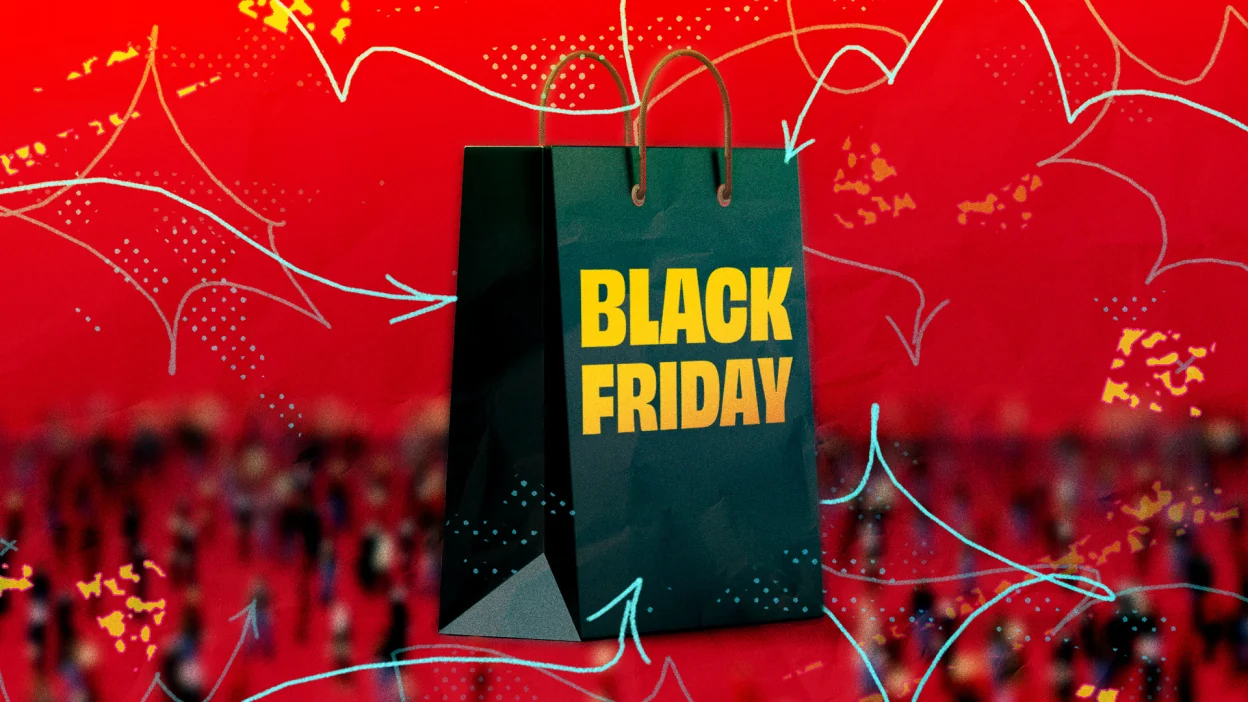
Every year, the day after Thanksgiving marks the unofficial start of the holiday shopping season in the United States. Known globally as Black Friday, this day is characterized by massive retail discounts, crowded shopping malls, and record-breaking sales. While many people assume the name refers to the financial success of retailers, the true history of the term is much darker and spans more than a century.
The earliest recorded use of the phrase “Black Friday” had nothing to do with holiday shopping. Instead, it referred to a major financial crisis on September 24, 1869. Two notorious Wall Street financiers, Jay Gould and Jim Fisk, conspired to buy up as much of the nation’s gold as possible, hoping to drive the price sky-high and sell it for massive profits. On that Friday, the conspiracy finally unraveled, causing the gold market to crash and sending the entire American economy into a tailspin.
The term resurfaced in the 1950s and 1960s, taking on the meaning most closely tied to the modern retail event. In Philadelphia, police officers used the phrase to describe the chaos that ensued on the Friday after Thanksgiving. Every year, hordes of suburban shoppers and tourists flooded into the city ahead of the big Army-Navy football game held on that Saturday. For the Philadelphia police force, this meant no one could take the day off. Officers had to work long, exhausting shifts to deal with massive traffic jams, pedestrian gridlock, and an uptick in shoplifting. To them, it was truly a “black” day.
Local merchants in Philadelphia initially hated the negative connotation of the name. They tried to rebrand the day as “Big Friday” to remove the association with traffic and crime, though the effort failed to catch on. By the 1980s, however, retailers found a clever way to reinvent the term and turn it into a positive marketing tool.
In traditional accounting practices, businesses recorded financial losses in red ink and profits in black ink. Retailers began spreading the narrative that stores operated at a financial loss—in the red—for the entire year until the day after Thanksgiving. On this massive shopping day, holiday shoppers finally pushed their profit margins “into the black.” Although accountants rarely operated on such a strict annual turnaround, the story stuck. It gave businesses a triumphant reason to celebrate the name rather than run from it.
Today, Black Friday has evolved far beyond its Philadelphia roots and Wall Street origins. What started as a logistical nightmare for city traffic cops has transformed into a global retail phenomenon, expanding into digital events like Cyber Monday and week-long sales. Despite its grim beginnings, Black Friday remains a permanent fixture of modern consumer culture, symbolizing the peak of holiday commerce.
SPEAKING: Dr. Marcinko will be speaking and lecturing, signing and opining, teaching and preaching, storming and performing at many locations throughout the USA this year! His tour of witty and serious pontifications may be scheduled on a planned or ad-hoc basis; for public or private meetings and gatherings; formally, informally, or over lunch or dinner. All medical societies, financial advisory firms or Broker-Dealers are encouraged to submit an RFP for speaking engagements: CONTACT: Ann Miller RN MHA at MarcinkoAdvisors1738@outlook.com -OR- http://www.MarcinkoAssociates.com
Like, Refer and Subscribe
(©) Copyright USA. All rights reserved.
SEND IN YOUR ME-Ps & TOPIC IDEAS, TODAY!
HOSPITALS: http://www.crcpress.com/product/isbn/9781466558731
CLINICS: http://www.crcpress.com/product/isbn/9781439879900
ADVISORS: www.CertifiedMedicalPlanner.org
FINANCE: Financial Planning for Physicians and Advisors
INSURANCE: Risk Management and Insurance Strategies for Physicians and Advisors
Dictionary of Health Economics and Finance
Dictionary of Health Information Technology and Security
Dictionary of Health Insurance and Managed Care
***

Share this:

Filed under: iMBA, Inc. | Tagged: Army, army-navy, arny-navy-game, black Friday, culture, Dr. Marcinko, Marcinko, navy, Philadelphia, retail, sales, shopping, thanksgiving, Wall Street, whole-sale | Leave a comment »