Selecting Financial Advisors the Risky Way

Physician Due Diligence is Important

[By Daniel B. Moisand; CFP®, and the ME-P Staff]Tall Shadows

While the merits of hiring the right financial advisor [FA] may be clear, hiring the wrong one can be devastating. Medical professionals still tend to have higher incomes and are an attractive target for most financial institutions and scam artists. This fear is a poor excuse for not getting the assistance necessary. Advice about who to engage for financial assistance comes from a hodge-podge of disjointed sources. This leads to good intentions and bad results. Take caution when using the following as sources of advice.

Relying on Family and Friends

By far more people seek financial advice from trusted family members and friends than any other source.  This is only natural. It is essential to trust that you are getting advice from a source that means well. It is also important that you get along well with your advisors. Hesitating to communicate with your advisor, even a great advisor, can cause problems even more problematic that getting bad advice from someone you like. While these sources have a good handle on the essential elements of trust and rapport, it is the competence of the advice that is most often the issue. The life and money experiences of those who are close to you certainly have value, but they are not necessarily relevant to your unique goals and circumstances. THINK: Bernie Madoff.

Media

A few years ago, the dominant media force in consumer oriented financial matters was the print media.  Magazines and newsletters proliferated with the bull market. More recently however, television has supplanted print even in the bear market. For example, a study now estimates that 80 percent of what the average American knows about current events comes from TV. Why wait three weeks for the next issue when you can get a commentary instantly on the television? There is nothing wrong with watching shows that cover the markets or subscribing to a consumer finance magazine. It is certainly a good idea to be informed. However, be wary of the quality and applicability of information put out by the media.

The Internet

It is easy to run across an ad for prescriptions drugs on television. Images prance across the screen followed by a litany of potential side effects and the obligatory, “Ask your doctor about”. With the expansion of the information superhighway, more and more companies are going direct to the consumer in some manner or another.

Financially speaking this information can be of great benefit but should also generate more concern. It is very easy to project a particular image via the web. The webmaster controls the interaction from what you see to what you hear. One of the results of this is that the Internet has already garnered a reputation as a breeding ground for new scams. More prevalent, however, is the presentation of information meant to be useful that is simply wrong, misinterpreted, or misapplied. The most terrifying source of misinformation on the net is the chat rooms. Here the entire interaction is clouded by anonymity. Some people enter chat rooms because there is a comfort in anonymity when asking a question. There is also a danger in an anonymous answer. When it comes to something as important as your finances or your health, the prudent course should be to take all the advice with a grain of salt. A great deal of consideration to the quality of the source is in order. It is also essential that one understand the level of accountability a source may possess.   fp-book2

Assessment

Much has been written on financial advisor selection, here on the ME-P and elsewhere; but little on how not to select an advisor. We trust this information will be of assistance to the medical professional in some small increment. Send in your FA stories; both good and bad.

Channel Surfing the ME-P

Have you visited our other topic channels? Established to facilitate idea exchange and link our community together, the value of these topics is dependent upon your input. Please take a minute to visit. And, to prevent that annoying spam, we ask that you register. It is fast, free and secure.

Conclusion

Your thoughts and comments on this ME-P are appreciated. Feel free to review our top-left column, and top-right sidebar materials, links, URLs and related websites, too. Then, subscribe to the ME-P. It is fast, free and secure.

Speaker: If you need a moderator or speaker for an upcoming event, Dr. David E. Marcinko; MBA – Publisher-in-Chief of the Medical Executive-Post – is available for seminar or speaking engagements. Contact: MarcinkoAdvisors@msn.com

OUR OTHER PRINT BOOKS AND RELATED INFORMATION SOURCES:

Product Details  Product Details

Comprehensive Financial Planning Strategies for Doctors and Advisors: Best Practices from Leading Consultants and Certified Medical Planners™

***

MEDICAL PRACTICE MANAGEMENT: Consulting & Advice

START TO FINISH CYCLE

SPONSORED: http://www.MARCINKOASSOCIATES.com

***

Our Process

***

READ: https://marcinkoassociates.com/case-studies/

COMMENTS APPRECIATED

Thank You

***

***

DE MARCINKO & ASSOCIATES: Financial, Business & Management Education and Advisory Opinions for Physicians

By Dr. David Edward Marcinko MBA MEd CMP

“AT YOUR SERVICE”

E-mail: MarcinkoAdvisors@msn.com

SPONSOR: http://www.MarcinkoAssociates.com

Marcinko & Associates is financial guide. We help answer your questions in an empowering way. We educate and guide medical colleagues to understand their financial picture and to make better financial decisions. We strive to simplify everything, clear up confusion, and address specific needs and goals.

Simply put, we’re a financial services company on a mission to empower financial freedom for all healthcare professionals; only. We work with doctors, nurses, medical providers, individuals and all sizes of organizations to offer investment, wealth management and retirement solutions so everyone can have a clear and simple understanding of where their finances and career is today and where it is headed tomorrow.

Whatever your financial situation, we do not shame, criticize, or sell. We enrich, educate and empower. We work only with medical colleagues at every stage of their financial journey [students, interns, residents, practitioners, mid-career and mature physicians], through big life personal changes to annual employment reviews, in order to help them understand, invest, and protect their money and lifestyle.

CITE: https://www.r2library.com/Resource

For example, the following are current issues of review need for each Fall and Winter:

  • Financial planning reviews: 401-k, insurance, budget plans, investing, debt and savings, etc
  • Assess, develop, and align financial retirement and estate planning goals
  • Risk Management: Malpractice, home, life, medical, auto and personal indemnity
  • Life Insurance Need Reviews: whole, universal and term  
  • Business, operations, HR, employment negotiations and medical practice management
  • Annuity Need Reviews: Indexed and Fixed [Pros and Cons].

***

***

At Marcinko & Associates we discuss specific needs and answer specific questions. We educate and make personalized recommendations that you are free to use, incorporate or disregard. Referrals to trusted specialists and strategic alliance partners then occur if – and as – needed [pro re nata].

SPONSOR: http://www.CertifiedMedicalPlanner.org

***


INDEX: Social Frailty of Life?

COMPREHENSIVE GERIATRIC ASSESSMENT

How likely are you to die within the next four years?

By Staff Reporters

***

***

A CGA social frailty index showing where you lie on a predicted mortality curve. If you’re under 45, we recommend using 45 as your age when you submit your answers, or the curve widget may not function properly.

You’ll notice a common theme if you take the quiz. This team understood the importance of family, social engagement, community and even fleeting relationships between strangers or acquaintances. It’s a refreshing take.

While many popular studies emphasize diet, lifestyle and self-destructive habits, this approach acknowledges the importance of the connections forming our lives’ foundations.

LINK: https://agsjournals.onlinelibrary.wiley.com/doi/epdf/10.1111/jgs.17446

***

ORDER: https://www.routledge.com/Risk-Management-Liability-Insurance-and-Asset-Protection-Strategies-for/Marcinko-Hetico/p/book/9781498725989

***

COMMENTS APPRECIATE

Thank You

***

PHYSICIAN FINANCIAL & BUSINESS ADVICE ONLY – Not Sales!

MISSION STATEMENT

Open Letter from the CEO

Dr. David Edward Marcinko MBA CMP™

http://www.MarcinkoAssociates.com

ALL MEDICAL AND HEALTHCARE COLLEAGUES

Did you know that at MARCINKO & Associates, all medical colleagues throughout the United States may contact us when they are considering the sale, purchase, strategic operating improvement, merger, acquisition and/or other financial business or related personal financial planning transaction?

MORE: https://marcinkoassociates.com/welcome-medical-colleagues/

***

Our difference is “hard” knowledge and insider financial guidance that helps medical colleagues, nurses, private practitioners, clinics, ambulatory surgery, radiology and outpatient wound care centers realize their ultimate economic goals. This typically includes managerial and cost accounting, financial ratio analysis, fair market valuation business appraisals, business plan creation and personal financial planning.

MORE: https://marcinkoassociates.com/fmv-appraisals/

Our “expert witness” business litigation support service and divorce mediation, arbitration, asset division, settlement and second opinion offerings are always available, as well.

MORE: https://marcinkoassociates.com/expert-witness/

And, our “soft” skill professional career guidance and mentoring center includes executive coaching, consulting and mentoring advisory programs for stressed, conflicted or burned-out physicians and medical practitioners.

Most importantly, our professional fees are reasonable and always transparent.

MARCINKO & Associates also serves universities, medical, business, graduate and nursing schools; physicians, dentists, podiatrists, optometrists and legal societies. This includes accountants, financial service providers, wealth and hedge fund managers, emerging entities, hospitals, CEOs and their BODs, the press, media and related organizations.

MORE: https://marcinkoassociates.com/speaking-seminars/

Contact us for an educational white-paper on most any topic.

MORE: https://marcinkoassociates.com/case-studies/

***

Now, please review our website to learn more.

And, always retain us when needed.

How May We Serve You?

DAVID EDWARD MARCINKO

email: MarcinkoAdvisors@msn.com

***

© Copyright: Institute of Medical Business Advisors, Inc. All rights reserved, USA. Present to 2024.

Physician Medical Risk Management and Insurance Planning Practices of Leading CERTIFIED MEDICAL PLANNERS®

SPONSOR: http://www.CertifiedMedicalPlanner.org 

 Our New Texts – “Take a Peek Inside – Now Available

      Risk Management, Liability Insurance, and Asset Protection Strategies for Doctors and Advisors: Best Practices from Leading Consultants and Certified Medical Planners™  Risk Management, Liability Insurance, and Asset Protection Strategies for Doctors and Advisors: Best Practices from Leading Consultants and Certified Medical Planners™

 logos

“BY DOCTORS – FOR DOCTORS – PEER REVIEWED – FIDUCIARY FOCUSED”

SAMPLE: 21. Practice Risks

MORE: Risk Mgmt Leadership

***

About EngagewithGrace.org

Contemplating End-of-Life Dignity

[By Staff Reporters] 

SPONSOR: http://www.MarcinkoAssociates.com

According to the website, Engage with Grace, we make choices throughout our lives — where we want to live, what types of activities will fill our days, and with whom we spend our time, etc. These choices are often a balance between our desires and our means, but at the end of the day, they are decisions made with intent.

Somehow when we get close to death, however, we stop making decisions. We get frozen in our tracks and can’t talk about our preferences for end of life care. 


Death Studies

Studies loom out there — 73% of Americans would prefer to die at home, but anywhere between 20-50% of Americans die in hospital settings. More than 80% of Californians say their loved ones “know exactly” or have a “good idea” of what their wishes would be if they were in a persistent coma, but only 50% say they’ve talked to them about their preferences.

But, end of life experience is about a lot more than statistics. It’s about all of us.

Genesis and Epiphany

In the summer of 2008, Matt Holt (Founder of Health2.0) and Alexandra Drane (President of Eliza) met with some friends for dinner. Over their second cocktail, they got deep into conversation about these very topics. Many of us live with such intent — why do we put the end of our lives in someone else’s control?  Why isn’t this topic a conversation that people are having? How could we help start it? And it hit them — What if we could work together to start a viral movement — a movement focused on improving the end of life experience?  What if we took responsibility for starting a national (even global) discussion that, until now, most of us haven’t had?

Engage With Grace

The One Slide Project was designed with one simple goal: to help get the conversation about end of life experience started. The idea is simple: Create a tool to help get people talking. One Slide, with just five questions on it.  Five questions designed to help get us talking with each other, with our loved ones, about our preferences. And we’re asking people to share this One Slide — wherever and whenever they can… at a presentation, at dinner, at their book club. Just One Slide with five questions to help get all of us talking about death. Just One Slide that we as a community could collectively rally around sharing — in meetings, at a conference, or over a drink.

This is the link to the slide, and this is what we are asking you to do …

Download the One Slidehttp://engagewithgrace.org/about/

Share it any time you can — at the end of presentations, at dinner, or at your book club. Think of the slide as currency and donate just two minutes whenever you can. Commit to being able to answer these five questions about end of life experience for yourself and for your loved ones. Then commit to helping others do the same. Get this conversation started.

Assessment

Let’s start a viral movement driven by the change we as individuals can affect …and the incredibly positive impact we could have collectively. Donate just two minutes to adding just this One Slide to the end of your presentations. Get others involved. Help ensure that all of us — and the people we care for — can end our lives in the same purposeful way we live them.

Just One Slide, just one goal. Think of the enormous difference we can make together.

Conclusion

Your thoughts and comments on this ME-P are appreciated. Feel free to review our top

-left column, and top-right sidebar materials, links, URLs and related websites, too. Then, subscribe to the ME-P. It is fast, free and secure.

Speaker: If you need a moderator or speaker for an upcoming event, Dr. David E. Marcinko; MBA – Publisher-in-Chief of the Medical Executive-Post – is available for seminar or speaking engagements. Contact: MarcinkoAdvisors@msn.com

OUR OTHER PRINT BOOKS AND RELATED INFORMATION SOURCES:

Product DetailsProduct DetailsProduct Details    

Product DetailsProduct Details

On Wall Street’s Suitability, Prudence and Fiduciary Accountability

Financial Advisor’s are Not Doctors!

dr-david-marcinko1

Dr. David E. Marcinko FACFAS MBA MEd CMP™ MBBS

THRIVE-BECOME A CMP™ Physician Focused Fiduciary

http://www.CertifiedMedicalPlanner.org

Financial advisors don’t ascribe to the Hippocratic Oath.  People don’t go to work on “Wall Street” for the same reasons other people become firemen and teachers.  There are no essays where they attempt to come up with a new way to say, “I just want to help people.”

Financial Advisor’s are Not Doctors

Some financial advisors and insurance agents like to compare themselves to CPAs, attorneys and physicians who spend years in training and pass difficult tests to get advanced degrees and certifications. We call these steps: barriers-to-entry. Most agents, financial product representatives and advisors, if they took a test at all, take one that requires little training and even less experience. There are few BTEs in the financial services industry.

For example, most insurance agent licensing tests are thirty minutes in length. The Series #7 exam for stock brokers is about 2 hours; and the formerly exalted CFP® test is about only about six [and now recently abbreviated]. All are multiple-choice [guess] and computerized. An aptitude for psychometric savvy is often as important as real knowledge; and the most rigorous of these examinations can best be compared to a college freshman biology or chemistry test in difficulty.

Yet, financial product salesman, advisors and stock-brokers still use lines such as; “You wouldn’t let just anyone operate on you, would you?” or “I’m like your family physician for your finances.  I might send you to a specialist for a few things, but I’m the one coordinating it all.”  These lines are designed to make us feel good about trusting them with our hard-earned dollars and, more importantly, to think of personal finance and investing as something that “only a professional can do.”

Unfortunately, believing those lines can cost you hundreds of thousands of dollars and years of retirement.

***

231_1

***

Suitability Rule

A National Association of Securities Dealers [NASD] / Financial Industry Regulatory Authority [FINRA] guideline that require stock-brokers, financial product salesman and brokerages to have reasonable grounds for believing a recommendation fits the investment needs of a client. This is a low standard of care for commissioned transactions without relationships; and for those “financial advisors” not interested in engaging clients with advice on a continuous and ongoing basis. It is governed by rules in as much as a Series #7 licensee is a Registered Representative [RR] of a broker-dealer. S/he represents best-interests of the firm; not the client.

And, a year or so ago there we two pieces of legislation for independent broker-dealers-Rule 2111 on suitability guidelines and Rule 408(b)2 on ERISA. These required a change in processes and procedures, as well as mindset change.

Note: ERISA = The Employee Retirement Income Security Act of 1974 (ERISA) codified in part a federal law that established minimum standards for pension plans in private industry and provides for extensive rules on the federal income tax effects of transactions associated with employee benefit plans. ERISA was enacted to protect the interests of employee benefit plan participants and their beneficiaries by:

  • Requiring the disclosure of financial and other information concerning the plan to beneficiaries;
  • Establishing standards of conduct for plan fiduciaries ;
  • Providing for appropriate remedies and access to the federal courts.

ERISA is sometimes used to refer to the full body of laws regulating employee benefit plans, which are found mainly in the Internal Revenue Code and ERISA itself. Responsibility for the interpretation and enforcement of ERISA is divided among the Department Labor, Treasury, IRS and the Pension Benefit Guarantee Corporation.

Yet, there is still room for commissioned based FAs. For example, some smaller physician clients might have limited funds [say under $100,000-$250,000], but still need some counsel, insight or advice.

Or, they may need some investing start up service from time to time; rather than ongoing advice on an annual basis. Thus, for new doctors, a commission based financial advisor may make some sense. 

Prudent Man Rule

This is a federal and state regulation requiring trustees, financial advisors and portfolio managers to make decisions in the manner of a prudent man – that is – with intelligence and discretion. The prudent man rule requires care in the selection of investments but does not limit investment alternatives. This standard of care is a bit higher than mere suitability for one who wants to broaden and deepen client relationships. 

***

student-849825_640

***

Prudent Investor Rule

The Uniform Prudent Investor Act (UPIA), adopted in 1992 by the American Law Institute’s Third Restatement of the Law of Trusts, reflects a modern portfolio theory [MPT] and total investment return approach to the exercise of fiduciary investment discretion. This approach allows fiduciary advisors to utilize modern portfolio theory to guide investment decisions and requires risk versus return analysis. Therefore, a fiduciary’s performance is measured on the performance of the entire portfolio, rather than individual investments 

Fiduciary Rule

The legal duty of a fiduciary is to act in the best interests of the client or beneficiary. A fiduciary is governed by regulations and is expected to judge wisely and objectively. This is true for Investment Advisors [IAs] and RIAs; but not necessarily stock-brokers, commission salesmen, agents or even most financial advisors. Doctors, lawyers, and the clergy are prototypical fiduciaries. 

***

business-insurance

***

More formally, a financial advisor who is a fiduciary is legally bound and authorized to put the client’s interests above his or her own at all times. The Investment Advisors Act of 1940 and the laws of most states contain anti-fraud provisions that require financial advisors to act as fiduciaries in working with their clients. However, following the 2008 financial crisis, there has been substantial debate regarding the fiduciary standard and to which advisors it should apply. In July of 2010, The Dodd-Frank Wall Street Reform and Consumer Protection Act mandated increased consumer protection measures (including enhanced disclosures) and authorized the SEC to extend the fiduciary duty to include brokers rather than only advisors, as prescribed in the 1940 Act. However, as of 2014, the SEC has yet to extend a meaningful fiduciary duty to all brokers and advisors, regardless of their designation.

The Fiduciary Oath: fiduciaryoath_individual

Assessment 

Ultimately, physician focused and holistic “financial lifestyle planning” is about helping some very smart people change their behavior for the better. But, one can’t help doctors choose which opportunities to take advantage of along the way unless there is a sound base of technical knowledge to apply the best skills, tools, and techniques to achieve goals in the first place.

Most of the harms inflicted on consumers by “financial advisors” or “financial planners” occur not due to malice or greed but ignorance; as a result, better consumer protections require not only a fiduciary standard for advice, but a higher standard for competency.

The CFP® practitioner fiduciary should be the minimum standard for financial planning for retail consumers, but there is room for post CFP® studies, certifications and designations; especially those that support real medical niches and deep healthcare specialization like the Certified Medical Planner™ course of study [Michael E. Kitces; MSFS, MTax, CLU, CFP®, personal communication].

Being a financial planner entails Life-Long-Learning [LLL]. One should not be allowed to hold themselves out as an advisor, consultant, or planner unless they are held to a fiduciary standard, period. Corollary – there’s nothing wrong with a suitability standard, but those in sales should be required to hold themselves out as a salesperson, not an advisor.

The real distinction is between advisors and salespeople. And, fiduciary standards can accommodate both fee and commission compensation mechanisms. However; there must be clear standards and a process to which advisors can be held accountable to affirm that a recommendation met the fiduciary obligation despite the compensation involved.

Ultimately, being a fiduciary is about process, not compensation.

More: Deception in the Financial Service Industry

Full Disclosure:

As a medical practitioner, Dr. Marcinko is a fiduciary at all times. He earned Series #7 (general securities), Series #63 (uniform securities state law), and Series #65 (investment advisory) licenses from the National Association of Securities Dealers (NASD-FINRA), and the Securities Exchange Commission [SEC] with a life, health, disability, variable annuity, and property-casualty license from the State of Georgia.

Dr.Marcinko was a licensee of the CERTIFIED FINANCIAL PLANNER™ Board of Standards (Denver) for a decade; now reformed, and holds the Certified Medical Planner™ designation (CMP™). He is CEO of iMBA Inc and the Founding President of: http://www.CertifiedMedicalPlanner.org

More: Enter the CMPs

***

[PHYSICIAN FOCUSED FINANCIAL PLANNING AND RISK MANAGEMENT COMPANION TEXTBOOK SET]

  Risk Management, Liability Insurance, and Asset Protection Strategies for Doctors and Advisors: Best Practices from Leading Consultants and Certified Medical Planners™  Comprehensive Financial Planning Strategies for Doctors and Advisors: Best Practices from Leading Consultants and Certified Medical Planners™

[Dr. Cappiello PhD MBA] *** [Foreword Dr. Krieger MD MBA]

[Two Newest Books by Marcinko annd the iMBA, Inc Team]

Conclusion

Your thoughts and comments on this ME-P are appreciated. Feel free to review our top-left column, and top-right sidebar materials, links, URLs and related websites, too. Then, subscribe to the ME-P. It is fast, free and secure.

Speaker: If you need a moderator or speaker for an upcoming event, Dr. David E. Marcinko; MBA – Publisher-in-Chief of the Medical Executive-Post – is available for seminar or speaking engagements. Contact: MarcinkoAdvisors@msn.com

OUR OTHER PRINT BOOKS AND RELATED INFORMATION SOURCES:

***

Product DetailsProduct Details

Product DetailsProduct DetailsProduct Details

[PRIVATE MEDICAL PRACTICE BUSINESS MANAGEMENT TEXTBOOK – 3rd.  Edition]

Product DetailsProduct Details

  [Foreword Dr. Hashem MD PhD] *** [Foreword Dr. Silva MD MBA]

***

Who Does a Stock Broker Work for – Really?

And … What’s Up at the Bank of America?

http://www.CertifiedMedicalPlanner.org

A Vintage ME-P

According to E. Dilts, BoA is making it harder for brokers to take some of their clients with them when they leave Merrill Lynch-specifically, clients that were referred to the broker by a Bank of America branch.

Brokers in recent months have been asked to sign contracts saying that if they leave Merrill Lynch, they can’t take the names or phone numbers of those customers with them, because those clients belong to the bank.

Lawyers said this policy chips away at the decade-old truce among brokerages known as the Protocol for Broker Recruiting.

The agreement was meant to end the continual and costly legal battles between brokerages and their brokers over who had the right to keep clients, and allows departing brokers to take client information including names and phone numbers with them.

***

Stocker

Stock Broker versus Brokerage House

***

Assessment

So, who does the broker [er-ah! financial advisor] really work for – the [physician] client or the brokerage house? And doesn’t this make your account just a portion of their “book of business?”

Talk about advice versus product sales?

Link: http://wealthmanagement.com/wirehouse/bank-america-chips-away-brokerage-industry-truce?NL=WM-27&Issue=WM-27_20150224_WM-27_400&sfvc4enews=42&cl=article_2&YM_RID=CPG09000002702210&YM_MID=2033

More:

Channel Surfing the ME-P

Have you visited our other topic channels? Established to facilitate idea exchange and link our community together, the value of these topics is dependent upon your input. Please take a minute to visit. And, to prevent that annoying spam, we ask that you register. It is fast, free and secure.

Even More:

Conclusion

Your thoughts and comments on this ME-P are appreciated. Feel free to review our top-left column, and top-right sidebar materials, links, URLs and related websites, too. Then, subscribe to the ME-P. It is fast, free and secure.

Speaker: If you need a moderator or speaker for an upcoming event, Dr. David E. Marcinko; MBA – Publisher-in-Chief of the Medical Executive-Post – is available for seminar or speaking engagements. Contact: MarcinkoAdvisors@msn.com

OUR OTHER PRINT BOOKS AND RELATED INFORMATION SOURCES:

Comprehensive Financial Planning Strategies for Doctors and Advisors: Best Practices from Leading Consultants and Certified Medical Planners(TM)* 8

On Sexual Violence Against Women

The Hard Truths

Sexual violence against women is a serious abuse of women’s human rights, and an injustice experienced by women around the world.

***

Assessment

Sexual violence against women is a serious abuse of women’s human rights, and an injustice experienced by women around the world. The infographic above aims to highlight the reality of sexual violence and the different ways that women – children, adolescents and adults – can be affected by sexual violence throughout their lives. The first step to change is education, so let’s share the hard truths about sexual violence.

Source: actionaid.org.au

Racism in Medicine: racistConclusion

Your thoughts and comments on this ME-P are appreciated. Feel free to review our top-left column, and top-right sidebar materials, links, URLs and related websites, too. Then, subscribe to the ME-P. It is fast, free and secure.

Speaker: If you need a moderator or speaker for an upcoming event, Dr. David E. Marcinko; MBA – Publisher-in-Chief of the Medical Executive-Post – is available for seminar or speaking engagements. Contact: MarcinkoAdvisors@msn.com

OUR OTHER PRINT BOOKS AND RELATED INFORMATION SOURCES:

***

***

Sexual Harassment in the [Healthcare] Workplace

And … How to Prevent It

By Staff Reporter Ashley

We’ve written about medical workplace violence and sexual harassment before on the ME-P and in our handbooks and texts. It is an increasingly important issue around the blog-o-sphere and in the real world.

Link: https://medicalexecutivepost.com/2008/08/02/risk-management%e2%80%94it%e2%80%99s-not-all-about-medical-malpractice/

This harassment in the workplace Infographic explains through images what sexual harassment is and how to prevent sexual harassment from happening at your small business or [medical practice, clinic or healthcare entity].

The authors’ research shows that your business [practice] is more at risk than you think and that you need to act now in proactively protecting that business.

Romance Sex Harassment

Assessment

Source: boltinsurance.com

Conclusion

Your thoughts and comments on this ME-P are appreciated. Feel free to review our top-left column, and top-right sidebar materials, links, URLs and related websites, too. Then, subscribe to the ME-P. It is fast, free and secure.

Speaker: If you need a moderator or speaker for an upcoming event, Dr. David E. Marcinko; MBA – Publisher-in-Chief of the Medical Executive-Post – is available for seminar or speaking engagements. Contact: MarcinkoAdvisors@msn.com

OUR OTHER PRINT BOOKS AND RELATED INFORMATION SOURCES:

Risk Management, Liability Insurance, and Asset Protection Strategies for Doctors and Advisors: Best Practices from Leading Consultants and Certified Medical Planners™

Product Details  Product Details

QUANTUM COMPUTING: In Finance?

By Staff Reporters

***

***

quantum computer is a computer that exploits quantum mechanical phenomena. At small scales, physical matter exhibits properties of both particles and waves, and quantum computing leverages this behavior using specialized hardware. Classic physics cannot explain the operation of these quantum devices, and a scalable quantum computer could perform some calculations exponentially faster than any modern “classical” computer. In particular, a large-scale quantum computer could break widely used encryption schemes and aid physicists in performing physical simulations; however, the current state of the art is largely experimental and impractical.

The basic unit of information in quantum computing is the qubit, similar to the bit in traditional digital electronics. Unlike a classical bit, a qubit can exist in a superposition of its two “basis” states, which loosely means that it is in both states simultaneously. When measuring a qubit, the result is a probabilistic output of a classical bit. If a quantum computer manipulates the qubit in a particular way, wave interference effects can amplify the desired measurement results. The design of quantum algorithms involves creating procedures that allow a quantum computer to perform calculations efficiently and quickly.

Quantum Computing in Finance

Quantum-computing use cases in finance are slightly further in the future. The long-term promise of quantum computing in finance lies in portfolio and risk management.

CITE: https://www.r2library.com/Resource

One example could be quantum-optimized loan portfolios that focus on collateral to allow lenders to improve their offerings.

(Read more about how quantum computing could affect financial services.)

***

COMMENTS APPRECIATED

Thank You

***

***

CURRENCY PAIRS: Investing Ratio Definition

By Staff Reporters

***

***

A currency pair is the quotation of the relative value of a currency unit against the unit of another currency in the foreign exchange market. The currency that is used as the reference is called the counter currency, quote currency, or currency and the currency that is quoted in relation is called the base currency or transaction currency.

CITE: https://www.r2library.com/Resource

Currency pairs are generally written by concatenating the ISO currency codes (ISO 4217) of the base currency and the counter currency, and then separating the two codes with a slash. Alternatively the slash may be omitted, or replaced by either a dot or a dash. A widely traded currency pair is the relation of the euro against the US dollar, designated as EUR/USD. The quotation EUR/USD 1.2500 means that one euro is exchanged for 1.2500 US dollars. Here, EUR is the base currency and USD is the quote currency (counter currency). This means that 1 Euro can be exchangeable to 1.25 US Dollars.

COMMENTS APPRECIATED

Thank You

***

***

PHYSICIAN ACQUISITION: The Art of Acquiring Your Medical Practice

Part Two: Medical Practice Valuation

By Dr. David Edward Marcinko, MBA, MED, CMP

www.CertifiedMedicalPlanner.org

In Part 1, we discussed how to establish fair market value (FMV) for a medical practice in the article, “Establish Your Practice’s Fair Market Value.” This time, we’ll review important terms and conditions for the sale acquisition and transaction.

LINK: https://medicalexecutivepost.com/2023/02/02/establish-your-practices-fair-market-value/

Valuation Types

Unfortunately, as a general rule, medical practice worth is presently deteriorating. A good medical practice is no longer a good business necessarily, and selling doctors can no longer automatically expect to extract a premium sale price. Nevertheless, appraising your medical practice on a periodic basis can play a key role in obtaining maximum value for it.

Competent practice valuation specialists typically charge a retainer to cover out-of-pocket expenses. Fees should not be based on a percentage of practice value, and may take 30-45 days to complete. Flat fees should be the norm because a sliding scale or percentage fee may be biased toward over-valuation in a declining marketplace. Fees range from $7,500-$50,000 for the small to large medical practice or clinic.

Expect to pay a retainer and sign a formal, professional engagement letter. Seek an unbiased and independent viewpoint. Buyer and sellers should each have their own independent appraisal done, using similar statistics, accounting measures, and economic assumptions.

At the Institute of Medical Business Advisors, Inc www.MedicalBusinessAdvisors.com we use three engagement levels that vary in intensity, purpose, and cost:

1. A comprehensive valuation provides an unambiguous value range. It is supported by most all procedures that valuators deem relevant, with mandatory onsite review. This gold standard is suitable for contentious situations. A written “opinion of value” is applicable for litigation support activities like depositions and trial. It is also useful for external reporting to bankers, investors, the public, Internal Revenue Service (IRS), etc.

2. A limited valuation lacks additional suggested Uniform Standards of Professional Appraisal Practice (USPAP) procedures. It is considered to be an “agreed upon engagement,” when the client is the only user. For example, it may be used when updating a buy/sell agreement, or when putting together a practice buy-in for a valued associate. This limited valuation would not be for external purposes, so no onsite visit is necessary and a formal opinion of value is not rendered.

3. An ad-hoc valuation is a low level engagement that provides a gross non-specific approximation of value based on limited parameters or concerns involved parties. Neither a written report nor an opinion of value is rendered. It is often used periodically as an internal organic growth/decline gauge.

Structure Sales Transactions and Acquisitions

When the practice price has been determined and agreed on, the actual sales deal can be structured in a couple of ways:

(1) Stock Purchase v. Asset Purchase

In an asset transaction, the buyer will receive a tax amortization benefit associated with the intangible value of the business. This tax amortization represents a non-cash expense benefiting the buyer. In this case, the present value of those future tax benefits is added to the business enterprise value.

(2) Corporate Transactions

Typical private deals in the past involved some multiple (ratio) of earning before income taxes (EBIT)—usually a combination of cash, restricted stock, notes receivable, and possibly assumption of liabilities. For some physician hospital organizations, and public deals, the receipt of common stock can increase the practice price by as much as 40-50 percent (to accept the corresponding business risk, in lieu of cash).

Complete the Deal

The deal structure will vary depending on whether the likely buyer is a private practitioner, health system or a corporate partner. Some key issues to consider in the “art of the deal” include:

  • Working capital (in or out?): Including working capital in the transaction will increase the sale price.
  • Stock vs. asset transaction: Structuring the deal as an asset purchase will increase practice value due to the tax amortization benefits received by the buyer for intangible assets of the practice.
  • Common stock premium: The total sale price can be significantly higher than a cash equivalent price for accepting the risk and relative illiquidity of common stock as part of the payment.
  • Physician compensation: If your goal is to maximize practice value, take home a lower salary to increase practice sale price. The reverse is also true.

Understand Private Deal Structure

Assuming a practice sale is a private transaction, deal negotiations are based on the following pricing methodologies:

Seller financing: Many transactions involve an earn-out arrangement where the buyer puts money down and pays the balance under a formula based on future revenues, or gives the seller a promissory note under similar terms. Seller financing decreases a buyer’s risks (the longer the terms, the lower the risk). Longer terms demand premiums, while shorter terms demand discounts. Premiums that buyers pay for a typical seller-financed practice are usually more than what you would expect from a simple time value of money calculation, as a result of buyer risk reduction from paying over time, rather than up front with a bank loan or all cash. Remember to obtain a life insurance policy on the buyer.

Down payment: The greater the down payment for acquisition of a medical practice, the greater the risk is to the buyer. Consequently, sellers who will take less money up front can command a higher than average price for their practice, while sellers who want more down usually receive less in the end.

Taxation: Tax consequences can have a major impact on the price of a medical practice. For instance, a seller who obtains the majority of the sales price as capital gains can often afford to sell for a much lower price and still pocket as much or more than if the sales price were paid as ordinary income. Value attributed to the seller’s patient list, medical records, name brand, good will, and files qualifies for capital gains treatment. Value paid for the selling doctor’s continuing assistance after the sale and value attributed to a non-compete agreement are taxed at ordinary income. A buyer willing to allocate more for items with capital gains treatment, or a seller willing to take more in ordinary income, can frequently negotiate a better price. This is the essence of economically prudent practice transition planning.

Sidestep Common Buyer Blunders

Here are 10 blunders to avoid, as a buyer:

1. Believing the selling doctor’s attestations. Always verify data through an independent appraisal.

2. Wanting to change the culture of the practice. Be careful: Patients may not adjust quickly to change.

3. Using all available cash without keeping a reserve for potential contingencies.

4. Creating a conflict with the seller by recognizing a weakness and continually focusing on it for a bargain price.

5. Failing to realize that managed care plan contracts can be lost quickly or may not be always transferable.

6. Suffering from analysis paralysis. Money cannot be made by continually checking out a medical practice, only by actually running one.

7. Not appreciating the uniqueness of each practice, and using inaccurate “rules of thumb” from the golden age of medicine.

8. Not realizing that practice worth and goodwill value have plummeted lately and continue to decline in most parts of the country.

9. Not understanding that practice brokers may play both sides of the buy/sell equation for profit. Brokers usually are not obligated to disclose conflicts of interest, are not fiduciaries, and do not provide testimony as a court-approved expert witness.

10. Not hiring an appraisal professional who will testify in court, if need be, using the IRS-approved USPAP methods of valuation. Always assume that the appraisal will be contested (many times, it is).

After pricing and contracting due diligence has been performed, the next step in the medical practice sale process—as Donald Trump might say—is just good, old-fashioned negotiation.

Electronic Downloads

Part I: Part I

Part II: Part II

Additional Reading:

Cimasi, R.J., A.P. Sharamitaro, T.A. Zigrang, L.A.Haynes. Valuation of Hospitals in a Changing Reimbursement and Regulatory Environment. Edited by David E. Marcinko. Healthcare Organizations: Financial Management Strategies. Specialty Technical Publishers, 2008.

Marcinko, D.E. “Getting it Right: How much is a plastic surgery practice really worth?” Plastic Surgery Practice, August 2006.

Marcinko, D.E., H.R. Hetico. The Business of Medical Practice (3rd ed). Springer Publishing,New York,N.Y., 2011.

Marcinko, D.E. and H.R. Hetico. Risk Management and Insurance Planning for Physicians and Advisors. Jones and Bartlett Publishers, Sudbury, Mass., 2007.

Marcinko, D.E. and H.R. Hetico. Financial Planning for Physicians and Advisors. Jones and Bartlett Publishers, Sudbury, Mass., 2007.

Marcinko, D.E. and H.R. Hetico. Dictionary of Health Insurance and Managed Care. Springer Publishers, New York, N.Y., 2007.

Marcinko, D.E. and H.R. Hetico. Dictionary of Health Economics and Finance. Springer Publishers,New York,N.Y., 2007.

Product Details  Product Details

   Product Details 

Sample Medical Practice Sales Non-Disclosure Agreement

Customizable Medical Practice Example

[By Staff Reporters]insurance-book

The undersigned acknowledges that Hamilton Family Clinic (HFC) has furnished to the undersigned potential Investor (“Investor”) certain proprietary data (“Confidential Information”) relating to the business affairs and operations of Hamilton Family Clinic (HFC) for study and evaluation by Investor for possibly investing in Hamilton Family Clinic (HFC).

It is acknowledged by Investor that the information provided by Hamilton Family Clinic (HFC) is confidential; therefore, Investor agrees not to disclose it and not to disclose that any discussions or contracts with Hamilton Family Clinic (HFC) have occurred or are intended, other than as provided for in the following paragraph.

It is acknowledged by Investor that information to be furnished is in all respects confidential in nature, other than information which is in the public domain through other means and that any disclosure or use of same by Investor, except as provided in this agreement, may cause serious harm or damage to Hamilton Family Clinic (HFC), and its owners and officers.

Therefore, Investor agrees that Investor will not use the information furnished for any purpose other than as stated above, and agrees that Investor will not either directly or indirectly by agent, employee, or representative, disclose this information, either in whole or in part, to any third party; provided, however that (a) information furnished may be disclosed only to those directors, officers and employees of Investor and to Investor’s advisors or their representatives who need such information for the purpose of evaluating any possible transaction (it being understood that those directors, officers, employees, advisors and representatives shall be informed by Investor of the confidential nature of such information and shall be directed by Investor to treat such information confidentially), and (b) any disclosure of information may be made to which Hamilton Family Clinic (HFC) consents in writing. At the close of negotiations, Investor will return to Hamilton Family Clinic (HFC) all records, reports, documents, and memoranda furnished and will not make or retain any copy thereof.

__________________

Signature – and – Date

LINK: Sample

Assessment

No intent to practice law; sample customizable template only. Always consult an attorney or competent consultant familiar with your individual circumstances before use.

Conclusion

Your thoughts and comments on this ME-P are appreciated. Feel free to review our top-left column, and top-right sidebar materials, links, URLs and related websites, too. Then, subscribe to the ME-P. It is fast, free and secure.

Speaker: If you need a moderator or speaker for an upcoming event, Dr. David E. Marcinko; MBA – Publisher-in-Chief of the Medical Executive-Post – is available for seminar or speaking engagements. Contact: MarcinkoAdvisors@msn.com

OUR OTHER PRINT BOOKS AND RELATED INFORMATION SOURCES:

HOSPITALS: http://www.crcpress.com/product/isbn/9781466558731
CLINICS: http://www.crcpress.com/product/isbn/9781439879900
BLOG: www.MedicalExecutivePost.com
FINANCE: Financial Planning for Physicians and Advisors
INSURANCE: Risk Management and Insurance Strategies for Physicians and Advisors

Product DetailsProduct DetailsProduct Details

Product Details  Product Details

CREDIT CARD SWIPE FEES: Capped

Visa and Mastercard agree to $30 billion deal to cap credit card swipe fees

By Staff Reporters

***

***

After a nearly 20-year legal battle, the credit card behemoths said they’ll slightly reduce the 2% fees that they charge retailers every time a consumer uses one of their cards.

Retailers will also be able to adjust prices at checkout depending on the type of card used. The banks that issue cards—like JPMorgan Chase, Citigroup, and Bank of America—will likely bear the brunt of the changes, as they typically receive most of the revenue from swipe fees.

CITE: https://www.r2library.com/Resource/Title/082610254

COMMENTS APPRECIATED

Thank You

***

***

What is Risk Adjusted Stock Market Performance?

Update on Some Interesting and Important Financial Calculations

By Timothy J. McIntosh MBA CFP® MPH

By Dr. David Edward Marcinko MBA MEd CMP™

By Jeffrey S. Coons PhD CFA

TMDr. Jeff Coons

dr-david-marcinko9

-INTRODUCTION-

Performance measurement, like an annual physical, is an important feedback loop to monitor progress towards the goals of the medical professional’s investment program.  Performance comparisons to market indices and/or peer groups are a useful part of this feedback loop, as long as they are considered in the context of the market environment and with the limitations of market index and manager database construction.

Inherent to performance comparisons is the reality that portfolios taking greater risk will tend to out-perform less risky investments during bullish phases of a market cycle, but are also more likely to under-perform during the bearish phase.  The reason for focusing on performance comparisons over a full market cycle is that the phases biasing results in favor of higher risk approaches can be balanced with less favorable environments for aggressive approaches to lessen/eliminate those biases.

So, as physicians and other investors, can we eliminate the biases of the market environment by adjusting performance for the risk assumed by the portfolio?  While several interesting calculations have been developed to measure risk-adjusted performance, the unfortunate answer is that the biases of the market environment still tend to have an impact even after adjusting returns for various measures of risk.

However, medical professionals and their advisors will have many different risk-adjusted return statistics presented to them, so understanding the Sharpe ratio, Treynor ratio, Jensen’s measure or alpha, Morningstar star ratings, etc. and their limitations should help to improve the decisions made from the performance measurement feedback loop.

[a] The Treynor Ratio

The Treynor ratio measures the excess return achieved over the risk free return per unit of systematic risk as identified by beta to the market portfolio.  In practice, the Treynor ratio is often calculated using the T-Bill return for the risk-free return and the S&P 500 for the market portfolio.

[b] The Sharpe Ratio

The Sharpe ratio, named after CAPM pioneer William F. Sharpe, was originally formulated by substituting the standard deviation of portfolio returns (i.e., systematic plus unsystematic risk) in the place of beta of the Treynor ratio.  Thus, a fully diversified portfolio with no unsystematic risk will have a Sharpe ratio equal to its Treynor ratio, while a less diversified portfolio may have significantly different Sharpe and Treynor ratios.

***

8Comprehensive Financial Planning Strategies for Doctors and Advisors: Best Practices from Leading Consultants and Certified Medical Planners™

***

[c] The Jensen Alpha Measure

The Jensen measure, named after CAPM research Michael C. Jensen, takes advantage of the CAPM equation discussed in the Portfolio Management section to identify a statistically significant excess return or alpha of a portfolio.  The essential idea is that to investigate the performance of an investment manager you must look not only at the overall return of a portfolio, but also at the risk of that portfolio.

For instance, if there are two mutual funds that both have a 12 percent return, a lucid investor will want the fund that is less risky. Jensen’s gauge is one of the ways to help decide if a portfolio is earning the appropriate return for its level of risk. If the value is positive, then the portfolio is earning excess returns. In other words, a positive value for Jensen’s alpha means a fund manager has “beat the market” with his or her stock picking skills compared with the risk the manager has taken.

[d] Database Ratings

The ratings given to mutual funds by databases, such as Morningstar, and various financial magazines are another attempt to develop risk-adjusted return measures.  These ratings are generally based on a ranking system for funds calculated from return and risk statistics.

A popular example is Morningstar’s star ratings, representing a weighting of three, five and ten year risk/return ratings.  This measure uses a return score from cumulative excess monthly fund returns above T-Bills and a risk score derived from the cumulative monthly return below T-Bills, both of which are normalized by the average for the fund’s asset class.  These scores are then subtracted from each other and funds in the asset class are ranked on the difference.  The top 10 percent receive five stars, the next 22.5 percent get four stars, the subsequent 35 percent receive three stars, the next 22.5 percent receive two stars, and the remaining 10 percent get one star.

***

Risk Management, Liability Insurance, and Asset Protection Strategies for Doctors and Advisors: Best Practices from Leading Consultants and Certified Medical Planners™

***

Assessment

Unfortunately, these ratings systems tend to have the same problems of consistency and environmental bias seen in both non-risk adjusted comparisons over 3 and 5 year time periods and the other risk-adjusted return measures discussed above.  The bottom line on performance measurement is that the medical professional should not take the easy way out and accept independent comparisons, no matter how sophisticated, at face value.  Returning to our original rules-of-thumb, understanding the limitations of performance statistics is the key to using those statistics to monitor progress towards one’s goals.

This requires an understanding of performance numbers and comparisons in the context of the market environment and the composition/construction of the indices and peer group universes used as benchmarks.

Another important rule-of-thumb is to avoid projecting forward historical average returns, especially when it comes to strong performance in a bull market environment.  Much of an investment or manager’s performance may be environment-driven, and environments can change dramatically.

Channel Surfing

Have you visited our other topic channels? Established to facilitate idea exchange and link our community together, the value of these topics is dependent upon your input.

ABOUT

Timothy J. McIntosh is Chief Investment Officer and founder of SIPCO.  As chairman of the firm’s investment committee, he oversees all aspects of major client accounts and serves as lead portfolio manager for the firm’s equity and bond portfolios. Mr. McIntosh was a Professor of Finance at Eckerd College from 1998 to 2008. He is the author of The Bear Market Survival Guide and the The Sector Strategist.  He is featured in publications like the Wall Street Journal, New York Times, USA Today, Investment Advisor, Fortune, MD News, Tampa Doctor’s Life, and The St. Petersburg Times.  He has been recognized as a Five Star Wealth Manager in Texas Monthly magazine; and continuously named as Medical Economics’ “Best Financial Advisors for Physicians since 2004.  And, he is a contributor to SeekingAlpha.com., a premier website of investment opinion. Mr. McIntosh earned a Bachelor of Science Degree in Economics from Florida State University; Master of Business Administration (M.B.A) degree from the University of Sarasota; Master of Public Health Degree (M.P.H) from the University of South Florida and is a CERTIFIED FINANCIAL PLANNER® practitioner. His previous experience includes employment with Blue Cross/Blue Shield of Florida, Enterprise Leasing Company, and the United States Army Military Intelligence.

Dr. Jeffrey S. Coons is the Co-Director of Research at Manning & Napier Advisors, Inc. with primary responsibilities focusing on the measurement and management of portfolio risk and return relative to client objectives.  This includes providing analysis across every aspect of the investment process, from objectives setting and asset allocation to on-going monitoring of portfolio risk and return.  Dr. Coons is also member of the Investment Policy Group, which establishes and monitors secular investment trends, macroeconomic overviews, and the investment disciplines of the firm. Dr. Coons holds a doctoral degree in economics from Temple University, graduated with distinction from the University of Rochester with a B.A. in Economics, holds the designation of Chartered Financial Analyst, and is one of the employee-owners of Manning and Napier.

Conclusion

Your thoughts and comments on this ME-P are appreciated. Feel free to review our top-left column, and top-right sidebar materials, links, URLs and related websites, too. Then, subscribe to the ME-P. It is fast, free and secure.

Speaker: If you need a moderator or speaker for an upcoming event, Dr. David E. Marcinko; MBA – Publisher-in-Chief of the Medical Executive-Post – is available for seminar or speaking engagements. Contact: MarcinkoAdvisors@msn.com

OUR OTHER PRINT BOOKS AND RELATED INFORMATION SOURCES:

Risk Management, Liability Insurance, and Asset Protection Strategies for Doctors and Advisors: Best Practices from Leading Consultants and Certified Medical Planners™8Comprehensive Financial Planning Strategies for Doctors and Advisors: Best Practices from Leading Consultants and Certified Medical Planners™

Sponsors Welcomed

And, credible sponsors and like-minded advertisers are always welcomed.

Support Medical Executive-Post

RECESSION INDICATOR: Inverted Yield Curve?

By Staff Reporters

***

***

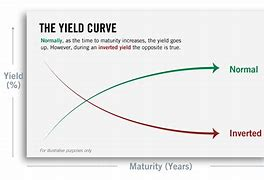
When economic trouble and/or uncertainty is brewing, it’s not uncommon for the US Treasury yield curve to flatten or even invert. A yield curve inversion, like we’re experiencing now, involves short-term-maturing bonds sporting higher yields than longer-dated Treasury bonds. It’s an indication that investors are worried about the U.S. economic outlook.

For the past 64 years, the Federal Reserve Bank of New York has used the Treasury yield spread between the 10-year bond rate and three-month bond rate to calculate the probability of a U.S. recession occurring within the next 12 months. Over these 64 years, the probability of a recession has topped 25% a dozen times and 40% on eight occasions. 

With the exception of a peak probability of a recession of 41.14% in October 1966, the New York Fed’s recession-forecasting tool hasn’t been wrong if it’s surpassed 40%. In other words, if the New York Fed’s recession probability indicator surpasses 40%, we’ve had a recession within 12 months, without fail, for more than a half-century.

In December 2022, this recession probability tool hit 47.31%. That’s the highest reading since 1981, and a very clear indication that economic activity is expected to slow at some point in 2024?

***

***

COMMENTS APPRECIATED

Comprehensive Financial Planning Strategies for Doctors and Advisors: Best Practices from Leading Consultants and Certified Medical Planners™

ORDER: https://www.routledge.com/Comprehensive-Financial-Planning-Strategies-for-Doctors-and-Advisors-Best/Marcinko-Hetico/p/book/9781482240283

***

COMMENTS APPRECIATED

Thank You

***

Daniel Vande Lune MD on How HCQIA provided immunity is misused by hospitals for sham peer-review

Join Our Mailing List

Originally posted on Disrupted Physician

PUBLISHER’S NOTE: From time-to-time the ME-P might re-post an essay or opinion of vital interest to our readers and industrial ecosystem. This article is one of those times from an Award Winning Blogger and physician colleague from the Disrupted Physician. Feel free to visit his website directly and support his work as you deem fit.

https://www.gofundme.com/PHPReform

Langan MD

 The Ability for Hospitals to Hide behind the Immunity of HCQIA and the Abuse and Coercion by the PHP: my story and caveats.

I have been asked to write a guest blog and whole heartedly agreed. I am not afraid to tell my story ……

***

Guest Post: Dr. Daniel Vande Lune, MD discusses how HCQIA provided immunity is misused by hospitals for sham peer-review — Disrupted Physician

***

Conclusion

Your thoughts and comments on this ME-P are appreciated. Feel free to review our top-left column, and top-right sidebar materials, links, URLs and related websites, too. Then, subscribe to the ME-P. It is fast, free and secure.

Speaker: If you need a moderator or speaker for an upcoming event, Dr. David E. Marcinko; MBA – Publisher-in-Chief of the Medical Executive-Post – is available for seminar or speaking engagements. Contact: MarcinkoAdvisors@msn.com

OUR OTHER PRINT BOOKS AND RELATED INFORMATION SOURCES:

Risk Management, Liability Insurance, and Asset Protection Strategies for Doctors and Advisors: Best Practices from Leading Consultants and Certified Medical Planners™

***

What is the “Endowment” Effect?

The “Endowment” Effect

[By staff reporters]

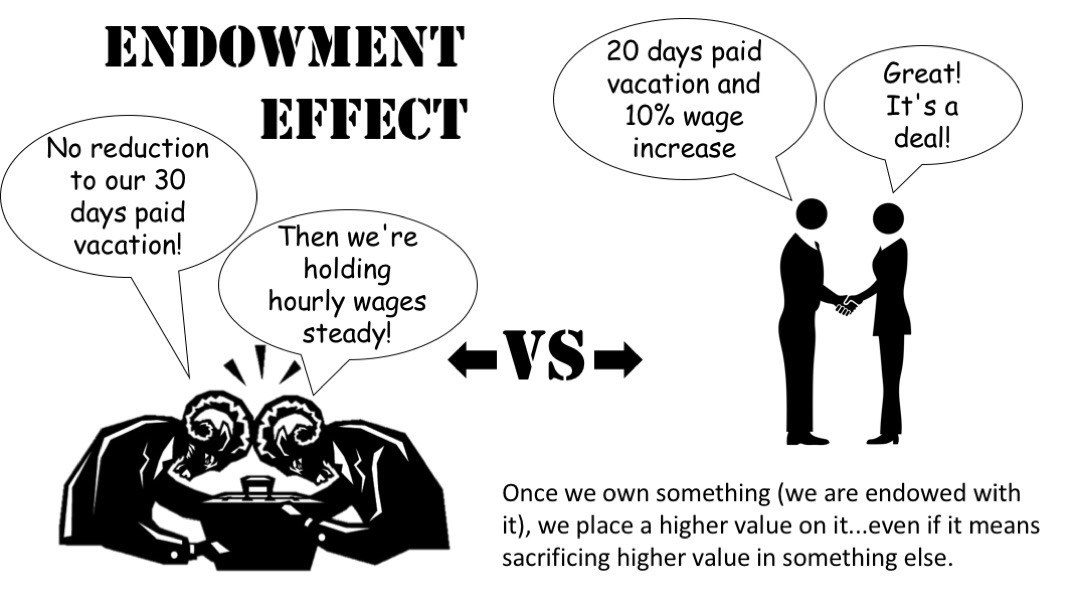
In psychology and behavioral economics, the endowment effect (also known as divestiture aversion and related to the mere ownership effect in social psychology) is the hypothesis that people ascribe more value to things merely because they own them.

***

***

MORE: https://www.interaction-design.org/literature/topics/endowment-effect

MORE: What is the “Butterfly” Effect?

Assessment: Your thoughts are appreciated.

***

Risk Management, Liability Insurance, and Asset Protection Strategies for Doctors and Advisors: Best Practices from Leading Consultants and Certified Medical Planners™8Comprehensive Financial Planning Strategies for Doctors and Advisors: Best Practices from Leading Consultants and Certified Medical Planners™

***

What is “Risk Adjusted” Stock Market Performance?

Update on Some Interesting and Important Financial Calculations

By Timothy J. McIntosh MBA CFP® MPH

By Dr. David Edward Marcinko MBA MEd CMP™

By Jeffrey S. Coons PhD CFA

TMDr. Jeff Coons

dr-david-marcinko9

-INTRODUCTION-

Performance measurement, like an annual physical, is an important feedback loop to monitor progress towards the goals of the medical professional’s investment program.  Performance comparisons to market indices and/or peer groups are a useful part of this feedback loop, as long as they are considered in the context of the market environment and with the limitations of market index and manager database construction.

Inherent to performance comparisons is the reality that portfolios taking greater risk will tend to out-perform less risky investments during bullish phases of a market cycle, but are also more likely to under-perform during the bearish phase.  The reason for focusing on performance comparisons over a full market cycle is that the phases biasing results in favor of higher risk approaches can be balanced with less favorable environments for aggressive approaches to lessen/eliminate those biases.

So, as physicians and other investors, can we eliminate the biases of the market environment by adjusting performance for the risk assumed by the portfolio?  While several interesting calculations have been developed to measure risk-adjusted performance, the unfortunate answer is that the biases of the market environment still tend to have an impact even after adjusting returns for various measures of risk.

However, medical professionals and their advisors will have many different risk-adjusted return statistics presented to them, so understanding the Sharpe ratio, Treynor ratio, Jensen’s measure or alpha, Morningstar star ratings, etc. and their limitations should help to improve the decisions made from the performance measurement feedback loop.

[a] The Treynor Ratio

The Treynor ratio measures the excess return achieved over the risk free return per unit of systematic risk as identified by beta to the market portfolio.  In practice, the Treynor ratio is often calculated using the T-Bill return for the risk-free return and the S&P 500 for the market portfolio.

[b] The Sharpe Ratio

The Sharpe ratio, named after CAPM pioneer William F. Sharpe, was originally formulated by substituting the standard deviation of portfolio returns (i.e., systematic plus unsystematic risk) in the place of beta of the Treynor ratio.  Thus, a fully diversified portfolio with no unsystematic risk will have a Sharpe ratio equal to its Treynor ratio, while a less diversified portfolio may have significantly different Sharpe and Treynor ratios.

***

8Comprehensive Financial Planning Strategies for Doctors and Advisors: Best Practices from Leading Consultants and Certified Medical Planners™

***

[c] The Jensen Alpha Measure

The Jensen measure, named after CAPM research Michael C. Jensen, takes advantage of the CAPM equation discussed in the Portfolio Management section to identify a statistically significant excess return or alpha of a portfolio.  The essential idea is that to investigate the performance of an investment manager you must look not only at the overall return of a portfolio, but also at the risk of that portfolio.

For instance, if there are two mutual funds that both have a 12 percent return, a lucid investor will want the fund that is less risky. Jensen’s gauge is one of the ways to help decide if a portfolio is earning the appropriate return for its level of risk. If the value is positive, then the portfolio is earning excess returns. In other words, a positive value for Jensen’s alpha means a fund manager has “beat the market” with his or her stock picking skills compared with the risk the manager has taken.

[d] Database Ratings

The ratings given to mutual funds by databases, such as Morningstar, and various financial magazines are another attempt to develop risk-adjusted return measures.  These ratings are generally based on a ranking system for funds calculated from return and risk statistics.

A popular example is Morningstar’s star ratings, representing a weighting of three, five and ten year risk/return ratings.  This measure uses a return score from cumulative excess monthly fund returns above T-Bills and a risk score derived from the cumulative monthly return below T-Bills, both of which are normalized by the average for the fund’s asset class.  These scores are then subtracted from each other and funds in the asset class are ranked on the difference.  The top 10 percent receive five stars, the next 22.5 percent get four stars, the subsequent 35 percent receive three stars, the next 22.5 percent receive two stars, and the remaining 10 percent get one star.

***

Risk Management, Liability Insurance, and Asset Protection Strategies for Doctors and Advisors: Best Practices from Leading Consultants and Certified Medical Planners™

***

Assessment

Unfortunately, these ratings systems tend to have the same problems of consistency and environmental bias seen in both non-risk adjusted comparisons over 3 and 5 year time periods and the other risk-adjusted return measures discussed above.  The bottom line on performance measurement is that the medical professional should not take the easy way out and accept independent comparisons, no matter how sophisticated, at face value.  Returning to our original rules-of-thumb, understanding the limitations of performance statistics is the key to using those statistics to monitor progress towards one’s goals.

This requires an understanding of performance numbers and comparisons in the context of the market environment and the composition/construction of the indices and peer group universes used as benchmarks.

Another important rule-of-thumb is to avoid projecting forward historical average returns, especially when it comes to strong performance in a bull market environment.  Much of an investment or manager’s performance may be environment-driven, and environments can change dramatically.

Channel Surfing

Have you visited our other topic channels? Established to facilitate idea exchange and link our community together, the value of these topics is dependent upon your input. Please take a minute to visit. And, to prevent that annoying spam, we ask that you register.

ABOUT

Timothy J. McIntosh is Chief Investment Officer and founder of SIPCO.  As chairman of the firm’s investment committee, he oversees all aspects of major client accounts and serves as lead portfolio manager for the firm’s equity and bond portfolios. Mr. McIntosh was a Professor of Finance at Eckerd College from 1998 to 2008. He is the author of The Bear Market Survival Guide and the The Sector Strategist.  He is featured in publications like the Wall Street Journal, New York Times, USA Today, Investment Advisor, Fortune, MD News, Tampa Doctor’s Life, and The St. Petersburg Times.  He has been recognized as a Five Star Wealth Manager in Texas Monthly magazine; and continuously named as Medical Economics’ “Best Financial Advisors for Physicians since 2004.  And, he is a contributor to SeekingAlpha.com., a premier website of investment opinion. Mr. McIntosh earned a Bachelor of Science Degree in Economics from Florida State University; Master of Business Administration (M.B.A) degree from the University of Sarasota; Master of Public Health Degree (M.P.H) from the University of South Florida and is a CERTIFIED FINANCIAL PLANNER® practitioner. His previous experience includes employment with Blue Cross/Blue Shield of Florida, Enterprise Leasing Company, and the United States Army Military Intelligence.

Dr. Jeffrey S. Coons is the Co-Director of Research at Manning & Napier Advisors, Inc. with primary responsibilities focusing on the measurement and management of portfolio risk and return relative to client objectives.  This includes providing analysis across every aspect of the investment process, from objectives setting and asset allocation to on-going monitoring of portfolio risk and return.  Dr. Coons is also member of the Investment Policy Group, which establishes and monitors secular investment trends, macroeconomic overviews, and the investment disciplines of the firm. Dr. Coons holds a doctoral degree in economics from Temple University, graduated with distinction from the University of Rochester with a B.A. in Economics, holds the designation of Chartered Financial Analyst, and is one of the employee-owners of Manning and Napier.

Conclusion

Your thoughts and comments on this ME-P are appreciated. Feel free to review our top-left column, and top-right sidebar materials, links, URLs and related websites, too. Then, subscribe to the ME-P. It is fast, free and secure.

Speaker: If you need a moderator or speaker for an upcoming event, Dr. David E. Marcinko; MBA – Publisher-in-Chief of the Medical Executive-Post – is available for seminar or speaking engagements. Contact: MarcinkoAdvisors@msn.com

OUR OTHER PRINT BOOKS AND RELATED INFORMATION SOURCES:

Risk Management, Liability Insurance, and Asset Protection Strategies for Doctors and Advisors: Best Practices from Leading Consultants and Certified Medical Planners™8Comprehensive Financial Planning Strategies for Doctors and Advisors: Best Practices from Leading Consultants and Certified Medical Planners™

Sponsors Welcomed

And, credible sponsors and like-minded advertisers are always welcomed.

Support Med Executive-Post

Why Physicians Need to Deal with Debt

Understanding the Impending Retirement-Planning Crisis

[By Somnath Basu PhD, MBA]

A serious retirement-planning crisis is looming in the US with many Baby Boomer physicians, and others, having already spent a portion of their nest egg and undermining any hope for a comfortable lifestyle unless they continue to work. Notwithstanding medical professionals, look no further than an annual “retirement confidence” survey conducted by the Employee Benefit Research Institute and Mathew Greenwald & Associates in each of the past 17 years. Nearly two in five of working Americans responding to the latest survey indicated that they have taken no action in the face of reductions in their employer-provided retirement benefits.

Consumption Equals Happiness?

The population is constantly told that consumption equals happiness. At the same time they are not being asked to understand about the implications of borrowing to fund for such consumption. Before we can expect to effect a change in the ensuing pattern of a vicious cycle, the population mass must have a clear understanding of the difference between needs (e.g., retiring with peace of mind) and desires (e.g., cruises or living the high life).

Negative Savings Rate

When savings first dipped into negative territory during the Great Depression in 1932 and 1933, people didn’t have enough to eat, whereas there has been no such urgency to raid nest eggs since the repeat of this performance in 2005 when the rate fell to minus 0.5 percent. Our grandparents were shining stars in the way they worked hard to build this country’s infrastructure and manufacturing sector, saved every red cent they could get their hands on and created affluence on a mass scale. Today we’re able to enjoy the fruit of their labor. But, somehow their values were lost on future generations.

Changing American Culture

Many of the nation’s top engineers and scientists now hail from China, India and other Asian countries as American culture has undergone a dramatic change to the point where jocks and cheerleaders are more valued than computer geeks and science nerds in our schools. We inherited so much affluence that it made us lazy as a society. The seeds of our destruction have been sown, but it’s up to our politicians, educators and other leaders, including financial advisors, to help reverse this disturbing pattern before it’s too late.

Many people fall into the trap of rushing through dinner and unwinding in front of the TV where a big part of the problem lies in slick and subtle, and hard to resist, primetime advertising and marketing messages (prime time for subtle messages) that seduce viewers into purchasing luxury cars or flying to far-flung resorts where they can sip umbrella-clad cocktails alongside affluent vacationers.

Americans in Debt

A recent wave of foreclosures has put Americans deeper in debt, with the sub-prime crisis exposing despicable predatory lending practices. But, research has shown the wreckage also could be found strewn across in the mid-prime and prime markets as middle-class borrowers struggled to pay adjustable rate mortgages. High hopes have been pinned on the stock market helping people crawl out from this crisis just like when the real estate market had softened the blow when the tech-bubble burst at the turn of this century. So far, this has happened, to an extent. But, if the stock market starts reeling again, then it will spell even bigger trouble. Add to this the international trade imbalance, which implies foreign governmental funding of our conspicuous consumption, and which comes with high interest rates that need to be paid to the lenders, again to such countries as China, India and other emerging economies, and a bigger, worse picture emerges.

Personal Bankruptcies

Personal bankruptcies have an even more devastating effect on an individual’s ability to plan for the future, particularly since the laws pertaining to this area were toughened to a point where reckless spenders will need to muster fiscal and financial discipline as never before. The doomsday scenario is that children now run the risk of inheriting debt instead of wealth, and it’s unconscionable to think future generations would have a standard of living that’s worse than their parents or grandparents.

Assessment

The true grit associated with being an American is to rise up in the face of adversity – a frontier spirit that drew me this remarkable country. We’ve weathered numerous storms and can do it again. But, it requires a serious commitment to stopping mindless consumption of goods and services, as well as understanding there’s a difference between basic needs and pie-in-the-sky desires.

NOTE: Dr. Somnath Basu is a Professor of Finance at California Lutheran University and the Director of its California Institute of Finance. He is also the creator of the innovative AgeBander technology www.agebander.com for planning retirement needs.

Conclusion

Your thoughts and comments on this ME-P are appreciated. Feel free to review our top-left column, and top-right sidebar materials, links, URLs and related websites, too. Then, subscribe to the ME-P. It is fast, free and secure.

Speaker: If you need a moderator or speaker for an upcoming event, Dr. David E. Marcinko; MBA – Publisher-in-Chief of the Medical Executive-Post – is available for seminar or speaking engagements. Contact: MarcinkoAdvisors@msn.com

OUR OTHER PRINT BOOKS AND RELATED INFORMATION SOURCES:

Product Details  Product Details

Product DetailsProduct Details

CREDIT CARDS: Medical Debt?

By Staff Reporters

***

***

What is a medical credit card?

Medical credit cards are typically offered through healthcare providers such as physicians, veterinarians, dentists, and even hospitals. Unlike major credit cards, you can’t use them for cash advances or to purchase items like groceries, gasoline, or airline tickets.

CITE: https://www.r2library.com/Resource

The cards are only accepted by participating medical providers for certain medical services or procedures. 

READ: https://www.experian.com/blogs/ask-experian/should-you-use-medical-credit-card/

COMMENTS APPRECIATED

Thank You

***

***

How MCOs Intensify Accounting IBNRs

Understanding the Uncertainty of Loss

By Dr. David E. Marcinko MBA MEd CMP

Because of the high degree of uncertainty inherent in the estimates of ultimate losses underlying the liability for unpaid claims, the IRS will not allow a Managed Care Organization to deduct an IBNR because the financial statements are based on an estimate (IRS, 134-155).

Loss Based Deductions

Unless the taxpayer healthcare entity qualifies for the insurance company exclusion, the IRS does not allow any taxpayer entity to deduct losses based on estimates. However, the precedent has been set that the IRS will accept an amount for IBNR claims if the amount is supported by actuarial projections and/or valid receipts of claims that the company has in-house prior to the filing of the tax return.

Time Line Controversy

There has been some controversy as to how long a reporting time period the IRS will allow to include those estimates. The time period ranges from three to six months to file a claim (IRS, 137). The process by which these reserves are established requires reliance upon estimates based on known facts and on interpretations of circumstances, including the business’s experience with similar cases and historical trends involving claim payment patterns, claim payments, pending levels of unpaid claims, and product mix, as well as other factors such as court decisions, economic conditions, and public attitudes.

Assessment

There has been no clear indication from the IRS that it will accept an accrual for these losses and entities. Therefore, healthcare organizations deducting such losses may eventually find themselves in a position where the IRS may challenge the relating deductibility of those losses.

Conclusion

And so, your thoughts and comments on this Medical Executive-Post are appreciated. Feel free to review our top-left column, and top-right sidebar materials, links, URLs and related websites, too. Then, be sure to subscribe to the ME-P. It is fast, free and secure.

Speaker: If you need a moderator or speaker for an upcoming event, Dr. David E. Marcinko; MBA – Publisher-in-Chief of the Executive-Post – is available for seminar or speaking engagements. Contact: MarcinkoAdvisors@msn.com

Subscribe Now: Did you like this Medical Executive-Post, or find it helpful, interesting and informative? Want to get the latest ME-Ps delivered to your email box each morning? Just subscribe using the link below. You can unsubscribe at any time. Security is assured.

Sponsors Welcomed: And, credible sponsors and like-minded advertisers are always welcomed.

Link: https://healthcarefinancials.wordpress.com/2007/11/11/advertise

Product DetailsProduct Details

   Product Details 

JULY FOURTH WEEKEND READING LIST 2024

Happy Independence Weekend Greetings to our Readers and Subscribers for 2024

Product Details

From the Medical Executive-Post

***

Product Details
Product Details
Product Details
Product Details
Product Details
Product Details
Product Details

Rate this:

Comprehensive Financial Planning Strategies for Doctors and Advisors: Best Practices from Leading Consultants and Certified Medical Planners™
Risk Management, Liability Insurance, and Asset Protection Strategies for Doctors and Advisors: Best Practices from Leading Consultants and Certified Medical Planners™

INVITE DR. MARCINKO: https://medicalexecutivepost.com/dr-david-marcinkos-

CONTACT: Ann Miller RN MH

[Executive Director]

MarcinkoAdvisors@msn.com

THANK YOU

***

PHYSICIANS BEWARE: Financial “Advice”

BEWARE THE “DOCTOR EFFECT”

Bread for the advisor – Crumbs for the client

By Dr. David Edward Marcinko MBA CMP

SPONSOR: http://www.MarcinkoAssociates.com

Several years ago a group of highly trusted and deeply experienced financial services professionals and estate planners noted that far too many of their physician clients, using traditional stock brokers, management consultants and financial advisors, seemed to be less successful than those who went it alone. These Do-it-Yourselfers [DIYs] had setbacks and made mistakes, for sure. But, the ME Inc. doctors seemed to learn from their mistakes and did not incur the high management and service fees demanded from general or retail one-size-fits-all “advisors.

”In fact, an informal inverse relationship was noted, and dubbed the “Doctor Effect.” In others words, the more consultants an individual doctor retained; the less well they did in all disciplines of the financial planning and medical practice management, continuum.

Of course, the reason for this discrepancy eluded many of them as Wall Street brokerages and wire-houses flooded the media with messages, infomercials, print, radio, TV, texts, tweets, and internet ads to the contrary. Rather than self-learn the basics, the prevailing sentiment seemed to purse the holy grail of finding the “perfect financial advisor.” This realization was a confirmation of the industry culture which seemed to be: Bread for the advisor – Crumbs for the client!

And so, at D.E. Marcinko & Associates, our informed cadre’ of technology focused and highly educated doctors, nurses, financial advisors, attorneys, accountants, psychologists and educational visionaries decided there must be a better way for their healthcare colleagues to receive financial planning advice and related management services within a culture of fiduciary responsibility.

CMP: http://www.CertifiedMedicalPlanner.org

COMMENTS APPRECIATED

Thank You

***

***

RISK MANAGEMENT: https://www.routledge.com/Comprehensive-Financial-Planning-Strategies-for-Doctors-and-Advisors-Best/Marcinko-Hetico/p/book/9781482240283

***

PODCAST: A Full Course on Bio-Statistics

By Quinnipiac University

Biostatistics are the development and application of statistical methods to a wide range of topics in biology. It encompasses the design of biological experiments, the collection and analysis of data from those experiments and the interpretation of the results.

The following topics of #biostatistics are discussed in this course

⭐️ Table of Contents ⭐️ 0:00

Module 1 – Introduction to Statistics 29:13 Module 2 – Describing Data: Shape 45:44 Module 3 – Describing Data: Central Tendency 1:03:34 Module 4 – Describing Data: Variability 1:34:51 Module 5 – Describing Data: Z-scores 1:43:25 Module 6 – Probability (part I) 2:09:21 Module 6 – Probability (part II) 2:26:22 Module 7 – Distribution of Sample Means 2:41:24 Module 9 – Estimation & Confidence Intervals & Effect Size 2:56:59 Module 10 – Misleading with Statistics 3:17:43 Module 11 – Biostatistics in Medical Decision-making 4:13:36 Module 11b – Biostatistics in Medical Decision-Making: Clinical Application 4:56:51 Module 12 – Biostatistics in Epidemiology 5:05:16 Module 13 – Asking Questions: Research Study Design 5:10:15 Module 14 – Bias & Confounders 5:39:20 Module 16 – Correlation & Regression 6:06:19 Module 17 – Non-parametric Tests ⭐️

CITE: https://www.r2library.com/Resource/Title/0826102549

PODCAST: 0:00

YOUR COMMENTS ARE APPRECIATED.

Thank You

Risk Management, Liability Insurance, and Asset Protection Strategies for Doctors and Advisors : Best Practices from Leading Consultants and Certified Medical Planners™ book cover

RISK MANAGEMENT: https://www.routledge.com/Risk-Management-Liability-Insurance-and-Asset-Protection-Strategies-for/Marcinko-Hetico/p/book/9781498725989

***

VALUE BASED CARE: CVS and Walgreens

The retail pharmacy giants have made a string of multi-billion dollar deals!

By Staff Reporters

***

***

CVS and Walgreens have been spending money like there is no tomorrow! In fact, the two retail pharmacy giants have made a string of multi-billion dollar acquisitions of primary care providers in the past couple years, including the $5.2 billion VillageMD acquisition in 2021 (Walgreens) and the $10.6 billion plan to buy Oak Street Health (CVS).

VillageMD also bought primary care clinic operator Summit Health-CityMD in January 2023, which Walgreens invested $3.5 billion in, and CVS spent roughly $8 billion to acquire Signify Health, a value-based payment platform, in September 2022.

So what do all these deals have in common? Value-based care.

CITE: https://www.r2library.com/Resource/Title/082610254

READ Healthcare Brew: https://www.healthcare-brew.com/stories/2023/03/03/cvs-walgreens-value-based-care?cid=30723705.29836&mid=349b552221c994e2540a304649746d7c&utm_campaign=hcb&utm_medium=newsletter&utm_source=morning_brew

***

***

ORDER: https://www.amazon.com/Financial-Management-Strategies-Healthcare-Organizations/dp/1466558733/ref=sr_1_3?ie=UTF8&qid=1380743521&sr=8-3&keywords=david+marcinko

COMMENTS APPRECIATED

Thank You

***

MEDICAL BILLS: Clear Health [Patient] Advocacy

By Staff Reporters

***

***

Did you know that an estimated 30-80% of medical bills in the U.S. are incorrect?

CITE: https://www.r2library.com/Resource/Title/0826102549

That’s a huge range in percentages, but even if we split it right down the middle, that means at least 50% of medical bills are wrong—50% of the medical bills that are coming into your house and mine—and most healthcare consumers don’t even realize it.

READ: https://clearhealthcareadvocacy.com/

***

COMMENTS APPRECIATED

Thank You

***

***

Safeguard Your Digital Estate

On Digital Assets

[By staff reporters]

If you died, what would happen to your email archives, social profiles and online accounts?

***

Have you made a plan to protect your digital assets after you die?

MORE: https://medicalexecutivepost.com/2015/10/29/157123/

MORE: https://medicalexecutivepost.com/2015/04/23/death-in-the-digital-age/

Assessment: Without your passwords, your loved ones may be unable to shut down your Facebook page, access your accounts, and protect your personal correspondence.

And so, your thoughts are appreciated.

***

Risk Management, Liability Insurance, and Asset Protection Strategies for Doctors and Advisors: Best Practices from Leading Consultants and Certified Medical Planners™8Comprehensive Financial Planning Strategies for Doctors and Advisors: Best Practices from Leading Consultants and Certified Medical Planners™

***


Hurdle Rates V. Highwater Marks V. Claw Back Provisions

More on Hedge Funds and Fees

dem-2By Dr. David Edward Marcinko MBA MEd CMP®

SPONSOR: http://www.CertifiedMedicalPlanner.org

Many physicians and other investors — even those that meet net worth guidelines — are surprised to learn that there exists a $500 – 999 billion, or more, alternative investment industry that is not generally marketed to the public. Such alternative investments have also been known as hedge funds or private investment funds.

Unlike mutual funds, these alternative investments can be structured in a wide variety of ways. Because of the very same regulations discussed above, these funds cannot be advertised, but they are far from illegal or illicit.

http://www.CertifiedMedicalPlanner.org

cmp

History

In fact, physicians were among the most significant early investors in one of the last century’s most successful hedge funds. Mr. Warren Buffett, Chairman of Berkshire Hathaway, Inc. and a legendary investor got his start in 1957 running the Buffett Partnership, an alternative investment fund not open to the general public. Mr. Buffett’s first public appearance as a money manager was before a group of physicians in Omaha, Nebraska. Eleven decided to put some money with him. A few of these original investors followed him into Berkshire Hathaway, now among the most highly valued companies in the world.

The alternative investment, or hedge, funds of today are similar to the original Buffett Partnership in many ways. So, we will discuss several unique terms which potential investors should be aware.

http://www.HealthDictionarySeries.org

hds

Hurdle Rate

Hedge funds may feature a hurdle rate as part of the calculation of the fund manager’s performance incentive compensation. Also known as a “benchmark,” the hurdle rate is the amount, expressed in percentage points, an investor’s capital account must appreciate before the account becomes subject to a performance incentive fee. Potential medical investors should view the hurdle rate as a form of protection in context with other features of the fee arrangement.

The hurdle rate, which benchmarks a single year’s performance, may be considered mutually exclusive of any other year, or the hurdle rate may compound each year. The former case is more common. In the latter case, a portfolio manager failing to attain a hurdle rate in the first year will find the effective hurdle rate considerably higher during the second year.

Once a fund manager attains the hurdle rate for an investor, the medical investor’s capital account may be charged a performance incentive fee only on the performance above and beyond the hurdle rate. Alternatively, the account may be charged a performance fee for the entire level of performance, including the performance required to attain the hurdle rate. Other variations on the use of the hurdle rate exist, and are limited only by the contract signed between the fund manager and the investor. The hurdle rate is not generally a negotiating point, however.

Example:

A fund charges a performance fee with a 6 percent hurdle rate, calculated in mutually exclusive manner. Dr. Lanouettea, a radiologist investor places $100,000 with the fund. The first year’s performance is 5 percent. The investor therefore owes no performance fee during the first year because the portfolio manager did not attain the hurdle rate. During year two, the portfolio manager guides the fund to a 7 percent return. Because the hurdle rate is mutually exclusive of any other year, the portfolio manager has attained the 6 percent hurdle rate and is entitled to a performance fee.

Highwater Mark

Some funds feature a highwater mark provision, also known as a ”loss-carryforward” provision. As with the hurdle rate, potential investors should consider the highwater mark a form of protection. A high water mark is an amount equal to the greatest value of an investor’s capital account, adjusted for contributions and withdrawals. The high water mark ensures that the hedge fund manager charges a performance incentive fee only on the amount of appreciation over and above the highwater mark set at the time the performance fee was last charged. The current trend is for newer funds to feature this highwater mark, while older, larger funds may not feature it.

Example:

A fund charges a 20 percent performance fee with a highwater mark but no hurdle rate. Dr. Butalak, a dentist investor contributes $100,000 to the fund. During the first year, the hedge fund manager grows that capital account to $110,000 and charges a 20 percent performance fee, or $2,000. The ending capital account balance and highwater mark is therefore $108,000. During year two, the account falls back to $100,000, but the highwater mark remains $108,000. During year three, in order for the manager to charge a performance fee, the manager must grow the capital account to a level above $108,000.

Clawback Provision

Rarely, a fund may provide investors with a clawback provision. This term, borrowed from the venture capital fund world, such provisions result in a refund to the investor of all or part of a previously charged performance fee if a certain level of performance is not attained in subsequent years. Such refunds in the face of poor or inadequate performance may not be legal in some states or under certain authorities.

Conclusion

Your thoughts and comments on this ME-P are appreciated. Feel free to review our top-left column, and top-right sidebar materials, links, URLs and related websites, too. Then, subscribe to the ME-P. It is fast, free and secure.

Speaker: If you need a moderator or speaker for an upcoming event, Dr. David E. Marcinko; MBA – Publisher-in-Chief of the Medical Executive-Post – is available for seminar or speaking engagements. Contact: MarcinkoAdvisors@msn.com

OUR OTHER PRINT BOOKS AND RELATED INFORMATION SOURCES:

 Risk Management, Liability Insurance, and Asset Protection Strategies for Doctors and Advisors: Best Practices from Leading Consultants and Certified Medical Planners™  Comprehensive Financial Planning Strategies for Doctors and Advisors: Best Practices from Leading Consultants and Certified Medical Planners™

***

What is OBSERVATIONAL BIAS?

EVIDENCE BASED MEDICINE

By Staff Reporters

***

Observer bias occurs in research when the beliefs or expectations of an observer (or investigator) can influence the data that’s collected in a study.

Cite: https://www.amazon.com/Dictionary-Health-Information-Technology-Security/dp/0826149952/ref=sr_1_5?ie=UTF8&s=books&qid=1254413315&sr=1-5

***

Supporting Teachers: Reducing Observational Bias - TeacherToolkit

This causes the results of a study to be unreliable and hard to reproduce in other research settings.

READ HERE IN MEDICINE: https://www.ebmconsult.com/articles/observational-bias-statistical-analysis

***

***
RISK MANAGEMENT: https://www.routledge.com/Risk-Management-Liability-Insurance-and-Asset-Protection-Strategies-for/Marcinko-Hetico/p/book/9781498725989

***

YOUR COMMENTS ARE APPRECIATED

BUSINESS MEDICINE: https://www.amazon.com/Business-Medical-Practice-Transformational-Doctors/dp/0826105750/ref=sr_1_9?ie=UTF8&qid=1448163039&sr=8-9&keywords=david+marcinko

Thank You

***

On Death Talk, Risk Management and Financial Planning

A financial planning challenge

Rick Kahler MS CFP

By Rick Kahler MS CFP®

One of the challenges in financial planning is the strong taboo in our society against talking about money. Another powerful taboo is talking about death when someone has a serious illness.

When someone is diagnosed with cancer, for example, the focus is almost always on treatment and recovery. Rarely is there any discussion of what happens if the treatment doesn’t work. There seems to be an unspoken belief that if we don’t talk about it, it won’t happen.

Not talking about death isn’t limited to family and friends, according to Dr. Carol McClanahan CFP®

For example, in a recent presentation to financial advisors at the Insiders Forum in Phoenix, she pointed out that many doctors shy away from talking about dying until the very end.

Given this strong reluctance to talk about both money and dying, how can you work with a financial advisor to deal with the financial and emotional issues that go along with a family member’s serious illness?

Here are some suggestions based on Dr. McClanahan’s talk:

Don’t expect someone facing a serious illness to give you an accurate prognosis of their disease, as they are often in denial. McClanahan suggests turning to “Dr. Google” for accurate information. Specifically, she recommends the National Institutes of Health (www.nih.gov), which has statistics on every disease imaginable.

  1. Learn to interpret what doctors say. For example, when a cancer patient is told chemotherapy has a 25% chance of working, the average patient hears “working” as “being cured.” “Working” actually means there is a 25% chance of the tumor shrinking. Often the chances of being cured are far less than 25%, and the physical effects of chemotherapy can be devastating to one’s remaining quality of life. McClanahan says, “Most of what we do to people at the end of life is unnecessary torture.”
  2. Find out early about options for palliative care. This is multidisciplinary care focused on treating the symptoms of treatment, relieving suffering, and improving the quality of life. Because of denial and unwillingness to talk about what happens if they don’t get better, many patients never get into palliative care or get into it way too late. Similarly, most patients wait too long to get into hospice care. The average time in hospice care, according to McClanahan, is just 19 days.
  3. Share your money concerns with the advisor. McClanahan says that anxiety over having enough money to pay for their care and the resulting effect on the family finances are two of the top concerns patients have. Interestingly, most financial advisors focus instead on whether advance directives, estate documents, and funeral plans are in place.
  4. Call the advisor’s attention to signs that a person’s illness is advancing. These can include a shortened attention span, not remembering details of conversations, word-finding difficulties, inability to multitask, mental fuzziness, and depression. Ask advisors to deal with these symptoms: meet early in the day, address the most important issues first, keep meetings short, include family members as appropriate, and put action items in writing.
  5. Realize that sharing your emotions is part of financial planning. Serious illness affects people in many different ways, but the underlying concerns are always emotional. Discuss those concerns with the advisor, and work together to create a comprehensive plan addressing both death and recovery. Remember that, as McClanahan put it, “preparation for a negative outcome does not reduce the risk of cure.”

***

halloween

***

The role of the financial planner

The role of a financial planner is to help clients prepare for the future, including the end of life. When that future becomes “now,” don’t hesitate to ask for the planner’s emotional support as well as financial advice. 

Conclusion

Your thoughts and comments on this ME-P are appreciated. Feel free to review our top-left column, and top-right sidebar materials, links, URLs and related websites, too. Then, subscribe to the ME-P. It is fast, free and secure.

Speaker: If you need a moderator or speaker for an upcoming event, Dr. David E. Marcinko; MBA – Publisher-in-Chief of the Medical Executive-Post – is available for seminar or speaking engagements. Contact: MarcinkoAdvisors@msn.com

OUR OTHER PRINT BOOKS AND RELATED INFORMATION SOURCES:

***

[PHYSICIAN FOCUSED FINANCIAL PLANNING AND RISK MANAGEMENT COMPANION TEXTBOOK SET]

 Risk Management, Liability Insurance, and Asset Protection Strategies for Doctors and Advisors: Best Practices from Leading Consultants and Certified Medical Planners™  Comprehensive Financial Planning Strategies for Doctors and Advisors: Best Practices from Leading Consultants and Certified Medical Planners™

***

PHYSICIAN OUT-PATIENT AMBULATORY CENTERS: Consulting on ASCs and More!

SPONSOR: http://www.MARCINKOASSOCIATES.com

START TO FINISH CYCLE

***

Our Process

***

READ HERE: https://marcinkoassociates.com/asc/

COMMENTS APPRECIATED

Thank You

***

***

***

ASSET PROTECTION: Fundamentals for Physicians

Don’t Leave Yourself Unprotected

By Nicholas Efthemis CFP®

The largest concern facing physicians today is how to protect their wealth against the proliferation of malpractice claims and extraordinarily high jury verdicts. Malpractice insurance has become so expensive that physicians are greatly reducing their coverage.

Even worse, some carriers are dropping physicians that have poor claims history. When meeting with physicians my message is a simple one. Take action and do so now. Constructing a complete asset protection plan is the single most critical step towards attaining financial freedom. Physicians work hard and long hours to create wealth, and are potentially one medical malpractice claim or general negligence claim away from financial catastrophe. Detailing every asset protection strategy is beyond the scope of this article, however I will review some important concepts you should know.

Good asset protection will prevent lawsuits. Conversely, the more personal assets that remain unprotected the more likely an attorney is willing to go after you. In fact, a physician with very high malpractice coverage and unprotected assets has a target on his back. This can be avoided through lower policy limits and a complete Asset Protection Plan.

What is the Best Asset Protection Plan?

The best Asset Protection Plan for a physician or any high net worth client removes all assets from the client’s name. The worst plan has all the assets in the client’s name. You will need to work with a specialized attorney to find the ideal plan for you. In many cases your largest asset are the funds in your retirement plan or IRA. The good news is that creditors cannot reach ERISA qualified plan assets. Common ERISA plans include:

1. 401(k) 403(b) Plan

2. Profit Purchase Plan

3. Money Purchase Plan

4. New Comparability Plans

5. Defined Benefit Plan

Keep in mind IRAs are not considered ERISA qualified plans and have no federal protection from creditors. Many individual states have protected IRAs in part or in full. In my state, New York, IRAs are fully protected. If you live in a state where they are not you should seriously consider moving the money into an ERISA qualified plan. This can be accomplished even if you are retired.

What about my house?

It is never a good idea, from an asset protection standpoint to own property in just your name. If you get sued the property is almost entirely at risk. Owning the marital home jointly with your spouse can be effective. You will protect the home from each other’s individual creditors (though not joint creditors). You should not title many assets as tenants by the entirety for several reasons. Physicians suffer a higher divorce rate than the already high national average of fifty percent. Should a divorce occur you will have ensured the spouse will receive half of that asset. Also, you do nothing to protect the asset against joint creditors.

How should my other assets be held?

You will need to consult a specialized asset protection attorney. Most effective plans involve the use of a corporate structure, limited liability company, or family limited partnership. Keep in mind that the entity you choose will have its own unique asset protection and tax consequences.

  • Sole proprietorships and partnerships are the worst way to own a business. If a sole proprietor is found negligent in his duties for the business that injures a third person, the sole proprietor is personally liable. If a product or employee harm a third person or someone is harmed on the premises, the sole proprietor is personally liable. With a partnership you have all of the above risks coupled with a partner who can cause you even more liability.
  • Limited Liability Companies (LLCs), Family Limited Liability Companies (FLLCs) and Family Limited Partnerships (FLPs) are the most commonly used tools by asset protection specialists today. A creditor attempting to obtain assets of a debtor when the assets are in a LLC will likely have very limited success. In fact, a charging order is the only remedy a court can give a creditor. A charging order does not allow creditors to sell assets of the LLC or force distributions of income. It also cannot transfer interest in the LLC to the creditor. A creditor who obtains a charging order against an LLC may in fact receive a K-1 for income they never did and may never receive.

What should I consider holding in an LLC?

I advise my physician clients to consider holding rental real estate, after tax investment accounts, planes, boats and any personal assets of value in an LLC. Unless you are single and your home is titled in your name alone, the marital home may not be a good candidate for transfer to an LLC. By doing so, you forego the capital gains exemption of $250,000 per spouse. Brokerage accounts can be owned by an LLC, and when constructed correctly you will have full ability to invest as you desire. The investments within the account would then be protected. Assets such as planes and boats may be best held in their own LLCs to protect the rest of your estate from their unique risk profiles.

Example:

  • Personal Residence $750,000 Tenants by the entirety
  • Vacation Property $300,000 LLC #1
  • Investment Account $900,000 LLC #1
  • 401 (k) 2,400,000 ERISA plans are federally protected
  • Boat $55,000 LLC #2

Assessment

The topic of asset protection is vast and complicated, but I hope to break out additional topics such as off-shoring, accounts receivable leveraging, fiduciary duties, and insurance in subsequent articles. My hope is that I have given you enough ideas and motivation to act now. You cannot wait until there is an issue. It is critical that your financial planner, attorney and accountant are all very knowledgeable on asset protection. Do not rely on a generalist to navigate such a complex yet critical issue.

About the Author:

Nicholas Efthemis is a Certified Financial Planner™ who helps physicians plan wisely and live fully by creating a financial plan that helps them focus on their medical practice and live a better life.

Conclusion

Your thoughts and comments on this ME-P are appreciated. Feel free to review our top-left column, and top-right sidebar materials, links, URLs and related websites, too. Then, subscribe to the ME-P. It is fast, free and secure.

Speaker: If you need a moderator or speaker for an upcoming event, Dr. David E. Marcinko; MBA – Publisher-in-Chief of the Medical Executive-Post – is available for seminar or speaking engagements. Contact: MarcinkoAdvisors@msn.com

***

***

OUR OTHER PRINT BOOKS AND RELATED INFORMATION SOURCES:

PODCAST: Medicare Value Based Payments Explained

By Eric Bricker MD

***

***

COMMENTS APPRECIATED

Thank You

***

***
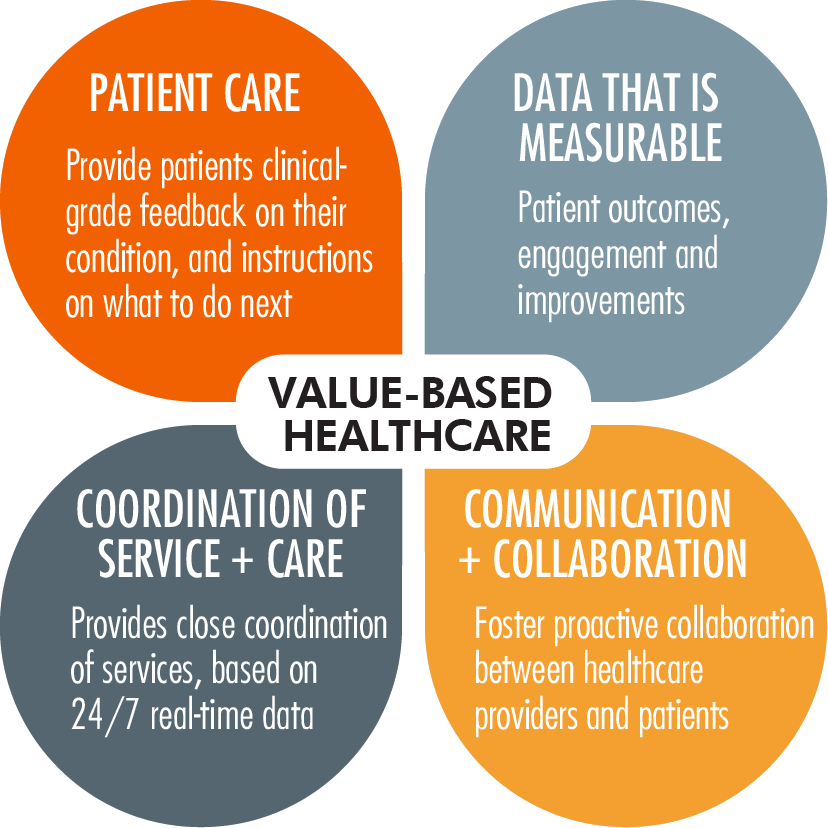
***
PSYCHOLOGICAL “TRAPS” of Investing

MIND TRAPS PHYSICIAN INVESTORS MUST REDUCE AND AVOID AT ALL COSTS

See the source image

By Dr. David E. Marcinko MBA MEd CMP®

SPONSOR: http://MarcinkoAssociates.com

CMP logo

SPONSOR: http://www.CertifiedMedicalPlanner.org

As human beings, our brains are booby-trapped with psychological barriers that stand between making smart financial decisions and making dumb ones. The good news is that once you realize your own mental weaknesses, it’s not impossible to overcome them.

CITE: https://www.r2library.com/Resource/Title/0826102549

In fact, Mandi Woodruff, a financial reporter whose work has appeared in Yahoo! Finance, Daily Finance, The Wall Street Journal, The Fiscal Times and the Financial Times among others; related the following mind-traps in a September 2013 essay for the finance vertical Business Insider; as these impediments are now entering the lay-public zeitgeist.

***

8 Psychological Traps All Stock Investors Should Avoid - YouTube

 Anchoring happens when we place too much emphasis on the first piece of information we receive regarding a given subject. For instance, when shopping for a wedding ring a salesman might tell us to spend three months’ salary. After hearing this, we may feel like we are doing something wrong if we stray from this advice, even though the guideline provided may cause us to spend more than we can afford.

 Myopia makes it hard for us to imagine what our lives might be like in the future. For example, because we are young, healthy, and in our prime earning years now, it may be hard for us to picture what life will be like when our health depletes and we know longer have the earnings necessary to support our standard of living. This short-sightedness makes it hard to save adequately when we are young, when saving does the most good.

 Gambler’s fallacy occurs when we subconsciously believe we can use past events to predict the future. It is common for the hottest sector during one calendar year to attract the most investors the following year. Of course, just because an investment did well last year doesn’t mean it will continue to do well this year. In fact, it is more likely to lag the market.

 Avoidance is simply procrastination. Even though you may only have the opportunity to adjust your health care plan through your employer once per year, researching alternative health plans is too much work and too boring for us to get around to it. Consequently, we stick with a plan that may not be best for us.

 Loss aversion affected many investors during the stock market crash of 2008. During the crash, many people decided they couldn’t afford to lose more and sold their investments. Of course, this caused the investors to sell at market troughs and miss the quick, dramatic recovery.

 Overconfident investing happens when we believe we can out-smart other investors via market timing or through quick, frequent trading. Data convincingly shows that people who trade most often underperform the market by a significant margin over time.

 Mental accounting takes place when we assign different values to money depending on where we get it from. For instance, even though we may have an aggressive saving goal for the year, it is likely easier for us to save money that we worked for than money that was given to us as a gift.

MORE: https://medicalexecutivepost.com/2021/09/04/more-on-money-psychology/

RELATED: https://medicalexecutivepost.com/2014/12/15/on-internet-investing-psychology/

 Herd mentality makes it very hard for humans to not take action when everyone around us does. For example, we may hear stories of people making significant profits buying, fixing up, and flipping homes and have the desire to get in on the action, even though we have no experience in real estate.

YOUR COMMENTS ARE APPRECIATED.

Thank You

***

RISK MANAGEMENT: https://www.routledge.com/Risk-Management-Liability-Insurance-and-Asset-Protection-Strategies-for/Marcinko-Hetico/p/book/9781498725989

Risk Management, Liability Insurance, and Asset Protection Strategies for Doctors and Advisors : Best Practices from Leading Consultants and Certified Medical Planners™ book cover

***

“ACTIVE” INVESTMENT STRATEGIES: For Physicians

And … why doctors are different?

By Dr. David Edward Marcinko MBA MEd CMP

SPONSOR: http://www.MarcinkoAssociates.com

By Dr. David Edward Marcinko MBA CMP

There are two distinct forms of financial analysis investment strategies often used by medical colleague investors who desire to pursue an active investment strategy.

Technical Analysis: Technical analysts, sometimes referred to as chartists, use historical price data and transaction volume data to identify mis-priced securities. A key belief shared by technical analysts is that stock prices follow recurring patterns and that once these historical patterns are identified, they can be used to identify future security prices. The heart of technical analysis is identifying significant shifts in the macro/micro economic supply and demand factors for a particular securities investment.

Skeptics of technical analysis generally subscribe to the notion that the markets efficiently and accurately price securities. In fact, the weak form of the Efficient Market Hypothesis [EMH] is based on the view that investors cannot consistently earn superior returns using historical data and technical analysis alone.

Fundamental Analysis: In contrast to technical analysis – which relies on historical market returns / transactions data – fundamental analysis focuses on the underlying company’s assets, earnings, risks, dividends and intrinsic security factors to identify mis-priced securities.

Furthermore, investors using fundamental analysis can use either a top-down or bottom-up approach:

  • The top-down investor starts with global economics, including both international and national economic indicators. These may include GDP growth rates, inflation, interest rates, exchange rates, productivity and energy prices. They subsequently narrow their search to regional / industry analysis of total sales, price levels, the effects of competing products, foreign competition and entry or exit from the industry. Often they refine their search to the best business in the area being studied.
  • The bottom-up investor starts with specific businesses, regardless of their industry / region, and proceeds in reverse of the top-down approach. Bottom-up investing is an approach that focuses on analyzing individual stocks and de-emphasizes the significance of macroeconomic and market cycles. In other words, bottom-up investing typically involves focusing on a specific company’s fundamentals, such as revenue or earnings, versus the industry or the overall economy. The bottom-up investing approach assumes individual companies can perform well even in an industry that is under performing, at least on a relative basis.

And so, a medical professional utilizing fundamental analysis is attempting to find securities that are trading at market prices below their intrinsic value. Skeptics suggest this is difficult or almost impossible to achieve.

Thus, while technical analysis focuses on market price history, a security’s intrinsic fundamental analysis is determined independent of the security’s market value. Of course, a combination of both fundamental and technical analysis can also be considered.

DOCTORS ARE DIFFERENT: https://marcinkoassociates.com/doctors-unique/

CMP: http://www.CertifiedMedicalPlanner.org

COMMENTS APPRECIATED

Thank You

***

***

REIMBURSEMENT: Valuation of Accountable Care Organizations

By Health Capital Consultants, LLC

***


Valuation of Accountable Care Organizations: Reimbursement

The U.S. healthcare payment and delivery system is increasingly moving to a value- and quality-based system. Accountable care organizations (ACOs) are at the forefront of delivering high-quality and cost-effective care to millions of Medicare beneficiaries and privately insured patients, incentivized by substantial shared savings for those who increase quality while containing costs.

CITE: https://www.r2library.com/Resource

This third installment of a five-part series on the valuation of ACOs will discuss the reimbursement environment in which ACOs participate.(Read more…) 

COMMENTS APPRECIATED

Thank You

***

***

***

HOSPITALS: https://www.amazon.com/Financial-Management-Strategies-Healthcare-Organizations/dp/1466558733/ref=sr_1_3?ie=UTF8&qid=1380743521&sr=8-3&keywords=david+marcinko
***

CUSTOMIZABLE e-PODIATRY CONSENT FORMS Now Available for 2024

Electronically CUSTOMIZABLE FOR EVERY FOOT / ANKLE / LEG SURGEON

***

http://www.ePodiatryConsentForms.com

CUSTOMIZABLE CMS & AGENCY FOR HEALTHCARE RESEARCH AND QUALITY STYLED PROTOCOLS, CHECKLISTS AND TEMPLATES

.… Specifically for Podiatrists ….   

e-Podiatry Consent Forms™ is an innovative new suite of software programs from the Institute of Medical Business Advisors [iMBA, Inc]. Our products solve your informed consent problems and enhance the education, discussion and documentation of the informed consent process for all podiatrists performing foot, ankle and leg reconstructive surgical procedures.

THE PROBLEM

All podiatrists are being pressured by the Centers for Medicare and Medicaid Services [CMS], the Joint Commission on Accreditation of Healthcare Organizations [JCAHO], liability carriers and private insurance payers to make their consent process more patient-friendly, informed and easily understood. And, the pressure to standardize and comply is great.

Most recently, based on the need to make healthcare even safer, the Agency for Healthcare Research and Quality (AHRQ) undertook a major study to identify patient safety issues and develop recommendations for “best practices”.

The AHRQ Evidence Report

The AHRQ report identified the challenge of addressing shortcomings such as missed, incomplete or not fully comprehended informed consent, as a significant patient safety issue and opportunity for improvement.

The authors of the AHRQ report hypothesized that better informed patients:

“are less likely to experience errors by acting as another layer of protection.”

And, the AHRQ study ranked a “more interactive informed consent process” among the top 11 practices supporting more widespread implementation; especially for surgical consent forms.

THE SOLUTION

Why Us: https://epodiatryconsentforms.com/why-us/

One answer to the modern risk-management problem of “informed consent interactivity” may be e-Podiatry Consent Forms™  We license two core interactive surgical products, and a reference library, with related concepts and products in development:

  • Forefoot, Mid-Foot and Simple Rear-Foot Version
  • Complex Rear-Foot, Ankle and Lower Leg Version
  • Comprehensive content library for extreme customization.

Each e-Podiatry Consent Forms™ CD-ROM [secure email delivery is now available] is increasingly trusted as the simple solution to standardized communications across the entire office-enterprise; from managing-risk, informing-patients and complying with modern regulatory requirements through enhanced patient-centric informed consent encounters.

Thus, by improving the consistency, details, documentation and effectiveness of the informed consent process, e-Podiatry Consent Forms™ equips all podiatric surgeons with the tools needed to augment quality standards, reduce litigation potential and improve patient outcomes and safety.

http://www.ePodiatryConsentForms.com

***

ORDER NOW: MarcinkoAdvisors@msn.com

DELIVERY: By email only

***

HISTORY: Medical Education and Practice in the USA

Domestic Medical SCHOOL Education

Robert James Cimasi

Todd A. Zigrang

Health Capital Consultants - Healthcare Valuation

U.S. medical education began in the late eighteenth century as an apprenticeship program in which physicians taught their trade to a few pupils, a pedagogical learning style which relied heavily upon the capacity, skills, and knowledge of the individual physician.[1] However, as learning newly discovered information and utilizing new technologies became more necessary to the industry’s practice, many physicians found the apprenticeship system no longer adequate as a manner of educating the next generation of physicians.[2] As a result, the conventional concept of medical education that originated in the U.S. in the 1750s was manifested through informal courses and demonstrations by private individuals or for-profit institutions. Those individuals who were not satisfied with a typical U.S. medical education, consisting of two identical 16-week lecture terms, might venture to Europe for a more formalized and detailed manner of learning.[3]

One of these students who studied in Europe was William Shippen, who began teaching an informal course on midwifery when he returned to the American colonies in 1762.[4] He later addressed the limitations of what might be taught in one informal course when he began teaching a lecture series on anatomy to help educate those who wished to be a physician, but could not travel abroad. John Morgan, a classmate of Shippen, noticed the potential of his friend’s endeavor and proposed the idea to create a professorship for the practice of medicine to the board of trustees of the College of Philadelphia.[5] Just across town, Thomas Bond, who conceived the idea of, and successfully established, the Pennsylvania Hospital with Benjamin Franklin, recognized the value to allowing medical students to participate in bedside training.[6] When Bond agreed to a partnership with the College of Philadelphia, the University of Pennsylvania became home to America’s first medical school.[7]

In 1893, Johns Hopkins University also made history by housing the first medical school that was able to operate out of a university-owned hospital.[8] The medical school not only encouraged clinical research to be performed by every member of their faculty, but the program also included a clinical research clerkship for every student during their rotation.[9] This program quickly became the model to which schools aspired and set the foundation for national medical education by connecting science and medical research with clinical medicine.[10]

With these early examples of medical schools, America’s field of medical education and clinical medicine made monumental strides. However, the societal pressures, caused by the U.S.’s population growth and demand for educated physicians,[11] did not allow many other universities to build on Johns Hopkins’ or the University of Pennsylvania’s foundation model, and led to the development of medical schools that had their own unique set of entrance and graduation requirements. While some focused entirely on medicine, other schools (termed Studia Generalia) also incorporated law, theology, and philosophy in their curricula.[12] In an attempt to both understand and make uniform the field of medical education, the American Medical Association (AMA) founded the Council on Medical Education (CME) in 1904.[13] The CME created minimum national educational standards for training physicians, and subsequently found that many schools did not meet these established standards.[14] However, the CME did not share the ratings of any of these medical schools “outside the medical fraternity.”[15]

In 1910, the AMA commissioned the Carnegie Foundation for Advancement of Teaching to conduct a study of medical education and schools.[16] Abraham Flexner conducted the inquiry and detailed his findings in what became known as The Flexner Report.[17] In his review of the U.S. medical education system, Flexner found that many of the proprietary medical schools met the AMA’s educational goals, but an imbalance existed between the pursuit of science and medical education.[18]  Professors were focused solely on student throughput, and did not ensure a high level of medical training that reflected the developments in the medical industry.[19] As aptly noted by Dr. John Roberts in his book entitled The Doctor’s Duty to the State, “[m]any of you remember the struggle to wrest from medical teachers the power to create medical practitioners with almost no real knowledge of medicine. The medical schools of that day were, in many instances, conducted merely as money-makers for the professors.”[20] As the AMA gained more influence over the provision of healthcare in the U.S., the value and power of medical education also gained recognition. Notably, teaching hospitals had the power to influence the development of their disciplines through their research initiatives, the quality of care they provided, and their ability to operate as an economy of scale, allowing them to dictate the evolution of medical education.[21]

Since the establishment of the first medical school in the U.S., medical education has been the foundation for shaping standards of care in the practice of medicine and defining medical errors as deviations from the norms of clinical care.[22] When Thomas Bond helped establish the University of Pennsylvania medical school, he envisioned a normal day where the physician:

…meets his pupils at stated times in the Hospital, and when a case presents adapted to his purpose, he asks all those Questions which lead to a certain knowledge of the Disease and parts affected; and if the Disease baffles the power of Art and the Patient falls a Sacrifice to it, he then brings his Knowledge to the Test, and fixes Honour [sic] or discredit on his Reputation by exposing all the Morbid parts to View, and Demonstrates by what means it produced Death, and if perchance he finds something unexpected, which Betrays an Error in Judgement [sic], he like a great and good man immediately acknowledges the mistake, and, for the benefit of survivors, points out other methods by which it might have been more happily treated.[23]

Originally, students were to study and learn from medical errors and adverse events through medical education as a means of improving the quality of care. However, it is difficult to effectively implement any significant advancement learned through the research and investigation of prior errors in a timely and cost-effective manner. Additionally, physician supply shortages have only increased the amount of patients that a physician must see daily, while simultaneously decreasing the amount of time they can spend with each patient. Although medical education continues to be one of the central underpinnings to the development of the medical industry, outside pressures that shape the clinical practice of physicians continue to limit physician effectiveness in providing quality care to patients.[24]

While improving the quality and rigor of medical education has been a constant focus throughout the history of U.S. medical education, the challenges of replicating it on a scale that produces enough qualified physicians to meet the growing demands of the U.S. population, with constantly changing technologies, has consistently been a central issue. Notably, in the 13 years preceding 1980, the ratio of actively practicing physicians to patients increased by 50%.[25] This increased physician-to-patient ratio led to concerns over quality of care and cost-effectiveness, which in turn caused the creation of a government committee to evaluate physician manpower allocation and distribution. The Graduate Medical Education National Advisory Committee (GMENAC) was first chartered in April 1976, and later extended through September 1980.[26] Its purpose was to “analyze the distribution among specialties of physicians and medical students and to evaluate alternative approaches to ensure an appropriate balance,”as well as to“encourage bodies controlling the number, types, and geographic location of graduate training positions to provide leadership in achieving the recommended balance.”[27] GMENAC produced seven volumes of recommendations regarding physician manpower supply,[28]  through the development of several models by which to determine the projected number of physicians that would be needed in the future by different subspecialties to achieve “a better balance of physicians.”[29] Ignoring critics of the report, U.S. medical schools adjusted their enrollment numbers in response to the GMENAC’s recommendations, causing a significant decrease in the supply of new physicians going into the 21st century.

***

History of Conventional Medicine - 24 Hour Translation ...

[1]       “Healthcare Valuation: The Four Pillars of Healthcare Value,” Volume 1, Robert James Cimasi, MHA, ASA, FRRICS, MCBA, CVA, CM&AA, John Wiley & Sons, Hoboken, NJ: 2014, p. 22-23.RR

[2]       “Before There Was Flexner,” American Medical Student Association, 2014,

         http://www.amsa.org/AMSA/Homepage/MemberCenter/Premeds/edRx/Before.aspx (Accessed 1/7/15).

[3]       “Time to Heal: American Medical Education from the Turn of the Century to the Era of Managed Care,” By Kenneth M. Ludmerer, New York, NY:

          Oxford University Press, 1999, p. 4.

[4]       “The Flexner Report on Medical Education in the United States and Canada in 1910,” By Abraham Flexner, Bethesda, MD: Science and Health

         Publications, Inc., p. 3-5.

[5]       “The Flexner Report on Medical Education in the United States and Canada in 1910,” By Abraham Flexner, Bethesda, MD: Science and Health

         Publications, Inc., p. 3-5.

[6]       “The Flexner Report on Medical Education in the United States and Canada in 1910,” By Abraham Flexner, Bethesda, MD: Science and Health

         Publications, Inc., p. 3-5.

[7]       “Before There Was Flexner,” American Medical Student Association, 2014,

         http://www.amsa.org/AMSA/Homepage/MemberCenter/Premeds/edRx/Before.aspx (Accessed 1/7/15).

[8]       “Time to Heal: American Medical Education from the Turn of the Century to the Era of Managed Care,” By Kenneth M. Ludmerer, New York, NY:

          Oxford University Press, 1999, p. 18-19.

[9]       “Time to Heal: American Medical Education from the Turn of the Century to the Era of Managed Care,” By Kenneth M. Ludmerer, New York, NY:

          Oxford University Press, 1999, p. 18-19.

[10]     “Science and Social Work:  A Critical Appraisal,” By Stuart A. Kirk, and William James Reid, New York, NY: Columbia University Press, 2002, Chapter 1, p. 2-3.

[11]     “The Flexner Report on Medical Education in the United States and Canada in 1910,” By Abraham Flexner, Bethesda, MD: Science and Health

          Publications, Inc., p. 6-7.

[12]     “Western Medicine: An Illustrated History,” By Irvine Loudon, New York, NY: Oxford University Press, 1997, p. 58.

[13]     “Western Medicine: An Illustrated History,” By Irvine Loudon, New York, NY: Oxford University Press, 1997, p. 58.

[14]     “Western Medicine: An Illustrated History,” By Irvine Loudon, New York, NY: Oxford University Press, 1997, p. 58.

[15]     “Western Medicine: An Illustrated History,” By Irvine Loudon, New York, NY: Oxford University Press, 1997, p. 58.

[16]     “U.S. Health Policy and Politics: A Documentary History,” By Kevin Hillstrom, Thousand Oaks, CA: CQ Press, 2012, p. 141.

[17]     “The Flexner Report on Medical Education in the United States and Canada in 1910,” By Abraham Flexner, Bethesda, MD: Science and Health

         Publications, Inc., p. 3-19.

[18]     “The Flexner Report on Medical Education in the United States and Canada in 1910,” By Abraham Flexner, Bethesda, MD: Science and Health

         Publications, Inc., p. 3-19.

[19]     “The Flexner Report on Medical Education in the United States and Canada in 1910,” By Abraham Flexner, Bethesda, MD: Science and Health

         Publications, Inc., p. 3-19.

[20]     “The Doctor’s Duty to the State: Essays on The Public Relations of Physicians,” By John B. Roberts, AM, MD, Chicago, IL: American Medical Association Press, 1908, p. 23.

[21]     “Time to Heal: American Medical Education from the Turn of the Century to the Era of Managed Care,” By Kenneth M. Ludmerer, New York, NY:

          Oxford University Press, 1999, p. 19.

[22]     “Science and Social Work:  A Critical Appraisal,” By Stuart A. Kirk, and William James Reid, New York: Columbia University Press, 2002, Chapter 1, p. 2-3.

[23]     “Dr. Thomas Bond’s Essay on the Utility of Clinical Lectures,” By Carl Bridenbaugh, Journal of the History of Medicine (Winter 1947), p. 14; “The Flexner Report on Medical Education in the United States and Canada in 1910,” By Abraham Flexner, Bethesda, MD: Science and Health

         Publications, Inc., p. 4.

[24]     “Time to Heal: American Medical Education from the Turn of the Century to the Era of Managed Care,” By Kenneth M. Ludmerer, New York, NY:

          Oxford University Press, 1999, p. xxi.

[25]     “How many doctors are enough?” By J.E. Harris, Health Affairs, Vol. 5, No. 4 (1986), p.74.

[26]   “Report of the Graduate Medical Education National Advisory Committee to the Secretary, Department of Health and Human Services – Volume VII,” Graduate Medical Education National Advisory Committee, Washington, DC: U.S. Government Printing Office, 1981, p. 5, 16.

[27]     “Report of the Graduate Medical Education National Advisory Committee to the Secretary, Department of Health and Human Services – Volume VII,” Graduate Medical Education National Advisory Committee, Washington, DC: U.S. Government Printing Office, 1981, p. 73.

[28]     “Report of the Graduate Medical Education National Advisory Committee to the Secretary, Department of Health and Human Services – Volume VII,” Graduate Medical Education National Advisory Committee, Washington, DC: U.S. Government Printing Office, 1981, p. 5-6.

[29]     “GMENAC: Its Manpower Forecasting Framework,” By D.R. McNutt, American Journal of Public Health, Vol. 71, No. 10 (October 1981), p. 1119.

[30]     “Crossing the Quality Chasm: A New Health System for the 21st Century,” Institute of Medicine, National Academy of Sciences, 2001, front matter.

[31]     “Overview of Medical Errors and Adverse Events,” By Maité Garrouste-Orgeas, et al., Annals of Intensive Care, Vol. 2, No. 2 (2012), p. 6.

Your thoughts are appreciated.

Risk Management, Liability Insurance, and Asset Protection Strategies for Doctors and Advisors: Best Practices from Leading Consultants and Certified Medical Planners™

ORDER TEXTBOOK: https://www.routledge.com/Risk-Management-Liability-Insurance-and-Asset-Protection-Strategies-for/Marcinko-Hetico/p/book/9781498725989

THANK YOU

***

On Physician Employment Contracts

DR. DAVID EDWARD MARCINKO MBA MEd CMP

Review:

  • The standard physician employment agreement is a mythical creature
  • Don’t sign a letter of intent intending on changing the terms when you sign the employment contract
  • Don’t be afraid to negotiate – if they’ve made an offer to you, they are serious and usually will negotiate
  • The meek may inherit the earth, but they rarely obtain the best compensation packages.

***

Healthcare Gov Search***

ESSAYS:

Conclusion

Your thoughts and comments on this ME-P are appreciated. Feel free to review our top-left column, and top-right sidebar materials, links, URLs and related websites, too. Then, subscribe to the ME-P. It is fast, free and secure.

Speaker: If you need a moderator or speaker for an upcoming event, Dr. David E. Marcinko; MBA – Publisher-in-Chief of the Medical Executive-Post – is available for seminar or speaking engagements. Contact: MarcinkoAdvisors@msn.com

OUR OTHER PRINT BOOKS AND RELATED INFORMATION SOURCES:

Product Details

 Risk Management, Liability Insurance, and Asset Protection Strategies for Doctors and Advisors: Best Practices from Leading Consultants and Certified Medical Planners™

I read and use this book, and several others, from Dr. David Edward Marcinko and his team of advisors.

JOHN KELLEY; DO

PODCAST: Medicare Advantage [Part C] Fraud?

By Eric Bricker MD

***

***

COMMENTS APPRECIATED

Thank You

***

***

Medical [Dental] Anti-Defamation Contracts and Doctor Accountability

Was the ADA Complicit?

By D. Kellus Pruitt DDS

If you were to walk into my dental office with a toothache, and I told you that before I relieve your pain, you have to agree not to say bad things about me on the internet, how badly would the tooth have to be hurting to keep you from walking out the door?

The article, “Toothache lawsuit may stifle medical gag orders against online rants”, by JoNel Aleccia, was posted on MSN.com years ago.

[Robert Lee, 42] who had a bad toothache has filed a class-action lawsuit against his New York dentist after she required him to sign a contract promising not to trash-talk her online — and then fined him thousands of dollars trying to enforce it.”

Aleccia adds: “[Dr. Stacy Makhnevich] was among hundreds of medical professionals nationwide in recent years who refused to care for patients unless they signed anti-defamation contracts. In the contracts, the doctors and dentists promised not to evade federal patient privacy protections in exchange for patients’ agreeing not to post public comments about them.”

The Dentist

Other than its obvious ineffectiveness for this particular Manhattan dentist, whose practice is on the 69 th. floor of the Chrysler Building, Lexington Avenue at East 42St., (212) 697-4400, what’s wrong with this business plan?

First of all, aside from the insult, if a dentist required you to sign a contract forfeiting your right to express your opinion about the quality of care even before being seen, how confident would it make you feel about the doctor’s abilities?

The HIPAA Question

Then there’s HIPAA. It’s sad that healthcare providers on the 69th.  floor of the Chrysler Building would take advantage of vulnerable Americans who don’t understand that their right to privacy isn’t something that can be withheld – even as part of a twisted “copyright” deal intended to enable a dentist to dodge accountability. It seems to me like the Office of Civil Rights as well as the Attorney General should be alerted. How is threatening a patient’s privacy in return for direly-needed treatment different than extortion?

The Gotcha!

Mr. Lee had forgotten the contract until months later when he allegedly discovered that Dr. Makhnevich had overcharged him by about $4,000, improperly filed the insurance and then refused to provide him with the documents he needed to file the claim himself. That’s when he started posting rants on sites like Yelp and DoctorBase, such as, “Avoid at all cost! Scamming their customers!” and “Honestly, how do you live with yourself? Just try being a decent human being.”

“Within days, Makhnevich demanded that the sites remove the comments and threatened to sue Lee. She also said he was infringing on her copyright provisions and started sending invoices for fines of $100 a day. By October, the total topped $4,600, he said.”

The Service

Since the dentist purchased the right to use Medical Justice Inc. anti-defamation contracts to prevent complaints from dis-satisfied customers from being discussed on the internet, I say she is due a refund. What’s more, if she’s given any trouble about it, she should get on the internet and complain – if she didn’t forfeit that right as part of the agreement.

The ADA

So where did Dr. Stacy Makhnevich learn about Medical Justice Inc.’s ineffective, unethical and probably illegal anti-defamation contract service? Of all places, it may well have been in ADA Headquarters, 211 E. Chicago Ave., Chicago, (312) 440-2500

Dr. Jeffrey Segal [MD, JD], the neurosurgeon and founder of Medical Justice Services Inc. which sold providers like Dr. Makhnevich the right to use his company’s contracts, was a featured speaker at the American Dental Association’s [ADA] annual Benefits Conference last year.

The ADA leadership’s decision to invite Dr. Segal to advertise his product at a benefits conference (?) reveals the old timers’ underlying paranoia that makes them prefer silence from members as well as their own dental patients.

Assessment

Since the ADA effectively put its stamp of approval on Medical Justice’s anti-defamation contracts, don’t you think the ADA News should at least post a warning about the liability to members who attended Dr. Segal’s presentation in ADA Headquarters? Let’s watch dentistry’s leaders ignore the abysmal results of yet another half-baked blunder caused by people too proud to listen.

Conclusion

Your thoughts and comments on this ME-P are appreciated. Feel free to review our top-left column, and top-right sidebar materials, links, URLs and related websites, too. Then, subscribe to the ME-P. It is fast, free and secure.

Speaker: If you need a moderator or speaker for an upcoming event, Dr. David E. Marcinko; MBA – Publisher-in-Chief of the Medical Executive-Post – is available for seminar or speaking engagements. Contact: MarcinkoAdvisors@msn.com

OUR OTHER PRINT BOOKS AND RELATED INFORMATION SOURCES:

Product Details  Product Details

Product Details

FTC: Non-Competition Contract Clause Agreements?

By Staff Reporters

***

***

FTC Votes 3-2  to Ban Non-Compete Agreements, but Legal Challenges Expected

The Federal Trade Commission (FTC) just voted 3-2 to issue a final rule striking new non-compete agreements for all workers and phasing out existing non-competes for all but senior executives across “most employers.” The ban does not apply to non-profits including many of the country’s healthcare provider organizations due to the limitations of the FTC’s jurisdiction, one of several points of contention that has been raised by hospital industry groups that have opposed the ban.

The final rule will take effect 120 days after its publication in the Federal Register. To be in compliance, impacted employers will need to stop enforcing existing non-competes with workers other than senior executives, inform those who are no longer bound by existing non-competes and stop initiating new non-competes for all workers going forward, FTC staff said during an open meeting on the final rule held last week.

Source: Dave Muoio, Fierce Healthcare [4/23/24]

Moreover, the stay-or-pay contract practice requires nurses to put in a certain amount of time “or be required to pay money to their employer for an alleged debt, which could be tied to so-called training, a sign-on bonus, or other costs their employer claims are related to their employment,” according to National Nurses United (NNU), a union that represents about a quarter of a million registered nurses (RNs).

“The new FTC rule is a step in the right direction for nurses and those aspiring to take on this critical role in our communities,” NNU President Nancy Hagans said in a statement.

MORE: https://tinyurl.com/bdethdwh

COMMENTS APPRECIATED

Thank You

***

***
PHYSICIAN PAYMENTS: Drug and Device Makers

By Staff Reporters

***

***

Physicians Received $12 Billion from Drug & Device Makers in Less Than 10 Years

A review of the federal Open Payments database found that the pharmaceutical and medical device industry paid physicians $12.1 billion over nearly a decade. Almost two thirds of eligible physicians — 826,313 doctors — received a payment from a drug or device maker from 2013 to 2022, according to a study published online in JAMA on March 28th. Overall, the median payment was $48 per physician.

CITE: https://www.r2library.com/Resource

Orthopedists received the largest amount of payments in aggregate, $1.3 billion, followed by neurologists and psychiatrists at $1.2 billion, and cardiologists at $1.29 billion. To find out what any physician was paid, click here.

Source: Alicia Ault, MD Edge [4/3/24]

COMMENTS APPRECIATED

Subscribe Today

***

***

FINANCIAL PLANNING: Strategies for Doctors and their Advisors

***

BY DR. DAVID E. MARCINKO MBA CMP®

SPONSOR: http://www.CertifiedMedicalPlanner.org

CMP logo

REVIEWS:

Written by doctors and healthcare professionals, this textbook should be mandatory reading for all medical school students—highly recommended for both young and veteran physicians—and an eliminating factor for any financial advisor who has not read it. The book uses jargon like ‘innovative,’ ‘transformational,’ and ‘disruptive’—all rightly so! It is the type of definitive financial lifestyle planning book we often seek, but seldom find.
LeRoy Howard MA CMPTM,Candidate and Financial Advisor, Fayetteville, North Carolina

I taught diagnostic radiology for over a decade. The physician-focused niche information, balanced perspectives, and insider industry transparency in this book may help save your financial life.
Dr. William P. Scherer MS, Barry University, Ft. Lauderdale, Florida

This book was crafted in response to the frustration felt by doctors who dealt with top financial, brokerage, and accounting firms. These non-fiduciary behemoths often prescribed costly wholesale solutions that were applicable to all, but customized for few, despite ever-changing needs. It is a must-read to learn why brokerage sales pitches or Internet resources will never replace the knowledge and deep advice of a physician-focused financial advisor, medical consultant, or collegial Certified Medical Planner™ financial professional.
—Parin Khotari MBA,Whitman School of Management, Syracuse University, New York

In today’s healthcare environment, in order for providers to survive, they need to understand their current and future market trends, finances, operations, and impact of federal and state regulations. As a healthcare consulting professional for over 30 years supporting both the private and public sector, I recommend that providers understand and utilize the wealth of knowledge that is being conveyed in these chapters. Without this guidance providers will have a hard time navigating the supporting system which may impact their future revenue stream. I strongly endorse the contents of this book.
—Carol S. Miller BSN MBA PMP,President, Miller Consulting Group, ACT IAC Executive Committee Vice-Chair at-Large, HIMSS NCA Board Member

This is an excellent book on financial planning for physicians and health professionals. It is all inclusive yet very easy to read with much valuable information. And, I have been expanding my business knowledge with all of Dr. Marcinko’s prior books. I highly recommend this one, too. It is a fine educational tool for all doctors.
—Dr. David B. Lumsden MD MS MA,Orthopedic Surgeon, Baltimore, Maryland

There is no other comprehensive book like it to help doctors, nurses, and other medical providers accumulate and preserve the wealth that their years of education and hard work have earned them.
—Dr. Jason Dyken MD MBA,Dyken Wealth Strategies, Gulf Shores, Alabama

I plan to give a copy of this book written
by doctors and for doctors’ to all my prospects, physician, and nurse clients. It may be the definitive text on this important topic.
—Alexander Naruska CPA,Orlando, Florida

Health professionals are small business owners who need to apply their self-discipline tactics in establishing and operating successful practices. Talented trainees are leaving the medical profession because they fail to balance the cost of attendance against a realistic business and financial plan. Principles like budgeting, saving, and living below one’s means, in order to make future investments for future growth, asset protection, and retirement possible are often lacking. This textbook guides the medical professional in his/her financial planning life journey from start to finish. It ranks a place in all medical school libraries and on each of our bookshelves.
—Dr. Thomas M. DeLauro DPM,Professor and Chairman – Division of Medical Sciences, New York College of Podiatric Medicine

Physicians are notoriously excellent at diagnosing and treating medical conditions. However, they are also notoriously deficient in managing the business aspects of their medical practices. Most will earn $20-30 million in their medical lifetime, but few know how to create wealth for themselves and their families. This book will help fill the void in physicians’ financial education. I have two recommendations: 1) every physician, young and old, should read this book; and 2) read it a second time!
—Dr. Neil Baum MD,Clinical Associate Professor of Urology, Tulane Medical School, New Orleans, Louisiana

I worked with a Certified Medical Planner™ on several occasions in the past, and will do so again in the future. This book codified the vast body of knowledge that helped in all facets of my financial life and professional medical practice.
Dr. James E. Williams DABPS, Foot and Ankle Surgeon, Conyers, Georgia

This is a constantly changing field for rules, regulations, taxes, insurance, compliance, and investments. This book assists readers, and their financial advisors, in keeping up with what’s going on in the healthcare field that all doctors need to know.
Patricia Raskob CFP® EA ATA, Raskob Kambourian Financial Advisors, Tucson, Arizona

I particularly enjoyed reading the specific examples in this book which pointed out the perils of risk … something with which I am too familiar and have learned (the hard way) to avoid like the Black Death. It is a pleasure to come across this kind of wisdom, in print, that other colleagues may learn before it’s too late— many, many years down the road.
Dr. Robert S. Park MD, Robert Park and Associates Insurance, Seattle, Washington

Although this book targets physicians, I was pleased to see that it also addressed the financial planning and employment benefit needs of nurses; physical, respiratory, and occupational therapists; CRNAs, hospitalists, and other members of the health care team….highly readable, practical, and understandable.
Nurse Cecelia T. Perez RN, Hospital Operating Room Manager, Ellicott City, Maryland

Personal financial success in the PP-ACA era will be more difficult to achieve than ever before. It requires the next generation of doctors to rethink frugality, delay gratification, and redefine the very definition of success and work–life balance. And, they will surely need the subject matter medical specificity and new-wave professional guidance offered in this book. This book is a ‘must-read’ for all health care professionals, and their financial advisors, who wish to take an active role in creating a new subset of informed and pioneering professionals known as Certified Medical Planners™.
—Dr. Mark D. Dollard FACFAS, Private Practice, Tyson Corner, Virginia

As healthcare professionals, it is our Hippocratic duty to avoid preventable harm by paying attention. On the other hand, some of us are guilty of being reckless with our own financial health—delaying serious consideration of investments, taxation, retirement income, estate planning, and inheritances until the worry keeps one awake at night. So, if you have avoided planning for the future for far too long, perhaps it is time to take that first step toward preparedness. This in-depth textbook is an excellent starting point—not only because of its readability, but because of his team’s expertise and thoroughness in addressing the intricacies of modern investments—and from the point of view of not only gifted financial experts, but as healthcare providers, as well … a rare combination.
Dr. Darrell K. Pruitt DDS, Private Practice Dentist, Fort Worth, Texas

This text should be on the bookshelf of all contemporary physicians. The book is physician-focused with unique topics applicable to all medical professionals. But, it also offers helpful insights into the new tax and estate laws, fiduciary accountability for advisors and insurance agents, with investing, asset protection and risk management, and retirement planning strategies with updates for the brave new world of global payments of the Patient Protection and Affordable Care Act. Starting out by encouraging readers to examine their personal ‘money blueprint’ beliefs and habits, the book is divided into four sections offering holistic life cycle financial information and economic education directed to new, mid-career, and mature physicians.

This structure permits one to dip into the book based on personal need to find relief, rather than to overwhelm. Given the complexity of modern domestic healthcare, and the daunting challenges faced by physicians who try to stay abreast of clinical medicine and the ever-evolving laws of personal finance, this textbook could not have come at a better time.
—Dr. Philippa Kennealy MD MPH, The Entrepreneurial MD, Los Angeles, California

Physicians have economic concerns unmatched by any other profession, arriving ten years late to the start of their earning years. This textbook goes to the core of how to level the playing field quickly, and efficaciously, by a new breed of dedicated Certified Medical Planners™. With physician-focused financial advice, each chapter is a building block to your financial fortress.
Thomas McKeon, MBA, Pharmaceutical Representative, Philadelphia, Pennsylvania

An excellent resource … this textbook is written in a manner that provides physician practice owners with a comprehensive guide to financial planning and related topics for their professional practice in a way that is easily comprehended. The style in which it breaks down the intricacies of the current physician practice landscape makes it a ‘must-read’ for those physicians (and their advisors) practicing in the volatile era of healthcare reform.
—Robert James Cimasi, MHA ASA FRICS MCBA CVA CM&AA CMP™, CEO-Health Capital Consultants, LLC, St. Louis, Missouri

Rarely can one find a full compendium of information within a single source or text, but this book communicates the new financial realities we are forced to confront; it is full of opportunities for minimizing tax liability and maximizing income potential. We’re recommending it to all our medical practice management clients across the entire healthcare spectrum.
Alan Guinn, The Guinn Consultancy Group, Inc., Cookeville, Tennessee

Dr. David Edward Marcinko MBA CMP™ and his team take a seemingly endless stream of disparate concepts and integrate them into a simple, straightforward, and understandable path to success. And, he codifies them all into a step-by-step algorithm to more efficient investing, risk management, taxation, and enhanced retirement planning for doctors and nurses. His text is a vital read—and must execute—book for all healthcare professionals and physician-focused financial advisors.
Dr. O. Kent Mercado, JD, Private Practitioner and Attorney, Naperville, Illinois

Kudos. The editors and contributing authors have compiled the most comprehensive reference book for the medical community that has ever been attempted. As you review the chapters of interest and hone in on the most important concerns you may have, realize that the best minds have been harvested for you to plan well… Live well.
Martha J. Schilling; AAMS® CRPC® ETSC CSA, Shilling Group Advisors, LLC, Philadelphia, Pennsylvania

I recommend this book to any physician or medical professional that desires an honest no-sales approach to understanding the financial planning and investing world. It is worthwhile to any financial advisor interested in this space, as well.
David K. Luke, MIM MS-PFP CMP™, Net Worth Advisory Group, Sandy, Utah

Although not a substitute for a formal business education, this book will help physicians navigate effectively through the hurdles of day-to-day financial decisions with the help of an accountant, financial and legal advisor. I highly recommend it and commend Dr. Marcinko and the Institute of Medical Business Advisors, Inc. on a job well done.
Ken Yeung MBA CMP™, Tseung Kwan O Hospital, Hong Kong

I’ve seen many ghost-written handbooks, paperbacks, and vanity-published manuals on this topic throughout my career in mental healthcare. Most were poorly written, opinionated, and cheaply produced self-aggrandizing marketing drivel for those agents selling commission-based financial products and expensive advisory services. So, I was pleasantly surprised with this comprehensive peer-reviewed academic textbook, complete with citations, case examples, and real-life integrated strategies by and for medical professionals. Although a bit late for my career, I recommend it highly to all my younger colleagues … It’s credibility and specificity stand alone.
Dr. Clarice Montgomery PhD MA,Retired Clinical Psychologist

In an industry known for one-size-fits-all templates and massively customized books, products, advice, and services, the extreme healthcare specificity of this text is both refreshing and comprehensive.
Dr. James Joseph Bartley, Columbus, Georgia

My brother was my office administrator and accountant. We both feel this is the most comprehensive textbook available on financial planning for healthcare providers.
Dr. Anthony Robert Naruska DC,Winter Park, Florida

***

MORE: tps://www.amazon.com/Comprehensive-Financial-Planning-Strategies-Advisors/dp/1482240289/ref=sr_1_1?ie=UTF8&qid=1418580820&sr=8-1&keywords=david+marcinko

INVITE DR. MARCINKO: https://medicalexecutivepost.com/dr-david-marcinkos-bookings/

Thank You

***

About [Health] Information Data Protection

What’s Your Back-up Plan – Doctor?

As per a recent study, 32% of data is lost by human errors. However hardware, software, hacks and smack-downs are responsible for remaining 68% data loss.

Data protection gains major importance in data loss. It can be achieved by implementing data management successfully.

***

Source: dell.com

Conclusion

Your thoughts and comments on this ME-P are appreciated. Feel free to review our top-left column, and top-right sidebar materials, links, URLs and related websites, too. Then, subscribe to the ME-P. It is fast, free and secure.

Speaker: If you need a moderator or speaker for an upcoming event, Dr. David E. Marcinko; MBA – Publisher-in-Chief of the Medical Executive-Post – is available for seminar or speaking engagements. Contact: MarcinkoAdvisors@msn.com

OUR OTHER PRINT BOOKS AND RELATED INFORMATION SOURCES:

Product Details

Dictionary of Health Information Technology and Security