Physicians and Money

A Commencement Address on “Positive Deviancy”

Staff Reporters

money1One June 12th, 2009, New Yorker staff writer Atul Gawande MD delivered this commencement address, titled “Money,” to the graduates of the University of Chicago; Pritzker School of Medicine. It expands on the themes he touched on in his recent article about health-care costs in McAllen, Texas, which figures in President Obama’s vision on health care reform. 


Link: http://www.newyorker.com/online/blogs/newsdesk/2009/06/atul-gawande-university-of-chicago-medical-school-commencement-address.html

Related posts at KevinMD.com

  1. “A board-certified, internal-medicine physician makes $7 more an hour than a hairstylist”
  2. Will universal health care lead to a physician shortage?
  3. Does preventive medicine really save money?

Conclusion

And so, your thoughts and comments on this Medical Executive-Post are appreciated. Tell us what you think. Feel free to review our top-left column, and top-right sidebar materials, links, URLs and related websites, too. Then, be sure to subscribe to the ME-P. It is fast, free and secure.

Link: http://feeds.feedburner.com/HealthcareFinancialsthePostForcxos

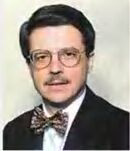
Speaker: If you need a moderator or speaker for an upcoming event, Dr. David E. Marcinko; MBA – Publisher-in-Chief of the Executive-Post – is available for seminar or speaking engagements. Contact: MarcinkoAdvisors@msn.com 

Get our Widget: Get this widget!

Our Other Print Books and Related Information Sources:

Practice Management: http://www.springerpub.com/prod.aspx?prod_id=23759

Physician Financial Planning: http://www.jbpub.com/catalog/0763745790

Medical Risk Management: http://www.jbpub.com/catalog/9780763733421

Healthcare Organizations: www.HealthcareFinancials.com

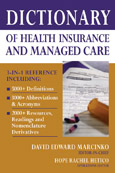
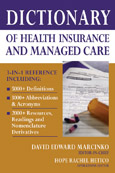
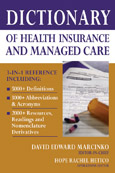
Health Administration Terms: www.HealthDictionarySeries.com

Physician Advisors: www.CertifiedMedicalPlanner.com

Subscribe Now: Did you like this Medical Executive-Post, or find it helpful, interesting and informative? Want to get the latest ME-Ps delivered to your email box each morning? Just subscribe using the link below. You can unsubscribe at any time. Security is assured.

Link: http://feeds.feedburner.com/HealthcareFinancialsthePostForcxos

Sponsors Welcomed

And, credible sponsors and like-minded advertisers are always welcomed.

Link: https://healthcarefinancials.wordpress.com/2007/11/11/advertise

Medical Negligence and the “Burden of Proof”

Understanding the Malpractice Trial Process

By Dr. Jay S. Grife; Esq, MAinsurance-book

In all civil trials, the plaintiff, as the accuser, has the burden of proving his case.  Much like a criminal defendant, a civil defendant has no burden and is presumed “innocent” of any claim by the plaintiff.  As a result, if the plaintiff presents no evidence, or insufficient evidence to support his claim, the defendant wins without having to present his case.  The burden the plaintiff carries is that he must prove his case by what is called a preponderance of the evidence.  In other words, the plaintiff must prove it is more likely than not that he should win.  The best way to visualize this burden is to imagine a set of scales.  If the scales are even, or tipped in favor of the defendant, then the plaintiff has not carried his burden, and loses.  In order to prevail, the plaintiff must tip the scales in his favor.

Proving Medical Malpractice

To prove a case of medical malpractice, a plaintiff-patient must present evidence that the defendant-doctor was negligent, and the plaintiff does this by proving the treatment provided was below the applicable standard of care.  The “standard of care” is the care and skill that a reasonably prudent practitioner would provide in treating a patient.  It is established by the medical community at large, and is constantly evolving.  Care that violates the standard of care today may not necessarily violate the standard of care several years ago.  This distinction is an important one, since most cases take several years to get to trial.  The standard of care is never based on the outcome of the case; a bad result does not necessarily mean a violation of the standard of care.

The Medical Expert Witnesses

Expert medical testimony is required to establish a violation of the standard of care in virtually all medical malpractice cases.  A plaintiff who fails to present the required expert medical testimony in a medical malpractice case will lose.  The plaintiff must also produce expert medical testimony that the alleged negligence caused the injury.

For example, suppose that a patient’s widow brings a medical malpractice case against a surgeon who admitted the patient for removal of an AO plate embedded in bone.  The plaintiff-widow alleges that the surgeon should have done something to prevent a pulmonary embolism, which occurred three days after the patient was dismissed from the hospital, killing him.  The patient might have an expert who would testify that she would not have removed the AO plate, but left it in place.  Such testimony does not carry the burden of proving care below the standard required of the surgeon.  Indeed, in most cases, the standard of care allows a practitioner to choose from a variety of treatment options within an acceptable range.  Mere testimony by an expert witness that “I would have treated this patient differently” is insufficient to establish a breach of the standard of care.  The bad result also is not itself proof of any negligence.  Nor is there any evidence that the doctor caused the patient’s death (i.e., that the embolism would not have occurred without the alleged negligence of the surgeon). Therefore, doctor wins on all elements.

Assessment

Have you ever been involved in a medical malpractice trial; or other healthcare litigation process? The Medical Executive-Post readers are interested in hearing your story.

Conclusion

And so, your thoughts and comments on this Medical Executive-Post are appreciated. Feel free to review our top-left column, and top-right sidebar materials, links, URLs and related websites, too. Then, be sure to subscribe to the ME-P. It is fast, free and secure.

Link: http://feeds.feedburner.com/HealthcareFinancialsthePostForcxos

Speaker: If you need a moderator or speaker for an upcoming event, Dr. David E. Marcinko; MBA – Publisher-in-Chief of the Executive-Post – is available for seminar or speaking engagements. Contact: MarcinkoAdvisors@msn.com  or Bio: www.stpub.com/pubs/authors/MARCINKO.htm

Get our Widget: Get this widget!

Our Other Print Books and Related Information Sources:

Practice Management: http://www.springerpub.com/prod.aspx?prod_id=23759

Physician Financial Planning: http://www.jbpub.com/catalog/0763745790

Medical Risk Management: http://www.jbpub.com/catalog/9780763733421

Healthcare Organizations: www.HealthcareFinancials.com

Health Administration Terms: www.HealthDictionarySeries.com

Physician Advisors: www.CertifiedMedicalPlanner.com

Subscribe Now: Did you like this Medical Executive-Post, or find it helpful, interesting and informative? Want to get the latest ME-Ps delivered to your email box each morning? Just subscribe using the link below. You can unsubscribe at any time. Security is assured.

Link: http://feeds.feedburner.com/HealthcareFinancialsthePostForcxos

Sponsors Welcomed

And, credible sponsors and like-minded advertisers are always welcomed.

Link: https://healthcarefinancials.wordpress.com/2007/11/11/advertise

Product Details  Product Details

Blogging Evolution of ME-P

Now a Group Publishing Platform

By Ann Miller; RN, MHA

[Executive Director]

Solo Man No Morewww.HealthcareFinancials.com, the Medical Executive-Post, has acquired a reputation as one of the most respected independent and investigative voices in the healthcare industrial and financial complex, today. And, we have been called an unbiased educator and leader in the latest medical management and technology trends, as well.


In the Beginning

Started in July 2007 and going “live” in October 2007, for most of our first year of existence, the ME-P was the almost exclusive domain of David Edward Marcinko. He published it under the auspices of iMBA Inc. But, a fortunate mix of increased consulting work, speaking engagements, teaching assignments www.CertifiedMedicalPlanner.com and aggregating industry definitions www.HealthDictionarySeries.com limited Dave’s time to write. Not to mention editing the third edition of our seminal print textbook in 2010, the Business of Medical Practice http://www.springerpub.com/prod.aspx?prod_id=23759; and keeping our quarterly premium, institutional e- journal Healthcare Organizations [Journal of Financial Management Strategies] www.HealthcareFinancials.com evolving; he is a busy guy … indeed.

Visits and Membership

Moreover, the growth of ME-P readership from a few each day to over 25,000 visits in January 2009, with the interest of other people in writing for us, has all meant that there will be less of Dave going forward and more of the many new [free-labor] authors we are recruiting for our ME-P readers.

And so, in June 2009, the ME-P officially became a participatory bog in which most authors (including Dave) will use their own bylines.

Our Material

The ME-P publishes mainly original material from many contributors (regular, or not) with links and permitted reprints, and with updates for modernity from our repository of electronic archives. Our style is prose, formal or informal, news, journalistic and/or investigative repotage with a hint of insider gossip. If you are interested in writing for us, take a look at our writer’s guidelines on the left side bar page. Consider entering our writing contest, too.

Managing Editor

Hope Hetico is the managing editor and handles business development. Requests for information about advertising should go to Edward. Ann Miller; is our Executive Director for all other concerns. With a flat-organizational structure, our email address remains the same for all of us: MarcinkoAdvisors@msn.com

Assessment

And, although Dave is not sure whether he should be happy or chagrined, we hope that readership will again double by the end of 2009.

Conclusion

And so, your thoughts and comments on this Medical Executive-Post are appreciated. Feel free to review our top-left column, and top-right sidebar materials, links, URLs and related websites, too. Then, be sure to subscribe to the ME-P. It is fast, free and secure.

Link: http://feeds.feedburner.com/HealthcareFinancialsthePostForcxos

Speaker: If you need a moderator or speaker for an upcoming event, Dr. David E. Marcinko; MBA – Publisher-in-Chief of the Executive-Post – is available for seminar or speaking engagements. Contact: MarcinkoAdvisors@msn.com  or Bio: www.stpub.com/pubs/authors/MARCINKO.htm

Get our Widget: Get this widget!

Our Other Print Books and Related Information Sources:

Practice Management: http://www.springerpub.com/prod.aspx?prod_id=23759

Physician Financial Planning: http://www.jbpub.com/catalog/0763745790

Medical Risk Management: http://www.jbpub.com/catalog/9780763733421

Healthcare Organizations: www.HealthcareFinancials.com

Health Administration Terms: www.HealthDictionarySeries.com

Physician Advisors: www.CertifiedMedicalPlanner.com

Subscribe Now: Did you like this Medical Executive-Post, or find it helpful, interesting and informative? Want to get the latest ME-Ps delivered to your email box each morning? Just subscribe using the link below. You can unsubscribe at any time. Security is assured.

Link: http://feeds.feedburner.com/HealthcareFinancialsthePostForcxos

Sponsors Welcomed

And, credible sponsors and like-minded advertisers are always welcomed.

Link: https://healthcarefinancials.wordpress.com/2007/11/11/advertise

About Timely Medical Alternatives; Inc

Understanding Canadian Health System Alternatives

By Staff Reporters

ObamaIn 2003, Timely Medical Alternatives Inc. was formed to help Canadians, on long medical waiting lists, to take personal responsibility for their own medical care and “Leave the queue” [the national healthcare system waiting-list].

Urgent Need

According to their website, the need for private medical services is thriving in Canada. The mission of Timely Medical Alternatives [TMA] is to accommodate Canadian’s needs for private medical services by providing them with options, referrals to hospitals, clinics and diagnostic imaging facilities.

Link: http://www.timelymedical.ca

Assessment

Timely Medical Alternatives, a PPO, says it is able to expedite most types of private medical services from diagnostics to virtually all types of surgery, including procedures not available within the Canadian healthcare system. Wait times for clients are measured in days rather than in months or years.

Link: www.HealthDictionarySeries.com

Sicko Alternative

The movie documentary Sicko was directed by Michael Moore in 2007. It compared the highly profitable American health care industry to other nations, and HMO horror stories

Link: www.michaelmoore.com

Conclusion

And so, your thoughts and comments on this Medical Executive-Post are appreciated. Please compare and contrast TMA to “Sicko”, our current domestic health system, and the Obama administration’s vision of national healthcare for the US; and opine .Feel free to review our top-left column, and top-right sidebar materials, links, URLs and related websites, too. Then, be sure to subscribe to the ME-P. It is fast, free and secure.

Link: http://feeds.feedburner.com/HealthcareFinancialsthePostForcxos

Speaker: If you need a moderator or speaker for an upcoming event, Dr. David E. Marcinko; MBA – Publisher-in-Chief of the Executive-Post – is available for seminar or speaking engagements. Contact: MarcinkoAdvisors@msn.com  or Bio: www.stpub.com/pubs/authors/MARCINKO.htm

Get our Widget: Get this widget!

Our Other Print Books and Related Information Sources:

Practice Management: http://www.springerpub.com/prod.aspx?prod_id=23759

Physician Financial Planning: http://www.jbpub.com/catalog/0763745790

Medical Risk Management: http://www.jbpub.com/catalog/9780763733421

Healthcare Organizations: www.HealthcareFinancials.com

Health Administration Terms: www.HealthDictionarySeries.com

Physician Advisors: www.CertifiedMedicalPlanner.com

Subscribe Now: Did you like this Medical Executive-Post, or find it helpful, interesting and informative? Want to get the latest ME-Ps delivered to your email box each morning? Just subscribe using the link below. You can unsubscribe at any time. Security is assured.

Link: http://feeds.feedburner.com/HealthcareFinancialsthePostForcxos

Sponsors Welcomed

And, credible sponsors and like-minded advertisers are always welcomed.

Link: https://healthcarefinancials.wordpress.com/2007/11/11/advertise

College for Financial Planning Credibility

Join Our Mailing List

Confusing Nomenclature? 

By Dr. David Edward Marcinko; MBA, CMP™

[Publisher-in-Chief]

dem2Recently, John H. Robinson – a Honolulu based independent and dual-registered financial advisor who holds a degree in economics from Williams College and who has written and published numerous professional papers – essentially challenged the credibility of the College for Financial Planning.

“Dr. [Somnath] Basu [PhD] is quite correct in pointing out that the College for Financial Planning is not academically accredited and there are no admissions standards other than a nominal three year industry experience standard (three years as a clerk in a brokerage firm will qualify). Mr. [Kevin] Keller [CEO-CFP BoS] defends the curriculum by stating that, “Topics include economic concepts such as supply and demand, fiscal and monetary policy, time-value of money concepts…” The mere fact that that no prior college level academic experience in finance is required is testament to the fact that the coursework is largely 101 level materials.

To illustrate this point by example, economics represents one small chapter of the Investments section of the CFP curriculum. In contrast, econometrics and statistics alone was a semester long 300 level course in my undergraduate economics studies. This is not to suggest that the CFP program does not provide adequate training and preparation for a career in financial planning, but to assert that the CFP designation trumps a graduate or even undergraduate degree in finance or economics is difficult to defend. This was my counterpoint to Mr. [Dan] Moisand’s bellicose labeling of non-CFP certificants as “faux planners”.

Source: http://www.fa-mag.com/online-extras/4037-revisiting-cfp-credentialing.html

Moreover, he stated that:

In fairness, some of Dr. Basu’s ideals on the educational standards for financial planning certification seem a bit extreme as well. For instance, I can’t imagine subjecting doctors, attorneys, or even business school professors to periodic recertification exams.”

Source: http://www.fa-mag.com/online-extras/4037-revisiting-cfp-credentialing.html

The Big Question

And so, the big question for financial advisors and Certified Financial Planners®: Is the College for Financial Planning, a college at all? Is it accredited and more importantly, who accredits it? If not; why not? And, was the name “college” purposely selected to obfuscate?

Moreover, and of more importance to our physician readers, FAs and ME-P subscribers: Do doctors, attorneys or business school professors need to periodically recertify themselves by examinations?

IOW: Is Mr. Robinson correct or not – in fact or meaning – on one or both accounts? How about Dan Moisand? Am I, or Mr. Robinson, a “faux” planner?

Assessment

A paper co-authored by Mr. Robinson, entitled, “Reality Check: The implications of sustainable withdrawal analysis on real world portfolios” was awarded the CFP Board of Standards’ 2008 Outstanding Paper Award. He does not hold the CFP® designation.

Disclosure

Among many other “hats”, I am a former licensed insurance agent, certified financial planner, board certified surgeon, visiting B-school professor, and current academic provost for the CMP™ online program in health economics and medical practice management for fiduciary consultants. Our goal is to “raise the bar” for all colleagues in this space.

Update 2013:

Recent:

Conclusion

Your thoughts and comments on this ME-P are appreciated. Feel free to review our top-left column, and top-right sidebar materials, links, URLs and related websites, too. Then, subscribe to the ME-P. It is fast, free and secure.

Link: http://feeds.feedburner.com/HealthcareFinancialsthePostForcxos

Speaker: If you need a moderator or speaker for an upcoming event, Dr. David E. Marcinko; MBA – Publisher-in-Chief of the Medical Executive-Post – is available for seminar or speaking engagements. Contact: MarcinkoAdvisors@msn.com

OUR OTHER PRINT BOOKS AND RELATED INFORMATION SOURCES:

Health Dictionary Series: http://www.springerpub.com/Search/marcinko

Practice Management: http://www.springerpub.com/product/9780826105752

Physician Financial Planning: http://www.jbpub.com/catalog/0763745790

Medical Risk Management: http://www.jbpub.com/catalog/9780763733421

Hospitals: http://www.crcpress.com/product/isbn/9781439879900

Physician Advisors: www.CertifiedMedicalPlanner.org

Product DetailsProduct DetailsProduct Details

Product Details  Product Details

Product DetailsProduct Details

Military Electronic Dental Records [eDRs]

US Defense Department Leads the Way

By Staff Reporters

MilitaryAccording to Peter Bauxbaum on May 13, 2009, the Defense Health Information Management System [DHIMS] is in the process of deploying AHLTA [Armed Forces Health Longitudinal Technology Application] Dental; a module eDR included with the new AHLTA 3.3 release.

It is the U.S. military’s first integrated dental and medical electronic health record.

Link: http://govhealthit.com/articles/2009/05/13/dod-electronic-dental-record.aspx?s=GHIT_190509

Assessment

And so, when will eHRs for osteopaths [eOsteoRs], podiatrists [ePodRs] and optometrists [eOptRs] become available? Is this an occasion when the military is an early HIT adopter?

Conclusion

Your thoughts and comments on this ME-P are appreciated. Feel free to review our top-left column, and top-right sidebar materials, links, URLs and related websites, too. Then, subscribe to the ME-P. It is fast, free and secure.

Link: http://feeds.feedburner.com/HealthcareFinancialsthePostForcxos

Speaker: If you need a moderator or speaker for an upcoming event, Dr. David E. Marcinko; MBA – Publisher-in-Chief of the Medical Executive-Post – is available for seminar or speaking engagements. Contact: MarcinkoAdvisors@msn.com

OUR OTHER PRINT BOOKS AND RELATED INFORMATION SOURCES:

DICTIONARIES: http://www.springerpub.com/Search/marcinko
PHYSICIANS: www.MedicalBusinessAdvisors.com
PRACTICES: www.BusinessofMedicalPractice.com
HOSPITALS: http://www.crcpress.com/product/isbn/9781466558731
CLINICS: http://www.crcpress.com/product/isbn/9781439879900
BLOG: www.MedicalExecutivePost.com
FINANCE: Financial Planning for Physicians and Advisors
INSURANCE: Risk Management and Insurance Strategies for Physicians

Product DetailsProduct Details

More On Attempted ME-Post Censorship

Return to Ethridge’s Hill

By Darrell K. Pruitt; DDSpruitt

For those who have stayed up late, here is a sneak preview of some upcoming action – hopefully attracting the best PR people BCBS of New Mexico can field – Becky Kenny and Ross Blackstone. 

ModernHealthcare.com – The Strong Arm? – NOT

You may or may not recall that about two months ago, Martin Ethridgehill, who once worked for BCBSNM, posted a comment on ModernHealthcare.com that was later removed as ordered by Becky Kenny – a PR specialist who represents the interests of BCBSNM. So what did Becky’s recently laid-off colleague say that justified field censorship? The title says it all:  “Don’t Rush eHRs Without Addressing Medical ID Theft.”  It attracted my attention before it attracted BCBSNM’s. They move slower than I do.

Blue Cross – Blue Shield 

Apparently, even though leaders of BCBS think caution might be prudent in paying Texas physicians for health care, the organization is not necessarily in favor of delaying the adoption of eHRs … or something like that. Maybe Jon Stewart will explain it some day for us on Comedy Central.

ME-P … Marcinko Does Not Fold 

And who is this Ross Blackstone? He’s a manly piece of PR. He tried to persuade Dr. David E. Marcinko, publisher of the ME-P, to remove my comment which is not a copy of Ethridgehill’s statement, but is a report on his statement. Blackstone learned that Marcinko doesn’t fold as easily as the publisher of ModernHealthcare.com folded to Becky Kenny’s demand. I bet she got nasty with them.

The Blackstone Video 

So who is Ross Blackstone? I’m trying to get away from posting links because they are so tedious. But you just have to watch “Ross Blackstone Reporter Resume” video on YouTube. 

http://www.youtube.com/watch?v=IuHBnNiYvcU

Assessment

“First they ignore you, then they attack you, and then you win”

-Mohandas Karamchand Gandhi

Conclusion

And so, your thoughts and comments on this Medical Executive-Post are appreciated.

Speaker: If you need a moderator or speaker for an upcoming event, Dr. David E. Marcinko; MBA – Publisher-in-Chief of the Executive-Post – is available for seminar or speaking engagements. Contact: MarcinkoAdvisors@msn.com  or Bio: www.stpub.com/pubs/authors/MARCINKO.htm

Get our Widget: Get this widget!

Our Other Print Books and Related Information Sources:

Practice Management: http://www.springerpub.com/prod.aspx?prod_id=23759

Physician Financial Planning: http://www.jbpub.com/catalog/0763745790

Medical Risk Management: http://www.jbpub.com/catalog/9780763733421

Healthcare Organizations: www.HealthcareFinancials.com

Health Administration Terms: www.HealthDictionarySeries.com

Physician Advisors: www.CertifiedMedicalPlanner.com

Subscribe Now: Did you like this Medical Executive-Post, or find it helpful, interesting and informative? Want to get the latest E-Ps delivered to your email box each morning? Just subscribe using the link below. You can unsubscribe at any time. Security is assured.

Link: http://feeds.feedburner.com/HealthcareFinancialsthePostForcxos

On Medical and Other Patient-Centric Specialty Homes

New Guidelines Released

By Dr. David Edward Marcinko; MBA, CMP™

[Publisher-in-Chief]

dem23According to Chris Silva, AMA News on May, 12 2009, new medical home guidelines have just been released.

Physician Input

Four physician organizations have developed new guidelines for medical home projects to ensure consistency and help define how a patient-centered home model should look. The 16 guidelines include recommendations on who should collaborate on the projects, how they should choose practices to participate, what type of support should be provided to practices, how practices should be reimbursed, and what each project should do to analyze and report results.

Link: http://www.ama-assn.org/amednews/2009/05/11/gvse0512.htm

Assessment

Physician groups hope clarity and consistency will lead to broader acceptance of the programs. But, what about mental health homes or dental homes; how about podiatry or optometric homes, etc? What about patient mobility?

Is this concept even viable given our increasingly mobile society? Or, is this philosophy fixed in the last century; especially in light of the Obama Administration’s HIT, and eHR initiatives? Was the fluid health 2.0 culture even considered? What are we missing?

Conclusion

Your thoughts and comments on this ME-P are appreciated. Feel free to review our top-left column, and top-right sidebar materials, links, URLs and related websites, too. Then, subscribe to the ME-P. It is fast, free and secure.

Speaker: If you need a moderator or speaker for an upcoming event, Dr. David E. Marcinko; MBA – Publisher-in-Chief of the Medical Executive-Post – is available for seminar or speaking engagements. Contact: MarcinkoAdvisors@msn.com

OUR OTHER PRINT BOOKS AND RELATED INFORMATION SOURCES:

Product Details

Selecting an Assisted-Living Facility

Join Our Mailing List

Checklist for Financial Planners

[By Staff Reporters]

Thousands of boarding homes cater to the elderly. Their operators promise to provide at least a place to sleep and food to eat. Beyond that, the services and assistance offered will vary from facility to facility. This checklist will help the financial planner or his or her client find a facility that is appropriate in all respects to the client’s resources and needs. Unlike nursing homes, assisted-living facilities often operate without any scrutiny from public agencies. Furthermore, Medicaid often will not be a source of funds.

The Checklist

The items the financial planner and client should consider when selecting a facility are listed below.

      1.   Determine the client’s willingness to live in a group environment.

      2.   Avoid unlicensed facilities, particularly if Medicaid-provided services may be needed in the future.

      3.   Review the facility’s inspection report.

      4.   Review the facility’s service contract and house rules. Look for answers to the following questions:

            a.         Where will the resident live?

                        Are there any types of ownership rights?

                        What flexibility is there with respect to furnishings?

                        Will the same unit be available after a hospital stay?

            b.         What meals are included?

                        Will the facility provide appropriate meals and a special diet?

            c.         What form of transportation does the resident currently use?

                        What transportation is provided by the facility?

                        Can residents shop, dine, attend services or visit doctors?

            d.         What help does the facility provide during a medical emergency?

                        What type of staff training is provided or required? Is there 24-                        hour-a-day staffing?

            e.         What provisions are there for privacy? When are rooms cleaned and when can staff access the rooms?

            f.          What is the basic cost and what are the costs for extras?

                        What is included in each?

                        What provisions for fee increases are there?

            g.         Can a resident see his or her own doctor?

                        Does the facility offer transportation for appointments?

            h.         Who’s in charge of administering and scheduling medication?

                        Can medication and other supplies be purchased at the facility?

            i.          What happens if the resident’s health begins to fail?

                        Does the facility provide additional services to help with ADLs?

            j.          What is the procedure for transfers from one unit to another?

                        Does the resident have any opportunity to express an opinion?

            k.         What’s required if a contract is terminated by facility or resident?

                        What is the provision with respect to refunded fees?

                        Is there a required minimum stay?

Assessment

What have we missed?

Conclusion

Your thoughts and comments on this ME-P are appreciated. Feel free to review our top-left column, and top-right sidebar materials, links, URLs and related websites, too. Then, subscribe to the ME-P. It is fast, free and secure.

Link: http://feeds.feedburner.com/HealthcareFinancialsthePostForcxos

Speaker: If you need a moderator or speaker for an upcoming event, Dr. David E. Marcinko; MBA – Publisher-in-Chief of the Medical Executive-Post – is available for seminar or speaking engagements. Contact: MarcinkoAdvisors@msn.com

OUR OTHER PRINT BOOKS AND RELATED INFORMATION SOURCES:

DICTIONARIES: http://www.springerpub.com/Search/marcinko
PHYSICIANS: www.MedicalBusinessAdvisors.com
PRACTICES: www.BusinessofMedicalPractice.com
HOSPITALS: http://www.crcpress.com/product/isbn/9781466558731
CLINICS: http://www.crcpress.com/product/isbn/9781439879900
BLOG: www.MedicalExecutivePost.com
FINANCE: Financial Planning for Physicians and Advisors
INSURANCE: Risk Management and Insurance Strategies for Physicians and Advisors

Product DetailsProduct DetailsProduct Details

Product Details  Product Details

Defining and Understanding “Boutique Medicine”

What it is – How it Works

img_0566

By Dr. David Edward Marcinko MBA 

http://www.CertifiedMedicalPlanner.org

According to colleague Robert James Cimasi of Health Capital Consultants LLC in St. Louis MO, concierge or boutique medical practices began in the mid-1970s, and are now in many major metropolitan areas. Concierge medicine is described as a “return to old-fashioned medicine,” where physicians limit their client base and devote more time to each patient. Patients can usually get in to see their physician within a day, and most have 24-hour access to their physician by beeper or cell phone.

The Doctor’s Perspective

Physicians who turn to concierge medicine are typically tired of not having enough time with their patients and dealing with overbooked caseloads, and are looking for a way of balancing their lives while still providing quality care for their patients. Patients who have physicians in this type of practice appreciate the “perks” they get for paying a yearly fee — similar to “annual membership dues.” These fees can range anywhere from $1,000 per year to $10,000 per year depending on the patient’s age, benefits received, area of the country, and practice.

Patient Amenities

Amenities vary by practice, but some include longer physician office visits, increased access to physicians, e-mailed “newsletters” or condition-specific information, physicians accompanying patients on visits to specialists, and house calls. In order to provide more attentive care and amenities to patients, physicians often decrease their patient load to approximately 10-25% of their managed care load. Thus, most of their patients must find other physicians, leading to potential increases in the patient load of managed care physicians.

Elitist Patients

Although concierge medicine may provide many benefits for patients (including more, and in some cases, nearly unlimited access to their physicians), it has been met with some scrutiny. Some say that this type of medicine is elitist, that it is available only to wealthy patients who can pay the annual fees. Medicare beneficiaries who are members of a concierge practice have received political attention, because many politicians have said that the annual fees patients pay is a lot more than the Medicare rate and thus is illegal billing.

dhimc-book23

Critics

Critics also emphasize that healthcare needs to be first-rate for everyone, something that the current managed care system prevents. The implication that managed care means second-class medicine has also been a fear cited by critics.

Assessment

However, concierge physicians portray their clients as mostly middle-income people who are willing to pay more for this kind of care. Concierge medicine is not a substitute for health insurance. Patients typically keep their traditional insurance to pay for any tests or scans ordered by the physician.

MORE: https://medicalexecutivepost.com/2009/10/26/customer-relationship-management-and-the-nascent-concierge-medical-practice/

MORE: https://medicalexecutivepost.com/2009/10/26/customer-relationship-management-and-the-nascent-concierge-medical-practice/

Conclusion

Your thoughts and comments on this ME-P are appreciated. Feel free to review our top-left column, and top-right sidebar materials, links, URLs and related websites, too. Then, subscribe to the ME-P. It is fast, free and secure.

Link: http://feeds.feedburner.com/HealthcareFinancialsthePostForcxos

Speaker: If you need a moderator or speaker for an upcoming event, Dr. David E. Marcinko; MBA – Publisher-in-Chief of the Medical Executive-Post – is available for seminar or speaking engagements. Contact: MarcinkoAdvisors@msn.com

OUR OTHER PRINT BOOKS AND RELATED INFORMATION SOURCES:

LEXICONS: http://www.springerpub.com/Search/marcinko
PHYSICIANS: www.MedicalBusinessAdvisors.com
PRACTICES: www.BusinessofMedicalPractice.com
HOSPITALS: http://www.crcpress.com/product/isbn/9781466558731
CLINICS: http://www.crcpress.com/product/isbn/9781439879900
ADVISORS: www.CertifiedMedicalPlanner.org
BLOG: www.MedicalExecutivePost.com

Product DetailsProduct DetailsProduct Details

Product Details 

Invite Dr. Marcinko

***

Become a Published Print Author with Us

The Business of Medical Practice [3rd Edition]

By Hope Rachel Hetico RN, MHA, CMP™

[Managing Editor]biz-book7

Dear Colleagues,

As you may know, we are commencing work on the third edition of our best selling book: The Business of Medical Practice

TOC 1st: http://www.amazon.com/Business-Medical-Practice-Maximizing-Doctors/dp/0826113117/ref=sr_1_8?ie=UTF8&s=books&qid=1231111232&sr=1-8

TOC 2nd: http://www.springerpub.com/prod.aspx?prod_id=23759

Invitation to Contribute

Accordingly, we would be honored for you to consider contributing a new or revised chapter, in your area of expertise, for a low-effort but high-yield contribution. Our goal is to help physician colleagues and management executives benefit from nationally known experts, as an essential platform for their success in the healthcare 2.0 business industry. Many topics are still available: [health accounting and costing; law, policy and administration; Medicare fraud and abuse; coding and insurance; HIT, grid and cloud computing; finance and economics, competitive models, collaboration and leadership, etc].

Support Always Available

Editorial support is available, and you would enjoy increasing subject-matter notoriety, exposure and public relations in an erudite and credible fashion. As a reader, or preferably a subscriber to the ME-P, your synergy in this space may be ideal. Time line for submission of a 5,000-7,500 word chapter is ample, and in a prose writing style that is “wide, not deep.” 

A Health 2.0 Initiative

And, be sure to address health 2.0 modernity. Update chapters from the second edition are also available. 

Definition: https://healthcarefinancials.wordpress.com/2008/09/12/emerging-healthcare-20-initiatives

Assessment

Please contact me for more details, if interested. A best selling-book is rare; while a third-edition volume even more so. Join us in this project. Regardless, we trust you will remain apostles of our core ME-P vision, “uniting medical mission and financial profit margin”, promoting it whenever possible.

Front Matter Link: frontmatter1advancedbusinessmedicine4 

Contact Info:

MarcinkoAdvisors@msn.com

770.448.0769

Conclusion

Your thoughts and comments on this ME-P are appreciated. Feel free to review our top-left column, and top-right sidebar materials, links, URLs and related websites, too. Then, subscribe to the ME-P. It is fast, free and secure.

Link: http://feeds.feedburner.com/HealthcareFinancialsthePostForcxos

Speaker: If you need a moderator or speaker for an upcoming event, Dr. David E. Marcinko; MBA – Publisher-in-Chief of the Medical Executive-Post – is available for seminar or speaking engagements. Contact: MarcinkoAdvisors@msn.com

OUR OTHER PRINT BOOKS AND RELATED INFORMATION SOURCES:

About Certified Medical Planner™


SPONSOR NOTICE


Top 10 Reasons to Become a

Certified Medical Planner™


1. Expertise: Provide health economics, business and financial advice to physicians.

2. Credibility: Gain health industry recognition and fiduciary clout.

3. Opportunity: Focus on the lucrative and expanding physician advisory niche.

4. Recognition: Join a select group of advisory experts.

5. Distinction: Become quality; rather than product driven.

6. Achievement: 500 hours of financial, health economics and management education.

7. Evidence: Validate deep healthcare industry knowledge.

8. Resource: CMP™ text and hand books, dictionaries, and institutional print journal.

9. Distinction: Set yourself apart with our chartered logo and trade-mark identity.

10. Commitment: Become the “go-to” financial advisor for all medical professionals.


www.CertifiedMedicalPlanner.com


cmp-logo3

 Speaker: If you need a moderator or speaker for an upcoming event, Dr. David E. Marcinko; MBA – Publisher-in-Chief of the Executive-Post – is available for seminar or speaking engagements. Contact: MarcinkoAdvisors@msn.com  or Bio: www.stpub.com/pubs/authors/MARCINKO.htm

Get our Widget: Get this widget!

Subscribe Now: Did you like this Medical Executive-Post, or find it helpful, interesting and informative? Want to get the latest ME-Ps delivered to your email box each morning? Just subscribe using the link below. You can unsubscribe at any time. Security is assured.

Link: http://feeds.feedburner.com/HealthcareFinancialsthePostForcxos

Military Health System Records

Expanding PHR Pilot Testing

By Staff Reporterscomputer-hardware2

According to Paul McCloskey, on April 08, 2009, the Military Health System [MHS] will extend its test of personal health records at Madigan Army Medical Center in Tacoma, Wash., to two additional health care venues in an attempt to test the technology in larger populations and more diverse care settings.

MiCare PHR Focus

The new projects will focus on using the MiCare Personal Health Record [PHR] as a tool for care coordination and a mechanism for patients to share health records across a mix of military and commercial providers and payer organizations, according to Col. Keith Salzman, chief of informatics at Madigan, which is hosting a pilot test of MHS’ MiCare PHR.

Assessment

Link: http://govhealthit.com/articles/2009/04/08/phr-pilot-testing.aspx?s=GHIT_140409

Conclusion

And so, your thoughts and comments on this Medical Executive-Post are appreciated? Feel free to review our top-left column, and top-right sidebar materials, links, URLs and related websites, too. Then, be sure to subscribe to this ME-P. It is fast, free and secure.

Link: http://feeds.feedburner.com/HealthcareFinancialsthePostForcxos

Speaker: If you need a moderator or speaker for an upcoming event, Dr. David E. Marcinko; MBA – Publisher-in-Chief of the Executive-Post – is available for seminar or speaking engagements. Contact: MarcinkoAdvisors@msn.com  or Bio: www.stpub.com/pubs/authors/MARCINKO.htm

Get our Widget: Get this widget!

Our Other Print Books and Related Information Sources:

Practice Management: http://www.springerpub.com/prod.aspx?prod_id=23759

Physician Financial Planning: http://www.jbpub.com/catalog/0763745790

Medical Risk Management: http://www.jbpub.com/catalog/9780763733421

Healthcare Organizations: www.HealthcareFinancials.com

Health Administration Terms: www.HealthDictionarySeries.com

Physician Advisors: www.CertifiedMedicalPlanner.com

Subscribe Now:Did you like this Medical Executive-Post, or find it helpful, interesting and informative? Want to get the latest ME-Ps delivered to your email box each morning? Just subscribe using the link below. You can unsubscribe at any time. Security is assured.

Link: http://feeds.feedburner.com/HealthcareFinancialsthePostForcxos


HO-JFMS-CD-ROM

   www.HealthcareFinancials.com    

On Continuity of Medical Care and HIMSS

Join Our Mailing List

Considering Pay-for-Retention [P-4-R]

By Darrell K Pruitt; DDSpruitt5

Here is the question on lots of minds these days; how can we change the way medical providers are paid so they are both incentivized and adequately compensated to provide consistent, high-quality, patient-centered medical homes?

My Novel Idea

Here is a solid, common sense idea; increase providers’ pay gradually according to how long the doctors retain patients – who are free to choose any doctor they wish.  Consistency is the mortar of a medical home [i.e., pay-4-retention]. 

An Ounce of Prevention 

If prevention, which predates eHRs by thousands of years, is more than just a modern buzzword, the nation can still shave much more expense from health care by promoting continual, personalized care for consumers than from digital health records alone – void of prevention incentives. Who in the audience still cannot understand that concept? Think of it this way. How do business leaders in the land of the free retain the best employees? They pay bonuses. Even waiters get tips to encourage interest in providing service consumers will return for. What do US physicians get?  Guaranteed cuts in their Medicaid payments over the next decade. Physicians no longer encourage their children to become doctors. Surprised? Scared? 

Consumers Should Rule 

In place of consumers ruling their healthcare in the US, well-positioned, giant stakeholders have persuaded lawmakers to offer physicians bonus money (that will later be taken away), not for curing patients, but for using digital records “in a meaningful manner.” It’s called “Mark and Michael Leavitts’ Clicking for Cash.”  Since the rules are made up along the way, they change like the weather. That is why the larger and more progressive medical facilities pay bonuses to retain their best “Coders” and other informatics specialists who keep up with the current Ingenix-styled games in order to maximize profits. It is my opinion that health care IT’s complexity works well with the economic stimulus plan to improve employment in the nation. Entrepreneurial stakeholders will continue to be movie-star popular right up until the complete collapse of Medicare.  Then they’ll be impossible to find www.HealthDictionarySeries.com

HIMSS 

Have you ever heard of HIMSS?

“The Healthcare Information and Management Systems Society (HIMSS) is the healthcare industry’s membership organization exclusively focused on providing leadership for the optimal use of healthcare information technology (IT) and management systems for the betterment of healthcare.”

– From the HIMSS Web site.

HIMSS Annual Meeting 

A week ago, HIMSS convened its annual convention in Chicago. The keynote speakers for the four day event were actor Dennis Quaid; followed by the Chairman and CEO of Kaiser Foundation Health Plan, George C. Halvorson; then the economist and former Chairman, Board of Governors of the Federal Reserve, Alan Greenspan, and finally; Jerry M. Linenger, MD, MSSM, MPH, PhD, Captain, Medical Corps, USN (Ret.), NASA Astronaut, and Space Analyst, NBC News. As one can tell, healthcare IT has lots of momentum. In fact, Dave Roberts, the HIMSS vice president for government relations confidently told Bob Brewin on NextGov.com

“The e-records initiative is an entitlement program like Social Security.” 

http://www.nextgov.com/nextgov/ng_20090406_1509.phpdhimc-book9

Another Entitlement Program – Entitlement for Whom

In Regina Herzlinger’s 2007 book “Who Killed Health Care?” the Harvard School of Business professor argues that entitled stakeholders, including a few ambitious members of HIMSS, are destroying health care in the name of reform. In the first half of her 260 page book, she spells out entrepreneurial malfeasance in simple well-annotated terms. In the last half, she describes why Consumer-Driven Health Care [CDHC] makes sense to her. Professor Herzlinger does not specifically mention the words “medical home” in her book, yet she emphasizes the importance of continuity of care. To promote continuity, she suggests that managed care insurance policies be extended to three years duration and longer.  Although she also does not mention dentistry, it is obvious to me that since chronic illnesses like diabetes are exacerbated by poor oral health, continuity of care in dentistry is of special importance.  It occasionally takes years to improve some patients’ oral health care. And sometimes we fail.

Assessment 

If these assumptions about continuity of care are accurate, it follows that the physical and economic health of the nation depends on long-term medical insurance contracts with employers and freedom-of-choice in providers. So is prevention worth holding ourselves accountable to consumers for once? Maybe it is just me, but I think unprecedented truth in healthcare will soon emerge regardless of stakeholders’ needs for confusion and obscurity.  It is called consumerism.  And it goes hand-in-hand with the Hippocratic Oath, the free-market and common sense.

Conclusion

Your thoughts and comments on this ME-P are appreciated. Feel free to review our top-left column, and top-right sidebar materials, links, URLs and related websites, too. Then, subscribe to the ME-P. It is fast, free and secure.

Link: http://feeds.feedburner.com/HealthcareFinancialsthePostForcxos

Speaker: If you need a moderator or speaker for an upcoming event, Dr. David E. Marcinko; MBA – Publisher-in-Chief of the Medical Executive-Post – is available for seminar or speaking engagements. Contact: MarcinkoAdvisors@msn.com

OUR OTHER PRINT BOOKS AND RELATED INFORMATION SOURCES:

Health Dictionary Series: http://www.springerpub.com/Search/marcinko

Practice Management: http://www.springerpub.com/product/9780826105752

Physician Financial Planning: http://www.jbpub.com/catalog/0763745790

Medical Risk Management: http://www.jbpub.com/catalog/9780763733421

Hospitals: http://www.crcpress.com/product/isbn/9781439879900

Physician Advisors: www.CertifiedMedicalPlanner.org

Product DetailsProduct DetailsProduct Details

Product Details  Product Details

Product DetailsProduct Details

Defining Comparative Medical Effectiveness

An Emerging Health Economics Issue

By Staff Reportersdhimc-book8

Comparative Medical Effectiveness [CME] is not a new healthcare term or health economics concept. Federal initiatives specifically promoting CME were authorized under the Medicare Modernization Act of 2003, but the genesis took root decades before.

Finally … a Hot Topic

Comparative Medical Effectiveness has recently become a hot topic again throughout the arena of health care stakeholders, due to funding and initiatives advanced by the Obama administration, and the positive and negative reactions drawn by different sectors of stakeholders.

Related to Evidence Based Outcomes

For stakeholders including numerous health care policy organizations, the health plan industry, and various health care provider organizations: public and private promotion of Comparative Medical Effectiveness reviews and processes offer the potential for more evidence-based, outcome-benefit or even cost-benefit driven information to improve the health care decision making for all parties. And, for stakeholders concerned about limiting the role of government and third parties in their level of regulation and control over the direct delivery of specific patient care, Comparative Medical Effectiveness may become a lightening rod due to perceived potential as to how the process and information could ultimately be applied.

Definition of the CBO Report

The Congressional Budget Office Report “Comparative Effectiveness: Issues and Options for an Expanded Federal Role” offers the definition that follows:

“As applied in the health care sector, an analysis of comparative medical effectiveness is simply a rigorous evaluation of the impact of different options that are available for treating a given medical condition for a particular set of patients. Such a study may compare similar treatments, such as competing drugs, or it may analyze very different approaches, such as surgery and drug therapy. The analysis may focus only on the relative medical benefits and risks of each option, or it may also weigh both the costs and the benefits of those options. In some cases, a given treatment may prove to be more effective clinically or more cost-effective for a broad range of patients, but frequently a key issue is determining which specific types of patients would benefit most from it. Related terms include cost–benefit analysis, technology assessment, and evidence-based medicine, although the latter concepts do not ordinarily take costs into account.”

Assessment

For related financial, economics, managed-care, insurance, health information technology and security, and health administrative terms and definitions of modernity, visit: http://www.springerpub.com/Search/marcinko

Conclusion

And so, your thoughts and comments on this Medical Executive-Post are appreciated. How do you define this term, and is its’ very definition evolving?

Health Dictionary Series: http://www.springerpub.com/Search/marcinko

Practice Management: http://www.springerpub.com/product/9780826105752

Physician Financial Planning: http://www.jbpub.com/catalog/0763745790

Medical Risk Management: http://www.jbpub.com/catalog/9780763733421

Hospitals: http://www.crcpress.com/product/isbn/9781439879900

Physician Advisors: www.CertifiedMedicalPlanner.org

Product DetailsProduct DetailsProduct Details      

More about Healthcare Organizations [Financial Management Strategies]

Our Print-Journal Preface

By Hope Rachel Hetico; RN, MHA, CMP™hetico1

As Managing Editor of a two volume – 1,200 pages – premium quarterly print journal, I am often asked about our Preface.

A Two-Volume Guide

As so, our hope is that Healthcare Organizations: [Financial Management Strategies] will shape the hospital management landscape by following three important principles.

What it is – How it works

1. First, we have assembled a world-class editorial advisory board and independent team of contributors and asked them to draw on their experience in economic thought leadership and managerial decision making in the healthcare industrial complex. Like many readers, each struggles mightily with the decreasing revenues, increasing costs, and high consumer expectations in today’s competitive healthcare marketplace. Yet, their practical experience and applied operating vision is a source of objective information, informed opinion, and crucial information for this manual and its quarterly updates.

2. Second, our writing style allows us to condense a great deal of information into each quarterly issue.  We integrate prose, applications and regulatory perspectives with real-world case models, as well as charts, tables, diagrams, sample contracts, and checklists.  The result is a comprehensive oeuvre of financial management and operation strategies, vital to all healthcare facility administrators, comptrollers, physician-executives, and consulting business advisors.

3. Third, as editors, we prefer engaged readers who demand compelling content. According to conventional wisdom, printed manuals like this one should be a relic of the past, from an era before instant messaging and high-speed connectivity. Our experience shows just the opposite.  Applied healthcare economics and management literature has grown exponentially in the past decade and the plethora of Internet information makes updates that sort through the clutter and provide strategic analysis all the more valuable. Oh, it should provide some personality and wit, too! Don’t forget, beneath the spreadsheets, profit and loss statements, and financial models are patients, colleagues and investors who depend on you.ho-journal9

www.HealthcareFinancials.com

Assessment

Rest assured, Healthcare Organizations: [Financial Management Strategies] will become an important peer-reviewed vehicle for the advancement of working knowledge and the dissemination of research information and best practices in our field. In the years ahead, we trust these principles will enhance utility and add value to your subscription. Most importantly, we hope to increase your return on investment [ROI] in some small increment.

Visit and Order Now

Specialty Technical Publishers

8 – 14th Street

Blaine, WA 98230

1-800-251-0381

orders@stpub.com

http://www.stpub.com/pubs/ho.htm

TOC: http://www.stpub.com/pdfs/toc_ho.pdf

Conclusion

And so, your thoughts and comments on this Medical Executive-Post, complimentary e-companion are appreciated. If you would like to contribute material or suggest topics for a future update, please contact me. Subscribers, have we attained our goals and objectives, as a work-in-progress in this preface statement?

Link: http://feeds.feedburner.com/HealthcareFinancialsthePostForcxos

Speaker: If you need a moderator or speaker for an upcoming event, Dr. David E. Marcinko; MBA – Publisher-in-Chief of the Executive-Post – is available for seminar or speaking engagements. Contact: MarcinkoAdvisors@msn.com  or Bio: www.stpub.com/pubs/authors/MARCINKO.htm

Get our Widget: Get this widget!

Our Other Print Books and Related Information Sources:

Practice Management: http://www.springerpub.com/prod.aspx?prod_id=23759

Physician Financial Planning: http://www.jbpub.com/catalog/0763745790

Medical Risk Management: http://www.jbpub.com/catalog/9780763733421

Healthcare Organizations: www.HealthcareFinancials.com

Health Administration Terms: www.HealthDictionarySeries.com

Physician Advisors: www.CertifiedMedicalPlanner.com

Subscribe Now: Did you like this Medical Executive-Post, or find it helpful, interesting and informative? Want to get the latest E-Ps delivered to your email box each morning? Just subscribe using the link below. You can unsubscribe at any time. Security is assured.

Link: http://feeds.feedburner.com/HealthcareFinancialsthePostForcxos

Social Media in Health 2.0

Join Our Mailing List

Emerging Collaborative Trends

[By Staff Reporters]

stk166326rkeAll readers of the ME-P are aware that social media is going to play a significant role in health 2.0 initiatives going forward.

Social Media Use Growing

According to Dan Bowman of FierceHealthIT, on April 3, 2009, whether we want it to happen or not, social media – much like mobile technology – is going to play a big role in the future of healthcare. From professional networks, to collaborative consumer media and doctor rating websites, healthcare professionals across the nation are jumping on the bandwagon. And, with the federal government pushing physicians’ offices to utilize electronic medical records, it is only a matter of time before healthcare make a concerted push into social media, as well.

Publishers and Editors

“As a medical, practice management and health economics writer for almost four decades, I appreciated how electronic connectivity and social media facilitates communication in a quick and effective manner, and allows broadcast to large groups of people”

Dr. David Edward Marcinko; MBA

[ME-P Publisher-in-Chief]

The Research

A Manhattan Research survey found that 60 million US healthcare consumers use social media to find healthcare information online. A similar survey found that 60 percent of physicians are interested in, or are already using physician social networks. That same study concluded that “physicians who are currently participating in online physician communities and social networks write a mean of 24 more prescriptions a week than” their more old-fashioned counterparts.

Assessment

Of course, more Rxs – or more medical care for that matter – is not a quality indicator at all. Nevertheless, social media is not to be taken lightly.

Link: http://www.fiercehealthit.com/tags/ozmosis?utm_medium=nl&utm_source=internal&cmp-id=EMC-NL-FHI&dest=FHI

Conclusion

Your thoughts and comments on this ME-P are appreciated. Feel free to review our top-left column, and top-right sidebar materials, links, URLs and related websites, too. Then, subscribe to the ME-P. It is fast, free and secure.

Speaker: If you need a moderator or speaker for an upcoming event, Dr. David E. Marcinko; MBA – Publisher-in-Chief of the Medical Executive-Post – is available for seminar or speaking engagements. Contact: MarcinkoAdvisors@msn.com

OUR OTHER PRINT BOOKS AND RELATED INFORMATION SOURCES:

Product Details

*** 

NCHIT’s Bob Kolodner to Retire

National Co-ordinator of Heath IT Exits

By Staff Reportersstk166610rke

According to Government Health IT [HIMSS publication] and Paul McCloskey, Dr. Robert Kolodner, National Coordinator of Heath IT [NCHIT], said he would retire from federal service after a 30-year career during which he led the effort to build a working foundation for national health information sharing.

Enter David Blumenthal, MD

Kolodner will retire once his successor, Dr. David Blumenthal, was ready to take over the office. He will explore a range of opportunities for working in health IT after leaving government.

Assessment

Link: http://govhealthit.com/articles/2009/04/06/kolodner-to-retire-from-federal-government.aspx?s=GHIT_070409

Conclusion

And so, your thoughts and comments on this Medical Executive-Post are appreciated? What do you think of the Kolodner era and legacy? Feel free to review our top-left column, and top-right sidebar materials, links, URLs and related websites, too. Then, be sure to subscribe to the ME-P. It is fast, free and secure.

Link: http://feeds.feedburner.com/HealthcareFinancialsthePostForcxos

Speaker: If you need a moderator or speaker for an upcoming event, Dr. David E. Marcinko; MBA – Publisher-in-Chief of the Executive-Post – is available for seminar or speaking engagements. Contact: MarcinkoAdvisors@msn.com  or Bio: www.stpub.com/pubs/authors/MARCINKO.htm

Get our Widget: Get this widget!

Our Other Print Books and Related Information Sources:

Practice Management: http://www.springerpub.com/prod.aspx?prod_id=23759

Physician Financial Planning: http://www.jbpub.com/catalog/0763745790

Medical Risk Management: http://www.jbpub.com/catalog/9780763733421

Healthcare Organizations: www.HealthcareFinancials.com

Health Administration Terms: www.HealthDictionarySeries.com

Physician Advisors: www.CertifiedMedicalPlanner.com

Subscribe Now: Did you like this Medical Executive-Post, or find it helpful, interesting and informative? Want to get the latest ME-Ps delivered to your email box each morning? Just subscribe using the link below. You can unsubscribe at any time. Security is assured.

Link: http://feeds.feedburner.com/HealthcareFinancialsthePostForcxos

Hospital Non-Profit Care and Community Benefits

The IRS Sounds-Off 

Staff Reportersstk212064rke

According to the Internal Revenue Service [IRS], a survey of nearly 500 not-for-profit hospitals in 2006 revealed that 9 percent total revenues were dedicated to community benefit. The just finalized 2006 report warned that attempts to set a percentage threshold for determining compliance may have a

“disproportionate impact on hospitals, depending upon their size, where they are located their community benefit mix, and other hospital and community demographics.”

Link: http://greisguide.com/?p=1059

Definition

The current “community benefit” standard was established by the IRS in 1969 in Revenue Ruling 69-545.  The standard sets out factors to be considered in measuring community benefit, including: (i) a board made up of a broad base of community members; (ii) an open medical staff; (iii) participation in Medicare and Medicaid; (iv) application of surplus funds toward improving facilities, equipment, patient care, medical training, research, and education; and (v) a full-time emergency room open to all regardless of ability to pay (the emergency room standard applies differently to tax-exempt Long Term and Acute Care Hospitals [LTACH] that do not maintain a full array of emergency department services).  Under the current community benefit standard, individual hospitals are given flexibility to determine what services will-best serve their communities.

www.HealthDictionarySeries.com 

dhimc-book2

Assessment

Some pundits suggest that if Congress doesn’t establish new charity care requirements, the IRS should revert to its community benefit standard last in force in 1969.

Interim Report: http://greisguide.com/wp-content/uploads/2009/02/eo_interim_hospital_report_072007.pdf

Conclusion

And so, your thoughts and comments on this Medical Executive-Post are appreciated? Then, subscribe to the ME-P. It is fast, free and secure.

Link: http://feeds.feedburner.com/HealthcareFinancialsthePostForcxos

Speaker: If you need a moderator or speaker for an upcoming event, Dr. David E. Marcinko; MBA – Publisher-in-Chief of the Executive-Post – is available for seminar or speaking engagements. Contact: MarcinkoAdvisors@msn.com  or Bio: www.stpub.com/pubs/authors/MARCINKO.htm

Get our Widget: Get this widget!

Our Other Print Books and Related Information Sources:

Practice Management: http://www.springerpub.com/prod.aspx?prod_id=23759

Physician Financial Planning: http://www.jbpub.com/catalog/0763745790

Medical Risk Management: http://www.jbpub.com/catalog/9780763733421

Healthcare Organizations: www.HealthcareFinancials.com

Health Administration Terms: www.HealthDictionarySeries.com

Physician Advisors: www.CertifiedMedicalPlanner.com

Subscribe Now: Did you like this Medical Executive-Post, or find it helpful, interesting and informative? Want to get the latest ME-Ps delivered to your email box each morning? Just subscribe using the link below. You can unsubscribe at any time. Security is assured.

Link: http://feeds.feedburner.com/HealthcareFinancialsthePostForcxos

Inspect our 2-Volume Hospital Print Guide [for Free]

ADVETISEMENT

Evaluate “Healthcare Organizations” [Financial Management Strategies] AND Order Now!

By Dr. David Edward Marcinko; MBA

By Professor Hope Rachel Hetico; RN, MHA

[Editor and Managing Editor]ho-journal10

As healthcare continues to evolve, leaders and executives have the formidable and immediate challenge of creating both short-term and long-term financial strategies. Given that today’s knowledge-base is different from that of even six-months ago, and the need is for solutions to tomorrow’s economic problems, success seems always just beyond your grasp!

Why Subscribe?

But fortunately, you can be ready; Healthcare Organizations: [Financial Management Strategies] is your blueprint for success. To ensure your organization’s competitive edge and perhaps even its survival, you must quickly gain the financial management tools and techniques necessary to lead in the 21st century. What you learn and implement using this Guide enables you to respond proactively to the rapidly changing healthcare environment. Your subscription to Healthcare Organizations: [Financial Management Strategies] not only helps you lead, it brings together healthcare executives and visionary thought leaders to help you develop essential models and successful financial management strategies, going forward.

www.HealthcareFinancials.com

Subscription Support

Specialty Technical Publishers is pleased to provide customer information and support services for Healthcare Organizations: [Financial Management Strategies] by phone, fax, or e-mail. Customer information services hours are between 7 am and 5 pm Pacific Standard Time; or http://www.stpub.com/pubs/custinfo.htm
Testimonials

“This well-organized financial management guide is easy to use and perfect for the healthcare organization, hospital or clinic manager; CFO, CEO, administrator or comptroller; CNO, CMO or physician-executive  who is tasked with developing, implementing and extending a comprehensive (and integrated) financial, accounting, health economics and enterprise-wide business management program.”

Operating Room Supervisor

Hospital Administrator

Baltimore, Maryland

Assessment 

For today … for tomorrow … for all healthcare organizations … for you! Remember, the Guide is available on a 30-day, risk-free trial. You may contact http://www.STPub.com at (604) 983-3434, fax (604) 983-3445, or e-mail at custinfo@stpub.com to place an order, or ask questions regarding pricing and/or availability. All shipments arrive within 5 to 10 days. Prepayment is required for all international shipments and a courier charge will be added to the subscription price. After hours, we suggest you review the STP website FAQs section for answer to your inquiry: www.stpub.com/pubs/custinfo.htm

Specialty Technical Publishers

8 – 14th Street

Blaine, WA 98230

1-800-251-0381 

orders@stpub.com

http://www.stpub.com/pubs/ho.htm

TOC: http://www.stpub.com/pdfs/toc_ho.pdf

Speaker: If you need a moderator or speaker for an upcoming event, Dr. David E. Marcinko; MBA – Publisher-in-Chief of the Executive-Post – is available for seminar or speaking engagements. Contact: MarcinkoAdvisors@msn.com  or Bio: www.stpub.com/pubs/authors/MARCINKO.htm

Get our Widget: Get this widget!

Subscribe Now: Did you like this Medical Executive-Post, or find it helpful, interesting and informative? Want to get the latest E-Ps delivered to your email box each morning? Just subscribe using the link below. You can unsubscribe at any time. Security is assured.

Link: http://feeds.feedburner.com/HealthcareFinancialsthePostForcxos

Evaluate our 2-Volume Institutional Print Guide

Healthcare Organizations [Financial Management Strategies]

ADVERTISEMENTho-journal2

www.HealthcareFinancials.com

Our 1,200 pages, 2-volume, quarterly institutional print guide Healthcare Organizations [Financial Management Strategies] is available on a 30-day, risk-free trial.

You may contact http://www.STPub.com at (604) 983-3434, fax (604) 983-3445, or e-mail at custinfo@stpub.com to place an order, or ask questions regarding pricing and/or availability.

All shipments arrive within 5 to 10 days. Prepayment is required for all international shipments and a small courier charge will be added to the subscription price.

After hours, we suggest you review the STP website FAQs section for answer to your inquiry: www.stpub.com/pubs/custinfo.htm

Assessment

Rest assured, Healthcare Organizations: [Financial Management Strategies] will become an important peer-reviewed vehicle for the advancement of working knowledge and the dissemination of research information and best practices in our field. In the years ahead, we trust these principles will enhance utility and add value to your subscription. Most importantly, we hope to increase your return on investment [ROI] by some small increment.

Review and Ordering Information:

Specialty Technical Publishers

8 – 14th Street

Blaine, WA 98230

1-800-251-0381

orders@stpub.com

http://www.stpub.com/pubs/ho.htm

TOC: http://www.stpub.com/pdfs/toc_ho.pdfcmp-logo

Note: The guide is sponsored by www.MedicalBusinessAdvisors.com with contributions from www.CertifiedMedicalPlanner.com and is edited by ME-P’s Dr. David E. Marcinko and Professor Hope R. Hetico; RN, MHA. Definitions and terms supplied by www.HealthDictionarySeries.com

Conclusion

And so, your thoughts and comments on this Medical Executive-Post are appreciated? Reviews from current journal-guide subscribers are encouraged and appreciated.

Speaker: If you need a moderator or speaker for an upcoming event, Dr. David E. Marcinko; MBA – Publisher-in-Chief of the Executive-Post – is available for seminar or speaking engagements. Contact: MarcinkoAdvisors@msn.com  or Bio: www.stpub.com/pubs/authors/MARCINKO.htm

Get our Widget: Get this widget!

Subscribe Now: Did you like this Medical Executive-Post, or find it helpful, interesting and informative? Want to get the latest E-Ps delivered to your email box each morning? Just subscribe using the link below. You can unsubscribe at any time. Security is assured.

Link: http://feeds.feedburner.com/HealthcareFinancialsthePostForcxos

Is JAMA Censoring Physician Dissent?

Allegedly Stoops to “Name-Calling”

By Dr. David Edward Marcinko; MBA, CMP™dem24

According to the Wall Street Journal Health Blog, Jonathan Leo, a professor of neuro-anatomy from a small university in Tennessee, critiqued a study published in the Journal of the America Medical Association [JAMA], and pointed out an association between the study’s author and a pharmaceutical company. He posted his thoughts on the website of the British Medical Journal [BMJ].

JAMA Responds

According to the report, a none-too-happy Leo then received calls from JAMA’s executive deputy editor, one Mr. Phil Fontanarosa. And surprisingly, Editor-in-Chief Dr. Catherine DeAngelis, MD got involved by asking Leo’s superiors to retract his post from the BMJ’s site. Sound familiar ME-P readers? According to Keven Pho MD, the WSJ called Dr. DeAngelis for comment, and this is how the interview allegedly went:

“This guy is a nobody and a nothing.”

She said of Leo.

“He is trying to make a name for himself. Please call me about something important.”

She added that Leo

“Should be spending time with his students instead of doing this.”

When asked if she called his superiors and what she said to them, DeAngelis supposedly said,

“It is none of your business.”

Environmental Scanning

One can only wonder if the AMA has adopted the strategy of former CDC Director Julie Gerberding, of Atlanta, GA. Local gossip suggests that one initiative under her noxious leadership was her so-called policy on “environment-scanning” or, monitoring the news-media, internet space, blogs, wikis and other venues to identify “emerging threats to the agencies” reputation.” WOWSA!

Link: https://healthcarefinancials.wordpress.com/2009/02/05/goodbye-julie-gerberding-md/

An Alternative Theory

My alternative opinion is the AMA might be taking censorship lessons from Blue Cross and Blue Shield of New Mexico [BCBSNM], and its’ public-relations representative and former reporter, Ross Blackstone of the Health Care Service Corporation [Blue Cross and Blue Shield of Illinois, New Mexico, Oklahoma and Texas].

Monitoring the ME-P?

Or, perhaps they are reading [Think: monitoring] this Medical Executive-Post itself? They may even be teaming up with Becky Kenny [media relations specialist with Blue Cross and Blue Shield of New Mexico] who goaded [threatened?] the trade magazine ModernHealthcare. As ME-P readers know, ModernHealthcare is an advertiser-driven media outlet that removed a perfectly acceptable post of diverging eHR opinion from its blogsite?

Industry Shame

Such acquiescence is both a sign of shameful health insurance industry [BCBSNM] heavy-handedness, and poor journalistic ethos from ModernHealthcare’s leadership. The BCBSNM public relations hacks, and media representatives, also appear as clueless shills who are no-doubt glad they are employed in these troubling economic times.

In other words, do they do what they are told? Jump Rover! Fetch Fido; etc! Or; are they more like the innocent child who spills grape juice on a white carpet? Let’s simply forgive them for their brainless duplicity. Yet, MH capitulated; how unfortunate!

Link: https://healthcarefinancials.wordpress.com/2009/03/04/don%e2%80%99t-rush-ehrs/

Doctors Censoring Patients [The Retro-Evolution]

By the way:

“What’s up with all this censoring?

The Internet has been publically available to the masses since 1995, and I was using electronic bulletin boards [eBBs] years before then. The next thing you know, doctors will start trying to censor the opinion of their patients, much like customers rate restaurants.

Ops! My bad! This has already occurred. Sorry!

The ironic thing here is that patients don’t know about quality care. But, they do know if they’ve been kept too long in the waiting room; or, if the doctor’s office staff was surly; or, if the doctor had a miserable bedside manner. So, the doctors are really being rated on their personality; not their medical acumen. I pity the fools. These medical guys, and healthcare guru gals, just don’t seem to realize that “perception is reality.”  But, they sure feign outrage at poor patient reviews.

Link: https://healthcarefinancials.wordpress.com/2009/03/02/doctors-censoring-patients/

Assessment

From my perspective, this is another public-relations disaster for JAMA, and especially Dr. DeAngelis, who must have known she was on the record with a national newspaper. After all, she is the editor of JAMA. Maybe not however, as we have previously opined that professional experts are not necessarily professional journalists.

Link: https://healthcarefinancials.wordpress.com/2009/03/09/healthcare-experts-versus-health-journalists

Of Cover-Ups and Crimes

“But, one must still wonder aloud; is this cover-up becoming worse than the proverbial crime?”

Resorting to personal attacks is somewhat unbecoming of the editor-in-chief of a prestigious medical journal, and reflects poorly on JAMA; don’t you think? Then again, JAMA and the AMA itself, is not as prestigious as it once was; is it?

In fact, when I asked ME-P managing-editor and Professor of Health Administration, Hope Rachel Hetico; RN, MHA, CMP™ to opine on admitted third-party limited information; she graciously replied with the utmost gentleness:

“With less than 25% of the nation’s MDs in the AMA; JAMA is probably still somewhat prestigious to those who don’t know any better; but many of us do know better. The older generation just needs some-time to catch up to modernity, and transparency – or resign. The top-down and command-control model of leadership is long gone – please be patient with them.”

Link: www.CertifiedMedicalPlanner.com

Link: www.MedicalBusinessAdvisors.com

Conclusion

And so, your thoughts and comments on this Medical Executive-Post are appreciated. Should Catherine DeAngelis MD resign over this incident? Please criticize or defend her actions. Is healthcare industry censorship on the rise – or is the industry just following-the-money? What do you think of ModernHealthcare or BCBSNM?

Is personal integrity – or scrutiny – the reason Joseph Biederman MD [Harvard’s controversial chief of pediatric psychopharmacology] ended his ties to the pharmaceutical industry recently for diagnosing bipolar disorder in children [as well as for the nature of big-pharma’s support behind his research]? Please opine.

Industry Indignation Index: 63

Disclaimer: I am not a member of the AMA. But, for a decade I was on the editorial staff of both a leading national medical, and surgical journal, back-in-the-day. I am currently the Editor-in-Chief of Healthcare Organizations [Financial Management Strategies] a 1,200 page, quarterly premium print-journal, available on a subscription basis.

Link: www.HealthcareFinancials.com

Speaker: If you need a moderator or speaker for an upcoming event, Dr. David E. Marcinko; MBA – Publisher-in-Chief of the Executive-Post – is available for seminar or speaking engagements. Contact: MarcinkoAdvisors@msn.com  or Bio: www.stpub.com/pubs/authors/MARCINKO.htm

Get our Widget: Get this widget!

Our Other Print Books and Related Information Sources:

Practice Management: http://www.springerpub.com/prod.aspx?prod_id=23759

Physician Financial Planning: http://www.jbpub.com/catalog/0763745790

Medical Risk Management: http://www.jbpub.com/catalog/9780763733421

Healthcare Organizations: www.HealthcareFinancials.com

Health Administration Terms: www.HealthDictionarySeries.com

Physician Advisors: www.CertifiedMedicalPlanner.com

Subscribe Now: Did you like this Medical Executive-Post, or find it helpful, interesting and informative? Want to get the latest E-Ps delivered to your email box each morning? Just subscribe using the link below. You can unsubscribe at any time. Security is assured.

Link: http://feeds.feedburner.com/HealthcareFinancialsthePostForcxos

Reflections on a Tent Hospital

Thoughts on Pop-Up Healthcare Facilities

By Dr. David Edward Marcinko; FACFAS, MBA, CMP™

Publisher-in-Chiefdr-david-marcinko13

According to the Philadelphia Inquirer, February 10, 2009, it took Mark Ross about 22 minutes to inflate the hospital for the first time. Yesterday, he did it in 14 minutes. In the event of a large-scale emergency – a direct hit by a hurricane for example, or a plane in the Delaware River [Think Hudson River, NY]  – Ross and other volunteers can have the mobile hospital running anywhere in Southeastern Pennsylvania within two to four hours of the first alert.

The Valley Forge Experiment

The day before, on February 9, in Valley Forge PA, dozens of current and potential volunteers got to see three tan and white tents – and reams of equipment – for the first time. The $1 million cost was paid by state and federal governments. With a portable generator, 50 cots, 130 ventilators, 26 wireless cardiac monitors and 27 patient carts loaded with tongue depressors, eye shields and IV sets, the rapid-response team is intended to fill the 72- hour gap before federal emergency help arrives after a disaster.

Back-in-the-Day

Now, despite this Valley Forge innovation, mobile, semi-permanent and pop-up healthcare facilities are not a new machination in civilian life or non-warfare times. In fact, please allow me to tell you of my canvass tent-hospital experience, back in the late seventies.

My Tent Hospital

At the time, I was completing my training program as a senior attending resident [SAR], and surgical fellow. The “hospital” where I moonlighted was located in a sleepy town about 40 miles North of Atlanta, Ga. Driving there in my lime-green, oil-burning 1969 Chevrolet Impala with balding tires [retreads] was always novel experience.

As I recall history, the tent-hospital began as a private medical clinic in a three bedroom converted brick ranch-house that was the style in the late 1950s’-60s. It was the private practice of a solo practitioner-internist for his rural patients who lived on farms too far from the big city – or for patient’s who mistrusted the medical establishment. There were many. It grew quickly, from the days before Medicare/Medicaid reimbursements, to modernity.

Think Cirque du Soleil

Expanding to a larger facility, with sparse economic resources, necessitated innovative thinking at the time. The hospital itself was a very large circular tent [bulls-eye configuration], built on semi-permanent concrete foundation with trampoline-like floor. The tent was shaped like a disc or sphere. In the center was an operating room for the visiting general surgeon. The next concentric layer was comprised of four rooms. The admissions, records department and triage room; a dirty-room with toilet; a clean room with bed and shower; and a kitchen with doctor/nurse station and lounge. The next third outer concentric layer consisted of about twelve patient “rooms”. The patients entered each room from the inner second layer, while the doctors and nurses opened a door-slot on the outer third layer for the introduction of food, information, gowns and equipment, visitor chit-chat and medications, etc. Each room was muck like a dungeon, jail or cell [Recall the Seinfeld episode where Kramer housed visiting Asians in his cabinet drawer or shelf]. The docs and nurses continually circulated the third outer “floor” layer, ministering to their respective patients. By the way; no staff nurse ever complained of tired feet, leg soreness or calf cramps because of the springy trampoline-like floor.

Not a TV MASH Unit

tent-man

This “hospital” was not like a military MASH unit, at all. It was definitely civilian in nature, purpose and construct:

Think: Army CASH unit; not MASH unit.

CASH = Combat Army Surgical Hospital [semi-permanent].

MASH = Mobile Army Surgical Hospital [ambulatory]  

My Experiences

During my summer working there, I managed a small part-time, two-room medical clinic with a singular nurse. We treated all sort of minor injuries and ills, cuts, scrapes; boils and blisters; aches and sprains; dog bites, bee stings and allergies, and simple closed extremity fractures, infections, etc. I even operated on a half-dozen patients under local anesthesia with conscious sedation. For the holidays, I received presents from several nurses and patients who remembered me from the previous summer.

New Facility

My “tent hospital” was in operation for almost two decades before the founding physician retired. The site was replaced by a publically funded, much larger and permanent “modern” facility, as the surrounding suburbs grew. The new Woodstock Hospital is now a short-term facility, with 21 beds, but is not yet rated by any hospital service agency because of statistically low volume requirements. It is a District Authority owned hospital facility.

Source: Centers for Medicare and Medicaid Services for the years 2005-2007. 

Assessment

Now, here’s the thing. My tent-hospitals’ claim-to-fame was that it, at the time of closure, was the only hospital in the State of Georgia to have never had a hospital acquired [nosocomial] or post-operative infection? To my knowledge, the feat has not been duplicated in this state. Of course, the new facility was not so fortunate. Increased medical acuity, treatment services and a different-mobile patient population was cited as the likely culprit.

Conclusion

And so, your thoughts and comments on this Medical Executive-Post are appreciated. Quality initiatives are good. And, health 2.0 information technology is the future of medicine. But, sometimes, prologue is past.

Speaker: If you need a moderator or speaker for an upcoming event, Dr. David E. Marcinko; MBA – Publisher-in-Chief of the Executive-Post – is available for seminar or speaking engagements. Contact: MarcinkoAdvisors@msn.com  or Bio: www.stpub.com/pubs/authors/MARCINKO.htm

Our Other Print Books and Related Information Sources:

Practice Management: http://www.springerpub.com/prod.aspx?prod_id=23759

Physician Financial Planning: http://www.jbpub.com/catalog/0763745790

Medical Risk Management: http://www.jbpub.com/catalog/9780763733421

Healthcare Organizations: www.HealthcareFinancials.com

Health Administration Terms: www.HealthDictionarySeries.com

Physician Advisors: www.CertifiedMedicalPlanner.com

Subscribe Now: Did you like this Medical Executive-Post, or find it helpful, interesting and informative? Want to get the latest E-Ps delivered to your email box each morning? Just subscribe using the link below. You can unsubscribe at any time. Security is assured.

Link: http://feeds.feedburner.com/HealthcareFinancialsthePostForcxos

BCBS-TX Dental Insurance is Rude to Everyone

Why the Long NPI – BCBSTX?

[By Darrell Pruitt; DDS]pruitt5

More than a year ago, Dr. Robert Ahlstrom, an ADA [American Dental Association] and NHII (National Healthcare Information Infrastructure) task force member, told attendees to the ADA’s 3rd International Evidence-Based Dentistry Conference that the NPI number is

“Critical to the future of dentistry.” 

But, to this day, he refuses to reveal why. Even though I have learned that he is a very shy man on the Internet; on that Sunday in May in ADA Headquarters, he confidently added,

“It is only voluntary unless you want to get paid.” 

His case-closed proclamation shut down discussion cold in a Soviet manner. Did I mention that this occurred at an “Evidence-Based Dentistry” conference? Soviet East Germany was also called the German Democratic Republic.

NPI Harmful to Dentists and Patients

There is nothing evidence-based or otherwise about the NPI number – that benefits anyone but healthcare stakeholders. In fact, the number actually harms both dentists and patients. Like Ahlstrom, the irreversible NPI number is simply un-American. However, the NPI means profit for sleazy dental insurance companies like BCBS of Texas – especially when dentists’ reimbursements for work done long ago are delayed by NPI-NPPES screw-ups.  Some physicians’ payments have been delayed for a year or more because of NPPES crosswalk difficulties. Who needs that?

Veteran’s Example Scenario

A new patient called my office this week wanting an appointment to start a crown. We don’t normally block off two and one-half hours for a patient on the first visit, but the Veteran told my office manager that before he was recently discharged, they did a root canal, post build-up and temporary on a tooth that still needs a crown. I like to think other dentists would also risk big holes in their schedules for Veterans. We owe them at least that much.

BCBSTX Dental Insurance

When he showed up with his BCBSTX dental insurance information, my office manager had to tell him that even though his boss was promised by the BCBSTX sales representative that the dental benefits package he bought for his employees was good anywhere, it cannot be used in my office because I do not have an NPI number. I am licensed to practice dentistry in the state of Texas, but that is not enough for BCBSTX. Capricious qualifications are certainly their choice if they prefer to do business that way in Texas, but why does BCBSTX leave it to my office manager to inform their clients about their deception?  If a client who pays premiums to BCBSTX likes a dentist who does not have an NPI number, those premiums are pure profit for BCBSTX. It is easy to understand that the more obstacles BCBSTX can put between their clients and obligations to cover their dental bills, the bigger are the bonuses for executives. What’s more, BCBSTX’s leaders’ lousy work ethic permeates the entire dental insurance industry. Compared to BCBSTX executives, AIG executives who kept bonus money should be honored as national heroes. 

BCBSTX Rude to Everyone 

As the Veteran who almost became my patient works to fit him-self back into society, perhaps the next opportunity he has to break away from work for a few hours, he will be lucky enough to come across a dentist who has an NPI number. If things go well, BCBSTX will not have wasted a Veteran’s time twice – and wrecked a dentist’s schedule – for what? BCBSTX has nothing against Veterans in particular, they are rude to everyone.  Since nobody from the company can be held personally accountable, tyranny is as natural as Ponzi schemes.

Attention Texas Employers: 

I wish deceptive business practices which insurance companies use to cheat their clients were against the law in Texas. Attention Texas employers; as a dentist who has witnessed harm from BCBSTX, I warn you not to waste money on their dental plan. BCBSTX’s sales reps cannot be trusted to tell the truth and will aggravate your employees as well as neighborhood dentists. 

Assessment

If BCBSTX gets away with this dishonesty, what other senseless, but profit-enhancing hoops will they demand next year?  How many more dentists and patients can an Attorney General allow them to cheat before speaking up? Come out and fight for your honor, BCBSTX … or not.  I bring more than your best attorney can handle and I am waiting.

Conclusion

Your thoughts and comments on this ME-P are appreciated. Feel free to review our top-left column, and top-right sidebar materials, links, URLs and related websites, too. Then, subscribe to the ME-P. It is fast, free and secure.

Speaker: If you need a moderator or speaker for an upcoming event, Dr. David E. Marcinko; MBA – Publisher-in-Chief of the Medical Executive-Post – is available for seminar or speaking engagements. Contact: MarcinkoAdvisors@msn.com

OUR OTHER PRINT BOOKS AND RELATED INFORMATION SOURCES:

Product DetailsProduct Details

Medicare and Medicaid Health IT Network Proposal

Governmental Initiative for the Elderly and Poor

By Staff Reporters200298593-001

According to Nancy Ferris of Government Health IT, on Mar 18, 2009, a rapid learning health information data network could close some gaps in medical knowledge and cut costs for Medicare and Medicaid recipients.

A Congressional Letter

In a letter to Congress, a group of health policy experts urged creation of a network to share information on Medicare and Medicaid patients in order to improve treatment received. In particular, Lynn Etheredge, one signatory of the letter, wants information to be shared on “dual eligible’s”. This term is defined as low income, elderly patients who receive money for medical care from both Medicare [Federal] and Medicaid [State] sources.dhimc-book6

www.HealthDictionarySeries.com

According to Etheredge, there are 7 million such dually-eligible patients in the US, which represents 40 percent of Medicaid spending, and 25 percent of Medicare spending. Etheredge and the others suggest that a network backed by government policy would hasten treatments for everyone.

Assessment

Others who signed the letter include Kenneth Kizer, who created the health-records system for the Department of Veteran Affairs; Commonwealth Fund President Karen Davis; National Quality Forum [NQF] President and CEO Janet Corrigan and National Committee for Quality Assurance [NCQA] President Margaret O’Kane. 

Link: http://govhealthit.com/articles/2009/03/18/network-for-data-on-medicaid-medicare-patients.aspx

Conclusion

And so, your thoughts and comments on this Medical Executive-Post are appreciated. One conclusion of this letter was that“[Researchers] spend way too much time simply acquiring data.” Do you agree, why or why not? Please opine. Will networked eHRs, eMRs and eDRs really save money and time; or cost money and time? Can they be inter-operable and connected on a nationally networked basis that is cost-effective, secure and available to all providers? What about CCHIT, and other vendors?

Link: http://feeds.feedburner.com/HealthcareFinancialsthePostForcxos

Speaker: If you need a moderator or speaker for an upcoming event, Dr. David E. Marcinko; MBA – Publisher-in-Chief of the Medical Executive-Post – is available for seminar or speaking engagements. Contact: MarcinkoAdvisors@msn.com  or Bio: www.stpub.com/pubs/authors/MARCINKO.htm

Get our Widget: Get this widget!

Our Other Print Books and Related Information Sources:

Practice Management: http://www.springerpub.com/prod.aspx?prod_id=23759

Physician Financial Planning: http://www.jbpub.com/catalog/0763745790

Medical Risk Management: http://www.jbpub.com/catalog/9780763733421

Healthcare Organizations: www.HealthcareFinancials.com

Health Administration Terms: www.HealthDictionarySeries.com

Physician Advisors: www.CertifiedMedicalPlanner.com

Subscribe Now:Did you like this Medical Executive-Post, or find it helpful, interesting and informative? Want to get the latest ME-Ps delivered to your email box each morning? Just subscribe using the link below. You can unsubscribe at any time. Security is assured.

Link: http://feeds.feedburner.com/HealthcareFinancialsthePostForcxos


Product DetailsProduct DetailsProduct Details       

Reflections on Evidence Based Dentistry

Join Our Mailing List

My Search for Truth – 2009

[By Darrell Kellus Pruitt; DDS]pruitt4

Do the leaders of the American Dental Association [ADA] encourage critical thinking by membership?  Or; do they fear my opinion of what appears to be destructive and self-serving institutional bias in my ADA that favors businesses peripheral to the care of dental patients, and at patients’ expense?  I think it is clear that there are a few good ol’ boys imbedded in the fat ADA who prefer to hide behind a comfortable, but obsolete command-and-control ADA business model.  The mighty ostrich stuck its head in the sand. Then along came a noisy, gasoline-powered weed-whacker. Never saw it coming.

Evidence-Based Dentistry Champion Conference

On May 29-30, the First Annual “Evidence-Based Dentistry (EBD) Champion Conference” will be convened in ADA Headquarters in Chicago.  Just like last year, the meeting with a brand-new name is sponsored by Procter & Gamble and The Journal of Evidence-Based Dental Practice with Dr. Michael G. Newman as its Editor and Chief.  Even though this effort is enthusiastically supported by large corporations with products to sell, like P&G, managed care insurance companies such as Delta Dental, and electronic health records vendors such as Allscripts, the power of the reclusive stakeholders is further amplified by bureaucrats inside and outside the ADA – siphoning off my professional organization’s credibility.  That is my opinion based on actual contact with a few characters in this group. 

Evidence-Based Dentistry: 3rd International Conference

I attended the meeting last year when it was called “Evidence-Based Dentistry: 3rd International Conference” – I assume that in the last year, it lost its “international” status, and now caters only to “EBD Champions” (cheerleaders).  Last year, they were also looking for Champions for their EBD ideas, but the bias was better concealed.  I reported on the meeting in an article called “Evidence-Based Dentistry – My search for truth.”

http://community.pennwelldentalgroup.com/forum/topics/evidencebased-dentistry-my

Shortly into the meeting on May 4, 2008, I could tell by a show of hands from attendees that as a dentist who actually puts his hands in patients’ mouths as a regular part of his job; I was virtually alone in the auditorium.  This was confirmed by the volume of “Boo” directed at me later that day.  The Champions who had been selected months before the conference had already met that week and they were pumped. One could smell the zeal for EBD – whatever it means. 

Journal of Evidence-Based Dental Practice

In his introduction to last year’s conference, Dr. Michael G. Newman, Editor in Chief of the Journal of Evidence-Based Dental Practice, told attendees that P&G is providing all the information about EBD to all the dental schools in the nation. I will be honest with you.  Being booed last year for addressing what I think is the inferior quality of managed care dentistry during the final discussion period may have affected my attitude about EBD. In addition, being subsequently blocked from responding to a hurt and angry managed care discount dentistry broker by an ADA employee named Dr. Ron Zentz also disappointed me in my ADA.  Dr. Zentz told me “This is not the place for this” as he stood between me and the microphone. Later I could not get Zentz to concede the indisputable fact that quality is proportional to reward. When I pressed him for an answer to the managed care question, he stoically repeated exactly what the insurance representative said: “Whether the dentistry is managed care or not, it makes no difference in the quality of care.”  Here is something cute:  The event was an “Evidence-Based” conference on the second floor of the Headquarters of the ADA, and Dr. Zentz is employed in the ADA’s “unbiased” science department.  Get it?  Now that’s funny!

Trouble-Makers Don’t Get Invited Back

My bad behavior last year may have something to do with why I was not invited to attend this year, even though I worked hard on the prerequisite essays which I will share with you later.  Nevertheless, I have to warn that ADA-approved propaganda from P&G doesn’t strengthen this dentist’s confidence that our leaders are protecting the future of dentistry, friends. Take a look at what healthcare parasites have quietly done over the last decade or so to physicians’ practices with the blessing of the AMA, and counter to the interests of patients.  Those same parasites were in ADA Headquarters on May 4, 2008.  Our house at 211 East Chicago Avenue reeked. 

EDB Vagueness

Like the HIPAA Rule on which Newman’s favorite interpretation of EBD leans hard, the beauty of EBD is in its vagueness. Both HIPAA and EBD can mean damn well anything one needs them to mean, and stakeholders with lots of influence have their fingerprints and drool all over the plans.  For example, Dr. Robert Ahlstrom, a stakeholder and one of the speakers at last year’s conference uses HIPAA to support EBD and vice-versa according to closed-circuit, cause-I-said-so science that he evidently makes up as he goes.  It is difficult for me to imagine that Ahlstrom’s eleven reasons that HIPAA benefit dentistry – which he presented as testimony for HHS Secretary Michael Leavitt over a year ago – were approved by a committee. I think Ahlstrom made up his reasons while waiting in the hall for the NCVHS meeting to begin. If the reasons were indeed approved by an ADA committee, I extend my sympathy. It must be difficult for challenged people like that to safely find their way home from work every day. 

(See “HIPAA and Dentistry – About Ahlstrom’s Controversial HIPAA Testimony”) 

https://healthcarefinancials.wordpress.com/2009/01/08/hipaa-and-dentistry/

Where is the Evidence?

A few hours before Dr. Ahlstrom, an ADA NHII (National Health Information Infrastructure) Task Force member, took the podium, Dr. Newman pleaded with dentists to always ask, “Where is the evidence?”  I know Dr. Ahlstrom heard Dr. Newman’s words because Ahlstrom was sitting on the first row, next to ADA Senior VP Dr. John Luther, who is in charge of the ADA Department of Dental Informatics – a major beneficiary of EBD and HIPAA.

***

dental

***

Buzzwords 

I have come to the conclusion that EBD is a buzzword for a scheme supported by avaricious stakeholders who seek to regulate dentistry using healthcare IT.  I assume it will be left to Dr. Robert Ahlstrom to present the plan to the next administration in his special, fanciful way.  It is clear to me that the ADA is using Ahlstrom to lead American dentists down a computerized, cook-book path initially promoted several years ago at ADA Headquarters by none other than Newt Gingrich.  The path ends with the NPI, NPPES and Ingenix-style Pay-for-Performance instead of free-market competition and consumers’ desires.  Like Ahlstrom, EBD is little more than a tool.

Living with Rejection

I learned a couple of days ago that my application for this year’s conference was rejected.  A PDF letter signed by Dr. Michael Newman, Editor and Chief of the Journal of Evidence-Based Dental Practice stated that the competition for seats was intense this year, and that I just didn’t have what the selection committee was looking for in a “champion” – even though one can see by their essay questions that the EBD stakeholders desire dentists who can draw audiences. 

My Responses 

Below are my responses to this year’s questions that I posted on September 23, even before I hooked up with PennWell, and the ME-P.  I’m even more widely read now. 

Q: Are you involved in the treatment of populations with limited access to care?

Counseling people who have big problems and little money is part of the job. Almost every day I help patients make hard decisions that affect their appearance as well as health. Compromises are always difficult, especially when it involves children. I do my best to provide my patients with the information they need concerning their specific problems in a personal manner. In that respect, I am no different than almost all other dentists I know.

Q: Given the opportunity, how do you plan to disseminate the information and knowledge of EBD?

For dentistry-related news, I am arguably the most popular commentator on the Internet. If I am convinced that EBD is in patients’ best interest, I can promote the concept to a wider audience than anyone else in dentistry and it will not cost a thing. I can use any number of websites in addition to a private network of colleagues that has been in place for almost three years.  

If I leave the conference suspecting that stakeholders ambushed EBD to manipulate dentist-patient relationships for selfish reasons, I will work even more effectively to undermine it. Fair is fair.

Q: Are there any specific examples that demonstrate your ability to be a good disseminator?

Apart from having an increasingly popular column about healthcare matters on this ME-P https://healthcarefinancials.wordpress.com/?s=darrell+pruitt+dds ), I am always seeking new and innovative ways to attract attention to dentistry. I am very good at what I do.

Here is a simple demonstration of my talent: Googlesearch “Darrell Pruitt DDS.” You will discover that I’ve got what they call “googlejuice.” I create interesting content. People you need to reach read me.

The question is; does the ADA have the confidence to subject EBD to my critique? On the other hand, does the ADA have the courage not to?

Since I will not be allowed to keep colleagues in my neighborhood as informed in real-time and in detail as they should be, I invite one or more “EBD Champions” to describe what they learned following the Conference in May right here on this ME-P and PennWell forums.  And as always, I invite Dr. Robert Ahlstrom to discuss what he plans to do with my dental practice. 

Assessment

Tomorrow, as part of “Transparency and the ADA – a dissecting experiment,” I intend to post another question on the EBD link following my weekly report.  I will ask if Dr. Robert H. Ahlstrom will be addressing the audience before having my name put on a short-call list to replace late-cancellations.  Depending on the answer, I may go camping instead.

Channel Surfing the ME-P

Have you visited our other topic channels? Established to facilitate idea exchange and link our community together, the value of these topics is dependent upon your input. Please take a minute to visit. And, to prevent that annoying spam, we ask that you register. It is fast, free and secure.

Conclusion

Your thoughts and comments on this ME-P are appreciated. Feel free to review our top-left column, and top-right sidebar materials, links, URLs and related websites, too. Then, subscribe to the ME-P. It is fast, free and secure.

Speaker: If you need a moderator or speaker for an upcoming event, Dr. David E. Marcinko; MBA – Publisher-in-Chief of the Medical Executive-Post – is available for seminar or speaking engagements. Contact: MarcinkoAdvisors@msn.com

OUR OTHER PRINT BOOKS AND RELATED INFORMATION SOURCES:

Product DetailsProduct DetailsProduct Details

Advetising in “Worth” and “Bloomberg” Magazines

Advertisers – Give Me a Break!

By Dr. David Edward Marcinko; MBA, CMP™dr-david-marcinko16

Did you know that financial advisor Judith Zabalaoui, age 71, considered a pioneer of the fee-only business-model of financial services sales, pleaded guilty to using a Ponzi scheme to embezzle more than $3 million from her New Orleans area clients between 1993 and 2007? Yep, it’s true, but this is not really noteworthy to many pundits considering the current financial meltdown on Wall Street. But, do you know … the rest of the story?

Resource Management Inc.

Most of Zabalaoui’s clients came from Resource Management Inc. in Metairie, La., which she founded in 1974, according to the Times Picayune. Apparently, she became a Certified Financial Planner® in 1979, but the certification expired in 1999.

Link: http://www.nola.com/business/t-p/index.ssf?/base/money-1/1233728420253000.xml&coll=1

Assessment

So, here’s the rub. According to reports, Resource Management Inc. was the only firm in the country where each of the principals were allegedly “selected” by Worth [1996 to present], Money [1987] and/or both magazines as one of the top financial consultants in the country. The company also made Bloomberg Wealth Manager’s list of top wealth managers in 2004.

Industry Indignation Index: 55

Now, with all due respect and humility, I have been asked several times by Worth and Bloomberg to “promote yourself” in their “advertiser-driven” publications as a top financial consultant; but never Money magazine. I have always refused their selection charges for same of $12-18,000.

Full disclosure: I am the Founder of www.CertifiedMedicalPlanner.com and a reformed insurance agent, registered investment advisor and Certified Financial Planner™.

Conclusion

And so, your thoughts and comments on this Medical Executive-Post are appreciated. Was Judith Zabalaoui a fiduciary and what about these magazine “best-of” awards? Are they worthwhile monikers or worthless sales advertisements? What about all the so-called financial certifications, designations and charters; meaningful or meaningless? What is your opinion?

Speaker: If you need a moderator or speaker for an upcoming event, Dr. David E. Marcinko; MBA – Publisher-in-Chief of the Executive-Post – is available for seminar or speaking engagements. Contact: MarcinkoAdvisors@msn.com  or Bio: www.stpub.com/pubs/authors/MARCINKO.htm

Our Other Print Books and Related Information Sources:

Practice Management: http://www.springerpub.com/prod.aspx?prod_id=23759

Physician Financial Planning: http://www.jbpub.com/catalog/0763745790

Medical Risk Management: http://www.jbpub.com/catalog/9780763733421

Healthcare Organizations: www.HealthcareFinancials.com

Health Administration Terms: www.HealthDictionarySeries.com

Physician Advisors: www.CertifiedMedicalPlanner.com

Subscribe Now: Did you like this Medical Executive-Post, or find it helpful, interesting and informative? Want to get the latest E-Ps delivered to your email box each morning? Just subscribe using the link below. You can unsubscribe at any time. Security is assured.

Link: http://feeds.feedburner.com/HealthcareFinancialsthePostForcxos

About the Convenient Care Association

Developing Best Medical Practices and Retail Operating Standards

By Staff Reporters

horizontal-nurses2The Convenient Care Association [CCA] is comprised of companies, medical providers and healthcare systems that provide patients and consumers with accessible, affordable and quality healthcare in retail-based locations. The CCA works primarily to enhance and sustain the growth of the convenient care industry through sharing of best practices and common standards of operation. It was founded in October 2006.

About CCA

According to their website, the first Convenient Care Clinics [CCCs] opened in 2000, and the industry grew quickly since then. Today there are approximately 1,060 clinics in operation, and CCA member clinics represent more than 95% of the industry. To date, CCCs have served more than 3.5 million patients with its nurse practitioners [NPs] and physician assistants [PAs].

Link: http://www.ccaclinics.org/index.php?option=com_content&view=article&id=4&Itemid=11

Growth and Expansion

With this rapid expansion, and projected continued growth, it quickly became clear that the shared concerns and needs of both providers and patients could best be served through an association that allowed for: 

  • Sharing best practices, common standards of operation, experiences and ideas.
  • Developing common standards of operation to ensure the highest quality of care.
  • A united voice to advance the needs of CCCs and their customers
  • A unified effort to promote the concept of CCCs, and to respond to questions about this evolving industry.
  • Reaching out to the existing medical community and creating new partnerships.
  • Building synergies with traditional medical service providers.

Assessment

The Public Health Management Corporation [PHMC], a nonprofit public health institute, provides executive management and administrative support for the Convenient Care Association. For more information, contact Tine Hansen-Turton at (215) 731-7140.

Conclusion

And so, your thoughts and comments on this Medical Executive-Post are appreciated. Have you ever used a retail medical clinic and what was your experience? Will this business model save primary care medicine?

Speaker: If you need a moderator or speaker for an upcoming event, Dr. David E. Marcinko; MBA – Publisher-in-Chief of the Executive-Post – is available for seminar or speaking engagements. Contact: MarcinkoAdvisors@msn.com  or Bio: www.stpub.com/pubs/authors/MARCINKO.htm

Get our Widget: Get this widget!

Our Other Print Books and Related Information Sources:

Practice Management: http://www.springerpub.com/prod.aspx?prod_id=23759

Physician Financial Planning: http://www.jbpub.com/catalog/0763745790

Medical Risk Management: http://www.jbpub.com/catalog/9780763733421

Healthcare Organizations: www.HealthcareFinancials.com

Health Administration Terms: www.HealthDictionarySeries.com

Physician Advisors: www.CertifiedMedicalPlanner.com

Subscribe Now: Did you like this Medical Executive-Post, or find it helpful, interesting and informative? Want to get the latest E-Ps delivered to your email box each morning? Just subscribe using the link below. You can unsubscribe at any time. Security is assured.

Link: http://feeds.feedburner.com/HealthcareFinancialsthePostForcxos

Frank Gehry, Health Reform and the Cleveland Clinic

Join Our Mailing List

Las Vegas Hospital Uses Celebrity Architecture to Fight Disease?

By Dr. David Edward Marcinko; MBA, CMP

[Publisher-in-Chief]

dr-david-marcinko6According to the Las Vegas Sun Newspaper on March 2, 2009, the Cleveland Clinic is the newest top-tier player in Sin-City with an emerging health care system that will shake up the status quo, supposedly creating a multitude of direct and residual benefits for patients throughout the region.

Lou Ruvo Center for Brain Health

In its role as partner with the Cleveland Clinic’s Lou Ruvo Center for Brain Health, the hospital — ranked fourth best nationally by U.S. News & World Report — is projected to influence medical care in Nevada on the strength of its immense organization. And, it is being designed by, none other than esteemed architect, Frank Gehry.

A Huge Project

And, if you believe numerous websites, the behemoth project will include office towers, a park, a 60-story tower for jewelry trading, a hotel conceived by celebrity chef Charlie Palmer, thousands of apartments and a $360 million performing arts center. Of course, in typically flamboyant Gehry fashion, the highly embellished main facility is said to model curvy metallic shapes and “folds of the brain.” Other nescient drawings of the Ruvo Center show it divided in two sections. Offices and examination rooms will be housed in stacked rectangular blocks set slightly off kilter, like a fortress wall built by children.

The Architect

Gehry used this method to design his world famous Guggenheim Museum in Bilbao, Spain (1997) and his Peter B. Lewis Building for the Weatherhead School of Management at Case Western Reserve University in 2002. His style is well known.

Misplaced Priorities

But, with an estimated 40 million uninsured citizens, one only can wonder if this facility could have been built more cost effectively and/or more utilitarian?

Assessment

Moreover, some Clevelanders are grumbling about the clinic’s involvement in such a glamorous project far away, and imagine that the project will drain local resources just as sun-parched Western states have fantasized about tapping the Great Lakes.

Industry Indignation Index: 70

Conclusion

Your thoughts and comments on this ME-P are appreciated. Feel free to review our top-left column, and top-right sidebar materials, links, URLs and related websites, too. Then, subscribe to the ME-P. It is fast, free and secure.

Link: http://feeds.feedburner.com/HealthcareFinancialsthePostForcxos

Speaker: If you need a moderator or speaker for an upcoming event, Dr. David E. Marcinko; MBA – Publisher-in-Chief of the Medical Executive-Post – is available for seminar or speaking engagements. Contact: MarcinkoAdvisors@msn.com

OUR OTHER PRINT BOOKS AND RELATED INFORMATION SOURCES:

Product DetailsProduct DetailsProduct Details

Product Details  Product Details

Product DetailsProduct Details

Tele-Medicine is Growing

Join Our Mailing List

About SwiftMD.com

[By Staff Reporters]

radar1According to its website, SwiftMD isn’t just better telemedicine; it’s better medicine because of its physicians’ quality. Patient telephone calls are usually returned within 30 minutes, any time of the day or night. They employ a powerful eHR that is secure, HIPAA-compliant and keeps patients informed about their care. And, it is all done at an affordable price.

Link: www.SwiftMD.com

Features

Here is the prioritized way in which the telemedicine service is said to work:

  • Request – Call 1-877-WWW-SWIFT or request a consultation online.
  • Assess – No emergencies are accepted.
  • Response – A physician calls back, day or night, usually within 30 minutes.
  • Consult – The doctor discusses your condition, consults your eHR, diagnoses and recommends treatment.
  • Record – A SwiftMD health record is also available 24/7 for updated references.

Assessment

According to SwiftMD, the service is easy to us; no more driving across town; or sitting in waiting rooms. Just high-quality medical care when and where needed. Group, individual and family plans are available.

Link: http://www.swiftmd.com/xres/uploads/documents/SwiftMD-WhitePaper20080819a.pdf

UPDATE 2015

Why Teladoc Needs Medical Attention
The Wall Street Journal, October 4, 2015

Only 45% of Diabetes Patients Use Mobile Health Tools
mHealth Intelligence, October 2, 2015

AAFP Still Searching for Right Stance on Telemedicine
MedPage Today, October 2, 2015

Walgreens Expanding Telemedicine on Its App in the Next Month
MedCity News, October 1, 2015

Mobile Health Apps Fall Short in Protecting Data Privacy
Medscape, September 29, 2015

Mental-Health Apps Make Inroads With Consumers and Therapists
The Wall Street Journal, September 27, 2015

Conclusion

Your thoughts and comments on this ME-P are appreciated. Feel free to review our top-left column, and top-right sidebar materials, links, URLs and related websites, too. Then, subscribe to the ME-P. It is fast, free and secure.

Speaker: If you need a moderator or speaker for an upcoming event, Dr. David E. Marcinko; MBA – Publisher-in-Chief of the Medical Executive-Post – is available for seminar or speaking engagements. Contact: MarcinkoAdvisors@msn.com

OUR OTHER PRINT BOOKS AND RELATED INFORMATION SOURCES:

Product DetailsProduct DetailsProduct Details    

Video about Gaming4Health

A Health Care – Gaming Industry – Social Network

By Staff Writers 

mac-computer2Gaming4Health is an interactive social network for the health care industry. The company provides its’ community with the information, resources and services to support the adoption of healthy gaming as a means to improve health education, condition management, fitness and quality of life.

The Social Network

The communities established by the users of the network site allow people with similar health goals, conditions, research ideas or challenges to communicate with other like-minded people from all over the world. It also facilitates interaction and commerce between researchers and developers of healthy games, devices and resources and health and wellness organizations.

The Experts

The G4H network of experts in the medical, fitness, rehabilitation, weight-loss, simulation and other fields supposedly provide the most up-to-date information, resources, research and solutions in the healthy gaming industry.

The Competitor

Games for Health is a competitor. And, in business circles, it is said that competition makes a market. Games for Health develops best practice platforms for the numerous games being built for health care applications. To date the project has brought together researchers, medical professionals, and game developers to share information about the impact games on medicine.

Link: www.gamesforhealth.org

Assessment

Additionally, the firms’ GameBase is the most robust and current database of healthy games available – including basic information on every game (company, contact, price, etc.), demos and other downloads, as well as plenty of community feedback, ratings and reviews.

Videos: http://www.gaming4health.com

Conclusion

And so, your thoughts and comments on this Medical Executive-Post are appreciated. Virtual reality and related simulation software, especially when used to desensitize patients with various phobias and obsessive compulsive disorders, is an accepted theory and clinical psychological practice. Will this gaming concept become same? Is it cost effective with a positive ROI? Should it be a covered service under health insurance policies? Any input or thoughts from our early adopter ME-P subscribers?

Speaker: If you need a moderator or speaker for an upcoming event, Dr. David E. Marcinko; MBA – Publisher-in-Chief of the Executive-Post – is available for seminar or speaking engagements. Contact: MarcinkoAdvisors@msn.com  or Bio: www.stpub.com/pubs/authors/MARCINKO.htm

Get our Widget: Get this widget!

Our Other Print Books and Related Information Sources:

Practice Management: http://www.springerpub.com/prod.aspx?prod_id=23759

Physician Financial Planning: http://www.jbpub.com/catalog/0763745790

Medical Risk Management: http://www.jbpub.com/catalog/9780763733421

Healthcare Organizations: www.HealthcareFinancials.com

Health Administration Terms: www.HealthDictionarySeries.com

Physician Advisors: www.CertifiedMedicalPlanner.com

Subscribe Now: Did you like this Medical Executive-Post, or find it helpful, interesting and informative? Want to get the latest E-Ps delivered to your email box each morning? Just subscribe using the link below. You can unsubscribe at any time. Security is assured.

Link: http://feeds.feedburner.com/HealthcareFinancialsthePostForcxos


Doctors Censoring Patients

Join Our Mailing List

Another Emerging Ethical Dilemma

[By Hope Rachel Hetico; RN, MHA, CMP™]hetico6

Much has been said, and much has been written, about the various healthcare 2.0 initiatives and the new-wave patient collaborative schemes among medical stakeholders. Even our federal government, vis-a-vie, the American Recovery and Reinvestment Act [ARRA], of 2009 [“stimulus”] has increased funding related to health information technology [HIT] for physicians, hospitals and healthcare organizations; hopefully to benefit us all.

Information Technology Money

In fact, according to Steve Lieber, President of the Health Information Management Systems Society [HIMSS], about $20 billion will be investment into health information technology [HIT] at one time. Some money will flow into the current calendar year, some dollars will flow in subsequent years, and some funding will be available until spent.

Consumer-Oriented Websites

And so, it comes with surprise and dismay to me that some doctors may be telling their patients to censor themselves – or find another physician. This, of course, is anathema to consumer oriented websites like RateMDs and Vitals.com, etc. These sites give internet users the chance to recommend and review physicians and hospitals nationwide.

Unethical Behavior

But, some ethicists believe that such self-interested behavior is not professional and when a doctor acts primarily out of self-interest, it is ethically suspect. For example, according to Fox News on February 19, 2009, among groups spearheading the move to censor is a company called Medical Justice® which says it’s only helping protect doctors from online libel as an “emerging threat” within the medical profession. Founder Dr. Jeffrey Segal, a former neurosurgeon robustly supports the consumer rating sites in theory, but in practice they aren’t properly monitored and can do irreparable harm to a doctor’s reputation – especially when people pretending to be former patients write phony reviews.

Assessment

Medical Justice® has been mentioned on this forum before, and according to its website

Medical Justice® creates a practice infrastructure to prevent, deter, and respond to frivolous medical malpractice suits.  A membership-based organization, Medical Justice® is relentlessly committed to protecting physicians’ reputations and practices.

Link: http://www.medicaljustice.com

The Center for Peer Review Justice is also a related group of physicians, podiatrists, dentists and osteopaths who have witnessed the perversion of medical peer review by malice and bad faith.

Link: https://healthcarefinancials.wordpress.com/2008/04/17/physician-peer-review

Industry Indignation Index: 65

Channel Surfing the ME-P

Have you visited our other topic channels? Established to facilitate idea exchange and link our community together, the value of these topics is dependent upon your input. Please take a minute to visit. And, to prevent that annoying spam, we ask that you register. It is fast, free and secure.

Conclusion

Your thoughts and comments on this ME-P are appreciated. Feel free to review our top-left column, and top-right sidebar materials, links, URLs and related websites, too. Then, subscribe to the ME-P. It is fast, free and secure.

Speaker: If you need a moderator or speaker for an upcoming event, Dr. David E. Marcinko; MBA – Publisher-in-Chief of the Medical Executive-Post – is available for seminar or speaking engagements. Contact: MarcinkoAdvisors@msn.com

OUR OTHER PRINT BOOKS AND RELATED INFORMATION SOURCES:

Product DetailsProduct DetailsProduct Details

New-Wave Medical Quality Resources

Beyond Traditional Administrative Databases

Staff Reporters

ho-journal15Physician blogger, and Harvard University CTO, John Halamka MD recently opined about some emerging new medical quality data sources for the industry.

Traditional Sources

As all ME-P subscribers know, traditional data sources are derived from, and usually include, administrative claims data information aggregated from many sources and silos.

www.HealthcareFinancials.com

Emerging Sources

But, newer sources of data for medical quality analysis go beyond administrative data and includes electronic repositories like eHRs, PHRs, eMRs and Healthcare Information Exchange [HIE] resources, where available.

www.HealthDictionarySeries.com

Assessment

For a few more examples:

Link: http://www.thehealthcareblog.com/the_health_care_blog/2009/02/index.html

Conclusion

And so, your thoughts and comments on this Medical Executive-Post, and original post, are appreciated.

Are these database silos secure, and do patients know that, or how, their hopefully blinded information is redacted and used?  Will the health insurance industry use this information to further “slice and dice” ratings levels for their insured’s? Will it then be securitized, re-aggregated and resold again for non-healthcare related purposes like home, auto or life insurance; or other yet to be developed risk-management products and services?

Is this transparent and fair to patients? What are the legal and ethical implications, if any? Thought leaders please opine?

Speaker: If you need a moderator or speaker for an upcoming event, Dr. David E. Marcinko; MBA – Publisher-in-Chief of the Executive-Post – is available for seminar or speaking engagements. Contact: MarcinkoAdvisors@msn.com  or Bio: www.stpub.com/pubs/authors/MARCINKO.htm

Get our Widget: Get this widget!

Our Other Print Books and Related Information Sources:

Practice Management: http://www.springerpub.com/prod.aspx?prod_id=23759

Physician Financial Planning: http://www.jbpub.com/catalog/0763745790

Medical Risk Management: http://www.jbpub.com/catalog/9780763733421

Healthcare Organizations: www.HealthcareFinancials.com

Health Administration Terms: www.HealthDictionarySeries.com

Physician Advisors: www.CertifiedMedicalPlanner.com

Get our Widget: Get this widget!

Subscribe Now: Did you like this Medical Executive-Post, or find it helpful, interesting and informative? Want to get the latest E-Ps delivered to your email box each morning? Just subscribe using the link below. You can unsubscribe at any time. Security is assured.

Link: http://feeds.feedburner.com/HealthcareFinancialsthePostForcxos

About Fi360.com

Education for Financial Fiduciaries

Staff Reportersnyse1

According to the firm and website, www.Fi360.com offers a full circle approach to investment fiduciary education, practice management and support that has established it as the go-to source for investment fiduciary insights.


The Term “Fiduciary” Defined?

And, Fi360 defines an investment “Fiduciary” as:

“Someone who is managing the assets of another person and stands in a special relationship of trust, confidence, and/or legal responsibility”

Related definitional info: www.HealthDictionarySeries.com

Practitioner Based

With substantiated best-practices as a foundation, the firm offers training, tools and resources that are essential for fiduciaries and those who provide services to fiduciaries to effectively and successfully manage their roles and responsibilities. Fi360 say it is committed to assisting those who rely on their education programs, Web-based analytical software and resources to achieve success.

Training

Fi360 offers both AIF® and AIFA® training curriculums. The AIF® curriculum instructs investment fiduciaries on how to fulfill their duties to a defined standard of care. The AIFA® curriculum instructs participants on how to assess the conformance of investment fiduciaries to a Global Fiduciary Standard of Excellence [GFSE] using an ISO-like assessment process. These training curriculums are available in both classroom and Web-based settings; customized program are also available. Participants who successfully complete the programs, submit dues, agree to a code of ethics and meet other prerequisites may earn the AIF® or AIFA® designations, respectively.

Goals and Objectives

The goal of Fi360 is to help investment fiduciaries manage their responsibilities. But, according to Bennet Aiken AIF®, Fi360 Communications Coordinator, it is important to realize that AIF® / AIFA® designees are not required to be fiduciaries. While these designations are symbolic of training, knowledge and ongoing fiduciary development, they do not mean certification holders will always be acting as a fiduciary.

Assessment

Publications, blogs, articles, national conferences, assessments and more material for the collective and ongoing support of the fiduciary community are available; many for free and/or for the general public.

Conclusion

And so, your thoughts and comments on this Medical Executive-Post are appreciated. But, why would a healthcare institution, medical practice, clinic or individual physician-investor hire anyone who will not act as a fiduciary and put their interests first; especially an AIF®/AIFA certification holder?

Note: Beginning today, and for the entire month of March 2009, we will be posting an exclusive interview with Bennett Aikin AIF®, the Communications Coordinator for fi360.com. Our topic will be on the rules, regulations and very definition of the modern financial fiduciary. Perhaps he can explain it all? Don’t miss it!

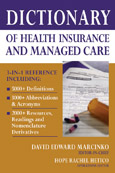
Speaker: If you need a moderator or speaker for an upcoming event, Dr. David E. Marcinko; MBA – Publisher-in-Chief of the Executive-Post – is available for seminar or speaking engagements. Contact: MarcinkoAdvisors@msn.com  or Bio: www.stpub.com/pubs/authors/MARCINKO.htm

Our Other Print Books and Related Information Sources:

Practice Management: http://www.springerpub.com/prod.aspx?prod_id=23759

Physician Financial Planning: http://www.jbpub.com/catalog/0763745790

Medical Risk Management: http://www.jbpub.com/catalog/9780763733421

Healthcare Organizations: www.HealthcareFinancials.com

Health Administration Terms: www.HealthDictionarySeries.com

Physician Advisors: www.CertifiedMedicalPlanner.com

Subscribe Now: Did you like this Medical Executive-Post, or find it helpful, interesting and informative? Want to get the latest E-Ps delivered to your email box each morning? Just subscribe using the link below. You can unsubscribe at any time. Security is assured.

Link: http://feeds.feedburner.com/HealthcareFinancialsthePostForcxos


Big Blue and UHG’s New Health Plan Model

Innovative Model -or- Just another Paradigm Shift

By Staff Reporters56372274

According to Reed Abelson, and David Kadlubowski of the electronic New York Times [NYT].com edition, on February 6, 2009, a new medical practice business plan and health care insurance reimbursement model could allow family physicians to practice medicine the way they used to practice. How so?

Exit UHG

The giant insurer UnitedHealth Group is testing a new model of health care that some policy experts say holds great promise, but has yet to prove itself. An earlier trial of the model by UnitedHealth, in Florida, never got off the ground because doctors refused to participate.

Enter IBM

This time however, the insurer is teaming up with seven doctors’ groups to make another attempt, in Arizona, at the prodding of one of the state’s big employers, and IBM. UnitedHealth will try giving doctors more authority and money than usual in return for closely monitoring their patients’ progress, even when patients go to specialists or require hospitalization.

Link: http://www.nytimes.com/2009/02/07/business/07medhome.html?_r=3&ref=health

Moving toward Value-Added Models and Episodes of Care

The insurer will also move away from paying doctors solely on the basis of how many services they provide via CPT® codes and will start rewarding them more for overall quality of patient care [value added and/or episodes of care model].

Link: https://healthcarefinancials.wordpress.com/2009/01/28/a-medical-payment-paradigm-shift

Assessment

One comment heard through the grapevine was “caveat and vendor emptor”; while another sarcastic observer wondered if this was the same “Useless Healthcare Group that we all despise?” And, who is to define the term “medical quality -or- value added care”?

Conclusion

And so, your thoughts and comments on this Medical Executive-Post are appreciated. Early-adopter insight and reports from Arizona participating practitioners is appreciated.

Speaker: If you need a moderator or speaker for an upcoming event, Dr. David E. Marcinko; MBA – Publisher-in-Chief of the Executive-Post – is available for seminar or speaking engagements. Contact: MarcinkoAdvisors@msn.com  or Bio: www.stpub.com/pubs/authors/MARCINKO.htm

Our Other Print Books and Related Information Sources:

Practice Management: http://www.springerpub.com/prod.aspx?prod_id=23759

Physician Financial Planning: http://www.jbpub.com/catalog/0763745790

Medical Risk Management: http://www.jbpub.com/catalog/9780763733421

Healthcare Organizations: www.HealthcareFinancials.com

Health Administration Terms: www.HealthDictionarySeries.com

Physician Advisors: www.CertifiedMedicalPlanner.com

Subscribe Now: Did you like this Medical Executive-Post, or find it helpful, interesting and informative? Want to get the latest E-Ps delivered to your email box each morning? Just subscribe using the link below. You can unsubscribe at any time. Security is assured.

Link: http://feeds.feedburner.com/HealthcareFinancialsthePostForcxos

Goodnight Willem J. Kolff MD

Join Our Mailing List

A Medical Inventor and Bio-Engineering Pioneer

By Dr. David Edward Marcinko; FACFAS, MBA, CMP™

[Publisher-in-Chief]dr-david-marcinko19

OK; let’s get this right out into the open. Although I did a little reconstructive bone and traumatic joint surgery in my career, I am not a cardio-vascular surgeon, nor am I a cardiologist, or even a nephrologist. But, I did treat more than my share of diabetic, alcoholic or other patients on renal dialysis and was well aware of the immense contributions of Willem Kolff to the profession. Therefore, I was saddened to learn of his recent passing at age 97. You see, Dr. Kolff not only developed the well known blood cleansing process that is now portable; he was also originator of the artificial-heart.

About Willem Johan Kolff; MD

When Willem Johan Kolff began work on the artificial kidney, few believed it possible. To draw a patient’s blood, cleanse it of toxins and return it seemed beyond the expertise of the most sophisticated medical centers. In the beginning, Dr. Kolff had no resources to draw upon. He was the sole internist in a small-town hospital, in the middle of the occupied Netherlands, during wartime. Materials were in short supply. The first 15 patients to receive the treatment failed to recover, but Dr. Kolff persevered. The dialysis treatment he pioneered and since perfected saved the lives, and limbs, of hundreds of thousands of patients, all over the world.

Link: http://www.achievement.org/autodoc/page/kol0int-1

Assessment

Dr. Kolff went on to design the heart-lung machine that made open-heart surgery possible. He pioneered artificial eyes, ears and arms, and for 25 years led the effort to develop the artificial heart. In 1982, a heart designed under his supervision was successfully implanted in Barney Clark, an event that captured the imagination of the world. All this was accomplished before such medical media stars as Dr. Robert Jarvik [Kolff’s student at the University of Utah in 1971] were lauded on TV, and then ignominiously dissed, for never having actually practiced medicine on real patients. In fact, Jarvik never pursued a medical internship, is not licensed to practice and can’t legally prescribe. Just imagine that!

Link: https://healthcarefinancials.wordpress.com/2008/02/14/the-jarvik-affair 

Channel Surfing the ME-P

Have you visited our other topic channels? Established to facilitate idea exchange and link our community together, the value of these topics is dependent upon your input. Please take a minute to visit. And, to prevent that annoying spam, we ask that you register. It is fast, free and secure.

Conclusion

Your thoughts and comments on this ME-P are appreciated. Feel free to review our top-left column, and top-right sidebar materials, links, URLs and related websites, too. Then, subscribe to the ME-P. It is fast, free and secure.

Speaker: If you need a moderator or speaker for an upcoming event, Dr. David E. Marcinko; MBA – Publisher-in-Chief of the Medical Executive-Post – is available for seminar or speaking engagements. Contact: MarcinkoAdvisors@msn.com

OUR OTHER PRINT BOOKS AND RELATED INFORMATION SOURCES:

Product DetailsProduct DetailsProduct Details

About ChainOnLine.org

A New AHRQ Web Site

By Staff Reportersradar1

A new educational Web site offering expert perspectives, advice and guidance on drugs, biological products and medical devices is now operational. The destination site, from the Agency for Healthcare Research and Quality’s [AHRQ] Centers for Education and Research on Therapeutics [CERTs], a federally sponsored network of more than a dozen leading research centers nationwide, was officially launched on January 8, 2009.

CHAIN

The Clinician-Consumer Health Advisory Information Network [CHAIN] http://www.chainonline.org connects clinicians and consumers with therapeutics information to assist in clinical practice and health care decision making in areas where evidence is undergoing significant and rapid changes.

CERTS

The site also provides access to educational and informational resources developed from research conducted by CERTs and intended for use in improving health care quality, safety and effectiveness. Clinical topics included on the CHAIN Web site address the management of blood clot prevention with drug-eluting stents and expert opinions about topics where evidence is uncertain, such as restarting anti-platelet therapy if it has been interrupted. The site’s educational section includes materials to assist consumers with clinician-patient conversations and decision-making as well as an online medication record. Resources for clinicians include a slide library that can be adapted to educate clinical audiences and used for continuing medical education credit.

Goal

The overarching goal is to serve as a trusted national resource for people seeking to improve health through the best use of medical therapies. The CERTs program includes partnerships of public and private organizations, a national steering committee involving multiple sectors and CERTs investigators, a coordinating center and 14 research centers. The CHAIN Web site was designed and developed collaboratively with input from all centers, working under the leadership of the Center for Collaborative and Interactive Technologies at Baylor College of Medicine, Houston.

Assessment

For more information, contact AHRQ Public Affairs: (301) 427-1246 or (301) 427-1998.

Internet Citation: Agency for Healthcare Research and Quality, Rockville, MD. Link: http://www.ahrq.gov/news/press/pr2009/chainpr.htm

From the Press Release: AHRQ Announces New Web Site on Emerging Issues in Medical Therapeutics.

Conclusion

And so, your thoughts and comments on this Medical Executive-Post are appreciated.

Speaker: If you need a moderator or speaker for an upcoming event, Dr. David E. Marcinko; MBA – Publisher-in-Chief of the Executive-Post – is available for seminar or speaking engagements. Contact: MarcinkoAdvisors@msn.com  or Bio: www.stpub.com/pubs/authors/MARCINKO.htm

Our Other Print Books and Related Information Sources:

Practice Management: http://www.springerpub.com/prod.aspx?prod_id=23759

Physician Financial Planning: http://www.jbpub.com/catalog/0763745790

Medical Risk Management: http://www.jbpub.com/catalog/9780763733421

Healthcare Organizations: www.HealthcareFinancials.com

Health Administration Terms: www.HealthDictionarySeries.com

Physician Advisors: www.CertifiedMedicalPlanner.com

Subscribe Now: Did you like this Medical Executive-Post, or find it helpful, interesting and informative? Want to get the latest E-Ps delivered to your email box each morning? Just subscribe using the link below. You can unsubscribe at any time. Security is assured.

Link: http://feeds.feedburner.com/HealthcareFinancialsthePostForcxos

Maintenance of Medical Board Certification

Status Growing in Importance – or Sham

Dr. David Edward Marcinko; MBA, CMP™

And Staff Reporters

dr-david-marcinko11Increasingly, efforts to boost quality and gain better value from the world’s most costly healthcare system are including attention to Maintenance of Board Certification [BOBC], a little-understood but rigorous process by which physicians maintain board certification status and then keep it.  

Hillary-Care Redeux

Back in the day, circa late 1970s – early 1980s, medical board certification was indeed a rigorous process; and still is to a very large extent. For example, Democratic presidential candidate Hillary Rodham Clinton, in laying out the quality portion of her three-part healthcare reform plan last year, specifically touted these programs as a key step in enhancing quality. From the presidential campaign trail to hospital and health plan board rooms, Board Certification and the Maintenance of Board Certification is a growing force in the industry.

But, is maintaining recertification status another matter of true quality import?

Major Health Plans On-Board

Several of the nation’s biggest health plans—including Aetna, Cigna, Humana, UnitedHealth Group and national and regional Blue Cross and Blue Shield organizations—are embracing Maintenance of Certification as part of their recognition and reward programs. Physicians who do not participate are not highlighted in plan directories and miss out on higher plan reimbursements.

Yet, why do we have “red flag” issues, “never-events” policies and/or the rise of “checklist-medicine” for risk reduction if these continuing education programs are so effective?

Allow me to cite the raging over-treatment epidemic, especially in specialties like arthroscopic orthopedics, radiology imaging [CT and MRI scans] and invasive cardiology, etc. Not to mention recent, and not so recent, Institute of Medicine [IOM] quality chasm reports for in-hospital patient deaths, complications and infections, etc.   

Assessment

Of course, savvy hospital administrators and physician executives, of all stripes, are examining ways to use elements of board certification maintenance to respond to the Joint Commission’s new requirements for physician credentialing and privileging. Furthermore, the National Quality Forum [NQF] and the AQA quality alliance will be considering Maintenance of Certification for quality measurement endorsement.

Source: Cary Sennett and Christine Cassel, Modern Healthcare

Joint Commission Relevance in Modernity

But, is the Joint Commission itself even as relevant today, as in the past? Or – is its [political, quality and economic] status, might and swagger being reduced in favor of modern new-wave insights from health 2.0 collaboration activities and emerging formal organizations like DNV Healthcare Inc., a division of the Norwegian company.

As subscribers and Medical Executive-Post readers are aware, Det Norske Veritas [DNV] has recently been charged with immediately determining if hospitals are in compliance with the Medicare Conditions of Participation [COP]. The company’s authority to accredit hospitals runs through September 26, 2012. DNV joins the American Osteopathic Association [AOA] as the only other national hospital accrediting agency approved by the Centers for Medicare and Medicaid Servicers [CMS].

Conclusion

And so, your thoughts and comments on this Medical Executive-Post are appreciated. Is medical board certification and maintenance status of real value – or just fluff – much like the continuing education and licensure requirements of insurance agents, stock-brokers and financial advisors, etc? Is it less for medical education – and more for liability risk reduction – or PR – you decide? 

Disclosure: I am a reformed insurance agent, stock-broker, board certified quality review physician and Certified Financial Planner®.

Speaker:If you need a moderator or speaker for an upcoming event, Dr. David E. Marcinko; MBA – Publisher-in-Chief of the Medical Executive-Post – is available for seminar or speaking engagements. Contact: MarcinkoAdvisors@msn.com 

Our Other Print Books and Related Information Sources:

Practice Management: http://www.springerpub.com/prod.aspx?prod_id=23759

Physician Financial Planning: http://www.jbpub.com/catalog/0763745790

Medical Risk Management: http://www.jbpub.com/catalog/9780763733421

Physician Advisors: www.CertifiedMedicalPlanner.org

Subscribe Now:Did you like this Medical Executive-Post, or find it helpful, interesting and informative? Want to get the latest ME-Ps delivered to your email box each morning? Just subscribe using the link below. You can unsubscribe at any time. Security is assured.

Link: http://feeds.feedburner.com/HealthcareFinancialsthePostForcxos

Product DetailsProduct DetailsProduct Details

AMA Sues to Keeps Medicare Claims Data Private

Join Our Mailing List

AMA Wins Appeal to Blind Consumers’ Checkbook

[By Dr. David Edward Marcinko; MBA]human-drones

The Centers for Medicare and Medicaid Services [CMS] does not have to turn over physician-specific Medicare claims data requested by not-for-profit Consumers’ Checkbook under the Freedom of Information Act, the U.S. Circuit Court of Appeals for the District of Columbia ruled in an opinion delivered January 30th.

AMA and DHHS

According to Gregg Blesch of Modern Healthcare, on 2/2/09, the American Medical Association [AMA] joined the Department of Health and Human Services [DHHS] in appealing a 2007 decision that the data should be subject to disclosure, but the appeals court concluded the physicians’ privacy interest outweighs the consumer group’s assertions that the data would be used in the public interest.

Three Decade DHHS Legal Conundrum

DHHS, meanwhile, was not concerned so much with privacy as with its own legal conundrum involving a 1979 federal injunction barring the release of Medicare data that identifies individual physicians. A 2008 statement explaining the decision to appeal said the department “recognizes and shares the goals of Consumers’ Checkbook” and was seeking a legal way for the government to share Medicare claims data as part of its own quality initiatives.

Link: http://www.ama-assn.org

About Consumer’s Checkbook

Consumers’ Checkbook/The Center for the Study of Services is an independent, nonprofit consumer organization founded in 1974 with the help of funding from the U.S. Office of Consumer Affairs. Its’ purpose is to provide consumers information to help them get high quality services and products at the best possible prices. The organization is supported entirely by subscription payments and donations from individual consumers who subscribe to its magazines, and by fees for surveys, and information services and books. They do not accept donations from businesses and their publications carry no advertising.

Link: http://www.checkbook.org

About the AMA

The home page of the AMA website states the organization is “helping doctors help patients.”  Is this really the case; or mere rhetoric? Is it true that less than 20% of the nations MDs are members?

Assessment

Consumers’ Checkbook said it would use the data to show the frequency with which physicians performed certain procedures; expose how much Medicare pays physicians who have disciplinary histories or poor evaluations; and determine whether they were fulfilling standards of recommended care. The court found each argument wanting.

Industry Indignation Index Rating: 85

Conclusion

Your thoughts and comments on this ME-P are appreciated. Feel free to review our top-left column, and top-right sidebar materials, links, URLs and related websites, too. Then, subscribe to the ME-P. It is fast, free and secure.

Link: http://feeds.feedburner.com/HealthcareFinancialsthePostForcxos

Speaker: If you need a moderator or speaker for an upcoming event, Dr. David E. Marcinko; MBA – Publisher-in-Chief of the Medical Executive-Post – is available for seminar or speaking engagements. Contact: MarcinkoAdvisors@msn.com

OUR OTHER PRINT BOOKS AND RELATED INFORMATION SOURCES:

DICTIONARIES: http://www.springerpub.com/Search/marcinko
PHYSICIANS: www.MedicalBusinessAdvisors.com
PRACTICES: www.BusinessofMedicalPractice.com
HOSPITALS: http://www.crcpress.com/product/isbn/9781466558731
CLINICS: http://www.crcpress.com/product/isbn/9781439879900
BLOG: www.MedicalExecutivePost.com
FINANCE: Financial Planning for Physicians and Advisors
INSURANCE: Risk Management and Insurance Strategies for Physicians and Advisors

Product DetailsProduct DetailsProduct Details

Illuminating the Congressional Federal Health Board

Join Our Mailing List

A Next-Gen -or- Last-Gen National Model  

[By Dr. David Edward Marcinko; MBA, CMP™]

[By Staff Reporters]


Beware; all Medicare and other private health insurance recipients.

Why?

On December 4, 2008, and according to Robert E. Moffit PhD, the Director of the Center for Health Policy Studies [CHPS] at The Heritage Foundation, Presidential Obama proposed the creation of an institute that would judge the “comparative effectiveness” of medical treatments, procedures, and therapies, as well as drugs, devices, and technologies.

Congressional FRB Model

This Congressional Federal Health Board [FHB] would be modeled on the Federal Reserve Board [FRB] with a governing body of politically appointed experts, but “insulated from politics” and  possess many powers similar to the proposed National Health Board [NHB], a key feature of the ill-fated Health Security Act [HSA] of 1993.

New Health Board

This new health board would also:

  • Set the rules for health insurers who would participate in a national health insurance exchange and recommend benefits coverage, including drugs and medical procedures backed by “solid evidence”;
  • “Rank” therapies and medical services based on their cost effectiveness;
  • Suggest priorities for medical research; and
  • “Align incentives with the provision of quality care,” as defined by the health board, through Medicare-style “pay for performance” rules for doctors and other medical professionals who comply with government practice guidelines.

Assessment

For ordinary Americans unsatisfied with the new Federal Health Board, there would be little recourse since it would likely be independent of Congress and the White House. For medical providers, according to Hope Hetico; RN, MHA of this Medical Executive-Post, it would be an operational nightmare that makes the managed care logistical problems of condition coverage, pre-certifications and pre-treatment authorizations, etc., seem a non-issue.

In other words, is this new FHB really the next-generation of medical collaboration and communication vis-a-vie health 2.0; or just another bloated last-generation command control model?   

Link: http://www.heritage.org/research/healthcare/wm2155.cfm

Conclusion

Your thoughts and comments on this ME-P are appreciated. Feel free to review our top-left column, and top-right sidebar materials, links, URLs and related websites, too. Then, subscribe to the ME-P. It is fast, free and secure.

Speaker: If you need a moderator or speaker for an upcoming event, Dr. David E. Marcinko; MBA – Publisher-in-Chief of the Medical Executive-Post – is available for seminar or speaking engagements. Contact: MarcinkoAdvisors@msn.com

OUR OTHER PRINT BOOKS AND RELATED INFORMATION SOURCES:

Product DetailsProduct DetailsProduct Details

A Six Sigma Emergency Department Case Report

Emergency Department Diversions

By Staff Writersbiz-book1

According to Daniel L. Gee MD MBA, Scottsdale Healthcare in Arizona used consultants from Creative Healthcare USA on a recent project, rather than doing a full deployment of Six Sigma in its organization, to analyze its problem of emergency department (ED) “diversions.”

Emergency Department Diversions

Diversions happen when emergency departments are too full in capacity to handle acute emergencies and a decision is made to close its doors to patients and ambulances are diverted elsewhere. The issue of closed and diverted emergency rooms is a growing nationwide phenomenon because of fewer EDs and a growing aged and uninsured population. The consultants, using Six Sigma principles, mapped the ED process and found multiple bottlenecks that have a direct effect on the probability of evoking a “diversionary” status in the emergency room.

Out of Control Bottlenecks

One bottleneck process deemed “out of control,” in Six Sigma jargon, was the issue of bed control. A process is considered “in control” when operating within acceptable specification limits. It was found that the average transfer time for a patient admitted to a hospital bed from the emergency department was 80 minutes, of which half of this time, a bed is available and waiting. The process was a significant “waste of time” and, moreover, complicated by an Administrative Nurse “inspector” locating beds on different floors.
Sig Sigma Tenants

Two tenements of Six Sigma level of quality were violated: one is that having an inspection is a correction for an inefficient process and two, the more steps involved the less is the potential yield of a process. Through this revelation, the hospital eliminated the Administrative Nurse, reduced cycle time by 10% in bed control, and improvement ED throughput with greater turnover thereby, improving revenue by nearly $600,000.

Little’s Law

The addition of a nurse inspector and waiting patients in a busy ED is an example of “Little’s Law” or sometimes referred to as the first fundamental law of system behavior. When more and more inputs are put into a system, such as more ED patients and an additional nurse employee, and when there is variation in their arrival time (no control over patient arrivals) or process variation (different people doing the same things differently), there becomes an exponential rise in “cycle time.” Productivity of the system begins to fall and inefficiency and variation creeps in.

Assessment

An examination of the project types to which health care provider organizations have utilized Six Sigma methodology reveals almost any hospital or medical clinic process is a candidate.

Conclusion

And so, your thoughts and comments on this Medical Executive-Post are appreciated. Is Six Sigma a real medical quality control initiative that’s here to stay; or just another passing fad?

Speaker:If you need a moderator or speaker for an upcoming event, Dr. David E. Marcinko; MBA – Publisher-in-Chief of the Medical Executive-Post – is available for seminar or speaking engagements. Contact: MarcinkoAdvisors@msn.com  or Bio: www.stpub.com/pubs/authors/MARCINKO.htm

Our Other Print Books and Related Information Sources:

Practice Management: http://www.springerpub.com/prod.aspx?prod_id=23759

Physician Financial Planning: http://www.jbpub.com/catalog/0763745790

Medical Risk Management: http://www.jbpub.com/catalog/9780763733421

Healthcare Organizations: www.HealthcareFinancials.com

Physician Advisors: www.CertifiedMedicalPlanner.com

Subscribe Now:Did you like this Medical Executive-Post, or find it helpful, interesting and informative? Want to get the latest ME-Ps delivered to your email box each morning? Just subscribe using the link below. You can unsubscribe at any time. Security is assured.

Link: http://feeds.feedburner.com/HealthcareFinancialsthePostForcxos

Product DetailsProduct DetailsProduct Details

Tragedy at William Beaumont Army Medical Center

Join Our Mailing List
Thousands at Risk from Needle Contamination

[By Staff Reporters]

56372274

According to Derek Shore of Veterans Today, on February 7, 2009, the Army Medical Center announced that 2,114 diabetic patients treated at the hospital may be at risk for contracting blood-borne illnesses.

Improper Insulin Injections

Hospital administrators reported to local station, KFOX, that diabetic patients at the hospital were being injected with insulin improperly. A medical injection pen was being used on more than one patient. Even though the needle was changed with each patient, there are fears the insulin reservoir may have contained diseases from past patients, which has sparked the fear of contamination.

Assessment

Doctors said the patients could be at risk of being given blood-borne diseases from August 2007 until Friday, February 6, 2009.

William Beaumont Army Medical Center has set up a toll-free hotline at 1-866-770-0194.

Link: http://www.veteranstoday.com/modules.php?name=News&file=article&sid=4726

Channel Surfing the ME-P

Have you visited our other topic channels? Established to facilitate idea exchange and link our community together, the value of these topics is dependent upon your input. Please take a minute to visit. And, to prevent that annoying spam, we ask that you register. It is fast, free and secure.

Conclusion

Your thoughts and comments on this ME-P are appreciated. Feel free to review our top-left column, and top-right sidebar materials, links, URLs and related websites, too. Then, subscribe to the ME-P. It is fast, free and secure.

Speaker: If you need a moderator or speaker for an upcoming event, Dr. David E. Marcinko; MBA – Publisher-in-Chief of the Medical Executive-Post – is available for seminar or speaking engagements. Contact: MarcinkoAdvisors@msn.com

OUR OTHER PRINT BOOKS AND RELATED INFORMATION SOURCES:

Product Details  Product Details

About Free-Labor Contributing Authors

The Most Important Medical Executive-Post Asset

By Hope Rachel Hetico; RN, MHA

Managing Editorhetico4

The Medical Executive-Post is a knowledge aggregator of user-generated content. It is a network where users share, recommend, rank and comment on professional submissions by experts and thought-leaders. We believe that better submissions, lead to better actionable knowledge and professional lives.

Great information can also help us do, become and experience the professional goals and accomplishments that make us happy and more successful. Our mission is to help people discover and use this deeply gratifying electronic and/or print content.

Content Broadcasting

Every Medical Executive-Post is submitted by members of our community. You send-in content and comments, and we rate the clicks as recommendations on this blog. We call this ranking process “content-broadcasting.” It increases your exposure and helps to establish and disseminate your uniquely professional brand-image. Your submit content, and we do the rest.

A Niche Industry

When you make a submission, click-on a post or make a comment, you are in-effect saying that you think the content is worth reading and spending time to review. You are answering the question, “What do I need to know and where can I find the answer“, for people who share your interests and passion in the healthcare industrial complex and related health economics and nice practice management space.

Built by Free-Labor Entrepreneurs

The Medical Executive-Post is a privately-funded Web 2.0 company. We are committed to improving the overall quality of deeply specific Internet content search experiences by offering this utility platform for professional user-generated content and recommendations. The Medical Executive-Post was initially built by a team of seasoned Internet entrepreneurs, editors, and bloggers. But you, our free-labor entrepreneurs and contributing authors are now our most important long-term survival asset. Thank you.submission-frenzy

Assessment

To see what else we are up to; please visit our related websites, links, books and products on each side-bar. Learn how your bottom-up efforts – become valuable real-world print content.

Conclusion

And so, your thoughts and comments on this Medical Executive-Post are appreciated.

Speaker: If you need a moderator or speaker for an upcoming event, Dr. David E. Marcinko; MBA – Publisher-in-Chief of the Executive-Post – is available for seminar or speaking engagements. Contact: MarcinkoAdvisors@msn.com  or Bio: www.stpub.com/pubs/authors/MARCINKO.htm

Our Other Print Books and Related Information Sources:

Practice Management: http://www.springerpub.com/prod.aspx?prod_id=23759

Physician Financial Planning: http://www.jbpub.com/catalog/0763745790

Medical Risk Management: http://www.jbpub.com/catalog/9780763733421

Healthcare Organizations: www.HealthcareFinancials.com

Health Administration Terms: www.HealthDictionarySeries.com

Physician Advisors: www.CertifiedMedicalPlanner.com

Subscribe Now: Did you like this Medical Executive-Post, or find it helpful, interesting and informative? Want to get the latest E-Ps delivered to your email box each morning? Just subscribe using the link below. You can unsubscribe at any time. Security is assured.

Link: http://feeds.feedburner.com/HealthcareFinancialsthePostForcxos

Kahn-Bahn and Patient Focused Healthcare

What it is – How it works?

Staff Writersaward-cup1


One competitive trend currently emerging is patient-focused healthcare, which focuses on patient needs and attempts to humanize patient care. Patient-focused healthcare therefore incorporates the following:

· patient education;

· active participation of the patient;

· involvement of the family;

· nutrition;

· art; and

· music. 

Improving Patients Outcomes

The above, of course, are thought to improve patient outcomes. Furthermore, some think that patients will benefit from learning how to cope with healthcare processes before they enter into those processes and that this knowledge will result in better outcomes.

An example of this would be classes to prepare couples for childbirth. These classes teach prospective parents the different stages of labor and strategies for dealing with the challenges associated with each stage. They cover options for pain management such as breathing and relaxation techniques and/or analgesics. The classes also provide education about clinical options such as induced labor and caesarian sections, and they cover practical issues such as what to wear and what kind of car seat to buy to transport the newborn home.

***

0kkkk

Business Processes Re-Engineering

As a result of this movement, some healthcare organizations have tried to re-engineer the processes by which care is delivered in order to make it more patient focused. This is accomplished, in large part, by bringing the therapy to the patient rather than bringing the patient to the therapy.

For example, storing more supplies and equipment in the patient’s hospital room means that more services can be performed in the room. Obviously, this trend has significant implications for the operations management function in healthcare organizations in the areas of layout and human resources management. Supplies and equipment may be arranged differently to facilitate patient-focused care. Considerable staffing changes and cross training may be in order, to provide this type of service. Changes in facility layout to implement patient-focused care and reduce nonproductive movement of patients and personnel should be considered, especially when a facility is contemplating expansion or renovation of facilities.

Assessment

Kanban (kahnbahn) is the Japanese word that when translated literally means “visible record” or “visible part”. In general context, it refers to a signal of some kind.  Thus, in the business process manufacturing and re-engineering environment, kanbans are signals used to replenish the inventory of items used repetitively within a facility. The kanban system is based on a customer of a part pulling the part from the supplier of that part. The customer of the part can be an actual consumer of a finished product (external) or the production personnel at the succeeding station in a manufacturing facility (internal). Likewise, the supplier could be the person at the preceding station in a manufacturing facility. The premise of kanbans is that material will not be produced or moved until a customer sends the signal to do so.

The leap to hospital and healthcare organization re-engineering is thus not a great one.

Conclusion

And so, your thoughts and comments on this Medical Executive-Post are appreciated.

Speaker:If you need a moderator or speaker for an upcoming event, Dr. David E. Marcinko; MBA – Publisher-in-Chief of the Medical Executive-Post – is available for seminar or speaking engagements. Contact: MarcinkoAdvisors@msn.com  or

Our Other Print Books and Related Information Sources:

Practice Management: http://www.springerpub.com/prod.aspx?prod_id=23759

Physician Financial Planning: http://www.jbpub.com/catalog/0763745790

Medical Risk Management: http://www.jbpub.com/catalog/9780763733421

Physician Advisors: www.CertifiedMedicalPlanner.org

Subscribe Now:Did you like this Medical Executive-Post, or find it helpful, interesting and informative? Want to get the latest ME-Ps delivered to your email box each morning? Just subscribe using the link below. You can unsubscribe at any time. Security is assured.

Link: http://feeds.feedburner.com/HealthcareFinancialsthePostForcxos

Product Details