ATTENTION: Direct and Misdirected

By Staff Reporters

***

***

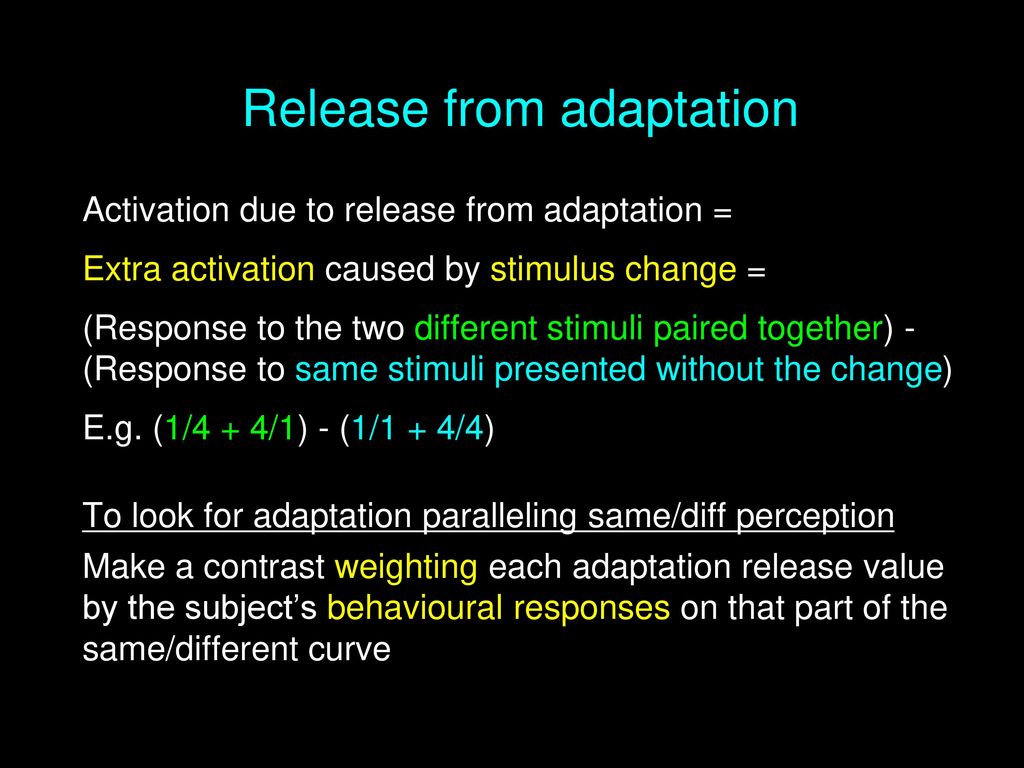
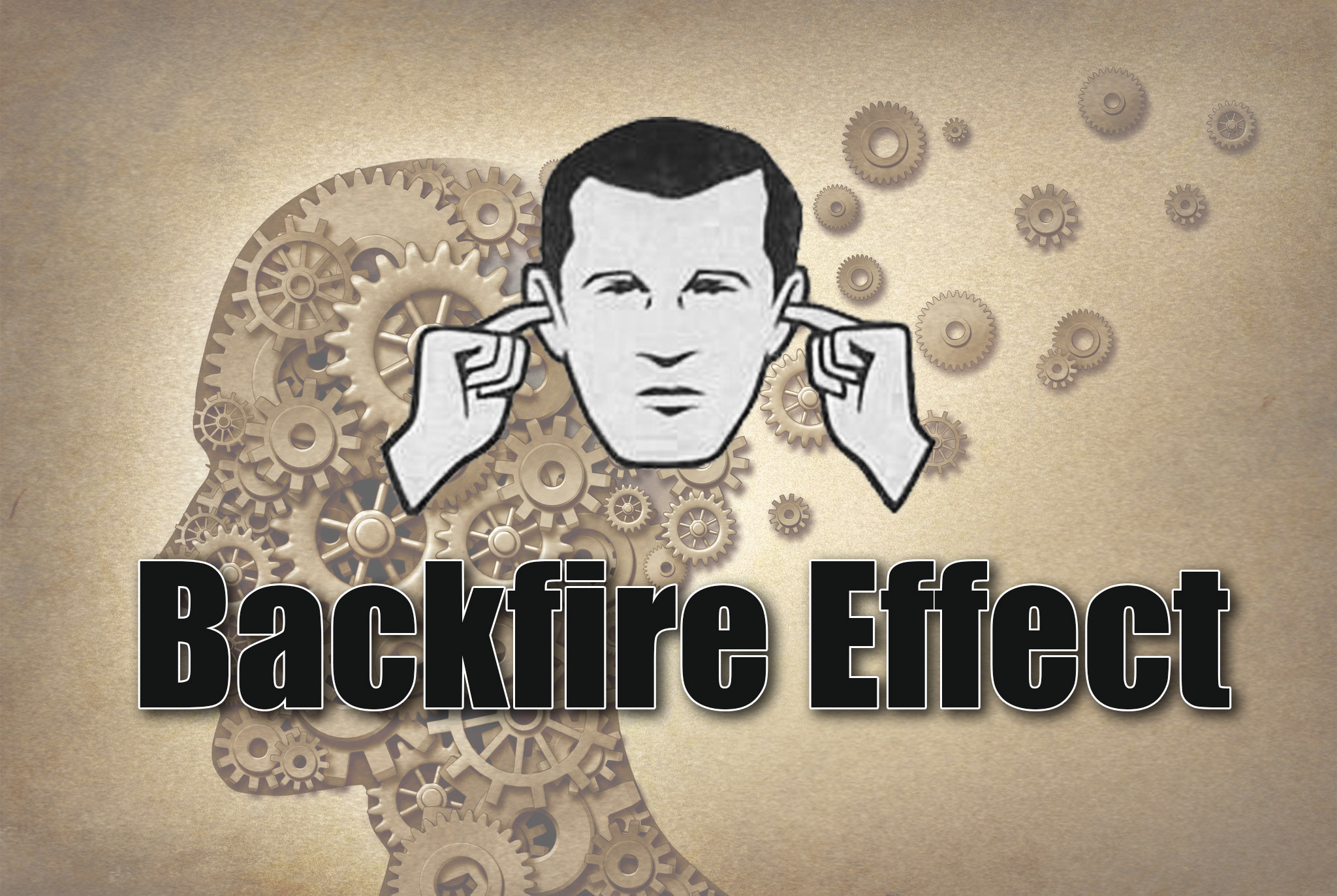
Humans use cognitive information to Direct Attention to relevant objects (targets) in a visual scene. Information such as the target’s color or location is represented as a ‘perceptual set’. Similarly, advance information about the required response to a target is represented as a ‘motor set’.

***

MisDirected Attention however is like polishing the brass on the Titanic while ignoring the iceberg. Our brains love details, sometimes too much. We focus on the minutiae and miss what’s really important. This is why you might spend more time choosing a font than writing the actual content.

For example, have you ever spent hours perfecting the details of a project only to miss the big picture? That’s misdirected attention, according to Dan Ariely PhD.

Always remember, it’s easy to get lost in the weeds. Keep an eyes on the horizon.

COMMENTS APPRECIATED

Subscribe Today!

***

***

PODCAST: Nurse Practitioners VS. Physician Associates

NPs versus PAs

By Eric Bricker MD

***

COMMENTS APPRECIATED

Thank You

***

***

MYOPIA: Prime Financial Earning Years

COGNITIVE BIAS

SPONSOR: http://www.MarcinkoAssociates.com

By Staff Reporters

***

***

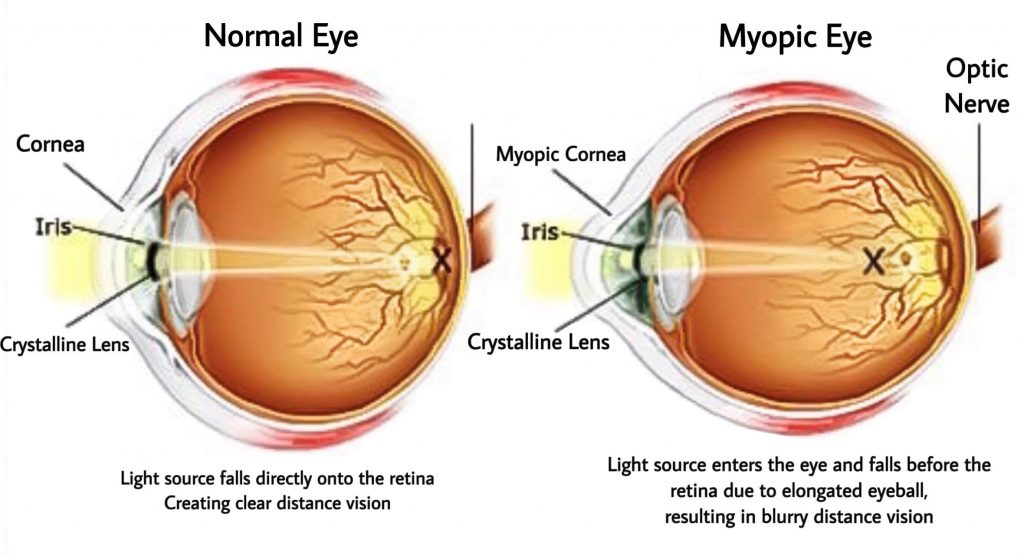
Myopia makes it hard for us to imagine what our lives might be like in the future.

For example, because we are young, healthy, and in our prime earning years now, it may be hard for us to picture what life will be like when our health depletes and we know longer have the earnings necessary to support our standard of living.

According to colleague Dan Ariely PhD, this short sighted cognitivebias makes it hard to save adequately when we are young, when saving does the most good.

COMMENTS APPRECIATED

Subscribe and Refer

***

***

MARCINKO ASSOCIATES: Physician Wealth Advisors and Practice Management Consultants

FIDUCIARY MEDICAL COLLEAGUES – FEE ONLY – NO PRODUCT OR SALES COMMISSIONS

SPONSOR: http://www.MarcinkoAssociates.com

***

***

DEAR MEDICAL COLLEAGUES

Achieving your financial, wealth and medical practice management goals is important, but handling everything on your own can be overwhelming. That’s where we come in. At D. E. Marcinko & Associates, our team of dual degree experienced physician advisors and medical consultants is here to guide you every step of the way. We believe in providing unbiased, high-quality financial and business advice.

For example, we offer a one-time written financial plan with oral evaluation for a flat fee with no ongoing sales or assets under management fees or commissions. Together, we can create a personalized financial plan tailored to your unique goals, empowering you to make confident, informed decisions as you navigate your financial future.

Other Services Include:

  • Estate Planning We have a network of qualified legal professionals that we can refer you to for state specific estate planning needs.
  • Tax Strategy We can work alongside your CPA for tax planning purposes. If needed, we can refer you to a qualified tax professional.
  • Investment Analysis If you have investments, we review your accounts to make sure they are aligned with your long-term goals.
  • 401-k Allocations We evaluate your 401(k) allocations and provide recommendations that align with your goals.
  • Education Savings We help you explore the various ways to plan and save for education expenses.
  • Insurance & Risk Management We assess your insurance coverage to ensure it adequately protects you against potential risks; as well as evaluate and provide expert litigation witnesses, as needed.
  • Medical Practice Management We evaluate your current or potential medical practice to determine value and/or private equity offers or physician practice management formats [PPMC] for new, mid-career or retiring physicians, nurses and dentists.   

D. E. Marcinko & Associates is unique and fully committed to all phases of a medical professionals personal and business life cycle. We are at your service 24/7: Email MarcinkoAdvisors@outlook.com

ANN MILLER RN MHA CMP

***

Thank You

***

***

Why are CERTIFIED MEDICAL PLANNER® Textbooks So DARN Popular?

 The Big Surprise

[By Dr. David Edward Marcinko MBA MEd CMP®]

http://www.CertifiedMedicalPlanner.org

OK – I was a Certified Financial Planner® before my academic team launched the Certified Medical Planner™ online and on-ground chartered education and board certification designation program a few years ago. I am now CFP reformed and in remission.

MORE: Enter CPMs

Enter the Certified Medical PlannerChartered Designation

Today, we are of course, gratified that Certified Medical Planner™ mark notoriety is growing organically in the healthcare, as well as financial services, industry.

Even uber-blogger Mike Kitces MSFS, MTAX, CFP, CLU, ChFC, RHU, REBC, CASL has taken note of us in his musings on the Nerd’s Eye View website. And, the reality is that there are a growing number of CFP educational programs at the post-CFP niche market level.

But, none for healthcare industrial complex: for doctors … by doctors!

Popularity of our Text Books

However, it is our modern, innovative and proprietary Certified Medical Planner™ textbooks and dictionaries that have exploded in the academic marketplace.

In fact, they are now redacted in thousands of medical, graduate, law and B-schools and libraries, as well as colleges and universities throughout the nation. This includes the Library of Congress, National Institute of Health and  the Library of Congress.

What Gives?

We have been told that this textbook popularity and publishing success is because of their balanced and peer-reviewed nature; something not very widespread in the financial services industry that is prone to gross and overstated advertising, salesmanship and marketing hyperbole. And, for this we are very gratified.

But, is there another reason our books are so popular?

A bit of networking and research suggests that interested folks may be eschewing the actual course work in favor of just the high quality textbooks! UGH!

Another reason may be that our books and curricula are kept fresh and updated on our corporate website: http://www.MedicalBusinessAdvisors.com

Assessment

So, what do you think? Matriculation with the professional mark versus self study without the designation mark. Please opine.

Conclusion

Your thoughts and comments on this ME-P are appreciated. Feel free to review our top-left column, and top-right sidebar materials, links, URLs and related websites, too. Then, subscribe to the ME-P. It is fast, free and secure.

Speaker: If you need a moderator or speaker for an upcoming event, Dr. David E. Marcinko; MBA – Publisher-in-Chief of the Medical Executive-Post – is available for seminar or speaking engagements.

Book Marcinko: https://medicalexecutivepost.com/dr-david-marcinkos-bookings/

Subscribe: MEDICAL EXECUTIVE POST for curated news, essays, opinions and analysis from the public health, economics, finance, marketing, IT, business and policy management ecosystem.

DOCTORS:

“Insurance & Risk Management Strategies for Doctors” https://tinyurl.com/ydx9kd93

“Fiduciary Financial Planning for Physicians” https://tinyurl.com/y7f5pnox

“Business of Medical Practice 2.0” https://tinyurl.com/yb3x6wr8

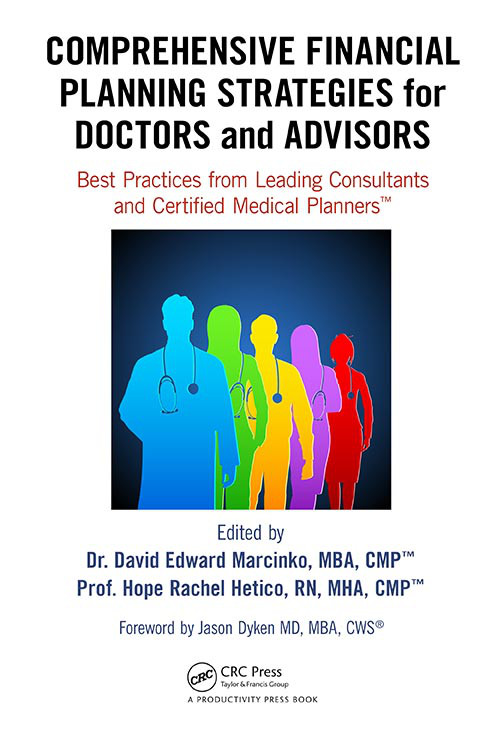
Risk Management, Liability Insurance, and Asset Protection Strategies for Doctors and Advisors: Best Practices from Leading Consultants and Certified Medical Planners™  Comprehensive Financial Planning Strategies for Doctors and Advisors: Best Practices from Leading Consultants and Certified Medical Planners™

Product DetailsProduct Details

HOSPITALS:

“Financial Management Strategies for Hospitals” https://tinyurl.com/yagu567d

“Operational Strategies for Clinics and Hospitals” https://tinyurl.com/y9avbrq5

Product DetailsProduct Details

Adult Learners and Students:

Product DetailsProduct DetailsProduct Details

***

MEMORY: Fallible & Impressionable

By Staff Reporters

***

***

Memory is Fallible/Memory is Impressionable: This concept refers to the inherent unreliability of human memory and its susceptibility to distortion and manipulation. Memory is not a perfect recording of events; instead, it is reconstructive, meaning that when we recall information, our brains can inadvertently alter or fill in gaps based on existing beliefs, emotions, or narratives. This can lead to the incorporation of false details that align with what we already know or expect to be true, resulting in vivid but inaccurate recollections.

Consequently, according to colleague Dan Ariely PhD, our memories can be influenced by suggestion, context, and social pressures, making them susceptible to biases and inaccuracies, much like a “con man” leading us to believe things that may not reflect reality.

COMMENTS APPRECIATED

Subscribe and Like Today!

***

***

SYNTHETIC EQUITY: Deferred Compensation for Financial Advisors

DEFINED FOR FINANCIAL ADVISORS

By Dr. David Edward Marcinko MBA MEd

SPONSOR: http://www.MarcinkoAssociates.com

***

***

Think of synthetic equity as a communal garden. You don’t own the plot, and you don’t necessarily have a say in what’s planted, but you’re guaranteed a share of the crops that are harvested. 

CITE: https://www.r2library.com/Resource/Title/0826102549

Synthetic equity is a form of deferred compensation that mirrors some of the benefits of real stock ownership without granting actual shares. It’s a contractual agreement between you and your employer that entitles you to a payout upon certain events—such as an IPO, acquisition, or surpassing earnings milestones.  

Companies use synthetic equity plans to motivate their personnel through growth-related incentives. In other words, it grants employees a sense of ownership without issuing shares or altering the business’s ownership structure. As the company succeeds and appreciates in value, so does your potential payout. Although you don’t own actual shares of company stock, you are compensated as if you did. 

READ: https://tinyurl.com/mr3upbn6

According to Carla McCabe, synthetic equity programs also have a significant tax advantage to both business owners and the key employees.

For example, when a key employee receives shares under the firm’s synthetic equity program, the IRS does not recognize that receipt as taxable income to the employee until he or she actually receives the money. This usually occurs when the firm is sold or when the employee retires and is cashed out (assuming the employee’s synthetic shares are vested). This is very attractive considering that regular shares are taxed as ordinary income and the employee basically has to pay the associated tax even though he or she didn’t receive any cash.

Of course, all this begs the question: Why would a company offer synthetic equity instead of actual equity?  

COMMENTS APPRECIATED

Subscribe Today!

***

***

DOOMSCROLLING & DOOMSURFING: Defined

By Dr. David Edward Marcinko MBA MEd

SPONSOR: http://www.MarcinkoAssociates.com

***

***

Two years ago, prior to the 2022 election, mental health experts alerted the medical world to their version of an assessment scale for yet another new condition – “doomscrolling.”

As defined by the National Library of Medicine in the article, “Constant exposure to negative news on social media and news feeds could take the form of ‘doomscrolling’ which is commonly defined as a habit of scrolling through social media and news feeds where users obsessively seek for depressing and negative information.”

And so, formally Doomscrolling or doomsurfing is the act of spending an excessive amount of time reading large quantities of news, particularly negative news, on the web and social media. Doomscrolling can also be defined as the excessive consumption of short-form videos or social media content for an excessive period of time without stopping. The concept was coined around 2020, particularly in the context of the COVID pandemic.

Surveys and studies suggest doomscrolling is predominant among youth. It can be considered a form of internet addiction disorder. In 2019, a study by the National Academy of Sciences found that it can be linked to a decline in mental and physical health. Numerous reasons for doomscrolling have been cited, including negativity bias and FOMO [fear of missing out], and attempts at gaining control over uncertainty.

QUERY: What about the roaring stock market, post the 2024 presidential election. Fundamental analysis or FOMO?

COMMENTS APPRECIATED

Thank You

MENTALITY: Mob and Herd … and More!

By Staff Reporters

MODERN DAY SOCIAL INFLUENCERS

***

***

Mob Mentality can occur in unfamiliar groups, social cues disappear, and behavior becomes influenced by the crowd. Mob mentality shows how people sometimes act in ways they wouldn’t alone, following the group’s lead. According to colleague Dan Ariely PhD, this effect can create a loss of personal accountability, leading to behavior that may not align with personal values.

Herd mentality is the tendency for people’s behavior or beliefs to conform to those of the group they belong to. The concept of herd mentality has been studied and analyzed from different perspectives, including biology, psychology and sociology. This psychological phenomenon can have profound impacts on human behavior.

QUESTION: What about social media sites and modern influencers today! So-called celebrity endorsements and political elections, too?

COMMENTS APPRECIATED

Subscribe and Refer Today!

***

***

PODIATRY PREP: Pass All Your Board Certification Examinations

Celebrating Your Success!

***

pod_prep_text

Pass ALL the Certification Boards!

By: http://www.PodiatryPrep.org

The Foot and Ankle Research Consortium, Inc. (FARC) is the leading publisher of Podiatric educational software. Since 1992, we have been producing the most effective and innovative method of preparing for ALL the Podiatry Board Examinations.

CURIOUS STUDY: Hallux Valgus Met I

SCARF: scarf osteotomy

This includes: The American Board of Podiatric Surgery, The American Board Of Podiatric Orthopedics and Primary Podiatric Medicine, the American Podiatric Medical Specialties Board, ABLES and the PMLexis. (Now includes the latest information for all Board Re-Certifications).

CONTENTS: https://podiatryprep.org/compatibility-test/

Customization and private  tutoring services also available.

FAN CLUB: https://podiatryprep.org/podiatryprep-fan-club/

doctor_pass2

PURCHASE – PREPARE – PASS®

ORDER HERE: https://podiatryprep.org/order-form/

GOOD LUCK!

Thank You

BUSINESS: https://www.amazon.com/Business-Medical-Practice-Transformational-Doctors/dp/0826105750/ref=sr_1_9?ie=UTF8&qid=1448163039&sr=8-9&keywords=david+marcinko

***

RIP: Dr. Kelly Powers MS [Fox News Medical Contributor]

BREAKING NEWS!

“Rest-in-Peace”

Dr. Kelly Powers, a podiatric surgeon and Fox News medical contributor, died Sunday from a remission of brain cancer. She was 45. A a regular commentator on Fox News and Fox Business Network, Powers survived heart failure—symptoms of which she experienced on air while covering that very topic. “It’s crazy–I went into heart failure while doing a report on Fox Business–live–on heart health and talking about the subtle signs that women often miss.

You can’t make this up,” she told Preferred Health Magazine after she had also faced a bout with glioblastoma, which was detected in 2020. After several surgeries, Powers underwent chemotherapy and radiation, and eventually recovered. During that time, she became pregnant and had her now three-year-old son. That cancer returned this year, however. “She was a brave and beautiful soul who could make friends anywhere she went,” an obituary reads. “Kelly had a love for people and she was dedicated to helping others.”

Powers leaves behind her husband, Steven Doll, and son Bennett.

Read more at The Daily Beast.

COMMENTS APPRECIATED

Subscribe and Refer Today!

***

***

MPFS Final Rule Cuts Physician Payments [Will it Last?]

By Health Capital Consultants, LLC

***

***

On November 1, 2024, the Centers for Medicare & Medicaid Services (CMS) released its finalized Medicare Physician Fee Schedule (MPFS) for calendar year (CY) 2025, aiming “to strengthen primary care, expand access to preventive services, and further access to whole-person care.” While the finalized fee schedule cuts payments to physicians, Congress is considering legislation to override the cut.

This Health Capital Topics article discusses the provisions contained in the MPFS final rule, as well as the proposed “doc fix” legislation. (Read more…)

COMMENTS APPRECIATED

Subscribe Today!

***

***

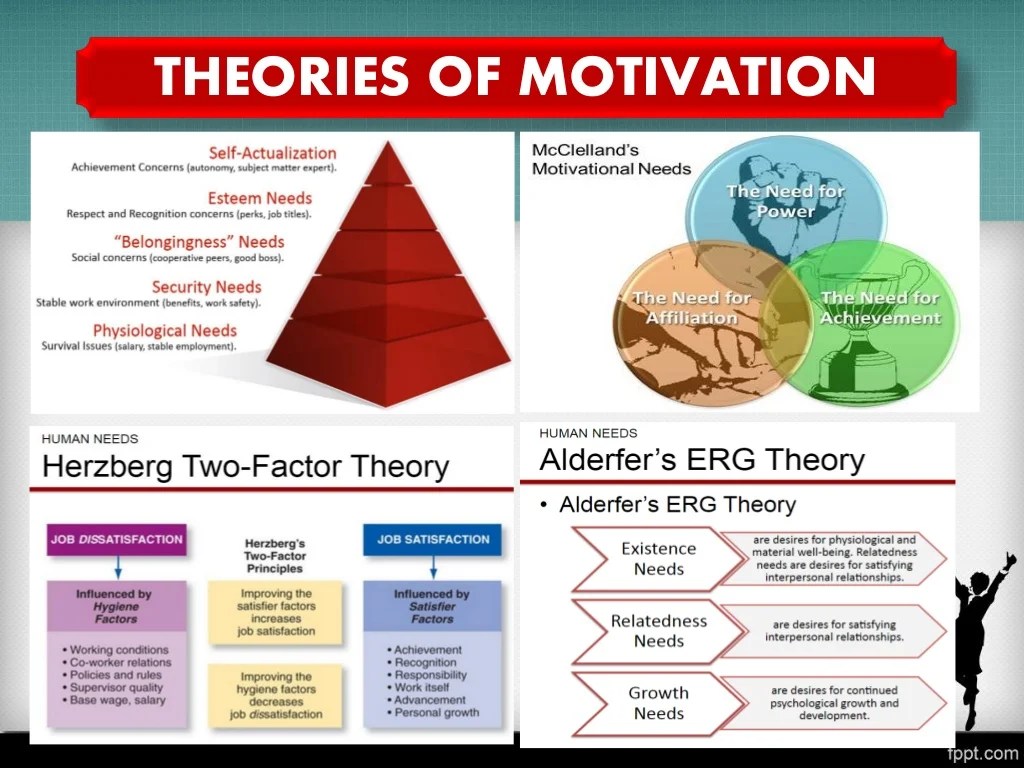
GOAL GRADIENTS: Motivational Theories

By Staff Reporters

***

***

The Goal Gradient effect is the phenomenon where people accelerate their efforts as they approach a goal. It’s like a runner sprinting to the finish line.

According to colleague Dan Ariely PhD, our motivation peaks when we see the goal within reach, driving us to work harder and faster. Marketers use this by showing progress bars and loyalty rewards. Knowing about the goal gradient can help us set milestones and maintain motivation throughout our tasks.

So, break your big goals into smaller ones and watch your productivity soar as you get closer to each milestone.

COMMENTS APPRECIATED

Subscribe Today!

***

***

Physician Career Development Essay

Professional Medical Career Development

  • By Eugene Schmuckler; PhD, MBA
  • By Dr. David E. Marcinko MBA

Dr. Marcinko with ME-P Fans

Dr. Marcinko with Future Medical Students

Invite Dr. Marcinko

Jimmy’s mother called out to him at seven in the morning, “Jimmy, get up. It’s time for school.” There was no answer. She called again, this time more loudly, “Jimmy, get up! It’s time for school!” Once more there was no more answer.

Exasperated, she went to his room and shook him saying, “Jimmy, it’s time to get ready for school.” He answered, “Mother, I’m not going to school. There are fifteen hundred kids at that school and every one of them hates me. I’m not going to school.” “Get to school!” she replied sharply. “But, Mother, all the teachers hate me, too. I saw three of them talking the other day and one of them was pointing his finger at me. I know they all hate me so I’m not going to school,” Jimmy answered. “Get to school!” his mother demanded again. “But mother, I don’t understand it. Why would you want to put me through all of that torture and suffering?” he protested. “Jimmy, for two good reasons,” she fired back.

“First, you’re forty-two years old.”

“Secondly, you’re the principal.”

Introduction 

Many of us have had conversations with medical colleagues at which time sentiments of those expressed by Jimmy have been voiced. The career choice that was made many years ago is now, for some reason, no longer as exciting, interesting and enjoyable, as it was when we first began in the field. The career that was undertaken with great anticipation is now something to dread. 

The reason for this is occurrence is not that difficult to understand.  Two of the most important decisions individuals are asked to make are ones for which the least amount of training is offered: choice of spouse and choice of career. How many college students receive a degree in the field they identified when they first enrolled at the college or university?

In fact, how many entering freshmen list their choice of major as undecided? It is only during the sophomore year when a major must be declared is the choice actually made. So, career choices made at the age of 19 might be due to having taken a course that was interesting or easy, appeared to have many entry level jobs, did not require additional educational or professional training requirements, or was a form of the “family business.”

Now as an adult, the individual is functioning in a career field that was selected for him or her by an eighteen-year-old. How do we judge career success? A career represents more than just the job or sequence of jobs we hold in a lifetime. The typical standard for a successful career is by judging how high the individual goes in the organization, how much money is earned, or one’s standing attained in the profession.

Career success actually needs to be judged on several dimensions. Career adaptability refers to the willingness and capacity to change occupations and/or the work setting to maintain a standard of career progress. 

Many of you did not anticipate the changes in your chosen medical profession, or specialty, when you began your training. A second factor is career attitudes. These are your own attitudes about the work itself, our place of work, your level of achievement, and the relationship between work and other parts of your life.  Career identity is that part of your life related to occupational and organizational activities. This is the unique way in which we believe that we fit into the world.

Our career is only one part of our being. We play many roles in life each of which combine to make up or totality. At any point in time one role may be more important than another. The importance of the roles will generally change over time. Thus at some point you may choose to identify more with your career, and at other times, with your family. 

A final factor is career performance, a function of both the level of objective career success and the level of psychological success.  How much you earn and your reputation factor into, and reflect, objective career success. To be recognized as a “leader” in a field and asked to submit chapters for inclusion in books such as this may be a more important indicator of career success than money.   Psychological success is the second measure of career performance. It is achieved when your self-esteem, the value you place on yourself, increases.

As you can see, there is a direct relationship between psychological success and objective success. It may increase as you advance in pay and status at work or decrease with job disappointment and failure. Self-esteem may also increase as one begins to sense personal worth in other ways such as family involvement or developing confidence and competence in a particular field, such as consistently shooting par on the golf course. At that point, objective career success may be secondary in your life. This is why many persons choose to become active in their church or in politics. Even though one may have slowed down on the job, or in their professional career they can be extremely content with their life. 

Consider the following situation. You are traveling on business. Although you are on a direct flight, you have a one-hour layover before the second leg of the flight and your final destination. Leaving the plane, after having placed the “occupied” card on your seat you walk down the concourse. On the way, you encounter a friend that you knew in high school. The two of you sit to have a cup of coffee and then you realize that your departure time is rapidly approaching. In fact, you will be cutting it quite close. Running down the concourse you return to the gate only to find that the door has been closed, the jetway is being retracted and the plane is being backed away from the gate. You stare out the window watching the plane go to the end of the runway and then begin its takeoff. Something goes horrible wrong and the plane crashes on takeoff, bursting into flames. It is apparent that there will be no survivors. To the world you are on that plane (remember the occupied card). Traveling on business your generous insurance policy will be activated. In anticipation of being in a location where they may not have ATM machines you have a good deal of cash, sufficient for at least a month.

The question for you to consider is: What do you do?

For many of you this will be a good indicator of your career as well as personal success.  

Surgery

Medical Career Paths

In retrospect how many persons are truly aware of their own interests, values, strengths and weaknesses during their teen years?

As with much of human behavior, career choices actually go through a series of stages. Psychologists have for years identified stages of human development.  Kohlberg discussed stages of moral development. In the 1970’s, Daniel Levinson published The Season’s of a Man’s Life, a project he undertook when he began to look inward and tried to understand his behaviors, values and attitudes to work. Discussions with his university colleagues indicated that what he was experiencing was not unique to him.  

For many years the prevailing thought was that the correct way to function in the labor market was to gain employment with a company progressing through the years until such time as you were eligible to receive the “gold watch”, the symbol of retirement. If you entered a professional discipline such as medicine or law, you did that for the rest of your life. 

Today there are still individuals who follow these traditional patterns but there are other career paths that may be taken.  The most traditional career route follows a linear path, one that most of you have rejected. This entails gaining employment in a large, bureaucratic organization with a tall pyramidal structure. It involves a series of upward (hopefully) moves in the organization until the career limit is reached. As the individual progresses upward in the organization he or she may work in different functional departments such as marketing, finance, and production. Organizations having these paths seek employees who tend to be highly oriented toward success defined in organizational terms and exhibit “leadership” skills.

In general, these people demonstrate a strong commitment to the workplace. A person with this type of orientation (Organizationalist) exhibits the following tendencies:

1.  A strong identification with the organization; seeking organization rewards and advancement that are important measures of success and organizational status.

2.  High morale and job satisfaction.

3.  A low tolerance for ambiguity about work goals and assignments.

4. Identification with superiors, showing deference toward them, conforming and complying out of a desire to advance; maintains the chain of command and compliance, and views respect for authority as the way to succeed.

5. Emphasis on organizational goals of efficiency and effectiveness, avoiding controversy and showing concern for threats to organizational success. 

As readers of this essay, you have followed the expert career path, building a career on the basis of personal competence, or the development of a profession (professionals). As you are so painfully aware, you invest heavily, personally and financially in acquiring a particular skill and then you spend the major portion of your life following that skill.

Unlike the pyramidal structure of the linear path, career paths are found in organizations that tend to be relatively flat, have departments in which there is a functional emphasis, emphasize quality and reliability, and have reward systems containing a strong recognition component.  Medical professionals are persons who are job-centered – not organization centered – viewing the demands of the organization as a nuisance that they seek to avoid.

However, that avoidance is impossible since the professional must have an organization in which to work. This is even more prevalent in today’s era of managed health care. At work, professional experience more role conflict and are more alienated. 

Medical professionals exhibit these four tendencies: 

1.  An experience of occupational socialization that instills high standards of performance in the chosen field; highly ideological about work values.

2. Sees organizational authority as nonrational when there is pressure to act in ways that are not professionally acceptable.

3. Tends to feel that their skills are not fully utilized in organizations; self-esteem may be threatened when they do not have the opportunity to do those things for which they have been trained.

4. Seeks recognition from other professionals outside the organization, and refuses to play the organizational status game except as it reflects their worth relative to others in the organization.

Professionals are very concerned with personal achievement and doing well in their chosen field. Organizational rewards serve to reflect the professional’s importance relative to others in the system. This recognition may be extremely fulfilling, especially when he or she is accorded higher status and pay than others. In the absence of organizational rewards the professional may use material objects (large homes, expensive cars) as a way of reflecting status and accomplishment. 

Medical professionals are of the opinion that successful performance, not compliance with authority, is more reinforcing. With this mindset it is not surprising why may medical practitioners balk at working in the managed health care environment.

Many professionally oriented people come from the middle class and have become successful through a higher level of education or by other efforts to acquire competence.  Those on the spiral career path make periodic moves from one occupation to another. Individuals who follow this career path tend to have high personal growth motives and are relatively creative.

Usually, these changes come after you have developed competence in the occupation you are working in and you think it is time to change what you do. The ideal spiral career path is to move from one occupation to an area related to it. This enables you to use some of the basic knowledge that you developed in your past work and to transfer it to your new occupation. The difference between this path and the linear path discussed above is that in this case the mobility pattern is lateral, not upward. 

People who take the transitory career path cannot seem to, and perhaps do not want to settle down. The pattern is one of consistent inconsistency in their work. These are individuals who may find a great deal of satisfaction working as consultants. The work style is marked by an ability to do many things reasonably well. They value independence and variety, and they work best in relatively loose and unstructured organizations that tolerate the type of freedom they demand in their work.

We have so far discussed the four types of career paths and two career orientations.

A final form of career orientation is that of the indifferents, those who simply work for a paycheck. These are individuals who do their work well, but they are not highly committed to their job or the organization.

Some characteristics of indifferents are:

1.  More oriented toward leisure, not the work ethic (is it Friday yet?); separates work from more meaningful aspects of life, and seeks higher-order need satisfaction outside the work organization.

2. Tends to be alienated from work and not committed to the organization.

3. Rejects status symbols in organizations.

4. Withdraws psychologically from work and organizations when possible. 

Indifferents are not necessarily born that way; some are actually a product of their work experiences. People who once had an organizational orientation and were highly loyal may no longer follow orders without question.

For example, you may have had an officer manager who very early in his or her career was extremely committed to you and your organization. He or she may seek rewards and want to advance. However, in later career life, after having been passed over several times for promotion, the person seeks rewards elsewhere. Thus it is possible that through office practices, your organization may turn highly committed organizationalists (or professionals) into indifferents. 

surgery

Medical Career Evaluation

Studs Turkel, in his outstanding book Working, makes the comment that work is the mechanism by which many of us get our daily bread and our daily purpose. If this is to be the case then the workplace needs to offer us something more than a paycheck.

A few years back, the Wilson Learning Corporation surveyed 1,500 people asking “If you had enough money to live comfortably for the rest of your life, would you continue to work?

Seventy percent said that they would continue to work, but 60 percent of those said they would change jobs and seek “more satisfying” work.

Each of us has in fact been put in charge of our own careers. Our personal career management is a lifelong process. Our task is to be able to discover our place in the world where we will be able to enjoy a high level of wellness.

This requires us to now assess our career, not from the eyes of the sixteen year old that initially chose the career. The career you are now pursuing needs to be compatible with your own unique skills, knowledge, personality and interests. It is important to keep in mind that no one is married to his or her job. When it comes to the workplace most of us are in dating relationships. 

As part of your examining your current medical career, answer the following questions:

  • Why do you work?
  • What does work mean to you?
  • What do you want from work? 

Research shows that most people work for three major reasons.

The first of these is money. Not only is this necessary for our most basic needs it also serves as a means of determining our self-image.

A second reason is to be with other people. Being at work enables us to belong, to be part of something beyond ourselves. We become part of a team. Some offices consider co-workers to be part of an extended family. The work setting affords us the opportunity for receiving feedback, recognition and support.

The third most often given reason is that work validates us as people if we consider what we do as having meaning. “I chose the medical profession so as to make a difference.”

Individuals with career success have a sense of purpose, a feeling that their work has meaning and contributes to a worthwhile cause. This is not a trick question. How well does what you do in your office every day meet your needs for money, affiliation and meaning?  Without a sense of purpose on the job the chances are that your performance while adequate will not place you in the excellent category.

Therefore, it is necessary for each and every one of us to be able to succinctly answer the question, “What is the purpose of your job?” That is a tough question to answer.

As a medical professional you may have seen what you considered to be the purpose of your job radically changed due to changes in the way services are now delivered. While we cannot bring back the past we can work around the present. Think about this for a moment, “If you want something to happen make a space for it.” What this means that whether you remain in your current profession or move elsewhere there is a need for you to establish long-range, medium-range, short-range, mini, and micro goals.  

Long-range goals are those concerned with the overall style of life that you wish to live. Regardless of your current age these goals are necessary. Long-range goals don’t need to be too detailed, because like the federal budget surplus, changes will come along. Just as the government is making projections into the future you too need to be making projections including but not limited to retirement. 

Medium-range goals are goals covering the next five years or so. These are the goals that include the next step in your career. These are goals over which we have control and we are able to monitor them and see whether we are on track to accomplishing them and modify our efforts accordingly.

Short-range goals generally cover a period of time about one month to one year from now. These are goals that can be set quite realistically and we are able to see fairly quickly whether or not we are on track to reaching them. We don’t want to set these goals at impossible levels but we do want to stretch ourselves. After all, that is the reason you are probably reading this chapter.  

Mini-goals are those goals covering from about one day to one month. Obviously we have much greater control over these goals than you do over those of a longer-term. By thinking in small blocks of time there is much more control over each individual unit. 

Micro-goals are goals covering the next 15 minutes to an hour. These are the only goals over which you have direct control. Because of this direct control, micro-goals, even though modest in impact, are extraordinarily important, for it is only through these micro-goals that you can attain your larger goals.

If you don’t take steps toward your long-range goals in the next 15 minutes, when will you? The following 15 minutes? The 15 minutes after that? Sooner or later, you have to pick 15 minutes and get going.

At some point procrastination has to be put aside.  In thinking of your goals it now becomes necessary to evaluate your personal assets. Conducting this personal inventory requires you to identify your assets as well as your shortcomings.

First, look at a time in your life when you were performing at your best. What were your thoughts and feelings? How did you behave? What were you doing? Now look at the reverse when you were doing poorly. What were your thoughts and feelings at that time? How did you behave? What were you doing? If you are like others when you were at your best you described yourself as being confident, enthusiastic, organized, relaxed, focused, in control, friendly and decisive.

The flip side, when at your worst you were fearful, apathetic, messy, anxious, lacking direction, out of control, argumentative and frustrated. 

As you can see the emotions when we are at our best are all positive. This leads to the conclusion that it is to our advantage to be at our best as much as possible.

Being at our best derives from working in those areas where we contribute our talents to something we believe in.  As we continue our own personal inventory we need to look at our special abilities. That is, what are you good at and find easy to do.

doctors

Think of the following questions.

It’s not necessary to write down you answers just think about them:

1. How would you like to be remembered?

2. What have you always dreamed of contributing to the world?

3. Looking back on your life, what are some of your major contributions?

4. When people think of you, what might they say are your most outstanding characteristics?

5. What do you really want from your life and your work?

6. In what way may you still feel limited by the past? If so, by what?

7. What will it take to let go of what has happened, no matter how good or bad? Are you willing to let go?

8. How might the rut of conformity or comfort be limiting you? Why?

9. How different do you really want life to be? Why.

10. Have you ever stated what it is you truly desire? If no, why not?

11. How good could stand life to be?  

Thinking about remaining in your present career or moving into another one is not easy. You are at the edge of a cliff and need to decide if you are going to turn back or to trust in yourself to successfully make it down to the bottom. People who are afraid of the dark lose their fear with just the slightest of a light in the room.

As you have been going through this chapter you have been shining a light, however dim it may appear to you. You can see all of the items around you. The obstacles are there but with your advance knowledge you can anticipate ways to avoid them.  Having looked at and possibly re-evaluated your plans you can now do a thorough analysis of your assets.

The assets requiring the most scrutiny are the following:

1.Your talents and skills

2. Your intelligence

3. Your motivation

4. Your friends

5. Your education

6. Your family.

Your talents and skills are more than likely what has gotten you to the point you are at in your present career.

For purposes of definition talents are innate, skills are acquired. Some have talent in interpersonal relations and some in artistic pursuits. Skills may be selected to complement the already present talents. It is skills that are necessary for expanding your options. As you seek out new skill areas ask yourself these questions. Do the skills provide occupational relevance? Might you be able to get others to pay you to teach them the skill? Will the skill be useful throughout life? Will the skill help you conquer new environments and gain new experiences?

And, of course, is it something you like to do? Intelligence is considered to be the ability of the individual to cope with the world.

Originally, intelligence focused primarily in the area of cognitive skills. Recently attention has been directed to what is called emotional intelligence, a concept that directs attention to social skills. Whether you were able to breeze through your courses in college or you truly had to work hard, earning your degrees demonstrates a better than average amount of cognitive intellectual ability. In order to maximize your brainpower, challenge yourself regularly.

Motivation looks at how hard you are willing to work, your level of persistence, and the degree to which you want to do well. Different things motivate each of us and our personal motivators can vary from day to day. How many times have you had people say that they could not do your job? What are the activities that are attractive to you? More than likely an important motivator for you is to do something worthwhile.

It has also been found that we tend to perform at about the same level as those people who are close to us. What this means is that those people with whom you work are going to have s substantial impact on your motivation. 

Friends, of course, are invaluable assets. We use our friends as models for our own behavior. Those persons we consider friends share many of our attitudes, actions and opinions. With time we will change to be like our friends and they will change to become like us. Associating with those like us tends to temper our behavior. We try not to associate with the “wrong crowd” lest we become like them.  Education needs to be ongoing.

Recently, it was reported “all careers and businesses will be transformed by new technologies in often unpredictable ways. The era of the entrepreneur will make ‘boutique’ businesses more competitive with the behemoths, as mid-sized institutions get squeezed out. And, medical breakthroughs and the ongoing health movement will enhance-and extend-people’s lives.”

The implication of these changes is that new technologies often require a higher level of education and training to use them effectively and new biotechnology jobs will open up. The authors state that all the technological knowledge we work with today will represent only 1 percent of the knowledge that will be available in 2050.

The half-life of an engineer’s knowledge today is only five years; in ten years, 90 percent of what an engineer knows will be available on the computer.

In electronics, fully half of what a student learns as a freshman is obsolete by his or her senior year. The implication here is that all of us must get used to the idea of lifelong learning. Family influences who and what we are and do. They can be a support group or they can be a deterrent to your goals. It is incumbent on every individual reading this chapter to consult with immediate family members at all stages of your career planning process.    

Doctors Labor Day

Conclusion

This essay has presented an overview of initial career selection, career pathing and career change in order to help you determine what you truly want to be when you grow up.

As I write, I can not help but reflect on an anecdote shared with me by a colleague.

An individual came to see him expressing concern that at 40 years of age he still hadn’t reached a satisfactory point in his life. My colleague then asked him where he wanted to be. The response was “I don’t know” to which my colleague responded, “Congratulations, you’ve arrived.

Too many times I encounter in my practice, physicians who express the same statements. Unhappy with what they are doing they have no idea as to what it is they would like to be doing. 

Victor Frankl, a psychiatrist who was a holocaust survivor, created an entire school of psychotherapy based upon his experiences in the German concentration camps. In his book, Man’s Search for Meaning, he makes reference to the fact that it became possible for him to determine when a fellow prisoner was going to die simply by that person’s behavior – giving up.

Frankl writes, “Evermore people today have the means to live, but no meaning to live for.      

Thus, it may be appropriate to conclude with this anonymous poem. 

Take time to work-

It is the price of success.Take time to think-

It is the source of power.Take time to play-

It is the secret of perpetual youth.Take time to read- 

It is the fountain of wisdom.Take time to be friendly-

It is the road to happiness.Take time to love and be loved-

It is nourishment for the soul.Take time to share-  

It is too short a life to be selfish.Take time to laugh- 

It is the music of the heart.Take time to dream- 

It is hitching your wagon to a star.

Now, how do you view your medical, executive, professional or healthcare administrative career amid all the turmoil in the industry today? 


McNally, D. Even Eagles Need A Push, New York, NY: Delacorte Press, 1991.

Brousseau, K.R., Driver, M.J., Eneroth, K. and Larson, R.: Career Pandemonium: Realigning organizations and individuals. Academy of Management Executive 10 (4), 52-66. 1996

Presthus, R. The Organizational Society. New York, NY: St. Martin’s Press.Campbell, D. If You Don’t Know Where You are Going You’ll Probably End Up Somewhere Else, Niles, IL: Argus Communications, 1974. 

Campbell, D. op. cit.The Futurist, March–April 2001.

Risk Management, Liability Insurance, and Asset Protection Strategies for Doctors and Advisors: Best Practices from Leading Consultants and Certified Medical Planners™8Comprehensive Financial Planning Strategies for Doctors and Advisors: Best Practices from Leading Consultants and Certified Medical Planners™

[Dr. Cappiello PhD MBA] *** [Foreword Dr. Krieger MD MBA]

Front Matter with Foreword by Jason Dyken MD MBA

Invite Dr. Marcinko

***

ILLUSORY: Correlation

CORRELATION IS NOT CAUSATION

By Staff Reporters

***

***

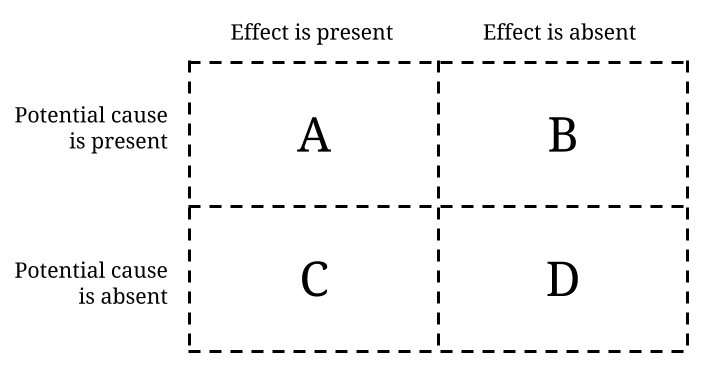
According to colleague Dan Ariely PhD, Illusory Correlation is the perception of a relationship between variables when none exists. It’s like thinking that carrying an umbrella causes it to rain. Our brains are pattern-seeking machines, often connecting dots that aren’t actually connected. This bias can lead to superstitions and incorrect beliefs.

The illusory correlation occurs when someone believes that there is a relationship between two people, events, or behaviors, even though there is no logical way to connect them. The illusory correlation fools us into believing stereotypes, superstitions, old wives’ tales, and other silly ideas. Sometimes, the perceived connection between two events is harmless. It’s silly to think that a certain number always brings you luck. But forming these connections is completely normal. To avoid illusory correlations, rely on data and evidence rather than anecdotal observations.

So always remember: correlation does not imply causation, no matter how convincing it seems.

More: https://medicalexecutivepost.com/2024/06/05/correlation-is-not-causation/

COMMENTS APPRECIATED

Thank You

***

***

CONTRAST EFFECT: Cognitive Bias

FOR FINANCIAL ADVISORS

By Dr. David Edward Marcinko MBA MEd CMP

SPONSOR: http://www.CertifiedMedicalPlanner.org

***

***

Sensation, emotion and cognition work by Contrast Effect [cognitive bias]. 

Now, such perception is not only on an absolute scale, it also functions relative to prior stimuli.  This is why room temperature water feels hot when experienced after being exposed to the cold.  It is also why the cessation of negative emotions “feels” so good. 

Cognitive bias functioning also works on this principle.  So one’s ability to analyze information and draw conclusions is very much related to the context with in which the analysis takes place, and to what information was originally available.  This is why it is so important to manage one’s own expectations as well as those of a financial advisor’s or stock broker’s clients. 

For example, a client is much more likely to be satisfied with a 10% portfolio return if they were expecting 7% than if they were hoping for 15%.

COMMENTS APPRECIATED

Subscribe, Like and Refer Today!

***

***

The TIPPING POINT: Meanings Vary

By Staff Reporters

***

***

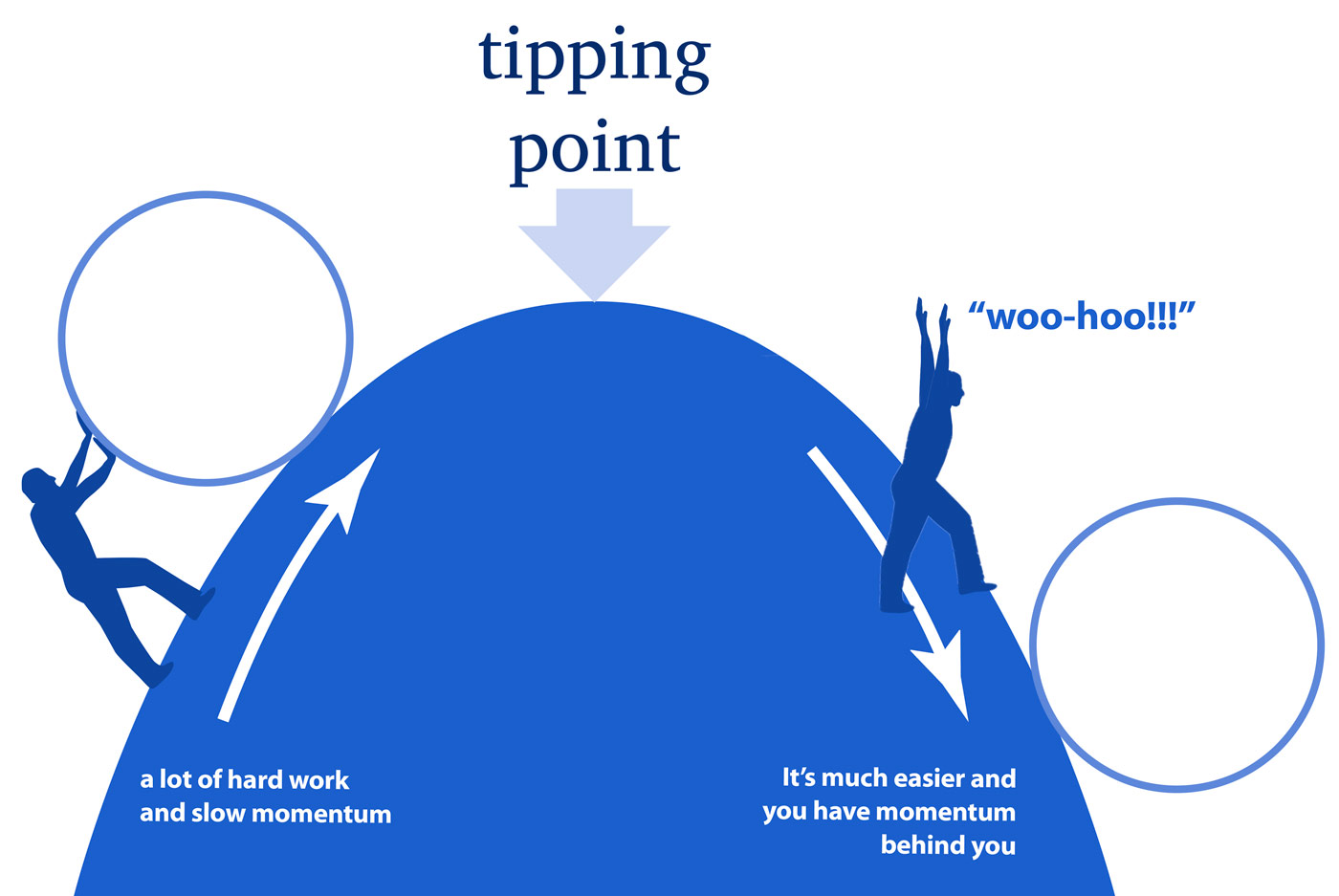
A “Tipping point” has slightly varied meanings depending upon the field of study, but is frequently defined as a series of small changes in an evolutionary process that ultimately lead to a significant change or point beyond which new circumstances and conditions obtain.

For example, the point at which emerging economies go from being a long-time source of deflation to a source of inflation can be said to be an inflationary tipping point.

***

The Tipping Point: How Little Things Can Make a Big Difference is the debut book by Malcolm Gladwell, first published by Litttle, Brown in 2000. Gladwell defines a tipping point as “the moment of critical mass, the threshold, the boiling point.” The book seeks to explain and describe the “mysterious” sociological changes that mark everyday life. As Gladwell stated: “Ideas and products and messages and behaviors spread like viruses do.”

Examples of such changes in his book include the rise in popularity and sales of Hush Puppies shoes in the mid-1990s and the steep drop in New York City‘s crime rate after 1990.

COMMENTS APPRECIATED

Subscribe Today!

***

***

ABSURDISM versus NIHILISM

By Staff Reporters

***

***

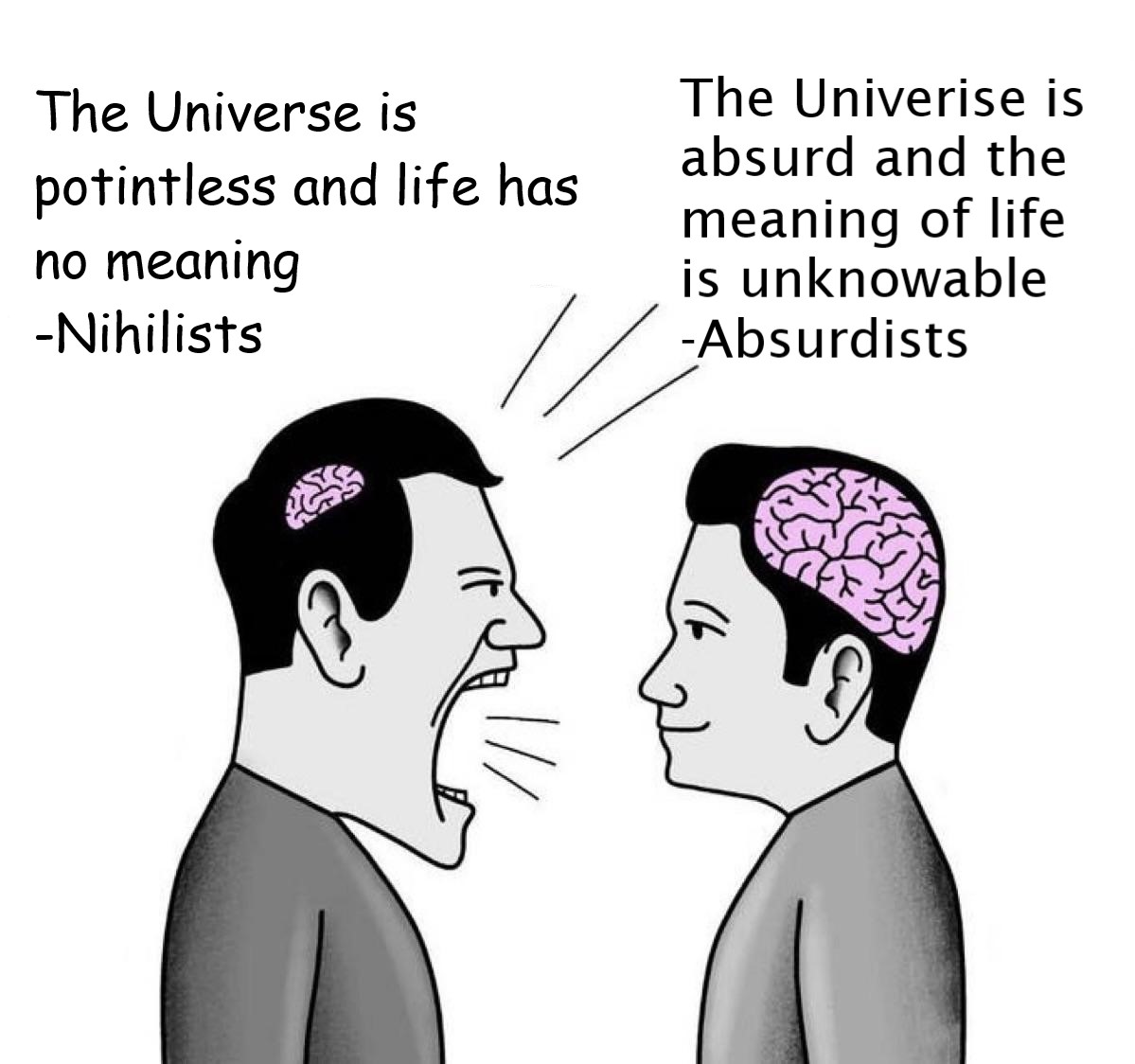
Absurdism is the philosophical idea that life is inherently meaningless, but we should embrace the absurdity and create our own meaning. Think of it as existentialism’s quirky cousin. It’s like laughing at the cosmic joke instead of crying over spilled milk. Absurdism encourages us to find joy in the randomness and chaos of life.

So, according to colleague Dan Arily PhD, the next time you’re feeling overwhelmed by the lack of purpose, channel your inner absurdist and find humor in the absurdity of it all.

Nihilism, on the other hand, is the belief that all values are baseless and that nothing can be known or communicated. It is often associated with extreme pessimism and a radical skepticism that condemns existence. A true nihilist would believe in nothing, have no loyalties, and no purpose other than, perhaps, an impulse to destroy. While few philosophers would claim to be nihilists, nihilism is most often associated with Friedrich Nietzsche who argued that its corrosive effects would eventually destroy all moral, religious, and metaphysical convictions and precipitate the greatest crisis in human history.

In the 20th century, nihilistic themes–epistemological failure, value destruction, and cosmic purposelessness–have preoccupied artists, social critics and philosophers, alike. Mid-century, for example, the existentialists helped popularize tenets of nihilism in their attempts to blunt its destructive potential. By the end of the century, existential despair as a response to nihilism gave way to an attitude of indifference, often associated with anti-foundationalism.

COMMENTS APPRECIATED

Subscribe Today!

***

***

PSYCHOLOGY: Retrospective Framing

By Staff Reporters

***

***

Ever notice how memories change over time? That’s retrospective framing.

According to Dan Ariely PhD, our brains are like movie editors, constantly tweaking the past to fit our current narrative. Recall that terrible vacation where everything went wrong? Fast forward and now it’s a hilarious adventure. This mental editing helps us make sense of our lives and learn from our experiences.

So, just remember, the past is a story we keep rewriting, and sometimes those edits can be more fiction than fact

COMMENTS APPRECIATED

Subscribe Today!

***

***

VARIETY: Insensitivity

By Staff Reporters

***

***

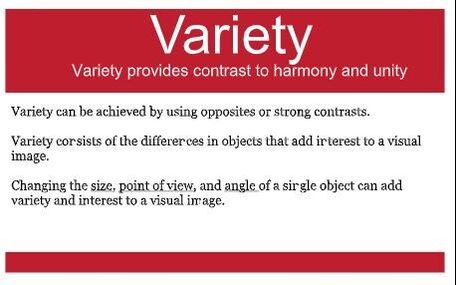
Variety Insensitivity is the tendency to under appreciate the value of variety in choices.

According to Dan Ariely PhD, it’s like always ordering the same dish at your favorite restaurant and forgetting how exciting new flavors can be. Our brains love routine, but this can lead to boredom and missed opportunities. Embracing variety can enhance experiences and satisfaction.

So, next time you’re stuck in a rut, shake things up and try something different. Your brain will thank you for the new stimulation.

COMMENTS APPRECIATED

Subscribe Today!

***

***

CURSE of the “Stereotype”

By Dr. David Edward Marcinko MBA MEd

***

***

The Stereotype Curse is the negative impact of stereotypes on an individual’s performance or behavior. It’s like a self-fulfilling prophecy where being aware of a stereotype makes you more likely to conform to it.

For example, if you’re told you’re bad at math because of your gender, that stress can affect your performance. Breaking free from stereotypes requires awareness and effort.

So, next time you feel boxed in by a stereotype, remind yourself: you’re more than a cliché.

COMMENTS APPRECIATED

Subscribe Today!

***

***

RESPONSE: Flight -OR- Fight?

By Staff Reporters

***

***

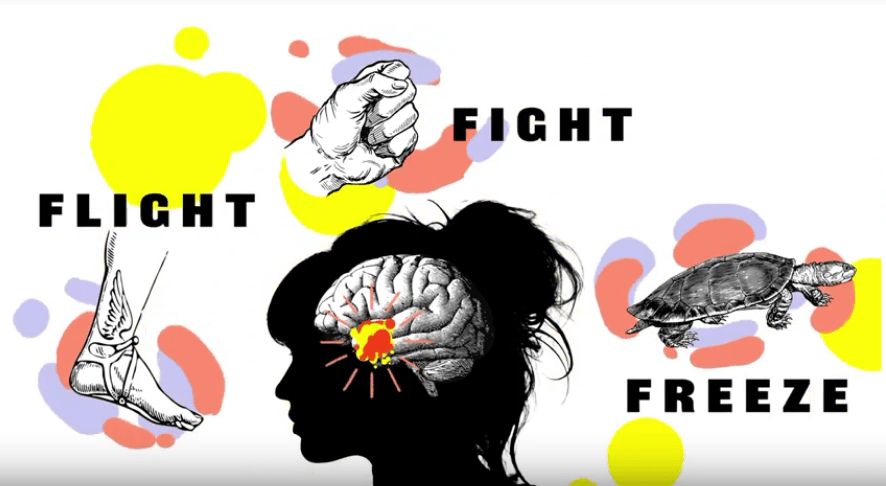
The Fight or Flight Response is our built-in alarm system, ready to spring into action at the first sign of danger. Whether it’s a charging lion or an impending deadline, our bodies react the same way – heart racing, adrenaline pumping, ready to fight or flee. This ancient survival mechanism is great for escaping predators but less helpful when dealing with modern stressors.
So, the next time you feel your heart racing over a tough email or stock market loss, remember: it’s just your caveman brain doing its thing.

COMMENTS APPRECIATED

Subscribe Today!

***

***

FATAL: Narcissism

BY DR. DAVID EDWARD MARCINKO MBA MEd

***

***

Imagine if Narcissus had a social media account. Fatal narcissism is what happens when self-love goes off the rails. It’s not just about admiring your reflection; it’s an all-consuming need for admiration and validation. Think endless selfies and humblebrags.

***

***

While a bit of narcissism is normal, fatal narcissism is like a black hole – it sucks in all attention and gives nothing back.

So, if my Instagram looks like a shrine to my own greatness, you might be witnessing fatal narcissism in action.

COMMENTS APPRECIATED

Subscribe Today!

***

***

PODCAST: Farzad Mostashari MD and “Aledade”Primary Care

By Shahid N Shah

***

***

Our guest on this episode is Dr. Farzad Mostashari. Farzad is the co-founder and CEO of Aledade, a primary care enablement company that partners with independent PCPs to transition to value-based care and, as a result, maintain their independence.

Founded in 2014, Aledade works with 11,000 physicians across 40 states and DC, accounting for 1.7M patients under management in Medicare, Medicare Advantage, Commercial and Medicaid contracts. Farzad previously served as the National Coordinator for Health IT in the Department of Health and Human Services, he completed medical school at the Yale School of Medicine and a Master’s in Population Health from Harvard’s T.H. Chan School of Public Health. Earlier this year, Aledade raised a $123M Series E round of funding led by OMERS Growth Equity.

***

In this episode, colleague Shahid N. Shah will discuss with Farzad about (1) his journey to starting Aledade and the role policy expertise and evidence have played in the company’s success (2) why he and the company are betting on independent physicians as the drivers of change in value-based care and (3) how Aledade became the rare profitable health tech company.

-Dr. David Edward Marcinko MBA MEd

PODCAST: https://soundcloud.com/wharton-pulse-podcast/mostashari-aledade

***

ORDER: https://www.amazon.com/Dictionary-Health-Information-Technology-Security/dp/0826149952/ref=sr_1_5?ie=UTF8&s=books&qid=1254413315&sr=1-5

***

ORDER: https://www.amazon.com/Business-Medical-Practice-Transformational-Doctors/dp/0826105750/ref=sr_1_9?ie=UTF8&qid=1448163039&sr=8-9&keywords=david+marcinko

COMMENTS APPRECIATED

Thank You

***

PHYSICIAN: Pay Cuts in 2025

By Staff Reporters

***

***

Doctors, Facing Another Pay Cut, Call for Permanent Medicare Payment Reform

The Centers for Medicare and Medicaid Services (CMS) is moving forward with a 2.9% cut to physician payments in 2025 despite protest from major industry groups. CMS has finalized the calendar year 2025 Medicare Physician Fee Schedule rule that sets payment rates for next year and also outlines new policies focused on primary care, preserved telehealth flexibilities, and a strengthened Medicare Shared Savings Program (MSSP). 

But, provider groups were quick to condemn CMS’ decision to go ahead with the pay cut, which was proposed in the draft rule released in July. In a statement, Bruce Scott, MD, president of the American Medical Association (AMA), pointed out that that while physicians are receiving a 2.8% payment cut next year, medical practice costs for physicians will increase by 3.5% in 2025. After adjusted for inflation, Medicare reimbursement to physicians has decreased 29% since 2001, the AMA says.

Source: Heather Landi, Fierce Healthcare [11/2/24]

COMMENTS APPRECIATED

Thank You

***

***

PRIMARY MEDICAL CARE: The Paradox

BY DR. DAVID EDWARD MARCINKO MBA MEd CMP

Sponsor: http://www.CertifiedMedicalPlanner.org

***

***

Classic Definition: Despite rising costs, health care often is of poor quality. Evidence from a classic medical improvement outcomes study assessed care of patients with several chronic diseases. This study found that patients’ functional health status outcomes are similar to care rendered by specialists and generalists but that generalists use far fewer resources. Similar outcome at lower cost represents higher value.

Modern Circumstance: Current solutions to improving care quality may do more harm than good if they focus more on diseases than on people. Efforts to improve the parts (evidence-based care of specific diseases) may not necessarily improve the whole (the health of people and populations).

Expanding access to specialty care, for example, has been proposed as both a source of and a solution for deficiencies in quality of care. Primary care is touted as an essential building block of a high-value health care system even as it is undermined by systems attempting to improve the quality, effectiveness, and value of their health care..

Paradox Example: The above contradictions plague improvement efforts in health care systems around the world, particularly the United States The paradox is that compared with specialty care or with systems dominated by specialty medical care, primary care is associated with the following: (1) poorer quality care for individual diseases, yet (2) similar functional health status at lower cost for people with chronic disease, and (3) better quality, better health, greater health  equity and lower costs for whole peoples and populations.

And so, this contradiction plagues improvement efforts in health care systems around the world, particularly the United States.

Cite: Kurt Stange MD PhD and Robert Ferrer MD MPH

COMMENTS APPRECIATED

Thank You

***

***

California Passes Bill Regulating Private Equity Deals

By Health Capital Consultants, LLC

***

***

On September 28th, 2024, California Governor Gavin Newsom vetoed Assembly Bill (AB) 3129, which sought to regulate private equity (PE) transactions involving healthcare organizations by requiring certain transactions to be reviewed by, and to receive approval from, the California Attorney General (AG).

In his veto message, Governor Newsom stated that the state’s Office of Health Care Affordability (OHCA), established in 2022, has the power to review and evaluate healthcare transactions (including the ones at issue in AB 3129). While OHCA does not have the power to block proposed transactions, as the AG would have had under AB 3129, it can refer transactions to the AG for further examination. Put simply, the governor’s veto seems to stem from concern that taking power away from the newly-created OHCA could muddy the waters in healthcare transaction regulation.

While there is a possibility that the California legislature could override Governor Newsom’s veto, it appears unlikely as of the publication of this Alert. However, the overall popularity of this bill in the legislature (as evidenced by the fairly wide margins with which it passed) indicates that PE groups looking to transact in the healthcare space – both in California and across the U.S. – should be on high alert, as regulators are increasingly turning their focus on the role of PE in healthcare.

CITE: https://www.r2library.com/Resource/Title/0826102549

For more information on AB 3129, as well as the status of state and federal regulation of PE, see the September 2024 Health Capital Topics article entitled, California Passes Bill Regulating Private Equity Deals.”

COMMENTS APPRECIATED

Thank You

***

***

KENNETH ARROW: Information Paradox

To sell information you need to give it away before the sale

By Dr. David Edward Marcinko MBA MEd

SPONSOR: http://www.MarcinkoAssociates.com

***

***

THE FATHER OF HEALTH ECONOMICS

According to Wikipedia, a fundamental tenet of the paradox is that the customer, i.e. the potential purchaser of the information describing a technology (or other information having some value, such as facts), wants to know the technology and what it does in sufficient detail as to understand its capabilities or have information about the facts or products to decide whether or not to buy it. Once the customer has this detailed knowledge, however, the seller has in effect transferred the technology to the customer without any compensation. This has been argued to show the need for patent protection [HIPPA].

CITE: https://www.r2library.com/Resource/Title/0826102549

If the buyer trusts the seller or is protected via contract, then they only need to know the results that the technology will provide, along with any caveats for its usage in a given context. A problem is that sellers lie, they may be mistaken, one or both sides overlook side consequences for usage in a given context, or some unknown-unknown affects the actual outcome.

MORE :https://www.nobelprize.org/prizes/economic-sciences/1972/arrow/facts/

COMMENTS APPRECIATED

Subscribe Today!

***

***

PHYSICIAN PERSONAL COACHING: Financial Planning and Retirement Consulting

SPONSORED BY: http://www.MarcinkoAssociates.com

***

***

Most doctors report feeling overworked and are considering a change in career, according to a new poll.

Doximity, a virtual network for physicians, found that 81% doctors surveyed last fall said they felt overworked—a slight decline from 86% who reported burnout in 2022 but still up from 73% in 2021. Meanwhile, about three in five doctors said they were considering early retirement (30%), looking for another employer (15%), or leaving the profession altogether (14%), the poll found.

The findings, released last year, come amid reports of rising rates of physician burnout and dissatisfaction since after the Covid-19 pandemic.

LEARN MORE: https://tinyurl.com/y3j2t3ab

COMMENTS APPRECIATED

Thank You

***

***

GDP: Private Domestic Health Care Investments

By Dr. David Edward Marcinko MBA MEd CMP™

SPONSOR: http://www.MarcinkoAssociates.com

***

***

SPONSOR: http://www.CertifiedMedicalPlanner.org

GROSS PRIVATE DOMESTIC HEALTH CARE INVESTMENTS

Classic:  Investment purchases and private expenditures of healthcare firms, the value of related construction, and the change in inventory during the year.

Modern: Gross Revenue Per Day is the average amount charged by a hospital for one day of inpatient care (gross inpatient revenue divided by patient-census days).

CITE: https://www.r2library.com/Resource/Title/0826102549

Examples:

  • Gross Revenue Per Discharge: The average amount charged by a hospital to treat an inpatient from admission to discharge (gross inpatient revenue divided by discharges).
  • Gross Revenue Per Visit: The average amount charged by a hospital for an outpatient visit (gross outpatient revenue divided by outpatient visits).

COMMENTS APPRECIATED

Subscribe Today!

***

***

RIP: Philip George Zimbardo PhD

March 23, 1933 – October 14, 2024

By Staff Reporters

***

***

Philip George Zimbardo was an American psychologist and a professor at Stanford University. He became known for his 1971 Stanford prison experiment, which was later criticized severely for both ethical and scientific reasons.

He authored various introductory psychology textbooks for college students, and other notable works, including The Lucifer Effect, The Time Paradox, and The Time Cure.

He was also the initiator and president of the Heroic Imagination Project.

Official website: philipzimbardo.com

COMMENTS APPRECIATED

Thank You

***

***

PHYSICIANS: Career Change Conundrum

By Dr. David Edward Marcinko MBA MEd CMP™

SPONSOR: https://marcinkoassociates.com/process-what-we-do/

***

***

Half of Physicians Plan to Change Career Paths

The Physicians Foundation conducted a survey on physician practice patterns and perspectives a few years ago. Here are some key findings from the report:

• 31% of physicians identify as independent practice owners or partners.
• Almost half (47%) of physicians plan to change career paths.
• 78% of physicians sometimes, often or always experience feelings of burnout.
• Nearly a quarter of physician time is spent on non-clinical paperwork.

This result is not good for Medicine.

Cite: The Physicians Foundation, September 2018

COMMENTS APPRECIATED

Subscribe Today!

***

***

Recent Court Actions Provide Insight into Future of Fraud & Abuse Laws

By Health Capital Consultants, LLC

Two recent court actions may serve as harbingers for the future of healthcare fraud and abuse laws. In September 2024, a federal judge in the Southern District of West Virginia ordered parties in a qui tam False Claims Act and Stark Law case to brief the court on the implications of Loper Bright Enterprises v. Raimondo on the interpretation of the Stark Law to the case at hand.

That same month, a federal judge in the Middle District of Florida dismissed a qui tam lawsuit on a novel theory that the False Claims Act’s whistleblower provisions are unconstitutional.

This Health Capital Topics article discusses these cases and the potential impact on federal fraud and abuse laws. (Read more…)

COMMENTS APPRECIATED

Thank You

***

***

DAILY UPDATE: MBAs, Apple and Goldman Sachs as Stock Markets Mixed

MEDICAL EXECUTIVE-POST TODAY’S NEWSLETTER BRIEFING

***

Essays, Opinions and Curated News in Health Economics, Investing, Business, Management and Financial Planning for Physician Entrepreneurs and their Savvy Advisors and Consultants

Serving Almost One Million Doctors, Financial Advisors and Medical Management Consultants Daily

A Partner of the Institute of Medical Business Advisors , Inc.

http://www.MedicalBusinessAdvisors.com

SPONSORED BY: Marcinko & Associates, Inc.

***

http://www.MarcinkoAssociates.com

Daily Update Provided By Staff Reporters Since 2007.
How May We Serve You?
© Copyright Institute of Medical Business Advisors, Inc. All rights reserved. 2024

REFER A COLLEAGUE: MarcinkoAdvisors@msn.com

SPONSORSHIPS AVAILABLE: https://medicalexecutivepost.com/sponsors/

ADVERTISE ON THE ME-P: https://tinyurl.com/ytb5955z

Your Referral Count -0-

Applications to MBA programs are up 12% in 2024 after declining for two years, according to the Graduate Management Admission Council, which surveys business school admissions offices.

Apple and Goldman Sachs were ordered to pay $89 million by the Consumer Financial Protection Bureau for failing to address thousands of consumer disputes of Apple Card transactions.

Apple is cutting production of Vision Pro due to slow sales. The tech giant is scaling down production of its $3,500 Vision Pro VR headset and might halt assembly of new ones next month,

CITE: https://www.r2library.com/Resource

STOCKS UP

  • UPS delivered a strong earnings report, with revenue beating analyst expectations for the first time in two years. Shares popped 5.28%.
  • ServiceNow rose 5.41% to a new all-time high thanks to a beat-and-raise third-quarter earnings report powered by higher AI demand for the enterprise software company.
  • Whirlpool climbed 11.20% after announcing solid earnings and reiterating guidance for the rest of the fiscal year, reassuring worried shareholders.
  • Molina Healthcare soared 17.67% after beating both top and bottom line estimates in the third quarter, thanks to the health insurer reaping the rewards of higher Medicaid payouts.

STOCKS DOWN

  • IBM dropped 6.17% on disappointing third-quarter results, missing on both top and bottom line forecasts thanks to lower consulting and infrastructure revenue.
  • Peloton pedaled higher yesterday after Greenlight Capital’s David Einhorn declared that the company was undervalued while he was pedaling on a Peloton. The stunt only worked for a quick sprint, though, with shares back down 2.07% today.
  • TKO Group Holdings got hit with a piledriver after the owner of the WWE and UFC announced it is acquiring several entertainment companies, including Professional Bull Riders. Investors bucked shares off 8.69%.
  • Keurig Dr. Pepper fizzled 4.80% thanks to lower sales last quarter, though the company is trying to bolster revenue by acquiring energy drink maker Ghost.
  • Air taxi startup Lilium crashed 61.50% on the news that its main subsidiaries have run out of cash and are filing for insolvency.

CITE: https://tinyurl.com/2h47urt5

Here’s where the major benchmarks ended:

  • The S&P 500® index (SPX) rose 12.44 points (0.21%) to 5,809.86; the $DJI fell 140.59 points (–0.33%) to 42,374.36; and the NASDAQ Composite® ($COMP) added 138.83 points (0.76%) to 18,415.49.
  • The 10-year Treasury note yield fell four basis points to 4.20%.
  • The CBOE Volatility Index® (VIX) was about flat at 19.18.

CITE: https://tinyurl.com/tj8smmes

Visualize: How private equity tangled banks in a web of debt, from the Financial Times.

COMMENTS APPRECIATED

PLEASE SUBSCRIBE: MarcinkoAdvisors@msn.com

Thank You

***

***

***

***

EDUCATIONAL TEXTBOOKS: https://tinyurl.com/4zdxuuwf

***

HBCUs and the Production of Doctors

By Marybeth Gasman, Tiffany Smith, Carmen Ye, and Thai-Huy Nguyen

Abstract

An important issue facing the world of medicine and health care is the field’s lack of diversity, especially regarding African American doctors. African Americans made up 6% of all physicians in the U.S. in 2008, 6.9% of enrolled medical students in 2013 and 7.3% of all medical school applicants.

The existing literature on the lack of diversity within the medical field emphasizes the role that inclusion would play in closing the health disparities among racial groups and the benefits acquired by African Americans through better patient-doctor interactions and further respect for cultural sensitivity. A large portion of current research regarding Black medical students and education focuses on why minority students do not go into medical school or complete their intended pre-med degrees.

Common notions and conclusions are that many institutions do not properly prepare and support students, who despite drive and desire, may lack adequate high school preparation and may go through additional stress unlike their other peers. Historically Black Colleges and Universities (HBCUs) are institutions that were designed to support African American students by providing an educational learning environment that caters to their unique challenges and cultural understandings. Given that HBCUs have had much success in preparing minority students for STEM fields, and for medical school success more specifically, this article looks at the history of such universities in the context of medical education, their effective practices, the challenges faced by African Americans pursing medical education, and what they can do in the future to produce more Black doctors.

We also highlight the work of Xavier University and Prairie View A&M University, institutions that regularly rank among the top two and top ten producers, respectively, of future African American doctors among colleges and universities.

***

See the source image

****

READ: https://www.ncbi.nlm.nih.gov/pmc/articles/PMC6111265/

YOUR THOUGHTS AND COMMENTS ARE APPRECIATED.

IMG_7897

Dr. Marcinko at Tuskegee University

Thank You

INVITE DR. MARCINKO: https://medicalexecutivepost.com/dr-david-marcinkos-

***

***

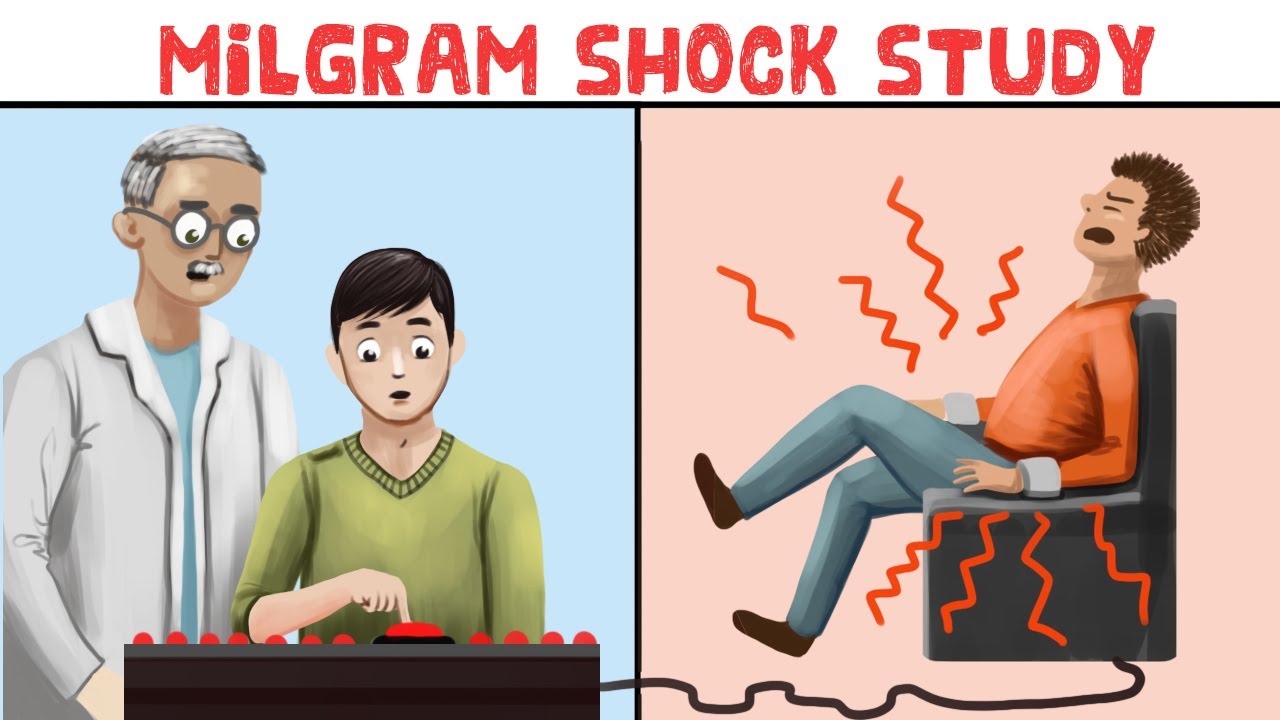
OBEDIENCE: To Authority is “Shocking”

QUESTION EVERYTHING?

By Staff Reporters

***

***

Question: Why do we follow orders, even when they seem wrong?

According to colleague Dan Ariely PhD, Obedience to Authority is a powerful force, making us do things we wouldn’t normally do. Think of the infamous Milgram experiment, where people shocked others because a guy in a lab coat told them to do so. It’s our brain’s way of outsourcing decision-making to someone else. While it can keep society orderly, it also explains why people sometimes follow questionable orders.

Cite: https://www.simplypsychology.org/milgram.html

Milgram’s experiments posed the question: Would people obey orders, even if they believed doing so would harm another person?

Milgram’s findings suggested the answer was yes, they would. The experiments have long been controversial, both because of the startling findings and the ethical problems with the research. More recently, experts have re-examined the studies, suggesting that participants were often coerced into obeying and that at least some participants recognized that the other person was just pretending to be shocked. Such findings call into question the study’s validity and authenticity, but some replications suggest that people are surprisingly prone to obeying authority.

So, question authority [doctor, financial advisor, accountant, clergy, professor and lawyer, etc] – just not your GPS.

COMMENTS APPRECIATED

Thank You

***

***

What If You Could Start From Scratch – Doctor?

How would you restart your career in medicine?

[By Dr. David Edward Marcinko MBA MEd CMP™]

We’ve known this physician-client-friend for 10 years, and while he didn’t tell us what he wanted to discuss, we knew it was important.

After exchanging pleasantries, he shocked me: He said he’s totally unfulfilled in his current job and wants to do something new.

We were floored because he is an outstanding doctor – at the top of his game. From the outside looking in, he appears to be “living the dream”.

After that bombshell, we asked him the question we couldn’t get out of our mind: “Are you afraid?”

“Yes,” he said; “Afraid and relieved.”

His relief stemmed from the fact that he is going to shed the tremendous demands of being a doctor at the highest levels. He was afraid because he didn’t know what was next.

We thought afterward, “What a courageous and totally refreshing move.”

ME-P Doctors, Advisors and Consultants

A Fantasy Reboot

That dialogue triggered a larger internal conversation within; and with others.

  • What would you do if you could start from scratch?
  • How would you proceed if you could just wipe the slate clean and restart your career in medicine?

For those quietly pondering a similar path, three great opportunities seem crystal clear.

First, we would create our own practice playbook. Discard the ready-made choices served up by your old practice. For the independent physician today, there’s almost infinite variety. The pleasure in creating your own approach is that there are so many options. Your patients will appreciate the greater choice and flexibility, too.

Second, we would whole-heartedly embrace technology; but not necessarily EHRs at this time. Rather, build your own HIT framework to complement your medical practice. Innovate across your entire operations – everything from medical records, to online appointment access, secure FAX machines, to patient portals and laboratory results reporting to your own mobile phone app. Freeing yourself from your current archaic technology will be life altering by itself.

5 new rules for how doctors interact with health care IT

Third, cull the difficult people from your life. These are the naysayers who weigh you down – superiors, colleagues or patients. Negativity is corrosive, and it always lingers. It also distracts you from giving others your best. While you’re at it, cull the skills you mastered to survive in your career so you can focus on those that really matter.

Non-Traditional Doctors

Case Model

So, we wanted to share one of the all-time greatest reboots we know because it shows what is possible if you believe in yourself.

A decade ago, one of our osteopathic physician clients delivered some bad news. She was quitting her job as a medical associate, to transition into her own direct pay concierge practice.

At the time, this was unheard of: No one walked away from a potential medical practice partnership to become a solo physician. But, Sue had a different vision. She wasn’t fulfilled and she knew it. With the support of her husband, she decided there was a better way. So she started from scratch.

How did it work out?

Unbelievably well – but NOT overnight!

With our meager assistance, Sue’s been cash flow positive for the last 7 years, and now earns more money than before, with less stress; and she is the captain of her ship. A few colleagues who have worked with her have even gone on to achieve comparable success. She’s become a role model to others too, and she remains one our heroes.

The Decision

Starting from scratch may or may not translate into more money, but it often means this: More happiness in your life. Sue’s decision, just like our friend who bared his soul to us over coffee, were both made for the right reasons.

We wish our friend well on his journey, confident knowing that a happy ending is just over the horizon for him, too.

Product DetailsProduct Details

Assessment

Send us your own success/failure story, so we might learn from you. Would you even stay in medicine or transition/begin another career; anew?

Conclusion

Your thoughts and comments on this ME-P are appreciated. Feel free to review our top-left column, and top-right sidebar materials, links, URLs and related websites, too. Then, subscribe to the ME-P. It is fast, free and secure.

Speaker: If you need a moderator or speaker for an upcoming event, Dr. David E. Marcinko; MBA – Publisher-in-Chief of the Medical Executive-Post – is available for seminar or speaking engagements. Contact: MarcinkoAdvisors@msn.com

OUR OTHER PRINT BOOKS AND RELATED INFORMATION SOURCES:

Financial Planning MDs 2015

Comprehensive Financial Planning Strategies for Doctors and Advisors: Best Practices from Leading Consultants and Certified Medical Planners™

On the Revival of Individual House Call Doctors

Re-Thinking a Popular Practice from the Past

By Dr. David Edward Marcinko; MBA, MEd, CMP™

[Publisher-in-Chief]

More personal than a corporate home care medical business model, most people view house calls as a popular practice from the past.

Although less than 5% of the nation’s doctors regularly make house calls today, the medical house call industry is swiftly picking up momentum once again. It is a move that is greatly benefiting physicians and patients alike.

Why House Calls?

It’s because we live in a society that has become technology focused. While this emergence has benefited many in terms of medical advancements, there are a growing number of patients who are uncomfortable with next-generation medical practices. These people, particularly the rapidly aging elders of the nation, want to be cared for in a friendly, nurturing, and convenient way. As people age and fall ill, it becomes increasingly difficult to leave the home for office visits. Not to mention, there are many handicapped patients as well who have to arrange for wheelchair vans or ambulances just to visit the doctor. The COVID pandemic and tele-health are illustrative.

Meeting a Niche Market Need

Thanks to the desire of physicians seeking to open their own medical house call practices, these patient needs are slowly being met. Some of these physicians are strictly open for house call visits only and have no physical office. They commonly take appointment requests via phone calls and emails with the overall goal to combine the service of an old-time, small town doctor with the latest technology designed to meet people’s emotional, and financial, needs. Patients are also able to save a considerable amount of time by not having to leave the house to go to the doctor’s office, and not having to fill prescriptions. After all, many medical house call physicians travel along with certain medications that can be dispensed on location. Narcotics, however, will likely still need to be filled with a paper or e-prescription.

While highly convenient for patients who wish to receive medical house call services, the reviving industry is fitting for physicians. In recent years, Medicare has increased its level or reimbursements for physicians who travel to patients. Just in the past few years alone, Medicare has been billed approximately $1.75 million annually for house calls. 

Enter the DNPs and NPs

Even nurse practitioners [NPs] and Doctors of Nursing Practice [DNPs] who make a small number of house calls are typically unaware that they can maximize profit potential with medical house calls. Some NPs have even offset operating expenses by offering house calls to make their office based practice more appealing to their patients.

Link: Front Matter BoMP – 3

Technology Enabled

Also, significant advances in technology have enabled popular medical equipment to be smaller and portable. Physicians are able to perform standard procedures, such as skin biopsies and blood draws while outside the office. They are also able to easily access patient medical records through usage of a laptop, as well as resources such as the Physicians’ Desk Reference [PDS] through usage of a hand-held personal digital assistant or smart cell phone.

Assessment

For example, this firm educates patients and supports physicians who are ready to make a transition from office-based positions to medical house call practices. There are no royalty or membership fees, and this is not a franchise. It helps transition to a reportedly more pleasing, profitable way to practice medicine today.

LINK: https://www.resurgia.com

Conclusion

Your thoughts and comments on this ME-P are appreciated. Feel free to review our top-left column, and top-right sidebar materials, links, URLs and related websites, too. Then, subscribe to the ME-P. It is fast, free and secure.

Speaker: If you need a moderator or speaker for an upcoming event, Dr. David E. Marcinko; MBA – Publisher-in-Chief of the Medical Executive-Post – is available for seminar or speaking engagements. Contact: MarcinkoAdvisors@msn.com

OUR OTHER PRINT BOOKS AND RELATED INFORMATION SOURCES:

Product DetailsProduct DetailsProduct Details

Product Details  Product Details

   Product Details 


NINE: Psychological Reasons We Do Dumb Things with Money [$$$$]

Yep – Even the Smart Folks!

By Lon Jefferies MBA CMP® CFP®

Dr. David Edward Marcinko MBA MEd CMP®

Lon Jeffries

In the Business Insider, Mandi Woodruff describes nine mental blocks that cause smart people to do dumb things. Review the list and itemize the factors that have negatively impacted your finances.

The Factors

  • Anchoring happens when we place too much emphasis on the first piece of information we receive regarding a given subject. For instance, when shopping for a wedding ring a salesman might tell us to spend three months’ salary. After hearing this, we may feel like we are doing something wrong if we stray from this advice, even though the guideline provided may cause us to spend more than we can afford.
  • Myopia (or nearsightedness) makes it hard for us to imagine what our lives might be like in the future. For example, because we are young, healthy, and in our prime earning years now, it may be hard for us to picture what life will be like when our health depletes and we know longer have the earnings necessary to support our standard of living. This short-sightedness makes it hard to save adequately when we are young, when saving does the most good.
  • Gambler’s fallacy occurs when we subconsciously believe we can use past events to predict the future. It is common for the hottest sector during one calendar year to attract the most investors the following year. Of course, just because an investment did well last year doesn’t mean it will continue to do well this year. In fact, it is more likely to lag the market.
  • Avoidance is simply procrastination. Even though you may only have the opportunity to adjust your health care plan through your employer once per year, researching alternative health plans is too much work and too boring for us to get around to it. Consequently, we stick with a plan that may not be best for us.
  • Confirmation bias causes us to place more emphasis on information that supports the opinion we already have. Consequently, we tend to ignore or downplay opinions that don’t mirror our own, leading us to make uninformed decisions.

NOTE: An interesting example of the confirmation bias is the case of David Rosenberg, who is one of the most well-known perpetual bears on Wall Street. In October, Mr. Rosenberg’s analysis forced him to warm to the current investment environment. His fans and followers, rather than appreciating his research and ability to adjust to new information, criticized him for changing his opinion.

As it turned out Mr. Rosenberg had fans not because of his expert analysis, but because he added intellectual heft to his followers pessimism and quasi-political desire for the system to collapse. Their view was that things were in permanent decline and his analysis, charts, and voice added respectability to their pre-existing bias. Mr. Rosenberg has now lost his fan base not because he was wrong for the last four years, but because he changed his mind.

head

  • Loss aversion affected many investors during the crash of 2008. During the crash, many people decided they couldn’t afford to lose more and sold their investments. Of course, this caused the investors to sell at market troughs and miss the quick, dramatic recovery.
  • Overconfident investing happens when we believe we can out-smart other investors via market timing or through quick, frequent trading. Data convincingly shows that people who trade most often underperform the market by a significant margin over time.
  • Mental accounting takes place when we assign different values to money depending on where we get it from. For instance, even though we may have an aggressive saving goal for the year, it is likely easier for us to save money that we worked for than money that was given to us as a gift.
  • Herd mentality makes it very hard for humans to not take action when everyone around us does. For example, we may hear stories of people making significant profits buying, fixing up, and flipping homes and have the desire to get in on the action, even though we have no experience in real estate.

Assessment

The good news is that being aware of these tendencies can help us avoid mistakes. We’ll never be perfect, but avoiding detrimental decisions based on mental prejudices can give us an advantage in our financial and retirement planning efforts.

Conclusion

Your thoughts and comments on this ME-P are appreciated. Feel free to review our top-left column, and top-right sidebar materials, links, URLs and related websites, too. Then, subscribe to the ME-P. It is fast, free and secure.

Speaker: If you need a moderator or speaker for an upcoming event, Dr. David E. Marcinko; MBA – Publisher-in-Chief of the Medical Executive-Post – is available for seminar or speaking engagements. Contact: MarcinkoAdvisors@msn.com

OUR OTHER PRINT BOOKS AND RELATED INFORMATION SOURCES:

ADVISORS: www.CertifiedMedicalPlanner.org
BLOG: www.MedicalExecutivePost.com

Risk Management, Liability Insurance, and Asset Protection Strategies for Doctors and Advisors: Best Practices from Leading Consultants and Certified Medical Planners™8Comprehensive Financial Planning Strategies for Doctors and Advisors: Best Practices from Leading Consultants and Certified Medical Planners™

Invite Dr. Marcinko

***

Society of Physician Entrepreneurs – About Us

By Dr. David Edward Marcinko MBA MEd CMP

SPONSOR: http://www.MarcinkoAssociates.com

The Society of Physician Entrepreneurs (SoPE) was established as a community of interest in 2008 by several members of the American Academy of Otolaryngology – Head and Neck Surgery (AAO-HNS), including Dr. Arlen Meyers, the founding past President & CEO. SoPE became a separate and independent legal entity; incorporating in Washington, D.C. in January 2011. It is a 501 (c) 6 member organization with the stated purpose of providing support; idea stage through funding, for physician entrepreneurs with ideas on how to improve healthcare.

SoPE’s vision is to accelerate physician originated biomedical innovation.

The mission of SoPE is to foster scholarship in biomedical entrepreneurship and provide education, training and support; idea stage through funding, to primarily community-based physician entrepreneurs in the interest of better healthcare.

SoPE membership is open to all physicians and also accepts individuals as associate members; representatives of medical device, legal, venture capital, and other firms with an interest in serving and/or supporting physician entrepreneurs.

Website: www.sopenet.org

MORE: https://sopenet.org/wp/wp-content/uploads/2019/09/aug-2014.pdf

COMMENTS APPRECIATED

Thank You.

***

***

Do Doctors Use ChatGPT in Clinical Decisions?

By Staff Reporters

***

***

Are doctors using publicly available tools like ChatGPT? The answer, Fierce Healthcare finds, is yes. In the first in-depth look of its kind into physician use of public genAI tools, Fierce Healthcare spoke with nearly two dozen doctors, students, AI experts and regulators, and helped conduct a survey of more than 100 physicians. The reporting confirms that some doctors are turning to tools intended for non-clinical uses to make clinical decisions. 

More: https://jamanetwork.com/journals/jamainternalmedicine/fullarticle/2804309

A collaborative survey between Fierce Healthcare and physician social network Sermo found that 76% of respondents reported using general-purpose LLMs in clinical decision-making. With no standardized guidelines, lagging physician training and regulators racing to try to keep up with rapidly changing technology, guardrails to protect patients appear to be years behind current rates of utilization.

Source: Fierce Healthcare [10/8/24]

COMMENTS APPRECIATED

Thank You

***

***

OCTOBER: “Financial Planning” Month for Doctors

DR. DAVID EDWARD MARCINKO MBA MEd CMP™

http://www.MarcinkoAssociates.com

History for Us All

http://www.CertifiedMedicalPlanner.org

***

***

History of Financial Planning Month

Financial planning as a concept has been around for a long time, but not as we know it today. When Loren Dunton set up the Society for Financial Counseling Ethics in 1969, or when the first graduating class of the College of Financial Planning graduated in 1973, financial planning was very different. It was centered around selling limited partnerships, which came to end with the Tax Reform Act of 1986.

However, financial planning re-emerged — all thanks to Richard Averitt III. The certified financial planner gave new meaning to financial planning, this time with a focus on who the client is and what their needs are. This approach was purely methodological in nature.

Soon after, financial planning picked up again. According to the Certified Financial Planner (C.F.P.) Board of Standards in Denver, today, there are more than 94,000 C.F.P.s worldwide, including over 48,000 in the U.S. Additionally, there are also organizations that have been set up for C.F.P.s, such as the Financial Planning Association (FPA), which has approximately 22,000 members.

And, don’t forget the emerging Certified Medical Planner professional fiduciary designation for physicians, dentists, nurses and allied healthcare clients.

Financial planning, as we know it now, includes investing, tax planning, retirement planning, and basically other ways to get your finances in order and create mindful budgets to ensure a safe and secure future. Getting a step ahead of your spending and finances is beneficial in the long run and Financial Planning Month in October is the perfect time to do that.

MORE: https://medicalexecutivepost.com/2022/10/27/october-national-financial-planning-month/

***

COMMENTS APPRECIATED

Thank You

***

ORDER: https://www.routledge.com/Comprehensive-Financial-Planning-Strategies-for-Doctors-and-Advisors-Best/Marcinko-Hetico/p/book/9781482240283

****

2024 NOBEL PRIZE ECONOMICS: Daron Acemoglu, James Robinson and Simon Johnson

By Staff Reporters

***

***

Authors of the seminal textbook Why Nations Fail, Daron Acemoglu, James Robinson, and former International Monetary Fund chief economist Simon Johnson will split the roughly $1 million cash prize for their research, which found a link between a country’s prosperity and the institutions it established during European colonization.

CITE: https://www.r2library.com/Resource/Title/0826102549

According to the award-winning research:

  • Places developed either “inclusive” or “extractive” institutions based on population density. The former allowed for inclusive governance (i.e., democracy), while the latter extracted resources to benefit a small group of elites.
  • Countries that developed inclusive institutions have experienced long-term prosperity; those with exclusive institutions haven’t. “Broadly speaking, the work that we have done favors democracy,” Acemoglu said.

Eample: In the twin cities of Nogales, on the US-Mexico border, the north and south parts of the transborder city have the same climate and the same resources, but the section in the US is far richer because of the country’s institutions, according to the researchers.

Critics. Some academics argue the Nobel winners’ premise ignores the effects of culture on prosperity. Others point to an irrefutable counterexample: China continues to experience explosive growth despite having an autocratic government.

COMMENTS APPRECIATED

Thank You

***

***

PODCAST: What is “SWARM” Learning?

By Dr. David E. Marcinko MBA MEd CMP

SWARM INTELLIGENCE IN MEDICINE

***

Warm Learning or Swarm Intelligence, is how swarms of bees or birds move in response to their environment.

When applied to data there is “more peer-to-peer communications, more peer-to-peer collaboration, more peer-to-peer learning and that’s the reason why swarm learning will become more and more important as … as the center of gravity shifts” from centralized to decentralized data.

DZNE : AI with Swarm Intelligence

Medicine Example:

Consider this example,  “A hospital trains their machine learning models on chest X-rays and sees a lot of tuberculosis cases, but very little of lung collapsed cases. So therefore, this neural network model, when trained, will be very sensitive to what’s detecting tuberculosis and less sensitive towards detecting lung collapse.”

“However, we get the converse of it in another hospital. So what you really want is to have these two hospitals combine their data so that the resulting neural network model can predict both situations better. But since you can’t share that data, swarm learning comes in to help reduce that bias of both the hospitals.”

And this means, “each hospital is able to predict outcomes, with accuracy and with reduced bias, as though you have collected all the patient data globally in one place and learned from it.”

Moreover, it’s not just hospital and patient data that must be kept secure. What swarm learning does is to try to avoid or reduce the sharing of data, or totally prevent the sharing of data, to [a model] where you only share the insights, or you share the learnings.

So, that’s why it is fundamentally more secure.

YOUR COMMENTS ARE APPRECIATED.

DR. GOH PODCAST: https://www.technologyreview.com/2021/08/16/1031738/a-new-age-of-data-means-embracing-the-edge/?mc_cid=30af99395f&mc_eid=72aee829ad

Thank You

***

DICTIONARY: https://www.amazon.com/Dictionary-Health-Information-Technology-Security/dp/0826149952/ref=sr_1_5?ie=UTF8&s=books&qid=1254413315&sr=1-5

***

CRISPR: Play-by-Play of an Experiment

Scientists in Jennifer Doudna’s lab pull back the veil on their gene-editing process

***

Clustered Regularly InterSpaced Palindromic Repeat

By Hayden Field

***

***

CRISPR is a family of DNA sequences found in the genomes of prokaryotic organisms such as bacteria and archaea. These sequences are derived from DNA fragments of bacteriophages that had previously infected the prokaryote. They are used to detect and destroy DNA from similar bacteriophages during subsequent infections

CITE: https://www.amazon.com/Dictionary-Health-Information-Technology-Security/dp/0826149952/ref=sr_1_5?ie=UTF8&s=books&qid=1254413315&sr=1-5

And, we’ve posted about CRISPR before: https://medicalexecutivepost.com/2021/07/08/on-crispr-gene-editing/

So now, what is the use of CRISPR for antiobiotics?

READ: https://www.emergingtechbrew.com/stories/2022/07/26/from-infant-poop-to-trance-music-here-s-a-play-by-play-of-a-crispr-experiment?mid=349b552221c994e2540a304649746d7c

***

COMMENTS APPRECIATED

Thank You

***

FINANCIAL PLANNING: https://www.routledge.com/Comprehensive-Financial-Planning-Strategies-for-Doctors-and-Advisors-Best/Marcinko-Hetico/p/book/9781482240283

***

FRAUD SCHEMES of [Fewer] Medical Providers

[TOP TEN IN HEALTH CARE]

Sponsor: http://www.CertifiedMedicalPlanner.org

CMP logo

https://medicalexecutivepost.com/wp-content/uploads/2018/06/david-edward-marcinko.png

By Dr. David E. Marcinko MBA CMP®

  1. Billing for services not rendered.
  2. Billing for a non-covered service as a covered service.
  3. Misrepresenting dates of service.
  4. Misrepresenting locations of service.
  5. Misrepresenting provider of service.
  6. Waiving of deductibles and/or co-payments.
  7. Incorrect reporting of diagnoses or procedures (includes unbundling).
  8. Overutilization of services.
  9. Corruption (kickbacks and bribery).
  10. False or unnecessary issuance of prescription drugs.

[Source]: Charles Piper; CFE CRT January/February 2013 ACFE

Related: https://medicalexecutivepost.com/2020/10/01/healthcare-fraud-and-abuse-costs-and-cases-rose-in-2019/

More: https://medicalexecutivepost.com/2017/05/03/combating-healthcare-fraud/

Update: https://medicalexecutivepost.com/2021/04/24/fraudsters-phishing-for-physician-signatures/

ASSESSMENT: Your thoughts are appreciated.

Risk Management, Liability Insurance, and Asset Protection Strategies for Doctors and Advisors : Best Practices from Leading Consultants and Certified Medical Planners™ book cover

TEXTBOOK ORDER: https://www.routledge.com/Risk-Management-Liability-Insurance-and-Asset-Protection-Strategies-for/Marcinko-Hetico/p/book/9781498725989

Invite Dr. Marcinko

THANK YOU

***

MARCINKO & ASSOCIATES: Financial Planning and Business Management Education for Physicians

By Dr. David Edward Marcinko MBA MEd CMP

CONSULTING ADVICE – NOT SALES

“AT YOUR SERVICE”

E-mail: MarcinkoAdvisors@msn.com

SPONSOR: http://www.MarcinkoAssociates.com

Marcinko & Associates is financial guide. We help answer your questions in an empowering way. We educate and guide medical colleagues to understand their financial picture and to make better financial decisions. We strive to simplify everything, clear up confusion, and address specific needs and goals.

Simply put, we’re a financial services company on a mission to empower financial freedom for all healthcare professionals; only. We work with doctors, nurses, medical providers, individuals and all sizes of organizations to offer investment, wealth management and retirement solutions so everyone can have a clear and simple understanding of where their finances and career is today and where it is headed tomorrow.

Whatever your financial situation, we do not shame, criticize, or sell. We enrich, educate and empower. We work only with medical colleagues at every stage of their financial journey [students, interns, residents, practitioners, mid-career and mature physicians], through big life personal changes to annual employment reviews, in order to help them understand, invest, and protect their money and lifestyle.

CITE: https://www.r2library.com/Resource

For example, the following are current issues of review need for each Fall and Winter:

  • Financial planning reviews: 401-k, insurance, budget plans, investing, debt and savings, etc
  • Assess, develop, and align financial retirement and estate planning goals
  • Risk Management: Malpractice, home, life, medical, auto and personal indemnity
  • Life Insurance Need Reviews: whole, universal and term  
  • Business, operations, HR, employment negotiations and medical practice management
  • Annuity Need Reviews: Indexed and Fixed [Pros and Cons].

***

***

At Marcinko & Associates we discuss specific needs and answer specific questions. We educate and make personalized recommendations that you are free to use, incorporate or disregard. Referrals to trusted specialists and strategic alliance partners then occur if – and as – needed [pro re nata].

SPONSOR: http://www.CertifiedMedicalPlanner.org

***


On Psychology, Financial Planning and Investing Bias

Psychological Biases Affecting Financial Planning and Investing

Dr. Marcinko at Johns Hopkins University

By Dr. David Edward Marcinko MBA MEd CMP®

http://www.MarcinkoAssociates.com

[Editor-in-Chief]

Sponsored: http://www.CertifiedMedicalPlanner.org

CMP logo

The following are some of the most common psychological biases.  Some are learned while others are genetically determined (and often socially reinforced).  While this essay focuses on the financial implications of these biases, they are prevalent in most areas in life.

[A] Incentives

It is broadly accepted that incenting someone to do something is effective, whether it be paying office staff a commissions to sell more healthcare products, or giving bonuses to office employees if they work efficiently to see more HMO patients.  What is not well understood is that the incentives cause a sub-conscious distortion of decision-making ability in the incented person.  This distortion causes the affected person – whether it is yourself or someone else – to truly believe in a certain decision, even if it is the wrong choice when viewed objectively.  Service professionals, including financial advisors and lawyers, are affected by this bias, and it causes them to honestly offer recommendations that may be inappropriate, and that they would recognize as being inappropriate if they did not have this bias.  The existence of this bias makes it important for each one of us to examine our incentive biases and take extra care when advising physician clients, or to make sure we are appropriately considering non-incented alternatives.

[B] Denial

Denial is a well known, but under-appreciated, psychological force.  Physicians, clients and professionals (like everyone else) are prone to the mistake of ignoring a painful reality, like putting off an unpleasant call (thus prolonging a problematic situation and potentially making it worse) or not opening account statements because of the desire not to see quantitative proof of losses.  Denial also manifests itself by causing human beings to ignore evidence that a mistake has been made.  If you think of yourself as a smart person (and what professional doesn’t?), then evidence pointing to the conclusion that a mistake has been made will call into question that belief, causing cognitive dissonance.  Our brains function to either avoid cognitive dissonance or to resolve it quickly, usually by discounting or rationalizing the disconfirming evidence. Not surprisingly, colleagues at Kansas State University and elsewhere, found that financial denial, including attempts to avoid thinking about or dealing with money, is associated with lower income, lower net worth, and higher levels of revolving credit.

[C] Consistency and Commitment Tendency

Human beings have evolved – probably both genetically and socially – to be consistent.  It is easier and safer to deal with others if they honor their commitments and if they behave in a consistent and predictable manner over time. This allows people to work together and build trust that is needed for repeat dealings and to accomplish complex tasks.  In the jungle, this trust was necessary to for humans to successfully work as a team to catch animals for dinner, or fight common threats.  In business and life it is preferable to work with others who exhibit these tendencies.  Unfortunately, the downside of these traits is that people make errors in judgment because of the strong desire not to change, or be different (“lemming effect” or “group-think”).  So the result is that most people will seek out data that supports a prior stated belief or decision and ignore negative data, by not “thinking outside the box”.  Additionally, future decisions will be unduly influenced by the desire to appear consistent with prior decisions, thus decreasing the ability to be rational and objective.  The more people state their beliefs or decisions, the less likely they are to change even in the face of strong evidence that they should do so.  This bias results in a strong force in most people causing them to avoid or quickly resolve the cognitive dissonance that occurs when a person who thinks of themselves as being consistent and committed to prior statements and actions encounters evidence that indicates that prior actions may have been a mistake.  It is particularly important therefore for advisors to be aware that their communications with clients and the press clouds the advisor’s ability to seek out and process information that may prove current beliefs incorrect.  Since this is obviously irrational, one must actively seek out negative information, and be very careful about what is said and written, being aware that the more you shout it out, the more you pound it in.

[D] Pattern Recognition

On a biological level, the human brain has evolved to seek out patterns and to work on stimuli-response patterns, both native and learned.  What this means is that we all react to something based on our prior experiences that had shared characteristics with the current stimuli.  Many situations have so many possible inputs that our brains need to take mental short cuts using pattern recognition we would not gain the benefit from having faced a certain type of problem in the past.  This often-helpful mechanism of decision-making fails us when past correlations or patterns do not accurately represent the current reality, and thus the mental shortcuts impair our ability to analyze a new situation.  This biologic and social need to seek out patterns that can be used to program stimuli-response mechanisms is especially harmful to rational decision-making when the pattern is not a good predictor of the desired outcome (like short term moves in the stock market not being predictive of long term equity portfolio performance), or when past correlations do not apply anymore.

[E] Social Proof

It is a subtle but powerful reality that having others agree with a decision one makes, gives that person more conviction in the decision, and having others disagree decreases one’s confidence in that decision.  This bias is even more exaggerated when the other parties providing the validating/questioning opinions are perceived to be experts in a relevant field, or are authority figures, like people on television.  In many ways, the short term moves in the stock market are the ultimate expression of social proof – the price of a stock one owns going up is proof that a lot of other people agree with the decision to buy, and a dropping stock price means a stock should be sold.  When these stressors become extreme, it is of paramount importance that all participants in the financial planning process have a clear understanding of what the long-term goals are, and what processes are in place to monitor the progress towards these goals.  Without these mechanisms it is very hard to resist the enormous pressure to follow the crowd; think social media.

[F] Contrast

Sensation, emotion and cognition work by contrast.  Perception is not only on an absolute scale, it also functions relative to prior stimuli.  This is why room temperature water feels hot when experienced after being exposed to the cold.  It is also why the cessation of negative emotions “feels” so good.  Cognitive functioning also works on this principle.  So one’s ability to analyze information and draw conclusions is very much related to the context with in which the analysis takes place, and to what information was originally available.  This is why it is so important to manage one’s own expectations as well as those of clients.  A client is much more likely to be satisfied with a 10% portfolio return if they were expecting 7% than if they were hoping for 15%.

[G] Scarcity

Things that are scarce have more impact and perceived value than things present in abundance.  Biologically, this bias is demonstrated by the decreasing response to constant stimuli (contrast bias) and socially it is widely believed that scarcity equals value.  People who feel an opportunity may “pass them by” and thus be unavailable are much more likely to make a hasty, poorly reasoned decision than they otherwise would.  Investment fads and rising security prices elicit this bias (along with social proof and others) and need to be resisted.  Understanding that analysis in the face of perceived scarcity is often inadequate and biased may help professionals make more rational choices, and keep clients from chasing fads.

[H] Envy / Jealousy

This bias also relates to the contrast and social proof biases.  Prudent financial and business planning and related decision-making are based on real needs followed by desires.  People’s happiness and satisfaction is often based more on one’s position relative to perceived peers rather than an ability to meet absolute needs.  The strong desire to “keep up with the Jones” can lead people to risk what they have and need for what they want.  These actions can have a disastrous impact on important long-term financial goals.  Clear communication and vivid examples of risks is often needed to keep people focused on important financial goals rather than spurious ones, or simply money alone, for its own sake.

[I] Fear

Financial fear is probably the most common emotion among physicians and all clients. The fear of being wrong – as well as the fear of being correct! It can be debilitating, as in the corollary expression on fear: the paralysis of analysis.

According to Paul Karasik, there are four common investor and physician fears, which can be addressed by financial advisors in the following manner:

  • Fear of making the wrong decision: ameliorated by being a teacher and educator.
  • Fear of change: ameliorated by providing an agenda, outline and/or plan.
  • Fear of giving up control: ameliorated by asking for permission and agreement.
  • Fear of losing self-esteem: ameliorated by serving the client first and communicating that sentiment in a positive manner.

https://images.routledge.com/common/jackets/crclarge/978148224/9781482240283.jpg

Textbook Order: https://www.amazon.com/Comprehensive-Financial-Planning-Strategies-Advisors/dp/1482240289/ref=sr_1_1?ie=UTF8&qid=1418580820&sr=8-1&keywords=david+marcinko

Psychological Traps

Now, as human beings, our brains are booby-trapped with psychological barriers that stand between making smart financial decisions and making dumb ones. The good news is that once you realize your own mental weaknesses, it’s not impossible to overcome them. 

In fact, Mandi Woodruff, a financial reporter whose work has appeared in Yahoo! Finance, Daily Finance, The Wall Street Journal, The Fiscal Times and the Financial Times among others; related the following mind-traps in a September 2013 essay for the finance vertical Business Insider; as these impediments are now entering the lay-public zeitgeist:

  • Anchoring happens when we place too much emphasis on the first piece of information we receive regarding a given subject. For instance, when shopping for a wedding ring a salesman might tell us to spend three months’ salary. After hearing this, we may feel like we are doing something wrong if we stray from this advice, even though the guideline provided may cause us to spend more than we can afford.
  • Myopia makes it hard for us to imagine what our lives might be like in the future. For example, because we are young, healthy, and in our prime earning years now, it may be hard for us to picture what life will be like when our health depletes and we know longer have the earnings necessary to support our standard of living. This short-sightedness makes it hard to save adequately when we are young, when saving does the most good.
  • Gambler’s fallacy occurs when we subconsciously believe we can use past events to predict the future. It is common for the hottest sector during one calendar year to attract the most investors the following year. Of course, just because an investment did well last year doesn’t mean it will continue to do well this year. In fact, it is more likely to lag the market.
  • Avoidance is simply procrastination. Even though you may only have the opportunity to adjust your health care plan through your employer once per year, researching alternative health plans is too much work and too boring for us to get around to it. Consequently, we stick with a plan that may not be best for us.
  • Loss aversion affected many investors during the stock market crash of 2008. During the crash, many people decided they couldn’t afford to lose more and sold their investments. Of course, this caused the investors to sell at market troughs and miss the quick, dramatic recovery.
  • Overconfident investing happens when we believe we can out-smart other investors via market timing or through quick, frequent trading. Data convincingly shows that people who trade most often under-perform the market by a significant margin over time.
  • Mental accounting takes place when we assign different values to money depending on where we get it from. For instance, even though we may have an aggressive saving goal for the year, it is likely easier for us to save money that we worked for than money that was given to us as a gift.
  • Herd mentality makes it very hard for humans to not take action when everyone around us does. For example, we may hear stories of people making significant profits buying, fixing up, and flipping homes and have the desire to get in on the action, even though we have no experience in real estate.
https://images.routledge.com/common/jackets/crclarge/978149872/9781498725989.jpg

Textbook Order: https://www.routledge.com/Risk-Management-Liability-Insurance-and-Asset-Protection-Strategies-for/Marcinko-Hetico/p/book/9781498725989

Your thoughts are appreciated.

THANK YOU

***

OPINIONS: Secure Unbiased Financial Planning -or- Economic Practice Management Advice

***

Dr. David Edward Marcinko MBA MEd CMP®

Certified Medical Planner®

SPONSOR: http://www.CertifiedMedicalPlanner.org

CMP logo

***

FINANCIAL PLANNING

CAREER DEVELOPMENT

MEDICAL PRACTICE BUY IN / OUT

INVESTMENT ANALYSIS

PORTFOLIO MANAGEMENT

MERGERS AND ACQUISITIONS

PRACTICE APPRAISALS AND VALUATIONS

RETIREMENT PLANNING

FEE-ONLY

***

CONTACT: Ann Miller RN MHA CMP®

EMAIL: MarcinkoAdvisors@msn.com

***

What is the Cost Per Patient Acquisition [CPA]?

By Neal Baum MD

***

There’s a saying by John Wanamaker who pontificated, “Half the money I spend on advertising is wasted; the trouble is, I don’t know which half”.

Today you have opportunities to determine which parts of your marketing efforts are effective and what is wasted. However, you have to measure your marketing results.

This article will discuss marketing metrics and how to use them to get the best bang for your marketing buck.

***

***

The cost per acquisition (CPA)

Not all initial phone callers to a medical practice will convert to paying patients. The 50 patients who made appointments can be plugged into the equation, i.e., campaign costs divided by patients who became paying patients or $2,000 divided by 50 equals $40, representing the patient acquisition cost (PAC).

Now, if each patient who entered the practice spends $800 over the patient’s lifetime, that’s an increase in income of $40,000, not shabby for $2,000 in marketing expenses.

Source: Neil Baum, MD, Physicians Practice [8/26/22]

***

MORE: https://pubmed.ncbi.nlm.nih.gov/22834190/

BUSINESS MEDICINE: https://www.amazon.com/Business-Medical-Practice-Transformational-Doctors/dp/0826105750/ref=sr_1_9?ie=UTF8&qid=1448163039&sr=8-9&keywords=david+marcinko

***

COMMENTS APPRECIATED

Thank You

***