BOARD CERTIFICATION EXAM STUDY GUIDES Lower Extremity Trauma
[Click on Image to Enlarge]
ME-P Free Advertising Consultation
The “Medical Executive-Post” is about connecting doctors, health care executives and modern consulting advisors. It’s about free-enterprise, business, practice, policy, personal financial planning and wealth building capitalism. We have an attitude that’s independent, outspoken, intelligent and so Next-Gen; often edgy, usually controversial. And, our consultants “got fly”, just like U. Read it! Write it! Post it! “Medical Executive-Post”. Call or email us for your FREE advertising and sales consultation TODAY [678.779.8597] Email: MarcinkoAdvisors@outlook.com
Medical & Surgical e-Consent Forms
ePodiatryConsentForms.com
iMBA Inc., OFFICES
Suite #5901 Wilbanks Drive, Norcross, Georgia, 30092 USA [1.678.779.8597]. Our location is real and we are now virtually enabled to assist new long distance clients and out-of-town colleagues.
ME-P Publishing
SEEKING INDUSTRY INFO PARTNERS?
If you want the opportunity to work with leading health care industry insiders, innovators and watchers, the “ME-P” may be right for you? We are unbiased and operate at the nexus of theoretical and applied R&D. Collaborate with us and you’ll put your brand in front of a smart & tightly focused demographic; one at the forefront of our emerging healthcare free marketplace of informed and professional “movers and shakers.” Our Ad Rate Card is available upon request [678-779-8597].
I’m a late career entry and 55 year old burned out doctor who wants out. Can I retire in 2 years with a pension of $6,100 a month (net). I have $825,000 in my 401(k) and 457 plan and a mortgage of $95,000 at 5.30%. I am not planning to move and will retire in place.
SOME THOUGHTS AND ANSWERS?
Congratulations on you solid retirement fund on top of a pending pension.
The first step you should take is to create a detailed budget for your retirement years. Consider expected living costs, healthcare expenses, travel and any other major expenses. Many folks make the mistake of setting up a monthly budget, but keep out significant milestones that are often costly, such as paying for a child’s college education or wedding.
Next, you should figure out your plan for housing. Mortgage payments, upkeep and taxes are important considerations. There was no mention of mortgage equity.
Another factor to take into account is state and Federal tax projections. If the 401(k) funds are all pre-tax dollars, any distributions will be taxable and there may be penalties if funds are withdrawn prior to 59 ½ years old. That will impact your retirement plan if you’re preparing to retire at 57-58.
It also sounds like you haven’t taken into account your Social Security allowance. It’s possible that your pension is one that comes with a government pension offset which would explain why you didn’t include it. On the other hand, maybe you’re thinking it’s far out enough that it doesn’t factor into your calculations?
Finally, you may want to look for a fee-only financial advisor that is paid directly by the client and doesn’t receive commissions for recommending financial products. So, advice is less biased. And get a fiduciary advisor which means they are required to put your best interests ahead of their own.
Also, someone with medical niche specificity. Good Luck!
***
NOTE: This is not an offer to buy or sell any security or interest. All investing involves risk, including loss of principal. Working with an adviser may come with potential downsides such as payment of fees (which will reduce returns). There are no guarantees that working with an adviser will yield positive returns. The existence of a fiduciary duty does not prevent the rise of potential conflicts of interest.
Posted on January 16, 2024 by Dr. David Edward Marcinko MBA MEd CMP™
By Staff Reporters
The stock markets were closed yesterday for MLK Day. But, with everyone there talking about AI, one stock to watch is Nvidia, which has continued to climb this year after soaring nearly 240% last year.
***
***
The Internal Revenue Service (IRS) has announced plans to launch a pilot plan, Direct File, providing a free method for U.S. workers to file their federal taxes. This new system aims to allow taxpayers to submit their federal tax returns at no cost through an in-house filing system. This development presents a significant challenge to tax preparation firms like TurboTax.
***
And, despite the IRS, it’s never a bad time to be rich. The world’s five richest people have more than doubled their wealth since 2020, according to Oxfam. Tesla’s Elon Musk, LVMH’s Bernard Arnault, Amazon’s Jeff Bezos, Oracle’s Larry Ellison, and Berkshire Hathaway’s Warren Buffett together had $405 billion in March 2020 compared to $869 billion as of November 2023, the charity group found.
Oxfam predicts that if things continue as they are, the world will see its first trillionaire within the next 10 years—though the anti-poverty group also noted that almost 5 billion people have become poorer over roughly the same period.
Posted on January 12, 2024 by Dr. David Edward Marcinko MBA MEd CMP™
By Staff Reporters
***
***
JPMorgan Chase’s profit fell in the fourth quarter as the lender set aside nearly $3 billion to help refill a government deposit insurance fund. JPMorgan and several major banks are required to pay a bulk of the $16 billion to replenish the Federal Deposit Insurance Corporation’s deposit insurance fund (DIF), which was drained after Silicon Valley Bank and Signature Bank failed last year.
***
Bank of America’s fourth-quarter profit shrank as the lender took $3.7 billion in combined charges to refill a government deposit insurance fund and phase out a loan index. Its net interest income (NII) – the difference between what banks earn from loans and pay to depositors – fell 5% to $13.9 billion as the company spent more to keep customer deposits and demand for loans stayed subdued amid high interest rates.
***
Wells Fargo press release (NYSE:WFC): Q4 Non-GAAP EPS of $1.29 beats by $0.20. Revenue of $20.48B (+2.2% Y/Y) beats by $100M. Shares -1% PM. Fourth quarter 2023 results included: ◦ $(1.9) billion, or ($0.40) per share, of expense from an FDIC special assessment ◦ $(969) million, or ($0.20) per share, of severance expense for planned actions ◦ $621 million or $0.17 per share, of discrete tax benefits related to the resolution of prior period tax matters ◦ Provision for credit losses in fourth quarter 2023 included an increase in the allowance for credit losses driven by credit card and commercial real estate loans, partially offset by a lower allowance for auto loans. The change in allowance for credit losses also included higher net loan charge-offs for commercial real estate office and credit card loans
***
Citigroup (C) is in the middle of a complicated restructuring. It made it clear Wednesday that its fourth quarter earnings report Friday will be complicated, too.
The giant New York-based bank said in a regulatory document it will take more than $3 billion in one-time reserves and expenses as part of those fourth quarter results. They include everything from a $1.3 billion reserve build for currency exposure in Argentina and Russia to $780 million in charges related to severance costs and other aspects of a wide-ranging restructuring of the bank led by CEO Jane Fraser.
Posted on January 10, 2024 by Dr. David Edward Marcinko MBA MEd CMP™
By Staff Reporters
DEFINITION: Adverse events are medical errors that healthcare facilities could and should have avoided. The National Quality Forum (NQF) defines these errors, which are also called serious reportable events. There are 29 adverse events listed as reportable errors. The events may result in patient death or serious disability. The department manages aggregate data on adverse events and posts quarterly reports on this website.
A hospital’s acquisition by a private equity firm is linked to a rise in adverse events despite the pool of lower-risk patients they tend to admit, according to a Medicare Part A claims analysis just published in the Journal of the American Medical Association [JAMA], and according to Dave Muoio of Fierce Healthcare.
Posted on December 27, 2023 by Dr. David Edward Marcinko MBA MEd CMP™
GOODBYE FORM 1099-Ks
By Staff Reporters
***
***
The IRS just said it is again delaying the implementation of a 2021 law that requires payment platforms such as Venmo, Paypal or Cash App to send tax forms called 1099-Ks to anyone who received more than $600 in the current tax year.
It’s the second consecutive year the IRS has delayed enacting the new regulation, after the tax agency last year pushed off the new law until 2023. On Tuesday, the IRS said it will push the regulation back another year “to reduce taxpayer confusion” after hearing from taxpayers, tax professionals and payment processors.
Posted on December 26, 2023 by Dr. David Edward Marcinko MBA MEd CMP™
By Health Capital Consultants, LLC
***
***
On December 13, 2023, the Centers for Medicare & Medicaid Services (CMS) released its annual report on healthcare spending in the U.S., highlighting the growth in private insurance and Medicaid spending in 2022, which was offset by the declines in supplemental federal funding as a result of the COVID-19 pandemic.
Posted on December 26, 2023 by Dr. David Edward Marcinko MBA MEd CMP™
By Staff Reporters
***
***
For the second straight year, Wall Street bankers should prepare for smaller bonuses this holiday season, according to a report from consulting firm Johnson Associates. Cash bonuses for investment bankers in particular could shrivel up to 25% compared to 2022. Now, bonuses often account for a huge share of bankers’ total compensation. In some cases, they can be double their salary. That adds up to tens of billions of dollars in Wall Street’s bonus pot, which hit an all-time high in 2021.
But two years later, the economy looks a lot different.
For example, IPOs have slowed, interest rates are up, and we’re down a few banks. Investment bankers aren’t the only ones feeling the effects:
Regional bankers are likely to see bonuses fall 10%–20%.
Workers in asset management and sales could get 5%–10% less this year.
The only groups expected to receive bonus bumps this year are wealth managers and retail or commercial bankers at major global banks. Goldman Sachs is also reportedly considering bigger (but still unspecified) bonuses to keep top traders.
Posted on December 23, 2023 by Dr. David Edward Marcinko MBA MEd CMP™
By Staff Reporters
***
***
Annual Gift Tax Exclusion Increased
Currently, you can give any number of people up to $17,000 each in a single year without taxation. For 2024, this will be increased to $18,000. For married couples, $36,000 will be available to be given to beneficiaries, tax-free, beginning next year.
Lifetime Gift Tax Exemption
Additionally, the IRS has announced that the lifetime estate and gift tax exemption will increase to $13.61 million in 2024. If a gift exceeds the annual limit ($17,000 this year, $18,000 in 2024), that does not automatically prompt a gift tax. The difference is simply taken from the person’s lifetime exemption limit and no taxes are owed.
Posted on December 22, 2023 by Dr. David Edward Marcinko MBA MEd CMP™
END-OF-YEAR FINANCE
By Staff Reporters
***
***
We’ve discussed end of year mutual fund “window-dressing” before on this ME-P. Essentially, with mutual funds, window dressing refers to the superficial changes a fund might make to its portfolio of holdings to appear more attractive to current and prospective investors. At a glance, a potential investor might be drawn in with what appears to be good performance.
For example, a mutual fund management team might choose to sell losing stocks and buy winning ones at or around the end of a quarter. This strategy hides weak performance and gives investors a perception of impressive returns.
Window dressing in stocks is an example from another part of the world of finance, as public companies sometimes use window dressing when reporting earnings. Depending on the specifics, this practice can range from “creative accounting” to something bordering on or actually qualifying as fraud.
For example, some economics researchers cite rounding as a manipulative form of window dressing. A firm might round $5.99 million in quarterly earnings up to $6 million because the round number can be more psychologically attractive.
The GM-owned self-driving car company Cruise will lay off 24% of its staff (~900 employees) as well as nine executives following a serious autonomous taxi crash in San Francisco in October 2023 and the vehicles’ subsequent banning in the state of California.
Cruise’s staff reduction appears mostly due to the safety concerns around the company’s robo-taxis, but it comes after a deluge of other high-profile companies made major cuts just before the holidays:
Etsy. The online marketplace said it was laying off 11% of its staff. CEO Josh Silverman blamed the macroeconomic environment and previous over-hiring despite gross merchandise sales remaining flat since 2021.
Hasbro. The toymaker laid off 1,100 workers (roughly 20% of its staff) after a period of less-than-stellar toy sales following a pandemic surge. This most recent layoff is in addition to the 800 jobs it cut earlier this year.
Spotify. The streaming giant announced its third round of 2023 layoffs earlier this month. The company cut 1,500 jobs, which equates to about 17% of staff.
Why do companies do this?
Pre-holiday layoffs might seem especially cruel, but sadly, they aren’t uncommon. December job cuts are the quickest way for companies to pad the balance sheet and EOY reports before they show them to shareholders. Plus, it means they’ll have to give out fewer end-of-year bonuses.
Americans who owe back taxes will be given an incentive to pay up after the Internal Revenue Service it would waive nearly $1 billion in late-payment penalties. Roughly 4.6 million individual taxpayers who owe for tax years 2020 and 2021 will be eligible for the penalty relief. The IRS is extending the olive branch because it stopped sending out many collection letters during the pandemic. It hoped the letter halt would help struggling taxpayers and reduce its backlog. The long absence of these computer-generated letters had big consequences for taxpayers. Americans’ debt on unpaid back taxes had been growing with interest and penalties, and many were likely in the dark about just how much they owed.
Here is where the major benchmarks ended:
Here’s where the major benchmarks ended:
The S&P 500 index was up 27.81 points (0.6%) at 4,768.37; the Dow Jones Industrial Average was up 251.90 points (0.7%) at 37,557.92; the NASDAQ Composite® (COMP) was up 98.03 points (0.7%) at 15,003.22.
The 10-year Treasury note yield (TNX) was down about 3 basis points at 3.924%.
The CBOE® Volatility Index (VIX) was down 0.03 at 12.53.
Energy shares extended an early week rally behind a continued rebound in WTI Crude Oil futures (/CL), which rose for a fifth straight day and ended near a three-week high above $74 per barrel.
Banks and retailers were also particularly firm. The S&P 500 Retail Select Industry Index (SPSIRE) surged over 2% and ended at its highest level in over 10 months.
And, Tuesday’s big winner was Affirm, whose shares skyrocketed 15% after the buy now, pay later company announced it’s expanding its Walmart partnership to include the retailer’s self-checkout kiosks.
The IRS Quietly Changed the Rules on Children’s Inheritance
The IRS just issued Revenue Ruling 2023-2, which had a substantial impact on estate planning, particularly where an irrevocable trust is involved.
In the last decade or so, more families have begun utilizing irrevocable trusts to protect their assets from spend-down in order to qualify for government benefits, such as Medicaid and VA Aid and Attendance. Prior to the issuance of this ruling, it was unclear whether assets passing to beneficiaries through an irrevocable trust would receive a step-up in basis, thereby eliminating any capital gains taxes that would otherwise be owed.
Historically, assets that are disposed of during an individual’s lifetime are subject to capital gains taxes on the increase in value of that asset over time. The amount of capital gains owed is determined largely by the difference between the value at the time of purchase and the value at the time of transfer.
Delta Dental of California data breach exposed info of 7 million people
“Delta Dental of California and its affiliates are warning almost seven million patients that they suffered a data breach after personal data was exposed in a MOVEit Transfer software breach.Delta Dental of California provides 24 months of free credit monitoring and identity theft protection services to impacted patients to mitigate the risk of their exposed data.”
Posted on December 17, 2023 by Dr. David Edward Marcinko MBA MEd CMP™
By Staff Reporters
***
***
DEFINITION: Section 179 of the U.S. IRS code is an immediate expense deduction that business owners can take for purchases of depreciating business equipment instead of capitalizing and depreciating the asset over a period of time. The Section 179 deduction can be taken if the piece of equipment is purchased or financed and the full amount of the purchase price is eligible for the deduction.
Not understanding parameters – Eligible property and annual limits
Medical practices may make mistakes by not fully understanding which types of property qualify for a Section 179 deduction. Section 179 is applicable only to assets used for business purposes. Failing to allocate assets properly can lead to improper deductions.
Eligible property for Section 179 may include:
Equipment, X-Ray, computers, fax machines, telephones, and other business property
Furniture and fixtures
Off-the-shelf-software that is used for business operations
Improvements to real-estate such as roofs, heating, ventilation, and air-conditioning.
Section 179 limits are updated annually, so it is important for doctors and practice owners to be aware of these limits and to plan accordingly.
Source: Natalie Westfall, Physicians Practice [12/4/23]
Posted on December 11, 2023 by Dr. David Edward Marcinko MBA MEd CMP™
By Staff Reporters
***
***
SmileDirectClub is the latest casualty of what some have dubbed a startup Mass Extinction Event.
The telehealth company that attempted to revolutionize traditional orthodontics just announced that it was winding down operations less than three months after it filed for Chapter 11 bankruptcy. At its peak, SmileDirectClub was valued at $8.9 billion and had raised $427 million as a private company before going public in 2019.
Posted on December 8, 2023 by Dr. David Edward Marcinko MBA MEd CMP™
By Staff Reporters
***
***
CVS is overhauling how it prices prescription drugs
In a recent announcement, the company CVS promised that its new model would be more transparent than the current setup, which prices drugs based on complex reimbursement formulas that can make the costs of prescriptions confusing for consumers.
The new model, called CVS CostVantage, is based on a simple equation: Drugs will cost what CVS paid for them, plus a limited markup and a flat fee to cover the services of fulfilling the prescriptions. That’s similar to a plan proposed by billionaire Mark Cuban, founder of Cost Plus Drugs, to bring accountability to drug pricing in the US.
Posted on December 6, 2023 by Dr. David Edward Marcinko MBA MEd CMP™
By Staff Reporters
***
**
The heads of Wall Street’s eight biggest banks will warn lawmakers today that the “Basel III Endgame” proposal will hurt the economy and hamper lending, according to each of their prepared testimonies. Regulators in July proposed strengthening regulations by requiring large U.S. banks to set aside more capital to absorb potential losses. Banks repeatedly slammed the proposal, saying this is not justified as they are well-capitalized.
The CEOs of the top banks will appear before the Senate Banking Committee today to make their case – Wells Fargo’s (NYSE:WFC) Charles Scharf, Bank of America’s (NYSE:BAC) Brian Thomas Moynihan, JPMorgan’s (NYSE:JPM) Jamie Dimon, Citigroup’s (NYSE:C) Jane Fraser, State Street’s (NYSE:STT) Ronald O’Hanley, BNY Mellon’s (NYSE:BK) Robin Vince, Goldman Sachs’ (NYSE:GS) David Solomon, and Morgan Stanley’s (NYSE:MS) James Gorman.
“The proposed Basel III Endgame rule would unjustifiably and unnecessarily increase capital requirements by 20%-25% for the largest banks,” according to Jamie Dimon’s prepared testimony. “Banks would be limited in their ability to deploy capital in the times we’re most needed, and the rule will have a harmful ripple effect on the economy.”
Posted on December 5, 2023 by Dr. David Edward Marcinko MBA MEd CMP™
By Staff Reporters
***
***
DEFINITION: Income is the money you receive in exchange for your labor or products. Income may have different definitions depending on the context—for example, taxation, financial accounting, or economic analysis. For most people, income is their total earnings in the form of wages and salaries, the return on their investments, pension distributions, and other receipts. For businesses, income is the revenue from selling services, products, and any interest and dividends received with respect to their cash accounts and reserves related to the business. Economists have different definitions of income and different ways of measuring it, from focusing on earnings, savings, consumption, production, public finance, capital investment or other topics … Maybe?
WASHINGTON (Reuters) – The U.S. Supreme Court is set on Tuesday to consider a challenge to the legality of a tax targeting owners of foreign corporations that could undermine efforts at imposing a wealth tax on the very rich in a case that has already sparked controversy over a call for Justice Samuel Alito to recuse.
The justices are due to hear arguments in an appeal by Charles and Kathleen Moore – a retired couple from Redmond, Washington couple – of a lower court’s decision rejecting their challenge to the tax on foreign company earnings, even though those profits had not been distributed.
The one-time “mandatory repatriation tax” (MRT), which applied to taxpayers owning at least 10% of certain foreign corporations, was part of a 2017 Republican-backed tax bill signed into law by former President Donald Trump.
At issue in the case is whether this levy on unrealized gains is allowed under the U.S. Constitution’s 16th Amendment, which enabled Congress to “collect taxes on incomes.” The Moores, backed by the Competitive Enterprise Institute and other conservative and business groups, contend that “income” means only those gains that are realized through payment to the taxpayer, not a mere increase in the value of property.
SCOTUS will hear the “quadrillion-dollar” question?
Kicking off the Supreme Court this week will hear oral arguments today for a case that could upend the US tax code.
In Moore v. United States, the justices will be asked to decide whether the federal government can tax certain “unrealized gains”—assets that have yet to be sold.
Posted on December 3, 2023 by Dr. David Edward Marcinko MBA MEd CMP™
By Staff Reporters
***
***
Leading hospital trade groups are accusing some Medicare Advantage plans, including giant UnitedHealthcare, of flaunting coverage requirements recently codified by CMS. The American Hospital Association is now petitioning the Biden administration to crack down.
The Fed’s preferred inflation measure increased 3% in October, down from 3.4% in September and getting closer to the central bank’s much-ballyhooed target of 2%. A drop in gas prices—down 4.9% from the previous month—was a major factor. Increases in core prices, which strip out food and energy costs, also slowed last month. In the last six months, core inflation has grown at a 2.5% annual rate—down significantly from 5.1% last year.
The news means the Fed will likely keep interest rates unchanged at its final 2023 meeting on December 12t and 13th.
At Marcinko & Associates our clients traditionally includephysicians [MD, MBBS and DO], dentists [DDS and DMD], podiatrists [DPM], Registered Nurses [RNs], Certified Registered Nurse Anesthetists [CRNA], Physician Assistants [PA] and Nurse Practitioners [NP]. A growing cohort of clients include medical technologists, physical, speech and occupational therapists, etc.
The above are naturally segregated into three career tranches: 1. New practitioners, 2] Mid-Career practitioners and 3] Mature practitioners. We serve them all and are fully prepared for any special needs situation that may arise in any tranche [death, divorce, adverse risk event and/or bankruptcy, etc].
Marcinko & Associates understands the complexity of financial and non-financial deal terms because we are also doctors. Our “hard” knowledge of your business comes from being actual healthcare facility owners, operators and medical practitioners [with additional professional licenses and expertise] enabling us to effectively analyze your business, take corrective measures and present your healthcare entity in the best possible and accurate light.
***
But, if you’re looking at this website, chances are you are fed up, burned out, seeking practice management techniques or a better work-life balance. Or, you are looking for a new non-clinical career, thinking of finance, investing, retirement, or all of the above. Perhaps you are just looking to regain the joy and meaning in your medical or professional career? This is known as “soft” psychology, coaching, personal consulting or fraternal advice.
***
Regardless, of your “soft” personal or “hard” corporate needs, our transparent Fees for Service [FFS] model is moderated for all colleagues based on the acuity and urgency of their engagements. Reduced rates and/or limited charity work may also be possible.
Wall Street is gearing up for rate cuts. Yep! Twenty months after the Federal Reserve began a historic campaign against inflation, investors now believe there is a much greater chance that the central bank will cut rates in just four months than raise them again in the foreseeable future.
Interest-rate futures indicated last week a roughly 60% chance the Fed will lower rates by a quarter-of-a-percentage point by its May 2024 policy meeting, up from 29% at the end of October, according to CME Group data. The same data has pointed to four cuts by the end of the year. And, investors, battered by the Fed’s efforts to slow the economy, have reacted by driving the S&P 500 up nearly 9% this month. That is despite the wagers reflecting different possible paths for the economy, not all of them favorable for stocks.
Of course, investors look ahead to the release this week of key US inflation data that could provide a guide for the Federal Reserve’s plans for interest rates going into the new year.
The S&P 500 Index was down 8.91 points (0.2%) at 4,550.43; theDow Jones Industrial Average® (DJI) was down 56.68 points (0.2%) at 35,333.47; the NASDAQ Composite® was down 9.83 points (0.1%) at 14,241.02.
The 10-year Treasury note yield (TNX) was down about 10 basis points at 4.387%.
CBOE Volatility Index® (VIX) was up 0.23 at 12.69.
Transportation shares were among the weakest performers Monday, and energy was also soft behind a drop in crude oil futures. Weakness in many retail stocks suggested some concern over consumer spending given high interest rates and slower job growth. The S&P Retail Select Index (SPSIRE) fell 0.6% but is still up 8.2% for the month. Consumer discretionary and real estate shares were among the few gainers.
Many wanted to discount Black Friday this year, but discounts only made it stronger. Despite analysts’ tepid outlook, the shopping holiday generated a record $9.8 billion in online sales in the US, a 7.5% increase over a year ago, according to Adobe Analytics
Here is where the major benchmarks ended the month:
The S&P 500 has had a sensational month—up nearly 8.7%. It’s one of the best Novembers on record. Since 1928, the S&P has gained more than 8% in November fewer than 10 times, per Bloomberg.
And, don’t expect things to slow today—Adobe predicts a record $12 billion in sales on Cyber Monday, a 5.4% increase over last year and the biggest online shopping day in US history. Retailers are set to cut prices by 30% on electronics, one of the biggest sales drivers over the past week.
Posted on November 25, 2023 by Dr. David Edward Marcinko MBA MEd CMP™
***
Today, Saturday November 25th, 2023 is Small Business Saturday – a day to celebrate and support small businesses and all they do for their communities. This year, we know that small businesses need our support now more than ever as they navigate, retool and pivot from the effects of the coronavirus pandemic. Please join the U.S. Small Business Administration and related organizations across the country in supporting your local small businesses by shopping at a small business.
Founded by American Express in 2010 and officially cosponsored by SBA since 2011, Small Business Saturday has become an important part of small businesses’ busiest shopping season. Historically, reported projected spending among U.S. consumers who shopped at independent retailers and restaurants on Small Business Saturday reached an estimated $17.9 billion according to the 2022 Small Business Saturday Consumer Insights Survey
And, the highly successful team of SBA, Women Impacting Public Policy (WIPP), and American Express will be kicking off the 2023 holiday season by encouraging consumers to support our nation’s nearly 32 million independent businesses this Small Business Saturday and all holiday season long.
At Marcinko & Associates our clients traditionally includephysicians [MD, MBBS and DO], dentists [DDS and DMD], podiatrists [DPM], Registered Nurses [RNs], Certified Registered Nurse Anesthetists [CRNA], Physician Assistants [PA] and Nurse Practitioners [NP]. A growing cohort of clients include medical technologists, physical, speech and occupational therapists, etc.
The above are naturally segregated into three career tranches: 1. New practitioners, 2] Mid-Career practitioners and 3] Mature practitioners. We serve them all and are fully prepared for any special needs situation that may arise in any tranche [death, divorce, adverse risk event and/or bankruptcy, etc].
Marcinko & Associates understands the complexity of financial and non-financial deal terms because we are also doctors. Our “hard” knowledge of your business comes from being actual healthcare facility owners, operators and medical practitioners [with additional professional licenses and expertise] enabling us to effectively analyze your business, take corrective measures and present your healthcare entity in the best possible and accurate light.
***
But, if you’re looking at this website, chances are you are fed up, burned out, seeking practice management techniques or a better work-life balance. Or, you are looking for a new non-clinical career, thinking of finance, investing, retirement, or all of the above. Perhaps you are just looking to regain the joy and meaning in your medical or professional career? This is known as “soft” psychology, coaching, personal consulting or fraternal advice.
***
Regardless, of your “soft” personal or “hard” corporate needs, our transparent Fees for Service [FFS] model is moderated for all colleagues based on the acuity and urgency of their engagements. Reduced rates and/or limited charity work may also be possible.
The S&P 500 Index was up 84.15 points (1.9%) at 4,495.70; the Dow Jones Industrial Average (DJI) was up 489.83 points (1.4%) at 34,827.70; the NASDAQ Composite (COMP) was up 326.64 points (2.4%) at 14,094.38.
And, new data shows Americans have more cash sitting in the bank than they did before the COVID pandemic.
Americans have ~10%–15% more in their bank accounts than they did in 2019, according to a JPMorgan Chase analysis of 9 million Chase customers’ checking and savings accounts.
Meanwhile, after lagging behind inflation for two years, wages are finally rising faster than prices. Last month, hourly wages were up 4%, while prices for consumer goods only climbed 3%.
Though Americans have more funds than they did before they had an opinion on the best brand of hand sanitizer, median account balances have dipped more than 41% from their peak in April 2021, when people collected stimulus checks with nowhere to go spend them, the Chase analysis shows. And people still want to shop—consumer sentiment spiked to an almost two-year high this month.
It helps explain why the recession that Wall Street kept warning us about hasn’t materialized, according to the Washington Post.
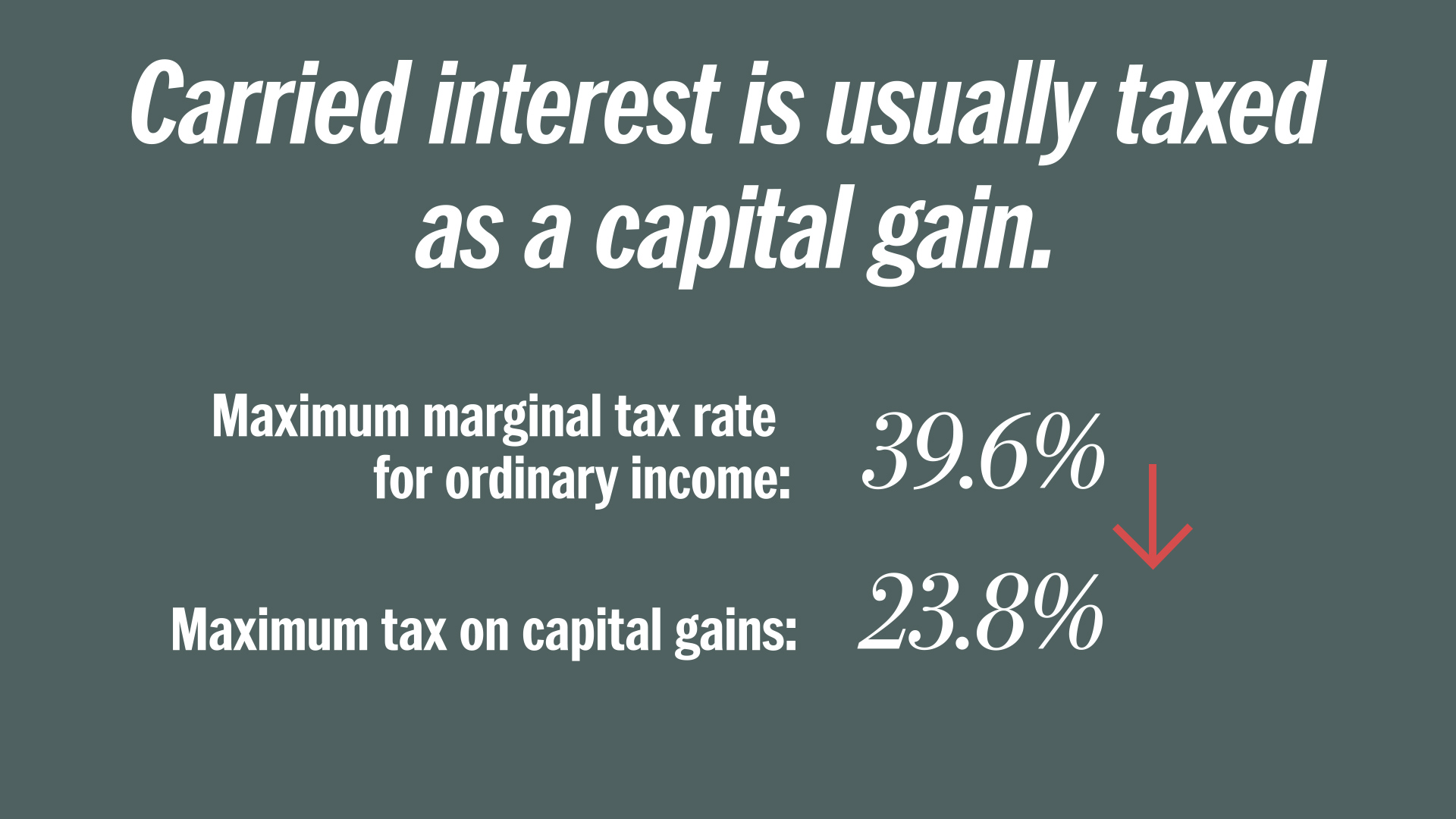
Carried interest, or carry, in finance, is a share of the profits of an investment paid to the investment manager in excess of the amount that the manager contributes to the partnership, specifically in alternative investments (private equity and hedge funds).
In small businesses that are not blind pools, such as single property real estate, the investment manager often funds the business prior to the formation of the partnership. It is a performance fee, rewarding the manager for enhancing performance. The structure also takes advantage of favorable tax treatment in the United States.
However, critics of carried interest want it to be reclassified as ordinary income – not capital gains – to be taxed at the ordinary income tax rate. Private equity advocates argue that the increased tax will subdue the incentive to take the kind of risk that is necessary to invest in and manage companies to profitability.
Regardless of the technology infra-structure, there are generally four types of fees that an online investment platforms charge:
Trading Fees: Any fixed charge attached to each trade that you make. This will typically be either a flat fee or what’s known as the “spread,” when your broker charges you based on the difference between the buying and the selling price of an asset.
Trading Commissions: This is when a broker will charge you for each trade you make based on a percentage of the volume or value of each trade.
Inactivity Fees: Any fees that the broker charges you for not trading, such as for keeping money in a brokerage account.
Non-Trading/Other Fees: Any form of fee for using this platform not covered above. For example, a brokerage might charge you for making deposits into your account, taking money out of it or signing up for additional services.
Posted on November 12, 2023 by Dr. David Edward Marcinko MBA MEd CMP™
The Institute of Medical Business Advisors is a leading national scope provider of healthcare economics, finance, investing, managerial accounting, policy, management and business administration education and medical practice management textbooks, reports, hand-books, dictionaries, journals, white-papers, fair-market valuations [FMV] and legal advisory opinions using multi-platform and traditional seminars and channels of knowledge distribution. iMBA helps the nation’s financial, healthcare and education professionals make decisive improvements in their direction and performance by empowering them through unbiased information, consultants and proprietary tools, books, templates and B-school styled case models.A virtuous “win-win” situation for all concerned.
The firm serves universities, medical, business, graduate and nursing schools; physicians, dentists, attorneys and legal societies – accountants, financial service providers, stock brokers, RIAs, wealth and hedge fund managers – emerging entities, hospitals, clinics, outpatient centers, CXOs and their BODs – the press, media and related academic entities.
Posted on November 8, 2023 by Dr. David Edward Marcinko MBA MEd CMP™
By Staff Reporters
***
***
US credit card balances have jumped to a record $1.08 trillion, according to the New York Federal Reserve.
Nevertheless, Stocks rose for the seventh straight day on Tuesday, giving the NASDAQ and S&P 500 their longest winning streaks since 2021. The surge was fueled by a rally in Big Tech and a growing consensus that the Federal Reserve Bank is done raising interest rates. Chief among the tech revelers was Microsoft, which finished the day at an all-time high amid strong demand for its cloud computing services.
Kaiser Permanente continues to rebound from a rough 2022 and pulled in $239 million in net income in Q3. That marks a dramatic turnaround from the $1.5 billion net loss the integrated system had seen a year prior.
Finally, family physicians utilizing value-based payment (VBP) models reported burnout relief in a study from EHR company Elation Health and the American Academy of Family Physicians.Burnout among providers decreased once practices passed a threshold of 75% financial investment in VBP models.
Posted on November 7, 2023 by Dr. David Edward Marcinko MBA MEd CMP™
WeWork = Did Not Work!
By Staff Reporters
***
***
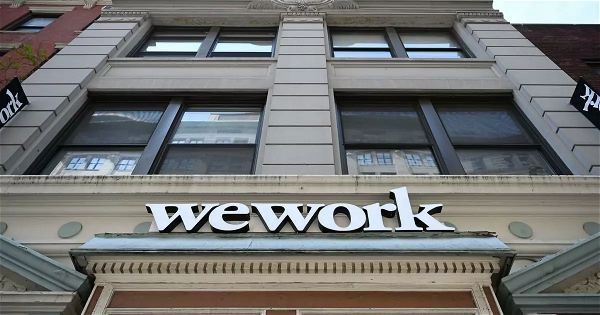
WeWork, the coworking company just filed for Chapter 11 bankruptcy protection in New Jersey after years of struggles that began with a failed IPO in 2019. It aborted the IPO after investors got a look at its finances and just how much power WeWork’s eccentric founder Adam Neumann possessed.
In 2019, the company was valued at $47 billion, but it has since fallen steadily, and this year, its stock has plunged by 98%, giving it a ~$45 million value as of last week.
Posted on November 7, 2023 by Dr. David Edward Marcinko MBA MEd CMP™
By Staff Reporters
***
***
We’ve all known the AI audit is coming—but a new report from KPMG proves just how popular AI has already become in the audit process. The report polled more than 200 financial reporting leaders in the US between July and August. The headline takeaway? The AI audit is already close to ubiquitous.
Sixty-five percent of respondents said they’re already using AI in their job functions, while 49% said they’ve “piloted or deployed generative AI solutions.” Meanwhile, 71% said they expect to use AI “extensively in the next three years.”
Microsoft and Amazon are reportedly in the midst of a mega deal summing up to approximately $1 billion.The deal will help Amazon acquire 550,000 Microsoft 365 E5 licenses for its corporate workers, alongside one million Microsoft 365 F5 licenses for its front line employees.Amazon employees already use traditional, on-premises Microsoft Office software, but the company is now gearing up to transition to cloud-based productivity tools.
***
Here is where the major benchmarks ended:
The S&P 500 Index was up 7.64 points (0.2%) at 4,365.98; the Dow Jones Industrial Average was up 34.54 points (0.1%) at 34,095.86; the NASDAQ Composite (COMP) was up 40.50 points (0.3%) at 13,518.78.
The 10-year Treasury note yield was up about 9 basis points at 4.649%.
CBOEs Volatility Index (VIX) was down 0.02 at 14.89.
Oilfield services shares and other energy companies were among the weakest performers Monday despite crude oil futures rising after Saudi Arabia and Russia reaffirmed commitments to extra voluntary oil supply cuts until the end of the year.
The banking and real estate sectors were also under pressure. Health care stocks led gainers, as the S&P 500 Health Care Index (SP500-35) climbed to its highest level in nearly three weeks. The small-cap-focused Russell 2000 Index (RUT) dropped about 1.3%
As fellow doctors, we understand better than most the more complex financial challenges physicians can face when it comes to their financial planning. Of course, most physicians ultimately make a good income, but it is the saving, asset and risk management tolerance and investing part that many of our colleagues’ struggle with. Far too often physicians receive terrible guidance, have no time to properly manage their own investments and set goals for that day when they no longer wish to practice medicine.
For the average doctor or healthcare professional, the feelings of pride and achievement at finally graduating are typically paired with the heavy burden of hundreds of thousands of dollars in student loan debt.
You dedicated countless hours to learning, studying, and training in your field. You missed birthdays and holidays, time with your families, and sacrificed vacations to provide compassionate and excellent care for your patients. Amidst all of that, there was no time to give your finances even a second thought.
Between undergraduate, medical school, and then internship and residency, most young physicians do not begin saving for retirement until late into their 20s, if not their 30s. You’ve missed an entire decade or more of allowing your money and investments to compound and work for you. When it comes to addressing your financial health and security, there’s no time to waste.
And you may be misled by unscrupulous “advisors”.
For example:
Question: Do you know the difference between a “Fee-Only” and a “Fee-Based financial advisor? Not knowing may cost you tens of thousands of dollars, or more, in excessive advisory fees.
There are only three possibilities if you want to go into practice for yourself; buy a practice; franchise a business, or start one. However, if you have an existing practice, merging it to form a larger entity can be a satisfying experience. The pace of practice mergers is accelerating, but it is often difficult to make an informed judgment about synergy. Mergers make sense only if the resulting value is more than additive to the original; not duplicative.
Unfortunately, far too many mergers fail to create, or actually destroy existing value. So, look for complimentary processes, personalities and ideas. In a merger of two existing practices, there is no substitute for personal interaction between employees and physician-management. This creates cross-pollination and new ideas in everything from service-lines and the patient production process, to marketing and finance, and to proprietary and intellectual rights. Most importantly, it allows diversity of ideas.
And so, the following are questions to consider when contemplating a medical practice merger:
What are the risks of this transaction and how are they mitigated? Will talented employees be retained on both sides and can an exodus be prevented? Are the specific liabilities of each practice known? Remember, the farther outside your area of specialty or expertise, the greater the risk of being wrong. Will I appraise each practice independently, and correctly? Where will employee allegiance rest? What is the name, and logo, of the new entity? Who will be the CEO?
KANSAS CITY, Mo.—A federal jury just found the National Association of Realtors and large residential brokerages liable for about $1.8 billion in damages after determining they conspired to keep commissions for home sales artificially high. The verdict could lead to industry wide upheaval by changing decades-old rules that have helped lock in commission rates even as home prices have skyrocketed—which has allowed real-estate agents to collect ever-larger sums. It comes in the first of two antitrust lawsuits arguing that unlawful industry practices have left consumers unable to lower their costs even though internet-era innovations have allowed many buyers to find homes themselves online.
The Sitzer/Burnett class action lawsuit alleged that some of the nation’s largest real estate companies, including NAR, Keller Williams, Anywhere (formerly, Realogy), RE/MAX, Berkshire Hathaway’s HomeServices of America and two of its subsidiaries conspired to inflate commissions.
Over 12% of American families, or over 16 million, are millionaires, per the WSJ.
Median net worth for the 80th-90th income percentile saw net worth gains of 69% from 2019 to 2022.
The upper-middle class is growing and becoming wealthier, particularly among those aged 55-74.
It’s not just the top 1% that’s getting richer — over 16 million American families now have a net worth over $1 million. That’s over 12% of American families, according to a Wall Street Journal analysis of the Federal Reserve’s Survey of Consumer Finances of over 4,600 American households. This compares to just 9.8 million families who were millionaires in 2019, the WSJ found.
The analysis further noted how nearly eight million families have wealth over $2 million, compared to 4.7 million in 2019. This was particularly pronounced among families in the 55-74 age range. On the whole, median net worth — which measures household assets like houses and vehicles, minus debts like mortgages and student loans — rose an inflation-adjusted 37% between 2019 and 2022 up to around $193,000. Meanwhile, the average net worth rose to over $1 million, though this is skewed by extremely wealthy Americans.
Net worth has increased for all income percentiles even amid rising interest rates, though while the top 10% jumped from $1.84 million to $2.65 million, the bottom 20% rose from $10,780 to $16,900.
Finally, here is where the major US stock market benchmarks ended:
Economists expect the Fed to leave interest rates unchanged today, allowing previous rate increases to take greater hold of the economy and granting the central bank time to assess whether another hike will be necessary. Investors and policymakers will closely scour comments made by Fed Chair Jerome Powell for clues about the central bank’s path over the remainder of the year.
The S&P 500 Index was up 26.98 points (0.7%) at 4,193.80, down 2.2% for the month; the Dow Jones Industrial Average was up 123.91 points (0.4%) at 33,052.87, down 1.4% for the month; the NASDAQ Composite was up 61.76 points (0.5%) at 12,851.24, down 2.8% for the month.
The 10-year Treasury note yield was up about 3 basis points at 4.909%.
CBOE’s Volatility Index (VIX) was down 1.61 at 18.14.
Real estate and financial shares were among the strongest performers Tuesday. Semiconductor companies were also higher. Energy shares lagged as crude oil futures extended their slide, dropping to near $81 a barrel to end at a two-month low. The U.S. dollar index (DXY) strengthened to near 11-month highs in the wake of a Bank of Japan (BoJ) policy shift.
Hospital and health system deal activity is finally starting to rebound following a pandemic-era plunge, according to consulting firm Kaufman Hall, but hospitals are increasingly citing “financial distress” as the reason behind the deals.
In more than a third of the 18 hospitals and health systems deals made in Q3 2023—including mergers and acquisitions (M&A) and partnerships—at least one party cited financial distress as the impetus for the transaction. That figure is “well above historical benchmarks,” according to the firm.
“Hospitals and health systems have been under extreme financial pressure since 2022, when median operating margins remained in negative territory for the full year,” Kaufmann Hall analysts wrote in an October 12 report. “These challenges are reflected in the 39% percent of announced transactions in Q3 in which a party has cited, or publicly available information has enabled Kaufman Hall to infer, an element of financial distress as a transaction driver.”
Last month, the FTC and DOJ jointly released a draft of new guidelines they will use to evaluate potential mergers and acquisitions (M&As).
The guidelines include 13 principles the agencies will follow when scrutinizing deals. The principles stipulate that mergers may not “entrench or extend a dominant position,” eliminate competition between firms, increase concentration in an already concentrated market, or prevent new players from entering a market. The guidelines will be finalized following a 60-day public comment period.
The proposed rules reflect a return to pre-2010 guidelines on concentration, the Wall Street Journal reported, noting that they’d apply to deals that resulted in firms having a market share of 30% or more. The new guidance may give the FTC and DOJ, which have filed numerous antitrust actions, more leeway to go after deals.
At D.E. Marcinko & Associates our clients traditionally includephysicians [MD, MBBS and DO], dentists [DDS and DMD], podiatrists [DPM], Registered Nurses [RNs], Certified Registered Nurse Anesthetists [CRNA], Physician Assistants [PA] and Nurse Practitioners [NP]. A growing cohort of clients include medical technologists, physical, speech and occupational therapists, etc.
The above are naturally segregated into three career tranches: 1. New practitioners, 2] Mid-Career practitioners and 3] Mature practitioners. We serve them all and are fully prepared for any special needs situation that may arise in any tranche [death, divorce, adverse risk event and/or bankruptcy, etc].
D.E.Marcinko & Associates understands the complexity of financial and non-financial deal terms because we are also doctors. Our “hard” knowledge of your business comes from being actual healthcare facility owners, operators and medical practitioners [with additional professional licenses and expertise] enabling us to effectively analyze your business, take corrective measures and present your healthcare entity in the best possible and accurate light.
***
But, if you’re looking at this website, chances are you are fed up, burned out, seeking practice management techniques or a better work-life balance. Or, you are looking for a new non-clinical career, thinking of finance, investing, retirement, or all of the above. Perhaps you are just looking to regain the joy and meaning in your medical or professional career? This is known as “soft” psychology, coaching, personal consulting or fraternal advice.
***
Regardless, of your “soft” personal or “hard” corporate needs, our transparent Fees for Service [FFS] model is moderated for all colleagues based on the acuity and urgency of their engagements. Reduced rates and/or limited charity work may also be possible.
Posted on October 9, 2023 by Dr. David Edward Marcinko MBA MEd CMP™
The Institute of Medical Business Advisors is a leading national scope provider of healthcare economics, finance, investing, managerial accounting, policy, management and business administration education and medical practice management textbooks, reports, hand-books, dictionaries, journals, white-papers, fair-market valuations [FMV] and legal advisory opinions using multi-platform and traditional seminars and channels of knowledge distribution. iMBA helps the nation’s financial, healthcare and education professionals make decisive improvements in their direction and performance by empowering them through unbiased information, consultants and proprietary tools, books, templates and B-school styled case models.A virtuous “win-win” situation for all concerned.
The firm serves universities, medical, business, graduate and nursing schools; physicians, dentists, attorneys and legal societies – accountants, financial service providers, stock brokers, RIAs, wealth and hedge fund managers – emerging entities, hospitals, clinics, outpatient centers, CXOs and their BODs – the press, media and related academic entities.
Posted on October 4, 2023 by Dr. David Edward Marcinko MBA MEd CMP™
By Staff Reporters
***
***
More than 75,000 workers employed by Kaiser Permanente, one of the largest nonprofit healthcare providers in the US, plan to walk off the job for three days—starting today.
Healthcare workers across the industry are experiencing challenges, which Kaiser acknowledged in response to the looming strike. According to a statement by the company, up to two-thirds of healthcare staff everywhere are burnt out. That’s exacerbated by the issues Kaiser employee unions say they’re striking over, including:
Acute staffing shortages: Short-staffing is a common problem in healthcare, but union members say that it has worsened between the pandemic and the Great Resignation—and patient safety is in danger.
Wage increases: The union wants what it describes as competitive compensation that accounts for the increased cost of living: a $25/hour wage floor and increases between 6.25% and 7% over the next four years.
Kaiser insists it pays a decent and denied claims of being short-staffed, saying it hired 22,000 people already this year.
Posted on October 4, 2023 by Dr. David Edward Marcinko MBA MEd CMP™
By Staff Reporters
President Joe Biden announced yesterday that the manufacturers of all of the first 10 prescription drugs selected for Medicare’s first price negotiations have agreed to participate, clearing the way for talks that could lower their costs in coming years and give him a potential political win heading into next year’s election.
***
Wall Street SANK Tuesday as it focuses on the downside of a surprisingly strong job market.The S&P 500 was 1.5% lower in late trading and nearly back to where it was in May. The Dow Jones Industrial Average was down 475 points, or 1.4%, at 32,957 and wiped out the last of its gains made for the year so far. The NASDAQ composite was leading the market lower with a 2% drop as Big Tech stocks were among the market’s biggest losers.
***
The 16-year high on 10-year yields is probably the biggest factor weighing on equities. So, here is where the major benchmarks ended:
The S&P 500 Index was down 58.94 points (1.4%) at 4,229.45; the Dow Jones Industrial Average was down 430.97 points (1.3%) at 33,002.38; the NASDAQ Composite was down 248.31 points (1.9%) at 13,059.47.
The 10-year Treasury note yield was up about 11 basis points at 4.791%.
CBOE’s Volatility Index was up 2.17 at 19.78.
Energy shares were among the few gainers, as WTI crude oil futures rose for the first time in four sessions after dropping sharply from a 13-month high above $95 a barrel. The U.S. dollar index (DXY) strengthened for a third-straight day, touching its highest level since November, reflecting expectations that rates will remain high.
As a new physician investor, it’s important to know the distinctions between like measurements because the market allows firms to advertise their numbers in ways not otherwise regulated. Often companies will publicize their numbers using either GAAP or non-GAAP measures. GAAP, or generally accepted accounting principles, outlines rules and conventions for reporting financial information. It is a means to standardize financial statements and ensure consistency in reporting.
When a company publicizes its earnings and includes non-GAAP figures, it means it wants to provide investors with an arguably more accurate depiction of the company’s health (for instance, by removing one-time items to smooth out earnings). However, the further a company deviates from GAAP standards, the more room is allocated for some creative accounting and manipulation.
When looking at a company that is publishing non-GAAP numbers, new physician investors should be wary of these pro forma statements, because they may differ greatly from what GAAP deems acceptable.
GAAP is set forth in 10 primary principles, as follows:
Principle of consistency: This principle ensures that consistent standards are followed in financial reporting from period to period.
Principle of permanent methods: Closely related to the previous principle is that of consistent procedures and practices being applied in accounting and financial reporting to allow comparison.
Principle of non-compensation: This principle states that all aspects of an organization’s performance, whether positive or negative, are to be reported. In other words, it should not compensate (offset) a debt with an asset.
Principle of prudence: All reporting of financial data is to be factual, reasonable, and not speculative.
Principle of regularity: This principle means that all accountants are to consistently abide by the GAAP.
Principle of sincerity: Accountants should perform and report with basic honesty and accuracy.
Principle of good faith: Similar to the previous principle, this principle asserts that anyone involved in financial reporting is expected to be acting honestly and in good faith.
Principle of materiality: All financial reporting should clearly disclose the organization’s genuine financial position.
Principle of continuity: This principle states that all asset valuations in financial reporting are based on the assumption that the business or other entity will continue to operate going forward.
Principle of periodicity: This principle refers to entities abiding by commonly accepted financial reporting periods, such as quarterly or annually.
Earnings before interest, taxes, depreciation, and amortization
A company’s earnings before interest, taxes, depreciation, and amortization is an accounting measure calculated using a company’s earnings, before interest expenses, taxes, depreciation, and amortization are subtracted, as a proxy for a company’s current operating profitability. Though often shown on an income statement, it is not considered part of the Generally Accepted Accounting Principles by the SEC.
Posted on October 3, 2023 by Dr. David Edward Marcinko MBA MEd CMP™
By Health Capital Consultants, LLC
***
***
On September 18, 2023, the Journal of the American Medical Association (JAMA) published a study comparing online hospital pricing and pricing given over the telephone for shoppable hospital services. Hospitals in the U.S. are required to post pricing online for specified services, but it was unknown whether or not hospitals quoted the same prices to telephone callers as they posted online.
This Health Capital Topics article will discuss the topic of price discrepancy and the difficulties with cost comparison. (Read more…)
DEFINITION: An initial public offering (IPO) or stock launch is a public offering in which shares of a company are sold to institutional investors and usually also to retail (individual) investors An IPO is typically underwritten by one or more investment banks who also arrange for the shares to be listed on one or more stock exchanges. Through this process, colloquially known as floating, or going public, a privately held company is transformed into a public company. Initial public offerings can be used to raise new equity capital for companies, to monetize the investments of private shareholders such as company founders or private equity investors, and to enable easy trading of existing holdings or future capital raising by becoming publicly traded.
After the IPO, shares are traded freely in the open market at what is known as the free float. Stock exchanges stipulate a minimum free float both in absolute terms (the total value as determined by the share price multiplied by the number of shares sold to the public) and as a proportion of the total share capital (i.e., the number of shares sold to the public divided by the total shares outstanding). Although IPO offers many benefits, there are also significant costs involved, chiefly those associated with the process such as banking and legal fees, and the ongoing requirement to disclose important and sometimes sensitive information.
Cite: Wikipedia
***
Now, the NYSE is the world’s largest stock exchange, and for good reason. From thrilling new entries into the public market to a relentless commitment to transformative tech, the NYSE is constantly upping their game.







 Support our online development, and advance our onground research initiatives in free market economics, as we seek to showcase the brightest Next-Gen minds.
THE ME-P DISCLAIMER: Posts, comments and opinions do not necessarily represent iMBA, Inc., but become our property after submission. Copyright © 2006 to-date. iMBA, Inc allows colleges, universities, medical and financial professionals and related clinics, hospitals and non-profit healthcare organizations to distribute our proprietary essays, photos, videos, audios and other documents; etc. However, please review copyright and usage information for each individual asset before submission to us, and/or placement on your publication or web site. Attestation references, citations and/or back-links are required. All other assets are property of the individual copyright holder.
Support our online development, and advance our onground research initiatives in free market economics, as we seek to showcase the brightest Next-Gen minds.
THE ME-P DISCLAIMER: Posts, comments and opinions do not necessarily represent iMBA, Inc., but become our property after submission. Copyright © 2006 to-date. iMBA, Inc allows colleges, universities, medical and financial professionals and related clinics, hospitals and non-profit healthcare organizations to distribute our proprietary essays, photos, videos, audios and other documents; etc. However, please review copyright and usage information for each individual asset before submission to us, and/or placement on your publication or web site. Attestation references, citations and/or back-links are required. All other assets are property of the individual copyright holder.










































 The Leading Business Education Network for Doctors, Financial Advisors and Health Industry Consultants