BUSINESS START-UPS: Innovative Disruption is Going Down!

GOOD-BYE VENTURE CAPITAL

By Staff Reporters

SPONSOR: http://www.MARCINKOASSOCIATES.com

***

***

DEFINITION: Venture capital (VC) is a form of private equity and a type of financing that investors provide to start-up companies and small businesses that are believed to have long term growth potential. Venture capital generally comes from well-off investors, investment banks, and any other financial institutions. Venture capital doesn’t always have to be money. In fact, it often comes as technical or managerial expertise. VC is typically allocated to small companies with exceptional growth potential or to those that grow quickly and appear poised to continue to expand.

CITE: https://www.r2library.com/Resource/Title/082610254

DEFINITION: Disruptive innovation is a business that creates a new market or value network, or enters at the bottom of an existing market and eventually displaces established market-leading firms, products, and alliances. The term, “disruptive innovation” was popularized by the American academic Clayton Christensen and his collaborators beginning in 1995, but the concept had been previously described in Richard N. Foster‘s book “Innovation: The Attacker’s Advantage” and in the paper Strategic Responses to Technological Threats.

CITE: https://www.r2library.com/Resource/Title/082610254

Start-Ups and industry disruptors: Here are just a few of the recent collapses, as per the New York Times:

  • WeWork, which raised over $11 billion as a private startup, went bankrupt earlier this fall.
  • Hopin, the virtual events startup that rode a Covid Virus wave to a $7.6 billion valuation, sold its primary business units for $15 million.
  • The e-scooter company Bird, which became the fastest startup ever to land a $1 billion valuation, was de-listed from the NYSE and is now worth $7 million.
  • We [Don’t] Work: https://medicalexecutivepost.com/2023/11/07/wework-officially-bankrupt/

Overall, more than 3,200 private venture-capital backed US startups that have collectively raised $27.2 billion have gone out of business this year, according to the New York Times and PitchBook. So, why are the disruptors doing down?

MORE: https://www.cnbc.com/2021/05/25/these-are-the-2021-cnbc-disruptor-50-companies.html

Well, the Federal Reserve raised interest rates to a 22-year high. The cost of capital has become far more expensive, and investments that are less risky have gotten more attractive. This year has been particularly bad.

It’s a sad and instantaneous end to the golden Venture Capital years fueled by low interest rates and the growth of the mobile interne. Investment in US startups jumped by 8x between 2012 and 2022 to $344 billion dollars.

COMMENTS APPRECIATED

Thank You

***

***

IRS: A Late PayPal Gift for 2023 Tax Returns

GOODBYE FORM 1099-Ks

By Staff Reporters

***

***

The IRS just said it is again delaying the implementation of a 2021 law that requires payment platforms such as Venmo, Paypal or Cash App to send tax forms called 1099-Ks to anyone who received more than $600 in the current tax year. 

It’s the second consecutive year the IRS has delayed enacting the new regulation, after the tax agency last year pushed off the new law until 2023. On Tuesday, the IRS said it will push the regulation back another year “to reduce taxpayer confusion” after hearing from taxpayers, tax professionals and payment processors.

CITE: https://www.r2library.com/Resource/Title/082610254

COMMENTS APPRECIATED

Thank You

***

***

IRS: Gift and Estate Tax Exempt Limits Increased

By Staff Reporters

***

***

Annual Gift Tax Exclusion Increased

Currently, you can give any number of people up to $17,000 each in a single year without taxation. For 2024, this will be increased to $18,000. For married couples, $36,000 will be available to be given to beneficiaries, tax-free, beginning next year.

Lifetime Gift Tax Exemption

Additionally, the IRS has announced that the lifetime estate and gift tax exemption will increase to $13.61 million in 2024. If a gift exceeds the annual limit ($17,000 this year, $18,000 in 2024), that does not automatically prompt a gift tax. The difference is simply taken from the person’s lifetime exemption limit and no taxes are owed.

COMMENTS APPRECIATED

Thank You

***

***

IRS Inheritance Rule Change and the “Delta Dental” Data Breach

By Staff Reporters

SPONSOR: http://www.MarcinkoAssociates.com

***

The IRS is demanding billions from small business who took this credit ...

***

The IRS Quietly Changed the Rules on Children’s Inheritance

The IRS just issued Revenue Ruling 2023-2, which had a substantial impact on estate planning, particularly where an irrevocable trust is involved.

In the last decade or so, more families have begun utilizing irrevocable trusts to protect their assets from spend-down in order to qualify for government benefits, such as Medicaid and VA Aid and Attendance. Prior to the issuance of this ruling, it was unclear whether assets passing to beneficiaries through an irrevocable trust would receive a step-up in basis, thereby eliminating any capital gains taxes that would otherwise be owed.

Historically, assets that are disposed of during an individual’s lifetime are subject to capital gains taxes on the increase in value of that asset over time. The amount of capital gains owed is determined largely by the difference between the value at the time of purchase and the value at the time of transfer.

***

Delta Dental of California data breach exposed info of 7 million people

“Delta Dental of California and its affiliates are warning almost seven million patients that they suffered a data breach after personal data was exposed in a MOVEit Transfer software breach.Delta Dental of California provides 24 months of free credit monitoring and identity theft protection services to impacted patients to mitigate the risk of their exposed data.”

LINK: https://tinyurl.com/bp4u2chv

COMMENTS APPRECIATED

Refer a Colleague: MarcinkoAdvisors@msn.com

Your referral Count: 0

Thank You

***

***

SECTION 179 DEDUCTIONS: Physicians Avoiding IRS Tax Mistakes

By Staff Reporters

***

***

DEFINITION: Section 179 of the U.S. IRS code is an immediate expense deduction that business owners can take for purchases of depreciating business equipment instead of capitalizing and depreciating the asset over a period of time. The Section 179 deduction can be taken if the piece of equipment is purchased or financed and the full amount of the purchase price is eligible for the deduction.

CITE: https://www.r2library.com/Resource/Title/082610254

Not understanding parameters – Eligible property and annual limits

Medical practices may make mistakes by not fully understanding which types of property qualify for a Section 179 deduction. Section 179 is applicable only to assets used for business purposes. Failing to allocate assets properly can lead to improper deductions.

Eligible property for Section 179 may include:

  • Equipment, X-Ray, computers, fax machines, telephones, and other business property
  • Furniture and fixtures
  • Off-the-shelf-software that is used for business operations
  • Improvements to real-estate such as roofs, heating, ventilation, and air-conditioning.

Section 179 limits are updated annually, so it is important for doctors and practice owners to be aware of these limits and to plan accordingly.

Source: Natalie Westfall, Physicians Practice [12/4/23]

COMMENTS APPRECIATED

Thank You

***

***

2024: FOMC Interest Rate Cuts?

By Staff Reporters

***

***

The Dow hit an all-time high yesterday after the Federal Reserve hinted at plans to make multiple rate cuts next year. Not having such a good day was Pfizer, which touched a 10-year low after releasing disappointing projections for 2024 because people just aren’t buying Covid products like they used to.

CITE: https://www.r2library.com/Resource/Title/082610254

Fed rate cuts may come in threes next year

The Federal Reserve had investors popping bottles yesterday, not just because it made the expected move of holding interest rates steady for now but also for signaling that there may be multiple interest rate cuts in 2024. Most Fed officials penciled in three quarter-percentage-point cuts in their projections. Fed Chair Jerome Powell said inflation had “eased” but still did his best to keep everyone from getting too excited, saying, “No one is declaring victory. That would be premature.” Even so, markets started pricing in even more aggressive cuts than the projections.

COMMENTS APPRECIATED

Thank You

***

***

DAILY UPDATE: Health Care, FOMC and the Tepid Markets

By Staff Reporters

***

SPONSOR: http://www.MarcinkoAssociates.com

***

In healthcare, legislators could vote next week on a major health reform package that includes a ban on spread pricing in Medicaid and a push toward site-neutral payments.


In more news from the Hill, a bipartisan bill was introduced that seeks to cancel a 3.4% Medicare pay cut to docs, which has drawn plenty of ire from the industry.

***

The final FOMC meeting of the year will take place this week, and like most work meetings in mid-December, not a whole lot is going to happen. Chair Jerome Powell is widely expected to leave interest rates unchanged as inflation continues its descent to a 2% target. But 2024 planning is in full swing, and investors are desperate to learn when the Federal Reserve thinks it will need to cut rates next year.

***

Here is where the major stock index benchmarks ended:

  • The S&P 500 index was up 18.07 points (0.4%) at 4,622.44; the Dow Jones Industrial Average® (DJI) was up 157.06 points (0.4%) at 36,404.93; the NASDAQ Composite was up 28.51 points (0.2%) at 14,432.49.
  • The 10-year Treasury note yield (TNX) was little-changed at 4.239%.
  • The CBOE® Volatility Index (VIX) was up 0.28 at 12.63.

In addition to retailers, semiconductor company shares also posted outsized gains Monday, boosted in part by a jump of nearly 10% in Broadcom (AVGO). The Philadelphia Semiconductor Index (SOX) gained more than 3% and ended near a two-year high. Transportation companies were also strong.

In other markets, Natural Gas futures (/NG) plunged more than 6% to a six-month low, reflecting warmer-than-normal U.S. temperatures and excess supplies.

Finally, the so-called Magnificent Seven stocks of Apple, Microsoft, Alphabet, Amazon.com, Nvidia, Tesla and Meta Platforms each fell at least 0.8%. Meta led the declines, dropping 2.2%. But only one out of 11 S&P 500 sectors fell. Even the information technology sub-index ticked higher, reflecting gains outside of the largest companies in the sector.

COMMENTS APPRECIATED

Refer a Colleague: MarcinkoAdvisors@msn.com

Your referral Count: 0

Thank You

***

***

BONDS: Are Best Right Now?

By Staff Reporters

***

CITE: https://www.r2library.com/Resource

***

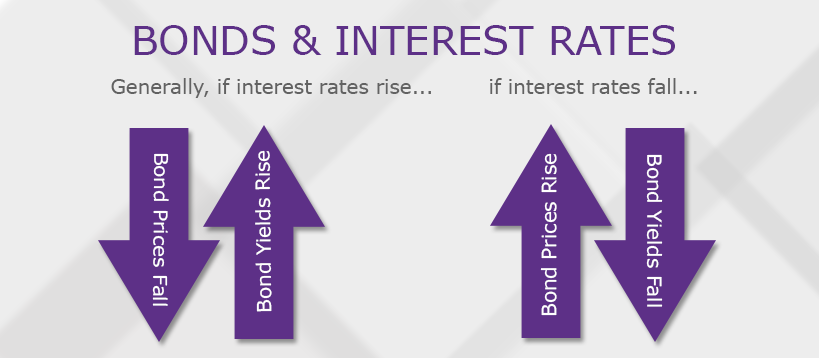
The bond market just finished its best month since 1985, according to the Financial Times, with investor optimism creating a surge in bond prices and a plunge in yields (reminder: they move in opposite directions). The yield on the benchmark 10-year US Treasury note dipped below 4.3% for the first time since September. And other economic measures are looking good:

  • The bond rally spilled over to stocks, where the S&P 500 and Dow just clinched their best months since July 2022 and October 2022, respectively.
  • Mortgage rates dropped for the fifth consecutive week, to 7.22%.

Traders are optimistic that the FOMC may be done hiking interest rates. With recent data showing both consumer spending and the job market cooling down—but not too much—economists see the once-aspirational economic soft landing as achievable, which is great news for Wall Street and to avoid a recession).

CITE: https://www.r2library.com/Resource/Title/082610254

COMMENTS APPRECIATED

Thank You

***

***

DAILY UPDATE: IRS Ups Interest Rate Penalty with Economic Soft Landing?

By Staff Reporters

***

SPONSOR: http://www.MarcinkoAssociates.com

***

The Internal Revenue Service (IRS) is raising the stakes for those who underpay their taxes by ratcheting up the interest penalty that will be assessed in next spring’s tax filing season. Earlier this fall, the IRS increased its interest penalty on estimated tax underpayments to 8% – a notable jump from 3% just two years ago. The IRS indicated that the interest rate penalty is determined every quarter and that for taxpayers other than corporations the assessed rate is the federal short-term rate plus three percentage points.

***

Speaking of a possible US economic “soft-landing“, the S&P 500 closed at a 2023 high on Friday, the VIX (Wall Street’s “fear gauge”) has fallen to a nearly four-year low, and December has been the third-best month for the S&P since 1928. Even crypto is on a roll as bitcoin topped $40,000 for the first time since May 2022.

CITE: https://www.r2library.com/Resource

COMMENTS APPRECIATED

Refer a Colleague: MarcinkoAdvisors@msn.com

Your referral Count: 0

Thank You

***

***

JEROME POWELL: Speaks On “Premature” Interest Rate Cuts

By Staff Reporters

***

What Is Money Factor for SMB? : On Auto Monthly Lease Payment

***

With the Fed’s aggressive rate hikes to curb inflation looking like they’ve finally come to an end thanks to encouraging data on prices falling, investors are starting to look forward to when the central bankers start slashing rates again.

CITE: https://www.r2library.com/Resource/Title/082610254

But Jerome Powell sought to pour some cold water on the rate cut hype cycle during a speech at Spelman College in Atlanta, Georgia yesterday, saying that it was too soon “to speculate on when policy might ease.” However, investors still think he’ll come around: Markets are putting the odds that the Fed will cut rates in March above 50% and are totally convinced it’ll happen by May, according to Bloomberg.

***

COMMENTS APPRECIATED

Thank You

***

***

DAILY UPDATE: Apple Credit Card, Drug Prices and the Modest Stock Markets

By Staff Reporters

***

SPONSOR: http://www.MarcinkoAssociates.com

***

Apple is pulling the plug on its credit card partnership with Goldman Sachs Group, the Wall Street Journal reported on Tuesday. The tech giant recently sent a proposal to the Wall Street bank to exit the contract in the next 12 to 15 months, the report said, citing people briefed on the matter.

***

Senators Elizabeth Warren (Democrat) and Mike Braun (Republican) sent a letter to the US Department of Health and Human Services last week, asking it to investigate whether large insurance companies are hiking prescription drug prices at pharmacies they own

***

***

Here is where the major benchmarks ended:

Here’s where the major benchmarks ended:

  • The S&P 500® index (SPX) was up 4.46 points (0.1%) at 4,554.89; the Dow Jones Industrial Average was up 83.51 points (0.2%) at 35,416.98; the NASDAQ Composite® (COMP) was up 40.73 points (0.3%) at 14,281.76.
  • The 10-year Treasury yield was down about 6 basis points at 4.33%.
  • The CBOE® Volatility Index (VIX) was little-changed at 12.69.

Semiconductor and transportation shares were among the weakest performers Tuesday, and regional banks were also under pressure. Small cap stocks also lagged. The Russell 2000® Index (RUT) fell about 0.4% for its lowest close in a week.

Retailers and utilities were among the firmest sectors. In other markets, the U.S. Dollar Index (DXY) weakened to its lowest level since mid-August, reflecting expectations that U.S. interest rates have peaked.

CITE: https://www.r2library.com/Resource

COMMENTS APPRECIATED

Thank You

***

***

DAILY UPDATE: Powell Speaks and Stock Markets Tumble

By Staff Reporters

***

***

The NYSE and the NASDAQ will follow a regular schedule on Friday, the day before Veterans Day. The U.S. bond market, which may be poised for a big comeback next year if yields continue to fall, will be open Friday as usual.

***

The major indexes ended a brief winning streak after comments from Fed Chairman Jerome Powell stoked concerns over interest rates. More interest-rate hikes are still a possibility to bring inflation under control, he said. In a dramatic campaign to tamp down inflation, the Federal Reserve has raised the benchmark federal funds rate to a range of 5.25% to 5.5%, a 22-year high.

Here is where the major stock market benchmarks ended:

  • The S&P 500 Index was down 35.43 points (0.8%) at 4,347.35; the Dow Jones Industrial Average was down 220.33 points (0.7%) at 33,891.94; the NASDAQ Composite was down 128.97 points (0.9%) at 13,521.45.
  • The 10-year Treasury note yield was up about 12 basis points at 4.632%.
  • CBOEs Volatility Index (VIX) was up 0.84 at 15.28.

Nearly every market sector was under pressure Thursday, with consumer discretionary and health care among the weakest performers. Energy shares were an exception, thanks to a rebound in crude oil futures, though oil prices remain near the 3½-month lows touched earlier this week. The U.S. dollar index (DXY) strengthened for the fourth- straight day.

CITE: https://www.r2library.com/Resource

***

COMMENTS APPRECIATED

Thank You

***

DAILY UPDATE: The US Economy Slows as FTX’s Solana and the Markets Rise

SPONSOR: http://www.MarcinkoAssociates.com

***

***

The current hiring market is slowing as the US economy added just 150,000 jobs last month. The employment gains reported by the Labor Department yesterday fell short of expectations and were almost half of the 297,000 jobs created in September. Still, there’s no need to hit the economic panic button. Though the unemployment rate ticked up slightly, to 3.9% in October, it’s been below 4% since late 2021, the longest sub-4% stretch in over 50 years. But the hiring slowdown may be a sign that the US economy is gently showing.

Now, the six-week United Auto Workers strike against the Big Three Detroit carmakers was the primary culprit in the automotive manufacturing sector shedding 33,000 people from payroll. On the flip side, healthcare, government, and construction were the top job creators, adding 58k, 51k, and 23k positions, respectively.

And, the jobs numbers were in the sweet spot for investors. Stocks posted their biggest weekly gain this year. And that’s because investors view the reduced appetite for new hires as a sign the Fed is succeeding at cooling the economy in its fight against inflation. This jobs report makes it even more likely that the FOMC will put the parking brake on its interest rate hikes, and some traders are betting that the central bank might even lower rates next year.

***

And, the victims of Sam Bankman-Fried‘s financial crimes could be set to recoup almost all of the $16 billion Solana that was lost when his crypto exchange FTX collapsed – unless the IRS steps in to seize the funds instead. 

***

Finally, stocks closed out their best week all year after the “Goldilocks” October jobs report could put the Fed’s interest rate hikes on ice. And, Paramount pictures posted double-digit gains for the second straight session.

CITE: https://www.r2library.com/Resource

COMMENTS APPRECIATED

Thank You

***

***

10 YEAR T-BONDS: Hit Five Percent [5-%]

And … Bill Gross Speaks

By Staff Reporters

***

***

The yield on the 10-year Treasury bond shot above 5% in early trading yesterday—hitting its highest since 2007 and rattling investors—before retreating a bit so everyone could chill out. While a high return on long-term government debt sounds like something only a Wall Street wonk would fret about, it can raise borrowing costs for everyone from homebuyers to small businesses.

  • Treasury yields have been rising steadily for almost two years as investors kept anticipating (correctly) that Jerome Powell would raise interest rates to combat persistent inflation.
  • Bond yields are used as the measure against which lots of other interest rates are set, so recent sky-high yields have contributed to the current eye-popping mortgage rates, which have made homeownership 52% more expensive than renting, and they’re part of the reason why the number of Americans struggling to make car payments is at its highest since at least 1994.
  • CITE: https://www.treasurydirect.gov/

Yields crossed the symbolically significant 5% mark yesterday because investors rushed to sell off 10-year bonds, making them cheaper, per supply and demand—that boosted the bond yields, since yields move in the opposite direction from price.So, why did Wall Street press “sell” on Treasurys?

CITE: https://www.r2library.com/Resource

It’s usually a sign of confidence in the economy, but some analysts are concerned that this time, investors are shedding government debt because they perceive the US as being a spendthrift as the deficit grows. However, the traditional psychology may also be at play: The influential billionaire investor Bill Ackman is believed to have single-handedly stopped yesterday’s bond market sell-off by saying he’d ended his bet on 30-year Treasury bond prices falling because he thinks there is “too much risk in the world” and the economy isn’t as strong as it seems. The 10-year bonds dropped back to 4.85% yesterday afternoon.

BILL GROSS: https://fortune.com/recommends/investing/the-inverted-yield-curve-recession/?utm_source=search&utm_medium=suggested_search&utm_campaign=search_link_clicks

COMMENTS APPRECIATED

Thank You

***

***

PRIVATE COMPANIES: Raising Capital is Hard ~ No Very Tough!

By Staff Reporters

SPONSOR: http://www.MARCINKOAssociates.com

***

***

The markets are down again and stocks continued their September slump with tech companies getting hit especially hard as investors fretted about another possible Fed rate hike because of data showing prices for manufacturing and services trending upward. It was a mixed bag for the meme stock faithful, with AMC hitting an all-time low after releasing a plan to sell new shares and GameStop rising after-hours thanks to better-than-expected sales last quarter.

MEME: https://medicalexecutivepost.com/2021/10/23/what-are-meme-stocks/

***

This all may demonstrate that private companies looking to fund growth in this high-interest rate environment are facing a tough time raising capital amidst falling valuations, according to a new Deloitte survey.

The problem is particularly acute for smaller companies. Many of the companies challenged by capital raising saw themselves putting out the “For Sale” sign within the next six months, which could lead to an M&A boom later this year.

CITE: https://www.r2library.com/Resource/Title/0826102549

“The No. 1 largest factor that people saw as a challenge or a barrier was a decrease in valuations of their business,” Wolfe Tone, vice chair and US and Global Deloitte Private leader, told CFO Brew. “Clearly, increasing interest rates and pricing was closely behind that. Liquidity challenges not far behind that.”

Private companies have been looking to raise capital to fund a range of growth initiatives; meeting talent needs and expanding tech capabilities are at the top of the list, Tone said. Not far behind was “increasing productivity and improving cost structures.”

VC FUNDING: https://marcinkoassociates.com/fmv-appraisals/

COMMENTS APPRECIATED

Thank You

***

THE U.S. DOLLAR: It is Strong!

By Staff Reporters

***

***

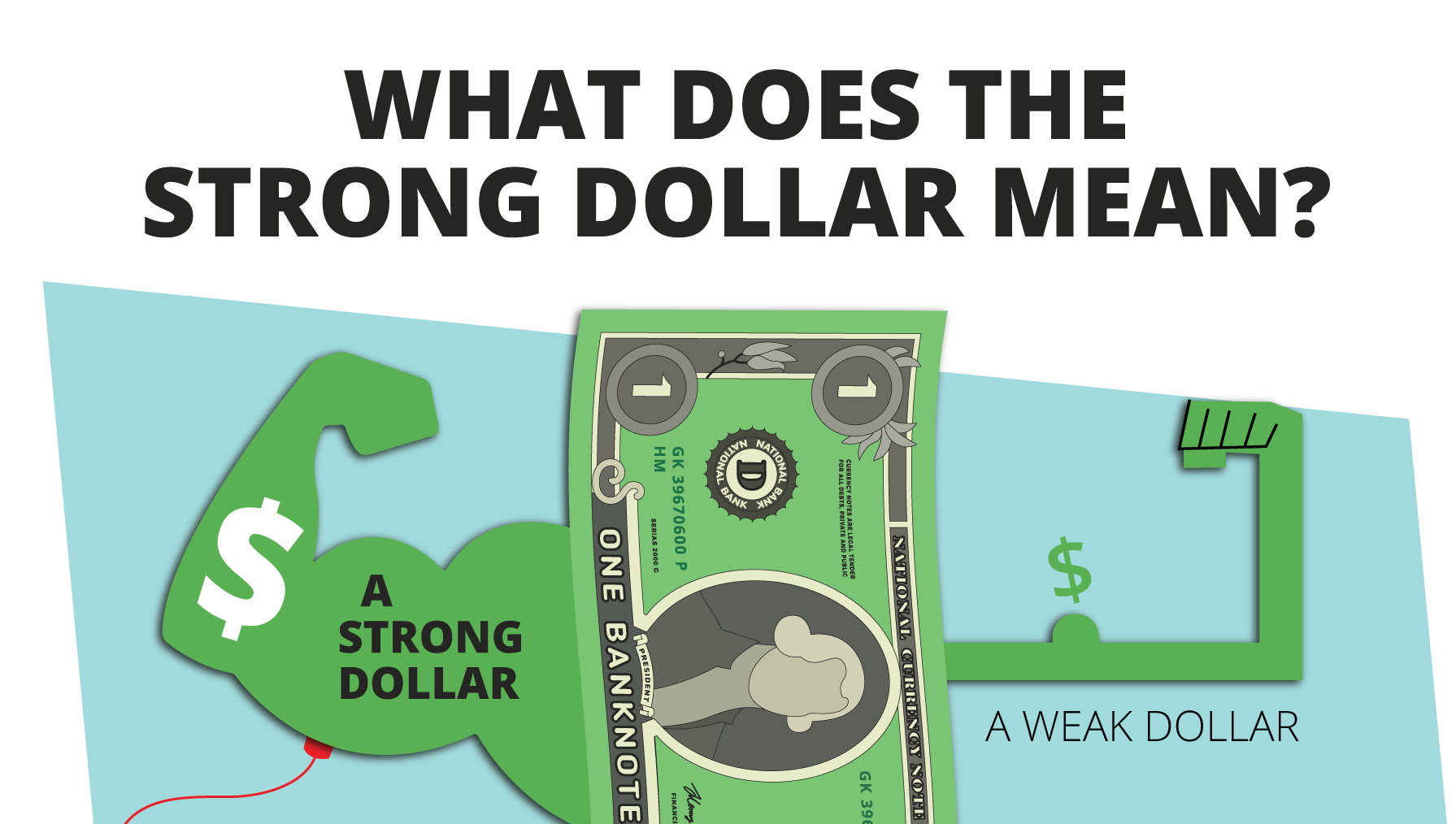
The dollar’s still strong—and recent earnings reports have reflected that, for better or worse.

Around this time last year, earnings took a significant forex hit. Power players like Coca-Cola and Procter & Gamble said the strong dollar hurt profits, while others, like Microsoft, cited currency fluctuations in lowered forecasts.

Back then, the dollar was at a 20-year high. In recent months, the dollar has stayed relatively high as a string of economic data suggested interest rates will stay elevated—at least for now. And after Federal Reserve Chair Jerome Powell suggested the Fed might have to keep raising rates, the US dollar index climbed to its highest since June 1st.

In any case, foreign exchange rates are yet again cropping up as a talking point in recent earnings reports.

***

COMMENTS APPRECIATED

Thank You

***

***

IRA: Inherited Rules Change

By Staff Reporters

***

***

The Internal Revenue Service is allowing people who inherited an individual retirement account after 2019 to skip a required minimum distribution [RMD] this year, but most still must empty the account within 10 years. The IRS issued the new guidance last week.

There has been confusion surrounding the rules for inherited IRAs ever since the Secure Act of 2019 eliminated the so-called “stretch IRA” for most non-spouse beneficiaries. The old rules had allowed beneficiaries of inherited IRAs to stretch their required minimum distributions over their own lifetimes, permitting decades of tax-free or tax-deferred growth in some cases.

Under the Secure Act of 2019, most non-spouse beneficiaries must now empty their inherited IRA by the end of the 10th year following the original owner’s death. When the law was first passed, experts interpreted it to mean that all the money could be withdrawn in year 10 if so desired, said Ed Slott, CPA and founder of IRAHelp.com 

Yet in early 2022, the IRS proposed stricter rules that would apply to someone who inherited an IRA from a person who had already begun taking RMDs; in that case, the recipient must continue taking distributions on an annual schedule. In other words, if the RMD tap had already been turned on, Slott said, it couldn’t be turned off following the original owner’s death, and beneficiaries had to keep withdrawing every year and paying income tax on the amount withdrawn.

***

***

COMMENTS APPRECIATED

Thank You

***

INFLATION: The Interest Rate Balancing Act

By Staff Reporters

***

***

Whether we’ll see another interest rate increase soon depends on what happens between now and the Fed’s next meeting in September. Jerome Powell will be watching to see if consumer prices come down more than they already have, thanks to previous rate hikes.

There are some promising signs that the worst is behind us:

  • Tomorrow, when the government releases the latest personal consumption expenditures price index—the Fed’s preferred measure for tracking inflation—it’s expected to show the lowest inflation increase since the end of 2021. And last month, the consumer price index showed inflation fell to 3%, which is above the Fed’s 2% target but an improvement from last June’s 9.1%.
  • Meanwhile, Coca-Cola—whose prices were 10% higher last quarter compared to Q2 2022—said it’s done marking up drinks for the year, and the CFO of Unilever said the packaged goods giant’s price inflation has peaked (though prices may still get higher).

But the FOMC wants more: Chairman Powell said that for inflation to be truly conquered, the job market, which currently boasts a low unemployment rate of 3.6%, will need to slow.

***

***

COMMENTS APPRECIATED

Thank You

***

***

DAILY UPDATE: Dow and Fed Up but Markets Down

By Staff Reporters

***

***

The Federal Reserve raised its benchmark interest rate another 0.25% on Wednesday, reviving its inflation fight despite a significant cooldown of price increases in recent months. The rate hike brought the Fed’s benchmark interest rate to a 22-year high of between 5.25% and 5.5%. Inflation has fallen significantly from a peak last summer, but remains at a level one percentage point higher than the Federal Reserve’s target of 2%.

***

The Dow on Wednesday rose for a 13th straight day, matching its longest winning streak since 1987. If it closes higher today, it would be a streak not seen since 1897 — about a year after the benchmark was created — when the Dow advanced for 14 sessions in a row. During this latest run, the Dow has outperformed, gaining 5%. That momentum hasn’t been seen in the broader S&P 500 and NASDAQ Composite indexes, however. Both are up just 3% since the Dow’s streak began. The S&P 500 has fallen twice in that time, while the NASDAQ has posted three losing sessions

***

Here is where the major benchmarks ended for the day:

  • The S&P 500 Index was down 0.02% at 4,566.75; the Dow Jones Industrial Average (DJIA) was up about 82 points (0.23%) at 35,520.12; the NASDAQ Composite was down 17 points (0.12%) at 14,127.28.
  • The 10-year Treasury note yield (TNX) edged down to 3.867%.
  • CBOE’s Volatility Index (VIX) dropped 5 points to at 13.32.

***

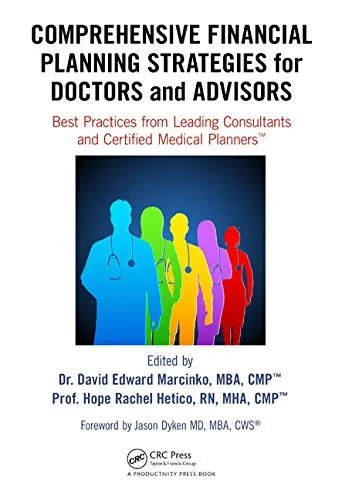
ORDER: https://www.routledge.com/Comprehensive-Financial-Planning-Strategies-for-Doctors-and-Advisors-Best/Marcinko-Hetico/p/book/9781482240283

***

COMMENTS APPRECIATED

Thank You

***

IRS: “No More Door Knocks”

By Staff Reporters

***

***

 The IRS will not come to the front / back door 

The tax agency will no longer make unannounced visits to taxpayers’ homes or businesses to collect payments due (in most cases). The IRS said it was halting the controversial practice, which has been around since at least the 1950s, to protect its agents’ safety.

Instead, the agency will send letters requesting that the taxpayer schedule an appointment. In specific cases, such as to deliver a summons or subpoena or seize assets, an unannounced visit may still occur, but there are only a few hundred of those each year compared to tens of thousands of the more routine visits, according to Reuters.

***

COMMENTS APPRECIATED

Thank You

***

***

KING IS CASH: In a Tough Interest Rate Ecosystem

By Staff Reporters

***

***

Cash is king, especially in this tough interest rate environment. That’s proving true in the mergers and acquisitions market this year, according to PwC’s US Deals 2023 midyear outlook, which says companies and private equity with cash in hand are making deals happen. There are “opportunities for corporates with strong balance sheets. Private equity sponsors with large amounts of dry powder also have been getting deals done,” according to PwC.

CITE: https://www.r2library.com/Resource

Deal makers need cash because lending has become tougher and more expensive to obtain. Additionally, “the IPO market has remained quiet for over a year.”

Even the private equity market, which often leans heavily on debt financing, is reaching for other ways to get deals done: “Some PE sponsors have turned to more creative financing solutions, including higher equity contribution, seller’s notes, paid in-kind financing and the private credit markets.”

The challenging market is also impacting deal size. PwC found that deal makers are eschewing big deals in favor of smaller opportunities. However, although the deals appear to be smaller, the volume of M&A activity is “relatively strong compared toCOVID pre-pandemic levels.

***

COMMENTS APPRECIATED

Join the ME-P

***

***

TRIVIA: After Tax Day 2023?

By Staff Reporters

***

***

  • In 1696, England imposed a tax on windows to extract more revenue from the wealthy (whose houses had more windows). But all it did was incentivize fewer windows in homes and public health deteriorated from the lack of ventilation.
  • People 100 years old and older in New Mexico are exempt from the state’s income tax.
  • In 2009, local officials in China’s Hubei province were required to smoke more cigarettes to boost sales tax collections. They were fined if they didn’t hit their targets.

CITE: https://www.r2library.com/Resource

MORE FUN TRIVIA: https://blog.cheapism.com/fun-tax-facts/

***

***

COMMENTS APPRECIATED

Thank You

***

DAILY UPDATE: 2022 IRA/HSA Contribution Deadline Monday with 2023 Tax Filing Day Tuesday

A LAST MINUTE REMINDER

By Staff Reporters

***

***

Tax Day arrives Tuesday, April 18, 2023 as America’s small businesses are worried their own government will treat them like suspected criminals, even as they hire workers, raise wages and strengthen their communities. And, do not forget that Monday the 17th is the last day deadline for 2022 IRA and HSA contributions.

***

G-7 holds its annual summit in Japan. Ministers from the Group of Seven countries have arrived at a Japanese hot spring resort town for a rejuvenating soak and to discuss the world’s most pressing geopolitical challenges, such as China’s aggression toward Taiwan, the war in Ukraine, and climate change. Japan has ramped up security after an apparent smoke bomb was thrown at the prime minister on Saturday.

More companies report earnings. Investors will be poring over reports from Tesla, Netflix, Bank of America, Goldman Sachs, American Express, and dozens of other firms this week for clues on how corporate America is faring in these confusing economic times.

CITE: https://www.r2library.com/Resource

***

***

CITE: https://www.amazon.com/Dictionary-Health-Information-Technology-Security/dp/0826149952/ref=sr_1_5?ie=UTF8&s=books&qid=1254413315&sr=1-5

***

ORDER: https://www.routledge.com/Comprehensive-Financial-Planning-Strategies-for-Doctors-and-Advisors-Best/Marcinko-Hetico/p/book/9781482240283

***

COMMENTS APPRECIATED

Thank You

***

Medical Managed Care IBNR Accounting Claims

DR. DAVID E. MARCINKO MBA

http://www.CertifiedMedicalPlanner.org

eTax Savings Strategies

Claim Anatomy - ipitome

[By Ana Vassallo] AND [Dr. David E. Marcinko MBA]

Managed Care Organizations (MCOs) that accept capitated risk contracts face a potentially significant tax burden for Incurred but Not Reported (IBNR) claims. It is not uncommon that IBNR claims at the end of a reporting period equal one to two months premiums for MCOs under a fee-for-service model. The Internal Revenue Service (IRS) has taken a very strong position relative to the deductibility of these claims by saying that an MCO cannot deduct such losses if they are based on estimates.

Incurred But Not Reported [IBNR] Claims

IBNR is a term that refers to the costs associated with a medical service that has been provided, but for which the carrier has not yet received a claim. The carrier to account for estimated liability based on studies of prior lags in claim submission records IBNR reserves. In capitated contracts, MCOs are responsible for IBNR claims of their enrollees (Kennedy, 1). 

For example, if an enrollee is treated in an emergency room, a plan may not know it is liable for this care for at least 30-60 days. Well-run plans devote considerable attention to accurately estimating such claims because a plan can look healthy based on claims submitted and be financially unhealthy if IBNR claims experience is increasing substantially but is unknown.

Why a Problem for HMO’s/MCOs 

Section 809(d)(1) of the Code provides that, for purposes of determining the gain and loss from operations, a insurance company shall be allowed a deduction for all claims and benefits accrued, and all losses incurred (whether or not ascertained), during the taxable year on insurance and annuity contracts.  Section 1.809-5(a) (1) of the Income Tax Regulations provides that the term “losses incurred (whether or not ascertained)” includes a reasonable estimate of the amount of the losses (based upon the facts in each case and the company’s experiences with similar cases) incurred but not reported by the end of the taxable year as well as losses reported but where the amount thereof cannot be ascertained by the end of the year. By taking into account for its prior years only the reported losses but not the unreported losses, the taxpayer has established a consistent pattern of treating a material item as a deduction. The effect of the taxpayer’s claim for the first time of a deduction for an estimate of losses incurred but unreported under section 809(d)(1) of the Code, was to change the timing for taking the deduction for the incurred but unreported losses.

Due to the taxpayer consistently deducting losses incurred in the taxable year in which reported, a change in the time for deducting losses incurred under section 809(d)(1) is a change in the method of accounting for such losses to which the provisions of section 446(e) apply (IRS, 14-30). 

In order to qualify for an insurance company under the current IRS regulations, the MCO must have the following criteria (Kongstvedt, 235-256):

· At least 50% of the MCO must come from insurance related activities.

· The MCO must have an insurance company license.

If an MCO did not have these two criteria, the IRS will not deem the manage care company as an eligible insurance company.  Therefore, the MCO would not be able to file for IBNRs with the IRS.

How MCOs/HMOs Intensify IBRN Claims

There is a high degree of uncertainty inherent in the estimates of ultimate losses underlying the liability for unpaid claims.  The only reason the IRS would not allow an MCO to deduct IBNR because the financial statements is based on an estimate (IRS, 134-155).

Except through the insurance company exclusion IRS does not allow any taxpayer to deduct losses based on estimates. There has been some precedence set that the IRS will accept an amount for incurred but not reported claims if the amount is supported by valid receipts of claims that the company has in-house prior to the filing of the tax return.

There has been some controversy as to how long of a period of reporting time the IRS will allow you to include in those estimates. There are ranges from 3-6 months to file a claim (IRS, 137). The process by which these reserves are established requires reliance upon estimates based on known facts and on interpretations of circumstances, including the business’ experience with similar cases and historical trends involving claim payment patterns, claim payments, pending levels of unpaid claims and product mix, as well as other factors including court decisions, economic conditions and public attitudes.

There has been no clear indication from the IRS that it will accept an accrual for these losses and entities. Therefore, companies deducting such losses may eventually find themselves in a position where the IRS may challenge the relating deductibility of those losses.

Product DetailsProduct DetailsProduct Details

Evaluating IBNRs from a New Present Value Perspective

The best measure of whether or not a stream of future cash flows actually adds value to the organization is the net present value (NPV).  The best decision rule for NPV to accept or reject a decision problem is if the NPV is greater than zero, the project adds value to the organization.  Although – if the NPV is exactly zero it neither adds nor subtracts value from the organization (McLean 193).  In either case, the project is acceptable.  In addition, if the NPV is less than zero, the project subtracts value from the organization and should not be undertaken (McLean, 193).

The provision for unpaid claims represents an estimate of the total cost of outstanding claims to the year-end date. Included in the estimate are reported claims, claims incurred but not reported and an estimate of adjustment expenses to be incurred on these claims. The losses are necessarily subject to uncertainty and are selected from a range of possible outcomes (Veal, 11). During the life of the claim, adjustments to the losses are made as additional information becomes available. The change in outstanding losses plus paid losses is reported as claims incurred in the current period.

All but the smallest organizations have predictable and unpredictable losses. It is important mentally to separate the two since predictable losses are not risks but normal business expenses. Risk is the degree to which losses vary from the expected. If losses average $85,000 per year but could be as much as $20 million, the risk is $20 million minus $85,000. The $85,000 figure represents reasonably predictable losses (Veal, 12).

IBNR Challenges and Solutions

While I was unable to find an actual amount of the cost of the penalties that can be incurred, the IRS is able to impose penalty fees under Section 4958 of the IRS code (IRS, 255). While penalties differ depending on individual bases, MCOs will be penalizing for any misconduct either by IRS Codes or Court Jurisdiction.

It is prudent that MCOs ensure their organization that they will not incur a financial “meltdown”. They further need to ensure IBNR is funded for period of at least 2-3 months. In some states, the state laws make the MCO financially responsible to pay the providers for a second time if the intermediary fails to pay or becomes insolvent (Cagle, 1).

Paid losses, paid expenses and net premiums are usually deductible; reserves for incurred-but-unpaid losses generally are not, unless the taxpaying entity is an insurance company. Consequently, if a corporation has a high effective tax rate and concedes that it cannot deduct self-insured loss reserves, some of its more cost-effective options may be a paid-loss retro (if state rules are not too restrictive), a compensating balance plan, or the formation of a pool or industry captive. Even these plans may be subject to IRS challenge. To qualify as a tax-deductible expense, a premium or other payment must satisfy two criteria (Cagle, 2):


  • There must be transfer of risk: an insurance risk. This differs from investment risk, but there is no authoritative definition of “risk transfer” other than various court decisions (primarily Helvering v. Le Gierse, 312 US 531 — U.S. Supreme Court 1941).
  • There must be both risk shifting and risk distribution. “Risk shifting” means that one party shifts the risk of loss to another, generally not in the same corporate family. “Risk distribution” means that the party assuming the risk distributes the potential liability, in part, among others.

The deductibility of an insurance expense may also be questioned if it is contingent upon a future happening, such as a loss payment, right to a dividend or other credit, or possible forgiveness of future loans or notes (Cagle, 3). This may seem a broad statement, but the Cost Accounting Standards Board states in its Standards for Accounting for Insurance Expense that any expense which is recoverable if there are no losses shall be accounted as a deposit, not an expense. This is essentially the IRS position (IRS, 145).

Assessment

While there are a few solutions to this matter, the IRS is making sure that MCOs will be penalized if MCOs improperly handle IBNRs.  It is also important for organizations to understand the MCO’s policies regarding IBNR reserves and their contractual obligations. And, while the IRS has set limitations for MCOs to file their IBNR claims, MCOs have the major responsibility of allocating these IBNR claims appropriately.  There are severe penalties for not properly filing the IBNR claims appropriately.  However, there is several tax saving strategies to help MCOs properly file their IBNR claims with the IRS.  It imperative that MCO executives and accounting manager consult an expert to properly plan an ethical strategy that will help them build a stable business that is trustworthy and reliable.

Bibliography

1. Cagle, Jason, Esq., Interview, June 8, 2004, interview performed by Ana Vassallo.

2. McLean, Robert A., Net Profit Value, Pages 193-194, 2nd Edition, Thomson/Delmar Learning, Financial Management in Heath Care Organization, 2003.

3. Patient-Physician Network, Managed Care Glossary, Printed 6/11/04 http:/www.drppg.com/managed_care.asp.

4. Internal Revenue Services, IRS.Gov, Printed 6/12/04, http://www.irs.gov/

5. Internal Revenue Services, Revenue Ruling, Printed 6/11/04, http://www.taxlinks.com/rulings/1079/revrul179-21.thm

6. Kongstvedt, Peter R., Managed Care – What It Is and How it Works, Pages 235-256, Jones and Bartlett Publishers, 2003.

7. Veale, Tom, The Return of Captives in the Hard Market, Tristar Risk Management Aug. 22, 2002, San Diego RIMS.

Conclusion

Your thoughts and comments on this ME-P are appreciated. Feel free to review our top-left column, and top-right sidebar materials, links, URLs and related websites, too. Then, subscribe to the ME-P. It is fast, free and secure.

Speaker: If you need a moderator or speaker for an upcoming event, Dr. David E. Marcinko; MBA – Publisher-in-Chief of the Medical Executive-Post – is available for seminar or speaking engagements. Contact: MarcinkoAdvisors@msn.com

OUR OTHER PRINT BOOKS AND RELATED INFORMATION SOURCES:

Product DetailsProduct Details

FOMC: Interest Rates Up?

By Staff Reporters

***

***

DEFINITION:

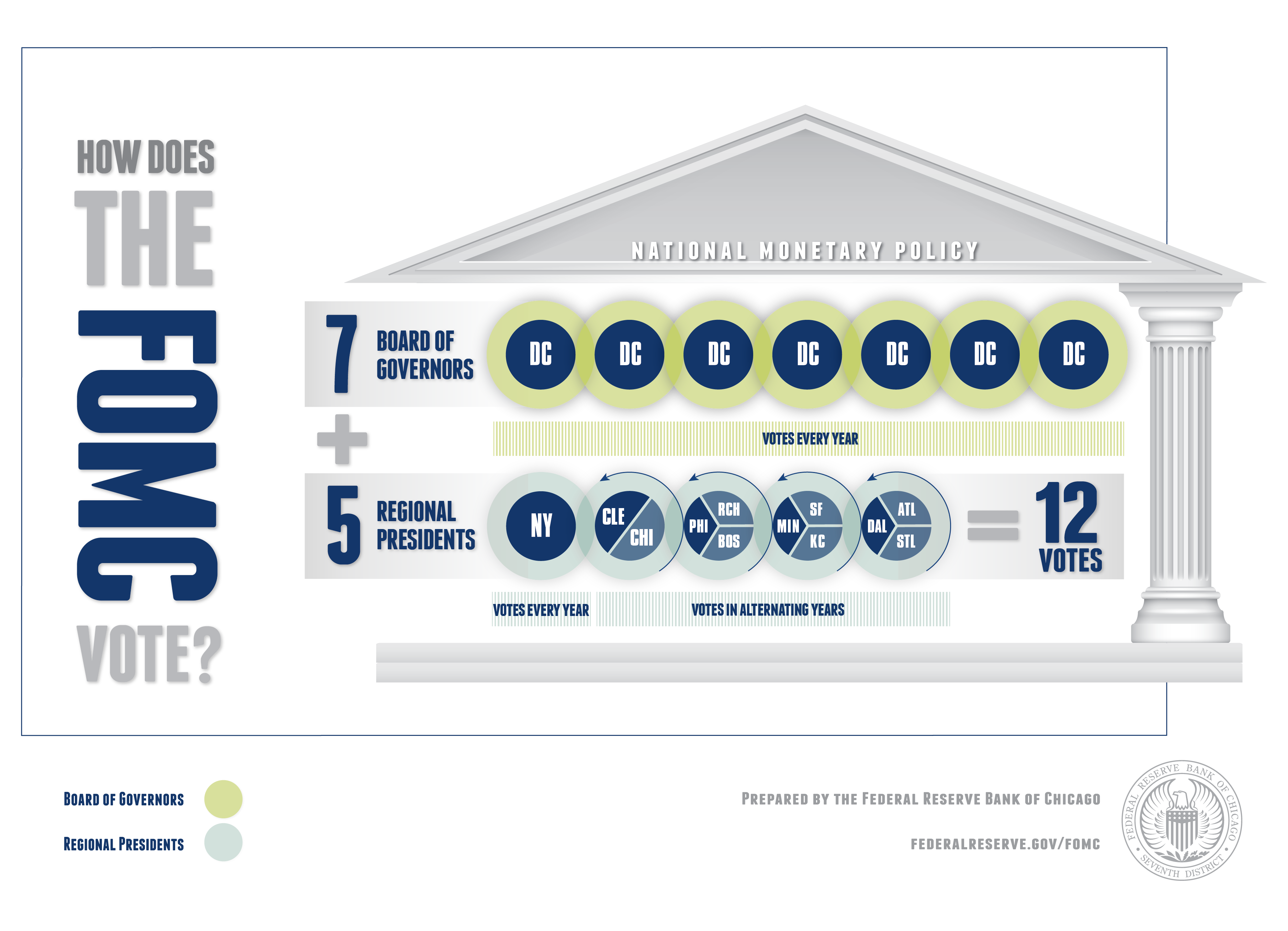
According to Wikipedia, the Federal Open Market Committee (FOMC), a committee within the Federal Reserve System (the Fed), is charged under United States law with overseeing the nation’s open market operations (e.g., the Fed’s buying and selling of United States Treasury securities). This Federal Reserve committee makes key decisions about interest rates and the growth of the United States money supply. Under the terms of the original Federal Reserve Act, each of the Federal Reserve banks was authorized to buy and sell in the open market bonds and short term obligations of the United States Government, bank acceptances, cable transfers, and bills of exchange. Hence, the reserve banks were at times bidding against each other in the open market. In 1922, an informal committee was established to execute purchases and sales. The Banking Act of 1933 formed an official FOMC.

The FOMC is the principal organ of United States national monetary policy. The Committee sets monetary policy by specifying the short-term objective for the Fed’s open market operations, which is usually a target level for the federal funds rate (the rate that commercial banks charge between themselves for overnight loans).

The FOMC also directs operations undertaken by the Federal Reserve System in foreign exchange markets, although any intervention in foreign exchange markets is coordinated with the U.S. Treasury, which has responsibility for formulating U.S. policies regarding the exchange value of the dollar.

The Federal Reserve is set to announce today whether it will impose another interest rate hike, the central bank’s latest move in a months long fight that has eased inflation but risks plunging the U.S. into a recession.

The Fed [FOMC] has put forward a string of borrowing cost increases as it tries to slash price hikes by slowing the economy and choking off demand. The approach, however, risks tipping the U.S. economy into a downturn and putting millions out of work.

CITE: https://www.r2library.com/Resource/Title/0826102549

And so, at a meeting in December 2022, the Fed raised its short-term borrowing rate a half-percentage point, pulling back from three consecutive 0.75% increases and signaling confidence that sky-high inflation could be brought down to normal levels.

Economists expect the Fed to continue softening its approach with a 0.25% rate hike today? The decision comes weeks after a government report showed that inflation slowed in December, marking six consecutive months of easing price increases.

***

COMMENTS APPRECIATED

Thank You

***

ORDER: https://www.routledge.com/Comprehensive-Financial-Planning-Strategies-for-Doctors-and-Advisors-Best/Marcinko-Hetico/p/book/9781482240283

***

IRS TAX FILING: Joint or Separate for Married Couples?

INTUIT

By Staff Reporters

***

Married couples have the option to file jointly or separately on their federal income tax returns. The IRS strongly encourages most couples to file joint tax returns by extending several tax breaks to those who file together.

In the vast majority of cases, it’s best for married couples to file jointly, but there may be a few instances when it’s better to submit separate returns.

READ HERE: https://turbotax.intuit.com/tax-tips/marriage/should-you-and-your-spouse-file-taxes-jointly-or-separately/L7gyjnqyM?dclid=CKzxz8Pzy_wCFeMBwQods3cDLQ

***

ORDER: https://www.routledge.com/Comprehensive-Financial-Planning-Strategies-for-Doctors-and-Advisors-Best/Marcinko-Hetico/p/book/9781482240283

***

ORDER: https://www.routledge.com/Risk-Management-Liability-Insurance-and-Asset-Protection-Strategies-for/Marcinko-Hetico/p/book/9781498725989

COMMENTS APPRECIATED

Thank You

***

IRS: Tax Changes to Know for 2022

By Staff Reporters

***

Here are eight things to keep in mind as you prepare to file your 2022 taxes

1. Income tax brackets shifted somewhat

There are still seven tax rates, but the income ranges (tax brackets) for each rate shifted slightly to account for inflation. For 2022, the following rates and income ranges apply:

Taxable income brackets

Tax rate  Single filers Married couples filing jointly (and qualifying widows or widowers)
10% $0 to $10,275$0 to $20,550
12%$10,276 to $41,775$20,551 to $83,550
22% $41,776 to $89,075$83,551 to $178,150
24%$89,076 to $170,050$178,151 to $340,100
32% $170,051 to $215,950$340,101 to $431,900
35% $215,951 to $539,900$431,901 to $647,850
37% $539,901 or more$647,851 or more

2. The standard deduction increased somewhat

After an inflation adjustment, the 2022 standard deduction increases to $12,950 for single filers and married couples filing separately and to $19,400 for single heads of household, who are generally unmarried with one or more dependents. For married couples filing jointly, the standard deduction rises to $25,900.

3. Itemized deductions remain essentially the same

For most filers, taking the higher standard deduction is more practical and saves the hassle of keeping track of receipts. But if you have enough tax-deductible expenses, you might benefit from itemizing.

  • State and local taxes: The deduction for state and local income taxes, property taxes, and real estate taxes is capped at $10,000.
  • Mortgage interest deduction: The mortgage interest deduction is limited to $750,000 of indebtedness. But people who had $1,000,000 of home mortgage debt before December 16, 2017 will still be able to deduct the interest on that loan.
  • Medical expenses: Only medical expenses that exceed 7.5% of adjusted gross income (AGI) can be deducted in 2022.
  • Charitable donations: The deductions for charitable donations are not as generous as they were in 2021. In 2022, the annual income tax deduction limits for gifts to public charities1 are 30% of AGI for contributions of non-cash assets—if held for more than one year—and 60% of AGI for contributions of cash.
  • Miscellaneous deductions: No miscellaneous itemized deductions are allowed.

4. IRA contribution limits remain the same and 401(k) limits are slightly higher

The traditional IRA and Roth contribution limits in 2022 remain the same as the prior year. Individuals can contribute up to $6,000 to an IRA, and those age 50 and older also qualify to make an additional $1,000 catch-up contribution. If you’re able to max out your IRA, consider doing so—you may qualify to deduct some or all of your contribution.
However, the 2022 contribution limits for 401(k) accounts have increased to $20,500. If you’re age 50 or older, you qualify to make an additional $6,500 catch-up contribution for this tax year as well.

5. You can save a bit more in your health savings account (HSA)

For 2022, the maximum you can contribute to an HSA is $3,650 for an individual (up $50 from 2021) and $7,300 for a family (up $100). People age 55 and older can contribute an extra $1,000 catch-up contribution.

To be eligible for an HSA, you must be enrolled in a high-deductible health plan (which usually has lower premiums as well). Learn more about the benefits of an HSA.

6. The Child Tax Credit is lower after a one-year bump

Tax credits, which reduce the tax you owe dollar for dollar, are normally better than deductions, which reduce how much of your income is subject to tax.

In 2021, the American Rescue Plan Act (ARPA) temporarily enlarged the Child Tax Credit. But in 2022, the credit returns to $2,000 per child age sixteen or younger. The credit is also subject to a phase-out starting at $400,000 for joint filers and $200,000 for single filers. For other qualified dependents, you can claim a $500 credit.

7. The alternative minimum tax (AMT) exemption is higher

Until the AMT exemption enacted by the Tax Cuts and Jobs Act expires in 2025, the AMT will continue to affect mostly households with incomes over $500,000. For 2022, the AMT exemptions are $75,900 for single filers and $118,100 for married taxpayers filing jointly. The phase-out thresholds are $1,079,800 for married taxpayers filing a joint return and $539,900 for all other taxpayers. (Once your income for the AMT hits the phase-out threshold, your AMT exemption begins to phase out at 25 cents for every dollar over the threshold.)

8. The estate tax exemption is even higher

The estate and gift tax exemption, which is indexed to inflation, rises to $12.06 million for 2022. But the now-higher exemption is set to expire at the end of 2025, meaning it could be essentially cut in half at that time if Congress doesn’t act.

The annual gift exclusion, which allows you to give money to your loved ones each year without incurring any tax liability or using up any of your lifetime estate and gift tax exemption, increases to $16,000 per recipient (up $1,000 from 2021).

Don’t get caught

Finally, if you’re age 72 or older, make sure you’ve taken your required minimum distribution (RMD) from your retirement accounts before the end of the year or else you face a 50% penalty on any undistributed funds (unless it’s your first RMD, in which case you can wait until April 1, 2023).

CITE: https://www.r2library.com/Resource/Title/082610254

COMMENTS APPRECIATED

Thank You

***

Front Matter with Foreword by Jason Dyken MD MBA

ORDER: https://www.routledge.com/Comprehensive-Financial-Planning-Strategies-for-Doctors-and-Advisors-Best/Marcinko-Hetico/p/book/9781482240283

***

IRS: Best States for Minimizing Taxes in Retirement

By SMART ASSET

***

***

If shrinking your tax liability is high on your list of priorities, a few states stand out. The winners in the list below either have no state income tax, no tax on retirement income, or a substantial discount on the taxes levied on retirement income. But that’s just the start.

CITE: https://www.r2library.com/Resource/Title/082610254

While several additional states have no state income tax, the states that made our list also have favorable sales, property, inheritance, and estate taxes.

  • Alaska
  • Florida
  • Georgia
  • Mississippi
  • Nevada
  • South Dakota
  • Wyoming

If those seven locations aren’t ideal, consider the next tier of tax-friendly states. Tax benefits aren’t quite as high as those above, but they do stand out in one specific category: no taxes on social security income.

That’s not to say they don’t make up for it in other areas, however. Washington State, for example, has no state income tax, but does have a 6.5% state sales tax. Still, it’s always beneficial to avoid income tax when possible.

  • Alabama
  • Arkansas
  • Colorado
  • Delaware
  • Idaho
  • Illinois
  • Kentucky
  • Louisiana
  • Michigan
  • New Hampshire
  • Oklahoma
  • Pennsylvania
  • South Carolina
  • Tennessee
  • Texas
  • Virginia
  • Washington
  • West Virginia

***

ORDER: https://www.routledge.com/Comprehensive-Financial-Planning-Strategies-for-Doctors-and-Advisors-Best/Marcinko-Hetico/p/book/9781482240283

***

COMMENTS APPRECIATED

Thank You

***

RMDs: Are You of IRS Taxation Age?

Stop 2020 – Restart 2021

By Staff Reporters

***

CITE: https://www.r2library.com/Resource/Title/082610254

***

Are You of RMD Age?
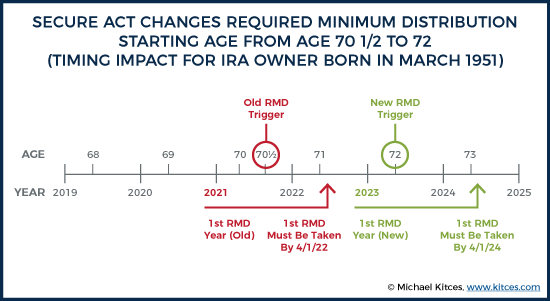
A Required Minimum Distribution (RMD) is an amount of money the IRS requires you to withdraw from most retirement accounts, beginning at age 72.
Due to the Coronavirus Aid, Relief, and Economic Security (CARES) Act, RMDs were not required in 2020, but RMDs are required in 2021 and each year after. RMDs can be an important part of your retirement income strategy.

IRS: https://www.irs.gov/retirement-plans/retirement-plans-faqs-regarding-required-minimum-distributions

***

COMMENTS APPRECIATED

Thank You

***

ORDER: https://www.routledge.com/Comprehensive-Financial-Planning-Strategies-for-Doctors-and-Advisors-Best/Marcinko-Hetico/p/book/9781482240283

***

IRS and [Temporary] Charitable Donations

By Staff Reporters

***

***

Temporary charitable donation deductions have ended

Fewer filers may be able to claim charitable donation tax breaks for this tax year.

The expanded charitable cash contribution benefits that were offered in 2020 and 2021 have ended. The temporary suspension of the 60% AGI limit in 2020 and 2021 is now back, limiting the amount you can claim in charitable contributions.  

CITE: https://www.r2library.com/Resource/Title/082610254

***

ORDER: https://www.routledge.com/Comprehensive-Financial-Planning-Strategies-for-Doctors-and-Advisors-Best/Marcinko-Hetico/p/book/9781482240283

***

COMMENTS APPRECIATED

Thank You

***

MORE: Tax Loss Harvesting

Tax Loss Harvesting

By Vitaliy Katsenelson, CFA

DEFINITION: https://medicalexecutivepost.com/2022/11/06/tax-loss-harvesting-what-it-is/

***

Tax Lost Harvesting with Examples

I enjoy writing about taxes as much as I enjoy going to the dentist. But I feel what I am about to say is important. We – including yours truly – have been mindlessly conditioned to do tax selling at the end of every year to reduce our tax bills. On the surface it makes sense. There are realized gains – why don’t we create some tax losses to offset them?

Here is the problem. With a few exceptions, which I’ll address at the end, tax-loss selling makes no logical sense. Let me give you an example.

Let’s say there is a stock, XYZ. We bought it for $50; we think it is worth $100. Fourteen months later we got lucky and it declined to $25. Assuming our estimate of its fair value hasn’t changed, we get to buy $1 of XYZ now for 25 cents instead of 50 cents.

But as of this moment we also have a $25 paper loss. The tax-loss selling thinking goes like this: Sell it today, realize the $25 loss, and then buy it in 31 days. (This is tax law; if we buy it back sooner the tax loss will be disqualified.) This $25 loss offsets the gains we took for the year. Everybody but Uncle Sam is happy.

Since I am writing about this and I’ve mentioned above I’d rather be having a root canal, you already suspect that my retort to the above thinking is a great big NO!

In the first place, we are taking the risk that XYZ’s price may go up during our 31-day wait. We really have no idea and rarely have insights as to what stocks will do in the short term. Maybe we’ll get lucky again and the price will fall further. But we’re selling something that is down, so risk in the long run is tilted against us. Also, other investors are doing tax selling at the same time we are, which puts additional pressure on the stock.

Secondly – and this is the most important point – all we are doing is pushing our taxes from this year to future years. Let’s say that six months from now the stock goes up to $100. We sell it, and… now we originate a $75, not a $50, gain. Our cost basis was reduced by the sale and consequent purchase to $25 from $50. This is what tax loss selling is – shifting the tax burden from this year to next year. Unless you have an insight into what capital gains taxes are going to be in the future, all you are doing is shifting your current tax burden into the future.

Thirdly, in our first example we owned the stock for 14 months and thus took a long-term capital loss. We sold it, waited 31 days, and bought it back. Let’s say the market comes back to its senses and the price goes up to $100 three months after we buy it back. If we sell it now, that $75 gain is a short-term gain. Short-term gains are taxed at your ordinary income tax bracket, which for most clients is higher than their capital gain tax rate. You may argue that we should wait nine months till this gain goes from short-term to long-term. We can do that, but there are costs: First, we don’t know where the stock price will be in nine months. And second, there is an opportunity cost – we cannot sell a fully priced $1 to buy another $1 that is on fire sale.

Final point. Suppose we bought a stock, the price of which has declined in concert with a decrease of its fair value; in other words, the loss is not temporary but permanent.  In this case, yes, we should sell the stock and realize the loss. 

We are focused on the long-term compounding of your wealth. Thus our strategy has a relatively low portfolio turnover. However, we always keep tax considerations in mind when making investment decisions, and try to generate long-term gains (which are more tax efficient) than short term gains. 

We understand that each client has their unique tax circumstances. For instance, your income may decline in future years and thus your tax rate, too. Or higher capital gains may put you in a different income bracket and thus disqualify you from some government healthcare program.

We are here to serve you, and we’ll do as much or as little tax-loss selling as you instruct us to do. We just want you to be aware that with few exceptions tax-loss selling does more harm than good.

***

ORDER: https://www.routledge.com/Comprehensive-Financial-Planning-Strategies-for-Doctors-and-Advisors-Best/Marcinko-Hetico/p/book/9781482240283

CITE: https://www.r2library.com/Resource/Title/082610254

***

COMMENTS APPRECIATED

Thank You

***

DAILY UPDATE: New IRS 1099-K Reporting Rule

By Staff Reporters

***

***

IRS

The IRS just noted that there are no changes made to the taxability of income but only in the reporting rules for Form 1099-K. Taxpayers are still required to report all income on their tax return unless it is excluded by law. This is whether they receive a Form 1099-NEC, Nonemployee Compensation; Form 1099-K; or any other information return.

Previously businesses would generally receive a 1099-K tax form only when their gross payments exceeded $20,000 for the year and the business conducted at least 200 transactions.

According to the new 1099-K rule, the gross payments threshold has been lowered to just over $600 for the year with the transactions threshold no longer applying. Now a single transaction exceeding $600 can trigger a 1099-K. This includes transactions through credit cards, debit cards, banks, PayPal, Uber, Lyft, and other third-party payment settlement entities.

The 1099-K form includes information about the payment processor and the company receiving payments, and a monthly breakdown of total payments, among other information.

According to the IRS, the lower information reporting threshold and the summary of income on Form 1099-K will make it easier for taxpayers to track the amounts received.

***

COMMENTS APPRECIATED

Thank You

***

ORDER: https://www.routledge.com/Comprehensive-Financial-Planning-Strategies-for-Doctors-and-Advisors-Best/Marcinko-Hetico/p/book/9781482240283

***

Two Year Treasury Yields = HIGH!

By Staff Reporters

***

***

U.S. bond yields just rose to new cycle highs as the fallout from the Federal Reserve’s latest interest rate hike and commentary reverberated across markets. The policy-sensitive 2-year rate broke intermittently above 4.7%, shrinking its spread to the 10-year rate to as little as minus 60.9 basis points in a worrisome sign of the economic outlook. The 2-year yield finished the New York session at its highest level in more than 15 years.

What’s happening

  • The yield on the 2-year Treasury rose 13.1 basis points to 4.699% from 4.568% on Wednesday. Thursday’s level is the highest since July 25, 2007, based on 3 p.m. figures from Dow Jones Market Data.
  • The yield on the 10-year Treasury advanced 6.4 basis points to 4.123% from 4.059% as of late Wednesday. Thursday’s level is the highest since Oct. 24.
  • The yield on the 30-year Treasury climbed 2.9 basis points to 4.151% from 4.122% Wednesday afternoon.

***

COMMENTS APPRECIATED

Thank You

***


ORDER: https://www.routledge.com/Comprehensive-Financial-Planning-Strategies-for-Doctors-and-Advisors-Best/Marcinko-Hetico/p/book/9781482240283

***

“I” Bonds: DOWN!

By Staff Reporters

***

DEFINITION: https://www.treasurydirect.gov/savings-bonds/i-bonds/

***

***

The rate for I bonds, an asset that’s tied to the rate of inflation, was lowered to 6.89% yesterday from its record high of 9.62%. But in the final days of the previous rate, investors hoarded I bonds like crazy.

Now, on Friday, the Treasury sold $979 million of I bonds, nearly as much as the entire amount sold in the three years from 2018 to 2020, per CNBC. The investors also crashed the website.

***

COMMENTS APPRECIATED

Thank You

***

ORDER: https://www.routledge.com/Comprehensive-Financial-Planning-Strategies-for-Doctors-and-Advisors-Best/Marcinko-Hetico/p/book/9781482240283

***

BREAKING NEWS: The FOMC Raises Short-Term Interest Rate 0.75%

By Staff Reporters

***

The Federal Reserve jut raised its short-term borrowing rate another 0.75% to slow key areas of the economy and tame inflation, which is at a 40-year high. The central bank said its new target range is 3.75%-4%, the highest level since January 2008.

The aggressive move is the latest in a string of borrowing cost increases imposed by the Fed in recent months as it tries to slash price increases by cooling the economy and choking off demand. The approach, however, risks tipping the U.S. into a recession and putting millions out of work.

The fourth rate hike of 2022 also arrives less than a week before the midterm elections.

***

COMMENTS APPRECIATED

Thank You

***

ORDER: https://www.routledge.com/Comprehensive-Financial-Planning-Strategies-for-Doctors-and-Advisors-Best/Marcinko-Hetico/p/book/9781482240283

***

IRS: Increases Contribution Limits for Retirement Savings Plans

By Staff Reporters

***

***

The IRS just said that the maximum contribution that an individual can make in 2023 to a 401(k), 403(b) and most 457 plans will be $22,500. That’s up from $20,500 this year.

People aged 50 and over, which have the option to make additional “catch-up” contributions to 401(k) and similar plans, will be able to contribute up to $7,500 next year, up from $6,500 this year. That’s means a 401(k) saver who is 50 or older can contribute a maximum of $30,000 to their retirement plan in 2023.

The IRS also raised the 2023 annual contribution limits on individual retirement arrangements, or IRAs, to $6,500, up from $6,000 this year. The IRA “catch-up” contribution limit remains at $1,000, as it’s not subject to an annual cost of living adjustment, the IRS said.

***

FINANCE: https://www.routledge.com/Comprehensive-Financial-Planning-Strategies-for-Doctors-and-Advisors-Best/Marcinko-Hetico/p/book/9781482240283

***

COMMENTS APPRECIATED

Thank You

***

IRS: New Taxation Rates and Brackets for 2023

By Staff Reporters

***

***

The IRS just released inflation-adjusted marginal rates and brackets for 2023 on Tuesday, and many workers will see higher take-home pay in the new year as less tax is withheld from their paychecks.

Additionally, the agency released the standard deduction for next year. It is increasing by $900 to $13,850 for single taxpayers, and by $1,800 for married couples, to $27,700. For heads of household, the 2023 standard deduction will be $20,800. That’s an increase of $1,400.

Here are the marginal rates for for tax year 2023, depending on your tax status.

Single filers

  • 10%: income of $11,000 or less
  • 12%: income between $11,000 to $44,725
  • 22%: income between $44,725 to $95,375
  • 24%: income between $95,375 to $182,100
  • 32%: income between $182,100 to $231,250
  • 35% income between $231,250 to $578,125
  • 37%: income greater than $578,125

Married filing jointly

  • 10%: income of $22,000 or less
  • 12%: income between $22,000 to $89,450
  • 22%: income between $89,450 to $190,750
  • 24%: income between $190,750 to $364,200
  • 32%: income between $364,200 to $462,500
  • 35% income between $462,500 to $693,750
  • 37%: income greater than $693,750

Additionally, the maximum Earned Income Tax Credit for 2023 is $7,430 for those who have three or more qualifying children. The maximum contribution to a healthcare flexible spending account is also increasing, from $2,850 to $3,050.

Wealthy Americans will also be able to exclude significantly more assets from the estate tax in 2023. Individuals will be able to transfer up to $12.92 million tax-free to their descendants, up from just over $12 million in 2022. A married couple can pass on double that. And the annual exclusion for gifts increases to $17,000.

***
COMMENTS APPRECIATED

Thank You

***

INVESTING: https://www.routledge.com/Comprehensive-Financial-Planning-Strategies-for-Doctors-and-Advisors-Best/Marcinko-Hetico/p/book/9781482240283

***

***

FOMC: Will Raise Interest Rates in November?

By Staff Reporters

***

The Fed is poised to raise interest rates just one more time in November before stopping, according to Ed Yardeni. That’s because there is a growing risk that financial markets are on the verge of instability due to a soaring US dollar.

“The soaring dollar has been associated in the past with creating financial crisis on a global basis,” Yardeni just told told Bloomberg.

CITE: https://www.yardeni.com/

***
COMMENTS APPRECIATED

Thank You

***
FINANCE: https://www.routledge.com/Comprehensive-Financial-Planning-Strategies-for-Doctors-and-Advisors-Best/Marcinko-Hetico/p/book/9781482240283

****

PODCAST: What’s Going on at the IRS?

Welcome to The Common Bridge

By Richard Helppie

***

Hello, welcome to the Common Bridge.

We’ve got a great topic for you today. It’s all about taxes and the IRS and with us today, two experts from Plante Moran. Welcome, Rachel Keller and Brett Bissonnette, welcome to the Common Bridge. The Common Bridge, of course, is available@substack.com. Please go to substack.com. Enter the Common Bridge in your search engine. Subscribe if you wish, either a paid subscription or a free subscription.

Of course, the Common Bridge is available on all of your podcast outlets. Look for us there and on YouTube TV. And of course, with our friends over at Mission Control radio on your radio garden app. We all listen to debates and commentary about law and policy and especially taxes. And every law, every policy and of course tax regulation require mechanisms to ensure compliance.

Well, our President Joseph R. Biden has stated that the IRS needs to be properly funded in order to carry out its mission on our very complex tax code. Taxpayers have been puzzled by missing records, slow refund late fees for things they paid and other matters including slowness in the support that they get directly from the IRS. So today, we’re going to chat with these two experts who are in the field today actively advising people from all stripes about tax law and tax regulation. They spent a lot of their time interacting with the IRS and making sure that their clients are in compliance with the tax law. So we anticipate some education and maybe some policy ideas. 

From Plante Moran, we welcome Rachel Keller and Brett Bissonnette — Welcome to the Common Bridge.

-Richard Helppie

EDITOR’S NOTE: Richard D. Helppie
Former: CEO and Founder
Superior Consultant Company, Inc.
[SUPC-NASD]

***

PODCAST: https://podcasts.apple.com/us/podcast/richard-helppies-common-bridge/id1485396596?i=1000576748851

***

COMMENTS APPRECIATED

Thank You

***

UPDATE: The New IRA & IRS with “Pass-Thru” Business Entities

By Staff Reporters

***

***

  • The US Senate passed their climate, health and tax package, including nearly $80 billion in funding for the IRS.
  • The Inflation Reduction Act allocates $79.6 billion to the agency over the next 10 years, with more than half of the money going to enforcement, with the IRS aiming to collect more from corporate and high-net-worth tax dodgers.
  • The remainder of the funding is earmarked for operations, taxpayer services, technology, development of a direct free e-file system and more. Collectively, those improvements are projected to bring in $203.7 billion in revenue from 2022 to 2031, according to recent estimates from the Congressional Budget Office.

The biggest revenue-raiser of the IRA is a 15% minimum tax on corporations with profits of $1 billion or more, which is expected to generate $258 billion over 10 years. This addresses the problem of the rampant tax dodging among large companies that has mostly benefited wealthy shareholders and executives. The bill includes a 1% excise tax on companies’ stock buybacks, raising an estimated additional $74 billion. This will discourage corporations from siphoning resources into share repurchases that largely benefit shareholders and executives with stock-based pay. Those resources could instead go toward worker wages or other productive investments. And the bill would boost IRS enforcement to ensure the ultra-rich pay.

Finally, the Inflation Reduction Act would also extend a tax limitation on pass-through businesses for two more years. The limitation on how businesses can use losses to reduce taxes is supposed to expire at the start of 2027. A pass-through or flow-through business is one that reports its income on the tax returns of its owners. That income is taxed at their individual income tax rates. Examples of pass-throughs include sole proprietorships, some limited liability companies, partnerships and S-corporations.

***

CITE: https://www.r2library.com/Resource/Title/082610254

FINANCIAL PLANNING: https://www.routledge.com/Comprehensive-Financial-Planning-Strategies-for-Doctors-and-Advisors-Best/Marcinko-Hetico/p/book/9781482240283

***

UPDATE: Markets, Twitter, Theranos and the ‘Pass-Through’ Tax Loophole

By Staff Reporters

***

***

  • Markets: The S&P climbed for its fourth-straight trading day, tying its best winning streak in 2022 (h/t chip and energy companies). But, at 8:30am ET today, with the release of the June jobs report, any sign of a recession will show up.
  • Elon Musk could take drastic action to back out of his $44 billion agreement to buy Twitter, according to the Washington Post. Apparently Musk’s team cannot verify the data on bots that were provided to them and therefore are looking to exit the agreement.
  • Former Theranos executive Sunny Balwani was convicted of defrauding investors and patients in his role as president and COO of the company.

Finally, under proposed IRS changes, individuals who make more than $400,000 annually and couples who make more than $500,000 will have to pay a 3.8% tax on earnings from their pass-through business income. Those revenues would be used to shore up the government-run Medicare healthcare program for the elderly. A pass-through business is a sole proprietorship, partnership, or S corporation that is not subject to the corporate income tax; instead, this business reports its income on the individual income tax returns of the owners and is taxed at individual income tax rates.

***

COMMENTS APPRECIATED

Thank You

FINANCE: https://www.amazon.com/Comprehensive-Financial-Planning-Strategies-Advisors/dp/1482240289/ref=sr_1_1?ie=UTF8&qid=1418580820&sr=8-1&keywords=david+marcinko

***