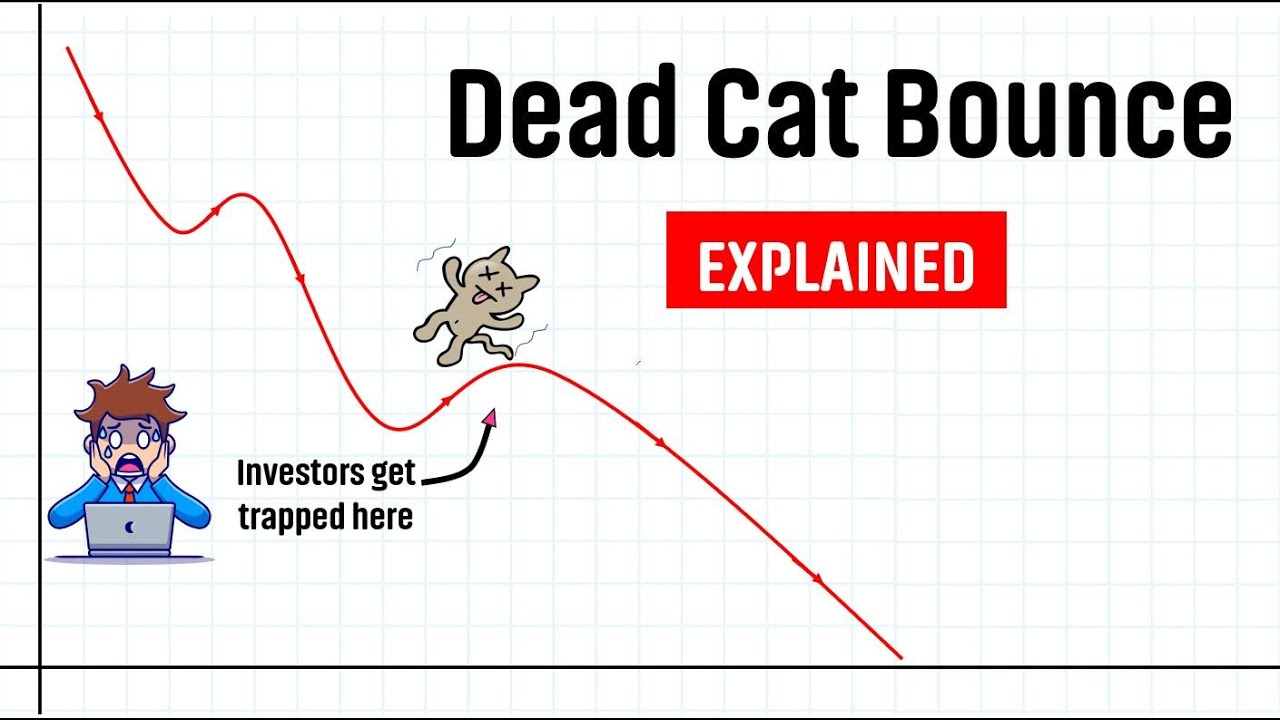
What is a “DEAD CAT” BOUNCE?

HOW IT WORKS

SPONSOR: http://www.CertifiedMedicalPlanner.org

CMP logo

By Dr. David E. Marcinko MBA CMP®

***

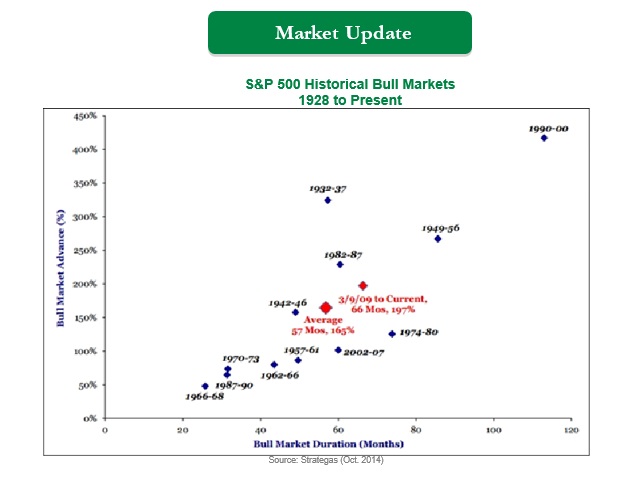
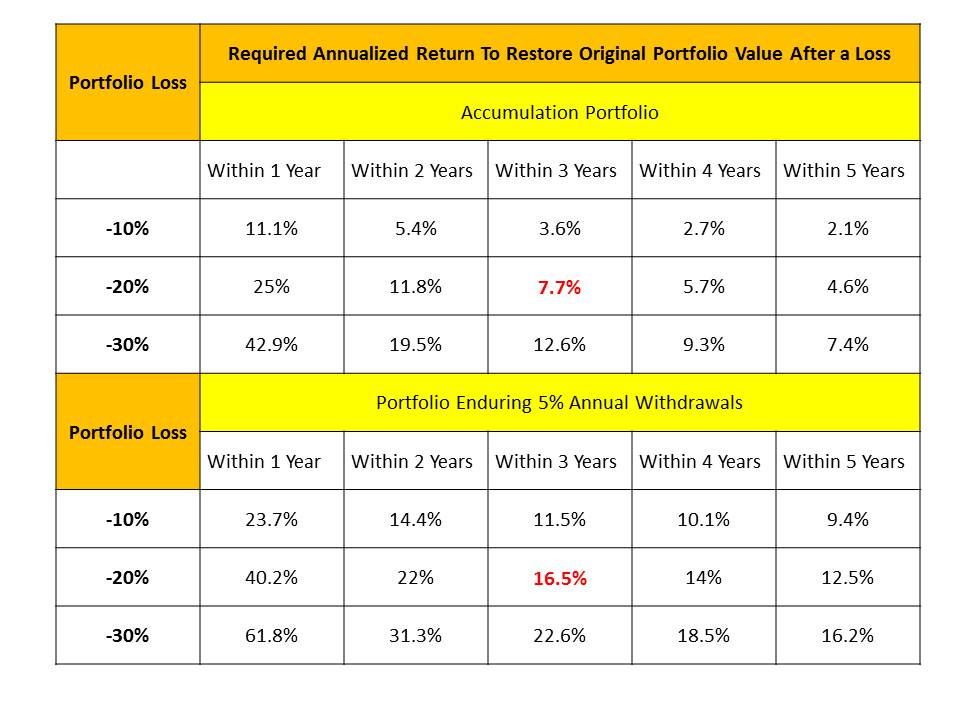
In finance, a dead cat bounce is a small, brief recovery in the price of a declining stock.

****

***

Derived from the idea that “even a dead cat will bounce if it falls from a great height”, the phrase, which originated on Wall Street, is also popularly applied to any case where a subject experiences a brief resurgence during or following a severe decline.

  • The dead cat bounce is a sudden and temporary increase in stock price caused by investors erroneously believing that the stock price’s reached its lowest.
  • The dead cat bounce can only be fully accurately determined with concrete data in hindsight.
  • Both falsely identifying a stock price trough (i.e., falling victim to a dead cat bounce) and falsely identifying a true price trough as a dead cat bounce will result in negative financial consequences.

CITE: https://www.r2library.com/Resource/Title/0826102549

YOUR COMMENTS ARE APPRECIATED.

FINANCE: https://www.amazon.com/Comprehensive-Financial-Planning-Strategies-Advisors/dp/1482240289/ref=sr_1_1?ie=UTF8&qid=1418580820&sr=8-1&keywords=david+marcinko

Thank You

***

To all UNHAPPY Financial Advisors, JDs, CPAs and Physician-Focused Insurance Agents in 2022

Join Our Mailing List

AVOID COLLATERAL ECONOMIC DAMAGE OF HEALTH CARE REFORM – AS A CERTIFIED MEDICAL PLANNER PROFESSIONAL

By Eugene Schnmuckler PhD MBA MEd CTS

[Academic Provost and Dean]

CMP logo

http://www.CertifiedMedicalPlanner.org

ME-P Doctors, Advisors and Consultants

The healthcare industrial complex represents a large and diverse collateral support industry, and the livelihood of synergistic professionals who advise doctors depend on it. So, if you want to be an outstanding financial advisor in the healthcare space, you better read this book and learn something about physician specific financial planning.

Better yet! Combine financial planning and practice management and become a Certified Medical Planner ™. Then, integrate this knowledge, and CMPmark of distinction, into your current financial advisory or healthcare consulting practice.

Or, as some of the following financial services professionals are learning, you might just become more collateral economic damage in the current managed healthcare debacle, if you don’t.

Certified Public Accountants

The nation’s 330,000 or so CPAs know little about the new healthcare dynamics and financial planning. Many often feel as though they are laboring away in obscurity and that their doctor clients do not appreciate what they do or how hard they work.

If you are a CPA, your workweek is ridiculously long, especially January through April; and you often deliver bad news to your doctor clients. You do not earn a generous salary, but you do receive their ire for your efforts. Even ex-SEC chief Arthur Levitt said, “Accounting is clearly a profession in crisis”, after reviewing Arthur Andersen, LLP’s role in Enron Corporation’s collapse, in 2002; not to mention the Global Crossing Ltd, Vivendi Universal, Warnaco, Martha Stewart and WorldCom fiascos.

So, you begin to scratch your head and ponder, quietly at first, and then out loud. Perhaps advising and managing the medical practice of a physician, or providing consulting services to other medical professionals is an opportunity that won’t require a new client base? You can keep your accounting practice during the first four months of the year, and supplement your income with something that may actually earn more than you are making now.

A light then goes off in your head. Epiphany! Enter iMBA’s Certified Medical Planner(CMP) professional certification program, exhorting accountants to “integrate personal financial planning with medical practice management”, through an additional 500 hours of online managerial and planning experience.

However, terms such as capitated medicine; per member-per month fixed fees; payment withholds’; activity based costing with CPT codes; utilization and acuity rates; and more investment and financial nomenclature is likely quite unfamiliar to you.

Furthermore, you may not have the temperament to be responsible for the financial affairs of others. Then you realize that CMPs along with MBAs and CFPs may actually be the new denizens of the healthcare bean counting and practice management scene. Rather than present numbers of the historic past, they make logical and mathematical inferences about the future.

Slowly, you realize that this has occurred because these professionals are proactive, not reactive, as the accounting profession is loosing its premier advisory position within the medical profession. Since doctors are paid a fixed fee amount, regardless of the number of services performed, these futuristic projections are the most important accounting numbers in healthcare today.

In fact, your research suggests that as a result, nearly every major accounting firm has created a financial advisory unit, or acquired one. Moss-Adams acquired Financial Securities in Seattle. Plante and Moran’s advisory unit is one of the largest and most successful in Michigan. And, 1st Global now offers a turnkey program that allows nearly every accounting firm to create its own advisory unit overnight.Even, the AICPA is providing encouragement to CPAs who wish to provide more professional client services by uniting with Fidelity to serve as a professional vendor. And, the PFS designation is about to be abandoned by the AICPA.

Doctor Advisor Teamwork

Tax Attorneys and Lawyers 

As a tax planning, health-law or estate attorney, you already know that almost every legal magazine around has articles or advertisements proposing that you become a financial planning professional or business consultant to your physician clients. Moreover, lawyers of all stripes are being pushed toward interdisciplinary alliances by encroachment on their turf by the Big Four consulting firms. With audits of publicly held companies now a commodity, the giant law firms are getting more of their revenues from consulting fees; and that puts them into direct competition with you and other legal professionals.

Of all careers, you know how absolutely onerous it is to practice medicine today, and are finally thankful that you did not take that career route many years ago. So, like your neighbor the accountant, you begin to explore that potential of developing a service line extension to your legal practice, in order to assist your medical colleagues who have been hit on hard economic times.

In fact, you soon realize that more than 90,000 trust, probate and estate planning attorneys like yourself are interested in pursuing financial planning in the next decade. Sure, you know its difficult to get a CLU or variable annuity license, or become a Certified Financial Planner (CFP), but earning your law degree was no cinch either. And, you reckon, advising physicians has got to be easier than law, or less stressful than the corporate lifestyle of your CMP trained brother-in-law, right?

So, you set out to stretch your legal horizons with an online Certified Medical Plannercertification program and explore the basic legal nuances of those topics not available in law school when you were a student. Things like medical fraud and abuse; managed care compliance audits and Medicare recoupments; PP-ACA, RACS, OSHA, DEA, HIPAA and EPA standards; anti-trust issues; and managed care contract dilemmas or de-selection appeals.

What a brave new world the legal profession has become! Even the American Bar Association’s commission on multi-disciplinary practice has recommended that lawyers be permitted to share fees and become partners with financial planners, money managers and other similar professionals.

As a real life example, the venerated Baltimore brokerage firm of Legg Mason, Inc, has recently teamed up with the Boston law firm of Bingham Danna, LLC, to create one of the first marriages between a law and securities firm. If you want in on the challenge, and bucks, you’d better acquire at least a working knowledge of health care administration, or perhaps help craft some new case law, or assist your doctor-clients in some other fashion; otherwise, you will remain a legal document producer.

Financial Planners and Investment Advisors

As a CFP, CFA, investment advisor or general securities representative, you realize that the financial service sector is going to become the next great growth opportunity of the 21st Century, despite the fact that the stagnant stock market in 2003-2004 set profits for the securities industry back by seven years.

Even H & R Block, and the Charles Schwab Corporation are trying to build medical professional interest in their respective firms and compete with your independent practice. They are fervently wooing away one group or another to interface with their embryonic financial advisory programs. Meanwhile, more than 260,000 of the nation’s brokers are moving into the investment advisory and financial planning business, as transactions have become commoditized.

A recent survey conducted for the Financial Planning Association clearly demonstrated the dominance of registered investment advisors, over stockbrokers, among clients 35-49 years old. With the average Merrill Lynch private client well over 60, it’s easy to spot the future vulnerability of this business model.

When asked to determine the added value of key industry players, baby boomers in a recent Dalbar study ranked financial planners first, followed by stockbrokers, CPAs, mutual fund companies, insurance agents, and commercial bankers, respectively. Even if you are a CFP, and despite the proliferation of investment advisors, evidence suggests that your individual impact is still narrow.

Furthermore, another Prince & Associates study of 778 affluent individuals including physicians, each with more than 5 million dollars to invest, examined the relationship between clients and their providers of five key financial services; retirement planning, estate planning, investment management, executive benefits and health-disability insurance. Prince found that 59 percent of the clients had been serviced in only one area by a particular advisor. Despite the significant assets of each client, the advisers have been unsuccessful at broadening these relationships– a key indicator that many affluent clients do not have a primary financial adviser.

Among the challenges you face to broaden your influence is to offer your clients value added services, perhaps by establishing your expertise in the medical niche and capitalize on being different (your unique knowledge-based value proposition). You must not remain just another of the more than 250,000, or so individuals who claim to be financial planners, with a collective universe of an additional 700,000, who purport to be financial advisors, in some fashion or another. You must begin to develop the strategic competitive advantage of practice management knowledge to synergize with your existing financial services product line.

Like the physicians you advise, you must consider becoming a specialist. In the highly coveted healthcare space, this specialist to high net worth doctors, is known as a Certified Medical Plannerpractitioner.

Integrated practice management and financial planning will also become much more competitive among physicians because they are aware of the above fusion. No one is suggesting therefore, that you abandon your core financial advisory business for medical practice management. It is merely a fact that healthcare has drastically changed during the past decade, and the knowledge you used yesterday will no longer be enough for you to get by on in the future.

Medical practice management is the natural outgrowth of traditional financial planning services, and investment advice in turn, is central to the implementation of a unified medical office and personal financial plan. The most successful financial planners therefore, may be CMPs and CFPs who incorporate medical management services into their practices.

cmp-program1

Insurance Agents and Counselors

As a traditional life insurance agent, it seems that almost all your colleagues are acquiring a general securities license, or CFP designation in addition to the CLU or ChFC after their name. Currently, there are more than 3 million insurance agents, half of which are independent. They are being pressured to move toward financial planning, as distribution of insurance products over the Internet spreads like wildfire.

Meanwhile, the same insurance and investment companies that are knocking on your door are also courting the medical professionals with their practice enhancement programs. Even if you are not interested in going into the financial planning business, you have seen the status of the American College erode of late, even as your own insurance business has declined because of the World Wide Web and various discounted insurance companies.

And, in the eyes of your former golden goose doctor-clients, you may have become a charlatan and everyone is clamoring for a piece of your insurance business and cloaking it in the guise of the contemporary topic of the day; medical practice management and financial planning. Think this is an exaggerated statement? An October 1997 survey conducted by Deloitte & Touche Consulting Group of New York, found insurance agents ranked last in having the trust of a wide selection of the public! Erosion has continued, ever since.

So, how do you regain this lost trust, and what about this new entity known as managed care? How do you learn about it at this stage in your career? What ever happened to the traditional indemnity health insurance, with its deductible and 80/20payment scheme? It was so easy to sell, provided good coverage, and the agent made a nice profit.

As an insurance agent, all you want to know is, can I still sell insurance and make a living? Like the struggling doctors you seek to advise, and the collateral advisors above, you find yourself asking, how do I talk the talk, and walk the walk, in this new era of medical insurance turmoil?

Slowly, as you read, study and learn about the Certified Medical Plannercertification program, you become empowered with the knowledge and ideas for new insurance product derivatives, that actually provide value to your physician clients. You are no longer just an insurance salesman, but a trusted medical risk management advisor.

Congratulations!

You can avoid the managed care economic ripple effect. Act now!

CMP logo

Office: Dean of Admissions

Certified Medical PlannerDesignation Program

Institute of Medical Business Advisors, Inc

Peachtree Plantation – West

Suite # 5901 Wilbanks Drive

Norcross, Georgia 30092-1141

770.448.0769 (voice)

770.361.8831 (fax)

http://www.MedicalBusinessAdvisors.com

http://www.CertifiedMedicalPlanner.org

MarcinkoAdvisors@msn.com

Conclusion

Your thoughts and comments on this ME-P are appreciated. Feel free to review our top-left column, and top-right sidebar materials, links, URLs and related websites, too. Then, subscribe to the ME-P. It is fast, free and secure.

Speaker: If you need a moderator or speaker for an upcoming event, Dr. David E. Marcinko; MBA – Publisher-in-Chief of the Medical Executive-Post – is available for seminar or speaking engagements. Contact: MarcinkoAdvisors@msn.com

OUR OTHER PRINT BOOKS AND RELATED INFORMATION SOURCES:

Financial Planning MDs 2015

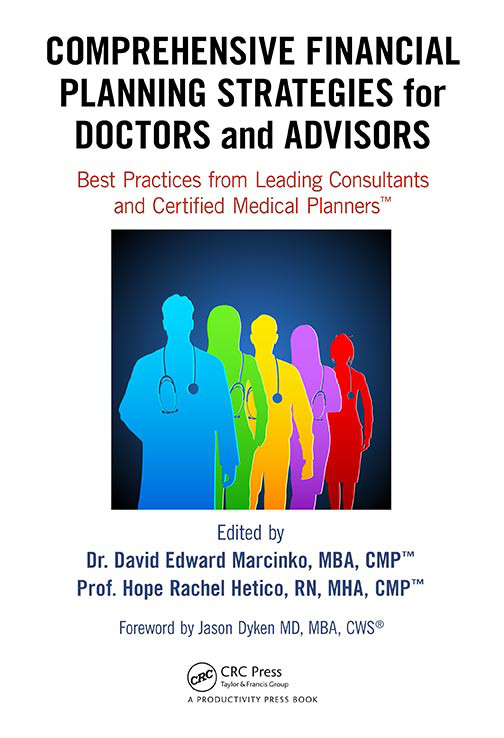
Comprehensive Financial Planning Strategies for Doctors and Advisors: Best Practices from Leading Consultants

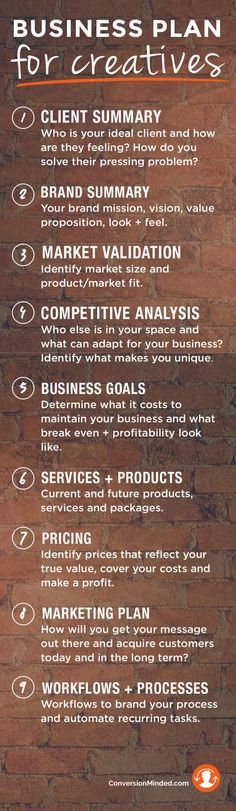
Business Plan for Creatives … and Doctors!

CMP logo

A Detailed Plan for Medical Professionals

By Dr. David Edward Marcinko MBA CMP

http://www.CertifiedMedicalPlanner.org

***

***

MBA Business Plan CAPSTONE Outline

PODCAST Transcript: Podcast

Conclusion

Your thoughts and comments on this ME-P are appreciated. Feel free to review our top-left column, and top-right sidebar materials, links, urls and related websites, too. Then, subscribe to the ME-P. It is fast, free and secure.

Speaker: If you need a moderator or speaker for an upcoming event, Dr. David E. Marcinko; MBA – Publisher-in-Chief of the Medical Executive-Post – is available for seminar or speaking engagements. Contact: MarcinkoAdvisors@msn.com

OUR OTHER PRINT BOOKS AND RELATED INFORMATION SOURCES:

[PRIVATE MEDICAL PRACTICE BUSINESS MANAGEMENT TEXTBOOK – 3rd.  Edition]

Product DetailsProduct Details

  [Foreword Dr. Hashem MD PhD] *** [Foreword Dr. Silva MD MBA]

***

RECAST: An Interview with Fiduciary Bennett Aikin AIF®

On Financial Fiduciary Accountability

[By Dr. David E. Marcinko MBA CMP™]

[By Ann Miller; RN, MHA]

Currently, there is a growing dilemma in the financial sales and services industry. It goes something like this:

  • What is a financial fiduciary?
  • Who is a financial fiduciary?
  • How can I tell if my financial advisor is a fiduciary?

Now, in as much as this controversy affects laymen and physician-investors alike, we went right to the source for up-to-date information regarding this often contentious topic, for an email interview and Q-A session, with Ben Aikin.ben-aikin

About Bennett Aikin AIF® and fi360.com

Bennett [Ben] Aikin is the Communications Coordinator for fi360.com. He oversees all communications for fi360. His responsibilities include messaging, brand management, copyrights and trademarks, and publications. Mr. Aikin received his BA in English from Virginia Tech in 2003 and is currently an MS candidate in Journalism from Ohio University.

Q. Medical Executive Post 

You have been very helpful and gracious to us. So, let’s get right to it, Ben. In the view of many; attorneys, doctors, CPAs and the clergy are fiduciaries; most all others who retain this title seem poseurs; sans documentation otherwise.

A. Mr. Aikin

You are correct. Attorneys, doctors and clergy are the prototype fiduciaries. They have a clear duty to put the best interests of their clients, patients, congregation, etc., above their own. [The duty of a CPA isn’t as clear to me, although I believe you are correct]. Furthermore, this is one of the first topics we address in our AIF training programs, and what we call the difference between a profession and an industry.  The three professions you name have three common characteristics that elevate them from an industry to a profession:

  1. Recognized body of knowledge
  2. Society depends upon practitioners to provide trustworthy advice
  3. Code of conduct that places the clients’ best interests first

Q. Medical Executive Post 

It seems that Certified Financial Planner®, Chartered Financial Analysts, Registered Investment Advisors and their representatives, Registered Representative [stock-brokers] and AIF® holders, etc, are not really financial fiduciaries, either by legal statute or organizational charter. Are we correct, or not? Of course, we are not talking ethics or morality here. That’s for the theologians to discuss.

A. Mr. Aikin

One of the reasons for the “alphabet soup”, as you put it in one of your white papers [books, dictionaries and posts] on financial designations, is that while there is a large body of knowledge, there is no one recognized body of knowledge that one must acquire to enter the financial services industry.  The different designations serve to provide a distinguisher for how much and what parts of that body of knowledge you do possess.  However, being a fiduciary is exclusively a matter of function. 

In other words, regardless of what designations are held, there are five things that will make one a fiduciary in a given relationship:

  1. You are “named” in plan or trust documents; the appointment can be by “name” or by “title,” such as CFO or Head of Human Resources
  2. You are serving as a trustee; often times this applies to directed trustees as well
  3. Your function or role equates to a professional providing comprehensive and continuous investment advice
  4. You have discretion to buy or sell investable assets
  5. You are a corporate officer or director who has authority to appoint other fiduciaries

So, if you are a fiduciary according to one of these definitions, you can be held accountable for a breach in fiduciary duty, regardless of any expertise you do, or do not have. This underscores the critical nature of understanding the fiduciary standard and delegating certain duties to qualified “professionals” who can fulfill the parts of the process that a non-qualified fiduciary cannot.

Q. Medical Executive Post 

How about some of the specific designations mentioned on our site, and elsewhere. I believe that you may be familiar with the well-known financial planner, Ed Morrow, who often opines that there are more than 98 of these “designations”? In fact, he is the founder of the Registered Financial Consultants [RFC] designation. And, he wrote a Foreword for one of our e-books; back-in-the-day. His son, an attorney, also wrote as a tax expert for us, as well. So, what gives?

A. Mr. Aikin

As for the specific designations you list above, and elsewhere, they each signify something different that may, or may not, lend itself to being a fiduciary: For example:

• CFP®: The act of financial planning does very much imply fiduciary responsibility.  And, the recently updated CFP® rules of conduct does now include a fiduciary mandate:

• 1.4 A certificant shall at all times place the interest of the client ahead of his or her own. When the certificant provides financial planning or material elements of the financial planning process, the certificant owes to the client the duty of care of a fiduciary as defined by CFP Board. [from http://www.cfp.net/Downloads/2008Standards.pdf]

•  CFA: Very dependent on what work the individual is doing.  Their code of ethics does have a provision to place the interests of clients above their own and their Standards of Practice handbook makes clear that when they are working in a fiduciary capacity that they understand and abide by the legally mandated fiduciary standard.

• FA [Financial Advisor]: This is a generic term that you may find being used by a non-fiduciary, such as a broker, or a fiduciary, such as an RIA.

• RIA: Are fiduciaries.  Registered Investment Advisors are registered with the SEC and have obligations under the Investment Advisers Act of 1940 to provide services that meet a fiduciary standard of care.

• RR: Registered Reps, or stock-brokers, are not fiduciaries if they are doing what they are supposed to be doing.  If they give investment advice that crosses the line into “comprehensive and continuous investment advice” (see above), their function would make them a fiduciary and they would be subject to meeting a fiduciary standard in that advice (even though they may not be properly registered to give advice as an RIA).

• AIF designees: Have received training on a process that meets, and in some places exceeds, the fiduciary standard of care.  We do not require an AIF® to always function as a fiduciary. For example, we allow registered reps to gain and use the AIF® designation. In many cases, AIF designees are acting as fiduciaries, and the designation is an indicator that they have the full understanding of what that really means in terms of the level of service they provide.  We do expect our designees to clearly disclose whether they accept fiduciary responsibility for their services or not and advocate such disclosure for all financial service representatives.

Q. Medical Executive Post 

Your website, http://www.fi360.com, seems to suggest, for example, that banks/bankers are fiduciaries. We have found this not to be the case, of course, as they work for the best interests of the bank and stockholders. What definitional understanding are we missing?

A. Mr. Aikin

Banks cannot generally be considered fiduciaries.  Again, it is a matter of function. A bank may be a named trustee, in which case a fiduciary standard would generally apply.  Banks that sell products are doing so according to their governing regulations and are “prudent experts” under ERISA, but not necessarily held to a fiduciary standard in any broader sense.

Q. Medical Executive Post 

And so, how do we rectify the [seemingly intentional] industry obfuscation on this topic. We mean, our readers, subscribers, book and dictionary purchasers, clients and colleagues are all confused on this topic. The recent financial meltdown only stresses the importance of understanding same.

For example, everyone in the industry seems to say they are the “f” word. But, our outreach efforts to contact traditional “financial services” industry pundits, CFP® practitioners and other certification organizations are continually met with resounding silence; or worse yet; they offer an abundance of parsed words and obfuscation but no confirming paperwork, or deep subject-matter knowledge as you have kindly done. We get the impression that some FAs honesty do-not have a clue; while others are intentionally vague.

A. Mr. Aikin

All of the evidence you cite is correct.  But that does not mean it is impossible to find an investment advisor who will manage to a fiduciary standard of care and acknowledge the same. The best way to rectify confusion as it pertains to choosing appropriate investment professionals is to get fiduciary status acknowledged in writing and go over with them all of the necessary steps in a fiduciary process to ensure they are being fulfilled. There also are great resources out there for understanding the fiduciary process and for choosing professionals, such as the Department of Labor, the SEC, FINRA, the AICPA’s Personal Financial Planning division, the Financial Planning Association, and, of course, Fiduciary360.

We realize the confusion this must cause to those coming from the health care arena, where MD/DO clearly defines the individual in question; as do other degrees [optometrist, clinical psychologist, podiatrist, etc] and medical designations [fellow, board certification, etc.]. But, unfortunately, it is the state of the financial services industry as it stands now.

Q. Medical Executive Post 

It is as confusing for the medical community, as it is for the lay community. And, after some research, we believe retail financial services industry participants are also confused. So, what is the bottom line?

A. Mr. Aikin

The bottom line is that lay, physician and all clients have a right to expect and demand a fiduciary standard of care in the managing of investments. And, there are qualified professionals out there who are providing those services.  Again, the best way to ensure you are getting it is to have fiduciary status acknowledged in writing, and go over the necessary steps in a fiduciary process with them to ensure it is being fulfilled.

Q. Medical Executive Post 

The “parole-evidence” rule, of contract law, applies, right? In dealing with medical liability situations, the medics and malpractice attorneys have a rule: “if it wasn’t written down, it didn’t happen.”  

A. Mr. Aikin

An engagement contract accepting fiduciary status should trump a subsequent attempt to claim the fiduciary standard didn’t apply. But, to reiterate an earlier point, if someone acts in one of the five functional fiduciary roles, they are a fiduciary whether they choose to acknowledge it or not.  I have attached a sample acknowledgement of fiduciary status letter with copies of our handbook, which details the fiduciary process we instruct in our programs, and our SAFE, which is basically a checklist that a fiduciary should be able to answer “Yes” to every question to ensure the entire fiduciary process is being covered.

Q. Medical Executive Post 

It is curious that you mention checklists. We have a post arguing that very theme for doctors and hospitals as they pursue their medial error reduction, and quality improvement, endeavors. And, we applaud your integrity, and wish only for clarification on this simple fiduciary query?

A. Mr. Aikin

Simple definition: A fiduciary is someone who is managing the assets of another person and stands in a special relationship of trust, confidence, and/or legal responsibility.

Q. Medical Executive Post 

Who is a financial fiduciary and what, if any, financial designation indicates same?

A. Mr. Aikin

Functional definition: See above for the five items that make you a fiduciary.

Financial designations that unequivocally indicate fiduciary duty: Short answer is none, only function can determine who is a fiduciary. 

Q. Medical Executive Post 

Please repeat that?

A. Mr. Aikin

Financial designations that indicate fiduciary duty: none. It is the function that determines who is a fiduciary.  Now, having said that, the CFP® certification comes close by demanding their certificants who are engaged in financial planning do so to a fiduciary standard. Similarly, other designations may certify the holder’s ability to perform a role that would be held to a fiduciary standard of care.  The point is that you are owed a fiduciary standard of care when you engage a professional to fill that role or they functionally become one.  And, if you engage a professional to fill a non-fiduciary role, they will not be held to a fiduciary standard simply because they have a particular designation.  One of the purposes the designations serve is to inform you what roles the designation holder is capable of fulfilling.

It is also worth keeping in mind that just being a fiduciary doesn’t equate to a full knowledge of the fiduciary standard. The AIF® designation indicates having been fully trained on the standard.

Q. Medical Executive Post 

Yes, your website mentions something about fiduciaries that are not aware of same! How can this be? Since our business model mimics a medical model, isn’t that like saying “the doctor doesn’t know he is doctor?” Very specious, with all due respect!

A. Mr. Aikin

I think it is first important to note that this statement is referring not just to investment professionals.  Part of the audience fi360 serves is investment stewards, the non-professionals who, due to facts and circumstances, still owe a fiduciary duty to another.  Examples of this include investment committee members, trustees to a foundation, small business owners who start 401k plans, etc.  This is a group of non-sophisticated investors who may not be aware of the full array of responsibilities they have. 

However, even on the professional side I believe the statement isn’t as absurd as it sounds.  This is basically a protection from both ignorant and unscrupulous professionals.  Imagine a registered representative who, either through ignorance or design, begins offering comprehensive and continuous investment advice.  Though they may deny or be unaware of the fact, they have opened themselves up to fiduciary liability. 

Q. Medical Executive Post 

Please clarify the use of arbitration clauses in brokerage account contracts for us. Do these disclaim fiduciary responsibility? If so, does the client even know same?

A. Mr. Aikin

By definition, an engagement with a broker is a non-fiduciary relationship.  So, unless other services beyond the scope of a typical brokerage account contract are specified, fiduciary responsibility is inherently not applicable.  Unfortunately, I do imagine there are clients who don’t understand this. Furthermore, AIF® designees are not prohibited from signing such an agreement and there are some important points to understand the reasoning.

First, by definition, if you are entering into such an agreement, you are entering into a non-fiduciary relationship. So, any fiduciary requirement wouldn’t apply in this scenario.

Second, if this same question were applied into a scenario of a fiduciary relationship, such as with an RIA, this would be a method of dispute resolution, not a practice method. So, in the event of dispute, the advisor and investor would be free to agree to the method of resolution of their choosing. In this scenario, however, typically the method would not be discussed until the dispute itself arose.

Finally, it is important to know that AIF/AIFA designees are not required to be a fiduciary. It is symbolic of the individuals training, knowledge and ongoing development in fiduciary processes, but does not mean they will always be acting as a fiduciary.

Q. Medical Executive Post 

Don’t the vast majority of arbitration hearings find in favor of the FA; as the arbitrators are insiders, often paid by the very same industry itself?

A. Mr. Aikin

Actual percentages are reported here: http://www.finra.org/ArbitrationMediation/AboutFINRADR/Statistics/index.htm However, brokerage arbitration agreements are a dispute resolution method for disputes that arise within the context of the securities brokerage industry and are not the only means of resolving differences for all types of financial advisors.  Investment advisers, for example, are subject to respond to disputes in a variety of forums including state and federal courts.  Clients should look at their brokerage or advisory agreement to see what they have agreed to. If you wanted to go into further depth on this question, we would recommend contacting Brian Hamburger, who is a lawyer with experience in this area and an AIFA designee. Bio page: http://www.hamburgerlaw.com/attorneys/BSH.htm.

Q. Medical Executive Post 

What about our related Certified Medical Planner® designation, and online educational program for financial advisors and medical management consultants? Is it a good idea – reasonable – for the sponsor to demand fiduciary accountability of these charter-holders? Cleary, this would not only be a strategic competitive advantage, but advance the CMP™ mission to put medical colleagues first and champion their cause www.CertifiedMedicalPlanner.org above all else. 

A. Mr. Aikin

I think it is a good idea for any plan sponsor to demand fiduciary status be acknowledged from anyone engaged to provide comprehensive and continuous investment advice.  I also think it is a good idea to be proactive in verifying that the fiduciary process is being followed.

Q. Medical Executive Post 

Is there anything else that we should know about this topic?

A. Mr. Aikin

Yes, a further note about fi360’s standards. I wrote generically about the fiduciary standard, because there is one that is defined by multiple sources of regulation, legislation and case law.  The process defined in our handbooks, we call a Fiduciary Standard of Excellence, because it covers that minimum standard and also best practice standards that go above and beyond.  All of our Practices, which comprise that standard, are legally substantiated in our Legal Memoranda handbook, which was written by Fred Reish’s law firm, who is considered a leading ERISA attorney.

Additional resources:

Q. Medical Executive Post 

Thank you so much for your knowledge and willingness to frankly share it with the Medical-Executive-Post.

Assessment

All are invited to continue the conversation with Mr. Aikin, asynchronously online, or thru this contact information:

fi360.com
438 Division Street
Sewickley, PA 15143
412-741-8140 Phone
866-390-5080 Toll-free phone
412-741-8142 Fax

Conclusion

Your thoughts and comments on this ME-P are appreciated. Feel free to review our top-left column, and top-right sidebar materials, links, URLs and related websites, too. Then, subscribe to the ME-P. It is fast, free and secure.

Link: http://feeds.feedburner.com/HealthcareFinancialsthePostForcxos

Speaker: If you need a moderator or speaker for an upcoming event, Dr. David E. Marcinko; MBA – Publisher-in-Chief of the Medical Executive-Post – is available for seminar or speaking engagements. Contact: MarcinkoAdvisors@msn.com

OUR OTHER PRINT BOOKS AND RELATED INFORMATION SOURCES:

LEXICONS: http://www.springerpub.com/Search/marcinko
PRACTICES: www.BusinessofMedicalPractice.com
HOSPITALS: http://www.crcpress.com/product/isbn/9781466558731
CLINICS: http://www.crcpress.com/product/isbn/9781439879900
ADVISORS: www.CertifiedMedicalPlanner.org
BLOG: www.MedicalExecutivePost.com

Product DetailsProduct DetailsProduct Details

Product Details  Product Details

Product DetailsProduct Details

Product Details

Risk Management, Liability Insurance, and Asset Protection Strategies for Doctors and Advisors: Best Practices from Leading Consultants and Certified Medical Planners™8Comprehensive Financial Planning Strategies for Doctors and Advisors: Best Practices from Leading Consultants and Certified Medical Planners™

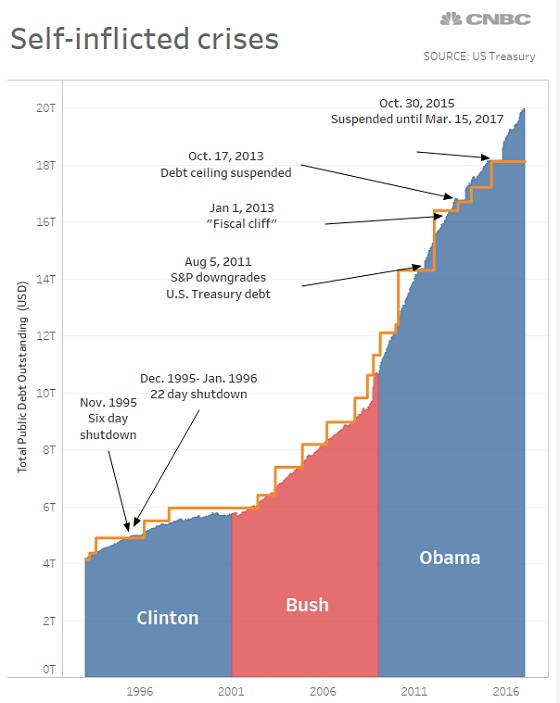
“IDES OF MARCH” and U.S. Debt Limits 2022

BEWARE THE “IDES OF MARCH”

CMP logo

Courtesy:www.CertifiedMedicalPlanner.org

Debts and Settlement is Due

The Ides of March was a day in the Roman calendar that corresponds to 15 March. It was marked by several religious observances and was notable for the Romans as a deadline for settling debts.

In 44 BC, it became notorious as the date of the assassination of Julius Caesar which made the Ides of March a turning point in Roman history.

***

***

MORE: https://en.wikipedia.org/wiki/Ides_of_March

***

***

Assessment: Your thoughts and comments are appreciated.

2022 UPDATE: https://home.treasury.gov/policy-issues/financial-markets-financial-institutions-and-fiscal-service/debt-limit

***

Subscribe to the Medical Executive-Post

THANK YOU

***

***

What is a MEME Stock?

MEME ME!

BY PROFESSOR DR. DAVID EDWARD MARCINKO MBA Certified Medical Planner®
CMP logo

SPONSOR: http://www.CertifiedMedicalPlanner.org

A “MEME” stock isn’t as easily defined as a growth or value stock, so to give it a definitive categorization would be inappropriate. Nor would actually categorizing it alongside growth and value stocks. They won’t be found in textbooks anytime soon, but to overlook their impact could potentially be an expensive oversight.

CITE: https://www.r2library.com/Resource/Title/0826102549

Stonks Meme, Explained: What Can It Teach You About Actual ...

READ: https://blog.mywallst.com/what-is-a-meme-stock/#:~:text=A%20meme%20stock%20isn%E2%80%99t%20as%20easily%20defined%20as,their%20impact%20could%20potentially%20be%20an%20expensive%20oversight.

DIY Textbooks: https://medicalexecutivepost.com/2021/04/29/why-are-certified-medical-planner-textbooks-so-darn-popular/

INVITE DR. MARCINKO: https://medicalexecutivepost.com/dr-david-marcinkos-

CONTACT: Ann Miller RN MH

[Executive Director]

MarcinkoAdvisors@msn.com

***

The CORPORATE PRACTICE of Medicine?

By Dr. David Edward Marcinko MBA CMP®

CMP logo

SPONSOR: http://www.CertifiedMedicalPlanner.org

CORPORATE PRACTICE OF MEDICINE (CPM) LAWS

OK – I admit that I am not an attorney. But, approximately half of states in the U.S. have made it unlawful for practicing physicians to be employees of corporations. This ban on the corporate practice of medicine (CPM) is intended to keep medical professionals independent and free from financial pressures and influence.

Most states have made exceptions allowing physicians to become employees of not-for-profit organizations and sometimes hospitals. States such as California, Iowa, and Texas, have declined to allow hospitals to employ physicians, although even those states have special exceptions. Iowa hospitals may employ pathologists and radiologists, and Texas public hospitals and California teaching hospitals may employ physicians. Ohio has no ban on the corporate practice of medicine.

ASSESSMENT: Anyone can own a physician practice in Ohio.

QUERY: So, who does the aggrieved patient sue?

YOUR THOUGHTS ARE APPRECIATED

ORDER TEXTBOOK: https://www.routledge.com/Risk-Management-Liability-Insurance-and-Asset-Protection-Strategies-for/Marcinko-Hetico/p/book/9781498725989

Risk Management, Liability Insurance, and Asset Protection Strategies for Doctors and Advisors: Best Practices from Leading Consultants and Certified Medical Planners™

INVITE DR. MARCINKO: https://medicalexecutivepost.com/dr-david-marcinkos-bookings/

THANK YOU

***

OVER HEARD IN THE FINANCIAL ADVISOR’S LOUNGE

center

“TAKE THE FIDUCIARY PLEDGE”

FINANCIAL ADVISORS LOUNGE AT iMBA, Inc.

CMP logo

SPONSORED: http://www.CertifiedMedicalPlanner.org

DEFINITION: A fiduciary is a person who holds a legal or ethical relationship of trust with one or more other parties (person or group of persons).

Typically, a fiduciary prudently takes care of money or other assets for another person. One party, for example, a corporate trust company or the trust department of a bank, acts in a fiduciary capacity to another party, who, for example, has entrusted funds to the fiduciary for safekeeping or investment. Likewise, financial advisers, financial planners, and asset managers, including managers of pension plans, endowments, and other tax-exempt assets, are considered fiduciaries under applicable statutes and laws.

In a fiduciary relationship, one person, in a position of vulnerability, justifiably vests confidence, good faith, reliance, and trust in another whose aid, advice, or protection is sought in some matter. In such a relation good conscience requires the fiduciary to act at all times for the sole benefit and interest of the one who trusts.

CITATION: https://www.r2library.com/Resource/Title/0826102549

See the source image

[Fiduciary Pledge]*

I, the undersigned, ___________________________ (“financial advisor”), pledge to always put the best interests of _______________________________ (“client”) first, no matter what.

As such, I will disclose in writing the following material facts and any conflicts of interest (actual and/or perceived) that may arise in our business relationship:

  • All commission, fees, loads, and expenses, in advance, client will pay as a result of my advice and recommendations;
  • All commission and commissions I receive as a result of my advice and recommendations;
  • The maximum fee discount allowed by my firm and the largest fee discount I give to other customers;
  • The fee discount client is receiving;
  • Any recruitment bonuses and other recruitment compensation I have or will receive from my firm;
  • Fees I paid to others for the referral of client to me;
  • Fees I have or will receive for referring client to any third-parties; and
  • Any other financial conflicts of interest that could reasonably compromise the impartiality of my advice and recommendations.

Jeff Kuest MBA CFA CFP®

[CounterPoint Capital Advisors]

*© 2011-2015. All rights reserved. Courtesy permission with personal communication from Jeff Kuest, MBA, CFA, CFP®

ASSESSMENT: Your thoughts are appreciated.

INVITE DR. MARCINKO: https://medicalexecutivepost.com/dr-david-marcinkos-bookings/

THANK YOU

***

The CERTIFIED MEDICAL PLANNER® Charter Designation Program

Join Our Mailing List 

CERTIFIED MEDICAL PLANNER® CHARTER DESIGNATION PROGAM

[A Continuing Education Portal for Financial Advisors]

By Ann Miller RN MHA

An Information Technology Educational Futurist

Today, colleges and universities are finally beginning to identify students who are adept at learning online and reward the top achievers and professors. Employers, graduate and medical schools are beginning to troll MOOCs [massive open online courses] seeking viable job, and academic, candidates.

In fact, when I last checked, the nation’s public health administration and related B-student were enrolled in more than 118 online programs. MOOCs offer greater access for a larger number of students, at significantly lower costs than on-site programs.

By the same token, technology like Blackboard®, Cernage, and eXplorance, Kalture and related must be used to full potential. Smart phones, PCs and tablets, videos, interactive games, AI simulators and related apps with Skype®-like virtual classrooms and cloud storage are obvious embellishments to online initiatives. 

An Executive Education Pioneer 

Moreover, it is increasingly imperative that technology be used to expand the universe of targeted adult-learners. This is for aspiring professionals and business executives, or those already in the workforce.

Estimates by Business Week suggest that adult executive education in the US is a $900 million annual business with approximately 80 percent provided by university schools. Beside the educational benefits, monetary dividends are reaped as open enrollment eases matriculation access. Similar programs at the Wharton School, Darden, Harvard and the Goizueta Business School at Emory University charge premium rates for the implied institutional moniker.

ENTER the CERTIFIED MEDICAL PLANNER® charter designation

According to industry pundit: Mike Kitces MSFS CFP CLU ChFC EA

The CERTIFIED MEDICAL PLANNER™ charter designation program was created by Dr. David Marcinko (who edited the Financial Planning Handbook for Physicians and Advisors” [1st and 2nd editions”] AND “The Business of Medical Practice [1st, 2nd and 3rd editions]. It is intended for those financial advisors, medical management consultants or healthcare CXOs who aim specifically serve physicians and the allied healthcare and medical community.

http://www.BusinessofMedicalPractice.com

Out content focuses not only on the risk management, insurance, investment and financial planning issues relevant to all independent or employed physicians, but also provides an understanding of the business, economic and financial aspects of medical practice management so that CMP™ charter holders can help their physician clients achieve the next level of businesses in the modern era.

“The informed voice of a new generation of fiduciary advisors for healthcare”

 Like medical professionals, all licensed Certified Medical Planner™ charter-holders are required to act in accordance with governing regulations. They are required to sign a Code-of-Ethics attestation confirming the intent to run their advisory and/or management consulting business according to a strict set of fiduciary standards. 

PROGRESS: After several years of proof-of-concept preparation, we secured the website URL: http://www.CertifiedMedicalPlanner.org complete with copyrighted logo and launched. We now have about 60 graduates under a quarter-semester business model with 3 mandated proprietary textbooks, case models, test questions and checklists, and 3 recommended proprietary dictionary handbooks which we produced and copyrighted.

Our strategic competitive advantage [SCA] is four-fold: fiduciary status, asynchronous education with “live” instructors, deep curriculum granularity and requisite undergraduate degree.

PRODUCT LINE EXTENSION: Our course materials are kept updated thru our website platform: http://www.MedicalExecutivePost.com with half million readers / subscribers

Full Disclosure: We are currently under non-disclosure agreements [NDA] with a VC firm located in Durham, NC that acquires, invests and operates a portfolio of educational and healthcare media, market intelligence, online certification programs and associated businesses.

NOTE: We would consider a revenue sharing relationship with a major University SBE in order to quickly achieve scale, automate the program and establish a scholarship fund.

Conclusion

Your thoughts and comments on this ME-P are appreciated. Feel free to review our top-left column, and top-right sidebar materials, links, URLs and related websites, too. Then, subscribe to the ME-P. It is fast, free and secure.

Speaker: If you need a moderator or speaker for an upcoming event, Dr. David E. Marcinko; MBA – Publisher-in-Chief of the Medical Executive-Post – is available for seminar or speaking engagements. Contact: MarcinkoAdvisors@msn.com

OUR OTHER PRINT BOOKS AND RELATED INFORMATION SOURCES:

Risk Management, Liability Insurance, and Asset Protection Strategies for Doctors and Advisors: Best Practices from Leading Consultants and Certified Medical Planners™8Comprehensive Financial Planning Strategies for Doctors and Advisors: Best Practices from Leading Consultants and Certified Medical Planners™

Product DetailsProduct DetailsProduct Details

***

How to become a board CERTIFIED MEDICAL PLANNER®

HOW TO BECOME A BOARD

CERTIFIED MEDICAL PLANNER®

[Two Program Matriculation Options Available]

http://www.CertifiedMedicalPlanner.org

CURRICULUM: Enter CPMs

[PHYSICIAN FOCUSED FINANCIAL PLANNING AND RISK MANAGEMENT COMPANION TEXTBOOK SET]

  Risk Management, Liability Insurance, and Asset Protection Strategies for Doctors and Advisors: Best Practices from Leading Consultants and Certified Medical Planners™     Comprehensive Financial Planning Strategies for Doctors and Advisors: Best Practices from Leading Consultants and Certified Medical Planners™

***

Another CERTIFIED MEDICAL PLANNER® “In The News”

ANOTHER CERTIFIED MEDICAL PLANNER® “IN THE NEWS”

Courtesy: https://lnkd.in/eVGcji5

“Informed Voice and Next-Gen of Physician Fiduciary Advisors”

AMAURY CIFUENTES CFP® CMP®

“The extensive experience of our professional team allows us to implement a rigorous process to identify ‘Best in Class’ opportunities in our focus areas. We assist in providing capital, innovative solutions and strategic expertise to our portfolio throughout the investment cycle.”

LINK: https://lnkd.in/eBf-4vY

AMAURY has 30 years of experience in banking and finance; financial planning and investments with an emphasis on business lending, real estate and private investments. He is a licensed CERTIFIED MEDICAL PLANNER® giving him an enhanced knowledge of the medical industry’s specific needs.

PRESS RELEASE: https://lnkd.in/ecMbEsQ

CURRICULUM: https://lnkd.in/eMMbbVp

AUTOMATION: https://lnkd.in/eVp9Cji

BUSINESS, FINANCE, INVESTING & INSURANCE TEXTS FOR DOCTORS:

1 – https://lnkd.in/ebWtzGg

2 – https://lnkd.in/ezkQMfR

3 – https://lnkd.in/ewJPTJs

Risk Management, Liability Insurance, and Asset Protection Strategies for Doctors and Advisors: Best Practices from Leading Consultants and Certified Medical Planners™8Comprehensive Financial Planning Strategies for Doctors and Advisors: Best Practices from Leading Consultants and Certified Medical Planners™

THANK YOU

WHAT CAN A Certified Financial Planner® REALLY DO FOR YOU?

That a NON-CFP® Certificant … CAN-NOT?

[By Dr. David Edward Marcinko MBA CMP®]

http://www.CertifiedMedicalPlanner.org

OK – I was a Certified Financial Planner® before my academic team launched the Certified Medical Planner™ online and on-ground chartered education and board certification designation program a few years ago. I am now reformed and in remission.

MORE: Enter CPMs

Enter the Certified Medical PlannerChartered Designation

Today, we are gratified that Certified Medical Planner™ mark notoriety is growing organically in the healthcare, as well as financial services, industry.

In fact, even uber-blogger Mike Kitces MSFS, MTAX, CFP, CLU, ChFC, RHU, REBC, CASL has taken note of us in his musings on the Nerd’s Eye View website.

And, the reality is that there are a growing number of CFP educational programs at the post-CFP niche market level. But, none for healthcare industrial complex: for doctors … by doctors!

CMP

QUERY

Nevertheless, I was a bit flummoxed when a physician college recently asked me this simple question:

Q: What can a CFP® mark holder do for me that a non-CFP® certificant can not?

Assessment

Now, much like a good interrogating attorney, I think I already know the answer to this question. Nevertheless, it is important to determine and understand what our ME-P readers believe; and why they believe it!

MORE: Enter CPMs

So, please opine and tell us what you think.

Conclusion

Your thoughts and comments on this ME-P are appreciated. Feel free to review our top-left column, and top-right sidebar materials, links, URLs and related websites, too. Then, subscribe to the ME-P. It is fast, free and secure.

Speaker: If you need a moderator or speaker for an upcoming event, Dr. David E. Marcinko; MBA – Publisher-in-Chief of the Medical Executive-Post – is available for seminar or speaking engagements.

Book Marcinko: https://medicalexecutivepost.com/dr-david-marcinkos-bookings/

Subscribe: MEDICAL EXECUTIVE POST for curated news, essays, opinions and analysis from the public health, economics, finance, marketing, IT, business and policy management ecosystem.

DOCTORS:

“Insurance & Risk Management Strategies for Doctors” https://tinyurl.com/ydx9kd93

“Fiduciary Financial Planning for Physicians” https://tinyurl.com/y7f5pnox

“Business of Medical Practice 2.0” https://tinyurl.com/yb3x6wr8

Risk Management, Liability Insurance, and Asset Protection Strategies for Doctors and Advisors: Best Practices from Leading Consultants and Certified Medical Planners™8     Comprehensive Financial Planning Strategies for Doctors and Advisors: Best Practices from Leading Consultants and Certified Medical Planners™

Product DetailsProduct Details

HOSPITALS:

“Financial Management Strategies for Hospitals” https://tinyurl.com/yagu567d

“Operational Strategies for Clinics and Hospitals” https://tinyurl.com/y9avbrq5

Product DetailsProduct Details

ADULT LEARNERS AND STUDENTS:

Product DetailsProduct DetailsProduct Details

***

Dr. Marcinko Interviewed on the Physician Credit Crunch

Financial Experts Share Tips on Obtaining Loans to Start or Expand a Medical Practice

By Michael Gibbons

Editor: ADVANCE Newsmagazines

Maybe you’re a young dermatologist or plastic surgeon who dreams of starting your own practice. Or maybe you’re an established professional but want to expand your palette of anti-aging services. Either way, you’ve probably made an unpleasant discovery: Banks are leery about lending today. Global recessions with seemingly no end in sight tend to give loan officers sticky fingers.HO-JFMS-CD-ROM

Dermatologists and Plastic Surgeons

We have it on good authority that dermatologists and plastic surgeons as a group are less affected by this problem than physicians in some other branches of medicine. Still, there’s no better time than now to absorb some sound advice on how to approach banks for loans—whether you’re a fresh-faced newcomer to the fresh-face business or a wrinkled veteran at eliminating wrinkles.

Start Small

There’s no soft-soaping it: Starting a healthy aging practice is much harder than expanding an existing practice, even in the flushest of times.

“For young dermatologists starting out, I recommend you start small,” advises Jerome Potozkin, MD, who offers facial rejuvenation, liposuction, body contouring and dermatological care through his practice in Walnut Creek, CA. “You can always expand. Keep your overhead low. Know what your credit score is and do everything you can to improve it. Pay your bills on time.”

Lasers aren’t cheap. Besides the initial acquisition costs, a service contract can cost $7,000 to $12,000 a year, according to Dr. Potozkin. “Don’t feel you have to buy every new laser under the sun,” he says. “In fact, renting rather than purchasing is an option many companies offer. When your volume is low you can rent and schedule laser days—although the pitfall there is you don’t have lasers available whenever patients come in.”

Also, young dermatologists “will probably have an easier time getting a loan if they go to a relatively underserved area, as opposed to an area that has a large number of dermatologists per capita,” says Dr. Potozkin, who began practicing 10 years ago. “There are two schools of thought on this: Go where you want to live to start a practice or go to where there’s a need and be instantly successful. I chose the former. It took me longer to get started but I’m very happy where I am.”

Patience, Prudence and Passiondem2

Be patient, prudent, passionate—and start with a spare office and as little debt as possible, advises Dr. David E. Marcinko MBA, a financial advisor and Certified Medical Planner™. Marcinko, a health economist,  is CEO of the Institute of Medical Business Advisors Inc., a national physician and medical practice consulting firm based in Norcross, GA www.MedicalBusinessAdvisors.com

“Patients are looking for passion from you, not lavish trappings,” Dr. Marcinko says. “When a banker or a loan officer sees $175,000 or more of debt they are loath to give a loan—and it’s hard to blame them. Purchase a home after you become a private practitioner. You need to be as close to debt-free as you can be.

Exit Strategy

“Another thing bankers want to know is, ‘If we give you a loan and you start a practice and it fails, how will we be paid back?’ They want an exit strategy.”

The good news is dermatology “remains a very lucrative specialty, and in most parts of the country they are in a shortage position, particularly with the aging population,” says Sandra McGraw, JD, MBA, principal and CEO of the Health Care Group, a financial and legal consulting firm based in Plymouth Meeting, PA., that advises the American Academy of Dermatology, among other groups.

“I would start with a realistic business plan for why you think this practice can succeed, in the specific location,” McGraw says. “How many patients do you expect to see? How will they know you are there and available? Remember that banks lend to all kinds of people, so keep your numbers realistic. Overestimating expenses is as bad as underestimating them. Then determine how you want the money—usually a fixed loan for a period of time and then a line of credit as you get your practice going and sometimes need the cash flow.”biz-book

Expanding a Practice

Established dermatologists should have an easier time getting loans to expand their practices. They have, one hopes, a track record of success and assets to put up as collateral.

Mid-career physicians “have cash flow, physician assets and equity to some degree in a house and personal assets,” Dr. Marcinko observes. “Banks can attach loans to personal assets and savings accounts. Ninety-nine percent of times you must sign a personal asset guarantee. Mid-lifers have assets young ones don’t, so mid-lifers aren’t quite the risk. They have businesses that have value and cash flow. Banks like cash flow.”

However, even veterans must do some homework before approaching a bank. “You still want to establish why you want the money and how the expansion will increase your income,” McGraw says.

Another tip: If the bank has loans out with reputable vendors, you might ask the loan officer to recommend them to you as potential contractors. “Sometimes keeping it local and supporting others with loans at the bank can be helpful,” she says.

Assessment

Dr. Marcinko adds, “Bankers today want you to come in with a well-reasoned, well-thought-out and well-written business plan. Give bankers a 30-second elevator speech on why you are different. It’s really important to ask yourself, ‘What can I offer the community as a doctor in my specialty that nobody else can?’ If you bill yourself as the first dermatologist to do laser surgery, that’s a perceived advantage. You purchased the equipment and learned to use it. But anyone can do that. If you can come up with something that nobody else has or can do, that’s how you’re successful in anything.”

Link: Dr. Marcinko Interview

Link: https://medicalexecutivepost.com/wp-content/uploads/2009/08/dr-marcinko-interview.pdf

Conclusion

And so, your thoughts and comments on this Medical Executive-Post are appreciated. Tell us what you think. Feel free to review our top-left column, and top-right sidebar materials, links, URLs and related websites, too. Then, be sure to subscribe to the ME-P. It is fast, free and secure.

Link: http://feeds.feedburner.com/HealthcareFinancialsthePostForcxos

Speaker: If you need a moderator or speaker for an upcoming event, Dr. David E. Marcinko; MBA – Publisher-in-Chief of the Executive-Post – is available for seminar or speaking engagements. Contact: MarcinkoAdvisors@msn.com

Sponsors Welcomed

And, credible sponsors and like-minded advertisers are always welcomed.

Link: https://healthcarefinancials.wordpress.com/2007/11/11/advertise

On “Financial Advisor” Salesmen and Saleswomen

UGH! Financial Services still not a real Profession


By Dr. David Edward Marcinko MBA MEd Certified Medical Planner™

http://www.CertifiedMedicalPlanner.org

Introduction

A few weeks ago I received the following unsolicited email job exhortation:

Dear David,

Our xxx/ooo office is currently hiring “Financial Advisors” with Series 7 and 63 Certifications. The minimum requirements include: high school diploma or GED equivalent, 6+ months of experience in customer service and experience in a sales environment. We offer paid training and access to full benefits.

Learn more about this position and apply today: xxx/ooo

***    *** 

Assessment

GED; a very high credentials bar, indeed!

NOTE: My friend and colleague, the late great Dick Wagner JD CFP™ who wrote extensively about financial planning as a “profession”, would be mortified.  

Conclusion

Your thoughts and comments on this ME-P are appreciated. Feel free to review our top-left column, and top-right sidebar materials, links, urls and related websites, too. Then, subscribe to the ME-P. It is fast, free and secure.

Speaker: If you need a moderator or speaker for an upcoming event, Dr. David E. Marcinko; MBA – Publisher-in-Chief of the Medical Executive-Post – is available for seminar or speaking engagements. Contact: MarcinkoAdvisors@msn.com

OUR OTHER PRINT BOOKS AND RELATED INFORMATION SOURCES:

Risk Management, Liability Insurance, and Asset Protection Strategies for Doctors and Advisors: Best Practices from Leading Consultants and Certified Medical Planners™8Comprehensive Financial Planning Strategies for Doctors and Advisors: Best Practices from Leading Consultants and Certified Medical Planners™

***

Royal College of General Practitioners Recommends: “Comprehensive Financial Planning Strategies for Doctors and Advisors”

 Join Our Mailing List

Comprehensive Financial Planning Strategies for Doctors and Advisors

RECOMMENDATION

***

rcgp-logo

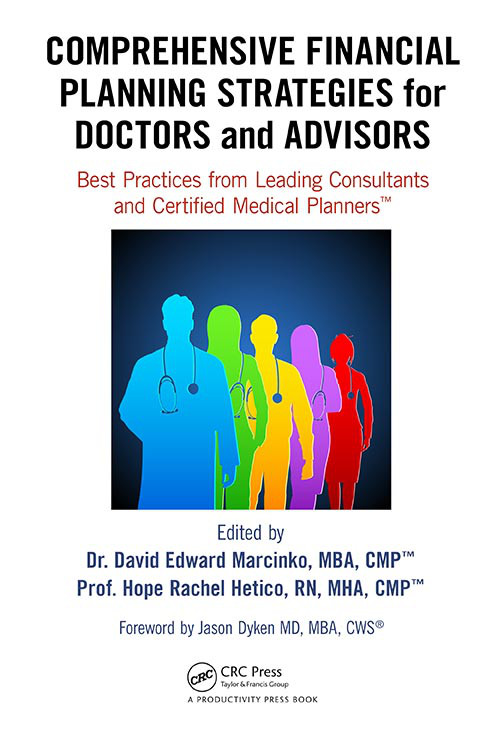
Drawing on the expertise of multi-degreed doctors, and multi-certified financial advisors, Comprehensive Financial Planning Strategies for Doctors and Advisors [Best Practices from Leading Consultants and Certified Medical Planners™] will shape the industry landscape for the next generation as the current ecosystem strives to keep pace.

Traditional generic products and sales-driven advice will yield to a new breed of deeply informed financial advisor or Certified Medical Planner™.

The profession is set to be transformed by “cognitive-disruptors” that will significantly impact the $2.8 trillion healthcare marketplace for those financial consultants serving this challenging sector. There will be winners and losers.

The text, which contains 24 chapters and champions healthcare providers while informing financial advisors, is divided into four sections compete with glossary of terms, Certified Medical Planner™ curriculum content, and related information sources.

cmp

http://www.CertifiedMedicalPlanner.org

1. For ALL medical providers and financial industry practitioners
2. For NEW medical providers and financial industry practitioners
3. For MID-CAREER medical providers and financial industry practitioners
4. For MATURE medical providers and financial industry practitioners

Using an engaging style, the book is filled with authoritative guidance and healthcare-centered discussions, providing the tools and techniques to create a personalized financial plan using professional advice.

Comprehensive coverage includes topics likes behavioral finance, modern portfolio theory, the capital asset pricing model, and arbitrage pricing theory; as well as insider insights on commercial real estate; high frequency trading platforms and robo-advisors; the Patriot and Sarbanes–Oxley Acts; hospital endowment fund management, ethical wills, giving, and legacy planning; and divorce and other special situations.

The result is a codified “must-have” book, for all health industry participants, and those seeking advice from the growing cadre of financial consultants and Certified Medical Planners™ who seek to “do well by doing good,” dispensing granular physician-centric financial advice:

Omnia pro medicus-clientis

  Risk Management, Liability Insurance, and Asset Protection Strategies for Doctors and Advisors: Best Practices from Leading Consultants and Certified Medical Planners™8Comprehensive Financial Planning Strategies for Doctors and Advisors: Best Practices from Leading Consultants and Certified Medical Planners™

DR. DAVID EDWARD MARCINKO MBA CMP™

ISBN Number: 9781482240283

Number of pages: 744

Publisher: CRC Press

reward

AWARDS

***

Royal College of General Practitioners Recommend: “Risk Management, Liability Insurance and Asset Protection Strategies for Doctors and Advisors”

Join Our Mailing List

rcgp-logo

RECOMMENDATION

***

Risk Management Liability Insurance and Asset Protection Strategies for Doctors and Advisors

It is not uncommon for practicing physicians to have more than a dozen separate insurance policies to protect their medical practice and personal assets. Yet, most doctors understand very little about their policies.

The book RISK MANAGEMENT, LIABILITY INSURANCE AND ASSET PROTECTION STRATEGIES for DOCTORS and ADVISORS [Best Practices from Leading Consultants and Certified Medical Planners™] explains to physicians and insurance professionals the background, theory, and practicalities of medical risk management, asset protection methods, and insurance planning.

The text presents information in a manner that is convenient and highly useful for busy medical practitioners. It discusses the medical records revolution and addresses concerns regarding cloud computing, data security, and technological threats.

The book covers modern health law and policy, including fraud and abuse, workplace-violence, Medicare compliance, HIPAA regulations, AR protection strategies with internal controls, P4P and value based care, insurance and reputation management, and how the ARA legislation is impacting physician practices.

It also includes case models and examples that provide you with a real-world understanding of how to recognize and reduce personal and medical practice risks.

With time at a premium for all, and so much information packed into one well-organized resource, this book is a must-read for every physician and financial advisor that serves the health care sector. The book will help physicians make better decisions about the risks they face and will help financial advisors improve the value they provide to their clients who are doctors.

http://www.CertifiedMedicalPlanner.org

DR. DAVID EDWARD MARCINKO MBS CMP®

ISBN Number: 9781498725989

Number of pages: 748

Publisher: CRC Press

Published: 2018

Dr. Boyd MD PhD MA for Dr. Marcinko

 Risk Management, Liability Insurance, and Asset Protection Strategies for Doctors and Advisors: Best Practices from Leading Consultants and Certified Medical Planners™8Comprehensive Financial Planning Strategies for Doctors and Advisors: Best Practices from Leading Consultants and Certified Medical Planners™

Risk Management Liability Insurance and Asset Protection Strategies for Doctors and Advisors

reward

AWARDS

Invite Dr. Marcinko

***

What’s a “Tombstone”Ad?

Join Our Mailing List

Tombstone Advertising and the Securities Prospectus

DEM tie

By Dr. David E. Marcinko MBA CMP™

Despite certain SEC restriction, some idea of potential demand for a new securities issue can be gauged and have a bearing on pricing decisions.

For example, as CEO of a medical instrument company, or interested investor, would you rather see a great deal of interest in a potential new issue or not very much interest?

http://www.CertifiedMedicalPlanner.org

cmp

There is however, one kind of advertisement that the underwriter can publish during the cooling off period. It’s known as a tombstone ad. The ad makes it clear that it is only an announcement and does not constitute an offer to sell or solicit the issue, and that such an offering can only be made by prospectus.  SEC Rule 134 of the 1933 Act itself, refers to a tombstone ad as “communication not deemed a prospectus” because it makes reference to the prospectus in the ad. Tombstones have received their name because of the sparse nature of details found in them. However, the most popular use of the tombstone ad is to announce the effectiveness of a new issue, after it has been successfully issued. This promotes the success of both the underwriter, as well as the company.

http://www.HealthDictionarySeries.org

HDS

Since distributing securities involves potential liability to the investment bank, it will do everything possible to protect itself. So, near the end of the cooling off period, a meeting is held between the underwriter and the corporation. It is known as a due diligence meeting. At this meeting they both discuss amendments that are going to be necessary to make the registration statement complete and accurate. The corporate officers and the underwriters sign the final registration statement. They have civil liability for damages that result from omissions of material facts or misstatements of fact. They also have criminal liability if the distribution is done by use of fraudulent, manipulative, or deceptive means. Due diligence takes on a whole new meaning when incarceration from a half-hearted underwriting effort; can occur. The investment bank strives to ensure that there have been no material changes to the issuer or the terms of the issue since the registration statement was filed.

Again, as a physician, how would you feel if you were an investment banker raising capital for a new pharmaceutical company that had developed a drug product that was highly marketable. But, on the day after the issue was effective, there was a major news story indicating that the company was being sued for patent infringement? What effect do you think that would have on the market price of this new issue? It would probably plunge. How could this situation have been prevented? The due diligence meeting is more than a cocktail party or a gathering in a smoke filled room. Otherwise, the company would require specially trained people, to do a patent search lessening the likelihood of this scenario. At the due diligence meeting, work is done on the preparation of the final prospectus, but the investment bank does not set the public offering price or the effective date at this meeting. The SEC will eventually set the effective date for the registration and it is on that date that the final offering price will be determined.

Once the SEC sets the effective date, sales may be executed and money can be accepted by the investment bank. It is at this time that the final prospectus, similar to the red herring but without the red ink and with the missing numbers, is issued. A prospectus is an abbreviated form of the registration statement, distributed to purchasers, on and after the effective date of the registration. It is not the same as the registration statement. A typical registration statement consists of papers that stand more than a foot high; rarely does a prospectus go beyond 40 or 50 pages. All purchasers will receive a final prospectus and then it becomes permissible for the underwriter to provide sales literature.

Two Requirements

In addition to the requirement that a prospectus must be delivered to a purchaser of new issues no later than with confirmation of the trade, there are two other requirements which physicians, medical professionals and healthcare executive investors should know.

90-day: When an issuer has an initial public offering (IPO), there is generally a lack of publicly available material relating to the operations of that issuer.  Because of this, the SEC requires that all members of the underwriting group make available a prospectus on an IPO for a period of 90 days after the effective date. 

40-day: Once an issuer has gone public, there are a number of routine filings that must be made with the SEC so there is publicly available information regarding the financial condition of that issuer. Since additional information is now available, the SEC requires that, on all issues other than IPOs, any member of the underwriting group must make available a prospectus for a period of 40 days after the effective date.

Assessment

In the event that the investment bankers misgauged the marketplace, and the issue moves quite slowly, it is possible that information contained in the prospectus would be rendered obsolete by the SEC. Specifically, the SEC requires that any prospectus used more than 9 months after the effective date, may not have any financial information more than 16 months old. It can however, be amended or stickered, with updated information, as needed. 

Conclusion

Your thoughts and comments on this ME-P are appreciated. Feel free to review our top-left column, and top-right sidebar materials, links, URLs and related websites, too. Then, subscribe to the ME-P. It is fast, free and secure.

Speaker: If you need a moderator or speaker for an upcoming event, Dr. David E. Marcinko; MBA – Publisher-in-Chief of the Medical Executive-Post – is available for seminar or speaking engagements. Contact: MarcinkoAdvisors@msn.com

OUR OTHER PRINT BOOKS AND RELATED INFORMATION SOURCES:

Risk Management, Liability Insurance, and Asset Protection Strategies for Doctors and Advisors: Best Practices from Leading Consultants and Certified Medical Planners™8Comprehensive Financial Planning Strategies for Doctors and Advisors: Best Practices from Leading Consultants and Certified Medical Planners™

***

Risk Management for Doctors and their Advisors

Join Our Mailing List

By Staff reporters

Our New Book Release

http://www.CertifiedMedicalPlanner.org

***

92f91681-0f52-4bec-86db-3f9ab724560a

***

Risk Management, Liability Insurance, and Asset Protection Strategies for Doctors and Advisors: Best Practices from Leading Consultants and Certified Medical Planners™

 Harvard Medical School

Boston Children’s Hospital – Psychiatrist

Yale University

***

Conclusion

Your thoughts and comments on this ME-P are appreciated. Feel free to review our top-left column, and top-right sidebar materials, links, URLs and related websites, too. Then, subscribe to the ME-P. It is fast, free and secure.

Speaker: If you need a moderator or speaker for an upcoming event, Dr. David E. Marcinko; MBA – Publisher-in-Chief of the Medical Executive-Post – is available for seminar or speaking engagements. Contact: MarcinkoAdvisors@msn.com

OUR OTHER PRINT BOOKS AND RELATED INFORMATION SOURCES:

***

On the DOL’s New Fiduciary Rule

Join Our Mailing List

By Rick Kahler MSFS CFP®

Rick Kahler MS CFPThe Department of Labor’s groundbreaking new Fiduciary Rule may change the legal responsibilities of advisors who sell financial products for consumers’ retirement accounts.

Financial services industry pundits aren’t sure whether the new rule is a giant step in the right direction or a successful dodging of a bullet by Wall Street.

Original Intent

The original intent was to require those selling financial products for retirement plans to act as fiduciaries—advisors required to put clients’ interests ahead of their own.

One proposed provision was a “restricted asset list” which would have banned the sale of high-commission products like private REITs and annuities to IRAs and other retirement plans. Wall Street brokers were “expecting a punch in the face that would force a dramatic overhaul of how they dealt with their customers,” notes Joshua Brown, CEO of Ritholtz Wealth Management, in an April 6 article at Fortune.com.

As adopted, the final rule allows financial salespeople to still sell all the controversial illiquid high-commissioned products they currently sell, as long as the brokerage firm can document the product is in the client’s best interest. Brown says this amounts to a “love tap.”

The Pundits

Bob Veres, editor of Inside Information, sees the new Fiduciary Rule as still a big win for consumers and fiduciary advisors. In an April 8 column, he writes, “professional financial planners and advisors have achieved a victory, and the Wall Street and independent broker-dealer service models have been dealt a blow.”

Veres argues that the new fiduciary duty to act in the client’s best interest will by itself preclude financial salespeople from justifying the sale of high-commissioned products in IRAs. He also points out that salespeople will no longer be allowed to receive “fat commissions” for recommending annuities and non-traded REITS, and therefore are unlikely to recommend these products.

Financial planner and writer Michael Kitces [a friend of this ME-P and advocate of iMBA’s online Certified Medical Planner® fiduciary focused professional charter education certification program] suggests the DOL’s concession allowing the current questionable financial products to still be purchased by IRAs may be “a brilliantly executed strategy of conceding to the financial services industry the exact parts that didn’t actually matter in the long run . . . yet keeping the key components that mattered the most,” the fiduciary duty to the client.

MORE: http://www.CertifiedMedicalPlanner.org

Brown believes salespeople will continue recommending higher-cost products “so long as a justification can be made for their being recommended (quality, performance, etc.).”

He adds, “Advisors will still be able to sell the proprietary products of their own firm so long as they can enunciate the reason why these products are in their customers’ “best interests” – a hurdle whose height will probably be adjusted on a case-by-case basis as no one really knows what it means yet.”

Kitces contends the new law will ultimately give the consumer the power through the courts to define what is and isn’t in their best interests. He points out:

***

PetreGloveimage-300x200

***

“In other words, while the DOL fiduciary rule didn’t outright regulate what Wall Street can and cannot do, it did change the legal standard by which those actions will be judged and ensure that eventually the courts will have the opportunity to rule on these fiduciary conflicts.”

While the new rule only applies to retirement assets, Veres and Brown see it as a step toward requiring a fiduciary standard for all investment advice. I tend to agree.

Assessment

Since so many small investors hold retirement accounts, applying a fiduciary standard to those investments may help more consumers understand the difference between fiduciary advisors and product salespeople. As the industry moves toward full compliance with the rule by the April 2017 deadline, we may see an increase in consumer demand for financial advisors who put clients’ interests first.

Conclusion

Your thoughts and comments on this ME-P are appreciated. Feel free to review our top-left column, and top-right sidebar materials, links, URLs and related websites, too. Then, subscribe to the ME-P. It is fast, free and secure.

Speaker: If you need a moderator or speaker for an upcoming event, Dr. David E. Marcinko; MBA – Publisher-in-Chief of the Medical Executive-Post – is available for seminar or speaking engagements. Contact: MarcinkoAdvisors@msn.com

OUR OTHER PRINT BOOKS AND RELATED INFORMATION SOURCES:

Risk Management, Liability Insurance, and Asset Protection Strategies for Doctors and Advisors: Best Practices from Leading Consultants and Certified Medical Planners™  Risk Management, Liability Insurance, and Asset Protection Strategies for Doctors and Advisors: Best Practices from Leading Consultants and Certified Medical Planners™

***

Financial Advice Re-Invented for Medical Professionals?

cmp-logo

By Dr. David Edward Marcinko MBA CMP™

Dr David E Marcinko MBA

http://www.CertifiedMedicalPlanner.org

***

Introduction 

Much has been written, said and opined on this ME-P and elsewhere on financial advisory fees, commissions and other means of rumination.

So, what method is really best for the physician or other client? Full service, discounted fee for service, AUMs, commissions, wrap fees, ETFs, load or no-load mutual funds, annuities, stocks or individual bonds, etc? Oh! Did I forget the current [higher] fiduciary standard versus [lower] suitability conundrum? And now, the latest fad is the … Robo-Advisor service.

Of course, the very need for any sort of “professional” financial advisor is often questioned by the DIYer.

The Need

According to some research however, a financial advisor can help improve an investor’s net portfolio returns over time by building a portfolio with low-cost investments, minimizing taxes, and serving as an investing coach during volatile times in the market.

Source: Francis M. Kinniry Jr., Colleen M. Jaconetti, Michael A. DiJoseph, and Yan Zilbering, 2014. Putting a value on your value: Quantifying Vanguard Advisor’s Alpha. Valley Forge, Pa.: The Vanguard Group. For a copy of the research paper, visit vanguard.com/advisorvalue

***

cmp-program1

***

The Vanguard Personal Advisor Services

With a new offering from Vanguard Personal Advisor Services, you’ll purportedly work with a financial advisor who’s a Certified Financial Planner® professional. Your dedicated advisor will:

1. Get to know you, your goals, and your unique financial situation.
2. Partner with you to create a custom-tailored financial plan.
3. Put your plan into action and manage your portfolio, allowing you to be as involved as you want to be.
4. Monitor your plan’s progress and keep you informed.
5. Rebalance your portfolio as necessary and partner with you to revise your plan when important changes in your life occur.

Assessment

And, just as you’d expect from Vanguard, the cost for this service is low, about one-third the industry average.

But alsa, no such relationship exists for medical professionals from a Certified Medical Planner™

Source: PriceMetrix, 2013. The industry average fee is 0.99% annually of assets under management compared with Vanguard’s annual cost of only 0.30% of assets under management. For a copy of the complete report, go to pricemetrix.com. Advisor fees may differ depending on the type and nature of the services offered.

More:

Become a CMP

Full Disclosure: I am not affiliated with Vanguard Advisory Services in any way.

Conclusion

Your thoughts and comments on this ME-P are appreciated. Feel free to review our top-left column, and top-right sidebar materials, links, URLs and related websites, too. Then, subscribe to the ME-P. It is fast, free and secure.

Speaker: If you need a moderator or speaker for an upcoming event, Dr. David E. Marcinko; MBA – Publisher-in-Chief of the Medical Executive-Post – is available for seminar or speaking engagements. Contact: MarcinkoAdvisors@msn.com

OUR OTHER PRINT BOOKS AND RELATED INFORMATION SOURCES:

Comprehensive Financial Planning Strategies for Doctors and Advisors: Best Practices from Leading Consultants and Certified Medical Planners(TM)

Front Matter with Foreword by Jason Dyken MD MBA

logos

“BY DOCTORS – FOR DOCTORS – PEER REVIEWED – FIDUCIARY FOCUSED”

***

Investing and Economics is an Imprecise Science

Join Our Mailing List 

BUT … It’s still all about CONSUMERISM!

[By Dr. David Edward Marcinko MBA MBBS [Hon] CMP]

http://www.CertifiedMedicalPlanner.org

DEM 2013There is a major variable, dominant in any marketplace that pushes an economy in a forward direction. It is called consumerism.

This became apparent while I was waiting in a doctor colleague’s office one recent afternoon.

Scenario:

The front office receptionist, who appeared to be about 21 years old, was breaking for lunch and her replacement, and appeared not much older, came over to assist.

Realizing the propensity for a long wait, one was taken by the size of waiting room and the number of patients coming in and out of the office. [Americans consume healthcare and a lot of it].

There was another notable peculiarity. The sample prescription bags being carried out the door were no match for the bags under everyone’s eyes, including the doctor’s. The office staff was probably working overtime, if not two jobs, and the doctor was working harder and faster in a managed care / ACA system.

***

stock-exchange-

[Consumerism driving the Stock Market]

***

Why?

So they all could afford to buy and voraciously consume for their children and themselves. Americans indeed work longer hours than any other industrialized nation.

Assessment

Additionally, as women female medical professionals entered the workforce in unprecedented numbers, the stock markets reached an all time high in 2015, even as money was spent at a feverish pace as the Federal Reserve pumped out money in inflammatory fashion.

Channel Surfing

Have you visited our other topic channels? Established to facilitate idea exchange and link our community together, the value of these topics is dependent upon your input. Please take a minute to visit. And, to prevent that annoying spam, we ask that you register.

Link: http://feeds.feedburner.com/HealthcareFinancialsthePostForcxos

Conclusion

Your thoughts and comments on this ME-P are appreciated. Feel free to review our top-left column, and top-right sidebar materials, links, URLs and related websites, too. Then, subscribe to the ME-P. It is fast, free and secure.

share

Speaker: If you need a moderator or speaker for an upcoming event, Dr. David E. Marcinko; MBA – Publisher-in-Chief of the Medical Executive-Post – is available for seminar or speaking engagements. Contact: MarcinkoAdvisors@msn.com

OUR OTHER PRINT BOOKS AND RELATED INFORMATION SOURCES:

Product Details

Risk Management, Liability Insurance, and Asset Protection Strategies for Doctors and Advisors: Best Practices from Leading Consultants and Certified Medical Planners™8Comprehensive Financial Planning Strategies for Doctors and Advisors: Best Practices from Leading Consultants and Certified Medical Planners™

18 Financial Planning Tips For Physicians from a DR-CPA

Join Our Mailing List

For Personal and Medical Practice Management Modernity

Dr. Gary Bode; CPA, MSA, CMP

By Dr. Gary L. Bode CPA MSA CMP [Hon] PA

http://garybodecpa.com/

http://www.CertifiedMedicalPlanner.org

1. Consider establishing an employee stock ownership plan (ESOP).

If you own a clinic or medical practice or business and need to diversify your investment portfolio, consider establishing an ESOP. ESOP’s are the most common form of employee ownership in the U.S. and are used by companies for several purposes, among them motivating and rewarding employees and being able to borrow money to acquire new assets in pretax dollars. In addition, a properly funded ESOP provides you with a mechanism for selling your shares with no current tax liability. Consult a specialist in this area to learn about additional benefits.

2. Make sure there is a succession plan in place.

Have you provided for a succession plan for both management and ownership of your medical practice, clinic or business in the event of your death or incapacity? Many business owners or physician-executives wait too long to recognize the benefits of making a succession plan. These benefits include ensuring an orderly transition at the lowest possible tax cost. Waiting too long can be expensive from a financial perspective (covering gift and income taxes, life insurance premiums, appraiser fees, and legal and accounting fees) and a non-financial perspective (intra-family and intra-company squabbles).

3. Consider the limited liability company (LLC) and limited liability partnership (LLP) forms of ownership.

These entity forms should be considered for both tax and non-tax reasons.

4. Avoid nondeductible compensation.

Compensation can only be deducted if it is reasonable. Recent court-decisions have allowed physician executives or business owners to deduct compensation when (1) the corporation’s success was due to the shareholder-employee, (2) the bonus policy was consistent, and (3) the corporation did not provide unusual corporate prerequisites and fringe benefits.

5. Purchase corporate owned life insurance (COLI).

COLI can be a tax-effective tool for funding deferred executive compensation, funding clinic or company redemption of stock as part of a succession plan, and providing many employees with life insurance in a highly leveraged program. Consult your insurance and tax advisers when considering this technique.

6. Consider establishing a SIMPLE retirement plan.

If you have no more than 100 employees and no other qualified plan, you may set up a Savings Incentive Match Plan for Employees (SIMPLE) into which an employee may contribute up to $12,500 per year if you’re under 50 years old and $15,500 a year if you’re over 50 in 2015. As an employer, you are required to make matching contributions. Talk with a benefits specialist to fully understand the rules and advantages and disadvantages of these accounts.

 ***free_54915

***

7. Establish a Keogh retirement plan before December 31st.

If you are self-employed and want to deduct contributions to a new Keogh retirement plan for this tax year, you must establish the plan by December 31st. You don’t actually have to put the money into your Keogh(s) until the due date of your tax return. Consult with a specialist in this area to ensure that you establish the Keogh or Keoghs that maximize your flexibility and your annual contributions.

8. Section 179 expensing.

Businesses and medical practices may be able to expense up to $25,000 in 2015 for equipment purchases of qualifying property placed in service during the filing year, instead of depreciating the expenditures over a longer time period. The limit is reduced by the amount by which the cost of Section 179 property placed in service during the tax year 2015 exceeds $200,000.

9. Don’t forget deductions for health insurance premiums.

If you are self-employed (or are a partner or a 2-percent S corporation shareholder-employee) you may deduct 100 percent of your medical insurance premiums for yourself and your family as an adjustment to gross income. The adjustment does not reduce net earnings subject to self-employment taxes, and it cannot exceed the earned income from the business under which the plan was established. You may not deduct premiums paid during a calendar month in which you or your spouse is eligible for employer-paid health benefits.

10. Review whether compensation may be subject to self-employment taxes.

If you are a sole proprietor, an active partner in a partnership, or a manager in a limited liability company, the net earned income you receive from the entity may be subject to self-employment taxes.

11. Don’t overlook minimum distributions at age 70½ and rack up a 50 percent penalty.

Minimum distributions from qualified retirement plans and IRAs must begin by April 1 of the year after the year in which you reach age 70½. The amount of the minimum distribution is calculated based on your life expectancy or the joint and last survivor life expectancy of you and your designated beneficiary. If the amount distributed is less than the minimum required amount, an excise tax equal to 50 percent of the amount of the shortfall is imposed.

12. Don’t double up your first minimum distributions and pay unnecessary income and excise taxes.

Minimum distributions are generally required at age seventy and one-half, but you are allowed to delay the first distribution until April 1 of the year following the year you reach age seventy and one-half. In subsequent years, the required distribution must be made by the end of the calendar year. This creates the potential to double up in distributions in the year after you reach age 70½. This double-up may push you into higher tax rates than normal. In many cases, this pitfall can be avoided by simply taking the first distribution in the year in which you reach age 70½.

***

buckets cash

***

13. Don’t forget filing requirements for household employees.

Employers of household employees must withhold and pay social security taxes annually if they paid a domestic employee more than $1,900 a year in 2015 (same as 2014). Federal employment taxes for household employees are reported on your individual income tax return (Form 1040, Schedule H). To avoid underpayment of estimated tax penalties, employers will be required to pay these taxes for domestic employees by increasing their own wage withholding or quarterly estimated tax payments. Although the federal filing is now required annually, many states still have quarterly filing requirements.

14. Consider funding a nondeductible regular or Roth IRA.

Although nondeductible IRAs are not as advantageous as deductible IRAs, you still receive the benefits of tax-deferred income. Note, the income thresholds to qualify for making deductible IRA contributions, even if you or your spouse is an active participant in a employer plan, are increasing.

The $100,000 income test for converting a traditional IRA to a ROTH IRA was permanently eliminated in 2010, allowing anyone to complete the conversion.

You can withdraw all or part of the assets from a traditional IRA and reinvest them (within 60 days) in a Roth IRA. The amount that you withdraw and timely contribute (convert) to the Roth IRA is called a conversion contribution. If properly (and timely) rolled over, the 10 percent additional tax on early distributions will not apply. However, a part or all of the distribution from your traditional IRA may be included in gross income and subjected to ordinary income tax.

Caution: You must roll over into the Roth IRA the same property you received from the traditional IRA. You can roll over part of the withdrawal into a Roth IRA and keep the rest of it. However, the amount you keep will generally be taxable (except for the part that is a return of nondeductible contributions) and may be subject to the 10 percent additional tax on early distributions.

15. Calculate your tax liability as if filing jointly and separately.

In certain situations, filing separately may save money for a married couple. If you or your spouse is in a lower tax bracket or if one of you has large itemized deductions, filing separately may lower your total taxes. Filing separately may also lower the phase out of itemized deductions and personal exemptions, which are based on adjusted gross income. When choosing your filing status, you should also factor in the state tax implications.

16. Avoid the hobby loss rules.

If you choose self-employment over a second job to earn additional income, avoid the hobby loss rules if you incur a loss. The IRS looks at a number of tests, not just the elements of personal pleasure or recreation involved in the activity.

17. Review your will and plan ahead for post-mortem tax strategies.

A number of tax planning strategies can be implemented soon after death. Some of these, such as disclaimers, must be implemented within a certain period of time after death. A number of special elections are also available on a decedent’s final individual income tax return. Also, review your will as the estate tax laws are influx and your will may have been written with differing limits in effect. In 2015, estates of $5,430,000 (up from $5,340,000 in 2014) are exempt from the estate tax with a 40 percent maximum tax rate (made permanent starting in tax year 2013).

18. Check to see if you qualify for the Child Tax Credit.

A $1,000 tax credit is available for each dependent child (including stepchildren and eligible foster children) under the age of 17 at the end of the taxable year. The child credit generally is available only to the extent of a taxpayer’s regular income tax liability. However, for a taxpayer with three or more children, this limitation is increased by the excess of Social Security taxes paid over the sum of other nonrefundable credits and any earned income tax credit allowed to the taxpayer. For 2015 (as in previous years), the income threshold is $3,000.

For more information concerning these financial planning ideas, please call or email us.

More: Enter the CMPs

ABOUT  DR. GARY L. BODE MSA CPA CMP [Hon]

Dr. Gary L. Bode was Chief Executive Officer of Comprehensive Practice Accounting, Inc., a firm specializing in providing tax solutions to medical professionals. Originally, he was a board certified podiatrist and managing partner of a multi-office medical practice for a decade before earning his Master of Science degree in Accounting from the University of North Carolina. He then served as Chief Financial Officer [CFO] for a private mental healthcare facility. Today, Dr. Bode is a nationally known Certified Public Accountant, financial author, educator, and speaker. Areas of expertise include producing customized managerial accounting reports, practice appraisals and valuations, restructurings, and innovative financial accounting as well as proactive tax positioning and tax return preparation for healthcare facilities. He has been quoted in Newsweek.

Channel Surfing the ME-P

Have you visited our other topic channels? Established to facilitate idea exchange and link our community together, the value of these topics is dependent upon your input. Please take a minute to visit. And, to prevent that annoying spam, we ask that you register. It is fast, free and secure.

Conclusion

Your thoughts and comments on this ME-P are appreciated. Feel free to review our top-left column, and top-right sidebar materials, links, URLs and related websites, too. Then, subscribe to the ME-P. It is fast, free and secure.

Speaker: If you need a moderator or speaker for an upcoming event, Dr. David E. Marcinko; MBA – Publisher-in-Chief of the Medical Executive-Post – is available for seminar or speaking engagements. Contact: MarcinkoAdvisors@msn.com

OUR OTHER PRINT BOOKS AND RELATED INFORMATION SOURCES:

Comprehensive Financial Planning Strategies for Doctors and Advisors: Best Practices from Leading Consultants and Certified Medical Planners(TM)* 8

Product DetailsProduct DetailsProduct Details

More on “Passive Investing” for Physicians

Join Our Mailing List 

Basic Financial Concepts

tim

By Timothy J. McIntosh; CFPMBA MPH CMP [hon]

By Jeffery S. Coons; PhD CFA

By Dr. David E. Marcinko; MBA CMP™

Passive investing is a monetary plan in which an investor invests in accordance with a pre-determined strategy that doesn’t necessitate any forecasting of the economy or an individual company’s prospects.

Premise

The primary premise is to minimize investing fees and to avoid the unpleasant consequences of failing to correctly predict the future. The most accepted method to invest passively is to mimic the performance of a particular index. Investors typically do this today by purchasing one or more ‘index funds’. By tracking an index, an investor will achieve solid diversification with low expenses.  Thus, a physician-investor could potentially earn a higher rate of return than an investor paying higher management fees.

Passive management is most widespread in the stock markets.  But; with the explosion of exchange traded funds on the major exchanges, index investing has become more popular in other categories of investing. There are now literally hundreds of different index funds.

***

Bull Markets

[Domestic Bull Markets – Historical USA]

***

Passive management is based upon the Efficient Market Hypothesis theory.  The Efficient Market Hypothesis (EMH) states that securities are fairly priced based on information regarding their underlying cash flows and that investors should not anticipate to consistently out-perform the market over the long-term.

The Efficient Market Hypothesis evolved in the 1960s from the Ph.D. dissertation of Eugene Fama.  Fama persuasively made the case that in an active market that includes many well-informed and intelligent investors, securities will be appropriately priced and reflect all available information. If a market is efficient [even emerging and/or world markets], no information or analysis can be expected to result in outperformance of an appropriate benchmark.

***

World Markets

[USA versus World Index]

***

Channel Surfing the ME-P

Have you visited our other topic channels? Established to facilitate idea exchange and link our community together, the value of these topics is dependent upon your input. Please take a minute to visit. And, to prevent that annoying spam, we ask that you register. It is fast, free and secure.

More:

The Author

Timothy J. McIntosh is Chief Investment Officer and founder of SIPCO.  As chairman of the firm’s investment committee, he oversees all aspects of major client accounts and serves as lead portfolio manager for the firm’s equity and bond portfolios. Mr. McIntosh was a Professor of Finance at Eckerd College from 1998 to 2008. He is the author of The Bear Market Survival Guide and the The Sector Strategist.  He is featured in publications like the Wall Street Journal, New York Times, USA Today, Investment Advisor, Fortune, MD News, Tampa Doctor’s Life, and The St. Petersburg Times.  He has been recognized as a Five Star Wealth Manager in Texas Monthly magazine; and continuously named as Medical Economics’ “Best Financial Advisors for Physicians since 2004.  And, he is a contributor to SeekingAlpha.com., a premier website of investment opinion. Mr. McIntosh earned a Bachelor of Science Degree in Economics from Florida State University; Master of Business Administration (M.B.A) degree from the University of Sarasota; Master of Public Health Degree (M.P.H) from the University of South Florida and is a CERTIFIED FINANCIAL PLANNER® practitioner. His previous experience includes employment with Blue Cross/Blue Shield of Florida, Enterprise Leasing Company, and the United States Army Military Intelligence.

Conclusion

Your thoughts and comments on this ME-P are appreciated. Feel free to review our top-left column, and top-right sidebar materials, links, URLs and related websites, too. Then, subscribe to the ME-P. It is fast, free and secure.

Speaker: If you need a moderator or speaker for an upcoming event, Dr. David E. Marcinko; MBA – Publisher-in-Chief of the Medical Executive-Post – is available for seminar or speaking engagements. Contact: MarcinkoAdvisors@msn.com

OUR OTHER PRINT BOOKS AND RELATED INFORMATION SOURCES:

Comprehensive Financial Planning Strategies for Doctors and Advisors: Best Practices from Leading Consultants and Certified Medical Planners(TM)

An Educational Niche Resource Supporting Doctors and their Consulting Advisors

Join Our Mailing List

By Eugene Schmuckler PhD MBA MEd CTS [Academic Provost]

About the Medical Executive-Post

We are an emerging online and onground community that connects medical professionals with financial advisors and management consultants.

We participate in a variety of insightful educational seminars, teaching conferences and national workshops. We produce journals, textbooks and handbooks, white-papers, CDs and award-winning dictionaries. And, our didactic heritage includes innovative R&D, litigation support, opinions for engaged private clients and media sourcing in the sectors we passionately serve.

Through the balanced collaboration of this rich-media sharing and ranking forum, we have become a leading network at the intersection of healthcare administration, practice management, medical economics, business strategy and financial planning for doctors and their consulting advisors. Even if not seeking our products or services, we hope this knowledge silo is useful to you.

In the Health 2.0 era of political reform, our goal is to: “bridge the gap between practice mission and financial solidarity for all medical professionals.”

More: Letterhead.iMBA_Inc.

***

niche

 ***

Enter the Certified Medical Planners™

There is no certification program, course of study or professional designation for FAs who wish to enter the lucrative financial planning space serving physicians and healthcare professionals.

That’s why the R&D efforts of our governing board of physician-directors, accountants, financial advisors, academics and health economists identified the need for integrated personal financial planning and medical practice management as an effective first step in the survival and wealth building life-cycle for physicians, nurses, healthcare executives, administrators and all medical professionals.

Now – more than ever – desperate doctors of all ages are turning to knowledge able financial advisors and medical management consultants for help. Symbiotically too, generalist advisors are finding that the mutual need for extreme niche synergy is obvious.

But, there was no established curriculum or educational program; no corpus of knowledge or codifying terms-of-art; no academic gravitas or fiduciary accountability; and certainly no identifying professional designation that demonstrated integrated subject matter expertise for the increasingly unique healthcare focused financial advisory niche … Until Now!

Enter the Certified Medical Planner™ charter professional designation. And, CMPs™ are FIDUCIARIES, 24/7.

FAs

Video: http://vimeo.com/84247360

An Interview with Bennett Aikin AIF®

Physician-Investors and the “F” Word

More:

Channel Surfing the ME-P

Have you visited our other topic channels? Established to facilitate idea exchange and link our community together, the value of these topics is dependent upon your input. Please take a minute to visit. And, to prevent that annoying spam, we ask that you register. It is fast, free and secure.

Conclusion

Your thoughts and comments on this ME-P are appreciated. Feel free to review our top-left column, and top-right sidebar materials, links, URLs and related websites, too. Then, subscribe to the ME-P. It is fast, free and secure.

Speaker: If you need a moderator or speaker for an upcoming event, Dr. David E. Marcinko; MBA – Publisher-in-Chief of the Medical Executive-Post – is available for seminar or speaking engagements. Contact: MarcinkoAdvisors@msn.com

OUR OTHER PRINT BOOKS AND RELATED INFORMATION SOURCES:

Comprehensive Financial Planning Strategies for Doctors and Advisors: Best Practices from Leading Consultants and Certified Medical Planners(TM)

How may we assist you?

← Back

Thank you for your response. ✨

Warning
Warning
Warning
Warning

Warning.

Retirement Planning and Physicians [An Oxymoron]?

Join Our Mailing List 

Confidence Eluded

By Shikha Mittra MBA CFP® AIF® http://www.feeonlynetwork.com/Shikha-Mittra

Shikha-MittraAccording to a survey from the Employee Benefit Research Institute [EBRI] and Greenwald & Associates; nearly half of workers without a retirement plan were not at all confident in their financial security, compared to 11 percent for those who participated in a plan, according to the 2014 Retirement Confidence Survey (RCS).

Retirement Money

In addition, 35 percent of workers have not saved any money for retirement, while only 57 percent are actively saving for retirement. Thirty-six percent of workers said the total value of their savings and investments—not including the value of their home and defined benefit plan—was less than $1,000, up from 29 percent in the 2013 survey. But, when adjusted for those without a formal retirement plan, 73 percent have saved less than $1,000.

Debt

Debt is also a concern, with 20 percent of workers saying they have a major problem with debt. Thirty-eight percent indicate they have a minor problem with debt. And, only 44 percent of workers said they or their spouse have tried to calculate how much money they’ll need to save for retirement. But, those who have done the calculation tend to save more.

Shifting Demographics

The biggest shift in the 24 years has been the number of workers who plan to work later in life. In 1991, 84 percent of workers indicated they plan to retire by age 65, versus only 9 percent who planned to work until at least age 70. In 2014, 50 percent plan on retiring by age 65; with 22 percent planning to work until they reach 70.

***

z93

*** 

Physician Statistics

Now, compare and contrast the above to these statistics according to a 2013 survey of physicians on financial preparedness by American Medical Association [AMA] Insurance.

The statistics are still alarming:

  • The top personal financial concern for all physicians is having enough money to retire.
  • Only 6% of physicians consider themselves ahead of schedule in retirement preparedness.
  • Nearly half feel they were behind
  • 41% of physicians average less than $500,000 in retirement savings.
  • Nearly 70% of physicians don’t have a long term care plan.
  • Only half of US physicians have a completed estate plan including an updated will and Medical directives.

Assessment

More:

Conclusion

Your thoughts and comments on this ME-P are appreciated. Feel free to review our top-left column, and top-right sidebar materials, links, URLs and related websites, too. Then, subscribe to the ME-P. It is fast, free and secure.

Speaker: If you need a moderator or speaker for an upcoming event, Dr. David E. Marcinko; MBA – Publisher-in-Chief of the Medical Executive-Post – is available for seminar or speaking engagements. Contact: MarcinkoAdvisors@msn.com

OUR OTHER PRINT BOOKS AND RELATED INFORMATION SOURCES:

Comprehensive Financial Planning Strategies for Doctors and Advisors: Best Practices from Leading Consultants and Certified Medical Planners(TM)

About Peer-to-Peer Lending [P2PL]

Join Our Mailing List 

What it is – How it works?

big_picBy TIMOTHY J. McINTOSH; MBA, MPH, CFP®, CMP™ [Hon]

Similar to private equity or venture capital, peer-to-peer lending [aka person-to-person lending, peer-to-peer investing and social lending] is the practice of lending money to unrelated individuals without the benefit a traditional financial intermediary like a bank or financial institution. P2P lending takes place online using various platforms and credit checking tools.

And, it has been in existence for about a decade.

Here are some important characteristics:

  • P2PL offers a chance to get a lower interest rate than a bank, and gives investors a chance to receive higher returns. Of course, more rewards means more risk.
  • The two largest P2PL companies are Prosper.com and LendingClub.com.  Prosper is older, Lending Club is bigger.  Prosper allows bidding on the interest rates you’re willing to provide a loan. Lending Club sets the rates.
  • Initial returns on Prosper were disappointing because default rates were high; today it is better. For loans originating in the last six months of 2009, both Lending Club and Prosper have a default rate (including currently late loans) of about 13.5%. Using loans from that same time period, Prosper had overall returns of 8.3% and Lending Club had returns of 4.3%.
  • Since avoiding defaults is an important part of P2PL, investors should buy many lots of notes – for as little as $25 each – which make it relatively easy to achieve broad diversification.  Compared to buying index funds and rebalancing once a year, P2PL is more time-consuming as you must pick the loans to invest in individually.  Filtering through the offered loans is time-consuming, but can be rewarding. Some investors sell off their notes at a discount once the borrower goes late on a payment for instance, or just because they need their money out of the investment before the term is up.
  • No matter how closely watched there will be a drag on returns from the cash in your portfolio.  It takes time to choose loans acceptable and then for them to be approved.  Just as with a mutual fund, this will lower your returns, perhaps as much as 1%.
  • One of the real benefits of P2PL is a low correlation with other investments, as it is different than other asset classes and ought to perform differently from equity and fixed income investments.

я74

More:

Assessment

The Author

Timothy J. McIntosh is Chief Investment Officer and founder of SIPCO.  As chairman of the firm’s investment committee, he oversees all aspects of major client accounts and serves as lead portfolio manager for the firm’s equity and bond portfolios. Mr. McIntosh was a Professor of Finance at Eckerd College from 1998 to 2008. He is the author of The Bear Market Survival Guide and the The Sector Strategist.  He is featured in publications like the Wall Street Journal, New York Times, USA Today, Investment Advisor, Fortune, MD News, Tampa Doctor’s Life, and The St. Petersburg Times.  He has been recognized as a Five Star Wealth Manager in Texas Monthly magazine; and continuously named as Medical Economics’ “Best Financial Advisors for Physicians since 2004.  And, he is a contributor to SeekingAlpha.com., a premier website of investment opinion. Mr. McIntosh earned a Bachelor of Science Degree in Economics from Florida State University; Master of Business Administration (M.B.A) degree from the University of Sarasota; Master of Public Health Degree (M.P.H) from the University of South Florida and is a CERTIFIED FINANCIAL PLANNER® practitioner. His previous experience includes employment with Blue Cross/Blue Shield of Florida, Enterprise Leasing Company, and the United States Army Military Intelligence.

Conclusion

Your thoughts and comments on this ME-P are appreciated. Feel free to review our top-left column, and top-right sidebar materials, links, URLs and related websites, too. Then, subscribe to the ME-P. It is fast, free and secure.

Speaker: If you need a moderator or speaker for an upcoming event, Dr. David E. Marcinko; MBA – Publisher-in-Chief of the Medical Executive-Post – is available for seminar or speaking engagements. Contact: MarcinkoAdvisors@msn.com

OUR OTHER PRINT BOOKS AND RELATED INFORMATION SOURCES:

Comprehensive Financial Planning Strategies for Doctors and Advisors: Best Practices from Leading Consultants and Certified Medical Planners(TM)

The Financial Planner’s Responsibility?

Join Our Mailing List 

Are Consumers Losing Ethical Ground?

By Rick Kahler MS CFP http://www.KahlerFinancial.com

Rick Kahler MS CFPSuppose one of my clients has his heart set on using half of his retirement account to buy each of his grandchildren a new car.

Or, a physician-client in a panic over falling markets wants to sell all her stocks and buy gold. What is my responsibility as their financial planner? How far should planners go to try to keep clients from making serious financial mistakes?

Just as with the patient engagement, it’s important for planners to respect clients’ competence and ability to make their own life decisions. Client-centered planners also need to remember that the goal is to help clients get what they want, not what the planner might want or think the client should want.

On the other hand, should a planner stand idly by and watch someone walk off what the planner perceives as the edge of a financial cliff?

Potential Answers?

Part of the answer to this dilemma stems from a planner’s legal obligation. Most advisors who sell financial products have no fiduciary duty and are not legally required to put their customers’ interests first. Fiduciary advisors, which include those who are fee-only, do have a legal obligation to act in their clients’ best interests.

Fiduciary Responsibility

Doctors, clergymen and attorneys are fiduciaries. But, what is the legal responsibility of a fiduciary financial planner who believes clients are about to do themselves financial harm?

Example:

Let’s say I have a client who is about to do something that may be viewed by a court of law as “extreme” or “imprudent.” (An example would be putting all his money into one asset class like gold, cash, penny stocks, etc.) At the minimum, I would need to protect myself by carefully fulfilling my legal responsibilities. This would include making certain I emphasized to the client that, given the research and data available, his actions could hurt him financially. I also would want to be sure the client fully understood and took responsibility for his actions.

***

comedy

***

In terms of the broader aspect of what financial planners owe to their clients, meeting this legal obligation is not enough. In my view, fiduciary planners’ obligation to put clients’ interests first includes an ethical responsibility to do no harm. Sometimes this ethical and legal responsibility requires planners to give clients information they may not want to hear.

As we focus on the clients’ goals and help them carry out their wishes, part of our role is to make sure they have all the information they need. This gives us a responsibility to educate ourselves so the advice we offer is as sound as we can make it. We also need to do whatever we can to help clients hear and understand that advice.

Clients who are hovering on the edge of a financial cliff are typically about to act out of strong emotions such as fear. They often can’t take in financial advice until they are able to move through that fear. It only makes things worse if financial advisors shame clients, bully them, or abandon them to their fears. The challenge for planners is to help clients reach a more rational place so they can gather additional information and make decisions that will serve them well.

Industry Update is Not Good – Give Up the ‘Fiduciary’ Fight

According to industry pundit Bob Veres, so-called Financial Advisors need to face a hard truth – Independent Registered Investment Advisors [RIAs] have lost this round.

But, we already told you so on this ME-P.

Fortunately, there are other better ways to set yourself in the medical ecosystem.

The Certified Medical Planner™ Designation

A Certified Medical Planner is a fiduciary at all times.

More:

Assessment

With the right kind of support, clients are almost always able to get past the fear that is pushing them to make imprudent decisions. Providing such support by working with clients’ emotions and beliefs about money, perhaps with the help of a financial therapist or financial coach, is well within a financial planner’s ethical responsibility. Our role is not merely to do no harm. It is also to use all the tools we have to help clients act in their own best interests.

Product Details  Product Details

Conclusion

Your thoughts and comments on this ME-P are appreciated. Feel free to review our top-left column, and top-right sidebar materials, links, URLs and related websites, too. Then, subscribe to the ME-P. It is fast, free and secure.

Speaker: If you need a moderator or speaker for an upcoming event, Dr. David E. Marcinko; MBA – Publisher-in-Chief of the Medical Executive-Post – is available for seminar or speaking engagements. Contact: MarcinkoAdvisors@msn.com

OUR OTHER PRINT BOOKS AND RELATED INFORMATION SOURCES:

Financial Planning MDs 2015

Comprehensive Financial Planning Strategies for Doctors and Advisors: Best Practices from Leading Consultants and Certified Medical Planners™

How Financial Advisors Build Trust with Physician Prospects and Clients

Join Our Mailing List 

A SPECIAL ME-P REPORT

Niche Career Development for Financial Advisors

VR MD

[By Vicki Rackner MD]

Attention Physician Focused Financial Advisors

If you are a financial advisor who would like to acquire more physician clients, consider these facts:

  • Fact: Half of physicians are behind where they would like to be in retirement planning.
  • Fact: About half of physicians work with professional financial advisors.
  • Fact: Physicians who work with financial advisors are better prepared for retirement.

The Survey

How can YOU build trust and be found by more physician prospects? Here are some steps. Trust is an abstract concept. It begs the question: Trust to do what? I asked my physician colleagues and friends, “When you say you trust your financial advisor, what do you mean?”

Here are some of the answers:

  • You may trust your hairdresser to give you a great look, but you would not trust her to take out your gallbladder.
  • Ask, “Trust to do what?”
  • A recent survey offers insights. Almost half of physicians said that they do not work with advisors because they cannot find someone they trust.
  • This leads to an obvious question: Why would physicians–smart professionals who spend their days identifying problems and fixing them–fail to take action and get on track for retirement?
  1. I trust that she cares about me.
  2. I trust he puts my best interests before his own.
  3. I trust he knows what he’s doing.
  4. I trust he understands the challenges I face.
  5. I trust that she’s honest and direct. A person of integrity.
  6. I trust that he’ll challenge me if I’m about to make a dumb financial move.
  7. I trust the person who gave me his name.
  8. I trust that I’ll keep more money than I spend in fees.

***

Product Details  Product DetailsProduct Details

***

Take steps to build rapport and trust – Be authentic

Tell the story of how and why you came to offer financial advice to physicians.

Here are a few examples from my own clients:

  • Show you care. A famous quote among physicians is, “For the secret in the care of the patient is caring for the patient.” Your first step in building trust with physician prospects and clients is demonstrating you care about them.
  • You can survey your clients and Identify how they how they see your trust-building strengths.
  • An advisor tells the story of his surgeon father who outlived his money. That inspired him to help other surgeons enjoy true financial security.
  • A cancer survivor tells physicians he’s giving back to the doctors who helped his kids grow up with a father.
  • An advisor tells the story of always wanting to be a cardiologist. Now he’s using his real gift–making money grow–to help cardiologists build wealth.

More Tips:

Keep your promises

As my grandmother said, “Keep every promise you make, and only make promises you can keep.”

Conduct yourself like a physician

What does your personal physician do to win your trust? Do the same!

Be consistent

Conservative physicians may need to be exposed to you and your message six to ten times before they take action. Do you have lists of prospects and clients? Have you built an automated way of delivering something of value to them on a regular basis?

Quote other physicians

The most influential person in a physician’s life is another physician. If a physician offers a great idea or a best practice, ask permission to share this pearl of wisdom with other physicians. You want to be known as the financial advisor who rubs shoulders with physician leaders.

Regularly ask

Ask MD prospects and clients, “How can I do better?”

Take steps to be found

Physicians find financial advisors in much the same way you find a personal physician. You begin with someone you trust. Like me, most physicians turn to their own colleagues for names of financial advisors.

Address painful problems that need to be fixed TODAY

Busy people tend to put off problems that are asymptomatic today, even when they know the neglected problems will lead to pain in the future. Retirement is years away for most physicians. However, they seek relief from the acute financial pain of ObamaCare today.

Partner with experts and offer solutions to the problems of falling reimbursements, rising practice costs and heavier tax burdens. When physicians have more money to invest, they build wealth more quickly.

Interview key physician opinion leaders

Ask top physicians how ObamaCare impacts their day-to-day practice and their plans for the future. Uncover specific active problems. These are all opportunities for you. A key physician could introduce you to many physicians.

Listen to physicians

Active listening builds trust. Further, when you express true curiosity in others, they will want to learn about you.

Go to places physicians gather

Offer to speak at medical meetings about topics that the key physician opinion leaders identify. Submit articles for association publications. Join conversations on social media if that’s where your physician prospects gather.

What this means for you

Here’s why you may want to build trust and be found among physicians: you can mine the treasures in the medical market.

  • Fact: Doctors make up 9 of the top 10 earners in the US.
  • Fact: 500,000 US practicing physicians and dentists are financial do-it-yourself’ers.
  • Fact: 40% of practicing physicians are age 55 or older.Physicians’ acute financial pain is your business opportunity. Someone will offer financial leadership to physicians. Why not you?
  • Assessment
  • Every physician is actively developing a personal ObamaCare plan; this is complex personal financial plan for which physicians solicit expert opinions.

Assessment

Enter the Certified Medical Planners

About the Author

Vicki Rackner MD, author, speaker and President of Targeting Doctors, helps financial advisors accelerate their practice growth by acquiring more physician clients. She calls on her experience as a practicing surgeon, clinical faculty at the University of Washington School of Medicine and nationally-noted expert in physician engagement to offer a bridge between the world of medicine and the world of business.

Conclusion

Your thoughts and comments on this ME-P are appreciated. Feel free to review our top-left column, and top-right sidebar materials, links, URLs and related websites, too. Then, subscribe to the ME-P. It is fast, free and secure.

Speaker: If you need a moderator or speaker for an upcoming event, Dr. David E. Marcinko; MBA – Publisher-in-Chief of the Medical Executive-Post – is available for seminar or speaking engagements. Contact: MarcinkoAdvisors@msn.com

OUR OTHER PRINT BOOKS AND RELATED INFORMATION SOURCES:

Comprehensive Financial Planning Strategies for Doctors and Advisors: Best Practices from Leading Consultants and Certified Medical Planners™

How Physicians Prepare for Retirement?

 Join Our Mailing List 

ME-P SPECIAL REPORT

On Physician DIY’s

[By Vicki Rackner MD]

VR MD

Dear ME-P Readers and Subscribers,

Employed physicians who use professional financial advisors v.s. physician financial do-it-yourself-ers):

Did you know the following:

  • Feel better prepared for retirement
  • Have more in emergency savings
  • Have more diverse financial investments and
  • Feel more confident about their personal financial decisions?

Did you also know:

Here are some other key survey findings:

  • 60% of practicing physicians are employed by hospitals, groups and medical schools.
  • 42% of of employed physicians are behind where they would like to be in retirement planning.
  • Employed physicians” #1 financial goal is to enjoy a comfortable retirement. Other top concerns include funding long-term care, minimizing losses and ensuring an inheritance for children/ grandchildren.
  • Half of employed physicians believe they have unique or more complex financial needs than other professionals.These finding affirm the intuitively obvious: experts get better results than dabblers.
  • Patients get the best medical outcomes when they work with physicians whom they trust; physicians get the best financial results when they work with financial advisors whom they trust.

***

Product Details  Product Details

***

What this means for you

These finding affirm the intuitively obvious: experts get better results than dabblers.

Patients get the best medical outcomes when they work with physicians whom they trust; physicians get the best financial results when they work with financial advisors whom they trust; as a fiduciary advisor.

Assessment

Enter the Certified Medical Planners

About the Author

Vicki Rackner MD, author, speaker and President of Targeting Doctors, helps financial advisors accelerate their practice growth by acquiring more physician clients. She calls on her experience as a practicing surgeon, clinical faculty at the University of Washington School of Medicine and nationally-noted expert in physician engagement to offer a bridge between the world of medicine and the world of business.

Conclusion

Your thoughts and comments on this ME-P are appreciated. Feel free to review our top-left column, and top-right sidebar materials, links, URLs and related websites, too. Then, subscribe to the ME-P. It is fast, free and secure.

Speaker: If you need a moderator or speaker for an upcoming event, Dr. David E. Marcinko; MBA – Publisher-in-Chief of the Medical Executive-Post – is available for seminar or speaking engagements. Contact: MarcinkoAdvisors@msn.com

OUR OTHER PRINT BOOKS AND RELATED INFORMATION SOURCES:

Financial Planning MDs 2015

Comprehensive Financial Planning Strategies for Doctors and Advisors: Best Practices from Leading Consultants and Certified Medical Planners™

The “ObamaCare Opportunity” for Financial Advisors

Join Our Mailing List

Why Physicians Need Financial Advisors Now!

[By Vicki Rackner MD]

http://www.CertifiedMedicalPlanner.org

VR MDI recently attended a surgical meeting. Most conversations with my physician colleagues turned to the same singular topic: physicians’ new financial reality.

And the message is, “It hurts!”

Physicians’ Financial Plans

Financially savvy physicians execute thoughtful retirement plans. Yet, today about half of surveyed physicians are behind where they would like to be in retirement preparedness. Further, today only about half of physicians work with professional financial planners.

As a physician myself, I understand why smart physicians fail to take smart financial action. We physicians dedicate ourselves to the alleviation of pain and suffering of others. Retirement is a distant personal concern that does not cause immediate financial pain today. We put it off.

Lesson from My Dentist

Years ago my dentist recommended that I undergo a procedure to replace a filling. He explained that the filling material put in my mouth about 40 years ago tends to pull from the tooth over time and allow new cavities to form.

As much as I like my dentist, I actively avoid spending time in his dental chair. I put off the recommended filling replacement year after year. That is, of course, until I experienced vague throbbing from that tooth. I rearranged my schedule so I could tend to this small problem before it became a much bigger problem. Who wants a root canal!

For physicians retirement planning is like that proactive filling replacement. We understand that without action there will be problems down the road. However, the threat of a problem in the distant future does not propel many like myself to action today.

***

Product Details  Product Details

***

The ObamaCare [PP-ACA] Opportunity for Financial Advisors

ObamaCare is the source of acute financial pain for physicians. It’s the financial toothache. Practicing physicians are looking at:

  • Higher taxes. Doctors represent 9 of the 10 highest earners in the US.
  • Rising costs of goods and services as businesses address their own higher tax bills.
  • The costs of building the infrastructure that will lead to greater healthcare efficiencies, like converting to electronic medical records, hiring new staff to address new administrative demands and aligning with new compliance requirements.
  • Lower professional fees. The 24% Medicare fee reduction that was averted this year will become reality soon. As Medicare goes, so, too, go the rest of the insurance fee schedules.
  • Decreasing patient referrals as primary care doctors sell their practices.
  • Physicians know they need to act now to avoid the financial root canal. Each physician is in the process of creating a personal ObamaCare plan.

Physicians’ Wants and Needs

As a financial advisor, you know that physicians NEED a retirement plan. Kids need to eat their broccoli, too. It’s good for them.

Physicians WANT a plan to help them achieve the personal, professional and financial goals that drew them to a career in medicine. Engaging physicians by address their ObamaCare plan is about as hard as getting kids to eat ice cream.

What This Means for You

Today physicians actively seek experts to help them create their ObamaCare plans.

Financial advisor are winning new physician clients. As Seattle Seahawks quarterback Russell Wilson asks, “Why not you?”

If you want to work with more physician clients, this is your moment! Seize it. You have a chance to join the high-performing financial advisors mining the treasures in the medical market.

Assessment

Should wish to learn more here’s a video that addresses 4 questions:

  • Why do physicians need you now?
  • What do you need to know about physicians now?
  • How do you engage physicians now?
  • How do you conduct yourself so physicians want to conduct business with you now?

About the Author

Vicki Rackner MD is an author, speaker and consultant who offers a bridge between the world of medicine and the world of business. She helps businesses acquire physician clients.

VIDEO: https://www.youtube.com/watch?v=CeCyidc4JP8&feature=player_embedded

Enter the Certified Medical Planners

Conclusion

Your thoughts and comments on this ME-P are appreciated. Feel free to review our top-left column, and top-right sidebar materials, links, URLs and related websites, too. Then, subscribe to the ME-P. It is fast, free and secure.

Speaker: If you need a moderator or speaker for an upcoming event, Dr. David E. Marcinko; MBA – Publisher-in-Chief of the Medical Executive-Post – is available for seminar or speaking engagements. Contact: MarcinkoAdvisors@msn.com

OUR OTHER PRINT BOOKS AND RELATED INFORMATION SOURCES:

Financial Planning MDs 2015

Comprehensive Financial Planning Strategies for Doctors and Advisors: Best Practices from Leading Consultants and Certified Medical Planners™

I’m a 47 year old MD – Can you help me?

Join Our Mailing Listcmp-logo

cmp-program1

A Real-Life Case Model

By Ann Miller RN MHA

http://www.CertifiedMedicalPlanner.org

As a generic financial advisor, how would you answer this client prospect’s inquiry?

QUESTION: I’m a 47 year old MD – Can you help me?

TRADITIONAL ANSWER: I am a stock-broker [aka financial advisor] or insurance agent, and I sell financial products and insurance policies on a commission basis.

What do you want to buy?

CURRENT ANSWER: I am a financial planner, and I charge a percentage amount on the assets I “manage” for you. But, I have a minimum portfolio amount.

So how much money do you have to invest?

DEEP NICHE ANSWER: Yes! I am a fully CERTIFIED MEDICAL PLANNER™ practitioner.  I understand holistic financial planning for medical professionals and current health industry tumult. And, as an informed fiduciary – with transparent fees – I can help with your medical practice, business and/or personal financial planning matters.

When can we meet to discuss your needs?

***

Financial Planning MDs 2015

Comprehensive Financial Planning Strategies for Doctors and Advisors: Best Practices from Leading Consultants and Certified Medical Planners™

***

ENTER THE CMPs

Enter the CMPs

Conclusion

Your thoughts and comments on this ME-P are appreciated. Feel free to review our top-left column, and top-right sidebar materials, links, URLs and related websites, too. Then, subscribe to the ME-P. It is fast, free and secure.

Speaker: If you need a moderator or speaker for an upcoming event, Dr. David E. Marcinko; MBA – Publisher-in-Chief of the Medical Executive-Post – is available for seminar or speaking engagements. Contact: MarcinkoAdvisors@msn.com

OUR OTHER PRINT BOOKS AND RELATED INFORMATION SOURCES:

 Product Details  Product Details

Reviewing Physician Disability Insurance Policies

Join Our Mailing List

Including Policy Checklist

By Dr. David Edward Marcinko MBA http://www.CertifiedMedicalPlanner.org

Dr. DEM

The Basic Premise 101

Could you continue to support your family and pay your bills if you were unable to work for any length of time because of illness or injury? If you were to become disabled, do you know how much money would be coming in each month and from what sources?

The Checklist

As a doctor I covered the ER, and was an insurance agent, for almost a decade. But, I reformed and am now a Certified Medical Planner™ and B-school professor. And, I know that every disability insurance policy has different features.

The following checklist will help you compare policies you may be considering:

  1. How is disability defined? Is it defined as the inability to perform your own job, or inability to do any job? We recommend all our clients, as physicians, to obtain a policy that protects them in their own specialty. This kind of policy is defined as an own-occupation policy, which protects the income you earn in your own specialty and continues to pay benefits if your disability requires that you choose a new specialty or occupation.
  2. Are benefits available for partial or residual disability, as well as for full disability? The most comprehensive policies will pay you a benefit even if you are not completely disabled. If you can only earn up to 20% of your income you are deemed totally disabled; if you can earn 80% or more you are deemed totally well. Partial or residual policies pay benefits when you fall in the category between 20-80%.
  3. Are full benefits paid, whether or not you are able to work, for loss of sight, loss of hearing, or loss of limbs? This is called presumptive disability. Some policies do not cover presumptive disability, some cover you for a specified amount of time, and some protect you for life.
  4. What is the maximum benefit I am eligible for? The amount is based on your income to a maximum of $15,000 per month for one company, and $20,000 total.
  5. Is the policy non-cancelable, guaranteed renewable, or conditionally renewable? The most comprehensive policies are non-cancelable and guaranteed renewable; these put you in total control, not the insurance company, practice or association. The insurance company cannot raise rates, cannot reduce benefits, add exclusions, or cancel your policy at anytime. You are in control, and the policy is portable and goes wherever you go.
  6. How long must you be disabled before premiums are waived? Premiums are waived at the end of the waiting period and refunded for the amount paid during the waiting period.
  7. Is there an option to buy additional coverage, without undergoing additional medical tests or examinations, at a later date? This kind of coverage is called guaranteed issue disability insurance and is available to those who qualify.
  8. Does the policy offer an inflation adjustment feature? If so, what is the rate of inflation? Is there a maximum? This feature is available by an added rider. Ask a licensed DI4MDs.com agent if inflation protection fits your needs at this time.

***

Ankle-Leg Trauma

[Back When I Covered the ER]

[Copyright David Edward Marcinko and iMBA Inc., All rights reserved. USA]

***

Other Items

  • What is an adequate level of benefits in relation to your present and future obligations?
  • How long a waiting period (until benefits begin) should you select to fit your situation?
  • How long do you want to receive disability income should it become necessary? How much coverage can you get at your current salary?

More: More on Disability Insurance for Physicians

Conclusion

Your thoughts and comments on this ME-P are appreciated. Feel free to review our top-left column, and top-right sidebar materials, links, URLs and related websites, too. Then, subscribe to the ME-P. It is fast, free and secure.

Speaker: If you need a moderator or speaker for an upcoming event, Dr. David E. Marcinko; MBA – Publisher-in-Chief of the Medical Executive-Post – is available for seminar or speaking engagements. Contact: MarcinkoAdvisors@msn.com

OUR OTHER PRINT BOOKS AND RELATED INFORMATION SOURCES:

Financial Planning MDs 2015

Comprehensive Financial Planning Strategies for Doctors and Advisors: Best Practices from Leading Consultants

Finding a Fiduciary Financial Advisor

Join Our Mailing List

A Critical Life Skill? 

[By Rick Kahler MS CFP® http://www.KahlerFinancial.com]

Rick Kahler CFPIn today’s complex world of technology, regulations, and finance, a critical life skill is finding advisors and service providers we can trust.

Few of us know how to repair a laptop, grasp the details of income tax regulations, or understand the nuances of selecting the best mutual fund.

We must rely on others to help us out.

Trust Owed

In the legal sense, there are very few people who “owe” us their trust. Certainly, those selling us goods owe us accuracy and honesty. When I buy a 48-ounce bottle of 100% pomegranate juice from Safeway, I expect it to contain exactly 48 ounces and be 100% pomegranate juice, not a blend of pomegranate, grape, and apple. However, I cannot trust Safeway to know whether the health claims behind pomegranate juice are accurate or whether I can find it cheaper elsewhere.

Sales People

In a similar fashion, salespeople for appliances, cars, or cable service have one basic goal, to sell products to their customers. They owe us honesty about the costs, features, and condition of their wares. But it is up to us to research products and decide whether they are good values for us.

Professionals

Professionals in some fields give unbiased advice about certain products or services as they relate specifically to you. In a legal sense, such professionals do owe you trust. They have a “fiduciary” duty to be your advocate. The law requires a professional held to a fiduciary duty to work solely in the consumer’s interest. Examples of such professionals are physicians, attorneys, accountants, trustees, trust officers, and most real estate consultants.

When a professional has a fiduciary duty to you, you are called a client. When a professional is selling you a product or service, you are a customer.

Conflicts of Interest

One of the primary issues affecting how easily fiduciaries can advocate for you is their level of freedom from a conflict of interest. At times a potential conflict of interest can be so significant that a fiduciary will decline the engagement. Attorneys, for example, will turn you down if you want to sue someone they have represented in the past. The past association may cloud their ability to effectively advocate for you.

Compensation

One of the greatest potential conflicts of interest is how you compensate the fiduciary. Typically, paying a flat or hourly fee is the easiest way to insure there is no compensational conflict. Compensating a fiduciary with commissions almost always carries some type of potential conflict. The greater the compensation from a commission, the greater the potential conflict.

pennies

Example:

For example, Real Estate Agent A acts as a buyer’s broker with a fiduciary duty to a buyer, who pays her an hourly fee plus 1% of any amount that the final purchase price is reduced from the list price. Agent B, also a fiduciary buyer’s broker, is only compensated by a commission if there is a sale. Which agent has the larger potential conflict of interest? Without a question, Agent B. He may face a situation where his client’s interest would be best served by a sale with a lower commission or even no sale at all. Advocating for his client would mean a direct financial loss for Agent B.

To minimize such potential conflicts, in most states real estate agents are required to clearly disclose fees and get clients’ written acknowledgement. Unfortunately, the total fees charged by investment advisors, and whether you are their customer or a client, is seldom clear, often even when the advisor assures you that you will be a client. Many advisors don’t know the difference.

More:

Sponsor:

Assessment

What can you do to protect yourself? Next time I will give you a five-minute solution.

Conclusion

Your thoughts and comments on this ME-P are appreciated. Feel free to review our top-left column, and top-right sidebar materials, links, URLs and related websites, too. Then, subscribe to the ME-P. It is fast, free and secure.

Speaker: If you need a moderator or speaker for an upcoming event, Dr. David E. Marcinko; MBA – Publisher-in-Chief of the Medical Executive-Post – is available for seminar or speaking engagements. Contact: MarcinkoAdvisors@msn.com

OUR OTHER PRINT BOOKS AND RELATED INFORMATION SOURCES:

Product Details

Product Details

Why Medical Professionals Need a Financial Plan?

Join Our Mailing List

We don’t plan to fail – We fail to plan

[By Dr. David Edward Marcinko MBA CMP™]

http://www.CertifiedMedicalPlanner.org

Dr. DEM

Our newest textbook COMPREHENSIVE FINANCIAL PLANNING STRATEGIES FOR DOCTORS AND ADVISORS [Best Practices from Leading Consultants and Certified Medical Planners™] will shape the physician-focused financial planning landscape for the next-generation of Health 2.0 medical professionals and their financial advisors.

Why Now?

We created this innovative textbook because the healthcare industry is rapidly changing and the financial planning ecosystem has not kept pace. Traditional insurance-commission and sales-driven generic advice is yielding to a new breed of deeply informed fiduciary advisor, and educated consultant, or Certified Medical Planner (CMP™). Internet and social media of the last decade demonstrates that medical providers are becoming accustomed to the need for knowledgeable advice. And so, financial planning is set to be transformed by “market disruptors” that will soon make an impact on the $2.8 trillion healthcare marketplace for those financial advisers serving this sector.

We are at the leading edge of this positive disruption — also known as niche based Financial Planning 2.0 — that over time will see today’s command-controlled financial services industry becomes a wide open academic marketplace. And, a growing cadre of specialty entrants is poised to shake up the industry drawing billions of dollars in revenue from traditional broker-dealer organizations while building lucrative new markets.

For example, an iMBA Inc survey points to the growing need for financial advisors to serve current and future medical professionals thanks to their eagerness to seek premium financial planning solutions from non-traditional sources and providers; like the online Certified Medical Planner™ charter designation program. The industry is ripe for a shakeup and physician focused financial planning will soon have its own new brands. We aim to be among the first-movers and top tier names in the industry.

Doctors and Computers

How We Are Different?

COMPREHENSIVE FINANCIAL PLANNING STRATEGIES FOR DOCTORS AND ADVISORS [Best Practices from Leading Consultants and Certified Medical Planners™] will change this niche industry sector by following eight important principles.

1. First, we have assembled a world-class editorial advisory board and independent team of contributors and reviewers and asked them to draw on their experiences in contemporaneous healthcare focused financial planning. Like many of their physician and nurse clients, each struggles mightily with the decreasing revenues, increasing costs, automation, SEC scrutiny and higher physician-client expectations in today’s competitive financial advisory and technological landscape. Yet, their practical experience and physician focused education, knowledge and vision is a source of objective information, informed opinion and crucial information to all consultants working with doctors and medical professionals in the financial services field.

2. Second, our writing style allows us to condense a great deal of information into one volume. We integrate bullet points and tables; pithy language, prose and specialty perspectives with real world examples and case models. The result is an oeuvre of integrated financial planning principles vital to all modern physicians and allied healthcare professionals.

3. Third, to the best of our knowledge, this is the first peer-reviewed book of its type, as we seek to follow traditional medical research and journal publishing guidelines for best practices. We present differing viewpoints, divergent and opposing stake-holder perspectives, and informed personal and professional opinions. Each chapter has been reviewed by one to three outside independent reviewers and critical thinkers. We include references and citations, and although we cannot rule out all biases, we do strive to make them transparent to the extent possible.

4. Fourth, our perspective is decidedly from the physician-client side of the equation. More specifically, as consultants to medical professionals, we champion the physician-investor over the financial advisor. And, to the extent that both sides ethically succeed; we hope all concerned “do well – by doing good”. This is unique in the fee and commission driven financial services industry. Much like the emerging patient-centered care initiative in medicine, we call it client-centered advice.

5. Fifth, it is important to note that deep specificity and niche knowledge is needed when advising physicians and healthcare providers. And so, we present information directly from that space, and not by indirect example from other industries, as is the unfortunate norm. Medical case models, healthcare industry examples, and anecdotal insights from the Over Heard in the Doctor’s Lounge, and Over Heard in the Advisor’s Lounge features, are also included. Finally, personalized financial planning for all medical professionals is our core, and only focus.

6. Sixth, this textbook represents an academic template for about 25 percent [125/500 credit hours] of the Certified Medical Planner™ chartered professional online certification program curriculum. It is useful for those studying, auditing, or considering matriculation for this prestigious designation mark.

7. Seventh, we include a glossary-of-terms specific to the text, a list of comprehensive advice sources, and three illustrative physician-specific financial plan examples additionally available by separate order.

8. Finally, as editor, we prefer engaged readers who demand compelling content.  According to conventional wisdom, printed texts like this one should be a relic of the past; from an era before instant messaging and high-speed connectivity.  Our experience shows just the opposite. Applied physician focused personal financial planning literature, from informed fiduciary sources, is woefully sparse; just as a plethora of generalized internet information makes that material less valuable to doctor clients.

***

plan

***

A Seminal Work

And so, rest assured that COMPREHENSIVE FINANCIAL PLANNING STRATEGIES FOR DOCTORS AND ADVISORS [Best Practices from Leading Consultants and Certified Medical Planners™] will become a seminal book for the advancement of personal financial planning and related personal micro-economic principles in this niche ecosystem.

In the years ahead, we trust these principles will enhance utility and add value to your book. Most importantly, we hope to increase your return on investment by some small increment.

If you have any comments or would like to contribute material or suggest topics for future editions please contact me.

More:

Conclusion

Your thoughts and comments on this ME-P are appreciated. Feel free to review our top-left column, and top-right sidebar materials, links, URLs and related websites, too. Then, subscribe to the ME-P. It is fast, free and secure.

Speaker: If you need a moderator or speaker for an upcoming event, Dr. David E. Marcinko; MBA – Publisher-in-Chief of the Medical Executive-Post – is available for seminar or speaking engagements. Contact: MarcinkoAdvisors@msn.com

OUR OTHER PRINT BOOKS AND RELATED INFORMATION SOURCES:

Financial Planning MDs 2015

Comprehensive Financial Planning Strategies for Doctors and Advisors: Best Practices from Leading Consultants

COMPREHENSIVE FINANCIAL PLANNING STRATEGIES for DOCTORS and ADVISORS

Join Our Mailing List

UPCOMING: Our Newest Major Textbook Release

[By Ann Miller RN MHA]

Release: February 19th, 2015 by Productivity Press, Inc

744 Pages | 43 Illustrations

Editor(s): Dr. David Edward Marcinko MBA CMP™ and Professor Hope Rachel Hetico RN MHA CMP™

***

 COMPREHENSIVE FINANCIAL PLANNING STRATEGIES for DOCTORS and ADVISORS 

[Best Practices from Leading Consultants and

Certified Medical Planners™]

Comprehensive Financial Planning Strategies for Doctors and Advisors: Best Practices from Leading Consultants and Certified Medical Planners™

 Features: 

  • Engaging content with case models, templates and examples for all medical professionals and their consulting advisors.
  • Combines holistic financial planning with new topics like hedge funds, investment banking, Wall Street practices and shenanigans; securities markets and margin accounts; alternative asset classes and investment policy creation – all integrated with emerging health industry concerns like the PP-ACA, ACOs, new tax laws and reimbursement models; practice sales, contracting and valuations; social media, hospital employee fringe benefits and PHO stock options.
  • Presents disruptive theories on industry suitability rules, fiduciary accountability and stewardship principles, and how to select the most knowledgeable and cost-efficient advisor for every life-cycle need.

Summary

Drawing on the expertise of multi-degreed doctors, and multi-certified financial advisors, COMPREHENSIVE  FINANCIAL PLANNING STRATEGIES FOR DOCTORS AND ADVISORS[Best Practices from Leading Consultants and Certified Medical Planners™]will shape the industry landscape for the next-generation as the current ecosystem strives to keep pace. Traditional generic products and sales-driven advice will yield to a new breed of deeply informed financial advisor, or Certified Medical Planner™.

The profession is set to be transformed by “cognitive-disruptors” that will significantly impact the $2.8 trillion healthcare marketplace for those financial consultants serving this challenging sector. There will be winners and losers. The text which contains 24 chapters, and champions healthcare providers while informing financial advisors, is divided into four sections compete with glossary of terms, CMP™ curriculum content, and related information sources:

  1. For ALL medical providers and financial industry practitioners
  2. For NEW medical providers and financial industry practitioners
  3. For MID-CAREER medical providers and financial industry practitioners
  4. For MATURE medical providers and financial industry practitioners.

Using an engaging style, the book is filled with authoritative guidance and health care–centered discussions, to provide tools and techniques to create a personalized financial plan using professional advice. Comprehensive coverage includes topics likes behavioral finance, medical risk management, Modern Portfolio Theory (MPF), the Capital Asset Pricing Model (CAP-M) and Arbitrage Pricing Theory (APT); as well as insider insights on commercial real estate; High Frequency Trading platforms and robo-advisors; the Patriot and Sarbanes–Oxley Acts; hospital endowment fund management, ethical wills, divorce and other special situations.

The result is a codified “must-have” book, for all health industry participants, and those seeking advice from the growing cadre of financial consultants and Certified Medical Planners™ who seek to “do well – by doing good”, dispensing granular physician-centric financial advice: Omnia pro medicus-clientis.

Financial Planning 2015

 RAISING THE BAR

CERTIFIED MEDICAL PLANNER

“The informed voice of a new generation of fiduciary advisors for healthcare”

[Omnia pro medicus-clientis]  

More:

BOOK: Comprehensive Financial Planning Strategies for Doctors and Advisors: Best Practices from Leading Consultants and Certified Medical Planners™

Conclusion

Your thoughts and comments on this ME-P are appreciated. Feel free to review our top-left column, and top-right sidebar materials, links, URLs and related websites, too. Then, subscribe to the ME-P. It is fast, free and secure.

Link: http://feeds.feedburner.com/HealthcareFinancialsthePostForcxos

Speaker: If you need a moderator or speaker for an upcoming event, Dr. David E. Marcinko; MBA – Publisher-in-Chief of the Medical Executive-Post – is available for seminar or speaking engagements. Contact: MarcinkoAdvisors@msn.com

OUR OTHER PRINT BOOKS AND RELATED INFORMATION SOURCES:

Product DetailsProduct DetailsProduct Details

Product DetailsProduct Details

Risk Management, Liability Insurance, and Asset Protection Strategies for Doctors and Advisors: Best Practices from Leading Consultants and Certified Medical Planners™8Comprehensive Financial Planning Strategies for Doctors and Advisors: Best Practices from Leading Consultants and Certified Medical Planners™

Congratulations to Ken Chi Yeung MBA CMP™

Join Our Mailing List

Meet Our Newest Certified Medical Planner™

ky

Ken Chi Yeung MBA CMP

Ken is a hospital administrator and financial consultant for the Tseung Kwan O Hospital, in Hong Kong. He speaks English, Cantonese, Mandarin and Chinese.

diploma

Assessment

Certified Medical Planner

Link: http://www.CertifiedMedicalPlanner.org

NEW BOOK: Comprehensive Financial Planning Strategies for Doctors and Advisors: Best Practices from Leading Consultants and Certified Medical Planners™

Conclusion

Your thoughts and comments on this ME-P are appreciated. Feel free to review our top-left column, and top-right sidebar materials, links, URLs and related websites, too. Then, subscribe to the ME-P. It is fast, free and secure.

Speaker: If you need a moderator or speaker for an upcoming event, Dr. David E. Marcinko; MBA – Publisher-in-Chief of the Medical Executive-Post – is available for seminar or speaking engagements. Contact: MarcinkoAdvisors@msn.com

OUR OTHER PRINT BOOKS AND RELATED INFORMATION SOURCES:

Product DetailsProduct Details

Financial Planning MDs 2015

OUR NEWEST BOOK:

Comprehensive Financial Planning Strategies for Doctors and Advisors: Best Practices from Leading Consultants and Certified Medical Planners™

Enter the Financial Advisory Gurus?

Join Our Mailing List 

Understanding the Nexus Between Fame and Quality

[By Rick Kahler CFP®]  http://www.KahlerFinancial.com

  • “I see that firm’s ads everywhere.”
  • “His books are best-sellers.”
  • “That advisor does all kinds of free seminars for retirees.”
  • “She’s on TV all the time.”

The Case … For?

When a financial advisor, someone with a radio or television show, or an author of financial books becomes well-known, it’s easy to assume you can trust that person’s advice. This isn’t necessarily the case.

Recently I was selected by an Internet community site called moneytips.com as one of their top 50 “social influencers.” This is a list of professionals in the areas of wealth and personal finance who use social media and other Internet tools effectively.

Among the top three on this list are Dave Ramsey and Suze Orman, whose books and advice include a great deal of solid information to help people get out of debt, manage money well, and provide for the future. Many others in the top 50 are respected financial journalists and advisors.

The Case … Against?

However, the list also includes a few advocates for high-risk investment methods, proponents of dubious get-rich-quick schemes, and purveyors of poorly researched advice. Those who put together the list focused on how well people established a presence on the Internet and used technology to communicate. That’s an assessment completely unrelated to the question of whether the advice or information being communicated was worthwhile.

Financial Planning

Financial planning, just like any other field, has a solid core of practitioners who quietly and ethically serve their clients. It also has its gurus, its outstanding marketers, and its fringe practitioners with extreme ideas. The challenge for consumers is not to assume fame and quality always go together.

Linking Fame and Quality?

Here are a few suggestions for keeping a balanced perspective about famous or familiar financial faces:

1. Knowing about a professional isn’t the same as knowing a professional. Everyone you know may have heard of Noted Local Advisor. That’s not the same as being able to recommend him or her. Get recommendations first-hand, from people who actually are clients of a firm or have used someone’s plan or advice. Ask specific questions about what they’ve done and how it worked for them.

2. Yes, there are shortcuts to building wealth, but they come with very high risks. For most of us, the best ways to build wealth are gradual and even boring: saving part of every paycheck, living on less than we earn, and investing for the long term in a well-diversified portfolio of different asset classes. It’s natural to wish for an easier, faster way, but that desire can make you more vulnerable to high-risk schemes and even scams.

3. Even if a method of building wealth is perfectly legitimate and works for others, it still may not be a good fit for you. If you’re a reclusive introvert, for example, sales is probably not your best path to success.

4. Apply the same common sense and skepticism to financial products or wealth-building methods that you would use anywhere else. For example, you probably don’t assume that a car’s advertised gas mileage is what you’ll actually get under real-world conditions. In the same way, it’s a good idea to assume that your real-world results from a proposed investment or business will be lower than the advertised numbers.

5. Don’t assume every financial guru is a crook. Many reputable professionals can teach you a great deal about money. Your job is to learn the financial basics so you can evaluate them with some educated skepticism.

networking advisors

More:

Assessment

And always keep in mind that a product or idea is not the same thing as the selling of that product or idea. The true genius of some financial “experts,” after all, is marketing.

Conclusion

Your thoughts and comments on this ME-P are appreciated. Feel free to review our top-left column, and top-right sidebar materials, links, URLs and related websites, too. Then, subscribe to the ME-P. It is fast, free and secure.

Speaker: If you need a moderator or speaker for an upcoming event, Dr. David E. Marcinko; MBA – Publisher-in-Chief of the Medical Executive-Post – is available for seminar or speaking engagements. Contact: MarcinkoAdvisors@msn.com

OUR OTHER PRINT BOOKS AND RELATED INFORMATION SOURCES:

Product Details  Product Details

Understanding Some Common Portfolio Payout Methods

   Certified Medical Planner

By Dr. David Edward Marcinko MBA CMP™

Recognizing the risk that market volatility represents to long-term portfolio health, investment accounts and endowment funds utilize a variety of methods to calculate periodic payouts.

  • Investment Yield: An investment portfolio using this method spends only its dividends and interest and re-invests any unrealized and realized gains. There would appear to be two primary disadvantages of this method. First, the payout amount will be extremely volatile as yields on equity and fixed income investments fluctuate. Second, the endowment manager could be encouraged to adopt a short-term focus on yield to the detriment of purchasing power preservation.
  • Percentage of the Prior Year’s Ending Market Value: An endowment using this method would withdraw some fixed percentage of the prior year’s market value. As with the Investment Yield method, disbursements from the endowment can be somewhat volatile under this method.
  • Moving Average: This approach, which is most common among educational institutions, generally involves taking a percentage of a moving average of the endowment market value. The percentage commonly approximates 5% over a 3-year period.
  • Inflation Adjusted: This portfolio method simply adds some factor to the applicable rate of inflation for the institution or investor.
  • Banded Inflation or Corridor: This account method is similar to the Inflation Adjusted method except that it establishes a corridor or band of minimum and maximum increases in an attempt to limit the volatility of the disbursement amounts.

payout

More:

Conclusion

Your thoughts and comments on this ME-P are appreciated. Feel free to review our top-left column, and top-right sidebar materials, links, URLs and related websites, too. Then, subscribe to the ME-P. It is fast, free and secure.

Speaker: If you need a moderator or speaker for an upcoming event, Dr. David E. Marcinko; MBA – Publisher-in-Chief of the Medical Executive-Post – is available for seminar or speaking engagements. Contact: MarcinkoAdvisors@msn.com

OUR OTHER PRINT BOOKS AND RELATED INFORMATION SOURCES:

Product Details  Product Details

Is the CFP-BOD, and the CFP® mark, in Jeopardy? [VOTE]

Join Our Mailing List

Early CFP® Board Leader Says Future of Certification in Jeopardy

[By Staff Reporters]

The CFP® Board’s strategy of punishing some certificate holders over compensation disclosure issues in what critics charge is an arbitrary manner threatens the future of the CFP® designation, according to one of the early leaders of the board who also chaired its disciplinary commission.

Please vote

And so, we ask this question.

Assessment 

Link: http://www.financial-planning.com/news/early-cfp-board-leader-says-future-of-certification-in-jeopardy-2686698-1.html?ET=financialplanning:e14975:86235a:&st=email&utm_source=editorial&utm_medium=email&utm_campaign=FP_Weekend__092713

Read More:

Read even more:

2016 Update:


Conclusion

Your thoughts and comments on this ME-P are appreciated. Feel free to review our top-left column, and top-right sidebar materials, links, URLs and related websites, too. Then, subscribe to the ME-P. It is fast, free and secure.

Link: http://feeds.feedburner.com/HealthcareFinancialsthePostForcxos

Speaker: If you need a moderator or speaker for an upcoming event, Dr. David E. Marcinko; MBA – Publisher-in-Chief of the Medical Executive-Post – is available for seminar or speaking engagements. Contact: MarcinkoAdvisors@msn.com

OUR OTHER PRINT BOOKS AND RELATED INFORMATION SOURCES:

DICTIONARIES: http://www.springerpub.com/Search/marcinko
PHYSICIANS: www.MedicalBusinessAdvisors.com
PRACTICES: www.BusinessofMedicalPractice.com
HOSPITALS: http://www.crcpress.com/product/isbn/9781466558731
CLINICS: http://www.crcpress.com/product/isbn/9781439879900
BLOG: www.MedicalExecutivePost.com
FINANCE: Financial Planning for Physicians and Advisors
INSURANCE: Risk Management and Insurance Strategies for Physicians and Advisors

Product DetailsProduct DetailsProduct Details

Product Details  Product Details

Product DetailsProduct Details

Stock Market at New Highs!

Join Our Mailing List 

Is this a Bubble?

[A SPECIAL R&D REPORT FOR THE ME-P]

By David K. Luke MIM, MS-PFP, CMP™ [Certified Medical Planner™] http://www.networthadvice.com

David K. LukeThe market news has been replete with the phrase “new market high“ in the business news every couple of weeks as of late. The corresponding message is often that the stock market is likewise in a bubble. The S&P 500 index and the Dow Jones Industrial Average index are at all-time highs. The indexes have surpassed the 2007 peak.

The reality is however that the S&P 500 is up less than 6% from the beginning of the year, and the Dow is up about 2%. Most investors, of course, do not invest just in these two indexes, as these two indexes represent very large capitalized companies.

I am reminded of the customer in 1995 when I worked at a national brokerage firm that called me to liquidate his entire stock portfolio. “The stock market was too high,” he said. He was 5 years too early.

Risk Mitigation

Most investors will have a diversified portfolio that includes mid-cap stocks, small-cap stocks, and international stocks as well as large cap stocks such as found in the S&P 500.

Of course, these equity investments are also typically subdivided into the broader categories of “Growth” and “Value.” Which means most investors that believe in diversification will own four different “types” of stock, each divided into two different categories for eight different baskets of stock if you will. The typical daily news will focus only perhaps on the S&P 500, which is a portfolio of large capitalized growth stocks. This is only one of the eight different types of stock that an investor would typically own.

  Product Details

In strong bull markets, typically all eight categories of stock go up together with some degree of correlation. This is also true in strong bear markets with all eight categories of stock going down in some degree of correlation. Portfolio managers typically try to offset high correlation of investments by owning investments in asset classes that typically do not all correlate together. This is a major technique used to reduce the volatility in an account.

However as you can see so far this year, most all of the eight stock indexes with the exception of small-cap growth are up slightly in line with the S&P index.

***

[As of June 13, 2014] 

Name Ticker % Total Return YTD % Total Return 12 Month
Large Cap iShares S&P 500 Growth IVW 5.59 22.55
iShares S&P 500 Value IVE 5.76 18.39
Mid Cap iShares S&P MidCap 400 Growth IJK 2.69 18.24
iShares S&P Mid-Cap 400 Value IJJ 7.66 23.19
Small Cap iShares S&P Small-Cap 600 Growth IJT -0.52 20.8
iShares S&P Small-Cap 600 Value IJS 2.3 21.37
Foreign Large Blend iShares Core MSCI EAFE IEFA 3.75 19.25
Barclays Aggregate Bond Index iShares Core US Aggregate Bond AGG 3.26 2.39

Source: Morningstar

***

Inflation

The buying power of the US Dollar has changed over the years. The Consumer Price Index (CPI), a common measure of inflation, has averaged around a 3% annual increase from 1913 – 2014 according to the U.S. Department of Labor Bureau of Labor Statistics.

In fact, an item purchased for $5.00 in 1913 would have a cost of $119.73 today, or a cumulative rate of inflation for the past 100 years of 2,294.7%. The cost of living rising each year is a safe bet. Inflation has increased every year in the past 50 years with one exception: 2009 when inflation fell -0.4%.

Product Details

Update: 06/17/2014 04:10 ET

[Market Update]
Symbol Last Change
DOW 16,808.49 +27.48
NASDAQ 4,337.23 +16.13
S&P 1,941.99 +4.21

Conclusions:

  1. The Market Indexes at new highs does not indicate a bubble. In fact, the market should, relatively speaking, regularly be hitting new highs because of the consistency of positive inflation. Prices of goods and services today are at all-time highs. Does that mean we are in an “inflation” bubble? No. This is normal.
  2. The S&P 500 is not an accurate measure of the US economy. While the S&P 500 is the common “market” indicator in the US, only about 55% of the earnings of the index come from the US. (Source: RBC Capital Markets Research, Capital IQ 2012). This is because mainly large multinational companies such as Google, IBM, and Apple that have a significant amount of overseas revenues weight the index.
  3. The S&P 500 or the Dow Jones Industrial Average (DJIA – 30 stocks) is most likely not an exact reflection of your personal stock portfolio, which would expectantly be more diversified. A typical well-diversified long-term investment portfolio would include not just large cap stocks (such as found in the S&P 500 or DJIA), but mid, small, and international stocks from the growth and value camp, as well as a diversified bond holding.
  4. Overpriced stocks, just like overpriced real estate, are more prudently ascertained by value measures, not simply by raw index numbers. A stock hitting new highs could still be quite undervalued. Meaningful variables such as earnings growth, price to earnings ratio, dividend yield, price-to-book, price-to-sales, and other metrics should be considered.

Conclusion

Your thoughts and comments on this ME-P are appreciated. Feel free to review our top-left column, and top-right sidebar materials, links, URLs and related websites, too. Then, subscribe to the ME-P. It is fast, free and secure.

Speaker: If you need a moderator or speaker for an upcoming event, Dr. David E. Marcinko; MBA – Publisher-in-Chief of the Medical Executive-Post – is available for seminar or speaking engagements. Contact: MarcinkoAdvisors@msn.com

OUR OTHER PRINT BOOKS AND RELATED INFORMATION SOURCES:

Product DetailsProduct Details

Enter the CERTIFIED MEDCIAL PLANNERs™

Join Our Mailing List

By Eugene Schmuckler PhD MBA MEd CTS

[Academic Provost iMBA Inc., and the CMP™ Online Charter Certification Program]

***

CERTIFIED MEDICAL PLANNER CHARTERED PROFESSIONAL DESIGNATION AND CERTIFICATION PROGRAM DESCRIPTOR AND CURRICULUM

 A Working-White Paper

[Enter the Informed Voice of a New Generation of Fiduciary Advisors for Healthcare]

As the financial planning industry grows, and quality information is available on the internet, medical professionals have more access to information than ever before. At the same time, the growing number of consulting generalists – leads to a troubling counter trend – more financial advisors means less differentiation to being a financial advisor. Perhaps this is the reason for the embarrassing number of, valid and specious, financial industry certifications in existence today?

Enter the Institute of Medical Business Advisors, Inc and its’ life-long learning Certified Medical Planner™ initiative.

FOCUS ON LIFE-LONG LEARNERS

The INSTITUTE OF MEDICAL BUSINESS ADVISORS [iMBA] INC., provides a team of experienced, senior level educators and consultants, led by Chief Executive and Medical Officer Dr. David Edward Marcinko FACFAS MBA CMP™ and Chief Academic Officer and Dean – Eugene Schmuckler PhD MBA M.Ed CTS, to construct individually focused curricula for Life-Long Learners [LLLs]. This curriculum is used throughout all phases of Certified Medical Planner™ program matriculation. iMBA Inc., and its staff of teaching professionals, have decades of experience and didactic repute, supported by an unsurpassed in-bound research library, to augment knowledge of the integrated healthcare and financial services environment.

Thus, the iMBA Inc., team provides superior online education in an asynchronous, cost-effective manner, by focusing on academic solutions for the unique needs of each adult-learner. This vast niche network of cognitive and human resources ensures that the Certified Medical Planner™ instructional team maintains the highest level of current and future competence regarding industry trends to serve as the foundation for each adult-learner e-engagement.

Link: Down Load Free White Paper Enter the CMPs

CMP logo

More: Mike Kitces; MSFS, MTAX, CFP®, CLU, ChFC, RHU, REBC, CASL

What Comes After CFP Certification? Finding Your Niche Or Specialization With Post-CFP Designations

Conclusion:

Your thoughts and comments on this ME-P are appreciated. Feel free to review our top-left column, and top-right sidebar materials, links, URLs and related websites, too. Then, subscribe to the ME-P. It is fast, free and secure. Link: http://feeds.feedburner.com/HealthcareFinancialsthePostForcxos

Speaker: If you need a moderator or speaker for an upcoming event, Dr. David E. Marcinko; MBA – Publisher-in-Chief of the Medical Executive-Post – is available for seminar or speaking engagements. Contact: MarcinkoAdvisors@msn.com

OUR OTHER PRINT BOOKS AND RELATED INFORMATION SOURCES:

Product DetailsProduct DetailsProduct Details

Product DetailsProduct Details

8Risk Management, Liability Insurance, and Asset Protection Strategies for Doctors and Advisors: Best Practices from Leading Consultants and Certified Medical Planners™8Comprehensive Financial Planning Strategies for Doctors and Advisors: Best Practices from Leading Consultants and Certified Medical Planners™

Product Details

***

New “Physician-Focused” Financial Planning Book Reviewers Needed

Join Our Mailing List 

Discerning the “Best Emerging Practices” in Financial Planning for Doctors and Health Professionals

http://www.CertifiedMedicalPlanner.org

By Ann Miller RN MHA AdviceforDoctors@Outlook.com

[ME-P Executive Director]

The Medical Executive-Post occasionally fact-checks and codifies the posts and comments of our readers, subscribers and other experts in order to present them in book form. This is a form of academic, or cognitive, crowd-sourcing. It might also be called a form of private Wikipedia styled information gathering. We may use it to create new books, up-date prior books, or fill in the gaps of books-in-progress.

Book Reviewers  

And so, we are requesting informed [MD-DO-DDSs] doctors and [FA, CFP, CPA, CMP, PhD, CFA or MBA] related folks, or other knowledgeable readers and subscribers to review the Table of Contents of our current project, now under review. We wish to ensure no important topics of interest are omitted for modernity. Editorial writing and assistance will be provided.

www.CertifiedMedicalPlanner.org

Our ME-P Book Review Format:

An easy to follow, and typical book review format, usually starts with the preliminaries such as stating the title of the book, its author, place of publication, publisher, date of publication, and the number of pages. This is completed by us.

What follows next is the making of an introduction to at least give the readers a preview of the review. It is sometimes followed by background information of the book in order to set out criteria in judging a book.

This includes the author’s basic information such as the era in which he wrote the book, or how it relates to his life experience.

Then it is followed by writing a short summary of the content or text of a novel, history book, or any other type of book.

Testimonials, Too!

Crafting a brief, 2-3 sentence, informal testimonial is also needed.

Books

Assessment

This is highly confidential peer-reviewed styled publishing; do not disclose material. MarcinkoAdvisors@msn.com

Conclusion

Your thoughts and comments on this ME-P are appreciated. Feel free to review our top-left column, and top-right sidebar materials, links, URLs and related websites, too. Then, subscribe to the ME-P. It is fast, free and secure.

Link: http://feeds.feedburner.com/HealthcareFinancialsthePostForcxos

Speaker: If you need a moderator or speaker for an upcoming event, Dr. David E. Marcinko; MBA – Publisher-in-Chief of the Medical Executive-Post – is available for seminar or speaking engagements. Contact: MarcinkoAdvisors@msn.com

OUR OTHER PRINT BOOKS AND RELATED INFORMATION SOURCES:

DICTIONARIES: http://www.springerpub.com/Search/marcinko
PHYSICIANS: www.MedicalBusinessAdvisors.com
PRACTICES: www.BusinessofMedicalPractice.com
HOSPITALS: http://www.crcpress.com/product/isbn/9781466558731
CLINICS: http://www.crcpress.com/product/isbn/9781439879900
BLOG: www.MedicalExecutivePost.com
FINANCE: Financial Planning for Physicians and Advisors
INSURANCE: Risk Management and Insurance Strategies for Physicians and Advisors

Product DetailsProduct DetailsProduct Details

Product Details  Product Details

Product DetailsProduct Details

Product Details

Seeking Securities Analysts, Stock-Brokers and Investment Bankers for New “Financial Planning Textbook for Doctors”

  Join Our Mailing List 

Planning our newest major textbook

By Ann Miller RN MHA [ph-770-448-0769]

[Executive-Director]

Dear Stock Brokers, IBs and Securities Analysts,

Greetings from the Institute of Medical Business Advisors, in Atlanta, Georgia.

Historical Review

As you may know, we released: Financial Planning Handbook for Physicians and Advisors, some time ago. It has enjoyed much success and acclaim in the medical and financial service sectors.

Recently, we have been asked to produce the next edition of this book for our target market of physicians, nurses, medical professionals, healthcare administrators – and those in the financial services sector who target this large and fertile, but rapidly changing niche market.

Why Now?

Urgency for the update has been prompted by ARRA, HI-TECH, the flash-crash of 2008 and the day-crash of 2011; by social, macro-economic and demographic changes; by political fiat and especially the PP-ACA.

Our medical colleagues are frustrated, afraid and fearful for their financial futures. They WANT informed advice.

Thus, true integrated financial planning information that targets this market – very expertly and specifically – is greatly needed.

The Invitation 

And so, we ask if you are interested in contributing an updated vision of an existing book chapter.

  • INVESTMENT BANKING-SECURITIES-MARKETS-MARGIN
  • HOSPITAL EMPLOYEE BENEFITS AND STOCK OPTIONS
  • INVESTMENT POLICY STATEMENT CONSTRUCTION

Not to worry – The original MS-WORD® chapter files are archived and available for use. We will forward it to you, upon assignment acceptance.

And, we are again fortunate that our Editor-in-Chief will be Dr. David Edward Marcinko FACFAS MBA CMP™ along with Professor Hope Rachel Hetico RN MHA CMP™ serving as Managing Editor.

They opined at a recent interview for the ME-P.

David and Hope” … We have entered into an emerging era in the financial planning ecosystem. It is a new era where one size does not fit all; and off-the-shelf financial products and mass sales customization is no long adequate for physicians and medical professionals; or their related generic financial planners or wire-house advisors.

It is a period of rapid change, shifting reimbursement paradigms and salary reductions that focus the healthcare industrial complex on pay-for-performance [P4], compensation for value and quality care; rather than procedures performed and quantity of care.

All must learn to do more with less professionally; and plan their personal financial lives more efficiently than ever before. Mistakes will be more difficult to overcome and the wiggle room that high income earning physicians, nurses and medical professionals used to enjoy is being narrowed by demographic, economic, social, technological and political fiat.

This emerging financial planning analog follows the health industry’s fiscal metamorphosis …”

Style Instructions 

The look and feel, format and style, and font and size of the book will remain the same. We use endnotes, not foot notes; and include mini-case reports or illustrative case models. It will be a major text; not a handbook.

Timeline for submission is about 3 months. Additional time is available, if needed, for a comprehensive update. But, we are trying to avoid running too far along into 2014 in order to avoid income tax season and the related time constraints on all concerned.

Writers Search

A Pleasure – Not Burden 

This should be a pleasurable project for you; and not anxiety provoking.

So, if you are a medically focused and experienced financial advisor with an: MBA, CFP®, PhD, MD, DDS, MSA/MS, CPA, RN, CMP®, DO, JD and/or CFA degree or designation, etc; please let me know if you are interested in updating and revising our chapters. OR, authoring a new to the world chapter.

Your Payback 

In return for your conscientious industry, you will receive a complimentary edition of the entire textbook; be listed on this ME-P as thought-leader with related book advertising content attributed to you; and given e-exposure to our almost 600,000 readers and ME-P subscribers …. Such the deal!

And, you will be added to our roster of experts for potential referrals, interviews, pod-casts and other marketing efforts

Assessment

Regardless of your decision, we remain apostles promoting your core vision of physician focused financial planning whenever possible.

Or, you may suggest another possible author- writer-expert contributor; if you wish.

Just let me know; ASAP [MarcinkoAdvisors@msn.com]

Thank you.
ANN
ANN MILLER RN MHA
[Executive-Director]
INSTITUTE OF MEDICAL BUSINESS ADVISORS, INC.
Suite #5901 Wilbanks Drive
Norcross, Georgia, 30092-1141 USA
[Ph] 770.448.0769

DICTIONARIES: http://www.springerpub.com/Search/marcinko
PRACTICES: www.BusinessofMedicalPractice.com
HOSPITALS: http://www.crcpress.com/product/isbn/9781466558731
CLINICS: http://www.crcpress.com/product/isbn/9781439879900
ADVISORS: www.CertifiedMedicalPlanner.org
BLOG: www.MedicalExecutivePost.com 

Product Details  Product Details

NOTICE: This invitation is not for all readers of the ME-P. It is a privilege invitation intended for those who possess the needed credentials, as decided by us, with an inclination to serve.  We reserve the right to accept or reject contributors, and content, at our own non-disclosed discretion.

##

How the Medical Executive-Post Survived to our 8th Anniversary?

Join Our Mailing List

And … Why the American Medical News was Shuttered after 50 Years!

[Some Musing on our Eighth Anniversary]

Ann Miller RN MHA

[Executive-Director]

Happy BirthdayAccording to well known healthcare industry journalist Kevin B. O’Reilly, a dramatic drop in medical-publishing revenues caused the recent closure of the American Medical News, effective with a final edition of the newspaper published just last month.

Published for more than five decades, AMNews was hit hard by industrywide trends. The newspaper’s revenue fell by two-thirds during the last decade, as reported by Thomas J. Easley, senior vice-president and publisher of periodic publications for the American Medical Association [AMA].

Unsustainable financial losses forced the move despite the newspaper’s editorial quality, the AMA’s senior management reportedly said. But, the Association’s other news operations will be enhanced.

###

amn

###

What the Death of American Medical News Says About the Future of American Medicine

###

How we survive!

We’ve been online for eight years now. We have a skeleton staff, a scalable business model, an almost free distribution model, no print analog, and a tiny electronic advertising revenue stream.

Oh, let’s not forget some brilliant essayists, contrarian contributors, insightful commentators and controversial opinions that are often the elephant in the virtual room. 

Our gratitude to you all is without limits.

So, how else do we do it?

Interestingly – Our print books are good, better and best sellers. We’ve been releasing one major, semi-peer reviewed text each year …. and sales are brisk. And, we are now negotiating to begin our next and ninth volume for 2014-15. We maintain our own copy-rights, perform in-house editing, seek out the best contributing authors, and reduce the cost of numerous channels of distribution. How do we do it, year after year? In a word, professional crowdsourcing.

Our consulting business is increasingly robust, too. Cudos to healthcare reform, managed care, and the PP-ACA!

And … another thing

I ask again. How do we do it? How do we stay in business?

Here are some more ways to help-us, do just that:

  1. Subscribe to the ME-P site
  2. Tell a friend or colleague about us
  3. Visit our Blogroll list
  4. Use our classified ads or advertise with us
  5. Purchase a printed handbook, dictionary, software product or textbook
  6. Use our career and educational resources
  7. “Ask a Consultant” for free advice
  8. Request a strategic competitive consultation
  9. Hire us for a medical practice valuation or revenue enhancement review
  10. Request a medical business planning RFP
  11. Purchase a practice management checklist
  12. Seek out our financial planning advice
  13. Ask for second opinion; hire our thought-leaders
  14. Request a healthcare econometrics review
  15. Seek out our practice management or business advice
  16. Become a Certified Medical Planner™ www.CertifiedMedicalPlanner.org
  17. Request a speaker for a pharmaceutical seminar or health convention
  18. Attend a seminar, sponsor or take a learning-teaching cruise with us
  19. Donate to us …  and repeat
  20. Buy a link … and repeat again
  21. Send a thank you note to our Publisher-in-Chief and Managing Editor
  22. Visit us often to review, read, rant and rave.

Bottom Line Eight Years Out

The ME-P is an austere … Labor of Love.

Please support us: Support the “Medical Executive-Post”

Printable Donation Form: Printable Donation Form

Electronic Donations: www.e-junkie.com/ecom/gb.php?c=cart&i=641232&cl=109140&ejc=2

Multi-Year Pledge Form: Multi-Year Pledge

###

QuestionEverythingWallpaper

###

Assessment

So, does the demise of the American Medical News really say anything at all about the ME-P; in addition to the future of domestic medicine? How do we avoid the same fate? Please tell us. Question Everything … Trust No One … Paddle your Own Canoe … Keep the Faith!

Conclusion

Your thoughts and comments on this ME-P are appreciated. Did the AMNews forget the aphorism; No margin – No Mission?

Feel free to review our top-left column, and top-right sidebar materials, links, URLs and related websites, too. Then, subscribe to the ME-P. It is fast, free and secure.

Link: http://feeds.feedburner.com/HealthcareFinancialsthePostForcxos

Speaker: If you need a moderator or speaker for an upcoming event, Dr. David E. Marcinko; MBA – Publisher-in-Chief of the Medical Executive-Post – is available for seminar or speaking engagements. Contact: MarcinkoAdvisors@msn.com

OUR OTHER PRINT BOOKS AND RELATED INFORMATION SOURCES:

LEXICONS: http://www.springerpub.com/Search/marcinko
PHYSICIANS: www.MedicalBusinessAdvisors.com
PRACTICES: www.BusinessofMedicalPractice.com
HOSPITALS: http://www.crcpress.com/product/isbn/9781466558731
CLINICS: http://www.crcpress.com/product/isbn/9781439879900
ADVISORS: www.CertifiedMedicalPlanner.org
BLOG: www.MedicalExecutivePost.com

Product DetailsProduct DetailsProduct Details

Product Details  Product Details

Product DetailsProduct Details

Product Details

Ground Breaking Book Explains Why Accountable Care Organizations May Be the Answer the Health Care Industry Has Been Seeking!

Join Our Mailing List

Book Reviews, with Testimonial, by ME-P Founding Publisher Dr. David Edward Marcinko MBA CMP®

PRESS RELEASE!

August 23, 2013CRC Press / Productivity Press is pleased to announce the publication of  Accountable Care Organizations: Value Metrics and Capital Formation authored by nationally recognized healthcare expert, Robert James Cimasi. This dynamic book explores the historical background and evolution of the highly anticipated ACO model which is rapidly expanding since its adoption as part of the Affordable Care Act, commonly referred to as Obama Care. The book describes the basis for the development of value metrics and capital formation analyses that are foundational to assessing capacity for change in healthcare organizations considering the development of an ACO, as well as, the current efficacy of the model.

Book Reviews

“Bob Cimasi has done it again. As a thought leader in contemporary healthcare matters, his new book, Accountable Care Organizations: Value Metrics and Capital Formation, establishes and explains, in plain terms, the operational and financial DNA and genomic construct and understanding for any organization considering the development and operations of an ACO…a must read and resource for any healthcare industry executive.”

-Roger W. Logan, MS, CPA/ABV, ASA, Senior Vice President of Phoenix Children’s Hospital

“Accountable Care Organizations is the first comprehensive text on capital formation and value metrics for this new healthcare business model… I can think of no one more qualified to write it than Bob Cimasi at Health Capital Consultants … it is destined to become a classic work … read, review, refer, and profit by this valuable resource.”

-Dr. David Edward Marcinko MBA CMP® of the Institute of Medical Business Advisors, Inc Atlanta, GA

“As both a healthcare management educator and as a consultant who has worked on health and professional services transactional advisory work for many years, I applaud the ambitious undertaking of Bob Cimasi’s latest book, Accountable Care Organizations: Value Metrics and Capital Formation. Cimasi’s description of the complex history and evolution of the US health system provides a useful framework for students and professionals who may lack a detailed background in the field. This should help them better understand both how we have arrived at the ACO approach, and how it might work. This addressing capital and valuation information is also uncommon in the literature on ACOs. It should provide a valuable contribution to the field, especially given that a some surveys of healthcare leaders have pointed to access to capital and to a lesser but still important degree, agreement on valuation, as concerns as they consider acquisitions, mergers, and other affiliations towards forming/joining ACOs or similar organizations to help deal with the changing reimbursement and competitive environment.”

-R. Brooke Hollis, MBA/HHSA, Executive Director, Sloan Program in Health Administration, Cornell University and Managing Member, Hollis Associates Acquisition Advisors, LLC

The book examines the Four Pillars of Value in the Healthcare Industry: regulatory, reimbursement, competition and technology in addressing the value metrics of ACOs, including requirements for capital formation, financial feasibility, and economic returns. It focuses the discussion of non-monetary value on a review of aspects of population health within the context of such objectives as improved quality outcomes and access to care. It also examines the positive externalities of the ACO model, including results for third parties outside the basic construct of the ACO contracts shared savings payments. The potential role and opportunities for consultants in assisting their provider clients in the consideration, development, implementation, and operation of an ACO are also discussed.

###

Accountable Care Organizations

###

About the Author:

Robert James Cimasi, MHA, ASA, FRICS, MCBA, AVA, CM&AA, CMP® is CEO of Health Capital Consultants (HCC), a nationally recognized healthcare financial and economic consulting firm headquartered in St. Louis, Missouri, since 1993. Cimasi has more than 30 years of experience in serving clients in over 45 states, with a professional focus on the financial and economic aspects of healthcare service sector entities including feasibility analysis and forecasting; valuation consulting and capital formation services; healthcare industry transactions including joint ventures, mergers, acquisitions, and divestitures; certificate-of-need and other regulatory and policy planning consulting; and, litigation support and expert testimony.

Mr. Cimasi has served for many years as faculty in both an academic and professional basis for continuing education courses, and he has provided testimony before federal and state legislative committees and has served as an expert witness in numerous court cases. He is a nationally known speaker on healthcare industry topics, the author of several books, including A Guide to Consulting Services for Emerging Healthcare Organizations (John Wiley & Sons, 1999), The U.S. Healthcare Certificate of Need Sourcebook (Beard Books, 2005), The Adviser’s Guide to Healthcare (AICPA, 2010), and Healthcare Valuation: The Financial Appraisal of Enterprises, Assets, and Services (John Wiley & Sons, 2013), as well as numerous chapters, published articles, research papers and case studies, and is often quoted by healthcare industry press.


UPDATE:
Top Five Videos Trending in The Last Month On HealthShareTV
  1. Accountable Care Directory 2014
  2. Achieving Quality in Accountable Care Organizations
  3. High-Performing Care Coordination in a Patient/Family-Centered Medical Home
  4. ‘Aetna’s Medicare Advantage Collaborative Initiatives’
  5. Aligning High Performance in Medication Safety to Improve Patient Outcomes and Reduce Readmissions

Source: HealthShareTV

###

Product DetailsProduct Details
 

Contribute to the Medical Executive-Post and Tell Us What You Think

Join Our Mailing List

Call for Guest Medical Executive-Posts!

By Ann Miller RN MHA

[Executive-Director]

MarcinkoAdvisors@msn.com

ME-P

Now that we’ve wrapped up our newest textbook, we thought it would be fun to keep everybody writing to share your best posts and comments with our ever-growing online community.

###

We’re open to all kinds of related subjects on the business of medical practice, healthcare economics and finance, HIT and personal financial planning and investing for doctors and all medical professionals.

###

So, if you’d like to comment or be a featured guest on our blog, or know of a great post we should feature or re-print, just let us know by emailing me! BROADCAST yourself.

Product Details

www.CertifiedMedicalPlanner.org

###

What Happens if the Stock Market Crashes – Doctor?

Join Our Mailing List

There is No Investing Crystal Ball

Lon JeffriesBy Lon Jefferies, MBA CFP CMP™

As the Dow has risen greatly since March 9, 2009, some physicians and investors worry that the market is overheated and due for a severe pullback; as recently experienced very minor events have illustrated.

But, an opposing view is that the current price of the S&P 500 is comparable to its value in 1999, despite the fact that its earnings and dividends have doubled since that time, and suggesting the market has additional room to grow.

The Future is UnKnown

There is no crystal ball. What the stock market will do in the near future is anyone’s guess. As uncertainty is always a factor when investing, developing a portfolio that represents your risk tolerance and investment time horizon is critical.

Many physicians and investors realize they need to scale back the assertiveness of their portfolio as they approach retirement, but why is this important? The mechanics of an investment portfolio are very different for a portfolio in the distribution phase than for a portfolio still accumulating assets. If an investor is taking withdrawals from their account, it is much more difficult to recover from losses because distributions only serve to exacerbate the market decline.

crystalball2

Dr. Israelsen Speaks

As Craig Israelsen PhD points out in the February 2013 issue of Financial Planning Magazine with the following illustration, a portfolio enduring annual 5% withdrawals faces a much steeper climb back to break even after a loss than does an accumulation portfolio:

Clearly, the conclusion is if you are taking distributions from your account, or intend to do so soon, it is vitally important to avoid large losses. As it may be realistic for investors still accumulating assets to recover from a -20% loss by obtaining an average annualized return of 7.7% for three years, it is unlikely that a retiree taking distributions from his account will get the 16.5% annual return required for three years in order to recover from a similar loss.

Diversify

Protect yourself from unsustainable losses by maintaining adequate diversification within your portfolio. Bonds serve as a buffer against volatility and will likely decrease your loss during stock market corrections.

Additionally, ensure your portfolio has sufficient exposure to various asset classes: large cap, mid cap, and small cap stocks; US, international, and emerging market stocks; government, corporate, international, and emerging market bonds. Investing in multiple asset categories will protect your portfolio from a catastrophic loss next time a bubble in a market sector pops.

chart

Assessment

Speak with a Certified Medical Planner™ or fiduciary and physician focused financial advisor to ensure your portfolio is assertive enough to meet your retirement goals while maintaining an acceptable level of risk. If you wait for the market to turn before taking action, it may be too late.

www.CertifiedMedicalPlanner.org

Conclusion

Your thoughts and comments on this ME-P are appreciated. Feel free to review our top-left column, and top-right sidebar materials, links, URLs and related websites, too. Then, subscribe to the ME-P. It is fast, free and secure.

Link: http://feeds.feedburner.com/HealthcareFinancialsthePostForcxos

Speaker: If you need a moderator or speaker for an upcoming event, Dr. David E. Marcinko; MBA – Publisher-in-Chief of the Medical Executive-Post – is available for seminar or speaking engagements. Contact: MarcinkoAdvisors@msn.com

***

Risk Management, Liability Insurance, and Asset Protection Strategies for Doctors and Advisors: Best Practices from Leading Consultants and Certified Medical Planners™8Comprehensive Financial Planning Strategies for Doctors and Advisors: Best Practices from Leading Consultants and Certified Medical Planners™

Patents, Trademarks and Copyright for Doctors and Financial Advisors

Join Our Mailing List

An Explanation and Infographic Review in Brief

By Dr. David Edward Marcinko MBA

Dr. Marcinkowww.BusinessofMedicalPractice.com

Patents

In the US, a patent is restricted to inventions granted under federal statute. The specific attributes are called claims. A patent gives the inventor the exclusive privilege of using a certain process or of making, using, and selling a specific product for a specified period of time.  In 1980 patent coverage was extended to genetic engineering. It is granted upon filing an application, payment of fees, and after a determination that the invention new and useful. A patent number is granted to the patentee and his/her heirs and assignees for a period of 17 years. In the case of design patents, the period of the patent is 14 years. If two or more parties make an invention jointly, they must apply jointly. If the inventor dies or becomes disabled before making application, a legal representative or guardian may do so. Patents may be transferred from one party to another. Copies of US patents may be purchased from the Patent and Trademark Office in Washington, DC.

Trademarks™

A trademark is any symbol, word, number, picture or design used to identify goods and services and distinguish them from others. A trademark identifies a service or product and fixes responsibility for its quality. If customers or patients like them, the trademark identified what to purchase in the future. If disliked, goods and services are avoided with that trademark. The name of a type of product cannot be a trademark, because every maker is free to use its’ name. Dr. Mary G. Jones, for example, may be a well-known trademark for her medical specialty device, but no one can have trademark rights to the words “Dr. Mary G. Jones.” On occasion, however, trademarked words become generically used. Such words lose their legal status as trademarks. Examples include aspirin, cellophane and escalator. An important condition with trademarks is they are not confusingly similar to one previously registered in the US. Upon approval, the trademark is published in an official gazette to enable objections to be heard in an opposition proceeding. Registration lasts for 20 years and may be renewed for as long as the trademark is in use. Once a federal registration has been obtained, the owner may give notice by using the registration symbol ® next to the trademark.
A trademark may become the valuable property of a physician because it is the symbol of the practice’s goodwill and of its healthcare products and medical services. Thus, a trademark can be sold or assigned when a practice and its assets are sold. It can also be licensed to others to use as long as the owner exercises control over the quality of medical goods or health services supplied by the licensee.

Service MarksSM

Are similar to trademarks, expect they represent largely cognitive and intangible services.

Copyright Issues©

A copyright is a body of legal rights that protect creative works from being reproduced, performed, or disseminated without permission. The owner as the exclusive right to reproduce a protected work; to prepare derivative works that only slightly change the protected work; to sell or lend copies of the protected work to the public; to perform protected works in public for profit; and to display copyrighted works publicly. The term “work” refers to any original creation of authorship produced in a tangible medium. Works that can be copyrighted include medical practice brochures and marketing pieces; medical photographs, healthcare drawings and diagrams; practice advertisements, websites, blogs, wikis, web-casts and pod-casts; and radio and television practice advertisement, etc. Copyright does not protect the idea or concept; it only protects the way in that an author has expressed an idea or concept. If, for example, a doctor publishes an article explaining a new process for making a medicine, the copyright prevents others from substantially copying the article, but it does not prevent anyone from using the process described to prepare the medicine. In order to protect the process, the doctor must “fix” the work and obtain a patent. For works created after January 1, 1978, copyright becomes the property of the author the moment the work is created and lasts for the author’s life plus 50 years. When a work is created by an employee in the normal course of a physician’s job however, as with an HMO or employed physician, the copyright becomes the property of the employer and lasts for 75 years from publication or 100 years from creation, whichever is shorter.  The 1978 act extends the term of copyrights existing on January 1, 1978, so that they last for about 75 years from publication.

Although copyright becomes effective when fixed on creation, it may be lost unless a prescribed copyright notice is placed on all publicly distributed copies. This notice consists either of the word Copyright, or the symbol ©, accompanied by the name of the owner and the year of first publication (© John Doe MD, 2011, all rights reserved, USA). The use of the notice is the responsibility of the copyright owner and does not require advance permission from or registration with the Copyright Office. But, a work is not fully protected until a copyright claim has been registered with the Copyright Office in Washington, DC. To register, the author must fill out the application, pay a fee, and send two complete copies of the work which is placed in the Library of Congress. The sooner the claim to copyright is registered, the more remedies the author may have in litigation, if challenged. And, an author who types a story on a computer keyboard and stores it on a tape, disc drive, thumb-drive, virtual memory mechanism or cloud grid, has “fixed” the work sufficient for copyright protection [United States Patent and Trademark Office www.USPTO.gov

Infringement

Infringement is any violation of the rights above that produce an unauthorized copy of a copyrighted work. Infringement does not necessarily constitute word-for-word reproduction; “substantial similarity” may also be infringement. Generally, copyright infringements are dealt with in civil lawsuits in federal court. If infringement is proved, the court may order an injunction against future infringement; the destruction of infringing copies; reimbursement for financial loss; transfer of profits; and payment of fixed damages for each work infringed, as well as court costs and attorney’s fees.

Fair Use

Fair Use permits the reproduction of small amounts of copyrighted material when the copying will have little effect on the value of the original work. Examples of fair use includes the quotation of excerpts from a book or medical journal; quotations of short passages in a scholarly books to illustrate or clarify the author’s observations; use in a parody; summary of a speech testimonial or article; and reproduction by a teacher or student of a small part of a work to illustrate a lesson. Because works produced and published by the US government cannot be copyrighted, material from the many publications of the US Government Printing Office may be reproduced without fear of infringement [United States Patent and Trademark Office www.USPTO.gov

More:

Quick Tips for Obtaining a Chapter 04: Strategic Operations

Trademark [infographic] Review

Protective marks

Assessment

Certified Medical Planner

Trademarks, patents and copyrights can be a little confusing. Knowing the difference between them is very important for securing your medical practice, advisory or accounting firm, or healthcare business’s ownership of products and brands. That poses the question:

Are you protecting your brand? Obtaining a federal trademark on your business name is serious business (no pun intended). www.gerbenlaw.com created the following infographic to help business owners and entrepreneurs understand what is needed to register a trademark

Conclusion

Your thoughts and comments on this ME-P are appreciated. Feel free to review our top-left column, and top-right sidebar materials, links, URLs and related websites, too. Then, subscribe to the ME-P. It is fast, free and secure.

Link: http://feeds.feedburner.com/HealthcareFinancialsthePostForcxos

Speaker: If you need a moderator or speaker for an upcoming event, Dr. David E. Marcinko; MBA – Publisher-in-Chief of the Medical Executive-Post – is available for seminar or speaking engagements. Contact: MarcinkoAdvisors@msn.com

Our Other Print Books and Related Information Sources:

Health Dictionary Series: http://www.springerpub.com/Search/marcinko

Practice Management: http://www.springerpub.com/product/9780826105752

Physician Financial Planning: http://www.jbpub.com/catalog/0763745790

Medical Risk Management: http://www.jbpub.com/catalog/9780763733421

Hospitals: http://www.crcpress.com/product/isbn/9781439879900

Physician Advisors: www.CertifiedMedicalPlanner.org

Product Details


How to Start a Private Medical Practice

Our Next e-VENT

###

[Writing a Medical Practice Business Plan for Capital]

Speaker: Dr. David Edward Marcinko MBA CMP

 A Live Audio Conference with QA Session

Date: Wednesday, January 30, 2013 Time: 1 pm Eastern | 12 pm Central | 11 am Mountain | 10 am Pacific Length: 60 Minutes

 Dr. David E. Marcinko MBA


Live Audio Conference

Date: Wednesday, January 30, 2013 Time: 1 pm Eastern | 12 pm Central | 11 am Mountain | 10 am Pacific Length: 60 Minutes

Product Details

Hear Dr. Marcinko on Audio-Educator [Do you Need Money to Start or Grow Your Medical Practice?]

Join Our Mailing List

Crafting a Business Plan and Starting a Medical Practice [A “Live” Audio-Conference]

Conference Registration: http://www.audioeducator.com/hospitals-and-health-systems/business-plan-for-medical-practice-013012.html

Wednesday, Jan 30th, 2013 at 1 PM, EST for 60 minutes

Order

By Staf Reporters www.CertifiedMedicalPlanner.org

Dr David E Marcinko MBAThe “Business Plan” is a key tool for raising start-up capital for a new medical practice, or financing a medical / surgical service line extension for a mature one. It is also used for acquiring loans to finance growth of an existing practice.
Although long recognized as a quintessential business tool, its’ formal structure and mental rigor are only now being recognized in the medical community as competition increases in the healthcare industrial complex.

Reasons for the Plan

There are many reasons to write a medical practice business plan. The process of gathering, compiling and analyzing information is an invaluable experience to the beginning practitioner, or experienced veteran physician. Our expert Dr. David E. Marcinko MBA CMPwill discuss all these, step by step in this 1-hour enlightening event.

See the steps below:

  • Determine the feasibility of a new practice start-up.
  • Raise money from investment bankers for a new practice.
  • Obtain financing to expand an existing office or turn-around a declining satellite.
  • Develop an operational strategic plan and conduct due diligence.
  • Create a budget, time frame or business direction for a practice.
  • Unmask potential problems, risks or benefits of a medical practice.
  • Focus on market opportunities by determining revenue centers or cost drivers.
  • Persuade third party payers, networks and insurance carriers that your practice has a future and represents a viable synergistic partner for their organization.

Medical Office Business Plan

As an attendee you will get:

  • Power Point slide presentation.
  • Time-line checklist to new medical office launch.
  • Topical comprehensive white paper.
  • Electronic blog forum for further information.

Dr. Marcinko in this 60-minute conference will present to you:

  • Executive Summary: Where you concisely state the purpose of the loan, the exact amount of money required, an explanation of what the loan will be used for and why it’s needed.
  • Pro-forma Cash Budgets and Financial Statements: You’ll learn to how effectively use your data and underlying assumptions to prepare information that your banker can easily read and buy into.
  • Doctor’s Personal Financial Statements: Learn how to use copies of the last 3 years of personal tax returns for the bank as well as identify the collateral being pledged as security for the loan.
  • Representation: Here is where this presentation is invaluable.

Ask a question at the Q&A session following the live event and get advice unique to your situation, directly from our expert speaker.

Who should attend? Medical students, interns, residents and fellows, New, mid-career and mature medical practitioners, Office managers, clinic administrators, healthcare CXOs and physician / nurse executives, All doctors who wish to be employers; not employees.

http://businessofmedicalpractice.com/chapter-3-2/

Why use AudioEducator?

  • Save money on travel. Our conferences are available from the comfort and convenience of your own office or meeting room.
  • Meet your specific training needs. Whether you attend a live event, load up one of our encore broadcasts, or purchase a CD or PDF transcript — you’ll get the information you need on your schedule.
  • Keep learning after the event. Every conference purchase includes the speaker’s materials so you can keep learning long after the conference is over.
  • Save time training your whole staff. Gather around a speaker phone or computer and enlighten your entire team for one low price.
  • Do you work with a virtual team or multiple locations? Ask our customer specialists about discounts for your whole staff.

REGISTER HERE

http://www.audioeducator.com/speakers/index/speaker/600

###

 Product Details

www.BusinessofMedicalPractice.com

Order